Category: Episode

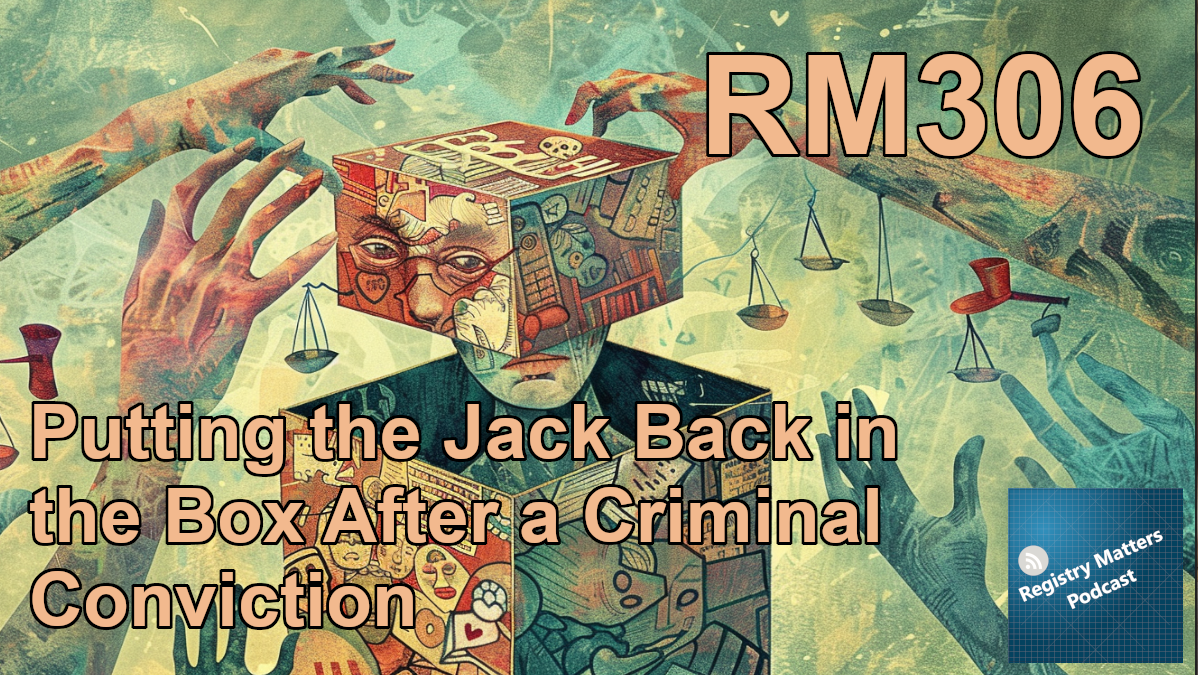
  • Transcript of RM306: Putting the Jack Back in the Box After a Criminal Conviction

    Transcript of RM306: Putting the Jack Back in the Box After a Criminal Conviction

    Listen to RM306: Putting the Jack Back in the Box After a Criminal Conviction
    https://www.registrymatters.co/podcast/rm306-putting-the-jack-back-in-the-box-after-a-criminal-conviction/

    Announcer 00:00

    Registry Matters is an independent production. The opinions and ideas here are those of the host and do not reflect the opinions of any other organization. If you have problems with these thoughts, F Y P.

    Andy 00:19

    Recording live from FYP Studios east and west, transmitting across the internet, this is episode – this one is actually 306. I said 306 last time, so this one is actually the 306. How are you this evening, Larry? Anything exciting? Oh, it’s probably hot as hell over there, isn’t it?

    Larry 00:34

    It is indeed. And I just hit the start button after you started speaking, so I hope that you didn’t miss any important stuff.

    Andy 00:41

    I think it’ll be fine. I’m not making the backup to the backup to the backup. So hopefully everything works out. If not, well, we’ll figure it out. And Chance, West Coast? How’s it going?

    Chance 00:51

    Cool as can be. Cool as can be.

    Andy 00:55

    Just a nice, comfy 75 degrees as always?

    Chance 00:58

    Maybe even – not even 75. Maybe just 70?

    Andy 01:06

    (laughs) Larry, is it 70 there?

    Larry 01:08

    Uh, 99 last time I checked.

    Chance 01:10

    Oooh. Ooh.

    Andy 01:14

    (laughs) All right, well, make sure that you press Like, Subscribe and all that stuff so that Larry can have an air conditioner. You don’t have an air conditioner in there?

    Larry 01:22

    Oh, we do. It’s working this year, remember? They replaced it last summer.

    Andy 01:26

    Oh! Then why are you complaining about doing the podcast in the summertime, if you have AC this time?

    Larry 01:32

    Because I have to get to the office, and it’s 105 to get here.

    Andy 01:37

    Is it 105 in your car with air conditioning?

    Larry 01:40

    For part of the way! I park out in the driveway, and the car is blazing hot.

    Chance 01:45

    Wow.

    Andy 01:46

    You don’t have a remote starter to fire the thing up and turn on the AC?

    Larry 01:50

    You know I can’t afford such luxuries as that on the salary I get paid! (Chance chuckles)

    Andy 01:55

    I see. All right, well, okay. Anyway, so press Like, Subscribe and thumbs-up and all that good stuff. And then what else? Yeah, make sure that you go over to Patreon and support us for as little as a dollar a month, that would be fantastic. We even got a new patron tonight, we got one during the week, and I’ll announce this all at the end of the show. And then you can get on Discord and listen to us record live and whatnot. So! Larry, if you’d be so kind, what are we doing this evening?

    Larry 02:21

    Well, we don’t have any cases to talk about, so… But we do have some good content. I was going to talk about a complaint filed by the ACLU, I think in New York, regarding proximity restrictions, but I just didn’t have the energy. But tonight we have some listener questions to go over. One of them is from an attorney who’s married to a PFR. Another is about getting off the registry in Kansas, and this is from a person who was convicted in Missouri. And we have some articles about the power of false accusations, and we have The California Corner, with Chance Oberstien.

    Andy 02:59

    It almost sounds like we need to, like, have, like, a ding-ding-ding-ding-ding. California Corner! over on this side of the ring, because he’s gonna go duke it out and fight it out. That’s what it sounds like to me.

    Larry 03:08

    I think that’s what we need, to have some kind of theme music for The California Corner. Something that sounds …all spooky.

    Chance 03:16

    Yeah, that would be great. Perfect!

    Andy 03:20

    Well, then, shall we start with the federal supervised release?

    Larry 03:24

    Let’s do it.

    Andy 03:25

    All right. Well this, let’s see here, so, “Good evening, Andy and Larry,” – would you set this up real quick before I do this? Or is it set up here in the script?

    Larry 03:32

    It’s set up. You had submitted it to me from the person, and I contacted the person, yes.

    Andy 03:39

    Gotcha. Okay. So, um, “Good evening, Andy and Larry. I spoke with Andy on NARSOL Connections” (Side Note: Make sure you go over to NARSOL.org and go find NARSOL Connections. It’s a social media platform that’s very friendly to PFRs) “…over on the NARSOL Connections group. And he suggested that I speak to Larry.”

    Andy 04:01

    “I am a criminal defense attorney. My husband is a PFR on Federal Lifetime Supervision. He is currently residing at the federal halfway house here in Vegas, pending his revocation hearing. His PO is alleging SEVEN violations. And his revocation hearing is Tuesday.” — and this is Tuesday, a couple of days ago — “June 4. And he suggested that Larry may be able to assist with legal arguments, etc.” Now, not acting as an attorney, but acting as a, uh, “strategy partner”, right?

    Larry 04:35

    Right.

    Andy 04:38

    And, uh, so I understand that you did contact her, and you had a brief conversation, correct?

    Larry 04:44

    Uh, two hours.

    Andy 04:45

    That’s pretty brief for you!

    Larry 04:48

    Indeed.

    Andy 04:49

    What happened when you talked to her?

    Larry 04:51

    Well, I did indeed contact her, and she is amazing, for sure. She’s worked tirelessly on this case, and I’m disappointed that we weren’t able to do more for the situation.

    Andy 05:07

    Did she say seven violations??

    Larry 05:11

    Yes, she did. And I do not recall all seven, but most of them seemed rather weak. The strongest of the alleged violations is that he had accessed some naughty adult pictures on Instagram, and they offered for him to admit all seven violations and argue for credit time served already in the halfway house, pending the resolution at the PV hearing. So, as a condition for his release on the PV, he was placed in a halfway house, and was no longer allowed to live with her. And in my opinion, she properly advised her husband to reject that offer. There was no reason to admit to all seven violations. One of the alleged violations was that he was living at an address that was too close to a park. And the problem is, that address had been approved by the previous probation officer.

    Andy 06:05

    Let me ask you, though, about… something like that. Do you get grandfathered? Because the previous one said okay, and now this one says no? Do you have any grounds to stand on with something like that?

    Larry 06:17

    In my opinion, he probably would have. But the probation service notoriously changes the story, and their story, now, was that he was given “conditional  permission, provided that he didn’t violate a single condition of supervised release.” And they’re saying that, therefore, that “conditional permission” was being withdrawn.

    Andy 06:45

    And you mentioned “Instagram pictures.” I’m not really, like, a social media person, but it’s really hard – at least my understanding from everything that I’ve listened to, tech podcasts, all over the place – like, you can’t find nudity in these places. So how did they catch him for having nudity on Instagram?

    Larry 07:07

    Well, I thought the same thing because I’ve been on Instagram. But unfortunately, they stretched the definition a bit. They claimed that on Instagram, the pictures contained certain body parts that were blurred, but you could still make out it was the whatever, and the whatever, because it wasn’t completely blurred. And therefore, it meets the definition of pornography because the statute, 18 United States code, 2256, subsection two, states that he specifically cannot “view or possess images of”… and then there’s this list of everything in that statute, 18 U.S.C. § 2256(2). Chance, do you want to give those, uh, those things that you cannot, uh…?

    Chance 08:00

    Are you embarrassed, Larry? (laughs) Okay, I’ll do it.

    Andy 08:03

    (laughs) I just saw a bus coming, and he just decided to kick you into the street.

    Chance 08:07

    You know what? I have no problem. I… I will say this, okay?

    Chance 08:13

    The statute states that he specifically cannot view or possess images of, in sub (A), “Except as provided in sub paragraph (B), ‘sexually explicit conduct’ means actual or simulated (i) sexual intercourse, including genital-to-genital, oral-to-genital, anal-to-genital, oral-to-anal, whether between persons of the same or opposite sex; (ii) bestiality, (iii) masturbation, (iv) sadistic or masochistic abuse; or (v) lascivious exhibition of the anus, genitals, or public areas of any person.” How’s that?

    Andy 08:49

    Well, what is a “public area” of a person? Is this like, you can go to Walmart and find the “public area” of a person? – Never mind! Sorry, there’s no L in there. It’s “or pubic areas of any person.” Never mind. Sorry, sorry, sorry, sorry. That’s totally my bad.

    Chance 09:05

    Did I pass the audition?

    Andy 09:08

    You did very well.

    Chance 09:09

    Okay.

    Larry 09:09

    What confuses me about this statute, this 18 U.S.C. § 2256, is this appears to be intended to prevent the production of child pornography. And, I don’t know how this becomes a condition of your supervision. Perhaps it’s in the “behavioral contract”, which we’re going to get to a little bit later, but this seems to be quite a stretch, if you’re saying that there was blurred out images where you could have, if you studied it strongly enough, you could imagine what was underneath the blurry part because it wasn’t completely blurred out, but yet it was an adult. And this statute is designed to protect children and minors. I don’t understand how this was allowed to stand, but we’re going to have her on at some point, and we’ll hopefully get more into this.

    Andy 10:03

    That seems super-weird. Yeah. So do you think it’ll be next week? or… because otherwise it’ll be like, after the conference, and then who knows what’s happening after that.

    Larry 10:16

    I don’t know. She was having to, uh, decompress after the three-day hearing. And I told her, “In my twenty-two years of Unauthorized Practice of Law, we’ve never been allowed three days on a probation violation, to put on an evidentiary hearing.” But I talked to Chance and he said, “Nope! Happens all the time!” But I’ve never been in one where it went on for three days. But anyway, he was sentenced to three months in jail, followed by three more months in the halfway house. In addition, he’s no longer permitted to live in the house that they jointly own.

    Andy 10:53

    This is really bothersome. Like, seriously, so I’m just going to make the assertion that YouTube has a similar content policy to Facebook and Instagram (and I could have that completely wrong!) But you can search hard on YouTube to find anything that has any naughty stuff, and you can’t find anything “naughty.” You’d find, incredibly …close to? But not, to my knowledge, can you find anything, where anything is “shown.”

    Larry 11:22

    Well, that was my thing, and I don’t think that it’s fair. Not only is it not fair, it’s not constitutional, in my view, to tell a human being that you cannot have sexual urges. And for them to say that he cannot look at attractive women (or guys, or whatever he’s looking at on Instagram) and use those photos as a stimulation, as a part of their behavioral contract. I think that’s going too far. I thought we had talked about this on an episode where there was a case decided that addressed that particular point, that you cannot tell a person not to have any sexual urges, and not to look at anything stimulating. Neither of us were able to find it (in our vast trove of archives). But I could have sworn we’ve talked about it. Do you remember a case where we might have talked about that? Because I thought we had talked about such a case.

    Andy 12:18

    I don’t recall offhand. I do have a question for either of you two: Someone in chat said, “Does that mean just seeing a shirtless man playing basketball meets the definition?” …if that would be the thing that would be, you know, so-inclined for you?

    Larry 12:37

    Interesting question.

    Chance 12:38

    Not in my opinion, no.

    Larry 12:41

    Interesting question, though! If a shirtless man – I mean, there are nipples on males, as far as I know, right?

    Andy 12:48

    I’ve heard so.

    Larry 12:50

    They may not produce the same outcome, but they’re there. So what if the probation service takes the position that that is nudity, or provocative, right?

    Andy 12:59

    Yep.

    Larry 13:00

    I mean, this is a slippery slope that has no end to it. And to think a federal judge spent the better part of three days — was not the complete three days, but they were in hearing for three days — dealing with Instagram pictures with all the so-called “bad crimes” that are going on out there, all for a person who’s happily married and (hopefully) being a productive citizen. That, now, we’ve thrown him back in the clink, to spend money on him, is just mind boggling!

    Chance 13:34

    That is mind boggling. If you’re going to invite Anya on, I have a parallel case I’ve just handled in federal court, very similar. I don’t really know the facts of this, but it’s very similar. I’d like to be able to do some cross-comparisons when she does come on.

    Larry 13:52

    Well, if we can’t get her this coming week, we will get her on at some point, but she said that she was somewhat devastated by the outcome. And I can understand that, because you work so hard to try to reintegrate, and all of a sudden this stuff comes along, and it’s all taken away. And you got a six-month setback. Now you gotta sell the house. And it’s a good time to sell, but it’s not such a good time to buy.

    Andy 14:19

    One other point that just got brought up, “and sentencing him to banishment from his home with his wife, wtf is that?” And, I mean, I had something in my head I wanted to bring up after that, but isn’t that pretty harsh, just for, like a PV violation?

    Larry 14:38

    Well, I don’t think it’s all that harsh, per se, for a probation violation. But you look at the totality of this circumstance, the guy’s masturbating to scantily clad women. That’s a healthy thing to do!

    Andy 14:54

    You would think: if he’s releasing the demons, then he would not be out… “preying on” whatever they’re afraid of him praying upon.

    Larry 15:02

    You would think so. But it’s an example of our over-resourced law enforcement apparatus. If they –

    Andy 15:10

    Oh, there you go again, “defunding the police.”

    Larry 15:12

    If the probation service didn’t have the ability to bring such cases because they had heavier case loads that they had to monitor, we wouldn’t be facing this. But anytime you start talking about trying to reduce the amount of resources that the law enforcement “regime” has, the conservatives go ballistic. Now, I’m hoping that this thing with Trump, if they’re intellectually honest, they will start to say, “Well, maybe those pointy-heads have a point. Because all the effort that’s been put into convicting him is only because they have the resources to do it.” Not only because, but partly because of that. I mean, they’ve got cases going from coast to coast. And, if you don’t give them the resources, they’ll have to make difficult choices. And this is just nonsensical, in my view, that we’re spending this kind of money on Instagram pictures. Really?

    Andy 16:03

    Yeah. I don’t get it, really, at all. All right, moving along then?

    Larry 16:07

    Yes. Well, amazingly, there won’t be anybody on the conservative side of the aisle that will criticize this type of a waste of resources. You won’t hear anything about that. And that’s the sad thing about it, because we need to be dealing with the systemic problem that needs to be fixed, rather than making it a personal thing about one individual. The system is overkill, across the board.

    Chance 16:33

    Yeah I would say “splitting hairs” in this case, but I neglect to use that analogy. Let’s move on. (Andy & Larry laugh)

    Andy 16:41

    All right. Well, this is a question from Matthew, “Here’s my situation: I was charged with sexual abuse, a Class C felony in Missouri, and I received a three year sentence. I served all three years from 2003 to 2006. At the time, I was 23 years old in 2001, and the victim was 24 years old. The reason I am reaching out is that, due to a disagreement with my therapist, I was kicked out of the program about six months before my scheduled release date. Now, approaching 50, with no other felonies, I even moved from that area to another state.”

    Andy 17:18

    “However, I’m required to go back for court proceedings. What are my chances of being removed from the registry? Also, do you know any good lawyers who could assist me? Lastly, what is your best advice to improve my chances of being removed from the registry? Thank you for your time and support. FYP” Thank you for putting the “FYP” on there!

    Larry 17:38

    So, I’ve actually communicated with this person on several email exchanges, and so I’m going to read some of the stuff I’ve written to him. I said, “I’m having difficulty connecting the dots. You do not have to go back to Missouri to get off another state’s registry. In fact, Missouri cannot remove you from another state’s registry. Where are you currently located? That’s the state that can remove you. Missouri cannot.” And then Matthew wrote back, and he said, “Okay, I get what you’re saying. I am in Kansas now, but I got my case in Missouri, and I know I have to go back, even though I hate every part of Missouri. My question was, did Kansas fix the way to get off the registry? And, seeing if I didn’t finish the program, should I even try?”

    Larry 18:16

    So he’s saying that, “Despite what you told me, I have to go back to Missouri to get off the registry. And should I even try?” And again, I responded, “In my opinion, you should not try to get off the Missouri registry, unless you live there. Kansas is not bound by anything that is done in Missouri, in terms of registry removal. Assuming Missouri does grant your termination, that is not binding on Kansas. Kansas will have to grant you termination from their registration obligations. Does that make sense? Have you contacted an attorney in Kansas?” So, then he responded again. You want to read that? I’m exhausted, Andy.

    Andy 19:04

    Oh, I’ll read it, yeah. You read three sentences and you’re exhausted. All right, I’ll read it, “I apologize for not addressing your previous question. There wasn’t one to begin with. I’ve consistently adhered to the rules. After my three-year stint at MODOC in Missouri, I relocated to Kansas. It’s crucial to highlight that nearly twenty years have passed without any charges or incidents. Additionally, now at 46 years old, I simply want this turmoil to cease. I’m weary of incessantly fretting over trivial matters, such as whether I have to pay the $20 to register, or if there is a new investigation looming over me. I feel I’m beyond this.”

    Andy 19:45

    I mean, shoot, it’s been twenty-something years for him. “The only crime I’ve ever been involved with dates back to the charge I received in 2003.” I would tell you, Larry, I get his point. Can he file his removal petition in Missouri to get off the registry? Why? – Why! – as always, Larry, are you Mr. Doom and Gloom, and why do you have to make this so complicated?

    Larry 20:05

    Well, the courts are open and they will generally accept filings, so he can certainly probably file in Missouri, if that’s his wish. (Andy laughs) But I do not understand how Missouri can remove him from another state’s registry!

    Andy 20:19

    Are you saying that there are no circumstances where the state of conviction cannot impact the removal from registration?

    Larry 20:27

    No, I’m not saying that. There could be some circumstances where that could occur. For example, if a person’s conviction was overturned. That would likely be sufficient to end the registration obligation in another state. Another situation might be if a person’s conviction was not covered by the other state, except for a “catch all” provision that requires registration simply because you’re required to register any state conviction. Hypothetically, a person that was under that catch-all provision might be able to have their registration terminated, if the state of conviction ended the person’s obligation to register. But those are nuances. Generally speaking, one state can’t remove you from another state’s registration.

    Andy 21:07

    And what about Matthew filing for removal in Kansas? What would be, would that be an option for him?

    Audio Clip 21:15

    (laugh track)

    Larry 21:21

    (laughs) Nope! It appears that Kansas does not offer a pathway off the registry. According to the ACLU of Kansas, “For several years, Kansas lawmakers have pondered changes to make the state’s offender registry less restrictive. During the ’20 and ’21 legislative sessions, lawmakers proposed reducing penalties for failing to register, and changing some of the violent and drug-offense registration requirements. They also considered adding an avenue for registrants to petition for removal through an application process. The 2021 bill even had bipartisan support — including from law enforcement! — but it died in committee. And, most recently, in the fall of 2021, The Kansas Criminal Justice Reform Commission Subcommittee on Proportionality of Sentencing considered whether drug offenders’ information on the same public registry as PFRs should be made only available to law enforcement. The Subcommittee also considered potential changes to reduce the penalty for failing to register.” Nothing has passed so far, as best I can tell from my limited research.

    Andy 22:30

    All right, and I see that they also then stated, “Some legislators have wondered openly if the KORA (the Kansas Offender Registration Act) goes too far. It does. However, they have failed to act on their concerns. Meanwhile, the number of Kansans included in the registry has ballooned to nearly 1% of the state’s total population.” What do you think it will take to get change?

    Larry 22:54

    Well, it would take electing different people to the Kansas General Assembly and possibly to the Governor’s Office. Because if you get past the General Assembly, you gotta get past the governor.

    Andy 23:03

    Now do any of you care — and, anybody in the audience, does anybody care — what the ACLU has recommended for their changes?

    Larry 23:09

    Of course they do!

    Andy 23:12

    (laughs) All right, so here’s what they recommend:

    • Strictly limiting the types of offenses for which registration is required under the Act.
    • Reducing the length of time that people must register.
    • Providing a way for all affected individuals to petition for early removal from the registry.
    • Drastically reducing the consequences for violations of the Act.
    • Allowing for remote registration options and other mechanisms that will reduce the impact on registration on individuals’ daily lives.

    To me, these don’t sound unreasonable, but do you think they will pass?

    Larry 23:48

    Uh, don’t know, but looking at the makeup of the Kansas Assembly, it does not look promising.

    Andy 23:56

    I’m assuming they’re not very pro-criminal-justice-reform, there?

    Larry 24:00

    Well, it’s funny because they could be. You know, they’re under conservative domination, and the conservatives don’t get vilified for being soft on crime. They don’t generally vilify themselves. And very few liberals vilify conservatives for being soft on crime. So they have the latitude to do it. They just don’t have the will, because they’re not hearing from the people of Kansas, that they want these changes, apparently. And folks, if you’re going to vote for these people, you’ve got to communicate to them what you want them to do! And they have to hear a groundswell of public support. Otherwise they’re not going to do anything.

    Andy 24:31

    Larry, I think the person that wrote this letter is in chat. I didn’t – Oh, hey, this is him! I had no idea. I don’t know who anybody is, in chat. Everyone uses some pseudonym. But the person we are speaking about is in chat. And he says, “So, pretty much, I have to move back to Missouri to get off the list.” But – you could still end up – wouldn’t you end up in the same situation, then? …of still being on the registry in Kansas, potentially?

    Larry 24:55

    Well, I don’t know if they keep people on, after they leave, but he wouldn’t have any forward obligations. You know, we had that debate about, years and years and years about, whether being on a website is the same as being required to register. And some people think it’s the same thing. I think it is not anything approximating the same thing. So if Kansas is one of those states that keep people on the list, he might find his image on the website, but he wouldn’t have any obligations or any consequences in terms of potential punishment for not complying.

    Andy 25:22

    And then is Missouri “pseudo-like” Florida, and leaves you on their website, infinity? Or is he still actually on the registry in Missouri?

    Larry 25:33

    Well I don’t know the answer to that. But Missouri does have a pathway off, I think. And that’s what he’s looking at. He wants to file in Missouri, but Missouri can’t help him. If I’m the responding party in Missouri, I’m going to say “He’s not registering because of us. He’s registering because of Kansas (because I don’t want to do any work, and neither does anybody else.)” So they’re going to try to extinguish the petition. And he may be able to bypass that, and claim that he has a viable need to have a decision from Missouri. Okay, he spends a whole bunch of money and time. He gets a decision in Missouri saying he’s no longer required to register. That didn’t do nothing for Kansas. So, he’s in the same position, only he’s broke-er!

    Andy 26:16

    (sighs) I don’t comprehend the whole Missouri part of the equation. If he doesn’t live there, then why would he have to go back to Missouri to get any relief?

    Larry 26:25

    Well, he doesn’t have to. He was under the mistaken impression that that was the only way off, because he doesn’t have a way off in Kansas. So, in his mind, he wants to go back and file the petition where they have a removal process. And he doesn’t connect the dots completely, that even if that were to succeed – I would do my best, if I were representing Missouri, to say “Don’t bother us with this. It’s not our problem.” but he believes that if he were to get it done, and get an order from Missouri — he believes he could go wave that around the country, apparently, and say, “I don’t have to register anymore.” But that’s just simply not the case.

    Andy 27:00

    Because Georgia would be a place where, if you move in, and you are registering somewhere else …then you have to register in Georgia. Whether you’re on supervision or not, if you are required to register somewhere else, then you register there. It’s not worded as, “if you have a conviction.” It’s worded “if you are registering somewhere else” (like Florida).

    Larry 27:19

    So, but in some instances, if that’s the only reason — like say, in Georgia, if you moved to Georgia and they didn’t cover your offense, but for the catch-all provision, and you were able to overturn that conviction, or get that conviction nullified — then Georgia (or whatever state) might be willing to take you off, if you’re only registering because of a catch-all provision. But that’s not the case. Most sex offenses translate to something, because they have loose enough language that says “substantially similar elements.” Very few states have the language we have in New Mexico, that says it has to be an “equivalent” offense. And I tell attorneys that don’t seem to understand the difference, “Substantially similar is not the same protection as equivalent. If you look at the dictionary definition, equivalent has different requirements than substantially similar.” Chance, would you agree or disagree with that?

    Chance 28:13

    I’d agree with that. Yeah, there is a distinction.

    Larry 28:17

    (laughs) So, if you were trying to make an argument, would you rather be fighting for someone who had the protection we have, that it has to be equivalent? Or would you rather be fighting where it says, “if the offense has substantially similar elements”? Which battle would you rather be in? I would rather be in the equivalent.

    Chance 28:33

    Well, certainly, certainly.

    Larry 28:36

    So, he may end up, if he files in Missouri, getting an order of removal, but that will be of no benefit for him outside of Missouri.

    Andy 28:51

    Very well.

    Announcer 28:53

    Are you a first time listener of Registry Matters? Well, then make us a part of your daily routine and subscribe today. Just search for “Registry Matters” through your favorite podcast app, hit the subscribe button, and you’re off to the races. You can now enjoy hours of sarcasm and snark from Andy and Larry on a weekly basis. Oh, and there’s some excellent information thrown in there, too. Subscribing also encourages others of You People to get on the bandwagon, and become regular Registry Matters listeners. So what are you waiting for? Subscribe to Register Matters right now. Help us keep fighting and continue to say F Y P.

    Andy 29:41

    I am going to move over to this. I’m going to play this in the background, Larry. Just the video will be going, but I’m going to follow the script because I didn’t have any time to make the clips. This is a story from ABC Channel 6 in Philadelphia, and it says, “We reported on this case a month ago, and tonight I spoke with the attorney who represents the man who was accused of attempted rape and kidnapping in this grocery store parking lot. That attorney tells me that the woman’s story ‘never added up’ and that an update in the case is ‘better late than never.’  Forty-one year-old Daniel Pierson is home with his family tonight, out of jail, after the Bucks County D.A. says he was wrongly accused of attempted rape and kidnapping.”

    Andy 30:29

    This is the woman who accused him of those crimes: Twenty year-old Anjela Urumova. “Police in Middletown Township said Urumova called them on the night of April 16th, claiming a man grabbed her in the parking lot of the Redners off Lincoln highway, and attempted to pull her pants down while he carried her, and pulled her back toward his truck. Urumova said she was able to break free, and then he drove away. Police used a license plate reader system that spotted a similar truck nearby, they tracked it to Pierson, and he was held at the Bucks County Correctional Facility on one million dollars of bail.” This is terrible! Well, I guess it would have been terrible if he’d actually done it, but that’s not what happened.

    Larry 31:13

    Yes. A new complaint now states that “Daniel Pierson was charged with multiple felony offenses and remained incarcerated for a total of 31 days before Urumova admitted to her lies.” The police and DA deserve credit for continuing their investigation. Normally, when they put a person in cuffs, it’s so easy just to say, “We got it.” and, you know, “Victims of sexual assault, any type of sexual offense, they don’t lie. They don’t create stories. If they say it, we don’t need any further investigation, because that’s just re-victimizing them.” Andy, I don’t know why you can’t understand that! (Andy laughs) But anyway, the police in that part of the country and the DA deserve credit for continuing the investigation. Because otherwise, this man would be still sitting in jail, and possibly facing a long term of incarceration.

    Andy 32:11

    The new complaint states that, “Shortly after his arrest, officials received information from Pierson’s family that warranted further investigation. So detectives reviewed surveillance video and found that at no point in the video did Pierson’s truck travel through any part of the path Urumova claimed the vehicle took. Urumova was also called to the DA’s office for questioning last Thursday, and because of more inconsistencies in her story, she was called back in on Friday. That’s when,” the complaint states, “Urumova admitted that she had lied about the entire incident, and that no assault occurred.” This is disgusting! Why would a person do such a thing?

    Larry 32:48

    Well, you know, I get that question all the time when I’m lobbying. People say, “Well, Larry, why would people make false accusations?” And I say, “Well, there’s a whole litany of reasons: They could do it because they don’t like a person, they could do it in custody battles, they want to discredit their spouse for custody reasons. They can just do it for outright meanness.” So I don’t have any way to explain why this woman, this twenty-year-old, did that. But, in her own words, she stated that, quote, she had seen Pierson in his truck before in the parking lot of her old job, and he was “quite creepy”.

    Andy 33:25

    Creepy! Creepy.

    Larry 33:26

    Yes, creepy. Now, that doesn’t seem like enough of a reason to accuse someone falsely. There’s never enough reason, but a person looking creepy? If we went around making up criminal accusations on people that look creepy, that’s all we’d be doing! All charges against Pierson have been dropped, and now Urumova is facing charges herself. She’s currently in jail, and due back in court sometime later this month. Can you finally admit that this is funny??

    Andy 33:59

    No, this is anything but funny! Like, I mean, how long did he spend? 30, 31 days in the lockup? That’s not funny.

    Larry 34:07

    But it’s funny that she’s in jail now, isn’t it?

    Andy 34:10

    I mean, I guess that would be …karma? But anyway, what do you think will likely happen to her?

    Chance 34:19

    Well, making false police reports is generally a criminal offense in most states, either a felony or misdemeanor, in this case, including Pennsylvania. Under 18 PA Consolidated Statutes section 4906 [18 Pa. Cons. Stat. § 4906] makes it a misdemeanor to submit a false police report, a complaint, subject to fines and jail time. How long will she stay? Probably not long. A misdemeanor just, you know, doesn’t do it.

    Andy 34:48

    Doesn’t that even have a maximum of a year?

    Chance 34:51

    Well, misdemeanors are different, some are up to six months, some up to a year. But let’s just say that this is six months, tops, and she gets half-time, you know, three months.

    Andy 35:07

    And then we have, moving over to another similar story that comes out of Colorado where a woman made false accusations. She was sentenced to serve four years in prison. Now, is that appropriate punishment? Look, in my mind, if you have then falsely accused somebody and they spend… 31 days in the lockup, and like, four years? I don’t know that that’s enough time! Come on, man.

    Larry 35:32

    Well, it’s hard for me to say, but let me tell you a little bit about this. We’re not going to spend a lot of time on it, but what happened was that there was – this is in Colorado, in a suburb of Denver. I don’t remember the particular suburb, but the police chief and a city councilor had gotten in a public dispute about policy, which is quite common, and the city councilor chose to criticize the police chief. And this woman who worked for protective services in Colorado, for child protective services, and she says, “Well, I’ll just cook his little goose,” and she submitted a false report about the police chief. And it did not go well for her. She was sentenced to incarceration for that false police report.

    Larry 36:31

    Four years is an awful long time. I would have to know what any of her criminal history was like, and what type of diversion options might have been appropriate, but I’m not for extremely harsh sentencing. But, on the other hand, we need to send out some deterrents of causing false police reports to be made, and causing someone to be subject to this type of — I mean, it’s awful to be arrested! — Can you imagine the guy in Pennsylvania, what did everybody think about him? He was in jail, he was in danger of being killed, he probably lost his job, lost all of his friends, because they thought he was a rapist!

    Larry 37:17

    They showed his picture, of his truck and everything on TV, and then it turned out that it was all made up. How does he get justice? How does he get redemption? How does he fix his life? He’s got an arrest history. What is the opportunity for expungement in Pennsylvania? And even if he gets an expungement, the FBI never expunges anything, so it’s always lurking beneath the surface there, for criminal justice agencies to say, “Oh!” — if he were to have a minor arrest, say, moves around the country to Idaho, and he gets arrested for something. The first thing the pre-trial services is going to do when they run the background — “Oh! Well you were arrested in Pennsylvania in 2024 for rape and attempted kidnapping!” (or whatever) “Well, those were dismissed.” “Oh, but you were arrested for it.” I mean, that affects bail decisions, does it not, Chance?

    Chance 37:57

    Oh, it does! And that’s why it’s so important that, if there is a “factual innocence” aspect of any statute within that state, that you take advantage of that. Because otherwise it’s going to be exactly as you say.

    Larry 38:10

    So I’ve sat in what we call “felony first appearances,” I’ve sat through those many times, in our professional career here. And when they call a case to set conditions of release for a person who’s been arrested, the pre-trial services have done a background report, and all that is read by the prosecutor for the judge. And the judge listens to those previous arrests, any no-shows in court, any failures-to-appear, in determining what kind of conditions can be fashioned. And if this man has a sexual arrest on his record, and it cannot be removed, it’s going to be potentially a problem for him down the road. So there needs to be some kind of way that this woman is held accountable for that. It’s not funny at all.

    Andy 39:04

    Not funny, you said, “I think it’s funny.” Not funny!

    Larry 39:07

    Well, her being in jail is funny.

    Andy 39:09

    Not for her, either! She could die there as well. And I don’t think that what she did is deservant of the death penalty.

    Larry 39:17

    Well, he could have died a lot easier than she could have, for the type of allegations she put on him. He was much more in-danger than she is.

    Andy 39:24

    I won’t disagree with you, but that doesn’t mean that there’s not a riot that goes out, and all of a sudden that you end up with a shank in your gut.

    Larry 39:32

    So, not funny. All right. Not funny.

    Chance 39:35

    Yeah.

    Andy 39:36

    California Corner! Take it away, Mr. Chance, in that corner over there. Ding-ding-ding!

    Chance 39:39

    Okay. In The California Corner, we’re talking about Putting the Jack Back in the Box. As I listened to the questions and thought about this, it’s really relevant in terms of everyone, and for California, it’s really important. So putting the jack back in the box is really talking about how you get your life back together after conviction. And I’m going to put it in the context of, say, a conviction for a crime involving a sex allegation. So everybody knows this (in California, and I’m not sure about the rest of the world, but) there is no Department of Rehabilitation in California.

    Chance 40:22

    And by the way, gentlemen, if you want to jump in and ask a question, anytime, I’m always open for one. Okay?

    Larry 40:29

    I got a question for you right now. You said there’s no Department of Rehabilitation. I thought it was The California Department of Corrections and Rehabilitation!

    Chance 40:37

    Uh, heck, no! That doesn’t mean anything. As you know, theories of punishment change now and then. We have never been a state with rehabilitation as our main purpose. It’s punishment. And if I haven’t said it, again: it’s punishment, and I’ll say it a third time: It’s punishment! There is no Department of Rehabilitation (and the Department of Corrections is a misnomer), so that should clear up that little thing.

    Chance 41:08

    Now, to achieve rehabilitation for a criminal conviction in California, you must rehabilitate yourself. And a lot of folks will ask, and it’s important that they do, When does the process start? Because that is a very smart question. It has universal application, but let’s start at the pre-plea: What is pre-plea? This is what happens before you plead guilty or no contest. This is the time when you can show the court, and whomever else is interested (and hopefully the prosecutor is, if they’re willing to do justice in a case), you can show them that there’s a recognition of the issue. Now, how do you go about doing that, even if you don’t know what the issue is?

    Chance 41:54

    Well, one is: psychological services. Let’s take, for instance, getting a forensic evaluation and risk assessment. A forensic psychological evaluation plays a crucial role in the criminal justice system, by addressing important questions and providing valuable insights for legal proceedings. In the context of sex crimes, they can be used to assess criminal responsibility and evaluate risk for future dangerous behavior. This information may be crucial to the appropriate settlement or disposition of your case. And I say that, and I emphasize it: crucial. Also, sex therapy. Say you’re pending the disposition of your case, and you want to do something proactive that is going to help you down the line, including the possibility of a better disposition. Sex therapy, going to a therapist and talking about what the issue or behavior is.

    Chance 42:53

    The main objective is to help the individual subject of the therapy to avoid risky, aggressive, or reoffending behavior, high risk situations. And that sounds like a really good idea if you’re pending a case outcome. So it’s a good idea. Now, other things can be used as well to benefit you, like Sex Addicts Anonymous. Just like if it were Alcoholics Anonymous, a fellowship of individuals who share their experience, strength, and hope with each other, that they may solve their common problems and help others to recover, that’s a good place to be, pre-plea.

    Chance 43:36

    Now, let’s talk about Post-plea: Post-plea has to do a lot with probation. Now, there’s only really two things to know, and I don’t need to emphasize them, because I think everybody knows and understands them: Comply with all the terms and conditions of your probation. That’s easy. Maybe not easy to do, but easy to understand. And show good conduct while on probation. Which means: don’t violate, don’t pick up a new case, don’t do things like that, okay?

    Chance 44:11

    Post-probation: Now, if you finish with probation, and you were able to do these pre-plea things, and on probation, you were able to comply with all the terms and conditions of your probation, then we’re talking about what you do when probation either terminates or expires. Well, this is the most important thing I’m going to say tonight: Continue to work on the underlying issues that caused the behavior. It’s really, really important. And it is important because it will achieve your objectives down the line, in order to reintegrate, and to normalize, and stabilize your life in the future. For example, additional sex therapy or continuing fellowship in Sex Addicts Anonymous is really, really important. But other things are important as well. Things that we all know, like Employment, because work provides an opportunity to build friendships and connect with colleagues. Additionally, executing tasks you’re good at can stabilize your mood, especially if you’re prone to depression. And a lot of folks who have been convicted and have to register are prone to depression.

    Chance 45:20

    Education. The most important aspect of education is personal growth, which contributes to your discernment and maturity, which helps you avoid what you got caught up with to begin with. Social groups, and I think this is really important as well. It’s well established that people who feel socially isolated, or as though they don’t belong, have worse mental health than those who feel socially connected. So getting involved with groups, social groups like including close friends, religious congregations, health and wellness groups, volunteer networks, and human rights organizations, is all very, very, very helpful for your mental health. And it all helps you move along that rehabilitative trajectory.

    Andy 46:11

    Chance, I just want to chime in. Like, all of those, I don’t want to say all of those things are “restricted” for our people, but many of those things are restricted, or challenging, for many of Our People.

    Chance 46:25

    Correct.

    Andy 46:28

    And that just makes it incredibly hard. I mean, yes. Those are all great things that probably every therapist, treatment provider, any of those professions would recommend that you do. But, “Oh, I’m sorry, you can’t go…” you know, like the app Meetup, that just has the “volleyball pickup group” or cycling group, or the chess club, or whatever movie group. “Oh, I’m sorry, you can’t be on that app.” Well, like, what do you want me to do? “Sorry, you should have thought about that before you committed your crime.”

    Chance 46:56

    Yeah, that’s legitimate, that’s a legitimate comment. But, if you think about it, these social groups that I’ve mentioned are not all-inclusive. As a matter of fact, there’s a million things you can do, okay? And there’s a million places you can go, and you don’t need apps.

    Andy 47:18

    Agreed.

    Chance 47:19

    You know, what I’m saying to you, and what I’m saying to everyone, is: social groups are important. Find one you can belong to. And if that social group is like a therapeutic group, like Sex Addicts Anonymous, then stick with them. And if that group is another group like a church group, or another group like a human rights organization, or a resource group like this one, join it! Because all of it has meaning, and all of it is important.

    Larry 47:54

    So I would like to expand on the point Andy was making, that a lot of people are forbidden. Probation invokes this so-called “felon association” clause. And they say that you can’t do these things in these groups because “they’re felons.” Like, they won’t let them attend the NARSOL conference. “There are felons there.” They won’t let them attend things because there are felons there. And it’s like, really? I will guarantee you there’s hardly a church that you could go to, that has more than 100 members, that doesn’t have a felon in the congregation. So if you take that to a literal, extreme interpretation, you would never be able to associate with anyone, because in any group you associate with there are going to be felons. And I think that’s something for another conversation one of these days, about this over-interpretation of the “felon association” clause by supervising authorities.

    Chance 48:54

    Yeah, I think that’s legitimate, too, except for one thing. With probation, I don’t go into that, and I’ll tell you why. Because I’m so busy complying with all the terms and conditions, and showing good conduct, I might not have time to do exactly that. This part of what I’m talking about is post-probation, which means you’ve already finished with it. So, once you finished with it, that’s the time to really connect, because I understand exactly what you’re talking about, and it’s the most difficult thing to do. But if you asked me, “When does the process start? At pre-plea? At probation? At post-probation?” I’d say, if I want to get that answer right, “All of the above.

    Chance 49:38

    And then, once I’ve engaged in those things, and it doesn’t have to be every single one, but a good many of them will help. I’ll show you how they work. How do I document my process? Before I do show you how they work, memorializing your efforts and progress is essential to meeting your legal objectives at a later stage of rehabilitation. Otherwise, what do you have to show for it? Like, you’d be the invisible man! Organize the following areas of documentation, and keep them in a safe place where they can be easily located: like psychological evaluations, risk assessments, progress reports about sex therapy and probation, self-help, additional therapy, fellowships, all that stuff. Keep a file. Keep it safe. Keep it so you know where to find it.

    Chance 50:32

    So this is how you use it: How do I make my rehabilitative efforts and progress work for me? Now, this is where you’re going with this. And where you’re going with this in California is right here, at Legal objectives: Termination of probation. Judges will consider granting your petition for early release from probation if you have met the following eligibility requirements:

    • Fully paid all your court fines and restitution.
    • Completed community service hours.
    • Don’t have any new arrests or pending cases.
    • Not on probation for another case.
    • Completed at least half of your probation period.
    • Successfully completed all obligations, such as court-ordered classes and counseling.

    So look, if you meet these eligibility requirements, and they should sound familiar, since we’ve touched on almost every single one as we’ve gone through this, the court should grant early termination of probation, if your good conduct and reform justifies the action. And typically this means that the court believes that you’re not a risk to public safety – sound familiar? — and you’re moving your life in a positive direction, which means the rehabilitative trajectory. Second of all, once you achieve that, let’s just say you achieve termination of probation, Dismissal. If a defendant has completed probation or has been discharged early, as mentioned above, they can petition to withdraw their guilty plea (or no-contest plea) and enter a plea of not-guilty, under Penal Code section 1203.4. That is just an incredible, wonderful thing that California offers. On top of which, if you’re successful at doing that, you can move on to:

    Chance 52:21

    Reductions: If you successfully either got your probation terminated early, and/or get a dismissal which says you completed it without violation, that goes far in helping you achieve a reduction. A defendant can request a reduction of a felony conviction under certain circumstances. As we’ve discussed in prior episodes, this typically occurs after either early termination of probation, or dismissal. The court has the discretion to determine whether to reduce your felony conviction to a misdemeanor, under Penal Code section 17b. The court will consider several factors in determining whether to reduce your conviction from a felony to a misdemeanor, including:

    • The nature and seriousness of your offense;
    • (But, more importantly) Your behavior while on probation or under court supervision;
    • Your prior criminal record; and
    • Any other mitigating or aggravating factors in your case,

    And all the things I mentioned before go into mitigation. So it’s almost built for you to achieve reduction.

    Chance 53:38

    Furthermore, if you’re on the list, and that’s the context of what we’re talking about right here, sex registrants can petition for Removal from the California sex offender registry based on the tier of their offense. To be suitable for removal, individuals must not pose a threat to public safety. All that work that went on before, all that stuff goes into that very standard. And if you achieve that, that’s wonderful. But, regardless of that outcome, there’s always a Certificate of Rehabilitation, which we’ve talked about in prior episodes, including the last one, which is a court order that indicates that someone who was convicted of a felony, or a listed misdemeanor sex crime, and served time in state or local prison, has been rehabilitated. It doesn’t erase your criminal record, but can offer benefits such as improving employment or housing opportunities, or help when applying for professional licensure from the state. All these things have a common thread, and they all tie in with each other. They’re all rehabilitative. And they all, all build foundationally on the other. And that, if I were the Department of Rehabilitation, would be a form that I would put down, and have everybody look at and understand, before they went out and started, from day one. So, gentlemen, what do you say about that? What do you say about rehabilitation in the Great State of California?

    Larry 55:01

    Well, I say that I continue to be intrigued about that Certificate of Rehabilitation. I would like to have that in our state. And I’m also intrigued by reducing your crime after the fact, showing your rehabilitation, that you can have a crime adjusted downward. Is that what you were talking about, “a wobbler”? Or is that a different thing? Because we talked about a wobbler, last episode.

    Chance 55:26

    Right. That’s a crime that can be charged either as a misdemeanor or a felony, which is called a wobbler. And if it is a felony, yes, it could be “wobbled down” to a misdemeanor, which is incredibly wonderful.

    Larry 55:42

    But in terms of the reducing the severity of an offense after rehabilitation, are there…? I’m guessing there are offenses that are excluded altogether, that just aren’t eligible — would that be correct — that you can’t reduce?

    Chance 55:56

    Yes, that would be correct. But one interesting thing about this, in terms of reductions, people think that there’s a time limit. “Hey, I can only do it, you know, during a specific time.” Well, there was a case called Meyer. It’s a 1966 case [247 Cal.App.2d 133 (Cal. Ct. App. 1966)] and I often have brought it to court, when a prosecutor says, “Hey, wait, it’s late in the game. That was ten years ago.” Uh… no. It can happen at any time, anytime after probation expires. And that is such a cool thing that, you know, it’s not limited by time or space. I just love that.

    Andy 56:33

    Well, someone in chat says, “Chance is making California sound like a great place to commit a PFR-type crime! It sounds like there’s actual rehabilitation, which you don’t hear about in most states.”

    Chance 56:45

    Well, that – I mean, I’m not so sure you’d want to commit anything here. But I will say this: This state, even though it’s been overshadowed by a lot of stuff, is still a very progressive state in terms of rehabilitation. And I think that, when you look at this, when you look at it from the overhead view, it’s very impressive!

    Larry 57:12

    Well, you certainly are way ahead of us, in terms of what we’re doing. I would really like for us to have that Certificate of Rehabilitation, and I’d like to figure out a way to incorporate it for people who have non-New Mexico convictions as well. Because if you’ve lived decades and decades of exemplary life here, but you’re from Mississippi, Mississippi is never going to pardon, or expunge, or do anything for you. So you shouldn’t be saddled with your “Mississippi baggage” for the rest of your life.

    Andy 57:45

    Mississippi would be one of those states where they would do Judge Dredd type things and, “Oh, hey, you jaywalked. Sorry. Death.”

    Chance 57:53

    Not cool. Not cool.

    Larry 57:56

    Not quite that bad, but I would like to figure out how to expand the opportunity. Now, I know the argument is going to be that we’ll become a haven for people running from their past. That’s the pushback that we’ll get. But there’s got to be some balance that you can do, to make sure that we don’t become a Mecca for that, but also give people that have legitimately moved here… maybe what we would do is that they’d have to have lived in the state for a certain number of years. That way, you don’t have the people coming just for the opportunity to try to apply for that. If you’ve been a New Mexico resident for ten years or something, then you can apply for a Certificate of Rehabilitation.

    Chance 58:36

    That’d be nice.

    Larry 58:38

    So. Well, are we recording an episode next week?

    Andy 58:44

    Probably. I would think that we would record next week, and then there’s the conference after that, and then, who knows, after that? I got nothing I can say about the 29th and then forward.

    Larry 58:56

    Okay, so we are on next week. Alright, sounds good.

    Andy 58:59

    I believe so. Well, very well. Let’s do – Larry, what are these two “good news” things? — And then we will wrap it up.

    Larry 59:08

    Well, the two good news things are about voting, I think. Nebraska has restored felon rights. They’ve removed the two-year waiting period. So you get off supervision, complete your obligations. And then it looks like that Pennsylvania has made it where people who are incarcerated can vote. And I didn’t dig deep enough into that, but if somebody from Pennsylvania wants to dig into that, we can get further into it. But it looks like they’re going to let – they’re going to join those liberal-lefty-states like Vermont up in the northeast, and I think Maine, where they let people who are incarcerated vote.

    Andy 59:46

    ‘Cause that’s not what the title says. It says, “who have been incarcerated.” That’s not: “who are incarcerated.”

    Larry 59:52

    Oh! Well, thank you.

    Andy 59:54

    I mean, that’s the way the title reads. I’m just, so these are just people that have been out. Maybe they’re still on supervision of some kind, whatever. They can vote.

    Larry 1:00:01

    Okay, well, let’s see. That’s the Philadelphia Inquirer. It’s good news that everybody says, “I can’t vote,” and they pretend like they can’t influence public policy. But you can vote, in many instances. You can vote and you just don’t realize it.

    Andy 1:00:14

    Yep. And that’s where people go around to typically minority-type neighborhoods and get out information drives to let people know that they very well might be able to vote.

    Larry 1:00:28

    So yeah, that was behind a paywall. That was the reason why I didn’t do any work-up on it. I couldn’t actually read it.

    Andy 1:00:34

    One of these days, Larry, we will teach you how to get by the paywalls.

    Larry 1:00:38

    Well, I don’t like to …pay!

    Andy 1:00:39

    Again, I can – never mind, never mind. Simple little plug-in to the browser, and you can get by the paywalls. But uh, anywho: We had new patrons! So thank you, Kayden and Matt, who joined just before the show, and he’s the one that we were talking about, the Missouri-Kansas person. Thank you both very much for joining. Kayden did a whole year-long, and Matt just did a monthly pay-as-you-go kind of thing. But that’s all good!

    Andy 1:01:06

    Head over to registrymatters.co for the show notes. You can leave voicemail at (747) 227-4477, email us at RegistryMattersCast@gmail.com and, of course, as I just mentioned, support us on Patreon at patreon.com/registrymatters. Chance, I hope you survive the heat! And, Larry, I hope you survive the nice weather.

    Chance 1:01:30

    Thank you. Thank you.

    Andy 1:01:33

    (I may have had that backwards, on purpose.)

    Larry 1:01:36

    I’ll see you next week? Maybe.

    Andy 1:01:39

    Very good. Take care. Have a great night, gentlemen.

    Chance 1:01:41

    You too.

    Announcer 1:01:45

    You’ve been listening to F Y P.
  • Transcript of RM280: Defamation vs. Survivor Protection: The Bill’s Battle

    Announcer  00:00

    Registry Matters is an independent production. The opinions and ideas here are those of the host and do not reflect the opinions of any other organization. If you have problems with these thoughts, F Y P.

    Andy  00:18

    Recording live from FYP studios, east and west, transmitting across the internet, this is episode 280 of Registry Matters. Good evening, happy Saturday. How are you?

    Larry  00:28

    Doing awesome. How are you?

    Andy  00:30

    I’m very well. You sound super enthused, Larry. Are you okay? Did you get enough Geritol?

    Larry  00:35

    No, they don’t make anything for anyone my age.

    Andy  00:38

    They haven’t experienced anything like it. I think the oldest person… known… is like 120-something? God, I heard this on the program the other day. The oldest recorded person, like verified was around 120? But generally, it’s about 114, and that’s about it. So, what have you done??

    Larry  00:58

    What about Methuselah, who lived to be 969?

    Andy  01:01

    Okay, I don’t want to go into that conversation because I’ll end up upsetting people. So, I’ll stop it, but if you’re new to the show, make sure that you subscribe on YouTube. And you can press the notification bell, and make sure that you subscribe using your favorite podcast app. And then you download the show, and you get it just in your podcast feed and it’s just an amazing way to do it. So do me a favor Larry and tell me what we have going on this evening.

    Larry  01:33

    Well, we have a case from the New Mexico Supreme Court that was resolved in our favor. It’s State vs. Marquez. We have some listener comments and questions. And we have a bill that was signed by Governor Newsom in California.  I don’t like it. It’s likely to make its way across the United States. I also have an article from The Nation, from that lefty magazine.

    Andy  02:03

    Yeah, there’s that, and then somebody posted something on the Discord server earlier about “Bubba the Love Sponge” and his people are going out doing some things that are just not cool!

    Larry  02:14

    So, well alright. Let’s go.

    Andy  02:17

    Alright, so to begin things off, oh, God, I had the wrong screen pulled up. All right. So this is a two-part question from Doug in Michigan.  “I know from reading the RM transcripts that my parole stipulations are supposed to be tailored for … moi, correct? Well, I had to sign a document called the ‘MDOC Internet Usage Agreement.’ That would be the Michigan Department of Corrections Internet Usage Agreement, in order to be able to get online. One stipulation is that I cannot utilize social media. When they read that off, I was thinking oh, Facebook, meh, no big deal. But once home and actually on the internet, I began to realize how many websites are now considered social media websites such as Discord and Patreon!  Yeah, those probably would be considered it. I also began to think about how this user agreement is most likely a ‘blanket’ document, and not tailored to me. The only part of my crime that might be considered social media is the fact Craigslist was utilized, but not for the crime itself (see below). I am considered a low-risk offender, and my crime was not motivated for sexual gratification or the interest of minors. Can/should I challenge the stipulation? And how would I? Will this piss off my Parole Agent who already has my email password and is probably reading this right now?”

    Larry  03:40

    Now, can you at least admit that that’s funny? That he’s writing it, knowing that it’s being subjected to being monitored in real time?

    Andy  03:49

    To tell you the truth, though (so: not funny, Larry. None of this is ever funny!) but I know that you’re required to give up your usernames, but I didn’t know that anybody was required to give up the passwords to things.

    Larry  04:02

    I’ve heard of it before, absolutely. While you’re under supervision, particularly, but I’ve heard of it beyond supervision. I’ve forgotten what state, but I’ve heard of it. Based on what he conveyed to us, regarding his case, which was very detailed, they are probably on fairly solid grounds for this particular condition. But it would be interesting to find out if this is a blanket condition applied to every PFR under supervision in that particular district. Nevertheless, even if it is not narrowly tailored to him, I would not encourage such a challenge. It would not end up going well for him. Do you happen to remember a case in Georgia where the person told the P.O. to take their polygraph machine and shove it? Do you remember how that ended?

    Andy  04:53

    It did not end well. I do recall that.

    Larry  04:56

    Yes. So it’s not gonna go well for him if he does that. But it would be, if he could do some slick investigating to figure out if this is just a blanket condition that they’re handing to everyone, there might be something to challenge.  But I would not suggest he be the one, based on what I saw in the narrative that he provided, which would take a long time to read. But he did provide us a lot of detail about what went on underneath his conviction. So yes, I would not encourage it.

    Andy  05:31

    But if it’s a blanket provision, describe why that would be plausible, if it were a blanket restriction, forget his specifics.

    Larry  05:38

    Well, if it were a blanket condition they’re applying to everyone, restricting their access to the internet, in particular, social media, we would fall back on the case out of North Carolina, Packingham, and we would say that this is a blanket arbitrary condition that has nothing to do with public safety. If your crime had nothing to do with the internet, but his did. So, a person whose underlying offense has no connection to the internet would be far better as the poster child for such a challenge.

    Andy  06:04

    Okay. Well then, here’s the part-two part: He goes, “Do I have any standing to challenge how the Registry is being applied to me?  In 2015, I ended up pleading guilty to production of CP. I had no idea what was going on during the court process (my lawyer whispered in my ear what to say). In fact, I served nearly four years before discovering that I pled guilty to Production. (Without going down that rabbit hole, I petitioned the Judge and was assigned state attorneys to file an appeal and redo everything. But then the COVID thing hit and getting out on parole became the quickest route to freedom.) Anyways, I ‘produced’ those videos in 2010, but my attorney allowed the date of my arrest (June 30, 2015) to stand as the Date of Offense. This is a problem because the law was different in 2010, as ‘Production of CP’ only applied if it was for distribution, NOT personal use, as was the case for me.  The law changed in 2011, or 2012, after someone fought their case, all the way to the State Supreme Court, who ruled that, as the law was written, ‘Production’ cannot be applied to cases of personal use. In 2011/12, the Legislature rewrote the law. I should have been charged with possession, which has a four-year max, instead of ‘Production’ and sentenced to 8-20 years.

    Larry  07:32

    I can see his point. Both his actual sentence and his registration obligation could be different, had the date of his offense been recorded correctly, rather than 2015. If that is, in fact, the case, this would be an example of an order nunc pro tunc.

    Andy  08:13

    Wait, what? nunc pro tunc? What does that mean?

    Larry  08:17

    Well, we’ve mentioned it from time to time. You’ve heard it and so has the audience. It’s a way for a court to correct mistakes. And it’s a Latin term.  It means the court has issued an order “Now for Then” so it would overlay the order that they issued. If the date of the offense was actually 2010, when you were setting up the factual basis for the plea, the prosecution has to establish a factual basis. We can’t just let a person plead guilty without any factual basis, to underlie that plea of guilty so we have to underpin the plea with a factual basis.  The prosecutors, when they articulated the factual basis, if they said 2015, and it was actually 2010, you would want to change that if there are significant problems that were created by that misstatement of the factual basis and you would issue a new order now, nunc pro tunc, that would correct that mistake.  It’s just a Latin term that means “now for then.”

    Andy  09:25

    So what do you think he should do?

    Larry  09:28

    Well, he needs an attorney, and that attorney needs to know the prosecutor’s office in that jurisdiction very well and have a good relationship with them. This is one of those cases where you do not need to bring in some big-dollar lawyer from the outside, that comes in like a battering ram. You need somebody who’s a part of the system there, who can go out and have a conversation, and that conversation needs to be cordial. And he also needs to be in good standing with his P.O., which is the reason why you wouldn’t want to do what he raised in question one, and his treatment provider needs to say glowing things about him. And you might could get a prosecutor to agree to sign-off on a nunc pro tunc. If the prosecutor will not agree to sign-off, that doesn’t mean you can’t get a nunc pro tunc. It just means it’s going to be a lot more work because he’s gonna have to file a motion, and have a hearing, and he’s got to go through a whole bunch of red tape trying to achieve what his goal is. Now remember, folks, we’ve done no research on this, this is all just based on what he’s told us. So we can’t tell him what to do other than he needs to get a competent attorney in Michigan, particularly in that jurisdiction, and then he’s trying to see if he can undo this. But based on what he said, he might have a shot at getting a new order.

    Andy  10:48

    So, you’re saying he should get an attorney that is part of uh, colloquially known as, the good-old-boy system?

    Larry  10:56

    That would be my thought process because the attorney needs to be able to have a real conversation with these people about how important this is, and they have to trust him. They generally are not going to trust somebody that comes in from out of state that they’ve had no dealings within the past. They don’t know how this is gonna bite them in the you-know-what. They’re already thinking about, “How can this bite me?” and they don’t need a showboat coming in that’s gonna make them look bad. So, you really need a person who’s a member of the club to go in strategically for this.

    Andy  11:29

    I see, and does this make a bunch of publicity at all if someone does this?

    Larry  11:33

    Not necessarily, but it could.

    Andy  11:36

    Okay, I’m thinking it’s just some sort of administrative thing, and someone goes into the computer and like: backspace, change date, enter, poof! New things are applied. I think that’s what they are always thinking, isn’t it?

    Larry  11:46

    Well no, it’s going to be a judicial order. It’s going to be filed so it’s gonna be a brand-new order. It’ll be titled Nunc Pro Tunc. It’ll have the case number, the judge’s signature, the prosecutor’s signature, the defense attorney’s signature, and it’ll be a new public document.  It won’t be anything that’s hidden.  Therefore, the prosecution is going to be thinking, “How can this blow up on me?” That’s their job. They’re elected. What do you want them to think?

    Andy  12:13

    Well, I mean, I was having a conversation with some friends last night, and we got roughly on the margins of criminal justice stuff.  I was just trying to tell them that for prosecutors, it’s just a different kind of currency. They’re in the business of getting prosecutions, they’re not necessarily interested in justice. And they want to be reelected, most likely. And if something blows up in their faces, that would be a way to not be re-elected, but it’s not necessarily about them getting a paycheck. Most of us are incentivized by getting a paycheck and not being fired.

    Larry  12:46

    I still want to believe in my idealistic world, that not all prosecutors are that way. And not even the majority of prosecutors are that way. I want to believe that prosecutors, they’re seeking justice, and that they’re going forward with cases that they believe in. Unfortunately, the human factor comes in. And some prosecutors are more concerned about self-aggrandizement and their political career. But I couldn’t live in our system if I had such a horrible opinion about everybody’s corruption — there’d be no point staying alive. If everything is as crooked as everybody thinks it is, why do we even exist?

    Andy  13:24

    It’s true. I don’t think it’s as corrupt as some believe,  I just think the incentive structure here, if somehow you could measure , and I have no idea how you would actually do this, but if you could measure their success on Justice, it’s very subjective kind of word, Larry, but if you could measure it on being that, then I think that it would just be very different if you could change how their incentive structure worked.

    Larry  13:46

    Well, their incentive is to stay in office. Most people that get elected are not just coming in to serve a brief period of time. That’s often their career.

    Andy  13:57

    Yup. Well, okay let’s go down to that bill that Newsom signed, that you are so worked up.  Hopefully you can put a fan up or something and keep yourself from overheating.  I’ll read the following that was sent to the senator that you work for in New Mexico: “California just signed into law AB933”  What is “AB”?

    Larry  14:18

    I’m assuming it’s “Assembly Bill”.

    Andy  14:21

    Oh, Assembly. Okay. Very good. Well, you know, I see “HB” or “SB” for “House Bill” or “Senate Bill” I’ve never heard of “Assembly Bill” Alright so, AB933 “a bill providing protection to sexual assault survivors from weaponized defamation lawsuits. This is a bill that I initially drafted and proposed to the California legislature in the summer of 2022. I am hoping that in this new upcoming session, you will consider authoring the bill for New Mexico. Sexual assault victims now more than ever need our help through legislative protections to ensure their voices will not be silenced when speaking out. The #MeToo movement encouraged victims to come forward without warning them that doing so will put them at risk of being sued for defamation. How do you incentivize hidden victims to come forward without legal safeguards in place to encourage victims to speak out? You do so by creating a safe space, by fixing defamation laws to have the equivalency of whistleblower protection for sexual abuse victims. You still allow exceptions for defamation lawsuits that meet certain thresholds to go forward to balance discouraging false allegations.” So why does this have your hackles all up? What’s wrong with this?

    Larry  15:34

    Well, before I get into my hackles, the first point I want to make clear to everybody is that this is an example of what I mean when I say the legislators themselves don’t stay awake at night, burning candles thinking this stuff up. It’s presented to them by various advocates, primarily law enforcement or, in this case, victims’ advocates. This bill will be in a legislative body near you very soon because it’s making its way around the country. It sounds wonderful, based on what you just read from that email sent to the Senator. The devil is always, of course, hidden in the details. Anytime you restrict a person’s access to bringing civil lawsuits, the risk is enormous. It’s a deterrent against malicious allegations that would be restricted. Right now, there’s a deterrent in place because you may get sued. But they’re wanting to say, “Well, I mean, we’ve taken everything else away from the accused. Why not take away the lawsuit as well?” So that’s where my concerns are.

    Andy  16:31

    And so what specifically has you so consternated? We’ve got the entire text of the chaptered act here if you’d like to go over it?

    Larry  16:42

    Well, sure, I can tell you what’s got me constipated, uh consternated (laughs). It’s the wording, that she claims has been vetted so well. Section 47.1, Subsection (a) states, “A communication made by an individual, without malice, regarding an incident of sexual assault, harassment or discrimination is privileged under Section 47.” How do we determine that it’s without malice? Such a statement could have easily been made with malice. The issue I have, also, is with the damages. The law states, in Subsection (b), “A prevailing defendant, in any defamation action brought against the defendant for making a communication that is privileged under this section, shall be entitled to reasonable attorney fees and costs for successfully defending themselves in the litigation, PLUS treble damages for any harm caused to them by the defamation action against them, in addition to punitive damages are available under Section 3294 or any other relief otherwise permitted by law.” This is a significant amount of damages that would dissuade a person from bringing a lawsuit against someone who made malicious or false allegations. That’s the problem. That’s why I’m consternated.

    Andy  16:47

    Wow, constipated? Could you go back? And you said “plus treble damages”? I mean, I know the word treble from bass and treble. What is “treble damages”?

    Larry  18:09

    That would be three times!

    Andy  18:11

    Oh! Why don’t they say “triple”??

    Larry  18:13

    I don’t know, but I just read it from what was in the article; three times damages.  First of all, how do we gauge the harm that was done to you?

    Andy  18:22

    Right?

    Larry  18:23

    Okay, how do we figure out triple the harm? And how do we figure out whether it was with malice or not? How do we know you’re not delusional? And you may believe that something happened that didn’t happen because you’ve been in treatment, and they’ve convinced you that something happened, that didn’t happen. This is just junk, junk junk. And it’s coming to your state.

    Andy  18:45

    And what is then the likelihood, do you think, that this is coming to all of our states?

    Larry  18:51

    Oh, I think it’s very likely based on the reading of the email. This person has made it clear, as in the Forbes article, this is going to all 49 states. It’s already been presented in Illinois. It didn’t pass on the first vetting, I don’t think. But this is definitely coming to a state near you.

    Andy  19:06

    The person stated, “What I bring to the table for your consideration is (1) a pre-vetted bill (https://legiscan.com/CA/bill/AB933/2023) that was signed into law in California this week (with a final vote at the California Assembly of” 64 to 0,” which sounds unanimous to me, which shows it is supported by both sides). Are there any Republicans in the California Legislature? [Larry Yeah, there’s a few.] She continued “and (2) a built in advocacy support system comprised of RAINN, Ultra Violet, National Women’s Law Center (the legal arm of Time’s Up’s pro bono defense of sexual assault victims from defamation suits), the ERA, the Elizabeth Smart Foundation, iCASA (see letters to the Governor from two advocacy groups RAINN and Ultra Violet attached). With these assets at your disposal, it would take very little work to make an applicable version for the needs of your state.” Will this pass in New Mexico?

    Larry  20:20

    Not in 2024, but it’s something that we have to have a plan in place for by 2025.

    Andy  20:26

    And why won’t it pass in ’24 then?

    Larry  20:28

    Because it’s a short session, and the government would have to place this on the agenda, she’s not likely to with all the other priority items that she has. So, I’m predicting 2025. We’ve got a year to get prepared for it. But folks, it’s coming to your state a lot sooner.

    Andy  20:40

    Just like, strategically, here is this something that a NARSOL kind of group would do, is draft boilerplate-ish kind of things to go fight the signs kind of thing? Who would do that sort of thing for anything in our sphere?

    Larry  21:03

    At our level, at NARSOL, we’ve discussed having boilerplate legislation, we’ve never really drafted that type of stuff. When we write in with ideas for legislating, we don’t have nearly the takers that they have on their side. When you advocate for victims, or survivors as they call themselves, you have a lot more sympathy than going in saying “I want you to consider this for the sex offenders.”

    Andy  21:28

    Sure. All right, well, moving along, the author refers to it as “The Right to Speak Your Truth Act.” It was submitted to the California legislature in the summer of 2022 and that started it all. The writer stated, “I have worked with the California ACLU to vet the bill language, so I can offer to share with you how the bill language evolved into the current language of the signed CA law. For California, the final bill language amended existing defamation laws and created a privilege for sexual assault victims when speaking out. I know what language worked in California, and I can transfer my knowledge in the drafting process of what language passes the vetting standard to help craft the bill into what would work for your state.” Does the fact that it was vetted by the ACLU not provide you some level of comfort?

    Larry  22:15

    Not very much.  I do not consider the ACLU to be the cure-all end-all when it comes to our issues. And when you look at how little they’ve taken of our cause, I just don’t think you can come to that conclusion. They have not taken the leadership in hardly any state, maybe Michigan would be an exception. And maybe to some level in Louisiana. I think they challenged something in Louisiana that was speech related, but very little. So I would say that their donor base is far more likely to be in opposition to most of our goals. And I just don’t think that I can just say, “Oh, well, the ACLU’s for it. That means I’m for it.” I think that’s an illogical way to look at it.

    Andy  22:56

    She also stated, “I attached a copy of the Forbes article covering my advocacy with this bill, and my hope to move my bill into 49 more states.” Here’s the link and I have that up on the screen: https://www.forbes.com/sites/kimelsesser/2023/10/10/california-now-protects-sexual-assault-survivors-from-frivolous-defamation-suits/?sh=21a958dc470c “I felt I was uniquely skilled to draft this legislation, as I am an attorney and law professor, and I’ve drafted legislation on behalf of the ABA”  I guess that’s the American Bar Association?

    Larry  23:20

    Correct.

    Andy  23:21

    Okay. “I’ve drafted legislation on behalf of the ABA as part of my committee work with the organization. And even more directly, I was uniquely positioned as a victim, myself, of a sexual assault following the illicit drugging of my drink. I could capture the firsthand angst of being cautioned by fellow lawyers, friends of mine, not to speak out about what happened to me publicly because it could open me up to a defamation lawsuit. A defamation lawsuit? I was gobsmacked…”

    Larry  23:49

    I don’t know what gobsmacked means, but that was what was in the email.

    Andy  23:57

    Flabbergasted!

    Larry  23:58

    Her experience is tragic. But that does not necessarily mean that we should… It’s like people who say, “I’ve been in foster care.” We’ve got a senator here that spent some time in foster care. I spent a good eight, almost eight years in foster care, from the time I was 8 till I was 17 when I exited on my own volition. I don’t think that qualifies me to be an expert on foster care. It gives me some insight, but I don’t think we should just roll over and say that because she had a tragedy, that it makes her an expert on everything related to defamation law, and the rights of people who are being accused, some maliciously and falsely. I just don’t know how we can come to that conclusion. It is a tragedy, but that doesn’t mean that we should say, “Okay, well, whatever you say, of course that’s what we’ll do.” That’s crazy talk.

    Andy  24:53

    She concluded by asking, “Can you help me secure this protection in your state by authoring the bill? Some fear the death of the #MeToo movement because of the high frequency of these weaponized defamation lawsuits. Hence, the timing is right to bring this bill forward. Thank you for reading this far.” Will she have any trouble finding a sponsor, do you think?

    Larry  25:12

    She won’t have a bit of trouble finding a sponsor. This bill will receive multiple sponsors.  It will be difficult to derail, and with all my experience, this one is something that I can’t really count on that we can stop. This is headed to your state. That’s her goal, to take it to the other 49 states that she said. So be on the lookout for it, folks! You heard it first on the Registry Matters podcast.

    Andy  25:39

    Hooray. All right, Mr. Doom and Gloom. So, we’ll move over to this case you wanted to talk about from the New Mexico Supreme Court. It’s the State vs. Marquez, and the issue is prior bad acts admitted under Rule 404(b). I remember 404(b) Larry, from us talking about Bill Cosby. That’s the only time that I think we’ve ever talked about it or like maybe that’s the first time we’ve ever talked about it. You think that’s about right?

    Larry  26:05

    I do remember that one, but I think we’ve talked about it on other occasions.

    Andy  26:10

    Alright, well, doing my own research on that rule, Rule 404(b) is a legal rule that helps keep things fair in a courtroom. It’s like having rules when you play games with your friends, but for grown up problems. In the big important room called a courtroom, people go to talk about things that went wrong or to solve problems. Just like when you and your friends have rules for playing games, the courtroom has rules to make sure everyone plays fairly, and that the truth comes out. Imagine, Larry, you and your friends are playing a game with toys. Now, if you want to show a special toy to your friend, you have to make sure it’s related to the game you’re playing. You can’t just bring out any old toy you like, because that wouldn’t be fair. That’s a bit well actually I mean, that’s a massively oversimplification of Rule 404(b). Do you think that’s a decent example?

    Larry  26:58

    It’s a good example, I would take a little bit of issue about making sure the truth comes out. That’s not what courts exist for. But, other than that, it’s a pretty good example. Rule 404(b) says that when people are talking about problems in the courtroom, they can’t just bring up any old thing from the past. That can be very prejudicial to the accused person. For example, if someone did something wrong, like taking your toy without asking, the judge can only let the grownups talk about other things that the person did in the past if it’s connected with the current problem. You can’t just say, “He took my toys, he’s a bad kid.” They can’t just say, “Hey, the person did something bad once before, so they must be bad now.” That wouldn’t be fair. Rule 404(b) seeks to limit the prosecution’s ability to do character assassination. Just because a person makes a mistake and did something in the past, that has nothing necessarily to do with the present.

    Andy  27:56

    Is this similar to when someone goes to court and they’re like, “Well, I’ll get all kinds of character references.” and then I’ve heard the reply, “You can do that, but then that opens up the prosecution side to go attack your character”.

    Larry  28:10

    Well, it does, but it’s not the same thing. But yes.

    Andy  28:12

    Oh.

    Larry  28:13

    If you bring in character evidence, if you introduce your character, you’ve opened the door and I would be able to bring in, as a prosecutor, all of your bad character because you put it on the table.

    Andy  28:22

    But otherwise, that’s, I mean, I don’t want to say it’s not allowed, but it’s generally not allowed.

    Larry  28:27

    It’s generally not allowed. There are some exceptions under Rule 404(b) where evidence can come in, but it’s very limited.

    Andy  28:34

    All right, and you have the following email from New Mexico. It says “Congratulations to Mr. Dodd for obtaining a reversal of his client’s CSPM conviction in State vs. Marquez in 2023. Chris’s representation of the client is superb. He obtained relief for his 70+ client” –so I guess that means a 70-year-old client– “who experienced a trial rife with error. His poor client actually has served his ENTIRE sentence, waiting for his appeal to conclude.” Is he still in prison?

    Larry  29:13

    Yes, he actually is because he wasn’t able to find suitable housing, even though his sentence has expired. You know, we have that situation, similar to Illinois, and you have a mandatory period that we call parole that follows a PFR conviction. He wasn’t able to get out of prison because he couldn’t find any place to go. So he’s sitting there without his social security because they don’t pay it while you’re in prison and you can’t reinstate it until the first full month you’re out, and you can’t get out to get it reinstated. Now you have to admit that that’s funny.

    Andy  29:43

    I’m just gonna keep reading because that’s not funny. The email states it’s a Rule 404(b) case where the prosecutors in the case stopped to the depths of the most deplorable means to obtain a conviction. Despite a prior court order excluding all Rule 404(b) evidence, these prosecutors, literally seconds before opening statement, raised the so-called “lewd and lascivious” exception to persuade this trial judge to actually entertain the issue, despite these prosecutors’ violation of her own order. Sadly, she later admitted the evidence, while at the same time excluding a defense witness who would have rebutted the testimony. Okay, now Larry, you have to admit that’s funny.

    Larry  29:49

    Well, I can admit that that’s funny, but it’s a sad funny. In all this stuff, this was what you’re talking about earlier about prosecutors. I hope they’re not all like this. In their mind, they believe that the man is grotesque and needs to be in prison. And they believe that the ends justify the means. I disagree with that. We have a structured process and you’re supposed to play within those rules. The ends do not justify the means, even if it is a creepy individual. But it looks like they certainly skirted, if not violated, some rules in this case. According to the court, “the lewd and lascivious” disposition exception has operated as a bona fide exception to the rule barring propensity evidence. This exception authorizes admissibility of such evidence on the grounds that ‘evidence of a defendant’s past sexual misconduct, similar in nature to the crime of which the defendant was indicted, is illustrative of the lewd and lascivious disposition of the defendant toward the victim.’

    Andy  31:35

    According to the email, “As the NMSC” that is the New Mexico Supreme Court?

    Larry  31:41

    Yes.

    Andy  31:42

    Okay. “As the New Mexico Supreme Court actually noted, the prosecutors ambushed the defense with this issue. The lack of pretrial notice also means the state failed to offer any authority for its position that the evidence was admissible until the second day of trial, essentially ambushing Defendant and the District Court.” See Marquez at Paragraph 34.

    Larry  32:03

    Yes, that was a direct quote. And Mr. Dodd successfully argued that the “lewd and lascivious” exception has actually been abolished in New Mexico. The court agreed. The court stated, “Nothing in the express language of Rule 11-404(b) mandates the perpetuation of a common-law exception to the general proscription of propensity evidence; to the contrary, the lewd and lascivious disposition exception appears to flatly contradict the general proscription propensity evidence found in Rule 11-404(a) and repeated in the first sentence of Rule 11-404(b).” And they are doing a strict textual interpretation of Rule 404(b). They’re looking at it and they’re saying, “It ain’t in the text, therefore, it doesn’t exist!” This common-law exception doesn’t exist. This is one of those cases where going by the text comes out nice for us.

    Andy  33:04

    So this is good news for sure, though. So how long did this go on?

    Larry  33:08

    I’m not sure. It’s an issue that, apparently it just needed the right challenger with the right circumstances because this common-law exception has been around as far back as I could see, looking through the case. But the court stated, “We agree. Whether applied to conduct perpetrated against the complaining witness or someone else, the lewd and lascivious exception authorizes the admissibility of evidence for the express purpose of demonstrating a defendant’s propensity to commit the charged offense, and that is plainly prohibited under a modern understanding of Rule 11-404(b) Subsection (1).”

    Andy  33:49

    The court stated, “We hold that the lewd and lascivious disposition exception to Rule 11-404(b)(1) has been abrogated in New Mexico.  Because the District Court relied upon this exception in admitting evidence of other bad acts against the Defendant and the error was not harmless, we vacate Defendant’s convictions and remand the matter to the District Court. Should the State elect to retry the Defendant on these charges, the evidence at issue may not be admitted against him unless the District Court first determines that it is admissible under the 2022 amendment of Rule 11-404(b) for a non-propensity purpose and otherwise meets the requirements of Rule 11-403.” Could you dumb that down for me please?

    Larry  34:32

    Well, it means that they’re going to have to fit within the exceptions of Rule 404(b) and there are things where it can come in. But it’s not for establishing your bad character. It’s something unique. The biggest exception is something unique that only you would do. And it’s your trademark, so would show method, mode of operation, what do they call it? modus operandi?  It shows the lack of mistake. Something unique. A person making obscene telephone calls for example. If they have a propensity to call high school gymnasiums and they have a propensity to ask for only the young male athletes at the high school gymnasium. If that school starts getting a whole bunch of obscene telephone calls and tracing reveals that the calls originate from your house, that can be admitted to show that you likely were the culprit. If you have five housemates and you say, “Well, I didn’t make the calls. There’s four other people living here.” Well, they show that this is exactly the type of call that you make. But it’s not to show that you’re a bad person, it’s to show something unique and a trademark of how you operate. And so Rule 404(b) can be used to get in evidence, but it’s not for the purpose of just showing that you’re a creep.

    Andy  35:49

    I see. And so, just to be clear, this is good news, at least for this individual. It’s good news, right?

    Larry  35:56

    It is good news, for sure.

    Andy  35:59

    Did they let them out? Not yet! Why?

    Larry  36:03

    Well, this has to come down. The Supreme Court has issued a decision, the mandate has to come back down through the system, the state has to decide if it’s going to seek a new trial.  They’ll have to decide if they’re gonna give him bond to be released pending a new trial. There’s a whole lot of machinations that have to take place. But no, he’s not out. And he’s not likely to be out anytime soon.

    Andy  36:23

    Seriously, and how long? I don’t remember, how long has he been locked up so far? I’m not even sure if I spotted that in the case. But it’s been a long time. Like five years long time? Or thirty years long time?

    Larry  36:37

    Not 30 years, but many years he’s been locked up.

    Andy  36:41

    So in the meantime, he could be set free, and he could have one of those things like the riot that happened in your prison system there in whatever it was, where 20 people died or whatever that was.

    Larry  36:43

    33 to be precise.

    Andy  36:44

    Oh sorry, 33. I was trying to overestimate.

    Larry  36:47

    And that was in February of 1980. But there was a quote from the email that someone says that, “I’ve co-counseled cases with Chris Dodd at trial and personally know just how truly brilliant he is as a trial litigator. But his appellate skills now simply speak for themselves. In a true travesty of justice where this elderly client has paid the dear price that of so many others despicable thirst for conviction at all cost, Chris has truly given Mr. Marquez the hope he’s been deprived of for so many years.” And so, I haven’t really thought through the possible ramifications, but it could have ramifications beyond him, depending on if this …propensity exception, if this particular exception has been used to convict others. If I’m sitting in prison, and I find out about this case, and something like this came in, in my case, you better believe I’m going to be citing this case, and trying to get another bite at the apple.

    Andy  37:58

    Of course. Do you have anything else that you want to cover this episode?

    Announcer  38:01

    Promo Deleted

    Larry  38:51

    Yeah! What about that grand jury article from that liberal left-leaning rag, The Nation?

    Andy  38:56

    Is it really a liberal lefty rag?

    Larry  39:00

    I’ve had people telling me that. I’m not sure.

    Andy  39:02

    I don’t know, really anything about them. I remember seeing the title. The title of this is,”It’s Time to Abolish Grand Juries Once and for All.”  Do you agree?

    Larry  39:15

    I’m very close to agreeing with that. Yes, I do. The article states, “Whether they’re targeting Donald Trump or Cop City protesters, grand juries are an irredeemable and unaccountable tool of state prosecutor prosecutorial power.” I observed that in my three-month term, and I’m leaning towards agreeing. [Andy: Is this a reversal? Would you have thought that they were a valuable tool, prior to your “term” there, so to speak?] Oh, I absolutely would have thought it! I dreamed that the citizens that go sit on these juries take it seriously. I dreamed that they were told what a crucial role that they play. And it is! It’s actually in the Grand Jury Manual. They had these binders that contain all the rules that we had to operate within. And they had a binder that told you what the purpose was. And it said that, “You are the fine line between the uncontrolled, unchecked power of the state.” But I don’t think a single juror read that page! And I would point that out to them. I would say, “On page 11 of our grand jury manual, it tells us that we are critical to the process of acting as a check and balance on the state’s power.” And those people looked at me like I beamed in from Saturn.

    Andy  40:28

    It’s like, Larry, I sat on jury. So, I mean, obviously, that’s after grand jury, and I was that person that was like, “We are going to lock a person up, if we find them guilty and we have to take this seriously, and not just sign off on it saying that they’re guilty, whatever the prosecutor wants. We have to like, contemplate this because this person is depending on us. On both sides, the DA, and the defense depend on us to weigh the evidence.” [Larry: So, well, I was sorely disappointed.] All right. Well, then, tell me what the purpose of a grand jury is. Brenda, which way is the right way to do that, grammatically? Alright, anyway, what is the purpose?

    Larry  41:12

    Well, according to the article, I agree, “A grand jury is a legal proceeding intended to determine whether there is a minimum amount of evidence necessary to charge someone with a crime, and then issue formal charges called indictments.” Which we did. We rubber-stamped everyone that the state brought to us. “In the federal system and twenty-three states, grand jury indictments are required in at least some felony cases. Twenty-five states make grand jury indictments optional, and two states, Connecticut and Pennsylvania, have abolished indicting grand juries altogether (but retain provisions for investigative grand juries).”

    Andy  41:48

    How then, does the process work in real life?

    Larry  41:50

    Well, the grand jury process is blunt and straightforward. A prosecutor presents evidence and witnesses to the grand juries and requests that they approve an indictment. So, picture, pre-COVID, they sat at a big round, oblong table. In my COVID experience, we sat in a classroom setup. We had desks and tables where each person was sitting. There’s no judge.  There is no defense attorney in the courtroom. There’s the prosecutor standing at the lectern, there’s a witness stand, and there’s all the electronic gadgetry you need to show videos and play audios and all that stuff. And the prosecutor presents the witnesses. The proceedings are secret, and the prosecutor decides what information is presented. And usually the law enforcement agents who investigate cases, they’re the only ones called to the grand jury. Other civilian witnesses can be compelled to appear and testify as well. But we never compelled anybody! They told us in our orientation, “You’ve got all this power to compel witnesses.” And if we would ask about a witness, “Well, did anybody see this?” They would go, “Huh?” “Are there any other witnesses?” “What do you mean, any other witness? We just had the officer testify.” We didn’t get anywhere.  If we even dared ask a question, we were kind-of dismissed and it was kind-of like the way they do what is it called, “group dynamics?” They shame you into thinking that you’re the oddball for asking such silly questions. So the prosecutor calls the detective that investigated the case. And then they open it for questions, if the jurors have any questions. And that’s the only shot that you have. And if you ask a question, the officers are well trained. They’ve done these a thousand times before, and they know how to answer and deflect most questions. They tell you what you want to hear. And at the end of it, you say, “Well, it’s a very low threshold. We’ll just indict ’em, and the defense attorney and the real court above can straighten it out later.” That’s what we did.

    Andy  43:49

    All right. Well then it seems that, in theory, grand juries “give a body of disinterested citizens who review cases the power to ensure there is sufficient evidence before the government can charge someone with a crime. That’s why the Fifth Amendment of the Constitution guarantees you the right to have your case presented to a grand jury, alongside your right to remain silent and your right to due process.” What’s the reality with that one there?

    Larry  44:17

    My experience is that grand jurors seldom, if ever, serve as a check on the state prosecutorial power. Instead, they serve primarily to conceal and legitimize that power, and get out of there as quick as possible. Do you think it’s kind of ironic that our primary jury day was on Friday? So, we go in on Friday morning at eight o’clock, and we look at this huge docket that’s up on the wall, and the first thing they tell us to do is to make sure we don’t know any of the witnesses, or the “target” as they’re called, because they’re not a defendant yet. Do we know any of the targets, or do we know any of the witnesses that are going to be presenting, or witnesses that are called? If so, we need to disclose that. Well, so you see this huge list with all these names of people. So, there’s like 16, 18, 20 cases on the list, and they say, “Well, you know, we’ve got a pretty heavy docket today, but we’re going to try to get you out early. Well, what do you think would happen if you started being more diligent? Do you think you would get out early? Or do you think you would get out late?

    Andy  45:15

    You would certainly get out later.

    Larry  45:16

    That’s correct. And we stayed late one time and we learned our lesson about that because we stayed till like 6:30, early on in the term. And they made it clear to us that we screwed up. There were people coming from security, from the court, they were knocking on the grand jury room’s door. They were making it known to us that we were not supposed to be staying that late. And the prosecutor told us “Well, you know, if you guys, I mean, some of these deliberations went extremely long. And you know, we’ve got all these cases to go through, but you just roll them over.” But that’s not what they do. They keep you there till you get through the whole docket. Well, what do you think you’re going to do, if you’re there on a Friday, and you want to go home, and you have this huge docket? You gonna rubber stamp everything? Or are you gonna be diligent?

    Andy  45:58

    Why don’t you rubber-stamp saying No?? Why does it have to be rubber-stamped saying Yes?

    Larry  46:04

    Look, because you’ve got good citizens on there that believe the cops have got the right person, that they would do no wrong, they see these prosecutors at their Sunday school class, and they know them. They’ve known them since they were little kids and they just say, “We’ve got to do it.”

    Andy  46:20

    You want to hear something funny, Larry? Do you know how many grand juries were left in the world as of 2023?

    Larry  46:27

    How many?

    Andy  46:28

    Liberia… well, there are two countries: Liberia? This is not what I would consider the Mecca of Judicial Integrity, I suppose. And then… the United States. So we are the only ones, these two countries that maintain the grand jury system. Why would that be?

    Larry  46:46

    I have no idea because, in theory, it could be a fantastic tool. But it isn’t. So, as I said earlier, prosecutors exercise almost absolute control over the grand jury process. And there’s no constraints on what type of evidence the prosecutor can present. Now, that’s not the reality. If you’ve got a rebel on the jury, you can say, “I want to take this to the presiding judge.” But if you do that, if you stop that machine, and you tell the prosecutor, “I object, I want to take this to the presiding judge, since there’s really no judicial oversight.” You do that and I suspect that your term is going to end. What do you think?  Not well. What happens in the rare instances of a “no bill” by a grand jury? Well, you would think that that would end the case, but it doesn’t!  Oh, yeah. Your right against double jeopardy does not apply because you haven’t been subjected to an adversarial process. Remember, this is not adversarial. So if a particular grand jury refuses to issue an indictment, nothing stops a highly motivated prosecutor from presenting the case again, and again, with evidence, to a subsequent grand jury for a second or third bite at the apple. But more importantly, unlike trial juries, a grand jury’s decision does not need to be unanimous. So a lone holdout has no impact. It only took eight in my case, in our system here. So, is it just majority, supermajority, what?

    Andy  47:49

    Oh, there’s still more?

    Larry  48:29

    It was just eight. They didn’t tell us how they got to that number, but that was all that was required for an indictment.

    Andy  48:35

    How many people are on the panel? Twelve. Okay, alright.

    Larry  48:43

    But grand jurors are highly susceptible to group thinking because their work is so insulated from the outside. And they meet regularly, like in my case, for three months, and there can be longer terms. And we had twice-a-week sessions for some of those weeks because they were backlogged. And we got to know each other. And we knew, from that time together, I knew that I was fighting a futile battle.

    Andy  49:06

    Right. Did you end up like, having lunch with any of these folks?

    Larry  49:10

    Very infrequently. But yes, once or twice. But I didn’t want to be around most of ’em, because they were nuts.

    Andy  49:17

    Well, so if that’s the case though, in all of your Big Noodle-age that you have going on, what would be the alternative to this? What could be an alternate system that would be better?

    Larry  49:30

    Well, in the system, the only other alternative would be ‘a probable cause hearing,’ meaning that you would have a judicial officer that’s trained in the law, and you’d have the prosecutor come into a courtroom with an adversarial process, where they have to put on a little mini trial. And those already exist, but the problem with that is the attorneys waive the probable cause hearing. Here’s what the attorney tells you.  You go and pay your attorney $30,000 to take your case. What they would do in a case like that, where you would be entitled to a probable cause hearing, let’s just pick the state of Georgia for an example. So, you gotta go before a probable cause hearing, and I think they conduct those before what they call magistrate judges. You gonna go before a magistrate judge, the attorney’s got your $30,000, and it’s already half spent by the time you get to the probable cause hearing. The attorney tells you, “Well, they’re gonna find probable cause. We just might as well wave this, and start putting our energy into getting ready for trial.” That is about the most ridiculous strategy I’ve ever heard of. But that’s what the attorney tell you. Now, if you’re already working with the prosecution, you’ve already decided that the evidence is overwhelming, and you’re already negotiating a plea, that would be a situation where you would waive the probable cause hearing. Because if I’m the prosecutor, if you put me through this and if I have to get ready for a probable cause hearing, and we’re working on what I think is gonna be a good plea for your client? And I’m going to stick my neck out to give your client a good offer, don’t make me do a hearing. If you make me do a hearing, I’m going to take that off the table. But a lot of attorneys will tell you to waive it anyway because, frankly, they don’t want to get ready for the hearing. But you need to get ready for that hearing because if there’s no fruitful negotiations taking place, you need to figure out how strong the case is going to be and how credible the witnesses are going to come across. They may call somebody other than a law enforcement officer who’s a trained professional witness. You want to see if that witness is going to hold up under cross. You can’t do all that by waiving it. I’m a big believer in not waiving hearings, but that’s what they’re gonna do. So that’s not an answer either, but that’s the only one I’ve come up with.

    Andy  51:30

    I see. Okay, I got nothing else to talk about on that. I have one little added segment. If you’re ready to go over there.

    Larry  51:41

    Let’s do it. What are we doing?

    Andy  51:43

    Okay, well, someone posted on the Discord server just a little while ago about are you familiar with who “Bubba The Love Sponge” is?

    Larry  51:52

    Can’t say it rings a bell.

    Andy  51:53

    He’s a shock jock. I guess you could say that he’s something similar to Howard Stern. I’m sure you’ve heard of Howard Stern?

    Larry  52:01

    Yes, that’s my brother.

    Andy  52:02

    Okay, I don’t think so.  I’m almost inclined to just start playing the video. These two knuckleheads are going to the doors of people that live near Tampa, Florida, and they are posting signs in their yards, Larry. So, is it okay if I start playing this, and just tell me where you’d be okay with me stopping, and we’ll see how that goes?

    Larry  52:31

    So, you’re telling me to cut in at any time?

    Andy  52:33

    Yeah, just tell me and I’ll try to press pause as quickly as I can.

    Larry  52:36

    Alright.

    Bubba the Love Sponge  52:39

    John, come on out, bud! Need to talk to you for a minute, John. I love your shirt. Hello, John? Hey, John, for this holiday season, we know that you were registered for sexual battery of a child under 12 years old in 1998. So we know we don’t want people participating in Halloween this year. So, we’re doing a little community outreach. We’re gonna be putting a sign out in your yard, saying, Under Florida Section 775.21 we have the right to post a sign publicly to inform neighbors that you’re a registered sexual predator.”

    Andy  53:14

    Okay. Well, they posted something up there on the screen. They have a little shot of they are saying that they have a Florida Statute 775.21?

    Larry  53:24

    Yes.

    Andy  53:24

    Did you look that up?

    Larry  53:25

    I did look that up. And I don’t see anything in the statute that requires signs or even authorizing signs. I don’t see anything in there.

    Andy  53:36

    To what degree of sketchy ground are these guys on?

    Larry  53:39

    Very sketchy because there’s a case from Butts County, Georgia called McClendon vs. Long, and that’s a precedent from the Eleventh Circuit, which includes Florida, and you can’t force people to speak in this manner.

    Andy  53:59

    Just the sign being present is equivalent to being forced to speak?

    Larry  54:07

    Well, this is a little bit more nuanced, but yes. In McClendon vs. Long, that was being required by the Sheriff of Butts County, Georgia and it’s a precedential decision. But in this case, since it’s not being required by law enforcement, it presents a unique difference. If I had been the guy, I’d have told him to F Y P. I’da told him that, “If you don’t get off my property, you’re gonna soon wish that you had!” but that’s just what I would have done.

    Andy  54:37

    That sounds threatening, Larry.

    Larry  54:39

    Well, that’s exactly what I’m gonna do when someone comes on my property tells me they’re going to post a sign, and there’s no authority for it, what else would you tell them? “Well, go ahead, put all the signs you want to.”

    Andy  54:47

    That’s what these individuals did or at least acquiesced. They just relented and let it happen. I mean, I’m assuming that these two guys were completely blindsided by this, and they had no pre-conceived thought of how they would respond to it.

    Larry  55:02

    Well, again, I don’t see any legal authority for it. It seems like I would call this vigilante activity. But the Eleventh Circuit is a binding case, and it includes Alabama, Florida and Georgia. It is one of the 13 Appellate Courts of the United States. And it’s certainly very problematic for this. I’m shocked that it’s being done.

    Andy  55:25

    I’m not shocked. It is Florida. Oh, crap, I pressed the wrong button. Oh my God.

    Bubba the love Sponge  55:32

    And you’re also to make sure that you have your lights down and not have any interaction with children for Halloween.

    Andy  55:41

    I don’t even really want to play the parts like this, where they’re actually like calling the guy out. I don’t want to really dox the guy. I don’t have any interest. He just like is cowering behind the door. He’s like petrified. I’m sure people have knocked on his door before. He doesn’t live the most, I don’t know, serene life, so to speak, you know?

    Larry  55:57

    Yeah, I saw the door. He barely had it open, which was good. He should have opened enough to put the barrel of his shotgun out.

    Andy  56:05

    Well, he’s a convicted felon, Larry. He probably doesn’t have one. But I mean if I saw these knuckleheads coming up to the door. I am not answering the door.

    Larry  56:15

    Well, I’m as adamant about the door as you are about the telephone. You will not get me to ever answer a door.

    Andy  56:19

    And I might give my dogs some Alka Seltzer so their faces are foaming and then I open up the door and I have two foaming-at-the-mouth dogs coming at ’em.

    Larry  56:30

    I can’t imagine why people are terrified to answer a little ringing device, but they’ll answer the door where they get blown away. Yeah I don’t answer doors, haven’t answered ’em in 20 years.

    Andy  56:41

    And so then they go to this other guy’s house, Larry. This guy looks like he has very limited English abilities. They say, “Thank you” as they walk away.  Oh my god. I don’t want to do that one either. Okay.

    Unknown Speaker  56:55

    How you doing buddy? Hey, my name is Alex Stein. We’re doing community outreach for the Bubba Army and we saw you had a lewd and lascivious act in 1998. You failed to register.

    Andy  57:06

    And he also had a failure to register in Florida. So, I’m like that probably escalates you up to be an SVP just by failing to register in Florida.

    Larry  57:13

    I don’t think it does that, but these people are doing something that’s very problematic for sure.

    Andy  57:22

    To what degree? Is it illegal problematic?

    Larry  57:28

    Well, I don’t think there’s a law per se against it, but I would think there’s some laws that would cover it, like encroachment on private property, trespassing, yeah you’re doing something that you’re not authorized to do.

    Andy  57:41

    Is there anything against them driving in the truck? And I know, Larry, and I completely know that you’re just like speculating, I get that. But is there anything driving around in the truck with the blinky, blinky lights all over it? They’re advertising, they’re drawing a crap ton of attention to themselves, that then gets focused on you. And they’re posting these guys’ information on this video. Is that doxing? Is that illegal?

    Larry  58:04

    I don’t know if that is per se, but there are all these admonishments about how this PFR registry is not supposed to be used to harass. And I don’t know if there’s any statutory provision in Florida about misusing the PFR list, but when you accept the terms of use when you go look in the registry, it always says, “I will not use this to harass.”

    Andy  58:27

    They are definitely doing that with it, though, Larry. Alright, so I’m gonna cut the video there because I don’t really want to go through a whole lot more. I don’t remember there being anything completely off the rails on the rest of it. They’re just all up in your face, and they’re recording, and they got a camera up there. They’re harassing this guy because he has limited English skills as well. So can we get a little background though? You talked about the case McClendon vs. Long. What was that about?

    Larry  58:56

    Oh, you expect me to remember a case from four years ago?

    Andy  59:01

    That’s why I gave you some cheater notes!

    Larry  59:04

    Oh, that was the case where it was launched in Georgia against two counties, Butts and Spalding County.  Both of those sheriffs were telling people to place signs, and they were actually placing the signs, and threatening them with prosecution if they removed the signs, saying, “No candy handed out here for Halloween.” It didn’t really say necessarily that the person was PFR, but it said, “This sign is erected on orders of the sheriff” and “On Halloween no candy.” There was an injunction sought, which was granted to stop them from doing it in 2019. And then the case went to trial. We lost at trial and then, on appeal, it was turned around and victory. And now the case is being used as precedential authority. There’s a case that’s been launched or about to be launched in Missouri, challenging their statute that has that requirement in the statute, where Georgia didn’t have it. So that’s a case that’s going to be long lasting in its impact because everyone’s going to be citing to it now. And that was the National Association for Rational Sexual Offense Laws that sponsored that action. We don’t get any credit from anybody, not much credit from the attorney that handled it. But that attorney has reached out to buy us.  We seeded the financial well with money because he wasn’t willing to do it without compensation and we kept the compensation flowing because he had to brief it twice because of bogus arguments that they put up on appeal. And we pursued that case relentlessly to the very end, with a victory. And now others will use it, and pretend like they have thought of something that we didn’t think of. They didn’t think of it. We thought of it. And in fact, I was told that I was going after something I shouldn’t waste my time with because there was bigger fish to fry. And, “Why are you going after this? Because it’s not going to bring down the registry.” But now some of the people that said that, they’re watching the case now in Missouri.

    Andy  1:01:03

    I don’t detect any sort of resentment or animosity there. So the Eleventh Circuit comprises what states again?

    Larry  1:01:16

    Georgia, Florida, and Alabama.

    Andy  1:01:18

    And there are how many circuits?  12?

    Larry  1:01:23

    There’s actually 11 complete circuits. There’s no 12th. But then there’s some special courts; there’s a DC Circuit, which is the 12th, and then there’s some special courts of appeals that are secret. I forget what it’s called, but anyway, there’s certainly 12, not counting the specialty circuit.

    Andy  1:01:41

    All right. So these people in this video, they’re not law enforcement, I don’t believe. Could they have been, like, deputized, or honorary sheriffs, or something like that, to have the authority to do it?

    Larry  1:01:52

    They could have been, but they should have stated that we’ve been deputized special deputies for Hillsborough County, and we’re making this visit on behalf of the sheriff’s department.

    Andy  1:02:01. 

    We covered the statute parts.  I looked up and read through whatever statute they’re citing and I didn’t find anything that said anything about signs or notifications or anything like that. Somebody in chat says, “Post a sign on your property that says No Trespassing,” and like what kind of weight would that carry? If you posted a sign that says No Trespassing on your property?

    Larry  1:02:23

    Well, you’d have to figure out how to enforce that. Is that criminal or is it a civil sanction? Getting the cops to come out and enforce a No Trespassing against somebody like that would be very unlikely, in my opinion. You call the police and say, “Well, I’m on the PFR list and I got somebody here at my door” I just don’t think they’re gonna rush to your house to do that. So then do you seek a civil remedy? And if so, who do you file a lawsuit against? Do you know who they are? What are your damages? It’s kind of like we talked about earlier in the episode, how would you quantify your damages?

    Andy  1:02:54

    Yeah, other than being doxed, and harassed and pointed out, I mean, most of the people on the list are trying to keep their head down, and not draw attention to themselves, and that’s what these guys are doing.

    Larry  1:03:06

    Well, they would say you’re already out by virtue of being on the registry, you would have a tough time trying to prove any damages.

    Andy  1:03:12

    True. Gotcha. All right. I don’t have anything else. Do you have anything else?

    Larry  1:03:19

    Nope. Well, we’re gonna have a great episode coming next week, don’t we?

    Andy  1:03:22

    I believe so. We’re gonna have a special guest joining us for again for what I think it’s the third time? It could even be the fourth time. Did we get any stamina subscribers?

    Larry  1:03:30

    We did not. But that episode next week, we’re gonna be talking about entrapment. And I know people love entrapment episodes.

    Andy  1:03:37

    They do. Well, to get out of here, we did get a new patron named Jamie. And I thank Jamie very much. And I want to try and start doing this on a regular basis. But, so we have a collection of people that have donated to us and I’ve titled them, Larry, in honor of the mafia, these are “The Don’s of Donation.”  Cuz, you know, if you’re part of the mafia, you’re a Don?

    Larry  1:03:58

    Okay.

    Andy  1:03:59

    And so we have Justin, Mike, Brian, another Brian, VP, LB, Uncle Gerald, and, Hank. And these are the folks that deserve extra special recognition for their support of the show. I thank you guys so very much. I don’t have anything else, man! You have anything else?

    Larry  1:04:16

    I have a thanks to the people that are offering assistance on the transcript. I’m getting an amazing amount of desire to help with that. We appreciate it. I went through the transcript that was submitted last week, and it’s fairly clean, but I’m gonna have my proof-reader look at it and see how clean it is. And we may be getting back to that person to see how we can perfect that. But we’ve had several offers. We got a good transcript last week. So thank you, thank you, everyone. Maybe we can keep the service running.

    Andy  1:04:17

    Very good. Go over and find all the show notes at registrymatters.co and I will leave it at that. You can find Patreon links and phone numbers and email addresses from there. And without anything else, I bid you a fine evening. And everyone in chat, thank you for coming and hanging out. I will talk to you soon!

    Larry  1:05:04

    Good night

    Announcer  1:05:08

    You’ve been listening to F Y P.

  • Transcript of RM279: Free Speech vs. Public Safety: The Halloween Sign Lawsuit

    Transcript of RM279: Free Speech vs. Public Safety: The Halloween Sign Lawsuit

    Listen to RM279: Free Speech vs. Public Safety: The Halloween Sign Lawsuit
    https://www.registrymatters.co/podcast/rm279-free-speech-vs-public-safety-the-halloween-sign-lawsuit/

    https://fypeducation.org/wp-content/uploads/2024/03/RM-279-Final-Print-Copy.pdf

    Announcer 00:00
    Registry Matters is an independent production. The opinions and ideas here are those of the host, and do not reflect the opinions of any other organization. If you have problems with these thoughts, F Y P.

    Andy 00:17
    Recording live from FYP studios, east and west, transmitting across the internet, this is episode 279 of Registry Matters. Good evening, Larry. How are you?

    Larry 00:29
    I’m doing awesome. Let’s get this show on the road.

    Andy 00:32
    All right, well go over and press like and subscribe and notify, five star reviews, all that fun stuff. Hey where’s my little — I press the button to do the thing and it’s supposed to do the thing. There it goes. Okay, now know to press like and subscribe and share it, and such and such. Of course, go to your favorite podcast app and subscribe, and then you’ll get a download right when it gets released. It’s fantastic. You don’t even have to work for it. What are we doing this weekend?

    Larry 01:00
    This is a holiday weekend, so we’re going to be taking it easy.

    Andy 01:04
    Didn’t you say? Come on, man. I’m looking at how long it is. And you said we’re going to “take it easy?” You said we’re going to take it easy last week, and it was 55 minutes. That is not what my definition of easy is.

    Larry 01:15
    Well that’s because you need to stop blabbing so much.

    Andy 01:18
    Ah, my fault. I see. Okay. Well, then first of all, I did find an article. So, if anybody wants to say all we do is lefty pointy-head thingamajiggers, I have an article from a right-leaning source of all sides. It’s their own little personal commentary about Mr. Speaker of the House being vacated. I wrote down a bunch of questions. How many times in the past has this ever happened? You’re like nearly 200 years old. You have been here since the first Congress was ever voted in? And how many times has a speaker ever been removed?

    Larry 01:54
    I think I remember back in the early 1800s, there was an attempt, but I don’t think it’s ever succeeded before.

    Andy 02:02
    I see. Now, we also recently voted in the first non-Caucasian president. So that would be significant. Is this significant? Or should it have just happened at some point in time? This just happened to be the first one.

    Larry 02:19
    Well, it is very significant because it happened with such a low threshold to trigger the process. But it was a concession that the speaker made, or he was not speaker at the time, but candidate McCarthy made, to become speaker that they would lower the threshold of how many members it took to move to vacate the speaker’s chair. And he agreed to it. And he challenged them a couple of times, saying, “If you got something to file, bring it on.” And they did.

    Andy 02:46
    Why would he do that? Why would he make that deal to do this?

    Larry 02:52
    He wouldn’t have become Speaker otherwise. They would’ve gone on from 15 ballots to 30 to 40, 50. He was forced to make the deal to appease the far-right wing of his party. If you flip five seats, you’ll no longer have a Republican majority. And it’s such a difficult caucus to manage because of the extreme views that are represented in what’s a fairly extreme caucus to begin with, but there are some moderates in the caucus, and you can see that in the vote. I mean, all but seven or eight voted to retain him as speaker.

    Andy 03:28
    And to the thing of the 15 ballots, how many is normal to elect a speaker?

    Larry 03:34
    One.

    Andy 03:34
    (laughs) So one and done. We nominate so and so to be Speaker of the House and we’re done, and we can move on with the business?

    Larry 03:43
    Well, typically each party puts forth a candidate. But the majority party is not going to vote for a candidate of the other party. So therefore, when Pelosi or whoever, Gingrich, had the majority, they put forth one candidate. You kind of go out and work behind the scenes, trying to rally the troops and find out if you can get the votes. And sometimes it takes a while to do that. But normally, when you get to the vote, they coalesce around a candidate, some sort of consensus has emerged, and you have one ballot and you’re done. But this time, we had 15 ballots, and it took a while, and McCarthy made concessions and those concessions came back to bite him in the butt.

    Andy 04:24
    So on that then, what was the cause? Why did they kick them out?

    Larry 04:32
    Well, Representative Gaetz, that’s spelled G-A-E-T-Z, I think Trump era, he decided that McCarthy had committed a sin by putting forth what’s called a continuing resolution, to prevent the government from shutting down at the end of September. And every Republican proposal in the house failed because it didn’t have enough spending cuts to satisfy Gaetz and those in the extreme wing of the party. So, McCarthy, recognizing that there’s a little benefit to be gained from shutting down the government, decided to take Leader McConnell’s advice in the Senate, and put forth a proposal that would garner some Democratic support. And he finally did, at the closing moments Saturday, put forth a proposal, and it passed. But it was not what that extreme faction of the party wanted because it didn’t contain the spending cuts they were looking for. Therefore, he forfeited his speakership.

    Andy 05:37
    Is this at all similar? I can’t remember which state it was, in the southeast somewhere, Tennessee or Kentucky? There were three, I guess they were state-level reps, and they were booted? Is this at all similar?

    Larry 05:49
    It’s hard to see a lot of similarities. That was in Tennessee. Those members of the legislature broke the rules of decorum and the membership voted to kick them out. This member, the speaker, who’s also a member, didn’t break any rules of decorum. He broke the cardinal promise that he was going to be a diehard staunch conservative. And it’s not the same thing at all. Those people broke the rules of the house or the senate, I forget which they were, but they were members of the legislative body in Tennessee, and they broke the rules. And they were kicked out. And they were re-admitted because the County Commissions of those counties re-appointed them for the vacancies.

    Andy 06:32
    Have you heard it floated that they would nominate Trump to be the Speaker of the House?

    Larry 06:38
    I have and I don’t imagine he would have any interest in it. And he certainly doesn’t have the temperament to do that job. But I don’t know how he can campaign for president and be trying to run the House of Representatives. It’s a fairly significant job. It really is.

    Andy 06:53
    This is the third in line to the presidency. I mean, if the president gets nuked, you have the vice president, and the Speaker of the House is the next in line?

    Larry 07:01
    Yes. Would that be funny?

    Andy 07:02
    That would be amazing. I don’t want to drag this on for very long. They just, like last weekend, I guess it was like Friday, they closed the deal, to have just a one-month extension on this whole budget thing. And now he gets booted. What is going to happen in a month or so, at the end of November? With them trying to — like they can’t conduct business if there is no speaker, so that would just be — it just keeps getting kicked down the road until they get one. But once they do get one, they still have to negotiate some sort of spending deal.

    Larry 07:35
    Well, first of all, what you said is not true. They have an acting speaker right now.

    Andy 07:38
    Oh that’s right. They do have a Pro Tem right?

    Larry 07:41
    Yes. So, house business will continue to take place. The risk is that the Democrats made a miscalculation, in my opinion. Time will tell if I’m right or if I’m wrong. But I think that what we learned in this, was that McCarthy was not willing to let the country burn. Shutting down government is a painful experience. It really is. Now most people listening feel differently. They think the government could shut down and nobody would think about it. But that’s just not true. Every part of your daily life from getting on an airplane, to food safety inspection, to keeping the prisoners confined, that should be confined, to prosecuting criminals, all these things require federal salaries to be paid. Parks and recreation sites, perhaps you could not miss those. But shutting down the government is particularly painful. And we just can’t cut ourselves out of the situation we’re in right now. We have expenditures that are greater than the recurring revenue streams. And we need to figure out how to do a combination of finding new revenues and curtailing the growth of spending. You really can’t dramatically slash spending, because about three quarters of what we spend is already in statute, having to be spent by law. But what’s going to happen, and my fear, is that when this 45-day extension expires, we’re in mid-November, which is coming up on a holiday season. And if the candidate who emerges to be Speaker has learned anything, he will have learned that if you cut a deal with the Democrats, this is going to be the end of your speakership. Which means he’s going to be very hard-nosed about any type of deal with the Democrats. And means that there won’t be a spending agreement, and there’ll be a government shutdown coming up on the holidays. Now, that’s gonna be a lot of pressure. And it’s gonna depend on messaging. And the Democrats have shown themselves to be totally inept in this administration, to message, as far as my opinion. And whoever is more clever at pointing the blame at the other, and succeeded in convincing folks that we’re not responsible for the government. You’ll hear the Republicans saying that it’s a Biden shutdown. And you’ll hear Biden saying it’s the Republican shutdown. And it’ll be just like it was in ’95 when we had a long shutdown under Newt Gingrich. Clinton actually won that battle because he messaged better. This president messages horribly.

    Andy 10:11
    Wasn’t there a shutdown in ’12 or so?

    Larry 10:14
    Yes, there’s been a number of them. There was one during the Trump administration over Christmas, a few years back. It was actually the longest one on record under Trump, I think.

    Andy 10:24
    You said during Christmas. Probably people are already taking vacations and don’t give a poop what goes on at Christmas anyway, and they went back to work shortly thereafter?

    Larry 10:33
    Yeah, but what about the paychecks, people who are not being paid? What I would do if I’m the Republicans? I’ve got to think they’re at least as smart as I am.

    Andy 10:40
    That’s not necessarily true, though.

    Larry 10:42
    What I would do is, I would parade all these people that are being ordered to work, because you’re told that it’s your job. You got to be in those control towers and we’ll pay you later. I would get these people in front of a camera and obligate them to boohoo about how difficult it is to pay bills and mortgage and because of the intransigence of the Democrat party, that I don’t have a paycheck, and I can’t buy gifts for my family. If I can think of that, I’m confident they can think of that as well.

    Andy 11:08
    I have a person in chat saying that the federal workers did care during that shutdown. I think the last question I have for you is, why should PFRs care?

    Larry 11:18
    Well, you shouldn’t obsess over it, but anytime there’s a disruption of government operations, I suspect some PFRs are applying for, maybe, benefits? And the process of going to an administrative law judge hearing for some sort of disability benefits? There’s things going on that the government does that impacts your life. And you should care because when you need the services that you take for granted because they magically occur, that’s when you should think about it, because services are going to be disrupted.

    Andy 11:53
    All right, well, that was significantly enough time to talk about politics in that regard. Let us move over to an article from The Colombian, and it is to follow up on last week’s episode. We discussed a proposal that would have removed community notification from Washington State’s PFR registry. Now I have a portion to play from last week where we were discussing it, and you offered an opinion at the end. It appears though, Larry, that you have put on your little clairvoyant hat. You’ve been listening to Art Bell or something like that, and you were able to predict the future. And I mean, I should cue the laugh track. Do you think this will become law?

    Larry 12:39
    I really don’t. The law enforcement and victim advocacy organizations will put forth an intense campaign of opposition, and they will do this with the intention of scaring the public.

    Andy 12:51
    This comes on the heels of that proposal in King County, Washington. “A state advisory panel is doing damage control after recommendations regarding PFRs stirred outrage in the community.” The recommendations are for community notifications to be eliminated when convicted PFRs are released from prison and returned to society. However, the Chair of the Washington State PFR board, SOPB, said, “This is all a misunderstanding that stems from research by an outside agency being included in a recent agenda packet.”

    Larry 13:21
    Yeah, it was a mistake, all right. The article also states, quoting Brad Meryhew, who I think is the Chair of the SOPB, The research was outlined in a document that summarizes a portion of the Model Penal Code, which is known as MPC, which was drafted by a separate agency. Meryhew said, “There are no plans to push it forward as a course of action for the Washington State Legislature to consider.” So basically, Chairman Meryhew of the SOPB has decided this is not even going to be put forward as a proposal.

    Andy 14:01
    I do have to correct something. I had the wrong article pulled up on the screen. It is not from The Columbian. This is KOMO, K – O – M – O news, just to make that clarification. So, what happened next, though? I thought Washington was a bunch of liberal lefties, your people.

    Larry 14:14
    Well, parts of the state are, but the liberal lefties have little sympathy for PFRs. In fact, Meryhew said, “The confusion here is that included in the materials we distributed for that meeting, was a comprehensive Model Penal Code that talks about a variety of different proposals that have been made to state legislators for adoption. We are tasked with staying up to date on the latest research and policy proposals on PFR Offender Management.”

    Andy 14:47
    So it wasn’t the actual SOPB? It was the Model Penal Code that has found that community notification actually undermines public safety? It also recommends that the PFR registry should be reserved for law enforcement and not be made available to the public. The reasoning is that the attention notifications and registries bring can make it more difficult for offenders to get housing and a job and successfully re-integrate in the community. Do you think it can pass now?

    Larry 15:16
    Not likely. First, the board does not even plan to recommend the proposal. Second, as Meryhew stated, “There’s a great deal of support for community notification on our board and I would be shocked if any proposals to limit that or in any way or diminish that were successful.” It cannot pass the legislative process.

    Andy 15:37
    I remember seeing like on the NARSOL affiliates list, like is this the, I don’t remember the right words, but the somebody organization presents, they’re a panel and like a think-tank of what the policy should be. I don’t remember what this is called. Do you know what I’m talking about?

    Larry 15:56
    I know what you’re talking about, and I have scorned that because, in my 30 years of legislative experience, I have never seen anybody say in our legislature, “Oh they recommended that. We better pass it.” I mean, it’s just not a big talking point here.

    Andy 16:10
    So, is that just like wasted paper?

    Larry 16:13
    Yes. The American Law Institute, you’re thinking about ALI.

    Andy 16:16
    Okay, yeah. And so then having all the big-brain, social scientists, legal brain people, like this means nothing to policy?

    Larry 16:29
    No, because you’re dealing with the public’s emotions. And as this did exactly what I thought it was going to do, it caused a backlash among the public. And that’s a sure way to end your political career, if you go against the public on something as sensitive as this. And they’re not likely to do it.

    Andy 16:47
    Mr. Doom and Gloom. That’s why I leave that picture up there of you, Larry. And I don’t change it around anymore because you were just Mr. Doom and Gloom. Let us go over to actually what is The Colombian, my apologies on jumping the gun on which article it was, but we had the right information going. I just told you the wrong article. This one is from the Colombian, and it says, “A Portland man was acquitted last month, after being granted a new trial on appeal, nearly five years after he was convicted in connection with an undercover child-sex sting. A Clark County Superior Court jury, September 8th, acquitted Jace Hambrick, 27, of attempted second degree rape of a child and communicating with a minor for immoral purposes. This is great news. I’m perfectly good friends with the boy’s father. And as I recall, you were kind of down on the whole idea about him winning a trial anyway.

    Larry 17:39
    I was, because jurors generally do not care. Jace was one of several people arrested in February 2017 after responding to an advertisement posted by an interagency task force posing as minors online. And in Hambrick’s case, he responded to a Vancouver detective’s post in the “casual encounters” category of Craigslist, by a girl looking for someone to talk to you about video games. Initially, that’s what the conversation centered on, but it drifted to something else.

    Andy 18:11
    The court records show the detective messaging Hambrick said, multiple times, that they were — how old, Larry? 13 — before and after the conversation turned sexual in nature. Hambrick, then 20, expressed doubt that a 13 year old would be posting on Craigslist, and at one point he said he thought the fictitious girl was joking about her age. Now, can you admit that this turns out to be entrapment?

    Larry 18:48
    Yes, I can admit it. But the problem is it’s for the fact finder, either the jury or the judge. But when Hambrick arrived at a Vancouver apartment to meet the girl, detectives arrested him, according to a probable cause affidavit. And I have not wavered in my opinion at all, that people should disengage when a person morphs into a minor. It doesn’t make any difference what you think. Disengage. You’re not going to be as lucky as Jace was. And you’re not going to have a determined parent, and a lot of money to throw at this. It’s easier to just disengage.

    Andy 19:23
    On May 21st, 2018 Hambrick’s bench trial began in Clark County. The following day, Judge Gregory Gonzalez found Hambrick guilty on both counts, court records show. Despite his convictions, Hambrick maintained his innocence. His defense attorney at the time filed multiple motions, including asking the judge to reconsider his verdict, and to vacate the convictions. All of the motions were denied, according to court records. In November 2018, the judge sentenced Hambrick to 18 months in prison, which was an exceptionally low sentence. He was also ordered to register, the court records also show.

    Larry 19:57
    Yes, and Hambrick appealed on the basis of insufficient evidence, and that his right to a jury trial was violated because he didn’t personally sign the waiver. I actually agree with that. That’s a significant thing. And I would never think of waiving jury trial without the client’s signature, because that’s going to come back and bite you as an attorney. But anyway, that’s apparently what happened. His case was featured in an August, 2020 story by the New York Times Magazine that explored online-predator stings in Washington. Two years after he was sentenced, the Washington Court of Appeals issued an opinion that Hambrick’s right to a jury trial was violated by his lack of signature, and the court vacated his convictions. By then, of course, he had already served his sentence. The appeals court, however, did not find that there was insufficient evidence for his convictions. His case was set for a new trial, which began in front of the jury this time, on September 5th, according to the court records.

    Andy 20:53
    At the new trial, Hambrick’s defense attorney, Charles Lane, raised several issues with the investigation. He said Craigslist requires users to affirm that they are at least 18 years old, so Hambrick assumed he was talking to an adult. At one point in the conversation, Hambrick asked the fictitious girl to send him a photo. The photo he received was of a 24-year-old woman who turned out to be a Vancouver police officer.” That officer also answered the door when Hamburg arrived at the apartment, court records show. What more do you need to find that this is entrapment?

    Larry 21:24
    Well, I said I don’t need any more. I think it is. But again, we have to convince juries and judges. But in the police interview, after being arrested, Hambrick told officers, “If he arrived to find the person he was messaging was actually a 13 year old, he would have left, and he said he had no intention of having sex with a minor.” Most juries do not believe such proclamations by an accused. That’s very self-serving. He was a compelling witness, obviously, and a juror was open minded. It is very important that Hambrick also had no criminal history, and a law enforcement search of his phone did not turn up any evidence of sexual misconduct with minors. All those things weighed in his favor. And those are things that you would certainly take into account before putting a person on trial. Nevertheless, he was still sentenced to prison, in what was referred to as a very light sentence. And again, that would not have been the outcome here in New Mexico for a young first-time offender. It just wouldn’t have been. He would have got a probated sentence.

    Andy 22:28
    So, in your experience, why are you so afraid to go to trial on these kinds of cases?

    Larry 22:33
    Mainly because of my grand jury experience of three months of listening to people and arguing with fellow jurors, and just not making any headway. In every sex case, they were ready to rubber-stamp the indictments. And also it’s worth noting that one juror named Rik Smoody, said the majority of the jury was in favor of convicting Hambrick when it first began deliberations. But as the jurors continued to discuss the case, they found enough reasons to cast doubt that Hambrick was actually seeking a minor. The juror said the evidence showed Hambrick was cooperative “perhaps to a fault.” And he said Hambrick let law enforcement search his things, and he answered all their questions. And now, I have to backtrack on something, because I always say, “Don’t talk to the police”. But I’ve never been put in this position in my career of having your cooperation with the police weighing favorably before a jury. So now I have to rethink that. But I would normally say to tell the police to take it and shove it. And this, as far as the jury is concerned, worked to his advantage.

    Andy 23:40
    I’m still troubled, Larry, that even if the person said they were 13, and he goes to the house, and it is an adult, where does this fictitious minor come into the picture?

    Larry 23:54
    Well, obviously, they’re not going to have a minor there and risk that you would take possession of a minor. I mean, the whole thing is a scam. But I think it’s really important to say this jury was ready to convict him at the beginning of it.

    Andy 24:07
    Without a doubt.

    Larry 24:08
    Yeah. So you know, it’s not a slam dunk, by any means.

    Andy 24:11
    Right. And he also stated that when the jury was shown the photo the detective sent Hambrick, Smoody agreed the woman did not look like a minor. He said Hambrick never wavered that he felt the person in the photo was a real adult. “It was entirely credible that he was checking it out because she might have been for real,” Smoody said, “And, in fact, there she was – she stood in front of him and opened the door, all 20 something and all that woman.”

    Larry 24:38
    Yep. And again, that was an amazing, open-minded jury. The Grand Jurors I served with would not have cared about the fact that it was a picture of an adult. They would have said, right, sure. They would have made every excuse in the world to justify convicting him. But he happened to have an open-minded jury in his determination, so he doesn’t have a PFR conviction, and it’s just fantastic. But juror Smoody also said he finds this type of online sting, like in Hambrick’s case, to be wrong. He said he believed law enforcement was casting too wide of a net. And that’s an extremely insightful thing, from a jury.

    Andy 25:22
    Can we get him on the podcast?

    Larry 25:25
    I don’t know how we would find him. But if Kathleen knows how, yes.

    Andy 25:28
    What was his… Smoody? Like how many people can have that name?

    Larry 25:33
    Probably about 10 million.

    Andy 25:35
    Oh, God, seriously? No. Lane, the defense attorney, said that when the sting operations first began, defense attorneys and prosecutors alike, didn’t like much about how they were operated or funded. At the time of Hambrick’s case, investigators did not do enough to ensure the suspects were actually intending to meet minors. “Since then, agencies have made changes to how they conduct the stings,” he said. Aha! So they’ve gone back and taken note of what they did wrong, and they probably improved things, Larry.

    Larry 26:03
    Well, yes. But we need to, as the people who actually instruct law enforcement and give them the powers that they operate, make it clear that they must prove that there was an intent to have sex with a minor. And we need to clarify the statutory schemes. But anyway, while Lane said, Hambrick’s case isn’t an outlier, he said it’s unusual that he was acquitted. And I want to reiterate that, yes, this is a great outcome. Congratulations to Kathleen and Jace. But don’t figure this is going to become the norm.

    Andy 26:36
    Is there any avenue that all of the other people that are involved in Kathleen’s group called CAGE, which is Citizens Against Government Entrapment, if I’m not mistaken on that one — Is there an avenue that this is used as some kind of evidence, persuasive authority, all those terms, whichever one would work, to help those people out?

    Larry 26:57
    Very little, because this is a trial level court, it went up on appeal, and it got reversed on one issue alone, not insufficient evidence, but the fact of the waiver. So, you’d have to find how many people had waived their right to a jury, unknowingly, without signing it themselves, and you would have a subgroup that could possibly reopen their old convictions and go back and roll the dice and go before a jury. If they’ve served all their time, perhaps they have nothing to risk, because maybe Washington law would prevent them from imposing a harsher sentence than what was originally imposed. But this won’t have much impact beyond this case. And if it is, it will be for people who had waived their jury right, unknowingly.

    Andy 27:41
    Only because of that, he was able to go back before the jury?

    Larry 27:46
    Yes, that was what got him back to the courthouse again, was the attorney-waived-jury. Like I said, I would never have done that.

    Andy 27:58
    Because he had served his sentence at that point. So, he was like, “done.” He still had the registry to contend with, but he was done. Why would you then go, “get another bite of the apple?” That’s the expression you always use?

    Larry 28:10
    Well, because the higher court said so. Because he did not knowingly waive his right to a jury trial. Yeah. Right. But I’m saying I would never have, I can’t imagine any attorney I’ve worked with in case preparation, where we would waive a jury trial, without getting a signed waiver from the defendant. I can’t fathom that happening.

    Andy 28:29
    I remember I’ve talked about this before, that when I was being sentenced, and I’m sitting there in the courtroom with the attorney on the other side of the glass, and the whole room is just super loud and booming, can’t hear anything. And somewhere on there, I signed that I was waiving right to a trial and all that stuff. I mean, I remember, of all the other things that I was signing at that time, but I remember that happening. Well, that’s a standard part of the waiver, when you’re doing a plea. But he went ahead and went to trial, but he waived his right to a trial by jury. Yeah.

    Larry 29:03
    And that’s an unconscionable thing for a defense attorney to do that.

    Andy 29:08
    Right. Is there any sort of punishment, whatever the right word would be? Is there any sort of punishment for that attorney that did that?

    Larry 29:14
    Not likely. He’s going to tell a different story. If the complaint was made, he’s going to say, “I discussed it very thoroughly with my client. He was young and impressionable. And I thought he signed the paper. I don’t have it now, but I’m almost certain he signed the paper.” That’s what he’s gonna say.

    Andy 29:32
    Well, I do have Kathleen scheduled at the end of the month. Schedules just could never work out with the time that we took off and whatnot, and she was busy. But she’s supposed to come on so we can talk to her firsthand, towards the end of the month, if I’m not mistaken. The 28th? I don’t know if that’s the right day of the week. Yeah, the 28th I’m pretty sure that’s what it’s gonna be.

    Announcer 29:50
    Are you a first-time listener of Registry Matters? Well, then make us a part of your daily routine and subscribe today. Just search for Registry Matters through your favorite podcast app, hit the subscribe button, and you’re off to the races. You can now enjoy hours of sarcasm and snark, from Andy and Larry on a weekly basis. Oh, and there’s some excellent information thrown in there too. Subscribing also encourages others of You People to get on the bandwagon and become regular Registry Matters listeners. So what are you waiting for? Subscribe to Registry Matters right now. Help us keep fighting and continue to say F Y P.

    Andy 30:39
    All right. Let us go to this article over from ACSOL, which is the Alliance for Constitutional Sexual Offense Laws. Is that right?

    Larry 30:50
    That sounds familiar.

    Andy 30:51
    Very good. All right. ACSOL has filed a federal lawsuit in Missouri (in Missoura?) Which way do you say it, Missouri or Missoura?

    Larry 30:59
    Missouri.

    Andy 31:02
    The case is Thomas I. Sanderson vs. Andrew Bailey, in his official capacity as Attorney General of the State of Missouri; and James –who? oh my god, what is up with these names you keep coming up with every week? Who Danik? Who Denecke? Which one do you think it is?

    Larry 31:20
    I think it’s Hudanick.

    Andy 31:24
    Hudanick. So, this is James Hudanick, in his official capacity as Chief of Police of the City of Hazelwood, Missouri. And what is this going to be about?

    Larry 31:34
    This action challenges the constitutionality of a provision of Missouri State law mandating that persons convicted of sexual offenses display a sign at their residence declaring, “No candy or treats at this residence” each Halloween. This is prohibited by Missouri revised Statute 589.426(1)(3).

    Andy 32:03
    And what are they trying to do? What are they seeking?

    Larry 32:06
    Two things. First, they’re asking the defendants be enjoined in perpetuity from enforcing the Halloween sign posting mandate, and that the Halloween sign posting mandate codified in the statute section I just read be declared null and void under the First Amendment of the United States Constitution.

    Andy 32:26
    Courts and other jurisdictions have struck down similar Halloween sign posting mandates on the grounds that they are a ‘classic’ example of ‘compelled speech.’ Do you think that this case is a good one? Do you like it?

    Larry 32:38
    I do. And it’s very solid. Courts have indeed struck down similar requirements. And it’s noteworthy that the only circuit precedent that they cited in this complaint is McClendon v. Long, and that’s 22 Federal 4th at 1330 from the 11th circuit in 2022.

    Andy 32:54
    I know that one!

    Larry 32:56
    I was just going to ask you if you remember that. That was the case that I, as your host, planned and worked diligently with the attorney in Georgia, to see that we prevailed, and we did prevail.

    Andy 33:09
    The complaint states further, “Sign posting mandates, such as those imposed by the State of Missouri, pose a danger to PFRs, their families, and their property. That is because the sign posting mandate and its association with the requirement to register, is highly publicized by state and local governments, as well as the media. Further, both the government and the media encourage the public to view the occupants of any house displaying the sign at issue as likely abusers of children.” Do you agree with that?

    Larry 33:39
    I do, indeed. This is placing a target on the registrant, as well as all occupants of that dwelling.

    Andy 33:45
    The complaint states, “There is no empirical evidence for the State of Missouri’s continued assertion of a danger to children from registrants on Halloween, or for any special regulation of registrants on Halloween. In fact, the leading association of specialists in the treatment of PFRs, the Association for the Treatment of Sexual Abusers (ATSA), affirmatively denounces Halloween restrictions such as Missouri’s.” I know you say that evidence is not necessarily required. What is it about this case that involves the First Amendment?

    Larry 33:45
    Well, that does change the equation. Normally, you’re looking at what’s called a rational basis review. But this changes the legal standard dramatically. In First Amendment challenges, there is a much higher threshold for the government to overcome. They could, in fact, require signs for a very limited number of registrants. But those registrants would have to receive some due process that identifies them as likely to lure a child. Otherwise, they just cannot impose this blanket requirement. So, listen to me law enforcement: If you want to do these things that, I don’t think they’re solid, but if you want to do it from a constitutional perspective not being challenged, you have to have due process. Remember: due process.

    Andy 35:05
    What does this word mean?

    Larry 35:06
    You have to target those people who have, in their offense behavior, and their criminality, that they have done something like luring a child. And if you were to narrow it down, then you would take 800,000 PFRs nationwide, and you’d have a category of 17. Because the number of adults who have actually lured a child to some sort of private place, and sodomized and done ugly things to them is probably very, very small. But you could do this type of thing, to that offender, with due process, to show that they have this propensity, and it has been untreated, and unmanaged. But you can’t do it as a blanket policy. So folks, listen, if you want to do these things, tell your state legislators that we want to do this, but it’s going to cost us some money, because we want to do it in a constitutional way. Remember, you put your hand on the Bible, and you said that you’re going to enforce and defend the Constitution. That means all aspects of the Constitution.

    Andy 36:11
    I mean, so I was just going to bring up, when I joined the military and re-enlisted and all that stuff, I had to swear to uphold the Constitution against all enemies, both foreign and domestic. And that would be including due process, correct?

    Larry 36:27
    It would. And these people, when they get elected to office, they pay a lot of lip service to the Constitution. But what they actually mean, let me interpret it to you. They mean: “I will enforce the Constitution on things that have big money behind them, like the NRA, and things where there can be an immense amount of political pressure brought to bear if I don’t.” So, you’ll find a lot of sheriffs that magically believe in strong defense of the Second Amendment, because they know the consequences of not having that position. But when it comes to something about PFRs and due process, they magically go silent. And they forget all about that same Constitution.

    Andy 37:06
    And DAs, obviously, are there to uphold the law. And this is not, well, this is law for them, right?

    Larry 37:15
    It is in fact law.

    Andy 37:16
    In Butts, it wasn’t, with Gary Long. That wasn’t law, that was him making up something. That’s why it was, I’ll say, easy to win in court.

    Larry 37:24
    It was easier because he could not cite to the law. This is not going to save Missouri, but it is easier for them to defend it. “Well, I mean we’re just doing our job. We put our hand on the Bible, we’re going to enforce the law. If you don’t like the law change it.”

    Andy 37:37
    Yeah. And another thing that you say is, in signing a law, you assume it’s constitutional until somebody brings a challenge for it.

    Larry 37:48
    And that’s generally true. In First Amendment cases, when you’re restricting the content of speech which, arguably, I would say this is restricting the content, you’re not telling them particular words that they can say, but you’re telling them particular things that they can’t do to express themselves on Halloween. And you’re telling them that they can’t communicate with people who might come to their door. So I would say this is very close to a content-based restriction, and this is the highest standard of scrutiny applied, strict scrutiny, and I just don’t think they can overcome it.

    Andy 38:18
    Would you let me read part of the statute, is that cool?

    Larry 38:21
    Yes.

    Andy 38:22
    Missouri Revised Statute Section 589.426 and the Halloween Sign Posting Mandate: Effective August 28th, 2008, the Statute provides, in full (so hold onto your seats, kids) as follows: Any person required to register as a PFR under the sections I just said above, shall be required, on October 31st of each year, to: Avoid all Halloween- related contact with children; remain inside his or her residence between the hours of 5pm and 10:30pm unless required to be elsewhere for just cause, including but not limited to, employment or medical emergencies; post a sign at his or her residence, stating “No candy or treats at this residence;” and leave all outside residential lighting off during the evening hours after 5pm; any person required to register as a PFR under Sections 589.400 to blah blah blah, who violates the provision of Subsection One of this section shall be guilty of a Class A misdemeanor. Now, has the plaintiff in this been prosecuted for a violation?

    Larry 39:31
    According to the complaint, he has. Plaintiff Sanderson and his family moved to the City of Hazelwood in or about the year 2000. Each Halloween for the 22-year period between 2000 and 2022, Sandersons family erected and maintained lavish Halloween displays at their home and on their property. The Sandersons’ display has been a neighborhood tradition for many years, with over 300 people visiting each Halloween. In or about October 2012, Hazel Police Officers appeared at Sandersons residence to inquire about the Halloween decorations, alleging that he might be in violation. Subsequently they concluded that he was not, for whatever the reasons. It wasn’t clear in the complaint, but they told him that he was good to go.

    Andy 40:11
    I mean, man it says — yeah, I guess it doesn’t really say you can’t do it. Like I just read the, so: “Avoid all Halloween contact with children, remain inside, posting a sign and leave residential lighting off outside. Now if you’ve got lights on in your yard, Larry, lighting up your skeletons, that’s not residential lighting. All right. It goes on to say that on or about October 31st, 2022, while his residence was decorated, as it had been for the past 22 Halloweens, six marked vehicles from the Hazelwood Police Department descended upon the Sanderson residence, with sirens blaring! At least 10 Hazelwood police officers then entered plaintiff Sanderson’s property from all sides, including through his neighbor’s yard. Officers told plaintiff Sanderson that he was in violation of the statute that he had, twice before, been told did not apply to him. The officers asked for permission to search his property, which plaintiff Sanderson refused to grant permission requested, requesting instead that the officers obtain a warrant. Do you approve of him telling them to go get a warrant?

    Larry 40:35
    Good point. I do. Indeed. But did you hear how many officers they had at the property for a misdemeanor? Now, can you please admit that that’s funny?

    Andy 41:32
    This is, okay funny in the sense of, oh my god. The guy just has some skeletons and boo boo boo on his front yard, and they need six cop cars? How many, and they’re loaded probably four deep, in each car?

    Larry 41:46
    In our studio audience, someone Google this Hazelwood, Missouri and let’s see what the size of the town is, and what type of police force we’re talking about. But I’m betting this is like a third of the police force.

    Andy 41:57
    Yes, it probably is. Hazelwood, Missouri Population. All right. So no, it is not funny, Larry. And then on November 3rd, 2022, law enforcement obtained a warrant and arrested plaintiff Sanderson and placed him in custody. Plaintiff Sanderson was then charged with one misdemeanor count of violating the statute. The St. Louis County court convicted plaintiff Sanderson of violating the statute and sentenced him to 12 months of unsupervised probation. Plaintiff is currently on probation and will remain so through April 12th of 2024. Now, what do you think of this plaintiff?

    Larry 42:34
    Actually, I like this plaintiff. He’s about as good as you could hope for, unlike the case we discussed last week when we had the worst possible challenge. Uh, this town has 25,000 people. Yeah, so they had like a third of the police force out there at his residence.

    Andy 42:51
    (laughs) Before we go out of here and cover the last little section, what do you think the odds of success are?

    Larry 43:01
    Oh, in this one, they’re excellent. I have wanted to do this challenge. Our bureaucracy at the organization I serve on the Board of has been moving a little bit slower than I would like, and another organization got to it first. But this is something I wanted to go at for about a year now.

    Andy 43:18
    Doesn’t Janice have experience in this? They filed something similar in California, years, years, years years ago?

    Larry 43:25
    Yes, they do.

    Andy 43:27
    So, is this something that you can kind of rubber stamp and just fill in the form letter and go about the challenge?

    Larry 43:34
    Yes, you look at her complaint. And it’s very similar to what we used in Georgia, and they will be similar to what we use around the country. I want to do all these. I know it doesn’t bring down the registry. It’s not the big one. But it conveys to law enforcement, and to the policymakers and lawmakers, that there are limits to what will be tolerated. And it puts boundaries around what’s acceptable. And being told that you cannot decorate, you cannot engage in your basic rights as an American, it’s unacceptable. And we’re gonna shoot you down on it.

    Andy 44:07
    I’m struggling to really grasp, Larry, that the people continue to be elected and re-elected and they have to swear an oath to the Constitution that they’re going to uphold it and all this stuff. But in that — so, fine, you have a statute that says to do the thing to uphold the law, but you also then have the First Amendment right. Then maybe those aren’t exactly covered the same way of the First Amendment being about freedom of speech, freedom of religion. But when I first started becoming involved with NARSOL, and something along those lines of the Halloween signs was going on. And I heard someone said, it’s also the right to be able to express yourself. I guess it was the right to be able to hear a message. And then you brought up that this is your ability to express yourself. And that these would be perfectly good challenges to go after.

    Larry 44:57
    Correct. Absolutely and we as advocates need to be doing more of these challenges. We’re not going to bring the registry down through judicial intervention, I’m sorry to break that news to you. But we can contain the monster. And we need to go after everything that we can to contain this monster. Litigation will eventually wear these people down. But these people, the legislative bodies, they’re part time. They’re homemakers, they’re different. They don’t know. They’re not constitutional lawyers. They’re being told by the Attorney General, and experts that testified, that these are constitutional, and they don’t know any better.

    Andy 45:34
    So we shouldn’t blame them?

    Larry 45:35
    Not per se. We should not blame the legislative bodies, because they’re being told by people they trust that these are good laws, and that they are very much constitutional.

    Andy 45:46
    Do you think it’s lost on them? That it’s not just about the PFR in the house, but also potentially the other innocent people that are in the house? Their parents, kids, spouses, whatever, that can be impacted by this public awareness of them? Does that ever enter into anybody’s consciousness?

    Larry 46:06
    No, because the PFR population seldom shows up and brings their minors to explain to them that, “Hey, I’m afraid because of this, and I’m bullied because of that.” They don’t use the boohoo technique. The victims’ advocates, they bring in the boohoo-ers to cry. And I’m sorry, but boohoo-ing is very effective. We need to get into the boohoo business.

    Andy 46:27
    We’re gonna run a boohoo campaign, Larry. All right, we have something. I have to like change screens, because I could not get this article to load, Larry, without using my special sneaky-sneaky techniques. Where did — where do I go for this one? Uh, what did I do?

    Larry 46:51
    It was the Washington Post.

    Andy 46:52
    I know. But I could not get it to load on Chrome, so I had to go do something sneaky-sneaky to make it load. There, now it’ll load. Okay, now we can look at it. And this article is from the Washington Post about the blackmail of teenage boys. And, you know, Larry, I have a 16-year old myself. So, this is something that hits kinda close to home. The article was from the Washington Post, as I said, written by Chris Moody and published October 2nd, 2023. It states: Lynne and Paul were sitting in their Seattle home one night earlier this year when their son, Michael, a 17-year-old high school football player, burst into the room and made a bee-line for his mom’s purse on the dining room table. Paul asked, “Hey, what are you up to there?” Their son paused, took a breath, and leaned against the wall. “Um, I’m being blackmailed,’ he said. He had been chatting with a person through Instagram and Snapchat, who purported to be a 16-year-old girl. ‘She’ saw his profile and told him he was cute. Michael had never met the person, but the account was filled with photos and details about the girl’s life that made it appear real. The two flirted back and forth. The person behind the account asked to see a photo of him in the nude, and specifically requested he include his face. Alone in the room that night, Michael dashed off a picture he took with his phone. Suddenly, the person who had seemed so sweet and fun while chatting for weeks, demanded Michael send hundreds of dollars through Zelle. If Michael refused, the person threatened, they would send the nude photo to his family and friends. He tried to set up a Zelle account on his phone, but it required his social security number. That’s why he was digging in his mom’s purse. He was hoping she might have his card there.

    Larry 48:31
    I didn’t catch that part. I totally went through that. But according to the article, Michael had fallen prey to what online safety and law enforcement experts call ‘financial sextortion,’ in which predators befriend victims online under false pretenses, entice them to send incriminating photos, and then demand payment under threat that they will expose the photos to family and friends. “The number of sextortion cases targeting young people has exploded in the past couple of years, with teen boys being the specific targets,” said Lauren Coffren, executive director of the Exploited Children Division at the National Center for Missing and Exploited Children (NCMEC). “They’re using shame, embarrassment and fear, and they’re tapping into that,” Coffren said. “They’re exploiting children’s worst nightmares.” This is gross stuff.

    Andy 49:22
    The repercussions of the abuse are devastating. At least a dozen boys died by suicide in 2022 after they were blackmailed, according to the FBI. Michael’s parents were surprised he would find himself in this position, but immediately helped him navigate the next step.

    Larry 49:40
    Well, what do you do if your teen is a victim of sextortion? I don’t have a teen. I mean, I did about 160 years ago, but what do you do?

    Andy 49:47
    (laughs) According to the article, if you’re in this situation, experts advise you to immediately stop responding, and block the harasser. Do not delete the conversation, so you have proof, and you can report it to authorities. Do not send any money, even if the user has sent incriminating photos. Giving into demands will rarely make them go away, and will often encourage them to demand more. Next, alert the platform. Most have a place to report sextortion. I have problems with that advice, Larry, but what do you think? Do you agree with that advice?

    Larry 50:20
    Not entirely. Do you remember a recent episode, where a father called the police?

    Andy 50:25
    I do!

    Larry 50:25
    And the police threatened to prosecute the minor girl, it was a girl in that case. And I know of only one state that protects minors from prosecution for making photos of their private parts, and that’s New Mexico. I do not know of any other state. So, calling the police might have some risk attached to it.

    Andy 50:43
    Can you see any legal way to insulate yourself? I guess, don’t talk to the police. Call an attorney first, and then talk to the police.

    Larry 50:50
    That might be the first step. But all I can say is that parents are going to have to speak to your adolescents and urge them not to send any selfies, particularly nude selfies I should say. You can send all the selfies as you want, but don’t send nude selfies because these can bite you in the butt. I got bad news that they could use all kinds of AI tools, and make whatever you send them — suppose you don’t include your face, Larry, and then in another picture you do include your face. With some creative photoshopping, you could put the two together and now you have a nude selfie. But do not send any selfies of your junk.

    Andy 51:26
    I’m with you. But it wouldn’t be very hard to even craft the other part of that, of making up somebody else’s junk and putting the other person’s face on it.

    Larry 51:35
    But we would get into that in discovery. If you came to me as a defendant, telling me that that’s not your junk. Well, I’m gonna have to say, “Well, we’re gonna have to look at your junk and compare your junk to this junk, and see if the junk is a match.”

    Andy 51:48
    That’s what they did with Michael Jackson!

    Larry 51:50
    That’s exactly what we would have to do!

    Andy 51:53
    Now running around looking at minors’ junks, Larry!

    Larry 51:56
    Well, we would have to do that, because I’d have to tell the prosecutor, “Look, I need for you to consider dismissal in this case, because the junk that’s in that photo is not my client’s junk.”

    Andy 52:06
    (laughing)

    Larry 52:11
    “And if you want to verify that, well we’ll go into that. But we have a different junk, and I’m gonna put my client’s junk in front of the jury, and we’re gonna get an acquittal at that point. Do you really want to go through this?”

    Andy 52:27
    This is ridiculous. This is sad. All I can say to parents is that, please, speak to your children and urge them to not send selfies.

    Larry 52:40
    I totally agree.

    Andy 52:43
    Lastly, Larry, I hope we can do this one quick. This comes from Florida. And this is from News4jax.com. The article says, “A number of new laws are now in effect, as of Sunday. Arguably, the most controversial centers around changes to Florida’s death penalty. Child rapists can now face execution for their crimes. The law specifically pertains to child victims under the age of 12. Higher courts have already said imposing death sentences in these types of cases is a violation of the 8th Amendment.” What say you?

    Larry 53:17
    Well, I say it’s unconstitutional in my opinion, but Florida courts now have a green-light to sentence certain offenders, labeled as ‘child rapists’ to death row. It was a measure that received bipartisan support as it rose through the Tallahassee legislative process. Upon signing it into law, Governor Ron DeSantis said, “These are really the worst of the worst. The perpetrators of these crimes are often serial offenders.” You always want bipartisan support for legislation. Here’s an example of something that’s bipartisan, and it’s not good. Bipartisan doesn’t necessarily mean good.

    Andy 53:51
    Maria DeLiberato is the Executive Director of Floridians for Alternatives to the Death Penalty. She does not disagree. She said, “Of course, child sexual battery is one of the most horrific crimes that one can think of.” DeLiberato, an attorney herself, explains even though the law is now technically in effect in Florida, the Supreme Court would first have to reverse its initial ruling for it to apply to a particular case. DeLiberato also points to alarming statistics. According to the Child Welfare Information Gateway, about 90% of child sex abuse victims know their abuser and about 30% of children are abused by family members. So now you’ve got this whole dynamic where a child is going to bear the weight of a possible death sentence to a neighbor, an uncle, grandfather, something that’s someone that they know, that everybody in their family is not going to feel exactly the same way about. The end.

    Larry 54:54
    Now that’s going to be sad, because Florida’s strongly in favor of the death penalty, but there are gonna be people in the family that may not live in Florida, that might not be pro-death-penalty. And so, you’re gonna split families apart in terms of, “I don’t think the death penalty should be applied in a case like this.” Hopefully the courts strike it down. But again, folks: bipartisanship doesn’t necessarily mean good. It can be good, but it’s not necessarily.

    Andy 55:25
    Hey, there was something that I just read, though, that says about 90% of victims, and so 90% — that means some number 10 or less, is of people that are a known quantity. And like, they’ve just admitted that, essentially, the registry is watching the wrong people.

    Larry 55:46
    But how would you watch the right people? If they haven’t offended yet, how would you determine who to watch?

    Andy 55:51
    We wouldn’t have a registry then. Because it doesn’t make much sense to watch the people that you don’t need to be watching. Not necessarily don’t need to be, but these other people are going to be the ones that are going to end up in court sooner.

    Larry 56:03
    So, well we shouldn’t be registering anybody if they’ve paid their debt to society, but that’s a discussion for another podcast.

    Andy 56:10
    I agree with you. I looked for new patrons. There’s no new patrons, but feel free, if you want to listen and subscribe for even $1 a month, that would make me a happy camper. But you have something to report about a new subscriber.

    Larry 56:24
    Yes, we actually have a free-world subscriber named Scott that just signed up for a year. Can you believe that? A year!

    Andy 56:31
    Where is Scott located, give or take?

    Larry 56:34
    I think Wisconsin.

    Andy 56:36
    Wisconsin, eh? All right, well, fantastic! Is there anything that you would like to talk about for the next 30 seconds before we close it out?

    Larry 56:42
    No, just make people aware that we are not going to record next week, because you’re traveling to the Bahamas. But you’ll be back the following week.

    Andy 56:52
    I am. Absolutely. It’s gonna be a long drive too. All right, well, make sure that you head over to registrymatters.co, where you can find the show notes, and subscribe to the podcast with your favorite podcast app there. Or do it actually in your podcast app and search for it there. Email registrymatterscast@gmail.com. And as I said before, subscribe over at patreon.com/registrymatters. Nothing else, Larry?

    Larry 57:17
    Nothing else.

    Andy 57:19
    Very good. I hope everybody has a great weekend. It’s a holiday weekend for most people, or at least many people. It is, uh, I don’t even want to call it Columbus Day. It’s Indigenous Persons Day now, I think. Isn’t that right?

    Larry 57:32
    That is what I recollect it being called.

    Andy 57:35
    Very good. And I hope everybody has a great week, and we will see you in two weeks.

    Larry 57:41
    Good night.

    Announcer 57:49
    You’ve been listening to F Y P.

  • Transcript of RM277: Supreme Court Showdown – Is He REALLY ‘In Custody’?

    Listen to RM277: Supreme Court Showdown – Is He REALLY ‘In Custody’?
    https://www.registrymatters.co/podcast/rm277-supreme-court-showdown-is-he-really-in-custody/

    https://fypeducation.org/wp-content/uploads/2024/03/RM-277-Final-Print-Copy.pdf

    Announcer 0:00
    Registry Matters as an independent production. The opinions and ideas here are that of the host, and do not reflect the opinions of any other organization. If you have problems with these thoughts, FYP.

    Andy 0:18
    Recording live from FYP studios, east and west, transmitting across the internet, this is episode 277 of Registry Matters. Good evening, sir. How are you?

    Larry 0:28
    I’m doing awesome.

    Andy 0:32
    Be sure to go over and like and subscribe on YouTube and give us five-star reviews. You know the drill. Everyone says make the notification bell all those things that we can feed the algorithm and then other people can find the program. And if you’re new to the show, though, you can not only find us on YouTube, but you can also download the podcast and listen to it in your favorite podcast app, which is my favorite thing. I have actually like an old phone by my bed, Larry. And I have podcasts and I have it hooked up to a speaker there. And that’s how I listen to podcasts when I go to sleep. It’s a really great way to lull yourself into sleep.

    Larry 1:06
    I do a similar thing except I’m always listening to YouTube. [Andy: Oh, do you really?] I put the phone right next to my head and listen to stuff I want to hear until I fall asleep.

    Andy 1:16
    But hold on, though your screen stays on because you’re not paying for YouTube, you have this light blaring into your room?

    Larry 1:26
    Well, I usually wake up and turn it off.

    Andy 1:28
    Oh, I see. Alright then. What are we doing today?

    Larry 1:34
    Well, we have a certiorari petition to the US Supreme Court from Florida, a situation in Wyoming that has gained some national attention, a story from Ohio of a pre-teen that is being threatened with prosecution for sexting, and a case that was just discussed and decided by the Michigan Court of Appeals for the next episode. I’ve not had enough time to read it because it just materialized today, but it was a challenge under the cruel and unusual punishment clause.

    Andy 2:10
    Tell me something real quick, though at first blush, about the case. Do you think that he can reverse it with the State Supreme Court?

    Hysterical Laughter

    Larry 2:29
    That’s why I like it. It’s a great laugh. So, at first blush, I think it’s very unlikely that he’s going to be able to reverse it. And I’ll tell you why. Do you remember the case from Colorado, Millard V. Rankin? We had an old federal judge named Richard Matsch. [Andy: I do remember that, yes,] Judge Matsch wanted to grant relief under that clause. And he did, in fact, grant relief under that clause. The challenge was initiated by an attorney. Her name was Alison Ruttenberg. [Andy: I remember] and she succeeded with no money for expert witnesses and secured a favorable outcome at the district court level. And I pontificated that it would be overturned by the Tenth Circuit on an appeal, and it was. And with all the resources that Judge Matsch had available to him, and wanting to grant relief, if he could not find enough legal grounds to sustain the relief, then it’s hard to conceive of Michigan being able to in a state court to find those grounds because the cruel and unusual punishment clause is very difficult to meet that standard. According to the originalists and the textualists, we have to look at how when the Constitution was drafted, what punishments would have been considered cruel and unusual in that era, not by today’s evolved standards, but at that time. Well, it’s hard to think of a registry at that time, but putting people to death was widely accepted and not considered cruel and unusual. Taking that as the basis that you can’t find juicing people with gas, electricity, and a hangman’s noose, a registry certainly does not come close if you can’t find any of that to be cruel and unusual. I think Alabama has invented some kind of new potion that they’re using for executions now. If that’s not cruel and unusual, it’s hard to imagine that being on the list is going to be cruel and unusual. So, I think it’s going to be tough, but we got to get into it on the next episode and dig deeper into the case.

    Andy 4:44
    Very well. Let’s begin with a story from Wyoming. A young woman from West Virginia told members of the Wyoming legislative committee on Tuesday that a youth pastor, who groomed her when she was a teenager, is living in the state without accountability. Maddie Morgan told the joint judiciary committee that when she was 12, her youth pastor groomed her by posing as a boy her age online. “When I was 12 years old, I was approached through social media by someone posing as a 16-year-old boy living in my state, who turned out to be my 31-year-old pastor.” She said the youth pastor groomed, her sending her explicit photos and messages to her for two years before he got caught. She is unhappy that he is not registered in Wyoming.

    Larry 5:35
    You’re correct, she’s very unhappy that he’s not registered, and he’s not required to do so under Wyoming law.

    Andy 5:42
    And to give a little bit more context, the man left West Virginia after serving his sentence Morgan said and was no longer required to be registered in the state. She said he was ordered to comply with the registry requirements of the state he moved to. Upon finding out that her former youth pastor had moved to Wyoming, Morgan said she contacted the Wyoming Division of Criminal Investigation. The agency told her that there wasn’t a state law equivalent to the crimes he was convicted of in West Virginia.

    Larry 6:10
    The girl stated, quote, “He cannot be held to the lifetime registry requirement that I was promised as a child. Even though I was promised justice, I do not feel that it has been given to me since he found a loophole in the registry.”

    Andy 6:27
    The bill draft that the lawmakers were discussing when Morgan addressed the committee would make six criminal penalties a part of the state’s PFR list. The charges contained in the bill draft are: sexual servitude of an adult, felonious restraint; that’s when the victim is a minor and is committed by someone other than the parent or guardian, and false imprisonment. The same rules apply as the previous thing with the parents if it’s not a parent or guardian; sexual servitude of a minor; first degree human trafficking; and second-degree human trafficking. Do you think that this bill can be defeated?

    Larry 7:00
    Possibly, but it’s going to be difficult. Morgan warned the committee that the man who groomed her is now heavily involved in a Wyoming church, noting that he is a featured guest on an episode of the Church’s podcast, and there’s no law in your state. This is a quote, “There’s no law in your state to prevent him from doing this again,” Morgan said. “This is enough for me to come out and say that everyone needs to hold him accountable for what he did.”

    Andy 7:26
    And I imagine that you being the legal strategist, pontificator of the universe, that you have a strategy? And would you be so willing to enlighten the audience?

    Larry 7:38
    Well, I would be able to come up with a strategy, but I can’t guarantee your success. I can almost guarantee you that the strategy that most opponents of it will try is doomed to failure. This is because they will try to come in with reams of documents, and they will tell people that registries are not effective, and that it doesn’t reduce recidivism. And that’s not the issue in play here. We have to look at the issue in play here and focus on that issue. This would be a good lesson, like when Texas was trying to prevent the smaller towns for being able to have their own registry. And the issue before the legislature is why can big cities with Home Rule have prohibitions, and why are smaller towns not allowed to have that? The issue here is why is this man able to live in Wyoming not being registered, and that’s where you focus. So, I doubt anybody will be able to carry out the strategy. And I admit it’d be a long shot, but it centers on three points. Registration as a civil regulatory scheme. Can you utter those words because no one can that’s in advocacy?

    Andy 8:51
    I can. It’s a civil regulatory scheme. I was totally going to ask you about this. She’s talking about he’s not being punished. But it’s a civil regulatory scheme, which shouldn’t be punishment.

    Larry 9:00
    That is correct. And that’s what you have to address. There’s not a soul in the Wyoming Legislature that knows that it’s a civil regulatory scheme. The last time they did a major overhaul was when they became substantially compliant with the Adam Walsh Act. And that’s been many years ago, close to a decade ago, maybe even more than a decade ago. And there’s hardly anyone who’s thought about the registry much since then. And therefore, they don’t know that. So, this is your teachable moment. The young lady is mistaken about him not being punished. He did pay his debt to society; he was punished by the state of West Virginia. We don’t get to punish him again because West Virginia punished him for his actions. What he’s dealing with now is a registration civil consequence of his behavior. And had he stayed in West Virginia, he might be required to register, but Wyoming has its own rules. So, you’ve got to make sure civil regulatory scheme is top on the agenda and educate them that this is not a part of the man’s punishment. And when you do that, you might gain some traction. But the first step I would do is reach out to the committee because they plan to revisit this in November, according to the article. And you really want to lean heavily on Wyoming being in a unique club of states. There are one of 18 that have been deemed as having met the tough threshold of AWA compliance. They’ve been deemed by the feds; “we have one of the 18 toughest registries in the nation.” That works to your benefit in this argument. You say, well, “maybe West Virginia has too many things on their list because we’ve got everything that’s required by the feds to be registered. We’re already doing that and that’s why they deemed us substantially compliant.” And you probably would want to eliminate the word “substantial” and say, “that’s why we were deemed compliant with the federal guidelines.” And we’re getting our money because we’ve met those tough criteria that the feds put forward. So, in West Virginia, we can’t speak about what they’re doing, but we’ve met or exceeded what the Feds require. You got to make sure that they understand that, that Wyoming is in a unique club, and you’re proud of that as an advocate. “We’re very proud to be in this club of only 18 states that have been able to achieve that designation. And we have a very tough registry for our citizens here.” So, do you think you can have an advocate that would say those words?

    Andy 11:41
    That doesn’t even sound that complicated.”

    Larry 11:44
    Yes, but no one is going to say how proud they are to have an AWA compliant state. You’re not going to find a soul that’s gonna be willing to go in and do that.

    Andy 11:53
    It seems like both of those points haven’t even gotten to point 3 yet. The first two points seem like that would shut the whole thing down.

    Larry 12:03
    But I’m saying, in terms of someone who would be a PFR advocate, can you visualize them going in and saying how great it is that we’re in a compliant state, and we’ve already got a very tough registry, which is very good for our citizens.

    Andy 12:16
    I don’t know what the right way to say this is, but you’re like tapping the ball into the net, saying, “There’s nothing more that we must do because we’re not required to do it. So why should we have to do more than what we already have?”

    Larry 12:28
    Well, but you need to be proud of your state in this situation.

    Andy 12:34
    But you’re doing it very fake-ly, which I know isn’t a word, but you’re doing it under dishonest intentions, I suppose.

    Larry 12:41
    I have an audio clip for that. Would you play it please?

    Andy 12:44
    Oh, my God, which one am I supposed to play? I totally don’t know what am I playing? [Larry: Bear Bryant?] Oh, trying to win the game. Gotcha. Game. [Bear Bryant: Trying to win the game].

    Larry 12:54
    That’s what we’re trying to do here. We’re trying to win the game. So those are your big points, but you’ve got another point, and this is one that would probably be more likely that you could do. You’ve got a possible Equal Protection Clause violation. The United States Constitution has an equal protection clause, and the Wyoming constitution likely does as well, but I haven’t read the Wyoming constitution. And you would want to really center your arguments on that. And say, “You know, there’s a bunch of liberal lefties called NARSOL. [Andy: I’ve heard of them] and they love to go around the country litigating and trying to cause problems.” And what we need to do is to make sure that we don’t violate any constitutional provisions like the Equal Protection Clause. This man moved here and he’s now a resident of our state. He’s entitled to equal protection of our laws and we can’t single out an individual to try to punish because clearly, that’s what this woman wants, is to try to punish him more because she’s not satisfied. We can’t do that because it violates the Equal Protection Clause. We don’t want those liberal lefties coming in here with a legal challenge because this is a vital public safety tool for our citizens. And we don’t need to be spending a whole bunch of money embroiled in court challenges like they had in Pennsylvania that went on for a decade, and they had in Michigan that went on for nearly a decade. And these challenges are going on all over the country, and that’s what these people do. We don’t need that here. We’ve got a great registry. We need to just tell her we’re really sorry, but our registry does not require him to be on it. And he’s turned over a new life here, and we’re sorry. And of course, there’s one thing that conservatives claim that they like; he’s a taxpaying citizen, productive in the state of Wyoming and that’s what they say they are for. “We’ve got a man here paying taxes and he hasn’t broken any laws that we’re aware of. And that’s all speculation that what he might do.”

    Andy 14:53
    What is the counter argument to your first part about that it is a civil regulatory or scheme, the whole claim that he is not be punished? And what would be their response to that if you’re saying that he is not being punished, but it’s a civil regulatory scheme, and it can’t be punishment? Doesn’t that start you down this like death spiral of talking about Kennedy Mendoza?

    Larry 15:14
    It does, but you wouldn’t need to go there. Because you’re gracious to the young lady, you say she’s very mistaken about this; the prosecutor should not have told her he would be required to register for life because even had he stayed in West Virginia, that’s a promise that the prosecutor couldn’t make because the laws are not carved in stone, they could change. Perhaps he might have been required to register for life, but that was still even in West Virginia, a civil regulatory scheme. It was not a part of his punishment. His punishment was prison, and any probation or parole that followed his sentence, which has expired. And it’s a tragic thing that a prosecutor would tell her such a thing. Maybe she even misunderstood it as a young 12 year old. But the fact is, this is not a part of his punishment.

    Andy 16:02
    But the point that I’m trying to get at Larry is that the title of the article is, “Victim warns judiciary committee that some PFRs go unpunished in Wyoming.” These wouldn’t even be PFRs anymore if they’re not required to register. So, these are previous PFRs. She thinks that this guy is getting off through a loophole. And I’m wondering, then, what was the argument from the judiciary committee that they are going to go forward and try to apply laws to this guy after the fact, if it’s not punishment, and she wants him to be punished.

    Larry 16:39
    That is the argument I’m making. We can’t do that in a civil regulatory scheme. She’s misguided. And we can’t do that because we run severe risk of having our great registration scheme toppled by a legal challenge. We’ve got a compliant registry, it’s a very tough one, we’re one of 18, so we need to leave it alone.

    Andy 17:02
    I like it. I like your strategy.

    Larry 17:05
    But nobody’s gonna do it.

    Andy 17:08
    I see. And let’s just say we had a mythical clone of “Larry Wyoming.” So, your name is now Larry Wyoming and you’re approximately 150 years younger and you went in there, lobbying. Even if you didn’t really have many relationships, if you’re just talking to your local representative that you’ve just recently met? How well is this sort of argument going to go.

    Larry 17:32
    I would expect it would be very cordially received. I’d suspect that they have not heard these arguments before. And I suspect that they would give it a lot of consideration. I don’t know if they would go my way, but they would be provided thought that they’ve never had before. And the people who were inclined to carry reams and reams of stuff, please don’t do that. It does no good, I will carry this around on one sheet of paper, I would have four points that I would make. And I would be able to do it in my three to five minutes. And I would be lucky if I got that much time since I don’t know these people. And I would probably be given a few minutes to speak in the public hearing. And I think it would have a chance of working. But that’s not the way most people pursue it. They’re gonna go in with volumes of stuff. And they’re going to talk about recidivism. And they’re going to talk about everything that is irrelevant. What’s relevant here is that this is a civil regulatory scheme. He’s paid his debt to society; Wyoming doesn’t register this offense, and, therefore, we can’t single this man out for unequal treatment. If he commits a new sex offense here, he’ll be registered, prosecuted, and probably put in prison as a repeat offender for the rest of his life.

    Andy 18:51
    Yeah, I would imagine, especially the repeat offender part. He’s definitely going to have some heavier book thrown at him than the first time and we didn’t even cover how long he served on the first stint.

    Larry 19:03
    I’m not sure if that was even clearly delineated in the article.

    Andy 19:08
    Well, all right, so there you go. There’s your advocacy lobbying lesson for the day. Shall we move on to this next article?

    Larry 19:16
    Sure, this one’s gonna be a good one as well.

    Andy 19:20
    This one, like I said, is from Florida, and is before the US Supreme Court. You call it [Southern accent: court], I believe. I had some plans, but you put this in there, so I had to read it. Why did you wait to the last minute to put this one?

    Larry 19:40
    Well, because I just found out about it. So, you cancelled your plans this afternoon just to read this stuff.

    Andy 19:46
    Yes. I’ve been sitting here like slipping through all the pages. [Larry: I see.] You need to figure out your pipeline and get this stuff earlier than the day before. And this isn’t coming from the Florida Action Committee. Is this the first time you’ve ever heard of this case?

    Larry 20:05
    It is indeed and I’m not sure if the Florida Action Committee has anything to do with it.

    Andy 20:10
    I’m still baffled at how this stuff just shows up like it’s on the doorstep. These things take years and years to develop, and no one’s ever heard of them. The case that we’re talking about is Clements vs. the State of Florida. I’ve read it three times and am convinced that it’s a good case. Do you mind if I set it up? [Larry: Go ahead]. Alright. In 2017 Clements filed a pro se. Boy, oh, boy, that’s your favorite thing to start with. He filed a pro se petition for a writ of habeas corpus in the United States District Court of the Middle District of Florida, pursuant to Section 2254. The state moved to dismiss, arguing that the District Court lacked jurisdiction because Clements was no longer in custody. Clements replied to the burdens of PFR registration, along with all the other restrictions that come with being a registered sex offender should be sufficient to establish custody. You absolutely love pro se litigants.

    Larry 21:12
    I do indeed, I’d love for them to stop making bad case law.

    Andy 21:17
    What did the district court decide?

    Larry 21:20
    The district court dismissed this case for lack of jurisdiction because Clements was not in custody.

    Andy 21:29
    Clements then appealed to the Eleventh Circuit. How did they resolve the case?

    Larry 21:35
    Well, as the Court of Appeals framed it, the proper inquiry for resolving the question presented as whether Florida’s registration reporting requirements substantially limit Mr. Clements’ actions or movement. The court concluded that they do not. It reasoned that petitioner is not at the beck and call of state officials because his reporting requirement is periodic and predictable. Furthermore, he is not required to live in a certain community or home and does not need permission to hold a job or drive a car. And lastly, while he must provide in person advance notice of trips outside the state and outside the country, the trips themselves do not require permission of any state official.

    Andy 22:22
    But he does have to get permission to work at a particular place. Wouldn’t you have to do that with residency, like the 1,000-feet or the 2,500-feet rules that exist in Florida?

    Larry 22:32
    No, he doesn’t have to get any permission. You can move anywhere you want to. Now, you may get prosecuted for being in an exclusion zone, but you don’t have to ask anybody for permission.

    Andy 22:40
    That sounds almost like entrapment. Well, let’s move over to the present though. Clements has filed a petition for certiorari or cert from the Eleventh Circuit court of appeals. This means that Clements has now asked the Supremes to take a look at it. The Supremes?

    Larry 23:02
    Not literally; the Supreme Court of the United States.

    Andy 23:06
    He has asked the Supreme Court of the United States to take a look at it. He’s using habeas corpus as a vehicle. Tell me what you think about that strategy.

    Larry 23:16
    I’m not terribly optimistic.

    Andy 23:19
    Tell me what habeas corpus is, like really dumb it down because I hear this term a lot. And again, it’s Latin and I have no idea what it means. I’ve heard it and don’t know.

    Larry 23:31
    It’s a person who’s in some form of custody, that believes their custodial status is not lawful. And they’re seeking an order to be brought before a court for the custodian that’s holding them, to have to justify their detention. The key word that Clements says dealing with is ‘custody.’ Mr. Clements is not in custody as the term custody as defined.

    Andy 23:57
    And he’s completed all of his obligations of assent sentence and is only on the registry in Florida. [Larry: That is correct.] You can’t understand that registration with all the requirements is not the same as being on probation and parole. You can’t put those two together.

    Larry 24:15
    No, I cannot because it’s not to say by any stretch of the imagination.

    Andy 24:20
    Well, as usual, Larry, you’re pretty cantankerous, and the person on the registry does have many duties and obligations that are similar to supervision. And it’s sad that you can’t see that.

    Larry 24:33
    I can see some similarities for sure, but there are many differences that distinguish one from the other. A person on probation is subject to a plethora of rules such as no recreational drugs, no alcohol use, no significant financial transactions without approval, restrictions of who they can associate with, and prior approval for travel. Other than Alabama, I know of no state that requires a PFR to have a permit to travel when they are only on the registry. Registrants are not subject to curfews, drug testing, polygraph testing, and on and on. So, it is not the same.

    Andy 25:28
    Being on the registry and failing to comply with something would put you in custody really quick.

    Larry 25:33
    Yes, but that’s a violation of the registry. Your probation can be revoked for a technical violation, like missing curfew. Your registry doesn’t get revoked because you’re up past a certain time of night.

    Andy 25:42
    I’m going to come up with a way to beat you on this argument later on. But before we get to that, let’s get into the essence of this case. The question presented is whether a person is “in custody” within the meaning of Section 2254; if that person remains subject for the rest of his life to a state law PFR registration scheme that, among other things, compels his frequent physical appearances for in-person reporting at particular times and places and limits the circumstances under which he may travel, all under the threat of criminal sanction. Can you admit that Clements is in custody now?

    Larry 26:19
    I cannot admit that. Since 1874, a person seeking federal habeas corpus relief from a state court judgment must, among other things—be “in custody.” The “in custody” requirement has remained unchanged through subsequent legislative revisions of the various habeas corpus statutes. The Anti-terrorism and Effective Death Penalty Act, passed by Congress in 1996, which restricted habeas relief, left intact the “in custody” language in § 2254(a). And according to the Eleventh Circuit, Congress, when enacting the dramatic changes to federal post-conviction review as part of the 1996 Anti-terrorism and Effective Death Penalty Act, did not affect the Supreme Court’s custody jurisprudence.

    Andy 27:31
    According to Clements, the court should grant review to resolve the split and bring the Eleventh Circuit’s precedent back in line with the Supreme Court’s holdings. Proper resolution of the question presented has profound practical consequences for hundreds of thousands of individuals nationwide who are denied federal habeas review of their state court convictions, despite facing lifetimes of significant restrictions on their liberty. The court’s guidance on Section 2254’s custody requirements is sorely needed, as confusion surrounding its application has produced arbitrary and inconsistent results among the circuits. Now, what do you say to that?

    Larry 28:11
    The results are not all that inconsistent. There was only one circuit that has split. The rest have determined that PFR for registration does not meet the in-custody requirements of federal habeas. So, I don’t know what he’s talking about because he’s only cited one circuit. And, in fact, I think we talked about that case, and we’ll get to it later. But I don’t know about all these splits. There really is no split, there’s a renegade circuit, and the rest of them have consistently interpreted the way I think the law was intended to be interpreted.

    Andy 28:39
    28 US Code Section 2254 specifies that the Supreme Court, a justice thereof, a circuit judge or a district court shall entertain an application for a writ of habeas corpus on behalf of a person in custody pursuant to the judgment of a state court only on the ground that he is in custody in violation of the Constitution or laws or treaties of the United States. The issue here is whether Clements is in custody per Section 2254.

    Larry 29:11
    And you finally got that correct and he’s not in custody. Why can’t you see that?

    Andy 29:16
    Let’s cover what the requirements are to see if the registration requirements or like probation. Report to the local sheriff’s office in person every three or six months depending on the offense. If homeless, the requirement is monthly report in person within 48 hours of any change in address or vehicle registration. Report out-of-state travel plans including 48 hours before out-of-state domestic travel lasting more than three days and 21-day advance notice of international travel, report online within 48 hours any changes to employment, telephone number, email address, or internet identifiers. Please agree with me that these are probationary in nature.

    Larry 30:03
    Well, I guess I could agree with you that some of those are permanent probationary nature. But I cannot totally agree with you because the person under supervision must seek prior approval for doing most, if not all those things. A PFR does not need prior permission to do any of those things, he or she must simply report those activities.

    Andy 30:22
    And what would happen if you don’t report the activity?

    Larry 30:25
    Same thing that would happen if you don’t have your restaurant inspected and have your temperatures at the right level, you either get shut down or locked up. But if you do those things, you’re fine. If you do the things, you’re not in custody.

    Andy 30:36
    I think that you’re pretty much hopeless because let’s suppose you were a day laborer, Larry, and you changed employers every day, you would then have to go to the popo [police] office and update your stuff pretty much every day. And you wouldn’t be able to maintain a lifestyle like that. That would be equivalent to being in custody at the local sheriff’s office.

    Larry 31:03
    Well, that’s like saying, “If I want a cat and the city ordinance requires me to restrain my cat to my own property, that I can’t do that, that’s your problem.” To figure out how to do that if you’re on the PFR registry, you got to figure out how to comply with the terms of your registration. And I don’t know if you can report the change of employment any other way than in person. But if you had to report a day laborer job, if you couldn’t just simply report this, you’re working for a day laborer outfit, and if that outfit changes, if you had to report each location, that would definitely be cumbersome. But as long as you report it, you’re fine.

    Andy 31:37
    You’re hopeless. Other provisions of Florida law restrict where registrants are permitted to live. Registrants are forbidden, in particular, from residing within 1,000 feet of any school, childcare facility, park or playground, or pretty much where any other humans are living. The Eleventh Circuit has recognized that such provisions create vast, vast exclusion zones in which registrants are barred from residing, a condition that especially burdens those with families, citing McGuire versus Marshall. Oh, my God, I can’t read that thing. What is that? [Citing McGuire v. Marshall, 50 F.4th 986, 1009 (11th Cir. 2022).] So, what’s your spin on that take?

    Larry 32:13
    That was the McGuire versus Marshall case from Alabama that we talked about. And that was the one who kept calling. No, he didn’t keep calling, but he did go in at his brother’s behest to check because he had never been registered or required to register in Colorado,

    Andy 32:28
    That’s the cat from Colorado. I gotcha.

    Larry 32:30
    Yeah, that’s the one who went in because his brother told him, “Now you go down there and be a good boy, you check.” And his brother was a lawyer who didn’t know jack about registration. And they kept them there all day. And they said, “By the way, we’ve got all your paperwork from Colorado, and you are covered here. And if you don’t register today, we’re going to lock you up.” But still, in terms of your question about my spin, he’s still not in custody. These are provisions of the regulatory scheme; the person does not need permission to reside at a particular address. They simply need to respect the limitations of the exclusion zones. Clements is relying too heavily on a case from the Third Circuit and I’m going to try to pronounce this. It’s Piasecki v. Court of Common Pleas, Bucks County., PA, and for those legal beagles, it’s 917 F.3d 161 (3d Cir. 2019). And that was the Third Circuit decision from 2019. We discussed that case at the time. It was a fantastic holding that he was in custody for habeas purposes. But it’s an outlier and not in the mainstream of jurisprudence.

    Andy 33:39
    When we were prepping for this, you pointed out that there was a significant mistake in the certiorari petition. Would you enlighten the audience upon that?

    Larry 33:47
    On page 9, the paragraph reads, “The Fourth Circuit came to the same conclusion as the Sixth, with respect to analytically identical Texas registration requirements. In Wilson v. Flaherty, 689 F.3d 332 (4th Cir. 2012), the petitioner faced similar in-person reporting requirements and limitations on travel. Despite all this, the court held that the Texas requirements lacked the discernible impediment to movement that typically satisfies the ‘in custody’ requirement.” That stood out like a sore thumb because Texas is not in the Fourth Circuit. I located the case and it’s actually from Virgina, which is in the Fourth Circuit. Shame on you for being careless before the U.S. Supreme Court.

    Andy 34:49
    I could see kinda getting the districts wrong, but Texas isn’t anything like Virginia, just pointing this out and being pedantic. But tell me what’s next.

    Larry 35:00
    Well Clements is actually still alive at the moment, the state of Florida declined to respond to the petition, which is customary and you’ve asked about this before. The Supreme Court receives 8,000 to 9,000 certiorari petitions, and only about 1% are going to be granted. Therefore, if you responded to everybody that filed the certiorari petition, you would be answering 8,000 petitions that don’t need to be answered. So, they waive response. And they wait to see if the court is interested. The court has ordered a response. I think it’s due either Monday or very soon in the coming days and then it will go to conference. They will decide if they have the four requisite votes to grant certiorari, so he’s alive.

    Andy 35:48
    And as usual, your Mr. Doom and Gloom, but since they’re interested, it means there’s hope, right?

    Larry 35:57
    Ah, well, that’s one way of looking at it, but there’s a basis for me to come to the conclusion. The court has had at least two opportunities to help PFRs in recent years. Do you remember a case from the state of Michigan? State of Michigan, Does vs. Snider? Does that ring a bell?

    Andy 36:14
    That does ring a bell.

    Larry 36:16
    Do you remember Michigan asked the Supreme Court to take a look; they requested certiorari? And what did the Supreme Court say in response to that certiorari petition? They could have helped PFRs. They could have done what they could have and granted it. [Andy: They denied it.] Okay, then in Pennsylvania, the name of the case has escaped me because they’ve had so many, but they filed a certiorari petition. A county prosecuting attorney did not like the Pennsylvania Supreme Court’s decision and sought US Supreme Court intervention. And what did the Supreme Court do? They could have said, “Yes, we want to look at this.” Had they affirmed, they would have had the effect of overturning Smith vs. Doe. What did they do in that case?

    Andy 36:56
    I’m gonna go with a denied certiorari on that one, too.

    Larry 36:59
    They denied certiorari. So, if they had really wanted to revisit Smith vs. Doe, they could have granted review on either of those. In my humble opinion, if they grant review of this case, the danger is that they will affirm the Eleventh Circuit. If that turns out to be the case, they will extinguish the Third Circuit’s favorable holding Piasecki. That would mean that everybody in that circuit who can use habeas as a vehicle will no longer have that vehicle. I can’t imagine that the states that compose that circuit where Piasecki is binding, if the US Supreme Court says “Nope, this is not the way we see it.” I can’t imagine they would continue to entertain habeas petitions from people who are not in custody. So that’s what my fear is.

    Andy 37:49
    Why do you think they would not expand habeas relief to include those on the registry?

    Larry 37:56
    Well, it would open proverbial floodgates to 1,000s. If there’s 800,000 people on the registry, I would imagine, do you think at least 10% would want to get off?

    Andy 38:07
    I would imagine more than ten thousand members that would want to get off the registry if they had a vehicle.

    Larry 38:11
    Well, if you open habeas to 80,000, let’s just say, conservatively to 10% will have the wherewithal to know how to get off the registry. You’ve got 80,000 petitions dumped into the court system saying, “I want habeas review. I want to reopen my case for ten, twenty or thirty years ago, and beyond that.” Congress has mandated that there be an in-custody position of an individual seeking habeas. Now, I know our audience is very strict in interpretation and they don’t want you to be legislating from the bench. This would be legislating a brand new vehicle from the bench.

    Andy 38:53
    I have a question and I want you to think for a moment, would there be a way to reword some of the laws, add amendments to it, or something like that, that would make registration more like being in custody even not necessarily inaction, but in words?

    Larry 39:12
    I never have thought about that. But why would you want to do that?

    Andy 39:15
    That would make you a vehicle for you to run this habeas thing because you’re in custody. That’s why.

    Larry 39:22
    You’ve got other vehicles; you can use petitions for declaratory judgment. You don’t have to use a habeas vehicle. But declaratory judgment is complicated. I can’t even get lawyers to understand this as fact. I’m working on a case with a PFR in New Mexico that has a Colorado conviction. And he hasn’t been able to find an attorney. So, I told him, “Well, we’ve got a couple in the building, I’ll recruit one for you.” And I talked to one. I told him this is what I like to do, but I need you to at least be on board and he said, “Well, why do you want to file a petition with declaratory judgment?” I said, “Because that’s how we pose the question.” The lawyer said “He’s the one that you just file to have him removed from the registry?” I said, “We don’t have a process, but if we even had a process, that’s still not the right vehicle because we’re questioning whether or not his out-of-state conviction is equivalent, and the proper vehicle is for a petition for declaratory judgment. And it took me 30 minutes to convince him. He said, “Oh, okay, I believe that’s the way we’ll do it.”

    Andy 40:25
    May we move on now, Mr. Doom and Gloom?

    Larry 40:27
    I think I’ve run off every listener we have by now, but let’s go.

    Announcer 40:33
    Registry Matters Promotion Deleted

    Andy 41:21
    Well, this article is from the Associated Press, from Columbus, Ohio. When an Ohio father learned that his 11-year-old daughter had been manipulated into sending explicit photos to an adult, he turned to the police for help. Now listen carefully. He turned to the police for help, but instead of treating the girl as a victim of the crime, an officer seemingly threatened to charge her under a law most people view is designed to protect child victims.

    Larry 41:50
    Well, I’d like for you to please admit that this is funny. Can you do that?

    Andy 41:57
    Not funny. No.

    Larry 41:59
    If you call the police, and they are your friends, and you’ve been a victim for crime, and they don’t help you That’s not funny.

    Andy 42:08
    It’s not funny. I’m a father. It’s not funny.

    Larry 42:10
    The shocking interaction was recorded last week on body camera audio. Actually, it says by the father’s doorbell camera In Columbus. The footage drew criticism from the public and from experts who saw law enforcement officials having long misused laws meant to protect children by threatening to charge them as being part of the same crime. Experts said the incident also showed that training for officers on how to respond to Child Exploitation cases is spotty and not standardized between police departments.

    Andy 42:46
    I have an opinion about those ring doorbells, too, they’re really bad. We can talk about that later, if you want to. In the redacted body camera, obtained by the Associated Press, the father asks if there’s anything that the police can do. A female officer is heard replying that his 11-year-old could be charged with creating child pornography. The parents protest that she is a child victim who was manipulated by an adult. “It doesn’t matter,” the officer said, she’s still creating it. The angry father ends the conversation and slams the door behind him. The video he posted to Tik Tok has been watched over 750,000 times as of Thursday.

    Larry 43:27
    So, why can’t you bet this is funny. I want you to and I need to agree on something funny, or at least one episode.

    Andy 43:33
    This is not funny because as a father, I could see this happening to my kid. This is still not funny.

    Larry 43:41
    All right, but she is a person. Right?

    Andy 43:46
    She’s a minor. she’s therefore not a person.

    Larry 43:50
    She’s a person, she created this image, and she sent it. Ohio law makes no exception.

    Andy 43:58
    Seriously? A three-year-old grabbed your camera and happened to open the camera app and it’s in between diaper changes and the kid takes a picture of their junk. You’re going to charge a three-year-old?

    Larry 44:08
    Well, I wouldn’t but I mean, I did put my hand on the Bible.

    Andy 44:12
    It does say no exceptions. Good grief. So, Columbus Police Chief Elaine Bryant responded quickly in a statement that the officer’s conduct was being investigated and did not meet the division standards for how victims should be treated.

    Larry 44:27
    So yes, Columbus police spokesman Andres Antequera that spelled ANTEQUERA said the agency has a nuanced policy that considers each case individually, but that the focus is to protect the minor through education, counseling and social services, not criminal charges. He said the department sometimes provides information on those resources to parents as well as referrals for services.

    Andy 45:00
    But Antequera said Ohio statutes are clear that miners who create, possess, or distribute images of [private parts], even of themselves are violating the law. He said prosecutors ultimately decide whether to file charges, but he did not answer when asked whether Columbus police had arrested minors under similar circumstances in the past.

    Larry 45:22
    Rebecca Epstein, the Executive Director of the Center on Gender Justice & Opportunity at Georgetown Law, said charges against victims are common. Epstein co-authored a report in April looking at how survivors of sexual assault and abuse are often criminalized. “Girls who experienced sexual abuse are often the ones who are punished for the sexual abuse they experience rather than being treated as survivors who need support. They’re funneled into the criminal justice system. Our cultural science complicity to girls who are too young to legally even consent to sex,” she said. This is what happened in Maryland. Do you recall a case that we reviewed a couple three years ago from Maryland’s highest court where a teenage girl was prosecuted and convicted of distributing images of herself?

    Andy 46:12
    I don’t recall that one. I recall other ones that we’ve covered, but not that one, specifically. The Maryland High Court urged the legislature to change the law, though. Did they?

    Larry 46:23
    Not to my recollection. I don’t think they’ve changed the law, but a liberal lefty western stated has.

    Andy 46:29
    Which state was that?

    Larry 46:33
    Oh, there’s a bunch of liberal do-gooders in a western state that has changed the law. [Andy: Which state is that?] New Mexico. [Andy: How was that done?] Well, it’s really not that difficult. We just simply carved out an exception in our law for those who are under the age of 18 taking into account the reality of sexting as it’s become known.

    Andy 46:56
    Did you guys find that difficult to pull off?

    Larry 46:59
    Oh, it was definitely difficult. Coming up with the language is not that hard. In fact, I’m sharing it with the world right now in this episode. But actually, getting that passed in the law enforcement apparatus was difficult. They fought us vehemently. And the Mexico Attorney General’s Office led that fight. We gained the support of a courageous Republican state senator who really got us to the finish line. See, I’m bipartisan, I’ll work with whoever I need to. In the end, it actually cost her dearly because the Republican Party withheld financial support and campaign assistance, which led her being defeated in the 2016 General Election by a liberal lefty Democrat.

    Andy 47:37
    What is the wording in New Mexico’s law?

    Larry 47:41
    Well, I’m gonna let you read it and I’ll fill in what the exceptions are. So go ahead and read the section on the Mexican law that deals with this type of activity.

    Andy 47:49
    NM Stat § 30-6A-3 Subsection A states, “It is unlawful for a person to intentionally possess any obscene visual or printed medium depicting any prohibited sexual act or simulation of such an act if that person knows or has reason to know that the obscene medium depicts any prohibited sexual act or simulation of such act and if that person knows or has reason to know that one or more of the participants in that act is a child under eighteen years of age.” A person who violates the provisions of this subsection is guilty of a fourth-degree felony. Why do they make the language so convoluted?

    Larry 48:31
    That’s just the way the cookie crumbles in this business. Subsection B is what saves the minors. Subsection B states: “The provisions of Subsection A of this section shall not apply to a depiction possessed by a child under the age of eighteen in which the depicted child is between the ages of fourteen and eighteen and the depicted child knowingly and voluntarily consented to the possession, and:

    (1) the depicted child knowingly and voluntarily consented to the creation of the depiction; or

    (2) the depicted child knowingly and voluntarily produced the depiction without coercion.

    This subsection shall not prohibit prosecution nor create immunity from prosecution for the possession of depictions that are the result of coercion.

    Andy 49:40
    Do you think other states could use this as a model?

    Larry 49:43
    I think they could. Now, again, having the language is not battle. The battle is trying to overcome law enforcement. Remember, they make a lot of arrests on this type of thing. It’s like the biggest population of the federal prison system. And it’s significant within the state. If you think back on your stint, you probably knew of some people. They are not going to want to lessen the number of prosecutions that they have, and they see this as a threat. So, it’s going to be hard to overcome the opposition. I don’t know how many courageous Republicans that you’re going to be able to find like what we had here. She happened to have several minor children, and she recognized the danger. And she had a vested interest in keeping her children beyond the zone of prosecution because she had actually been a prosecutor at one time. She understood that if you give prosecution tools, they will use them. You have to strip them of those tools. And that’s what the public doesn’t understand. It’s just like everything else with law enforcement policies and procedures. When they say a standard operating procedure, it’s only standard operating procedure because you haven’t asserted the control that you have over your police. And you haven’t told them you will police the way that we instruct you to do. But that is our right as citizens. We can define the boundaries of what our cops are allowed to do. They work for us.

    Andy 51:13
    His daughter was 11. I’m trying to say like, literally, there would be a district attorney that says, “Yep, this is a blatant violation of the law. And we’re going to charge your 11-year-old daughter with these crimes, and we’re going to seek five years in prison.”

    Larry 51:35
    Well, as a juvenile, you’re not likely to get five years in prison. But again, it’s possible, depending on the state and the rigidity of how they punish juveniles. Here, no juvenile, even if it were prosecuted, no juvenile would ever be sent to incarceration for something like that. But again, we’re very rehabilitative in terms of how we treat juvenile offenders. You’ve got states in the Deep South, in the forgiving Bible Belt, where they believe that juveniles should be treated very harshly. We’ve had articles that I’ve put off for three weeks now about the Angola state prison, where the court ruled that they could put juvenile offenders in housing at Angola. And we haven’t even gotten around to it yet. But that’s down in the Deep South. And they believe that one way you teach juveniles and get their attention is to treat them very harshly. Put them in Angola. That makes perfect sense to me, doesn’t it to you?

    Andy 52:30
    Without a doubt, I’m still like, “What do you do with the 11-year-old? Do you put them in like the juvie hall or something?”

    Larry 52:36
    Yes, they would go into juvenile facility. But again, if you take the tool away from the prosecution as we did, you don’t have to worry about this. You don’t have to worry about the renegade prosecutor. I would say that 80%, 75%, 80% of the prosecutors would never prosecute an 11-year-old. What about one that does?

    Andy 52:54
    I’m trying to play out the scenario there. I’m not trying to take away the tool. I’m trying to play with the scenario of that district attorney that does want to prosecute this because I can’t even come up with a rational reason why. I guess like, “Well, it’s a law that’s on the books and I must follow the law as the legislative body did representing their population. They obviously wanted this.” They would have made that a carve out if they didn’t want it. So, they obviously want the 11-year-old to get charged with creation, but then also distribution of it because they sent it over the interwebs.

    Larry 53:31
    Well, again, some prosecutors would do it because it is the law, and they don’t have to have too many staffers in their office and they’re looking for something to do. Some may be in the middle of a heated, contested re-election. There could be a number of reasons. But if you don’t want it to happen, take the power away from them.

    Andy 53:47
    I gotcha. But the police are obviously overworked and underpaid, so right.

    Larry 53:56
    Well, that’s obviously what I think this gentleman thought when he called the police. He would have never had any idea that police file charges and threaten people with charges. He would have listened all of his life that the police are good. They’re here to help. They’re overworked, short staffed, the bad guys have all the rights. And he would have believed that. You all believe that until it comes home to you.

    Andy 54:18
    Yes, that is true. I’m with you on that one. I’m trying to play out the scenario of putting an 11-year-old on this stand in cuffs and all that as an 11-year-old person’s four feet tall. They have to use extra small jumpsuits for them. Can you see an 11-year-old being paraded around the courtroom? [Larry: It happens all the time.] Good grief for something like this. I can just see our little pigtails. This is ridiculous.

    Larry 54:46
    Well not for something like this, but 11-year-olds get prosecuted all over this country. There’s nine-year-olds, I think the youngest registered in America is like nine years old. I found this out when I saw the UN report on America. So yes, we do prosecute people for crazy stuff here.

    Andy 55:01
    We’re American exceptionalism at his best.

    Larry 55:06
    If you don’t want that you have to remove the power.

    Andy 55:08
    I totally understand. Is there anything else that you want to talk about before we get out of here? This is ridiculous.

    Larry 55:15
    No, because I should have accomplished my mission tonight.

    Andy 55:18
    And that is a running everyone else off?

    Larry 55:21
    As Mr. Doom and Gloom, I’ve probably run off a dozen listeners tonight.

    Andy 55:26
    Did we get any new subscribers before we head out?

    Larry 55:31
    We did, tell me who it was because I forgot.

    Andy 55:36
    David in Ogdensburg New York. Is that a facility or is that a free world person?

    Larry 55:43
    That is a facility that houses people that have been civilly committed, I do believe.

    Andy 55:48
    David is about as generic an English American name that you could come up with. I try not to out anybody. So go to Registry Matters.co for the show notes and leave a voicemail message. We haven’t had one in a while. 747 227-4477 Registry Matters cast@gmail.com if you would like to leave a message. We record the show usually around seven o’clock unless Larry’s late at 7:30 on Saturday nights. And if you become a patron, you can listen to the program as we record it live and you will become a patron over at patreon.com/Registry Matters. I don’t have anything else and if you don’t have anything else, then we’ll head out of here.

    Larry 57:14
    Thank you. We’ll see you soon.

    Andy 57:16
    Have a good night there.

    Announcer 57:22
    You’ve been listening to FYP.

  • Transcript of RM247: The Difference Between an Extradition and a Probably Cause Hearing?

    Transcript of RM247: The Difference Between an Extradition and a Probably Cause Hearing?

    Listen to RM247: The Difference Between an Extradition and a Probably Cause Hearing?
    https://www.registrymatters.co/podcast/rm247-the-difference-between-an-extradition-and-a-probably-cause-hearing/

    https://fypeducation.org/wp-content/uploads/2024/02/RM-247-Final-Print-Copy.pdf

    Announcer 0:00
    Registry Matters is an independent production. The opinions and ideas here are that of the host, and do not reflect the opinions of any other organization. If you have problems with these thoughts, FYP.

    Andy 0:09
    Recording live from FYP studios, east and west, transmitted across the internet. This is episode 247 of Registry Matters. How are you this evening, you people?

    Larry 0:21
    We’re very well. Nice and cool, but very well.

    Andy 0:24
    Fantastic. Before we get going, make sure you press the like and subscribe and get the notification bell, then add a thumbs up to this video. And that will add all the sugar spice and everything nice to the YouTube algorithm and maybe some more people will find this content, and we would appreciate it very much. Do you want to banter about anything? Or do you want to dive right in there?

    Larry 0:45
    Well, we can banter a little bit. We’re gonna do a brief discussion about the upcoming what would have been a national rail strike.

    Andy 0:55
    That sounds fun.

    Larry 0:57
    So it sounds fun?

    Andy 1:01
    Sounds fun. Well, so before we get going, though, I do have a question that I need to ask you. So since we just crossed our five-year mark, right, and with your age, and retirement, and I’ve now named you as actually Dr. Doom and gloom.
    Recorded voice #1 1:18
    “How much longer are you planning to stay?”
    Recorded voice #2 1:22
    “A long time. Get used to me.”
    Andy 1:25
    What does the rail strike have to do with our issue? Exactly?
    Larry 1:29
    Well, it doesn’t directly in terms of our issue, but it has to do with political analysis. So we’re gonna get a little bit into the analysis of what happened in the legislation that the President just signed. And a little bit of the hypocrisy and the inconsistent contortions that were played, But I was afraid you’re gonna ask me that. But we’re gonna get into the political analysis. And also, we had a fantastic jobs report, which I want to spend a few minutes on. And then we’re gonna get some listener questions tonight. And then we’re gonna do a segment on Interstate Compact, dealing with probable cause hearings, and we have some articles. So it’s gonna be a great program. It’s gonna last for hours and hours.

    Andy 2:11
    Probably. Since you mentioned jobs report, I do want to send a shout out to one of our patrons, and a good friend of mine. And he has had a pretty high-dollar job for a number of years. And someone doxed him. They went on to the company website, and they posted and contacted every person–the director, finance, they found all the different people–and they posted and said, Hey, this guy’s on the registry in another state. And two weeks go by, and they fired him.

    Larry 2:40
    That’s really sad.

    Andy 2:43
    It’s really like, I mean, that’s a complete SH move. And we talk pretty regularly about is there any way to file anything legally? And first, you’d have to find the person that did it? How would you prove that they did it with malicious intent, beyond just informing them? Maybe they didn’t know it at his job, and he was just informing them. That’s a really murky road to try and do anything with this issue.

    Larry 3:10
    Well, that gets into some interesting legal areas. Because I don’t know what states we’re talking about, but many, if not the majority of our states, are employment-at-will, meaning that a person can be employed or unemployed. Their employment can be terminated for no reason because the employer maintains that right in an employment-at-will state. Unless, of course, you do one of the prohibited actions related to discrimination, which is largely things that a person can’t help, like the nation they’re born in, and disabilities, and certain things that are prohibited. Be interesting to know if he lives in a state that has an enhanced level of protection. That where you might have a cause of action. And then it would be interesting to know that if he disclosed the fact that he was on the registry, or if they even asked in the beginning, because if they’re firing him now, and they didn’t ask him the beginning, that seems a little bit, no that seems quite wrong.

    Andy 4:15
    I believe they knew. But it became super public from people that may not have known. I believe his boss knew, and maybe somebody else, but the quote unquote, the Board didn’t know. Once the Board found out, they felt that they had liability and so forth. He is not on the registry in the state he lives in.

    Larry 4:37
    That’s typically what happens. The lowest levels of supervision, they’re aware of it and are okay with it. But then when all hell breaks loose because of the public nature of the registry, then the public pressure starts being applied. And then it all changes, and the s-h-i-t rolls downhill. And the person who made the hiring and accepting gets questioned why did you make the exception for this? And that’s why no one wants to make any exceptions. But I think that he, depending on the state, might want to seek redress, because there may be some options. And certainly this would help prove the registry itself is the reason for his termination because of the doxxing and the revelation he was on the registry.

    Andy 5:23
    Yep. Totally, totally. All right, well, enough of that. Please feel free to go on and do your jobs report now, Sir.

    Larry 5:31
    All right. So yesterday, the Bureau of Labor Statistics reported that the American economy added 263,000 jobs in the month of November, and the unemployment rate remain close to historic low at 3.7%. This report brings good news for working families as the economy continues its transition to steady, stable growth. Since the start of this administration, the economy has added ten and a half million jobs, and there are now more than one million more Americans working than there were before the pandemic. And hear that one more time–we have restored all the jobs, and we’re 1 million above what was the all-time record in the previous administration, and there yet 10 million unfilled jobs that are going begging due to the chronic labor worker shortage. And many of these jobs are very high paying skilled ones such as airline pilots, doctors and engineers. So again, America, when are you going to do something about your labor shortage? We’ve got 10 million people who can be paying taxes. Ten million jobs that would be generating taxes and economic activity, but we’re just gonna let them remain unfilled. Until when? So that was a great jobs report.

    Andy 6:47
    Yeah, and as I continue to say, this number probably has to change though, the number that I have in my head. It’s 150,000 jobs per month to maintain no improvement or decrement in the unemployment rate. So 263 is a good chunk over that. I don’t know if that 150 has changed any. I’ve never heard an update to it.

    Larry 7:06
    Well, that’s an elastic number because people exit the labor force. And then when the economy gets stronger, traditionally, people have reentered the labor market. They hear that there’s openings, and they hear that salaries and wages are going up, and people re-enter the workforce, because it’s a magnet effect that brings people back in. It seems like now that even with this chronic shortage, we’ve had a similar number since the end of the Obama presidency in 2016. We had like 8 million unfilled jobs. We hit over 11 million, and we’re still over ten million unfilled jobs. So the strength of this economy, the draw is just not there with all these high paying jobs that are open. And they can’t fill them. At some point, we need to recognize the workers just aren’t there.

    Andy 7:56
    Yeah, when you have a six-figure job, and someone’s not filling it. Of course, there’s always people that who say, I’m not doing that job because I don’t want to, but I think more so than not, we don’t have the population to fill the job.

    Larry 8:10
    That is correct. And we have people who get to choose not to work, and I’m going really off script now. But I have a friend whose niece is at the highest level of nurse. I can’t keep those straight, but the highest amount where you could, if you were working, you could be making the highest amount of money. She has that education. She’s in her 30s. And she’s raising a family and she’s choosing not to work. Her husband as a CFO of a hospital. And he makes good money. And this friend, bless his heart, he’s always talking about there’s so many sorry people that won’t work. So I confronted him. I said, well, your niece is a highly-trained individual. She could be providing a great service to the community right now. She could be nursing, and she could be pulling down six figures. Is she one of those sorry, people that won’t work? There are people who choose not to work because their economic circumstances allow them not to work. And that’s the beauty of a free country. You don’t have to work if you don’t want to work and if you can support yourself. She is choosing to raise her children. She’s choosing to be at home. There’s nothing wrong with that choice. But for the greater good she could be in nursing right now pulling down six figures. But that’s her choice. We have a lot of people in the economy that because of their prosperity in the previous couple of decades they’ve accumulated enough money in their 401k. They took early retirement. They don’t want to work anymore. They’re 54 years old. They’ve got the resources not to work. You get to make that choice in America. I don’t know why that discombobulated people so much. You have the right not to work.

    Andy 9:52
    Does this tie in any way in the rail strike bipartisan stuff that happened in Congress this past week?

    Larry 9:59
    It does tie in indirectly. The worker shortage is a real issue. The rail strike that was averted through congressional action would have been a devastating blow to the economy because we already don’t have enough truckers. Now that’s a profession that pays reasonably well, and there’s not enough people. That’s why those driverless trucks are going to be in our future because we don’t have enough humans that want to do that work anymore. But since there’s a shortage of truckers, the elasticity is not there for them to take on the shipping. So the Congress quickly invoked–I think it’s something from 1926, that has to do with their authority to regulate the rail industry. And they invoked a settlement at the instigation of a Democratic president. And we’re going to get to bash both the Democrats and the Republicans tonight because both parties got themselves in a contorted position. But the lesson for our listeners is that what drove this was the political necessity. The political necessity is that the economy would take a devastating hit. We don’t know how much of a hit, but it would be devastating to have the rails shut down, and the railroad companies just quit moving freight. So the Republicans, who normally claim that they believe in letting the market resolve its issues, which, by that doctrine–if they really believed it, they would have allowed a strike to happen. They would allow the companies to try to hire what’s called scab workers, replacement workers, or bid up their wages to try to get people to fill the jobs, if they truly believed that the market would take care of it. So they would have stood down and let the workers go on strike. The Democrat party that claims it’s the friend of workers, it would have stood down and let the negotiating process work. And the most powerful, and really the only tool that organized labor has, is the power of a work slowdown or a stoppage. They would have allowed the stoppage to go forward. So the Democrats did a flip-flop. And they use the power of government to impose a settlement. And the party of no government intervention, they did the same thing for slightly different reasons. But they did the same thing. And they protected the interests of the railroad companies to keep them operating. And if they truly believed that competition would fix this, they would let the rail companies deal with the shortage of workers and hire new workers. But truly, they don’t, they looked at the political things, and they know that there’s not enough workers out there, they know that it would be devastating. And they decided to jettison everything else and use the power of government to put the rail situation to rest. Now, it’s going to be interesting to see if they actually work at full capacity. If the workers actually don’t call in sick anyway. To see if there’s any sabotage, which has been known to happen with organized labor. Things break down mysteriously. It’s going to be interesting to see if they work at full productive capacity. Time will tell. But the political lesson is that the considerations won the day, and the Democratic Party abandoned its interest in protecting organized labor. And one more thing, if we had a Republican President right now, and a Republican president had done this, the Democratic Party would be crying foul. They would be saying that they neutered the tool of organized labor.

    Andy 13:38
    Just in my mind, the vastness of our rail network and the reliance on it feels vaguely similar to us subsidizing our farming so that you have very stable milk prices and bread prices. And those staples do not radically change because we subsidize farmers, even to the point that they if they have a completely failed crop, we pay them anyway so that they will stay in business. And we don’t have this radical flux of farming up and down. This feels similar. The farmers are corporate, private-owned. This is the same–the rails are private company-owned kind of things. Shouldn’t we do something to–I don’t want to say nationalize it–but shore it up so that this type of thing isn’t in play?

    Larry 14:26
    I don’t know the answer to that. I mean, I agree with what you’re saying. But I’m trying to illuminate that people who claim that they believe in pure capitalism, they really don’t. I mean, you can’t do what the Republicans just went along with and claim that you’re market oriented, because the markets were not allowed to work to see if this could be resolved. And the Democratic Party clearly wasn’t the party of labor because they capitulated. They didn’t get their sick leave. I think it was like seven days a year they were trying to get and ended getting one day. I’m not sure I’ve had the facts right.

    Andy 15:01
    Yeah, I heard something weird about something with like, oh, three days’ vacation. Like that’s the issue? And I’m sure it’s totally not. That’s some oversimplification and mischaracterization of it all.

    Larry 15:12
    But there are times when I think that bringing the power of government, like with the Defense Production Act, that was contemplated when Trump was President trying to produce the ventilators and certain things and there was discussion about the Defense Production Act. There are times when it is in the national interest. But then you have to come off your intellectual high horse where you say that capitalism can solve all problems, you have to admit that the power of government is necessary to do some things. You can’t have it both ways.

    Andy 15:45
    Boy, we could diverge into like 10 different directions from that. But I think we should shelve it there and stop doing the Larry Matters-on-Labor podcast or whatever the hell we would call that. Alright, well, then let’s move over to a question that came in from Mike. It says, “Hello, Larry and Andy. I enjoyed the segment on the interstate compact as I’ve been through that process. There was one area that I believe Larry didn’t mention.” Larry, I thought you mentioned every area. “But he says when it comes to the controlling state, in the case of probation, the conditions set by the court are only the conditions they can revoke you on? Case in point–the receiving state adds some random condition that’s not on your original sentencing court conditions. But you violate that new condition. During the retaking and appearance before the sentencing court, you argue that condition X, this new condition, wasn’t in the original court agreement. I have read in the ICAOS benchbook, that in such a situation a probationer can only be in violation of those original conditions.” So Larry, I give you the floor, and please elaborate.

    Larry 16:56
    Well, he’s put an organized, coherent thought together. And the truth is we don’t know the answer to this. The bench book suggests strongly that conditions imposed in the receiving state are to be treated by the sending state as if they had been imposed there. But in reality, you’ve got the human factor. You got judges who are sitting in the state that sent the person and allowed them to be transferred. And they say, well, I did tell them that in my conditions of probation, and if they’d a stayed here, we wouldn’t revoke them for that. So therefore, you may have a judge who says, you know, just because New Mexico wants them to do that, we wouldn’t have required that here. So that is a distinct possibility that you may end up in a situation where they wouldn’t revoke you. I think the question he is asking is can they revoke you or are they forbidden? I think they can revoke you. My personal opinion is I do not believe they’re forbidden to revoke you. I say that because when you request transfer, you sign a stipulation saying that you agree to abide by the conditions that are imposed in the receiving state. You sign that knowing that if you refuse, that you’re likely not going to be allowed to transfer. But that, to me, is the same thing as if you go to the probation office after the judge has sentenced you. And the Probation Office gives you additional conditions that are routine in nature, or maybe a condition that the probation officer discovers that that he or she thinks is appropriate for you. They hand that to you and say sign this, this is a new condition of probation. Can the judge revoke you for not following that? I believe the judge can, and I know for a fact that judges do revoke you for things that they didn’t put in their original conditions. The probation officer typically has you sign those, and then they get sent back to the court to be signed by the judge. And they are typically added by the court at the behest of the probation office. But in terms of this is kind of murky. I would be very leery of going back to a state where I had been originally sentenced and saying, Judge, you cannot revoke me, because you didn’t impose this on me. I would be very leery of hanging my hat on that argument. But it’s not without any rationality to it. I mean, he is making sense. It’s just we don’t know the answer to this. We’d have to wait and see. And it would have to go up on appeal. But my feeling is that if you if you agree to the conditions, and you don’t adhere to them, I believe your supervision could be revoked in the sending state.

    Andy 19:36
    Would you step out on a limb. So one of my probation conditions was–I always love this one–you shall never drive alone, especially in places where children are known to congregate. So let’s just say the state that you started in doesn’t have that. And then you go to Georgia where they do have that. And you say, this wasn’t part of my original conditions. Is that the scenario?

    Larry 20:07
    Well, you’re making a good point, and I would argue that slightly differently. I would argue that that is an impossible condition.

    Andy 20:16
    Oh, I know. I know. But it’s there. It’s written and I signed it. I’m like when you say– come to my office? Are you going to come pick me up, so I don’t have to drive? How do you want me to get to your office if I can never drive alone? And you already said never. How can I especially never know where children are known to congregate?

    Larry 20:35
    Well, clearly, that was not an artfully worded condition of supervision. Did you ever hear of anyone being revoked or attempted to be revoked because of that condition?

    Andy 20:45
    Absolutely not. Same thing with driving log where you log every mile, you drive to everything, hey, I went to the grocery store, I went to church you did. I never, no one ever asked me about it. And I never did it, either. But so those are two things that you could end up going to Georgia that were not in your state, they go from New Mexico, where maybe they don’t have them, and you end up in Georgia. And they have those two things here. And they say, well, where’s your driving log, and you’re like, I didn’t have these where I came from? Sorry, adios.

    Larry 21:15
    Well, now, under such a really strange scenario, there’s two different things that go on. You can be retaken and not revoked. So a state that allowed you to go to Georgia, they could communicate to Georgia, we are not going to revoke them for that. But since the compact requires us to retake the person, if they refuse to comply with the conditions that you’ve imposed, we will retake that offender. And retaking is not the same thing as revocation. So they will send you they will send you instructions to report back and be supervised there. Which might be very inconvenient, depending on your life circumstances.

    Andy 21:54
    Would you do that one piece there? Because he did write that, and I was pleased that he wrote that about the retaking versus the revocation.

    Larry 22:03
    Well, when they’re there, the whole process is always a retaking–when a person is in a state on Interstate supervision–since the states are being supervised and cannot revoke them. They cannot revoke them. They didn’t impose the supervision, so they cannot revoke it. All they can do is force the person to be retaken by the state that sent them. But when the state retakes them, they still have a choice about revoking them. So retaking is the process by which Georgia says this person is not complying with us. We’re instituting retaking. And you have to retake them out. If the sending state wishes to revoke and try to revoke, they’re supposed to instruct Georgia to conduct a probable cause hearing, because that’s step one. And in the retaking process. If Georgia establishes there’s probable cause, then you go back to Colorado, New Mexico, or whatever state that you named. And then you go back and have a full-blown revocation process. But when you get back, New Mexico is not going to have to revoke you. They can say, well, we are taking them, but we don’t have those conditions here, and we’re not going to revoke him for those. But if you don’t want to supervise him because you have those conditions, then we will supervise him here. But again, that may be very inconvenient for you if you get if you get forced out of the state where you have support and job and stuff. Even though you’re not get even though you’re not getting put in prison, it’s not very convenient.

    Andy 23:36
    Do you know of a movie with Tom Hanks called “Terminal”?

    Larry 23:40
    I’ve not seen it, but I’ve heard of it.

    Andy 23:43
    Okay. So he is from some super-duper, duper, duper, duper small country. And while he’s on an international flight, his country dissolves. So now his passport, visa, and all that stuff are null and void. And he can’t get into where he wants to go to. And there’s no home to go to. So he’s just stuck in–what do you call it where you go to through immigration? What’s that space called at the airport?

    Larry 24:10
    Customs?

    Andy 24:12
    So he’s stuck in the custom side of the terminal.

    Larry 24:19
    They will eventually let him out.

    Andy 24:22
    I assume that they will. Anything on the ICAOS thing before we go on?

    Larry 24:26
    Well, I appreciate the great question.

    Andy 24:29
    This thing–we could almost have a podcast about it, it’s so ridiculously complicated. It makes my head spin every time we talk about it. Ok. This came in an email a little while ago: I have listened to your podcast on military sexual assault on October 24th. Our son is currently serving an eight-year sentence due to a female not wanting to admit she cheated on her fiancé who was deployed at the time the incident occurred and claimed sexual assault. She and my son had been dating for a month. This was in October of 2018. There are so many issues that happened throughout this process. Criminal Investigation Division is UCMJ lawyer, which is the Uniform Code of Military Justice lawyer. And on and on. He was convicted on two counts and got eight years at the JRCF at Fort Leavenworth. We’ve tried to appeal his case two times. And we were denied, with no reason. I’d love to talk to you about this.

    Larry 25:32
    Well, I do plan on reaching out. Now keep in mind, I have such limited knowledge that I may not be the best resource. But I can at least tell you what comes to mind after I hear, so I’m planning on reaching out at some point very soon. But that scenario could very well happen.

    Andy 25:58
    Anything else or do we just move along?

    Larry 26:00
    I don’t have anything else to add other than we feel bad about it. That’s why we had our guests. Now this stuff, this stuff is totally out of control, apparently.

    Andy 26:09
    Yeah, it seems like it. Seems like you have just slightly more than zero way to defend yourself. Like you could show up with nothing, and you might do better than if you tried to defend yourself because they’d be angry at you for wasting time or something.

    Announcer 26:24
    Are you a first-time listener of Registry Matters? Well, then make us a part of your daily routine and subscribe today. Just search for Registry Matters through your favorite podcast app. Hit the subscribe button, and you’re off to the races. You can now enjoy hours of sarcasm and snark from Andy and Larry on a weekly basis. Oh, and there’s some excellent information thrown in there too. Subscribing also encourages others of you people to get on the bandwagon and become regular Registry Matters, listeners. So what are you waiting for? Subscribe to Registry Matters right now. Help us keep fighting and continue to say–F.Y.P.

    Andy 27:13
    Well, then moving along, we picked up a comment on our Patreon feed from Eugene, and it’s about church attendance. He says, “I have been on probation for seven and a half years without an infraction. Then six years ago, I had the minister of a church fill out a form for my probation officer to allow church attendance. Recently, I wanted to attend a different church. But the rules have changed. Now the minister must drive eighty-two miles roundtrip to meet in person with my P.O. I can’t ask a minister to do that. Also, I suspect that he must agree to having an escort follow me to the men’s room or wherever I go in the church, or in the room where the dinner is served weekly. And attractive lady invited me to dinner at the church, and I’m very lonely, with no way to meet ladies. Now, this isn’t the Larry’s Giving-Advice-On-Dating podcast. I assure you of that.

    Larry 28:04
    Well, what I would suggest is going to be difficult, but it’s the only suggestion I can come up with. And he needs to take a clear look at himself, and take an objective look at himself. Can they justify this as an individualized-tailored condition specifically for him, related to his offense and his characteristics. We get the part that he’s had all these years without an infraction. But what we don’t have is what the underlying offense was. If he offended in a church, I think that that would diminish his claim that these are unreasonable conditions. So I would first ask myself, is this specifically tailored in any way to my profile as an offender? If it is not, if it’s just what they tell everybody that the person has to if they want to go to church, if they have to meet the P.O., and that the minister has to drive to the probation office him. I think that–not being an attorney authorized to practice law–I think that might be erecting too much of a barrier on the free exercise of religion. I think this might be a cause of action that would gain traction, but the first part is the self eval, find out if they can justify it for you, and find out if they’re doing this for others, or if it’s just you.

    Andy 29:25
    I gotcha. Okay. The one part that I guess that I’m not super clear on is he wanted to attend a different church, and now the minister must drive 82 miles. I’m sure you can find a church that’s closer than 82 miles.

    Larry 29:38
    Well, the minister is driving 41 miles, but what I’m taking from that as he’s out in a rural area, that he’s changing churches, and this was off the radar until he decided to change churches. Nobody was thinking about it, but he goes in because he feels like he needs to have permission to attend the new church. And then they say, oh, by the way, we have to meet with the minister. So the question is do they have to meet with every one’s minister? Or is it because of his characteristics as his offense goes, if they have to meet with everyone’s minister, and everyone’s minister was asked to drive 40-50 miles. That is, I think, in my opinion, is erecting a very high barrier towards your freedom to worship.

    Andy 30:24
    I gotcha. Okay, then let’s move along to the Interstate Compact Probable Cause Hearing. Someone wrote in and said, “I’d like to follow up on the last episode regarding Interstate Compact and Probable Cause Hearings. I remember episode 164–” Could grief How do you remember episode 164? I don’t remember whatever we did last week–“when we discussed a case from Colorado. I’ve heard you people talk about it in previous episodes, but what you say does not comport with what they actually do. The lady’s son was in New Mexico serving his Colorado parole and violated. The violations were relatively minor, yet he was arrested and sent back to Colorado. You use the term “probable cause hearing” and claim that a person on compact is entitled to a PC hearing. Her son did not get such a hearing. He sat in the Metropolitan Detention Center for weeks, and eventually he was asked if he wanted to waive extradition to Colorado. He did. If such a right exists, why is it that nobody I’ve ever heard of gets one of those hearings?” Boy, I already know what you’re going to say.

    Larry 31:35
    So you’re implying that this hearing is a figment of my imagination, right?

    Andy 31:39
    No, what you’re going to say is that after you’ve sat in jail for some period of time, you’re like, Screw this, I’ll sign the thing. And back to where I came from. I go instead of waiting for where you have access to people that may testify for you and all that stuff. But instead of sitting there waiting it out, you go back.

    Larry 31:57
    Well, that’s part of our process. But it’s not a figment of my imagination, even though very few people get these hearings. It’s not a figment of my imagination. It’s ICAOS Rule 5.108. The origin of this right is two Supreme Court cases from 1972 and 1973. For the legal beagles, the cases are Gagnon v. Scarpelli, 411 U.S, 778 (1973) and Morrissey v. Brewer, 408 U.S, 471 (1972). ICAOS Rule 5.108 provides that:
    (a) An offender subject to retaking that may result in a revocation shall be afforded the opportunity for a probable cause hearing before a neutral and detached hearing officer in or reasonably near the place where the alleged violation occurred.
    (b) No waiver of a probable cause hearing shall be accepted unless accompanied by an admission by the offender to 1 or more violations of the conditions of supervision.
    (c) A copy of a judgment of conviction regarding the conviction of a new criminal offense by the offender shall be deemed conclusive proof that an offender may be retaken by a sending state without the need for further proceedings.
    These things are not a figment of my imagination. They’re reality.

    Andy 33:19
    And you just spewed a whole mess of legal mumbo jumbo. If a person does have such a right, why don’t they schedule the hearings?

    Larry 33:27
    Well, that’s a good question. Well, because most state legislatures have not mandated a procedure for the hearings in their statutory schemes. This means it’s up to the correctional authorities to invent a process. And since it’s the correctional authorities who want the offender sent back to the state of conviction. What interests would they have in creating a robust process to establish probable cause? Wouldn’t that undermine their efforts to get rid of the person?

    Andy 33:56
    Yeah, I totally see that. They don’t want you here. And certainly where you came from, they don’t want you there either. But so I remember that. You said they mistakenly or intentionally offer extradition hearings rather than probable cause hearings? Yeah. We have talked about that, that even the legal system doesn’t understand what these hearings are supposed to be. So what’s the significance of that?

    Larry 34:20
    Well, the significance is sometimes, depending on the jurisdiction, if a person gets arrested, they have a system in place that automatically says, if a person’s in my jail, they’re entitled to see a judge within so many hours. So they automatically, if they’re in a local jail, and in the jurisdictions that have these processes in place, even though nothing has been filed in the way of a probable cause hearing, they get brought into the court on miscellaneous charges. And the judge asks why is this person in my jail. Why is this person being held? Well, Your Honor, he’s on probation from Colorado. And he’s being held here in Alabama because of a probation violation. While the judge is not real familiar with the ICLs, either, he says, “well, what about this? It seems like to me, you ought to get on back Colorado and get this all straightened out. Do you want to waive the extradition?” And the person says, “well, I don’t like your jail too much down here in Alabama. And they do tend to take better care of us in Colorado.” And they go ahead and sign the waiver of extradition. So then they’ve got a signed document that the offender signed, without the benefit of any legal advice oftentimes, because due to the lack of public defender resources, often they’ve not had any consultation with anybody. And even if they did, the person didn’t know jack about what they were talking about, because they were what we call Guppy Attorneys. They got hired to do first appearances. And they have never heard there’s of interstate compacts. So that’s often what goes on here. But the difference is significant. It’s really different because the scope of the inquiry afforded to a person in an extradition hearing, is quite different, as opposed to a probable cause hearing. The scope in an extradition hearing is limited to the identity of the person and the validity of the fugitive demand. Remember, this person is not a fugitive. They’re in Alabama, on permission from Colorado to be supervised, so they are not a fugitive. So we don’t need to identify them. They’ve already been identified. But an extradition hearing a person who gets picked up. And NCIC reveals a warrant for them in another state. So the only inquiry that takes place in an extradition hearing is–are you the person who’s named in this arrest warrant? And has the state that wants you back that’s making the fugitive demand, have they put the proper paperwork together to make that demand, which includes some documents from the governor’s office? That’s the significant difference. That’s not a probable cause determination. That’s an identity determination.

    Andy 37:08
    So how would that extra extradition hearing differ from a probable cause hearing?

    Larry 37:16
    Well, in the probable cause hearing, the offender would be entitled to the following rights–they’d get a written notice of violations, because we can’t do ambush litigation. So the probation people are going to have to show you a list of things that you violated. They’re going to get disclosure of non-privileged, non-confidential evidence regarding the alleged violations. They’re going to get the opportunity to be heard and to present witnesses and documentary evidence, relevant violations, and the opportunity to confront and cross examine the adverse witnesses. Unless the hearing officer determines that there’s some risk of harm to the witness. But you’re going to have a robust proceeding taking place. The probation department is going to tell you in writing what you did wrong. They’re going to tell you who they’re going to call against you, which would be the probation officer usually, but possibly law enforcement, maybe some some civilian witnesses. You’re going to get the opportunity to confront those witnesses and ask them questions in a probable cause hearing. You’re not going to get to do that in an extradition hearing. The judge is gonna say, are you John Paul Jones, born 6/19/58? And you’re going to say, “no, Your Honor, I am not.” And a judge is gonna say, well, then we’re going to force the demanding state to prove that you’re John Paul Jones. It’s going to take some time. I’ll give them 30 days. They’re going to submit fingerprints, DNA, whatever they have, and they’re going to tie you to being the fugitive named in this warrant. You can cool out in our jail. And you can wait. That’s what that’s all the evidence that’s going to be taken in the in the extradition demand. It’s quite different from a probable cause hearing.

    Andy 38:58
    What we’re talking about, Larry, is like the Miranda rights–you have the right to remain silent. You have a right to an attorney. We kind of sort of all know those by rote memory of watching every legal procedural show that exists. This almost needs to be formalized into an expression like that to tell you have the right to a probable cause hearing. You have the right to bring forth evidence and witnesses, etc.

    Larry 39:23
    I agree with you. I wish it had happened. But probation authorities are not wanting that to happen, because they want you off of their caseload. I know this sounds so crass and so rude, but if you’re a supervising probation officer, and you’ve got someone you have bad vibes about, you would much rather them be offending in the state that convicted them than in your state. So therefore, they’re going to look for ways to get rid of as many as they can if they have any hesitation about them because they much prefer the camera go rolling in the state of the probation office that’s supervising them and convicted them, rather than answering, “how did that happen here?”

    Andy 40:08
    This person waived extradition and voluntarily agreed to return to Colorado. Did he disadvantage himself by doing that?

    Larry 40:18
    Yes, he did. Potentially he did, anyway. Even if they did not revoke him in Colorado, after he got sent back there, he was stuck there. And he had to apply again to be transferred. And had he had a proper hearing in New Mexico, he might never have been transported to Colorado. So we don’t know what would have happened. But we know that he didn’t advantage himself in any way. At best, he basically disadvantaged himself because he has to start the process all over again to come back to New Mexico. And they’re gonna do everything they can to slow that train down.

    Andy 40:50
    It does sound to me like it would be significantly better to have the probable cause hearing. So how does John Q. Public, when they end up getting locked up for some sort of revocation, how do they get this probable cause hearing? How do they get such a hearing?

    Larry 41:06
    I wish I could answer that I have not been able to rectify this problem, systemically. I’ve had some success on a case-by-case basis by filing, a pleading called a petition, a notice of demand for a probable cause hearing in the receiving state. So that’s what your attorney would file. The problem you have is that most of the attorneys are not up to speed on the ICAOS, and they’re hesitant to file such motion, because they’ve never seen it before. And trying to file it because remember, you don’t have an action going in the state were you’re being supervised. So there’s no case number to attach it to. So you have to go into the old-fashioned courthouse the old-fashioned way. And you have to get a clerk to agree to let you file something under miscellaneous case number. Because normally, it would be filed under your sentencing case number, right. If there’s something to be filed, it would be filed under your sense sentencing case, where you don’t have a sentencing case. Because in the state you’re being supervised, you’re a guest there being supervised as a courtesy, so you don’t have anything. So the attorney is trying to pull their hair out trying to figure out and I tell me, you file a miscellaneous case, well, how do you do that? Well, in this day of electronic filing, you have drop down menus. When you go on, you got people like Andy, who set up these platforms, and they’ve got things all neat and clean for you to select to drop down, but they don’t have a miscellaneous filing of a notice of demand for a probable cause hearing. So you can’t open a case in the state of supervision. So due to all the barriers and the confusion, it just never happens. And the people end up agreeing to go back to the state. It’s a tragedy, but it happens.

    Andy 42:50
    Oh, god, is this a mess? What I’m thinking is that everyone that is on PFR-type probation should have your number tattooed on the inside of their eyelids. That way, when they do get arrested for whatever, they can look up your number and call you and have you help them find the attorney that will represent them best, and you can advise them on how to go about it. That just sounds like that would be the smart move.

    Larry 43:18
    I could indeed if these people had enough money to buy my time.

    Andy 43:21
    Oh, I see. I thought you were free.

    Larry 43:24
    Well, I am on the public dole now.

    Andy 43:26
    You’re cheap and sleazy, like on a bathroom wall. No, that’s not you?

    Larry 43:31
    There’s one other thing that you can do that conceivably could throw a monkey wrench in it. You could file in your state where you were sentenced, you could file a notice of a demand for a probable cause hearing in the receiving state. Now, of course, that court cannot force the receiving state. Remember, if you file something in Colorado court where you’re sentenced, and you say, I’m debating a probable cause hearing in Alabama, they don’t have any jurisdiction to force Alabama to do anything. But what you could do is put the court in Colorado on notice that their revocation is going to be tainted by the fact that you haven’t had this probable cause determination, which may limit their options when they finally get you back because you weren’t brought back by the legitimate process. That’s another thing you could do. Again, you’re going to have pushback from the attorneys because they’re gonna say, “well, you know, once we get you up here, we’ll just straighten this all out with the judge. I’ll talk to the DA, and I’ll get this all worked out.” And you say, “I want you to file this just in case the DA is not reasonable. I want the judge to know that the process by which I was returned to Colorado has been tainted because I wasn’t given a PC hearing in Alabama.”

    Andy 44:38
    God, what a nightmare. Like for real. Unless you’re in Alabama or some state like that, it is probably better to just stay where you are until you’re done with your supervision and can then move without having to bother with this. This is such a convoluted, complicated mess.

    Larry 45:00
    It is indeed. It absolutely is. And a lot of people don’t have that option. They get their sentence there and they have nowhere to go. And they have connections in the states that are not very desirable to go to. But the other option is to either be held in prison like in Illinois, where they hold you in prison until you do not have a place to go. They do the same thing in my state. They hold you in prison until you have a place to go. Or your other option is to go someplace where you have some level of support and hope you can work your way through it. And that’s what they choose to do.

    Andy 45:33
    Sure, sure, my God. So I thought we had a talk pre-show about you are going to be happy and positive and inspirational. But no, you deliver this garbage.

    Larry 45:43
    Well, I thought I was delivering it with happiness and inspiration.

    Andy 45:48
    Okay, yes. Somebody already said Scary Larry. All right. Then we will move on. We have some feature articles that you have provided for us this evening. Shall we move over there, sir?

    Larry 45:59
    Sure. Let’s do this one. This first one is gonna be fun because we already talked about it on the last show, except it’s a different state.

    Andy 46:05
    Okay, so this is from the Texas Tribune–Prison firm MTC accused of billing Texas for inmate treatment programs it didn’t provide. Now that’s fun. One of the country’s largest private prison companies has defrauded Texas by collecting millions of dollars for improperly billing the state for thousands of unmanned prisoners for in-prison therapeutic programming it hasn’t provided during the pandemic, a new complaint filed with the state auditor claims. Now that is funny, Larry.

    Larry 46:41
    Well, you think that’s funny? That’s odd, but I’ll go along with you. It is funny.

    Andy 46:49
    In 2020, as the coronavirus killed thousands of prisoners across the country, a push to release more people eligible for parole was met with firm resistance by the Texas Board of Pardons and Paroles. And the board continued requiring most prisoners approved for parole to first complete treatment programming, which generally takes three to nine months and focuses on life skills, substance abuse rehabilitation or treatment for those convicted of sex offenses. What did the company do that was illegal, Larry?

    Larry 47:23
    Well, Texas prisons largely kept men and women confined to their cells or dorms, and people inside told The Texas Tribune in 2020 that much of the required programming wasn’t occurring. On Monday, prison rights advocacy group LatinoJustice alleged that despite the lack of services, Management & Training Corporation continued charging the state for the programs and forced prisoners to falsify documents stating they had received treatment. Now you have to admit that’s funny if true.

    Andy 47:55
    That is definitely funny. This isn’t the first time MTC, a private prison operator which also contracts with state prisons for rehabilitation programming, has faced fraud allegations. Just last week, Mississippi’s state auditor demanded MTC pay nearly $2 million on guard shifts, after an investigation by The Marshall Project.

    Larry 48:23
    Well, I always hear people that lean conservative talk about fraud. And fraud is a bad thing. But it seems like their voices become very weak when it comes to corporate fraud and large-scale fraud. They worry about, in these conservative states, they worry about food stamps, they worry about the person taking a drug test, they impose all these regimens to make sure that for their get their $200 worth of SNAP benefits. They have to be clean and sober and all this stuff. And they allege fraud. Well, I don’t condone fraud. But I would like to hear the same amount of anger when it comes to this type of fraud. And I’m hoping that the governor of Texas, who just got resoundingly reelected, and the governor of Mississippi, I hope these governors will be on their high horse about fraud and find it just as obnoxious as the fraud they tend to be so critical of. Because fraud is fraud, and they shouldn’t be doing it. If it’s true. Remember these are allegations. The presumption is, right now, that MTC has not done anything wrong. So they can choose to force both states to prove these allegations, or they can agree to settle. But right now the presumption is they haven’t done anything wrong.

    Andy 49:50
    I gotcha. Um, anything else here before we move into the Reason article?

    Larry 49:55
    Now that’s enough on this.

    Andy 49:57
    Okay. I do think that this will be funny, Larry. No, it’s not funny. Alabama Jails Woman for Endangering a Fetus that didn’t exist. Another woman. The lawsuit alleges false imprisonment after arrest for endangering fetus that didn’t exist. Another Alabama woman has been jailed for using drugs while pregnant. But this time there’s a twist: she wasn’t actually pregnant. Her young child merely told a social worker that she was, according to the woman’s lawsuit against local law enforcement in Etowah County. We’ve covered them before Larry, Etowah County.

    Larry 50:37
    Yeah, this is quite entertaining. And we want to get who got who got locked up? Again, folks, we’re supposed to validate charges before we file them against people. I’m not sure a child’s recollection that Mommy’s pregnant would be sufficient before I would seek a warrant to arrest someone for endangering a fetus. I would like to have some documentation that there actually is a fetus. I mean, that’s not too much to ask.

    Andy 51:07
    This is totally just on the heels of the Dobbs decision then too.

    Larry 51:14
    Well, I’m not seeing the connection. But what are you saying?

    Andy 51:17
    The connection would be that if abortion is not a legal thing, and Alabama then is one of the states that would say no, under any circumstances at all. And so here you are–let’s just say that she did these things and harmed the fetus–then you are committing a crime against a human being. That’s where this comes from.

    Larry 51:38
    That is correct. And that’s why they locked her up.

    Andy 51:41
    Right. So this is totally on the heels of the Dobbs decision. This is an impact of it, and an effect of it.

    Larry 51:48
    But they didn’t have the requisite evidence. I’m not even getting into a debate about whether it’s right or not. When you level a criminal complaint prosecutor–I know there’s dozens of you out there listening–you have a higher ethical duty under the rules of professional conduct. You need to know that a crime has occurred within your jurisdiction. And you need to have significant evidence that points towards the person whose liberty you’re about to put in jeopardy and their reputation in jeopardy, that they committed a crime. If you don’t know the person’s pregnant, you don’t have proof of that. You’re a step ahead of yourself. You could hold off on filing charges until you actually have the requisite evidence. You don’t file the charges and try to build a case later, which too often prosecutors do.

    Andy 52:36
    Right? That’s, that’s a really bizarre article there. She wasn’t even pregnant. And I’m laughing and I’m sorry, if you were the one in prison, I am not laughing at you. That is just really high on the redonkulous scale. Have you heard of that word before, Larry? Redonkulous.

    Larry 52:54
    I can’t understand how our transcriber’s going to spell that. We’ll find out.

    Andy 53:01
    All right, from the AP news. Oh, God, we’re gonna get bashed for being a lefty and whatnot. Wave of Sex Abuse Lawsuits Seen as New York Opens Door for Victims. Sexual assault victims in New York will get a one-time opportunity to sue over their abuse starting Thursday, under a new law expected to bring a wave of allegations against prison guards, middle managers, doctors and a few prominent figures including former President Donald Trump. For one year the state will waive the normal deadlines for filing lawsuits over sex crimes, enabling survivors to seek compensation for assaults that happened years or even decades ago.
    Come on, you’ve got to side with the victims. What could you possibly find wrong with this, Larry?

    Larry 53:45
    Well, I don’t have a side in this other than I work on the defense side. And on the defense side, old allegations are virtually impossible for a person who’s been accused to receive a fair trial. And in a civil setting, which is what we’re talking about here, the threshold of proof, the burden of proof is far lower. So you’re talking about just a preponderance of the evidence. So if someone brings decades old allegations against you in a civil setting, a) you don’t have the right to counsel to be appointed for you if you don’t have money, because you’re not at risk of losing your liberty. But they may sue you anyway, as a part of going after the deeper pockets of whoever you’ve worked for or whatever entity you were involved with, be it the scouts, be it the university or your employer, and therefore you’re not going to get a fair shake. You’re going to be more concerned about it, of course, if you have assets to lose, because you’ve worked all your life and you’ve accumulated a little bit of wealth and you’re 58 years old, and somebody says you did something when you were 28. And they clean you out. You have a very low level of proof required in a civil case. So what’s wrong with it is that the person can’t get a fair trial. That’s the only thing that’s wrong with it.

    Andy 55:03
    A person in chat says I’m currently being sued by my victim because of a temporary look back period on statute of limitations, revocation, and sex crimes in DC. So then it goes on, “I feel like I’ve been in jail for almost three decades said the person who’s 49 and said she was abused by the millionaire and notorious sex offender Jeffrey Epstein when she was a young woman. And it’s more than time for me with other victims to be free of that prison that we’ve been in and for the people who are accountable to be held accountable. And what would you say to the individual being reported with?

    Larry 55:43
    I’d say that I’m sorry that this happened. And it’s too bad the allegations weren’t brought in a timely manner. I’d also say that justice indeed has an expiration date, because people are entitled to fairness. And people can’t receive a fair adjudication and trial decades later. So I’m terribly sorry this happened. It’s unfortunate, but in my mind, it’s too late.

    Andy 56:12
    All right. And then finally, we have an article from Source, New Mexico, I guess. Source, NM?

    Larry 56:19
    Yes. What on earth. Why did you drag this crap in here for?

    Andy 56:24
    New Mexico’s public defenders say they have too many clients and nowhere near enough attorneys to represent them. Without more funding they say people accused of crimes are losing out on their constitutional rights to adequate defense and due process. When someone is charged with a crime in New Mexico, there is a good chance that they can’t afford their own attorney and must be provided one by the state. And among those attorneys, many are not actually employed by the state Law Offices of the Public Defender but are contractors instead. Why do you people have contract attorneys when you have a statewide public defender system?

    Larry 57:20
    Well, a number of reasons. Some of our counties are too small to justify having a public defender office. We’ve got a county that has 1000 people in it. And another reason is that the public defender can easily have a conflict with a case. For example, there may be multiple defendants, and it would create an ethical conflict for the public defender to represent multiple defendants that were involved in the same case. So, therefore, they will send out the additional defenders to contract attorneys. So there’s a number of reasons why that happens.

    Andy 57:51
    I would also imagine that depending on the kind of case, a public defender could be just out of their league. It could be a very significant case–I’m thinking OJ Simpson type of case–and you’re the public defender, you’re like, I don’t know what to do with this. I assume that would also be a scenario.

    Larry 58:06
    I would like to think that’s not as likely the scenario here because of the highly specialized nature, and we’ve got a great system here. It’s not great enough, obviously. But we do have some highly specialized units where they send complicated cases too, so of it’s a complicated case, you’re not going to end up with a first-year law student or first year attorney. So I would I’d like to think that’s not really the reason. But people look at it that way. They think their case is just so complicated that only a private attorney can understand it.

    Andy 58:42
    I mean, the difference would be very procedural, I suppose. But whatever. And when a contractor takes on, for example, a first-degree murder case, they are paid a base rate of $5,400. For the whole case. That means, on average, that attorney is making $13.81 per hour representing their client, according to a study of New Mexico public defenders’ workloads published in January. “Those numbers should shock us,” Rep. Ryan Lane of Aztec told the Legislative Finance Committee on Tuesday afternoon. Are you shocked, Larry?

    Larry 59:25
    No, not at all because we’ve had this problem for many years. But let’s give credit to Representative Lane for his recognition of the problem. Because he’s a Republican, he represents a very conservative part of the state. And typically there’s not a high level of support for public defenders increasing those resources. So let’s see if we actually increase the pay for the contract attorneys, but I appreciate Representative Lane’s position.

    Andy 59:52
    The office is asking the Legislature for $13.2 million more from the state’s General Fund — about 21% more than what’s being spent now on public defenders. The request includes $4.2 million to increase contract attorney compensation, $1.2 million for in-house attorney compensation, and $5.7 million to add 60 full-time staff, including 30 attorneys. The request for funding more staff is based on recommendations from a four-year-long workload study released in January that found three times more defense attorney hours are needed across New Mexico to provide adequate legal representation. Do you think they will get the money?

    Clinton Laugh Track.

    Larry 1:00:46
    No, they will not get anywhere near that amount of money in my opinion. I mean, they will get an increase. Financially we’re doing okay because of the elevated energy prices. About a third of our state revenue comes from energy production, be it natural gas and oil from the Permian Basin. But you also have every agency looking for more resources, every single agency that of the state government, whether it be the taxation revenue department that collects the taxes, whether it be the children, youth and families department that works with children, whether it be infrastructure, roads, whether it be prisons, everybody’s wanting more money. And it’s going to be difficult when you start looking at the requests that are more popular. When you look at what all state government does, things are far more popular than representing criminals. And therefore, when you’re divvying up new funding, which we will have a lot of new dollars in the state budget this year because of the high energy prices. It’s a lot more vote voter friendly, to give those monies to other programs, like the Department of Veterans Services. Now, would you rather go out campaigning on what you had done to improve the life of veterans? Or would you rather go out campaigning on what you had done to improve the life of people accused of crimes? Tell me, which do you think you would garner more votes?

    Andy 1:02:17
    I’m pretty sure the veteran issue would gain you a whole lot more popularity.

    Larry 1:02:21
    So therefore, they’re not likely to get this amount of money. And we’ve had this discussion over several years. And they’ll get they’ll get an increase, and it will be probably above the rate of inflation. But I’ll be shocked if it’s 21%. I’ll expect it to be more in the eight to 10% range.

    Andy 1:02:41
    All right, sir. I don’t have anything else on the schedule for this evening, do you?

    Larry 1:02:47
    No. And you see why we pull those articles because we would have run out of time.

    Andy 1:02:52
    And one of them was super short, that we probably should have covered anyway. But we will get to it next week. I tried to ask them again, if that if we can do anything about the podcasts getting on the on the tablets in prison. That’s what one of them was about. But I will address it more fully next weekend.

    Larry 1:03:10
    So that was one thing that I that I had forgotten that was in there. And that was what I’m getting more than just the one I put in there. I’m getting regular inquiries about that. Maybe we need to task someone that’s got more time on their hands, maybe even a transcriptionist to get on the old-fashioned phone and start calling people because they’ve not been very receptive to email communication.

    Andy 1:03:33
    Right. I mean, I followed their procedure and I had emailed someone. They emailed back and said, go to this website and fill out their form. I know that I filled it out before, and I filled it out again tonight, and it says we’ve received it, and we will get back to you shortly. And I mean, we’re a 501c. We are trying to provide factual, non-biased, nonpartisan information about how to help people be productive, get out, follow the rules, navigate this whole thing. And that’s what we’re trying to do, and I mean, I could have just thrown it all in the trash.

    Larry 1:04:08
    Well, I’m over my head in terms of I can’t really be of any help. But I would like to, if people have tablets and can listen to us, I would very much be supportive of that. It’s not really about the money, it’s about the information. They will come to us when they get out and be appreciative of what we provided to them.

    Andy 1:04:28
    And it’s obviously a captive marketplace. And these are the people that need the information, probably the most dissed mostest.

    Larry 1:04:35
    I would say so because they there’s such a lack of information that’s reliable. They get all sorts of rumors and misinformation, and we’re trying to clear it up as best we can. Sometimes we tell you there’s not a really a clear answer to the question.

    Andy 1:04:51
    Sure. Well, very good sir. Find all the show notes and everything that you need over at registrymatters.co. You can find phone numbers and links and everything over there at the Registry Matters main page. And we didn’t get any new Patreon people. I can double check really quick, but I don’t think there were. Do we get a new snail mail people?

    Larry 1:05:12
    I think I’ve got five coming our way soon as the person provides the names to me.

    Andy 1:05:17
    Oh, that’s true. And then I also sent you another one from the guest we had on a few weeks ago, right?

    Larry 1:05:23
    Yes, yes. I think I activated it, but we’ll make sure. But I think I activated that one already.

    Andy 1:05:29
    Very good. Well, that is all that I have for everything. And we had a pretty good crowd listening live. So those are the patrons and I appreciate you all so very much. Thanks for hanging out. There was good chat tonight. It wasn’t like a bunch of crickets. And I know that you were following on with bated breath watching those people chat in there, Larry.

    Larry 1:05:48
    Yes, indeed. I am.

    Andy 1:05:51
    Have a great night everybody, and we will talk to you soon. Take care. Goodnight.

    Announcer 1:05:58
    You’ve been listening to FYP.

  • Transcript of RM238: Douglas Lindsey v. the FDLE | People Of State Of NY v. Matthew Corr

    Transcript of RM238: Douglas Lindsey v. the FDLE | People Of State Of NY v. Matthew Corr

    Listen to RM238: Douglas Lindsey v. the FDLE | People Of State Of NY v. Matthew Corr
    https://www.registrymatters.co/podcast/rm238-douglas-lindsey-v-the-florida-department-of-law-enforcement-people-of-state-of-new-york-v-matthew-corr/

    https://fypeducation.org/wp-content/uploads/2022/09/rm238-douglas-lindsey-v-the-florida-department-of-law-enforcement-people-of-state-of-new-york-v-matthew-corr.png

    RM 238 Recorded 9-18-22
    Douglas Lindsey v. the FDLE | People Of State Of NY v. Matthew Corr

    Announcer 00:00

    Registry Matters is an independent production. The opinions and ideas here are that of the host and do not reflect the opinions of any other organization. If you have problems with these thoughts—F.Y.P.

    Andy 00:18

    Recording live from F.Y.P. studios, east and west, transmitting across the internet. This is episode 238 of registry matters. It is 238, is it?

    Larry 00:28

    That is correct.

    Andy 00:30

    Oh good. I got it right this time. Happy Saturday night. How are you, sir?

    Larry 00:35

    Well, I was doing awful. I mean, doing well, until I tried to clean my tub. And now I’m doing awful.

    Andy 00:41

    You know, so my solution to that much like my kid hurting his stomach and it hurts to breathe. Don’t do that.

    Larry 00:46

    So don’t clean the tub.

    Andy 00:50

    Don’t clean the tub. Although, what are you–170? You can find someone to clean it. Like you’re just you in your house, right? It’s just you. More or less?

    Larry 01:01

    More or less.

    Andy 01:03

    More or less. Like, how often do you clean it—weekly or monthly?

    Larry 01:07

    Every two or three months when I can’t stand it any longer.

    Andy 01:10

    Okay, good. Just hire someone to come in there every month. I’m sure you can afford it, Larry.

    Larry 01:17

    Well, if F.Y.P. would compensate better, maybe.

    Andy 01:22

    Alright (laughs). So step up your patronage so Larry can get a cleaning person to clean his shack. Is that what you’re saying?

    Larry 01:28

    I like that idea.

    Andy 01:30

    All right. We’ll get on that one. Would you be so kind, sir, to tell me all that we have going on?

    Larry 01:39

    Well, we have a spectacular outline for tonight. We’re going to be talking about an individual who wrote a long explanation about no means no, but yes does not always mean yes. And he explained in great detail about what the process is when you’re accused. And under the Uniform Code of Military Justice. We obviously can’t read all that. But I picked out a part I liked to read. I thought it was quite interesting. And we have a case that was just decided in the 11th circuit court of appeals regarding moving out of state from Florida, and I put that in at the last minute. So have you read that case from cover to cover two or three times?

    Andy 02:34

    Two or three times.

    Larry 02:36

    Okay. Then we have a case out of New York that has to do with an issue that is of great interest about the Full Faith and Credit Clause. So the theme is going to be the Full Faith and Credit Clause tonight, in terms of both cases. And we touched on that on the last episode. So we’re going to be zeroing in on what the Full Faith and Credit Clause can do and cannot do.

    Andy 03:06

    All right. I guess we–oh, wait, did you finish?

    Larry 03:10

    I think you have something that you’re going to put in that had some chatter about a potential seventy-year sentence.

    Andy 03:17

    Yeah, there’s an article from one of our recent guests from a prominent magazine that I wanted to make sure that we featured. I wanted to make sure that we brought that to everyone’s attention. So that’ll run the show. Right?

    Larry 03:35

    Are we going to do that article at the end? Or at the beginning?

    Andy 03:38

    Yeah, we’ll do that at the end. So the first thing up is to be read from JRCF, which–I can’t remember what JRCF means.

    Larry 03:49

    The Joint Regional Correctional Facility over in Fort Leavenworth. That’s where a lot of our former–I guess they’re still military. I guess they don’t kick everyone out. But they’re serving sentences of varying length. And I think they’re shorter sentences. I think they have another facility over there where they serve longer citizens. But this was a something written, and I just took out a part of it. It was good stuff. We may publish some of it in the NARSOL newsletter.

    Andy 04:17

    All right. So the title is “No Means No. But Yes Doesn’t Always Mean Yes.” Why any of this should be an issue at all is the bigger problem. “Because consent can be withdrawn at any point to include long after the fact. Now, the idea of withdrawing consent is completely unquestionably legitimate. Just because someone willingly participates in sex does not mean she cannot stop at any point. If you agree to go up in an airplane, you can still change your mind about skydiving. The problem is the concept of withdrawing consent after the fact sometimes long after the fact, as there is no statute of limitations in these cases. Now, women are not literally saying ‘I said yes, but I changed my mind now.’ That is one step too far toward being ludicrous. What they do instead is stop one step short of that and say, ‘I said, Yes, but I was too drunk to have consented,’ and offer as proof only their recollection of being intoxicated, and at best, the recollection of some friends. This is why the war stories, and all the disgusting glory are so necessary. Guilt or innocence hinges on the memories, sometimes distant ones, of highly intoxicated people. There’s literally no other instance where such logic would be acceptable. After all, you can change your mind about jumping only up to the point you step out of the airplane door. Imagine a person on trial for vehicular homicide testified that she could not be held responsible for agreeing to drive because she had been too intoxicated to have agreed to do so. As evidenced by the fact that she threw herself up right before getting in the car.” So yeah, that’s a problem there.

    Larry 06:02

    Well, there’s much more to that submission. We need to find out how to validate it. The person who authored it was not the person that sent it to us unless they’re using a pen name. So we need to communicate with the person, but that there may be some of that published. But it’s kind of scary because you can withdraw your consent and say, “Well, I was intoxicated,” and you bear no responsibility for being intoxicated.’ I’ve never been intoxicated in my life. And I do not know how a person becomes intoxicated without some participation. So you guys, please enlighten me on that.

    Andy 06:41

    I can see like some frat stories where you’re held down, people push the keg tube into your face, and you’re like, you know, college pranks. But beyond that, that one is tough to figure out like, maybe people slip stuff into your drink.

    Larry 07:00

    Well, now there’s drugs that they do that where they render people incapable—

    Andy 07:10

    Roofies! You know, Larry, I do want to bring up one thing. I got a whole mess of crap last week for not knowing what a White Claw is, and I just want to reiterate, I have like, I don’t think I’ve ever been drunk in my life. On a count of five fingers is how many times I’ve had alcohol in my life. I’m just not a drinker. So leave me alone, man. It’s not fair.

    Larry 07:30

    What is a White Claw? Because I didn’t know either.

    Andy 07:34

    It’s a hard seltzer when I looked it up. So I guess it would be like a ginger ale. But now it’s got booze in it, and flavors. Somebody says it’s a girl’s drink. So there you go. There’s that.

    Larry 07:51

    All righty. Well, the other thing I had to mention is back in June, we received–actually, the first packet came in March for a person at the same facility. Then a much larger package came in June. And because I am particularly said that I really don’t understand the Uniform Code of Military Justice, and how parole works. And the person sent enough material that I can understand it now. I’m not claiming to have read every page. And the person didn’t expect me to read every page. But I’ve read enough of it that I think I understand it much better now. And it resembles the old federal parole system prior to 1984 when the Sentencing Reform Act was passed. And I intend hopefully to reach out to the person’s contact on the outside in the coming couple of weeks. And find out if that person would like to explain in more detail what I still don’t understand. Because it is of interest to the audience about making parole, and this person, at first glance, it looks like they’re being denied parole from the documents without a lot of justification. So, I’m not in a position to pronounce that with any authority, but it looks like they’re jerking him around.

    Andy 09:12

    And then I guess you want to do the Florida case.

    Larry 09:18

    Yes, that’s the 11th Circuit Court of Appeals. I’ll have you set it up.

    Andy 09:23

    So let’s do this. And you put this other case, of course, it’s something you did last minute. So we have a bone to pick. I get everything all set up later. And you’re like, oh, by the way, here’s this thing last minute. So here we are. Last minute. It’s a Douglas Lindsey versus Florida Department of Law Enforcement. It’s in front of the United States Court of Appeals for the 11th circuit. Can you remind the audience where the 11th circuit is? Also tell us what it encompasses or who is in the 11th circuit.

    Larry 09:52

    It is in the southeast United States. Geographically it’s relatively small. It includes the states of Georgia, Florida and Alabama.

    Andy 09:59

    Let me expand on that how so? Let’s see 10 million people in Georgia, probably 25 or maybe 30 in Florida. Alabama has got like 55 people that live in it. So you end up with what the ninth circuit that’s got, like a third of the country in it.

    Larry 10:13

    That is correct.

    Andy 10:16

    They’re obviously not broken up in any sort of representative way. So the 9th Circuit–is it actually bigger than the 11th Circuit?

    Larry 10:27

    Yes, it has more judges, and it covers the largest geographic territory. What happened in the creation of the 11th Circuit is going to be difficult to replicate. Jimmy Carter was president, and at that time, there was no 11th Circuit. And the courts were claiming that they were grossly, grossly overworked and needed more judges. So they created a lot of additional judgeships, which Carter got to fill. And they created the 11th circuit. And they carved it out of other circuits, primarily the Fifth Circuit. So prior to that creation, if you were in Georgia or Alabama, you would be in the Fifth Circuit, which was in New Orleans. And I don’t remember if Florida was in that circuit. Now that they created this circuit, the bipartisanship that existed then to create an expanded judiciary doesn’t exist. First, it was a Democratic plot to pack the court if you want to expand the judiciary. They did a similar thing with George HW Bush. I forget how many. They didn’t create a new circuit, but they created a significant number of new judgeships. But it’s going to be hard to replicate that again. So that’s how we end up with 11th circuit. They split up the circuits and created the 11th. There was talk of doing that in the Ninth Circuit, but it’s not likely to happen anytime soon.

    Andy 11:47

    Really. Okay. And you said Carter, so late 70s,

    Larry 11:51

    Late 70s. Yes.

    Andy 11:55

    So it hasn’t really been that long. It’s not like it’s been that way for 100 years. So this is something somewhat mutable.

    Larry 12:00

    It could be done again.

    Andy 12:03

    And I recall through the years that we’ve done this podcast, you haven’t been excited about the type of challenge Lindsey was making. His issue is that he remains listed on Florida’s public website, even though he doesn’t even live there. He’s no longer required to register in his home state of Oklahoma. And I got to wonder, Larry, do you people have zero heart. Do you have no heartbeat?

    Larry 12:25

    Well, I think I have a pretty big heart, actually. But unfortunately, the courts are not supposed to decide issues based on emotion. And I’ve been trying to analyze this through the years based on the facts. And the fact is that Mr. Lindsey was once registered in Florida, and it’s historically accurate, which means his claim is weak to put it mildly. And until the United States or a state within the United States adopts a law that a person can cite to that there, at the moment, there is no constitutional right to be forgotten. And remember, folks, I don’t make the rules. I’m just a messenger. I wish such a challenge were viable. But unfortunately, in my humble opinion, it is not, as it existed in that case. Now there would be an instance where such a case would have much more viability, and that would be in a case like with Wisconsin, because Wisconsin continues to allege that it has control over you. Florida doesn’t. Florida just says you sailed off into the sunset, you were here, and we’re reporting that. They scrubbed the address, I think from where you were living, and they say living out of state, and Florida has dealt with you. Wisconsin takes the position that you owe us $100 A year monitoring, and you must continue to keep us informed as to where you are. That would be the same as Wisconsin state, you have to continue to pay your vehicle registration fee, even though you’ve taken your vehicle to Florida. So the way the challenge was set up in this case, he had a very weak claim. But that’s not to say that a correct they set up challenge would have viability, but this one didn’t. I said that to him. And I’m saying it again. Now. The fact if you’re listed on a registry, that in and of itself, is not enough under our current law to get you any type of relief.

    Andy 14:21

    And according to the court, Douglas Lindsey appealed from the district court’s dismissal of a suit against Richard Sweringen in his official capacity as Commissioner of the Florida Department of Law Enforcement, Mr. Lindsey argues that based on an Oklahoma State court order finding that he was no longer required to register as a PFR. In that state, Florida’s PFR registration resume is unconstitutional as applied to him under the Full Faith and Credit Clause. That sounds familiar. What’s wrong with his argument?

    Larry 14:51

    Well, before we go there, let’s set up the case a little bit more. Lindsey had been deemed a level three offender under their own risk-based system in Oklahoma. They used to do an evaluation of risks that they scrapped at some point. I don’t remember the year, but in June 29, Lindsey filed a motion for review of his lifetime risk assessment duration. And in September of 29, Oklahoma District Court issued an order finding that Lindsey was level one PFR. And pursuant to its authority under blah, blah, blah, it determined that based on the new designation and the absence of any legal trouble for a period of 10 years, he was no longer required to register under the old OSORA. Soon thereafter, he was removed from Oklahoma PFR Offender Registry, rather than staying put he moved to the great state of Florida, that keep track of the time because we have the dates here, so go.

    Andy 15:43

    Okay. In 2011, Lindsey moved to Martin County, Florida. He did not register as a PFR. In November of 2017, the Florida Department of Law Enforcement, which maintains the registry informed him that he was required to register. Lindsey complied. This is probably the failure right there. He should have gotten out of Dodge. Later then, in June 2019, Lindsey formally requested that the Florida Department of Law Enforcement remove him from the Florida registry based on the Oklahoma order. The FDLE denied his request, stating that because he was released from the sanction imposed for his qualifying crime after October 1 of 1997, he had a requirement to register in Florida. So tell us what happens next.

    Larry 16:29

    Well, before I do that, I would just like to point out that from 2011 to 2017, that hovercraft took a while to find him.

    Andy 16:38

    It seems like it did take some time.

    Larry 16:41

    Yeah. Now what we don’t know is if he got ratted out by someone who knew that he had the old conviction of Oklahoma, or if he encountered some law enforcement. They don’t have to tell us that. And I’ve had dug deep enough in the into the lower court, I might would have found what triggered this information. But it’s not like the hovercraft picked up right away. But anyway. In August 2020, Lindsey moved back to Oklahoma. As a result of that move, Florida Law no longer requires him to provide his registration update information or anything for Florida. But the Florida registration remains publicly available, including on the internet. And therein lies the problem he and many face.

    Andy 17:19

    So then, according to the court, as a general matter, for a person with out of state convictions like Lindsey, residency in Florida triggers the registration requirement. Lindsey specifically was required to register because his offenses of conviction–the sanctions from which he was released after October 1, 1997–were similar to certain enumerated offenses under Florida law. He’s not in Florida any longer. So then, Larry, why can’t he be removed–along with the other 50,000 people in similar situations?

    Larry 17:50

    Well, they could be, but they have no right to be under law. But according to the court under Florida law, specifically 943-0435, subsection 1h, 1a, some PFRs may petition for removal of the registration requirement after 25 years, but not those convicted of offenses such as sexual battery or lewd lascivious offenses or similar offenses in another jurisdiction. And then they go on to say the Florida PFR simply does not provide a mechanism for removal from the Florida registry upon domicile outside the state. So it’s just not in the statute.

    Andy 18:24

    I do honestly think, though, Larry, is seems like a no brainer to me. So he’s no longer in Florida. And the court itself said the Full Faith and Credit Clause requires the states to recognize and give effect to the public acts, records and judicial proceedings of every other state. US Constitution, Article four, they went on to say the purpose of the Full Faith and Credit Clause “was to alter the status of the several states as independent foreign sovereignties, each free to ignore obligations created under the laws or by the judicial proceedings of others, and to make them integral parts of a single nation throughout which a remedy upon a just obligation might be demanded, as of right, irrespective of the state of its origin.” He has an order from Oklahoma. Let’s see you spin your way out of this. You people need to figure out how to spin your way out of this.

    Larry 19:17

    Well, I’ve just got to rely on what the court says because the court disagrees. They said, “according to Lindsey, the Oklahoma order is a final judgment entitled to exacting full faith and credit in Florida. Like the district court, we disagree. Mr. Lindsey’s 1999 Oklahoma convictions remain in place and their validity is not in question. This is not a case, therefore, where the underlying conviction has been set aside. And the Oklahoma order based solely on Oklahoma law, that is the authority granted to the Oklahoma district court under Oklahoma law does not purport to bind any other jurisdiction. Nor does Oklahoma, as a general matter extraterritorial jurisdiction to exercise police power in Florida.”

    Andy 20:07

    Thank you. I would like to say that that would be extra-terrestrial for you.

    Larry 20:11

    So, the fact is, as I’ve said many times on the podcast, one state cannot relieve you of another state’s obligations.

    Andy 20:22

    And another state is, therefore not obligated to follow what another state does. It goes in either direction, either in your favor or not in your favor, right?

    Larry 20:31

    Well, that’s what the case law appears to say in this particular case. This was a non-published opinion. And I didn’t put that in our plans. But a non-published opinion is not binding precedent. It’s kind of like a decision from another jurisdiction that you can cite. And you can say what brilliant analysis it is. But you can’t compel any other court in the 11th circuit to follow it. But the courts are not finding a lot of sympathy for this argument so far.

    Andy 21:05

    And you said this came out in the last day or so. So you haven’t done a full Larry-Analysis of it. You’ve done just sort of a cursory overview of it.

    Larry 21:15

    I’ve done an analysis of the 11th circuit, but not the underlying District Court. The district court decision may have been more comprehensive, but I didn’t read that part of this, because it just I just actually got it last night when I sent you that message.

    Andy 21:30

    Well, we need to probably get out on this one. The court concluded that “the Full Faith and Credit Clause does not direct us to resolve this conflict in Mr. Lindsey’s favor. In fact, it prescribes just the opposite as the Clause does not require Florida to substitute the OSORA” for the Florida PFR act, citing Hyatt 578, U.S. at 176. They said, “Florida has a legitimate interest in prescribing the manner in which it protects the health and welfare of its citizens” from persons convicted of PFR type offenses. So what else do you have before we move on from here?

    Larry 22:11

    Well, the court also stated Florida need not dispense with its preferred method of doing so because another jurisdiction has less restrictive requirements on PFR registration, as the District Court essentially recognized, even if Oklahoma did not have any registration requirements for offenders like Mr. Lindsey, the legislative choice would not prevent Florida from enacting a PFR registration scheme. So you can come to Florida and say, I don’t have to register. And they can say, too bad. So sad. You shouldn’t have come here.

    Andy 22:45

    Um, I do have to wonder. So somewhere in there, what we just said is that Florida has legitimate interest in prescribing the way it protects the health and welfare of its citizens. Isn’t that a condition where we could go back with evidence saying that this doesn’t do what you’re saying it does?

    Larry 23:07

    You could, I don’t think it’s going to gain traction. Because it’s not a rational basis. The test that gets applied to this, whether something works or not, is not a part of the evaluation to what you were looking at. Is it rational to want to protect the safety of the community? Yes, it is rational. So that is the inquiry.

    Andy 23:34

    So we don’t need evidence to support a rational basis. Just because it’s a logical statement to make. It doesn’t require evidence to back it up.

    Larry 23:41

    It does not a kind of free society would be in a free society. We get to impose irrational laws on ourselves.

    Andy 23:52

    And is there a type of inquiry that the evidence would be required?

    Larry 24:02

    Well, as you’re going up in the review standards, you’re to intermediate scrutiny. And then strict scrutiny? Yes. Where evidence is required with strict scrutiny, when you’re talking about the First Amendment, it must be a compelling governmental interest. It must be shown by evidence, and it has to be the least restrictive means to achieve that government interest. But in terms of just having a law, we can restore the 55 mile an hour speed limit tomorrow. There doesn’t need to be a shred of evidence to support that.

    Andy 24:29

    Okey, dokey. All right. Well, then, so we’ll move on to the New York case.

    Larry 24:35

    I suppose so I feel bad about this. Because there are a lot of people who really do believe that I’m crazy when I tell them this. And I got even some grief when I said something to the effect of it’s only a website. And I don’t mean to diminish a website. It’s not a fun thing to be on. If you’re presented an unfavorable light, but you have no reporting obligations. You have no disabilities or restraints. Your life is not altered. Now if Mr. Lindsey wants to come forward with real evidence how this is altering his life, he is free to initiate a new cause of action. He can put forth some kind of ridiculous theory that he might not be able to travel internationally, because he’s listed on Florida’s registry. It’s hypothetical until he’s denied travel. Now, of course, my position is that I don’t deny anybody the right to travel, you just have to provide the notice. But he is no longer required to register in any jurisdiction. He would only be required to register in Florida if he were to return there. So he’s merely listed on a website, folks with no disabilities or restraints other than the fact that it’s an emotional thing. Most people would prefer that their dirt not be aired publicly. I would agree with that, wouldn’t you?

    Andy 25:53

    Oh, without a doubt.

    Larry 25:54

    It’s like, if you had an ugly divorce, most people would probably prefer that the divorce allegations, and some of that file be sealed from public exposure, and they do their very best. But he’s got to show how he’s being harmed by this. The fact that he doesn’t like it, is not enough. I don’t like what’s on the internet. I’m sure that all of us find things of this less than flattering now in this in this digital era that we were living in. But not liking it doesn’t make it unconstitutional.

    Andy 26:24

    It’s government-sponsored doxing or sanctioned doxing.

    Larry 26:29

    It’s my understanding that they’re not really putting out any information on him that’s private. I think they’re just listing the fact he was there. There’s no address attached to it. He was registered at one time in Florida. That’s historically correct.

    Andy 26:44

    Gotcha. All right.

    Announcer 26:46

    Are you a first-time listener of Registry Matters? Well, then make us a part of your daily routine and subscribe today. Just search for Registry Matters through your favorite podcast app, hit the subscribe button, and you’re off to the races. You can now enjoy hours of sarcasm and snark from Andy and Larry on a weekly basis. Oh, and there’s some excellent information thrown in there too. Subscribing also encourages others of you people to get on the bandwagon and become regular Registry Matters listeners. So what are you waiting for? Subscribe to Register Matters right now. Help us keep fighting and continue to say, F.Y.P.

    Andy 27:34

    All right, so this is New York. You people put this case in here and named it People of the State of New York versus Matthew Corr, and that’s C-o-r-r. And that’s from the Appellate Division of the Supreme Court of New York, Second Department. It has to do with the clock restarting when a person moves to New York. And I think this case fits nicely with our last episode dealing with the Full Faith and Credit Clause. Larry, you’ve developed a theme here for the last two episodes. The last one had to do with the Full Faith and Credit Clause as well. Tell the audience in less than–I’m going to make it one minute–what this case is about.

    Larry 28:11

    Sure. According to the court, “this appeal presents an issue of first impression as to the duration of registration and verification of a level one PFR, who was convicted of a qualifying offense in another jurisdiction, registered another state and subsequently established residence in New York.” Is that fast enough?

    Andy 28:31

    I believe you did it perfectly. And I read the case twice now. And it’s so blatantly obvious that the court got it wrong. Can you at least admit that the court got it wrong?

    Larry 28:43

    I’m leaning in that direction, but I can’t admit it.

    Andy 28:47

    Dammit, man. Okay, so the court stated, we disagree and hold that the initial date of registration referred to in that statutory provision means the initial date of the offender’s registration with the Division of Criminal Justice Services pursuant to New York’s PFR Registration Act. If Mr. Corr was registered in another state and subsequently relocated to New York, how can there be any a question about his initial date of registration? Doesn’t the word initial mean the first date of registration?

    Larry 29:18

    Not necessarily. Depends on the language of the statute.

    Andy 29:23

    You’re hopeless. So upon moving to New York, the court did not contest the risk level designation, but instead argued that the date of his registration under Sora should be made nunc pro tunc. Larry, I don’t know what these words mean. What do these words mean?

    Larry 29:42

    Well, it’s an order issue today as is if it had been issued on the previous date. It’s Latin, and it simply means now for then.

    Andy 29:52

    Alright, so nunc pro tunc to January 29 of 2016. The date that he first registered in Massachusetts, he asked the Supreme Court to credit his registration and verification requirements with that time. Please tell me what nunc pro tunc is again?

    Larry 30:10

    It means you’ve set up the order as if it had been issued then. So it means now for then. So what he was wanting was an order from the court crediting him with the time that he had been registered in Massachusetts.

    Andy 30:27

    Is this like backdating a check?

    Larry 30:31

    Sort of. A court sometimes makes some mistake. They get the judgment wrong. So you go back and correct the order, and you want the order to have been effective from the date that it should have had effect.

    Andy 30:47

    So like retroactive.

    Larry 30: 50

    Then the order is titled nunc pro tunc. So it precedes the previous order, and it would make it effective.

    Andy 30:53

    Okay, I gotcha. And so I note that the court stated, “It is fundamental that a court in interpreting a statute should attempt to effectuate the intent of the Legislature.” “As the clearest indicator of legislative intent is the statutory text, the starting point in any case of interpretation must always be the language itself, giving effect to the plain meaning thereof.” What does this mean?

    Larry 31:17

    It means words matter. They are interpreting what the word “initial” means in the context of Mr. Corr’s registration. When did he initially register? “Where a statute describes the particular situations in which it is to apply and there’s no qualifying exception added, an irrefutable inference must be drawn, that what is omitted or not included, was intended to be omitted or excluded.” So the legislature did not include anything that said credit. So that’s what they’re saying, “hey, we just wear these robes, we don’t we don’t make the law.”

    Andy 31:58

    So sometimes you have judges that overwrite law, and then other times you have them saying, “Ah, we’re staying away from that one.” I did zero in on that they stated “here, the legislature addressed a PFR like relocation to New York from another state in Correction Law Statute 168-k and did not provide that the duration of registration in New York was impacted in any way by the registration in another state.” Had the legislature intended to diminish the registration obligation of such a PFR, it easily could have so stated that they went on to say at the provision concerning PFRs, whose crimes were committed outside of New York and who establish residence in this state has been amended numerous times, yet the legislature had not provided the duration of registration in New York should be pro forma reduced by the amount of time the offender was registered in another state. Now, I know where you’re headed.

    Larry 32:55

    Correct. The court concluded that “the legislature’s failure to provide such qualification compels the conclusion that in intended for a PFR established in residence in New York, to register for the statutory period time, from the initial date of registration in New York, following the board’s determination that the offender is required to register with the division pursuant to SORA.” So I’m sorry, folks, but words matter. If you want to be credited there–just as we have tried and failed in this state to get credit established in the statute–we don’t have it. So when you look at the old statute, it says what it says. And I know you wouldn’t want judges legislating from the bench, would you?

    Andy 33:41

    We’re back to the Full Faith and Credit Clause. Did Corr argue that?

    Larry 33:46

    He did argue that on appeal. But unfortunately, the Court held that court’s contention that the Supreme Court’s denial of his request for the Full Faith and Credit Clause of the Constitution is unpreserved for appellate review. It appears that he did not develop that argument below which precluded it from being reviewed on appeal.

    Andy 34:06

    Do you think someone else later could argue that?

    Larry 34:09

    I think they absolutely could do based on the case that we just did, I’m not as optimistic as I was a week ago. But absolutely, this is an argument that is worth making.

    Andy 34:24

    Interesting. These are kind of wonky. These are a little bit in the weeds for my little pea brain.

    Larry 34:35

    I don’t they’re not complicated. You’re just making it complicated, aren’t you?

    Andy 34:41

    That’s probably very true in the grand scheme of things. Probably very true, Larry.

    Larry 34:48

    What I would say is that the lawyering on this case could have probably been better. You know that any argument you’re going to make on appeal you need to make in lower court. You’ve got to give the trial judge an opportunity to rule against you. And if you’re going to argue Full Faith and Credit, you need to develop it in lower court, and you need to get denied. Now, it could be that he had a different appellate lawyer who was trying to reach for something and raised it first time on appeal. But as a rule, courts are not going to entertain an argument first time on appeal if it wasn’t argued below, because the trial judge didn’t get a shot at it.

    Andy 35:25

    Again, wonky. You’re talking about some lawyer strategy stuff that I think goes above at least my pea brain.

    Larry 35:34

    Well, when you think about the court system, the appellate courts are fewer in number. You may have hundreds of trial judges out there in a state, and you only have one court of appeals. Therefore, they cannot be reviewing everything that you could have done and giving you an opportunity in an appellate forum to do what you should have done. That’s all they’d be doing is trying cases all the time. Because everybody would think of something that they didn’t do, and that they could have done. Therefore, they just can’t review on appeal what you didn’t develop before. You’ve got to give the trial court an opportunity to rule on your issue, even if you know that they’re going to rule against you. And that’s difficult, particularly in criminal settings for people when the judge is not buying it. And the judge is conveying with their body language yet to say, look, Your Honor, I need for you to let me lay the record for appeal. And if you practice in front of that Judge regularly, it’s hard to say, “Judge, I need you to stop. Because I’m playing the record. I know, it’s going to make no difference here. But I’m making a record.”

    Andy 36:39

    And if I’m not mistaken, the upper-level courts don’t introduce new evidence. They’re just basing everything from the lower courts on the evidence presented at that time.

    Larry 36:51

    That is correct. And that’s the angst a lot of people have when they go into this Smith versus Doe, because the facts that the Supreme Court used were decided by the parties below it. And I say that despite the fact there are legal gurus out there that have written all these articles and published them about how they got it wrong. And my opinion, they got it exactly right as the law existed in 2003 in Alaska. There was no punitive effect of the Alaska registration at that particular time. So they got it exactly right. You need to get over that. And you need to develop the evidence now to show that generation of registries no longer exist. You need to build an evidentiary record. You need to argue with the court. When the court doesn’t let you build your evidentiary record, you need to set it up so you can get a remand so you can build your evidentiary record below. But you need to get over Smith versus Doe. It’s ancient history, and let’s move forward from here. The parties stipulated to that evidence to the facts as they existed by the way they manage that case from beginning to end.

    Andy 37:58

    And if you will indulge me for a minute–I was having a conversation with someone recently. And I presented a lot of what you just said. Just for my edification that I responded the right way–we need something of an exceptional plaintiff, under the right conditions, with a lot of disabilities and restraints-to start running something up the flagpole, and it needs to go through the lower courts, the middle courts, the intermediate courts, the High Court all the way to get to the Supreme Court. Then the Supreme Court has to be willing to hear it because they see something wrong with what was done to the person. So that they could then essentially do something that overturns Smith.

    Larry 38:40

    That’s largely correct of what would need to happen.

    Andy 38:44

    They don’t just wake up one morning and say, “Oh, shit, we got this wrong. Let’s go back and revisit this ‘03 decision, a 20-year-old decision. And this is where they got it wrong.” They don’t do that.

    Larry 38:54

    But they don’t have the authority to do that. A case has to come before them. Now they’ve had opportunities to take cases dealing with this issue that they’ve declined. Remember, they declined the Pennsylvania case. They declined the Michigan case because they were not convinced that there was anything that they needed to review. So they declined to grant certiorari to both of those cases. But at some point, there could be an egregious enough case where they could revisit registration, and they could come up with a different holding. I’m not optimistic about this particular court. And I haven’t been for some period of time, but I can’t control what people file certiorari petitions on. You know, there was a guy in Kansas–you remember the case–what are we litigating? He went to the Kansas Supreme Court, and the justices are asking “what are we litigating?” It’s one thing to disagree with the points but it’s another thing we don’t know what we’re litigating. Whenever you have a case that say, you know–

    Andy 39:50

    I think I need to capture that audio and just hold on to it. What exactly are we arguing here?

    Larry 39:56

    Why are we even here? I can’t and control where people will file cert petitions on. But I can tell them that this Court as it is constructed right now, doesn’t have a lot of empathy. This is not the Earl Warren Court that came out with all the things that prisoners cite to the right to remain silent. The Gideon decision. Brady versus Maryland. That court doesn’t exist. That court hasn’t existed for a long time. And they’re not inclined to do anything. But people continue to say, well, we need to get a Supreme Court decision. That’s fine. Let’s go for it. But let’s build a case correctly, with a registration scheme that is very oppressive, and that has lots of disabilities and restraint. And we box them in, and we say you can’t continue to ignore this. Your court said in 2003 that you allowed this to stand in Alaska because it didn’t impose any disabilities of restraints. You said in 2003, that they’re the seven factors used to determine if something that’s called a civil regulatory scheme is truly civil, regulatory, and non-punitive. Using those seven factors, we have demonstrated by evidence below that we’ve met five or six or seven of those factors. You cannot continue to say that this is not punitive. And hopefully, that would work. But what happens if it doesn’t? What happens if that case gets there and they say, we choose to stick with Smith versus Doe? Then we were set back for another 25 years.

    Andy 41:28

    And 100 grand.

    Larry 41:32

    Well, I’m not even worried about the 100 grand, but you’re set back for 25 years. It goes to the states that have even considered any reduction in requirements–the floodgates would be open for the law enforcement apparatus to come in and say, “Oh, well, we can stack on more. We don’t have as many restrictions here as that state did, and the Supreme Court said that was okay.” And then suddenly, you’ve got the license and open door to make the registry even tougher. This is a risky business, folks. This is a very risky business that we’re in in terms of what we’re trying to do. We must be very judicious and very cautious about how we take cases to the court.

    Andy 42:12

    Then one final question before we move on to article two. Did the Michigan and then the Pennsylvania ones not being heard by the Supreme Court improve or not improve the situation overall?

    Larry 42:30

    I don’t think it really altered anything. First of all, that court that started those cases don’t largely exist because there’s only a few of the justices that heard them left. But they didn’t need to hear those cases because they were pretty cut and dry. They were decided largely under state constitution, particularly the Pennsylvania one. And so there was no jurisdiction there. The Michigan case, I think was decided on both. It’s been a while back now. I don’t think it really changes anything. In terms of this court–this court is not your friend, folks. It’s not. Get over it. It’s not. You want to believe that it’s for small government and it’s going to end everything. It isn’t.

    Andy 43:11

    All right. Okay, um, let’s see here, then there’s that article. Emily Horowitz, who is a good friend of mine and a friend of the podcast. If you go back to the episode that we did at the conference, she was a guest host and a guest on the program with a panel. She had an article published in Reason magazine. The title is “18-year-old faces possible 70 years in federal prison for Snap Chat texting crime.” And I wanted to pretty much just ask you a question or two. And basically, I’m confused that it says, so he was 17 when he was doing this. So in my brain, he would be charged as an underage person. And the individuals that he was communicating with were, as far as I understand it, 16 years old, so only a year difference. But he’s not an adult. And as I understand it, is that they waited till he turned 18 before they filed charges. And that makes my head spin around in circles. Like, if the crime was when he was 17, then shouldn’t they apply the laws to him as a 17-year-old? What’s the deal with them waiting till he’s 18 to then really put the hammer down?

    Larry 44:27

    Well, I don’t know the answer to that in its totality. Generally speaking, you’re correct. When a person commits a crime, it’s the penalty scheme that was available to them to the prosecution to the court at the time they committed the crime. That’s the basic Ex Post Facto Clause. We cannot subject a person to a different statutory penalty that would have been available. It gets a little bit murkier than that though, because sometimes the person could have been prosecuted as a juvenile and then could have been prosecuted as an adult, even though they were 17 or 16. There’s the potential they could have been prosecuted either way based on the prosecutor’s discretion.

    Andy 45:05

    Well, if I’m a prosecutor the crime must be super heinous. Like I think of John Malvo, one of the DC snipers. The snipers are underage, and they decide to go charge them as an adult for the crime.

    Larry 45:14

    That is correct. In some state it is the prosecutor’s discretion. They don’t have to follow anything in our state. It’s a very, very rigid prosecution process where they have to show that there was a non-amenability to treatment before they move a juvenile to adult court. And as I’ve said many times about Sam Donaldson, the younger they are–he was 14 at the time when he killed the father, mother and sister. And he was tried as a juvenile here, and he is already out of prison because they can’t keep them past their 21st birthday. But in this instance, since I don’t know the federal practice, I’m not sure what the Feds options are with dealing with underage offenders. It may be that he can be prosecuted as a juvenile or an adult. It may be discretionary. But, folks, he’s not going to get the 70 years. That’s just a maximum penalty–if everything that they potentially have charged, and he is convicted. If he were to be found guilty, not negotiate a plea, that’s a maximum stacking the charges, but nobody gets the maximum. Seldom does that ever happen.

    Andy 46:24

    What about the 292 from last week, man?

    Larry 46:27

    Well, that wasn’t a maximum number.

    Andy 46:28

    He was sure he was going to get 400 or something.

    Larry 46:31

    He was facing well over 500 years. He only got about half of it. I mean, what is your complaint?

    Andy 46:40

    Okay, sorry. So if he gets somewhere roughly half of the 70, he’s looking at 30 and change. He’s only 18 years old, and he’s going to serve more time in prison than he’s been alive. Good grief.

    Larry 46:54

    Well, not so simple. First of all, we don’t know. Just like the internet user who did this once. This looks like there was a substantial amount of this stuff happening, at least based on the story, right? This was not a guy who just stumbled upon it one day and did it once. Is that the way you read it?

    Andy 47:14

    Something along those lines, yes. I’m still at the 17- and 16-year-olds having access to the technology to take pictures of the junk and just press go. The friction level is so low. Back in your day, you had to take it to the Photo Mat place and get it developed, and you’re going to get in trouble at that point, it would be hard to develop photos at home on your own. Now you just you have a full 4k production studio just sitting on your iPhone or Android phone.

    Larry 47:42

    So well, if he does choose to negotiate a plea, he will be able to probably get rid of many of those counts. And that’ll be a part of the prosecution negotiation–you got 20 counts; you reduce it to five or whatever. And then he accepts responsibility by negotiating a plea. They have this sentencing scheme where they look at the severity level. So you want to you want to start with getting the prosecution to agree with that you plead to the least serious crime. So that drops to level and then there’s the career history points, it’s hard to imagine that he’s had has any career history of crime, that’s going to be significant in the calculation as, as young as he just has moved beyond his juvenile status. But so they start with those factors, and they’re going to come up with a range of sentencing. He’s going to be subjected between X number of months and X number of months, and the judge is going to be able to pick between those, and the attorney is going to put on mitigation that he’s amenable to treatment, he’s young, and on and on and on, and all this kind of stuff. And hopefully he doesn’t come out with seven years, but she’s trying to illustrate the point. And the point is well taken, that these sentences, the potential exposure is enormous, and therefore you have to come in and cut a deal. I mean, I can guarantee you confessed, he told him how he did everything. He admitted that it was his, there’s nothing to work with, other than trying to set aside the confession that he made, and that’s difficult to do. So he’s going to end up with a negotiated outcome.

    Andy 49:24

    If I can turn over to the technology side for a minute, even if they were across the street neighbors, because the Snapchat servers are located in California, it’s the equivalent of him getting in that airplane flying over to California using the Photo Mat to develop the photos and then transporting them back. So now he has distributed CP across state lines. And that’s how the Feds get involved because of all those little bits–ones and zeros. They are not following what path you would think of that short little hop across the street. They’re going all around the globe. So you end up with interstate commerce and possibly like international commerce.

    Larry 50:06

    Absolutely. Well, it was noted in the article that under Kansas law, he probably would have been facing something like four to 20 years. But he’s not under Kansas law.

    Andy 50:18

    Yeah. Just simply because he used Snapchat. If he found a platform that was local to his neighborhood or something like that, and then it may not have traveled across state lines. But you know, Larry, I like he used Snapchat. So then the prosecutors just put together like the cookie cutter answer. They didn’t go trace that the images are sitting over there. They just know that’s where they went. So therefore, then they have a federal jurisdiction. They don’t have the photos sitting there from Snapchat servers. I can almost guarantee you that.

    Larry 50:50

    You’re way over my head. I don’t know what they have.

    Andy 50:53

    That’s garbage. Someone just posted in chat–Don’t talk to the police. I think we did that recently.

    Larry 50:59

    We did that. But his public defender had recommended he take a plea that would keep his incarceration at 20 years, and perhaps, maybe as little as 12 to 15.

    Andy 51:10

    But still a lot of time for 17 years old.

    Larry 51:13

    But he said he recently receives some good news. He sent a note to the judge pointing out that he was just a month away from September 27 trial date and still did not know how the public defender plan to argue the case. This moved the judge to dismiss the public defender and allow a pro bono lawyer to take over. So now his trial has been pushed back indefinitely. So maybe the case will take on a different course now with a new attorney coming in.

    Andy 51:41

    Pro bono means–I’m not trying to bag on public defenders–someone that can focus time and attention on it at a normal level of workload attorney, obviously doing this for no money. Is that what that means? Right?

    Larry 51:56

    The pro bono does mean without pay. I don’t know that that pro bono attorney is going to necessarily have a lot more time. The Pro bono attorney could be driven by the notoriety of the case and want to get his or her name out there into the public domain.

    Andy 52:11

    I see. Someone trying to make a name for themselves.

    Larry 52:14

    It’s a possibility. I don’t know.

    Andy 52:17

    Okay. Is there anything else that you would like to cover? And let’s say five minutes before we shut this thing down?

    Larry 52:26

    Shut it down. We’ve only been going for like 15 minutes.

    Andy 52:30

    Yeah, yeah, exactly. 15. How about 51? And change?

    Larry 52:33

    What is wrong with you people?

    Andy 52:35

    I know. And I’m okay going like longer, Larry. But apparently some people hurt themselves and they want to go home. Maybe they’re loopy pills are actually kicking in. Okay, so maybe instead of an article, can you commit to when we will do a Chat with Larry episode? When you would be willing to come online and talk to our peoples?

    Larry 52:57

    Let’s do it. Tonight from now till midnight.

    Andy 53:01

    I can’t announce that to people in advance of. Well, are you willing to stick around though? I’ll go tell everyone.

    Larry 53:09

    No, let’s tell them before the month of September is out. So it’s either next week or the week after? Because we got two more episodes–no we got one. The last one will be on the first.

    Andy 53:21

    Yes, that would be on the first. So can you tentatively give me a day this week?

    Larry 53:27

    So I will do that? Yes.

    Andy 53:29

    Okay. All right. So is there an article you would like to cover? Or should we just let it go.

    Larry 53:36

    So I think that we have done a huge amount of work in a short amount of time. So maybe short is better.

    Andy 53:43

    I’m okay with that. I think that’d be just grand. And so without anything else, I will bid everyone adieu. You can find all the show notes over at registrymatters.co. You can leave voicemail at 747-227-4477. And email registrymatterscast@gmail.com. And of course, support us on Patreon at patreon.com/registrymatters. Or if you want to go over to go to fypeducation.org. There’s a donate button for a onetime donation to the 501c we have. And without anything else, Larry, I hope you have a splendid evening, and I hope you feel better.

    Larry 54:22

    Thank you. Well, you forgot one thing–to hit subscribe.

    Andy 54:26

    Oh, I did. Alright, I’ll do it right now. Go find all the subscribes and the likes buttons. There you go.

    Larry 54:34

    Give us five-star reviews and talk on the YouTube channel. There are not enough people responding. A guy did make a request on YouTube this week. Did you see that?

    Andy 54:45

    Is it the one about what is F.Y.P. stands for?

    Larry 54:48

    He told us that we should provide some entertainment for the holidays.

    Andy 54:54

    Oh, I know what that means.

    Larry 54:57

    He suggested that we do a duet of A Little Drummer Boy.

    Andy 55:01

    No, that’s not happening. I have a mission this year. I am perfectly poised that I will not listen to a single Christmas song through the whole holiday season. That is my goal. Every year it is my goal, and I usually fail, but that’s my goal.

    Larry 55:15

    You people, what is wrong with you?

    Andy 55:18

    Yeah, I’m just Mister Bah-Humbug. Well, Larry, I hope you have a great night, and I will talk to you very soon.

    Larry 55:25

    All right, good night.

    Announcer 55:34

    You’ve been listening to F.Y.P.

  • Transcript of RM259: Federal Judge Blocks Expanded Residency Restrictions in Rhode Island

    Transcript of RM259: Federal Judge Blocks Expanded Residency Restrictions in Rhode Island

    RM259: Federal Judge Blocks Expanded Residency Restrictions in Rhode Island
    https://www.registrymatters.co/podcast/rm259-federal-judge-blocks-expanded-residency-restrictions-in-rhode-island/

    Download the transcript here
    <a href="https://fypeducation.org/wp-content/uploads/2024/02/RM-259-Final-Print-Copy-1.pdf" https:="" fypeducation.org="" wp-content="" uploads="" 2024="" 02="" rm-259-final-print-copy-1.pdf

    Announcer 00:00

    Registry Matters is an independent production. The opinions and ideas here are that of the host, and do not reflect the opinions of any other organization. If you have problems with these thoughts, F.Y.P.

    Andy 00:18

    Well, here we are Larry, recording live from FYP Studios, east and west, transmitting across the internet. This is what? Episode 258 of Registry Matters. I almost literally forgot the name of the podcast. What are we doing here?

    Larry 00:33

    Well, we’re actually doing Episode 259. but who’s counting?

    Andy 00:37

    Oh my God. Okay, so it’s Episode 259 for those of you keeping track at home. And so how are you doing this evening?

    Larry 00:50

    We’re doing awesome. How are you?

    Andy 00:53

    I’m fan-freakin-tastic. As somebody who shall remain nameless said, finer than frog hair. You probably know who I’m referring to?

    Larry 01:08

    I think so. I understand you’ve had some respite over the last week.

    Andy 01:14

    I’ve been kind of on the road moving about. I was testing out if I could be a digital nomad for a handful of days, going to see friends, family and so forth. Galivanting across the globe.

    Larry 01:23

    Well, I did receive a notification about a hovercraft, and I was very concerned. Did you spot that hovercraft?

    Andy 01:32

    I never saw anything related to hovercraft. But that’s because I was never in any one place for more than about 24 hours. [Oh, I see. All right.] So they probably had noticed to send one out for a search, but they never had any opportunity to do anything and home in and really isolate my position. I kept them on the run. [I see.] Well, tell me what we’re doing tonight so that the shownotes person can have all the information they need.

    Larry 02:00

    Well, we’re going to be doing a review of a case that was just decided, I think Thursday. We just got the paperwork on it today. It was decided Thursday or Friday out of Rhode Island. A federal case has been pending for several years. And we’re going to be doing some legislative wrap up from my state and some general legislative discussions. And if time permits an article or two, and maybe even a live question from our vast studio audience.

    Andy 02:30

    Fantastic. So if you do have a question and you’re sitting there in the studio audience, and you would like to ask a question, feel free to, you know, towards the end of the show, collect your thoughts. And maybe I can unmute you and you can ask a question. That’s how that would go. Right?

    Larry 02:45

    That’s right, but make sure you don’t have any jackhammers, weed eaters or anything like that running when you’re asking your question.

    Andy 02:53

    So legit, when we were doing another conference call one of the guests had their cell phone sitting right next to their speakerphone, and the cell phone was like Beep, beep, beep. And then another guest did the same. It did sound like there was construction going on in their kitchen. It was really, really out of whack.

    Larry 03:14

    I think that was from Louisiana, if I remember right,

    Andy 03:17

    I believe so. Baton Rouge. Okay, well, I guess we can dive right into this first question. This one was posted, if I’m not mistaken, on registrymatters.co. So I believe someone posted a comment on the website on the Registry Matters website and says “so in Wisconsin, I pay $240 a month for GPS monitoring. So in the last four and a half years, I have been charged $13,000 in services, if found unconstitutional, but I’d be able to get all of my money back due to the unconstitutionality of the law. Pretty sure No, but this is killing me financially.”

    Larry 04:01

    I appreciate that he knows the answer is likely not. I wouldn’t say it’s an absolute not. But it’s very unlikely because the state is going to fight even more on that issue. Since it was presumed constitutional upon enactment, there’s a level of immunity that goes with that presumption even if it turns out that they were wrong. So the first question I would have to look at would be was the asking for damages planned in the complaint? So what was the state’s response to that? But normally, in a constitutional claim, you’re only seeking a remedy of the Declaration of Unconstitutionality. So I would find it most unlikely that any money would be returned. But do the math that 240 times 12 Doesn’t seem like it’d be $13,000 for four years. I’m not a great mathematician, but it seems a little high.

    Andy 04:51

    Well, I will run my snazzy calculus. I could ask the word thing really quickly, but I don’t know if that would work out. So 240 times 12 times 4.5 is 12, 960.

    Larry 05:01

    I guess I’m just not very good at math.

    Andy 05:07

    Yeah, so, wow, that’s there. I’ve referenced this a bajillion times. There’s a podcast called Freakonomics. And in June of 2015, there’s an episode about why do we make sex offenders pay and pay and pay and pay and pay and pay and pay. And in the show, they said that through treatment, through monitoring, and etc., that we are going to have PFRs come out of pocket for something close to $10,000. And so here you go with more than that. And in that podcast, which has 3 million downloads a week, they said, there’s no benefit to all these things, all these things that we make them go through, for maybe a very small number of them, that, you know, like SVP kinds of people that would be diagnosed with an actual disease and so forth. But otherwise, it’s just putting the screws to us is what they ultimately were saying.

    Larry 06:02

    It absolutely is a tragedy. And I don’t see how these people make it. First of all, the employment opportunities are certainly diminished, in terms of earning potential. And then you have these huge number of obligations related to GPS, related to polygraph examinations, treatment costs, even if you’re not being polygraph. And the southern states are really big on restitution and fines. So you’ve got all these things that are following you. And I don’t even know how they make it. So you’re earning $17 an hour? Theoretically, I know that’s not minimum wage. But imagine you get a mediocre job is paying you 15, 16, 17 an hour. How would you do it? How would you pay 1000 or 1500 a month rent and then all these things?

    Andy 06:47

    I don’t know. And I’m sure I’ve referenced a friend of mine that was in Augusta. When he had gotten out, he was in treatment. And his treatment provider wanted him to take a poly and it was right around Christmas. And he had just bought some Christmas gifts for his kids. And the treatment provider says well, if you don’t go take it, I’m going to, you know, put you as non-compliant in the class and you’ll be thrown out, which will be considered a probation violation, which will send you back to jail. And he’s like, why can’t the Po-Po say I can push it off for like a month. So the guy goes, and title pawns his car. So they can get the two or three hundred bucks off of that and pay for the poly. But then he has to work his ass off making minimum wage. And you know, at the time he was in his late 40s. And he’s working at a place where they’re making steel sheds. So he’s doing manual labor as an upper 40-year-old walking around a factory hauling metal tubes and crap. It’s like, I just can’t see how that’s beneficial. At all. I don’t see on any level how that says, oh, well, you’ve really shown that you are treatable, and that you’re not going to recidivate and all that. I’m just like, this is just complete garbage.

    Larry 07:59

    Well, this is the land of forgiveness. Remember?

    Andy 08:02

    I’ve heard this, send us your tired and something like that. Right?

    Larry 08:07

    Well, I’m speaking more from this spiritual and scriptural. You know, I think if you look at how the people are treated in the Bible Belt, as we’ll call it, they’re treated harsher there than anywhere else. So I’m not so sure that folks who run the Bible Belt are as forgiving as they would like us to believe.

    Andy 08:28

    I hear you. Oh, hey, let me ask you this quick question. If you can we, can we follow up the script for just a minute.

    Larry 08:33

    Sure what you got in mind.

    Andy 08:36

    I have seen people posting some questions about something that it didn’t even really register to me very much. But then I was thinking about it a little bit. I’ve heard of another state, I guess Arizona, but they’re trying to make having–how do you delicately put this–a fascimile of a human being used for entertainment purposes? Does that describe it well enough?

    Larry 09:04

    Are you talking about using a doll to replicate your sexual activity is going to be illegal? Is that what you’re talking about?

    Andy 09:12

    Pretty much. And so my question to you is all things legislative and all that how is that any different than any other type of toy that any adult would buy? What is the difference?

    Larry 09:25

    At first blush, I don’t see any difference in it. But the question is how are the opponents dealing and addressing this, and what are their talking points and how they’re responding to it legislatively. And from what I was seeing on that thread that you’re referring to for those who are not in favor of it, the response is really not ideal in terms of trying to win the battle.

    Andy 09:51

    So is their approach to bring evidence and things like that? Is that their approach?

    Larry 10:00

    That’s what it was, what I was reading into it, and they wanted to bring in statistics, data. And that’s of no use in this argument.

    Andy 10:10

    If you could, tell me why, and what would you do instead?

    Larry 10:13

    Well, what I would do instead is I would be very graphic, as professional as you can be graphic. And Arizona currently has a Democratic governor. They have a slim majority in both House and Senate with Republicans. I think this is a Republican sponsored piece of legislation. So you make the argument to the Republican that, you have always stood for keeping government out of people’s bedrooms. Now we know that’s not true. But that’s the argument you would make. You’ve always stood in favor of individual liberties and privacy. And what a person is doing in their bedroom is not the government’s business. If they’re using a doll for sexual satisfaction, that is none of the government’s business. That’s the argument you make. When you go down this path of bringing in data, you can’t prove what you’re trying to prove. But what you are doing is you’re acknowledging that if it does save one, it’s okay to do it. And you’ve lost a battle at that point. Because when you put a legislator in the position of having to take a publicly recorded vote, with the chief argument being, if it saves one, it’s worth it. And that’s all they’ve got to hang their hat on, you’ve put them in a terrible position. They don’t have anything to tell their constituents. On the other hand, if you say this is big government intrusion into the private lives of our sexual conduct, which you may be next, then you have something that that lawmaker can hang their hat on and say I voted against it, because this is something this is a dangerous path to go down. Data is not your best friend. Again, the National Rifle Association never use this data. Why is that any?

    Andy 12:08

    I believe the answer is because they make it very challenging to collect any data. Therefore, there is no data. But if there were data, then it would be obvious that the ownership of guns is what causes all the deaths in the United States.

    Larry 12:23

    Well, we’ve got the data that we can show clearly that with the Las Vegas shooter to know that the number of hits that he was able to achieve would not have been achievable if he had been using an old-fashioned revolver. We’ve got that data already. But he was using something–I don’t understand this–to accelerate his ability to fire. I don’t understand all this terminology. All these things related to guns.

    Andy 12:49

    Oh, please, Larry, let me explain it to you. Please, let me explain it. Let me say this thing is so ridiculous. It’s called a bump stock. And so you shake the gun back and forth to make it recoil and reload the next round. But if you’re shaking the weapon, violently shaking it, the only thing that it would do is spray them in the most inaccurate method possible. If the intent of having a weapon like that is to aim and shoot with accuracy, then a bump stock would do the exact opposite as you’re violently shaking that thing to reload the next round. So the only purpose for that thing is, is to put as many rounds down there as you possibly can come up with without any care for the accuracy of it. That is ludicrous.

    Larry 13:41

    But that’s my point. The NRA will not have a discussion about data for all your data sensitive people that want to go there. They won’t. They’ll point to one thing, the Constitution. We need to start learning from them. I mean, they’ve perfected this argument. They point only to the Constitution, and they say, Gee, there’s no limit on gun ownership, which even Scalia, the late Justice Scalia says that’s not true. But they don’t ever interject data into their discussions. If they do, they’ll say something to the effect that the person was legally authorized to own the weapon. Well, of course, they were legally authorized to own the weapon because we don’t have any laws with very few exceptions other than felons and those convicted of domestic violence of owning weapons, and then there’s age limits, but other than that, practically everyone can own a weapon so of course this wouldn’t have stopped it because they were legal.

    Andy 14:41

    So what you’re ultimately saying is that that you should double down on the Constitution as this is big government intrusion, get out of my bedroom. Two consenting adults doing whatever they want to do kind of thing.

    Larry 14:57

    Well, yes, if we had to come up with a strategy. Like I say the margins are not large margins. I was thinking Arizona had a larger margin Republican control, but barely. It’s like a two-seat majority in each chamber. But I would go to the people who run the legislature right now, even though it’s a slim majority. They are controlling the calendar. They are controlling everything. And I would appeal to what they claim that there what they are for is very limited intrusion into people’s private lives. And then as a compromise, I would say now, in terms of people who have been convicted of sexual related offenses, of course, we can have these types of restrictions, because they’re still paying their debt to society during the period of time that they’re under correctional control. Those type of dolls could be, of course, prohibited. That would be a violation of your probation. Now, I don’t necessarily agree with it. But that would be a constitutional thing you could do, even though I would not be in favor of it. But in politics, you have to sometimes agree to things that you really aren’t in favor of as part of a compromise. So you would give them a victory, saying we will make sure that anybody who’s been convicted of a sexual offense while they’re under supervision, can’t be doing this. And they get to go out and claim victory. And you get to go out and claim victory to the extent you want to because you killed a big piece of legislation. At least you watered it down to a point that you can live with it.

    Andy 16:30

    Alright then. So let’s move along to some legislative update stuff that you have for New Mexico. And what happened in the last handful hours, as I understand it, House Bill 233 was on final passage in the Senate and a floor amendment was offered. What is the significance of the floor amendment in the final hour? What is House Bill 233 anyway?

    Larry 16:58

    Well, it was dealing with our department regulation and licensing. Now listen to what you said. You said House Bill 233. And it was on final passage in the Senate. [Right. Right.] So therefore you have a House bill that’s on final passage in the Senate. If something gets changed in the chamber it didn’t originate in, it has to go back to the originating chamber for concurrence. And it’s potentially a death sentence, because when you only have an hour left in the session, the house is jammed down trying to pass as many pieces of legislation as they can. And they’re also waiting for messages from the Senate on things that that may have fallen into this situation that need concurrence. So they can take a concurrence vote. But this is risky business when you put forward an amendment in the final hour. And so that’s what that’s I was trying to explain to people that anything that’s submitted on the final hour that has to go back to the previous chamber for originated for concurrence. That is very risky.

    Andy 18:04

    Can you remind me what concurrency is? I’ve heard that in other contexts before. I mean, not other context. I’ve heard it, you know, related to like the US House and Senate. What does concurrence mean?

    Larry 18:16

    Well, since each chamber has a bicameral, a chamber has to pass an identical piece of legislation. If it’s submitted in the Senate. It’s not identical to that point, is it?

    Andy 18:26

    No, that sounds about right. It’s not identical anymore.

    Larry 18:29

    Okay. So you would send it back over to the house where it originated, and ask them would they like to concur with the Senate change? And if they say, no, we do not like that amendment, we will not concur, then the message would go back to the Senate that the House refused to concur. And they asked the Senate to receipt on the amendment. The Senate could say, thank you, but no thanks, we choose not to receive the amendment stance. And then at that point, you need to appoint a committee of conferees from each chamber. So you’d appoint probably three or four conferees from each chamber. And they would hammer out an agreement. It may be that the amendment the conferees agree to would accept the amendment, or they may have agreed to some changes. But once the conferees come back with their report,–remember, there’s only an hour left–that process is not likely to unfold in the final hour. But when you’re not in the final hour, that would be the process. The conferees would come back with a report and say this is what we’ve agreed to. At that point, you only get to vote to accept the report or reject it. You can talk about it till you’re blue in the face. You can talk about it for whatever the debate limits are, but the only vote you get to take is to accept the conferees report or reject it. So when people get all up in arms, and they say, oh, well, they just took a voice vote. That’s all you really need to do. Because your only decision is can I accept what the conferees worked out between the two houses or to reject it.

    Andy 20:01

    Can you explain something else? So like, so this is a full Senate vote, and so they’re on the floor. Someone’s like penciling in felony jaywalking. And then a 16-year-old page runs that piece of paper down the hallway to the House side and asks them, hey, like, Excuse me? Can you guys approve this thing? Is that how it like functionally works?

    Larry 20:32

    That’s a little bit of a of a dumbed down version. But that’s essentially how it works. So the amendment came from the Republican side of the of the amendment. Magically, the Republicans, the small government people wanted to elevate it. I’m just trying to let people understand when you hear small government don’t always believe it. I’m really trying to educate here. So the small government people who believe in keeping government small wanted to create a new cabinet level position for the department of regulation and licensing. So the amendment was, rather than it being as it currently exists, having a superintendent of insurance, which is a Department of Government position, they wanted it to be a full cabinet level position, which means that the Senate would get to vote to concur to approve not to concur, but to approve the Secretary of the Department of Licensing. So we had an amendment that was offered by the small government people to create a new cabinet level position. And the sponsors were really hesitant, and they opposed the memo. They considered it an unfriendly amendment. But the votes were not there. The votes were there to add the amendment. So once the amendment was added, then they voted to pass the bill because they were still going to go forward with it. So they voted to pass the bill. But at that point, the Bill that started in the House as it came over to the Senate was not the same. So a message literally would have gone across. And I’m not sophisticated enough to know if they use electronic means these days. But in the early days, when I started legislating, that’s exactly what they would do. They would run that amendment to the house, they say the Rotunda. They would hand it to the Clerk of the House. The clerk would turn around and start whispering to the speaker. We’ve got House Bill 233, as amended by the Senate. They’re asking for concurrence. And the House speaker would call it up and say, here’s the amendment. And does the House consider this something that we want to accept, and they would vote to accept the amendment or to reject it? So that is literally how it works.

    Andy 22:40

    All right, then tell me what your thoughts are on this final floor amendment?

    Larry 22:44

    Well, I don’t know if it was sinister or not. It could have been an attempt to kill the bill. Or it could have been an attempt to gain more control over the Department of Regulation and Licensing. On behalf of the Senate, I have never been able to read the minds of people and why they sponsored the amendment. But they did do something that could have easily killed the bill. Now there was enough time. And it did get through the concurrence process. The House accepted the bill as amended. So it is now on its way to the governor, but it could have wrecked the bill.

    Andy 23:18

    I see. Okay, um, can we move on to that 60 day legislative session, which adjourned at noon today? What do you have to say about the session in total, I guess?

    Larry 23:30

    Well, Liberty and Justice Coalition allies, and we worked on a number of proposals. And we’re pleased to report that only one bill we opposed will be sent to the governor. And that bill is Senate Bill number 215, which creates the new crime of bestiality. It did pass in the final days. But we weren’t successful removing a provision that would have required anyone convicted to have to register as a PFR.

    Andy 23:56

    Oh, interesting. And you did not support the bill. I imagine.

    Larry 24:00

    We did not support the bill. Our reluctance to support the bill was not because we in any way approve of such activity. But because the bill is redundant with existing statutes against animal cruelty. During committee hearings those who proposed the bill spoke of a correlation between bestiality and crimes, such as child sexual abuse and child pornography. But no factual data was presented to support their assertions, and I know how you are about data.

    Andy 24:27

    I mean, I’m trying to think of how they would come up with some correlation between those two. And then we talked a couple episodes about your wonderful chemical castration. What was the results of that?

    Larry 24:41

    We were successful with that. That was House Bill 128, their chemical castration bill. That bill of course made national news and I think I had a reaction when you asked me it wasn’t going to pass, and we were successful in getting that bottled up in committee. In addition, we were successful in defeating House bill 445, which would have expanded the list of offenses required PFR registration, and it would have broadened the definition of human trafficking to include practically everything that you could think of sexually would have been human trafficking. And so we were able to do that.

    Andy 25:14

    That all sounds really fantastic that y’all were able to pretty much squash everything, and at least from a PFR point of view, if the other thing is still criminal, but at least you don’t end up on the registry for it. So that all comes from having the LJC doing that work. What else? What other kinds of stuff were you facing beyond that?

    Larry 25:36

    Well, we certainly didn’t do this alone. We worked with our allies. But the most difficult challenges we face were bills that would have extended the civil and criminal statute limitations for those accused of sexual misconduct. And so we dealt with Senate Bill 82, which I think was the one on civil statute limitations and Senate Bill 126, which were with that with the criminal statute limitations, and were able to bottle those up in committee. But a version of both of those have been around for a long time. And they will keep coming back again, and again, and again, because this is a national movement. Remember, the talking point, justice should not have an expiration date. That is what’s been happening across the country. We’ve been fortunate to keep them from making a radical change here. But our luck may run out. And it’s not really luck. It’s really hard work relationships, and compelling arguments about Yes, Justice does have an expiration date, because the evidence gets lost, memories fail, people die. That would be crucial to the other side, to the accused. The accused is the person whose rights we have to protect because they’re going to the cage. And I don’t have any hesitation to say that. I feel bad. I feel bad for anyone who’s victimized, but also recognize the imbalance of the power of the state and the government versus an individual. And the person who is going to be put in the cage, their rights have to take priority in terms of them being protected. Because you may be devastated if something did happen to you years and years ago. But we have to give that person we’re going to put in a cage a fair, robust process before we put them in that cage.

    Andy 27:22

    I understand what a good job they’re for New Mexico and lJC. That’s really awesome that you all are able to do that with the amount of I don’t know, expertise. And what’s the word I’ve just experienced that you guys have doing that. It would be great if more states could do it that way?

    Larry 27:40

    Well, I understand. I understand they do. Doesn’t Florida kill everything that comes out down there?

    Andy 27:46

    I don’t know. I don’t ever hear any sort of updates from pretty much anywhere else other than Georgia. And whoever else decides to that. I am on a newsletter from that does reach out to West Virginia and had halfway decent results.

    Larry 27:59

    Doesn’t Georgia kill everything that comes before them?

    Andy 28:02

    Certainly not. So, but not much has come up there lately, either. I think there was only one or two bills that were going through Georgia that needed to be dealt with anyway.

    Larry 28:11

    Well, there were a number of bills that were less impactful that were killed by the Coalition of Allies. For example, statute limitations–we all worked on that. But there are things dealing with three strikes where we were against it, but we didn’t spend a lot of time on three strikes. They want to expand our three strikes law. Not a soul has ever been sentenced under three strikes law that’s been on the books since Gary Johnson was governor back in the 90s. Not a soul has ever fit within the narrow parameters of our three strikes law. And we’ve been able to achieve a success rate. In fact, the governor has even hinted around that there may be a special session because not enough things to hammer down. We’re past this session. So she could very well call it back.

    Andy 28:56

    Larry, a question in chat really quick that seems relevant is about the statute of limitations stuff. And if the crime was before the invention of the registry before the 90s, would they have to register?

    Larry 29:09

    They would have to register as long as there had not been an adverse decision regarding a registry because as long as it’s the civil regulatory scheme, you can apply a civil regulation.

    Andy 29:23

    Well, I mean, there’s a friend of mine in Florida, whose crime was before whatever registry stuff existed in Florida at the time, and they snuck in that he’s on the registry now for life.

    Larry 29:33

    Absolutely. But as long as there has not been a finding that the there’s an ex post facto violation and as long as it’s civil, non-punitive. You folks, you got to build the framework to show that the registry isn’t imposing punishment. You can’t just go in and assert it because it’s presumed constitutional. You know what you’re going through, but you haven’t proven it to the satisfaction of the courts.

    Andy 29:55

    And if you know using Florida as the model for compared to just about every other state, I mean, you know, you could probably compare it to Alabama as being toughest. But it’s obvious and blatant that it’s punishment if you’re on the registry in Florida, if your crime was, you know, 50 years ago, and now you’re on the registry today, so you don’t have anything that they’ve made it worse since then, if you’re just on whatever the minimum version of it is in Florida, it’s still horrible. Listen back to two or three episodes ago of a guy writing about riding motorcycles in a park. And is that going to be is that an activity that he should refrain from doing? You think he should refrain from doing it because that that falls in the crosshairs of it. And this guy got sentenced in the 90s.

    Larry 30:47

    Yeah, but that was because of locally imposed restrictions. But we have a loyal supporter in Florida who says the registry is not that bad. [Yeah, he lives there.] And he says that, you know, it’s just people what they make of it. So there’s different opinions about how bad Florida is. But I can tell you, Alabama is really bad.

    Andy 31:04

    No doubt. Okay, well, are we ready to move on, sir?

    Larry 31:09

    I hope so.

    Announcer 31:11

    Are you a first-time listener of Registry Matters? Well, then make us a part of your daily routine and subscribe today. Just search for Registry Matters through your favorite podcast app. Hit the subscribe button, you’re off to the races. You can now enjoy hours of sarcasm and snort from Andy and Larry on a weekly basis. Oh, and there’s some excellent information thrown in there too. Subscribing also encourages others of you people to get on the bandwagon and become regular Registry Matters, listeners. So what are you waiting for? Subscribe to register matters right now. Help us keep fighting and continue to say F.Y.P.

    Andy 32:04

    All right. [breaking news sound effect] You know what that sound is?

    Larry 32:10

    That sounds like breaking news.

    Andy 32:11

    So breaking news out of Rhode Island. I have found some articles and I was studying for tonight’s episode, Larry, but no, you decided to switch things around on me right at the last minute. You want to talk about a case from a Rhode Island that’s been going on for years. And literally Larry, some of the first calls that I was on listening to on NARSOL and its action stuff was about Rhode Island. So what’s the urgency that we must cover this tonight? Without a doubt like tonight where you scrapped the whole schedule?

    Larry 32:45

    Because the federal judge has rendered a decision.

    Andy 32:49

    Oh, well, that’s easy. Do you want to just give me the bottom-line up front? And then we’ll just go home? Just kidding. Just kidding. So I have looked through all of our stuff to see what we may have covered in the past. And our record show that RSOL, now known as NARSOL provided funding to the ACLU of Rhode Island, and it was the ACLU that fought for us. Wait, don’t we hate the ACLU?

    Larry 33:11

    Larry. Yes, we do. They’re destroying this country.

    Andy 33:15

    Correct. I see. Okay, so it was the ACLU that filed the lawsuit back in 2015, challenging a recently enacted residency prohibition. What was so unique about the residency restrictions that NARSOL was interested in providing funding for this cause?

    Larry 33:29

    You’re correct. And did you find this in our vast FYP archives?

    Andy 33:32

    I don’t think we’ve ever talked about Rhode Island.

    Larry 33:35

    Well, you went to somebody’s archives and found this stuff. I’ve found the NARSOL action column. [Sure.] So you’re correct. The residence restrictions are not that uncommon, but this particular prohibition is because it would have applied both retroactively. That means registrants in Rhode Island would have been forced from their existing homes at the time this was passed. In fact, notifications have been given to people that vacate.

    Andy 34:00

    Now legit, Larry, I don’t live in Rhode Island. Why do I give two flips about people in Rhode Island if this doesn’t apply to me?

    Larry 34:09

    Well, the answer is that if they can get away with retroactively forcing people from their homes in Rhode Island, it has the potential and certainly can spread to other states, possibly even yours. So that’s the reason NARSOL decided to make the case a priority and NARSOL took our appeal to have this critical case directly to our members and supporters in December 2015.

    Andy 34:30

    And how did that particular action go?

    Larry 34:33

    It did fairly well. Remember, this is seven plus years ago, but we raised over $14,000 that was turned over to the ACLU to help them cover case-related costs.

    Andy 34:44

    And that money covered the ACLU attorneys.

    Larry 34:48

    That money was not to pay for their attorneys. It was to cover direct pays costs such as expert witnesses, and court reporters’ fees for depositions, and that kind of stuff. So it was to augment the small chapter of ACLU’s funding so that they would not be forced to forego it. Remember what happened in Colorado when Alison Ruttenberg didn’t have any money to do anything? I do.

    Andy 35:14

    Yeah. Well, eventually it backfired. And they overturned stuff because she didn’t use any expert testimony.

    Larry 35:19

    So while we were trying to avoid the courts, that case had not been decided in 2015. But some of us understand that cases cost money to develop. So that was our model–to try to make sure that they did not lack the funding they needed.

    Andy 35:34

    As with most of this stuff, Larry, like these things change. And like, if you’re just living your life, you don’t know that a law has changed about a thing unless you’re going down the road, and they’ve changed all the speed limit signs. And well, now you’re pretty much aware of it. So I’m assuming that the PFR is up there. They had no idea they were in danger of eviction until the law passed, and they weren’t notified that they had to leave.

    Larry 35:54

    That is correct. At the time the law was passed NARSOL didn’t even have any members in the entire state. And had there been no viable state organization there, it is possible that the outcome could have been different. Now the ACLU did oppose the law. So I’m not saying it would have been different. But it’s possible. We didn’t really have much going on in Rhode Island at the time.

    Andy 36:20

    And as I recall it, Larry, this was a restriction that was going to change tier three people, kind of like the SVP level kind of people. And they were going to have like a 300-foot residency restriction kind of kind of measurement. If that’s my what I remember,

    Larry 36:37

    It was tier three. And that’s a misleading statement because they have a risk-based system. So it was a level three as a risk. And they were going to expand the diameter from 300 feet to 1000 feet.

    Andy 36:52

    Oh, okay. And there’s only 45 People that live in Rhode Island. So this only would impact like seven people. [Right.] And so the point, though, is that if there aren’t affiliates, if the affiliates can’t do the work, without the active participation and financial support. So NARSOL works in collaboration with other organizations that do this amazing work for those convicted of PFR type offenses. And those groups need our support as well. Do you mind if we then move on to what was actually in the decision?

    Larry 37:29

    Sure, the original version of the statute prohibited persons classified as level three within 300 feet of a school and they increased it and 2015 the General Assembly amended that section of law to increase this prohibition to residing within 1000 feet of a school. So that was the essence of the case.

    Andy 37:49

    And I see that. I’ll just read a bit from the court’s opinion. “The named plaintiffs brought this action claiming that residency restrictions are unconstitutional, because one, they violates due process rights under the 5th and 14th amendments to the Constitution because they are vague. And that’s count one. Number two is it violates their substantive due process rights because it infringes on their fundamental right to family privacy. And count number three is it violates their procedural due process rights because it denies them liberty and property interests without due process of law. And that’s count three. Number four is it violates their constitutional right against ex post facto laws.” And I recall that a temporary restraining order was ordered.

    Larry 38:29

    You are correct. What the hell did you invite me here for?

    Andy 38:32

    I just do it just to make me feel good.

    Larry 38:34

    So almost immediately after filing the complaint, the plaintiffs quickly move for a temporary restraining order, which the Court granted. In addition, the court did granted classification to the plaintiffs. And the temporary restraining order was then converted to a preliminary injunction that has remained in effect throughout the pendency of this action, which is one of the reasons why I wasn’t too worried about it. I mean, we’re in the strongest position possible. If the state can enforce the law. I don’t care if you wait 20, 30, 40, 50 years to bring it to trial. You can take your time because we’ve effectively won. We just don’t get our money. But I never did sweat this because the diploma injunction was all the time you need.

    Andy 39:12

    And remind me–I believe that we learned this from the Georgia case, a preliminary injunction is a pretty high achievement.

    Larry 39:19

    Well, even the temporary restraining order is generally done with just one hearing from one side, and that’s a very brief order that’s issued. And then they have like the hearing that you attended down in Macon, Georgia. They have that and that’s where you get the preliminary injunction which is going to remain in effect during the pendency of the action unless it’s overturned by the appellate court. If the state were to appeal the junction, I think in Georgia, the county agreed to the injunction. But it’s a very difficult thing because you’re getting relief you have not won. Sure that’s what people don’t understand what he’s talking about. Go get an injunction. It would be great if you could get your case decided before you’ve put on any evidence. I mean, it’s great if you’re the one who’s launching the complaint, and you want a decision on relief, whichever one. But if you’re on the other side of that, if your neighbor claims part of your land, and you say, well, Judge, go ahead and give him the relief, even before you litigate and hear my defense, that’s just not a good thing. So, therefore, it has to be a very high standard. You have to show that you’re likely to win when the case goes to trial. And that’s the most important thing that you have to show–that you’ll suffer irreparable harm, and nobody understands those two are very difficult. The irreparable harm was not hard to show in this case if you get kicked out of your home. Yeah, but at 10, 15, 20, 30, 40 years is fairly easy. And you can show that the harm from that could be irreparable. So you had a house that you paid $20,000 for 1979. And you’re no longer allowed to live in it. And you have to pay, $600,000 today, if you can find anything, it’s not hard to see that. But you also have to show before you get to that point, you have to show that you’re likely to prevail, based on existing case law, when the case does go to trial. And that’s the problem. So many people have to understand, if you can’t meet the tough standards of an injunction because you’re getting relief, you have not won yet.

    Andy 41:28

    I’m seeing that in 2020, the General Assembly further amended the statute to add language that clarified how the distance between a residence and a school would be calculated and limited the definition of schools to kindergarten through grade 12. Was that an attempt to extinguish the lawsuit?

    Larry 41:43

    I think it probably was.

    Andy 41:47

    So to move on, then on page two, it states “under the most recent scheduling order to efficiently litigate this case limited discovery proceeded. First on the vagueness issue. With that discovery now complete both parties move for summary judgment.” I know you’re not a big fan of that. So can you admit that this was a good strategy being that our side won?

    Larry 42:08

    No, I cannot. You’ve just read a litany of counts above that the court above that have not been developed yet. Which does not necessarily bode well for this case. Longer term. Remember all those you remember count one, count two, count three for it do? [All right.] Well, those were undeveloped.

    Andy 42:27

    I’m just thinking you’re pretty much hopeless. [Well, I guess I am.] Anyway, plaintiffs contended that the residency restriction is void for vagueness both as applied to them and facially in its cross motion for summary judgment, the state first argued that plaintiffs are not properly situated to mount an as applied challenge, because none of them is affected by the alleged ambiguities. Now, that’s funny. Were they arguing that the plaintiffs by virtue of their preliminary injunction could not bring in as applied challenge?

    Larry 43:00

    It does seem like that’s what they might have been arguing. I didn’t really have enough time to do thorough prep. But it seems like that might have been what they were arguing here. But it certainly appears so then the state argued that even if the plaintiffs combat mounts an as applied challenge, they have failed to demonstrate that the residency restriction is vague as applied to them. The state further argued that plaintiffs have failed to meet the much heavier burden of showing that the statute is facially vague, which is a very tough, that means that there’s no set of circumstances which you can do something. And that’s why I tell people, please listen to this. The reason why you can’t strike down the registry by a court action, when you say the registry in its totality, there is a scenario where you could constitutionally register people. So that means a facial challenge, getting this lovely court order that says you can never register people, that’s why that order will never ever come. Because there are registries that would be constitutional. So that’s what that means here, that too much heavier burden of showing that this facially take is a tougher one as applied to the individual.

    Andy 44:08

    Can you remind me what void for vagueness, what does that mean?

    Larry 44:12

    Well, it’s one of my favorite things to talk about for first statute to comport with the 5th and 14th amendments. Due process. It must define the criminal offense with sufficient precision that a person of ordinary intelligence can understand what conduct is prohibited and it must define the criminal offense in a manner that does not encourage arbitrary and discriminatory enforcement. Due process requires both fair notice to its citizenry, and standards for enforcement by the police, judges and juries. In other words, an ordinary person does not afford a due process of law if he or she cannot read a statute and figure out what and how they can conform their conduct to the requirements of law. You got to be able to understand it. It cannot be vague.

    Andy 44:55

    And if we looked at how they were going to do the measurement did they just say from such and such address such and such address, whereas like in a state like Georgia, at least my understanding is that like the interpretation is from the closest corner of the property, not where the residence or the building are–but from the corner of the property to the corner of the property. Is that where it crosses the line from being vague to the opposite? Specific? What’s the opposite legal term for vague?

    Larry 45:21

    That is an example. Now that wasn’t the case, or the legislature did clean up how the measuring was done. But yes, that would be a good example. When you don’t a person doesn’t know necessarily if they’re within 1000 feet because they don’t know how the 1000 feet is being measured. Is it being measured from that or property lines? Is it being measured for the last building that’s being used? Is it measured from the property line? If they’ve got 40 acres, it’s never used? So you need to get into great specificity. So a person can look at that and say, I’m not allowed to live there.

    Andy 45:54

    I see. Um, I believe then on page 11. The judge stated, “The court finds that the statutory text itself is puzzling. The statute defines a school as the buildings and real property of kindergarten, elementary, middle and secondary institutions, whether public or private. The residency restriction compounds the ambiguities by using circular language. The residency restriction specifically requires that a person subject to it cannot within live within 1000 feet of real property that supports or upon which there exists a school, Larry, legal language like that is ridiculous. And so it goes on to us but a school is the building and real property of the kindergarten, elementary, middle and secondary institutions.” Are the two the same or are they materially different?

    Larry 46:43

    Well, don’t ask me, but that’s what the judge was struggling with. The judge stated, “because the statute has not provided any further detail into what constitutes a school, the court must start with the ordinary definite definition of the word. And considering these examples, when interpreting a statute, the courts ultimate goal is to give effect to the General Assembly’s intent. The best evidence of such intent can be found in the plain language used in the statute.” Remember, it’s all about the text.

    Andy 47:09

    There you go, being a textualist again.

    Larry 47:12

    Sometimes it suits my purposes.

    Andy 47:15

    The judge stated as a starting point, one might plausibly define a school as the buildings and real property that the school owns or leases. But why doesn’t the statute not come out and explicitly say that or make some other clear or articulation?

    Larry 47:32

    Again, I don’t know. But the judge basically said one answer is perhaps there are other spaces that a school uses but neither almost nor leases that the General Assembly intended to include in the definition of a school and consider the opposite. What about a building or property that the school leases irregularly, like once a year for graduation?

    Andy 47:55

    Right. So the New Orleans Superdome has high school graduations? And does that count? Now you can’t live within 1000 feet of the New Orleans Superdome?

    Larry 48:04

    That would be funny, wouldn’t it?

    Andy 48:07

    Well, that would also constitute what I would classify as ludicrous. And so I was just speaking in chat that a school near me rents an abandoned strip mall as an annex. So that now qualifies as the school property?

    Larry 48:25

    Maybe it does.

    Andy 48:29

    Alright, well, given this linguistic jumble, if one of the prosecuted for violating if one is prosecuted for violating the residency restriction, because he or she could not parse the ambiguous scope of a statute, or more troubling, could not foresee the state’s construction of an ambiguous statute. That is the exact infirmity that constitutional due process prohibits citing United States versus Williams, 553 U.S. 285 (2008).

    Larry 48:58

    So that is one of my favorite cases to go to for an explanation for void for vagueness. The Williams court held a conviction fails to comport with due process if the statute under which it is obtained fails to provide a person of ordinary intelligence fair notice of what is prohibited. It authorizes or encourages seriously discriminatory enforcement. You’ve heard me say many times some variation of that. And I get it from the United States versus Williams, because I’ve read that case. It’s very significant in terms of you want to order argue about whether something is void for vagueness.

    Andy 49:40

    Do you think you could do like a 10-minute-deep dive into that case on one of our episodes?

    Larry 49:44

    I could.

    Andy 49:46

    That’d be cool. To move along on page 18. The judge noted “that the state tried to articulate such a standard. The judge said to begin the court cannot ignore the fact the state itself has had trouble in defining these terms. In fact, it has defined relevant terms at least three ways during the litigation now.” Okay, I’ll admit, Larry, that that one is funny.

    Larry 50:09

    So, you finally can see here, but some of this, the judge said, no matter what caused the shifting definitions and discovery, the plaintiffs’ confusion on the state’s position is understandable. The greater point, however, seems to be that if the state has had difficulties in properly working out these definitions, then those difficulties themselves support the idea that the statute is unconstitutionally vague.

    Andy 50:34

    Clearly, the judge gets it here. He stated “as such difficulties would prove far greater to an ordinary person. After all, if the state’s process involves law enforcement, school officials, officials and attorneys collaborating to make precise individualized determination on these boundaries, how could an ordinary person be expected to faithfully follow this process, let alone come to the same conclusion about where these boundaries lie?” Was the court unable to locate a single case on point in terms of school boundaries?

    Larry 51:03

    Great question. It seems like they did have some difficulty, but this was an opportunity to talk about persuasive authority. Because you’ve heard me use that term a lot over the last five years, right? [Yes] Okay. On page 20, the court referred to Doe vs. Cooper from North Carolina. The judge stated, while that case is not binding on the court, its logic is quite persuasive. That’s what we mean by persuasive authority. The Rhode Island residency restrictions does not specify how often students must use real property before it constitutes a school. Nor does it provide any examples to help in this determination. So when you hear me talking about persuasive authority, even though it’s not binding, courts can look at that and say, wow, that was well thought out. I’m going to apply that here. So the judge chose to incorporate Doe versus Cooper, even though it has no power and controlling his decision.

    Andy 51:56

    And then the judge stated “the state does not even provide examples beyond its discovery responses further, because the state’s examples do not appear in any public forum, the way a statute would, or the way authorized agency sometimes provide guidance on their websites. They become both legally and practically less relevant.” All right, we need to move along pretty soon. Do you have any other points that you want to go over?

    Larry 52:21

    I do. The state at oral argument raised that a person who is prosecuted for violating residence restrictions, residing in a zone of ambiguity would be protected by the lack of scienter. As a defense, the state contended that when it is ambiguous whether one is subject of residence restrictions within 1000 feet of a school boundary, the defendant could not be illegally convicted because she liked he or she liked knowledge that he or she resided within the Delfino school boundary.

    Andy 52:56

    What did the court find in terms of that argument, then?

    Larry 52:59

    The court was not amused. The court stated, “this approach presents compelling on its face, because that’s a legitimate defense, you know, but the resulting scheme proves unworkable.” Under this theory, the state would first filter which person says to whom it believed it could establish they enter. And its prosecution would violate Reza restrictions, the state would then try each person at a jury or perhaps a judge. In some cases, what ultimately find the person knew or did not know that he or she was violating the resident’s restriction. Do you see that? Do you see the inconsistency that would happen there? If they tried to use that?

    Andy 53:34

    I do. Can you explain scienter again? You have before, but I’m dumb.

    Larry 53:40

    Well, but first, we have 10s of 1000s of new listeners since then. Scienter is the mental state of knowledge. So in most criminality, you have to know what you’re required to do. So in this case, the person would say, I didn’t know it was an exclusion zone. But you’ve effectively shifted the burden to them to prove something and remember, they’re presumed innocent. They’re not supposed to have to prove anything. So therefore, the requisite burden is on the state to show that you that you weren’t allowed to live there. And this was going to flip that on its head if the judge had bought into that argument that the state may well, they’d be protected. Well, they wouldn’t have been it would lead to all sorts of arbitrary and capricious enforcement and convictions. You got to have knowledge, the scienter.

    Andy 54:35

    Is that the same that we talked about in the May case of burden shifting? Is that the short definition that scienter is burden shifting.

    Larry 54:43

    It can lead to burden shifting but it’s really knowledge. You have to know. We don’t care on some regulatory things whether you know about it or not, because the penalties for violating if you’re speeding, and you didn’t see the sign and some kid took the sign down. You’re going 50 and a 30. We don’t care that you didn’t know because it’s not going to have any lifelong ramifications. You’re going to get three points on your record and you’re done. So we really don’t care about scienter there. But we’re going to saddle you with lifetime consequences to your reputation with most felony offenses. Then there has to be knowledge. So I continue to maintain that the laws that like in Michigan that dealt with Zach Anderson were that he was not able to say that he didn’t know that the woman was under the age of 16. I believe it was an unconstitutional statute. Because they said, there’s no such defense. I believe that every statute of significant importance that carries felony consequences, there has to be proof that you knew that you are breaking the law. You just don’t have that when someone comes into a bar. And there’s the presumption that they were over age, and then it turns out magically, they weren’t above the age. The state should have to prove that you knew that that person was underage. Now, if they can prove it, you still deserve to be convicted, because you’re not absolved from having sex with a 16-year-old just because they were at a bar as a 16-year-old. Once you start making out if the 16-year-old tells you “Well, I tell you that this is a lot of fun. But I am a minor.” Do you need to stop? Yeah, it’s kind of like the entrapment you need to stop when the teenager tells you that they’re a teenager. Right?

    Andy 56:28

    Trying to remember the word Catherine Carpenter used when talking about these, particularly the ones involving minors, and I’m drawing a complete blank on what it is where the consequences should be pretty low, where you don’t have knowledge of it, scienter is not the word that I’m looking for. Can you fill in that gap quickly?

    Larry 56:49

    I remember that talk, but I don’t remember the particulars of what she was arguing.

    Andy 56:53

    God, that word is hurting my brain. Okay. Well, the judge also then finally said in just describing a simplified version of such a scheme, one can see that inconsistent enforcement would likely exist, who has the knowledge that he or she is violating the residency restrictions would turn on individual decisions by various individual prosecutors, judges, and jurors?

    Larry 57:17

    Which is what makes this statute void for vagueness.

    Andy 57:21

    Gotcha. So what’s next, Larry, do you think that this case is dead? And that they won’t appeal?

    Larry 57:37

    I would be very surprised if they don’t appeal.

    Andy 57:41

    All right. Oh, Miss Mr. Doom and Gloom again? So this is good news for our people. So were there people that got removed from their homes?

    Larry 57:53

    Well, but for the injunction they would have they were serving notices on people at the time. They said I recall that. Yes. So now and then.

    Andy 58:01

    And I recall, there were situations where perhaps you’re the owner of the house, and they were like, well, I mean, you can’t throw somebody out that owns it. But here I rent it. Sorry, you’re on your butt?

    Larry 58:12

    Well, actually, they were going to throw out the owners too, because you can still own the house, you just can’t reside in it.

    Andy 58:19

    God, I also don’t understand. I mean, I understand it, but it just doesn’t really make sense to me. Why are these people so willing to die on these hills with these cases, these laws that to me don’t pass a sniff test. They’re just popular by the population. Therefore, we should do them, regardless of whether they’re effective, whether they’re constitutional, whether like–are we just mean bastards in the United States?

    Larry 58:50

    Some of it is systemic. We have systems that people don’t understand that cause things to happen that people would rather not have happened. And it’s in the private sector, as well as the public sector. Like I’ve talked about the news media. They’re in a system that they don’t have any control over as an individual organization. When you get hired to be a news director of KOB-TV in Albuquerque, your job is to get the ratings as high as you possibly can. Your job is not to be moral at the expense of making a profit. That’s what the corporation exists for us–to make a profit for its shareholders, right?

    Andy 59:32

    I believe so.

    Larry 59:33

    So the attorney general of Rhode Island is in a difficult position. He or she–I don’t know what the gender is–but he or she’s in a difficult position now. They’ve got a statute that’s been declared unconstitutional. But the statue is the desire of the people of Rhode Island because they’ve expressed that desire through their elected officials. [Right] They expressly expressed it in 2015. They expressed it again in 2021. They amended it for clarity once the lawsuit was pending. But that elected person is in a system where they can decide, well, I’m just going to throw up my hands and not defend this law anymore. They have the prerogative of doing that. But do you remember what happens when you do that? Remember when the Obama administration chose not to defend what was called the DOMA, the Defense of Marriage Act, which proclaimed that marriage was between a man or woman? Do you remember the ridicule that they got for not defending no one. So you’ve got an attorney general that has the potential to lose the Office of the Attorney General, over something that the people want. And they face vilification from the other side, potentially. So therefore, the desire is going to be to defend the law. And that that’s why I think the odds are greater that there will be an appeal. I can’t guarantee it because I don’t have a direct pipeline to that office. But depending on the political dynamics, (I don’t know what is going on in Rhode Island), who’s to say that the election is not in 2024. And who’s to say that there’s not someone chomping at the bit to want to be attorney general of Rhode Island is going to make this a huge issue. So if the attorney general that’s sitting now is running for reelection, he or she is not in a position to say, Well, I’m not going to fight this thing no more. They’re just not like that, though. They’re just not in a position to do that. Systemically, they’re caught in a situation where they are forced to do things that are less desirable. We had that speech at the conference in Cleveland where the Attorney General said I wish I hadn’t done that. Remember?

    Andy 1:01:33

    I do vaguely, yes.

    Larry 1:01:37

    So you would give people grief about things systems they can’t control, right?

    Andy 1:01:45

    Okay, hey, we are short on time. But I do want to cover this article that you threw in there just because this is insane. Because this is from News Nation. Never heard of it. Minnesota father kills PFR with Moose Antler. I’ve never heard of that one before. That’s why I wanted to put this in here. I’m sure I can come up with reasons why you put this in here. But why did you put this in here?

    Larry 1:02:11

    It’s just really to say how sad we are from something or something like this happening. I don’t have enough information to really go into great detail about it. Minnesota has very few of their people publicly listed as I understand. He was at a very small town. And I don’t even know if he was publicly listed. He certainly isn’t now, but I don’t know if he was at the time. But it could be that in a small town everybody knew. But apparently, he was bothering this father, in a way, because he felt like he was stalking children. And he was not able to do anything through the legal system to get relief from the irritation of the man. So he decided to provide himself the relief by killing him. And I think he beat him with a shovel if I remember right, a dozen times or more with it. So the moose antler was just a final thing. He might have been dead by them. But this was a really old man. Like in his 70s.

    Andy 1:03:10

    Yeah, it was a 27-year-old beat the 77-year-old. I mean, I don’t want to go fight Arnold Schwarzenegger at this point, because he’s still a big dude. But generally, I’m thinking 77-year-olds are pretty frail, generally.

    Larry 1:03:26

    Yes. And so it’s just a tragedy. I mean, I have sympathy for the family of the human being that’s life was taken. But having said that, this man deserves a fair trial. He deserves a robust defense. He deserves the presumption of innocence. And the state has to prove beyond a reasonable doubt that he did this. Now since he went in and confessed, immediately, the state’s case is going to be fairly strong. And a defense that’s going to be very difficult to mount. So this will probably result in a plea agreement of some type.

    Andy 1:04:05

    Right. All right. Okay, well, we will close out the show because we are just a hair pastime. So find all of the show notes over at registrymatters.co. And, of course, support the program with all the people that came and joined in the program tonight, over at patreon.com/registry matters. For as little as a buck a month you can become a patron, and we appreciate all of our patrons. And without anything else now, if you have any parting words, it’s great. Otherwise, I will talk to you very soon.

    Larry 1:04:31

    You forgot to tell everyone to subscribe on YouTube and hit the like button and five-star reviews because our audience is going up. We picked up some subscribers last week.

    Andy 1:04:40

    Fantastic. Yep. So feel free to press like and subscribe and do all the things with the notification so that YouTube likes us better. Have a great night, sir. Good night.

    Announcer 1:04:53

    You’ve been listening to F.Y.P.

  • Transcript of RM258: GPS and the 4th Amendment–Stay Tuned

    RM258: GPS and the 4th Amendment–Stay Tuned
    https://www.registrymatters.co/podcast/rm258-gps-and-the-4th-amendment-stay-tuned/

    Download the transcript here
    https://fypeducation.org/wp-content/uploads/2023/10/RM-258-Final-Print-Copy.pdf

    Announcer 00:00
    Registry Matters as an independent production. The opinions and ideas here are that of the host, and do not reflect the opinions of any other organization. If you have problems with these thoughts, F YP.

    Andy 00:18
    Recording live from FYP studios, east and west, transmitting across the internet, this is episode 258 of a Registry Matters. How are you doing this evening, sir?

    Larry 00:30
    I’m doing marvelous. I’m so glad to be with you. Again. I don’t know why you keep having me come back?

    Andy 00:37
    Well, probably because everyone else that I have on the roster will not show up. But I do. Someone just said in chat, Larry. And this pisses me off. So quote, unquote, someone said, the media is in it just for the views and the clicks, which media, all of it all of the media is just in it for the views and the clicks? It bothers me so bad when people say that all of the media is the same?

    Larry 01:01
    Well, I think the person is probably referred to the commercial media, because the commercial media and people who make their living off of this, they are very similar. But there is an outlet that doesn’t operate with that same business model. Are you familiar with it?

    Andy 01:18
    I am. And there’s more than just the one because there’s I think ProPublica is also nonprofit, and so forth. But of course, the Corporation for Public Broadcasting, which is NPR and the PBS NewsHour are not in it, obviously are can’t function without money. However, their incentive is not a money stream to lead, you know, with it bleeds, it leads, whatever. It just irritates me. When all of the media is not trustworthy, then why do you watch it? Any of it?

    Larry 01:47
    I don’t know the answer to that. But you know, the funny thing is, when you start having conversations with these people about solutions, they go ballistic. Because I said, Okay, well, you agree that the media is biased? I agree with you it is. What things are you willing to do? Are you willing to reinstitute any of the regulations that existed prior to the 1980s? And of course, they go ballistic and say no. Then I say, well, then, what options do we have? Do you want to pump more money into public broadcasting? And then they go ballistic on that. I say, well, if you don’t want to put more money in public broadcasts, and you don’t want to break up the monopolies that control largely what we hear, and you don’t want to have governmental intervention, what else is there? Obviously, they have not been able to do anything about this themselves. They cannot self-correct because it’s a business model that that they’re forced to compete in. Even if you really want to do it differently, you’re forced because you live and die by those ratings. I don’t know why people can’t understand that.

    Andy 02:52
    Did I ever tell you the story about a conversation I had with someone about Nielsen ratings? Is that the that’s the people that do the surveys and check what you are watching on TV?

    Larry 03:03
    Yes, I just did a survey for them. [Did you really?] I didn’t get my $20 that they were going to pay me, but I did turn it in.

    Andy 03:11
    So this person–now this was 2010 or 2011 or so when the person and I were having this conversation–they said that there was some sort of device in the television that told them what you were watching. And I was like, no that’s not it works. It could work with a Roku. That’s how that works. But I was like, no doofus. They call you and they say did you watch these things? They said, I don’t think that’s true. I was like, can you imagine all the technology that would be required for them to phone home all of the data about what you’re watching? How would that work?

    Larry 03:44
    I don’t know. I just got a questionnaire. And I had a $5 bill visible through the envelope of the mailer. They said, if you complete the rest of this, upon receipt will give you $20 more. And it was like 16 to 18 questions. But even though I don’t watch television, I filled it out and sent it out. But I didn’t get my $20 yet.

    Andy 04:07
    Because you said I watch “Meet the Press on Sunday morning” and that’s it. And they’re like, we’re not sending you 20 dollars. [laughter] Would you be kind and tell me what we’re doing this evening.

    Larry 04:23
    We’re going to be doing a little bit of this, and a little bit of that.

    Andy 04:28
    Oh, perfect. I like those programs.

    Larry 04:29
    So we’ve got a question from one of our listeners. And we’ve got some articles that I’ve selected among a whole batch of articles. And then we’re going to do a deep dive into GPS monitoring, also known as Satellite-Based-Monitoring.

    Andy 04:44
    It’s very good that you put that in there because there’s a hard switch that no one’s going to get. Well, very good.

    Larry 04:51
    And so before we get started, I want to pontificate about some observations I’ve made in the legislature this past week.

    Andy 04:58
    Oh, well, you know all that stuff is legalese. It’s a bunch of gobbledygook. We don’t want to hear about that.

    Larry 05:03
    So do you have time for you or don’t have time to hear about it?

    Andy 05:06
    I’ll ask chat. They have three to one. They said, okay.

    Larry 05:10
    So, so you call it gobbly gook?

    Andy 05:14
    It’s definitely gobbly gook.

    Larry 05:16
    Well, I was listening to debate. I monitor online, and I go to the Capitol once in a while. But I was listening online in this particular instance, and I heard someone say, something that was just totally destructive to their success. It was so detrimental, and they couldn’t figure it out. And there was the bill was being debated. And it had some changes made throughout his journey through the legislative process. And the changes, of course, were popular with some and not so popular with others. The Speaker said, before you guys snuck these changes in, I supported the bill. You’ve just alienated the entire committee when you say that, cuz if they were snuck in, how would you know about them? They’re right there in black and white. They were put in an amendment. The amendment was debated in public. It was voted on by the committee and accepted. And it became a part of the legislation as amended. So that person, for whatever traction they thought they were going to get, they just alienated the entire committee by saying something as ridiculous as that. It was okay until you snuck these amendments in. And then there was another one that was speaking ill of intentions. And we don’t allow that. I know that they see it in the US Capitol. But we don’t allow that here. We do not impugn the motivations of sponsors. And we don’t impugn the motivations of the people who are speaking for or against legislation. So you just don’t do that you don’t call them liars, and this person just couldn’t stop. And she was admonished to stop impugning the integrity of the previous speaker. She said that person just lied. And the chairlady said, no, don’t say that. No, stay focused on your point. And she continued, so they finally took her time away from her because she was showing disdain and disrespect for the process. You don’t do that, folks. You just don’t do that. She could have easily said–both of them could have been easily remedied if the person didn’t like the changes. All they needed to have said was in the legislation I find some troubling points, because there’s been some changes made that I’m having difficulty understanding, and I can no longer support the legislation. You’ve accomplished your goal right there. But when you say the stuff you snuck in, you’ve told them that you don’t have any respect for their integrity, that you think that there are weasels and they’re dishonest people, they no longer have value. I mean, they’re still going to be polite to you. But you’ve just diminished your standing when you did that. And that’s the type of thing if people would let me teach them, I could do that. It’s all in how you say it and what you say and your choice of words. And the person who thought that had been speaker before had lied. I feel that way. Sometimes. On my general systems bill, I felt like the Department of Human Services lied. But you don’t say that. You actually say, looking, listening to what the previous speaker said. That doesn’t comport with what I know about the issue, or at least what I think I know about the issue. It seems to be inconsistent, and you stop. That’s about as blunt as you can get and maintain credibility, but you don’t call people a liar.

    Andy 09:07
    Okay, Larry, you’re a liar, just saying.

    Larry 09:13
    Oh, all right. So what do we have next?

    Andy 09:16
    Okay, well, next, there was a question. I believe this is one that I forwarded you a couple days ago. “I listened to your podcast from last week and thought I could elaborate on some things. My charge was not another SO offense. It was for my first offense. The original charge was lewdness with a minor under 14. My victim was under 14. However, I took a plea deal that raised the conviction to attempted lewdness with a minor under 16. According to the Adam Walsh act I believe I should be classified as a tier 2 offender. I believe 18 U.S. code 2244 a(3) and 2243 apply. Unless I am misunderstanding, and Nevada has some odd classification system, I should be a 2 because of the plea deal regardless of the actual age of the victim. I appreciate any help that you can give. FYP.”

    Larry 10:16
    All right. Well, Mr. Gloom and Doom is going to have to tell you that you’re not seeing the law the way it exists. The federal guidelines are merely advisory. The states can put everybody at tier three, or they could put everybody at tier two. Now, you’d have trouble with being deemed substantially compliant if they did that. You would have no problem if you put everybody at tier three. But if you put people in tier two that belonged at tier three, you’d have trouble. But those are advisory guidelines. They’re not binding. But I did a little bit of research, and I used an attorney’s website for the response. And it says, ““According to N.R.S. 179D.115, a Tier II offender is defined as an offender who has been convicted of a crime against a child. The relevant statute also defines a Tier II offender as a PFR, other than a Tier III PFR, whose crime committed against a child could result in a sentence of one or more years of imprisonment.” Based on the description of the underlying conviction, sure sounds like a tier two to me. I mean, would you agree that a person under 14 or 16 could qualify as a child when they define a child as anyone being under 18?

    Andy 11:37
    That’s not really too much gray area there.

    Larry 11:42
    So he did indeed describe an offender against a child, and he pled it down. Now the way he worded it, it could be that he played it up. And what he means is they raised the age of the attempted or they dropped it to an attempt rather than the actual completion. And then they raised the age of the attempted offense from 14 to 16. And that was probably done to lessen the severity and terms of the sentence that could be imposed to reduce his exposure, as we call it. That offense that he pled to being an attempt normally lessens that by one level of offense. So if you have a third degree felony, and you plea to an attempted third degree felony that you should raise decreases that to a fourth. So that was probably done by his attorney for strategic reasons, but it still didn’t change the underlying fact it’s a child, whether it’s 14 or 16. And the Adam Walsh Act does not control. It’s merely wrote a recommendation on the website. The attorney I use, the link will be in the show notes, right.

    Andy 12:49
    Yeah, I have that up on the screen here. But it’ll be in the show notes, too.

    Larry 12:54
    Yes. I wish I could give him better news, but I just don’t think I can’t.

    Andy 13:00
    Very well, then we should move on. I’ll just say though, the website that you use was LV Criminal Defense. So that would be lvcriminaldefense.com. You also put in here something about some recent news that you wanted to talk about. And what do you want to pontificate about? Larry, I know what this is going to be.

    Larry 13:21
    Two things. The stellar employment report issued Friday. Is it in the good column. The closure of Silicon Valley Bank is in the not-so-good column.

    Andy 13:31
    Do me a favor. Let’s talk about the good stuff. First, what were the job numbers? And are these just all lies that when one president likes them, they use them? And when a certain president doesn’t like them, then we can ignore them?

    Larry 13:43
    One, that’s not true. We had only one president who accused them of being lies. And they immediately stopped being lies the day he was sworn in. I saw the numbers. The numbers had been good. And the years leading up to that president’s election, did he say there were phony numbers? And then when he got in office, because the good numbers were continuing, magically, they became good numbers. Is that what you’re talking about?

    Andy 14:06
    That might be. Yes. [All right]. So tell me about the good numbers.

    Larry 14:12
    It shows an all-time record number of more than 160 million people working and more than 300,000 jobs added during the month of February. Prior to the pandemic, the all-time high number of people with jobs was 158 million. We are well past that number now. And I put the jobs report for December 2020 PDF in the show notes if everybody wants to read it. And then the most recent jobs report that covers the month of February 2023. And you can see the number of people working is at an all-time high.

    Andy 14:50
    Well, okay, then. And so then let’s move over to the bad news, which I honestly haven’t heard about the failure of Silicon Valley Bank. I can’t imagine anybody else’s heard of it either. So what’s there to see here, sir?

    Larry 15:05
    Probably not much other than I want to attempt to reduce the fear mongering that’s all over the internet. And these YouTubers are spreading fear to make money on their channels claiming it’s too late to get your money out of the bank. It just drives me up the wall, all this fear mongering that goes on. And I know it pays well. You know, you look at their subscribers, they have 100,000, 200,000, 300,000 people gravitating to fear and stuff. That’s just not true. They just love it, apparently.

    Andy 15:36
    So is it not too late? Or is it too late to get their money out? Which way is this?

    Larry 15:40
    It’s absolutely not too late to get the money out of the bank. The Silicon Valley Bank is actually the 16th largest bank in the United States in terms of assets. They have an asset base of over $200 billion. And the largest bank failure prior to that was back during the financial meltdown and that was Washington Mutual with a little over $350 billion. So this is right up there. But it was closed Friday. It will reopen Monday. All the branches will be reopened. They will be handing out cash to people who want their money because all the fear mongers will be telling them that it’s too late. And you will receive all of your money up to the $250,000 for depositor insured accounts. You will get your money. Sleep well tonight and sleep well tomorrow night. You have nothing to fear unless you have a lot more than $250,000 in Silicon Valley Bank. It’ll be business operations on Monday morning. And they will be paying depositors as they walk in the door.

    Andy 16:46
    And did you cover the $250,000 insurance piece of that?

    Larry 16:50
    Yes, that’s the that’s the Federal Deposit Insurance Corporation limit. So you will get up to $250,000. Now there won’t be uninsured deposits. All institutions have that uninsured deposits, and they will be paid off in a different way. They may not get their full deposit, but they may not get all their money back. But to tell people to run to their bank to get their money because there’s not going to be money, it’s the craziest thing I’ve ever heard of.

    Andy 17:14
    And you’re saying uninsured depositors would be over the 250 or somebody that has their little $100 in their little passport checking account or whatever.

    Larry 17:22
    No, the $100 would be covered. It’d be a depositor that has greater than $250,000 to the same depositor, they would have a potential of loss, which doesn’t mean they’re going to lose the money because it’ll depend on how this institution is disposed of. If it’s taken over by another institution, rather than a government. It likely will open as a new institution. Right now they’ve given it a temporary name and it’s operating as an entity of the government. But depending on if the institution takes over, you generally don’t build a lot of goodwill by telling people that you’re going to be off the money. So the new institution will probably make good on everyone’s deposit. Who will be wiped out will be the stockholders. The equity holders will be wiped out. And, you know, the stock has been plummeting over the last couple of days just as the word got out that there was problems in this institution. So the stock has been on freefall from $500 a share down to about $100 a share when they suspended trading Friday, when the closure took place.

    Andy 18:28
    While you are normally Mr. Doom and Gloom, but even with that being negative news about a bank closing, you at least provide some level of positivity on the spin.

    Larry 18:39
    Well, I do that even though we don’t have the loyal 10s of 1000s of people waiting for the clickbait. But there’s no reason to be afraid of this. We’ve done this rodeo many times before. Not a single dime has ever been lost in a FDIC insured account in the history of those creations, which came about in the 1930s during the Depression. No one has ever lost a dime in insured account. So I don’t know why all of a sudden people are just going ballistic. And they’re even predicting maybe it will bleed over and we will have runs on other banks. And the banks are solvent. The regulatory framework is much stronger than it was back in the financial crisis of 2008-2009. They’re doing stress test. This was foreseeable, but there was nothing that we could do about it. But what happened is, as the interest rates have risen, Silicon Valley had a large amount of “available for resale Treasury securities.” Well, as interest rates go up, that old Treasury portfolio is going down in value, because nobody wants to pay a lot on a treasury that’s yielding 2%, when they’re much higher than that now. So those available for resale treasuries have plummeted in value. So they had to take a huge charge against that even though that’s a temporary decline in value. So as they took the write off, their capital ratio got too low. They were inadequately capitalized. And they were in the process of trying to raise capital, but then a bank run started. And that’s when the regulator’s came in–we learned from Washington Mutual after Chuckie Schumer blabbered his mouth, you know who Chuck Schumer is right? [I believe he’s a Senate leader, a majority leader?] Yes. Well, Chuck Schumer was a part of the run on Washington Mutual because he talked about it being an unsafe institution. So he contributed to the run on Washington Mutual, which led to its possible premature seizure. But all that’s ancient history now. But there’s no reason for people to have any fear. They’re going to get their money.

    Andy 20:49
    Already, then. Okay, well, let’s move along to some GPS monitoring/SPM. And do me a favor. Tell me what SBM is.

    Larry 20:58
    That is satellite-based monitoring.

    Andy 21:01
    No, it’s funny you say that because it was this website that I read called Science Based Medicine. SPM. Same thing. So when I first read it, I thought why are you converting over to science based? It’s got to be something else.Anywho. So you wanted to talk about this on this episode? We do receive constantly people asking about GPS monitoring, and I’m big fan. I like some technology, Larry. GPS stuff is pretty cool. But maybe you aren’t quite so hip on it. So what’s wrong with this?

    Larry 21:29
    Tonight, we are using a Law Review article written by Glenn Gerding and Luke Honeycutt Everett back in 2022. I have stolen their work for this episode. And I’ll get into answering the question of why I’m not a fan of after you tell people who these people are, and while we should listen to what they’ve said in their Law Review article.

    Andy 21:51
    Did you did you ask them if we could steal their work first?

    Larry 21:56
    No, since it’s on public domain, I didn’t feel I needed to.

    Andy 21:59
    Okay. So before we move on, I will read their bios. I have met the other person, the Glenn Gerding guy. Luke Honeycutt Everett is a Clinical Professor of Law at the University of North Carolina School of Law. In 2015, the U.S. Supreme Court vacated and remanded Grady v. North Carolina after granting Everett’s petition for cert, and he has continued to work on the issue in the North Carolina courts. He won a substantial victory in the Supreme Court of North Carolina in August 2019. Glenn Gerding is the North Carolina Appellate Defender at the Office of the Appellate Defender. Gerding has also served as an Adjunct Professor at Campbell University School of Law, teaching Military Law, and at UNC Law, teaching Appellate Advocacy. Neither of these are lightweights.

    Larry 22:55
    I would hope so. That’s why I chose to still in plagiarize their work. As stated in the article, my issue is that electronic monitoring to track criminal offenders—particularly PFRs has exploded in the last twenty years. While the technology to electronically track individuals’ movements has existed since the 1960s, it was first used in the criminal justice system in the early 1980s. By the early 2000s the technology began to see wide use in tracking convicted offenders, particularly PFRs. My issue is that it’s not been used as an alternative to incarceration. My observation is it has been used to expand the universe of offenders under pretrial supervision and post incarceration supervision. How often can you say it has been used as an alternative to incarceration?”

    Andy 23:49
    I wouldn’t say that any of them. And it also shifts the burden of the finances from the state having to pay for feeding and housing you to you having to pay some orders of hundreds of dollars a month to put the little bracelet on your ankle. Right.

    Larry 24:03
    I hadn’t even thought of that.

    Andy 24:05
    Right. All right. “The article states, several factors contributed to this increased use of SBM: new GPS technology that could track individuals via satellites wherever they went; a nationwide push towards decarceration; and a generalized fear of and ill will towards PFRs, as evidenced by the U.S. Supreme Court’s 2002 opinion in McKune v. Lile, which described the risk of recidivism among sex offenders as ‘frightening and high.’”

    Larry 24:40
    Well, I think I’m going to ignore that for now. I will note that I switched the reference from SBM to GPS since more people are familiar with GPS rather than SBM. Consider them to be interchangeable as we go through this episode.

    Andy 24:58
    To continue. “In August 2019, the Supreme Court of North Carolina ruled that the state’s satellite-based monitoring program was unconstitutional for Torrey Grady and others who were similarly situated. That decision ended nearly seven years of litigation for Mr. Grady as the case made its way to the U.S. Supreme Court.” That fixed the problem. I’m sure Larry, sure of it.

    Larry 25:24
    No, it didn’t. The North Carolina Supreme Court’s decision was a great result for Grady unfortunate left unanswered questions for North Carolina and many other jurisdictions that have enacted some form of GPS and last 20 years, far from ending GPS monitoring. That decision has led to more litigation and confusion as to the future of such monitoring and the state in the state of North Carolina and beyond.

    Andy 25:50
    So what are the problems as you see them, if you don’t mind me asking?

    Larry 25:56
    Well, each program in the various states differs in important ways. For instance, not every state allows for lifetime monitoring. Of the ones that do, some allow for monitoring only if the offender is on probation or parole, while others allow unsupervised individuals to be monitored. You remember the case in Georgia, the Park case. [I do] Park had finished his supervision and he told him they could take that monitor and do–well, I don’t think I say this on a family show [tell them to go pound sand]. Ok. But some like New Mexico have continuous real time monitoring for people who are on supervision, which is very long because of our indeterminate supervision. And while others create a record of movements that can be used and looked at later, after the fact. And some require judicial assessment before imposing the monitoring while others simply categorize a group of offenders the way we do, and they automatically must do it. Our statute, our law here, lists in the statute the offenses that require it once they’re released and while they’re on what we call parole that they have to have this monitoring real time monitoring for the entire duration of their parole. I’m thinking very seriously that we need to litigate this now that the case law is moving in our favor.

    Andy 27:14
    I’m guessing that these differences are critical in assessing the constitutionality of such monitoring programs. Let’s dig into the North Carolina statute as it existed prior to the Grady decision.

    Larry 27:29
    Sure. North Carolina’s initial version, which was challenged in Grady, became effective January 1, 2007. The statute established four categories of PFRs that must submit to monitoring for life. Number one, SVP, I’m not going to try to dig into what it took to be classified as a sexually violent predator. Number two, recidivist. That kind of goes without saying. Theoretically, you would have more than one offense, but in Wisconsin, you can have more than one count in the same case, and you’re a recidivist. Number three, those convicted of an aggravated offense. Again, I do not know what all constitutes an aggravated offence. And number four, adults convicted of statutory rape of an individual under the age of 13. And a significant problem. And that statute is that did not require an individualized assessment. And no court had any discretion on whether it imposed GPS or to determine a duration or an exit plan. That was the problems with the original statute. It was the focus of the litigation and grading.

    Andy 28:30
    And as I recall, no court could terminate the obligation.

    Larry 28:34
    That is correct. There was no way to get out of it. You were in it for life.

    Andy 28:41
    The article states, “an offender subjected to lifetime monitoring could file a request with the state’s Post-Release Supervision and Parole Commission to terminate GPS one year after completing his sentence of incarceration plus any period of probation or parole. The Commission could terminate SBM if it found ‘that the person is not likely to pose a threat to the safety of others.’” So Larry, my question to you is, did the commission terminate anyone? [Clinton laugh track]

    Larry 29:24
    Oh, that is such a beautiful laugh. From 2010 to 2015, the Commission received only 16 such requests and denied all of them.

    Andy 29:37
    Well, my question, Larry, why would they have only received 16?

    Larry 29:43
    I would guess that people either didn’t know about it, or they couldn’t afford. Remember, you’re being hit with all these fees to pay for this monitor and for counseling and all these things. And I would guess they either didn’t know, or the attorneys didn’t know how to do it because it wasn’t clearly delineated what the petition would look like. It’s kind of like what–I think it was Maine or New Hampshire, (one of those states) created a new exit plan. The plan said you need to file a petition for removal, but no such document and no such process existed. And the number could be a number of things. But it does seem like a relatively low number in five years. That’s only like three for a year, right?

    Andy 30:23
    Only 16 did it. Something like that. So 2010, 11, 12, 13, 14 and 15. Six years for them to have 16 people. Well, anywho it’s simple to me that, in my in my mind, there was a Supreme Court case where they ruled putting a GPS monitor on your car was an unlawful search. And I have a hard time with–if you’re still on probation, I guess we could talk about it. But with the Park case, all of these are searches and potentially unconstitutional except with the requisite individualized assessment by a court. It’s great technology. I think it’s awesome. People get found out in the wilderness all the time having GPS stuff. But I don’t think it should be used to keep micromanaged track of where everyone goes, every little step you take.

    Larry 31:13
    I agree with you. In theory it should be unconstitutional, particular for non-supervised defender. That was the issue in Grady that made its way the Supreme Court. They argued, meaning the attorneys, that such monitoring violated Mr. Grady’s Fourth Amendment right. They had to make a two-pronged argument. First, they had to show that GPS monitoring was a search and second had to show the search itself was not reasonable.

    Andy 31:40
    I see that. The article states, “the North Carolina courts had not gotten past the first step. In the 2013 case State v. Jones, the North Carolina Court of Appeals ruled that the state’s program was not a search. The court of appeals in Grady confirmed that holding, and the Supreme Court of North Carolina denied discretionary review.” Please describe tell me what discretionary review is, and then go on to what’s next, please.

    Larry 32:05
    Well, that means that he had his statutory right to the first level of appeal with the Court of Appeals. And then, as with the US Supreme Court, the North Carolina Supreme Court had the option to decline a cert and they did. So what happened next is a petition with the Supreme Court was filed. Remember, you have to exhaust before you can take an issue to the Supreme Court. You have to have two things. You’ve got to have a federal constitutional issue. And you have to have exhausted all hopes of getting a remedy in the state court. A state Supreme Court denial of CERT is full exhaustion. If you can’t get the state Supreme Court to look at it, that doesn’t mean they don’t turn around say, well, since the state Supreme Court wouldn’t take the case, we’re not going to take the case. They’re not bound by that. So a cert petition was filed, the US Supreme Court granted cert, and they relied on their own 2012 decision, the United States versus Jones and GPS monitoring. And they decided in that case was indeed a search. And in Jones, they held that attaching a GPS monitor on an individual’s vehicle–which I think you referenced above–was a search, even if the vehicle was only driven on public roads. And they asserted if GPS monitor attached to one’s car was a search, certainly attaching one to an ankle with one’s body would be. I mean, you can’t fault the logic–if you can’t plop it on someone’s car, it’s unconstitutional. How can we plop it and attach it to your body and expect a different outcome?

    Announcer 33:39
    Are you a first time listener of Registry Matters? Well, then make us a part of your daily routine and subscribe today. Just search for Registry Matters through your favorite podcast app. Hit the subscribe button, and you’re off to the races. You can now enjoy hours of sarcasm and snark from Andy and Larry on a weekly basis. Oh, and there’s some excellent information thrown in there too. Subscribing also encourages others of you people to get on the bandwagon and become regular Registry Matters listeners. So what are you waiting for? Subscribe to Registry Matters right now. Help us keep fighting and continue to say F.Y.P.

    Andy 34:27
    And then the Supreme Court agreed in a per curiam decision. What is per curiam?

    Larry 34:33
    Everybody agreed to them.

    Andy 34:37
    Why can’t they just say unanimous?

    Larry 34:41
    That’s not the Latin term.

    Andy 34:43
    Okay. All right. The court ruled that a state conducts a search when it attaches a device to a person’s body without consent for the purpose of tracking that individual’s movements. But the court did not take up the second prong of the argument whether the search was reasonable. Instead it remanded the case to the no North Carolina courts to conduct a hearing and make the reasonableness determination. The US Supreme Court gave little guidance. And you’re going to tell us what happened next.

    Larry 35:10
    Well, additional losses in the lower courts and trial courts. But ultimately after losing at the trial court, the Supreme Court of North Carolina agreed and held that GPS monitoring was unconstitutional not only as applied to Mr. Grady, or for any individual who was situated like him, named anyone who was subjected to monitor and solely by virtue of being classified as recidivist who are not on probation, parole or post release supervision.

    Andy 35:42
    The article states, “the picture only gets murkier when considering the major differences between monitoring programs in different jurisdictions, differences that can greatly affect the balancing test that determines whether a search is reasonable. For instance, would a short-term GPS order be more reasonable than a lifetime order, or is the search unconstitutional on day one? Could a GPS program be reasonable if it required a judicial assessment that the individual was an ongoing threat? What if an individual subjected to GPS had ready access to judicial review of an ongoing order? And what if, unlike North Carolina, a state was able to demonstrate that such monitoring was effective at preventing crime?”

    Larry 36:25
    Well see, these are the so many unanswered questions when people don’t understand the complexity of law. Back when they were founding the Republic, no one would have ever thought about this kind of stuff. There wasn’t anything about GPS on the horizon. And we don’t have the answers to these questions. This is new territory. We have to figure these things out. And this is going to require a lot of litigation, which is going to be expensive. I promise you that the states will fight tooth and nail to defend the statutes for two reasons. First, they’re obligated to because it’s the job of the Attorney General of the State to defend the laws that have been duly enacted by the people of the state. And second of all, the public wants these monitors, particular on the PFR population. So they’re going to fight tooth and nail. So we got lots of litigation to do.

    Andy 37:19
    When we talked with the guy from Georgia last week about that bill, it looks like it’s going to pass and there’s a piece in there that talks about the recidivism is why having GPS monitoring put on a second offense.

    Larry 37:36
    So, yep, well, they’re effectively trying to undo Park. That’s what they’re trying to do.

    Andy 37:40
    Yeah, totally, totally agree with you.

    Larry 37:43
    They’re trying to see how they’re trying to see how far they can go. And we don’t know how far they can go. Like the questions you just read. We don’t know how far they can go. As Justice Scalia said about gun control. He said there’s no absolute right to possess any type of weapon that’s ever been devised. Of course, there are limits, but we just don’t know where they are yet. The right case hasn’t come before the courts and worked its way up to the US Supreme Court in terms of where those boundaries can be drawn. Now, they’re likely to be drawn a lot more leniently under the current court as it’s currently composed. But we just don’t know the answer to what we can do with GPS, and how much we can shoot in people’s lives. And I can tell you this, the more robust the due process is, the more it’s individualized, the more you can do, you can do a lot of things when you’ve had individualized due process. Because if the person has had the opportunity to rebut the presumptions that they’re making, which I don’t like rebuttable presumptions, but at least if they’ve had the opportunity, we presume if you’ve done certain heinous crimes, that you’re dangerous, you at least deserve a robust process to rebut that presumption. At least.

    Andy 38:55
    Oh, right. Anything else? What kind of timeline what happens next? What happens with all of this moving forward?

    Larry 39:03
    Well, for example, our statute here in Mexico requires a list of offense convictions to be on that monitor and for the duration of their post-prison supervision. And it’s either going to be five to 20, depending on the offense, or in some instances five to life. I’m warming up to litigation on this because we don’t make any distinction. There’s no due process. It’s not an individual thing. It’s just categorical. You fall into this group of offenses; therefore, you have to be monitored like this for the duration. I’m warming up to litigation, but it’s going to take us years if we were able to get together plaintiff class by June of 2023. We’d be litigating in 2026. I think we’d still be in court.

    Andy 39:50
    I always like to throw up my felony jaywalking that could be listed as one of your offenses, and therefore you’ve now felony jaywalked, and that It does seem like something that we could use GPS monitoring on to know whether you’ve done jaywalking in the future?

    Larry 40:06
    Well, we could. I’m a fan of it.

    Andy 40:08
    But I mean, that could be listed. And therefore, just because you did the thing, now you have the GPS monitoring, regardless of any of the other circumstances. And as you were just describing without any sort of due process to go along with it.

    Larry 40:22
    Absolutely. I’m a fan of the technology, if it were used correctly. I think in previous episodes I’ve said, if we used it for internal sanctions, when you’re violating probation, if the PO shows up your house, and your curfew is at 10, and you’re not there, rather than putting you in jail at enormous cost, and causing you to lose your job, they say, Andy, you know, we can’t trust you anymore. So we’ve got a special little device, I’m going to give you option A. I’ve got this device in the car, and I’m going to attach it to you. And you’re going to have to rebuild the trust. Or Option B, I’ve got a little bracelet here I’m going to put on and then I’m going to take you to jail. Right, which of those options would you prefer?

    Andy 41:01
    But even what you just described was, we’re going to have to rebuild some trust, which kind of implies, Larry, that it would be, I don’t know, we’ll pick 3 or 6 months, something like that of a probation period, while I rebuild the trust that I’m following the rules again, and then we take the thing off.

    Larry 41:18
    That’s correct. And that’s where I was headed that after six months or some period of time, depending on how egregious the offense was, if they came back two o’clock in the morning, which they generally don’t do, but if they came back two o’clock in the morning, you were not gone. That’s different if they come by at 10:15. At night at two o’clock in the morning, if you don’t have a job, you probably ought to honor your curfew. That would be my advice, but totally up to you. But, you know, it’s proven that people tend to get in more trouble in the middle of the night, when they’re out gallivanting. But I would be a big supporter of GPS, if it were used to reduce the incarcerated population. But it has not been used in that way. It has been used to expand the universe of people subjected to correctional control.

    Andy 42:04
    Yeah, and again, as I said earlier, it shifts the burden of the cost unto you of paying a couple 100 bucks per month to support the program to

    Larry 42:13
    Is that all? Only 200? I thought it was worse than that.

    Andy 42:16
    That’s the number that I’ve heard. And I’m sure people have it worse. But that’s what I know. And then we could then go on to have a conversation about why is it so freakin’ expensive? I mean, this is not expensive equipment. GPS monitoring itself is effectively free with a few dollars of parts. Yes, you need something like a cell phone sim kind of card thing so the thing can phone home. But this is not expensive technology. So why does it cost so much?

    Larry 42:45
    Well, I can explain it to you. But you’d go ballistic. It is because the capitalist system has generated a way to make money. It’s kind of like the prison mail scanning operations. Those are exploding exponentially across the country because the companies that have popped up to do this type of work. They’re making pitches around the country saying we can save you a whole bunch of money. We can save you from having contraband in your prisons. And it’s selling like gangbusters. Well, they do the same thing with these devices, these companies, what you can’t believe what we can do for you. I mean, we’ve got this neat device. And for like X number of dollars per unit, we can do X,Y and Z for you. It is just wonderful. And capitalism has a great way of generating a demand for services.

    Andy 43:29
    I understand. All right. Anything else on this particular subject before we go into a couple articles?

    Larry 43:36
    No, I think we can move on. I hope that’s helped people. GPS is here to stay. And a lot of litigation is needed. And it’s going to be slow, painfully slow.

    Andy 43:49
    Let me ask you this, because someone posted this in chat, and we’ll stick around here for just one more second. Someone posted a press release that the ACLU recommends eliminating electronic monitoring in the criminal legal system. And that was from September 29th of 2022. And this would be similar to–I can’t remember the body of law professors that were making the recommendations on what to do with the PFR laws. I can’t remember what that one’s called. Can you remind me?

    Larry 44:20
    The American Law Institute. ALI.

    Andy 44:23
    So I mean, this is just some nonprofit group of Think Tank kind of people saying we recommend doing a thing, and it has zero weight.

    Larry 44:33
    Not only doesn’t have weight, most of the conservative oriented legislatures will laugh and find disdain in anything they say. They would say because, as far as they’re concerned, the ACLU is destroying the country. I can go down a list of things that the ACLU is doing that angers conservatives, and they have no respect whatsoever for the ACLU.

    Andy 44:53
    Gotcha. All right. Well, then we will move along to an article that you put in here from AP News. The article states, “Reported sexual assaults at U.S. military academies shot up during the 2021-22 school year, and one in five female students told an anonymous survey that they had experienced unwanted sexual contact, the Pentagon said Friday.”

    Larry 45:21
    So, “the increases have triggered outrage on Capitol Hill and a steady stream of legislation. But as yet, the changes have not appeared to make a dent in the problem, although officials argue that expanded assistance programs have encouraged more victims to report the crimes.” So the response is that this is merely it’s not necessarily just more of it is just because we’ve become aware of it now more and more people feel uncomfortable coming forward. I don’t know. But we need to talk about it, because we’ve got a lot of people who were in that facility over in Fort Leavenworth. And they told us a different story about incentives to falsely report.

    Andy 46:04
    Right. “Based on the survey, attacks against women were most often by a male who was usually in the same class year and more than half the time knew them from school or other activities. Attacks on men were more often — 55% of the time — by a female who was in the same class year and knew them.” Attacks on men. Did I confused the way that that got worded?

    Larry 46:27
    I had the same reaction as you did, but attacks on men. I’m just not all that familiar with it. I’m not saying that what happened, but according to the report, the rates of unwanted sexual contact report in the survey are “at or above civilian rates.” That’s totally contrary to what we were told. But this is from the American Association of Universities, and no other more recent statistics were available. So it’s difficult to accurately compare the military academies with a nonmilitary university at this point.

    Andy 47:02
    Okay. I guess we will move on to another article after that. This one is from also from the AP. “Restoring the voting rights of former felons drew national attention after Florida lawmakers weakened a voter-approved constitutional amendment and after a new election police unit championed by Republican Gov. Ron DeSantis arrested 20 former felons.” I really don’t like that guy, really, really don’t like him.

    Larry 47:37
    Well, we have a huge fan that’s one of our patrons. He thinks Ron DeSantis should be president. But I just point out periodically, factually, not with any political bias, if this is your guy, do not be surprised when you don’t get any criminal justice or positive reforms from him. He has told you in his government so far, in particular on this issue, what his position is about reintegrating felons into normal society. You can go out and vote for him, but don’t expect anything different. But anyway, it’s sad because several of them were confused by their rest, because they had been allowed to register to vote and I thought they were legitimately entitled to vote, but yet, the goon squad came out and arrested them.

    Andy 48:25
    And the good news is that we are moving in a positive direction with the exception of Florida.

    Larry 48:32
    Yes, we are. And that’s really good. And that’s what I want to point to the positive attempts like those and Florida to discourage ex-felons, from voting appeared to be an outlier among states, even some Republican led states, even though they continue to restrict voting or cross access in other ways. At least 14 states have introduced proposals this year focused on restoration of voting rights. According to the Brennan Center for Justice, a voter proposal would allow felons to vote while incarcerated, which would be only the third state to do that. A Tennessee bill, which is about as conservative as they come, would automatically restore voting rights once the sentence is completed, except for a small group of crimes. And I don’t know if PFRs or small group at Texas legislation would restore voter voting rights, so that was on probation or parole.

    Andy 49:22
    And in Minnesota, Democratic Governor Tim Waltz on Friday signed a bill restoring voting rights to convicted felons as soon as they get out of prison. And then a bill moving through New Mexico legislature would do the same. What’s the status of that bill? Since you probably are kind of close to it?

    Larry 49:40
    I am indeed. I don’t deserve much credit for the bill. But I’m close to it in terms of supporting it, and it has passed as part of election reform measure. Not a single Republican voted for it. Now, there were other provisions that the Republicans hung their hat on to justify their no votes, but this was a part of open election reform that included, you can put yourself on an automatic absentee ballot list, rather than having to call to the county clerk and request one each election. For example, if you have a need like you have physical limitations, and they’re not going to improve, and you’re never going to be able to get up vote, or you have transportation issues, you can put yourself on a list. Republicans didn’t like that at all.

    Andy 50:22
    I don’t understand why.

    Larry 50:25
    And then another big thing Republicans didn’t like is the voter drop boxes that are secured. They did not like that, because they said that the voter drop boxes are going to be filled with fraudulent ballots. Of course, it ignores the fact that every ballot is examined and scanned for authenticity, and it’s saved for signature verification and all these different things. But anyway, not a single Republican, listen to me, you New Mexicans that are listening, not a single Republican voted for the restoration of voting rights, which would extend to when people get out of prison, rather than the current law where they have to wait until they’re off all supervision related to their conviction. So that is likely to become law. I can’t see the governor, no I can absolutely guarantee you–even though I don’t have a direct pipeline–the governor is not going to veto this legislation.

    Andy 51:15
    And then the article goes on more than 4.6 million people are disenfranchised in the United States because of felony convictions according to the Sentencing Project. So the tide is turning now. So let’s see 70 million like 150ish million people vote for at least for the presidential election. You think I have that number sort of close?

    Larry 51:36
    You’re pretty close. I think each of the last candidates got about 70 million votes. So yeah, you’re close to, to that. Yes.

    Andy 51:42
    And so 4 million, that’s not a drop in the bucket. I mean, that’s a statistically significant portion.

    Larry 51:49
    Well, it is, and it’s so important that people be allowed to participate and be treated like a normal human being. Look, they paid their debt, and the debt is pretty high. The United States people serve long prison sentences here, and they serve long periods of supervision. It’s not as if they got a slap on the wrist. And we’re told to go away and have a great life. And most instances, felons pay a significant price here.

    Andy 52:17
    Would you be so kind and play devil’s advocate and tell me what is the argument why can’t people vote in prison? That part? Like maybe I could, could be convinced to not let them vote. But then once they’re out? And even while on supervision? What would be the argument to say, no, you can’t vote?

    Larry 52:39
    Well, the only argument I’ve heard that they make is that those people haven’t fully paid their debt to society. So therefore, their slate is not clean. But I don’t buy the argument. But that’s the only thing they come up with. The reality is they’re afraid it’s going to be a whole bunch of new Democrat voters. And the funny thing is, it’s not going to be. It’s going to actually going to be a whole bunch of new conservative Republican voters. That’s the funny thing about it.

    Andy 53:06
    I don’t know that I agree with that, either.

    Larry 53:09
    We’ve had evidence on the podcast from time to time that people tend to be conservative, unless you’re looking at just one ethnic group in prison. But if you’re looking at the totality of incarcerated individuals, they tend to be very conservative.

    Andy 53:28
    Okay. And all right. Well, you would think that they would have those numbers with all like the red state program, what I can’t remember what the name of that program is where they were statistically, like finding very vulnerable districts where they would only have to get like 10 people to vote, and then they would get somebody into that legislative body. I think it was called Red State. And you would think that the with the power of big data like that they would have access to that information and know what, how that’s going to turn out for them.

    Larry 53:59
    You would think so, I think in many instances, people are just oblivious to reality. And there’s so many things that I see in the arena of political discourse that are just totally disconnected from reality. You hear me moan and groan about the YouTubers that I see. The 10s, and 100s, and 1000s. And is some cases, hundreds of 1000s of subscribers. And they’re showing up repeatedly. Some of these YouTubers do multiple videos a week. Some more than one a day, feeding them garbage. Total garbage. [Yeah.] As the guy named Adam, that you heard, he’s been telling people over the weekend that it’s too late to get their money. And he’s raking in all kinds of money and people thanking him for being so thoughtful of their needs. And the bank will be up on Monday. They’ll get all the cash they’ve got.

    Andy 54:51
    Ah. So with our small little following of people and we try to be as accurate as we can and these other folks are out there with hundreds of 1000s of followers making fairly significant chunks of change off the YouTube algorithm and not necessarily being so forthright or just outright wrong. I don’t know if they’re being intentionally deceitful, or if they are just wrong. And somehow they are charismatic and have a following. I’m not sure which way that works, which way that goes.

    Larry 55:25
    I’ve watched it enough that I think it’s a combination of the two. I think that they’re generally wrong by mistake. Issues get complicated, and it takes particular, confident persons. I don’t know the answer–like you hear us do from time to time, we don’t know the answer that we’ll try to figure it out. Sometimes we never get around to fanned out because there’s too many other things. But people try to make up answers to sound intelligent. And sometimes I think they do it deliberately. They just flat out do it deliberately. We had a conversation about one of my nemeses. And I said, I know he knew better than this. He knows better. He is an attorney. He knows better, but he does it anyway.

    Andy 56:05
    Well, very good. Any Do you want to cover any one of these articles we have? Say it’s five minutes, but we can call it at five minutes early. If you don’t feel like one of these articles.

    Larry 56:16
    Let’s give let’s give a shout out to our supporters and give our transcriptionist a break and rush. Next weekend is the last weekend of the session. We get done here Saturday, so I should be somewhat freer. But guess what, we’re likely to have a special session because important priority legislation from the governor hasn’t moved yet, and the governor is going to call him back.

    Andy 56:41
    Okay. Wow. Like how many people is that?

    Larry 56:46
    What do you mean, how many people is that?

    Andy 56:49
    You said they’re going to call them back? If you want to call them back.

    Larry 56:52
    You mean, the governor without certain priority bills that she’s identified? If they don’t make it through the process, she’s going to call a special session.

    Andy 57:00
    Do they get paid for that?

    Larry 57:02
    Yes, they get their per diem, which is right at $200 a day. [Okay.] But what the governor has to understand is that yes, you can disrupt their life and be vindictive. She can call them, but she cannot force them to legislate. She can issue the proclamation, and she can put the items that she would like to have on the agenda. But she cannot force them to legislate, nor can the courts. And people need to understand that. You know, we can go do a little quantification. When we have these decisions, and say that, you know, the Court told them to legislate, the court can only recommend that they legislate. I mean, we had the case, some time back, with the image possession and the state of Maryland. The Maryland Supreme Court did a textual interpretation. And they said, you know, the law says, If you are a person, you have these images, it doesn’t say anything about there being any prohibition of your age that you’re protected. And they suggested to the Maryland legislature that they fixed that. To my knowledge, I don’t think they have fixed that. They can’t require them to legislate. And the governor can call the special sessions. You know what the legislature could do? They could show up enough lawmakers to achieve quorum, and they could vote to adjourn immediately and turn around and go back home. That’s what they could do.

    Andy 58:15
    All right. Well, as you said, we need to thank our supporters. And so thank you very much to each and every one of you, you know who you are. If you are a financial supporter of the program, it really does help out a lot. You do four or five hours of prep. And then there’s four or five hours of post prep and so forth of keeping this thing done every week. And then we have this transcriptionist thrown in there, that is supported as well. So for all of you that do support the podcast, Registry Matters, and FYP education, it is so very much appreciated that you folks do that consistently and continually every month. And I thank you from the bottom of my heart. And if Larry had one, he would thank you from the bottom of his due.

    Larry 58:56
    I would at 179 years old soon to be a couple of months. The effort that goes into this is beyond what most people understand, of trying to be accurate, trying to try to sound intelligent. Maybe we fail sometimes trying to have a good quality program and try not to mislead you and tell you what you want to hear. It’s all a lot of effort. Because I don’t like to be the bearer of bad news. I’d love to be able to tell you great stuff that’s happening all the time. But unfortunately, great things aren’t happening all the time. A lot of not so good stuff is happening. And when good things are happening, we try to report them as accurately as we can understand them. Absolutely. And I don’t do what those other channels do that drive me up the wall. You know, if I had never started watching YouTube, I wouldn’t know about all this stuff. But the more I watch, the more disgusted I become of what people are willing to fall for. And one of them gets 10, 20, 30 dollar contributions while he’s talking because he goes live and people just eat it up. You know, he tells them you’re about to lose your disability benefits, and they give them a $10 bill for being told. That’s something that’s not going to happen.

    Andy 1:00:07
    Well, we’ll make it live next time and people can donate all their money to us next time.

    Larry 1:00:12
    I don’t think we have the requisite number of subscribers. I don’t think you said we can’t do that. But people are sitting there spending of money to tell them stuff that’s just not true.

    Andy 1:00:22
    And we’ll send it through PayPal.

    Larry 1:00:26
    And he’s constantly Mr. Doom and Gloom, and we’re not constantly doom and gloom. We just went through some good news tonight. We talked about the positive movement on satellite and GPS based monitoring. Not fast enough, but these are positive developments.

    Andy 1:00:43
    Well, all right. So we will close everything out. From here though, you can find all the show notes over at registrymatters.co and fypeducation.org. The information from last week’s episode will come out. Our transcriptionist nearly died last week. And so things were slightly delayed, but the programs did go up, but not the supporting materials to go with it. And so find all that information at registrymatters.co. And, of course, as we were just talking about the books that support us over at patreon.com/registrymatters. Thank you all so very much for all that you do for the program to keep it running. And I thank you very much, Larry, for all the work that you do put in. It is not possible without you, for real. And I thank you very much.

    Larry 1:01:28
    Thank you. Good night.

    Announcer 1:01:32
    You’ve been listening to F.Y.P.

  • Transcript of RM257: Don’t Want a PFR Nearby? In California open a home school

    Listen to RM257: Don’t Want a PFR Nearby? In California open a home school
    https://www.registrymatters.co/podcast/rm257-dont-want-a-pfr-nearby-in-california-open-a-home-school/

    Download the transcript here
    https://fypeducation.org/wp-content/uploads/2023/10/RM-257-Final-Print-Copy.pdf

    Don’t Want a PFR Nearby? In California, Open a Home School

    Announcer 00:00
    Registry Matters is an independent production. The opinions and ideas here are that of the host and do not reflect the opinions of any other organization. If you have problems with these thoughts, F.Y.P.

    Andy 00:18
    Recording live recording live from FYP studios east and west transmitted across the internet. This is episode 257 of Registry Matters. How are you people this evening?

    Larry 00:33
    We are doing lovely. It’s a beautiful balmy 62 degrees outside.

    Andy 00:38
    Wow. My head is still spinning because I worked like 100 hours the week before and am still kind of recovering. So like, is it 257? Because I don’t remember anything. Like I edited 256 blind. I just put stuff together, lined it up and said go. I didn’t listen to it. I have no idea where we are. Is the Earth still spinning?

    Larry 00:59
    Sort of.

    Andy 01:01
    Okay. Hey, so, before we get rolling, make sure that you do all the things that you need to do in the YouTube channel. Press the likes and the subscribes and notification bells. And then Larry is happy because he can see the count go up by 10s and dozens every day. Right?

    Larry 01:20
    That’s right. Every time I see new subscribers, my heart just goes–. I mean, I don’t even know how to describe it, it just beat so fast.

    Andy 01:28
    Very good. Then before I even find out what we’re going to be doing tonight, you have a funny to share.

    Larry 01:36
    I do. I haven’t done anything with Larry’s criminal advice. So I want to give some people advice tonight. This is pertaining to a federal benefit system called Social Security Disability. If you’re applying for benefits, it’s probably not a good idea to make false statements to Social Security. So for example, if you are telling Social Security that you cannot drive, it might be that you first take a look at your driving record and see how much driving you’ve been doing and how many times you’ve encountered the police if you can’t drive. Take a look and see if you have anything on your record because they will do that. And if you get caught, particularly if you get caught driving a moving truck, can you claim you can’t drive a passenger vehicle and you can’t afford to get yourself to work? You might not want to have a record of driving, things like that. And if you are sent to a consultative exam, because your evidence that you submit from your own physicians is not convincing enough, and you’re telling them that you cannot walk without the aid of a walker. It is probably not a good idea when you leave the consultative exam to go and have a nice celebration. And then walking around as if you don’t need a walker, because they might just be following you with cameras taking video of all the things you’re doing.

    Andy 03:18
    Not to take too long of a detour down this, but the whole idea of social media has made their jobs a lot easier.

    Larry 03:25
    Oh, it has indeed. But this was more serious because they have this special fraud and integrity unit. And they assigned the disability adjudicators to look at cases that are a little bit suspicious. And they bring in that team because that’s what they were created to do. And they start looking for inconsistencies. And then they follow, and they monitor if they need to. So and then the funny thing of just this was one person. She applied to be a representative payee and was approved to be a representative payee for someone who couldn’t manage their funds. And then years later she claimed on her application that she’s not able to manage her funds and she can’t take care of basic things. And so they were spotting a discrepancy where she was claiming that she could not manage her affairs, but yet she applied and said she could manage the affairs of another person. Now even you have to admit that’s funny, right? [That’s funny.] So just be careful when you’re applying for these things. They will put you in prison. Any of those things will put you in prison. Don’t do those things.

    Andy 04:34
    All right. So what are we doing tonight?

    Larry 04:37
    We’ve got a lot of questions coming in from the audience. Some of them will be answered and some will be deferred. But we at least want to raise the questions because maybe our vast audience will know answers. And we can come back to the audience for information. So we’ve got that and then we’ve got a main event of a case from California thanks to a listener. I forget who sent it, but it’s a great case from California regarding civil commitment. We’re going to be doing that. And then we’ve got one article for sure that I want to cover about felon voting restoration.

    Andy 05:10
    Do we have any guests?

    Larry 05:12
    Oh, yes, we do. We got a guest from the state of Georgia. We’re going to talk about some legislation that’s moving in Georgia that may or may not make it to the finish line.

    Andy 05:24
    Okay. Well, let’s start things off. Actually, I think I’m going to need to bring on an impromptu guest. But I’ll read this up. “Just curious if anyone might know: I am in the process of gathering information that I can use to compose my letter to the state registry concerning the possibility of my removal based on law. In addition to trying to find out when my actual offense dates were, I am having a problem locating MD Code, Art. 27, § 792, but I keep running into this – §§ 790 to 795. Repealed by Acts 2001, c. 10, § 1, eff. Oct. 1, 2001 from West’s Annotated Code of Maryland Article 27. Crimes and Punishments [Repealed]. My goal at this point is to locate MD Code, Art. 27, § 792 so I can find out what the law was for the registry in 1999-2001. If anyone can point me in the right direction or assist me, I would greatly appreciate it. Thanks in advance either way.” Either way, Larry, you know, all statutes for all states, like, right in your brain? What does he do?

    Larry 06:47
    Well, what we do is we consult with our vast studio audience, because as I look at the list, we have a barrel under here. And so we bring that person on, and we ask them, and this is the reason why you want to be in the studio audience, because you might get your moment of fame, when you’re sitting here listening, we just might put the microphone on and let you speak.

    Andy 07:11
    So is this Brenda on the line? It is. So hey, Brenda, you haven’t been here in a while? [I haven’t.] Well, welcome back. Do you have any inside knowledge about this whole Maryland thing?

    Brenda 07:27
    I do. In fact, this fellow is talking about a major change to the law that happened in 2001, as they kind of shut down article 27, blah, blah, blah, and changed it over to give it a whole new numbering system, which is why he’s not able to find it in the existing code. And the reason he’s doing all this is that we had an ex post facto challenge, some years ago and whether he can get off based on that challenge is, is based on when his offense was relative to what the law was at the time, if that makes sense. So you must get all these little pieces in place, so that he can send out to the registry office and hopefully say, hey, my offense was in 1999. And the law was such and so I should be able to get off. Trouble is you can’t find that law because it’s been repealed with that number on it.

    Andy 08:36
    So is this like they changed the highway exit numbers some 40 years ago? And you’re looking at a map that says it’s exit 742? And now it’s exit 29?

    Brenda 08:47
    Yeah, went from exit 742 to exit 29 A and B. So yeah, it’s exactly like that. So it used to be article 27 Criminal Procedure. And now it’s 11.71, and a whole string of numbers. So that’s what he’s trying to deal with. [Okay.] Yeah, the interesting thing was that this fellow also reached out to our organization in Maryland. And we, I actually thought the best thing for him to do because of course, you’re not going to have that law, the old stuff sitting there right next to the new stuff. I mean, we get confused enough, our eyes cross enough already when we go and look at, you know, laws. That gets very confusing. So obviously, they’re going to get it as far away as possible, but it’s in the history. So I said, federal law library. And law librarians will have the old copies of the history so you can go look it up and see what it was at the time of this offense. Jot it down, and you’ll have the information that you need. He had he had made an appointment with a local law library. And I haven’t heard back from him. But hopefully that the librarian was able to find that particular bit of code.

    Andy 10:14
    So he reached out across a whole bunch of different channels, which would be casting a wide net hoping to get as much feedback as possible. I got that question off of the NARSOL Connections site.

    Brenda 10:24
    Yes, he went to the Connections Site. He also contacted us through the Maryland organization. So yeah, definitely reached out a couple three different places.

    Andy 10:36
    Got it. Do you have anything to add to that, Larry?

    Larry 10:39
    I think she’s done a fine job, better than I could have done.

    Andy 10:43
    Fantastic. Thank you. Very well. Thanks, Brenda. I appreciate you stopping by. Talk to you soon. All right, well, then we’ll move right along. This one came from Discord. And I think you have a very, very insightful answer for this one there. So it reads, “So the human trafficking bill Larry has worked to kill for the last 5 years has come back. But this time, they want to expand the list of indeterminate probation to include more offenses. The part that I don’t know is possible is that they are including offenses for which the basic sentence is not at least 5 years. Our indeterminate probation is 5 to 20. And every offense that qualifies currently has a basic sentence of at least 6 years. So he asks me, this might be something to ask Larry about. Can a sentence’s minimum probation term exceed its basic sentence? Please, can you spin that so that I can understand the words?

    Larry 11:41
    Not really, what he’s asking as I understand it is can the probation sentence exceed the sentence of the underlying offense? And the answer is as case law currently stands in New Mexico? Yes. Because probation is rehabilitative. So they can give you they can give you a sentence of probation. That’s like, for example, let me make it simple. Misdemeanor carries a sentence of five of one year, okay. They can send it to you, and they can defer imposing any prison sentences. Most misdemeanors seldom result in a prison sentence, but they can put you on a period of probation longer than that they can put you on a period of incarceration of up to five years for a misdemeanor. Even though the sentence itself, if they were to incarcerate, you would only be one year maximum. But probation is a diversion from prison. So it’s intended to rehabilitate. So as they say in the south, and therefore, sometimes you need more time to receive that help. So this sentence can exceed the maximum if it’s probated, yes.

    Andy 12:51
    All right. So did that spin answer the question?

    Larry 12:56
    I hope so. But we are looking at that. We are looking at that because people are ending up on parole, probation. People were ending up spending much more time in the criminal justice system than what the original offense carried, because of the indeterminate amount of time. They’re piling on them after they have served their sentence. So we are looking at litigation and I’m trying to drum up some litigation. In fact, it’s at the top of our agenda of things to litigate. It’s the system we refer to as parole, which is nothing more than an extension of prison.

    Andy 13:35
    Gotcha. Okay. Well, then let’s move along because we got a crap ton to cover. I did not record who or where this came from. So I apologize for that. But it says, “I have a question for you people. I know neither of you are lawyers, so in your non legal opinion. Could you possibly give me your take on if I’d be able to still attend this place as it’s in Hernando county. My son and I regularly go for day trips. It is considered a state park. I pay for annual passes to use the land. Does this ordinance prohibit me from using that park? I have registered motorcycles and everything’s legal. I’m not going to be camping or staying. It’s just a day trip. I’m not sure if this ordinance would make it illegal for me to go there. I know I currently have no residence restrictions. I know this ordnance is very new. It has a few other areas it covers like residency restrictions and Halloween signs. I have no residency restrictions because of the age of my conviction. However I don’t know if the county ordinance supersedes the state requirements? Any input would be awesome. And as always FYP.” And now I remember who sent this and his is in Florida, Larry.

    Larry 14:51
    Yes, I did read that ordinance. It’s still being proposed, but I don’t think it’s been adopted yet. But the quality qualification is already there that if this is non legal, it would be of my opinion that it actually does apply. And it doesn’t really supersede, it runs parallel to the state law. If it’s adopted. They’re piggybacking off the state law. So they’re defining everything the same way the state law does an ordinance, and they’re just simply expanding. And piggybacking on state law, I normally don’t get overly paranoid. But if I were in this situation, I would be somewhat hesitant to go to the place, because it looks like this ordinance covers it. Now the good side is it’s only an ordinance and ordinances are not the same as felonies. You don’t have the long prison tails, you’re looking at 90 days, six months in county jail, but nobody wants to even do that. [Sure.] You’re not looking at it extremely long stretches of incarceration. But it would be my non-legal opinion that they have crafted this fairly well. And it looks like it would run right in parallel in tandem with the state statute. And I would be hesitant to tell anyone to blow it off, because you might find yourself cooling in a county jail or city jail. Most times municipalities contract with the county where the municipality is located, rather than operating their lockout, but you’re going to end up in a local jail, potentially, and I don’t think you’d want that.

    Andy 16:27
    And I mean, this is Florida further, further, further, putting the screws to people who just want to function, and he’s just trying to go trail riding with his kid on some motorcycles and whatnot. Just go, you know, just cut loose.

    Larry 16:43
    Well, now you’ve got to remember, Andy, Governor DeSantis is our Savior.

    Andy 16:50
    Yes, I’ve heard this.

    Larry 16:51
    Yes. So he’s going to straighten everything out. So just what I would do is reach out to the governor’s office. And being that he’s such a kind, compassionate soul, I’m sure that he would lean on his office who will lean on the people in that county, and they would back off.

    Andy 17:07
    And again, this is only in that county, perhaps he could get day passes to a park, whatever a trail thing in another county, and everything’s hunky dory there.

    Larry 17:19
    Was it he would be under the state law. And I don’t think there is such a prohibition. But again, I didn’t do a lot of research. I’ll read the proposed ordinance. And it looks like that I would be scared if I were there. And I’m normally not as hesitant. But on this one, I think that consulting with a legal professional would be wise if this is adopted by the local government and becomes operational.

    Andy 17:42
    That sucks. All right. Well, I’m sorry for the bad news there, my friend. We’ll move right along. Then another question. It says “in July, I reached out to you people about a question I had regarding the way that Nevada did their tiering. I ended up taking a plea deal that should have removed and should have moved my level from three to two. However, after serving jail time as a condition of probation, I was tiered as a three, regardless of what the conviction was. I’m looking to see if you guys have anyone who I can reach out to for any information that might be helpful to me for me to resolve this. I can give you more information as you need. And we really appreciate the help. I am subscribing to you guys on Patreon. And I appreciate all that you do for us. F.Y.P.”

    Larry 18:30
    Yeah, unfortunately, we may need to come back to this because for the life of me, I don’t understand how you’re a level three. That would suggest that you’re already on the list. Right? He said I should have been moved. He did a plea. And he should have been moved from a level three to level two. So I’m reading between the lines, I’m already on the registry and I do a plea. And I would go down to the lower level. Can you explain to me how you would drop. Generally you don’t drop to a lower level after you plead to a new offense? If you’ve already read it.

    Andy 19:02
    I’m inclined to agree with you there.

    Larry 19:05
    So I’m a little confused about that. So we might have to bring this one back for clarification in a future episode. But I don’t have any of the top of my head. Although we do those conferences in Vegas. The locals do turnout, and several attorneys there. So I should be able to dig through our vast archives and find some attorneys in the state of Nevada.

    Andy 19:27
    Okay. Very good. Well, I’m going to press some whiz bang buttons to try and reconfigure things, because we have a guest coming on. Do you want to introduce yourself, sir? Hi.

    Brandon 19:43
    My name is Brandon, and I’m a member of Restore Georgia, which is a nonprofit organization that dedicates itself to serving as a collective voice for those impacted by sex offense laws in the state of Georgia. We are the state affiliate for NARSOL for Georgia.

    Andy 20:02
    All right, and you want to talk about House Bill 188. Do you want to give me some background on what’s going on?

    Brandon 20:11

    Georgia uses a three level Risk-based Classification system to determine the likelihood that a sexual offender will engage in another crime against a victim who is a minor or a dangerous sexual offense. This classification is done by the Sexual Offender Registration Review Board (SORRB). In 2003, Joseph Park was convicted of 10 PFR type offenses. He was sentenced to 12 years in prison with 8 years to serve. Upon his release from custody in 2011, SORRB classified Park as a Sexually Dangerous Predator which required him to wear an ankle monitor for the rest of his life. Park sought a judicial review of this classification, but the decision was upheld. In 2016, after Park had completed his 12-year sentence, he was arrested and indicted for tampering with his ankle monitor. He argued that he could not be prosecuted for this because the statute violated his 4th Amendment rights. In 2019, the Georgia Supreme Court agreed with Park and ruled that requiring electronic monitoring of someone after the completion of their sentence was unconstitutional.

    Andy 21:31
    And that brings us to a bill going through the legislature currently.

    Brandon 21:37
    That is correct. So for the fourth time, a representative out of St. Mary’s, Georgia, which is down in the south, near Savannah, introduce the Georgia dangerous sexual. So the Georgia Dangerous Sexual Predator Prevention Act, which intends to impose life sentences, which is either prison time, probation, or a combination of both for people who are convicted of a second time of 13 felony PEFR type offenses. So part of that sentence would also require PFR is the word GPS monitoring for life after the release from prison. [Good grief.] So we’re having problems with the bill is the bill was passed the previous the last three times the bill previously passed the House, and but it ended up dying in the Senate. So this time, they feel like they kind of use a little bit of cloak and dagger tactics to get out of committee. So about two Wednesdays ago, on the 20, Wednesday, the 22nd the bill was brought up on the agenda subcommittee hearing. But we were all told that a different version would be coming out soon. So any of the witnesses were able to comment on the current version, and not the new version that was going to be posted. So then last Wednesday, on March 1, the bill was brought up in the late hours of the full committee hearing. And when we’re talking about like, what happened at about 6:45, seven o’clock local here in Atlanta, and the bill was not printed on the agenda for that day. But it could have been considered under the additional bills to be determined. So during that session, the sponsor gave a couple of minute discussion stating that the substitute bill was being released. And that included additional provisions. And some of those provisions, included one that if you weren’t leveled by the board, or Sorb, you’d be required to be electronically monitored until your classification was given. So in some instances, we’re seeing offenders who haven’t been leveled in about five to 10 years. [Yeah, I was one of them.] Yep, that backlog is approximately 11,000 deep right now. So another thing we have an issue with, like the representative response, or the bill is using a 2021 murder of one of our one of the years of 2021 murder of the Atlanta bartender that was allegedly committed by a PFR on probation, who was not leveled by Sorb. However, the case has not yet been adjudicated. And we’re talking 18 months later, since the crime was committed, there’s no been no conviction for that. So the representatives use the murderer to push this bill through. So kind of questions we have is how did this bill sneak through without any of us to have any comments or saying on this?

    Andy 24:37
    Definitely for you, Larry.

    Larry 24:40
    Well, now, I wasn’t there. And I haven’t been in the Georgia assembly for decades. So I’m sure things have changed, but you’re going to have a hard time getting me to consider anything snuck through because it’s just that it’s the way the system works with Hundreds and hundreds of bills that they have. And I don’t know what caused there to be a substitute bill. But usually that happens when problems have been identified in initial vetting. And I gave them preshow a bill that I wrote here in New Mexico to change a public assistance benefit level. And based on the feedback we got from the Department of Human Services, and from the one of the co-sponsors, I wrote a substitute bill. So when it comes to its first committee, the public notice had the original bill, the substitute had never been published anywhere yet, because it was just being finished up that day. And the substitute was what was presented. So everybody in the committee room, there was no one in the committee room. Except for me as the expert witness, but everyone in the committee room had they’d been prepared to testify, they would have had to shift gears for a quick quickly, that’s just the reality of the situation. Otherwise, we would have had to have rolled it over to another day, and precious time would have been lost. And a good piece of legislation would have died. It will ultimately die anyway, the next committee, but that’s just, that’s just the way it works. So I would guess that the substitute came about because of some changes. Now, if the substitute is exactly identical, no changes to that sort of theory that would not hold up. But I suspect changes were made because of some concerns that were raised. I know, Mark, your object was saying that he was going to raise some issues in terms of that particular bill. We spoke a couple of weeks ago, and he was aware of it.

    Andy 26:35
    But on that, though, that Larry, with them doing some kind of substitution? Doesn’t that make it harder for the constituents to be able to review it and oppose or support the additional, the changes and the amendments and stuff?

    Larry 26:48
    It does, if you’re looking at a totally different bill, from what you had seen, when you came in with your testimony prepared? It would definitely present a challenge for you. Absolutely. But the alternative is that we would have to reschedule the bill. And you would be told to go home. We appreciate you making the trip to Atlanta. I know you drove up here for Valdosta. But get over it. We’re going to schedule this again at a future date, and then it may die because the clock runs out.

    Andy 27:16
    Which in this particular case, I think we’d be happy with that.

    Larry 27:19
    That is the side of the issue on this you’re on? Yes, there would be other issues where you would not be happy that that’s happening if you have a horrible piece of legislation.

    Andy 27:30
    Alright, continue on, sir.

    Brandon 27:32
    That brings up another point. Our crossover day is up on Monday, the sixth, and this bill could either die in the house or end up in the Senate. So what do we do other than just have to wait for the Senate?

    Larry 27:46
    Well, don’t give up on crossover, I understand. We don’t have that term. But I’m familiar with the states that do. It needs to have gotten out of whatever committee it was in; it needs to be reported out to the floor. And it needs to be voted on by the floor. And I don’t know if Georgia simply ran through the weekend. If they held if they held sessions over the weekend. But a lot of things they’re trying to when you have that system, you’re trying to push things through by the end of that day, so that they’re eligible to move over to the other side of the rotunda. It could be that it never makes it through because of the tight compact system on the sixth if it doesn’t cross over. But just be aware that doesn’t mean it’s dead just because it doesn’t cross over. I want to expand the discussion to that. Okay, so if this deal doesn’t cross over to the other side, it can be added as an amendment to a bill that’s already on the other side and that’s already crossed over. So let’s say hypothetically there was a bill that does something similar. I don’t know what it is. But if there’s something similar, where you’re not where you’re not mixing and matching legislation, but if there’s something that’s dealing with an area related to PFR stuff that’s already on the other side, or something criminal justice may be a little bit broader, but you could take this and you could add it as an amendment. And it’s, it’s just as good as gold. Yeah, if it’s the same as if it had crossed over. So people have their heart starts palpitating on that crossover system. They think that they’ve won the game. Now they have won a game because it adds a new challenge and a new dimension. But it doesn’t foreclose the possibility that this could be put on as an amendment and as a piece of legislation that’s already close to crossover. It can be amended in the committee, that that legislation has already crossed over and or it can be even added as a floor amendment. It could be added in the Senate. So this is a house bill, correct? [That is correct.] It could be added by a committee member and one of the Senate Committees. Were the other bills already there, it could be added as a floor amendment. They could have something that’s already been through the committee process. And if they feel strong enough, they could add this as the Senate floor amendment. So don’t consider the fat lady has not song until that gavel goes down on the closing session.

    Andy 30:18
    All right. Do you have anything else that you wanted to ask Brandon?

    Brandon 30:24
    I think we’re good. There are parts of the bill that we don’t like, especially the terms using shall versus may. But that’s a long discussion we could have for hours. And there’s the representative using the family’s trauma to push the bill, which is another concern of ours. In that case, if the defendant is found not guilty, how that could essentially kill the bill? So I understand this could be a just a wait and see kind of situation.

    Andy 30:59
    Isn’t that how almost all of this stuff happens? I mean, you’ve got the Patriot Act and all that stuff. That’s all knee-jerk react legislation. Go ahead, Larry.

    Larry 31:11
    If you are trying to run strategy in the Senate, you have to formulate arguments that theoretically appeal to Republicans. The Democrat party cannot kill this bill in Georgia. So therefore, you’re kind of wasting your time if you spend a lot of time in the offices of the Democrats, because they really can’t do anything to help you. So you’ve got to formulate arguments, and you’ve got to hold the Republicans to be intellectually honest. And some of the arguments you would use on this would be the enormous hidden cost of this. You’ve already identified. They’re removing judicial discretion. And they claim they’re all about judicial discretion. Yeah, well, they believe that the judges should enter, until they don’t believe it any longer. But you get to the cost of this. You’re going to have people under supervision or in prison for a very, very long time. And it’s difficult to quantify those costs because we don’t exactly know how long people are going to live. We don’t know the age brackets; they’re going to pick up their second offense. So these things are very difficult to quantify. But we can safely say that a state is already in the top five or six and its rate of incarceration, it is going to continue to be high in that level of incarceration, and enormous fiscal cost in the state of Georgia. And try to keep them honest because they will try to wiggle and squirm. And they’ll say, well, when it comes to public safety, we can’t let cost be a factor. And you have to say, well, you know, I’ve always admired you throughout your political career, that you’ve stood for fiscal responsibility, and scrutinizing carefully all expenditures of public funds. Now, we can’t deviate from that now. That’s important that we stick with fiscal responsibility. And the citizens of Georgia, we’re already we’re already incarcerated at higher the rates than the entire country, Bart, I think you’re like, say you’re five or six, there’s only four or five states are incarcerated a higher ratio of their population that we are here in Georgia, our corrections department is already costing us a fortune. So those are the best arguments. They don’t care about the constitutional rights of the PFR. They’ve pay lip service to that. But the strongest argument you have is cost. This has a huge identifiable cost, and it’s going to only grow as time goes along. Because if they’re honest for life, whether it be principal, or type of supervision, all these things have cost.

    Andy 33:42
    Well, very good. Brandon, how can people find Restore Georgia, if they want to reach out to you?

    Brandon 33:49
    You can check us out on our website at www.restore-ga.org. Or you can email us at info at restore-ga.org.

    Andy 34:04
    Very good. I appreciate that very much. And thank you for coming by and doing all that on short notice.

    Larry 34:15
    It was very short notice indeed, like maybe a few hours.

    Announcer 34:20
    Are you a first-time listener of Registry Matters? Well, then make us a part of your daily routine and subscribe today. Just search for Registry Matters through your favorite podcast app. Hit the subscribe button, you’re off to the races. You can now enjoy hours of sarcasm and snark from Andy and Larry on a weekly basis. Oh, and there’s some excellent information thrown in there too. Subscribing also encourages others of you people to get on the bandwagon and become regular registry matters, listeners. So what are you waiting for? Subscribe to Registry Matters right now. Help us keep fighting and continue to say, F.Y.P.

    Andy 35:07
    So Larry, you people wanted to talk about this case from the California Court of Appeals, which was sent to us by a listener. And you said it is funny, and I’ve read it. I read it all day today, instead of doing the things that I wanted to do, I read your stuff. And it’s not funny. Anyway, the name of the case is The People vs. the Superior Court of Santa Cruz County. Tell me what this is about.

    Larry 35:47
    The Santa Cruz County District Attorney petitioned for a writ of mandate directing the superior court to vacate its order conditionally releasing Michael Thomas Cheek. Cheek had been designated as a sexually violent predator. The district attorney successfully argued that the order is contrary to law because Cheek has a history of sexual conduct with children and would be placed within a quarter mile of a school which is prohibited by California law.

    Andy 36:20
    The superior had court found the statute would not prohibit the proposed placement because the school in question is a private home school that did not exist until after the community was notified of Cheek’s pending release—suggesting the school was created for the very purpose of preventing placement in that area. Seems to me that the trial judge got it right. Can you admit that the school was created for the sole purpose of prohibiting Cheek from living there?

    Larry 36:48
    Yes, I can. I can admit that. Unfortunately, the inquiry does not end there. According to the court, “the statute prohibiting placement of certain sexually violent predators near a school does not require the school to have been operating for any particular time. Nor does the statute contain any language preventing its application to schools operating in a home.”

    Andy 37:13
    Okay, so for real, you are hopeless. It’s clear that the parents created the school to prevent Cheek from living there. The judge did the right thing and ruled in favor of Cheek. Now the Court of Appeals has overturned the trial judge based on their interpretation of the statute. Let’s dig into a bit of Cheek’s background. What was his original crime and how did he end up as an SVP?

    Larry 37:48
    Cheek was convicted of kidnapping, rape, and forcible oral copulation in 1980. He was sentenced to 20 years in prison but soon escaped and committed another rape in 1981. The victim in that case was 15 years old. He was sentenced to an additional 11 years four months. When Cheek’s prison term neared its end, the Santa Cruz County District Attorney successfully petitioned to have him declared a sexually violent predator.

    Andy 38:16
    This was like, my math isn’t great. 40ish years ago, he’s got to be he like, does he never mind–I’m not even going to say that he’s got to be old, almost as old as you at this point.

    Larry 38:28
    Well, he is probably older than dirt, but he’s not as old as me. But yes, he is older than dirt.

    Andy 38:34
    The Sexually Violent Predators Act (SVPA) allows for involuntary commitment of certain convicted offenders. A person convicted of a sexually violent offense is subject to involuntary commitment after release from prison if a diagnosed mental disorder makes it likely the person will continue to engage in sexually violent criminal behavior. According to the Court, “The law’s primary purpose is to protect the public; its secondary objective is to provide treatment for the offender’s mental health disorder.” So he was in the process of being released when this snafu arose?

    Larry 39:11
    Yes, the community had been notified that he would be joining them. Under the SVPA, “Once it is determined that a person no longer meets the definition of sexually violent predator, he or she must be released. Alternatively, if an offender remains a sexually violent predator but can be treated in a less restrictive setting—and the public can be adequately protected by conditions allowing for close supervision—the offender can be conditionally released to the community under the supervision of the Department of State Hospitals.” So they were in the process of executing that provision of conditionally released and they had notified the community.

    Andy 39:52
    So he spent 30 years in prison, the first 20 and then did an additional–am I doing that right in my head?

    Larry 40:03
    Well, whatever good talk me out. But yes, he, he extinguished a 30-year sentence. Yes.

    Andy 40:08
    He can’t be in that good health after being 30 years in the place where they’re hunting for socks because the place is too crowded and people have their socks stolen. Like this is not a well-maintained kind of institution. In 2019, the Department of State Hospitals deemed Cheek an appropriate candidate for conditional release. The superior court found Cheek would not endanger the community and could be adequately supervised in a less restrictive setting, making him eligible for conditional release. The court determined Santa Cruz County to be Cheek’s County of domicile, meaning he should be placed there absent extraordinary circumstances. After receiving the recommendation for Cheek’s placement at the Santa Cruz County site, the superior court ordered in July 2021 that the Department of State Hospitals notify the surrounding community of the pending release decision, as required by statute. This is where the problem began. This is where the problem begins. Larry, you’re up?

    Larry 41:07
    Yep, correct. The notice prompted a significant community response, with hundreds of residents sending letters to the court urging against the placement. State and local legislators also sent correspondence warning that placing Cheek there would endanger the community. Specific concerns included that the remote site has no cellular service and has a lengthy law enforcement response time; it is close to hiking trails; and it is near a bus stop used by children to get to school.

    Andy 41:45
    So the district attorney argued Cheek cannot be housed at the proposed site because a sexually violent predator who has a history of improper sexual conduct with children cannot be placed within one-quarter mile of a school. The opinion acknowledges that, “The superior court accepted that there is a school within a quarter mile of the site.” How did the proposed release go forward?

    Larry 42:08
    The trial judge found “the statutory restriction inapplicable because the school was established only after the community was notified of Cheek’s proposed release, explaining: “I will find that section 6608.5, subdivision(2) does apply here. But I do not believe that creating a school after the date of notice is grounds for finding a placement comes within the subdivision (f)(2) limitations. I think this is a legal issue, and I think that the date of the Court’s order regarding notice of placement is the last possible—latest possible date for determining whether a school is planned or is in existence.” See opinion at 4-5. So the judge found that this was all a charade. But that didn’t end it there.

    Andy 43:03
    In my opinion, the judge is correct. Why can’t you admit that?

    Larry 43:08
    Well, I can admit that morally. He’s correct. But the question is not whether he’s morally correct, but whether he’s legally correct, and he’s not according to the California Court of Appeals.

    Andy 43:20
    At the district attorney’s request, the superior court temporarily stayed its order to allow for appellate review. The district attorney petitioned for a writ of mandate and asked for a further stay to allow consideration of the issues. They began by stating, “The decision about where to place a sexually violent predator is a difficult one that requires balancing many interests. The superior court must implement the Legislature’s directive that qualifying sexually violent predators receive outpatient treatment in a less-restrictive setting; at the same time, it must protect the community and mitigate any risks to public safety as much as possible.” The trial judge did that, did he not?

    Larry 44:00
    Well, yes, he did our opinion, but not according to the Court’s opinion. The court ascertains and declares what? The court ascertains and declares what is in the statute; it does not omit what has been inserted or insert what has been omitted. They cited Rudick v. State Board of Optometry and noted “We closely adhere to that rule because of its importance to our system of government. So they’re relying on existing case law that they cannot insert what’s not there or omit what’s there, and that’d be they’re interpreting the statute.

    Andy 44:41
    That sounds like textualism to me, though, doesn’t it? [It does.] Okay. I see that on page six. They stated, “The elected members of the Legislature write the laws, not the courts. To maintain that separation, courts must not rewrite laws under the guise of interpreting them.” They went on with “It is well established that it is not the proper function of the courts to supply legislative omissions from a statute in an attempt to make it conform to a presumed intention of the Legislature not expressed in the statutory language.”

    Larry 45:17
    That is correct. The issue here is section 6608.5, subdivision (f). The statute provides that any sexually violent predator eligible for conditional release who has a history of improper sexual conduct with children “shall not be placed within one-quarter mile of any public or private school providing instruction in kindergarten or any of grades 1 to 12, inclusive.” The court stated, “We see nothing in that language that can be construed to require that the school be planned or in existence before notice of an offender’s placement. The Legislature could have prescribed that a school exist at the time notice of placement is given to the community, but it did not. We have no authority to insert that requirement ourselves.” This is a straightforward textual interpretation. Can you admit that? No legislating from the bench is what people claim they want from their judges. I hear that all the time, Larry, I just want them to interpret the law. And so that’s what we have here.

    Andy 46:24
    So I do see that. And they said, imposing a specific requirement not found in the text goes beyond interpreting the statute, it would amount to re writing, which we cannot do.

    Larry 46:35
    Now, you see why I said this is funny.

    Andy 46:38
    Not funny.

    Larry 46:42
    What is funny to you?

    Andy 46:44
    I’m not sure well, so this is one of those things. It’s not funny. There.

    Larry 46:50
    So well, are you a textualist or are you for purposivism in your judges? Which are you? Because I’ve been hearing for the whole five years. Plus, we’re going to do this podcast. Most of our supporters are textualist. Which are you? Are you purpose driven? Will play a little clip there. See how I pronounce that from Senator Kennedy?

    Andy 47:08
    You want this one? [clip from Senator Kennedy in confirmation hearing]

    Larry 47:22
    [mimicking Senator Kennedy] Pruproprositivism.

    Andy 47:26
    My answer, Larry, is that the answer is yes, I want them when it works for me, and I don’t want them when it doesn’t work for me. But they did go on to say we understand the Superior Courts’ concern that in interpreting the statute, other than as it as it did, would allow any member of a community where an SVP could be released to create a private school for the sole purpose of precluding a proposed placement. But the courts must interpret and apply the law as legislature enacted it. If the absence of a requirement that a recognized school be operated before community notice is given can obstruct proper application of the statute, it is for the legislature to remedy any perceived loophole, not the courts.

    Larry 48:11
    That’s what they said, Now, do you agree with that, or don’t you?

    Andy 48:15
    I don’t agree with because then anybody anywhere can just go file to create a school and they have one or two little students a little too little young and showing up and now hey, we’ve got education going on. But now this person cannot go live there. So I’m going to have to pass on this because I need to cogitate on this for a little while.

    Larry 48:33
    Okay, well, that’s my point on this program, and reasonable, I found this case appealing, I want our audience to cogitate as well. And realize that when you say that you’re something and you unequivocally and emphatically state that you’re a textualist. And we’ve covered many textual determinations that most of you are not happy with, you might want to rethink what you think you are. Because it might be that when it comes to certain issues, you’ve kind of misconstrued where you think you stand. Because purposivism is good. What helps you win your case? That’s what you cite to you decide to legislative intent and the purpose of the statute. When the text doesn’t get you where you’re trying to go. You try your best to persuade them that the purpose is what’s important. That’s just what we do in litigation.

    Andy 49:21
    What I do find challenging, though, Larry, is we could craft the most perfect legislation as the society exists today. And move forward. Like it’s so hard to move legislation through as it is, and particularly at the federal level. I’m like, there’s bajillions of things trying to get passed through. And in some period of time, our society will be different. I will we could talk all day long about the section 230 of the for what essentially created the internet, and like no one could imagine how the CP laws would have been When they made them, there was only Polaroid cameras. And now you can transmit stuff all across the globe. And the laws cannot keep up with how things are. So you almost must have a judge step in and go. But that’s not how it works today. Who was it the goofball that said that the internet’s a bunch of tubes. Like, I mean, it’s just radically different, just speaking about this one tiny little area of how things have evolved so much faster than legislators, and the legislative body can handle changes. It’s just it’s just insane to think that they would have known what we needed to be 20 years ago today.

    Larry 50:36
    You’re correct. And when they drafted this civil commitment law, no one was thinking about schooling the way that it’s being used now, but they have there have to be amendments done to the law, because apparently this appellate level review has decided that we’re going strictly by the text of the text just doesn’t support what you would like to be the outcome to do to be so you got to change the law?

    Andy 50:59
    Well, we’ll close out the section here with a little bit more in the debate, that Department of State Hospitals offered several reasons why interpreting the statute to include schools operating from a home is problematic. The Department of State Hospitals offered several reasons why interpreting the statute to include schools operating from a home is problematic. The Department suggested there may be so many home schools currently operating in California that applying the school proximity exclusion to all of them would make placement of sexually violent predators who have a history of sexual conduct with children “exceedingly difficult, if not impossible.” Why did that carry no weight?

    Larry 51:30
    Very simple. Lack of evidence. The court stated, “We note the Department offers no evidence to support that conclusion and concedes it does not have data on that point. On this record, there is no basis to conclude that home schools are so common throughout the state as to make sexually violent predator placement impossible.”

    Andy 51:51
    I see. And then the court compared this case to the 2015 case of in versus retailer in retailer, I. There’s somebody with the last name of N?

    Larry 52:03
    No, that was just the name of the case.

    Andy 52:07
    The court compared this case to the 2015 case of In re Taylor which was a blanket enforcement of residency restrictions as applied to sex offender parolees in San Diego County. They noted that evidence established the restrictions excluded the parolees from 97% of rental properties and resulted in 34% of effective parolees being homeless. I know how adamant you are on evidence, and this would be an example of why.

    Larry 52:32
    You’re correct. I hate summary judgment. I hate it. I hate. it I hate. Now this case was different. Summary judgment was not an issue here. But I hate summary judgment because you need an evidentiary record. And you can’t develop evidentiary records what you can because parties can stipulate to the facts, but it’s difficult to build the record that you need. And in that case, there was evidence in this case, there wasn’t.

    Andy 53:01
    So what happens next?

    Larry 53:04
    Possibly the California Supreme Court. We’ll just have to stay tuned. It just depends.

    Andy 53:09
    Um, next week or how long do you think it’ll take for this to work its way through?

    Larry 53:15
    A year, a year and a half?

    Andy 53:18
    That’s not horrible. I mean, how long does it take like the Michigan re registry kind of stuff? That was like five years or something, wasn’t it?

    Larry 53:28
    Yeah. But we’re well into this. This is already, this has already been pending. So it’s all I got California Supreme Court to go. I don’t know what to federal issue would be if you wanted to take it to the US Supreme Court. But possibly you could figure out a way to do a cert petition on it, depending on how the Supreme Court handles it, they may decline to review it. I don’t think they have to review it. I think that it’s an option prerogative, they want to grant review. But I would not be surprised if a guy has been committed for prison, our mental hospital for all these years, decades. I don’t think he’s going to say, well, I give up, I would be shocked. I think they’re probably an attempt to go higher.

    Andy 54:07
    And the inverse of this is that he is being released. And I assume that they’re going to essentially kick him out. And then he just goes, it seems like being homeless is worser.

    Larry 54:21
    No, that’s not going to happen. This case, since he’s into custody in the state hospital, he’s got to stay in the hospital setting until they can find a place to release him. So now he won’t be kicked out.

    Andy 54:29
    And then I also would assume that in that kind of setting, it’s not just normal prison kind of cost but it is a good chunk higher. Or do you think it’s just–

    Larry 54:36
    I would imagine any type of treatment facilities kind of rewriting hearts business because theoretically, you have medical people there. Yeah, you’re providing higher care.

    Andy 54:45
    Yeah, it’s a much higher or lower ratio, whichever you want to look at that the staff to residents ratio would be much more favorable. an even split, not even but closer, not one to say like it is in Georgia, but maybe like one to 20 or something like that.

    Larry 55:04
    Your security would be in prison. Your security staff would be the bulk of it. But here in a hospital setting, security, of course is important. You don’t want the people roaming around the community. But security is supposed to be secondary to treatment. I mean, it’s a part of it. Sure. But I would say that there’ll be a lot more professionals that are providing care, hopefully, anyway, we’ll probably get feedback because we’ve got people who listen to us and read our transcripts that are in civil commitment. And we’ll probably get some feedback. And that’s one reason why I put this in here because we don’t do enough from them.

    Andy 55:34
    I hear you. And then we will move along because we’re somewhat short on time. And this article comes from NPR guy, you appointee liberal headed person. State lawmakers across the country appear poised this year to continue a trend of revisiting rules for granting voting rights to people who were convicted of a felony. This article cites Nicole Porter who is the senior director of advocacy for The Sentencing Project, a nonprofit organization that advocates for restoration of voting rights for people with prior felony convictions. What is wrong with you?

    Larry 56:11
    Sounds like a bunch of lefties. Anyway, yes, in Minnesota, where Democrats last year gained full control of state government, more than 50,000 people previously convicted of a felony are expected to immediately regain voting access following legislation that was recently sent to Gov. Tim Walz’s desk. The law would restore voting rights after someone is no longer in custody; currently, former inmates need to complete all parts of their sentence, including parole and probation, before getting back access to the ballot. So this was going to put 1000s of people in the potentially on the voter rolls. And this is what those left the states do, and they do it all the time.

    Andy 56:56
    So in addition to Minnesota is built in New Mexico lawmakers are debating a similar piece of legislation. Porter also flagged proposals and a number of states including Nebraska, Oregon and Illinois, with the very strong prospects for 2023. In Nebraska people with a prior conviction must meet a two-year waiting period after their sentence before they can get their voting rights back. Proposed legislation would automatically restore those rights after a completed sentence, which could affect about 20,000 Nebraskans, which is got to be like 150% of the state.

    Larry 57:32
    So actually, not quite. But yeah give kudos to Nebraska is a conservative leaning state. But some Democratic led states are exploring going further with lawmakers in both Oregon and Illinois offering proposals that would seek to join the couple of states where that even incarcerated felons can don’t lose their right to vote. That’s really left up there.

    Andy 58:01
    And we don’t like there is one particular party that’s trying to like not have more people vote why one group of people want more people to vote. I’m in the camp of having more people vote because I think it would make us more representative of the peoples, and while almost 70 bills have been introduced throughout the country this year to restore voting rights to returning citizens. According to the left leaning Democracy Docket. Porter said there are a few states considering rolling back the rights of the formerly incarcerated.

    Larry 58:32
    Indeed, according to the article, it’s not all good. Lawmakers and Republican led Indiana are considering legislation that would strip voting rights of anyone convicted of voter fraud for 10 years after a conviction, regardless of whether they’re even incarcerated. Currently, Indiana, only disenfranchises individuals during their incarceration. Porter noted that they’re also watching Florida closely in 2018, voters approved a constitutional amendment ensuring restoration of voting rights to most people who would complete a prison sentence. However, Republican lawmakers This is the article not be in that state passed a law regarding those returning citizens requiring them to fulfill every partner says, including paying fines or fees in order to regain access to the ballot, which gutted it because as we talked about one of the episodes, some people can’t even find the paperwork that says how much their fines and fees were you know that their convictions are so old.

    Andy 59:27
    Let me ask you this, like in your personal opinion, if you get charged and convicted of something related to operating a motor vehicle, it seems reasonable that you would then have some kind of restrictions against operating said motor vehicle. And if you have a crime involving the children, it seems reasonable that you would have some kind of restrictions tailored to that thing. So if you are convicted of voter fraud, it seems reasonable that you would have some kind of supervision or restriction against voting. That doesn’t sound other than you seem to have a right to vote but does doesn’t seem that far-fetched that someone convicted of voter fraud would have some kind of problems voting in the future?

    Larry 1:00:05
    Well, they do. But what about 10 years having to set out an additional 10 years after you’ve completely paid your debt to society? What about that? Well, I don’t want to go under supervision.

    Andy 1:00:14
    Yeah. I’m just wondering what your opinion of how it would be narrowly tailored. I mean, like, if a guy gets convicted of like Bernie Madoff, he probably shouldn’t work in the finance industry after he is released, which I’m not saying he’s going to be released.

    Larry 1:00:29
    Well, I would look at that. And maybe we would have a prohibition against them working in the voter business. But as far as restoring the right to vote, they’ve paid their debts, theoretically, we are restoring them to the wholesomeness of pre conviction. So I would not disenfranchise them for an additional 10 years after they’ve paid their debt to society.

    Andy 1:00:52
    Reasonable, I’m with you. Very good. Anything else before we kick the bucket kick rocks, get out of here?

    Larry 1:01:00
    Well, I suppose I don’t have anything else other than we need to be at 1000 subscribers within one week on YouTube.

    Andy 1:01:09
    Wow, that’s a heavy ask Larry. But I bet if all the people listening to this, if they got one or two friends, then we could get there.

    Larry 1:01:19
    And what happens when you hit the magic 1000? Tell people what happens?

    Andy 1:01:24
    The only thing that I know that would happen is that we could like turn on the button that says monetize. I don’t think anything else happens.

    Larry 1:01:33
    Would that be good? Or bad? If we could pay for ads to pop up on our on our YouTube channel? Wouldn’t it?

    Andy 1:01:40
    Yes, it would. So that means we would make a fraction of a fraction of a penny for every impression of an ad. So we would probably make about $5 a month for these videos.

    Larry 1:01:52
    Oh, is that all?

    Andy 1:01:54
    I think so. I mean, I really like for that number I just in my head, Larry, I think it’s about 50 cents. It doesn’t work this way. But just from what I’ve observed from people, depending on how much content they put out, and all the stuff, it’s about 50 cents per subscriber, so to speak.

    Larry 1:02:12
    So if we have 50, if we have 1000 subscribers, how much would that be?

    Andy 1:02:18
    If it’s 50 cents, we would make approximately $50 a month that is just like I said, I have known or follow people, and they have 50,000 subscribers, and I have an idea of how much they make and so forth.

    Larry 1:02:29
    So already, well, perhaps maybe it’s not a big deal benefits aren’t going to bring $50 a month I thought I was going to bring $5,000 a month?

    Andy 1:02:37
    No, we would have to have like, you know, 50,000 subscribers or 25,000. We would have to have some substantial number of people.

    Larry 1:02:46
    So I would need to apologize to one of our listeners over in the short regional correctional facility, they wanted to talk about something that we didn’t have time for, but we’re going to get it back on the agenda as she reached out to us. So we didn’t have time this week, but we’re going to talk about it. Yeah. Also, I did a senior moment. I sent someone a renewal notice that has an expiration date that I thought went till November. And I told him they had expired already.

    Andy 1:03:15
    They probably freaking out. That’s good because you’re out there as well. Very good, sir. I hope you enjoy the rest of your Saturday evening and the rest of your weekend, and your legislative session is hot and heavy now for the next couple weeks.

    Larry 1:03:32
    We got two weeks to go noon, two weeks from today.

    Andy 1:03:36
    Very good. Well, everybody, you can find all the show notes of everything that you need over at registrymatters.co. And that will take you everywhere you need. Support us on Patreon at patreon.com/registrymatters for as little as a buck a month to show your love and appreciation for the work that we’re doing here. And without anything else, Larry, I bid you a farewell, and I hope you have a fantastic weekend.

    Larry 1:04:00
    Good evening. Good night.

    Announcer 1:04:06
    You’ve been listening to FYP.

  • Transcript of RM256: Don’t Fall for the Scam: Law Enforcement Doesn’t Call Before an Arrest

    Listen to RM256: Don’t Fall for the Scam: Law Enforcement Doesn’t Call Before an Arrest
    https://www.registrymatters.co/podcast/rm156-the-ultimate-guide-to-interstate-transfers-and-revocation-retakings/

    Download the transcript here
    https://fypeducation.org/wp-content/uploads/2023/10/RM-256-Final-Print-Revised.pdf

    Don’t Fall for the Scam: Law Enforcement Doesn’t Call Before an Arrest
    Announcer 00:00
    Registry Matters is an independent production. The opinions and ideas here are that of the host and do not reflect the opinions of any other organization. If you have problems with these thoughts, F.Y.P.

    Andy 00:32
    Well, here we go. Recording live from FYP studios East and West, transmitting across the internet. This is episode 256 of Registry Matters. How are you people this evening?

    Larry 00:43
    We are doing marvelous. It is a warm, balmy 55 or 56 degrees today.

    Andy 00:51
    Wow, that’s kind of kind of nice. Larry, do you know that we are no longer an eight-bit podcast?

    Larry 00:56
    We’re no longer a what?

    Andy 00:59
    An eight-bit podcast.

    Larry 01:03
    I guess so. But I don’t know what that is.

    Andy 01:06
    So if you’re looking at the screen, so there is 0,1, 2 and 4, and 8, 16, 32, 64, 128, 256. So if you started at zero, you would get to 55. That would be eight bits. So we are now a nine-bit podcast.

    Larry 01:27
    I really appreciate knowing that.

    Andy 01:30
    You’ll be able to sleep tonight.

    Larry 01:33
    Absolutely.

    Andy 01:35
    Oh, hey, one other thing before we get going. And this will be super quick. Have you heard of ransomware?

    Larry 01:40
    I have indeed.

    Andy 01:42
    Okay, and did one of your nearby municipalities or libraries or something like that get hit, and they were shut down for months or something.

    Larry 01:53
    The county I live in was hit with ransomware. And they told the people that they could take their ransomware and shove it. And they pulled the plug on several vital county operations.

    Andy 02:05
    Yikes. So on my way to lunch today, my boss says, Hey, man, we’ve been hacked, ransomware encrypted, everything. Like all the spreadsheets that they use to run businesses. It’s like a massive CF, clusterF, SH-show at my day job. How about that? That’s good stuff.

    Larry 02:31
    And can you admit that that’s funny?

    Andy 02:34
    This is definitely not funny. But the owner says, I guess we will start over. We’re still going to make product, we’re still going to do internet sales. So we will figure it out. All right, then. I figured I’d share that with you. Because I figured you would think it was funny. [I do.] All right. Well, make sure that you go find all the likes and subscribe buttons on the YouTube thing. And that helps us grow and build a large community of like-minded you people. So do me a favor there, sir, would you be so very kind and would you tell me what we’re doing tonight?

    Larry 03:10
    We’ve got so much to do. I think we should get right to it. We’re going to be talking about getting a scam operation in Georgia. We are going to be taking some questions–at least two, maybe three. And we have some clips to play of your favorite people on Earth. And I’m just looking forward to going through this. It’s going to be, what do you call it, fantabulous or something like that.

    Andy 03:35
    Fantabulous sounds good. We can use made up words like that. Fantabulous. All right, well, then I will turn off the screen rotator thing and I will get ready to play clip one. Are you ready for clip one?

    Larry 03:48
    Clip one? Yes. This is Senator Graham, right?

    Andy 03:54
    Yes, this will be Mr. Lindsey Graham, interviewing some new judge or something like that.

    Larry 03:59
    Yes. This is for a nominee by the President to serve as a United States District Judge in the Southern District of California. Now we have played clips of Senator Graham before when he was attacking the US Supreme Court appointment of Ketanji Brown Jackson, along with many others like Senator Hawley. And we’re going to play this just to let you know where he is politically on issues that are important to us. It’s your choice if you keep voting for him in South Carolina. That’s the only place where people can vote for him unless he runs for something else. But listen to what he’s saying and decide if he’s on our side or not.

    Andy 04:43
    All right. Hope this is the right button.

    Senator Lindsey Graham 04:49
    Okay, what was in your paper? You suggested limiting residency requirements of sex offenders with certain statutes. They can’t live near schools and other things. You did agree with that? Is that correct?

    Marian F. Gaston 05:05
    Thank you again for the question, Senator. I did co-author that position paper, in which a group of us asked the legislature to take a look at several proposals, including residence restrictions. Our fear at that time, along with the fear of our allies in the victim rights community and in law enforcement, was that in some cases, the residence restrictions were actually hindering public safety, which, of course, was the opposite of what was out of the goal.

    Senator Graham 05:38
    How does it hinder public safety?

    Marian F. Gaston 05:42
    In some instances, residence restrictions resulted in convicted sex offenders being homeless, which presents a huge challenge to law enforcement–

    Senator Graham 05:52
    The statutes don’t deny people a bill to live at all. It’s just restrictions around schools and places where children gather, is that correct? [Yes, sir.] I think here’s a line. “Difficult as it might be, laws that regulate where sex offenders may not live, should be repealed or substantially modified in terms of public safety.” And I still don’t understand how that makes you homeless?

    Andy 06:23
    Larry, how can how was that such a hard thing to understand that if you can’t find a place to live, that you may end up to be homeless out of that?

    Larry 06:33
    Well, his point is that, in his mind, he doesn’t know the breadth, or at least he’s pretending not to know. We have to give him the benefit of the doubt. He may not know the breadth of the restrictions and that there’s so many circles around so many things. In his mind, the circle is just around the schoolhouse. And you’ve got all this territory you can live in other than right next to the school. Of course, he is neglecting the fact that many people did not offend against minors, and all that stuff. But as the United States Senator, you should have a competent staff that could brief you on this thoroughly so you would understand this. This is a continuation of Senator Graham’s grandstanding when it comes to this issue, because he believes these views are particular in terms of the people of South Carolina. But I’d say people across the country are largely aligned with him in terms of that issue. But now here you have an appointment for a judge who has dared to write about the efficacy of residency restrictions. And now it is being used against her. And she will probably be confirmed anyway, because the Democrat Party has a majority in the United States Senate. And they don’t even need a supermajority. They just need a simple majority, so she’ll likely be confirmed. But if this is the type of judge you want, you might think really hard about voting for people like Senator Graham. Now we have a second clip coming. That’s even more telling of where Senator Graham is.

    Senator Graham 08:13
    Are you ok with registering sex offenders. [Pardon me?] Are you okay with a registry for sex offender? So the public knows what this person did.

    Marian F. Gaston 08:20
    Sex offender registration is the law, Senator.
    Senator Graham 08:22
    And are you okay with that?

    Marian F. Gaston 08:25
    Whether or not I am or not–

    Unknown Speaker 08:30
    It is really important to me, because the point I’m trying to make here is the argument that the laws restricting where a registered sex offender can live leads to homelessness makes zero sense to me.

    Andy 08:49
    She is completely dumbfounded at the end that he doesn’t understand how that could lead to homelessness.

    Larry 08:54
    So well. I’m dumbfounded how our people can continue to vote for people like this. If they pay the least bit of attention and listen to what they’re saying. And take them seriously at what they’re saying. He’s telling you right now and among other clips we’ve played, that he has no forgiveness for people who have done any type of sexual transgression. The last series we played was related to the porn sentencing. And he said they deserved to be in prison for an awfully long time. And if you want the reform you say you want, you are voting for the wrong person.

    Andy 09:38
    I can’t argue with you there, man. Not at all. Shall we move along? We have a ton to cover so we need to keep moving along.

    Larry 09:47
    So yes, we have another clip coming out from Justice Scalia. The point of this is to put it in perspective of the last few episodes, particularly the one about Missouri and the Supreme Court. We’ve played Scalia so many times. It’s been months since we’ve played anything directly. But he is the architect of textual interpretation. And a lot of our people believe that they want textual interpretation. This very short clip tells you how he views textual interpretation, and what his job is or what his role is as a judge. So let’s roll this fifty-seven second clip.

    Justice Scalia 10:33
    You really can’t judge judges, unless you know the materials that they’re working with. You can’t say, oh, this is a good decision. And this was a good court, simply because you liked the result. It seems to you that the person who deserved to win won. That is not the business judges are in. We don’t sit here to make the law to decide who ought to win. We decide who wins under the law that the people have adopted. And very often, if you’re a good judge, you don’t really like the result. You would rather that the other side had won. It seems to you a foolish law. But in this job, it’s garbage in garbage out. If it’s a foolish law, you’re bound by oath to produce a foolish result. It’s not your job to decide what is foolish and what isn’t. It’s the job of the people across the street.

    Larry 11:28
    Now, the people and context he’s referred to on the other side of the Capitol wall is where Congress operates. Justice Scalia is telling you in his brand of judicial philosophy, he doesn’t decide the way things ought to be. He decides the way things are. You’ve got a law in Missouri. The law was clear to the majority of that Supreme Court with only one dissent, that they intended for people to be registered for life in certain circumstances. And they were not going to second guess the will of the people. And if you want judges who look at purpose of law, you’re going to have to lean towards a different type of judge than Scalia. Just want you to know that. If you think that he’s your savior, he isn’t. He’s your savior on a couple of things, particularly the Confrontation Clause. He was marvelous on the Confrontation Clause. He looked at it and said, well, it says that your accuser shall come into court, and they shall be subject to cross examination. That’s what it means. And some of the liberals were saying, no, we can’t have that kind of confrontation. It revictimizes the victim. He was right about that. But folks, he was wrong more than he was right. So when I look at a judge and their judicial philosophy, his philosophy yielded the wrong result more often than it did the correct result. I’m all for textualism. If it wins my case, I love it.

    Andy 13:15
    I like the way that he presents things, though, that if we want laws to be clear and specific, then we need to go make sure that they are clear and specific. And if they’re vague, it’s our fault. And we get what we paid for so to speak. Buyer beware.

    Larry 13:30
    He’s correct about that.

    Andy 13:33
    That’s all part of the political process that we get to pick and choose and form how our government is situated.

    Larry 13:54
    Well, but it overlooks the human condition. Our period of legislation here in New Mexico just ended on Thursday. We have well over one thousand bills pending, not counting memorials, resolutions, and things of that nature that must also be debated and discussed. We have a 60 day session. Now you’re a mathematical genius. Tell me how much attention can 1000 pieces of legislation be given in 60 days with weekends mostly not used for legislative purposes.

    Andy 14:30
    It sounds like about eight seconds there.

    Larry 14:32
    Right, for stuff that could be more precisely drafted with a lot more give and take and thinking about the unintended consequences. And longer sessions or maybe a year-round session. You could get more into the weeds, but as legislating goes we’re in a hurry up mode almost from day one and as the legislature moves toward to the latter half of the session. We’re in panic mode, trying to see what we can get done. And you just don’t have enough time to think of all this stuff. Exactly what happened in Missouri. No one thought about it, I’m sure. There was nobody there to point out what that language, what type of result it could yield. And they don’t connect the dots. They give the Attorney General unlimited resources, whatever the AG says they need. The citizens are more than willing to give it to them. And then they express shock when the AG files on appeal on everything and challenges everything. They say, what can’t they use a little bit of discretion? Well, no, they can’t, because you’ve given them the resources so they don’t have to make value judgments on what they challenge. Therefore, they can be everywhere, challenging everything.

    Andy 15:47
    Do me a favor and set this next one up. I would not do it with a lot of tact.

    Larry 15:52
    Well, this is primarily for sympathy. This clip from a television TV station in Alabama, a video source in Alabama of an inmate who died from exposure in a modern jail. I am sad for the family. This appears to be a person that had it together at one time. And it’s like I’m just flabbergasted that this happens in this day and age. I think it happened like in January or late or December of 2022 or January 2023.

    Announcer 16:30
    Walker County leaders are now talking about explosive allegations of abuse and neglect inside the county jail.

    2nd Announcer 16:36
    As we first reported last night, a federal lawsuit claims inmate Anthony Mitchell froze to death in the jail. The I-team Cynthia Gould is here with what she learned today in Jasper. Cynthia.

    Reporter Cynthia Gould 16:49
    Brenda, officials from Alia are handling this investigation. A spokesperson says due to the sensitive nature of the ongoing investigation, the agency does not have any details to share. But many in Jasper today demanding answers now. These images of Anthony Mitchell came from the family’s attorney taken before a downward spiral of meth addiction and what they call serious medical and psychiatric issues. This photo from January 12 is when Mitchell was arrested after a family member called for a welfare check. The sheriff’s office said Mitchell fired a weapon at them. Mitchell’s face was spray painted black. His weight according to relatives had dropped one hundred pounds. Two weeks later, this secretly recorded video by a jail supervisor shows Mitchell appearing lifeless, carried out of jail headed to Walker Baptist Hospital. There an ER physician notes Mitchell’s internal body temperature was just 72 degrees. The doctor suspects Mitchell died of hypothermia. He froze to death.

    Andy 17:59
    I still can’t figure this out. You said something about maybe they put him in a cooler, and I’m thinking it could have been during that cold snap. And maybe he’s in a jail that doesn’t have very good heat and wasn’t blanketed enough. Or maybe even they took them away from him something like that. That’s insanity.

    Larry 18:16
    It looks like a modern facility. Jasper is in Central Alabama. As I recall, I think I’ve driven through there a number of times on Highway 78. Anyway, it looks like a modern adult facility. And it is your job when you’re running in jail that if you have a heat failure, you have to call the National Guard Armory, you have to find blankets, you have to provide for them. Remember, these people are locked in a cage. You have to you have to care for them. You must provide for them. And you must protect them. And if you can’t do that, then you need to let them out of the cage so they can do just for themselves.

    Andy 18:57
    72 degrees, that’s not what was done, and yet–

    Larry 19:02
    Well, that’s room temperature at normal room temperature should give it twenty-five. For the body temperature, it wouldn’t be that low. I’m not a medical expert, but it sounds like to me that he was in a freezer.

    Andy 19:15
    And if he was super unruly, that’s where they would put him hey, we need you to chill out for a little while. Literally.

    Larry 19:25
    They would put him in a freezer, really?

    Andy 19:28
    How would he end up in a freezer? He didn’t get there by himself, Larry.

    Larry 19:33
    But I’m saying as a disciplinary, I’ve never heard it that they have put people in the hole but I’ve never heard of putting people in the freezer. I’ve heard put them in restraint chairs, a number of things, but I’ve never heard putting somebody in a freezer as a disciplinary measure.

    Andy 19:45
    You’ve offered that up of him being in some sort of chilling facility, and I’m wondering how did he get there? The only other place I’ve got is that without enough climate control, like the first place that I was at, you mentioned before show about the diagnostics place. Like that’s like if you saw the Green Mile with Tom Hanks, that’s the kind of place that that jail is. And it’s open air and just bars and not a very good heating system. And in the wintertime when it gets a cold snap that that was going on, right around Christmas, where pipes were freezing all over the south. Like, it’s cold as the devil in those places, and you struggle to stay warm. I don’t know if it’s death level cold. So how else do you get to be 72 degrees?

    Larry 20:36
    I don’t know. Well, that facility you’re talking about in Jackson, Georgia, was built in the 1960s. Are you telling me they didn’t have heat in the 1960s? I think it was built in like 68.

    Andy 20:45
    I’m saying it’s not well insulated. And yes, they have heat, but still there are windows that are broken and it is exposed. And it is not cool. And when I was there, it got flippin cold on a handful of nights. And they’re like, wear two jumpsuits, wear seven pairs of socks. Here’s an extra blanket that they pass out. And like it’s just a miserable experience. And you’re saying that this is a more modern facility. Okay, great. So they have, it’s all enclosed, and probably AC and heat, of course, heat. But how else do you get to be 72 degrees? You threw out that they put him in some sort of chilling apparatus, and I will take that, but he didn’t get there by himself.

    Larry 21:25
    Well they put him in there. That’s the speculation of the attorney of the lawsuit that they put him they put him in a freezer or certainly a cooler. But either one is not acceptable. We don’t do that in this country. The Constitution doesn’t permit us to do that.

    Andy 21:41
    And if there won’t be any consequences for this–

    Larry 21:44
    Oh, there will be consequences. I’m hoping that there will be consequences. And I’m hoping that it costs Jasper a lot of money.

    Andy 22:01
    All right. Well, we’ll move on from that. So here is a question that was submitted. So this is a question for you, sir. After the presentation of the Missouri Supreme Court holding that essentially eliminated the registry tier system and the possibility for any PFR to EVER succeed in petitioning to be removed from the registry in accordance with the 2018 law because one provision that referred to SORNA was left in the statute, Larry said the only solution was to get the legislature to correct this mistake that flies in the face of the clear intent of the bill to allow PFRs to get off the registry with clean records.

    My question is where does one begin? Contact the sponsors of the 2018 bill who are no longer in office? One is an attorney. Contact current office holders who may not be aware or interested? Contact defense attorneys who specialize in sex crime accusations? I have emailed a local anti-registry group leader to be sure she knows about this. I feel so distressed on behalf of my loved one.

    Larry 23:06
    I can understand why you would feel that way. I don’t believe we established that no one can ever get off. I don’t think that we establish that. What we did establishes that certain people cannot get off. And that wasn’t not the apparent intent of the 2018 law. Without spending a lot of time on it, that’s one of the problems when you have a petition process. The best system to create is to follow the Adam Walsh Act. And you’re doing political pitches when you’re trying to do this. So the second part of the question is where does one begin? You would not be able to begin with former lawmakers unless, of course, they’re serving as lobbyists now, which does happen. If Missouri doesn’t have a block of time that they’re not allowed to lobby, when they’re no longer in office by their own choice or by the constituent’s choice or by term limitations. Often, they return as lobbyists because they’re familiar with how the thing operates. And they get paid buku bucks to move legislation or to defeat legislation that’s not good. And they can make a good, healthy living. So it could be that you would contact them a former legislator. But if you do that, you’re going to need some money because they do lobbying for clients who pay them. So organizations that have little money often don’t have professional lobbyists. But you’ve got to build your arguments on this. You’ve got to provide political cover. And as always qualify this. Look, folks, I don’t make the rules. I simply sit here and tell you what they are. But I don’t make them. You’ve got to convince them there’s a need for the change and give them the political cover that they need. And the political cover they need is that they’re not going to be vilified in election cycle. Well, Republicans are not going to get vilified on this issue because Republicans are already awarded the benefit of the doubt when it comes to crime and public safety. So they won’t get vilified. But the Democrat Party will. Fortunately for this person the Missouri Democrat Party is really irrelevant in Missouri. So you don’t have to worry about them very much. You’ve got to give them cover. So I would start by reaching out with a lawmaker and figuring out if my senator and my representative are in a position to help. It would take a very long time to tell you all the considerations, but they might be on a key committee that has jurisdiction over this type of legislation. And I would start by talking to them. But when you go in the front door, the first mistake our advocates make is they go in with contempt and disdain. And you just shot yourself in the foot when you do that. You need to go in with a combination and understanding of the position they are in. And you say, look, I understand, this is not going to be a popular issue, you can go out and run on and do civic speeches. But we’ve got a serious problem here in Missouri. In 2018, a law was passed that was intended to allow people to exit the registry. Now, we’ve discovered by the Supreme Court’s interpretation of the law that there was a provision left in the law that was overlooked, and it needs to be removed. And our challenge is how do we get that out of the law without you having to take a political risk. When you say those magic words, they have a lot more respect for you. If you can bring yourself to do that, they have far more respect for you, which is to figure out how to get this out without you taking a political unnecessary risk. And then their ears perk up because they understand you understand the game that’s being played and how the system works. And my first line of attack, is I always hang my head on Adam Walsh Act. Anytime a state is doing something that’s not required by the Adam Walsh Act, I say, Look, you say that tough federal legislation, and our registry complies with the tough federal SORNA requirements. We are all about public safety here in Missouri. But within the Adam Walsh Act, you don’t have to have a petition process. It’s not required. So therefore, as I said many times before, you want to get rid of petition process. That is, step number one. That’s a long stretch from where you are right now, Missouri, but you want to get rid of petition process, you want people to time out as a compromised position, you would say, if it politically, if it’s necessary, we would allow the state to file a petition. And we would place the burden on the state to show that this person presents an elevated danger to the citizens of our state. And the person who’s been petitioned against will be provided pro bono legal services, if they’re eligible under the indigent defense Act, or Missouri wherever they their counterpart would be. And that way, you’ve shifted the whole game around to where the system has to file the petition, and they have to show that the person presents a danger to the community. And that will fly just fine. Because the Adam Walsh Act doesn’t require that there be a petition process. So then you have to have these people rolling out and just timing off the registry. And the state will eventually be challenged on having enough resources to file petitions against everybody. Now they’ll try, I have no doubt they’ll try. But these are the type of arguments you would have to make. And when you start making these arguments, the first thing they’re going to ask is how are you going to help me build support? Because I hate to break the news to you, with one thousand pieces of legislation pending, they’re not going to have a whole lot of time to go out and try to build support for reforming the sexual offense removal process. They’re just not. So you’re going to have to become an expert in lobbying. A crash course in making the rounds in the Capitol and trying to build support for what you’re what you’re wanting to accomplish. It will probably take you several years. For example, I’m wanting to move our registration to the Department of Motor Vehicles. We call it the Motor Vehicle Division of the Department of Taxation and Revenue. Since it is a civil regulatory scheme, it does not belong in law enforcement. I’ve already drafted the bill, but I have not been able to build the support in the three plus years since I’ve drafted the bill. To gain any traction was my idea. So you have to have patience. I’m going to spring this bill when I have enough support that at least it cannot be extinguished. I have legislation that it does not belong with law enforcement. It’s a civil regulatory scheme. And I’m struggling to do the same thing that I’m recommending that she do. She’s probably got a full time job, probably doesn’t have time to do this. But that’s what you got to have to do. You got to start working with either a professional lobbyist, or you’re going to have to become one yourself. And you’re going to go pro bono, right? Professional lobbyists are not pro bono. You’re talking about tens of thousands of dollars.

    Andy 31:06
    You know, those are leading you into the question, right?

    Larry 31:10
    So yes, those are good paying jobs. And it requires a fair amount of expertise because the things I just described requires knowledge that the average person doesn’t have. They’re going to know who to go talk to. They are going to have access to those people. More than you will as an unknown.

    Andy 31:34
    Okey dokey. Anything else there before we talk about this scam thing?

    Larry 31:40
    Well, I hope the Scalia clip I played gets put into the context of this problem. The people on the political right should be jumping for joy, and oozing with enthusiasm about this Missouri Supreme Court ruling because they went exactly by the text, exactly by the text. This is a classic textual interpretation. And the only way you can fix it, when you have a court that goes with textual interpretation is through a legislative remedy. There’d be another way to fix it. You could put a more liberal court in power that believes in looking at legislative intent, but that is scorned by the textualist. They don’t look at legislative intent, but they look at the actual text. And we conclude it based on what the words mean, and the text. And the words mean, according to Missouri Supreme Court exactly what they say.

    Andy 32:42
    And I assume that a cat like Lindsey Graham wouldn’t be in favor of this kind of legislation.

    Larry 32:50
    I have not heard anything that would suggest that he would be an enthusiastic supporter of helping people get off the registry. I have not heard that in any clip we have played. Now I know you folks keep hoping for it. And our people tend to keep voting for people who are working counter to their interest. And I have kind of given up on some of them. Because I say–do you not realize they’re voting contrary to what you say you’re for? And they say, yeah, but Larry, I have to look at the big picture, which is kind of insulting, as if I don’t look at the big picture. I also look at the big picture. And the big picture to me as that the people who are more progressive are more in alignment with issues that are important to me. And therefore I’m also looking at the bigger picture. Oftentimes, they’re the one issue voters, they will vote on one issue alone, and you’ve got some very good friends that tell you that they would only vote for a person if they’re against abortion, and other key issues, or prayer in the schools or you name it or same sex marriage. Those are not the type of people that are well rounded individuals if you’re going to vote on one issue like that. I do look at the totality of all the issues that I deem important in my life. And I vote on those issues. Not just one single issue. I don’t vote on the PFR registry alone.

    Announcer 34:13
    Are you a first-time listener of Registry Matters? Well, then make us a part of your daily routine and subscribe today. Just search for Registry Matters through your favorite podcast app. Hit the subscribe button, and you’re off to the races. You can now enjoy hours of sarcasm and snark from Andy and Larry on a weekly basis. Oh, and there’s some excellent information thrown in there too. Subscribing also encourages others of you people to get on the bandwagon and become regular Registry Matters listeners. So what are you waiting for? Subscribe to Register Matters right now. Help us keep fighting and continue to say F.Y.P.

    Andy 35:03
    All right. Well, this email came in and it was like I had to scroll on my phone for like 10 minutes because it was a pretty long in depth description of the shenanigans that’s being played out there. Darn it. I don’t have a screen for this one. So you just have to bear with me. So we got this email and the writer states, ““I am a PFR living in Georgia. Recently I was scammed by someone claiming to be with my county’s sheriff’s department, and they called and alleged that they had mailed me a notice that said that I had needed to report to the sheriff’s department by a certain date to provide them my DNA because it was needed to update CODIS. They said that the date to report by had already passed and as a result, a warrant was out for my arrest for failure to maintain the registry requirements and for failure to appear (and they listed the GA codes for both. Does this sound familiar to you people?”

    Larry 36:05
    Yes, it does. I think we have done an episode or two about scams. And it does sound familiar to me. I’ve actually known a person that has happened to.

    Andy 36:17
    Yeah, I have a close relationship with one too. But I don’t know that we’ve ever gone into it to this degree other than doing like a public service announcement saying that this is a thing going around, watch out for it. Right?

    Larry 36:27
    Well, I’ve written about it in the in the newsletter for the NARSOL organization. That’s what I’ve done.

    Andy 36:34
    Well, he went on. “Of course, I was scared out of my mind. It all seemed very real. The call back number that they gave me had an extension number and a waiting message/music that even said my local sheriff’s department’s name.” Now you have to admit this was an above average scammer.

    Larry 36:59
    I have to admit that that is very good scamming. It was indeed.

    Andy 37:06
    He said, “my first question [to them] was, if the notice was sent by mail, it was sent certified receipt or signature required. They claimed that they didn’t know. They led me down a long road of very convincing gaslighting, intimidation, and emotional manipulation. They mentioned that I still needed to report to the sheriff’s department, at which point I would be arrested and put in the county jail to await trial.” Larry, can you admit that that’s frickin’ like poop-your-pants scary?

    Larry 37:34
    Oh, I can definitely admit that. I agree that such a call would be scary for sure. “after they hung up and called back several times, and I was sh—ing my pants, calling my family and friends and pleading for help and said the scammer finally baited him into asking for my options.”

    Andy 38:00
    He said that they told him he was compliant with the arrest that they would allow him to post bail before turning himself in to the sheriff’s department. Posting bail before he turned himself in should have been a warning. How did they justify that?

    Larry 38:21
    They told him he could avoid being booked and put in custody in the county jail to await trial. So that’s how they did it.

    Andy 38:35
    Um, so it even it gets even better. “They sent me a text from the same number that they had been calling from with a QR code and a very official looking message that said, ‘This is your bonding ticket, provided by Fulton County Sheriff’s Department Financial Department. Be sure to print your verified receipt.’ Now this is my first time hearing this. I haven’t heard of them doing a QR code. I’ve heard them tell you to go buy these different kinds of prepaid cards and this and that. I’ve never heard of them sending you some kind of QR code.

    Larry 39:04
    I’ve not heard that either. I don’t really know what is. I mean, I know what I sees, but I don’t know what it does, or that opens something up for you to follow online. But our target had had enough by that point. He called the Fulton County sheriff’s department, and they transferred him to the sex offender unit. He stated that “once I described the situation to them, they said that they could not disclose if I had any warrants out for my arrest. It’s important to emphasize that the sheriff’s department stated that they wouldn’t give that heads up Information to me if they did; they would just come arrest me, and finally they confirmed that it was a scam.”

    Andy 39:46
    He said that “they seemed to be aware of it happening to several people on the registry, and they warned me that the next step would likely be that they would try to get me to pay them money before showing up to the sheriff’s department.” What happened next?

    Larry 40:00
    Well, he said “the next time that the scammer called me back, I listened to what they directed me to do, and sure enough they wanted me to stay on the phone with them until I got to the secured location so that I could pay them my bond money. I then asked point blank if I was being scammed and they said that they didn’t know what I was talking about and that this was very serious. So, I told them that in accordance with the US wiretapping laws, that I was giving them notice that I was going to start recording this conversation, and immediately they hung up, and when I called the number back the number was disconnected.” Now, that’s funny. How did the number get disconnected that fast?

    Andy 40:44
    I don’t know. I’m trying to put these things together. Like there’s so many layers of what’s going on in these scans. For them to be able to mean, I don’t know, that they would already be logged into whatever interface they’re using to flip numbers around, and then they just turn it off. It’s a little bit beyond me. This is devastating both financially and emotionally. He stated, “I didn’t sleep that night. They had gaslit me and emotionally manipulated me so well that I still wasn’t sure if it was a scam or not. The next day I called my local police station and filed a report. At first, they were reluctant to file a report because I did not lose any money in the scam, but upon pressing to request that it be filed an officer called me and took down my entire statement and filed a police report.” Do you expect that the police report will do any good?

    Larry 41:40
    No, I really don’t. I don’t see how it could be a higher priority for law enforcement, to bus scammers, especially those scamming PFRs. But these are tough, according to conversations I have with law enforcement, these are tough to crack. Oftentimes, they’re not even in the United States time they’re doing them. And they need federal and global intervention. And it’s just not going to be a high priority. So I do not expect much to happen.

    Andy 42:06
    Well, now, let me ask you some more direct questions about how this thing goes down. How do they call this individual? I don’t think it said that they called his cell phone or home phone. But nobody has home phones anymore. And it’s pretty hard to find someone’s phone number. It’s just not in your face. Turn to page 742 of the of the white pages to find someone’s phone number. How do they find your cell phone number? How do they know they would have to go target and build these huge databases to know that you’re at this Fulton County. One, how would they set up? We’re going to only do Fulton County on these days, so that we have the system set up to do the recordings of the messages. It feels, Larry, that it’s an inside job.

    Larry 42:51
    I cannot understand how you would feel that way. I don’t know that I would go that far. But it certainly could be. I think it is the product of the technology. There’s a lot of low-cost information out there. I’m not a genius at all. But I can find phone numbers for people fairly easily. And these scams pay well. I mean, it’s a couple thousand to three thousand a backup. And if you are successful one out of every 150 times.

    Andy 43:21
    Yeah, you don’t have to have a really high hit rate to make money.

    Larry 43:23
    I suspect that they’re using a lot of the online access to information and getting phone numbers. And it would be interesting to know if this person has a very common name or somewhat uncommon name, if your name is John Smith, or Randy Jones, and you live in Fulton County, Georgia, it’s going to be a little bit more difficult to pinpoint your phone number through the free resources. But it’d be interesting to know the commonality of the surname. Because I think it could be an inside job, but I think they’re using a lot of free and low cost information that’s out there.

    Andy 43:59
    Okay, let me let me redirect that part of it, though. Not necessarily like the information isn’t available, but they seem to know the vernacular and the way to speak like law enforcement. Again, I’m not saying that that is specific. Like, you can watch enough YouTube videos and see how they actually operate that way. If you have a military background, this might also be something that you can just kind of improvise. But they sometimes have radio chatter in the background. Again, it’s not hard. It’s just all of the layers that go along with it that make it seem far more realistic than just getting a phone call from somebody in another country, trying to tell you that you have to pay your IRS bill.

    Larry 44:42
    I’m told it’s very compelling. I have not received such a call. I have a friend who was not on the registry, and she got a call saying that there was a warrant for arrest, and she called me, and I told her, they won’t make a call like that. And that was several years ago, and she hasn’t been arrested yet. But the PFRs present a more viable target because with my level of sophistication, I think I could hire someone to give me a list of every PFR in Fulton County. And I think I could go through the list and pair out the uncommon surnames. And I could probably come up with phone numbers on them in fairly short order without having any inside information into the Fulton County Sheriff’s Department. I think I could do all those things. And I could start calling people. Now, could I mimic all the stuff that they’re doing with the radio chatter? No, I would need some resources for that. But I’m confident you could do it with recordings. And you wouldn’t necessarily have to replicate a real live command post.

    Andy 45:44
    No, I don’t mean it that way. But they have all that stuff sitting there ready to create the image of what is happening. And for this guy to call back, and someone says, hey, you’re calling the Fulton County Police Department and all that, like, that’s a lot of legwork on the front end for them to call somebody to make it a whole believable thing. That’s all that it comes down to. They’re painting a very believable picture and manipulating the crap out of you for a scam.

    Larry 46:21
    So I feel bad. And he wanted to make sure that we are putting the word out. We have, and we are, and we did that when you get a phone call folks. It is a scam. They’re not going to let you buy your way out of being arrested.

    Andy 46:39
    Very good. So a couple weeks ago, I think it was early in February that a podcast came out. It’s actually one that I listen to on a regular basis. It is called Intelligence Squared. And one of the people known in our circles is named Dr. Emily Horowitz. And she’s a sociology professor who focuses on sociology and criminology. And I hope that I have that right. And she did a debate with a constitutional expert he said. And his name is Cary Federman. And so it’s like 50 minutes long. I strongly encourage you to listen to it because it’s an incredibly good program. But she debates well. And I know that you listened to it earlier Larry. He starts almost like attacking her saying that you’re lying. And she just keeps her cool. And I’m really impressed that she’s able to do that. Because I would be like, f-you man, stop telling me I’m a liar. It would trigger me, you know?

    Larry 47:37
    Yeah, she was very cool, and the moderator was very good. That’s a very good program.

    Andy 47:44
    And so I grabbed a few clips, and I wanted to get your feedback. And I have the buttons on my little button pusher all over the place. So hopefully I don’t mess any of these up. So it’s going to be Cary Federman first, and then I have a couple of clips from Emily on the backside. Here’s the first one. And I’ll have a question for you on the other side.

    Cary Federman 48:07
    So to the question, does the registry do more harm than good? I answer, good. This does not mean that there aren’t some things about the registry that I find difficult to accept. But my positive argument is that the registry and sex offender laws themselves in general are products of an enormous amount of deliberation between parents, citizens and legislators. They are not products, for example, of referenda, which tend to oppress so called out groups, because they lack deliberative principles. Sex offender laws are the products of an intense negotiation between parents of raped, abducted, and murdered children and state legislators.

    Andy 48:47
    Sorry, I think you may have missed the beginning of that part. But I think you know what he was saying.

    Larry 48:52
    I do. I heard the podcast. I’ve good.

    Andy 48:56
    Okay. Um, so the thing that I wanted to bring to you is he says that there’s a crap ton of debate, and I don’t think there’s a lot of debate. I think it’s a very one-sided thing. Parents are pissed off and the legislators say sure this is an easy win and I get to say that I’m tough on crime. I don’t think there’s a lot of debate. And this is the “lock them up and throw away the key because somebody did something registry.” Thoughts.

    Larry 49:20
    I agree with you. There has been very little debate on these registry laws, and it is considered politically suicidal if you don’t vote to support them. There’s just intense fear and far little debate. Now, we have been able to change that in my state through the years where there’s a lot more debate and we’ve had some success and getting some modest changes done to the registry, but very, very little debate. Now, I agree that it’s part of the democratic process. If they were opposition to the registry, the democratic process would yield a modification. There’s little opposition to the registry. The registry opposition primarily comes from the registrants and their families. A few liberal do-good advocates. By large the opposition to registration is very minimal.

    Andy 50:09
    All right, then clip number two, pretty short one.

    Cary Federman 50:14
    These laws are enormously democratic, and they are the enormous product of deliberation.

    Andy 50:20
    Again, okay, democratic in the sense that they went through the legislative process to make a bill drafted and then went before the governor or the President to be signed. But the work on our side is woefully missing from the democratic process.

    Larry 50:41
    That is correct. Our side has minimal presence. In some instances, you might have the Defense Lawyers Association of the state. Sometimes the public defenders show up and express some modest opposition. But the register community for some reason, they don’t show up. They do not hire a lobbyist. They’re not lobbyists themselves. They don’t show up like the gun people do. The gun people can fill our capitol to beyond its capacity, and other issues as well. The legalization of marijuana, they were able to do the same thing. But there was not a lot of discussion, because it’s one-sided. And the people do show up are woefully inadequate in terms of what they say. They do not use the right phraseology. If I could just get people to utter the words “civil regulatory scheme.” And the civilly regulated should be a part of the regulation process. Every other civil regulation involves the entity or the group that’s being regulated. I can’t think of something that’s regulated that says you’re not welcome to participate. But with sexual offender registration, since we can’t utter the words, we can’t have that conversation about why are we not at the table? I don’t understand that.

    Andy 52:05
    And then I also added as a good public policy?

    Larry 52:09
    The registry? Is the registry itself good public? Yes, of course not. It is not good policy, because it’s unconstitutional. And I agree with the NRA on one thing. If something’s unconstitutional, it presents a problem. Now, I’m not saying I’m against all gun control. But we do have a constitution that severely limits what the government could do in terms of gun control. And the registry of having people’s liberties restricted after they’ve paid their debt to society, and forcing them to be reporting to police giving up information, sharing their life after they’ve paid their debt to society is eminently unconstitutional. That is where I will always focus. You will never get me to go down the track that where this discussion went on this podcast, because it’s not an effective argument.

    Andy 53:03
    Alright, so clip number three.

    Cary Federman 53:05
    I don’t doubt that the registry has some problems. But I view the registry as a tool of deterrence. And deterrence theory is not overly concerned about raw numbers. You know, in other words, if it’s deter, I mean, I mean, Emily’s argument in some sense. I mean, she makes the claim that sex offending declines with age. Every crime, literally every crime declines with age.

    Andy 53:32
    That starts to hit down on the recidivism argument. We’ve talked about this. Has someone ever been deterred from committing another crime because they’re on the registry? And the answer is got to be yes, someone has, but by far and large, it obviously doesn’t, because people keep still keep committing crimes that aren’t on the registry. And then in some cases of people that are they also commit, so it’s not deterring everything.

    Larry 54:02
    You fall into the trap when you go on that line of discussion. A regulatory scheme. I don’t think it’s supposed to be a deterrent, per se. I mean, we have the regulatory scheme, for example, when we issue your driver’s license. Theoretically, that is somewhat of a deterrent, because we want to deter people who don’t have the requisite training and abilities and eyesight for being on the road. But when you go down that deterrent, whether it deters or not, it probably does deter some. And if it doesn’t deter some, it may inform people in the community that would have been victimized if the person had been allowed to be secret. That’s not my concern. You’re allowed to be secret after you have paid your debt to society. You don’t forfeit that right. So I’m not concerned about the recidivism. We will lock you up again when you recidivate again. I’m not going to get going in that discussion because I listen to the to the podcast very carefully. And I don’t think Emily won over very many points with his audience because she fell into the trap of arguing about recidivism over and over and over again, rather than arguing about the Constitution.

    Andy 55:27
    Clip number four, this one’s my favorite one.

    Cary Federman 55:29
    Because precisely because for one thing, people do need to know that there are sex offenders in their neighborhood.

    Andy 55:37
    And I wrote a note to Larry, I said that I put this one here, just because of FYP, you know?

    Larry 55:43
    That is a myth about the right to know. Arguably you might have a right to know, while a person’s being punished when they’re in community supervision, because they’re technically a product of the court and judicial system. So arguably, there might be a right to know. But when their punishment has ended, you have no more right to know. Driving is a privilege. Why don’t you go on the board of vehicle offices and tell them that you have the right to know. Give them a license plate number and ask them who owns that vehicle and tell them you have the right to know. And see what they tell you.

    Andy 56:19
    Oh, and I put this one in here just for you, Larry.

    Cary Federman 56:22
    Well, alright, so technically speaking, the registry is a civil remedy. It’s not punitive. And I’m always gonna say it is punishment. It’s not punishment. So any effects of this civil regulation are purely civil. They have no, no relationship to the eighth amendment at all, actually. So these are civil regulations. They’re not punitive, but they are deterrence. You can have a civil regulation that deters.

    Andy 56:49
    It’s not punitive, Larry.

    Larry 56:51
    Well, I mean, he’s quoting from Smith versus Dell, obviously, those are some comparable decisions. Well, I don’t know what to say about that. Because the first generation of registers were very non-punitive or mostly non-punitive. Most first-generation registries, even in the tough states, were not. Even the Alabama’s Registry was not that punitive. And the first iteration they hit, Alabama was registered as one of the most punitive if not the most punitive in the United States. But clearly, he doesn’t know what he’s talking about. That was a perfect opportunity for her to say, Well, if that’s the case, why have so many courts across our country disagreed with you? What about in Michigan? What about in Pennsylvania? What about in Maryland? What about in Ohio? What about in Indiana? She could have gone on and on and on. But she was too fixated on recidivism. But that would have been a point to talk about. And he would have said, what about the Supreme Court? Well, the Supreme Court hasn’t heard a case on registration for more than 20 years.

    Andy 58:00
    And clip number six.

    Cary Federman 58:02
    So post-conviction civil commitment laws are, after a sex offender commits his crimes and then serves his time in prison about a year before he is about to be released the Attorney General of the State can file for a post-conviction civil commitment of this person, which is purely civil rights and civil and regulatory. It’s not punitive, this person will be brought before a medical board and psych evals will be given. And if there’s a judgment for a civil commitment of this person, that he remains dangerous to others in the community, he will be committed. It’s not a lifetime commitment. It’s on a yearly basis. There’s due process all the way up and down. And that’s one way to deal with a problem like this.

    Andy 58:50
    And when I told you about this last week, or maybe two weeks, you burst out laughing when I told you what he said about civil commitment.

    Larry 58:57
    And I liked that. What he says about due process up and down and they get reviewed every year. Wouldn’t that be great if it were true?

    Andy 59:03
    Every year, and there is a medical community involved and all this stuff, and it’s about treatment, it’s about making sure that you’re healthy.

    Larry 59:11
    So yeah, it’s tragic if he really believes that. And sometimes I give these people the benefit of the doubt. I think that they have never bothered to immerse themselves in the facts. It’s kind of like, how many years have we been conversing now? It’s well over five.

    Andy 59:27
    Oh, my God forever. All of time.

    Larry 59:29
    We have been conversing for a number of years. And people are lacking on facts, and they will just spew stuff out because it sounds good. But it lacks facts. You know, my favorite one is unemployment went through the roof when Jimmy Carter was president. And the problem is, it didn’t. That’s the only problem with that myth–it has been repeated so many times. And if you’ve heard all this about due process and you’d never studied the civil commitment process you would think there is a fair amount of due process. It is very robust. At least I know it is in my state. We do not have PFR civil commitment here. So I can’t tell you what kind of robust process we would have. But there is nothing robust about the processes that I hear.

    Andy 1:00:13
    Right, right, right. And then to close it out, I captured a couple of things that she said.

    Emily Horowitz 1:00:19
    They are also very expensive, and they take away from punishing and preventing new sex offenses. There’s been revelations in recent years about gluts of sexual assault kits that are not tested in police stations, yet enormous resources are put into this registry, which is not doing anything in order to prevent sexual abuse. We’ve done a good job with decreasing the rates of sexual abuse since the early 90s was a result of social changes, less tolerance for abuse, awareness and economic factors, just like with all other sorts of crime, I’m not against punishment. People who commit sexual crimes should be punished and held accountable, but not for the rest of their lives, not publicly not once they serve their time.

    Andy 1:01:00
    Can you talk to me about the unfunded mandate that you’ve talked about at the county level?

    Larry 1:01:05
    Sure. Most of our states shift the primary responsibility for the registry to the counties. And with the exception of one state that I know for sure, that does provide some funding, and that’s the pure wind driven state of Maryland, where they do provide the county registration, the local law enforcement, some financial resources, it is largely an unfunded mandate. But it’s an it’s a welcomed unfunded mandate. Because since law enforcement largely runs for office, particular sheriffs, I think there might have been some places where police chiefs are running for office, but certainly sheriff’s run for office. It’s a welcomed unfunded mandate, because it gives them the opportunity to show proactive community involvement in terms of keeping their citizens safe. But it is enormously expensive. And the funny thing is a lot of what the law enforcement does, it’s not mandated by the law. In some cases, things are mandated. But in many cases, they go beyond what is mandated because it plays well to their constituents. Sheriff Long in Butts County, Georgia, is an example of that he didn’t have to do any of the stuff he did that cost his county well over $500,000, probably closer to a million when you count the county’s defense, as well. But it plays very well with the voters. And I happen to know, a family who lives in Butler County, and they’re just as high on Sheriff Long as they’ve ever been. They think that this was crazy litigation. We didn’t have to do it. I said no, we didn’t have to. We wish he had responded to the letter that we that we had delivered. Sure. But we had to do it because he didn’t respond to the letter. We wish he had settled without going to court like his neighboring county did. But he didn’t. You’re right. We didn’t. He didn’t have to do all this, we had to do it because we didn’t have any other option with his intransigence. But yes, unfunded mandates are common with registries, because the actual processing of the registrants goes to the county, or to the local police, and they don’t get funded. Other than Maryland, I don’t know of another state that provides that funding similar to the Maryland model.

    Andy 1:03:15
    And then finally, and I know you are going to say nasty things, but I think she’s just pretty awesome.

    Emily Horowitz 1:03:20
    The most recent analyses show across the whole field finds them low, and they decrease over time, and that it makes little public safety sense to focus all of our efforts and resources on what is a relatively small population.

    Andy 1:03:33
    And she is speaking about recidivism rates there because they’re low. Why should we spend all this money on something that has a low recidivism rate?

    Larry 1:03:42
    Well, I agree with her, in terms of the recidivism rate is low. It’s just not a winning argument in a public forum, but it’s a valid argument. It’s just not a winning argue.

    Andy 1:03:53
    Gotcha.

    Larry 1:03:56
    I was wondering if we could do the final question on the next episode. And I’ll answer it off the air for the submitter.

    Andy 1:04:05
    Sure, I’m okay with it because we’re at 1:04 or so now. We can close the show. People are requesting in chat, Larry, that we keep going for a two hour show. And I’m like, I don’t personally have it in me for this evening to do that. It’s been a very long day for me already.

    Larry 1:04:21
    A two-hour show? We used to do two hour shows.

    Andy 1:04:25
    I said that like it was regularly 90 minutes or an hour and 45 minutes. Something like that. I don’t know that we ever crossed two.

    Larry 1:04:32
    Well, our transcriptionists before the present one was so happy when we cut it down because they were so long.

    Andy 1:04:41
    Well, very good. Anything you want to say anything closing out before we close this happy party down.

    Larry 1:04:48
    I apologize if I’ve run anyone off this week. But I’ve tried to do what I’ve tried to do for five plus years now. I try to give the best information I can as I understand it from my life experience. And I tried to be accurate with the information I have. And when people send in corrections, we make those corrections if we’ve given inaccurate information. So we are doing the best we can.

    Andy 1:05:12
    Well repeatedly people say, nah, man, don’t sugarcoat it. Don’t tell me what you think I want to hear. Tell me what I need to know. That’s what we’re doing here–telling people what they need to know whether they like it or not.

    Larry 1:05:26
    Well, we would have tens of thousands more subscribers if we were telling them what they wanted to hear.

    Andy 1:05:32
    We could tell them that the Social Security money Joe Biden is putting it in his pocket or something like that, right?

    Larry 1:05:37
    Oh, that would certainly drive the listenership.

    Andy 1:05:41
    Oh, and just so you know, Larry, in case you’re not informed, Joe Biden is responsible for the cost of eggs going up.

    Larry 1:05:49
    Of course. As I have explained before, there’s this huge operation center in the basement of the White House. And every day, when he gets up, he goes down to the operations center, and he schedules airline cancellations. He schedules baby formula production. He schedules train derailments. I mean, he just pulls lever after lever after lever. And one of my conservative friends last week, he said, Well, what about the train wreck in Ohio? And I said, What about it? He says, well, why did they let the people go home? I said, well, just tell me what you would have said if the government had not let them go home? What would you be saying? You’d say that there’s insufficient evidence to deprive people of their personal property. And you would be criticizing them. You hate this president so much, that you’re going to find fault no matter what they do. But now they’re saying that the people should not have been allowed to go home. But can you imagine what the discussion would have been with Sean Hannity. And on the conservative side, if they had said, By the way, you people can’t go home. We got some testing to do. And sorry about that. I was like, hey, folks, you know, Biden did not cause the train wreck. And local authorities made the primary decision to do the burning of the stuff. I don’t think the Feds made that decision as I understand it. But anyway, A lot of presidents get credit and blame for things that they don’t have anything to do with. The baby formula shortage was the result of factories closing. The contamination of the eggs was because of avian flu and the massive eradication of the chickens.

    Andy 1:07:38
    Yeah, a billion birds get eradicated. Anyway, find all the show notes and everything you need over at registrymatters.co or fypeducation, support our podcast at Patreon for as little as $1 a month. It really helps to keep everybody going and happy and pay the transcriptionist. And that’s at patreon.com/registry matters. I got nothing else, sir. If there’s anything else that you want to say, then feel free.

    Larry 1:08:03
    I look forward to reporting on some legislative news next week from my state. We still got legislation going and new bills put in, and there’s a PFR bill that we’re going to talk about next week.

    Andy 1:08:15
    Ooh, fancy. All right, man. Have a great night and I will see everybody soon. Thank you everybody in chat. We had a big crowd tonight. So thanks everybody for coming. Talk to you soon.

    Announcer 1:08:29
    You’ve been listening to F.Y.P.

  • Transcript of RM255: Chemical Castration–Little Success, Lots of Side Effects

    Listen to RM255: Chemical Castration–Little Success, Lots of Side Effects
    https://www.registrymatters.co/podcast/rm255-chemical-castration-little-success-lots-of-side-effects/

    Download the transcript here
    https://fypeducation.org/wp-content/uploads/2023/02/RM-255-Final-Print-Copy.pdf

    Announcer 00:00
    Registry Matters as an independent production. The opinions and ideas here are that of the host, and do not reflect the opinions of any other organization. If you have problems with these thoughts, F.Y.P.

    Andy 00:19
    Hey, everybody recording live from FYP studios, east and west, transmitted across the internet. This is episode 255 of Registry Matters. How are you this evening?

    Larry 00:32
    We’re doing awesome. How are you?

    Andy 00:35
    I’m fan-freakin-tastic. As Will in chat said, there are no hairs on frogs. But I’m fine to the frog hair out there.

    Larry 00:47
    I’m glad to hear that.

    Andy 00:48
    But before we get going, make sure you press that like and subscribe button and all those things to make sure that the algorithm knows how to find you and send you stuff like this. And push it out to other people so that we can grow our audience and be a big happy family. Larry, would you do me a favor and tell me what we’re going to talk about tonight?

    Larry 01:06
    Well, I would have done that. But my computer screen is gone. So I’m going to have to do it from memory. Can you imagine that?

    Andy 01:12
    I don’t know if your manager can handle it.

    Larry 01:17
    Well, I was had too many open windows that I couldn’t find it. But we’re going to be talking about chemical castration, and we have an expert here. And we’re going to look at a Republican sponsor bill in Georgia that makes prostitution a felony. Also, we were planning to look at a case from Mexico Supreme Court regarding grounds for a stop and seizure. And that is probably going to be kicked out to another episode. And then we’re going to be looking at some articles if time permits. We have some good news, and we have at least three articles we’re going to try to cover.

    Andy 01:43
    Fantastic. Oh, and you know, I can’t go without saying in the Georgia bill they’re going to talk about pimping, which I think is one of the funniest words that exists. That’s on the docket for tonight. And so we are going to have a guest join us. And as usual, we like to protect those in our ranks. So I’m going to call you Travis, ok? So anyhow thank you, first of all, for coming and joining us on the program. Can you tell me why we should listen to you? Because it’s fine if Larry says all this gibberish about things, but he’s not an expert in pharmacology. So can you lay that out and tell us why we should listen to you?

    Travis 02:31
    Well, I have a BS in biochemistry and later went on to earn my doctorate in pharmacology from the number one ranked pharmacology school in the country. I’ve also practiced as a clinical pharmacist and pharmacologist for nearly a decade, with my experiences covering a wide variety of plaque practice settings that includes everything from critical care to ambulatory care to drug design and development. And I’m also a longtime fan of the show, and it’s an honor to be here.

    Andy 03:05
    Fantastic. And so I mean, you said it was like the number one school. I was going to ask you if it’s like one of those you signed your name on the dotted line at the end of the document and then you’ve got a degree and all that.

    Travis 03:15
    No, it wasn’t one of those, but it was a pretty long and arduous journey.

    Andy 03:24
    So, you know, like, I got my bachelor’s degree, and did you go through like the undergrad, Masters, and then extra time to get what in my mind is a PhD. But you’re telling me it’s the same thing with just different title?

    Travis 03:43
    Well, it’s a PharmD degree. I mean, it’s like the difference between a PsyD and a PhD in psychology, so to speak. So basically, I’m licensed as a clinician, with experiences as a researcher.

    Andy 03:56
    Can you give me the drugs? Can you fill that out for me?

    Travis 04:00
    I am licensed to fill prescriptions. In some states, like in North Carolina, I could have prescriptive authority.

    Andy 04:16
    All right. Okay. Well, the reason why I asked is because I talked to you a week or so ago, and I said we should have had you on a couple of weeks ago, we talked about this bill in New Mexico. And Larry, can you remind me what’s the status of the bill in New Mexico? Is it gone? Is it just kind of on hold for the time being?

    Larry 04:33
    House Bill 128 is still pending. The committee chair has not seen fit to schedule it for a hearing. It was scheduled, and it got delayed by the request of the sponsor. And now it’s waiting to be scheduled again. You know, it could be scheduled at some point, I’m guessing but it’s not moving now.

    Andy 04:56
    And many of the legislative bodies in the United States have a fixed time window. They’re not year-round legislators. So how much time do you have left on yours?

    Larry 05:07
    We are running a 60-day session this year. This is our longest term, and we have 30 days on the odd years. So it alternates. But since we are about three weeks into it, okay, this bill is doomed if it doesn’t get moving real soon. It’s got at least four committees to clear to go through our process. It’s not like in many states, where they just assign it to one committee. In each side of the rotunda here, it’s going to get two committees, and possibly a third one. If it has significant financial impact, it’s going to go to the appropriations and finance committee. So this, this bill is soon going to be on life support.

    Andy 06:03
    Okay. All right. Well, then, Travis. So the reason why you’re here is to flesh this out further and to dig into it on. Is it effective? This is what neither Larry nor I are remotely qualified to cover. So first, these are words that most humans can pronounce, but you probably can. So what is the drug that is used for this chemical castration. I don’t even like saying that phrase. But what is the name of the drug used?

    Travis 06:33
    Well, there’s several drugs that can be used. However, I believe in the New Mexico legislation the drug is medroxyprogesterone acetate. It’s also in an injectable depo formulation of poor depo medroxyprogesterone acetate or DMPA. And this is marketed by the brand name Depo Provera, which is marketed in the US as a birth control injection.

    Andy 07:02
    This isn’t anything used for morning after stuff. It isn’t Plan B, anything like that?

    Travis 07:11
    Not necessarily. I mean, this is actually like a long-term injectable birth control med.

    Andy 07:19
    Okay, okay. Is it okay if we just call it Depo Provera, or even Depo from this point forward? Just because I don’t want to try, and I can’t even say that word.

    Travis 07:32
    That’s fine. It goes by many names. Depo, Depo Provera.

    Andy 07:46
    All right, can you outline to some degree what the efficacy of the drug would be when used in the application for the PFR that we’re talking about.

    Travis 07:56
    So to date, the research has not been great in this area. There are some small studies that suggest efficacy. But for most people on the registry it probably be overkill, the best data I found came from a meta-analysis looking at 29 eligible comparisons of a treated group and a control group, containing data for 4,939 treated and 5,448 untreated sexual offenders. While the study did find statistical significance, in the end the sexual recidivism rate was 10.1% in treated sex offenders vs. 13.7 % in the control groups. There are some smaller studies which have seen more dramatic results, but again these studies were in small populations and there was an inherent selection bias. Specifically the people selected as participants tend to be the most violent and extreme PFRs who have very high propensity for paraphilia, and these are not representative of most PFRs. Yet other studies I found showed reduction in recidivism of less than 5%

    Andy 09:34
    And when this is used on a PFR, what is the dosage range? In comparison to what a normal application would be for this product is, is this going to be a higher dose to make it do what it does? And then we’re going to talk about side effects after that. So is the dose higher than normal for this kind of thing?

    Travis 10:02
    The dose is higher. And part of the reason it’s higher is the increased frequency. So just to give you an idea, in a female patient that’s using this drug for contraception, the usual dose per the package inserts that the FDA approved is 150 milligrams, given intramuscularly every three months. Now, for a PFR this is going to be 100 to 500 milligrams. So already, the highest end of the range is four times a normal dose. But this is given weekly as opposed to every three months. But anyway, the increased frequency and increased dose means that you are getting higher overall drug exposure relative to normal uses. I mean, there are some oncology uses that would approach this dose. But in general, it’s a pretty hefty dose.

    Andy 11:14
    And once a drug has FDA approval, I think it’s pretty easy to cross pollinate that into use for something else, because it’s being used for women and birth control. Is there still a regulation hurdle that they must cross for FDA usage to treat PFR like this?

    Travis 11:37
    Well, potentially. But the thing about it is, there was a Supreme Court case a while back–Larry could probably comment on this. But in the Supreme Court case people that were on death row were saying that these meds that are being used as an injection, or purposes of execution, were not FDA approved for that. And the Supreme Court ruled that the FDA has enforcement discretion on that. So it isn’t necessarily illegal to prescribe a medication “off label” as it’s called. But with that being said, there are potential issues with that. If there aren’t very good studies, in this case, and I mean, honestly, who’s going to sign up for this study? You know, what I mean? I mean I can see males dropping their hands very quickly for this to say, no not me, you know? So it becomes kind of a conundrum there. We don’t have much data. But part of the reason is, you know, who’s going to, in their right mind, volunteer for this. I read the first time that this was actually used for chemical castration, or a drug was used for chemical castration was back in 1944. So it’s been happening a lot, but there haven’t been any very, really well-organized studies with a sufficient number of people to draw the best conclusions.

    Andy 13:20
    We’ll then dig into that, what does it matter about the sample size, can’t you just grab, like, grab somebody by the scruff of their neck off the street and go, hey, come here and test them, and you’ll learn whether it works or not just from a handful of people?

    Travis 13:33
    Well, when you have a limited sample size, it becomes too difficult to determine the effect of that drug will have on the larger population. Also, if you’re if you have just a few people, the chances of having a lot of diversity in that group of people is less. And you know, there are instances where, due to genetic reasons, one subgroup of people will actually have adverse outcomes to medication, while another group of individuals will be fine. And you know that kind of ranges into pharmacogenomics, which is an up-and-coming field now. But so, more generally, the more people you have, the more internally and externally valid the study results will become. And you’re able to parse out, you know, just which differences are statistically significant. You generate in what’s actually called power behind the study, which is the ability of statistics to actually see a difference between the two groups. Also, two things you really need to calculate in any drug trial are something called number needed to treat in order to get your desired effect and the number you would need in order to have harm done. And you know, without really large and robust numbers, it’s hard to tell what that is. And it’s very possible that you could have the number needed to harm is very small, whereas the number needed to treat to prevent one recidivist IQ outcome is actually very large, in which case, it would not be very effective.

    Andy 15:21
    And we just talked about the dosage being, like significantly higher. Are there side effects for the drug? Even I guess for normal use, there’s going to be side effects. But what happens when you get four or eight times the dose? There probably even more side effects?

    Travis 15:42
    Yes, that is, that is actually very true. In fact, in pharmacology, we have an old saying that we use, which is every drug, regardless of the drug is going to have three effects. One is the effect that you want. The other is the effect that you don’t want. And the third is the effect that you don’t know about. And so there are many possible side effects with depo Provera as associated with chemical castration on PFR’s. These include things such as hot flashes, cold sweats, cardiovascular disease, migraines, liver disease, osteoporosis, severe anemia, are just a few of the more common ones. And these effects tend to generally mimic a lot of what you see in individuals that are going to clinics suffering from low testosterone. And so particularly, you know, cardiovascular effects. You know, as you know, the testosterone hormone actually does have a lot of issues, potentially. The other issue with this being a depo injection is the drug is injected into the muscle. And a depo is formed, which actually slowly releases the drug into the bloodstream. And the downside of that is if a bad side effects were to happen, such as cardiovascular effects, which would include things like high blood pressure, high blood sugar, you know, altered cholesterol and lipid metabolism, altered glucose metabolism, and even shortness of breath had been reported. So you know, if these things start to happen, potentially, you can’t really turn these side effects off quickly, because it’s a long acting, injectable formulation. This can also be, particularly some of these that I mentioned, the altered lipid metabolism, shortness of breath, the high blood pressure, these can be problematic in patients who have type one or type two diabetes, or even heart failure. So potentially we could be doing a lot of harm just in general medications. You know, if it’s one size for all treatments and all treatment options, you know, really, I would be out of a job. So really, you know, I think it is a bit short sighted of the legislature’s to actually consider this without actually considering individual circumstances as well as individual health and an individual’s health parameters, which may cause this to maybe do more harm than good.

    Andy 18:22
    Tell me, let’s just say hypothetically, that it does work and forget all the side effects, but what does it do? Does it eliminate your drive? Does it eliminate interest? Does it give you ED? What does it actually end up doing?

    Travis 18:39
    It kind of reduce your drive and interest but also can give you ED as well, so yeah.

    Andy 18:47
    Okay. So Larry, to move that part over when we were just talking about the miscellaneous different outcomes. One of our longtime listeners asked, what about the medical side effects, especially if PFRs, who are already diabetics, and they have a degree of degenerative bone disease? Doesn’t it start to move into the area of Eighth Amendment challenges of being unconstitutional, cruel and unusual punishment kind of thing?

    Larry 19:17
    My non-legal opinion would be yes, I would like to never have to use this. I would like for the people who are in the legislature, particularly on the conservative side of the aisle to hold true to the values that they’re espoused all through the three years of the global pandemic. And that is the government doesn’t force people to adjust anything into their body, or certainly would not inject anything in their body against their will. I would like for them to hold true to that value. But yes, I think there would be a constitutional claim. Hopefully we don’t get to that. We’re not going to get to that in New Mexico. But this bill is going to make its way around the country. It was not something that was invented here. It’s already on the books in Alabama and in seven or eight states around the country. And it’s going to make its way to your state. And you need to be prepared. And you need to have a plan of how you’re going to deal with this comes to be a proposal in your legislature.

    Andy 20:11
    And we frequently talk about this here, Larry about, it doesn’t even matter whether it works or not, because we know that we drive 20 miles an hour, there will be less casualties on the road. So if the population wants this, then we will, as the population, get it.

    Larry 20:34
    Possibly, you have to empower them with arguments that are credible, other than recidivism, which is not credible. But you have to empower them with arguments that are credible. And in my mind, a constitutional argument is far more persuasive than the recidivism argument because if it lowers recidivism by that miniscule amount of points that he was talking about, you have fallen into their trap when you go down that road, because you’re actually asked if it has saved if it saves one. It’s worth it. You never concede that point. Listen to the people who defend the Second Amendment. It doesn’t matter how many 1000s and 10s of 1000s carnage we have, they never concede one iota that if it saves one, it’s worth it. They have a successful model. Why won’t we follow their model report rather than going down the recidivism rathole that doesn’t work?

    Andy 21:29
    Guns are different, Larry. That second amendment stuff.

    Larry 21:34
    Well, having stuff put in your body against your will is also a constitutional violation potentially.

    Andy 21:40
    Very good. Travis, is there anything else? We went through that really quick and I thought it would last a little bit longer. Is there’s anything else that you want to dig into there?

    Travis 21:50
    It’s a pretty deep topic and depending on which drugs are being used for chemical castration, you know, there can be different issues. But potentially, you have the potential to be doing more harm than good with this. I have seen these drugs used for this type of thing. But, you know, I don’t know necessarily that it is dropping recidivism rates really all that much. And, you know, Larry does make a good point that the Constitution constitutional challenge is probably the way to go. But particularly for registrants who we know that people are on the registry for a whole host of reasons. Some of these things include such egregious infractions, such as public urination. I don’t know that necessarily something such as chemical castration is really the way to go with this.

    Larry 23:09
    Gotcha. Well, in the case of New Mexico, that offense would not be within the zone of offenses that this would be used. It would be used on contact offenses, but on no noncontact offenses this would not be used. But my point is bigger than that I don’t care about recidivism when it comes to this. Because you lose the argument. And people around the country are going to fixate on that every time this comes up, because that’s what the sponsors will say is it reduces recidivism. And I would have less problem with it if it were a voluntary option, where you received what is it called, what’s the term for knowledgeable consent? Informed consent?

    Travis 23:54
    Informed consent, yes.

    Larry 23:55
    If you’re told, look, we’ve got this potion of drugs and your crime was going to land you in prison by the sentencing guidelines. It’s going to land you in prison for a long period of time, but in exchange for having less prison time, or maybe having a probated sentence, would you be willing to undertake this type of treatment? Then you get to evaluate if you want to have these side effects, because you’ve been informed about what they would be. And we went through a whole list of possible side effects. And then you get to decide. If you’d rather sit in prison eating your delicious cuisine for the next 10 years, or would you like to serve a two-year stint in prison and have eight years in community supervision? Then I would have less problem with this.

    Travis 24:51
    I agree and I think that potentially this is something where, you know, the patient’s physician and their pharmacist would all potentially talk to them to see what potential side effects these patients are this person is most at risk for. And depending on, things like that, that may also, you know, help make that decision one way or the other. Like you said, a voluntary option probably, at least makes this a little more palatable. I mean, even so there’s so many things that are wrong with these studies. A lot of times in these studies nobody would volunteer for these on their own. You know, I mean, let’s face it, who would step up to the plate? Certainly not me. But with that being said, you know, if, if it’s an option, then at least it’s a little more palatable, I think. And depending on the person, you may have less likelihood, for instance, for cardiovascular disease if you’re already in pretty good, physical shape and you’re eating right. If you don’t have a family history of diabetes, you know, things like that. And I feel like, you know, this is only part of the equation, because I feel like someone that undergoes this chemical castration, you know you’re not just injecting this into someone’s arm every week. In order to not be committing malpractice, in my opinion, you’re going to have to be monitoring the their labs, monitoring a lipid panel pretty often, just to see where things are. And then, here’s the other thing. What happens if you get a patient into this situation? And suddenly they are in a health crisis? If I need to stop this drug in the hospital, to prevent this person, or from having a heart attack, you know, what’s the recourse there? That’s a whole other issue. And I think this legislation hasn’t really looked at that.

    Larry 27:21
    Certainly not. Well, we are really delighted that you shared your wealth of knowledge, and when we’re going to talk about medications and stuff, we know who our resource is now.

    Travis 27:35
    Glad to be here. Thank you so much for having me. It’s been a real honor to work with you guys. And I’m more than happy to answer any medication or pharmacology related questions you guys have along the way.

    Andy 27:49
    I’ll try to give you more notice next time, too.

    Travis 27:51
    All right, that sounds awesome. Perfect.

    Andy 27:54
    Thanks so much, buddy.

    Announcer 27:58
    Are you a first-time listener of Registry Matters? Well, then make us a part of your daily routine and subscribe today. Just search for Registry Matters through your favorite podcast app. Hit the subscribe button and you’re off to the races. You can now enjoy hours of sarcasm and snort from Andy and Larry on a weekly basis. Oh, and there’s some excellent information thrown in there too. Subscribing also encourages others of you people to get on the bandwagon and become regular Registry Matters listeners. So what are you waiting for? Subscribe to Registry Matters right now. Help us keep fighting and continue to say, F.Y.P.

    Andy 28:47
    All right, man. Shall we move on, sir?

    Larry 28:50
    Yeah, we got a feature story number two tonight. I guess that’s where we’re going next. Right?

    Andy 28:56
    I believe so. You people wanted to put in something here out of the state of Georgia? It’s Senate Bill 36. I don’t know why do you want to talk about this tonight? Are you having a senior moment about PFRs? Does this have anything to do with PFRs?

    Larry 29:14
    Well, now, I would say that Senate Bill 36 definitely has to do with PFRs. But that doesn’t mean I’m not having a senior moment. I’m having more and more of these days.

    Andy 29:26
    I guess what are you 170? Where are you at now? I always lose track of your birthday.

    Larry 29:31

    1. Andy 29:34
      Okay. What is the status of Senate Bill 36 as of today?

    Larry 29:40
    Senate Bill 36 has passed the Georgia Senate and has moved over to the Georgia House of Representatives.

    Andy 29:51
    And what is the significance of Senate Bill 36. What will it do? If it makes it into law?

    Larry 29:58
    Well, it will elevate prostitution to a felony in many instances, which will result in much longer incarceration periods and higher incarceration rates in Georgia.

    Andy 30:12
    So let me set this up. An AP article states, “Georgia state senators want to make it a felony for anyone to pay a prostitute for sex or for anyone to facilitate prostitution by pimping. The Senate voted 33-16 on Tuesday to approve Senate Bill 36, sending it to the House for more debate. Right now, a first offense of pimping or paying for sex, legally called pandering, is a high and aggravated misdemeanor under Georgia law, requiring at least 72 hours in jail. The bill makes both crimes felonies punishable by 1 to 10 years in prison. A second offense for either is already a felony. But a judge would now be required to sentence someone to at least a year in prison unless a prosecutor recommends less.” I take it that you people do not approve.

    Larry 31:02
    I do not support this. And nor should anyone who claims to be a political conservative and fiscally responsible. They should support this either.

    Andy 31:14
    So according to the article, Sen. Randy Robertson, a Cataula Republican sponsoring the measure, argued that “making first offenses felonies would deter sex trafficking.” Opponents, all Democrats, disagreed, arguing there’s no proof that long prison terms would deter anyone.

    Larry 31:57
    Well, yes. The article also stated, “The measure is one of multiple bills advancing this year in Georgia to impose longer sentences.” This is but a real irony because Georgia is clearly under solid conservative Republican control and their only answer to addressing crime is making more offenses felonies which carry harsher penalties. Felony sentences are served in prisons funded by the state of Georgia vs. misdemeanor sentences which are served in county jails in instances where incarceration is imposed.

    Andy 32:29
    So let me get this straight. Misdemeanor sentences are served in the county, and felony are served at the state. Why do you even care?

    Larry 32:36
    Well, because of whose budget is going to impact, and in Georgia, and in most states, that’s the case, to my knowledge. Now, it’s not the case of Alaska. But Alaska is kind of an outlier. The misdemeanor has to has to be the highest crime of conviction for that to be the case. In other words, if you have a felony conviction, and you have two misdemeanors already, that you get prison time, you’re going to get sent to the Georgia Department of Corrections. But if there’s a misdemeanor conviction, and that’s all there is, the person will serve their time either on probation or in the county jail, so it doesn’t have a direct impact on the Georgia state budget. But now, again, I’m going to keep harping on this because I’m trying my best to educate the people who listen to us. If you’re going to vote conservative, and the conservatives that you vote for claim to be fiscally responsible, and they claim they guard every dime of your hard-earned tax dollars with their life, remind them that they’re increasing the budget for the Department of Corrections. And for every machination, it’s not just a Department of Corrections, you’ve got to get the person to prison first. So you have the investigation, which they will go up in because these investigative resources are felony level offenses. So you’ve got more staff hours in law enforcement doing investigations, then the prosecutions and felony cases are more complicated because the risks, so the prosecutorial services will be additional funding against the state budget. You’ve got the judges who have to be paid for, then you’ve got the public defense resources, you’ve got all the probationary resources. There are all these things, moving parts, that you’re driving up the cost to all the while proclaiming to be a fiscally responsible person, that you vow to take every dollar of expenditure of public resources very seriously. So this is what I’m telling you. If you’re going to vote the way you’re going to vote, remind them of what they claim they are. This is not a fiscally responsible thing to do but go ahead.

    Andy 34:42
    Well, I was going to see if we couldn’t talk about incarceration rates if you don’t mind, do you? Okay, I remember that sometime. In the past you did a presentation at the NARSOL conference where you discussed incarceration rates, and this is where that dude stood up. And heckled you, isn’t it?

    Larry 35:02
    Yep, yep.

    Andy 35:05
    So where does Georgia rank as far as the incarceration rates in the United States?

    Larry 35:09
    Oh, Georgia ranks very high. According to this resource, and I’ve we’ve got a link to it in the show notes, Georgia is near the top. The United States, and its rate of incarceration, when compared to other nations the numbers are quite staggering. On a global scale, the incarceration rate in the United States is far greater than in other countries. So listen carefully. The population United States consists of 5% of all the people on earth; however, we have 20% of the people that are incarcerated are locked up in the United States. So that’s tells you something. And data from 2021 shows that 664 people of every 100,000 are incarcerated United States. Now we’d like to claim that we’re most like NATO countries like the UK, and France. Now compared to NATO countries like the UK, they’re at 129. Remember, that’s versus 664, for instance, at 93. Iceland is at 33, per 100,000. And even more shocking is that 24 states have higher incarceration rates than the national average. And I’ve listed the top 10. And they were Louisiana, at 1094 per 100,000, Mississippi 1031, Oklahoma at 993 per 100,000, Georgia at 968. And the lowest of the top 10 is Texas at 840 per 100,000.

    Andy 36:35
    Ah, so as I’m looking through the list in the top 10 states, there’s something that I find in common, and they do mostly seem to be in the south other than let’s see here, Oklahoma, kind of not really south and Arizona, I wouldn’t really call it is in the south, but I wouldn’t call it a southern state and then Wyoming, but most of them are all in the south. And come on, Larry, you can’t deny that this is not a red versus blue issue. These are these are red states almost entirely.

    Larry 37:06
    There you go again. Yes, you are correct. But the reality is that most of these states in the top 10 had high rates of incarceration when they were under team blue a few decades ago. And all these states, with the exception, possibly of Arizona, were democratic strongholds. Even Wyoming used to have Democratic governors. But a few decades ago, these states are all in our table, and they still had high incarceration rates, it’s a matter of conservative versus liberal ideology. The states with the lowest rates of incarceration are New Hampshire, Vermont, Minnesota, Rhode Island, Maine and Massachusetts. In many respects, New Hampshire is a conservative state politically as well. It’s just that the population of the states tend to be much better educated and have attitudes that reflect the common good. They recognize that the common good is not achieved by locking so many people up. On the other hand, the states in the Bible Belt are much more likely to be punitive because they believe in an eye for an eye.

    Andy 38:05
    And I know that you’re not really a big fan of making recidivism arguments when you oppose legislation. What do you think that they should argue in Georgia on this one?

    Larry 38:16
    Well, I’m actually a data fan, I’m making the argument of recidivism when it’s appropriate. And this may actually be such situation. It would be interesting to know how many customers, I’m focusing on the John’s, of prostitution are in fact, recidivist offenders. I don’t know that information. So it’d be interesting to know that beyond that there are certainly fiscal arguments that can be made. Unfortunately, those arguments often fall on deaf ears when you make them to conservatives, because they tend to ignore the fiscal ramifications of their actions, which is that they support. But being tough on crime is fundamental to most conservatives. So they tend to ignore that. But I would like to just remind folks, these are your constituents, when you make these felony charges, is going to be your constituents calling you up telling you I’m now a felon. And there’s going to be people that you that you’re the community with it that you’ve been willing to acknowledge as donors and supporters, and all of a sudden you’re going to have to treat them as they have cooties because they’re a felon now.

    Andy 39:16
    I’m sorry, wait, if they have what? Cooties. Can you say that when you go talk to you, Mr. or Mrs. Politician, can we talk about people with goodies? What do you think the societal cost? Is that a valid argument to bring?

    Larry 39:35
    It is, and I do make those arguments myself with limited success. Unfortunately, our citizens in the US are not wired to look at societal costs such as damage, the damage to fail to conviction does to a person’s lifetime earnings, which in turn impacts the ability to be self-supporting and pay taxes rather than being a tax consumer. Those type of arguments should work with conservatives. And remember I say should because that’s what they espouse. They want people to be self-supporting. And they claim that they want people not to be a consumers of tax resources. Well, you’ve just diminished these people’s earnings potential significantly, if you give them a felony conviction for this type of behavior. So just think about that the societal cost.

    Andy 40:24
    And as I understand it, that this bill has made it to over to the house, do you think that it can be stopped in the house? I’ll take that as a no. [Clinton Laugh Track]

    Larry 40:44
    Well, it was, it’s certainly a longshot to try to stop it in the Georgia House. The Republicans are in control of the chamber. If they all vote in lockstep as they did–and we’re going to go through some of that data–if they do what they did in the Senate, there’s little hope in defeating on the floor of the House. The best strategy is to kill it in committee, which may not be possible, because you need to win over some key Republicans to do that. Remember, the Democrat Party can’t help you in Georgia much, because of the numerical position they’re at. Although their numbers have improved, they still can’t run the show. They don’t have the numbers. But for example, a committee chair might be able to give you some delay or sway some members that are in relatively safe Republican seats, that even though they would tend to want to be tough on crime that you can afford to vote against this, and we can table this thing, or let it die in some other fashion. But not a single Republican voted no. Every Democrat except two voted no. Now, of course, the Democrats were in such an insignificant number in the Georgia Senate is making a difference. But they did vote no. And a couple of Democrats voted yes. So they did not vote in unison. Two Democrats looks like voted yes. And otherwise, this is a Republican thing that’s happening in Georgia. I’m sorry to break your heart, folks. But you’re going to have to win over some Republicans if you’re going to kill this. And you’re going to have to convince them that this is not good public policy to make fellow inside of people who are buying the services of a prostitute, you can call it anything you want to, you can call it human trafficking. You can call it all the things you want to call it. But we’re talking about prostitution here.

    Andy 42:59
    And would it take a good group of people doing advocacy work to get this to stop? And if that’s the case, then what’s the level of advocacy in Georgia?

    Larry 43:12
    As I understand it, the Georgia advocacy team is sitting in Georgia Department of Corrections right now.

    Andy 43:20
    Don’t know that that’s entirely true. But so what do you think the odds are with this being pushed back?

    Larry 43:27
    Well, I would be, I would be delighted to try to work with people. Remember, I don’t know the nuances of how it works in Georgia. But there’s a lot of similarity. They run a 40-day session, as I understand it, so that the time is always critical in getting things moving. I think they have a crossover date. If you can keep something from crossing over, that diminishes the chances of getting to the finish line. Then you can take something that has crossed over and you can add amendments. So just because something hasn’t crossed over doesn’t mean it’s dead. But it diminishes those chances dramatically. But the people are going to have to break out of their shell and make different arguments than what they are comfortable making. And the arguments that they’re going to make, they’re going to have to be much more polite than what I’ve done so far on the show. You would not want to be as condescending as I have been, like you need you need to be clear these people, we voted for you because you promised to be the guardian of the purse. We already have a very high incarceration rate in our state. We do or we’re doing very poorly on recidivism of people because Georgia offers for a little in the way of reintegration help. They give them $25. And I think, some kind of clothing when they’ve released from prison. That $25 has been the amount for about 50 years now. And we were not doing very well. And we can’t afford to keep making more felonies. And then you go through those societal costs. You go through the fiscal costs. You go through all the things that are going to be impacted by this in terms of all the moving parts, and you try to get them to hold true to their fiscal conservatives. And if they don’t, then you remember that at the polls, you remember that at the polls, you don’t give them a pass. You do like Larry does your hold your team responsible for what your team is not doing what you want. And you let your team know continually. You’re disappointing me. I do that all the time with my team. But my team satisfies me more often than they disappoint me. But I have disappointments with my team as well. And I’ll let them know. And I work on getting them to moderate their views where I disagree. And one of them is on the statute of limitations. I’ve made an amazing amount of progress over the last few years in getting them to be excited about changes in statute limitations. We’ve got bills on the statute of limitations pending this legislature. Our odds are getting better, better that we’re going to kill them again this year. But I trust that people don’t take what I’m saying offensively, because this is intended to be informative. This is a real time moving example of what’s happening, and how the people that claim to be one way politically will act differently. We just gave two examples. We gave it about the castration bill, the chemical castration. I’m using that argument if we have a floor hearing, or if we have a committee hearing. I’m going in and I’m going to use that as an argument. I’m going to say, my Republican friends, I would like you to vote consistent with what you preach for the last three years about the big bad government, forcing people to put things into their bodies. I would like you to hold true to that view today. You’ve got the opportunity to do it. That’s what I will actually say.

    Andy 46:41
    All right. We are we are at a point where we can talk about some articles. Larry, are you prepared for this little section?

    Larry 46:50
    I have got three of them.

    Andy 46:53
    The first one would be another one from the AP news. “California voters could decide whether to reinstate voting rights to people in prison on felony convictions under a newly proposed constitutional amendment. If the voters approve, California would join Maine and Vermont, as well as the District of Columbia, as the only states where felons never lose their right to vote, even while they are in prison, according to the National Conference of State Legislatures. The California bill was introduced Monday by Assembly Member Isaac Bryan. It proposes an amendment to the state constitution.”

    Larry 47:32
    Well, yes, it does. And it’s great because Brian’s proposal doesn’t include any exemptions based on the crime committed, which means that PFRs as it stands right now, before the amendment gets butchered, that it would apply to everyone.

    Andy 47:48
    And you have another article from Minnesota, what are they proposing?

    Larry 47:53
    Well, it’s not quite as bold. You wouldn’t expect it because California is a bastion of liberal pointy headed do gooders, but the Minnesota bill is proposing to allow people to vote upon their release from prison while they’re still on supervision. And that’s a positive step, because that’s not permitted in my state. And we’re supposed to be somewhat progressive, but we haven’t been able to achieve that here. Although we’ve tried. We haven’t been able to achieve that here. We get a lot of pushback from the conservatives, and even some conservative Democrats say well, do the people need to pay their debt in full before they can fully be restored? And I said, great, but then let’s fully restore them to everything including extinguishing the registry obligation. Of course that goes over like a lead balloon. But yes, we have not been able to achieve that here. So yes, if Minnesota does restore the right upon discharge from prison on parole or probation or whatever, that would be a good thing.

    Andy 48:53
    Okay, then. And then another article that you plopped in here tonight is where a proposed bill would pay incarcerated workers minimum wage. “A Washington state lawmaker who has spent time in prison wants the state to pay incarcerated workers minimum wage for doing their jobs. State Rep. Tarra Simmons, D-Bremerton, is sponsoring House Bill 1024, called the “Real Labor, Real Wages Act,” to raise the wages to the state minimum of $15.74 per hour, The Seattle Times reported.” There these leftists go again. Where do they think the money will come from to pay these wages? All the liberals do is tax and spend.

    Larry 49:46
    Yep. Tax and spend state. Representative Simmons actually served 30 months in prison for a low-level drug and def crimes about a decade ago, at least according this article, and said when she was in prison she was forced to work the graveyard shifts for less than 42 cents an hour.

    Andy 50:08
    What? Come on, man, if she should have thought about that before she got herself locked up, right?

    Larry 50:16
    Well, she’s been punished, right? According to Simmons, “No one should be coerced into providing their labor, and Washington should not profit from involuntary servitude.”

    Andy 50:33
    Do any states pay that much? I’m thinking the answer gotta be No.

    Larry 50:37
    Oh, my state does not. But according to the article, Colorado is the only state that pays minimum wage for incarcerated labor. Similar legislation has been reduced this year in New York, and is still previously in Arizona, Arizona, Arizona, California, Maryland, Mississippi, Nevada, Texas and Virginia. Now, Maryland is pure as the wind driven snow I’ve heard. I can’t believe that they would have voted no in Maryland. But it’s failed in a number of states that has been tried.

    Andy 51:11
    And do you think that it will pass in this fine state of Washington?

    Larry 51:15
    Oh, probably not. According to the article, “There will be a significant fiscal impact to the state’s budget. In the last fiscal year ending in June, more than 1,600 incarcerated people worked 218,335 hours at Washington Correctional Industries. The program contributed $46.2 million to the Washington state economy. If passed, the bill would cost $97.5 million annually.”

    Andy 51:43
    I got to think, Larry, that if something like this were to make it that they would then have you essentially paying for your prison sentence, you’re not going to just take 15 bucks an hour and drop it in the bank, you’re going to end up paying room and board. So you’re going to end up bringing home, I don’t know, $1 an hour some number like that. Once you pay for your room and board, don’t you think?

    Larry 52:06
    Well, I would hope that doesn’t become the case. I would hope that this would be a part of any reentry fund. I would be very supportive of requiring that the inmates save the bulk of it. And I don’t have the formula. The article references how much commissary canteen stuff cost in particular personal items. But I would hope that if you’re pegging on minimum wage, that they’re building up for their release and reintegration. And that would be my argument, I would make up and say, yes, we are paying them. But we’re not going to need to put them in halfway houses, they’re going to be able to go transition directly from incarceration to housing they’ve provided because they have saved their money. They did kind of involuntarily, but they’ve saved their earnings. And they’re going to use that for their transition. That would be one of the arguments that hopefully would resonate with some conservatives, because you know, they don’t like to spend money on reintegration, as evidenced by how little of it that they do.

    Andy 53:01
    Yeah, no doubt. And that’s 97 million bucks is definitely a large chunk of change. So I was looking at the motive trying to figure out what the motivation would be. And she said that the bill was partly inspired by a jury awarding $17 million to immigrants held in the Tacoma Detention Center who earned $1 a day.

    Larry 53:23
    Well, that’s a good inspiration to do that she’s probably looking at her argument would be logically that we can’t afford to have this because that immigration center would not have the inmate population that the state prison system has statewide. So her argument would logically be that we can’t afford the consequences of such a lawsuit. If we were to have to pay back pay going back at there would be a class action, that I have not talked to the representatives, I have no idea. But that would be one of the arguments I would make if I were trying to sway people that were hesitant. And you know, this is the right thing to do. Because if we do this ourselves that we don’t have to deal with some enterprising law firm that comes in here from out of state, and they have unlimited resources, and they take us to task over the fact that we haven’t been paying our prisoners.

    Andy 54:10
    Do you think that this is good policy to pay workers in prisons?

    Larry 54:15
    I do. I’m not sure about the amount. I would need to see more data on that. But absolutely, I want prisons to look as much like being on the street as possible. And on the street, you do have a job, you do receive a paycheck. I would like for this money to be subject to Social Security, taxes and all the things that people do in normal life. Because when you’re in prison, I don’t want you to forget about normal life because what 90% plus people are going to come out of prison someday. So I want you acting and being familiar with reporting to a job, being on time being paid, saving money, doing the things that a responsible citizen does. So I think it is good public policy, but I don’t know about the amount. I’d have to see some studies, I’d have to thoroughly evaluate how much this is going to cost New Mexico, because it’s relatively a poor state. But if we’re talking about adding something, let’s cut it down to one field, let’s say we’re 1/5, the size of Washington, we’re talking about spending $20 million a year for prisoner’s salaries, that’s a significant amount of money. To give an example, I’m working on a bill this year, it’s outside the PFR zone. But you’ve seen what I’m working on to get people who are on GA disability, which is general systems for the disabled. This is a very small state-funded program. We spend about $6 million a year on it. I want to double that to $12 million a year basically give them double the money because they haven’t had a raise for 25 years. That amount hasn’t been increased, which is $245 a month. I’m going to have all sorts of pushback, to find 6 million new dollars to fund people who have disabilities, and who, if they get on federal benefits are going to reimburse the state for the money that they were that they received while receiving state benefits. If you think I can go in and get this legislature to appropriate $20 billion to pay inmates, you’ve been smoking some weird, wacky weed, I couldn’t do it.

    Andy 56:15
    And isn’t this, this is almost like funding education, though. It’s something that you must wait a generation almost to get a payback. This is similar if you help get the people locked up, if you’re treating them as if they were on the street where they have normal financial responsibilities of paying their electric bill and paying their rent and so forth and going to work every day and showing up being respectful for your job and all that. Doesn’t that then pay the dividend of that person not coming back? Next go around when the revolving door comes back around. So wouldn’t this like, what do you guys pay 40,000 bucks a year per person to be locked up, I’m getting somewhere in that ballpark is what the number is. So isn’t that a return on investment?

    Larry 57:01
    It is, but it’s in the future. And right now we’re dealing with the present, in which I need $20 million to pay the salaries. So we have a lot going on the list of things that are competing for big bucks. The State Department of public safety–which is state police and law enforcement–they need a huge increase because they can’t keep officers on the street. The Department of Corrections, they say that they are they’re severely understaffed, and they need a huge increase. Every college and university in the New México state university system is saying the same thing. We need money to fund K through 12 public education. And pre-K for that matter. They’re saying they need a whole bunch of money. And you’ve got all these other things that the state does. They’re saying they need more money. It’s very difficult to say, and I’ll tell you what a humble do. In addition to all those things, I’m going to find a way to pay our prisoners $20 million so that they have jobs, and they have money to buy canteen, and whatnot. That just doesn’t sell well, but it’s going to cut recidivism. Well, how do you know that, Larry? Well, we just do intuitively. What kind of data do you have? Fella don’t really have any. So it’s liberal lefty thinking, right? That we’re going to we’re going to pay these people big money to the detriment of all these other legitimate needs. And somehow another, they’re going to use it wisely. Not going to come back to prison. Yeah. Go out and sell that to my constituents. Larry, what am I going to tell my constituents. I can’t fund all these critical things, and I’m going to give it to prisoners.

    Andy 58:46
    Thank you for putting out that excitement, Larry. I appreciate it. Now, I’m going to read from one of our patrons if you don’t have anything else. I will read a comment provided by one. [Sure.] So this is Eugene and he commented “On episode 247, You answered my concern about church attendance. I found an article that suggests that many states can and do limit church attendance. In VA, the process to get permission is degrading and lengthy. It applies to all PFRs on probation, I believe. Perhaps some POs disregard the rules or law. I do live in a rural area and the minister must drive to the PO’s office which is far away. I met with the minister and PO there. I had to tell her what my charges were and the details of what I did, which was uncomfortable for me and the minister. They must do a background investigation on the minister. We all had to sign a contract form, which tells the minister the general nature of my crime and what rules we must follow. My complete list of restrictions, signed by me and the PO does not mention church attendance. I was invited by a neighbor to attend their weekly dinners on church property, and I decided to check with my PO. I have no question. I just wanted you to know.”

    Larry 1:00:07
    Well, I think you misspoke there that the minister must undergo background investigation. That’s funny.

    Andy 1:00:14
    I must have misread it. But yes, that person must get background checked also.

    Larry 1:00:23
    I got that. Can you admit it? That’s funny. That’s ridiculous.

    Andy 1:00:27
    That’s not funny. So you’ve got this person who is in charge of leading a congregation. And now this person must have a background check so that they can attend their church?

    Larry 1:00:40
    Both theoretically, I suppose you could be a perv yourself as I just because

    Andy 1:00:45
    I’m sorry. What kind of person is the minister, Larry?

    Larry 1:00:49
    Potentially a perv.

    Andy 1:00:52
    All right. All right, transcriptionist. There you go. So I didn’t expect you to throw that word out there.

    Larry 1:00:59
    But, but now, I’ve never said that the states don’t limit church attendance, they do it in a number of ways. I’ve emphatically said that I believe it’s unconstitutional. I believe that there is absolutely no basis for the government, we have a separation of church and state, I believe there’s no basis for government to interfere with that relationship. It’s totally up to the church, who they want, worshiping among them. But the poor, we have the problem, it breaks down if we have very few churches who want to make that challenge, because the church has better standing than you do as to PFR. No jury gives a crap about you as a PFR. But if the church were to say, let me tell you something big, bad government. What we do and who we have here of worshipping is totally our business. And the day you set foot in here is the day that we will throw your ass off of our property. We will not tolerate any intrusion. And if you come back again, we’ll seek an injunction from the court to prohibit your officers from coming in here and interfere. We have a constitution protecting us and what goes on here is our business. Now, there’s that’s not an absolute what goes on in there. It’s not their business. At all situations, if you were having rituals where you were torturing people that would be illegal and unlawful and the church was having. So I’m not trying to be silly. But in terms of who worships that’s entirely up to the church. But the churches actually yes, because it’s easier for them to say, well, you know, we could, we would be welcoming all of you, but we don’t want you to get in trouble. What would you like to do a quarter? No, I don’t want to do a court challenge. The churches are being somewhat disingenuous about this. But if we had a church, and we had the right plaintiff, I think we could challenge this. Now, having said that, when it comes to people under supervision, you have somewhat less freedoms. And it’s more likely that a restriction imposed upon you, particularly if it was uniquely tailored to your offense, withstand constitutional scrutiny, but they can’t tell you not to go to church, even if you’re under supervision, but they possibly could tell you not to go to a certain church. Very good, sir.

    Andy 1:03:07
    Is there anything else on the show that you wanted to cover and talk about before we skedaddle?

    Larry 1:03:15
    Nope, I’m looking forward to next week. We’re going to go back to the New Mexico Supreme Court case about whether a person has been seized or not. And whether there’s articulable probably cause if we don’t have any big breaking news, because it is fun. I did quite a bit of work on it in prep for tonight, but we didn’t have time.

    Andy 1:03:35
    Yeah, no kidding. I’m going to try and snag some clips from that debate that I talked about last week with Emily Horowitz on the Intelligence Squared podcast. I hope I don’t violate any copyright laws by grabbing them, but I want to capture some of the ridiculous things that dude said and get your opinion of them.

    Larry 1:03:54
    Sounds good. The worse they could do is lock you up.

    Andy 1:03:58
    Fair enough. And I’ve already done that. So I guess I could do it again. But please, if you want to find all the show notes, all the links everywhere you need to go over at registry matters.co And you can find all the phone numbers and the links to go to Patreon and all those other things Discord server links, YouTube links, everything that you need will be presented to you over there at registry matters.co. And if you want to find the transcript, go to FYP education.org. And if nothing else, sir, I will talk to you in a handful of days.

    Larry 1:04:29
    Good night.

    Andy 1:04:31
    Take care. Bye bye.

    Announcer 1:04:34
    You’ve been listening to FYP.

  • Transcript of RM254: Clueless in Missouri: Unclear Law Keeps PFRs On Registry

    Listen to RM254: Clueless in Missouri: Unclear Law Keeps PFRs On Registry
    https://www.registrymatters.co/podcast/rm254-clueless-in-missouri-unclear-law-keeps-pfrs-on-registry

    Download the transcript here
    https://fypeducation.org/wp-content/uploads/2023/02/RM-254-Final-Print-Copy.pdf

    Announcer 00:00

    Registry Matters as an independent production. The opinions and ideas here are that of the host, and do not reflect the opinions of any other organization. If you have problems with these thoughts, F.Y.P.

    Andy 00:18

    Recording live from FYP studios, east and west, transmitting across the internet, this is episode 254 of Registry Matters. How are you people this evening?

    Larry 00:30

    We are doing marvelous. It’s 60 degrees. It’s beautiful. And I’m looking forward to a four-hour recording tonight.

    Andy 00:39

    Oh, four hours, okay. Well, I will put it on extended play. So hey, make sure that you go over there and do all those nifty things on the YouTube thing, pressing the like, and the subscribe button and all that happy horse ka-ka stuff. You know what I’m saying, Larry?

    Larry 00:56

    And five-star reviews and comments and engagement and everything that feeds that algorithm. So that will get more subscribers. The more you feed the algorithm I’m learning, the more YouTube pushes us out to people who need it. It’s up to you to help push it out.

    Andy 01:11

    Four years into the program, and you’re figuring out the algorithm. Good job.

    Larry 01:16

    Well, we are trying to explain it to people even though you don’t think it’s worthy of your time. The like, and the engagement, all that makes YouTube do things that help us, which is to feed this to more people who need the information.

    Andy 01:30

    I’m not qualified to answer people’s questions often Larry. They’ll ask, Hey, what about such and such and such and such state? I’m like, yes, that’s a state.

    Larry 01:40

    Well, that’s a good answer.

    Andy 01:43

    Do me a favor, sir. Would you give me a brief synopsis, the 30 second version of what’s going to go on tonight.

    Larry 01:51

    30 second version? All right, we have a case from the Missouri Supreme Court that is significant. Also, we will touch on last week’s segment regarding chemical castration proposal in New Mexico. And we have a bill in Iowa which merits our scrutiny because it would bring folks back into registration that have been removed. And we have one question from a person in federal prison who wants to know about travel outside the United States.

    Andy 02:20

    And so without further ado, sir, I will take care of this question from the person in federal prison. It reads, “Dear Sir, I’m a level one PFR, and my offense was a federal crime. I’m in custody in Colorado. I am married to a Filipino citizen and have a house and a vehicle in the Philippines. At the end of my supervised release in five years, I want to relocate and reside in the Philippines with my wife for the rest of my natural life. I am now almost 70 years old. I do not want to renounce my citizenship as my income depends on social security and military pension. Is there any issue that you are aware of that will preclude my leaving the US. I had heard a rumor that it was difficult to leave the country even though you are a free citizen. Conversely, is there any reason that I cannot bring my spouse to the US and have my family emigrate while complying with the PFR requirements? Thank you for your time and trouble. Please do not use my name. Thanks.”

    Larry 03:40

    So what we’ve done already is we’ve answered what we can and I’m actually sending him a letter because that question was submitted to NARSOL. But in terms of part one, I feel very comfortable answering. As to part two–I don’t feel as comfortable about sponsoring from immigration. But in terms of part one, you will have absolutely no problem leaving the United States. You can leave the United States anytime you want to. There are no restrictions once you’re off supervision. There is a requirement that you provide 21 days advance notice. And that’s a federal requirement. Although it’s federal, if your state hasn’t put it into their registration scheme, you really don’t have anyone to file that report with. So you could run into some problems because it’s a federal requirement. People are just paranoid that they’re going to be prosecuted. I’ve never heard of a prosecution where the person’s state didn’t require it to be provided when there was no place to actually go to and make the report that you’re traveling. But anyway, let’s assume that your state, wherever you’re going to be that, required that you file your 21 days advance notice as required by federal law with your local registration. They will transmit it to the US marshals who will then in turn transmit it internationally to Interpol. And Interpol will make sure the destination country has it. Well, there’s where you could run into the problem. The destination country, having received that notice, well, in many instances, when you arrive, they will tell you sorry, we’re not admitting you into our country, which is their prerogative. And you’ll be facing a very expensive return flight to the United States. And that is what what’s going to happen. Now keep in mind that the process is reciprocal, and that the United States receives such notices from other nations that leads to a denial of admissions into our country. This is not just a one-way flow. The United States has more notices, I would imagine, because the size of our country, and the complexity of our criminal reporting and record keeping. I suspect that we’re sending more notices that we’re receiving. But we’re receiving notices as well from nations who have people on various terrorist watch list, you know, concerns that people are concerned about. And they share that information internationally. And the United States turns down their admission when they arrive here. And they’re told to do the same thing. They’re told to fly back to where they originated from because they’re not being admitted. So that would be my suggestion is that you may not get in. Even though you’re free to travel, they will let you fly off or sail away. You won’t have any problem, but you just may not be admitted. So that’s part one. Yep. Any questions?

    Andy 06:44

    No, I don’t have questions. I’m pretty sure I agree with you that they ‘re not going to stop you from leaving.

    Larry 06:53

    The only scenario I can imagine where they would stop you from leaving would be if you were under supervision. And somehow that they picked up on that in the airport screening process, they might would stop you. Or if they could pick up on the fact that you hadn’t filed the requisite notice, they might stop you and try to prosecute you for that. But as far as I’ve heard, that’s not been generally a problem. The problem is once you get to the destination. Therein lies the problem because they choose not to admit you based upon the notice. So it can a very expensive trip that accomplishes very little because you’re turn back. In terms of the sponsorship, I am not an expert on that. I know so little about it. I know that we at NARSOL we’re looking at the issue. And we’re looking at the potential for maybe some litigation in terms of that because it seems to lack due process. But there is some sort of process by which you can make your case that you should not be prohibited from bringing your spouse in. And there’s an administrative review, and then from that point on, if you’re denied that then there’s judicial actions that can be taken. But I just lack knowledge to be able to give you much in that regard. But I do know that I understand why you wouldn’t want to give up your social security, your retirement, if you’re 70 years old, and you’ll be 75 years old by the time you get off supervised release. It’s probably not the best point of your life to start a new career. So the income that you have gotten is going to be the bulk of how you would survive. So you would not want to renounce your citizenship. But beyond that, I never, ever recommended anyone renounce their United States’ citizenship. United States’ citizenship is a very valuable thing. And I would never tell someone to disown this country.

    Andy 08:45

    Let me just dive in here for just a second. There is a website called Registrant Travel Group. And this is all anecdotal. This is whoever’s experienced this. It isn’t somebody going out and trying to find what the laws say and calling offices. These are people that went, and this is the experience that they had. And on there, you click on the travel matrix and go down to Asia, Philippines. And the first column is SOs, PFRs turned away. And the Philippines says yes. Now, I can’t vouch for it. I’m only pointing to a resource that says you may have problems. That’s all I really want to point out by this.

    Larry 09:32

    So well, that is a good resource. It’ll be very limited in terms of his particular situation for accessibility being that he’s in the Federal Prison up in one of the federal prisons in Colorado. He will not have that access, but maybe perhaps someone can do some research for him.

    Andy 09:51

    Yep. And continue then with the rest of that.

    Larry 09:56

    I think we’re done with that question.

    Andy 09:59

    Okay, well, I believe there is a problem bringing in a spouse as a PFR. And I think I heard you say that you didn’t feel qualified to answer it. But I’m pretty sure that there are other people that have a lot of problems bringing in a spouse from another country that is a PFR. And Brenda in chat says, yes, there definitely are. I’m not trying to answer it legally, or anything like that. But if he’s trying to bring that person in as a PFR, he may have a lot of challenges.

    Larry 10:26

    Yes. I did say we at NARSOL are looking at litigation in the area. The person that approached us is still in administrative review. So it’s not ripe for litigation until you have exhausted the administrative process. But there is a process by which you can ask for a waiver. There is a provision, but apparently it puts some prohibitions on being the sponsorship. There is a provision that limits that. But I don’t see that there’s much due process afforded to those people. And that’s what’s troubling about it. I’m not going to ever argued that something can’t be done, because with proper due process, a lot of things can be done. Remember, the Constitution says you can’t be deprived of life, liberty, or property without due process. So if you logically interpret that, that means you can be deprived of all those things with due process. Right? If you can’t be deprived of it without that means that de facto with due process, you can be. You can be deprived of your life, your liberty, your freedom, and your property. Well, I would argue, if I were the government, that we can deprive you of the privilege of sponsoring someone to come into this country with proper robust due process. I don’t think that’s being provided.

    Andy 11:48

    Yeah, and to go the other direction–the death penalty stuff–you did have due process. So that that’s the life part of the life, liberty and property and you did get due process.

    Larry 11:58

    That is correct. And you can have your life taken after the due process is complete.

    Andy 12:03

    Exactly. Well, then let’s move along, shall we?

    Larry 12:08

    Let’s do it. Where are we going next?

    Andy 12:10

    I want to circle back to the legislative proposal we discussed last week pending in New Mexico. I think it was HB 128 and it was scheduled for a hearing in the House Health and Human Services Committee. How did that hearing go?

    Larry 12:37

    Oh, well, the bill was not heard.

    Andy 12:30

    Wait, say that, again.

    Larry 12:36

    The bill was not heard.

    Andy 12:43

    So tell me, is that good or bad that it was not heard?

    Larry 12:47

    Oh, well, when you’re running a stalling campaign, this is a marvelous result that it wasn’t heard. It wasn’t heard Monday. The committee met Wednesday, and it wasn’t heard Wednesday. The committee met Friday and it wasn’t heard Friday.

    Andy 13:04

    Okay, um, and so what is the publicly stated reason? What was the reason that it wasn’t heard? Tell me why.

    Larry 13:14

    Well, the Monday publicly stated reason was that one of the sponsors, Representative Stephanie Lord, was not feeling well on Monday morning.

    Andy 13:28

    Okay. Any other reasons, maybe like black ops reasons or something?

    Larry 13:33

    Well, I’m not certain of all that was going on. But the fiscal impact report was posted and made available publicly on Monday. And then I sent a comprehensive letter that was reviewed. I know for a fact because I have personal relationships with members on the committee. It was reviewed by the committee and by the chair about a committee analyst. Amazingly, the bill now appears to have lost its momentum.

    Andy 14:03

    And hang on, hang on. I have something for you to play. You’re not prepared for this. But what are you trying to do, Larry? [recorded voice: I’m trying to win the game] So what are you trying to do? [recorded voice: I’m trying to win the game]. I see. So it doesn’t matter. Whether you push, shove, tackle, whatever, you’re just trying to win the game.

    Larry 14:21

    That is correct. It’s what we’re trying to do here. We’re trying to win the game.

    Andy 14:27

    All right. Let’s see here. So is there anything else that could happen after all that?

    Larry 14:32

    But you missed the next question about gobbledygook.

    Andy 14:36

    I was getting there, Larry, if you would just relax. So you did send me something, and I read all that gobbledygook and it went on and on. I didn’t see any reference to recidivism. So no recidivism, and so why no recidivism was listed.

    Larry 14:53

    Well, it was three pages, but I didn’t see the need. As I stated last week, it’s not a very effective argument. So therefore I did not raise that argument in my three pages of gobbledygook, as you called it.

    Andy 15:04

    I see. And are you still pretty confident that the bill will not resurface on this session? So will the bill not pass this go around?

    Larry 15:14

    This bill will not pass in New Mexico. I can’t guarantee it because nothing in life is guaranteed other than death, but I can tell you with emphatic confidence that this bill will not pass on our legislature. Yes.

    Andy 15:29

    A very dedicated listener of ours sent me some peer-reviewed empirical evidence stuff about the damage that the chemical castration stuff does. And this person was going to voluntarily take it to help him in his situation. But he saw all the medical downside of it and opted out and said, you know what, maybe this isn’t really going to be all that it’s cracked up to. So I will try to add that to last week’s show notes so that people can have access to those PDFs that were sent. And thank you very much to that individual that sent them. So do you want to cover this little clip that you provided me, Larry?

    Larry 16:09

    Sure. But before we go do that, I did have several sections of key points in there. It would take too long to go through them all. But I did not have anything about the downside medical of the procedure itself–of the medication. I did put in there about how the conservatives claim that they are so much against the government forcing you to put stuff in your body against your will, and how that they’ve magically done a flip flop that was actually in there in the gobbledygook. But I didn’t put anything in there about the medical stuff because I didn’t feel qualified to talk about that. But if the bill does gain traction, I will be happy to, to add that to the list of things. But I will never argue recidivism because it’s futile to do that. And so yeah, we can go on.

    Andy 17:01

    Do you want to set it up, or you just want me to like dive right into it.

    Larry 17:04

    So the clip that we’re going to play is from a US senator from Louisiana, and the conservative talk show circuit had a lot of fun with it over the last several days because a judge before the Senate for confirmation was being questioned. And this was a question that he was posing that caused the uproar about how stupid this judge was. And I just want you people to listen to this and see what you think. And then it does fit into the program tonight. We’re going to double back on it as we go through this case that we’re talking about.

    Andy 17:39

    Very good. So here’s this little clip. It’s short.

    Senator Kennedy 17:45

    I’m curious if you guys–

    Andy 17:49

    Oh, my God, I’m pressing all the wrong buttons. Larry. Let me try again.

    Senator Kennedy 17:53

    Do you know what perpoosivism is?

    Judicial Candidate 17:59

    In my 12 years as an Assistant Attorney General, and my nine years serving as a judge, I was not faced with that precise question.

    Andy 18:11

    What’s the word?

    Larry 18:13

    Could you play just the first part of the game where you posed the question, because I wasn’t clear on what he said. So play that again.

    Senator Kennedy 18:23

    Do you know what perpoosivism is?

    Larry 18:29

    Perpoosivism, perpoosivism–is that what he said?

    Andy 18:35

    That’s what it sounds like. But I think I know what he’s trying to say, Larry, but he is missing that word. Very, very badly.

    Larry 18:43

    Okay, I wish the Conservatives had been just a little bit fairer when they played this, and they had so much fun with it. Had he said, purposivism, then it’s possible she might have known what he was talking about. But he didn’t say that.

    Andy 18:59

    I should have queued up that Scalia clip where the guy asks him about the purposivism. I should play that whole thing out just so I can get out of my system. But yeah, so he’s there asking her about purposivism. Right?

    Larry 19:15

    Right. She doesn’t understand his southern drawl about propulsive ism or whatever it is.

    Andy 19:23

    Come on, man. He is totally botching the word. He doesn’t know what the word is. He’s not mispronouncing. I mean, he’s mispronouncing it. He’s not accepting it. In my opinion.

    Larry 19:34

    So yeah, well, he was provided those questions by his staff, and he probably didn’t go through any rehearsal before he did the questions. That’s the way it works. And when he looked at it, he was trying to do it on the fly. And that’s what he came up with. But anyway, it fits with our Missouri Supreme Court case. We’re going to have a little bit of fun with it as we go through this case.

    Andy 19:59

    All right, then. So this would be the Missouri Supreme Court case, You people put this case in from the Missouri Supreme Court. It’s Brock Smith v. St. Louis County Police, et al. I noticed that it triggered a visceral response from Guy Hamilton Smith. I’ve read the case twice now and I’m curious what your overall reaction is. Why did Guy Hamilton Smith react so negatively? The case is very difficult to comprehend to say the least.

    Larry 20:34

    Well, I’m guessing because the state Supreme Court ruled against Brock Smith and Gary Nelson Ford. And you know, when a case is lost, that some of our advocates assumed that the court goofed, because if you just use a little bit of common sense, you can figure out that this stuff is wrong. So I would suspect that’s part of his reaction because he’s assuming the court goofed. As we get through this, we may come up with a different conclusion.

    Andy 21:02

    I thought Missouri changed their law several years ago and went to a tiered system which permits those on the registry to petition for removal.

    Larry 21:11

    You are correct, they did. And that in and of itself is a big part of the problem in this situation. Under federal law, there is no need for a formal petition process to exist. The registrant can simply time out once he/she has registered the required number of years for that tier. When the process is devised to include an adversarial process mandating the filing of a petition, you are destined to have issues. That’s what occurred here. Both men filed removal petitions. The state of Missouri responded with objections, and the state has now won. The sad thing is that bad case law has been created that will be virtually impossible to overcome.

    Andy 21:55

    Do you mind if we dig into that a little bit more?

    Larry 21:58

    Sure. That’s what we got four hours set aside for.

    Andy 22:02

    Let’s dig in a bit. As you have alluded already, this decision was the result of removal petitions by two different PFRs. Brock Smith appealed a St. Louis County circuit court’s judgment denying his petition for removal from the Missouri PFR registry. Smith argued because he is a tier I PFR, Missouri law section § 589.400.1(7)1 does not mandate he remain on the registry for life. Gary Nelson Ford appealed a St. Louis County circuit court’s denial of his petition for removal from the Missouri PFR registry. Ford argued the circuit court misstated and misapplied the law in concluding he must remain on the Missouri registry for life. How did I do in that assessment, sir?

    Larry 22:54

    You did fine. So you just keep on going?

    Andy 22:58

    Okay. It started on January 20, 2021, when Smith filed a petition for removal from the registry. Smith alleged he is a tier I PFR and is entitled to removal from the registry because he satisfied all registration requirements and more than 10 years had passed since he was required to register. What did the state say in response to his request?

    Larry 23:21

    The State denied Smith’s allegations and requested his petition be dismissed. At a hearing on the petition, the State’s sole objection was that, pursuant to Missouri law section § 589.400.1(7), Smith was not permitted to have his name removed from the PFR registry. They stated that it is because he is required to register under the separate requirements of the federal Sex Offender Registration and Notification Act codified as 34 U.S.C. §§ 20901 known as (“SORNA”). The circuit court concluded MO-SORA, specifically section § 589.400.1(7), requires lifetime registration for anyone who has ever had to register in Missouri for an offense that required registration under Federal SORNA. That’s where it starts getting complicated.

    Andy 24:18

    Yeah, because you’re already confusing me. So did I hear what you said correctly that Missouri law requires lifetime registration for anyone who has ever had to register in Missouri for an offense that required lifetime registration under federal SORNA?

    Larry 24:32

    I think so. That’s what I cut and pasted from the court’s opinion, but I found this a little bit confusing as well.

    Andy 24:39

    All right, so then, looking further, I noted that Smith appealed and that the Court of Appeals reversed and ruled in his favor. I’m guessing that Missouri appealed.

    Larry 24:59

    They did indeed.

    Andy 25:02

    Okay, so then let’s move on to Ford. The decision states that Ford’s conviction renders him a tier I PFR subject to a 15-year registration period. Ford was required to register, and he has been registered in Missouri since 2004. In December 2018, Ford filed a petition for removal from the PFR registry. Ford alleged that, as a tier I offender, he was eligible for removal. The Missouri State Highway Patrol and other defendants argued solely that, pursuant to section § 589.400.1(7), and asserted that Ford was not entitled to have his name removed from the PFR registry because of his separate obligation to register under federal SORNA. Ford did not dispute that he had previously been required to register under SORNA. The circuit court denied Ford’s petition for removal. Ford appealed, and the court of appeals reversed. The ball’s in your court. What happened next?

    Larry 26:00

    The Missouri Supreme Court granted the state’s requests for transfer and decided to reverse the Court of Appeals.

    Andy 26:08

    So, let’s dig into the reasons why the state Supreme Court reversed. I’ll begin by reading from page 4. “When reviewing a court-tried case, this Court will affirm the circuit court’s judgment unless there is no substantial evidence to support it, it is against the weight of the evidence, or it erroneously declares or applies the law citing Murphy v. Carron. What does this mean in terms of deference to the trial court?

    Larry 26:39

    It means the trial judge’s decision will not be overturned except in extremely rare situations, because it’s a very high hurdle that they have in Missouri in terms of deference. And read that very carefully, folks, that what the standard is–extreme deference except for a few factors that Andy just cited. And therefore you’re starting on an uphill climb.

    Andy 27:07

    They went on and stated, “this Court’s primary rule of statutory interpretation is to give effect to legislative intent as reflected in the plain language of the statute at issue. If the intent of the legislature is clear and unambiguous, by giving the language used in the statute its plain and ordinary meaning, then [this Court is] bound by that intent and cannot resort to any statutory construction in interpreting the statute.” This sounds like black letter interpretation does it not?

    Larry 27:38

    It does. Yes, it does. They stated that “Courts look elsewhere for interpretation only when the meaning is ambiguous or would lead to an illogical result defeating the purpose of the legislature” citing Spradlin v. City of Fulton, 982 S.W.2d 255, 258 (Mo. 1998).

    Andy 27:56

    To move along. On page 5 it states, “[A] court must presume that the legislature acted with a full awareness and complete knowledge of the present state of the law. Accordingly, when the legislature amends a statute, we presume the legislature intended to change the existing law. In determining legislative intent, no portion of a statute is read in isolation, but rather is read in context to the entire statute, harmonizing all provisions.” Harmonizing. I remember that you people used that phrase when we were discussing whether or not North Carolina had jurisdiction over the person who is incarcerated in Ft. Leavenworth at the Joint Regional Correctional Facility. So, you didn’t just pull that from your tukus?

    Larry 28:39

    I did not. Statutes are read in harmony rather than reading an isolated provision standing alone. The court stated, “where a statute is amended only in part, or as respects only certain isolated and integral sections thereof and the remaining sections or parts of the statute are allowed and left to stand unamended, unchanged, and apparently unaffected by the amendatory act or acts, it is presumed that the Legislature intended the unamended and unchanged sections or parts of the original statute to remain operative and effective, as before the enactment of the amendatory act.” Meaning that the legislature knew what it was doing. And they have deliberately left that language. They had that there for a reason. That’s what they’re saying regarding the amended mandatory act.

    Andy 29:30

    So just so we can clarify this for all the lay people like me, I want to really dig into the issue of this consolidated appeal because the state did change the law as I mentioned earlier. In 2018, the Missouri General Assembly amended MO-SORA. It added a list of crimes exempt from registration. It divided PFRs into three tiers, based on the severity of the offense. Tier I offenders must be registered for 15 years, tier II offenders must be registered for 25 years, and tier III offenders must be registered for life. Also, it added section § 589.400.10 which provides: “Any person currently on the registry for having been adjudicated for a tier I or II offense or adjudicated delinquent for a tier III offense or other comparable offenses listed may file a petition for removal from the registry.” It added § 589.401, which contains requirements, according to the tiered system, that an offender must meet to petition to have their name removed from the Missouri registry. This should have been a good thing. So tell me sir, what went wrong?

    Larry 30:44

    I’m not totally sure, but it appears that an overzealous law enforcement apparatus is one problem. And sloppy drafting of legislation is another part of the problem. It appears to be a twofold problem.

    Andy 30:56

    Didn’t the court say that it was unambiguous?

    Larry 31:01

    Yes, they’re saying it’s unambiguous, but not the way you’re hoping that they said. They’re saying it’s unambiguous that the state is doing the correct thing. And we’ll get to that later. But again, folks, we talk about reducing funding to the police and law enforcement apparatus. If Missouri didn’t have unlimited funding, they would not be able to fight all these petitions. If Missouri had not put a petition process in, we wouldn’t be in this predicament right now. They should just have allowed these people to timeout. But no one listens to me. But okay, keep going.

    Andy 31:36

    All right. On page 8 of the majority opinion it states, “Before the 2018 amendments to MO-SORA, Missouri courts consistently held that pursuant to § 589.400.1(7), sex offenders are required to register in Missouri for their lifetimes if they previously were required to register as sex offenders pursuant to SORNA, even if they are not presently required to register under SORNA.” Do you remember that decision?

    Larry 32:15

    I vaguely do. In fact, the Missouri Supreme Court had previously held that registration violate Ex Post Facto Clause. Then they did reverse themselves after the enactment of the Adam Walsh Act, I think it was around 2009, after the Walsh Act was enacted in 2006, which created the Federal SORNA. And they reversed themselves. So before that, the Supreme Court already had said that they could not impose these obligations on people ex post facto. But then they reversed themselves.

    Andy 32:45

    And further down on page 8 they stated, “SORNA imposes an independent obligation requiring respondents to register as sex offenders in Missouri. MO SORA registration requirements apply to any person who ‘has been’ required to register as a sex offender pursuant to federal law even if [the offender] presently is not required to register pursuant to SORNA, [the offender] ‘has been’ required to register as a sex offender and, therefore, is required to register pursuant to [MO-]SORA.” Id. Now that’s BS, or funny as you would say, I think, is that funny?

    Larry 33:28

    Yes. Well, no, it isn’t really funny. But it’s sad the way I use the term funny because it appears to be that they’re saying, since you were once required to register you are required to register forever. But this is a very convoluted outcome. They really worked hard to get to this outcome.

    Andy 33:54

    If we move along to page nine, they stated, “Because the language of § 589.400.1(7) is clear, it is improper for this Court to look beyond the plain language of the statute and to construe § 589.400.1(7) contrary to both the plain language and this Court’s previous construction of the same statutory provision. The registration requirement pursuant to § 589.400.1(7) continues even after the individual’s federal registration obligation pursuant to SORNA has expired because “the state registration requirement is based on the person’s present status as a sex offender who ‘has been’ required to register pursuant to SORNA.” That’s got to be the most absurd thing I’ve ever heard in my life.

    Larry 34:42

    Oh, really? I thought you believed in judicial restraint and that courts should only interpret the law. In fact, we just played a clip about purposivism at the beginning of the program. The court stated, “The General Assembly was aware of this Court’s interpretation of 589.400.1(7) at the time of the 2018 amendments and chose to leave the language regarding federal registration unchanged. Although Missouri courts have stated this result does not seem to comport with legislative intent, when the plain language of the statute is clear, this Court will not look beyond it.” So if you really believe in your judicial restraint, and you’re so proud of it, then you would say that this Court did exactly what it should have done.

    Andy 35:26

    Well, I gotta say, you are impossible. Can’t you admit that someone somewhere goofed?

    Larry 35:34

    Well, I’d certainly disagree with the outcome. Someone did goof. The legislative drafting wasn’t good. We didn’t have someone like my senator who looks at all these things and didn’t have someone like me looking at it. We had the advocates over Missouri thinking about what a great thing it was, people were going off the PFR list. And I remember sounding the alarm bell–not so fast here, just like I did in California. Not so fast here, folks. Don’t assume that this is going to work marvelously. I did not pick up on this thing. Someone did goof. But the point I’m making now in terms of the purposivism, all of a sudden, we have people wanting the court to interpret what they perceive to be the purpose of this, which was to give people a way out. And they’re forgetting that they have always professed that they believe in the letter of the law. The letter of the law is just what the Supreme Court said was there, so that provision was not removed. That provision that if you had a federal obligation at one time, you’d have to go back and fix it. But I do disagree with the outcome. But I see and understand that their philosophy of judicial restraint is that’s it not our job to fix this.

    Andy 36:45

    So then to move right along. On page 10 they stated, “There are reasons the General Assembly would want to keep the language of § 589.400.1(7), and its interpretation, the same. SORNA requires every state “shall maintain a jurisdiction-wide sex offender registry conforming to the requirements of this subchapter.” 34 U.S.C. § 20912(a). Certain federal funds are linked to Missouri’s substantial compliance with SORNA.”

    Larry 37:20

    And they noted that “For any fiscal year after the end of the period for implementation, a jurisdiction that fails, as determined by the Attorney General, to substantially implement this subchapter shall not receive 10 percent of the funds that would otherwise be allocated for that fiscal year to the jurisdiction under subpart 1 of part E of title I of the Omnibus Crime Control and Safe Streets Act of 1968, therefore, it is not unreasonable to presume the General Assembly would maintain this “catch-all” provision in § 589.400.1(7) to ensure Missouri is fully in compliance with federal registration requirements and safeguard Missouri’s federal funding. And everybody wants that federal funding from the government that they claim is too big and should be smaller. I just don’t understand it.

    Andy 37:56

    That’s the whole thing with the debt ceiling going on right now. It’s like, we need to constrain federal spending, cut it by–I heard an economist say it would be, I think, a 15%, across the board cut to start getting closer to things. And you couldn’t just cut everything right now. But everyone wants their funding, except for when we need to make the cuts, but no one wants to cut it right?

    Larry 38:23

    Well, I’ve done that arithmetic myself. And we’re digressing. But it’s somewhere 15 to 20 percent that our revenue stream is short of our fiscal needs of what we’re spending. But that really masks the problem because almost 70% of what the federal government spending on is on automatic pilot, meaning it’s not voted upon. That is national defense, and the things that do get voted on. So trying to cut 20% of the overall federal budget from a 30% slice of the federal budget, you can see that you would basically wipe out two thirds of discretionary spending, which would totally eliminate the Department of Defense and so many things that are critical. I mean, it’s still it’s not practical to do that. But anyway, back to this.

    Andy 39:09

    Yeah, I’m just going to get somebody to kick that soapbox out from underneath you.

    Larry 39:12

    It is an example of the hypocrisy of all of us. Missouri tends to lean conservative now, and they are proud of their conservatism. Well, if that be the case, and if you believe the government should be smaller then this is a way for you to make it smaller. Don’t worry about that 10% of those federal grants, don’t worry about the whole 90%, don’t worry about any of it. Take care of your own criminal justice system. Don’t have your pot out to the federal government.

    Andy 39:39

    So before we get out of this, the court also stated something that I’ve got on page 11. “Even more significantly, had the General Assembly not intended for § 589.400.1(7) to continue to be construed in the manner this Court has consistently construed it, the General Assembly could have amended that provision in 2018 along with the other substantive changes to MO-SORA. Because § 589.400.1(7) is not ambiguous, this Court must apply § 589.400.1(7) according to its plain language. And would you please tell me what will happen to this whole thing next?

    Larry 40:18

    Unfortunately, I think there’s nothing more to do, unless the Missouri legislature has the courage to come back and say that we goofed. We need a clean-up piece of legislation. And this is why you’d have to frame it. And I’ll help you people of Missouri if you reach out to me. You don’t frame this as a change of existing law. This is cleanup. If you frame it as we’re going to let people off the PFR list, all hell will break loose. But you say the 2018 legislative action needs some cleanup, and it was made apparent to us by the recent Supreme Court ruling. And we’re merely cleaning up that language that we’ve goofed on in 2018. I’ll promise you this–if you can get the Republicans and the conservatives to buy into that if there’s any opposition from the Democrat party, I will travel to Missouri on my dime. And I will lobby the halls of the Capitol to try to extinguish any Democrat Party opposition that should surface.

    Andy 41:21

    And I know that I have heard on every politics podcast I’ve ever listened to that they will definitely go in there. And they will admit that they goofed and that they need to fix something. So do you think that Missouri would do that?

    Larry 41:34

    Not likely, but it does happen. It really does. We deal with cleanup legislation all the time. When you’re running as many bills as they’re running, as quickly as the system works, you’re bound to have some oversights and stuff that needs to be cleaned up in subsequent sessions. This is one of them. It could be done. And I think that you would need to actually get leadership on board. Because leadership is going to be able to make it happen, and they can do the spin. So you would need to have some connection for leadership and the Missouri assembly. But yes, it could be done.

    Announcer 42:05

    Are you a first-time listener of Registry Matters? Well, then make us a part of your daily routine and subscribe today. Just search for Registry Matters through your favorite podcast app. Hit the subscribe button and you’re off to the races. You can now enjoy hours of sarcasm and snark from Andy and Larry on a weekly basis. Oh, and there’s some excellent information thrown in there too. Subscribing also encourages others of you people to get on the bandwagon and become regular registry matters, listeners. So what are you waiting for? Subscribe to Registry Matters right now. Help us keep fighting and continue to say, F.Y.P.

    Andy 42:54

    Shall we move over to Iowa?

    Larry 42:57

    Iowa. Well, what the heck is happening over there. Corn stalks.

    Andy 43:02

    I am thinking there’s like 12 people that live in Iowa. So they can’t have a very big registry over there. Hold on one second, so I can get my screen back. So here we are with a little Iowa thing. Um, can you tell me what is HF? So I understand HB would be a house bill and then Senate Bill, what is an HF?

    Larry 43:24

    It’s House file 77.

    Andy 43:27

    Okay, so tell me about these shenanigans in Iowa.

    Larry 43:32

    It’s HF 77. The title is “An Act modifying sex offender registry requirements by requiring sex offenders whose registration requirements have expired to reregister and making penalties applicable.” That’s the title of the legislation House File 77.

    Andy 43:49

    This then applies to people who no longer have to register. Like would that be me, for example?

    Larry 43:57

    Correct. This proposal would reimpose registration to all those who have termed out or otherwise been released?

    Andy 44:05

    That’s so the reason why you continue fighting after you’ve been released from the registry, because somebody could propose this kind of thing that would drag you back in.

    Larry 44:16

    You’re correct.

    Andy 44:18

    On page one line 5 there is a new category of Tier IV offender created by this bill. What is a Tier IV PFR?

    Larry 44:32

    Tier IV offenses include a conviction for any sex offense that required a sex offender to register in this state or under another jurisdiction’s PFR registry, but such registration requirement has since expired.

    Andy 44:51

    And I mean, literally so I got off the registry in Georgia, and I could then go meander my way and set up camp in Iowa, and they would say something like Oh, you had to register before in Georgia, you got to register here now.

    Larry 45:03

    They could already have done that under the previous law. This is really trying to keep the people who’ve gotten off the registry to make sure that they still have a registration obligation. They’re really focusing this on internal rather than external because they can already rope you back in if you come by because George’s removals not bonding alive.

    Andy 45:23

    Okay, so yeah, I understand. Okay, and do you think that this proposal will be defeated?

    Larry 45:30

    Well, it can be it. It certainly could be defeated? With the proper strategy.

    Andy 45:38

    Oh, okay. So you are Mr. Strategy. What would be the best strategy? And what do you think is driving this legislation?

    Larry 45:50

    Well, I would have to do a lot more study to come up with the best overall strategy. I can unequivocally tell you that focusing on recidivism is not the best strategy folks. Let go of it. We can easily conclude that by looking into the plain facts. People to whom this would apply have already timed out, and thus they have not committed a subsequent sexual offense, meaning there has been no recidivism. If they had, they would not have been released from registration because most states already require lifetime registration for recidivist offenders. So put your recidivism argument away. And let’s come up with some new strategy.

    Andy 46:28

    I noticed that it states, “A person who has been convicted of any sex offense classified as a tier IV offense shall register as provided in section 692A.104A if the offender resides in this state.” Based on the plain language, it does not appear to apply to all the other situations that can trigger a duty to register such as attending school or becoming employed in Iowa.

    Larry 46:58

    I noticed that as well. My hunch is that they’re simply trying to keep the requirements benign for now to avoid any constitutional issues for those people like me that will start throwing around Ex Post Facto Clause. That is my hunch why they’re being very, very crafty and cagey about how they’re doing this.

    Andy 47:18

    “A sex offender classified as a tier IV offender shall, within thirty days of being required to register under section 692A.103, appear in person to register with the sheriff of the county where the principal residence of the offender is maintained. The PFR is only required to provide the sheriff the following relevant information: Name, Date of birth, Principal residence, and Photograph.”

    Larry 47:42

    Yeah, this is a very lean list of requirements that would have applied to this new tier for offender registration. If this should pass.

    Andy 47:57

    Do you think do you do you think that do you think that it would pass? Do you think do you expect it to remain this lenient? [Clinton laugh track]

    Larry 48:13

    No, I do not expect it to remain lenient. I would not expect the law enforcement apparatus and the victim advocates to be satisfied with such a benign list of requirements. Not at all. I think this is a way to get your foot in the door. And you present this as being kind of like this is just very easy requirements, nothing to it. And I think that it would be law and it would not be long before amendments would be proposed.

    Andy 48:39

    The bill also states, “A tier IV offender is not required to verify any relevant information as required by section 692A.108.” This is a very limited set of requirements for sure. Do you think a Tier IV person would be listed on the interwebs?

    Larry 48:58

    Great question. As the proposal currently stands, the answer is no. The bill states on lines 11-14 that “The general public through the sex offender registry internet site, except the general public shall not have access to tier IV offender relevant information through the internet site.” Unfortunately, it has a bad provision as well. Further down it states, “A member of the public may contact a county sheriff’s office to request relevant information from the registry regarding a specific sex offender, including relevant information relating to a tier IV offender as specified in section 692A.104A.” So it means they would have to know that you existed. And so what they would do and how this would come back to bite you in the you-know-what if you disappeared because you timed out. And if someone were looking for you, they would just contact the sheriff’s department and say do you have this person registered on the private list? And then all hell would break loose because I’d say why we remember the right to know thing. The right to know thing will surface itself and all of a sudden you’ll have a big brouhaha about the alleged right to know this. This won’t stand with it being private. But as it’s currently drafted, it would not be available online.

    Andy 50:12

    The bill states “A tier IV offender who violates the bill commits an aggravated misdemeanor for a first offense and a class “D” felony for any second or subsequent offense. That sounds lenient as well. I don’t know, personally, I mean, a misdemeanor, I think we sort of have a rough idea. But then I don’t know what class D felony would mean.

    Larry 50:35

    It’s probably the lowest level felony in Iowa. In our state, it’s a fourth degree, and it carries up to 18 months. And then with good time, you would serve no more than nine months, assuming you didn’t forfeit your good time. We’re on the low side of Class D felony, but it’s still a relatively benign requirement. There are very few misdemeanor registry violations anywhere anymore. So this is starts out with all the misdemeanors, but it still puts the person in danger of prosecution. And that can lead to incarceration. One of the scariest parts of the proposal is at the end. It states that, “Depending on the nature of the offense committed, a tier IV offender may be subject to exclusion zones and prohibition of certain employment-related activities under Code section 692A.113, residency and childcare restrictions under Code section 692A.114, and restricted employment where dependent adults reside under Code section 692A.115.” This still imposes disabilities and restraints which makes it vulnerable to a constitutional attack.

    Andy 51:45

    And we need to get there’s a question in chat, Larry, before we get out of this, a person says so I was basically making all PFRs to be on for life. Why don’t they just pass a law saying that because they want to make it explicitly, maybe they want to make it explicitly retroactive.

    Larry 52:03

    That is, that is correct. They probably have been advised by all the victories we’ve rolled up on ex post facto stuff, that reimposing a registration obligation they would run into constitutional problems. But as I’ve said all along, you could have a registry that would not run afoul of any constitutional provisions, if you made it benign enough. So it may be that that’s what they’re trying to do. But see, it won’t stay that way. It will not stay that way. I promise you, the law enforcement apparatus, the victim’s advocates–they will not allow it to stay that way. They will not allow it to be private, and they will not allow you to not be required to update information. And actually we didn’t talk about it, but they give you 30 days to do things rather than the standard 48 to 72 hours.

    Andy 52:50

    For a very brief part this had a part in there that you had 30 days to do this.

    Larry 52:54

    Okay, I didn’t realize that. I had that in there. But there, it’s much more lenient in terms of enforcement, but they can’t allow it to stand that way. What’s going to happen, and I know I offend some of my advocate listeners, I’m sorry. But they will come in and say this is not fair. We are suffering still the effects of what these heinous actions that these people have done. It is not fair that we can’t have the benefit of the protection because we don’t get to know where these people live. We don’t get to know where these people work. We can’t protect our families. And they won’t allow it to stay that way. And the pressure will mount on the legislature. And there will be a lone wolf who will say, well, we can’t do that. There might be a Larry over there. They’ll say we can’t do that because it will run the risk of it being declared unconstitutional. They will ignore that. And they’ll say, well, you know, that is presumed constitutional upon our enactment. And they can challenge it, and we’ll see what the courts say. And that’s the big risk of this. But it’s relatively benign, except for that final section where if they would take all those disabilities and restraints out, there would be nothing unconstitutional. But this registry, they couldn’t help themselves. They need to go ahead and exempt them from all that stuff that we just discussed about restrictions, and have no disabilities restraints. And I wish you could propose legislation that would repeal itself or plan change and actually ask my legislative expert says you cannot do that. But what I’d like to put in a proposal like this is okay, we won’t oppose it. If you’ll strike the disability restraints, and you’ll put a self-repealing provision in that if any attempt is made to change this and any amendments are enacted, it will cancel everything else about the bill. It will self-repeal. And I guarantee you wouldn’t get a whole lot of people that would agree. But I would love that provision in there that it will self-repeal upon any changes.

    Andy 54:48

    Let me see if there’s any comments in chat though. A person who hasn’t been around in a long time, Larry, you know that guy from Tennessee. He agrees with you, and I know that that’s very comforting for you. This is just to get their foot in the door. This will bring folks who are not on registry, and now they will be subject to all the restrictions that all the other people think. That’s what he’s saying. And as Deputy says, this is just a slippery, slippery slope creep.

    Larry 55:16

    That’s precisely what I believe to be the case. I don’t think we have all that robust of an advocacy in Iowa. The legislature is overwhelmingly Republican, so there’s nothing the Democrat party can do for you if you’re so inclined. I looked at it. It’s like 50 senators, and like, only 16 of those are members of the Democrat Party. And under the house side is like 100, and only like a 30 something of them are members of the Democrat party. So if you got to be reaching out to people, the Democrat Party can’t help you in Iowa. You’re barking up the wrong tree.

    Andy 55:52

    All right. We are at right around 55 minutes. Do you want to just jump out. I have something I would like to speak about quickly for another podcast. Is there anything that you want to do before we get out here?

    Larry 56:08

    Not particularly. But you did have a question or something? Or were you going to play a clip of a bonehead who called?

    Andy 56:14

    Well, do you want to do that?

    Larry 56:17

    Sure. That’d be fine.

    Andy 56:18

    Okay, do you want to set it up? Like I mean, beyond just a bonehead?

    Larry 56:22

    Well, it’s my commentary about the legislative, our government system of self-governance, and the type of danger that we’re in. It would never have occurred to me, not that many years ago, that the level we have managed to go to whatever had been achieved. Folks, we resolve our differences in this country by the ballot box. We vote for people. And we express our disagreement with them civilly. And we don’t call them unpatriotic. We don’t call them names. We work to defeat them in the next election. We run for office. But now it’s gotten so ugly, that in my day job, when the legislature is in session, I find it almost repugnant to answer the phone. Because a good significant percentage of the phone calls are ugly. They use vulgar language. They make threats. And they make veiled threats, and they make direct threats. And this is one that just came in. Yesterday, I came into the office, and I didn’t pick up the phone. And I generally like answering telephones because I’m a telephone person. But when you get to the ugliness that we’ve sunk to it is very disheartening to pick up a phone and have people say such cruel things.

    Andy 57:34

    And listen to how quickly it escalates. Because you sent this to me sometime during the week and it starts out somewhat with a normal tone, but then the person like almost starts hyperventilating. Alright, here’s the clip.

    Unknown Speaker 57:48

    It’s interesting to me. I’m curious if you guys are more concerned about the fact that you’re working for somebody that’s helping steal elections for foreigners or globalists or the fact that he just [unintelligible], or the fact that these things seem to go hand in hand. You guys are essentially, Hunter Biden, that’s what you are. You’re basically enabling both election theft and this sexual abuse. That’s what you are. You’re trash. You’re traitors. You’re committing [profanity] treason every day by overlooking things that you know are wrong. You’re [profanity] liars. You’re corrupt. You’re helping steal the election. You have no [profanity] future. You have no souls, you have no [profanity] future. Stolen elections have consequences you [profanities].

    Andy 58:36

    That’s off the charts. I’m going to have to bleep that before it goes out there. I’ll bleep it on YouTube.

    Larry 58:41

    Can you imagine that I would want to pick up a phone and deal with that.

    Andy 58:46

    And you wonder why none of us want to pick up phones.

    Larry 58:49

    You don’t have to deal with that on your job do you know.

    Andy 58:53

    I don’t want to. I mean, you don’t know that something’s not going to escalate. I don’t answer the phone for that reason. I don’t want to talk to anybody. I don’t want nobody calling me unless I know who you are. Is it anybody I want to talk to?

    Larry 59:05

    Well, it’s a tragedy. If you don’t agree with a person’s politics, work to defeat them. You can make donations, you can go into their district, you can put signs up, you can knock on doors for them. You can work to get them defeated. That’s our system, folks. Our system is not to threaten people. Our system is not to question people’s morality, their integrity, and all these things. And I’m very disappointed that I never thought I’d live long enough to say this, but I have lived long enough to say this and it’s very disheartening.

    Andy 59:38

    He sounds a little, a little peeved. Larry, would you speculate that this person is even in your state, let alone in your actual district? Because I’m thinking this is almost like a phone bank dialing all the senators and so forth. All the politicians and all the states, that’s what it feels like to me. Because there were no names given. Not your name, not anyone you work for, not the state, nothing like that.

    Larry 1:00:07

    Well, it was deliberately targeted to this senator that I work for. Yep, the call phone number was coming from New Mexico, the southern part of the state, but from New Mexico. But he did not leave a name. He certainly is probably not one of the constituents. But you just wouldn’t do that. I’m going back in history to when the Republicans were taking their shellacking in 1982. When the economy was flat on its back in the first two years of the Reagan administration, and they’d lost like 70 seats. That is a large number, and I may be off. But the first thing Tip O’Neill, he was the Speaker of the House and leader of the Democrat Party at the time, he asked how Congressman Bob Michel was doing in Illinois? Because Bob Michel was such a patriot. And O’Neill worked with Bob Michel although he philosophically disagreed with Bob Michel. And O’Neill and Michel did not see eye to eye on most things politically, but they were very cordial to one another. And they did not question each other’s patriotism. And I get tired of people questioning my patriotism. Patriotism is not by how big the flag is on your pickup truck. That does not make you a patriot. It really doesn’t.

    Andy 1:01:24

    Well, very good, sir. I just wanted to point out, since we’re going to head out of here, I assume we’re starting to get over time, that there’s an incredibly good podcast out there called Intelligence Squared. And they happen to have a debate that just came out on the third. So as we’re recording this yesterday, and the title is “Does the PFR Registry Do More Harm than Good.” You can replace the word PFR as you need to. And it is done with Emily Horwitz. I forget the goofball that she is debating with, but obviously she’s in support of that the registry does more harm than good. And her opponent in the debate is not so anyway, very, very, very, very, very, very good. Intelligence Squared. Anything else sir, before we go?

    Larry 1:02:15

    Well, not really, but I’m just impressed with this huge turnout tonight. We’ve got a full house.

    Andy 1:02:20

    We do. It’s a very good turnout. I thank you so very much people for coming in and hanging out. And if you want to stick around, if you’re a patron and you want to hang out and shoot the breeze, then feel free and we’ll hang out for a little while. But otherwise, find all the show notes over at registrymatters.co. And I will bid you a farewell for the evening and I hope you have a fantastic weekend. Good night.

  • Transcript of RM248: Does child pornography drive sex offender laws?

    Transcript of RM248: Does child pornography drive sex offender laws?

    Listen to RM248: Does child pornography drive sex offender laws?
    https://www.registrymatters.co/podcast/rm248-does-child-pornography-drive-sex-offender-laws/

    Download the transcript here
    https://fypeducation.org/wp-content/uploads/2023/02/RM-248-Final-Print-Copy.pdf

    Announcer 00:00
    Registry Matters as an independent production. The opinions and ideas here are that of the host and do not reflect the opinions of any other organization. If you have problems with these thoughts, F.Y.P.

    Andy 00:18
    Recording live from FYP Studios, east and west, transmitting across the internet. This is episode 248 of Registry Matters. Good evening, fine sir. Happy second episode of December? Yes, this will be the second episode of December. How are you?

    Larry 00:32
    It is indeed the second episode in December. And I’m doing okay considering my age.

    Andy 00:39
    I know right. To doctors you’re like a first impression kind of person for them. They have never seen the likes of you before, of that advanced age.

    Larry 00:49
    That is correct. When they run my blood and when they look at my joint, they say that it’s remarkable, unlike anything they’ve seen in their whole medical practice.

    Andy 01:02
    Very good. Let’s see–anything you want to banter about? Can we talk about politics? Please? Can we piss off people?

    Larry 01:12
    I don’t think we’ve got much political on the agenda tonight. I don’t. Although indirectly, everything is related to politics, but I’m not doing any economic analysis tonight or anything like that.

    Andy 01:25
    Do you have any comments about Brittney Griner being released for the trade for Dr. Death or whatever his name is?

    Larry 01:35
    What? I just said there was not going to be any politics.

    Andy 01:43
    Doesn’t seem like a fair trade.

    Larry 01:46
    What’s unfair about it?

    Andy 01:48
    He is like–I’m saying that human to human, they have the same value. But she is–I don’t want to diminish it that much–but she’s simply a basketball player. And he is like a known arms dealer, like running around killing people. She throws balls in a hoop.

    Larry 02:06
    Well, I don’t know anything about what he did or what he was convicted of. So I’m talking without sufficient information. But isn’t there a legitimate market for arms sales? Isn’t the United States the biggest arms dealer on planet Earth? I mean, don’t we sell more armaments than every other nation?

    Andy 02:24
    That’s probably true. Well, they’re approved by Congress, so it is we the people that do this, right?

    Larry 02:32
    Well, what was the nature of the arms he was selling? I don’t know. I don’t know enough about it. But anytime we can get an American free is generally a good thing. Like former New Mexico governor and UN Ambassador Bill Richardson said–human for human. We certainly could have decided to leave her there had we wanted to. But yeah, she’s home. And the Russians have–

    Andy 03:00
    –There was a lot of pressure. There was a massive amount of public pressure to do it.

    Larry 03:04
    Absolutely. And the Russians have said they’re willing to trade Paul Whelan, or to keep the door open to negotiations. But they want spy for spy. He’s been convicted of spying. And they say that they want a spy for a spy. I have a couple of observations. First of all, I don’t know just because you’re a Marine, that doesn’t make it that potentially that you’re a spy. I don’t know that I can come to that conclusion.

    Andy 03:29
    Fair.

    Larry 03:30
    So he very well could have been spying in his capacity of a Marine. But the fact of the matter is he was convicted of it, correct?

    Andy 03:38
    Yes.

    Larry 03:39
    Just as she was convicted. Americans become very righteously indignant when some foreign national is convicted here, and they think that our laws are too harsh. And we tell them, well, these are American laws, and you have to abide by American laws when you’re on American soil. But the same thing would be true when you’re on Russian soil. If you’re not allowed to have CBD oil, that is their law. Their penalty schemes are just what they would like just as our excessively harsh penalty schemes are up to us as Americans. And it’s really difficult for us to have the high horse about penalty schemes while we incarcerate at a higher rate than any other nation, including Russia.

    Andy 04:21
    So moving along. I was minorly involved in this conversation. Somebody posted something, so I jumped in after an individual made a comment. The person said, and we were talking about sex offender laws, most of these draconian laws are not voted on by the people. They’re just made law by the government to further their own agendas and make themselves look good to the people. And I wrote back and said that most everything is done by proxy, meaning we vote for a candidate to represent us to do the things that we want them to do. So very few things are a pure democracy. Am I wrong? That’s what I wrote back. And so the response was, and this is where I want you to give me some commentary. [whispers] This is also related to someone that said something on YouTube. So I said, in that way, then yes, you would be correct. If you voted for your candidate, you voted for laws that plague us then just you have to know your candidates’ intentions before voting, I guess. But then I write in my candidates, when I vote, Mickey and Goofy are gonna win one of these times. Can’t be any worse than the morons we got now. So Larry, if we have morons, we can fix this. If you don’t like Kyrsten Sinema, if you don’t like Mitch McConnell, if you don’t like any of them, you can unvote them.

    Larry 05:45
    I’m truly puzzled when a person will make a comment like that. And it’s part of my real frustration and sadness. Of the five years we’ve been doing this program. Because I’ve tried to be straight up and down the middle with factual presentation. Although people accuse me on YouTube of being otherwise, I try to give country concrete examples of what the public policy proclamations are. We play it as straight as possible. When someone runs for office, and they campaign on a platform that they’re going to be tough on crime, that they are going to make sentences harsher, that people need to suffer and be incarcerated for long periods of time to keep the community safe. And they vilify the other side of the aisle that wants to let people out and have second chances. And they weaken the first step act, and they do these things. We give the concrete examples with supporting evidence. We give the sources. We play the audio clips of the people speaking this themselves. And your job as a citizen is to pay attention to what people are telling you. They tell you what they are for and what they would like to do and which way they lean. Trust them on that. That would be who you are, it would behoove you to do that. Trust them when they tell you that they believe in law and order, trust them, because that’s what they mean. Now, there are things they tell you that they would like to do this or not able to do because we live in a democratic system where you have to secure other support than your own. So you might want to close Guantanamo, for example, which Obama pledged to do. He was not able to achieve that goal, because there wasn’t support in Congress for closing Guantanamo, although they did dramatically reduce the population of people being held in Guantanamo. And of course, the people that tend to lean conservative were very much against that. They said they were turning loose terrorists to fire on Americans again. But I’m really disturbed that someone will make a comment like this. You don’t directly vote on whether we’re going to make a felony a misdemeanor or a felony, or whether we’re going to make this a fourth degree or a second- or first-degree felony, you’re correct. You don’t vote on that. But you vote on the person who runs for office that will make those decisions. You have an opportunity to give them input when they’re on the campaign trail and tell them that they don’t represent your values. And that if they persist with that position, that you will be withholding your support and possibly voting for their opponent. That’s your responsibility as a citizen. Voting for Donald Duck or whatever he said he would do, that’s just a childish written reaction that is not productive and that does not move the ball forward.

    Andy 08:51
    All right. Let’s move along to a listener question that came in. He writes: I’ve listened to the two episodes about interstate compact and you people are too much. What good does it tell us that there is a right to a probable cause hearing and then turn around and say that you don’t know how to enforce the right. What good is a right that cannot be invoked?

    Larry 09:20
    Who said that?

    Andy 09:22
    That’s a good question.

    Larry 09:26
    Well, I don’t think that I said that the right cannot be evoked, nor did I even suggest that to my recollection. To the contrary, I suggested that 1) the right should be raised with your attorney, if you’re in that position, and not to waive the probable cause hearing and do not agree to an extradition hearing, rather than a probable cause hearing. And I said that if nothing works, then you should have an issue to raise on appeal that you didn’t get the proper due process during the retaking and revocation proceedings that were held. But that is somewhat of a good question, because a right that exist but it cannot be enforced, particularly if no one seems to know what you’re talking about–it’s very difficult. Oftentimes, you’re already convicted, but you’re sitting in a probation violation detention facility. And you have very limited access to communicate with attorneys. And the conditions are usually not optimal for long-term staying, and you want to get out of the place. So it’s very tempting to sign anything just to move the process along. But those temptations should be weighed against the fact that you may be put back in a state that’s quite a distance from where you’re being held in detention. And you may not be able to have what would be considered a proper revocation hearing because the witnesses that may support your version of what happened are in the state where you’re serving your probation, and they’re not going to be able to make it to the other state. If you’re in Alabama, and your revocation is going to take place in Idaho, having witnesses that are favorable to, are they going to be able to go to Idaho to testify on your behalf?

    Andy 11:21
    All right. Moving along, then, sir.

    Larry 11:26
    Well, that’s about all I can say. I agree. I mean, I’m aware of this conundrum for the difficulty in getting these probable cause hearings. I think this will bleed over to one of the articles that we talk about later about bail reform, where you see systemically just because something has been established, right. And you assume that attorneys should know the process, and judges should know. When we get to that segment, I think we can tie these back together. And it’s an established right and has been established since 1972 or 1973. This is long standing case law– that you have the right to a preliminary determination of probable cause before you’re shipped across the country. This is not anything new.

    Andy 12:12
    Well, just so from my own personal point–when everything first started hitting the fan, I was like, Man, I got this, I can handle this, I’ll go talk to them, I’ll clear this whole thing up. So right off the bat, we play that whole session from the law professor, that’s don’t talk to the police session. We don’t teach that. So you don’t know what you should do. It’s something that you most likely don’t have a lot of experience with of dealing with the whole apparatus, the whole industrial complex that it is. And then after the fact, like you just want to keep your head down and keep your nose clean, and but then some kind of revocation hearing thing comes up. And you, again, don’t know the rules. So you’re playing the whole game blindfolded and being spun around.

    Larry 13:00
    And you expect from what you were taught in your civics in your education growing up, that the attorney does know the rules. And you expect that the courts and the attorneys on both sides of the equation are going to do their best to protect your rights. And you’re shocked when you find out that isn’t necessarily the case.

    Andy 13:18
    Right. Well, let’s move along to a question from Michael. And that’s the handwritten one, correct?

    Larry 13:28
    Well, there’s question two for REM 248. Yeah, that’s the one.

    Andy 13:36
    So hello and thank you for doing such a great program. I’m hoping you might be able to help me, as well as a few others in prison. Here in the state of Nevada, the courts add a special sentence of lifetime supervision to what seems to be most PFR type charges. None of us are quite clear on what lifetime supervision is or what will be required of us. We keep getting directed to Nevada, revised statute NRS 176A. 410. But it just lists all the probation requirements and NRS 176.400 states, that lifetime supervision commences after any period of probation, or any term of imprisonment and any period of release on parole. It also talks about petitioning to be released from it after 10 years, but not what it is, as far as we can tell. It’s not registry, not probation. And it’s not parole, in which all the NRSs we’ve read made clear when explaining rules and stipulations. Are you able to explain what the special sentence of lifetime supervision is in Nevada and what the details are. Thank you for your help. Mike. So up on the screen, if you’re watching on the YouTubes, I have the document posted, and Larry is going to describe all of the things

    Larry 14:58
    I wouldn’t go quite that far. What I’m going to do is tell you that as a general proposition, community supervision for life, lifetime supervision, various descriptions they have for these supervision schemes that kick in after your regular post-prison supervision, they’re handled very much like the supervision that you’ve discharged from. This is so bizarre, but you’ve got five years of parole, for example. And then when you complete that, then you’ve got CSL as it’s known in New Jersey, Community Supervision for Life. But the conditions don’t change much. And as best I can tell, that’s the case in the state of Nevada as well. So I found this document that I think will be helpful. And I’m going to actually send it to the person who wrote this. And it’s called PFR Conditions of Supervision. And it has quite a few bullets. And we probably don’t know if we want to read every single one of them, but our readers are going to read the ones that are most significant in terms of what you need to be on guard for because I will just about assure you that these conditions are going to be in your lifetime supervision, after you complete your regular supervision. That’s what I can almost guarantee you from what research I’ve done. So pick some of these bullets and tell him what people are going to be looking at in that state.

    Andy 16:32
    I’m going to read quickly, Larry. I can get through these, but I will read quickly. Okay?

    Larry 16:40
    All right let’s see what you can do.

    Andy 16:42
    Alright. Submit to a search and seizure of his person, residence or vehicle or any property under his control–surrender your fourth amendment is where that one is going–anytime of the day or night without warrant by any parole or probation officer or any police of a peace officer, excuse me any peace officer for the purpose of determining whether the defendant has violated any conditions of probation or supervision of sentence or committed any crime. Next, reside at a location only if it has been approved by the parole and probation officer assigned to the defendant, and keep the parole and probation officer informed of his current address. Accept a position of employment or a position as a volunteer only if it has been approved by the parole or probation officer assigned to the defendant and keep the parole and probation officer informed of the location of his position of employment or position as a volunteer. Abide by any curfew imposed by the parole probation officer assigned to the defendant. Participate in and complete a program professional counseling approved by the Division.

    Larry 17:40
    Stop. Stop. Now, let me just ask you this. This seems so bizarre. So let’s say hypothetically, you had five years of supervision, and you completed a program of counseling. I know in my state, they would actually keep your counseling forever and ever, because it generates money for the treatment provider. But does this mean that conceivably, that you could be in counseling and treatment for another 10 years out of your pocket? Because that’s what it says you can petition for removal of minutes after 10 years stop? That’s sad.

    Andy 18:10
    Isn’t that vague. It just says participate in and complete a program. So the program could be 10 years in length, or the program could be three months in length? But I’m sure it’s not. Then moving along–submit to periodic tests as requested by the parole and probation officer assigned to the defendant to determine whether the defendant is using a controlled substance [whispers] don’t do drugs. Submit to periodic–I love this one, this is my favorite–submit to periodic polygraph examinations, as requested by the parole and probation officer assigned to the defendant. Abstain from consuming, possessing, or having under his control any alcohol. Why is that listed? Why wouldn’t the alcohol one be listed with the substance abuse, Larry?

    Larry 18:56
    I don’t know. But you know, that bothers me because that’s a legal product. But yet, coming under supervision, you can’t use it.

    Andy 19:04
    All right, not have contact or communicate with a victim of the sexual offense or witness who testified against the defendant or solicit another person to engage in such contact or communicate a communication on behalf of the defendant, unless approved by the parole and probation officer assigned to the defendant and a written agreement is entered into and signed in the manner set forth by subsection two. Don’t use aliases or fictitious names. Do not obtain a post office box unless the defendant receives permission from the parole probation officer assigned to the defendant. Do not have contact with a person less than the age of 17 in a secluded environment, unless another adult who has never been convicted of a PFR type offense is present, and permission has been obtained by the handlers assigned to the defendant in advance of such contact. Not be in or near a playground, park, school grounds, or a motion picture theater. Hold on, man. We can’t go to the movies, can’t go to the pictures, man? And who calls it that motion picture theater? Listen, it’s all digital. Now there’s no film running through the thingamajigger anymore. You remember that?

    Larry 20:15
    I do. Indeed those were invented when I was a child.

    Andy 20:20
    You were one of the guys that had the hand cranked, turning the pitch. [laughter] Alright, so don’t go to the movie theater or a business that primarily has children as customers or conducts events that primarily children attend unless approved by your handlers. Comply with any protocol concerning the use of prescription medication prescribed by a treating physician, including without limitation any protocol concerning use of psychotropic medication. Do not possess any adult material that is deemed inappropriate by the parole or probation officer, blahblahblah, your handlers. Do not patronize a business which offers adult material in the form of entertainment, and which is deemed inappropriate by your handlers. Do not possess any electronic device capable of accessing the internet, and not access the internet through any such device or any other means unless possession of such a device or such access as approved by your handlers. Do you want to stop there and rail on that one for a second?

    Larry 21:20
    Yeah, that one’s very problematic, because it’s a necessary thing in the modern society that we live in.

    Andy 21:26
    And the last one is if the defendant expects to be or becomes enrolled as a student at an institution of higher education or changes the debate date of commencement or termination of his enrollment at an institution of higher education, advise your handlers, as used in this paragraph institutions of higher education as a meaning ascribed in another publication. But probably trade school, college, something like that. There you go.

    Larry 21:52
    Those, those are very similar to what we would have here. They’re not as detailed as what we would have here. We’ve got a much longer behavioral contract here. But to Mike, and all those out there that are listening, you’re gonna have conditions similar to these regardless whether you’re on federal supervised release, or whether you’re on state-imposed probation, unless you’re in the state of Maryland, which is pure as wind-driven snow, or unless you’re in a particular county in Georgia, which we will leave nameless. But otherwise, these are very common types of things that you’re going to encounter. And I think you’re going to have them on your lifetime supervision as well.

    Andy 22:33
    I could say, you know, not word for word, but they were very similar to the 23, or whatever that I had in Georgia.

    Larry 22:39
    Yes, that’s what I’m saying. We were trying to broaden the audience’s knowledge. We’ve got people who’ve not been under supervision, family members and stuff, and they’re yearning for this information. And I do apologize for how long it went. But the people who have not seen these that are listening, I’m trying to get ready for helping their loved one when they come out. Hopefully, this helped them to understand the types of things that they’re going to have to be aware of from the supervising authorities, and how they can help their loved one be successful.

    Andy 23:10
    I’ve just a question that’s coming across in chat–are these lifetime? So is Nevada one of those, like you’re on probation, parole for ever. During that whole time you have these?

    Larry 23:22
    Apparently, there is a group of offenses that after their standard supervision, if you have those offenses, you go into a period of lifetime supervision. And it’s that way in Nevada and some other states, where you can petition to be off in 10 years, according to the writer. I didn’t do that diligent research to see what the petition process is like. But the essence of the question is, yes, you’re going to have almost identical conditions, I would think, regardless of what they named the supervision, if it’s a sexual related offense.

    Andy 23:55
    I would agree. I mean, like most of those were in Georgia, except for the Georgia one that says, I shall never drive alone, like seriously. How am I supposed to do that? Okay. Then moving along to some articles, and then we’ll move over to some more kind of feature stuff.

    Larry 24:11
    Sounds good. You’ve got quite a few articles in here. You must have worked all afternoon writing this stuff up.

    Andy 24:16
    I did definitely work all afternoon. This first one that you wanted to talk about comes from the NPR place. And you people put this article in that pertains to sexual assault in the military. And the headline is “House passes defense bill that includes proposal to combat sexual assault in the military.” And I note that the bill cleared the house on a bipartisan 352 to 80 votes. That doesn’t really leave a lot of room for anybody that said no, I mean, that’s a lot of folks.

    Larry 24:45
    Yes, because keep in mind, this is the National Defense Authorization Act. And so this is something that’s traditionally been very bipartisan. So yes, it passed. You’re correct. And since it pays for the entirety Department of Defense and the bill nearly passes each year with huge bipartisan support. In fact, you remember back what happened in 2020 when President Trump vetoed the National Defense Authorization Act? You remember that?

    Andy 25:12
    I do recall that I believe yes. He was promptly overwritten, as you predicted in a previous episode. What are the nuances of this, and explain how it impacts we people–the PFRs?

    Larry 25:27
    Well, the effort was led by a New York Senator to get this provision, and this is the subject of this article. “The effort, led by New York Democratic Sen. Kirsten Gillibrand for nearly the last decade to force such cases and other serious crimes such as murder and domestic violence out of the chain of command and under the purview of trained prosecutors. They assert that sexual assault cases in the military have been plagued with concerns from victims who fear coming forward to see prosecutions led by their own commander. Overall, a very low share of such cases goes to trial or see conviction . So that’s the problem she’s trying to fix.

    Andy 26:27
    According to Senator Gillibrand, this is the answer. “This is a historic milestone in our efforts to reform and professionalize the military justice system.” She continued, “and while it will take time to see the results of these changes, it is still important for us to celebrate this victory and continue our fight.” I thought you people have claimed that the Democratic Party is more on our side, can you admit that this is not a positive step for we the people?

    Larry 27:00
    I cannot say that on this particular legislation because I’ve not read it in its entirety. It’s more than 4000 pages long. And it will be in the show notes, hopefully, for those who doubt me, but yes, I have not read it. So I’m really not able to say

    Andy 27:30
    You said 4000?

    Larry 27:33
    Yes, I said 4000 pages. The Department of Finance is a very large operation. And the legislation that keeps it running is super complex. This is one of the funny things when I hear a lawmakers claim that they don’t vote on a bill that they haven’t read. That’s BS. Every lawmaker votes on bills that they have not read. It’s not possible to fully read all the massive proposals that they consider.

    Andy 27:45
    Don’t they have a bunch of aides or pages, whatever the term would be, and they all read–like maybe she had 10–and they read 400 pages each, and then they summarize back to the individual that would be voting.

    Larry 27:57
    Yes, that is what they do. But you get criticized for that by people who have no idea what goes on in legislative chambers. We had a representative here a few years ago that got chastised for not reading something because he admitted on a TV interview that he had not read it. And he got chastised. He said my staff read it. And people said–we pay you $170,000 a year to do that? Well, it’s just not feasible to do that. If you’re going to read a 4000 page, you’ll tell me how long that would take with average reading speed.

    Andy 28:31
    It would take me about 4000 days. “A senior democratic aide touted the new changes in the plan, saying it strengthened the fight against sexual harassment in the military by requiring independently trained investigators to probe such concerns and place it under the jurisdiction of a so-called Office of Special Trial Council. Outgoing California Democratic Rep. Jackie Speier led the fight focused on addressing sexual harassment since the murder of Army Spc. Vanessa Guillén, who faced such concerns while she was based in Fort Hood, Texas.” What is wrong with this?
    Larry 29:09
    So? For those out there with a Spanish surname, which would be pronounced Gui-yen. But who’s keeping score? I don’t know yet. I just have my concerns because of what we were told by Ashley, who was with us a few weeks ago. And she stated that their economic incentives for those to make allegations. And if that is the case, we cannot be sure of how this will play out when it’s fully implemented.

    Andy 29:43
    It’s now touted as “A system of justice that is worthy of their sacrifice.” That article nots that for years, Gillibrand’s legislation was met with opposition from the Defense Department, some Republicans and even Democrats. Last year, she saw a major breakthrough, partnering with Iowa Republican Sen. Joni Ernst, a combat veteran to pick enough bipartisan support to approve the plan in the Senate.” Does this mean everyone is on board now?

    Larry 30:11
    It does not. “Senator Gillibrand and Rhode Island Democratic Senator Jack Reed, who happens to chair the Senate Armed Service Committee openly sparred over several Senate floor sessions last year about this proposal.” So according to the article, no, it doesn’t mean that at all. I’ve said consistently throughout this podcast that the Democrats are not right on some of our issues. This would be one where they’re not right. But try to understand the reason why they take the position they do. They typically take a position on stuff like this with emotion. They have bought into the thing about justice shouldn’t have an expiration date. So they’re not on our side on statute limitations where they should be. And they have drank the Kool Aid about all this massive amount of sexual misconduct in the military. And women represent a huge democratic voting bloc, a huge democratic voting bloc. The Democratic Party has lost the white male vote a long time ago. And the Democratic Party for political reasons, has to be on the side of protecting women who are serving the nation They just have to be. And again, I don’t make these rules. I’m just simply telling you the reality of the political pressure they’re under. So even if they have, like Senator Reed from Rhode Island, even if they have reservations, it’s difficult politically to express those reservations because you’re alienating one of the largest, if not the largest voting bloc of the Democratic Party. If you say, well, we don’t care.

    Andy 31:49
    Now, “under the Office of Special Trial Counsel, Gillibrand said it marks a sea change that could help better protect servicemembers. She went on to say, ‘We now have a system of justice that is independent, that is transparent and accountable, that will hopefully reduce or be free of bias.’” Do you think POTUS, President Biden will sign this?

    Larry 32:10
    Of course he will. And if he didn’t, he would probably be overridden. Just as Trump was back in 2020. The White House has expressed some concerns that I noticed throughout the article. It wasn’t about that this particular provision, but there were provisions of concern. But he’ll have no choice but to sign this. And he would not take the loss of political capital to veto a National Defense Authorization Act. I mean, he may be having signs of senility. But he has not forgotten how promptly Trump was overridden when he vetoed the National Defense Authorization Act. So that’s not going to happen, not going to happen.

    Announcer 32:43
    Are you a first-time listener of Registry Matters? Well, then make us a part of your daily routine and subscribe today. Just search for Registry Matters through your favorite podcast app, hit the subscribe button, and you’re off to the races. You can now enjoy hours of sarcasm and snark from Andy and Larry on a weekly basis. Oh, and there’s some excellent information thrown in there too. Subscribing also encourages others of you people to get on the bandwagon and become regular Registry Matters listeners. So what are you waiting for? Subscribe to Registry Matters right now. Help us keep fighting and continue to say, F.Y.P.

    Andy 33:31
    Another article that you wanted to cover was from The Appeal. “Georgia sex offender registry traps people in debt and homelessness.” And I think you want to dig in deeper than we typically do with articles. So go for it.

    Larry 33:54
    I do want to dig a little bit deeper and the person in the article–I didn’t see the name, so we’re going to talk about the person and that’s what we’re talking about. The focus of the article says “I was arrested in 2010 while engaging in sex work to survive and later forced to register as a sex offender. Since then, social stigma, footage laws, and crushing monthly court debts have made it difficult to get back on my own two feet and succeed after prison.” I’d like to show some of the barriers people face in Georgia. That’s the purpose. But you know, we both have some connection to Georgia, and we’re familiar with how things operate in the Peach State. So this article presented itself.

    Andy 34:41
    The individual stated “In 2010, at age 20, after six years of engaging in sex work to survive, I was arrested and charged with pimping, pandering, and exploiting a minor who was over 16 years old. In 2012, I was convicted and sentenced to 30 years, with 14 to be served in custody, and forced to register…” “As my public defender so appropriately described it, I was depicted by the media as a sort of Guido the Killer Pimp and accused—I maintain falsely—of terrible acts befitting only a terrible person.”

    Larry 35:15
    So well, he might not be a terrible person at all. They may have just been in survival mode.

    Andy 35:23
    According to the article, “it’s well known that police target sex workers, criminalizing their means of survival and contributing to sex offense related convictions and statistics and political in particular, police target BIPOC and LGBTQ sex workers in particular.

    Larry 35:40
    I have no idea of what that is. I’m hoping someone in chat will enlighten us.

    Andy 35:43
    Yes. Please tell me what BIPOC is especially the many disenfranchised ostracize and homeless teens and young people engaged in a trade for survival. Why do you think they do that?

    Larry 35:56
    Why they do the arrests and investigations because it sells well in public opinion. You can go out as a law enforcement apparatus, and you can say that you’re running these sting operations and you’re catching these pimps that are prostituting our youth. Nothing is more heart tugging, that I can think of. So these sorts of arrest and patterns by law enforcement cater to public’s hunger for our spectacle, and it pads conviction rates. And while furthering the general rhetoric of perversion and predation. That’s what the Appeal said. But clearly, it sells. And again, folks, if you don’t want this stuff to sell politically, you have to register. Our listeners, you out there, have to register with people and tell them that you find this objectionable. When you see them on TV, making comments or grandstanding, you have to send an email. You have to call. You have to tell them I have find your behavior appalling. That’s when it will stop.

    Andy 37:11
    Oh, by the way, BIPOC is black, indigenous and people of color. So there’s that? Ok. And he stated, “I didn’t know at that time that I was fulfilling a narrative around crime and sex offenses. Nor did I know about the vicious re-incarceration cycle of the registry and potentially lifelong monetary peonage to the criminal (in)justice system. But I do unfortunately know one thing now: Sex offender registries are debt traps that cause mass homelessness and mass incarceration.” Dig into that one.

    Larry 37:46
    Well, in Georgia first-time technical violation by someone on the registry is a felony punishable by up to 30 years in prison. Now, make sure you heard that–30 years. And in the Land of Enchantment of New Mexico, a registry violation is a fourth-degree felony punishable by up to a maximum of 18 months of incarceration. And it’s not a serious violent offense, which means in most instances, you’re going to get day for day. So you’re going to do a whopping nine months if they max you out. Under the state’s recidivism statute, in addition to that 30-year potential a second violation triggers a provision where there’s no parole eligibility, meaning that you will have to do that 30 day for day in Georgia. It is so difficult to secure housing for people with PFR convictions. And the outskirts of at least four Georgia cities–I’m assuming it’s the major cities–they’re just loaded with encampments for people that can’t find housing. I’m guessing that would be Atlanta and Savannah and maybe Columbus. You know–the places with population centers. Maybe Macon. But there are places where there’s just nowhere to go.

    Andy 39:04
    Yeah, right. The article states that prisoners within 15 months of their parole or maximum release date can apply for placement in a TC, where they may have their own clothes and leave the facility each day for work release. He stated that “my application was denied; I was told I couldn’t be placed on work release while still receiving gender-affirming treatment I’d won through litigation.” That’s not funny, Larry.

    Larry 39:31
    It’s, definitely not funny. “As a citizen on the registry, I’ll be paying for my ankle monitor, mandatory treatment classes, monthly urinalysis tests, biannual polygraph tests, and of course my parole officer’s valuable time. These charges will accumulate to at least $400 to $800 per month. If I cannot keep up with these fees and with rent simultaneously, it doesn’t matter which bills I choose to pay.” What he’s saying is that if I can’t pay them all, I’m going to fail.

    Andy 40:08
    So I frequently reference this–go back to, I believe it’s June, maybe 2016. There was an episode of Freakonomics–I can leave a link in the show notes to it–but it is why do we make sex offenders pay, pay, pay, pay. That incredibly good episode describes that we’re going to put approximately a $10,000 debt on someone coming out of prison with a PFR-type offense. Anyway, the article notes, “that it’s terribly easy to land on the PFR registry in this country. The U.S. Department of Justice reports that children are accused of committing roughly a quarter of all known sexual offenses and more than one-third of all sexual offenses against kids. At this time, there are more than 200,000 people on the registry for conduct that occurred when they were a minor.” Does the average person realize how easy it is to find yourself on the PFR list?

    Larry 41:00
    No, they do not because of the terminology that you use. Law enforcement and media use words like sexually violent predators, rapists, child molesters, so the public doesn’t realize how easy it. nor do they realize how difficult it is for a registrant to work in most states. PFRs in Georgia are not able to work within 1,000 feet of public parks, schools, childcare facilities, or any other places where minors are known to congregate. Law enforcement will sometimes even prohibit registered persons from working in restaurants. Multiple studies have linked sex-offender registries to increased rates of homelessness. But we still insist on doing this unconstitutional and horrible public policy.

    Andy 41:46
    Did I ever tell you about getting denied housing because it was like since what 1000-foot thingamajigger. And the place I was trying to move into was like 996 or 990, something like that. And they said no. And the in the place that was a park it was a cul-de-sac. And there was a park bench. And there was a sign under that said something. But there was just a concrete bench in this cul-de-sac that was the park, and I couldn’t have done that house because it was 900 and change feet away.

    Larry 42:13
    Now that’s funny.

    Andy 42:15
    It’s ridiculous, man. It’s ridiculous. And the house was across the street. So it was like 200 feet from the police station.

    Larry 42:23
    So yeah, I hear that all the time. Similar stories.

    Andy 42:27
    I’m sure you do. Moving along then to an article from USA Today. You put this in here about pretrial detention. It’s titled “Federal magistrates, prosecutors misunderstand bail law, jailing people who should go free.” This is from USA Today. So tell us about this one.

    Larry 42:43
    Well, according to the article, “A Reagan-era law, passed by Congress nearly four decades ago to change the federal bail system in order to address concerns over rising crime committed by arrestees released pending trial, has been wildly misunderstood and misapplied by the federal court system’s magistrate judges, prosecutors, public defenders and probation officers, a new two-year national study finds.”

    Andy 43:14
    The article continues: “The unprecedented look at federal pretrial detention conducted by the University of Chicago Law School’s Federal Criminal Justice Clinic paints a portrait of a judicial system that has neglected the rights of especially poor arrestees and people of color. Such systemic problems are largely the result of what judges and advocates told USA TODAY is a poorly written, war-on-drugs-era statute known as the Bail Reform Act of 1984, an over reliance on prosecutorial discretion, and risk-averse magistrate judges and federal defenders.” What changed after the bail reform act was implemented?

    Larry 43:49
    Well, according to the report, here’s what changed. “Less than 24% of arrestees were jailed pretrial. By 2019, nearly 75% of them were. As of June 30, nearly 118,000 people were federally jailed pretrial, according to federal courts data. At the same time, the amount of time presumably innocent people spent locked up awaiting trial has also increased nearly sevenfold, the report found, from an average of less than two months in jail in 1985 to nearly a year now.” And they’re presumed innocent, and we’re detaining three quarters of the people accused of crimes folks. This was a policy that was passed in the 80s. Congress had to pass it. Reagan couldn’t have signed it if Congress hadn’t passed it. But there was a lot of public pressure on Congress to do this because of the supposedly revolving door of catch and release. And the same thing that was said then is being said with the states now that have implemented bail reform where they are letting more people out pending trial. But anyway, go ahead.

    Andy 45:08
    I want to make sure that we are talking about people that are innocent until proven guilty, correct.

    Larry 45:13
    That is the theory of our Constitution. And I’m shocked. I’m shocked when people who are reluctant to say that. When I hear an interview and when an alleged victim says that person should be in jail? On what basis do you say that? Well, they, they did so and so to my husband? Well, they are accused of doing that. They’re presumed innocent

    Andy 45:39
    And that why you would then get held and then go before some magistrate judges. You would go before one of them to be afforded bond, and unless you are like Jack the Ripper, shouldn’t you go home, possibly for some kind of monitoring of some sort?

    Larry 45:57
    That is what our system is supposed to be built upon. The presumption of innocence until you’ve either pled guilty or been convicted. Innocent people are not supposed to be held in custody.

    Andy 46:10
    According to the report, “Federal magistrate judges may over-detain out of fear that someone they let go will commit a new crime or worry that they may lose their jobs since they serve terms at the discretion of the district court.” I thought that federal judges are appointed for life.

    Larry 46:27
    Federal judges are the ones that are a district judge and above, but magistrate judges are not. The magistrate judges are appointed by the District Court. And they must reapply regularly. I think they serve six-year terms, but I’m not absolutely sure. But they must reapply.

    Andy 46:43
    The article continues: “The Bail Reform Act includes a narrow list of offenses that make an arrestee eligible for detention and a second hearing. Those include more serious violent crimes; crimes involving violence, guns, minor victims or terrorism; most drug offenses; offenses carrying a maximum penalty of life imprisonment or death; and certain cases of recidivism. Prosecutors can also argue there is “serious risk” an arrestee will flee or obstruct justice. If none of these offenses are involved nor conditions met, then an arrestee should be released at the initial appearance.” And then Larry, you being the knower of all things judicial system, why are they not released?

    Larry 47:19
    I wish I could explain it. My guess is similar to the issue we just talked about with probable cause hearings. The people who work in the system do not understand what they’re supposed to be doing. That’s one possibility. But when you look what the article said when US Magistrate Judge Jonathan Hawley first got to the bench in the Central District of Illinois over eight years ago, he stated, “no one appearing in front of me, from the defense lawyers to prosecutors, to probation officers understand how the Bail Reform Act applied. And it was a shock to me.” Now, you have to admit that’s funny.

    Andy 47:53
    I am not going to admit that funny. Not at all. Do you want to argue about what’s funny now?

    Larry 47:59
    Well, if you’ve got a magistrate judge saying that of all the various key players from prosecutors to probation, federal probation, a significant player, that these people don’t understand the Bail Reform Act, how else would you describe it if it’s not funny?

    Andy 48:16
    Not funny at all. “Juval O. Scott, the federal public defender for the Western District of Virginia, said when she took over the office in 2019, she instituted a policy that lawyers in the office had to challenge detention unless there was a reason not to. Since then, the district’s release rate has gone up almost 20%. Scott said, ‘There were a lot of very seasoned defense attorneys that had no clue what the statute said,’ Scott said. ‘They walked into court, and they would agree that their clients could be detained even when the statute did not offer a basis for their detention. So we can’t blame judges for detaining people if the defense bar doesn’t step up and ask for their release and tell the court why.’” That is very sad. We were expecting that these people go to colleges and whatnot that teach them these things. Then they go to an institution, a workplace where they would then like, here’s how we do this. And this is what we are afforded, constitutionally, as the people that are being represented by, well, these people.

    Larry 49:18
    It’s indeed sad, because Congress, I think, intended the presumption of detention, to apply narrowly to the worst of the worst. And that’s what the article says. But under the statute, prosecutors are supposed to persuade judges that detention is necessary. And judges are supposed to weigh the presumption alongside an individual assessment of an arrestee. The report says all that. I don’t understand. I really don’t.

    Andy 49:43
    But the real world comes down to, god what was the judge’s name in Persky? Then it comes down to, so you go into court, you’re standing there, and you’ve got your side defending you that saying like you’re the best person ever, and then the prosecutor is painting picture that you are the worst person ever. And then the judge is going to end up on the news that they let this terrible person accused of these things go home.

    Larry 50:09
    That is a fear, and particularly for the magistrate judges who do not have lifetime appointments.

    Andy 50:15
    The report notes, it’s every judge’s nightmare that they release someone who then goes out and does some violent act, what can be done, we would have to stop watching the ambulance chaser kind of news reports is what we would have to do.

    Larry 50:26
    Well, Congress could also pass amendments to the Bail Reform Act and make it abundantly clear that the presumption is that defendants should be released pending trial. Unfortunately, that’s not likely to happen. Because it’s political. The Right has been demonizing the states that have been trying to do that very thing, to make it easier for defenders to be released pretrial. They say it’s turning loose a tidal wave of crime on the innocent public, and you just cannot withstand that type of an assault. I mean, you just can’t.

    Andy 50:57
    Can you remind me of some of the criticism that went on with the pretrial detention for those accused in the January 6, Capitol riot?

    Larry 51:05
    Well, there were some on the right who were very indignant that these people were being detained. And they are justified in their righteous indignation. But what disturbs me is that for 40 years, there was no indignation. I mean, we on the progressive side, we’ve been complaining about this, those of us in the trenches, practicing law, we’ve been complaining about the presumption of innocence being eroded, and people being held pretrial, we’ve been sounding the alarm bells to no avail. And then when something like January 6 happens, and you have your people being held pretrial, then suddenly it’s a problem. Okay, fine, you’ve now realized it’s a problem. Let’s start working on a solution to stop the demonization. And let’s start doing what you say you want done. And changing the Bail Reform Act and making it abundantly clear that people should be released pending trial.

    Andy 52:05
    An individual in chat, who is listening to us live for the first time ever, said federal supervised release was only supposed to be for the worst of the worst. It’s how they sold the 85% of sentencing having to be served and no parole. I think that makes sense as a comment.

    Larry 52:25
    Well, the abolition of parole–the old system we had in the federal system–there was after a percentage, I’m not remembering if it was 30%. But there was a percentage of the sentences that were served and that you were eligible to be released. That was abolished, but the Sentencing Reform Act didn’t have to do with the Bail Reform Act, but the Sentencing Reform Act abolished federal parole. And it put in these guidelines because there was great consternation of what was referred to as a disparity in sentencing across the land. I mean, you had people in the more conservative side, were saying, why is it that down here in Alabama, when someone robbed the bank down here, we give them 12 years in federal penitentiary? And how come out there in San Francisco and that pond of sin out there, how come they get on probation out there for the same crime. And part of what drove that Sentencing Reform Act was to make sure that everybody goes to prison. So now we have someone like Martha Stewart, who makes a false statement about a stock trade that she would have made more money on had she not traded. But she’s a convicted felon because of making a false statement. And she had to serve five months in the federal penitentiary.

    Andy 53:44
    Right. And then did she do house arrest too?

    Larry 53:48
    Yes, yes, she did.

    Andy 53:51
    Very good. Um, anything else there before we dive into the little shindig that I wrote up?

    Larry 53:57
    No, let’s do it. Because we’re running short on time.

    Andy 54:00
    We are. I hope we can get through this. So I saw over on a subreddit for sex offender support a post by someone who was convicted of CP type charges and questioned the prevalence of illegal content. And it still makes me wonder. He asked why hasn’t the government started a campaign to educate people on the hazards of possessing CP? Do you want to say anything about it? Do you think that it’s the government’s job at all to tell you the rules and dangers of having these things? I mean, I only know that M.A.D. was the only thing similar, but that was driven by that organization. I don’t see that our government–local, state, federal–does anything to inform us of what we should or shouldn’t be doing.

    Larry 54:46
    I’m in agreement with you. I’m not sure. I mean, we do have public service type of announcements, but I’m not sure that we have those except for maybe with drunk driving. And who pays for those announcements? I’m not sure, but if you don’t know that looking at naked children is probably not ideal, then you’ve got more problems. Now what I’m told, and I’ve not experienced this myself, I’m told that sometimes you don’t know what you get. You click on something, and it opens totally different than what you expected. But I’m over my head on this. I don’t know this stuff. But that’s what I’m told it. Actually, people are not looking for it. But they click unknowingly on this stuff, and then they’ve possessed it.

    Andy 55:25
    Yes, then you would then be in possession of it. So first, I’m getting some feedback on this, what identifies as CP? How is it identified? Is it like SCOTUS said at some point in time, I know it when I see it when they were referring to porn, in general. Is CP merely nudity? At some point in time, it crosses a line. And it says, yep, that’s what that is. How would you know? Is it just a person in skimpy clothing? So how would you even identify what is versus what isn’t? I think that would be one area where like, I don’t know what you would call it.

    Larry 56:06
    Well, the more egregious is very easy, because it’s age based, you got anyone under 18. for federal purposes, this is defined as a minor. So images of nudity, exposing, exposing the breast or the genital area. But then I think it goes beyond that, you know, there’s these sexually suggestive poses that may qualify as well. I don’t do federal work, so I don’t know all the complications within the federal system. But it’s age based, for sure. And then there becomes experts brought into play when you don’t know the name of the person, you can’t identify the person. So therefore you don’t know the age. So you have these experts come in and testify that that’s the age of the body development of the person that’s depicted in the images.

    Andy 56:54
    And wouldn’t that be super fuzzy. Some develop very early, and some develop very late?

    Larry 57:00
    That is correct. You could very well have that situation where someone could be fully developed, and they could be 16. And they could look older. It’s very difficult because part of the federal law prevents the images from being turned over to the defense attorney. In the old days, we would just get a copy of all that stuff. And we would look at it. But I think after the Adam Walsh Act passed in 2006, now you have to view it under supervision. And it’s highly regulated because you’re in possession of the porn yourself. So they don’t give us a thumb drive with a discovery. But those images, we have to go down and take a look.

    Andy 57:38
    My main focus in this segment is you are very skilled with law policy and that whole apparatus. That’s really the area that I’m trying to focus on with this conversation, not about how is it identified all that stuff? So is there any incentive on it? Is there any incentive by the government to try and curtail this activity? Do you think?

    Larry 58:06
    Well, depends on what, like Bill Clinton said what the meaning of the word is. Okay, it depends on what you mean by incentive. There is an incentive to arrest people and prosecute people because that keeps the apparatus of law enforcement working and justifies their existence. Is there an incentive to reduce the incidence of it so that you don’t need their law enforcement apparatus? I’m not so sure about that. I have never been convinced that the law enforcement apparatus wants to diminish its need. I think it’s constantly trying to increase the justification for its need.

    Andy 58:44
    So I was reading through the comments of the subreddit, and so I’ve summarized some of them. One tells us that you it’s a conspiracy, just follow the money. Nothing is done about it as a way to constantly Feed the Beast through polygraphs, parole, probation payments, treatment providers, etc. Then throw in bonuses for extra overtime during events like Halloween for all the compliance checks. The question is then is it simply a cash cow for the various parties and that’s prison, DEA, law enforcement, Kabuki machine operators, and the like?

    Larry 59:17
    What kind of machine operators?

    Andy 59:19
    The Kabuki machine operators, the ones who hook you up to the whole little machine and watch the little needles move back and forth.

    Larry 59:26
    Can you spell Kabuki, so we understand how it’s spelled?

    Andy 59: 29
    K-A-B-U-K-I.

    Larry 59:32
    All right.

    Andy 59:34
    Do you think that it’s just a money machine for them?

    Larry 59:40
    I have a hard time believing these things come about that way, but they develop and evolve that way. It’d be kind of like the Department of Homeland Security. For example, the Department of Homeland Security was a reaction to 911 and the fact that our various agencies could not coordinate well when asked to respond quickly. But the Department of Homeland Security has evolved to be one of the big participants in the porn prosecutions. Anytime there’s a federal prosecution, you can almost guarantee that the Department of Homeland Security has been involved in. So I think once these things evolve, and grow, kind of like the SMART Office with registering ratio, registration, tracking and monitoring that federal office that does that mean to the states, it needs to survive. It’s not looking to eliminate its existence. So yes, I think that Kabuki machine operators, the prosecutors, defense attorneys, all these people depend on a high level of of cases rolling through there. If all of a sudden the federal caseload dropped by 60%, what would happen to all these people?

    Andy 1:00:52
    By God, the Kabuki machine operators would have to go legitimize their existence and do something real.

    Larry 1:00:57
    But what would probation officers, and what would pretrial service workers do? Well, with the people that sell technology, to the electronic monitoring? What would all these people do if federal apprehension and enforcement dropped by 50%? If we, you know, the Conservatives talk about downsize government. If we downsized the apparatus by 50%, and reduced its capacity by 50%, to prosecute and incarcerate, what would happen to all these people who are working in this system?

    Andy 1:01:26
    I gotta tell you, just to some degree in a lot of those cases, then they would actually move into close to their operating capacity where many places are operating at 110% and 120% of capacity. So they would almost come down to a normal load.

    Larry 1:01:41
    So it would result in a lot fewer people being employed over time, and nobody’s sure that–

    Andy 1:01:50
    But aren’t we interested in the public safety? So this is almost like, well, we’ll let the content stay out there so that we can continue to arrest and be employed instead of thinking about the overall benefit of society, and cutting the head of and killing the beast instead of just chopping it off?

    Larry 1:02:09
    Well, I’m not qualified to talk about how the content gets out there. You know, people say that it’s the federal government that runs it. I don’t know that. I don’t know that it is true. I don’t know it’s not true.

    Andy 1:02:20
    Another aspect of this, someone, we’ve meant something we’ve mentioned on the podcast, and I don’t know if we can ever actually verify it. I know that I’ve seen articles and heard people say it, but nothing really that that verifiable, it says that 50% of the sites that are hosting this type of content are in fact run by government agencies. And the question here is of some numbers of the sites are, are, are therefore funded by taxpayer dollars to ensnare those that access the content into the legal system, I guess, incense, in essence, feed the previous question. So I don’t know how we would ever verify it. But if the government our taxpayer dollars, are running the servers that host the content, that I guess it’s not entrapment by Larry’s definitions, but sure seems like it

    Larry 1:03:08
    not entrapment, because they’re not encouraging the crime, they’re merely providing you the platform for to do something you have a predisposition to do theoretically.

    Andy 1:03:17
    Right. Do you do you see any sort of parallel like, I mean, there’s not a cocaine store up the street for you to go buy stuff that’s run by the feds? Are there? I guess there might be.

    Larry 1:03:31
    Yeah, I don’t know that.

    Andy 1:03:37
    So how about we kind of briefly touched on this? Should there be some kind of public information campaign, as Nancy Reagan did back in the day? Just say, no, likely from peer pressure? Do kids end up drinking and or doing drugs? Should there be some kind of YouTube ads, or wherever to help get the word out about the consequences? And would it even help, though. I can’t imagine that anybody really thinks looking at this content would be above board. For example, consider what you can buy at Walmart. Some items require proof of ID to buy like some medicines, they sell guns and ammo, but they’re in controlled areas. You have to make something of a concerted effort to find the content that you’re not supposed to have. One poster wrote that I think there’s an Allah and analogy to the drug war. And that I don’t think it’s a problem. We’re going to incarcerate our way out. I think it requires a conversation about ending demand. And I think that requires policy and conversations about access to mental health treatment, sexuality, pornography, repair, repression, etc., that he doesn’t think we’re ready to have. What are the steps needed to do something like this? Do you think like some sort of public awareness campaign and so forth, obviously, it would take money and who might fund that sort of thing?

    Larry 1:04:48
    That was going to be the question. I would pose this wherever the money come from. I mean, we’re more than willing to spend the money to incarcerate people, but spending money for treatment and prevention is a difficult sell because you cannot ever imagine or what the effective rate, what the efficacy rate was of that stuff, we don’t know what crimes would have been committed, because crime rates are not stagnant. So just because the rate didn’t change much, it could have been that was going to escalate by 40%. Without the prevention and intervention and the treatment, we just don’t. It’s difficult to prove. So, therefore, it’s difficult to secure public funding for prevention.

    Andy 1:05:24
    I have one final thing that I want to bring up as a technological person. You have companies out there like Facebook and Google. So Meta and Alphabet respectively, they can build algorithms to identify suspicious content. And that’s computers looking at the images to try and see and they make determinations. And then they have some report mechanism and processes in place that takes the information off of their sites. And I’m not saying it isn’t there for you to do a Google search to find stuff. I’m just saying it’s really hard. But if they have the mechanisms to do it, why can’t our government do it? And again, another comparison is to the drug war. When you compare the money of the drug cartels have to what the US spends, its paltry by comparison. Like, if that content ended up on a Facebook or Google type property, prosecutors would go hammer them. And so they have an incentive to not have the content there for you to get it. So you have to go through some really covert, subversive channels to pick up anything of volume. So it just seems like it’s possible to be done, but we don’t do anything about it. It’s really all I wanted to then add to the end of that.

    Larry 1:06:40
    Well, I think Facebook and the big companies are doing something about it. They are putting the brakes on it. They’re turning it over to the authorities.

    Andy 1:06:48
    Agreed, agreed. And they have the ability to do so. But then it just moves elsewhere from where it’s now. But it’s out of those mainstream kind of channels. It still seems like it would be plausible for the government to do that. But then there’s fourth amendment stuff, like they can’t go search your stuff without a warrant. And it’s very complicated, but it seems doable to some degree.

    Larry 1:07:10
    So it’s a conversation for another episode about why would you want to have the have the government interfering with this kind of stuff.

    Andy 1:07:19
    So very good. I don’t have anything else. And we’re a tad over time. Anything that you would like to say before we depart?

    Larry 1:07:26
    Looking forward to being back next week, one more week before Christmas.

    Andy 1:07:32
    Absolutely. One more show before Christmas. And then we’ll take off and I guess we’ll be recording somewhere on New Year’s Eve, aren’t we? Well, maybe we’ll record a day earlier like on the 30th or maybe even a day later, one or the other. And so any who all you’ve got to do then is go find the show notes over at registrymatters.co. And that would be fantastic. You can find links to everything there to support the show over on the Patreon kind of place or find the show notes and the transcript over at fypeducation.org. Thank you everybody that hung out in chat. We had a big, huge crowd tonight. And without anything else, sir, I would bid you a great weekend. Take care.

    Announcer 1:08:24
    You’ve been listening to F.Y.P.

  • Transcript of RM249: Plead Guilty and You Stay Guilty

    Transcript of RM249: Plead Guilty and You Stay Guilty

    Listen to RM249: Plead Guilty and You Stay Guilty
    https://www.registrymatters.co/podcast/rm249-plead-guilty-and-you-stay-guilty/

    Download the transcript here
    https://fypeducation.org/wp-content/uploads/2023/02/RM-249-Final-Print-Copy.pdf

    Announcer 00:00

    Registry Matters is an independent production. The opinions and ideas here are that of the host, and do not reflect the opinions of any other organization. If you have problems with these thoughts–F.Y.P.

    Andy 00:18

    Here we go. Welcome, everybody in chat, recording live from FYP studios, east and west, transmitted across the internet. This is episode 249 of Registry Matters. As you can tell, Larry, I am still getting over a cold, which is why we didn’t record Saturday night. I still have crud in my head, which brings up a really interesting conversation. Why does this happen? But first, how are you?

    Larry 00:41

    I’m doing awesome. This is a very lovely time to record. Two o’clock in the afternoon.

    Andy 00:48

    Yeah, it’s what four o’clock here? It’s a little after four here. So yeah, like you end up with all this crud and junk in your head, and it changes the whole acoustic structure of your face. And then your voice sounds different. And when I wake up, I actually sound like Rick.

    Larry 01:03

    Wow. That’s quite a difference.

    Andy 01:08

    I recorded something early and it was like, you’ve been listening to F–and it sounded just like that 2am DJ with the super sweet, sultry voice.

    Larry 01:17

    So, all righty. Well, I’m glad to be with you. I’m glad we’re able to get an episode in, prior to Christmas.

    Andy 01:23

    Absolutely. Tell me you have something to do with a kabuki machine with us tonight, don’t you?

    Larry 01:31

    Yes, we’re going to talk about a case out of the state of Oklahoma, decided by the Supreme Court of Oklahoma. And it actually went up to the US Supreme Court about polygraphs and treatment. And I think you’re just going to enjoy this case because you’re such a fan of the art of calligraphy. Is it an art or science anyway? You’re such a fan.

    Andy 01:53

    It can’t be a science. It can’t, and art is in the eye of the beholder, I guess. So maybe it’s art to somebody, oh, I hate that thing so bad. But make sure that you go over to YouTube and press like and subscribe and all that. And if you have a podcast app that lets you do a review, please write a review on your podcast app. I subscribed to a podcast that is pretty new, and there are literally no reviews on it. But please do that. And that would send us some love if you can’t be a supporter financially. Larry, what else are we going to do tonight? Give us the rest of the rundown?

    Larry 02:30

    Well, we’ve got a group of questions. One was sort of a variation of a discussion that I turned into a question because it was asked. We’ve got some submissions of questions that are quite good. And we’ve got the case from the Oklahoma Supreme Court. And we’ve got some articles if we get to them. Not likely we will, but they’re there just in case.

    Andy 02:55

    All right. Well, then let us dive into question numero uno. And it says, “Hi, Andy, my brother gave me your email. My son has been ready to leave jail since July, and we can’t find a place for him. Our houses are too close to places, or we have kids in them. I finally found a small condo in Atlantic City, New Jersey for interstate compact to approve. Georgia sent an address to New Jersey. But they denied it basically because Mr. Moore from Georgia said to deny it because it is a beach.” Like really the beach is off limits. So the whole coast of the United States would be off limits. “So we want to challenge this. Do you have any information for us to begin. A man from the interstate compact? Georgia called me after my emails to New Jersey and he even couldn’t say why the beach was denied.” You know, kids are known to congregate at beaches, by the way. “And he sidestepped it with other excuses like it’s near a bike shop. If you have any information to help, please let me know. We’ve tried halfway houses. Some were denied. Others have no room. Thank you, Jerry.” Yeah, I’m pretty sure that beaches would just be classified as places where children are known to congregate. So they’re going to be like, Nope, can’t live near a beach.

    Larry 04:13

    Well, are you asking me what Jerry should do?

    Andy 04:17

    I am. Absolutely. That’s why you are here, because I’m just here to tell them that the authorities are dumb. But you’re gonna give us some sort of rational reason to explain what’s going on here.

    Larry 04:30

    Well, I’m dubious, but I’ve always learned not always. But I’ve learned through the years that just because I’m dubious, doesn’t mean that I’m correct. But I’m dubious if it went down the way that it was described here. Because I believe that New Jersey gets to make its own decision. If Georgia had not wanted that address approved, they could have easily just not submitted it. They could have said we did Google Earth or whatever you call it. And we’re not even going to submit that address. So, so I dubious that it went down that way. I think we’ve had these episodes before about interstate compact and how states would prefer that you keep your offenders, particular certain categories of offenders, because of the community heightened sensitivity of those offenders, and what would happen if there were violation or re-offense or something. So I have a feeling that when it got to New Jersey–folks, this is speculation, because I’m not on the backside of this. But I have a feeling that New Jersey was looking for a reason to deny. And they communicated that they proposed address was near the beach or on the beach or whatever. And I have a feeling that New Jersey was the instigator of the denial.

    Andy 05:49

    Are you suggesting Larry, like the receiving state doesn’t want you there, they’re not open arm welcoming you in?

    Larry 05:56

    Absolutely. I’m suggesting, as I’ve discussed before, if you’re supervising an offender that didn’t come there, that really doesn’t have any attachment to your state, per se. They didn’t commit their offense there. Most of the time. They’re compacting in him because they have a resource there for residents, but they are not established in that state. They would rather supervise their own people that they’re stuck with. And if they’re smart, they want to get rid of as many of their own as they could as well. But you would want to keep those from coming. Because if there is a transgression, the camera comes rolling in, and you would rather not be put in that uncomfortable position of saying how lax you were supervising. Remember the case in California where the person held a captive for how long was it in an enclosure in the backyard?

    Andy 06:48

    Oh, like 20 years?

    Larry 06:51

    So no one wants that type of publicity about how did this happen on your watch? Well, if you don’t ever let the person come there, it cannot happen on your watch.

    Andy 07:02

    Right? There was a guy in Chicago named Castro, he had three women in his house. They were like chained to the floor. I’m not saying he was a PFR. But you don’t want this in your backyard for sure. I’m with you.

    Larry 07:15

    So I’m thinking that Mr. Moore received an electronic communication from New Jersey, denying the address. And I’m doubting that Mr. More encouraged it. I really am. What can they do about it? I am very dubious if there is anything they can do about it. You begin with the premise that you do not have a right to be supervised in any place other than where you were convicted. Assuming that you have supervision as a part of your sentence, the state that imposed the sentence can’t let you out of prison and say we’re banishing you. You’ve got five years of supervision but get out of our state. They have to supervise you. But it’s a privilege to go to any other state to be supervised, right, because you didn’t commit your infraction there. And they’re doing the supervision as a courtesy to the state for the state where you were convicted. So the question would be, what would you file? Where would you file it? Who would you name as a defendant in your filing? And what level of court would you file it? Would it be a federal case? Or would it be a state of New Jersey case? And she could call attorneys until she’s blue in the face? And she wouldn’t find an attorney that would want to touch this? Because there’s not a lot of case law on this issue in terms of if they decline you what can you do? The easiest thing that you can do is to try to keep coming up with new addresses. Now, there are people sitting there saying, well, that’s not so easy because people don’t have all these options. And I realized that but trying to come up with another address is easier than following what’s going to be a years’ long legal challenge. And waiting for the courts to try to sidestep it and dismiss it by saying that we don’t have subject matter jurisdiction over this. And it would get very ugly and very expensive. And you’re probably spinning your wheels for a very long time. So the simplest thing to do, although it’s not necessarily simple, would be to try to find a suitable address and resubmit the application to New Jersey.

    Andy 09:29

    You’re also going to piss off a bunch of people. And then if it’s a foot short, where they may have cut you some sort of slack at some point in time, now when you get there, they’re going to be pissed off at you. And they’re going to put the screws to you when you get there.

    Larry 09:44

    Well you could do that. But if you came to me–and I think of myself as least a crackpot legal professional–I wouldn’t even begin to know how to unravel this. Okay, I would be tempted to want to file in federal court, but this is an agreement between the states. Interstate compact by its very nature is essentially a treaty among states. So you’ve got agreement that the states have made. So the federal courts are not going to want to get involved in it, I don’t believe. So you file in federal court, and you get dismissed on a 12B.6 motion. Then you file it in New Jersey State Court. And New Jersey State Court says, well, you know, we were not the ones. We didn’t have to do with this, this is on Georgia. I mean, she says that Georgia has told us to deny it. So you’ve got to file your claim in Georgia. And you file it in Georgia, and their defense is going to be well, we didn’t turn him down. New Jersey turned him down. You see how it’s going to turn into a circular thing.

    Andy 10:43

    Total. It’s gonna be a round robin of blaming other people. You’re going to spend days and days and days and days and days trying to track down who to call next to say they denied it. Well, who’s they?

    Larry 10:56

    That will be it. I wish I could be of more help, particularly for the holidays. But keep trying to come up with a suitable address, that’s the best I can do. Or cash out all your 401k’s your IRAs and contact me directly. I do have a fairly significant attorney in New Jersey, and we’ll put our heads together trying to come up with a strategy. But be prepared to spend a whole lot of money and be prepared to be willing to lose that whole lot of money.

    Andy 11:28

    You mentioned this earlier. Can you guarantee any level of success? You cannot. Nor can any attorney, not just you.

    Larry 11:37

    You cannot. It’s unethical to promise an outcome. You can convey to people that they have a strong case, and you can even suggest that they have an exceedingly strong case that they should win. But if you tell someone I guarantee you’re going to win, you’re breaching the Code of Professional Conduct.

    Andy 11:56

    All right. Well, then let’s continue on. People are yelling at me–hey, there’s another interstate compact question. Hey, it comes up a lot. Leave me alone. So here’s question number two, Larry. I like how this starts–“You two drive me nuts. You tell us not to talk to the police and to consult with an attorney. Both of you must live in some kind of Dreamland, where everybody has an attorney on speed dial. And it’s apparent that you have no idea what it’s like to have guns all around your head, and the distress that causes when the police into your house. Beyond that, how in the hell can the regular mortals hire an attorney? When I’ve heard Larry say how difficult it is? You are a very big hypocrite there, Mr. Larry, what are we supposed to do?”

    Larry 12:42

    That was that was generated through a conversation with one of our supporters I was having. And he said, I’ve listened to you babble about this, and tell people don’t do this and don’t do that. And then you’re saying that you can’t find an attorney that will you the satisfaction you’re looking for in your case. So what do you expect us to do? And I said, you just gave me a great question for the podcast.

    Andy 13:04

    That’s totally true. I mean, you and I have been beat this around before. And I’m just like–the people in chat are all very smart individuals. But none of us have the expertise to go, so Mr. Attorney, what do you think about this? Even when I went and saw my attorney about getting off of probation and the registry, he did not like me asking him questions. Like I was now walking around in his turf in his playground, and he was not happy with me.

    Larry 13:35

    Unfortunately, that’s the reality. And even though I work in this business and profession–hopefully, it’s more of a profession than a business. But I’ve had that same disappointment with my injury case, I really have. I’ve struggled with communication. Getting simple questions answered in terms of strategy. And how we structure the demand letter. I ended up having to rewrite a segment of the demand letter. I ended up having to put stuff in the demand letter that was readily available had they done the research through my injuries through the medical records. I just am very frustrated that even as a semi-colleague in the business, that I didn’t get the type of attention that I felt that I deserved. Or the level of respect that I think I deserved. And I don’t know what to tell people because if I can’t navigate through this, with the knowledge I have, I don’t know what you do. Your attorney–I remember he was giving you pushback. But that’s no different than when you’re at a doctor’s office and the doctor looks at your MRI or your X-ray. The doctor says you need to have a hip replacement. Does a doctor get all flustered if you say well, are there any alternatives? And there’d be no reason for them to get offended. And in fact, it’s very common you go get a second opinion, when a doctor recommends something significant. It’s very common, you go get a second opinion. And I’ve not known any doctor to lecture me because I got a second opinion and say, hey, if you don’t trust me…. But that’s what the lawyers do. They say, well, I see you don’t have confidence, and maybe why, maybe you need to find somebody else. And, of course, my answer to that is, perhaps I do. But it’s very frustrating. And I don’t know what the answer is, because I certainly can’t help everybody to sit on their on their attorney interviews, when they’re selecting an attorney. But if they push back, it’s a real warning sign if they push back on your questions. You’re supposed to be a partner. I think you were at one of the conferences where William Quinn from Georgia attended, and he did a workshop. It was at a NARSOL conference. And he said that representation is a partnership between the client and the attorney. And if they’re not going to be respectful and treat you as a partner, in the end, whatever the pursuit is, whether it’s injury, whether it’s criminal, whether it’s tax, overpay, underpayment, whatever it is, if they’re not going to work in partnership with you, and be respectful and hear what you have to say, and your ideas, then perhaps you’ve got the wrong attorney. But then the question becomes how do you disengage?

    Andy 16:19

    Yeah, I didn’t mean to even find the the first attorney that will talk to you. Forget about whether you can work together. So it took you a lot of effort to find one that would be willing to talk to you about your case. Now you also have to couple that with we have to have a partnership where we can have dialogue back and forth and just throw ideas around. But no, you want us to find the unicorn attorney, Larry, and we can’t find them.

    Larry 16:52

    Well, you know, I’ve learned my next time if I need an attorney, and I probably will, if I live long enough, I’m going to ask straight out. Do you find it offensive if you have a participatory client who wants to have answers? And who has lots of questions because I may not be the client for you. Because I’m not likely to change. So that’s going to be my next attempt when I need another attorney.

    Andy 17:18

    And on the flip side Larry. When I do tech work for people, and you may have seen the email that I sent out where I gave an executive summary, and then there’s 50 pages of details behind it. A lot of people don’t even want to engage. It’s just can you just fix it, please?

    Larry 17:36

    There are those clients who when they have an injury, for example, will want to know when they’re going to get their check and when can they start spending their money. But I have a greater interest in my case because my injuries are permanent. I don’t want to know how to maximize what I’m going to get because it’s reduced my capacity to earn money. So I’m not happy just to get a quick payoff. I made it for the long game. But a lot of people, you’re correct. They just want to how quick I can cash out. I need some money. I need it. I want my money now?

    Andy 18:10

    Yes. I don’t want to give them any free advertisement. Those are very, very annoying commercials. All right. Well, then we will move along to question number three. And this one is from Sylvia. “Hi, Larry. And Andy. I hope you’re having a good holiday season.” Have you not heard about the weather coming, Larry, in the next handful of days? The guy in chat who’s in Colorado, he says that his temperature is dropping 40 degrees in the next hour, or something like that. Maybe it was 50 degrees in four hours. 50 degrees in four hours. That’s nice.

    Larry 18:47

    I heard about it. They’re referring it, as I heard other meteorologists using–Artic Cold Outbreak–a term I haven’t been familiar with. But yeah, it’s supposedly going to make it down the eastern side of our state, but it’s not going to hit the metro very hard here. It’s going to be very cold. I think they’re expecting 20s way down into Florida.

    Andy 19:07

    Okay, yeah, it’s gonna be cold in Georgia, too. All right. So it’s a cold holiday season, and it’s going to be very cold on Christmas. But back to the letter, “Lately, I have been reading a lot about the California constitutional right to privacy, which is closely related to the right to reputation that was brought up in the Pennsylvania case. Once a person registering in California receives a 1203.4, which is an expungement, or sealing of his record, should that person’s information not be removed from the public Megan’s Law website. I know this has been fought in courts, but it never addressed the actual right to privacy. It only addressed that the expungement would relieve the person of virtually all penalties and disabilities. And since the registry is not deemed punishment, this argument never succeeds. Yet the right to privacy would be, in my opinion, have a lot more merit as one’s conviction technically no longer exists, but yet it is disseminated on the worldwide web inaccurately as an existing conviction. We’d love to hear your thoughts on this one. And, oh, by the way, FYP?”

    Larry 20:16

    Well, it’s good question. Sylvia’s educating me, because my understanding was that they actually do that when you get that expungement. But apparently, that is incorrect. Maybe I’ve got it confused with some certificate of rehabilitation for, you know, the attorney Chance that works with another organization that we’re familiar with. He got the certificate of rehabilitation. But it’s a really great question. And the answer is, I am not aware of any litigation that has paralleled what was decided by the Pennsylvania Supreme Court about the reputation. And I would say to Sylvia, that this is an area that where there needs to be some development. And since I’m on the legal team of an organization where we’re looking for good solid cases, we will at least take a look at this. So we can direct Sylvia to file a request for consideration for a case on the normal website. It will be submitted, and it will make its way to me, and I’ll share it with our team, and we’ll see what we think. But yes, it should be that way–you have an expungement on your record and that should restore you to privacy. It should.

    Andy 21:44

    Do you see it as being something that might carry some weight?

    Larry 21:49

    I do. Because this is an evolving body of case law, as we’ve talked about so many times. People didn’t realize the harm that the mere act of being on the registry, even if you’re not having to report on a registry. Apparently, that person is still having to register. But even if you’re just simply listed and you’re not reporting in, there’s a lot of disabilities that go with it. And if you have been effectively just shy of being pardoned–I mean this is not the same as a pardon. But if they’re sealing your record and expunged it, there’s a public state supported listing of your behavior, that kind of neuters the effect of an expungement. It really does. How would you say that’s an expungement? If the state of California is still disseminating registration information?

    Andy 22:41

    Have we covered cases where people have had something to the effect of their conviction being overturned, but they still end up on the registry? So I guess one question would be–Have you ever been on a registry before? When you go to another state and be like, well, yeah, but it was expunged? Yes. But were you on a registry? Yes. Then you’ll be on the registry here.

    Larry 23:03

    Yes, we have. This a slightly different, but yes, we’ve covered that. In the past, and you can have an example, if you’re found not guilty by reason of insanity, you don’t have a conviction. But in some states, that is still considered one. The evidence is there for you to get or not what’s called an NGI verdict, not guilty by insanity. The underlying facts have been agreed to that they actually happened. But you are not responsible because the lack of culpable mental status, or inability to conform your conduct to law because of a mental disease or defect. But you technically don’t have a conviction. So not having a conviction by itself is not enough to keep a person from having to register their circumstances by which you can register.

    Andy 23:49

    It seems like if you’re not convicted, then you shouldn’t be on it.

    Larry 23:54

    So yeah, you’ve you look for too many technicalities. What’s wrong with you?

    Andy 23:59

    Yes, yes, me. All right. Okay, so Larry is not Mr. Doom and Gloom always. You are not doctor Dr. Doom. Doom and gloom is what I called you, Dr. Doom and Gloom?

    Larry 24:12

    You did, and see I’ve tried to learn from that and for Christmas Eve–we’re three days out from Christmas. I’m trying to be positive.

    Andy 24:24

    All right, well, then let’s go on to number four. We’re at 25 minutes. We’re doing well. Maybe we’ll have time for that one other question in there. And this is question four from Joanne. “If a PFR with a federal offense (access with intent to view CP) is registered in a state that allows him to petition to be removed from Tier One in 10 years, would he file a petition to be removed from lifetime federal supervision at the same time? To the same court? How likely is it that he will be removed if he has a perfectly clean record for those 10 years? Does it even make sense to be off the registry but still under federal supervision for his entire life? Thanks. I listen to your show all your shows, and I’m a Patreon supporter person.” Thank you, Joanne very much for your support on Patreon.

    Larry 25:14

    I like this question because it gives me a chance to talk about there is no federal registry. So there is no jurisdiction for the federal court to remove you from registration. So we don’t have state specific stuff here. But let’s just pull a state out of thin air. So he’s registered in Colorado, and he’s under federal conviction for CP? Well, there are two different things. He’s reporting to the registration authorities in Colorado, and they have had the opportunity to prosecute him for failing to comply with any of the massive number of things. We probably should have picked Mississippi that has even a larger list of things you have to do, including paying for a community notification. Let’s change it to Mississippi. You’re registering in Mississippi, rather than Colorado, one of these deep South states. And you have all these disabilities of restraints of where you can live and where you can work. And you have every three years to pay for a new ID card in Mississippi, as I understand it. And you have all these things that could land you in a state prosecution and put you in a Mississippi prison for a long time. You absolutely would want to get away from that threat. So if you’re in a state that would allow you to petition for removal from the registry, you could not file that petition with the federal court because it doesn’t have the jurisdiction. You’re registering with that state. So you’d have to sign that petition. And there would be no reason in the world I would ever think about if someone came to this office and said, gee, I’d like to petition to get off the registry, but I’ve got lifetime supervision. I’d say they’re two unrelated things. So we’re going to tell you that that the registration is worth your while because it cares felony penalties and long-term incarceration. And if we can get you off of that, we take some of the stress out of your life. Now, lifetime supervised release is something that you would filed in federal court with the jurisdiction where the cases domiciled either weren’t happened or it may have been transferred, and jurisdiction taken over by another federal district, which would file in the district court asking that the period of supervised release be reduced to the time served, if you’ve got lifetime. My experience here in the District of New Mexico from the attorneys who practice in federal court, if you don’t have 10 years, then they’re not even going to consider removal from lifetime supervision. But so I would say you would do both. But you wouldn’t do it with the same court. If you can petition to get off the registry in 10 years, you would file that in your proper state court. And you would certainly want to seek legal advice on both of these things. But the filing for removal from termination of supervised release, you would want to have a different attorney that practices in federal court who knows the lay of the land there. And they would want to find out what the temperature is for cutting people loose particular which judge. Some judges just don’t cut anybody loose for PFR supervision period. They just don’t. Well, so you want to find that information out. Why would you want to file a petition if the attorney can come back and say, you know, you’re Andy, I can file this removal with Judge Fosca. So I picked out as a federal judge here. And Judge Fosca, as best I can find out, has never terminated a lifetime supervised PFR. I hate to take your money, but I’m willing to take your money, and we can give it a great shot. I’ll have Dr. Kabuki. Do a great psychosexual eval. If we get a good report, I’ll put together the best arguments I can about your success. But it’s a long shot. Be $10,000. Please, that’s up for you, but the same work has to be done.

    Andy 29:06

    The success or failure, the work has to be done.

    Larry 29:10

    Anyway, if you think you’re going into it to fail, you actually have to do more work, because you’re trying to cover all the bases. If you’re a decent attorney, you’re trying to cover all the bases to up the odds. But if I’m the client and an attorney tells me I can’t find a single case in the legal community in this district where Judge Fosca has terminated lifetime supervision. I don’t know if that’s the case with Judge Fosca, because I’ve just pulled that out there. But if an attorney tells you that and you want to spend your $10,000, isn’t that on you?

    Andy 29:40

    Absolutely. You know, Larry, after all these episodes, you don’t really paint the up to optimistic picture that the legal system is really in our court. Do you know that?

    Larry 29:53

    I don’t know what you mean by that.

    Andy 29:57

    It’s there are a whole lot Have roadblocks and things to trip us up along this path. Not, not excluding the fact that we can’t find attorneys that would help represent us that have skills in these areas. And then we’re going to go up against the legal system that really does not want to do anything, just like you’re the judge you’re talking about just now has never released anybody. We’re just doomed.

    Larry 30:23

    Well, that was hypothetical. I don’t know that. But I’m saying if an attorney tells you that, you can’t fault the attorney for the fact that you don’t get released if your attorney told you up front, I don’t think this is going to work. But we’re going to give it one heck of a go if you want to move forward.

    Andy 30:45

    Yeah, I totally get that part too. I’m with you. Yeah, it’s just you were saying earlier that you can’t get an attorney that gives you a guarantee of some sort like that. You’re doomed, or they’re committing a professional conduct violation kind of thing. So you just have to know going in that you could be just throwing five or 10 grand down the toilet.

    Larry 31:10

    Oftentimes, that’s the way these early terminations go down, as the Court denies them and says, come back in three years or come back in five years. And to your attorney, his credit, he was very reluctant to do yours, because he wasn’t sure the odds were good.

    Andy 31:29

    And he said no. He said, no, no odds.

    Larry 31:32

    And then–without going into great detail–there was discussion that caused him to change his assessment of what the odds were. But those type of things don’t happen very often. You had an unusual situation where people wanted you off supervision.

    Andy 31:50

    I still have no understanding as to why, other than like, would you want a huge caseload of people that are not a problem. Why would you want to then have a collection of misfits that are a problem for you to deal with all the time?

    Larry 32:07

    I agree with you. If I had a caseload, I would not want to get rid of people who do well, because I’m going to get stuck with someone who was not.

    Andy 32:13

    Correct. So then it doesn’t make sense. So in this case, the squeaky wheel, the squeaky cog gets the oil or whatever, and I wasn’t a squeaky cog. So why would you get rid of it? This one’s working.

    Larry 32:24

    I don’t understand it. All right.

    Announcer 32:28

    Are you a first-time listener of Registry Matters? Well, then make us a part of your daily routine and subscribe today. Just search for Registry Matters through your favorite podcast app. Hit the subscribe button, and you’re off to the races. You can now enjoy hours of sarcasm and snark from Andy and Larry on a weekly basis. Oh, and there’s some excellent information thrown in there too. Subscribing also encourages others of you people to get on the bandwagon and become regular Registry Matters, listeners. So what are you waiting for? Subscribe to Registry Matters right now. Help us keep fighting and continue to say, F.Y.P.

    Andy 33:16

    Alright, so then let’s move over to the Kabuki machine. You ready for that?

    Larry 33:22

    Hope this case now, when we go through this case, I know even though you’re not going to laugh, that audience is gonna be laughing.

    Andy 33:31

    Yes, I’m sure they’re gonna be all up in arms, just giggling their butts off. Well, yeah, there may be some giggling, I’m sure. So you put this thing in here, and it’s out of Oklahoma, from the Supreme Court of Oklahoma even and it’s Benjamin Petty versus the State of Oklahoma, and involves my favorite thing, Larry. It involves the Kabuki machine. And if you’re ready, I can’t wait to hear your spin on this. It’s clear they violated his supervision because of the Kabuki machine. Can you admit that at least to start?

    Larry 34:02

    No, I can’t. So that should be it. Laughter number one.

    Andy 34:08

    Okay, so I should start already. [laughter] That one?

    Larry 34:15

    No though, the audience should be laughing because I cannot admit that. I will be able to set it up a little bit more. And hopefully we can get into it. But Mr. Petty certainly wasn’t happy with the ruling of the Supreme Court. So he filed a cert petition with the United States Supreme Court.

    Andy 34:36

    All right, and what did they do?

    Larry 34:38

    They denied cert.

    Andy 34:40

    And that means they said no.

    Larry 34:43

    They said we don’t want to review your case.

    Andy 34:46

    And they need four people at the Supreme Court the United States Supreme Court to accept it right?

    Larry 34:52

    Yes, they need four people that think there’s something earth-shattering there. And it’s very difficult to get to that magic four.

    Andy 35:00

    Do you have any indication on did three, did one, did none? Do you have any idea?

    Larry 35:05

    They don’t tell you that. When it’s not the requisite number, they just say petition for cert denied.

    Andy 35:10

    Interesting. All right. And so this means that we will confine our discussion to the Oklahoma Supreme Court. And let me set up some of the facts. On January 19, 2018, Petty pled guilty to–I don’t want to read all that stuff–and blah, blah, blah, on each count he was sentenced to fifteen years per each count, with all suspended. ended. The sentences were ordered to run concurrently. On August 13, 2020, the State filed a motion to revoke Petty’s suspended sentence, alleging he violated special condition G which required PFR counseling or equivalent as directed by probation or his treatment provider. What happened next?

    Larry 35:54

    Well, before I do that, because I know it’s consternated you through the five years, we’ve done this program that people get probation, but if you notice, even in a relatively hard-nosed state like Oklahoma, he got probation for those charges. Yes, for those. That’s why what happened is the stuff you didn’t want to read, which could have caused problems with our prison sensors. But with all that, he still got a suspended probated sentence. But what happened next at the conclusion of the hearing, the district judge that sentenced him found that the state had proven the allegations, and its motion to revoke by the requisite evidence standard, which was preponderance of the evidence, and he revoked his suspended sentence in full and five days later, the district court resumed a revocation hearing, citing time constraints from the previous setting, and further sentenced Petty to three more years of mandatory post imprisonment. Plus the posted prisoner supervision for the state of Oklahoma special supervision conditions for PFRs.

    Andy 37:07

    It is from this order that Petty raised the following issues. It is from this order that Petty raised the following issues:

    I. Petty was denied due process of law and a fair hearing by the State’s use of polygraph results to support revocation of his suspended sentence;

    II. Petty’s denial and inability to detail the original offenses did not violate his treatment participation rules and conditions of probation;

    III. Petty’s revocation hearing was rendered fundamentally unfair by the District Court’s denial of the requested continuance necessary to guarantee Appellant’s due process rights to present expert testimony in his defense;

    IV. Alternatively, denial of the requested continuance robbed Appellant of adequate time to prepare his defense, resulting in state-induced ineffective assistance of counsel at the revocation hearing; and

    V. As Petty’s concurrent suspended sentences were revoked in full, the District Court lacked authority to impose additional rules and conditions of probation or for mandatory post-imprisonment supervision.

    I understand that he wrote to NARSOL requesting an amicus brief and support for his Cert Petition. What did the NARSOL legal team think about his case? [Clinton laugh track]

    Larry 38:30

    Oh, did you play it?

    Andy 38:32

    Oh, shit. I turned it off. No. Yes, I did play it. I’m sorry. I turned it off where it was playing. Wait, it did play. So you can laugh and continue.

    Larry 38:38

    Okay. Well, not much. We didn’t think much about it. And there really wasn’t even time if we had thought much about it because of the close proximity of his request when it went to a Supreme Court conference. But yeah, we weren’t optimistic.

    Andy 39:00

    So let’s look at another issue regarding the Kabuki machine. Can you detail some things about it?

    Larry 39:07

    Sure. The record shows that polygraph test results were not used to revoke his suspended sentence. Evidence was presented that Petty had taken a polygraph test and that he denied his crime of conviction in addition to polygraph results indicating potential deception. Petty was identified as a treatment failure but given the opportunity to attempt treatment with another provider. However, Petty continued to deny his crime of conviction and deny any criminal sexual behavior and was ultimately deemed a treatment failure by the second provider. Petty’s repeated denial of his crime of conviction resulted in his second treatment failure and the basis for the present revocation, not the fact that he failed two polygraph examinations with his first treatment provider.

    Andy 39:58

    So we’re going to dig into this one a little bit. Why can he not deny his original claim?

    Larry 40:04

    Well he could. Only, he pled guilty. He could have conceivably gone to trial. I know people have gone to trial and be convicted. And they get into same dilemma, because as a matter of law, they’ve been found guilty. But he could have conceivably asked his attorney about doing an Alford plea. And under the Supreme Court ruling in North Carolina versus Alford, it’s been recognized by the highest court in the land that people plead guilty sometimes–although they’re not guilty–because it’s in their interest to do so. And possibly, if he had done an Alford plea, he could say, I’ve never admitted the crime. But you can’t go in and tell the judge you’re guilty and then turn around and say, I’m not guilty. I didn’t do this stuff. Because one of the conditions was that he have treatment, that he participates and complete treatment. And that’s inconsistent, when you say you didn’t do anything you need treatment for.

    Andy 40:58

    I so struggle with this. Because if you’re not guilty of what they’re accusing you of, and they’re threatening 7000 years in prison, so you’re like, Fine, I’ll admit to some of these things. And then the polygraph person tells you have to admit all these things like you are really stuck between a rock and hard place.

    Larry 41:20

    Well, according to the recitation of facts here, he was denying any sexual wrongdoing, not just some, and he pled guilty to sexual wrongdoing. And therefore he cannot maintain steadfastly that he’s innocent of any and all sexual misconduct because he pled guilty to it. He might have been able to if he had done an Alford plea. That’s a question for his attorney at the time of when he was in plea negotiations, where you let me will they let me do an Alford plea. Sometimes the prosecution won’t accept an Alford plea. The victims need to hear that admission that you did this ugly thing to them. And that’s part of the victim’s advocate role who has worked with the victim prior to the court, and the victim has made it clear that I want to hear him. I want to hear this person admit that they did this ugly thing. So sometimes the prosecution won’t allow that type of plea.

    Andy 42:11

    And if we move on over to the next issue, issue number two, you’re probably gonna say something along the same lines.

    Larry 42:17

    I will indeed. You know, he can’t have it both ways. He can’t plead guilty and then deny that the offense occurred. And it’s clear from the record, Petty knew from the beginning that he had to participate in it and not fail out of PFR treatment. Specifically, Petty’s special condition G requires that he participate, as directed by the probation officer or service provider. Petty failed to do so. He does not establish that he was revoked for anything other than a violation of special condition G. Now you’re going to tell me that I’m impossible, aren’t you?

    Andy 42:51

    Oh, you are totally impossible that you can’t admit that he was revoked because of the lack of the Kabuki machine.

    Larry 43:03

    Well, I keep saying that, because the evidence doesn’t support it. Yes, indirectly, had there been no Kabuki machine, he would never have been brought to court. I shouldn’t say that. He would have been less likely to be brought to court. That Kabuki machine is what made them take him to court because they’re looking at what they’re showing as a deception on their device. And a person who’s in denial. And their explanation would be he’s not a candidate for treatment. Therefore, he presents a great threat to the community. But had they just not had a kabuki machine and he was still not admitting his offense, it could have ended up in the same result. They could have said, you’re still in denial and not an acceptable candidate for treatment. But the Kabuki machine may have had some indirect role in it. But bottom line is you can’t go to treatment after pleading guilty and say I didn’t do nothing.

    Andy 43:59

    And the conditions of your probation are going to tell you that you have to go through the Kabuki machine. And so this would be where we would say, you have to just go through the Kabuki machine rigmarole and do your best. And if they tell you you’re lying, you’re being deceitful or whatever, then you say, no, I’m not. Stick it in your shorts.

    Larry 44:18

    Well, he couldn’t do that, though, because the treatment rules for those providers were that a person who won’t admit that they did anything is not someone that they can treat. So they terminated him. And therefore he would have to come up with another treatment provider that was suitable to the supervision authorities. Remember, that’s one of the conditions you see. It has to be an approved treatment provider, not just somebody you go dig up out of your own volition. He was running out of options at that point.

    Andy 44:54

    Did I ever tell you that when they told me that I had to do my treatment, they pulled this list off and that guy’s got on his desk, and so then it’s on his desk, and he’s got this piece of paper with five or six or seven something providers. And he very meticulously said, I’m not telling you which one you should use, but I’m just saying that maybe there might be some that will be better for you than others. And I was like, oh, wink wink, nod nod. And so I made sure that I called those two providers.

    Larry 45:38

    Were a couple suggested to you that particularly might be better.

    Andy 45:43

    Yes. And one of them I call it up and oh, my God, it was going to be–I was going to be a very, very uncomfortable person in there because it was going to be all faith-based, and I was going to be a very uncomfortable individual. The next one, my first question was–do you guys like push polygraphs? And they go, oh, look, honestly, because they’re so expensive, if the polygraph, if that’s gonna cause you financial hardship, then that means you’re not paying us. So we rather have you pay us than the polygraph machine. And then there was not any sort of statement of faith or anything of that sort. So I was happy, so I went with that one.

    Larry 46:22

    So well. Yeah, I guess I’m sure you can throw some other crap at me here. So what else you got?

    Andy 46:30

    Oh, yeah, I’m coming. Oh, well, I was going to ask you about issue number three where the court denied a continuance. What is the continuance?

    Larry 46:37

    Well, he needed more time to be ready for his revocation hearing. And the court held that the reliability of Petty’s polygraph examination, or the veracity of his denial of the criminal conviction were irrelevant to the revocation hearings. Petty was required to attend PFR treatment as directed by his probation officer. It was Petty’s denial of any past sexual wrongdoing that stalled his treatment and resulted in his ultimate failure. So therefore, since he failed out of treatment, the court said all the continuances in the world won’t change the fact that you failed. I don’t know. I completely agree with that. But that was the trial judge’s ruling.

    Andy 47:16

    I’m running out of options on how to for you to redeem yourself since you are totally Mr. Doom and Gloom, and we’ll find no merit here. So can we find something with number four?

    Larry 47:29

    Well, as the Court pointed out, a decision to grant a continuance is discretionary will only be disturbed by clear showing that the court abused that discretion. He failed to show that the court noted as discussed above the reliability of the polygraph examinations or the veracity of his denial of the crime, aggravation was irrelevant to the revocation hearing. As a result, Petty cannot demonstrate state-induced ineffective assistance of counsel.

    Andy 48:00

    I think there’s just one more to go. You’ve got one shot left, Larry. So how about number five?

    Larry 48:06

    That was a failure on issue number five. He didn’t raise that below. And the court said failure to raise that below the petty Argus a discord, they don’t have authority to post those post imprisonment, supervision conditions, because it did five days after the revocation sentencing. And that he already been maxed out. And this one gives me the most consternation because the court said however, even presuming error, Petty fails to demonstrate that it seriously affects the fairness, integrity, or public reputation of judicial proceedings. And an otherwise represents a miscarriage of justice. If you’re putting someone under supervision for three years with very stringent conditions, and they do not have the jurisdiction. I think that’s a fundamental error there. And I think of all the issues, there may be some appealability on this in terms of he gets out from under the extra supervision, the PFR supervision, when he gets out of prison for serving his time. I think that if there’s no authority, he has some shot at relief from the extra supervision. So I give him some hope that on issue number five, he may be able to get some relief.

    Andy 49:24

    So when it says he failed to raise it below, could you elaborate on that? Like, below what?

    Larry 49:31

    And in the trial court when you take something? Oh, in the lower court? You mean? Yeah, he didn’t Yeah, he did raise it below. So the trial court didn’t get the opportunity. Oh, okay. The design of the court system is not to give people multiple bites at the apple to think of things that they should have thought of previously, kind of remember waiting. We had the Kansas Supreme Court, but a judge when those words, maybe there should be some kind of remand here and he said, why would we do that? Why would we give you a chance to do that? Well, there would be no end to litigation. If people could say, oops, I forgot that. So as a general rule, barring some extraordinary circumstances, if you didn’t raise the issue below and give the trial judge a chance to rule against you. But if you didn’t preserve it below by raising the issue, that most issues are not raised first time on appeal. There are some exceptions. I continue to say one exception would be if according to the Constitution it’s a facially unconstitutional statute and you didn’t raise that below. I think I’m on reasonably solid ground to say you can raise the constitutional challenge at any stage, and the Supreme Court has agreed with me on that. But in terms of most things, you have foreclosed by not raising them below.

    Andy 50:49

    All right. And then finally, they also said, Petty argues that the district court did not have the authority to impose post imprisonment supervision because it did so five days after the revocation and sentencing. Petty also argues that the District Court lacked authority–you will respect my authority–to impose rules and condition on his post imprisonment supervision. However, even presuming error, Petty fails to demonstrate that it seriously affects the fairness, integrity or public reputation of the judicial proceedings, or otherwise represents a miscarriage of justice.

    Larry 51:25

    Yeah, that’s what I was trying to just go through. I try to disagree with him on that one. I think if there’s no subject matter jurisdiction, if he’s already maxed out what he has the authority to do, this issue may gain legs later, but he’s got to serve his time. Because if he files on this now, if I’m an appellate court, I’m going to say, well, you know, you may be dead before this becomes an issue. So bring it back to us later when you get closer to being out. When, you served your 15 years. Let’s talk about it. That would be my reaction. I don’t want to do any work. I have to deal with briefing on this now when it becomes a problem for you later. You’re lawfully in prison right now. So right now, you’re not serving these three years. When you’re serving these three years, let’s talk about it.

    Andy 52:06

    And I just want to circle back to the because he failed to raise it below. That’s how the whole Smith versus Doe thing came about, isn’t it? Because they didn’t raise certain conditions in the lower court before it went to the Supreme Court?

    Larry 52:19

    That is correct. On Smith versus Doe, there was an assumption that just the very nature of imposing something ex post facto, that it would automatically be ruled unconstitutional. And they didn’t do their diligent research. It was an arrogance factor. Well, of course, they can’t do this. That was the attitude of Doe. And it turned out if they had done their requisite research, they have found that there was a Supreme Court decision and Kennedy versus Mendoza-Martinez in 1963 that said a regulatory scheme can be imposed retroactively. They would have been prepared for that argument. But they stipulated that all the stuff that they should have stipulated to, they did their summary judgment. And everything that the state would have argued, was assumed valid. And that’s what people continue to misunderstand. Even attorneys out there that promote the myth that it’s totally wrong. If you go do summary judgment, every defense that was not tried and tested and aired in open court is presumed true. So if the state of Alaska says the recidivism is frightening or high, that’s what we’re going to argue. And you say, Judge, go ahead, let’s go forward summary judgment, no need to have a trial, then the decision has to be made assuming that recidivism is frightening and high. Now, the other way work around that is the trial judge can say no, I am not going to grant summary judgment, because I’m not ready to conclude that summary judge that, that there is no justiciable material dispute of any facts. I’m looking at the state’s argument they’re saying that recidivism is frighteningly high. And I’m going to say that we have a trial on that, because I don’t know that to be true. But if the parties are willing to stipulate that there is a frighteningly high, then you can’t be mad when the court has that the parties agree with facts. It’s kind of like if you agree about the property line on your property. The court is not going to say well, you know, I kind of feel like there might be something but a hormone surveyor we’re going to go out there if you guys agree where the boundary is. That’s the boundary even if it’s wrong,

    Andy 54:27

    Right okay. Any final thoughts on this before we close this part down?

    Larry 54:36

    No, but I know that there’s just people just breaking out in laughter in chat now, right?

    Andy 54:43

    They were a little while ago. It’s very quiet in there now. You have squelched all of their conversations there. We should start talking about people being convicted of certain kinds of images and get that all brought up again. That was a very popular subject.

    Larry 54:59

    Yeah, we got more views than we have in recent episodes.

    Andy 55:05

    Do you want to do this last letter thing? Or do you want to close it out for the night?

    Larry 55:11

    Well, let me go ahead and tease what we’re going to be doing very soon in the next episode or two. We’ve got what I consider a great question that I snarled about when I first got it. And we had too much already lined up for tonight. But we’re going to be talking about a person who’s in our favorite facility in Fort Leavenworth, who is very creative and energetic and was thinking things through very carefully, maybe even overthinking them. And he wants to know about registering when he gets released from the military custody in Fort Leavenworth and journeys to North Carolina. Is he going to be in violation if he doesn’t get there within three days? And we’re going to unpack that and possibly even have Ashley back. Well, was she on two or three weeks ago?

    Andy 55:59

    Oh, my God, it’s longer than that now.

    Larry 56:02

    Not Ashley, the attorney, but actually the spouse.

    Andy 56:05

    I know. Yeah. I mean, it was at least four weeks ago.

    Larry 56:08

    Has it been that long? Well, we’re going to possibly have her back. She does amazing in terms of transcribing questions and writing up stuff. And he’s a gifted writer, for sure. And, like I said, he may be overthinking this a little bit. So we’re going to cover that either on Episode 250 or 251.

    Andy 56:27

    Very good. All right. So we’ll close things out, won’t we?

    Larry 56:34

    Well, how many minutes do we have left?

    Andy 56:35

    We are at 55 minutes. So we do have time I think to do it. But we can kick it back if you want to.

    Larry 56:43

    Well go ahead and grab it. I’ll take a look at it. I’ve already forgot what it says. But let’s take a look at.

    Andy 56:49

    I’m going to be reading it cold there, but I will do it. Alright, here comes a question to close out the show. It says “Dear NARSOL, my name is Michael. And I fully understand you’re unable to give me legal advice. And it’s just ducky. What I’m writing in regards to is an article you posted a few issues ago regarding the case of John Doe’s One through Nine in the state of Tennessee. See, back in 2013, I was forced into a plea agreement for 152 months–12 years, eight months–for our crime I didn’t commit. But either way, I thought that one, that once I was released, I could interstate compact from Kansas to my home state of Tennessee, do my registration, and my other parole priorities. And that be it. I was sadly mistaken. I’m now within 12-18 months of my release, and I find out that I will have lifetime post release that I was entirely unaware of and blindsided by it. Now to the reason I’m troubling you amazing people is I need some help sent my way. For Kansas lifetime post-release means that anytime I’m picked up for anything even as small as something like my attitude or tone of voice, I’d be hit with a parole violation. And transported 1400 miles from my house in Tennessee all the way back to Kansas for no less than 90 days. I’d be forced to find my way, all the way back home.” Oh, that’s interesting.

    Larry 58:23

    So go ahead. Well, the reason I put this in here is because this is an example of a couple things. The prison grapevine of misinformation, and a person who’s overly thinking something. He’s just flat out wrong on all this stuff. Just not even close. I mean their lifetime supervision; I’m taking that at face value that that they struck that on him at the last minute. Maybe he didn’t know about it. At the time he was originally sentence that I’m not dealing with. But in terms of the violation, if he’s on an interstate compact, everything is exactly the way we’ve talked about on previous episodes. The fact of the matter is Kansas, will not be able to do anything unless Tennessee refers him to Kansas. They start the process by sending a notice of violation to Kansas. And there has to be a violation that’s articulated well. Talking to someone wrong tongue tone of voice, I have never seen a list of probation conditions that includes that. I have not seen that in my years in this business. So he if he were to have an encounter with law enforcement in Tennessee, it would rise to this level–here’s the standard, folks. They notify the sending state, in this case Kansas, of violations that are in the packet of conditions that were sent to them and of any conditions that they added when he got to Tennessee. Theoretically, if he makes it to Tennessee. So they would notify Kansas of either or a violation that Kansas sent with him. And any conditions they impose on him. For example, if they gave him a curfew and Kansas didn’t impose a curfew. They would notify him that he’s refusing to comply with curfew. Kansas would reply back to the report and suggest that they do a variety of things, including initiating or retaking. But that process entitles you to a probable cause hearing. You don’t just get picked up in Tennessee and dragged 1400 miles across the country. So if you did find your way back to Tennessee, first of all, you would not be dragged 1400 miles without some due process. And second of all, if you did get dragged 1400 miles, you would not be let loose to find your own way back because you would have to recompact again. That would start the process all over again. So if he were to have a violation. He either waived the probable cause fighting in Tennessee and agreed to go back to Kansas and Kansas did not put him in prison, they would have to ask Tennessee to accept him again. He wouldn’t just be roaming the streets around and hitchhiking with a stone out to get back to Tennessee. They would have to formally send it back to Tennessee. So basically, you’re wrong on every single thing. In terms of how the interstate compact works.

    Andy 1:01:20

    And why do you how do you know, Larry? How can we trust you?

    Larry 1:01:25

    Because I used to teach this stuff. And that’s one way you know. And I’m still a consultant on issues of interstate compact. Not as frequently, but that’s how I know.

    Andy 1:01:37

    Okay, I’m right. I mean, even someone in chat has claimed that all the things that you have described are true. And you’re not just going to be abducted by some black government van. And with a little hood put over your face and thrown in the car. And then three weeks later, you reappear in Kansas like, oh, crap, how did I get here?

    Larry 1:01:57

    No, it doesn’t work that way. Now, he may end up in Kansas if Tennessee does agree that there was a violation. He could be detained, depending on what the arrest and hold authorities are in Tennessee. Some states give their probation officers arrest and hold without a warrant. Some states don’t. New Mexico does. I don’t think Georgia does that. They have to actually ask the court for a warrant. So depending on the state, he may be put into custody. But until he gets some form of due process, he’s going to be sitting in a jail in Tennessee. And he’s going to get to decide if he wants to waive extradition if they present the wrong process to him. Or if he wants to agree that he’s violated at least one or more of the conditions of supervision and voluntarily return to Kansas, but he’s not going to be abducted in the middle tonight.

    Andy 1:02:46

    I just see it that would be epic. Ah, all right. Well, then. So you’re not quite as doom and gloom on this particular one. You’re not saying it’s great, but it’s not going to be like what he’s describing as far as the doom and gloom effect.

    Larry 1:02:57

    Absolutely. Not good to end up back in Kansas. But it’ll be for something of a more significant nature than a bad attitude.

    Andy 1:03:06

    And would he then go Hey, Todo I don’t think we’re in Kansas anymore. What do you do? Never mind. It was a bad joke. I thought you would get it. The movie came out in your youth, man. Did you ever see the Wizard of Oz?

    Larry 1:03:19

    Yes. Yes, I did. Oh, that was 1937 or something like that.

    Andy 1:03:23

    Somewhere in that ballpark? I figured you would get the joke because Dorothy goes, I don’t think we’re in Kansas anymore, Toto. So never mind. All right. Well, Larry, I sincerely, sincerely, sincerely hope that you have a wonderful holiday time, Christmas, Kwanzaa, Hanukkah, however, whatever you want to celebrate. I wish you the very best of a holiday season. I hope that you stay warm, because it’s going to be freaking cold over here on the East Coast. And I hope that everyone stays warm and comfy, and you have lots of yummy food and great presents, and some nice time off. Spend time with friends and family and do all those things that are really actually the important things in life.

    Larry 1:04:04

    Well, thank you so much. And weren’t you going to ask me how long I plan to stay?

    Andy 1:04:09

    Oh crap, I forgot. Hey, man, I’m so if I asked you this question, you’re already gonna have the answer. But so how long do you plan to stay here?

    Larry 1:04:17

    How much longer are you planning to stay?

    Recorded Clip 1:04:20

    Long time? Get used to me? Maybe someday you people learn. And after they learn then we can all go home.

    Larry 1:04:30

    I just couldn’t resist when I saw that clip of Barney saying, so maybe someday you people will learn We have to find a way to use that. So yes, I’m going to stay until you people learn or until I can’t do it anymore.

    Andy 1:04:47

    I’m pretty sure that you’re going to tap out before they learn. I’m pretty confident. Pretty confident. Alrighty, well. All right, my friend. And again, I wish everyone at home a happy holiday season and appreciate all the people that support the program, and we look forward to seeing you in the New Year. So have a great night, Larry.

    Larry 1:05:08

    I think we’re going to be recording New Year’s Eve maybe.

    Andy 1:05:11

    That is very, very, very, very, very possible. So very cool, man. Take care, buddy.

    Larry 1:05:16

    Happy Holidays, whatever you celebrate hope it’s wonderful for you and your family.

    Andy 1:05:21

    Thank you so much. Bye bye.

    Announcer 1:05:26

    You’ve been listening to FYP

  • Transcript of RM250: Register as Soon as You Can as Soon as You Can Figure out the Rules

    Transcript of RM250: Register as Soon as You Can as Soon as You Can Figure out the Rules

    Listen to RM250: Register as Soon as You Can as Soon as You Can Figure out the Rules
    https://www.registrymatters.co/podcast/rm250-register-as-soon-as-you-can-as-soon-as-you-can-figure-out-the-rules/

    Download the transcript here
    https://fypeducation.org/wp-content/uploads/2023/02/RM-250-Final-Print-Copy.pdf

    Announcer 00:00

    Registry Matters is an independent production. The opinions and ideas here are that of the host, and do not reflect the opinions of any other organization. If you have problems with these thoughts, F.Y.P.

    Andy 00:17

    Recording live from FYP studios, east and west, transmitting across the internet. This is episode 250 of Registry Matters. Good evening, how are you this fine evening, sir?

    Larry 00:29

    Doing marvelous. I’m glad to be back with you one more time.

    Andy 00:32

    Just once? This is the last one?

    Larry 00:35

    I don’t know. You’ve been trying to get rid of me. Every time you’ve asked me during the session–how much longer I’ve got to stay. So I don’t know.

    Andy 00:44

    Well, before we do anything, I’m gonna say make sure that you do all the likes and subscribes, and the notification bells, all those other things on YouTube to use that algorithm and whatever to game the system. That’s all I’m trying to do is game the system. You know?

    Larry 01:03

    I’m familiar with the concept of gaming the system.

    Andy 01:08

    So give me a rundown of what we have going on tonight.

    Larry 01:11

    We’re going to revisit an issue we covered, I think on 243 of Registry Matters. We talked about people who were being discharged from military custody. And we’re gonna be talking about their duty to register and how quickly they should register. And what happens if they don’t register. And we’re going to have the same guest back–barring technical issues–that we had back on Episode 243. Then we have a number of articles to talk about. I think we’re going to have a very spectacular episode of Registry Matters.

    Andy 01:52

    Fan-freakin-tastic. Alright, now this is episode 250. And Larry, I have been swamped for six months. I thought, you know what, I won’t do anything for episode 200. I’ll kick it back to 250. And I still haven’t had any free time to do anything. So a couple people knowing that this was coming, sent a couple things to play for you. So I have two to play for you–one very short and one just delightful. Okay, so without further ado, I’ll play these little clips for you. Okay, you ready?

    Larry 02:30

    Sure.

    Announcer 02:32

    Registry Matters and the FYP studios are proud to present their 250th episode. It just goes to prove YOU PEOPLE will listen to anything.

    Larry 02:43

    No idea who that is. I wouldn’t have a clue.

    Andy 02:48

    I’m fairly certain you know who that is. That is the individual that does the intro thingamajigger and then also the ending. Anyway, he’s my voiceover guy. And his name is Rick and I adore Rick. Now the other one that I have to play for you comes from an individual you know as Deputy. And he’s just literally a treasure. He’s a hoot. He’s brilliant. He’s a very, very, special individual. I’m quite happy that he is here and helps with any issues that I have with the server or technical things. He helps also run the discord server. But he’s fabulous. And so here’s that.

    Deputy 03:25

    Hey, you people. Here we are–250 episodes of the Larry show is in the books.

    Larry 03:34

    This is all confusing to me.

    Andy 03:36

    It is certainly unusual, Larry.

    Deputy 03:38

    250. Through the good, through the bad, through everything. We’ve now made it 250 episodes

    Andy 03:51

    Everyone has to drink now.

    Deputy 03:53

    It is with great privilege that I now present to you this exclusive, limited-edition gift for being such great You Peoples. Introducing the Handout-on the-Bible-2023-Larry-calendar. Each month comes with quotes direct from Larry such as

    Larry 04:14

    “You did put your hand on a Bible, and you swore to uphold the law and to enforce the law.”

    Deputy 04:19

    Along with 12 Full-color exclusive photographs of our favorite legal minds celebrating the seasons. See Larry holding sparklers while dressed in Lady Liberty in July, or the ever-effusive Larry holding a Christmas Bible well dressed as one of the wise men for December. Not available in stores and not available anywhere. It’s the Hand-on-that-Bible 2023 Larry calendar available never but only from FYP Productions. But seriously, I don’t want to take anything away from this monumental occasion of 250 episodes. Seriously. You 250 episodes, which is insane. And congratulations, heartfelt from the bottom of my heart. Like, wow, 250 episodes. Congratulations, Andy. Congratulations, Larry. There are no words. And here’s to another 250 more. You guys are killing it. Thank you, guys, so much for everything you do.

    Andy 05:30

    Any thoughts?

    Larry 05:32

    That is really wonderful. I appreciate the effort that must have gone into creating that.

    Andy 05:38

    It was, but he’s phenomenal. He’s played some stuff–I don’t know if I should say this because this was pretty anonymous. But he ran a radio show, Larry, while he was inside, and did it over the telephone and got recorded and got broadcast. He’s amazing and fantastic. And he does amazing work and has a phenomenal radio voice. So all right, then I guess we should go into this feature event, don’t you think? So we see you people brought back the special guest, who is Ashley, and her spouse is in military custody. And we discussed it on Episode 243, as you already said. And why are we going back to this so soon? It seems like we should have some sort of statutory limit of limitations of the minimum window before we bring a guest back. But this is only seven or eight weeks. And we did take a couple of weeks off during the holidays. Why did we bring her back so soon?

    Larry 06:39

    Well, because the issue is confusing, and I feel it is at the very least FYP can do is try to help those who have served our country. And they now need information about their future obligations. And especially since the information is really hard for them to obtain, and they’re kind of in a different circumstance from the rest of the PFRs. Being that they get shipped to one facility, particularly mostly one state. And so we’re trying to enlighten them a little bit further with information.

    Andy 07:11

    So again, our guest is Ashley, and her husband is at the Joint Regional Correctional Facility in Fort Leavenworth. And thank you very much for joining us again, Ashley. We tried to have you on last week even but even still, like as short notice is still in order. So thank you again, for coming back. And I guess we have had sort proxy communications with her husband. And so we have a bunch of questions, and I’ll begin with this. So I’m going to send most of these at Larry. And then Ashley, if you need to chime in, feel free to let me know and I will bring you in. But to clarify some of the questions I was asking you through Ashley, this is what Samuel wrote, ““To clarify some of the questions I was asking you through Ashley, I thought I would write. I have to admit, I am thoroughly confused. As for us here, we do have DOD and Department of the Army regulations stating clearly that one must register ‘within 3 days of release from confinement’ (that is from Army Regulation 27-10).” Larry, can you explain how you can say that a person does not have to register within three days when it says so in the DoD regulations?

    Larry 08:25

    Well, I’ll start with what Samuel explained, and I’m gonna quote from him. He said this regulation seems to come with no mechanism on enforcement. However, as the majority of the inmates will leave here with no requirement for supervision due to having sentences of less than three years. So how would anyone know whether or not they had registered at all and within the three days. It’s a mystery to me.” Okay, I’m only guessing but my guess is that the Joint Regional Correctional Facility probably provides a list to the state of Kansas since the facility is located there. And they probably provide a list to the US Marshal tracking unit that hunts down missing PFR. So there’s a there’s a unit within the federal marshal’s operation funded by the Sex Offender Management apprehension registration and tracking office, the SMART Office. And my hunch is that the marshals would be looking for all these people who are released because if they get that notice what they would do is calibrate for a future review within a specified number of days after release. They would go back and circle and look and see if that person has registered anywhere. If that person hasn’t registered anywhere, my theory would be that the marshals would begin a nationwide search for the individual and that would not be good when they located you. So that’s what I think happens. But again, these are all my opinions and speculation.

    Andy 10:06

    And you think that upon exit from that establishment, that fine housing unit that he is living at right now that when he leaves that, it is some sort of do you an automated document push? Do you think they call up and say, Hey, Joey, so and so just left from such and such, and so keep your eye on that they show up in three days.

    Larry 10:30

    I don’t think they call. We’re in a technological society now where things are done electronically. So I would think what they would be doing would be as a courtesy to Kansas. I’m not sure if Kansas can require it. But even if they cannot require it, as a courtesy to Kansas State, they would notify them by electronic means that that an offender is being discharged from that facility. Very few of them are going to end up registering in Kansas because they didn’t originate there. But in addition to that, since they can be dispersing anywhere in the nation, they would send the same electronic communications to the marshals because the marshals would be the ones who would ultimately be tasked with tracking them down, because the state only tracks under jurisdictional boundaries. That was an impetus for the Adam Walsh Act to begin with. When they passed Awa. The state, once they were satisfied that the person was no longer there, they had no economic interest to do anything else. If you’ve left the state of Iowa, and I was fairly satisfied that you’ve left there, why on earth would they want to hunt you down and bring you back? They would want you doing whatever you’re doing illegally in another state. So that’s why as a component of the Adam Walsh Act, they created this Fugitive Apprehension team. So once there’s a jurisdictional boundary has been called crossed by a person who has a duty to register, the marshals have that necessary jurisdiction, and they would track him down. That’s my opinion. It’d be nice if we could confirm this, but I think that’s probably what they do.

    Andy 12:07

    Samuel also then stated, “States seem to vacillate between initial registration after confinement needing to occur within three days of entering the state or three days of release from confinement. Georgia and North Carolina, for example, state clearly that one must registry within three days of release from confinement. Georgia even clarifies that this requirement pertains to those punished under the Uniform Code of Military Justice (OCGA 42-1-12(e)(5). My understanding of your conversation with Ashley is that these statutes only pertain to people incarcerated within that state. If this were the case, though, why would Georgia specify that, even for residents, the three days pertains to either release or entry into the state (suggesting that it does not pertain to only those incarcerated within the state?” Holy moly, this starts looping around and getting confusing.

    Larry 13:02

    I never intended to convey that the registration requirements only apply to those incarcerated and the state. My intent was going to be that that a state beyond where a PFR is incarcerated does not have the requisite jurisdictional hook to require anything of the PFR until the state gains jurisdiction. Generally, jurisdiction attaches once the person does one or more of the items on the list that require him to register. And as a general rule, these things are becoming employed, attending school, being physically present for a certain number of days, or establishing a residence of the state. If the person is released in another state jurisdiction does not commence by Georgia, if that person is released in Iowa, until one of more of those things occur. Now, I didn’t forget what he said about what the code of Georgia says about even those in military custody. What I’m guessing, and I didn’t do the research prior to this program, but I’m guessing since Georgia has a large number of military installations, that it would seem that there’s likely a brig of some type. I know they have brigs all over United States. They don’t do long term incarceration in Georgia, but I am confident that there’s a military installation possibly in Georgia that has a brig. You got Robins Air Force Base, you got Dobbins Air Reserve Base, I could go on and on. We got all these military installations at Georgia. So it could be that someone in the drafting process of the Georgia General Assembly said Well, what about these people and we got our jail houses covered, but what about them that are released from whatever that facility might be? It houses military confiners. But other than that, it may have just been an add on, but clearly, just because it says it doesn’t make it something that they can enforce because they have no jurisdiction to require a facility in other state to provide them any notice whatsoever. Now the military, again, as a courtesy might be providing it to the state of Georgia. We don’t know all these things. But that being said, even if he if he is, if Georgia is provided a list of people that he’s been released, if he didn’t do anything that would trigger their jurisdiction, there would be a prosecution would die on the vine, even if they tried to initiate one because there’s just no basis to require him to do anything until he attaches himself to Georgia.

    Andy 15:36

    So Samuel also said, “I do understand that there are jurisdictional issues with Federal, State, local, military, etc. etc., but I do not understand another way to read these statutes or why some states would specify release from confinement over entry into the state. Accepting the later raises confusing questions, while abiding by the former makes things straightforward and simple.” Can you explain why the state statutes read release from confinement?

    Larry 16:16

    Sure, because both things are happening. It’s because there was an understanding that 1) there’s no jurisdiction for required registration for a person not connected to the state. It would be like requiring a person to register a motor vehicle when they weren’t connected to the state. And 2) the problem they were attempting to address in their lawmaking capacity was to capture the large number of offenders that would need to register from their prison system. I would just venture a guess that 95% of the people that are in the Georgia prison system are going to be staying in Georgia when they’re released. Maybe 85%, but a huge number of them. They want to capture that population as quickly as possible. So that’s why they have the language in there about upon release. Okay, under his logic, what about the people who never go to prison? He didn’t mention anything about people who were put directly on probation. I guess we could read into that, that they don’t have to register, correct.

    Andy 17:17

    Oh, man. Sounds good to me.

    Larry 17:20

    So that the language came about because they’re trying to capture the bulk of the people who are being released from prisons that they do have jurisdiction over. There will be a second segment of people who will be entering the state who will be just registrants, who may have nothing to do with the correctional system but rather the civil regulatory scheme. Or there’ll be people coming in on compact who are serving a part of their parole or probation, and they’re compacting into Georgia. And they need to get registered within the requisite number of days that Georgia provides. Say, for example, they compact again, from Vermont, where I think it’s 10 days. I’m just doing that from recollection–I may be wrong–but I think they have a 10-day window. When you come to Georgia that 10-day window is out, though. It is no longer relevant, because you’re not in Vermont any longer. So they need to have guidelines for both segments of the population.

    Andy 18:17

    So then, to continue, Samuel asked, “if the requirement is only that registration must occur within 72 hours of entering the state. It would seem to me that we are working on the honor system here. Is this the honor system?”

    Larry 18:34

    It is indeed. But it’s an honor system with huge consequences for those who do not comply in a system that has a plethora of reporting systems in place to distribute leads to law enforcement. It’s not like your little motor vehicle. If you don’t register it, within the requisite period of time, for example, you go move from New Mexico to Colorado and say Colorado has a 30-day window that you need to register your vehicle and you don’t do that. Nobody in New Mexico was reporting that to Colorado. So the only way Colorado is going to pick up on it is if they ask you for verification of when you arrive there, and somehow know that they can discern that you were there longer than the 30 days. And they’re likely to impose an economic penalty for late registration. So it is an honor system, as I said, but it has a lot of reporting taking place since correctional facilities are reporting who their discharging. Courts are reporting who they’re placing on supervision. There are all these reports flowing that has people looking for you. In addition, the law enforcement apparatus has nearly unlimited resources to track you down if you don’t comply, as opposed to most civil regulatory schemes where you just have to happen to stumble upon you if you don’t comply. This one is geared up with vast money to go out and track you down.

    Andy 19:58

    Samuel asked, “what constitutes entering the state.” You know, Larry, this was a whole lot of consternation for people when we had the conference in Ohio of setting up temporary domicile. The language seems almost intentionally vague to confuse you, or, like they like it. There are certain words that could be very explicit and straightforward without a lot of interpretation. But when it says set up temporary domicile upon entering the state, like, does that mean when you put your head down on the pillow in the hotel? Or does it mean when you like registered it? Like, when does that time cross? So to continue? “In other words, what act triggers the start of the 72-hour clock driving across the border, landing in an airport? How does one prove this? If an authority shows up on my door accusing me of not registering on time? What do I do? Show them an airline ticket stub?” I say you flip them the two birds there. That’s probably not the right answer.

    Larry 20:53

    I don’t strongly encourage that. My understanding is that a person enters the state when he or she crosses the state line. I mean, we stressed in this podcast that statutory schemes are supposed to be drafted with precision and ordinary language that a person can understand. So you’ve entered the state when you actually enter the state and cross the state line. But at the point, you cross the state border, you have indeed entered the state. But even though you have entered the state that in of itself does not necessarily trigger a duty to register. He or she would have to meet one or more the other criteria that we just talked about above, which is very similar throughout the country, things that triggered due to register. And it’s been my experience that they do not ask for proof when you actually entered the state. But having said that, it’s not beyond the realm of possibility that they might pose such a question, if they have any suspicion or reason to do so. And this would be far more likely when a person is transitioning from one state where he or she is registered already to another state. Say you’re already in a system that has generated a report. For example, my state, you have to notify them–I think it’s 10 days before you’re going to move out of state and maybe 30 days, but you have to notify them that you’re going to move they trigger a notice to the state you tell them you’re moving to. That doesn’t apply to all the scenarios that Sam cooked up because he’s not leaving as a registered person yet. To my knowledge. I don’t think they’re registering people in Fort Leavenworth. So in the situation he’s described, it would be very unlikely they would ask that. But I mean, could they ask that? Yes, I suppose I could. Nothing stops them from asking, when did you get here? And I don’t suppose anything bars them from saying, can you prove that? But I guess my question would be, how do you prove a negative? If you say, well, I got here yesterday. Let’s say you’re driving down I-75. You’ve been in Georgia for 7, 14, or 15 days, and you’re driving down I-75. And you have only done campgrounds. You’ve only stayed at places where there’s no registration. If you had a hotel, there’s no credit card swipe or anything that they could ever get. And you said, well, I just got here on your two hours into Georgia. I just rolled in. How would they know? I mean, trust me. They don’t have we joke about the hovercraft. There’s not a hovercraft assigned to you. You don’t have that level of importance that they’re going to put a detective on you, following you, the day you get out of the prison in Fort Leavenworth to make sure that they know what you are doing. You’re just not that important. Is is important to register?. Absolutely. It’s important. If you don’t do it, you’ll go to prison. But they’re not tailing you in real time.

    Andy 23:51

    Al in Maryland asked, would they even look at credit card swipes.

    Larry 23:55

    I think they could very easily do that. After serving on the Grand Jury here in Albuquerque—I served three months–it would take virtually nothing to get a subpoena for them. The cops asking for it is all it takes. So if law enforcement came and said that they’re investigating or failure to comply with PFR requirements, and they wanted to get credit card data, I think they would have virtually no trouble to get it because we issued probably at least 40 to 50 easily subpoenas and we didn’t question any of them.

    Andy 24:30

    Samuel then posed the following: “What if I never ‘reside’ in North Carolina but simply ‘visit’ my family; never exceeding the time I am allowed to stay in the state before registering in fourteen days. On Day thirteen, I go to South Carolina and ‘visit’ my buddy Carl for a day or two before going home to ‘visit’ my family again?” Wouldn’t this be completely legal?

    Larry 24:52

    Yes, on its face, it would be completely legal. But keep in mind that some, if not all states, have a cumulative number of days that person can be present over a one-year period. And sometimes it’s a rolling one-year period. And that can trigger duty to register. Now, again, I don’t know how they would know. But the cumulative number of days that you’ve been in the state. They do have that on their books. In addition, you do not want to play games with the system, because this is one of the reasons that laws are amended. Law enforcement people approach legislatures with examples of how registrants are gaming the system. So if you make it known that “Well, I tell you what I don’t read your law real close it as long as I leave and go back across the state line for at least a few hours and come back, I can skirt this.” That is not going to go over well, because that will be handed in as the reason why we need to change the requirements of the law. So if you got to do that game, I don’t encourage it. If you got to do it. Don’t tell anybody you’re doing it.

    Andy 25:52

    God, I don’t know why you wouldn’t tell anybody. Um, well, let’s keep going. “Obviously, I am being facetious, but my point is this: If no one is tracking my movement, as you said to Ashley in your phone conversation, and if I were not on supervision, why would I register in the first place? This laissez-faire attitude of registration seems to fly in the face of everything you and Andy have been telling us about US Marshals and sting operations and SUVs pulling up in front of my home.” I want to interject here for just one moment. Registration is scary as you fill in that next word, but at the same time, there’s still humans on the other side of it and unless something triggers them unless or they have some sort of wild hair up their hiney, they’re not coming to go look for you. Like you have to kind of like trip some trip wire somewhere for them to come at you. But when they do, they’re gonna come for you. So I don’t think we have a laissez faire attitude about it. But that we also have an attitude of like, try to live your life also, and don’t live in fear.

    Larry 26:54

    Correct. And this is kind of an example that occurs when a conversation has been filtered through another person, no disrespect to anybody. But start a conversation about a room of a dozen people and come up with one sentence and ask people to circulate that sentence around the room and come back and see if it makes the round. I have never suggested or even implied that a person should take the registration obligations lightly. You should not. What I have said is that a person can overthink and come up with wild scenarios, and then obsess over them. Some of the scenarios communicate are very creative, to say the least. And in fact, it takes a very creative mind to come up with some of these hypotheticals. The reason you should register is that you have an obligation to do so. And failure to fulfill that obligation will eventually send you to prison. They will find you it’s not like it was pre-Adam Walsh, when the states had no interest in tracking down the missing PFRs. And there were alleged to be 100,000 who had gone off grid. The federal marshals have unlimited resources. And they love making these cases. They yield very long prison sentences in the federal system. And long term of supervised release following this. And if you get convicted of a registration violation, and the federal system, you’re going to serve a period of incarceration, and you’re going to be put back on PFR type supervision polygraphs and all that stuff. Take this seriously. It is not to be played with. If you have an attitude that you can fly under the radar if you stay in this country, they’re going to find you.

    Andy 28:39

    There’s a movie clip out there I was almost gonna grab it for this episode tonight. I can’t remember what movie it was from, but it was “we will find you and we will kill you.” They just kept repeating that. But what if I jaywalk? “We will find you and we will kill you.” I was like this totally fit for this scenario of this. Alright. Then Samuel wrote the following. ““I imagine that SORNA/AWA was passed to clean up these issues. What I am hearing, though, suggests to me that the 72-hour regulation is completely arbitrary. As an example, is there anything codified to prevent the following scenario: After leaving Ft. Leavenworth, I needed some time to collect my thoughts. I am not destitute, so I rent a car and head for Colorado to see the Rockies, being so close. I spend a few days at a family-oriented resort, then leave the state well before I would need to register in Colorado. I am heading to Iowa to see my brother. While there, we go to my nephew’s school to see a play in which he is the lead. Afterwards, he asks if I can help chaperone my nieces’ sixth birthday party at the park. I leave Iowa well before I would need to register and go see my friend in Washington. He surprises me by announcing that he has purchased tickets for a cruise for both of us as a getting out of prison gift. We leave the next day on a family-friendly cruise. Now in international waters and having still not registered anywhere, I am good to go. After a few days, we return. I fly out of Washington well before I would need to register in that state. I arrive in North Carolina, and I register in Cumberland County, where I will reside, within 24 hours of entering the state. It is now two weeks since I left confinement, but I am well within the parameters of registration under the entering the state model.” Larry, do you see any potential violations here?

    Larry 30:18

    Let me emphasize this is for non-supervised individuals. I see a plethora of violations if you’re under supervision, because all those things you described would have been off limits as a condition of parole, probation, any type of PFR supervision. But at first glance, as he described it, I don’t see any problem. Everything he described would be legal. What I do see in the scenario is that it’s extremely unlikely to occur in the real world. This means that nobody and the various legislatures would have ever thought of this. And even if they had thought of it, there’s really nothing they can do. A non-supervised person is free to travel as he or she sees fit. When they’re released from custody, all the person needs to do is be cognizant if there could be a registration obligation in the states they’re visiting. So I would encourage him, not that the hovercraft is following him, but just in case he has any encounters with law enforcement, and they run his history if he’s in all the states he mentioned. And they say, oh, we see that you have this conviction, make sure that you’ve thoroughly analyzed what all the various things that could trigger a duty in that state. Like in Las Vegas, Nevada, if he were to go there. If he went to Las Vegas, Nevada, he would have 48 hours it is my understanding to get registered, and therefore he could be in violation of Nevada law, and possibly the federal law as well, because I think we can agree that Kansas and Nevada are separate states, right?

    Andy 31:54

    Yes, that’s an obvious question. Yes, they are separate.

    Larry 31:57

    In order to get to Nevada, you’d have to travel in interstate commerce leaving Kansas. That act defines a movement across jurisdictional boundaries as they travel interstate commerce. So therefore, he would have left Kansas, he would have traveled in interstate commerce, he would be in the state of Nevada, he would have exceeded the requisite 48 hours, which is the perfect jurisdictional setup for the marshals to prosecute him. So if the Las Vegas Metropolitan Police were to have some reason to run his background, something tells me that they would relate this to the US Marshals because the federal law is so much tougher. They’d like to hand these cases off. They don’t want to do the work, and they can send them away on the federal government’s dime. I’ve never heard such a scenario in all my life. I mean, this is one of the best ones I’ve ever seen. But if you’re going to do all these things, then make sure that you’re complying with the registration obligations of that state within the requisite time of being in that state. Newsflash, if you register in Nevada, they will keep you on the list for the rest of your life. Even though you move out, they’ll show you are no longer there. But you’re still listed on their list. So think really hard about going to Nevada, think really hard about going to Florida. There are a number of states that have very short windows of registration, and you’ll be stuck on their list for the rest of your life. Even though you’re not having to register there, you’ll be stuck on their list.

    Andy 33:25

    And just to pile on top of that one, that, like Georgia, when you move to Georgia, it says if you are on a registry anywhere else, not whether you’re required to register, whether you’ve been convicted or anything like that, that that is the wording is that are you required to register anywhere else. And if you are on listed on one of those registries, then you get to register in Georgia when you get there.

    Larry 33:46

    I have told this story before, but it’s been 100 episodes back. There was a guy many years ago who contacted me in my capacity as a consultant. He had been convicted in the state of Wisconsin. And he did not have to register in Wisconsin because his crime predated their coverage period. This was like in ’93., and this wasn’t covered with his conviction. And he decided he was going to make him a bunch of money in Nevada. He goes out there and they said, “Welcome to Nevada, we’re glad to have you here. And in order to work in the gaming industry, you need a gaming card. And so you need to run down, get fingerprinted, and we’ll give you your card.” And so he got fingerprinted and they ran the background check. They said oh, you’ve got this old conviction from ‘93. And so then the Nevada authorities said, “by the way we understand you’re not registering in Wisconsin, but our coverage period encompasses you because ours goes back further than 93. So we’d really appreciate if you would get registered with us.” And he did get registered. He discovered that since he was on the Nevada registry, working in the casino industry was not as exciting as he had hoped. It faded its luster when he had to register, so that he wants to go back to Wisconsin. He gets back to Wisconsin, and they have that exact same language you just described to Georgia. If you’re registered anywhere, you have to register there. And he said, wait, I’m not required to register, and they said, look at what it says in the law book. It says, if you enter this state while registered in another jurisdiction, you will register here. And I said it can’t be any clearer than this. And he says, well, I don’t agree. They said, well, if you don’t agree, we’re gonna lock you up. So he registered, and then he decided to move to the state of New Mexico, because our coverage period doesn’t start to 95. And he was off all supervision prior to 95, related to his offense. So he comes here. And then New Mexico said, well, we don’t have any basis to require registering. So you’re done. Then he goes back to Wisconsin, as a non-registered person, point of making. This is very nuanced, convoluted stuff. There’s not a soul that can tell you this stuff. There’s nobody you can call. It’s all very unique to your circumstances as what you do.

    Andy 36:10

    Samuel continues, “I have not heard or read anything yet that would suggest that my activities in this scenario would not be completely legal. So, again, what am I missing? I have been telling guys here that they need to register within three-days of release. In fact, I was half-way through an article to help inform the inmate population of this requirement when Ashley spoke with you. It is now on hold, as, apparently, I have been wrong all this time.” Has he been wrong all along? Larry?

    Larry 36:37

    No, he has not. So each person’s circumstances are completely different. Some will be leaving JRCF under parole supervision. Under those circumstances, that person will not be permitted to take cruises and travel across the United States, or two week or one month vacation. That person is going to have explicit conditions on their parole that says you will report to a parole officer in X number of hours or days. On the other hand, a non-supervised person could do exactly what he described. The person leaving under supervision should follow explicitly what their conditions are that they’re being told, unless you want to risk being violated right away. If they tell you to report within 24 hours, you do report within 24 hours. And if you have a difficulty before you get discharged, and you ask look what happens if the bus I’m riding blows up and is no longer operable? And I’m not going to make it. Or suppose there’s a snowstorm. It came up in this scenario of things that was discussed. What happens, who do I call. And that’s what you need to ask before you leave. Because they will violate you if you don’t reach the destination report in time. But if you’re not under supervision, you’re only on a civil regulatory framework, which is a whole different standard. It’s still serious business, and you need to comply with it. But you have basically freedom to do what you want to do and go where you want.

    Andy 38:16

    And it’s a civil regulatory scheme, right? I mean, akin to your driver’s license. I know not, but sort of, right.

    Larry 38:26

    Right. It’s a civil regulatory scheme. We need to learn to say those words. Even though it feels very pure, there are many aspects that are very punitive. It helps you when you’re arguing in a political setting against things they want to add on you if you can bring yourself to utter those words. I’ve not been able to get many advocates to do that. You can say, look, folks in a civil regulatory scheme, we can’t do these things. Because the civil regulatory scheme is vulnerable to a constitutional attack if you start trying to inflict punishment. We know that you feel bad for the victims. We understand that you want to help out these people. But you can’t do this within the civil framework of a regulatory scheme. Try those words. You’ll find that they’re very effective. But most people just reject them out of hand because they don’t want to say them. They say, “I don’t understand why you’re so stupid. You don’t understand. There’s nothing simple. There’s not a regulatory about that this is punishment. Why can’t you I admit that?” I do it all the time. But it’s still on the books as a civil regulatory scheme. And you use that to your advantage. And you tell them “Hey, this is a vitally important public safety tool that can’t be jeopardized by trying to inflict punishment. They’ve paid their debt. They’ve done their time they’ve done their supervision. This is merely a tracking mechanism; we cannot impede their liberties through a civil regulatory scheme.”

    Announcer 39:48

    Are you a first-time listener of Registry Matters? Well, then make us a part of your daily routine and subscribe today. Just search for Registry Matters through your favorite podcast app. Hit the subscribe button, and you’re off to the races. You can now enjoy hours of sarcasm and snark from Andy and Larry on a weekly basis. Oh, and there’s some excellent information thrown in there too. Subscribing also encourages others of you people to get on the bandwagon and become regular Registry Matters, listeners. So what are you waiting for? Subscribe to register matters right now. Help us keep fighting and continue to say, F.Y.P.

    Andy 40:36

    Well, I’m going to bring Ashley on, Larry. And so Ashley, do you have any follow up questions that you wanted to go over?

    Ashley 40:45

    I do. First, I want to say my husband knows what he needs to do for his situation. He is in a role at the prison where guys ask him questions, and he’s supposed to find answers and get back to them. And he gets a lot of questions, and his goal is to inform the inmate population there. And unfortunately, there’s no one there who either cares enough to help them with these questions. And I mean, we’re talking like less than a handful of guys who maybe get released each month. So they feel like with such a small population, they should be able to have someone help them and answer questions. And no one can seem to be bothered to do any research or help them, and they certainly can’t do it themselves. So I appreciate that you guys are answering questions.

    Larry 41:47

    I somewhat disagree with the assessment of people. I don’t know what their job descriptions are. I don’t know what they’re required to do or what their role is. But registration is very nuanced and complicated. Enforcement is very uneven, even within the state itself. And many states operate on a hybrid system, meaning that the state police or the state law enforcement doesn’t run the registry itself. It’s all delegated to Georgia, for example, 159 different counties in Georgia. In Texas there are 254 different counties, and the different counties have their own unique way of doing things and interpreting the law. And some counties are far more zealous in their enforcement. And they even are prompting them things. And in addition to that, there’s a plethora of locally imposed restrictions across the country. All states don’t have locally imposed, but many do by counties and cities. But the bottom line is that I don’t know what other information that we talked about, and what information additional than what they’re being provided today. What the bottom line is that you’re going to need to register, and you should register as promptly as you can when you enter the state. And they will tell you what you need to do when you get there. They will tell you. It’s just like when you take your car–Andy and I talked about that earlier–I’m pretty sure you take your car and the documentation, and you try to register it. And they say, well, we’d like to register your car, but it needs an emission inspection certificate. Do you have that one? No, I don’t. Well, it needs a emission inspection. Have you taken it by to get the VIN as well? No, I haven’t done that either. It has to be certified because it’s coming into the state new. They will tell you what you need to do when you get to the registration office. The registration is going to be very similar around the country. Some states have a lot more information they’re going to collect. But as far as I know, everybody collects a photograph. Everybody will collect a DNA sample. Everybody collects your name and where you’re working at. Most if not all the states now what you know what your online identifiers are, but there’s even litigation pending against that. They will ask you where you’re going to be employed. Some states will ask you more stuff even if it’s not in the statute. In the case of Cumberland County in North Carolina, they have been known to impose things that are not in the statutory scheme. So I’m not clear at all what they feel they’re missing. They’re being told you have to register their big toe, within three days, which is the most conservative application. It may not be three days. They may be going to Vermont, where it’s 10 days. But if you register as quickly as you can, I’m not sure what else they’re wanting to know that they feel like they’re lacking, and maybe I’m just not able to comprehend. So help me understand what they’re missing.

    Ashley 44:34

    So I think all of these questions and crazy scenarios popped up last month. They started a new thing at the prison where when the guys were released, they would take them to the airport and fly them home. So they’re on their way. But now they send the guys from prison at Fort Leavenworth to Fort Sill, Oklahoma, where they do the out-processing kind of stuff, and then they fly them home. This whole time they’re unsupervised, they’re released, you know, as soon as they leave Fort Leavenworth. So the guys were kind of getting worried does that day one start? You know, when they leave Fort Leavenworth, and then they’re wasting their time in Fort Sill. And then that’s where the lizard scenario came up like, what if the planes delay? What if, you know, it’s just like in the federal government, they’re not going to be like, well, the army said, you know that they’re just concerned that that’s adding, but I guess that’s not a real issue if it really truly doesn’t start until they enter their home state.

    Larry 45:43

    Well, we did discuss that. And we did a lot of work of trying to do the best we can on this program. If you were to go to Fort Sill, and I’ve never been there, but I think Andy was stationed there. But if you were to go to Fort Sill and you had the ability to come and go from that military installation and mingle in the public, I would think that you would need to register in conformance with Oklahoma’s law in whatever that time of entering the state. Because you have, in fact, entered Oklahoma. But if you’re not free to come and go, which I think you’ve made it clear that they wouldn’t be free to come and go, they’re just doing a stop off there to be processed, I will just about bet my teeth that no state official or county official is going to come barging into a military base and say, well, you know, we want to find out because it seems like you might have some PFR is in here. I mean, they’re not going to do that. So the question is going to be if they are they free to come and go. So a blizzard comes hypothetically. Oklahoma is a three-day state, and there’s a blizzard of all blizzards, and they can’t get out of there for four days, and they’re free to come and go for those four days. Theoretically, I would think that they would have a registration obligation. Does anybody really care if they were just passing through? I have never heard of a person who’s passing through a state in what you described as their final destination, and they got held up for an extra 24 hours, I have never heard of a prosecution of such now. Is it possible? I suppose anything’s possible. But you think with me being on the National Lawyers lists or the state lawyers lists or having trained attorneys, you would think that if this had happened or if it was a reasonable possibility, I would have heard of it by now. But I haven’t heard of that. So I don’t think that’s a realistic fear. But I mean, could it happen? Yes, it could happen I suppose. Andy, how deep does the snow get in Fort Sill, Oklahoma?

    Andy 47:39

    Well, being super specific–it like never snows, but it will be really, really cold. And it will snow, but it is like a half inch because there’s this Wichita mountains scenario thing there. Like it doesn’t snow there. I was there for two and a half three years and it never snows.

    Larry 48:04

    Well, I’m thinking that yes, you could run the risk of having to register in Oklahoma. If you were there long enough. I don’t know the specifics on how long all the different things that can trigger a duty at Oklahoma. And Oklahoma is a tough state, and you could get a lot of state time for not registering. So again, I would say if you got trapped in Oklahoma, do your homework and make sure that you don’t have an obligation to register. Make sure you know exactly how long you can be there. There is a flight record if the military flew you there because something tells me the military is notorious for keeping records. They keep records of when the wind is blowing, and how many knots it’s blowing and, and all these different degrees of the bow and the stern. And they’re notoriously good at documenting. So that would be a case where they might be able to prove it.

    Ashley 48:48

    Yeah, I think the fear was more of not so much having to register in Oklahoma but showing up to register at home, if you’ve been after you’ve been delayed in Oklahoma, and then they’re like you got released three days ago. Why are you just now here? You say we overthink things. But this is all brand new to all these guys. And it’s scary stuff. So they don’t want to mess up on accident and end up back in prison.

    Larry 49:18

    Well, I appreciate that. I understand, particularly with this harsh sentencing. But when everything else fails, when you’re trying to defend a crime, the prosecution when they’re screening cases, most rational prosecution screeners look at can we prove the elements of the crime and the elements of the crime of failure to register the general elements are that they have to know that they have a duty to register, and they have to willfully or intentionally not do that registration. And assuming that on the scenario that they’ve cooked up that Georgia actually has jurisdiction before he ever gets there, which they don’t, in my opinion, but say Georgia did have jurisdiction, then it would revert to what the prosecution could prove in terms of the requisite elements. You’ve got an impossibility to finish you can always assert. So you get this before the jury and you say, “ladies and gentlemen of the jury. This prosecution was needless, pointless, because my client was a servant of our country and the armed forces. They were released from military custody, and they were unable to make it to Georgia within three days. Are you going to convict him for this? Or do you want to send a message to the prosecution for wasting everybody’s time?” That prosecution is never going to get past screening. Because Georgia doesn’t have jurisdiction to begin with until he enters the state and if he got stranded at Oklahoma, you just don’t have the requisite elements. You can’t beat those. So this case would be on life support the minute that it was filed.

    Andy 51:04

    Larry someone in chat says, “Crime, what crime? It’s a civil regulatory scheme.”

    Larry 51:08

    Well, you can be prosecuted for failing to comply with civil regulatory schemes.

    Andy 51:12

    Yeah, if you don’t have a driver’s license for X amount of time, you are going to get in trouble eventually.

    Larry 51:18

    Yes, you will, you will get a very light citation to begin with the monetary fine, but you keep doing it and then what? Everything that’s civil regulatory can be punished. Failure for a young man to register for the United States draft can result in up to five years of incarceration in the federal penitentiary system. That’s a civil regulatory scheme. I think everybody would agree. There’s no punishment inflicted by registration for the draft, so do it. You are subject to find out you are subject to prosecution. Do they give people five years for failing that reg? No, they don’t. But they could. It’s on the books.

    Andy 51:52

    Please continue. Ashley. Do you have any other questions?

    Ashley 51:57

    I think I’m good. They have a ton of parole questions. But we’ll save that for another day.

    Larry 52:03

    So well, that we will keep doing this from time to time. It’ll probably be a few more episodes before we come back to it again. But these are good things. And if these guys are thirsting for information, we’ll do the best we can. Remember, we’re not experts in the military. My professional career has done nothing in this arena yet, so we’re learning with you.

    Andy 52:26

    I was sharing with Ashley, the other day that they’re not the first people to be convicted of this. If 900,000 or 800,000 people are on the registry, how many of those people were convicted through the military? I bet you the number is in maybe in the hundreds that were actually convicted in the military. So the number of people that they could even like coordinate between each other to try and figure out what information they could coalesce together would be scant at best.

    Ashley 52:58

    Yeah, I think that’s why it’s super confusing to everyone at the Fort Leavenworth prison. Most of them don’t live there. And they’re not going to stay there when they leave the prison. And the civilian versus military rules, they don’t always translate the same. So it’s very confusing.

    Andy 53:20

    And Larry, I told you this earlier that I would chill out on questioning them so hard. Like there’s this whole thing about the government doesn’t do anything. But these are people that would like to get a government job. And then they get placed there. And their requirement is to inform these people about something that they probably don’t have a legal background in. Or maybe they do, but this isn’t their life’s work either. And they have to know all of the ins and outs of how this whole registry thing is going to work. They’re just there to get their GSA pay and go home at five o’clock every day. I would hesitate to bag on them so hard about them not being able to offer any information. They’re not getting paid extra to know anything more than anybody else knows. This is my opinion.

    Ashley 54:09

    I’ll keep my mouth shut on that.

    Andy 54:11

    I just don’t think that that is their role. Like experts at it. They’re not Larry level of information about every individual 50 registries, the seven territories, every county all 5000 counties in every little city jurisdiction. That’s like, there’s a lot for them to know about every individual’s situation.

    Ashley 54:32

    I agree.

    Larry 54:34

    Well, we’ve gone a little bit long, but I think it’s been worthwhile. So we’ll have to drop some of these articles. If you don’t have anything else, Ashley, we really appreciate you being with us again.

    Unknown Speaker 54:45

    Thank you. I appreciate you guys and all the guys appreciate you. They want to thank you.

    Andy 54:50

    Thank you for being here again. It was fun. Now the fun stuff, Larry.

    Larry 55:01

    Let’s do the prison telephones and let’s do the police shootings. I just can’t help myself on the police shootings.

    Andy 55:12

    Good grief. You people put in this article about the record number of people killed by the popo. “Law enforcement killed at least 1,176 people in 2022, making it the deadliest year on record for police violence, since experts first started tracking the killings.” What on earth does this have to do with PFRs?

    Larry 55:49

    Not much until your loved one is on the wrong end of an encounter with the police. “In 2022 132 killings (11%) were cases in which no offense was alleged; 104 cases (9%) were mental health or welfare checks; 98 (8%) involved traffic violations; and 207 (18%) involved other allegations of nonviolent offenses. There were also 93 cases (8%) involving claims of a domestic disturbance and 128 (11%) where the person was allegedly seen with a weapon. Only 370 (31%) involved a potentially more serious situation, with an alleged violent crime.” So this is a huge problem. And it is going up according to the stats. Anyway, that’s why I put it in here because it’s a serious issue.

    Andy 56:49

    Hey, do you think it’s a valid argument to try and compare this to another country like our neighbors to the north? Where they have about a 10th of the population, and they have like 30 police killings a year. Is it relevant to compare us to them like that?

    Larry 57:12

    Yes, it is.

    Andy 57:15

    Okay, um, according to the article, there is also some jurisdictions and states that have seen reductions in lethal force, “California, the most populous state has experienced a 29% drop in killing since 2013, while Texas, the second largest population has this 30% increase in that timeframe, according to Mapping Police Violence.” Now, why would there be a 30% increase in Texas?

    Larry 57:40

    Well, I can’t say for sure, except Texas has not made reduction in number of police killings a priority. “The consistent numbers year after year make clear that “broad systemic change” is necessary to prevent these killings, said Dr Elizabeth Jordie Davies, a Johns Hopkins postdoctoral fellow and expert on social movements. While there have been growing calls to defund police, leaders of both political parties have advocated the opposite – pushing for the expansion of law enforcement. There’s a continual commitment to using violence to control people and manage problems in this country. And as we keep giving police more money and power, we’ll continue to see more police violence,” Dr. David said. Dr. Davis sounds almost like me, because I’ve been saying if you give the police unlimited resources, without any accountability mechanism, without asserting your direct supervisory control, what would you expect?

    Andy 58:43

    Ah, is this a red versus blue issue, Larry? Is this a mindset of a super blue versus a super red state where they say don’t take my guns? Don’t try it in Texas, all that stuff. Do you think it’s that?

    Larry 58:56

    I don’t think so. I don’t. I think it’s bipartisan. I mean, Biden came out said, oh, no, we don’t need to defund the police, he said. Nobody ever talked about defunding the police meaning eliminating all funding. They talked about reducing and redirecting some of the funding to police to maybe what was mentioned in the article, which was more mental health responses, which they’ve tried in subsidies, rather than sitting out the uniformed officers to pull guns on people. But it’s pretty bipartisan. When you put your finger up and test the pulse of the population, the people with their cute phrases of defund the police, they scared the hell out of everybody to think that there was a movement to actually take all funding away from the police. There never was. So I don’t think it’s red versus blue. I mean, Team Red is more likely to be willing to give the police whatever they say they need. But Team Blue is right in there, giving the police more research resources than they actually need. But the reality is if you talk about reducing funding, you see what happened. We’ve ran spots from, from MMA political ads explaining what happens, you know, the fear of crime. We’ve done it.

    Andy 1:00:10

    All right. And then you did also want to cover this other article there. All my stuff’s out of order since we ran long, and I’m really picking on you. But this is from AP news “Biden signs bill to ease cost for prisoners calls to families.” And so we have some good news here, President Biden signed this law, a bill aimed at easing the cost of for prisoners to call family and friends. The legislation clarifies the Federal Communications Commission can set limits on fees on audio and video calls inside corrections facilities. This is good news. I vaguely recall that this was put into place during the Obama administration who was challenged in the courts. So right before I got out, Larry in 2014, calls up to that point where about 25 bucks for a 15-minute call. And then just as I was walking out the door, they became like $4. But then states sued, because that’s a significant revenue stream for them. And I believe that it reverted back during the following administration. So it is coming back.

    Larry 1:01:14

    Yes, you are correct. You are indeed. According to the article, “in 2017, under President Donald Trump, the FCC abandoned the fight to lower the cost for prison phone calls. A federal appeals court eventually ruled the FCC didn’t have the authority to cap the rates. Now with this legislation, the FCC may indeed have the authority.”

    Andy 1:01:39

    You just said that they may have the authority. What do you mean by that?

    Larry 1:01:44

    Well, the statutory language gives authority, but they may or may not. Keep in mind that this law, like all laws, is presumed to be constitutional. However, it does not mean that it is not vulnerable to challenge. I can think of several challenges that the telecommunication industry might assert. I mean, we are short on time, but I could start articulating them. But also keep in mind that this is a cash cow for the companies. And to some degree, the prisons as well. They’re not likely to go down without a fight. So I just don’t think that they’re going to say, well, we have finally seen the light now. We don’t want this money anymore. I don’t see that happening.

    Andy 1:02:23

    There you go again. You know, I wanted to find a whole bunch of superhero guys to fight Doctor Doom and Gloom. And so I also see that Governor Newsom in California signed legislation making calls for how many dollars, Larry? How much is that one?

    Larry 1:02:39

    It says free.

    Andy 1:02:41

    Oh, can that stand?

    Larry 1:02:44

    Not sure. I don’t see how, if it’s vulnerable, and I believe that they are vulnerable. You’re talking about–I’m just the messenger here–but you’re talking about capitalism although the inmates are not free to choose their phone carrier. But you’re talking about a system where companies have invested enormous sums of money setting up these elaborate communication systems in prison so they can monitor and pick up on key words. And you’re telling them that they do not have a right to have a return on their investment, that they can’t make any money. And of course, the question is, what’s the fair amount of money? Well, I’ve always been told that the capitalist market will determine what is the fair return. And theoretically, other companies could come in and make a similar investment. Or they could pitch to the prisons that we can do this cheaper. So if you’re a big believer that capitalism solves all problems, and it doesn’t need any governmental intervention, then you would say that this is an intrusion into the capitalist system. I mean, you couldn’t say anything to the contrary, could you?

    Andy 1:03:46

    No, I guess not.

    Larry 1:03:48

    So therefore, I think that we could see challenges. We’re likely to see challenges, and time will tell if they can do this. But this is definitely an intrusion into the capitalist marketplace. And I just don’t know if it’s going to stand or not. The regulatory framework is very limited in terms of what they can and cannot do.

    Andy 1:04:10

    Well, very good. Is there anything else we do? I mean, maybe we have a minute or two before we have to close it all down. Do you have anything else that you want to do before we get on here?

    Larry 1:04:21

    Well, not really.

    Andy 1:04:23

    Okay, I have to ask you this thing. So I put an article in there about laws changing across the country, and this one just jumped out at me. California jaywalking. So despite the protests of law enforcement agencies, California has decriminalized jaywalking, Larry, which tells me that all the jokes that I make about felony jaywalking were not untrue, because if they’ve decriminalized it then it was criminal before. So your turn?

    Larry 1:04:55

    Well, I think you’re onto something here. That’s one of the things that was on the books as a pretext. A lot of little petty things are not really there because we’re so concerned about them happening. It’s like seatbelts. I mean, seatbelts are great. And I recommend wearing them, although I’m not completely 100% With Biden belted, but it gives protection. With jaywalking, I mean, most of the cops could care less if you get splattered. But if you’re walking around and you don’t look like you belong there, quote, you look a little bit out of place, and you will just don’t fit you Jay Walk, they have a reason to encounter you and ask you for identification, and to do an NCIC background check on you. So the fact that some of these things are being decriminalized, it will stop some of the pretextual stops. Now, law enforcement will invent others. They don’t give up and go away without a fight. So they’ll find other things. But every time we can get a nuisance crime off the books and decriminalized, it stopped some of the pretext that goes into how law enforcement uses those offenses.

    Andy 1:06:06

    You just can’t admit that when I say felony jaywalking that I wasn’t exaggerating? You just can’t do it, can you? So anything else? Did you want to do anything before we pop out?

    Larry 1:06:21

    Just, welcome. I think we got like 10 new patrons over the Christmas break.

    Andy 1:06:25

    We did?

    Larry 1:06:28

    I was guessing.

    Andy 1:06:29

    Oh, I’m not aware of any, to be honest. I think everyone pretty much goes on mental vacation, as well. But I will say Happy New Year to everybody. It’s going to be a fantastic year for Registry Matters. And I will be sending out all of those little receipts for your contributions for the year. So if your company does any sort of matching program, that would be fantastic if you could submit those. So happy 2023 to you, Larry, and I’ll see you next week.

    Larry 1:06:58

    Thank you. Looking forward to it. Take care.

    Announcer 1:07:04

    You’ve been listening to FYP.

  • Transcript of RM251: The Wheels of Justice Grinds Us Slowly

    Listen to RM251: The Wheels of Justice Grinds Us Slowly
    https://www.registrymatters.co/podcast/rm251-the-wheels-of-justice-grinds-us-slowly/

    Download the transcript here
    https://fypeducation.org/wp-content/uploads/2023/02/RM-251-Final-Print-Copy.pdf

    RM 251: The Wheels of Justice Grind Us Down

    Announcer 00:00

    Registry Matters is an independent production. The opinions and ideas here are that of the host and do not reflect the opinions of any other organization. If you have problems with these thoughts, F.Y.P.

    Andy 00:18

    Recording live from FYP studios, east and west, transmitted across the internet, this is Episode 251 of Registry Matters. Good evening, sir. How are you?

    Larry 00:30

    Doing awesome. How do you know we’re actually transmitting across the internet? Can you confirm that?

    Andy 00:36

    Since we have people in chat–first of all, welcome everyone in chat–and I know somebody listening is behind the bars. There’s somebody in Maryland, and you’re obviously on the other side of the planet. And some like there are people all over the place. So yeah, I can confirm we have at least two thirds of the United States covered.

    Larry 00:57

    Okay, so we are transmitting across the internet. Good.

    Andy 01:00

    We are definitely transmitting across the internet. Last week, I don’t think I did the make sure that you press the likes and subscribe buttons on YouTube and do the bells and all that stuff so that you get notified. Al in chat confirms he is getting the podcast through the interwebs. So he’s getting it through those tubes on the internet—that’s what-you-may-call-him said. Who was that? Who said the tubes of the internet. I always think it’s Orrin Hatch, but it was somebody else. Do you know what I’m talking about?

    Larry 01:31

    I don’t remember who.

    Andy 01:33

    You remember the most obscure crap and you can’t remember that. It’s like Al Gore invented the internet, this doofus said that the internet has a whole bunch of tubes. All right, sir. So we’ve done all the intros and the welcomes and all that stuff. So give me the rundown for the night.

    Larry 01:54

    We’re gonna do a bunch of stuff. We’ve got a couple of listener questions, and we’ve got three cases to go over. And the cases are going to consume our time. So we’re going to have to leave out all these articles that I carefully selected with a great deal of diligence and thorough analysis. And then I’ve got a correction to make from the transcript from Episode 248. Our fabulous transcriptionist didn’t catch it. I referred to a judge, a US federal judge in New Mexico, and her name is Martha Vazquez. And that’s spelled V-A-Z-Q-U-E-Z. So anybody who read that, and they saw that Blscoz or whatever it said there, we’re talking about Judge Vasquez who’s a federal judge here in the state.

    Andy 02:47

    All right, then. Well, I guess we will then move over and start things off with a question that was submitted. And it says, In the state of Hawaii, indecent exposure is no longer a sex crime, but it is now classified as petty misdemeanor, therefore, you are not required to register for this offense in Hawaii. My question is, does a registered person with an indecent exposure offense require a passport with an identifier to travel since this offense is not specific to a minor? That’s interesting. What do you think?

    Larry 03:24

    Great question. Remember, this is marginal legal advice that you’re receiving here on this program. For those who’ve ever heard a program on the radio called “Handel on the Law,” he says, “it’s marginal legal advice.” But it would be my opinion for whatever it’s worth, that you have very little to worry about on that because first of all, indecent exposure is not even recommended to be a registerable offense by the big old bad federal government. It’s not on the list of offenses that the states are encouraged to require registration of. So since the government doesn’t suggest that it be covered as a registered offense, it would be extremely unlikely to me that they would require the data be on the list of offenses that would require a marking on the passport.

    Andy 04:19

    Oh, okay. Moving along. This one’s long. So, sit back, have a sip of whatever you’re drinking and hang on. “I was listening to episode 248 or 249 and you mentioned that NARSOL took cases based on it being a very good chance they could win – a slam dunk for financial gain. I understand the money angle and that is the very reason I thought I would send this to you. I believe my situation could be a win based on what has gone down in Tennessee over the past couple years. I’m not a legal beagle at all, but I have included references (below) to a couple cases that you and NARSOL have noted, one with a great follow-up authored by you. I am oversimplifying, but I think my case is so similar to any of these cases, you could change a few phrases and submit a case for me. I really think it is another slam dunk–if the landscape is still the same. In a nutshell, I was arrested in a sting in December of 1996 and sentenced in January 1997. I got out of prison in June of 2000 and have registered without any issues since. My charges are 2 counts of Sexual Exploitation of a minor and 1 count of Aggravated Sexual Explotation of a minor. Aggravated only because of transportation on diskettes in my car at that time. My time period under the disabilities and restraints of the registry is exactly the same as some of the cases mentioned. I would love it if you guys would choose to take this on. I also understand what I’m asking is no small thing.”

    Larry 06:04

    Well, what I would say is that I don’t believe that it would be fair to characterize what I said, as we take on cases for financial game, we being NARSOL, because the podcast doesn’t do cases. What we do is what every organization does. They look at the viability of a case. And they look at–if they win the case, would they be compensated for their fees. These cases drag on and on for years and years. And you’ve got hundreds or thousands of billable hours in them. And it makes it prohibitively expensive to do these cases that are going to run on for years and years. So you’re looking at is this case winnable? And if it is winnable, then the financial gain is going to come with it if you actually do prevail. But you don’t sit down and go through cases and ask, “Is there any money there?” That’s not what you do. You look at the merits of the claim that the person is making, and you look at the existing body of case law. We don’t look at whether it’s right or wrong, or that it’s morally repugnant, because that doesn’t necessarily mean anything. We have the right in a free society to make laws and impose them on ourselves that are not wise from a public policy perspective. And we have the right to do things that breach the Constitution. And therefore when we’re looking at these cases, something may be an unsound public policy, but it may not be unconstitutional. And therefore we’re looking at is there a body of case law we cite to. Is there something that’s binding precedent that would allow us to have a good shot of winning based on the facts this person puts forward? In Tennessee, I do believe, based on the binding case law in the Sixth Circuit, that there are a lot of winnable claims that could take place in Tennessee. NARSOL is a very small organization. We pale in comparison to anything out there, like the ACLU, the NAACP, the Pacific Legal Foundation–which we’re going to talk about later tonight–that they have a huge legal staff. We have absolutely no legal staff. What constrains us is we’re looking for contract attorneys that we can give a small amount of money to and agree to cover their out-of-pocket expenses, with the hope that we get those funds back if we prevail. And that means the attorney or the law firm is also taking a substantial risk. And they’re just gun shy about these cases because they drag on and on and on, and they devour their practice, particular if there are one- or two-person law firm. So that’s what goes on here. But I would love to see the submitter of this question. Go out and find an attorney in Tennessee that is willing to work with an organization such as NARSOL. Bring that case back to us through the website where we have a case submission process to submit it, answer the questions thoroughly that we have in terms of is there an attorney out there, has the attorney researched the case law? Is their attorney willing to work with us? And does the attorney believe you have a meritorious case that you can win? Do all those things, and we might very well take a look at your case. But a lot of the work is going to follow you because we don’t have a vast staff to go out and find an attorney in Tennessee that would be willing to do that for us. We just do not yet.

    Andy 09:43

    And also, what we’re going mention later is an attorney for the Butts case and how many hours did he put into it. When did that go to court, in 2018?

    Larry 09:58

    I think we started in 2019, but here we’re on 2 to 3 years later and hundreds of billable hours that were wrapped up in that case we’re going to get into.

    Andy 10:08

    I’m saying that I know that it was pre-COVID. I know that part is true. The more that I have been following how court cases go–anything that you hear on the news of a case that took this long when it started and all that stuff, and then more directly working with you and so forth—these cases take ages to go through. It took me a year to do the termination of finishing my sentence, and then getting off the registry took me something close to a year, or even longer. I forget exactly when I started and when I stopped, but it took forever.

    Larry 10:44

    And that was a case that did not have any impact beyond you. That was a process that exists in the state. And therefore, right, the larger cases are constitutional challenges. They are going to be appealed. They’re not going to let a statute be declared unconstitutional and just say, yep, we agree. They’re just not going to do that.

    Andy 11:03

    Right. Okay. Are you ready to dive into the meat and potatoes of the night?

    Larry 11:08

    I am. So we’re going to do three cases. We’ve got one from the Seventh Circuit Court of Appeals. We’ve got the one from Georgia, the Bucks County that went up to the 11th circuit. And then we have the challenge mounted by the Pacific Legal Foundation. So there’s going to be something from those three cases that you will find interesting, I hope.

    Andy 11:33

    I hope so too. All right. So Seventh Circuit Court of Appeals from Indiana. You people put in this case that’s pending–God, Larry, can we not do the pending stuff? We need stuff that’s like now. But so this one is pending in the Seventh Circuit Court of Appeals. I recall that we’ve talked about this case numerous times. Why can’t you let it go?

    Larry 12:01

    Well, I can’t, because the litigation continues, and people want to know about it. So I can’t let go of it.

    Andy 12:08

    All right. Well, let’s do a recap. This is an ongoing saga of the case of Brian Hope v. Commissioner of Indiana Department of Correction. Last Friday the United States Court of Appeals for the Seventh Circuit heard oral arguments over Indiana’s Sex Offender Registration Act. Why is this case taking forever?

    Larry 12:29

    Well, this is the latest skirmish in an ongoing protracted legal struggle between the Department of Corrections and the District Court for the Southern District of Indiana, and the judges on the Seventh Circuit Court of Appeals. So there’s a three-way struggle here.

    Andy 12:50

    All right, and here’s some background. Indiana enacted the law known as SORA in 1994, requiring that those convicted of sex offenses in other states must also register as PFRs in Indiana if they live or work there. It also contains a provision stating that convicted offenders moving to Indiana must register even if their offense took place before the enactment of the law. This isn’t that unusual as most states have similar requirements. Do they not?

    Larry 13:24

    They do. But due to previous decisions from the Indiana Supreme Court, this contrasts with the law’s treatment of those who committed pre-SORA sex offenses while living in Indiana, and those who continue to live there after their offense. Those in-state residents are not required to register if they weren’t required to do so prior to SORA’s enactment or its subsequent revisions. This divergent treatment between in state and out-of-state offenders prompted a constitutional challenge to the law in October 2016.

    Andy 14:01

    I see. All right. So let me explain a little bit more. The plaintiffs are six men placed on the SORA registry despite being convicted of sex offenses prior to SORA taking effect. The men claimed that SORA inhibited their constitutional right to travel across state lines and violated the state’s ex post facto clause and the federal equal protection clause. The assertion was that they are punished under a law that did not exist when they committed their offenses, and more severely than longtime Indiana residents. What did the court say in regard to their assertions?

    Larry 14:39

    In a July 2019 ruling, U.S. District Judge Richard Young agreed. Judge Young barred the state from applying SORA the registration requirements to the six men, which in turn prompted the Indiana Department of Corrections to appeal his decision to the Seventh Circuit.

    Andy 15:00

    Okay, now I’m starting to remember what we talked about. Following a lengthy appeal process that concluded with an en banc hearing, the majority of the appellate court in August 2021 chose to overturn Young’s ruling on the travel and ex post facto claims and remand the case for further evaluation on the equal protection claim. Explain that ruling.

    Larry 15:22

    Well, let me first say that Mr. Hope reached out to us some time ago after we had discussed this case. And he pointed out that I had missed something because I speculated whether or not there would be a cert petition file. And he reminded me that there were actually unresolved claims. In this case, they were being referred back to Judge Young. The plaintiffs argued that SORA violates their right to travel by treating them differently based on their length of residency in Indiana. Writing for the Seventh Circuit, U.S. Circuit Judge Amy St. Eve, wrote in the 2021 majority opinion. “SORA may affect newer residents disproportionately, but it does not discriminate based on residency. Consequently, it does not violate the right to travel as the Supreme Court has articulated it.”

    Andy 16:20

    And as I recall, there were some undecided issues that Judge Young was ordered to consider on remand. Do I have that right?

    Larry 16:27

    Yes, you do. And that’s how he corrected me because I was thinking that was the end of the case. And yes, the case returned to the district court and Judge Young once again found for the plaintiffs. He ruled this past May that SORA violates the equal protection clause and barred the state from requiring the six men to register as PFRs. As expected, the Indiana DOC appealed Judge Young.

    Andy 16:52

    And so now we’re back at the Seventh Circuit. Again.

    Larry 16:59

    You’re correct. Why do you even bother having me here? You’ve already got this stuff down.

    Andy 17:02

    Because the 25 people that are listening in chat right now want to hear you talk about it. I noted in the article that during last Friday’s oral arguments, U.S. Circuit Judge Frank Easterbrook voiced frustration with the case as a whole, calling the now six-year-old legal procedure “annoying.” I don’t think I’ve ever heard a judge use that kind of term before. Have you?

    Larry 17:27

    I have not. That’s generally considered disrespectful to litigants. But apparently, that’s what he said. I wasn’t there. This article is going to be in the notes. We took great lengths to de-politicize this. But the writer of the article that built the foundation for the story was very critical and tried to paint it as a red versus blue and pointed out which judges were appointed by whom. I’ve totally eliminated all that from here. But if you want to see what the writer of the article said, you can go through that. And they did, they did paint this as a red versus blue issue.

    Andy 18:00

    You hate when I do that?

    Larry 18:03

    Well, that’s why I depoliticized it, because I don’t believe that judges rule that way. And I’m in some denial, although when they come from conservative appointments, they tend to be more conservative in how they apply the law. And that cannot be good for us on many things. But in some instances, it can be good. So I just don’t like to go down that path. But the politics are in the article for those of you who want to look at it.

    Andy 18:28

    I don’t see how, under any circumstances, you could completely remove all of your biases and just read the text. I mean, even as textual as Scalia would have been, there would always be some level of personal bias that you can’t get around. I just can’t see that you could operate any other way. How can you operate completely like an autonomous robot, and not factor in your own personal biases? Even preferences to things like well, I think that we should bring that up. As I recall, you had written for the NARSOL newsletter, when the Seventh Circuit overturned Judge Young. You People wrote, “It is worth noting that the Seventh Circuit was very creative in how it managed to undo the previous victory. Judge St. Eve writing for the court noted that Wallace v. State, 905 N.E.2d 371 (Ind. 2009) did not foreclose all retroactive applications of SORA because the same day that the state Supreme Court decided Wallace, it issued its opinion in Jensen v. State. Unlike Wallace, Jensen pleaded guilty in 2000 which was after SORA’s enactment.” Why is that significant?

    Larry 19:50

    It’s significant because they crafted a way to avoid the ex post facto clause. They reasoned that at the time of Jensen’s conviction, SORA required that he register for ten years. And before the expiration of Jensen’s ten-year registration requirement, the Indiana General Assembly amended SORA to mandate that offenders like him register for life. He had argued that this extension as applied to him violated Indiana’s Ex Post Facto Clause. Unfortunately, the Indiana Supreme Court disagreed. This is crucial because it contrasts to Wallace, who had no obligations before the legislature amended SORA to cover him. The circuit decided that to escape this deluge of people moving here they would say, well, it’s a different situation. And they were very careful and crafty about that.

    Andy 20:38

    I see that. The Jensen court stated the broad and sweeping disclosure requirements were in place and applied to Jensen at the time of his guilty plea in January 2000. Nothing in that regard was changed by the 2006 amendments. They found that merely increasing the length of an existing registration obligation did not rise to the level of punishment such that it violated the Indiana constitution. So what do you think happens next?

    Larry 21:06

    All we should do is wait for this Seventh circuit that flipped Judge Young before to see if they’re going to flip him again. If they flip him again, I think that this case is either done or has to go to Supreme Court. Mr. Hope may correct me, but I don’t think there are any remaining claims. So this would send us to assert petition posture or it would be done. But I don’t have a prediction because I’m Mr. Doom and Gloom.

    Andy 21:40

    You are that for sure. You are Mr. Doom. I was going to ask you to put on your little seance hat. And get your crystal ball out with your long fingernails and like, move around like a fortune teller would and see if you had any predictions. That’s what I was going to ask you to do.

    Larry 21:57

    I can predict that if I am correct, that this is the end of the litigation, except for a cert petition. I can predict that NARSOL would very favorably review an application for assistance and partnering on this to the Supreme Court. We would be interested in this case because it’s a very significant question.

    Andy 22:17

    Very well. And then we shall move on to what we probably saw coming. So it’s the Butts County Halloween update, which we’re going to circle back to this again. And you put this in here in. We’ve discussed this previously. It’s the Halloween challenge in Bucks County, Georgia. And you are clearly obsessed with this case. We’ve conveyed to the audience that the 11th Circuit Court of Appeals ruled in our favor, yet, here you are, again. FYP has so many issues to obsess over one case.

    Larry 22:53

    While we do have a lot of issues, we shouldn’t obsess over a case unless it’s relevant. And this is relevant. There’s news that just came out and I’m confident the audience would want to know.

    Andy 23:05

    And so we had this dry spell for a month from Thanksgiving to Christmas. And now here we are–a deluge of information comes out all of a sudden in the first two weeks of January. So tell us, Larry, what is this earth-shattering news?

    Larry 23:22

    Well, as a prevailing party, our legal team was awarded $298,000 for fees and expenses related to the challenge.

    Andy 23:32

    I’m sorry, could you please repeat that number? That was $298,000?

    Larry 23:40

    For legal fees encased out of pocket costs that were incurred.

    Andy 23:45

    That sounds like a lot to me. Yeah, so I guess that qualifies as at least as news. Is there anything else besides 300,000 bucks?

    Larry 23:56

    Well, there is. We have some nuances to get into in terms of the disingenuous arguments put forth by Butts County.

    Andy 24:02

    Oh, disingenuous. I like to hear that. All right. The court stated, “the most useful starting point for determining the amount of a reasonable fee is the number of hours reasonably expended on the litigation multiplied by a reasonable hourly rate.” I’m guessing that the attorneys and Butts County did not agree on an amount, which is the reason the court had to decide. Okay, so for example 10 bucks an hour, 10 hours, you get 100 bucks. I’m guessing that the attorney and Butts County did not agree on the amount, so the court had to decide. I bet the defendants said we should pay you 100 bucks. And our attorney said you should pay us a whole lot more.

    Larry 24:35

    You guessed correctly; the fee proposed by our side was $350,000. And Butts County offered 110,000 bucks.

    Andy 24:46

    Really? It’s clear that the court came closer to what we requested. What were some of the points of contention.

    Larry 25:00

    The court noted that “It is well-settled that a plaintiff is a prevailing party and thus ordinarily entitled to a fee award of ‘some kind’ if the plaintiff has succeeded on ‘any significant issue in litigation which achieves some of the benefit the parties sought in bringing suit.” So Butts County was trying to imply that we didn’t prevail.

    Andy 25:25

    How, how, how would they bring that up and say that we did not prevail when the judge said, “No, you can’t do that”?

    Larry 25:38

    Well, this was prior to the judge ruling. But when they saw the handwriting on the wall, they said that they would no longer enforce the ban. They would voluntarily not place the signs. But it was a bit late in the process after they saw the handwriting on the wall because they only saw the handwriting on the wall after litigation. Remember, we had a personal courier deliver the notice to Butts County attorney and to the sheriff’s office? Do you remember that?

    Andy 26:07

    I seem to recall a story where the courier couldn’t even find one of the attorneys. It was almost like where you rent a box on the floor of a big office building and that’s your whole presence–Suite 200. And the courier couldn’t–excuse me, I almost misspoke there–the courier couldn’t even find one of the attorneys.

    Larry 26:28

    But we did everything trying to not litigate. It was Butts County’s choice to litigate. But since we don’t have a vast arsenal of attorneys, we were hoping that they would say, gee, this is a well written letter. We’re on thin ice here. We probably should not do this. But they chose this path of action. So we’re where we are. And as the Court said, it cannot be reasonably disputed that Holden, who is one of the plaintiffs, is a prevailing party.

    Andy 27:00

    Okay. All right. They stated, the Court entered a permanent injunction against the defendants in Holden’s favor—materially altering the legal relationship between Holden and the defendants by permanently preventing certain behavior by [Sheriff] Long against Holden. The defendants’ assertion that Holden obtained a ‘symbolic injunction’ is without merit. Although Reed and McClendon did not prevail, that does not affect the Court’s analysis. Whether representing only Holden or all three plaintiffs, the Court finds that plaintiffs’ counsel would have performed the same work.” He was arguing the same thing for all of the people that were brought forward. Whether they agreed with one or all of them, he had to do the same work to bring all six up.

    Larry 27:46

    That is right.

    Andy 27:48

    So they argued about what the hourly rate was going to be.

    Larry 27:52

    Yeah, they did that as well. They did indeed. Mark Yurachek billed at $500 an hour. And they didn’t like that much.

    Andy 28:04

    I mean, is that a reasonable rate for an attorney roughly in the Atlanta area?

    Larry 28:08

    Not in that market, but it seems to be based on what this Court decided.

    Andy 28:13

    Okay. Mr. Yurachek, an Atlanta attorney, testified that, when applicable, he charges a $500 hourly rate, and believes that rate of $500.00 per hour for complex federal litigation in metropolitan areas within the Eleventh Circuit. Mr. Begnaud testified he charges $450 an hour when working non-contingency cases. He further stated that “contingency work justifies at least a $500 hourly rate.” Moreover, Bruce Harvey, who has worked with experienced § 1983 Georgia litigators– § 1983—what is that?

    Larry 28:55

    That is the provision of the federal code that allows for a prevailing party to collect attorney’s fees? That’s the Civil Rights section, where you follow this as under Title 42, subsection 1983.

    Andy 29:06

    Okay. And he testified by affidavit that his observation has been that attorneys in Georgia who litigate section 1983 claims on the plaintiff side with over 10 years of experience, we charge at least $500 an hour. And what did the court ultimately decide then?

    Larry 29:23

    They decided that that rate per hour is reasonable. It is noted in the order on page seven.

    Andy 29:29

    You indicated that Butts County argued that the hours expended were redundant and unnecessary and constituted overbilling. And what was the court’s response to that?

    Larry 29:40

    On balance the court disagreed. They stated, “except as noted below, the Court does not find that any hours claimed by counsel are excessive, redundant, or unnecessary. Apart from its detailed examination, the Court holistically considered the novelty and complexity of the case in determining the reasonable number of hours.”

    Andy 30:07

    And I notice what appears to be a jab at Butts Count. The court stated, “The defendants nitpick nearly every hour. First, the defendants argue that the plaintiffs did not carry their burden to show time entries were not duplicative, that is, to demonstrate that Mr. Yurachek and Mr. Begnaud did not spend time doing the same work. Second, the defendants ask the Court to deduct “vague” and “block billing” entries. The defendants assert “Plaintiffs’ billing entries are almost all so vague that there is no telling what was done,” and that counsel committed a “sin” by “block billing.” The Court does not find that counsel’s entries are “so vague” to require deductions. On the contrary, unlike the defendants, the Court had no difficulty “telling what was done.” Now that’s funny.

    Larry 31:02

    Oh, well, I agree. And I’m happy that we finally have found some unity on the definition of funny.

    Andy 31:07

    Okay. So without going into all the items that the court disallowed in the fee recovery, I’d like to focus on the issue of the paralegal time. Did Butts County contest that too?

    Larry 31:19

    Yes, they did. And to no avail. After voluntary reductions, the plaintiffs requested 27.3 hours at a $75 rate for Ms. Mimi Duong, Mr. Yurachek’s legal assistant. At the evidentiary hearing, Mr. Yurachek stated that Ms. Duong can do the same work as someone with a paralegal certification, and that she does the same, if not more, work as his associate attorneys.

    Andy 31:53

    The court stated, “Time for work done by a legal assistant is “recoverable as part of a prevailing party’s award for attorney’s fees and expenses, but only to the extent that the [legal assistant] performs work traditionally done by an attorney.” What is your take on the rate of 75 smackeroos per hour?

    Larry 32:15

    That is extremely reasonable, particular if the person does substantial legal work that would have had been done by an attorney. They’re actually saving money. And $75 an hour for a good paralegal for billing invoices, is not uncommon. I’m in a much smaller city, and our paralegals are built out at that rate and higher. So no, that’s not unreasonable.

    Andy 32:36

    You’re point for putting this in is to illustrate how much our opponents will fight tooth and nail?

    Larry 32:43

    Yes, it is one point. And to convey to the legal community that there’s good money to be made in the pursuit of quality cases. And that goes back to the point of the question from Tennessee. If we have a quality case, and this was a quality case from the beginning which I personally selected. I wanted to undertake this challenge because everybody was wringing their hands saying that they’re tired of having to put up signs of this. And I’m saying, well, you know, then let’s do something about it. And I got criticized because people said, well, there’s bigger fish to fry. But this helps lay the foundation for those bigger fish to fry. We established that we can take on the establishment. And when we get a circuit precedential decision that’s binding in the 11th circuit. It’s also persuasive authority throughout the land. And it is also, hopefully, an inspiration to other attorneys. It’s kind of nice to cash a $300,000 check now. I expect Butts County will probably appeal this. And I bet you’re going to ask me why, right?

    Andy 33:44

    Well, yeah, sure why?

    Larry 33:48

    Well, it’s a part of how the system is designed in our great capitalist system. Some say it’s the greatest thing that’s ever been devised. And it has a way of figuring out how to make money. Butts County is a relatively small county. Their population is somewhere in the 20 to 30,000 range. I’m not sure, but it’s a small tune. Since they don’t have a full office staff attorney, they generally go with contract services for the smaller counties. So the contract will be awarded with a maximum amount is say for $300,000. So whatever the county commission sets the budget, well, the county attorney likes to bill that to $300,000. So this is an opportunity to not only extinguish the full amount of the contract, but also to come back to the county commission and ask for additional funding–because we had this fair, complicated constitutional challenge. Like all the things that they protested about that generated billable hours taking this up on appeal again. I think it’s a long shot. Judge Treadwell did a remarkable job of laying out his reasons for the award. But that doesn’t stop the fact that they will get paid. So everybody who believes the capitalist system is the greatest thing has ever devised, it probably is, but it’s not without some drawbacks. And this is one of them.

    Andy 35:04

    Hey, riddle me this though. So Butts County, I wouldn’t exactly call it affluent either. Does this dip into their county budget as far as what they’re able to then provide for other services, public library, whatever else they would be responsible for it. Does this dip into those funds?

    Larry 35:23

    It theoretically does, unless Georgia provides their counties with some sort of insurance pool, or unless the county has set aside a specific amount. Some counties set aside money for litigation as a part of their budget. So if they don’t use that, they’re putting money into a contingency fund for litigation. So it very well could dip into their budget. Based on what our attorneys are going to be paid, the county attorney has been paid that much as well, or in all likelihood close to it. So you’re talking about a half million dollars. Folks, we delivered a letter to you. We asked you please don’t do this. We told you it was unconstitutional. So if it has dipped into other things, you can only blame yourselves, because we begged you not to do this.

    Andy 36:13

    I just struggle to think–I don’t know what their budget is. So I you know, how much does a half million dollars kick in because they paid their attorney for them to lose to then pay us the money that was spent and not pay the attorney that was representing our side. And I just think that it’s ridiculous . Do the people of the county then go, come on, Sheriff, they delivered you a letter that you could have complied with basically for free? But now we’re out a half million bucks. Good job!

    Larry 36:45

    I think it’s probably gonna be not that significant to their budget, their budget is probably $100 million or more. I’m guessing at least between 50 and 100 million dollars, but it certainly has an impact. And the citizens will never know that that letter was delivered. I can assure you that the sheriff is not saying, well, folks, you know, I did get these bunch of liberal do-gooders came down here from out of state and sent me a letter, and I told him that they could go F-themselves, and I decided to go on this wild goose fantasy of mine and would have taken this thing to the Supreme Court. He’s not going to tell the people that. They’ll never know that.

    Andy 37:19

    Alright, enough of that, then. Well, anyway, good news. Congrats, Mr. Yurachek. And I hope that covers some level of expenses. And you get to drive a nice car and live in a nice house. But thank you very much for your work. It was an incredibly interesting process to observe firsthand. I’ll tell you that.

    Larry 37:36

    You were in the courtroom as I recall it, weren’t you?

    Andy 37:39

    I was in the courtroom. And I was also the courier. Ssh–don’t tell anybody. God, I was scared. I was scared off my ass that day, Larry. I was scared to death that day.

    Larry 37:51

    Well, it would have been funny if they’d locked you up.

    Andy 37:54

    That’s why I was scared. All right.

    Announcer 37:58

    Are you a first-time listener of Registry Matters? Well, then make us a part of your daily routine and subscribe today. Just search for Registry Matters through your favorite podcast app. Hit the subscribe button, and you’re off to the races. You can now enjoy hours of sarcasm and snort from Andy and Larry on a weekly basis. Oh, and there’s some excellent information thrown in there too. Subscribing also encourages others of you people to get on the bandwagon and become regular Registry Matters listeners. So what are you waiting for? Subscribe to register matters right now. Help us keep fighting and continue to say, F.Y.P.

    [CBS News Sounder plays]

    Andy 38:46

    We shall move on to the Pacific Legal Foundation slash ACSOL court update. And this is breaking news that just came in late yesterday afternoon. It’s regarding the Pacific Legal Foundations challenge filed back in May. Can you remind me of your reaction at that time?

    Larry 39:22

    My reaction? I don’t remember.

    Andy 39:24

    You probably laughed a little bit at the time. Actually, I do personally recall. You’re like, that’s probably not going to go really well. And then I’ll set it up a little bit. In December 2021, the Attorney General adopted a final rule that specifies various registration requirements, which went into effect on January 7, 2022. The Registration Requirements Rule states that it was promulgated pursuant to the Attorney General’s authority under 34 U.S.C. § 20912(b), as well as other provisions authorizing the Attorney General “to take more specific actions in certain contexts. The rule declares, the Attorney General has exercised these authorities in previous rulemakings and issuances of guidelines under SORNA, as detailed in the rulemaking history and section-by-section analysis below, and the interpretations and policy decisions in this rule follow those already adopted in existing SORNA-related documents. The present rule provides a concise and comprehensive statement of what sex offenders must do to comply with SORNA’s requirements.” Can you simply admit that this is the Attorney General making law and making shit up?

    Larry 40:47

    I cannot admit that because it would be totally untrue to make such an admission. The United States Congress passed the Adam Walsh Act back in 2006 and President Bush signed it into law. They made the law, not the Attorney General. So no, I cannot make that admission.

    Andy 41:01

    Okay, you’re hopeless. They sought an injunction. The standards for getting an injunction are really, really high. Can you please explain what’s going on there?

    Larry 41:10

    Sure. They’re listed on page 13. “A plaintiff seeking a preliminary injunction must establish that he is likely to succeed on the merits, that he is likely to suffer irreparable harm in the absence of preliminary relief, that the balance of equities tips in his favor, and that an injunction is in the public interest.” If you’ve had a full trial, that may be one of the items you’ve requested as your prayer for relief. If you’ve had a full trial, then you’ve won the injunction. What were you asking for what’s called a preliminary injunction, you’re getting relief that you haven’t won yet. You haven’t had a hearing on the merits. So therefore, the standard has to be high because the status quo is being potentially altered by relief that you have not won. So therefore, you must establish that you’re likely to succeed on the merits, and that you’re likely to suffer irreparable harm in the absence of the preliminary injunction, and that the balance of equities tips in favor and injunction is in the public interest, and that’s directly from page 30. I just changed a couple of words, but that’s directly from the court’s order.

    Andy 42:12

    Okay. The Plaintiffs presented four challenges to the Rule in the Motion. They argued the Rule is unconstitutional in three ways: “(1) It is an exercise of an unconstitutional delegation of lawmaking authority; (2) It unlawfully limits protected speech in violation of the First Amendment; and (3) It violates due process by presuming Plaintiffs’ guilt of a federal crime.” Plaintiffs also argued that the Rule contradicts statutory text regarding its definition of “conviction.” And I’ve heard you pontificate about the ripeness doctrine. The government argued that the case is not ripe, and they challenged standing of the plaintiffs. In fact, I think you said that this case is not ripe for judicial review. What did the courts say to that?

    Larry 43:01

    The court disagrees with me. The judge stated, “The Court rejects these arguments. Far from an imaginary or speculative injury, Plaintiffs allege that they are already suffering serious injuries, not least because they are already presumed to be in violation of the law by the Government. Moreover, because there exists a credible threat of prosecution, the Court finds that Plaintiffs should not be required to await and undergo a criminal prosecution as the sole means of seeking relief.” I agree with the court that a person should not have to wait to undergo a prosecution for the issue to be ripe. I disagree that there is a credible threat of prosecution. There is not. No prosecutorial entity has even hinted that anyone who has been lawfully relieved of the duty to register will be prosecuted. This is a solution looking for a problem to remedy.

    Andy 44:03

    As we all know, Larry, you are very stubborn. Plaintiffs allege that the rule has already changed their behavior, including burdening their freedom of speech. As they explained, plaintiffs have refrained from speaking because they fear quite reasonably that California will comply with the Department of Justice’s rule, which conditions federal funding on California’s collection of remote communication identifiers. And what do You People have to say in response to that?

    Larry 44:33

    Oh, it does not change my mind. The fact is that California has not changed its policy. And it does not collect the information from people who are not required to register. If you choose to be afraid of an imaginary boogeyman, I can’t help you.

    Andy 44:47

    I’m sorry, afraid of what–

    Larry 44:50

    An imaginary boogeyman.

    Andy 44:52

    And would you tell me what an imaginary boogeyman would be if I’m imagining it? There are real boogeymen, Larry.

    Larry 45:00

    If you’ve dreamed up something here, which in my estimation they have, because there is no threat of credible prosecution here if you’ve obsessed over this and you’ve been released from the registry by order of a court or by simply timing out. I think in California the only way you get off is by order of the court. They just have that process that they’ve developed. But if you’ve been relieved of a duty to register, or if you’ve had the expungement, which one of the plaintiffs had. They had their certificate of rehabilitation or expungement. If you’ve gone through those processes, and there has been no federal state, or local official has suggested that they’re interested in prosecuting you, that’s the imaginary boogeyman.

    Andy 45:46

    The plaintiffs alleged that the Government has issued an indictment for failure to register under SORNA, even though the defendant’s predicate sex offense convictions in California had been set aside under–I can’t read all these things, please, please, please, help me.

    Larry 46:10

    Ok. It’s California Penal Code section 1203.4(a). See U.S. v. Hardeman, 597 F. Supp. 2d 1040, 1047-49 (N.D. Cal. 2009). That’s a district court case of a criminal nature. And it’s not a binding precedent at all. But there were some nuances to that case. There was a person charged who had been registered in California and thought he didn’t have to register anymore. He was traveling back and forth to Mexico. And that’s what happened to that case.

    Andy 46:41

    The court stated, “In light of the specificity and gravity of the current and potential injuries Plaintiffs allege, the clear nexus to the conduct they complain of, and the potential for redress in the form of injunctive relief, Plaintiffs establish standing for all their claims. The Court also finds each ripe for resolution.” What do you people say in response?

    Larry 47:05

    Well, the law is subject to interpretation. I say that the judge is giving every benefit of the doubt, and allowing the case to move forward. How long it remains alive remains yet to be seen because the injunction is very narrow. And most of their claims actually have been extinguished by this ruling, and we’ll get into those later.

    Andy 47:24

    Let’s see. Can we take a look at the various claims and the court’s decision or their likelihood that they will succeed on the merits of trial? What did they say about due process?

    Larry 47:37

    Well, they said in conjunction with 18 U.S.C. § 2250, fails to provide the minimum procedural safeguards required by the Constitution, it violates due process. Plaintiffs demonstrate a likelihood of success on the merits of their due process claim. That’s on the order on page 31. On their due process claim, they have established a likelihood of success on that point.

    Andy 48:06

    All right, and then what did they say on the First Amendment claim of the chilling of speech?

    Larry 48:11

    On balance, the Court finds that Plaintiffs raise a substantial question as to whether the Rule imposes an impermissible burden under the First Amendment. Nonetheless, on the sparse record before it, as the current procedural posture demands, the Court is unable to conclude that Plaintiffs demonstrate a likelihood of success on the merits. In light of the Court’s ruling on their due process claim, however, the ongoing burdens on free speech Plaintiffs allege and the meaningful chance that they prevail on their First Amendment claim further tips in favor of granting the Motion.” So again, that’s in the order on page 37 and 38. So they’re saying that claim is somewhat alive. But there’s not enough of a record to really evaluate the likelihood of success. But they’re combining it with a claim that’s alive on the due process. So they’re given the benefit of doubt. So they got one good claim. They’ve got a claim that could possibly gain traction, depending on what the evidence brings to the court later.

    Andy 49:15

    And then on to the big one, in terms of the non-delegation. This is the whole Deep State, big state, whatever. Isn’t that what the non-delegation clause was? Um, I can’t remember the guy’s name. What was that case?

    Larry 49:30

    Gundy.

    Andy 49:33

    Gundy. Thank you, sir. Isn’t that what this is? I know that this is the one that drives you insane. You’ve repeatedly pontificated that there’s no merit to that claim. And what did the court say to that?

    Larry 49:43

    Oh, well, thankfully, they agree with me on that. The court finds that plaintiffs do not demonstrate a likelihood of success on the merits of their non-delegation claim. That’s an order on page 37. And so that one’s effectively going to go down the crapper. In my opinion.

    Andy 49:58

    I’m sorry, go down the crapper? [laughter] You were around when that guy invented the thing, weren’t you? You knew Mr. Clapper.

    Larry 50:07

    I helped him invent it.

    Andy 50:10

    One of the claims was that the government violated the Administrative Procedures Act. What did the court say about the likelihood of success on that claim?

    Larry 50:19

    Well, the court said that while the equities may favor Plaintiffs, and the Court might have been inclined to rule in their favor if this were a matter of first impression, the weight of statutory and precedential authority cuts against the interpretation Plaintiffs seek. Accordingly, the Court cannot conclude that Plaintiffs are likely to succeed on the APA, the administrative practices act, and that’s on page 43. So again, when we talk about precedential cases in the lower courts, this is a federal district court trial level court, they’re bound to take into account existing precedent, and then press the precedent of this. They need to let go this claim. It is not going to go anyplace folks. It just isn’t.

    Andy 51:10

    So, do we need to move on? I mean, is there anything else that we’re going to cover on this one?

    Larry 51:18

    Well, we’re going to talk about the injunction itself.

    Andy 51:21

    The Court begins with the easiest questions of scope. The Court has held that Plaintiffs are likely to succeed on the merits of their due process claim, have raised a substantial question as to the lawfulness of the Rule under the First Amendment. Since any relief must be tailored to that which is “necessary to give prevailing parties the relief to which they are entitled,” it must follow that Plaintiffs would not be “entitled” to relief redressing harms flowing from their nondelegation and conflict with statutory text claims. Moreover, while the Court is mindful of the present and future chilling effects Plaintiffs allege under their First Amendment claim, the Court has found that that claim alone would be insufficient to justify granting the Motion. Accordingly, injunctive relief must be tailored closely to Plaintiffs’ due process claim. This suggests that the injunction is very narrow indeed. Would you elaborate? Please explain that?

    Larry 52:15

    Yes. And I found that language there in that long paragraph you read to be interesting, because on the First Amendment claim, which is the biggie that people are so obsessed about having to give up their monikers, or their internet identifiers. That standing alone, the court just told you that it would be insufficient. So therefore, that is a weak claim as it exists right now, unless there’s some significant development that comes forward. The Court’s solution, imperfect as it is, is the following. The federal government is enjoined from prosecuting any California resident under 18 U.S.C. § 2250 for any violation of SORNA, the Rule, or any other regulation, without first abiding by the following requirements:

    (1) In all such prosecutions, the federal government must seek and obtain certification from the State of California that the individual was required to register under California law.

    (2) In a prosecution concerning a failure to provide specific information required by statute or regulation (as opposed to a failure to register altogether), the federal government must seek and obtain certification from the State of California that California law allows the individual to furnish that information to state authorities. What do you think?

    Andy 53:52

    Um, the language is not good to say the least, right?

    Larry 53:58

    Yes, it should not be difficult to obtain the certification as required in the first bullet point that a person was required to register in California. Their databases would probably have that information. Because if the person was convicted there, they would probably have that. If that person was previously registered, they would probably have that. But what about the person who wasn’t convicted there and who relocated to California and was relieved of registration in another state prior to their arrival there? What about that person? Now they’re having this imaginary boogeyman in their head that they’re going to be prosecuted even if California didn’t even know they were there because they were released in whatever state lawfully. And they’re sitting and trembling in fear that they’re going to be prosecuted. How would California deal with that? And oh, bullet point number two. What does it mean? It says that when it says California law, they must get certification that California laws to collection information. What if the person is not required to register in California, and the law discharged them? This is a viable scenario. So what does it mean when they say, permits disclosure, as opposed to requires disclosure of information? I don’t know if the California law requires it. I don’t register there. I don’t know that. But you’re getting into some very dangerous territory here because this is problematic from a constitutional standpoint. The law is supposed to be specifically as succinctly tailored and drafted with language that anybody of ordinary intelligence can understand. And what the judge has created here for further language for the injunction to be as per the confusion.

    Andy 55:44

    So is this good news or bad news?

    Larry 55:49

    Well, it’s good news is that the case remains alive. If you’re wanting the case to remain alive, it’s good news. It’s bad news if you don’t get the answer you’re looking for. Everybody assumes magically that they’re going to get the right answer from the court. What happens if the court ultimately decides that this is all good stuff, and the case is resolved against the challenging parties? And they say, Now, nobody’s ever told him that they had to register? And what the court says, well, after reviewing everything, you do have to register again, even though you were dutifully discharged? Is that the answer you want? If not, why did you pose the question?

    Andy 56:40

    So tell me, then what will happen next? We’re starting to get a little short on time. But so what will happen next, do you think?

    Larry 56:48

    Well, either this case proceeds to trial, or the parties will file motions for summary judgment.

    Andy 56:55

    Well, that’s your favorite thing in the world.

    Larry 56:58

    It is indeed. But that’s what’s going to happen here. I can’t see this case settling. I really can’t see how they would settle this case. I don’t know what you could do to settle this case. So therefore, if it’s referred for settlement negotiations, I don’t know what a settlement would look like. And therefore, it seems like it has to play itself out as at trial. And nobody likes to go to trial. They like to have summary judgment. They don’t like to develop an evidentiary record that can hold the support the case on appeal, like we happened to have in Colorado with the case that Judge Bates decided without evidence which ended up in a bad situation. I’m afraid. I have great trepidation about this case. I really do.

    Andy 57:39

    Do you see that there could be harm depending on how the judgment goes?

    Larry 57:43

    Absolutely. If they rule against the plaintiffs and say, absolutely, you do have a federal duty to register even if you’re off the registry. And you’ve got a federal court saying you have a duty to register. If California wants to, they say “Welcome back.”

    Andy 57:59

    And so if they all of a sudden say that there’s a federal duty to register, does that then apply nationally?

    Larry 58:06

    I don’t think so. The court was very careful in the junction that saying that, and that’s what has been posted in another question. What happens nationally? Well, I don’t think that we’ll know that until the cases are lodged across the nation. But this could set the precedent for answers that we don’t want.

    Andy 58:25

    Because you frequently argue with people that there is no federal duty to register if I’m not mistaken. You’ve argued with actual attorneys. Attorney saying that there they say there is a federal registry.

    Larry 58:41

    Well, I mean, clearly there isn’t. They can argue until they’re blue in the face.

    Andy 58:47

    I know that there’s a federal website. I know that.

    Larry 58:51

    There is a duty to register that the feds can enforce when they have the requisite jurisdictional hook. And arguably, that would be for all federal offenses. They could conceivably create an independent registry of people who’ve been convicted of federal offenses. But if you’ve convicted been convicted of a state offense, there just isn’t the jurisdictional hook for the feds to require you to do anything. That’s the same thing when you look at your automobiles. You register them with the state. There’s no federal registry. Now, there is something that resembles a federal registry for trucks because guess what? They’re engaged in interstate commerce, which creates that jurisdictional hook. But folks, there is no jurisdictional hook for PFRs. The feds have created a social hook when you cross state lines when you travel in interstate commerce, and you fail to register. But again, my position remains that if the state that you are in doesn’t want you to register and will not register, you’re done. Because the Feds cannot continue to prosecute you if the state won’t register you. Now what this is going to potentially do is a lot of states are going to start registering people. They are going to change their statute language, either by administrative or by legislative action. They’re going to change their wording and the regulatory scheme to say that if the person is defined as a PFR, under the federal SORNA guidelines, that they’re going to be required to register their state. Folks, why are you asking these questions? These are bad answers that you’re gonna get. I don’t understand it. I’m not able to comprehend it. I’m just a slow learner, I guess.

    Andy 1:00:30

    Clearly, you need to do one of those brain game things on your phone so that you can increase your IQ. That’s what you need to do there. So you’re gonna be smarter.

    Larry 1:00:40

    I’m working on it. But I’m too old now. 279 years old.

    Andy 1:00:46

    Is there anything else? I will give you 60 seconds of rant.

    Larry 1:00:52

    I’ve ranted enough tonight.

    Andy 1:00:56

    Well, without anything else, then I will say that one of our patrons is incredibly generous and has become even become more generous. And I can’t thank you enough. You know who you are. You’ve recently further can increase your support of the program, and I can’t thank you enough. And so I’m gonna close things out unless you have anything else there.

    Larry 1:01:20

    Well, I think that proves that what was said in that spot last week in episode 250–you people listen to anything.

    Andy 1:01:31

    We do. Listen to it again.

    Unknown Speaker 1:01:34

    Registry Matters. And FYP studios are proud to present their 250th episode. It just goes to prove you people will listen to anything.

    Andy 1:01:47

    There you go. Alright, so you can find all of the show notes over at registrymatters.co and fypeducation.org, where the transcript lives these days. And you can find all the other links to everything there at registrymatters.co. And finally, make sure if you want to support the program, you can go over to patreon.com/registrymatters to support the program, which is greatly appreciated. It helps that you support the program. That’s what I want to say. That’s what I have. Anything else, Larry, before we get out here?

    Larry 1:02:25

    Well, this case is one of the most interesting cases that people are fixated on, this and the International Megan’s Law. These things are really fascinating to people. And I think that if you’ve been discharged from the registry, you need to move on with your life. There are better things to worry about than all this stuff, really. But that’s just my personal opinion. You can worry and obsess if you want to. But I think you’re overthinking this. This overthinking is just not good. It isn’t.

    Andy 1:02:57

    Great. Well, thank you all very much. Thank you, all the folks, in chat. There’s a whole slew of people in there. I thank you all for joining us this evening. And for those of you out in internet land, thank you all for listening or watching on YouTube and all that and we will see you in a week or so. Thank you all very much and have a great night. Good night.

    Announcer 1:03:22

    You’ve been listening to F.Y.P.

  • Transcript of RM252: When Is Entrapment Not Entrapment?

    Transcript of RM252: When Is Entrapment Not Entrapment?

    Announcer 0:00

    Registry Matters as an independent production. The opinions and ideas here are that of the host, and do not reflect the opinions of any other organization. If you have problems with these thoughts, F.Y.P.

    Andy 0:12

    Recording live from FYP studios, east and west, transmitting across the internet. This is episode 252 of Registry Matters. Good evening. How are you people this evening?

    Larry 0:31

    We’re doing lovely.

    Andy 0:33

    Who was that other voice there?

    Aracely 0:36

    It’s me. I’m not a ghost. I’m here.

    Andy 0:45

    All right, so we are being joined tonight by an individual who is from Texas. Her name is Aracely. And her son was trapped into one of these crazy sting operations that we’ve covered a couple times. This was on Craigslist, casual encounters, no strings attached in 2018, right before Craigslist shut down their personal ads. So that’s like the intro version of what is going down this evening. And tell me what other things that we might have going on. I know I dove right in Larry. I wasn’t expecting Aracely to jump in so quick. But tell us what we’re going to be covering today.

    Larry 1:16

    We’re going to be covering this thing in great detail with a lot of questions that have been prepared in advance that I have looked at. And we’re going to be covering an old case that’s been around for years and years out of Arizona. It deals with a person named Steven May on his quest for freedom and how the system of justice has failed. Steven May

    Andy 1:44

    We talked to a woman–maybe a year ago–that we last talked about Mr. May?

    Larry 1:49

    I don’t know. I know it’s been a number of times and probably within the last year. It’s because this case lives on and on and on. And they’re trying to find everything they can to get him out of prison. And I don’t blame them.

    Andy 2:01

    Of course, because he didn’t get five years. How many years did he get?

    Larry 2:05

    Just 75.

    Andy 2:07

    Oh, just a piece of cake. No worries there. You’ll get out before you know it. It’s 75 years. And I mean, maybe if you were locked up when you were two, that seems plausible. But he’s not. I don’t know how old he was. But 30s or 40s, or something like that. So 75 years. Why don’t they just say, here’s a death sentence if that’s what they’re going to do. That’s what they should have done.

    Larry 2:29

    He’s a welder into his 40s. That’s not pushing the door. It’s near fifty. So yeah, it’s a life sentence effectively.

    Andy 2:36

    All right, um, do you have anything at all that you want to talk about before we dive into the sting stuff?

    Larry 2:43

    No, I’m looking forward to having all these tough questions. And there’s going to be some commentary at the beginning and at the end, and then we’re going to take the questions.

    Andy 2:57

    All right. And I want to remind everybody that we are not enemies. We’re not trying to be combative. And so with all that ground rule set, Aracely, you have like an opening remark that you would like to make, I guess?

    Aracely 3:13

    Yes, yes, thank you. Um, so I wanted to start off by saying that it makes sense that these online child predator sting operations started when they did, because back in the late 90s, and the early 2000s, online chat rooms were general, and they were being used by people of all ages. That means adult and minors were together in the same chat rooms. And these were chat rooms that were created for socializing. And so it made sense to pose as a minor in those places to attract adults who were seeking minors to exploit sexually. So it makes sense for them to have been doing that in those places. As the internet evolved, separate adult only sites were created for the purpose of adults meeting other adults for sexual purposes. Those that were conducting these “child predator” sting operations obviously figured out that it was way easier to target men in these adult predator sting operations. And they could use those men to create cases where they were “fake catching” predators who were seeking kids online, then it was to address the real problem of minors being targeted by adults online to exploit them in the places where children were online.

    Andy

    Larry, please. What do you have to say to that so far?

    Larry 4:38

    Oh, so far, I agree with what she’s saying. And I would even add to that. In my 20 years in law, I think I’ve seen one case of an actual minor being propositioned online. So I’m not sure that I think she’s being more generous than I would be about that it makes sense to have these operations. I think it’s a solution searching for a problem.

    Andy 5:04

    All right. Well, please continue then madam.

    Aracely 5:06

    Okay. Well, this is a problem because of the money that has been made from fooling people into believing that these things operations are actually helping keep their kids safe online.

    Larry 5:20

    What do you mean by the money being made? And I already know because I understand what happens. But just for the audience, can you explain what you mean. How’s the money made?

    Aracely 5:30

    Well, we know that they receive ICAC funding from the Internet Crimes Against Children grant program. In order to receive funding from the federal grant program, The states or police task forces have to report their numbers of how many investigations they have conducted of online, child exploitation, how many arrests were made, how many were referred for federal prosecution, how many convictions for the state they had, and what types of sentences were given. So they need the arrests and the convictions in order to get, maintain, and maximize the money they get from these federal grant programs. And if these cases aren’t happening on their own, police must go out and create them for the purpose of getting this money. And we also know that some also received donations from other sources like private donations from organizations. And vigilante groups who are not law enforcement also do this for monetary purposes. Many of them solicit donations, and they’re also looking to make money off this by streaming the videos on places like YouTube.

    Larry 6:48

    Ah, I agree with what you’ve said there. But without being combative or confrontational, there is no state or local jurisdiction that’s required to do these just because they’re in search of a pot of gold, particular because it’s free federal money from the large federal government that everybody says is too big. They are seeking money that they don’t have to apply for. If you live in a city that has a police department that takes part in these as a part of the political process, you can put pressure on them to not seek the federal funds, because they’re not required to do that. But I agree with you that in fact, there is money driving this. When there’s money to be had from the big old bad federal government, everybody who claims they want a small government has their paws out to get into that trough. But yes, so far, so good.

    Aracely 7:45

    Yeah. And it makes sense because police officers, you know, don’t have a high salary, so it makes sense that they would want in on this money because they get to work overtime hours, and all that. And it also increases what goes into their retirement funds and all that. So there’s a lot to that. Anyway, it takes much more effort with way too few catches if the decoy police officers simply pose as a minor in the places online that kids hang out on and act like kids do online. And I’m talking about places like Facebook, Instagram, Snapchat, video game platforms, which are the places where real kids have been lured by, you know, predators online, who are seeking kids to exploit. I’m pretty sure this is something that was figured out even before the internet evolved into having those separate adult only websites that are used by adults for sexual purposes. By someone claiming that they are a minor after they have used sex to lose the men, and to contact them–it’s just much easier for that person to force a conversation to be about sex, because they’ve already set it up to be about sex. And it’s much easier for them to force it into having been a conversation about sex with a minor, and then turn around and lie to everybody about it, claiming that they caught an online child predator, and they stop them from raping a child. They were never looking for a kid to begin with. So that’s why I say they’re lying about it.

    Andy 9:23

    What do you say about that, Larry?

    Larry 9:26

    So far, I agree with what she’s saying. That is precisely what happens when they are in these chat rooms posing as adults to begin with. Then they morph into minors, and it confuses the adult, because the adult thinks that some sort of role playing is one option. They think it’s a fantasy play. They don’t know what to think. And they use all sorts of guilt mechanisms to try to keep the engagement going. They say, Well, you’re just like the rest of the adults. You don’t care for me. I mean the detectives, they’ve had immense amount of training, and so they are at a great advantage over the unsuspecting individuals. So everything she’s saying is so true. And that they go out you and say that they kept all these people from taking advantage of a child. These people were ever seeking to take advantage of a child. So far, so good.

    Aracely 10:23

    It’s completely created to compute them in. And of course, most of them are curious, and some of them are even concerned. So yeah, that’s a big problem. So I want to move into a federal law, it’s 18 U.S.C. 373. I’m not a lawyer. But I do a lot of research and look into the different laws and all that because I’ve been trying to figure this out–why is this happening? And how can it be that they keep getting away with doing this. This law specifies that it is illegal for anybody to solicit another person to commit a federal crime. It does specify that it must be a crime of violence. And then we know that law enforcement, their goal is to create federal cases, because of course, that helps them with their funding. So their goal is to refer these to federal, to the federal government for prosecution. And we know that 18 U.S.C. 2422 is a federal law that specifies that it is illegal to use the internet to solicit someone for sex who was under the age of 18.

    Larry 11:34

    We look good. We got two things to break down here. Are you finished with your question? Because I’ll try to break down both of those two statutes.

    Aracely 11:41

    Yes, yes, go ahead.

    Larry 11:42

    Okay, so with what you the first one, the 18 USC 373 confuses people all the time, even legal professionals. I’ve had this discussion with attorneys, and it takes them some time to get it. When you solicit a person to commit a crime, it has to be a crime if that person commits it. And you’re thinking, well, that sounds nutty. If I solicit a minor to engage in sex with me, for example, in my state, it’s legal to have sex with a minor as long as they’re above the age of consent, which is 16. So I can solicit minors all day long to have sex as long as they’re above the age of 16. So there would be no prosecution available against a minor. It must be a crime that the person who’s being solicited it would be criminal for them. If it’s not a crime for minors to have sex, they can never be subject to prosecution. They would be at most a victim in this. Now, what’s going through your mind right now. In a sting, there is no minor and that is absolutely true. There absolutely is not a minor. There’s a whole group of detectives working in that chat sting operation. But the statutory interpretation treats them as if they are minors because they’re posing as such, and the statutes have allowed them to pose as minors. So under the legal interpretation, they are, in fact, minors even though they’re adults. So therefore, the minor can’t be prosecuted, because the minors were the victim of that crime. So on answer number one, you can’t prosecute a victim. No one answer number two on the US Code section 2422. That is, it’s in fact illegal to solicit someone for a sex who’s under the age of 18. Federally, not necessarily state, but federally. So if you go online and do that, federally it’s against the law, even though it wouldn’t be against the law if you did it in the state of New Mexico. It would be against the law federally. But when you’re making that solicitation, law enforcement is saying we didn’t solicit anybody. They solicited us and we just presented the opportunity. So it’d be equivalent. Their argument would be if you go into a local library, and you go into library, (you would make the argument well, I didn’t go to the library for sex), but if you go into a library and you have and solicit sex, it’s no longer the library. It’s sexual activity. And sting operations are completely legal if the law enforcement doesn’t make the overture and begin the discussion about criminality. If I go to a local strip for people hanging out to hustle, and there may be five legitimate hustlers there. And there may be one sting operation nearby. If I’m looking to pick up on an adult, and one of those adults happens to be a police officer, they have not interrupt me because I’m out cruising, trying to pick up. When I pull up to the detective and say, what are you doing this evening? I’d like to hook up. And they say, Yep, I do this for a living. Are you willing to pay because this is how I make my living. You’re getting into a gray area. They generally like to person offer to pay first. But when these men show up for meetings with minors, police win the case because even they have morphed into adults, the person has shown that they are willing and predisposed to have a sexual encounter with a minor. That’s how they win.

    Aracely 15:30

    Oh, but did they really show or did the police officers just make it look that way? Because was it the intention? So we know that it was not law enforcement intention to have them have sex with a minor, right? But was it the intention of law enforcement to target men on adult sites or apps that adults use for sexual purposes? To get those men to have sexual conversations with someone online who claimed to be a minor?

    Larry 16:00

    Oh, it’s exactly what you said. They go into the sting operations knowing that they’re going to find vulnerable, lovely, hormonal, men–all the above. They’re going to find these people, and they’re going to be able to succeed in their agenda. You’re absolutely right. I wish it didn’t happen. But it’s a form of grooming by law enforcement. I would have to see the chat logs. I don’t do a lot of federal defense cases. I’ve been a consultant on a handful of cases. So I haven’t seen many of these chat logs. But the chat logs I’ve seen have been very compelling and damning against the accused. It has been obvious to me. And in fact, I sat on a grand jury for three months last year–January, February, March. And we indicted a number of these cases as well. And I did have some trepidation on a couple of them. But most of the cases, it was clear that in my mind that the probable cause existed, because the accused had taken the bait. They had decided that they were suddenly willing to have these romantic encounters even though they didn’t start out that way. So that’s like saying if you go to a place not intended to do something, you can form the requisite intent. In fact, the grand jury judge instructed us that way. The intent formulation of intent can occur relatively quickly. So even though they didn’t enter the chat room with the intention of soliciting a minor, they were able to form the requisite intent in very short order, and that’s how they win.

    Aracely 17:31

    Okay, so I get the part, you know, that they showed intention or made it look like there was intention? I think we agree that it was the intention of law enforcement to make the men provide sexual conversation to someone claiming to be a minor online. Someone they met online, who then claimed to be a minor. And it was their intention to get the man to show up to meet this person. We agree that it was law enforcement intention to do that. Okay, is it illegal to provide a sexual conversation to someone online who has claimed to be a minor, and then show up to meet that person?

    Larry 18:15

    Not sure I completely follow the question, Is it illegal to provide a sexual conversation with someone online who is claimed to be a minor and then show up to meet that person. If you only show up to meet the person, and you absolutely disavow any desire to have sex, if all the chat logs were to reveal that I’m coming to meet you to try to protect you. You shouldn’t be here, somebody’s going to hurt you. And I’m worried about you. And I absolutely will not have sex with you. But I am going to try to save you from vultures and predators that may be on this platform. I don’t believe that that person would be convicted.

    Aracely 18:53

    Actually, they have been. I’ve seen it.

    Larry 18:55

    I haven’t seen that, but I don’t have enough experience in the federal system. But I saw one on To Catch a Predator who said that he tried to lay that foundation by saying that I’m really not interested in having sex. I’m worried about you. But then he showed up with the condoms and all the other stuff, and booze and everything that the minor told him to show up with. So he ended up taking a plea, I think I recall that. But yes, this is a disaster.

    Aracely 19:24

    One important thing that I hadn’t thought about before that I need to bring up is the fact that we know now, too, that law enforcement, and these vigilante groups, can and have altered these chats. They can delete parts of that. And that’s something that the courts have not considered. Most of these cases have not gotten experts (Larry: Is that a question. Because I can answer that.) to see the way it’s presented, because it can be tampered with. And we know some of them have been most often they will omit parts. Do you understand what I’m saying?

    Larry 20:07

    Yes. There’s two ways to alter. There would be omission, or there would be actual deletion and deliberate manipulation of the chat history. I have heard of that. I’ve not been on a case where I’ve actually seen it. But I’ve heard that alleged. And that is a legitimate defense if they’re hiding the ball from you–

    Aracely 20:30

    –a lot of them don’t. I’m sorry–

    Larry 20:34

    –if they’re hiding the ball, in the process, that’s one of the most issues you would raise in pretrial. You have not been provided complete discovery. And there’s relevant and missing discovery that’s pertinent that would tend to cast doubt on the accused mental culpability of what was happening. Those are serious accusations if someone does that.

    Aracely 21:00

    Yeah. And I mean, and we have seen the proof of that. And it’s too bad that we didn’t find out about this until talking to other people about this. We figured this out, and we figured out it’s a common thing that happens. We’ve seen it several times. But most guys, I think they’re just so embarrassed when they get caught, that they’re not paying attention to those details. They’re just embarrassed, and they’ve been humiliated. They’re not looking at that and they don’t catch it. So who knows how many times that has happened. And those men were convicted when they shouldn’t have been. And it’s very infuriating to see that that has happened, and they’ve gotten away with it. But anyway, I got off a little, I got off topic a little there. I want to go back to us code 2422. So my understanding of this is that it is illegal for someone to use the internet to solicit someone for sex with a minor, solicit a minor for sex that you met online. Based on US Code 373. All that needs to be proven is that someone encouraged them to commit the crime. Now, I am not focused on the crime of statutory rape, I am focused on the crime of soliciting a minor because isn’t it true that soliciting a minor online itself is a crime and that law enforcement did solicit the men to commit that crime by inducing the conversation to be about sex with a minor?

    Larry 22:43

    It’s a relatively novel argument that you’re trying to make. I doubt you’ve gotten a lot of interest from attorneys when you’ve made this suggestion to them. Because law enforcement continues to maintain that demand opened the door. The men went down the path that they just simply were there. And the men did this. Law enforcement clearly use their vastly superior intellectual skills to manipulate the situation and play on raging hormones of the adult, and they use their training to make the adult feel okay—that’s what was happening. You get no dispute from me about that. Law enforcement is looking for a problem that doesn’t exist very much, in my opinion. There are not many minors out there looking for sex with adults. They may be looking for drugs, and booze, and money. But not the average. The average minor, the average teenager does not find people who are 40 to50 years old to be very sexually appealing. And because there’s so much knowledge out there about the penalties with soliciting a minor, there are very few adults soliciting minors for sex. I just don’t see the evidence that is happening.

    Aracely 24:00

    So you are saying that it’s not that they that law enforcement is not soliciting someone to commit the Federal offense of soliciting a minor online US Code 2422?

    Larry 24:18

    I’m saying that I have not seen compelling evidence that they were soliciting and say, hey, you know, I got this minor I think I can hook you up with them. That would be unlawful. But if you’re in a chat room posing as a minor, and you move from an adult to a minor, and somehow there is an invitation for sex from the person itself. Now if the minor says I have to propose the minor says I want to have sex with you. That is a solicitation. But the minor is still the victim. The minor can make the solicitation. The minor can solicit an adult to have sex, but the minor can’t be prosecuted. Because the minor would still be the minor and still the victim.

    Aracely 25:01

    Yes. So the way I’m looking at this is the law is very clear on if you encouraged a crime, then you solicit to them for that. It makes sense to me that the minor would not be held accountable for demanding sex from a, an adult online, because they are a minor. However, in these cases, it’s not a real minor. It’s really an adult who is pretending to be a minor who is demanding sex from a random adult stranger online that they met on an adult sex website. I guess I’m trying to figure out how, why or how this does not apply to them because the crime itself was committed not only that they encouraged the man to commit the crime, they pushed for him to commit the crime, and in many cases, they forced the crime to be committed. And the crime is not the rape of a minor, it’s the soliciting a minor by forcing the conversation to be about sex with a minor and forcing the meeting to be about sex with a minor, they force for that crime to be committed. Do you understand what I’m saying when I say that?

    Larry 26:14

    Oh, I do. Indeed, I do. Indeed, I follow your logic. And it’s not totally without a rational basis. It’s just the statutory scheme doesn’t support you on that. That’s why I said, I don’t think you’ve gotten a lot of attorneys interested in your defense strategy. They would have looked at you with the most bizarre expression saying this is not going to work. Now, I love going to trial. Although I haven’t been a part of a trial team in at least two, maybe three years, I love going to trial. And if you can find someone if your organization who is willing to roll the dice and put forward this defense that you’ve not created, but that you’ve designed in your head, I would be supportive of doing it. But just make sure the person knows that if they get convicted because that defense doesn’t work, they are looking at an even longer period of incarceration. I’m all in favor of doing it. I just don’t have a great amount of optimism.

    Aracely 27:10

    Yeah, and that’s the thing. We haven’t tried it yet. Like I just, came up with this and had that aha moment about it just a week or two ago. That’s why I’m doing this now. So it’s not something that has been tried before in a court. I asked one lawyer about it. He usually answers my questions, and he hasn’t responded, which is interesting. So I don’t know if he’s really thinking about it, or looking into it, or maybe he thinks I’m crazy. I don’t know. But he hasn’t responded. And he’ll tell me like, no, this does not apply, or this doesn’t work because of this or that. He hasn’t responded at all. And I emailed him, like two maybe three times. So I’m waiting to see.Um, let’s see. So another

    Larry 28:02

    trap to trap my defenses for you’re now.

    Aracely 28:06

    Okay. Well, can I get in right quick, though, I want the issue of, you know, the why somebody should have just stopped the conversation. I think that’s part of my entrapment defense, isn’t it? Oh, I wanted to point out first is, I mean, I know most people would say and realistically soliciting a minor online. In reality, is it a crime of violence or not? Well, was there a real act of violence committed? Well, no, not really. But it was more like that there was intention supposedly to commit an act of violence. But our system does treat it as a crime of violence. And because the federal government has a minimum mandatory sentence of 10 years in prison, and even up to life, and then there’s, you know, the registry and all types of strict restrictions. So it is treated as a crime of violence, or equivalent, or sometimes even worse, because sometimes the sentences for soliciting a minor online is worse than it is for someone who actually raped a minor or had consensual sex with a minor. So I don’t understand why it would not be a crime of violence. And if it is, then it should fall under, you know, US Code 373–somebody solicits solicited someone to commit a crime of violence. And again, you said you don’t disagree with that. But I guess it’s something we’re going to have to try and court right. Or if we can find a lawyer who’s willing to take that

    Larry 29:44

    What most prosecutions for the actual sexual activity would not be under federal law because the Feds would not have the jurisdiction to do that. They can get you for the travel. They can get you for the solicitation, but most of the time, the actual sex–there’s not going to be any actual sex because there’s no actual minor. But traveling with the intent of engaging in sex is a federal law. But it’s not a it’s not a crime of violence in the true sense of how the federal statutory scheme defines under 18, US Code, subsection 16, the term crime of violence means an offense that has an element to use the attempted use or threatened use of physical force against a person or property of another. A consensual sexual encounter would not fit under the definition and then under be any other offense that is a felony. And by its nature involves a substantial risk that the physical force against a person or property of another may be used during the committing offense, again, consensual sex, this will not qualify as a crime of violence. But you are correct. We treat the solicitation people who engage in internet offenses, it tickles me, and that’s southern colloquial term tickles as humorous to me that people think that if we just had sex offender registries that treated the noncontact offenders as lightly as they deserve to be treated, they’re just wrong about that. Oftentimes, the noncontact offenders are treated more harshly. They’re evaluated as more dangerous. And they’re sentenced more harshly. And they will find themselves without being able to get off the registry, because when they file their petitions where that’s allowed, the state comes in argues with all these imaginary things that they might have done. But in the sense of the US Code, this is actually not a crime of violence.

    Aracely 31:36

    I’ve heard people that work in the government say that these guys are actually more dangerous than someone who did commit the actual act of having sex with a minor. So it’s treated as that or worse.

    Andy 31:54

    Okay, are we going to the entrapment defense part?

    Aracely 31:57

    Yes. So on the entrapment defense. I’m trying to understand. For the most part, these cases are not allowed to the entrapment defense, but to us, it’s crystal clear that this is entrapment. We still don’t get why they keep saying it’s not entrapment. Well, I think, if I’m understanding correctly, I think it’s because they’re putting the focus on just the right of a minor, where the man solicited to rape the minor. Well, they can say no, because it was not their intention to truly have the men rape a minor. However, the men were not just solicited to rape a minor, they were solicited to commit at least two crimes that, first of all, they were solicited to commit the crime of soliciting a minor online, where the men were induced to provide sexual conversation before they were able to meet. And the answer to me is clearly yes. They were induced, and for an entrapment, all you have to do is show that they were enticed, induced, or coerced, and not even all three. And then it’s entrapment. It’s clear that they were induced to provide conversation about sex with a minor when they were not there to do that to begin with.

    Andy 33:10

    What do you have to say to that, Larry?

    Larry 33:14

    Well, I’ve covered the entrapment defense a little bit already. There’s only a minimal showing that needs to be made by the law enforcement that the person had inclinations to commit criminality. The fact that they just happened to be there and happen to be the police, that’s not what she’s saying. I totally get that. She’s saying that the police were there, and in the chat room, and they move the man of the direction that they would not have gotten by inducements and by what she termed as a solicitation. If you really believe that, then you must put that forward as a defense rather than pleading out. You have to notify the prosecution that you have an intent to insert in an entrapment defense, you’re taking it to trial. And you must ask the court to instruct the jury accordingly. And they will read that statutory definition in Texas in case and her case, and her son’s case, they would read that to the jury at the time before they retire for deliberations. And they would tell them, if you find these elements of entrapment, if you find these elements of entrapment, then you shall return a verdict of not guilty. Most people never get that far. I can tell you from the three months I was on the grand jury. Remember folks, in a grand jury, we don’t find guilt or innocence. I didn’t have any to do with that. I had only established about a probable cause which is much lower threshold. And it only took eight of the 12 of us to find probable cause. But in three months we must have heard hundreds of cases. I heard no sympathy from liberal Bernalillo County Albuquerque from a single juror about these types of things. They were not interested in hearing entrapment. They were not interested in considering what is being put forth here. They were ready to lock these men up and indict them. I mean, some of the indictments came down within minutes after law enforcement stopped with their presentation. We retired for deliberation, and it took one to two minutes to return an indictment. These things just don’t work. So if you get the judge to grant an entrapment defense if you have the requisite elements to show that there is a credible argument for entrapment, the juries. Just. Don’t. Buy it.

    Announcer 35:32

    Are you a first-time listener of Registry Matters? Well, then make us a part of your daily routine and subscribe today. Just search for Registry Matters through your favorite podcast app, hit the subscribe button, you’re off to the races. You can now enjoy hours of sarcasm and snort from Andy and Larry on a weekly basis. Oh, and there’s some excellent information thrown in there too. Subscribing also encourages others of you people to get on the bandwagon and become regular Registry Matters, listeners. So what are you waiting for? Subscribe to Registry Matters right now. Help us keep fighting and continue to say, F.Y.P.

    Andy 36:21

    So I just want to ask real quick. You don’t just go into the courtroom and then go, oh, by the way, we’re doing this. You have to get pre-approval to assert this kind of defense.

    Larry 36:35

    Can’t speak for Texas, but I’m assuming it’s very similar. We don’t do ambush litigation in the United States. So the duty is to continuously disclose. So you disclose witnesses, like an insanity defense. Certain defenses must be notified. You must place the state or the prosecution on notice that you’re going to raise these defenses because they need an opportunity to prepare to have rebuttal witnesses or whatnot because they might not have called two witnesses to testify. If they didn’t know that you were going to put forth entrapment defense. So therefore they need to know that so that they can be prepared to rebut you on why it was an entrapment. So yes, you don’t just come in one day and go to trial and do it all by ambush. These things happen in advance.

    Aracely 37:25

    So we were straight out told that the entrapment defense was not allowed for these cases. And of course, I know people in different states that have faced these cases as well. And they were told the same thing. And it just doesn’t make sense. Yeah, it has to be, I guess, very specific. You need to show why it was entrapment. But I think the problem has been that it’s because they are putting all the focus on No, they were not in trap to rape a minor. I get that. They can say that under the law, even though technically there would have never been an attempt to rape of a minor had they not created it themselves. I think the focus needs to be on that they induce the conversation to be about sex with a minor. And that’s what has not been happening. I think it would make a difference. If the defense lawyers start putting the focus on that, because if the men are good, for example, in my son’s case, he was not when once they brought up that they were 13 or 14. The first thing he said, well, you shouldn’t be looking for your dates on here. And then he was just making conversation. He was not talking about sex. They kept putting those ideas out there. He was talking about going to the mall. Maybe that’s not smart, either. He was a 22 Naive guy, you know, he’s socially challenged. But that’s not illegal. Had they allowed him to do that? And just say, okay, yeah, let’s just meet at the mall or whatever. There was nothing illegal about that. The problem is they don’t allow them to do that. Or they could have stopped the conversation and said, Okay, he’s not one of these guys. The problem is that they forced the conversation to be about sex, they kept giving clues, and supposedly they’re not supposed to bring up sex first. Well, first, they brought up sex to begin with by posting an ad on an adult sex website. As a woman who was looking for men for sexual purposes, casual encounters, no strings attached. That means casual sex. But he wasn’t making the conversation about sex. And they did. And then they would not agree to me. They kept rewarding him. They were guiding the conversation to sex, and he’d give them a little bit and they would reward him for that. And then he’d give them a little bit more and it was like yes, okay, we can meet now. By doing that they forced the conversation to be about sex with the minor and they forced the meeting to be about sex with a minor. They forced the crime of solicitation of a minor to be committed. And that’s the problem I have with this. And I don’t understand why that’s not entrapment or how that’s not entrapment to ice. To me it’s clear, that’s entrapment. I guess it’s because they’re not looking at it that way. Is that what the problem is?

    Larry 40:20

    Again, I don’t know the specifics about entrapment defense in Texas, I would imagine it would have been something that could have been assertive asserted. The lawyer probably, in professional opinion, said it’s not going to work. And this and we’re going to end up not even having probation as an offer. If you force a full trial, rather than pleading out and taking responsibility, you’re not going to get a probated outcome. And with a first-time offender, what we’re trying to do is figure out a way to resolve the case as they go home, and they don’t go to prison. That’s what we’re looking to do.

    Aracely 40:53

    So Larry, would this be different for vigilante groups than it is to police? Because no, police have certain protections and stuff. But what about vigilante groups? Could they be prosecuted for soliciting someone to commit a crime?

    Larry 41:09

    I believe that it would be potentially, depending on what is that and how far they go, that they could be prosecuted for several things. But again, prosecutors are elected. You said you’re from West Texas. Can you imagine a district attorney saying, well, I’ll tell you what I’ll do. I’m getting sick and tired of these people who are trying to clean up and keep our kids safe, that are doing this volunteer work. And if they step one foot over the line, they don’t find themselves in front of a judge facing prison time here, do you think that they would likely be reelected to be the district attorney or the prosecuting attorney for that jurisdiction if they took that posture?

    Aracely 41:48

    Yeah, it’s a hard hill to climb like that stuff. But because they make it about, you know, just the fact that they made it about, you know, sex and children to begin with, but what I’m trying to get, I’m trying to reverse that and show that they are the ones who sexualized kids to begin with and went around forcing that on others. And that’s not acceptable. Like I find that to be disturbing behavior. But people don’t see that because they put out the narrative about this when they got out in the media, and say that these men were targeting kids online, they straight out lie about it. And of course, that’s what’s in people’s heads. And they think, oh, I don’t want them, you know, coming after my babies online. Well, if your baby’s not on Craigslist, casual encounters, you know, seeking men for sex and demanding sex from these strangers, this, that would never be a problem, you know, what you need to worry about is those that are targeting your children on Facebook, and so forth. So the point I want to make is that they did not prove I think our legal system has gotten it wrong. By saying that they prove that the men had intentions to rape a minor or have sex with a minor. What they proved was that police can talk men on adult hookup sites or sex forums into saying that they agree to sex with a minor, they did prove that. And they can do that by, you know, molding the conversation into what they need it to be, and even forcing them to say they agree, because the men goal is just to meet this person, like they’ve been on there talking to different people. There’s a lot of bots on there, a lot of them are fake, and they’re just trying to get your credit card number. And I don’t know what finally they get a real person that they’re chatting with. They want to know more about this. And it’s like, this is a weird, unusual situation. I’ve never seen this before, because I’ve talked and then that’s that they use Craigslist for years. One of them said he had been using it for 10 years, and had never, ever seen a minor on there. Never even heard about minors using, you know, this website to meet men. And if there were minors on there, nobody knew it because they weren’t telling people on there that they were minors, and that that would be more normal, you know, if a minor was really on there. So no law enforcement did not prove that the men were predisposed or had intentions to really have sex with a minor. All they proved was that they could make the men say that they agreed to it. And then they rewarded them with okay, we get to meet now. But it doesn’t show whether the men really would have done it or not. So they have that part wrong. And we know that it can be done because of false confessions. We know that police can make people say things that police want them to say whether it’s real or not. And I think that’s what’s happening here. Police are making them say things because then they’re rewarding them what something they get rewarded with the meeting to find out more about this extremely unusual situation that nobody had ever seen before.

    Larry 45:04

    So we’re going to need to kind of compress some of the remainder so that we can get to the other segment. But you’re correct on all those things. But they don’t need to prove it when the person agrees to a plea because they are consenting to the elements of their crime by virtue of their guilty, or no contest plea, that the requisite elements were there. The person who goes to trial has a whole lot more rights because they can force the police to show that there was a solicitation and generally, an attempt to engage in sex with a play. That’s not necessary if you’re stipulating to those elements when you enter your guilty plea.

    Aracely 45:48

    So is this violating constitutional rights?

    Larry 45:53

    How so when you choose to plead guilty? What right? I mean, you’ve been apprised of what the elements are by your attorney. You’ve been provided a charging indictment or an information as it’s called, with the with owner about this date, you did this, and you’ve had a legal professional tell you what the elements are or that would need to be proven. If you choose to go to trial, they admonished you at the police setting about all the rights that you’re relinquishing. They go through a list of all this stuff, and you realize you’re forfeiting this right to cross examine. You’re, you’re giving up this right and this right, and this right, you remember that? You remember all those things they did. And they hold up the plea agreement generally say this, is this your signature? Did you sign this? Did you do this under any threat or coercion? Do you remember that process that took place? That is when the person pleads guilty there, they’re consenting that the elements could have been met had there been a trial.

    Aracely 46:48

    So personally, I think knowing, since we know that police can make people say, things that police want them to know, that are not real or not. If there’s no other evidence, I don’t think we could trust the evidence that simply police create it, whether it’s a confession, or in this case, they created the conversation. If there’s no other evidence that, you know, they would have been looking for minors, online or anywhere else. I just as I think it’s just not valid, it’s not credible. I mean, there’s just too many wrongful convictions based on police forcing people to say things that aren’t real. That’s a whole other, you know, side of this, but on the constitutional rights, so this is not illegal search and seizure, because they had no they had no reason no probable cause to begin with, they created it.

    Larry 47:54

    I don’t agree with you on that. Because when the when the chat was unfolding with the pretend-to-be minor, that created the probable cause, depending on what was said. Remember, I haven’t seen the chat logs. But when these things happen, it is more than adequate, probable cause as far as the courts are concerned, to go search the person’s computer, seize their computer, and search their dwelling and look for evidence of criminality. So there would have been more than adequate probable cause. But again, if you don’t think there’s probable cause, you have your attorney go full bore against the state, and you say we’re going to file a motion to suppress. You can file motions to suppress statements that were made, you can file motions to suppress the warrant, saying it was invalid, all those tools are available to you. But when you use those tools, you’re not going to get a plea offer. Because when you force the state to do a whole bunch of work, they’re not going to make you a good deal. That’s just the way our system works in this country. It’s set up as a system of pleas. And this is the way your case your son’s case unfolded, I think by plea agreement, and he got ended up getting a probated sentence, correct. He didn’t go to trial, right. Is that a trial? He forced him to prove beyond reasonable doubt that he that he that he committed this crime. They call witnesses against him, and he forced the state to put on their case in chief against him. Was that correct?

    Aracely 49:25

    Yes. But it was not an honest trial. Yes, because the way this works is they hide a lot of the important facts and evidence like it was not made clear. It’s like, oh, this was a this was a site where you had to be 18 Plus. That was not specified. This is an adult website that people use for that. It’s not expected to find minors on here. They posted an ad that didn’t even specify that. The first post is as a woman. The post said we are women looking for men. That part was not covered. So little things like that makes a difference to juries. And that’s how they’ve been going away with this because they made it seem like this was the same thing as just coming across someone on Facebook or Instagram. It’s not the same thing. There’s a huge difference. And I think that’s what the problem has been–we’re just now getting to the part where people are finally understanding. These are adult hookup sites that are used for sexual purposes. It’s not the same thing as your kids being, you know, on a video game platform, and so forth.

    Larry 50:31

    Do you want to have a part two segment that we could do, either to play at a later time because I really want to get to the Stephen May case and we’re long on time.

    Aracely 50:43

    Yeah, I was going to wrap it up. Can I say my last piece that I want to do? (Okay) So lastly, as a woman, I just want to say I find it to be incredibly disturbing that a grown man, like the police officer who conducted the sting operation that my son was trapped in, he’s supposed to be a protector. I find it to be incredibly disturbing that he came up with the idea of pretending to be a 13-year-old virgin girl, who wanted to use an adult sex website to find random adult male strangers to demand sex from those random strangers, because that is what he did. Simply because this 13-year-old girl was just bored and curious about sex. It’s not even that he thought of it. It’s his actions. He went around forcing this on other men and on my 22-year-old son. And then he pretended like it was those other men having these kinds of thoughts about 13-year-old virgin girls, not him, even though it’s clear and obvious. These were his own thoughts. He was projecting that onto others. I just find it to be incredibly disturbing for somebody to be doing that. And I find it to be disturbing for people to support and even defend this very sick, twisted behavior from him and others who are doing this. They’re sexualizing kids for self-serving purposes. And then they go around and force that on others for more self-serving purposes. And there’s just nothing heroic about that. It is just sick. It’s twisted. And it’s disgusting. I don’t get that. And I don’t understand how prosecutors can stand by that and do that. They’re defending that. And they’re enabling that. And that’s just wrong. That’s my piece on that.

    Larry 52:37

    I agree with practically everything you said there in that closing statement. It’s a tragedy that these things were happening. They were spending so much money on these things. Again, you’ve not heard all the podcasts, but I have harped about this for a long time. As long as there’s funding for these things, they will happen. We must reduce the funding. And that has been difficult to do because the hype about the crime, particular this type of crime, how dangerous it is. But if we want to curtail the reach of law enforcement, we must curtail the very lifeblood, which was their funding.

    Aracely 53:15

    Okay, I’m all for that.

    Andy 53:20

    Very good. Aracely, thank you very much for joining us. And putting all of that together. There’s two or three times more that we don’t really have time to get into because we have the other stuff that we need to cover tonight, too. So thank you very much for all that you put into this. And thank you for coming on and being wonderful and flexible and all that. Thank you so much.

    Larry 53:39

    We could do a part two with the part we didn’t cover. We could bring that back as another segment at another time. So I’m not saying it’s not worthy. But yeah, we could do a part two, but I wanted to get to Stephen May case. All right. Well, then let’s pick up where we left.

    Andy 53:55

    Have a great night. (Thank you. You too.) All right, Larry. So do you need to take a breather a potty break anything like that?

    Larry 54:12

    No, let’s do this case. Let’s see how fast you can talk.

    Andy 54:17

    Oh, I can talk fast. You want to discuss the case of Stephen May versus David Shin. And Larry, I checked FYP archives. I checked Registry Matters and boy o boy. Like I need toes to count how many times we have covered this. Is this another one that you can’t let go of?

    Larry 54:36

    Correct. I cannot let this case go because it’s a travesty of justice.

    Andy 54:41

    What is the question presented for the Supreme Court to decide here?

    Larry 54:46

    If they were to grant the petition for cert? The question is whether a judgment rendered after a habeas petition or has been unconditionally released with no collateral consequences and where the state does not dispute that the Petitioner was no longer quote in custody pursuant to the United States Code 28. United States Code subsection 2254 is void for lack of subject matter jurisdiction. In other words, did the court loses jurisdiction by granting habeas relief and ordering Steven May’s immediate relief, that’s the argument being made to the Supreme Court.

    Andy 55:20

    And what do you people think about this argument?

    Larry 55:24

    It’s a novel argument for sure but I’m not convinced that it’s a compelling argument. If you dissect the argument, May is asserting that since the habeas court granted his immediate release, that the state of Arizona lost its ability to appeal because the discharge from custody extinguished the “in custody” requirement of federal habeas. His argument is that because he was released, the state has no opportunity to appeal Judge Wake to the Ninth Circuit and that Judge Wake’s decision is final. That’s what he’s cobbled together.

    Andy 55:56

    So if you will grant me this, I’ll set this up. United States District Judge Neil Wake granted habeas relief based on the burden-shifting of the Arizona child molestation statute. Judge Wake found that Arizona’s law violated May’s due process rights. Judge Wake also found May’s trial counsel was ineffective, thus that infectiveness provided cause and prejudice to overcome the procedural default of failing to object to that issue at trial. Judge Wake found “Counsel’s performance was deficient where it should have been obvious that the burden-shifting scheme presented a serious constitutional question that could have been dispositive” for Petitioner May.

    Larry 56:38

    He also found that there were “no reasons, tactical or other, for failing to preserve the federal constitutional claim.” That was powerful to me.

    Andy 56:48

    And I think I’ve got this straight. So the lifetime federal judge declared Arizona child molestion statute unconstitutional and ordered Stephen’s immediate release.

    Larry 56:59

    You’re correct. So why do you even bother having me?

    Andy 57:02

    Well, you know, so then what happened after that?

    Larry 57:06

    Arizona appealed of course. It’s noted in the cert petition that the State did not avail itself of the automatic stay or seek a further stay. Instead, the Attorney General’s office directed the Arizona Department of Corrections (“ADC’) to release May from its custody the following day after Judge Wake’s decision.

    Andy 57:28

    Did the appeal process proceed to conclusion?

    Larry 57:33

    It did. The Ninth Circuit originally affirmed Judge Wake, then on reconsideration, they chose to reverse Judge Wake. Now after completion of the appellate process, May is arguing that the process was null and void because he was no longer in custody.

    Andy 57:47

    Explain the in-custody requirement of federal habeas law, please?

    Larry 57:52

    Sure. To use federal habeas as a vehicle to seek release or modification of a sentence, one has to be in some form of custody. And that’s the requirement of habeas statute. But the definition of in-custody is broad enough to include supervision and, in some instances, unsupervised probation. But the person must be in under some form of restraint or control. May now asserts that the court’s jurisdiction terminated because he was released basically unconditional by Judge Wake’s order finding the Arizona statute unconstitutional, and the state did not seek a state, so he said that, that his he’s not he was told are in custody. So all this litigation that happened subsequent his release is null and void.

    Andy 58:39

    So if I’m following this right, I see that on page 17. It says “Petitioner walked out of prison a free man; he was not subject to any supervision from ADC or the State of Arizona. He was not subject to the order of a state court or supervision by the District Court. After serving 10 years in custody, Petitioner was unconditionally released.” You said that the Ninth Circuit originally affirmed Judge Wake. What happened? How did they reverse course?

    Larry 59:08

    Well, good question. Good question. The State moved for panel rehearing. A full year later on March 27, 2020, the divided panel reversed itself, without explaining what facts or law it had overlooked or misconstrued. According to May’s petition on page 19, “Rather than seriously consider trial counsel’s actual thought process, and the matters counsel did not consider, which were developed in the record, the majority hypothesized a series of reasons why a lawyer could have thought that sticking with the current trial record and jury would better serve May’s interests than would a new trial.” I’m unable to explain why that happened. And what had happened was that the jury had deadlocked, and the judge had released the jury, and then the jury asked, well, maybe on second thought maybe we’d like to keep deliberating. And the judge quickly asked, counsel, do you mind if the jury convenience and trial counsel said, no, I don’t mind. And May’s counsel said, no, we don’t mind. And then they ultimately, upon reconvening, convicted him, and I’m at a loss to explain why that happened.

    Andy 1:00:23

    Okay. The dissent stated the panel’s original decision affirming habeas relief “was correct then” and “correct now…” Do you agree?

    Larry 1:00:35

    I do indeed agree. With the dissenting judge on the panel on the panel.

    Andy 1:00:42

    Now you stated earlier that this latest petition for search theory–I only know how to say it as a cert. Can you say the full word please?

    Larry 1:00:50

    No, I forgot how to pronounce it.

    Andy 1:00:53

    Alright, grant cert is novel and creative. I thought Stephen had a dream team of lawyers all along. How do they overlook this novel argument for so long? It would seem that they should have contested all litigation after Judge Wake ordered his release.

    Larry 1:01:10

    I agree. I agree. The petition states, “on February 9, 2022, less than one year after the mandate issued, new counsel—who was not part of Petitioner’s original defense team—recognized that the federal courts had lost subject-matter jurisdiction when Petitioner [May] was released from state custody without any collateral consequences pursuant to the District Court’s unconditional habeas grant.” That’s what they’re arguing.

    Andy 1:01:39

    And I noted that on page 21, the petition states, “counsel filed a Motion to Recall the Mandate based on lack of subject-matter jurisdiction. Did NARSOL support that effort?

    Larry 1:01:52

    We had provided significant support to Mays case. All throughout it. Unfortunately, we did not have much faith in that particular approach. So we didn’t join with that. Not because he’s definitely has been and is being screwed, but we didn’t see motion to recall the mandate as being a viable thing that was likely to happen.

    Andy 1:02:13

    So to dig into that–the legal team for NARSOL you probably just dissect the whole thing, word for word. And you figure out the pieces that you want to file the motion with, or the brief, what’s the term?

    Larry 1:02:29

    We pick what we can afford to spend our limited resources on. This was not a case that would have lent itself to any fee recovery where we’re doing it because it’s the right thing to do. This is a significant thing, when the accused has to prove a significant element of the offense, which under that statute as it existed at the time, the accused had to prove that they didn’t have a sexual motivation for the touching if the man was a lifeguard, and he was touching minors, at the pool, theoretically, to save their lives. That’s the way I understand it.

    Andy 1:03:01

    But we have to do that in a non-touching capacity, Larry.

    Larry 1:03:05

    So we looked at it. And we couldn’t find any case law that was compelling enough on a recall of a mandate with the jurisdictional claims that they were making their novel, but we couldn’t find any indication. And we consulted with a distinguished law professional, we just couldn’t find that. So therefore, we said we’re out. But that doesn’t change the fact that this is a miscarriage of justice.

    Andy 1:03:28

    And the motion was denied on June 10, 2022, in a four- sentence published order which stated that “‘motions that assert a judgment is void because of a jurisdictional defect generally’ must show that ‘the court that rendered judgment lacked even an arguable basis for jurisdiction…” What happens next?

    Larry 1:03:51

    Well, the Supreme Court has this new cert petition before them, and they will decide whether to grant or deny the petition. My hunch is that it will be denied. And the tragedy of this injustice will continue to be a 75-year sentence, which for all practical purposes is a life sentence for Stephen, and the statute was unconstitutional at the time. His attorney failed miserably to raise that as an issue. His attorney failed miserably. Well, I’m going to back a little bit about that in terms of letting the jury reconstitute itself. That was a really fast-moving situation where that might have been some viable reason to say I’d rather a hung jury. Keep deliberating. Maybe I’ll get it. I’ll get a mistrial here. You’re going to get the mistrial anyway, so maybe I’ll get an acquittal here. If they keep deliberating. But certainly he ought to have raised the constitutional claim. This injustice is sad. But the attorneys created it, and the law limits what can be done in habeas relief, and we need to revisit the Anti-terrorism and Effective Death Penalty Act that was passed. That’s really going to be the solution. Give him another bite at the apple under different rules, and not the rules are the way they are now. And nothing’s going to change.

    Andy 1:05:12

    Wow. All right. And I mean, just we’ve talked about this a number of times, so maybe 2000, or something petitions for cert hit the Supreme Court and they grant less than 100. So out of this ends up in the pile with the other a couple of grand of them, for them to somehow see this as being something that they want to undertake and correct or wrong. So that doesn’t sound like very good odds is what I’m trying to paint the picture of.

    Larry 1:05:41

    No, that’s a little low. The number of cert petitions is usually between 8,000 and 9,000 per year, and I’m sorry, 80 to 90 granted, so you’ve got about a 1% chance of having a reversal granted. And with those low odds, what would need to happen here is there would have to be a plethora of interest from other states. I can assure you that there’s not a single attorney general out there that serves any state in this country that wants the US Supreme Court to grant cert on this. So therefore, there won’t be that plethora of friends of the court brief. Remember that? Through this podcast we’ve talked about there was one issue where there was like a group of attorneys general that put in a dozen or more amicus briefs. He’s not going to have that level of support. The Supreme Court is not likely to see this as something earth shattering. Now, that doesn’t mean that you can’t get to the requisite four because it takes four to be interested that there’s something of significant public importance. To me. The burden shifting of an unconstitutional statute is of great public importance. But that’s not the issue before the court. The issue before the court now, is whether or not subject matter jurisdiction was lost when they released Stephen May. Although the petition contains all the nuances of the case, that is not before them now. Before them now is did the habeas court loses jurisdiction, or did they not? If you take that to its logical conclusion, Stephen has now argued that he would have preferred not to have been released, when Judge Wake found in his favor. He would have preferred to have sat in prison while all the appeals were taking place. I don’t think that we really want that to be the outcome that no judge could ever release a personal from custody, or they’re going to forfeit jurisdiction.

    Andy 1:07:49

    I gotcha. Yeah. And have you invented that time machine that lets you go back and undo a decision that you made some time in the past? Yes. All right, well, then maybe Mr. Miyagi, can use that and help it out. That’s really crappy. Someone in chat said so he got 75 years for, like, touching kids as a lifeguard in the course of doing the duty of being a lifeguard.

    Larry 1:08:19

    Yes, because they claimed that even though he was alleging that he was doing his job, that there was a sexual motivation, and he was sexualizing these minors by where he was touching them and how he was touching them. That’s their allegation. And Arizona is a tough state. He went to trial, he got convicted, and he got a very lengthy sentence.

    Andy 1:08:44

    The follow up in chat says even if there is quote unquote, unacceptable touching in a public place–75 years?

    Larry 1:08:53

    It’s amazing. 75 years for touching. Can you imagine if he’d actually done something?

    Andy 1:08:59

    I have wondered what if somehow pushed the envelope and gone to the next stages, where would they go? I mean, do you bury the person under the jail? Do you take them to the nearest ocean and given them concrete shoes?

    Larry 1:09:15

    Well, I mean, I’m minimizing it a little bit I mean, for this is a family program, but there were apparently some allegations of some significant touching, but still, no matter what was done–75 years? We don’t need people in prison for 75 years very often. We just don’t.

    Andy 1:09:33

    So that’s a long, long, long, long, long, long, long time. Very good, sir. Thank you for all your efforts as always. And we got two new patrons. Aracely, our guest tonight, became one of our new patrons. And then we had another person join. I sent you a question from that person.

    Larry 1:09:52

    Did she come in at 1400 per month?

    Andy 1:09:55

    Slightly less than that it was close. And then we had an annual set up by a person named Dustin. So thank you so very much for becoming patrons. I really appreciate it. Is there anything else you want to go over before we get out of here?

    Larry 1:10:11

    Not anything in this episode, but I’m looking forward to next week. What do you have in store? You don’t know yet, do you?

    Andy 1:10:18

    I have no idea what we’re going to do next week. It will be next week. Okay. I hope you have a wonderful night. So go find all the information that you need to either at registrym.co or fypeducation.org. You can find all the stuff that you need to find. And I hope that you and all the people in internet land have a wonderful, fantastic evening, and I’ll talk to you soon.

    Larry 1:10:45

    Good night. Bye.

    Announcer 1:10:51

    You’ve been listening to F.Y.P.

  • RM253: Chemical Castration: Doesn’t Work But Earns Politicians Votes

    RM253: Chemical Castration: Doesn’t Work But Earns Politicians Votes

    Listen to RM254: Clueless in Missouri: Unclear Law Keeps PFRs On Registry
    https://www.registrymatters.co/podcast/rm253-chemical-castration-doesnt-work-but-earns-politicians-votes/

    Download the transcript here
    https://fypeducation.org/wp-content/uploads/2023/02/RM-253-Final-Print-Copy.pdf

    Announcer 00:00

    Registry Matters is an independent production. The opinions and ideas here are that of the host and do not reflect the opinions of any other organization. If you have problems with these thoughts F.Y.P.

    Andy 00:18

    Recording live from FYP Studios, east and west, transmitting across the internet. This is episode 253 of Registry Matters. Good evening. Happy Saturday night to you, sir.

    Larry 00:29

    Well, happy Saturday night to you, thank you people, somebody forgot to correct the notes. It says 250.

    Andy 00:37

    I noticed that as well. And so now it is now corrected. But I was able to self-edit and make it all go through because that’s the level of professionalism that I bring to this program.

    Larry 00:48

    That is correct. This is a brilliant, brilliant podcast, well, the highest quality team that could ever be assembled.

    Andy 00:57

    I think that that’s pretty close. I don’t think there’s anybody that can compete with you for this job.

    Larry 01:03

    Well, I appreciate that.

    Andy 01:05

    Make sure that you everyone head over to the YouTube place and make sure you click the like and the subscribe button and get notified and you know all those things to do to help Google know that you liked this content and to share it across all the land. And with that said, Hey, what are we doing tonight?

    Larry 01:23

    A little bit of this and a little bit of that.

    Andy 01:26

    All right, then well, I guess we’ll dive right in. Hmm.

    Larry 01:29

    So well, we’ve got a question from a patron. And then we’ve got a big meaty event that’s going to take hours and hours, we’re going to be talking about a legislative proposal that’s captivated the nation and originates in the state of New Mexico. And it deals with PFRs and chemical castration.

    Andy 01:51

    Really, chemical castration. Is that a thing?

    Larry 01:56

    That is a thing that’s sweeping the land?

    Andy 01:59

    Oh, my God. All right. Let’s see here. So I guess we’ll dive right into this question that was presented from Dustin. Dustin says, I timed out for Megan’s Law last year in Pennsylvania, but I had to have a passport with the marking on it for international Megan’s Law. Does anyone happen to know if there is a process to get a new passport without the marking? Could be an interesting topic. I’ve emailed the dhsintermeganslaw@ice.dhs.gov twice now in the last month with no response. Curious if there’s anyone out there who has successfully done this. I might have to just report lost and hope a new one comes without a marker. Let me know what you think.

    Andy 02:25

    That’s an interesting strategy. I lost my passport, though, I think that you may end up with one with the with the marker on it again.

    Larry 02:59

    This is such a great question. And unlike political junkies, particularly once they’re elected to office, they will pretend that they know the answer, even though they don’t. And they will invent stuff to hear themselves ramble. I’ll tell you upfront, I don’t know the answer. But I’ll tell you some things that might happen here. But I truly don’t know the answer. And I don’t know that anyone else does. That’s why you haven’t received a response from the DHS plus the two that I have.

    Andy 03:32

    That’s it. He’s just screwed?

    Larry 03:37

    Well, there are some questions we don’t know an answer to. If you literally interpret the law as it was written, there is no sunset that I can see that would provide that you would no longer have that marking, just because your registration time ended, because your registration time varies from state to state. And this marking is a federal requirement. So looking facial at the law, I don’t see a provision that would alter the fact that you have a marking just because you’ve timed out the registry. That doesn’t change the fact that you have one of those target offenses that the notice says that the person has been convicted of one of those. The language is broad, but it basically describes the target offense against a minor. So what would that change if you got off the registry? I don’t think so. You still are convicted of that offense. Right?

    Andy 04:31

    Yeah. I mean, cuz it’s just stating that there’s a conviction not that you’re on the registry. Is that correct?

    Larry 04:39

    That is correct. Which leads me to say that you wouldn’t necessarily get an unmarked passport. But having said that, I have been told by people who’ve put far more energy into this than I’ve been able to put into it, because I don’t travel internationally. So it’s not a high priority. I’ve been told that their research has revealed that only people who are actually registered get the marking. So that raises a brand-new question. If you’ve already been marked and you’re in their data system as a marked passport, would they be doing new research if you applied for, for a new passport, for example, if your passport had to be renewed or if you lost it–people do, I’ve been told, lose passports periodically. Would they go with the existing marking? Or would they do the brand-new research to see if you’re actively currently registered? I don’t know the answer to that either. And I don’t think anyone else does.

    Andy 05:45

    So presumably, since I have been removed from the registry, that I could get my passport and not have it marked.

    Larry 05:53

    People who have done more research than I’ve done have said that they’ve been able to independently verify that, but I don’t know that I want to go out that far in the limb. Because whether or not you’ve gotten off the registry, you were originally–if you were ever registered– you were in the NCIC system as a registrant. And that doesn’t go away is my understanding. It just goes to a lower level of, it’s not an act of notification, it’s kind of like a warrant. It’s been executed and you’ve been served and detained and released. That record of the warrant is still in NCIC. It is just not an actively outstanding war. But it’s an inactive warrant. I understand that the registration history is the same. So if they’re pulling from NCIC, I’m really confused. One thing I’ve gotten pushback from, as I’ve told the people over and over again, there’s a process called freedom of information requests. And one thing you can do is submit one of those and ask them for their protocols and their procedures and their policies. You can ask those things in a FOIA request, as it’s known. Why is it that those requests don’t get submitted by people? Perhaps they don’t know how to compose the request. Perhaps they don’t know how to locate where to send it to. But that’s the way we can find out possibly some of these things by doing a FOIA saying, how do you determine who gets a marked passport. Just be aware, when you do that, depending on where that request ends up, it may trigger a whole bunch of rattling of the furniture. And people may say, well, we haven’t even thought of that. You may create I have problems.

    Andy 07:36

    I’ve been considering taking the slow route, not trying to emergency rush anything but getting a passport, just in case I want to try to venture off the coast someplace. I would be petrified to give it a shot. If I didn’t have an easy way back, I’m not going to like try to go to some super exotic faraway, 12 hour plane ride thing, but maybe just start traveling down into the Caribbean or something like that, to see how things go and follow what registered travel action group says as far as examples, like they say, we can go to Barbados, I would be a fan of going into the go into Barbados. So I might try to pull that one off at some point in time in the halfway near future.

    Larry 08:21

    Well, if the passport is lost, and this person has lost their passport it certainly would be worthwhile to apply for a new one if one anticipates traveling. And we will find out, and that would be helpful to the audience to find out. We would have a real live test result. We would have someone who had timed out and someone who either got a new marked passport, or an unmarked passport. This would be very useful information. But in terms of doing a segment, I’d love to do a segment, but who would we invite on that would tell us the answer? I don’t know who we would invite.

    Andy 09:01

    I’m with you. I think we’ve tried to invite the particular Registered Travel Action Group guy and he made some kind of unrealistic demands or something like that. I don’t remember, but it was a long time ago.

    Larry 09:15

    I don’t remember the particulars, but he does tend to want to give advice that I’m very uncomfortable with. I never want to advise anyone openly to disregard any obligation because the penalties can be significant. I don’t tell people to try to escape the requirements. I just tell people, please don’t invent requirements that are not there. If it’s not specifically there, and you can read it in black and white, please don’t go out and invent imaginary requirements. But I suggest that people abide by what’s clearly specified that you need to do if it says you shall provide these identifiers, even though I disagree with them. I tell people provide them. I tell people to provide everything that’s required by law. Just don’t impose additional requirements on yourself. Because you have a wild imagination.

    Andy 10:11

    Absolutely. Shall we move along, sir?

    Larry 10:15

    I think I’ve done the best I can do unless you have any more questions about this. But truthfully, we don’t know.

    Andy 10:22

    I got nothing else on this one. But so if we gotta roll, if we’re gonna roll into this main event here, we’re going to cover this New Mexico thing that has the whole internet abuzz, and it’s this New Mexico bill that would require chemical castration for our PFR type people. And the bill is House Bill 128 in New Mexico, which requires chemical castration of those convicted of, of sexual offences against a minor. And I thought you liberal do gooders don’t invent or don’t enact any such draconian laws? And so what’s up with that? And do you have any idea like, what’s the chance of this thing making it through there? [None.] So that is your official position on it?

    Larry 11:16

    As it’s currently drafted, that is my official position. That bill has absolutely zero chance of passing away as drafted.

    Andy 11:27

    I have been told by other people before, Larry, that maybe you come across as a little bit arrogant. How can you be quite so confident about this one?

    Larry 11:38

    Well, because I know our legislative process here. I know the key people who will be making the decisions in terms of how this bill moves or doesn’t move. I know plenty of things that are constitutionally informed about it. But let me just go back to where I had originally put the question. Where it says offenses against a minor. I need to correct that. That is not what the bill says. There’s no specification or just people commit crimes against a minor. So it’s anybody who commits within a universal specified sex offenses before we move on.

    Andy 12:14

    So the one that you provided a PDF with that list I have for the screen. Is that an accurate list?

    Larry 12:22

    The list of sexual offense? Let me go look at what you have up on the screen. Okay, now, just to make sure. Now, that’s just that’s just a list of our serious violent offenses that you have there. Okay.

    Andy 12:35

    All right. So then that’s nothing I will redact from the universe of things. Well, do me a favor, Larry, can you give me the name, address, telephone number, shoe size where they go shopping? Who are those key people?

    Larry 12:53

    Well, I’d prefer to say that I’m not able to give the names. But I can tell you I have deep and long-standing relationships with many lawmakers in Santa Fe. And they generally like and trust me.

    Andy 13:10

    Wait, who likes and trusts you? Maybe they trust you? But they like you? Actually, who would like you?

    Larry 13:19

    Well, it’s difficult to conceive, isn’t it? [laughter] But a lot of people in the legislature and the analyst and staffers like me, and that is strange.

    Andy 13:32

    I think so. In pre-show chat you indicated this bill is likely to make its way across the country. How many states in some form or fashion have enabled something akin to chemical castration?

    Larry 13:46

    I didn’t do the research, but the communications director in NARSOL Sandy did it. We think it’s around eight.

    Andy 13:54

    Good grief. All right. Before we go any further, I have a roughly almost 90 second video clip that was broadcast on KRQE 13 in Albuquerque. You indicated that are several misstatements in the video, and can we discuss those after I play the video?

    Larry 14:13

    Sounds good.

    Announcer 14:17

    House bill 128 would give convicted sex offenders the option to get chemical castration if they want to be released from prison early. The state lawmaker behind the bill hopes it stops them from striking again.

    Representative Lord 14:29

    There’s no cure for pedophiles. There is no treatment plan, and 44.3% of them will reoffend and that’s a very high number.

    Announcer 14:38

    Republicans Stefani Lord and John Block have introduced HB 128, which would include Depo Provera injections as a condition for their parole. The hormone shots reduced sex drive by lowering testosterone and increase estrogen. The injections must begin within one month of release and continue through their parole. It only applies to sex offenders released early, not those who served their whole prison term. Nine states have similar laws with Alabama being the most recent. Representative Lord says a study out of Oregon shows the treatment drastically reduces sex crime, recidivism.

    Representative Lord 15:14

    The groups of people who got the Depo Provera shots in a five year follow up did not reoffend. And the people that did not get this chemical castration, the Depo Provera shots, 60% of them re-offended. And it was sex crimes.

    Announcer 15:32

    If a sex offender intentionally stops the treatment, they would be guilty of a fourth-degree felony. You can read more about this story on our website.

    Andy 15:41

    Oh, so you have issues from the very beginning. That KQRE account. It’s really hard to say those letters together. KRQE says that the person will be able to get out of prison early if they agreed to this treatment. Is that not true?

    Larry 16:01

    It’s a blatant falsehood. There’s no getting out of prison early in New Mexico. Our system is almost identical to the federal system. And that is an offender serves their entire sentence less good time, before they can be released. Good time can be as little as 15% or as much as 50%. Depending on the offense, a serious violent offense is only eligible for 15% meritorious good release time. There’s a list that describes what a serious violent offense is.

    Andy 16:27

    Ah, I see. I see. Okay, and then. So let’s figure out why KRQE in particular, would they present it that way? If the bill does not exactly actually provide for early release?

    Larry 16:40

    Well, you’d probably need to propose the question to KRQE Media. If I would have to guess, my guess is they don’t know. Or it’s intentional to get more ratings.

    Andy 16:52

    Wait a minute, not ratings. Really? There you go again. Why do You People have to make excuses for to justify false reporting? And how wouldn’t they know that. I mean, the bill is like, what, two and a half pages? And it doesn’t mention anything about early release? So where did they come up with that poppycock?

    Larry 17:13

    I’m not really making excuses. I’m simply stating the fact they either don’t know, or they’re doing it intentionally. What is your solution to false reporting? Do you want the big bad government to move in and regulate the content that a for-profit entity’s allowed to put on the air? I’m really confused. Those on the right criticize social media platforms for trying to weed out false content from their sites. And now you’re suggesting that the big bad government shouldn’t be in the content regulation business. You people are too much.

    Andy 17:48

    You have issues with some of the other statements as well. Can you elaborate please on what’s up with that?

    Larry 17:55

    Well, Sandy and I both agreed that the representatives Lord and Block, the sponsors of the bill, seem to understand the legislation either. And Lord said, quote, “since pedophiles are eligible for early release into Mexico, for that privilege, they will need to agree to chemical castration as a condition of their parole. If they don’t agree to these terms, they can stay in prison away from society and do their entire sentence.” Her error, aside from being incorrect and inflammatory usage of the word pedophiles is just totally incorrect because they already served their entire selves. They’re not eligible for early release. This will end up holding them beyond the completion of their sentence, which already happens. So what you do here is you get your 15% of a serious violent offense. All sexual offenses are not serious, violent offenses. You get 50% off. You get 30 days per month, you for good time. So your sentence if it’s 10 years and you get 50% good time, no forfeitures. It’s a five-year sentence. You’ve exhausted the five years and its totality the 10 years by serving five, you’re then deemed parole eligible, but you’ve earned it because your sentence is exhausted. Then the parole board comes in and hands you a list of conditions including where you can live and all the things you have to do for your parole period. But you’ve served your prison sentence already. In its entirety. It’s not like an indeterminate period like Georgia and Texas where they give you two to 20. And after a period of time, you’re eligible to be released and you’ll serve the remainder that prison sentence on parole. So they’re just factually wrong. It’s just not the way it works here. Then representative Block said quote, “with clear science and support from the experts in favor of chemical castration of pedophiles. This is the most common-sense legislation to ensure the threat of these criminals is dramatically reduced.” As I have recently noted, there’s very little support from science and experts most support the opposite. And this is just, this is just inflammatory either deliberately, or because these people are ignorant.

    Andy 20:18

    As they said in the clip, Representative Lord stated that 44 and a third of the ones attracted to the young ones will reoffend. And that number for recidivism is like, that’s,10 times higher than anything that I’ve seen. And do you plan to challenge that assertion? Do you? Are you going to go march into her office and be like, hey, get your shit straight.

    Larry 20:46

    Not particular. Don’t plan spend a lot of time and be present a lot in Block’s office. But it’s interesting that if they were really focusing on the word that they use the loosely, that they would have narrowly tailored this legislation. This applies to a full universe of sexual offences. Regardless of whether there was anybody that would fit in that category, or if it starts with an internet or computer moment.

    Andy 21:15

    Oh go on. Please continue.

    Larry 21:20

    They just, they just don’t know what they’re talking about, or they’re being misleading. This would get the 20-year-old college student, because we have a four year protection plan here on our law. So a 20-year-old college student who has sexual activity of a consensual nature with a 16 year old is just five days shy of being 16. And he’s two years away two days above his 20th birthday, there was a seven total of seven days, outside that for your protection zone, he would be required to do this. But that was be a totally normal behavior, to have consensual sex with a consenting party. I don’t understand how it is that Representative Lord and Representative Block can’t understand this. But they never seem to narrowly tailor anything. They just go with a broad brush, because this was handed to them by the advocates for the victims who want to have their problem problems secured by legislation. And this thing is going to roll around the country like wildfire. And this is just junk. It really is. And it has zero chance of passing as it’s written right now. And I don’t intend to focus on this recidivism because I’m not a big fan. I don’t have that obsession with it. But I could try, and I’ll say it’s wrong. But I’ll move on quickly off of that, because you can’t win the argument. You just can’t.

    Andy 22:55

    Because it’s more than zero.

    Larry 22:58

    That is correct.

    Andy 23:00

    Um, do you think this argument would work with the people on that side of the aisle with that particular representative? Which argument? The talking about the recidivism rate, and all like all of these enhancements to those coming out of prison? So do you think that that should work with conservatives?

    Larry 23:21

    It should, but it won’t.

    Andy 23:25

    Okay, um, can you tell me tell me what kind of arguments you would use against this whole thing?

    Larry 23:30

    So what are my brilliant arguments that I have in mind? [Yes, please.] So with these particular lawmakers–Block is brand new. And it’s too early to tell what he’s amenable to, to be receptive. But he’s already told us enough by what he did by carrying a piece of junk like this without reaching out to anybody. It tells us already that he’s not a very deep thinker. He’s a follower. And that’s a dangerous thing in this business that he is. And I’ve already had experienced enough through the time that Stefani has been in the house to know that you’re not gonna get anywhere. It’s just not a productive use of your time. But my brilliant arguments? There are several which are far more compelling than trying to focus on recidivism. First, there’ll be an enormous cost to the state for additional incarceration that this will apply to. What they’re going to do is say it has to start a month before you released. They’re going to add this to the list of things you must do to be paroled, and you will not be able to do it because you ain’t got no money. You know, ain’t got. How’s that for good grammar? Our transcriptionist is going to love that since he’s an English teacher. Ain’t got no money. And they’re going to be sitting there trying to demonstrate the alternate, which isn’t spelled out what the alternate was, it’s not fully spelled out. But we’re already holding people beyond their release date because we don’t approve of their address that they would like to live it. So we’ve got numerous issue that are going to drive up costs. Now that should be a persuasive argument to conservatives. But unfortunately, it isn’t. When it comes to crime, magically, they throw their conservative principles out the window. And as I stated earlier, in the podcast, our system works like the federal system. And it requires that the full sentence be served before the person can be released dead, they must undergo this post prison term of parole, as it really should be called supervised release. And the biggest difference is the Feds when you reach that milestone they release you, then Mexico does not. And I will focus on the identified unquantifiable cost. To begin with, that’s one of the things I’ll focus on.

    Andy 25:50

    And you think the money side will work with the conservatives?

    Larry 25:55

    Well, it would if they were intellectually honest, no, it will not. But that doesn’t stop me from doing it. Because it’s the right thing to do. You watch them squirm, and you watch them roll their eyes, and you do that kind of things. But no, it’s not going to work. You can look across the country, Arkansas, Alabama, places like that, when you start making these arguments, they just laugh at you. They roll their eyes, and they go forward, they say it’s the right thing to do to protect the public. And we’ll worry about the cost later. So no, it won’t work. But it’s an enjoyable thing to do. Because it helps you build the opposition. And I’m trying to build opposition. I’m not going to get any opposition on any rational basis with those. Rational is not coming out these two sponsors. So I’m not even targeted them. They’re the last thing on my mind. I’ve tried to build opposition.

    Andy 26:41

    And you also mentioned in pre-show that you have in your argument to the conservatives, you have another argument for them?

    Larry 26:48

    Oh, yes, I will remind them that that that they spent nearly three years claiming that the big bad government should not require people to be injected with a vaccine. Of course, the big bad government didn’t require people to be injected, but I will remind them of that. And I’ll ask them to hold true to that position. Government should not require injections. And having said that, there could be a way to do this. And I gotta tell them that you can’t require that. But after I say that, I’ll say there is a way that this could be constitutionally done with the consent of the offender. The state would need to offer a benefit in exchange for the forced treatment. For example, that the offender might actually be released from prison early, or the offender might be diverted at the very beginning, from prison, by agreeing to this sort of, of non-traditional treatment, if they agreed, undergo this, that would be a choice in a free society. But you know, there’ll be another flip flop that they will do. They’ve pontificated for three years that the government shouldn’t tell you what to put in your body, but amazingly we’ll find a whole lot of conservative support for this opposition. I’ll tell you that right now, from 35 years’ experience, all this has got to go down.

    Andy 28:04

    And so are you suggesting that if those of your demands were met, you would go along with this?

    Larry 28:12

    I could envision it will take us a significant amount of time more than we have in this session. But I could see that there would be a way that you could design such a program, with a big voluntary with benefits, yes, I would be amenable to go along with a lot of things, if they would actually approach me and say, Hey, we’ve got this novel idea. How can we do this? Constitutionally, what would it take to keep you from being in opposition?

    Andy 28:38

    But there is a sort of quote unquote “provision: in there that you can refuse it, Larry, you are not required to take it. It just happens to then cause you to have a class four felony is that like murder, or is that like jaywalking?

    Larry 28:53

    That would be the lowest level felony that we have here. But let’s see, you’ve already earned your release, though. That’s why that’s a meaningless provision. You have already served your time.

    Andy 29:06

    This is sort of along the lines of the extra punishment of the registry, and not just having some sort of mailing card that you send in but all the extra baggage. So this is on top of that you just completed your 5-10-15 year sentence that you would get to go to the Health Department on a whatever two-week basis to get an injection. This is on top of that you’ve already done your time.

    Larry 29:30

    That is correct. If you are being allowed to stay in prison. Rather than being granted early release, my opposition level would decline somewhat because I’ve always said to you in our private conversations that if you don’t like the conditions of a true parole when you’re being released early, you can always tell them I don’t like these conditions. You can stuff them, and they have another program for you. It’s called continuation of your sentence. But in this case, you’ve all already served your sentence. You have a second sentence following you like the federal system. And we call it parole. And it’s this named, but it’s identical to what they do in Illinois with what they call mandatory supervised release. And this is a whole different comparison. But if it were truly, if you were depriving a benefit of early release, I would have a lot less opposition.

    Andy 30:29

    Do you have any other brilliant strategies?

    Larry 30:33

    I will hammer on the unconstitutionality of the bill as currently drafted. This bill is unconstitutional on several aspects. It’s not constitutional to force people to undergo such a procedure, especially when they receive nothing in return. In addition, the bill proposes to create a new felony offense for failing to undergo the treatment. That cannot be. A condition imposed on a person for their supervision cannot become a new offense in and of itself. At most it would send the person back to prison for the remainder of the previous sentence which in New Mexico could be a very long time because our parole period (supervised release) for PFRs is indeterminate. But they can’t hit you with a new felony for a technical violation. This would be a technical violation. So this is just riddled with problems. I mean, it’s overly broad. It includes all the universe of contact offenses. It does not include offenses like indecent exposure. It does not include electronic solicitation of a minor, because you haven’t actually done the completed act. It doesn’t include video voyeurism, and that does include CP related offenses. But it includes all the universe of contract offenses, and that whole section of our sexual offense statutory scheme.

    Announcer 31:54

    Are you a first-time listener of Registry Matters. Well, then make us a part of your daily routine and subscribe today. Just search for Registry Matters through your favorite podcast app, hit the subscribe button, you’re off to the races. You can now enjoy hours of sarcasm and snark from Andy and Larry on a weekly basis. Oh, and there’s some excellent information thrown in there too. Subscribing also encourages others of you people to get on the bandwagon and become regular Registry Matters listeners. So what are you waiting for? Subscribe to Registry Matters right now. Help us keep fighting and continue to say F.Y.P.

    Andy 32:42

    And New Mexico is not unique and proposing this strategy. You said earlier that we think it’s eight. So a handful of states already have it. I did read the Alabama law. And like it seems almost word for word that you could compare them side by side. And they’re identical. Thank you, Sandy, who does the research stuff at NARSOL. She’s the communications director. And I’m not going to read the list, but it will be available. This is the list that you’re talking about that is not necessarily so accurate. Is that right? Or a different list?

    Larry 33:14

    It’s the list below where it says list of states.

    Andy 33:17

    Oh, I see that list. Okay. Oh, yeah, so that’ll be in the show notes and at the end of the transcript for those using our printed copies. According to NARSOL, “It is bad public policy wherever it exists, and for a variety of reasons. The positive benefits are far below what might conceivably justify its usage, and the negative effects are medically serious, being associated with various side effects, including osteoporosis, cardiovascular disease, impaired glucose and lipid metabolism, depression, hot flashes, infertility, and anemia. The vast majority of the population on whom it is coerced and forced, through more acceptable forms of therapy and self-motivation, will not reoffend sexually. The moral and constitutional objections are universal and compelling. From a moral and human rights perspective, the general consensus is that it is barbaric and reminiscent of our nation’s earlier and darker forays into eugenics. As one study puts it, ‘. . . chemical castration under the current laws is vaguely positioned between punishment and treatment due to lack of informed consent by the recipient. . .’”

    Larry 34:19

    That was sweet what Sandy said in her posting today, and that is beautiful. And we do have the list of states and I’d like to just have an impromptu discussion a little bit about the legislative process here. So people will understand how this is going to go down without giving you a lot of details. So if you have anything else on the on the main body, then we’ll get into the legislative process, which is going to be freeform.

    Andy 34:45

    Oh, let’s see here. Well, somebody asked what groups publish stats about PFR is having higher recidivism rates like she said. I’m unaware people have looked for these and they can’t find anybody that has any sort of credible things. As far as I know, Larry is going to reel back and go, I don’t care about recidivism.

    Larry 35:06

    That is what Larry’s gonna say he doesn’t care about.

    Andy 35:10

    Remind me again, can you give me your 30 second elevator pitch on why you don’t care about recidivism.

    Larry 35:16

    You’re going down a path, and it’s a distraction and a distortion. Because if you choose to engage in that discussion, you have the discussion on the topics that I just articulated earlier about where I’m going to focus, you go down a rabbit hole that you can’t win, because recidivism does happen. So I tell people just like, if we could learn anything from the guns, rights people, those who advocate for unlimited restrictions on gun ownership, the recidivism rate, and the offense rate is pretty high, with people who misuse guns. Can we agree on that? A lot of people use guns, and they get caught using them over and over again. And they do sure a lot of bad things with guns. But the people who advocate for them will advocate for unlimited gun rights and say that it’s a precious Second Amendment. And they hang their hat on the Constitution. And they seem to be successful. So I tend to like to model my behavior after successful people, not failing people. I mean, I just have this bizarre notion that you should follow success. So, therefore, I’m going to gravitate to the Constitution because it works. And you can go down the fantasy path of arguing recidivism, and you can come up with your binders full of stuff if you want to. I’ve never seen it work. So therefore, I choose not to do it.

    Andy 36:50

    I’ve had up on the screen for a few minutes, the miscellaneous states, and if it was available, the statute. So there’s California, Florida, Louisiana, Texas, Wisconsin, Iowa, Alabama, and there may be another one in here. This is just roughly what we could put together kind of quickly from the FYP vast array of research staff, staffers, and pages. These would be pages, wouldn’t they? Larry, we have pages.

    Larry 37:13

    We do? We have the best research staff that has ever been assembled in the history of any podcast or newscast.

    Andy 37:26

    Yeah, so please, you said you were gonna go into the legislative process. I believe there are some people that are asking questions, and I’ll hold them until we get closer to the end.

    Larry 37:35

    Sure. Okay. So the legislative process here’s a little bit different than most states. This bill is the House bill, as you can tell by HB that means House bill. That means that it’s originating in the House of Representatives. Since we run a bicameral system, it has to be passed by the Senate as well. And some states double file the same bill. They’ll introduce one on the Senate side. But we don’t do that here. It just clogs the system, and we don’t have enough time. So if something’s not gonna get traction, it’s not going to get traction. This bill I’m hoping that I can wreck early on. I don’t know if I can wreck it as early as I’d like, to wreck it iimmediately. But after a house bill is introduced and also for a Senate Bill, after it has been read twice by title by the Speaker of the House, then it’s assigned to committees. So after the introduction and after the sponsor, has turned it in to the Clerk of the House, and it’s been read twice by title. And the speaker assigns it to committees. In this case, this bill has been assigned to the Health and Human Services Committee. And it’s been assigned to the House Judiciary Committee. It has to clear both of those committees before it ever sees the day in the Senate. Well, my goal is I don’t want I don’t want it to go to the Senate. Now. If it does go to the Senate. I’ll have to deal with the Senate. But when it when it gets to its first committee, which is scheduled for Monday, my goal is I’d like to see this thing die on Monday. And that would be accomplished by tabling motion. Now since we have an overwhelming Democratic legislature here, this is a 10. member committee. It’s 7 to 3. So clearly, the Republicans can’t pass it without some Democrat support. But can we agree with that arithmetic, you’ve got to have a due pass recommendation that has a majority. So we need six of them to get a do pass to keep us moving. So that means at least three members of the Democrat Party have to vote do pass.

    Andy 39:42

    So far, I’m with you on your math.

    Larry 39:45

    So far, so good. Well, if it’s five, it doesn’t get out. And if that’s going to happen, as at the end of the presentation, by Representative Florida representative block, there’s couldn’t be the chair of the committee, who’s Liz Thompson, she’s gonna say What’s the pleasure of the Committee. And the Republicans will likely say move do pass. Remember, the Democrat party is going to stay at a booth to table and a tabling motion takes priority over a do pass motion, because the table motion is not debatable. So the substitute motion to table will be made in all likelihood. Now, again, I’m not a member of the House, I’m only a long-term advocate. But that would be the process, a vote and then clerk will call the roll. And if there’s enough people to table, that would be it in this bill for now. And if it if the tabling motion fails, then I’ll proceed back to the do pass motion, which is debatable. Then after further debate, they’ll take a vote to pass it. And if it receives a do pass, then it has to go through some machinations to get to the next committee. It doesn’t just go to the next committee. It has to be reported out of committee by the chair of the Committee on the floor. And it has to be the motion. That do pass motion has to be approved by the body, which is just a routine thing. You know, the committee report is “Mr. Speaker, you are chair of the Health and Human Services Committee Reports. After carefully considering House Bill 128, we recommend it to pass.” And then the committee reports are adopted and it will be referred on over to the Judiciary Committee, which it’s already been assigned to. And then it has to go back and get another hearing. And repeat that process again, which gives me another wrecking attempt in the judiciary. And if it gets out of the Judiciary Committee with a do pass and goes to the floor, then the whole body of the house has to vote on it. If it gets that far, the body will approve it. Very few things were voted down on the floor. Very seldom does something does that happen. But if it makes it to the floor of the house is gonna get passed and all likelihood that’s only one half of this process. Do you have any questions before we move to the other half of the process?

    Andy 42:14

    No, no, no, I’m with you. I was just telling people in chat that we normally have at least roughly a guideline of what we’re going to say. But you’re doing all of this off the cuff.

    Larry 42:24

    That is correct. Now when it passes the House on final vote, there are some wrecking procedures that can be utilized. So, for example, if the chair of either committee has not fallen to the legislation, and the members of that committee vote to pass, under our rules, they don’t have to report it out the very next day to the to the floor for adoption of the committee report. They’re allowed to sit on the committee report for three days, as well. But you have a 60 day or 30-day session, which we alternate between. If, for example, some committee chair was not fond of the legislation and held the report up for three days before they reported it out to the floor for adoption. As you can imagine, what can be done on those precious days are ticking away. [Right.] That’s one of the techniques that happens. If a chair of a committee is not happy with the final legislation, they can take their time, up to three days to get it out to the floor for the adoption committee report. So they saw the House votes, we have a 70-member house. So it would require everybody to be present and vote is going to require 36 to pass. So it passes the House, that it goes to be introduced into the Senate. And it gets assigned to brand new committees in a Senate all over again. It is going to be assigned to the Senate Public chair. It used to be Senate Public Affairs now I think it’s called Senate Health and Public Affairs, but it will be assigned to the Senate Public Affairs equivalent committee, and it’s also going to be assigned to the Senate Judiciary Committee. And we get to start the opposition all over again. We get to come forward with our analysis. If we have new data, we do testimony. We got to go through public hearings and the Senate Public Affairs Committee. We get to go through public testimony and the Senate Judiciary Committee. So we’ve got two more wreck attempts to derail the legislation. And if all else fails, and it makes it through those processes, and gets to the Senate for a final vote. You have a slightly better chance in the Senate of killing it, not much but slightly better. The Senators are elected every four years and are not as vulnerable to angry mob mentality. So they can debate things more carefully. They don’t have debate limits of three hours like it’s in the House of Representatives. The Senate could go on and possibly voted down. Not likely, but they could. If it gets that far, they’re likely to approve it and send it to the governor, and the governor would be hard pressed to veto it. Our job and your job, if you want to be an advocate is to make sure you never let things get to the floor. Because they’re going to pass if you let them get on the floor. You got to make sure you do the same on the second half of the process, because if this gets to the governor, the governor has very little political capital to veto something like this. With the notoriety we’re getting around the state, even around the country, not just around the state, it would be politically very unlikely that at governor would veto such legislation. This is an example of what you need to be thinking about when you get mad at Obama for signing the international Megan’s Law. Basically, they don’t get mad at Bush for signing that Adam Walsh Act. But you know, that’s a discussion for another day. They’re all quiet and silent about that. But Bush would have had, he would have been in the same position that Obama was in. It got to him with almost unanimous approval. He was not told there was anything wrong with it. And all the talking heads were saying, Mr. Bush sign. This is great for children. All the victims’ advocate, law enforcement apparatus, and most of law enforcement apparatus, are going to be saying, if this makes it to the governor’s desk, she’s going to be told that she needs to sign this. So our job is to make sure the governor is never given that choice. Because if we wreck the train, the governor can’t sign it.

    Andy 46:33

    Okay, so I have one super awesome, solid question after I ask you a few of my own. Unless there’s anything else that you would like to do first.

    Larry 46:43

    I think I’ve pontificated enough about that.

    Andy 46:47

    I believe so. Alright. So again, this bill is super short, and I have it up on the screen rotating around on whatever, whatever paragraph B would be a person required to undergo chemical castration treatment shall begin treatment not less than one month prior to the person’s release from custody of the Corrections Department. And this is what I want to ask you about the end shall continue receiving treatment until the court determines the treatment is no longer necessary. What would be the determining factor when treatment would end? Like how would you determine what’s the court going to do to determine that treatment is no longer necessary?

    Larry 47:21

    That is a great question. And it would be like many other things that we have particularly indeterminate period of parole and probation here for PFRs. It’d be one of those things for the courts would be we don’t want this decision making. This is actually a parole condition. So the Administrative Office of the Courts and the judges’ associations, they’re likely to put in opposition to this because they don’t want this job of making this determination. But there no guidance provided. This is one of the many things that’s wrong with this bill. There’s no guidance telling them how they would make such a determination. But it’s there. This is an example of sloppy drafting and careless legislating by two people who really don’t care that much about being good legislators. They care about apparently getting a lot of publicity. They’ve succeeded.

    Andy 48:10

    And I mean, you dug more into it. You answered a question before I was able to ask it. Is this inexperienced lawmaking? Is this grandstanding? I mean, are they just trying to puff themselves up to get more press than maybe then they deserve by drafting some knee jerk legislation that’s going to get them votes or something?

    Larry 48:33

    Well, of course, they didn’t draft it. It was handed to them. They agreed to sponsor it. That’s what they do when they get these model bills. It may be any number of sources that they get. It may be from a law enforcement apparatus. It may be from the District Attorney’s Association, or it may be from whoever. But he didn’t draft this. You pointed out how much it looks like Alabama’s, and Alabama’s was handed to them. This is sure some advocacy that wants this to become the law of the land, because it’s going to save people from being re-victimized because of recidivism. But in terms of your question, I don’t know if they’re grandstanding, or they’re stupid, but they’re one or the other.

    Andy 49:15

    And so, if I recall correctly, there, there’s an advocacy group that’s pushing Marsy’s Law. And so they have something of a cookie cutter that they go through and try to find a state legislator that will sponsor it to try and move it through that local state. And that’s how that has moved around all the different states. Could this be similar that there’s some advocacy groups like the pro-chemical castration lobby or something like that?

    Larry 49:44

    There’s no doubt there is an advocacy group. I just don’t know yet. It has not manifested itself. We don’t know who’s pushing this. But it’s making its way around the country, and there’s such interest in it. Clearly there’s some background noise that’s driving this, and I don’t know what it is. But I’m hoping we can put the it to sleep this week and put it on the table where it belongs and in the trash heap of history until they want to draft a sensible piece of legislation.

    Andy 50:11

    And from my side, I’m super interested–perhaps if it worked, then the arguments would change. But if it doesn’t, does that conversation come up at all? Or does that not matter in Larry’s universe?

    Larry 50:31

    It’ll be mentioned that there’s doubts about its efficacy. But I’m not convinced that’s going to be the strongest argument whether something works or not. We have the registry. Does it work?

    Andy 50:46

    Well, I know, you can’t prove the negative? Has it stopped somebody from doing something more after they got to the prison? The answer is probably yes, it prevented someone from reoffending in some form or fashion. Like cognitive behavioral therapy, did it make them rethink their processes. Maybe their supervision stuff prevented them from doing it. It would be hard to say that it is completely ineffective and has zero benefit. But, on the other side, does that outweigh the benefits of trashing the Constitution, all of your other freedoms that go along with that.

    Larry 51:22

    And therefore I’m going to focus my best effort on the Constitution. And particularly I’m going to focus on the unidentified cost of what this would run up. And there’s so many identified costs. This treatment is very expensive. From the limited research I’ve done, it can be hundreds of dollars.

    Andy 51:38

    And you have to do this every couple of weeks.

    Larry 51:43

    So it’s a hugely expensive thing. And it would really need to be very narrowly tailored for certain offenses, and for certain offender types, not for the whole universe of sexual offenses. This is just an example of, I’ll say it again, stupidity.

    Andy 52:01

    Can we dig in there for just a second? If it is super expensive, and somebody that’s employed is doing halfway well, and now has a new car payment level of, quote, unquote, “treatment.” And they are unable to pay, and it puts them into the poorhouse. Does that eventually become something like a debtor’s prison?

    Larry 52:24

    It does. And it also clogs the courts, because there’s a provision in there that says that there’s a judicial process, which they don’t spell out, to determine indigency. And that would be a time-consuming process as well, that would cost money. The courts really don’t want all these responsibilities. They have jam caseloads already, and they don’t want this job.

    Andy 52:46

    So I saved the best for last from a familiar person to you and a good friend of mine named Fred asked this question. Ron DeSantis is calling for the death penalty for some PFR type offenses in Florida. He knows that SCOTUS, the Supreme Court ruled that capital punishment can only be used in murder in cases of murder. DeSantis is convinced that will be reversed when challengers to his new law come up. Does Larry think that this is likely to happen with our current conservative majority in the Supreme Court?

    Larry 53:19

    If he had asked me this five years ago, last administration, I would have said no. But I turned out to be wrong about the sweeping ruling overturning Roe vs. Wade that was far more sweeping than what it really needed to be to address the question. So I would be hesitant to say that anything’s beyond a possibility with this bunch we have up there now. I’m fairly confident with my arrogance about being able to kill this bill. But I’m not. I’m not nearly as confident. I don’t want anything going to the Supreme Court. I really don’t know anything that would benefit the PFR population because I’m not confident that anything good is gonna come from them.

    Andy 54:02

    Very well. And we, if you want to vamp for 10 seconds while we ask chat if they have any other questions. Let me ask you, what groups publish stats about PFR is having higher recidivism rates like she said? Are you familiar with anybody?

    Larry 54:19

    I don’t, but that’s a good question for Sandy because she’s the recidivism guru at NARSOL. And she has a wealth of recidivism information, which I put in a circular file when people send that stuff to me.

    Andy 54:33

    It is fair. So we probably haven’t covered this in such a long time about the Gatling gun on one side of the football field and you put in 97 Blank rounds and three real ones. Are you willing to stand on the other side and get shot at? That’s your 3% recidivism?

    Larry 54:48

    That’s the analogy I make when you like it. I think it’s fair when you concede that you’re willing to consider an encroachment on the Constitution because of recidivism. Have you shifted the debate to an unwinnable debate? Because you’ve now acquiesced to the notion that if it’s a worthy outcome, it’s worthy of consideration. Have you sold them how much recidivism is too much? No elected official can stand before their voters and say, well, the recidivism is fairly low, and you know, it is a heinous crime and people suffer lifetime ramifications from the crime. It’s not going to happen that often. So if you happen to be one of the ones that happens to you, it’s just too bad. That’s just not a sustainable political position. If you understand politics, therefore, it’s a discussion you do not want to have because you cannot win it. You have to bring the conversation to something that’s more grounded, which is the Constitution. And so I always pivot back to it. If they say, Larry, what about recidivism? I say, well, those numbers are all over the map. But the credible numbers tend to be very low. But that’s not the issue here. The issue here is, we can’t punish people in this manner, we cannot force people to be castrated medically. We just can’t do that in a constitutional fashion. We just can’t do that. We could possibly figure out a way to do it voluntarily. But we cannot impose that as part of the punishment. So let’s focus on the real issue here. You get away from that recidivism in a hurry. But I guarantee you there’s not too many people with a three to 5% recidivism argument that would allow me to shoot 100 bullets at them with only three of them being active and 97 being blank. You would not allow me to fire that at you. And that’s what you’re asking the public to do. Well, recidivism is not that bad. Says it’s only 3%. Go ahead. You just can’t win that debate. Keep having it if you like, but you won’t win it. But if that’s what you feel compelled to do, go ahead and do it.

    Andy 56:59

    Oh, so would you like to formally invite Stefani Lord as a guest on the podcast to debate this?

    Larry 57:09

    I don’t think I would like to do that.

    Andy 57:14

    All right, we are just a handful of seconds shy of an hour. Anything else do? Do you want to shut it down and call it quits? Anything else you want to do? Before we get out?

    Larry 57:25

    I actually think that we’d had a great program. And what should the title be? It’s should be a simple title because there’s nothing competing for a title.

    Andy 57:32

    That’s true. That’s true. Very true. You know, so just to fill that out the weekly program called On the Media. We are structured similar to them. They’ve been on the air for 20 years. So we can’t say they were modeled after us, where they have a feature segment and then they have a bunch of other news stories that they cover in their side of their hour. So I mean, then they come up with a single title, Stefan, get on that one title, not confusing titles. Right?

    Larry 58:00

    That’s correct. And Stefan, if you can’t handle it, you just let us know.

    Andy 58:06

    All right, so you can find all of the show notes over at registry matters.co. Phone number is 747-227-4477. I know I say that stuff really fast, but I’ve said it like 200 times–you can find it and replay it, slow it down and all that stuff. But everything you need is at registrymatters.co and fypeducation.org. Oh, before we go, we have one particular supporter who constantly does support us. And thank you so very much, Justin. You are a very generous individual. And I thank you very much. And to all of our patrons. Thank you so very much. Happy New Year. I hope you have a prosperous and happy year. And thank you for all the support that you guys and gals give us and continue to. So thank you.

    Larry 58:56

    Yes, we’re getting a new print subscriber. You passed it on to me this this afternoon, and I’m going to fire up the subscription right away because I have great confidence that we will be compensated once I send the bill.

    Andy 59:11

    Very good. Perfect. Well, everyone, have a great night and have a great rest of your weekend. Stay warm, dry and whatever that is like some arctic blast coming your way or some rain or something. I hope you are a comfy person this weekend, and we will talk to you in a week. Have a great night, Larry.

    Larry 59:29

    Sounds good. See you next week.

    Announcer 59:39

    You’ve been listening to F.Y.P.

    List of States

    California and Florida are cited as being states that mandate its use. The language in California law, Section 645 (1996) states that with a victim under thirteen, the injections “may” be requested by an offender after the first offense, and that after a second like offense, he “shall undergo” the treatment.

    Florida’s statute 794.0235 (1997) likewise says it may be requested after a first conviction of any form of sexual battery (794.011) and “shall” be used after a second offense. Unlike California, Florida does not attach an age limit to the prerequisite.

    Louisiana’s law (14:43.6) reads very similar to that of Florida with the exception of specifying a victim age of less than thirteen.

    501.061, Texas Penal Code, allows the procedure upon request after the 2nd offense of a child under fourteen and has a laundry list of conditions that must be met by anyone requesting it. According to information from Texas Voices, it is virtually never used.

    Wisconsin’s NARSOL state contact reports that while statute 302.11(1)(b)2 states it may be a requirement of the DOC or Parole under certain circumstances, DOC says the controversial treatment is currently offered but never required.

    Iowa has language in its laws that allow its usage under certain circumstances, and Georgia and Oregon have allowed the practice in the past if not currently.

    Alabama’s requirement is that all those whose victim was a child under 13 receive the very costly treatment as a condition of release after a first offense and that the cost is borne by the offender, making the Alabama law more stringent than any of the others and with the major features of this proposed New Mexico law.

  • Transcript of RM246: Interstate Compact Transfers

    Listen to RM246: Interstate Compact Transfers
    https://www.registrymatters.co/podcast/rm246-interstate-compact-transfers/

    Download the transcript here
    https://fypeducation.org/wp-content/uploads/2022/12/RM-246-Final-Print-Copy.pdf

    Announcer 00:00
    Registry Matters is an independent production. The opinions and ideas here are that of the host, and do not reflect the opinions of any other organization. If you have problems with these thoughts, F.Y.P.

    Andy 00:18
    Recording live from FYP studios, east and west, transmitting across the internet. This is episode 246 of Registry Matters. Good evening, sir. How are you?

    Larry 00:29
    Doing well. How are you?

    Andy 00:32
    I’m doing very well. I have a quick question for you. I would like if you could articulate this. If someone said, hey, I need to go to the grocery store and get a couple of things, what would a couple of things mean to you?

    Larry 00:43
    It wouldn’t be an exact number, but it would be what you could easily carry in your hands. It wouldn’t be much more than that to be considered a couple.

    Andy 00:53
    Would twenty be a couple?

    Larry 00:54
    No, that would not qualify as a couple.

    Andy 00:57
    Okay, I was just curious, because it turned out to be a whole lot of items. My next question–have you heard of a website called twitter.com?

    Larry 01:05
    I’m vaguely familiar with it, yes.

    Andy 01:09
    Have you followed the shitstorm of all that’s going on? So much in the last, I don’t know, like week or so.

    Larry 01:17
    Last I heard there’s been a lot of internal stress over the new ownership and the new management, and people were given an opportunity to adapt to the new Twitter and accept how things are going to be under new management. Or they could tender their resignations. That apparently that hasn’t gone over well, and apparently last I heard there was a lockout at corporate headquarters.

    Andy 01:44
    Yeah, they shut down. I’ve heard that it was all offices are closed until Monday. And maybe that was even Thursday that that happened. The reason why this even matters is because with the podcast we don’t really do a whole lot on Twitter. But I am super interested in this product called Mastodon. Have you heard of that?

    Larry 02:08
    No, I don’t know what that is.

    Andy 02:12
    Okay. There is a product out there that is Twitter-esque. It is similar. You make connections with people. You have a very short amount of text that you can write. But it operates very differently. It’s open, and you can run your own server. Registry Matters could run our own Mastodon instance, which is what they are called. A little over a year ago, I helped NARSOL migrate to Mastodon so that we can have our own little social media platform where we don’t have to worry about a rule like where Facebook says if you’ve been convicted of these kinds of crimes, you can’t be here. So we set up our own social media space so that our people can be there. And in the last two weeks, Mastodon has completely exploded and 1000s and 1000s of people are creating accounts on Mastodon. We’re an isolated place so we can’t be attacked by outsiders, and we can’t communicate with them. But Mastodon is taking over, and I don’t think it’ll be a while–I mean that in weeks or months, Twitter will look like Myspace. That’s my opinion. And I’m just amazed that we are watching some radical shift of 350 million people transition from one place to another in a matter of weeks. It’s amazing that this happens in real time.

    Larry 03:35
    Well, most of this is over my head because it’s in an area that I don’t really have much of a grasp on. But I do have historical reference points that we talked about in pre-show–the acquisition of Eastern Airlines by Texas Air headed by Frank Lorenzo, and then the ultimate demise of Eastern Airlines. I can’t understand why you would put–I mean, didn’t he pay some really huge amount of money to acquire this?

    Andy 04:08
    45, 44-something billion dineros.

    Larry 04:12
    Right, and why would you want to destroy the platform?

    Andy 04:19
    Yeah, I like it. But that would be some really interesting conspiracy theories. Did he go in there to shut it down? He has 90 million followers. And I don’t think that that would go well. He didn’t go there to lose that pipeline to communicate with them. He is something of a free speech absolutist. And all these tech companies are going to great pains to allow what we would consider free speech in the United States. You can’t do hate speech. No underage images. There are things that are going to be illegal. But those rules change when you’re in Pakistan or in Tibet. Like I mean, all of those rules are radically different. And they have local offices that manage those kinds of rules in their own country so that they don’t violate local laws.

    Larry 05:15
    Well, I’m confused on the investment part, because when Mr. Lorenzo acquired Eastern, and previously acquired Continental, he had an agenda, which was to bring down the operating cost of the legacy carriers Eastern and Continental. And he intended to make them competitive with the new deregulated airlines that were coming up with a much lower cost structure. I can wrap my brain around that. But I can’t figure out what Musk’s agenda is because in terms of speech, traditional broadcasters have always regulated speech with the exemption of political ads, which there’s very little broadcasters can do but run those as they are produced. That’s the rules. But in terms of all other program content, they decide what’s appropriate, what’s not appropriate, what the language barriers are, what the clothing barriers are. In fact, if you look back in the days of the commercial television networks, I Dream of Jeannie, she couldn’t show her belly button. There have always been standards on what’s acceptable. And you were never able to assert, well, I shouldn’t say never. You rarely could assert that you had a right to say something on a commercial platform. It was up to the broadcasters to decide whether they wanted to grant you access to the airwaves. We did have some time period of time where there was some equal in fairness doctrine, but that’s long been gone. I don’t understand what the all the brouhaha is about. There has been regulation on speech for a very long time. It’s not the government doing it. It’s the private sector doing it. And ABC, CBS, NBC, those networks, CNN, Fox, they all regulate the content. Try going on Fox as a liberal pointy-head, and you’ll find out. I mean, tell them you have a right to put your view as a liberal on Fox, and tell me how well that works out for you.

    Andy 07:25
    The last person they had that was a liberal on there was a Colmes, what was his first name?

    Larry 07:32
    Alan Colmes.

    Andy 07:34
    That’s probably the last guy that had a liberal point of view on their program.

    Larry 07:37
    And you cannot assert a right to be on Fox nor NBC. You can’t assert that right. They determine what content they distribute to their customers. These are commercial enterprises. They’re not government-owned enterprises. It’s not the government stopping anybody from having access.

    Andy 07:58
    So long story short, though, thank you all for listening to Registry Matters. And I am a big fan of what is called an RSS-based podcast and not going through Stitcher, or any those gate-walled kind of like gated community kind of things. If you download the podcast from us directly, I thank you very much. And that keeps it from having some corporate entity control. And someone presses a button and says, no, we don’t want your content here. You can always get it straight from the Registry Matters website, as far as I’m concerned. That’s the best way to get it by using a podcast app and clicking subscribe. And that was our little five-minute rant about some current events. I think it is amazing. And I hope it continues to go that way. With all that said, Larry, would you give me the rundown of what’s going on tonight, please?

    Larry 08:48
    Well, being a holiday season that we’re in, typically the flow of cases and decisions become slow because courts are working at a half throttle through Thanksgiving and Christmas, if that, even if they’re working at half throttle. Without any major decisions that we were aware of, we decided that we’re going to talk about some current events. And we’re going to bring up something that just constantly gets inquired about. And that’s interstate compact transfers for people who would like to go from one state to another, and the nuances of that. I looked back, and I thought it had been well over 60 episodes since we’ve really had any meaningful discussion. That’s more than a year. So we went through our archives and figured out how to put together a program. We have recently gotten a question, and I just blended my prior answers together without having to do as much work in prep. But I’ve got a program planned for talking about those transfers. People keep asking about this.

    Andy 09:51
    We go all the way back, Larry, I think it’s Episode Two. Episode Two is polygraph. So probably not. Episode Three was interstate transfer stuff too.

    Larry 09:59
    So yeah, well, we talk about it periodically, but the audience comes and goes, and we have new listeners that have never been with us before. We’ve got a lot of new listeners in the last 60 episodes since we’ve talked about in a great detail. So we’ve got new people listening for the first time that will hear this kind of stuff, and you’ll get to ask me why all these things about it. It just doesn’t make any sense, but why?

    Andy 10:25
    All right, well, first up, then is an article. It isn’t really an article–this is a press release from the Office of Justice Program. The US Department of Justice is where this comes from. The website would be ojp.gov. The Justice Department awards 20 million to help register and track PFRs and to Protect young athletes and protect sexual violence. This is fresh news from the Office of Justice Programs Office of sex offender sentencing, monitoring, Apprehending, Registering and tracking. Today announced it was awarded approximately 20 million smackeroos to help states, US territories, and tribal communities register and track PFRs and protect Americans from sexual violence. What do you people have to say? Why would you put this in here?

    Larry 11:21
    Well, to illustrate, it’s all about the money. It’s ironic to me that we hear all this banter about, particularly from the red states, they want smaller federal government. But you look who’s lining up to get this federal money? It’s plenty of the red states that want a smaller federal government. How can you want a smaller federal government and have your paw out to get money from a government that you think should be smaller?

    Andy 11:49
    Does seem a little inconsistent, though. The article says, “The Office of Justice Programs’ Office of Sex Offender Sentencing, Monitoring, Apprehending, Registering, and Tracking today announced it has awarded approximately $20 million to help states, U.S. territories and tribal communities register and track sex offenders and protect Americans from sexual violence.” What do you people have to say?

    Larry 11:
    Not much except for it’s all about the money. The states want the money from the federal government which most say is too large.

    Andy 11:55
    It does say “it’s important for the professionals charged with protecting the public to have information about where people convicted of sexual offences live, work and attend school, said Deputy Assistant Attorney General Maureen A. Henneberg. These awards will help jurisdictions provide across the country update and maintain registry systems access necessary training and resources and provide young athletes with greater protection against sexual abuse and predation.” Like, hmm, is this a thing that’s necessary? I mean, I get Larry Nasser was a pretty evil kind of cat. But I don’t know, do you think that this is even necessary?

    Larry 12:35
    Of course, I don’t think it’s necessary. I think it’s unconstitutional. And when something’s unconstitutional, then whether it’s necessary or not becomes irrelevant to me. But I think in this press release, there’s a lot of talking points. There’s very little evidence to support this. And all these cases, like Nasser, and I mean, we can’t go through a litany of them, like with what’s his name at Penn State University?

    Andy 12:58
    yeah, I’ve lost his name, too. But go ahead.

    Larry 13:01
    These people have been reported, and there’s been complaints filed about them. It’s not that a registry would have done any good. We already had existing infrastructure in place if we had just simply paid attention. In the case of Penn State, an assistant coach walked in on it happening. Remember that, right?

    Andy 13:23
    I do. I do. And that was the head coach that I think walked in on it. And like, I don’t know that they swept it under the rug, but they just turned around like, oh, never mind, I’ll walk back out.

    Larry 13:36
    I didn’t remember it being Paterno. But I do remember a much younger assistant coach. They reported to Paterno and Paterno was the head coach at Penn State. And he and the university president Graham Spanier didn’t think that there was anything that needed to be done. And this type of stuff or registry wouldn’t do anything to stop this. What we have to do when these things are reported is we have to try to find corroborating evidence, and I would think an assistant coach would be somewhat corroborative.

    Andy 14:10
    Can you elaborate on the way that this reads? So this is additional money to help them know about where the people that are on the registry are? Like the thing that tells them where they are? It’s giving them $20 million, and that’s all 50 states and seven territories. So it’s not like everyone’s getting a double in pay or anything or a double in their budget. But this program already exists, doesn’t it?

    Larry 14:37
    Well, the Smart Office as it’s referred to, they have a variety of things that they can provide funding to jurisdictions for. They can provide funding for the round ups, where they go out do address verifications and look for violations. There’s funding available for that, which yields a lot of overtime for police agencies. And they provide technical support for developing better software to monitor and update–stuff that’s all over my head. But there’s a lot of money for tech support to get systems up to where they communicate with one another across state lines. There’s just so much money available. This is a vast operation. It’s not going to go away, folks. It’s not going to go away. It’s been around for too long now. And it’s ingrained in the psyche of the system of funding. And there’s nothing we can do about it. When you create a bureaucracy, you have to go with it. This was created in 2006 when President Bush signed the Adam Walsh Act. And it’s been around what was it 16 years now.

    Andy 15:37
    I’m just really stuck on this one line, though, where it says people convicted where they live, work and attend school and depending on your state, your where you live is already there, but where you work and attend school, depending on what state you live in–those things are already there. Just go look them up. Go ask your law enforcement person. Where does John Doe live, work, and attend school. Why don’t they go here? Okay, so you don’t need additional money for it.

    Larry 16:04
    Well, anyway, that’s follow the money. And that’s what’s happening here. This bureaucracy has been created with the Department of Justice. It now has to find stuff to do to justify its existence. They do not want to go out of business.

    Andy 16:19
    Sure. Interesting, huh? Okay. Then we will move over to the next one, which comes from the Marshall Project. And the title of this article is “Mississippi auditor: Mississippi Prison Company must pay $2 million for no show workers.” That 2020 investigation by the Marshall Project exposed how prison operator MTC billed the state millions for Ghost workers. I don’t believe in ghosts, Larry.

    Larry 16:53
    Well, a Mississippi State auditor demanded a private prison operator for getting paid nearly 2 billion after the company improperly billed the state for 1000s of prison guards shifts that were never actually worked. Now you have to admit that’s funny.

    Andy 17:07
    I do think I could bill them for every penny you can bankrupt Mississippi because its budget is probably like a few 100,000 bucks anyway because it’s like probably almost the poorest state in the country. “The audit found that Management & Training Corporation, the country’s third-largest private prison company, did not notify or credit Mississippi’s Department of Corrections when staffing at a prison run by MTC fell below minimum requirements, as agreed to in their contract. The auditor is demanding about $1.4 million for unfilled shifts between 2017 and 2020, and just under $600,000 in interest and recovery costs.”

    Larry 17:50
    The Marshall Project also exposed a ghost worker problem at the two other MTC prisons. Using monthly invoices and data on vacant positions, the news organization estimated that between 2013 and 2019, the state paid MTC about $7 million combined for no-show workers at the Wilkinson County Correctional Facility, south of Natchez, and the East Mississippi Correctional Facility, near Meridian. When asked Monday if payment would be sought from MTC for ghost workers at those other facilities, a spokesperson for the state auditor’s office wrote, “Our work is not over.” Now that’s also funny.

    Andy 18:31
    This is also the state, if I’m not mistaken, where we talked about where the sheriff pocketed a bunch of money for the food, for leftover money in the budget for the food. He actually like just took the money home with him. That was early off in the podcast.

    Larry 18:47
    That was actually in Alabama where the law allowed the sheriffs to do so. But yeah, this is not Mississippi. But now this isn’t the state that promises you how frugal they are and how they watch every penny and the taxpayers’ resources are precious. And we can’t have people take advantage of the Temporary Assistance to Needy Families Program or SNAP benefits. And they have some of the strictest work requirements of the country. Maximum unemployment benefits in Mississippi last like 12 weeks. And they have like I think they implemented drug testing of beneficiaries and they are so frugal. Man, are they frugal when it comes to not wasting money? But the audit does not discover that frugality when it comes to this is it?

    Andy 19:30
    No, definitely not. You probably have heard of a show, but you’ve probably never watched it–Saturday Night Live.

    Larry 19:45
    I’ve heard of it. Yes.

    Andy 19:50
    Okay, way back, and I want to say original cast, there was a skit that they did, where there was a little scam run by a college. They were trying to bring in the students but there was just a facade of the buildings. And when the parents would come on tour, they would just see the facade. And they were like, wow, this is a really great campus. And so the parents would pay all the money and they’d split the money with the students. And they would give them a piece of paper saying they graduated college. And that’s similar to this.

    Larry 20:07
    So well, I’m picking on this particular state and states that proclaim that frugality because they are very aggressive when it comes to trying to ferret out fraud. And their benefit structure is so low in Mississippi, their aid to needy families is like $200 a month, $280 a month or something for a family. And they are so aggressive about that. Now, I agree that we don’t want fraud in any of our programs. But that includes all of our programs. And there was a former legislator, I think he was Speaker of the Texas House at one time named Ferebee. And Mr. Ferebee was the member of the Democrat Party. And he said that we need to apply that principle of conservatism across the board. And I agree with Mr. Ferebee on that. If we’re going to be frugal than we need to apply this frugal management and oversight, not just to programs that help individuals, but to corporate programs like this. I would like to hear Governor Tate Reeves, if this is, in fact, legitimate. And I’m assuming that the State Auditor’s Office is running a legitimate operation. I would like to hear what Tate Reeves has to say about this. I’m assuming that he has an opinion. And I’d like to hear that he finds this behavior unacceptable.

    Andy 21:27
    Moving right along over to The Appeal’s article. The title of the article is “Women bear the brunt of New York’s prison care package ban.” That’s got to be care packages, and they’re banning those. “New York’s new restrictions on prison care packages are imposing unique burdens inside women’s prisons. Earlier this year, the New York State Department of Corrections and Community Supervision (NYSDOCCS) began rolling out the new prison package policy, which officials claimed was necessary to prevent drugs and other contraband from entering facilities. Under the newly enacted rules, friends and family members can no longer directly send or hand-deliver food packages. They must now purchase all packages through vendors, with the exception of two non-food packages sent by mail each year.” What’s wrong with that? So tell me what do you think’s wrong with this?

    Larry 22:39
    Well, according to the article, “these restrictions on food packages threaten the health and well-being of all people in prison. But advocates say the policy is also doing disproportionate harm in women’s prisons by compounding existing inequities. People in women’s prisons already tend to have more precarious outside support systems than men” Now I can vouch for that. I have asked enough people that have worked inside correctional facilities. When you go into a men’s prison on visiting day–this is all pre-pandemic; I don’t know anything about post-pandemic–but it’s long wait time just for screening. The rooms or visitation rooms are packed. You can go to women’s prison; you can set off a Gatling gun and not a soul would hear it. There’s something about the women–they do not seem to attract the loyalty of their former mates to stick with them. Women will show up at a prison and stand in line and endure all sort of unthinkable burdens to show support for their loved one. But I would have to say the fellas just don’t do the same thing. So that’s the point is–that women already struggle with having support on the outside that stick with them. So apparently, they believe that this will pose some additional hardships.

    Andy 24:01
    To continue. “During a recent visit to see her daughter, a woman decided she had to make a change. ‘I’m sitting across from her; she was starving.’ She placed a food order with GROONO/S, a New York-based vendor. She paid $212 for around 24 pounds of food after shipping and handling, close to double what she’d paid in the past. She said, ‘Half of that stuff in there was not worth $10.’ Now that’s not funny. Do you agree?

    Larry 24:33
    I agree that’s not funny. I’m not privy enough to know what’s really going on in prisons, in terms of new security challenges. And I always have some sympathetic sympathy for trying to administer a prison because of the difficulties, all the moving parts. But I’d like to think that there’s a way to allow people to have some connection to things on the outside rather than having to go to through it only by pre-selected items that are inflated in price. Probably not fivefold, though probably not all that healthy. But you look at the at the menu. Again, I don’t have a lot of experience in prison. But what’s the menu like? Is there anything healthy at all in a prison menu or a commissary?

    Andy 25:20
    Minimally. Everything is super high starch, Doritos, anything like that. But even still, the selection is super small, and the portions are quite miniscule. As far as anything healthy, they don’t want you healthy. Because if you got healthy and strong and then you’d be able to overpower the guards, so they want to keep you starving and weak and frail, looking almost like a concentration camp resident. Do you ever go look at like ramen noodles–how much they are?

    Larry 25:54
    Aren’t they like 30 or 40 cents a cup?

    Andy 25:58
    Well, maybe? I’m thinking they’re more like in the 20 or 15 cent range, if you buy a case at a Walmart kind of place. But they’ll be like 75 cents on the commissary, which is kind of ridiculous. And if you buy just a tiny little, like, two ounce or maybe a four-ounce package of tuna, that’d be like $8. It’s ridiculous. And all this back to a couple articles ago, where you said follow the money. That’s why they signed contracts with these Securus and JPA kind of places. And then they lock it in, and they split the revenue with the prison. The prison is like sweet, we get to burden the families with paying all this extra money for bringing in “zum, zums and wham, whams”, as the term was used where I was.

    Larry 26:45
    I would be more comfortable with that. I wouldn’t be completely comfortable, but I’d be more comfortable with that if the proceeds from the excess prices went into an inmate welfare fund, which indigent inmates could access. But from what I understand that seldom happens. An indigent care package from the mail I received from people behind the walls, the indigent care packages don’t really amount to much.

    Andy 27:14
    No, it does not. So I’m pretty sure that this just goes similar to the way that the phone system funds, that money gets kicked back. It doesn’t go into buying more rec facilities or anything like that. It goes completely to offset the cost of running the prison as if it were almost like a profit center.

    Larry 27:35
    That’s my understanding. And it seems the people in prison generally do not have vast wealth pools out in the community to draw from to pay for inflated phone calls to pay for inflated commissary. And now the state of New York is taken out of the equation. You might have somebody who could go to Walmart and ship you the approved items. I know they’re going to have requirements about what type of underwear you can receive, and they’re not going to let you have everything to your liking. But you would at least be able to get it at a more reasonable price, including the shipping you would probably do a lot better than what they’re charging you for their stuff.

    Andy 28:19
    Absolutely. All right. Well, then our final article is “Course correction: The return of Prison Education” from the Texas Observer. Are we turning a corner Larry, the article states restrictions under President George HW Bush. That was number two or is that the first one?

    Larry 28:38
    Right.

    Andy 28:40
    Okay, so Bush One signed a law making people sentenced to death or to life without parole ineligible. State prison systems were also put under the microscope to make sure financial aid was being used only for educational purposes. And political opposition to funding Prison Education grew within both parties. So the issue became part of the 1994 violent criminal by Violent Crime Control and Law Enforcement Act, a sweeping piece of legislation that set the tone for years of harmful tough on crime, rhetoric and legislation. The exclusion of prisoners from the Pell program had strong support in Texas, including from us, Senator Kay Bailey Hutchison.

    Larry 29:22
    Yes, Senator Hutchinson was from Texas, and thanks to an order by the Biden White House, the funding will become available next July to people behind the walls.

    Andy 29:37
    And as the article goes on, “For more than two decades, many people served time in prison with no access to higher education. Even if they could afford classes on their own—either through family contributions or by tacking on costs to parole fees—the lack of federal funding had discouraged colleges and universities from offering courses. Once-flourishing programs dwindled, with offerings at fewer facilities. In 2015, the Department of Education under President Barack Obama launched its Second Chance Pell program. It opened the faucet to let the funding stream begin to flow—or rather, drip—once again to some incarcerated students.” It’s ironic that the state of Texas is taking advantage of this funding opportunity. Don’t they always say like, don’t tread on me. And I don’t want no nothing from the federal government. Federal government bad. They won’t even connect their power lines to other states, Larry.

    Larry 30:30
    Well, but in this case, it’s a good thing, because as I’ve talked in the past, you need conservatives to get buy-in to this. If you’ve just got the Bernie Sanders of the world wanting to pay for college education, you got nowhere because the conservatives say this is an abomination to the taxpayers, that they can’t even afford to send their own kids to these overpriced universities, yet we’re paying for college. But when you get buy-in from Texas, I mean, that’s pretty good. Because again, nobody’s going to vilify the conservative in Texas for providing educational opportunities to their inmates, even though they’re claiming federal funds to do it. They’re not using Texas funds. But no one’s going to accuse Texas Department of Corrections for being soft on criminals. So this is a good step. It really is.

    Andy 31:18
    Oh, tell me could you come up with an example of more education not being a path to a better life? Is that possible? Yes. If you get a master’s degree in basket weaving, I don’t think that’s going to lead you to any level of prosperity. But otherwise, more education is like always better. So if the people that are already challenged by society by having these marks and tattoos is what the picture on the cover of the article, more education would give them more opportunities. And that would make them more productive citizens in society.

    Larry 31:53
    And we need every worker we can find. Remember, the last jobs report were 10.7 million workers short. And we need these workers desperately. And we need their tax revenue because the baby boomers are joining the ranks of the retired, and they need to be supported.

    Andy 32:13
    Present company included.

    Larry 32:15
    Yes, definitely.

    Andy 32:19
    All right. Anything else before we hit this main event?

    Larry 32:22
    The main event? Let’s see. I think that’s covered it. So the main event? Let’s do it. What does it mean? If it again?

    Announcer 32:30
    Are you a first-time listener of Registry Matters? Well, then make us a part of your daily routine and subscribe today. Just search for Registry Matters through your favorite podcast app. Hit the subscribe button and you’re off to the races. You can now enjoy hours of sarcasm and snark from Andy and Larry on a weekly basis. Oh, and there’s some excellent information thrown in there too. Subscribing also encourages others of you people to get on the bandwagon and become regular registry matters, listeners. So what are you waiting for? Subscribe to register matters right now. Help us keep fighting and continue to say, F.Y.P.

    Andy 33:18
    Well, I’m going to read this as if it were like a question presented to you. So it says I am in Alabama and would like for my nephew to come live with me when he is paroled next year. He is currently serving time in Colorado, and we’ll have supervision of 10 to life, I think. Is it possible for that to happen? Do you recommend that he even parole here at all? To Alabama? Is that something that we should even consider doing? (Laugh track) And you may continue there.

    Larry 33:58
    Oh, I just love that laugh track so much. If I could laugh that well. Well, we really can’t recommend a particular course of action because we don’t have all the details. We lack many details. So I’d be hesitant to recommend that.

    Andy 34:17
    We haven’t really–you mentioned like 60 episodes, and then maybe around like Episode Three or something like that, that we talked about ICAOS, and we get questions all the time here at FYP. Right?

    Larry 34:29
    We do, and we ask for some variation on the question regularly, because it’s really confusing for those who are uncertain of information. And to answer. Your nephew can certainly seek to have his supervision transferred to Alabama or any other state through a formal process that exists for transferring state-imposed probation or parole. The process is accomplished through the Interstate Compact for Adult Offender Supervision and that’s what you were referred to as ICAOS.

    Andy 35:00
    I did the process sort of like once or twice, but how does someone go about doing it? Do they call up the state? So you’d like, “Ring, ring. Hey, Alabama, I’d like to move here. Please, can I have the paperwork, please?”

    Larry 35:16
    I would not recommend doing that. Because that is not the way the process works. Applications take interstate transfer submitted only by supervising authorities, not the offender. So do not contact anybody yourself. Because that’s not the way it works. And the offices are going to be maybe cordial, maybe not. But you need to start the process. If you’re on probation with your probation officer. If you’re in prison, looking to parole, you need to start it with whatever process exist in your state. To help you with reintegration, I’m assuming you have some sort of case management, but you start there.

    Andy 35:54
    So tell me, I’ve heard you mentioned this before, though, why you wouldn’t call them directly? Why not?

    Larry 36:01
    Well, because the process is not set up that way. It’s done electronically between corrections officials, and the two states, and all you’re going to do is get minimal information. And they’re going to tell you to have the probation officer, or the prison submit the application.

    Andy 36:18
    And it’s not a certainty like, you don’t put it in and be like bang, bang, bang, you win, and you get to move. There’s uncertainty. And wouldn’t Colorado want to get rid of him? And have him become someone else’s problem?

    Larry 36:30
    Yes, we have talked about it being an uncertain process. On an intellectual level, yes, I’m running a corrections department and I can offload by offenders to another state, I would much prefer them be offending in another state than in mine. I mean, I can’t be any more selfish than that. I would prefer that, wouldn’t you?

    Andy 36:52
    I can see why. You, as the administrator of your state, there is an almost certainty if the person is not in your state that they cannot reoffend in your state if they are no longer here. I don’t see how someone could like ventrilo-offend. So I can’t wait till the transcriptionist figures that one out, right?

    Larry 37:12
    But it’s not always the case that they want to get rid of you. So you cannot assume that they will gladly put an application in for you. But I think there’s a good chance that they’ll put an application and help you submit the application. When I say help you, they put the paperwork together. And there’s a whole list of things that need to go to the state that you propose to move and transfer to. But they will put that packet together, they will have you signed the documents, they will submit them electronically. There’s nothing you can do other than cooperate with the people that are in the position to make him facilitate the transfer.

    Andy 37:47
    And a question just popped up in chat. This, does this only apply to PFR types? Or is this everyone on supervision?

    Larry 37:55
    The interstate compact applies to everyone on supervision, if you want to move your supervision via parole or probation, any type of community supervision is eligible, almost any type. We could get into the nuances of a certain case with a pair of supervision less than a certain number of months, and those amounts are not eligible. But most cases are eligible. Misdemeanors can be transferred also.

    Andy 38:21
    And let me ask you this, why are you particularly qualified to even talk about this on any level?

    Larry 38:29
    Because I am.

    Andy 38:33
    Okay, so you’re here because just because you do training on this type of thing, don’t you?

    Larry 38:45
    I do. I actually do. I’ve studied the interstate compact transfer process in great detail. And I help the attorneys and my state be more familiar with the process. So yes. I haven’t done any training in a few years now, but I have provided training. And it’s a very complicated system. And most attorneys you’re going to go to are not going to understand it. They know it exists, but they won’t be able to walk you through, and they won’t be able to locate the rules that are applicable to your circumstances.

    Andy 39:16
    In the past, I’ve heard you pontificate that very few states desire to supervise another state’s PFRs for fear of potential liability should that person reoffend. Could you describe that in more detail, please?

    Larry 39:27
    Well, I guess I could do it by telling a story. But they’re concerned about having to face an angry media to explain how the person was able to commit a new offense while being supervised. But the very essence of this current compact that we’re operating under the interstate compact for Adult Offender supervision, which replaced an older agreement between the states that was enacted in the 1930s. It came about for the very reason that a person was actually roaming in Colorado, without having been transferred by the old interstate compact for probation and parole. The ICP Colorado didn’t know he was there. And he was doing great harm in the state of Colorado. And the state, I forget which one had sent him there, they had just told him you go out there, behave yourself and check in with us monthly by telephone. So the states realized collectively that they needed more structure so that other states couldn’t dump their problems on them. Because if you don’t know they’re there, it’s very difficult to provide supervision.

    Andy 40:28
    What do the states do when they receive an application requesting supervision? Are there like timelines? Is there anything of that nature?

    Larry 40:36
    Yes, well, there’s a whole process. The packet of information is sent to them. But in the case of a PFR, they’re actually looking for a reason to deny it. And some of those are just relatively minor. This means the person seeking transfer should have someone outside do as much homework as possible prior to applying. You really need to know if the proposed residence meets with requirements of the receiving state. For offenders under similar supervision, for example, the house could be too close to school park or place where children gather. And they could deny that. And they have 45 days. So you’re sitting in prison, and Colorado won’t release you until you have an approved place. But the state doesn’t want you, so they take the 44 days, and they submit the response back on the 45th day, and they went out measured it and you were two feet within their prohibition zone. For people that they supervise, they have an internal policy. For example, in Alabama, I’m assuming they do, I don’t know for sure. But they have an internal policy. They wanted to be within a certain number of feet of all those places. They respond back that the request for transfers denied, and then you get to start all over again. You have to come up with another place address an Alabama, you have to resubmit a brand new packet, or you have to find another location. And you could be sitting there for a very long time.

    Andy 41:57
    And this still throws me. We’ll just say Colorado doesn’t have living restrictions, so this wouldn’t be an issue for you. But Alabama does. Are you then going to have to follow those living work restrictions moving to that other state even though where you are would not necessarily do that.

    Larry 42:19
    That is correct. You will be subject to those conditions. If you choose to move to Alabama, you will not be able to escape their laws and policies to supervises you.

    Andy 42:31
    Right. And how can an offender seeking transfer deal with that whole 45 day, and at the 23rd hour hearing, nope? How do they deal with that?

    Larry 42:42
    Well, lots of research but researching the registration laws isn’t enough because supervising authorities can and often do impose restrictions greater than the laws applied to those who are just simply required to register. Not already formal supervision. So for example, Alabama, I do believe has restrictions because we just talked about the McGuire case that went to the 11th circuit. But say Alabama didn’t have restrictions. But supervising authorities will have restrictions that they’ve imposed on everybody who has a sexual offense. So they wouldn’t impose any lifting restrictions on a regular offender. So this is not a problem for most offender categories other than this. So then you’re obligated if you want to move to Alabama, you sign on that interstate application transfer that you will abide by their special conditions. And one of their special conditions is you cannot live within X number of feet of something. So therefore, you’re obligated to follow that even though you wouldn’t necessarily have had that restriction. Had you stayed in Colorado, and you could always stay in Colorado. They’d be happy if you did.

    Andy 43:46
    Right? You can say well, I don’t want to follow those conditions. Oh, great, then just stay home. Oh, wait, no, wait, I want to move. Sorry. You said you didn’t want to follow our rules. Um, so if you’re talking about these two different states which have their own rules and laws and all those other stuffs, which state controls your supervision?

    Larry 44:06
    Well, in short, it’s a dual control. The state sends you those conditions and they follow you. They don’t go away. But the state that you’re going to, they can give you additional conditions. So we can dig a little bit more into it later in this segment. But you have dual control in terms of your conditions and supervision. The conditions Colorado will follow him to Alabama. Alabama’s conditions are applicable to him as well.

    Andy 44:35
    To play devil’s advocate, though, it could work in your favor. If you were going from a state like Alabama that has really crappy restrictions, and you were going to a very less restrictive state and the handlers there might go, we’re not going to do all of that extra garbage that they do in the source state. So you could because they’re not going to do it to other people. You could end up in a better situation transferring to a more lenient state.

    Larry 45:03
    You could if it was statutory stuff like related to the registry. If you go from the state of Alabama where you could where you have to pay fees to register, and you have to pay notification community notification, you’re not going to do that in Colorado. So if you moved to Colorado, the registry law and Colorado would apply, and Alabama’s would go out the window. But if the Alabama paroling authorities had imposed certain conditions on you, unless those were unconstitutional in Colorado, Colorado would have to abide by those. So if you are given conditions of supervision, and you sign up leaving prison in Alabama, Colorado is obligated to honor those. If they had imposed themselves. But if they look at a condition at something that’s not constitutional in Colorado, they will notify Alabama we cannot enforce that. That is not something we’ll do here. And in Alabama has to decide to remove it, or they have to say withdrawal the request for transfer.

    Andy 45:59
    I gotcha. And then so that’s covering which states control supervision. And so which one controls your registration?

    Larry 46:10
    That’s easy. That’s easy. The person’s registration will be determined by the state they live in. In most instances, I’m not going to get into nuances not the state of conviction, which means Colorado does not control the registration, if he should transfer to Alabama. But now there are some nuances. There are a few states that say the registration, the duration of the registration will be that state or the state where the person’s conviction occurred. And they will try to apply whichever is longer. So if you go from a state where you have a lifetime registration, and you go into Utah, you wouldn’t necessarily have that. But Utah law says, for example, that you’ll have the longer term of requirements. They don’t want you to gain an advantage. But as a general rule, the registration term and duration, all the nuances of registration are going to be determined by the state you live in. Other than the duration, Utah doesn’t put any other condition of the convicting state. They tell you how frequently to report, what information you must disclose, and all that. But they don’t want you to gain advantage by coming to Utah. So they say you’ll register whatever period of time you had in the state that convicted you.

    Andy 47:20
    To move along. Then we also, along with this question, get the next question, which is, which state would be the best for me to move to? And it’s probably easy to answer where you shouldn’t go. So we must warn everyone that Alabama has some really, really, really, tough registration requirements. In fact, Alabama requires registration for the duration of your existence on this planet. And I’m not sure, Larry, I don’t think there’s a removal process in the Alabama place.

    Larry 47:54
    Good point. I don’t recall there being one. It is crucial for the audience to understand that registration obligations are separate from supervision requirements. Please don’t blend those together. Because a registration is one set of statutes. Your conviction, and your supervision is either imposed by a court if it’s probation, or it’s imposed by the policing authority. And those are separate conditions that everybody wants to blend together. And they’re not the same.

    Andy 48:25
    It’s really easy to do because like, I mean, they all do just happen to you at the same time. It’s kind of like license and registration, please. You should just have them both at all times. And it seems like your registration and your supervision seem to be one in the same from the point of view when you’re first getting out of prison before you learn all of the rules. So I’ve heard you people say that both states can impose conditions of supervision. And this confuses me. And I want to circle back to which state controls the supervision.

    Larry 49:01
    You’ve been constipated about this the whole time we’ve been doing this podcast.

    Andy 49:05
    Oh, absolutely. It’s totally true. It really hurts my brain of how like threading this needle and navigating this maze. It just seems like whatever that they want to do, that’s the rules. And it’s just weird.

    Larry 49:19
    So well, the primary control lies within the conducting state. They determined the duration of supervision, as well as fines and whatever special conditions they have chosen to impose. But there is a but because the interstate compact requires that the receiving state–that’s the state in this case, Alabama–if he manages to go there, that they honor the rules imposed by Colorado, whether or not they would have imposed them. And they get to impose special conditions consistent with how they supervise a PFR. So in terms of the supervision, Colorado calls the shots in terms of how long he’s going to be on supervision. Or they can release him from supervision. But Alabama gets to determine if they want to supervise him more stringently than what Colorado specified in the document that they sent with the offender or prior to the offender’s arrival. So it’s a dual control, but the primary control is with the convicting state.

    Andy 50:19
    You also have said that the receiving state might impose conditions as well. So how does that then work? Go into another state, and they want to add stuff to you?

    Larry 50:31
    Well, they will tell you when you get there, most of the time, they will tell you when you get there. And that’s the unfortunate thing. Because unless you have direct contact with someone who has been supervised in that particular office, you’re not going to know, but they are permitted to do that the special conditions, if these are consistent with what they would impose on convicted offenders convicted of those offenses. So you, you get to Alabama, and they look at PLC, and they’re looking at that list of parole conditions Colorado impose. They don’t see curfew, for example, listed. They see the standard conditions that you take your urine test, and that you get treatment and so forth. And then they say, by the way, and you’ve got a curfew here 6pm Until you and 26, come on in and you say well, I didn’t have one in Colorado, and I said, well, but you’re in Alabama now. So we added, we’re adding that special condition, because that’s what we start, we start people here on a phased integrated program progressive program here, in the first phase of supervision, here, you’re going to have a curfew. And you’re going to need to see your PIO, check in with your Pio three times a week. While they say they see they said in Colorado, I would have to check in once a month Well, again, we supervise people more closely here, you’re going to have to check them, there’s nothing you can do about those conditions. Because they get to do that, they’re not enlarging your duration or your supervision, he had to attend tend to live, he still has tend to life. But they’re setting forth additional terms that they’re permitted to add. Now, they can’t do that if they don’t do that to the vendors that they supervise with similar offenses, they can’t do that to dissuade him from wanting to be in Alabama. But if he is going to Alabama, and they supervise their offenders with these conditions, they simply have handed him a new sheet of paper and they say here are your Alabama special conditions. And at that point, he can tell them, he really doesn’t like those. And they can say well, we’d be happy to provide you reporting instructions to go back to Colorado and they’ll do that. I mean, they may not be as kind as I just said that. But he’s free to go back to Colorado.

    Andy 52:42
    Seriously, you said that significantly more time than I’ve ever heard anybody talk to me. That totally sucks that they can. They’re not changing the duration of it. But they are changing, I guess you could say the intensity of it. Right. Right. Okay, let’s shift gears for a few months. Let me ask you this question really quick that someone asked. We’re just common in Alabama, I think you have to ask for permission to leave the county. Do you know about that? That is correct.

    Larry 53:11
    That’s a part of their registration statute. If you’re under saw when you’re under supervision, you’re going to deal with that anyway, is a condition of travel. But that’s a part of the registration statute. Yes.

    Andy 53:21
    So everybody that’s even just passed supervision just on the registry in Alabama. If you leave the county, you get to tell the registration people.

    Larry 53:31
    That is correct. You get to notify them you had to get you have to get a permit. But now you just have to follow a travel plan as a result of the McGuire case.

    Andy 53:38
    Good grief. Um, so let’s shift gears. I remember when we discussed in the past that you’ve cautioned that a person can end up stranded in a state where they have no connection. Can you please explain that?

    Larry 53:50
    Gee, you remember that?

    Andy 53:52
    I did? I do? Absolutely.

    Larry 53:55
    This can occur when a person does a play in a state where he or she has little or no connection. For example, if the person lives near a state border and the offense was in the other state, that’s how they can happen.

    Andy 54:09
    Can you walk me through that.

    Larry 54:12
    So the person can be stranded in the state of conviction, once he or she does to play because of the ICAOS rules, a person convicted of PFR type of offense has to wait for approval to live with the address that he or she may have already been living at their entire life. Now a regular offense Other than this, they don’t have to do that if you can show them credible evidence that you were living at an address. So you get probation. You go. You go clean out your case in the other state and the judge says you to probation right there on the spot. The supervising authorities can’t go ahead, give you the reporting instructions with that credible evidence that that’s your lifetime address. But they can’t do that with a PFR offense because they might be putting you in a dress that’s in an exclusion zone. And they they’re not allowed to do that. So they are Well, ICAOS rules permit the receiving state 45 days to investigate that. So you’re stranded there. So you want to go back to your home, you show up your driver’s license, you show up your recent paycheck stub, you show up all this stuff. And they say, yes, we believe that your address, we can’t let you go back to it. Why not? Ah, are you serious? We can’t, because the rules and the lawyer didn’t tell him that the lawyer didn’t have any idea that so the person when they do a plea for a PFR offense, if they’re going to go straight to probation, they need to have deep enough pockets to have temporary lodging while they while they wait for this process to take place.

    Andy 55:42
    So you’re a series that an attorney constrained their clients by not knowing the law. And I know that I imagine the next thing you’re going to say is that you think that that’s funny?

    Larry 55:53
    Well, no, actually, I won’t say that’s funny, because I’ve done enough training to know how many times that happens. But it occurs more frequently than you think, and it’s really sad. And I do try to provide those players when I do training, because an attorney, they’re thinking about when they’re negotiating a plea, they’re thinking about everything other than this, they’re thinking about trying to get the sentencing memorandum, right. They’re trying to get the PSR. Right. Make sure they’re arguing with probation about things that should or should not be the PSR. In the pre-sentence report. They’re arguing with the prosecutor about a plethora of things and where you can live, they just assume if you’ve got stable houses that you can return to your home. So that’s not anything that comes up in the plea negotiation process, unless you have a very astute attorney that’s attended one of my trainings, or they’re just very astute in terms of knowing this. But the average attorney is never going to bring this up. So yes, it happens too often you can be you can be stuck

    Andy 56:49
    Back to the person in prison. How can that person get the ball rolling?

    Larry 56:52
    Well, as I stated earlier, he needs to go Colorado’s bound to have some reentry people, I don’t think they just opened the gate, and you swing out the door. So step one, is he just to get with a caseworker there to prison, and say, I would like to transfer to Alabama. And if the person knows anything about Alabama, they’re probably going to do a similar thing that we did at the beginning of this segment, but they will start the process rolling for him.

    Andy 57:19
    Um, and who sets the original conditions of supervision?

    Larry 57:23
    Well, that’s going to be determined by when Colorado grants him parole. From his indeterminate sentence, he he’s serving an indeterminate sentence that I think he’s going to have an indeterminate parole, if I understood the question, right. They’re going to tell him what he has to do, he’s going to have certain hoops, he had to jump through to be the eligible for parole, probably completing a treatment program in the prison, one of the one of the many things, hopefully, we’ll jump through, and they will set down conditions that he will fix his signature to those conditions. And then the next step will be for him to see if he can find a place to go. So they can let him go out the gate.

    Andy 58:00
    And I’m assuming that if he agrees to be bound by the special conditions imposed by the receiving state, then that would be a condition of his transfer.

    Larry 58:08
    You’re correct. Each person seeking answer state transfer, whether they read the documents or not, that’s one of the documents sent there. There’s one called waiver of extradition. And that’s in there. It really is confusing to people. And there’s another one agreeing to abide by special conditions to waiver of extradition confuses people because it doesn’t waive your right to a probable cause hearing. We’re not going to really dig into that on this episode because of the time. But you will sign an agreement to abide by special conditions. And if you refuse that, it’s very unlikely they would submit the packet. And if they do submit the packet, the person in the state is going to probably notice that document is missing, and they’re going to notify Colorado that we’re missing this, and it’s going to hold up your application. So you’re going to do that before you go anywhere.

    Andy 58:56
    And I’m pretty sure we’ve covered this, but just to make sure–can the state of Alabama increase his length of supervision?

    Larry 59:03
    Not directly, because the state that imposes sentence determines length, but that’s 10 to life. But Alabama could end up indirectly increase the sentence if they report to Colorado that he is non-compliant. Remember since it is an indeterminate supervision, he’s going to have to apply through Colorado’s process to get off that indeterminate supervision. So if Alabama is not giving him reports, it’s difficult to conceive that the Colorado authorities would release him from that indeterminate period.

    Andy 59:34
    And in the couple of times that we’ve talked about ICAOS before, you are then saying that while you’re on supervision, you can’t just pick up and pack up and pick up and move to the state of your choosing. And that seems to go against that. We’re a free country, blah, blah, blah. You don’t have a freedom of movement between the states anymore.

    Larry 59:53
    That is correct. You do not have that freedom to make that choice when you’re being punished. You get to be punished in the jurisdiction where you committed the infraction. It’s good public policy because we can keep people productive if they have a better support structure. There’s a number of valid reasons for transfer. But you just can’t assert such a right. I think there’s an exception with interstate compact for people who are actively in military service. But tell me, I think you’ve got some experience of that. If you pick up a significant offense in the military, are you going to continue to be serving active duty?

    Andy 1:00:30
    You’re not going to be serving. You might be serving your time in a military establishment, but you’re not going to be serving time in the military? So I don’t think so. Do states impose a fee for doing this whole thing?

    Larry 1:00:49
    Yes, several states do. There’s a list on the interstate compact website. But Colorado does not impose a fee for parole transfers. And they do impose a fee for probation transfers. In this case, he won’t have to pay the application fee. And at least that’s according to the last fee schedule that I have from the interstate compact, and it’s a few years old.

    Andy 1:01:10
    And this next thing. It seems like almost any attorney, you can pay for the fee to do the ICAOS, but you’re not guaranteed acceptance, just like you can pay for an attorney, and you’re not guaranteed to win.

    Larry 1:01:22
    That’s correct. There’s no guarantee of acceptance. In fact the odds are the state you’re applying to does not want you or any PFR to transfer in. This makes it extremely difficult. But transfers are approved.

    Andy 1:01:36
    Would you recommend that someone try to get a lay of the land of where they’re trying to go first see a rules before they start doing this whole process?

    Larry 1:01:47
    I don’t stringently recommend that they do not do it. I’m kind of neutral. When you call our probation office, if they’re anything like my state, they’re not going to be all that hospitable. But you really don’t have anything to lose by calling them. But I don’t think you’re going to get much help. I mean, honestly, they’re not wanting to help people get to transfer in. They’re just not wanting more cases. And I don’t think you’re going to get a lot of help from the probation officers. But it doesn’t hurt to ask a hypothetical without saying you want to transfer somewhere. You could just say, I would be curious what some of the conditions are for someone who might be supervised for a sexual offense. And they’re going to say, why do you want to know? Why the curiosity?

    Andy 1:02:34
    So we’re just about out of time. I want to ask you one other kind of question in here. Do you think that in doing this that Alabama will deny him, and Colorado would say, yeah, go ahead. I do think that’s kind of likely that one side is like, I can get out and the other side’s like, don’t come here.

    Larry 1:02:57
    I have a feeling that Colorado is going to be more than happy to assist him with the application. I have a feeling that Alabama is going to very, very diligently look to find a reason to deny him. That’s just my feeling based on life experience. But that’s what I suspect. That’s going to happen. But people do. We’ve got a listener who recently managed to achieve it with a loved one, so it does happen. And Alabama was the state it happened in from–I forget what state? But yes, it does happen.

    Andy 1:03:28
    All right. And we are just about out of time. Every time we cover this, it just always makes my head kind of spin around. And maybe in the near future, we could talk about a revocation. And when you get when you do get transferred, and you get revoked, and you have to go back, right?

    Larry 1:03:47
    Yep, we could talk about that revocation and retaking process and probable cause hearings, those things that nobody ever seems to get. But yet they’re established and called for in the interstate compact. But no one seems to be able to get a probable cause hearing.

    Andy 1:04:00
    And if you don’t think I have enough information to really ask, but a long time and very, very dear patron of ours is asking about a friend of his that is in prison in Georgia and wants to transfer to Tennessee. Is there anything that we could offer about doing that transfer any details specifics there?

    Larry 1:04:20
    I don’t know a lot about Tennessee, but if it’s a patron, I’d be more than happy to try to help.

    Andy 1:04:28
    We’ll cover that maybe after the show’s over. Larry, we are definitely out of time. And I can’t thank you enough. Any parting words? Are you setting up a Mastodon account?

    Larry 1:04:40
    I have not, but I wish everyone happy, happy turkey day. We’re not recording Thanksgiving weekend as I understand it, correct.

    Andy 1:04:49
    That is correct. We will take the weekend off.

    Larry 1:04:52
    So Happy Thanksgiving to all of our audience, and we will be back in two weeks.

    Andy 1:04:59
    Very good, sir. So find all the show notes over at registrymatters.co And we’ll see you in a couple of weeks and again, as I said, I hope everybody has a great Gobble Day, and we’ll talk to you and stay warm and enjoy all the food and all those things. And don’t go shopping on Thursday–most places are closed. And I hope you have a great night Larry, and I’ll talk to you soon. Good night.

    Announcer 1:05:26
    You’ve been listening to FYP.

  • Transcript of RM245: Idaho Crimes Against Mature Causes the State to Settle Doe v. Wasden

    Listen to RM245: Idaho Crimes Against Nature Causes the State to Settle Doe v. Wasden
    https://www.registrymatters.co/podcast/rm245-idaho-crimes-against-nature-causes-the-state-to-settle-doe-v-wasden/

    Download the transcript here
    https://fypeducation.org/wp-content/uploads/2022/12/RM-244-Print-Final.pdf

    Announcer 00:00
    This episode of Registry Matters is brought to you by our patrons. Thank you for your continued loyalty and support.

    Andy 00:09
    Recording live from FYP studios, east and west, transmitted across the internet. This is episode 245 of Registry Matters. How are you people this evening?

    Larry 00:20
    Doing awesome, except for I’m running late thanks to tech issues.

    Andy 00:25
    You have some. They started Thursday night when we did our little chatting with Larry session. People were like, hey, Larry, what do you think about this, and all we heard is crickets and Larry? Larry? And your computer crashed?

    Larry 00:39
    It did. And then we got the modem reset yesterday. And then, lo and behold, the same thing happened today. I do not understand. Can you explain this? This all-in-one HP is only 15 years old. Why am I having trouble with it?

    Andy 00:55
    Because no one has ever done any hard drive maintenance on it. There’s probably about a whole family of dust bunnies in there. Also, that might mean the airflow is not very efficient in there. Maybe those would be two guesses.

    Larry 01:10
    So it needs to be vacuumed.

    Andy 01:13
    I don’t know that I would go that route. There are these little canisters of compressed air. You may need to run that through there. Get the dust bunnies out.

    Larry 01:22
    We do live in a dusty climate; I will have to concede.

    Andy 01:26
    I believe that. Also you’re like 100,000 years old, and there’s probably some skin, which gets really gross.

    Larry 01:35
    I don’t think so.

    Andy 01:37
    So, before we get going, make sure that you press like and subscribe and leave five-star reviews everywhere and share this with people. Because we would really like to grow some numbers. And we think that this is very valuable information for you people. Now there’s that. Now tell us what we’re going to cover tonight.

    Larry 01:57
    We’ve got some good articles. We’re going to go into a little bit of detail on two or three articles. And then we have a case that was settled. And the case originates from Idaho, but it was settled as a result of an appeal to the ninth circuit. And it has to do with people forced to register for what would be acceptable behavior today. But it wasn’t acceptable at the time they did it. So it has to do with–I don’t even know what the right term is. We’ll have to wait and figure out what to say when we get there. But it’s a detailed analysis of a case. Hopefully, it will inspire folks to know that we can win these cases, especially when you get to the final paragraph where you find out what the attorneys’ fee award is going to be in the case. It’s amazing.

    Andy 02:50
    All right. Well, then we will dive right in with an article from Equal Justice Initiative, or EJI. So Equal Justice Initiative says, “Alabama prison crisis continues with homicide at Elmore.” It’s just a couple days ago that another person was killed in an Alabama prison. This was an individual who “was 17 when he was arrested and charged with burglary and theft of property. He had served nearly 13 years of a 20-year sentence at the time of his death.” And why did you want to bring this in here?

    Larry 03:31
    Well, primarily because we’ve harped about Alabama prison conditions particular. But we’ve harped about conditions in the south and that whole swath of the country–Florida, Alabama, Mississippi, Louisiana, probably Georgia as well. They’re notoriously lack funding for managing their prisons. And this is just a tragedy that people are sentenced to the loss of their freedom, not the loss of their lives. So I just wanted to mention that Alabama has been put on notice for over four years that the dangerous conditions within its prisons are unconstitutional. “In April 2019, the Department of Justice notified the state and the Alabama Department of Corrections that Alabama’s failure to protect incarcerated people from high levels of violence—described as ‘too common, cruel, of an unusual nature, and pervasive”—violated the Eighth Amendment’s prohibition on cruel and unusual punishment.’ Despite this, very little has been done to reduce the unprecedented level of violence in Alabama’s prisons. At least 52 homicides have been recorded in the state’s prisons since the publication of the Justice Department’s report.” And I was wondering if you’d be so kind as to read the names of the recently deceased. There’s a handful here I know I can’t pronounce. Hopefully, you’ll do better.

    Andy 04:53
    Looking at their name. Okay, so there’s Harold Wallace, who was 24 and was killed at Felton (I guess it would be Felton State Prison.) And on January 11, Barry Gardiner, 33, was killed at Donaldson on February 22. Nyheim Toney, 29, was killed in Bibb on June 27. Roman Salinas, 31, was killed at Ventress on September 22. And please forgive me his family, and I’m so sorry, but Denarieya Smith, 30, was killed at Donaldson on October 1. Joseph Agee, 29, was killed at Donaldson on October 3, and Kenyon Arrington, 35, was killed at Limestone on October 15.

    Larry 05:37
    Truly, our hearts go out to those families.

    Andy 05:41
    Here’s my question to you on this type of thing. It feels like if there’s a constitutional violation, somebody should go in there and rectify it. Like, you don’t have 10 years to fix these problems. You have 10 days or a year or something like that. But we’ve been talking about this almost the entirety of this podcast, and I’m sure it goes on way before that. Why doesn’t this being a constitutional violation make the Feds, or somebody go in there and take over the problem?

    Larry 06:14
    Great question. And it comes into the issue of funding because federal judges do have considerable power. Now they’re not as activist today as they would have been in decades in the past in terms of using the power of their office to do things like forcing busing for racial balance of schools and desegregation–those cases that originated in the 60s and 70s. You heard about all that–well, maybe you didn’t because of your age, but there was a lot of activism in the judiciary in those days to force political leaders to do things that they felt their constituents would not support. We’re in the same situation with prisons. The average Alabama citizen has very little concern about these conditions, and they don’t want more of their hard-earned tax dollars to be spent on prisons. Their attitude is you should have thought about this before you got there. So the question is–what does the federal judge do? Well, as we’ve learned in other states, like Texas and California, you can’t really come in and raid the treasurer’s office in the state and confiscate funds that have not been appropriated. So the options the court has are very limited. And what they may end up having to do is threatened contempt. And who do you hold in contempt? There has to be a direct order. And then another option might be to close down an unsafe institution, if an institution has a certain level of violence, and the state refuses to address it. The judge can say–I’ll tell you one thing; I can’t require you to build another prison. But what I can do is shut this one down. What you do with these people, that’s not my problem. But you can’t hold him in this unsafe institution any longer. If you can’t make it safe, that I’m ordering it closed. That would be a dramatic draconian remedy. That would be unprecedented in modern times. But that is something it may come to because the elected leadership in Alabama is not going to do it. They’ve got a nutty governor. I hate to say this to you Alabama, but you just reelected a nut with Kay Ivey. You did. And she wasn’t the only nut reelected. But that was really a disgrace for a governor. I mean, she really isn’t very smart. And she’s not going to risk any political capital to try to persuade the legislature of Alabama to do anything about prisons. It’s not her problem, as far as she sees it. Now it is her problem because she put her hand on the Bible. And she’s supposed to be responsible for the efficient governorship of the state. But I don’t think it’s going to be her priority to think about it.

    Andy 08:56
    When I first started my little journey, I was listening to the radio and heard about the overcrowding of the California prison. I think they were like 100% overcapacity. They were designed to hold 80,000 and they had like 150,000 people locked up, or something like that. The issue was they were housing people in the gymnasiums. So now nobody gets any sort of indoor rec or anything like that. But the problem was everybody was stealing each other’s socks, which then you’ve got really bad problems. If you are hand washing your socks, and you have to like, constantly keep them on your body. It’s not like you’re stealing somebody’s electronics. It sucked, but they didn’t have enough space, and I recall something along the lines that it’s too overcrowded, unconstitutional, blah, blah, blah. I don’t know that they ever fixed it. So this goes along with the same thing–shouldn’t there be some way to remedy this and take over control or something like that? If it says it’s unconstitutional, it sounds like it should cease to exist effectively immediately to some degree, like maybe not immediately, immediately, but tomorrow, next week, next month, something like that.

    Larry 10:05
    Well, there is a certain level of public support you need, even though the courts have broad power to do extraordinary things. When you start taking over the prisons, I mean, look what it the consent decrees were the police departments voluntarily entered into consent decrees during the Obama administration, particularly in his second term. And then remember the President that succeeded him said that these consent decrees shouldn’t exist, right? We ought to just let the police do their thing. There’s not a lot of public support for these draconian measures. And we already have threats on lives of federal judges. In fact, one federal judge’s family was shot not that long ago. Wasn’t that up in Connecticut? Somewhere?

    Andy 10:49
    I think so.

    Larry 10:51
    So it’s like these remedies are extraordinary. The elected officials should want to do the right thing. They should want to run constitutional prisons because they to put their hand on a Bible. Everybody who’s serving in the legislature in Alabama put their hand on the Bible that they believe in the Constitution of the United States and the Constitution of Alabama.

    Andy 11:14
    All right let’s move along to an article from ProPublica. And this one is “How Tennessee disenfranchised 21% of its Black citizens. While many states have made it easier for people convicted of felonies to vote, Tennessee has gone in the other direction.” I don’t love the stories, Larry, where we somehow don’t make it easier to vote. But anyway, why don’t you put this in here?

    Larry 11:39
    I wanted to try to shame the state of Tennessee. I know we have some listeners and some supporters there–in terms of how it treats those who have been convicted of felonies. “One in five Black Tennesseans are like Scott: barred from voting because of a prior felony conviction. Indeed, Tennessee appears to disenfranchise a far higher proportion of its Black residents — 21% — than any other state.”

    Andy 12:09
    Republican Cameron Sexton speaker the Tennessee House of Representatives said people convicted of felony should have to pay court costs and child support before voting. “If someone’s not paying or behind on their child support payments, that’s an issue,” he told ProPublica. “That’s an issue for that child. That’s an issue for the family not having the things they agreed to in court to help them for that child.” What’s wrong with that?

    Larry 12:35
    Well, it sounds good. But when asked about Tennessee being the only state to require the child support payments be up to date before voting rights can be restored, Sexton said, “Maybe Tennessee is doing it correctly and the others are not.” So basically, he’s saying that the other 49 states are screwing up. There’s a reason that 49 states are not including child support. Voting is a right, Mr. Sexton. It’s a right.

    Andy 13:08
    It’s an unenumerated right to vote. It shouldn’t be whether you’re good, bad, or indifferent to vote or not. That should just be a thing that you’re allowed to vote, figure out some other punishment to take away from the person because they’re behind on those payments. Don’t take away the right to vote. That’s ridiculous. That’s an extreme overcompensation for someone’s failure.

    Larry 13:32
    Yes, indeed.

    Andy 13:33
    All right. So is this an example of Team Red versus Team Blue? Do you think?

    Larry 13:37
    Oh, possibly, but maybe not. According to the article in 2019, “In 2019, two Republican lawmakers sponsored a bill that would have automatically restored voting rights to people upon completion of their sentence. It was supported by a bipartisan coalition of civil rights advocates, including the libertarian group Americans for Prosperity and the Tennessee American Civil Liberties Union. But it never gained traction among legislators. In 2021, two Democrats sponsored another bill that would have granted automatic vote restoration, but that bill also died. The sponsors said that the Republican supermajority in Tennessee’s legislature simply doesn’t have an appetite to take it on.” Now, I’ve told you sometimes people sponsor stuff, knowing that it’s not going to go anywhere because it satiates a request to sponsor. An average voter doesn’t know that sponsor doesn’t really mean much. It’s more important to say what you’ve got passed through the process. But since they’re talking to a very unsophisticated average voter, they put it on their literature, I sponsored this. So it could be that these two Republicans that sponsored this, they might have been in what we call swing districts, meaning that there were enough votes that it could swing the other way that it’s not solidly Republican. And they may have wanted on their literature to say I sponsored this legislation knowing that it couldn’t go anywhere and knowing that they weren’t even going to try to work it through the system. They were just going to be able to say, look, I did my best. And don’t blame me. So. So that could be. I don’t know. But I put that out there as a possibility.

    Andy 15:18
    I think it’s kind of obvious. But I just have to ask the question. What do you think needs to happen for these kinds of things to get fixed in the future?

    Larry 15:27
    Well, I used to say something about the federal Civil Rights Voting Rights Act and civil rights. But you know, all that’s also been gutted and weakened in recent years by our US Supreme Court. So in terms of this, it’s going to have to be a groundswell of support from the people in Tennessee. They’re going to have to convey to their super red legislature that this just doesn’t represent their values. That’s what you’re going to have to do down in Tennessee. They’re going to start hearing from that you believe that people who have paid their debt to society should be able to vote again. And that it’s unconscionable to have 21% of the black population disenfranchised?

    Andy 16:13
    Can we just stick here for just a minute? Stefan in chat asked a question. He says, “What about those without a felony? Do they have to be up to date on child support payments?” To clarify, I think what he’s asking for, forget the part about convicted felon, if it’s just an individual that’s behind on their child support payments, is that the only difference that makes it so that you’re ineligible to vote in this particular case?

    Larry 16:42
    I’m not sure that if being behind on your child support, I’ve never heard of that being the case. But Tennessee does some weird stuff. It could be that if you’re not up to date on your child support, you don’t get to vote. But it seems like this is specifically regarded to trying to be disenfranchised after a felony conviction. So that’s the way I took the article.

    Andy 17:00
    Yeah. And so I just think it’d be interesting. If everyone that would make it something that the guests, they would pass more constitutional muster. If you are, if everyone is behind, then nobody gets to vote. But if it’s only the ones that have a conviction of a felony, then those are the only ones that aren’t allowed to vote.

    Larry 17:20
    Yeah, I’m not sure how to answer that.

    Andy 17:22
    I was just wondering if you had experience like nationwide or if you’ve heard in other places, forget Tennessee is the specific example here. All right. Well, then we’ll move over to an NBC News article, “Supreme Court refuses to consider requiring 12-person juries.” And I thought everything was a 12-person jury, Larry. And I’m just weirded out by this, because I remember we covered that. I think there were two states and then there was one and maybe now there are none that you didn’t have to be convicted by the unanimous jury. So it could be less than the 12 to convict you. And maybe that was just capital kind of crimes. But so this is talking about only like six and eight person juries.

    Larry 18:03
    Yes. Two different issues. You’re talking about non-unanimous jury verdicts, and we’re talking about the size of the jury itself? Apparently, there’s been some sixth- and eighth-person jury has been allowed. And I’m going to give a shout out because people say Larry never does shout outs. I’m going to shout out to two conservative justices, Neil Gorsuch and Brett Kavanaugh, who apparently were willing to grant this case a writ of certiorari , meaning the Supreme Court will review it. But it takes four votes to say we’re going to review this, and they didn’t have them. So they’re going to let the precedent stand from 1970 that says a jury could be as small as six people. Now, it’s interesting that we say that precedent should be respected. Well, maybe this is a precedent that should possibly be revisited. That’s why I try not to take these rigid positions one way or the other that precedent is always good for eternity. I wasn’t really following the courts much in 1970. And I’m not familiar with the decision. But I would say that it would be worthwhile to revisit that 1970 decision because I much prefer as a practitioner if I’m trying to get one holdout. I’d rather be fishing from one holdout out of 12 than one holdout of six.

    Andy 19:36
    Sure, sure. Sure. Yeah, yeah, I got you. One out of 12 is a much easier proportion to find than one out of six.

    Larry 19:44
    I’m not a mathematical genius, but I think I have better odds of coming up with a holdout if I’ve got to get a hung jury. Hung Jury doesn’t get you an acquittal but if you hang a jury enough time, you’ll eventually get a dismissal because you’ll get prejudice attach at some point. I’ve seen case tried as many as three times, but at some point, if they can’t reach a verdict, you’re going to end up with a dismissal.

    Andy 20:06
    In the final paragraph though the lawyers argue “that the Constitution’s Sixth Amendment guarantee to trial by jury, a bedrock legal principal, necessarily requires 12 people, a tradition that dates from medieval England. A 12-person jury is common in dramatic depictions of criminal trials, such as the classic 1957 film “12 Angry Men.” I just thought everything was 12.

    Larry 20:33
    Well apparently, not.

    Andy 20:36
    I guess not. Shows you what I know. That’s why you’re here right? Alright, then from AP news, Kentucky Governor promotes Prison-to-Work program. And this is a state that’s right next door to the other one where they don’t want you to vote.

    Larry 20:51
    It is, yes.

    Andy 20:54
    And why did you put this here?

    Larry 20:57
    Well, I just thought that you could be so kind as to read the paragraph there about the nuances of this.

    Andy 21:04
    Alright. “Gov. Andy Beshear on Monday promoted a “prison-to-work” initiative aimed at offering second chances for Kentucky’s inmates by having jobs lined up for them before they leave custody. The goal is to match inmates with Kentucky businesses in need of workers by allowing employers to virtually interview prisoners, the governor said at a news conference. Inmates also will receive help in writing resumes and preparing for interviews with prospective employers. ‘The goal is for reentering inmates to have a job offer and ready to start to work the day they walk out of the gate,’ said Kentucky Justice and Public Safety Secretary Kerry Harvey. Beshear’s administration is teaming with the Kentucky Chamber of Commerce to promote the initiative. It will be offered at all 13 state prisons and 19 local jails that house state inmates.” So I just have a little story to tell you. I was listening to a podcast today. And if I don’t have the number right, I was not fully listening. There are 1.9 jobs for every person looking for a job right now. Does that sound right to you?

    Larry 22:06
    That sounds about right. There’s about just shy of 11 million known vacancies. And there’s about half that number of people in the workforce so-called looking for work.

    Andy 22:18
    So 6 million-ish looking. And there are 11 million jobs to fill. And I just got to think that there’s a lot of human capital of former people visiting the big house that would like to have jobs that could get them, but they have other roadblocks and stumbling blocks that keep them from going and getting jobs. So kudos here.

    Larry 22:38
    Kudos here. Absolutely. This is not the cure all, be all. I mean, it’s a step. But after the resumes and all the virtual interviews have been done, there are going to be some employers who are going to be hesitant to hire these people. That’s because their bean counters on the insurance liability side are going to tell them, depending on the type of offense, this is risky. And I bet you can guess what type of offenses are going to be deemed risky.

    Andy 23:08
    I bet you the PFR type ones are going to be ones where they don’t qualify for these programs.

    Larry 23:13
    If they do qualify for the interviews, I’m doubting that a lot of them are going to be hired because of perceived risk. So folks, we’ve got to do a step further. We’ve got to start talking about maybe some tort reform, where there’s a statute of limitations on negligent hiring, that at some point, America has to join the world as it’s evolving in terms of letting people put their past behind them. Because anybody can commit an offense. But you have you have human resource people who are scared to death because the insurance, their insurance carriers and their risk management people have told them if you hire these people, and they screw up, we’re toast.

    Andy 23:57
    All right, we’ll see how Kentucky handles this going forward.

    Announcer 24:03
    Are you a first-time listener of Registry Matters? Well, then make us a part of your daily routine and subscribe today. Just search for Registry Matters through your favorite podcast app. Hit the subscribe button and you’re off to the races. You can now enjoy hours of sarcasm and snort from Andy and Larry on a weekly basis. Oh, and there’s some excellent information thrown in there too. Subscribing also encourages others of you people to get on the bandwagon and become regular Registry Matters listeners. So what are you waiting for? subscribe to Register Matters right now. Help us keep fighting and continue to say FYP.

    Andy 24:51
    You ready for the main event there, sir?

    Larry 24:53
    What are we doing on the main event? What kind of stuff did you dredge up?

    Andy 24:57
    I found something in Idaho. I always get Iowa and Idaho mixed up. To me, they’re like the same place. I know they’re not, but I always get it screwed up. So shall we go there? I have a video to play for you.

    Larry 25:10
    Well, let’s do it. I think this is going to be a good case to talk about.

    Andy 25:15
    This just slightly less than two minutes.

    News Anchor 25:20
    A new settlement will protect people who consensually engage in common sexual acts from being added to Idaho’s sex offender registry and advocates are calling it a major win for the LGBTQ plus community. Our anchor Roland Barris explains.

    Roland Barris 25:48
    Today is certainly a big day for three men placed on the sex offender registry in Idaho for consensual sex. The ACLU says in accordance with the settlement, the state will remove all three from the Idaho sex offender registry and create a policy for removing other individuals with similar claims. The case focuses on Idaho’s quote infamous crime against nature law, which makes it technically illegal for anyone to have oral or anal sex. And last year, a federal judge ruled that the law was unconstitutional based on a 2003 Supreme Court ruling in a case out of Texas, that anti-sodomy laws violate the 14th Amendment. But in Idaho, while the change could expunge a conviction, you could still be placed on the sex offender registry.

    Unknown Speaker 26:25
    What the Ninth Circuit said in an oral argument earlier this year was you all should really settle this case. We know the underlying statute can’t be enforced today. So why are you requiring these people to register a sex offender? Settle this case? You know, why are you wasting taxpayer dollars defending this unconstitutional statutory regime?

    Roland Barris 26:43
    So the state finally gave in and started negotiating a settlement this past summer, although she says they did so reluctantly. The ACLU says they should be assigned to the state that those who identify as LGBTQ plus have the same human rights under the law as anyone else. A state law though still does not protect that group from being fired from their job or evicted from their homes just because of who they are. We reached out to the Attorney General’s Office on the settlement, and they declined to comment.

    Andy 27:16
    All right, so you people put this in here. And I’m sure you have some reason why you wanted to talk about this case. So my understanding is that Idaho settled.

    Larry 27:26
    That is what was reported in the news. And I did some research as quickly as I could and correct–they did after receiving a stern warning from the Ninth Circuit that the case was not going to end well for them.

    Andy 27:39
    Can you stick there for just a second, the Ninth Circuit? Is that common for one of those appeals courts to telegraph back to them don’t go down this path?

    Larry 27:51
    I’ve never seen it before. I’ve seen it at trial level. But I have never seen something at an appellate court say you really need to settle this because you’re not going to like what we do. I have not seen that before. Interesting.

    Andy 28:05
    I’m trying to see the magnitude the logic, like all that goes behind them doing that. And then obviously, Idaho pulling back on it.

    Larry 28:18
    So what you need to do is think about the case we did out of Kansas with the Supreme Court. When the Justice said it’s one thing to have a difference of opinion about the facts. It’s another thing when we don’t know what we’re litigating. What I think these three judges on the panel did is they looked at each other and they said, well, the trial judge has put it all here. There’s nothing here to litigate. Why are we here litigating because this case cannot be won. So your next question would be, why did the Attorney General of Idaho appeal the trial judge? And the answer is because he could. He could because he has the resources, because the public is always too willing to give the resources, whatever law enforcement and the people who defend law enforcement say they need. Voters are more than willing to give them those resources. And if you ever mentioned reducing those resources, you’re accused of defunding the police and turning loose a tidal wave of crime. But they did it because they could, and they did it because they felt they were representing the views of the people who elected him. That’s why they did the appeal.

    Andy 29:36
    Alright. So this case is Doe versus Wasden was brought back in September of 2020. On behalf of an Idaho resident known as John Doe, surprising, and Idaho State Police forced Doe to register because of an out-of-state conviction more than 20 years ago for having oral sex. “Since then, in 2003, the U.S. Supreme Court’s landmark decision in Lawrence v. Texas held that anti-sodomy laws, including Idaho’s Crime Against Nature statute, violate constitutional protections under the Fourteenth Amendment. Yet Idaho is one of four states that continues to enforce its Crime Against Nature law by requiring people with convictions to register.” Is there a connection to some sinister reason the states require registration for this type of conviction?

    Larry 30:20
    Oh, yes. According to the ACLU’s Press Release, “In Idaho and other states around the country, anti-sodomy laws have historically been used to criminalize sexual acts traditionally associated with homosexuality.”
    Folks, that’s them saying that, but I tend to think take their summer validity to that.

    Andy 30:40
    I see that. “They said from 1955 to 1957 Idaho’s crime against nature,”–that sounds like something using farm animals,–” statute was the primary legal tool for the “The Boys of Boise” affair—one of the most virulent anti-gay witch hunts in American history. Idaho’s Crimes Against Nature Statute remains virtually unchanged since its inception in Idaho’s territorial days.” I don’t understand this at all. If the Supreme Court held that the right to engage in certain intimate activities with a consenting person historically known as sodomy is constitutionally protected, why is this just an issue now? 20 years later?

    Larry 31:24
    You’re correct. They did hold that in Lawrence v. Texas, 539 U.S. 558 (2003). Just because the Supreme Court held that, the attitudes of people of Idaho did not instantly change. In fact, I would say that a significant number if Idahoans still oppose same sex activities and marriage. Does the name Larry Craig ring a bell to you?

    Andy 31:51
    Not at all. I mean, we talked about that preshow, but I’ve never heard of the person beforehand. Who’s Larry Craig?

    Larry 32:00
    Craig was a United States Senator from Idaho who got arrested while in office in a sodomy attempt in the Minneapolis St. Paul airport. After a week filled with scandalous headlines and ribald late-night TV humor at the expense of one of their own, Republican leaders got what they wanted Saturday: the resignation of Idaho Sen. Larry Craig. The news from back in 2007 was as follows. “Senator Craig made the right decision for himself, for his family, his constituents and the United States Senate,” said White House spokesman Scott Stanzel. One of Craig’s harshest critics, Senate Minority Leader Mitch McConnell, R-KY said Craig “made a difficult decision, but the right one.” It sure sounds to me like being perceived as gay is not good in Idaho.

    Andy 32:55
    Let’s move on with the case. Idaho Code § 18-6605 requires people convicted of Crime Against Nature to register. As everyone knows, registrants suffer restrictions on their everyday life pursuant to being on the PFR list. No, Larry, it’s just a website, just a website.

    Larry 33:18
    No, being required to register is not the same as just a website. So it’s two different things. Being required to register usually carries a lot of direct implications of what you must do and what you may not do. Being on a website after you’re no longer required to register does not have any prohibitions on what you can do, and it doesn’t place any restrictions on what you’re required or what you must do. But anyway, Idaho requires people convicted of violating sodomy convictions in other jurisdictions to register as well–whether or not those prohibitions are registerable in their original state, the original jurisdiction. Now, that’s funny.

    Andy 33:58
    As I was reading the complaint, I noticed that in 1913, somewhere around like your childhood days, Larry, the Idaho Supreme Court found that the punishment for having oral or anal sex could not include execution but could include life imprisonment. Now according to Larry, that would be funny.

    Larry 34:18
    Well, you’re correct. That is really funny to think that in 1913, just a century ago, that you could be receive a life sentence for having consensual sex, that is funny.

    Andy 34:32
    I would like to cover the scope of what is required by Idaho’s PFR statute. The information that PFRs must disclose includes: current and former names, including nicknames, pseudonyms, and ethnic or tribal names; email addresses, “instant messaging” address, and any other every online identity or screen name used for electronic communications; complete physical description including scars and tattoos; date of birth; social security number; residential address and a physical description of the residence; name and address of any school the registrant attends; description and license plate number of any vehicle used for personal or employment use; telephone number; addresses of employment and volunteer positions; information related to any professional licenses; passport information; a photocopy of any driver’s license or identification card; fingerprints; and a photograph. This sure doesn’t just sound like information that would already be in the public domain as a result of the conviction. Would it Larry?

    Larry 35:34
    Oh, you’re correct. It has information that would have no relation to the underlying conviction, which is one of my big beefs. I tell lawmakers, you could actually have a constitutional registry if you would just assimilate what happened at the conviction and let it drop at that point. But all this stuff has nothing to do with a conviction. Most of the stuff on the list has absolutely nothing to do with a conviction.

    Andy 35:57
    Other than to I mean, the complete physical description. So yes, I got a new tattoo on my left forearm, like you would have to divulge that information.

    Larry 36:07
    And most of the time, my experience from talking to people is that they want to photograph that, not that I have had any personal experience. But that’s what I hear. I’ve been told that there are jurisdictions in the registration process that require the registrants to strip, and I said that would be a cold day in hell before I would do that. But I have been told that in fact, I think that the two counties in Georgia, I was told that Cobb and Newton required that.

    Andy 36:33
    No kidding. Um, and we’ll just continue it doesn’t stop there. There. Larry, Shall I continue?

    Larry 36:41
    Well, of course.

    Andy 36:42
    Okay. • Registrants are prohibited from applying or obtaining employment at a day care center, group day care facility, or family day care home. In fact, registrants are prohibited from being on premises of a day care center, group day care facility, or family day care home while children are present, other than to drop off or pick up their own child or children. Absent certain limited exceptions, registrants are prohibited from living within five hundred of a school used by children. Registrants are prohibited from picking up or dropping off their own children at school absent prior notification and annual written approval of the school. The law mandates that every registrant register for their entire lifetime, including people who registered for a conviction of Crime Against Nature.

    Larry 37:48
    Yes, it’s quite a list of disabilities and restraints, for sure. Unfortunately, the challenge was not on the registry itself. Rather, it was a targeted challenge on the underlying convictions that were rendered null and void by the United States Supreme Court ruling and Lawrence vs. Texas.

    Andy 38:08
    I’ve heard you people pontificate about subject matter jurisdiction in the past. Is this an example of the state of Idaho lacking subject matter jurisdiction for the original criminal conviction?

    Larry 38:20
    Yeah, you’re absolutely correct. Now, why do you even bother inviting me in here?

    Andy 38:24
    Because I need someone else to edify me and make it sound like I’m smart.

    Larry 38:29
    So, yes, I’ve maintained and to the consternation of some attorneys that if a statute is unconstitutional, you can challenge it at any time, even though you may have pled to it. Because if the statute is unconstitutional, then the consequences of their conviction is null and void because the court never had subject matter jurisdiction to begin with. So if it’s facially unconstitutional, which this is based on US Supreme Court’s holding in 2003. You cannot prohibit consensual sex between men who are of age who consent to that activity. So therefore, every conviction that occurred is lacking subject matters jurisdiction. Now, they had the subject matters jurisdiction at the time, but they lost it when the statute was declared unconstitutional. So therefore, any collateral consequence that flows from this conviction has to be removed because the conviction is null and void on its face. That’s one of the reasons why I wanted to put this in here. Because people they heard of that list of disabilities or restraints, and they said, my goodness, the Idaho registry is coming down. Now, the Idaho registry is going to be alive and well because that wasn’t what was being litigated here. What was being litigated here was whether or not Idaho could compel people that were registered for this particular offense to be subjected to all these conditions. Now they put that in the complaint to illustrate the severity of the disability, as you’re saying, because otherwise, the judges might think it was just a list that people had to sign up for. The lack of subject matter jurisdiction with a statute was declared unconstitutional. Look at the people that that were locked up in World War Two, when they were removed from their homes, and they were put in the encampments–

    Andy 40:37
    The internment camp we did with the Japanese.

    Larry 40:41
    Yes. Some of those people posthumously had their records expunged, because some didn’t care much to have been taken away from their families and their businesses. So they rebuilt, and they had convictions. But that should have never happened. So the fact that they may have done something while they’re in custody they shouldn’t have ever been in custody to begin with. These people should never have been on the registry, and certainly, in the last 20 years since the Supreme Court spoke, but again, who’s going to take the lead on that? Who’s going to take the lead on that? Tell me who in the law enforcement apparatus when somebody goes in and says, well, you know what, I think I got a conviction here on this crime against nature. And I think that the Supreme Court said, this is unconstitutional. I shouldn’t have to register, though deputy might say, well, sounds pretty good to me, but ain’t nothing I can do. And can you think of it going up the food chain. Who would want to take the leadership on trying to get these people off the registry?

    Andy 41:46
    Nobody would want to take that lead, other than a civil rights organization. Correct. The news is that the state of Idaho chose to settle. Can you talk about the Settlement Agreement?

    Larry 42:06
    Yes, it’s very comprehensive. I think we should just post the stipulation in the show notes because it’s five pages. But the key point, I think, are the attorneys’ fees. And can you at least read that section? related to what what’s going to come their way?

    Andy 42:25
    All right. Paragraph 10 states, “the Idaho State Police shall remit to plaintiffs $275,000 in attorneys’ fees. Defendants will submit the request for payment to the Idaho Board of Examiners no later than December 31, 2022. If not approved by the Idaho Board of Examiners for payment from the Constitutional Defense Fund, then Idaho State Police shall pay plaintiffs’ counsel $25,000 on July 1, 2023, and submit the remaining $250,000, plus interest, as part of the Fiscal Year 2025 budget request to the Legislature. Those monies, if appropriated, will be payable on July 31, 2024. Interest shall begin accruing July 1, 2023, at the rate of 4.4%, in the spirit of 28 U.S.C. § 1961. Failure to appropriate state funds shall not relieve Defendants’ obligation to remit to plaintiffs $275,000 plus interest.”

    Larry 43:36
    Now, you have to admit that’s funny.

    Andy 43:39
    Okay, I’ll go with that one’s actually funny. That’s complicated, though. So they’re required to pay 275,000 bucks, but if they don’t, they only owe $25. But then they owe it as part of the budget the next year, and then they don’t have to pay it until the next year. And then interest starts accruing at 4.4%.

    Larry 43:57
    It was the court trying to be sympathetic to the large amount of the award and the budgetary process. The State Police said we don’t have that laid out in our budget to pay a quarter million dollars in attorneys’ fees.

    Andy 44:11
    Then they should have thought about it. Okay, so let’s play the other side. They should have thought about that before they had these people in the registry for 20 years.

    Larry 44:18
    But you got to understand that you do not get to make that argument back to them?

    Andy 44:23
    Oh, I’m sorry, I forgot we call this “the hypocrisy show.”

    Larry 44:27
    Yes, you do. Do you do not get to tell them that they should have thought about something? Because the State Police their defense would be? Well, we looked at the statute book and the list has that on there. So we had to register them so it ain’t our fault. Our budget shouldn’t have to take a hit. The attorney general would say “Well, I’m just the Enforcer I’m sworn to uphold the defend the laws in the state. And the legislature made the laws and I’m obligated to defend them so therefore, it shouldn’t come out of my budget.” And then it would have kicked all the way around the legislature. They would say, “Well, I’m an individual legislator. I voted because that’s what the leadership was telling us that this was a must-do.” Most of these people are not in office anymore that put this on the list. I mean, they’ve all retired or died. So you had the circular firing squad of nobody was responsible for this. And I’m sorry, but that’s the way the game works. So this was the court trying to be sympathetic, to give them time to come up with the money. They’re not going to want to pay it.

    Andy 45:29
    Was this three people though? I think in the news article that we played they said three people, so that’s 275 per person. So three quarters of a million dollars?

    Larry 45:39
    Well, I don’t think this is going to the people. This is going for the for the belabored, long, multi-year fight for the legal fees.

    Andy 45:48
    So $275,000 for the attorneys that fought for the three people.

    Larry 45:54
    Correct. That’s where this money’s going. The stipulation does provide that they’re going to put a process in place to review everyone who has this conviction, and only this conviction, and they’re supposed to proactively remove them. Unlike other states, where they’ve told the person they have to file something, apparently the stipulation requires them to do that. I didn’t get enough time to go through all the documents carefully enough. I hope they preserved the Settlement Agreement enforcement within the jurisdiction of the court, because you have another game played when enforcement of the settlement agreement is not specifically preserved, and a case is dismissed. Then when you try to get your money that they’ll say, “Well, you can’t enforce this as a settlement agreement?” Well, I think we had Ms. Bellucci from California explain that on one of her settlements, she did not reserve enforcement power to the trial court with a dismissal order. And I’m hoping that they were wise to that, and they preserved their enforcement.

    Andy 46:59
    Do they have any sort of wiggle room to not pay it for some reason? And like, what’s the recourse for them not paying? Do you then tell the federal government they’re not paying their debt?

    Larry 47:10
    You would move the court to hold someone in contempt. But normally, these federal judges are very sophisticated. And they all will only enter to a settlement agreement if someone who’s authorized to represent the state and make a commitment to have the state show up because they’ve learned from the school of hard knocks that the state will say, “Well, they didn’t have the authority to do that.” So the federal judge won’t want to facilitate settlement negotiations if an authorized party doesn’t show up. I have a feeling that this money will get paid. But it may take they may drag it out for a very long time. If you if you take a look at the in addition to the show notes, if you look at the docket sheet, this case was filed September 23, 2020. Here we are two years later. And this is a relatively fast case. Because if the Ninth Circuit had not realized that this was a waste of everybody’s time, it would have had to have been fully argued fully briefed, then they would have had to have decided it, published an opinion, and this would have taken another many months or maybe another year, before we’d gotten a Ninth Circuit decision. And then we would have the risk that they would file a cert petition with the US Supreme Court. So this could go on and on and on. But this is a two-year-old case. And that was 128 entries in the docket. If you’d look there, 128 entries, that’s a lot of stuff and it took a lot of time. Some of this stuff requires a lot of work to respond to the various motions that they filed.

    Andy 48:44
    Okay. Um, and I would like to talk a minute about these people were fighting something as a constitutional issue. They weren’t fighting the registry. They use it as almost as a supporting thin, like, these are the issues that come along with this unconstitutional situation that we’re in. Most of the people that we end up talking to our bitching about the registry. It’s a justified bitch, but that’s what they want to get rid of– is the registry. These people were fighting, specifically something that was labeled as unconstitutional, unrelated to the registry. They then had the registry tacked on to them after all that are in and on top of all of that.

    Larry 49:34
    You’re just meandering. I’m not sure I got the full gist of what you’re saying.

    Andy 49:41
    They’re attacking something underneath the registry itself, not the registry.

    Larry 49:46
    Well, they’re attacking having to be on the registry.

    Andy 49:49
    Of course. and probably like, being convicted of something that you are born to be into is one thing. Having the registry on top of it makes it difficult to live, obviously. But their underlying complaint was the unconstitutional piece of it. And then they use this to say life is hard. Because of all these extra things. All I’m getting at is that they were challenging the part that got them on the registry, not that they were on the register. Is that right? Or no?

    Larry 50:23
    Well, I mean, they were challenging that they were on the registry. But they were using a 20-year-old Supreme Court decision to say that this is ludicrous. We shouldn’t even be on the registry because our conduct is constitutional. Therefore, you cannot force us to register for constitutional conduct.

    Andy 50:39
    That’s much more simply than I said it.

    Larry 50:42
    But they use the draconian nature of the registry to get the court’s attention, because I don’t think very many people understand all that stuff you read off there. You could spend all day tomorrow, go into the most populated place and whatever city that you choose, and you couldn’t find anybody who knows all that stuff, unless they have a family member on the registry. So therefore, they used the registry, to show how bad the registry was. So they went into the details of the registry, but they didn’t really need that, in my opinion. It was a safety measure, to make sure they left no stone unturned. But I think that they could have won this without going into all that detail. But you have to give them kudos. They say the ACLU never does anything, supposedly. But they were in a very conservative state and did something for PFRs. They won. They got a settlement, which is a win. And they’re going to get paid at some point for their work. And it is beginning of possibly other challenges. What we just discussed–I didn’t know about the Idaho registry. I always pick on the southern states. This sounds almost as bad as the southern states, really, doesn’t it?

    Andy 51:55
    It absolutely does. So then, with this, you just like hinted to it. Will this then open up challenges for people to actually go after the registry with the draconian nature of it. I guess we’ll just talk about it being in Idaho of how bad it could be for people in that state, regardless of the type of conviction. This is a really shitty way to have to live.

    Larry 52:17
    I think it certainly does. It is the registry of Idaho. There was another part I didn’t put it in there. But it’s $80 a year fee to be on the registry. As the complaint mentioned, it’s $80. It’s not a horrendous amount of money. But if you’re working for something approximating minimum wage, $80 is significant to some people.

    Andy 52:37
    I absolutely would. I’m looking up how many people are on the registry in Idaho, it’s got to be like, 50. What do you think? How many people have 5000ish?

    Larry 52:47
    Well, it’ll be it’ll be 1000s. No state has just 50.

    Andy 52:53
    I’m just being silly. Can somebody find it in chat for me real quick? Because I can’t do it.

    Larry 53:03
    You can go to you can go to Klass kids. And that’s the one place where they generally have the totals every year.

    Andy 53:09
    And that’s que la SS. Let’s see if I can’t find this. Oh, God, their website’s down. They got a WordPress upgrade, and the websites down. I know that about this problem only too well, Oh, well. All right. So that’s good news. Right? We’ll call that good news.

    Larry 53:30
    That is really good news. This is spectacular news. I know it only affects a small number of people. But it instills confidence. The ACLU, once they get paid, they can afford to take some more risk now, because they’re gonna have some good press that came out of this. And that gives you confidence that you can do this. And even if you don’t come out as well as you did in this case.

    Andy 53:54
    What do you think about the political fallout, though? Because we talked about that, where why would they go to bat for people in this case and we don’t necessarily support them. But this is not a popular issue for people.

    Larry 54:07
    You’re correct. But it is fair to say the ACLU is hook line and sinker with LGBTQ+. That those are hand in hand, and that made it easy on this particular issue. But if the LGBTQ+ community can convince them that there are a lot of other people on the registry because of homophobic prosecutions and homophobic judges and stuff like that, you may be able to get them to go after the registry on a broader attack that what they did.

    Andy 54:37
    Gotcha. Interesting. And each ACLU, they’re independent franchises, kind of like NARSOL affiliates. Is that fair to characterize them that way?

    Larry 54:52
    It is. It does have the umbrella. They can’t stray outside and be in opposition to what the national does, but they do have a lot of autonomy when picking what they’re going to prioritize because it is reflective of their members and their particular ACLU area. So the ACLU of Michigan may have different priorities than ACLU of Alabama or Florida. Is there even an ACLU in Alabama?

    Andy 55:22
    I don’t even want to know. I mean, I do want to know, I don’t even want to go there. Let’s see. ACLU Alabama. The Alabama chapter is located somewhere, not here. There was an ACLU of Alabama, the uprising in response to George Floyd’s murder in Minneapolis plays by blah, blah, anyway. Yes. ACLU of Alabama. They’re in Selma, how about that?

    Larry 55:40
    I bet it’s a very, very small one. Because the people who need these types of organizations the most are the ones who are least likely to use them. It’s kind of like the people with labor unions–I’m going off, and it’s going to cause people consternation–but people who would benefit more from organization in the ranks of labor are very likely to be opposed to organization. I don’t need no union; I can talk for myself. No, you really can’t. Management doesn’t pay you any attention.

    Andy 56:14
    Rocky, with very limited resources, found it for us. 5125 as of May 4, 2022, that’s 5125 people on the registry in Idaho. And he has very limited resources and he pulled it off.

    Larry 56:27
    So well, I’ve got an extra computer so I can play with my computer.

    Andy 56:31
    I gotcha. I wouldn’t expect you to do because you can’t multitask. All right, I kind of want to do this other thing after the fact. And we’re 55 minutes so we can close this segment down. And I’m going to plead with you to let me release a Patreon extra covering this other thing. Can I do that for you?

    Larry 56:50
    We did get a new subscriber, James. I’m not going to give last name since we never do. But we got James on board for print distribution. So thank you, James.

    Andy 57:07
    And along with that, we got a new patron named Jay with a generous monthly support amount. So thank you very much Jay, and then Al became an annual contributor. He wanted to speak to you, Larry, on the chatting with Larry episode. So thank you to you both. Remember, if you’re a $5 a month or more supporter, you get to participate in the monthly chatting with Larry session.

    Larry 57:30
    Yeah, but you forgot to mention after the other night he canceled right away because my computer died.

    Andy 57:38
    I haven’t heard that yet. But all right. Find all the show notes over at registrymatters.com or FYPeducation.org. And you can find all the other links and everything that go along with that there. So yeah, just go there and everything will become apparent with links and stuff like that. So without anything else, any parting words, fine sir.

    Larry 58:00
    Now are we going to do our election round up?

    Andy 58:04
    Yeah, we will. That’s going to be part of what this Patreon extra will be. It’s an election round because I want to talk to you about some of your predictions. And then I wanted to talk to you about something that I saw a conversation going on NARSOL’s Connections website, their social media site.

    Larry 58:19
    All right, so everybody better sign up if you want to hear all this gibberish we talk about.

    Andy 58:25
    Absolutely. Well, very good. Thank you, sir. And I hope you have a splendid weekend and all that, and I hope you have good weather. And oh, tell me about your furnace. Did you get it started again?

    Larry 58:35
    I did. It needed to be fixed. There was a part of the pilot assembly that had failed, and it was intermittent. So they fixed it, so now it should have continuous heat.

    Andy 58:47
    Okay, well, all right. I hope you stay warm. And have a great night and I’ll talk to you soon. Good night.

    Announcer 58:57
    You’ve been listening to FYP.

  • Transcript of RM239: Prison Strip Search Policy Curtailed By The Seventh Circuit

    Transcript of RM239: Prison Strip Search Policy Curtailed By The Seventh Circuit

    Listen to RM239: Prison Strip Search Policy Curtailed By The Seventh Circuit
    https://www.registrymatters.co/podcast/rm239-prison-strip-search-policy-curtailed-by-the-seventh-circuit/

    Download the transcript here

    Announcer 00:00
    Registry Matters as an independent production. The opinions and ideas here are that of the host, and do not reflect the opinions of any other organization. If you have problems with these thoughts, F.Y.P.

    Andy 00:18
    Recording live from F.Y.P. studios, east and west, transmitting across the internet. This is episode 239 of Registry Matters. Good evening, sir. How are you?

    Larry 00:26
    Doing awesome. Glad to be back.

    Andy 00:30
    Outstanding. I just want to make a note, if you notice that the podcast hasn’t come out by Wednesday or Thursday, let me know because sometimes I forget to dot an I and cross a t. So for those of you looking for episode238 from last week, you should have it like right about now. So there you go.

    Larry 00:54
    Are you telling me that Podcast 238 episode did not come out?

    Andy 00:58
    It went out. I just forgot to upload the mp3 to the normal podcast channels so that it got distributed out to like iTunes and Google Play and podcast players, so people have it on their drive to work.

    Larry 01:15
    What are you telling me?– That tens of thousands of people were deprived last week. Is that what you’re telling me?

    Andy 01:2322
    Basically, yes. But they have it as of now. My phone just downloaded Episode 238. So you should have it now. And if you’re hearing this episode on Tuesday, you got Episode 28 four days ago. So you’re welcome.

    Larry 01:37
    Okie dokie.

    Andy 01:39
    Hey, let me ask you a quick question. How are the wedding plans with Miss Hoover going?

    Larry 01:45
    Well, we’ve paused that for a moment, but I’m thinking we’ll get back on track, probably in the next two or three months.

    Andy 01:51
    And what is the delay?

    Larry 01:55
    I’m still negotiating all the things that are required in terms of a woman with her standing in society to make sure that everything’s just right.

    Andy 02:04
    Is she having you sign a prenup? Or is it you having her sign a prenup?

    Larry 02:08
    It’s both.

    Andy 02:11
    I see. Okay, enough of the shenanigans. We will move on. But I do want to make sure to highlight something. You’ve told me before that during a previous administration, when they had victories, they were very humble, and they wouldn’t take quote, unquote victory laps. And I want to make sure that we have a victory lap because an article someone on the discord server posted that in Jacksonville, Florida, they will not be putting up signs. Now as I understand it, Florida has a law it is in statute. If I understand this, right, please correct me if I’m wrong, that the sheriff’s in the local communities can go post signs on PFRs houses. But because of a federal lawsuit, I’m gonna say these in a bunch of the scare quotes “a federal lawsuit that trumps their ability to put up those signs.”

    Larry 03:01
    That is correct. That would be the lawsuit that was decided in the 11th circuit dealing with Butts County, Georgia, Sheriff. Yours truly designed that lawsuit in terms of what we would be going to attack and what the scope of the challenge would be. And we evaluated the likelihood of success on the merits because these things are expensive to undertake, and there’s quite a bit of money invested that was not a cheap undertaking on our behalf. And this lawsuit now is binding precedent and the 11th circuit. And folks that is a small circuit is Georgia, Florida and Alabama. But it’s persuasive authority throughout the United States. And we hope that there’ll be other litigation around the United States with this being cited as persuasive authority if they’re outside those three states. But this would not have happened, and I had a high-powered attorney after the victory because I said I was kind of surprised that we won as solidly as we did in 11th circuit. And the attorney told me that he wasn’t surprised at all, because it was a slam dunk. And I said, well, that’s strange, because if that was such a slam dunk, why did no one do it until we did it? I’m just curious about that. If it was such an easy low, hanging fruit, why did everyone wring their hands about the signage and say, “wish there could be something done,” but nobody did anything.

    Andy 04:31
    And I don’t want the trolls saying oh my god, you’re going to come out by doing this, then the legislature is going to come out and make new legislation. And then it will be in statute in Georgia, and you’ve now just raked everyone in Georgia over the coals.

    Larry 04:49
    There was a person particularly in Clayton County that said that, and he was actually not completely irrational. That is what the legislature would have done, and they actually did have a proposal in Georgia General Assembly to do that. But the breadth of the decision for the 11th circuit pretty much makes it unlikely now because they’re going to have to actually narrowly tailor it. They’re going to have to provide due process for anyone who they impose such a requirement on. So therefore, it’s very unlikely. But you never know, what would if you would never let it get anything if you’re afraid that they’re going to change the law. But they do change the law. There was a premises challenge in North Carolina. It was won, and they went back and made a premises challenge that’s even worse than the one that was struck down. There was a satellite-based monitoring challenge. They went back and created a law that says, well, after 10 years, you can petition to be taken off of it. I mean, I can go on and on. That’s exactly what legislatures will do. But under that theory, we would just never litigate anything, because they would just keep trying, so why not just live with it and accept it?

    Andy 05:57
    Right? Why would you make waves, Larry? Don’t do that.

    Larry 06:01
    Well, that’s the rationale from some of our people out there that don’t understand. What North Carolina failed to do, was after they won these lawsuits, they failed to understand the importance of the legislative process and making sure you hold the line in the legislature. If you don’t have powerful influence and good representation of people that understand your issue, if you’re not connected in the legislature, if you take a hands-off approach, then stuff will pass. And they have had that done to them more than once because they don’t seem to gain any traction to speak of in the legislature when something is taken away from them by a change of law.

    Andy 06:41
    Give me the quick background of your picture for this week. Who is it?

    Larry 06:47
    That would be Coach Paul Bear Bryant, the late coach from the University of Alabama.

    Andy 06:52
    I’m going to play the little audio clip because it is about a half a second long. And you can expand on what he has said. I will play it three or four times– “when the game, when the game” and one more “time to win the game.” What’s he saying?

    Larry 07:08
    They’re trying to win the game.

    Andy 07:11
    And isn’t that what we’re trying to do is just win the game.

    Larry 07:16
    That’s exactly what we’re trying to do. That was the reporter was asking him why he made a quarterback change. And the context of that was the narrative on the sideline at halftime, and why did you change quarterback? Did you lose confidence? He says, “I’m trying to win the game. That’s what I’m trying to do.”

    Andy 07:30
    Just simply that. All right, well then let’s move on. We have some sad news. We’re going to offer some condolences for PFR that was killed in a psychiatric center. And this was just passed along to you a few hours ago by someone. And do you have anything that you want to speak to about this?

    Larry 07:49
    I didn’t really get into reading the article because it was handed to me really about an hour ago. But anytime a person is killed in a correctional facility, at a psychiatric hospital, any type of place where they’re there against our will, it’s a sad day that we have not been able as a society to protect them. Well, we take your freedom away. I’ll say this emphatically when we take your freedom away, we have the responsibility for your well-being–that includes your health includes your personal safety. And that may cost money, but we have a responsibility. When we don’t let you defend yourself, we have to defend you.

    Andy 08:30
    This came from Audacy.com. “The murder of a registered sex offender on Tuesday inside of Brooklyn psychiatric facilities under investigation by the New York Police Department Police Department.” They released that on Friday. You can find a link to this in the show notes, should you want to follow up further. To continue moving on–you know what I never asked you. Can you give me the rundown for the night?

    Larry 08:54
    Yes, we’re going to be doing several questions from listeners. Comments from listeners. And we’ve got three cases. We’ve got a case that’s going to be mind boggling that you gave me a lot of grief about that has no connection to what we’re doing. It has to do with religious freedom. I’ve been hearing you rant about this for three days now since I put it in. We’ve got a case from Illinois having to deal with a person who was conditionally release from civil commitment. And we’ve got a case from Virginia from a guy named Galen who petitioned for civil commitment a second time, and they committed him, and he’s undone that commitment through the state Supreme Court. So we got three decisions. We have to talk really fast.

    Andy 09:38
    I am up to that challenge. I can blurt out some words at high speed. Well, this first one came in from an email message from Jacob. This is maybe a question for Larry, or do you have a Georgia attorney that might be able to help? I did email this question to Brandon Thomas after hearing him on a past episode of the show. I was charged with distribution of obscene material to a minor in Iowa in 2019 and pled guilty to contributing to the delinquency of a minor in 2020. The original charge would have required a PFR registration in Iowa. But the charge to which I pled, does not. Therefore, I am not a registered PFR. My family is considering relocating to Georgia. Are there any considerations or concerns I should have, given that the material facts of the case and my plea indicate that the behavior involves the sharing of adult- themed images/humor with a minor. if he’s not registered in the other state, my understanding the way that Georgia Works, he wouldn’t have to register in Georgia.

    Larry 10:43
    That’s not the way it works in Georgia. Georgia could have a scenario where he would have to register even though another state doesn’t require a register, they don’t have that. That’s not the way that statute works. It works in reverse. But here’s what I would say to Jacob. Based on the dates that you put in your communication, it’s likely that you might still be under supervision. Therefore, if you were to have your supervision follow you, the Georgia supervising authorities do have authority in terms of your supervision if you do have supervision to follow you. When you get to Georgia, they have the authority to expand your conditions of supervision. They could supervise you with some stringent conditions that they would apply to people who have sex offense convictions. I don’t believe that they would be allowed to require you to register if you’re coming without that in your conditions from Iowa. But let’s assume he’s completely free of all restraint. If he’s completely free of all restraint, and he comes in not needing to report to anybody. First of all, they wouldn’t know he was there. I mean, would you agree with me that he’s coming in with no probation? That’s what I was thinking. Yeah, there would be nobody to know he was there. So unless he’s going to do like McGuire did in Alabama and continue to call the sheriff’s office and–we’ve had that happen on multiple occasions where they keep calling.

    Andy 12:11
    There was a guy in North Carolina that called like three times.

    Larry 12:15
    So if, if you’re determined to be registered, I can just about assure you that eventually an agency will take your registration. So if you can’t take no for an answer, then Jacob you will probably be getting yourself on the Georgia registry. But to the substance of this. It’s a non-registerable offense in Iowa. Contributing to the delinquency of a minor in some states that can be registered registerable if it has a sexual motive, underlying it, and that has to be a factual finding in the record that there’s a sexual component to it. You can contribute to the Lego civil minor by trying to get them intoxicated so that they will they fornicate with you. You can also contribute to delinquency of a minor by asking them to skip school so you can smoked weed with them and have no intention of having sex. So it depends on the underlying facts. But as a general rule, he should be fine. Stay off the telephones. Leave the Georgia authorities alone if you’re not under supervision. And you’ll be fine.

    Andy 13:21
    All right. Now we have something I would like to almost consider hate mail for you, Larry. Pilot guy, so I’ll leave the name out of the equation. You know who you are. Mister Pilot Guy in Texas says Larry still does not get it. Yes. IM–International Megan’s Law–restricts international travel, period. End of story, many explanation points. If the Oklahoma guy who should have never moved to the “F” state of Florida, wants to travel, he cannot because of Florida. He is not free to just hop on a plane boat or motorcycle boat or motorcycle and travel across the border without the real threat of federal prison on return. How in the bleep– and he bleepedy bleeped and used the F word, is this not a disability? It’s like buying a car in Florida and it was registered there but you take it to Oklahoma. Florida says hey, you have a Florida car, and we are going to keep it on the auto registry. Seriously. A massive hurricane needs to wipe that state out. Regards, The Pilot Guy in Texas.

    Larry 14:30
    So well, at the risk of running off a patron, I’ll just say he’s just flat out wrong. He’s just flat out wrong. The attorney in the case was the Oklahoma person who went to Florida. Let’s make sure everybody understands. He lived in Florida for seven. I think it was like seven years before the hovercraft caught him. And then contrary to what everyone says, they did not arrest him for having not been registered. They did what Larry has said on the podcast for five years–they give you a notice. If you’ve been dutifully discharged from registration, I have said emphatically that the protocol is to give the person a notice, because if you’ve got a court order, and he had an order from an Oklahoma court, as everyone recalls, that removed him from the registry. So therefore, Florida said, well, we know you’re here now. And you need to register. But the Pilot Guy is just flat out wrong. The attorney did not plead this in the case. They did not make any argument, or anything related to such assertions that he’s making. If you’re not on a registry and registered. Being listed on a website, despite what you think, is not the same as being registered. So the website is an accumulation of interfacing data that the states have put out about people. Being registered is an agency, putting you in the NCIC, the National Crime Information Computer system. And they’ve listed certain things about you. And the agency has an operator reporting identifier, an ORI. And you are registered as a sexual offender. When he left Florida, if they followed their processes, he would have been removed by the registry agency because he’s no longer registered in Florida. When he got to Oklahoma and got the order removing him, that agency that had him registered would have removed him from that from the NCIC. And he would have a below the line, historical fact in the NCIC that he was once registered. But nobody has ever been able to show me a single person who’s been prosecuted, who has been deregistered and is simply listed on a website. And I hate to say this, but it’s just scare tactics. There is nobody to file the report with that you’re traveling. You filed it with your local registration office. He’s not registered in Oklahoma. He doesn’t have anywhere to file that report. It is filed with your local registry agency who transmits it to the marshals who transmits it to Interpol, as I understand it. There’s no one to file that with. And then people will come back, and they’ll say, “Well, Larry, you just don’t understand.” But he can’t because there’s no form online. “And then there’s the marshals, you can file it with them.” No, you can’t. Charles from New York tried to do that very thing. He looked into filing it directly. There’s nowhere to file that travel plan.

    Andy 17:45
    Wasn’t that form designed for the law enforcement officer or somebody like that to then pass it along. They’re asking the questions to a client sitting at the desk across from them, something like that.

    Larry 17:56
    Yes. It has that law enforcement agency’s number and everything else on it. That form is not for the individuals. If you want to live your life in terror, thinking that after you’re off the registry, you can’t travel, I can’t help you on that. But it’s an unfounded fear. It just really is.

    Andy 18:13
    But it is true. That if you are deregistered, and you’re only quote unquote “only a felon,” and you try to go visit Niagara Falls on the Canadian side, they are not letting you in.

    Larry 18:27
    That is correct, but it has nothing to do with the fact that you are on the registry. It has to do with the fact that you’re a felon.

    Andy 18:31
    I’m with you. Correct. You’re a felon, and Canada says “no, you can’t be here.” The US did not stop you from traveling. Canada stopped you from entering their nation.

    Larry 18:42
    Well, but Americans do not accept the fact that they don’t have that right to enter automatically. They are hell bent on believing that because they’re an American, that they can just simply land anywhere and enter at will. But the funny thing is to save Americans don’t offer that service to other nations. They don’t tell you just come you land here. We’ll admit you. We turn away 1000s of people that we don’t admit who show up here. But somehow Americans feel entitled to go anywhere they want. And they don’t respect that another nation might have the same standards that America has. We deem some people undesirable, and we don’t admit them.

    Andy 19:21
    Those wouldn’t be those S-H-hole countries, would it?

    Larry 19:26
    Possibly.

    Andy 19:28
    Well, let’s get on with the cases for the episode because we have about 40 minutes to run through three cases. And I’m gonna have to talk as fast as I possibly can. So the transcriptionist is going to have a blast. And you people put in this case from the United States Court of Appeals for the Seventh Circuit named Rufus West versus Dylan Radtke. You’re going a bit senile this week, Larry, and I think that more than just this week. I’ve read this case thoroughly, thoroughly, thoroughly. I see little connection between our issue that West was litigating and issues. Anyway, his issues related to PFRs tell me that you are not going senile.

    Larry 20:09
    I can’t tell you that for sure. But I think I’m not.

    Andy 20:14
    You ask me any other day, and I will totally tell you that you are going senile. He filed this pro se and I know how much you like pro se litigation. We talked about that pretty regularly. Can you admit that sometimes it works. That was another time very recently that it worked that I can think of.

    Larry 20:29
    Well, I can admit that it does work. But often, more often than not, it doesn’t work, and it establishes bad precedent. Did you overlook the fact that he did have pro bono counsel, appointed by the Seventh Circuit?

    Andy 20:42
    I did see that. In footnote two, the court said “Nicholas Gowen and Geneva Ramirez of the firm Burke, Warren, MacKay, and Serritella PC accepted the pro bono appointment. They have ably discharged their duties; we thank them for their service to the court and their client.”

    Andy 21:04
    So Rufus West was confined in Wisconsin’s Green Bay correctional institution where he must undergo strip searches by prison staff on a regular basis. That’s normal in prisons. I gotta tell you, I’ve had my fair share of strip searches.

    Larry 21:18
    Well, but it’s a little deeper than that. West is a Muslim and strip searches by prison guards of the opposite sex violate the moral tenets of his faith, which prohibit him from exposing his body to a woman who is not his wife.

    Andy 21:32
    I see. I can’t think that I ever got stripped search by a woman. No, that’s anyway, that’s my own personal experience. So now I get it, though. You have an agenda to show the courts that can rule in favor of prisoners.

    Larry 21:45
    That’s my agenda. I want to show that a prisoner can occasionally win.

    Andy 21:53
    And they did with Packingham in a similar religious kind of context. So let me set this up. In July 2016, West was required to submit to a strip search by a guard who is a transgender man, a woman who identifies as a man. West objected on religious grounds but was refused an accommodation, and the transgender guard participated in the strip search as the observing officer. After this incident, West requested an exemption from future cross sex strip searches. The warden denied the request and told West that he would be disciplined if he objected again. So tell us what happened next.

    Larry 22:28
    Well, West responded with this lawsuit against the warden and various corrections officials. He sought an injunction against cross sex strip searches under the Religious Land Use and Institutional Persons Act of 2000, or abbreviation–RLUIPA. It’s a code in the United States Code at 42, United States Code 2000, blah, blah, blah. It prohibits a prison from substantially burdening an inmate’s religious exercise, unless doing so is the least restrictive means to further a compelling governmental interest. Separately, he asserted a violation of his Fourth Amendment rights to be free from unreasonable searches.

    Andy 23:12
    And then the District Court dismissed the constitutional claim based on circuit precedent holding that a prisoner has no Fourth Amendment interest against visual inspections of his body. West asked us to reverse this ruling based on Henry vs. Hewlett 969 F.3d, like I can’t read all that, but it did go on BOC which overruled that precedent. Was West correct in his theory?

    Larry 23:37
    Yes, the religious claim failed on cross motions for summary judgment. The trial judge concluded that West had not shown a substantial burden on his religious exercise because he was subjected only to one cross strip search. And it’s not clear when officers will do it again or if it will happen again. The judge also determined that cross strip searches are permissible in any event, as to the prisons only means to avoid unlawfully discriminating against its transgender employees.

    Andy 24:06
    And then the Seventh Circuit reversed and noted that Henry vs. Hewlett case revives the Fourth Amendment claim, and West is entitled to judgment in his favor on the RLUIPA. Look, man, if you’re going to make an acronym, can you please make it pronounceable. And how did they come to that conclusion?

    Larry 24:29
    Well, they stated, I’m just going by the words, they stated “there’s no dispute that his objection to cross sex strip searches as both religious in nature and sincere. The prison has substantially burdened his religious exercise by requiring him to either submit to cross strip searches in violation of his faith or face discipline. The burden is unjustified under the religious strict scrutiny standard” of that statute that’s too difficult to pronounce.

    Andy 24:58
    And as I read the decision, Larry, the prison put forth a plethora of arguments against accommodating West. They even argued it would violate the Civil Rights Act of 1964 because it would discriminate against transgender employees. And what did the court say then?

    Larry 25:13
    Well, the court didn’t think too much of that. They said West’s request for exemption from cross-sex strip searches will not violate the anti-discrimination rights of transgender prison employees under the Civil Rights Act of 1964, or the equal protection clause of the 14th Amendment. So accordingly, they remanded for entry of appropriate injunctive relief on their religious claim and further proceedings on the Fourth Amendment claim.

    Andy 25:40
    I think it’s ironic, though, Larry, that they stated we are guided by the Supreme Court’s decision in Hobby Lobby and Holt, both of which addressed what constitutes a substantial burden on religious exercise. In Hobby Lobby employer sued the Secretary of Health and Human Services under the Religious Freedom Restoration Act, or RFRA. seeking an exemption from a federal law requiring them to provide health insurance coverage for contraceptives in violation of the religious beliefs. Refusing to provide the coverage brought hefty fines of potentially millions of dollars. The Supreme Court held that forcing the employers to choose between considerable financial penalties and providing the coverage and violation of the religious beliefs was a substantial burden on their religious exercise. Did the Hobby Lobby decision weigh heavily in the seventh circuit’s analysis?

    Larry 26:26
    Oh, it did. Indeed. It absolutely did.

    Andy 26:29
    Alright, and then before we move on, can we examine his Fourth Amendment claim?

    Larry 26:35
    Yes, that’s interesting, because based on precedent as it existed when the trial judge ruled, that child judge dismissed his fourth amendment claim at screening, because as the precedent stood at that time, he had failed to state a claim upon which relief can be granted. And she was relying on–I believe it was a female judge–she was relying on King versus McCarthy. But that 2015 decision, which held that a prisoner has no Fourth Amendment privacy interests against visual inspections. But after that, the judgment below the Seventh Circuit overruled King, holding in Henry that the Fourth Amendment protects the right to bodily privacy for convicted prisoners, albeit in a significant limited way, including during visual inspections. So he gets to go back and litigate that dismissed claim now because it was reinstated because the precedent of the circuit has been overturned. So that gives him another bite at the apple.

    Andy 27:34
    They also stated “the precise contours of the Fourth Amendment claim need not be worked out on this appeal. It is enough to say that Henry has revived West constitutional claim, and he is entitled to develop it on remand.” So West might establish additional precedent in terms of strip searches for prisoners?

    Larry 27:53
    He very well may indeed. He’s already established these he’s got to religious assertion that the cross-sex searching is problematic in that circuit. But he may have established it beyond the cross sex, that there’s some reasonable expectation of privacy in your body. There may have to be some level of probable cause or something to justify the need to invade your privacy. He may get the opportunity, and he may succeed in setting some minimal standard, rather than just them coming and saying stripped naked, we want to strip you today.

    Andy 28:30
    It is my understanding that after my time in the wonderful facilities of Georgia that a group of–I am pretty sure it was Muslims because they have facial hair–and they sued, and they got the right to have facial hair, and they just then extended they probably just dropped the whole requirement. Not that if you’re a Muslim, you can have facial hair, they just said you don’t have to shave anymore. So now you have everyone running around looking like ZZ Top.

    Larry 28:56
    There was a case mentioned. I don’t know if it was from Georgia. In this decision of about 30 pages, I spotted that they had decided that if prisons can allow you to have hair on the top of your head that goes down to the middle of your back that having a half inch, or a one-inch beard did not seem to pose any reasonable security threat. So therefore, they allowed on religious basis people to have their facial hair.

    Andy 29:20
    And you’ll see in certain states people just have hair down to their halfway down their back and beards out then, and then you have other ones that look like they’re in a military boot camp practically. I think that in a place like in a hot state specifically, that has got to keep down on cooling, but also anything like lice or that nature. If you have less hair, you have less chance of getting those kinds of things.

    Larry 29:45
    I would agree. It’s also a discipline thing. Prisons are run similar to military boot camp. They want you to understand that they’re in control and that’s part of the process of ordaining you to the control of the prison.

    Andy 29:59
    But I don’t think that having you strip search is part of the dehumanizing aspect. It is a security thing so that you’re not bringing contraband. Though Abu Ghraib would show you otherwise. People do strip search you and do terrible things to you, when they have that kind of power over you, too.

    Larry 30:14
    I’ve heard about that.

    Announcer 30:17
    Are you a first-time listener of Registry Matters? Well, then make us a part of your daily routine and subscribe today. Just search for Registry Matters through your favorite podcast app. Hit the subscribe button, and you’re off to the races. You can now enjoy hours of sarcasm and snort from Andy and Larry on a weekly basis. Oh, and there’s some excellent information thrown in there too. Subscribing also encourages others of you people to get on the bandwagon and become regular Registry Matters listeners. So what are you waiting for? Subscribe to Registry Matters right now. Help us keep fighting and continue to say, F.Y.P.

    Andy 31:05
    Alright, well, let’s move along to this case from Illinois. And this is the civil commitment Supreme Court of State of Illinois. Shall we go there?

    Larry 31:15
    Yes, let’s do it.

    Andy 31:18
    So this is a case that you people put in named Illinois versus Kastman, which should be interesting. It’s from the state Supreme Court. It says “in 1994, defendant Richard Katsman was found to be a sexually dangerous person and was committed to the guardianship and custody of the Director of the Department of Corrections under the Sexually Dangerous Persons Act. He was granted conditional release and subsequently filed a petition requesting that the director of the Department be compelled to provide financial assistance to cover his treatment costs and living expenses.” Let’s talk about that again really quick. So he sued the Department of Corrections head person that the Department of Corrections should be compelled to provide financial assistance to cover his treatment and cost of living expenses. I’m betting that the state of Illinois was not amused by this.

    Larry 32:10
    They were not. Rob Jeffries, who is director of corrections intervened and opposed Kastman’s petition. The circuit court of Lake County, despite his opposition, granted the petition and ordered the director to pay a portion of Kastman’s monthly expenses. The Director filed an interlocutory appeal. And you have to admit that this is funny.

    Andy 32:34
    That is kind of funny. But I do believe that you need to come up with a better way to define the word funny if you think that this is funny for real.

    Larry 32:44
    If you say so. It’s funny because the Appellate Court affirmed the trial court and the state Supreme Court allowed the Director’s petition for leave to appeal, and then they’ve affirmed both the trial court and the appellate court. Now this is funny.

    Andy 33:01
    Well, why was he confined at Big Muddy? Is that the actual name of this place or is that the colloquial name?

    Larry 33:10
    That is the actual name.

    Andy 33:12
    That is a terrible name for an institution. “Kastman filed several recovery applications seeking his released or for review of his treatment. His most recent application for conditional release was filed in 2013. The application was supported by the evaluation of Dr. Mark Carich, who determined that Kastman appeared to no be dangerous within the confines of an institution. In addition, Dr. Kristopher Clounch evaluated Kastman and support his request for conditional release. Based on the opinion of these two evaluators, the state did not contest Katherine’s application, and the party submitted an agreed order of conditional release, which was approved by the circuit court on January 11, 2016.” So his released was approved. Now he thinks the hardworking taxpayers of Villanova should pay for his treatment and housing. You’ve got to be kidding me?

    Larry 34:00
    No, I’m not kidding. That was his claim, and he has prevailed. “The conditional release order mandated that Kastman become self-supporting by obtaining employment, at least part time at a job site approved by the parole and probation department, or by performing voluntary public service work at an approved site while receiving Social Security disability benefits. The order also required that he pay all monthly living expenses and comply with parole and probation department in developing a budget. In addition, the order directed that during periods of unemployment that he was to actively seek employment or pursue an approved course of study or vocational training.” But he was unable to afford the treatment and pay for the approved PEFR housing.

    Andy 34:48
    To move along. “In December of 2020, approximately five years after he was placed on conditional release Kastman filed a motion seeking further modification of that order. In particular, he requested that the circuit court ordered the Director, as his guardian, to provide financial assistance to cover certain of his living expenses and mandated treatment costs. Kastman’s motion asserted that he was unemployed, disabled, and could not afford his $300 monthly treatment costs and the $1,800 monthly rent for housing that complied with SORA.” And I’ve heard it all. Now did Kastman prove his financial status?

    Larry 35:25
    Yes, he did. “At hearings conducted in February and March of 2021, the court was advised of information to his financial status situation. He had been paying for all of his essential living and treatment expenses for the previous five years but had depleted much of his accumulated funds. So you gotta hand it to him, he must have had a nice accumulation. “As of March 3, 2021, Kastman had approximately $9,000 remaining in his checking account, and a monthly disability income of $1,130.” Now people look at that saying, I wish I could have $9,000. “His monthly expenses necessitated by the conditional release order total $2,912.” This was all proven to the satisfaction of the trial court. “Kastman argued that without financial assistance, he would exhaust all of his savings in approximately five months, and then he could not afford to comply with the terms of that conditional release order.”

    Andy 36:17
    I mean, like roughly averaging math out there. He’s short 2000 bucks a month. So what did the circuit court do after the hearings in early 2021?

    Larry 36:29
    Well, as I said, in preshow banter, if you had brought this case to me and said, I would like NARSOL to fund us, I would have said–go ahead and play my favorite left track. That is what I would have played.

    Andy 36:40
    Play this one. (Laugh track)

    Larry 36:48
    So I would have, I would have done that if that case had been brought to me as a potential NORSAL action. So I’m confessing I am not always right. But I would have been very sinister about this case, but the circuit court order the director to contribute $2,412 per month toward Kastman’s essential expenses, including rent pay off or treat my utilities and medical payments. The modified order also required Kastman to pay 500 toward his monthly living expenses. I remember he gets $1,130. So they’re taking just shy of 50% for his contribution.

    Andy 37:20
    And so that only leaves him like 500 bucks a month for him to do groceries, cable, whatever those are, that’s not a lot of money to make ends meet on.

    Larry 37:34
    Right, not much.

    Andy 37:36
    The circuit court commented that “one has to look at the big picture and make a determination as to how anyone can move forward from being actually confined at Big Muddy. The circuit court observed, I don’t think it’s incumbent on Kastman draining the money he has in his account until it drains completely. The court also stated, it’s the courts hope that if he goes forward, he will be in a better position to take on more of the responsibilities with regard to pulling his weight financially in the outside placement.” Now, you must admit that this is legislating from the bench. Larry, can you admit that finally?

    Larry 38:11
    No, I can’t. But it does appear that way. But “the appellate court observed that its conclusion was consistent with the state Supreme Court’s decision in a case called People versus Cooper.” And that was from 1989, which held that a circuit court retains jurisdiction over a sexually dangerous person on conditional release. So they have decided that based on that 1989 case, that the circuit court can do this. So anyway, I would have been very dubious, but here we are.

    Andy 38:42
    “The appellate court also noted that Cooper differentiated an order granting conditional release from an order that discharges a sexually dangerous person from the supervision of the director, and the jurisdiction of the committing court. According to the appellate court, this distinction reflects the director’s guardianship extends to sexually dangerous persons on conditional release.” It appears that they held that the state is responsible for a person while on conditional release from civil commitment. That really, totally makes sense to me.

    Larry 39:11
    So well, it does, but then again it doesn’t. Part of the reason why when you’re working your way from institutionalization to freedom is that you’re supposed to be able to pull your own weight. There would be people who would argue that the taxpayers have to pull their own weight and now they’re having to carry this, but that’s what I get from this case. That’s exactly what they decided.

    Andy 39:30
    I bet you it’s significantly more expensive to have an inside some sort of facility.

    Larry 39:36
    Well, maybe.

    Andy 39:38
    Alright, well, let’s get what to what the Supreme Court said. What was the issue on the state of appeal of the appellate court’s decision?

    Larry 39:47
    Well, the sole question presented was whether the Circuit Court had authority under the act to require the director to contribute to the treatment and the cost and living expenses of Kastman after he had been placed on conditional release. That was their focus of the state Supreme Court.

    Andy 40:04
    The director also claimed “that requiring him to provide financial assistance is inconsistent with the purposes of conditional release. According to the director, a purpose of conditional release is to allow the circuit court to determine if a sexually dangerous person is capable of functioning outside an institutional setting before discharging him.” What did the court say in response to that?

    Larry 40:25
    Well, they actually had an answer. As I said, “we reject this argument because it blurs the critical distinction between financial instability and the need for supervision to protect the public. These are not the same thing. Nothing in the Act requires that a sexual dangerous personal unconditional release be self-supporting. And there’s no statutory language that addresses the circumstances for the sexually dangerous person on conditional release be self-supporting. This charge conditional release might appear no longer to be dangerous but require financial assistance to live outside an institutional setting.” But also the statute doesn’t say anything to the other way either. So this is a corporate legislating from the bench. So, go ahead.

    Andy 41:05
    All right. Well, they went on to say “the obligation to supervise imposed on the director derives from his responsibility as guardian, which are premised on the mental disorder that formed the basis for the sexually dangerous person’s commitment in the first place. The ability to pay for treatment costs and living expenses is a purely economic question that need not be directly related to the sexually dangerous person’s level of recovery, or his need for supervision outside of the institutional setting.” (See the opinion at pages 24 and 25.) This is powerful, though.

    Larry 41:36
    It is very powerful. The court concluded “the director’s public policy arguments do not compel us to conclude that the Circuit Court lacked authority to order the director to contribute financial assistance toward Kastman’s treatment cost of living expenses, which is based upon the plain language of the Act.” This is fantastic news. I would have never imagined that this decision would come down this way. But it did.

    Andy 42:05
    So in summary, he’s been treated, so to speak. And so they let him go. But he’s in like something of a halfway house, and he can’t afford all the expenses. So he petitioned to have the state still support him, at least partially. And he won that.

    Larry 42:22
    Except for he wasn’t really in a halfway house. I think he was in a regular in a more traditional setting. But nonetheless, he’s on unconditional release from civil commitment until they fully discharge him. He is a ward of the state according to this decision. This has huge ramifications. I mean, I would whether two things are going to happen. They’re going to try to change the law in Illinois–they’re going to try to change the statute. But if they don’t succeed in that effort, they’ll need to have fewer people and conditional discharge. So they’ll either fight to keep them in custody longer. If they’re going to pay for their overhead anyway. Or they’ll discharge they’ll fully discharge them sooner. And I would bank on to try to keep them in custody. If they’re gonna spend a whole bunch of money supporting you, they’d rather your threat of recidivism be virtually zero.

    Andy 43:11
    Sure, sure. Like I said, it’s gotta be more expensive to keep somebody behind the walls than it does to let them live on the economy and subsidize, I guess you could say.

    Larry 43:23
    Well, liberals have said that for a long time, you know, it costs $40,000 a year to keep a person in prison. What if we gave the person a $40,000 guaranteed income? Would they commit less crime? What if we gave him a $31,000 annual income. We’ve said that for a long time, the economic disparities in this nation where people–the federal minimum wage is $7.25 an hour? Do your calculation. Figure out what that comes out to now.

    Andy 43:51
    15 grand a year.

    Larry 43:53
    Very few people work for the federal minimum wage, but there are people who are working for something approximating seven to $10 an hour, and you just can’t live on it. So therefore, economically, it’s very difficult to survive in this country if you’re in that category of folks. So criminal behavior is a quick generator of income. There are many things you can do that generate income very quickly.

    Andy 44:12
    Right, totally, especially in those conditions. You’re not going to be able to find just any job if you have that “sexually dangerous person” somewhere in your background check. All right. Let’s move over to Galen Baughman. In the Virginia civil commitment update, as I recall, they sought to have Galen’s commitment years ago, when he was about to be released from prison.

    Larry 44:41
    Your recollection is correct. That jury at that hearing found that he was not dangerous, so they denied the state’s petition. At that time, I forgot how many years ago, but it was several years ago.

    Andy 44:52
    It’s been since we’ve been doing the podcast so if I’m not mistaken and do they have an axe to grind.

    Larry 44:57
    I would suspect that they did. Galen is attracted to adolescent males. And there’s a good probability that they sought commitment due to their distaste for that attraction. You shouldn’t assert it when you can’t prove it. But on background, it’s probably one of the things that made them find him so distasteful that they thought we don’t need that kind of person on the street.

    Andy 45:25
    As I understand this case, the court narrowly decided on the expert who testified at the probable cause hearing on the second petition for Galen commitment.

    Larry 45:34
    That is correct. On appeal from being committed on that second hearing, Galen argued that the trial court, by permitting, Doctor Sjolinder–

    Andy 45:48
    Sjolinder’s the way that the Google Search looked for it. So Sjolinder’s what I got.

    Larry 45:54
    By allowing her to testify as an expert witness, and she was not appointed by the state commissioner. And there was a process in Virginia of who gets to assist in these petitions for civil commitment. Specifically, Baughman contends that under the Sexually Violent Predator Act, only the psychologists designated by the commissioner can testify as an expert for the Commonwealth. And Dr. Sjolinder was not designated by the commissioner and Baughman insisted that she was not permitted to testify at either the probable cause or the subsequent trial. But she was allowed to testify.

    Andy 46:31
    So Dr. Sjolinder was not appointed.

    Larry 46:35
    That is correct. The person that was appointed through the process found that Galen was not a candidate for commitment and recommended against them filing a petition. And the state went outside the process and retained Dr. Sjolinder later.

    Andy 46:48
    There’s that axe to grind. A court noted “it is an undisputed fact that Dr. Sjolinder was not designated by the commissioner, nor did she take part in both Baughman’s mental health examination. She was, instead, retained by the Commonwealth after it received Dr. Graver’s report. Although the Commonwealth is clearly permitted to consult with Dr. Sjolinder, nothing in the code statute 37.2-906 permits the Commonwealth to call her as an expert witness at the probable cause hearing.” That is on page five. They’re doing everything that they can to try and keep him locked up. Shocking.

    Larry 47:25
    They were. And the court noted that Baughman clearly raised the issues relating to Dr. Sjolinder’s expert testimony before trial. As Dr. Sjolinder expert testimony provided the only means for the trial court to determine Baughman’s mental state, the trial court’s error was clearly prejudicial, and substantially influenced trial court’s determination of probable cause.

    Andy 47:50
    So does this mean he gets out? Or is out?

    Larry 47:52
    It should mean that. I don’t know if he’s out yet. But barring something extraordinary, it was reversed, and the petition was dismissed read the opinion. So it shouldn’t mean that he would be out. But there was a lot of issues that I thought were meritorious in this as I looked at it when it was happening, because he had been acquitted. And that’s not the right word. But the state’s first petition years ago, the jury had decided he was not sufficiently dangerous to commit him. They had found him not a candidate for commitment. He was released on probation. And he was doing fairly well on under probation. But then, in the course of his probation, he was able to travel to a funeral. And then in that trip, he met some adolescent males, as I recall. And he got phone numbers and was involved in texting communication, which was a violation of his probation. So his probation was revoked. And that was probably within the zone of proper action because he was not allowed to have communication with minors while he’s under supervision. But that did not create a new sexual offense. And the way I read Virginia law at the time, there must be a predicate offense that triggers the commitment. And then there’s a fairly elaborate process–I can’t recite every step–but there’s a fairly elaborate process, and the state does provide a small level of financial assistance for those whose commitments are being sought to fight that. And they didn’t have a predicate offense to follow the second petition, Baughman argued. And he thought it should have been argued that the second petition was improper because he had not committed a sex offense. It had already been fully litigated on the first petition, and this was stopped by the decision of the jury years ago. They chose to strategize differently, and they focused on the examination. And they were correct. It worked. I mean, they won the case. But it’s a very narrow victory, as you pointed out, because we’ve got one answer. We’ve got the answer on the expert must be one within the process if they’re going to testify. We don’t know whether they can file a second petition without a predicate offense. Now what would be ironic, since I can’t say funny, it would be ironic if they file another petition against him. You’d have to admit that would be ironic, would it not?

    Andy 50:39
    It would be ironic, I probably just expected though.

    Larry 50:44
    It would not surprise me if they did.

    Andy 50:47
    But they’re just asserting that he–I know you’ve never watched the movie Minority Report–but he is guilty of thought crimes. I am not condemning the guy for being attracted to minors or anything of that sort. But if that just it, that’s not he’s not guilty of the thoughts until he would commit the act.

    Larry 51:08
    Well, under the sexually violent commitment statute, the mental abnormality must be diagnosed. And that’s a very vague standard, that they have a mental abnormality. And then they must show that that mental abnormality makes them have a higher likelihood of doing something sexually inappropriate. Texting is not a sex crime. So therefore, you could take everything at face value and say there’s not enough information here. But the prosecution would argue that that’s grooming behavior. And they even had some of the text messages, and the text messages were things you wouldn’t want an adult texting to a minor. It was something to the effect of getting away from parental supervision. You generally don’t want to encourage minors to be evading adult supervision. I think you’ve got a teenager. You would not appreciate someone doing that, would you?

    Andy 52:08
    No.

    Larry 52:09
    But that is not the same thing as going to engage them in my act of violence and an act of having sex against these young people’s will. So anyway, I don’t know that they cannot file another petition. They hate him enough that they very well could try it.

    Andy 52:25
    Very interesting. All right. But as with many of these things, is there any sort of precedent that this will set for someone else? Does this only apply to Galen? Or does it have any sort of further reaching impact for anybody else.

    Larry 52:42
    it does have the reaching impact in terms of the expert. They’ll have to follow the process. They will make sure that the expert that they put on is as a person who meets the credentials in the statute. And another way to get around is change the statute to allow for the testimony. And that’s another thing that they could potentially do. But for the moment, this does have that presidential authority for people who would find themselves with an expert testifying that wasn’t appointed by the commissioner. But the bigger question of whether they can file a subsequent petition–we would never even have had to answer this question about the expert. If you couldn’t file a second petition without an additional offense. See, I always like to focus on the root of the problem. And that’s something that went on with the Zack Anderson case that nobody could understand, which was a strict liability offense. Everybody got fixated over the fact that he was not given the Holmes Youthful Trainee Act, which would have spared him from registration, and how unfair the judge was, and how the judge had an axe to grind. And that’s all well and good. And it worked for Zach. And that’s great. But the real problem is there’s 10s of 1000s of Zach’s out there because of the strict liability nature of Michigan in many states’ laws. The problem we have here hasn’t been cured fully because nothing will stop a prosecutor from filing a second petition because that wasn’t addressed in this case. So they will have to tiptoe around the experts they use, but they can still file a second petition that wasn’t addressed.

    Andy 54:17
    Remind me. Strict liability is if you don’t know the law, you’re still guilty, even if you don’t know what the law is, and you break it.

    Larry 54:27
    Not necessarily if you don’t know the law, but there’s a particular element of the crime that you’re not aware of like the person’s age. So like in Michigan, you have sex with a person. And you say you didn’t know their age. They say, well, the fact of the matter is they were only 14. And you say, well, they told me they were 17. It doesn’t matter. That’s what strict liability is.

    Andy 54:48
    I had a roommate who provided me with some story, and I was like well, how do you defend against that if you didn’t know that it was happening? And then you’re guilty. I couldn’t wrap my head around it. I had no understanding that, like what you just described, you go to a club, you think everyone’s there because you drink because it’s an adult club 21 and older, and person turns out to be 16 because they had a fake ID, you’re still guilty because they got into the club, but that’s not your fault that they got into the club.

    Larry 55:14
    Yes. And that’s referred to as culpable mental status and like you don’t have the culpable mental status. When you’re not seeking to break the law, it just happens. That’s when you have what’s called a strict liability. You’re on a hiking trail, and a blizzard comes, and they have exclusion zones where you can’t go off the trail, and you can’t see those barriers. You go off trail, but you say, well, I couldn’t see it. And I said too bad, we found you 500 yards off trail.

    Andy 55:39
    I gotcha. I think that that will do it for this evening, sir. Is there anything that you want to say before we close out?

    Larry 55:50
    Yes, we have. We have what? That wasn’t there a new patron that you forgot to announce last week?

    Andy 55:59
    There might be. If you will vamp for a moment, then I will go track that down.

    Larry 56:04
    And then we are communicating with a person that sent us an email part of what we read last week, from the person in Fort Leavenworth and the military about changing your mind. When yes means yes. No means no. But you remember that one? Well, we had a person reached out to us and said that we can talk, and I reached out to the person by email, and I said, “Please provide me your phone number. And please agreed to answer it.” And I was kind of snarky. I said, “I don’t have time to play phone tag, because most people are afraid to answer their phones these days. So therefore, I’m hoping that if I get a phone number that someone will actually answer it.” Because what I usually do is I have a list of people to call. I make the phone call to the person, and that person doesn’t pick up, and I go on to the next person on my list that’s wanting me to call them. And then the person immediately calls back and says, “I got a missed call.” And then they get mad because I didn’t pick it up. But guess what, I’m no longer available for you, because I moved on to the next person on the list. So when I call you, answer your phone, please.

    Andy 57:07
    Okay, and so you can get off that soapbox. We did get a new patron earlier in the week named Ethan. And then probably related to the Chatting with Larry section that we’re going to do a person named Jane increased their patron amount so that they could participate in those chats with Larry that are going to start next week.

    Larry 57:30
    Awesome.

    Andy 57:31
    Are they going to start next week?

    Larry 57:32
    I’m hoping that they work out next week.

    Andy 57:36
    I will try to send out some notice to folks beforehand. Give you a day or so notice maybe Wednesday or Thursday night in the evening or something like that, that you’ll make yourself available for people to just kick the Bobo. Shoot the SH, whatever you want to say with Larry, on Patreon on Discord.

    Larry 57:55
    You know I’m gonna run them off by tell them things that they don’t want to hear?

    Andy 58:00
    I totally understand that. Very good, sir. I hope you have a wonderful night. I’ll tell everybody where to find all this stuff. You can find all the show notes over at registrymatters.co and FYP education.org. Leave a voicemail at 747-227-4477. Email at registrymatterscast@gmail.com. And of course, support on Patreon at patreon.com/registry matters. And one other thing, if you want to listen to us live. We do it on Discord again, but it’s at 7pm Eastern Saturday nights. And if you are nice to me, I will let you in so that you can listen to us record this live. And I think that’s all I got. I hope you have a great weekend.

    Larry 58:39
    And don’t forget to LIKE IT on YouTube and give us a five or 10- or 15-star review. How many stars do they go?

    Andy 58:46
    I believe it only goes to five.

    Larry 58:49
    Then give us a five-star review. And we’ve got to build that YouTube channel to 1000 subscribers, and we’re only halfway there folks. So get to work.

    Andy 58:59
    Well, very good. And I will talk to you soon, sir. Have a great night.

    Announcer 59:06
    You’ve been listening to F.Y.P.

  • Transcript of RM237: 292 Year Prison Sentence Not Cruel And Unusual Says 9th Circuit

    Transcript of RM237: 292 Year Prison Sentence Not Cruel And Unusual Says 9th Circuit

    RM 237 Recorded 9-10-22
    292-Year Prison Sentence Not Cruel and Unusual
    United States Court of Appeals for the Ninth Circuit

    Announcer 00:00
    Registry Matters is an independent production. The opinions and ideas here are that of the host and do not reflect the opinions of any other organization. If you have problems with these thoughts, F.Y.P.

    Andy 00:17
    Recording live from FYP studios, east and west, transmitting across the internet. This is episode 237 of Registry Matters. Good evening, fine sir. How are you?

    Larry 00:28
    Doing awesome. How are you?

    Andy 00:30
    I’m very well. You made it another week.

    Larry 00:33
    Isn’t that amazing?

    Andy 00:34
    That is pretty amazing. Speaking of making it another week, somebody else didn’t quite make it another week. Do you have anything to say?

    Larry 00:43
    Someone who didn’t make it another week?

    Andy 00:46
    Yeah, that would be the queen.

    Larry 00:48
    Well…

    Andy 00:49
    Charles is probably upset.

    Larry 00:50
    She only made it 96 years.

    Andy 00:55
    But in pre-show, we talked about the reign of leadership, whatever. Like there was a pope that made it how long?

    Larry 01:05
    28 days?

    Andy 01:08
    That’s not very long. That is not very long at all.

    Larry 01:13
    Yeah, so we were testing my memory, and nobody googled it. So I think he lasted 28 days. I think he was proclaimed Pope in ‘78. And I think his name was John Paul, the first. I think he originated from Poland.

    Andy 01:31
    And are we talking about like in the 1800s? Or is that roughly. Is this somewhere in your tenure of life?

    Larry 01:39
    We talked about 1978.

    Andy 01:41
    Oh, that’s not that long ago. I was even a hatchling by then.

    Larry 01:47
    So yeah. So he preceded John Paul the Second, who lasted quite some time.

    Andy 01:52
    Right. And he’s the one that in the modern era, like he was almost like the Queen, for he was there for forever. And he ended up with like, the Popemobile, with a little bubble over his vehicle, I believe, because there was an assassination attempt on him.

    Larry 02:08
    That is correct. You have a great memory.

    Andy 02:12
    Well, tell me what we are going to do tonight, Sir.

    Larry 02:16
    Well, we’re going to offer some condolences for someone who was lost in a prison in North Carolina, I think just yesterday. We’re going to play some audio video clips from YouTube. And we’re going to take a question from one of our long-term listeners. And we’ve got an analysis to do with that question that’s pretty thorough. And we’ve got a great decision from the Ninth Circuit that illustrates what’s wrong with the Anti-terrorism and Effective Death Penalty Act of 1996.

    Andy 02:54
    Man, all right, well, sounds like we’re going to have a great show ahead of us. And before we get going too far on this, I will say make sure that you go over to the YouTubes and press the like and subscribe and hit the bell to notify, and that’ll start spreading the FYP registry matters juice all over the place. And that’s definitely what we want to have happen, isn’t it?

    Larry 03:14
    It is indeed. We picked up in the last episode, I think at least 15 or 20 new YouTube subscribers, which is an unusual high number for us.

    Andy 03:23
    Well, considering that the title of it–I wouldn’t say it was like super click baity–but it was definitely like the amazing defeat or whatever I wrote, as far as the title goes–crushing defeat in Pennsylvania.

    Larry 03:37
    Well, I’m sure that that caused some people to click, but it was a crushing defeat. It really was.

    Andy 03:42
    I agree. And so that generated a lot of buzz and a lot of traffic. Anyway, I appreciate it. So make sure that you share the podcast and tell everyone you know. I did I’ll give you a quick update on this, that maybe I should say to them, but I contacted Securus or whomever is running the tablet stuff in the prison. And I’ve had minor email conversations back and forth. And I did get a reply. And they said, go over here and do it. So maybe we’ll end up in prisons, maybe. That would be pretty big. I think that would be super significant for us to get to the PFR community that is still locked up and get them listening to the podcast.

    Larry 04:18
    Well, that would be so awesome, because we are looking at the transcription service as far as the distribution arm. The printing will always be doing the transcript for the website. But since the circulation is at such a low level, we may have to reevaluate the viability of that so it’d be great if they could actually listen.

    Andy 04:39
    Yep, absolutely. Well, so first up on the roster would be that this last-minute news came in and it is “Central prison on lockdown after inmate beat convicted PFR to death.” Oh my god. So this is in North Carolina, right?
    Larry 0:5:07
    Raleigh.
    Andy 05:09
    Raleigh. And so he was pretrial. Is that what I read in the article, Larry?

    Larry 05:06
    You read it correctly. It’s very sad that–I’m just going to go ahead and offend the prison audience. You filed every writ that you can, and you assert your constitutional rights. And yet, prisons are the most unforgiving places when it comes to respecting anyone’s constitutional rights. This man was pretrial, and he did apparently have previous convictions, for PFR type stuff. But he was put in a prison because the county didn’t think they could keep him safe. And he was beaten. His name was–let’s not leave him nameless–his name is Ronald Rhodes. And he was beaten by other inmates Friday morning in the recreation yard, according to North Carolina Department of Public Safety. I guess all we can do is what is standardly done is thoughts and prayers for the family. But I’m really, really upset about this.

    Andy 06:03
    I completely understand. So I mean, is there anything else besides this?

    Larry 06:10
    We don’t really know much other than this, but I found it so sad that of all places, when someone comes into a prison or jail, which is what he was in for was for, for pretrial detention, you should afford them the benefit of the presumption of innocence that our constitution is supposed to afford everybody. And I say that regardless of the offense, regardless of if it’s a police officer, regardless of if they do something that we see on camera–there may be a defense that’s viable. Therefore, they’re presumed innocent.

    Andy 06:45
    Gotcha. So the one thing in here that I wanted to bring up with you is that Rhodes was being houses in the prison as a “safe keeper,” at the request of Wake County and the “safe keeper” is generally an offender who is housed at a state prison before trial, so I’m going to assume he was not afforded bond, and that he is just in a pretrial detention type deal, but they have it worded differently.

    Larry 07:09
    So yes, I have not seen that term safe keeping. But that would be not unusual if a local lockup doesn’t feel like they can keep him safe, based on a high level of community awareness. You can’t keep the word– you can’t keep people’s stuff secret now, in this modern era that we’re living in. Therefore, it’s difficult to do anything other than try to move them to a facility where hopefully their offense won’t be so easy to discern, but it just didn’t work. He was still–

    Andy 07:39
    Clearly it didn’t work. I mean, there is like the chain-gang-hotline. I mean, all you do is like, hey, this person came in, and their family will go look them up, and they’ll tell you who the person is. And then everything goes to like, you’re just at the whim of everyone in there to do what they want to do to you.

    Larry 07:59
    Well, like I say, I’m sad about it.

    Andy 08:03
    All right. Well, then let’s move over to this listener question, which is probably going to consume almost the rest of the podcast. And so we have this question that reads and it’s from Moses, as you said. Seriously, Moses 10 tablets guy, remember the 10 Commandments guy?

    Larry 08:18
    Moses is actually the guy’s name.

    Andy 08:22
    All right. “I have a question about the Full Faith and Credit Clause in the United States Constitution. If this provision means anything, how can a person be subjected to separate punitive restrictions based on which state they reside? If one migrates to a new state, they are subjected to the laws of that state, which doesn’t seem right. Shouldn’t each state recognize once one’s punishment is completed in another location. This would be similar to one state recognized in other states driver’s license or marriage license. It seems to me that if state A imposes a 10-year period of registration, all other states should be bound by that under the Full Faith and Credit Clause. I’ve been listening to you two babble for years now, and I’m confident you will have some way to justify this as being constitutional.” Alright, so I like this question a lot, including the snark. And would you be so kind, sir, and explain to me what the full faith and credit clause is?

    Larry 09:22
    Well, the Full Faith and Credit Clause? I’ll just read it: “ Full Faith and Credit shall be given in each state, to the public acts, records, and judicial proceedings of every other state. And the Congress may, by General Laws, prescribe the manner in which such acts records and proceedings shall be proved and the effect thereof.” That’s in Article Four, Section One of the United States Constitution.

    Andy 09:52
    So Article Four, Section One of the United States Constitution. And why is that clause there? What does it do? What do we do man?

    Larry 10:00
    Well, I decided to do that research, and I went to a reputable source called the Heritage Foundation. Okay, the Heritage Foundation would never mislead us.
    Andy 10:22
    No.

    Larry 10:24
    And they say “an essential purpose of the Full Faith and Credit Clause is to assure that the courts of one state will honor the judgments of the courts of another state, without the need to retry the whole cause of action. It was an essential mechanism for creating a union out of multiple sovereigns.” And again, that’s available at the Heritage Foundation’s guide to the Constitution.

    Andy 10:41
    All right. So now we’ll move on to the issue of registration of offenders and how this clause might be applied. Does this person theory have any merit? Is one state changing another state’s sentence?

    Larry 10:57
    Possibly, but it’s crucial to understand that many who were registered, engaged in underlying conduct prior to the existence of registration. And by the very nature of that situation, it would be clear that the sentencing court did not order a person to register at the time the person’s sentence was imposed, and certainly did not specify a period of registration per se.

    Andy 11:18
    But we could take a whole big detour and talk about the Kennedy-Mendoza. And it’s a civil regulatory scheme, therefore, it’s not punishment, blah, blah, blah. We could go down that whole path.

    Larry 11:30
    We will. We will get there as this progresses.

    Andy 11:34
    All right. Well, then the courts have upheld the retroactive imposition of offenders’ registration as a non-punitive civil regulatory scheme. And I thought you have stated repeatedly that regulatory schemes cannot be, or excuse me, can be changed. They can be changed retroactively.

    Larry 11:48
    Yes, those truly civil regulatory schemes can’t be imposed retroactively without violating the Ex Post Facto Clause when they’re remedial in nature. Unfortunately, most registration schemes as they exist throughout the United States today go far beyond what anyone could be objectively considering as non-punitive.

    Andy 12:08
    And does he have a point in terms of those who committed their offense after the existence of registration?

    Larry 12:15
    Maybe. Most offenders who engaged in conduct and who have been sentenced since the creation of registration schemes generally were apprised by their sentencing court of the duty to comply with offender registration. But this is still not the same thing as having a particular period of time prescribed in the sentencing order.

    Andy 12:36
    Have you ever seen a sentence order where the actual registration period was prescribed?

    Larry 12:42
    Yes, I actually have. I’ve seen some rare situations where the sentencing order does prescribe a particular period of registration. In those situations, the person might have legitimate legal claim that they were imposed by the court and the original jurisdiction should be final and binding of all states.

    Andy 12:57
    In those cases, were they exceeding or were they reducing the amount of registration.

    Larry 13:03
    They were not doing either. They were just putting down on paper how long the person would be required to register. But those were anomalies. Because as we have generation one, generation two, as the registries have been enhanced and extended, those practices of putting a particular time in there have long since vanished. But in the early days of registration, when we had much more lenient terms for registration, but shorter terms. I’ve seen a few that actually included the amount of time that the person would have to register.

    Andy 13:39
    Have you seen anybody challenge it when they put the registration obligation there in the sentence?

    Larry 13:48
    To my knowledge, there hasn’t been any appellate case law. But yes, I have seen in an instance, where there was a particular time that the person moved for enforcement of the judgment, but they had not left the original state. And the enforcement of the judgment did occur because it was deemed to be a binding contract and a binding order of the court. It was in the plea agreement. It was a binding order of the court. But the only way to find out if this was a credible argument would be to develop a case asserting the Full Faith and Credit Clause.

    Andy 14:19
    So has there been a challenge like that?

    Larry 14:24
    Not that I’m aware of, no.

    Andy 14:27
    Okay. What would you expect such a challenge to be if there was one wanting to be brought?

    Larry 14:32
    Well, we can be certain that the Attorney General of the State would fight vehemently to extinguish the person’s case. They would argue that since the registry is a non-punitive civil regulatory scheme, they can impose their own requirements independent of the state where the underlying conduct occurred. That’s, that’s just got to be their first line of defense is, you know, this is civil, remedial and non-regulatory. And we can do this, and we don’t care what happened in Georgia. This is not Georgia. This is Iowa.

    Andy 14:59
    I still will really struggle to find, unless we’re talking about the super easy states where you’re not on a public website, and there’s very little quote-unquote disabilities and restraints, how anybody could honestly, with integrity say, that it is not punishment. There are so many things that go with it that can put you immediately in harm’s way.

    Larry 15:25
    Well, they can say that because on the last standing order that’s precedential, in that jurisdiction– if there has been no termination in a jurisdiction that registration is punitive. Like, for instance, in my state, there’s been no determination that our registry is punitive. Therefore, you can say it with a straight face because the controlling case law is that it’s not punitive.

    Andy 15:44
    Gotcha. How would they justify their position since that clause, the Full Faith and Credit Clause, seems so clear?

    Larry 15:52
    Well, they would cite to other examples of civil regulatory requirements that change from state to state. For example, some vehicles are exempt from pollution inspection in sparsely populated states. And that exemption does not transfer to the new state. So that’s what they would say they would say: Your Honor, this is just bogus. I mean, clearly, this is a civil regulatory scheme, as far as New Mexico Supreme Court has said, and whatever they may have had in Pennsylvania is irrelevant in our state, because ours is not punitive. And therefore, we can change it just like we would do on any other civil regulatory scheme. You may have been exempt from paying for a driver’s license. You’re no longer exempt when you come here, or vice versa.

    Andy 16:33
    But when you do go to another state, you follow that state’s registry stuff, don’t you?
    Larry 16:38
    That is correct.

    Andy 16:40
    Okay, Okay. And so then do you think the legislature would get involved if someone filed one of these cases?

    Larry 16:50
    I think at some point, that very much could happen, particularly if the argument is gaining traction. More states would amend the registration laws to include a clause that imposes the greater of the duration required in the state of conviction or their state. And in fact, there’s some states that already have that clause in their statutory schemes. I came to realize that Iowa has that and so does Utah.

    Andy 17:20
    And so we talked about, almost like plaintiff shopping, who do you think a good plaintiff for a case like this? Who do you think that person would be? What would their profile be?

    Larry 17:31
    I think would be an individual who does have a specified period of registration, prescribed in their sentencing order. And then the second-best candidate would be a person who had a defined period of registration spelled out in their plea agreement. That person would be in a stronger position to argue that the agreement should be enforced as a binding contract.

    Andy 17:52
    And if it was actually in the plea agreement, that person would be in a stronger position to argue that the agreement should be enforced, wouldn’t it?

    Larry 18:00
    I think, I certainly think they are because these have been deemed to be contracts. But the situation is a bit murkier, because the new state would counter by claiming that they cannot be bound by an agreement made by an official another jurisdiction, which is what I mentioned earlier, that where there was a particular time, it was enforced in this jurisdiction, because it was a contract made by a New Mexico official, who was authorized to act on behalf of the State in being the district attorney, or the associate District Attorney. But this would indeed be a very unique and interesting legal challenge if someone were to do this. And Moses has really tantalized me with this question.

    Andy 18:37
    And while you clear your throat for a minute, so someone in chat says isn’t a driver’s license a civil regulatory scheme. So if you go to another state, do you get forced to go get a new driver’s license?

    Larry 18:51
    You do at some point, if you’ve been in that state, long enough, generally like 30 days, you would have to get a new driver’s license if you’re going to be there beyond a certain point.

    Andy 19:01
    I recall, and this could have been hearsay that when I was in the military, and I got stationed somewhere, they said that you didn’t have to change your driver’s license, because you’re permanently temporarily there. So you’re going to change duty stations in a little while, so why keep making you go change your driver’s license? And you just keep your driver’s license from your home state through the umpteen 100 years that you’re in the military.

    Larry 19:25
    There may be such an exception for military.

    Andy 19:28
    All right. Is there anything else that you wanted to cover here? It’s an interesting question.

    Larry 19:36
    It is. I really think that someone may be able to bring such a challenge, and we may be able to get some traction.

    Andy 19:43
    And Brenda says military special indeed. Yes. Very, very special, like Shortbus special, Brenda.

    Larry 19:49
    Shortbus special.

    Announcer 19:50
    Are you a first-time listener of Registry Matters? Well, then make us a part of your daily routine and subscribe today. Just search for Registry Matters through your favorite podcast app, hit the subscribe button, and you’re off to the races. You can now enjoy hours of sarcasm and snark from Andy and Larry on a weekly basis. Oh, and there’s some excellent information thrown in there too. Subscribing also encourages others of you people to get on the bandwagon and become regular Registry Matters listeners. So what are you waiting for? Subscribe to Registry Matters right now. Help us keep fighting and continue to say F. Y. P.

    Andy 20:38
    Well, then you also put this case in here from the Ninth Circuit Court of Appeals named Atdom Patsalis. Why do you put these– like I can read in some really complicated words, Larry–, but this one—Atdom Patsalis versus David Shin. And it was just a few days ago that the decision came out. And I remember a case that was named May versus Ryan, which later became May versus Shin. Why do so many people sue Mr. Shin?

    Larry 21:09
    They still have insufficient capacity as Attorney General of Arizona.

    Andy 21:14
    What part of Arizona is this case from? We just did the clip from–no we haven’t done the clip for Maricopa County yet.

    Larry 21:24
    Yeah, we kind of got them out of order. I thought we were gonna do that clip first.

    Andy 21:26
    Then I goofed up. I’m sorry.

    Larry 21:31
    But yeah, we can do we can do those later. We’ve got this one from Mojave County, which I think is Kingman, Arizona.

    Andy 21:41
    So what’s the issue here? I’ve read it thoroughly. And I see no connection as usual to PFR issues. You do realize that FYP’s time is valuable? Like I’m on the clock here and you better bring me some juicy stuff, or else I’m shutting you down.

    Larry 21:56
    I do recognize our time is valuable, but it does have a connection to PFR issues as it relates to the federal Habeas Corpus proceedings, and the Anti-terrorism and Effective Death Penalty Act of 1996. And it’s very similar to Steven May’s case, which we have discussed on previous episodes.

    Andy 22:14
    Well, can you summarize it? Be brief, Larry, don’t use many words. Use few words. Can you describe what this case is about?

    Larry 22:26
    Sure. Mr. Patsalis, I think it’s the way you pronounce it, sought federal habeas relief, arguing that his 292-year sentence imposed by an Arizona State Court is grossly disproportionate to his crime and constitutes cruel and unusual punishment and violation of the federal and Arizona Constitution. Is that concise enough?

    Andy 22:49
    I suppose. So he was convicted of how many felonies, Larry? Larry, I want you to say it.

    Larry 23:04
    25.

    Andy 23:05
    Twenty-five, mostly residential burglaries committed against multiple victims over a three-month period. He was very active–I’m assuming houses or apartments. And it was noted that these were not his first crimes. The trial court imposed consecutive sentences and consecutive is not concurrent, meaning they got one after the other after the other on all but two of the 25 counts, resulting in an overall sentence of 292 years imprisonment. And can you at least admit that that has to be cruel and unusual punishment, Larry?

    Larry 23:35
    No, I can’t.

    Andy 23:38
    Alright, so let’s give a little bit of some background on the petitioner’s case. He committed a series of burglaries over a three-month period when he was 21 years old. He was offered a two alternative plea deals. The trial judge explained to him that the deals and that he faced up to 490 years. Hey, they downgraded from the 490 down to 292 later. That’s not a bad deal. He faced up to 490 years imprisonment if he went to trial. He rejected the plea offer, went to trial, and a jury convicted him on 12 counts of burglary in the second degree, 10 counts of burglary in the third degree, theft of a credit card, unlawful means of transportation, and an attempt at unlawful means of transportation. Does this mean like carjacking?

    Larry 24:23
    Probably not. I wasn’t able to get a lot of detail from the Arizona court decision, but he probably just stole their vehicles after he broke into them.

    Andy 24:32
    And so then the jury also found two or more aggravating circumstances on all but two counts of convictions. I know you people will say he should have taken the plea.

    Larry 24:43
    Well, I might, or I might not. It was again not clear what they had offered him. It would depend on what they offered him.
    Andy 25:05
    They could have offered him concurrent.

    Larry 25:07
    Well, if they offered him something that would allow him to be free again. He will now die in prison, barring any changes in Arizona law. But had they offered him anything that would give him some reasonable assurance of freedom, then I would look at the strength of the case as it existed. And he had confessed. That was an Arizona State Court decision that I reviewed. So being that he had confessed, I would have encouraged him to take a plea that would have gotten him out of prison. Yes, but not knowing what the plea offer was, I don’t know if I can say that.

    Andy 25:30
    At sentencing, the trial judge found that Patsalis was a category three, repetitive offender because he had two prior felony convictions. The judge also considered Patsalis’ lack of empathy for his victims, that his victims included elderly, retired people, that his crimes were premeditated, that he was not under the influence during the commission of any of his crimes, and that his prior incarcerations had not deterred him from continuing to engage in criminal conduct. Why did they merge the counts, though? That’s really troubling.

    Larry 26:05
    Well, because there was no plea agreement, which left sentencing pretty much wide open. The judge rejected Patsalis’ argument that the 25 offenses were part of a continuous spree because he committed them over three months, which is what he was arguing. Exactly what you’re saying, they should merge. It was one criminal episode. But the judge said that that gave him plenty of time to reflect upon his conduct, and not to continue. So therefore, they didn’t merge because the law in Arizona is structured the way it was, and he had nothing to protect him at sentencing because he went to trial. Remember, he did what you encourage everybody to do.

    Andy 26:41
    And before we go much further, I would like to get an explanation on why this case went to federal court. If he wasn’t, if he wasn’t robbing houses in multiple states, which I still think wouldn’t be federal, how does he end up that Arizona bumped this up and had him tried in a federal court.

    Larry 27:03
    Well, it ends up there because of the US Constitution. There’s a procedure after the states, after everything’s been exhausted in the state that you can argue in federal court that your US constitutional rights were violated. And the federal courts can overturn a state court conviction using habeas corpus as the mechanism or vehicle.

    Andy 27:24
    And so in other countries, Larry, they have almost like caps on the number of years. You could go almost like–I don’t want to use super gross terms—but there was a guy like in the early 90s, that he went and did a massive killing spree in maybe Sweden, Switzerland, Finland, somewhere up that way. And his maximum sentence was like 21 years, and he killed like 50 or 60 people. And I know that he did not get out of prison because they kept extending it. But the initial sentence was that he could only receive like a max. Apparently, the United States does not have any sort of maximum.

    Larry 28:01
    Well, some states do, but again, this is bright red Arizona.

    Andy 28:09
    And I read that when he went to trial, and this means that he would have had a right to have his conviction reviewed by a state appellate court?

    Larry 28:16
    That is correct. But the Arizona court of appeals rejected his constitutional claims. They concluded that extremely lengthy finish should be assessed based on each individual conviction and sentence, not a cumulative effect of two consecutive sentences. As a result, they found that none of Patsalis’ individual sentences were disproportionate.

    Andy 28:40
    So if we did 25 divided by 292, he got, what 15ish years for each one. So that’s not, on their own, an unreasonable amount of time for each one. But then they said they would only evaluate this–15 years, no big deal. Let’s look at the next one–15 years. And then they just go down the line, and 25 times they say 15 years, no big deal. Did he appeal that decision to the Arizona Supreme Court?

    Larry 29:08
    He did, and they denied review.

    Andy 29:11
    Oh, my God. So then he sought to have habeas relief under 28 US Code Statute 2254. Did I read that right?

    Larry 29:20
    Section 2254. But that’s great.

    Andy 29:22
    I’ll get it right eventually. I remember you have talked about AEDPA, which is the anti-something terrorism and Protection Act or something execution. And what does it do again, AEDPA?

    Larry 29:33
    Anti-terrorism and Effective Death Penalty Act?

    Andy 29:37
    Okay. And so we’ve talked about AEDPA in the past, and you’ve indicated that the petitioner must exhaust all state court remedies before going into federal court. Does the Arizona Court of Appeals decision meet the definition of exhaustion?

    Larry 29:52
    Yes, because the State Supreme Court did not review.

    Andy 29:56
    And so he filed the 2254. And what is that? Can you explain?

    Larry 30:02
    Yes. It’s the section of the federal law that governs Habeas Corpus proceedings filed by those challenging some aspect of their conviction on a federal constitutional ground, and they’re challenging a state conviction. So that that’s the section of federal law they use.

    Andy 30:18
    I see. And so you said the reasons we are covering this is because of AEDPA. Can you briefly explain what that does and what it is and all that?

    Larry 30:27
    Sure, the anti-terrorism and effective death penalty act of 1996 was passed by Congress, to deter terrorism, provide justice for victims, provide for an effective death penalty, and for other purposes. To accomplish this goal, some of AEDPA provisions include increasing penalties for crimes involving explosives or terrorism and providing restitution for victims of terrorism and setting new legal procedures for capital cases. That’s one part of AEDPA.

    Andy 31:00
    And there was a provision in the AEDPA that severely restricts federal judges in terms of their authority to overturn state court convictions. Can you briefly explain that?

    Larry 31:11
    Yes, and I borrowed this from Cornell University Law. The ad habeas provision is codified as 22. US Code. Section 2254. It includes a statute of limitations for habeas corpus claims, and restrictions on a habeas petition’s ability to file a second habeas petition, and section 2254 D narrowed the grounds on which successful habeas claims can be made, while allowing claims only to succeed when the state court decisions–listen carefully—One, was contrary to or involved an unreasonable application of clearly established federal law as determined by the Supreme Court of the United States; or Two, was based on an unreasonable termination of the facts in light of the evidence presented in the state court proceeding. So it’s pretty narrow. You’ve got to be able to cite to a US Supreme Court precedent.

    Andy 32:08
    Alright, so this is making a little bit more sense. His primary argument to the habeas judge was that there should have been no deference to the Arizona Court of Appeals. Did I get that right?

    Larry 32:18
    You did. He argued that AEDPA deferential standard of review does not apply to the Arizona Court of Appeals’ decision because that court did not consider the cumulative impact of his sentence. He argued that he was entitled to a de novo, which means a new review of this claim without any deference.

    Andy 32:38
    And the district court disagreed and afforded AEDPA deference to the Arizona court and concluded that Patsalis is not entitled to relief. What did the Ninth Circuit decide?

    Larry 32:50
    They agreed and affirmed the District Court.

    Andy 32:54
    All right, well, then let’s get more into his AEDPA deference. Without that nuance in the ‘98 AEDPA, the Federal habeas court could have granted him some relief?

    Larry 33:06
    That is correct. But now they have this tough standard. And according to the Ninth Circuit, and I’m going to read from what they said: “a decision is not objectively unreasonable, just because it is incorrect, or even clearly erroneous.” And they cited some cases that support that. And that is, then they go on to say that “even a strong case for relief does not mean a state courts contrary conclusion was unreasonable.” And then they cited Harrington versus Richter from 2011. So sorry, I hope you guys heard what, even if it’s incorrect or clearly erroneous, that’s not enough.

    Andy 33:43
    But don’t only want the states to be able to control their own court systems anyway. They’re the sovereign, blah, blah, blah. So they can’t–you don’t just want the federal government to go in and overrule everything.

    Larry 33:55
    That is correct. That’s what the Conservatives used as an argument for this particular section, where they did the habeas insertion into the AEDPA 96. They argued that these lifetime-appointed judges who are accountable to no one, come in and just steamroll the state courts, with the vast power of the federal government, letting vicious criminals go free on the flimsiest of grounds, and we needed to have finality with the state courts, unless there was some astronomically absurd thing that went wrong, and it’s just almost impossible to thread the needle through the AEDPA.

    Andy 34:35
    But doesn’t 292 say something about something completely egregious.

    Larry 34:42
    Ah, no, that’s what you suggest.

    Andy 34:45
    I see. All right. Well, and I read through this Arizona court of appeals did not specifically rule on the constitutionality of the 292 years, which he argued was cumulatively cruel and unusual. It is certainly unusual, Larry.

    Larry 35:00
    It is. He did indeed argue that he presented an Eighth amendment claim and a state constitution claim to the Arizona courts asserting that the cumulative impact of incidences was cruel and unusual because they violated the prohibition against sentences that are disproportionate to the crime committed. But no dice. Cruel and unusual is a tough standard to meet. If putting you in the electric chair is not cruel–it’s hard to imagine anything being cruel and unusual. But I thought about this before we started recording. Now, according to the Scalia doctrine, and he says that you should look at the death penalty, for example, was widely used in colonial times, therefore, no one would have been thinking when they drafted the Constitution, that there’d been a prohibition against states having death penalty. He said that. We played it multiple times. Okay, well, then, by the same token, in Colonial times, no one ever got sent us to any really significant long period of time because, as Scalia pointed out, they got executed. If they did a serious crime, they got executed. So therefore, haven’t they done kind of a flip flop by saying that, because if you’re supposed to look at what happened to colonial times, no one would have gotten a 292-year sentence in Colonial times. So therefore, if you judge what that clause may have meant based on how it would have been understood, at that time, that would have been so absurd. It just would have been unheard of. So but basically, they don’t see it that way. They do an about face when it comes to it.

    Andy 36:33
    I mean, since you were alive almost back then, in my brain back then there was not a whole prison complex with hundreds of employees, and all that. So it was almost like, if you’re going to get a fairly short sentence for something–you stole some horses–then you’re going to get some amount of time, and you’re going to be a burden on someone to for them to take care of you. And then they’re going to let you go and possibly say get out of my town and don’t ever come back. But now we have this whole, whole complex, the prison industrial complex that locks you up indefinitely, essentially.

    Larry 37:12
    That is correct. They just executed you back in those times, though.

    Andy 37:15
    Right, Right. If you did something that extreme, they would, they would just like, we’re not going to deal with you anymore. So we’re gonna get rid of you.

    Larry 37:20
    Well, they execute they executed for ultimate buyer client crimes back in those days.

    Andy 37:26
    And then the court also stated the Arizona court of appeals addressed Patsalis’ constitutional claims in a subsection of its decision titled “Cruel and Unusual Punishment.” It discussed Supreme Court precedent addressing sentence proportionality and recognize that Patsalis challenged the cumulative impact of his sentences. But the Arizona Court of Appeals declined to assess the proportionality of Patsalis’ sentence on a cumulative basis because of Arizona’s prohibition against considering the imposition of consecutive sentences in a proportionality inquiry. Did the state consider his arguments, or did they not?

    Larry 38:06
    Well, it was a difficult read to follow in that regard. But according to the Ninth Circuit, the Arizona court of appeals did by applying the rule against considering the imposition of consecutive sentences into force proportionality inquiry. And considering the facts relevant to sentencing include the number of victims and his criminal history. They rejected his constitutional claims, both state and federal, challenging his sentencing as grossly disproportionate to the crimes.

    Andy 38:32
    Let’s get out of this case, if you are finished. So it’s important to read on page 17 of the opinion that states “there is no clearly established law from the Supreme Court on whether Eighth Amendment sentence proportionality must be analyzed on a cumulative or individual basis when a defendant is sentenced on multiple offenses.” And then they went on to say, “where the Supreme Court has not addressed an issue in its holding a state court adjudication of the issue not addressed by the Supreme Court cannot be contrary to or an unreasonable application of clearly established federal law.” So in a nutshell, since the US Supreme Court has not ruled on the issue of cumulative or individual basis, it cannot be a violation of clearly established law. Did I get that right?

    Larry 39:18
    You got it absolutely right. They said, since there has been nothing from the High Court on this, that it can’t be contrary. Now you have to admit that’s actually somewhat rational. If the law says that you that they can’t grant relief, unless it’s contrary to US Supreme Court decision, and precedent, and there is none, it can’t be contrast to something that doesn’t exist, can it?

    Andy 39:39
    No, but we talked about something recently, where there wasn’t precedent. And it’s like, well, if there’s no precedent, how do you use precedent? How do you get precedent if there’s no precedent? Well, I don’t remember what it was. It was a couple three months ago or something like that. It was like it would be an impossible standard to meet to get some kind of precedent, because there’s no precedent

    Larry 40:00
    Well, this case will need to go to the Supreme Court.

    Andy 40:03
    I see. So what’s the solution, do you think?

    Larry 40:06
    Well, the solution would be to change the AEDPA, or the appointment of more activist judges?

    Andy 40:11
    Oh, Jesus, we can’t do that, Larry. I know you love it when I ask you this. Who appointed the three judges on the panel in that decision in the Ninth Circuit? I noticed that Judge Christian dissented and would have provided relief. Did you read her opinion? And who is she?

    Larry 40:33
    I did not read her opinion. I skimmed it, but she was one of the three on the panel. And she would have given him relief. But she was appointed by that old liberal named Obama. But Judge Silver was appointed as a district judge by President Ford. And he was elevated to the Court of Appeals by President George H.W. Bush. And the other appointee, Daniel Force, was appointed by President Trump. So the two who voted to sustain the district judge and say the 292 years is okay and that our hands are tied by AEDPA, were appointed by Team Red.

    Andy 41:17
    And you hate when I asked you about Team Red versus Team Blue. But here you are bringing it up. You always have this agenda, Larry to point out the Team Red is not in our favor.

    Larry 41:31
    I’ve only pointing out the facts. Now, it’s not always a fact. But in this particular case, it is the fact that had there been one more like Judge Christian, we might have had a different outcome.

    Andy 41:47
    All righty, then. Anything else before we backtrack to what I missed up in the in the order?

    Larry 41:54
    No, I think this was the correlation was with Steven May who has 75 years. And the Ninth Circuit felt it reflects poorly on American judicial system, that he would likely die in prison? Well, 75 years is somewhat less than 292. So I wonder, I want people to know that it’s not just PFRs who get lengthy sentences. I know that you focus on that. But there are a lot of people who get very lengthy sentences, including three strikes laws, and included in consecutive sentencing that is imposed around the country, and particularly in the more conservative states. You would not see anyone sentenced to 292 years in Vermont. It just wouldn’t happen. They don’t think that way in Vermont. It would never occur to them to put somebody in prison for 300 years.

    Andy 42:46
    But riddle me this–we were talking about the Queen when we first started out–she would have access to the best medical care on the planet. They have millions and millions and millions of dollars to pay for this. And it’s probably just provided for by the royalty there. But a person in prison, obviously doesn’t have access to any of that stuff. How do they give you 292, which was downgraded from 490? There’s no way that a 25-year-old–he might live to in his 70s, possibly 80s in prison. So like just giving the person 100 years would be a death sentence. What’s the rationale of the time they’re giving you 292?

    Larry 43:31
    Well, the district judge said, the trial judge said that he was trying to send a message to the community. But a message could have been far fully effective, with far less than 292 years. You got a 21-year-old. We all know that 21-year-olds generally aged out of their propensity to commit criminal acts, particularly economically driven crimes like this. And I think it’s just distasteful. But Arizona is a very tough state. And that’s what happens. And I am suggesting that–if I’ve got it right, that it’s King–but you probably ought to stay out of that jurisdiction from the looks of this.

    Andy 44:13
    All right. Well, then I’m going to set this up. We have four video clips, two little segment A and segment B. Set this up. What’s the first section going to be about?

    Larry 44:27
    What we’re gonna be talking about the Maricopa County, Arizona District Attorney State’s Attorney, County Attorney, whatever they call it, but the prosecuting attorney for that jurisdiction. The election is coming up, of course, in less than two months. And I would like to show the type of things that are said in advance of elections, and let you the audience decide if these are over the top and this is the current office holder and the challenger. Each one of them are answering the same question, and how they choose to communicate with the public. So, clip one would be from the person who would like to assume the office in Maricopa County and her name is Julie Cunnigle.

    Andy 45:16
    I hope all my buttons work.

    Interviewer 45:21
    What is the clearest difference between you and your opponent when it comes to how you would run the county attorney’s office?

    Julie Gunnigle 45:27
    Sure. The first choice is on the ballot. Now that Roe v Wade has fallen, and that Arizonans are now subjected to a rule from 1864 that creates a mandatory minimum of two years in prison and a max of five for people accessing an abortion and carries with it a little sister misdemeanor rule that criminalizes even the advertisement of contraceptives. It is so important that we have a county attorney who has committed from the outset, to use her discretion to never criminalize people for their reproductive health care decisions. The clearest difference between myself and my opponent is the idea that not now, not ever we will not use the power of the police and prosecutor’s office to invade Maricopa County residents and bedrooms and private lives.

    Andy 46:15
    Okay, what do you have to say about that, first of all?

    Larry 46:18
    Well, I felt my opinion was that she was clearly communicating that as a prosecutor that she would not enforce the 1864 law that cares a mandatory two years in prison. That seems to be a fair question to ask a person who’s going to hold the reins of power. And it wasn’t exactly the question she was asked, but how she would pick and choose because prosecutors can’t prosecute every single thing that’s unlawful. So they have to have some type of screening process. So she clearly told Maricopa County residents and voters that the 1864 laws would not be enforced in Maricopa County if she were elected. That’s my reading of that. And then this is the current officeholder coming up next, Rachel Mitchell, she has an answer to the same question.

    Andy 47:12
    Okay, here’s clip number two.

    Unknown Speaker 47:24
    Same question for you, Rachel Mitchell. What is the clearest difference between you and Julie Gunnigle?

    Rachel Mitchell 47:28
    What is on the ballot, Bram, is the safety of our community. I’m a career prosecutor who has worked with the police. Throughout my 30-year career, I’ve spent 25 years protecting women and children. And my philosophy is that we hold people accountable who commits crimes. My opponent, on the other hand, wants to target police officers, has advocated defunding police officers, and also other things such as getting rid of cash bail. Those things are harmful to the community, and they are going to create danger for our citizens.

    Andy 48:04
    Did she even answer the question that was asked?

    Larry 48:08
    Well, the audience is going to have to be the judge. But I felt like that that answer was intended to scare people. She uses that buzzword “defund the police.” No one has ever proposed defunding the police–ever, ever, ever. But that is a catchy phrase. And she talked about danger to the community, and then the bail reform. The business side of the bailing bond industry is so adamantly opposed to changing the status quo. And they imply that if you don’t let us charge people, money to get out of jail, that you’ll be in danger. Because if they’re released on any other system, they’ve not been properly screened. But we screen them so well with our money. It sounded like to me that that was intended to scare the voters of Maricopa County. That’s what I heard in that. And that’s what I’m trying to point out to people. The voters are barraged with this type of stuff. And they’re gonna make a decision, come November, of who they want to run that office in Maricopa County. I doubt that Mitchell will enforce the 1864 law, though she did not renounce it. She had the opportunity to say that she would. I find it doubtful that she will enforce the law, but she didn’t really say anything other than if you elect my opponent, you’re going to be unsafe. That’s what I heard in it.

    Andy 49:38
    Right totally. Yeah, but so tell me Larry, with your political experience, how come no politician anywhere ever answers the question they’re asked?

    Larry 49:49
    They’re trained not to. They’re told that you have a message. Their handlers tell them that when you go this interview with whatever the situation may be, that we want you to hammer this. And so, it’s just not done. Answering our questions is the silliest thing that you could imagine doing.

    Andy 50:09
    Okay, well, then let’s move over set up the second block of the two clips that we have. One of them’s kind of long. The other one’s pretty short.

    Larry 50:16
    Yes, this is our favorite Sheriff actually, from Polk County, Florida. And he is proclaiming how proud he is that he arrested–they call this human trafficking. Now, we used to call it prostitution when someone hires for sexual services, but they were running a human trafficking sting. And they caught an interesting individual. And it almost seems to me like he just relishes in bringing this person’s career to an end to his 30 years of law enforcement experience with a Cartersville police department, which is in Georgia. So roll the video.

    Grady Judd 51:02
    This is Deputy Chief Jason de Prima of the Cartersville Police Department. As I understand it, after talking to his chief, he’s been there almost 30 years. He’s a graduate of the FBI Academy. A well-respected police officer in town. Did you notice I said in town, but he was out of town. That’s right. He was at an American Polygraph Association meeting in Orlando, Florida. Let me let me say this clearly. I don’t want you to miss it–driving an unmarked vehicle that was normally assigned to the DEA Task Force, meaning their officer assigned to the task force would have driven this vehicle. But apparently his vehicle was not so good to make the trip. So he’s in one of the undercover vehicles when he shows up at our undercover operation in the government vehicle carrying alcoholic beverages. Apparently, some Bud Light for himself and White Claw for our undercover operative.

    Andy 52:22
    Hey, man, what is White Claw? I’ve never heard of this.

    Larry 52:25
    I have not the foggiest notion, but it really makes me have trouble sleeping at night to know that an adult man from Cartersville, Georgia, would go to Polk County, Florida, to hook up with an adult woman, and they would drink alcoholic beverages to me. To me–

    Andy 52:48
    There’s something wrong with doing that? I’m sorry, I haven’t been updated on the social conventions. Is it not allowed anymore?

    Larry 52:54
    Well, the drinking is certainly lawful, but the paying for sex, he was gonna pay, as the allegation goes. He was hiring this undercover person for a sexual escapade. But now these, this state is known for its wise fiscal management. They’re run by people who proclaim to keep government small and lean and efficient. And this is a search of a problem, a solution in search of a problem. This guy was out of town on business. By all accounts, going to your favorite association of polygraphers.

    Andy 53:32
    I was going to bring that up to.

    Larry 53:35
    And he was going to have a paid liaison with an adult. And the Polk County sheriff in Florida, is taking great satisfaction as Sheriff Judd does this all the time. He does a press conference about every week, or sometimes more, about some type of sting and some kind of arrest. And he does this, and it was not anything unusual. But folks in Polk County, they obviously support him because he went through election. And it just seems like such a waste of resources. But yeah, we’ve got we got a second clip with Sheriff Judd.

    Andy 54:14
    All right. So here’s the second one. This one’s pretty short.

    Sheriff Judd 54:19
    And let me tell you the story, as he relates it to us. He is texting with–guess what–our undercover detective. He started this conversation with her on Wednesday night where he was going to show up. But he became spooked. He didn’t say why. But on Thursday night, he just couldn’t resist the urge to be with our undercover detective who he thought was a high-class prostitute.

    Andy 54:58
    And so we’ve had a particular guest on two three times, Kathleen, who covers this, like this is her whole focus in the world is covering the subject. I mean, it’s a natural desire to go have relations with people attractive, whatever, like, and so I’m assuming she was a good-looking lady. And so he looks like he’s a pretty young lad. But Judd just wants to berate him.

    Larry 55:29
    Well, he does that. That’s his standard operation. When they put on these photos and show. I almost feel bad for the police officer of Cartersville. I mean, I’m not condoning that. He should not have been doing that. But it’s—what the oldest profession that there is?

    Andy 55:50
    Yes, I believe that is the oldest profession is prostitution.

    Larry 55:54
    So Sheriff Judd has been in office. He was elected in ‘04. He received 64% of the of vote in a three-way race. He basically ran, might as well say unopposed, in ’08. He had a write-in opponent. And he had a write-in opponent in 2012. And so he got 96% of the vote roughly. Then 2016, he ran for a fourth term, and he got 95% of the vote with another write-in candidate. In 2020, they gave up on challenging him, so he ran unopposed. Apparently, the people in Polk County are very happy with the sheriff. And I tell you that the people that we elect are a reflection of us. Sheriff Judd gets on to Canberra and wins 95% of the vote, because that’s who the people are in Polk County. They’re happy with this.

    Andy 56:54
    I still wonder, Larry, in the grand scheme of things. Why–similar to marijuana, why wouldn’t we legalize it, regulate it, make sure that it’s safe. Then you don’t have the underground economy. There’s a whole lot of black-market stuff that would go on. There’s going to then be drug dealers and the people extorted. If we made it something of a legitimate profession, then seems like that would go away?

    Larry 57:20
    Well, oddly enough, there is an organization, I can’t recall the name, but it was at one of the conferences out in Las Vegas, and I got a shirt, a t shirt from them about sex workers and making their life better. But it’s not likely to happen because of a number of things we have such a bias for. There’s a morality bias about sex in this country. And a lot of it’s based on biblicists–it supposed to be between man and wife, and for procreation. And beyond that, then it’s morphed into human trafficking now. They’ve so expanded the definition of human trafficking, that everything that used to be unlawful under one section of law has now been transformed to be a more serious crime. It’s human trafficking. So now that’s what this was a human trafficking operation. And at the beginning of the video, he says we were looking for victims of human trafficking. And in that process, they have to arrest the John’s to find out if they’re victimizing people.

    Andy 58:18
    And there was no it was an undercover cop. So I mean, I guess he could have said, Yes, I will pay you for the deed. And so I guess that means there was intent and whatever, they have stuff, but there’s technically no victim. It’s not like there was a worker on the other side of that. There was never going to be any illegal activities.

    Larry 58:37
    Well, other than the pay for sex, which he got the price confused, according to Sheriff Judd, he was confused about how much he owed for it, but he did agree. He did agree, and he brought money into it. There was another part I didn’t ask you to do, but he apparently, according to Sheriff Judd, the detective from Cartersville had apparently been swindled by someone for $200. They told him to go get a card and make a picture of it. And I think you can figure out the rest of what what happened. He had to buy the card to show that he had the money and make a picture of it. And you can figure out what went with the card after they got the number?

    Andy 59:17
    Okay, jeepers man. Well, I think that’s all we have. And it’s pretty much about the time limit for the show. Anyway, is there anything else to cover here before we get out? I have an announcement that I want to make that I’m going to ask your permission to make the announcement about it first.

    Larry 59:35
    Well, if you’re going to ask in law live with 1000s of people listening, what choice do I have?

    Andy 59:40
    You? Well, that’s I already asked you in pre-show if you would do it, if you would entertain communications with people. There, was that vague enough? That’s vague enough. Yes. Okay. And you’ll agree?

    Larry 59:53
    I agree. We’re going to try to expand the reach of FYP particularly if our transcription service goes. We’ve got a new person trying to do the transcript, and he did a great job for the first episode. So we’ll see how that goes. But if I can free up some time.

    Andy 1:00:11
    So what we’re going to do is–I will create a new voice channel on the Discord server. And we’ll start it out pretty low, Larry, like maybe at the $5 a month level. So I’m gonna have to figure out how to coordinate with you to make an announcement, but you will go into that voice channel. And if you want to talk to Larry about anything you want to, I’m sure that you’ll put limits on whatever you want to. But if you want to shoot the shit with Larry, then you can go in there and kick it with him and talk about stuff. And maybe it’ll be an hour or two hours, depending on how long Larry can put up with you people. All right. Is that a fair way to announce it?

    Larry 1:00:52
    That sounds great. Perfect.

    Andy 1:00:56
    Well, then, without anything else to do that is going to conclude this episode of the fine Registry Matters podcast produced by FYP education. Somebody asked, I still don’t know what FYP meant. Go look in our archives, whatever you want to do, you can go find where it is. I’m not telling you what it is. And so you find all the show notes over at Registry Matters do co, or FYP education is where you’ll find the transcripts produced by our fine new person. And you can leave a voicemail at 747-227-4477. And email registrymatterscast@gmail.com. And if you want to join in on the new Chatting with Larry, be sure you sign up at the $5 month level at patreon.com/registry-matters. I think that’s all I have for the night, Larry. And I hope that you have a splendid, fantastic rest of your weekend and I will talk to you soon.

    Larry 1:01:51
    Thanks. I’ll see you in a week or so.

    Announcer 1:01:53
    Bye. You’ve been listening to FYP.

    Announcer  00:00

    Registry Matters is an independent production. The opinions and ideas here are that of the host and do not reflect the opinions of any other organization. If you have problems with these thoughts, F.Y.P.

    Andy  00:17

    Recording live from FYP studios, east and west, transmitting across the internet. This is episode 237 of Registry Matters. Good evening, fine sir. How are you?

    Larry  00:28

    Doing awesome. How are you?

    Andy  00:30

    I’m very well. You made it another week.

    Larry  00:33

    Isn’t that amazing?

    Andy  00:34

    That is pretty amazing.  Speaking of making it another week, somebody else didn’t quite make it another week. Do you have anything to say?

    Larry  00:43

    Someone who didn’t make it another week?

    Andy  00:46

    Yeah, that would be the queen. 

    Larry  00:48

    Well…

    Andy  00:49

    Charles is probably upset.

    Larry  00:50

    She only made it 96 years.

    Andy  00:55

    But in pre-show, we talked about the reign of leadership, whatever. Like there was a pope that made it how long?

    Larry  01:05

    28 days?

    Andy  01:08

    That’s not very long. That is not very long at all.

    Larry  01:13

    Yeah, so we were testing my memory, and nobody googled it. So I think he lasted 28 days.  I think he was proclaimed Pope in ‘78. And I think his name was John Paul, the first. I think he originated from Poland.

    Andy  01:31

    And are we talking about like in the 1800s? Or is that roughly. Is this somewhere in your tenure of life?

    Larry  01:39

    We talked about 1978.

    Andy  01:41

    Oh, that’s not that long ago. I was even a hatchling by then.

    Larry  01:47

    So yeah. So he preceded John Paul the Second, who lasted quite some time.

    Andy  01:52

    Right. And he’s the one that in the modern era, like he was almost like the Queen, for he was there for forever. And he ended up with like, the Popemobile, with a little bubble over his vehicle, I believe, because there was an assassination attempt on him.

    Larry  02:08

    That is correct. You have a great memory.

    Andy  02:12

    Well, tell me what we are going to do tonight, Sir.

    Larry  02:16

    Well, we’re going to offer some condolences for someone who was lost in a prison in North Carolina, I think just yesterday. We’re going to play some audio video clips from YouTube. And we’re going to take a question from one of our long-term listeners. And we’ve got an analysis to do with that question that’s pretty thorough. And we’ve got a great decision from the Ninth Circuit that illustrates what’s wrong with the Anti-terrorism and Effective Death Penalty Act of 1996.

    Andy  02:54

    Man, all right, well, sounds like we’re going to have a great show ahead of us. And before we get going too far on this, I will say make sure that you go over to the YouTubes and press the like and subscribe and hit the bell to notify, and that’ll start spreading the FYP registry matters juice all over the place. And that’s definitely what we want to have happen, isn’t it?

    Larry  03:14

    It is indeed. We picked up in the last episode, I think at least 15 or 20 new YouTube subscribers, which is an unusual high number for us.

    Andy  03:23

    Well, considering that the title of it–I wouldn’t say it was like super click baity–but it was definitely like the amazing defeat or whatever I wrote, as far as the title goes–crushing defeat in Pennsylvania.

    Larry  03:37

    Well, I’m sure that that caused some people to click, but it was a crushing defeat. It really was.

    Andy  03:42

    I agree. And so that generated a lot of buzz and a lot of traffic. Anyway, I appreciate it. So make sure that you share the podcast and tell everyone you know. I did I’ll give you a quick update on this, that maybe I should say to them, but I contacted Securus or whomever is running the tablet stuff in the prison. And I’ve had minor email conversations back and forth. And I did get a reply. And they said, go over here and do it. So maybe we’ll end up in prisons, maybe. That would be pretty big. I think that would be super significant for us to get to the PFR community that is still locked up and get them listening to the podcast.

    Larry  04:18

    Well, that would be so awesome, because we are looking at the transcription service as far as the distribution arm. The printing will always be doing the transcript for the website. But since the circulation is at such a low level, we may have to reevaluate the viability of that so it’d be great if they could actually listen.

    Andy  04:39

    Yep, absolutely. Well, so first up on the roster would be that this last-minute news came in and it is “Central prison on lockdown after inmate beat convicted PFR to death.” Oh my god. So this is in North Carolina, right?

    Larry  0:5:07 

    Raleigh.

    Andy 05:09

    Raleigh.  And so he was pretrial. Is that what I read in the article, Larry?

    Larry  05:06

    You read it correctly. It’s very sad that–I’m just going to go ahead and offend the prison audience. You filed every writ that you can, and you assert your constitutional rights. And yet, prisons are the most unforgiving places when it comes to respecting anyone’s constitutional rights. This man was pretrial, and he did apparently have previous convictions, for PFR type stuff. But he was put in a prison because the county didn’t think they could keep him safe. And he was beaten. His name was–let’s not leave him nameless–his name is Ronald Rhodes. And he was beaten by other inmates Friday morning in the recreation yard, according to North Carolina Department of Public Safety. I guess all we can do is what is standardly done is thoughts and prayers for the family. But I’m really, really upset about this.

    Andy  06:03

    I completely understand. So I mean, is there anything else besides this?

    Larry  06:10

    We don’t really know much other than this, but I found it so sad that of all places, when someone comes into a prison or jail, which is what he was in for was for, for pretrial detention, you should afford them the benefit of the presumption of innocence that our constitution is supposed to afford everybody. And I say that regardless of the offense, regardless of if it’s a police officer, regardless of if they do something that we see on camera–there may be a defense that’s viable. Therefore, they’re presumed innocent.

    Andy  06:45

    Gotcha. So the one thing in here that I wanted to bring up with you is that Rhodes was being houses in the prison as a “safe keeper,” at the request of Wake County and the “safe keeper” is generally an offender who is housed at a state prison before trial, so I’m going to assume he was not afforded bond, and that he is just in a pretrial detention type deal, but they have it worded differently.

    Larry  07:09

    So yes, I have not seen that term safe keeping. But that would be not unusual if a local lockup doesn’t feel like they can keep him safe, based on a high level of community awareness. You can’t keep the word– you can’t keep people’s stuff secret now, in this modern era that we’re living in. Therefore, it’s difficult to do anything other than try to move them to a facility where hopefully their offense won’t be so easy to discern, but it just didn’t work. He was still–

    Andy  07:39

    Clearly it didn’t work. I mean, there is like the chain-gang-hotline.  I mean, all you do is like, hey, this person came in, and their family will go look them up, and they’ll tell you who the person is. And then everything goes to like, you’re just at the whim of everyone in there to do what they want to do to you.

    Larry  07:59

    Well, like I say, I’m sad about it.

    Andy  08:03

    All right. Well, then let’s move over to this listener question, which is probably going to consume almost the rest of the podcast. And so we have this question that reads and it’s from Moses, as you said. Seriously, Moses 10 tablets guy, remember the 10 Commandments guy?

    Larry  08:18

    Moses is actually the guy’s name. 

    Andy  08:22

    All right. “I have a question about the Full Faith and Credit Clause in the United States Constitution. If this provision means anything, how can a person be subjected to separate punitive restrictions based on which state they reside? If one migrates to a new state, they are subjected to the laws of that state, which doesn’t seem right. Shouldn’t each state recognize once one’s punishment is completed in another location.  This would be similar to one state recognized in other states driver’s license or marriage license. It seems to me that if state A imposes a 10-year period of registration, all other states should be bound by that under the Full Faith and Credit Clause. I’ve been listening to you two babble for years now, and I’m confident you will have some way to justify this as being constitutional.” Alright, so I like this question a lot, including the snark. And would you be so kind, sir, and explain to me what the full faith and credit clause is?

    Larry  09:22

    Well, the Full Faith and Credit Clause? I’ll just read it: “ Full Faith and Credit shall be given in each state, to the public acts, records, and judicial proceedings of every other state. And the Congress may, by General Laws, prescribe the manner in which such acts records and proceedings shall be proved and the effect thereof.” That’s in Article Four, Section One of the United States Constitution.

    Andy  09:52

    So Article Four, Section One of the United States Constitution. And why is that clause there? What does it do? What do we do man?

    Larry  10:00

    Well, I decided to do that research, and I went to a reputable source called the Heritage Foundation. Okay, the Heritage Foundation would never mislead us. 

    Andy 10:22

    No. 

    Larry 10:24

    And they say “an essential purpose of the Full Faith and Credit Clause is to assure that the courts of one state will honor the judgments of the courts of another state, without the need to retry the whole cause of action. It was an essential mechanism for creating a union out of multiple sovereigns.” And again, that’s available at the Heritage Foundation’s guide to the Constitution.

    Andy  10:41

    All right. So now we’ll move on to the issue of registration of offenders and how this clause might be applied. Does this person theory have any merit?  Is one state changing another state’s sentence?

    Larry  10:57

    Possibly, but it’s crucial to understand that many who were registered, engaged in underlying conduct prior to the existence of registration. And by the very nature of that situation, it would be clear that the sentencing court did not order a person to register at the time the person’s sentence was imposed, and certainly did not specify a period of registration per se.

    Andy  11:18

    But we could take a whole big detour and talk about the Kennedy-Mendoza. And it’s a civil regulatory scheme, therefore, it’s not punishment, blah, blah, blah.  We could go down that whole path.

    Larry  11:30

    We will. We will get there as this progresses.

    Andy  11:34

    All right. Well, then the courts have upheld the retroactive imposition of offenders’ registration as a non-punitive civil regulatory scheme. And I thought you have stated repeatedly that regulatory schemes cannot be, or excuse me, can be changed.  They can be changed retroactively.

    Larry  11:48

    Yes, those truly civil regulatory schemes can’t be imposed retroactively without violating the Ex Post Facto Clause when they’re remedial in nature. Unfortunately, most registration schemes as they exist throughout the United States today go far beyond what anyone could be objectively considering as non-punitive.

    Andy  12:08

    And does he have a point in terms of those who committed their offense after the existence of registration?

    Larry  12:15

    Maybe. Most offenders who engaged in conduct and who have been sentenced since the creation of registration schemes generally were apprised by their sentencing court of the duty to comply with offender registration. But this is still not the same thing as having a particular period of time prescribed in the sentencing order.

    Andy  12:36

    Have you ever seen a sentence order where the actual registration period was prescribed?

    Larry  12:42

    Yes, I actually have. I’ve seen some rare situations where the sentencing order does prescribe a particular period of registration. In those situations, the person might have legitimate legal claim that they were imposed by the court and the original jurisdiction should be final and binding of all states.

    Andy  12:57

    In those cases, were they exceeding or were they reducing the amount of registration.

    Larry  13:03

    They were not doing either. They were just putting down on paper how long the person would be required to register. But those were anomalies. Because as we have generation one, generation two, as the registries have been enhanced and extended, those practices of putting a particular time in there have long since vanished. But in the early days of registration, when we had much more lenient terms for registration, but shorter terms. I’ve seen a few that actually included the amount of time that the person would have to register.

    Andy  13:39

    Have you seen anybody challenge it when they put the registration obligation there in the sentence?

    Larry  13:48

    To my knowledge, there hasn’t been any appellate case law. But yes, I have seen in an instance, where there was a particular time that the person moved for enforcement of the judgment, but they had not left the original state. And the enforcement of the judgment did occur because it was deemed to be a binding contract and a binding order of the court. It was in the plea agreement. It was a binding order of the court. But the only way to find out if this was a credible argument would be to develop a case asserting the Full Faith and Credit Clause.

    Andy  14:19

    So has there been a challenge like that?

    Larry  14:24

    Not that I’m aware of, no.

    Andy  14:27

    Okay. What would you expect such a challenge to be if there was one wanting to be brought?

    Larry  14:32

    Well, we can be certain that the Attorney General of the State would fight vehemently to extinguish the person’s case. They would argue that since the registry is a non-punitive civil regulatory scheme, they can impose their own requirements independent of the state where the underlying conduct occurred. That’s, that’s just got to be their first line of defense is, you know, this is civil, remedial and non-regulatory. And we can do this, and we don’t care what happened in Georgia. This is not Georgia. This is Iowa.

    Andy  14:59

    I still will really struggle to find, unless we’re talking about the super easy states where you’re not on a public website, and there’s very little quote-unquote disabilities and restraints, how anybody could honestly, with integrity say, that it is not punishment. There are so many things that go with it that can put you immediately in harm’s way.

    Larry  15:25

    Well, they can say that because on the last standing order that’s precedential, in that jurisdiction– if there has been no termination in a jurisdiction that registration is punitive. Like, for instance, in my state, there’s been no determination that our registry is punitive. Therefore, you can say it with a straight face because the controlling case law is that it’s not punitive.

    Andy  15:44

    Gotcha. How would they justify their position since that clause, the Full Faith and Credit Clause, seems so clear?

    Larry  15:52

    Well, they would cite to other examples of civil regulatory requirements that change from state to state. For example, some vehicles are exempt from pollution inspection in sparsely populated states. And that exemption does not transfer to the new state. So that’s what they would say they would say: Your Honor, this is just bogus. I mean, clearly, this is a civil regulatory scheme, as far as New Mexico Supreme Court has said, and whatever they may have had in Pennsylvania is irrelevant in our state, because ours is not punitive. And therefore, we can change it just like we would do on any other civil regulatory scheme.  You may have been exempt from paying for a driver’s license.  You’re no longer exempt when you come here, or vice versa.

    Andy  16:33

    But when you do go to another state, you follow that state’s registry stuff, don’t you? 

    Larry 16:38

    That is correct. 

    Andy 16:40

    Okay, Okay. And so then do you think the legislature would get involved if someone filed one of these cases?

    Larry  16:50

    I think at some point, that very much could happen, particularly if the argument is gaining traction.  More states would amend the registration laws to include a clause that imposes the greater of the duration required in the state of conviction or their state. And in fact, there’s some states that already have that clause in their statutory schemes. I came to realize that Iowa has that and so does Utah.

    Andy  17:20

    And so we talked about, almost like plaintiff shopping, who do you think a good plaintiff for a case like this? Who do you think that person would be? What would their profile be?

    Larry  17:31

    I think would be an individual who does have a specified period of registration, prescribed in their sentencing order. And then the second-best candidate would be a person who had a defined period of registration spelled out in their plea agreement. That person would be in a stronger position to argue that the agreement should be enforced as a binding contract.

    Andy  17:52

    And if it was actually in the plea agreement, that person would be in a stronger position to argue that the agreement should be enforced, wouldn’t it?

    Larry  18:00

    I think, I certainly think they are because these have been deemed to be contracts. But the situation is a bit murkier, because the new state would counter by claiming that they cannot be bound by an agreement made by an official another jurisdiction, which is what I mentioned earlier, that where there was a particular time, it was enforced in this jurisdiction, because it was a contract made by a New Mexico official, who was authorized to act on behalf of the State in being the district attorney, or the associate District Attorney. But this would indeed be a very unique and interesting legal challenge if someone were to do this. And Moses has really tantalized me with this question.

    Andy  18:37

    And while you clear your throat for a minute, so someone in chat says isn’t a driver’s license a civil regulatory scheme. So if you go to another state, do you get forced to go get a new driver’s license?

    Larry  18:51

    You do at some point, if you’ve been in that state, long enough, generally like 30 days, you would have to get a new driver’s license if you’re going to be there beyond a certain point.

    Andy  19:01

    I recall, and this could have been hearsay that when I was in the military, and I got stationed somewhere, they said that you didn’t have to change your driver’s license, because you’re permanently temporarily there. So you’re going to change duty stations in a little while, so why keep making you go change your driver’s license? And you just keep your driver’s license from your home state through the umpteen 100 years that you’re in the military.

    Larry  19:25

    There may be such an exception for military.

    Andy  19:28

    All right. Is there anything else that you wanted to cover here? It’s an interesting question.

    Larry  19:36

    It is. I really think that someone may be able to bring such a challenge, and we may be able to get some traction.

    Andy  19:43

    And Brenda says military special indeed. Yes. Very, very special, like Shortbus special, Brenda.

    Larry  19:49

    Shortbus special.

    Announcer  19:50

    Are you a first-time listener of Registry Matters? Well, then make us a part of your daily routine and subscribe today. Just search for Registry Matters through your favorite podcast app, hit the subscribe button, and you’re off to the races. You can now enjoy hours of sarcasm and snark from Andy and Larry on a weekly basis. Oh, and there’s some excellent information thrown in there too. Subscribing also encourages others of you people to get on the bandwagon and become regular Registry Matters listeners. So what are you waiting for? Subscribe to Registry Matters right now. Help us keep fighting and continue to say F. Y. P.

    Andy  20:38

    Well, then you also put this case in here from the Ninth Circuit Court of Appeals named Atdom Patsalis. Why do you put these– like I can read in some really complicated words, Larry–, but this one—Atdom Patsalis versus David Shin. And it was just a few days ago that the decision came out. And I remember a case that was named May versus Ryan, which later became May versus Shin. Why do so many people sue Mr. Shin?

    Larry  21:09

    They still have insufficient capacity as Attorney General of Arizona.

    Andy  21:14

    What part of Arizona is this case from?  We just did the clip from–no we haven’t done the clip for Maricopa County yet.

    Larry  21:24

    Yeah, we kind of got them out of order. I thought we were gonna do that clip first. 

    Andy  21:26

    Then I goofed up.  I’m sorry. 

    Larry  21:31

    But yeah, we can do we can do those later. We’ve got this one from Mojave County, which I think is Kingman, Arizona.

    Andy  21:41

    So what’s the issue here?  I’ve read it thoroughly. And I see no connection as usual to PFR issues.  You do realize that FYP’s time is valuable?  Like I’m on the clock here and you better bring me some juicy stuff, or else I’m shutting you down.

    Larry  21:56

    I do recognize our time is valuable, but it does have a connection to PFR issues as it relates to the federal Habeas Corpus proceedings, and the Anti-terrorism and Effective Death Penalty Act of 1996. And it’s very similar to Steven May’s case, which we have discussed on previous episodes.

    Andy  22:14

    Well, can you summarize it? Be brief, Larry, don’t use many words. Use few words. Can you describe what this case is about?

    Larry  22:26

    Sure. Mr. Patsalis, I think it’s the way you pronounce it, sought federal habeas relief, arguing that his 292-year sentence imposed by an Arizona State Court is grossly disproportionate to his crime and constitutes cruel and unusual punishment and violation of the federal and Arizona Constitution. Is that concise enough?

    Andy  22:49

    I suppose. So he was convicted of how many felonies, Larry? Larry, I want you to say it.

    Larry 23:04

    25.

    Andy 23:05

    Twenty-five, mostly residential burglaries committed against multiple victims over a three-month period. He was very active–I’m assuming houses or apartments. And it was noted that these were not his first crimes. The trial court imposed consecutive sentences and consecutive is not concurrent, meaning they got one after the other after the other on all but two of the 25 counts, resulting in an overall sentence of 292 years imprisonment. And can you at least admit that that has to be cruel and unusual punishment, Larry?

    Larry  23:35

    No, I can’t.

    Andy  23:38

    Alright, so let’s give a little bit of some background on the petitioner’s case. He committed a series of burglaries over a three-month period when he was 21 years old. He was offered a two alternative plea deals. The trial judge explained to him that the deals and that he faced up to 490 years.  Hey, they downgraded from the 490 down to 292 later. That’s not a bad deal. He faced up to 490 years imprisonment if he went to trial. He rejected the plea offer, went to trial, and a jury convicted him on 12 counts of burglary in the second degree, 10 counts of burglary in the third degree, theft of a credit card, unlawful means of transportation, and an attempt at unlawful means of transportation. Does this mean like carjacking?

    Larry  24:23

    Probably not. I wasn’t able to get a lot of detail from the Arizona court decision, but he probably just stole their vehicles after he broke into them. 

    Andy  24:32

    And so then the jury also found two or more aggravating circumstances on all but two counts of convictions. I know you people will say he should have taken the plea.

    Larry  24:43

    Well, I might, or I might not. It was again not clear what they had offered him. It would depend on what they offered him. 

    Andy 25:05

    They could have offered him concurrent. 

    Larry 25:07

    Well, if they offered him something that would allow him to be free again.  He will now die in prison, barring any changes in Arizona law. But had they offered him anything that would give him some reasonable assurance of freedom, then I would look at the strength of the case as it existed. And he had confessed. That was an Arizona State Court decision that I reviewed. So being that he had confessed, I would have encouraged him to take a plea that would have gotten him out of prison. Yes, but not knowing what the plea offer was, I don’t know if I can say that.

    Andy  25:30

    At sentencing, the trial judge found that Patsalis was a category three, repetitive offender because he had two prior felony convictions. The judge also considered Patsalis’ lack of empathy for his victims, that his victims included elderly, retired people, that his crimes were premeditated, that he was not under the influence during the commission of any of his crimes, and that his prior incarcerations had not deterred him from continuing to engage in criminal conduct. Why did they merge the counts, though? That’s really troubling.

    Larry  26:05

    Well, because there was no plea agreement, which left sentencing pretty much wide open. The judge rejected Patsalis’ argument that the 25 offenses were part of a continuous spree because he committed them over three months, which is what he was arguing. Exactly what you’re saying, they should merge. It was one criminal episode. But the judge said that that gave him plenty of time to reflect upon his conduct, and not to continue. So therefore, they didn’t merge because the law in Arizona is structured the way it was, and he had nothing to protect him at sentencing because he went to trial. Remember, he did what you encourage everybody to do.

    Andy  26:41

    And before we go much further, I would like to get an explanation on why this case went to federal court. If he wasn’t, if he wasn’t robbing houses in multiple states, which I still think wouldn’t be federal, how does he end up that Arizona bumped this up and had him tried in a federal court.

    Larry  27:03

    Well, it ends up there because of the US Constitution. There’s a procedure after the states, after everything’s been exhausted in the state that you can argue in federal court that your US constitutional rights were violated. And the federal courts can overturn a state court conviction using habeas corpus as the mechanism or vehicle.

    Andy  27:24

    And so in other countries, Larry, they have almost like caps on the number of years. You could go almost like–I don’t want to use super gross terms—but there was a guy like in the early 90s, that he went and did a massive killing spree in maybe Sweden, Switzerland, Finland, somewhere up that way. And his maximum sentence was like 21 years, and he killed like 50 or 60 people. And I know that he did not get out of prison because they kept extending it. But the initial sentence was that he could only receive like a max. Apparently, the United States does not have any sort of maximum.

    Larry  28:01

    Well, some states do, but again, this is bright red Arizona.

    Andy  28:09

    And I read that when he went to trial, and this means that he would have had a right to have his conviction reviewed by a state appellate court?

    Larry  28:16

    That is correct. But the Arizona court of appeals rejected his constitutional claims.  They concluded that extremely lengthy finish should be assessed based on each individual conviction and sentence, not a cumulative effect of two consecutive sentences. As a result, they found that none of Patsalis’ individual sentences were disproportionate.

    Andy  28:40

    So if we did 25 divided by 292, he got, what 15ish years for each one. So that’s not, on their own, an unreasonable amount of time for each one. But then they said they would only evaluate this–15 years, no big deal. Let’s look at the next one–15 years. And then they just go down the line, and 25 times they say 15 years, no big deal. Did he appeal that decision to the Arizona Supreme Court?

    Larry  29:08

    He did, and they denied review.

    Andy  29:11

    Oh, my God. So then he sought to have habeas relief under 28 US Code Statute 2254. Did I read that right?

    Larry  29:20

    Section 2254. But that’s great.

    Andy  29:22

    I’ll get it right eventually. I remember you have talked about AEDPA, which is the anti-something terrorism and Protection Act or something execution. And what does it do again, AEDPA?

    Larry  29:33

    Anti-terrorism and Effective Death Penalty Act?

    Andy  29:37

    Okay. And so we’ve talked about AEDPA in the past, and you’ve indicated that the petitioner must exhaust all state court remedies before going into federal court. Does the Arizona Court of Appeals decision meet the definition of exhaustion?

    Larry  29:52

    Yes, because the State Supreme Court did not review.

    Andy  29:56

    And so he filed the 2254. And what is that? Can you explain?

    Larry  30:02

    Yes.  It’s the section of the federal law that governs Habeas Corpus proceedings filed by those challenging some aspect of their conviction on a federal constitutional ground, and they’re challenging a state conviction. So that that’s the section of federal law they use.

    Andy  30:18

    I see. And so you said the reasons we are covering this is because of AEDPA. Can you briefly explain what that does and what it is and all that?

    Larry  30:27

    Sure, the anti-terrorism and effective death penalty act of 1996 was passed by Congress, to deter terrorism, provide justice for victims, provide for an effective death penalty, and for other purposes. To accomplish this goal, some of AEDPA provisions include increasing penalties for crimes involving explosives or terrorism and providing restitution for victims of terrorism and setting new legal procedures for capital cases. That’s one part of AEDPA.

    Andy  31:00

    And there was a provision in the AEDPA that severely restricts federal judges in terms of their authority to overturn state court convictions. Can you briefly explain that?

    Larry  31:11

    Yes, and I borrowed this from Cornell University Law. The ad habeas provision is codified as 22. US Code. Section 2254. It includes a statute of limitations for habeas corpus claims, and restrictions on a habeas petition’s ability to file a second habeas petition, and section 2254 D narrowed the grounds on which successful habeas claims can be made, while allowing claims only to succeed when the state court decisions–listen carefully—One, was contrary to or involved an unreasonable application of clearly established federal law as determined by the Supreme Court of the United States; or Two, was based on an unreasonable termination of the facts in light of the evidence presented in the state court proceeding. So it’s pretty narrow. You’ve got to be able to cite to a US Supreme Court precedent.

    Andy  32:08

    Alright, so this is making a little bit more sense. His primary argument to the habeas judge was that there should have been no deference to the Arizona Court of Appeals. Did I get that right?

    Larry  32:18

    You did. He argued that AEDPA deferential standard of review does not apply to the Arizona Court of Appeals’ decision because that court did not consider the cumulative impact of his sentence. He argued that he was entitled to a de novo, which means a new review of this claim without any deference.

    Andy  32:38

    And the district court disagreed and afforded AEDPA deference to the Arizona court and concluded that Patsalis is not entitled to relief. What did the Ninth Circuit decide?

    Larry  32:50

    They agreed and affirmed the District Court.

    Andy  32:54

    All right, well, then let’s get more into his AEDPA  deference. Without that nuance in the ‘98 AEDPA, the Federal habeas court could have granted him some relief?

    Larry  33:06

    That is correct. But now they have this tough standard. And according to the Ninth Circuit, and I’m going to read from what they said: “a decision is not objectively unreasonable, just because it is incorrect, or even clearly erroneous.” And they cited some cases that support that. And that is, then they go on to say that “even a strong case for relief does not mean a state courts contrary conclusion was unreasonable.” And then they cited Harrington versus Richter from 2011. So sorry, I hope you guys heard what, even if it’s incorrect or clearly erroneous, that’s not enough.

    Andy  33:43

    But don’t only want the states to be able to control their own court systems anyway. They’re the sovereign, blah, blah, blah. So they can’t–you don’t just want the federal government to go in and overrule everything.

    Larry  33:55

    That is correct. That’s what the Conservatives used as an argument for this particular section, where they did the habeas insertion into the AEDPA 96. They argued that these lifetime-appointed judges who are accountable to no one, come in and just steamroll the state courts, with the vast power of the federal government, letting vicious criminals go free on the flimsiest of grounds, and we needed to have finality with the state courts, unless there was some astronomically absurd thing that went wrong, and it’s just almost impossible to thread the needle through the AEDPA.

    Andy  34:35

    But doesn’t 292 say something about something completely egregious.

    Larry  34:42

    Ah, no, that’s what you suggest.

    Andy  34:45

    I see. All right. Well, and I read through this Arizona court of appeals did not specifically rule on the constitutionality of the 292 years, which he argued was cumulatively cruel and unusual. It is certainly unusual, Larry.

    Larry  35:00

    It is. He did indeed argue that he presented an Eighth amendment claim and a state constitution claim to the Arizona courts asserting that the cumulative impact of incidences was cruel and unusual because they violated the prohibition against sentences that are disproportionate to the crime committed. But no dice. Cruel and unusual is a tough standard to meet. If putting you in the electric chair is not cruel–it’s hard to imagine anything being cruel and unusual. But I thought about this before we started recording. Now, according to the Scalia doctrine, and he says that you should look at the death penalty, for example, was widely used in colonial times, therefore, no one would have been thinking when they drafted the Constitution, that there’d been a prohibition against states having death penalty.  He said that. We played it multiple times. Okay, well, then, by the same token, in Colonial times, no one ever got sent us to any really significant long period of time because, as Scalia pointed out, they got executed. If they did a serious crime, they got executed. So therefore, haven’t they done kind of a flip flop by saying that, because if you’re supposed to look at what happened to colonial times, no one would have gotten a 292-year sentence in Colonial times. So therefore, if you judge what that clause may have meant based on how it would have been understood, at that time, that would have been so absurd. It just would have been unheard of. So but basically, they don’t see it that way. They do an about face when it comes to it.

    Andy  36:33

    I mean, since you were alive almost back then, in my brain back then there was not a whole prison complex with hundreds of employees, and all that. So it was almost like, if you’re going to get a fairly short sentence for something–you stole some horses–then you’re going to get some amount of time, and you’re going to be a burden on someone to for them to take care of you. And then they’re going to let you go and possibly say get out of my town and don’t ever come back. But now we have this whole, whole complex, the prison industrial complex that locks you up indefinitely, essentially.

    Larry  37:12

    That is correct. They just executed you back in those times, though.

    Andy  37:15

    Right, Right. If you did something that extreme, they would, they would just like, we’re not going to deal with you anymore. So we’re gonna get rid of you.

    Larry  37:20

    Well, they execute they executed for ultimate buyer client crimes back in those days.

    Andy  37:26

    And then the court also stated the Arizona court of appeals addressed Patsalis’ constitutional claims in a subsection of its decision titled “Cruel and Unusual Punishment.” It discussed Supreme Court precedent addressing sentence proportionality and recognize that Patsalis challenged the cumulative impact of his sentences. But the Arizona Court of Appeals declined to assess the proportionality of Patsalis’ sentence on a cumulative basis because of Arizona’s prohibition against considering the imposition of consecutive sentences in a proportionality inquiry. Did the state consider his arguments, or did they not?

    Larry  38:06

    Well, it was a difficult read to follow in that regard. But according to the Ninth Circuit, the Arizona court of appeals did by applying the rule against considering the imposition of consecutive sentences into force proportionality inquiry. And considering the facts relevant to sentencing include the number of victims and his criminal history. They rejected his constitutional claims, both state and federal, challenging his sentencing as grossly disproportionate to the crimes.

    Andy  38:32

    Let’s get out of this case, if you are finished.  So it’s important to read on page 17 of the opinion that states “there is no clearly established law from the Supreme Court on whether Eighth Amendment sentence proportionality must be analyzed on a cumulative or individual basis when a defendant is sentenced on multiple offenses.” And then they went on to say, “where the Supreme Court has not addressed an issue in its holding a state court adjudication of the issue not addressed by the Supreme Court cannot be contrary to or an unreasonable application of clearly established federal law.” So in a nutshell, since the US Supreme Court has not ruled on the issue of cumulative or individual basis, it cannot be a violation of clearly established law. Did I get that right?

    Larry  39:18

    You got it absolutely right. They said, since there has been nothing from the High Court on this, that it can’t be contrary. Now you have to admit that’s actually somewhat rational. If the law says that you that they can’t grant relief, unless it’s contrary to US Supreme Court decision, and precedent, and there is none, it can’t be contrast to something that doesn’t exist, can it?

    Andy  39:39

    No, but we talked about something recently, where there wasn’t precedent. And it’s like, well, if there’s no precedent, how do you use precedent? How do you get precedent if there’s no precedent? Well, I don’t remember what it was. It was a couple three months ago or something like that. It was like it would be an impossible standard to meet to get some kind of precedent, because there’s no precedent

    Larry  40:00

    Well, this case will need to go to the Supreme Court.

    Andy  40:03

    I see. So what’s the solution, do you think?

    Larry  40:06

    Well, the solution would be to change the AEDPA, or the appointment of more activist judges?

    Andy  40:11

    Oh, Jesus, we can’t do that, Larry. I know you love it when I ask you this.  Who appointed the three judges on the panel in that decision in the Ninth Circuit? I noticed that Judge Christian dissented and would have provided relief. Did you read her opinion? And who is she?

    Larry  40:33

    I did not read her opinion. I skimmed it, but she was one of the three on the panel. And she would have given him relief. But she was appointed by that old liberal named Obama. But Judge Silver was appointed as a district judge by President Ford. And he was elevated to the Court of Appeals by President George H.W. Bush. And the other appointee, Daniel Force, was appointed by President Trump. So the two who voted to sustain the district judge and say the 292 years is okay and that our hands are tied by AEDPA, were appointed by Team Red.

    Andy  41:17

    And you hate when I asked you about Team Red versus Team Blue. But here you are bringing it up. You always have this agenda, Larry to point out the Team Red is not in our favor.

    Larry  41:31

    I’ve only pointing out the facts. Now, it’s not always a fact. But in this particular case, it is the fact that had there been one more like Judge Christian, we might have had a different outcome.

    Andy  41:47

    All righty, then. Anything else before we backtrack to what I missed up in the in the order?

    Larry  41:54

    No, I think this was the correlation was with Steven May who has 75 years. And the Ninth Circuit felt it reflects poorly on American judicial system, that he would likely die in prison? Well, 75 years is somewhat less than 292. So I wonder, I want people to know that it’s not just PFRs who get lengthy sentences. I know that you focus on that. But there are a lot of people who get very lengthy sentences, including three strikes laws, and included in consecutive sentencing that is imposed around the country, and particularly in the more conservative states.  You would not see anyone sentenced to 292 years in Vermont.  It just wouldn’t happen. They don’t think that way in Vermont.  It would never occur to them to put somebody in prison for 300 years.

    Andy  42:46

    But riddle me this–we were talking about the Queen when we first started out–she would have access to the best medical care on the planet. They have millions and millions and millions of dollars to pay for this. And it’s probably just provided for by the royalty there. But a person in prison, obviously doesn’t have access to any of that stuff. How do they give you 292, which was downgraded from 490? There’s no way that a 25-year-old–he might live to in his 70s, possibly 80s in prison. So like just giving the person 100 years would be a death sentence. What’s the rationale of the time they’re giving you 292?

    Larry  43:31

    Well, the district judge said, the trial judge said that he was trying to send a message to the community. But a message could have been far fully effective, with far less than 292 years. You got a 21-year-old. We all know that 21-year-olds generally aged out of their propensity to commit criminal acts, particularly economically driven crimes like this. And I think it’s just distasteful. But Arizona is a very tough state. And that’s what happens. And I am suggesting that–if I’ve got it right, that it’s King–but you probably ought to stay out of that jurisdiction from the looks of this.

    Andy  44:13

    All right. Well, then I’m going to set this up. We have four video clips, two little segment A and segment B. Set this up. What’s the first section going to be about?

    Larry  44:27

    What we’re gonna be talking about the Maricopa County, Arizona District Attorney State’s Attorney, County Attorney, whatever they call it, but the prosecuting attorney for that jurisdiction. The election is coming up, of course, in less than two months. And I would like to show the type of things that are said in advance of elections, and let you the audience decide if these are over the top and this is the current office holder and the challenger. Each one of them are answering the same question, and how they choose to communicate with the public. So, clip one would be from the person who would like to assume the office in Maricopa County and her name is Julie Cunnigle. 

    Andy  45:16

    I hope all my buttons work.

    Interviewer  45:21

    What is the clearest difference between you and your opponent when it comes to how you would run the county attorney’s office?

    Julie Gunnigle  45:27

    Sure. The first choice is on the ballot. Now that Roe v Wade has fallen, and that Arizonans are now subjected to a rule from 1864 that creates a mandatory minimum of two years in prison and a max of five for people accessing an abortion and carries with it a little sister misdemeanor rule that criminalizes even the advertisement of contraceptives. It is so important that we have a county attorney who has committed from the outset, to use her discretion to never criminalize people for their reproductive health care decisions. The clearest difference between myself and my opponent is the idea that not now, not ever we will not use the power of the police and prosecutor’s office to invade Maricopa County residents and bedrooms and private lives.

    Andy  46:15

    Okay, what do you have to say about that, first of all?

    Larry  46:18

    Well, I felt my opinion was that she was clearly communicating that as a prosecutor that she would not enforce the 1864 law that cares a mandatory two years in prison. That seems to be a fair question to ask a person who’s going to hold the reins of power. And it wasn’t exactly the question she was asked, but how she would pick and choose because prosecutors can’t prosecute every single thing that’s unlawful. So they have to have some type of screening process. So she clearly told Maricopa County residents and voters that the 1864 laws would not be enforced in Maricopa County if she were elected. That’s my reading of that. And then this is the current officeholder coming up next, Rachel Mitchell, she has an answer to the same question.

    Andy  47:12

    Okay, here’s clip number two. 

    Unknown Speaker  47:24

    Same question for you, Rachel Mitchell. What is the clearest difference between you and Julie Gunnigle?

    Rachel Mitchell  47:28

    What is on the ballot, Bram, is the safety of our community. I’m a career prosecutor who has worked with the police. Throughout my 30-year career, I’ve spent 25 years protecting women and children. And my philosophy is that we hold people accountable who commits crimes. My opponent, on the other hand, wants to target police officers, has advocated defunding police officers, and also other things such as getting rid of cash bail. Those things are harmful to the community, and they are going to create danger for our citizens.

    Andy  48:04

    Did she even answer the question that was asked?

    Larry  48:08

    Well, the audience is going to have to be the judge. But I felt like that that answer was intended to scare people. She uses that buzzword “defund the police.” No one has ever proposed defunding the police–ever, ever, ever. But that is a catchy phrase. And she talked about danger to the community, and then the bail reform. The business side of the bailing bond industry is so adamantly opposed to changing the status quo. And they imply that if you don’t let us charge people, money to get out of jail, that you’ll be in danger. Because if they’re released on any other system, they’ve not been properly screened.  But we screen them so well with our money. It sounded like to me that that was intended to scare the voters of Maricopa County. That’s what I heard in that. And that’s what I’m trying to point out to people. The voters are barraged with this type of stuff. And they’re gonna make a decision, come November, of who they want to run that office in Maricopa County. I doubt that Mitchell will enforce the 1864 law, though she did not renounce it. She had the opportunity to say that she would. I find it doubtful that she will enforce the law, but she didn’t really say anything other than if you elect my opponent, you’re going to be unsafe. That’s what I heard in it.

    Andy  49:38

    Right totally. Yeah, but so tell me Larry, with your political experience, how come no politician anywhere ever answers the question they’re asked?

    Larry  49:49

    They’re trained not to. They’re told that you have a message. Their handlers tell them that when you go this interview with whatever the situation may be, that we want you to hammer this.  And so, it’s just not done.  Answering our questions is the silliest thing that you could imagine doing.

    Andy  50:09

    Okay, well, then let’s move over set up the second block of the two clips that we have. One of them’s kind of long. The other one’s pretty short.

    Larry  50:16

    Yes, this is our favorite Sheriff actually, from Polk County, Florida. And he is proclaiming how proud he is that he arrested–they call this human trafficking. Now, we used to call it prostitution when someone hires for sexual services, but they were running a human trafficking sting. And they caught an interesting individual. And it almost seems to me like he just relishes in bringing this person’s career to an end to his 30 years of law enforcement experience with a Cartersville police department, which is in Georgia. So roll the video. 

    Grady Judd  51:02

    This is Deputy Chief Jason de Prima of the Cartersville Police Department. As I understand it, after talking to his chief, he’s been there almost 30 years. He’s a graduate of the FBI Academy. A well-respected police officer in town. Did you notice I said in town, but he was out of town. That’s right. He was at an American Polygraph Association meeting in Orlando, Florida. Let me let me say this clearly. I don’t want you to miss it–driving an unmarked vehicle that was normally assigned to the DEA Task Force, meaning their officer assigned to the task force would have driven this vehicle. But apparently his vehicle was not so good to make the trip. So he’s in one of the undercover vehicles when he shows up at our undercover operation in the government vehicle carrying alcoholic beverages. Apparently, some Bud Light for himself and White Claw for our undercover operative.

    Andy  52:22

    Hey, man, what is White Claw? I’ve never heard of this.

    Larry  52:25

    I have not the foggiest notion, but it really makes me have trouble sleeping at night to know that an adult man from Cartersville, Georgia, would go to Polk County, Florida, to hook up with an adult woman, and they would drink alcoholic beverages to me. To me–

    Andy  52:48

    There’s something wrong with doing that? I’m sorry, I haven’t been updated on the social conventions. Is it not allowed anymore?  

    Larry  52:54

    Well, the drinking is certainly lawful, but the paying for sex, he was gonna pay, as the allegation goes. He was hiring this undercover person for a sexual escapade. But now these, this state is known for its wise fiscal management. They’re run by people who proclaim to keep government small and lean and efficient. And this is a search of a problem, a solution in search of a problem. This guy was out of town on business. By all accounts, going to your favorite association of polygraphers.

    Andy  53:32

    I was going to bring that up to.

    Larry  53:35

    And he was going to have a paid liaison with an adult. And the Polk County sheriff in Florida, is taking great satisfaction as Sheriff Judd does this all the time. He does a press conference about every week, or sometimes more, about some type of sting and some kind of arrest. And he does this, and it was not anything unusual. But folks in Polk County, they obviously support him because he went through election. And it just seems like such a waste of resources. But yeah, we’ve got we got a second clip with Sheriff Judd.

    Andy  54:14

    All right. So here’s the second one. This one’s pretty short.

    Sheriff Judd  54:19

    And let me tell you the story, as he relates it to us. He is texting with–guess what–our undercover detective. He started this conversation with her on Wednesday night where he was going to show up. But he became spooked. He didn’t say why. But on Thursday night, he just couldn’t resist the urge to be with our undercover detective who he thought was a high-class prostitute.

    Andy  54:58

    And so we’ve had a particular guest on two three times, Kathleen, who covers this, like this is her whole focus in the world is covering the subject. I mean, it’s a natural desire to go have relations with people attractive, whatever, like, and so I’m assuming she was a good-looking lady. And so he looks like he’s a pretty young lad. But Judd just wants to berate him. 

    Larry  55:29

    Well, he does that. That’s his standard operation. When they put on these photos and show. I almost feel bad for the police officer of Cartersville. I mean, I’m not condoning that. He should not have been doing that. But it’s—what the oldest profession that there is?

    Andy  55:50

    Yes, I believe that is the oldest profession is prostitution.

    Larry  55:54

    So Sheriff Judd has been in office. He was elected in ‘04. He received 64% of the of vote in a three-way race. He basically ran, might as well say unopposed, in ’08. He had a write-in opponent. And he had a write-in opponent in 2012. And so he got 96% of the vote roughly. Then 2016, he ran for a fourth term, and he got 95% of the vote with another write-in candidate.  In 2020, they gave up on challenging him, so he ran unopposed. Apparently, the people in Polk County are very happy with the sheriff. And I tell you that the people that we elect are a reflection of us. Sheriff Judd gets on to Canberra and wins 95% of the vote, because that’s who the people are in Polk County. They’re happy with this.

    Andy  56:54

    I still wonder, Larry, in the grand scheme of things. Why–similar to marijuana, why wouldn’t we legalize it, regulate it, make sure that it’s safe.  Then you don’t have the underground economy. There’s a whole lot of black-market stuff that would go on. There’s going to then be drug dealers and the people extorted. If we made it something of a legitimate profession, then seems like that would go away?

    Larry  57:20

    Well, oddly enough, there is an organization, I can’t recall the name, but it was at one of the conferences out in Las Vegas, and I got a shirt, a t shirt from them about sex workers and making their life better. But it’s not likely to happen because of a number of things we have such a bias for. There’s a morality bias about sex in this country. And a lot of it’s based on biblicists–it supposed to be between man and wife, and for procreation. And beyond that, then it’s morphed into human trafficking now. They’ve so expanded the definition of human trafficking, that everything that used to be unlawful under one section of law has now been transformed to be a more serious crime. It’s human trafficking. So now that’s what this was a human trafficking operation. And at the beginning of the video, he says we were looking for victims of human trafficking. And in that process, they have to arrest the John’s to find out if they’re victimizing people.

    Andy  58:18

    And there was no it was an undercover cop. So I mean, I guess he could have said, Yes, I will pay you for the deed. And so I guess that means there was intent and whatever, they have stuff, but there’s technically no victim. It’s not like there was a worker on the other side of that.  There was never going to be any illegal activities.

    Larry  58:37

    Well, other than the pay for sex, which he got the price confused, according to Sheriff Judd, he was confused about how much he owed for it,  but he did agree. He did agree, and he brought money into it. There was another part I didn’t ask you to do, but he apparently, according to Sheriff Judd, the detective from Cartersville had apparently been swindled by someone for $200. They told him to go get a card and make a picture of it. And I think you can figure out the rest of what what happened. He had to buy the card to show that he had the money and make a picture of it. And you can figure out what went with the card after they got the number?

    Andy  59:17

    Okay, jeepers man. Well, I think that’s all we have. And it’s pretty much about the time limit for the show. Anyway, is there anything else to cover here before we get out? I have an announcement that I want to make that I’m going to ask your permission to make the announcement about it first.

    Larry  59:35

    Well, if you’re going to ask in law live with 1000s of people listening, what choice do I have?

    Andy  59:40

    You? Well, that’s I already asked you in pre-show if you would do it, if you would entertain communications with people. There, was that vague enough? That’s vague enough. Yes. Okay. And you’ll agree?

    Larry  59:53

    I agree. We’re going to try to expand the reach of FYP particularly if our transcription service goes. We’ve got a new person trying to do the transcript, and he did a great job for the first episode. So we’ll see how that goes. But if I can free up some time.

    Andy  1:00:11

    So what we’re going to do is–I will create a new voice channel on the Discord server. And we’ll start it out pretty low, Larry, like maybe at the $5 a month level. So I’m gonna have to figure out how to coordinate with you to make an announcement, but you will go into that voice channel. And if you want to talk to Larry about anything you want to, I’m sure that you’ll put limits on whatever you want to. But if you want to shoot the shit with Larry, then you can go in there and kick it with him and talk about stuff. And maybe it’ll be an hour or two hours, depending on how long Larry can put up with you people. All right. Is that a fair way to announce it?

    Larry  1:00:52

    That sounds great. Perfect.

    Andy  1:00:56

    Well, then, without anything else to do that is going to conclude this episode of the fine Registry Matters podcast produced by FYP education. Somebody asked, I still don’t know what FYP meant. Go look in our archives, whatever you want to do, you can go find where it is. I’m not telling you what it is. And so you find all the show notes over at Registry Matters do co, or FYP education is where you’ll find the transcripts produced by our fine new person. And you can leave a voicemail at 747-227-4477. And email registrymatterscast@gmail.com. And if you want to join in on the new Chatting with Larry, be sure you sign up at the $5 month level at  patreon.com/registry-matters. I think that’s all I have for the night, Larry. And I hope that you have a splendid, fantastic rest of your weekend and I will talk to you soon.

    Larry  1:01:51

    Thanks. I’ll see you in a week or so.

    Announcer  1:01:53

    Bye. You’ve been listening to FYP.

  • Transcript of RM236: PA Handed Crushing Defeat in Torsilieri Case

    Announcer 0:00
    Registry Matters is an independent production. The opinions and ideas here are that of the host and do not reflect the opinions of any other organization. If you have problems with these thoughts, FYP.

    Andy 0:16
    Recording live from FYP studios, east and west, transmitted across the internet. This is episode 236 of Registry Matters. Larry, I got a bone to pick. We are not supposed to be recording tonight, but you insisted.

    Larry 0:28
    I don’t recall it exactly that way. But if you say so.

    Andy 0:32
    Well, feel free to offer up an alternate story. Was there anything significant? I guess maybe that would be enough to cover the grounds here.

    Larry 0:43
    Well, I sent a message to you saying that since we were going to take off for three weeks and this earth-shattering case came out, that we might want to reconsider, and you agreed.

    Andy 0:56
    I suppose that’s a fair way to put it. So I guess we have this Torsilieri case, and we are honored to be joined by Teresa Robertson. With your bio honestly, Teresa, if I read it, that would be the whole podcast just to read your bio. But you are, among other things, including the executive director of Pennsylvania RSL or otherwise known PARSOL. And we wanted to have you on to provide some feedback as boots on the ground in Pennsylvania to discuss the decision that just came out in Pennsylvania. And I’ll just add that she’s a personal friend of mine and a really great person who I admire greatly. So thank you for coming on on such short notice.

    Theresa 1:37
    Thank you guys for your interest and for kind of cutting your little holiday a bit short because it is important stuff.

    Andy 1:46
    Without a doubt, and this has the wires going completely bonkers. The affiliates list, Larry, I’m sure you follow that, has everyone’s panties in a wad. And I think
    Theresa that you’re getting at least one or two emails about it.

    Theresa 1:58
    Yeah. At least.

    Andy 2:02
    Do you want to just seriously just jump right in Larry and go after it.
    Larry 2:07
    Let’s do it. Because since we’re supposed to be on vacation, I’d like for this podcast to end relatively quickly, and we’ve got a lot of questions and answers prepared, not to mention whatever you may extemporaneously come up with.

    Andy 2:21
    I do enjoy that part, and we’re trying out a new transcriptionist. So we should find all the crazy words to put in tonight so that he has a dickens of a time working it out tomorrow when he does the transcript. Hey, Stefan, how are you, buddy? Well, you people put in this case from the Court of Common Pleas in Chester County, Pennsylvania. It’s caused quite a stir in the last few days. We are looking at a case from a trial of a court. And I thought you only review appellate level cases, Larry. This is a criminal case involving a person named George Torsilieri. And that name sounds familiar. Have we done this before?

    Larry 2:57
    Yes, we have. It was just over two years ago. The case has already gone to the Pennsylvania Supreme Court, and it was remanded to provide the state an opportunity to present evidence to support its assertions that all PFRs pose a danger. On June 16, 2020, the Pennsylvania Supreme Court directed the trial court to analyze further whether the PA SORNA’s irrebuttable presumption that all PFRs pose a high risk of reoffending sexually is constitutional, and to analyze whether Act 29 of SORNA constitutes criminal punishment. And they were directed to use five of the seven Kennedy Mendoza Martinez factors.

    Andy 3:37
    Tell me–you use this word irrebuttable that’s not irrefutable. What is irrebuttable?

    Larry 3:45
    Well, it’s the opposite of rebuttable.

    Andy 3:49
    Okay, that’s easy enough.

    Larry 3:53
    It means that despite what you would come up with, it’s the reason there’s no reason. It would be akin to like a regulatory violation. If you’re speeding, we don’t have a requisite mental state, that you know what you’re doing, that you were informed, you can claim you missed the traffic sign, it doesn’t matter. There’s the presumption that if you’re going 50 miles an hour, and the speed limit’s 25 that you’re guilty. And this registration scheme, despite all the rehabilitation that you’ve done, all the unique individual characteristics, you’re subjected to this registration scheme. And the presumption is you’re dangerous, and there’s no opportunity to rebut that.

    Andy 4:38
    And so as I’m thinking about it, I use the vast research network for FYP education and found that it was episode 133 that we recorded, I think it was in March, so almost, it was almost exactly 100 episodes ago for we’re at 236. And many were upset that the state was given a second chance to provide evidence. And why,
    Theresa, maybe you could ask answer this one, why were they given a chance to go back and provide evidence where they weren’t the first time?

    Theresa 5:10
    So at the time, I was one of those people who was upset about it and have since learned that by declaring a statute to be unconstitutional, it’s an extreme remedy. So remembering what happened in Colorado, when Judge Matsch declared Colorado SORNA unconstitutional, with little evidence. Do you remember that?

    Andy 5:36
    I do. And as that went down, they didn’t want to spend the money on it, as I recall. So they didn’t bring in any expert witnesses. And so it was reversed on appeal. But on the decision for this, it says on page two, our first task is to evaluate the constitutionality of SORNA’s irrebuttable presumption that all PFRs, regardless of the personal characteristics and circumstances, have a high risk of reoffending sexually. And so I guess you just cover what the rebuttable presumption is, though, Larry. So can we move along from there?

    Larry 6:09
    Sure. We can if everybody is clear on it. It just means that the legislature has decreed that if you fall into the zone of covered offenses, that you’re dangerous.

    Andy 6:21
    Oh, okay. So yeah, I’m with you. So alright, let’s continue from there then. So we sort of have an idea of what irrebuttable means. How does the court determine if someone is irrebuttable and is it constitutional?

    Larry 6:40
    Well, according to the court. Now, this is a new argument that I can take no credit for, although I love to take credit for things. But I can’t take any credit for this. So whether according to the court whether an irrebuttable presumption is constitutional involves a three-part test. “An irrebuttable presumption is unconstitutional, where (a)–it encroaches on an interest protected by the due process clause; (2) the presumption is not universally true; and (3) reasonable alternative means exists for ascertaining the presumed fact.” The court stated that “our analysis of these three factors leads us to conclude that sort of a rebuttable presumption does not pass constitutional muster.” But we’re going to dig into that quite a bit as we go through here.

    Andy 7:28
    All right. And then the court noted that in Taylor versus Pennsylvania State Police of Commonwealth with the attributes that go along with what and where to go find it, a person’s reputation is among the fundamental rights that cannot be abridged without compliance with the state constitutional standards of due process. I have a question for you in a minute, Teresa. The existence of government records containing information that might subject a party to negative stigmatization is a threat to the party’s reputation. And I’ve never heard of such a right in the US Constitution. Did I miss it? And that’s why I’m going to ask you this. Teresa, Pennsylvania has something funky where your reputation is something that you have a constitutional right to?

    Theresa 8:07
    Yeah, not funky, so much as wonderful.

    Andy 8:09
    Right, right, right. Of course.

    Theresa 8:11
    We’re not the only state with reputation, but we are one of only a few. And we owe that to our founder, William Penn, actually. He made sure that got into the Constitution. The Federal Constitution does not recognize reputation standing alone as a fundamental constitutional right.

    Andy 8:32
    Larry, do you have any further insight on how that would be applied at a handful of states? And I’d never heard of it until we started talking about Pennsylvania. And I assumed that it was the only one. But then how does that not end up to be a federally recognized constitutional right?

    Larry 8:48
    Well, I mean, the simple answer is because we have not amended our constitution to expand to include that as a basic right and or amending the US Constitution. It’s far easier to amend most state constitutions than it is the federal constitution. Therefore, that’s why we’ve had such a small number of changes to the federal constitution and our 240 years or whatever it is, we’ve been around. What is it? 27?

    Andy 9:11
    As far as I know, it’s 27 amendments. I just find it like completely fascinating that we have that there are some states that have your reputation as a constitutionally protected right, just on its own because I’ve never considered such a thing.

    Theresa 9:24
    Yeah, it’s my I believe I’m correct in this, but the right to reputation in Pennsylvania was written in originally, it was not an amendment.

    Andy 9:36
    Right. That’s cool. That is really, really cool.

    Theresa 9:39
    It’s very cool.

    Andy 9:42
    And then moving along. So in the decision it says “not only does this label ruin the chances for a PFR to successfully rehabilitate under Pennsylvania law, rehabilitation being another indisputable aim for penal legislation and an equally compelling interest of policy of the Commonwealth… It catches within its overbroad, suffocating net persons whose crimes may have had no sexual component to them whatsoever.” It continues, “Characterizing these offenders and subjecting them to global public shaming is incorrigible, sexual recidivists regardless of the circumstances of their crime, and the fact that these crimes do not require sexual offending, for culpability. For all the reasons above, we find that SORNA’s rebuttable presumption that all PFRs pose a high risk of reoffending sexually encroaches on an interest protected by the due process clause, namely, the constitutional right to reputation in Pennsylvania.” And I say to that, Larry, I say, oh, my God, this is what the judge had to say in the decision. My question is, then, if the judge can see this and articulate the ideas here, specifically, rehabilitation being the aim for penal legislation, then lawmakers are usually lawyers, or at least legal backgrounds, how do we end up with these laws that keep going and going and going like the Energizer Bunny?

    Larry 10:53
    Well, first of all, I’m not sure that it’s that clear in other states that rehabilitation is the goal, one of the goals of, of the criminal justice system. But because these laws are supported by the people, which means that the legislatures will continue to enact them until that support changes. To go a bit deeper. This is the first state I’ll recall where there is a right to reputation in the state constitution. Teresa’s just told us or some others, but I was not aware that. In addition, this is one of the best developed cases I’ve seen in my 20 plus years of working in the legal arena. I mean, they’ve done an amazing job. Now, let’s be clear, this has been a 10 year fight. And they’ve had plenty of time to perfect their argument. And largely this is being funded by public dollars, because the Defender Association of Philadelphia is leading the charge as far as far as I know this, but this is great work.

    Andy 11:49
    I have this conversation with people somewhat regularly. And it’s really no fault of their own. But they think that, oh my God, there’s this egregious thing done, there’s a something done to someone that we need to fix this, and oh, my God, I should go knock on my legislator’s door, and we should be able to get this thing solved. But when was the original case of the Torsilieri thing? When did this all begin? And you said a decade ago?

    Larry 12:11
    That’s correct. It was actually passed in 2010. And then it became operational operative in 2012. And then litigation shortly and sued shortly thereafter. And there have been a number of decisions in the intervening 10 years, and there will be more. This is not the last decision there will be. There will be more litigation. It may stretch on for another five or ten years.

    Andy 12:35
    I just want to just point out that the Packingham case went on for quite some time before there was that decision, and I’m just just trying to lay the grounds that these things take a while for them to go through all of the machinations that they need to go through. So it appears that the judge understands, and she said SORNAs irrebuttable presumption concerning PFRs heightened future dangerousness as a cohort indisputably encroaches upon a person’s fundamental right to reputation under Article One, Section One of the Pennsylvania constitution. That sounds like that would be at the very top of it, Larry. Like, as
    Theresa said, that’s not an amendment, that’s baked into the cake. And SORNAs irrebuttable presumption, unduly stigmatizes persons convicted of committing sexual offenses, a class of crimes that covers a wide spectrum of conduct and does so without any consideration of individual characteristics and circumstances. Wow.
    Theresa, do you have anything to follow up with that?

    Theresa 13:33
    Nothing. Nothing more than happy dance. You know, we’ve been doing that most of the week. The language and the the strength of the the judge’s comments, and it has has just been Oh, my God, a huge relief. Finally, we’re hearing what we’ve been talking about forever. Right?

    Andy 13:56
    Sure. Well, Larry, continue, please.

    Larry 13:59
    The court also referenced an affidavit from Professor Elizabeth Letourneau, who stated that a person convicted of a sex offense subject to SORNA will likely experience difficulty in finding housing, employment, education, establishing pro social relationships with others–three factors described by experts as the most important factors contributing to an offender successful reentry into society and maintenance of a law-abiding lifestyle. That is powerful. But just I mean, I don’t want to rain on anybody’s parade. But the judge actually didn’t write this decision. I mean–

    Andy 14:31
    Come on, stop with that. You said that Governor Whatyoumaycall it, the AG in Michigan, she did right to thingamajigger that came out. Why do you do that?

    Larry 14:39
    Well, I’m just letting people know how it actually works. So at the conclusion of the case, the judge would have asked both sides to prepare a proposed order. They would have been submitted to the judge in word form, and the judge would have massaged and picked who the winner was and what to use. This is not to say the judge should be diminished because the judge could have picked the state. Most of this was written by their attorneys who represented the defendant. The large majority of this was not written by the judge, but it’s great stuff nonetheless.

    Andy 15:15
    All right, and the state put forth their usual specious arguments. They asserted that offenders would experience these stigmas anyway, by virtue of their public record convictions for PFR offenses alone. The Commonwealth also suggest that every offender, whether they’re guilty of committing an offense, or some other type of offense, experiences the same stigmas as a result of their conviction. To that, Larry, I have to just completely laugh and say, what a bunch of BS.

    Larry 15:41
    True. The court gets that and noted that non-sexual offenders were not placed on Public Registry, are not subject to public notification about almost every aspect of their personal lives, which is one of the things I have said for years. That if it were just your conviction, but it’s not. Every aspect of your personal life, even if their offense was a serious violent crime, we do not place murderers on a registry nor do we placed offenders, such as those convicted of aggravated assault, or other violent crimes on a registry, regardless of how many times or how egregiously they offend.

    Andy 16:15
    And the court continued and says no matter what their propensity for violence may be, we do not label them or published to the world that they are, quote, unquote, high risk of committing additional violent offenses. The special stigma associated with the registry requirements is the express accusation in the legislative findings that everyone convicted of a PFR offense presents a high risk of sexually reoffending. You work in the legislative area, Larry. Can they make that finding?

    Larry 16:43
    Yes, they can. And they can do it to they’re stopped, and I’ll expand a little bit more. I thought you’d probably not appreciate just that. But the legislature can find anything they want to. And this will not change that. They can continue to find whatever they want to. They can find that when you get to the edge of town, that the world is square, and that you’ll fall off at the edge. If they want to. And they can put that in legislative finding. There’s no court in the world that can stop them from doing that. So they will continue to have findings. But in this particular case, their legislative findings encroach on constitutional rights that are recognized in the Commonwealth of Pennsylvania. But they will continue to come up with these boilerplate legislative findings. They’re submitted to the states by the National Conference of State Legislatures. And they don’t drink this stuff up. They tell them here’s your model proposal for this type of legislation. And here’s your preamble, and you’re literally findings. And that’s what they used, and they will continue to do that.

    Andy 17:42
    I had a question. And then like, left my brain, right, I had something very, very clever to say to you, and it’s probably gone now. Oh, wait, I know. So if this is something that is baked into the cake of the Pennsylvania Supreme Court, and it is not a thing recognized by the Supreme Court, the Federal United States Supreme Court, then wouldn’t this just like be a non-starter right at the start? So it would only apply to Pennsylvania, and then possibly the other states that have similar language in their constitution. Like this is just dead–it doesn’t apply to Georgia or other states like that.

    Larry 18:12
    I wouldn’t say that in its entirety. I would say that in terms of partially, you’ve got the rebuttable presumption that is universal across the country, as far as the registry’s scope. The reputation component, or the handful of states, if Teresa knows what those states are, I don’t, she can chime in here. But what’s going to be more problematic. Because if I start arguing under Georgia court that you have this right, they’re going to say, what kind of wacky weed are you smoking? But if I go in and I start arguing, hey, the Pennsylvania Supreme Court, which we hope they affirm this, the Pennsylvania Supreme Court has written this beautiful opinion about irrebuttable presumptions, and you should consider that persuasive. That will probably be worthwhile around the country. But the the right to reputation, it’s going to be a lot more difficult, except in those states that have such rights.

    Andy 19:09
    I believe that we’re going to cover that more detail as we move forward. Because when you went to court, you were presumed innocent. So after your conviction, shouldn’t you be presumed innocent of other crimes going forward? You shouldn’t just be assumed that you’re like this walking around volcano that’s ready to blow. But that’s I think that’s what you’re describing.

    Larry 19:29
    That’s what we’re describing? Yes.

    Andy 19:31
    All right. Let’s get to the second prong of the three-prong test of determining if an irrevocable presumption is true. The judge said the evidence presented to this court demonstrates that it is not. The court noted of the two experts retained by the defense to opine on the issue. The third James J. Prescott, PhD was retained to discuss the efficacy of SORNAs registration and notification provision on sexual recidivism. And then Dr. Karl Hanson asserted that research has shown that 80 to 85% of PFRs, do not reoffend. And Dr. Letourneau asserted that methodologically rigorous research studies indicate that 80 to 95% of PFRs will not reoffend sexually. That’s powerful data.
    Theresa, can you go along with that one and help us a little bit more?

    Theresa 20:25
    Absolutely. And none of this is new news. These findings have been available for decades. And these particular expert witnesses are just real leaders in the field internationally. So basically, the state’s main opposition to the defense experts opinions regarding sexual offenders, low rate of sexual recipient recidivism was this phrase called “The Dark Figure” of sexual crimes. And this is an article that came out a while back about the dark figure of sexual offending. Basically, the author’s tried to argue that there’s a difference between the number of sexual offenses that occur, but are never reported, and those that are known to the authorities. And they asserted that the number is much higher because of the underreporting. Bottom line being that the defense experts, nonetheless, demonstrated that 80 to 95% of all sex offenders or people who’ve been convicted of a sexual offense will not reoffend. Consequently, the court found that SORNA–and I never say this, right, I always want to say irrefutable–but I know it’s a irrebuttable presumption that all sex offenders are. And that all people who have offended sexually pose a high risk of sexual recidivism is not universally true. Therefore, SORNA violates the second prong.

    Andy 22:13
    So and that matters coming from your mouth, because you are a PhD, at least in a related field, correct?

    Theresa 22:21
    Yeah. Well, yes, I have I have a PhD and my dissertation research was focused on providing mental health services to persons on the registry, to help them to overcome the negative psychological consequences of being on the registry, right. It wasn’t about SO specific treatment. So as a result, I did an awful lot of research. I’m very familiar with the research that was used in this case to clearly state that no, the myths that everything has kind of been flying on for so long is just not true. To use your eloquent term,
    Andy. It’s BS, right?

    Andy 23:18
    Right. Right. Right, right. I don’t care if you cuss. I mean, this isn’t a kid’s program, as much as Larry wants it to be a kid’s program. And also doing this work that you read, you learn that any time you see the actual S.O. word written out, you just immediately go PFR. Every time I see it, I say PFR.

    Theresa 23:35
    Yeah. If I could interject quickly, I just want to say that with this whole “dark figure” thing, Karl Hanson did a phenomenal job of pretty much blowing up the argument that this dark figure of sexual recidivism was something that we needed to take care of. He pretty much blew holes in the assumptions that were made in this paper.

    Andy 24:13
    Yeah, I’m with you. If you inverted the whole argument, if you brought forth the numbers that they say actually occur of the people that are abducted off the street, we would have population decline from all the children that are missing. And I don’t know where they would go. You would eventually start finding them somewhere, but they’re not being abducted by aliens. Right? So but it is really easy for the 5 pm News or 6 pm news to go, well, there was another one. But 99.9% of those are found, and it was Uncle Johnny that picked them up from daycare. And that wasn’t communicated properly. And oh, whoops, that was a mistake. But they don’t report the other side of it on the news. And so Larry, I’m gonna end up directing this at you and kind of poking fun at you, but I suspect that this is outside of your expertise. But I want to highlight it anyway because you know–science. It says that the state produced an expert report and testimony of Dr. McCleary. He attacked the research that was discussed by doctors Hanson and Letourneau, and Prescott. But the research is peer-reviewed and conducted by well-respected experts. Peer Reviewed is the process by which other people in the field go punch holes in it and twist it around like a Rubik’s Cube, they test it repeatedly. Why would the state bring forth expert testimony that seems to detract from that individual’s credibility? What would be their method of seeking out expert testimony? Like how would they determine who they’re going to do? Is it like a shill? Is there a Crackpots Anonymous perhaps?

    Larry 25:40
    Well, I wish I had been privy to this. But what happens when you go looking for experts is you have the universe of experts that are out there. And it’s very hard to find experts to carry the state’s argument. So I suspect my guess is that they did the best they could, and they found these experts that were not difficult, I should say, to challenge their assertions. I mean, they discredited themselves. But the other alternative was to have no expert at all. It is to contest or not contest but concede the point. They’re not going to do that.

    Andy 26:16
    But I mean, even
    Theresa probably spoke. This goes to you if have you been ever asked to be expert testimony in your field?

    Theresa 26:24
    Actually, no.

    Larry 26:25
    I thought you were asking me. I have been.

    Andy 26:28
    So you have been. So the prosecution and defense they’re looking for you, obviously to support their side. Have you ever been called by the other side? And you’re sort of asked to support their side, even though that’s not what you believe?

    Larry 26:44
    I’m not understanding the question.

    Andy 26:47
    So if you are, you are a defense kind of oriented person. But if a prosecutor asked you to come testify, an expert in whatever, and I don’t really have a great example to articulate for you. So I do computer security work. And if they asked me to articulate evidence, and an almost like, botched truths, just to support their claim, and they’re gonna pay me some, I don’t know, five or 10 grand. I mean, like, do you go ahead and do it against your own name and your credibility?

    Larry 27:17
    Yes, I understand the question. People would do that. Everything has a price. You can say we do the same thing. Let’s say we’re trying to put forth a diminished capacity defense, or trying to put forth mitigation, even if we have inserted a diminished capacity offense. We might go out and talk to a couple or three mental health professionals. The first two may tell us Nope, I can’t get you where you’re trying to go. No, I can’t help you with that. And we finally get to the third one. So here’s what we’re trying to go. We’re trying to make the connection that the child abuse that happened when our client was between the formative years of 13 and 17, has a direct correlation to the difficulty that they’re experiencing today and that it’s eminently treatable, that it’s not something that they are stuck with for life. And what we find the person that says, yes, we can get there, of course, that’s the one we hire. So the state, the state would have done the same thing. They would have been looking for someone that could get them to the point they were trying to be with their testimony.

    Andy 28:17
    I gotcha. I guess we can probably move along to the third prong of the test. There is a third prong. Right, Larry?

    Larry 28:26
    There is, and that is whether a reasonable alternative exists for the state’s objectives. The court stated that it did not have to determine that prong. I’m quoting now, “we need not only rely only upon defendant’s experts.” However, in the case of Inre:JB and the citation is 107, A.3d. 1 in 2014. “The Pennsylvania Supreme Court found that the reasonable alternative of an individualized risk assessment was available, and indeed, is used in SORNA with respect to sexually violent predator assessments and assessments for adjudicated juveniles. The court concluded that “SORNAs irrebuttable presumption that all PFRs or high risk dangerous recidivists does not survive scrutiny under the three prong test for constitutionality.” And then they cited a case of Peake versus Commonwealth.

    Andy 29:24
    I also noticed state also suggested that because convicted offenders have had a trial, they have been given ample notice that they face being labeled as a dangerous recidivist. But Teresa, what do you think about them saying that anyone who went to court now you have been on notice that you may end up with this as part of your conviction?

    Theresa 29:45
    Well, the court responded that this argument ignores the fact that individuals are presumed innocent until they are found guilty by proof beyond a reasonable doubt. In certain sexual offense trials, facts can be murky and most often there are no independent eyewitnesses. So the trial itself gives a criminal defendant no effective opportunity to contest future dangerousness. That is not an issue in the guilt determination phase.

    Andy 30:17
    I don’t think no one goes to court thinking, Well, gosh, okay, so I’m gonna do my five years, pick your time, don’t care. And then I have to worry about in the future. People just think that they’re going to do their time they’re going to do their probation, they’re going to get off, and they’ll move forward. Nobody thinks about how am I going to be labeled going forward? Larry, no one thinks about that part of it.

    Larry 30:38
    Absolutely. And what would have happened if a defense attorney–of course these are 95% resolved by plea agreements–but if the defense attorney had there been a trial, in a particular case where there was a trial, and the defense attorney had said, I want to put on evidence regarding the issue of the registry, and whether my client poses any threat to the community. The prosecution would have jumped up, and they would have turned that their table practically upside down. And they would have screamed at the top of their lungs, “Objection, Relevancy.” The first thing they would have said is “objection to relevancy.” And the court would have sustained that objection, because it wasn’t relevant for the guilt or innocence. So this is a great argument that was put forward, and the judge accepted it because it would not have been allowed, you would not have been able to go there.

    Andy 31:30
    And “finally, we do not invade,” this is a quote, “finally, we do not invade the liberties of citizens based on crimes for which there is no proof. Similarly, we do not restrain people’s liberties based on future conduct that has not yet occurred. SORNA, as written does both of these things.” You, Larry, as a quick little aside, we totally need to watch the movie Minority Report, because this is totally Minority Report. In that movie, just really quick, you are convicted of crimes that may have that are predicted to happen in the future by these like overseer people. But anyway, so you have to run around and you’re like, you get arrested because you’re going to commit a crime and an hour from now. Like I didn’t commit the crime yet. Anywho. That’s what this sounds like to me. And this statement is the whole PFR industrial complex in a nutshell. It’s shitty when people have things done to them or taken from them. Those would be the victims. But and when caught, people are punished. Do you have any level of explanation as to why we continue to think that these laws are effective and ultimately will pass the muster with the courts?

    Larry 32:31
    Well, they have consistently passed the muster of our courts for a number of reasons. Some of the reasons are due to bad strategy by the attorneys. In terms of whether they work or not, that’s a matter for the public to decide, as I stated countless times, public policy can be ineffective. It’s not whether their public policies effective or ineffective, that doesn’t render it constitutional or unconstitutional. We have absolutely the right to have ineffective public policies.

    Andy 33:01
    We have that right?

    Larry 33:03
    We absolutely have that right to pass ineffective public policy.

    Andy 33:07
    Uhm,
    Theresa, do you think that we have a right to have an ineffective public policy?

    Theresa 33:12
    Well, apparently we do, because we certainly have embraced ineffective public policy, in not only in this arena, but in many. That’s just my opinion.

    Andy 33:25
    But when that goes, we are a government at the federal and state level of government for the people by the people. So we the people elected the people that make the laws that interact with us. And so it is ultimately our fault for making these laws.

    Theresa 33:40
    Theoretically, yes.

    Andy 33:42
    Theoretically. Okay. Larry, let’s move on to your favorite part of the Kennedy Mendoza Martinez factors. Can you quickly? Yeah, can you quickly tell me what the Kennedy Mendoza thingamajigger is?

    Larry 33:54
    Well, sure, there are five.

    Andy 34:18
    Actually, there are seven.

    Larry 3:20
    Yeah, there are seven tests right. In this case, the court is only looking at five of them. But there was a case in 1963, US Supreme Court–Kennedy vs. Mendoza Martinez. And it was articulated by the US Supreme Court of seven factors to determine whether something has been labeled as civil and regulatory, whether or not despite that label, it is in fact punishment. So those five relevant factors as they apply in this case are–one, whether the requirements involved an affirmative disability or restraint, which is my favorite; two, whether they have been historically regarded as punishment; three, whether the operation will promote the traditional aims of punishment, retribution and deterrence; and four, whether the alternative purpose to which they may be rationally connected as assignable for them; and five, where the requirements occur excessive in relation to the alternative purpose assigned.

    Announcer 34:54
    Are you a first-time listener of Registry Matters? Well then make us a part of your daily routine and subscribe today. Just search for Registry Matters through your favorite podcast app, hit the subscribe button, and you’re off to the races. You can now enjoy hours of sarcasm and snark from
    Andy and Larry on a weekly basis. Oh, and there’s some excellent information thrown in there too. Subscribing also encourages others of you people to get on the bandwagon and become regular Registry Matters listeners. So what are you waiting for? Subscribe to Register Matters right now. Help us keep fighting and continue to say F-Y-P.

    Andy 35:42
    So in the decision on page 19 or so, depending on how you load the document up, but somewhere around there, I’m reading the first block and they’re comparing tier three SVP types to tier one and two and sorry, Larry, but it’s a lot of comparing to this and that and back and forth. Would you please help break it down? I realized the conclusion is that it would appear that Pennsylvania SORNA imposes a disability and restraint. I don’t think there’s any argument or question on their part. But what else did they conclude?

    Larry 36:08
    Well, they concluded a lot of things.

    Andy 36:28
    Yeah, right. I know.

    Larry 36:29
    So but in this instance, on the tiering, the court clearly understands the game being played by the state. Tier one offenders who are required to register for 15 years, they will never be able to challenge their status. Because they’re not, they have, you can’t do anything until 25 years where you’re all on for 15 years. So you can’t file anything. And then the tier two offenders, they’re only for 25 years. So it’s that provision is useless for them. And then the court recognizes for the tier three offenders, they will have to bear the added stigma of being labeled high-risk dangerous during the most productive years of their lives with no opportunity to avoid the prejudice that comes with this distinction, and no opportunity to address it before the deprivation of their constitutional right to reputation for a period of time that could easily extend beyond the maximum sentence for a given offense. I mean, this, this is powerful. This is really, really powerful. Because I think this part can transfer to other states. You’ve got to save deprivation, and these removal processes are meaningless if you can’t, if you can’t use them. Basically your life is over with if you’re 30 years old.

    Andy 37:23
    Yeah, exactly. I was just gonna say if you’re 30 or 40 or 50, and you have 25 years, you are pretty much done by the time you get off.

    Larry 37:44
    Sure.

    Andy 37:45
    Um, the second factor whether the registration and notification policies of SORNA have historically been regarded as punishment. What did the court conclude there, Larry?

    Larry 37:42
    The judge stated the Pennsylvania Supreme Court held that registration and notification and provisions of SORNA have historically been regarded as punishment, a finding of that the Court recognized weighs in favor of a determination that SORNAs registration notification provisions are punitive, notwithstanding the legislature’s intent to effectuate a civil regulatory scheme and concluded that we are bound by this determination. So this is the trial judge saying, I’m merely relaying what my bosses have told me, they’ve already determined this. So here you are. So it didn’t require a lot of analysis on the second prong.

    Andy 38:20
    And then for this second test to continue, though, they said that the notification policies of SORNA have historically been regarded as punishment. Forgive me here, but the whole reason we have them is that they, quote unquote, aren’t punitive. What’s the harm in telling law enforcement that we live here or there? They aren’t punitive? They are to enhance public safety. But whatever. Can you explain that to me, please? Not really. All right.

    Larry 38:49
    Maybe, maybe
    Theresa can, but no, I can’t explain it. I have never figured out how that you can be forced to do things that you would prefer not to do and give up information that you prefer not to give up. And you can have all these restrictions placed on your life in terms of disabilities and restraints. And you can come to a conclusion that that doesn’t violate the constitution. I’ve never understood that.

    Andy 39:17
    Very well. On the third factor, the court said “we are required to examine specifically whether the operation of SORNAs registration and notification provisions will promote the traditional aims of punishment, retribution and deterrence, we find that this factor weighs in favor of the conclusion that SORNA is punitive.” We are already there at three of the five factors that weigh in favor of punishment. So I’m thinking and literally Larry only honestly made it to four and they were all listed as punitive. So what do you think, where are we going from there?

    Larry 39:49
    Well, the court stated that based on our analysis of the third factor, we find that service registration and notification procedures do promote the twin aims of criminal punishment. That is retroactive on deterrence and therefore weight an equal importance with the other factors we’re required to consider in favor of conclusion that SORNA is punitive. Now, again, if you have a civil regulatory scheme that’s not intended to do those things, let’s use the restaurant. The long term listeners have heard me talk about restaurants in the past, because that’s truly a civil regulatory scheme. When they, when the authorities tell you that you will keep your food temperatures at this level, you will have your parts per million for your sanitation at these levels. There is no intent for that to be punitive. That’s intended to promote public safety so that there’s not spread of foodborne diseases. Now, you can be punished if you don’t do those things, including downgrade of your restaurant operation, notice to the public that you’re not fully operating within safe parameters, and including suspension of your permit. But none of that is intended to be punitive. The court is recognizing that these things that they’re imposing on people have traditionally been used as a part of deterrence. And that is not permissible in a regulatory scheme. You cannot, you have to tell the victims advocates, sorry, victims advocates, we cannot inflict punishment. We know how much you hate these people. But if we’re going to have a civil regulatory scheme, we cannot let it go beyond what the courts will recognize as being being non-punitive. And us, what we’re doing now is clearly inflicting punishment.

    Andy 41:34
    The fourth factor begins around page 22. And this one is particularly interesting to me. And I’m sure very uninteresting to you, Larry, in in talking with you all of these years. I get it when you say that public policy doesn’t need to have evidence to back it up. It’s just simply that the public wants it and get it. In this block for several pages. There is the conclusions by doctors Prescott and the attorney and they’re pretty profound. But it’s all sciency, Larry. It’s all about evidence and using statistics and whatnot. But it’s very interesting to me. The fourth factor is whether an alternative purpose to which they may be rationally connected is assignable to them. What did the court conclude in that one?

    Larry 42:15
    Well, the court concluded while there is unquestionably a valid purpose to SORNA that is unrelated to punitive effects, the defense provided evidence indicating that the relationship between SORNAs registration notification requirements, and the public protection aspect of SORNA are not rational-related, and that’s on page 22 of the opinion. So I hope people go read that. But you’re right, there’s quite a lot of explanation about this.

    Andy 42:41

    Theresa, what do you think about the rationally-related part?

    Theresa 42:44
    So when I read that word? I mean, that’s what we’re all about. Right? We got, you know, Pennsylvania, as far as well, rational, right? Rational sex offense laws. Same with NARSOL, you know. It’s like, music to my ears. Right?

    Andy 43:00
    And what about them? I didn’t take a whole lot of notes specifically, where they were talking about their blocks and the statistics and tell me about like, there was a whole piece in there about a meta analysis that if there was just one or two studies, maybe we could have some expectation that there’s flaws in it, but not with all of them.

    Theresa 43:21
    Right? Yeah. And that’s, I mean, this is robust research. We don’t, we don’t prove anything in our research, right, we have findings that are interesting. We might find associations, we might, you know, have a clinical or trial that, you know, is set up in such a way to minimize confounded factors. But really, what we need to do in order to feel really solid about our results in social science is to replicate the findings repeatedly over and over again. And that’s what gives it power and strength. And this has been happening. We have over 25 years of research in this area that has been replicated repeatedly in very robust ways.

    Andy 44:30
    So the value of the expert shines here. Dr. Letourneau discussed multiple studies demonstrating that the registration and notification procedures of SORNA do not appreciably reduce the rate of recidivism. They hinder rehabilitation by impairing housing, employment and prosocial relationship prospects; and divert community resources from the offenders who would most benefit, ie those who have a high likelihood of reoffending; are very costly to maintain; and result in a bargaining down of registerable offenses to no register role ones, all of which jeopardize public safety and welfare purpose espoused by the legislature. Larry?

    Larry 45:08
    Gee, it’s hard to say much about that other than, indeed it’s true. Well, we’re negotiating, please. We’re looking at is every possibility to lead someone down to something that’s not? Yes, trigger registration. And they may have committed a sexual offense and the evidence is not particularly strong. And with all the prosecution, hey, if you want a conviction, you’re not going to, you’re not going to get it unless it’s an unregistered offense.

    Andy 45:28
    And does the DEA, the DEA probably doesn’t care he gets to check or she gets to check off a box saying I got a conviction, whether it has all this other baggage that goes on the backside.

    Larry 45:43
    Sometimes that’s not true because of the public pressure of a high-profile nature case. Or, if the person is connected in a way that they really don’t have that luxury. But you’re correct, generally speaking, if the case is weak. Now, if your client signed a confession, and say, made the case airtight for the state, there are a lot less negotiable. But if they have a case with holes in it, that gives us more latitude to negotiate with the state for something that will go to person, but not registerable offense. So that’s what we go for.

    Andy 46:15
    Right. I gotcha. The court concluded based on the evidence of scientific and academic consensus presented, we find that SORN laws do not have the effect on recidivism and public safety anticipated by the legislature and that they are not rationally related to the purposes for which they are enacted. Thus, the fourth factor, we have been directed to analyze ways in favor of determination that SORNA is punitive. Only one factor to go, Larry, what is that factor that’s left, Larry?

    Larry 46:48
    Well, it’s the fifth and final factor that the court is required to consider whether the requirements appear excessive in relation to the alternative purpose assigned. Unfortunately for the state, the court was not persuaded by the arguments on that one either.

    Andy 47:02
    While I’m not surprised by this, so the court stated in the fifth factor, “our analysis of this factor yields the same conclusion reached with respect to the preceding four factors. SORNA registration and notification requirements are excessive in relation to its nonpunitive purpose of protecting public safety. SORNAs registration and notification policies are based on the title of the offense, not the personal characteristics and circumstances of the offender. They do not take into consideration the actual risk of any particular defendant to offend in the future. The title of the offense bears little relationship to the question of whether a person subject to registration will recidivate.” Slam dunk, it would appear.
    Theresa, tell me, like are there? Are there predictors for people to commit offenses? Reliably.

    Theresa 47:45
    Well, yeah, I mean, there certainly are predictors that, you know, have strong psychometrics. There are instruments, there are actuarial instruments that have strong psychometric properties, and can be relied on in terms of assigning risk. Certainly not going to predict if someone is going to but certainly can predict if their risk is elevated.

    Andy 48:20
    Okay. I don’t know if this is a fair question, and I hope I articulated it well. When you say it assigns a risk level, are we talking about this person is a 5% 50%? Is it articulated that way? Or is it just low, medium, high?

    Theresa 48:30
    Yeah. So um, so different actuarial instruments will have different assignments. Dr. Hanson who was one of the one Torsilieri used, the expert witnesses actually has one of the most well used actuary actuarial tools, probably most folks who listen to this program have heard of it, the Static 99. And in that instance, there are five levels of of risk. And we also know from Hanson’s research that it’s really important to reevaluate because that risk risk changes over time. Almost everyone–

    Andy 49:23
    That’s totally where I wanted to go with that. So if you commit your crime, when you’re 20, pick an age. When you’re 30, you would have a different evaluation. And when you’re 70, you have something completely different. You’d be a different person almost by that.

    Theresa 49:32
    That’s right? And Hanson’s research indicates clearly also that, that when your risk is at a certain level when you leave prison, that there are many folks who are low risk, right when they leave? At the time they leave prison, they are not much more likely to commit a sexual offense than anyone else on the street. None of us had zero risk every one has some. But, you know, the bottom line is, you know, if you get out of there with a level one, you’re not likely at that moment you step out the door, you’re you’re not likely to commit another sexual offense any more than anyone else. If you get out of there with a risk of a level two, it’s really pretty incredible. Even folks with high risk within 20 to 25 years are down to a minimal risk.

    Andy 50:37
    I thought I’d heard somewhere along the way, and maybe this is just for the lower or maybe even tier-two kind of folks, that after somewhere around five-ish years, like you’re background noise.

    Theresa 50:47
    Yeah, pretty much. Yeah, there’s this depending on whether you’re, you’re coming out with a level one, level two, level three, 4A, or 4B, it’s going to be five years, 10 years, 15 years, 20 years, right. So as you age, this is time in the community offense free. So the you know, five years, offense free. So you you have a certain percentage who come out and their risk level is a one. So they’re they’re down at that they’re down there with you and me at you right away, anyway. And then there’s folks with a risk level of two, they’re going to need to and I forget what the exact is, it may be 5-6-7 years in the community risk-free. Level three, you know, they’re going to be needing to be in the community, offense free for a longer period of time, before they get to that place where their level of risk is the same as anybody else walking down the street.

    Andy 51:47
    So if you would do me a favor,
    Theresa, and maybe you won’t. But you have been receiving questions from people to the PARSOL mailbox. If if you want to collect maybe one or two of them. I’m going to ask Larry a final question. If you have anything that you want to poke at Larry with then I think that would be great to close things out.

    Theresa 51:52
    I’m sorry, I’ve been receiving mail like now, during this?

    Andy 52:05
    Well, not necessarily at this very moment. I just, I knew that I received mail to the mailbox. And so if there were any, any points that you wanted to throw from the community at large. But so Larry, when, what, one thing that seems strange to me is, if I understand this, this went to the Pennsylvania Supreme Court, and they kicked it back for this extra evidence to be brought into the fold, and then it’s going to go back there? I don’t quite understand that policy procedure that it would go up and then come back down. And to go back up again.

    Larry 52:39
    Well, I don’t have an absolute guarantee it would go back up again. But I can almost guarantee it will. Because it’s basically going to result in a statute being declared unconstitutional. Unlike the social security guy that tells people what they want to hear, I can’t bring myself to do that. They are not going, they’re not going to allow this to stand without a challenge. So they’re going to file the Intermediate Court that’s going to go on to say, Hey, this is not for us. And it’s gonna go back to the highest court of the state. And now they have a full evidentiary record. They have what they need to make an informed decision. And we’re not likely to end up in the same decision, we ended up with Judge Matsch in Colorado, where he did what he did because he was 85 years old and at death’s door. And he felt like that I don’t have time to wait for evidence to come in. And I’m gonna declare this thing unconstitutional. But it’s going back up again, for review. But this decision is solid. The evidentiary record is solid. The previous decisions are solid.
    Theresa informed me, that it’s the same justices that were sitting in 2020.

    Theresa 53:52
    With the with the exception of one. I was mistaken, when I talked yesterday, but there’s one new judge or justice.

    Larry 53:58
    But it’s not likely that that one is going to change the entire court unless they are extremely persuasive. So I’m looking for a favorable outcome at the state Supreme Court. But I cannot imagine that they will just roll up their sleeves and say, We’re done with this, and throw up their hands and quit. They’re not going to do that. So they’re going to take this back up with the Supreme Court again, it would be my guess.

    Andy 54:20
    Larry, I think you say those things specifically so that we never have to shut down registry matters.

    Larry 54:27
    I don’t think there’s any danger of us needing to shut it down.

    Andy 54:31
    You think that we’re gonna have stupid laws in perpetuity?

    Larry 54:34
    I think that’s quite likely, since the origin is from the people themselves. And since the people themselves are largely uninformed, I don’t expect that to change anytime soon.

    Andy 54:42
    Fair enough.
    Theresa, did you happen to find any or do you have any questions that we didn’t cover in here?

    Theresa 54:49
    I mean, the bulk of the questions that we’ve been getting are really related to what does this mean for me?

    Andy 54:56
    Right, of course, of course.

    Theresa 54:58
    And they and they, those questions, everybody’s situation, many situations are very different. So at this point, it’s important for people to understand that at this point we need to wait for this year or so, until we hear back from, from the Supreme Court of Pennsylvania before we can answer many of these questions. Right now, this ruling applies specifically to Chester County. If there are folks in Chester County on the registry, they may want to contact an attorney and discuss filing a PcrA. And, and I think that’s about it in terms of what folks might be able to do right now to get relief. The rest of it, everything else is just going to have to wait. And we’ll continue to follow what the Supreme Court does. There’s also been some misunderstanding. Folks want to know, is this going to be appealed? Well, it’s not going to be appealed, because it was already at the Supreme Court. And I think Larry talked about this early on, you know, if the Supreme Court remanded it back to the lower court, so now it goes directly to the Supreme Court for their input.

    Andy 56:24
    And that Scope, right? The Supreme Court of Pennsylvania. I keep calling it Scope because it just sounds funny. So that is, that will be the final question. I suppose, Larry. That this only applies to that county. Does it apply just to Torsilieri? Does it apply to Pennsylvania? What does it apply to?

    Larry 56:37
    I’m not even prepared to say it applies to beyond Torsilieri? It does. You certainly could go into a court in that county and make that argument and cite that particular judge. But it would be my opinion, right now, this is just a law the case applying to this case, but I’m not a practitioner in Pennsylvania. So I’m not certain of that. But I would be very reluctant to tell people that they can seek any relief, but it’s certainly a good question to pose to a legal professional in that particular county, Chester County.

    Theresa 57:16
    Exactly.

    Andy 57:20
    Do me a favor
    Theresa. So how can people find you find PARSOL and all of the things like that?

    Theresa 57:15
    So we, and particularly to follow this case, we have Q and A, all kinds of information about this. Go to our website, which is parsol.org. p-a-r-s-o-l.org. You can also find us on Twitter. We have a YouTube channel. And I think there’s something else these days. We have so many wonderful technologically savvy volunteers at the moment that there’s plenty of information out there.

    Andy 57:55
    Very cool. Larry, do you want to do our Who’s That Speaker? Do you want to just wrap it up? Do you want to–

    Larry 58:00
    Let’s wrap it up? We’ve got a lot of stuff that we’ve covered tonight. And we’re at an hour and so we will return to “Who is that Speaker.” And the transcripts, the people who get printed transcripts, we apologize you didn’t get any for a couple of weeks because we didn’t record. I will probably extend your subscriptions by one month because we missed another episode. And we’re probably going to miss Labor Day weekend. So I’ll give everybody that’s a paying subscriber to transcripts probably an additional month to compensate for missed episodes.

    Andy 58:31
    And I’ll pile on top of that, that we had to take some time off. There was a whole lot of complication. Obviously, you were grieving from your loss, and work’s crazy. My work is crazy, and so forth. So we had to take some time off. I’m not really the best at notifying everybody, but patrons got notified. I will tell you that. So there’s a hint, hint, wink, wink, nudge, nudge, nudge nudge to become a patron, which you could do over at patreon.com/registry matters. Larry, we did get a new patron. And I’ll just tell you that. So Kyle a couple of weeks ago, right, right before we took off, became a new patron. And I very, very much from the bottom of my heart, thank Kyle for becoming a patron. And that’ll be about it for the program.
    Theresa, as always, you are more than welcome to come along. I love hanging out with you. And you’re a special person. And I bid you a super fantastic evening.

    Theresa 59:18
    Yeah, same to you, and so nice to be able to talk with you and Larry again.

    Andy 59:23
    Beautiful. Larry, I hope you have a wonderful night. And I hope you stay out of trouble. And I don’t know–is it still hot out there?

    Larry 59:30
    No, it’s actually very mild in the mid 80s. Nowadays.

    Andy 59:35
    Fantastic. Perfect, perfect and 10% Humidity 5%?

    Larry 59:38
    Something like that.

    Andy 59:40
    Well, very good. Thank you everyone for joining us. And we will talk to you at least in two weeks. Maybe I don’t know if there’ll be anything on Labor Day weekend. So see you in a couple of weeks, guys, and have a great night. I’ll talk to you soon. Good night.

    Larry 59:58
    Good night.

    Theresa 59:59
    Bye.

    Narrator 1:00:01
    You’ve been listening to FYP.

  • Transcript of RM235: Mental Illness Is No Excuse In Kansas

    Transcript of RM235: Mental Illness Is No Excuse In Kansas

    Download RM235: Mental Illness Is No Excuse In Kansas

    Listen to RM235: Mental Illness Is No Excuse In Kansas

    RM 235 Recorded 8-6-22

    Disclaimer 00:00
    Registry Matters as an independent production. The opinions and ideas here are that of the host and do not reflect the opinions of any other organization. If you have problems with these thoughts, FYP.

    Andy 00:16
    recording live from FYP studios, east and west transmitting across the internet. This is episode 235 of Registry Matters. Good evening, sir. How are you?

    Larry 00:27
    Well, I’m doing okay, considering everything. It’s good to be with you.

    Andy 00:32
    We will do this really quick. Can you do the introduction on Ashley real quick?

    Larry 00:38
    Sure but I’m gonna have to monologue for a little bit because my computer’s not opening the document I was gonna read from.

    Andy 00:45
    I can take care of it for you if you’d like.

    Larry 00:48
    Well, you go right ahead.

    Andy 00:51
    Where did it go? Where to go to see let me find it find to find it. Ashley, Ashley, Ashley. Good grief. Where did you put it in here, man?

    Larry 00:59
    I got it here. Tonight, we have a special guest who’s been with us from time to time. Ashley Raymore Cloud is a former district attorney, assistant district attorney with the 13th Judicial District Attorney’s office. And also, she was with the Second Judicial District Attorney’s office. I left that out. She departed the DA’s Office in 2019 to join the defense bar and handles a variety of cases including PFR type cases. She spent the better part of her 25-year legal career as a prosecutor in New Mexico. As a prosecutor she also held positions as a felony DWI supervisor, arson division supervisor and supervisor of the DA’s Clinical Law Program. During her time as a prosecutor, Ashley has prosecuted and tried numerous cases including child sex crimes, murder, property crimes, drug crimes, domestic violence, escape from jail, arson, DWI as it goes on and on. Now, she has also practiced in domestic relations, or white-collar bankruptcy, and now she’s on the criminal defense side, the right side of this and she was recently recognized by the Law Offices of the Public Defender as the Contract Attorney of the Year. So welcome back.

    Production Note: Podcast was paused briefly due to technical difficulties.

    Ashley Reymore-Cloud 02:12
    Thank you, Larry, it’s great to be back. It’s always good to be with you people.

    Andy 02:17
    He has you trained with the new people part. The reason why I wanted to do the introduction just out of out of the script was because we have a little bit of a memorial that we want to express and Ashley’s going to do that part. And I didn’t want to have some random voice show up out of nowhere to describe what has occurred in the last handful of days. So, Ashley, will you go ahead?

    Ashley 02:36
    So sadly, we lost one of our own. He was on the show a couple of weeks ago, I believe. Andy: Yeah, that was Grant. Yep. Ashely: And he left us on Tuesday. We are very, very distraught over this. Larry. and I both worked with him for numerous years, Larry has worked with him for quite a bit of time. And it’s, it’s been very hard. So, I just wanted to take recognition and say that we will miss him.

    Andy 03:06
    That’s really sad. I’m really tragic and unexpected, obviously, when he was a young, early 20s.

    Ashley 03:11
    Yes, he was in his early 20s. It was very unexpected and very sudden. And it’s just there’s no words for this kind of loss. Our hearts go out to his family and everyone else as well.

    Andy 03:23
    Absolutely. I’m sorry to hear that. Larry, I’m sorry for the loss as well.

    Larry 03:26
    Thank you.

    Andy 03:29
    Well, um, so I hope you are ready to go forward instead of are you? Are you gonna be okay for the episode?

    Larry 03:37
    I’ll do my best. Okay,

    Andy 03:39
    So, what do we have going on this episode?

    Larry 03:42
    Oh, we have a lot of stuff. We have a case from the Kansas Supreme Court, which is fascinating to say the least. A person was convicted of failure to comply while he was locked in a psychiatric hospital. And we have a question from a supporter named Joel in Colorado. And we plan to touch on the sentencing of the individual involved in January 6th incident who got the seven-year sentence if we have time. And I think you even had some observations and questions on that particular case.

    Andy 04:09
    I think I do. We all well on let’s see here. Do you have any current things that you want to mention wasn’t the wasn’t a jobs Friday yesterday?

    Larry 04:20
    Yes, it was. It was awesome jobs report released yesterday. 528,000 new jobs added and an all-time record number of people working in America. I won’t say they’re all Americans, but that’s what people generally say. But we have an all-time high number of people working. We have wage gains across the economic spectrum. We have approaching 11 million jobs still open remaining to be filled. I think that number dropped us something between 10 and a half million. So, despite all the gloom and doom from the naysayers, the economy remains very strong. So that’s the positive news for the week.

    Andy 04:59
    So, I recall back in the whatever, oh, 809 timeframe when like the economy was going into freefall like it was 800,000 jobs being lost per month. So, 500,000 gained, I imagine is an incredibly strong number.

    Larry 05:13
    You are recalling correctly during the 08 debacle when the economy was collapsing, we were losing five and 600,000 plus jobs per month. And we ended up being in a very deep recession.

    Andy 05:28
    Alright, so we had an awesome, awesome jobs. And we will move on just to I guess you’re just doing that to try and balance from all the negative news that goes out about a crappy economy, but the Fed raised interest rate a couple of weeks ago to another ¾ precent. Alright, then I think we can continue, I’ll try to continue. Let’s, let’s go over to this question that we had from Joel in Colorado. And we already did the introduction with Ashley. And so welcome back, Ashley, really, I didn’t get a chance to say that. But thank you very much for coming on. It’s always fun to have you on your great banterer.

    Ashley Reymore-Cloud 06:09
    It’s great to be on and I enjoy the banter on this as well.

    Andy 06:13
    Tell me about your recent award as a contract attorney is this like, like a hired hitman kind of person.

    Ashley 06:21
    Sometimes it feels like that, actually. So, in the past, every year, they have a public defender conference. And in the past, they would give a public defender the attorney of the year and this is the first year they actually decided to give a similar award to contract attorneys. And out of 250 attorneys, I was chosen as the contract attorney of the year across the state.

    Andy 06:44
    Out of how people? Ashley: 250. Andy: Ashely: So just one or two. Andy: I mean, if there were like five attorneys that it’d be like, okay, so they just sort of gave you a token of appreciation, but out of a couple of hundred, that means something to me.

    Ashley 07:00
    It was there was somebody in all fairness, there was somebody else who was also named down south. I don’t know who that person is, but it was still quite an honor.

    Andy 07:10
    Would you mind taking a few minutes and talk about what is your daily kind of run sheet is your calendar looks like from? Like, is there such a thing as a typical day?

    Ashley 07:23
    No, nothing in my day is typical. But as Larry can speak to sometimes he looks at my calendar, and then he will text me and say your calendar is sick.

    Andy 07:32
    Oh, and that’s not the bad sick isn’t.

    Ashley 07:38
    It could be either way, it’s pretty laughable. There are times when you look at my calendar, and I’m supposed to be in seven different courts all at the same time. So, it can be quite the Juggle. But I spend a lot of time in court. So, with it being virtual, because of the pandemic, some of it is manageable. But a lot of the courts have gone to a hybrid system where you have to be in person and also virtual, and it’s causing some interesting logistics. Luckily, I’m pretty good friends with a couple of other attorneys that are also contract attorneys. And so we’ve started to tag team men to each other’s hearings or cover stuff if one person is in a courtroom. But then there’s days when I’m sitting here and I’ve got my phone up in one courtroom, I’ve got two laptops running and the other courtrooms and I’m juggling judges, hoping nobody calls on me.

    Andy 08:27
    All right, then. Can you think of anything in the recent past that you’re particularly proud of?

    Ashley 08:35
    Um, I’ve had a couple of good outcomes at trial lately. During the pandemic, I’ve done three trials, I did a rape a homicide. And then most recently, in May, I did a shooting at a occupied dwelling, which here in New Mexico is, is considered a second degree felony meaning it’s punishable by up to nine years plus there were a bunch of other charges. So my client was facing about 25 to 30 years. I had a plea offer for him that he would have gotten out in another three months. And he did not want to take the plea. And I didn’t think we had a defense on that case. And the previous attorney said there is no way don’t take that case to trial, you’re going to lose. But my client wanted to go to trial I never make them plead and we went to trial. And it just kept getting better and better and better. And the jury was out about an hour and came back with not guilty on everything, including an aggravated fleeing charge, which happened in front of officers meaning he ran from officers, meaning they didn’t believe anybody. And there were some really interesting things that happened during that trial, including the prosecutors tried to get the fingerprint person they were trying to tie my client to the scene and they were trying to get a fingerprint person to say that was the box of ammunition that that had the bullets that were fired, had my clients fingerprint on it, but they didn’t lay the foundation right and so the fingerprint person went I’ve never seen that box before in my life. Now, the judge knew why, I knew why, prosecutors knew why. But in the jury’s mind, they believed there was some big screw up and it never got corrected. So, I just hammered that in closing along with several other things. And it was it was a lot of fun.

    Andy 10:13
    All right. Do we have a case in here that you want to talk about from Kansas Supreme Court?

    Larry 10:24
    Yes, we have. We have Kansas Supreme Court, and we have a question from Joel.

    Andy 10:29
    Okay. Oh, I haven’t done the question from Joe yet. Oh, let’s do the big question from Joel. It says, To Whom It May Concern. I’m a subscriber to the NORSOL digest, and I saw your advertisement regarding your podcast. That’s not accurate. Registry Matters. I would like to obtain a sample transcript of a recent podcast or podcast that relates to my situation of being released from prison in the next 60 days, rather, have to register as soon as I am released under federal SORNA requirements. However, prior to my incarceration, I registered in the city of Aurora, Colorado. I had to self-report to Englewood two months later, a few days after my self-reporting to incarceration serve 14 months sentence, the city of Aurora police department they visit to my wife at my residence informing her that my charge of access with internet to view was not registerable crime in the state and that the state does not recognize my only charge, access with intent to so I’m in limbo as to when I’m released, and when I register and the state still does not recognize my crime as a registerable offense. Yet, by federal law, I must register who takes precedent? Anyway, I’m looking forward to listening to your podcasts upon release. I may be able to participate in your discussions regarding the topics as an advocate for major reform program on PFR law and the registry. Thank you for your time and looking forward to your transcript. Please mail the transcript to blah, blah, blah.

    Larry 11:56
    So, this person, he wrote this, and I got the opportunity to work on it because I know an attorney who’s in the Denver Metro area who does work related to this issue. So, I called the attorney. And we had a discussion about the case I shared the letter. And she knows the detective already at Aurora PD that handles PFR registrations. So, they don’t have any records in their files that reflect what he says in this letter in terms of this not being a registerable offense. And in fact, they registered him. He was registered for the time he was waiting for his voluntary surrender, which actually stumped the attorney because she is saying, well, wait a minute, he must have another charge. I said, no, no, he did his plea, and he was given voluntary surrender. And I said, when the judge entered the conviction and sentence and allowed him to self-surrender. I said there was a period of time where he would have needed to register. And so they accepted his registration. And I’m not saying that they didn’t go by and visit with a family because they may have been doing a standard residency check. But they did not, according to the detective’s recollection, tell them that the family that and they also took his registration. And he was complying for that period of time, he was waiting for a surrender date. The attorney said that this would translate to a Colorado offense and her professional opinion, but she’d be more than delighted to have a conversation if he so chooses, but this looks like something that would trigger a duty under Colorado law to register. Now in terms of the federal what controls that’s still up for debate. I maintain that a state gets to choose to register whomever it wants to register, and it gets to decline registering people it doesn’t want to register. And as part of our system in the United States that we recognize federalism, and they don’t have to register Colorado doesn’t have to register anybody to begin with. And they certainly don’t have to arrest register people that they don’t think have an offense that’s covered by the scope of their registration law. But there’s circuit law that says to the contrary, that as an independent federal duty, particularly the Willman case out of Michigan, I believe it was, but that is not a national precedent, that’s within that one circuit. And the 10th circuit doesn’t have any search such press precedent, which is where Colorado is in the 10th circuit. So, Ashley, do you have anything to add to it, but I think the guy’s gonna have to register. And particularly, I think, for the period of his supervision, he doesn’t want to fight this battle while he’s under supervision.

    Ashley 14:46
    So, I agree he doesn’t want to fight this battle while he’s under supervision. The only other thing I would possibly add is if in fact, it is not a translatable offense, and he doesn’t have to register, he needs to really get good documentation on that in case his federal supervised probation people come looking for him and asking him about his compliance with it. So, Laif it does go down that path, I would just advise having really good documentation, not just saying, Oh, someone told me I didn’t have to register. And that’s my only additional two cents.

    Andy 15:25
    Is there anything else that you want to talk about there Larry?

    Larry 15:27
    No, I think that covered it, I hope that it’s helpful to him. And for the relevancy, it’s, it’s for anybody who may be in a similar situation. If you have something you don’t think translates to registerable offense, I would strongly encourage you, if it was dictated to you that you will register by the court, at least for the period that the court has jurisdiction over you in terms of possibly taking your freedom away, you probably would want to register if the state will accept your registration. If you go into the registration office, and they say, sorry, we don’t register obscene phone calls here. Too bad. So sad, then you really can’t register. So, if you transferred from Georgia to Colorado, and they don’t have a provision that registers that offense, that’s not an equivalent offense in Colorado, then you did the best you could. Would Georgia revoke you if you didn’t register in Colorado? Ashley: what do you think? What would the prosecutor in Cherokee County, Georgia be upset that the person was able to dodge registration by getting here and being told that they didn’t have to register?

    Ashley 16:27
    If it was a condition of their probation? I think Georgia would take somebody back in a heartbeat. But what do I know about that, Larry?

    Andy 16:37
    So, is that similar to the person we talked about? I think it was North Carolina that wanted it like he went in three times that say, hey, look, should I register? And then they were like, Hey, you’re supposed to be registered and he got jammed in the in the tush?

    Larry 16:50
    That is that is similar. Some people just can’t take no for an answer.

    Andy 16:56
    And your legal opinion, but not lawyer level opinion is if you are not, how do I want to wear this, if you move to a place that you’ve been off the registry, and like, don’t go to tell them that you’re there, because you don’t have a duty to tell them that you’re there, something like that?

    Larry 17:14
    Well, I don’t know if it goes that far on a program with tens of thousands of people listening and probably some law enforcement. But I would say a little more cautiously that if you have been dutifully discharged from registration with documentation, not that you’re choosing just not to present yourself, but if you’ve been dutifully discharged, it would be very unlikely, in my opinion, that they would secure a conviction. Because it’s plausible that a reasonable person is receiving a letter saying, or an order, whichever it is, in some cases, it’s a court order, but receiving an order or a letter saying you have no duty to register, the reasonable person could go to a state and not believe they have to register. Now Ashley was in prosecution for 25 years. If a case like this came in the 13th judicial district that a person had been released from registration in Georgia. And they moved here, and Regina said that they should register. Would you take that as a prosecution when you were screening cases?

    Ashley 18:14
    Absolutely not. I would take it that they attempted to comply that they were in substantial compliance, and I wouldn’t prosecute it. There’s no intent there. But I think that ties us into that Kansas case about intent.

    Larry 18:29
    So well, well, yeah, but if a person if a person has been released from registrations through an official mechanism be where they timeout, and they just simply are told that your period has ended, which is the way we do it here. Of those who have the privilege of timing out if they’re in the 10 or 20-year group. But or if you’ve been petitioned and been successful, and you’ve got an order, I can’t see a prosecutor in most jurisdictions wanting to take that case, because it’s reasonable, there’s a reasonable doubt that you thought you had to register. I just don’t see that. Anything’s possible. But I see that they’re gonna give you a notice to register and say, we believe you’re covered. And then you can find it out in court if you if you don’t believe you’re covered in that state.

    Andy 19:18
    Well, let’s move over to the case from Kansas that you people put in here versus Daniel or Earl Jensen, and I’ve read it and I think that the guy got screwed, and I’m hoping that you can finally admit, someone got screwed. Larry, can you finally can we all say like, good evening, Larry. Hi, Larry. Can you admit that this guy got screwed?

    Larry 19:41
    Yes. Okay.

    Andy 19:43
    Well, cool, then. We’re probably done with the podcast right now. All right. Well, I guess we’ll cover some basics after his conviction for attempted voluntary manslaughter, Jensen needed to register as a violent offender under Kansas Offender Registration Act. Is it the same Offender Registration Act? PFRs

    Larry 20:00
    Yes, it’s called KORA.

    Andy 20:04
    Yeah, but I’m saying like he did something related to murder, not a sexual offense and they have yes classified in the same place. Larry: Yes, same, same, same registry. Andy: Okay. And then so on August 29, 2017, he did so at the Riley County Police Department. The forms Jensen completed, informed him that he had to register every May, August, November, and February, and upon certain occasions such as when his address changed. On September 18, Jensen came into report a change of phone number. He came in again on October 9 to report an address change, but Jensen failed to show up for his registration appointment in November. He registered on December 15, which was 15 days late. So what happened next there, Larry?

    Larry 20:48
    The state charged him what’s violation of KORA, and this is a severity level six felony based on his failure to report in person during the month of November 2017. And before trial, the parties stipulated that Jensen had been convicted of a non-sexual rime, still requiring registration under KORA. And Jensen filed notice of intent to assert a defense of mental disease or defect.

    Andy 21:16
    All right, well, Ashley, if you can explain the notice he filed I noticed that the state objected because Kansas eliminated a mens rea element for KORA violation making it strict liability offense. What is a mens rea, and why is that important to the case?

    Ashley 21:39
    Sorry, had to get back to my mute button. Okay. So mens rea is extremely important. In all cases, it is the essence of the case. And what mens rea actually means is your mental intent or your mental capability depending on whether it’s a strict liability, a specific intent, or a general intent crime. The thing with mens rea is you have to in order to convict somebody of a crime, you have to have both men’s rea and the actual action of the crime, and it’s always in the elements. Now, there’s nuances again, as to whether you had to intend, for example, you had to intend to shoot somebody, or you had to intend to cross the street across the light. But all those are mens rea, you still have to mentally commit a crime. And when I say mentally commit a crime, I don’t mean you’re just thinking about it, you have to actually have some mental culpability for it. Now, that’s diminished if you have an insanity or diminished capacity claim. In some jurisdictions, you don’t have full insanity defenses. At best, you can argue diminished capacity. But what that means is that you couldn’t form that mental intent, you lacked the mental intent to commit a crime, and that’s where this went completely south in this case.

    Andy 22:59
    So, it seems that Jensen argued, among other things, the state’s construction would allow for the conviction of an individual who falls into a coma during his month of registration and is physically and mentally incapable of complying. Jensen did not clearly articulate an argument that his mental illness rendered him physically incapable of complying with his registration obligations, nor did Jensen’s reply raise a constitutional claim, although he would later develop the same argument in challenging the statutes constitutionality. The district court rejected Jensen’s request for his mental disease or defect defense agreeing with the state that mens rea is not an element of the crime charged. Accordingly, it held Jensen’s mental health in November of 2017 was irrelevant. This can’t be right. He was in a psychiatric hospital. How do you register if you’re in a hospital, Larry, what happened next?

    Larry 23:52
    Well, the case proceeded to trial and Jensen’s attorney noted that he had been involuntarily committed to Osawatomie State Hospital for roughly the first half of December 2017 and challenged the constitutionality of strict liability registration and violation offenses. And Jensen’s attorney also asserted that he had a constitutional right to present his mental health defense, that he did not believe that the strict liability statute of KORA is constitutional period, and that there was a constitutional argument as to statute as to why the mental health issue should be able to be discussed before the jury. That’s what he said. What he argued,

    Andy 24:32
    Ashley, what do you have to say to what Larry just articulated?

    Ashley 24:36
    Well, the issue was that I mean, that’s a great start to the defense but the problem was he didn’t actually state how his client’s mental capacity or incapacity in this instance prevented him from registering. So, he never actually applied his client’s facts to what he was arguing and that’s a big issue whenever you’re going to do something on appeal or you’re going to argue any case, you have to say, okay, here’s my argument, and this is how this matters in this case, and he didn’t quite get there. Right, Larry?

    Larry 25:08
    It didn’t appear so from what I read now.

    Andy 25:11
    So, he could have. I mean, are you are you being critical of another attorney there Ashley?

    Ashley 25:17
    No, I would never do that. I what I might have done a little bit differently. But I also think that as attorneys, we sometimes get caught up in believing that because we know what our argument is that the court automatically knows what’s going on in our head, and there might have been a little bit of that going on.

    Andy 25:34
    Okay. The district court did not rule on the statute’s constitutionality but repeated the substance of its previous written ruling that generally questions inquiries, evidence, or for that matter argument related to defense of mental defect are not going to be allowed. As the District Court put it a ruling on the statute’s constitutionality will be the appellate court’s function. In its eventual journal entry, of jury trial, the district court characterized this as a ruling of the state’s motion in limine. COME ON motion in limine. What does that mean?

    Ashley Reymore-Cloud 26:10
    What does that word limit any motions in limine? Limiting?

    Andy 26:14
    What in the fricative frack I’ve never heard this word before, I’ve really had to hand props to Larry for saying the Osawatomie, and now we’re at this.

    Ashley 26:24
    Motions in limine are what make trials go smoother, both sides tend to file motions in limine stating I this is not allowed or this is allowed. And then they make the argument before the judge before the trial, proceeds so that you don’t have to keep going up there and interrupting the flow of the testimony with the jury and both sides know what kind of evidence they can get into. So, for example, I’ll file motions in limine all the time on hearsay and suppression things that I don’t want them to be able to bring up my client’s past, things like that. Those are all considered motions and limine. So, in this instance, what that lawyer was arguing was in his motion in limine that he was going to present this defense but the judge shot him down.

    Andy 27:07
    At the end of the state’s case, Jensen’s counsel made these proffers of what testimony would have been if this Court had allowed us to go into mental health issues, the highlights of what he proffered the court in the state of Kansas had involuntarily committed Mr. Jensen to Osawatomie after Jenson actually took himself to the to a hospital. Jensen would have testified that he had not been on his medication in the month of November, that he became cognizant enough to reach out to his mother and ask for transportation to go to the hospital because he knew he needed help. He was unable to reach his mother, and Mr. Jensen was able to get himself to the hospital. He would have testified he believed that he would be up by the end of November, beginning or beginning of December. He spent his time at Osawatomie up through December 14, and when he was out of Osawatomie. Could you people not write these things so many times? Everything was out of that place and medicated and his proper treatment plan, he registered the following day. Come on, man. Why can’t they have some level of compassion that the guy was in the hospital not taking his medicine?

    Larry 28:11
    Well, despite all this, the court found him guilty. Ashley, what happened next?

    Ashley 28:20
    So, before sentencing, Jensen moved to dismiss the case, asserting that KORA was unconstitutional under the due process clauses it applied to a strict liability standard to a crime of inaction. Jensen also filed a renewal of Motion for Judgment of acquittal, a Motion for Judgment, notwithstanding the verdict, also known as a JNOV. And a motion for a new trial in which he argued a number of things.

    Larry 28:48
    So, Andy, I think it’s your turn?

    Andy 28:53
    I got it. So, he was barred from presenting any theory of defense in this case, specifically ruling that evidence concerning his mental state during the month of November 2017, was ruled inadmissible and irrelevant. He proffered evidence that would have established that his mental condition during the month of November 2017, was unstable at best and he turned himself into authorities on December 2nd 2017. Law enforcement officers were so concerned with his mental condition that he was nearly immediately transported to that mental health hospital that I don’t want to keep saying because it’s complicated, while the Riley county attorney’s office filed a care and treatment case. The court’s ruling effectively deprived him of an unquestioned constitutional right to testify in his own defense in any meaningful way. Ashley, let’s dig into these key points, especially about his not being able to testify explain how that would impact him.

    Ashley 29:47
    So, this is huge. This is absolutely huge. His Jensen lawyer put it very succinctly without being able to testify about what was taking place in his life during November 2017 or the reason you that he turned himself into authorities on December 2 2017, or his subsequent admission to that hospital. I won’t even say the name of it either. I’m not even gonna attempt it, or even his initial registration address in December 2017, Mr. Jensen’s potential trial testimony was essentially limited to stating his name on the record and immediately stepping down to return to the defensive table to be convicted. I mean, that’s basically what happened, they deprived him of pretty much his ability to defend himself

    Andy 30:34
    Wouldn’t in this whole situation of him being in a mental hospital, wouldn’t that like, I mean, hi, I was in a mental hospital, don’t convict me, and the jury would then go, oh, we shouldn’t convict you because you were actually incapable of going to register? I don’t I don’t see how that even like works at all.

    Ashley 30:56
    I don’t either. And I will say even though it may have come across that I was a little bit critical of his lawyer on the other aspects. This was exactly the plan of attack, his lawyer needed to go down. But the court wasn’t buying yet. And essentially, they deprived him of his right to defend himself.

    Andy 31:12
    Do you think they didn’t believe the whole situation that he was in? I mean, like, did he get a doctor’s note? Can he prove that he was in the hospital? Is there any question about that side? Or they’re just flipping them? The bird saying, Sorry, too bad. So sad, you didn’t meet your registration date?

    Larry 31:26
    Well, they issued the order to commit him. They know he was there. Ashley used to issue those orders when she worked for the DA’s Office.

    Andy 31:36
    I don’t understand. Um, the Kansas Supreme Court noted before the district court, Jensen did not clearly delineate his substantive due process arguments as arising either under the federal or Kansas constitution. Instead, Jensen mainly framed his arguments around his constitutional right to present a defense without specifically referencing either the Kansas or Federal Constitution. Why is that significant? That’s to you Ashley.

    Ashley 32:05
    So, when you go into trial, at any given point it you always look as to what your appealable issues are going to be. And any good trial attorney will start from day one, writing down, I actually sit there in a notebook. And as we go through trial, any objection that I make any argument that I make I write it down whether it was overruled or sustained everything to set that appellate record. Because if you don’t basically protect those appellate rights at the trial level, the court has the discretion not to hear them at all. And that’s pretty much what they did in this. They said it wasn’t preserved at the trial level, and so they don’t have to consider it.

    Andy 32:43
    So, the trial attorney blew it, Ashley?

    Ashley 32:49
    I can’t go that far on another attorney. But here’s what I would say. As an attorney, you need to be very cognizant. Now, sometimes this stuff is going down and you’re focused on this issue or that issue. It’s understandable that he wouldn’t have preserved some of that. But if there was going to be a due process argument and a constitutional argument, he needed to lay the foundation and give the court a chance to give a ruling on it so that you could appeal it later.

    Andy 33:21
    And they apparently, they chose to invoke the Prudential exception. What is that?

    Larry 33:28
    Well, it was in the decision the first time I’ve ever seen that. But apparently, it’s a doctrine in Kansas that they will not consider any issues that are raised on appeal for the first time, which is very common throughout the country. But apparently, they have a special rule that I’ve not heard of that. That was referenced here. The Prudential exception.

    Andy 33:48
    All right. And then the court noted that Jensen’s proffer does not establish the severity, nature or genesis of his mental illness. Although we can look, we can loosely infer that Jensen believes the evidence would show he was not cognizant during some of November 2017. Nevertheless, Jensen’s failure to register at any time during the month of November only became criminal at midnight on December 1 2017. They are implying that he should have registered prior to being hospitalized. And Ashley, what would your reaction to that be?

    Ashley 34:17
    He may not have had the mental capability to register at that point. I mean, this there was a lot going on and he didn’t get to testify about any of it.

    Andy 34:28
    It’s like if you are about to, like if you’re in the car getting in getting into an accident, and you’re like going to have almost like a limb chopped off. Oh, crap, I forgot I have to go register. Hold on. Let me stop the car crash. Let me go register and then go continue the car crash like that’s, it doesn’t even seem at all remotely logical or rational to me.

    Ashley 34:53
    No, I completely agree. I don’t know how they even got to that point, given he couldn’t explain it. He wasn’t allowed to explain it. And then also, just like you just said, Andy, it’s like somebody who ties their helmet to the side of their motorcycle and then says, oh, I’m about to get into an accident. Wait, let me stop and put this on. That’s literally what they’re asking somebody to do is to predict the future, and then act accordingly.

    Andy 35:19
    Jensen’s claim that KORA’s imposition of strict criminal liability violates his substantive due process rights rests on the interpretation of various comments set forth in numerous cases decided by the United States Supreme Court and this court across the decades, but the Supreme Court has never declared that the legislative criminalization of conduct on strict liability basis violates substantive due process, have they?

    Larry 35:44
    Is that for me?

    Andy 35:46
    Well, I would pose that to either, but I think Ashley would be you know, she’s the guest. So, we’ll give her the limelight.

    Ashley 35:52
    So according to the Kansas Supreme Court, they did not. And I think Larry would actually take issue with that. Right, Larry?

    Larry 36:01
    I do take issue, but go ahead.

    Ashley 36:06
    Well,I again, I don’t see how they even got there. They didn’t examine several things. They declined to look at other things. And then here we are with this verdict that basically says, oh, we’ve never said that strict liability violates due process. And I’m not so sure that’s right across the US. But I defer to Larry, who’s really, really up on things like that.

    Larry 36:27
    Well, this has been an issue, important to me for a long time. And I can’t read into these decisions, what they read into them. And they cited the correct decisions. The Morrissette case from back in whatever year was in the 50s. And they cited X-Citement Video, and Staples, and all these cases say just the opposite. They say that there is a presumption in our statutory scheme in favor of scienter, which is knowledge the mens rea, and that these things should be in the statutes are presumed to exist, even though they’re not in statute unless it’s a minor regulatory infraction, that doesn’t carry significant consequences. I would say a level six felony, which is probably the lowest level in Kansas, is significant enough that you could lose your freedom. And I think that that would be the presumption that you should there should be some culpable mental state. So, I just don’t agree with this decision at all. In fact, I’m going to reach the reach out to the attorney and see if they are planning a cert petition or maybe reconsideration which will do no good with that bunch at that at that Kansas Supreme Court. But it might be worthwhile to take this to the US Supreme Court on cert.

    Andy 37:40
    Let me let me ask you this question. And I never ever want to like, like, poke at you that you’re not an attorney. So how do you present yourself as being like the expert in this field without having the initials and the Esquire and the cot? Like, how do you say, Hi, Mr. Attorney, I see that you have all the credentials in the big high billing rate. But I know my shit, how do you present that to them so that they would take your advice and counsel?

    Larry 38:08
    Well, Ashley could probably answer that better than I can. Why do people listen to me in New Mexico?

    Ashley 38:15
    Because Larry knows best, there is nothing else to say about it. He’s Larry knows more about registration matters, these laws, he actually takes the time to read the opinions and not just do scans of them and actually understands the rationale behind it. And he spent a lot of years getting to that point. So, he’s, I would take his advice on pretty much anything, in fact, I do sometimes. Right, Larry?

    Larry 38:43
    That’s correct. And I think my track record from the Defense Lawyers Association, I’ve done presentations, not recently since Kathy retired, but I’m, I think, still presumed to be the go to person, I still get inquiries on a regular basis from practicing attorneys. So I think there’s still a fair amount of confidence in what I know how I got. That was, what he said was a lot of work. A lot of offering my services for free, popping on the defense lawyer’s listserv and answering their questions and offering to talk to them and sending them citations to what I’m saying so that they could read it for themselves. And it was just years and years of hard work.

    Andy 39:22
    Got it. All right. Anything else here we have a handful more things to cover. And by my clock, we’re somewhere a little over 40 minutes, and we have a good little chunk left to do.

    Larry 39:32
    Let’s get out this. This was a sad case. And I’m hoping that that something can be done. I’ll have to wait to hear back from his legal team.

    Ashley 39:40
    Is there a possibility of writing an amicus brief Larry on this?

    Larry 39:44
    If they’re going to do a cert petition? That’s what we would intend on doing as we would jump in early rather than waiting. Most organizations won’t do a cert petition because the grant rate of petitions is so low and you’re expending resources Probably for no good. But something as important as this. I think it might be somewhat persuasive to get to that magic four at the Supreme Court say, Hey, this is a great public importance you need to define once and for all what the boundaries are in terms of when legislators can eliminate mens rea.

    Ashley 40:18
    I 100%. agree, because I think that this could affect a lot of people on a lot of levels. And I do think that this is worthy of impact litigation, or at least an appeal.

    Larry 40:29
    And we’ve even got potential conservative support of this. The Rio Grande foundation here in New Mexico, they have spoken consistently about the danger of lack of a culpable mental state. Now it was not because of this, it was because of Unser (NARCAR Driver) getting off a trail. There was a blizzard on forest service land and he got off trail and he got a small citation. And out of principle, he appealed that and challenged the constitutionality. And the Rio Grande Foundation says you should have this in the statutory schemes so we might even have some support from them, or another organization similar to the Rio Grande foundation.

    Andy 41:56
    All right, well, I’m gonna trip you both up with a question that it just got off a YouTube like an hour an hour before we recorded. And so, this one is could you clarify setting precedents a little bit more? Because I think last week, we covered a case, Larry that they wouldn’t do anything unless there was precedent. But how do you have precedent? If no one if no case prior to has? Like there’s no precedent to set the standard? So how can you so it sounds like you have to win a case to set precedents. But how do you do that if you can’t have your case heard, because of no precedents? That sounds like a whole like the picture with a snake eating its tail, and it’s just stuck in a circle eating itself?

    Larry 42:35
    So? Well, that’s a great question, Andy, in terms of precedent, since you have a right to an appeal. And they’re when you take it up to the appellate court, of course, they’re looking for some citations and authority. But you would convey to them and your brief that there is nothing in existence. And this is a matter of first impression. And Ashley could probably better expand on that. But you would tell them that this is a matter of first impression. But we need this guidance because this is capable of continuous repetition. So that would be one of the arguments you would make asking an appellate level court to be sympathetic to this. And they may still deny you that becomes a precedent from a Court of Appeals. If they say no dice, we’re not interested. But that’s one of the ways I would argue Go ahead, Ashley.

    Ashley 43:18
    So, it’s really interesting that you say that because from a lawyer’s perspective, nothing is worse than trying to find case law that doesn’t exist on an issue that you need to bring before a judge. And so, there’s absolutely right, you do it under a first impression, or sometimes they’ll call it a de novo issue, which is they just haven’t heard it before matter of it’s the first time they’ve heard it. But what you see a lot of times in cases that the court will decline to address that issue, because they don’t want to be the ones to set precedent. So, it is a very tricky thing to do. But there are in this case, I think there’s enough precedent, actually, in the Kansas case, as an example, there’s enough precedent to where other precedents can be set. Now, one last thing I want to say about precedent is it’s not always good. It can be bad, too. We have in New Mexico, we have a lot of magistrate judges that are not attorneys around the state, and there are very bad decisions that come out of those. And that’s what gets appealed. And they set very bad precedent, sometimes. So, it’s not always a good thing to have precedent.

    Andy 44:25
    Okay. Well, thank you for answering that. Both of you. I told the person that it was perfectly timed that we were having a actual real life attorney joining us so that we could get that extra insight on an answer. Um, and then there was a thing you put in there about an announcement from Georgia. Is that where we can go now, Larry?

    Larry 44:44
    Yeah, you could just read that quick announcement.

    Andy 44:45
    Sure I can. Today, I can officially state that we have prevailed in the case. At a hearing this morning, the sheriff after filing a motion to dismiss the case represented to the court that he would no longer attempt to place signs in front of registrant’s homes without their permission. He has submitted a written policy stating the same. Following that representation, the judge confirmed that Reggie Holden’s case would be granted summary judgment in his favor per the mandate of the 11th. Circuit. The other side have tried to claim the changed policy mooted the 11th circuit mandate. I assume that came from a particular attorney in Georgia.

    Larry 45:22
    It did indeed. And that was on NARSOL case against the Butts County Sheriff there was a simultaneous filing against the Spalding County Sheriff, which is the county adjoining Butts, and Spalding settled, and Butts wanted to have their day in court. They had their day in court, and they lost to the 11th circuit. And I’m told that that was probably the most conservative three judge panel that you could have put together. So, they ended up losing the case that he said, I’ll take all why the Supreme Court? Well, he didn’t take it all the way Supreme Court, and now they’re gonna pay out a bunch of fat legal fees

    Andy 45:58
    I dearl, deeply searched everywhere I could find to try and see if that was actually recorded. Anyway, I could never find a recording of him saying that God, I wanted to find that recording. That would be great to just always have I’ll take that all the way to Supreme Court. Okay, man, knock yourself out there. Okay, and then that’s, can I say the attorney’s name? Larry: You may. Mark Yurachek is the attorney that did that. And I think that has worked out pretty well for us I think.

    Larry 46:27
    It has been a splendid success. We got criticism, and there’s a particular individual in Clayton County, which is a suburban Atlanta County that said, we were crazy, because we’re going to create problems, because his county of Clayton had never done such a thing. And he says, well, all they’re gonna do is pass a law where they’ll have the authority to do it, because that was one of our arguments. Well see now they can’t pass the law, because the 11th circuit has issued precedent that is good for three states in the circuit, Georgia, Florida, Alabama, that they can’t put the signs up. So, despite his uninformed opinion, and his criticism, now, we have accomplished something in those three states, and we have something that can be argued as persuasive authority all across the country, from a very conservative court. They still got it right.

    Andy 47:17
    Hey, and somebody in chat. I this was a perfect segue. Is this like Alex Jones money payout? Like there was a $46 million dollar judgment against him? Isn’t that kind of money?

    Larry 47:26
    No, it’s over six figures, probably. But it won’t be that kind of money. It won’t be millions.

    Andy 47:32
    That is just ridiculous. I think he’s a terrible human being for saying the things that he said. But that is a gargantuan amount of money.

    Larry 47:41
    Maybe he’ll learn his lesson.

    Andy 47:42
    Maybe we’ll get him to not be a representing on the air, like I say on the air, but he never was on the air. But he’s just over on all of the different platforms and but he’s Anyway, anyway. And then we received a really quick kind of tongue in cheek kind of comment from Will of Patron.com/registry matters says I was once a friend with a DJ who taught at a broadcasting school. She told me that her pet peeve was training southerners to say Washington as opposed to Wurshington, it’s a southern thing Will Said. We should have gotten him to like read that because he has a really thick southern accent. Larry: All righty.

    Larry 48:24
    Um, can we go into who’s that speaker then? Larry: Yes, we can do that. If that’s your pleasure. Andy: It is.

    Andy 48:29
    Well, I want to make sure that we keep this under time because we are short staffed at FYP and you. Are you actively looking for a replacement to do the transcripts?

    Larry 48:40
    We will be in need of that person because I can’t handle that additional indefinitely.

    Andy 48:45
    I don’t know what else you do all day.

    Andy 48:54
    Actually, maybe you can do that.

    Ashley Reymore-Cloud 48:57
    No, I’m busy eating bonbons too..

    Andy 48:59
    Oh, okay. bonbons? Not pot gummy gummy bears.

    Ashley Reymore-Cloud 49:04
    Like I said they can put it in anything.

    Andy 49:08
    Alright, well, last week, I played this one.

    Mystery Speaker 49:11
    I had so much bravado. I thought I was untouchable. Made a lot of money. You know had the big house to fancy cars, the beautiful children beautiful family. When Amy came into the picture. I was full of piss and vinegar.

    Andy 49:26
    Any idea? Larry?

    Larry 49:28
    I’m stumped.

    Andy 49:29
    Ashley, do you want to take a stab? I’m stumped too. All right. So, there was a sex scandal I guess it was probably in the 90s maybe in the late 80s. And like, if you the picture on YouTube this week is the person it’s Joey Buttafuoco. And there was this whole thing with an underage but anyway, anyway, that’s who that was. That was Joey Buttafuoco. But Benjamin wrote in and thought it was Hunter Biden. And no, that was definitely not Hunter Biden. But I appreciated that somebody sent in a guess but nobody guessed it, which is really tragic.

    Larry 50:00
    You’ve got a string of fooling people lately, so keep doing what you’re doing.

    Andy 50:04
    Go me Go me. Alright, so then this week. Yeah, I don’t know. I don’t even know how to set this up, but and it’s short. So, listen to it. I’ll play it twice.

    Mystery Speaker 50:15
    This is crack every time you use I, you risk dying.

    Andy 50:20
    So, they played that a second time Larry, Ashley?

    Ashley Reymore-Cloud 50:27
    I don’t know who it is either.

    Larry 50:29
    I don’t think playing it a second time will help.

    Andy 50:33
    He said Nancy Reagan. No.

    Mystery Speaker 50:36
    This is crack every time you use it, you risk dying?

    Andy 50:41
    Well, very good. Um, let’s see no new patrons, any new subscribers?

    Larry 50:45
    No new subscribers.

    Andy 50:48
    And anything else you want to cover before? We Oh, do you want to talk? We have a couple minutes. Did you want to talk about the guy that got the seven years for the person that stormed into the Capitol? I don’t think he made it into the Capitol. I don’t think he’s one of those people.

    Larry 51:05
    I’m not sure how much time we can spend on it. But I did intend to mention this is an example of what happens when you go to trial. He had an option I’m sure the government always offers pleas, almost always. And he decided he was going to have his day in court to kind of like Sheriff Long. And he had his day in court. And he was sentenced the most harshly of any of the people who have been have had their cases resolved thus far. And Ashley now practices in federal court on some limited level. And she can speak to what happens in terms of the Federal sentencing structure. If you decide to go to trial, that there’s just not going to be a good situation. Ashley, what happens when you go to trial in federal court.

    Ashley 51:49
    Sentencing in in federal court is based on federal guidelines, sentencing guidelines, there’s a there’s a grid. And if you negotiate, they can usually mitigate it down. So, you’ll serve less time but if you actually go to trial, you’ll get whatever is maximum in that grid square, which apparently was seven years in this case.

    Andy 52:09
    The person that we’re speaking about is guy Wesley Reffitt. I heard a podcast about this guy, his kid, oh, my sound just went crap again, didn’t it?

    Larry 52:19
    Yes, but his son did report him after overhearing conversations from his dad, as that was about to unfold, and he became concerned about his father’s stability. And he interpreted what his father was saying that something big was about to happen. So, he, he turned him in through some app that allows you to report stuff to the FBI.

    Andy 52:42
    Yeah, he phoned in to the FBI. That’s the punishment for going taking something to court.

    Larry 52:54
    So, All righty, well, I’ll stand in here for you since you’re all messed up with your sound. So, we appreciate all your support. And if you want to contact us it’s registrymatterscast@gmail.com or you can leave an old-fashioned voicemail that’s 747-227-4477. And best of all, you can become a patron and I forgot what that address is. It’s patreoncom/registrymatters. And you can pick your level I think you can select any level starting at $1. And you can go up to we’re looking for the $1400 month level. So, if anybody can do that would be greatly appreciated.

    Unknown Speaker 53:44
    You’ve been listening to FYP

  • Transcript of RM234: Should Qualified Immunity Be Abolished?

    Transcript of RM234: Should Qualified Immunity Be Abolished?

    Download Transcript of RM234: Should Qualified Immunity Be Abolished?

    Listen to RM234: Should Qualified Immunity Be Abolished?

    Disclaimer 00:00
    Registry Matters as an independent production. The opinions and ideas here are that of the host and do not reflect the opinions of any other organization. If you have problems with these thoughts, FYP.

    Andy 00:17
    Recording live from FYP studios, east and west, transmitting across the internet. This is episode 235. It is 235. Right?

    Larry 00:27
    234, according to my count

    Andy 00:30
    I had the wrong document. I made the 235 document already. Alright, that’s the right document then 234 of registry matters. Good evening fine, sir. How are you? It’s Saturday night. Beautiful outside.

    Larry 00:42
    Doing awesome. Glad to be back after our one-week vacation.

    Andy 00:46
    No kidding. Let me do this before we so make sure that you do all the things that say like and subscribe with us. Yep. Yep, there goes, it popped up there is and does the click to call on the YouTube, make sure you click like, subscribe and hit the bell for notifications. You know all about that stuff right there.

    Larry 01:04
    I do. And I’ve been watching our numbers go up. And then we lost a couple of last week. Andy: So, you read them off, didn’t you? Larry: I must have said something that bothered a couple of subscribers.

    Andy 01:15
    Could be could be. So, let’s, let’s dig right in man. What do we have going on tonight?

    Larry 01:22
    Well, we’ve got really just one large case about qualified immunity. And we’ve got some questions. And we’re gonna go off topic and talk about something from an audience submission that I just could not help myself because I was challenged.

    Andy 01:39
    All right. And All right, well, then we shall dive right into the first question that we have. This came from a patron longtime patron supporter will. And he said, this is from two or three episodes ago where we were talking about some GPS stuff. And he says I have to agree with you guys regarding the idea of the appellants not being the most sympathetic asset. So excuse me, sympathetic of characters. I also agree with the unreasonable search angle Larry discussed at length, there’s an obvious and glaring limitation of GPS that the supporters of this measure conveniently ignore. GPS monitoring ankle bracelets, for the most part only report your location, they cannot detect who the person being tracked is with or what he or she is doing. If this person is determined to reoffend, they will regardless of any level of supervision or electronic surveillance. By that same token, if the person is deeply committed to not reoffending, they will not do so even in the absence of such close monitoring. Some people actually learn their lessons except the depth of the harm that they’ve inflicted on an innocent person to change for the better. You have any comments from Will on that one?

    Larry 02:52
    I really liked it Will, thank you. I’ll send you a check.

    Andy 02:56
    All right, so now Will is on the payroll.

    Larry 02:59
    So, he’s an FYP creator. Andy: FYP. Creator? Larry: Yes. He just created content for us for tonight.

    Andy 03:09
    Oh, I see what you said. Okay. And then I don’t have a title card for it. But I’ll just leave that one up. So, let’s move over to this voicemail message. So, this is from a longtime patron. Do you want to set this not a longtime? I’m sorry? Pretty new one, like six months or so you want to set it up?

    Larry 03:24
    Yeah, this is a question that was developing on a private conversation I was having with someone. So, I actually have heard the question, and I’m prepared to answer it, but it’s a novel question. Well, I’ll let you explain what it has to do with the registry after you play it.

    Patron Question 03:38
    Okay, here we go. This is Deanna. This is for you, Larry, because my professor is either wrong, or he can’t explain something in a way that makes sense. He says that a bank’s efficiency ratio is deemed better when the efficiency ratio is lower. Everybody knows that something is more efficient when the number is higher. Who ever heard of a lower number being more efficient? I know Larry will find some way to justify that the professor is right. If he does, I want him to explain how lower efficiency is better in a way that anyone other than a professor can understand. Good luck, Larry.

    Andy 04:18
    All right. So somehow you want to talk about finance stuff related to banks on a program where we cover stuff about people that have to do with them register?

    Larry 04:26
    Well, this is FYP education, right?

    Andy 04:31
    Oh, I see. So somehow FYP education is all encompassing over everything related to educating people about all of the things

    Larry 04:39
    Well, only if FYP has any knowledge in this area. And when this particular situation, it does have there is a tangential relationship between what we’re going to go into with this question and our issues.

    Andy 04:53
    So I when you presented this, to me, my idea of the tangential relationship would be in just the overall understanding of the larger system, I suppose would be a way to put it, that there are all these individual little moving pieces and the machinations that go along with all of that. And so just sort of like this question, when you start digging into the deep nuanced elements of an issue, that here you go, banks have a different way of calculating their thing than what you would with normally, like tracking how I guess like the, the efficiency of a company would go something like that.

    Larry 05:29
    Correct. Or your oxygen saturation? Lower is not deemed better in most instances where you’re talking about efficiency, but in this particular, the professor’s actually right.

    Andy 05:44
    Oh, okay. So, she has to adjust her thinking,

    Larry 05:48
    Yes, the professor didn’t explain it in a way that made sense and see since I don’t get paid six figures to explain it. And I don’t get tenure, based on what I publish, I’m just sharing information. So, if you understand what the efficiency ratio measures then you can understand why lower is better. So, let’s go into what it measures. So, picture a financial institution, your local bank, whether it be a locally owned or whether it be a mega bank, they all have the same measurements in terms of this particular number. So, if you look at the income side of the ledger, and banks primarily have two major sources of income, they have net interest income, which is the interest that they receive. They pay interest on deposits, they pay interest for other types of borrowed money, often from the from the Fed from the Federal Home Loan Bank. And they charge you interest, and the net interest income is a big chunk of their income. But they also have other things depending on the size of the banks, they have the account maintenance fees, they have returned check fees, they have loan origination fees, they have all sorts of income streams that fall into the category of other income that are not really interest related. So, you got so far, so good. You’ve got you got to picture the income side of the ledger, right? Andy: I think so. Yeah. Yep. Larry: All right. So, say the income side of the ledger, let’s keep it small, the income is $100 million dollars for the most recent quarter. And that’s combined from the income from the two sources of income that the institution has it. But then you go to the non-interest expense side of the ledger, which you have, which you have things that are related to personnel costs, human resources and the benefits related to those employees. You have marketing costs, you have occupancy costs, you have deposit insurance premiums, and you have things that are that are not directly interest related. And those costs are figured as a percentage of that 100 million dollars. So as the bank operates, the bank that can keep those non-interest costs down, will keep a will have a lower efficiency ratio, because it’s a percentage of that total number that we just discussed. So, if the bank keeps its operating expenses down to $50 million, then its efficiency ratio is 50. And if it was if it operated by paying more lavish benefits and having higher rent or higher, higher costs related to the bricks and mortar branch network, they spent $70 million, their efficiency ratio would be 70%. And that would not be as good as the institution that only had an efficiency ratio of 50. So now, does it make sense to you?

    Andy 09:01
    A little bit. I have a little funny, maybe you won’t find this story funny. I have a funny story for you.

    Larry 09:06
    Sure. Let’s hear a funny story.

    Andy 09:07
    This was an individual that made a really high dollar like well in the six figures. And she considered that she had overdraft protection. But she was spending like $1,000 a month. Yeah, like, yeah, of course, that was like five or 600 bucks a month on overdraft fees. And she considered that to be overdraft protection because they kept covering the checks. It was like, no, you’re bouncing the checks. They are covering your checks, but that’s an overdraft protection.

    Larry 09:38
    Yeah. I have to admit it. That’s funny.

    Andy 09:41
    That’s funny, but that was you know, 35 bucks, whatever it was per bounced check that goes into their revenue column, right?

    Larry 09:48
    That is correct. That would be one of those other income streams, but there’s so many income streams depending on the complexity of the bank. You know, they may have a brokerage component. That’s a part of fee income, but your community bank is not going to have a lot those income streams. They’re gonna have fewer income streams because they don’t have that vast network of product line. But it’s still the same concept. I see.

    Andy 10:13
    I see. So, Deanna, you should probably listen to your professor and Professor Larry, in this particular case as well.

    Larry 10:20
    So, if you if you look on page two of that press release that I have in Dropbox, it’s from an association called Washington federal.

    Andy 10:34
    Wait, I have something for this Hold on. I’m here at the Hyatt Regency Hotel in Washington, DC, Washington.

    Larry 10:42
    So yes, we do that poke in front of people who say, Washington, but it’s actually Washington. But anyway, that that one line that I highlighted our efficiency ratio, decreasing from 59 to 52%, is tangible evidence of the operating leverage we’ve achieved over the last year by controlling expenses and growing revenue. And that’s counterintuitive. The point related to us is a lot of what we do is counterintuitive. You think you know how something works. And you’re mistaken, because how it works in reality is not what you were taught somewhere along the way. And this is so counterintuitive. So don’t assume that something is counterintuitive has to be wrong. Yeah, we’ve, we’ve said before in episodes that actually to do any meaningful criminal justice reform, you’re gonna have to get conservative buy in. Because with conservative without conservative buy in, there’s great political risk, but you have conservative buy on the political risk diminishes to virtually zero. We’re going to possibly cover that a little bit later, with an article from Florida.

    Andy 11:53
    All right, then. So, we shall move along to the main event. Here. We are only 11 minutes into it, and we’re covering the main event.

    Larry 12:00
    Well, that’s right. But I hope that’s I hope everybody in chat realize that efficiency ratio is better when it’s lower. Nobody is confused.

    Andy 12:09
    I hope not. People are probably like, why are we talking about this? We won’t beat that dead horse for too long. But thank you for that question. Alright, well, you put this piece this case in here from the Connecticut appellate court. And it is Omar Miller versus John Doe, Et Al. Oh, what does that all mean?

    Larry 12:31
    It’s one of those terms that means all othersrather than selling them all out?

    Andy 12:36
    I see. And so obviously, you were super bored, because I mean midweek or like, I guess we’re just gonna cover articles all week. So here you are, you’ve come up with something for us to cover. But I don’t really see how this is related to our issue. So, are you really that bored?

    Larry 12:53
    Not particularly but it does have a connection, because it has to do with qualified immunity, which is a significant reason why we lose so many of our lawsuits. So, we’re going to go into the nuances. Dig a little bit into the qualified immunity, and how it came to existence what it does. So that’s the relevance.

    Andy 13:15
    What is qualified immunity? As I recall, and maybe we will dig into this more but qualified immunity like was something with the officers with George Floyd like you can’t sue them or something like that?

    Larry 13:27
    Yes, qualified immunity is a special protection for government workers that the Supreme Court created. They actually created it in the late 60s. But the premier case that people cite to is the 1982 case, Harlow versus Fitzgerald. And that didn’t even involve the police. It was brought by a whistleblower who wanted to sue the Nixon White House aides for punishing him because he spoke out against the Pentagon weapons program. In Harlow, the Supreme Court made all government workers immune from constitutional liability by default, under qualified immunity, government workers can only be held accountable for violating someone’s rights if a court has previously ruled that it was clearly established, that these precise actions were unconstitutional. If no such decision exist, but exist in another jurisdiction, the official is immune, even if the official intentionally and maliciously and unreasonably violated the law.

    Andy 14:26
    So even like in the case like George Floyd, what does it take? I don’t remember the cat that was in the in the van in Baltimore, where they put him in the back of like the paddy wagon, and he ended up dead when they arrived. Like, what is the level of evidence required to show that somebody’s civil rights have been violated?

    Larry 14:49
    Well, it takes quite a bit, and this case is somewhat similar to that other than the person survived it. But according to the Institute of Justice’s website, which I’m plagiarizing tonight, the clearly established test requires a victim to identify a nearly identical earlier decision by the Supreme Court or in a federal appellate court in the same jurisdiction. This means that courts will sometimes hold that a government worker’s actions violate the Constitution, and then they’ll use qualified immunity to let them off the hook. But often courts do not even address whether a government worker violate the Constitution. And this is thanks to the Supreme Court’s 2009 decision in Pearson vs. Callahan. Courts may decide cases without even addressing whether the actions violate the Constitution. And this is a horrible system, it forces it what scholars call a constitutional stagnation because courts simply ignore the underlying constitutional issues and decide cases under qualified immunity.

    Andy 15:51
    So only if it happens, basically in your neighborhood, or if the Supreme Court decides it is something that has happened in the past. So, if it happened in your neighborhood, but not mine, then I can’t get qualified. Like I can’t sue the government official.

    Larry 16:07
    You can certainly sue but the qualified immunity is going to be the first motion they’re gonna make is to dismiss for qualified immunity. And the burden is going to be on you to show that there’s a case that’s binding in your jurisdiction. And if you can’t, your case, is going to go down the crapper.

    Andy 16:26
    That’s crazy. Okay, so that same website, for instance, when a police officer shot a 10 year old child while trying to shoot a non-threatening family dog, which I don’t even understand how that came about non-threatening family dog, I can see this little tiny little five pound fluffy poof running by the castle. This is a dangerous animal and they whatever, okay, I’m on the 11th circuit US Court of Appeals held that the officer was entitled to qualified immunity because no earlier case had held it was unconstitutional for a police officer to recklessly fire his gun into a group of children without justification. The court also declined to establish that rule. Not only was the officer let off the hook in the case, but that very same officer could act the same way again and would still be entitled to qualified immunity. That’s effed up to say the least Larry.

    Larry 17:14
    I agree. But remember, I don’t make the rules.

    Andy 17:19
    Does qualified immunity apply when government workers intentionally violate the law. Someone’s scheming behind the scenes to mess up your day.

    Larry 17:31
    Yes, qualified immunity applies even when intentionally, officials intentionally or recklessly violate the law. The primary consideration in a qualified immunity analysis is whether there is an earlier court specifically stating that the particular actions of an official are unconstitutional. So, for example, the Ninth Circuit Court of Appeals held that a police officer accused of stealing $225,000 while executing a search warrant were entitled to qualified immunity because that court had never addressed whether theft of property was covered by the terms of the search warrant, and it violated the Fourth Amendment. Now you have to admit that that’s funny.

    Andy 18:15
    I’ve seen videos of somebody getting pulled over on the side of the road. I saw a video of like a veteran who didn’t trust the government, so he had gobs of cash on him, and they seize the money. And maybe then it doesn’t make it into evidence of the cop just pockets it. And so now you go sue them. You they would possibly qualify for this qualified immunity and they just stole 100,000 bucks out of your pocket.

    Larry 18:42
    That’s why I said that. You have to admit that’s funny. You didn’t admit it’s funny.

    Andy 18:45
    That’s not funny. That’s not funny. All right. So since qualified immunity was invented by the courts, that sounds like Roe versus Wade, Can Congress eliminate it?

    Larry 18:58
    Well, actually, the House of Representatives did pass such a bill and 2020, the George Floyd something Reform Act. We’ve got a link to it here. But unfortunately, the Republicans refused to consider the House bill and then they blocked a similar proposal that was introduced in the Senate, by that at that time by Senator Kamala Harris, Senator Ed Markey and Senator Cory Booker, and they introduced a resolution calling for the elimination of qualified immunity. But the sponsors are all liberal pointy headed Democrats and like I told you, you gotta get conservative buy in. And they need 10 in the Senate because of the filibuster rule, and they were not able to move the legislation in the Senate.

    Andy 19:42
    So, it was initiated, and then it died. So, we would have had a legislative act, would that have been applied to all of the states or only in federal jurisdictions?

    Larry 19:53
    Well, it would apply in my opinion, it would apply certainly in all the states. But I would say suspect what would happen would be that the states would pass counter measures to try to try to get around it. Because if it’s not in the Constitution, the state would say, well, we’re not bound by federal law. I mean, that this is not in the Constitution. It would be it would be an argument, but certainly in federal court, if there was a federal statute, the federal courts would be bound.

    Andy 20:27
    Which would then bounce right back to the Supreme Court?

    Larry 20:32
    Well, it will, it would, but the Supreme Court would say, like Scalia has told us over and over again, nothing stops you from passing a law. And that’s exactly what that’s exactly what we should do. That’s why we sat on the sidelines for 50 years after Roe vs. Wade was decided knowing that all the effort was underway to overturn it. And finally, it happened for 49 years, they could have been working to build public support to pass it through a congressional process.

    Andy 21:02
    But earlier, you said there was a 2009 decision from the Supreme Court. So I I’m assuming that if the state writes a law that goes directly counter to what Federal law says, like that’s do not pass go eventually, like directly end up at the Supreme Court steps. And but they already decided it. So they go, no, sorry. This has already been decided. That would like kick it back. It was already done.

    Larry 21:26
    Well, I don’t see it that way. I think the Supreme Court would stay out of that, because it’s a state issue. If it’s if it’s only the state deciding for within a state court system, the Supreme Court, since it’s not a constitutional matter, the Supreme Court can only control a constitutional matter. If it’s not, if it’s not in the Constitution, I’m just not seeing that. We’d have to get a constitutional scholar here. But the states would be free to pass laws in terms of how they run their courts.

    Andy 21:52
    I see. Okay. All right. And so then what you’re just describing those states would do it themselves. So, they could do something to fix this, then?

    Larry 22:02
    Oh, yes. And some have. Colorado provides the gold standard for qualified immunity legislation. And after the murder of George Floyd, the legislature there acted swiftly and decisively enacting a law in June 2020 that allows individuals to sue officers who violate their rights, and explicitly prohibits the qualified immunity defense, which means that everybody would file their actions in state court. The government is required to indemnify defendant officers, but if they’ll strikes in bad faith, then the officer has to pay up to $25,000 toward the judgment. So, in doing so, Colorado satisfied both goals of qualified immunity reform, so victims could get redress and officials who violate the Constitution are held accountable, and some other states have done as well. New Mexico passed a modest reform, but I don’t know enough about the difference between it and Colorado. Connecticut, New York City and there’s a number of these lefty states that have done similar things on qualified immunity.

    Andy 22:59
    Well then let’s move along further, though in the information about the case. And I’ll read from this syllabus with one exception, I’m going to change the references to M who is the defendant to simply defendant for simplicity. But before I go further, I will note that the plaintiff represented himself, which is called Pro SE, I think. Larry, yep. Andy: that’s your favorite thing is when people go in there saying, I’m gonna do this myself, right. That’s your favorite Larry: Absolutely. Absolutely. Andy: Never comes up poorly.

    Larry 23:28
    Well, I don’t think it would change the outcome in this one but go ahead.

    Andy 23:31
    All right. So anyway, the plaintiff who was being transported to and from a medical appointment in a vehicle operated by defendant was placed in full restraints in the rear seat of a vehicle in which there was not enough room for the plaintiff to sit upright now. I like, do you have an information on the vehicle that this person was in was this person like eleventeen feet tall, and they were in this very small little compact car, and I’ve done prisoner transport. It was like a 15-passenger van that you could put like, King Kong Bundy in there.

    Larry 24:01
    So, it was probably a passenger vehicle, and it was probably large person, but it didn’t state it in the paperwork.

    Andy 24:08
    All right, and then the plaintiff informed the law enforcement apparatus but the defendant that the vehicle was too small, but defendant said that he could not obtain a larger vehicle. The plaintiff did not ask the defendant to secure his seatbelt, and defendant did not check to see if the seatbelt was fastened. On the return trip, defendant drove erratically in excess of the speed limit, ultimately colliding with another vehicle. Now, you gotta love when the police apparatus get in a car accident with people. The plaintiff alleged that the defendant had violated his civil rights under the Eighth Amendment to the United States Constitution, claiming that defendant’s failure to abide by reasonable safety standards while transporting him gave rise to a claim of deliberate indifference. You have to admit that the state was liable. Can you at least go for that one, Larry?

    Larry 24:57
    Oh well, I suppose I have to say it. But the trial court decided otherwise what they say denied defendants motion for summary judgment finding there was a disputed question of fact as to whether he knew was indifferent to an excessive risk to the plaintiff’s health and safety. So, but ultimately, he lost. So

    Andy 25:20
    I’m guessing then that Connecticut appealed.

    Larry 25:25
    Yes, because they wanted to be granted summary judgment under the doctrine of qualified immunity, and the trial court did not grant that qualified immunity. So, on defendants appeal from the denial of motion for summary judgment, the appellate court held one, the trial court erred in holding that the defendant was not entitled to qualified immunity as the allegations in the plaintiff’s complaint and the record before the court did not give rise to a claim for deliberate indifference because no federal precedent clearly established that the defendants conduct violated the Eighth Amendment Constitutional right against cruel, unusual punishment.

    Andy 26:07
    And they justified it by citing a decision from the Court of Appeals for the Second Circuit in Jabbar v. Fischer (683 F.3d 54). The Second Circuit held that the failure of prison officials to provide inmates with seat belts does not without more violate the Eighth Amendment and other federal courts have held the same and largely held that dangerous road conditions, distracted driving and speeding while transporting inmates do not give rise to claims of deliberate indifference. I don’t see how that can be man. Are you telling me that prison drivers can leave a person unbelted and drive like a frickin maniac without any sort of consequences?

    Larry 26:45
    Yes, with a few exceptions. The few incidents in which a Federal Court has found that a constitutional violation occurred during transportation of an inmate, the plaintiff typically has alleged that he was not seat belted. The defendant purposely drove in a reckless manner, and the plaintiff asked the defendant to fasten the seat belt or to drive more safely, but to defendant ignored that request. But in this case, the plaintiff neither alleged nor presented any evidence that he requested to be seat belted, requested that the defendant drive more safely, or requested that the defendant obtain a larger vehicle for safety rather than comfort. And so the court went on to say furthermore, defendant’s conduct was not severe enough to constitute an obvious constitutional violation and absence of clearly established law, as the present case involved motor vehicle accident was circumstances under which no federal court has found an Eighth Amendment violation. That’s the court telling you that.

    Andy 27:46
    it’s interesting. All right. So this goes back to qualified immunity. Is that correct?

    Larry 27:53
    Yes, the appellate court held that the trial court Well, I think already said that, but yes, but it does go back to qualified immunity. As I stated earlier, qualified immunity shields federal and state officials from monetary damages unless a plaintiff pleads facts showing that one the official violated a statutory constitutional right, and the right was clearly established at the time of the challenge conduct. In other words, qualified immunity shields government officials performing discretionary functions, from liability for civil damages, in as far as their conduct did not violate clearly established statutory or constitutional rights.

    Andy 28:31
    I just struggle with this, like you’re hauling human cargo that you’ve you’ve shackled and bound, possibly, like locked to the floor. And how are you not liable for their non damaged arrival on the other side? I mean, if we get an Amazon package that the box is broken, we get to return it. But that’s this is a human we’re talking about?

    Larry 28:54
    Well, because the courts, the US Supreme Court started saying in 1967, and has said many times since the law enforcement is entitled to the benefit of the doubt for everything they do, unless you can show by an existing case that there is there is no immunity. You’ve got to show an existing precedent, the burden is on you. And this is an invented right that came about in the late 60s. It’s been upheld over the decades, and the makeup of the court has changed, but they don’t seem to have any interest in changing this.

    Andy 29:33
    Well, the appellate court also stated given our review of the relevant federal case law and particular facts of the present case specifically that one, the plaintiff was not seat belted to the defendant refused to acquire a larger vehicle, and the defendant drove erratically and exceeded the speed limit. We conclude that the allegations in the plaintiff’s complaint and the record before the court in connection with the defendant’s motion for summary judgment, do not give rise to a claim for deliberate indifference, because no federal precedent clearly established that that the defendant’s conduct defendants conduct violated the constitution. So, again, that’s like they agree that all of these facts were true, but they don’t have anything to stand on to decide this. So, F you and try again.

    Larry 30:21
    I’m afraid that’s the way it is until the law and qualified immunity is changed either by the courts or changed by We the People.

    Andy 30:31
    Okay, you’re back to the “We The People” thing like we can actually change this, figure out who we’re going to vote for and change things in an election.

    Larry 30:39
    Yes, this issue comes up during campaign, there are people running on this issue to make sure that the qualified immunity is not altered or disturbed. So, if you are for what you say you’re for, you will be able to make that as one of your considerations.

    Andy 30:58
    I see. All right. Well, I’ve done my own research, and no federal statute explicitly grants qualified immunity. This is a judicial precedent established by the Supreme Court. And while qualified immunity has been repeatedly affirmed by the courts, and legislation has established similar immunity in some states. It seems to me, Larry, that adoption of qualified immunity in federal law amounts to judicial activism does not.

    Larry 31:24
    Well, actually, it does. The late Supreme Court Justice Antonin Scalia argued as much in his dissent and Crawford, El. v. Britton, and I don’t know nothing about that case, but it came up in research I was doing. It says the Supreme Court finds itself engaged in the essentially legislative activity of creating a sensible scheme of qualified immunities for the statute we have invented, rather than applying common law embodied in the statute that Congress wrote. That’s Scalia speaking, so if qualified immunity as important to you, to eliminate it because you want to see more cases move forward, then don’t rely on an invented right. Do what the late Justice says do? Go make it into the statute, pass an old-fashioned law and get that bill that passed the House or some variation on that to pass the Senate and make it a priority. And if you’d like to status quo, then vote for people who say that it’s an abomination to consider altering the current state of qualified immunity. And they call that a part of the defund the police movement and the war on the police. The war on the blue? I think they call it.

    Andy 32:44
    Okay. I don’t know if I shared with you. I’m sure it was an NPR program. But somebody quoted that just somewhere, recently, prior to Scalia passing away, that one of the things that he wished for, would be to make it easier to make constitutional amendments. And I find that to be super interesting that I mean, we have hundreds and hundreds of amendments at this point. But at this stage of the game, I can’t imagine an amendment that passes that everyone in the country would agree to, we can’t even agree what color the sky is at the moment.

    Larry 33:19
    I agree with you, it’d be difficult to pass a constitutional amendment.

    Andy 33:24
    So, who are the primary opponents to this type of legislation?

    Larry 33:29
    Well, law enforcement and the law enforcement establishment. It comes from the sky would fall if we were to do that. Because these officers, they’re out working diligently, they don’t have time in the heat of the moment, to call for a legal opinion when they’re out in the field doing their job. And all we’re going to do is disincentivize law enforcement. And they’re going to just stand back and let our anarchy control. And it’s a scare tactic, but we could train our law enforcement, and we could hold our law enforcement accountable, and we would have better policing. But the law enforcement, the police union, and the entire criminal justice establishment says that we can’t survive without qualified immunity. So, you’ve got a lot to overcome.

    Andy 34:17
    Do you think should there be some sort of limitation to this, in some regard, that they’re just under a different set of circumstances and how the pressures of their job and the circumstances of their job and so forth, should they be held to the exact same standard that a civilian would be? You know, they’re running around carrying a gun just as the example using the kid above that, there are so many other things that they would have to deal with it you have to give them some level of deference, not immunity, but should they have some higher degree of protect Action, I guess would be a word to say.

    Larry 35:03
    Yes. And I think they do. I think anytime you were to put a police officer before a jury, you can see how hesitant juries are to take any type of concrete action against a police officer, a conviction is very rare in the criminal setting. And the same thing holds true in a civil setting, when you have these cases go to trial, where they do survive qualified immunity, and they go to trial. Oftentimes, what should be a win is not a win because of deference to the police, because they’re out there doing these difficult jobs and difficult situations. But there was nothing difficult about this job. This was basically what people when they go to work. They show a reasonable amount of ordinary care, and particularly when a person is not able to care for themselves. And that, to me, it’s not all that complicated. The guy could not take care of himself, it’s kind of like I had a debate with someone of my conservative circle of friends about prisoners being deserving quality medical care. And this friend, although has a loved one has been the correctional system could not understand why would feel that way. And I said it’s very simple, because we do not allow them to provide their own medical care. They are captive. And but they did something to put themselves there. And I said, well, it doesn’t matter. They’re a captive. And once they’re a captive, they cannot do anything for themselves as this guy couldn’t in the transport vehicle. And therefore, you have a higher obligation to take care of these people. The person who’s incarcerated would be happy if you let them out. If you don’t, if you don’t want to pay for their medical care. But if you’re going to put them in a cage, you have to do that. You have to take care of their human needs, because they need to be fed, they need to be free from exposure to extreme heat and extreme cold. And they need to have their basic medical care taken care of. But the talking points for the conservative side on that, as I’m out working, paying my taxes, trying to send my kids to school, and I’m working two jobs, and we’re going to mollycoddle these criminals. And we’re going to give better medical care that I have for my family. I mean, who would want to work and pay taxes? That’s the argument that they put up against that. But I reminded the same person, I said, we do not hold people’s mistakes against them. That person happens to be a smoker. So said if you go in for anything, I said, you’ve made the choice, just like the person made the choice to commit the crime, because that was that was the defense. Well, Larry, you have to understand they chose I said, yes you also choose to ingest the tobacco products that you use, use daily, extensively. But if you go to a health care establishment, we will not smell smoke on you and say this seems to be respiratory related. You did this to yourself. suffer. Yeah, it’s it. That’s no argument at all, that a person made a bad decision got put in prison. When we are when we’re taking care of inmates, whether you’re transporting them, whatever, when they are not free to take care of their needs themselves, we have an obligation, you driving the van have an obligation to keep this person safe.

    Andy 38:09
    And the other one where they would say Larry’s well, they should have thought about that before they did the crime.

    Larry 38:15
    Well, you should have thought about that before you smoked or ingested all that smoke into your lungs.

    Andy 38:19
    Without a doubt, without a doubt, without a doubt without a doubt. Um, so where does this case go from here? Is this just done? We need to follow Scalia saying we need to make a law which we talked about the law, if we made a law, then the states would fight back and one state would write laws one way and another state would write laws another way, Cory Booker can make New Jersey do what he wants to do?

    Larry 38:40
    Well, if we make a federal law, I suspect that most of these cases will be filed in federal court vice versa, the states like, like Colorado, I bet the civil litigation practice has moved all to Colorado courts now. But yeah, it’s one of those things where it depending on what side of the spectrum you’re on, you’re going to have to get your conservative people, you’re going to have to get them to be more receptive to these arguments, because we need 10 senators, and right now they don’t exist.

    Andy 39:11
    Right. Right. Right. Right. And then I guess the one other question is, how does this relate to us very

    Larry 39:18
    well, it relates to us in terms of litigation when someone has what they believe to be a constitutional violation, since the registry has not been around but roughly in modern registry, 25 years or so. Everything that you’re gonna allege as a constitutional violation, you’re going to have to be burdened with this qualified immunity, the first motion that they’re going to make is to dismiss because of qualified immunity. So, if the officer does something this against your rights, like, for example, in Cobb County, Georgia, where they’re making up their own rules outside the statute. Andy: Sure. Larry: If they do something that violates your constitutional rights, this makes it difficult for you to find representation because 1983 claims are usually litigated with the attorney getting paid as prevailing party. The person doesn’t generally pay for litigation in 1983. Well, you’re going to end up with virtually no litigation until something is done about qualified immunity. You can’t win these cases because it has to be clearly established. And you’ve got you got the burden of showing it now, like on the constitutional right, that you have to weigh probable cause hearing. We’ve talked about interstate that’s been well established since 1972. and 73, there was two Supreme Court rulings that established enshrined that right as a constitutional right. Well, if someone if you’re on Interstate supervision, and someone deprives you of that right to a probable cause hearing. And they deprive it of you that right at a great peril because that is an established right, and you can cite to those two cases. It’s been established for 50 plus years.

    Andy 41:54
    Andy: All right, then. Well, um, if there’s nothing more to do with that, then we can go on and cover a few articles and then shut the show down.

    Larry 42:01
    All right, what do you have on the agenda for articles tonight?

    Andy 42:04
    Well, one of them. Oh, let’s talk about this one real quick, because someone reached out to you even like offer you this one. And the title is Florida’s probation changes include remote employments. Is that the right one? And that’s from Axios Tampa Bay. That’s one of the articles you gave me. This is about Governor Ron DeSantis signed off on collaborations with Meek Mill and Jay Z to reform the state’s probation system. And it’s about to affect 1000s of Floridians. What’s this about?

    Larry 42:31
    I put it in here because one of our diehard conservatives wanted to show that conservatives do good things. And I put it in here because this actually is mostly a positive. We’ve got the legislation, and you can refer to it. But this makes it where people who are under supervision will have some good time afforded them if they behave themselves and do what they’re supposed to do. They’ll be able to report remotely versus having to travel to see your PO which can be very difficult for some who lack transportation. And I noticed within the law, there is one giveaway to the conservative side, which doesn’t surprise me. They had a prohibition, that private probation was not allowed in Florida. And it seems like they’ve dropped that prohibition. So that least misdemeanor offenders can be supervised privately. And but this passed unanimously in the house and unanimously in the State Senate. And the governor signed it. And our conservative, she’s correct that this was a conservative state doing something good. Kudos. The only thing I always like to point out about something like this is that it takes a conservative to lead the charge on something like this because if the conservatives are not on board, they will vilify any reform, whether it be bail reform, whether it be modestly changing police funding, whether it be anything that reduces sentences, or allows for community control. They have a way of going on the attack mode. When elections are approaching and you’ll see a lot of it this fall, we will play clips from time to time as we go through the election cycle showing exactly what I’m talking about. They do that. But you don’t have the Liberals will never vilify for this type of thing. Now there will inevitably there will be people who will screw up to get off probation early they will violate the law and they will be re-arrested. And that will happen because we’re dealing with the human condition. But there will not be a single Democrat anywhere in Florida who will run against this and use it was a campaign issue to target beating their Republican opponent. And if you can find the one where it happens, we will call that person out on it. We will vilify them. But that’s just not something that happens. You don’t get the vilification from the lefties on this issue. You will get it on other issues, believe me, but not on this issue. So, this is where you need Republican support. If you’re going to do anything positive.

    Andy 45:18
    Could you at least provide me with some sort of Flipside? What is the issue that you have one of them would be statute of limitations that you need Democrats to back off on that one to make that one happen?

    Larry 45:31
    What do you mean, the statute limitations?

    Andy 45:33
    The Democrats are pushing really hard to remove those things where you have 100 year old allegations that they want to take away the statute of limitations. So, you would need Democrats to push for that issue to push to not push for that issue?

    Larry 45:48
    Well, that’s a bipartisan by both sides want to do they have different reasons. The Conservatives are happy to repeal the statute of limitations generally, because they’re hard on crime and they believe that putting criminals behind bars is good. But the liberals tend to be okay with that because they’ve bought into the selling point that justice shouldn’t have an expiration date, and therefore these poor victims aren’t getting justice. But what you’re looking for is where the where the liberals? Will you get liberal buy in on something that conservatives normally want to do? You can do it and we were talking about pre-show let it be like welfare reform. You had you had a Democratic president in the 90s, rather if you’d had a Republican president rather than a Democratic president, any Republican who had dared to sign on to welfare reform, as it passed, would have been vilified as being cruel and heartless, because they capped benefits at five years for a lifetime. Also, they block granted it to the states, which is not generally something that Democrats are cool with because they know the states are going to be less committed to funding those programs, as they have been like state of Georgia has not increased their aid payments since welfare reform happened. So, approaching 25 to 26 years, they’ve been paying $280 a month for a family of three in Georgia. But you would never have gotten that to easily be signed, without a lot of ridicule if you’d had if you’d had a Republican president. But Clinton got a pass because he’s a Democrat. So, they held their nose and they said, Okay, we’ll do this because he’s one of ours.

    Andy 47:28
    All right, sir. Well, then let’s move along to something somewhat happy sounding 1000s of North Carolina felons can now register and vote. It’s obvious why this was put in there. But why was this put in there?

    Larry 47:40
    It’s a PR thing to let folks know that some positive things happen. Even in states that are not notoriously known for being progressive. But more than 56,000 people in North Carolina were prevented from registering under the challenged law. And, but now those people are going to be able to vote. So go register. I know we’ve got about 5000 listeners in North Carolina. So go register. Go.

    Andy 48:13
    There’s not carve out for anybody in this. If you have a felony, you can go register vote doesn’t matter. Larry: Not that I’m aware of. Nope. Andy: Okay. Well, very good. And then I wanted to put this one in there because I’m a musician type String Quartet brings music to inmates in Mississippi. This is kind of cool man that somebody decided from a Baptist church to bring in a string quartet to play some classical music and some other music for a women’s prison. And I think it said there were like 60 or so people in attendance of the, of the little concert, so to speak. It’s really great. When the civilian side, the outside world decides to do something nice and generous for the people on the inside of the world.

    Larry 48:53
    It is indeed. And it’s even more amazing when prison administrators allow that to happen. It is a women’s prison. But there used to be there’s a there was a singer named Johnny Cash. Have you ever heard of him? I believe I’ve heard of him. Andy: Yeah, Larry: he used to go into prisons and do concerts, and performances. In fact, some have attributed that to his comeback from what would have been oblivion, but he went into San Quentin and Folsom and other I don’t know how many other prisons but the enlightenment to allow this to realize that it’s a good positive thing. And it’s Mississippi of all places. You remember, we’ve bashed Mississippi many times. Andy: Absolutely.

    Andy 49:39
    Well, very cool. Is there any other articles that you wanted to cover before we do my new who’s that speaker because we didn’t do one last time if I’m not mistaken? Larry: We didn’t. Andy: I believe not the one the one that I chose before that one was the who was the Secretary of State guy.

    Larry 49:54
    Oh, yeah, that was Dr. Henry Kissinger.

    Andy 49:59
    Yeah, yeah. Yeah, that guy. And everyone was like, I got it in point two seconds. And I didn’t even think about I was like, Okay, fine. I thought that was like, that’s a very unique voice. But anyhow. So is there. Are there any other articles you wanted to cover before we do that part?

    Larry 50:16
    No, I think we can pass those articles.

    Andy 50:20
    Cool. All right. So, my news that speaker Larry, there is a clue in here for those of you and you’re not going to recognize the voice. There’s no chance. Are you ready? Larry: I’m ready.

    Unknown Speaker 50:35
    I had so much bravado, I thought I was untouchable. Made a lot of money. You know, had the big house to fancy cars, the beautiful children beautiful family. When Amy came into the picture, I was full of piss and vinegar.

    Andy 50:48
    Alright, any ideas? Larry: I’m stumped.

    Andy 50:53
    Okay, well, if you know who that is, then send me an email message to registry matters cast@gmail.com and put who’s that speaker WTS 234 Something like that, so that I can easily identify it. And if you are the first person do let me know then you will get your 15 seconds of fame on the very popular world-renowned international listenership Registry Matters Podcast.

    Larry 51:18
    Well, I didn’t think we were going to have time, but we did receive a question by postal mail today. And I am going to move it over just in case you want to read it. If you don’t have anything else to fill out the remaining moments.

    Andy 51:33
    We can if you if you want to cover it, Larry, we will cover it. And this will be your little bit of bonus content, and not for patrons for everybody though you shouldn’t become a patron. Larry: Okay this is from Paul. Andy: Alright, so Paul, and I got I got to filter it first. Because I don’t want everyone to see where Paul is from, you know, read the whole thing.

    Larry 52:00
    Well, I’m not going to be able to answer all of it. But I do really like the part about him overthinking so. So let’s go.

    Andy 52:09
    Very good. Thank you for your excellent resources for registered citizens. I am currently incarcerated in the federal system, and I’m due for release in July of 2023. Assuming I get halfway house, I’m considering a new career as a truck driver. Since my question has a lot of moving parts that add up to one big question. I’ll start from the top down. Generally, how do RC RC RC RC What does RC registered citizen truck drivers handle registration requirements on the road? I know many states require registration if the registered citizen or let’s call them PFRs. If the PFR spends more than three calendar days in a given state, how is a day defined? If a PFR spends 3 10-hour asleep overnights in a state, does that count as three days? if a PFR truck driver drive delivers a load to a grocery store across the street from a daycare center, is that PFR in violation of workplace restrictions? Those are excellent questions. Larry. I hope you can see now why the why the leading question opens up with me for me an entire world of compliance-related issues. How do PFR truckers make sure they are in compliance with the vaguely worded laws? When I ask fellow inmates these questions, they tell me I am overthinking it. My reply is that I may be under thinking. I’d like to know which position is right. That’s a really kind of kick ass question to be honest with you.

    Larry 53:36
    Well, it is for Paul, the first thing that he needs to know is that he will leave federal custody with a period of supervised release. And so, his bigger problems are going to be dealing with the federal probation system in terms of whether they will even allow him to have such a job. And I can’t speak for each probation district because they’re different in terms of how lenient and how strict they are. But assuming he can overcome any concern that the probation service might have, then he’s going to be dealing with stuff or some of these things, there’s just no answer to. If he could call the registry offices and every county of the state, he would get different answers because they haven’t been litigated at when they designed the statutory schemes, they did not think about these types of scenarios. So, in that regard, he is overthinking a little bit. He’s overthinking a little bit about do you really think that they’re really spending that kind of resource level on you to make sure that that you’ve been 3 10-hour consecutive sleepovers in a state. You’d really have to place a high level of importance on yourself to think that but if you are tracked by GPS as a condition of your probation, they wouldn’t have to spend a lot of time because they’ve already got the information, right? Andy: Yep, totally. Larry: So, they would know that you spent those days in the state. If how’s a day defined? There’s some variation from jurisdictions. So, he’s going to have these problems to deal with. I don’t know exactly how PFR truck drivers do. I think we’ve got someone in our audience that did or does drive a truck, but I don’t know how they cope with all this. This would be a good one to bring back for for follow up. The daycare thing. If you’re on business delivering something as a trucker, I’ve never heard of that being a problem. If there’s a daycare center, I mean, how would the trucker know?

    Andy 55:34
    Um, the one of the things. So Georgia probation is obviously different than federal supervised release. But a friend of mine listener, he would get like a month-long travel permit to cover the Georgia, Alabama, like Tennessee, kind of South Carolina kind of range. And he would go do day trips, he was not, not over the road as I’m not spending the night. But he, you also have to do with like, you can be in the truck for 14 hours, but only moving it for 10 or something like that. I forget those exact things. But so, he would have the travel permit. The PO knows that he is handling things in those handful of states, and just goes about his business and does those things and then follows the trucker rules that anybody else would have to follow.

    Larry 56:24
    Well, these are by and large, good, good questions.

    Andy 56:30
    Yeah, I agree. Like he, I don’t think he’s necessarily overthinking it to the point that it’s complicated. And you if you’ve spent some time inside and you want to get out, not go back, then you have to figure out how you’re going to comply. And if being a truck driver, like, I don’t think you’re gonna have any problem getting a job as a truck driver, because I know that there’s a super huge shortage, you might not get a super high paying job, but you can certainly go get your CDL and get a license probably job pretty much anywhere. And so maybe you can just get away with being like a long day trucker, just like regional and not spending overnight, and then work up to that. Something like that. I think that would be I think that’s a great way for many, many, many of our people to go,

    Larry 57:13
    Particularly during your period of supervision because as I’ve explained to people, it sounds cute, to think that you’re going to be away from your PO’s observation, but all you do is set yourself up for electronic scrutiny, they’re gonna want it all likelihood to have GPS on a person who’s going to be driving long distances, at least initially.

    Andy 57:39
    So a listener that we have in Louisiana says in Alabama, you have to register immediately, not in three days. And Mississippi or Tennessee, I don’t remember which is two days to register. So yeah, I struggle with that one being accurate, but I’m not going to like argue that.

    Larry 57:57
    Alabama is tough, but I’m not familiar with that particular provision. But there’s a long-standing case and attendance in the 11th circuit that’s been going on for years related to Alabama’s registry.

    Andy 58:07
    I mean, like, you know, I drove to the Houston conference, and I drove through Alabama, I didn’t upon crossing the state line moving into Central Time Zone, I didn’t go register, and then D register as I as I passed out in the Mississippi. did I violate the law doing that?

    Larry 58:23
    Yeah, I don’t think so. But like say I’m not familiar with that provision. Last time I looked at Alabama registration.

    Andy 58:30
    All right. Um, I think that about does it for this show. Fine, sir. Anything else? Before we go?

    Larry 58:40
    We did not get any new subscribers by paper. Did we get any new patrons? I think we got like four, right?

    Andy 58:48
    Not in this little batch, like on the last two weeks. And so, we took our little vacation time. So, nobody knew in the last couple weeks.

    Larry 59:00
    So well, we gotta, step up the effort. Andy: Without a doubt.

    Andy 59:05
    If you want to become a patron, go over to patreon.com/registry matters to become a patron for as little as $1 a month, we did lose one. You know, Larry, I know, I know, you’re devastated by losing the one. I probably should click that out. But go over to registry matters.co to find all the show notes, or FYP education to get the transcript. And if you want to leave some voicemails 747-227-4477 email registry matters cast@gmail.com. And like I said, support us at patreon.com/registry matters. And I think that’s about it. Larry, I hope you have a splendid rest of your weekend and a good night, and I’ll talk to you soon.

    Larry 59:43
    Well, thank you and I’m going to encourage someone to trip me up with a trick question. Send me something. Send me something that tops that one. Okay.

    Andy 59:51
    Very good. Do it. So, take care bye. Bye.

    Unknown Speaker 1:00:01
    You’ve been listening to FYP

  • RM231: Seventh Circuit Affirms Post Supervision Lifetime GPS in Wisconsin

    RM231: Seventh Circuit Affirms Post Supervision Lifetime GPS in Wisconsin

    Download Transcript of RM230: New Removal Process in SC and Entrapment Win in Illinois Explained

    Listen to RM231: Seventh Circuit Affirms Post Supervision Lifetime GPS in Wisconsin

    Registry Matters is an independent production. The opinions and ideas here are that of the hosts and do not reflect the opinions of any other organization. If you have problems with these thoughts, fyp.

    Andy 00:17
    Recording live from FYP studios east and west. Transmitting across the internets. This is episode 231 of Registry Matters. Happy Saturday. Good evening to you, sir. How are you?

    Larry 00:29
    Awesome. Thank you. Internets? Is there more than one internet now?

    Andy 00:33
    Well, I mean, I think probably that, technically, it would be true because the government has their like private CIPA Net, I think. Something like that. There’s a secure internet. I don’t know that that runs over the normal internet. That might be its own set of wires and tubes.

    Larry 00:52
    Okay.

    Andy 00:53
    I can’t remember what that one was called. Anyway, a friend of mine has to go into a special room without his phone or anything else to use certain secured communication stuff for him to do his work. He’s in the Air Force. Do you want to banter anything? How about how about we banter about the EPA case, and how it may or may not relate to Gundy? It will take like, I don’t know, five minutes before we go dive into everything before with this little bit of information that came out a couple days ago. (Larry: Sure.) So I saw a post from someone that said… so this came on the NARSOL social media site. And he said, “So I heard this morning that the EPA cannot make up their own rules with how to interpret the laws. That is for Congress to clarify. I’m sure and of course, it’s been said by commentary on the news and other federal agencies have to do the same thing. Therefore, it should clamp down on other government agencies making up rules as to how to interpret laws passed by Congress. So here’s the question: what can we and the agencies that fight for registrants bring about in challenges against the Adam Walsh Act and international Megan’s Law? What guidance, rules, and instructions have been made to interpret these laws by agencies that we feel should be interpreted by Congress? Sorry, my mind is always running and turning on avenues to fighting these things. Would love to hear what everyone else thinks.” So, what would be the intersection between Gundy? That was 2019, Maryland, Pennsylvania, New York, if I did my homework as I was reading, what does that have to do with the administrative state? Compare that against the EPA?

    Larry 02:36
    How does it intersect? In my opinion, not very well, because the Congress actually did make the Adam Walsh Act. They did pass it. What’s at issue with the EPA is that they are actually creating the law. They are taking an administration who wants to go clean energy who cannot pass that agenda through the legislative process, and they’re imposing their desire to see us move to clean energy more rapidly. And they’re doing that by imposing regulations. That is not even close to what the Adam Walsh Act was about. The Adam Walsh Act was passed by Congress. Every single aspect of it was passed. I mean, I think if you look at the DropBox folder, there’s one called Adam Walsh Act as passed by Congress. (Andy: I have seen it.) Yes, it’s sitting there right now. So Congress did pass the Adam Walsh Act. The only thing that was delegated was trying to figure out how to constitutionally carry out the will of the people as decided by Congress in the 64 page Act that was signed in 2006. And there had already been significant litigation against registration when they started registering people, other than California, had been doing it since ’47, and I think Washington state since 1990. But when they passed the Wetterling act in ‘94, there had been a good decade of states having registration schemes, and there had been significant litigation; people rebelling against these registration schemes saying they were unconstitutional. So Congress recognized that there may be constitutional issues in terms of how broadly they can do this in certain states because of adverse court decisions that had already been issued and handed down. So the Congress said, Yes, we do recognize that you may have some issues. And they thought about who they would refer that to try to figure it out. And they thought about it very carefully, and it seemed like the Department of Justice, with all the vast amount of legal talent they have, would be best suited to figure out how to constitutionally apply and enforce the will of the people. That is not the same thing as what these regulatory agencies like the EPA and OSHA are doing. The Congress doesn’t tell you specifically what OSHA should do to eliminate particular work hazards in the workplace, because the workplace is constantly evolving. The technology that we were running in the cotton mills in 1910, that technology would probably not be causing many work hazards today, because I don’t know how many mill operations are similar to what was happening in 1910. I mean do you? I’m not an expert in this, but what would you say what’s similar to the workplace of 1910 would be to 2022?

    Andy 05:30
    I would go for pretty much zero.

    Larry 05:33
    So therefore, as the occupations have evolved, Congress can’t constantly update what to do about reading the workplace of unreasonable hazards. So therefore, the Congress has told that particular department to figure it out and keep workers safe. That is not what they did on the Adam Walsh Act. They passed every provision that’s in the Adam Walsh Act.

    Andy 06:01
    If Congress had said – I’m just gonna throw out some numbers – if they said 40 parts per million, you know, whatever, like, would they then be able to go, Hey, you have to go fix your sh*t, because we’re exceeding 40 parts per million, whatever; however they would actually go about it. If Congress had done that, would it be okay then? So if Congress had written into it something to the effect of like 40 parts per million for these particulates or whatever, like, however, that would go down, would that be the equivalent to then saying people convicted of sexual offences?

    Larry 06:38
    Yes. If Congress had actually specified, but- and I haven’t read this case. It’s too long, and I haven’t read it yet. So, I don’t know exactly what the issues were. But I know that, in general, what the Conservatives oppose about the administrative state is that Congress has not defined these things. They’ve left it to the agency. In the case of the Adam Walsh Act, Congress defined every bit of it.

    Andy 07:07
    Where you just went, saying OSHA, it sounds like then people could file a claim saying OSHA violates, I don’t know, my constitutional right to have an unsafe work environment. Therefore, I want to not wear masks and hearing protection and so forth.

    Larry 07:29
    Well, I guess I’m not following and tracking with that question. OSHA tries to keep the workplace safer. It’s not about your rights as the worker. The OSHA, their requirements are imposed on the employer. The employer tells you that you wear this equipment. The employer is told what type of equipment they can have, and whether it has to have a protective cover or whatever, and how rapidly they can run this equipment. I mean, all this stuff is geared toward the employer. There’s very little in OSHA that tells the employee what to do.

    Andy 08:01
    Sure. Huh. Alright. I’ll come up with better questions to ask you. Anyway, the whole point is if people think that if, with the EPA case, saying that the administrative state, these executive agencies, they are not allowed to go do these things that is unconstitutional, then that would also then apply to the Department of Justice and AWA should then collapse?

    Larry 08:25
    I don’t see it that way. I hear people saying that, but I don’t see it that way because it’s not the same comparison. If you didn’t ask the Department of Justice… Congress would be remiss if they knew that there were constitutional problems in some of the states with retroactively imposing registration obligations on populations. Would you have been happier if Congress would have said to heck with that, we’re just going to pass it anyway. So they did pass it, but they said, “Look, Attorney General, you have expertise we don’t have. You decide if there are states and jurisdictions that this can’t apply yet. That’s your job.” And in fact, there’s a provision on the Adam Walsh Act that says if a state cannot implement parts of it because of a ruling from the highest court in the state, they don’t lose their precious Byrn grants. That’s the law itself as written by Congress. So asking an agency that is in the administration of justice business to try to figure out if something can be done across the nation seems like a fairly rational approach to me.

    Andy 09:39
    How about this one final point, one thing to finally ask. Can you give like a one liner? What would you tell someone to then go look up in there to ask themselves a question in making these comparisons? So I guess an example would be when you look at the AWA, it says people convicted of a sexual offense. That’s a binary, that’s a yes or no. You either is or you isn’t convicted of. And, by comparison, there’s nothing that says the EPA should regulate this thing specifically other than to go, Hey, go make the air cleaner and keep the water safe.

    Larry 10:18
    I’m saying that generally without having read the decision, my understanding of what the EPA mission is, as it was created in 1970 under the conservative Nixon administration, with his acquiescence- for those who don’t remember how the EPA came into existence- it was under a Democrat Congress with a Republican president who had very conservative credentials and was accepted as being pro-business. That that agency was created back in 1970, I believe. But I believe its overall mission is very generalized. Therefore, it does have rulemaking authority, because the need of the environment… I wouldn’t say the need is changing. The need is to have a cleaner, safer environment. But as we evolve in technology that we can- Power plants running in 1970 were a lot different in terms of their pollution scrubbing and their technology that they were running in 1970 compared today. So if you left the standards of the equipment that they were upgrading in 1970 in place, the air would be much dirtier than it is today. So therefore, Congress, as I’ve explained in the disability determination process, Congress would never be able to be sufficiently informed about all the different technological changes that would allow them to adjust those requirements as technology evolves. I’m not an expert in pollution control by any means. But technology, I listened to enough legislative committee hearings to understand that the technology at our four corners… We got two power plants at our four corners. In New Mexico, we’ve got San Juan generating station, and I forget the name of the other one, but there’s two power plants. And the technology has evolved dramatically since 1970. But San Juan is still dirty compared to what they would like for it to be, and they’ve decided that they’re just going to close the plant. Those facilities are going to be taken offline because they can’t meet those standards, as I understand it. But Congress would never be able to do that. On the other hand, Congress clearly defined what constitutes a sexual offender, and they clearly defined the two tiers, and the duration of the two tiers, and how quickly a person should have to register upon conviction, and upon changes of the address, and all this stuff is in the Adam Walsh Act. That wasn’t delegated. The only thing that was delegated was trying to figure out how to do it constitutionally, because you’re going to have problems in some states. And if it wasn’t the Department of Justice, who would you have referred it to? The Department of Defense? (Andy: Yes, I understand.) I can’t think of a better agency to ask for help to figure out how to do something than the Department of Justice. That’s supposedly to the business they’re in.

    Andy 13:11
    I don’t want to drag this out. The only thing though was the EPA would be the scientists and things that are related to environment. And I’m not saying that for your benefit, I’m saying that for everybody else. The EPA is the environment people, right? OSHA would be for occupational safety.

    Larry 13:30
    So that’s the way I understand it.

    Andy 13:33
    I hear you. Alright, we’ll move along, then because, well, yeah. So we’re just gonna dive right into the May case? You think that this is going to cover, this and the Seventh Circuit is going to cover the whole rest of the of the night?

    Larry 13:47
    It depends on how much you take from the audience and how much you come up with on your own volition.

    Andy 13:56
    All right, so people in chat, I need help. I need questions from you to make sure that this goes along and is fully covered. And so, I didn’t ask you what’s going on tonight, but I think this will cover it. So there are two cases that you wanted to discuss this evening. The first case is of Stephen May from the Ninth Circuit Court of Appeals. And the case is May versus Shinn, and that’s Shinn with two N’s. The second is a recent decision from the Seventh Circuit of appeals dealing with GPS monitoring for PFRs. The name of that case is Benjamin Braam and others vs. Kevin Carr. And that’s Carr with two R’s, Wisconsin Secretary of Corrections. Let’s do the May case first, because it will probably take less time. Let me set this up, if I can. The case has been going on for years and years. May initially won in federal habeas court a declaration that Arizona’s CM was unconstitutional. And of course, the state appealed to the ninth circuit. The Ninth Circuit initially affirmed the habeas judge, but it did not last. The state asked for reconsideration. The three-judge panel changed their mind and decided that habeas judge was incorrect in his decision and especially for releasing Stephen from custody. I do recall that he was out for a period of time, like six months or a year or something like that, Larry? (Larry: Four years.) Oh, geez, okay. So I must have met him in between all of that. And then so now, he is serving a 75 year sentence. Is that pretty much like the overview of the synopsis of what’s going on?

    Larry 15:27
    You’re doing a fantastic job.

    Andy 15:31
    Fantastic. All right. So what in particular do you want to add to this long running saga now? Didn’t Stephen’s legal team, we talked about this a bunch of times, everything possible under the sun has been filed and tried in every angle? And even the Supreme Court has denied cert?

    Larry 15:49
    Yes. They recently, in 2022, they filed a motion to recall the mandate of the ninth circuit. So that’s what they filed.

    Andy 15:57
    Okay. So recall the mandate. So what would that be, a recall of a mandate?

    Larry 16:06
    Well, the mandate was that they had, initially, as you said, they had affirmed the trial judge- the habeas Judge, I should say, not the trial judge. And then they on reconsideration, they reversed themselves. So they issued what’s called a mandate to send that case back to the habeas judge and saying, “Hey, you got it wrong, put this guy back into custody, the conviction stands.” So that’s what the mandate was. So they had filed a motion to recall that mandate of the Court of Appeals.

    Andy 16:36
    How often is that granted?

    Larry 16:39
    I don’t think I’ve ever heard of one being granted.

    Andy 16:44
    Alright. And when I was reading it, it appears that they were arguing that there was no jurisdiction because Stephen had been released from custody. And does this mean that it would have been better if Stephen had remained in prison? Like, I can’t imagine that there’s ever a case where it’s better to remain in prison? Should he refuse to leave when the trial judge ordered his immediate release?

    Larry 17:04
    Did you read the motion?

    Andy 17:06
    I read pieces of it.

    Larry 17:07
    I thought you read the whole motion. But yes, it does mean that… Well, nobody’s going to refuse being released from custody. But I don’t think it would have really made any difference in the final outcome of this case. But it is interesting, but yeah, we will dig deeper as you go.

    Andy 17:28
    Um, let’s see. So, the petitioner, from what I read, the petitioner Stephen May respectfully request that this Court recall its mandate filed on March 30 of 2021 and vacate this court’s judgment because the entire proceeding in this court is and was from the beginning void for lack of subject matter jurisdiction. I’m not an attorney, Larry, but this does seem strange. Were they arguing that the federal district judge that ruled in May’s favor had jurisdiction and suddenly inexplicably, somehow the Court of Appeals would not have the authority to review the work of the lower federal court?

    Larry 18:04
    You got that correct. That is precisely what they argued.

    Andy 18:08
    I first thought I was not reading it right from what I was reading. Anyway, the order states May’s motion to recall the mandate is denied. Motions that assert a judgment is void because of a jurisdictional defect generally must show that the court that rendered judgment lacked even an arguable basis for jurisdiction, relying on United Student Aid Funds, Inc. v. Espinosa, 559 U.S. 260, 271 (2010). May has not met that standard, arguing that the statutory in custody requirement was unsatisfied. Seriously, what is in custody requirement? What are they referencing there?

    Larry 18:46
    Well, in order for a person to avail themselves of a federal habeas proceeding, they must be in custody. And federal habeas takes a much broader look at what constitutes in custody, and they include probation, but May was no longer on probation, and we can certainly say he was not in custody. I mean, you were seeing him in the in the flesh, right? (Andy: Yeah, totally.) Yeah. So he was not in custody, and he was not on any type of probation supervision because his conviction had been voided by the habeas judge, because the habeas judge had found that the statute, the child molestation statute in Arizona, was unconstitutional. But they were asserting that May being out of custody rendered the federal court powerless. In essence, they were attempting to exploit the fact that the federal judge had ordered his release and combining that with the fact that the statute had been declared unconstitutional. The argument at least did have some merit, but unfortunately, not much because the Ninth Circuit had reversed the habeas judge’s determination that the statute was unconstitutional. Now that’s a whole discussion that I didn’t know if we were gonna get into tonight, but they had decided that he had been foreclosed on making that constitutional argument because he had not raised it below. So therefore, I disagree with that. But the constitutionality was no longer questioned because the federal habeas judge had been reversed. He said you didn’t have the jurisdiction. You considered an argument that had been foreclosed.

    Andy 20:20
    Do you mind if I read something from the judges extended comments?

    Larry 20:25
    Oh, I love to hear your read. That means I don’t have to think.

    Andy 20:29
    I think the point of his commentary is that we sometimes need activist judges. “In 1968 I was a young solo practitioner in Suffolk County, New York, when the New York State Court of Appeals assigned me to represent Robert Clayton. It was just a few years after the Supreme Court had held in Jackson v. Denno that those who had been convicted based on a confession had the right to a hearing to determine if it was voluntary. Clayton had been indicted and convicted for murder as a result of a fight he had with a fellow migrant farm worker. Pursuant to People v. Huntley—the New York equivalent to Jackson—the trial court held a hearing to determine whether his confession was voluntary. I was assigned to handle this appeal. Ultimately, Clayton’s conviction was ruled to be the product of ‘a pattern of police dominance and coercion.’ Clayton had spent about 20 years in jail when I gave him the good news: Rather than retry him, the Suffolk County District Attorney had agreed to allow him to plead to involuntary manslaughter. With credit for time served, Clayton would be a free man. To my surprise, he rejected the offer. He told me that he had adjusted to a life in prison and wasn’t sure he could adjust to a life out of prison as a convicted felon. I didn’t know what to do, but the trial court, on its own motion, dismissed the indictment in the interests of justice pursuant to N.Y. Crim. Proc. Law § 210.40.” Is that what he was suggesting should occur in this case?

    Larry 22:01
    Yes, that is precisely what this judge has suggested should occur. But the government appealed, arguing before the intermediate appellate court, that never in the annals of the law, had a had a murder indictment been dismissed on the court’s own motion, and in the absence of the District Attorney’s consent, in the so-called interests of justice. In a precedent-making decision, Judge Hopkins, writing for a unanimous court, affirmed the power of a court to dismiss any indictment, upon its own initiative, in the interests of justice, established the substantive standards to be henceforth employed in evaluating when principles of justice required dismissal, and asserted that a hearing must be held to determine if dismissal was warranted. (See Clayton, 342 N.Y.S.2d at 109–111). And that was pursuant to Clayton, the case that was referred to a New York case many, many years ago. So that’s exactly what he’s saying, that we might need just a little bit of judicial activism here.

    Andy 23:01
    That’s something that people always rail against saying, No, we don’t want activist judges. You know, ones that would overturn 50-year-old precedents, right?

    Larry 23:10
    Right. But this instance here with May, that’s exactly what you need. You need an activist Court that will say, Hey, this is wrong. But if you want your textualists that most of our audience say that they’re so fond of, well, they are following the text of the law. They are working within the anti-terrorism and effective death penalty Act, which we’ll get to in a little bit.

    Andy 23:32
    You know, just to expand on that for just a minute. If we are to talk about the absolute, the biggest issues of the land, we’ll talk about second amendment and those things, it wouldn’t be hard to make the text correct. But how many laws, how many bills are attempted to be passed in your state annually? I’m sure you knot that number. Hundreds, right?

    Larry 23:52
    Many hundreds, yes.

    Andy 23:53
    How would you – across 50 states, the territories, federal government, across whatever that is. 60-something jurisdictions plus then everything at the county levels, everything that’s trying to be passed, you could not account for every individual condition and thing that would come down the pike at you to be a textualist. You would have to interpret things because you can’t plan for everything across all those things all in one shot. You can’t.

    Larry 24:19
    Actually, if you’re a textualist, you don’t care about all that. You care about what the text says.

    Andy 24:23
    Yeah, okay. All right, fine. Um, so then we’ll move along. The New York court specified seven factors that must be considered such a hearing, the nature of the crime, the available evidence of guilt, the prior record of the defendant, the punishment already suffered by the defendant, the purpose and effect of further punishment, any prejudice resulting to the defendant by passage of time, and the impact of general public interest of a dismissal of the indictment. As the Court wrote, the dismissal of an indictment dependent only on principles of justice, not the legal or factual merits of the case or even on the guilt or innocence of the defendant. Could they not do that in May’s case also?

    Larry 25:03
    No. A federal habeas court does not have that discretion due to the limitations of the anti-terrorism and effective death penalty Act passed back in 1996?

    Andy 25:12
    Does that mean they used the wrong vehicle to bring this?

    Larry 25:15
    No, it does not. They didn’t have any other vehicle.

    Andy 25:18
    So we got on the right train, but the train is just not possible to take you where you want to go?

    Larry 25:23
    Yes, a Habeas court can’t do under AEDPA what needs to be done. Unless they’re activist judges.

    Andy 25:33
    Back to that. On page 12 of the order denying May’s motion, it states. “Although Clayton hearings abound to this day in New York State, there is no federal counterpart. The concept of justice tempering the strictures of the law is anathema to the federal justice system. Accordingly, as Judge Friedland laments, ‘this case, and in particular May’s sentence, reflects poorly on our legal system.’” This is such a tragedy. So had this been written, more gooder, May might not be… like if he had done this in a different state. So just something that’s written just differently, he might not be locked up for effectively the rest of his life.

    Larry 26:13
    Well, that would depend on the penalty schemes of the state. In most states, they don’t have a burden shifting where the Arizona statute was so bad that the accused had to prove his innocence. But I think you’re getting deeper than that in terms of the federal habeas is a last resort in state convictions. And that’s what AEDPA wanted to limit. Because these people, they don’t like the fact they’re convicted in the state courts. And they protest that, and they go on and on and on with these needless appeals. So, when the Conservatives were running the Congress in ‘96, they said, Enough is enough. Our federal courts are already overburdened, and they don’t need to be looking at state convictions. Our state courts have done a fine job on most of these cases, and we’re done with it. So, if he had been in another state, and he had to take this course of action by federal habeas- say he was in prison under a similarly burden shifting statute, like maybe exist in Arkansas; they have one similar to the one in Arizona- he would have the same result, because the same standard applies on federal habeas. This is a federal law. So a habeas judge sitting is a US District Judge, when they sit as a federal habeas judge, like in a state conviction, they’re constrained by the AEDPA.

    Andy 27:33
    Is there anything else that May can do at this point to try and gain some kind of relief?

    Larry 27:41
    Not much. He can seek executive clemency from the governor of Arizona.

    Andy 27:45
    I gotta think that when you go ask the governor saying, Hey, I’m convicted on multiple counts of whatever, that the governor is gonna be like, yeah, sure, let’s take care of that one for you. I can’t imagine that that’s a thing that happens with any level of regularity.

    Larry 28:01
    It is not.

    Andy 28:03
    The court also noted May has now apparently run the gamut of any judicial recourse that might have been available. The only chance he has of not being incarcerated for the rest of his life would seem to be executive commutation. The Arizona board of executive clemency, comprising five members appointed by the governor may recommend the commutation of a sentence to the governor after finding by clear and convincing evidence that the sentence imposed is clearly excessive given the nature of the offense and the record of the offender, and that there is a substantial probability that when released, the offender will conform to the offender’s conduct to the requirements of the law. Any chance there?

    Larry 28:41
    I think you’ve got a clip you can play right here.

    Andy 28:44
    Oh, yeah. You want me to play that one? Is it this one?

    Audio Clip: I fail to see what purpose that would serve.

    Larry 28:48
    I was thinking about the Clinton one but yeah.

    President Clinton laughing

    Andy 28:59
    Just quickly, remind me what clear and convincing level of evidence standard in there is?

    Larry 29:11
    That’s a standard that’s slightly below beyond a reasonable doubt, but above preponderance of the evidence. It’s a high standard to meet. But what he’s got working against him are a number of things. Just look at the statistics. I know you’re big statistic guy, and you love your statistics. But the clemency board, the statistics between 2004 and 2016, it heard an average of 594.9 clemency request, and recommended a yearly average of only 48.2, which is less than 10% according to my math. And in turn, the governor granted only 6.7 per year of those 48 that were recommended, which is just slightly more than 10%.

    Andy 29:53
    10% of the 48, right.

    Larry 29:57
    So the court went on to say that given the nature of his offense, it is unlikely that the clemency board would recommend that the governor commute May’s sentence. And that’s on the see the order at page 24. And, folks, you know, I’m the bearer of bad news. I’m not the one who makes the rules. A governor is elected by the people. And unless that Governor… I can explain to you why governors are not inclined to do this, unless that Governor has decided that he or she has no desire to hold any other public office ever in their life, they can’t take that risk of letting something that’s such a sensitive offender… this type of offense is very sensitive. We’re talking about multiple children that May is convicted of having offended against. Not one, but multiple. You just can’t take that risk, because all you have to do is look at Willie Horton, which Dukakis had no idea that they were giving weekend furloughs. You just can’t take the risk. So the governor of Arizona is very unlikely, unless that Governor has no ambitions, and the governor’s office is convinced that this is a miscarriage of justice. But barring the person having no political ambitions, you just can’t do it.

    Andy 31:20
    Yeah, I’m gonna just go with it. This is pretty much a sh*t show. There’s probably a pretty good number of people that are in this particular condition as well.

    Larry 31:31
    There are indeed a number of people. Through our years of having relations with Stephen, we found out that there were quite a lot in that were dependent upon his success. And there were many that were happy when he won. But all that excitement is gone now because he has now lost.

    Andy 31:48
    One other thing, remind me of this burden shifting. This is where the burden of proof moves from one party to another?

    Larry 31:59
    Yeah, correct. Like in the case of Arizona statute, similar to the Arkansas statute, if you touch a child, a minor, on certain parts of their body, it’s presumed to be sexually motivated. And you as the accused, under the law as it existed at the time- they have since taken out the affirmative defense- but they had what’s called an affirmative defense. You would say, Yes, I did touch the child on the butt on the boobs or wherever, but it was not sexually motivated. And you had to convince the jury that there was no sexual motivation. That spins the burden upside down. Because you could touch a miner for any number of reasons that would have no sexual motivation whatsoever. I mean, in this case, he was a lifeguard. You could be pulling them out of the pool, I don’t give a damn where I’m touching you. I’m trying to save your life. I’ll grab whatever I can grab, and I’m not a lifeguard, but I just imagine that I’m grabbing whatever I can get a hold of to get you out of out of danger. And if it happens to be your crotch, so be yet if that’s all I can get my hands on. But you had to carry that burden under the Arizona laws as it existed at that time. The prosecution did not have to show that you had motivation of a sexual nature. They just had to show that you touched, and then the burden shifted to you to show that that, Yes, I did touch, but I didn’t do it with a motivation. Well, what was your motivation? And that forced you to have to testify. When you have to declare under oath what your motivation was, then you have surrendered your right to remain silent. Remember, you have the right not to testify, but the only way you can effectively use that affirmative defense is to testify.

    Andy 33:21
    I see. All right. Um, then anything more here before we move on to the Seventh Circuit Court?

    Larry 33:29
    No, I think we’ve done this. It’s a tragedy. We’re sad. We got to know Stephen.

    Andy 33:35
    Yeah. I met him at couple conferences. You took him to one of the attorney conferences. I can’t remember what it is.

    Larry 33:43
    We did indeed. He went to Vegas and accompanied us on an exhibit? Sure did.

    Are you a first-time listener of Registry Matters? Well, then make us a part of your daily routine and subscribe today. Just search for Registry Matters through your favorite podcast app. Hit the subscribe button and you’re off to the races. You can now enjoy hours of sarcasm and snark from Andy and Larry on a weekly basis. Oh, and there’s some excellent information thrown in there too. Subscribing also encourages others of you people to get on the bandwagon and become regular Registry Matters listeners. So, what are you waiting for? Subscribe to Registry Matters right now. Help us keep fighting and continue to say FYP.

    Andy 34:37
    All right, well then, we’ve discussed GPS a whole bunch of times. And in Wisconsin, Wisconsin is a place that makes you pay your PFR fee even after you’ve left. Is that right? (Larry: Correct. Yeah, Wisconsin. Okay. Wisconsin law requires PFRs to wear GPS tracking for life. Is that all of them or just tier three people?

    Larry 34:58
    No, it’s just recidivists.

    Andy 35:01
    Okay. So, they have to wear them for life, even after they’ve completed post confinement supervision. The tracking device is attached to an ankle bracelet. You can’t hide that one. That would be really awkward to go out on a date with that. The tracking data is not monitored in real time, but rather, officials review it every 24 hours or so to determine if an offender has been near a school, a playground, or other place that might raise concern. The program is administered by the Secretary of Wisconsin Department of Corrections. Thus, he is named as the defendant. I know you people have strong feelings about this. What is the issue that you have with this?

    Larry 35:35
    Well, I don’t believe it’s constitutional to search a person and seize their private location data unless that person has had some due process. It’s the same if the authorities went to search a person, the person’s vehicle, their home, or anything, they need to seek authorization from a court in order to intrude on the person after that person has paid his or her debt to society. So, I have great consternation with this, because these people that were the plaintiffs in this lawsuit, they were not paying their debt to society. It was already paid.

    Andy 36:10
    Wouldn’t the due process Part be from where they were convicted of the thing?

    Larry 36:17
    No. That’s as silly as saying that when you’ve been convicted of a crime, that they will continue to be able to search your house for contraband and evidence of other criminality if you’d paid your debt. You’ve had the due process, but that due process starts afresh when you’ve paid your debt in full. You’ve paid your debt in full. Would you be okay with them coming and searching your computer & your cell phone now?

    Andy 36:38
    I mean, isn’t that like probably the biggest benefit that I have been removed from all the things that I have, effectively, full permissions back other than like gun toting rights? I think that’s the only thing that I would need to get back at this point if I cared for it.

    Larry 36:51
    Right. But I’m making your argument back to you. Would you be okay with that?

    Andy 36:57
    No. Obviously the seventh circuit does not agree with you, Larry. And I’ve heard you pontificate for years about having the right plaintiffs. Oh, we’re plaintiff shopping now. Did they have the right plaintiff in this case?

    Larry 37:10
    Well, according to the court, the plaintiffs are repeat PFRs who must comply with lifetime monitoring, and Wisconsin statute § 301.48(2)(a)(7) requires lifetime monitoring of offenders who have been convicted of a sex offense on two or more separate occasions. So they sued the secretary of corrections alleging that the statute violates their rights under the Fourth Amendment. I’m not sure if they did have the right plaintiffs. Each of the plaintiffs has been convicted of multiple sexual offenses involving children. That starts giving you some dubiosity, but according to the opinion, Benjamin Braam assaulted a 14-year-old boy multiple times over a four month period between 1999 and 2000, and was convicted of two counts of sexual contact or intercourse with a child under age 16. Alton Antrim has twice been convicted of first degree sexual assault of a child under the age of 13. Once in 1991 for his five year old cousin and again in 1999 for molesting another child. Daniel Olszewski was convicted in 2014 of two counts possession of CP. Now, the first tho really don’t sound like all that attractive of plaintiffs. But you know, I wasn’t the one who did development this case, but it sounds like that you would not want to use these as posters.

    Andy 38:23
    It shouldn’t matter, though. No, I don’t see that that’s true. The plaintiffs served prison terms and completed their post confinement supervision. It is only because they have been convicted of PFR offenses on two or more separate occasions that they are subjected to a lifetime GPS monitoring. This can’t be constitutional. They also sought an injunction barring enforcement of the requirement. Hey, was that granted?

    Larry 38:47
    No, it was not. The court noted that it has addressed this issue once before in Belleau
    v. Wall. And that’s, for the legal gurus, 811 F.3d 929 (7th Cir. 2016). They upheld a subsection of the statute, the same subsection that imposes lifetime monitoring on PFRS who had been released from post prison civil commitment. Applying the Fourth Amendment’s reasonableness standard, they held that the government’s interest in deterring recidivism by these dangerous offenders outweighs the offenders’ diminished expectation of privacy.” And that again is in Belleau, 811 F.3d at 935–36. But I take issue with that because I think your privacy is restored back to your previous level once you’ve paid your debt to society. But they argued to the contrary that the registry, the existence of the registry, they used the very thing the state says, Well, since they don’t have full privacy, because they are on the registry, they shouldn’t have an expectation of privacy. Now, even you have to admit that that’s funny.

    Andy 39:53
    It’s not funny. No, I’m not admitting any of this is funny, because when you talk about privacy, and that stuff, I think about people with their monitoring apps to monitor their monthly cycles in the female gender, and that that might have their privacy violated. So, I’m not really in favor of these privacy conversations. I mean, I’m in favor of them, but the argument is bothering me.

    Larry 40:17
    But if the state gets to have it both ways… they get to say that you have a diminished expectation of privacy, because of the registry, and then the registry itself is, in most cases, in my view, unconstitutional, and all the disabilities and restraints that it imposes on you. So they get to the benefit of saying that, well, you shouldn’t expect privacy, you’ve got the registry, you’re already on it. So therefore, you have a diminished expectation of privacy. That is, I mean, funny is not the word, but that is ridiculously absurd.

    Andy 40:52
    Yes. I got you. So the court stated, “We begin with the background Fourth Amendment principles. The Fourth Amendment prohibits ‘unreasonable searches,’ and as a general matter, warrantless searches are presumptively unreasonable.” This should have ended the inquiry by the court. There is no warrant. This is simply a blanket statute in Wisconsin that mandates that recidivist PFRs be monitored for life. Why did this not end the inquiry and result in victory for the plaintiffs?

    Larry 41:24
    Well, not so fast here. The United States Supreme Court- I mean, that’s the big court- held in Grady versus North Carolina that warrantless GPS monitoring of some PFRs could be reasonable under the Fourth Amendment, depending on an evaluation of the nature and purpose of the search and the degree of intrusion on reasonable privacy expectations. The narrow question before the court in Grady was whether the satellite based monitoring oversight of the sexual offenders qualifies as a search in a brief, very short per curiam opinion. Per curiam means from the entire court. The court said yes, it is, but went no further. That is the court did not decide whether this type of search is reasonable, but instead it remanded to the North Carolina courts to make that determination with the following instructions: “The Fourth Amendment prohibits only unreasonable searches. The reasonableness of a search depends on the totality of the circumstances, including the nature and purpose of the search and the extent to which the search intrudes upon reasonable privacy expectations.” So, there’s where they got their claws when I said right above that the person didn’t have privacy expectations. Well, they took that straight from Grady, and they said, Well, if you’re on the PFR registry, you don’t really have the privacy expectations. Well, I’ve maintained that it’s a civil regulatory scheme. And that’s what I’ve always argued. It has nothing to do with anything here. My punishment is over. And I have the same expectations of constitutional privacy in terms of my person, my effects, and my vehicle, because it’s an extension of my home, and my home. I have all these expectations of privacy, and, no, you can’t monitor me without an individualized articulable reason, and the fact that I have a conviction 20, 30, 40 years ago is not enough. But that’s what the court said.

    Andy 43:19
    Isn’t that kind of due process, though? I mean, because the way that this read is that it’s some of the people get this. So they get some kind of evaluation to determine which ones get it?

    Larry 43:31
    No, just being a recidivist. That’s the only thing you’ve had to determine that. The recidivist, they could have been decades apart. Like in the first guy, ‘99 I think was the last time. So we’re talking about more than 20 years ago. Do you stay stagnant and not able to change in 20 years? I don’t think the experts would say that.

    Andy 43:46
    Leopards don’t change their spots, Larry. kidding Alright, let’s get a bit into the Belleau case since this decision appears to have been decided based on that precedent. Michael Belleau was convicted of second degree sexual assault of a child and sentenced to 10 years in prison. He was paroled after six years, but his parole was revoked, and he was returned to prison after admitting to having fantasies of two young girls. Just before he finished his prison term, the state sought to have him civilly committed as a SVP under Chapter 980 of the Wisconsin statute. A court made the necessary findings, and he was committed. When he was discharged from civil confinement five years later, he became subject to lifetime GPS monitoring. Belleau challenged the statutory monitoring requirement under the Fourth Amendment. Ruling on cross-motions for summary judgment, the district court found the statute unconstitutional and issued declaratory and injunctive relief in his favor. And of course, the state appealed, correct?

    Larry 44:46
    Correct. But I want to just point out that he was civilly committed after he had admitted to having fantasies about two young girls. (Andy: yeah, that’s not recidivism.) Yeah, okay. But now all the people out there who believe that this treatment, when I say it’s nothing more than a collaborative phishing expedition… (Andy: It’s total kabuki.) Alright, well, who do you think he made those admissions to? (Andy: To the Kabuki doctor.) Okay, but then the Kabuki doctor went and told them to the PO. And then the PO used that against him in this great, pristine system we have that supposedly helps rehabilitate people. Now, would he have been better off- now we can examine this because we’ve got all the data we need in front of us. Would he have been better off to have kept his damn mouth shut?

    Andy 45:32
    Absolutely. I mean, I know where you’re going. So I had conversations with our good friend that got locked up for the pictures. And he was like, really troubled by this of what do I tell the treatment people? I was like, you tell them as little as possible, including lying to them. But he’s like, I’m a Christian. I can’t lie. I was like, I understand what you’re saying. But you have to find that balance of like, you’re going to make mistakes. You’re going to think things. You may look at something, but you have to tell them what they want to hear. Like, I don’t want to lie. Sorry, dude, you got to figure that one out. And now he’s in prison.

    Larry 46:02
    This is, clearly, to me, I’m taking the court at its word that it has everything before it that it needs. And I don’t think it would have printed this as being factual without the parties having stipulated. If state had said no, there was more to this revocation than his fantasies, that would have not been put forth as a fact. So as a factual matter, he was violated for expressing a fantasy. And I’m guessing- he may have been nutty enough to express it to his PO- But I’m guessing he probably expressed that fantasy in treatment. So you people out there, you just go ahead and keep telling your treatment provider everything they want to hear, and don’t learn a damn thing from what we did today. But anyway, I got to answer your questions. Yes, they did appeal, and they prevailed. The Seventh Circuit reversed and upheld the statute. They began by explaining that the state has a strong interest in monitoring PFR is like Belleau. His crimes, evinced that he was a- I don’t even want to say that- predisposed to commit sexually violent acts, but it starts with a P. Expert testimony had suggested that his particularized risk of reoffending was between eight and 16%. That generally aligned with empirical studies estimating that as many as 15% of child molesters released from prison molest again, although they also noted, the court that is, that there are serious underreporting of sexual crimes. They concluded that convicted PFRs like Belleau thus pose a significant danger to the public even after they’re released from prison or civil commitment.

    Andy 47:38
    Alright. Recognizing the difficulty of distinguishing Belleau from their case, the plaintiffs in this case sought to undermine its foundations. They argued that Packingham v. North Carolina calls Belleau into question. In Packingham, the Supreme Court addressed a North Carolina statute that prohibited PFRs from accessing websites of which minors are members. The Supreme Court held that the statute was impermissibly overbroad in violation of the First Amendment. How did the court respond to the suggestions that Packingham overruled Belleau?

    Larry 48:08
    Not very well. And too many people want to read far more into Packingham than they should. The court stated, “The plaintiffs’ reliance on Packingham is misplaced. That case involved an application of the First Amendment’s overbreadth doctrine.” That’s Packingham. “This is a Fourth Amendment case. As we’ve explained, the application of the Fourth Amendment’s reasonableness requirement has long involved balancing the government’s interests against the individual’s reasonable privacy expectations—not overbreadth analysis. Packingham thus has no relevance here.” Opinion at 12. Now, that’s not crazy ol’ Larry’s saying that. That’s what the court said.

    Andy 48:50
    So, can they appeal it?

    Larry 48:55
    They can. They could ask for reconsideration by the panel. They could ask for hearing en banc, which means the full court. I don’t think that either would be granted because the court relied on existing precedent from within the circuit. And as a general, a panel on the same circuit does not overturn another panel on the same issue. And they have decided that that Belleau and this case are essentially the same. So, I would say the challengers just didn’t do a very good job of distinguishing themselves in this case, and they might have had more hope. But there might be other options.

    Andy 49:33
    Is this another one of those cases, like we talk about so frequently, where no one within our sphere that we know was informed of this kind of case to try and help them tailor it and structure it and so forth. Like I don’t want to just call you out as being the expert, but you are the expert, and I don’t know of many others. Were you talk to about this case?

    Larry 49:55
    I was aware of it, but I was not in any way involved with it. But a new case would probably be better. You would initiate a new case with different plaintiffs asserting that lifetime search is a due process violation because there’s no mechanism for relief from the monitoring for the remainder of your life. And I would hate to stipulate that you should be searched after you’ve paid your debt to society. Well, within the Seventh Circuit, that’s the existing state of the law. So you’re not going to get anywhere of filing a new action claiming that any search beyond your sentence is unconstitutional. You’re going to lose on that. So you’ve got to come in with a different type of claim with different plaintiffs in my opinion. And you would say, the due process clause of the Constitution mandates that if you’re going to continue to intrude, that there’s got to be some review mechanism. We’ve had a number of decisions recently, including South Carolina. That’s how the case was won in South Carolina. Or there’s another option, they could just simply go to the legislative process and change the statute in Wisconsin.

    Andy 50:59
    Right, they could make it so that this is part of the statute, correct? Like the regulatory scheme is that if you have these conditions, then this is what happens to you?

    Larry 51:09
    Well, they could remove this part of the statute that requires the GPS monitoring. I mean, that would be no problem selling that with the legislators. You wouldn’t think that they would… I mean, these good conservative people would like to save money, and having all these expenditures of monitoring and reviewing this data is bound to cost money. So, I’m sure they would be very receptive to an argument that you could save some state resources by not burdening the Department of Corrections for monitoring people that have 20, 30, 40, 50 year old convictions.

    Andy 51:37
    The technology that they’re using seems super antiquated, and like shaming on its own that when you run around with this little box on your ankle, there are other ways of doing this that they do employ. I’m not encouraging them to do this, because I would rather see them not have it. But it’s super obvious that you know, you can’t really wear shorts when you have an ankle monitor. I mean, you can, but everyone would see you have an ankle monitor. Can’t they do it with some sort of cell phone technology instead?

    Larry 52:08
    Well, they probably could, but who’s gonna pay for it?

    Andy 52:14
    They’re gonna make the offender pay for it. I’m sure they’re paying for this. The state’s not paying for this. They’re charging you, whatever, 100 bucks a month, or whatever that crap is.

    Larry 52:21
    I’m not sure they are in this case. I don’t know the details of that. But I’m not sure that they’re having to pay for this.

    Andy 52:26
    And then so do they have any other options at this point?

    Larry 52:32
    I mean, they could ask for the panel to reconsider. That’s not going anywhere. They can ask for a full court review. That’s not going anywhere. (Andy: That’s en banc, right?) Yep. So they could do that. Or they could take a direct appeal to Supreme Court.

    Andy 52:47
    Do you believe that this is a constitutional violation?

    Larry 52:54
    I would not be really hesitant to take this to the Supreme Court, like I am on some things, because I think the Supreme Court, based on what they said in Grady, that this is obviously a search. So there’s no doubt. We wouldn’t have to prove that to the Supreme Court. We would go in with them understanding that this is a search, and that the Constitution’s Fourth Amendment is in play. And you would only get into the weeds in terms of the reasonableness of the search. So we would get a question answered of can you search people after they’ve paid their debt to society, and does being on the registry diminish your expectations of privacy? So you would frame the case around does being on the registry give you diminished expectations of liberty? And that will put the Supreme Court of the United States in a very awkward position, because maintained that it was nothing but a pure regulatory civil regulatory scheme, nothing more than just reaffirming existing public information. So if you force them now to say, well, people are suffering the indignity of having a search done on them for in perpetuity for the remainder of their life because of the civil regulatory scheme, what say you now? I think that this case would have the possibility of getting some traction at the Supreme Court. They might come up with the four justices to grant it cert. The question would be, would the well be poisoned by the type of plaintiffs that they have, the type of challengers that they have here. But I think, you know, I’m normally negative, but I think this one would be okay to take to the Supreme Court.

    Andy 54:22
    This sounds almost like what the current, the six-three majority would be interested in because of the privacy aspect, the unconstitutionality of it. They might not like who the case is about, but it seems like something that the conservative right would be in favor of hearing and ruling in our favor for.

    Larry 54:43
    I’m not sure that they give a damn about privacy. But you’ve got the question between the conflict between what they said in ’03 in Smith versus Doe, and then what they said in Grady in 2017 in North Carolina. And I think that they would almost feel obligated to try to straighten out and clarify what is a reasonable search, because otherwise, there’s no clarity. And you’ve got the possibility of having dozens and maybe 50-plus different interpretations of what is a reasonable search for a PFR. So I think this one might present an important enough question that they would grant cert, and they might actually get this one right. But I don’t think privacy is the a thing that they are concerned about.

    Andy 55:21
    There was a Supreme Court case in 2010-ish with the putting the trackers on cars, and you said a name. That wasn’t Grady, was it?

    Larry 55:30
    No. Grady was the satellite-based monitoring in North Carolina.

    Andy 55:35
    I recall, forgive me on the details of it, but something about police just taking, you know, a magnetic kind of GPS and sticking it on their car. And now they’re surveilling you, even with a warrant. And this is like, no, this is overbroad. You’re going to search them, you’re going to actually tail them and go through the burden of having boots on the ground to go follow somebody around, this sounds exactly the same way as far as you just have a GPS and they’re just passively watching where you go, instead of like, having you report in and so forth. Like this is totally stepping on their civil liberties, especially what you’re saying is after they’ve paid their debt to society, blah, blah, blah.

    Larry 56:12
    Yes, you’ve got a good petition here in terms of how you can frame up a cert petition, because you can point out their dicta in Packingham, even though it’s not completely on point. They said they were concerned about people who had paid their debt to society. So you would throw that back at them in the cert petition that they’re concerned about people who’ve paid their debt to society. You’ve got the 2003 decision where they said it was nothing more to the registry than simply publishing information that’s already in existence. But then you say, well, wait a minute, wait a minute, wait a minute, in 2022, we have a state that intruding with an electronic devices strapped to my client that monitors their every move, and it relays to the state where they have visited. And then they’re subject to questioning about where they have been, and they’re supposedly free of that, because they paid their debt to society. You’ve got a decent petition to work here. You’ve just got not very good candidates. But this is some decent material to work with.

    Andy 57:11
    I gotcha. All right, then. Anything else before we close things down? I got a new speaker to play. And I have your little extra clip if you want to. We haven’t played that yet. Let’s cover your little extra clip. Set that up.

    Larry 57:25
    Well, we had the mystery speaker last week, and the mystery speaker in the little clip I’m playing this week is one in the same person. Did anybody get the mystery speaker? I’m sure a couple of people might have.

    Andy 57:39
    I never saw anybody come by with any sort of answers. I’ve been a little busy. But I’m just saying, I didn’t see anything come by.

    Larry 57:46
    What I’m attempting to show is, I’m not trying to have a debate about the subject matter, I’m trying to have a debate, or at least an acceptance that people can evolve in their position. And they do that all the time. And I have insults hurled at me because someone has evolved and they’re stating a different position. I was for it, before I was against it and whatnot. Well, the mystery speaker, we’re gonna play the same speaker articulating two different positions.

    Andy 58:16
    Okay, so I’ll combine this all together. So we’ll have a little extended Who’s that Speaker. But last week, this is what I played.

    Trump 58:23
    I would, I would, I am, I am pro-choice in every respect, and as far as it goes, but I just hate it.

    Andy 58:31
    And then this time, this is what you gave me to play. But this is not the Who’s that speaker. This is just to tack onto it.

    Unknown Speaker 58:39
    You’re pro-life. But I want to ask you specifically, do you want the court, including the justices that you will name to overturn Roe v. Wade, which includes, in fact, states a woman’s right to abortion?

    Trump 58:52
    Well, if that would happen, because I am pro-life, and I will be appointing pro-life judges, I would think that that would go back to the individual states.

    Andy 59:02
    Well, all right. So one time he said one thing and another time he said another thing.

    Larry 59:07
    That is correct. Now, in fairness, I don’t know the year he said the first clip. I do know the year he said the second clip. That was in a debate in 2016. But when he said the first one, in fairness to him, I do not know when he said that. But just because someone articulates a different view does not mean they’re lying. The only time you can say they’re lying is if their view shifts from audience to audience, not from a period of time and an evolution in how you evaluate an issue. I’ve evolved in issues. I used to be pro-death penalty. But I’m not lying now when I say I’m anti death penalty. I have learned stuff I didn’t know when I was pro death penalty in terms of how the death penalty is imposed, and the unfairness. I didn’t know all this stuff then. I’ve matured and I’ve gotten wiser. And now I don’t think that a civilized society should do that. But just don’t condemn people because they have two different views. If you’re going to do that, just make sure you’re fair, and you can condemn the people that you support when they do the same thing.

    Andy 1:00:08
    I was gonna bring up to you that I just sort of like passively remember that, during the initial years of Obama’s terms, he was anti same sex marriage. And then towards the end, he was… I mean, that could have been lame duck related, he could have just been saying either side of it for political points, or he ultimately did evolve and change his point of view.

    Larry 1:00:35
    I don’t particularly remember his view on that. But we have to put it in the context of 2008 versus the year he was first elected. If he did articulate those views, he was running against the backdrop of being portrayed as a very, very liberal out of touch candidate. And he was trying to come across as a moderate, and he governed as a moderate. He turned out to be a very moderate president in my estimation. There will be some that’ll say that he was the most liberal radical we ever had. And they said that for the whole eight years he was president, but he was not by any means that. And so he may have been trying to appeal to the middle of the country. I don’t know. I just don’t remember him taking that position. But if he did, he could have evolved just as the former president evolved in whatever period of time he did from being pro-choice to be pro-life.

    Andy 1:01:27
    Then to move on, then this is for episode 231. This is the Who’s that Speaker for this week. Send me an email and put in WTS 231, or Who’s that Speaker, something like that so I can track it down somewhat easily. And some of you are going to definitely recognize this one.

    Who’s that Speaker? 1:01:44
    The world is going to end in 12 years if we don’t address climate change, and your biggest issue is how are we going to pay for it?

    Andy 1:01:54
    Any idea who that is Larry? (Larry: Oh, I know who that is.) Okay, since we were talking about the EPA, I figured I would bring that one in, because that’s a pretty funny statement. I got no confidence, I have zero confidence as my layperson level of understanding of science, the Earth is not going to end in 12 years, and which is probably still like, four years, three years less than when she said that. So if you know who that is- I’m sure someone’s gonna say it in chat and mess it all up. So, is there anything else before we close out, Larry?

    Larry 1:02:29
    Well, I think we might have some new patrons or some subscribers to the podcast transcript.

    Andy 1:02:35
    I don’t have any new patrons. I looked before we loaded. Somebody renewed, but I didn’t take them as being a new patron. So I don’t have anybody to report on that side of things. Did we get any new snail mail subscribers?

    Larry 1:02:48
    No, I think we got one, but my memory is failing at the moment. (Thank you Kevin for becoming a subscriber!) We’re getting a lot more inquiries now. So at least people are asking for samples.

    Andy 1:02:57
    And I’ll just point this out to you if you can look up on the screen for just a minute. I have this little section here. It says new transcripts subscribers. You could put them there as a reminder, just saying.

    Larry 1:03:11
    I could if I could just find the time.

    Andy 1:03:14
    I understand. So I think that’ll close out the show for the evening. And I appreciate everybody listening. I’m going to try and push this up here. And hopefully nothing breaks when I do this. I’m going to remind everyone that they need to like and subscribe and do all those things on the YouTube channel. Because I often forget to play this little doohickey. See, and it didn’t even make the sound this time, which is awesome, because all my stuff is broken and messed up. So Larry, if you want to find all the show notes, it’s over at registrymatters.co and voicemail. 747-227-4477. registrymatterscast@gmail.com. You can also find stuff over at FYPeducation.org. And if you want to support the program to help us keep on with the work we’re doing here, it’s patreon.com/registrymatters. And join us for a buck a month and you get the podcast as soon as I release it. And if you want to come in at higher levels, you can send transcripts to your best friends, and at some of the higher levels you can actually harass Larry and talk to him on the phone. How about that?

    Larry 1:04:15
    Talk to me on the what?

    Andy 1:04:17
    On the phone. You know that thing? That antiquated thing that people just text with?

    Larry 1:04:21
    I don’t talk on phones anymore.

    Andy 1:04:23
    Okay. Alright, then. Well, that’s all I got Larry, and I hope you have a splendid evening out there in the West-West. Not quite west. Southwest. That’s where you are. And I hope you have a great weekend. Happy Fourth of July. (Larry: Thank you.) Take care buddy.

    You’ve been listening to FYP.

  • Transcript of RM230: New Removal Process in SC and Entrapment Win in Illinois Explained

    Transcript of RM230: New Removal Process in SC and Entrapment Win in Illinois Explained

    Download Transcript of RM230: New Removal Process in SC and Entrapment Win in Illinois Explained

    Transcript of RM230: New Removal Process in SC and Entrapment Win in Illinois Explained

    This episode of Registry Matters is brought to you by our patrons. Thank you for your continued loyalty and support.

    Andy 0:08
    Recording live from FYP studios, east and west. Transmitting across the internet. This is episode 230 of Registry Matters. Good evening, sir. How are you?

    Larry 0:20
    Awesome. Good evening to you, people.

    Andy 0:23
    You people, we missed you last week. Did you die?

    Larry 0:28
    Pretty close to it. I sure did.

    Andy 0:31
    It seems that maybe you were a little bit more prescient, then, maybe, I don’t know. You weren’t there. And then a whole bunch of people ended up with COVID. Right?

    Larry 0:41
    Well, I’ve heard that. That was one of my considerations. But that was not the primary one. But I did think about the elevated level of COVID, in particular in the part of the country where the conference was being held.

    Andy 0:57
    You don’t believe in this Hokey Pokey? Like this COVID thing? You don’t think that’s real, do you?

    Larry 1:04
    I know it’s real? My brother had it and almost died.

    Andy 1:07
    Oh, oh, okay. Well, all of my friends and family, they’ve all caught it. And all they did was they took the horse stuff. And it’s just it’s easy, man. Don’t worry about it. I’m just kidding. Don’t send me hate mail. I am not that person. But we missed you. And we had a good time. I’ve gotten a whole lot of positive feedback from the episode last week. Did you listen to it?

    Larry 1:34
    I did listen to a good part of it. But I didn’t have to do the transcripts so I didn’t listen to the entire thing.

    Andy 1:42
    You pushed that off on someone else. Well, very good. Let’s see. Is there anything else important that we are not going to talk about tonight? Anything at all?

    Larry 1:51
    Well, of course, there’s always important things we’re not going to talk about because the podcast only has a limited amount of airtime.

    Andy 1:59
    That’s actually not true Larry. We could broadcast indefinitely if we wanted to. (Larry: If you say so.) All right. Well, give me a rundown of the show this evening.

    Larry 2:10
    We’re going to focus really on two things. We’re going to focus on the state of South Carolina and a new removal process for people on the registry. And we’re going to focus on entrapment, the defense of entrapment and a decision just released yesterday from the Illinois Supreme Court.

    Andy 2:30
    Very good. Do we have a guest joining us?

    Larry 2:33
    We do. We have a very distinguished guest from South Carolina who has been a part of advocacy for so many years, I can’t even remember. He’s been the emcee for NARSOL for the conferences for a number of years. And he leads the South Carolina charge. And his name is Don. And Don, we’re glad to have you here with us.

    Andy 3:01
    Don, welcome.

    Don 3:04
    Thank you. It’s good to be with you guys.

    Andy 3:07
    If you don’t mind, before we dive into all the stuff, Don I believe – and Larry, I think you’ll back me up on this – I believe that whether you are on the registry, whether you aren’t on the registry, whether you’re an adult or a minor – probably being adult would be a little bit more impactful – that you by yourself can go talk to your legislators and make a difference by helping them navigate through some subject, we’ll call this one the PFR registry thing that we have. But you can be a person that can go advocate for good bills and oppose bad bills and help move our system forward. And you can do this by yourself. Larry, do you agree with that? (Larry: I do indeed.) And Don, could you possibly answer that with actually your personal opinion of can you do this by yourself?

    Don 4:00
    Yeah, absolutely. It hasn’t stopped me one bit, because there really hasn’t been anybody else from NARSOL who’s been advocating for several years. My predecessor in this role got literally run out of the organization by internet trolls who just attacked her mercilessly. And so, I was a little reluctant to get into it, but once I did, I kind of got fired up. And once I got over the hump of learning the ropes of going down to Colombia and going to these committee meetings and understanding the process and how they worked and what you could do and what you couldn’t do. It didn’t take very long to do that. And but honestly, I’ve found that it was easier than I expected. And I’ve found that legislators are really very receptive and very cordial to people who take the time to come and testify. I mean, they want to hear people come and voice their opinions about these things. And as a rule, they’re quite welcoming to have people come down and participate in the committee meetings and speak up. And I know a lot of states have a lot of rules about how long you can talk. And once in a while, we’ll have so many people trying to testify on a bill that they’ll clip it. But honestly, I think I’ve only once been cut off from something I wanted to say. And very rarely do they impose actual time limits. If you’ve got a bunch of people there, they’ll ask you to, you know, keep to the subject. And I’ve heard legislators ask people to stay on point when they started wandering off. But it’s been quite an easy process to go present my opinions to people. And I know that some of them listen. I mean, you don’t always… you know, they’re not going to rewrite their legislation because of one person coming down to testify. At least not normally. But you can tell they listen. And we’ll actually talk about that a little bit in the podcast tonight as we talk about what happened in South Carolina, because I have been working with a group of these legislators for several years on juvenile-related stuff. And so, after several years of listening to me present statistics, and talk about collateral consequences, and all the ramifications of what it means to people to be on the registry, they’re believers. And I know these guys are believers. And as I’ll talk about tonight, that became real clear from what happened with this bill this year in the legislature. And it was a really good thing, so.

    Andy 7:07
    I’m glad that you’ve been doing that. And I, just, I really wanted to hammer home that you are the lone wolf doing this stuff and you’re having an impact, whether you’re on the registry or whether you’re not on the registry, whether you can vote or not, it doesn’t matter in this regard that you have been able to do this stuff. And you’re having to go talk to the opposite party for whom you would vote for if you could. Can you vote in South Carolina? (Don: Yeah.) Okay. Well, I think you know, Florida, none of our people can vote.

    Don 7:35
    Yes. In South Carolina, as long as I can remember, once you complete your sentence, you can vote again.

    Andy 7:44
    Okay, okay. And that would include probation as well? (Don: Yes, it does. Yeah.) Okay. Gotcha. All right. Well, cool. Anything else, Larry, before we want to dive in or Don before we dive in?

    Larry 7:55
    Oh, let’s get going, because we’ve got a lot to cover with these two issues.

    Andy 8:01
    Well, sure. But first Larry, you dropped a question in there, and I just want to make sure that we don’t leave anybody out because this you put this in there for us to cover. So we’ll do a question real quick, and then we’ll go over to the other content. It says, my question says, “Dear Larry, my question is one that I share with a lot of fellow PFRs at a SOMP, a sex offender management program yard, within the Bureau of Prisons. Federal Medical Center in Deven. Where’s Devens Larry? (Larry: I don’t remember.) [It’s in Ayer, Massachusetts] Okay, that’s all right. No worries. Why does the sentencing for an SO crime, possession and or distribution of CP, for an example, differ from a state conviction compared to a federal? Federally -entenced inmates typically get a mandatory minimum of 60, 120, 180 months for a conviction, whereas a state conviction will have the same inmate, same charge, only receive probation for the same crime. Is there any laws or legal groups working to make the sentencing equal with both state and federal court systems? I think I understand the question now, just from that one little part. Do you want to go after that one real quick?

    Larry 9:05
    Sure. The reason why I put it in there is because people don’t understand that each state within our nation is an independent sovereign, and they get to make their laws in terms of what they want to criminalize and how seriously they want to treat those infractions of the law and what the penalty schemes are. The federal government, that is one sovereign of all the states and territories, and that’s representative of the voters of the entire country. And the federal government has chosen to make those crimes where federal jurisdiction is available to them- not all sex crimes are, they cannot have a federal jurisdictional hook, but in terms of child porn, there is a federal jurisdictional hook because of the internet connection. And they have decided – we have decided I should say, not they – we’ve decided that we want to treat those crimes very harshly with mandatory minimums. If you paid any attention to the confirmation hearings recently for the recent Supreme Court process, you will likely remember that there’s not going to be any abatement of those harsh penalties because any judge who now would risk deviating into a downward departure of any type is going to be basically writing off their appellate court elevation consideration to be elevated to an appellate level according to the US Supreme Court because of the vilification. And the public was outraged by these lenient sentences that Judge Jackson was handing out. They were just so off the chart, it’s so ridiculously lenient, and a number of conservative senators led the charge against Judge Jackson. So don’t expect it to get any better anytime soon on the federal side. And as far as anybody leading the charge on that, not really, that I’m aware of.

    Andy 10:51
    To make an extreme example, so I mean, even what he used, he was talking about 180 months for- that’s 15 years, correct? And so you could have some level of CP charge and get 15 years and then in another state, maybe get probation for that, that’s an extreme difference.

    Larry 11:13
    It is indeed, but that’s permitted in our system.

    Andy 11:17
    Okay. The only other thing then is you wouldn’t be charged in both places at the same time?

    Larry 11:22
    You can be. They’re independent sovereigns. Oftentimes, you’re not because the federal sentencing is very harsh, and that’s usually enough to keep the person put away for a while. So as a general rule, it doesn’t happen. But it can happen unless there’s a statute in your state that says if the Feds charge for the offense, unless there’s a prohibition, you can be. There is no constitutional prohibition. It’s a separate sovereign. They’re two separate sovereigns, so you can commit a crime against both entities.

    Andy 11:51
    And sovereign is the same as saying like Spain versus France. We don’t consider anything of the sort that France and Spain would have the same laws. and to compare Florida to Georgia to Montana, it’s an equivalent-ish thing?

    Larry 12:06
    It is. And you can actually commit a crime, the same crime, in two nations. And oftentimes, one Nation defers to the other, but sometimes when they finish with you, they hand you off to the other nation. But yes, that is a good comparison.

    Andy 12:21
    Very good. Okay. Did you have anything, Don, that you would want to add in that?

    Don 12:26
    I have a question to ask, and it’s one that people might think of. Why doesn’t that invoke the double jeopardy prohibition in the constitution for being tried twice for the same crime?

    Larry 12:41
    Because it’s two separate sovereign entities. That’s why it doesn’t. You couldn’t be tried twice for the same… I mean you couldn’t be punished twice. You can be tried twice for the same charge if the jury deadlocks, there’s no jeopardy generally attached.

    Don 12:53
    Yes, I understand.

    Larry 12:55
    But yes, it’s not double jeopardy, because they’re separate prosecutorial entities. So you committed the crime against New Mexico, and you’ve committed the crime against the United States.

    Andy 13:07
    Do you remember the DC shooter Larry, in the late 80s, early 90s? The last name was Malvo? (Larry: Yes.) (Don: Yes.) They killed people in Maryland and Virginia. And they were going to try them in both places, two separate sovereigns, two separate sets of crimes committed.

    Don 13:24
    Well, they were different crimes to shoot people in two separate states.

    Andy 13:29
    But to see the difference between the state and the federal, one just happens to be… one is superior- not superior, but up the hierarchy chain.

    Don 13:39
    No, you have to shoot two different people in two different states to do that. You can’t shoot a person in two states at the same time.

    Andy 13:49
    Oh, you probably could. I shot them in Virginia, and they walked into Maryland and died. Oh boy.

    Larry 13:58
    You guys are being silly, but it’s absolutely possible. You could fire a shot from Arkansas into Oklahoma, and the person could die in Oklahoma. And they would have a murder charge. And the person in Arkansas, they committed some kind of reckless crime and Arkansas could also choose to prosecute them because they committed a crime in Arkansas when they recklessly fired the gun into Oklahoma. So you have two separate sovereigns at work.

    Andy 14:24
    Yes, we are being silly but can you imagine just the extreme circumstances of having an attorney trying to represent- like “My client…” Oh gosh, I can just see this. Okay. Anyway. Well, let’s continue on from there then, unless you have another question Don.

    Don 14:41
    Nope.

    Andy 14:44
    Okay, cool. So the reason why you’re here, Don, other than being a super magnanimous awesome person and a Patreon supporter, is that South Carolina now has a process for being removed from said registry. And when does it start? When does the law go into effect?

    Don 14:59
    It is alive and well. (Andy: Sweet.) By law, it went into effect on May 23rd when the governor signed the bill. That’s when it officially became law. I kind of anticipated SLED dragging their feet on it, but they didn’t. And I suspect they were probably getting hammered with phone calls on, when are you going to do this? Because it took them only about two weeks to have this process defined and published. It’s out on their website, they have it very well documented. And there’s a form, online form that you can you can either download it or fill it out online to start the application process. So you basically fill out the form and they ask you to provide any documentation that you can. They want you to submit arrest records, sentencing records, whatever you can, whatever documentation you have to demonstrate or make it easy for them to clarify if you meet all the requirements. And if you meet the requirements, they are obligated to remove you from the registry within 120 days of submitting your application.

    Larry 16:17
    Let’s clarify for those who don’t live in South Carolina. SLED is South Carolina Law Enforcement Division.

    Don 16:23
    Yeah, thank you. I’m sorry, I get too used to talking about them.

    Andy 16:30
    I’m thinking it’s wintertime and we’re going downhill and having a goodtime.

    Don 16:34
    Yeah, the Law Enforcement Division. It’s the equivalent of a state FBI. Tennessee and Georgia have a Bureau of GBI or TBI, same kind of thing where that’s the level of organization that it is. And they’re charged by law with having responsibility for maintaining the registry. We do our registration through the sheriff’s department, local sheriff’s departments, but SLED is the organization that keeps the registry and oversees all the operations of it. So they work in concert with the local sheriffs’ departments to administer that. But to apply to get off, you have to file this application with SLED. And right now, I’ll just make a note here that anybody who has been classified as tier one who has been on the registry for 15 years, or will be on the registry for 15 years by October, is eligible to file right now. So they can file for removable now. And hopefully these things are gonna go smoothly. We’ll talk a little bit more about objections and the Attorney General a little later in the podcast, I think. But there are a lot of people who can apply right now and are eligible for removal. And it isn’t just people who have been classified as tier one, because one of the things that happened with this bill was the legislature finally put into law what the tiers are and what offenses go with what tiers. And there are a lot of people, like my wild guess is maybe as much as half the registry are going to move down one tier from where they used to be classified. We’ve been using tiers in South Carolina since about 2008 or ’09, probably. Might have been ‘10. But they never were put in the state law. There’s been nothing in the law about the tiers. The this was an invention of the Attorney General’s Office basically. And they came out with this crazy set of guidelines that they gave to the sheriffs’ departments that got into nitty gritty details of the crime that was committed and the circumstances. And it forced the investigators in the sheriffs’ departments to actually dig into case records for individual people to figure out what tiers they were going in, and nobody liked the system. Nobody knew what the rules were. And I knew what the rules were only because I filed a Freedom of Information Act about 10 years ago, filed a FOIA request with the Attorney General’s office and made them give it to me, and it was insane. And it put tons of people in tier three that should never have been in tier three, probably 60% of the registry. But a couple of years ago…

    Larry 19:57
    Don, I’m gonna ask you to stop, we’re getting way off track.

    Don 20:01
    Yeah. All right. I can do that. I’m sorry.

    Larry 20:02
    Yeah, we’re trying to keep this to a concise interview. (Don: Yeah. Alright.) Okay, thanks.

    Don 20:09
    We’ll move on.

    Andy 20:11
    Don, tell me what inspired the state to pass the process even to begin with? What did the Supreme Court, what was the decision that they had?

    Don 20:20
    The decision was one that was submitted by a guy named Powell who was caught in a sting back in 2008. And he actually went to the court, and he completed his sentence. And in 2016, he filed a petition with the court for removal based on grounds that, number one, the state law didn’t allow for the registry information to be published on the internet, but he also claimed that it was a due process violation to arbitrarily assign people or give people lifetime registration without any kind of court review or due process. And I think there’s one other claim that he made in there also. At any rate, the trial court gave him summary judgment, and said, “Yep, you’re right. It’s unconstitutional. Take him off the registry.” So the Attorney General’s Office appealed. And the appeals court, interestingly enough, just kicked the can upstream and said, “We’re not touching that one with a 10 foot pole. That needs to go right to the Supreme Court.” And the Supreme Court heard it, and Larry, you lecture about this from time to time, but anybody who thinks court processes happen fast, understand it was five years from the time Powell first entered this case until there was ultimately a decision made on it. Five years transpired.

    Andy 22:10
    Hey, Don, so did someone that was really unexpected file this case to begin with?

    Don 22:16
    Absolutely. And I was dumbfounded. The case was actually filed by a man who was the director of the Department of Corrections for years, including all the time I was locked up. So I’ve had to change my opinion of him slightly since my days in the Corrections Department. But nobody saw that coming, and nobody knew about the case. It was really bizarre. It just, it came out of the blue. I knew nothing about it.

    Andy 22:44
    That’s the second time, though. There was six months ago or 12 months ago, we talked about a case from South Carolina to the Supreme Court that no one knew about until it happened.

    Don 22:54
    There have been two good ones. This one and another one called Dykes where they got rid of lifetime GPS monitoring. (Andy: That’s the one I’m thinking of, yeah.) Yeah. Same kind of deal. And both of those went through without any publicity at all. And nobody heard about them until the Supreme Court rendered their opinion.

    Andy 23:16
    Who was eligible for removal? And how long must they have been on the registry before they can petition?

    Don 23:28
    Well, at some point, anybody is eligible for removal. But the times and the process depend on what your tier is on the registry. The tier ones have to be on the registry for 15 years. Tier twos have to be on the registry for 25 years. And tier threes have to be on the registry for 30 years. Now for tier one and tier two, they can go through this petitioning process with SLED. And if things go the way the legislature intends it to go, it’s an automatic process. SLED reviews the requirements and says yay or nay, and you’re off. It’s automatic. There’s no court hearing No, nothing.

    Andy 24:30
    That’s awesome, because in Georgia, you have to- you probably don’t have to get an attorney, but you should get an attorney to do it.

    Don 24:36
    Yeah. You should not have to do that in South Carolina. They really didn’t- especially with the number of people that are kind of backed up who are going to be eligible very quickly to get off the registry. We knew there are gonna be a lot of them to get processed. And part of the impetus for getting this bill done was that people realized if they didn’t pass this- I mean, we kind of shortchanged part of the discussion here on what happened with the Powell case- But the Supreme Court understood that there was going to be an issue. And so, they gave the legislature one year to remedy the situation. And so, we waited a long time for that to happen. And I thought maybe it wasn’t going to happen. And honestly, we had attorneys advertising for people to start filing petitions. And people realized that there were going to be 1000s of petitions filed with courts this summer to let people off the registry. And they did not want that to happen. So late in the season, we got this activity going to get it done. But they still, if everybody had to go through the court, you’re faced with 1000s of petitions being dumped on a court system that still hasn’t recovered from COVID. I mean, we’re, seriously, the courts are backlogged big time. (Andy: People are waiting pretty much everywhere.) People are waiting two or three years to have simple cases heard. And it’s insane. And they saw, you know, what happens if we get 7,000 people file petitions with the court to be removed from the registry? Well, I mean, people are not going to get stuff done for years. And so, they really- the Senate, in particular- was very concerned about trying to make this automatic. And so, we put it in here. And there’s a caveat that says, unless there’s an objection from the solicitor in the convicting County. Well, when we were in our committee meeting in the Senate, the Attorney General was there, along with one of the county solicitors. And the Attorney General takes the position that they’re going to object to every petition that comes in, just arbitrarily we’re going to object to everything. We’re gonna see how long that really lasts. I don’t think it’ll last very long, because it’s going to create so much of a backlash. It’ll be a real problem. And honestly, if they really do that, it will cost the state millions of dollars in legal fees and court costs, because they have to bear the burden of this financially if they cause all these court hearings.

    Andy 27:43
    Let’s go down that path. Who has the burden of proof? And what is that burden? Who has to prove whether you should get off the registry or not?

    Don 27:50
    It depends. We’re going to kind of walk back to what I was going through before on the removal process. Because when you go through the SLED process, there are really three qualifiers to get off. You have to have completed your sentence, you have to have completed any required treatment program that you were required to do, and you can have no registry violations within the past 10 years of failure to register. And those are the three basic qualifications. And if you meet those, you’re okay. And SLED is basically going to verify that you’re okay on those three counts. And, unless they have reason to believe that you’re not, then the removal is supposed to be automatic. And if you’re going through SLED, the state has the burden of proof to prove that you do not meet those three qualifications. How, however, if SLED determines that you should not be removed from the registry, you have the right to appeal to the court. So then you can file a petition, an appeal petition with the court for removal. But if you go to court, then you’re going to be subjected to a psychological evaluation. And you have to prove to the court, then, by clear and convincing evidence that you are not likely to reoffend and that there’s no public interest served by your continued registration. So, once you get in the court domain, the burden of proof transfers from the state to you. So, you have to you have to prove that you’re not dangerous if you get in the court path. And tier threes always have to do the court path. Tier threes cannot go through SLED to get off. You automatically have to apply to the court to get off if you’re tier three.

    Andy 30:01
    Do you expect the state to oppose all requests for removal based on their testimony in the General Assembly, though?

    Don 30:08
    I cannot imagine that they’re really going to do it. I mean, the Attorney General claimed they were going to do it in the Senate committee hearing. But I can tell you that the senators listening to him wanted absolutely nothing to do with it, and tried to shove it aside. And he was very insistent. He was asking for money, and they said, “We got a budget process coming. Go ask the ways and means committee for more money.” And so I don’t think it will really happen if you want to know the truth, because any solicitor who wants to object is going to have to have good reason to do that. I mean, they have to have a reason to object in the court, or they’re going to look like idiots. Now, the risk is something that I’ve heard Larry talk about before on a podcast at one point, and that is that the Attorney Generals are going to try to bring in the victims and start creating a circus out of victim testimony, and boohoo, you ruined my life and all this crap. I mean, I don’t say it that way to diminish the injury that’s done to the victims. But the problem with that, legally, is that that’s not relevant to whether somebody’s dangerous today or not. That’s totally irrelevant testimony, and has nothing to do with the question, because the only question that’s in front of the court is, is this person dangerous now? And what somebody did 25 years ago has nothing to do with whether they’re dangerous now.

    Andy 31:59
    I should play that clip that Marci Hamilton said that they don’t ever age out, which I think would be very easily rebutted with a bunch of evidence.

    Don 32:09
    I don’t need to hear that. I’ve been listening to that from a stupid victim’s advocate in South Carolina for five years. Honestly, I got so angry with her one time at a committee meeting. She just dumped a pile of crap on the subcommittee that was listening. And I got up, honestly, and didn’t even use my notes. I said, everything Miss Hudson just told you is wrong. And point by point, I just went down everything she said and quoted statistics and studies and everything else. She got up and walked out of the room.

    Andy 32:46
    Hold up. Larry, this might be a use for recidivism rates.

    Don 32:49
    She’s been a lot nicer ever since then. (Andy: Interesting.) At any rate, back to the questions.

    Andy 32:59
    Pretty much like the last one that exists is do you have any idea in the terms of litigation you might want to see happen in South Carolina?

    Don 33:09
    Yes, actually. There are two or three possibilities that are likely things in which is going to be challenged. Some of the attorneys feel like what got passed didn’t actually address the Supreme Court’s complaint. And that is that, you know, 30 years is only marginally better than lifetime. And we’ve had a lot of comments on the NARSOL website in the article about this that kind of had that flavor. And I’ve got attorneys here that agree with that that there’s still no due process in saying you got to do this for 30 years, there’s no sound reason to do that is the bottom line. But they think that it just plain doesn’t do what the Supreme Court asked. And some people would like to challenge it simply based on that. But I have a bigger problem that I think is an easier one to use to challenge, and that is that when Adam Walsh Act, by comparison, simply says you have to be offense free for a certain number of years. Well, that kind of stipulation makes some sense, because we know that the longer a person is offense free in the community, the less likely he or she is likely to reoffend. I mean that’s statistically provable. So saying you need to be offense free for a certain amount of time is a reasonable thing to put in the law. And then we can argue forever about how long that timeframe should be. But this bill has a very particular problem that I tried to address in both the House and Senate subcommittees and neither one of them would listen to me. So, it requires that you be on the registry for a certain number of years. Your clock starts the day you were put on the registry. So yours truly is a good example, committed a crime in 1985, was not prosecuted until 2001, and was put on the registry in 2007. So, I was literally put on the registry 21 years after the crime was committed. And I was on the street without reoffending for 16 years before the State ever had any idea I had committed the offense, without reoffending. So to come back now and say, “Well, Don, you need to be on the registry for 25 years,” there’s no logic behind that requirement at all. And because this is supposed to be a civil regulatory scheme, it has to have something to do with public safety. And there’s no rational justification for imposing a long term on the registry for somebody who has already proven that he’s not a danger to society. So that’s really a rational basis argument. And I contend that that’s a sentence, and it’s punishment, because it doesn’t have anything to do with public safety. And so, it could fall as an ex post facto thing. But I think the real argument against it is a rational basis argument that say, there’s no relationship between the imposition of years on the registry to your being dangerous. So that’s, yeah.

    Andy 37:15
    That’s awesome. Larry, do you want to chime in there as like the legal expert and support what he’s describing?

    Larry 37:21
    We’ve discussed it, and I’ve suggested to him that I would be interested in pursuing that angle. So yes, there is something there to work with.

    Andy 37:31
    I find it fascinating how much more frequently I hear civil regulatory scheme, therefore it’s punishment. And what was the other thing? Using terms like rational basis and stuff like that. I, just, my inner Larry goes, Oh, I know those terms. So that’s awesome you use those terms, Don, thank you.

    Don 37:54
    I’ve been talking to Larry for a long time.

    Andy 37:58
    No kidding. Is there anything else that we would need to know? Larry, do you have any follow up questions?

    Larry 38:04
    No, I think I’ve got it. I’m really feeling bad that the tier threes have the burden from the get-go. But at least there is a process. So we have an improved situation where, previously, there was no process in existence. But the burden should always be on the state in my opinion.

    Andy 38:20
    That’s pretty cool. Well, very good. Appreciate it. Then we are going to move on to the next segment. Larry, are you ready for all that?

    Larry 38:32
    I hope so.

    Andy 38:34
    Because I have a bone to pick with you. (Larry: All right, let’s do it.) Because I had been preparing- you told me a week or something ago, we were going to be discussing a case from the Ninth Circuit regarding something that is near and dear to our hearts, Steven Mays’ case, and there was an extraordinary petition that we were going to cover and no, you decided to change it up and do this thing from Illinois. So why did you do this at the last minute? I hope you have a good reason. (Larry: Well, I do.) And that reason is? I’ve read all the 52 pages of it, and it’s related to entrapment. Didn’t we do an entire program on this already with Kathleen Hambrick? I think it was episode 205.

    Larry 39:17
    We did. But this was exciting because the challenger, Mr. Lewis, gets a new trial.

    Andy 39:24
    Shane Lewis was charged with involuntary sexual servitude of a minor, traveling to meet a minor, and grooming. At trial, he asserted the defense of entrapment, and a jury found him guilty of the offenses, and the Circuit Court of Kane county sentenced him to six years imprisonment. But he appealed, did he not?

    Larry 39:43
    He did. On appeal, he argued that defense counsel was ineffective in presenting his entrapment defense because it, one, failed to object to the circuit court’s responses to two jury notes regarding a legal definition of predisposed, and, two, defense counsel failed to object to the prosecutor’s closing arguments mischaracterizing the entrapment defense and the party’s relevant burdens of proof and, three, present defendants lack of criminal record to the jury, meaning Mr. Lewis’ lack of criminal record. The appellate court agreed and reversed his conviction holding that the defense counsel’s cumulative errors rendered the proceeding unreliable under the Strickland vs. Washington test, and that’s a US Supreme Court decision from 1984. The appellate court remanded the case for a new trial, finding there was evidence sufficient to retry the defendant.

    Andy 40:37
    And the state of IllinoiS- Illinois, I know how it’s supposed to be said- did not want him to have a new trial. So they asked the state’s highest court to review. Is that right? (Larry: Correct.) All right. So before we get too deep into the appeal, let’s talk about the case against him in his trial. According to the opinion, based on what I read, the following evidence was presented to the jury. Jeffrey Howard, a special agent with the United States Department of Homeland Security, testified that he coordinated a sting operation with the Aurora police department, and that the goal of the undercover operation was to arrest multiple people on the demand side of human trafficking. The operation involved posting an advertisement for an escort on backpage.com. He described Backpage as a website that had advertisements for various goods and services, and had an adult services section. The phone number in the ad did not link to an actual phone, but rather went into a software system that allowed multiple officers to read and respond to text messages. The program created a record of all the messages. According to Howard, as a matter of protocol, the officers were to stop talking or texting with the suspect if the suspect wanted to do the nasty with an adult. Before posting the ad, agents reserved adjoining rooms at a hotel in Aurora and in the target room, an undercover agent posed as a mother who was offering her 14- or 15-year-old daughters for sex. Two surveillance cameras were set up in one in the hallway and the other in the target room. Now, Larry, you have to admit that that’s the classic thing. Like, we’ve watched video after video, even the one where we had Mayor Marion Barry where I did that as a Who’s that Speaker, but that’s how the thing was set up. Can they do that, Larry? Can they do that?

    Larry 42:27
    Oh, well, I cannot admit based on what we’ve heard so far that that is entrapment. No, I can’t.

    Andy 42:33
    Okay, I’ll keep reading. I’ll get you to sway in my way. Investigator Erik Swastek of the Aurora Police Department testified that he composed and posted the advertisement on January 8 of 2015. He explained that to post a Backpage Ad, a person had to be 18 years or older. The sting operation’s ad indicated that the Escort was 18 years old. Swastek testified that the officers were instructed to respond that they were the mother of two minor girls- this sounds just like that thing we talked about not too long ago, Larry- both available for sex in exchange for money. The advertisement was titled, “young, warm and ready.” The body of the ad read- this is kind of disgusting, Larry- “It’s so cold outside, come warm up with a…” Come on. Dude, I’m not reading this. I’m not doing this. I’m skipping this, Larry. How is it that you have so much trouble seeing that this is obviously entrapment?

    Larry 43:31
    Well, I’m not sure that I’m having any trouble seeing the obvious. This type of operation is repugnant and a waste of resources. But having said that, it does not escape the issue of whether the person was predisposed to commit a crime, which is one of the tests for the entrapment defense to be successful.

    Andy 43:49
    Okay, we do know… I am going to ask everyone in chat right now to tell me that you are hopelessly stubborn. So everyone agree with me that Larry is hopelessly stubborn. I will continue to read. In the video footage captured by the hallway surveillance cameras, Lewis exited the elevator. He then walked up and down the hallway for several minutes before knocking on the door of the target room at about 11:20pm. Agent Melissa Siffermann of DHS was the undercover agent waiting in the target room to meet him. She posed as the mother of the two minor girls. When Lewis arrived and knocked on the door she invited him in. The officer testified that Lewis was well dressed and very polite, but seemed nervous. She indicated that he was hesitant and expressed his concern that this was some type of setup. She told Lewis that she likes to meet the guys first to make sure that they’re not crazy. In addition, she told Lewis he looked like a nice guy and seemed like a good guy. The officer also told Lewis that, as their mother, she was okay with this, and that she would tell them that it’s fine and that they had a little bit of experience but, they’re not like, well, they’re not pros. Lewis described that the type of sex he would have with the girls was… Come on. I’m gonna skip ahead further. The officer proceeded to the bathroom and seconds later, an arrest team entered and handcuffed the defendant. And what happened at trial?

    Larry 45:21
    Lewis testified at trial that he never had any desire as an adult to have sex with a minor, that he agreed to do so only because the agents put the idea in his head that was never there before. He stated that his memory was somewhat foggy about the night. He also explained that whenever he expressed reluctance or doubt, the agents diverted the conversation and complimented him. What a surprise.

    Andy 45:48
    That sounds like grooming right there.

    Larry 45:52
    When asked about the comment that he thinks that… I don’t want even read that. I don’t know how that got in there. Who put this text together? Anyway, Lewis stated that he was told…

    Andy 46:05
    It just happened by magic.

    Larry 46:10
    He was curious, and he met curious about what was going on in the hotel room, not curious about the youngsters that were supposed to be there with their mom. But the jury did not agree with him.

    Andy 46:22
    Alright. And over the state’s objection, the circuit court granted Lewis’ motion to instruct the jury on the defense of entrapment. The court instructed the jury as follows with Illinois pattern jury instruction, it is a defense to the charges made against the defendant that he was entrapped. That is that for the purpose of obtaining evidence against the defendant, that he was incited or induced by a public officer to commit an offense. However, the defendant was not entrapped if he was predisposed to commit the offense and a public officer merely afforded the defendant the opportunity or facility for committing an offense. You people have asserted for years that entrapment defenses are rarely successful. Why is that?

    Larry 47:08
    Well, juries tend to side with law enforcement. Juries tend to be more representative of the middle class, and of people who’ve lived a law-abiding life, and they tend to side with law enforcement because they’re the good guys trying to capture bad guys that are doing bad things. And that’s especially true when it comes to crimes involving minors.

    Andy 47:30
    And the state argued that the appellate court erred in granting relief on Lewis, ineffective assistance of counsel claim. Specifically, the state maintained that defense counsel competently presented the entrapment defense and therefore could reasonably acquiesce to the circuit court’s response to the jury questions regarding the legal definition of predisposed. The state also maintained that the defense counsel reasonably did not object to the prosecutor’s closing argument because counsel could be confident that the court would correctly instruct the jury following closing arguments. In addition, the state argued that defense counsel reasonably believed it was not necessary to introduce evidence of Lewis’ lack of criminal history because he did elicit testimony that defendant had never been involved with sex with minors and presented four character witnesses on his behalf. Alternatively, the state contends that based on the strength of its case, Lewis suffered no prejudice because there is no reasonable probability that defense counsel’s alleged errors affected the jury’s assessment of inducement and predisposition. What was Lewis’ response to that part?

    Larry 48:34
    Well, Lewis argued that defense counsel’s cumulative errors support his claim of ineffective assistance of counsel. He pointed out that the appellate court properly found that he was prejudiced by defense counsel’s errors in presenting the entrapment defense. Lewis requested cross relief, arguing that the state failed to prove beyond a reasonable doubt that he was not entrapped into committing the offence, that he was not guilty of involuntary sexual servitude of a minor because that statute applies to sex traffickers, not to patrons- that means patrons of sex, not our patrons- and three, his conviction and sentence for voluntary sexual servitude of a minor should be vacated because the statute violated the proportionate penalties clause of the Illinois constitution.

    Andy 49:24
    So, what did the court ultimately hold from that?

    Larry 49:27
    Well, the Supreme Court affirmed the appellate court, which had held that, Lewis, the defendant, was prejudiced by defense counsel’s three errors which constituted deficient performance. Strickland prejudice is defined as a reasonable probability, but for counsel’s unprofessional errors, the results of the proceeding would have been different, and that Strickland versus Washington a case from 1984, 466 U.S. at 694. The appellate court succinctly stated that the effect of the state’s burden shifting inducement argument and the jurors confusion over predisposition was further compounded by defense counsel’s failure to inform the jury that defendant had no criminal history. A fact that would have bolstered the argument that he was not predisposed to commit the offense before his exposure to government agents.

    Andy 50:20
    You are always obsessed with the predisposition of the accused. In this case, the court stated that the state maintains that the evidence establish that Lewis was ready and willing to commit the crime without persuasion before his initial exposure to government agents. This would be their expected argument. However, according to the court, there are six factors to be considered in determining whether a defendant was predisposed to commit a crime. The character of the defendant, defendant’s lack of a criminal record, whether the defendant had a history of criminal activity for profit, whether the government initiated the alleged criminal activity, the type of inducement or persuasion applied by the government or the way in which it was applied, and, finally, whether the defendant showed hesitation in committing the crime, which was only overcome by repeated persuasion. Can you finally, Larry, finally admit that this person was not predisposed to do things with kids?

    Larry 51:18
    Well, I will just rely on what the court said. The court stated, We acknowledge that, under the totality of the circumstances, the defendant ultimate acquiescence in paying for sex with two minors- remember, he laid $200 on the table- for sex with two minors must be considered. However, because defendant had no criminal history or involvement with minors, his acquiescence could have been the consequence of the government’s persuasive enticement or inducement. In addition, there is no requirement that defendant demonstrate an attempt to withdraw once induced into committing the offense. In fact, the entrapment statute makes it clear that a person is not guilty of the offence if his or her conduct is incited or induced. The agents acting as the minors’ mother continually indicated that this was all right, that the minors had done this before, they wanted to do it, and the defendant was not crazy or creepy for agreeing to engage in this criminal conduct. This is the Supreme Court of Illinois. As they relied on a US Supreme Court decision, determining when the government’s quest for conviction leads to apprehension of an otherwise law abiding citizen, who, if left to his own devices, likely would not run afoul of the law, the court should intervene. And that’s Jacobson, 503 U.S. at 553-54, a Supreme Court decision from way, way back. I forget what year that was.

    Andy 52:53
    And as we’re running long on time, closing the segment out, I’ll just read what is most relevant. It says, We hold that Strickland prejudice resulted from defense counsel’s cumulative errors, which constituted deficient performance, and established his ineffectiveness, rendering the jury deliberations and verdict unreliable. Accordingly, we reverse the defendant’s conviction and remand the case to the circuit court for a new trial. So this is good news.

    Larry 53:22
    It is. It’s really good news. And it shows what I say about the difficulty at the trial court. This is why the attorneys say you need to cop a plea, because you see what happened. He raised his defense, and the jury didn’t buy it. But the jury wasn’t properly instructed. The jury did have questions. I had to cut a lot of stuff from 52 pages about the jury sent out note after note having questions about this. And the court said, well, we really can’t help you. It’s up to you guys to figure this out. And this is an example of over-budgeted law enforcement. And as you’ve heard me say on this podcast so many times, if you don’t want to reduce the resources that you provide law enforcement- we’re not talking about totally eliminating them- but if you don’t want to reduce the resources, don’t be surprised when they have the budget to do this. And as Don said in the earliest segment, he’s actually going to be probably surprised that they will get the resources that they need. And if they don’t get additional resources, they already have such an excessive amount of resources in the AG’s office, they’ll find a way to oppose most of these removal petitions. That’s just what happens in real life.

    Andy 54:36
    I gotcha. Well, okay. So, I guess a way to word this though, is if he had taken a plea, then he would not have had this option to appeal, right?

    Larry 54:46
    That is correct. He would not have this option. But now he gets a new trial, and he’s gonna get the proper instruction, and he’s gonna get a more careful trial judge. If it’s the same trial judge, this trial judge doesn’t want to be flipped again. So the trial judge is going to make sure he gets a fair trial.

    Andy 55:02
    I see. Okay. Dan, do you have any questions briefly about this?

    Don 55:06
    No, I thought the decision was great. And I tend to side with you on these questions, Andy. I’ll quote one sentence out of the opinion that I thought was very relevant. And that is predisposition is established by proof that the defendant was ready and willing to commit the crime without persuasion and before his or her initial exposure to government agents. And I contend there was none there. And in fact, at the beginning of the transcript they had in the opinion when there was a first suggestion that she wanted him to have sex with her daughters, he said, “No way.” I mean, he objected and was talked into it. And to me, I’ve gone back and read two or three of the Supreme Court cases that deal with predisposition, and in my opinion, it’s an open and shut case that it was entrapment.

    Andy 56:10
    But we have talked about on here, Larry says, as soon as you find out that it is not an adult person, that you need to immediately back away and move on. And that would end the whole problem. But that’s not what people do.

    Don 56:22
    Larry’s right. I mean, that’s the correct behavior. Some of us would question whether it’s smart to be out on these websites looking for sex to start with. But whatever the case of what’s the right course of action and the best course of action, the legal precedent says that there has to be proof that you were inclined to do this before your first interaction with government agents. And that did not happen in this case. It did not show any evidence of any kind that he was predisposed to this type of behavior before his first interaction with government agents. (Larry: I agree with you, Don. Unfortunately, when it gets to the jury, the jury doesn’t. So you have a real hard time keeping the jury from getting these cases because that’s where the judges let them go.) But that’s why this whole case is about instructions to the jury, because those instructions should have been given to the jury, and they were not. And when the jury asked about them, the judge refused to answer the damn question. And that’s why the case got overturned. (Larry: Correct.)

    Andy 57:41
    And the way Kathleen has described it is after you go, Hey, no, I’m not interested, they keep speed dialing you back, which is nutty. That totally brings you back into the fold. And then even in this one they talked about, like, the officer is grooming the defendant, saying no, no, no. Come on back. You’re great. Like really? Well, very good. Anything else before we close out? Because we do pretty much have to shut the show down now, Larry.

    Larry 58:09
    All righty. Do we have a mystery speaker this week?

    Andy 58:13
    We do. That’s where I was just about to head. We can cover the one that I did last week. And this was before the conference because it was a whole big production to do the podcast at the conference. There’s this great microphone that the sound guy lends me, Larry, that you just sit on the table. You used it last time in Houston. And it picks up so well. It’s so amazing how well that thing works just sitting there on a table. But anywho, last time, this was from 228. I don’t recall anybody- I think maybe somebody wrote in, but I don’t know who it was because it was very busy. But this is who I played last time.

    Ronald Reagan 58:46
    I would think that some of the bills that have been suggested, such as not carrying a loaded weapon on a city street or in town, this might certainly be a good one. There is absolutely no reason why, out on the street, today, civilians should be carrying a loaded weapon.

    Andy 59:04
    Now that obviously came on the heels- I don’t even know if the other shooting had happened by then. That was buffalo. I don’t know if Uvalde had happened yet. Do you know who that was, Larry?

    Larry 59:13
    Oh, I know who it was. That was a former President Ronald Reagan.

    Andy 59:16
    Yes, it was. Don, did you know it was? (Don: No, I did not.) Okay. I couldn’t recognize it at all. When you hear him in modern and clear, I can pick him out instantly. This one did not come out to me at all. And this was like from the 60s or 70s when he was…

    Larry 59:31
    This would have been back in his gubernatorial days when everybody was afraid of the Black Panthers. And this was in response to, you know, we can’t have black people carrying weapons around the street, but it’s different now that it’s not black people doing it.

    Andy 59:44
    Absolutely. That’s why I found this to be super funny. Alright, so that was last go round. And then this one, if you don’t get this one, just stop listening if you don’t get this one. I think that’s a fair assessment, don’t you think Larry?

    Larry 59:58
    Yeah, and I couldn’t help myself because this one is consistent with some recent news.

    Who’s that Speaker? 1:00:04
    I would, I would, I am, I am pro-choice in every respect and as far as it goes, but I just hate it.

    Andy 1:00:12
    Alright, so like I said, I had to clip that down because there was a bunch of stuff in there that would have given it away. Seriously, if you don’t know who that is, like, you need to you need to possibly listen to some new news because you’re not picking up the right voices. Come on, man, you can’t give the answer in chat now everyone sees it. You’re fired, Don. That’s why you’re not allowed in chat. Don laughs Send your answer to registrymatterscast@gmail.com. (Don: I got the answer.) Yes, you win. And then, Larry, while you have a moment, you can look up to see if anybody subscribed on the snail mail side of things. But we did get two new patrons at patreon.com/registrymatters, that was Andrew and Mark. And they came in some time over the last couple of weeks between now and the conference in the past. But I do want to point out that a handful of people have been incredibly generous over on the FYP side and donated over on the link on that side. And I can’t thank you guys enough for the contributions and the support of the program, because it really helps move this thing along. And you that’s all I really wanted to say there. Thank you so very much from the bottom of my heart.

    Larry 1:01:30
    Yes, we have no new print subscribers, but we did have a generous donation to help defray the cost of the printing operation. So we appreciate that very generous person, because we’re gonna have to reexamine the print subscription and distribution if it doesn’t increase in volume.

    Andy 1:01:46
    We’re gonna probably move to smoke signals, you think?

    Larry 1:01:50
    Well, we probably won’t do that. But we need economy of scale. And we don’t have that with the number. So we need to double or triple the number of subscribers we have.

    Andy 1:02:01
    If you are receiving this, and you’re primarily on the inside, then share it and try to get some of your nearby residents to subscribe to this also, and spread the word. Tell mom and dad and have them spread it around and so forth. And that would help us out immensely. And I think that about does it. Don, thank you very much for joining and all the information that you provided. And also, I really want to thank you for all the advocacy work that you do supporting everything pretty much solo in South Carolina, and then all the work that you do at the conference. It’s incredibly kind of you to donate as much time as you do.

    Don 1:02:36
    It’s my pleasure. Thanks, Andy.

    Larry 1:02:37
    And also, he has been nominated to be on the board of directors of a very outstanding organization.

    Andy 1:02:48
    Oh, which one might that be? Geez, um, let me think, let me think. Do I know which one it is, Larry? (Larry: Maybe.) Maybe. Okay. If you don’t know, again, you’re probably listening to the wrong program. But all right, Larry, anything else before we head out of here.

    Larry 1:03:02
    I’m glad to be here with you again.

    Andy 1:03:06
    Thank you very much. Well, you know, I couldn’t get you last week. I had to have a stand-in with two PhDs and then the executive director of NARSOL. That’s what it took to replace you last week.

    Larry 1:03:16
    And they did a spectacular job.

    Andy 1:03:18
    They did do great. All right. Thanks, guys. All the shownotes, registrymatters.co You can find all the other stuff. Everything else has already been published every other week. And I hope everybody has a great week and I will talk to everybody soon. Thanks, guys.

    Don 1:03:36
    Goodnight.

    You’ve been listening to FYP.

  • Transcript of RM229: Live from the NARSOL Conference 2022 Raleigh, NC

    Transcript of RM229: Live from the NARSOL Conference 2022 Raleigh, NC

    Download TTranscript of RM229: Live from the NARSOL Conference 2022 Raleigh, NC

    Listen to RM229: Live from the NARSOL Conference 2022 Raleigh, NC

    Disclaimer
    Registry Matters is an independent production. The opinions and ideas here are that of the hosts and do not reflect the opinions of any other organization. If you have problems with these thoughts, fyp.

    Andy 0:19
    Alright. Recording live from FYP studios in North Carolina. I’m confused. This is episode 229 of Registry Matters. We are at the NARSOL conference. And, unfortunately, Larry couldn’t be with us for a whole multitude of reasons. One of which is he’s kind of scared of a big aluminum tube and this thing called COVID, you know? But I have an esteemed panel here. I’ve assembled the premier ladies in the movement. And so I’m joined by Brenda Jones. And also Kristin Russell and Emily Horowitz. I’ve been trying to get you on this for three years, Emily, and you have said, “Oh, I’ll do it, I’ll do it.”

    Emily 1:05
    I wanted to have like a book or some reason to be on it, not just to like talk. And it’s not even done yet.

    Andy 1:11
    It’s not done. When is it coming out?

    Emily 1:14
    January 2023.

    Andy 1:16
    Excellent. So six-ish months away. And the title is?

    Emily 1:19
    “From rage to reason. Why we need sex crime laws based on facts, not fear.”

    Andy 1:24
    Facts, not fear. Alright, so we will come back to that here in a minute. And Kristen Russell, you did a presentation. You’ve done two, I believe. You did a small workshop, which was cool. You had like interactive slides going on where people were interacting and voting and stuff like that. Tell me real quick, if you would, what was that presentation about? What was the goal of you having the audience answer poll questions?

    Kristin 1:51
    Well, I got them involved to see what their perceptions are of offense rates and recidivism rates to see how they compare to reality, but also to show them the comparison to what the public thinks and what judicial officers think as well.

    Andy 2:06
    And is there a like a summary too? Because you said in it that the rates of offenses by minors is declining over the last 20 or 30 years? I forgot the number? What is the perception that they’re increasing?

    Kristin 2:21
    Yeah, the perception tends to be that they’re increasing or have remained the same. And people tend to really overestimate the numbers in general.

    Andy 2:28
    Very good. And Brenda, thank you. You’ve been here a dozen times probably? You’ve been on the podcast probably a dozen times.

    Brenda 2:39
    I’ve been here a few times. I’m on your Discord a lot.

    Andy 2:41
    You are there. You hand out a lot and you probably keep everybody in check. You’re kind of like Mom, kinda sorta.

    Brenda 2:47
    I have been known to come on to Discord and I go alright everybody, we gotta clean it up now.

    Andy 2:51
    Right, right, right. How do you think the conference has gone?

    Brenda 2:55
    It has been seeming really good to me. We’ve had a really good turnout. And people have really enjoyed all the presentations and have stuck around for all of it. It’s a nice well-behaved group. (Andy: That it is. The emcee was commenting that everybody sat down and was quiet. So, he was able to give them all the instructions. But everybody seems to be really enjoying meeting and mingling and listening and learning.

    Andy 3:21
    And it’s record numbers in live stream.

    Brenda 3:23
    It is. What did you say it was?

    Andy 3:24
    83 is the last number that I saw get registered.

    Brenda 3:28
    We’re up at about 160-ish, I think.

    Andy 3:31
    What’s pretty normal? I guess New Mexico was like, the bad press went out and everyone came to the conference.

    Brenda 3:37
    Yeah, it was really big. This one we had, I think about 200 registered. But you know, some folks weren’t able to make it. But we had 160 here, which you know, considering we’re still kind of coming on the downslope of COVID and stuff like that, it’s a very, very good turnout.

    Andy 3:53
    Excellent. So the reason why I assembled- I thought about this two or three weeks ago and invited another person who actually wasn’t able to attend. But I wanted to have kind of an open dialogue back and forth, because the three of you are not even like one degree involved, impacted by the registry. And obviously, the two of you down there, Emily and Kristen, you’re both PhDs in the field doing research, for no good reason. It’s not like it’s not your kid. It’s not your boyfriend or girlfriend or it’s none of that. So I’m super interested in, particularly, has there been blowback? I know, Brenda, you’ve said like, when you first went to the legislature, I think, something along the lines was like, “Ew, why are you here?” Something along those lines

    Brenda 4:40
    Well, I don’t know. We didn’t get blowback so much as just shock, which is frequently what happens when a group first gets together and decides to show up at a legislature to, you know, fight bills. Prior to that, you know, they just passed whatever law they wanted and figured nobody cares. And then we started showing up at that the hearings, and they’re like, Who are these people? Why, you know, where’s this coming from? And it had, you know, an immediate impact because it’s like, oh my god, there’s people that don’t like this stuff. And you know, it actually had some impact right away. But that year, it was definitely the year of the sex offender as they called it, because there had been a high profile case that year. So you saw many bills that year, and Adam Walsh Act passed that year. We couldn’t stop it. But we got rid of some of the worst of it as a result of our advocacy.

    Andy 5:35
    Remind me what year? (Brenda: That would have been 2010.) 2010. And how long had you been involved in things up to that point? (Brenda: Six months.) Okay. So the question that I want to follow up with is, did you notice a dramatic change in how things were, but if you only had six months, you were still trying to figure out like, the light was too bright, and you were rubbing your eyes.

    Brenda 5:57
    Exactly. I was a deer in the headlights. (Andy: Perfect.) And in fact, what I can tell you because this relates to the podcast, is that that was the year that I met Larry. (Andy: Correct.) So we date back to then. And he literally remote controlled me from New Mexico in Maryland. And he was saying, well, here’s what you need to do. Go look for these people go find those people. Let’s, you know, do this, do that, do that. And I’m just kind of like wandering around with my little bullet points to talk to people. But he did a lot of helping. And I can remember, like I say, that was the year they were gonna pass the Adam Walsh Act. And I’ve been involved for six months.

    Andy 6:37
    And she holds up five fingers.

    Brenda 6:39
    But I had been involved just long enough to know that the Adam Walsh Act was bad. I didn’t even know what the laws had been or anything like that. But I knew it was bad. And Larry’s going Brenda, you’re not going to be able to stop this. And I said, But Larry, we’ve got to stop this. He’s going I’m sorry, not going to work. But yeah, like I say, we got in there, we stopped residency restrictions. We stopped, you know, we did a lot of a lot of good, but we didn’t stop the Adam Walsh Act. We had to wait for the court decision to get that.

    Andy 7:10
    Have either of you two, Kristen or Emily, have you done any research into how detrimental residency restrictions or work restrictions are to the success or failure of a person that is impacted by the registry? The term that we typically use on the podcast is PFR, person forced to register? Do either of you want to speak to how- if you have research? I don’t know, personally, if you do, Emily?

    Emily 7:36
    I mean, I talk a lot about the research. My research is more, especially right now, about the impact of the registry on people’s lives, on individual people’s lived experiences of how people suffer. But there’s a whole- I mean, there’s decades now of research that shows residency restrictions, presence restrictions, travel restrictions, all of these make peoples’ lives more difficult, and they make people suffer without protecting anyone or helping anyone. They only create more violence. And so like my work is how to convince people of this. I’ve been working on this for like, since 2005 for 17 years.

    Andy 8:13
    Oh, have you really? I didn’t know you were doing it that long.

    Emily 8:17

    1. Yeah. And I kind of at that time, thought things were kind of getting better, people were, like, you know, becoming more aware. There was a lot of criminal justice reform happening. And I’ve been really disappointed that things seem to be getting a lot worse, particularly since about 2014, 2015.

    Andy 8:35
    Do you have an opinion, a professional opinion, since you are a PhD on why… Is it just solely- I don’t mean solely- is it significantly just an ignorant public that says, not in my backyard? Thank you for keeping me safe. That’s why they’re getting worse versus here’s the mountain of evidence that says that these things do nothing?

    Emily 8:58
    Well, the evidence just keeps growing and growing. I mean, there’s no peer reviewed articles that show the registry has ever protected anyone or ever helped anything, right? There’re so many more effective things we could do. It’s just a waste of money. It’s just cruel, mean spirited, nasty laws that make people feel better, that make politicians feel like they’re doing something and they don’t do anything. But I think the struggle is there’s all this research, we don’t have to do any more research. They weren’t started because of research. They were started because of like, fear and hysteria and anger. And it was, like, you know, they’re motivated by good things, right? Everybody loves children. You want to protect children. That’s not a question, right? Nobody is in favor of sexual violence. But these are so misguided. But the struggle is trying to get people to see that and to see the human beings that are hurt and destroyed by these laws.

    Andy 9:53
    Absolutely. Anything that you want to pile on there with, Kristin?

    Kristin 9:57
    Yeah, actually. So I did a research study a couple of years ago where that was kind of my question is we know that the public kind of drives these policies. And so my thought process was well, can we convince them and educate them about it and will that change their minds? And so we did a little experimental study where we had people, we had two groups, and we had one read a random psychology article. And then the other group read this article that we put together, where we told them all about the registry, and its lack of effectiveness and also all of those unintended collateral consequences. And then we tested what their attitudes were afterwards. And what we found is there really wasn’t a big difference. Despite reading all the information, seeing all the statistics and research behind it, it didn’t really budge them very much. Thankfully, there was a little bit of a little teeny bit of hope. There was a slight budge, but it wasn’t like anything really statistically significant. But a lot of those people said like, like, basically, well, I believe you, but I still feel better that it exists.

    Andy 11:07
    There’s a very regular listener, and he has like a niece, who’s like, “Well, no, Uncle, I don’t want you on it. But I want all of them on it. You’re not bad. Those people are bad.” So it’s always the stranger that’s behind the bushes that’s going to snatch the kid on Halloween night. Which, Brenda, has that ever happened?

    Brenda 11:29
    I think not. No. Never.

    Andy 11:32
    Just checking, just checking. Um, so it’s funny to me that we have paperwork and paperwork and study and study and study and all of this that says this does nothing. But our electoral process, the election process, that it’s about getting some votes in, and the politician you win a whole lot of easy, easy, low picking fruit kind of stuff to then we’re gonna go pick on this group of people. We live in this post fact world, too. And I’m just baffled as far as an idea of how do we then sway the public at all? Unless we can get into the legislature before something happens and derail it before it actually becomes a law, so then the politician doesn’t have to answer to the public for it, necessarily. I mean, because if the bill doesn’t make it over from the Senate to the house, well, then it just didn’t make it and nobody had to really vote and call themselves out on it. But so, we’re just stuck in that kind of space. And I’m not saying that your research is not worth it, because it’s certainly incredibly valuable. But if it doesn’t help… I don’t know, Brenda does the research, does that end up in the legislature to be used as evidence in any capacity to say, “This is dumb?”

    Brenda 12:47
    I can speak to my experience. And when we go and testify on any piece of legislation, we will focus, of course, on whatever specific bill that’s targeting. We did have a residency restriction bill that came through last year as an example.

    Andy 13:09
    But you don’t have that now?

    Brenda 13:11
    Oh, no, no, it’s a bill. So no, we have no residency restrictions in Maryland. But there’s been a lawmaker that’s just determined and has tried a couple times. So, you know, we put together our bullet points, here’s why it doesn’t work. And for every bullet point, we will refer to some okay. It’ll just be a link. You know, because no lawmaker is going to sit there. But we’ve got the links there. So if their aides want to go look it up, they can go look it up. So we will use that. So we will point out those things. They’ll get up and testify. They got up and testified and said, “Well, you know, they were saying that that it causes homelessness, but we went and looked and there’s less homelessness in the states…” Listen to this now, listen to this, ladies. Okay. “There is less homelessness in the states where there is a residency restriction.” (Andy: How’s that possible?” No, no, no. Listen. All he said was there is less homelessness in those states, not people on the registry who are not allowed to live somewhere, are more homeless. So it’s like, a logical disconnect here. So I didn’t go and verify their facts. But they claimed that they went and looked in whatever state it was that had a residency restriction and, “Look at this, there are fewer homeless people in that state.” Like, what does that have to do with a residency restriction? So there were several of those. So yes, we had to point those out. Logical fallacies, that’s the word I was looking for.

    Andy 14:39
    Yeah. Sure. Sure. And you move down the path. Thank you for the segue. I’m super big on trying to remove as many biases out of myself, and I know that I can’t. I can never walk around as a woman. I just can’t. You know, I can’t live that life even If I want to. No, just playing, haha. So I try as hard as I can to remove those, and I’m aware as much as I can. So how do we… what would what would the panel say to do we run like New York Times articles, big full page ads, USA Today, run advertisements on television trying to do anything of the sort? I’ve seen Kelsey Grammer do Marsy’s Law stuff. That’s got to win hearts and minds against us. Marsy’s Law is not one of our favorite things. How do we change the minds of people who are already set in their ways and not willing to learn something new?

    Kristin 15:48
    I mean, this is completely opinion based. (Andy: Yeah, of course, of course.) But one thing I’ve learned that seems to get people to understand, at least like what I’m researching… because, you know, people are like, why would you research this topic? So, I think the biggest thing for me is humanizing it and putting faces to these numbers and these kind of, you know, these people that they’re seeing in such a negative light. The problem is is, like, what you mentioned earlier, though, is that they can separate that one person now that they know the story from all the others. So that’s an exception to the rule. But I really think some sort of media, and I know, there’s a few documentaries out there, but honestly, I feel like if there were panels being done, and documentaries being done that allow people to understand the human costs better and to really understand people’s stories, and, you know… But to bring all that research into those stories too so they see the impact not only on the people, but on, you know, the country, I don’t know that that would sway enough people, but I would hope it would sway some.

    Andy 16:57
    I wonder. I don’t know, maybe 20-ish, or maybe even 30 years ago, they started introducing homosexual characters on TV shows and movies and just gradually made it more normal until the point that it’s like, I know, a gay guy, too, or gay gal or whatever. I can’t imagine the scenario of a TV show like friends where, “Oh, yeah. Hey, John is here and he’s on the registry. But he has…” I can’t imagine that becoming just a normal plotline in a TV show. Any ideas, Emily? come on.

    Emily 17:35
    Well, no, I mean, like, I think I talked about this when I gave my talk, my work now is I really want to humanize people and registries. Tell stories, tell lots and lots of stories. So you can’t just say like, it’s my uncle Bill, or my cousin Josh, tell all the stories, even people who’ve done things that, you know, make us really uncomfortable. Who are they? What have they’ve done? And you really have to emphasize beyond the research. Well, you know what, they were punished, they went to prison, they were on supervision. Supervision is not a cakewalk. You know, if you get off of that, if you complete treatment, I find that that can be as powerful as the research. Yeah, we’re not anti-punishment. Every single… I interviewed over 100 people for this book. I’ve talked to people since 2007 that have been on the registry, and even the ones who say they’re innocent, who say, “Look at you got to read my, you know, whatever, my papers. The woman said, she lied.” But they’re like, “I don’t care about prison. I don’t care about supervision. It’s the registry. That’s what I’m mad about.” And that stops people from repenting. People can’t engage in active repentance when they’re so angry, when you’re over punished.

    Andy 18:43
    I’m convinced that if two things… Like the lowest hanging fruit. 90% of the people that are impacted, like the 100 people in the room- Did I exaggerate Brenda? (Brenda: Oh, not at all.) Okay, good. The people in the room that are listening live that if we had a nonpublic website registry system, and there were no living and work restrictions, I don’t even know that NARSOL would exist. We would still fight back against the scope creep. But if your neighbor doesn’t know to look at your name on the site and start throwing eggs at your house, or worse, if you don’t have that level of problem… like the place will employ you. But your probation officer, the state officer says, “Sorry, you can’t work there. It’s 999 feet from… but just one more foot. “Nope, sorry. You can’t work there.” I gotta think that the majority of our problems go away.

    Emily 19:42
    You can get rid of a public registry, residency restrictions, presence restrictions, you’ll get rid of some problems. But the problem with the law enforcement only registry is that work is such a huge problem, and background checks, and the surveillance that happens, that’s all gonna be picked up.

    Andy 19:58
    You posted it question couple of weeks ago, about if it’s a civil regulatory scheme, then why, when you are going to do a job interview and they do a criminal background check, does your civil regulatory scheme record populate for that employer to then evaluate? Like, you’re done, and now it’s this civil regulatory scheme.

    Emily 20:23
    Right. And I also say, like, in terms of residency restrictions, if they did have a law enforcement only registry and there are no residency restrictions, landlords still do background checks. Well, that’s gonna come up. So, you still have the record. And I think it’s like dangerous to say… But yes, of course…

    Andy 20:41
    It would be better.

    Emily 20:42
    I think, obviously, it should be abolished, but I get that that’s not going to happen right away. And anything that makes it better is really good. And the public registry is like, a f***ing nightmare. (Andy: Yeah, I agree.) It’s just the stupidest thing in the world.

    Andy 20:55
    Um, but Mike then added, “But the record has an end date.” So, how do you mean that?

    Mike (Audience Member) 21:04
    The registry doesn’t have an end date, it keeps going and going. So after your criminal conviction is over with you, you have a final date there. Registry’s just keep going on and on.

    Andy 21:15
    But you do have a felony forever. You don’t ever un-felony.

    Mike 21:19
    But some places only look back 7 years.

    Emily 21:22
    For background checks.

    Andy 21:23
    But the registry will then continue on indefinitely, more or less? (Emily: Yeah. Yeah.) And it’s a civil regulatory scheme. (Mike: Yes.) And I’m with you, and I don’t really have a whole lot of- I haven’t put much brainpower into that other than to go, “Well, that’s garbage also.”

    Emily 21:39
    But it even comes up on credit checks, right? So when people buy a car… Yeah.

    Andy 21:43
    And the rental property that I have when I’ve done background checks, like that is a bullet section that comes up after they give me their credit. They tell me what their average bank balance stuff is. And then poof, are they on the registry? So, I also am a huge fan of CBT, cognitive behavioral therapy. And I’ll just tell you a quick little story that I’m a big fan of a podcast called Freakonomics. And they had done an episode that says, “Why do we make sex offenders, pay, pay, pay, pay? It’s June of 2015, or ‘16, is when that episode came out. And so, then they had another episode that I learned about immediately after my treatment session that we covered CBT, cognitive behavioral therapy. And so, we go through the treatment class, and he starts talking about, “So basically you like, ask a question of the universe. And you list some possible answers.” I was like, that’s genius. And then I get in my car, and the next episode that queues up on my podcast player is how we can reduce crime on pennies on the dollar, whatever it was, and it was about CBT. And I’m a huge, huge fan of this idea that can we figure out a way in society in general- And then also, then there was a recent article that Vox published that for… This was in Liberia. So I don’t know how the currency exchanges over to Liberia, but for dollars, can we get people to come up with an alternate plan for their life, instead of putting them in prison after they’ve committed the offense? And I think the problem becomes that you’re asking someone who may offend to come up with an alternate plan of their life, as opposed to something that, okay, you’ve now committed the offense, whatever that is, we’re going to do this as a diversion tactic. But the cost difference is orders of magnitude- We spend, what 50 grand per person per year because they did something we don’t like, and we could perhaps educate them previously, to the offense for dollars. But no one would embrace this operation as a way to do criminal justice. Because I guess, because it’s a business perhaps? (Brenda: It’s scary. Yeah.) Because we’re making… Well is it scary because we’re going to dismantle lives and the jobs of officers and law enforcement and registry officers?

    Brenda 24:12
    You can follow the money, I would say, and yeah, you know, people would lose their jobs. But there’s also just the, “Oh my god, they’re not going to be behind bars, and they could go ahead and do a thing. And how do you know it’s going to work, right? So I mean, there’s just that public element as well, right? So I mean, these ladies can probably guess that.

    Kristin 24:33
    I mean, I suspect that an argument against that would be the lack of mental health resources we already have in this country.

    Andy 24:39
    Without a doubt. Without a doubt.

    Kristin 24:42
    I feel like they would just turn around and that would be the argument against that is that we don’t have enough people to provide the resources. We don’t have enough resources available. But we do have a lot of prisons

    Andy 24:51
    We do. And I mean, I guess it’s something you can see. You can measure prison, but I don’t know that… I mean, you could compare the United States to another country and look at our incarceration rates, recidivism rates, are Europeans inherently less crime oriented than the United States? Do we just prosecute more? Do we just incarcerate longer and sh*ttier?. So the United States is just more inhumane from the prison side of the whole criminal justice system in general?

    Kristin 25:23
    Yeah. I mean, it’s more punitive than rehabilitative. But also, like, I feel like there’s that mentality that drives a lot of our policies, right? We were talking about those misperceptions. And I think there’s that idea of I’d rather, you know, lock them up and throw away the key as opposed to having them in my community and getting treatment, because I don’t feel safer if they’re in my community getting treatment. I do feel safer if they’re locked up. I feel like that’s a public attitude that has to be addressed, because it’s not just the public that has that attitude, right? Like, from the research we’re doing, we see people in mental health, people in criminal justice have a lot of those perceptions as well.

    Andy 26:01
    But there’s even a huge disconnect that a lot of us have experienced. We go down to the registry office, and we say, “Hi, I’m here,” and they’re like, “This is so stupid. You’re not the guy we should be watching.” Like, why do we waste these resources? I know, go talk to your legislature. You know, but like, is that officer then going to vote against the registry, and now they’re out of a job? I’m inclined to think that they’re not going to vote against their self-interest.

    Brenda 26:25
    They’re not going to go down to their legislator, I can guarantee you that.

    Andy 26:27
    Exactly. Exactly. I’m trying to figure out how we can impact this, collectively. And I know that’s why we’re here at a conference like this, to inspire, to educate and all that stuff.

    Brenda 26:40
    Andy, If I could, we’re talking about humanizing. We’re talking about stories. And one of the projects that NARSOL has launched, several years ago, we launched a site called Humans on the Registry, which was supposed to be kind of like Lives of New York. It’s just stories of people on the registry. We expanded that a little over a year ago now, and we’re trying to do videos. And so the people are telling just a little piece of their story. And we try to make a point in those stories- we try to follow the model where we, you know, we focus on them as human beings, and a positive image of them. You know, so it’s like, we don’t spend 10 or 15 minutes on a YouTube video going, Oh, woe is me, my life is horrible, because ain’t nobody gonna give a crap. So we focus on, you know, I’m a dad, and you know, I’m an entrepreneur. You might start by saying, you know, I had an offense 20 years ago, and I’ve rebuilt my life, and now I’m selling books, or, you know, whatever it is. But they focus on the stuff they’re proud of, and that has meaning as an ordinary human being, right. And so then, you know, they might mention a bit of the hardships, but first, they hopefully, they come across as your Uncle Harry, or, you know, the guy next door, or, you know, other people that, you know, that are not scary. And we’ve been trying to do those people, they have to volunteer, and they have to actually, you know, go on the camera for that. And then we also have somewhere you can just tell a piece of your story, and then it’s just kind of in the background. So we’ve been trying to work on that as an attempt, if we can get that out to the public, you know, they start seeing these stories. The hope is that eventually there’s enough of those. And I know, there’s at least one other group that’s been doing that as well, a little bit. I think they’re just getting started. I just wanted to kind of plug that.

    Andy 28:50
    Absolutely. Emily, you wrote, and you had an article published recently, a couple weeks ago?

    Emily 28:55
    I did, and I think I know which one you’re talking about.

    Andy 28:58
    I hope so. Is there more than one? I mean, you shared it with me.

    Emily 29:03
    Yes, I did have an article.

    Andy 29:05
    It’s like 10,000 words. (Emily: It’s long, yeah.) It’s very long. I was like, Oh, my gosh, it keeps going.

    Emily 29:09
    I sent it to my friend, and he wrote back “Awesome” in like, one minute. I’m like, you did not read it.

    Andy 29:14
    When you sent it to me, it had to have been at least five minutes after I said it was awesome.

    Emily 29:18
    It was long. But I was glad it was long, because it’s hard to talk about this stuff in like little, you know, blips.

    Andy 29:24
    But again, even in that article, though, there’s links and sightings all over the place. Like you make a statement and it’s like, here is where to take you to where there is something supporting what you’re saying. It’s not just Emily saying the thing. (Brenda: Emily’s a scholar.) I’m aware of that, a tenured professor even.

    Emily 29:40
    I am a tenured professor. It’s very impressive.

    Andy 29:43
    It is very impressive. That’s why I’m like so excited that you’d be here. Tell me about the article.

    Emily 29:50
    Well, no, but what is interesting, what I’m happy about is the article was not published in… it was published in a magazine called Inquest, and they’re subtitle is “Decarceral Brainstorm.” And it’s a publication that’s published by, I think, some institute at Harvard Law School that is looking at decarceral solutions like dismantling the carceral state. It’s looking at all different issues. So there was an article before mine, by Leigh Goodmark about how domestic violence policy doesn’t prevent domestic violence. And by locking up men for domestic violence, you’re just perpetrating more violence. You’re preventing repentance, because you’re, you know, slamming these guys so harshly, so over the top, destroying their lives. You’re not fixing the problem of violence, and the women who are affected are not being helped, and you’re creating more violence. You’re not doing anything to stop it. And she’s like a leader who’s worked on domestic violence for decades and decades. And she’s saying these laws don’t work. So I was very happy to be in that publication, because I want to bring sex offender- people who are convicted of sex offenses, I’m sorry, into that conversation, to say like, these are also a population that are being over-punished.

    Andy 31:01
    Is there an alternative to that scenario, though?

    Emily 31:07
    Yeah, I mean, I think there’s some groups that you should have on your podcast, people who are doing like restorative justice for sex offenses, particularly in like communities of color, where they see, like, men of color are being, you know, given these incredibly harsh sentences for domestic violence or for sex offenses, and the women in those communities just see it as like more evidence of mass incarceration and just being drunk on punishment, and the same people are being over-punished, over-punished. And you’re not creating any healing or any repentance or any justice, right? It’s just vengeance, vengeance, and we’re just drunk on punishment.

    Andy 31:44
    It’s like Old Testament vengeance kind of. Describe from your point of view what restorative justice would do? (Emily: ….Do wanna…?)

    Brenda 31:59
    We know it’s restorative justice, but do we have… yeah.

    Andy 32:01
    And I’m asking that from a position of I have had someone beat it in my head that this is not the path. So I’m asking to have academics tell me why not.

    Emily 32:13
    I don’t mean, just like, restorative justice circles where you have the victim and the perpetrator coming to terms. I know, there’s like a lot of debate about that in terms of sexual violence. But restorative justice in the sense that over-punishing somebody and putting them in the criminal legal system, subjecting them to prison, subjecting them to parole, to GPS, to polygraphs to all of this oppressive, horrible stuff doesn’t lead to healing, and there’s no evidence that it helps victims, or prevents more violence going forward. So by restorative justice, I just want justice, fair punishment that doesn’t destroy lives and where people who are hurt, they don’t benefit from this, right. But yeah, I don’t mean like, the literal- I mean, in some cases, that’s like a really good thing, right?

    Brenda 32:55
    For those who don’t know what- I don’t work with it as much either. But if you’re not familiar with the restorative justice circles, there is the idea that, you know, the person who has perpetrated harm has an opportunity to work with either directly with the person they harmed, or potentially with other community members who have been harmed in a similar way, they have an opportunity to be confronted a bit and to offer an apology, and to, you know, work something out like you would normally do if you’ve harmed somebody, you know, and to have that opportunity for dialogue. It doesn’t work for everybody. Some people aren’t sorry, or other people are too pissed off. And you know, so it doesn’t always work. But in a situation where they do, then there is that opportunity then to move beyond the hurt to some healing, like, you know, like, like you said. And then in the better circles, part of it is also coming up with, among that group, that community, what will the consequences be? If you’ve had kids, sometimes, you know, we don’t we don’t punish around here, we come up with, you know, consequences that match the, you know, whatever the issue is, right? And so it’s a case of let’s get the consequence to match what’s going on. And if everybody agrees with it, it’s very, very successful. And there have been some states that have tried to move toward that, at least again, I know people hate this, like, at least for some of the lower-level offenses, but they have included some of those lower level sexual offenses as well. So I hope maybe that at least clarifies a little what it could look like, but not, again, for everyone.

    Andy 34:37
    Does that require a change at the legislative level?

    Brenda 34:41
    It can. I think they do it at some other levels. Because I think it… Would it be similar to the kind of negotiation that can go on sometimes? (Kristin: The mediation) Yeah, the mediation that can go on sometimes, like prior to somebody filing- you know, before they file something against you, they have an opportunity to talk and work something out. So I think it can be done in advance.

    Andy 35:04
    The scenario would come up where something along the lines of a statutory rape situation, somebody comes home and the kids are doing what they’re not supposed to be doing. The DA finds out, no one can stop that train, because now the DA is essentially bound by law to go prosecute. (Brenda: Potentially, yeah.) So but this would be another way for them to, instead of prosecuting to the fullest extent of the law, blah, blah, there could be an alternate path. (Brenda: Yeah.) The mandatory minimum people, ones that are in favor of this would not like this, they would fight it tooth and nail. Emily, one thing that I’ve always wanted to talk to you about is- and we’ve talked about it. Talk about it publicly, I suppose- is you had a debate with an amazing woman. And it was so much fun. I don’t want to call the person out. It doesn’t matter.

    Emily 36:00
    I’ve only had one debate.

    Andy 36:03
    I didn’t say it was gonna be hard for people to find it. What was it like 2016 or ‘17 or so? So you got on stage with the Wicked Witch of the West?

    Emily 36:14
    Marci Hamilton.

    Andy 36:15
    Okay, fine. You said it. I wasn’t gonna say it. Marci Hamilton, she is some sort of like- one of the things that she said was like, they don’t age out. So no one committing a crime at the age of 20, they will not change the way that they think about their life when they’re 50 or 60. So all of us sitting here in this room, ranges from, I don’t know, who’s the youngest? Like, Richard, you’re probably the youngest. (Richard (Audience Member): I was there.) You were actually at the debate? I did not know that. (Emily: That’s so nice. Thank you for being there.) You’ve stayed in my house, and I didn’t know? It was pretty awesome.

    Emily 36:53
    I will say this, like, I don’t like to speak publicly. I don’t love debating. I have a lot of anxiety. But when I was preparing for the debate, I said to my friend, and he’s a really smart lawyer, I said, Alright, let’s practice. Let’s debate. You take the side of registry, and I’ll be against the registry, and you’d be for the registry. And he said, “Emily, there’s no way you’re gonna lose, because there’s no argument for it.” And there really isn’t. That’s why like, there’s no argument for the registry, except like, I hate these people. They’re monsters. You know, let’s just, lock them up and throw away the key. There’s no rational argument. It’s not about justice, or rationality.

    Andy 37:31
    And I know you’re not active on Twitter, but I bet she has more Twitter followers than you because what she’s saying is popular. What you’re saying is not popular, where she’s, you know, she’s scratching that itch of touting them as monsters. And she is just a fearmonger-er, and you’re speaking truth. But that’s not accepted. Right?

    Emily 37:54
    Yeah, I mean, it’s very hard to make an argument for it. Like I teach a class on sex offenses. And I tell my students, like, I’m not going to give you a bad grade if you write your final paper arguing in favor of the registry. But don’t, you know, say it’s because there’s evidence, just say, it makes me feel better. (Andy: Sure.) It makes my, you know, makes me feel like I’m a good person. I hate these people. Don’t make an argument, because there are no articles. I know every single article, you’re not going to find one that I haven’t seen. And they’re, you know, then they never do, but I don’t think I really convince them.

    Andy 38:27
    Well, Brenda, I’ll lob this in your direction, because Larry will say that public policy is not evidence-based, something along those lines. It has nothing to do with the evidence of it. Because if we all drove 20 miles an hour down the highway, no one would die in car crashes. I mean, not nobody, but it would be much, much less. So by us going 70- and obviously, intersections are bad. Left turns are really bad. If we could get rid of left turns and intersections, nobody would die in cars. But here we are back to I would like to propose that these things go away because there’s no evidence to support it. But our legislative processes and based on evidence.

    Brenda 39:04
    Yeah. Legislatures, again, you put the evidence in there, but your focus has to be on the things that the legislators care about. So they’ll say show me the evidence. But yeah, and I remember what somebody was saying that was one of you guys or someone else, they’ll talk about “show me the evidence.” But what you have to show is the bottom line, you know, is this going to hurt your budget? Is it just generally bad public policy, right? So you point out that you’re spending all this money and it’s not having any impact, or, you know, you can mention who it’s going to harm. You know, so you point out other things. You can drop a story in there, the stories make a difference, right? But you have to keep them short. You usually don’t have much time. So you point out reasoning, but you have to do it at their level, and their level is not going to be swayed by recidivism rates, or, you know, that directly. So you have to bring it around to where they’re at. And I’ll say this as well that a lot of what goes on that’s positive in the legislature… And I’m not speaking always, it’s just from my experience, because I’m, actually, I’m nothing like, Larry, I can tell you this. But he’s pounded a lot of it into my head, as Andy probably knows. But a lot of what we’re doing now in the legislature that does have an impact tends to be behind the scenes, right? Or even under the table. So you build a relationship with them, you find the ones that, at least behind closed doors, will say, “I’d like to support you, but…” Right? You build that rapport with them. And then you find a way to give them cover. So you find a way, you know, to say, “Here’s some questions you can ask when we’re at a hearing.” Right? You give it to them in the background. So you don’t have to go out there and be the bad guy. You’re not the pedophile lobby, and neither are they. But they can go out and ask pointy questions that make people go, “Hmm, maybe that’s not such a good bill.” Right? So that’s the kind of stuff you have to do to up the game and try to prevent at least bad laws.

    Andy 41:26
    And you used the R word. And I heard you use the R word, Kristin, in your talk yesterday. The recidivism word. I’m almost positive you used that. What were you speaking about at that particular point? That the recidivism rate is…?

    Kristin 41:41
    Recidivism rates in general are really low?

    Andy 41:45
    But it’s more than one. I believe you said something along those lines that it’s not zero. (Kristin: Yeah.) So that’s where the families, the moms and so forth would be like, “Yes, but it’s not zero. It’s not a non-threat at this point. So I still have to be concerned about it to some degree.”

    Brenda 42:01
    I had somebody that I called. This was early in my advocacy career. I called someone and I was still enamored of those numbers at that point. And I used the 3%, or something. And they came back to me with what they said, “Look, are you telling me that I’m going to put my kid in a room full of 100 people and say that they’re safe, when three out of that 100 could do something to them? If I’m aiming a loaded gun, with, you know, 100 bullets in it and say, don’t worry, only three of them are going to fire? Do you feel safe with that?” And I went, good point. Larry had already started on me at that point, but I hadn’t fully absorbed it. So, you know, and Larry was like, “That’s a failed argument. Just don’t even try it on me.”

    Andy 42:52
    I accidentally came across the funniest quote from Dr. Oz, the guy running for the Senate in Pennsylvania, and I don’t remember what show he was on, but I used it for the Who’s that Speaker segment? And he said, “Well, I got to think that even if like 3% or 4% of our kids are dying from COVID, we got to get them back in school. I think that’s probably acceptable losses.” Something along those lines. And I was like, oh my gosh, he just said three or four percent. How many kids are of school age? I’m guessing 1/3 of the population is student age. So that’s 100 million under 18-year-olds, and you’re gonna tell me that 3% of them is acceptable losses? That’s 3 million children a year. I was like, No, we are not going to accept 3 million kids just dropping like flies. Unbelievable. So there’s the 3% or 4%. That’s why I picked that quote out because it was exactly right on target. But, like, he’s running for Senate, and he was able to say that. Can you imagine somebody saying, “No 3% or 4% recidivism for sex offenders? That’s okay.” That guy would not get elected. Right? What do you think?

    Kristin 43:59
    Absolutely. I think one thing that was really interesting to me, because I’ve had the opportunity to talk to some legislators, typically on different topics, but I always try to bring this up as some of my work to kind of just gauge where they’re at and whether or not they’d be open to having a conversation with me about it, and I’ve had people literally tell me like, “Reelection. I’m not going to touch this topic.” Nobody wants to be the politician that got rid of something that makes everybody feel good, and makes them feel safe. So, they kind of always tell me like, “You gotta start somewhere else, because it’s not here.” And I think that’s really frustrating because they’re the ones that have the power to make the change.

    Andy 44:40
    Which means you have to take into account where in their election cycle you’re talking to them, whether that be like a sheriff, that be your legislators, anybody like that. You have to consider that as part of the calculation of asking them to pull some strings, whatever you’re asking them to do, but that’s part of the calculation.

    Kristin 44:58
    I think the points Brenda was making are really important that you almost have to help give them the tools. You can get them to understand, but give them the tools to somehow, you know, shut down these bills, or bring these things into the awareness of the other people that are, you know, voting without them being the one that’s really championing.

    Brenda 45:19
    Ask the pointy questions, but they don’t have to go out there and say, “Well, I think the registry is really a bad idea.” Oh, gosh, you’re dead. Yeah, it’s just like, you will not be reelected. And so they can’t afford that. And I’ve often said that, if, you know, if you’ve got somebody in your camp, you want to keep them in the office, right? So telling them, “Oh, you just need to be strong and go out there and make a case.” You’re saying go out there and commit political suicide. You don’t have them in a position of power to help you anymore. So you have to work with them where they are. Yeah, exactly.

    Andy 45:51
    I don’t want to keep everybody here all night. We’ve been at this about 45 minutes. Does anybody in the audience have any questions for Emily Horowitz, Professor, tenured professor at St. Francis college? You roll your eyes when I say that.

    Emily 46:12
    I didn’t roll my eyes. I’m very happily employed at St. Francis.

    Andy 46:15
    I think you’re awesome. It’s fantastic. And Kristin Russell, thank you. You’re also a PhD. Where did you go to school?

    Kristin 46:20
    I went to the University of Nevada, Reno. (Andy: Oh, cool) I’m currently at Prairie View A&M University as an assistant professor.

    Andy 46:27
    Excellent. And Brenda, you are also a PhD? (Brenda: Oh. No.) Okay.

    Brenda 46:31
    My husband is. Does that count?

    Andy 46:32
    That does. Definitely does. Any questions? (Audience Member: I have a quick question.) Yes, sir.

    Audience Member 46:38
    As you guys are the researchers, do you face any backlash for researching this area?

    Kristin 46:48
    Absolutely. Yeah, um, I know, you have a lot of stories, so I’ll keep mine short. But I’ve gotten pushback from colleagues, for sure. And when I was going through my PhD program, I was told by faculty members not to pursue this if I wanted a career.

    Andy 47:04
    You’re still employed though, right?

    Kristin 47:08
    Thankfully. Maybe they’re not paying attention today, so we’ll see. But no, they’re actually very supportive of the work that I’m doing. And I found myself in a good place. But I was warned, you know, that that’s something I had to think about when I was doing my research. And, you know, I was posting a lot on social media, and I’m pretty active in my opinions on this topic. And I’ve, you know, they took my phone number off of things, because there were people calling me at one point and calling our office and talking to my boss one time. And I got a lot of nasty emails from people who just don’t understand why I would use, you know, my position to do this kind of work, and why would I be fighting for these individuals? And they say a lot of rude things. But sometimes I engage back if it seems like it’s someone I could have a conversation with. But for the most part, I just, I feel like I’m pushing the right buttons. So I’m so proud of everything I’m doing.

    Andy 48:11
    Emily, have you had any specific issues? I don’t want to call you out if you don’t want to say what it is.

    Emily 48:16
    No, but I definitely feel like, like, with colleagues too, especially like, post MeToo, post Title IX stuff… I wrote a book that came out in 2015. And, like, you know, it was okay. But since then, it’s gotten a lot worse, just in subtle ways. Like, you know, people not being very friendly or not, like wanting…. Yeah.

    Andy 48:42
    Are you recognized as you walk down the streets of New York?

    Emily 48:45
    Haha. (Andy: I know, I was being silly.) Yeah, people that I work with or, like, even people that I know socially… somebody that I know in my neighborhood, somebody said she said, “Oh, I know what you work on.” I said, ohh. And she said, “I don’t agree with it. But it’s your right to do it.” But it was very, you know, people Google.

    Andy 49:16
    I don’t google my neighbors, like, ever. I’m not, I don’t know, like randomly, who’s this person that lives next door to me? I looked them up, and this is what you do. And now I’m angry at you?

    Emily 49:28
    Yeah, she’s pretty angry.

    Andy 49:31
    That’s bizarre. It’s almost like you being on your own personal registry.

    Kristin 49:35
    I’ll say one thing that’s been really interesting is people always come at me for not looking at victimization. They’re like, “If you’re going to look at this topic, why aren’t you caring about the victims?” (Andy: Sure.) And I always find myself being like, You think I don’t care about the victims? I’m doing the work I’m doing because I care about sexual harm. Because the work that we’re doing in helping change policies and bringing this stuff, you know, to people’s attention is the work that needs to be done as well, because it’s not helping. (Emily: It’s not helping anybody.) It’s not worth it.

    Andy 50:03
    So then perhaps the angle is that I’m doing research to figure out what would be effective. And maybe we can go with that instead of wasting resources this way?

    Emily 50:14
    I said this in my talk. You don’t want to… I say this all the time. If we were studying serial killers, nobody would say, oh, like, “Don’t you care about people who are murdered? Are you in favor of murder?” They think it’s like super interesting. And, you know, lots of people in sociology- it’s sort of not that interesting to me personally- they study serial killers and stuff. There’s not that many of them. But everybody studies serial killers. Students love it. Right?

    Andy 50:35
    Podcast series come out and it breaks the internet.

    Emily 50:39
    That’s right. It’s like a super popular subject. Nobody would accuse you of being like, you know, in favor of murder, right? Like I always have to say I’m against sexual victimization. Everybody is against sexual victimization. There’s nobody who’s in favor of it. Everybody likes children. I really resent… I love children. Children are great. Sexual harm is terrible. And I really resent at this point that I still have to say that.

    Kristin 50:59
    Every single talk, I start by explaining what my views are on sexual harm, and I connect… If we have positive impacts, if we can help people reenter society better, if we can help support them in rehabilitation, that does reduce offending. And that’s what you want, right? You want to reduce victimization. So then they don’t typically have an argument back to that. They’re just like, “Oh, but…”

    Emily 51:26
    We’re social scientists. Louis Coqonte, who’s one of the most prominent sociologists in the world, he said it’s okay to study. We study things. You can study whatever you want. If you want to study perpetrators, that doesn’t- why would you assume that means you don’t care about victims? It’s the stupidest thing I’ve ever heard in my life.

    Andy 51:42
    I can tell you that I do not like insects. I would never study them because they’re gross. I’m petrified of them. I’m not studying them. I’m just using that as my own little personal, like… anyhoo.

    Emily 51:52
    I will say like in 2016, I spoke at a college. And that’s when I saw the tables were turning. I spoke at a college and I thought everybody was gonna be cool. This girl started crying and saying like, “You don’t care about victims. This is so triggering for me.” And I was like, What in the world are you talking about? Like, I didn’t say… but it really struck me. Wait a second. Things are, you know, changing in our culture and getting a little crazier, because I’d never, like I said, I’d been doing it for 10 years at that point and nobody had ever accused me of such a thing.

    Andy 52:20
    Sure. Any other questions from anybody?

    Audience Member 52:23
    May I do simple promotion?

    Andy 52:25
    I suppose.

    Audience Member 52:26
    So. I’m from New Hampshire with an organization called Citizens for Criminal Justice Reform. The website is ccjrnh.org. And back in 2013, one of the board members, Phil Horner, started a series of stories that’s called the Land of Oz is on the website, click on it, and you will get some very interesting humanizing stories. It’s called Land of Oz.

    Emily 53:00
    That’s interesting. Thank you.

    Andy 53:05
    Well, anybody else? Anybody? Yes, sir.?

    Audience Member 53:08
    Yeah? Well, this is kind off the wall. All three of you ladies are intelligent highly knowledgeable on psychology. Wouldn’t you agree that it’ll take something spectacular to happen for sex offenders that gets the public’s attention. For example, in Vietnam, the monks, they pour gasoline and light themselves fire. They lost, the South Vietnamese country, lost, you know… all the people basically left. And then of course, we lost. But what I’m saying is we don’t have to go up to Tallahassee or something and our gasoline ourselves, but…

    Andy 53:54
    Some people have proposed things along those lines.

    Same Audience Member 53:57
    In this country, we only do things when were are shocked. Just like the murders of Adam Walsh, Megan, that shock value helped them pass all those laws. Just a hypothetical.

    Andy 54:15
    I would imagine- I bet you that there will be agreement here- I bet you if every one of us went to our state capitals and set ourselves on fire, the public would be like, good riddance.

    Emily 54:27
    Look at gun control. All those kids were shot, and nobody…

    Andy 54:29
    I’m sorry? (Same Audience Member: They would bring marshmallows.)

    Brenda 54:34
    You make a good point. There have been We used to track up to a certain point, I forget, the name. (Emily: Vigilantes.) Yeah, but there have been vigilante killings for the last 15-20 years. And we’ve tracked every one of them. And where we can, advocates, once we do something about it and had any voice at all, you know, we tried to point it out. We tried to make the most of it that we could. Innocent people who somebody thought was on the registry, we’ve had some of those. You know, they just happen to live at an address where somebody used to live. And that alone is definitely not enough. I don’t know what catastrophe it would take. I’m not sure. Yeah, I mean, it would for

    Same Audience Member 55:17
    Right. Pearl Harbor and it took the Trade Center thing to get the country motivated. So, I mean…

    Brenda 55:25
    Yeah. Yeah. Well, I hate to detour on to politics, but killing, you know, 40 to 80 children hasn’t helped us turn around gun laws yet, so I’m not sure. So it’s gonna be a challenge, that’s for sure.

    Andy 55:40
    Yes sir?

    Audience Member 55:42
    I’d like to circle back around to the response that the lady had when you were sharing in college. And I’ve done a number of presentations called Sex Offender Sense. One of the things I’ve done is I’ve always started out by letting folks know that there was no intention on my part to revictimize anybody who may be an untreated victim. I’m pretty aware of the fact that there’s a lot of people, I think some of the reason we have such strong response from individuals is we have untreated victims out there, a lot of silent sufferers. And I suspect the numbers are greater than what we know, because, particularly with sex offender laws becoming so destructive to the family structure and to the social fabric, the stories I’ve heard over the years have just been horrendous about how children are treated, how offenders are treated, and you know, the dynamics are just bizarre. But I just, I always try to preface and just have empathy for people who have an interest… I can’t imagine the courage it takes to be sentencing [one word unintelligible] and, you know, to process some of this information.

    Brenda 57:07
    Yeah, yep. That’s good.

    Andy 57:11
    Anything else before we close it down? Anything? I thank everybody that decided to join. I really appreciate it. It’s nice to have a crowd of hundreds. (Brenda: Hundreds. Multiply.) Hundreds I gotta keep the spirit of Larry. There have been hundreds that have walked in since we started it now. Oh, yeah. Yeah. Yeah. We got to do the little raffle drawing here afterwards. For people that are in attendance, there’s a there’s a gift being given up. Emily, thank you so very much. I really appreciate it. I hope we can do this again sometime. And Dr. Russell, thank you again. Thank you so very much, and Brenda, you’re always welcome. And I really appreciate all the insight that you guys have provided. Thanks everyone so much.

    Audience Applauses

    You’ve been listening to FYP.

  • Transcript of RM228: Can a PFR Receive Social Security Disability?

    Transcript of RM228: Can a PFR Receive Social Security Disability?

    Download Transcript of RM228: Can a PFR Receive Social Security Disability?

    Listen to RM228: Can a PFR Receive Social Security Disability?

    Promo
    Registry Matters as an independent production. The opinions and ideas here are that of the host, and do not reflect the opinions of any other organization. If you have problems with these thoughts, FYP.

    Andy 00:17
    Recording live for FYP studios east and west, with a guest but that’s later transmitting across the internet, this is episode 228 of registry matters. Good evening, sir. How are you?

    Larry 00:31
    Doing awesome, except it’s a little bit toasty.

    Andy 00:35
    Toasty, in what way?

    Larry 00:39
    The temperature has gotten a little bit on the warm side.

    Andy 00:43
    Is it in the triple digits or the quadruple digits? Let’s start with quadruple.

    Larry 00:49
    No, it’s only 102. That’s all.

    Andy 00:55
    But the percent of humidity is low, so it’s very, very, very tolerable.

    Larry 01:01
    Right.

    Andy 01:05
    Did you tell me about you went out campaigning with someone there in your state? How did that work out?

    Larry 01:14
    I did. I went out every almost every weekend. During the spring, the primary was June 7 this past Tuesday. And I spent time campaigning on a particular state legislative race that was of interest to me because I wanted that seat to be in friendly hands. And there were two people running at I worked each weekend for two to three hours driving, I didn’t do any door knocking I don’t do that anymore. But I do assist in terms of strategy. And in terms of identifying the households from the list, all the candidate has to do is just jump out and try to make contact with a voter. And the results were counted Tuesday. And my candidate won overwhelmingly about a two to one margin.

    Andy 02:07
    Is that because of your efforts?

    Larry 02:11
    I wish I could take credit. But it’s because of the amazing amount of support the candidate has. And the campaign volunteers were very committed. The candidate believes and volunteers and she believes in door knocking, which I’m not a big fan of anymore because doors have become like phones. People don’t answer them. They can look and see who was at their door. And they don’t answer them. So, the engagement rate is very low. So, I was naysaying all through the campaign saying, hey, is this the best use of our time? Is this really the best use of our time? And I was assured it was the best use of our time. And I was like, well if you say so. So, at the end of the election when results were announced, I said I’m gonna have to rethink my, what I thought I knew about campaigns, because clearly the knocking at the doors appears to have been effective.

    Andy 03:09
    What is the importance then of having a close personal relationship with a did you say? Did you say, senator, or did you just say a representative?

    Larry 03:20
    A representative. It’s crucially important because our state house has gotten to where the influence has not been there that we really need at the State House. We had two years of conservative control. And that was a disaster as far as us having any influence. And then since that, that conservative reign of control was broken. We’ve had the far liberal, extreme control in the house. And as I’ve said on this podcast before, it can be equally bad. They just do things for different reasons. But they do the same bad things. You’ll have conservatives who are more than willing to abolish the statute of limitations. They abolish it because they believe in law and order and tough penalties. They’re really ultra-liberals will also believe in abolishing the statute of limitations, but they will believe in abolishing the statute of limitations because justice shouldn’t have an expiration date. And these poor victims need to get their day in court to be made whole. So, you’ve got your famous bipartisanship where they’re doing it for different reasons. But the result is the same day abolish the statute of limitations. You need that center ground at the legislature and that’s what I was working towards helping to have some influence in the house, which I haven’t really had as much as I’d like over the last few sessions.

    Andy 04:50
    All right. Well, cool. And this would then be useful information for the PFRs that say the whole system is rigged and they can’t do anything. They can’t vote. But I believe even as a PFR, if you can make the relationship, I’m assuming that this part goes through that you could help this individual go around and do door knocking, and no one would know you don’t have PFR stamped on your forehead.

    Larry 05:15
    But you’re forgetting about the radiation of the hovercraft.

    Andy 05:19
    Oh, crap. I forgot about that. Okay, yeah. So people when they see the hovercraft, and they would know that there’s a PFR, within range of the hovercraft. Larry: Yes, they would know that. Andy: Well, give me a quick rundown on what we’re doing tonight, we’ve been meandering around for too long for that we have too much to cover.

    Larry 05:36
    It’s gonna be a great program, we’ve got a special guest that’s gonna be talking about travel internationally, and cruises. And we’re going to be talking about Social Security disability, particularly how it would apply to people who are on the registry. And if this is a popular episode, I intend on making it more regular because Social Security is such an important part of people’s lives in this country. So tonight, we’re going to start digging in the very fundamentals of Social Security, in particular, the disability program, got a couple of questions, maybe three from listeners. And so, let’s roll this train.

    Andy 06:15
    Very good. Well, let’s bring on our guest. Go ahead and turn on your camera there, sir. And so Brian is joining us. He is a longtime patron and a personal friend. And he is going to be our resident expert on international travel. And thank you, Brian, thank you so very much for joining us.

    Brian 06:36
    Absolutely. Happy to be here.

    Andy 06:39
    So, a friend of mine calls me we’ll call him Rick, totally not his name. But I was thinking, Larry, you probably knew this as as Rick Steves the travel guy on NPR.

    Brian 06:48
    Of course.

    Andy 06:49
    Okay. So that’s why I’m calling him Rick. This individual is still on probation, as far as I can remember. And he calls me up, and he tells me that his family is going to go on a cruise, and he knows nothing about any of the PFR rules. Why is that, Larry? Because he doesn’t do anything to support any of the groups because somehow, if he did any level of advocacy work, this would somehow come back and haunt him, and he would lose access to perhaps like he has access to his kids at this point, and so forth. Anyway, I don’t want to really want to go into that very much. We could talk about that at another time that somehow being an advocate would mess him up if he donated $1 a month. But anyhow So Rick, calls me with several questions about, hey, I’m gonna go on this cruise. I was like, Brian, you are an expert at international travel. So, you can help us out and answering these questions. And I guess we’ll just dive right in and say, so does a BFR need a travel permit, not a travel permit? Do they need a passport to travel internationally?

    Brian 07:53
    Just like everybody else they would need to have they would need to have a passport? Yes.

    Andy 07:57
    All right. And in my experience, it takes a while three or something months to get a passport. Do you know?

    Brian 08:05
    There are there are ways to rush it that’s more expensive. But given the fact that you’re going to be a PFR trying to register? I would count extra time. Andy: Oh, good point. Brian: Three to six months because there’s additional paperwork that you have to send in testifying that you are indeed who you are, so that they can place the appropriate stamp in the passport.

    Andy 08:29
    You know, thinking about it that way, it would be easier because like they have your DNA, they can find your name on a website, like who’s going to volunteer to be the wrong person on the registry? That would make it easier to identify you anywho. Um, did they ever start putting stamps or notifications or anything like that on your passport?

    Brian 08:51
    On mine I have so my story is a little bit different. I got a passport prior to the international Megan’s Law which required the stamp in the passport. I traveled on that passport prior to the International Megan’s Law going into effect. And the last time I tried to travel internationally, which was after International Megan’s Law went into effect. I was denied entry into the country that I was going into and a few months after I returned home. I received through a certified letter notifying throughout from the passport office that notifying me that my passport had been canceled or revoked. If I wanted to get a new passport, then I would need to go through the process of registering for a new passport filling up the proper forms and starting over. So, I don’t know if that answered your question though. That was my process. Andy: Pretty much pretty much. Brian: So, I don’t have I don’t I don’t have a stamp on my passport because my passport was revoked, but if I go to choose a new passport, which at some point in time, I will Yes, I will have a stamp.

    Andy 10:02
    I think then the follow up question is Why was your passport revoked? It’s because of your PFR status?

    Brian 10:09
    Well, I, you know, they don’t really tell you why it was revoked. They just tell you what revoked. And it’s not here’s a refund on the money that you paid to get the passport in the first place. It’s thank you for the money. And by the way, you your passports is canceled?

    Andy 10:22
    Well, you did pay for the work for them to go evaluate the passport, they still had to do the work. And I get like a question is it doesn’t say your crime, it doesn’t say that you are convicted of that. It just says that you were convicted of something of a sexual offense. Larry, that’s probably a question more for you than for Brian. Isn’t the wording something along those lines?

    Larry 10:44
    Yes, I don’t have the specific wording. But people in the registry have sent it to us. And it says that they are covered in that, that section of law, that they have an offense that’s covered in that section of law. That’s all it does, and I’m not minimizing but I’m saying it doesn’t say you’ve been convicted of any particular offense. It says you’ve been convicted within a universe of offenses. And that is what’s on the passport. It’s really not as obnoxious as it could have been.

    Andy 11:13
    And so, I just I wanted to point out that it’s making a factual statement. It’s not any sort of assertation about anything, any sort of assumptions. It’s like this, this is the fact of it is a thing.

    Larry 11:26
    Correct. It’s not making any determination about your dangerousness.

    Andy 11:33
    So, when, when you’re going to travel, is there any sort of notification required that you that you need to give to somebody and at what interval is that going to be required?

    Brian 11:48
    So, you need to have you need to notify your reporting authority. So, where you would go to do normally do your either quarterly or annual registration, you would go to that office and provide them with the notification that you’re going to travel. They typically will ask what your itinerary is where you’re going? That kind of thing. My understanding is, is what they do with that information is they enter that into the Interpol database, which then Telegraph’s that information to the receiving countries so that they have your information on file when you receive when you arrive at that destination.

    Andy 12:23
    Um, and, Larry, have you heard? Sorry, Brian, have you done a cruise since you’ve been a PFR?

    Brian 12:31
    I have. I went on a cruise, which went to Honduras, Belize, and Mexico. I didn’t have any problems getting on the cruise. I didn’t have any problems in Honduras, I didn’t have any problem in Belize. And I didn’t get off of Mexico because of the known issues going into Mexico with the PFR. I didn’t want to risk it. When we arrived back in port; however, traveling is always an interesting experience internationally, and this was no different. I was met at the demarcation of the cruise ship with security and was escorted directly to the special line to be processed back into the country. You know, the part that kind of sucks is we were leaving with a couple that had no awareness of my offense whatsoever, and it just kind of raises all kinds of weird questions. But fortunately, it wasn’t somebody that we were traveling with, and we never really saw them again. But it was interesting that they waited till the end of the cruise to do that operation. I do know that there are people that do plan on going cruises and I have heard of stories where people pay their money to go on the cruise, the cruise lines very happy to take their money. They wait until you show up to get on the cruise and they tell you no, you can’t get on the cruise, keep the money.

    Andy 14:13
    I wonder if somebody had some travel insurance if that would be covered?

    Brian 14:20
    Well, so the last international travel that I did we my wife and I were trying to go to Jamaica. And we did have travel insurance for that trip because I knew going into it that it was going to be a big maybe that we could get in there. So, we did get some money back from that, but it still doesn’t cover certain losses as part of that. And basically, we wind up being on an airplane for 24 hours to fly to Jamaica and back

    Andy 14:49
    Without experiencing Jamaica.

    Brian 14:52
    Correct? Well, I mean the airport’s very nice, as well as the security.

    Andy 15:00
    Larry, then I’m going to push it over that way as a, there have been lots of people that have gone through your channels that have talked about problems with getting on cruise ships and traveling abroad. You want to go into any of that.

    Larry 15:15
    I hear such a mixture of stories of people not having any problem to people being denied when they show up, similar to what Brian described having extra scrutiny at various points through the through the cruise. And it seems to vary dramatically from cruise line to cruise line. Since I’ve never been on a cruise, I don’t have anything really significant to offer other than it’s all over the map.

    Andy 15:42
    Well add on this though, if we’re Americans, and we should be allowed to travel wherever we want, right?

    Larry 15:51
    Well, as far as I know, you can travel anywhere you want to, you just may not be admitted to the country that you travel to.

    Andy 15:57
    And why we don’t have why why would a sovereign nation have the right to deny us entry? That sounds shitty?

    Larry 16:04
    Sounds kind of like the same reason the United States as a sovereign nation denies entry to people it deems undesirable.

    Andy 16:10
    You know, I was just setting all that up, right?

    Larry 16:14
    Yes, I do. But yes, the United States does not welcome everyone, I would encourage those who believe that Americans should have unlimited rights to enter, that they should encourage that policy on the US side. And what they’re going to tell me I already know this. They say, well, Larry, you don’t understand. We would like to know before we get there, and I say I don’t know how to do to address that issue, because I’ve not ever traveled internationally. So I don’t know what steps you can take. But you just can’t assert a right to be there. But the right I think you can assert, which I wish it would be asserted is that an American would have the right to be on an equal opportunity to travel. And if you’re not going to be allowed equal opportunity to travel, there should be a very narrowly tailored exception, where they specify a reason why you not a general blanket, but a specifically narrowly tailored reason to why you need this advance notification applied. And there I think with some very focused litigation might get some traction, but it needs to be very narrowly focused and zero in on the issue that you have, you should have an equal opportunity to travel without any interruption from your government. Unless your government can prove that this is kind of like when you put a health sign on someone’s door, you’re putting the health sign on their door that they’ve been downgraded because they’ve had an Individual Determination of their restaurant, where they may measure the parts per million or whatever it is how they measure to sanitary solution, and the food holding temperatures, when the storage temperatures and all that stuff, they’ve determined that particular entity is not operating safely. If they can determine on an individual basis that you’re not safe to travel, then I think these notices would be more justified and constitutional. So, I think there are some constitutional challenges that can be made. But everybody wants to throw they just want to throw up a big challenge. What is it a class action lawsuit? Just bring down the whole damn thing.

    Andy 18:08
    I gotcha. I mean, like one of our longtime listeners, his conviction is from like, the early 90s, or something along those lines. And if individualized determination about the crime and then almost like doing instead of a tier structure or categorical that the individuals evaluated and all that stuff, and are you then deemed a threat, maybe there would be some sort of like, I don’t want to call it a psychosexual evaluation, but something along those lines to let you have some kind of due process to prove that you’re not the problem.

    Larry 18:41
    I would say that that would be more likely to be constitutional, what they’re doing now is not really constitutional, in my view, but people don’t want to do the very narrow challenge that I’d like to see done. Because it won’t save everybody there will be people under my system that would be denied travel. And they somehow believe they have a right to enter another nation.

    Andy 19:06
    I gotcha. Um, and we I think we just glanced over it but the website RTAG I don’t want to discount that it’s there. It’s a useful resource. But if I’m not mistaken, and the two of you correct me if I’m wrong, that’s self-report stuff that is John Doe traveled to XYZ country and they got in, they didn’t get in and then they report that back. Your mileage may vary on either side of that, that you may not get in or you may get an on one that says that you’re not going to get into brand.

    Brian 19:36
    I use RTAG when I’m looking at potential travel. And this is international travel. There’s nothing in the states that are totally different issue. And RTAG is my first stop in it’s always with a grain of salt or critical eye. There are four if I remember correctly, designations within the RTAG information. One of them is, you know, basically it’s like there are SO laws or PFR laws to that country, and then there’s other levels to that or layers to that. Basically, if I’ve got, if I see, four, I think it’s either four or five, across the board for particular country, I’m a little bit more confident that I should be able to travel to that country fairly easily. But if there’s any one of those turned red, or you know, PFRs have been turned away, then with each number of those being turned, it becomes a greater risk of, you’re just not going to get in. And that’s where Jamaica was. They weren’t red across the board. They had some green. So, it’s like, well, maybe. But yeah, so it’s interesting, because most of Europe, minus UK, and Ireland is all fairly open. I have traveled through Germany a couple of times on my passport. And this was before international Megan’s Law became really fully in effect, and Germany’s snap, I mean, they, they could care less. I mean, okay, they do they do the normal process for most people. I was stopped in Germany one time, but it had nothing to do with my, my reporting needs here in this country. I was a random stop. So, but my theory on that is, is the countries that are colonies there have are potentially also under that, because not all countries are listed under RTAG. So, like, if you’re looking to travel to an island somewhere, if they’re a colony of like, say, France, which is open. You’re probably going to get in there.

    Andy 22:06
    Okay, I gotcha. I gotcha. It’s gonna be the place you start. I hear you. Well, cool. Um, anything you want to follow up with last minute things. And Larry, that goes to you too before we close out of this section?

    Larry 22:16
    Well, I agree with what Brian said about RTAG and that that is the Registrant Travel Advisory Group, for those who haven’t heard that before. It’s a good starting point, because it’s based on real experience of individuals. But as Brian said, in pre-show prep, past, performance is not indicative of future results. Therefore, the country may have like the Philippines used to be relatively open, and now it isn’t. So just because you see that no one has reported a problem you should not assume by any means that you’re going to get in without any challenge you may not get in because they may have a person who just doesn’t like you, at that particular day.

    Andy 22:55
    Got it? Very good. Brian, anything before we close out?

    Brian 23:01
    I don’t think so. I mean, it. I haven’t done much international trouble since my passport was revoked. But, you know, I’ll get back around to it eventually.

    Andy 23:09
    I gotcha. Well, cool. I really can’t thank you enough for coming in kind of short notice. But really, really appreciate a friend, patron and coming on and sharing with us to help us move along on this subject. Thanks so much, man.

    Brian 23:23
    Absolutely happy to help. Andy: Thanks. Have a great night.

    Promo 23:27
    Are you a first-time listener of registry matters? Well, then make us a part of your daily routine and subscribe today. Just search for registry matters through your favorite podcast app. Hit the subscribe button, you’re off to the races. You can now enjoy hours of sarcasm and snort from Andy and Larry on a weekly basis. Oh, and there’s some excellent information thrown in there too. Subscribing also encourages others of you people to get on the bandwagon and become regular registry matters, listeners. So, what are you waiting for? Subscribe to register matters right now. Help us keep fighting and continue to say FYP.

    Andy 24:16
    All right, Larry, we are going to continue on. And we’re going to move over to your silliness of some Social Security stuff, right? You want to talk about Social Security disability and cover some basics of the program. I’m sure you have a elaborate reasons for bringing this up. And what in the world does this have to do with PFR?

    Larry 24:36
    It has to do with PFR is because the high number of PFRs who have difficulty finding and maintaining employment. And because of the unique these unique challenges, many PFRs seek and some are even approved for Social Security disability benefits.

    Andy 24:53
    And how much money is someone going to receive? How much can they expect to receive on Security? And are we only in this conversation going to be talking about Social Security disability or Social Security? Otherwise, because there’s like four programs aren’t there?

    Larry 25:11
    Yeah, we plan to break this into a few segments. This week we’ll discuss the basics of disability determination process. And a following episode, we’ll dig into the administrative hearing process and the type of questions to claimant will face and the third segment will focus on the overall Social Security system, including long-term solvency, the efficiency of its operations and possible reforms to improve the system. So, but how much can a person expect to receive? Well, it depends, I’m going to give you an average and this is based on 2021. So, there was a raise at the beginning of 2022. But the average retiree in 2021, received $1,555. And the average disabled beneficiary received $1,280. Now there they were 8.1 million people receiving disability and 46.7 million receiving retirement during the average number in 2021. So yes, you’re talking about a whopping $1,280 a month on average.

    Andy 26:15
    I would think, though, in a lot of the cases of PFRs, that are struggling to find, even beyond basic minimum wage work, that being able to get 1200 bucks a month would be that would improve their lifestyle, perhaps.

    Larry 26:28
    I’m sure it would.

    Andy 26:30
    And now that we have established that people are making mega bank while they’re getting Social Security disability benefits, let’s begin with some very basic stuff about Social Security disability. And I’m sure that you just show up and say I have hangnail, and I should be able to get disability, is it really easy to get disability? Or is it a stringent process to meet the requirements to get it?

    Larry 26:54
    No, it is not easy. The definition of disability is stringent and difficult to meet. And in my professional life, and my family life both I have processed disability applications, our law practice and for particular family members, the definition is very difficult to meet.

    Andy 27:15
    Is it? Is it exceedingly difficult? Should it be easier Do you think?

    Larry 27:22
    Well, that’s a political question, should it be easier? Our country has a lower ratio of disabled people than the Western nations that we compare ourselves to. So that would suggest that Americans are either healthier, or that the disability determination process and criteria would be less stringent in some of the other nations of the world. But it’s pretty tough to get disability.

    Andy 27:47
    And if I’m not mistaken, did you did you just use a term called sustained substantial gainful activity? And what does that mean?

    Larry 27:57
    So well, let me let me cover the definition of disability. First, the definition for disability if you don’t mind. A person to be considered disabled under Social Security. They have to have a medically determinable physical or mental impairment or combination of impairments that prevents him or her from doing any substantial gainful activity and has lasted or is expected to last for a continuous period of at least 12 months or is expected to result in death. And I did use that term substantial gainful activity. I guess now you want to know what it means, right?

    Andy 28:32
    I do I do. I do.

    Larry 28:34
    Okay, it’s one of the first measurements in the termination process. It’s a dollar amount of monthly earnings that determines whether the claimant can move forward with the application for benefits. If you’re engaging in substantial gainful activity, it’s almost impossible to be approved for disability because that is the fundamental core of the of the decision and the criteria. So, if you can engage in substantial gainful activity, which is defined as the ability to earn $1,350 a month, then you’re not likely to be found to be disabled.

    Andy 29:15
    So, if you’re making $7 an hour, seven times four is 280. 280 times four is like around $1,200 a month. So, this is that benefit amount is approximately minimum wage before taxes are taken out.

    Larry 29:32
    That’s not your benefit amount, your benefit amount could be less. This is an amount that determines if you are able, the $1,350 is what’s called substantial gainful activity SGA. That is one of the first tests that they apply to you. When you’re when you’re seeking disability, they will ask you, what work you’re doing, how much you’re earning, and if you’re earning greater than 1350.00, that’s considered above SGA limits. And you’re not gonna get approval for disability if you’re engaging in substantial gainful activity. Andy: So, so if your earnings go into if you’re earning. Larry: Yeah, yeah, go ahead with your question.

    Andy 30:17
    Yeah. So if you’re earning something more than $100,000 a year, working in the Permian Basin for the last 20 years and has a medical episode that prevents them from doing that job. The person, they’re going to have to, they’re earning more than 1350 a month, they’re not eligible for disability.

    Larry 30:38
    That is correct. You do not have the right to be deemed disabled, because you can’t earn at the level you previously earned. So, you take that $100,000 earner, and they are significantly impaired. And all they can do is sit for four hours a day, if that four hour of sitting will pay them at least $1,350 a month, they’re out of the ballgame from the get go because they’re able to engage in substantial gainful activity.

    Andy 31:08
    I sort of understand I’m thinking though, I’ve heard I’m thinking about we talked about this a couple of days ago, when Reagan said something on, maybe he was given like a State of the Union address, and they’re going to revamp Social Security. And there’s the Social Security lady receiving a dozen checks, you hear all the time that people receive Social Security money, nut checks, whatever, all the stuff that how do you respond to that?

    Larry 31:39
    Well, it’s really nonsense and political theater. The Social Security system has been able to determine for a very long time, since actually, since the very beginning, a benefit is tied to a worker’s contribution. And if there’s no worker record to support that, so it’s either the worker in the case of disability it’s the worker, but in the case, there’s survivors benefits for disabled people. There’s for retirees, there’s a number of dependent benefits that can flow from a Social Security worker, but there has to be an underlying record. And the that’s just theater, nobody had nine different identities that they collected Social Security under. But it sounds like you’re a little confused about the substantial gainful activity. So, you’re earning $100,000 a year. And you have a medical episode, you get crashed from behind, and you can’t go work on the oil platform anymore. So, you run down to the Social Security office. And even though you were earning $100,000 a year, you have a need for money, because very few people saved 100,000, they spend it. So they go take a job that pays them $1,200 A month, they’re earning $300 a week. Well, that would be under substantial gainful activity, their application might can go through. But if they get a job that’s pegged them $400 a week, that’s $1,600 a month. So, when they put in their application to Social Security administration one of the things is are you currently working? What is your salary? Well, if you’re earning $1,600 a month, and you said, well, I just can’t make it on that, you know, I was earning $112,000 a year. That’s not relevant. That’s not a part of the disability termination process. You are engaging in substantial gainful activity. Social Security is not an insurance program to put you back at the level that you were earning before you got crashed from behind. And you can no longer work in the oil platform. It is it is a program that insures you against total disability, practically $1,300 A month isn’t much in terms of but if you can earn more than $1,350 a month, you’re not disabled.

    Andy 33:50
    And that would be one of the frauds would be people working under the table. So, it’s not reportable income.

    Larry 33:56
    That would be correct. And of course, that happens.

    Andy 33:59
    Of course, of course. And when this person the 100, and something thousand a year oilfield worker person comes they have to complete a very comprehensive application for benefits either online or paper form. At least we have the internet these days. They have to describe the impairment or impairments and list their medical providers. What happens after that?

    Larry 34:20
    Well, once they fill out the application, the application is sent to what’s called a Disability Determination service or DDS in the person’s state of residence for further development. And it only it only gets to the DDS after all the non-medical requirements have been cleared. Meaning that you have to be a covered worker, you have to have sufficient earnings to be eligible for Social Security benefits. It’s not a wide open program that anybody can receive. So it will go to DDS after the non-medical hurdles have been cleared.

    Andy 34:58
    And so you’re saying that the Social Security office person doesn’t make the decision.

    Larry 35:05
    That is correct. I’m afraid that that’s not the way it happens. So, like I say, once it’s been determined that the claimant needs to non-medical criteria, which means that they have worked sufficiently then they will send this claim over to Disability Determination Service, and it will be developed from there.

    Andy 35:24
    Would you do me a favor and clarify all that is included in DDS. I’m thinking that this is my dental, something service. But that’s not what we’re talking about.

    Larry 35:35
    Though, DDS is an agency within the state government that Social Security has contracted with, but yes, they will work the claim in terms of making an initial determination. And we’ll get more into it further down in the interview, where we go into the DDS but it’s a state agency and they receive funding from the federal government. These entities assist the Social Security Administration by processing the initial claims from their jurisdictions. And when the application gets accepted by the DDS the determination goes forward. Well, I think we’ve kind of jumped ahead, but that process of DDS is very comprehensive, they will go through your medical folder, they will compare it against what’s known as the listings of acceptable disabilities, they will seek what’s called a consultative evaluation, if they don’t have enough medical evidence, and then they will render the decision. But the Social Security Administration does not make that decision itself. It’s goes it goes to a state agency that makes the decision.

    Andy 36:39
    Now, if we were listening to Tucker Carlson, I bet you that everyone that applies for this program gets it 95%, or more of the people that apply, you just basically sign your name, and they start throwing big fat checks your way. So, what percentage do you think are approved?

    Larry 36:58
    Well, it’s not anything like that. It’s, it depends on the state that the personal lives, but roughly about a third of the applications are approved at that first level of determination at DDS. And so that means about two thirds are denied. 65% of the people in 2016 were denied at initial application. And then there’s a, there’s a, an internal review, within the DDS process, you can ask for a reconsideration. And the DDS that made the decision with a different examiner, but the DDS will make a decision again, at about nine or maybe 10% of the time of those of those who asked for that reconsideration, they come up with a different decision than what the first examiner came up with. So, you’re looking at a very low rate of approval, you know, you got to 1/3 initial consideration, and then roughly 10% of those who asked, excuse me, I misspoke. 1/3 initial application, and then about 10%, who asked to be reconsidered. So, you’re getting, you’re getting a very small number of approvals at that level. And then there’s another level of appeal where you can go beyond that if you’re not satisfied, and you couldn’t ask for a hearing before an Administrative Law Judge.

    Andy 38:24
    And at the lower level of the process, if so, you like less than 50% of the claimants succeed, what does the person do next? I guess that’s where you were just saying the Administrative Law Judge of what percentage of those?

    Larry 38:36
    Yes, they will they request a hearing to be conducted by an Administrative Law Judge. And using the same year of data that I used above from 2016. It hasn’t really changed much. It’s actually gone up slightly, but not much. The people request of those the same year of 2016 12,535 decisions were made at ALJ disability hearings, with 5826 approvals, which comes out to an approval rate of 46%. So, if you’re persistent, you’ve got nearly a 50-50 chance of the Administrative Law Judge will award you benefits. And while the number of hearings is not nearly as high as at the reconsideration stage, because that was at the state agency level, there’s a greater ratio of people succeeding. But some people they just decide to discontinue their pursuit of disability benefits because they thought it was worthwhile to try and they don’t go through the Administrative Law Judge process. They just give up. But there’s another level called the Appeals Council and they review if you don’t like the Administrative Law Judge, and they grant about 10 to 13%. They overturn and then you have the right to file a claim in the United States District Court. And of those people about 40% of those that go to court, actually win their disability but this drags on and on and on this process takes a long time. And we had some chat last week where a person said, you know, hey, you just, this is just a breeze, it isn’t. If everything, goes beautiful, when you file your application, the initial steps are going to take three months with everything go on beautiful, well, from the time you file your application for benefits, because they have to get medical. The DDS has to develop the case, they have to build your medical file, they have to seek a consultative exam, if they don’t have enough information in the file to make a decision. And then they have to render a decision. And then you have to ask for that reconsideration. And that takes so you added another two months, when you ask for reconsideration, that’s going to be 45 days to two months. So, everything going beautiful, you’re six months into it already. And then now, if you ask for an Administrative Law Judge, depending on which, which region of the country you’re in, you’ve got another six months to maybe 18 months to wait for the Administrative Law Judge. And it typically takes them about three months to turn around their decision. After they’ve had the hearing, conducted the hearing which we’re going to do an episode on the hearing process. It takes them another three months. And it takes Social Security anywhere from 30 to 90 days to put you in payment status. So, you’re talking about a very, very long process.

    Andy 41:27
    So, you mentioned though, that the approval rate is varying by state and isn’t Social Security than a federal program. How does the exact same definition be interpreted differently across 50 states?

    Larry 41:41
    Well, it’s a great question. It’s because of the human condition. Remember, it’s a state agency that makes the determination for Social Security. And due to this, the average percentage of approvals can also vary wildly from state to state. And especially at each stage of the of the appeals. For example, Hawaii and Utah have the highest approval rate at administrative logic hearings, while Alaska and Kansas have by far the lowest approval rating, approvals. Many factors go into the to this, you’re dealing with humans. I know in your perfect ideal world; the computer would make the decision, but the computer doesn’t make the decision. Andy: Yes. These are people who look at the medical evidence, they look at the listings, they look at your statements that you’ve made in your application. And they look at your doctor’s statements in terms of how this disability impairs you. And they do the best they can. And at the hearings level, they bring in vocational experts to testify and they’ll have a vocational expert that will opine what type of work you can do despite your disability. These are very complicated. This is a very complicated program. So, it varies dramatically from state to state, because people’s outlook on how they feel about disability varies widely. You’ve got people who believe I worked all my life, and I got up and I done it, and you can to.

    Andy 43:03
    Tell me, I’m going to tell you something that I heard on a podcast once and you will probably be able to fill in some of the gaps. It’s been a long time. And this will, I believe, apply to PFRs as the way that the scenario plays out. I heard a story about a woman and this is some time ago. Like I said the details are fuzzy. She was not advanced age, but she wasn’t 20. So maybe she was in her 50s and her whole life she had worked at something of a maybe like a hog processing chicken processing some kind of very manual labor like that. And she is having all kinds of physical problems doing it. And she lives in some little podunk town in you know, Mississippi, Alabama, somewhere in that ballpark. And in through that whole process of seeing the doctors and like trying to figure out what she could do at the Disability Office, or even I guess the Department of Labor, the like, what kind of job do you see yourself doing? She just says I’d like a job where I sit down. And they determined that she would qualify for disability because there were no jobs in her town that were where she was qualified for. So, no office skills or anything like that. And she couldn’t continue doing the physical labor at the main industry in the town. Does that? Is there anything that I need to get cleared up in that scenario?

    Larry 44:21
    Oh, that’s absolutely a great description of how it works. A person who, when they’re determining your disability, your impairment, they’re looking at your age, your education, your vocational training, if you have any. They’re looking at how your medical condition impairs your ability to do so a person with a limited education, they’re looking at limited work options. And then there’s a there’s a favorable, less stringent, it’s more favorable for a person who’s older as it used to be 50. Now they’re trying to push it up to 55 but a worker between 50 Did 55 has a much easier time, considerably easier time in qualifying because they realize that the training it would take to resurrect your ability and redirect you to something else is very costly at your age. So, there’s a little easier criteria for the older worker. If the person was obese, that’s a factor. And I know, obesity, according to some is something that that you can choose to deal with. But if you’re there’s a level of obesity, I don’t remember the terms because we haven’t done this practice in 20 years, almost 20 years, but there’s their levels of obesity. And without using a politically incorrect term, there’s a level of obesity that has a significant impact on your ability to work. And that would be a consideration. If she had no education, no real training, really there was no sit-down jobs, and the it has to be a job that exists in significant numbers into national economies, the way the wording of it is. And the national economy is really local. I mean, when the Disability Determination Services looking at it, they’re looking at what jobs are within some reasonable proximity of her they don’t expect her to drive from Birmingham, Alabama, to Wilmington, North Carolina to work, they don’t expect you to relocate either. So, it’s very possible.

    Andy 46:20
    Not even a relocation option either?

    Larry 46:24
    So yes, that sounds like a very, very reasonable outcome, that she would have been found to be disabled. And they don’t fight as hard on the older workers because the longevity of the claim. This is potentially a lifetime benefit. If you are awarded disability, as long as you meet the medical, continue to meet the medical requirements, that you could conceivably draw benefits from age 25 to your retirement age. And therefore, it is a lot of scrutiny as a younger worker and an older worker is going to get a lot more slack because they’ve been paying into it for 40 years, and they’re getting to the finish line. But if you’re 25 years old, and we kind of skip that section, about how easy it is to qualify for disability, what it takes to qualify. And there was a section here about the younger workers, and I forgot where it was. But I know I wrote some stuff up about younger workers. Did you pull this out earlier before I had that section in there? Because there was quite a question in there about age. It says, how much does it how much does a person need to have worked in order to be eligible for disability payments, and I said, Well, it depends on the person’s age. A young person needs only to have worked half the time since their 21st birthday. For example, a 25-year-old would need to have worked enough to have earned a total of eight credits. Because think of think of quarters rather than credits, but they call it they refer to them as credits, you can earn four quarters or four credits per year. And to receive a credit for 2022, you have to earn $1,510. To get a credit, if you earn 1510 times four, you can earn that all in the first month of the year, you will receive four credits. Well, a person who’s 25 years old, half the time since they were 21 would be two years because there’s four years between 21 and 25. So if they have eight credits, they would be eligible for a disability payment, and that disability payment could go on for the rest of their life. And so Social Security takes a very critical look at that that person because they don’t want to pay that person for 40 years of disability benefits.

    Andy 48:32
    What do you think, though, about we have so many people that they may be qualified to do a job, but none of the employers in the area will hire them based on PFR status. Like we played that video, what a year or two years ago where the person went through the drive thru at the Popeyes chicken and said, You got a PFR working here. I don’t want it if he going to touch my food? I mean, this makes our people potentially unemployable. Can they does this turn into a situation where a PFR could qualify for disability because they’re unemployable based on the PFR status?

    Larry 49:09
    Not officially, but unofficially, as I mentioned, the human condition can kick in when decisions you know, the computer wouldn’t be able to take this into account as easy. But some examiners will take that into the equation and even some Administrative Law Judges will. They won’t publish that they’re not going to tell you I mean, that would be a disastrous PR thing, if that got out. But the ability to be employed if a person’s not employable. And I will tell you, it was not a PFR. But there was a person that I knew quite well. And they were in Georgia and the Department of Labor I think where you go look for jobs, the Employment Assistance Service Center, they certified they, told Social Security this person is not employable and there’s absolutely nothing that this person can do. And the person did have significant medical issues, but not being employable was the deciding factor and that claim went right through. Now, if you get into graphic description about why the person’s side employable, then you might end up having a backfire. But humans, there are some who make these decisions that have a lot of compassion, and they want to find a way to award the benefits. But they want to do it in a way that they can document something because they have these listings of impairments that they have to go by. They are given these guidelines. Congress set the broad definition of disability that I read earlier, about the impairment having to be significant and last 12 months or longer and prevents you from engaging in substantial gainful activity or result in your death. Congress does not compose that list of impairments. That is done by the Social Security Administration. That has been delegated to them, you know, that famous delegation that people hate, that has been delegated to, to the Social Security Administration. Congress could never keep the list up to date, because impairments evolve. We have impairments that we think are disabling, and people were given benefits. And we learned that there’s medical, as the advances in medical treatments, that these impairments are no longer disabling. I don’t think they did hip replacements in 79, do you? I don’t think they were able to do that.

    Andy 51:34
    I don’t think they were. It was probably much later than that.

    Larry 51:39
    Okay, well, if you had, if you had a bad hip and 79, it needed a replacement, you were in chronic pain, you would have probably been allowed, they won’t do that now, because the hip replacement can be done. And they’re fairly What 90 Something percent successful. AIDS was a disability that evolved out of the listings that was automatically an approval, if you had diagnosed aids back in the 80s, your expectancy of life was gonna be usually 12 months or less. And that was an impairment that there were there was an immediate allowance for it. Congress could not keep the list up to date, because it changes too quickly as medical science evolves. And so all of you who think that you don’t want it a delegation, if you want Congress to make the list of every disability, just be careful what you ask for. Because without the delegation to the Social Security Administration, we could never have a system like the Social Security disability program, it would never be able to operate.

    Andy 52:38
    I’m thinking a whole bunch of people would want to bring down the whole administrative state, and they would want Congress to do all of those things to.

    Larry 52:47
    Well it would be the people who thinks that’s what they want. But they only want to bring down the administrative state on things that they disapprove off most people approve of Social Security, it would be, they would want to bring down the Occupational Safety and Health Administration, because they just spew out all these garbage regulations that cause businesses not to be able to operate, or they would want to get rid of things that they don’t agree with. But things that they agree with. They would be infuriated if they applied for disability, and the Social Security office said, Well, you know, the listings haven’t been updated since 2019. And yes, you probably can’t work, but we can’t we’re not allowed to award you benefits, because that is not on the list. They would be righteously indignant at that point. Yeah. So you got to understand people think they’re for things that they’re not. And they think they’re against things that they’re not, because they don’t think it through very carefully. You couldn’t operate a complex government that we have without delegation. Because Congress cannot make the decisions.

    Andy 53:50
    They can’t make them fast enough. They’re not they’re not designed to be that. What’s the word I’m looking for? Nimble, I guess is a word but they wouldn’t be able to adapt and adjust to this condition or that condition where you need some level of the executive director of that organization that makes determinations about what they will be covering inside of that program.

    Larry 54:11
    Correct and the EPA will be another one like OSHA that they would hate now they, they would love to be able to do the EPA, because they’re putting all these god-awful regulations that cause businesses just untold heartache, and Congress is the only one that can make these laws. And I don’t want nobody sitting behind a bureaucracy behind the desk, making Law By golly and that people say that, but did on something like this magically, they would flip flop, because there’s no way this agency could operate without being allowed to make decisions and have the delegation that they’ve been given by Congress to make the decisions on terms of what actually each individual disability is.

    Andy 54:54
    Now I have an opinion question for you. Where do you think the whole notion of all of the fraud in cybersecurity comes from does it just literally come from media outlets telling them, they find the one off case where something was going awry. And then people then transpose that to being the whole system is corrupt?

    Larry 55:15
    Yes, that is what happens. There’s fraud in Social Security. There’s not just a disability programs, but in the college students, the survivors of workers, there’s deceased workers where they put grandma in the freezer, and don’t notify anybody that she’s died. Of course, it’s the human condition. But the disability programs are so good, and so well managed right now. And we’ll get more into this later. I’m sure we’re running out of time. But the disability rolls have dropped by about a million people. Since 2013-14. While the population of the United States has gotten older and sicker, the number of people receiving disability benefits has gone down. The number of applications for disability benefits have gone down. They conducted rigorous reviews, rigorous reviews of people who are on disability, by law, Congress has decided this if you receive disability benefits, you will be reviewed periodically no less than every seven years. So, the Social Security Administration within that directive has decided that they will review you based on, they diary your case, whether they look at your condition as medical improvement, unlikely, medical improvement possible, or merit medical improvement, likely. And of course, you can figure out that the medical improvement likely cases are going to be scheduled for more frequent examination, and a medical condition, unlikely to improve will still get a review no less than every seven years. So, every seven years, every one year, every three years, you’re having to deal with the Social Security Disability determination process. And you have to answer their questions, you have to go through this process. Now you don’t have to prove you’re disabled all over again. They have to show medical improvement, that that your condition either by evolution of treatment techniques, is not as disabling as what they thought it was the diagnostic techniques, I should say they have decided that that the diagnosis is not as disabling as they thought, or that you committed fraud originally, they can they can take your benefits away at any time if they’ve if they show that your medical evidence was fraudulently obtained, that they made and relied on the decision. But when you go through this process, it is extensive and exhaustive. You get this questionnaire about your daily activities, who your doctors are, have you been making your doctor’s appointments, has your condition changed? They want to hear from your medical treatment providers, what is going on in your life. You just don’t have a ticket to lifetime benefits. So, this is a myth about all this fraud, because they are constantly looking at you. And just keep in mind that you’re also watching your social media. So, when you are claiming that you have agora phobia, I think it is. And you’re in a group of 1000 people taking selfies and posting them on your social media. That might not bode well for your disability reexamination. And same thing if you’re out waterskiing, and you’re telling them that you’re that you have such chronic pain that you can barely get out of bed, that might not look very good on your medical review. So, I suggest you don’t do that.

    Andy 58:25
    I gotcha. I was just in how this applies to PFR as though that they could be in a situation particularly more like a smaller town. Everybody knows everybody. No one wants to be the business that hires the PFR. All the PFR haters go around, and they go through the drive thru and they say I don’t want that PFR touching my food or whatever. I think that could make a PFR unemployable and potentially disabled.

    Larry 58:55
    You’re gonna need some medical impairment as well. Unemployable by itself was not going to do it by itself I don’t believe in my opinion. But if you have some medical impairment, depending on your age, it’s, it’s easier and easier as you go through life’s journey to have medical impairments as you as you’re aging. You see, so a 50-year-old is going to have more likely something medically going wrong with them. But just to go in and say I can’t find a job because nobody hired me. That is not going to fly from the get-go.

    Andy 59:26
    Okay, that seems like okay, I’m disabled because I’m now starving to death because I can’t find a job. And I also then don’t have any income to buy food. So now I’m malnourished, does that then qualify as a disability?

    Larry 59:38
    Well, you know, I haven’t talked about that one. But if you if you go if you go in and say, no one will hire me. That’s different than going in and saying I have. It’s easy for people to PFR list to have mental impairments because it’s an extremely stressful existence. Extremely stressful. So, if you’ve gotten any treatment in the way of psychiatric psychological help, that is a that is a disability, depending on what treatment you’ve gotten and how it’s impaired your ability to function. If you say that nobody will hire, that’s different than saying, I’m so terrified with anxiety attacks and panic attacks that I can’t go out.

    Andy 1:00:21
    I gotcha. All right. Well, let’s, uh, let’s wrap that up. And we’re going to quickly go over some questions and then wrap up the program. And I have a new very, very, very funny, who’s that speaker this week. Shall we do that?

    Larry 1:00:32
    All right. All right. Who’s that? Speaker? I love it.

    Andy 1:00:36
    Yep. All right. Well, this one comes to NARSOL and this person is an inmate at the Louisiana State Penitentiary. I’m currently serving a life and 25-year sentence. How do you get 25 plus life you’ve already done the life part Larry, for a crime, a first degree and third degree rape. There was no evidence such as DNA rape kit or hospital report. In neither case, I was computed. I was a convicted with only testimonial evidence, just a brief review of the facts of the case would prove that not only am I innocent, but the witnesses in something committed perjury, and falsely accused me of these heinous crimes. Is it possible May I receive any help or advice from this organization?

    Larry 1:01:20
    The reason why I put this in here is because Louisiana had was one of the two states that had non unanimous jury verdicts. What he didn’t say is whether or not he went to know whether he went to trial. He didn’t say whether this case was resolved by plea, but there’s an implication that he went to trial. If he went to trial, he might want to try to find out what the jury what the makeup of the jury was in terms of what the vote was, because if he got convicted by a non-unanimous jury verdict, he may be able to go back and reopen on that, because they’ve changed the law. And whether or not it was made retroactive, I’m not a practitioner in, Louisiana. This would be more like a King Alexander question. But he might have some recourse. So that’s why this case fascinated me. He may be at a group of people that would be able to get relief because of the non-unanimous jury verdict system that they had in Louisiana.

    Andy 1:02:14
    I gotcha. All right. Well, then let’s move on to this next one. Dear Andy and Larry. I’m interested, because I want to find out the latest news for New York, but I actually live in California. Which states are the least restrictive? God, this question again? What counties are best to live in? No County? Oh, that’s countries, I’m sorry. Which countries are the best where no registration is required? Please send me info for a year’s subscription. And then thank you. So, we could for that part that middle one that we would just tell them to go visit Registrant Travel Action Group, like if they’re if you’re trying to leave the country, then you need to go talk about the individual country, and we’re not really an international thing?

    Larry 1:02:55
    Well, that’s kind of the answer I was gonna give in terms of what countries don’t require registration. The US is really on the extreme in terms of registration requirements, even countries that have registration systems are generally far less than what the US requires. So, But having said that, what country is going to take you with a sex offense conviction? That I don’t know. And I don’t know if he’s going to be leaving with any supervision requirements. But what are the best to live in? I don’t know what states are the least restrictive. We try to get away from that. But since he says that he is actually living in California, I’ll tell you that New York would be a better state to live in than California as a, as I understand it to be in terms of the registry is less onerous in New York than it is in California.

    Andy 1:03:53
    And from one of the people that we talked about, repeatedly, they moved from New York to Georgia, and boy, oh, boy, I cannot get away from hearing the person tell me about how effed up Georgia is at every turn this guy comes up with. Well in New York, I didn’t have to… Man Look, I don’t want to hear all that you chose to move down here. And I understand that you wanted to be closer to family, but and I don’t find Georgia to be really that bad. But your mileage may vary. If you go pick, super you’re under their thumb County in Georgia that maybe life is pretty rough. But back to the country part. Go follow the common sense laws YouTube channel and see what’s going on with them in Germany, and maybe that would feed you in a direction that you can figure out how to go overseas to a place that would work for you.

    Larry 1:04:46
    He may have some difficulty at MidState Corrections Center in Marcy New York doing that but that is an option for someone on the outside if he has that resource to look out for him.

    Andy 1:04:55
    I gotcha. I clipped off the part on this one to know where the person? Like I tried to not put names and addresses and phone numbers when we send these out on YouTube. So I wasn’t able to see all that part. And then do we have time to hit the one you said the more complicated one? Or should we say that?

    Larry 1:05:14
    We should punt that one because it’ll take more time than I want to spend if you don’t mind?

    Andy 1:05:19
    No, that’s totally fine. So, we didn’t have a who’s that speaker last week. But we do have this week, I found I found this one, Larry, I find this to be so funny. So, this is who’s that speaker this week? And here we go.

    Unknown Speaker 1:05:32
    I would think that some of the bills that have been suggested such as not carrying a loaded weapon, on a city street, or in town, this might certainly be a good one. There is absolutely no reason why out on the street. Today, civilians should be carrying a loaded weapon.

    Andy 1:05:49
    I find that to be hilarious. And if you know who that is, send me a who’s that speaker subject line on an email message to registry matters cast@gmail.com for Episode 228, and let me know who you think that is any ideas, Larry?

    Larry 1:06:05
    Oh, I know who that is. But I think it’s hilarious, because there will be people who will have to just contort themselves to all sorts of twists to explain why that comment was made. But and how it was then, and this is now but yeah, that’s a great one. And then I want I want to ask why no one can identify my fiancée. That’s very disappointing. I’m marrying one of the most famous women in America, and no one has told me who that is.

    Andy 1:06:33
    I am with you. And I’m trying to find where I had that picture. And I cannot remember where I had it to put it up on the screen again. So, you’re just gonna have to tell us who it was. It was a very attractive blonde haired lady as I recall.

    Larry 1:06:50
    Yes, that is the host of the PBS program called Firing Line. And her name is Margaret Hoover. And she’s the I think the great great granddaughter of President Herbert Hoover, who was one of my favorite presidents I have studied extensively. And Margaret and I will be getting married in September.

    Andy 1:07:13
    Oh, fantastic. Does she know about this?

    Larry 1:07:18
    She’ll know about it soon enough.

    Andy 1:07:19
    Okay, very good, very good. Um, that one final thing that I want to tell everyone is that you need to make sure that you go over and press the like and subscribe button and the bell notification all that happy, fun stuff to make sure that you get notified and tell the algorithm that you liked this content, so I’ll share it with other people. And that would help us immensely. I’ll see you everybody at the conference next week. And please make sure you come by and find the frazzled person that’s running cameras and doing tech stuff and come say hi, we will be recording a podcast live at the conference next weekend, probably Saturday night after the banquet, and I have a panel of people coming by that we’re going to going to throw down and cuz i Is it safe to say what’s up with you next week?

    Larry 1:08:05
    Well, I will probably not leave the state of my domain.

    Andy 1:08:10
    Very good. Okay. So, Larry will not be in attendance unless something happens. And so I have assembled a far reaching expert panel of people to discuss registry issues. And I think that’s going to be a hoot. And that’s about it, man. Any closing parting words before you melt?

    Larry 1:08:28
    We look forward to seeing you the week after next at the same time. And we’ll if this Social Security information was valuable to people let us know in the YouTube comments or in whatever way you communicate with us. We would love to do more of this if it’s useful information.

    Andy 1:08:47
    Very good. Well, thank you, sir Larry. And without that, without further ado, oh, show notes over at a registry matters.co and FYP education.org and registrymatterscast@gmail.com 747-227-4477 and patreon.com/registry matters. Thank you, sir. Have a great night and I will talk to you soon. Larry: Good night.

    You’ve been listening to FYP.

  • Transcript of RM226: Indiana Appeals Court Denies Ex Post Facto Challenge

    Transcript of RM226: Indiana Appeals Court Denies Ex Post Facto Challenge

    Download Transcript of RM226: Indiana Appeals Court Denies Ex Post Facto Challenge

    Listen to RM226: Indiana Appeals Court Denies Ex Post Facto Challenge
    RM226: Indiana Appeals Court Denies Ex Post Facto Challenge/

    Registry Matters is an independent production. The opinions and ideas here are that of the hosts and do not reflect the opinions of any other organization. If you have problems with these thoughts, fyp.

    Andy 00:17
    Recording live from FYP Studios, east and west. Transmitting across the internet. This is episode 226 of Registry Matters. Good evening, fine sir. How are you?

    Larry 00:29
    Awesome. How are you this evening?

    Andy 00:31
    I am doing splendid, splendid. We have a full house in chat, as always. So thank you all for joining us. And before we get too deep into things, I will just mention to make sure that you hit that Like and Subscribe Bell and get notified when a new episode is released onto the interwebs with the Tubes and all that stuff. Right. You know about the Tubes?

    Larry 00:50
    That’s right. Give a five-star review.

    Andy 00:54
    Yes, on any podcast app that you use, and that’s my favorite way of working with this stuff is with a podcast app. Can you tell me, sir, what we are up to this evening?

    Larry 01:05
    We’re gonna have a lot of fun this evening. We’ve got a listener question. We’ve got your favorite Supreme Court Justice, our audience’s favorite Supreme Court Justice; some clips. We have a very interesting case from the Indiana Court of Appeals and possibly some articles that we never seem to get to. But we have some articles just in case.

    Andy 01:30
    All right. Well, let’s move right over and start off with this question from a listener that came in in email not too many days ago. And I think this is one of those ones where like a friend of a friend of my father’s granddaughter’s sister said… but this is, he says it’s asking to forward this message on behalf of someone else. As a result of a 2018 negotiated plea conviction for possession of CP in violation of South Carolina code 16-15-410. Currently under PCR review. Can you tell me what PCR is?

    Larry 02:06
    Post-conviction review.

    Andy 02:08
    Ah, okay, post-conviction review. The court sentenced me to prison for 10 years suspended to eight along with five years of probation with a condition of probation that I have no internet for the duration of probation. This is not simply a restriction on what sites I may visit or not, nor does it give the probation officer any discretion in allowing me even limited access. This is an absolute outright ban that prevents me from using the internet for any purposes for the duration of my five-year probationary period without exception. Obviously, this presents itself a serious hardship on me reintegrating back into society. As many of you know, there have been a number of court decisions where these outright internet bans have been struck down. Larry, sir, I believe that this would be problematic with a full outright ban. What do you think?

    Larry 03:00
    It very well could be. I’m guessing on what I said about the PCR. A lot of states have PCA. They have different things for postconviction vehicles to try to move those challenges that arise after a person is sentenced through a process that’s somewhat established. And I’m guessing that that is post-conviction review or post-conviction relief. He’s disagreeing with a condition of his sentence. And normally, that’s what that would stand for. But feel free to write us back if I’ve got it wrong. But anyway, when you have a total ban on the internet, that is going to be very problematic, and it’s going to be subjected to a very strict level of scrutiny. And of course, here’s what the state is going to argue: they’re going to argue that it was a part of the negotiations, and therefore he agreed to it. The state will certainly take that position. So far, so good, right?

    Andy 03:51
    Yeah, so far, so good.

    Larry 03:54
    But when you’re in these negotiations, sometimes you don’t know these things with the clarity that you discover when you’re actually under community supervision. And so the question is going to be for the PCR process is whether they can make an extraordinarily high threshold- they’re gonna have to meet a very high threshold to show that they can do a complete ban, because there’s so much technology that allows for monitoring in keeping the supervised offender on the straight and arrow, so to speak. So if they have outright banned him in the modern economy, there are so many things that are dependent upon access that that’s going to be very difficult in a challenge to sustain. So can they do it? You know, the first answer is they can do it until they’re stopped. And the second thing is that we really don’t know quite enough about this case to know the extent of what the offense was, and how egregious the violations were that they made the court feel that it could reasonably impose the complete ban. The judges, by and large, usually know that they’re getting into some difficult areas unless they’re really, really old, and they don’t really understand the internet. If anybody is under 50 as a judge, they’re going to know the internet is integral and that having a complete ban is gonna be very problematic. So I certainly wish him well, but when we get a little bit more follow-up, maybe we could be more precise once we know the circumstances that existed underlying this conviction.

    Andy 05:31
    Do you think that if someone were, let’s just say they’re the Al Capone of CP, do you think that that would then be justification for a full outright ban on the internet?

    Larry 05:45
    My personal opinion would be no, because I balance that with the rehabilitative in-community intent of probation. And you make it difficult for a person to succeed. So you’re basically defeating that. And also, I know that the technology has evolved. Even though I’m not much of a techie, I know that the technology has evolved to the point where monitoring can be significant. You could probably address that better than I can in terms of what all they can do to monitor your keystrokes, and monitor your surfing history, and your download history, and all these types of things. But I think the monitoring is sufficient that they should be able to allow them some level of supervised access.

    Andy 06:25
    Yeah. I mean, personally, with as much tech as I understand and do, I believe that they could monitor with a list of places… Larry, there are places out there where you can get like a list of 100,000 different places that you should not go. This would include anything that has adult content. This would include places almost like pawn shops, where they may sell guns and things of that nature. You could easily implement monitoring and blocking. It makes it very hard for me to understand why they would just say no, you can’t touch anything that has ones and zeros in it for foreve. That seems really problematic.

    Larry 07:05
    It does indeed. And you just mentioned something that I never would have even thought about. I would never have thought about not going to a pawn shops website. It would never have occurred to me.

    Andy 07:16
    Totally. I just remember that from a place that I worked at for a million years ago. That was on the list. And I was like, “Why do you ban pawn shops?” Because they sell weapons and stuff like that. And they don’t want that occurring on company time. If you’re going to search for- I don’t know- a weed-eater, I mean, I guess that’s okay while you’re at work, but not searching for an M16.

    Larry 07:36
    But pawnshops sell a number of things. They sell jewelry. They sell so many things; electronics. Just to think that the weapons is all they sell, that’s kind of, I mean… I haven’t been to a pawn shop for decades, but they sell more than just weapons, I think.

    Andy 07:52
    Well, they totally do. I just think that that’s a- I’ll throw out that 25 to 50% of their business is going to be weapons. Shoot me 8,000 email messages if you disagree with me, but that would be my belief is that that’s where people go to buy weapons on the cheap.

    Larry 08:12
    Well then, would you banned equally from going to a sporting goods store?

    Andy 08:19
    You go into a Walmart-type place, and there is a section that sells weapons, like hunting rifles and stuff like that… But considering that a Walmart has, I don’t know, 40,000 skews in there, Like these are the 25 items out of the 40,000 that they have in shop. I don’t think that that’s comparable to a pawn shop having, I don’t know, 1000 items, and they have 50 or 100 guns in there.

    Larry 08:43
    Sure. I had narrowed it down to just a sporting goods store where probably you don’t have 40,000 skews, you probably have 3,000 skews. And I pulled that out of air. They certainly sell a lot of sports memorabilia, and they sell shorts and tank tops and all these things. But weapons are readily available in sporting goods stores, aren’t they?

    Andy 09:05
    Yeah, yeah, yeah, but I’m thinking of one nearby and they sell shoes, and workout mats, yoga gear, fitness stuff. And then there’s also a whole hunting-type section that would include boats treestands, all that other stuff, to include things that make loud boom noises.

    Larry 09:26
    And you see the point I’m making though, if you banned places just because they happen to sell something then your banning is kind of like the clause in supervision contracts that say that you can’t frequent any place where children congregate. Well, you’ve just eliminated everything.

    Andy 09:40
    Totally. Like, again, Walmart has its little aisle where there are toys and stuff and that would be a place where children would often go. “Hey, go hang out in the toy aisle while Mommy and Daddy go shopping.” Okay, then you know where they are, give or take. So you can’t go anywhere near Walmart because of that. That’s ridiculous.

    Larry 10:01
    So yeah, like every restaurant McDonald’s, Chick fil A, they have children’s playgrounds and stuff. Burger King. So you couldn’t go to any of those places under the extreme interpretation that any place where children congregate. Children congregate in so many places unless it’s exclusively an adult establishment.

    Andy 10:22
    I gotcha. Do you mind if I run slightly off script? A question just came in from one of our forever longtime patrons. And he just posted it to me, and it looks like a halfway decent question. And I’d like to throw it at you. But you haven’t prepped for it. Would that be okay?

    Larry 10:37
    I’ll try my best. Particularly since it’s $1,400 a month patron.

    Andy 10:42
    He’s totally like that. You met him at the last conference. He came in from a very, very, very far distance away. He’s in New Jersey. Says, “Quick question if you have time tonight. If the PFR registry is supposed to be a civil matter, why does a person’s inclusion on it come back in a criminal background check?” I think I understand that.

    Larry 11:03
    I understand it. That’s a great question.

    Andy 11:07
    So what do you think as an answer?

    Larry 11:11
    I don’t know what the answer is, but it’s a great question. Most civil regulatory schemes that we talk about, when you run a person who’s subject to draft registration, which is a civil regulatory scheme, that doesn’t come back in a criminal background check, but it’s not connected to a criminal conviction. But it’s a great question. See, he should be a lawyer. Seriously, seriously, in all the years I’ve been doing this advocacy, I’ve never thought of that.

    Andy 11:39
    All right, well, then, yes. So you’ve done your time you’ve done like, so you’re not… You essentially just have your quote unquote, felony at this point. And so now it lists you as being on the registry as… Can you dig into that deeper, then? Can you rephrase that? If the SO registry is supposed to be a civil matter, why does a person’s inclusion on it come back in a criminal background check? I mean, they’re looking for specifically that thing, and they’re gonna then pull info from the various sites, the state registry websites. So if you’re still on the registry, then that’s not a very difficult search to include in it.

    Larry 12:24
    Well, man, I see his point. And I see the response you’re making. Clearly, the registry is most often, not always, but most often connected to a conviction. It could be not guilty by- an NGI as we call it – not guilty by insanity. But very likely, it’s related to a conviction or even a deferred adjudication or something where there was actually a stipulation to facts, even though conviction may not have been entered. But it’s related to criminal activity, and it’s a public database. And so therefore, no employer who has access to a public database is going to refuse to run it. They’re not gonna say, “Oh, well, you know, we wouldn’t dare run the registry.” Can you imagine what type of negligent hiring practices that they would be accused of if they didn’t do that? So of course, they’re gonna run it. But that’s an argument that can be asserted in court that I had never thought of in terms of clearly this is criminal because everybody who does a criminal background check includes the registry. Whether the court will be swayed by it is another matter, but nobody has ever raised that to me before.

    Andy 13:23
    Interesting. Okay. Well, then maybe we can, I don’t know, put that on the two-months-from-now docket for you to dig into that deeper and see what we can come up with. We can file a challenge on everyone.

    Larry 13:42
    That’s right, a class action.

    Andy 13:43
    Yes, we will make a class action because they’re very easy to attain that level of review, correct?

    Larry 13:50
    That’s correct. Everybody should do a class action. We got that email just a couple days ago.

    Andy 13:58
    Hahaha. All right, well, then let’s go over to this Scalia section that you have put together for us. These are three clips from an interview with the late- what was it? 20016 that he passed away, February of ‘16?

    Larry 14:14
    I think so. Remember, I’m so old, I can barely keep track of my own stuff.

    Andy 14:22
    Alright, so do you want to set these up before we go into them? The first one is about a minute and a half long, a little bit less than that.

    Larry 14:29
    Well, it’s a little bit about we’re going to use this as a guiding principle for when we talk about the Indiana case coming up. And I hope that people can remember some of these clips because these words hopefully will connect with how the court ruled but there are those who believe that the Constitution in this first clip is a living document, and we will hear from the late Justice Scalia about the living Constitution in clip one.

    Andy 14:58
    Alrighty, then. Well, then let’s hop on over to clip one.

    Unknown Speaker 15:10
    Segment one. Reading law, quote, “We seek a return to the oldest and most common sensical interpretive principle. In their full context, words mean what they conveyed to reasonable people at the time they were written,” close quote, Mr. Justice in this 236-year of our republic, why should it be necessary to devote more than 400 pages to a common sensical principle?

    Justice Scalia 15:32
    That’s a very good question. Well, the reason, as explained in the first part of the book is that we’ve sort of gone off the rails. That nowadays, especially with regard to the Constitution, the accepted view, and the view stated by my court repeatedly, is that the words don’t necessarily mean what they were understood to mean at the time, but can be given new meaning. It’s up to the court to say what they mean today. They mean today what they ought to mean today, and it’s up to the court to decide that. That’s new. But, you know, it all comes under the title, the living Constitution.

    Andy 16:23
    All right, what do you want to talk about with that one?

    Larry 16:30
    So, he’s telling you that you interpret words to mean what they were understood to mean at the time they were written. That’s the Scalia doctrine on interpretation. Not what they can possibly mean today, 236 years later, but what they were understood to have meant at the time. So that’s what I want people to understand. He doesn’t speak for all nine, but that’s his view. That was his view. Okay, so we can move on to clip two, which is where he talks about textualist, and how his colleagues don’t really agree with him. So this is a little bit more about textualism.

    Andy 17:10
    Okay, clip number two.

    Justice Scalia 17:14
    Even if you are a textualist, though, and you say yes, we’re bound by the text, you can give the text the meaning it bore at the time, or you can say, and indeed, many of many of the living constitutionalists, they say we are all textualists now. Yeah, they all start with the text. (Unknown Speaker: But they don’t end with it.) They don’t end with it, and they don’t give it the meaning it had when the people adopted it. That especially important when you’re dealing with the Constitution, because the Constitution takes out of the democratic process, certain particular items. And you’re tampering with democracy when you remove items that the people really never agreed to remove. You know, the death penalty is a good example. I’ve sat with four colleagues who thought it was unconstitutional, even though it’s absolutely clear that the American people never ever voted to make the death penalty unconstitutional. When the Eighth Amendment was adopted, the cruel and unusual punishments clause, the death penalty was the only penalty for a felony. It was the definition of a felony. Every state had the death penalty. So nobody could plausibly claim that the American people said no state shall have the death penalty. But I’ve sat with four colleagues who have taken that position.

    Andy 18:47
    And what are you going after here?

    Larry 18:52
    Well, I’m going after that not liking something as society evolves doesn’t magically transform it to be unconstitutional because of the evolving standards, if you are of the belief system of Scalia. Now, I stopped that clip, and I should have let it go a bit further. But he says, If you don’t like the death penalty, go out and do it the old-fashioned way. Change the law. Nothing requires the imposition of the death penalty. In fact, he says, many states have banned the death penalty. But he doesn’t believe you can invent your way out of something that was not intended to be prescribed as unconstitutional. You cannot evolve your way out of that. Those are his beliefs. So if you want the court to evolve, then he’s not your guy. That’s the point I’m making. People who have that belief system are not your guy. That’s the only point I’m making with that. So then we have one more beginning with false notion about committee reports. This is about establishing intent for a law. Everybody says we should look at the intent. We should look at the intent. Well, here’s what Justice Scalia thinks about intent of the law.

    Andy 20:05
    Alright, clip three.

    Unknown Speaker 20:07
    The false notion that committee reports and floor speeches are worthwhile aids in statutory construction. Close quote. Mr. Justice Scalia…

    Justice Scalia 20:19
    How much time do we have?

    Unknown Speaker 20:21
    …you have no interest in probing the intent of a legislature.

    Justice Scalia 20:25
    Well, yes. You will rarely find a court that does not say the object of the construction is to discern the intent of the legislator. I say that all the time. I think Aristotle said that. I think it’s wrong. At least it’s wrong in a democracy. We are, as the famous line from the Massachusetts Constitution says, a government of laws, not of men. We are governed by the laws that Congress enacts not by the unexpressed intent of whoever wrote them. And if they meant up when they said down, that’s their problem. I, frankly, if the legislative history is utterly clear about that, too bad. We’re governed by the laws.

    Andy 21:18
    So, someone even brought up in chat with you, Larry, it says, “His position does put the onus on Congress to do its job. And that’s not a bad thing in principle.” Which I don’t disagree with what was said there. Just with what we covered last week, or the week before with the Ninth Amendment, that you have unenumerated rights, that you have rights, that are based on history, and so forth, that you have rights that were not explicitly identified. But if they didn’t write it down, but for 50 years, you’ve had, quote, unquote, a right to something. Then, you, by… what am I looking for? Just, even though they didn’t write it down- there’s a word that is not coming to my brain- you have a right to something, because for years and years and years- I guess precedent is the word- You’ve had it. So therefore, you have it, right?

    Larry 22:11
    And we’re gonna get to those clips in the next episode, or the one after. This interview is filled with good clips of where he addresses that. And I don’t know that I agree with the person says it forces Congress to do his job. I think I would expand out a little bit. It forces the people to elect folks who represent what they want. If you want there to be no death penalty, then when a person says I’m running to be your state representative, you say, what is your position on the death penalty? Oh, you support the death penalty. I wouldn’t be able to support your candidacy. Thanks for stopping by. Or when they’re running for office for reelection for an office they already hold, what is your position on the death penalty? The old-fashioned way is what Scalia believes in that things, unless explicitly stated in the Constitution, that it’s up for the people to decide those things, not for a court to evolve them in or out of the Constitution.

    Andy 23:11
    This is so nuanced minutia of in and out of what is what supposed to be and in what place? That’s so complicated. Well, that Ninth Amendment really, really threw me for a loop when I listened to that podcast a couple of weeks ago about that, that you have these unenumerated rights based on precedent. And then the position of- I lost his name, again- the one that wrote the Roe Draft. Remind me.

    Larry 23:41
    Who wrote the majority opinion? I don’t remember.

    Andy 23:44
    No, no, no, no. Just this one couple of weeks ago, the draft release?

    Larry 23:50
    Oh, that would be Alito. Justice Alito.

    Andy 23:53
    Alito, thank you. But his precedent is like looking at something that might be 100 years old and not 50. So where does that line get crossed? Maybe you have a more forward thinking… It would take less time, maybe 10 years as precedent. But another justice looks at it as being 100 or 150 years, maybe it’s 200 years that that’s the minimum standard. Our country’s only 270 and change years old, you don’t have a whole lot of, quote unquote, precedent that would meet those long time durations.

    Larry 24:24
    Well, I’m going to have some words from Scalia soon where he talks about the freedom of speech. And now, he magically on that one, he’s able to look beyond the words because he says well, we have to interpret reasonably, not strictly. And he says now, for example, he said the freedom of the press, he said there’s nothing about an individual being able to write letters, but clearly that was the intent was to protect the individual’s, right? Well, it didn’t say that in the constitution. So if it didn’t say it by your general Philosophy… They could have said it. They were clearly thinking about it. That constitution convention went for quite some time. I mean, it was like four or five years before I was born, haha. But it lasted for quite some time. And they thought about a lot of things. So maybe, you know, by that standard since you’re not protected in your letter writing… I’ve got more coming on Scalia, because he’s not the cure all. He’s not the cure all, end all. He was the cure all, end all when it comes to the Confrontation Clause. He looks at the Constitution, the Confrontation Clause says that the person shall be brought into court and you shall have the right to confront them. And he was steadfast that, “Gee, I don’t have an ambiguity here. It says that you shall have this right to confront your accuser in open court.” So he was good on that. But there’s a lot more to our issue than being good on the Confrontation Clause.

    Andy 25:54
    Alright, well, then let’s move along. I made a quick little segment here to describe something that I think will be beneficial for people. So hey, Larry, have you heard that in places like Germany and other EU countries, there’s something called the right to be forgotten?

    Larry 26:10
    I’ve heard of that. I’m pretty sure I think I’ve heard something like that. Yes, these liberal countries come up with all kinds of crazy notions. But yeah, I’ve heard of it.

    Andy 26:19
    Briefly, at least as I understand it, it is law that you can petition a service like Google, fill in the blank on whatever search engine you want to use, though, and other search engines to remove personally identifiable information from their search results

    Clip 26:33
    I fail to see what purpose that would serve.

    Andy 26:39
    And to move along, Larry, it’s kind of like Doxing. Do you people know what that term means?

    Larry 26:47
    I’ve heard of that. Yes. I think it’s actually even happened to me. And I’ve known people that have had this done to them. Is this useful for PFRs or are you smoking wacky weed tonight?

    Andy 26:56
    I have plenty of wacky weed. It says, Yes, I do believe that it is useful for our people. So if you do a Google search, you know that, especially if you have like a fairly unique name, then all kinds of garbage shows up. You’ll find news reports about you, you might even find your registry related information linking back to that, but you’ll also find these commercial companies that are doing scrapes of these PFR sites. And they’re adding information there and they can send you notifications and so forth. So someone like that, someone like a name like John Smith, he won’t have much of an issue because it’s so common. Do you follow me so far?

    Larry 27:37
    So far, you’re making sense. But are you headed somewhere?

    Andy 27:41
    I am headed somewhere. But if your name magically disappeared from Google, then there will be less of an issue with you searching for your name, because less information would show up. You can now perform this in the US. It’s a little bit more limited. It’s not law. But Google does provide this at least as an option.

    Larry 28:01
    That sounds fantastic. But how does it work? Limited you said.

    Andy 28:05
    yeah, it is limited, because this is only with Google. And the benefit is Google is like, I don’t know, 80 or 90% of search results. So you would, effectively, if they would remove your information from a search, then you would, more or less for all practical purposes, disappear and people wouldn’t be able to find you. The limited part is that if someone went directly to one of these sites that has these lists of people, then… like, not the government sponsored one of the registry, if you went to one of these commercial products, then you would still show up there for the person to the search. But Google, if you can get them to remove you, then you can have your stuff removed from the internet from that angle. Does that make sense?

    Larry 28:53
    It’s very cool. I like the idea. And yes, I have heard of that. I think the US is going to be far behind the countries that are moving in that direction, because the commercial influence is far greater, I think, in this country. There’s a lot of money made, as I understand it. And when there’s money to be made, there’s a lot of pushback. I mean, people scrape the courthouse records for public documents that people have recorded, and then they’re resold because they make it easier for you to get these documents than going to the courthouse. And I just can’t imagine that if money is to be made, that the business entities are not going to push back very hard to keep the status quo.

    Andy 29:36
    A person in chat who was from another country said that he did a request on the European side and he was able to get off of, looks like sex offender archive mugshots, homefacts, city data, and they dropped their pages about him on the US-side as well. That’s really cool. So those were some of the places that I would think that our people would be impacted positively by at least Google not returning results about your name. Again, this is not going to remove you from those sites. But if it looks to them, like it could be something that might get you doxed, then… The whole registry, like all of the public websites, isn’t that just Doxing of a different name? But it’s government-sponsored Doxing. Larry, isn’t that a fair way to characterize it?

    Larry 30:24
    I would say it is.

    Andy 30:27
    All right, well, then I’m done. I have a link if you want to look in the show notes, its support.google.com and then some junk after that. But if you search for remove PII, remove personal information from Google, I believe that you will find the document, but you can look in the show notes for it as well.

    Are you a first-time listener of Registry Matters? Well, then make us a part of your daily routine and subscribe today. Just search for Registry Matters through your favorite podcast app. Hit the subscribe button and you’re off to the races. You can now enjoy hours of sarcasm and snark from Andy and Larry on a weekly basis. Oh, and there’s some excellent information thrown in there too. Subscribing also encourages others of you people to get on the bandwagon and become regular Registry Matters listeners. So, what are you waiting for? Subscribe to Registry Matters right now. Help us keep fighting and continue to say FYP.

    Andy 31:29
    Moving along. So you put a case in here for today named Tracy William Crowley versus the state of Indiana just handed down by the Indiana Court of Appeals a few days ago. I’ve read the case, and it’s obvious to me that the court botched this case up. But before we dig in, can you at least admit, Larry, for the first time, can you admit that the court made a mistake?

    Larry 31:55
    No, I cannot say that at this point.

    Andy 31:58
    It figures. You live in a perpetual state of denial. Let me set up the case for you since I’m sure you don’t understand it as well as I do. Tracy William Crowley was previously convicted in Michigan of a felony PFR-type offense and registered an Indian as a PFR when he moved to Indiana in 2004. That’s a lot of PFRs. He appealed the trial court’s denial of his petition for removal from Indiana’s PFR registry. I’m interested in drilling into this petition for removal because I know how obsessed you are that the person should bring the right case of action using the correct vehicle to raise the claims. Did he bring the right cause of action?

    Larry 32:38
    I’m not sure. But it appears that the claim he asserted using the vehicle he chose is a claim that the court does have authority to consider. But I’m not sure if it was the best choice of vehicles or the only choice. But it may well be that a petition for declaratory relief might have been a better choice. But I cannot say that that was available based on what I know at this particular juncture.

    Andy 33:02
    Why is the type of choice of the petition so critical?

    Larry 33:08
    Well, the type of the petition filed determines the scope of the court’s examination. Courts have very broad latitude to admit evidence in a declaratory judgment action. On the other hand, a petition for removal is limited to those who are eligible for relief under the law. So like, for example, take the state of Georgia. If you don’t meet that criteria that they’ve established for a removal petition, then you can’t even file one. You can’t just invent that petition and stretch it out to make it be a removal petition for any conceivable set of circumstances. But a declaratory judgment, on the other hand, allows you to petition on any conceivable set of circumstances as long as it’s not so ridiculous that it’s not a plausible cause of action, that you don’t have anything credible underlying the petition. So you need to have the leeway for the Court to hear the evidence that you’d like to get before it, and you need to be eligible for the relief. In Georgia, if you’re not a level one, and if you don’t have the requisite amount of time, you can’t file the petition. The court couldn’t grant you the relief, even though they might would like to. Do you understand what I’m saying there?

    Andy 34:16
    I believe so. But now, I think you’ve moved into some legal mumbo jumbo here and explain that in a way that an ordinary mortal can understand.

    Larry 34:25
    Well, I thought I did. A petition for removal under state registration scheme, when filed under the provision for the removal process, are limited strictly to those who are eligible for removal. For example. the law may require that a person has been registered for a particular number of years and an approved treatment program be completed. If the person does not meet the established criteria, the court cannot grant the petition, regardless of the court’s wishes because the person is ineligible. On the other hand, if the person files a petition for declaratory relief, he/she can argue that the requirements of the registration scheme itself is unconstitutional as applied. One cannot make that argument in most petition processes; however, it appears that they can in Indiana under Indiana Code § 11-8-8-22. It looks like there is that provision to make t those type of claims. So I’m not sure. It may be the only vehicle they had. But I would certainly have research that very thoroughly if I had been the consulting paralegal on the case. I would have said, “Hey, we don’t want to use this vehicle unless it’s the only vehicle we have.”

    Andy 35:30
    And at the end of this, if you can remind me to ask me about that thing that you just said, if you were the consultant as a paralegal on this, I’d like to come back to that. But before we do that, it puzzles me, Larry, that you have no heart. This case happened back in 1988 when Crowley was just a mere 20 years old. He was convicted in Michigan of a third-degree criminal sexual conduct back before the PFR registry existed in either Michigan or Indiana. How was this not an ex post facto violation? He asserted that Indiana’s registration laws as applied to him violate Indiana’s Ex Post Facto Clause because a registry did not exist at the time of his conviction. Let me hear you, like, noodle your way out of this. I backed you into a corner now. You have to figure out how to explain your way out of this one. I’m going to use my dojo and attack you.

    Larry 36:21
    I can only explain that the state argued in response to Crowley’s petition and the court’s decision itself. I cannot explain that this is not an ex post facto law, because it is. I can only tell you that the court found that it does not violate the Ex Post Facto Clause and the reasons why they found that.

    Andy 36:40
    Oh, please, Larry, explain the reasons. Please, please, please explain them.

    Larry 36:47
    Well, according to the court, the most relevant was that SORA, which is the Indiana Sex Offender Registration Act, was amended in 2006 to define a PFR to include a person who is required to register in any jurisdiction. And that’s in Indiana code § 11-8-8-4.5(b)(1). And then they also amended another subsection there (see also I.C. § 11-8-8-5(b)(l)). And then in 2007, SORA was amended to provide that a person who is required to register in any jurisdiction shall register in Indiana for the period that they were required to register in another jurisdiction or the period described in Indiana’s law, whichever is longer. And the citation to that as there (I.C. § 11-8-8-19(f)). So their explanation is the law is the law. He is a lifetime registrant as defined by Indiana law. So that’s why he has to register for lifetime. Is that an explanation?

    Andy 37:45
    No, because I don’t think I can let you off that easy because as I understand it, the Indiana Supreme Court was the was one of the first to find problems with applying registration requirements retroactively. And I guess you people have forgotten two significant cases, Does Wallace v. State, (905 N.E.2d 371) decided back in 2009 or Gonzalez v. State, (980 N.E.2d 312) decided in 2013 ring any bells to you?
    Larry 38:13
    Yes, they both do. But unfortunately, they did not control the outcome here.

    Andy 38:19
    Oh, well, I know that you’re getting up in the age there Larry, so I will refresh your memory. An offender who had pled guilty to CM in 1989 and completed his sentence and probation in 1992 – two years prior to the enactment of Indiana’s SORA in 1994- argued that the Act as applied to him violated Indiana’s ex post facto clause. He won. How is this different?

    Larry 38:45
    Well, it is different because the Wallace court held that Richard Wallace was charged, convicted and serve the sentence for his crime before the State collectively referred to as the Indiana PFR Registration Act were enacted. In other words, he was done before it started. So the court said, We conclude that as applied to Wallace, the Act violates the prohibition on ex post facto laws contained in the Indiana Constitution because it imposes burdens that have the effect of adding punishment beyond that which could have been imposed when his crime was committed.” That’s on Wallace v. State (905 N.E.2d at 384.) For those of you legal beagels, that’s at 905 Northeastern reporter, second, at page 384. That’s what they said.

    Andy 39:32
    You’re sounding like a politician doing the dance here. Crowley’s offense occurred before the creation of the PFR registry in Michigan or Indiana. Again, how is this different? What compelling argument did the state make?

    Larry 39:48
    Well, it’s a great question. The state moved to dismiss or deny Crowley’s petition arguing that application of the relevant registration laws, particularly the other jurisdiction requirement which was added in ’06 and ’07, for Crowley does not constitute an ex post facto punishment.

    Andy 40:04
    It’s gotta be because it’s a civil regulatory scheme. Is that fair? (Larry: No.) Oh, okay, then. Well, how could they make a credible argument in view of Wallace then?

    Larry 40:17
    Well, the state relied mostly on a pair of Indiana Supreme Court decisions, Tyson v. State, 51 N.E.3d 88 (2016), and State v. Zerbe, 50 N.E.3d 368 (2016). And those were both decided in 2016, which challenged the retroactive application to those 2006 and 2007 “other jurisdiction” requirements that were added that a person with an out of state registration requirement must register in Indiana upon arrival. The court in both of those cases concluded that the effect of registering in Indiana upon moving here was effectively maintaining an out of state registration, and thus, not punitive, regardless of when or where the registerable crime had occurred. The Zerbe Court explained quote, “It is not Zerbe’s crime that triggers his obligation to register as a sex offender in Indiana; rather it is his Michigan registry requirement that does so.” And that’s on page 50 Northeastern third reporter, at page 370 (50 N.E.3d at 370).

    Andy 41:17
    The court stated “As a threshold matter, we clarify that Crowley’s claim is that the Act, and specifically the other jurisdiction registration requirements – enacted by the 2006-07 amendments – are unconstitutional as applied to him. He makes no claim, either below or on appeal, that he was not required to register in Michigan before moving here.” This seems so dubious to me, Larry. What does Michigan’s law have to do with Indiana?

    Larry 41:49
    Well, I wish it didn’t have anything to do, but it has to do with Indiana law because the people of Indiana decided a number of years ago in 2006 and 2007 to insert that section that requires registration for anyone who’s required to register in another jurisdiction. Crowley apparently conceded that he was required to register for life in Michigan, and that requirement was transferred to Indiana when he moved there. So says the law and now says the Indiana Court of Appeals. We just heard Scalia. The law’s the law.

    Andy 42:20
    And the law is the law because we elected the politicians that made the law. Therefore, the statement that I make is the problems that we have today is because of we the people voted for them to be the problem, which is good news is because we can then vote to make them “un- the laws.” Right?

    Larry 42:36
    That is correct.

    Andy 42:39
    You people seem to think that the FYP archives aren’t magnificent tools. And I remember a case called Hope versus Commissioner of Indiana Department of Corrections. The Seventh Circuit addressed claims by six PFRs who relocated to Indiana and filed for declaratory and injunctive relief, arguing that Indiana’s SORA violated their right to travel under the privileges or immunities clause, their right to equal protection under the 14th Amendment, and the prohibition on ex post facto laws in the United States Constitution. The district court granted relief to plaintiff offenders on all claims enjoining Indiana from requiring them to register and the state appealed. Like Crowley, at least one offender had a registry obligation in another state, but moved to Indiana before 2006-2007 judicial amendments. How are you going to spin your way out of this? Ultimately, a divided panel of the Seventh Circuit Court of Appeals concluded that Wallace prevents the state from requiring a new resident to register under the “other jurisdiction” provision of the Act if the new resident committed their crimes before Indiana adopted “other jurisdiction” requirements in 2006 and 2007.

    Larry 43:57
    Well, it’s not all that difficult to spin my way out of it because the case didn’t end there. We had a full court hearing en banc- and I think we discussed that on the podcast- But the full court of the Seventh Circuit in a divided opinion reversed the victory. And that was, I think, in 2021 in Hope (II) (Hope v. Comm’r of Ind. Dept. of Correction, 9 F.4th 513, 519 (7th Cir. 2021) (Hope II)). The Hope (II) court acknowledged that under Wallace, if an offender was under no registration requirement prior to SORA’s passage imposing a registration requirement in the first instance is impermissibly punitive. However, if another state previously subjected a pre-Sora offender to a registration requirement, requiring him to register in Indiana is not punitive. Now that’s splitting the hairs, I’ll have to confess that. But Indiana case law does has a peculiar effect of permitting the state to treat similarly situated offenders differently based on solely on whether the offender had an out of state registration obligation when they arrived. This is sad, but this is the way it is.

    Andy 44:59
    And are there any ways to apply Kennedy Mendoza Martinez factors that you always rant about?

    Larry 45:06
    Well, they did. They did. They stated that, “Weighing the seven factors as they apply to Crowley and his circumstances, we find that, on balance, application of the 2006-07 ‘other jurisdiction’ registration requirement to Crowley does not constitute ex post facto punishment. We are not unsympathetic to the fact that Crowley’s offense was committed over thirty years ago and by all accounts he has lived a productive and crime-free life in our state. However, that is not our inquiry.” Remember Scalia. Remember Scalia. The People make the rules. “We are tasked with determining whether the Act as applied to him violates the Indiana Constitution’s ex post facto clause. Based on the intent-effects tests, as well as considering the recent guidance of our federal counterparts in Hope II – who discussed and applied our Supreme Court’s directive in Tyson and Zerbe to at least one offender who, like Crowley moved to Indiana before the 2006-07 amendments – we conclude it does not.” That means it does violate the Ex Post Facto Clause.

    Andy 46:14
    So this would fall into the category of constitutional, but stupid.

    Larry 46:20
    Yes, it does fall in that category. And I hope I illustrated the point of things may be bad. But if you want the courts to restrict and restrain themselves and only look at the law, and you don’t want them to look at anything beyond the law, this is correct.

    Clip 46:41
    Stupid, but constitutional. Whack. Stupid, but constitutional. Whack. Stupid, but constitutional. Whack.

    Andy 46:51
    Couldn’t resist.

    Larry 46:53
    Where did that come from? So, if you want that, then you have to be consistent. If you don’t want them looking at intent and feeling bad for the person who had committed a crime in 1988 as a 20-year-old, and you don’t want them substituting their judgment for those you elected, then be careful what you ask for, because this is what you get. This is a very textual interpretation based on the state Supreme Court’s decision and two fairly recent cases in 2016.

    Andy 47:27
    I’ve reminded myself of that, I wanted to ask you the question about the paralegal side of things of having like a consultant on a case. How is it- Like, I’m just going to assert, Larry, that you are the most knowledgeable about this particular subject and many others, but this one in particular as it applies here. Then anybody else that exists- So how is it that these court cases continue to come up, and no one, at least within our sphere as I understand it, ends up being requested for any sort of input, insight, anything at all? Especially not you. How was that not a thing?

    Larry 48:08
    I’m not really seeking business at this point. Even in my own state, I’ve had to cut back because I’m turning 178 next month. So at some point, you have to slow down. But yeah, I would have been happy. There’s something about lawyers that doesn’t allow them to consult with a subordinate. You have to be a particularly mature lawyer. And on the pecking order, I’m not on the same level with the attorney, and it takes a fairly mature lawyer, as it takes a very mature business manager… I’ll have a Buffett clip one these days where he says “you surround yourself with people that are a lot smarter than you are.” And it takes us very special lawyer to surround themselves with people that are smarter than they are because they have been trained to believe that they are the smartest.

    Andy 48:58
    That’s a Henry Ford quote if I’m not mistaken. Henry Ford didn’t do necessarily anything exceptional. But he just surrounded himself with exceptional people that helped him build the empire that he did.

    Larry 49:12
    Well, that was actually- I just had passed adulthood and left the Lincoln administration when that company was formed.

    Andy 49:20
    Fair enough. We have a teeny, little bit of time left. And let’s go over to an article. Oh my gosh, could you find the most leftist source of information possible, Larry? And here’s this article from the Huffington Post about Facebook is still allowing mugshot even though they can ruin lives. What do you mean, they allow? I’m not on Facebook, so I don’t look at anything like this. This is just random posts about people and their mugshots end up on Facebook?

    Larry 49:51
    That’s what- I’m not on Facebook either- But I think that people just arbitrarily post them on their internal feeds and Facebook doesn’t have, apparently, any policy against that.

    Andy 50:04
    Does your local sheriff’s office then just post your mug shot up? “We booked this person over the weekend.” Like, that’s ridiculous.

    Larry 50:14
    Well, some sheriff’s offices do have a Facebook. I would say probably most of them do. Again, I’m not a big Facebook user. So I’m gonna sound kind of like I’m not informed on this. But as I understand it, most sheriff’s departments have Facebook and they do post that. They’re like the sheriff in Florida, he’s just so fond of outing people, and doing the most harm he can to people when they do their arrests and he gives his press conferences. But I think that’s what happens is the law enforcement agencies post things on Facebook.

    Andy 50:47
    Um, somebody in chat says, “Yup, my local prosecutor’s office post mug shots on their Facebook page.” And reading a paragraph in there says, “Mug shots typically contain or invite all of the above,” which was talking about all the problems that it causes, “Pages operated by people who cull mug shots from local sheriff’s department websites and repost them on Facebook attract 10s of 1000s of users who gleefully gawk at the arrest of people in their communities. Because the mugshot pages are location-specific, Facebook users often recognize the people in the mug shots and comment with intrusive commentary about their lives.” Doesn’t this fly in the face of anything of innocent until proven guilty?

    Larry 51:28
    It does. So does the perp walk.

    Andy 51:31
    Yeah, totally that. I knew that was coming next. And countries, if I’m not mistaken, France does not allow that stuff to be publicized at all, because it impairs the ability for you to get any sort of free trial.

    Larry 51:44
    You know, I’m not a big fan of totally restricting what can be done in a free country like this. But I only wish we could figure some way that when the police do that, when they do those walks, I wish at the conclusion at their press conference, they would say “And you have only heard our side of the story. And these people are presumed innocent until they have been proven guilty in a court of law.” You can watch all episodes of Dragnet. And they used to emphasize that. You’d hear that, at the beginning of the program, they’d do a disclaimer. “These are suspects, and they’re to be presumed innocent.” If the police would do that- because they are so quick. When one of theirs gets accused, they are so quick to remind us that we’ve only heard just- “You only saw a minute and a half of a video of what was a 22-minute encounter. There’s a whole lot more you don’t know about.” Well, okay, we agree. Why don’t you do the same thing? Why don’t you say, when the police are doing their thing, why don’t you say, “We have shown you this person at their worst. They’re presumed innocent. And they also probably have a story that they would like to tell.”

    Andy 52:54
    I gotcha. Okay. One other thing that I want to bring up there, do you think that it would be- like it would never sell- If the news is all about like, if it bleeds, it leads. And a perp walk and those things would be things that would be very enticing for people to watch. Do you think it would be possible to get them to push things that would say, “Hey, we posted this, and told you about this person that was arrested. Hey, they were found not guilty. They were exonerated,” all that stuff, like charges dropped, if that would be a regular part to then follow up on the thing that they lambasted you about a week ago…?

    Larry 53:30
    Well, what would be the mechanism that would require that? They’re not going to do that, because that doesn’t lead. It just doesn’t get the same excitement to say that someone was- unless that person is very popular, and people wanted them to beat the charge- but by and large, a regular mortal is charged with a crime, and there’s some technicalities as viewed by the population, that charges were dismissed, that doesn’t translate to innocence. So I just don’t see what would be the mechanism we would have to use the big ol’ bad government to require that, wouldn’t we? They’re not going to do that on volition.

    Andy 54:06
    I was hoping you would go there. So we’re gonna enact some kind of legislation, federal law that says, for you to have this FCC license to broadcast, then you also then have to state when you’re going to pull back on someone’s misdeeds, whatever. Not even misdeeds because they were found not guilty at the end of the whole thing. I just figured I’d ask.

    Larry 54:31
    Good luck on having those kinds of laws.

    Andy 54:36
    And then if you would be so kind, sir, and remind me which one of the one or two other ones… Because we have a couple minutes left before we have to close it all down, which one was the other one to cover?

    Larry 54:46
    The employers are opening opportunities for formerly incarcerated people.

    Andy 54:51
    I got this. All right. And I will read the headline. Employers opening opportunities to fill formerly incarcerated people to fill vacancies, because there is a massive labor shortage. This is coming from an NPR article. The hot job market has opened up opportunities for formerly incarcerated people who may have had a harder time finding work in the past. Some employers are even actively recruiting in jail. I can totally see that one as a job fair inside your local county jail.

    Larry 55:22
    So well, I put it in here to give people encouragement that, yes, the extra label that is attached is an additional barrier. But criminality is not a prohibition anymore, because we are just flat out of workers in this country. And we don’t seem to have the capacity to recognize that and to make any changes to our immigration system that will allow more workers to come in. We just dream that somehow or another that the old geezers that have retired are going to magically come back to work and that the teenagers are going to magically come back to work in the same ratio as they did in the 70s and 80s. And neither of those are likely to happen. And unless the birth rate dramatically increases, which that generally takes 16, 17, 18 years for that to work its way through to fruition where you’d actually have a person that would be introduced to the labor force, we have a labor shortage. It’s good for some because salaries are having to be adjusted higher. We’ve got Target and many companies, their minimum wages are now $15 an hour. And they’ve proven the Liberals wrong. The liberals said we’ve got to raise the minimum wage. Well, you know what? It raised itself. It raised itself. So this is Larry saying the Conservatives were right about something. The market fixed this, but it didn’t fix it well enough, because we’re so short on labor that the economy is going to sputter because it just can’t meet the production demands. Your shortages on the shelves are related to a labor force that doesn’t have enough capacity. Wake up to that. That’s the real problem. We don’t have enough people.

    Andy 57:00
    And so, like you just said, it would take a generation. It will take something of 20-ish years to create human capital in the United States from scratch. And that doesn’t really happen a whole lot. So I guess that means you have to open up the doors and let people in at some faster pace than they do. What’s the problem with work visas? Why is that such a- why can’t we let more work visas occur? Can you explain that one?

    Larry 57:30
    It’s political. The Democrats don’t want to let in too many workers because it’s a conspiracy to lower wages, to enrich corporations. And the Republicans don’t want to let more workers in because it’s a conspiracy to bring in more Democrat voters. So therefore, you have political impotence here. And I’m not talking about just having a parade of people crossing the border. I’m talking about there are people in countries that have waited five years, sometimes even more, that are trying to come in legally, that are on a waiting list because of the quota system that we have that hasn’t been changed since the 1980s. I’m talking about those people. We could increase those quotas for people that have been vetted and are on a waiting list. I am not advocating just opening the border and let them come. So don’t translate that into what I’m talking about. Controlled immigration, us deciding the type of workers we need, where the industries- basically, it’s across all sectors of the economy. But us figuring out some way with all of our brilliance of what an appropriate number of increased immigration is so that we can let our country thrive, rather than being short on labor. An economy that doesn’t have laborers is not a healthy condition. Just ask the Japanese. Just ask them. They have the same demographic challenge that we have, except it hit them 30 years ago. Ask them about how they have adapted to that. They have robots everywhere. They have seniors that are in extreme poverty, because they don’t have enough resources. You don’t have enough workers in a system where workers pay the taxes that support the retired generation. Unless you can start figuring out a way to tax the robots, this system will falter because we need the workers to extract the payments for those who need the benefits. I mean, it’s not that smart. As I say over and over again, it’s not that complicated. I’m not that smart. If I can figure it out, so can you

    Andy 59:31
    Have you heard- this is one of the most offensive things that I’ve heard lately- have you heard of something called replacement theory?

    Larry 59:38
    I’ve heard of that. Yes.

    Andy 59:40
    Oh, have you really? I wasn’t sure if you would have heard of it. I listened to like the most offensive storyline about this whole thing about the reasons why the Democrats want to let in people from south of the border is to dilute the vote with “obedient minorities.” And that was the term that Tucker used. And I was like “obedient minorities,” that is incredibly offensive.

    Larry 1:00:05
    Well, the funny thing is is that if you were watching the news this last week- and I know that you’re a big believer in polls- Biden and the Democratic Party, their support has fallen so low in the Hispanic population, which was a significant part of the most recent election. That’s just so ridiculous to say that they’re gonna vote for the Democratic Party. It’s just ridiculous. Just like saying prisoners vote for the Democratic Party. They don’t.

    Andy 1:00:30
    Right. All right, sir. You know, let’s see. I don’t even have that slide pulled up anymore. Anyway, I thought I did have a slide for Who’s that Speaker. All right. But I do not have a new one for this week. And I didn’t see that anybody guessed last weeks. I didn’t see anybody write in with that one. I might have to amend the podcast overnight if I find it. But last week, I played this one.

    Supreme Court Justice Clarence Thomas 1:00:51
    Who was it- Ben Franklin that said we gave you a republic if you can keep it. And I think that you have a court, and I hope you can keep it.

    Andy 1:00:59
    So, do you know who that is?

    Larry 1:01:01
    That was my brother-in-law.

    Andy 1:01:05
    Hahaha. It was definitely not your brother-in-law. Definitely not. That was a Supreme Court justice named Clarence Thomas.

    Larry 1:01:15
    How do you know he’s not my brother-in-law?

    Andy 1:01:17
    I’m pretty sure. I mean, I suppose… because Ketanji Brown Jackson, some brother-in-law somewhere in a very immediate chain of the family tree is like… Oh, that’s right. She’s somehow related by marriage to a Speaker of the House from like 2014. Paul Ryan, is that who that was? She’s related to him, like through marriage, whatever. So yeah, I guess it could be a brother-in-law.

    Larry 1:01:45
    So all right, well, we could use that clip earlier where, “I fail see what purpose that would serve,” and see if anybody knows who that speaker was.

    Andy 1:01:55
    Alright, that’s fine. We can, even though I think I may have said who that was. But people may… Yes, we can use that clip. That’d be just fine. If you knew who that clip was from like, an hour ago, then feel free.

    Larry 1:02:08
    We didn’t say who the person actually speaking was. But yeah, we gave a reference where it was said.

    Andy 1:02:17
    Alright, I’ll play it for you now. So if you knew who this is, then you can write in at registrymatterscast@gmail.com. If you post it on YouTube, there’s a significant chance I will not see who it is because someone keeps doing this. And it’s confusing.

    Who’s that Speaker? 1:02:29
    I fail to see what purpose that would serve.

    Andy 1:02:34
    So, there you go. If you want bonus points, you can tell me where it even comes from along with who the person is.

    Larry 1:02:40
    I’ll be surprised if anybody recognizes that voice.

    Andy 1:02:44
    I would be so too. Let’s see here, we did get a couple new snail mail subscribers. So thank you for subscribing for the transcript. And that is Roger and Neil. Roger is a guest in federal custody, and that’s really sad. And Neil is in military custody. Is Neil one of the people that is part of that whole crew that like distributes the show around and they like have a weekly meeting about it at Fort Leavenworth?

    Larry 1:03:06
    I think he is. And we have quite a collection of fans over in there. And I really appreciate it. I really appreciate that a lot.

    Andy 1:03:14
    That’s really fun. I mean, fun- Sorry, I didn’t mean it that way. I appreciate that you guys are doing all of that. And I’m very sorry for the condition that you’re in because it’s just terrible. Sorry about that. And Larry, is there anything else before we head on out of here? Anything you want to talk about at all?

    Larry 1:03:36
    No, I’m looking forward to if you have me back next week.

    Andy 1:03:39
    I might do that. I had someone else that showed up that looked like they had better credentials, and we’ll see if this whole work works out. I would like to mention something. I shared with you a very long email that one of our newer Patrons wrote wanting to support more. And I would just bring up that if you want to support at the $50 a month level, that that affords you an hour to talk with Larry if you want to. There are a number of ways that you could do this. You could go over to the FYP page and there’s a Donate button there. You can certainly increase your Patreon amount. You can do that for just one month. If you want to shoot the s–t with Larry, then that would open up that opportunity for you. And but otherwise, you could just be generous and just donate all your money. That would be fantastic, because Larry is looking for a way to support himself in his elder years in retirement. Right, Larry?

    Larry 1:04:26
    That’s right. And the podcast transcripts are really the thing that… It’s a drain financially because of the cost. As the number of subscribers go up, then the cost per unit goes down. The fixed costs- and we’re getting to economics here- but you’ve got the fixed costs and variable costs. And our transcriber, the labor doesn’t change, because you’re going through the same amount of content. So if that’s being spread over 100 people, it’s less cost. The fixed cost of how much you pay per ink and postage, those change according to the variables in postage and supply costs. But the more we can have support for that, both in subscribers and donations… because right now, it’s a losing proposition. We’re committed to doing it because we believe that it’s one of the best resources out there for people. At the end of the description of what was decided in the Court of Appeals in Indiana- although I don’t agree with it, I wish it hadn’t been that way- I hope that we’re able to communicate it to people in a way they can understand how the court reached its decision. And no one can do that. I mean, you read these things, and you don’t understand them. I think we broke it down as simple as it can be broken down.

    Andy 1:05:45
    Very good. All right, well, then you can find all the show notes over at registrymatters.co and FYPeducation.org. Leave a voicemail over at 747-227-4477. registrymatterscast@gmail.com if you want to shoot an email message over to me. And then finally the best way to support the program is through Patreon which is Patreon.com/registrymatters. And with that, Larry, I hope you have a phenomenal evening and the rest of your weekend. And I will talk to you very soon. And thank you guys very much for joining me in chat and the livestream. Otherwise, I will talk to you soon. Good night.

    Larry 1:06:22
    Good night.

    You have been listening to FYP.

  • Transcript of RM225: The Intersection Between Roe and PFRs

    Transcript of RM225: The Intersection Between Roe and PFRs

    Registry Matters is an independent production. The opinions and ideas here are that of the hosts and do not reflect the opinions of any other organization. If you have problems with these thoughts, fyp.

    Andy 00:17
    Recording live from FYP Studios, east and west. Transmitting across the internet. This is episode… What are we at? 2225 of Registry Matters. Good evening, fine sir. How are you?

    Larry 00:28
    Awesome. Welcome back.

    Andy 00:31
    Welcome back. Thank you for having me. Anything exciting to report this week?

    Larry 00:36
    No, nothing exciting happens around in this boring state.

    Andy 00:42
    Nothing exciting. Wait, how close are you- Isn’t your state on fire?

    Larry 00:48
    It is. It is. It’s very tragic what’s going on here. And I don’t know how people feel about a moment of silence. But there are 1000s of people who’ve been displaced. Some have been displaced more than once because where they’ve been evacuated to has been evacuated. Homes have been lost. It’s just a tragedy. And one of the tragedies could have been avoided, because as we don’t look backwards to look forward, we had the tragic Los Alamos fire in 2000 where a significant number of homes in Los Alamos were destroyed. And that was the result of a controlled burn that jumped the fire lines. And part of what we have going on right now is another controlled burn that was started that jumped the containment lines with the weather service predicting 25 mile per hour gust of wind the day that they went ahead decided to proceed with the controlled burn. And, you know, you have a lot of personnel on scene for a controlled burn, and someone has to give the order to call it off. And there’s a lot of pressure economically to “Let’s get this thing done.”

    Andy 02:00
    How far are you away from the burns? Or from the fire? Excuse me.

    Larry 02:04
    We are quite a distance. They’re more off to the north and east. So we’re not even getting a lot of smoke, yet. The wind patterns have been favorable. So the smoke is blown to the east and to the north of here. So there are times that we get a tremendous amount of smoke from fires. But so far, it hasn’t been too bad. A couple of days, but mostly it’s been blowing the other directions.

    Andy 02:25
    And I mean, honestly, I know that New Mexico is a state and it’s very vast. And I have no idea where you are in relation to the fires. But you just said they’re in the north. You said northeast?

    Larry 02:36
    Yeah, they’re about 150 plus miles northeast of here. So we’re not in a danger zone at this moment. But what people don’t understand is that with the fuel being so low in moisture right now that that the city of Albuquerque has a forest that runs right down the center of the city along the banks of the Rio Grande. And all of that fuel is very tender because of the drought, the multi-year drought. So, if a fire were to start on what is known as the Bosque, there would be a lot of damage in Albuquerque. A lot of damage.

    Andy 03:14
    But just generally, this is by no means anything remotely fact, but wind generally follows from west to east, generally. So I would think that it would move more towards that direction than towards you, just generally speaking.

    Larry 03:31
    Yes. And for this particular season, there’s been a lot of south wind flow blowing to the north and east, so that’s kept the smoke from settling over the Rio Grande Valley. It’s blown it off to the Kansas and Nebraska and some places out there.

    Andy 03:49
    That’s crazy. All right, then. Well, let’s dive right in. First, make sure that you have pressed all of your Like and Subscribe buttons so that you are in tune with when this gets released on YouTube and all that stuff. And that’s your favorite place to keep track of the podcast stats. I’ll just share that. So if you want to make Larry happy, make sure that you are checking in on YouTube. For me, download the podcast in a podcast app so then you can listen to it in your car. But tell us what we got going on tonight Larry.

    Larry 04:17
    We’re gonna be all over the map. You have created this wonderful program tonight where we’re going to be talking about public policy and the Supreme Court and how it relates to PFRs. And you’ve thrown it all into one, and hopefully people will understand where we’re going with it. It’s gonna be challenging, because it’s going to seem like we’re talking about an issue that’s unrelated. (Andy: Correct.) And we’ve got some feedback from last week’s interview, some comments made on YouTube, my favorite platform. And we’ve had some debate about West Virginia in terms of a person traveling, and the trouble they’re in So we’re going to talk about the 21-day advance notice. And I think I have a letter that someone submitted if I remember right. We’ve got some clips of from years back where there were people being confirmed to serve US Supreme Court. And now, some of these clips are going to be interesting to play.

    Andy 05:22
    Very cool. All right, well then let’s dive right into this To be Read part of the program. Do you want me to just read what you highlighted?

    Larry 05:30
    No, that was a particularly interesting segment. But yes, if you don’t mind reading the letter.

    Andy 05:35
    And so this starts off with “Dear NARSOL allies, I was wrongfully convicted of a PFR offense that I did not commit. In 2012, I took my case to trial and ultimately failed and was convicted and given a 25. With an 85%.” I’m assuming that’s 25 years with 85% to serve.

    Larry 05:54
    That is my assumption, yes.

    Andy 05:56
    Cool. “And I have a codefendant who’s charged practically mirrored mine. He is an ex-police officer who worked in the same county that we went to trial in. Our trial was very highly publicized, but we were denied a change of venue. Then, our lawyers decided not to put in for a severance. They stated that we would have been denied anyways. Then a day before our trial was to begin, my paid lawyer tragically passed away.” Larry, I’ve heard of this. Like, this happens more frequently than I think people realize is that your attorney, like the stress of your case offs your attorney or something along those lines. I hear this more frequently than I would think. “Then I was only given two weeks to find another attorney. In turn, I ended up with a public defender. We can talk more into that at a later time. My main charge was a video in which I was the ex-girlfriend in a bondage situation. They are stating that the female that I was interacting with at the time was 15 years old. The digital camera used had a date imprinted that state she would have been 18 years of age at the time of the alleged offense. The main alleged victim that started this whole mess was being molested by her stepfather. I told him I was going to report it. And then all of this happened. All charges concerning her have been dropped except for endangering the welfare of a child. She ended up getting pregnant with him right before our trial and I really don’t know what to say. The other charges concerning other alleged victims contradict each other. I had four alleged victims in total. There was a lot of coercion and deal making with said alleged victims. There was prosecutorial misconduct, illegal search and seizure warrants on my codefendants end, the detectives perjured themselves on the stand, there were off the record meetings with the judge in his chambers.” Keep going, Larry? Or we are we good?

    Larry 07:44
    We’re good. The highlighted [bolded] part of the main charge, I focused in on the part of the digital camera ahead of date imprint that stated she would have been 18 years old at the time of the alleged offense. Can you explain what she means by that? Because I have no idea what she means.

    Andy 08:03
    Well, so, simply, you have a digital camera and you would like to have- there’s something called metadata that you would have. It’s like information outside of the picture, just extra stuff that would tell you how big the picture is, the resolution. Potentially, like with a cell phone, you’ll end up with GPS coordinates on the photo. So now you know exactly where the photo was taken. But ultimately, then you may have date and time information in there too. Your phone constantly gets time & date updates from the cell phone towers. So those are always accurate. But if you just have one that you bought from the store, and it’s called a point and shoot, you could make any time on that that you want to, Larry.

    Larry 08:44
    That’s what I was getting at, because I don’t have any experience and practice where this has been raised as a defense. So, I would not have been able to have been helpful. First of all, Heather, we feel you and we’re hoping that what she’s looking for is someone to help her. And in New Jersey, I know we have a vast listening audience in New Jersey, maybe there’s an attorney that’ll listen and reach out to us and say, “How can I help?” But she did raise some issues that, if true, would give her some grounds for appeal. She mentioned about severance being denied, severing the defendants. Because sometimes that can be very prejudicial. She mentioned about a change of venue, and depending on the publicity, in which you have to spend some money to do a jury survey to figure out- you know, you have to go out and talk to potential jurors. And it’s a… I don’t know if I’d say it’s an exact science, but you come in with evidence showing how much publicity there’s been and you try to convince the judge that you can’t seat an impartial panel of jurors. And the biggest one is the attorney dying. I can tell you what happened. The attorney died, and the fee was absorbed. So whatever work that had been done on the case, if any, it didn’t matter how little or how much. The work product was very difficult for her to gain access to for the new attorney. Any fee recovery would have been unlikely because their attorney is dead, so t the disciplinary Council of New Jersey would not be able to require that there be a refund of those funds. You see what I’m saying? Andy: I do.) So she would have had a very difficult time getting the money back, which would have hindered her in her search for new counsel. And then the judge turned around and didn’t give her enough time. And we’re assuming everything people write to us is true. If the judge says, “I’ve given you two weeks,” that’s really not reasonable. This sounds like a fairly complicated case. So the first motion that the new attorney would make would be for more time to be prepared. So Heather seems like she has some very worthwhile issues to pursue with this. Unfortunately, in our system, when you’ve been convicted, it diminishes your… I mean, you’re presumed guilty as a matter of law, at that point. The burden is on you. And she’s got to do the best she can to find counsel, and to hopefully have some preservation on these issues. If they didn’t raise the issue, then it’s going to be difficult to say that there was preservation, so she’s going to have to argue ineffective assistance of counsel. You see what I’m saying? Because if you don’t make a motion for severance, the trial judge could not have made his or her own motion, I don’t believe. So, therefore, there’s no preservation. The trial judge didn’t get a chance to make the ruling on severance. So she has got to argue and allege that she informed her trial counsel that she wanted severance, and the trial counsel didn’t do it. And then she’s got to put forth a compelling case that had that motion being granted, that the outcome could have been different. So she’s got to really show that there’s a likely difference in outcome. Because remember Strickland versus Washington, which we talked about last week, the two prong test? You’ve got to show that the attorney’s performance fell below a standard of reasonableness. And that standard is a very low one, because they always argue that there was a strategy in play. I mean, this was part of a strategy. And therefore, it had broad latitude in strategy. So with that in mind, she’s got to show that what they didn’t do was unreasonable, a reasonable attorney would have done those things. And that’s tough to show. But she’s got to make that argument. Hopefully, she’s got preservation that she asked for more than two weeks to get up to speed, that the attorney asked for additional time. Because if the attorney didn’t ask for additional time, they’re gonna say, “Well, I mean, there was no objection. I mean, the judge didn’t get a chance to give any additional time.” So this is potentially a bad outcome with good underlying facts as I’m reading them from this letter.

    Andy 13:24
    Two questions. So, severability? Was that the term? Is that to make them two separate cases instead of codefendants? (Larry: Yes.) And then, wouldn’t any public defender just be able to whip out a quick motion to delay to be able to prepare better?

    Larry 13:43
    Absolutely, they would have. That would be one of their stock motions, but the problem they would have is the overwhelming workload that they have. Generally, in public defender’s office… And I don’t know about New Jersey. I don’t know what particular jurisdiction, but it would be the rarest jurisdiction that has extremely lavish resources for their public defender system. Within the state of New Jersey, I don’t know which county this case originated in. But they have to also run the risk of alienating the trial judge they have to practice before day in, day out, day in, and day out. This is a high-profile case by her own admission, highly publicized. So you’ve got all these media people and you’ve got victims demanding their day in court. And the judge is having to balance that against a fair trial. And of course, I would think I’d like to err on the side of giving the person a fair trial because they’re the ones that’s going to be in the cage. But you don’t know what pressures the judge is feeling and what pressure the public defender was feeling about pushing the issue of not being ready. Now, you could fall on the sword. If you absolutely weren’t prepared when the judge says state your appearances, and each Attorney for the state and the defense announces their appearances, then, at the end of announcing their appearance, they can say, “And Your Honor, I am not prepared. I have not had adequate time to prepare. I want to state for the record that I cannot do a good job on behalf of my client, and my client will not receive a fair trial.” That would not go over very well. But an attorney could do that. And that would derail the trial. I will absolutely guarantee you it will derail the trial. Maybe your career as well, but certainly the trial.

    Andy 15:33
    Wow, okay. That’s interesting. All right.

    Larry 15:37
    All of our attorneys listening out there in New Jersey, contact us and we will pass this on to you.

    Andy 15:44
    Very good. All right. Well, then I wanted to throw in a question and a comment that I came across on the YouTube channel based on our conversation with Miss Hambrick last week. So one person wrote and says, “Andy, I agree with you. Larry’s idea of entrapment is confusing, because I think it is entrapment. What would entrapment look like, if this isn’t? FYP.”

    Larry 16:09
    Well, is that a rhetorical question? Or Is that a question?

    Andy 16:13
    I’m raising it as a question. So in your mind, with the thing that Kathleen was describing last week that it feels like it is entrapment. But you, you seem to be in disagreement of that. So then what would entrapment- I guess, well, what would entrapment not look like, if it wasn’t entrapment?

    Larry 16:33
    I would clarify that I said a reasonable jury could find guilt or not guilty with the facts that we have available to us. But what entrapment would look like, would be where a person has… Clearly the first part was met in that case where the idea was implanted, but the person never does agree to it. And they arrested him anyway. When this case goes to trial, depending on the amount of time he traveled to being 70 years old, the prosecution was going to have a field day with that in terms of he had ample time to think about what he had agreed to do at their instigation. So they have a compelling case that they’re gonna make that he had renunciation opportunity, and he truly was predisposed, because he did not back out. And the defense attorney is going to argue that he never would have thought of it, but for their instigation, and it’s all going to come down to what type of jury is seated on that particular trial when the state retries him, which they will.

    Andy 17:41
    I can totally get on board with what you’re saying that as soon as the individual ends up to be in that risk category, that you should back out, which I totally get. But he would never have been- they weren’t doing the thing that they got accused of to begin with. They weren’t out there soliciting to have sex with children, with young-uns. That got switched up after the fact.

    Larry 18:11
    True, that is true. But remember, the standard is that… the prosecution is gonna argue that he he truly was predisposed to do it. They have a less compelling case if I were a juror, than what his case would be. But that’s what they’re going to argue. And that travel distance is going to be very, very crucial in my estimation. If I were a consult on this case, I would really be telling the attorney, “We’ve got to come up with something to cover his travel time.” If he traveled three minutes, that’s one thing .iI he traveled for 100 plus miles, and he had well over an hour to think about it, and you’re a seasoned life veteran at 70 years old, that is going to weigh in favor the prosecution.

    Andy 18:53
    Certainly. And then another comment, and this one’s kind of funny. He says, “Wait a minute, her son that served his time, won his appeal, and now they’re going to recharge him? How is this even possible? He’s done. This is fuc-dollar-sign-up? I don’t know what that F word was, Larry, if you want to fill me in?

    Larry 19:15
    I don’t either. But I think it’s probably not good for a family broadcast. What happened was that there were errors made according to the both the Court of Appeals and the state Supreme Court. The appellate level courts both agreed that he should have, in view of the evidence, gotten an entrapment instruction, and he didn’t. But that’s a reversible error. Some errors are not reversible, but this is one that would be totally reversible but with a brand-new jury. So therefore, the state is likely going to want to retry him. That could be changed if the state cannot… The state has for sure the opportunity to regain a conviction. But say, for example, Washington law does not allow them to impose any more time than what he’s already served, then the conviction is all they have available to them. That’s not enough to stop them. But it removes the burning desire, and it brings it down maybe one, one and a half notches. Prosecutors do not like to let go of convictions. So therefore, they’re going to want to restore him to a convicted status which will keep him on the registry even if he has served all his time, probation and all. And I’m not even clear if he served everything, but if he’s totally free and clear, and if the law does not open up to a new sentence that what could have been imposed as what the judge had available originally- And I don’t know that law. That’s something that only the Washington people can explain- But if he has the ability to get more time, you have to admit that this is a roll of the dice if that opportunity exists for him to go back to prison.

    Andy 21:05
    It does seem like it. Does seem like it’s a big roll of the dice.

    Larry 21:09
    So I would be hesitant if they are not constrained by the previous sentence to advise him to go to trial, but that’s always… Remember, there’s two things the person gets to decide: if they go to trial, and if they testify. This is clearly the accused’s decision here if he wants a trial.

    Andy 21:28
    Okie dokie. And then we’ll hit this thing from West Virginia for a few minutes? That sound good to you?

    Larry 21:36
    Sure. This came in on the affiliates list, I think.

    Andy 21:40
    Okay. Sounds good to me. Alright. So titled, “News: A convicted West Virginia PFR pled guilty today for failing to register and provide information related to foreign travel as required by the PFR registry, SORNA, the sex offender notification and Registration Act. According to court documents and statements made in court, an individual Peterstown, Monroe County, admitted that he traveled to South Africa in November 2021 without providing the required advanced notification. Smith was required to register as a PFR under SORNA after he was convicted of three counts,” blah, blah, blah. “Smith admitted that when he registered as a PFR with the West Virginia State Police, he signed written forms acknowledging his requirement to report any international travel at least 21 days in advance. Smith is scheduled to be sentenced on August 2 of 2022, and faces up to 10 years in prison, supervised release of five years up to life, and a $250,000 fine.” And as you people responded, there was a legal term known scienter. Do I have that right, Larry? (Larry: You do.) Good. Okay, good. Scienter, which means ‘knowledge.’ When the West Virginia State Police sent letters to all registrants apprising them of the federal statute requiring the notice, the element of scienter has been met. If a person in West Virginia had simply not returned the signed notice, the next question would be could the state of West Virginia have prosecuted them for refusal to do something not in West Virginia law? We will probably never know the answer to that, because I’m confident that everyone signed. In addition, there may be a catch-all provision in West Virginia law that says the offender shall provide additional information as consent with the purpose of registration. West Virginia is not AWA compliant. Does this still apply to him? And do you believe that he is screwed?

    Larry 23:42
    So one word was consistent with the purposes of registration. So do I believe he’s screwed? Yes, I do believe he’s in bad position on this. And the AWA-compliant really has nothing to do with it, because the non-compliant states cannot supersede the federal law where there’s clear federal jurisdiction over a person. And that’s the reason why the Federal authorities can prosecute those who travel in interstate commerce, and who fail to register in another jurisdiction, regardless of whether that jurisdiction has been deemed substantially compliant. So you must, when you leave one state, and even if that state’s not AWA compliant, you must submit yourself for registration in the next state you’re going to be required to register in. If you don’t do that, you have engaged in interstate commerce according to the AWA. And the feds will prosecute you by that jurisdictional hook of interstate travel. So it’s indisputable that international travel falls within the purview of the government to regulate, which means that he’s probably screwed. I’m confident that his attorney told him that his chances in the federal trial were virtually nil. Now that could have been different had he not signed acknowledgement of his duty to provide the advance notice to travel when the West Virginia State Police sent those out to everybody. Without that acknowledgement, the federal prosecutors might not have been able to prove scienter, and therefore, he might would have gotten an acquittal. But see, then it bounces back to what I said in the previous paragraph you read. If he had refused to sign would he have been prosecuted under state law? Do they have a catch-all provision that says that you’re required to provide all the listed information and such other information as consistent with the Registration Act? Many states have that catch all provision, and I don’t know if West Virginia does. But if they do, he could have been prosecuted under state law when he told him to take that form and that letter and put it where the sun doesn’t shine. See, these are all things that we’ll never know the answer to. So at this point, he’s practically screwed. And that’s why he likely pled guilty.

    Andy 26:06
    Somebody says, “Might it be enough to argue that it wasn’t his signature?”

    Larry 26:12
    They’re usually done in presence of the people, I would think, but I don’t know…

    Andy 26:17
    So it’s not just sign and return? And, “My friend got my mail that day and signed it and sent it back because it looked important?”

    Larry 26:23
    Well, I suppose they could compare it against other known signatures, but…

    Andy 26:29
    Um, alright, so this seems sort of related to Cobb County in the most obscure of ways, Larry, that they have sent out notification that they’re going to do something. And suppose you just don’t comply? I mean, I know what you were just saying about West Virginia that maybe there’s a catch-all phrase, but they would have to then send something to you again. They’re not just going to come up and put the shackles on you, are they?

    Larry 26:53
    Well, that’s what we don’t know. But there’s a small distinction in the things where the law enforcement invents a requirement where there’s no federal jurisdiction like in Cobb County, Georgia, where they’re telling them that they have to provide their work schedules, that they have to provide a list of medications they’re taking, and so forth and so on. Well, that is not a federal jurisdictional hook. So the worst thing that could happen would be that if you didn’t provide that information, you might be prosecuted if Georgia has a catch-all provision. Last time I went through Georgia’s statute, there is no such catch-all provision. So therefore, Georgia, you could tell them- and this is not legal advice, because we’re not authorized- But in Georgia, theoretically, a person, after consulting with a practitioner in Georgia, could tell them to FYP.

    Andy 27:43
    Laughs Sorry, I thought FYP was something family friendly?

    Larry 27:47
    Well, it can be interpreted in other ways.

    Andy 27:52
    Just three letters. There’s a lot of choices there with those three letters, haha. Wow, okay, that gets super interesting then to that they can… like, hypothetically, this individual could also have not been on the registry, have done his crime and time and all that stuff, and then get sucked into the registry after the fact.

    Larry 28:10
    That does happen.

    Andy 28:12
    I know, that’s really effed up. As someone else said, F-u-c-dollar-sign, whatever that was. And this is all really going to tie into what we’re going to talk about at the end. I think it does.

    Larry 28:26
    Well, I hope you’re right.

    Andy 28:29
    You hope that it ties together? I don’t know. I’m going to end up going over my own head, Larry.

    Larry 28:35
    So, well, we’ll see about that.

    Andy 28:37
    Okay, let’s, uh, let’s dive into this little sort of, like, preemptive thing about what we’re going to talk about with the Susan Collins clips and others as well. Shall we go there?

    Larry 28:47
    Sure. We’re gonna set this up with the confirmation process, which is very politicized in terms of the justices for the Supreme Court. And we’re going to be probably, maybe taking different opinions about whether the process should be politicized to the extent that it has. And these are clips related to previous confirmations to the court were had the votes been slightly different, the confirmations would not have occurred, and then we would not be having the discussion that ties into tonight. So this is the prelude to beginning to tie it together in terms of politics and who you elect. Your choices are very, very important. And you have to take it seriously who you vote for, and you have to listen to what they say. And sometimes when they tell you stuff, as these clips will demonstrate, they may not be telling you the truth.

    Andy 29:48
    All right, well, then this first one’s pretty short. But here we go. Hopefully these all work, man got a whole new configuration.

    Brett Kavanaugh 29:57
    It is an important precedent of the Supreme Court. By it, I mean Roe v. Wade and Planned Parenthood versus Casey, then reaffirmed many times. Casey is precedent on precedent, which itself is an important factor.

    Neil Gorsuch 30:12
    Senator, as the book explains, the Supreme Court of the United States has held in Roe versus Wade, that a fetus is not a person for purposes of the 14th amendment. And the book explains that. (Unknown Speaker: Do you accept that?) That’s the law of the land. I accept the law of the land Senator, yes.

    Larry 30:36
    Okay. Well, that was premature, anyway. I meant to stop it right before where you did. But before we go to the next clip, so folks listening, those were nominees to the Supreme Court. The first one was Brett Kavanaugh. And the second one was Neil Gorsuch. And they were both saying that they respect the precedent the law of the land. And so therefore, we move to the next segment where I’m not so sure that they were being truthful in their answers.

    Andy 31:07
    Alright, number two. Well, oh, hang on Crazy Ivan says, “Funny. All they did was make factual statements. Neither of themselves said how they would vote.” Wasn’t that them asking the question of what their belief system was, like judicial philosophy?

    Larry 31:22
    Well, no one has ever asked specifically how they’re going to vote, because that is improper. But they were asked hypotheticals about precedent and how they felt about it. That’s what the answers were to those. I mean, we’ll make the whole eight-minute clip available in the show notes. But yes, that’s the context. But you don’t ask- I mean, it would be a scary day if you ask a nominee how they’re going to rule on something. It shouldn’t be done. It should never be done. And a president who was a candidate in 2016 said that that was prerequisite to who he would nominate with how they would vote on one issue. That was a terrible thing. That was a terrible, terrible thing, to extract a concession of how you will vote on an issue. How would you people like it if a future presidential nominee extracted concessions to do away with our basic rights? I mean, it’s just so over the top that anybody would even expect that you would get out a commitment of how you’re going to vote on litigation that might come before the court.

    Andy 32:27
    Clip number two.

    Unknown Speaker 32:30
    Don’t you think, just as an academic manner, Neil Gorsuch, for whom you voted, don’t you think he’s probably going to vote to overturn Roe vs. Wade, if given the chance?

    Senator Susan Collins 32:39
    I actually don’t. I had a very long discussion with Justice Gorsuch in my office. And he pointed out to me that he is the coauthor of the whole book on precedent.

    Andy 32:55
    Alright, so precedent means what was would carry forward?

    Larry 33:01
    Yes, that’s the stare decisis. Without precedence, if the court had to reinvent what can be done on each case, could you imagine how slow the system would work? So precedents are usually honored unless they’re just plainly wrong, and we’ve played Justice Scalia explaining. And I think that you can overturn precedent, sometimes they are wrong. So I’m not saying it should never be done. But they were making the commitment as it was understood by the senator. This is not my words. Those were her words. That was Senator Susan Collins of Maine saying what she said. This is not Larry and Andy.

    Andy 33:44
    And then clip number three. This one is not quite a minute long.

    Susan Collins 33:51
    He noted that Roe had been reaffirmed 19 years later by Planned Parenthood versus Casey, and that it was precedent on precedent. He said it should be extremely rare that it be overturned, and it should be… (Unknown Speaker: And you obviously have full confidence?) I do.

    Unknown Speaker 34:10
    Today Senator Collins reacted to the news with a brief statement saying in part quote, If this leaked draft opinion is the final decision and this reporting is accurate, it would be completely inconsistent with what Justice Gorsuch and justice Kavanaugh said in their hearings and in our meetings in my office, unquote. Senator Murkowski today too also suggested that Gorsuch and Kavanaugh, perhaps, had not been fully honest about their position, saying in a statement, quote, the comment that I made earlier was, if in fact this draft is where the court ends up being, the words that I used is it is rocked my confidence in the court.

    Andy 34:46
    All right. So this is super complicated, Larry. I mean, this is like, seventh dimension, 25 dimensional chess about you asking them do they adhere to precedent? They definitely do, until they don’t. Right? (Larry: Correct.) So well, then, I just have to ask you this question. Do you think that they are being truthful though? Is that what you think?

    Larry 35:28
    So, do I think they were being truthful? I think that anybody who would believe, after the confirmation process of Robert Bork when he was nominated by Ronald Reagan, and he specifically and concisely answered the question about abortion, and he was voted down I think 58 to 42. Both of these senators are old enough, 164 and 169, they both lived through that. If you actually think that someone is going to give you some kind of advance indication of where they’re going to be on something like Roe versus Wade, then either you’re being very naive or you are being very disingenuous.

    Are you a first-time listener of Registry Matters? Well, then make us a part of your daily routine and subscribe today. Just search for Registry Matters through your favorite podcast app. Hit the subscribe button and you’re off to the races. You can now enjoy hours of sarcasm and snark from Andy and Larry on a weekly basis. Oh, and there’s some excellent information thrown in there too. Subscribing also encourages others of you people to get on the bandwagon and become regular Registry Matters listeners. So, what are you waiting for? Subscribe to Registry Matters right now. Help us keep fighting and continue to say FYP.

    Andy 37:05
    Alright. Well, then, sir, I want to move over to this thing that I worked on for like seven hours today. And it totally piggybacks on these clips that we were just playing, and I want to talk to you about how Roe, Griswold, Packingham, the 19th and the 14th amendments, stare decisis, Scalia, textualism and enumerated and unenumerated rights, I want to talk to you about how they all coalesce and work together and whatnot. So yeah, that’s what I want to talk about.

    Larry 37:42
    Well, that’s a very strange list of things to put into one question.

    Andy 37:46
    I know. So I’m following this news leak. And we were just talking about the Supreme Court leak that came out. And I assume even you people have heard of this thing, right?

    Larry 37:56
    You’d have to be living under a rock or a bridge or in a cave or something not to have heard about it.

    Andy 38:01
    Yeah, no kidding. So from this leak, though, every legal scholar under the sun is throwing their hat into the mix giving us all of their opinions. And through the four years or so- oh, my gosh, somebody’s putting up pictures because they’re drinking because we keep saying ‘you people’- And I’m trying to see where these issues cross paths. Perhaps my little pea brain can come up with a unique way to look at something that maybe I can present it to you, Larry, and you’ll be like, Wow, that’s a really neat idea. But let’s move on. For those under the aforementioned rock, can you briefly explain what has happened?

    Larry 38:36
    Well, the leak you’re referring to is the leak to draft Supreme Court opinion that could overturn Roe vs. Wade. And before I get too far into my opinion about the leak itself, which might have been done for other purposes I haven’t heard mentioned yet…. Nonetheless, the leak very well may transform the political landscape. Every major politician with power in the country and those seeking office are facing sudden questions over abortion head of the supreme court’s final ruling, which I think will come out in late June. It’s created quite a stir for sure. Democratic governors are vowing to stand firm for abortion rights against Republican legislatures seeking to ban the procedure even without exceptions for rape and incest in some instances. National Republican leaders are navigating a new test that could complicate what was expected to be a favorable midterm election environment for them. Remember, I told you that the Republicans were going to sweep these elections. And I said, but there’s always something that could lurk and change that. This could change it slightly. I don’t think it’s going to be a landslide, but this could alter some close races.

    Andy 39:46
    I’m wondering if this doesn’t completely mobilize the opposition to stop anything from really becoming Handmaiden’s Tale type situation. I’m wondering. I don’t know, I certainly don’t know. But if this is the issue that has motivated the right for 40 years to go out and vote, then perhaps this is the evidence that like… they’re pulling sh*t back from like the 1200s and 1400s of common law, Larry, that… nevermind. Alright, anyway. So if the leak was, for reasons not yet discussed, what was the reason in your opinion?

    Larry 40:24
    Well, of course, you know, I don’t know, either. But my suspicion on that is that it may have been a trial balloon to gauge public reaction. This would provide authorities the opportunity to plan for any civil unrest that might ensue when a final decision is released. Do you remember the protests and violence that followed the Rodney King not guilty verdict in 1990? (Andy: I was young, but I remember.) Well, burning and looting, as well as the savage beating of truck driver, Reginald Denny. President Bush had to call in federal troops to quell the violence. Can you imagine the criticisms the Supreme Court would face if they simply released the opinion in June and violence had erupted? They would be called stupid. And it would be said that anyone could have anticipated this result. So I think there may have been a little bit more to it than what we’re being told.

    Andy 41:12
    All right. But can’t this be resolved through a political process? I see polls that show more than 60% of Americans support keeping some form of Roe vs. Wade in place. In fact, Senate Majority Leader Chuck Schumer vowed that every American is going to see where every senator stands. As I understand it, the proposal would have codified a woman’s right to an abortion. And they did have that vote, and what was the outcome?

    Larry 41:36
    Well, it failed. The vote was 49 to 51. All Republicans and Democratic Senator Joe Manchin from West Virginia voted no.

    Andy 41:45
    And they couldn’t even get one or two Republicans like Susan Collins or Murkowski to vote in on that one? (Larry: Apparently not.) So why did Manchin vote no?

    Larry 41:53
    Well, because the people of West Virginia, if you take a poll, that was a state that was carried by Trump by I think 30 points, and he does represent West Virginia. And that’s just not consistent with the average West Virginian. So what is he supposed to do? Hang his middle finger in his home state?

    Andy 42:11
    He could say FYP to them. (Larry: He could.) The practical impact of a Supreme Court decision to tear down Roe versus Wade would be to return the issue to state legislatures. So to take Pennsylvania, for instance, which currently has a Republican controlled state House and Senate and a term limited Democratic Governor, Tom Wolf, if the Republicans win full control in Harrisburg, they could seek to ban abortion in Pennsylvania. There are many states already enacting trigger laws- and I want you to explain that in a second- or are debating abortions, are they not?

    Larry 42:48
    They are indeed. And Michigan, you’ve got a Democratic governor named Gretchen Whitmer who’s running for reelection. And she’s fighting to block implementation of a 1931 law that would come back into force if the Supreme Court overturns Roe, which would make Michigan one of the most restrictive anti-abortion states. So in other words, she needs to get that law off the books, which is what we did in our last session here, because we anticipated that this might come about. Now, folks, this is actually leading to something in terms of public policy, because this is not an abortion debate. I do not have an opinion about abortion. I don’t know if Andy does. But we’re educating about the process, and how this is resolving and the significance for our issue. So I know people are saying we’re 30 minutes into this, and we see no relationship. So it’s coming.

    Andy 43:43
    Yep, yep, yep. And so for that, I want to build a framework around where I’m trying to go. And really, my intent is like, I’m writing a term paper for my teacher, which is you. And I want you to grade me. So do you mind if I set up a framework for my thoughts? (Larry: Sure.) So Roe was ruled nearly 50 years ago, I think it was ‘73. And one of my questions to you is, unless I’m mistaking, which did happen once, is that in your opinion, is that Roe was an invented right. That case hinged on the notion of a right to privacy, and you’ve said it’s an invented right. And my question to you about the Griswold case that the Supreme Court ruled is that there is a right to privacy. And I think this would then be an unenumerated right, a right that is not explicitly written into the Constitution. Are you with me so far?

    Larry 44:31
    So far, so good.

    Andy 44:33
    Okay. And since you were around when the Bill of Rights was drafted, can you tell me what it says verbatim?

    Larry 44:40
    Verbatim? Well, I’ll try. The enumeration in the constitution of certain rights shall not be construed to deny or disparage others retained by the people.

    Andy 44:50
    And that is the Ninth Amendment to the Constitution. Can you rephrase that please, to be something that the rest of us can digest?

    Larry 45:00
    Well, I’ll try. But remember, I’m not a constitutional expert. The framers very clearly stated what was enumerated in the Constitution, and particular rights was not meant to be exhaustive, meaning that you could provide more rights. It is simply meant to be an example. These are things that are thought to be important at the time. These were those things, but were not exhaustive: Freedom of speech and assembly and others. However, as Justice Scalia is so adamant, they could have said, this is a right or that is a right, but they didn’t. However, the framers left it open to prevent rights that aren’t enumerated.

    Andy 45:37
    So can you provide me an example or two of something that would be an unenumerated right?

    Larry 45:44
    I think, and I’m going out on a limb here, but I think some of the rights that we take for granted have actually not been in the Constitution or the Bill of Rights, but they’ve been interpreted, the right to travel across state lines and the right to the vote. I don’t think the right to vote was in the Constitution. Otherwise, we wouldn’t have had the amendment that allowed women to vote or the amendment that allowed 18-year-olds to vote. And then we wouldn’t have had Loving versus West Virginia if there was a clear right to marry, because people were denied the right to marry. We wouldn’t have had the same sex marriage debate. So I think that these would be some examples of unenumerated rights.

    Andy 46:22
    Can you imagine a world Larry, where you live in a state level, Just say, Montana, and you, I don’t know, you put in a travel request, or as you were exiting the border, there’s a military there that says that no, you can’t leave and go to Nevada. Can you imagine that world? (Larry: I cannot.) That sounds almost like some East-West Berlin or Germany kinds of things. And so that would be an example of an unenumerated right is the right to travel, which I think is something that our people may run into from time to time is that they have issues with moving about from state to state. So that was one of my first hooks of something that may impact PFRs. I know that this is all different when they’re under supervision, right?

    Larry 47:06
    Correct.

    Andy 47:09
    So tell me about from like the Supreme Court’s point of view, something about Penumbra law. I know about this from like an astronomy point of view, but penumbra?

    Larry 47:21
    Well, I’m barely familiar with it. So I went to Wikipedia, because that is the most reliable source of information known to mankind. You agree with that, right?

    Andy 47:33
    Well, I’m a big fan. I donate money to Wikipedia every month, because I think they are amazing. But no, not the most. It’s not like the authority, but it’s a good place.

    Larry 47:43
    So penumbra rights include a group of rights derived by implication from other rights explicitly protected in the Bill of Rights. So it’s implied from “the Bill of Rights says this,” so it’s presumed. These rights have been identified through a process of reasoning and are specific principles that are recognized from general ideas. They’re explicitly expressed in their constitutional provisions. Although researchers have traced the origin of the term to the 19th century, the term first gained significant popular attention in 1965 when my favorite Justice William O’ Douglas in majority opinion in Griswold versus Connecticut identified the right to privacy in the penumbra of the Constitution, if I could pronounce it.

    Andy 48:30
    I mean, that seems to me that it’s like piggybacking on top of the Fourth Amendment that you have a right for the search and seizure side of things. But that, I mean, that sort of is like a precursor to having privacy, I think.

    Larry 48:44
    I think, yes.

    Andy 48:46
    And so this was Griswold versus Connecticut, and tell me what that was about.

    Larry 48:51
    Well, it was a landmark decision of the US Supreme Court at the time, and It ruled the Constitution protects the liberty of married couples to buy and use contraceptives without government restriction. Can you imagine that there was a time when those things were banned in many, many states?

    Andy 49:12
    I can’t. I mean, that’s kind of before my time that this would happen. But I just don’t understand a world like that, really. But the question that would come to my mind immediately then is why would that be restricted only to married couples? And perhaps that’s something that we should talk about at a different time. Because I mean, non-married people do horizontal Mambo things also.

    Larry 49:38
    Yeah, I think we should delay that, cuz that’s not for family program to talk about horizontal things.

    Andy 49:44
    Probably. Probably. Um, so on multiple episodes Larry, we’ve talked about Scalia and the concept that you shouldn’t interpret things outside of the text, or textualism. My intent, my initial thought is that the Ninth Amendment shoots that down like a game of battleship, doesn’t it?

    Larry 50:03
    Well, I think I’m following you. But let’s see where you’re going.

    Andy 50:07
    All right. But I guess I’m wondering how to get to a place of unenumerated rights, rights that aren’t explicitly written in the text. I’m thinking of the terms Constitution and unconstitutional. A woman has a constitutional right, or to hit home for PFRville, it is unconstitutional for a state to tell you that you can’t be on social media. That would bring us to Packingham.

    Larry 50:31
    Right, Packingham was that landmark case for North Carolina where a PFR was accused of using Facebook against the law. He made a religious message saying something like praise God or praise Jesus after having a traffic ticket thrown out in court. The law enforcement apparatus recognized his picture, and a decade later, the Supreme Court ruled that the state cannot restrict this. It is for another conversation to say whether or not Facebook can restrict a person. But however, in this situation the state cannot, according to the US Supreme Court. Well, that would not have been something that anybody would have thought about in the founding days.

    Andy 51:11
    That’s right. Awesome. Okay. So then, if an old Supreme Court can rule something, and then a new Supreme Court can unrule something, what’s to stop there from being another challenge that says a state can restrict PFRs from social media?

    Larry 51:26
    There really wouldn’t be anything. The states could continue to pass restrictions. If you look at the trajectory of Roe versus Wade, there have been continuous challenges, because people genuinely believe that the ruling is as wrong as it can be. And they have been challenging throughout the years. They have not been saying, Well, we have to accept this. Nothing would stop the same thing from happening. There could be massive public outcry to restrict PFRs from being on social media. And the state of Alabama could say, well, we’re going to do it again. That was the Supreme Court then. Let’s see what the Supreme Court now says. And I wonder if our conservative leaning PFRs who are so fond of what they see happening right now, I wonder if they would be just as fond of that law. And would they be just as fond if a different court overturned previous precedent?

    Andy 52:24
    And you took most of the words out of my mouth for the next thought. And so most of our people are sitting here going, “Man, Packingham. Now I can be on social media. At least the state can’t stop me.” But in reality, it isn’t safe at all. This court or the next court could reverse its opinion, just as they are poised to reverse their previous decision in Roe.

    Larry 52:46
    Yeah, and I didn’t mean to jump ahead of you, but I get worked up over that because people don’t understand. People don’t understand when you think you’re for something, oftentimes you have not thought of the ramifications of what you think you’re for. And this is an example of that.

    Andy 53:05
    My next thought is that you would need to enshrine these in laws in our respective legislatures, both at the state and the federal level. But this has the same problem as it does with the Supreme Court. I think it’s harder to have the Supreme Court reverse a decision. I mean, Roe, it took them 50 years, potentially. Obviously, we don’t know if they’re going to undo this draft decision. But they could. They are poised to do that. But this is the same as a law, the same law that can be written can be unwritten or amended or overturned, etc.

    Larry 53:32
    Absolutely. Again, you people think that once a thing is in place… I don’t know how many people I’ve had call and say, “Well, when I got convicted, the law said 10 years.” I said, “Well, that’s nice. That’s what it said then.” “Well, they can’t change my sentence.” “Yep. They can’t change your sentence. But they can change the regulatory scheme, which registration is. And they’ve changed it, it’s now lifetime. And even though you may not have been required to register at the time you got convicted, they can change that law to apply civil regulatory scheme to you.” So even a statute can be changed. The Supreme Court precedents are more difficult. They’ve been working on this for 49 years. So you can see it’s been a long, difficult process that has taken- and I think that probably, I have been so in denial that they’re going to completely gut Roe, because it’s been a 50-year precedent. I have held on to hope, even after seeing this draft, that the compromise will ensue and they will end up upholding Mississippi’s law, which is not nearly as draconian as Texas’ and Oklahoma’s and some other states, and even states that have those trigger laws were talking about earlier, like Michigan would potentially have and states that are priding themselves on having the most restrictive abortion. I’m hoping that if they do modify Roe, that the liberal-state-of-Mississippi-standard is as far as they’ll go, which is 15 weeks.

    Andy 55:04
    Wow, you just put liberal and Mississippi in the same sentence?

    Larry 55:08
    Well, when you compare with the heartbeat laws and some of the stuff, that would be very liberal, wouldn’t you say?

    Andy 55:20
    Again, this isn’t what we’re talking about. We’re not talking about Roe. I’m just using this as a framework, because obviously it’s on every news channel, 24 hours a day, of what is potentially going to happen.

    Larry 55:36
    So well, let me back up and clarify. Now, I just said that I hope that they don’t go any further than that. That’s still not my position on abortion. My position is still unknown. My position is the precedent of 50 years that should be somewhat preserved, because we’re going to have a dramatic change if they completely go down this path. I mean, it’s going to alter the status quo in ways that we can’t even visualize right now. And I’m not sure that that’s good for society. So how people have become… it’s kind of like trying to dismantle Medicare after it’s been on the books since 1965. Can you imagine with senior citizens, what kind of disruption to their healthcare we would have if you tried to repeal Medicare? You’re basically telling women that they no longer have a choice in terms of their life after 50 years. What is that? Two+ generations. That’s what I’m worried about.

    Andy 56:36
    Yeah, yeah. And then this falls on to a term, I think you said it earlier, stare decisis. And such a hoity-toity sounding phrase. And what is stare decisis?

    Larry 56:45
    It’s a precedent or a principle of rule of law that’s been established in a previous legal case that is generally binding without being totally binding. It’s certainly very persuasive. And courts tend to not want to have to reinvent the wheel. They look at this to guide them. As Scalia said, we’d have to go back and say, Well, do we have the authority to do this? Do we have the authority to do that? So it’s respect for previous precedent.

    Andy 57:13
    I wonder. So a Supreme Court, that particular term would honor that a decision was made in the past, up to the point that it’s just gross, and it can’t follow some sort of new set of standards. Is that what we’re sort of saying?

    Larry 57:33
    That is correct.

    Andy 57:35
    All right. Well, in what you just described, you kind of went over my head. And so here’s my idiot level of understanding. It says that if it was ruled before, that ruling carries forward, but doesn’t this come with its own issues, also?

    Larry 57:50
    Well, it isn’t perfect. At one point in our history, really not that far back, there was a notion that if you weren’t white, you weren’t equal. Dred Scott versus Sanford in 1857. And that was just before I took office in the Lincoln administration. I recall this case.

    Andy 58:12
    Of course. You were sitting in the courtroom. Haha.

    Larry 58:16
    The Scotts claimed that they should be granted their freedom because Dred had lived in Illinois and the Wisconsin territory for four years, where slavery was illegal. And the laws in these jurisdictions said that slave owners gave up their rights to slaves if they stayed an extended period of time. And in a landmark case, the United States Supreme Court decided 7-2 against Scott. Yeah, 7-2 against. They found that neither he nor any person of African ancestry could claim citizenship in the United States. And therefore, Scott could not bring suit in federal court under any diversity of citizenship rules, because he wasn’t a citizen.

    Andy 58:55
    So what else did they say in that ruling?

    Larry 59:00
    Well, Chief Justice Tani, who was actually my mentor in law school, the court ruled that people of African descent are, quote, not included, and were not intended to be included under the word citizens in the United States Constitution, and therefore could claim none of the rights or privileges, which that instrument provides for and secures to citizens of the United States.

    Andy 59:31
    And is this ruling, it is then superseded by the reconstruction amendments?

    Larry 59:40
    Yes, spot on. After the Civil War, those amendments 13,14, 15. I think that all of them, but anyway, they abolished slavery, and the 14th granted citizenship. And what did the 15thdo? Boy, you’re going so back. So far back.

    Andy 59:55
    Yeah, I don’t even, that didn’t seem to come up much in the research, but the 14th Amendment is something about life and liberty is what I keep hearing about in how this gets applied to so many things these days.

    Larry 1:00:08
    Yes, it’s deeper and broader in scope. It nullifies and makes void all state legislation, and state action of every kind which impairs the privileges or immunities of citizens of the United States- because some of the southern states weren’t fond of that- or which injures them in life, liberty, or property without due process of law, or which denies any of them equal protection of laws. So that’s the Equal Protection clauses there. But yeah, you’re getting way over my head, too, with this constitutional stuff.

    Andy 1:00:38
    All right, well, then, but before we get too far out in the wilderness, I want to figure out how we can sort of apply this to what we are talking about here. And so, I have one other one area that I want to dig into Larry, and it is the case called Casey, which was like the second abortion case, I guess it was. Anyway, that was a 1992. And it’s not the ruling itself, Larry, but I noticed it has something similar that you refer to a lot called Kennedy-Martinez-Mendoza. There’s like a set of tests that you can perform to see in that particular case, if a civil regulatory scheme is actually punitive. And this one also had some sort of test, so to speak. Can you talk about that for a minute?

    Larry 1:01:20
    Well, there’s a test for precedent. You’re very astute. Have you been to law school?

    Andy 1:01:26
    No, I’ve just been listening to a lot of crap about this.

    Larry 1:01:30
    Yeah, well, it’s a set of four factors to weigh when thinking about whether a precedent should not be followed. And the first is whether or not the rule of the prior decision has proven to be simply unworkable, like the lower courts cannot make sense of it. That’s just one of the four.

    Andy 1:01:46
    All right, and so like, just on that first one, the courts often seem to struggle there with various PFR laws in each state. In my brain, I’m thinking of when one of the circuit courts- if I have that word right- when they are hearing a case from this state, they could then be overruling something from the neighboring state, because the two sets of laws are not compatible with each other. And so to me, this flies directly into this territory of being unworkable.

    Larry 1:02:19
    So far, so good.

    Andy 1:02:22
    All right. And so then we would have like the second test where there has been a reliance on precedent, where, as far as most of our people have been concerned, like, this hasn’t been a thing for that long, the registry rules. So the precedent would be this doesn’t exist. This hasn’t been in existence for 100 years, or 200 years, or in the case of like… what is the guy that wrote this draft opinion? (Larry: Samuel Alito.) Yeah. Alito is like going back 500 years. PFRs haven’t been interested… we haven’t been living under these conditions for there to be quote, unquote, precedent of what PFR laws are.

    Larry 1:03:10
    We haven’t?

    Andy 1:03:12
    It doesn’t seem to be that way. So anyway, this is something entirely new. The entire population hasn’t had registry rules around their whole lives.

    Larry 1:03:22
    Yes, you’re correct. I see where you’re going now. The second question has to do with has there been reliance on the precedent? There has been reliance on Roe versus Wade since 1973. So I see where you’re headed. So the people have gotten familiar with a standard that was articulated in Roe, and they’ve come to rely on that. So yes. Is that where you were trying to go?

    Andy 1:03:48
    Pretty much. And ultimately, then, with this ruling, that seems so very obvious that abortion is one element of the pie. It seems like anything ruled in the last 100 years could be on the chopping block, be it same sex marriage. Could be sodomy laws, right?

    Larry 1:04:04
    Yes. And that’s what the people on the left are saying. They’re sounding the alarm. And the Conservatives are saying no. If you read the opinion, the proposed opinion, it says it clearly only applies to this. But it doesn’t only apply to this. This case only applies to this. But the reasoning could be expanded on other things. And I’ve even talked about that in terms of the Affordable Care Act ruling where the Supreme Court said that the Affordable Care Act was constitutional, but they could not withhold funds from the states who failed to expand health care. They could not withhold previously existing funding. And I said, Well, that could be argued in cases, like on the expansion of the requirements of your registry. The states are forfeiting 10% of their Byrne grants, I said this could be used as an argument that the Supreme Court has laid down as a precedent. Now, no state’s going to do that, because can you imagine if your attorney general says, “Well, you know, you ain’t gonna take my 10%. Cause I tell you one thing, I’m looking at this ruling on this Affordable Care Act, and it says you can’t withhold our funding because we didn’t expand our healthcare. That means you can’t withhold our funding if we don’t expand our registry coverage laws.” Can you imagine an elected Attorney General making that argument? They could do it. And that’s what I’m making the point about. Things are on the chopping block in this decision that people are in denial about. They would be if the ruling goes the way that some are expecting. And again, I’m holding out hope, but go ahead.

    Andy 1:05:54
    All right, well, so in this leaked document, as I understand it, the population as a whole supports some level of right to an abortion. I’m not trying to have that debate. I’m just talking about the comparison of public opinion versus this ruling that is coming down. Therefore, we should strike down the ruling of the court. That’s what the opinion would suggest. But can you think of a comparison to the PFR land that might apply to PFRs Larry?

    Larry 1:06:19
    Okay, now, I’m a little confused by that question. You’re saying that the polls show a majority of people support the right to abortion. So are you saying that the court should rule consistent with the majority opinion? Can you clarify?

    Andy 1:06:34
    I’m just using that as a framework to just by comparison, if we are to use public opinion to overturn a precedent, then could we think of another scenario? I’m not picking sides. I’m just out a scenario of being consistent across both landscapes.

    Larry 1:06:54
    Okay, I get your question. Well, if you want the courts to rule based on public opinion, then I would ask you, as I did previously, be careful what you ask for. The registry is very popular in public opinion. And if you’re willing to say that the right should be stricken simply because of public opinion, or it should be upheld strictly because of public opinion, then I hope you’re okay with taking a public opinion poll on registration. Because I would dare say that if you polled the citizens in most any of our states, and you can pick your state, that they would be wildly in support of registration. And therefore, if you want the courts to rule based on public opinion, I hope you would be happy that they would rule in favor of public opinion in that scenario as well.

    Andy 1:07:42
    And I do not find that funny at all.

    Larry 1:07:47
    But you never find anything funny.

    Andy 1:07:51
    So Larry, I know that this was long and meandering, and all that. And I hope I laid out some kind of coherent train of thought across these seemingly unrelated ideas. And ultimately, my idea is that the Constitution of what is written is in stone is pretty much garbage. And those, including Scalia, have just reasoned things this way as a crutch or a cheat. And well, if Jefferson wanted there to be no executions, he would have said so. But that’s just BS. We evolved as a society and rulings that have happened in the past absolutely move the ball. Starre decisis makes what was a ruling yesterday something that people rely on for there to be some level of consistency from year to year. As Scalia said in one clip, what keeps us from evolving backwards? And that answer is us, We the People. But what is backwards to some is forwards to others.

    Larry 1:08:42
    That is awesome. You’ve done a fine job. And I would say just to give Scalia just a tad bit of credit here, he does allow for, I think he calls it how the Constitution would evolve over time. And he didn’t use that exact word, but we’ll have to dig out the clip. But he says, I think he used the word trajectory. He said, what would the trajectory of rights have been? Because we didn’t have the technology we have now then. So he posed the question, what would the trajectory of rights have been? And I think I would agree with him. What would the trajectory of rights have been in the founders’ minds. I don’t think the founders would have said, “Well, we’ve pretty well thought up about everything we could have in the way of a decent country right here in 1789. And we got it all in here and, and there won’t be any evolvement or any trajectory of improvement. We’re just about as smart as we’ll ever…” I just can’t think that they would have thought that. They were very brilliant. And they were men, so I’m not being sexist. They were very brilliant, wise men. They would have known that things would have evolved and issues that would arise in future generations would cause a rethinking, and a change of what they were thinking about. They weren’t thinking about abortions in 1789. I can guarantee you that. No one thought of an abortion. I don’t know how they did abortions at those time. I mean, that was a little bit before my time, about 100 years. But that wasn’t on anyone’s mind. I can just about guarantee you that. But what would they have thought the trajectory would have been in terms of health decisions? What would those wise men have thought that would have been proper as society evolved for the trajectory of rights to have been? I don’t know the answer to that. But I don’t think it would be for the government to make the decision from the moment of sexual foreplay forward. Now, at some point, there might be- and there not only might be- there is a credible argument there’s a life there. But I’m not qualified to tell you when that point arises. I don’t know when it becomes a viable life. But I know it’s not at the point of foreplay. I can almost guarantee you that.

    Andy 1:11:15
    Very good, sir. We are running very short on time. So very quickly. Last week for Who’s that Speaker, I played this.

    Rick Perry, 1:11:23
    It’s three agencies of government when I get there that are gone. Commerce, education, and the, uh, what’s the third one there? Let’s see.

    Andy 1:11:33
    You probably didn’t hear it because of all the reconfiguration stuff that I played, is that correct?

    Larry 1:11:37
    That’s correct. But that’s all right.

    Andy 1:11:41
    Okay. And so the clip was a man named Rick Perry, and I believe that you’re familiar with Rick Perry. The clip that I played was him. Couldn’t remember naming the three different institutions.

    Larry 1:11:51
    Yes, he was going to abolish Cabinet departments, but he forgot what they were.

    Andy 1:11:59
    And that was, in the clip that I had, he was standing next to Ron Paul. I’m thinking that was 2016 that he was running? Is that the year that that happened?

    Larry 1:12:07
    I think it was way before that. I think he was running against George W. Bush.

    Andy 1:12:18
    Oh, very good. All right, then. And then. So Carl had sent that in and says Congressman Rick Perry when he was running for president. This one, Larry, no one is going to get it. But it is very clear sounding. And it’s very contemporary. But no one is going to get this one. If you get it, then you have all my hugs and accolades and whatnot. This is this week’s. And, boy, Larry you will hear this one. I will make it so that you will hear it, Larry.

    Who’s that Speaker? 1:12:42
    Who was it, Ben Franklin, that said we gave you a republic if you can keep it? And I think that you have a court and I hope you can keep it

    Andy 1:12:51
    There. If you know who that is, then you can send me an email message to registrymatterscast@gmail.com. And otherwise, Larry, we are going to close out the show unless you have anything that you would like to say before we go.

    Larry 1:13:03
    I do. I have an announcement of my engagement to be married in Septmeber. And I want everyone to see the picture of my lovely bride to be.

    Andy 1:13:15
    I have put it up on screen. So if you’re watching on YouTube, it’s about one hour, or not watching on YouTubes. That go out to like one hour and 30 minutes for you to hear and see this picture of this individual.

    Larry 1:13:27
    So, and she is very beautiful. So that’s it. (Andy: And who is that?) That is my future bride.

    Andy 1:13:37
    You don’t want to name this person?

    Larry 1:13:39
    No, I’m gonna see if anybody can figure out who she is. She’s prominent.

    Andy 1:13:42
    Okay, so there’s the second question for the night. So that’s a prominent person. If you know who that is, then send me another email at registrymatterscast@gmail.com. Find all the show notes at registrymatters.co. and phone number is 747-227-4477. I already said email, registrymatterscast@gmail.com. And then of course, thank you for all the people that support us over on Patreon that makes it possible for us to keep doing this program. And that is patreon.com/registrymatters. Larry, I hope you have a fantastic weekend and if any of those fires get close to you, then break out some marshmallows and toast them up.

    Larry 1:14:19
    Awesome. Well, I appreciate you having me back. You did a great job. Thank you.

    Andy 1:14:23
    Thank you very much. Have a great night everybody. Bye.

    You’ve been listening to FYP.

  • Transcript of RM224: Defendant in Police Sex Sting Entitled to New Trial w Kathleen Hambrick

    Download Transcript of RM224: Defendant in Police Sex Sting Entitled to New Trial w Kathleen Hambrick

    Listen to RM224: Defendant in Police Sex Sting Entitled to New Trial w Kathleen Hambrick
    https://www.registrymatters.co/podcast/rm224-defendant-in-police-sex-sting-entitled-to-new-trial-w-kathleen-hambrick/

    Registry Matters is an independent production. The opinions and ideas here are that of the hosts and do not reflect the opinions of any other organization. If you have problems with these thoughts, fyp.

    Andy 00:17
    Recording live from FYP Studios, east and west. Transmitting across the internet. This is episode 224 of Registry Matters. Good evening, sir. How are you?

    Larry 00:26
    Doing awesome. It’s a nice comfortable 90 degrees here right at the moment.

    Andy 00:31
    Just 90°? Ha. Let’s not dilly dally for too long. We should dive right in. Tell us, what do we have this evening? Because I think we’re gonna have like a mountain of content, and we need to just cut to the chase and go for it.

    Larry 00:43
    Well, we’re gonna have a deep analysis of a Supreme Court decision from the state of Washington that deals with strings and entrapments, and we’ve got a subject matter expert here.

    Andy 00:54
    Is that stings like the band “The Police” Sting?

    Larry 00:58
    It’s like those undercover operations where people pose as something they’re not. (Andy: I see). And we’ve got a couple of questions, I think; or at least one maybe. I don’t even remember. But we’re doing a Registry Matters Patron extra. We’re gonna be talking about the Supreme Court. So it’s gonna be a great series of events unfolding tonight at FYP Education.

    Andy 01:26
    Fantastic. Let’s dive right into this letter, and then we’ll head over to our special guest that we have. Says to NARSOL, says “In April of 2007, I was sentenced to 60 years, with 45 suspended for attempted stuff with without consent. On November 14th, 2021, I was finally released from prison, but was subsequently arrested 45 days later on December 29th, for allegedly violating the conditions of my suspended sentence. On February 28th, 2022, I went before a judge and was sentenced to the remainder of my suspended time. All 45 years.” That is ridiculous, Larry. “I was also given a 15-year parole restriction.” Good grief. “My offense? I possessed a smartphone and a photo of a topless 23-year-old Instagram model. That’s it. This ridiculous outcome was earth shattering to me, but it doesn’t come as a surprise. Montana’s judicial system, like most places, loves to give out over the top sentences to those convicted of PFR-type crimes. I chose to write this article to implore everyone who was on probation or parole to educate themselves with regards to the state’s laws. As it turns out, what Montana did to me is nothing short of illegal. In 2017, Montana revised its approach to probation and parole violations and adopted something called the Montana Incentives and Intervention Grid (MIIG), a Department of Corrections policy guiding community supervision of PFRs and standardizing responses to violations. The policy effectively split probation and parole violations into either compliance or noncompliance violations. Only five specific violations qualify as noncompliance. These include absconding, failure to enroll or complete PFR treatment, possession of a firearm, harassing or threatening a victim, or committing a new crime. Any violation not categorized as noncompliance violation is instead a compliance violation. When a PFR commits a compliance violation, probation officers must consult the MIIG to determine an appropriate intervention response. A district court cannot revoke a suspended sentence for compliance violation unless it finds the probation officer has exhausted the MIIG, they have documented such efforts, or that the offender’s conduct indicates that he or she will not be responsive to further efforts under the MIIG. Needless to say, I was guilty of a compliance violation. The MIIG was not exhausted on me, and there are no documented efforts to do so. I am currently appealing my sentence and have no doubt I will be set free sometime in the near future. Keep fighting and refuse to give up my friends. Thanks to NARSOL for everything you do and for sharing my story.” 45 years, Larry, oh my Gosh. That’s a long time.

    Larry 04:33
    Well, we’re going to actually publish this in the newsletter. Appreciate the submission. And I may go beyond that I may take a little deeper look into it to see if his appeal is something that we can undertake as a collective cause. If what he is saying is true, then this would be something that would expand beyond the reach of one particular individual. It would be an impactful challenge. So therefore, I’m going to look a little deeper in it. And I appreciate the submission. Hopefully we can get it in this upcoming issue of the newsletter if it’s not too full already.

    Andy 05:06
    I mean, we talked about this when like my friend that got locked up last summer, whatever. He was in possession of a smartphone, that part was okay. But he had a whole bunch of images, not new-crime-kind-of images, but just compliance-kind-of-images. And they revoked them for the two years, this guy got revoked for like four decades.

    Larry 05:27
    Well, there’s a lot we don’t know here. If I were in a position where he was sitting in the office here and we were trying to figure out how to proceed as a representation with representation, I would be looking at a lot of factors that I don’t know here. This could be a very high-profile case that he’s involved in in Montana. It could be that the judge told him that I have no tolerance for any type of violation. There’s a zero-tolerance policy with you because you’re lucky you didn’t get the whole amount to begin with. And it could be that the probation people felt that he did not get enough time to begin with, that all that time should not have been suspended, and they were just looking for an opportunity. So therefore, rather than giving him the benefit of the doubt under MIIG, they are probably saying that he’s just not receptive, not amenable to rehabilitation, and that the best place for him is to be in the prison. Now, what we don’t know also is how much of that time he’ll actually serve. You know, what the good time reductions will be, if he will actually die in prison, or if he would get out assuming- he assumes he’ll win on appeal. I’m always a lot less optimistic about appeals, because I know how horrible the court system is. But if he did win his appeal, that’d be fabulous. And that’s what I’m going to look into to see if this is something viable that we can get involved with as a cause of action that would help many.

    Andy 06:52
    Also in there, though, I wanted to certainly point out, it says “I chose to write this article to implore everyone who was on probation or parole to educate themselves with regards to their state’s laws.” Without a frickin’ doubt. Know what you are allowed and not allowed to do so that it doesn’t come as a surprise to you when you do have some, whatever that is- he says a 23 old Instagram model, whatever, that you don’t end up shocked that this happens to you, because I’m pretty sure that his conditioned said something to the effect of not being allowed to have any sort of content like that.

    Larry 07:24
    Well, and there again, some of that would be unconstitutional. You’re going to have to allow a person to have some stimuli. You can’t ask a human being not to be sexually aroused at any point in their life. That’s just ridiculous. But attorneys find it very uncomfortable to make those arguments. You’re dealing with judges and decorum of the courtroom. And I know that all sorts of graphic things are described in court, so people don’t need to send an email. I’ve been in courtrooms a long, long time. But it’s just very uncomfortable with a taboo subject of sex. You know, to say, “Your Honor, I just want to remind the court that my client has the right to masturbate.” I mean, that’s just a very difficult thing for the average attorney to say. “It is not realistic, Your Honor for my client not to have sexual urges. I mean, you have them, don’t you Your Honor?” I mean, nobody’s gonna say that.

    Andy 08:17
    Yeah. I think you asked the attorney in South Georgia to try and have those dialogues, and it didn’t go anywhere.

    Larry 08:26
    Nope, it’s not an easy thing for an attorney to do. They have fear, because the decorum of the courtroom and the tolerances that have been established through years and years and generations of what’s acceptable. And talking along that line is not something they’ve been trained to do, and they don’t feel comfortable doing it.

    Andy 08:46
    All right, then anything. So you’re going to follow up and try and see if there’s something that our people, we people, can get into?

    Larry 08:54
    I am indeed. I’m going to contact this person on behalf of the organization and see if he can provide additional information in terms of his appellate lawyer and the posture of the appeal and see if there’s anything that we could contribute.

    Andy 09:08
    Someone in chat says Better Call Saul. Are you familiar with that Larry? Better Call Saul.

    Larry 09:13
    I don’t watch the program, but I’ve heard of it.

    Andy 09:15
    Okay, good. At least you’ve heard of it, because I say so many things and you are like, I have no idea what you’re talking about. But at least you’ve heard of it. That’s good. That’s good.

    Larry 09:22
    Yes. I’ve heard of it. It’s big news around the state.

    Andy 09:25
    Yeah, that would be, because that takes place in your neck of the woods there.

    Larry 09:30
    Yes, it does.

    Andy 09:32
    Well, very good. Let me introduce our guest, Larry. We’ll do a quick little intro and then we will continue on with the fun, right?

    Larry 09:41
    I hope so.

    Andy 09:43
    Kathleen, welcome back. You were here six months ago? I don’t even remember what episode it was. (Kathleen: No clue.) No clue. 180? Can you give me like the quick elevator pitch. Hi, Kathleen. Welcome back. You’re Kathleen. Somewhere around 180. But the elevator pitch of who you are.

    Kathleen 10:06
    Elevator pitch. Yes. My name is Kathleen Hambrick. I am co-founder of a group that started in- well, we’re out of Washington State, which is a group of families of people who were caught in proactive police sex stings. And we are trying to bring awareness to the tactics used, to the fact that they have a huge financial incentive to prosecute and run these, and the way they don’t follow their own rules, and just a plethora of injustices that occurred throughout this practice.

    Andy 10:47
    Gotcha. Okay, well, good. Um, yeah, Kathleen, can you do one thing? I don’t want to have you leave the video. Um, your sound is a little bit choppy. But I don’t know if there’s anything you can do. Just a tad choppy, but it could be internet related too. Anywho. So, Larry, we have this case from Washington Supreme Court that involves a sting operation. For the life of me, as always, I cannot figure out why you don’t understand that this class of entrapment. To help you, I invited a special guest to help us answer these questions, and explain the nuances of how entrapment works. Are you people good with that?

    Larry 11:28
    I think so. I’m gonna do my best to learn.

    Andy 11:32
    All right. So this is the case of the State of Washington versus Douglas Arbogast. According to the court’s opinion, police officers posted on an advertisement online and posed as a mother seeking a person to teach her two children about sex. Arbogast answered the ad, exchanged message with the undercover officers and was later arrested. At trial, Arbogast sought to present the affirmative defense of entrapment and his lack of criminal convictions as evidence that he was not predisposed to commit the charged crimes of attempted child rape. The Trial Court declined to allow evidence of his lack of criminal record or instruct the jury on entrapment. Arbogast was convicted, a divided panel of the Court of Appeals reversed and remanded the case to a new trial. And I’m presuming that the state asked for review of the appellate court’s decision. Is that right?

    Larry 12:24
    That is correct. The state never likes to lose. So they wanted to hear it from the top court.

    Andy 12:29
    Okay. And the Washington Supreme Court affirmed the lower court’s decision. And so that’s what we’re going to get into tonight. And what does that mean?

    Larry 12:40
    Well, it means that Arbogast is entitled to a new trial, and that the trial court will have to issue the entrapment instruction to the jurywithout Mr. Arbogast being required to prove anything.

    Andy 12:54
    Alright, that confuses me. The opinion states that the entrapment is an affirmative defense. What is an affirmative defense, then?

    Larry 13:03
    That’s a great question. An affirmative defense is where the accused concedes the underlying accusations and offers the defense to avoid criminal responsibility. For example, self-defense is an affirmative defense. A person attacks another and the person who was attacked pulls a weapon and kills the attacker. It would be like the George Zimmerman situation. He affirmed that he killed the person, but asserted that he felt that he would have been killed himself if he didn’t shoot. The jury agreed that his actions were reasonable and view of the totality of the circumstances. Mr. Zimmerman bore the burden of proving that his actions were those of a reasonable person. Washington, prior to this decision, had chosen to require that the accused bear the burden of proving that they were not predisposed to commit the crime before the jury could be instructed on entrapment. So they shifted the burden, and they made it an affirmative defense rather than just a defense. And that’s what makes this decision so spectacular is because now they don’t have to make that proof.

    Andy 14:07
    And then to continue, the court stated “We hold that to obtain an entrapment instruction, defendants must make a prima facie…” Explain that word, Larry, real quick.

    Larry 14:17
    prima facie. It’s the threshold showing that there’s a minimal amount of evidence to justify it so you’re not wasting the court’s time.

    Andy 14:25
    Okay, so “…make a prima facie showing that the crime originated in the mind of the police, or an informant and the defendant is induced to commit a crime that he or she was not predisposed to commit. The measure of a prima facie showing is whether the evidence offered, considering a light most favorable to the defendant, is sufficient to permit a reasonable juror to find entrapment by a preponderance of the evidence. Here, Arbogast offered sufficient evidence to justify an instruction. Whether he can establish the defense is ultimately a decision for the jury.” I’m presuming that you have read this case. Can he meet that burden Larry?

    Larry 15:04
    Oh, well, it’s a difficult offense. It really is a difficult offense. Juries really struggle with entrapment. And they’re really hesitant, but it does occasionally work. But I hate to lay odds on this case. But if you just asked me statistically, it’s a very, very long shot to have a successful defense of entrapment.

    Andy 15:29
    And then to continue “Arbogast responded to an online ad posted by Brandi, an undercover Washington state patrol officer. The ad stated more. Mommy likes to watch—young family fun—420 friendly—w4m (Rich$land) Mommy luvs to watch family fun time. Looking for that special someone to play with. 100% I know this is a long shot but I have been looking for this for a long item [sic] and haven’t had any luck. looking for something real and taboo. If this is still up then I am still looking. send me your name and your favorite color so I know you are not a bot. I like to watch.” I’m not reading these things, Larry. Can someone explain the meaning of this? Kathleen? I think this is your turn. I don’t know what these terms mean.

    Kathleen 16:18
    It is my turn. And, you know, most of the ads, they have these landmines in them that a lot of the people that are answering these really have no idea what those phrases mean. Now, this particular gentleman is a 70-year-old man. And I would be surprised if he understood what was being suggested here. And I think that the reason why it’s suggested- well, I know- is that the police can then say, Oh, you answered this at it. And this means this, but whether the man understood it to begin with is unclear and probably doubtful. I happen to know that this gentleman was into photography. And so when you’re talking about… and you could say that I’m being naive, or that I’m giving him excuses, or that I’m giving him outs. But the reality is not everybody puts these things together. “Mommy likes to watch.” You know, so do photographers like to watch. They don’t like to watch necessarily sex with children. But she didn’t say that. She left that open ended, and obviously, on purpose. I think it’s very interesting, especially in this ad from Arbogast that he says “ddlg” and then they follow it with- and I say ‘he’ because I know it’s a man who made it, but supposedly it’s a woman- they follow that with “daddy/daughter.” “ddlg” does not mean daddy/daughter. So they’re trying to imply incest off of DDLG, which is a dominatrix, little girl, or submissive person, which is mixing and trying to just really confuse people. The one person in the state of Washington who did actually win a case in a sting was because of the DDLG misuse. And he actually was into DDLG, the real DDLG, and not daddy/daughter or family incest or anything like that. And he was acquitted of his charges. So that’s interesting.

    Andy 18:23
    That is crazy. Go ahead Larry.

    Larry 18:27
    Kathleen, I agree with you. I mean, I’m a good 100 years older than he is, but I have no idea what any of this means. I would be totally lost.

    Kathleen 18:37
    Right. And I think that most people are when they’re reading them, but the police put it in there so that they can pretend that person knew what it meant.

    Andy 18:45
    Yeah, like you’d have to get out Urban Dictionary someone suggested to figure out what some of these terms would mean. Okay, so to move along, then “Mr. Arbogast communicated to Brandi that he was interested in her, not the children. She responded as follows. Brandi replied that she is not looking for a partner for herself, but for her children.” This is ridiculous. “After texting that he had not tried young kids, Arbogast said he had looked at young girls and would like to try a young lady once. Arbogast then texted he did not think he could devote the time necessary for this training for the children and asked to meet with Brandi publicly for coffee to discuss it further. Brandi reaffirmed that she’s not looking for a partner for herself, and that she homeschooled the children, allowing her to keep their secrets.” This sounds to me like the idea that the crime originated with the police. Kathleen?

    Kathleen 19:38
    Clearly and obviously it did, as it does in all of these things. But something very interesting again about this case is that the man tried to meet in a platonic setting to gauge whether this was really a woman looking- what she was really looking for. Is she into roleplay? Is she real? Is it an entire catfish scenario? And so, what happens is so many of these people in this stings, they try to do this, but the police refuse because, of course, they would be found out. So they force the person down the single path of either come and meet me under the premise that you’re coming here just to have sex, or walk away from the opportunity to have sex with potentially a consenting adult, which is why the men are there in the first place. So it’s very difficult for them to walk away. So a lot of men just go for that reason, to find out what it is. But unfortunately, as Larry will tell you, that is the trap. So.

    Andy 20:40
    I don’t see how you end up being guilty of a crime- you’re not in the act of doing the thing, you just became present of an idea of something.

    Kathleen 20:53
    Right. And I think it’s very telling to be that the idea of what that is, isn’t your idea. It’s not your fantasy to have sex with the kids. It’s that other person’s fantasy. And so you’re not even there for your own idea, which is lost on a lot of people.

    Andy 21:10
    All right, then the opinion goes on with the narrative, says ““Brandi and Arbogast then exchanged photos. Arbogast texted that he wanted to give Brandi “TLC [(tender loving care)].” Brandi answered that she “could get involved with [Arbogast] and Jake [(her son)] after a few good sessions of you two but [was] not into it” and asked Arbogast to “change [her] mind about us hooking up?” In response, Arbogast stated, “OK you mean I need to groom the boy alone? What about your princess[?]” and “Never have done kids before.” Larry, it amazes me that you are in denial about this. It’s clear to anyone that has an open mind that Mr. Arbogast was trying to meet the mother and had no interest in minors. What is wrong with you people?

    Larry 21:57
    I’m not sure that anything’s wrong with me. If you read further, it goes on to say, after exchanging another series of texts discussing how frequently Arbogast would meet with the children, he texted, we should meet and try it out. I’m assuming that was the “it” that Brandi had suggested. Brandi outlined the rules saying that there could be no pain, no anal penetration and condoms would be required. He would stop when asked and he cannot get the doctor practice. The rules also required Arbogast to come to her home when he arrived, and “we’ll all get naked.” Arbogast agreed, stating that he was sterile and looking for oral and regular sex. Minutes later, Arbogast repeated that he was interested in Brandi romantically, but she clarified that she would not be involved. And therein lies the problem. Mr. Arbogast agreed to have sex with a minor and then travel to the destination. At any point, he could have chosen to disengage and renounce the notion completely. He did not. When this case goes to the jury again with the entrapment instruction, it will depend on the jurors and their outlook on life. It would be easy for them to conclude that he had ample time to thoroughly evaluate the unlawful behavior that he expressed a willingness to engage in. It would also be reasonable for a jury to conclude that he was a lonely man with no criminal history who fell victim to an overzealous law enforcement operation. Only time will tell.

    Andy 23:28
    Okay, so Larry, in pretrial motions, Arbogast sought to admit the results of his polygraph on the question of whether he had ever tried to engage in sexual contact with children and to call the officer who administered the test as an expert witness as relevant to entrapment. Alternatively, Arbogast argued the polygraph should be admitted to determine only whether an entrapment instruction was allowed. The motions were denied because the state was unwilling to stipulate to the admissibility of the polygraph. Arbogast also sought a jury instruction on entrapment. The court reserved that motion for resolution in trial. Were all of his pretrial motions denied?

    Larry 24:11
    Yes, they were. In its own pretrial motions, the state sought to prohibit any mention of Arbogast’s lack of criminal history. Of course they would do that. The court agreed, finding it was premature until Arbogast presented evidence of government inducement or luring, another requirement of the entrapment defense in Washington.

    Andy 24:34
    And then at the conclusion of its case, the state argued an entrapment instruction was not justified because Arbogast failed to show government inducement and the lack of a predisposition by a preponderance of the evidence. The court agreed, concluding that there was some evidence to support lowering, but no more than normal. The court therefore denied the entrapment instruction and precluded evidence showing the absence of a criminal record to show lack of predisposition. It seems to me that the evidence did show that there was quite a bit of inducement by the law enforcement apparatus, as you call it, Larry. What am I missing?

    Larry 25:10
    You aren’t missing anything. The appellate court agreed with Arbogast and affirmed- the Supreme Court agreed with the Court of Appeals that there was inducement. And they affirmed the lower courts reversal of the trial judge. So two separate courts that are above the trial judge have seen it differently. So, it’s pretty compelling. I mean, you’re seeing exactly what two separate tribunals saw, and this was the full court sitting as one. So yes, it was. It was undeniable that there was a lot of inducement there.

    Andy 25:45
    Okay, so then, before we get into discussion with Kathleen, I want to articulate the law as it currently exists in Washington. And Larry, do you say Washington or Warshington?

    Larry 25:57
    I say Washington, but I do hear people Put an ‘R’ in the state quite frequently. And Kathleen?

    Kathleen 26:05
    No, I don’t “warsh” my hair.

    Andy 26:09
    Okay. All right. I was just curious, because I grew up saying Warshington and someone was like, Man, you say, Warshington? I was like, what? That’s how we say it. But anyways, okay, so in Washington in 1975, state lawmakers codified entrapment in statute, providing that “in any prosecution for a crime, it is a defense that the criminal design originated in the mind of law enforcement officials,” that sounds like that once checked, “or any person acting under their direction, and the actor was lured or induced to commit a crime which the actor had not otherwise intended to commit,” I think that also gets checked. And then “the defense of entrapment is not established by a showing only that law enforcement officials merely afforded the actor an opportunity to commit the crime.” I guess it would be like a drug dealer, a cop just standing there on the corner waiting for someone to show up. I guess it would be something like that example, Larry?

    Larry 27:00
    That would be correct. Predisposition is readily apparent in many crimes, where it’s like, you just happen to stumble upon a cop. In the old days- I don’t know how much they do the decoys with the stings of the prostitutes working on the street, because of the internet era, a lot of that stuff is moved off of the streets. But there would be a cute young officer, usually a female, occasional male, but usually a cute woman, and they would engage with a person and they were predisposed. They were in a known prostitution zone. They ask, you know, can we hook up? And the officer goes along with the conversation. And then ultimately, there was an agreement to exchange sex for money. And then they don’t actually have to go through with the sex, but they there’s an agreement at the meeting of the minds that they’re going to commit a criminal act. Well, the police did not cause that. They just happened to be there. And you happened to be looking for sex. You’re clearly predisposed. But in this particular case, there’s very little evidence of any predisposition. But where the trouble lies is that people who don’t work in the law are not as familiar with the nuances of the very brief time that it takes to form an intent. For example, in a first-degree murder case, normally premeditation is required. Well, you would, as a as an average citizen, you would think of premeditation as being something that’s worked on for weeks, certainly days and hours, but probably for a period of time, if you’re going to premeditated kill somebody that’s not spontaneous. But when you’re on a jury, which I have been recently, the instruction you get is completely different. They say that premeditation doesn’t require a particular amount of time, it just requires making that choice among a plethora of choices or a variety of options that you have. And you could have chosen a different course of action. So that’s what’s going to be the difficulty with these entrapment offenses is because this man had- I don’t know how far he traveled- but he had a fair amount of time to think and cogitate, contemplate and think about it, and to disengage and renounce his intention where he had been lured and cajoled into agreeing to have sex with children because he was trying to get to the mother. And he finally says, I’ll do it. But it’s not like he didn’t have a lot of time. And if I’m the prosecutor, and I tell you, I’ve never been a prosecutor. But if I’m a prosecutor, I’m gonna think of that, and that’s going to be an argument I’m gonna make. I’m gonna say, Well, you know, He drove 175 miles and in Washington, that takes about two and a half hours or whatever it takes from the route, and he had an awful lot of time to contemplate about what he had agreed to do. Clearly, he’s predisposed to do this. That’s the argument I can make. If I can think of that, they can certainly think of that. That’s exactly the argument they will make.

    Andy 29:57
    Um, so can you dig in Larry for just a second that I just read those things on the statute, and it, for my little pea brain, it seems like they checked those couple boxes as being an entrapmenter. I’m sure that’s not the right word to use, but they lured him, they designed the crime, and they lured him into a situation that he was not otherwise predisposed to do.

    Larry 30:25
    That is absolutely true. And a right jury- the makeup of the jury is gonna be very critical. This is going to be a case where if you were to come to me and say, I want to put on a entrapment defense, I’m going to tell you, you need to give me about $10,000 for jury consultants, because I’ve got to figure out how to do jury selection to find the best juror for your case that will keep an open mind about this. Of course, you can pretty well exclude most people that have any type of law enforcement background, however tangential it may be because they’re gonna believe that the police do nothing wrong, and they’re keeping us safe from the bad guys. So they’re gonna have no desire to hear this as a defense. But clearly, there are boxes checked. But again, you’ve got to overcome whatever Washington law says. I’m not an expert there, but you’re gonna have to overcome the time that he had to change his mind when he made the trip. They are going to hammer that and they’re going to hammer it, and they’re going to hammer it. That’s what they’re going to do. They’re gonna say he’s got seventy years of life experience. He had plenty of time, he agreed to have sex with this child to get what he wanted. And in some of the text, there’s even a suggestion that when he said that he had thought about a girl, remember that? That’s his text, not my words. They’re gonna say that that shows some predisposition. That’s what they’re going to say. So you’re gonna have to overcome that. Kathleen, go ahead.

    Kathleen 31:50
    No, I was just… You mentioned that he thought about a girl. And I was saying, “young lady.” He thought about a young lady, which is another, you know, he doesn’t actually ever say, “children”, or “child.” I would just point out that, you know, it is splitting hairs. And I don’t want to imply that it’s not and it’s a very fine line. But your argument, Larry, about, you know, he agreed to have sex with the children. I don’t agree that he said he agreed to have sex with children. I don’t think he ever did. And I think the only reason he drove there was to find out if it was real or not, personally. And I think that’s the only reason a lot of these guys drive there, is to find out if it’s real or not. And whatever I say before I know if it’s real or not, in my mind, not the police’s mind, not the prosecution’s and not the law’s, but as individual citizens, whatever I say until I know if you’re real or not, doesn’t count to me, because we’re not apples to apples at that point. You haven’t shown me who you really are. And anyways, that’s my opinion on that. But I did want to ask Larry if you want to respond to any of the points that I sent you? (Andy: We’re just about to get there.) That was your cue, Andy.

    Andy 33:11
    Oh my Gosh, that was my cue.

    Kathleen 33:15
    Should I repeat it? (Andy: No.)

    MacAuthur Movie Clip
    I fail to see what purpose that would serve.

    Andy 33:20
    There it is. It’ll get it fixed in post. That was my cue. Sorry. Got too many other things I’m worried about for me to follow cues like that.

    Kathleen 33:29
    I did my best Larry. I did my best. Anyway.

    Andy 33:33
    If I had your video, I could have like seen you wink at me or something. Jeepers. But no, I don’t have those either.

    Kathleen 33:38
    You probably would have.

    Larry 33:40
    I’m not sure. I’m not sure that it’s making any difference. I thought it was making a difference. You might want to turn it back on because I’m still hearing some chops. So go ahead.

    Kathleen 33:49
    Oh, no, you don’t need to see me. I’m fine with not being seen. In fact, I probably talk better without seeing my picture up there. It’s all good. Yeah, so there’s another bunch of things that happened in the state of Washington that led to this entrapment business, and the inability of us… When I was first brought into- when I was first brought into this arena, I was told by the attorneys that I interviewed that you cannot use the entrapment defense in the state of Washington. It’s not allowed. Which is very disconcerting to someone caught in one of these. The reasons would be that we had been told that it was already thrown out, that anything that you say to an undercover officer, even over the wires, is admissible, even though we all know that Bonnie Burkhardt has a book out about how that is not true. And, you know, nobody is of her caliber to fight that position in court. So I don’t know where that takes us. But whether it was true or not, we were told we could not fight that piece, that everything that you say, in these texts or on the phone, is admissible in court. So that’s already out there. We can’t get that thrown out. We’re also told by our lawyers and the state basically, that everything you see, everything that happens is seen in the light most favorable to the state. So here we are with this entrapment thing, and we’re not able to defend ourselves in any fashion. The fact that 95%- I think it’s 95%- No, it’s not 95. But anyways, the huge chunk of people that took a plea is because in the state of Washington, they made it impossible to make this defense. And so what, what Arbogast has overturned for us now is that it used to be that the lawyer- not the lawyer- the judge would decide whether or not they would allow the entrapment defense. Now, it has been switched to the jury gets to hear the entrapment defense, if you show- as you guys just went through- if you show even a little bit of this isn’t in his nature, you can show he has no criminal history. Now, none of that was allowed at all. And so, we really had no way to defend ourselves in these things at all in the state of Washington. So this is just a huge win for so many people. I can tell you that one juror is on record for having said they would have voted for entrapment, but they were not given the instruction, they were not allowed to get the instruction and they didn’t understand why they couldn’t get the instruction. They said it was clearly entrapment, but, based upon what they were allowed to choose, they had to go with guilty because they weren’t allowed to choose entrapment. Another juror had said that it was clearly entrapment. Of course, he was asked to leave the jury panel before the trial. A lot of people just instantly say… In fact, one of the other co-founders, Bruce Glandt, he’s been doing such great work with our legislation to try to fill these loopholes. He told the representative what had happened and the absolute first thing that the representative said was, “but that’s entrapment.” Yeah, we all know it is. We all know it is. Now give us a defense so we can make these things stop because they’re not helping anybody. They’re not helping a single child. They’re helping the polices’ pocketbook and prisons make money.

    Are you a first-time listener of Registry Matters? Well, then make us a part of your daily routine and subscribe today. Just search for Registry Matters through your favorite podcast app. Hit the subscribe button and you’re off to the races. You can now enjoy hours of sarcasm and snark from Andy and Larry on a weekly basis. Oh, and there’s some excellent information thrown in there too. Subscribing also encourages others of you people to get on the bandwagon and become regular Registry Matters listeners. So, what are you waiting for? Subscribe to Registry Matters right now. Help us keep fighting and continue to say FYP.

    Andy 38:28
    Hey Larry, can we go back just a hair? What is the significance of the jury being given or not given instructions? Can you noodle into that for a minute?

    Larry 38:39
    Sure. She did a good job of explaining it. This was a defense that required proof by the accused. The accused should never have to prove anything. But the accused had to show by a fairly high standard- I forgot what it was in the opinion- that this jury deserved to hear this as an option. Now, it’s a much lower. The prima facie showing is basically just a threshold showing that there was some inducement. And you can’t just go in and argue entrapment when clearly there was none. But there was ample prima facie. There was well beyond that in this case. So, what we have now is that it’s a choice of the defense attorney to put forth the defense. Now that’s not going to up how often it works, because it doesn’t change anything other than the jury gets to consider it. But these affirmative defenses, which now they’ve changed it from being an affirmative defense, but affirmative defenses are even difficult. Zimmerman was one of the few that was able to succeed on his defense of saying self-defense. Killing someone in self-defense is a difficult showing to make. But yes, it is going to be an advantage. You are going to be able to go directly to the jury and say “Consider this. I don’t need the judge’s permission.”

    Kathleen 40:00
    Yeah, I would like to point out that a few times in the state of Washington over the last- I mean, we have 300 people who are entrapped in these things under this certain regime that took advantage of the loopholes. We’ve had five people successfully- and I’m not talking about the appeals like Arbogast is not one of them- five people who have successfully were allowed to say entrapment, and out of those five, two had significant, if not all… Okay, one person had full acquittal, the other person, they were not found guilty on the charge of rape, but communicating with a minor stuck. So, entrapment has been huge in these cases. Two out of five, is that going to hold? But that’s pretty good odds for what we’re facing. So, we’re all very excited.

    Larry 40:55
    But those cases would have been the ones that had the strongest evidence. This case has strong evidence. I’m disappointed that the trial court ruled that way. But those cases, being that the threshold was so high, they had a compelling case. They’re going to be people who are going to want to put on the defense just because they have no other defense. They’re going to want to put on the defense, and they’ll get to do that. That’s their prerogative to do that. But it’s gonna be a long shot for many cases, because I don’t think this guy is going to have an easy… You get me as a jury consultant- I’m not a consultant- But if you get me on a case, I’m gonna hire you a consultant, and we’re going to figure out how to cast this 70-year-old in the light most favorable to a receptive jury, because I only need one to hang you up. You need unanimity. And I’m going to find one juror, hopefully out of 12, that’ll stop this train from going down the tracks.

    Kathleen 41:45
    Absolutely. And we’re hopeful that at least, you know, some of these people… Additionally, having been told and on the record that they could not do the entrapment defense, it has a bunch of cases ready to be overturned now for that exact reason, I think. There was 18 cases that were tried in court. Now, there’s only been about 50 out of 300, about 50 people even dared to go to a trial at all, be it bench or jury. So 18 of those were denied entrapment defense, even able to bring it up at all. And so those are obviously going to be immediately appealed.

    Larry 42:31
    Well, in this particular instance, I don’t know the details of this, how much time did he get as his sentence?

    Kathleen 42:39
    90 months. What is that? 8 Years?

    Larry 42:42
    A little over eight years, eight and a half years. How much would he serve if that entire sentence were served?

    Kathleen 42:57
    Well, that’s kind of scary, but 10% of people with a sex offense conviction are allowed to get 10% off. But in reality, it doesn’t actually happen that way. Because this is an indeterminant sentencing scenario, they have to go in front of the board, and they don’t let you go in front of the board. So four months before you’re supposed to get out, that does not leave enough time for you to actually make a plan and get out assuming that they let you go. So theoretically, he would have had approximately a year off, but I’m sure that would not have happened anyway.

    Larry 43:30
    So he would have served essentially the entire sentence? (Kathleen: Yes.) And that’s just, to me, it’s so appalling, because if I’m a judge, and I’ve been somewhat objective- and now we’re assuming we’re getting a fairly accurate portrayal of this case- I couldn’t in good conscience do that to a person who had no prior criminal history. He’s a first-time offender. Even though the jury found him guilty, I get that. He’s a first-time offender. He’s a very reluctant first-time offender. He had no desire to be involved. Law enforcement took him down this path. Any judge should be able… I don’t know what kind of sentencing memo the lawyer wrote and prepared, but it doesn’t sound like it was terribly effective. So either we’ve got a horrible judge, or we have some horrible lawyering, because you should be able to mitigate a 70-year-old with no prior criminal history to less than 90 months as a first time offender. I mean, that’s appalling.

    Kathleen 44:36
    It’s pretty bad. And the state of Washington is very bad on all of these, and, you know, I don’t think it’s surprising that this was out of the State of Washington considering that they started, you know, this frenzy of harsh laws against people convicted of- I mean, we’re going back to the whole Adam Walsh and the Jacob… Oh my gosh. Anyways, didn’t that all start in Washington, I believe?

    Larry 45:00
    There is a lot of early history on the registry with Washington. I think after California in ’47, I think Washington was the first state to adopt the modern registry. What location in Washington does this case originate from? Do you remember?

    Kathleen 45:14
    Um, I don’t. I do know that there are a bunch from around the entire state, it’s not isolated at all to a specific area. Some places are harsher. Some places are less harsh. We’ve seen sentences anywhere from, I think the lowest was like a year to, well, a few people got life, but theoretically, they already had something. They had a disposition. But even people with zero criminal history got up to 10 years for this made-up crime by the police.

    Larry 45:53
    That was the point I was gonna make that, here, the State uses the- what is it called? ICAT? (Kathleen: ICAC.) ICAC. (Internet Crimes Against Children). Yes, they tend to set those up in the more conservative jurisdictions. And they do that because the sentencing practices in those jurisdictions are very harsh. So rather than putting them in Bernalillo or Santa Fe County, they take them to Lee County, or to Travis County, or to Curry County, because they’re going to get much harsher sentencing in those counties.

    Kathleen 46:27
    So the ICACs are, in the state of Washington- every state has an ICAC office. Many states have more than one. The ICAC office in the state of Washington is out of Seattle. ICAC. Internet Crimes Against Children. Someone asked in the text. In the State of Washington, it’s out of Seattle. So it is definitely tied to the metropolis. But they have task forces and smaller branches throughout the state. So, in fact, in Washington state, it’s the Washington State Patrol that does it. But the one that my son was caught in was out of Vancouver. Their Police Department ran one. A lot of the, you know, outside in rural areas will run their own. They have to all be affiliated. They have to all be trained, theoretically, although we find that don’t follow any of the rules. And nobody seems to care. But yeah, there it is.

    Larry 47:27
    What does this mean for your son?

    Kathleen 47:31
    For my son? Yeah. Well, our trial, our second trial, that’s really kind of a weird thing. For those of you who don’t know, my son was convicted in a bench trial. He served a year and a half, which at the time was the lowest possible, the lowest that anybody had been given. He got out. And eight months after he was released, won his appeal, which reversed the conviction. Even though he had already served all of his time, he was on probation for a year. Actually, he stayed on probation a little bit after the appeal was overturned just because they wouldn’t release him very quickly. Anyways, they recharged him, as they will undoubtably recharge [Arbogast]. In fact, I talked to Douglas Arbogast’s son, Jason, who said they haven’t recharged him, but they have said that they are going to. The recharged Jace, my son, and we are hoping that this will give them notice on all of these cases, including my own. There’s another woman whose son in our group is due to up next month before Jace. I hope, we’re hoping that this will give them notice that they’re not going to get… We’re turning to look at why the police are doing this. What are the police getting out of this? No children are saved and, guaranteed we’re pointing this out in court now. We weren’t allowed to before we weren’t allowed to question their tactics or why they were doing what they’re doing and we will be now. And so we’re hoping that they will soften their stance, and potentially on the people that won their appeal, give them a way out, because right now they’re just trying to… And I don’t know if you guys know, but in the state of Washington, it’s lifetime supervision for these people. Lifetime supervision. Registry is lifetime too. We’re not talking registry. Probation for life. Parole for life. I don’t know if this is across the country. Larry, do you know if a lot of states do this? But holy cow, my son was 20. They’re gonna watch him until he dies. What?? How is that even fiscally responsible?

    Larry 49:51
    It is not. And it’s not common. I mean, it does happen in other states, but we don’t have that. We have indeterminate, but it seldom results in a life sentence. But, you know, I thought Washington was the bastion of progressive thinking. It doesn’t seem like this is very progressive.

    Kathleen 50:10
    No, not on these crimes that fall under sex offender. I will say that Washington Voices, another group that, you know, there’s a lot of, like Texas Voices, blah, blah, blah. Washington Voices is, as well as CAGE, are on the subcommittees for the sex offender policy board. We’re trying to get rid of the lifetime probation. They’re doing some great work there. It’s Joanne Smieja, and Alex Mayo, shout out to them. And we are also looking at trying to make an alternative sentence for these crimes where there is no victim other than the person that they entrap. And I wanted to mention, the police- I believe this happened in Washington State because there is no… Many of the other states have a statute specific for Internet Crimes. Texas does. Florida does. You’re convicted of attempted luring of a child on the internet. Washington state has no statutes for that. So they actually are using, to prosecute these men, a statute from 1975. That is the attempted clause. The attempted rape clause is what they’re using from 1975. And in 1975, there was no way to attempt to rape a person remotely. But they don’t seem to care. They’re just using it because it’s on the books. So, you know, back then it was created in case somebody is trying to harm somebody, and somebody comes along and the rape didn’t occur. Well, you still want to give that person that had hands on the full weight of the law. Well, now they’re using it for non-contact. They’re really misusing the legislative relation. So the police, they found the loopholes and the perfect storm of situations to make these just horrific for individuals who aren’t trying to do this. But anyway, I did have a question for you, Larry.

    Larry 52:15
    What do you have?

    Kathleen 52:17
    Yeah, so in this opinion, it says, the opinion quotes, “In inducement, evidence may be based on persuasion, fraudulent representation, threats, coercion, harassment, promise of reward,” which part of sex with a woman isn’t? “pleas based on need and sympathy of friendship? All of those things can be used to show inducement or enticement by law enforcement towards this supposed person who ends up being the victim. But my question is, it seems to be at odds, to me, with the fact that we know that police can use trickery, or can pretend to be something they’re not. So are they allowed to or are they not allowed to? They’re allowed to, but we can show it? I don’t quite follow how those two can both be in the same bag,

    Larry 53:16
    You’re gonna have to put on the evidence of what they did. In his case, he’s got fairly consistent evidence of a continuation. I think the trial judge was just smoking some wacky weed to say it was not out of the ordinary. That’s a fairly egregious case, but you’re gonna be allowed to, and you’re gonna have to show evidence of what the inducement and all those words were, what happened throughout the exchange. But when you do that, as a prosecutor, they’re going to come back and say, “Your Honor, that is one thing there was discussion.” To be a fair prosecutor, I’m gonna say, “I’ll stipulate that those things did happen. But this gentleman had three hours of time before he drove. And he had ample time and ample life experience to rethink his position of coming in to have sex with this child.” And I’m going to use the term child, not minor, because that that elicits sympathy with the jury. That’s what he’s going to do. And that’s what the text transcription appears to suggest. He says he agreed to her terms. So that’s what the prosecution is likely to say in that case. I don’t know enough about your son’s case to know if there’s any parallels at all. I mean, was there a significant travel or was it right next door?

    Kathleen 54:46
    It was, I want to say it was maybe a half an hour. I mean, we were living in Portland at the time, and it was in Vancouver, Washington and the two cities are separated by a river. So it’s right next door.

    Larry 54:57
    Yes. Well, there’s all also a difference in life experience. (Kathleen: Huge. Yes.) A 20-year-old is not going to have the time and life experience to really reflect back on that. The defense attorney is going to use the age to try to get an advantage. As a prosecutor, I’m gonna do the same thing except for different reasons. I can be on either side of this issue and tell you what I would do. If I’m the prosecutor, I’m going to hammer his age. Like, “he’s a very intelligent man.” I mean, if he takes the stand, I’m gonna say, “Now, let’s talk a little bit about you. You were a supervisor for Marathon Oil for 32 years. And in that capacity, you did… Let’s just clarify.” I’m gonna make out to be the most brilliant person, that that you’ve made sound decisions, that you’ve had huge responsibilities in your life. And I’m gonna say now, you’re coming to tell me that in three hours of time, that you didn’t have enough savvy to think about what you were doing? And that’s what they’re likely to do. But go ahead.

    Kathleen 56:01
    Absolutely. I did want to point out, as somebody in the in the chat mentioned, and as you have said, about they could disengage. I can’t tell you how many people did disengage. 60%, I think off the survey is what we’ve come up with. And one of the other co-founders of CAGE, their son disengaged three times. And the police keep calling you back. They keep calling you back. And so yes, he could have decided not to drive there. Yes, he could have. But that’s not the end of the story for the people who do choose that. They’re called back. And not only are they called back, but then they’re… And this is unfortunately one of the things that the opinion quotes: Harassment or coercion or threats. They are called back and mocked. That seems to be the big thing. They’re called back. And this was the Glandt’s son, Brian, who was also 20, he disengaged. They called him back and said, “I knew you were a flake. You’re not man enough.”

    Andy 57:08
    So they shame you and whatnot into continuing on.

    Kathleen 57:12
    Well, clearly enticement didn’t work. So, they’re going to, yes, harass you.

    Andy 57:17
    “You don’t have hair on your… if you don’t…” Okay.

    Larry 57:20
    That would build your entrapment defense if you could show that that those things occurred. That’s going to strengthen your entrapment defense, because all those things are relevant for the jury to hear that, “I tried to disengage. I tried three different times. And this is what happened.” And the jury hearing that would probably take a different look at it if you got the right jury. Jury selection is key to this. Too many attorneys discount the importance of jury selection. You’ve got to do thorough analysis of your jury pool. And you’ve got to get the best choices you have. You got to find cause to… You get a certain number of peremptory challenges, meaning you don’t need a reason [to dismiss]. You don’t want to burn those needlessly because you want to try to find cause to drop a juror. So therefore, that requires a little bit of work to figure out how you can dismiss this juror burning a peremptory challenge. And if you don’t take jury selection seriously, if you just stipulate to everybody that the court wants to hurry the process along, they’re gonna want the jury selection to take as little time as possible. You have to be an assertive attorney and say, “Judge, it’s gonna take some time.” Depending on how much you want to irritate the judge… Some lawyers don’t want to irritate judges. They have to practice before them every day.

    Kathleen 58:44
    Absolutely, yeah. So we are very hopeful in the state of Washington, and this will be a game changer for us. And time will tell. And, you know, that young man who was called back twice, Glandt’s son, is now serving nine years. He was 20. He had no criminal record. He had no predisposition. He’s in jail for nine years and on probation and registry for life. So we’re hoping this makes a difference.

    Larry 59:11
    Was he denied the entrapment instruction? Because this would certainly provide him the opportunity to go back.

    Kathleen 59:16
    Yes, all of us were. Yes.

    Andy 59:21
    So what you just said is if this one goes through, then that might provide an opportunity to go, as you say, take a second bite of the apple? That people could go back and try and mitigate that part of it?

    Kathleen 59:33
    There’s actually a couple of different levels here. A lot of us, we didn’t try entrapment in court, because we were told by our lawyers, we couldn’t. To that would go to ineffective counsel, I believe, Larry? Yes? (Larry: It could. Yes.) Yeah. So, a lot of people will file on that, that there was ineffective counsel. Of course, you only have so long that you can file for all of these, but there were 18 people, at least 18 people who tried in court and were denied the entrapment defense. And obviously, all of those would then be stacked up for appeals on that basis now.

    Larry 1:00:08
    Well, I normally tell people that’re using ineffective assistance that they don’t have strong, compelling evidence to prevail on that. Because the standard, I believe it was Strickland versus Washington, where they determine whether the council was effective. Somebody can Google it while we’re talking. But I believe that’s the paramount Supreme Court case. Well, you have to show that council’s performance was deficient. And, of course, now if I’m the State, here’s what I’m going to argue. I’m gonna say “counsel’s performance was not deficient. Because the state of the law as it existed at that time was that the standards to get an entrapment instruction were as follows. And therefore, they wouldn’t have gotten an instruction under the law as it existed at that time.” That’s what I’m gonna say, and that’s what they’re gonna say. The second prong of that test is that you have to prove “but for that omission, that the outcome, there’s a strong probability the outcome would have been different.” And you can show that here. I don’t know if you can show a strong probability, but there’s a probability that a jury considering an entrapment defense could have reached a different outcome. So those cases, if you have to go for an ineffective assistance council to get back in court, they’re more compelling than a lot of people who think they’ve got ineffective assistance of counsel, because everything that a lawyer does is they’re afforded that kind of latitude to do whatever they deem to be strategically best. The only decision you get to make is whether you testify and whether you go to trial. Everything else is in the hands of the attorney. And therefore, everything they do is presumed to be competent. Very few attorneys will stipulate that they really ineffective, that they missed something. It does happen. But most of the time, they will not come in and say “Your Honor, I blew it. I messed this case up. I was ineffective.”

    Kathleen 1:02:03
    Like you’re saying, Larry, they couldn’t use it. So unfortunately, we have to then say that, but you’re absolutely right. They knew they couldn’t use it. It wouldn’t have gone anywhere in the state of Washington.

    Andy 1:02:19
    A question in chat says they don’t understand why a defense lawyer doesn’t have the ability to choose his or her own type of defense.

    Larry 1:02:27
    Well, the defense attorney does have the ability to choose. I don’t understand the question. The defendant, the accused, gets to make a decision whether they testify. That’s their decision alone. And they get to decide whether they go to trial or not. But the defense attorney gets to decide everything else in the progression of the case. Now, you can have a conflict. And you can ask your attorney to withdraw because you’re having an irreconcilable conflict on strategy. But ultimately, the strategy and determination of what they’re going to do, what motion they’re going to file, those are not your choices as the accused.

    Andy 1:03:05
    Yeah, I think though, the question is, if you believe that you were entrapped, why can’t you then go to court and say, I was entrapped?

    Kathleen 1:03:12
    Well, you could in the state of Washington. But the problem is, as we’ve been saying, the jury isn’t going to get the instruction. You have to go through the judge, and the judge is not going to let that happen. And so your entrapment is basically cut off before you get anywhere.

    Larry 1:03:29
    Washington was unique in how they structured the entrapment defense. They did not allow you to present it until you’ve made a very high threshold showing. Now this case has changed that, but that was the law as it existed. They treated it as a regular affirmative defense, meaning that you had a higher threshold to show before you could get that instruction. Now that is changing because of this decision. That burden that you had is no longer there. You have to have a much weaker showing which is prima facie, which is a minimal threshold showing that you that there was these inducements and the things that we talked about earlier in the podcast. But yes, you can put it forward. But the judge had the ability say, “Nope, the jury doesn’t get to hear that obstruction. You didn’t meet your burden of proof.” There should be no burden of proof. The defendant should have to prove nothing.

    Kathleen 1:04:19
    Absolutely. And if I may, Mr. PA Dad, you were talking about an effective attorney could have won this type of case in court. There was an appeal that was lost concerning this exact same thing by the lead defense attorney for sex offense crimes. He happens to be on the board of the Sex Offender Policy Board. And he’s working with CAGE and Washington Voices on trying to reduce this lifetime parole and other things. He was denied, and he is a very good lawyer. Frankly, I think that the Supreme Court finally saw so many of these outrageous cases coming through that they finally put their foot down. And, Larry, you could talk to us about it. But you know, I think the one or two, they’re kind of like, “Oh, we’re not going to change the laws because one or two has happened.” But this is a plethora of extreme cases that have come through. And suddenly they decided, yeah, this is enough and said, “Nope. We’re done.”

    Larry 1:05:33
    Well, they did. They said, we’ve got it wrong on the standard. We’re applying too difficult of a standard for this situation. They had treated entrapment as a regular affirmative defense. They’ve now deviated from that, and they’ve decided that that was wrong. And that’s the mark of a mature court. They realized that what they thought was right was no longer correct.

    Kathleen 1:05:54
    Yep. And we’re very thankful.

    Andy 1:05:59
    Is there anything else gang? We’ve been going for forever.

    Larry 1:06:06
    I think we’ve done a great job covering this case.

    Kathleen 1:06:09
    Yes. And thank you for letting me air this issue and this new outcome, because we’re so excited.

    Andy 1:06:17
    Fantastic. Thank you so much, Kathleen. I really appreciate you coming on. And sorry about last week. I would have sounded like I was like a toad or a frog or some alligator. I was in bad shape. I was not feeling well at all. Thank you all for being flexible. (Kathleen: Glad you’re feeling better). Yeah, me too. I appreciate that. All right, well, if you didn’t hear the previous segment, then you are not a Patreon subscriber. And you just missed a 20-minute conversation, and you should become a Patreon member over at Patreon.com/registrymatters so that you could then go hear this little bonus segment that we just did. There, that’s some time travel stuff that I just pulled off Larry. (Larry: Awesome.) So last week, I played- actually two weeks ago- I played this Who’s that Speaker?

    Mallory McMorrow Audio Clip 1:07:04
    I want every child in this state to feel seen heard and supported, not marginalized and targeted because they are not straight, white and Christian.

    Andy 1:07:14
    I love that clip. Man. That is Mallory McMorrow if I’ve pronounced that correctly. Can you give me the context around that speech? Did you read or follow much about that one?

    Larry 1:07:25
    I think it was on the floor of the House of Representatives. She’s a representative right? Or is she a senator?

    Andy 1:07:30
    I believe she’s at the state level in Michigan, if I’m not mistaken.

    Larry 1:07:33
    She was on a floor. She was giving that and it was very passioned. And I have decided that she is now my fiancée.

    Andy 1:07:44
    What prompted it- I’m gonna butcher this, so I’m gonna get as close as I can- Another representative called her out on Twitter to some degree, and saying that, I guess she’s a Democrat, so was making some sort of dig on her about supporting LGBTQ+ stuff. So she came back as being white privilege and took the stance from that side of it, and gave this like five minute long rant that the whole thing sounds just like that, and firing back at him with guns blazing. And it was pretty badass I gotta say. Go look it up if you did not see it. And Jacob was the first one to write in. So thank you, Jacob, there’s your 15 seconds of fame. Really appreciate that you wrote in and supporting my little quest here and Larry’s quest to do this little Who’s that Speaker segment. And if you don’t know who this one is, this one’s pretty easy the one coming up for episode 224 here. But this would have been a little while ago. And I know that our super savvy person is going to know who this is. But maybe some of you don’t. But this one’s kind of funny.

    Who’s that Speaker? 1:08:45
    It’s three agencies of government when I get there that are gone. Commerce, education, and the, uh, what’s the third one there?

    Andy 1:08:55
    So there is a person who seemed to forget what the third one was while he giving some sort of conversation with people. Thoughts, Larry, before we head out?

    Larry 1:09:06
    That is a humorous clip I’ll have to tell you.

    Andy 1:09:09
    Yep. So we can talk about that next week and give more details about it. With that and without anything else, Larry, obviously, we’re not going to cover any articles. Oh, we did get a new Patron. So thank you. Thank you, Heidi. Heidi joined in the Registry Matters FYP alliance that we got going on here, and I can’t thank you enough for doing that for supporting the program. And then also, of course, thank you to all of our patrons, the ones that are in chat tonight. They have the privilege of joining us because they are Patrons and I very, very, very… Oh, Heidi is a CAGE member. So thank you very much Heidi. So, you got us a patron. Thank you very much, Kathleen. And thank you for supporting all of our work and efforts there. Thank you very much Patrons. So find the show notes over at registrymatters.co. So, phone number is 747-227-4477. Email, like I said, is registrymatters cast@gmail.com and Patreon.com/registrymatters. And before I get out of here, Larry, before we get out of here, I’m going to remember to press this little button that will tell you to press like and subscribe on YouTube and share it and all that stuff. And hopefully, yeah, there it goes. There it goes. click click click Yay. Larry, as always, I thank you so very much. You are the master blaster of knowing all things policy and legal and we couldn’t do it without you. And I hope you have a great night.

    Larry 1:10:25
    Thanks for having me back.

    Andy 1:10:27
    Of course. Have a great weekend, my friend.

    You’ve been listening to FYP.

  • Transcript of RM223: Homophobic Sodomy Law in South Carolina Unconstitutional

    Transcript of RM223: Homophobic Sodomy Law in South Carolina Unconstitutional

    Download Transcript of RM223: Homophobic Sodomy Law in South Carolina Unconstitutional

    Listen to RM223: Homophobic Sodomy Law in South Carolina Unconstitutional
    https://www.registrymatters.co/podcast/rm223-homophobic-sodomy-law-in-south-carolina-unconstituional/

    Registry Matters is an independent production. The opinions and ideas here are that of the hosts and do not reflect the opinions of any other organization. If you have problems with these thoughts, fyp.

    Andy 00:18
    Well, here we are Larry recording live from FYP studios, east and west. Transmitting across the internet. This is episode 223 of Registry Matters. How are you, sir?

    Larry 00:28
    Awesome. Good evening. How has your day been? I understand it’s been very different from a normal Saturday.

    Andy 00:37
    It has been a very special day. Do you know what a Tough Mudder is? Have you ever heard this term? (Larry: No, I have not.) This is complete insanity. So, my friend says, “Hey, man, do you want to do a Tough Mudder?” I’m like, Oh my God, why? Why would you sign up to do some kind of race with obstacles and a lot of mud? But he’s good friend, supports the podcast, super good friend. So I was like, Sure. And he goes, but we’re going to do the 15k. And I don’t want to do a 15k. But whatever. 15k is like nine and change miles. How bad can it be, nine and change miles and 30 obstacles, Larry? So I will describe to you the final obstacle. This will just color the whole thing perfectly. You are already exhausted after moving for four hours. And they have these like stringy things hanging down and they are electrically charged. And these don’t tickle you, Larry, these punch you and I got just into the water. And oh, by the way, you’re in water, and then you have electricity on you. And the first one hit me, I felt like I’d gotten punched. And then I like kind of like buckled down. And the next one hit me in my ear. And I was like, you know what? I’m done. And that’s where I tapped out of that particular obstacle. And I was done, but four hours and 33,000 steps.

    Larry 01:54
    Wow. So you did tap out?

    Andy 01:58
    I mean, I didn’t tap out. I just did not do that obstacle, so to speak. I mean, I started it. There was a lot of cold water. There were a lot of over-the-tops, and there was a lot of climbing through mud. And it was pretty diabolical. So that’s how my day was.

    Larry 02:16
    Well, that was awesome.

    Andy 02:20
    Definitely, definitely awesome. Um, well, I guess then we’ll dive in. And let’s do the quick news piece first. So I’ll run this one first. Hey, Larry, did you know that? starts and stops playing an audio clip Hey, that’s the wrong one. Did you know that I had some big news personally this week?

    Larry 02:37
    You did have some amazing news. Let’s hear your news first. That’s what takes priority over all news.

    Andy 02:47
    I guess I’ll just cut to the chase. I was at lunch yesterday. And I got a phone call from the local sheriff’s office. And he said that the GBI (Georgia Bureau of Investigation) has removed me from their website. And so I’m off the registry.

    Larry 03:04
    Awesome. I’ve heard some chatter about it. I think there’s been more than a dozen congratulatory comments to you. And that certainly proves that a process, however flawed it may be, is preferable to having no process at all. Would you agree with that?

    Andy 03:21
    I think I would agree with that for sure. Whether it’s slow, whether it’s narrowly tailored, at least there was an option. Georgia wasn’t that bad in the grand scheme of things. But that’s the deal. So I’m no longer- I mean, I went to look my name up on the Georgia website and somebody else’s name showed up. Not mine.

    Larry 03:40
    I saw screenshot of that. It’s awesome.

    Andy 03:44
    I’m pleased, and Alright, so there’s enough of that. Yeah, cheers for me. Woohoo. All right. And then the next breaking news. And this one. the breaking news comes from WOLO in Columbia, South Carolina. In a settlement agreement with South Carolina Attorney General Allen Wilson, along with state law enforcement, division chief Mark Keel, those wrongly convicted of sodomy in the state of South Carolina will now be taken off the PFR registry in the Palmetto State. The settlement was reached after arguments had taken place before the court. The challenge is argued based on a 2003 ruling from the United States Supreme Court in the case of Lawrence vs Texas, that anti sodomy laws were no longer deemed constitutional. According to Allen Chaney,, the Director of Legal Advocacy for the American Civil Liberties Union, over the past two decades, South Carolina has used the PFR registry to track, shame, and ostracize people who we argued have been involved in behavior protected by the Constitution and acts that are between consenting adults. Cheney, adding in a statement released to ABC Columbia news, I am pleased that the state agreed to settle the case but discouraged that we had to sue at all. The ACLU says the move brings justice to men that have long been wrongfully classified as PFRs, and, as of the settlement, will have their cases filed under seal to protect their identities and privacy. Those who have worked to modify the law say those who have been affected will be able to have the rights restored and tarnished records restored. Within 21 days of this new order, South Carolina Law Enforcement Division will have to notify those solely convicted of buggery under South Carolina code 16-15-120 in writing to let them know they will no longer have to register as PFR offenders in the state of South Carolina. Kudos to those who have their name removed from the PFR list. Since this is a stipulated settlement, Larry, will the ACLU receive attorney’s fees in this case as the prevailing party under the provision of 42 USC section 1983? I’ve heard of this one before.

    Larry 06:00
    They absolutely will indeed. Actually, in paragraph eight, it states that defendant shall pay plaintiffs’ attorneys fees, a total of $31,592.30 for full resolution of plaintiffs’ fees, cost and expenses in this action

    Andy 06:16
    Doesn’t sound like that much money Larry.

    Larry 06:20
    Well, it’s not that much. It’s covering their cost for their time. So they they’re going to be made whole for having to bring this action.

    Andy 06:26
    Okay, and so this was the ACLU’s cost associated with the filing and the work in advance of a potential trial. I can only imagine how much work would be in a case where a full trial had been necessary. If it had gone to a full trial, they would have had a monster amount of work.

    Larry 06:44
    Yeah, this was a relatively straightforward issue where expert testimony would not have been necessary. The question was really whether or not South Carolina could impose the consequences of PFR registration on those who had engaged in constitutionally protected conduct as adults. It was really a matter of determining if the US Supreme Court’s ruling in Lawrence vs. Texas is binding and the state of South Carolina

    Andy 07:08
    And this kind of lawsuit does kind of confuse me though. I agree with the ACLU. And I’m not understanding why a lawsuit had to be filed. Could you be able to explain that to me, please?

    Larry 07:19
    Sure, but you’re not gonna like the explanation, because it’s political. So are you gonna let me answer with an answer you don’t like?

    Andy 07:26
    That’ll be fine. Go ahead.

    Larry 07:28
    The reason is that the registration law, as is all other laws in a state, are presumed to be constitutional. So, this was one of the enumerated offenses. So, if the attorney general of South Carolina had decided to unilaterally declare that anyone convicted of sodomy would not have to register, that AG would have been vilified. He or she would have been accused of all sorts of malfeasance. Just think back not that many years ago, when the Obama administration decided not to appeal favorable rulings from lower courts declaring that same sex marriage ban was unconstitutional. The conservatives went ballistic. And they claim he was unilaterally making law himself. That would have been a political risk to the Attorney General, South Carolina. This lawsuit provides the political cover for letting people off the PFR list. The AG now says, you know, the court was ultimately going to order it. And so I just went ahead and stipulated it.

    Andy 08:24
    All right, well, then, based on the stipulation, it appears that the state is required to remove all persons described in paragraph two and three above as expeditiously as possible and in no event no later than 21 days from the date of entry of this order. I mean, isn’t this similar to Michigan? Like, “We’re going to remove everybody from the registry,” but no, they don’t really do it? Do you think that they will do this one?

    Larry 08:48
    I think the odds are a lot greater because in Michigan, they had lost a case that they were trying to figure out a way to overturn. But in this one, they they’ve entered in what’s called a stipulation, and the Attorney General can bind the state of South Carolina. So this one, they are risking being held in contempt if they don’t do it. So, I think there’s really good odds that they’ll do it.

    Andy 09:15
    And on top of that, Larry, they are required within 90 days of entry of this order to provide notification to the sheriff’s office of the individuals’ county of residence for all persons described have been removed from the South Carolina PFR list and is no longer subject to the requirements of the South Carolina sex offender registry law. What would happen if a person who should have been removed by the stipulation is arrested subsequently? But arrested for what? Arrested for some sort of PFR crime, or in general?

    Larry 09:42
    Right. Like if they didn’t take them off the list. Like if the sheriff somehow lost the transmission, and they did not take them off of their local list, and they went out and arrested them for not doing their 90-day or their annual check-in. That’s what this is about. (Andy: Okay, okay. Yeah.) Well, let’s hope it doesn’t happen. But if it did, it certainly would not be good. Because the state having entered into a stipulation, there’s no question that they’re obligated to do it. So the person would likely have a very good cause of action, and the potential for monetary damages as well.

    Andy 10:15
    Well, Oh, okay. So that is pretty awesome news that all of those- Do you have any idea how many people that might impact?

    Larry 10:23
    I didn’t get any feedback from our South Carolina people about how many. I suspect it’s a very narrow universe, but if it saves a dozen, if it saves, whatever, I mean, it’s very important to them. But I suspect it’s a relatively small number of people.

    Andy 10:40
    Let me ask you another question. I swear, I remember you and I having a conversation and you’ve said something to the effect of those are not enforced anymore. Those aren’t on the books anymore. So these would be, I’m assuming, these would be reasonably old cases.

    Larry 10:55
    Yes, these would be old cases. Now I can’t say that for sure. But I’m presuming that once Lawrence vs. Texas was decided, that every charge of what they call it buggery in South Carolina, I would imagine the first motion a defense attorney would have filed if he or she were reasonably competent, would be that this is an unconstitutional statute. So I’m prefacing it by saying I would suspect that these would be pre-Lawrence-convictions people. But this would be one of those things where textualism would not be so good, because you would look at the law, and you would say, Well, I mean, this isn’t a numerated crime, is it not? Yes. Well, you were convicted of it. Were you not? Yes. Right. Well, it seems to me that this statute covers you. And that’s the position the state would have been taking up until now.

    Andy 11:50
    That word buggery is funny. If you ever watch any British television, they use the word bugger a lot and bugger means what they’re describing here for these people and this individual kind of crime. It means dude-on-dude intercourse. Can I say it that way? Is that fair?

    Larry 12:07
    You just cost us to be kicked out of 150 prisons.

    Andy 12:13
    Well, the transcription person as you’re hearing this, take that out. (You say it, I transcribe it. You know the rules, Andy!). Alright, well, then let’s move on to the next issue which is the law that you people put in from the state of Floriduh, with an emphasis on the “duh” part statute that has a section pertaining to the prosecution of sex dolls. Oh, I remember this coming out not terribly long ago. What is this all about again?

    Larry 12:36
    It came up in discussion yesterday of a national association of criminal defense attorney’s listserv. And it’s Florida Statute 847.011, subsection 5(b)1. And it reads as follows: “Except as provided in subparagraph 2., a person who knowingly has in his or her possession, custody, or control an obscene, childlike sex doll commits a misdemeanor of the first degree…” What is a childlike doll?

    Andy 13:12
    I would have to tell you, man, I have no- How do you identify? Do you know what the most popular costume for adult play is? It’s like the school girl, like a plaid skirt. And I’m not trying to promote anything. I’m not trying to say anything. But that is like the most popular costume is that outfit. So how does that- How do you then make a doll look childlike?

    Larry 13:37
    Well, I have no idea. The statute doesn’t define it.

    Andy 13:45
    All right, well, then, okay. I thought you people have always claimed that statues have been crafted in such a way as to provide a person of ordinary intelligence with specificity so he or she can conform their behavior to the requirements of the law. Is this statute not void for vagueness?

    Larry 14:03
    Well, that is in fact what the person’s attorney believes. He said. “The doll in evidence is a sex doll with silicone orifices. It’s it was shipped from China and marketed on the packaging written in Mandarin as a Japanese student.” I’m only reading folks. “I was wondering,” he says, “if other states have passed similar laws and whether anyone has challenged this kind of statute under void for vagueness or First Amendment grounds, or any other constitutional challenge.” The attorney said it seems to me that, quote, “Childlike, as opposed to merely child, could make the statute more vulnerable to attack. The analogy with pornography would be an adult model dressing childlike which may be legally protected by the First Amendment as opposed to a depiction of an actual child which has no protection of the First Amendment.” I can see where he’s going with that. So therein lies the problem.

    Andy 15:09
    It seems to be that the void for vagueness challenge would be appropriate in the absence of a statutory definition. My recollection of your rants is that the words of common usage are to be construed according to their plain and ordinary meaning, which can be ascertained by reference to a dictionary. Whether this statute gives reasonable notice to the conduct it prohibits, is, I guess a question. A sex doll depicting an 18-year-old student is legal, but one depicting a 17-year-old student is not. What would you do here?

    Larry 15:40
    Well, I haven’t had enough time to thoroughly, since this just was supposed to yesterday, to cogitate on this. So I’m going to plagiarize what an attorney wrote in response. The attorney says, “There is no one accepted definition for childlike. Merriam Webster defines it as ‘impressionable inexperienced, malleable, wide-eye artless, genuine,’ and about 25 other synonyms. One of the definitions that the Britannica dictionary is ‘having, or showing the pleasing qualities such as innocence that children often have.’ The Cambridge Dictionary defines the word as ‘showing good qualities that children have such as trusting people, being honest, enthusiastic.’” I don’t think a doll can do any of those foregoing things. Do you?

    Andy 16:26
    No. And if anybody here has children, they are not honest often. When you were a child, did you always tell the truth 100% of the time?

    Larry 16:36
    Absolutely not.

    Andy 16:41
    I think that if I asked the legislator who passed this absurd law, would they say that they meant young, but there are 80-year-olds who have childlike qualities and 12-year-olds who do not. The word does not give any sufficient notice of what they are supposed to be doing. The failure to define sex doll only compounds the problem. Some people are turned on by Barbies. Does this make them sex dolls? This can’t be constitutional.

    Larry 17:07
    Well, I would point out that any limitations on first amendment rights have to be justified by compelling state interests. What is the state interest here? Ending the exploitation of dolls? How is any child made safer by this law?

    Andy 17:23
    And to take a quick little detour, Larry, if someone was legit attracted to young people, wouldn’t this be a way for them to have an out instead of acting out in real life? And when did thought crimes become crimes?

    Larry 17:38
    That’s a good point. That’s what I’ve been ranting about for a long number of years. You can think about wishing that you had all the money in the vault. That’s not against the law to fantasize about having it. It’s against the law when you begin to plan and execute to remove that money from the vault and put it into your possession.

    Andy 17:59
    Ah, okay. Well, let’s get out of here and move on to the case from “Warshington.” Do you want to talk about “Warshington” versus Washington for a moment first?

    Larry 18:07
    Well, I was having fun with it last week, but the person didn’t think it was as funny as I did, because I hear it so often, and apparently in Washington, they don’t hear it very often, but I I’ve heard it for decades.

    Andy 18:19
    And so this “Warshington” (Washington) Supreme Court case is a state of State of Washington v. Douglas Arbogast. Police officers posted an advertisement online and posted “A mother seeking a person to teach her two children about sex.” Arbogast answered the ad, exchanged messages with undercover officers and was later arrested. At trial, Arbogast sought to present the affirmative defense of entrapment and his lack of criminal convictions as evidence that he was not predisposed to commit the charged crimes of attempted child rape. The trial court denied the jury instruction. Why?

    Larry 18:56
    Well, that is a good question. At the conclusion of the case, the state argued an entrapment instruction was not justified because Arbogast failed to show government inducement and lack of predisposition by preponderance of the evidence, meaning that he was supposed to show that. He had a burden to prove. And the court agreed, concluding that there was some evidence to support such lowering, but not more than normal. The court therefore denied the entrapment instruction, and precluded any evidence showing the absence of criminal record to show lack of predisposition, and that’s on page seven of the opinion. It was the state’s position that Arbogast was predisposed to have sex with a child because of the chat logs with a detective, which I did a glance through them and I didn’t pick up- I didn’t read it the same way. Now that the title of the ad suggests that. But as I read through a quick gander at the chat log, I didn’t pick up on it. It seemed like to me just opposite. He was trying to hit on the mom is what it seemed like to me.

    Andy 19:56
    I’m confused because according to the court In 1975, state lawmakers codified entrapment in statute, providing that in any prosecution for a crime, it is a defense that: the criminal design originated in the mind of law enforcement officials, or any person acting under their direction, and the actor was lured or induced to commit a crime which the actor had not otherwise intended to commit. Did they not induce Arbogast?

    Larry 20:26
    Well, that’s a bit dicey in this case. The defense of entrapment is not established by showing only that law enforcement officials merely afforded the actor an opportunity to commit a crime. And that’s where people get confused. They say, “Well, you know, they should have told me.” Well, no, they didn’t have to tell you that they were the police. But your point is, did they induce him? I’m thinking that they very well came close to doing that in this particular case. So therein lies the reason for the appeal.

    Andy 20:55
    And in Washington, defendants must prove entrapment by a preponderance of the evidence. Remind me, preponderance, is that more than 50 (percent)? (Larry: slightly more than 50 (percent)) Okay, other jurisdictions, including under federal law, shift the burden from the defendant to the government and require disproving entrapment beyond a reasonable doubt. I’ve heard you rant over and over about burden shifting. Isn’t this burden shifting? And isn’t it similar to what was required in Arizona? It’s the May case all over again.

    Larry 21:23
    Well, it very well is close is to the May case all over again, the burden shifting. And yes, you’ve actually heard me rant about burden shifting. Every aspect of charging is presumed that you’re innocent, and you have no duty to say a word to raise the defense. The government has to carry the burden, and your silence by refusing to do something should get you nowhere. But anyway, the court stated, we considered and rejected this approach in Lively, which was the name of the case that they were relying on, reasoning that Washington has long required defendants to prove affirmative defenses by the preponderance standard, because these defenses are uniquely within the defendant’s knowledge and ability to establish. For example, an affirmative defense is self-defense. When you say yes, I did kill the SOB. But my throat was about to be slashed if I didn’t pull the trigger. So you have affirm the state’s accusation that it was you who pulled the trigger, but under the circumstances, you should be not responsible. So they applied that standard here that you have to acknowledge the crime. So they’re saying this is merely another affirmative defense. Therefore, for you to utilize it, you have to acknowledge that you were soliciting these to have a hook up with these children. Anyway, they go on to say, “we saw no reason to distinguish entrapment from other defenses, and thus no reason to shift the burden from the defendant to the state.” Other than the fact the Constitution requires it. “Thus, defendants are ultimately responsible for proving they were improperly induced to commit a crime they otherwise would not have committed.” Now, they’ve changed that in this case. They’ve actually established a new precedent regarding a entrapment in the Arbogast case. So this is big news.

    Andy 23:15
    They stated, “The failure to instruct on entrapment was far from trivial or merely academic here. It precluded Arbogast from contextualizing the evidence with the law and prevented him from presenting the defense he wished. As we have discussed, a reasonable juror could have concluded that Arbogast was entrapped, thus the trial court’s refusal to allow an entrapment defense or to admitted evidence that Arbogast had no criminal history or inappropriate involvement with children was not harmless.” I think Arbogast had already served prison sentence. So what did the order serve as remedy?

    Larry 23:53
    Well, I’m a little confused. And we’re going to have a brilliant guest next week that’s going to- if you want to go ahead and tease that guest, we’re going to have someone who’s been on before that has some relationship to this issue that maybe we can get more enlightenment from her. But the Court affirmed, the Court of Appeals, which is the mid-level appeal, the Court of Appeals had said to the trial judge, you got it wrong. But I’m not sure what that ultimately will mean, because I think he’s served his time, at least his prison sentence. It would possibly put him back in a pre-convicted posture, which would give the state an opportunity to do the trial or dismiss the charges. But anyway, the conclusion reads “entrapment, like any other affirmative defense in Washington, requires defendants to present some evidence supporting the elements of the defense to justify jury instruction. Here, Arbogast made prima facie showing of entrapment pursuant to RCW 9A.16.070, that the crime originated with the Washington State Patrol, and that Arbogast was induced to commit the crime of attempted child rape, which he otherwise lacked the predisposition to commit. Evidence of such lack of criminal history was admissible under the law. The trial court erred in determining a decline to provide the requested entrapment instruction, and thus the error was not harmless. We therefore affirm the Court of Appeals, which means that that this case is finished. There’s nowhere else for them to go in Washington. But what happens next? Does he get a new trial? Do they dismiss the charges? I don’t know.

    Andy 25:26
    It is noteworthy an amicus brief was filed by the Washington Association of Criminal Defense Lawyers urging that they affirm the Court of Appeals. Was NARSOL involved in this?

    Larry 25:40
    We were not because we didn’t know about it until now.

    Andy 25:44
    But I thought you guys had tentacles in all corners of the United States.

    Larry 25:50
    Well now you’re correct. We do have a very elaborate research and writing staff out there consisting of dozens of paralegals, and probably at least a half dozen staff attorneys, but we missed this one.

    Andy 26:06
    So we are speaking around the margins about being in jest, though. The Supreme Court of South Carolina case, like showed up on everyone’s doorstep, like, “Hey.” How come NARSOL doesn’t know about them? And how come people don’t reach out to advocacy groups to see if there isn’t someone that could help them?

    Larry 26:29
    Well, they reached out to the Defense Lawyers Association. There’s just not enough knowledge of our existence, the organizations. And the advocacy is very small still. People don’t know about us. That’s one reason they don’t reach out to us. And then they’ve got this jerk that’s a gatekeeper of their legal project that’s so tough on everything. But this was one that that gatekeeper would have been very interested in. But he’s just such a tyrant when it comes to accepting cases, it’s very hard to get past him.

    Andy 27:00
    Okay. We’re going to take a quick little detour. NARSOL has been around for like 12 years? (Larry: Longer.) Larry? (Larry: Longer.) Longer. I’m sorry, I didn’t hear you say longer. But why don’t the million PFRs know about us, them, we?

    Larry 27:24
    Well, I think that a lot of the PFRs do know about us. But the question would be, the attorneys would have to know. They would have to know what our resources are. And that was part of what we tried to achieve by attending these exhibits, like at the National Association of Criminal Defense Lawyers, letting them know that we exist, that we have a limited amount of funding available to help with constitutional challenges. And that’s one of the reasons. But the knowledge is out there. If you do a Google search, you’re going to come up with NARSOL. But when you’re trying to prepare litigation of this, you’re thinking of ACLU. I mean, that’s the first thing that comes to your mind. And the ACLU says no to almost everything, although they did not say no one the case that we just discussed at the beginning of the episode.

    Andy 28:07
    Gotcha. Okay. Anything on that one? Anything else before we move on to the next pieces?

    Larry 28:14
    Well, since I mentioned the ACLU, that was an example of a case when people say how do we screen their cases? That one was one where they had almost a certainty of victory, because the US Supreme Court in Lawrence had already said that sodomy between consenting adults as any prohibition was unconstitutional. So therefore, it stands to reason you would flow from that, that you couldn’t force a person to have a lifetime collateral consequence for a conviction that was unconstitutionally obtained. So that one was going to be an easy one. So therefore, they looked at that and said, our odds of successfully resolving this issue, those odds are fairly good. And that’s the type of case that they like to take. And every organization likes to take those type of cases, because they’re expensive to go through. This one did not take nearly as long because it was relatively straightforward. If you look at the document on the stipulation, I think it’s like document number 25, 26. Normally, those cases would have well over 100, sometimes multiple hundreds of pleadings. Each time there’s something filedin the case, it goes up by one number, and this was a relatively brief case from beginning to end on the first one from South Carolina.

    Andy 29:25
    Okay. Well, then to move along, Larry, there’s a statement that you put in here from NACDL. Shall I read this?

    Larry 29:35
    Sure. Let’s go. Give us some context. What are you people reading about?

    Andy 29:41
    Well, I guess I’ll just read and hopefully that will become clearer from there. Says, “NACDL President Martin Sabelli issued the following statement in response to the Supreme Court’s failure to hear the case of Christopher Love versus Texas. ‘On Monday, the Supreme Court refused to hear the case of Christopher love, a black man convicted and sentenced to death in Texas by the vote of a juror who believes that nonwhite races are statistically more violent than whites.’” Oh, this is awesome. “’Six of nine justices did not find that this expression of racial hatred sufficiently undermined the integrity of the verdict to merit their review. This human and social tragedy, and others like it will continue to divide our nation until and unless we demand real diversity at every level in our state and federal courts. A diverse judiciary, with lived experience mirroring our communities would and will appreciate the profound injustice of allowing a racially prejudiced juror to judge another. A house divided cannot stand, and divided we are if our courts, despite the bill of rights, equal protection and common decency and power, the naked racial prejudice of a juror whose authority derives from the court who administered the oath to him.’” Holy crap, seriously? (Larry: Powerful.) He believes that nonwhite races are statistically more violent than whites? That’s abhorrent.

    Larry 31:06
    Well, but what’s more abhorrent is that that did not merit scrutiny by the highest tribunal in the country. That’s what’s even more frightening. But this is a powerful statement by the National Association of Defense Lawyers.

    Andy 31:20
    Good grief, man, why? And could you provide any insight as to why they would have not granted- And this would be granted cert?

    Larry 31:29
    Yes. But I don’t have that insight other than the fact that they’re just not interested in reviewing death cases. They are not.

    Andy 31:39
    Even as egregious as this would be?

    Larry 31:43
    It doesn’t matter. They are not interested. They have conveyed that over and over numerous times, about the potions that are being used. They said, “Well, you’re not entitled to a painless death.” I mean, they’re just not interested in reviewing the death penalty. Scalia, we don’t have that clip queued up. But since the death penalty is not unconstitutional, according to the majority on the Supreme Court, the only way you will stop this is you will have to change the statute, which we’ve done in our state. We don’t have a death penalty anymore. But quit whining to the courts, because the federal courts are not predisposed to give you any relief on the death penalty.

    Andy 32:22
    Are you referring to the constitutional but stupid?

    Larry 32:26
    No, I’m referring to where he’s actually said that the death penalty is not unconstitutional. There was no intention to preclude the imposition of the death penalty. If you don’t like it, change it by statute, but he says it’s not unconstitutional. The Constitution prevents a deprivation of life, liberty or property without due process. Theoretically, the converse would be if you’ve had due process of law, they can deprive you of life, liberty, and property.

    Andy 32:55
    I understand but wouldn’t that comment that nonwhite races are statistically more violent than whites, wouldn’t that garner some kind of- I don’t have the word to. Wouldn’t that call the trial into question that this person would have found anybody guilty of this just because he dislikes blacks that much?

    Larry 33:18
    Well, he’s one of 12. But that’s not the point. This Court has no interest in the death penalty.

    Andy 33:26
    I understand what you’re saying. But like, it seems like at some point in time, something would cross over that threshold. And this seems like that would be one of those things.

    Larry 33:33
    Not with this court. They’re not going to. They have rejected- There used to be a time when individual justices granted a stay of execution. They have dissolved every one of those stays. And that’s what they’re likely to do if- I don’t know which justice oversees the Fifth Circuit, which is the case we talked about last week. But if such a stay were to be granted, if it happened to be one of the three liberal justices, the full court would dissolve that state almost immediately. So you’re barking up the wrong tree with this Supreme Court.

    Andy 34:03
    Wow. I swear I think you told me earlier this week Larry that it’s Thomas that’s over the Fifth Circuit.

    Larry 34:08
    I didn’t look it up. I said it’d be funny if it was.

    Andy 34:12
    Oh, I misunderstood. Okay. So yeah, holy macaroni. That’s terrible, Larry. Okay. Wow. All right. Hey, good on us for making the Supreme Court that we have right. Good on us.

    Larry 34:25
    Well, that’s a whole different debate whether the Supreme Court should save us from ourselves. Scalia says no. If you don’t like the death penalty, repeal it?

    Andy 34:33
    I agree. But we are the ones that have made the supreme court, by proxy, of the different presidents that we have elected over time that give us the Supreme Court justices we have.

    Larry 34:44
    Well, I don’t think that people would have been thinking about that all through eternity when they voted for President that the Supreme Court- Well, I mean, the average person wouldn’t have thought about that until very recently.

    Andy 34:56
    Very true. All right. And so let’s move on. And this one came in I think Just like an hour or two, maybe a couple hours ago says, and this is from an email comment, says “Again, Larry, you said, because, as I read through the complaint, one of them has a service dog, or maybe a couple of them have service dog for a companion support. Well, that just barred them from shelters. Because the shelters already compact enough and cramped enough. Space is at a premium. So they just can’t let people have their companion animals. So they have exempted themselves.” Now, are you willing to state that you are wrong about something sometimes?

    Larry 35:33
    Well, no, because I was reading from the complaint. I would encourage this person to actually read the complaint. And I’m going to read that paragraph. So plaintiff number one, was named Fitzpatrick. And paragraph 20 of the complaint says Fitzpatrick is not able to stay at the local homeless shelters, even when beds are available, because of his mental health conditions. And because he has an emotional support dog that is not welcome there. So this is what Fitzpatrick’s attorney alleged and stated to the court to be a true fact. This was not what Larry said. What Larry said that the shelters are compact, and cramped, and I stand by that. I’m guessing this person may or maybe they haven’t stayed in a shelter. I have. And they’re stacked up like, cordwood in bunks. They’re very, very uncomfortable. And they are running a shelter for humans. They’re not running an animal shelter. And I probably misspoke because it said emotional support dog, it didn’t say a service animal. I don’t know anything about the laws in that state about, about what dogs are allowed and what dogs are not allowed. I only know this. If it’s cold, and the wind is howling. And you have to make a choice, I’m telling you the choice I would make. If I wanted to be warm, and be fed, and to have some degree of safety from people out on the outside that could do any number of harmful things to me, I would choose myself over the dog. That’s just my choice. But what really troubles me is that we are for this case. That was abundantly clear. We’re hoping this case helps us. The person who would hear this and think that somehow or another that we are not sympathetic, I pontificate more than anyone about our lack of services for the homeless and for the people who can’t make it in our economy. And so someone’s very unhappy that has to focus on something like that and just try to find an “I gotcha moment” here. Really?

    Andy 37:56
    Yeah, I don’t know what else to say about that. Larry.

    Are you a first-time listener of Registry Matters? Well, then make us a part of your daily routine and subscribe today. Just search for Registry Matters through your favorite podcast app. Hit the subscribe button and you’re off to the races. You can now enjoy hours of sarcasm and snark from Andy and Larry on a weekly basis. Oh, and there’s some excellent information thrown in there too. Subscribing also encourages others of you people to get on the bandwagon and become regular Registry Matters listeners. So, what are you waiting for? Subscribe to Registry Matters right now. Help us keep fighting and continue to say FYP.

    Andy 38:47
    So we will just move along then to a voicemail that we received from one of our patrons. And I will try to press the right button. So I have this automatic scene-switcher thing, and I forgot to install it on my new computer. So I’m having to manually press things. When I go to the other screen, I end up with all the voice clips. So but anyway, so here’s a voicemail from a patron.

    Patron Voicemail 39:06
    Hey, Andy and Larry, this is a follow up about my cousin who was arrested by the FBI. I know I’ve sent in several, you know, requests at this point. But I’m wondering if, well, we’re wondering, is there like any chance at all that he’ll get probation? I mean, I know you talked about it a few months ago, but it just seems so unfair to me, you know, that there’s no chance at all he’ll get probation. Speaking of that, as anything changed, we keep hearing about criminal justice reform. And will that you know, possibly trickle down to him getting probation? Thank you and FYP.

    Andy 39:56
    Hilarious laugh track I take it that that is your opinion of what will happen in him getting probation.

    Larry 40:04
    Well, now, that’s a little tongue in cheek here now, because I know the person who’s sending in this question. But for a person to pose a question like that, I would wonder if they’re actually watching and paying any attention to the news. And after a week of confirmation hearings, with lenient sentencing and downward departures for child porn possession, and in every one of those downward departures, no one got directly remitted to probation to my recollection. They were always sent to a period of imprisonment, although shorter than what the guidance recommended. For a person to think that in this political environment right now, with every judge, potentially, under scrutiny, that they’re going to be able to give a probated sentence for a case, which that one is fairly significant in terms of the allegations that have been put forth by the feds. I mean, that is somewhat out of touch with reality to think that.

    Andy 41:14
    Okay, yeah. We have talked about most, I guess, most of the judges are elected.

    Larry 41:23
    Not in the federal system, they’re appointed for life. (Andy: Right, right. Right, right. But at the state level?) But this is in the federal system.

    Andy 41:31
    Oh, okay. So then they don’t necessarily have to do a whole lot of political cover for themselves in a case like this. They’re not a judge Persky is what I’m really trying to say.

    Larry 41:41
    Correct. But what they do have to do now, after what was done to Ketanji Brown Jackson, what they have to do now is that if they have any ambition, any trial judge, who has any ambition whatsoever to be appointed to the United States Court of Appeals for one of the appellate circuits, or if they harbor desires to serve on the US Supreme Court, can you imagine what they would do now going forward after all this brouhaha? Do you think they would say “Yeah, let me see if I can keep departing from the guidelines going down. I know that’s going to help me get an appointment to the Court of Appeals.” So the type of judge that would do that would be a judge- like, remember, judge Matsch up in Colorado that was appointed by President Nixon, and he was still a trial judge? And he’s now deceased. But he did the case that ultimately was overturned by the 10th Circuit. Someone like that who is quite up in years and who harbor no ambitions to be anything other than what they are. But anybody who’s in their 30s, 40s, and 50s, they want to be an appellate judge. They’re tired of the day-to-day stuff of trials and motions and everything that a trial judge has to deal with. How could they do a sentence of probation? They would just shoot their career right out of the window, would they not?

    Andy 43:16
    Likely, Yes. That sounds about right, especially after what things like Lindsay Graham said that, if, if she were in charge of this, she wouldn’t even get a hearing.

    Larry 43:25
    Yeah, I wish we played that clip, because people are in denial about that. And in fact, we got a comment on YouTube about something similar about Larry, I’m paraphrasing, but “why do you keep thinking back in 1996? You know, this is the present.” And so since we’re dealing with complaints tonight, the reason why I point out about 1996, is because we need to look backwards to move forward. As we look backwards, we will see the mistakes of what happened in the past. And it will help us to make better decisions going forward. And in fact, I intended to queue up a quote of President Ford making that very point. If we don’t look backwards, we’re prone to repeat the mistakes. So all the stuff that I complained about that happened in 1996 was the perfect storm coming together of the Republican takeover of Congress in 1994, having a very moderate-to-conservative Democratic president who was facing a reelection campaign against Senator Bob Dole who had sponsored the legislation that we were pontificating about. You remember the anti-terrorism and effective death penalty act? And explained why Dole- I believe he was the chief sponsor, and I explained why Clinton was not in a position to veto that. Well, if we create that same set of circumstances today, we’re likely to get the same outcome we got in 1996, which would be a plethora of bad legislation that we in 1996. That’s why I dwell on the past, to help us not make the mistakes that we made. As we go forward.

    Andy 45:09
    I have a quote that I’ve saved. And if you do the things that you’ve always done, then you will get the things you’ve always got. And I realized that that is pretty much trash for grammar, but it works.

    Larry 45:20
    It absolutely works. But I get so much criticism. They say, Larry, “Why do you always talk about the past?” And I say, “because I’m trying to prevent us from making the same mistakes in the future.”

    Andy 45:36
    Very good, sir. Shall we move along?

    Larry 45:39
    How many people are drinking right now? Because I did it.

    Andy 45:43
    I just told everyone to drink. So I don’t know. I have no responses yet. Um, since we covered everything else, I want to do discuss with you, Larry, that I participated in some phone calls this week for the local group. And we had one of our former guests on. We had a Brandon Thomas, the attorney that’s there in in Atlanta. And he did a whole big spiel, and then answered a whole bunch of questions. But one of the things that he said in his introduction about the people that he can help is that depending on the kind of victim, more or less around the age of the victim that you do have, that he might not be able to help you. Even if you’re a level one, even if everything else, A) he can choose to not take your case, just because that’s his prerogative. And B)- I’m going to assume that he this particular individual, because he was at the Atlanta conference in 2015- he has been doing this for a while and knows where he will and will not be effective and successful. And I’m assuming that attorneys would prefer to win. But I guess there are also attorneys, that’ll just say, “Here, pay my fee of 5000 bucks or whatever.” And they just take it and maybe do their best, but knowing that you’re going to lose and now they just pocketed five grand. So then on another call, I heard an individual and I’m not going to go into his name and call him out. But he said that he actually called Mr. Thomas and spoke to him, gave him some of the details of his case. And Mr. Thomas said, I’m sorry, I can’t help you. And in my brain, I go, he just saved you $3,500, you should be happy. But he was, well, he couldn’t help me. So I don’t like this guy. I wanted to get your feedback on this type of scenario.

    Larry 47:34
    Well, I’m amazed that a person would react that way. But we just talked about an amazing reaction a couple of times through this program. So maybe I shouldn’t be amazed. But I hear this complaint my entire professional career about how there are no honest attorneys out there. Well, this attorney sounds like to me that he evaluated the likelihood of success on your case and felt like that the success odds were very low and couldn’t in good conscience take your money and not be able to have reasonable hope of winning the relief that you’re seeking. You should be grateful that a person was straight with you and didn’t take your $5,000 is more typical the fee. Is his only $3,500? That’s really remarkably low. But it would be five grand or more, in most instances, I would think. But if he’s upset about that, then what I would encourage him to do is to continue to talk into attorneys until he finally gets the one that tells him what he wants to hear. Which is I’ll take your case, and I’ll take your money. But don’t be surprised when you get turned down, because I’m assuming that Brandon has his reason. Now, I would like to have a high success rate. You’re not going to have 100% success rate if you do enough of those petitions. There are going to be people who will be declined. You do everything you can to minimize that by doing your homework in advance. And I’m more persistent about what I would want to do if we had that process. I want to have my own evaluation at hand because I want to be able to counter what the state says if they throw up roadblocks. But a lot of attorneys don’t do that. They think it’s overkill. But I want to make sure that I have the best odds of winning. I want to have a conversation with the prosecutor. I want to know what they’re going to take as their position. I don’t want to be surprised at court when they get in there, and they start spewing out stuff that I had no idea they’re going to say. So the best way for me to find that out is to have a cozy chat with the prosecutor and say, “Hey, I’m going to be filing this petition, contemplating filing, what’s your office posture going to be?” And I want to know that. And if you don’t appreciate an attorney who says I’ve done these things, and in good conscience, I can’t take your case. I don’t know what to say because I would be grateful.

    Andy 49:58
    You actually just reminded me of another statement of someone that claims to be a paralegal and I’m not evaluating whether he is. I’m just going to take him at his word that he has at least taken paralegal classes if he’s not a full paralegal, and he was encouraging people that when it’s time for you to be eligible to file a petition to be removed, he’s like, you can absolutely file it yourself. And I was like, ding, ding, ding, ding, ding, ding. Maybe not the best of ideas. You want to speak to that one real quick?

    Larry 50:27
    Well, he’s absolutely correct. You may do it yourself. You’ absolutely are entitled to do it yourself. You’re absolutely entitled to represent yourself in this country, as far as I know. I can’t think of any situation except for maybe a minor where you must have an attorney. But you’re absolutely entitled to do that. I don’t advise it, because as we’ve talked about before, you can’t have the access as the petitioner than you would have as the petitioner’s attorney. You can’t have the frank conversation with your adversary. You’re not going to be able to sit down with a district attorney and say, “What do you think of me? What’s your argument going to be about me? What type of intelligence do you have on me?”

    Andy 51:15
    What is he going to say, though? I mean, I know that you’re allowed to do it. And so when you call the DA and ask that, is he just gonna say, Have a nice day? Or is he going to hem and haw? Are they going to give you bunk information?

    Larry 51:28
    Well, if you were to succeed in getting through, they’ll you that they’ll do they’re speaking in the court and that they will announce their position to the court. That’s what they’ll tell you.

    Andy 51:37
    Do you not have any sort of recourse to the ask the judge saying, “I’m trying to do this. I don’t have the money, or I’m competent to do it.” I mean, you’re competent to do it yourself. “And the DA will not talk to me, and I cannot adequately prepare for my case.”

    Larry 51:53
    You don’t have that right as a petitioner for relief. There’s nothing in the statute. We’ve read it. Is there anything that says the DA shall disclose any information- They have to disclose it at the hearing, but they don’t have to disclose it pre-hearing.

    Andy 52:05
    I see. That’s not disclosure. I mean, I guess that’s part of a criminal case. So this is, I guess, this is civil, is that right?

    Larry 52:11
    This is a civil case within a criminal posture. Yeah, they use that criminal case number. But this is a civil proceeding, so to speak. They’re not going to- I mean, go ahead and try it. And if it works, we’ll give you kudos on the podcast. We’ll have you on here, we’ll let you explain to the world how you did it, and how wonderful it was. But from 20 years of experience in a legal system, it’s very unusual for a prosecutor to talk to a defendant. And you’re not a defendant per se. But this is a quasi-criminal proceeding related to your criminal conviction. It’s going to be styled as state of Georgia versus- I bet, if you look at your own, I bet that’s what you’ll see on how the petition was set up. That’s how the order is set up. But you look at that, they’re just not going to talk to you until you get to court. And then you’re blindsided.

    Andy 53:05
    Right, I got you on that. No, I totally got you on that part of it. Gosh, so even you with all of the knowledge that you have of how the system works, and all that stuff- And perhaps you have relationship with the DA- but you can’t go into the DA even yourself and go, “Hey, I’m going to file this thing about me. And what do you have on me?” And he’s gonna say “kick rocks?”

    Larry 53:27
    I would never even contemplate doing it myself. I absolutely wouldn’t. I know the conversation that needs to be had. And it’s not going to be had. How many people are willing to hear that? When they tell them “Actually, we hate your guts. You have been a nuisance to this town for 20 years. You got off too lightly. And we would like to see you suffer. And we’re gonna do everything we can to keep you on the registry.” You’re not gonna tell the person that. You’ll tell their attorney that. You probably wouldn’t be that blunt. But you’d say “No, we’re not gonna be able to work with you on this one. This one’s a sensitive case for our office, and we’re gonna have to fight tooth and nail.” “Well, have you got information on my client?” “Yeah, we do. In fact, we’ve gotten reports over the years he’s been doing this, he’s been doing that. And when they when this hearing is called, we’re gonna raise these reports.”

    Andy 54:21
    Did I ever tell you a story about me going into court that my attorney sent me on a dummy mission?

    Larry 54:26
    Yes, you told me that, and it did not end well.

    Andy 54:30
    So I had a motion. This was a sentence modification so that I could see my kid because that’s one of the probation restrictions is that you can’t. And just for any listeners that haven’t heard this story, my attorney hands me the paperwork to sign the order from the judge and sends me down on the courthouse, and I get in. I knock on the door. “Who are you?” I said I’m here to have the judge sign something. They press the button. They open the door. Like, they let me in Larry. And I go down the hallway. And I go sit in the office and his secretary is there and I handed her the order. And she looks at it for a second. And like over the tops of her glasses, if you’re looking at the YouTube video, she looks at me, she goes, “Is this you?” And I said, Yes, ma’am. And I mean, I was dressed up like in khakis and a polo. I mean, I wasn’t looking like a slouch off the street. And then next thing I know, she says, “One moment, please.” And I mean, I don’t know what’s coming. The next thing I know, a bunch of big burly people come and meet me judge’s office, and they surround me like, “What are you doing in there?” I was like, “I was getting something signed.” But I don’t know if this would be remotely similar to trying to deal with the DA and represent yourself. But this was a terrible idea. Terrible, terrible, terrible.

    Larry 55:42
    And it’s even more terrible that your attorney didn’t tell you that. Because what the process would look like at least in that era that that happened, it may have changed after COVID, but what it would look like is normally, they used to have boxes for orders to be left to be signed. And if they need to be expedited, the runner would ask for access to the judge’s office if the judge wasn’t on the bench, and then they would go sit in the judge’s outer office and wait for the judge to sign the order. But you would present yourself as the runner, and they generally know who the runners are for the firms who have runners because they see them regularly. So you would not have been recognized as a usual runner. And so your attorney did not tell you that this is going to happen. See, I would have told you. “Hey, when you go in there, they’re not going to recognize you as a runner. So they’re going to be curious as to who you are.” But oftentimes if it’s not urgent, but you probably wanted that order yesterday, so you weren’t gonna wait for them to leave it in a box and pick it up once it was signed, and file it with the clerk. You wanted it now, correct?

    Andy 56:41
    I needed that day. I was flying out the next day to go visit for Thanksgiving.

    Larry 56:45
    Yep. So you wanted the order post haste, as they call it, and you did not have time to wait. And therefore you took- so the attorney should have told you. “Well, the only way you can get this order is if you take it to the judge’s office and wait. But I do not recommend that for you because you are the defendant. And this may not go well for you. But you do have the right to do it. But if they recognize you as a defendant, it’s not going to go well for you.” If they’d have told you that, would you have still done it?

    Andy 57:17
    Given the circumstances I might have been- I guess the expression these days would be YOLO. I may have done that and just gone for it and be damned the consequence. I ended up having like the Sergeant of Arms, whatever his title would be, like the courthouse police, he himself took it up there and had it signed for me, because they were like, “Sorry, dude, my bad.” Like, okay, anyway, I walked out of there with it.

    Larry 57:42
    well, then then you would have taken it to the clerk to file it in so it’d be valid. So you would have taken it to the clerks. (Andy: Correct.I believe that that’s how that went.) So yeah, that’s the way it works. And then once you have a copy of a filed order, then you’re good to go.

    Andy 57:57
    Well, Larry, sir, I believe that we have come to the conclusion of our program for the evening. Do you have any parting words?

    Larry 58:04
    Yes, I do. Everyone needs to be aware that we have this vast arsenal of information on the FYP Education website. What is that? FYPeducation.org Right?

    Andy 58:22
    That is correct. FYPeducation.org

    Larry 58:24
    And you are free to download transcripts. There’s an amazing search capability on that website, right? You have that same search function there where you can look for keywords and find out what we’ve talked about it. And we received a request for something from an inmate in Georgia. We just received it a couple of days ago. He wants to know about proximity restrictions. So I had our administrative assistant do the search for the most recent time proximity restrictions popped up and it was on episode 217. So he’s receiving a complimentary copy of episode 217 simply because he wrote to us. And you can do the same thing for people who have questions that you may not know the answer to. You could use that search and say, Gee, they’ve talked about it. Now you got to do a little bit of work, because it’s going to bring up- it brought up several episodes where we talked about proximity and residency restrictions. But it’s an amazing resource. It’s free. And if you want those to be sent to you from us, we can do that. We’ll do one complimentary. After that, there’ll have to be a fee associated because we’re spending research time and costs. But to show you what we can do for you at FYP education, we will send one request per person.

    Andy 59:47
    Fair enough. The only other thing that I will say Larry is, and I don’t know if I have this worded correctly, but I will say- and this pretty much excludes you from this expression- but the reason why we are here today with the registry that we have is because the people before us either weren’t willing, or weren’t successful at making things better for us. And I think that it is fairly common that when people do finish with their obligation of the registry, that they skip down, you never hear from again, the Earth spins too fast, they fall off. I’m not doing that. And so I am still here with Registry Matters. I’m still here for FYP. I’m still here to do the podcast. I’m still here to do all the advocacy work that I do for everyone else around the country as well. I’m still here, even though I don’t have an obligation anymore. So FYP.

    Larry 1:00:42
    Well, you know it’s sinister; it’s that greed you have for this vast amount of money that’s coming in, and it’s all motivated by selfish, capitalist greed. Just go ahead and admit that. That’s what’s causing it.

    Andy 1:00:59
    Okay, I’ll own that one. That’s totally what it is.

    Larry 1:01:03
    So, I mean, we’re bringing in at least $10,000 – $15,000 a week. And that’s what’s really motivating you. (They’re joking everybody!)

    Andy 1:01:12
    You’re totally correct. I need to talk for just one second, because we had a patron that- Oh, Josh, I wanted to say thank you, Josh. Josh increased his Patreon so that he could [designate someone to] get a transcript. And you should have received that with your vast array of staffing over at the FYP education headquarters,

    Larry 1:01:33
    We did, and we will start with this particular episode. And again, we can send back episodes. You can do it as a listener. You can go find something, they’re all their PDFd beautifully to be printed. But if you want us to do it, and there are, unfortunately, capitalism has a cost, and we will have to assess a fee for doing that. But they’re there totally free [on FYPeducation.org].

    Andy 1:01:59
    Very good. So last week on Who’s that Speaker, I played this very funny one.

    Doctor Oz 1:02:06
    I tell you, schools are a very appetizing opportunity. I just saw a nice piece in The Lancet arguing that the opening of schools may only cost us 2% to 3% in terms of total mortality, and you know, that’s any life is a life lost. But to get every child back into a school where they’re safely being educated, being fed, and making the most out of their lives with a theoretical risk on the back side might be a tradeoff some folks would consider.

    Andy 1:02:31
    Do you know who that is? Larry?

    Larry 1:02:34
    I do not.

    Andy 1:02:36
    That is Dr. Oz, who is a junk doctor. He peddles all kinds of pseudoscience crap. And he is running for senator. And I believe he’s endorsed by Trump. And he’s running for a state senator in- I’m sorry, federal senator- in Pennsylvania.

    Larry 1:02:55
    Well, he’ll probably win.

    Andy 1:02:59
    That terrifies me. That terrifies me. But I found that comment. I was just looking around for stuff and thought that that was really funny, because he’s making the argument of that 3%. And I think we should accept some sort of 3% mortality? Like, seriously? Can you imagine 3%? What do you think the population of children school age? 100 million? So 3%, 3 million, some rough number of 3 million kids dropping dead every year to COVID. Like anyone is going to go for that as being okay.

    Larry 1:03:28
    Well, it’s kind of absurd, but I’m gonna bring in a clip…

    Andy 1:03:33
    But, the other part of that, but if it saves just one Larry, if it just saves one, we can squash on everybody’s civil liberties. Right?

    Larry 1:03:39
    Well, I don’t think I’ve bought into that, but others have.

    Andy 1:03:42
    Yes, I understand. So, that was Dr. Oz. And I got some kind of cryptic answers from people. More people than I expected got it. But someone on YouTube, Salvatore is the one that got it and wrote it over on YouTube. Please email me so that I can find them easier. And that is registrymatterscast@gmail.com is who that will be. I suspect most people are going to get this one. This one, no clues, nothing at all. Here you go. Here is for episode 223. Email me at registrymatterscast@gmail.com if you know who this one is.

    Who’s that Speaker? 1:04:18
    I want every child in this state to feel seen, heard and supported, not marginalized and targeted because they are not straight, white, and Christian.

    Andy 1:04:28
    Do you know who that is?

    Larry 1:04:30
    I don’t know the name, but I’ve heard it. I know the context.

    Andy 1:04:34
    That is an incredibly powerful thing that’s going around right now. So if you know who that is, feel free to email me at registrymatterscast@gmail.com, and that will shut down the show, Larry, You said there was a snail mail request person? Do you have the name of the person? I assume not.

    Larry 1:04:51
    No, I don’t. But I did want to say about the senator thing. There’s a campaign in the state of Georgia between Herschel Walker and Raphael Warnock. I’ve got one from Walker saying he’s trying to be intelligent about critical race theory, which I don’t understand. So please don’t ask me to explain it. I don’t understand it. But he called it CTR. He said, “And I’m gonna tell you about this CTR.”

    Andy 1:05:22
    Okay, well now you’ve just told everyone what we’re going to actually end up with for next week’s Who’s that Speaker?

    Larry 1:05:30
    So, CTR.

    Andy 1:05:33
    Yeah, critical race theory, because the United States doesn’t have a checkered past of doing horrible things to everyone, other than pretty much white people. So, if you say anything negative about white people, then you are being critical, therefore you can’t speak about it. I think that’s in a nutshell what it is, in my opinion.

    Larry 1:05:55
    I’m glad you explained it because I don’t understand it.

    Andy 1:06:01
    You can find all the show notes over at registrymatters.co and FYPeducation.org. You can leave voicemail at 747-227-4477. Email again is registrymatterscast@gmail.com. And then of course over at Patreon.com/registrymatters if you would like to support the program, listen in live and those kinds of perks. Find us everywhere on social media at Registry Matters. And I think that is all I have, sir. And I hope you have a fantastic rest of your weekend. And I will talk to you soon.

    Larry 1:06:33
    And thank you everyone and look forward to next week. There’s a very special guest coming in here.

    Andy 1:06:39
    Beautiful. Fantastic. Take care, Larry. Have a good night. Bye-bye.

    You’ve been listening to FYP.

  • Transcript of RM222: Realistic Living While On Supervision

    Transcript of RM222: Realistic Living While On Supervision

    Download Transcript of RM222: Realistic Living While On Supervision

    Listen to RM222: Realistic Living While On Supervision
    https://www.registrymatters.co/podcast/rm222-realistic-living-while-on-supervision

    Registry Matters is an independent production. The opinions and ideas here are that of the hosts and do not reflect the opinions of any other organization. If you have problems with these thoughts, fyp.

    Andy 00:18

    Recording live from FYP Studios, east and west. Transmitting across the internet. This is episode ­222 of Registry Matters. Good evening, Larry. How are you? Happy Saturday.

    Larry 00:29

    Awesome. Nice to join you. It’s a balmy 82 degrees here today.

    Andy 00:33

    It’s pretty warm. It’s like about 1,000,000% humidity, which you’re on the opposite end of the spectrum. We have had rain all day and it’s quite humid. And I’m happy about it. I like humidity. (Larry: You do?) Yes, I do. I have a very, very, very, very dry skin condition. And it just makes me happy.

    Larry 00:51

    Well, just for those who want to know, the current temperature, according to the National Weather Service is 81 degrees and clear skies, visibility is… well, they’re not showing that right now. But the humidity is 4%. And the winds are southwest at 60 miles an hour.

    Andy 01:14

    All right, then. Well, so now that we have the Registry Matters weather forecast, what is on the calendar for this evening?

    Larry 01:24

    Well, we have some questions from listeners and from people who subscribe to our transcripts. And we have a couple of cases to talk about. One is an initiation of a case that, for some reason, you’re obsessed about talking about from Idaho, then there’s a case of death penalty in Texas and we’re going to dive into the political ramifications. And we’re gonna have fun because this is the day before Easter as we record.

    Andy 01:55

    Okay. All right. Well, then do you have any problem with the order that I have put in place? Can I go over to question number one?

    Larry 02:06

    Let’s do it.

    Andy 02:09

    Cool. All right. So it says, “I have reached out on Reddit, and tried…” Sh*t. Don’t even make it 30 seconds in and problems begin. I will continue. “Hi, I reached out on Reddit and tried to find a lawyer to answer my question, but to no avail. I’m hoping you can help. I’m about to get off probation, and the registry in my current state of Colorado and I’m looking to move to North Carolina to be closer to family. My case was deferred and will be successfully discharged, at which point the charge will show as dismissed and I will be removed from the registry as well. I’ve never registered in any other state.” I don’t know, is that important? We’ll come back to that. I’ll ask you. “My lawyer here said I wouldn’t have to register anything if I moved once this was done. But I’d like to confirm this and also find out if my second amendment rights will be restored and if I’ll have the stamp on my passport or not. I’m half tempted to just trust my lawyer and move and worry about the possible consequences down the road. But I really don’t want to tempt that particular devil. I’m more than willing to pay for a lawyer’s time, but I need someone to actually talk to me. Any help, either in answering my question or pointing me towards a lawyer who can help me would be greatly appreciated. I love your podcast, and it’s made a huge difference while I’ve been dealing with… As always, FYP.”

    Larry 03:27

    Awesome series of questions. Boy, which one do we take? I think the easiest one would be about stamping of the passport. Now we take everything that people send to us at face value. Everything you say is true. Having said that, he said that his lawyer tells him that he will be off the registry in Colorado. I am not familiar with that process where you leave the registry upon the discharge of your sentence. But we’re assuming that’s true for the sake of the answer. If that is true, then your passport will not be stamped, because my understanding is that it’s only people who are actively registered. So if you apply for a passport and you’re not on the registry, as your lawyer has told you you will not be, then I can’t see how they would stamp your passport unless they change the policy at the federal level in terms of marking passports. So that one was fairly easy, but it assumes what his lawyer told him is correct. So do you want to move on to the other parts of the question?

    Andy 04:30

    Yes, please. I mean, can we just dive right on that part where it says I’ve never registered in any other state? Does that matter?

    Larry 04:38

    It would matter. It would not create a registration obligation, necessarily, but it could.

    Andy 04:45

    Let’s just say the state says if you’ve ever had to register in another state, and this individual went to Florida, than they would have to register where they go.

    Larry 04:54

    That’s correct. I’ve told the story through our 200 episodes of the person who never had to register In the state of conviction of Wisconsin, and they moved to Nevada, and then they had to apply through the process to have a background check to be in the gaming industry. And Nevada said, you’re welcome to have a gaming card, but you have to register, because you have this conviction from Wisconsin. And as he lived and worked in the gaming industry, life on the registry was not as favorable as he had hoped. He decided to go back to Wisconsin. And although, had he never left Wisconsin, he would never have had to register there because his conviction predated, they had a new onset there a law that says if you’re moving here from a state where you have to register, you have to register here. So that type of situation is how it could come into play.

    Andy 05:42

    All right, then. Okay, so then let’s move on to the other aspects of this.

    Larry 05:47

    So in terms of his lawyer’s advice, I’m not going to knock the lawyer, and I don’t get the opportunity to knock the lawyer because I don’t know the attorney’s name. But I can tell you that I’m not very pleased with that advice, because that lawyer is just flat out dead wrong. Colorado cannot relieve you from any other states’ registration obligations, they can only relieve you from Colorado’s obligation. So therefore, if whatever type of sentence you received in Colorado would be registerable under another state’s law and statutory scheme, the fact that Colorado says you don’t have to register here is of no relevance. So the lawyer is just flat out wrong that says you won’t have to register anywhere.

    Andy 06:34

    Do you think that’s just a function of, generally speaking, that lawyers are- they’re arrogant, generally speaking. But just like, I’m going to tell them what they want to hear, and just ignorant about these processes in general, because it’s kind of nuanced and esoteric for the registry stuff?

    Larry 06:53

    I would agree with that, since I was the training aid for the Office of the Public Defender for the Criminal Defense Lawyer’s Association for a number of years. I’m not any longer. I was surprised how little attorneys do. So I would be shocked if this attorney knew very much about the registry. They know it exists. And this attorney may know a lot more than the average attorney. But again, when an attorney tells you that when you leave my state, you don’t have to register anywhere, that is just flat out not true. Because that state doesn’t control whether or not you have to register somewhere else. Now we get to the next issue. How will North Carolina know you’re there? If you’re not coming as a registered person, you will not need to be handed off to North Carolina. So there’s a number of ways that they could know. You could have a disgruntled person in Colorado that is out to get you. And they could track your movements, because everybody sees the need to put everything on social media that they’re doing. So they could notify the authorities who could pay you a visit and say, Gee, we’d like for you to come check in with our registration office. You could apply for some type of license that would require a background check. I mean, it could be as simple as a driver’s license. But I don’t think most states run background checks, other than your driving record to issue a license. They want to ascertain if you’re under suspension, or if you’ve been revoked in another state. But I don’t think that as a general practice they run the full gamut of your criminal history. But they could discover it that way. Or you could do what the guy did in Alabama. You could go into the registration office. And you could say, Hey, I have this situation in Colorado, which is the exact state he had his offense in in ’89, and you could ask them, and they would probably say, welcome to the North Carolina registry, I’m betting. But probably the safest thing to do would be to let me think about who he should be referred to and see if we can refer him to a practitioner in North Carolina that might be helpful to answer those questions of whether his particular type of situation would be one that would require registration before he goes to North Carolina.

    Andy 09:01

    Would you noodle around with that for a moment? Hypothetically, we’ll assume that he is no longer required to register in Colorado and shows up in North Carolina, or pick any other state. What would be the mechanism for them to find out that you are supposed to register? I mean, be the most aggressive thinking about this that you could possibly come up with. I don’t imagine that a traffic stop would flag this, I don’t think.

    Larry 09:30

    It could very easily could. Some of the scenarios I just went through with would be a trigger of the vindictive person in Colorado or applying for a license of some type. Remember, we just talked about the one in Nevada that applied for his gaming card that triggered a background check. Getting pulled over depending on the policy of the of the agency that does the traffic stop, they may run a criminal history on everyone. Remember, all those cars are now computerized with the NCIC and they can run a fairly detailed check on you in a very brief amount of time. So it could very easily reveal a criminal history. And then there’s also the radiation that’s spewing from every person’s pores, you know. You got to take that into consideration because that’s what attracts the hovercraft.

    Andy 10:12

    Yeah, well, somebody that lives in Florida says Florida has a new machine that can scan your brain upon entering the state, it knows if you might ever commit a crime and will make you register for life. So stay away.

    Larry 10:27

    So we’re joking about the radiation, but people do have that fear that they’re being monitored more closely than what they are. They’re being monitored oftentimes very closely. But they have an elevated level of importance that they think that they have a 24-hour security detail watching them, and you’d be the most unusual person if they’ve got that kind of resources to allocate to you. Now, what they generally do is they do things that are much more subtle. They will ask neighbors to keep tabs for them. That’s not unlawful. They’ll go talk to a neighbor and say, “This guy is on our list of people we’re kind of a little concerned about. And would you call this number?” And they’ll give them their cell phone number. And in some more egregious cases, they’ll put a tracking device surreptitiously on your vehicle. And that will tell them a lot about where you’re going and whether you’re breaking the rules in terms of where you say you’re living versus where your car’s parked every night. And there will be people out there, there’s even an attorney in North Carolina that says, Larry, that would be unlawful. Yes, I understand it would be unlawful. But when did being unlawful prevent something from being done? It would be inadmissible in court. But what they would do, if they found that you were living someplace else, is they would begin an investigation. They would say that they’ve received an anonymous tip from a concerned citizen that you might not be living where you say you are. And that upon investigation of that anonymous tip, they discovered that you were living in another address. That’s what they would do. They would not put in the affidavit for the arrest warrant that they put a surreptitious GPS tracking device on your vehicle. What kind of nut would do that?

    Andy 12:11

    Right. I gotcha. What a mess. Okay. Are we done with this? (Larry: I think so.) And so we will reply to this individual and try to provide them some resources for them to contact an attorney in the North Carolina place?

    Larry 12:30

    I think that’s a great idea.

    Andy 12:33

    Cool. And I will say, we are on Reddit and the support channel that’s over there. I don’t pay a lot of attention- I pay attention to it on my personal account, but I don’t pay attention to it very much with the Registry Matters account. So please, if you happen to hear this and you’re over there, just email me instead. I just don’t check that often over there. But it’s a great place to stay in touch, but I just don’t have a lot of bandwidth to check that channel over there. Cool. All right then. So we will start back over. It says, “Comment. I’m reaching out on behalf of your listeners at JFRC, Fort Leavenworth, Kansas whose letter you read in this episode. He asked me to answer your question for clarification about MSR, which is mandatory supervised release conditions versus parole. The difference between the two is an individual is eligible for parole after serving 1/3 or more of their sentence. While an individual released on MSR is released when they have served through to their minimum release date and have submitted an acceptable release plan. Failure to provide an acceptable release plan could require the individual to serve their full sentence in confinement. MSR, mandatory supervised release, is very similar to parole. Individuals released on MSR must adhere to the conditions of release and are under the direct supervision of a parole/probation officer. Individuals released via MSR remain under supervision and must abide by all conditions of release for the full length of their sentence unless a portion of the sentence has been remitted by the board. After successful completion of MSR, individuals are released from supervision and have fully served their sentence. An individual who violates the conditions of MSR is subject to sanctions for misbehavior that range from warnings to revocation of MSR and return to military confinement,” which as I understand it, Larry, is no cakewalk.

    Larry 14:24

    Yeah, this person, we have a huge following over in Fort Leavenworth in the various facilities. There’s a couple over there. And we appreciate that following. I’m still not clear, and I understood all this. The system they have is modeled after the federal system as it existed prior to 1984 when the sentencing reform act was passed when they abolished parole in the federal system. Prior to that you were eligible for parole after serving 1/3 of the sentence. But what I’m a little less clear on is when he says that, “when you reach your MSR date, how much of your sentence must you serve before you reach that date?” I’m still not clear on that. So, they’re teaching us about something that we really don’t know much about here, because what my area of professional practice has been has not had anything to do with military convictions. But I got the part you got to serve 1/3 to be eligible for parole. But what is your MSR date? How much of your sentence do you serve before that date arrives?

    Andy 15:29

    Okay, I gotcha. So we still need a little bit more clarification on some specifics.

    Larry 15:37

    Yeah. I really do appreciate the education because this is helpful.

    Andy 15:43

    Ah, gosh, I can’t even imagine. I can’t even imagine getting time while serving in the military. I just think that that would really, really, really suck bad.

    Larry 15:52

    Well, there’s a lot of it being handed out. There is a lot of it being handed out because they’re being very aggressive on the investigations of the slightest sexual impropriety. And there was a lot of folks that probably don’t deserve the amount of time or even the convictions, because it’s, I mean, it’s difficult right now. The political climate is, you better find something wrong here if there’s an accusation that translates to someone needs to go down. And I may be over overstating it a little bit, but I don’t think I’m overstating it by much.

    Andy 16:24

    I gotcha. Okay. Then let us continue to move along. And I found this on the NARSOL social website, and there was an article posted from NARSOL that was written about, I think we just talked about the Josh Hawley bill, the Protect act of 2022, something like that. Didn’t we cover that last week or the week before? (Larry: We did. Yes.) Okay. So a thread got started. And I feel that you’re going to agree with the statement. But, anyway, I just wanted to highlight that this was going on. This was a conversation and just get some feedback from you. It says, “It prompted the conversation on NARSOL social. One individual wrote, and I wanted to highlight it, as it seems very relevant to our plight. I think that this is the most important statement, says the writer, the next time a candidate seeking office or seeking reelection promises to do everything possible to assure that more criminals get longer prison sentences, listen to them. If a registrant is conservative and votes for these conservatives, they are essentially signing away their opportunity of registration reform, then complain that reform is not happening. If you don’t want to be shot in the foot, don’t be the one shooting yourself in the foot. Stop voting for the people who are oppressing us.” I think you’re going to disagree vehemently.

    Larry 17:45

    You’re correct that I generally agree with that. The first part of that comes from the article that NARSOL posted, where we said take them seriously if they tell you that. If that does not appeal to you when they’re campaigning on that platform, communicate that to them. And then the best thing to do is to vote in the alternative if you have another choice, and you probably do or they wouldn’t be communicating that particular message. But in terms of the conservative votes for the conservatives that are essentially signing away the opportunity at registration reform, you know, I hate to say that, but unfortunately, you’re not going to get a lot of registration reform until we convince the conservatives that it’s okay. That all life as we know it will not end because that, as you watched with the confirmation hearings that we talked about multiple episodes, that is something that they have decided is a vote-getter. To be opposed to anything that lessens the penalties, they have decided that that’s where the constituents are. The only way to change that is to prove them wrong. That is not where the constituents are. And you can only do that by how you cast your vote.

    Andy 18:57

    Totally, totally. Um, what do you think would be required of us? And I’ll say “us” as in all of the advocates, to get conservatives to jump on board with less “put the put the screws to them and give them maximum sentences.” Why is that so much on their platform to make it the most awful?

    Larry 19:25

    Well, I would say to follow the lead of the LGBTQ+ committee. I think that’s the latest political correct thing is you just say, plus, rather than adding all those extra letters. But they figured out how to convince everyday Americans that “we’re okay.” If we can figure out how they did that, that’s a big step. There’s a slight difference though. They convinced everyone that people were born that way. And I’m not getting into that debate at all, whether they or whether they choose. But they convinced a significant number of the population that it is not a choice. And they prevailed with that. I’m not sure we’re going to have an easy time to convince people that you were born to be an offender, in particular, a PFR-type of offender. So we start at a disadvantage. But what we can convince people of is that everyone does not offend a second time. That precious recidivism that people are so obsessed about talking about, which I flatly reject in terms of the constitutional arguments for the registry, that is a great time to bring that issue up into play so that people understand that you do not need these excessively long sentences. People do not recidivate. You can have a safe community, and we can do all the above. And how to do that, if we could figure that out, wow. We would be we will be so successful.

    Andy 20:53

    All right. And that was also like my little backhanded way to plug NARSOL social. That was my ulterior objective there as well. If you’re not, you should be there at social.NARSOL.org. Sign up and welcome to the club. Because our people can’t be on social networking sites very frequently. And this is a place for you to be where, unless you’re a terribly terrible bad person, you won’t be kicked off of there. Alright, moving right along. Can I ask you my battery of questions about realistic views of being on supervision?

    Larry 21:27

    I guess so.

    Andy 21:29

    All right. I will try to communicate all of this to you. So I was having a conversation with someone that lives nearby, a couple counties over. And I mean, I don’t know the conditions of the charges. So I can’t really speak to any of this. But I do have experience with how supervision works in Georgia. And the way that this person, I’m naming this person Steven, is, like, petrified to walk out the door and go to the mailbox, almost. And I think that’s just ridiculous. I get the PTSD side of all these restrictions and what people are living under. But at the same time, what I’m trying to do is if you being inside of a box, inside of four walls is probation, how close can you get to those walls before you get electrocuted, and realistically end up violating, like my friend did, and getting a couple of years for doing the wrong things that were explicitly stated? So what I want to ask you, Larry, is, I’m encouraging this person to go live, you can go out to eat, go to movies, under certain circumstances, and so forth… But like, so how close to the walls of these conditions can you live? And so, let’s start with your state. So while on probation, you can’t move around the state just freely, you can only move around the county, is that right?

    Larry 22:51

    That is correct. You cannot leave the county of your supervision without a permit. Now, sometimes you get verbal permission if it’s for a brief incursion into a surrounding adjoining county. But as a general rule, if you’re going to travel outside your county of supervision, you’d need a permit to do that.

    Andy 23:12

    And as it is in any state, you could live near enough to throw a stone to the other state. Suppose you live in the edge of your county and your parents live just 20 feet inside the next county- I mean, this could even be split by neighborhoods. Can you just willy-nilly go visit your parents or every time you got to say, hey, PO, can I go visit my parents?

    Larry 23:37

    That’s just situation usually is remedied by the probation officer giving you a standing permission if you’re going to be visiting a regular place that’s slightly into the county. But therein lies the problem. Because the probation officer may say, Yeah, I’ll give you verbal permission. But when they have the need to violate you at some point down the road, you don’t have that permission. All you have is their verbal saying, Yeah, it’s fine to go over there. So therein lies the problem. But as a general rule, my experiences have taught me through many years of working in the system that most of the time when they target you, it’s because they have a reason to. That doesn’t mean every time they target you. But when they target you usually it’s because they’ve decided from your behavior that you are a higher risk individual. And they can decide that wrongfully. To us, it would seem wrong. But those who don’t have a fixed work schedule, for example, you’re gonna get higher scrutiny. You are, because they don’t know where you are when their supervisor says, “Where is Andy? It’s two o’clock in the afternoon.” “I don’t really know.” “What do you mean you don’t know? You don’t know his work schedule?” “Well, he doesn’t have a set work schedule.” So that type of situation will get you higher scrutiny. You may not get the permission that a person who has a fixed work schedule, where they can be confident where they are, and they can put their hand on them at any time. They might be told, yeah, you can just go to the next county visit your parents, that’s the only place you can go. But as long as you’re taking the most direct route to visit with your parents, you can do that.

    Andy 25:21

    So similar to that, though, a friend of mine here in this state, he is a truck driver. And while he was on supervision, he had some sort of standing travel pass, whatever, that granted him permission to go to the four or five states immediately around here that he could go to any. He would just go renew this thing every month or so. But that gave him the permission to be in those states, specifically while working. Right?

    Larry 25:45

    Right. I have heard of that before. I don’t think I’ve seen it done here. But I’ve heard of that in other jurisdictions.

    Andy 25:53

    And so, let’s see. So in in Georgia, again, there’s no, at least by my reading of the terms of probation, you could go to from the northwest corner down to the southeast corner. It’s about an eight- or nine-hour drive to do this. And as long as I met my curfew, I would go visit friends, you know, on the north side of Atlanta or whatever. I didn’t ask permission, because there were no restrictions to do this. And as long as I was home by the time of my curfew, I didn’t think that I was putting myself in jeopardy. Would you advise me as Uncle Larry, do you think that that’s okay to do? Or was I tempting the bad people to do bad things to me?

    Larry 26:36

    Well, you were sort of because of the ambiguity. You’ve got special conditions that can kick in, even though you didn’t have a travel restriction, per se. You could travel all 159 counties. But within that traveling, depending on where you were, if your travel and your proximity could be interpreted to be a violation of either your special conditions or any statute that prohibits you from being at those places, and then they’ve got the loitering, which is, I think, a little bit vague… So yes, you could have been putting yourself in jeopardy by going to a place where you were in proximity of children. And that would be in your special conditions. Don’t be in unsupervised contact with children. Most PFRs have some sort of condition similar that.

    Andy 27:25

    I totally agree so. So by extension, one of the special conditions of probation is you can’t loiter where children are known to congregate. Loiter, to me is a vague term. Does that mean you’re someplace without really a specific purpose? If you’re at Walmart, just like browsing the shelves, you don’t necessarily have an intent to purchase something unless something shows up on your radio, like, “I need that thing.” So but like at Walmart, there’s this huge toy aisle, I would say that it’s a really bad idea to go hang out on that toy aisle or near it or the children’s clothing area, too, right?

    Larry 28:00

    I would agree with that. Loitering is very vague. And it’s really, when you’re on supervision, it’s almost what the PO wants it to be. And you’re gonna have to fight that in front of your sentencing judge.

    Andy 28:15

    And so, again, like, so what are your thoughts on going to places like, if there were a Sunday afternoon concert in the park, this is a public place, your taxes are paying for it, there are no restrictions against it, and what I’m saying is like you put down your blanket, and you put it back in some crazy corner where nobody’s going to be around and you have not interacted where children are. Do you think that this is like an okay strategy?

    Larry 28:46

    Generally speaking, yes. Generally speaking, yes. It’s okay. I mean, I hear people calling their PO for stuff that I could never imagine calling their PO for. And then they get rejected when they call the PO which if they had just done it, nothing would have ever happened. But then if something did happen, then the penalty could be significant, including going to prison. But unless they’re out to get you… They can be out to get you for a number of reasons. Say you got a probated sentence. know that you guys don’t believe that happens. But people do get a probated sentence, and don’t go to prison. And the probation people felt like that their recommendation for imprisonment was ignored, they could be out to get you simply because their recommendation was not accepted by the court. And they’re gonna prove to the court that they were right. You could be doing everything right, and they’re still looking to violate you. Now, I’m hoping that those situations don’t happen very often because if I’m a PO, I’m only looking at from my own selfish point of view. If I’ve got a person who one of my colleagues recommended that they get imprisonment, and they’re being an ideal probationer doing everything that I want them to do, the last thing I want to do is to trade that for another client that does absolutely none of the things that they are supposed to do. So wouldn’t you want to supervise the person that’s doing everything that they’re supposed to be doing?

    Andy 30:19

    Right. And so wouldn’t that go to if- So like the day you walk out, the PO doesn’t know you. And you have to build some sort of rapport / reputation as being someone that they don’t have to quote unquote worry about. But so if you become that person, then you can push the boundaries to some degree. When you first get out, they’re going to like, really come by your place many times a week, potentially, just to make sure that they know what the pattern is. And then eventually, like, Yeah, whatever, we know where they’re at. I know that that could come bite you because now they need to find you and you’ve decided to push that limit. I know that there’s all kinds of gray area and murky that we’re going through here. But once you have established some level of rapport with them, then maybe there’s some grace, some of some buffer in there as to what you could get away with.

    Larry 31:09

    I agree. But remember, do not make your probation officer have to do work. That’s rule number one. I mean more than the work that they have to do. Do not create work for them. And do not put your probation officer in an embarrassing position. Because the person who will pay the consequences for that bad judgment on your part will not be the probation officer per se, they might get yelled at saying why was Andy at this particular event? The video shows, surveillance videos and everything is public these days, shows that there was dozens if not hundreds of children. Why was he there? Do not put your probation officer in a position where they’re going to get called on the carpet to explain your behavior and your poor decision making choices. If you do that, you’re largely going to be okay.

    Andy 32:01

    I think I agree. And a person in chat says, “Larry’s exactly right. Annoying them is more dangerous than breaking the rules.” I can agree with that one. And then I guess just to close it out, it’s not even so much a question. But it says, “My strategy, I would explicitly avoid any contact or interaction with children. This way, when dealing with the monthly questionnaire from probation, they would ask if I’ve had contact with children, I can easily say no, because I actually hadn’t. They would ask if I have abided by conditions and terms, blah, blah, blah, and I met my curfew. And I didn’t leave the state, I obey traffic laws, I made sure that I didn’t get have contact with police or children or anything like that, even though when I would go to the beach, they might be just over there. But I effectively ignored them. So that I wouldn’t be doing anything where I was lying when trying to do their little monthly questionnaire.”

    Larry 32:51

    Absolutely. And just remember, folks, everything you do when you’re in public nowadays is being monitored on some level. It’s not like the 1970s. Everybody has video surveillance running everywhere. Streets, stores, restaurants, you name it, you’re being monitored. You can turn up on someone’s video that you have no idea is being captured. And your PO may get that video and it’s not going to be funny to them if you’re in a position that’s going to cause them grief. Because if that video goes to their supervisor, and you’re doing something that’s causing them grief, that grief is going to flow back to you.

    Andy 33:35

    Very good. Um, all right. So I think we we’ve covered that fairly well. And I hope that helps anybody that is trying to figure out… Somebody else in from Florida said, “Man, go live your life, please. Don’t let this be the thing that identifies you.” But obviously figure out where you’re comfortable with. But still, you’re allowed to live. And I don’t think that most probation officers are trying to make it so that you can’t even live and you’re afraid to leave your house. I think.

    Larry 34:06

    That would be my hope, and I hope I’m right. But I know that they’re human, and they vary in terms of what they’re about. But if all of your probationers fail, you’re not succeeding as a probation officer in my book.

    Andy 34:20

    Right. All right, then.

    Are you a first-time listener of Registry Matters? Well, then make us a part of your daily routine and subscribe today. Just search for Registry Matters through your favorite podcast app. Hit the subscribe button and you’re off to the races. You can now enjoy hours of sarcasm and snark from Andy and Larry on a weekly basis. Oh, and there’s some excellent information thrown in there too. Subscribing also encourages others of you people to get on the bandwagon and become regular Registry Matters listeners. So, what are you waiting for? Subscribe to Registry Matters right now. Help us keep fighting and continue to say FYP.

    Andy 35:12

    Well, moving right along. You people put in a couple of things here for tonight that have me scratching my head. And one is a case from Idaho. And it’s a recently filed civil complaint under the United States District Court for the District of Idaho, and we said we would be talking about it on this episode. Yet, I haven’t seen any questions that you’ve provided. And the other issue is a Melissa Lucio, from Texas who is about to be executed, which is always a blast. I’ve read the entire 46 pages Larry of the complaint and struggled to see the relevance to our people. And I think I know the reason why you have the case from Texas in here. I think you intend to show how public opinion can change the course of events.

    Larry 35:56

    You’re correct on the case from Texas. And it does not mean that at all on the case from Idaho. I can see a tangential relationship to our issues. Unfortunately, I’ve determined that it’s premature to discuss in great detail.

    Andy 36:11

    Well, we will shelve the Texas case until a little bit later. And since you don’t have any prepared questions for me, Larry, I have some on my own. The complaint states plaintiffs are persons who are homeless, who, because the number of homeless persons in Idaho exceeds the number of shelter beds in Boise, have no alternative place to sleep. And they have to be outside on public property, and who have the fundamental constitutional rights under the First Amendment to peacefully and symbolically express their views and to assemble, which is on and near the executive and legislative branch of the Idaho government. My thoughts are, haha, that they there are those who have said publicly that they cannot go to their state capitol because of proximity restrictions. Is that what you’re trying to get at? Is this similar?

    Larry 37:01

    I’m glad you noticed that. The complaint goes on to say that plaintiffs and their supporters are symbolically expressing their opinions to Idaho public officials and the Idaho legislature about the desperate need for and lack of available affordable housing, and supportive services for persons who are homeless, and who have no alternative but to sleep outside in public places and vehicles in the city of Boise and throughout Idaho. This is precisely the tangential relationship I see with our issue. Many PFRs are homeless for a number of reasons. Some of those reasons are directly related to prohibitions imposed by local and/or state restrictions, and others are homeless due to the many the same reasons cited in this complaint, which includes unemployment, under employment, mental health issues, and other physical disabilities.

    Andy 37:48

    The complaint also states the number of homeless individuals and families in the city of Boise who have no alternative but to sleep outside in public places and in vehicles exceeds the number of shelter beds available. All the plaintiffs who were sleeping at the Capitol Annex were unable to access an available shelter bed. It’s even worse for PFRs. In many instances they are forbidden from accessing shelter beds due to proximity restrictions or by the facility’s internal policies.

    Larry 38:15

    Well, those internal policies are totally different from what’s been litigated this lawsuit, so we could probably try to focus mostly on what’s in this lawsuit.

    Andy 38:24

    All right then. So then the allegations of the complaint are scary to say the least. They assert that defendants have deliberately undertaken actions to interfere with and discourage plaintiffs’ demonstration based on the content of the message plaintiffs are communicating to Idaho officials and the Idahoans who regularly work, walk and drive by and who are entering and leaving the Capitol Mall area in downtown Boise. Defendants have seized and destroyed items of personal property including clothing, blankets, sleeping bags, food, water, medications, sanitary supplies, chairs, tables, and tents. And most troubling, it alleges that defendants have conducted unannounced searches without warrants under the pretext of welfare checks, which only serve to harass and intimidate plaintiffs and other demonstrators by threatening them with arrest, dismantling and disposing of tents and tarps, forcing the demonstrators to move off the Capitol Annex property and citing plaintiffs and other demonstrators with violating violations of the state’s unconstitutional camping statute. This sounds eerily familiar to how they are known to discourage PFRs from seeking redress of their grievances, does it not?

    Larry 39:30

    Well, actually, it does. This is the reason FYP education we’ll be monitoring the progress of this lawsuit.

    Andy 39:36

    Do you remember the Tea Party stuff where they did Occupy, whatever, the Capitol. I can’t remember what it was called. It’s like 2008-ish or ‘10? Somewhere around there.

    Larry 39:44

    I remember that. Yes.

    Andy 39:46

    I remember them doing some kind of like welfare checks and trying to dismantle the camps. That was Occupy Wall Street is what I’m thinking of, wasn’t it? (Larry: I think so. Yes.) Okay. And then paragraph 122 of the complaint says defendants have sought to suppress and punish homeless persons who have peacefully assembled to symbolically express their opinion on a topic that is of extreme public importance to 1000s of Idahoans. Plaintiffs seek to voice their concerns to the general public and public officials about the need for affordable housing, and the lack of supportive services for low income and homeless Idahoans who cannot afford a place to live. It would seem to me that a lack of housing for PFRs would be an issue of extreme importance to the public as well. Is it time for PFRs to do something do you think Larry?

    Larry 40:31

    Well, maybe it is. There are those in this movement who believe that that is the proper course of action. But I think this case will tell us a great deal in terms of where the courts are as it unfolds. So I’m very interested in it. That’s why I snagged it, but I had not really focused it on it with a laser yet. But I think it will give us some idea of where this is gonna go.

    Andy 40:54

    Can you noodle around just for a minute and tell me, politically, you have a group of people who are on the margins of starvation, essentially. They, I’m going to assume that they don’t vote by any stretch of the of the numbers, statistically. So just showing up on your government’s doorstep saying we’re homeless. I mean, just out of sight out of mind, they would just remove them and put them someplace where they’re out of sight out of mind.

    Larry 41:22

    Well, that’s what they did. But what’s going to be interesting is if they have any… within the complaint, I did do a skim read of it, they were allegations that they destroyed a lot of personal property that cumulatively would have a lot of value. And you can’t do that. You just can’t go in and destroy people’s property without any type of due process giving them an opportunity. But what is going to really carry this, in my view, will be if the politicians, if the elected officials in Idaho, are moved by public opinion. Will public opinion recognize that in Boise and most cities of any significant size that there are a lot of unsheltered people in our country? At what point will we decide to address this? At what point will we quit allowing this? It’s a public health hazard not only to them, but to the rest of us. If you don’t have sanitation facilities, and you have people out in the open doing bodily functions, at some point that is going to be a public health hazard. Would you agree or disagree? (Andy: 100%.) So at some point, can they move public opinion enough that we will actually commit ourselves to doing something about the lack of affordable housing? And I don’t know that the courts can order anyone to build affordable housing. But I think they can smack these people around for what they did in terms of suppressing their right to speak out and to peaceably assemble and their destruction of property. I think there are some constitutional claims that are buried nicely in this in this complaint that may result in a significant monetary settlement. And if that does happen, will that cause the legislature in Idaho to take a look? Who knows.

    Andy 43:16

    We talked maybe a month or so ago about a, I guess, it was just a dissent. But it was something from Sonia Sotomayor of the Supreme Court, who said that the New York residency restrictions was getting really close to being an unconstitutional banishment kind of thing. I don’t remember the wording exactly. This seems to be very much on par with that as well.

    Larry 43:40

    Well, I mean, they’re not being banished in the same way that they were doing it in New York, but we have an economic system that’s not allowing a significant number of people to participate. And the hate mail will flow saying that, Larry, there’s 11 and a half million jobs open, and they are no people to fill them. But if you read this complaint, you’ll see that these people are not capable of filling these jobs, because of the various dysfunctionalities that they have, both physically and mentally, that they cannot fulfill these obligations of a modern economy. So the question we have is do we want to create makeshift work for these people of moving stuff around that doesn’t really need to be done? Or do we want… What do we do as a compassionate society when we have people who do not possess the basic skills and cannot fully participate? And one of them might, as I was doing my read, I think one or maybe two of the plaintiffs are actually on disability benefits, but they’re so low. Our country has not been recognized as being notoriously generous to people on social security disability. I think the average payment is somewhere around $1,300 per month. And then they talked about the 1000s and 1000s of people who are on the waiting list for housing vouchers, which is, again, a lack of funding for affordable housing. The Congress only appropriates so much money for vouchers. And so the waiting lists are usually far longer than the available slots for subsidized housing. So therefore, what do these people do? They don’t have anywhere to go.

    Andy 45:17

    A friend of the podcast in Chat says “I work with homeless people regularly. It can be very difficult. Most are in need of many different kinds of counseling, medical and mental care. It’s a very complicated, most can’t work right away.” And if you’ll allow me just for a second, Larry, you have somebody that has been living on the street for some period of time, whether it be days, months, weeks years, and they’re living in the same britches that they have been for X number of months or weeks or whatever. Do you want that person walking in? Do you think that that would be a successful scenario that that person walks into McDonald’s and goes, “Hi, I would like to apply for this job,” if they can formulate that sentence coherently. But they’re gonna walk in, and it’s going to look, and I’m going to be comedic here for a second, look like Pigpen with a whole big dust cloud following them behind them. They’re not going to be able to get the job.

    Larry 46:05

    That is correct. And, and when I read the complaint, some of the stuff that sounded self-imposed to me, is very real to them. Because as I read through the complaint, one of them has a service dog or maybe a couple of them have a service dog for companion support. Well, that just barred them from shelters, because the shelter is already compact enough and cramped enough. Space is at a premium. So they just can’t let people have their companion animals. So they have exempted themselves. So there’d be people out there would say, “Well, Larry, if they would just give up their dog, they would have a shelter.” Well, they can’t. For whatever reasons, they can’t.

    Andy 46:43

    Yep. All right. Well, then we should move on before we beat around this because I think we could talk about this for the next couple hours. Let’s move on to the matter from Texas and the title of the article is Facing Harsh Criticism in the Melissa Lucio Case. Texas prosecutors may temporarily spare the woman many believe is innocent. Subtitle says federal judges, five jurors who convicted her and a roster of family, politicians, celebrities believe there are substantive doubts about whether the death of Lucio’s two-year-old daughter was even a murder. Is the state of Texas about to execute an innocent woman.

    Larry 47:21

    It is indeed. The article states reasonable doubts have lingered over Lucio’s guilt since the 14 years ago when she was convicted of murdering her daughter, questions that will remain even if her April execution date is canceled. And it is widely debated whether the fatal head trauma that killed two-year-old Mariah Alvarez was an accident, and if it wasn’t, who inflicted the injury? This is this is bad Andy.

    Andy 47:51

    Yeah, no kidding. According to the article, the case against Lucia was built almost entirely around an ambiguous confession obtained after hours of police interrogation. And the judge at a trial barred expert testimony that might have explained why she would admit to police things she didn’t do. Is this possibly a false confession?

    Larry 48:10

    It is. As the execution date nears, concerns about her possible innocence — greatest among them whether Mariah’s death was caused by abuse or an accidental fall down the stairs — have only been amplified. Reading further, Forestalling Lucio’s impending execution has become an international cause, her name and picture splashed across newspapers and websites around the world. An ever-growing lineup of her former jurors, foreign ambassadors, celebrities and more than half of the Texas House of Representatives- listen to that. Half of the Texas House of Representatives- has urged the state parole board and the governor to spare her life.

    Andy 48:51

    Her supporters say that there are too many unaddressed problems with the police investigation and her trial to carry out her death sentence without more investigation. And what’s the problem with that, Larry?

    Larry 49:02

    Well, the problem is that there’s no mechanism to stop the execution outside of court intervention which has not occurred so far, or a motion from the prosecutor. Lucio’s execution can also be stopped if the Texas Board of Pardons and Paroles recommends either changing her sentence from death to life in prison or postponing her execution date. And I think the article says they can postpone it for up to 120 days. But the mechanisms are very… They’re just aren’t the mechanisms in Texas.

    Andy 49:37

    Sure. That’s problematic because Governor Gary Abbott would have to accept the board’s recommendation, which is not expected until two days before Lucio’s on April 27 execution date. The article also says that Abbott also has the power on his own to delay the execution for 30 days, but he has never exercised that authority in a death penalty case during his time in office. What would be another opinion?

    Larry 50:02

    You mean another option?

    Andy 50:04

    Oh, sorry. Another option. Sorry.

    Larry 50:08

    Well, I think, folks, from knowing about Greg Abbott’s political career, you should not expect him to reverse course unless there’s a massive, massive public outcry in the state of Texas which it appears to be building. But pressure has been mounting on the prosecutor to withdraw the death warrant. And before Tuesday’s hearing, which this article is written very recently, the prosecutor indicated he did not intend to halt execution. He stated quote, “Melissa Lucio has already thoroughly litigated the issues raised during her defense, including the theory that her statement was coerced, and that her two year old daughter Mariah fell down the stairs. The jury rejected both of these arguments.” (Cameron County District Attorney) Luis Saenz said, if that’s how you pronounce it, in a statement to the Texas Tribune. “As officers of the court and servants of our community, we cannot allow the rule of law to be suspended and substituted by a court of public opinion.” End of quote.

    Andy 51:09

    Do you think public pressure, do you think that could change the governor’s mind?

    Larry 51:14

    It could change the governor and the prosecutor’s mind. But yes, it definitely could change if there were an immense amount of pressure. The prosecutor has to be elected. So, but it would require the prosecutor, the elected District Attorney, to hear from the constituents of the jurisdiction, that we’re not comfortable with this conviction and this execution. And we want you to act on behalf of we the people to stop this execution. If you want this execution to stop, you’ve got to put pressure on the officials in Texas because, as they will tell you, they put their hand on the Bible, and they swore to carry out the law. This case has been dragging on for years and years and it’s time to put and end to it.

    Andy 51:59

    Go back to the prosecutor. How would the prosecutor have anything to do with stopping an execution?

    Larry 52:06

    Well, he requested the death warrant be issued and an execution date. He can withdraw that, according to this article, he could request that the Death Warrant be cancelled.

    Andy 52:16

    Interesting. So even after the judge / the jury did their thing and said she’s guilty. I’m assuming the judge then issues the sentence based on what the DA recommended. Wouldn’t that just be hook line and sinker that the deal is signed, and we’re done?

    Larry 52:31

    We don’t have that process in my state. But according to this article, and we always rely on the writer, the death warrant he had to request, and he can request that the death warrant be cancelled, and that would cancel the execution date.

    Andy 52:44

    All right. In the years that followed Lucio’s conviction, Texas courts rejected her petitions alleging the witness’s exclusion kept her from presenting a complete defense of her innocence. Testimony shedding light on Lucio’s body language or explaining why an abused woman would behave a certain way under police interrogations, the Court of Criminal Appeals found had little relevance to how voluntary Lucio’s statement was. I thought one can appeal a state conviction to federal court. Am I wrong here?

    Larry 53:14

    Oh, no, you’re correct. The federal process, it was the Fifth Circuit Court of Appeals that temporarily did put the brakes on her sentence. In 2019, a three-judge panel determined that the judge’s decision, the trial judge that is, was indeed harmful, and intended to send the case back to the lower courts to address the problem. But guess what? The state of Texas asked for the full fifth circuit to weigh in on the case. And it’s a rare move. The judges accepted it. This is what we call en banc review, which is seldom granted. And 10 of the 17 judges agreed to deny Lucio’s appeal last year, with seven of those 10 pointing to an opinion that agreed with Nelson’s, that’s the trial judge, exclusion of the witness. They wrote that the psychologist report, which detailed what he was expected to testify to, did at no point come close to even hinting that any of these statements were false.

    Andy 54:13

    Three of the 10 denying judges though were still concerned with the trial judge’s decision, but they believe their hands were tied by the Antiterrorism and Effective Death Penalty Act (AEDPA), a controversial 1996 Federal law passed in a tough on crime era that limits both the allowable number of death penalty appeals as well as their path to success. I’ve heard you people rant about the AEDPA. Can you explain a bit about that acronym?

    Larry 54:43

    Yes, very briefly. It was passed by Congress back in 1996 as one of the crown jewels of the conservative movement. I believe it was authored by former Senator Bob Dole from Kansas. It was in response to perpetual appeals from inmates convicted in state courts. There was a believe that cases should end at some point, and the AEDPA provides that federal courts are bound by decisions made by the state courts unless that decision by the state court is contrary to the United States Supreme Court decision. AEDPA severely limits federal courts and prevents them from intervening except in extraordinary situations.

    Andy 55:20

    You said somewhere in there that there’s a limited number of cases that can be pushed back against? I forgot the way it was worded. It limits the allowable number of death penalty appeals. So if everybody tries to appeal it like, No? The quota has been met?

    Larry 55:41

    No. There’s not a quota, per se, but it limits the scope of the review. So you’re bound by what the state court decided, because as the Conservatives presented to Congress back in the 90s, “We need to get these state convictions out of the- it’s clogging up the federal judiciary. We’ve got these liberal do-good judges that are put on the bench for the rest of their life. And they’re answerable to no one, accountable to no one. And they’re just wrecking the work done by our fabulous state court judges. And you’re basically telling us in the States that our courts are no good.” So therefore, the AEDPA severely limits what type of claims can be successful, and the burdens are so difficult. We should probably have an attorney on that tries to litigate in that area to explain, but it’s a very narrow threading of the needle to get something that’s a cognizable claim. And you’ve got all these deferences built into the state court decision. And that’s thanks to our great conservative movement back in the 90s. And it was in response to what I said, they put the part in there to reinstate the federal death penalty, because we just had the bombing of the Murrah Building in Oklahoma City. And they were afraid that they couldn’t put the people to death. So we needed to make sure that we had a death penalty in the federal system that would actually allow executions.

    Andy 57:03

    Do you think that she will be spared? And then I have one follow up question after that.

    Larry 57:07

    Well, due to the fact there’s such a public outcry and there’s bipartisan support in the Texas legislature, I rate the odds much better than I would say for anyone else. I think that she has a chance of being spared, but it’s going to be a close call. Nobody’s going to want to be the one who lets a murderer go free, particularly a child murder. This is just not something you want to carry with you in your political career.

    Andy 57:30

    So the follow up question comes from your best friend in Maryland, someone that you work closely with? What was the point of us talking about this on this particular podcast? What does this have to do with the registry?

    Larry 57:41

    it has to do with how public opinion can impact the trajectory of a case and a cause. So this is what normally would be a judicial decision that would be easy for them to make. Everybody in her situation would normally be put to death. But there is an immense amount of public pushback on this. And they’ve achieved bipartisan support in a legislature that’s very conservative, and being led by Republicans saying “Hey, slow down here.” That’s the significance of this. You can make a difference. You can actually make a difference. This is something where public opinion is altering how this case is going to go and how it’s likely to turn, I think more likely than not, to turn in her favor. At least to get her some additional time to see if there’s anything that can be done to save her.

    Andy 58:34

    A person from California wrote in chat says “Larry’s new rule. If you want to move the politicians, you have to move public opinion, not the other way around.” Do you want to give me a quick little response to that one off the cuff?

    Larry 58:46

    Let’s give kudos to the person in chat.

    Andy 58:52

    Yeah, I’m thinking if the public that is behind XYZ politician, John Smith, Jane Doe, I don’t care, if they all of a sudden say support ‘pick the policy,’ then the politician has to move towards them, so that they would get reelected.

    Larry 59:11

    You’re correct. Now there’s one question, you forgot to ask me about this. And someone’s gonna write a snarky email about it. So I’ll go ahead and ask it to myself.

    Andy 59:17

    I did? (Larry: Yes.) Well, then I need assistance.

    Larry 59:22

    So here’s what they’re gonna say. They’re gonna say, “Larry, if I’m not mistaken, the President in 1996 was Bill Clinton, and he’s a Democrat. And he signed anti terrorism and effective death penalty Act. Now, if you want to be fair, how come you didn’t bash him? How come he gets a free walk?” Well, he doesn’t get a free walk. He did, in fact, sign it. But let’s just set the table of what would happen. So we just had the Federal Building blown up, and I think it was 163 people died. And we had what was, by all accounts, a rising crime rate in the 1990s that people were feeling that they were unsafe. And we had a president who was in the middle of a grueling reelection campaign against Senator Bob Dole, the sponsor of this. Now, what do you think would have happened if he had vetoed Senator Dole’s crown jewel? Do you think that that people would have said oh, well, president’s got a point, we’ll sustain the veto. Or do you think they would have overridden the veto?

    Andy 1:00:19

    I mean, that sounds reasonable that they would have overridden it, depending on what the numbers were. Was it an overwhelming majority in the in the house, in the in Congress?

    Larry 1:00:28

    Well, at that time, the Republicans had control. They captured control in ‘94. And they didn’t lose control for about a decade. I think 2004, 2006, at some point in the George W. Bush administration. But you don’t need- that’s not the full analysis. You have to look at the fact that that was an election year. All 435 members of the House of Representatives were up for reelection. So anybody who was running against a House member at that particular time would have had the question of why are you voting to sustain the President’s veto, meaning that you don’t want to override, and you’re saying that the President is right? He would not have vetoed, because it not only would have it would have been detrimental to his reelection, it would have been detrimental to 435 house members, particularly the Democrat Party, and then there would have been 1/3 the Senate up for reelection in 1996. I mean, it’s just not feasible that they would have overridden the veto. So that’s why a veto would have never been contemplate.

    Andy 1:01:24

    And what you just described was the same thing behind Obama signing IML.

    Larry 1:01:29

    And President George W. Bush signing the Adam Walsh Act. (Andy: Gotcha.) Yeah. That would be a foolish veto.

    Andy 1:01:38

    And because you made your little snarky voice, everyone has to drink. That’s the new rule that was set up.

    Larry 1:01:45

    All righty.

    Andy 1:01:47

    Okay, well, we can move right on over to Who’s that Speaker? And so last week, sir, I played this.

    Senator Albert Gore 1:01:57

    I took the initiative in creating the internet.

    Andy 1:02:02

    Well, you were around then, I’m sure. Were you working in the administration at this point, or had you already come to a retirement for them to actually create and invent the internet?

    Larry 1:02:11

    I was still in government in the 60s, when it was on the drawing boards, with the universities, but by the time that this person was pushing the internet, I had retired.

    Andy 1:02:25

    And so who was that speaker before I forget to say who it is?

    Larry 1:02:29

    Well, that would be none other than Senator Albert Gore

    Andy 1:02:34

    Albert Gore, and one of our newer patrons, Deanna, she’s the one that wrote in within seconds of me playing it. She did it with a question mark. So I’m inclined to not accept that answer. So that’s who made the internet. Al Gore?

    Larry 1:02:48

    Yeah, so he was also a vice president, but he was Senator. And among other things, I forget what all his resume included, but he was definitely in politics for a long time.

    Andy 1:02:58

    Like his whole life, I think. Right? (Larry: Right. )Um, all right, then this week. So this is Episode 222, I think. And this would be Who is that Speaker? for 222. It’s a little bit long, but boy, I find this one to be very, very fun. Like, I know, you will not know this is.

    Who is that Speaker? 1:03:16

    I tell you, schools are a very appetizing opportunity. I just saw a nice piece in The Lancet arguing that the opening of schools may only cost us 2% to 3% in terms of total mortality, and you know, that’s any life is a life lost. But to get every child back into a school where they’re safely being educated, being fed, and making the most out of their lives with a theoretical risk on the back side might be a tradeoff some folks will consider.

    Andy 1:03:40

    I found that one to be super interesting Larry, because this was a this is a person that is running for office. And they said that maybe it’s okay to lose 2% to 3% of kids. Maybe that would be an okay trade off, which is coincidentally, roughly the same number that our people say the recidivism rate is. That’s why I found that one to be a little bit interesting.

    Larry 1:03:58

    Well, I can’t wait to hear who that is.

    Andy 1:04:01

    So if you know who that is, email me at registrymatterscast@gmail.com and put in like WTS 222, or something like that, Who’s that Speaker or something like that, so I can find it easily with the subjects that exist. And also, Larry, we received a new patron. Jacob in Iowa. Thank you very much. And if you would like to become a patron, you can go do so over at patreon.com and support the program, which we certainly very much appreciate. And then I will turn it over to Larry to promote FYP education.

    Larry 1:04:36

    Absolutely. Those of you out there who are just getting ready to file your taxes in another day or two and you just haven’t quite thought about how bad it is this year, because you can’t do anything about this year that’s for 2021, what you’re about to file. But if you’re looking for 2022 to diminish your tax liability, FYP education is an option to consider because we’re a 501(c)(3), meaning that your donation is totally fully tax deductible. So go to FYPeducation.org and click on that button somewhere on the website. And we’ll be glad to process that for you.

    Andy 1:05:14

    Very good, sir. I think we can shut this all down now. We’re at a little over an hour long. And there’s a tiny little bit editing that I got to do, because things die on me. My brand-new computer makes no sense to me. But find the show notes over at registrymatters.co. Phone number 747-227-4477, registrymatterscast@gmail.com. And of course, our favorite way to have support from you is patreon.com/registrymatters. We do love all of our patrons very much. And I greatly appreciate you and if you want to give a question or something like that, we certainly give priority to patrons. And I think that’s all I got. Larry, anything you want to say before we head out?

    Larry 1:05:53

    Awesome. For those who receive it tomorrow, there are patrons and those are here tonight. Happy Easter. And we’ll see you in about a week.

    Andy 1:06:02

    Very cool. Thank you, everybody for joining us in chat and we’ll talk to you soon. Have a great night, Larry.

    Larry 1:06:07

    Good night.

    You’ve been listening to FYP.

  • Transcript of RM221: A Lying Prosecutor is not A Constitutional Violation

    Transcript of RM221: A Lying Prosecutor is not A Constitutional Violation

    Registry Matters is an independent production. The opinions and ideas here are that of the hosts and do not reflect the opinions of any other organization. If you have problems with these thoughts, fyp.

    Andy 00:19
    From FYP studios, east and west, transmitting across the internet. This is episode 221 of Registry Matters. Happy Saturday night to you, sir! How are you?

    Larry 00:31
    Awesome. Glad to be back. What are we doing tonight?

    Andy 00:34
    We have a bunch of things that you think that there are a lot of things that are funny, which I don’t think they’re going to be funny.

    Larry 00:43
    Then they will be funny, of course.

    Andy 00:45
    Okay, I want to make sure that I recognize that there are like 400 people in chat. And I really appreciate everyone coming along. It’s fun to have people in chat to hang out with me and make fun of me. And at one point in time Larry, people were playing jokes on me that to see if I could get you to say stuff back in the day.

    Larry 01:01
    Yeah, I do remember.

    Andy 01:05
    But yeah, so tell us what we are going to do this evening.

    Larry 01:08
    We’re going to be doing articles. Well, maybe, if we get to them, but we’re gonna be talking about the confirmation of Judge Jackson to the Supreme Court. And the backstory of what’s going on regarding the confirmation that people are confusing. We’re going to be trying to take that apart a little bit. And we’re going to be talking about a case from the Fifth Circuit Court of Appeals out of Texas. And what else? I think you have some other stuff that you threw in, odds and ends.

    Andy 01:40
    No, there’s nothing else. What I am going to do is I’m going to announce that we’re going to start doing some sort of live call-in show at some point in time. So people can call and ask whatever question they want to. It would almost be an Ask me Anything (AMA). But you can’t ask about Larry, but you can ask any question you want, and then Larry will answer it for you.

    Larry 01:56
    Oh, we’re gonna do live stuff where I’m actually talking to people?

    Andy 01:59
    Yes, maybe. But they have to be screened first to make sure that they’re not a complete BS crazy person. And that’s not that BS. There’s another BS.

    Larry 02:08
    There’s always gonna be that. But what do you do live calls, there are always going to be people who are going to ramble and say stuff that just really doesn’t fit with the purpose, but it happens.

    Andy 02:19
    Absolutely. All right. Well, then I guess we should probably just dive into our third go around, our third round- Ding, ding, ding- third round of a miss Ketanji Brown Jackson and what has transpired in the last handful of… I guess, she was confirmed, right?

    Larry 02:37
    Yes. 53 to 47. Three Republicans joined all 50 Democrats in the Senate.

    Andy 02:43
    And the three were if, I’m not mistaken, Romney, Susan Collins, and I don’t know who it was. It was Murkowski?

    Larry 02:49
    Murkowski from Alaska. Yes..

    Andy 02:53
    Okay Is there any significance to them three being the three that joined in?

    Larry 02:59
    It is a little surprising to me. I had hoped and expected a few Republicans, but I was expecting it to be Republicans that had a larger black population of African American population. Because my expectation would be that senators from those states would be a little more sensitive to a large segment of their population having never been represented on the Supreme Court. I was certainly wrong about that. The states that have significant African American populations, they did not. That would be North Carolina. That would be Mississippi, Texas, those states; South Carolina. They didn’t vote for her. So I was quite surprised.

    Andy 03:45
    I feel I’m going to ask this question in the wrong way. Those states, while they have a very significant minority population, are also like incredibly red states.

    Larry 03:59
    Well, they are, but they have urban centers in those states that are not so red. One of the rules of politics is- of course, there are several rules- but one of the cardinal rules is don’t alienate voters, a voting bloc. Now if they’ve written off the African American voting bloc as being something that they never cared a court, then that would explain it. But I hate to write off 25-30-35%. In Mississippi, it’s approaching 40% of the vote. When you have to win an election when you only are competing with 60% of the constituents, they can make it very difficult if there’s a contest. You see what I’m saying?

    Andy 04:37
    I Do. I Do. I Do. But I’m gonna guess that the voting ranks are then also kind of distorted and inverted. That the minority populations in those states do not vote to nearly the degree that the majority population votes.

    Larry 04:56
    That is also true. But my rule of politics is not to alienate voters if I’m running for office. Now, if you listen to the podcast, you would say I do just the opposite.

    Andy 05:08
    I’m keeping my mouth shut on that one Larry.

    Larry 05:11
    But if I’m running for office, I don’t see the need to alienate a large voting bloc. And this was an easy vote for me. But they have done, they make the senators who represent those states, they have done their own analysis. And it could be that their analysis revealed that they would be alienating the majority voting bloc that traditionally supports them. And if they did that, that would explain their votes, because they can’t explain it on qualifications.

    Andy 05:41
    Let me ask you one or two other questions Larry. And maybe you’re going to cover this as we go through the various clips that we have. Is there something that the Republicans are driving towards, in, like… Are they attacking her qualifications? Are they doing anything of that sort or is this some sort of like, “Hey, look over here. Here’s the Boogeyman.” But really, this is what they’re actually going after over here?

    Larry 06:04
    Well, I’ve been saying this, as best I can communicate it, this is all about majority control of the Senate. It’s not personal, they don’t like or dislike her, they barely know her. What they do know is that the apparatus of the party has done extensive studies about what it’ll take to move the control of the Senate back to their side of the aisle. And it’s a lot more fun being in the majority. For those that don’t understand that, that gives you the committee chair, chair positions for all the committees, it gives you control of the calendar, which is very important. And it gives you the opportunity not to have things debated that you don’t want to have debated. And we’ll hear that on one of the clips a little bit later about what would have happened had they had- or what wouldn’t have happened if they’d had control. So this is about moving control to the other side, and they have identified some talking points. And Elevated crime rates, runaway crime rates, soft on crime, are ones that’re connecting with swing voters, and that’s why they’re doing this. They don’t care about her. She’s ancient history. Now, she’s already confirmed, and barring some disaster, she’ll be seated on the Supreme Court later this summer, earliest fall. But that’s not what this is about. This is about the 2022 midterm elections in the Senate. It’s really that simple. But people are making it far too complicated.

    Andy 07:28
    Okay, should we dive into the clips that we have, or do you want to do something else first?

    Larry 07:34
    Well, I didn’t put them in any particular order. So I may have to hear the clip and then tell you why it’s there. So fire it up. I don’t know what order.

    Andy 07:45
    They’re going in clip 1, 2, 3, 4, 5. All right, here’s clip one. This is a Ted Cruz and Josh Hawley making some statements.

    Senator Ted Cruz 07:54
    significant concern has been raised by myself and others about Judge Jackson’s pattern in sentencing criminal defendants guilty of either possession or distribution of child pornography.

    Senator Josh Hawley 08:07
    We’re talking about eight-year-olds, and nine year olds and 11 year olds and 12 year olds. He’s got images of these, the government said added up to over 600 images, gobs of video footage of these children. But you say this does not signal a heinous or egregious child pornography. offense.

    Andy 08:29
    All right, there you go. Your turn.

    Larry 08:31
    The first speaker was Senator Ted Cruz from Texas. Second speaker was Josh Hawley, Senator from Missouri. And those clips are designed to raise the elevation of this offense. Very few people have thought about it unless your family’s connected to this, is to paint to the urban, suburban mother and family, that your children are not safe in this country with these type of judges. And I’m not going to go along the racial line. I don’t think that has anything to do with it. It’s that you’re not safe with judges that will be appointed and have been appointed by this party. That’s what those messages are. That’s what those two clips are about. So we could go into clip two.

    Andy 09:20
    All right, well, then clip two here we go.

    Unknown Speaker 09:24
    Just be clear, that pattern that Chris was talking about was nonsense. It was no different than many other federal judges and from Republicans some of whom sailed through confirmation, and of course not every Republican senator joined in that despicable behavior. In fact, three of them said they would vote to confirm judge Jackson. And for that crime, those senators were attacked by Republican Party star Congresswoman Marjorie Taylor Greene who said they were being quote, pro-pedophile. Pro-pedophile. When Greene first joined the house for over sympathies for the Q-Anon conspiracy theory, which believes that Democrats, the so called Deep State in the media are secretly part of a massive child trafficking ring. That was a big deal. She had to go back and like delete a bunch of posts. And it was something of a political problem for Republican leader Kevin McCarthy. But alas, as time has moved on, the party’s only move towards Greene and embrace Q-Anon. And that’s why they tried to make Judge Jackson hearing a referendum on whether you are not, in Marjorie Taylor Greene’s words here, pro or anti pedophile. That’s what it is.

    Andy 10:26
    I cannot wrap my head around the Q-Anon thing.

    Larry 10:31
    Well, I didn’t put it there for that purpose. I put it there for the word pedophile. That is a buzzword that their research… They’ve done extensive research. And that scares voters to think that a pedophile would be treated leniently by the justice system. So those type of comments are intended to make you very uncomfortable to vote for those people from that party. And that party being the Democrat party. That’s what that’s about. All the research you can send won’t change that. Because the goal- keep your eye on the goal- is control of the United States Senate in November, which, if they win that, and I think they likely will, that will take effect January 2nd. That’s what this was about.

    Andy 11:26
    Backup on what research are you talking about? Is this like recidivism statistics?

    Larry 11:31
    No. The research- the party, they do, the political parties, do their own research. And the Republicans are very good at it. But both parties do it. You try to figure out what will connect with voters and how to message. And these phrases that they come up with, they don’t come out of thin air. They’ve put focus groups together. Like “ the government takeover of health care.” They put together focus groups to see how that would scare people when the Affordable Care Act was being debated. And this giant government takeover of health care scared people because no one wants the government to control their health care. All they want is the government to pay for it. But not to control it. So they come up with this pedophile stuff, and your children not being safe. This is something in their focus groups they have identified by their own research, that will sway voters, and that’s why they’re doing this. So recidivism research is of no use, because it’s not driven by that at all.

    Andy 12:40
    Is an example of buzzword, is that the death panels that was going on back for Obamacare back in the day? I think that was probably even before that wasn’t it?

    Larry 12:49
    That was one of the things. But they come up with this through focused research. They spend a lot of money, the parties do to figure out how to message to sway voters. So they come up with things. The death tax is another one. you know, they create this illusion that there’s a death tax. But the death tax is really simply deferred tax that, finally, at some point your life is assessed to people who’ve had taxes deferred on capital gains. But the since it’s applied at death after it’s been deferred for your lifetime, they convinced you that you’re being taxed because you died. You’re being taxed because you were never taxed previously on those gains. But these type of things work. So folks, we live in a society where these phrases are key, and they have found one that is going to move a lot of voters this fall. They’re not gonna let go of it. They’re not.

    Andy 13:45
    Alright, clip three, then.

    Unknown Speaker 13:50
    And this was enough to flip Lindsey Graham, who a year ago, when all of these issues were present, because all the issues they’re talking about happened when she was at the trial court- And, I didn’t hear- so correct me if I’m wrong. In all of the hours of hearings, I did not hear one mention of a single thing she has done as an appeals court judge that was raised by a Republican as an objection in this proceeding.

    Unknown Speaker 14:20
    No, I mean, the focus was entirely on the child porn thing. They were obsessed with the child porn thing. And they really misled the public about what was going on in all of that, because their points were that she sentenced below the sentencing guidelines where you can ask essentially any federal judge the two worst sentencing guidelines are the crack versus powder-cocaine disparity, and this one. So it’s absolutely common for judges to sentence below it because it hasn’t been adapted for the Internet age. And the second thing that they do is they pretend that the government is the only entity in the room. But in a sentencing, you’ve got the government, and…

    Larry 15:06
    It shouldn’t have stopped there. You got the government and the defense attorney and the probation office, which I mentioned on a previous episode. Those parties also get a say, and the tax that they leveled on her, they said, because she sentenced below what the government recommended that somehow that was bad as if the other two recommendations are irrelevant.

    Andy 15:33
    And I brought this up to you earlier and you clarified, I read and I didn’t grab a source or anything like that, but when Josh Hawley was a prosecutor, that he was in line with what the sentences were from Miss Jackson, I think.

    Larry 15:51
    Yeah, I wasn’t familiar with that. But the this is all a kabuki thing about the sentencing guidelines.

    Andy 15:58
    Is it on the same level as a polygraph machine?

    Larry 16:01
    It really is. Because judges all across the political spectrum- you could go through the Trump appointments to the district court to the trial judge level, and you would say that many of them, not all of them, of course, but many of them would have imposed sentences because they look at the defendant. They listen to and they read the sentence and memorandums that are put forth by the defense attorney, and they look at the extenuating and mitigating circumstances. And they do downward departure from those guidelines all the time, because those guidelines are so harsh to begin with. And so this is not anything abnormal for a federal judge. It was only an opportunity for political purposes. And that, folks, it won’t change. They’re going to ride this horse through the election cycle.

    Andy 16:49
    Somebody said in chat, “Wait a minute, politicians misled the public?” Can we dig into that just for a minute? You work in this space very heavily. It is this them being totally- what’s the word? I lost the word in my head. Anyway, is this them intentionally doing a smoke and mirrors, getting you to focus on this, But really, like, are they intentionally misleading? Are they playing us because they’re smarter than us? Or what?

    Larry 17:19
    All of the above. They are doing those. The average person doesn’t understand the complexities of these issues. No one had thought about child porn sentencing unless you had a family member or unless you were in the criminal justice system until this was elevated the way it has been over the last several weeks. And now, since people don’t understand this issue, it sounds very frightening. So yes, they’re manipulating public opinion for political purposes. The information is out there. If everybody wanted to spend the time to uncover this, they could figure out that this is disingenuous, but most people that they’re trying to sway are busy with their lives. They’re trying to raise their family safely, their children safely. They’re trying to do things that normal families do. They don’t have the time to spend on this. And they know that people they trust- they elected to Josh Hawley, and Lindsey Graham and Ted Cruz and John Cornyn, and all these people, because they trust them. They’re not going to say, “Oh, we’ll we’re being fed a line of BS from these people.” They elected them because they trust them. So they’re telling them that this is a danger to them, and they believe it. So yes, they’re being misled.

    Andy 18:38
    Okay. Does this happen across the board at all federal and then all individual state elected officials? is this like par for the course? I mean, this person could live next door to you and you have barbecues with them, and now they get elected, and now they’re misleading you all the time?

    Larry 18:59
    I hate to say it’s that sinister. What they bank on is your lack of understanding. They don’t think that you’re gonna be able to catch the nuances of this. We’re getting ready to hand out some free money at the state level here for energy. We’re a big oil and energy producing state. And lo’ and behold, there’s going to be a series of cash payments coming in late May, early June before the fiscal year. And ours is a June 30th ending year. When that fiscal year ends, there’ll be one series of payments made and another series of payments made in August, early September, a month or so before the election. And there’s been no talk of giving any significant tax returns. We collect energy royalties. We’re the second largest producing state, and no one has talked about that, but now election cycle, magically, they’re concerned about the plight of the people that are paying these higher prices at the pump and suffering from inflation, and they’re gonna put some money in their pockets. And the average person’s gonna say, “Oh, well, this is really great. My state senator, my state rep voted for the rebates, for the for the money.” There’s a little bit of cynicism in that. There really is.

    Andy 20:22
    And that was the word I couldn’t remember. Cynical. My understanding, the definition is like you have a sinister plan to begin with.

    Larry 20:31
    Now someone like me, I will go back and say, Well, you know, this is a great thing. It’s a one- or two-time deal. But we’re going to be in an inflation cycle, in my opinion, it’s gonna last for several years, and I mean, probably as many as five years at the minimum. Because the things that are causing this inflation are not going to abate. There’s not going to magically be a gush of new energy production overnight. The other commodities, these precious metals and things that are in short supply that only certain countries have that may go offline because of this war, those things are not going to magically… you can’t start mining these things in the United States overnight. I don’t even know if we have some of these. I don’t know if we could even mine them if we wanted to. The demographics of short labor, that’s not going to change. You know, we don’t birth enough people. If we could start birthing people, that would take 18 years before they’d be adults. So we just I mean, these things are not going to change overnight. So we’re going to be in an inflation cycle. So I would ask a question like this to flush them out, say, How serious are you? We’re the second largest producer of energy in the country. And we have a very large Permanent Fund, I think it’s somewhere in the neighborhood, our combined permanent funds, our state sits somewhere over $30 billion of reserves. Now they can’t be expended because of the Constitution. There’s only a certain percentage that can be drawn from those permanent funds. But I would be asking a question of rather than if you’re serious, why don’t you put in a five year plan, or at least until inflation returns to pre pandemic levels, that you’re going to do continuous return of money to the taxpayers, as long as energy prices are high. I could design the bill for you. We’ll say we’ll put a circuit breaker and if energy stays above an average price of $70 a barrel will do this. And if it stays above an average price of $90 a barrel we’ll do this amount of return to the taxpayers, because each one of those dollars translates to a lot of revenue to us. You know, average price per barrel of oil. And you started to have that conversation, they would magically check their watch and they start looking at it, they have another appointment, they wouldn’t be able to have- I mean, it would be a deep conversation they wouldn’t want to have, because they’re really not interested in doing any long term tax relief in this state. Our tax policy is archaic. And we’re digressing. But our taxpayer tax policies are archaic. They’re anti-business in this state, and the politicians that we elect have really very little incentive to change those policies. So they’re placating people right now with this smoke and mirrors. So folks, since our state is controlled by the Democratic Party, when you get ready to bash me at the end of this episode, I just criticized the Democratic Party. I know it’s coming before this episode is done, because I’m being pretty harsh on the Republicans about what they’re doing. This was disgraceful, what they did with this very well-qualified woman.

    Andy 23:33
    Okay, let’s move on to clip number four. And it’s just a very, very short one.

    Senator Josh Hawley 23:39
    Mr. President. Mr. President, I rise today to urge the Senate to take action, to crack down on child pornography offenders, and to protect our children.

    Andy 23:54
    Who was that, Larry?

    Larry 23:55
    That would be Senator Josh Hawley again. He’s put in a proposal to reinstate mandatory sentencing for people who commit this heinous offense. We’ve got a second part of this clip as well.

    Andy 24:09
    All right. We’ll turn it off, turn that one on. And then here we go.

    Senator Josh Hawley 24:15
    The nomination of Judge Ketanji Brown Jackson to the Supreme Court has helped bring this issue front and center. Her record of leniency to child sex offenders has been much the center of her hearings and it has startled the public. A recent Rasmussen survey found that following her hearings, 56% of all respondents said that they were troubled by her record on child sex offenders. That included 64% of independents, and their right to be troubled. Her record is indeed startling. In every case involving child pornography, where she had discretion, she sentenced below the federal sentencing guidelines, below the prosecutors recommendations, and below the national averages.

    Larry 25:02
    That was the point I was gonna make there is that their polling. You just heard him cite to polling? Why would he have done that if that wasn’t relevant?

    Andy 25:15
    Fair. When someone throws stats out like that, how many people do you think consider the source? And when they hear something like Rasmussen or NPR, PRI or any of that PR- I can’t remember what it is. Public Research Institute or something, PRI. Do you think the public considers that as part of their processing of the information?

    Larry 25:41
    In this instance, I don’t think so, because the subject matter of children and exploitation of children. I think if you heard the word poll, and that 56% of Americans are troubled, and that 64% of independents… And that’s where the key is. They’re going for that demographic there. Because Republicans have fewer voters than Democrats. So they need those independents to sway and win. And that’s who they’re aiming this message to.

    Andy 26:14
    Because Rasmussen is typically pretty right-leaning.

    Larry 26:21
    I don’t think people are going to- I don’t make that connection there. So I doubt the average person makes that connection that “oh, this is a right-leaning poll.”

    Andy 26:29
    Okay. Is it time that I could bring in this Patreon comment from a listener? (Larry: Let’s do it.) Okay. So this is just from one of our Patrons and says, “I watched the hearings for Ketanji Brown Jackson confirmations to the Supreme Court of the United States. Several Republicans expressed outrage over the light sentences for viewing or possessing CP. They talked and talked and talked about how sick and disgusting the images are. So question number one, after a while, I began to think they were speaking of the person who was physically abusing and taking the photos. I guess that’s not a question. Just point number one. Point number two, with such a certain description of how sick and disgusting the images are, I have to believe that the said senators must have been viewing the images or studied them. And number three, if a person who viewed CP images deserves 50 years in prison, what would be a fair sentence for a person who committed the crimes depicted in said images?” I think that’s a fantastic question.

    Larry 27:31
    It absolutely is a fantastic question. That’s what these people who claim to be fiscally responsible and good stewards of the finances of the country, that’s how they disconnect their policies from the inevitable outcome from those policies. And they do this all the time. And their constituents let them slide on it, rather than saying, “Hey, I’ve voted for you, and you claim to be a fiscal conservatives that want to keep our taxes low. But yet, I’m troubled by that you want to put more and more people in prison for longer and longer periods of time? Can you square that? Because we’re spending an extraordinarily large amount of money on our prison complex, and that includes not just the prison. But the halfway houses, the probation supervision that follows, all the apparatus of our criminal justice system.” But they’re able to dodge that connection, and they’re not held accountable. If you truly are a conservative and fiscally responsible, you would want to lock people up for no longer than necessary to alter their behavior, and to protect the public. You wouldn’t do it just because. You wouldn’t say lock these people up because the public is outraged and finds their behavior reprehensible. I think we all find looking at images of children in various stages of sexual exploitation despicable. But do you need a 50-year sentence to stop it? I don’t think so. Do you need a 10-year sentence? I really don’t think so.

    Andy 29:04
    I really, really don’t want to step on myself here. But we’ve been doing this war on drugs for a bajillion years, and you give someone that’s just a consumer of a bajillion years, thinking that if you remove the demand, and the supply would go away, and well, I don’t think that has worked out very well. So is the thinking the same year that if you stamp out the consumer of the CP, that that would then drive away the demand to produce it?

    Larry 29:37
    Well, that’s the basic law of capitalism that if you decrease the demand, supply follows. I mean, when you curtail demand, very few producers of anything, goods or services, continue to produce it if there’s nobody demanding it. So I actually buy into that because I do believe that capitalism has some fundamental principles that work. If there’s no demand for drugs, all the pushers of the world will not be able to make any money.

    Andy 30:07
    Well, well, sure. But then like, still, we’ve been having this quote, unquote, war on drug for all of time. And I don’t think it has made a dent in anything other than having two and a half million people in prison. Probably half of them are for some kind of drug offense.

    Larry 30:23
    Well, I’m not sure it’s just for simple possession. I don’t know the stats on that. (Andy: That’s true. I’ll buy that.) But the fact of the matter is, without demand, there’s going to be very limited supply, because supply follows demand.

    Andy 30:38
    I gotcha. Yeah, it’s true, but it still doesn’t seem to be a whole lot of shortage… then they would just reduce the cost, and then more people get hooked on it. Or they give out freebies, because, again, there’s just been no shortage of it. And then you end up with the government bureaucracy of an enforcement apparatus, and they need to stay employed. So then they figure out, like, I don’t know, that gets really cynical and conspiratorial.

    Larry 31:00
    Well, the War on Drugs has not been terribly successful. I would agree with that. But then we have to abandon the law of economics. We have to say that supply and demand only works in certain instances. But I think it works that if demand drops, I think the supply is going to follow suit, because you can’t make any money. It seems like you’d move on to something else.

    Andy 31:23
    You would think, but I mean, that’s why we have fentanyl.

    Larry 31:28
    Well, they did move on to something else, didn’t they?

    Andy 31:31
    They did. They did. Is there anything else in this little block before we move on to the next block?

    Larry 31:37
    Folks, just understand what’s happening here. Try your best to be objective. A minority party in the Senate- it’s not really minority, it’s equally divided. But effectively, it’s a minority, because the Vice President gives the effect of having majority control. Any party that’s in a minority prefers to be in the majority. So they go about seeking how to message to achieve that. They will be messaging this particular message because 56% to 64% of the people think that this is an important thing to message. So they will be doing that. They will craft their message around achieving majority status. And there was one more clip that you were going to play from Senator Graham about what would have happened.

    Andy 32:25
    I’m confident that I have it, Larry, but I don’t know that I have it.

    Larry 32:32
    I sent it to you by text, but that’s alright. Anyway, I’ll just paraphrase what he said. Senator Graham from South Carolina said that this hearing never would have happened, that she wouldn’t have been given a hearing had they controlled the Senate. They being the Republican Party. So he’s conveying to you, if you don’t want any more judges like this on the Supreme Court, or the appeals courts in this country, or even on the district courts as trial judges, then you vote for us, and you’ll get a different type of Judge. That’s what he’s telling you. We wouldn’t have given this person hearing, and if you put us back in control for the next two years of the Biden presidency, we will not consider another appointee like this. That’s what he told you. If you vote for them with being told in advance that this is what they will do, then don’t blame me when they do what they promised you that they will do.

    Andy 33:26
    I did listen to that clip. One of the things that he said was that they were presented with such and such nomination, but- and it was a conservative appointment. And anyway, so but then he said, going forward, if we were in control, you would have to send us a more moderate candidate. And then also, I wanted to say, weren’t the Democrats giving them Merrick Garland, who was like the most moderate of moderates leading up to that and they wouldn’t give the guy a hearing?

    Larry 34:04
    That is correct. That was an opportunity to approve a moderate consensus appointment. They’re telling you that they will not confirm any Supreme Court Justices and likely Court of Appeals judges for this President. If this is your position, then go out and vote for them. And I’m not telling you one way or the other. But if you abhor what they did, then I don’t know how you in good conscience can go vote if your senator happens to be up for reelection, and 33-34 of them are up for reelection in this cycle in 2022.

    Andy 34:43
    Okay. We are going to probably get what we’re going to ask for, eh?

    Larry 34:49
    We’re gonna get it and people are going to wring their hands and they’re going to say, I don’t know why this happened. Well, it happened because you voted for it, if you do.

    Are you a first-time listener of Registry Matters? Well, then make us a part of your daily routine and subscribe today. Just search for Registry Matters through your favorite podcast app. Hit the subscribe button and you’re off to the races. You can now enjoy hours of sarcasm and snark from Andy and Larry on a weekly basis. Oh, and there’s some excellent information thrown in there too. Subscribing also encourages others of you people to get on the bandwagon and become regular Registry Matters listeners. So, what are you waiting for? Subscribe to Registry Matters right now. Help us keep fighting and continue to say FYP.

    Andy 35:48
    You people promised one of our listeners that you would be prepared to talk about a case sent to us. The case is from the Fifth Circuit Court of Appeals out of the state of Texas named Troy Mansfield vs. Williamson County. And I have read the case, Larry. Yes, I have. And are you ready to get into this?

    Larry 36:07
    Well, I guess I have to be, don’t I?

    Andy 36:09
    I’m going to hold your feet to the fire. And yes, you will be. Can you explain what is a closed file policy?

    Larry 36:18
    I read that was a certain bit of trepidation because I’m not familiar with it. It’s much easier for me to explain an open file policy because that’s what most DA offices have. And I’m more familiar with those, with an open file policy. An open file policy means that the DA’s file is open to the defense. The accused’s defense attorney can review the file which includes witness statements, physical evidence. Now they don’t put an impounded vehicle in the file cabinet. But they make the physical evidence available to you.

    Andy 36:50
    It’s not George Jetson, huh?

    Larry 36:54
    Haha. Police reports, you know, any experts reports, police investigative reports. And the policy is that the file is open. Now, the Open File policy does not extend to the offices’ theories about the case, any legal research they’ve done, any internal notes that they’ve made or their own personal opinions. But according to the Court’s opinion, here’s what a closed file policy is. It enables prosecutors to withhold information until trial when the obligations of Brady, and they’re talking about Brady versus Maryland, are triggered. Alternatively, under an open file policy, prosecutors disclose relevant information to defense attorneys with only limited exceptions. District Attorneys can also decline to adopt either policy instead leaving the timing and scope of disclosure to the individual prosecutor’s discretion. That’s what the court, that’s the way they described it. So let’s go with their description. Because I have not worked with any attorney who’s advised me that the prosecutor had a closed file policy. So this is really the first I’ve heard of it.

    Andy 37:56
    Okay, well, then let’s move along to Troy Mansfield, who brought the suit under 42 U.S.C. § 1983 against Williamson County, Texas, alleging that the county prosecutors denied him due process secured by the 14th Amendment by lying to his counsel during plea negotiations misconduct assertedly caused by the county’s closed file policy. Specifically on June 23, 1993, a prosecutor noted in the case file that during the May 18 interview, the victim made statements contradicting her prior identification of Mansfield. Prosecutors noted that the victim would be difficult to sponsor in court. She told me she does not remember what happened. Spent two hours with this witness will be nigh impossible to sponsor her in court. At one point told me nothing happened then says a little boy might have done it, Mansfield’s son. This incredulous they allowed this person to plead despite knowing this.

    Larry 38:57
    Yes, they did. The prosecutors did not tell Mansfield and his counsel about the victim’s contradictory statements during plea negotiations. Instead, four days before trial, facing the trigger of the Brady deadline, the order to disclose, the prosecutor stated that the victim would be a strong witness at trial and that they had a doctor’s statement and physical evidence corroborating the victim’s identification of Mansfield. They did not have that information. The prosecutors added that the plea offer was revocable, and that Mansfield faced a sentence ranging from 99 years to life if he were convicted on all the charges of the indictment. With this Hobson’s choice, Mansfield accepted the offer of pleading guilty to a lesser charge of indecency with a child four days prior to scheduled trial, and spent 120 days in county jail and 10 years on probation and registered as a PFR.

    Andy 39:56
    Mansfield later learned of the prosecutor’s false statements in the 2016 state habeas proceeding vacated his conviction holding that the prosecutors violated his due process rights by lying to avoid disclosing exculpatory evidence. This is the evidence that which they were under court ordered to produce four days later. I noticed in the footnote three that one of the prosecutors later characterized the punishment recommendation as unusually light. We’ve heard that before Larry. This would be an example of a case that a person merely looking at the original charges contained in the indictment could spin to show that the judges sentence lightly, could they not?

    Larry 40:36
    Absolutely. This is a prime example of what happens. People, even in our advocacy movement, they’ll say, “that person got such a lenient sentence.” Well, they don’t know what was underlying that lenient sentence. So this is a perfect example. They scream about a light sentence without knowing or understanding the reasons the prosecution offered that sweetheart deal. The reason why the prosecution offered that sweetheart deal is because they knew that their case sucked. They had a witness that was going to be not credible, that she was probably going to say on the stand that she didn’t remember anything. And they’d be lucky to come out with a conviction. So they offered this quote, sweetheart deal. This is a perfect example of why sweetheart deals happen.

    Andy 41:22
    Larry, just as a quick side note, do you know that when you make that little snicker voice that everyone in chat has to drink? Do you know that?

    Larry 41:29
    No, I didn’t know that.

    Andy 41:31
    Okay, um, is this really a sweetheart deal if the person is actually innocent?

    Larry 41:35
    What you tell me is 120 days in county jail preferable to 99 years to life in a Texas prison?

    Andy 41:40
    I mean, if you would have said another state, Larry, besides Texas, maybe I would have gone along with you. But does this also include registering? I think the answer is yes. (Larry: Yes.) Well, then I don’t know that it- yes, you get to go watch movies and eat out, but the registry in Texas even? No, I would go for not.

    Larry 41:59
    So you would spend 99 years to the rest of your life in prison versus fighting your conviction on the outside and going home to your own soft, comfy bed and doing things that you’re allowed to do at home that you’re not allowed to do in prison? You would prefer that?

    Andy 42:15
    Shhh, I was being sarcastic. The DA in Williamson County’s name is Ken Anderson and Mansfield then pointed out Ken Anderson’s past prosecutorial misconduct. As a prosecutor, Anderson engaged in unethical conduct by suppressing exculpatory evidence during the 1987 trial of Michael Morton. Morton spent nearly 25 years in prison before his conviction was vacated after the exculpatory evidence and Anderson’s misconduct were discovered. In 2013, Anderson was convicted of criminal contempt for which he served jail time and surrendered his law license. While Anderson was not one of the three prosecutors who directly worked on the Mansfield case, half of the prosecutors in the small office did. This seems to be systemic, Larry. How can this occur in the United States of America where we pride ourselves on everyone gets treated fairly?

    Larry 43:08
    Well, I think you’d have to direct that question to the voters of Williamson County. What inspired them to like Mr. Anderson? My guess is that his tough on crime stance for prosecuting was very appealing to the voters. That would be my guess.

    Andy 43:23
    I mean, how long was what what’s his name in Arizona, Maricopa? What’s his name? I forgot his name. (Larry: Joe Arpaio.) Joe Arpaio. He was reelected for 40 years or something, wasn’t he?

    Larry 43:33
    Yes, for well over 30. He served a long time this year for Maricopa County.

    Andy 43:38
    We noted earlier that Mansfield’s criminal conviction was vacated in a state habeas proceeding. This action was intended to hold Williamson County responsible for Ken Anderson’s conduct. Do I have that right, Larry?

    Larry 43:50
    Yes, that’s civil action. He got relief from the criminal conviction through the habeas proceeding once the evidence that was withheld was revealed. The state habeas court set aside his conviction. But he initiated this action because he wanted a tad bit of money for what he had gone through. So he filed this under 42 U.S.C. § 1983. So you do have that correct. You’re getting good. Why do you even have me here?

    Andy 44:18
    We’ve been putting out feelers to find someone to replace you. We’re working on it. There’s job applications coming in. The court noted of his § 1983 claim to succeed Mansfield must show that a Williamson County police policy directly caused a constitutional violation. Mansfield argues that the closed file policy caused the prosecutors to violate his due process rights by lying about evidence they were under court order to disclose, which led to his involuntary guilty plea. Is that what he did? Or did he not?

    Larry 44:55
    Well, that that is exactly. It would seem- well, let me start over. He did show that they lied. But he had to do more. Unfortunately, he needed to prove that the close file policy caused them to lie. And according to the court, and they were operating under a decision called Monell v. Dep’t of Soc. Servs. For the legal gurus, that’s 436 U.S. 658, 690 (1978)case. They were under that as a guiding precedent, controlling precedent, that counties are persons within the meaning of § 1983, but they cannot be vicariously liable, that this county must be the actor. Mansfield needed to plead facts sufficient to show that the official county policy was the moving force behind his claimed constitutional violation and the policy was implemented with deliberate indifference. He wasn’t able to show that. He was not able to meet his burden of proof. He was able to show they lied. But he wasn’t able to show that there was a county policy. It was a DA’s policy, but the DA is not the county. He’s an elected official. So he had a very high standard under § 1983 to meet. This was one of those things where US liberals want to have more reform and have more successful litigation. But we’re told that that will chill law enforcement and they won’t be able to do their jobs. But this was one of those hurdles that he could not overcome. He did not show what he needed to show.

    Andy 46:33
    The court stated we need not here reach the issue of whether the prosecutors actions violated Brady and Mansfield’s due process rights. Even assuming that they did, Mansfield falls short of alleging either that the closed file policy was the moving force behind the due process violation or a pattern of injuries suggested that the closed file policy caused prosecutors to lie in plea negotiations. Mansfield offers only the misconduct of Anderson and another prosecutor who suppressed exculpatory evidence during the Morton trial five years before Mansfield’s indictment. They went on to say that we cannot conclude that the closed file policy caused the prosecutors to lie. Mansfield argues that the closed file policy enabled the prosecutors to lie, but the system that fails to prevent lying is not necessarily one that causes lying. Okay, Larry, you’re gonna need to explain that. They are saying that there wasn’t sufficient proof?

    Larry 47:27
    Yes. Because someone lies doesn’t mean that- this sounds ridiculous. But someone lying is not indicative that that’s the policy. If people go into a grocery store, and the clerk is lazy, and they don’t want to go do something for you that would require them to expend some energy, and they lied to you and say we don’t have in, our truck didn’t come in. Is that the store’s policy that you lied? No, you lied. So the court is saying that, yes. You’ve proven to us that the prosecutors lied. You had your conviction overturned, but you haven’t proven to us that it was the county’s policy to do that, to withhold evidence, to prevent you from having a fair process, to get you to convince, to plead guilty and be convicted of this heinous offense. You haven’t shown us that. You have shown us that one person who’s lost his law license misbehaved. That’s what you’ve shown us. So therefore, under § 1983, you can’t hold the county responsible for the misdeeds of one individual. That’s the way I interpreted it anyway.

    Andy 48:34
    I got you there. Um, so then his guilty plea was overturned in a habeas proceeding, but he does not get monetary compensation from his lawsuit.

    Larry 48:44
    Well, he may get compensation, but it will not be achieved using this vehicle 42 U.S.C. § 1983. It could be that the state of Texas has another option for him to seek compensation. The problem is that he only served 120 days in custody, and the rest was on probation. Most of the existing compensation schemes that I’m aware of are based on wrongful incarceration, meaning that he needs to serve some significant time. If you say, for example, you get paid $48,000 a year or $80,000, you pick your number, you divide that 120 days into how much time you spent in jail. Well, you wouldn’t come out with a very high figure, would you?

    Andy 49:29
    No. I saw an article. I can’t remember, maybe you sent it. I just saw go by that policing in some state, there was a investigation done. And they noted that this particular state – I want to say it was Pennsylvania, but I could be wrong- that they were pulling over people, like it was part of their policy to pull over this group of people and not another group of people and they were forced to pay like $800 million in restitution. That would be a system that is endemic in policing a particular group of people differently. And I making an analogy here that of the prosecutor lying was not the county’s policy. He’s just a jerk and lied.

    Larry 50:08
    Yes, my screen had actually gone dark. So let me read what I was gonna read if you don’t mind. The court said regardless, we cannot conclude that the cause file policy was the moving force that causes prosecutors to lie. Accepting that the closed file policy enables the prosecute to lie, it does not necessarily follow it causes their misconduct. The prosecutor’s underlying motivations to lie and misrepresent exculpatory evidence aside, without a direct causal link between the closed file policy and alleged constitutional violation, the demands of Monell are not met, which is the case they were looking to to control the outcome of this. So, hopefully we explained it. This is an unfortunate outcome. He’s not going to get any money or compensation from utilization of this vehicle. The Fifth Circuit Court has spoken. If he files a cert petition with the US Supreme Court, this court that we have right now is not particularly sympathetic to people who’ve been in jail, I don’t think. I think based on the climate of what we’ve had recently, would you tend to agree with me on that, particular on PFRs? Being that there’s been so much talk about people convicted of sexual offences? Do you think this Supreme Court would be happy to say, “Oh, well, yes. Sex Offender, of course, he ought to get some compensation?”

    Andy 51:32
    Yeah, I’m sure. Sure of it. Certain. Okay, so where do you want to go from here? Are we done with this particular? Is there any closing remarks on this particular issue that you wanted to cover?

    Larry 51:48
    Well, this appeared to be an almost unanimous decision. I mean, all three of the judges on the panel agreed. This is not likely to change. So for him to get compensation, you good citizens in Texas will have to pass a law through your state legislative process and get Governor Abbott, who I’m sure is very, very sympathetic to those who have been wrongfully subjected to the harsh penalties of the criminal justice system, if you could get that to his desk, I’m sure he would sign it in a heartbeat and give this man his compensation. But the courts are not going to award it to him. ou’re going to have to take an unpopular stand and you’re going to have to say that when our prosecutors misbehave, we want them to be compensated. You could do that through your legislative process.

    Andy 52:42
    Who introduces that kind of policy, and the voters rally around them? I don’t see that being a publicly very popular thing to absolutely stand behind.

    Larry 52:56
    Absolutely not. I was being tongue in cheek. This is the reason why we need what we refer to as judicial activist.

    Andy 53:03
    Oh, no, you don’t want them.

    Larry 53:07
    You would not have ever been able to pass the right to have an attorney appointed at state expense before Gideon versus Wainwright. You could not have gone into the deep south where they were struggling to fund- Well, every state struggles to fund, but particular in the south where the states were not as wealthy or, they weren’t back in the days of Gideon versus Wainwright in early 1960s. You would never have been able to convince legislative bodies to appropriate large sums of money for criminal defense until the activist Earl Warren Court said you must do this. So this is one of those things where the type of judges you put on your courts, that’s where you’ll get that type of activism. We don’t have activist courts anymore in terms of criminal justice. They have activism in other areas, which I would alienate listeners if I go into all the different things that the Roberts Court has been very activist in. But in terms of our issues, there’s no activism, and there’s not likely to be anytime soon. But that’s where that comes from. Only a suicidal elected official would propose such a thing to compensate someone who had been wrongfully convicted of a sexual offense. And it would go absolutely nowhere. And I guarantee you if it actually got through the legislature, which it wouldn’t, Governor Abbott or any governor would not be very likely to sign that.

    Andy 54:26
    So do both sides, Judges, have some level of judicial activism that they do and then the other side excoriates them for it?

    Larry 54:34
    Absolutely. It depends on what your agenda is. On the more conservative side, they’re more concerned about business interests, relaxation of corporate rule, denigration of labor rights or collective bargaining where you have to file your grievance individually. They do have an agenda. But it’s different than what the agenda that some of us would like to see, but there’s activism. Legislating from the bench doesn’t just come from the left

    Andy 55:06
    Or the right. Okay. Um, I do want to bring up one thing before we go is that we received an email message from a listener that was talking about going and visiting one of these civil commitment facilities, and this was in Texas. And that there is a rally happening. By the time everybody hears this, the rally I think is tomorrow, it could even be like today. But it is a Texas civil commitment program. We were talking about it on episode 194. And I’m trying to find where the group is named. And I hear that the rally was very successful. Littlefield civil commitment facility is the name, and it’s TACC. And I just want to make sure that we give a shout out to them, because this is the Patron and she’s asking us to do it. And I wanted to oblige her in doing so. There, I did it.

    Larry 55:54
    Well, thank you. This is an issue that is just so devastating to people, and so wrong. And I wish we could make it slightly higher on the radar as a society. I mean, our small audience, we talk about it periodically, but to incarcerate someone and disguise it as mental health treatment after they’ve paid their debt to society with no desire to provide them treatment while they’re paying their debt to society or very minimal treatment at best. And then a lot of these civil commitment facilities that are so called civil commitment facilities, there’s very little treatment taking place. They’re still treated, rather like patients, they’re treated as prisoners. If you’re a hospital patient, you’re not supposed to be treated the same as if you are a convicted individual that’s paying a penalty to society. Generally speaking, you get to wear your own clothing, you get to have access to telephone communications. You get to have a much more laid back environment. All these facilities are nothing more than prisons, converted prisons in many instances, that people are sitting in. And it’s a shame that it happens in our country. But 20 states, I think it’s 20, and the federal system allow for this specialized form of commitment that’s independent and different from the normal process by where a person is civilly committed.

    Andy 57:21
    Ah, all right. And are we making any progress in this space?

    Larry 57:27
    I mean, that email was optimistic. So I’m hoping that I’m misreading it. But I’m not seeing a lot of progress that’s being made. I know that they’ve been fighting. The Minnesota case went all the way to the Eighth Circuit. The Eighth Circuit overturned the trial judge who had found that system to be disgustingly unconstitutional. And it’s going to be one of those things where we’re gonna have to remedy it through the legislative process and some successful litigation. We’re gonna have to build better cases. Whatever was missing, we got to study all these cases and figure out what was missing that did not carry the day. Because remember, who has to carry the burden of proof?

    Andy 58:09
    You, being the one that’s having your rights violated, you’re the one that has to have- you have the burden of proof.

    Larry 58:15
    And they make these clever arguments that they are providing treatment, and that it’s their desire to get these people ready for release, but no one ever seems to get released hardly ever.

    Andy 58:27
    Nope. None. Unless you escape in a helicopter.

    Larry 58:31
    Was that from civil commitment, or was that from the incarceration prior to civil commitment?

    Andy 58:36
    Oh, I want to say that that was when he got moved across the street to the civil commitment facility. I thought that’s what that was. And then he came back and did another bajillion years for the escape.

    Larry 58:49
    I wasn’t clear on that. But yeah, this is terrible.

    Andy 58:57
    Well, Larry, last week, you’re ready to do Who’s that Speaker?

    Larry 59:01
    Let’s do it. Who did we play last week? I forgot.

    Andy 59:05
    You forgot already? All right. Well, this is who we played last week. Last week. I played this one.

    Howard Dean 59:10
    And then we’re going to Washington DC to take back to the White House. AHHH.

    Andy 59:17
    Was that a boon for his career, Larry?

    Larry 59:19
    Well, that didn’t come through. So I don’t know.

    Andy 59:22
    Oh, you didn’t hear it. Wait a minute. I gotta do this again. Why did you hear it? Where did that go? Hold on.

    Howard Dean 59:28
    And then we’re going to Washington DC to take back the White House. AHHH.

    Andy 59:35
    My audio source moved its location, anyway.Was that a boon for his career or negative for his career?

    Larry 59:42
    That was definitely a negative for his career.

    Andy 59:45
    Did you see him doing that? Did you see? He was like incredibly red and veins popping out of his head?

    Larry 59:51
    I remember that. Yes, he was definitely into it.

    Andy 59:57
    What was the conditions? I asked you this last wee. What were the conditions leading up to him kind of having a meltdown on stage like that?

    Larry 1:00:05
    Yeah, he was trying to secure the Democratic nomination. And I don’t remember exactly what state he was in when he made the proclamation. But he was doing very well. And he pronounced that we’re gonna go on to this state, we’re gonna go to this state, and we’re gonna win.

    Andy 1:00:18
    I think he was like, losing, like slipping. And so he was trying to get everybody rallied up and maybe some level of delusion that he was going to come back or something anyway. Did he have a political career?

    Larry 1:00:31
    Not to my recollection.

    Andy 1:00:33
    Yeah, I think he kind of just like vanished. Well, let me make sure that my button plays on this next one, because that would be really tragic if I play it, and I hear it and none of you people hear it. That would be really something. Okay, this one will play. Oh, that’s right. Because other people have heard. They already guessed it. Oh, that was Howard Dean. I’m sorry. I didn’t say who it was. Yes. Howard Dean is who that was. And so this week will be Who is that Speaker 221? If you want to send me an email message with who you think this is… and feel free to send me joke ones if you want to.

    Who is that Speaker?
    So I took the initiative in creating the internet.

    Andy 1:05:12
    All right, and you can’t say it in chat, or I will ban you for all of your life. If you know who that speaker was, then you can send me an email message to registrymatterscast@gmail.com. And you can tell me who you think that was.

    Larry 1:01:29
    Well, I don’t know how he did that, because I created the internet.

    Andy 1:01:37
    Did you really Larry?

    Larry 1:01:39
    Yes. I started working on it in the 1960s.

    Andy 1:01:43
    Oh, I see. I see. I see. Oh, Brenda says that’s the first one she thinks she actually knows. You too could join us in chat if you were to become a patron and listen in on the live stream, which would be fantastic if you did this. I would love it if you became one. Oh, Gosh, I already have an answer. Jeepers. That’s cheating. And, Larry, that’s all I think we have for the night. Is there anything else you want to cover? Oh, you want to tell people back on FYP Education?

    Larry 1:02:12
    Absolutely. We received our first donation through the FYP Education website. And it’s going to be the first of hundreds ad hundreds of donations to come. And your donation will be used- we’re hoping to expand our services. I’d like to have a full statute of all the registry laws, that’s going to require some research to get the 20-30 pages of the entire registration statute and a nice neat packet that I can send to people in prison. I know that there’s a wiki page and you can go to, but very few prisoners have access to that wiki page. So I’m wanting to get that resource available to people that want to know, what does the law say when I have to register? We’re sending them summaries now. But hopefully we can get that done. And that money, some of that donation money will be used to do that research. So thank you for the donation. I believe that was… who was that? Anyway, thank you, whoever it was.

    Andy 1:03:08
    Yes, I will leave it anonymous for now, because he did not specify if he wanted to be announced. But thank you very much for doing that. Longtime fan of the show.

    Larry 1:03:19
    FYPeducation.org. And then there’s a Donate button somewhere.

    Andy 1:03:25
    There is. Obviously it was found. Just saying. Larry, we record the show on Saturday nights, normally around 7pm Eastern time, because it’s the only timezone that matters. For those of you that are not in Eastern, then you should be an Eastern. And you can find show notes and things like that, you’ll find out how to get over there if you join in on Patreon, then you can get over here and listen to us record the show. Otherwise, you get to wait a couple of days after I release it so that you can listen to it after the fact. And you can find show notes over at registrymatters.co You can call us and leave a voicemail 747-227-4477. I will remind you that if you can get into chat, and sometimes I release little invites out there on the NARSOL social website, you can get into chat. And if you want to ask Larry a question, we’re going to start doing some kind of monthly program where you can do some kind of call-in kind of thing. And we’ll figure out how to advance that. Maybe even allow people to do normal phone stuff. And, again, patreon.com/registrymatters is how you can support the program and registry- I already said that one. Said that one. yeah, I think that’s everything. Is there anything you want to say before we go, Larry?

    Larry 1:04:35
    Well, I think we’ve covered it. Looking forward to, when you hit the YouTube channel, make sure you like and subscribe. We need more subscribers and more likes.

    Andy 1:04:46
    Absolutely. And also, on your favorite podcast app, if you give us a thumbs up, a vote, a review or whatever, then it will help more people find the program as well. And with all of that, Larry, I will bid you adieu and I hope you have a fantastic rest of your weekend and thanks everybody for joining us in chat and we’ll see you in a week. Thanks Larry

    Larry 1:05:06
    Good night.

    You’ve been listening to FYP.

  • Transcript of RM220: Changing One Word Makes All The Difference

    Transcript of RM220: Changing One Word Makes All The Difference

    Download Transcript of RM220: Changing One Word Makes All The Difference

    Listen to RM220: Changing One Word Makes All The Difference
    https://www.registrymatters.co/podcast/rm220-changing-one-word-makes-all-the-difference

    Registry Matters is an independent production. The opinions and ideas here are that of the hosts and do not reflect the opinions of any other organization. If you have problems with these thoughts, fyp.

    Andy 00:19
    You’re trying to mess me up at the beginning there, Larry. Recording live from FYP studios, east and west. Transmitting across the internet. This is episode 220 of Registry Matters. Saturday night. The sun’s out and shining. How are you, sir?

    Larry 00:33
    Awesome, man. It’s 75 balmy degrees and clear here.

    Andy 00:36
    That’s nice. And you have like 3% humidity or whatever?

    Larry 00:40
    Yes, pretty dry right now. Sure is.

    Andy 00:43
    Um, so I was listening to an explainer video about the whole time change thing, the daylight savings time. And something that came up in there that you asked about are kids safer in the dark now versus when they were then, whatever. But it turns out that convenience store openers, and I’m sure that this isn’t the only reason, but a driving factor is how much more commerce occurs if the sun is still out. So if the sun is up later in the afternoon, there is more commerce driven. And that’s why, particularly, like I can understand why conservatives would be more on board with this is to drive more market.

    Larry 01:22
    Well, I was asking if we’re going to have a repetition of what happened in ‘73 and ‘74. If those factors have changed sufficiently… and I don’t know, time will tell. We will learn as we go through this experience. I suspect that with the 24-hour news cycle, that if it does repeat what we had in ’74, we’ll hear about it fairly quickly if children are getting rundown at bus stops. We’ll hear about it.

    Andy 01:50
    I’m sure we will. But anyway, so I heard like a big increase in commerce happens by the sun going down later, because I guess in the dark, everyone wants to go hibernate. I guess that’s the opposite side of that.

    Larry 02:02
    So, I didn’t know that. But thanks for sharing that with me. Time will tell.

    Andy 02:07
    That’s why I’m here. Um, hey, tell me, give me a rundown on what we’re gonna do this evening. You know, the reason why I do this is so that I don’t have to write that part of the show notes. I can just copy and paste what you did into what the synopsis of the show is. So I’m cheating.

    Larry 02:20
    So tonight, we’re going to take four listener questions. And we’re going to explain about a 501(c)(3). And we’re going to go through some articles rapid fire. I mean, really rapid on the articles, because by the time we finish the other stuff, we are going to be out of time. So let’s roll this train.

    Andy 02:39
    Then let’s start right off the back then. What does it mean to be a designated 501(c)(3) – and that’s five a one with “c” in parentheses, and then a “3” in parentheses – by the IRS? And how do I get my tax deduction, because I want my money Larry. How do I get my money?

    Larry 02:57
    FYP is not in the tax preparation business. So you’ll have to talk to your preparer about that. But as far as the designation, it allows the full contribution that you would make to be tax deductible, meaning that whatever your tax preparer tells you in terms of your church tithing, if you do church tithing, or any other charitable donations that are 501(c)(3), it would have the same deductibility. And the exception is that goods or services derived are not tax deductible. So therefore, if we had a cottage that we gave you as a benefit from for being a supporter, if the value of that was $200 a night, then if you gave us $1,000, we would have to take the $200 value from that and remove that from the equation. So if you’re receiving our publications that we’re sending out, then that would be extracted from the value of the donation. So it’s the actual donation itself. Tangible goods or services are not tax deductible. And what we’ll do is we’ll be setting up the infrastructure now that our designation occurred as of February 1st, all donations to FYP are tax deductible. So we’ll be monitoring the inflow from Patreon. And we’ll be monitoring the inflow from people who make donations through other channels. And we’ll be sending out an end of the year statement, explaining this is how much that you donated. This is the value of any tangible goods you received. And this is the amount of your deduction that you can claim. And the rest of it is up to you and your tax preparer to work out.

    Andy 04:33
    And does this then mean that we’re buying yachts and whatnot? And we’re going to go retire on some remote island in the Pacific or something?

    Larry 04:43
    Well, that would be my hope, actually. I would hope that with the 1000s of 1000s of people out there that are, in my mind, benefiting from our work, that more and more people would find it within their heart. When people are going to give to charity, Americans do that for a variety of reasons, including tax deductibility. But when you considering your options for charitable support, you can now consider this one among the other ones that are competing for your dollars. And believe me, it’s a competition business. The charities are out there doing research on you. Buying lists from other organizations and renting lists of donors. And they’re doing extensive market analysis of your ability to give. And they’re sending you packets of stuff, saying, if you will support us… you know, you can get that packet with a calendar, and all these gifts in there; they have done research on you that you’re capable of donor and that you would potentially be able to support their work and that you’re inclined to be supportive with the type work they do. I doubt FYP will be doing that. We will not have that level of outreach. But we’re hoping ] that now that it’s an option, that more people will find it within their heart to support us.

    Andy 05:51
    I threw this at you in the context of something else, but maybe we could do something through FYP and if people send us referrals, that we do something. Could we just- and completely off the cuff- if we had FYP shirts, T shirts or something like that, and someone sends referrals, can we make that as some sort of perk for people sending us referrals?

    Larry 06:13
    We can. Again, that would be something that would have to be factored out of the equation, because that’s something tangible. So the $20 shirt would come off the donation. And lots of times people that do that, organizations that do that, they will have a box for you to check. They’ll say, keep my gift and put the entire donation to work. And the reason why they have that box there is because they’re going to deduct the value of that gift, or that carry pack, or whatever it is, and they’re going to subtract that out. And if you just check that box, then they’re happy. And you get the full deductibility of your donation.

    Andy 06:48
    I’m just trying to figure out how we can inspire our vast listening audience to spread the word about us.

    Larry 06:57
    Well, I know now that if we make it known- which we’re going to have to upgrade our website and do some things. But I’m sure they’re going to be flocking to us now.

    Andy 07:06
    I believe so. Alright, well, then we should move along, sir. Let’s go to listener question number one. Hey, Registry Matters cast, thank you for your bravery in creating and maintaining the show. Technical question: Is anyone familiar with the definitions of standing as it relates to a federal lawsuit against a state and fleeing the state with the intent to return upon the resolution of the suit? I’m currently involved in a federal lawsuit against a state for several violations related to PFRs. I am wanting to move to a state in a different federal circuit so that I can be involved with the lives of my kids until the suit finishes and return. Is this standing like presence restrictions Larry?

    Larry 07:50
    Not exactly. He’s wanting to know about legal standing. It’s a great question. When I heard it, I said put it in. The only problem is we never have enough details. And you really can’t get into enough details. But standing is something that’s of common interest to people because if you’re going to sue, you need standing. And here’s what’s going to happen in all likelihood. So if you’ve made a constitutional challenge against the registry in Georgia, hypothetically, or Tennessee, hypothetically, and then hypothetically, you move to the Nebraska or you move to Vermont, if I’m the attorney general in the state of Tennessee or the state of Georgia, I’m going to argue that there’s no longer what’s called a justiciable controversy. Because I’m going to argue that you are now required to register pursuant to Nebraska’s law or Vermont’s law and Georgia is out of the equation, Tennessee is out of the equation. So, I’m going to do my best to not have to do any work. Plus, it’s a hypothetical. Judges and courts are not there to give advisory opinions. Whether or not you would have to register in Georgia / Tennessee, if you returned is no longer relevant because you’re not there. You’re registering because of Vermont and Nebraska’s registry law. So I’m going to say this case should be dismissed because the requirement that’s imposed on this plaintiff and the disabilities and restraints that he’s alleging no longer flow from Georgia. They’re flowing from Nebraska. So he needs to file this in Nebraska. That’s what I would do. And that’s likely what they will do, if they haven’t already done it. So he may not have the requisite standing because his complaints may no longer exist. Now, I met one person in Washington that was a legal beagle, although his professional wasn’t the law. But he was just fantastic at litigation. And he wanted to travel, and he litigated in I think it was maybe Hawaii. But he litigated in a state outside of Washington state that hypothetically, he did the very thing saying should I have to register in that state, and he got that court in Hawaii to issue an advisory opinion. Because if I were the Hawaii AG, it’s a hypothetical. He’s not here. Doesn’t have a connection to our state, which is kind of the reverse of what this guy is saying here. He’s saying he’s left the state where he’s filed these challenges against that. But even though it’s the reverse of the scenario, the same principle applies. His registration nightmares are coming from whatever state he’s gone to now, not from the state that he left.

    Andy 10:38
    I think, one piece of clarification: He is still in the state where the suit is. He is talking about leaving that state, so that he has more freedom to be involved with his kids’ lives. Does that then terminate the lawsuit in the state where it was challenged?

    Larry 10:54
    It very well could. Because if I’m the AG, if I’m on the defending side of that… there’s one certainty about a case, you can never lose it if there’s not a decision on the merits. You cannot lose if that doesn’t go to trial on the merits. Would you agree with me on that? (Andy: I think I gotcha.) So I do not want a decision adverse that I have to file on appeal. So I’m going to try to get rid of it jurisdictionally. I’m going to argue that you’re no longer my problem, that you’re whatever that state is’ problem. So if you leave that state where you’ve got the lawsuit going, you should expect a motion to terminate that litigation. That would be my expectation.

    Andy 11:39
    Can I make my lay person understanding- and this may sound crude- but if you have a case going and your key witness happens to end up deceased, the case falls apart, because your witness has gone away. That removes the ability to prosecute the case. Is this something of a similar analogy?

    Larry 12:01
    Well, it’s vaguely similar, but not exactly that. That means you just simply don’t have a case because your material evidence is not there. This is different, because I do not want a decision on your complaint. And I’m trying to duck having any litigation. So I’m going to do everything I can with pretrial motions to extinguish you without ever getting to the point of a decision. And the first thing when you move out the state is I’m going to say “well, he doesn’t like our registry much. But guess what? He’s not registering in ours. He’s registering with theirs. So therefore, this stuff no longer applies to him. So therefore, judge, he doesn’t have the requisite standing.” Now he can argue against that. He can say, well, actually, I have a home in that state. And I have connections to that state. And I’m going to be very- I mean, he can file a response pleading to their motion to dismiss for lack of a justiciable controversy, and he can force a ruling on that. But that would be what I would expect them to do.

    Andy 12:59
    What about, he was being damaged by it? I mean, if you leave a state, the prosecutor could still come and get you and then prosecute you even though you’ve then left the state. If he leaves, he was still damaged in the past because of the way the rules are. Just because he left doesn’t mean he wasn’t damaged in the past.

    Larry 13:18
    Well, I’m assuming. I don’t have all the details. I’m assuming he’s making a constitutional challenge against the registry that it is putting disabilities and restraints on him. You’re not gonna get any monetary damages. You’re not gonna get any monetary damages out of this. You know, that’s just not gonna happen.

    Andy 13:34
    I’m with you on that. I was just trying to speculate that, I mean, if he’s being damaged today and leaves tomorrow, he was still damaged today. The disabilities and restraints of today that impacted his life, they don’t go away.

    Larry 13:46
    They ended. (Andy: Okay.) So the problem has now resolved itself. And that’s what they’re going to argue.

    Andy 13:58
    Gotcha, gotcha, gotcha. All right. Is there anything last things before we go on to number two?

    Larry 14:03
    I think I’ve done about the best I can with that.

    Andy 14:07
    Okay, so this is number two. And like, you alluded to this that I was not aware. So are there any states that do not have a removal process? And I don’t like the way that that’s worded. But are there any states that do not have a removal process and would allow you to simply drop off the registry after you’ve completed your required registration time? I guess the scenario would be is if x state has a 10-year registration requirement, and at the end of the 10 years, you don’t have to do anything actively and you just disappear from the registry.

    Larry 14:38
    There are such states. I don’t have the list of them, but there are such states. I feel like I’m a little bit awkward if I start naming them. All we’re gonna do is cause those states more problems, but yes, there are such states. I would feel a lot more comfortable giving it out privately to a person if they have the capacity to move to those states. I don’t know how many there are. But I know that they exist, and they still exist today where your term of registry is provided in law. It’s not a removal process. You just simply term out, which is the way it should be.

    Andy 15:13
    And so there’s a page on the NARSOL website that tells you this?

    Larry 15:21
    I think there is. I don’t have a lot of faith in the accuracy of that. But I think that you can follow the statutory scheme and possibly interpret it for yourself of whether petitions are required or not by using that tool on the NARSOL website.

    Andy 15:36
    Well, but there’s not a list that says, this state allows you to get off in just concise list? You could go read off of the wiki all the different rules and go find it. But there’s not a page that says this is the best state for you to go to, this is the second-best state. That doesn’t exist, either.

    Larry 15:54
    We have a philosophical problem with doing that because all we’re going to do is be pointed to- if you’ve been watching anything to do with the Brown Jackson hearings, I think you would be able to figure out what would happen if we had such a resource tool. A national organization has pointed to our state as being the most PFR-friendly state. How long do you think that state would be PRF friendly?

    Andy 16:19
    Well, we even have advocates running around trying to- sorry, states, I guess- trying to compare, saying this is an easy state and we should be more like those that are around us. So yeah, I understand. If everyone’s got a U-Haul truck going to whatever state that is, then they’re going to be like, we don’t want them here either. So, then they’re going to tighten up the rules. So yes, we need the secret handshake.

    Larry 16:41
    I’m not a genius in terms of tech stuff. But I would imagine that if there were a key word on our website that said, “best states,” I have a feeling that not only would the PFRs pick that up, I have a feeling that law enforcement and detractors would pick that up as well. And I have a feeling that they would approach their legislators, and they seem to be in great supply. Like I say, if you watch the Brown Jackson hearings, you will see that they’re more than willing to jump on the bandwagon to be tough on PFRs. So I suspect that we would do a lot of harm if we had such a resource. So I’m a little uncomfortable. But yes, those states do exist where you would simply vanish after your requisite time. Now, just because you would vanish- like, say for example, you may have a state where that law is 10 years, but they don’t give you credit for the time in another state. So that’s the nuances you got to pay someone like me to figure out if there was a provision under law to give you credit. What if you’ve done 10 years, and you find a state, which they do exist, where after 10 years, you’re done if you only have one offense / one conviction, and then you find out they don’t give you credit for the time in the other state. You got to start your clock all over again. Would that make you happy?

    Andy 17:54
    No, that would not make me happy.

    Larry 17:56
    That’s why you need to talk to a professional who understands this stuff. That’s why, some years ago, I made a fair amount of money, me and an attorney did, from a person who decided to move to our state. Because he had done his own research. He was- what do you call it? The ones that work with animals? Not a doctor. The doctor that works with animals, what do you call those people? (Andy: Veterinarian? Haha.) The veterinarian. He did his own research. And he determined that we don’t have any residency restrictions here. And he was correct. But he was also under supervision. He didn’t determine that we have administrative requirements that the Corrections Department have imposed for those on supervision. And all of a sudden, he had bought a home, and he couldn’t live in it because the 1000-foot requirement. He could not live in the home that he’d already purchased. And I told him you’ve got a couple of options. I said you can sell the home and take whatever loss you might take and find something that complies or you can see if the state that imposed your supervision will make you unsupervised. Because he even had the compact administrator of that particular state asking me if there was anything I found out because I was supposedly the go-to person. And the compact administrator talked to me and said, Why can’t you people take him? His offense is so unique. And he’s been such a great person. I said, Well, you got to make him unsupervised. That’s the only way you can escape the requirements of the compact, but he can’t live in that residence. So you can pay an attorney to see if you can get unsupervised or you can pay a consultant to see if maybe you can get an exception made. And he chose to pay the consultant and there was an exception made.

    Andy 19:39
    Okay, so there are states. You’re not saying. I have no idea. So you’re on your own. But if you want to, I guess they could figure out how to hire a professional to help advise them. But even in all that you’re saying, not all states are created equal. Your conditions may be more favorable in this state versus another one.

    Larry 19:58
    Absolutely. You need a professional. So that’s where you need to play my clip that we haven’t played in a while.

    Andy 20:04
    Oh, I know which one that is. I mean, I’ll do that now. I gotta find it. This is the one.

    MacAuthur Clip
    I agree with you entirely. That is why I am here.

    Andy 20:32
    And that is why you are here. Okay, well, let’s, let’s go over to question number three. I live in Virginia where both senators are Democrats. They both vote the way that I want. Can I contact an out of state senator to express my which wishes? My email address does not indicate where I live, so unless I need to fill out a form in order to express myself, they will not know that I do not live in their state. Alright, I’m on board with this question. That sounds good.

    Larry 20:42
    I would say do it. It cannot hurt. I don’t know how much it’ll help. The way it works in the state system, remember, folks, I’ve never worked in a federal legislative office. So I’ve given you state advice and feedback. Your one email doesn’t really make a lot of difference. It’s the totality of the volume of emails that are coming to us in a ratio. So if there’s a hot topic, and we get 340 emails. Well, if 100 of them are one way and 240 are the other way, we’re looking at the ratio more than anything else. And we’re trying to figure out as best we can if they’re within our legislative district. And that’s a challenge in and of itself. But we’re looking more at the ratio. So if we could generate a lot of emails, and a lot of phone calls, a lot of communication to these senators that we played clips from last week, the ratio would be important as compared to how many that are very supportive of their stances. And I would say they’re getting a lot of support for their stance. I just about guarantee that the people in Missouri are just excited as can be. The people South Carolina are excited as they can be. The people in Texas with- let’s just name him- with Cruz in Texas, and with the with Lindsey Graham, in South Carolina, and with Josh Hawley, they’re just as excited as they can be that they took those positions. So it’s a good thing. I would not discourage it. I don’t think they would pick up on that you’re out of state. But it’s going to be evaluated in the totality of the traffic that’s coming in. And, I mean, if you watch Ted Cruz, they had a shot of him where he just finished ranting and they had him checking his Twitter.

    Andy 22:27
    He was trying to see if he was trending. So narcissistic. That is so narcissistic.

    Larry 22:35
    You saw that, right?

    Andy 22:37
    I did. I saw a clip of that eventually.

    Larry 22:39
    Yeah. See, everybody has this great notion that the public’s sunshine, seeing what goes on is better for democracy. It can be. It’s kind of like being a textualist, it can be good. It also can be bad. These cameras are very bad in some instances. The sun shining in is not always a good thing. And this is a fine example of it not being so great.

    Andy 23:06
    Um, in chat, someone says one email and a $1 million campaign donation might get their attention.

    Larry 23:14
    Is he offering a million-dollar campaign donation?

    Andy 23:17
    He may have one. I’m not gonna say how much he has. I don’t know how much he has, but just saying. But like, I mean, at a state level, I don’t know how much senators go for. But I bet a million bucks in a House of Representative person, that would go a long way. But that’s gonna trigger a lot of campaign money finance rule things, right? Aren’t there limits?

    Larry 23:42
    Well, in the state, we have state limits. I don’t pay any attention to federal law campaign limitations. I don’t think there are any limits, but there could be. But yes, we have cycle limits here of what can be donated. I think it’s $5200 if I remember right.

    Andy 23:57
    And what happens if you receive that? Like you just can’t? They return it?

    Larry 24:01
    Well, what happens is- getting into the nuances- the system tells us. When we’re entering it into the system, it tells us if that donor has exceeded and it flags out that donation for us. You can override it, and you can tell it to go ahead and accept it. But guess what? When you do that, you get a notice from the Secretary of State saying that you’re out of compliance. And then you need to either return it to the donor or you need to give it to a charity. You need to get it off your books. But yes, you can actually take more. Sometimes it happens inadvertently. Big entities, larger entities, one hand doesn’t know what the other was doing. Or they intended to be reported in two different cycles. And they give you they give you money at the end of one cycle, and you don’t actually receive it, and you’re not careful about when you can log it into the system. You use the date that you received it versus the date on the check and then you’re in another reporting cycle, and you end up with too much too much in that cycle. So there’s so many things that can go wrong, but yes, it is tracked.

    Andy 25:01
    I will just tell you that there’s a tech podcast that I listened to that had someone that was running for Congress somewhere in Massachusetts. And she’s here on a podcast that gets 100,000 downloads a week. And she’s like, Here’s my address for you to donate money. So she could have received donations. She’s trying to run for the House of Representatives at the federal level for representing Massachusetts, but she could be receiving donations from all over the country. That would be okay because it’s a single donation that is underneath those limits.

    Larry 25:36
    If there are any limits. But yes, they solicit outside their districts for federal races for those competitive Senate seats. Particularly, you’ll see a lot of fund raising with your senator Warnock. He will be raising money all over the country. Any senators in a swing seat that’s competitive that’s up for reelection this year and even key House races, they fundraise outside their districts. Absolutely.

    Are you a first-time listener of Registry Matters? Well, then make us a part of your daily routine and subscribe today. Just search for Registry Matters through your favorite podcast app. Hit the subscribe button and you’re off to the races. You can now enjoy hours of sarcasm and snark from Andy and Larry on a weekly basis. Oh, and there’s some excellent information thrown in there too. Subscribing also encourages others of you people to get on the bandwagon and become regular Registry Matters listeners. So, what are you waiting for? Subscribe to Registry Matters right now. Help us keep fighting and continue to say FYP.

    Andy 26:49
    Alright. We should probably move on. Number four. Says I’ve asked you people before about my cousin who’s facing federal CP charges. His family is considering cashing in their 401K and refinancing their home to hire a private attorney. The case has been put off for at least twice by his Federal Public Defender and the peanut butter has hit the fan on CP with all the controversy surrounding Judge Jackson and if she will be on the Supreme Court. The family thinks it’s the best option because they believe that a private attorney can get the best outcome. Does FYP believe that this is a good strategy? So I mean, if it’s simply if having a private attorney is better than a public defender, the answer probably always has to be yes, because just of the resource constraints that a public defender is most likely always overloaded with 10 times as many cases as a private attorney.

    Larry 27:42
    I can buy into part of that in the state system, but the Federal Public Defender system is much different. Much, much greater resources. It’s a very coveted position. A lot of people yearn to be a Federal Public Defender that are in criminal defense because of the high salary and the selective nature and the support staff and the smaller caseload they have. I would say to this family, I would not advise it. It’s a personal choice. I would not advise discharging a Federal Public Defender and substituting in a private attorney. I know the actual details of the case. I’m actually talking to the person. And they’re talking $100,000 because of the number of images and how much how egregious the charges are. I can’t see a different outcome in this case. There has been a confession. There has been a counseled confession in this case. It is unlikely this is going to change. Now in terms of putting the case off, that was a strategic decision that an attorney makes when they have a young offender. And I have no consultation directly with this attorney. I can only tell you what we would be doing in a similar scenario. What we’re trying to do is to keep a young person that doesn’t seem like they would do well in prison because of their tender, youthful look, we’re trying to figure out a way to keep them from going to the big house. In the federal system, you’re going to get time. It’s only a question of how much. And so we’re looking for a way to try to- if you’re in a holding facility pretrial, which this person is, we would be looking for a way try to build up as much pretrial confinement as we could possibly get by doing all the delays you can. In the federal system, they don’t tolerate a lot of delays like they do in the state system. But this case has been delayed twice. What we would be doing is trying to be able to put forth a sentencing option to the court to look at the 18 months or whatever it is that’s already been served and considering that. Plus maybe halfway house confinement, which is also recognized as detention. But it’s community-based, halfway house confinement. We’re trying to put together a strategy that’ll save that person from going to the big house. That’s probably what the Federal Public Defender was doing. I don’t think any Federal Public Defender could have foreseen the Breyer retirement and the controversy that was going to ensue around the appointee, because you would have to know who the appointee was going to be. You’d have to know what her sentencing practices had been. And you’d have to know that that was going to be vilified by the people on the conservative side of the aisle. That would be very difficult for the average public defender to know all that, and be able to anticipate all that. So even though the peanut butter has now hit the fan, I can’t see a judge now that would have been inclined to have bought into my argument that the young man’s already got 21 months in custody sitting pretrial or whatever it is, and we can give him another 42 months or another 16 months or whatever in community based confinement, and then with all the other constraints that go that were enunciated by Judge Jackson, I don’t think that’s going to be very palatable to the judges right now. Because they’re looking at this saying I don’t want that to be me next. If I’m going to be considered for an appointment to an appellate level court as a trial judge, I got to be real careful, because this is going to be under the microscope. Sentencing is going to come up again and again. The reason why? It worked. It changed the attitude of people about sentencing. We’re going to get into an article later in terms of proposals to change sentencing guidelines, but it worked. Therefore, folks, since it worked, you would expect that they will do this again, and again, and again. The only reason they would not do this again, is if it did not work. But it worked. Now, when I say it worked, it’s not going to stop the confirmation, which I predicted. There’s one Republican already said that she’s going to vote for it. So there’s nothing they can do to stop that. But that’s not their goal. I mean, that would be be extra benefit. But their goal was to stop future appointments to appellate level courts by taking control of the Senate by scaring people into a shifted control senate. That was their goal. And that’s what that’s where they’re focused right now. I mean, Jackson’s like ancient history. I mean, she’s gonna be on the Supreme Court.

    Andy 32:17
    Right, right. Right. Right. But I mean, what’s she gonna have? Like 53? I don’t know she may end up with more because there’s a whole lot of undecideds. But I read an article today that Mitch McConnell’s urging his party to vote against.

    Larry 32:31
    And Graham’s already announced. And I had some clips but decided not to use them because I think we’ve made our point already. But Graham has been very eloquent in his disgust about how these kinds of people should not be treated lightly. And we would just be beating a dead horse playing stuff that he said again when he announced he’s going to vote against her.

    Andy 32:52
    Let me ask you one question about this question. What is the peanut butter has hit the fan? What is peanut butter?

    Larry 33:02
    That’s a nice way of saying that.

    Andy 33:06
    Alright, so this is the sh*t hitting the fan, but someone decided to say peanut butter. Got it. Now I understand everything. Oh, let’s see. Do you want to do the Hawley thing, or do you want to do the question about language first? Which do you prefer?

    Larry 33:22
    Language?

    Andy 33:25
    Yes, the language of a bill.

    Larry 33:28
    Oh, let’s do Hawley since we’re on that same subject area.

    Andy 33:32
    Very good. Very good. So someone posted this actually in the Discord server. I’m not sure if it made it out to any other of the affiliate groups or anything like that. And this is from Senator Josh Hawley’s website. Hawly leads bill to protect children, toughened sentences for CP offenders. Here is some serious, like propaganda / hyperbole about the exponentially growing problem of CP epidemic in the United States that I want to definitely point out- So I guess there is citing. I was trying to see if there were numbers. That new number grew to 45 million material pieces, whatever, of CP in ‘18 and has doubled since then in 2021. So whatever. There’s a whole lot more people running around with cell phone cameras taking pictures of the junk that would be classified to be. I just think this is ridiculousness, but the whole thing here is that here is the representative that was- sorry, Senator- that was attacking Miss Jackson in the Supreme Court nominations. And here he is trying to make a bill that makes everything much worser for people with these charges.

    Larry 34:39
    Yeah, and let me just read the first paragraph because I want people to be clear who is behind this. This this bill is co-sponsored by Senator Mike Lee, Republican from Utah. Rick Scott, Republican from Florida. And Thom Tillis, Republican from North Carolina. And then they don’t state the party affiliation for Ken Buck from Colorado congressperson who’s going to carry an identical bill in the House. If people want to do a quick Google and see what party, we will bash Ken Buck regardless of what party.

    Andy 35:14
    I did. I looked him up. He is a Republican.

    Larry 35:17
    Okay, so we’ve got the sponsorship of- this is not FYP. We are saying it, but this is the reality. This is a historical fact. And this will, according to the Protect Act, this is from Josh Hawley’s website, so I’m assuming he would only tell the truth. He says at the bottom, to enhance the penalties for possessing CP, federal law imposes a five year mandatory minimum for receiving CP but not for possessing it. There is no meaningful difference between possession and receipt. So this would make the mandatory five years for both. And then the other bullet point it says, the Supreme Court declared in USA versus Booker that the guidelines cannot be binding. But this bill would prohibit judges from sentencing below the guidelines range for facts founder in trial that are admitted by a defendant. This change would ensure that judges impose tougher sentences. Now if you are for what you say you are, for discretion, we have just named four lawmakers that need to hear from you. Now, I don’t think you’re going to change their mind. But they just need to not get a free ride that they think that everyone’s for this. But also, you might consider when you vote, when people tell you what they’re for unequivocally as these have, take them at their word. They’re going to do everything they can to make your life miserable when they’re in office as it relates to this issue.

    Andy 36:51
    Larry, I always struggle with that, in this specific case- and we talked about this, so if we can extrapolate out and talk about different subjects at some other time- but we have technology that is advancing at a mind-numbing pace. And our system is not designed to move at a mind-numbing pace. And the production of anything photographic a decade ago was challenging. Like cameras on phones was garbage. But now you’re running around with an 8k camera in your pocket. And people make full on movies with just an iPhone, a $1,000 cell phone. And they’re making a movie that gets released into theaters, practically. So the pen itself is not good or evil, it’s what you do with it. And here, we’re going to do something with legislation that is so easy to do, that a lot of people would not necessarily be doing it with any sort of intent to be doing something wrong in the case of people taking pictures of their junk. And that is then classified as CP because obviously someone is a minor in the photo. This is more of a cultural shift than needing to have legislation against it and just throwing away the key on a whole bunch of people with pictures of people and their junk. That balance in there so hard to me.

    Larry 38:16
    It has to be a minor junk. Your junk is fine. So that’s the problem. But that can be a real problem because minors, under federal law, they’re anyone under 18. But age of consent laws, oftentimes, are less than that. So you can have a consensual relationship with someone and you have the picture, which is kind of common, I’m told. I mean, it wasn’t in my day. We had to have a big bulky camera back in the 1800s. (Andy: A Polaroid.) Well, we didn’t have a Polaroid in 1800s.

    Andy 38:51
    The thing where you put the carpet over your head, so you can get in there and the thing poofs.

    Larry 38:59
    But we didn’t have that option. But we would have done it. We would not be any different than any other adolescent. The only thing was the options were different.

    Andy 39:13
    But we’re going to introduce legislation and then potentially throw away the key on people.

    Larry 39:19
    That’s what we’re going to do. And that’s where the public is until it happens to them. That’s where they are. This sounds really good. The family that I’m working with that has that question, they are very much in the same line of Hawley and Cruz. And they are totally shocked he’s going to prison, that he got held pretrial. And I said well, this is the stuff you voted for for the last several decades. You wanted you wanted to be tough on criminals and not let them out so they could victimize society. You wanted lengthy prison sentences. So you’re getting exactly what you were for. I’m surprised that you’re surprised. It shocks me that you don’t understand. This is what you were for.

    Andy 40:09
    Yeah, yeah, just now that it has personally impacted you, now you’re like, What in the world? How did this happen?

    Larry 40:16
    That’s exactly what they say. Well, I didn’t know you weren’t entitled to bond. We haven’t had traditional bond in the federal system since the bail reform act of 1984. And here in our state, it’s not quite as old, but we’ve got a similar system here where people can be held pretrial without bond. It’s a real serious problem. I happen to believe that you’re presumed innocent, and I don’t care about your offense. I care about the presumption of innocence. When I say I don’t care, I do care. But I want to stick with that presumption except in extraordinary, narrow circumstances that a person’s presumed innocent and should be eligible to be released. Now, there will be some extraordinary circumstances with a serial killer where the proof is insurmountable. But as a general rule, people need to be presumed innocent. If that means anything, if you think that constitution provision seriously, then you should not be holding people pretrial, because they’re not guilty.

    Andy 41:14
    Right. I just want to read one of the comments from this article, this proposal. The confirmation hearings of Biden Supreme Court nominee have exposed a troubling leniency on the left and most surprisingly, on the right, for those who commit sexual offenses against children. It’s time for Congress to stand with the victims of these offenses, and to ensure that perpetrators receive the severe punishment these crimes deserve.

    Larry 41:40
    Yep, yep. That’s where they are. But like I say that’s resonating quite well. They’re getting a lot of mileage out of that. That is going to be a major issue in the election cycle. You don’t need to be surprised. They are going to try to capture the Senate back by saying, we can’t stand any more of these kind of judges on our appellate courts. That means the courts of appeal, and the Supreme Court. We need to be your guardian, you need to entrust us. We will see to it that these current judges don’t get through if you trust us with the Senate. That’s what the campaign is going to be about.

    Andy 42:15
    Gotcha. Okay, well, then, finally-ish, this would be the last main segment before we cover some articles. I wanted to talk to you about the impact that’s specific, and I mean, down like, hyper, hyper, hyper specific down to the impact that a single word can have in the impact of legislation rolling through Georgia. And I know, there’s somebody out there that b*tches when we talk about Georgia, New Mexico all the time. But look, I live in Georgia. So this one kind of like showed up on my radar. And of course, when things show up in New Mexico, they’re in your wheelhouse. But if you have something that you want to talk about, feel free. But anyway, so this one was in Georgia, and it’s House Bill 347. And among the changes in it, there’s one specific change that was made, and it’s on line 17. And they changed one word, Larry, from the word “or” to “and.” And while that to me would be like, what’s the big deal? What does that matter? But because of the way the two conditions that we’re talking about in this bill, this proposal, it says 10 years have elapsed since the individual has completed all prison parole, supervised released and probation, and has been leveled a level one by the review board. But before it said “or.” So you could have condition A or condition B. And you could be released from the registry. This one word makes it that you have to achieve both of them. So I wanted to noodle around with you since you’re a policy / legislative expert person about the impact of these individual words and how important that is.

    Larry 44:00
    Absolutely. Well, the funny thing about this bill is that what you just said is exactly the way it would have been presented in committee. The lead sponsor would have said exactly what you said. You know, this is existing law. Here’s what would have gone down. The committee chair would have said, Now we’re moving to house bill 347, the gentleman / gentlelady, whoever the lead sponsor is, to explain the bill. And the person would have said, well, this modifies the Sex Offender Registration Act. And we’re seeking to align Georgia to be more like our surrounding states in terms of the removal process. So we don’t really need to do a whole lot of change, but we’re going to change one word, and only one word. And we’re going to change from an “or” to an “and.” And then they would stop at that point. And so unless you had someone on the committee who wanted to be pro PFR, no one’s going to have a problem with changing “or” to “and.” If someone does on the liberal left stand up and say what’s the purpose of the “and?” Well, Madam Chairman / Mr. Chairman, the reason why we’re changing that is because we’re trying to bring Georgia to closer alignment to the surrounding states. So this will make the removal process more consistent with the states that surround us. And, you know, it’s not a big change, but it’s to have consistency. Georgia is a little bit lenient now, in terms of how people get off. Oh, you’d see people at that point that were playing with their phones, when the “lenient” came out, they would all of the sudden put their phones down, and they would stop typing on their laptop, because they know that this is a threat to their political career if they’re lenient on PFRs. Or they perceive it that way, whether it’s a legitimate fear or not. They would say, So we can fix this with just one word? That would be a question for one of the members of the committee. We can fix this with just one word. And they would say yes. And they would move Do Pass. And when they look around to take public comment, there wouldn’t be a single person, in all likelihood, speaking against the bill. The Georgia Sheriffs Association would be for it. The Georgia Association of District Attorneys would be for it. Not telling how many law enforcement type entities would be for it. And there would be virtually no one speaking against the bill. (Andy: Unless we’re there.) This type of thing typically would roll right through. Now, This pandemic has apparently been pending for a couple of years, and since assembly has adjourned, I don’t think this made it through. But it it’s surprising to me that it did not make it through because it’s such a minor change.

    Andy 46:36
    Um, I guess what I’m trying to focus on here is that one of the things that FYP, Registry Matters, and advocacy in general would be this isn’t just about how you go vote for your particular politician at the ballot box. But how, leading up to every year, if you’re an annual session, or if you’re- is Texas, is it every two years? Is that right? (Larry: It’s every two years? Yes.) So whenever your legislation is in office, though, is then our job/duty, our responsibility to be watching for things that have what would seem to be the most innocuous language in there, and then this one’s passes right through committee, and they put it on the house on the floor, and they vote and poof, five minutes later, life just got dramatically more difficult to people?

    Larry 47:24
    Oh, absolutely. This would be the type of thing that could easily go through with unanimous support because what the scenario that it would have been presented, there would be unlikely that any material opposition would be on the committee that would be spontaneous. With your famous cameras and everything being live streamed, you cannot risk speaking in favor of a PFR as a committee member, because it’s being live streamed. It’s being archived for future campaigns. So, if you’re a member of the Democrat party, which you’re already a minority in Georgia, if you’re a member of the Democrat Party, and you’re in a swing seat that has something approximating a balanced representation of voters, the last thing you’re going to do, even if you’re so inclined, is to say, Well, I’m sorry, folks, but you know, I think having to do both of these things is going to make it harder for people to get off the registry. And I have some concerns about this, Mr. Chairman, that we’re taking what has worked fairly well and we’re going to transition to forcing people to have the 10 years in and to be a level one. And that means fewer people are going to be off. Can you imagine how many people would be willing to have that archived in perpetuity to be used in the next election cycle? It’s just not the way it works. It’s just not.

    Andy 48:43
    So then what is the strategy for something like this to not make it? We have to derail it so that nobody has to vote and then it’s not on record for anybody?

    Larry 48:54
    Well, the strategy is you’ve got to build support with these conservatives who can- first of all, they don’t get hit on crime. They get hit on other issues. So I’m not trying to say that the that the Democrat Party doesn’t hit conservatives. They do. They absolutely vilify conservatives.

    Andy 49:08
    It’s just a completely different plate of issues.

    Larry 49:11
    It’s all a completely different thing that they’re going to hit you on. They’re going to hit you because you’re trying to destroy the environment. You know, you’re trying to be probusiness, you’re trying to keep the workers from having any rights. So I mean, they’re gonna hit the hell out of you, but not on crime. I’ve challenged and I continue to repeat the challenge, if you can show me a Democrat hitting a Republican on crime, we will vilify that Democrat, because it just doesn’t happen in the modern times. Now that did happen in the not too distant past when the parties were more diverse in terms of their tolerance for viewpoints. But now the parties are very polarized along an ideological bent, and they don’t have conservatives in the Democratic Party like they used to and you don’t have liberals in the Republican Party like you used to. But yes, what you would do is you would try to convince somebody who is on the committee that it’s been assigned to- be great if it’s the chair, but if it’s not the chair, some member on the committee who has very little opposition, they’re in a very safe seat, that this is not good public policy. You need a couple of good points to convince them this is not good public policy. And I don’t know what those points are because it’s unique to the bill, the lay of the land of the landscape of what’s going on in Georgia at the particular time. If there hasn’t been a high profile PFR case where somebody has done something that’s on the registry that got off the registry. But you would have to convince them, that there are some good, solid reasons and throw your stupid recidivism out the window. It’s going to be more fiscally driven, because conservatives talk about fiscal responsibility. So you would have to come up with some arguments revolving around keeping the large group of people in the registry makes it more expensive and unwieldy. And we can’t focus our very precious and limited resources on the ones who need to be tracked and followed. And that would be one argument you would make. And you need a conservative to lead that charge to raise that issue. And you will get the minuscule number of Democrats on that committee, you’ll find bipartisan support for that if you can get a Republican to speak against and express concern. So that would be my strategy if were in a Republican state. If I were in a democratic state, I’m gonna take a different strategy. I’m gonna try to wreck the thing without it ever getting to vote. And if I can’t wreck it in the first committee, I’m gonna try to wreck in the next committee or the next, because ours goes through so many committees before it can make it to the final vote. So I’m gonna to try my best to do a trade wreck and make sure it doesn’t make it to the finish line. But some people don’t have that option, because they don’t have as extensive committee assignments as we do here. Everything here is going to go through generally four committees, two on each side of the rotunda.

    Andy 51:51
    Okay, and that would be opportunities for you to find some way to delay it, have someone out sick when they need to vote. Anything of that sort?

    Larry 52:01
    You’re trying to keep it from being heard. That’s what you’re trying to do. If it gets heard, once it gets out of committee, depending on where you’re in the session, it may not make it through the process. I don’t care if something passes in the final four days on the House side if it hasn’t got to the Senate yet, because in four days, it’s the most extraordinary effort to get it to the finish line. So you can relent on your opposition. It’s all very intricate strategy. You have to understand how these processes work. And that means you can’t do it on your keyboard. You actually have to go meet these people, watch them work, get to know them, understand how they make the process work, and where the pressure points are. In part time legislature like Georgia where they’re only gonna meat 40 days, every day is precious. And everybody’s jocking trying to get their bills hurt. So if you’ve got a bad bill, you can afford to let them vote on it if it’s close to the end of the session, and it can’t make it to the finish line. You can afford to Let the Committee be bold and say you were going to all vote unanimous Do Pass. Never going to make it the finish line. But you have to understand all that. You have to understand whether it can make it to the finish line.

    Andy 53:12
    I gotcha. I think we should probably move on, before everyone’s eyes roll in the back of their head because it starts to get a little wonky.

    Larry 53:18
    That’s correct. All right. Let’s keep going.

    Andy 53:22
    Um, I just wanted to acknowledge that a patron sent in a question regarding a decision that was in Texas about prosecutors withholding evidence and just wanted to let you know that we got it, but there wasn’t really enough time to get into it. Did you want to even say anything about it or just kick it to next week?

    Larry 53:35
    It’s a civil lawsuit. I think the criminal conviction was actually reversed. But the civil lawsuit, I don’t think I understand it well enough to sound intelligent about it. I’ll have to read the case from the from the Fifth Circuit Court of Appeals.

    Andy 53:50
    Very good. All right. Well, then, I guess we are at the speed round of articles to cover. And we got seven minutes to cover articles Larry. So if you can keep it brief, then we can cover many. If not, we’ll cover one.

    Larry 54:08
    Well, let’s pick out what we’re gonna do. Let’s do the Sidney Thomas, and Biden struck out on police reform. And let’s do North Carolina. Let’s do North Carolina, Sidney Thomas and Biden struck out. Those three.

    Andy 54:22
    Alright, so we’ll do North Carolina first. And come on. Get that loaded in there. So this is from the News and Observer. Felon voting ban is racially motivated, unconstitutional North Carolina judge rules. What is going on here, sir?

    Larry 54:41
    Well, I don’t understand the judiciary system in North Carolina, but it appears to be a three judge panel. As I did a quick read of the 71- I didn’t do a quick read. I did a glance at the 71-page opinion. But apparently, this ruling is unprecedented, and it has the potential to open up the voting rolls in North Carolina to about 55,000 felons. And you don’t have to wait till you complete your sentence. Once you’re released from prison, the new standard would be that once people leave prison, even though they’re being supervised… and they cite to Maine and Vermont that do that. And the ruling was two to one by panel of three superior court judges. I don’t understand that that system in North Carolina, but what I do understand is what it says about who’s opposing it. And I know we’re supposed to not be partisan here, but it says and I’m just reading from this that the opposition, where it’s coming from. And it’s not coming from the Democrat Party, that’s all I can tell you. That’s what happened here. So there’s a lot of folks in North Carolina that do not want felons voting.

    Andy 55:58
    I think I’m gonna leave the rest of that alone. Yeah, we’ll move on. So we’ll move over to Sidney Thomas then? I had some ideas.

    Larry 56:13
    Well, I’ll just read from the article, so it’s not me saying it. It wasn’t clear if Republican lawmakers who had defended the law so far will appeal the ruling. So again, like I say, it’s not the Democrat party that’s trying to keep people that have felonies from voting in this instance in North Carolina. So let’s move on.

    Andy 56:34
    Okay. So this is from courthouse News Service. Sidney Thomas, former chief judge of the ninth circuit, to retire. Why do we care about this?

    Larry 56:43
    We care about this because of what the election cycle that’s bearing down on us the US Senate, we’re at 1/3 of the US Senate is up for re election every two years. And as I was saying a little bit earlier, this battle about Jackson has nothing to do with Jackson any longer. She’s gonna go on the court. But what it does do is that, since this person has been appointed and been supposedly a representative of the liberal way of thinking, Thomas served on Ninth Circuit, beginning in 1996 when he was appointed by the US president, Bill Clinton. He served as chief judge of the court from 2014 to 2021. Well, if he steps down, which he is going to, and the strategy that they’re working is successful, then guess who will get to confirm or deny the President’s appointment? Now, we don’t have to look back very far. All we have to do is look back in the final two years of the Obama presidency from 2015-2016 when virtually no federal judges were confirmed, because that’s when the Republicans took control of the Senate in 2014. And their tenure of control lasted 2015 and ‘16 and beyond, but they had control of the Senate. And they virtually put the brakes on confirmation. That is what this battle is about, folks. They are not going to confirm any more appellate judges if they win back the Senate. So if these are the type of judges that you like, then, as you go to the ballot box in your state, if you have a US Senate seat on the ballot, you need to think about who you’re voting for. Because two years ago, the people in Texas had that choice. And they chose Cruz. Two years ago, the people in South Carolina had that choice. They chose Lindsey Graham. And I think it was four years ago that they had that choice in Missouri. They had Claire McCaskill versus Josh Hawley. And they made the choice they made. If you’re for what you say you are, then you need to keep that in mind when you vote.

    Andy 58:56
    Should I bring up Larry that there are so many other issues that we need to look at? We have to look at this issue and that issue, and this is just one of those issues?

    Larry 59:05
    Well, that’s what they tell me. They say, Larry, you don’t understand. I have to look at the bigger picture. Then I say, Okay, well, you know, that’s kind of insulting as if I don’t look at the bigger picture as well. I’ll look at taxation. I’ll look at environmental policy. I’ll look at everything that you look at. National defense, I’ll look at all these things. But apparently they don’t think we do. So I ask them to be specific. What are the big issues? You know what they usually align themselves with? They worry about prayer in schools. They worry about same sex marriage and how that’s destroying the country. They worry about the individual choice for an abortion, and they will vote on those issues to the detriment of everything else. They will say, well those things are just more important to me and I have to have to vote my conscience on that. So that’s where it comes down. I’m not criticizing that. I’m just telling you, that’s what they tell me. It seems a little strange to me. If you can’t go to your school to see your kid grow up, you’re not allowed to have a job because of employment restrictions, you’re not allowed to rent a place or even buy a place because those places are off limits because they’re too close to things even though you have the money to purchase them. If you’re not allowed to live in a place, to me those issues would be far more important in my prioritization than same sex marriage and prayer in schools and stuff like that. But that’s just my prioritization of how I would look at things.

    Andy 1:00:23
    There’s a buddy of mine in the state, and he’s basically a one issue voter. Not being critical of it, but if someone is prochoice, he cannot vote for them, regardless of anything else. That is the one issue. That trips me up.

    Larry 1:00:36
    That’s what I was just saying. That’s what they tell me. So well, I don’t understand it. But to me, those other things would rank a little higher. But that’s just my priority.

    Andy 1:00:50
    Very good, sir. Um, the final one that we’re going to talk about is from the Marshall Project, the Biden one. That’s the one that you asked for? (Larry: Yes.) Okay. Biden struck out on police reform. Is Trump’s remaining policy enough? Was there police reform during the Trump administration? I don’t really recall that being a thing.

    Larry 1:01:11
    There wasn’t really. Trump was more law and order. But we’re at this point where anything that would seem to be reform, like- you remember we’ve talked about on various episodes about the qualified immunity, for example. That’s not gonna happen. That would be a lot to do with police accountability. The civil lawsuits against police agencies, the consent decrees, like we have one here in Albuquerque right now, where the police were just killing an awful lot of people, those are gonna be a thing of the past. I mean, when this administration is done, and it will be done in two years, when this administration is done the reforms of reducing sentences, the first step act, there’s nothing coming down the pipeline anytime soon. Right now, people are scared about crime. Crime is supposedly going up at an alarming rate. In some cities, it has been very alarming. But the citizens are no longer where they were a couple years back on reform. So Biden has struck out. There’s not going to be any… and I think I called it here some months agobefore this Marshall Project put their story out there. Reform is pretty much not happening.

    Andy 1:02:28
    Right. Totally understand. Do you want to do one more Larry? Are we done? We can be done.

    Larry 1:02:38
    I think I’ve done enough. I’m sick of this.

    Andy 1:02:41
    Very good. So I’m going to cover something. So here we go, just to make sure that everyone presses like and subscribe. And of course, share it with everyone that you know on the planet to make sure that we get the word out and spread that we exist here. And that would be fantastic if you did all that. Um, should I do Who’s that speaker Larry or should I not do Who’s that Speaker?

    Larry 1:03:03
    Do it if you’ve got a good one. And if we don’t double our YouTube subscriber base by Christmas, I’m shutting this thing down.

    Andy 1:03:10
    I can’t even tell you what one I picked. I know which one was there last time, so it’ll almost be a surprise for me. But last time, I played this one.

    Judge Judy. 1:03:20
    To save a dog that looked as if it to them it had been abandoned. And here they get thanks from you people.

    Andy 1:03:29
    I had to do that just for you, Larry, because it had the you people in it. And of course, who was that? That was Judge Judy. And again, that was just totally picked because of the whole you people thing paying homage to you, Larry for the “you people” part. Right?

    Larry 1:03:44
    Awesome. I love that.

    Andy 1:03:48
    All right, so this week, I don’t even know who it is. So it’s a surprise to me. Hopefully I have it even cued up. But we’ll see. So if you want to respond to this one, this one is for RM 220 Send an email to registrymatterscast@gmail.com And we’ll see how it goes.

    Who’s that Speaker?
    And then we’re going to Washington DC to take back the White House.

    Andy 1:04:13
    I know you know that is. I do not remember who it is now.

    Larry 1:04:13
    I know who that is.

    Andy 1:04:18
    That is the most ridiculous scream. What was going on? Nevermind. We’ll talk about that next week to tell me how that came about. We did get a new patron this week. Heather came in at a very generous level. Thank you so very much Heather and appreciate you becoming part of the Registry Matters and FYP team. Tell us about FYP education Larry.

    Larry 1:04:41
    FYP education. We had a new subscriber finally. I think we’re gonna have to really push that because I need the number to make it economically worthwhile. If you’re dividing the production cost of the transcript over a larger population, it makes the cost per unit much smaller. You know, the hard cost for the ink and the paper and envelopes and postage doesn’t change. But the process is not automated. We actually have a human doing the transcript. So we’d like to make it really worth our while. And they’re out there available for free. People can download them, of course, and send them to their loved ones. And that would even help us get people addicted to them if you would just go send one. Pick off of the fyp.org website, pick off the most recent edition of the transcript and send it to them. And they will be hooked and then they will want to subscribe. But yeah, please help us.

    Andy 1:05:36
    Who was the new subscriber?

    Larry 1:05:38
    That was Douglas.

    Andy 1:05:41
    Okay, Douglas. Thank you very much, Douglas for coming on board. It’s really special to have people on board with us. I guess that will close…

    Larry 1:05:49
    And that was for one year. His loved one is sending out a payment for one year and asked me if I’d go ahead and start it. I said, Of course I will, because I trust you.

    Andy 1:06:01
    Do you think that what happens if someone rejects it? Do we get it back? Do we have positive confirmation that it didn’t make it?

    Larry 1:06:08
    We don’t. We have an advantage over the NARSOL newsletter because it goes by bulk mail. There’s no postage being paid for it to be returned. We send our transcripts by first class mail, which means that return to sender is guaranteed if the recipient rejects it. Oftentimes, certainly at least occasionally for sure, prisons don’t follow the policy when they return something or reject it and they just don’t return it. And the inmate never knows about it. But we do occasionally get a transcript back. And we are told why. And they say because we need to use text behind the wall. It is the friends and family correspondence. And we have to write to them and tell them that is not Friends and family mail, that this is an organization. And sometimes it works, and sometimes it doesn’t.

    Andy 1:06:55
    I see. All right, well then head over to registrymatters.co for all the show notes and links to everywhere you need to go including FYPeducation.org. And you can leave voicemail at 747-227-4477. And as I said earlier, the email address is registrymatterscast@gmail.com. And if you want to support the program, then you can head over to patreon.com/registrymatters. You can find us everywhere on social media. Pretty much just Twitter and YouTube. So twitter.com/registrymatters and youtube.com/registrymatters because we had to get to 100 subscribers to get that name brand thingamajigger there at YouTube. But I think that’s all we got for Saturday night. What did you want to say?

    Larry 1:07:44
    And if you don’t want to become a patron at a regular interval, you can do a one-time donation at fypeducation.org .It doesn’t require you to do an ongoing thing, but we’d like both.

    Andy 1:07:55
    Sure. And so if you do do that, then make sure you let me know and if you want to get signed into discord to participate, then I can override and give you access to that too so you don’t miss out on any of those perks.

    Larry 1:08:07
    Our global headquarters operation here would let you know if anybody makes the donations.

    Andy 1:08:12
    Sure. The vast research team?

    Larry 1:08:16
    Yes, we would certainly forward those to you. We haven’t had a lot of traffic on that donate button yet.

    Andy 1:08:22
    Not yet. We’re getting there. It’s brand-new man. Like the paint still drying on it.

    Larry 1:08:28
    Absolutely. This is gonna be a booming entity. Just give it a little more time.

    Andy 1:08:32
    Very good. Well, thank you, sir very much as always. We record Saturday nights around seven o’clock Eastern time for anybody that’s in different places. Because you know what, Larry, Eastern Time is the only one that matters, just saying. And with that I bid you a fine Saturday night and I’ll talk to you soon.

    Larry 1:08:51
    Good night.

    You’ve been listening to FYP.

  • Transcript of RM219: Supreme Court Confirmation Debacle Will Set Us Back Years

    Download Transcript of RM219: Supreme Court Confirmation Debacle Will Set Us Back Years

    Listen to RM219: Supreme Court Confirmation Debacle Will Set Us Back Years
    https://www.registrymatters.co/podcast/rm219-supreme-court-confirmation-debacle-will-set-us-back-years/

    Registry Matters is an independent production. The opinions and ideas here are that of the hosts and do not reflect the opinions of any other organization. If you have problems with these thoughts, fyp.

    Andy 00:17
    Recording live from FYP Studios, east and west. Transmitting across the internet. This is episode ­219 of Registry Matters. Good evening, Larry. How are you, sir?

    Larry 00:28
    I’m doing awesome. It is a balmy 81 degrees here today.

    Andy 00:32
    I’m so jealous. It snowed up north today. And I wasn’t there. I came home yesterday. But it’s still like in the 60s. I would be tickled pink with 80s. That would be amazing.

    Larry 00:44
    Well, I want to ask you a question. Because when it hits 80, people start needing a little bit of ventilation in their homes, depending on what exposure their windows are and whatnot, and what type of insulation factors they have. And there are some folks who say that you cannot turn on your air conditioner to a particular date in the calendar. And I’m just wondering, what is your doctrine? Do you believe that you judge the air conditioning or the heat based on the temperature? Or do you base it on the calendar when you can engage those?

    Andy 01:15
    Just to take a teeny, little sideline story, isn’t there like a women’s clothing rule that you can’t wear some color after such and such, regardless of what the weather is? The Navy also has, they wear their blues in the wintertime, and they wear the whites in the summertime. And it’s based on a date. And if you’re in New Orleans, and it is hot as you know what outside, and now you’re wearing your wool blue uniform, it’s miserable. So I would personally base it on if it’s freaking hot inside, I’m going to turn on some temperature things. And so I’m going to base it off of that.

    Larry 01:52
    Well, that’s always been my analysis. It’s based on the temperature, not the calendar. It yesterday got warm enough that I fired up the AC. But there are people who swear you can’t turn it on until at least May 1st, some people say May 15th, some say Memorial Day. Now there’s a sidebar to that. In the climates where they use the evaporative cooling, which is a water based system, you can still have freezes here. At this point in the calendar, we can still have a freeze, and therefore those small copper tubes and those plastic tubes that supply the water to the evaporative cooler, those can break easily. So therefore, people don’t turn on the evaporative. But if you’re using what we call refrigerated air out here, which you would just call AC where you are, it doesn’t matter because nothing freezes. But when they’re using evaporative, which the overwhelming majority of people do here, you can freeze up your lines and they’ll break.

    Andy 02:49
    Okay, but yeah, so if you’re in Minnesota, you’re turning on the heat until, I don’t know, June or something. And if you’re in Orlando, you’re turning on the AC in February.

    Larry 03:00
    Absolutely. So it’s based on temperature. Good we agree on something.

    Andy 03:05
    Yay, we agree on something. Larry, do you want to tell me what we’re going to cover this evening?

    Larry 03:13
    Well, it’s gonna be very easy tonight. We’re gonna stay focused on the Supreme Court confirmation process and the fallout from that process. And we’ve got one submission from a person that just arrived today. So I will not have had time to review the packet. But we can read the letter and tell you that we’ll look at the packet in the coming days. But there’s a letter that came with a large packet that was sent.

    Andy 03:40
    Okay, I just saw this one. Will is in chat tonight. Hey, Will, welcome. Thank you. You haven’t been here much lately. But he wrote a comment on our Patreon page. And this is related to our episode from last week talking about the confirmation hearing that had not yet begun. But he said, “Conservatives are making every effort to skitter around her nomination by engaging in sophisticated fearmongering. I have contacted my senator and voiced my support for her confirmation.” You think you think that’s going to do any good?

    Larry 04:13
    Well it’s certainly a step. You’d need a lot more people to be doing that. One person is the beginning of that. But they would need to hear from hundreds and 1000s of constituents in Tennessee before it would have much of an impact. But it is the right thing to do. And I’m glad that he said conservatives rather than a political party because we are nonpartisan here at FYP. And we attack ideology, not parties.

    Andy 04:41
    Very good. Well, thank you for putting that on the Patreon page Will and, again, welcome. Oh, he says he’s mobile, even. That means he’s on the move, Larry. Is that allowed? Is he allowed to be on the move?

    Larry 04:53
    As long as he understands that there is tracking continuously of a PFR. There’s a certain amount of level of background radiation with a normal person but it increases. They inject you with something. I’m not familiar with the term but they inject you with something on your first registration. And that way it’s easier for them to pick up your movement.

    Andy 05:13
    Alright then, alright. You gave me this to read and I have, let’s see. This is a letter that I’m going to read. So “Dear Larry and Andy. I hope this letter finds you well. I appreciate you reading my Christmas card over the podcast. Our community here at the Midwest Joint Regional Correction Facility is growing larger every day. The Registry Matters podcast and NARSP: publications are instrumental in our group to educating and assisting one another in preparation for life after military service and prison alike. Ender the Uniform Code of Military Justice, and that’s UCMJ jurisdiction, we fall under Title 10 judiciary. This makes qualified immunity of staff and prison standards ripe for abuse. Furthermore, I am writing a book on UCMJ and sexual assault convictions. There were 28% unfounded sexual assault cases in appeals only a few years ago and the number has been growing over the past 10 years. All sexual assault military convictions are placed at the MWJRCF. That’s here at the Midwest Joint Regional Correctional Facility. Hundreds of innocent soldiers are being imprisoned to fulfill a political agenda and quota. I would love to expand on the growing issues here with your podcast in the future if you’d like. There is an abundance of research and law review journals on the problem of UCMJ sexual assault convictions. However, nothing has changed. I read this letter to in leading our community. I was recently denied parole and granted mandatory supervised release on my minimum release date November 14th of 2022. The last few podcast episodes have revolved around MSR conditions and had been very helpful. Enclosed is a copy of my parole appeal, mandatory supervised release conditions, and MSR condition challenges. I’ve referenced several case law in an argument over the MSR conditions to the parole board. I’ve submitted the parole appeal already however, the MSR conditions are not due until April 15th. Any guidance and assistance you may provide is immensely appreciated. The Army Clemency and Review Board applies blanket cookie cutter conditions to everyone granted MSR after being denied parole. My challenges are not only for my own conditions. However, these conditions are shared by nearly everyone in our community here. Any help you may provide will be distributed to your loyal listeners and help us in our fight against the injustice while confined and thereafter. I do not pretend to be a jailhouse lawyer. And moreover, I do not have the resources to cite military law under Title 10 here in the legal library. I do not seek assistance in writing my parole packet and subsequent appeal because I was under the impression law wasn’t a preliminary factor. Someone who represents himself as a client has a fool for a client. Thank you so much for your consideration and continued effort as we move forward during this strife.” So thank you guys very much. And do you know how many people are there reading the transcript and so forth?

    Larry 08:10
    I don’t know. But they have told us that they share it and that they assemble and they go through the transcript. And I would help if he would clarify parole versus MSR, cuz neither of us know much about the military system and how they work. He was denied parole, but he was granted MSR. So some clarity on that would help. And I’m going to, without making any promises, I’m going to look at the packet, and I’m gonna pass it on to an attorney that I hope will take some interest in it and see if we can get some feedback. But as he listens and reads this podcast that we’re going to do tonight, it will become a lot clearer why things are not going to change much in the foreseeable future, as we go through what’s happened that transpired over the previous week.

    Andy 08:57
    I can see that things are gonna go back pedal just a tad on anything criminal justice reform related. But in closing on this little segment, thanks guys. If you can tell us, maybe, at least some of the first names. If you can write back and tell us some of the first names and we can announce them over here. And just I appreciate you guys getting together and using this as a resource to help you all get ready for what is coming down the pike. And there is a future for you. Like Larry, legit. Just to pile on top of that is I heard from one of our patrons that he had been accepted to get a job that was paying well into the six-figure income. And I was super excited for him. It’s in the IT world. It’s like security related stuff. But unfortunately, they did the background check. And so that has disappeared out from underneath him, but the opportunity was there just had this stumbling block. That means other people will hire him at some point, maybe for a little bit less money. But there are opportunities for quote unquote, our people moving forward

    Larry 10:00
    Absolutely. And we did receive, he sent actually, this writer sent two packets. And one was sent Priority Mail, one was sent just regular mail. And they arrived simultaneously. So, Priority Mail did not gain any advantage, just FYI. So when you send us the next packet, it’ll be okay to use regular mail, in most instances. Except for he knows when you do use Priority Mail, you have a confirmation of when it was actually received.

    Andy 10:26
    Gotcha. Well, Larry, um, let’s go over to this whole thing with the nominee Judge Jackson and her nomination to the Supreme Court. And we have just a whole mountain of stuff to cover related to this. I did some research on the credentials of the different Supreme Court nominees. And you brought up something to me in the last few days when we were talking about the… and this probably only applies to the last handful because those are the ones that we certainly know about going back to like Kavanaugh, and maybe even Sonia Sotomayor and gosh, I’ve lost her name. The other woman that was appointed during Obama’s administration, Kagan. Elena Kagan… Like their history, their work history, and you weren’t aware of that Miss Jackson has served as like a DA- not a DA, excuse me- a public defender. And was it a trial judge? Is that what you had said to me?

    Larry 11:26
    Correct. I did not realize- I had pontificated on the last episode that that the Trump appointees were clearly qualified and they may well have been qualified, because qualifications are in the eye of Beholder as an subjective thing. Not objective. It’s subjective. But she was a trial judge, which neither of the three Trump appointees had ever served as a trial judge. They were appointed for their first judgeships to be on the court of appeals of the United States. So therefore, as an appellate judge, you’re reviewing the work of the trial judge, and where the facts have been established, and where the case has been developed below. And she understands the development of a case because she’s actually served in that role. And that’s what she’s being hammered on right now is her decisions as a trial judge. There are no decisions of trial judges for the appellate judges if that’s the first appointment that they’re offering. So in that regard, and plus the fact that she’s been a public defender, she was actually more qualified than a lot of appointments of people who had never served as a trial judge. I’m not just picking on the Trump nominees, there’s other appointments that have not served as a trial judge. But if you’re going to look at strictly qualifications, she was more qualified than the previous three, and possibly before that, because I don’t know if Kagan or if Sotomayor served as a trial judge, either.

    Andy 12:46
    I don’t believe so. I remember that coming up. I can’t remember if it was Kagan or Sotomayor of them essentially just being like- if I use the term theoretical lawyer. Like I mean, they just did their law degree stuff. Maybe they served corporate law, and then they got assigned to a federal judgeship somewhere, but they were not hearing cases.

    Larry 13:09
    Well, if you’re a federal judge, if you’re not an appellate judge, you do hear cases.

    Andy 13:13
    Okay, well, then they were on… I’m pretty sure they were on appellate level thing, and I could have this wrong. It’s a lot of research to go track these things down. But she sat there hearing cases in, I think, in DC, is that correct?

    Larry 13:29
    Yes, she was actually a district judge. I just pulled it up. She served on the United States District Court for the Southern District of New York from 1992 to 1998. She was appointed by George H.W. Bush, who’s hardly a flaming liberal. And then she was appointed to the United Stated Court of Appeals for the Second Circuit by Bill Clinton. And then she was appointed to the Supreme Court by President Obama. So she was qualified in that she did have trial judge experience that was justice Sotomayor.

    Andy 14:04
    And so, in going forward, we have a bunch of clips. We’ll start off with the ones that you provided that, I guess you’re going to be critical of the whole process, and maybe give us a little bit of a history lesson of where the partisanship and nastiness in this process comes from. So do you want to set up the first clip?

    Larry 14:25
    Well, sure, but there’s a whole bunch of reading for you to do before we get to that point.

    Andy 14:31
    Oh, that’s right. That’s right. That’s right. I’m sorry. I’m out of order. All right. Sorry, I thought we just dove right into clips. Right. Right. Um, so but so, going forward. So obviously the hearings for Miss Jackson started on Monday, and that has dominated everything about the news and all the nastiness that goes around it. And the Senate Judiciary Committee wrapped up several days of contentious hearings and what will happen next?

    Larry 14:57
    Well, what happens next is the Senate Judiciary committee will take a vote to recommend whether she be confirmed or whether she not be confirmed. And the unique circumstances that exist with the committee being evenly split means the judiciary vote could very well end in a tie.

    Andy 15:14
    Alright, so dig into that a little bit more. How would it end in a tie?

    Larry 15:17
    Well, there’s the committee. A lot of folks don’t understand that the committees are made up of direct ratios in proportion to the membership and the body as a whole. So the Senate, it’s very easy, because it’s a membership total of 100. So if you have 30 Democrats and 70 Republicans, that’s a 70-30. ratio. So a committee would be divided 70% in the majority party and 30% in the minority party. So that would make it very easy if we had majority, but we have a divided Senate, which means… so the Judiciary Committee with 22 slots is 11 to 11. So that means we could end up in in a tie vote with that, assuming that people vote lockstep with their parties, which is what is likely to happen in this case.

    Andy 16:10
    Do you think that it is… I looked at an article that showed the likelihood of which direction who will vote and they had 47 saying yes, I think it was 11 that have decidedly said no, but 47 have been left undecided. And I was like, that’s a lot. Do you think they should perhaps… should they indicate, should they telegraph what they’re going to do? Or should they not? Should they leave it as in, “I’m just gonna go vote with what I think is the right answer for what we’re hearing.”

    Larry 16:43
    Now, there’s two votes gonna take place. The judiciary committee is going to vote, and then it’s going to go to the floor afterwards. And that’s where the confusion comes in. In a vote on the judiciary, since it’s a tie, it’s going to proceed to the floor anyway. But under normal circumstances, a tie would not go to the floor, because a move to pass something in a tie vote fails. But under this power sharing arrangement we have in the Senate right now, there’s an agreement in place already that a tie vote with legislation goes to the floor. So you want to know if they should telegraph how they’re going to vote. Judiciary members could telegraph how they voted after they’ve heard the testimony. But it would be premature for the Senate as a whole for the people that weren’t on judiciary, because they haven’t heard the arguments. If it goes to the floor, they’re going to get to have a debate as well.

    Andy 17:36
    Okay, I see what you’re saying. Um, we talked about this when the Senate was initially divided 50-50. Dick Durbin, I believe, is the one that’s in the chair of the Judiciary Committee.

    Larry 17:46
    He is currently the chair. Yes.

    Andy 17:49
    We had talked about that you weren’t sure what would happen with the divided. Is it still that he like, quote unquote, the only one and there’s not co-chair because it’s 11-11?

    Larry 17:59
    Well, even if there is, the power sharing agreement has already said that tie votes will go to the floor. So if they vote 11-11, which is a very good chance they will, they’ve already pre-agreed when the power sharing arrangement was set when this tie senate took office in January 2021, that the ties would go to the floor. So we’re gonna go to the floor on this. Unless she loses in the Judiciary Committee, it will go to the floor.

    Andy 18:31
    All right. I gotcha. And so then, like, take it one step at a time. How many senators serve in the judiciary committee again?

    Larry 18:39

    1. Andy 18:41
      All right, how many from each party? Well, if it’s 22, it’s 11. Right?

    Larry 18:44
    So 11-11 from each party. This is just as just a rare situation. It’s happened one time in recent memory during the Bush administration. So they had to hammer out a power sharing agreement back then. And it looks as if they just restored the same rules they had back then. So tie committee votes go to the floor. But in normal circumstances, one party has more senators than the other party. And that party would also have more members on the committee. And that’s because of proportional allocation of committee seats. For example, take a look at the legislatures across the country, you’ll see that the Republican Party, they have significant large majorities. And if you look at the committee makeups in those same legislatures, you’ll see that there’s 11 Republicans and three Democrats, or whatever that ratio is. If you take a state like Wyoming, where Democrats virtually don’t exist in Wyoming. You would see that there are very few Democrats assigned to committees. First of all, they don’t exist in the legislature. But even if they did, they don’t deserve a ratio greater than what their membership is. And if you flip that in California, you’ll see the same thing. In a heavily Democratic state, you’ll see that the committees in that legislature are largely made up of Democrats, because that’s the ratio that they have in that membership.

    Andy 19:58
    Okay. I couldn’t see how you would end up with a tie if somebody had 70-30. But obviously people can vote yes or no. And you can end up with a tie. And so you’re saying a tie doesn’t move forward, but because of the 50-50 split, a tie does move forward.

    Larry 20:13
    In this particular instance. If you had a normal situation, a tie would not move forward.

    Andy 20:19
    Only because it’s a Supreme Court nominee?

    Larry 20:22
    Well, no, because of the power sharing arrangement. (Andy: I gotcha. Okay. Okay.) We’ve got extraordinary circumstances. In normal circumstances, motions on tie votes, Robert’s Rules of Order generally die because there’s not enough to move it forward. Now, the body as a whole can demand that they want something to be blasted out of the committee if it doesn’t get a do pass recommendation, and they can move it out of the committee despite the do pass recommendation. But that is so rare that that doesn’t happen very often. But the body as a whole can say we want to take a look at this, and we’re gonna spring it from Committee. What it’s called is we’re going to rescind the assignment to the committee. We can bring it directly to the floor.

    Andy 20:58
    I see. And then obviously, Kamala Harris, the vice president votes in if there is a tie when it goes to the floor?

    Larry 21:07
    That would be correct. But let’s hope it doesn’t get to that. That’s not necessary. In my opinion, it would be a tragedy if not a single Republican supports the confirmation of Judge Jackson. It would be truly tragic after 240 years of never having a black female dominated. And the only thing that they’ve got her on is her sentencing practices, and that she couldn’t explain what a woman was, which was a totally inappropriate question. But that’s all they can come up with. It would be so tragic, if not a single Republican can find it within their selves to vote for her.

    Andy 21:44
    I found some interesting articles on National Review on them questioning her answers to some of the questions, specifically the one about a woman and then asking about when is conception? And when is it a life? Snd all that stuff. I knew where they were going from that publication. And so their comments were very interesting. Do you think going forward that she will be confirmed?

    Larry 22:09
    I absolutely think she’ll be confirmed. I’m hoping that she’ll be confirmed without the necessity of the Vice President to break the vote. The tie, they will allege that that makes her illegitimate if that happens. And that will be a part of their talking points if that should happen. It didn’t happen with all the controversy with Judge Kavanaugh. It was not a tie vote. It wasn’t necessary to go that extreme. I hope it doesn’t happen. But if it does happen, she will be still sworn in as a Supreme Court justice. There’s nothing that’s going to stop that from happening in terms of what happened over the previous week. So I think she’ll be sitting on the Supreme Court very shortly. Probably shortly after Easter, sometime in April.

    Andy 22:52
    I’m thinking back to when someone like RBG, just in my memory, she was confirmed with like 97 votes, something along those lines. And somewhere around Kavanaugh and Barrett, we’re talking like barely in the 50s were the number of votes. It was essentially all one party voted yes. The whole other party voted no.

    Larry 23:16
    Yes. And we’re gonna get into that quite a bit tonight on how that started once we get through all this small talk that we’re going through.

    Andy 23:24
    All right. And you people wanted to talk about how the confirmation process became so politicized. Let’s examine the confirmation of Supreme Court justices in modern times. When I say modern times, Larry, I know you can’t really relate to that term since you served in the Lincoln administration, and you’re like 170 years old. What is that number?

    Larry 23:41

    1. Andy 23:44
    2. I’m thinking beginning in the 70s, which goes back about 50 years. And when did that process change do you think?

    Larry 23:51
    Well, it’s great question. In my recollection, the biggest change occurred in 1987 when President Reagan nominated Robert Bork, and Judge Bork was sitting on the Court of Appeals for the DC Circuit. And his nomination was very controversial, even though he was eminently qualified to be confirmed. He had not only served on that position, he had been the Solicitor General, which was the number three position in the Department of Justice. We only have to go back 12 years prior to that incident in ‘87 with the nomination Robert Bork when we go back 12 years to demonstrate how the process worked in the good old days. President Gerald Ford nominated an unknown person named John Paul Stevens to replace a very liberal Justice named William O. Douglas. And Stevens was confirmed by a vote of 98 to zero and was seated on the court on December 17th, 1975, which was less than one year before the presidential election of 1976. The Democrat Party had huge majorities in both houses of Congress at the time, which only the Senate matters. But in fact, they held 61 of the 100 seats in the Senate. This means there was nothing the Republicans could have done had the Democrat Party decided that an unelected president should not be making nominations to the Supreme Court. The funny thing is, I don’t even recall anyone even making such a suggestion or even a hint of that, that the President should not be appointing someone to Supreme Court. So 12 years before the Bork fiasco, they were confirming a judge to replace a liberal judge being appointed by a moderate to conservative Republican with a 61 seat majority, and they confirmed him 98 to nothing. So we don’t have to look too far back in modern times to see when it was not that way.

    Andy 25:42
    All right, and I want to play a clip no. This will be clip 1. Judge Bork’s appointment was voted down by the Senate, President Reagan addressed the nation prior to the vote and quoted from Judge Bork here. What do you want to say about that?

    Larry 25:55
    Well, I want to make it clear that the process went off the rails, in my opinion, in ‘87. Subsequent to Judge Bork, we have had some confirmations that have gone smoother than others. Unfortunately, too many have been politicized. I agree with what Judge Bork said that this is dangerous. So let’s listen to the quote from Judge Bork.

    Andy 26:13
    Alright, so this is clip number 1.

    Clip 1 26:19
    Unfortunately, the confirmation process became an ugly spectacle, marred by distortions and innuendos and casting aside the normal rules of decency and honesty. As Judge Bork said last Friday, and I quote, “The process of confirming justices for our nation’s highest court has been transformed in a way that should not and indeed, must not be permitted to occur again. The tactics and techniques of national political campaigns have been unleashed on the process of confirming judges. That is not simply disturbing, it is dangerous. Federal judges are not appointed to decide cases according to the latest opinion polls. They are appointed to decide cases impartially, according to law. But when judicial nominees are assessed and treated like political candidates, the effect will be to chill the climate in which judicial deliberations take place, to erode public confidence in the impartiality of courts, and to endanger the independence of the judiciary.” End of quote.

    Andy 27:29
    Sorry, my screen crapped out for a minute Larry.

    Larry 27:33
    I agree with what President Reagan said. So in 12 short years, we went from a collegial process of respect for the fact that the President makes appointments, and if they’re qualified, they are put on the court, to running through a political analysis. And it didn’t take long for us to see what’s been happening. But then we’ve got another clip from a senator I think it was John or James McClurre But the next is from the conservative side of the aisle regarding what happened to Judge Bork.

    Clip 2 28:06
    There are members of this body who are desperate, absolutely desperate to keep from the American people the real story of what has happened here, just as the real record of Robert Bork has been kept from the American people. If our constituents only knew. If they only knew how few of us took the time to look at the record before leaping to opposition, if they only knew how some of us walked onto this floor and parroted the very same distortions and lies that was exploded as false during the hearings and before and after the hearings. If they only knew how cowardly the submission to interest group pressure has been. If they only knew how all the contrived excuses and rationalizations have been used to explain negative votes. If they knew, I think a lot of us wouldn’t be here after the next election. So it’s vital to keep up the front. The opponents of Judge Bork have to stick by their guns and stick together. There is safety in numbers. Wolves know it. And interest groups know it. And senators apparently know it.

    Andy 29:15
    Do you think that this whole superduper partisan world we live in originated probably even before that, but like you’re pointing at something in the 70s or early 80s where this started going down? Do you think it’s all the way back that far?

    Larry 29:32
    I do. I think what happened, we were, in the 70s, we were still in the era of the Warren Court. Even though Chief Justice Warren was no longer there. We had a different Warren. We had Chief Justice Warren Burger versus Chief Justice Earl Warren. And the appointees of President Nixon had turned out after a couple of rejections early in his term, in first term. He had two appointees / nominations turned down and it was based on qualifications. I don’t recollect anything political about them. They just weren’t of the caliber that would be suitable for Supreme Court appointments. But I think after the court began to be perceived as endangering the ‘73 decision in Roe versus Wade, there was a lot of fear of that right being removed by the court. And Reagan had been making appointments. He had pointed Justice O’Connor. He had appointed Justice Scalia. And he was now on his way to another appointment. He ended up having to appoint Anthony Kennedy for that seat, but he was on his way to a third appointment. The fear was, from the progressive side, that they were going to lose that decision. That it was going to be overturned. So when you have nothing else left in your ammunition, you have to go for something. And they cannot win the abortion debate in the Congress. They cannot muster the votes to pass a statute. So that right is interpreted in Roe vs. Wade hangs on a ruling from 1973 when the court was much more liberal. And that’s where the politicization started, because if you can’t win it in public opinion, you’ve got to try to win it in courts. And if you can’t win it in courts, you’ve got to try to make sure that the people that you think want to do that ruling, never make it to the court. And that’s what was going on here with Bork. He had made pronunciations that that there was no such right in the Constitution, that that was an invented right. And therefore, he could not serve on the Supreme Court.

    Andy 31:43
    I see. I’m assuming he was eminently qualified as the all the other ones have been?

    Larry 31:49
    In my estimation, I think he was qualified. And people say, well, Larry, you don’t understand, we should try to get the best qualified. Yhere’s no way to determine the best qualified person, because there are hundreds, if not 1000s, of people who are qualified to sit on the Supreme Court. And it’s a subjective determination of the most qualified. So therefore, you have to discern, if you’re in the Senate reviewing them, are they qualified? You don’t get to determine who’s the best qualified. The American people bestowed that honor to the President. Your job is to determine if they are qualified, in my opinion. Not if they’re the best qualified. You run for president if you want to get to decide who the best qualified person is.

    Andy 32:30
    I got you there. If we were to compare this to- I use this analogy fairly regularly, that forgive me for not knowing how many football teams there are. It’s either 30 or 32, I think. (Larry: 32.) So you can objectively determine the best quarterback just by running numbers. And then you could try and see if they fit in with the team, culture, etc. But it’s not terribly difficult to look at the guy who can make the most completed passes and see who would be the best guy for the team. But we have eight-bajillion judges that you could potentially appoint. And then like, how do you make sure that this one is more qualified than that one? Or that one? You have a gajillion to choose from. So pick the most qualified, I don’t know that you could get there? All you could say is, are they qualified? Does this person meet the credentials that you would want to sit in this position?

    Larry 33:25
    Correct. That’s my point. You can never get the most qualified person. Because that’s all very subjective. And I think even what the quarterback, you know, the completion rate has a direct relationship to the offensive line, to the protection of the quarterback, how much time the quarterback gets to make the pass. Accuracy is one thing, but also protection is another part of it. How fast the receiver runs, how well they can get in position to receive the pass. So it’s not just about the quarterback. I mean, it’s a team effort.

    Andy 33:53
    I didn’t realize you were such a sportafile, Larry.

    Larry 33:56
    So we’ve got another clip coming up from my very little known senator who was the chair of the Senate Judiciary Committee at the time, and he went off on a rant. And I’ll let you unpack the rant after you play the clip.

    Andy 34:13
    Very well. Here we go with the third clip.

    Clip 3 Senator Judiciary Chair (Now President) Joe Biden 3 34:17
    40 million people watched him. He spoke. I time and again raised the gavel and said, “Are you certain judge? You’ve had enough time to respond to the questions.” And when it was all over? I said to Judge Bork, “now Judge Bork, do you think you got a fair hearing? He said, ‘Yes.’ Anything else you want to say? Judge Bork? ‘No.’ Anything at all you want to clarify? ‘No.’” Then the public opinion polls were taken and then the American people said Judge Bork should not be in the court. That should not in any way direct us here how we should vote. I don’t care of all the American people say he shouldn’t be on the court. If I thought he should be, I would vote for him on the court and vice versa. That’s my responsibility, my sworn responsibility.

    Andy 35:21
    So that’s from 1987. And there is our current president going on a rant in the Senate.

    Larry 35:28
    Yes. And that rant was so totally disingenuous. I mean, that’s the nice way to put it. He said he would have voted for Judge Bork, even if all the American people were against him. Really? I don’t think so. That’s the whole reason this big… That’s the reason why they created the brouhaha was to put pressure to vote against Bork. That’s the reason why they made issue of his pronouncements on abortion. That’s the reason why they brought the Saturday Night Massacre, which I may have to remind people what that was about. But that’s the very reason why all this stuff came out. And Nina Totenberg- no, she was not the one who did anything with Bork. She did it with Thomas. But that’s the reason why they whipped up so much public opinion was so that senators would feel the heat not to confirm judge Bork. But I think that rant was disingenuous. And there may be a little bit of chickens coming home to roost now. There are people alive that haven’t forgotten about that. You know, this was the chair of the Judiciary Committee. And there’s a term that that that’s used now. He was “Borked.” In any Supreme Court nominee that has had trouble confirmation-wise, there’s a term. Is that nominee going to be “Borked?”

    Andy 36:40
    I think that’s just in the general vernacular, like, don’t Bork that up.

    Larry 36:44
    So but yeah, that’s I don’t believe that the President was truthful at that time when he was Senate Judiciary chair was saying he would vote for him if all the American people were against him. And I, to this very day, don’t know why. Well, I do know why. But I don’t know that it was justified. I know exactly why they did it. What I just explained about overturning Roe versus Wade. There was the fear that that would tip the balance of power on the court. And that’s how we ended up with Judge Justice Kennedy.

    Andy 37:12
    And to respond to your statement about disingenuous. Brian Louisiana in chat says, “A politician, disingenuous?? Where’s my shocked face.”

    Larry 37:22
    So, well at FYP we call out disingenuous from all sides of the aisle. And we’re going to be calling out the other side as we progress through this, but I just wanted to set it up that this is not something that started by the conservatives. It just didn’t. They have really perfected the art, but it didn’t start there.

    Are you a first-time listener of Registry Matters? Well, then make us a part of your daily routine and subscribe today. Just search for Registry Matters through your favorite podcast app. Hit the subscribe button and you’re off to the races. You can now enjoy hours of sarcasm and snark from Andy and Larry on a weekly basis. Oh, and there’s some excellent information thrown in there too. Subscribing also encourages others of you people to get on the bandwagon and become regular Registry Matters listeners. So, what are you waiting for? Subscribe to Registry Matters right now. Help us keep fighting and continue to say FYP.

    Andy 38:28
    Why is it fair to say that the equal side, not the opposing side, that they would then just lob generally speaking the softball kinds of questions? Thank you for coming. What color do you wear to your mom’s birthday kind of things. And the opposing team would always ask challenging questions that would then bring up controversy. Is that fair?

    Larry 38:59
    In current day. In yesteryear, they didn’t do that. It was softball questions, mostly from the minority party as well. It’s one of the perks of being President is you get to nominate people to the court. The American people spoke when they elected the president. People forget that. It is with advice and consent. But the norm standard was if the person was qualified, they would be confirmed. There was a slight deviation in ‘68 when the Chief Justice announced his retirement when Earl Warren announced his retirement. There were a lot of conservatives. And believe it or not, folks, listen carefully. Those conservatives were in the south and they were Democrats. They did not want any more of the Warren Court. It had been too liberal. It had done too much for suspects, the rights of the accused, and they were fed up with the Warren Court. And LBJ, Lyndon Baines Johnson, wanted to appoint and elevate a sitting judge to be the Chief Justice. And the Southern Democrats, being conservatives at that time, blocked that. But that opening didn’t come till June of ’68 and election was coming on in November. So I think I’m right on the on the sequence. It was summer of ‘68. And they did not allow him to be confirmed. That’s how we ended up with Nixon appointing Chief Justice Warren Burger. But prior to that, it was pretty collegial. The processes were very collegial.

    Andy 40:25
    Sure. And the reason why I asked that is because I didn’t hear any reporting of any Cory Booker, anybody asking judge Jackson anything that had any level of controversy to it. So all I ended up with was finding them throwing snowballs at her from the right, asking her questions, particularly. And it really totally resonates with our issue of talking about these handful of child porn cases that she sat as a judge on, which then they have record to go after her and how she ruled on these different cases. So I have five or six clips, and then we’ll return to one of yours that goes along with mine. But so here’s my first clip from Senator Josh Hawley. He’s from Missouri. Is that right, Larry?

    Andy 41:13
    (Larry: Yes.) Okay. So here’s the first one.

    Clip 4 Senator Josh Hawley 41:16
    I’ve got a nine-year-old, a seven year old, and a 16 month old at home, and I live in fear that they will be exposed to, let alone exploited, in this kind of material. I don’t understand you saying to him, that “there appears.” And that therefore, you are viewing sex acts between children who are not much younger than you. And that that’s, that’s somehow a reason to only give him three months. Help me understand this.

    Andy 41:45
    One of my main reasons for bringing that one into the fold is because just the term fear, because he has three minor children. And I’m not in denial that there aren’t bad people out there that you should be fearful of. But the idea that he is living in fear, is that posturing? Is that grandstanding? Is that just fueling the fear wagon train that we’re going on? And I just didn’t find the comment, him bringing that whole thing up with that particular case, I didn’t find it to be tasteful.

    Larry 42:22
    Well, as I said last week on the episode, at some point, folks are misunderstanding what’s going on here. There is an election in November where 1/3 of the United States Senate is up for reelection. And I’m guessing, and I think I’m gonna be a pretty good guesser, that Mitch McConnell would like to be majority leader again. Would you tend to agree with that? He would like to have the majority party status again.

    Andy 42:48
    Listen, so of all the people that I don’t want to have power, he is the one that I don’t want to have power.

    Larry 42:52
    But whether his caucus, as it’s called… but whether they elect him majority leader to lead their caucus, that party would prefer, rather than having 50-50 tie, they would rather have the majority. Would you agree with that?

    Andy 43:07
    Oh, totally, totally, totally. Of course. The power- the team that is in power wants to keep it and the team that doesn’t have power wants it. It’s totally just all the way true.

    Larry 43:15
    Okay, so this, if people would stop focusing on… They want to submit reams of data. I saw this on the listserv of all these people saying, we need to send them data. They don’t need any data. This is not about any of the stuff that you’re thinking it’s about. It’s about moving the 50/50 division to 54/46, 55/45. Something that puts the Rs back in charge. So they have done their focus groups. They have done what political parties do. The Democratic Party does the same thing to figure out how they can sway voters. The Republicans struggled a lot in suburbia in the 2020 election cycle. A lot of people in the suburban communities around the country voted. They felt confident, comfortable and confident enough to vote democratic. Look at Georgia, you had a special election. And you sent two Democrats to the US Senate. One of those seats is going to be yanked away from you in the fall with Herschel Walker in all likelihood. It’s gonna switch. But this is all about moving the majority status back to the Republicans. They are using the tactic that always works. If you scare people about their safety, their family’s safety, particularly their children’s safety, and you say this is the type of Judge you’re going to get with this type of administration, that is only designed to move voters in the swing areas, which is suburban voters, back to the Republican side of the aisle. That’s what this is about. Throw your data in the trash. Because it’ll do you no good. This is what they’re doing. They’re using this tactic and the only communication they need to hear from you is, “I find this tactic revolting.” That’s what they need to hear from you. Okay, go ahead.

    Andy 45:06
    All right, continuing along.

    Clip 5 45:11
    You also said to this individual who is an adult- tried as an adult, 18 years old- you also said to him, besides saying that you thought his victims were his peers, you also said, there’s no reason to think that you are a pedophile. And then you went on to say, again, that’s another reason why you weren’t going to give him, you’re only going to give them three months because you judged that he wasn’t a pedophile.

    Andy 45:37
    So neither you or I are clinically able to label someone as a pedophile. But as I understand it, this is someone that is attracted to prepubescent kids, I guess, would be the term. And so this guy is 18 years old. The specific case that he is picking on is about an 18 year old, who, like a day ago, or you know, whenever it was, was 17, therefore not an adult, and I just, I have a really bad problem with the idea that just all of a sudden you cross this threshold, and everything about you is supposed to be different. He’s still in high school with sophomores and freshmen, and they are much younger than him. And kids start swapping pictures in school, now you are distributing child porn, or you at least are in possession of it. And I just find that whole thing just to be so weird that all of a sudden, you’re 18. And everything about your life is supposed to be squared away, and you’re of this legal age.

    Larry 46:37
    Well, unfortunately, that’s where we have drawn the line as a society. (Andy: Sure. Sure. Sure. Sure.) There are there are movements around the country to raise that age. I think Connecticut, I think, we’ve heard they advocate about raising the age to 26, or something like that in that viscinity. But you are magically transformed at that age in most states. In many states, even before that age. So, in the federal system, at least they hold off till you’re 18 before you’re considered an adult. They don’t get to do the game the states do. They’re states who put people in adult court at very young ages. I find it repugnant, but it happens all over the United States.

    Andy 47:13
    And a question that I have for you from this particular clip is that with the separation of powers that we do have, and I think we’re only talking about legislative and judicial pretty much here, legislators write the law that the people they represent want. Why would we want to tie the hands and take away the power from lawmakers in the view of having a judge that knows all the details of the individual being sentenced? Why do we have laws written that have things like mandatory minimums, where the judge cannot use any discretion in the case?

    Larry 47:41
    You’d have to go back to the Reagan administration where that debate occurred. When they came out with sentencing guidelines, there had been a study of judicial sentencing practices. The United States federal system is a vast apparatus. At that time, it contained about 20,000 prisoners where that level had been roughly 20,000 for 40 years. From 1940 to 1980, there had been roughly 18,000 to 22,000 federal prisoners. But within that number, there was an analysis done, and there was such broad, broad disparities. And it tended to be that the more conservative the state was, even though these are federal courts, they tended to sentence for more leniently. A bank robber in San Francisco, for example, would get a more lenient sentence than a bank robbery in Alabama. So when we were in the throes of the higher crime rates in the early 80s, there was a sentencing reform effort that was called the sentencing reform act of 1984. And we took away that discretion. We put the guidelines in place. When I saw “we”, we the people that existed back then, we enacted that through our elected officials. They ran on platforms to be tougher on crime, and they won. And we have those sentencing guidelines. Ultimately, in a case, US versus Booker, I believe it was, the sentencing guidelines were ruled unconstitutional. They’re only advisory. The courts are not bound to follow them. And, but that’s something that we the people imposed on the judges. So you’d have to ask We the People why We the People do not want discretion, but yet when We the People have one of our own in front of a judge than We the People get angry because the judge doesn’t have any discretion. Would you like to explain that one to me?

    Andy 49:22
    Man, that’s way beyond my paygrade. I’m with you though. Um, so I’m just struggling with this. I mean, I guess the whole thing is that they are on camera, and they get to- someone told me that the word would be posture. They get to throw their issue out there, and essentially not give Miss Jackson the opportunity really to respond. They get to throw all these darts and tomatoes and make her look terrible because she supports these terribly heinous people. And it’s just it’s just a really bizarre process the way this is playing out. (Larry: Sure.) This is next clip I have going along with the same theme. I think this is clip 6.

    Clip 6 50:05
    You said to him, “This is a truly difficult situation. I appreciate that your family’s in the audience. I feel so sorry for them. And for you. And for the anguish this has caused all of you. I feel terrible about the collateral consequences of this conviction.” And then you go on to say sex offenders are truly shunned in our society.

    Andy 50:31
    So, Larry, in your position of working closely with different legislators about town, do they know or not know the collateral consequences? Sure, you go off to prison, you do your thing. And then you have some kind of supervision requirements afterwards. But do they really actually know about all of the garbage, the baggage that comes along with the registry stuff?

    Larry 50:53
    Not all of it. They know that the registry is pretty bad. They know that they hear a lot of complaints about it, but they truly don’t understand all the nuances. You’d have to have a family member or a loved one on it to really understand it. They truly don’t grasp everything. This judge gets it. You would think that that would be the kind of judge we would want on the court from our side. But interestingly enough, I hear a lot of our people that say that they’re for reform, that they are against this judge. I find that a little bit puzzling to say the least.

    Andy 51:24
    Really? There are people in our ranks that say they are not for her?

    Larry 51:28
    Yes, they say that because she’s a token. You know what that means? (Andy: I do.) That they find it disgusting that this token appointment is being made.

    Andy 51:39
    I know who you’re talking about now.

    Larry 51:41
    Yeah. Yes. So I said, well, you know, after 240 years, and 115, or whatever it is, appointments to the court, you’re appalled? Were you appalled when President Reagan in the in the final month or so off the 1980 campaign when he announced he would appoint the first woman if he won the election. The polls were not as lopsided as the election ended up being in 1980. And he was struggling because he was viewed out of the mainstream of what was the traditional Republican Party in those days. And he proclaimed, if elected, he would appoint the first woman. I said, did you find that appalling? And they said, Well, I didn’t know about it. I said, well, you know about it now. Do you find it appalling now? And they say no, that’s different. And I say, that excluded, by today’s standards, at least 50% of the eligible candidates. But back in 1980, there would have been fewer women in the law, fewer women to pick from. So that excluded maybe 75% of the candidates that could have been considered if you look at the women that would have been available in 1980. So you didn’t find that appalling? I find that very confusing. You did not find it appalling when President George H. W. Bush, when Thurgood Marshall stepped down, when he said he was going to strive to appoint another black? Were you appalled by that? And they said no, I wasn’t. I said, Wait a minute, wait a minute. It’s okay to strive to appoint a black, just not a black woman. Do I have that correct. And apparently that is the way that this person looks at it.

    Andy 53:21
    Very strange, all right. Uh huh. We will continue.

    Larry 53:28
    Let’s do it. So what do you got for us?

    Clip 7 53:30
    It reminds me, it echoes what you said as early as law school on that Harvard Law Review article Senator Blumenthal was just talking about. There you say, and I’m quoting you now, “in the current climate of fear, hatred and revenge associated with the release of convicted Sex Criminals, courts must be especially attentive to legislative enactment.”

    Andy 53:52
    I wrote that our society is so soundbite driven that these clips of these lawmakers, their tone is so seething to speak to their constituents as if it’s a wink to show their constituents where they stand on an issue. What do you think that we could do to change this in the future, though?

    Larry 54:10
    It would require us communicating with our lawmakers, which I do regularly. I think I’m kind of an anomaly. But when I find something that my representative or Senator does to be repugnant, I let them know that. Matter of fact, I’m going to be meeting with a candidate tomorrow. We’re going to be doing some door knocking, as far as this goes. I do the driving, she does the knocking. But when I have a philosophical disagreement, I let the candidate or the office holder know and it would require a repudiation from the American people. I don’t know that the American people are capable of that repudiation, but it’s kind of like when same sex marriage was taboo. It was only when they started hearing from their constituents that these people do not have cooties, they’re not mentally unstable, they’re not anti-patriotic, all the different things. Remember, there was a time when homosexuality was supposed to be a national security threat because… (Andy: I don’t remember that one.) Oh, yes, yes. Yes. Being inclined to the same sex was supposed to be a detriment to national security because you could be blackmailed easier than a person who was a happily married heterosexual that was having an affair on his or her wife or husband. So, but it was only when people, particularly on the conservative side of this particular issue of same sex marriage, it was only when they started saying, Senator / representative, my son is LGBTQ. And I find your stance to be repugnant on that issue. Magically, their stance changed. And the same magic would occur again. But I don’t see that uprising happening. I think the American people have been very pleased by this. It has frightened them dramatically. And I think that we’re not going to see that kind of pushback. I think we’re going to get vindication at the polls in November for this keep going.

    Andy 56:17
    Alright, this will be clip number eight.

    Clip 8 56:19
    My, as I’ve said over and over, part of my concern with Judge Jackson is that she has not followed the prosecutors sentences. She didn’t in the Hawkins case we were just talking about or the guidelines. And I’m happy to have a policy debate about whether or not the guidelines are too lenient. I would argue in this era of exploding child pornography, they’re not too lenient at all. I think you were right the first time when you voted in 2003, to make…

    Andy 56:43
    A couple points that I wanted to make about his comment there. He was responding to the chair, asking Miss Jackson a few questions and then pointing out some things. But so my question to you first of all, is, should judges be allowed to use all of the information available to them in a case to sentence an individual appropriately?

    Larry 57:04
    That is exactly how the process is intended to work. I find it very troubling that a senator would say she didn’t take the prosecutors recommendation. Hello? That’s not the way it’s supposed to work.

    Andy 57:18
    Then everybody would end up with whatever the maximum is, because the DA is probably almost always going to seek maximum. Probably. Maybe not always.

    Larry 57:30
    Well, the prosecution has their own agenda. And that’s why we have the defense side of the equation. So the prosecution gets to write their sentencing memo, and they get to make their arguments about how they think this crime has impacted the community and what justice would mean. But you people in Missouri, if you truly are for reform as you say you are, and we have a huge audience over there, then you would be shocked by this comment by your Senator, because he has telegraphed to you unequivocally that only the prosecution’s arguments matter. He said that. That was him saying it. Not us.

    Andy 58:10
    She pushed back repeatedly saying that I also had information from the probation office and other things that she was considering, along with family and other things to work with it. But only in the cases where she was allowed to have the discretion. So there were cases where she had to do mandatory minimums, and she always did. She executed those, but when she was given the discretion- the term is downward departure, I think.

    Larry 58:35
    That’s correct. But we get to write a sentencing memo as well. We get to look for mitigation. We try to humanize our clients when we argue in sentencing factors, and we are arguing for what we think Justice would look like. The victim gets to be heard from. They get to make their impact statements. The probation office does their own analysis, they apply the guidelines of the US sentencing guidelines. They go through that computerized analysis of how many points are awarded for this and how many points are reduced for that, and the arguments are made. This is the process Senator Hawley. Obviously, you don’t understand the process. And of course, you understand the process quite well. What you’re doing is you’re placating a constituency that supports that and you’re trying to move the dial more in your favor so that people like you even more. But again, you need to register resentment. You Missourians need to say, That’s not who we are, Senator. We don’t believe that everybody should get whatever the prosecution recommends.

    Andy 59:34
    The other piece of that particular clip that I wanted- and I didn’t get a chance to do much research into it- I have heard and I’d have to go verify specifically, I saw like a 2016 USA Today article that like 50% of the minor image websites that exist are run by our government. So if you end up with a child that ends up with those images, there is a fairly decent chance that that kid got it from a site that is run by our government trying to entrap people into having those images. That maybe they would not have stumbled upon them if our government didn’t house images to be distributed out to the population.

    Larry 1:00:15
    I’m gonna dodge that one like a politician because I don’t have the proof on that. I’ve heard that a number of times, but I don’t have the proof. So I try to stay out of stuff that I don’t know.

    Andy 1:00:26
    I’m with you. But if that’s the case, that is infuriating. That goes right along with the CAGE folks that we had Kathleen on several episodes go to talking about the kids that are entrapped into those situations. All right, so then I did get one clip from Senator Ted Cruz of Texas. And then we have one more after that. And then we’ll go back to your clips.

    Senator Ted Cruz Clip 9 1:00:52
    I would note in the state of Texas, a state court of appeals relying on very much the same sort of reasoning you advocated in your note, struck down Texas’ sexually violent predator civil commitment law. At the time, I was the Solicitor General of Texas, I personally argued that appeal in the Texas Supreme Court, and the Texas Supreme Court unanimously reversed the Court of Appeals.

    Andy 1:01:16
    So he’s talking here about the civil commitment issues, and he is raising more of this fear mongering stuff about 6,500 civilly committed individuals. Do you think Americans would care, Larry, if doctors were to independently evaluate these individuals to determine their threat level if they were then released? So if you get a normal doctor person that’s not part of a political process, or the sex offender industrial complex, to go out and evaluate all of these people, and they say, yes, no, maybe a threat? Do you think the population would care?

    Larry 1:01:47
    I don’t think so. You didn’t hear an uproar when John Hinckley was released. But that wasn’t the bigger point in that article. The bigger point of that is that you folks in Texas that are so proud that when you reelected Cruz back in 2020, remember, you did it. You did it in 2020. You had a choice. You chose Cruz. This man just told you, from his own lips that there would not be PFR specific civil commitment in Texas but for the fact that he appealed the lower court’s determination thT it was unconstitutional, and that he personally argued it before the Texas Supreme Court. So he got the favorable decision of the Court of Appeals overturned. This is the guy that YOU sent to the Senate. And you say that you want reform, but yet YOU voted for this guy.

    Andy 1:02:43
    Simmer down, Larry. Calm down.

    Larry 1:02:45
    But I’m tired of people, I’m tired of people claiming they’re reformers, and yet they vote for the people that do these horrible things to them. And they’re shocked that they get this outcome.

    Andy 1:02:57
    All right, final clip. And we’re getting kind of long on the time, too. All right, final clip.

    Senator Graham Clip 10 1:03:02
    Now, didn’t you also say that the number of images should not be considered as a sentence enhancement?

    Judge Jackson 1:03:10
    Senator, with respect to the computer, one of the most effective deterrence is one that I imposed in every case, and that judges across the country imposed in every case, which is substantial, substantial supervision.

    Senator Graham 1:03:27
    You think it is a bigger deterrent to take somebody who is on a computer, looking at sexual images of children in the most disgusting way, is to supervise their computer habit versus putting them in jail?

    Judge Jackson 1:03:42
    No, Senator, I didn’t say versus.

    Senator Graham 1:03:43
    That’s exactly what you said. I think the best way to deter people from getting on a computer and viewing 1000s and hundreds and overtime, maybe millions, the population as a whole, of children being exploited and abused every time somebody clicks on is to put their ass in jail, not supervise their computer usage.

    Judge Jackson 1:04:07
    Senator I wasn’t talking about versus.

    Senator Graham 1:04:12
    You just said you thought it was a deterrent to supervise them. I don’t think is a deterrent. I think the deterrent is putting them in jail. So to have a deterrent component.

    Senator, would you let her respond?

    Yes.

    Andy 1:04:23
    Larry, did he let her respond after that?

    Larry 1:04:25
    He did not. That was not relevant to this to this discussion. I mean, he wasn’t wanting her response. But I can tell you folks that this fiasco has set our reform back for years, if not decades.

    Andy 1:04:46
    Why do you think that exactly?

    Larry 1:04:48
    Well, I say that because the reality of politics. There are hundreds or maybe even 1000s of clips available to be used in the 2022 election cycle by the conservatives. Too many people mistakenly believe that the senators who threw the grenades are simply misinformed. When I say people, our people believe that. In fact, some advocates have been forwarding reams of recidivism data research and saying that they’re trying to help enlighten them. That is of no use because the reason for their attacks is to win control the Senate in November. With control of the Senate, President Biden will not be able to achieve confirmation of any more justices in the Supreme Court. In fact, if the Republicans gain control, I anticipate they will probably not confirm any appellate judges either. They’re likely to repeat what they did in the final two years of the Obama presidency when they stopped confirming Obama’s nominations when they had control in 2015 and ‘16. And they didn’t confirm judges. That’s what they’re likely to do once they take control of the Senate in 2022. If you want more judges like this, if you want the reforms you say you do, then you need to lean on these people and tell them they are not speaking for you. That these are not your values.

    Andy 1:06:07
    And I don’t know that we have a whole lot else to cover. Larry, we’re at an hour and five minutes, give or take.

    Larry 1:06:14
    You got a couple more questions.

    Andy 1:06:16
    I do have more questions, don’t I? Sorry. Sorry. Sorry. Sorry. Um, so yeah. You’ve stated that this process has set our movement back for years or even decades. Is that hyperbole or are you serious?

    Larry 1:06:36
    I’m totally serious. The average person has never, never thought much about child pornography, the average citizen that is. Unless a member of their family has been convicted. Now everyone has heard of child pornography offenders. And they’ve heard they’re being sentenced too leniently According to multiple senators that they elected and that they trust. Do you think the already harsh sentencing guidelines will be relaxed or made harsher in view of what’s transpired over the past week?

    Andy 1:07:04
    With what’s transpired? Yeah, well, are they gonna agree with it? No, they’re not gonna agree with it.

    Larry 1:07:09
    So do you think they’re gonna relax the standards?

    Andy 1:07:13
    No, definitely not. No, I can’t see that. Now, this has been brought to light and several of the politicians during those hearings were saying like, we are partly to blame here, too. We haven’t touched this stuff in two decades. So they might end up on the docket next go around.

    Larry 1:07:28
    That’s correct. And so, as I said earlier, even though it doesn’t have a direct relationship- you know, Federal sentencing, because the laws for state penalties are made by the states. Unfortunately, it’s not that simple, because there are other factors that come into play. Let’s take a look at the states that have meritorious parole of a person serving only a portion of their sentence. Do you think that the state parole authorities will be inclined to release PFRs at the earliest possible time in view of all this controversy? Or do you think that they will be a little bit more cautious? There’s a political component to most parole entities that the board members are generally appointed by their governors. Do you think that the governor of a particular state is ready to take this kind of heat for releasing a PFR earlier than what they can hold him on to him for? I mean, you’d have to be really naive about politics if you think this is gonna do anything other than harm us.

    Andy 1:08:16
    Yeah, sure. Um, someone in chat a little while ago said, we were talking about Judge Persky, that he was lenient on a PFR. And look what happened him. This is this is all going to trickle down in the same way towards us in this direction, too.

    Larry 1:08:30
    Absolutely.

    Andy 1:08:32
    Um, so I see why you’re concerned. So what do you think that, specifically we the PFRs of the United States of America, what can we do to try and move this situation to benefit us?

    Larry 1:08:45
    Well, as a group, we have to put pressure on these people. You can’t get Cruz out of office for four more years. But you can, if you live in Texas, tell him how revolting you found his behavior. You can tell Cruz and Graham and go down the list, Hawly. You could tell them that those values are not your values. And your United States senator needs to hear that over and over again. You need to let him or her know that you condemn and find this unacceptable, and it’s beneath the dignity of the Senate. And I’m doing it here today. I’m doing it. I’m saying I find this to be repugnant and beneath the dignity. I found it to be repugnant in ‘87. I found it to be repugnant again when they did it with the more recent confirmations. I did not appreciate how they hijacked the process. But I think all the nominees were qualified that were put on during the Trump presidency. I felt that they stole the first seat because it was properly President Obama’s to fill. And they invented a rule that had never existed before that in the final year of a presidency, the sitting president who was president for the full term doesn’t get to make the appointment. I found that repugnant. But the nominee of Gorsuch, he was clearly qualified.. I found concern about the alcohol use of Kavanagh.

    Andy 1:10:12
    Do you like beer Senator? I like beer.

    Larry 1:10:13
    I found it concerning. I didn’t put a whole lot of faith in the accusations that were made against him because that, to me was secondary. I don’t have a lot of faith in people who use alcohol excessively. I don’t like my airplane pilots using it. I don’t like people who are doing surgery on me using it. I don’t like people, they act stupid. I don’t think people realize when they’re drinking, how ridiculously loud, obnoxious they sound in how they act. If you’d watch as many videos as I have of dashcam video of people when we used to do the DWI practice, and you saw how foolish you look, you’d probably drink a whole lot less. But I had concerns about him being an alcoholic. I had concerns about the final nominee, not because she wasn’t qualified. I had concerns because the rule that the Republicans put in place in 2016 that there couldn’t be a confirmation in the final year of a President because it belonged to the American people. Then they jettisoned that rule. And they approved her one month before the national election. That’s the concern I had about it. But I never said she wasn’t qualified. I never raised any qualification issues about these people in terms of whether they were competent to be a judge. But my condemnation goes to the Democratic Party for their participation in it. Democrats, behave yourself. Do the right thing. And look at a judge when they’re appointed by a president that you would prefer not to be in office, you look at them the way you should look at them based on their qualifications. I asked the people in our audience who are Republicans, please join me in that condemnation. I’d like to hear you do the same thing. Tell the people who are doing this now that they’re wrong, because I have no problem telling the Democrats that they were wrong. And I have no problem doing it again.

    Andy 1:12:09
    Anything else Larry?

    Larry 1:12:11
    Well, do we have Who’s that Speaker this week or not?

    Andy 1:12:14
    I don’t think we have time to. We’ll will kick that for another week. But we did get three new patrons, and I definitely want to highlight them. Mike Deanna. Deanna is joining us this evening. Good evening Deanna. And then also CR came in, just, I think, a few hours ago. Thank you all very much for becoming patrons. And what came to my attention, Larry, is that I don’t really say when we do the live stream, but it is on Saturday nights at about seven o’clock Eastern time, plus or minus a little bit depending on how saucy you get with your imbibing before we start recording. And so again, thank you very much to all of our patrons, and then especially to our new patrons, thank you so very much.

    Larry 1:12:53
    Well, I wonder how many I’ve run off this week after they hear this episode.

    Andy 1:12:57
    Well, I will let you know. I’ll give you a tally of an up or down number next week after they hear this and see if there’s some mass exodus of people. So we do the recording usually on Saturday night around seven o’clock. And you can find us over on Discord. You have to be a patron to listen to the live stream unless you ask me nicely. And then maybe I’ll let you in. And there’s an invite in the show notes if you want to find it to join the live stream. You can find that all over at fypeducation.org on the website. If you want to leave a voicemail message that’s 747-227-4477 Larry’s email is crackpot at registry… Just kidding. You can email the podcasts at registrymatterscast@gmail.com. And then, of course patreon.com/registrymatters if you want to become a financial supporter of the program. And we appreciate that very much to show support for the show. Larry, do you have any final words before we get out of here?

    Larry 1:13:52
    And those of you who don’t hear this website very often, you need to be going to FYPeducation.org. We have free resources that you can send to your loved ones. Transcripts. We have summaries of state registration statutes. We’re now 501(c) 3, which means if you make a donation to support the cause it’s fully tax deductible. So keep in mine FYPeducation.org as well.

    Andy 1:14:19
    Very good. Larry, without anything else to go into the program this evening, I will bid you a farewell and I hope you have a wonderful warm rest of your weekend. And warm those old bones of yours and we will talk to you very soon. Thank you all very much for joining in the live stream and I appreciate y’all hanging out with me. And sorry for any technical problems. But a good night, Larry, I will talk to you soon.

    Larry 1:14:40
    Good night.

    You’ve been listening to FYP.

  • Transcript of RM218: Should Judge Jackson Be Elevated To The Supreme Court?

    Transcript of RM218: Should Judge Jackson Be Elevated To The Supreme Court?

    Download Transcript of RM218: Should Judge Jackson Be Elevated To The Supreme Court?

    Listen to RM218: Should Judge Jackson Be Elevated To The Supreme Court?
    https://www.registrymatters.co/podcast/rm218-should-judge-jackson-be-elevated-to-the-supreme-court/

    Registry Matters is an independent production. The opinions and ideas here are that of the hosts and do not reflect the opinions of any other organization. If you have problems with these thoughts, fyp.

    Andy 00:07
    Recording live from FYP Studios, east and west. Transmitting across the internet. This is episode ­218 of Registry Matters. Good evening, fine sir. How are you? It’s still daylight outside. How are you tonight?

    Larry 00:19
    Awesome. But I don’t think you’re in the FYP studios East. I think you’re in the secret bunker.

    Andy 00:25
    I am in a secret bunker. It is in the east. It’s just a little bit north of the East. Yes, I announced that a little bit wrong.

    Larry 00:33
    Yes, you’re in a hideaway bunker that no one knows the location of.

    Andy 00:37
    Not a single individual. It’s even lucky that I have internet out here.

    Larry 00:43
    All right. Well, what are we doing tonight?

    Andy 00:45
    Before we go through all that, I had no idea that there was a bill going through the Congress area about daylight savings time. And they are going to- the Senate passed it unanimously. Like, Oh my God, can the Senate do anything unanimously? And they passed a bill to make this time zone or time setting, whatever you want to call it, the permanent way to be. Any problems with this?

    Larry 01:14
    Well, it’ll have to go through the House. And I would think that the Speaker of the House and the leadership will make sure that the President is inclined to sign it. And if he is inclined to sign it, there shouldn’t be any difficulty getting it through the house. It would put the House in an awkward position if they were to pass it and then the President had objections to it because then they’d have to turn around and walk away or they’d have to override the veto. And you don’t really want to override your own president if you can avoid it. So therefore, they’ll probably seek his input. And then they’ll pass it. But what I’m wondering, I think we talked about it, is I’m wondering what has changed since 1973? (Andy: What happened in ’73?) Well, in ‘73, when we had the Arab oil embargo- OPEC was primarily Arab nations then- when we had the embargo as a result of the Yom Kippur War of October, ’73, they passed an emergency bill to put us on year round daylight savings time. And we had a number of students killed because of it being so dark because of the moving to the extra daylight to the evening. So what I’m trying to figure out is I always like to look backwards to go forward. And as I look backwards, I see a distant memory from just shy of 50 years ago where it did not successfully go so well when we did year-round daylight savings time in response to the energy crisis. So I’m wondering, has the school calendar and start times, have they been changed? Are children inherently more brilliant now than they were in ‘73? Do children never stand at bus stops and walk on the streets anymore like they did in ’73? Would clothing be so much better today than it was in ‘73 that no child would ever be subjected to being struck by a car? What has changed dramatically? You remember the clip we played about Scalia when he was talking about the death penalty not being unconstitutional as applied to juveniles because he said nothing had changed since colonial times. And you look at the language as it was written or what it would have meant in colonial times. Well, he said dead was dead in in colonial times. And 18 was 18, and nothing had changed since colonial times. So I’m trying to figure out what all has changed since 1973 that’s going to make this experiment different. So maybe you can enlighten the audience. What has changed?

    Andy 03:49
    I don’t think anything has changed. I do think that there’s probably overwhelming, just general support for there being the extra hour of daylight, even though it’s just a shifted hour. Not like there’s any more difference of time exposed during the day or daylight exposed during the day. I did see the title of an article go by that says that the scientific community is in favor of banning the time changes, we just picked the wrong one. Our circadian rhythms are more in line with the winter timelines.

    Larry 04:24
    Well, at the time we did this in ’73, if I remember, it’s a distant recollection, but I think there was a significant number of children struck in Florida. And I think that my states are correct that Florida actually passed its own law to try to go back to standard time and I think they were rebuffed because of the Uniform Time Act of 1966. And our vast audience can do the research and we’ll correct this next week if I’m wrong, but I think that’s what I recollect happening. But it was not just in Florida. There were kids been struck by vehicles in other states, but I think Florida had had the worst of it if I remember right. But I mean, we’re talking about 49 years ago, so it’s been a while.

    Andy 05:08
    Headlights might not be as bad. Helicopter parenting would have skyrocketed since then. So mom and dad are probably standing there at the bus stop in multiple numbers to help prevent the kid from doing anything remotely related to being injured.

    Larry 05:25
    Now that I would agree with you, there’s a lot more hovering over children. I mean, we were told to go out and play in traffic back in our days.

    Andy 05:34
    Correct. I told someone the other day to do that, but I was not even joking.

    Larry 05:38
    So but I don’t remember adults being at bus stops when I was going to school, but I mean, we are talking about… well, the buses were really horse and carriages, but you know, they referred to them as a transport vehicle. But I don’t remember any parents. I mean, that was a long, long time ago. But even in ’73, I don’t remember parents going to the bus stops, but I bet they do now because there’s predators on every corner, not to mention all the other dangers of just general criminality, even though crime is lower now that that it was in ‘73. But nevermind the facts.

    Andy 06:11
    No kidding. No kidding. Yeah, just everyone around me, like most people, at least if they’re remotely affluent, their parents take them to school in the car and they don’t even ride the bus. So what’s the difference at that point? I don’t know. I was just super shocked that they decided to do anything in a unanimous fashion, and it probably wasn’t all 100. I’m sure somebody was out sick or something like that. But you still probably had 90-something senators vote for it. And that’s just shocking that you could get them to agree on anything.

    Larry 06:38
    That’s true. But in terms of helicopter parents, there are a lot of children of school age that use city buses. When you get into the inner city, people ride the busses. And so again, like I say, we will see how this experiment unfolds. We’ll also find out, it may be that people are so tired of the clock changing that this may be considered acceptable losses. And we’ll just live with it as background noise, kind of like we’re going to start living with the pandemic. But we’re going to digress to a whole debate about the pandemic if I go any further. But, but as I told you a number of episodes back that a pandemic Industrial Complex is springing up. Have you noticed that the large drug producers, now they’re recommending a fourth booster vaccine?

    Andy 07:23
    Not surprised by this, and I’m all in favor of it.

    Larry 07:28
    But they are going to keep this thing alive as long as they can milk some government money.

    Andy 07:34
    How’s that any different than just an annual vaccine that some number of the population won’t take either, but this is this is going to probably get rolled into the normal flu vaccine that we would get every year. And then this will just be a piled-on booster annually to get your latest COVID-variant vaccine.

    Larry 07:54
    I don’t suppose it is any different other than I believe that once we have become accustomed to saying yes to every proposal from Pfizer and from Maderna, that they’re going to be more and more proposals for more and more government money. See, they’re not doing these out of the goodness of their heart. They’re doing these to charge a lot of money to sell hundreds of millions of doses of vaccine. And this thing is hard to dismantle once you’ve got it in place. I mean, we’re trying to dismantle it now and shift to it being kind of accepted level of risk. Some other nations I think are having a surgence of another variant that may end up causing us having to pull back from that. But the there’s an incentive to keep things alive once you start them. That’s just a given. When it comes to the issues that we talk about, once you create this Internet Crimes Against Children Task Force and you fully fund it and the marshals tracking team that goes out, you can’t dismantle these things. You just can’t.

    Andy 08:50
    You are correct. I’m with you on that. I totally am with you. Alright, well now it’s your turn. So what are we doing tonight?

    Larry 08:56
    We’re going to be doing a plethora of questions. I think this is probably the most questions we’ve tried to cover in one episode. Hopefully, they’ll be entertaining and informative enough that people will appreciate that we’re trying to answer questions that have been submitted that appear to have interest of more than just the writer. And then we’re going to have- there was a statement written in terms of the confirmation process for the Supreme Court Justice- there’s a statement we’re going to pick apart. Came from some organization. Do you know the name of the organization that statement was composed for?

    Andy 09:31
    Was that for that NARSOL group?

    Larry 09:35
    yeah, I think that’s what it was for. But anyway, there was a quack that wrote a statement for them. And we’re gonna pick that statement apart a little bit. But yeah, we’ve got a we’ve got a selection of questions that should be entertaining and informative.

    Andy 09:48
    Cool. All right. Well, let’s start with something you dropped in there, to be read. It says Dear NARSOL, I’m writing to seek some assistance with a reform to the civil commitment laws and/or a campaign to close all civil confinement facilities due to lack of medical care, mental health care, lack of proper, fair, non-biased, non-discriminative, non-impartial treatment. There is no due process available here in this facility when it comes to punishments. The therapeutic treatment is really not therapeutic. It is extreme condemnation to people the way the treatment program is set up. The food is terrible for the amount of money that the state gets for each person a year. At times the food is spoiled and most generally food comes from the Department of Corrections and Community Supervision facilities. The food is not supposed to come from DOCCS due to the fact that the STARC-Oakview, which I don’t know what that is, program became a separate entity from DOCCS and forensics as of April 22nd, 2021. Do you know STARC is by chance, Larry?

    Larry 10:48
    I have no idea, but I think it has to do with the commitment in Macy, New York where this letter comes from?

    Andy 10:55
    Sure. Okay, so in all PFR programs, there is a beginning and an end. However, in the New York State Marcy’s STARC-Oakview program has no beginning nor an end. It’s continuing so to keep people confined. This shows no therapeutic realm. And then if the state does release people, such people are ordered to continue treatment in the community. And those people are placed on SIST, which is a very strict form of parole, even if the person has no regular parole. Despite serving several years in civil confinement, most of which of us have completed all of our prison time and owe nothing to the Department of Corrections; this creating a major hardship on us and our families(sic). Many of us in the program here at STARC-Oakview, in Marcy New York have participated for years, months and days in the treatment program, whereas the thanks we get is re-confinement when our annuals come about. We get no leeway or consideration. At the groups, we complain we only get two hours a week of program or therapy. And we get responses such as “Due to COVID. That’s all we will get. And no other program besides core groups will be available.” Where most of us require, I don’t even want to say this, sexual arousal classes, whatever that means, Larry. Subsequently, we are not being afforded this class so we can get home on discharge. We all would appreciate an intense investigation into this matter. And if nothing else, to have civil confinement facilities closed, because they are not being used for what they were originally developed for thus, being a waste of taxpayer money. Thank you for your time and attention to these matters and I anxiously await your reply.

    Larry 12:41
    I put that in because we don’t really do a lot on civil commitment as it applies to PFRs. We certainly are aware of the tragedy. And we certainly feel bad about this tragedy, as it has unfolded in I believe 20 states. There is very little that can be done because the mere act of committing a person civilly in and of itself is not unconstitutional. It’s kind of like the registry, each civil commitment program will have to be challenged on its merits and whether or not it’s providing therapeutic services. And if the goal is merely extension of confinement without any therapy, a strong argument can be made that that program is unconstitutional. We get back to what we just talked about in terms of money. A lot of money goes attached to these committed individuals. It’s far above and beyond what a prison inmate gets from the state because theoretically they are providing treatment, and they have a core group of medical professionals that are providing treatment to these individuals. So therefore, running a hospital setting is more expensive than running a prison setting. But it’s gonna require… He’s gonna have to find- it’s gonna be difficult- but he’s got to find an attorney or group of attorneys or some advocacy organization that will help him develop whatever evidence he has to show that what he is describing in this letter is truly what’s going on in that facility. If they’re merely caging these people, and they’re not trying to get them ready for release… That’s the goal of civil commitment is the release of the committed as soon as practicable when they’re no longer a danger to the community. And we’ve talked about that on episodes throughout this podcast. John Hinckley was eventually released who was the person who shot President Reagan in 1981 along with four or five other individuals, including the press secretary, and some police officers, and Secret Service officers. He is free today. He was treated and released. It took decades, but he was released. And he would have been released sooner had it not been for his targets who he shot. But this is a tragedy, a total tragedy if these people are being warehoused, and they’re not being treated. This is really tragic in the United States.

    Andy 15:18
    I struggle with this a lot. There’s no specific metric that you could point to that you’ve checked off these boxes, A, B, and C, therefore your quote, unquote, “treated” and can move to the next phase, whatever. There’s nothing objective that way, you’re always at the mercy of these treatment providers to determine that you are treated before you could move on. And that drives me absolutely bonkers. So you get a five year prison sentence, Larry, and at the end of that five years, almost always, they open the door, and you’re done, if not beforehand. But there’s nothing like that with any of this treatment stuff. It’s just, it’s completely subjective to the treatment provider to say that you’re done.

    Larry 15:55
    Well, it’s even more tragic than that because they let you serve your prison sentence before they file for the civil commitment. And the standard is usually very low. With a traditional civil commitment, there’s a very high standard. It’s a very difficult threshold to overcome in terms of showing that a person presents imminent danger to themselves or to the community. When it comes to this, they only have to have a mental abnormality. And they are often not provided any representation. New York may provide representation and Virginia does, but some of the states provide virtually nothing for… And then the person’s been in prison 5-10 years, they have no money. They have no resources. And then they say, Well, this is a civil proceeding, you’re not entitled to appointment of counsel, because you’re not losing your liberty. But yes, you are losing your liberty. But it’s not a result of a criminal conviction. But it is because you wouldn’t be there if…

    Andy 16:49
    I was gonna say go back and listen to Episode 195 where we had the cat that moved to Germany, who fled the country. The civil commitment part of the interview was just exactly like that. He had done his time in prison. And then they released him and they shuttled him like across the street to this other facility where he spent a handful of years doing civil commitment because they didn’t like the people that liked the same sex back in the day.

    Larry 17:14
    Yes, this is a tragedy. And I would certainly be an advocate for him on this program. We’ve received inquiries through the last four and a half years about civil commitment. And it’s something that is very troubling. But the Supreme Court and all the courts have upheld it as being constitutional. And when there was a victory in Minnesota, it was overturned by the Circuit Court of Appeals. There was a district judge of Minnesota, a federal district judge that had done a great job, except the Court of Appeals didn’t agree and overturned him. So I mean, something has to be changed in the law, and trying to get the state of New York to change the law, there’s a big bureaucracy in place that does civil commitment, they’re not going to let go that funding. They’re not. They’re not going to say, “Oh, well, this was all a hoax, we want to shut this thing down.” I mean, they’re gonna fight, they’re gonna fight to keep this thing alive.

    Andy 18:13
    That’s just a mess. That is such a mess. And so he would have to find some kind of ACLU-ish, I’m not saying them, but some sort of civil liberty, civil rights attorney-type establishment. This would be gobs and gobs of money.

    Larry 18:28
    Well, and he can even he can consider NARSOL as a potential partner. This would be expensive litigation. But this would be something that would fit within the parameters because it’s more than just one individual who would benefit. But he’s going to have to start developing the case from within. He’s got to be able to prove- remember who bears the burden of proving that something’s unconstitutional? (Andy: The petitioner, correct?) Yes. So he’s going to have to come up with some strong evidence that they’re not providing treatment, and that this is nothing more than an extension of incarceration. And with that proof, we might can get involved. But at this point, there’s a lot of work to be done on this. He’s brought it to our attention. And we appreciate the letter. And we will write him back from NARSOL saying, Thank you for the submission. Here’s what you need to do.

    Andy 19:19
    Very good. Well, let’s move right along then, sir. We will move over to a question that we picked up just a couple of days ago from a YouTube listener named Brent. Says, Larry, I didn’t hear you talk about residency restrictions. When we were talking about the AWA. Does the AWA include residency restrictions? And if they don’t, then why do so many states have some kind of restrictions?

    Larry 19:45
    That’s a great question. We didn’t talk about them because they’re not in the AWA. The AWA neither provides any provision that suggests them or even thinks about them. There’s nothing in the AWA that has any bearing on residency restrictions. These are all inventions of the states that have them. Or the counties in the case of where they go beyond what the state has. But these are inventions of local government. You remember the government that so much closer to the people, that’s so much smarter and much more brilliant? Remember that? (Andy: I’ve heard that. I’ve heard that.) Yes. Okay. Well, that’s where these things come from. And this, they primarily are instigated by the organizations that advocate for victims. Because they go in and say, to the lawmaker, “Can you believe this? The person who did XY and Z to me eight years ago is out of prison and on the streets. And would you believe that this person lives 742 feet from me, and I have to be traumatized every day, when I go by? I have to be re victimized.” That’s what happens. And that’s what causes this stuff to come about. Or the organizations will say, it’s just a no brainer, like Ron Book from Florida. He says, it’s just a no brainer that people who committed sexual offenses should not be allowed proximity to youth. Therefore, there should be no one who’s ever been convicted of a sexual related offense should be allowed to live near a school or playground or park or anything where children congregate. So you have these shrill voices go into the capitals of the various states, saying that I can’t believe you’re subjecting us to this type of threat. Why don’t you do something? And when they look around the room, there’s nobody there arguing against these in most cases. And it’s very difficult. Folks, you got to understand, when legislation is being debated, if there’s no opposition, it’s very difficult for an elected individual looking around the room full of people advocating for it and there’s no one spoken opposition, it’s very difficult for them to raise their hand when the votes taken saying “no.”

    Andy 22:01
    So but go back the other way. Can we noodle and dig into this for a minute? You say there’s no opposition, who would be the people that present this opposition?

    Larry 22:15
    Well, typically in our state, as an example, it would be our Criminal Defense Lawyers Association, or it’d be an organization similar to the ACLU if you have an advocacy organization. Or it would be like, in our case, we have a state affiliate of NARSOL called the Liberty Justice Coalition. But you’re not likely to have a whole lot of, normal citizens standing up. So it’s going to rely on organizations, if they exist, or the individuals themselves who would be impacted. And it’s really challenging for the individual because they somehow believe that the minute that they stand up that there’s some kind of protrusion from their pores that people are going to know that they’re on the PFR list. Of course, they would not know that, unless they know you personally, but that’s the fear. You know, “They’re going to know I’m a registrant.” So, but that’s who the opposition would come from.

    Andy 23:09
    So perhaps our people would go provide, when they want to introduce something with residency restrictions, if somebody were trying to escalate that, you would go in with just your own personal testimony of how it would impact you. But then perhaps even studies or whatever that show that there’s no evidence to support that having residency restrictions improves anybody’s safety?

    Larry 23:34
    You’d probably be better if you could go in on behalf of an organization. Normally, when someone speaks, “I’m speaking on behalf of…” You have every right to speak on behalf of yourself. But that’s going to raise the likelihood that you are on the PFR list. And that question may be posed to you. Are you on the registry yourself? Then they would know. But having- in a normal piece of legislation that’s working its way through the system, there’s impacted parties that are going to just show up because it’s… I mean, you name anything that’s going through, there’s impacted. The state, for example, when there’s a proposal, there’s the agencies that will be impacted by any legislation will submit a response within 48 hours or something after the bill is introduced that how that agency will be impacted. There’s no impact statements coming from the PFR community because there’s no organization out there in most states that actually has the capacity to understand what the impact would be and to rapidly respond and prepare an impact statement and then making sure that it’s accepted and considered. So as I was saying, there’s just no opposition when these things are debated. There’s everyone for and virtually no one against. If you’re elected, and there’s no opposition, it’s very difficult to say no to something like protecting us. Picture this. The room is full of people saying we need this protection because the victims’ advocates have no trouble drawing a crowd. If Brenda’s here tonight, she can attest to that. When she shows up in Annapolis, how many people that the Maryland Citizens Against Sexual Assault, I think it’s MCASA, they can pack the chamber, the hearing room. And it’s very difficult to look at those people who vote and not have a shred of opposition in the room and say, “Ah, FYP. We’re gonna we’re gonna vote against it.”

    Andy 25:46
    Gotcha. All right. So the states decide to go above and beyond the call of duty when they make many of these laws. But then they also, on the other hand, they sometimes don’t do the things that the minimum standard would be. For whatever reason, they choose to not meet the certain standards.

    Larry 26:03
    Well, if they don’t meet the minimum standards, they don’t get that precious designation of being substantially AWA-compliant. And that’s their choice. They can go above or below. if they go below, rhey don’t get their designation which carries some federal funding. Any state at any given time could abolish the registry tomorrow, if they wanted to. The federal government cannot force them to have a registry.

    Andy 26:29
    I understand, sir. Let’s move on.

    Larry 26:32
    But tell me what happens to the first state that abolishes the registry? Tell me what kind of U-Haul transport business is going to be taking place when they do?

    Andy 26:42
    Yeah, we would advise people to go buy U-Haul stock so that they can collect all that money of people moving from wherever they are to wherever that destination state is. Well, then it’s almost the other way around of trying to get everybody to get out or at least be similar to the state around you to just maintain some kind of parody.

    Larry 27:00
    Yes, that’s exactly what happens. We’ve seen that argument when Georgia wanted to make it more difficult for people to get removed from the registry, remember, the sponsor said, “We need to be more like the states around us that make it more difficult to be removed the registry.” Georgia doesn’t want people to come to Georgia just to get off the registry.

    Andy 27:21
    Right. Right. Right, right. I’m with you. All right. Let’s see. This one came to me personally over on a Discord server for one of our patrons, who’s been a patron for forever. So Mike, thank you very much for being a patron for like forever. And he said he just listened to the latest podcast. Larry said at the time of sentencing or plea, a person must be advised of collateral consequences. How can someone who was sentenced before these laws were enacted be subject to them if they were not notified of those collateral consequences? So Larry, how do you do time travel, and you get sentenced in whatever 1990, and then you’re advised of the consequences of them implementing all this garbage in the 2000s? So how do you time travel and be advised of the consequences pre- and post-time Warp change?

    Larry 28:08
    He’s reading a little bit more into it than what’s required. It is the known collateral consequences at the time of the plea. The defense attorneys are not supposed to be clairvoyant trying to imagine what might pass in the future. But I think the other part of the question he’s getting at is, well, if they weren’t advised of it, how can they be required? Well, as long as they’re civil and remedial, they can be. Again, the Ex Post Facto Clause only deals with criminal punishments and crimes. And as long as registration is a civil regulatory scheme by definition in how it’s been interpreted, you can do that unless you have a constitution like the state of Maryland that prohibits any disabilities from being imposed, ex post facto. You can do that. So we have to continue in our quest to prove that the registries are punishment as they exist in most states. But in terms of, of the admonishments, you have to advise the person of what is known at the time, and I believe that comes from the Supreme Court decision in Padilla versus Kentucky. Because people ended up being deported prior to Padilla versus Kentucky when the lawyer didn’t tell them that this conviction will close your immigration status and you’ll be deported after you finish your time. And people were saying, Well, I wouldn’t have pled if I had known that. So they have to tell you what they know about at the time, but they don’t have to tell you about what might happen because they don’t know yet.

    Andy 29:40
    I want to clarify. Somebody in chat has said registry is punishment in PA. They did all of the Ex Post Facto cases. And like well, while that’s part probably partially true, people that are being sentenced today could have all of the extra enhancements put on there because it wasn’t something that happened after the fact

    Larry 30:00
    That is correct. The application of the 2010 changes in PA, I think they became effective in 2012, but I think the law was passed in 2010. Those changes were deemed punishment as applied to people whose crimes predated that. But I mean, they still have a registry in Pennsylvania folks. So, like, you could go back and you can diminish the requirements of the registry, and you can conform it back to be a civil regulatory scheme, which is exactly what I think they did in PA. They didn’t abolish the registry. Did they?

    Andy 30:38
    Not to my knowledge. He says, “And it sucks.” So no, they didn’t abolish it clearly.

    Larry 30:45
    So yes. The silver bullet that everybody keeps looking for from the courts isn’t coming because registering folks is not unconstitutional. It’s what is required as a part of being registered is what can render it unconstitutional. But the mere act in and of itself of having some sort of registry is not unconstitutional. Therefore, there’s nothing the courts can do to tell the state that they can’t have a registry. We have dozens, if not hundreds, of registries. And some, you don’t get to opt into. Some of them, you opt into like the registration for the draft, you opt into that by being born. And when you turn 18, you have that duty, and it goes with you until you turn 26. And if you don’t register, you’re subject to a five-year federal prison sentence, loss of financial aid, and all the disabilities that goes with failing to comply with Selective Service. No one has ever argued that complying with Selective Service imposes punishment. I’ve never heard that argument.

    Andy 31:46
    Brennan says, Larry, you just don’t understand. And that probably, timewise, goes off the script. But, um, so we shall move on to another YouTube comment that came in, says, Larry, what is unconstitutional is that the age of sexual consent in South Carolina is 16 for anyone over 18. But the age of planning to have sex over the internet is 18. Have you ever done research on South Carolina statute 16-3-655?

    Larry 32:20
    Not particular to that statute per se. But it’s not that different from statutes that exist in other states. You can have an age of consent that allows for the activity to occur. But yet, for example, you can’t have a photo of the goods themselves. So picture this, you’re 20, you can have sex with a 16 year old, because it’s legal. But you couldn’t photograph the private parts that you were allowed to be engaged with, because that would be illegal and a felony. And the theory behind the internet is that a child- using child loosely here when we’re talking about a minor under 18- a person under 18 is more vulnerable to grooming and persuasion over the internet, because you can assume the identity of anything and anyone. Therefore, in person, if you’re 60,70, 80, 90 years old, the teen can figure that out readily. But when you’re online, they cannot figure that out because as we’ve talked about, I think we had a case we talked about just recently where the guy was like, very young. But he was older than what he was representing himself to be. And with the technology of the internet, you can send people gifts with all these different electronic money transfer platforms that exist. So this is society’s desire to protect people from being groomed, and being sucked into drawn into these activities that may not be in their best interest. Even though, in person, you could actually do the same thing. You could go hang out at the mall, if anybody does anymore. Does anybody go to malls anymore?

    Andy 34:11
    I don’t think so.

    Larry 34:15
    But there was a time when people went to malls, and they would hang out at the tilt game room or somewhere. And you would hook up with whoever you liked there. And you would leave with them, and it was all well and good. But the internet introduces a whole different dynamic that causes the lawmakers to pass these laws because their constituents tell them that they don’t want their kids propositioned online. But I haven’t done anything about the constitutionality of it. But I have a feeling that it would withstand constitutional scrutiny. Just because you can have sex with them doesn’t mean that you can set up the rendezvous online. I don’t think that you could make a constitutional claim there. I’d have to see some workup that would show me why that would be unconstitutional.

    Andy 35:00
    Very good.

    Are you a first-time listener of Registry Matters? Well, then make us a part of your daily routine and subscribe today. Just search for Registry Matters through your favorite podcast app. Hit the subscribe button and you’re off to the races. You can now enjoy hours of sarcasm and snark from Andy and Larry on a weekly basis. Oh, and there’s some excellent information thrown in there too. Subscribing also encourages others of you people to get on the bandwagon and become regular Registry Matters listeners. So, what are you waiting for? Subscribe to Registry Matters right now. Help us keep fighting and continue to say FYP.

    Andy 35:51
    Let’s move on. Oh you’re gonna love this one. There was something going on NARSOL Social where someone posted some things about having hardware. And so I will try to describe to you what is going on. And we can try and see if there’s any sort of remedy. Let me just give you some quick background. “Larry, I realize that your old as dirt and using any technology is out of the question. But in any case, I have purchased a product called the Oculus quest. This was created by an upstart and then eventually bought by Facebook. And with that, to use the hardware, you have to have an account with Facebook. Earlier today, they banned my account including access to software and hardware I’ve paid for, because someone reported to them that I’m on the registry. Facebook and the parent company Meta has rejected my request for them to provide all the information to which I’m entitled to under California state law. I now cannot access the tool provided for California residents to download the information Facebook has stored on me. And when I filled out their form to request that information, they denied my request, stating the reasoning was because my account was suspended. I do not believe that this is in compliance with California law. Would you happen to know who might be able to help me pursue this issue further regarding both the data they have gathered about me for which they refuse to disclose? And, as well as the software and hardware I’ve purchased, which now have been remotely disabled by Meta?” That is super nerdy Larry.

    Larry 37:16
    it is, indeed. I actually followed the question. And he does need to talk to a practitioner of law in California that might be able to unravel and unpack this and figure out what to do. But you know, there is an organization called ACSOL, the Alliance for Constitutional Sexual Offense Laws. They have a couple of attorneys. Two, or maybe three, I know they have Janice and Chance and one other one out there. So that might be something they would be interested in delving into. What are your thoughts? What am I missing here?

    Andy 37:50
    To me, I accept- I think it’s a dick move- but I accept that Facebook can block you from their platform, because they’re a private company. And I accept that they can do what they want to do. But somewhere in there, a line gets crossed when you have bought something that’s physical that you now quote, unquote, own. And I’ll go into a segment on this one. But so now to use that and play video games, and you could like do fighting games where you’re punching, like you’re physically involved in, you’re in an alternate world. And so now you own this piece of hardware. And just because of your status, you can’t connect to their servers, even though you may not have any interaction with anybody. I have a really bad time with that you own the hardware. But to make that tiny little bit of a detour, I learned back in like the early 2000s, I bought an Xbox and you’ve bought a license to use it. You don’t own the software, you might own the physical hardware, but you don’t own the software that’s running on the box itself. You own a license to use it. And that’s what this is. And I think that’s just lawyer wordsmithing stuff to say, you own the Oculus, you’ve bought like the piece of plastic, but you don’t own the right to use it. You’ve leased a use case.

    Larry 39:09
    Okay.

    Andy 39:11
    So I mean, I just think it’s a terrible that you could own it. Can you imagine- so Tesla sells you a car that’s basically a computer. It’s a go kart, essentially, that has a really powerful computer in it. And they say, Oh, you’re on the registry. So we brick your $80,000 car. I can’t imagine how that actually works in court.

    Larry 39:28
    Well, he may have a viable cause of action. That’s why I recommend consultation with legal professional. It’s over my head. It really is. I mean, I understand the comparison you’re making. But what his remedy would be, does he get his money back? What would the remedy be? How would you remedy this?

    Andy 39:45
    I mean, he’s got to have damages. I mean, it’s also not cheap. It’s not like $30 hardware. This is $400 or $500 worth of hardware. Yes, people are saying sell the hardware, sell it on eBay and whatnot. Like I mean, so you don’t even make back your money, necessarily if you’re going to eBay it.

    Larry 40:03
    So well, I hope he contacts an attorney and comes back to us with a cause of action that we can report on.

    Andy 40:12
    I would like to hear that. I will reference this segment for him over on our social and maybe get more information. Or at least a follow up information in the coming months or whatever years because this could take forever to go through. I mean, Facebook is losing viewers, and the privacy updates between iPhone and then coming to Android. They’re losing revenue, and people are moving their ad dollars elsewhere. So maybe Facebook and their 3 billion users are on the downswing. It’ll take a long time before they go into MySpace territory.

    Larry 40:46
    Yeah, I’ve heard the same thing. But yeah, they got such a head start it’s gonna take them a while to collapse

    Andy 40:52
    A long, long, long time. Alright, then another. This came over on Patreon. So this is from 217. It says, when I was arrested, I told the detective or the police that I had realized my wrongdoing and stop those things six months ago, the evidence against me was indisputable otherwise, so I gave them no ability to prosecute. However, at the preliminary hearing, the detective told the court that I had made that statement, which may have slightly been in my favor and shown that I was honest and no longer a threat. And I think the individual ended up like with a super light sentence because of this? Like, I don’t see how that works. He admitted to it. Seems like they would then find all of the books to throw at you.

    Larry 41:36
    I’m never gonna dispute what an individual says when I don’t know the facts. It very well could be that it worked in his favor. The odds are that it will not work in your favor. And he’s the lucky one. And when he says the evidence is indisputable, I would really not be ready to make that pronunciation without looking at the evidence and how it was obtained and the chain of custody. There’s so many things where the evidence that appears to the average person beyond indisputable, might actually be somewhat disputable. But if he got an outcome he was satisfied with, I mean, who am I to complain? But it doesn’t change the fundamentals underlying the series about don’t talk to the police. That is good advice that didn’t come from FYP. It came through FYP. But we had a Regent Law Professor that gave you that advice.

    Andy 42:25
    So what you’re saying, though, is there could be all kinds of things that could trip up the police in prosecution, but he thinks that he was doing all of the things that would look favorably like snitching on himself almost. And that would then look favorably in court?

    Larry 42:47
    That’s what he’s saying. And he’s actually saying that the detective spoke favorably for him. That’s a rarity. It may well be one of those things where it’s like, you have to see it to believe it. But I congratulate him. Doesn’t change my advice though.

    Andy 43:05
    Yeah, I mean, go back and listen to the last six or seven episodes of don’t talk to the police. And because it seems like the DA would be like, sweet, I have more stuff to pile on. It makes the case that much easier. I don’t have to work as hard to get the victory, which then makes it easier for me to get reelected.

    Larry 43:22
    That’s exactly and that they have no reason to make a sweetheart deal. So if they make a sweetheart deal, usually they’re doing it because there was a weakness in their case. And there’s some vulnerability in their case, or you’re politically connected, or any number of things. He’s an unusual situation. I would tell people that, as a general rule, don’t talk to police. That’s going to serve you better than what he did. But congratulations.

    Andy 43:49
    Okay, then moving over to sort of a long one. This is the question from Arkansas. Says, “Hey, Andy, Larry, I have two questions for you. The first involves federal supervised release. I am on Lifetime supervision, but by law can petition after one year to be removed. I am going to wait until I have completed not one, but two treatment programs, completed my bachelor’s degree and maintain steady employment for at least five years. The problem is, in the Western District of Arkansas, the court says on the courts website serious felonies will not be considered for early termination. I have a CP case, which I assume is a serious felony since it is a Class B. My question is that does this violate my due process since they specifically say they will not consider it under a blanket rule? And the second question is involving living in Arkansas. Larry’s always mentioned the state and its rules for PFRs. I currently live here and don’t seem to have any problems. But is there a specific reason it is always mentioned? Is it more fair, friendly to PFRs? Or do you feel it is harsher since the laws are so narrowly tailored? Love the podcast and look forward Hearing your answers. FYP.”

    Larry 45:03
    Let me take the last question first. Arkansas’ mentioned because I’m familiar with how the process works in terms of registration and the removal from registration, and the fact they have a risk based system in Arkansas. And they have a process that allows people to remain largely invisible if they’re low risk. Now there is a sheriff or two, maybe even more, over there now that despite the fact that you come into level one or two, they take it upon themselves to put you on the internet, even though the state law says that you’ll only be visible if they are level three or level four.

    Andy 45:41
    Okay.

    Larry 45:42
    I mean, that’s a sheriff where they need to be slapped down. But the legal counsel in Arkansas told the Arkansas group that there was some nuance about the case law that it was not going to be a good challenge. I think it’s actually a decent challenge. But if the Arkansas group is happy with it, who are we to come in from outside and tell them you’re wrong? So if they’re happy with their advice… I disagree with it. I believe that the law would supersede anything a local sheriff would be able to do. But the process Arkansas has is fairly decent in terms of how they level people. And they do level you. They don’t wait till you’ve been on the registry 10, 15 20 years to get off. They level you fairly timely after you after you’re on the registry. So that process is good. It’s not perfect, but it’s good. It’s decent. And so that’s why I mentioned Arkansas, because within the traditional southern states, there is a state that does a halfway competent job of administering registration. It’s not like Mississippi, or Louisiana, or Florida. They actually do a decent job of maintaining their registry. So I mention Arkansas mainly because this is how it could be done in other southern states. In terms of his other question, I don’t see a due process issue. But having said that, the blanket rule- I’m dubious about a blanket rule, because federal judges are appointed for life. They answer to only themselves. And there’s no judge in a district that can give another district judge an order. So I would tell him in terms of whether or not he can petition to be removed from the supervision after completing not one but two treatment programs and getting his bachelor’s degree and all that, that he should contact a legal practitioner that has practiced before the federal judge that sentenced him, assuming he was sentenced in Arkansas, and find out how they treat petitions for removal from supervision. It might just be that that particular judge may very well be sympathetic even to PFRs. And there’s no other judge that can tell him not to do that. That blanket rule, I’m not saying it doesn’t exist. I’m saying it’s not enforceable. Because if there’s five or six district judges in the middle district, or the Eastern District or Western District, how ever many districts they have an Arkansas, they can do what they want to do. No one can do anything to them. In terms of him not having any problems, do you live in Pulaski County or do you live in Little Rock? You’re going to be treated a whole lot different if you live in Pulaski County. But there’s a lot of counties in Arkansas that we hear complaints about that you would not be treated nearly so nicely. So I’d be interested to know which county he is in because I could add that to the good county list. So where do you live? Tell us where you live. Not where you live, but what county.

    Andy 48:45
    Give us the street address, zip code, all the things and we won’t use it publicly on the website. And then finally, this one’s forever long. Oh, this is an article. Did you do want to do this three-judge panel and the 11th circuit? Is that for later?

    Larry 49:02
    Ah, no, that’s what we’re moving to the main segment where you have all the questions.

    Andy 49:06
    Okay. Okay. Okay. Yeah, I gotcha. All right. Well, then, this is Alexander versus State. Is that what this is?

    Larry 49:12
    Yes. So but to set it up, you’re gonna have to read the article itself about the appeals court overturning the conviction.

    Andy 49:21
    Okay. Um, so then this is a three-judge panel in the 11th circuit court of appeals. A federal district judge in 2018 improperly overturned the conviction. In a case that has drawn national attention, a federal appeals court Monday ruled against a man who served three decades in prison for a Brevard County murder that he said he did not commit. A three-judge panel in the 11th Circuit Court of Appeal said a federal district judge in 2018 improperly overturned the conviction of Crosley Green. While the case was pending in the Atlanta-based appeals court, Green was released from prison in ‘21. Green was convicted in the April 1989 shooting death of a 21-year-old Charles Chip Flynn, who was found with a gunshot wound to the chest in a citrus grove. Kim Hallock, who dated Flynn said they were accosted by a man as they were parked in a secluded area of a park, robbed and driven to the citrus grove where she fled, according to court documents. A jury convicted Green of first-degree murder in 1990 and he was sentenced to death. Though he was resentenced to life in prison in’09. In the 2018 decision, the US District Judge Roy Dalton Jr. granted what is known as a writ of habeas corpus that could lead to green receiving a new trial or being freed. Dalton ruled that prosecutors had improperly withheld evidence about police officers suspecting Hallock in the shooting, according to court documents. The Florida attorney general’s office appealed Dalton’s ruling in a volumous 159 Page opinion Monday. The appeals court said Dalton had improperly ruled because the issues about withheld evidence had not been exhausted during the appeals in state court. The powers of the federal courts to grant a writ of habeas corpus setting aside a state prisoners conviction on a claim that his conviction was obtained in violation of the United States Constitution is strictly circumscribed, said in the main opinion written by Judge Gerald Bard Tjoflat and joined by Judge William Traxler Jr. First, the prisoner must have exhausted his state remedies. He presented the claim to the state courts and they denied it on the merits. Judge Adalberto Jordan disagreed with the main opinions conclusion that Green had not exhausted the issues in state court, but Jordan nevertheless wrote that he did not think Green was entitled to relief on the issue of withheld evidence, which involved a prosecutors notes about the suspicion of the police officers.

    Larry 52:01
    So that’s good. Alright. So now we can go to the questions.

    Andy 52:08
    Okay. I gotcha. I’m hoping you can people can finally admit that it matters who appoints federal judges to serve? Do you think you could do that? Let’s go through the list. The judge that granted the petition for habeas relief was Roy Dalton Jr., who was appointed by Obama. Judge add Adalberto Jordan was initially appointed by Bill Clinton to be a district judge and then elevated to the Court of Appeals by Barack Obama. It is clear that the two judges who were remotely sympathetic to the accused were appointed by liberal do-gooders. Why can’t you admit this, Larry?

    Larry 52:43
    Well, I can admit it. In this example, they were appointed by liberal do-gooders, as you called it. But having said that, the recommendations for appointment to be federal district judges are made by the senior senator from the state where the judge will be serving. So, this means for example, in a recommendation for appointment to a judgeship from a state like Alabama, you’re going to have a senior senator from Alabama making the recommendation to the President. What would you think the odds would be of a senator from Alabama having on his or her list any liberal do-gooders?

    Andy 53:24
    And we have a list of the different judges that you have here with their little bits of resume. But like, it has to matter Larry. It has to, has to, has to matter that you have a super left or right leaning President they’re going to nominate somebody that has roughly a similar mindset to what they’re thinking. Now, that doesn’t mean that Senate will approve it or anything like that. But that has to be how that goes.

    Larry 53:52
    Well, it is how it goes. The president ultimately has the has the final say. It requires a presidential appointment. So if you’ve got a president that wants a more diverse court, and you’ve got a senators who are not inclined to give the President what he or she wants for the list, the President could simply say, Well, I hope you enjoy having vacancies in your district because I will appoint no one until I get a list of what I’m looking for with candidates that reflect this country. And so therefore, when a vacancy occurs in the district of Northern District of Alabama, Southern District of Alabama, or whatever state you pick, that is going to have more than likely conservative leaning senators. They want to fill those judgeships, which is kind of a feather in their hat because it’s a prestigious appointment. It’s for life. And there are a lot of people who would like to be appointed federal judges, although they complain about the paltry $200,000- or whatever it is- salary that they that they receive.

    Andy 55:00
    That would be hard to live on.

    Larry 55:01
    I know. It’s quite a stress. And we had a clip with Scalia saying – I don’t know if we played or not- But anyway, they asked him, could he make a lot more money and he said, Well, I can live comfortably. And I can do all the things I want to do with what I’m what I get paid. But if the senators want to be able to hand that plum out… when you’re handing those appointments, when you’re making those recommendations, those are not made to people who just randomly appear. Those are usually people that are well connected. They’ve been a supporter of that senator for a long time. And so therefore, if you take if you play hard-nosed with the President, the President would just simply say, Well, enjoy your vacancies because I’m not appointing anybody from your state. So that’s the ultimate control.

    Andy 55:46
    Right. Um, okay. Anything else that you want to… I mean, you’ve admitted it, even though they’re supposed to be impartial. The judges are supposed to be justices and judges. They’re supposed to be impartial to the politics, but I don’t see how that’s possible. Everyone has their opinions.

    Larry 56:03
    It is. There’s some bias in this process of selecting federal district judges. The senators are not going to appoint people that are diametrically- when I say appoint, recommend for appointment- people who are diametrically opposed to their views. So you’re not going to have a Dianne Feinstein- is she even still in office? But you’re not going to have a lefty that’s going to dig deep into the to their list of candidates and come up with the most conservative recommendation. So it does play into it. But you can get surprises out of these judges because they’re usually- when they’re being appointed a district judge, which is the lower of the federal judges, except for magistrate judges, which they those do not require federal presidential appointments- You don’t have a whole lot to go on, in terms of what the writings are. When you’re appointing for the Court of Appeals or for the Supreme Court, you have a lot more available to you to figure out how they’re going to rule. So even though Trump may have appointed a lot of judges, some of these judges are going to surprise people in how they rule. So I’m just encouraging you not to assume because they were appointed by Trump, or they’re appointed by Biden, that they’re going to be necessarily liberal and do things you’re like or they’re going to do things you hate. But there is a propensity that they’re going to go to reflect that more “Leave Law Enforcement alone” viewpoint. Yes, that I will admit that.

    Andy 57:30
    So let’s move over to the case you put in here Alexander versus State from Georgia and I’m reading from the opening paragraph. It says a Banks County jury found Steven Alexander guilty of several sexual offenses against his stepdaughters, both of whom were minors during Alexander’s trial. At trial, the two victims and a child advocate testified in a courtroom that was partially closed to spectators at the direction of the trial court. Why do we care about this?

    Larry 58:00
    Well, as discussed by the court, the improper closure of a courtroom is considered a structural error that results in reversal of the defendant’s conviction on direct appeal if the error was committed over an objection. Unfortunately, as this case went on, Alexander’s trial counsel did not object. Thus, the case involves a criminal defendant who is seeking to challenge the closure of the courtroom solely through using a sixth amendment claim that his counsels is ineffective. It’s called the ineffective assistance of counsel. That’s the case that was decided by the US Supreme Court in Strickland versus Washington back in 1984. And so that’s why it’s relevant. He he’s trying to get relief through ineffective assistance of counsel.

    Andy 58:48
    Just simply because somebody closed the court partially? And had that not been the case, then we wouldn’t even be here talking about this?

    Larry 58:59
    Correct. The courts are presumed to be open to the public. And you can’t just clear the courtroom except in rare circumstances. But there was no objection in this case.

    Andy 59:07
    Interesting. So it could have been valid. Um, so where would it go from here?

    Larry 59:15
    So well, yeah, it could have been a valid claim. Unfortunately, the claim of ineffective assistance of counsel, if you’re citing Strickland versus Washington, those claims are difficult to win, especially in circumstances when counsel has agreed. Before trial, the state requested that the courtroom be cleared before that testimony, during the victim’s testimony. And Alexander’s counsel replied, I certainly don’t oppose that. I think it would be appropriate. And then the trial court immediately announced that the courtroom gallery would be cleared when those witnesses testified. So therefore, this is not preserved. But go ahead.

    Andy 59:56
    Yeah, and as I understand Strickland, when no objection to an alleged error is raised at trial, and the error is raised only through the claim of ineffective assistance of counsel, Strickland ordinarily requires the defendant to show not only that his counsel performed deficiently by not objecting, but also that the deficiency caused prejudiced meeting reasonable probability that but for this deficiency, the outcome of the trial would have been different. Is that right?

    Larry 1:00:24
    You have that exactly right. He could not meet that burden of showing under Strickland. If you’re going to cite ineffective counsel, citing to Strickland- which Georgia has its own case, I didn’t put it in here- But as they adopted the Supreme Court’s ruling in Strickland, they have a state Supreme Court precedent that that interprets the Georgia version of Strickland. But you have that absolutely correct. You do. The court held that Alexander has not carried his burden of showing a reasonable probability the outcome of his trial would have been different but for his counsel’s failure to object. Closing the courtroom, I can tell you the problem with the way it went down. There was probably the attorney, Alexander’s attorney, probably thought it was a good thing because it relieved some of the pressure on the defendant, as well as on the testimony. It’s easier to testify if the room was not full of spectators, depending on the age. So he was probably trying to look like a good guy.

    Andy 1:01:27
    This sounds to me like in my little pea brain here that when we talk about doing summary judgment, that this sounds similar that since he didn’t object to it, like the evidence wasn’t presented like we talk about when people do the summary judgment stuff. Then that stuff just gets passed on. So since he didn’t object, then that stuff would just get passed on, and he wouldn’t have the ability to do the ineffective assistance Council, or do I have that inverted?

    Larry 1:01:57
    That’s essentially correct. It’s called preservation. There was no preservation. He didn’t object so therefore, he’s locked in to what his attorney did not object to. He cannot raise this objection now because it wasn’t preserved below.

    Andy 1:02:14
    I see. Okay. Um, and it appears that if a person’s lawyer doesn’t object to something at Trial court, the defendant is screwed on appeal. I guess we could then come up with another rule that the attorney guy said in those YouTube clips is make sure you get a good, competent attorney. And how do you make sure that you get a good attorney though?

    Larry 1:02:39
    You call me.

    Andy 1:02:41
    okay. Because you’d almost have to hire someone, an advisor to tell you which attorney would be a good attorney for you to get.

    Larry 1:02:48
    That is correct. And the attorneys object to that. They never want to talk to an advisor because they know what they’re being set up for. They find that very objectionable.

    Andy 1:02:58
    Um, is there anything else that we have going on this evening before we get to who’s that speaker? We do have this other- Oh, the statement from NARSOL. Yeah. So you wrote a statement for NARSOL in response to an inquiry from a reporter at The Huffington Post. And you said NARSOL finds a senator Holly’s comments to be nothing more than scare tactics designed to persuade the voters that any nominee put forth by President Biden to serve in the United States Supreme Court will favor the accused and permit criminals to roam loose on the streets of our communities. I understand that this was in response to a tweet by Senator Josh Hawley of Missouri. Is that right?

    Larry 1:03:33
    That is correct. Senator Hawly has been sending out tweets about how horrible judge Jackson would be if she were to be confirmed to Supreme Court. And we actually have a link that you can post in the show notes to the tweet. So you’ll see there was several cases mentioned. And they all revolve around people convicted of possession of porn and distribution of porn and whatnot. But she’s being portrayed by Hawly and other conservatives as being soft on criminals, particularly those who are convicted of sexual offenses. So yep, that’s what I wrote. Part of what I wrote.

    Andy 1:04:11
    And the tweet did include the case numbers, but I understand that you people found one of the cases which you referred in which you wrote for NARSOL.

    Larry 1:04:19
    That was correct. We didn’t have identifying numbers, and some of the names were too common. So there wasn’t sufficient time to analyze all the cases that were listed in Holly’s tweet. So I focused on the case of United States versus Chazin. And I chose that one because Chazin is such an uncommon surname, which made it very easy for me to find all the documents related to his case on Pacer.

    Andy 1:04:43
    And before I read some of the background regarding Mr. Chazin, can you tell me the political ideology of Senator Hawley? Oh, boy, I know what this answer is.

    Larry 1:04:52
    Well, I can tell you the ideology, but I will omit the party affiliation because FYP education is a nonpartisan organization. So we don’t bash parties, we bash policies here. Senator Hawley is a conservative and espouses being fiscally responsible in terms of federal expenditures.

    Andy 1:05:10
    Do I recall him being one of the ones that was opposed to the first step act?

    Larry 1:05:15
    I don’t remember if he was in that batch or not. There were eight of them, I think, that coalesced around Senator Cotton from Arkansas, but it’s very likely since there are neighboring states that he could have been

    Andy 1:05:24
    Yeah, and based on the sentencing memorandum filed by Mr. Chazin attorney prior to sentencing, his attorney stated, Chazin is a 25-year-old Army vet with no prior criminal convictions or contact with the criminal justice system. By all accounts, he is a kind, respectful and compassionate young man. He will appear before the court for sentencing following his conditional pre indictment guilty plea to possess CP, one count of possession of CP in violation of 18 U.S.C. § 2252(a)(4), and weapons offense charges. At the time law enforcement searched his home Mr. Chazin had recently moved back into the area after completing a four-year tour of duty in the United States Army in 2019. He was honorably discharged from the military and enrolled in Montgomery College in the fall of 2019 under the GI Bill. He then moved to South Carolina to pursue a relationship and work. Mr. Chazin’s future looked promising after enduring a painful childhood. His parents divorced when he was just five. By the time he was nine, his younger brother had been diagnosed with leukemia, and his condition was grave. Adam found himself without the support of his parents during his formative years because they were spent tending to his brother who had to be taken to appointments with medical specialists because of complications and his treatment. See sentencing memo at page one and two. This sure sounds like the type of person that Senator Hawley and most Americans would want to honor for their service to our country. Yep, that sounds about right.

    Larry 1:06:48
    Well, But therein lies some of the hypocrisy on the right. Senator Hawley would be the type that would normally be saying that our veterans deserve consideration for keeping us free. He certainly is not saying that in this particular tweet is he?

    Andy 1:07:02
    No. The attorney went on to say Adam Chazin looked at his post military life as a chance to pursue his own career and start a family. But his actions in this case have shattered his plans. This offense and the severe consequences brought has irreparably altered the course of his life. Mr. Chazin has lost serious relationships. When the charges were filed and had to move from South Carolina back to Washington DC, he will have to register as a PFR where he lives works and attend school. You said if, if one merely looked at Senator Hawley’s tweet, we could believe that Judge Jackson simply told Mr. Chazin to go away and have a beautiful life. That is, of course not what happened. Judge Jackson sentenced Mr. Chazin to a term of imprisonment to be followed by 73 months of supervised release. As noted above, he will have to register as a PFR for the remainder of his life. And you went on to say it appears that Senator Hawley is engaged in typical conservative hypocrisy where he now suddenly does not support judicial discretion. Yet those on the right politically bemoan the lack of judicial discretion for those charged in the January 6th insurrection in our capitol. Oh, what did you mean by all that?

    Larry 1:08:11
    Well, that’s a reference to the many complaints have been lodged by those on the political right in terms of how defendants in the January 6 incident have been treated. They repeatedly claim that it’s a travesty that’s some have been denied bail pending trial, yet they have never sought to relax the strict standards for pretrial release prescribed by the bail reform act of 1984. A significant number of those charged with federal crimes languish in pretrial detention. The regular people that are charged, they languish in pretrial detention. And there’s never been a word uttered of criticism from the right until the January 6th incident. In addition, the sentencing reform act of 1984 was the beginning of the harsh sentencing guidelines that federal judges are urged to use in fashioning their penalties. I believe that judges are required to state their reasons in the record for downward departure from these guidelines. If the conservatives do indeed believe that such sentences are too harsh, do something and change the law.

    Andy 1:09:12
    You mentioned the term downward departure and I think that’s what occurred with the Chazin case. Mr. Chazin’s attorney argued in the sentencing memo that this Court should reject outright the government’s cookie cutter approach to justice in this matter. In his memorandum, the government advocates for a guideline sentence of 78 to 97 months without any additional substantive analysis. Of course, sentences like these are driven by the guidelines, which scores of courts have rejected as draconian. Indeed, as noted below, the guidelines are inflated and do not consider an individual’s actual conduct or the possibility of re-offense. See the sentencing memo at three. What did judge Jackson ultimately do in this case?

    Larry 1:09:54
    Oh, after hearing and considering arguments from Mr. Chazin’s attorney as well as the Assistant United States Attorney, judge Jackson imposed a term of imprisonment, I believe it was 28 months to be followed by more than six years of supervision. That’s the 73 months of supervised release. That is not exactly a “Go away. Have a great life” being lenient on crime. And Senator Hawley, if you really believe that the people in January 6 are being treated so harshly, how are you doing such an inconsistent argument here? If you want the factors of the individual, the facts of this young man seem compelling, overwhelmingly compelling. And if you don’t want the cookie cutter approach applied to the people that are being handled through the process that’s dealing with the January 6- I hate to say insurrection. But let’s close to what it was- If you don’t want that cookie cutter applied to them, then you need to change the law. You’re part of the apparatus that can change the law, quit pontificating and do something.

    Andy 1:10:58
    PFR probation is extremely strict, and the penalties and violations are severe. Based on the tweets, it appears that Senator Hawley believes that everyone should be sentenced to long terms of incarceration regardless of the mitigating factors or their individual circumstances such as Adam Chazin. Is this why you said a true fiscal conservative who wants to be frugal with public resources would not be urging long terms of incarceration with no regard to the individual threat to the community? This is one of the reasons the United States leads the world in the highest rate of incarceration.

    Larry 1:11:31
    I did say that. And that’s exactly what I meant. It’s a fine example of hypocrisy at its very best. If you truly are conservative, and you believe that we should spend frugally, then how can you justify saying that all these sentences are too short when you have no idea what you’re talking about, and we have the highest incarceration rate in the whole world? These are the same individuals who claim that they also believe in judicial discretion. But yet when a judge exercises some discretion within the limitations of the law, they cry foul.

    Andy 1:12:03
    And what does Josh Hawley hope to accomplish here, do you think?

    Larry 1:12:08
    Well, I stated at the onset of this segment that this strategy is nothing more than scare tactics designed to persuade the voters that any nominee put forth by President Biden to serve on the USA Supreme Court will favor the accused and permit criminals to roam loose on the streets of our communities. And if you think this is a good nominee, I’d like for the YouTube viewers to tell us. Do you think this nominee should be confirmed? Let’s get more comments and interchange going there. But if you don’t think she should be confirmed, tell us why. And but yes, that’s what this is about.

    Andy 1:12:43
    I mean, I heard that Lindsey Graham is possibly a no on her nomination.

    Larry 1:12:49
    He wanted one from his state, I forget her name, but he’s gonna end up voting for her I think unless something comes out because he’s got a significant minority population in his state. And this is kind of a slap in the face. If he doesn’t have a reason justified to vote no, I think he’s gonna end up voting yes unless something comes out that would give him the cover he needs to vote no.

    Andy 1:13:11
    So do you think ultimately that Miss Jackson will be confirmed?

    Larry 1:13:15
    Yes. Barring some extraordinary revelations, which I do not foresee at this point, she will be confirmed with some Republican votes. But the strategy is intended to scare the voters and to restore and control the Senate back to the Republicans in 2022 in the general election. It’s the reverse of the same strategy that was used in 2020, which largely backfired on the Democrats. But they urge voters to vote Democratic to stop Trump from appointing more justices to the Supreme Court. They said that if this guy gets elected, he’ll ruin the Supreme Court and he’ll run all the judiciary. This is nothing new. This is politics, folks. This is the way our system works.

    Andy 1:13:53
    Right. Larry, we are running super long. So I think we should just close the whole shop down now after I give you an opportunity to say any closing thoughts if you would like,

    Larry 1:14:05
    well, the only closing thought I have is that FYP education is now a 501(c)3 approved organization.

    Andy 1:14:13
    I don’t have a, like an applause track at all. I don’t have anything of the sort. I have a serene. How about this. Sound clipThere’s the breaking news. There. Does that work for you?

    Larry 1:14:26
    That’s right. FYP is now designated by the IRS as a 501(c)3tax deductible organizations. So everyone who wants to go back and pull out their stimulus payments, we can receive them now.

    Andy 1:14:38
    And you could get tax credit for it instead of just being a generous contribution. What does that mean for us in the in the real world, though?

    Larry 1:14:47
    Well, that’s the biggest advantage is that people who would like to be more generous with supportive the work of the organization, they can deduct the donation. The only thing that’s not deductible would be receive something of value. So those who are who are receiving a subscription for transcripts, the value of that would have to be reduced. So those are like six bucks a month. So if you gave us a donation, that would be factored out. But that’s the beauty of it is that if you have desire to be generous with the giving, and you need a tax donation, now you can have it to support our work.

    Andy 1:15:23
    Well, very good. And then before we close all this out, make sure that you press like and subscribe over on YouTube. And as Larry was asking for, hey, why don’t we get some comments going on over there and have some dialogue and ask questions, and flame Larry for saying terrible things about people, I suppose. Right? Right. Larry, so of course, you can find all of the show notes over at fypeducation.org. and phone number 747-227-4477. Email registrymatterscast@gmail.com. And if you want to support the show and all the work that we do with transcripts, and all those other services go to patreon.com/registrymatters. As always, Larry, I can’t thank you enough. And I think you’re awesome. And I appreciate all the information that you put together. Thanks to everyone in chat. Everyone there I believe is a patron and that would be one of the perks that you get for being a patron is to hang out with us during the live stream, and you get the show early. Happy Saturday night and happy time change and stay warm and I’ll talk to you soon Larry.

    Larry 1:16:29
    Good night.

    You’ve been listening to FYP.

  • Transcript of RM217: 3 Questions About The Adam Walsh Act

    Transcript of RM217: 3 Questions About The Adam Walsh Act

    Download Transcript of RM217: 3 Questions About The Adam Walsh Act

    Listen to RM217: 3 Questions About The Adam Walsh Act
    https://www.registrymatters.co/podcast/rm217-3-questions-about-the-adam-walsh-act/

    https://fypeducation.org/wp-content/uploads/2022/03/AWA-as-Currently-Codified.pdf
    https://fypeducation.org/wp-content/uploads/2022/03/Substantial_Implementation_Checklist_2020.pdf
    https://fypeducation.org/wp-content/uploads/2022/03/Adam-Walsh-ACT-as-Passed-By-Congress.pdf

    Registry Matters is an independent production. The opinions and ideas here are that of the hosts and do not reflect the opinions of any other organization. If you have problems with these thoughts, fyp.

    Andy 00:17
    Recording live from FYP Studios, east and west. Transmitting across the internet. This is episode ­217 of Registry Matters. Good evening, fine, sir. How are you? (Larry: Awesome. How are you?) Doing very well. PFR Soldier says we finally got above 30 degrees for the first time in a week. Wow. I guess it’s a little bit chilly in Colorado.

    Larry 00:39q
    Is not that bad. I could sleep outdoors at 30.

    Andy 00:44
    With nothing? I don’t see that happening. Not even a chance.

    Larry 00:51
    Alrighty.

    Andy 00:52
    I had a question I was gonna ask you. Oh, can you tell me- so tonight is daylight savings time. And I always forget. is it? It’s not attorneys general. So it’s daylight savings time. So we’re going to spring forward tonight. And why do we do this?

    Larry 01:08
    Because we have a law in the books that’s been around since 1966 that requires a changing of the time. The dates have changed periodically, since then. But there was a time change mandated by federal law that was called the Uniform Time Act, I think in 1966.

    Andy 01:27
    And you also just said that a state- so apparently some states have voted to stop adhering to it. And then they still need congressional approval, which I can’t imagine. So we can’t do what we want to do?

    Larry 01:40
    That is correct. My understanding, because I do have legislative connections here, we have not been able to pass such a law states have passed it and it goes to Congress then to be approved because it affects and impacts interstate movement of goods and commerce and everything. So therefore Congress has to allow the state to opt into a different time. Now my understanding is and feel free to correct me if I’m wrong, you can opt to go to standard time all the time without congressional approval. But if you want to go to daylight savings time year round, I believe that needs to congressional approval for Eastern or any daylight time whether it’s Eastern or Central or mountain or Pacific Daylight Time. You have to you have to get congressional approval for the time change. And I think some states, Florida, and maybe even Georgia have passed that at the state level. But there’s been no congressional action, granting their requests.

    Andy 02:38
    So what you just said- So if we wanted to stay where we are right now, as we record this Saturday night, you can without approval. But if you want to stay where we spring ahead tonight at 2am, then you would need congressional approval?

    Larry 02:52
    That’s what I think I remember from the debates as I was listening into them. And we’ve had that bill debated a number of times in our legislature. We’ve got a senator from Roswell called Cliff Pirtle, and he’s been carrying that soon within a year or so after he was elected in 2012. He’s been proposing that. And people write in some of the wackiest emails they say it’ll mess up the cows milking and all this kind of stuff. Of course, the cow has no idea what time it is. (Andy: The cow does not care, haha.) But people submit data on both sides. The proponents say that it will save billions of billions of dollars in accidents, because people are so tired after the spring forward, that the accident rate zooms through the stratosphere. And the people that are against say that it messes up their- well the cows are one thing- but they say it messes up their bio rhythms. They don’t want to change. I mean, it’s like you get the most barrage of emails you can imagine of people with wacky arguments about why. would be okay with being one or the other. The change that doesn’t really bother me, but I’d be okay with stopping the clock on one of the time zones one way or the other.

    Andy 04:13
    I agree with this. All right. Well, since we’ve now talked about time, tell us how much time we will be spending tonight on the various different subjects that we’re going to cover.

    Larry 04:22
    Well, I don’t know what we’re covering. I know that we’ve got a couple things that I put in here. We’ve got a question from someone and it is quite interesting. So we’re answering it tonight pertaining to moving to the best state for PFRs. And we select these questions just, FYI, we don’t select these because we’re trying to help out an individual. We look at the questions trying to figure out if it will have impact beyond the questioner’s inquiry and if it would be something of interest to a large number of people. And we do have a large number of people who would like to state shop. And although we don’t encourage that, that’s what we’re going to get into is the nuances of his question. And we have, we have a course a clip or two to play as usual. We’ve got some articles. And we’re going to do a segment about the AWA where you are going to be driving the bus on that one.

    Andy 05:19
    I don’t know about driving anything. But I did try to start coming up with some questions to cover this thing. But before we get into anything too exciting, I need to remind myself to do this again. Here, you can press like and subscribe on the YouTube thing. There’s some even clicks that happen. How about that? I think that’s fun. For context, Larry, you found this clip of a particular president from 20 years ago. Do you want to set it up?

    Larry 05:48
    Sure. I’m just hearing so much stuff about how horrible the current president is in terms of this thing and Ukraine, about why he’s being so dumb to trust him and all this. So that, of course, you know, when you’re negotiating with an adversary, oftentimes, we do not get to select our adversary. They’re selected by other means beyond the United States’ control. But the first person I recollect making a comment about the trustworthiness- we’ll just play this and you can tell us what you think.

    President George Bush 06:17
    I’ll answer the question, I looked the man in the eye. I found it to be very straightforward, and trustworthy. We had a very good dialogue. I was able to get a sense of his soul.

    Andy 06:33
    And who was that?

    Larry 06:35
    Well, that would be our second President Bush. And I think that happened in 2001. I think that’s when he made that comment. And I’m not condemning the former president. But I’m saying that we have recognized that he’s, Putin that is, has been in power for 20 years, and we’re stuck with dealing with him. He’s, for better or worse, by whatever mechanism they select their leaders, he is who they have dealt us. So that’s what we have to deal with, whether we like him or not.

    Andy 07:07
    I think I would call that those elections have been a little bit of a sham ritual. The elections in Russia?

    Larry 07:17
    Well, I have not information on that. But it certainly could be. But on the other hand, at the time he came into office, Russia was reeling from the breakup of the Soviet Union. And they were not regarded as a world power. And the population of that country had thought of themselves as a as a world power. And this was someone who reassured them that they would be treated as a world power if he were given the reins of power. So he appealed to their nationalist instincts. We’ve had Presidents and candidates do the same thing appealing to their nationalism here. In fact, very recently, we’ve had a president do that.

    Andy 07:55
    I don’t think we should go any deeper into that one. Um, let’s talk about this Jussie Smollett. Who was Jussie Smollett?

    Larry 08:04
    Well, I don’t know enough about him other than he made sensational headlines when he claimed to have been victimized in a racial attack and had a noose and he was beaten up and think it was back in 2019. And I put this in here for a number of reasons. It doesn’t directly relate to us, but it does, because people are quick to jump to judgment. And we think it only affects our issue. Now, it affects our issue in a bad way. Because if you’re accused of a crime related to a sexual crime, there’s the presumption of guilt. And in this case, all the media that I’m aware of certainly the mainstream media assumed that this is true, that what he was saying was true. When a victim says I have been sexually assaulted, I push back against the victims’ advocates when they say we should have believed them, No, we should take the report. And we should investigate the report, as we would investigate any alleged criminality to see if in fact, that is borne out by the evidence, which is what the Chicago Police did. They investigated his report. And they found it to not be supported by evidence. And they asked him if he would like to recant it. He dug his heels in and said, No, he did not. So three years later, he has been sentenced last week. And I’m really interested in the sentence because I think components of it are improper. So we’ve got some interesting issues that come into play when you hear the sentence that the judge had posed.

    Andy 09:52
    So I’ll play the clip.

    Judge 09:53
    I’m fashioning the following sentence, and here’s your sentence. I’m sentencing you to 30 months’ felony probation and the probation is going to be to this court. You’re going to be allowed to travel wherever you want. You do not have to live in the state of Illinois. You can report by phone. I know that if you’re going to try to make a living and do some of the things you do, you may have to go to other places, New York and Los Angeles. You can do those things. You will pay restitution to the city Chicago in the amount of $120,106. You are fined $25,000, which is the maximum fine. And you will spend the first 150 days of your sentence in the Cook County Jail. And that will start today, right here right now. Mr. Smollett, the jury…

    Andy 10:46
    He’s getting 120,000 in restitution, a $25,000 fine, and just like 150 days in jail?

    Larry 10:55
    And the remainder on probation. The part that I zeroed in on was, you heard what the judge said about you’ll be permitted- you don’t have to live in Illinois. You’ll be permitted to travel. That’s really problematic in terms of a person who’s under supervision. He did not utter the words “supervised probation.” But he doesn’t have to. If you are sentenced to a probation term that has any reporting obligations whatsoever, the interstate contract for Adult Offender supervision kicks in. You cannot be allowed to report in by phone and live in another state. The state that you’re allowed to live in needs to know that you’re there. And they need to be able to supervise you. And, I mean, that’s the one of the driving forces behind this version of the interstate compact. It replaced the old compact where this was permissible. And people would allow their criminals to roam the countryside, unsupervised, because they were out of sight out of mind. And this sets up Illinois for liability if something should happen in the way of criminality and they’re allowing him to live in say- whatever city; Boulder, Colorado. They’re allowing him to live in Provo, Utah, where it doesn’t matter. And he’s not being supervised by those authorities there as long as he has reporting obligations. In my opinion- and I do have some knowledge on Interstate Compact- in my opinion, this violates interstate compact for Adult Offender supervision.

    Andy 12:31
    Interesting. Okay.

    Larry 12:33
    Well, so the question what will be done about it, if anything? And so, as we’ve talked about on this podcast, anything can be done until there’s a challenge come forward. To even challenge something, you have to have standing. So I can think of two parties that immediately have standing, that would be the defendant, and the state; the state’s attorney in Illinois, they would automatically have standing. Possibly the probation department has standing. But we can assume that the defendant is probably not going to file a challenge. Would you agree with me on that? (Andy: Probably, I’m sure.) He’s probably gonna enjoy having the freedom to roam the countryside. So he’s probably not going to file a challenge. I don’t know if the State’s Attorneys gonna file a challenge. But I’m thinking if I held that position of being the head of the probation in Cook County, and I know the compact has this provision in there that he cannot just run the countryside, unsupervised, and make phone reports, I might suggest to the judge that you’ve imposed a sentence that we cannot honor because it’s contrary… If he’s gonna live in Illinois, yes, you can give him as lax reporting as you want. But if he’s gonna live out of state, he goes under that state’s supervision regiment and judge, the only way you can get around this is to give him totally unsupervised probation with no reporting requirements. And then he can roam the countryside.

    Andy 14:07
    Interesting, okay.

    Larry 14:13
    We shall see. Yeah. All right.

    Andy 14:16
    We shall see. I don’t know what else to say to any of that. I have no comments to move that along at all. It’s just interesting. By comparison of what happens to our people, there’s nothing there.

    Larry 14:32
    What do you mean, there’s nothing there?

    Andy 14:34
    I mean, by comparison, like, people don’t get, necessarily, they have to pay fines and restitution and all that stuff. They end up with 7000 years in jail.

    Larry 14:43
    Well, but what about the ones that get put on probation?

    Andy 14:46
    We never talk about them because it doesn’t happen. So we will move along now. Um, you provided me with a question that was handwritten by someone but we haven’t written out. And it says, I don’t remember the name of the person. And can you tell me? Do you remember the name of the person?

    Larry 15:06
    Sure I do. I can tell you. This was from Anthony and Anthony is in Alamosa, Iowa.

    Andy 15:12
    Okay, so Anthony says I am a recent subscriber to your newsletter, and I am very impressed with the product you people publish. I have some questions which I hope you can answer. Do you have information showing which states provide the best quality of life for a person on the registry? In my case, my ex-girlfriend is my victim. So I don’t have that 1000 foot residency restriction. Don’t even see how that applies to here, Larry. Unfortunately, I do have lifetime registration facing me here in Iowa. In addition to my first question, my other questions are as follows. Are there states that do not have lifetime registration, and two, are there states that do not disclose the person’s registration on the interwebs, on the big tubes?

    Larry 15:55
    So well, I like this so much that I actually have written this as a Legal Corner for the NARSOL Digest newsletter. So 10s of 1000s of people will be reading what I’m going to try to explain here. Unfortunately, we do not publish a list of states due to the fact that it would be cited as a reason for the more reasonable states to become stricter. The result to the public of such a list would be detrimental of those who already live in those states. No state wishes to become a haven for individuals convicted of sexual offenses. But, as a general rule, the states in the southern part of the United States tend to have some very harsh registration requirements. And keep in mind that generalizations are not always the case, which means you must do your own research before you relocate. So now, let’s get into his other questions about…. So even though Anthony is not subject to Iowa residency restrictions because his offenses was not against a minor, no other state is bound by Iowa’s law. So if he or anyone similarly situated were leave Iowa, you may have such a requirement imposed on you in the state that you relocate to, because each state is free to set its own registration requirements, including if they have residency or proximity restrictions, the duration of registration, community notification and a process for removal if they choose to provide one. And I know that, you know, he’s confused as many people are, because he was informed at sentencing that he’s subject to lifetime registration, and he is an Iowan. And the judges do that because they’re required to apprise a person of all the known collateral consequences at the time of their plea or later sentencing if they’re convicted at a trial. And this is very crucial, because the immigration consequences can come into play and a person can be subject to deportation because of a guilty plea to a crime. So but just because that judge told you you’ve got lifetime registration, you may not have lifetime registration if you should move to another state, because you’ll be subject to their registration laws. Does that make sense so far? (Andy: I think so.) Yeah. Well, it’s very confusing to people. “I got lifetime registration.” Yes, you do in Iowa. But if you move to Vermont, unless Vermont has a clause in their law that says you have to register for the time that’s required in your state of conviction, you don’t in Vermont. The only state I know that has that in their statute where it’s unequivocally clear is Utah. They have it in the law that you register for the time of whichever is longer of what Utah would require or the state of conviction. But in most instances, you’re going to be subject to the time that that’s required in the state you relocate to. So therefore, Iowa is no longer in control, just like Iowa is not in control of your driver’s license fee. They’re not in control of your vehicle emissions inspection. They’re not in control of all those things that are deemed civil regulatory in nature. They are controlled by the state that you move to be regulated in. So then he’s got a question about do all states list on the internet? So all states do list some registrants on the internet, at least a portion of them. And the majority of the states, I think, list all adults who are registered on the internet. And a few states are those who have been deemed more likely to offend again, and they don’t deem those at lower risk. And this is very confusing because there’s a difference in risk-based levels and tier levels, which are applied categorically to the offense of conviction. And we’re gonna get into this a little bit later, the AWA. But a risk-based system looks at the offenders conduct along with the age and number of victims and it makes an individualized determination which results in a level being assigned. The character categorical approach is nothing more than the offenses are listed in the statute as tier one, tier two, or tier three, which cannot change over time unless the law is later modified. and they move from one offense tier level to another. So I think that’s covered everything. But I did want to pontificate a little bit more that since he’s talking about leaving Iowa, if he’s got supervision, there is a fee to apply. Last time I checked, they assessed as $100 fee. Many states assess a fee to apply to leave the state. So you’re going to encounter a fee in the process to be received in the other state if you’re under any type of supervision as you’re leaving Iowa or any state. If you if you want to transfer your state-imposed supervision, many states charge you for that privilege, because it’s not a right. It’s a privilege. It’s a privilege to be convicted in one state and be serving your sentence in another state. That is not a right you can assert. So that’s a privilege you have to pay for.

    Andy 21:12
    Um, can you go back to the part, “in my case, my girlfriend is my victim. So I don’t have that 1000 foot residency restriction” thing? Like I don’t see how that applies. And I’m not trying to get you to like, get into the whole case mechanics. But that just doesn’t make sense to me.

    Larry 21:27
    Well, in Iowa, the way I understand the law, and I hope I’m right, because I did do some research. That only applies to victims who are minors, so I’m taking that his girlfriend was of legal age, and therefore, it was not one of those subjected. Theoretically, this is protecting children at school grounds and stuff and daycare centers. So he didn’t have a minor victim. That’s my understanding of Iowa law. And, you know, we have 10s of 1000s of people. And so if I’m wrong, feel free… If you’ve noticed anything about this program, if we’re wrong, we come back and correct ourselves thanks your information. If we verify what you tell us is correct, that what you have is correct, the last thing we want to do is disseminate incorrect information. This is about getting reliable information out. But as I understand Iowa law, that only applies to those offenders with victims who are minors. So therefore, it doesn’t apply to him. And that’s what he was saying in his letter is it doesn’t apply to him because it was his girlfriend, and I’m assuming his girlfriend was of legal age.

    Andy 22:28
    You know, Larry, we’ve done the show for a few weeks, and I don’t think I’ve ever heard that little nuance of a handful of states have their laws that if your victim is not a minor, then you don’t have residency restrictions. I just thought if your state had them, you were on it.

    Larry 22:46
    Yeah, well, that’s a little bit of narrow tailoring. See, that’s what I talk about. If you do those things, you can have those statutes upheld as constitutional. Arkansas does a variation of that. Arkansas has a risk-based system. And the restrictions in Arkansas only apply to the level threes and level fours. I don’t think they’ve dropped them down to level twos, although I think they’ve had proposals to do that. So when challenges have been done against Arkansas residency restrictions, they say, Nope, no dice here. You’ve had an individualized assessment. And you have had the opportunity to appeal that determination of how dangerous you are to the community. Therefore, this has been narrowly tailored. You have had your due process in your leveling, and therefore, too bad, so sad. So if a state chooses to have these restrictions, if they will tailor them, they will be upheld as constitutional, but they can’t learn that for some reason.

    Andy 23:44
    And let me dig into that then. If he does move from Iowa, which where he doesn’t have these restrictions, and he moves to a place that does, that is then going to follow him there. He’s going to deregister from Iowa when he leaves there, but he’s going to then go register in the new state. And if the new state says, if you have one of these crimes, you’re gonna have the 1000-foot restriction, you’re going to have them.

    Larry 24:06
    Correct. That’s what I was explaining earlier. If he moves to Florida, Iowa no longer controls him. If you want the controls of Iowa, stay there. If you leave Iowa, your registration obligation will contour to the requirements of registration in that jurisdiction. If you’re serving any portion of your sentence of the punishment, and this is what confuses people, because the judge told them they have lifetime registration and they consider that a part of their punishment. You need to decouple that. The judge is merely informing you and apprising you of that obligation. Your punishment is the imprisonment if you’re in prison and the supervision that follows. That, when you go to the new state, it will not change. It will follow you to the letter. If you have 10 years of probation when you leave Iowa, you’ve got 10 years of probation when you get to Florida. But your lifetime registration does not follow you.

    Andy 25:05
    I see. So if Iowa has lifetime registration, you move to Florida, you get to have it twice. Well, I guess not twice.

    Larry 25:13
    Well, you’ll have whatever Florida has, which also happens to be lifetime. But if you were to move to Vermont, you wouldn’t have lifetime. You would be under Vermont’s registration scheme, and Iowa would be irrelevant in terms of your registration requirements. Now we’re going to get an email or something from people that register in Wisconsin, they’re going to say, Larry, I’ve told you once, I’ve told you a dozen times that we have to continue registering in Wisconsin when we leave. And yes, I do remember that. We’ve had that discussion a number of times. That is a state that, I believe, is violating the Constitution. And they continue to collect the fee. And they continue to track you when you’re in another state. But they don’t have any control over the requirements that are imposed, which just goes back to our previous episode when I explained that maybe Wisconsin has all these hodgepodge of residence restrictions, if you go to Vermont, they don’t apply. You mail your form back to Wisconsin and send $100 if you choose to, and you tell them where you’re living if you choose to, but none of Wisconsin’s requirements are valid in Vermont. Vermont doesn’t, to my knowledge, impose any restrictions on where you live. Therefore you can live wherever you want to in Vermont. Vermont doesn’t require you to come in very frequently. I think you still just mail in a form in Vermont. So you’re controlled by those requirements. So I don’t need the lecture, which inevitably will come anyway despite me saying that, but people are going to tell me I still have to register in Wisconsin. No, you’re mailing in a form. And some people may be paying the $100. But I know that they are sending those forms. I have one. I think we showed it some number of episodes back. We showed one that someone graciously sent us asking for their $100. So we know about that.

    Andy 27:01
    That was funny. All right, well, then let’s move along. This one came in just before we started recording the show. And I think it was last week where we talked about the person who has their son living with them, and then they have a home-based business and is probation gonna have problem with computers, even if there’s passwords, blah, blah, blah? So the question is as follows. I have a question to the Reddit comment about someone having their loved one living with them and how they had a home business and the issues with the business computers and the loved one being on parole or probation. Could the loved one divide the home into two apartments? That way the home business is separate from the registrant. I used to live in a rented room above a garage. In the middle of the house, some other tenants lived. In the basement, some other tenants. So I’m guessing it would be possible to divide the home into apartments. That’s an interesting question that I wanted to bring into the to the fold because where we do the secret recording for the bunker, or the super-secret bunker, that’s divided into an apartment.

    Larry 28:03
    It absolutely is. It has its entire separate driveway. It has his entire separate carport area. It has it’s entire separate bathroom, kitchen. It’s an apartment. So in my estimation, that would work. But it might not work as well as you would hope if there is a relationship between the two parties that lived there. If it’s totally hands off, what they call arms-length transactions, if you’ve just gone and found yourself a lower unit of a house like that, if that person was just renting that unit out… But if there’s a familiar relationship, and there’s access back and forth between the two units, the probation people might not buy that. They might say, well, this is just a hoax here to avoid supervision. We still want to see. We still want to have that access. But I think it would be an interesting thing to try to do if it’s feasible to have a separate operation for the business and say he doesn’t have access. That’s my business. You do not have access to my business. I’m not on probation. We already know from last week what the inevitable outcome of that be if they want to play hardball. They’ll say, “well, you’re right. We can’t force you to give you access to your business to us.” But you know what the other half of that is right?

    Andy 29:22
    Yeah, the other half is gonna be Well, I’m sorry, he can’t live here.

    Larry 29:25
    That’s the other half of that. They’ll say this is no longer an approved residence because we don’t feel like we can adequately supervise this person. Because we feel like there’s a relationship, and that this may be deliberately a plot to undermine our ability to supervise. And there’s a really good chance the courts would uphold that. There really is.

    Andy 29:46
    At some point, if you hung up a sheet between the two sides of the house, like no, that doesn’t count. But eventually, how do you end up with a delineated separate living space? When does that actually qualify? To the point that there’s drywall and studs up, and you actually get it- there’s a word in there that I’m looking for that it would be identified at the county level or something as a separate property. Somewhere between hanging a sheet and that point, you end up with a separate living environment.

    Larry 30:18
    I don’t think that’s going to be enough if there’s a relationship of family.

    Andy 30:22
    I see. Okay, yeah.

    Larry 30:23
    I don’t think that’s going to give you the protection. Like I say, if it’s an arm’s-length transaction, and the person can say, I rent this person this space. We don’t interact. Don’t tell me your problems with him. I don’t want to deal with you. But if your father, brother, relative, it’s very plausible that you’re interacting a lot, and that he’s in the other unit, even though it’s a separated unit, like the super-secret bunker, they leave the door open. I go upstairs whenever I want. (Andy: Yeah, yeah, I gotcha.) Okay. Well, if probation knows that we have that really tight relationship, they might just want to see what’s going on in the area upstairs. If they know that you’re family, there’s a good chance that you’re having a relationship beyond arm’s length.

    Andy 31:13
    I gotcha. Okay. So I just thought it was an interesting question. But you still think if it’s family, they’re still gonna frown upon it?

    Larry 31:21
    They could. It depends on how bad they want to get you.

    Andy 31:25
    Right. And that’s something that I even described that if you have a really poor relationship, they’re not going to go for it pretty much under any circumstances. But if they, to some degree, trust you, and so forth, then yeah, maybe they’ll go for it.

    Larry 31:42
    There’s something that’s very complicated for probation that doesn’t seem complicated to me, but offenders make it very difficult on themselves. These people, by and large, do not want to do any more work than they have to do. They’re very similar to you and me. We like to do- most people like to do what it takes to get through the day. There are workaholics out there that work more than what they have to do. But the average person, they show up, if they’re clocking in at eight o’clock, they’re there at 7:59. If they’re clock out time is five o’clock, they’re ready to walk out at 4:59. And they want to put forth the minimum effort they can to get through the day. Well, that’s the way the probation officers are. Not all of them. There are some people that they have lots of energy, and they want to spend their spare time, because they don’t have a life, as it’s called. But the average probation officer just simply wants to get through the day. The harder you make it for them to get through the day, that’s going to come back to you. The more difficult you make it on them to supervise you… They have boxes they have to check off. They have rules of supervision that are applied, and usually they get more lax, and you get more freedom, usually, as time goes along. If you make it hard for them to supervise you, it’s not going to go well for you. The best thing for you to try to do… Go ahead.

    Andy 33:11
    You want to become invisible to them that they when they wake up in the morning, they go, “Oh, I got to deal with so and so again.” You don’t want to be that person. You want to be a chameleon.

    Larry 33:22
    You want to do the things that check the boxes. You have to figure out what the boxes are. I can tell you what a lot of them are. They do not want you to be using drugs. Now some states are more rigorous about testing. Mine is one of them. Some states are cheaper, and they don’t want to do testing unless they have a cause to. But they don’t generally want you to do drugs. So make sure you can pass a drug test if you were to be given one. They want you to be employed, if at all possible, if you’re within the age range of employment, because they believe that a busy mind is less likely to have idle time. So be employed if you at all possibly can. And that means at a job where they can find you if they need to. If you say I’m going to work remotely, and I’m going to travel in the field, and I’m going to be my own supervisor, and no one knows where I am, you’re likely to find yourself on GPS monitoring because they’ll see “Well, if you don’t have a job where we can find you during the day, we’ll fix it to where we can find you.” So figure out what the boxes are. They don’t want you to have a dirty urine. They want you to be gainfully employed, they want you to be paying your supervision costs, in most states. Almost every state I can think of imposes those. They want you to be going to the counseling and treatment and they want you to report as directed. And if you can do those things, by and large, your supervision should lax up quite a bit. If you can do those basic things because that gives all the boxes checked. When a supervisor comes in and says, says Miss Jones, we’re going to look at your caseload today and see who’s doing well, and who’s not doing well. Give me your tracking sheets, whatever they call it, where they report- there has to be some summary of how each client is doing. When they say let’s take a look at your tracking list, if they can show that of their caseload, 93% of them have all those boxes checked, that supervisor doesn’t have to spend a whole lot of time with that PO, because they’ve only got two or three that are given them compliance issues. The secret is complying. Help them check their boxes. You’ll find your life will be a whole lot better under supervision. It’s really not that complicated. (Andy: I am with you.) You did a few years under supervision. Did you do those things?

    Andy 35:54
    I did everything possible to be ahead of them so that when they showed up to check a box, it was already done. And they can just check it and move on. If I knew that they were in the area, I would like almost be waiting outside for them. I would meet them at the street, so they didn’t have to come in.

    Larry 36:10
    So if they want paycheck stubs, which that’s not uncommon, if you don’t have paycheck stubs, that’s leaving a box unchecked. “Well, Larry, you don’t understand I can’t get a job.” Well, I did understand that in years gone by. But right now, with 11 million unfilled jobs, I’m having some difficulty accepting that you can’t get a job right now. It may not be the most ideal job that you would want at the pay level you would desire, but I’m having some real reluctance to accept that you can’t find a job right now. “Larry, you don’t understand. There’s all these restrictions where I can’t work jobs, because it’s within 1000 feet.” Yes, that does do some limiting of the opportunities that you should have. But if you want your probation to go well, find a job. Even if it’s not your dream job, find a job. Do the things they want you to do and probation will get much better. You’ll run into a jerk from time to time that’s looking for a problem that has energy, but most of the time, they’re just like you and I. They don’t want to do any extra work. And if you’ve got everything checked off in the box, you’ll find that they won’t be nearly as hard on you to deal with if they have the things they need to make them look good. It’s all about them looking good.

    Are you a first-time listener of Registry Matters? Well, then make us a part of your daily routine and subscribe today. Just search for Registry Matters through your favorite podcast app. Hit the subscribe button and you’re off to the races. You can now enjoy hours of sarcasm and snark from Andy and Larry on a weekly basis. Oh, and there’s some excellent information thrown in there too. Subscribing also encourages others of you people to get on the bandwagon and become regular Registry Matters listeners. So, what are you waiting for? Subscribe to Registry Matters right now. Help us keep fighting and continue to say FYP.

    Andy 38:19
    Well let’s move over to- we’re going to do the final segment of don’t talk to the police. There’s still more stuff in the video, but I just I clipped it off where the end of this particular segment seemed to flow. And so, like I said, here is the final segment. This is number seven.

    Regent Law Professor James Duane 38:40
    Even if your client is innocent and only tells the truth and doesn’t tell the police anything incriminating and the entire interview, questions and answers, are videotaped, even his truthful answers can be helped to crucify even an innocent man. If the police, through no fault of theirs, end up in the possession of any evidence, even mistaken and unreliable evidence that anything your client told them was false, even if in fact, it was true. Again, going back to this example from a moment ago. Let’s suppose I go ahead and I meet with the police. I get nothing to hide. I tell them I was in the Outer Banks last night officer. How can that be used to convict me? By itself, it cannot. It cannot help at all by itself. But what if I later find out to my horror after I put my cards on the table, that they’ve got a witness a girl that I went to high school with. An unimpeachable witness. We’ve never been enemies. She’d have no reason to lie. She swears she thinks she saw me in Virginia Beach last night, a couple of blocks away from that store about an hour before it was robbed. Now her testimony by itself isn’t going to help the prosecutor help. If she’s all they’ve got, I’ll get this case thrown out before trial. But if, like an idiot, I talked to the police and I told them the truth. I told them I was in the Outer Banks. And now lo and behold, tragically, it turns out they’ve got a witness. A false mistaken, confused but sincere and credible witness who can testify that I was here at Virginia Beach. Now they are likely to get a conviction. Because what they’ll do, I’ve just turned this cop and this woman into the government’s star witnesses. They’ll put her- Hell, they’ll put officer Brook to testify about how my client lied to him about being in the Outer Banks. And then they’ll put on this girl, this girl who otherwise would have not even helped to the case at all, who will testify, “No, that’s not true. That was a lie. I saw Mr. Duane’s client here in Virginia an hour before the robbery, not so far from the store.” By herself, she would not have helped the government in any significant way. But what I have just done, you see, is given them the other part of the puzzle. And now I’m doomed.

    Andy 40:20
    So, explain this to me, that you say you went to whatever, the Outer Banks, I guess he used in the example. And then they get someone to say that they have an eyewitness that recognized you. You’re kind of doomed now?

    Larry 40:42
    Yes, because you have put yourself in the location. So we trust that if you say something that’s adverse to your interest, that is deemed credible testimony. So you yourself told the investigator that you were there, because you’re being truthful. Remember, you’re trying to help the police. You don’t have anything to hide. That’s what people say. Well, I had nothing to hide. Sure, I was at the Outer Banks, but I wasn’t robbing whatever. But you’ve all of a sudden have this witness surface that says, yep, within 10 minutes of that time that establishment was robbed, I saw him there. All of a sudden, you’ve got a much stronger case. It’s still somewhat circumstantial, but it’s an eyewitness. You know, she didn’t see the robbery, but she saw you there. And therefore, when people come into our office, when they say their innocent, we start by looking at the evidence. Can they convict you of this? “Well, how can they convict me?” Well, we have to see the evidence that they’re going to put on and that’s how we can determine if they can convict you because we have to look at the elements that would need to be proven. And we have to see how that evidence could be spun against you at trial. “But, but I can’t plead guilty to it. I didn’t do it.” Well, but they can convict you of doing it. People just have a real hard time understanding that. “Well, how can I get convicted of something I didn’t do?” You can get convicted things you didn’t do all the time.

    Andy 42:07
    Yeah, which I don’t know if we’re actually going to it, but the article at the end with 3000 exonerations. So these are clearly the people that ended with a crap ton of time for things that they ended up actually not doing. I’m just baffled at how many people we lock up that. Do you want to posit, just speculate how many people do you think are locked up that are legit innocent?

    Larry 42:30
    I’ve always wanted to believe it’s a very small number that are legitimately totally innocent. But what happens more frequently is they get convicted of things more serious than what they actually did because they get forced to plead a something that they didn’t do, but the evidence would have convicted them of doing that. They would have got a harsher sentence had they gone to trial. And that that’s difficult for people to understand. But just because you didn’t do it, doesn’t mean you can’t be convicted on it. Doesn’t that sound ridiculous?

    Andy 43:06
    It really does. In our early days, I remember us covering something where people with similar names- like if you have a super common name, we’ll just say John Williams, or something along those lines, that puts you in great harm, that someone could say, well, yeah, John Williams did it. And there’s 400 John Williams in the phonebook. And they just find somebody that lives roughly in the same neighborhood that looks similar to you and the same name, and you’re doomed.

    Larry 43:33
    Correct. But like in the the lawyer’s case he was talking about there, that case would get far stronger than what he described if the suspect that was reported to the police had a remote or striking similarity. The more similarity, the better. But if just so happened that if that suspect that committed that robbery was in similar age, ethnicity, and so forth, that would make the eyewitnesses testimony that he was an area much more credible, would it not? (Andy: Totally, totally.) Yeah. If the suspect was black, and he’s white, of course, you can kind of rule that person out. But people, when you’re talking to the police, I hate to tell you, you cannot know all these things that may come into play later. And something that you say that is completely truthful can hurt you. So take the Regent law professor’s word for it. Ignore what I say. Because I’m just I’m just the guy on the podcast, but take his word for it. Don’t talk to the police.

    Andy 44:41
    Definitely not. All right, moving right along. I thought we had, I guess I’ll say blatantly, that we had, I guess kind of like a light news week so to speak. And I thought we should start circling and digging into the AWA and where does this whole mess come from? And I don’t know; the foundation for it and noodle around and look at some of the specificities of it. And so, I created some questions for you, the expert ,answer from me, the imbecile of the program. And Alright, so I mean, we’ll just dive right in. And so we often talk about what does being SORNA compliant state entail? Do you know what the minimum standards would be for a state to be minimally compliant?

    Larry 45:32
    That list is far too long for us to ever cover on this program. But we can certainly throw a link in there to it, the checklist, the implementation checklist of what you have to do. And I think I’ve got that link in the Word document. There is checklist of things you have to do. But I can give you the broad overview of it. The Adam Walsh Act was passed in 2006. And it was done to plug gaps in the registration that existed prior to 2006. There were alleged to be 100,000 PFRs that had obligations to register that had moved from one jurisdiction to another. And they had gone off the grid, because the state they had moved from had no desire to interact with them anymore, because they celebrated their departure. And the state they had moved to didn’t know they were there. Now, do you understand why you would celebrate a departure?

    Andy 46:37
    I totally know why you would celebrate a departure. We have one less that could potentially commit a crime in our region in the future.

    Larry 46:44
    I had a national advocate that got really mad when I tried to explain that.

    Andy 46:49
    Doesn’t sounds hard to explain.

    Larry 46:52
    I’ve never understood what’s hard to understand about it. But the States, prior to Adam Walsh Act by and large would celebrate the departure. But on the other side of that departure, there were unknown arrivals. And those were the ones that bit them in the rear because they didn’t know they were there. And yes, they were not all reoffending. Probably very few of them were. But some work committing new offenses. And that’s what caused the federal government to take a look at what can we do to make sure that we have a registration that works better than what we have now. Because we’ve got 50 registries that barely communicate with one another. They have varying standards of who they register. They have varying standards of coverage in terms of what’s required and collection of information. The terms of registration were all over the map in terms of how long a person was required to register. So we had a hodgepodge with very little similarities. And that posed a problem from a national policy perspective. So what do we do? Well, we looked at- when I say we, I mean the country. I mean, you and I are part of this country. So when I say we, I’m not saying that I was in congressional halls, but we were looking at, as a national policy, what should we do? And they’ve tried to figure out what they could do that would make the registry more effective. They were not interested in dismantling it just because it wasn’t as effective as desired. 100,000 people had gone off grid. The first thing that came to their mind was not let’s just go ahead and abolish that thing. I mean, that did not come to anyone’s mind. Can you guess why that wouldn’t have come to people’s mind? If you’ve got 100,000 people missing, would the first thought be, “Well, let’s just forget the whole thing?”

    Andy 48:49
    We should totally forget the whole thing.

    Larry 48:51
    Did you think that that was a realistic thought that anyone suggested to just forget the whole thing? (Andy: No, not at all.) The question became, how do we find the 100,000 that have gone missing? And how do we prevent 100,000 additional ones from going missing? So, they passed the Adam Walsh Act. And there is a sex offender registration notification component in the Adam Walsh Act that encourages the states under the threat of losing money, losing a percentage of their federal assistance. If they don’t meet these standards, they were given three years to meet the increased tougher standards of their registries and then they would lose funding. So that’s, in a nutshell, why it came about. Now what it does, is it creates what was purported to be a stronger registry. That means that more offenses recovered as the federal definition of a sex offender enlarged the universe of registerable offenses. It broadened the reach to include juveniles of aggravated offenses if the juvenile was over 14. They needed to be a part of the registration process to be deemed substantially compliant. The collection of information for the Internet was expanded. The timelines for initial registration and updates were shrunk to three days. And the exchange of information between jurisdictions… there’s all these requirements to do these things. The states have this huge list, which we’ve got and we can make available in the show notes. But there’s the list of the universal sex offenses, the duration of registration. There’s a tier level assignment. The states have to meet a certain tier level, and you can have everybody in tier three if you like. But the Adam Walsh Act recommends that there be three tier levels, and it’s based on the offense itself. And as you went through the AWA, you probably saw the definitions in there of a tier one, tier two and tier three. Did you not? (Andy: I did.) Yeah, you see how narrow that tier three is? It has the shortest list of all. But it doesn’t end up that way in implementation because you can put everybody at tier three. These are merely recommendations. But the internet needs to be displaying all the offenders that are tier two and tier three, for example, and tier one, if it’s a targeted offense against a minor. Those need to be displayed publicly. You can keep the tier ones off the internet if it’s not a target offense against a minor and you can keep the adjudicated juveniles off the internet. That’s one thing that the state’s misunderstand completely. It is kind of good that they misunderstand that. But the lawmakers have not been able to figure out there’s a provision in there that you have to register the adjudicated aggravated offenders over 14, but you don’t have to put them on the internet. And they say “well, we’re not gonna do the Adam Walsh Act here cuz we don’t register our kids here.” There’s some states that say that and I tell them, you know, you actually could do the registration and not put them on the internet. And then you would still deal with leakage. Because if you register them with the adult authorities rather than having them registered with juvenile authorities, there’s inevitably going to be leakage because the adults that are monitoring compliance checks, they’re going to go door to door knocking, just as they would do, I’m assuming, for an adult offender. And that way you would have leakage because if the person’s not home, they leave a flyer, they talk to neighbor; have you seen this person? So I’m not saying that it would be a panacea to have the juveniles registered. I’m just saying you don’t have to put them on the internet. And you don’t have to register all adjudicated juveniles over 14. It’s only the aggravated offenses. And that’s a very small universe of offenses. But we’ve got states who put the juveniles on the internet. They don’t have to, but they choose to. But they’re not required to get this to get their precious funding from the federal government. So hope that gets the conversation started in terms of where we’re going with this with this discussion.

    Andy 53:19
    Let’s move on down further in the question list because this one, like jumped out at me when I was reading this last night. The language says “habitually resides” when we’re talking about like registering an address. So if you lived at your house, and then you spend a lot of time over at your mom’s house, and then maybe your parents are split up and you spend a bunch of time over there at your dad’s too. And it didn’t have a clear definition of something like more than X days per month, but it says “habitually resides.” And I don’t know what that means.

    Larry 53:49
    And I did not find and don’t recall that being defined with any precision and AWA itself. But the states that have incorporated that, they’ve come up with own definition. And I think the most creative one was from Maryland. And I think that we could even open the mic and the Maryland person could probably explain it better. But I think it’s any place a person spends five hours or more five times a month in any one month that becomes a habitual live living for Maryland. So each state that wishes to be compliant sets up their own definition of what habitually lives is. And my state, I think- I didn’t do enough research before show- but I think ours is 30 days more in a calendar year is habitual, or 10 days or more consecutive, but I don’t remember precisely. But in in the AWA, there was no precision given so there is some vagueness there. But if you can get Brenda on, I think it’s five hours or more, five times in a month, some crazy stuff like that.

    Andy 54:56
    She said that in chat: five hours, five times in a month. So that’s 25 hours at a place, non-consecutive, whatever. But if you spent every week over at mom’s house, and you hung out and had dinner and maybe watched a movie and watch Jeopardy or something like that, and you were there, there would be a month, like March, where you end up there for more than the five hours, because there’s a fifth week there. And then poof, now you habitually reside at mom’s house. But otherwise, it was only on Mondays, and you only have four Mondays in a month.

    Larry 55:34
    Well, now honestly, how would you enforce that? (Andy: I don’t know.) You would have to assign a detective to it. Now, they would have to really want to get you to do that. But this was an example of somebody contacting a lawmaker. Some, I’m sure it was a high-income area, they had somebody who was dropping in. – Matter of act, if she wants to explain how this came to be, I’ll be happy to open the mic. But this is an example of special interests getting their way. And I can be looking up New Mexico while we’re figuring this out.

    Andy 56:05
    Oh, we can move on. Because the point that I really wanted to get was that it’s vague. And then your state gets to pick how much they want to how they want to define what that term means. Whether it’s like, like Maryland being five hours five times a month. But some other state could have it be if you’re there for three weeks or something like that.

    Larry 56:25
    Yes, our “habitually live” means any place where PFR lives at least 30 days in any 365-day period. Now, since we didn’t define that- and I’m somewhat guilty for that language. I was involved in that intimately when that was put in the statute in ‘13- I would argue, whichever suited my client’s interest. If it being a calendar, this is where I would argue whatever suited my objective. If my client would benefit by saying it was in a calendar 12-month period, I would argue that. If it was a rolling 365 days, I would argue that. But it’s vague enough to where you could argue either way and force the trial judge to rule either way. I’d say well, you know, yes, he did spend 30 days there in December of 2021. But that was the calendar year 2021. And here, we’re in 2022. And he’s only spent 17 days there. And that would not be advantageous to argue that it was rolling because you’d have more than 30 days if you did a rolling 365-day period. So magically, I would be for a calendar year. And if I needed to argue the other way, I would argue the other way. Sometimes we do things this way for this very reason. You know, we think about it, but we write it this way so that there can be some wiggle room depending on what you need to argue later.

    Andy 57:48
    Do you have an opinion of how it would be worded to provide them… I mean, of course, we could say that if they spend less than one year at someone’s house, then they don’t live there. But I mean, like if you’re hanging out at your girlfriend/boyfriend’s house a couple nights a week, I guess that’s habitually live there. I mean, anything could be habitual, even if you do it once a month.

    Larry 58:10
    Well, therein lies the problem. And that’s why we put this definition in here because my fear was without doing this, we had the enforcement authorities, sheriff’s in our case, they know about habitual living being in the AWA. And they were telling PFRs when they came in register, you got to tell us all the addresses where you habitually live, and they were making up what they thought habitual meant. So to put an end to them making up their definition of what habitual meant, I wanted a clear definition that we had decided. I continue to believe that I can write better law than anybody else.

    Andy 58:44
    I agree with you. I’d rather you write it than anybody else.

    Larry 58:47
    If something has to be written, you’ve got a choice a law enforcement writing it or me. You can pick whoever, but I would think you would rather me write it than them. So this was what I came up with in terms of trying to do the best I could to protect people from arbitrary and capricious imposition of what habitually live means. Because they’re telling people- they’re still breaking the law here. They’re telling people that are homeless that they have to come in every week. I know we’ve got hundreds of homeless people listening to us on their podcast app, you do not have to come in every week. You absolutely in this state do not have to come in every week, unless you’re changing your location every week. There is no provision that requires any enhanced reporting by virtue of the fact that you don’t have a permanent home.

    Andy 59:34
    My last question for this evening is the AWA discusses something they term as the National Sex Offender Registry. And I’ve heard you and others debate about the national registry and it goes back and forth if there is or there isn’t. So what gives?

    Larry 59:52
    Well, it depends on what you mean by national registry. If you mean is there a place where you go register at a federal office, there is no national registry. If you consider a search engine that looks into all the state registries and will reveal you if you’re on a state registry, if you consider that a national registry, yes, we do. And I’ll have a link to it here. It in the United States Department of Justice Drew Sjodin- however you pronounce it- Website. (www.nsopw.gov)

    Andy 1:00:25
    Yeah, I was gonna ask you to pronounce it over me doing it.

    Larry 1:00:29
    So if you consider a website, a registry, we have one, but the only way you can be revealed at that national lookup is you have to have been on or currently on a state registry. If you’re not there, it cannot see you. For example, if you’re in a state where they don’t list everyone who’s on the registry, that national registry website does not see you if you’re not visible. It can’t dig below what the state is choosing to reveal. Does that make sense?

    Andy 1:00:59
    Totally makes sense. I gotcha. It’s just funny, because you have told me certain very well informed attorneys argue with you over this.

    Larry 1:01:14
    Well, what’s happening is that there’s the case law out of the Sixth Circuit with Willman. That says there’s an independent duty to register separate from your state law. And that’s compelling to some attorneys that there is a national registry. Now, there’s another registry that you can be on that is not public. And it’s only available to law enforcement. And that’s the NCIC. When a person is registered the registry entity does a flag in the NCIC. It’s much like issuing a warrant. When there’s a warrant, how do you think the NCIC- when the when the cop pulls you over and says, there’s a warrant out for you, it’s because the NCIC, when the cop pulls you over, and you’re sitting it by the middle school with your binoculars trained on the playground, and the cop runs you, you’re in that national list of registrants. But the public doesn’t have access to that. So if you consider that a national registry, yes, there is one. But that one doesn’t do anything to you except for give law enforcement information. You’re only in there if a registering entity puts you in there. Now, you’re still in there when you get deregistered. They just do the same thing they do, as I understand it, with a cancellation of a warrant. The warrant was issued for you. When it’s served and you’re arrested and taken into custody, the warrants cancelled, but it’s not eradicated from the NCIC system. They can see the warrants that have been issued on you that are not currently in active status. My understanding is they can see that you are formally registered, even though it’s not an active registration. So if a person gets deregistered and they notify the proper authorities, which cancels that active registration, it’s still visible to the cop that pulls you over. They can say, well, I see you were once registered. And that would really potentially be a problem for you if you were once registered in Georgia, and you got off in Georgia, and you say you went to PA, and a cop pulls you over and PA and they do a background check. And they say oh, you once registered in Georgia. I think you might have a registration obligation here. I’m gonna tell detain you and do double check on your criminal history. So I’m not saying any of these things are good. But there is no national registry that I’ve been aware of- I challenge everybody to show me the registration office where you can go file for information. And no one has shown me an address or a phone number of a national registry office. The only thing they can show me is that there’s the Sex Offender Management apprehension registration and tracking, the SMART Office in DC. But I can’t find anybody who can show me a national registration office where it’s worse run by the federal authorities anywhere.

    Andy 1:03:46
    All right, Larry, you have burned up all of the time. I didn’t even think that we were going to be able to fill up and we were going to be covering articles tonight. But nope, you killed it. You rambled for so long on the AWA, which shows that you know everything about it. Anybody can ask any question about the AWA, and you know the answers.

    Larry 1:04:05
    Well, I would hope that they would actually ask more questions, because this is a very comprehensive tool. In the in the folder tonight, you notice we have the checklist, we have the link. We got a couple links in there that people can follow that’ll be helpful to them for those who want to do their own research. And if I’ve got anything wrong, come back or shoot us a message and we’ll certainly clean it up. Because this is old stuff. There’s been amendments, and the one that you worked from was “as originally passed.” And I don’t think that anything we said tonight has changed. But if there have been changes, we will certainly- we’re not like some other people who do programs that’s all about the ratings. It’s really about the accuracy. We like ratings as well. But we want you to be able to count on what we’re telling you.

    Andy 1:04:52
    Very good sir. We are going to move into the Who’s that Speaker? section and last week I played this. And I remember when this came out. I got a big kick out of it.

    Christine O’Donnell, 1:05:06
    I’m not a witch. I’m nothing you’ve heard. I’m you. None of us are perfect. But none of us can be happy with what we see all around us.

    Andy 1:05:19
    So for those that don’t know, that was Christine O’Donnell, and she was responding. She was on one late night talk show because someone I guess on that late night talk show had said that she was a witch. Because, like, who doesn’t play with silly little like Ouija boards or something in school, and someone had said that she’d done this. She was responding to a clip from the 1999 campaign that was incorrect. So she was a Republican person during the Tea Party era. So that’s who that was. It was Christine O’Donnell. You didn’t know that was?

    Larry 1:05:55
    I had no idea. You stumped me.

    Andy 1:05:58
    Oh my god. I feel proud here. Alright, um, you think people are going to get this one don’t you?

    Larry 1:06:05
    Oh, this one’s gonna be figured out before we get off the air here.

    Andy 1:06:11
    Here we go. This is 217.

    Who’s that Speaker? 1:06:13
    [T]o save a dog that looked as if it, to them, it had been abandoned and here they get thanks from you people.

    Andy 1:06:24
    She says you people. So if you know who that is, send me an email message.

    Larry 1:06:29
    Maybe you better play that again. I like the way she ends that. Play that thing again.

    Andy 1:06:36
    That’s funny. I’m gonna lower the volume. I bet I blew some people’s ears out

    Who’s that Speaker? 1:06:13
    [T]o save a dog that looked as if it, to them, it had been abandoned and here they get thanks from you people.

    Andy 1:06:53
    so there you go. So send me an email message to registrymanagers ast@gmail.com telling me it’s a WTS 217 or Who’s that Speaker 217; something like that. And I will find the first person that responds and you get your 15 seconds of fame on the podcast.

    Larry 1:07:10
    I want to apologize for last week. We had some technical glitches. We had some echo. We had to pull the YouTube down and reupload it. We had dozens of comments that went away because that one was removed.

    Andy 1:07:25
    They were all comments about the echo.

    Larry 1:07:29
    Yeah, but it still dozens of them.

    Andy 1:07:34
    Yeah, well, when I do the editing, I left part of the audio track. Like six different copies of everything gets put together, and part of them got duplicated over. So it wasn’t really an echo, but it was two audio tracks playing at the same time. And it should have been muted, but it wasn’t. So, sorry about that.

    Larry 1:07:53
    We still had 1000s of views despite that.

    Andy 1:07:57
    Of course. We’re at 1:07. So we are going to shut it down. Any parting words before we close it down Larry?

    Larry 1:08:07
    Well, I’m looking forward to those testimonials I keep asking for. If you guys don’t send some, we’re going to disconnect you from this end.

    Andy 1:08:14
    That is totally what is going to happen. I can’t thank you enough, sir for all the information you have. I thank everybody that decided to come along in chat. I thank all of the patron subscriber peoples that that continue to support the program and all the work that we’re doing here. And so find all the show notes over at fypeducation.org. And phone messages can be sent at 747-227-4477. Funny thing, Larry, is I was having a conversation with someone and he asked a question and I said, Well, you could just like phone it in and he goes, Is there a number? And I’m like, How many times do I have to say this phone number before it would click in? But he’s like, Oh, I’ve never really paid attention to it. So there you go. There’s a phone number that you can send stuff into. And or you could record it on your phone and then just email it to me too. But that would be registrymatterscast@gmail.com And of course for Patreon, which patreon.com/registrymatters. That’s all I got man.

    Larry 1:09:13
    Alrighty. Good night.

    Andy 1:09:15
    Thank you. Have a great night. Talk to you later.

    You’ve been listening to FYP.

  • Transcript of RM216: Deep Dive into California’s Registry Removal Process

    Transcript of RM216: Deep Dive into California’s Registry Removal Process

    Download Transcript of RM216: Deep Dive into California’s Registry Removal Process

    Listen to RM216: Deep Dive into California’s Registry Removal Process
    https://www.registrymatters.co/podcast/rm216-deep-dive-into-californias-registry-removal-process/

    Listen to RM214: Court Says “FYP” Is Protected Speech

    Registry Matters is an independent production. The opinions and ideas here are that of the hosts and do not reflect the opinions of any other organization. If you have problems with these thoughts, fyp.

    Andy 0:17
    Hey, everybody. Recording live from FYP studios, east and west, transmitting around the internet. This is episode 216 of Registry Matters. Geez, Larry, if gas were only $2.16, it would be amazing.

    Larry 0:31
    It would be, but it’s not going to be anytime soon.

    Andy 0:33
    Oh, my God, it’s not going to be. So I guess something I heard today… So this is Saturday night, March 5. And I heard someone say that, when you whatever you see at the pump is two or three weeks delayed back from whatever is happening in the market. So if gas prices roughly are $4 right now, it’s going to be a lot in two or three weeks.

    Larry 0:54
    I’m not quite that pessimistic that it’s going to be a tremendous amount higher. I think that this has largely run its course unless there’s a supply disruption. That changes everything. But right now it seems to be the supplies are still making it through. There’s no choke point. There’s nothing been choked in the in the Straits of Hormuz. There’s no concerted effort by OPEC to reduce production to drive up prices. And I haven’t heard anything about trying to quarantine or disable Russian production. And I don’t think any military power is going to be used to curtail their production. So right now, this is just mainly market jitteriness about what’s going on. But I think we’re gonna see elevated prices for some time to come. But folks, just remember, we’re still well below where we were in 2008. And if you inflation adjust those prices from 2008, then you’ll see that, you know, it’s uncomfortable because we got used to and complacent with cheap energy over the last half dozen or so years. But we’ve been much higher than this.

    Andy 2:04
    Oh, yeah, totally. Well, before we dive in, just so I don’t forget to do it, make sure that you press that like and subscribe button and upvote and share and do all of those things. So you can see- Where’d my little thingamajigger go? It’s supposed to put it up on the screen for me. There it is. You can click the like, and the subscribe buttons. Yay. All right. Tell me sir, what do we have going on this evening?

    Larry 2:28
    We have too much content for this evening. We’re going to be talking about the American Law Institute and their recommendations and their proposed modifications to their recommendations. We’re going to be taking some questions that, hopefully, all of our questions we take have impact beyond the person who submitted the questions as our general rule for questions. And we have a discussion that’s going to be in response to a comment about the removal from registration process in California. So we’re gonna do kind of a somewhat deep dive into that. And we have some articles that we might get time to talk about. And, of course, we have the next segment about not talking to the police and we have who’s that speaker. It’s just gonna be, it’s gonna be awesome.

    Andy 3:18
    Very good. Let’s start off with the the ALI. The American Law Institute has signed or something like that. They’ve signed the document, whatever, approving their new thing. So what’s all this hoopla about from the American Law Institute? What is ALI?

    Larry 3:37
    Well according to their website, the American Law Institute is the leading independent organization in the United States producing scholarly work to clarify, modernize, and otherwise improve the law. ALI drafts, discusses, revises and publishes restatements of the law, model codes, and principles of law that are enormously influential in the courts and legislatures as well as in the legal scholarship and education community.

    Andy 4:06
    What did they recommend this go around?

    Larry 4:09
    Well, I’m gonna actually just plagiarize from NARSOL’s website. ALI’s original recommendations centered around four areas that was limiting registration offenses to the more dangerous ones, providing registry access to law enforcement only, modifying registration terms and abolishing lifetime registration and registration of minors and abolishing blanket restrictions that curtail all registrants rights and freedoms.

    Andy 4:38
    Who opposed? In their own little structure, they had people that opposed it?

    Larry 4:46
    Now the opposition came from, once they put the recommendations out, after the after they had approved the recommendations, these were going to be things that would state legislatures would look at, but 37 attorneys general from across the United States and Territories wrote a letter, a joint letter and then various other arms of law enforcement, including the United States Department of Justice expressed alarm about these proposals and how they would make the community less safe.

    Andy 5:16
    Alright. So as I read the NARSOL article, the protest of those who oppose the changes altogether focused primarily on the first area, and it is there that the changes were made. ALI originally proposed only five offenses be eligible for registration, and they modified it to include 11. The issues as they were approved are given here and used with permission from the ACSOL website. The offenses include (1) sexual assault by aggravated physical force or restraint, (2) sexual assault by physical force, (3) sexual assault of an incapacitated person, (4) sexual assault of a vulnerable person, (5) aggravated offensive sexual contact, (6) sexual assault of some minors, (7) incestuous sexual assault of a minor, (8) exploitative sexual assault of a minor, (9) fondling some minors, (10) aggravated offensive sexual contact with a minor under 18 and actor is more than 5 years older and (11) sex trafficking. Wow, that’s a list. What happens next?

    Larry 6:18
    Well, as they expanded it in response to the pushback, due to the changes from the committee’s original draft, it will go back to the full membership of the ALI, or as I understand it, in their main meeting to be approved. And NARSOL still supports the recommendations. Now, I’m speaking as a board member of NARSOL. Because NARSOL views these as stepping stones toward the ultimate goal, which is to end registration. But the next step would be for the state legislatures to adopt these changes. But going from five to 11 offenses, they’ve brought broadened out the scope of what would be permissible for registration quite a bit. And particularly that number eight, exploitive sexual assault of a minor. That is pretty vague. So we’ve got it where the reduction to five core offences has now grown back to 11 as their revised recommendation. And I’m not as optimistic now that that people will feel the benefit if they were to be adopted by the states.

    Andy 7:25
    And so you said that this will then go back before the full panel? Do you think they will sign it?

    laugh track

    Larry 7:41
    Well, actually, there’s two steps in the process. It’ll go through the full ALI membership and then states like mine, legislative bodies. And the ALI panel will probably adopt it. But as far as legislative advocacy, it’s gonna be less likely because that’s not where the voters are. The tide on criminal justice reform has turned considerably after the pandemic. We have rising crime rates that are not able to be explained. And the answer to rising crime rates are always to be tougher. And therefore, I don’t think that you’re going to get a massive amount of states saying let’s just reduce the reach of our registry, even though this reach reduction in reach is far less than what they originally proposed. I’m even pessimistic that they’re going to do any reduction. I can’t think of a state that comes to mind that’s going to want to reduce the reach of their registry in the current political environment as it exists right now.

    Andy 8:40
    Backup. We talked about that 37 attorneys general across the United States weren’t supportive of this. In comparison, though, a DA has the power to act on the various crimes that are brought before it. But what is the teeth that the ALI has in imposing their will? I mean, like, what is their authority to to do anything about it?

    Larry 9:13
    Well, it’s merely a recommendation. They’re clout in their long-term existence of being a credible resource for legislative bodies and for courts. That’s all they have is their credibility in terms of knowledge and experience. But I asked a legislator off the record in preshow production how seriously those are considered here. And you can hit that button again, because here’s what he said.

    Andy 9:45
    So it means nothing to a legislator?

    Larry 9:50
    Well, it may vary from state to state. We’re a part time, kind of an outlier. There was a territorial governor that said one time- I think his name was Lew Wallace, if I remember. It was called the Curse of Lew Wallace. That everything that’s been tried and true that works everyplace else doesn’t work here. So we kind of do things our own way. A lot of stuff that other states do, we don’t do and we do things that other states don’t do. But if other legislatures have the same reaction he did, all the years I’ve been in the legislative body, I have not heard committee chairs, I have not heard them say, well, we’ve got to do this because ALI said so. But I’m only speaking for this one state. There may be others out there who are listening saying, Oh, well, I hear all the time when they’re debating changes to our Criminal Code, they heavily rely on ALI’s recommendations in terms of which direction they go. But it’s just not as significant of a factor here. He said they do think about it. They do review them. But it’s not something that they sell, we got to do this because the ALI recommended it.

    Andy 10:59
    I’m going to touch on this, and we’re going to kind of come back to this in the future. But if you went to your legislature with this information, saying, “Can we can we even like investigate doing something to make the registry less bad? Here are the recommendations of this highly respected counsel. Here’s something that you can then stand on to give you some backing that it’s not just you, Joe Smith legislator, saying we should roll these things back”? Does that give them some sort of cover?

    Larry 11:35
    Absolutely. I would rather have this in my hand that not. I would rather be going into door knocking, saying it’s time for us to consider changes having this well-respected entity’s recommendations, rather than just being my own personal opinion. So absolutely, these are good things to put in your toolbox.

    Andy 11:54
    All right. Is there anything else that you wanted to talk about on the ALI recommendations before we move on?

    Larry 12:01
    I think it’s the best I can do with the knowledge I have right now.

    Andy 12:07
    All right. Um, I got this. So I want to make sure that we are clear upfront that this is the opinion of one of our patrons. But we covered it, I don’t remember how long ago it was. If it was two or three weeks ago, we talked about the ACLU and I guess we talked about like the business model of it. And I’m not sure which episode it was. I didn’t go look this up. But one of our listeners wrote in framing from the question, are there any risks or pitfalls of a PFR donating money to a candidate? Does the opposition have that much time to run the donation list on the other person to find out that a PFR has donated $5 to the candidate? Pretty sure that’s what we said two or three or four weeks ago. And his response to all of that was, and again, this is his personal experience, because there’s probably going to be some things in here that are going to upset some folks. But anywho, regarding support for the ACLU, let me tell you my approach. I do pretty significant monthly and annual support to NARSOL because as a PFR, this is an issue near and dear to me. However, I also support the ACLU on a monthly basis, albeit to a much lesser degree. This is because they actually do some important work, even though they generally do not deem our issue sexy enough, hardy-har-har. I began supporting them monthly early in the Trump administration as it became clear that Trump was determined to trample civil rights generally. I believe it is important to support such an organization even though I don’t agree with everything they do. Specifically, I think they’re spending way too much time and effort on LGBTQ issues. This may be an important civil rights issue, but it’s tended to be mostly what we hear from them lately. They tend to focus on the really low hanging fruit, I think, to the exclusion of much more important issues. But then this is what gets tgem the big bucks. It’s important to keep them in perspective. Along with NARSOL and the ACLU, I also support monthly a number of other organizations local, national and international. Yes, I wish we had a brigade of lobbyists to work on PFR issues. But that is a real stretch, as you well know. Of the podcast, I do Patreon support for that as well. Small amount. Thank you very much for all of that information. Do you have any comments that you want to provide in all that?

    Larry 14:05
    I think he’s assessed it fairly accurately. I sometimes have some questions about the ACLU’s choice of priorities. But remember, they poll their membership extensively. Their membership is one of their fundamental sources, primary sources of revenue. And this is what they hear from their members in terms of where they want that organization to be. And he is correct, that community has a lot of money, and they carry a lot of economic clout. And that’s the lifeblood of any organization is recurring revenue, and that’s one component of their funding. They have membership, recurring revenue. They have donation, recurring revenue. They have their foundation, which generates revenue from return of investments, and they have successful litigation that pays them prevailing attorney fee awards. And they view most of our challenges to be longshot success, which means a lot of investment and no return. And then they see it as being counter to their other donor base because when they examine their donor base, they are not seeing and hearing a lot of clatter for do more for PFRs. They’re just not hearing it.

    Andy 15:22
    Absolutely. I assume that the NARSOL coffers are similar. So if someone- I’m not saying that they buy the position, but if someone gives a whole bunch of money, and they say they want to focus on this pet project, I assume that the decisions then sway in those directions.

    Larry 15:42
    To some degree, yes. You’re going to, if you’re running a business, I can’t think of a business that thumbs is nose at its revenue and says, we’ll do whatever the heck we please. That doesn’t seem to be a successful model. The answer would be if we were approached with a significant revenue stream that said focus more on this, and we will fund it, you would be amazed at how quickly we would analyze that and figure out a way to focus more on that.

    Andy 16:10
    Yeah, I totally get it. I totally, totally get it. And back to the low hanging fruit, why wouldn’t you go after things that give you the most bang for your buck? I remember- This is forever ago- It was a tech person. And he was running for governor, Tennessee or Kentucky. I can’t remember the specifics. And he had made like a chart of which ones would have the most impact, which issues would have the most impact. And when then which ones would cost them the most, obviously, then the other side of that which ones would cost the least. And he was trying to find the issues that would have the most impact and the cheapest to try and get as much done for the least amount of money. Like, well, that’s genius.

    Larry 16:49
    So, absolutely. Do you want to deal with the other part of this question about the donations before we skip off of it? (Andy: Yeah, sure. Sure. Sure.) Yeah. So I can’t speak for every state of course. I don’t know your campaign finance reporting information systems and how robust they are. I can only speak for this state. And we do have extensive campaign finance reporting required for state office holders. That would be state representative, state senator, Governor, Lieutenant Governor, Attorney General, and so forth; Secretary of State. And your opponent, their campaign team will do exactly what I’m saying. They will look at those reports. Now, if you’re in California, and you give $5 in a state that has 10s of millions of population, I’m not sure that that’s really going to rise, but it could. Because if they detect that that $5 is unequivocally connected to a PFR by the public records, they may use that. But it’s going to be based on how many donors you have, how much- if somebody in this state gives a $250 donation, $300, $500 donation, those are decent sized donations still, because our state representative districts comprise 30,000-something people. They’re not that huge in terms of population. So your donor list is not that long, and it doesn’t require the same amount of scrutiny. On the other hand, if you have somebody giving $50 to the Attorney General candidate in California, you’re gonna have 1000s and 1000s of donors. So it’s all going to be dependent upon the size of the campaign. But trust me, they will do that. They will attack based on who is supporting you. And it doesn’t have to be a PFR. It’ll be other things. They’ll attack based on it being you being in the pocket of special interest. The Liberals are supporting. The lefties are supporting, or they’ll say they’re the pocket of business. If you’re going after them, you’ll say just look at their campaign report. All their donations are from big oil, and from big pharma, and from whatever; from the gambling casino industry. This is the reality of politics, folks. I do not get to make the rules. I just simply sit here on Saturday afternoon, and I try as best I can to tell you the rules as I have learned them to exist. That’s all.

    Andy 19:19
    Oh, so like, at the national level, I always remember hearing that the average donation for Bernie Sanders was something like 26 bucks. For him to raise all the money that he would raise in the hundreds of millions of dollars, and the average being 26. I know that there are people donating just gobs of money and then somebody donating five bucks. The opposition goes and looks at every penny to see where it comes from?

    Larry 19:44
    I don’t take in a nationwide race, it would be the same thing. That’s what I’m saying here. You’ve got to look at the size of the race, and how many donors are going to be listed. And it’s proportional to the size of a race. A state representative race in Mexico, the campaign report may not have more than $26,000 of income on it. And that may be divided between 116 people that that money came from. That’s gonna be a lot easier for you to compare that to the PFR list. If you’re looking for an attorney general of Texas, there’s gonna be 1000s of donors.

    Andy 20:20
    And even down to even like your city council where hundreds of people vote, if that many.

    Larry 20:24
    Yes. So, but absolutely, you’re hit as a candidate by your opponent for whatever they can hit you for. Because they want the office and they don’t mind doing what it takes to get elected. Again, these are the rules that exist. I don’t get to make the rules. I get this hate mail saying, you make this stuff up. No, I’m not in a position to do that. I wish I possessed that type of power. I’m just telling you, it happens. Your opponent hits you with whatever they can find that they think that will peel off votes. If it’s a competitive race, you don’t need to peel off that many votes in a campaign where the margin of victory can be a small number. We have a city of New Mexico. Google the population of Roswell, New Mexico. The mayor’s race was just decided by 56 votes. The incumbent lost to a former state senator named Tim Jennings by 56 votes.

    Andy 21:26
    A hair shy of 50,000.

    Larry 21:30
    So that was 56,000-56,056 votes separated the winner versus the loser. If you’re running that campaign, and you’re mayor- I know both candidates, I know both of them. Dennis J. Kintigh served in the legislature. I had the unpleasant experience of trying to deal with Representative Kintigh. And, and it was a painful one. And Tim Jennings served in the State Senate. And Tim Jennings was a great guy to work with. He was conservative Democrat, which were not very welcome in the Democratic Party anymore. But he was moderate to conservative Democrat. Just the most gentlemanly guy you could ever meet. And he got beat some number of years back. And once you have that political, you just can’t let go of it. You know, if you’re in that arena of politics, it’s just in your blood. And so he runs for mayor. And if Ken could have found any way to have tied him to a PFR, he would have done it because he would prefer to have stayed in the mayor’s office. And when you have a 56-vote margin, how many votes do you have to change?

    Andy 22:37
    Well, half. Did you say 58 or 59?

    Larry 22:41
    I believe it was 56. You got to change 25 to 30 votes.

    Andy 22:48
    Yeah, yeah.

    Larry 22:49
    If you hit a person up for being pro-PFR, that can easily change that many voters’ minds.

    Andy 22:58
    Alright, so yeah, you only have to change something 50 Like voats, whatever. Um, I guess, I don’t think that I have anything else that we need to… one final question, I guess. Is there a way for you to donate money- I mean, can you give money to your mom and say, hey, can you give this money to the candidates for me?

    Larry 23:20
    The machinations of that are possible. I would advise you to be very cautious about that. Because at least in our state, that is actually against the law to channel money through another source. It is just theoretically possible. A person could do that.

    Andy 23:41
    All right. You guys are whiny. You want everything in chat. You want video. You want audio Good grief. Okay. Well, we’re gonna move right along then after all my technical problems of the same thing that happened last week. All right. So this is from the sex offender support subreddit that I keep trolling for information. And I saw something that I wanted to cover with you. Do I give up my constitutional rights by living with a PFR that is on probation? I’ve locked up all of the alcohol, taken the guns to my son’s house, put passwords on all the computer so my son actually doesn’t have access to them. The PO wants to know everything about the computers, every program that’s on them, along with all the licensing agreement, where I got it, when I got it. The things I just don’t have answers to partition. Serial numbers and so on and so on. These computers are owned by my business and my son has no access to them and never has. Am I opening myself up to having my business compromised by having my son live here? Will they come in here and just take them because they suspect something?

    Larry 24:52
    Yes and yes. On both. (Andy: Alright, so we’ll move right along?) Well, no, the first ones, No, you do not give up your constitutional rights. So it’s No, yes, and yes. You do not give up your constitutional rights. You have every constitutional right that you have before the person lived there with you. So they absolutely cannot force you to do anything. But there’s one thing they can do. They can say this residence is no longer approved. And what would that mean for the person who was living there?

    Andy 25:22
    So you don’t give them up, but you give them up by proxy if you want to continue to support the person you’re supporting.

    Larry 25:29
    That is correct you, but you do not surrender your constitutional rights. But he raises a good question, which I don’t think anybody can answer the question. It would all require a court challenge of some type to figure out if this is a reasonable thing. If these are business computers that are located in his home, and he’s taken precautions to preclude access by the PFR that the that the person has supervision of, it’s almost as if that should be challenged. But again, I can tell you what’s going to happen and I think you can too as well. If the PFR files the challenge, because I’m not sure this person has any standing to file challenges. That’s where they would need legal advice. I’m not sure that the standing would exist. It might. So it needs a competent, legal professional to analyze whether he has standing. But even if he does have standing, it’s gonna blow back down to the PFR. So he files a challenge. Their first retaliatory strike, they’re gonna say dismiss your lawsuit. We’ll just say he can’t live here anymore.

    Andy 26:36
    They’ll just immediately make the address an unapproved place to be because… I mean, like what would be the right wording to say that the address is a quote, unquote, approved place for them to live, but the inhabitants of the residents aren’t conducive to rehabilitation. I mean, is that the right way that maybe that would get worded?

    Larry 26:59
    That’s exactly what they would say. They would say that the address meets the proximity restrictions, if any exist. But the sponsors as they would refer to them are not appropriate, because they’re impeding their ability to supervise the offender. That’s what they would say. And that we are concerned about if this person under supervision may have access, and this is being used as a shield and the parents or whoever the sponsors are impeding our supervision. We need to know what they’re up to because our head’s gonna roll if this person does something naughty while they’re under our supervision. That’s what they’re gonna say.

    Andy 27:41
    So you’re just kind of screwed if you have to accept all of those conditions and whatnot. You have to submit to the to the system of the man, as it were.

    Larry 27:52
    I would recommend that, as hard as it’s going to be, [he should] seek a legal professional’s opinion about standing, and about whether this can be challenged. But again, it’s going to be somewhat dependent on what the circumstances of this person’s underlying offense that they’re being supervised for happens to have been. Because they may be able to articulate some very good reasons. For example, say that the PFR that they’re supervising did their original offence while they worked for a public school system on a computer that was at the workplace. They would argue, very credibly I might add, that we need to have access to any computer that this offender may have access to. We need to be able to monitor it. They would argue that. So there could be a circumstance where they could make a strong compelling showing that their position is very reasonable. So it’s all facts-specific. So he really needs to, he or she, needs to talk to a legal professional and see if they can find someone that at least can have a discussion about whether anything can be done. Make sure when you have that conversation, if the lawyer says let’s do it, make sure you have a backup plan for that place of residence because they are likely to retaliate.

    Andy 29:09
    Gotcha. Hmm.

    Larry 29:11
    Now there’s one state where they wouldn’t retaliate. And we’ve talked about that before, but all other states are fair game for retaliation, but there’s one. That would be Maryland.

    Andy 29:22
    Okay. Very good. Why not Maryland? (Larry: It’s a joke.) Okay. Because the resident there, right?

    Larry 29:30
    Yeah, it’s an internal joke about a Maryland being pure as the wind-driven snow, but they are hardly as pure as the wind-driven snow there.

    Andy 29:38
    Yes, I believe this. Alright. So this is a conversation that I have seen and I’ve heard other people just pushing around. They talk about statistics and what is the impact and all that stuff. So I was trying to like formulate all this into something that I could cogently express to you and then we could have a little bit of dialogue before we move on about the program. And in my mind when I hear, like super patron Mike who’s crime is like 700 years old, only had the tiniest little bit of his probation violation along the way. But then, with all the stuff that Florida has done, that appears to be something that sounds like disabilities and restraints, but it’s a civil regulatory scheme. And this is what I really want to focus on with this is the words disabilities and restraints and civil regulatory scheme, and that it is not supposed to be punishment. And you have brought up- never heard this before until we started doing the podcast- But can you describe to me what this Kennedy Mendoza Martinez thing is, and where does it come from?

    Larry 30:42
    It comes from a 1963 decision from the US Supreme Court. And that was the name of the case that was argued, I think, somewhere in February 1963. But it was it was a Supreme Court decision that was trying to determine whether something was regulatory, or whether it was punitive. And that case, became the guiding case law for future decisions like Smith versus Doe 40 years later in 2003. And so therefore, when they look at whether something is a civil regulatory scheme, the legislature can pass anything they want. And it’s presumed constitutional until someone challenges it. So they can pass something and call it a civil regulatory scheme even though it isn’t. They put that label on it. So the first thing under this test that was established in 1963 that the Supreme Court used again in 2003 when they examined the Alaska challenge, they said, This looks like the best test we can use is this 1963 precedent. And there were seven factors established. And those are called the Kennedy Mendoza Martinez Factors. And I don’t like to go through all of them, because some of them are just very confusing and they don’t tell you how to weight. They don’t tell a lower court how to weight those factors. But as I read the Smith versus Doe decision, I zeroed in on that “we find this constitutional because it doesn’t impose any disabilities or restraints.” I found that of the seven, since the Supreme Court didn’t say that they’re equally weighted, it said that the weighting is up to their lower court. So I found that to be the most persuasive. And in fact, most of the time, they drop a couple of those factors. They don’t even look at them because they don’t think they’re relevant for the analysis of sex offender registration. You know, the one about whether it only comes into play after finding of scienter. They don’t even weight that anymore. I think they should, but they don’t. So I zeroed in on the one that says disability and restraints, because the Alaska scheme did not impose any disabilities or restraints. So when you’re fighting something in court, and you’ve got a controlling precedent from the US Supreme Court when you’re when you’re litigating, if you have any hope for success, you have to be able to distinguish your case from the controlling case. So therefore, you’re going to look at what they said in Smith versus Doe. And you’re going to say, Hmm, they told us that they upheld this scheme that Alaska had because of… and they there were other reasons, but in my mind, the most important was it didn’t impose any disabilities or restraint. So then you begin to make a list of disabilities or restraints. And that becomes the focus of your challenge. And that’s what we have failed to do all these years. When we have focused on disabilities or restraints, we’ve had success much more than we’ve focused on other things like the frightening high recidivism, which was really largely irrelevant in this case. But everybody, including brilliant sholarly lawyers focused in on frightening high recidivism. That wasn’t why Smith versus Doe was decided the way it was.

    Andy 34:17
    The ones that I focus in on are there weren’t living restrictions, the internet wasn’t a thing. So even if their pictures were out there, there wasn’t much of an internet to speak of in 2003. And did they have to go to the police office to do the reporting? Because I mean, people in Alaska live 1000 miles from the nearest caribou.

    Larry 34:37
    So my recollection is that they sent it to them by mail in those days.

    Andy 34:44
    So if we were all living, all million-ish of us, if we were living under those sort of guidelines, I’m not saying nobody would bitch about it, but I don’t think anybody would bitch to nearly the same degree that these things would not be as nearly disabling and restraining as they are given the current climate.

    Larry 35:04
    That is correct. That was the point that the listener was making that was critical of me. And he thought that I didn’t understand that. That’s the point he was making. I understood it brilliantly. I mean, it’s a valid point. Those who were required to register, if all that they were required to do was to go register… and certainly, mailing would be the least restrictive, but even having to go in in person, if they weren’t revealed on the internet, I get that. Most people would live with it and accept it because it’s the internet that is so debilitating now. It did not go over my head. I got it, I truly do have it. But that’s why I responded the way I did, because I said, Well, yes. But you need to look at all these things that will put you in jail, as well. And when you decide that you prefer that, when all the vestiges left of your registration, if you’ve been able to exit registration, then you’re no longer required to do anything proactive, and you do not face any threat. But back to the point here. If the registry looked like it did in Alaska, there’d be very few protests from people who are required to comply with it. The reason why there’s the push back is because the apparatus has continued to expand both in the number of crimes that are eligible in requiring registration, to the amount of information that’s collected, to the frequency of reporting, to the prohibitions in terms of occupation, the prohibitions in terms of where you can live, the prohibitions in terms of your travel. All these things didn’t exist in 2003. So you would litigate distinguishing these things. And you would increase your odds of success if you focused on the disabilities and restraints. If you’d throw your recidivism in the dumpster and quit arguing about that, because that won’t decide the case. Because it just isn’t a compelling factor. Yes, you can argue it. You can do it. You can mention it. But I would not focus my case on how much recidivism there is, or there isn’t. Because that is not a factor for the courts to decide. You can have a regulatory scheme… take restaurant inspections. How many people get sick from restaurants?

    Andy 37:18
    Many. Not always, but many.

    Larry 37:21
    But in terms of total number of meals served versus people who get sick. (Andy: Super low.) Okay, so should we just continue having that regulatory scheme because only a few people get sick? That’s all subjective. So in formulation of public policy, we get to impose public policies on ourselves that may not be as effective in the results that are desired. Or in terms of the underlying reason, it may not be as justified. You could have a lot of people that would say that we spend too much money regulating restaurants, that we could better spend those resources someplace else. But those are decisions that the courts don’t get to make for us. We get to decide how robust our inspection regime is, what all we require of our restaurants, how frequently we will inspect them, how quickly we will close them down if they don’t comply and improve. We get to decide all that in the public policy arena. The courts don’t get to do that. But now the courts do get to come in to the restaurants if they deprive them of constitutional right without due process. So if they arbitrarily closed them down one day, and they don’t have any recourse or any way to get out of that, and they deprive them of their livelihood without any review process, then you get into takings challenge. You could argue that they’ve taken your business from you without any due process. But just because you don’t like something doesn’t make it unconstitutional.

    Andy 38:51
    Let me ask you about condition number two. It says whether it has historically been regarded as punishment. Can we flip that over that has historically not been deemed a punishment?

    Larry 39:03
    Never really thought about that whether it has historically been… But the literal interpretation that would be if you took the most conservative interpretation would be that since we didn’t have a registry back in colonial times- because remember the Constitution is to be interpreted by an originalist, words mean what they meant at that time. So since we didn’t have a registry, this would not have been something that’s historically been regarded as punishment. So therefore, we would not be able to make the argument. What you’d be trying to do with this component of Mendoza Martinez, you would be trying to say, look, clearly this is consistent with what we’ve historically regarded as punishment. We can’t make that argument because we have not historically had this. The same analogy would be the argument when people say I’ve been banished. Well, in colonial times, banishment meant when you were told to leave town and don’t come back. And they try to make the argument, well, I can’t live there. And if you take the most strict interpretation, which a lot of our audience says that there for, then you can’t get there from here because you’re not been banished. You can go spend all the money you want to in that town. You just can’t own a home or rent an apartment there, or work there.

    Andy 40:25
    Yes, you can do everything else you want to, but you can’t live or work here. Which is only the things that you would do for, what, 16 or 20 hours a day? But you can do everything else you want to.

    Larry 40:35
    But you have not been banished. So there are there are downsides to people who believe that they’re originalist and that they’re textualist and all this stuff. There are upsides to it as well. You’ve heard me on this podcast tell you, I have looked at this case and magically I’m a textualist here because it helps me win my case to be a textualist. Sometimes it doesn’t. Sometimes it undermines your case. Therefore, the point I’m trying to make to you is you cannot claim yourself to be one or the other. You are whatever it takes to win your argument. So when I need to be, I’m a textualist. And sometimes I say no, I’m not a textualist here. That’s not going to serve my strategy at all to be a textualist.

    Andy 41:27
    Gotcha. Okay, probably I’ve spent enough time there. So I have a feeling we will come back to this at some point in time because we could develop some kind of dialogue that we would have with our representatives and build up on this for people to possibly have some kind of script, or talking points that they can use to go talk to their people.

    Are you a first-time listener of Registry Matters? Well, then make us a part of your daily routine and subscribe today. Just search for Registry Matters through your favorite podcast app. Hit the subscribe button and you’re off to the races. You can now enjoy hours of sarcasm and snark from Andy and Larry on a weekly basis. Oh, and there’s some excellent information thrown in there too. Subscribing also encourages others of you people to get on the bandwagon and become regular Registry Matters listeners. So, what are you waiting for? Subscribe to Registry Matters right now. Help us keep fighting and continue to say FYP.

    Andy 42:37
    But let’s move over to our Don’t Talk to the Police segment. And anything you want to do before we run it?

    Larry 42:45
    This is just part four or five. I’ve lost track. But we’re playing this from a Regent University professor. He’s a fast talker. So you may have to slow down your playback speed of this. But we want to give you a legal scholar’s reasons why you shouldn’t talk to the police, because just Larry and Andy saying it is not persuasive as it could be coming from a professor.

    Andy 43:08
    Very good. Alright, here we go. It’s a bit long, it’s a little bit over three minutes.

    Regent Law Professor James Duane 43:15
    You see, even if your client is innocent, and only tells the truth, and doesn’t tell them anything incriminating, and his statement is videotaped, his answers can be used to crucify him. You might say wait, how can that happen? I insisted, in my insistence. I called the police and I said, Look, you want to talk to my client, you can talk to him, but only if you videotape the whole thing. I don’t want there to be any debate between the two of you over what happened. Okay, we’ll videotape the whole thing. If the police don’t recall their questions with 100% accuracy, he’ll be convicted on that statement alone. For example, suppose a man goes to the police, they say we’re investigating a possible murder, a shooting. And the guy says quote, I don’t know who killed Jones, Officer Brooke, with all due respect. It wasn’t me. I’ve never touched or fired a gun in my life. How can that help incriminate this man? How could they possibly be used against this man to help convict him? You would think it’s inconceivable. But it’s as easy as pie. All the officer has to do is read the statement to the jury. And then the prosecutor says officer Brooke was there anything about that statement that confused you? Or surprised you? Yes, there was he says in a moment of sinister high drama in the courtroom. And what was that? And then obviously Brooke turns to the jurors. And he says, I never said anything about a shooting. I said we were investigating a murder. He was the one who brought up a gun. Then you turn to your client. Your client says that’s not true. That’s not true. I remember he was the one, or one of the cops. I was with them for three hours. One of them in the car said something about they said they had a witness that I was the shooter. Okay, I’ll put you on the stand. And then your client testifies? No, no, no, they did tell me shooting. They mentioned before I said anything about a gun. They brought it up first and then the police said that’s not true. And now it’s your word against theirs. For what? You’re gambling with your client’s life. And police officers can very easily make a mistake like that. Just as so many of you did just a few minutes ago about whether you recall having heard me say something about somebody actually being shot. Police make mistakes innocently, inadvertently, unintentionally. Any statement no matter how exculpatory it may seem on its face can be used to crucify you all by itself if the police are either willing to lie, not likely, or if they just have an innocent mis recollection of the details as to what they did and did not tell you before you told them what you said, all of these, by the way, all of these problems disappear. If you take justice Jackson’s advice and say, Thank you very much officer, but no thanks. How about this one? Here we go. Now, here’s the most surprising of all. I’ve saved the most surprising one for last. Let’s suppose you’ve got the following scenario. Your clients are thinking about talking to the police. He acts like he says, I’ve got nothing to hide. They think that I killed somebody in Virginia Beach last night. And this is what your client tells you in confidence. I don’t know who robbed that store. It wasn’t me. In fact, I’ve got a pretty good alibi. I wasn’t even in Virginia Beach last night. I was four hours away visiting my mother in the Outer Banks. Unfortunately, no, I did not pay for gas with a credit card. I used cash. And so I’ve got no witnesses that can prove I was there except my word. And of course, Mama, for what that’s worth, which is nothing. But so your client says the police want to talk to me and I want to seem cooperative. So what I’ll do is I’ll tell them that I was in the Outer Banks last night. Now. There’s nothing on its face incriminating about any of that. Let’s assume by the way that you believe with all your doubt. You’ve given your client a polygraph exam. You’ve known him for years, you’ve been going into the same Bible study for 30 years. You know beyond a shadow of a doubt that he’s telling you the truth. And he’s not admitting anything. He’s not admitting the motive. He’s not admitting opportunities, not admitting that he was there. How on earth could this come back to haunt us? How on earth could this come back to be used against us? Be honest, raise your hand if you really think the answer to that question is I can’t see how it could possibly be used against me. You’re afraid I’ll call on you. Right? I won’t call on you. Well, you’re wrong, you’re dead wrong. You’re always wrong. Everything you say. Every time you talk to the police, you will regret it.

    Andy 46:43
    I made it all the way through Larry, just because of that last little sentence. I could have clipped it out. But every time you talk to the police, you’re going to regret it.

    Larry 46:51
    I don’t know if I would go all the way to that extent. But the odds are, it’s not going to end well for you talking to the police. But take the Regent University professor whose name I’ve forgotten, take his word for it. And take Justice Jackson’s word for it.

    Andy 47:09
    His name is James Duane. So because they have the ability to record stuff and then use that against you, and just because when someone says slain, you’re going to automatically assume killed and you’re going to start filling in all kinds of gaps. You have now revealed that you may have extra information and if it happens to match, you’re doomed.

    Larry 47:35
    You can be, absolutely. People plug in facts that would fit because they think they know what the police are investigating. They may have even heard about on the news. And they start plugging in gaps. And they say, Oh, well, we haven’t released this to the public. Well, maybe you haven’t. But the news media, that won’t stop them from plugging their own gaps and how they report things. You just can’t win, folks. You just can’t win. Don’t take my word for it. You just can’t win.

    Andy 48:07
    Let’s move over to our something of a feature segment where we got a little bit of a beat down from someone when we were talking about, you said something about removal process from California and that no one’s going to get removed. And someone on Reddit called us out and said that… I’ll read what he said. So Larry is wrong about California. People are getting off easily. As of February 17, 143 petitions in San Diego alone have been filed. 69 have been granted. Only eight were denied by the judge for public safety and the rest are pending. 4 were denied because the person didn’t qualify. It’s not a scheme to satisfy the lawyers or victims. Stop saying that. Most people are doing this pro se. California has an exception to the categorical approach where a person who is a tier two with a high static 99 score, will be placed on tier three. Please correct these errors and stop providing wrong information. Victims are not involved at all in the removal process. So let’s go through this a bit. Mr. Larry, being wrong. How dare you.

    Larry 49:10
    Let me say that we always appreciate hearing from those who have accurate information. Because our desire here to FYP is to provide the most accurate information we actually can come across. And having said that. No human being can be 100% right all the time. But let’s go through what he said. And we’re taking his figures as accurate even though we have not independently verified them. His data is only from San Diego County, which cannot be construed to be indicative of the statewide removal rate and what it will be. If that if the rate of denials holds consistent in this county, it would mean 88% of petitions would be granted going forward. And assuming his figures are correct, only time will tell if that ratio holds. However, it does not really address my concerns.

    Andy 50:02
    And your concerns are about the process itself. Let me read from the law itself to illustrate your point. (1) A person who is required to register pursuant to Section 290 and who is a tier one or tier two offender may file a petition in the superior court in the county in which he or she is registered for termination from the sex offender registry at the expiration of his or her mandated minimum registration period, or if the person is required to register pursuant to Section 290.008, he or she may file the petition in juvenile court on or after his or her birthday following the expiration of the mandated minimum registration period. The petition shall contain proof of the person’s current registration as a sex offender. (2) The petition shall be served on the registering law enforcement agency and the district attorney in the county where the petition is filed and on the law enforcement agency and the district attorney of the county of conviction of a registerable offense if different than the county where the petition is filed. The registering law enforcement agency and the law enforcement agency of the county of conviction of a registerable offense if different than the county where the petition is filed shall, within 60 days of receipt of the petition, report to the district attorney and the superior or juvenile court in which the petition is filed regarding whether the person has met the requirements for termination pursuant to subdivision (e) of Section 290. If an offense which may require registration pursuant to Section 290.005 is identified by the registering law enforcement agency which has not previously been assessed by the Department of Justice, the registering law enforcement agency shall refer that conviction to the department for assessment and determination of whether the conviction changes the tier designation assigned by the department to the offender. What does that whole word salad mean?

    Larry 51:24
    Well, that was just helping me illustrate my point. I think they’re talking about the California Department of Justice, not the US Department of Justice. But I really don’t think I can explain this. And this is what I’m making my point about the complexity of the process. And again, folks, I never said in any podcast that anyone can show me that I’m not in favor of having a removal process. I am. If California had no process, and they have a process, now of course this is an improvement. I just expressed alarm about the complexity and other concerns I had about the process as I saw. Now, it went through revisions, as he pointed out. And it appears as though when I read what I thought was the final version, there were more changes to the final version. And what I thought was an absolute requirement to notify the victims is not in the final version, which has been chaptered. But as we get to later in our questioning, that, in my opinion, can still occur, but go ahead.

    Andy 52:25
    Alright, and also says, If the newly discovered offense changes the tier designation for that person, the department shall change the tier designation pursuant to subdivision (d) of Section 290 within three months of receipt of the request by the registering law enforcement agency and notify the registering law enforcement agency. If more time is required to obtain the documents needed to make the assessment, the department shall notify the registering law enforcement agency of the reason that an extension of time is necessary to complete the tier designation. The registering law enforcement agency shall report to the district attorney and the court that the department has requested an extension of time to determine the person’s tier designation based on the newly discovered offense, the reason for the request, and the estimated time needed to complete the tier designation. What does this mean?

    Larry 53:12
    I’m really unable to answer this either. I’m guessing, so folks, don’t hold me to this- It sounds like that if your designation would change, that you may have thought you were eligible when you filed the petition, but the California Department of Justice can say within the prescribed time limits that we’re changing your tier designation, which would render your application and your petition… it would not be grantable, but I’m not sure. And I’ve worked in law for 20 years. And that’s a part of what I’m trying to illustrate. If I can’t figure this out, I’m not sure the average pro se litigant can either. But maybe I’m just a dummy here, but keep going.

    Andy 53:57
    Alright, well I’m gonna pile on top of that. You are big, big, big dummy. Next it says, The district attorney in the county where the petition is filed may, within 60 days of receipt of the report from either the registering law enforcement agency, the law enforcement agency of the county of conviction of a registerable offense if different than the county where the petition is filed or the district attorney of the county of conviction of a registerable offense, request a hearing on the petition if the petitioner has not fulfilled the requirement described in subdivision (e) of Section 290, or if community safety would be significantly enhanced by the person’s continued registration. What does that mean?

    Larry 54:38
    My guess is that, again, don’t hold me to it, that It means that the district attorney may request a hearing if they believe that the person is ineligible for removal based on the change of tier designation. But again, that is only a guess. I have 20 years in this business. I’m certified as an expert in my state. Have been certified on more than one occasion as an expert. I can’t figure this out. So therefore, I’m assuming that I’m as at least as able as the average pro se litigant would be in this. So keep going.

    Andy 55:13
    All right. And then your bigger concern is with the next section, which I believe applies to those where there is no argument in terms of them being eligible to file a petition. It says, If the district attorney requests a hearing, he or she shall be entitled to present evidence regarding whether community safety would be significantly enhanced by requiring continued registration. What does that mean? What type of evidence is the DA permitted to proffer and which party bears the burden of proof? Ooh, this gets into- what’s the word I’m looking for? Oh, gosh, um… Due process.

    Larry 55:45
    And that is correct. This is where I was most concerned always about this. I don’t know what the standard of evidence is. You’d have to tell me. It’s not clear at all. But we’re assuming that this is where the person has met the 10 or the 20 years. But even though the person who submitted the comment is technically correct, there’s nothing in the law requiring victim notification, I’m giving you your kudos. You’re correct. There’s also nothing in the language that prohibits that either. If you read that, it says, if the district attorney requests a hearing, he or she shall be entitled to present evidence regarding whether the community safety would be significantly enhanced by requiring continued registration. That is broad enough that you could put a big truck through it. So if I’m the district attorney, and I don’t want you get off the registry, it would sound to me what that with that vague and innocuous standard, that you could bring in evidence including the victim, because it does not say that they can’t. So my guess is that it would become common practice, it will become common practice as this process rolls forward if there’s too many people getting off in a jurisdiction, and there becomes a public outcry that there will be more and more district attorneys who will decide, since they are not prohibited, that they will do that. That they will bring the victims into the process even though they’re not required to do so. That’s just my guess, though.

    Andy 57:08
    Also, it says In determining whether to order continued registration, the court shall consider: the nature and facts of the registerable offense; the age and number of victims; whether any victim was a stranger at the time of the offense (known to the offender for less than 24 hours); criminal and relevant noncriminal behavior before and after conviction for the registerable offense; the time period during which the person has not reoffended; successful completion, if any, of a Sex Offender Management Board-certified sex offender treatment program; and the person’s current risk of sexual or violent reoffense, including the person’s risk levels on SARATSO static, dynamic, and violence risk assessment instruments, if available. Wholly Majoly. You know, so I’ve had conversations with attorneys about they’re doing like a petition for removal, and they generate some 100 pages before the judge. It sounds like this is basically what you would have to do is present all this evidence to support them deregistering you.

    Larry 58:14
    Correct. But let’s just go back to what you read. The part that consent concerns me, when you started quoting… this is straight from the law, folks. We’ve got that available in the show notes. It starts in Section 12. But “in determining whether to order continuing registration, the court shall consider…” Look below there. “Any criminal and relevant non-criminal behavior before and after conviction.” That’s in the law, folks. Now, where would they get that information about- relevant criminal, that would come from law enforcement apparatus- but where would relevant non-criminal behavior come from? That would come from intelligence sources, right? Of people that are maybe snooping on you, providing information saying that they observed that you tend to have a lot of teenagers, there’s a lot of bicycles in your yard, and you’re 45 years old, and you’re not known to have any children. This is so vague that anything can practically be considered. These are my fears folks.

    Andy 59:19
    And then they also have where they say, Oh, we haven’t had enough time and they can kick the can down the road. There’s 16,000 people on the registry in Georgia that haven’t been leveled. So I mean, this is like, oh, sorry, we didn’t have enough time to do this. They could do the same thing there of we didn’t have enough time to do the investigation.

    Larry 59:36
    Correct. So to me this opens the door to consideration of almost anything, or any reason to continue registration because it also says, quote, any judicial determination made pursuant to this section may be heard and determined upon declarations, affidavits, which can be your neighbor, police reports, or any other evidence submitted by parties, which is reliable material and relevant End of quote. Now ‘parties.’ Now that seems to me to suggest victims. Does it not to you? I mean, it doesn’t say it directly. It doesn’t say it directly, but it says the parties. Which the state represents who? The state is representing who? The victims. So this suggests to me that the door has been open to any other evidence submitted by parties which is reliable, material and relevant. So a victim saying that I have concern about him disappearing from the registry, if I’m a prosecutor, I would argue that that is reliable because it was the victim. It is material and it is relevant. So that’s what my concerns are.

    Andy 1:00:55
    Um, do you think that this language is remotely similar to removal processes in other states?

    Larry 1:01:03
    No. This is way over the top of other states that I have examined like Georgia and Arkansas. This is this is the most vague. As far as protection for the offender, I can’t tell you. This has only been in operation since July 1, I believe, of 2021. And we’re just three months into 2022. So it’s too early for us to have a lot of data to tell how it’s going to work. And you’ve got a large, fast state of California with different counties, different levels of anxiety. I don’t know what Marin County is going to compare with San Diego and how San Diego is going to compare with San Francisco. I don’t know any of that. I truly don’t know. I’m delighted that California has a removal process, because prior to this law, there was no mechanism be removed. But having said that, the process as it exist is deeply, needlessly complicated. And it does in fact, create work for attorneys. And I fear that victims will be vocal in opposition, which will make some judges hesitant. And it’s truly tragic that many who lack the financial resources will never be able to benefit from this process. Because I do not believe the average person can handle this themselves.

    Andy 1:02:13
    Let me backtrack. Did you just say that this went into effect the beginning of this year?

    Larry 1:02:18
    It went into effect July 1 of 2021. So we’re like eight months into it. So we don’t really have enough data.

    Andy 1:02:25
    Okay. But there would also be people that have been on the registry for all of time that are exceptionally qualified for this. And once those, the first handful of rounds of people that are exceptionally qualified would get through, then you start moving into the third and fourth tier of people that would be less qualified. Those numbers would certainly come down when the low hanging fruit is exhausted.

    Larry 1:02:49
    That’s exactly my thought when I was doing the pre-show prep. I was thinking, well, you know, people are gonna look at these requirements, because California has done a good job putting out who’s eligible. And defense attorneys that want to represent people, they’ve done a good job. You can just Google removal and new attorneys will pop up galore. But once the people that are clearly have no doubt that that they are the low hanging fruit… And, then again, it’s gonna take a while for the other side to ramp up. Folks, I don’t make the rules. There are going to be a lot of counties that are not wanting these people to disappear from the registries. They’re going to be a lot of law enforcement that are not going to want these people disappearing from the registry. And there’s gonna be a lot of victims’ advocates who are not going to want these people disappearing from the registry because they’re going to say that their victim is having to suffer now not knowing the whereabouts of their perpetrator. So I have my fears, but I’m glad there’s the process. I prefer this over nothing.

    Andy 1:03:50
    Alrighty, sir. Let’s move over to closing the show out and we’re gonna go over to Who’s that Speaker? And last week, I played for you this.

    Todd Akin 1:04:02
    If it’s a legitimate rape. The female body has ways to try to shut that whole thing down.

    Andy 1:04:08
    Oh my God. This was so abhorrent that this guy would say this. I didn’t realize, I guess I kind of knew that he recently passed away and that is Todd Akin. And Brandon was the first one to write in. He wrote in before we even completed the show. Can you- like the mindset of a person to say that. Apparently he backtracked on all that, but I looked up the numbers, Larry, and he kind of got beat down in that next election. He was normally running like 60% approval, and then after that, he got 30% of the votes after that statement was made.

    Larry 1:04:36
    Yeah, he gave the Democratic incumbent another term that she ultimately lost after that, but yeah, he secured her reelection. Her name escapes me, but I’m really fond of her. Claire McCaskill, right? (Andy: Yeah. That’s what I thought it was.) Yeah. So yeah, she’s a commentator now and she dresses just fabulously. Her wardrobe selections are just gorgeous. Everything she wears is just awesome.

    Andy 1:05:01
    Oh, I wasn’t sure if you were being sarcastic or not.

    Larry 1:05:04
    No, no. She’s, I mean- she’s an older woman, but she dresses just… you know, I appreciate people who dress well. Men who dress well… I notice like, man, he coordinates, his colors are just perfect. And they fit awesome. And like she looks really good. I see a dress. It’s just really awesome.

    Andy 1:05:20
    So Larry is now a tailor. We’re gonna start a segment of Larry’s fashion tips for media personalities.

    Larry 1:05:26
    I know it when I see it, but I’m not good at doing it myself.

    Andy 1:05:29
    Okay, you’re the Supreme Court in identifying pornography. Alright, so then this week, if you know the answer to this one, then please write me. I hope, I hope this one’s obscure enough. But we’ll see. So write me over at registrymatterscast@gmail.com No hints.

    Who’s that Speaker? 1:05:46
    I’m not a witch. I’m nothing you’ve heard. I’m you. None of us are perfect. But none of us can be happy with what we see all around us.

    Andy 1:05:58
    Alright, so if you know who that is. Larry, do you know who that is?

    Larry 1:06:00
    I have no foggy idea who that is?

    Andy 1:06:03
    Seriously. Like, you don’t even recognize the commercial? (Larry: I don’t.) Oh, interesting. All right. Well, like I said, if you know who that is, then come on over an email me over at registrymatters cast. Hopefully I can stump somebody and- oh my god, you know, everybody. The person Al knows everything. Um, that’s all I have. Larry, we do have a new snail mail subscriber. You told me it is John from Texas. And anything you want to say to John?

    Larry 1:06:32
    Glad to have you, John. He subscribed to the NARSOL newsletter and us simultaneously. And I think it’s our first paper subscriber anywhere in Texas and Texas is a big part of our circulation for the newsletter. So perhaps this is the beginning of the FYP subscription base just surging in Texas.

    Andy 1:06:52
    Fantastic. I do want to make sure to point out that we have a handful of people in chat. And the people that are in chat are Patrons and I so very much appreciate every one of you that is here. And then also, please, if you appreciate the content that we are producing, please go over to patreon.com/registrymatters and subscribe even for a buck a month. That would be just fantabulous. It takes a lot of time and effort. And Larry’s the exceptionally valuable resource to analyze these different situations and dumb it down / explain it in a way that hopefully the rest of us can understand. Because someone even here, written in chat, says I never get headaches. The one exception being when I try to understand registry laws. But just reading legalese in general, that whole thing that I read, the whole reason that that’s gonna make your eyes roll in the back your head is because that’s legalese. And it’s very hard to understand it. And we need someone with the expertise to break it down. And that’s what Larry does. So I very much appreciate anybody that becomes a patron, and I thank you very much.

    Larry 1:07:55
    And also blast our algorithms. And same thing with YouTube. We’re trying to get that up to 1000. There’s a magic and we’re not even quite half there yet. So we got to increase that YouTube subscription. And that’s free. All you have to do is hit subscribe.

    Andy 1:08:11
    Yep, that it is. So anyway, find all of the show notes over at fypeducation.org. And of course, if you want to leave some voicemails (747)227-4477. And as I said, registrymatterscast@gmail.com to throw some email at me. And then patreon.com/registrymatters. And without anything else, Larry, I hope that you have a fantabulous rest of your weekend. And thank you everybody for coming into chat and we will talk to you soon.

    Larry 1:08:41
    See you next week.

    Andy 1:08:43
    Yep, very good, sir. Have a great night.

    You’ve been listening to FYP.

  • Transcript of RM215: Sotomayor: NY Residency Restrictions for PFRs Unconstitutional? Maybe

    Download Transcript of RM215: Sotomayor: NY Residency Restrictions for PFRs Unconstitutional? Maybe

    Listen to RM215: Sotomayor: NY Residency Restrictions for PFRs Unconstitutional? Maybe
    https://www.registrymatters.co/podcast/rm215-sotomayor-ny-residency-restrictions-for-pfrs-unconstitutional-maybe/

    Statement by Supreme Court Justice Sonya Sotomayor

    Registry Matters is an independent production. The opinions and ideas here are that of the hosts and do not reflect the opinions of any other organization. If you have problems with these thoughts, fyp.

    Andy 00:17
    Recording live from FYP studios, east and west. Transmitting across the internet, you should be scared. This is episode 215 of Registry Matters. Good evening fine, sir. It has been a while. I am sorry about last week. Things just got too crazy, and I had to abandon ship on you. And we couldn’t record last week. There was no window for us to do it.

    Larry 00:37
    Well, I’m very disappointed. We have never missed an episode in the history of this podcast.

    Andy 00:42
    That’s not true. That’s fake news.

    Larry 00:46
    Well, we’ve never missed an episode except in a holiday setting, I think. Maybe.

    Andy 00:52
    No, between that and the legislative session that sometimes you get so busy during roughly this time of year that we have to kick a day out somewhere. But we get, I don’t know, we get more than 48 episodes a year. So somewhere between 48 and 50. So we take a week to 1,2, 3 or four weeks off here and there depending on schedules. Larry, we’re not going to talk about it. But I do want to say that I just think it’s a complete tragedy that there’s a really big country invading a much smaller country. I think it’s really, really terrible. There, I’m done.

    Larry 01:22
    It is really terrible. I will concur with that.

    Andy 01:26
    And the politics, we can talk about that another time. I think it’s just complete garbage. So with that said, what do we have going on this evening?

    Larry 01:35
    Well, we have an awesome lineup of good stuff to talk about. We’ve got a question or two from our loyal listeners. I think we’ve got some comments from our loyal listeners. And we’ve got a thorough discussion about Supreme Court Justice who recently released a statement in response to a denial of a cert petition. So we’re going to be talking about that. And whatever else, we’ve got some articles that we may be able to fit in. But we’ve got some good stuff to talk about. So let’s roll this train.

    Andy 02:09
    I am looking forward to the Sotomayor thing because personally, I find that that will be something to stand on in the future. But obviously it doesn’t carry any weight and we’ll go into that all towards the end of the show. So we will dive right in with a question from a listener. This is going to be someone from prison, and I have it written down as Lovance, but boy, oh boy, I could have that completely trashed. So my apologies if we’ve mangled the name, but it says, Dear NARSOL, peace to you. My family moved to Conley, Georgia, near Atlanta. But we’re from- well, I’m in Delaware. Delaware probation is very strict on tier three PFRs. Tier three is the highest level. Is there a way I can find out how high-risk offenders have it in Atlanta or Conley? Here, I have to wear an ankle bracelet GPS for the whole two years on probation. I can’t see my children nor contact them. Though, I can talk to them while incarcerated. I can’t use the internet, or any smart devices even though my crime didn’t involve the internets. Thank you for your time. Oh, boy. Okay, this is probation transfer then? Not just registry transfer?

    Larry 03:23
    Correct. He’s wants to bring his supervision to Conley, which is like he says a suburb, I believe it falls in Clayton County, rather than Fulton but it’s right nearby there. Those counties adjoin. And in terms of his supervision- and we get criticism for taking these questions. We take these questions not because it’s unique to this individual only. This is a question that affects a lot of people in terms of interstate movement of supervision. And this question will apply to many of our listeners, either currently or in the future if they’re incarcerated now. When you are transferring your interstate probation, anything that’s apart of that probationary set of conditions that were imposed on you in the state that imposed that sentence on you, those follow you to the state. So when he gets to Georgia, if they accept his supervision, if it’s a condition of probation that he wears a GPS monitor- wouldn’t it be a great country if the state could strip off the sentence of the previous state had imposed on you if it’s a part of your punishment?

    Andy 04:29
    The answer is yes, it would be great. Just, people are confused, as I was and probably still am. From your own personal point of view, they’re all the same. These are all things, whether it’s living restrictions imposed in the statute, or probation says that you can’t do the things. They’re all the same. They’re all that you still can’t do them, but I know that there’s like a delineation of who can impose what on whom, depending on where you live.

    Larry 04:56
    If the packet from the state says as a condition of your supervision, you will do XY and Z. The state that agrees to supervise you for that state is obligated to require all of those things of you, they cannot strip that away. Now how zealously they monitor those things, that’s another matter. We’re dealing with humans. And humans may think that something one state imposed is beyond the pale and they may not aggressively impose it, but they will not and cannot strip it off your conditions of supervision. So if the restriction that he must wear that GPS is on his supervision conditions, it will go to Georgia with him. If he cannot have access to the internet, it will go to Georgia with him except for if there is a court decision in Georgia that says that such a condition is unconstitutional, they would be required to notify the sending state, in this case, Delaware, that this is a condition that we cannot enforce, because it is not constitutional in our state. Therefore, you need to remove this condition, or we will decline the transfer. But all of his conditions of supervision will follow him to Georgia, unless they are unconstitutional in Georgia.

    Andy 06:19
    You’ve said something in the past I believe that they will or will not do things that are consistent with other supervision. I mean, let’s just say that Delaware requires you to swallow flaming swords, and Georgia has nobody swallowing flaming swords. They’re probably not going to have you do it. They’ll say they’ll do it, but they’re not going to do it. It’s a super extreme, ridiculous, stupid example. But haven’t you said something like that? If it’s not just part of like their normal operating procedure, they’re not going to do it?

    Larry 06:52
    That’s kind of the reverse of what I’ve said. I said the reverse of that. The state of Georgia can impose additional conditions upon this transfer if there’s conditions consistent with what they would impose upon a similar individual had that person been convicted in Georgia. So they can add conditions, but they cannot remove conditions.

    Andy 07:12
    So Delaware doesn’t have you swallow flaming swords, but Georgia does. You’re going to be swallowing flaming swords when you get here?

    Larry 07:19
    Well, you don’t have to, because you have the option not to go to Georgia. But if you go to Georgia and they have a curfew for all people on the PFR registry, that are under supervision in that particular jurisdiction. And I think they do supervision county by county in Georgia. You can probably better speak to that than I do. (Andy: I think that is accurate.) But if that county is very rigorous, and they have curfews, you will have a curfew in Georgia, because they consistently do that to similarly-situated offenders had they been convicted in Georgia. And if you don’t like that, you do not have to live in Georgia. You can go back to Delaware. They must accept you back while you’re under service of that sentence from Delaware.

    Andy 08:02
    But if you live in Hall County, like up there by Gainesville, you’re gonna have, I think, it’s a 5pm to 8am curfew. Something like that. It’s a pretty severe curfew.

    Larry 08:10
    And that is certainly permissible through the interstate compact. He’s confusing his tiers a bit. Georgia doesn’t have a tier system. They have a risk based system. Due to staffing and lack of funding, they never actually assign you a level in Georgia because it’s based on your perceived threat. If I’m not mistaken, Delaware uses the categorical approach. They have a list of offenses. These are tier one. These are tier two. These are two or three. You cannot move from tier to tier when you’re in Delaware unless the state lawmakers change the grouping of offenses. You’re a tier three, and you’ll always be a tier three. In Arkansas, or any state that has a risk based system. You can move either way in the tiers. Believe it or not, you can actually move up. We had an advocate in Arkansas that was trying to get off the registry. And he filed his petition. I told this person, I said what you ought to do is spring for your own psychosexual evaluation and make that available to the court and to the prosecutor who’s the respondent petition in Arkansas and he said, I don’t have the money. And I said, Well, when you go through that Kabuki show, and pine bluff, you may get upgraded. He says I’ve never heard of that. I said but it is it is theoretically possible. They could upgrade you. And you want to have a dueling eval, to argue against that. And they in fact did upgrade him to a higher risk level.

    Andy 09:42
    I know who you’re talking about. Oh my god, that would be horrible. But yes, well so with a risk based system, if you eff up to some degree- And I mean if you show behavior that your treatment provider for example does not like, they could then up your risk based system. Your tier is just going to be whatever you did. It has nothing more to go with it. So you could get screwed just based on your behavior and your treatment and probation people.

    Larry 10:11
    And beyond that. Largely it’s local law enforcement that monitors the people who are required to register. Nothing stops the local law enforcement from monitoring you and having neighbors keep tabs on you. And they do this. And nothing would stop them from requesting that you be upgraded based on information that they have received, and that they deem credible. These risk-based systems are not the panacea that people think they are. They’re really not. But so yes, to Lavance, you’re going to have to do what was imposed on you by Delaware if it’s a condition of your supervision until such time as either Delaware removes it or till a Georgia court declares those requirements to be unconstitutional.

    Andy 10:58
    Let’s move along, sir. This is going to be our next installment of Don’t Talk to the Police. And so this is the next one. I think this is the fourth one by his setup that we’re going to be doing. And so I’m going to turn off the screen rotator and we’ll do this and off we go.

    Regent Law Professor James Duane 11:18
    Even if your client is innocent, and only tells the truth, and doesn’t say anything that is false. Now already, mind you, we’re pretty well-nigh into fantasyland. The odds of this being anybody being able to pull this off are really quite slim, no matter how innocent they may be. But just the same, let’s pretend. Let’s assume he gives the police nothing but the truth and he is totally innocent. He will always give the police some information that can be used to help convict him. Always. For example, suppose you tell this to the police. Here’s what your client tells to the police in his denial of guilt. I don’t know what you’re talking about. I didn’t kill Jones. I don’t know who did. I wasn’t anywhere near that place. I don’t have a gun. I’ve never owned a gun in my life. I don’t even know how to use a gun. Yeah, sure. I never liked the guy, but who did? I wouldn’t kill him. I’ve never hurt anybody in my life. And I would never do such a thing. Let’s suppose every word of that is true. 100% of it is true. What will the jury hear at trial? Officer Brooke, was there anything about your interrogation, your interview with the suspect that made you concerned that he might be the- Yes, there was. He confessed to me that he never liked the guy. And then the prosecutor put that up in big letters. It’ll say ladies and gentlemen, the jury, it’s pretty clear that we’ve got the right guy here. We’ve proven that he was in Virginia beach that night. That’s opportunity. And remember, Officer Brooke admitted that after extended question, he was finally able to get the defendant to admit that he never liked the guy. There’s your motive. Motive plus opportunity. Wham, bam. Please. But juries eat it up. And innocent people get convicted this way sometimes. How often? Hopefully not too often. But we know it happens.

    Andy 12:37
    So there’s that piece of it. So again, don’t talk to the police. I’m sure you have more information that you want to pile on top of that.

    Larry 12:45
    Well, we’ve got this whole series, gonna run through it. I think there’s three, two or three more. But you really can’t help yourself talking to the police. I know it’s tempting. I know you’re charming. I know the police are charming. And I know that if you believe it, that you’re just going to have a good conversation. This is all gonna be straightened out. The temptation is enormous. But our work in the defense side would be much easier if you didn’t talk to the police. Our job becomes much, much more difficult because you have talked to the police.

    Andy 13:23
    It’s really easy to do. They do the good cop, bad cop thing and they get chummy chummy with you. They get you a doughnut or something like that. No, no, no, it’s okay. Like now this off the record? No. Yeah, anything you say can and will be used against you in a court of law. I believe that’s how that the Miranda rights go.

    Larry 13:43
    I believe so. Yes.

    Andy 13:46
    So is there any sort of condition where you would suggest that someone speak to them, ever?

    Larry 13:54
    It would be with the presence of trained counsel. And I know that’s not readily available. Most people don’t have an attorney on speed dial when they get that knock at the door from the police. They just don’t.

    Andy 14:12
    Um, tell me this though. Most people have no reason to ever expect that they’re going to end up needing this. So you don’t go out and just generally put an attorney on retainer as part of your monthly budgeting unless you are doing criminal things. So how do you establish a relationship with a criminal defense attorney, I guess any attorney, to always just have that initial relationship of hey, if I need to call you, can I call you?

    Larry 14:38
    It’s gonna be hard. The best thing to do is when they tell you, you have the right to remain silent, say you don’t need to go any further.

    Andy 14:44
    Remain silent at that point, right? Follow those rules?

    Larry 14:47
    Follow those rules. And say if you’d like to provide me with an attorney, I’ll be happy and make sure it’s a real attorney. Or they’ll have a Bar card issued by the State Bar and make sure it’s a real attorney that they provide you. Because I know 99% of police are honest. And I don’t know where I get that number, but that’s what police assure me of. But there are instances where people have been provided fake attorneys to extract confessions. (Andy: Oh, really? Yeah, the police are allowed to lie to you.

    Andy 15:18
    I know. But that would then also by proxy, sending somebody in there with the suit and the tie and the briefcase and saying, Hi, I’m attorney so and so. (Larry: Correct.) Really?

    Larry 15:28
    I’ve heard stories of that. Yeah. I’ve heard stories of that. I’d have to do some research. But I’ve heard such stories, but just make sure they’re an attorney. Make sure you say, how long have you been licensed? Would you mind if I see your Bar card?

    Andy 15:41
    Again, you’re under the gun. I can’t imagine that you’d have all the wherewithal to pull that one off with the with the bright light, where were you on the night of such and such, and you’re hungry and climate control is off and whatnot, and you just want to go home? I can’t imagine that you would have the wherewithal to figure out how to actually validate that that’s a real attorney.

    Larry 16:00
    But you’re more than likely not going to go home. That’s the problem.

    Andy 16:03
    Right, right. Right. Right. Right. But you don’t think that. They say no, no, no, just answer these couple questions, and we’ll let you go. No. Okay, I guess we will move along. Then over to- I had the wrong thing pulled up. Um, so this is the Reddit follow up. And I think this is pretty much all you, I believe.

    Larry 16:23
    So didn’t we have a question from Reddit?

    Andy 16:26
    We did. But this is the one, I believe, where we spoke about the person in Ohio and the probation thing. And then I think that you spoke to somebody, I think that’s what we’re talking about here.

    Larry 16:38
    Okay, yeah. Well, we’ve got the former patron to follow up with that’s in red. And then we have the one from Ohio. So which one are we doing first, the one from Ohio>

    Andy 16:47
    This one is going to be the one we covered a couple weeks ago about the person and the social media, the internet usage, almost like the blanket ban that he can’t go anywhere on the socials.

    Larry 16:57
    Yes. I did have a conversation with him finally. It was a very pleasant conversation. And he has some legitimate issues in terms of he doesn’t feel like probation is really trying to help him reintegrate. He was basically denied a job that he was well qualified for that the employer apparently wanted him to be there and didn’t have a problem with his status. But he was told that he could not work with this employee because they would not be able to monitor his computer sufficiently enough. And that kind of is counter towards the goal of probation, which is to rehabilitate and reintegrate. So he’s reached out to the ACLU, which is not likely to succeed into the Ohio Justice Policy Institute, I think he said. And I told him that we would be interested we being NARSOL. We would be interested in what their response was, in terms of whether or not either of them want to get involved and if we could work in collaboration with them. And I would really be glad if I could find out if this is just a blanket restriction. And I don’t believe that he was really sure about whether it was a blanket restriction that they apply to every PFR. But he’s living in a crowded halfway house facility. They live in these large open room dorm type rooms, and it’s not all that pleasant.

    Andy 18:27
    Yeah, I can imagine. So you’re trying to establish if this is individual to him, or is this a blanket rule? Can you tell me the difference? Like what is your problem? Or what would be the problem with A or B?

    Larry 18:44
    If there’s a reasonable, articulable justification that they would be able to say that we’re only doing this because of this offenders characteristics, it has more of a chance of being deemed to be constitutional. If you just have a categorical approach that anyone who’s under PFR supervision, that they can’t have a job like that, that’s far more problematic because you’re undermining the primary purpose of probation, which is community-based participation in the community. If you can’t work, that’s a general condition of probation. Now, the question would be how many other jobs is he qualified for that they could say is an alternative. You know, I don’t think you can require a person who’s as old as he is that he needs to go out and do physical labor when he’s got technical skills. I just don’t think that’s a reasonable thing. I think a court would frown on that. The problem he’s having is he’s not under probation in the sense that he gets to go see a judge. He’s under a post-prison prison control. I forget what the term was. But he’s under administrative control rather than judicial control. So he can’t go back to a sentencing judge and say remove this condition like a person who’s under traditional probation can do.

    Andy 20:01
    Can we take a teeny, little sideline? If someone is retired from the military or any sort of retirement, and they’re getting income- I don’t want to say, “can they” because yes, they can- Do they then still typically make you go find employment?

    Larry 20:19
    Well, recently I’ve been hearing anecdotal evidence that they do that. But traditionally, if you’re of retirement age- and that’s kind of a moving number as population gets older- but if you were in your 60s and had a retirement income, I’ve never known until recently that anyone was required to work. That is designed as a condition to keep people out of criminality.

    Andy 20:40
    Right. I figured that that was the reason for it.

    Larry 20:42
    Productive use of their time. And so now people are being told in my jurisdiction here that even if you’re older, if you’re not going to work, you need to volunteer, you need to do something to have a full day. Or else, guess what? We’re gonna give you a 6pm curfew. If you’re not working, you have no reason to be out gallivanting. And so I find that a little bit problematic, but yes, they can do it until they’re stopped.

    Andy 21:05
    Yeah, I knew that’s where that would go. And I didn’t want to phrase it that way. But so our mutual friend here in the state that retired from the military, I mean, all he would do is sit at home. And I was like, man, like that just leads to… there’s like a religious expression, idle hands is the work of something like that. Someone in chat, tell me what that expression is. Do you know what the expression is that I’m referring to?

    Larry 21:30
    No, but I’m sure that one of our 1000s of listeners will send it to us.

    Andy 21:36
    Yeah, likely. But I mean, if you’re just sitting there bored, like you may get into mischief. Idle hands are the devil’s telephone booth. That’s what Brenda says. That sounds good. That works for me. So then probation would be saying, well, you need to go occupy your time somehow, and not just sitting at home watching Jerry Springer all day. And even if you have the income to support yourself, go do something gainfully whether that’s volunteer or whatever. I mean, it doesn’t sound unreasonable.

    Larry 22:07
    It doesn’t on its face. But then we will need to take a look at the person’s physical limitations and what they are capable of doing to fill that idle time. It may be that some people just don’t have the mobility to go out and do anything. And hopefully, that would be taken into consideration. But I’ve learned that things that you would think would be normally taken into consideration don’t seem to be so logical when it comes to these people.

    Andy 22:32
    Yeah, and then you’re saying that this person has technical skills, and whatever those are- I think I recall there being something about him being able to take a job where he would be working on a computer, and they said no, because they couldn’t monitor it. So whether this is a telemarketing job or something higher in the computer field or whatever. They can’t monitor that computer. So no, you’re not doing that work, which, to me also sounds kind of like garbage, because here you are, you are getting gainful employment. But I mean, the company doesn’t want you to go in and browse naughty websites, either.

    Larry 23:03
    That would be something where I would think that you could have a dialogue with a company and say, do you have internal controls? But anyway, we’ll see where it goes when he responds further after the feelers he’s put out. We’ll see where it goes.

    Andy 23:23
    All right, then we will move over to this one that I pulled from NARSOL Social. And what I wanted from you, sir, is I didn’t frame it in the form of a question anything like that, but someone just made the general statement of that they went to a planning meeting for one of the local affiliates. And the people were talking about relationships of the representatives, and all this. And he said he felt like a fish out of water. He’s been on the registry for four years, and politics are still foreign to me. I picked up hockey easier than this. And what I wanted from you is any sort of advice as far as, we can play the Schoolhouse Rock thing where Bill becomes this and congress and senate and whatnot. And we can go through that. And that’s all fine and dandy. But there’s so much more in the weeds, little details of relationships, and who do you talk to, and all this stuff. And terminology, the jargon, the vernacular of the stuff… I know that when you and I first started talking, Larry, it’s been a while it’s been like seven years since I’ve known you, you would say stuff. And like I understood that there were words that came out of your face, but I didn’t understand what you said. So how does someone get up to speed to be able to understand this whole arena, because it’s very different?

    Larry 24:41
    Requires a lot of commitment and dedication to wanting this knowledge. And when a person is generous enough to share this knowledge with you, you actually accept what they’re telling you and believe them because one of my biggest frustrations is I explain to people in the most simple terms this process, how it works, why it works, why it does what it does. And they get indignant, and they get angry, because I’m telling them things that are true about how the process works. But it would require a lot of continuous study, and actually believing what you’re being told by someone who’s competent and has the credentials to explain to you why things work the way they do. I mean, there’s no easy over-lunch where you’re going to understand this. But if you have an open mind, I tell people, I don’t mean to be condescending. I’m the son of a shoe-cobbler, who went from foster home to foster home, and who lived in abject poverty in the south. If I as a high school dropout, and as a son of a cobbler, who had no stability in my life, if I can figure this out, you that have been much more blessed, and had nurturing parents and had good formal educations, you can do all this stuff. Because if I can do it, I know you can. You just have to have an open mind to want to learn. We can start talking about on each session, we could do a little tidbit about process if there was a demand for that. If people wanted to have the legislative moment, in terms of that, we could figure out some way to integrate that into the to the podcast. We’ve talked a lot about it from time to time.

    Andy 26:25
    We did about three or so weeks of it as almost like the feature segment of this piece of it, or that piece of it, and then had different guests on where we had that guy from Phillip from West Virginia, or Brenda from Maryland. And we talked about the individual pieces of their puzzle going through the process. It would be fantastic if people could do the first cut of something and send that in as a request question of whether they’ve read through a bill, and we’re going to talk about this specific paragraph. And let me let me give you a specific example. There’s a bill going through Georgia that the Georgia affiliate is trying to change one word of it going from shall- no I’m sorry, from “and” to an “or.” We’re just trying to change one word because of it being a combination of conditions, which would make it more restrictive, to an “or” which would make it one or the other and make it less restrictive. Just changing one word in this bill, which is all we’re asking for. But if just read through it, I guess if you just did it from a cursory level, it wouldn’t be that big of a deal. But each word is really impactful of how it could or make lives better or worse for people in this situation.

    Larry 27:46
    Absolutely. When lawmakers are policy wonks, and they want to be focused on wording, it’s very frustrating to their colleagues, particularly in part time assemblies that only operate for 30, 40, 50, 60, maybe 90 days. It’s like, we’re spending a lot of time on this. It’ll work itself out. But oftentimes, it doesn’t. It has a lot of unintended consequences that maybe takes a couple of years to figure out because maybe the following session, Texas, for example, they only meet every other year. So if you enact bad public policy in Texas, it takes at least two years to fix it.

    Andy 28:24
    Even that big state, they only meet every two years?

    Larry 28:27
    Yes, they have this belief that the government should not be full time. They’re part time citizen lawmakers and they don’t believe… and there’s some truth on that. There’s a little nugget of truth in everything. The more legislators meet, the more they’re going to do things. And so they believe that diminishes the risk of bad public policy being enacted if they’re not in session.

    Andy 28:53
    But your state at a 10th of the population meets every year.

    Larry 28:59
    That is true, but we have a very restricted short session every other year. The longest session is 60 days. And then we follow that with a 30 day that’s very restricted in terms of what can be considered. And the governor basically controls what can be considered in those years. So if we do a bad public policy, and the governor is not on board with fixing it. Say, hypothetically, if it’s something that favors the governor, meaning that the governor can benefit from that bad public policy, the governor may not give what’s called a message for it be considered in the short session. So it would be a full two years before someone could try to fix it where they don’t need the governor’s permission to have it on the agenda. I didn’t make that rule, folks. You may not agree with that rule, but you have to accept it. That is the rule of our process here. That is what our constitution is set up for, the governor controls the agenda every year. You can whine about it. You can wish it weren’t that way. But that’s the way it is. So accept it.

    Andy 29:58
    Very well. Okay. Let’s continue along then. And this question was sent to us by email. And again, I will apologize to the person that it happened. Scheduled conflict. Slipped under the radar. I totally forgot about to bring it up a week or two ago. Says, Hi, Andy and Larry, I listened to this episode, and you mentioned that there is a difference between a categorical and a risk based approach. Can states use a mixture of both approaches? Or does it have to be either/or? In particular, do you know if California uses categorical risk-based approach to tier their individual PFRs? Thanks. And oh, FYP. Thank you for the FYP part. So can a state do both? I don’t think I’ve ever heard of that.

    Larry 30:42
    They conceivably could. But there would be no incentive to do so. The reason why most of the states used that have gone to the tier system is because they’re trying to be deemed substantially compliant with the Adam Walsh Act. And in the Adam Walsh Act, you can do all the risk assessments you want, but you cannot give the offender any benefit from that, because it’s a categorical based registration system. So if you do your list of offenses in the design of the AWA, tell me why would you want to spend all of the money that it would take to have an individualized risk system, and then tell the offender, you’re still a tier three for life? What would be the benefit? Who would want to do that?

    Andy 31:30
    Yeah, I don’t know. I don’t see why they would do it that way that would. That would create a whole lot of confusion

    Larry 31:36
    Under the Adam Walsh Act, if you did a risk based… Say you had a categorical approach, because you’ve been deemed compliant. And you put that tier three offender through the risk-based system, and they’ve aged, and they have various things that make them no longer a threat. And they get in the risk based system, they get deemed a level one. If you were to move that person to out of the tier three, if you had a process and your state law that did that and they were no longer required to register and update every three months for life, you’ve just gutted the Adam Walsh Act, which would jeopardize your precious funding. So tell me why you would want to spend more money to get less money? If you can answer that question, I mean, that’s how simple this is. I have put it in a diagram. You would spend more money to receive less money. Tell me who would do that.

    Andy 32:35
    I don’t think anybody would do it.

    Larry 32:37
    Okay, that’s the reason why it’s not done.

    Andy 32:40
    Fair enough. No one’s ever asked that question before.

    Larry 32:44
    So, so yes. I don’t know of a jurisdiction that’s doing both because there would be no reason that you would do both. Now, the states that have played around with it a little bit, for example, California. Well no, I take that back, I retract that. I started to say that because in order to get off California’s, you have to file a petition. And you can only file if you’re a tier one or two, which that’s not even needed on the AWA. That’s just an enrich the lawyer scheme. And to placate the victims. I mean, this is twofold, to enrich the lawyers had to placate the victims. Because between the two, the lawyers make a bunch of money. And to placate the victims, very few people are going to get off because they’ve made it so difficult to get off. But the tier threes, to my understanding, are not even eligible to petition. So what I was about to say, I’m sorry, no, I was wrong about that. So all you’ve got is as one or the other. I don’t know of any jurisdiction that does any blend of the two.

    Andy 33:45
    And did you answer the question? I don’t think I heard it. Is California risk or Categorical based?

    Larry 33:52
    Categorical. But it is an improvement. I mean, I just got through bashing it. But before their changes, they were lifetime for everybody. So now even though you’re not going to get off, in all likelihood, because of how difficult the process is, it is theoretically possible that you might because the process is on the books if you’re a tier one or tier two. So you do get to go spend your money, you do get to go have an adversarial process where the prosecution shows up and argues why you shouldn’t, and you get to have a judge determine whether or not you’ll be released from registration obligations after you’ve already timed out by federal recommendations where you didn’t need to do this. So you get to do all this. So it is better than the previous law where you were on for life. So they did improve upon what they had, but not by much.

    Andy 34:48
    Um, okay, I can see that totally being a double-edged sword. On some systems, it would help some people and not others, and the other one would help some, and I can see that some people benefit on either system. And then other people would benefit on the other system. I can see that going both ways.

    Larry 35:04
    Absolutely. Well, if you did the tiers correctly, and you’ve narrowed it down and only put the people that really have to be at tier three, tier three. Now, listen carefully. I don’t want anyone to be on a registry. I don’t want anyone to be on tier three. But if we have only the option of having fewer people on the registry, and if you actually let them just sunset, like the AWA designed, that would be better than the status quo. So under that approach, if you just simply let the tier one and tier three timeout, that would be preferable to maybe get off. Would you agree or disagree? If you knew for certain after a certain number of years, you were going to just fade away? Would that be better? Or would you prefer to spend money and have a prosecutor come in and argue? Tell me what would be preferable to you?

    Andy 35:52
    I think it would be better if after x, it just goes away. Okay. All right.

    Are you a first-time listener of Registry Matters? Well, then make us a part of your daily routine and subscribe today. Just search for Registry Matters through your favorite podcast app. Hit the subscribe button and you’re off to the races. You can now enjoy hours of sarcasm and snark from Andy and Larry on a weekly basis. Oh, and there’s some excellent information thrown in there too. Subscribing also encourages others of you people to get on the bandwagon and become regular Registry Matters listeners. So, what are you waiting for? Subscribe to Registry Matters right now. Help us keep fighting and continue to say FYP.

    Andy 36:47
    Okay, let’s move along because we are getting short on time. All right. This is something I found on Reddit that I thought would be useful. Again, I’m plugging the sex offender support subreddit. So go to reddit.com, Sex Offender support. My main questions deal with navigating the PFR requirements after I get out, unless by some miracle, they put me on probation from the start. But I’ve already been told not to get my hopes up when dealing with the feds. I know that both charges are automatic felonies because the federal code has no misdemeanor codes dealing with CP. My question is how do those charges translate to state PFR requirements? I have seen some states list that on one hand, possession would only have me at the lowest bracket while saying that any felony case involving a minor automatically makes me a high bracket offender. Should I be banking on them bringing equivalencies into consideration or just take felony and minor at face value when considering potential places to move? If I have to assume they’re going to go with a harsher classification, any suggestion for where to look into to get back to rebuilding as normal life as I can. So I translated all that history into a question. Can I be released and relocate to best-case state from the feds?

    Larry 38:08
    That’s a very simple question. Do you have connections with those states? Do you have a support structure? The feds are not going to let you go be released to a state where you don’t have any visible means of support and connections. So do you have a sponsor there? But in terms of all this stuff, this would make a program to itself, this segment about the translation. Because it varies so much from state to state and how they deal with out of state offenses and non-state offenses because the feds are a non-state, but it is a jurisdiction. So how they would translate that is quite fascinating. And he’s correct. It could be the worst of the worse in some states. And he could be not so bad. And some states actually have within their registry scheme, they have a particular section where they have the Federal offenses listed. And that would be the best case scenario for him. Because if it’s just simple possession of CP, he’s going to be a tier one if they’ve gone exactly by the Adam Walsh Act. So that would be a research project for him. But this is getting into an individual’s problem, which we can’t do to try to figure out what would be the best state for him. But it is a question that affects everybody. Because if you’re in federal custody, and you have the option of going to a better state, why would you not want to on your way out the door? Why would you want to go to the harshest state? I mean, so that’s a no brainer.

    Andy 39:31
    To try to word this differently, if you are just trying to do an interstate transfer, like we talked about earlier, and you’re just transferring state supervision from state A to state B, this is similar in that you have to have a connection to that state. You have to have some sort of support structure, job, family, etc. of the place you are going to before they’ll even consider letting you go there.

    Larry 39:52
    That is correct. Even though the Feds is one jurisdiction, as far as the United States Probation service is national, but they’re not going to send you to hopelessly roam the streets of Burlington, Vermont if you don’t have anybody in Burlington, Vermont, any connection, any job. They’re just not going to do that. That’s not going to happen.

    Andy 40:10
    All right. Hey, Larry, I’m going to let you have your soapbox where you get to rant to the former patron who disestablished himself as one of our patrons, and then wrote us a kind of a nasty gram. But so I will read and then let you continue on from there. It says, one more thing while I’m whining. This is specifically for you, Larry. Whenever you get on that effing horse, and babble something to the effect of a website is not a registry folks, I want to shake some sense into you. For myself, and I suspect many others, the notification on public websites is the single worst aspect of being a registrant far outweighing the cost and inconvenience of the registry process. Your fake chortling about it’s not a registry is, I believe, insensitive to those of us burdened with just being on a website. Take it away, sir.

    Larry 40:59
    So what I wanted to clarify is I’m using discussing this in the context of a person who no longer has an obligation to register. So that is the context that’s not being understood. If you exit a registration state like Florida, and you go to a jurisdiction where you’re no longer required to register… In Florida, you would have had a restriction that you had to report to the sheriff’s office every 90 days, or maybe even more frequent if you’re homeless, you’d have a 2500 foot restriction, you would have all these disabilities and restraints of things you could not do by statute. Those no longer are with you when you’re no longer required to register. You don’t have to give the 21 days advance notice, you don’t have to notify of a new vehicle, you don’t have to notify of a new job, you don’t face prosecution, and possibly felony enhancement for habitual offender, which most states don’t have the prohibition that we have against an enhanced sentence because you’ve already got a previous conviction. So you don’t face a lengthy term of imprisonment once you’ve exited the registry. All that can happen to you, which is bad enough, I don’t like being on a website. But if you’re in Louisiana, all these bad things I just announced about Florida plus, you’d have to pay hundreds of dollars for notification of your neighbors. All that goes away. What you have left is the vestiges of a registration on a website with no disabilities or restraints attached to you. You have every right to favor all those disabilities or restraints and to make that choice that you can spend a lot of time in prison. That’s fine. But as far as the way I would analyze it, if I were in the shoes, and I could exit all those obligations and disabilities of restraints, and those threats were present of felony prosecution, I would choose that over simply being listed on a website. Although I would prefer not to be listed on a website at all. So I don’t know what’s confusing about what I said. But I’ve tried to make it as clear as I can possibly make it now. It’s in the context of no longer having a registration obligation. To say that being listed on the Florida website when you’re not required to do anything [is still registering] is absurd.

    Andy 43:20
    I think this speaks to it perfectly. Someone in chat says the guy of course is right about the website being the worst part. But he really isn’t getting what Larry was saying.

    Larry 43:30
    Yeah, it’s like, man, the website’s horrible.

    Andy 43:34
    I would have to say it is probably the worst. But when you couple that with, well, if you are still on the registry, and you are in a state that has a no loitering thing, and you end up loitering while you’re still on the registry, then you can just be arrested for existing. That’s pretty bad.

    Larry 43:51
    So but I would prefer, if I could exit the registration obligation, I would prefer that. I would prefer neither. But if I had to take the choice, if I had to make a choice, I would choose an old vestige of an address that I’m no longer at, versus having the threat of a continuous felony prosecution and a duty to do all these things, not being able to go on school grounds with my kids, not being able to travel without a travel permit if I leave Alabama, even the county in Alabama, I think it is. If you are fine with that, that’s your choice, but I can’t see how anybody could rationally make that choice.

    Andy 44:27
    Yeah, I guess we would have to then partially take this in the context of where is this person? If this person is in a reasonable state, then the the website may be the worst part with all these extra things. But if you’re in a shitty state, then the rest of it might be really, really horrid with all the presence restrictions, etc.

    Larry 44:46
    Yeah, true. If you’re in Vermont, the registry website is not all that bad because they don’t put your physical address, they just put your town.

    Andy 44:53
    Level ones or whatever, tier ones, whichever one that is, they don’t go on there either.

    Larry 44:58
    And I know that you could figure out where people live if you put enough diligence into it. But, folks, I like to worry about problems that happened. I’ve never heard of a person who used to be registered that got tracked down that was on a registry 15-20 years ago, and they found the old vestiges of an image, and they did something bad to him. I haven’t heard of that yet. So maybe it happens. If it does, I’m sorry, but I have never heard of it.

    Andy 45:22
    Gotcha. All right. Well, then I believe that we are at the segment with Justice Sonya Sotomayor. You people put the statement issued by the Supreme Court Justice regarding a case out of New York and the case is Angel Ortiz vs. Dennis Breslin, Superintendent, Queensboro Correctional Facility, et al. And I don’t recall ever seeing such a statement by a single justice. Larry, do you recall any sort of like, negative statement about the registry by one of the Supreme Court justices?

    Larry 45:53
    Actually, I don’t. I mean, what did she say?

    Andy 45:57
    She said… Well, if you don’t Larry, how are we supposed to talk about it?

    Larry 46:05
    Well, I figured you knew something. That’s why we’re gonna talk about it. So yeah. I do know. I was checking to see if you actually know. (Andy: I know the rough context of it.) Yeah, it’s too lengthy to read the entire thing. So why don’t you frame up a bit about what you want to talk about?

    Andy 46:22
    Alright. The statement begins as follows, in New York criminal defendants who earn sufficient goodtime credits before the end of their prison sentence sentences are entitled to conditional release. Those classified by the state as level three PFRs, however, must first assure the state that they will not reside within 1000 feet of any school. In New York City, this is no easy task, and the difficulties of finding a compliant residence can result in defendants serving additional time in prison past the expiration of their sentences. Because petitioner Angel Ortiz was unable to identify any release address that satisfy the state’s requirements, he spent over two additional years incarcerated when he should have been at Liberty. Although Ortiz’s petition does not satisfy this Court’s criteria for granting certiorari, I write to emphasize that New York’s residential prohibition as applied to New York City raises serious constitutional concerns. To me that opening paragraph sounds intriguing because Justice Sotomayor has communicated that New York may be in violation of the Constitution. Do you think that’s true?

    Larry 47:33
    She did indeed communicate that. Unfortunately, she was unable to secure the votes of at least three of other justices to grant the petition for certiorari.

    Andy 47:43
    Was she the only one that approved, I guess, is the word?

    Larry 47:48
    I don’t believe they published. They take the vote at their conferences. And if it gets four, it gets cert. And if they don’t, they just say cert denied. So I don’t think we’ll know unless they were to choose to disclose themselves. But we can see by her statement that she was in favor of granting cert.

    Andy 48:04
    I gotcha. Okay. Well, let’s go over the process. Granting certiorari requires at least four votes. The fact that the petition was not granted means Sotomayor did not have at least one conservative justice’s support assuming that the other two liberal justices were in favor of it. Oh, I see. I see. I see. So since there are three liberals and six conservatives, she would have needed- we’ll assume that the three liberals did it- so she needed at least one conservative? I gotcha. I gotcha. So that’s what we’re saying here?

    Larry 48:42
    That is correct. She would have needed assuming that the two Liberal Party heads were with her, and they generally are. She would have needed at least one of the six of the brilliant ones that were appointed by the last president. She would need at least one of those. And it’s fairly apparent that she did not have that.

    Andy 49:01
    Yeah, according to the statement Ortiz was sentenced in New York State court to 10 years in prison and five years of post-release supervision. Near the end of his prison term, Ortiz had earned goodtime credits that entitled him to release to a term of community supervision, as required by New York’s Department of Corrections and Community Supervision, Ortiz proposed that he would reside with his mother and his daughter in their New York City apartment. The Department of Corrections blah, blah, blah, denied Ortiz’s request, citing New York law that it interprets to prohibit a person designated as a level three PFR, like Ortiz, from residing within 1000 feet of a school. Ortiz proposed dozens of other release addresses, including various homeless shelters. But the Department of Corrections rejected each one. As a result Ortiz spent the entirety of his 17 months of conditional release in prison. This really sucks. Let me ask you a question. I don’t know the answer to this one. I bet you don’t either. So a lot of New York City is up, right? You know, they have 100 and whatever, 200 story buildings, whatever they are. So if you are on the 100th floor, and there has to be a daycare somewhere in the middle going straight down, does 1000 foot go in a whole globe? (Larry: I don’t know.) So are you telling me then that four of the current members of the Supreme Court couldn’t find that problematic? Did he eventually get out after he served the full sentence?

    Larry 50:32
    Yes, I’m telling you that, clearly, from the evidence we have, that at least four of the current members of the Supreme Court did not agree. That that is a fact that they did not find this problematic enough to grant cert. You have to draw your own conclusions. But even after Ortiz served the full 10 years of his sentence, Ortiz’s confinement did not end. Instead of releasing Ortiz, New York transferred him to a state prison that it has designated as a residential treatment facility to begin serving his period of post release supervision. Ortiz spent eight months in two different facilities, where he lived behind barbed wire and general prison population in conditions nearly identical to those which he served his sentence. All total, because of New York’s residency prohibition, Ortiz was in prison for over two years longer than he otherwise would have been.

    Andy 51:28
    Justice Sotomayor said in effect, New York’s policy requires indefinite incarceration for some indigent people judged to be PFRs. The within 1000 feet of a school ban makes residency for Ortiz and others practically impossible in New York City where the city’s density guarantees close proximity to schools. She went on to say rather than tailor its policy to the geography of New York City, or provide shelter options for this group, New York has chosen to imprison people who cannot afford compliant housing past both of their conditional release dates and the expiration of their maximum sentences. This is really awful.

    Larry 52:05
    Yeah, Justice Sotomayor noted in her comment that, from a dissent below by Judge Jenny Rivera, she noted that Judge Jenny Rivera ably explains how New York’s policies, as applied to people like Ortiz, raise constitutional concerns. Judge Rivera stated, individuals generally do not have a protected Liberty interest in conditional release before expiration of their sentences. But such an interest may arise from the expectation of an interest created by state law or policies. And that’s where the goodtime credit, where they had the “shall” in there. Shall be granted release after they earn these credits. So I’ve always said you don’t have a right to be released prior to the expiration unless you actually do have such a right. And apparently, New York has such a statute on their books that says that your date shall be moved up if you have these credits. But that’s what Justice Rivera said in her dissent in a court below.

    Andy 53:09
    So I’m kind of confused though. So according to judge Rivera, New York law provides that a defendant shall be conditionally released once he earned sufficient credits, as Ortiz did. As a New York City resident, Ortiz also enjoyed a right to shelter and board for each homeless man who applies for it. She stated in my view under these New York state and city policies Ortiz may well have held a Liberty interest at the point that he became entitled to conditional release. At the very least, however, Ortiz indisputably held a Liberty interest in his release at the expiration of his full sentence. This seems simple, I think. I mean, this sounds similar to if they set up hurricane shelters, there’s a big thing barreling down on your town and they mandate evacuation and you go to the shelter and they go, sorry, not here. Like, what are you supposed to do? Sorry, I don’t count? So he is afforded the privilege of being released.

    Larry 54:05
    It’s even deeper than that. But yes, I agree with that But I don’t know that you have a Liberty interest to a storm shelter. When you’ve paid your debt to society in full, which is what Justice judge Rivera is saying. At that point, the gate should swing open, regardless of whether you have a place to go. Because you’re done. And that’s what I keep arguing about New Mexico. We don’t do early. Like New York gives you early release. You serve all your time here. And then you have a separate sentence like Illinois does. They call it something different. They call it MSR mandatory supervised release. We have a period, we call it parole. But you can’t get to that until you’ve extinguished your full sentence. And then you have an indefinite period of supervision that’s five to 20 that follows you. And therefore they continue to hold you here. But in this case, she’s saying that he has clearly, after that first period of early release that is conditional, when he extinguished that, he clearly had a Liberty interest beyond that. And it just sucks, but the reason why this happens is because the laws are in conflict. Judge Rivera went even further. She said that the state’s denial of Ortiz Liberty interest in his release demands heightened scrutiny, she said more than rational basis. But she said even evidence under such scrutiny however, as Judge Rivera explains, New York’s policy of indefinite detention may not even withstand a rational basis review. No one doubts that New York’s goal of preventing sexual violence against children is legitimate and compelling, which is a standard for rational basis. But New York nonetheless must advance that objective through rational means. Courts, law enforcement agencies, and scholars have all acknowledged that residence restrictions do not reduce recidivism may actually increase the risk of reoffending. This is what Judge Rivera said.

    Andy 56:00
    I see. Um, so judge Rivera gets it. She said, for example, in striking down retroactive application of Michigan’s residency restriction, the Sixth Circuit found no evidence that residential restrictions have any beneficial effect on recidivism rate. Does #1–5 v. Snyder, 834 F. 3d 696, 705 (2016). The Superior Court of New Jersey Appellate Division struck down local ordinances establishing residential restrictions concluding that they were preempted by state law. See G. H. v. Galloway, 401 N. J. Super. 392, 951 A. 2d 221 (2008). The Court explained that the local ordinances make it difficult for a convicted PFR to find stable housing, which can cause loss of employment and financial distress factors which inadvertently increased chance of reoffence. So what happens next?

    Larry 56:51
    Uh, not much. This guy, he’s exhausted his judicial options for this matter. And I think he’s now out of custody, which the state will argue that his claims are moot. So not much at this point.

    Andy 57:08
    Well, that’s not very nice. Right, right. Well, this is sad. Law enforcement agencies also recognize that residency restrictions are often counterproductive. The Department of Justice acknowledges that there is no empirical support for the effectiveness of residency restrictions, such as New York’s Office of Justice Programs Sex Offender Management, Assessment and Planning Initiative from 2017. A large body of scholarship also cautions against residency restrictions as a means of reducing recidivism. Criminologists consider data from Missouri and Michigan concluding that residency restrictions have little or no effect on recidivism. Why do lawmakers enact such policies?

    Larry 57:49
    Now I can answer this question, but I’m sure you won’t accept my response. Will you?

    Andy 57:54
    I somehow know what you’re going to say. We should take a poll in chat if they can guess it, but go ahead.

    Larry 58:01
    Because we the people find such policies to be very popular, and we demand that they enact them. Justice Sotomayor said despite the empirical evidence, legislatures and agencies are often not receptive to the plight of people convicted of sex offenses and their struggles in returning to their communities. Nevertheless, the Constitution protects all people, and prohibits the deprivation of liberty based solely on speculation and fear. She concluded by saying, when the political branches fall short in protecting these guarantees, the courts must step in. Unfortunately, this requires that we have activist judges on our appellate courts, such as what existed in the Earl Warren era. I do not see that occurring anytime soon.

    Andy 58:51
    In the concluding paragraph of the statement, Justice Sotomayor said New York should not wait for this court to resolve the question whether a state can jail someone beyond their parole eligibility date, or even beyond their mandatory release date solely because they cannot comply with a restrictive residency requirement. I hope that New York will choose to reevaluate its policy in a matter that gives due regard to the constitutional liberty interest of people like Ortiz. Do you think they will, Larry? Laugh track Yeah, there will be a lot of fixing in post. So do you think they’ll fix it?

    Larry 59:31
    I really don’t think so. You’re asking for legislative changes that would be very politically unpopular. They need the courts to back them. There are times when you need something to point your finger at and say, we wish we didn’t have to do this. But we do because the evil courts, these people that are granted lifetime tenure, and they’re not respectful to public concerns. If we didn’t have these people breathing down our neck, we wouldn’t. But we have to do this. Without court intervention, I don’t see it happening. So I’m sorry to say it’s not likely that the political process can fix this.

    Andy 1:00:12
    I just have to ask you this question, though. I’m going to assume I hadn’t watched the affiliates list that closely on this. Is like everyone piling on top of this going, how awesome this letter was from Sotomayor? Are they all piling on top of it saying how great it is?

    Larry 1:00:31
    I didn’t watch it that closely. But some did. And they latched on to it and said that she gets it.

    Andy 1:00:39
    Did anyone say how much of a dumbass she is?

    Larry 1:00:43
    Well, that’s the funny thing that’s ironic about it. She was appointed by Barack Obama. And they latch on to that. But yet, they don’t realize… You know, that they latch on to the Smith versus Doe when I believe it was Ginsburg, who spoke eloquently about registration. And I believe John Paul Stevens, the late John Paul Stevens, who was appointed by President Ford, also may have written about the registry in Smith versus Doe. But these liberals don’t get appointed anymore, because they’re not very popular by who tends to appoint the most justices to the Supreme Courts. To the Supreme Court, we only have one Supreme Court. And to the courts of appeal. And that’s where these precedential decisions come from. So on the one hand, they latch on to it and they find it fabulous. And on the other hand, they do everything they can to make sure that none of these people get appointed. And that just really confuses me.

    Andy 1:01:41
    That’s kind of where I was going. So we have two significant- this isn’t a dissent per se. But this is a criticism of the way the situation is by two liberal appointed justice. And I know justices are supposed to look at it with a blind eye and not put their political bent on it, I get that. Whatever. So we could have more of those kinds of justices if we wanted to. And we would get to them by proxy by who we vote for for president and then ultimately that the Senate would confirm them. So if we wanted them, we would have to change those two offices.

    Larry 1:02:14
    That would be correct. The Senate as it exists now, I believe this appointment will make it through, but I don’t believe any additional appointments will make it through. Because I’m predicting that the Senate will shift political parties in November. And that will change everything. Because we’ve learned from 2016 that they have no hesitation to block all appointments. So if the Senate shifts in 2022, there’ll be no more federal court appointments, certainly at the appellate and Supreme Court level for the remainder of the two years of the Biden presidency. That would be my prediction.

    Andy 1:02:52
    All right, then, let’s move quickly over to these articles so we can get to my completely failed attempt at Who’s that Speaker. But you put an article in here from Truth Out, I’ve never heard of this one. And it says in prison, we celebrate the first step act, we realize it falls far short. What do you want to say about this one?

    Larry 1:03:14
    Yeah, we could, I’ll just do this one, then we can carry over the ones that I wanted to do to the next episode. But according to this writer, and I have not validated it, we just simply looked at it. And he said about half of the people in federal prison are not eligible for various exclusionary reasons. He did give credit to this administration for moving the process along for those who are eligible for benefit of the first step back, but I just want to remind people one more time, it was a conservative group of eight led by Arkansas’, Tom Cotton, who weakened and diminished the reach of the first step Act in the in the final passage, as it was being presented to the Senate. They pitched a hissy fit. And those eight conservatives kept it from being as broad. If you have a problem with that, then you need to take it up with Tom Cotton and those eight or it would be doing more than what it’s doing. The reason why it’s not is because politics from the right weakened or diminished the reach of the first step act. Those are simply the facts. Those are not my political beliefs. Those are the facts as they happened. But even though it’s not as broad as it would have been, it’s better than what things were. So we have to give credit for half full. We didn’t have the first step back. And was that the best they could have done? Maybe it was. Maybe that was political reality as it existed at that time. So we do have something, but it’s not going to be built upon in this environment right now. Everything now suggests that crime is out of control. The Democrat Party is turning loose a tidal wave of crime on the citizens. There’s not going to be any attempt in this administration. Maybe in a second term, if there’s a second term, but there’s not going to be any attempt to broaden the first step act. Those are just not going to happen. That’s not where the political capital is going to be expended. I mean, you’re not going to go out and try to turn people out of prison when the opposition party is saying you’re already unsafe because of these people. Who would do that? Who would do that?

    Andy 1:05:31
    What became the first step act had been introduced in Congress for years and years and years beforehand, before it finally got passed in the Trump administration. Isn’t that right?

    Larry 1:05:42
    It had been pending for some time. I don’t know how long but yes, it was not the first go at it.

    Andy 1:05:46
    I just wanted to be clear that it wasn’t the first time that it got introduced. And then all of a sudden, this thing goes through. It had been being worked on for a number of sessions. Someone can fact check on how far back it goes. It went back a number of years.

    Larry 1:06:00
    Legislation typically isn’t passed on the first go round. Only time it passes on the first go round is when there’s just extreme public support or outrage about something. But typically, legislation doesn’t just sail through the first attempt.

    Andy 1:06:17
    Very good. Um, all right. So here’s what happened. I don’t want to give out who’s that speakers that are superduper easy, because then this one person’s going to scream at me going, Oh, that’s too easy. So I tried to mask the speaker and make it somewhat more challenging and 100% nobody wrote. So I obviously made it too hard. But this is what I played. And I’m going to clear things up with what was played. So this is what I did play.

    Last Week’s Who’s that Speaker Clip

    Andy 1:07:00
    And so this is this is the mucked up version of it.

    Mitt Romney 1:07:04
    All right, there are 47% were with him who are dependent on government. We believe that there are victims who believe that government has a responsibility to care for them, who believe that they are entitled to health care to food housing to you name it. But that’s entitlement, and the government should give it to do you know who that is

    Larry 1:07:26
    I know now. That sounds like that sounds like a senator from Utah.

    Andy 1:07:32
    It is. it’s definitely a senator from Utah, former presidential candidate that is Mitt Romney. And that was like a big, scandalous reveal or something like that during 2012 with him and Paul Ryan when they were running?

    Larry 1:07:44
    Yes. Against Obama.

    Andy 1:07:47
    So anyway, so that was last week, and no one wrote in. And so anyway, I tried. But so this will be this week. So this is episode 215. I’m sure many people will know who this is.

    Who’s that Speaker? 1:08:04
    If it’s a legitimate rape, the female body has ways to try to shut that whole thing down.

    Andy 1:08:10
    I just find that comment to be abhorrent and like laughable.

    Larry 1:08:15
    I remember that being said, but I couldn’t even name the person. But I’m not going to try even if I could, because that defeats the whole thing. But I remember that being said. I remember the context. Yeah, I remember the context of it being said and why.

    Andy 1:08:28
    Yeah. So if you know who it is, and don’t write it in chat, or I will ban you from chat for forever. Send me an email message with who’s that speaker 215 or something like that. And you’ll get your five or 10 or 15 seconds of fame on the next episode. I wanted to make sure that I announced our new patrons. Did we get any new normal mail people?

    Larry 1:08:54
    No, we did not. I’m very disappointed. I asked for, what do you call it when people give you praise? Testimonials. And if we don’t get some testimonials pretty soon, I’m gonna cut all of you off.

    Andy 1:09:11
    Alright, so we did get two new patrons and one of them I believe is in chat. And that was James and then another one that we got was Amy. And so thank you both very much for becoming new patrons and supporting the podcast. It’s very much appreciated. And I think that is…

    Larry 1:09:27
    Chat is full. Look at that.

    Andy 1:09:32
    Um, so do you have anything else before we cut out of here? We’re hitting that time limit thing.

    Larry 1:09:38
    I think we’ve had a great episode and I’ll see how much hate mail we get.

    Andy 1:09:44
    Perfect, perfect, perfect fypeducation.org is the website and then voicemail 747-227-4477 registrymatterscast@gmail.com to send in your who’s that speaker segment if you wanted to answer that question or anything else that you want to send in. That way I can certainly forget about it like I did with this email that we talked about tonight. And lastly, of course, support the podcast over at patreon.com/registrymatters. I appreciate everyone that came in and chat tonight. As always, Larry, you’re the best explainer of all things. And I appreciate you being here again, and we will talk to you soon. I hope you have a great night.

    Larry 1:10:21
    Thanks for having me again.

    Andy 1:10:23
    Will do. Bye Bye.

    You’ve been listening to FYP.

  • Transcript of RM214: Court Says “FYP” Is Protected Speech

    Transcript of RM214: Court Says “FYP” Is Protected Speech

    Download Transcript of RM214: Court Says “FYP” Is Protected Speech

    Listen to RM214: Court Says “FYP” Is Protected Speech

    This episode of Registry Matters is brought to you by our patrons. Thank you for your continued loyalty and support.

    Andy 00:08
    Recording live from FYP Studios, east and west. Transmitting across the internet. This is episode 214 of Registry Matters. Again, Larry, happy Saturday night. How are you, sir?

    Larry 00:19
    Awesome. Thanks for having me back one more time.

    Andy 00:23
    I went down my whole roster of people to invite and everyone said No. And then I got to you as the last resort. And so that’s how you got invited back.

    Larry 00:33
    Well, it’s better to be the last resort than not to be invited back to FYP for the massive audience that we reach.

    Andy 00:43
    That is true. We have a decent sized audience. It could certainly be better, I would say.

    Larry 00:50
    It’s about 10,000 right now, that’s not bad.

    Andy 00:53
    No, that’s totally not bad at all. Um, I believe, sir, that you have something that you want to share about just another general practice of living, I guess you could say.

    Larry 01:04
    Indeed, I do. I became aware of a case this past week of behavior that I would not encourage a person to engage in. So it involves shooting from a motor vehicle at another motor vehicle, but we could just narrow it down to say, shooting, period. But I learned last week about a person who shot from a motor vehicle in the direction of another motor vehicle, and the person was on felony supervision. So even though I don’t encourage to ever shoot at a motor vehicle unless one’s in a defensive posture, and they their life is legitimately in danger. Certainly while you’re on felony probation, you shouldn’t be shooting because you’re not really allowed to own a weapon in most states. So you’re going to have the compound effect of the charge of shooting at a motor vehicle, and it could be charged as an attempted murder. And then you’re going to have the possession of a firearm by a prohibited person or felon in possession, however they title that. Then you’re gonna have possible federal charges on top of the state charges. So it’s just not a good practice. If you’re on supervision and someone is tailgating you or doing something to irritate you, a solution would be to try to exit yourself, extract yourself from that confrontation rather than firing upon the other vehicle.

    Andy 02:33
    I can’t imagine where you come up with these ideas Larry. Of course, everyone runs around- this is like Mad Max. Everyone has shotguns and machetes and machine guns in their vehicles. And if you need to get out some of that road rage, you have the tools available to you to execute your road rage. I don’t think there’s anything wrong with that.

    Larry 02:53
    Well, apparently not. Many more states are becoming open-carry and our state is one that’s always been open-carry since I’ve been here for 40 years now. So you can have open-carry and as long as you’re not a felon, you don’t need a permit to carry here as long as it is in the open. And your car, it doesn’t have to be in the open because your car is an extension of your home. But that does not entitle you to fire at people who irritate you.

    Andy 03:18
    Love it. Love it. That’s funny. All right, then. What kind of time do you get? Is it state dependent of a felon carrying a firearm?

    Larry 03:29
    Absolutely. It’s pretty low here. I think it’s a fourth-degree felony here, which is a basic sentence of 18 months. But in some states, it would be a habitual criminal application in most states, which I don’t believe that was applicable here because it is a different type of offense. There are certain things that we don’t subject to habitual prosecution, but the shooting at the motor vehicle, if this person that I became aware of should be convicted of that, that’s going to be serious enough. And that will qualify for habitual enhancement. So they will get the conviction for the felon in possession. They will get the conviction for firing at the motor vehicle. And they’ll be enhanced. There will be additional time. It’s a percentage of the overall sentence. He’ll be spending some time in the state prison system. He’ll have some time to think about his anger issues. And hopefully when he comes out of prison the next time, he will figure out better ways to manage that anger. When we are driving, we have things that irritate us all the time. Improper lane changes, no signals. People are going to tailgate. They just think somehow that gets them where they’re going faster. They’re going to do that. I mean, it’s going to happen. You just have to learn to cope with people driving in ways that you don’t approve of.

    Andy 04:54
    Well, on that note, can you give me a brief synopsis of what we’ll be covering on this evening?

    Larry 05:01
    Sure. We’ve got some questions. I think we’ve got one question from behind the walls of prison. We have got some submissions from outside in the free world. We’ve got a case out of the Sixth Circuit Court of Appeals. We’ve got a few stories if we have time; news articles, I should say. And we’ve got a little bit of analysis about why the ACLU does and does not do things that would make our people happier if they did.

    Andy 05:30
    Okay. Hmm. All right. That sounds great. Well, let’s roll things out of the gate here. And super patron Mike, he sent me a text message a little while ago. And he says, As I gathered around the family radio this last week with my family to listen to the latest Registry Matters podcast, I was shocked. Normally, the show is wholesome, and family friendly. But this past week, Andy, who’s clearly angry, said the words shit show several times and he actually blanked it out. So I should be S-symbol-symbol-T show several times. That’s not okay for my underage children to hear. Also, how dare Larry tell us what the outcome of recent cases are and not sugarcoat it? You should make it sound like it’s a win-win for all PFRs rather than telling us the truth. The fact that you guys are clearly angry and hate your jobs is becoming more evident. I don’t like bad news and you should work harder to not give me any. I think you guys should do more to help the millions of Patreon members live in denial. Until you tell me what I want to hear, I will no longer support you or your show. I’m going to switch over to that other podcast about the registry. As soon as I find one. And of course, I’m kidding. I love the show. And I love how you guys tell us the truth. And if anyone can’t take the registry information from FYP studios, they aren’t going to like it with the way the state delivers it to you. As always FYP. (Larry: Awesome.) He’s a super good, dude, man.

    Larry 07:00
    Yes. I’ve met him on my journey through the southeastern part of the United States.

    Andy 07:04
    Very good. He’s a good dude. He sent me a picture today. He was out helping homeless on this day helping pass out some food and other necessities to them. He’s a really good dude. He lives the way that I think many more people should aspire to be I guess that would be the way to put it. And let’s, uh, let’s continue on to comment from a listener. So here’s an interesting story. About a month ago, my boss’s son got in a bit of trouble. He was accused of something with an underage girl. My boss called me ASAP, and said, Hey, what do I do? He was flipping out. This was like, day one, I said, you and your son, do not talk to the police. And call an attorney now. He did that. Now they dropped it. Not enough to get a case. He knows just how easy it is to get in there from here. So we’re gonna have a segment coming up later that we’ve been covering about don’t talk to the police. And so they did that and told this boss that and so they dropped the case. They dropped moving forward with it.

    Larry 08:09
    Well, I’m amazed that they didn’t talk to the police before the attorney got involved. That often, unfortunately, is the way it usually unfolds. (Andy: That’s true. I think you’re right there.) The person talks to the police, and then they can’t undo the damage. Trying to suppress those statements is virtually impossible.

    Andy 08:26
    Do you have any idea- this is going to be a complete speculation, I bet- if everyone were to lawyer up beforehand, what level of convictions and prosecutions would happen in that?

    Larry 08:45
    You’re right, it would be a speculation. There would be fewer prosecutions because, without any extensive research, we can figure out the reason why the police generally want to talk to you is because they do not have a solid enough case with what they have already. If they had a solid enough case, they would simply just come out, put the handcuffs on you and say I don’t need to ask you anything. I’ve got a super strong case already. Have a great time in jail. The reason why the police talk to you is because they need to solidify missing gaps in the case. Obviously, if you didn’t talk to the police and fill those gaps, there would be fewer convictions, but I don’t know how many fewer. And there may be still convictions but for less serious charges because they would not be able to make the tougher charges stick without your admission.

    Andy 09:36
    Right. Yeah, we have a segment on don’t talk to the police. Maybe the next one, I forget which one it is. It’s either this one or the next one where they talk about that you may unwittingly give out information that is partially not true. And that can sink your case.

    Larry 09:56
    Well, and it could also get you another prosecution.

    Andy 09:59
    Well true. All right. Yeah. All right, well, then we’ll keep moving along this one. This one I pulled up scrolling through Reddit. There’s a very useful forum on Reddit if you can go there. I know that not all of our people can get there. But there’s a subreddit is what it’s called. It’s called Sex Offender support. And I would strongly encourage you to get over there. And there’s, I don’t know, there’s 2500 people over there. So it’s a good place to be. And I read this one and I thought it was worthwhile to bring it over here to cover it. It says, It’s been a while since I posted here. I’m in Ohio, and I was serving four years for having a relationship with a 15 year old girl. I was accountable. And I pled guilty to exactly what I did. I spent three years in state prison and was released on judicial release and had five years of probation. With this type of release, I was under the scrutiny of the sentencing judge instead of the parole authority. I hit the streets in January of 2020 just before COVID screwed the world up. One of my conditions was no internet period. I’m sorry. That’s ridiculous. I chose to get a smartphone off the record. Larry pay attention to that particular point. I knew it was a risk. While I didn’t do anything remotely illegal or questionable with it, just having it was a violation. My PO was waiting at my door one day for a home visit. The phone was in my pocket. The judge violated me and I had to finish out the last 12 months of my sentence. It was a conscious decision. And I’m not complaining about the result. I finished my time and am now on what the state calls PRC, post release control. Here is the rant. My conditions of release caused me to not have a camera on my phone. No problem. Camera removed. A minor inconvenience. But oh well. Another is I cannot be on social media sites were minors frequent. I asked for a list of banned sites, and was told if there are pictures, you can’t to be on it. including LinkedIn? what the- I’ll skip that other word. No zoom, no MS (Micrsoft) teams or Skype for job interviews? The other major one, which is a non-issue, is the unwanted search and seizure, blah, blah, blah. Yeah, I know this site is likely a violation. The real issue is the fact that every time I turn around my PO is placing more and more restrictions on me. And none of this is in writing. It culminated recently with her denying me a job for which I’m perfectly qualified. It was a good paying job with a reputable company. The company knew of my status because I told them up front, and they did not care. That hadn’t happened to me before. Her reasoning: I would have access to a computer she couldn’t monitor. I’m so pissed off. Nowhere does it say that my internet is to be monitored. I’m in the process of working with an organization, not the ACLU, to see if my rights are being violated. I just want to move on with what semblance of life I have left. This one size fits none approach doesn’t work. We all know that we pay our debt, but are never truly free ever again. Now they’re messing up my ability to make a living. The line has been drawn somewhere. Thanks for listening. So Larry, if you end up on some kind of supervision, and you violate something like having the phone that you’re not allowed to have, and then when you get released again, I got to think that it just seems logical that they’re going to really enhance their supervision.

    Larry 13:17
    That would be a good logical expectation. That’s exactly what they would do. I would actually like to have a dialogue with this person. I read it after you provided it to me. And I would actually like to have a dialogue. I’m intrigued by the relationship with a 15-year-old. Who was the 15-year-old? What was the relationship? Was it inside the home, meaning a family member or an extended family member? Or did he find this 15-year-old through the utilization of internet? That changes the dynamics completely in terms of reasonableness of these conditions that he’s talking about. So I would like to know the answer. Who was the 15-year-old? How did he come to know about the 15-year-old? And was there any internet involvement whatsoever in the commission of that offense? If there was, then the condition is going to be a lot tighter that’s imposed on him, and the courts are going to look more favorably on the condition. If merely because of the 15-year-old that was inside the home or inside the circle of relationships, and he did not use the internet, this condition could probably be successfully challenged. Because a blanket prohibition- it sounds like he can’t have the internet. So that’s his two big points I see in this are the internet restriction and declining the job. Again, based on the answers to the questions that I just posed, I would like to know about the job because it ties together. The computer access, depending on if he was hitting up minors on the internet and he established a relationship with one, it would be far more reasonable for the probation department to have a great deal of consternation about a computer that they cannot monitor, other than it just being a one size fits all. If they if they say you can’t have a job with computer we can’t monitor, that would be, in my humble opinion, too broad of a condition. So this one would need some further development in terms of whether he has anything to complain about. And of course, I don’t know what organization he’s working with. I just know which organization he is not working with.

    Andy 15:21
    Because I’m thinking of the, I think it was last week, that we talked about the case from Virginia, I think, with the guy that had the relationship, and only then when they had the text messages, did he get screwed into lifetime registration. These were highschool sweethearts of some sort, and that’s the relationship you’re trying to ask about.

    Larry 15:41
    Yeah, I’m trying to figure out what’s underlying this conviction, and how the relationship came to be. And if there’s a connection between the commission of the offense and the internet, and if there is, they’re gonna be in a stronger position to tell him that he’s going to have extreme restrictions. But a total ban is very problematic. You know, the courts all over the country have told us that. You just can’t allow or disallow someone from having any access to the internet. It’s become integral to modern life. It really has.

    Andy 16:12
    I will try to reach out to the person on behalf of Registry Matters and see if the individual is open to have a dialogue with you.

    Larry 16:20
    Yeah, we might even want to have a future episode as a guest with some kind of disguise so that we can talk about it.

    Andy 16:28
    Yeah, totally. I am perfectly okay with that. Let’s go to the written letter that came from inside prison. This is from Rick. I am writing to you at this time to pose a question that others convicted of sexual wrongdoing may need an answer to. A few years ago, another prisoner informed me that if a person pleads guilty, the victim or others cannot protest this person’s parole. In the state of Texas, there are many convicted of a sexual offense, and many on the outside will protest this person’s parole. My question is, in the state of Texas, if a person pleads guilty, can another person on the outside protest this person’s parole consideration? And I believe I’m gonna miss the queue for this one, Larry, but I’ll do it anyway. laugh track It was a little hard to read at a part of it. So can people protest whether you’re going to get paroled?

    Larry 17:37
    Well, I’m going to try to dodge Texas-specific because I didn’t do the research. This question just arrived yesterday. So I’m going to talk in general rules. And I can’t imagine- here’s how I’ll tell you how to figure that Texas would not likely be any different. As a general rule, the very process of granting parole is open to public scrutiny. And victims are required by statute, as a general rule, to be notified that a person may be released. The reason being that if a victim has a lot of anxiety about a person, that anxiety level generally goes down when they’re in custody because they assume that barring an escape that they they’re not able to hurt them. When they’re going to be released back into the community where that protection no longer exists, the presumption is they could hurt them. So as a general rule, there is a notification that takes place that a person may be released. In many states beyond that, they’re asked if they would like to comment, and if so, here’s the date of the hearing. You can sign up in states to be notified of any pending parole action on an individual. I don’t know about Texas-specific, but many states you can sign up for email notifications of a hearing. So it would be very surprising if a conservative state like Texas where they tend to want to protect victims and promote law and order, it would be very surprising to me- not impossible- but it’d be very surprising to me if Texas would have a provision that says a victim cannot be notified and have any comment about parole. That would just be the most bizarre thing I’ve ever heard of. I would much more expect that in Texas, they would be notified if a person is going to be released from prison in advance of their mandatory out date when they served all their time. I would expect that they would be notified, and they would be given the opportunity to comment. I just don’t think that that’s the way it would exist in Texas. I would be so shocked if it is.

    Andy 19:36
    What was my question I was just going to ask you that just vanished out of my brain. Crap. Oh, Marsy’s Law. Is this related to that at all?

    Larry 19:47
    Yes, yes. That’s a part of the bill of rights. When a person is in prison, a victim has certain rights throughout the whole process, including release from prison, and in some cases, including release from registration, which is a, quote, civil regulatory scheme. But they still have to consult victims. So just without doing any research, if anybody out there in our massive listening audience can find anything that suggests that we are speculating wrong, that Texas says a person who was pled guilty that the victim cannot come in and comment on parole, I would really like to see that because I don’t think it exists.

    Andy 20:26
    All right. We talked about something along these lines, that a victim is just- I don’t want to really, like downgraded this low and make it impersonal, but they’re a piece of evidence, so to speak. And so now it is the case of the state against the person that is accused of a crime, and they are going to bring in that individual as a piece of evidence. So then why do they end up having some kind of say in how the sentencing would then go?

    Larry 20:58
    Well, that’s part of what has evolved with the victims advocacy effort is that the system is so impersonal it doesn’t consider them. But we designed it- and I say we, the people who existed before you and I did, who thought this through very carefully. A person who’s been victimized by a crime- and depending on the type of crime, it can be very devastating to them as an individual because people react differently. Sometimes a person’s house being burglarized was so devastating they may not be able to work for months. Yeah, some of us could say, Gee, I wish they hadn’t done that and they could go on with life. But society decides to make the rules in terms of making sure that there’s a measured and appropriate response of a sentence disregarding the person’s desires that is very emotional. When someone does something ugly to you, you’d be an unusual person who didn’t have a very harsh reaction about that. I know I did. I got physically assaulted one time, and I wanted the person to be punished far more seriously than what they probably deserved. So that’s the reason why you are not supposed to decide the punishment. You get to give your input about how it affected you. I have no problem with making sure the court understands, because both sides should be able… the state should be able to put on evidence of how the person was adversely impacted by the criminality. And the defense should be able to put on any mitigating evidence it has. But you should not be able to demand a particular outcome.

    Andy 22:33
    I’m thinking of like parenting advice where you should never like punish your kid when you’re angry at them. Because then you’re going to really bring out both barrels, and you should take a little while, maybe a few hours, and you should calm down and think about things more rationally. Yes, you’re angry at them, but you shouldn’t then execute punishment on them while you’re angry at them. And that’s why we would have a judge to be more tempered and rational and hear evidence and weigh both sides and see the level of character. Are you a piece of crap? Are you a decent person and you just made a mistake, etc. for you to then have someone impartial-ish to execute your sentence?

    Larry 23:11
    Well, I agree with you except for when the judge’s hands are tied. I mean, you’re making a great point. (Andy: Right. Mandatory minimums.) But when you have society through the victims’ advocacy tying the court’s hand saying you will impose this sentence. And after the victim has spoken… It’s very powerful when you’ve got a sentencing in a high profile case, particularly when sentencing is taking place. And I don’t want to pick a recent high-profile case, because I haven’t- I don’t wanna take sides on these things. But a high-profile case puts an enormous amount of pressure on a court because the media market in that city is watching. The voters are watching if judges are elected, which they commonly are at the state court level. And this is pressure that’s not supposed to be there. It’s supposed to be a total neutral determination of the appropriate and measured response for that behavior. And it’s not that way. It’s often distorted by the advocacy efforts that take place on behalf of victims. Terrible things happen to people all the time. They really do. And we can’t minimize that. But what you would like as an outcome may not be what is a just and appropriate outcome. So therefore, sometimes we have to tell you, No, you’re wrong. That is not proper for this individual.

    Are you a first-time listener of Registry Matters? Well, then make us a part of your daily routine and subscribe today. Just search for Registry Matters through your favorite podcast app. Hit the subscribe button and you’re off to the races. You can now enjoy hours of sarcasm and snark from Andy and Larry on a weekly basis. Oh, and there’s some excellent information thrown in there too. Subscribing also encourages others of you people to get on the bandwagon and become regular Registry Matters listeners. So, what are you waiting for? Subscribe to Registry Matters right now. Help us keep fighting and continue to say FYP.

    Andy 25:21
    I think it’s probably time for us to move over to the feature segment that you provided for us. That’s going to be sort of like a double twisted thing here that we’re going to talk about two subjects that are going to get intertwined. And I was reading on the NARSOL affiliates list. And so I’ll read a piece of this verbatim. It’s related to the ACLU. Says, I’m writing to see if you can help me with my ACLU question. I’m currently starting a grassroots movement in Iowa to fight the injustice of the registry with the help of my other Iowa NARSOL contact Nancy. With that said, I’ve reached out to my state’s ACLU about up some upcoming legislation regarding harsher sentences for PFRs. The lady I reached out to acknowledged the current legislation would negatively affect those on the registry, but conveniently declined wanting to get involved in the 2022 legislation session regarding SO laws. I did not accept her answer, and tactfully replied, challenging her decision along with making an impression of how we need to build a relationship, including sharing about the recent gains made by the state of Michigan with the help of the ACLU. So my question is, are there other states where the ACLU has been a key player in getting laws revised for registered citizens? If so, how can I find out the gains made so I can share the information with the ACLU of Iowa? There’s so much information on the internet, but it’s challenging to find the gains made in the different states, which is why I’m contacting the NARSOL affiliates. What do you people have to say in response to this?

    Larry 26:54
    Well, we’ll need to break it down into spoon size bites. The most crucial point to understand is that the ACLU is a business. And our advocates need to accept this very important fact. They are not funded by the government to advocate for or against anything in particular.

    Andy 27:12
    So what does this mean when you say they are business?

    Larry 27:17
    I mean exactly what I say. They have overhead to cover to remain operational. They have rent, staff, salaries, benefits, and all the routine expenses of running a law firm as well as their public policy advocacy expenses. They often advocate in state capitals for and against legislation. And those things cost money to do. You cannot recruit volunteers that have the sufficient capacity to do litigation and legislative advocacy at the level that the ACLU does it without expenses. So they have a business operation. And that’s what I mean. They are a business.

    Andy 27:57
    And before we go into how they select the areas of advocacy in their cases, can we talk about how- where do they get their money from?

    Larry 28:06
    Sure. They are funded primarily from membership dues and donations, and attorney’s fees that they are awarded as a prevailing party in civil rights litigation. So they have those primary sources of funds.

    Andy 28:23
    The final one you said there, that would be similar to the attorney in Georgia and the Butts County case?

    Larry 28:29
    That would be correct.

    Andy 28:31
    Okay. I see. So they have three primary sources of revenue to stay afloat. Do PFRs generally support the ACLU?

    Larry 28:41
    You can hit the clip right there.

    Andy 28:43
    Oh, that’s where I’m supposed to hit the clip. I thought it was supposed to somewhere else. Laughing track I’m shocked that we’re playing the laughter track. Shocked.

    Larry 28:55
    Generally speaking, they do not. PFRs tend to lean conservative politically, and the ACLU tends to lean more liberal which does not appeal to the majority of PFRs. For example, the ACLU is derided by conservatives for a number of things they have litigated and their public policy choices. They have challenged the indefinite detention of foreigners at Guantanamo, remember? They have challenged the placement of nativity scenes on public property. They have challenged school-led Christian prayers. They challenged the ban on same sex marriage. They’ve advocated for permitting gays to hold leadership positions in the Boy Scouts of America. These are not popular positions to win the support of conservatives. So therefore, since I believe from my very unscientific research that the majority of people that we encounter tend to lean conservative, this is not something they’re going to gravitate to, the ACLU. They’re just not.

    Andy 29:51
    Are you saying that their positions dissuade conservatives? Are you saying that this pushes them away from supporting them?

    Larry 29:58
    Yes, I’m saying that. But it runs much deeper than that. The ACLU decides based on a number of other factors as well. An organization, since it is indeed a business, must determine how its decisions will impact existing revenue streams. Remember, you don’t want to give up a revenue stream when you don’t have an alternate revenue stream to replace it. Would you agree with that? (Andy: Yeah.) Okay, so the ACLU does poll its members on their priorities. In addition, it must choose litigation where it believes that the likelihood of success is reasonable, and whether the litigation will alienate its existing support. And those are the primary driving things. What’s our likelihood of winning? And if we undertake this challenge, are we going to alienate our existing support? And it’s really that simple. But other than First Amendment challenges, the likelihood of success related to our issues has been very low. Now it’s getting better. But it’s been very low. And in addition the ACLU believes that their existing donors do not support the deployment of resources for such challenges that we would like to see made. So therefore, that’s why they make the decisions they make. It’s a business decision for them.

    Andy 31:23
    I guess, possibly, if all of the million PFRs would work to donate money to their local ACLU chapter, then their analysis would change?

    Larry 31:34
    It could. They would have to know that that’s where the money is coming from. And they would have to know that those people have different priorities. I mean, it wouldn’t just magically- if they receive 10,000 donations without any explanation, it wouldn’t magically translate that. But when, if 5000 people in the state of Georgia were members of the ACLU, and when they send out their surveys, and when they have that little box out there that nobody wants you to put anything into, if you wrote in that box, and all of a sudden they started getting hundreds of those back, they would have a consultation with the brass, whoever the people are in their executive towers, saying we’re getting a lot of inquiries about this stuff from our members now.

    Andy 32:16
    C-suite is a term that’s used these days.

    Larry 32:19
    So yeah, that’s it. So yes, it absolutely could have if these people that are complaining so much, if they were perceived as being a significant source of financial support for the ACLU, it could very well change them. But they don’t see that at all. They see them as being absolutely of no support to them. And they see that as being detrimental to their existing supporters. As by and large people who are members of the ACLU- and I know this from personal experience- when you start talking about stuff related to what we want to do, they all of a sudden say, Well, you know, not so fast here. You know, I’ve got children. I don’t know that I want these kind of people out in my community. All of a sudden, that liberalism goes down quite a bit.

    Andy 33:05
    I’ll trip you up just for a second. I suppose if those million people were to also then or instead of donate money to NARSOL or their local affiliate, or whichever organization you want to go after, then we also may be able to move mountains and not need the ACLU.

    Larry 33:21
    That would be correct. That’s what I’ve been saying. I would really like if we would quit feeling entitled to be supported by organizations that we despise. And we would actually support the organizations that advocate for what we try to achieve. That’s where, to me, the simple solution rests. Quit complaining about what people don’t do, and start supporting the organizations that do do.

    Andy 33:45
    Well, before we move on, the writer also posed this question. As I’ve had to do with our lawmakers, I am spoon feeding them information as to start a discussion. I want to do the same approach with the ACLU of Iowa. So they are concerned to get involved, whether they want to or not, having dodged this topic until my outreach. I believe sharing the gains made in each state might help me to get a foot in the door with the ACLU of Iowa. I’m not going to take their convenient no as an answer. But I also don’t want to shoot myself in the foot as I reach out to them. Is this something anyone can help me with from the ACLU in your state providing web links, PDFs, or anything else I can forward to our ACLU? What do you have to say to that, Larry?

    Larry 34:31
    This sounds like she’s trying to corner them. And you’re not going to corner them or force them to become involved. The best strategy, not that she’s asking me, but the best strategy is to dialogue with them in terms of the likelihood of success on certain challenges. For example, we will be talking about a case in Ohio that had the support of the ACLU of Ohio when the issue was first amendment related. All PFR challenges are not likely to succeed on the merits simply because what they’re doing is wrong. So you would want to try to say, look, as your business model requires you to stay in business, some of these challenges that we would like you to do are eminently winnable, and they’re being won. But trying to embarrass them is not an effective strategy. But trying to win them over with a business plan that they see that might work for them is more effective.

    Andy 35:23
    And before we move on beyond that, can you tell me what the ACLU stands for? Like, can we emphasize these four words.

    Larry 35:31
    American Civil Liberties Union.

    Andy 35:34
    So American Civil Liberties. The civil liberties of Americans. And First Amendment, I think, is probably one of their hot buttons. So it seems like they would have been piling on the Butts County thing because that was a First Amendment issue.

    Larry 35:51
    Well, we didn’t pursue them too vigorously because the ACLU in Georgia is not particularly powerful. We don’t hear a lot out of them in terms of- but they probably would have considered it. We had our own plans. We meaning NARSOL. And our attorney team, we had our own plans about that. But I’ll tell you this. If any Sheriff within the three state region of the 11th circuit court, now that that’s a binding decision- it’s binding for the moment unless it’s appealed and overturned- but I will assure you this, if the ACLU of Florida, or the ACLU of Georgia, or the ACLU of Alabama, if they receive an inquiry now about forced placement of signs, they will magically have a lot of receptivity to that because they have a binding precedential decision that will guide any of the district court judges in those three states. And the likelihood of them collecting attorney’s fees are exponentially higher now because we have done the heavy lifting for them. So absolutely, you would find the ACLU of any of those three states, and even maybe in other states beyond the eleventh circuit, will magically be interested now because there has been litigation that was successful and there’s a precedential decision out there.

    Andy 37:04
    I hope I’m not jumping too far out on a limb. Isn’t there a term for when the rights are violated? And the plaintiffs are awarded for civil liberties violations or constitutional violations? I hope you can fill in the gaps. Isn’t there a title of those kinds of damages?

    Larry 37:25
    Well, in most cases, there are not gonna be individual damages. But we do typically recover the fees and costs related to the litigation. But in damages, it’s very difficult because most people have to show how they’ve been harmed and there’s no presumptive damages in terms of reputation without showing that in most states. In some states, there may be presumptive damages.

    Andy 37:47
    Yeah, that’s not what I meant, though. I mean, there’s a term used for when the state violates the civil liberties, and it’s a constitutional challenge. And the plaintiffs are awarded- and damages wasn’t the right word. We don’t have to dwell on this one. I just seem to remember there’s a term for it, like a legal term or constitutional term or something like that when the government pays out because civil liberties were violated.

    Larry 38:15
    Well, we will collect the prevailing party attorney’s fees and cost assuming that the case is not overturned by the Supreme Court or by a full review of the 11th circuit. It’s still early yet. We don’t know what they’re going to do. But those costs will come back to us. It’ll be a nice compensation for the legal team.

    Andy 38:35
    Very good. Are you ready to move on to the next segment of this piece?

    Larry 38:38
    I am. Let’s see what you have in mind.

    Andy 38:42
    This one’s funny, though. Okay, you people put this case in here from the Sixth Circuit Court of Appeals. This one, I don’t believe it is at all registry related, but it’s funny. And I’m going to preempt this. And if you don’t know what FYP studios stands for, I think this will get you really, really close. Is that fair, Larry?

    Larry 39:01
    I think that’s fair. Yes.

    Andy 39:04
    The name is Matthew Wood v. Chad Eubanks and a huge list of other names. I’ve read it. I can’t imagine how it’s relevant to our work. I’m guessing you have some ridiculous reason for putting it in.

    Larry 39:18
    I do indeed. It’s an issue about speech and one’s right to express themselves. Go ahead and read the next segment, and that’ll help set it up.

    Andy 39:28
    Okay, do you want me to actually say these words because I don’t want to get filtered.

    Larry 39:33
    Well, you can use judicious discretion as you say.

    Andy 39:38
    Alright, I’m going to use a common word that I hear on some sci fi shows. But you’ll know exactly what it is. Okay. On July 29th 2016, Michael Wood went to the Clark County Fair wearing a shirt that said frack (F***) the police. Wood explained that he wore the shirt because he has the constitutional right to do so. While Wood said he had no ill will against law enforcement in general, he took issue with how some of the county’s officers had treated him in the past. Specifically, he said that Sergeant Chad Eubanks had previously stopped him for a traffic infraction and said something along the lines of “I’ll mess you up.” He also stated that he believed the Clark County Sheriff’s Office was a cesspool because so many officers who were not honorable servants had been fired. Wood also filed a Freedom of Information Act request regarding a big fiasco about an interoffice affair in the department. It sounds as though he was a thorn in their side. Larry, what happened next?

    Larry 40:41
    Well, what happened next is police officers ordered him to leave the county fair and escorted him from the fairgrounds because of his shirt. And while leaving, Wood made his pleasure known through numerous coarse insults levied at the police and the fairgrounds administration. The defendants then, being the police, arrested Wood for disorderly conduct. After the charge was dismissed, Wood filed his title 1983 action against the officers alleging false arrest and retaliation. The district court granted summary judgment against him and for the police, for the defendants.

    Andy 41:25
    Before we get into the nuances Larry, let me read the interaction with the police. By the time officers engaged him, Wood was no longer wearing the profane shirt and officer Blair asked if he had changed. Wood did not answer, but he asked Blair and the officers if he had committed a crime or was being detained. Blair replied that he wanted Wood to leave, that Wood was not welcome, and that Wood needed to get off the fairgrounds. Wood agreed to leave if the $3 entrance fee was refunded. Blair gave Wood $5 and told him to keep the change and never come back. Wood replied, I have change for you, sir. But Blair refused to accept the money telling Wood that he wouldn’t take his money and didn’t want him around. It gets better, though. Wood then ask Blair whether he realized that what Wood was doing was a constitutionally protected activity. Blair replied, “not in my home.” Wood responded, “not in your home? This is in your home. This is public property.” Eventually Blair asked the officers, “what do I have to say to him?” And reiterated to Wood, “Get off my grounds.” Wood responded, “very well. I’ll be talking to my attorney about this.” I’m guessing that they thought he was bluffing.

    Larry 42:41
    I’m sure they did. Because most of the time, people lack the resources to assert a constitutional challenge. Fortunately, this is a first amendment claim, which is one that has a reasonable probability of success on the merits, which we were discussing in the earlier segment.

    Andy 42:58
    And ultimately, they arrested him did they not?

    Larry 43:01
    They did. They arrested him because he wanted to go out the back gate, the gate he had entered, and the officers wanted him to exit through the front gate. They arrested him for defiance of their orders.

    Andy 43:15
    I note that the defendants move for summary judgment. Oh, that’s another one of your favorite things in the world, Larry. The magistrate judge recommended granting the motion as to all but two of Woods’ claims, unlawful arrest and First Amendment retaliation. I haven’t heard of First Amendment retaliation. The District Court disagreed in part, concluding that the officers were protected from qualified immunity on the false arrest claim, and that there was insufficient evidence of retaliation. So the court granted summary judgment to the defendants on all claims. Wood timely appealed the dismissal of his false arrest and retaliation claims. The court stated that summary judgment is proper if there is no genuine dispute as to any material fact and the movant is entitled to judgment as a matter of law, and that the courts review the evidence and draw all reasonable inferences in favor of the non-moving party. Opinion at page eight. They reversed the grant of summary judgment. Why did they do that?

    Larry 44:18
    Well, because they determined that the officers are actually not entitled to qualified immunity when the constitutional right they violated was, quote, clearly established. That’s the standard at the time that challenge conduct occurred, and we’ve had a discussion about that. If that right is not clearly established, they still get qualified immunity. But they cited a case called Ashcroft versus al-Kidd. And that was the 2011 decision from the US Supreme Court. And according to the court, Wood’s right to be free from arrest under these circumstances was clearly established at the time. And that’s on page 15 of the opinion. So they didn’t get to duck with qualified immunity. Now remember, there’s a bunch of liberal do-gooders out there trying to throttle back qualified immunity because that’s an invented thing. It’s not in the Constitution. That’s something that’s been invented. And our state just took a big step towards doing that. But in the meantime, you have to operate within the framework of the law. But this Court of Appeals said. Nope. No qualified immunity.

    Andy 45:18
    So remind me what qualified immunity is.

    Larry 45:22
    It’s where the officer and the departments they represent- the law enforcement apparatus cannot be held liable if they didn’t know the right exists. It has to be a clearly established right. You can do crummy things. But if it’s not clearly established that you’re violating either a constitutional right, or something that’s required by law, then the officers are immune because they act in good faith, of course. No officer would ever act in bad faith. So you have that invented thing of qualified immunity, that officers get the benefit of the doubt unless they’re clearly trampling an existing right that’s clearly established. And that’s what qualified immunity is.

    Andy 46:02
    Wood also asserted a First Amendment retaliation claim. According to the court, in order to prevail on that claim, Wood must demonstrate three elements. That he engaged in constitutionally protected speech, that he suffered an adverse action likely to chill a person of ordinary firmness from continuing to engage in protected speech and then that the protected speech was a substantial or motivating factor in the decision to take the adverse action. The district court granted summary judgment to the defendants, after concluding that Wood had not suffered an adverse action, and there was no evidence of retaliatory animus from defendants based on plaintiffs’ t-shirt. What did the Court of Appeal say about the lower court’s analysis?

    Larry 46:49
    They said, quote, “that Wood used strong language to criticize the defendants,” meaning the police. “One of the prerogatives of American citizenship is the right to criticize public men and measures and means, not only informed and responsible criticism, but the freedom to speak foolishly and without moderation. The First Amendment recognizes, wisely, we think,” I’m quoting, “that a certain amount of expressive disorder, not only as inevitable in a society committed to individual freedom but must itself be protected if that freedom would survive. Woods’ speech, while coarse, was constitutionally protected.” And they said, “We reverse the grant summary judgment and remand the case for further proceedings consistent with this opinion.” So it was a clean sweep.

    Andy 47:40
    I wonder, when you put your freedom of speech thing out there in public like that, particularly at like a fairground or something like that, it feels like you can’t just run around. We’ll go right to the bomb thing. There is some sort of line, and I don’t know where that line is. It’s like the Supreme Court says, we don’t know when it’s actually porn, but you know it when you see it. And this is obviously some vulgar message that parents generally, around their kids, they would say like, “I don’t want my kid to see that.” So where does the line get crossed, Larry, from your constitutionally protected free speech, from the government infringing upon it, versus what is in the interest of the community itself?

    Larry 48:28
    And there’s the fine line that we have to… It’s like Justice Scalia said about the Second Amendment about the right to firearms. It’s not an unlimited right. We’ll have to wait and see. Apparently, that in the Sixth Circuit, just using the F word is not enough. You haven’t crossed any lines. I would agree it’s distasteful. We have the right in a free country to do distasteful things and say distasteful things. And this is one of the things where I have great trepidation with my liberal friends who want to be politically correct. I have the right to say things that you do not like. I have the right to be insensitive to you. You may choose not to be friends with me but I have every right to do that. I have the right to offend you.

    Andy 49:19
    I’m with you. I look at it even in my world where I want to plaster all kinds of certain kinds of bumper stickers, but because of the area that I live in, I will not put them because I fear retaliation. And not fear- just whatever. I don’t want to have myself get targeted for anything. So in a way, that’s my first amendment right being squelched because of the general community.

    Larry 49:44
    You don’t think anyone in the great Peach State of Georgia would do that, do you?

    Andy 49:48
    Oh, I totally do. If I put some of the stickers that I want to on my car, yes. I personally believe that I would have backlash.

    Larry 49:55
    Noooo.

    Andy 49:58
    We had a segment earlier about why the ACLU seldom becomes involved with our issue. They did file an amicus brief in support of Wood in this matter. I’m guessing that you want to tie this together. Is that one of your reasons for talking about this case?

    Larry 50:13
    Yes, it’s one of them for sure. The ACLU got involved with us because they determined that the probability of success on the merits was high because it was a good clean First Amendment challenge. You don’t get much cleaner than this. We had verbatim what the shirt said. They had video of the interaction at the fairgrounds from the body cam of how it went down. And the other reason I put this in was because it’s another case of a large body of case law in terms of freedom to speak, and even an unpopular message. No person in America has an obligation to conform their speech because it’s offensive. We have the right to be offensive, including to offend another one and even the police. And I think that, as we litigate going forward with our issue, we can continue to hang our hat on cases like this. Though, it’s not a real strong connection. But there is some connection. You can say things and the courts are likely to uphold speech, because that seems to be a cherished constitutional right that has been protected quite… Conservative and liberal courts have been reasonably good and protecting the First Amendment rights. That panel in Georgia was supposed to be very conservative, that on the 11th circuit, and we got a good strong decision about Halloween signs .This is a good strong decision in terms of, Yep, you get to offend the police. So it may be that the PFRs, as they look for strategies, it may be that this case will be helpful. Because it may be that they may want to establish a police officer’s registry for misconduct of police. And they’d have every right to do that. I think somebody tried that a few years ago didn’t they.

    Andy 52:03
    I was gonna say, now that sounds way too familiar that with police officers that have been shuffled around, almost like the Catholic priests have, they get shuffled from this department, or from this police station to another one in another state. And no one knows about their record. They just know that they’re a police officer, and they must be golden if they’re a police officer. Perfectly pure is the wind-driven snow, as you would say.

    Larry 52:24
    Absolutely. Well, this may be another piece of case law that can be helpful to us as we litigate in the area First Amendment. But that’s how I tried to tie it together. The ACLU does get involved. The ACLU got involved in Michigan, but they also got involved with a very well-funded Michigan school of law clinical law program. It was not just an ACLU effort standing alone. They got involved in the case of Louisiana; dealt with, again, with First Amendment issues. The ACLU does get involved in our issues, but it’s only in cases where they feel like the probability of success is reasonable or even good. And unfortunately, our cases don’t fare so well. We talk about more losses on this program than we talked about wins. Would you agree with that?

    Andy 53:16
    I think so. I mean, just, I would also then say that there aren’t a whole lot- slim pickings, I guess- of cases to even pick through. It’s not like we have 10 that we can pick through every week and try and find the good or the bad. I mean, when one shows up, we talk about it.

    Larry 53:33
    Absolutely. When we have a whim, we talk about it. But a lot of cases don’t go so well. I mean, the case of Richard Gladden from the Texas Supreme Court didn’t go very well.

    Andy 53:42
    Right. Right. And what I meant was, though, I mean, whether it’s a good or a bad case, they’re just that few cases that spring up across the how many states did Obama say it was? 57?

    Larry 53:53
    Well, we could have more adverse decisions, but people would get mad because they don’t want to hear bad things. But we can actually talk about more losing cases, if you’d like.

    Andy 54:03
    Well, should I go back and read what super patron Mike said about this?

    Larry 54:07
    He said, No. Don’t do it.

    Andy 54:10
    He did not say that. He’s said he appreciates hearing the good and the bad. And honestly, from my point of view, I am happy to hear about the bad because I know how sh*tty this issue is. And we need to have better cases get better, more well developed before we bring them because maybe it would be a winning issue if it were better developed.

    Larry 54:33
    So well, how many of these articles can we cover? Can we cover any?

    Andy 54:37
    I think we have time for at least one. We’re at 50 Almost 54. And so I think we had he wanted to do the Los Angeles Sheriff’s one.

    Larry 54:47
    Well, I can do that one and that one is really for information and for debate and discussion. I don’t know the answer this. This is where the Los Angeles sheriff has decided and declined to enforce a county ordinance relating to masking of county employees, including sheriff’s deputies. He said he would lose a percentage of the sheriff’s deputy force if he were to do that. And he’s just not going to enforce it. Well, now the answer from the county is that they’re going to strip him of certain enforcement powers. And I’m not sure they can do that. I mean, they can certainly pass ordinances that he should be obligated to enforce. But to strip him of any of his constitutional powers that he has that’s been granted by the constitution of California, or by California Legislature, I’m not sure they can do that. So this would appear to possibly be setting up a separation of powers argument between him. He’s duly elected. That office of the sheriff is duly elected by the people. And there are certain powers delegated to the Office of Sheriff and I don’t believe that the county board of supervisors can take those powers away because they find it offensive. I don’t believe they can do that. So we shall see.

    Andy 55:59
    And separation of powers. Let’s dig into that just for a minute that we have 47 branches of government and they all operate together in collusion.

    Larry 56:10
    That’s correct. It’s actually 49 branches.

    Andy 56:13
    Oh, my bad. So the three branches, that’s a three legged stool, and there is executive, legislative and judicial branch. And one group makes the rules and the other one enforces. And then another one judges whether they were executed appropriately. I think that’s a way I could word it simply.

    Larry 56:30
    That’s correct. And this one gets nuanced because the County Board of Supervisors, they do have some powers to pass ordinances. But can they strip away powers that have been delegated to the office of the sheriff by the State of California constitution, or by the State of California Legislature? That is the unknown unknown here in terms of the separation of powers. And I’m not sure they can do that. I’m not sure because you don’t like what the sheriff refuses to do that you can strip any powers away from the sheriff.

    Andy 57:00
    Very good. That one came from- all I see is MSN. But msn.com is where that article came from. And so I think we could cover one more, maybe one even after that. Do you want to cover the one about these two child porn crimes don’t require PFR registration?

    Larry 57:18
    Sure. Those are both out of Kansas. And I put this in here mainly because I want to illustrate. If you look at article number one, can you just read the headline of that?

    Andy 57:30
    I will as soon as it comes up. It says victims advocate lawmakers to force convicted peeping suspects onto PFR registry.

    Larry 57:41
    So on Thursday, the Kansas Senate is set to hear- on Tuesday. Boy, that’s why you’re the reader here- On Tuesday, the Kansas Senate is set to hear a PFR topic in Topeka. Kansas Senate Bill 385 would require people convicted of certain breach of privacy laws like peeping to register as a PFR. This is something victims and advocates have been fighting for after several high-profile peeping cases in the Kansas City area. Folks, I hate to break it to you. We’re not on the same side with victims. Get over it. Okay, next article.

    Andy 58:18
    The other one is, uh, these two child porn crimes don’t require a PFR registration. Which I just realized is actually saying person forced to register register. But a Kansas bill would then change that. What do you want to cover in here?

    Larry 58:31
    Well, this is one of those where I’m even shocked that such a loophole would exist. And, but again, Kansas Attorney General is pushing for this. And I’m sure that Senate Bill 368 will have broad bipartisan support, but they’re not very many Democrats in Kansas. It’s going to have to the extent they’re any Democrats in Kansas in the urban areas, they’re going to support this because you cannot not have people that are convicted of these serious crimes not being required to register as PFRs.

    Andy 59:05
    How would we know where they are, Larry, if they’re not on the registry?

    Larry 59:09
    I don’t know. But folks in Kansas if you want to push back, now’s the time to push back because this proposal is apparently set to be heard Tuesday, so be there. Speak up.

    Andy 59:22
    Do we even have any advocates in Kansas?

    Larry 59:25
    We do. Or we did. I’m pretty sure we still do. Yes.

    Andy 59:28
    I can’t think of anybody. I mean, like I know people from the other states that have any level of activity. I’ve not heard of Kansas, but I apologize if you exist and you’re a listener to the program.

    Larry 59:40
    Yeah, there’s a couple people over there. I don’t know how active they are right now. But yes, actually, they’re pretty good people. They actually know quite a bit about how processes work.

    Andy 59:48
    Oh, well, alright, then. Shows you what I know. Um, I am going to play, at the same time of going to look up who actually wrote in first, this is a… we’ll move on to Who that Speaker? I think we’re at right shy of an hour. And I think that’s about where we should shut it down. Is there anything you want to say before we close things out and finish up the show?

    Larry 1:00:12
    Just a reminder, we’re looking for testimonials to send to place on our website, so send them to us, either by electronic means, or if you’re a paper subscriber send it to the same address that your transcript originates from. We appreciate that very much.

    Andy 1:00:29
    Very good. All right. Well, last week, I really didn’t think anybody was going to get this one. But this is what I played.

    New Mexico governor Gary “Puff” Johnson 1:00:36
    What would you do if you were elected? About Aleppo? About Aleppo. And what is Aleppo? You’re kidding. No. Aleppo was in Syria.

    Andy 1:00:50
    I really got a kick out of the TV show hosts. Goes, Okay, tell me about Aleppo. Aleppo? He like really enunciates very clearly saying Aleppo. Anyway, that was- I’ll give you the privileges there Larry. Who was that?

    Larry 1:01:06
    That was former New Mexico governor Gary “Puff” Johnson when he was running for president.

    Andy 1:01:12
    Why was he “Puff” Johnson?

    Larry 1:01:16
    Well, I make this joke about him because in his two terms as governor, when he ran for reelection for his second term which would have been 1998, he ran on a law and order platform, which he was a member of the Republican Party. He’s more of a libertarian, but the Libertarian party didn’t have the potential to elect the governor. So he ran as a Republican. And he promised law and order and to crack down on crime. And he said, in his campaign commercials, that they should serve every stinking day. And then surely thereafter, he had an epiphany. And he started looking at the cost of the Corrections Department. He started realizing that a lot of people were in prison that were serving every stinking day for stuff that probably didn’t really need to be criminalized, and his libertarian tendencies started to kick in. And he started talking about the legalization of drugs, which I, in some aspects, agree with him on that. Not completely, but in some portions, I agree with him. And he, all the sudden when he was no longer subject to- you can only serve two terms as governor- he all of a sudden had an epiphany. Epiphanies are good. But he all of a sudden became known as “Puff” Johnson because he was advocating for repeal of drug laws, particularly marijuana.

    Andy 1:02:33
    I see. All right. Well, it looks like the first person that wrote that one in was Jonathan. So thank you very much, Jonathan. There’s your 15 seconds of fame. Also, last week, we played another clip, and Brian wrote in and got that one about the Postmaster General, what was his name?

    Larry 1:02:51
    Let’s play that again. Because that is just such a beautiful clip.

    Andy 1:02:54
    Oh, you had to ask me to do that one. Yes, I do have it.

    Unknown Speaker 1:02:56
    How much longer are you planning to stay?

    Postmaster General Robert DeJoy 1:02:59
    A long time? Get used to me.

    Andy 1:02:59
    Alright, so that’s you. We got to get used to you.

    Larry 1:03:06
    Yeah, that’s postmaster DeJoy. And that was that was in response to- he was at a House of Representatives congressional hearing, and he was asked about… He was first improperly told that he was a holdover appointee, and he corrected. He was not a holdover appointee. He was appointed by a bipartisan commission. And then the member proceeded asked him well, how long do you plan to stay? That’s where that comes from.

    Andy 1:03:30
    I see. So we have to get used to you, which means we all need a lot more chilling us out beverages?

    Larry 1:03:37
    That’s correct. Get used to me.

    Andy 1:03:40
    Alright, so this week um, now look, I personally believe that this one is super recognizable because I remember when this happened. And so I modified the voice a little bit. Larry couldn’t hear it the first way I did it. So I modified it again. And I hope you can hear clearly. I’ll play it twice. But you get to tell me who this is.

    Who’s that Speaker?
    Basically Unintelligible

    Andy 1:04:16
    And again, the audio is really shitty because it’s somebody had a phone camera on a table and it was a covert recording being done. And so there’s some noise in the background. Even in like the video, you can see like a waiter or busboy or somebody moving past the screen. I will play it again and listen carefully.

    Who’s that Speaker?
    Basically Unintelligible

    Andy 1:04:49
    It’s funny to me, Larry, like as far as audio goes, like the first time it takes you a minute to like, get the car to get into gear and then maybe the second or third time you like, oh, yeah, that’s what I actually hear him saying. You have to like, get yourself ready and used to listening to it before you can hear the words and so forth. Any ideas?

    Larry 1:05:09
    I have no idea. So I’m stumped.

    Andy 1:05:13
    All right. Um, okay. Well, I think we are about ready to close it all down, sir. Is there anything? Let’s see. Tell me something really quick. You got, like 30 seconds. Tell me really quick about an article you sent me about the economy.

    Larry 1:05:30
    You talking about the budget deficit? (Andy: That’s the one.) Yeah, well, the budget deficit for the first four months of the fiscal year that we’re in starting October 1 is down precipitously. We ran $163 billion surplus in January.

    Andy 1:05:46
    Surplus means like putting money in the bank, right?

    Larry 1:05:50
    Yep. Means we collected more in federal revenue than we expended in the month of January. First time that’s happened in a long time where we’ve had a monthly surplus. Doesn’t happen very often. It normally happens in tax collection months like April. But the deficit for the first four months of the fiscal year is down dramatically, folks.

    Andy 1:06:10
    Someone says wrap it up, Larry, DQ (Dairy Queen) cannot wait. Is it possible that you’re reading into this like with some sort of filters on? That there’s other conditions? Is it because of like the job market? Like there are 475,000 jobs last month or something like that? I mean, is it related to that?

    Larry 1:06:29
    Well, it is related to the robust recovery we’ve had in the economy, which is about to stall. But we’ve had a robust economy for the last year, year and a half. The recovery started under President Trump. But you know, when we hit 15% unemployment in the early stage of the pandemic. There was robust recovery taking place in the latter part of the Trump term. But it’s continued. And despite all the naysayers, it has continued. So we’ve got 11 million unfilled jobs. We’ve got tax revenue coming in at unexpected levels. And we have a labor shortage that is going to continue to get worse, I think, because the demographics of the country are just not good. And so we’re going to continue to have a shrinking labor pool. And the economy will eventually stall because we have too many dollars competing for production that’s just simply not there. We don’t have the ability to do things with a shortage of workers. You can’t build houses, you can’t build office buildings, you can’t build apartments, you can’t run factories, you can’t run restaurants, you can’t run truck lines. You can’t do all these things if you don’t have workers, folks.

    Andy 1:07:41
    Very true. Yeah. All the supply shortage issue, the supply chain issue, that is amazing on what a little 50 cent chip is halting production on factory floors. I find that to be fascinating that you can have a factory in Taiwan that’s producing chips, and they can’t produce them fast enough. Or they have shut down from COVID. And that is making a $40,000 truck on a Ford assembly line just sit there waiting for an ABS sensor or something like that.

    Larry 1:08:10
    Longer range, this isn’t good because the economy will stall like an airplane that can’t get lift. The economy, when you don’t have workers, you will eventually stall because you can’t produce. And that’s where we are. We cannot continue to expand production. Either we have to do automation, which some jobs just don’t automate well, or production just lags because we can’t meet demand.

    Andy 1:08:34
    Um, I did want to say one thing. A comment came across in chat, I gotta find it. So one of our long, long, long, long time listeners, he said, burying our heads in the sand is partially how things got to where they currently are. Knowing the bed helps to improve our angle of argument. I think that’s awesome. So we need to cover more defeats too Larry.

    Larry 1:08:58
    Absolutely. All right.

    Andy 1:09:01
    All right. Well, that is all we have for the program tonight, Larry. You can find all of the show notes and everything that you want to find over at fypeducation.org Leave us voicemail, (747)227-4477. registrymatterscast@gmail.com. Oh, for the Who’s that Speaker thing, send that email to there and put who’s that speaker in the subject line. And then of course, you can support us over at patreon.com/registrymatters. And then also I’ll plug the FYP education site to find printed transcripts that you can send into your loved ones in prison. And I’ll let you finish up that whole thought on the FYP site.

    Larry 1:09:44
    Awesome. You can also find the summaries of state statutes requiring various things for PFRs. And hopefully we will expand that inventory as we figure out how to do it; what we can feasibly place on the FYP Education website. Hopefully there’ll be some listing of court decisions. Right now, you have to go through the transcript to try to find them, but we’re hoping to make that simpler for folks. So the FYP Education website is going to get better and better over time.

    Andy 1:10:09
    Very good. Well, that is all I have, Mr. Larry, and I hope you have a splendid rest of your weekend. And I’ll talk to you very soon. Have a great night, my friend.

    Larry 1:10:22
    Goodnight.

    You’ve been listening to FYP.

  • Transcript of RM213: Virginia Says “The Registry Is Non Punitive”

    Transcript of RM213: Virginia Says “The Registry Is Non Punitive”

    Download Transcript of RM213: Virginia Says “The Registry Is Non Punitive

    Registry Matters is an independent production. The opinions and ideas here are that of the hosts and do not reflect the opinions of any other organization. If you have problems with these thoughts, FYP.

    Andy 00:17
    Recording live from FYP Studios, east and west. Transmitting across the internet. This is episode ­213 of Registry Matters. Larry, how’s the training on your heater going out there? Is it still cold?

    Larry 00:30
    It’s warming up. It it hit a balmy 40 today, I think.

    Andy 00:34
    Okay. And you haven’t frozen to death yet?

    Larry 00:38
    No, it’s only been dropping to like, somewhere between eight and 10 at night for the last three nights (Andy: Good grief. That’s pretty cold.) And I’m doing just fine without the heater. So it hasn’t taught me anything either.

    Andy 00:53
    Well, very good. How are you on this fine Saturday?

    Larry 00:57
    Awesome. I’m ready for a lively program.

    Andy 01:00
    Excellent. Excellent. Excellent. All right. Well, can you give us a rundown on what’s going to happen this evening?

    Larry 01:04
    Oh, we’ve got some questions from listeners. And we’ve got a case to talk about to unpack from the Fourth Circuit Court of Appeals.

    Andy 01:12
    Is it another stellar victory?

    Larry 01:16
    I don’t know if I could go that far. It’s not going to be very encouraging for people.

    Andy 01:23
    All right, then, let’s dive in. I found this over on the NARSOL social media site. And it’s no question or anything here. But this is obviously from like a parent says, My son has been incarcerated for four years now with two or more years to serve his whole sentence. Since the COVID, There’s been no doctor visits, no therapist visits, no psychiatrist visits. Now when he gets out, how is he supposed to be rehabilitated?

    Larry 01:50
    Well, there’s a question there. And the answer is- I don’t know what state that comes from. But I’m not sure that rehabilitation is the driving force and most of our correctional systems in this country. That is a secondary thing that if it happens, it’s great. But I’m not aware of any state where it says that is the primary purpose for the Department of Corrections.

    Andy 02:15
    I think people do think that that is the point of you going behind bars. There’s an interest in public safety, and then isn’t there some sort of intent that by the time you get out that you should be in a position that you don’t do the same thing anymore?

    Larry 02:32
    Well, ideally, that would be desirable, Yes. But I think I’ve used the example before of the state of Georgia, which most of us are familiar with. They used to have the Georgia Department of Offender Rehabilitation. And if you look up that, that department doesn’t exist anymore. What is it called now?

    Andy 02:51
    No. It has now been merged with parole and probation. It’s now the department of community supervision.

    Larry 02:58
    But the department where you serve your time is referred to as corrections. (Andy: Right.) So it used to be the department of offender rehabilitation a long time ago, back in the liberal pointy headed days of Governor Jimmy Carter. But so rehabilitation is not something that’s highly prioritized, particularly in adult corrections. You’ve got a few states- used to be Minnesota was one of those where they stressed rehabilitation. I’m not even sure they do any longer. But punishment and deterrence takes the front and center of when we send people to prison. Rehabilitation is an afterthought. If it happens, that’s great, but they just don’t put the emphasis and the money into providing the programming. Merely putting someone out of circulation for a period of time does not rehabilitate them. I mean, that’s nonsensical thinking. If you take a drug addict, and you drive them out for whatever period of time… if you can keep them sober, and keep them off drugs in prison, that did not cure the problem, as far as I’ve been told. And the same thing with people who have other dysfunctionalities that causes them to be predisposed to commit crime. Merely taking them out of circulation, it does provide some protection for the community. And it does deter them for at least for the time that they’re incarcerated. But I’m not sure that it rehabilitates in any meaningful way. Unless you just age out a crime because you get too tired and too old to do it.

    Andy 04:32
    There is that for sure. But why do they have any programs to help rehabilitate you if the intent is to not rehabilitate you? Whether that’s some sort of drug or alcohol, some kind of educational curriculum so that you have opportunities when you get out?

    Larry 04:48
    I don’t think it’s that they don’t want to rehabilitate you. I just don’t think it’s the highest of priorities. When you look at programming in prison, it’s very hit and miss. They have usually some basic GED program and maybe some online correspondence courses, but you don’t really have, at least states I’m more familiar with, which tends to be the state I live in and the southern region of the United States, they just don’t seem to put a lot of emphasis on rehabilitation. I mean, they manufacture some license plates, and they put people to work in Mississippi in the fields, raising crops and stuff, but I’m not sure that that translates to the modern economy that we’re living in. I’m not sure that other prison jobs really translate and would transfer out once your leave. You’d learn to be to be at work on time, and you’d learn how to be a subordinate and take orders and direction but I’m not sure that you would learn all those necessary skills for a modern economy.

    Andy 05:45
    Definitely not. Okay, well, alright, well, I guess we can leave that one alone. This one came in as a comment to our previous information where we were talking about Butts County, and this is from Will. Do you want me to read the whole thing do you think?

    Larry 06:02
    if you have the energy because I want to make sure that we give it its due consideration? So if you don’t mind?

    Andy 06:08
    All right. No, I don’t mind reading it at all. If you want me to stop at a particular point, so we can talk about that then I’ll continue later. So alright, a situation with the same dynamic that was in play in Butts County, Georgia is now playing out in the state of Tennessee. Recently, the state of Tennessee updated and improved their registry website, which is administered by the Tennessee Bureau of Investigation. The state contracted with steeple technologies to update and revamp the Tennessee registry website. A supposed coding error has resulted in information regarding criminal charges that were reduced by way of plea bargaining being displayed for all the public to see. There’s no statutory authority for this information to have been released to the public. For some PFRs, this can be especially dangerous when dealing with offenses involving a minor. One of the features of the registry for some time now has been to put a bright notice above those PFRs who were actually convicted of or pled guilty to offenses involving children that says offender against children. There are PFRs in the state of Tennessee who have charges involving a child, but due to a plea bargain were never charged with a violation of a statute that authorizes that bright conspicuous notice to be placed above their names, which means they were spared from having that designation printed in large, bright letters above their registry photograph. But now, thanks to that coding error, that no one has any idea regarding the timeline for the issue to be fixed, the original charges are now being displayed under the PFRs criminal history segment. How is posting information not authorized by statute on the Public Registry website any different from a sheriff going door to door putting signs up in PFRs front yards warning trick or treaters away due to the resident being a PFR? NARSOL has put out notice whenever a state or local government acts against PFR is outside of statutory authority, they’ll be there to put a stop to it. With that in mind, what will NARSOL do for PFRs in Tennessee? And I will read part two, if you wish me to now.

    Larry 08:17
    No, let’s go ahead and deal with what he’s got in here. NARSOL has put out notice and I can speak for an NARSOL that people are being watched. But everything that you would like us to challenge doesn’t mean that it’s a viable challenge. But we are watching and we’re aware of what’s happening in Tennessee that Will and others have told us about what’s happening in Tennessee with this coding error. But what’s the difference? There’s a significant difference. And I’m not saying- so don’t jump to conclusions, folks- I’m not saying that this is a good thing. It’s absolutely not a good thing. But the question is he asked what’s the difference? There’s a significant difference. The platform that’s being used here to disseminate this information is operated by the Tennessee Bureau of Investigation. The platform being used in the case of Butts County was the person’s front yard private property. So we have two different platforms for dissemination of information. And the compelled speech analysis is going to be analyzed differently. The courts going to look at this is not compelled speech because the PFR is not being required to speak here. This is the state speaking. So the question in this case is is the state speaking accurately? Well, according to Will, the state is not speaking accurately. He’s saying that that the speech that the state is doing, which is government speech, is not accurate. So when there’s not accurate information being spoken about someone, the question becomes what is the remedy for that inaccurate information? So I’m taking it at face value that the information about him in particular is not accurate. So we look at what is the remedy for that? Because he’s not being forced to speak. The state is doing the speech. And the information is not accurate so he says, and we take that at face value. So when someone says something untrue, generally in a civil proceeding, the question is, again, like I brought up last week, what are his damages? Well, what are his damages? Tennessee, in all likelihood doesn’t have any presumptive damages. And then you have this terrible thing that, it’s called qualified immunity.

    Andy 10:46
    Okay, you’re gonna go there? Bring out the big guns why don’t you?

    Larry 10:49
    Well, it’s same thing. We’ve gotten comments on the NARSOL case saying, Well, why don’t all these PFR’s in Butts County get damages? Well, because the court found that Sheriff Long had qualified immunity. Qualified immunity as an invented doctrine that the liberal do gooders are trying to get rid of. But there’s a lot of conservative pushback on that. Now, I’m not naming parties. So you don’t need to get all upset about that. It’s the conservative side, whether they be whatever party persuasion they be that say we need to protect the honest cops from these vicious and outrageous lawsuits. Therefore, they’re in favor of qualified immunity. And it’s the progressives that want to want to abolish or weaken qualified immunity. But the court ruled that since there was no standing precedent until ours, that Sheriff Long has qualified immunity. But even he if he didn’t have qualified immunity in Butts County, if there was no such a doctrine, the question would be, again, damages. So in terms of this thing in Tennessee, with the signs- not the sign- with the notation of offense against a minor, those bright, conspicuous letters, that is probably something that can be dealt with. But how, and who would make the challenge? You’re always looking for a plaintiff that is going to have the greatest amount of sympathy. You can hear Paul Dubin say that if you play his speeches. You’re always looking for a sympathetic plaintiff. And if it required litigation, that would become more of a factor. If we could just simply write a letter to the Tennessee Bureau of Investigation saying you need to turn this thing off, if you can’t fix it and that would end it. That would be ideal. But in terms of what NARSOL is going to do, we don’t know yet because we haven’t been aware of this for very long. We haven’t had enough time to internally analyze it in terms of all the competing things for our limited resources. So we don’t know that we’ll do anything but what I would suggest to people in Tennessee, why don’t you go out and see if you can find an attorney that knows Tennessee law better than we do. And see if you can find someone who would be interested in partnering with us to see if there’s anything that we can do to help you. That would be my recommendation. I mean, rather than pointing the finger at us, point the finger at yourself and see what you can do to help us just as we did in Georgia, remember. We went looking for an attorney in Georgia. We didn’t have the connections when we started the battle in Buts and Spalding County. We didn’t have any resources in Georgia. We had a little bit of help. And we went and found went found an attorney.

    Andy 13:46
    I guess also, I don’t think that the… I guess in certain cases, the court can move quickly. But he would have to develop something to present to them to create, the right word is injunction here, for them to stop it?

    Larry 14:00
    Correct. And I’m not sure, again, since I’m not licensed practice law, but I know how deferential courts are to what states are doing. The registry is going to be very difficult to get an order just to turn the thing off because you’ve got a coding error. I think that’s gonna be an extreme long shot to get that done.

    Andy 14:22
    I think so. I think when we cover this case, I think there are a few points there that will come up along those lines too. Shall we move to part two of this?

    Larry 14:31
    So I don’t know if I was even gonna do part two, but you can read it if you’d like.

    Andy 14:37
    Okay, um, Continuation of Problem in Tennessee. Something being done outside statutory authority is something being done outside statutory authority. That’s the bottom line here, whether by a mistake or on purpose, the end result is the exact same. I prayed there is something NARSOL can and will do to address this even if it’s sending letters to the Special Agent in Charge of the SOR urging them to make it in fixing this coding error a top priority and placing a notice on the website warning the public of this error that is resulting in unauthorized and inaccurate information being displayed. As I understand it, original charges don’t mean squat once they’re reduced to plea bargain. Is that true?

    Larry 15:16
    In some instances, that’s true as we’ve learned in the case out of Connecticut that you actually can classify a person as a sexual offender, even though they’ve pled down if you provide them due process. And our state takes the position that they can supervise you as a sexual offender even if you’re not convicted of a sexual offense. They can’t require you to register. But they can supervise you with conditions consistent of those that are placed on people who have been convicted of sexual offenses. So they look at the original charges. But in this case, I think the law is on Will’s side. I did read the Tennessee section of law that I think governs this which is Tennessee code annotated 40-39-206, looks like it was last amended in 2014. It looks like they can only display the conviction information. So regardless of what it was pled down from, it doesn’t appear that they have any authority to display anything other than that. But then it gets a little more nuanced than that. He wasn’t- he, or whoever- if they weren’t convicted of an offense against a child, is there any wiggle room for them since they were originally charged? That’s an unanswered question. This is one of those things where it might be a matter of first impression. There’s probably not any case law in Tennessee on point on this. Without any case law, this could be a protracted battle if they don’t agree to modify this of their own volition without litigation. And in all likelihood, they would probably say it’s out of our control. I mean, everybody wants to point the finger. So they’d say, Look, we don’t run the website.

    Andy 16:51
    I’m wondering if this isn’t similar to an organization that I follow, the Freedom From Religion Foundation, that if a school starts doing something that is very pro religion, that they will have their staff attorneys, which I know that’s one key difference, write a letter saying, Hey, you can’t do this. Here’s the case law, yada, yada, yada. And shots fired across the bow, but it’s just a formal letter written with someone with Esquire at the end of their name to try and get them to backtrack.

    Larry 17:20
    Well, I think we could consider doing something like that. That’s not particularly labor intensive. But I don’t know what case law… At first glance, I didn’t find anything directly on point other than the statute which appears to support what he says, that the website shall display the conviction information. That doesn’t say they can’t display anything else, but it says what they shall display, but I don’t see any prohibition. All this stuff is got to be really, really nuanced in terms of what the state’s going to argue in response. If they fix it from a letter, that’d be great. But what if they say we can do whatever the heck we want to do? Then what?

    Andy 17:58
    Yeah, sure, then then I guess they’ve called your bluff, I guess is the way to word that.

    Larry 18:03
    So well, that’s kind of what the sheriff’s, one of the sheriff’s- actually both of them initially- but isn’t that what the sheriff’s in Georgia did?

    Andy 18:10
    I believe so. Especially one of them saying that they wanted to go all the way to the Supreme Court.

    Larry 18:13
    Yeah. They said, if you have something to file, file it, and we did. And years later, we got a favorable decision that we still don’t know if it’s going to be challenged. Based on what Sheriff Long put on his Facebook page, it appears as though he’s not planning on going any further. But that zone has not closed, that opportunity is not beyond him. He could. But I don’t know what to tell this person in Tennessee, but go help us find an attorney. And that’d be the first step.

    Andy 18:43
    Okay. All right. Well, let’s move over to a letter from Cody. Dear NARSOL, thank you for taking the time to read my letter regarding my wrongful classification within the Connecticut Department of Correction. Within the Connecticut prison system, there is a substantial amount of inmates that have been burdened by the DOC’s unconstitutional procedures and policies. And as far as my situation, having a jury trial and being found not guilty of any sexual misconduct and still being classified as if I were found guilty is something I could not of thought in my wildest dreams. I do look forward to reading the transcripts of the podcast episode. And if you would like any further information, don’t hesitate to ask. Can you expand on this one a little bit?

    Larry 19:31
    Well, first, my apologies. We were going to talk about this on 209. But I think we had too much on 209 on that episode. So here we are 213, a month later getting to it. But there’s no prohibition. That decision that we talked about cannot be read to say that you cannot classify a person as a PFR who has not been convicted of a sex offense. That is not what the court said. The court said that you can’t do it without due process. And they said that the process provided to that offender was basically a dog and pony show. That’s what they said. So if you were afforded no due process, I think you could use that decision as a means to challenge your classification, which would enhance your privileges. If you’re a PFR, the way we understood it was that diminished your opportunities within the correctional system there in Connecticut. So that would benefit you. But if they provided you anything that resembled due process after your court decision, then you may have a whole different situation. You’re gonna need a Connecticut attorney. And then he sent a follow up letter asking, it was in this one, saying do we have any attorneys to recommend him to? Unfortunately, finding attorneys that’ll take cases… and I’m making this assumption that he’s wanting it pro bono. And I got yelled at one time for making that assumption. But I’m assuming that most prisoners have income streams that are very limited. And we just don’t have a list of pro bono attorneys that we can refer you to in the state of Connecticut. I wish we did.

    Andy 21:08
    Okay. Then, are we ready to move on?

    Larry 21:13
    I think so. Unless you have anything else on that one. But I don’t.

    Andy 21:18
    I do not.

    Are you a first-time listener of Registry Matters? Well, then make us a part of your daily routine and subscribe today. Just search for Registry Matters through your favorite podcast app. Hit the subscribe button and you’re off to the races. You can now enjoy hours of sarcasm and snark from Andy and Larry on a weekly basis. Oh, and there’s some excellent information thrown in there too. Subscribing also encourages others of you people to get on the bandwagon and become regular Registry Matters listeners. So, what are you waiting for? Subscribe to Registry Matters right now. Help us keep fighting and continue to say FYP.

    Andy 22:06
    All right. Well, you people put this case in for tonight that was just decided by the United States Court of Appeals for the Fourth Circuit. It has generated quite a bit of chatter. So I wanted to do a deep dive. Are you people up for that?

    Larry 22:23
    I’ll do my best. I don’t know how deep you’re gonna get.

    Andy 22:27
    Well, it’s gonna be really deep. The name is John Doe v. Colonel Gary Settle (No. 20-1951) Is the person there, is he a retired colonel? Is it that his position has the title of Colonel?

    Larry 22:39
    Apparently that’s his rank within the Virginia Department of State Police apparently.

    Andy 22:47
    That’s silly sounding to me. Anyway. Okay. So this is Colonel Gary Settle in official capacity as superintendent of the Virginia Department of State Police number No. 20-1951. So have we discussed this before Larry?

    Larry 23:05
    Well, I found some evidence in our archives that we had the original decision. Unfortunately, I couldn’t find anything that reflects our discussion. So I don’t know that we ever did. Maybe I intended to, but we got pushed on time. But this this case was decided at the District Court level in I think September 21, August 21, sometime in late 2021. Matter of fact, I got the decision here, but it was decided not that long ago at the district court level.

    Andy 23:33
    Okay. Um, and I know that you often talk about how much you hate summary judgment. And was this decided by summary judgment?

    Larry 23:41
    Well, I do hate summary judgment. But unfortunately, it didn’t even make it that far. It was dismissed by the trial court for failure to state a claim upon which relief can be granted.

    Andy 23:54
    Going back to we played a clip where the person was saying, “what are we even arguing here with the female attorney?” Like, is that the same? Like what are we arguing here, without the failure to state a claim?

    Larry 24:09
    No, no, that’s not the same. That case actually made it to the Court of Appeals with something underneath it, stipulated facts. This case got dismissed at the complaint. When you file the complaint, and then you file your answer, then the party that the lawsuit is filed against, they typically file a motion to dismiss because they claim that, assuming everything’s true, which is the standard, that even if everything you said was true, that no relief could be granted by the court. So when you get dismissed on failure to state a claim which relief can be granted, you didn’t even make a decent showing out the gate. So this case didn’t even get out of the gate.

    Andy 24:46
    Alright, so he didn’t even get out of the gate. All right. All right. Well, let me set up a couple basic facts as it is written in the court of appeals. Two months after he turned 18- Boy, there’s a whole big mess here, Larry with this part- two months after he turned 18, John Doe was caught having sex with his 14 year old girlfriend. I’m going to assume from that, Larry that they were still in high school together.

    Larry 25:08
    It certainly looks that way.

    Andy 25:10
    Everyone’s in proximity together. I think then we need to have schools like segregated almost like a handful of years apart so we cannot have this situation arise, where you have adults in school with minors. I know we’ve done it this way for forever. But now we have laws that criminalize people when they go to, like, high school prom together. Nevermind, I’ll continue. Given the facts of his arrest, Doe may well, I have been charged with “carnal knowledge of a child,” a class four felony that prohibits sex with 13 and 14 year old children. But instead, he was charged with and pled to a lower-class felony, taking indecent liberties with children, which only prohibits behavior like propositioning a child for sex. Does’ plea may have gotten him a shorter prison sentence, but due to a quirk in Virginia law, it also led to a worst treatment by Virginia’s PFR registry. I know I’ve heard you people pontificate that sometimes the punishment is harsher for noncontact offenses, and particularly registration in states that do risk assessments.

    Larry 26:12
    Well, that doesn’t completely apply here because Virginia actually has a categorical approach to its system. And both crimes generally put the person on the highest tier, which is registration for life. But there’s a narrow exception to that rule. When an offender is less than five years older, he or she may be removed from the registry in some amount of time. I’m not clear on that. But that mitigating exception only applies to carnal knowledge, not the crime with a higher sentencing range and not to indecent liberties. So while Doe may have felt lucky to be charged with indecent liberties given the potential for a lower prison sentence, the plea ended up condemning him to worse treatment on the registry. And the court noted, quote, because of that oddity, Doe will spend the rest of his life on Virginia’s PFR registry with no hope for relief.

    Andy 27:07
    Now, Larry, when I was reading through this, I found that it said that the actual act because of that five year window, that would have put him at the lower tier. But because he sent a text message to the girl a day or two later saying, Hey, can we do that again? That’s what got him jammed up, just that text message.

    Larry 27:27
    I didn’t catch that part in there. So you did a better job.

    Andy 27:30
    Oh, my God, that’s just horrid that you can be like, Hey, baby, that was great. Let’s do that again. And so what was once legal, now because they communicated it over the text messaging things… Oh, my God. All right. So this case was initially filed in August 17 of 2020. Doe, now in his 30s, sued Colonel Gary T Settle, the superintendent of the Virginia Department of State Police, hoping to persuade a court to remove him from that registry and its burdens. Doe argued that the registry and the five-year gap provision violate multiple constitutional principles. In his 14th amendment equal protection claim, Doe asked the court to consider why an offender convicted of having sex with a child, as doe might have been, should be treated better than an offender convicted only of propositioning a child for sex. And number two, in his eighth amendment claim, Doe asked the court whether a lifelong registration requirement is an appropriate sanction for a single nonviolent crime committed by a high school student. This seems to be a policy issue. Do courts generally assume the role of deciding appropriate penalties for criminal behavior?

    Larry 28:39
    Very interesting question indeed. They do not generally decide penalties for criminal behavior. They simply impose those penalties that have been prescribed by the people through their elected representatives. In fact, the court stated both appeals present significant issues of fairness. But at the bottom, they ask us to question the wisdom of the Virginia Legislature and its PFR registry. This is not our place. When the Constitution is invoked, our place is to determine whether state laws comply with the specific dictates of that document, and Virginia’s PFR registry complies with the eighth and 14th amendments. That’s directly from the decision.

    Andy 29:29
    You people have stated repeatedly that states’ imposition of disabilities and restraints is the winning hand. That does not appear to have worked in this case. The court noted beyond simply providing information, other consequences flow from an offender’s status on the registry. Tier three offenders cannot enter a school during school hours without court ordered permission. Offenders on the registry offenders on the registry are not eligible for certain commercial driver’s licenses, cannot drive a tow truck, and cannot work as rideshare drivers for companies like Uber or Lyft. Are these not disabilities or restraints?

    Larry 30:01
    Well, they are. Unfortunately, the court did not have any testimony in terms of how debilitating these restrictions are on the registry. Because remember, it was dismissed for failure state a claim. And most of them appear to apply only to tier three PFRs. And the court also noted that tier one and tier two offenders can petition for removal. So it’s not a lifetime imposition on the tier ones and tier twos. So yes, this did not appear to carry the day with this particular court.

    Andy 30:31
    And it sounds to me like doe was asking the court to legislate from the bench. He obviously disapproves of the difference in treatment of the two similar crimes. He’s not asking the court to substitute its judgment for the legislature of Virginia?

    Larry 30:44
    He is actually asking that. As the Court noted, while crimes certainly proscribe different acts, that is only true to an extent. Carnal knowledge is precise. It covers only the act of sex with a child without force, and sometimes without consent. Indecent liberties is broader. It covers any of the following: exposing one’s genitals to a child or asking the child to expose himself, proposing that a child feel or fondle himself or others, proposing sex, and I’m not going to say all those things, those sexual acts, because I know how those prisons get all upset, or enticing or inviting a child into someone’s place to do anything else on the list. It is the prerogative to consider the broader list of conduct when deciding who may be exempted from registration. That is just flat out there prerogative in Virginia. Elections have consequences. And when you vote for people, when they tell you how they stand, and they tell you that they’re a law and order candidate, they’re probably not going to be too interested in hearing about any of our arguments about PFRs. But that is their prerogative to make the registry. They can make the list how they see fit.

    Andy 32:05
    Then the court noted that the crimes involve different age requirements for both defendants and victims. Indecent liberties can only be committed by adults. Carnal knowledge has no age limit, so will include some child offenders. Carnal knowledge can only be committed against 13 or 14 year olds, indecent liberties can be committed against any child under the age of 15 years. Virginia argued that these differences alone make the crimes dissimilar enough to avoid any scrutiny under the equal protection clause. What level of scrutiny did the Court of Appeals apply, and I’m guessing it was rational basis since there were not First Amendment issues at play?

    Larry 32:41
    You’re correct. And under the standard of rational basis, the court noted, “we are tasked with imagining any conceivable justification for this classification, and there is at least one that will do and that is ensuring that children do not become tier three PFRs. Above we mentioned how Carnal Knowledge can involve 15, 16 and 17 year old offenders and how indecent liberties only ever involves offenders over 18. While that minor distinction might not definitively separate the two crimes, in our similarities situated analysis, it is decisive here.” And I’m reading from the court, “we do not doubt that the government has a legitimate interest in not imposing its harshest collateral consequences on children, even children who commit serious felonies. And this five-year gap provision is at least rationally related to that purpose of protecting children from being lifetime PFRs. It ensures that even though children can be charged and convicted of carnal knowledge, they cannot become tier three offenders on the PFR registry.” That’s enough to uphold the distinction. And that’s on the opinion on page 21. And ends on page 22.

    Andy 33:52
    Are you familiar with the term a Venn diagram?

    Larry 33:54
    Of what?

    Andy 33:57
    I figured you were gonna go there. When you see a picture that has circles that overlap and where they overlap is a place where things apply together, in multiple places? I think there’s three things that we’re working with here. And there are certain gaps and certain thing places where things overlap. Like this dude was over 18, therefore these things apply. But they’re still in this situation together where they’re less than five years and I was like, I need to make a matrix of this to find out where he actually fit between the lines and where he fell outside of the lines. Because, again, they’re in school together. They see each other every day. And it’s bothersome to me that we have that kind of clause in there that just because he’s over 18, poof.

    Larry 34:51
    I thought they were more than five years. Or there is less than five years difference between them?

    Andy 34:57
    She was 14. She was 90 days away from being 15. And he is two months past 18. So all of 14, 15, 16, 17 and then two months into 18. That’s not more than five

    Larry 35:09
    All right.

    Andy 35:12
    He’s still in the Romeo and Juliet range, but then just because he’s over 18, everything goes to poop. recalled Doe asserted an Eighth Amendment cruel and unusual punishment claim. What did the court do with that claim?

    Larry 35:29
    Well, not very much other than putting them in the trash can. The court stated because the Constitution only regulates punishments, we must begin our analysis by determining whether Virginia’s PFR registry is punishment before moving on to consider whether it’s cruel and unusual. And I say this and some people roll their eyes. You cannot get to the part two about cruel and unusual, you can only examine that clause in the context of something having been determined to be punishment. When we put you in the electric chair, we agree, everyone, there’s no contesting that that is punishment. It doesn’t feel particularly good. And it’s usually final. I mean, unless there was a malfunction in the electric chair. But on the PFR registry, there’s not a decision yet in Virginia that says it’s punishment. So therefore, you can’t get to that point. So it was not a wise argument to make. A cruel unusual regulation may violate other constitutional protections. But unless it is punishment, the Eighth Amendment does not apply. And this is from a court. “Doe had the same problem that existed in Colorado when Judge Richard Matsch declared the Colorado’s registry was cruel and unusual punishment. He failed to recognize there was no case law in Colorado that had previously held the registry to be punitive.” And that’s just a minor inconvenience. You can’t get to the cruel and unusual until you prove punishment. And you can’t prove punishment without having a trial. You can’t prove punishment in summary judgment. And of course, they didn’t even get to the summary judgment because they failed to state a claim. They got a little bit too cute. They were going to show us that they were brilliant. And they were going to argue about what the legislature should have done and what better public policy would be. But those are not constitutional claims, what the legislature ought to have done and what a better public policy would be. That’s not something for courts.

    Andy 37:09
    You people are too much, Larry. The court stated that Virginia scheme includes some restrictions and impositions, but they do not approach the level of restraint imposed by a prison sentence. To start offenders cannot hold certain jobs. But Job restrictions cannot alone make a punishment. They stated, tier three offenders must also ask permission to enter school during school hours even to visit their own child. And offenders are required to register and re register in person. Why can’t you admit that the court ignored the disabilities imposed by registration?

    Larry 37:40
    Oh, I can admit that. They did. But unfortunately, we’re stuck with their finding. And that’s that the Virginia PFR registry imposes some disabilities and restraints on people like Doe, but at worst, they’re minor and indirect. That’s their finding. But yes, I can admit that those disabilities are there. They didn’t have the opportunity because of the way the case was brought, the nature of the complaint, the way it was drafted. They didn’t have the opportunity to put forth a lot of proof. So we’re stuck with this for now.

    Andy 38:12
    All right, well, then what happens next? Does this go to the Supreme Court of the United States?

    Larry 38:16
    It could if Mr. Doe has the financial resources to continue the fight. That’s an expensive thing. If he wants to go to Supreme Court, he’s going to have to pony up. I doubt… I don’t know who represented this far. I didn’t get that deep into the case. But the cost of drafting a new set of briefing, the cost for printing briefing. I think they’re back on having to print the documents, they suspended that during the pandemic, but I think you’re having to do the paid- to have the booklets printed again, that’s an expensive thing to do. And if he’s on private funding, he may not have the money. And he would have some hesitation from organizations wanting to jump on with that. I just don’t think this case has developed well enough that you want the Supreme Court to take a look at it.

    Andy 39:04
    And so you don’t think that he has a reasonable chance?

    Larry 39:06
    I don’t think so. I think the United States Supreme Court, it’s not going to choose to legislate from the bench, especially in view of what the Fourth Circuit stated. And the Fourth Circuit stated in the end, our Constitution, quote, presumes that even improvident decisions will eventually be rectified by the democratic process. The judiciary is not meant to revise laws because they are clumsy, unwise, or even in some cosmetic sense, unfair. In cases like this, courts are asked to make judgments about what is inside and what is outside the precise lines drawn by the Constitution. And whatever else there they may be, Virginia’s PFR registry, and its narrow Romeo and Juliet provision are constitutional. That’s what they say. And I would be very surprised if the Supreme Court saw it any differently.

    Andy 39:59
    I have some additional questions if you are so inclined.

    Larry 40:02
    Let’s go for it.

    Andy 40:04
    Alright, was anyone in our sphere of influence aware of this case to advise counsel and strategy? Were you or was anybody or was any of the other organizations involved in this?

    Larry 40:15
    The only time it came on my radar was when the decision came out, the district court decision, which was issued on August 17, of 2020. And it appears as though we may or may not have talked about it, but I was not aware of anything pertaining to this case.

    Andy 40:33
    What I was thinking of is like, I don’t know, six months ago or something, there was the case that came out of South Carolina that went all the way to the Supreme Court and was like, Hey, this is the first time we’ve heard of it. This, like, I don’t understand how these things make it this far into the process, and no one goes, advocate for PFRs. I don’t know how somebody doesn’t do a Google search and whomever shows up, whether that’s the South Carolina group, or NARSOL, I don’t understand how that equation never clicks for someone to go look for help.

    Larry 41:05
    I don’t know either.

    Andy 41:08
    Um, alright, so to compare the current exposure that the registry website presents to… this is something that they talked about in the in the briefing there, that they were comparing the current state of affairs for 2020 and ‘21 to the state of affairs in the Smith v Doe in 2003. Like, to me, Larry, that’s comparing the Wright Brothers to a Concord.

    Larry 41:33
    Sure. A lot has changed since 2003. But again, you have to develop that from the case as it’s brought up on appeal. The appeals courts are merely reviewing what was done below. They’re not taking testimony and developing an evidentiary record. And you remember the Kansas case when the Justice asked the question, why should we send this back for you to do what you should have done?

    Andy 41:59
    Yeah, I do remember that. Yes. All right. So the lower court from where this was, this was the Fourth Circuit. So the group that represents four or five states near Virginia?

    Larry 42:11
    Sure. And I think they’re based in Richmond. But this was a case out of out of the Eastern District. The United States District Court for the Eastern District of Virginia, the Norfolk division.

    Andy 42:23
    Okay, and what would have been the lower court that they were presenting this in? What I’m asking, ultimately, that’s where they would have had to present all of the evidence that then got filtered up to the next level of the chain?

    Larry 42:35
    Correct. It would have been in the district court in Virginia in the Norfolk division. But they didn’t get that far, because the claim as it was presented, did not survive motion to dismiss. So there was no evidence presented. There was a brief. When you look at the district court decision, it was document 18. So when you get kicked out of court on document 18, that means not a whole lot of activity happened, because the first thing you file after briefing is complete… when you file the complaint and the response, then the party that opened the case gets the file a reply in support. And then the next thing that’s generally filed is a motion to dismiss. You say, hey, you know, assuming everything’s true, you can’t grant and relief, and that’s what the state of Virginia did. They said, assuming everything’s true, there’s nothing here. And the district judge agreed and the court of appeals agreed there was nothing there. So there was no development. Had he made different claims to begin with… Had he not attacked the legislature’s choice to make the levels of punishment the way they did, and the registration obligations the way they did, if he had actually attacked and said it’s punitive, here’s why… I’m ready to put on evidence. I’ve got 342 witnesses I’d like to call. He didn’t do that in the complaint.

    Andy 44:03
    Then moving along. I wrote on page 28, it says that in Under Seal, which I don’t quite understand. What is that? Was Seal the name of the case?

    Larry 44:10
    That was that was the name of the case. It was Under Seal. I don’t have that case to read. So yes.

    Andy 44:15
    Okay. The Federal Registry- this is the thing that I want you to key in on- included a statement of purpose, much like the one in Virginia’s registry and most of the same requirements: registration, regular in person verification, and the provision and publication of personal information. Is this hinting at a Federal duty to register Larry?

    Larry 44:34
    It was hinting at that. I think there’d be a lot of courts that would say that there’s a Federal duty to register, particularly in view of the Willman case out of the Sixth Circuit. And in particular, in view of the fact that most judges don’t understand the nuances. That’s why we had to spend so much time in Maryland trying to convince the Maryland Court of Appeals, which is their highest court, that there’s not really a federal registry.

    Andy 44:58
    But if we keep getting these things that say that, it doesn’t make it true. But eventually people say that it is true.

    Larry 45:07
    Well, if the courts hold it’s true, It’s true. If the US Supreme Court were to agree with the Willman court if there was a federal registry, if they were hold the same thing, then there’s a federal registry regardless of what I say. And then you have to have the state fight the federal government saying you can’t do this to us. And I don’t I don’t imagine any state attorney general- because that’s general who defends the state- can you picture a State Attorney General saying, I’ll tell you one thing, if I get reelected Attorney General, I’m going go head to head with the Department of Justice and I’m gonna get those big bureaucrats in DC off my state on terms of my PFRs. We just ain’t gonna take that kind of stuff down here. We are not going to tolerate that. Can you picture that happening?

    Andy 45:52
    On the one hand, there are states that whatever the federal government tells them to do, they will not do it. And then other ones would be first in line to go do whatever they’re told to do. I can see in some places.

    Larry 46:05
    I can’t see a single state saying that I’m gonna protect the PFRs from the big, bad federal government. I can’t see a single state doing that. I think that’s a lot of wishful thinking.

    Andy 46:16
    All right, well, maybe that is on me. Um, Virginia uses a categorical approach to classification. Can you please explain the difference between categorical and risk-based briefly, please?

    Larry 46:26
    Categorical means you take all the list of things that will get you on a registry, and you decide as a category, these seven offenses are tier one, these 11 offenses are tier two. And these 17 offenses are tier three. And there’s no analysis of the individual. They don’t get to come in and be interviewed, they don’t get to be tested. You don’t look at any factors related to the offender. You’re looking at what their conviction is. A risk based system is where you look at the individual with some degree of personalized attention. You may use various instrumentation in terms of the static99, a battery of different tests they have, I forget all the names of them. But that would be where you would come up with a risk level. And that can be changed from time to time. Your categorical approach doesn’t change unless they change the statute. If the statute were to say, gee, we looked at this, and we’ve realized we’ve got four of our offences of the 17 in tier three that don’t belong there, and we’re going to move them down, then categorically you would become a tier two or tier one. But in a risk based system, it’s based on you. In a categorical approach, it’s based on where you fall in the list that has been decided and placed in the statute.

    Andy 47:41
    And even if someone is your age, you know, and 100 or 150 years ago, they got this conviction, he’ll still be a tier three because this crime is categorical and not risk based?

    Larry 47:52
    That is correct. And in fact, I found it interesting that the Secretary to Mexico Department of Corrections- He’s no longer in the state, I don’t think- but some 10 years ago, I was sitting and chatting with him. And we were talking about the PFR registry. And he was shocked to learn that you can ever step down over time because he had enough knowledge of how the threat level diminishes with age. And he says, Well, it seems like to me that that this tier thing ought to be where people can step down and step off. And I said, Well, sir, it doesn’t work that way. In a categorical approach, if you’re a tier three, you’re always a tier three.

    Andy 48:31
    Hmm, alright. And finally, it says also on page 28 and into 29, they said, Doe is not subjected to anything like prison. That is why Smith and Under Seal found this factor to cut against a finding of punitive effect because neither registry imposed anything like prison and neither sought to restrain activities PFRs may pursue or require them to seek permission before acting. Does that mean the only standard of disabilities and restraints is that compared to prison?

    Larry 49:00
    I don’t think that most courts have taken that narrow of a view of disabilities and restraints. But again, this case didn’t have any evidence from below developed. But if you take the literal… it’s kind of like the banishment argument. People say, Well, Larry, you don’t understand. I am banished. And I say, Well, are you? Tell me a town that you’re not allowed to enter. Well, Larry, you don’t understand. I can go to town, but I can’t live there. I said, Well, you know, if you look at the historical definition of banishment, which is what a very original textualist would look at, because remember, we’re supposed to interpret words and they’re meaning at the time they were written. We accept that. That’s what Justice Scalia said, right? That’s what textualists do. You look at the time it was written and what those words would have meant. So punishment in colonial times, we didn’t have probation. We didn’t have sexual offense registries. We didn’t have all these things. Punishment was thought of as being in prison. So therefore, if you took the original view and you didn’t do all that evolving, nonsensical standards of decency garbola that the Liberals espouse and talk about, then that would be a way you would interpret this as a very, very narrow interpretation. Hopefully, not too many courts would agree with them because we’ve won a lot of cases without having to be in prison. But the PFR registry in some states, there are no disabilities. You can do anything that anybody else can do. My state’s one of them. There’s not anything that a PFR can’t do here. The company may not hire you, but the PFR registry doesn’t prevent you from doing a single thing. You can be anywhere at any time, and you can hold a job, and you can live anyplace anybody wants to live.

    Andy 50:48
    And my final, final, final question is, do you think that I interpreted reading what they were saying there… that they were the standard of disabilities and restraints, like if we’re going to compare everything to prison? Well, then sure, nobody’s in prison if they’re not in prison.

    Larry 51:05
    Well, I agree. I’ve read that part and I was hesitant to put it in there, but this is a very narrow interpretation of disabilities and restraints.

    Andy 51:17
    Okay. Okay. So that, okay, that’s a more clear way to word it. That, to me, that’s what they were like, “Okay, so if we’re not in prison, we’re not in prison, therefore, nothing of that Kennedy Mendoza Martinez thing applies with the disabilities and restraints.”

    Larry 51:30
    So Well, I think that- I would like to hope anyway- that had there been an evidentiary record from below, where there had been evidence in terms of the disability and restraint, maybe this would have been different, but again, maybe it wouldn’t have been. This Fourth Circuit is not known for its progressive thinking.

    Andy 51:48
    I can imagine not. What states? Obviously Virginia. Who else? North Carolina, South Carolina, something like that?

    Larry 51:56
    I know North Carolina. I’m not sure about South Carolina. We’ll have to look that up. Can one of our PFR researchers that’s online right now look up that for us real quick?

    Andy 52:06
    No doubt. Someone should be able to Google that.

    Larry 52:08
    We’ve got 297 people in chat right now.

    Andy 52:12
    Give or take, yes. Alright. Then the only other thing really that I think we’re gonna have time for Mr. Larry is the Vox article about the Supreme Court’s new a death penalty order should make your skin crawl. I didn’t have a chance to read it while getting prepared and reading the decision, but I’m pretty sure that you will have something you want to say about it.

    Larry 52:32
    Okay. The Fourth Circuit is Maryland, North Carolina, South Carolina, Virginia and West Virginia.

    Andy 52:42
    Okay, I didn’t think that Maryland would be in there. But okay, cool. All right. So that is the Fourth Circuit.

    Larry 52:47
    So all right, this Supreme Court was recently… it ties into the cruel and unusual punishment. And I don’t want to go provoke any firestorm of controversy here. But the death penalty is mostly final. I think we could all agree on that, right? When you’re put to death, that’s the end of the line.

    Andy 53:14
    Generally speaking, well, depending on your religious persuasion, it could be one step before the next step. But yeah, it’s pretty final for this one.

    Larry 53:20
    Yes, in generalities. But this was a decision where the state of Alabama, as many states that still do the death penalty are having trouble getting the three drug potion. And I’m not medically trained to tell you that one of them does one thing and then the other drug does the next thing and the other does the next thing. And they can’t get those concoctions because the drug company are not providing them. So Alabama has allowed a person to choose their method of execution. And if you don’t choose, they have another potion of drugs that they use that apparently is very painful. And so this person that was executed named Reeves has an IQ that placed him as intellectually disabled. And the Supreme Court said, well, even though he got the most painful method of execution because he wasn’t capable of making a choice, that’s all okay. I mean, his sentence was death, and he chose that way to go and so that’s all “well and good.” So it it’s a long article, I just summarized it, putting my own spin onto it. But if being put into a torturous situation where all the evidence shows that there’s immense amount of pain being associated with the execution, if that’s not cruel or unusual… the lethal injection using the new potion that they have is by all accounts very cruel and very unusual. But the majority on Supreme Court says no problem with it.

    Andy 55:03
    My understanding which only comes from like a movie called law abiding citizen is that the three drugs, one of them essentially like just puts you to sleep. Like night-night, and then another one renders you neurologically not moving. And then the third one shuts down your heart. I could be wrong, but that’s what I think it is. And there’s something in here, a paragraph, and I’m not going to try and pronounce it. Its sodium thiopental, like I’m not going to pronounce it right. But Sonia Sotomayor said, in the opinion, these unreliable execution drugs leave death row inmates exposed to what may well be the chemical equivalent of being burned at the stake. That sounds lovely, Larry,

    Larry 55:44
    It does sound horrible, but the only reason I put it in was to make sure people understand it’s a very high standard we’re trying to get to to show something is cruel and unusual. If being burned at the stake is not cruel and unusual, I’m not thinking that being listed on a PFR registry is going to reach that level.

    Andy 56:04
    I can certainly find a clip, it would take me a minute, but I could find a clip where if we wanted to make execution something that we don’t do in the United States, we have the power to do it at the state level. And we would certainly have the way to do it as an amendment. But we have chosen to not do this. So this is what our people want in this country. Go us. I’m happy to be here.

    Larry 56:26
    That’s what Justice Scalia said. That there’s absolutely nothing unconstitutional by executing people. You can’t be deprived of life or liberty or property without due process, which when you flip that over and analyze it, you can be deprived of life, and liberty and property with due process of law.

    Andy 56:46
    And then there’s another one here later that this kind of intrigues me. It says many experts believe that nitrogen hypoxia, so that would be putting you in a chamber and then they slowly remove the oxygen out so that there’s just nitrogen. You’re still breathing, but you’ll eventually not have any oxygen to function. It says it’s much less painful than lethal injection, especially if the state does not have access to reliable anesthetics. Although, for obvious reasons, it’s impossible to conduct an ethical experiment.

    Larry 57:14
    Well, that was an option he could have chosen but with his intellectual challenge, he was not able to make the choice. And so it defaulted to the injection, is the way I understood it.

    Andy 57:27
    It said he needed at least an 11th grade level to understand it, and his reading comprehension was at the first grade. So we’re still killing people that have that low of IQs. SARCASTICALLY – Perfect. Fantastic. Love it. Alright. Any other articles? We got a couple minutes. Is there anything else you wanted to cover before we go to Who’s that Speaker?

    Larry 57:47
    Well, we did have a submission about me.

    Andy 57:53
    Yeah, yeah. Well, I was gonna put that after Who’s that Speaker? Okay, well, we’ll do that now. So we received an email from someone that had recently- What’s the word? What’s the word?- They desisted? It’s not the right word. They cancelled their subscription to be a patron. And, and it said, it was directed at you of course. It says, I’ve been listening to Registry Matters for some time now, and it seems you are getting more cynical, and even sometimes negative. Considering your ripe old age, Larry, my question is,

    Unknown Speaker (Audio Clip)
    How much longer are you planning to stay?

    Louis DeJoy Postmaster General (Audio Clip)
    A long time. Get used to me.

    Andy 58:30
    Oh, so we got to get used to you now?

    Larry 58:34
    Alrighty.

    Andy 58:35
    I do legit want to address some of those concerns about and I wrote back to the perso. We do try to add some level of comedy into the program because it is such a sht show of the registry. Forgive me for saying sht show if this, like, bans it from getting into prisons. Well, then I guess we’ll cut that out. But the only way that I can think of to tolerate and deal with the sh*t show that is the registry is to try and make fun of it and poke fun and have some humor and be snarky and sarcastic and stuff because otherwise, we’ll all probably just run around and slit our wrists and cry. I don’t see a whole lot of other options.

    Larry 59:14
    Does anybody have any idea who that was? It didn’t sound like my voice did it?

    Andy 59:22
    Oh, no, that was definitely not you. if you think you know, that it’ll be like a bonus Who’s that Speaker? That wasn’t Who’s that Speaker, but that’ll be the bonus one.

    Larry 59:31
    You should let them hear it one more time.

    Andy 59:34
    All right. I’ll let him hear it one more time.

    Unknown Speaker (Audio Clip)
    How much longer are you planning to stay?

    Louis DeJoy Postmaster General (Audio Clip)
    A long time. Get used to me.

    Andy 59:39
    And not the person that asks the question, but the person who answers the question. I guess we will move over to Who’s that Speaker if you don’t have anything you want to say about that.

    Larry 59:55
    Awesome. Let’s do it. Who is this week’s speaker? I don’t think I’ve heard it yet.

    Andy 1:00:02
    I’ll play last week’s first and we’ll cover that real quick.

    President Gerald R. Ford 1:00:05
    There is a considerable anti-Washington feeling throughout the country. But I think the feeling is misplaced. In the last two years, we have restored integrity in the White House. And we’ve set high standards in the executive branch of the government.

    Andy 1:00:21
    So who is that Larry?

    Larry 1:00:22
    Oh, that would be former president, the late President Gerald R. Ford from the state of Michigan.

    Andy 1:00:32
    And the reason why I picked that one, I just happened to stumble on it. He said, we’ve restored integrity to the White House. I wanted to bring it up simply because people, they say things like, where’s the integrity in the White House even, whatever, 25,30, 45 years later? And this was something that was said in the 1976 debate between him and Carter is where that one comes from.

    Larry 1:00:58
    Well, and that was a person, as far as I’m concerned, who had the utmost of integrity. So I believe in Mr. Ford.

    Andy 1:01:09
    Ford was there because of the step down of Nixon?

    Larry 1:01:13
    Yes. But how he got to the vice presidency, he wasn’t elected to that either. There was a resignation of the vice president in October ‘73. So when Vice President Agnew pled Nolo to tax evasion, he stepped down because he could no longer serve as Vice President. And then the Democrat Party approved the nomination of President Nixon. It had to be approved by both houses, I think it was a supermajority. I don’t remember the exact majority required, but he was overwhelmingly confirmed to be the next vice president. So he was never elected to the presidency or to the vice presidency.

    Andy 1:01:54
    Alright, this one I found to be quite funny. I think very few people will know. Obviously, you knew Larry. So this one is for episode 213. So send me an email message at registrymatterscast@gmail.com and tell me who you think this is. This is funny, Larry.

    Who’s that Speaker?
    What would you do if you were elected? About Aleppo? About Aleppo? And what is Aleppo? You’re kidding. No. Aleppo was in Syria.

    Andy. 1:02:30
    I love the way that the host of that show, immediately comes back goes Aleppo?

    Larry 1:02:36
    I remember that one when it occurred. I remember that.

    Andy 1:02:41
    Oh, do you really? Okay. Well, let me know who you think that is sending me an email message to registrymatterscast@gmail.com. All right. Somebody started posting something in chat, I thought it might be something important. I think that’s about all we have time for this evening. Larry, is there anything else you want to say before we get out of here,

    Larry 1:03:01
    just a reminder, again, for some testimonials. We need them from all of our listeners. We’ll pick the best ones, but how we’ve impacted your life. Hopefully, they’re positive. But you certainly can say how… and the people who read our transcripts, hopefully, we have impacted you in a positive way. We’re going to post those on our on our FYP website. And that’s FYPeducation.org. And you can now download PDFs of all the transcripts going back to I think episode 137. So it’s quite a number of them. And we’re going to soon have hopefully the option for you to subscribe to the transcripts by filling out an old-fashioned form and mailing it to us here at our Global Operations Center. And we will put you on our subscription list and we may even offer the option of just picking a transcript if you need one from a previous episode that you’re interested in. And of course that that creates a problem by how to figure out of all the list which ones you’re interested in. But we’re wanting to build the transcript subscriptions. So therefore, one way to do it is to make things free. That was the Microsoft model is to make everything free.

    Andy 1:04:23
    And you know, at the time that all that was free is even if you pirated it, and you got for one of the installs of Windows, Larry, you could just press 11111 and put in, I think it was eight or 11 ones, I forget which one it was. And it would work. Like that was the Registration Key.

    Larry 1:04:40
    Never did know that.

    Andy 1:04:42
    Yep, that was good stuff. All right. Well, as I said, email me over at registrymatterscast@gmail.com If you have any questions, phone number is 747-227-4477 and you can find all the show notes and everything like that over at FYPeducation.org. And of course, thank you to all the people in chat who are pretty much all patrons. Yeah, you’re all our patrons. And I thank all of the patrons so very much and to become a patron, head over to patreon.com/registrymatters. I appreciate it everybody, and have a good night Larry and I will talk to you soon.

    Larry 1:05:17
    Good night.

    You’ve been listening to FYP.

  • Transcript of RM212: Accused and Held Without Bond Explained

    Transcript of RM212: Accused and Held Without Bond Explained

    Listen to RM212: Accused and Held Without Bond Explained
    https://www.registrymatters.co/podcast/rm212-accused-and-held-without-bond-explained/

    Downloadable and printable transcript
    https://fypeducation.org/wp-content/uploads/2022/01/New-York-Settlement-With-Highlights.pdf

    New York State Settlement Agreement with highlights
    https://fypeducation.org/wp-content/uploads/2022/01/RM-212-Print.pdf

    Registry Matters is an independent production. The opinions and ideas here are that of the hosts and do not reflect the opinions of any other organization. If you have problems with these thoughts, fyp.

    Andy 00:16
    Recording live from FYP Studios, east and west. Transmitting across the internet. This is episode ­212 of Registry Matters. Good evening fine, sir. How are you?

    Larry 00:27
    Awesome. How are you doing back in the great chilled state of Georgia?

    Andy 00:32
    No kidding, man, it’s cold here. You know, comparing other places, a friend of mines from Minnesota. He’s like, it warmed up to 20 today, and everyone’s all excited because normally it’s negative 10 and 20 before you throw in the windchill. So it’s still cold here, man. But doing well, doing very well. It’s a fine Saturday night to be recording a podcast with my favorite peoples.

    Larry 00:52
    All right, well, what do we have going on tonight?

    Andy 00:55
    Why do you ask me to do it? Hey, Larry, what are we doing tonight?

    Larry 00:57
    We are going to have a special guest attorney, Ashley, Reymore-Cloud. And we’re going to be talking about pretrial detention as exist around the country, in our state and in the federal system. We have some questions. One question for sure from someone and we’ve got some comments, and we’re going to try to cover a social media settlement that happened in New York. (Andy: We could call that a victory, couldn’t we?) We very well could call that a victory. That is an amazing victory. So we’re going to be talking about that in the latter part of the program.

    Andy 01:39
    All right. Well, then let’s dive right in. And we will get to the interview with Ashley in just a moment. And this was posted on the Registry Matters website from last episode. And I’m assuming that we talked about doing things like failing to register and an individual posted up there that says yes, they will most certainly issue arrest warrants for failure to register. I guess we were talking about if you moved out of country. It will take a while to arrest you though. I’ve been arrested seven times for failure to register but only actually convicted one time of that charge. I tend to chuck my registration form in the file 13 and forget about it. I find what happens after arrest can be cathartic and always demand trial. As far as I’m concerned, they have to prove it to a jury. Good thing for me is there’s no formal record required registration and state has no standardized waiver of right in the criminal file 1992.CR.74. The CR stands for child rape, a rape I didn’t do and said so then. These facts become clear in the provided preliminary hearing. State always uses judgment paper and hence the courts Commissioner recognize it but leave out the lack of paperwork stating the life term. So, Wisconsin agent is, as Larry says here in 35:05 of the podcast, acting on an imaginary problem. My first question to agent in preliminary hearing is what criminal behavior of this defendant did you yourself actually witness? The agent can only answer in the negative, nothing, outside of the conviction. He or she can never say they personally witnessed the qualifying trial. The fact drags the original case into question. Do we convict people of prison escape with paper proof that they were supposed to be locked up? That is the moral question for the jury when faced with an agent with no factual proof of registration obligation, nor waiver of right, which all in all represents why the Supreme Court took the unusual tact in the Connecticut Department of Public Safety to mention the substantive due process claim in a case put forth entirely on procedural claims. The DPS court was putting emphasis on the standard waiver. Holy moly, I don’t even know what to say Larry.

    Larry 03:55
    I don’t either, and I think I’m gonna go and introduce Ashley and let her being that she’s got decades of experience dealing with pro se litigants. It sounds like he does some stuff pro se. So let’s just join in with Ashley who has been with us periodically through the last three years of the podcast. Former criminal defense attorney- I mean, excuse me, former prosecuting attorney two and a half decades, 25 years. Now a criminal defense attorney. Practices in Federal Court and state court, has done juvenile cases, prosecuted juvenile cases, defends all these people. So, did you follow that and have any observations because I was having a little bit of trouble tracking with his points?

    Ashley 04:42
    No, I tracked with his points and then I got lost at the end in all honesty.

    Andy 04:49
    The things at the end seem to make more sense kind of sorta but first of all, I want to bring up he has been arrested seven times for failure to register, which is amazing to me that anyone one of us that got arrested for failure to register, we’ll probably poop our pants and never want to do it again. But he seems to be almost taunting them with right of arresting him for failure to register.

    Larry 05:17
    I don’t recommend that course of action. I think we will let it stand that he has chosen that course of action. And assuming everything is truthful, it has worked for him. But I do encourage people to challenge more / pushback on the very minor technical violations like being a day or two late in reporting something if the person has a long period of compliance. And this is merely technical, not failure to register all together. Now, the charge always says failure to register, which means failure to comply with any aspect of the registration requirements. But if a person is in compliance, and they were two days late on updating something, but yet they were not off the grid, I think that there’s room to work on defending those cases. What does our defense attorneys say here on that type of strategy if they have been compliant for years and years, and it’s a mere technical violation of the registry?

    Ashley 06:13
    I think that then you have a really good, good shot of it not being intentional, depending on how the statute is worded in that individual state. I like the fact that he does ask what part of this did you witness? But here in New Mexico, that wouldn’t matter, because they treat it similar. And I know you’re going to talk about this at some point, to something that gets posted on social media, where they don’t have to actually witness it being posted, but they can discuss it. And it’s acceptable. And business records exceptions, there’s a whole bunch of things that they use to not have to witness it in person.

    Larry 06:48
    And see, the criminality, his failure to comply with those terms, you’re not relitigating the original conviction, which is what it sounds like he would like to do. But you don’t get to do that. Here, and Ashley will correct me if I’m wrong, the proof that you were subjected to registration is all they have to do, that you have a qualifying thing, that offense / conviction that brings you within a zone of being required to register. They don’t have to get into what the offense was. Am I correct on that Ashley?

    Ashley 07:20
    That’s correct. Statutes don’t even anticipate that you would get into the original conviction. It’s just did you have to register? And did you?

    Larry 07:28
    So it’s pretty straightforward. You have a conviction for one of the things on our list, or you’ve been determined to have one of an equivalent from another jurisdiction, but you don’t get to relitigate against the original crime, at least not here. And I can’t speak for it sounds like Wisconsin, but here that would be shut down in a heartbeat if you tried that strategy.

    Ashley 07:48
    Yeah, it’s kind of like a probation violation where they won’t relitigate the underlying. It’s just what you’ve done since then.

    Larry 07:56
    I like that analogy. So, okay, we did the best we could. (Andy: Should we move on?) Yes, let’s move one

    Andy 08:03
    Alright, and then moving on to a question handwritten in, and it says, Dear Andy and Larry, we were reading the transcript of your podcast of Registry Matters and saw a reference to Representative Bobby Scott of Virginia and his discomfort with the Adam Walsh Act. Has he or anyone for that matter introduced legislation to repeal the Adam Walsh Act? And Larry, I’m just gonna throw this in there now. laughing track And then you mentioned the need to get Republicans on board with such an effort. Is Representative Scott a Republican? We would like to write a representative- I don’t know what that name is- a Democrat in Connecticut, who represented Danbury in Congress, to support any such legislation and/or to introduce such a bill?

    Larry 09:02
    Well, I like your reaction to… I mean, I think that’s appropriate. But has anyone introduced such legislation? No. And is anyone going to? Not very likely and here’s why. As far as the public is concerned, the Adam Walsh Act is working as it’s intended to work. And now, listen carefully. This is not me saying this. This is I’m saying, as far as the public is concerned, the Adam Walsh Act is working exactly as it was intended to do. And the primary driving force behind the Adam Walsh Act was to bring what was represented to Congress to be 100,000 unregistered people who had left their convicting jurisdictions and were roaming freely around the country without registering to bring them back into the onto the grid. So it has done that. It has made it very costly for people to go off grid by moving from one state to the other. So in that regard, it’s working. It has created a vast bureaucracy within the US Department of Justice, starting with the SMART Office and filtering down through the US Marshals special tracking unit that goes out and looks for non-compliant PFRs around the country. So in that regard, it is working. They are arresting people, and they are convicting them. So it is by definition, working. The law enforcement apparatus would be squarely behind keeping the Adam Walsh Act funded and operational as it is today. The people who work in the SMART Office and administrative arm in DC, and if they have regional offices. I’m not sure they do. But if they do have regional offices around the country, they are happy to do their jobs and to fulfill the obligations of the Adam Walsh Act. So as far as they’re concerned, it’s working. As far as the public is concerned, it’s keeping them safe. So would anyone dare introduce legislation to repeal the Walsh Act? That would only be if you wanted to end your political career. So if you can give me a list of people who serve in Congress in the House or the Senate, either chamber, who are looking for a way to end their political career, that would be who you would want to approach about proposing to remove this from the books. Even in that particular episode that I talked about how safe Bobby Scott is, and he is very safe politically; he has a very strong base of support. We went through his election winning percentages. If Bobby Scott were to make his primary mission to repeal the Adam Walsh Act, you would see an erosion of that support. I don’t know if it would be sufficient to toss him from office, but you would see a significant decline in his support. And he’s not going to expend his political capital to do that. He has other priorities he would like to do in terms of urban improvement. He represents a less affluent part of the state of Virginia. And he is trying to deal with urban problems, and eroding his political support is not top on his priority. So he’s not likely to do it either. I mean, it’s a well thought out question. I mean, for a person who doesn’t really understand a whole lot about politics, it’s not realistic. No one’s going to propose to repeal the Adam Walsh act anytime soon.

    Andy 12:25
    Very good. Anything else in there before we move over to the conversation with Ashley?

    Larry 12:32
    No, I think we’re ready to do it. Are you going to set it up? Or am I? I’ll be happy to set it up. (Andy: Yeah, I will. It’s fine.) Well, I’ll help set it up. We’re going to talk about pretrial release and how it’s applied around the country. And so Andy’s going to be driving the bus on the interview. But we got a comment recently. We only talk about New Mexico. Well, we don’t only talk about New Mexico. We talk about New Mexico some because this is where one of the partners of the podcast is based. We talk about Georgia because that’s where another one’s based. But we talk a lot about national issues. And this is a nationwide problem. We’re talking about pretrial detention. It’s not just New Mexico. We just happen to have a very knowledgeable person from New Mexico who is going to help walk us through it. So go ahead.

    Andy 13:22
    Alright, well, tonight we’re talking about pretrial detention, as you said. And so joining us is Ashley Reymore-Cloud who is a defense attorney in the state of New Mexico and also served as a prosecutor for 20 years, which I just think is terrible that you did that. But welcome back. You’ve been probably a half dozen times. How are you?

    Ashley 13:43
    I’m good. How are you doing?

    Andy 13:45
    Very well. It’s been a long time. It’s almost like you went and found some adobo, I guess, in New Mexico and waited out COVID?

    Ashley 13:55
    Adobe you mean? Yes.

    Andy 13:58
    So tell us what does pretrial detention mean? I think most of us have experienced pretrial detention.

    Ashley 14:05
    So for the term that we’re going to use tonight, pretrial detention is- or it’s also known in a bunch of other states as preventative detention, depends on where you live- but it’s essentially an amended statute that allows courts if certain criteria is presented and proven by varying degrees- here it’s clear and convincing or to satisfy the conscience of the court. It’s a very low standard- But if those criteria are proven in court, they can hold you until trial. And I think everybody understands the magnitude of that because held until trial can be, especially in the pandemic era, could be for years at this point.

    Andy 14:51
    That is a long time. So these people, have they gone through Grand Jury stuff? Or is this like you have just been accused of and you’re not getting bonded or am I like completely not in the right place?

    Ashley 15:04
    You’re actually in the right place. And it happens all over in that point of the system. For most people it’s right after arrest. Most people what happens is right after you’re arrested, they immediately, and when I say they, the state, the prosecutor, the AG’s office, whoever it’s going to be, Commonwealth in that particular state will file a preventative detention motion immediately. And then if it’s in the lower court, depending on the state, it gets bound over to a higher court to be heard. Some states, it all stays in the same court. Some states, it doesn’t. It’s handled in different degrees. But at that point, a lot of times you’re only arrested, you haven’t even been passed a probable cause hearing, either a preliminary hearing or grand jury.

    Andy 15:49
    How can you hold people without bail? It seems that everybody would be available to be bonded out.

    Ashley 16:01
    You would think, but because it’s an amended bail provision, they’re essentially taking the place of bail and stating that there are no conditions of release under which a person can be released that could be met in order to keep the community safe and themselves safe.

    Andy 16:21
    Um, so how does the process work then?

    Ashley 16:24
    So essentially, what happens in most states, as I stated, right at the arrests, the state will end up filing what’s called a preventive detention motion, or in some other states it’s called a pretrial detention motion. They file it and they outline criteria why they believe the person that they’re asking to be held is dangerous. And they’ll bring in stuff like they passed the ketchup wrong back in eighth grade. They should have passed it to the left, they passed it to the right. Oh, they had a traffic ticket that they failed to appear on. So most of the hearings are literally just them reading off a history sheet. Now, some courts will require testimony. But it is not necessary, especially here in New Mexico, there’s actually case law on it that says that it is whatever the state proffers. So if the state says they’re dangerous, and I’m just going to tell you because of that ketchup incident, then that’s good enough. And that’s how little the standard of proof is. And they’re filed- I did a count because now we enumerate them here in New Mexico with a designated number called a PD number, which means nothing to anybody probably outside of New Mexico. Our criminal cases are CRs. These are filed under PDs so we can take track of them. Just in one of the jurisdictions, I had one just filed last week, and it was number 73. And we’re only a month in.

    Andy 17:52
    Wow, okay. Um, isn’t this then a violation of someone’s constitutional rights that they are innocent until proven guilty? The Federal version of this was upheld in the United States Supreme Court back in ‘87 in the United States v. Salerno. The New Mexico constitution provides a greater protection than the US Constitution, or at least it did until the voters passed the constitutional amendment back in 2016. What was the driving factor behind New Mexico passing the constitutional amendment in 2016?

    Ashley 18:25
    Larry is going to speak more to this because he called it back in 2015 when they were first starting to talk about this that it was going to snowball. And he can talk about what the driving factor was because Larry was actually up there. And he knows exactly what happened. But essentially, it got sold to people here in New Mexico. And it had already been in place in a lot of other states before this. So, it wasn’t like we were the first people to do it. But in New Mexico, they sold it to the public as if too many people were getting released that were dangerous, and they were committing a whole bunch of crimes when they were out on release. All of which are completely false. That’s not true at all. The statistics are not even close. It’s like 7% reoffend when they’re out on pretrial release. But they sold it to the public that way. And so they told them this was a way to keep those dangerous people in. The problem is there’s no criteria. You can- I have a case that was just a stolen car case, and they filed a preventative detention motion on it for something the kid did as a juvenile. So there is no criteria. It is not just these small percentage of dangerous people that may need to be held behind bars. And with that, I’m going to turn it over to Larry because he can talk more about why they ended up doing it.

    Larry 19:40
    Sure. There was a Supreme Court, one of our state Supreme Courts that is, State versus Walter Brown. And Walter Brown had alleged that his detention was unlawful because it violated the Mexico’s constitution in spite of Salerno saying that federally it could be done. And the federal provision came in in ’84, the Bail Reform Act. But Walter Brown succeeded. And it outraged the public that that no-bond holds were declared unconstitutional by our state Supreme Court. So the chief sitting Chief Justice at the time, Charles Daniels said, well, I’m just interpreting the Constitution. And if you guys want to change the constitution, that’s up to you. And I have some ideas how you just might do that. And so the legislature said, Oh, really? Well, what are those ideas? And he started sharing his ideas. And people deferred to him because he was the chief justice, which I said, No, guys, you should not defer to him. He’s in the wrong arena. But anyway, this was a direct result of Walter Brown, and the public was outraged that dangerous suspects were not being held and being released pending trial. So we ended up having- this is an example of the bipartisanship that you yearn for all the time- the Conservatives wanted pretrial detention to be an option because they were outraged that dangerous folks still had to have a bond set. And the Liberals at the same time wanted to get rid of cash bail because they claimed it was so oppressive that people couldn’t get out of jail and merely because they didn’t have money that they’re being punished. And that was something that was only applicable to the poor. So they there was a compromise struck to put a constitutional amendment out to the voters in 2016. And that’s what they did. And they eliminated cash bail. And they eliminated the right to bail at the same time, and you had a brilliant compromise that was dangerous at the time. And that was actually what I tried to sound the alarm bell on.

    Andy 21:35
    And so, Larry, this is for you. You wrote some recommendations back in 2015 when the New Mexico legislature was considering the bail reform amendment, which is modeled after the federal system. And you wrote, My concerns are that we have ample evidence to conclude the federal model has been a disaster in terms of the provision’s overuse and similar language here in New Mexico has proven less effective. An example is the provision regarding sex offenders on parole. The statute reads in pertinent part, at each review hearing, the Attorney General shall bear the burden of proving by clear and convincing evidence that the PFR should remain on parole. The legislature was provided testimony that only a couple in the nearly 40 years have been released on parole despite the substantial burden of proof placed on the state. I assert that even the burden clear and convincing is the appropriate standard. What is lacking as the clarity in terms of what the state must prove. If the statute read that the Attorney General shall bear the burden of proof by clear and convincing evidence that the parolees possess an elevated risk to commit an act of violence or harm another person, then few would be continued on parole beyond the initial five-year period. Do you people recall writing that?

    Larry 22:48
    Yes. And there was one little misspeak in there. It was not 40 years. It was out of 40 Review hearings that only a couple had been released. But otherwise, that is exactly what I wrote at the time. And I said, if we’re going to do this, we’re going to have to have a very narrow funnel in terms of people who can be held. But I said even with that narrow funnel- we didn’t put the whole thing that I wrote- but I said we’re going to have to be on guard that they’re going to try to expand the reach of preventative detention because it only takes one or two sensationalized cases and they’ll say it’s not working, which is exactly what they’re doing right now. Ashley, would you agree that there’s a couple of sensationalized cases where the person has been released and that’s causing all this uproar? Do I have that right?

    Ashley 23:27
    Oh, absolutely. It’s like other things that they do where they make it seem like every single day 150 million people are getting out on this pretrial release, and they’re out committing crimes, and they’re gonna come and kidnap you and take you from your house and all this other stuff. And it is literally maybe a very, very small percentage of people that get out and commit additional crimes that are big like that.

    Larry 23:54
    So that’s why I had a particular recommendation, which was not adopted. I said, my recommendations are that we include in the language of the amendment that the danger must be defined similar to what we require for existing civil commitment. This would limit the universe of defendants for which pretrial detention can be sought if it’s clear the amendment is referring to physical harm to a person. How about the state bears the burden of proving by clear and convincing evidence that the accused poses a significant risk to commit violence against another person if released pending trial? That’s what I wanted. So if you’re not a violent person, I don’t want to hold you. If we can’t specify that you pose a current risk of violence to the community, then you should have a right to release because you’re presumed innocent, or so I thought so. That’s what I recommended. And of course, they didn’t adopt that. And we’re right where I expected to be. I guess my only surprise is it took longer than I expected to be at this point, but we’re where I expected we would be.

    Ashley 24:54
    So interestingly enough, they actually litigated exactly what Larry was talking about here in New Mexico and came up with a line of cases, State v. Ferry and Torres v. Whitaker are the two main cases. But there’s a couple of other ones along the same vein that stated you have to have criteria. And they enumerated what the criteria was to keep somebody in. There are three prongs here in New Mexico and some of the other states are very similar. But they actually incorporated it into their statutes. We didn’t. It’s still not in there. But the three prongs are, is the person dangerous? Do they present a danger to other? Are there no conditions of release that would suffice to keep them and the public safe? And usually, it’s that third prompt that the state cannot meet, which is kind of why we’re having an outrage right now up in the legislature. Right, Larry?

    Larry 25:46
    That is correct. And the bail amendment, the changes are moving forward, and I anticipate something will pass. And then I’m hoping that there’s a rapid constitutional challenge, because this is being done in a politically charged environment in a short session, which doesn’t give a lot of time for debate and public input. Of course, I’m not sure you want a whole lot of public input on this. But this is not given time for thorough debate. And I’m hoping that whatever is put forth will be challenged immediately, because I’m sure it’s going to be very unconstitutional.

    Ashley 26:16
    Absolutely. Anytime you shift a presumption like that from the burden where it should rest, and shouldn’t ever leave with the state, because they always have the burden of prosecuting cases. They have the burden of proof, they have the burden of proving somebody guilty beyond a reasonable doubt. It never shifts except, for example, self-defense. There might be a shifting of burden. But even that has a presumption that the state has to prove something first. This is completely unconstitutional.

    Larry 26:45
    So with that, that would be an affirmative defense, and the state has to first meet the threshold- you can concede the threshold that you committed the offense- but they first have to be able to show that criminality has occurred. But this turns everything upside down. And to their credit, we actually have a Republican in the House who’s expressing grave concerns from that side of the aisle, and I’m always welcoming support from the Republican side, because that puts it where it’s not just the radical left wing doing this when we’ve got a Republican saying, I’m concerned. Now he voted to advance the thing to keep it moving in the short session, because if you put something on the table in a thirty-day session, it will probably die. So they advanced it to the next committee. So it’s in house judiciary now where there can be greater scrutiny with people who have more experience examining the constitutionality. They moved it one committee forward. And now it’s where it’s able to get greater scrutiny. But I am pleased that we have some bipartisan concern.

    Ashley 27:47
    Well, we should. It makes no sense to go through all the trouble to enact a law that’s going to be unconstitutional on its face, and this one is going to be unconstitutional on its face. The other thing that’s kind of interesting is that every single organization here outside of the proponents of the bill- who primarily is one jurisdiction here that’s a prosecutorial jurisdiction that’s the biggest one in the state, and is one of the biggest driving factors behind this bill- But almost every single other organization has given it an F, or some other, do not pass this. It is unconstitutional. It shifts the burden. The judges are concerned. They’re like, are you going to bring on more judges? Are you going to bring on more defense attorneys? Because if we’re already doing so many of these, what’s gonna happen when this burden shifts, and now they start filing it on everybody? And that’s exactly what you predicted, Larry. And that’s exactly what’s going to happen.

    Larry 28:47
    So I’m not sure if you were in New Mexico when this DA was first elected, because he’s in his second term now. But did he not run on a reform platform campaign? Didn’t he say that we were going to do things different and innovative? Am I having a foggy memory? That’s what I recall?

    Ashley 29:05
    No, that’s exactly what he did for his second term. And it turns out that here in New Mexico, the term reform that several people have run on, that platform is actually what can we do to keep more people in jail which is already not working? That’s not reform.

    Larry 29:22
    He ran the first time around. He made it sound like he was the Larry Crasner of New Mexico. And that’s the Philadelphia DA. But yeah, he turned out not to be that. And people who say that I’m not bipartisan when I attack. He is a member of the Democrat Party, and I just attacked him. And our governor’s a member of the Democrat Party, and she’s pushing this, and I just attacked her. So, both of them I think are wrong.

    Ashley 29:50
    Oh, absolutely. And to kind of put it in perspective, I’m sure that everybody kind of figures this out off the riff but you have somebody who is potentially held in jail, innocent until proven guilty on a burden that they now have to prove that they should be released versus the other way, which is they should be detained. But even under the original burden… I’m going to give you an example. I went to trial not too long ago, I took over a case for another attorney. And that poor guy had been sitting in jail for four years before he was acquitted at a jury trial on his charges. So he sat in jail for four years not to be convicted- which was great. But he still lost four years of his life. And it was under a preventative detention hold.

    Andy 30:41
    Let’s not forget to bring up that while he they’re sitting there, they’re not at their job, they probably are not paying their rent, and their family probably moves on because the DA, like they wouldn’t bring charges against you if you were innocent, right? His whole life destroyed behind him.

    Larry 30:58
    Well, the policy here is being driven by the public opinion. And I keep telling people, our elected officials are reflecting the pressure they’re taking. The governor’s office, and the legislators are under an immense amount of pressure from the public because crime is perceived to be very elevated compared to our surrounding states. So therefore, they’re under the gun to do something. Unfortunately, what they’re doing, I don’t think it’s going to give the results they are looking for. And it’s gonna turn out to be an undoable thing. It’s gonna be very hard- once you get this process, souped up, as we’ll call it- once you soup up this, it becomes… it takes on a life of its own. Kind of like the registry has, kind of like everything else. We’re now in a pandemic industrial complex, in terms of the money’s being made off of this global pandemic, particularly the United States by the pharmaceuticals, and on and on; the people who make machinery and the people who do the testing. And it’s hard to dismantle that. People don’t want let go of that. And that’s what’s happening. When they create this apparatus, it’s going to take on a life of its own. I think I saw in that article that I wrote back in 2015 was that about only 38% of people with federal charges get released. And that was not my research. That was taken from an article published in the National Association of Criminal Defense Lawyers newsletter, and I referenced that. But a majority of the people that have federal charges… And you’re a practitioner in federal. Did any of your clients get released?

    Ashley 32:32
    No. In fact, I was thinking 38% is pretty high. And just sitting in a first appearance for federal court, and you see how many people don’t get released… But on the flip side of that is a lot of them are in on federal charges that are pretty serious. A huge percentage of them, felon in possessions do not get out at either a state level or a federal level. But no, a very small percentage of them get released unless they were already out and it’s a supervised release violation.

    Larry 33:03
    And that disturbs me because when the congress passed that in ‘84 at the urging of the Reagan administration, they presented that would be an exception, and the Supreme Court upheld it because it was supposedly going to be narrowly used, an exception. If only 38%- and in our jurisdiction, I’ve heard other attorneys echo what Ashley said, it’s far less- But if only 38% nationally are being released pending trial, it would sound like to me, even though I’m a mathematical failure, it would sound like to me that it’s not the exception. It’s more the rule. It sounds like the rule has swallowed the exception.

    Ashley 33:41
    Absolutely. And it’s, for example, in the jurisdiction I primarily practice in here in Albuquerque, and the one who is actually driving this legislation, any crime involving a gun, any repeat offender, any domestic violence, any violent crime, those are obvious. Any robbery. I have shoplifting where one of the people sprayed mace. That’s enough for them to file preventative detention. That’s a huge percentage of cases.

    Andy 34:15
    Um, let me ask you this. So this would be for either of you. Says my understanding is that they are now proposing to have presumptive detention for a large universe of crimes with a rebuttable presumption of dangerousness. What does that mean?

    Ashley 34:30
    That’s what we’re talking about in terms of the shifting of the burden of proof. So instead of it being the state has to meet that criteria that they had to under the first set of rules, where basically it’s stating that if you’re too dangerous, there aren’t those conditions the things that I cited to earlier, then you can be held or you can’t be held depending on that criteria. From the beginning, if the burden shifts, it’s going to be on the person who is already incarcerated to have to prove why they should be let out. And if you think about that, that means they got to go find witnesses, if necessary. They have to go do all this stuff. Even making a phone call from jail is difficult, especially right now. So how on earth would they overcome that?

    Andy 35:20
    Larry, we talked forever ago about Larry Crasner. And that he told his prosecutors that if somebody was going to be in jail, I think it was three years longer than that, that they had to like, write; they had to present the case for how is the crime that the person has committed worth $50,000 a year, some sort of petty theft or whatever, and they’re going to prosecute them. This sounds similar to that. That you have to prove, you have to give us good reason why you’re going to hold this person.

    Larry 35:46
    Well, they’re not going to do that here because the public would be… If a prosecutor took such a stance here, they would be out of office at the next election. But this rebuttable presumption is going to be… they’re going to take a categorical approach. So what they’ve done is proposed a certain list of offenses, which includes most all the sexual offenses, of course. But they’re going to presume that those are automatically dangerous. So if you’re convicted of one of these offenses- and Ashley having worked in the prosecutor’s office, she can tell you, she can I think agree with me- that they will seek those higher charges just to make sure that they can make their presumptive detention without having to do any work. So you’re gonna end up having people indicted for stuff, charged with stuff just to get the preventive detention, and then you have to work to undo the detention, which is presumptive. Under the current system, the prosecution has to have to prove, and this is going to flip when this passes. And I’m afraid some version, some iteration of this is going to pass.

    Andy 36:49
    Um, so let me just throw this in there. In chat, ask Larry and Ashley about Albuquerque’s previous inmate transport overcrowding problem, circa 2013. Did that fall flat?

    Ashley 37:00
    Nope. And that’s what’s kind of funny when we’re talking about this whole, and I’m putting air quotes around it, reform. Because their reform platforms that some people have taken, have basically turned into trying to turn us back to 2013 in the pre-McClendon era, when they were basically housing people out in tents on the West Mesa.

    Larry 37:26
    And in other states as far as way as Texas, and I forget where else. But they were spending millions of dollars to have people in detention in what should be a county lockup, but they were so overcrowded that they had to arrange space in other jurisdictions. And then the McClendon lawsuit put an end to that. They finally settled, and they agreed to bring the population of the detention facility down dramatically. And to their credit, they’ve done that. They brought down the population dramatically. But the argument now is that the consequences been that we have an elevated crime rate. Well, the crime rate is elevated around the country. Ours is higher than our surrounding states. But the crime has gone up during the last couple three years. Some people blame it on the pandemic. I think it’s too early to say, but there has been an increase in significant amount of our country, and particularly in the area of serious crimes. It’s not novel and unique to this state.

    Ashley 38:24
    No, we’re pretty consistent with what other states are. Our violent crimes are trending higher per population, but not by much. The trend is upward across the entire US. It’s a lot of factors and to simplify it to say, oh, but if we throw everybody in jail, then we’ll have less crime is just completely a short sighted and stupid. It didn’t work before; it’s not going to work now. People eventually get out. You can’t hold them indefinitely. Especially, for example, on a stolen car case. Here in New Mexico, that carries an average sentence of 18 months. Eventually they’re going to get out. If they can’t work because they’ve been in and couldn’t get a job, their family’s gone, they have no housing, what is the first thing that’s going to happen, especially if you have an underlying addiction problem? So it’s extremely short sighted.

    Larry 39:15
    And in this no tax era that we live in right now, I don’t know how we’re going to pay for it because it would crowd out other expenditures and all the other expenditures are generally very popular. When you start looking at what counties pay for, the bulk of city and county government goes to public safety. Fire, police, all those things that keep you safe. A very small amount of local government goes to other things, but the bulk of the lion’s share of local spending goes to public safety. And if you significantly drive up the cost of running the jail and public safety, law enforcement, all that apparatus, you’re talking about crowding out the few things that other local priorities that would be done. You know, people like to have their trash picked up. People like to have the phone answer when they call the dog pound. And people like to go to the library. People like to do certain things. They go to the senior citizen’s center. All the things that local governments do. And if you want to spend it all in jails, that’s your choice. But you know, we cannot increase taxes. I mean, that’s a given. We cannot do that. It would end all life as we know it.

    Ashley 40:19
    Absolutely. And we know historically that people don’t like to spend money on jails or prisons or anything like that. They believe that they’re self-sufficient, or they move to privatize them, which is a whole other topic I’m not going to get into. But if there was ever an illustration of that, and Larry, since you’ve been seeing the news for the last couple of weeks. Actually, I think it’s like gone into a month now that there was a cyber-attack on the county, and there was a cyber-attack on the jail. And then there was a cyber-attack on our school system. Only the school system was up and running within days. The jail is still not up and running. It’s been over a month. So that tells you where our priorities are for budgeting.

    Larry 41:03
    Well, yeah, it is. The funny thing is the attorneys who go to the jail, we cannot find our clients. The jail does not know where they are. They’ve got 1,500-1,600 people in the metropolitan detention center, and because of technology, they cannot find them. I mean, can they find your clients now? I know for I’ve been watching on the listserv that nobody can find their clients. And they put that spreadsheet up at the beginning of each day of here’s the custody list, but nobody knows what pods they are in. Have they figured out how to locate your client if you want to have a visit?

    Ashley 41:35
    No, they’re still using basically handwritten notes to figure out where everybody is in a pretty big jail. They can’t find them. They can’t bring them to court. The Zoom technology is now not working. So there’s limited phone calls. And they lost all their commissary. They lost all their client funds for their phones and everything else. It evaporated in the cyber-attack. So it’s very, very, very bad there.

    Larry 42:03
    Well, let’s be clear. What do you mean by the lost commissary? They lost all the funds in their commissary accounts? (Ashley: Correct. All their money on the books was lost.) They said since they don’t have the data. Of course, I think you can restore data to the last point, but apparently they can’t. But they’re saying that your balance now is zero because we don’t have a commissary account for you. It’s gone. (Ashley: Correct.) Andy, now you have to admit that that’s funny.

    Andy 42:27
    That’s hilarious. I mean, not really. It’s actually really, really quite sad, to be honest. Okay, um, I think we’re probably done here. There’s a whole flurry of chat going on about all the other crappy things that New Mexico is doing. Somebody even said, Wow, I really think that Pennsylvania sucks less now by comparison.

    Larry 42:48
    We’ve got a houseful of chat. So let’s see if I can keep them entertained once Ashley leaves.

    Andy 42:57
    All right, Ashley, as always, you’re super welcome to stick around or come by anytime. And we love having you around. And I hope you have a great evening.

    Ashley 43:07
    You too. Thank you for having me again. It’s always fun. You guys take care.

    Are you a first-time listener of Registry Matters? Well, then make us a part of your daily routine and subscribe today. Just search for Registry Matters through your favorite podcast app. Hit the subscribe button and you’re off to the races. You can now enjoy hours of sarcasm and snark from Andy and Larry on a weekly basis. Oh, and there’s some excellent information thrown in there too. Subscribing also encourages others of you people to get on the bandwagon and become regular Registry Matters listeners. So, what are you waiting for? Subscribe to Registry Matters right now. Help us keep fighting and continue to say FYP.

    Andy 44:02
    Well, now Larry, we’re gonna have fun with this don’t talk to the police section, which I’m always a big fan of because these are super like, like, Duh. But I don’t think that people generally think about them prior to. I’m just gonna like… Go ahead.

    Larry 44:19
    Is there any way we can identify the speaker so that people know that it’s not us saying this stuff? Do you have the name or can we get on later?

    Andy 44:28
    I’ll have to get it on later. Oh, yeah. But I mean, these are taken from almost like a continuing education kind of thing. But is he an attorney?

    Larry 44:36
    Yes, indeed. He’s a professor of law.

    Andy 44:39
    And it seems like he’s giving the class to people that are a little bit more than just lay people because they’re kicking stuff back and kind of giggling with him. But these are certainly focused on just Joe Schmo civilian… like something that I would give my kid as like, hey, yeah, you should trust the police but don’t tell them anything.

    Larry 45:00
    I was thinking he was in the lecture hall when I saw the video, but I’m not sure.

    Andy 45:06
    Alright, so here is Don’t talk to the police: there’s no way I can help me.

    Law Professor James Duane, 45:16
    Number one, and this really ought to be good enough. Contrary to what you laymens instinctively, naturally, suppose, it can not help. There is no way it can help you. Plenty of folks think that it can, and they’re always wrong. You cannot talk your way out of getting arrested. Officer Brook, you’ve interviewed 1000s of criminal suspects. Have you ever- how many times in your experience have you approached someone, asked if you could ask them some questions because prior to the interview, you had some evidence pointing to as possible guilt. And because of the extraordinary persuasiveness and eloquence with which he articulated his innocence, you said, oh, sorry, nevermind. Bad call. My bad. And he talked you out of arresting it. Never, never, it never happens. I’ve often asked other criminal defense attorneys, in all of your experience, have you ever once had a case where you look back in hindsight and said, Thank God, my client talked to the police. They laugh at me, they laughed at me. They say you got to be kidding me. They cannot help you. You can’t talk your way out of getting arrested. And contrary to what you might suppose if you never studied the rules of evidence, what you tell the police, even if it’s exculpatory, cannot be used to help you at trial. Because it’s what we call hearsay. Ender the rules of evidence, specifically rule 801D2a, if you want to look it up, everything you tell the police, as the saying goes, can and will be used against you, but it cannot be used for you. From time to time, I’ve known attorneys who tried to call to the stand the police officer and say, officer, would you tell the jury what my client told you because what my client told him is actually good for my case? If you tried that a trial, the prosecutor will object to that as hearsay, and the judge will agree. The police will not be allowed and your request to tell the jury what your client told him, no matter how good it may be for your case, it can not help. And that ought to be good enough reason. That ought to be reason enough to keep your mouth shut.

    Andy 46:48
    That is a Regent Law Professor James Duane, and there’s a link to the YouTube video. It has been viewed Larry 17 million times. It is almost as many times as people have viewed the Registry Matters YouTube videos.

    Larry 47:03
    They’re definitely catching up with us. But we’ve got four more in this series. Hopefully we’ll get them in the next couple months. But he has five reasons. Reason one should be enough. But those of you who are not convinced and want to still talk to the police, we’ll have some more reasons for you coming up in future episodes.

    Andy 47:22
    Okay, then we will move over to, what, the remaining 10-15 minutes about this case. I won’t call it a case. I don’t think that’s the right word. Is it? Is this actually a case?

    Larry 47:33
    It is a case and it’s a stipulation of a settlement agreement. And there’s going to be an order issued by the court. So yes, it is a case.

    Andy 47:43
    Okay, cuz I mean reading it, it didn’t read… like I’m looking for like a summary at the end of it. There’s no summary at the end of this. So this is a judge laying down… like, the plaintiffs, the three of our people sued the state, the Tina M Stanford in her official capacity as chairwoman of United States board. And Anthony Annucci in his official capacity as Acting Commissioner of the New York State Department of Corrections and Community Supervision. They sued saying that they cannot say that they cannot use the internet.

    Larry 48:17
    That is correct. This is actually the settlement stipulation agreement. This is what the parties have worked to achieve a resolution of the lawsuit so it would be dismissed. So this is actually the provisions of the agreement. It will be converted to a court order and final settlement.

    Andy 48:35
    And does this then hold like the top pyramid? Can the state appeal it to try I guess run it up the flagpole to go to then… would this go to like the Supreme Court of New York or an appeals court?

    Larry 48:51
    No, this is, first, it’s in federal court. And this is an agreement of the parties to resolve the lawsuit that was filed challenging the internet and social media restrictions. So since they’ve agreed to this, there’s nothing to appeal. This is an agreement.

    Andy 49:04
    Oh, okay. So the state said, Okay, fine?

    Larry 49:07
    They said, Okay, fine, we will settle.

    Andy 49:11
    Wow. And I see. Okay, do you want me to just read paragraph three?

    Larry 49:15
    No, we can just talk about it. So what you had in this case was there was a lawsuit, and there was a preliminary injunction, kind of like we had in Butts county over the Halloween signs. And the court had telegraphed that these restrictions were very problematic. Which you’ve heard us say that on this podcast, people listening to us hear us say this over and over again. You can do almost anything. It’s a condition of supervision, but you can’t just blanketly apply it to everybody. So this was a challenge to the blanket ban of the New York Department of Corrections, which former Governor Cuomo was so proud of. You know, that he was being tough and punishing and PFRs. But this is an agreement saying that they will no longer do that. And there’s going to be a permanent injunction. So that’s on page three, I’ve highlighted that in the special copy that the preliminary injunction has been converted to a permanent injunction that they will no longer impose those restrictions on people who are being supervised as PFRs in New York, unless there are specific reasons. And the part we’d want to focus on, that’s registrant’s social media where there’s an articulable registrant-specific circumstance that one raised a legitimate and particularized concern about registrant’s risk of reoffending by using social media, and/or to indicate the restrictions on the registrant’s access to social media will be most suitable, least restrictive means of ensuring compliance with a specific goal of rehabilitation. Listen to that, “very specific.” And any such restriction should be narrowly tailored in the least restrictive method of promoting these goals. That’s on page three. So that is what this is all about. Then, if you go to page four, they define how you individualize to conditions concerning social media, and since you’re a better reader, you could read that.

    Andy 51:09
    Um, yeah, okay. So registrants who have not used the internet to facilitate the commission of their underlying PFR offense are presumptively to be permitted access to the internet and social media by parole officers and senior parole officers, except as to pornographic material or to communicate with individuals or groups for the purpose of promoting naughty behavior. And those are for people under the age of 18. And the parole officers and senior parole officers may impose restrictions on internet or social media use only where there are articulable registrant specific circumstances that raise a legitimate and particularized concern about registrant’s risk of reoffending by using the internet and or indicate that restrictions on a registrant’s access to the internet or social media will be the most suitable, least restrictive- I like that part, least restrictive- means of insuring compliance with a specific goal of rehabilitation. I want to bring up something. Like five-ish years ago, maybe four, there was this big hoopla about a game called Pokémon Go. And they were introducing legislation in states, particularly I remember New York, being like they were losing their minds, hair on fire, etc., about like, we can’t have PFRs playing this game, because they’re gonna walk around and go, like… they’re playing a game on their phone that puts them out in the real world. It’s called like an augmented reality game. And I know that you were like writing the 10 commandments on a stone tablet with a chisel but like, just playing a game doesn’t make you like spontaneously offend against a child.

    Larry 52:45
    I would think not.

    Andy 52:47
    But I don’t know how far it went because the game really rose, like it completely flamed out, it was an immediate, huge success. And then it just seemed to completely die out. And then I didn’t really hear anything about it. We were doing the podcast when this happened if I’m not mistaken. But again, this is what this reminds me of is that if they’re making it that it’s specifically tailored that if you use the internet to do your crime, then maybe this applies to you. But you can’t just make generic bans from people.

    Larry 53:15
    That is correct. And I continuously affirm supervising authorities. They have broad, broad discretion in what they can do. But they have to do it not because they don’t like you as an individual, they have to do it because the characteristics that you possess need a closer and a more intensive amount of scrutiny, but it has to be particularized to you. Otherwise, the general conditions, which courts have accepted- there’s basic general as conditions that courts have reviewed and said these are fine because you’re being punished. So they can restrict your right to travel. That doesn’t have to be particularized to you. They can restrict a fair amount of your conduct. They can give you curfews because the statistics show that more criminality occurs overnight than in business hours. And I think that still holds true today, even despite what people say. I think that bad things happen late at night. I mean, they can do a lot of things as general conditions of probation. But when they want to particularly intrude in an area of the First Amendment, which access to information and communication is a very significant part of a constitutional protection even for a person who’s being punished. If they’re going to do that, they have to really narrowly focus on you, and why this is appropriate for you. Probation Officers, I understand this is going to require you to do some work. You’re going to have to look at the case and case specific facts, and you’re going to have to do a little bit of composition. You know, you remember they taught you to write when you were in school. You’re going to have to write out what it is that justifies intruding into this person’s liberty, and you can get away with it if that’s subjectively- not subjectively- objectively done. But just to say, you’re a PFR, you’re not going to be on social media, not gonna be on the internet, you just can’t do that. And this is another lawsuit, it doesn’t have really any precedential value because it’s a settlement. But what it does show is that the Department of Corrections in New York decided that it wasn’t in their interest to continue litigating this issue. For whatever their reasons, they decided they were likely to lose. And if you flip over to page 9 and 10, you’ll see that they agreed to pay a hefty sum of $100,000 in attorney’s fees for the cost of undertaking this action. That’s not a lot of money to a state like New York. It’s not even a lot of money to a state like New Mexico, much less New York. But if you’re going to do these things, you’re going to be having more and more challenges, folks. And as I said last week on the podcast, and I quoted, remember I said what Rabin said, but I turned it around and applied it to us. You guys need to be aware, you are being watched. There are organizations out there watching you. And we are looking for ways to litigate against your overreach, because you just can’t do these things. And you’re going to have more and more challenge. Each time a case like this is won, this is encouragement to us to do another case, because we know that you shouldn’t be doing this. We know that constitutionally, that you cannot do these things if you’re challenged. So if you don’t reform yourself, we’re going to help you reform.

    Andy 56:35
    Do you remember the number that I told you preshow of just a guess of what New York’s budget was?

    Larry 56:40
    Yeah, what was it? I think you said like, it was way low. $100 billion, or something?

    Andy 56:45
    That’s what I said. I said maybe like it’s 100 billion. It’s 212 billion. Yeah, so that is a big, big ass budget. So yeah, $100,000 settlement. Yeah. 100,000 bucks, versus 200 billion. That’s a drop in the bucket. It’s like you and I finding a $5 bill on the side of the street.

    Larry 57:00
    Yeah, truly it is. But if there’s enough of these… this doesn’t calculate the cost of having to defend this. I mean, they had to hire their own attorneys, they had to spend a lot of staff time taking information. Their attorneys don’t know how this is playing out. All they know is that a case is filed. And either a staff attorney, or a contract attorney… mostly in our state, they do it with a contractor, with private attorneys. They have to come in and get familiar, they have to spend gobs of hours getting familiar with corrections department policies and procedures, interviewing staffers, to figure out how to defend this. So this, the $100,000 is not the total cost. But say it’s $750,000. It’s still a drop in the bucket. It really is.

    Andy 57:41
    But it’s also not zero. And if they had… let me ask you this question first. Does this only apply to the three plaintiffs?

    Larry 57:50
    No, this stipulation is they’re going to take this provision out of their probation supervision policies, they’re going to adopt this narrow tailoring, they’re going to train their probation officers to do this, and this is going to be binding going forward. That’s why this was settled. They are going to have to apply it quickly to the plaintiffs, but this is a system wide change that they’re enacting that they’re not going to restrict people’s access to social media without a showing of cause. And that’s the way it should be. I mean, we shouldn’t even have to litigate for this.

    Andy 58:27
    Totally. Um, yeah, this has huge impact. I can’t even really comprehend, like, how many people are PFRs and on supervision in New York. I’m assuming there’s 40 or 50,000 people on the registry in New York just based on their size. Just to guess if there’s 25 in Georgia.

    Larry 58:44
    I think it’s probably even more than that. But yeah, sure.

    Andy 58:47
    Yeah, sure. Okay, so but then we’re only talking about the people that are on some kind of supervision. So maybe, maybe it’s 5,000 people that this applies to. But this means that they can use internet and specifically social media, which is a huge win. This would be one of those areas that is very debilitating for our people outside of living restrictions, which I think should be pretty much the number one thing that we would focus on, but the number two thing is if you can’t go to BKjobs.com to go get a job, that is a big, big problem.

    Larry 59:19
    It sure, sure is. And I think there’s probably more than. The ratio here is about a third to 40% of the people who are on the registry are on some form of supervision. So it may not be that high in New York, but I bet it’s a lot more than 5000. I bet it’s considerably more than that.

    Andy 59:36
    All right, well super good news for them. And I want to also bring up that we talk about, I guess incrementalism would be a term maybe that people would snicker or be snide about. Like, we need to take the whole registry down and make it all go away. But this is a significant victory. It only applies to those people in New York, but this is an improvement of their lives. And this is probably the way that we need to go forward is to find this thing, target it, get it squelched and squashed, move on to the next thing knowing that it’s a multi headed dragon that we’re going to have to constantly keep battling?

    Larry 1:00:11
    Well, absolutely. So what we would do is for those of us who have been wanting to see litigation on this on this particular issue is we will borrow their pleadings. We will go online or we’ll contact the ACLU. And we’ll ask for their pleadings. And what was convincing there, we will plagiarize that and we will use it. And we will launch other litigation around the country making the same claims. Maybe even right here in good old New Mexico, but we’ll be looking around at where we can curtail internet and social media bans. Because this is the modern era where people use social media for a number of legitimate reasons, including businesses use social media extensively. And you can’t communicate with your family, you can’t run a business. I mean, I thought that’s what rehabilitation was about.

    Andy 1:00:57
    You would think, and I’m thinking like NARSOL has their social media site and people in New York aren’t on there, possibly. But now maybe then this opens up the door for them to be on that platform too. It’s just weird, man. It’s so um, bury your head in the sand, I guess, would be a way to put it that if somebody did something naughty. And so therefore, you want to put them inside an incredibly tightly controlled box, be damned anything related to civil liberties just because they potentially made a bad decision. And certainly, people have done far worse than just made a bad decision as far as their crime goes. I just I don’t really understand the whole… I don’t think that containment models not the right word Larry because like that’s a different application. But like you’re putting people in such a small little box that they can’t even function, borderline starve to death.

    Larry 1:01:51
    It’s a little bit more complicated than that. What you have in many of these states is people who run correctional systems are appointed, usually by the governor. Not always, but usually in some cases they are. There’s an independent commission, but usually it’s a political process. And what happens is when there’s one screw up, and then it gets covered and sensationalized in the news, the cameras come rolling in to the head of corrections saying now, now let me get this straight. You people were supervising this offender, kinda like the one in Utah. That’s where the cameras rolled in after Halloween. “How did this happen?” So that’s what happens. And then the governor’s office who made that appointment start feeling the heat because it ultimately reflects to the chief executive of the state if they have that appointment power. Why is it that you’re being soft on PFRs? And then the governor decides to have a conversation with the Department of Corrections, which they never think about. The governor’s of no state give any consideration to corrections. That’s the last thing on their mind, because it doesn’t gain any votes. Having a good correction system is just not something that you go out and campaign on. We’ve made jokes about that in the past, but you don’t go out and say, tell you what I’m gonna do if I’m your next governor. We’re gonna have the best correction system that you could ever imagine. We’re gonna take good care, rehabilitation, best medical care, and we’re gonna do everything we can to rehabilitate and reintegrate these people’s people as quickly as we possibly can. Can you imagine how many votes you’d get on that? So what happens is that the pressure comes down to bear from the chief executive saying, we can’t have this happen again. So the governor’s staff, possibly the governor, but in a large state like New York, probably the chief of staff, or someone directly below the level Chief of Staff would contact the corrections boss and say, We don’t need any more of this. We’ve already taken to hit in public eye. I don’t need any more people on supervision getting in trouble for an internet-based reoffense when they’re on supervision. Can you handle that for me? And the answer’s no, sir, I can’t. They’ll say, Well, then you go ahead and get your office packed up. So the answer is always yes, sir. I can. So then they draft these policies that are absolute, and without any discretion because discretion can be a dangerous thing to have. So that’s the reality of what happens. And that reality is difficult to change, because these things are a result of political pressure that they feel from the public. And that’s exactly how it plays out the way I just described it. If you can’t handle it, we’ll find someone that can.

    Andy 1:04:30
    Okay, anything else here before we move on?

    Larry 1:04:35
    Let’s do it. We’ve spent enough time talking about. It’s a great settlement. I love it.

    Andy 1:04:43
    I mean, it’s just one more thing. I mean, there was the settlement in Spalding County and then the victory in Butts. But there was the settlement in Spalding County. So settlements aren’t bad.

    Larry 1:04:52
    They’re not bad. The attorneys got paid and we got a permanent injunction out of it. I believe it was applied. I insisted on that. And I think that’s the way that the final settlement was written. But it’s binding on the sheriff’s office, not the individual who holds it. So the sheriff’s office has agreement.

    Andy 1:05:09
    Oh, interesting. But I didn’t realize that it could be presented that way. That it would just be against the individual versus the office.

    Larry 1:05:16
    Well, I mean, someone could come back and challenge that. A future sheriff can come in and say, This was done back in 2021. And I wasn’t around then. And by God, I will take this to court and see if they can… I ran on a platform, I’m going to keep my constituents safe. And by God, I’ll do it. And I’m gonna take this to court. There’s nothing we can do to stop that. So we’d have to have the court decide. But I do think that that was the final language of the settlement.

    Andy 1:05:40
    Interesting. Okay. Well, we are pretty much out of time. I’m gonna go over to Who’s that Speaker? if you are so inclined to go along with me?

    Larry 1:05:48
    Sure. Let’s do it. I don’t know who it is this week. So we’ll see.

    Andy 1:05:52
    Haha, I’ve been looking up political gaffs. And I found one that I liked. And let’s see here. Well, last week, this is who I played.

    Ben Carson (Audio Clip) 1:06:03
    A lot of people who go into prison, go into prison straight and when they come out, they’re gay. So did something happen while they were in there?

    Andy 1:06:11
    I super liked this one, Larry, because of him saying that people go to prison and they come out gay. And I don’t think that’s how it happens. And we had actually had a whole bunch of people. I didn’t really think anybody was gonna get it. It says, this week sounded like one of Baltimore’s prodigal sons, Ben Carson, medical doctor. It had that special combination of lost in the headlights, high on weed shakiness, and absolute stupidity that only one renowned brain surgeon and Housing and Urban development secretary has. And if I got it, right, I demand a prize. And that’s Al from Maryland. Yep. That was Ben Carson. And so yeah, thank you very much for writing that in. And super good answer. Are you ready for this week then Larry?

    Larry 1:06:54
    Awesome. I’m ready for it but I don’t know who it is.

    Who is that Speaker? 1:06:58
    There is a considerable anti-Washington feeling throughout the country. But I think the feeling is misplaced. In the last two years, we have restored integrity in the White House. And we’ve set high standards in the executive branch of the government.

    Andy 1:07:14
    If you know who that is, tell me who it is. But you’re probably also gonna have to tell me when it was and what the context was around that.

    Larry 1:07:20
    I was gonna say, I could get that instantly. I know that voice.

    Andy 1:07:25
    Yeah, people are already telling me the answers in chat. You can’t do that. Stop doing it. Alright, so tell me who it was. And then when it was, what were the conditions surrounding it. And so you’ll get your 10 seconds of fame. And without anything else, Larry, we can shut this whole thing down. And is there anything else you want to say before we go?

    Larry 1:07:46
    Other than to promote our new FYP resource page where we’ve got a lot of new material now.

    Andy 1:07:54
    That and also we are looking for testimonies from people. So if you like the podcast, please write us some sort of little paragraph or so. Thanks for the podcast. We love you. We appreciate it. It helped me get through such and such. So we can put that on the website so that when we do file a 501(c)3, then they find more happy material for us.

    Larry 1:08:12
    And we can from the people who are incarcerated, we can post yours as well. We will redact if you prefer they be redacted. If prefer that, we can redact that. But we have received them in the past. It’s just that it didn’t occur to us to file them in a way that we could easily retrieve them. We actually have all the communications filed, but they’re by last name, first name and date received. That doesn’t tell us what’s in the communication without going and reading each one of them.

    Andy 1:08:41
    Yep, yep, yep, yep. Well, then go over to fypeducation.org for the show notes for the podcast. And then you can leave voicemail at 747-227-4477. Send me those emails for the Who’s that Speaker or if you have any sort of testimony you want to share, then registrymatterscast@gmail.com And you can support us over at patreon.com /registrymatters. Happy Saturday, Larry. I hope you have a great rest of your weekend and stay warm. Oh tell me real quick. How’s your teaching your furnace how to operate? Is it going well?

    Larry 1:09:19
    I have been winning because I’ve been staying warm without it. So it hasn’t changed its attitude. And I haven’t changed mine.

    Andy 1:09:30
    Are you like wearing a parka inside your house?

    Larry 1:09:33
    No, it doesn’t get that cold. I’ve got heat resources. I’ve got space heaters and I’ve got the oven, which I told you the oven, if you open the door on the oven, it will kill you instantly. But if you cook a turkey for three or four hours, that’s fine. But when you open that door, it’s a whole different thing. It just plumes out. Just horrible stuff and you die almost instantly. So never do that. Do not open your oven door for a heat source.

    Andy 1:10:00
    Perfect. I appreciate everyone being here. We had a huge crowd in chat. So thank you all so very much for being here and I will see you next time. Thanks again. Goodnight. they’re gonna

    Larry 1:10:08
    Goodnight.

    You’ve been listening to FYP.

  • Transcript of RM211: Stinging Defeat in Butts County

    Listen to RM211: Stinging Defeat in Butts County
    https://www.registrymatters.co/podcast/rm211-stinging-defeat-in-butts-county/

    Registry Matters is an independent production. The opinions and ideas here are that of the hosts and do not reflect the opinions of any other organization. If you have problems with these thoughts, fyp.

    Andy 00:17
    Recording live from FYP studios east and west. Transmitting freezingly across the internet. This is episode 211 of Registry Matters. Good evening, Larry. Happy Saturday night. How are you?

    Larry 00:29
    Well, good evening. I’m just doing wonderful. Just finished having an MRI examination. And that was a lot of fun.

    Andy 00:37
    Oh, okay. Are you going to live?

    Larry 00:40
    They don’t tell you. They tell you that their radiologists will read it and then it’ll be turned over to your physician so I don’t know anything.

    Andy 00:47
    Are we going to be posting a job opening on the Registry Matters website shortly?

    Larry 00:53
    Possibly so. I’m still dealing with that accident back in April. Still having pain management issues. So yeah.

    Andy 00:59
    Oh, I didn’t know that. Okay. Um, well, um, I think we probably should dive right in. Because I mean, like, we’re just gonna call it short. It’s a 10-minute show tonight because there’s nothing going on?

    Larry 01:10
    That’s right. We will be out of here before you know it.

    Andy 01:14
    Can you give us the quick rundown?

    Larry 01:17
    We’ve got listener questions, we’ve got a comment or two, a voicemail. We’ve got an amazing victory to talk about from the 11th circuit court of appeals. I mean, you name it, we’ve got it. Hopefully if there’s enough time, Why you shouldn’t talk to the police. That series. I mean, we are just filled and ready to go.

    Andy 01:42
    All right, well, we should just dive right in, because otherwise we will be here all night. First thing up is that a question came in from David. It says on the podcast, you have recommended that people in chat rooms simply do not talk to possible decoys or plants that claimed to be underage persons. That’s a working solution. I propose a reverse sting. Go on to one of these sites that you know is being monitored and pretend to be a minor. Ignore all hits and see if anyone including the content moderator ever challenges you or tells you to get off or stop. If no one does, or you gather a sizable number of hits, then it will be possible to present those results to the media and to whatever law enforcement is protecting that site with the proposition that they are not only doing their job by allowing your presence on the site, they are purposefully baiting people instead of protecting minors. Interesting idea there, Larry. Okay.

    Larry 02:39
    I never thought of that. But it sure seems to intrigue me that you could do that. I have a suspicion that they would figure out a way to get you out of the site. But I don’t know that. We’ll have to find someone in the free world that has enough time and the skills to do a reverse thing. But they seem to become very popular here lately. You know that they’re doing those kind of like that To Catch A Predator stings. They’re doing that. They’re doing some rendition of that around the country.

    Andy 03:05
    Yeah, they seem to pop up and we get information about this from time to time of people doing their own little things. Yeah. So we should set up and put our own plants out there. And then, I mean, what would we ultimately do? He’s saying that we gather enough information that these sites… I mean, I’ve heard that the FBI is running half of the child porn websites out there. I mean, that means they’re in possession of it.

    Larry 03:34
    Well, I don’t know for sure if his theory would hold true, but it would certainly be an interesting test if you’re trying to protect minors. If someone goes on an adult’s website and creates a profile of a minor, we’ll see how quick they do anything about it. I think that’s the essence of his proposal, right?

    Andy 03:53
    I think so. Interesting. All right. We’ll flag that and come back around on that at some point.

    Larry 03:59
    Well, he will be writing to us from time to time. He’s one of our regulars. So I’m sure that once he finds out that we talked about this, he’ll have something else to add.

    Andy 04:08
    Very well. Then another question. This one handwritten. Says to the Legal Corner, Greetings. I live in Texas. And in three years, I will serve all of my 20-year sentence. I have close friends in Peru and a fiancée waiting for me in Latvia. Upon my release, I plan to visit one and live in the other country. My question is, if I’m abroad for several years, and I’ve returned to the United States, would I be arrested for failure to register in my home state of Texas or any state for that matter? I have family I wish to visit and do not want to risk going back to prison. Years ago you had published in the Legal Corner about passports You listed a website that has a matrix of countries that allow sex offenders in and those that do not. In prison, we do not have access to that information and it would be very helpful if you could list the matrix in your next issue of NARSOL. For those of us planning to get out, it will help plan if we can go to where our loved ones are. Thank you very much. Okay. So he wants RTAG? The Registrant Travel Action Group?

    Larry 05:17
    Yes, that travel matrix that they have. But his question in terms of would he be arrested? The answer would be, you shouldn’t be. Because when you’re outside the United States, there’s not an obligation to comply. So assuming that you complied with the process to leave the United States, which is to notify 21 days in advance, so that they can do that process to notify the country where you’re visiting. Then you would have no more obligation. You just can’t register if you’re going to be in these other nations for a long time. Where people get tripped up is they can’t stay in these nations permanently because they don’t have permanent residency or citizenship in these countries. So they end up having to return to the United States. So if you do return the United States, you will again have a registration obligation. It wouldn’t magically evaporate just because you were out the United States for three years.

    Andy 06:14
    I’m going to go out on a limb. And I think a letter like this is I don’t think the person plans on telling anybody he’s leaving, and I think he hops on a plane and splits. Or not necessarily a plane, he leaves.

    Larry 06:24
    Well, we don’t advise anybody to do that. I can tell you unequivocally what will happen if you do that. If you are registered anywhere in the United States, and you cease reporting in to your registration officials where you’re registered, they will put a warrant out for your arrest. I can’t say for sure what states would or would not extradite you, and whether the Feds would extradite you. We don’t have extradition agreements with all nations on Earth. So I don’t know if they would extradite you for that. But I can tell you this, when you come back to the United States, they will certainly prosecute you. So I don’t advise anyone to do that. It would just be very unwise if you have that thought in mind, because you will be arrested at some point. Certainly, if you reenter the United States.

    Andy 07:16
    Okay. All right. Well, Registrant Travel Action Group, if you search for Registrant Travel Action Group on Google, I believe it’s registranttag.org is the URL for it.

    Larry 07:29
    He’s wanting to know if we can publish it. I don’t know how long it is. We have very tight space in terms of the newsletter in what we can publish. But it could be possible depending on the size of it, FYP might provide that to him as one of the many services that we provide to our audience, because we recognize that you cannot obtain a lot of this stuff. We give you websites and we have sense enough to know that many of you can’t. You don’t have friends or you can’t get on the internet. We know that.

    Andy 08:01
    All right. Yeah, we probably could. It lists several countries, and it doesn’t efficiently use space very well. I don’t I don’t think that it would fit very well in the newsletter very well. And plus that’s a floating, moving target kind of thing. And that’s all anecdotal. Like if you Larry go travel and you make it in and you report, then maybe they list that as Yes. But I go over to the same country, and I don’t get it. So then what’s the results? Maybe? It’s not a scientific kind of thing.

    Larry 08:30
    That is absolutely correct. And I tell people that’s the same thing for registration requirements. FYP is providing the information from the KlaasKids Foundation. It’s a summary of registration requirements. It’s not the full statutes. The statutes run 20, 30, 40, 50 pages, and trying to find a resource where we can PDF 50 pages for each state… And they alter them and amend them almost annually, because the victims’ advocates think of something else that needs to be added in terms of things you cannot do. But we don’t have an easy resource. But we are providing those summaries. And they’re updated annually by KlaasKids. But we make it clear that these things are coming courtesy of KlaasKids. And so any beef you have about the accuracy will be directed to KlaasKids.

    Andy 09:17
    All right. And then we had a comment on our Patreon feed, said, Amen, Larry. The state intends for the treatment provider to be a trained set of eyes and ears for the officer and the state. We have to write out a relapse prevention plan. And that has to be included in a packet to the state whenever someone is released from treatment. My suspicion is that evidence for the future should someone reoffend. I could see that relapse prevention plan being introduced into evidence with the narrative, Mr. So and So identified his risk factors. He knew what they were, he listed four interventions for each risk factor, so Mr. So and So knew his risks and how to negate those risks and he chose not to do so. Do you think that’s how it would go down?

    Larry 10:00
    I’m certainly hoping not. I haven’t heard of it going down that way. But I’ve learned in this business, that when you start thinking that things can’t happen, they do. All you have to do is look at the New Mexico Department of Correction’s behavioral contract that they’ve forced the PFRs to sign. And if you look at the various iterations that I have going back approximately 20 years, they keep thinking up new things. But I would like to think that there is some confidentiality of this stuff since it was in a treatment setting. And I’d like to think that they would not try to introduce that, but I don’t rule out anything.

    Andy 10:33
    Yeah, no kidding. Okay, and just in the interest of time, we’ll keep moving along. Will also send us in a voicemail on a different subject. Let’s see how this goes.

    Will (Voicemail) 10:43
    Good evening, Andy and Larry. This is Will. I have a question I’d like you guys to discuss if you would. The updated Tennessee registry is displaying information that is not authorized by statute due to a coding error. The state has no idea when this error will be corrected. Criminal charges that were amended and reduced are being displayed under a criminal history heading. Is there any cause of action I could use to force the state to either take down the registry until the coding error is repaired and the unauthorized information removed from public view? Or at least post a notice conspicuously that says information is inaccurate on the registry due to a coding error. I would appreciate any advice you guys could give. And to all you people who think this registry is such a wonderful thing. You’re such friendly young people. Thank you. And good evening.

    Larry 11:42
    I’ve got a special clip I’d like you to play.

    Andy 11:47
    Oh, do you? Does it sound like this? Plays people laughing Is that the one?

    Larry 11:54
    Play the whole thing.

    Andy 12:00
    That’s all that I have on that laugh, Larry. They’re not gonna take down the website, that’s for sure.

    Larry 12:08
    Absolutely. I mean people have been murdered and they didn’t take down the website. The Governor Nikki Haley in South Carolina was governor when a couple was murdered. We being NARSOL wrote a letter to the governor. Of course, we didn’t expect that she would actually do it. And they didn’t. So if being killed- I mean, you just have to put it in context. If two innocent people- certainly one of them was innocent because it was the spouse of the registrant- if people being killed is not enough to take the registry down, the potential for inaccurate information is not gonna be able to take the registry down. I mean, that’s just the reality of the situation. But in terms of a cause of action, as a general rule – now I don’t know Tennessee law, so this is just generalities – most of the time, you need to show that you’ve been harmed. And some states have presumptive harm for information that’s not accurate and some states don’t. We don’t have presumptive harm in my state. So therefore, we’d have to show that we were actually harmed. And if Tennessee requires that you actually prove your harm, I can assure you the cause of action would go down like this: “Now show me how much money you were making before we had the inaccurate information on registry?” “I was making $12.20 an hour.” “How much are you making now?” “$12.20 an hour.” “And you were harmed how?” (Andy: Right.) And so you wouldn’t be able to show the necessary requisite harm. And then you would say you’ve suffered emotional stress, you’d say that. Well, everybody thinks that that’s an easy thing. So then guess what you get to do? You get to open up all your medical records to discovery when you put that into play about the emotional stress and how it’s harmed you. They get to depose you and ask you about all the treatment you’ve had in your life. And they can go back a long time to find out if there’s a preexisting condition that could be causing this anxiety that you’re claiming that’s because of the registry. So although it sounds good in theory, I would just about bet if he spent an entire week on the phone calling lawyers in Tennessee, he probably wouldn’t have a lot of receptive audience.

    Andy 14:17
    All right, then. Okay. Um, let’s see. We need to do the New Mexico letter that came in right? I think that’s where we are. Yeah, that’s yes, yes, yes. Okay, I had one tab out of order. All right. Um, so this came in from an email message and I forwarded it over to you. So here it goes. So I plan to move back to New Mexico and I fully understand my offense was not listed on the internet, etc. But I have to register every 90 days or six months. But I was looking up and it said if you have a deferred sentence, you do not have to register. I show this was updated as of January in ‘22. Now granted, I’m assuming that I have to register. But I do recall that my attorney told me over two years ago that an attorney told her I may not and I may have to. I’m not asking for legal advice. Just seeing if you have any insight on this, I’m asking you, because I will have to quit my job when I return since you have to get them to sign a form that you are a PFR. And my company will not have any of that. And I’m choosing to open up a collectible shop with my son. Thank you for your help. I look forward to getting home back in Rio Rancho and getting back to my family. P.S. I enjoy your podcast, and it’s helped me get through some tough times. Thank you for writing that. And, Larry, I think you are probably the expert on the New Mexico.

    Larry 15:40
    I think I come close to at least being knowledgeable. But I would challenge him to show me in our statutory scheme where it says you have to have an employer sign it. That just doesn’t exist. So that’s something that that either a law enforcement official told him, or he’s decided to read into what’s not there. What it actually says is that you’re required to notify your employer in writing of your status as a PFR. It doesn’t say your employer is required to sign it. Those are two different things. Now, the result is often the same. Whether they have to sign it or not is really immaterial if your employer… I mean, it certainly causes problems for people. But that is in the law. Since 2005, that has been our law that you have to notify your employer in writing. And we had a high-profile case in the Sunshine Theatre, and the Sunshine Theatre said that they wouldn’t have hired the person- his name is not coming to my mind- But they said they wouldn’t have hired the person if they had known he was on the registry. Well, the was online at the time, but they didn’t bother to check. So our current attorney general Hector Balderas, decided that he would sponsor a bill to make sure that never happened again. So our law has that clause in there that you have to notify your employer in writing. But there’s nothing that says the employer has to sign anything. But now here’s what does happen. Many sheriffs, including Bernalillo County, they tell you that you need to take our form and get it signed. And I tell them the law doesn’t actually say that. But that is somewhat of a protector for you. Because here’s the way that goes down. Say that your employer at the lower level- companies can have hierarchies where at the lower level, they like you and they hire you. And all of a sudden, he’s correct that most of the time your employment is going to be on the internet in terms of where you work, the address and whatnot. The statute is written poorly enough that almost everybody’s employment ends up listed. So when the people start calling the employer and complaining about the PFR working there, that gets elevated up the food chain, and the regional manager says “We’ve got a what doing what? Did you tell me that we got a sex offender working at that location? Who the hell hired him? Who approved that?” Well, here’s the way it would go down. The regional manager calls and the district manager says, Who put that person in unit number 212? And the store manager says, Well, I didn’t know he was a PFR. Well, if that store manager has signed that document, that serves as a protection for you because then they can’t weasel out and say they didn’t know. So in some aspects, that protects you because you’ve got it signed. And then since the statute requires that you have notified them, what would happen if the company said, “You mean to tell me he’s on the registry? He never told us that. I never would have hired the SOB.” You see how that even though they’re breaking the law, and they’re inventing something that’s not in the statute, in some demented kind of way, it can protect you. So back to the rest of his question, in terms of whether he’ll have to register here. I am not going to even go there in terms of his offense. Because we’ve learned in the years we’ve been doing this podcast that people tend to minimize and list only one of their offenses and the most favorable one. So what I can tell you is that when you come here, you have a right to a due process, the most robust one that I can think of around the country where you have a determination made if it’s equivalent and what is equivalent to. If he is correct, that it is only electronic solicitation, he would be correct that that would be one of our less heinous offenses. But if they translate that to an attempted criminal sexual penetration, that changes everything. So it’s all determined by how that translation takes place and what they say it’s equivalent to, and then he can certainly file an appeal If he doesn’t like to translation, but he very well may be right and he very well may be wrong in terms of that process. So when he gets here, that process will begin to unfold in terms of what his offense is equivalent to, what his Texas offense is equivalent to over here.

    Andy 20:17
    Okie dokie.

    Are you a first-time listener of Registry Matters? Well, then make us a part of your daily routine and subscribe today. Just search for Registry Matters through your favorite podcast app. Hit the subscribe button and you’re off to the races. You can now enjoy hours of sarcasm and snark from Andy and Larry on a weekly basis. Oh, and there’s some excellent information thrown in there too. Subscribing also encourages others of you people to get on the bandwagon and become regular Registry Matters listeners. So, what are you waiting for? Subscribe to Registry Matters right now. Help us keep fighting and continue to say FYP.

    Andy 21:07
    Larry, we got to jump right into the feature segment. And I guess I’ll do this now plays breaking news sound Give us the 10 second version of what’s going on.

    Larry 21:19
    Well, I thought we had breaking news.

    Andy 21:22
    Did it not play for you? Did you not hear the breaking news? (Larry: No, it didn’t play.) Well, okay. It’s there anyway. So we have a case from Butts County. You know what Larry? I have a clip of him saying something that I want to share with you. I couldn’t find the one piece that I really wanted to but I found another interview with him. And I think this will kind of set things up.

    Sheriff Gary Long 21:44
    There’s some sex offenders that’s not happy. But I’m not really in the business of making them happy. I’m in the business of keeping safe communities and making sure our children is protected.

    Andy 21:54
    So this was about them putting signs in front of people’s yards leading up to Halloween, a handful of days before, and then through Halloween, and then something like that. And somebody took them to court, I believe?

    Larry 22:09
    You’re correct. We, NARSOL. This is a case from the 11th circuit court of appeals that was just decided two or three days ago. And we’ve got a smashing victory to talk about. So we’re diving right into it? Are we going into the interview cuz I am ready if you are.

    Andy 22:29
    Yeah, yeah, totally. Okay, so you people wrote an article titled NARSOL excited to announce that the 11th circuit court of appeals handed butts County Sheriff Gary Long a stinging defeat today. What case were you referring to and explain what it means to get a favorable decision from the 11th circuit court of appeals?

    Larry 22:47
    Awesome. This is the case of Cory McClendon. That was the lead plaintiff Corey McClendon versus Sheriff Gary long from level Circuit Court of Appeals No. 21-10092. This is a long running case based on events that began in Halloween in 2018. But it’s very important when you get a favorable ruling from a Circuit Court of Appeals. The 11th Circuit Court of Appeals is southeastern United States, Georgia, Florida and Alabama. And when you’re talking about a court of appeals decision, you’re talking about something that’s just one step beneath the United States Supreme Court. So this is now binding in the 11th circuit. And there will be cases that will launch based on this decision that will cite to this decision. So this case is huge.

    Andy 23:42
    So but I’m just going to ask. So the scope of authority here that they have- I know you’re saying the three states- but if I’m in Mississippi, and they put a sign in front of my yard, I can say the 11th Circuit said this, so you can’t do it?

    Larry 23:55
    Well, you can say that, but it’s not precedential- I mean, it’s not binding. It’s precedential/ persuasive authority. So you would file your suit in the District Court there in Mississippi, and the United States district court if you’re taking it federal, which that’s what we would recommend because elected judges in Mississippi are not going to be very hospitable to your arguments. But you would take it to a federal district court in Mississippi, which I believe is in the Fifth Circuit.

    Andy 24:18
    So that’s the same place as Texas, then.

    Larry 24:22
    Yes, you would say that you believe that this is unconstitutional. And you would cite to this as being persuasive, but they are not obligated to follow it over there. They might and they might not.

    Andy 24:34
    Okay, and as I understand the case back in 2018, two deputies from the Butts County Sheriff’s office placed signs in the front yards of the residence of all 57 registrants, PFRs, within the county warning “STOP” and “No trick or treat at this address.” They really had bad grammar too Larry. I don’t think that’s an accurate sentence. So what authority did they use to place the signs on their yards?

    Larry 25:01
    Well, that was the beautiful thing of the case. There was no authority in existence at that time, nor is there any now that would support the actions of Sheriff Gary Long. And as we prepared for the show, I mentioned that NARSOL sent a letter to Sheriff Gary long in 2018. And we had people in Georgia help us distribute those letters to two sheriffs in Georgia, Sheriff Gary Long and Sheriff Dix in adjoining Spalding County. And we told them unequivocally, that we thought they were breaking the law, that they lacked authority, they shouldn’t be doing this. And I think you’re even familiar with how those letters got delivered. You knew the person that delivered them, didn’t you?

    Andy 25:45
    Personally, a very tight relationship with this individual. If you are looking at the YouTube stuff, there’s one of them up on the screen now. Of course, my screen flips as soon as I do that. So there’s one of the letters go to Darrel Dix is his name. That’s a bizarre name. And then also, there’s the one for Gary Long. Yeah, those were delivered out, courier runner, whatever, they were delivered. And then wasn’t there another one delivered down into the southern part of the state too?

    Larry 26:16
    That happened later in Ben Hill County. But we tried our best to say, knock this off. You can’t do it. And particularly when you don’t have any statutory authority. Now, just because you have statutory authority does not render something constitutional. But there’s a strong presumption that it is. But in this case, this was an invented thing. He didn’t have any authority. So therefore, we asked him to stop and of course, he didn’t.

    Andy 26:45
    And I’m gonna flip the script on you just a little bit. Says how can you say that there’s no authority? (Andy plays funny Audio clip: I got my rights to do anything I want to do. I’m a police officer.) The police officers carry guns, can’t they make up rules as they go Larry?

    Larry 26:58
    Well, Sheriff Long says he could. And he did. And he has been stopped. So those that remember the sentencing of Dr. Jack Kevorkian after many, many assisted suicides, the judge when she imposed the prison sentence, she said consider yourself stopped. So Sheriff Long, consider yourself stopped.

    Andy 27:24
    I mean, Larry, can’t he still go do it?

    Larry 27:29
    Well, if he wants to be held in contempt of court, yes, he could.

    Andy 27:32
    I mean, does he eventually end up getting cuffed and put in one of his own little cells?

    Larry 27:37
    Well, not one of his own little cells, but that would be farfetched. He is stopped and he won’t do it anymore.

    Andy 27:44
    Okay. Um, Sheriff Long is a Publicity Hound for sure. After the warning signs were placed, he went on a media frenzy with Atlanta area TV stations and posted his message on his official Facebook page, along with a picture of the sign. In his post, he explained that the sign had only been placed in front of the homes of PFRs. His messaged also erroneously represented that Georgia law forbids PFRs from participating in Halloween. In its decision the court concluded, it is now undisputed, however, that Georgia law does not forbid PFRs from participating in Halloween. See opinion at 6. I very clearly remember this agitated you quite a bit Larry. We’ve covered this, I meant to go look this up, I’ll have to do that and put it in the show notes. But we’ve covered this twice or three times on episodes previous to this.

    Larry 28:31
    It did agitate me quite a bit. This whole case agitated me quite a bit because contrary to popular belief, we are not looking to try to just file lawsuits for the fun of them. Litigation is serious business. And we file lawsuits when we feel like there’s a likelihood of success on the merits and we feel that there’s an egregious violation taking place. And this agitated me because there was no authority. Sheriff Long, is it clear to you now that you do not have the authority to do this? And we told you that in 2018. But for some reason, your stubbornness and your bullheadedness, you just didn’t want to believe it. Now, a three-judge panel unanimously has told you that you can’t do it.

    Andy 29:23
    I actually attended the hearings. I went there with another individual and we listened in on the hearing. On the the issue of the preliminary injunction in Macon, Georgia, the trial judge did grant the injunction against the sheriff which prohibited him from posting the signs in 2019. What happened after that?

    Larry 29:42
    Well, what happened after that was that the 2019 Halloween came and went. And then we needed a decision on the merits and I kind of skipped over part of it above but it irritated me so much we did search for an attorney. And we settled on a guy named Mark Yurachek who’s an Atlanta-based attorney. And he had challenged the GPS requirement that was imposed on PFRs after they completed their sentence, and he had won that. And we felt like that you kind of know the territory of what you’re challenging. So we reached out to him, and he was the lead counsel in this. We had another attorney, but he was the lead counsel. And both parties moved for summary judgment, which is something that always causes me great consternation, because often there are facts in dispute and a trial is necessary to resolve those disputed facts.

    Andy 30:36
    Tell me one of the disputed facts. I’m thinking of one specifically about does the sheriff have the authority to put that in that easement area, like the handful of feet that’s between your house and the road?

    Larry 30:51
    That is the biggest dispute of fact. What constituted right of way and what are the permissible uses of the right of ways and who gets to use those? None of that was really developed below. And we can get to it later. Were saved from our summary judgment by the court. But that was a very, very risky summary judgment.

    Andy 31:12
    And so then summary judgment was granted?

    Larry 31:15
    In favor of Sheriff Long, yes. Summary judgment was granted in favor of Sheriff Long. And Sheriff Long, he explained in his briefing- I mean, he’s not doing the briefing- but he explained, the county explained in their response that the signs are imperative to warn the public about the residences of registered sex offenders. But he also admitted that prior to 2018, the sheriff’s office had provided flyers that they had asked to be placed on doors. And he said he believed that placing the signs out of the road would be more effective, because it would prevent the children from actually taking that risky walk up to the door of a PFR.

    Andy 31:58
    I see because the mere act of walking up to the door like spontaneously behind bushes and doors, like they’re going to be accosted upon the arrival to the door?

    Larry 32:10
    sarcastically That could happen. I mean, we’ve searched the Internet, high and low. We just can’t find anything until just this last year, I think something happened in Utah with a PFR under supervision. But up until then, I mean, we just could not unearth anything that would support any fear of Halloween.

    Andy 32:25
    And correct me if I’m wrong in chat, that person just like opened up the door in his birthday suit.

    Larry 32:31
    That was one of the things he did, yes. And then allegedly, he invited trick or treaters to come in. And that was against his terms of supervision.

    Andy 32:40
    Okay. Um, then the court noted that Sheriff Long had been sheriff in Butts County since 2013. And he admitted that during his tenure, he did not know of any incidents in Butts County involving registrants on Halloween. In fact, during his six-year tenure as Sheriff, there were no issues with any registrants in Butts County having unauthorized contact or reoffending with minors at any time. Did that admission help him or hurt him?

    Larry 33:05
    I believe it did indeed help us and hurt him. The sheriff was addressing an imaginary problem. And I believe it was obvious to the court that the problem he was alleging doesn’t really exist. And also I believe that his publicity-seeking worked against him. The court realized that he’s a media hound. They made note of him posting the stuff on Facebook. Again, Sheriff Long, FYP education tries to help with everybody. We know you have to be a media hound to get elected. We understand that. But you got to be careful when you’re too much of a media hound because it could come back to haunt you. And it did in this case.

    Andy 33:45
    Did the Court of Appeals ruling mean that the signs were unconstitutional, like full stop? They can’t do anything of the sort?

    Larry 33:52
    Unfortunately, it doesn’t mean that. I’ve seen a lot of comments out there that people are reading that into it. But the decision should not be read that way because they did not say that.

    Andy 34:06
    So what did they say instead of that?

    Larry 34:09
    Well, first, they applied strict scrutiny as the standard of review, which is the highest standard of scrutiny of review that something does. And that’s primarily applied in First Amendment and strict scrutiny does not presume that anything’s constitutional simply because it exists. And most statutory schemes only receive that rational basis review, which really causes our people a lot of consternation, because they believe the rational basis means that the result has to be perfect, and it has to be the most efficient, best way. Rational basis just means their attempt at remedying a real problem, is there rationally a problem? And I think everybody would concede that we do have some problem with offending. So just a rational basis review would do it, but they applied strict scrutiny and that is the proper standard in my opinion, because speech was involved. In order to place the signs, they would have to narrowly tailor the placement of the signs. This means that they cannot be placed on all registrants’ homes simply because they’re on the registry. And that is so hard for law enforcement. Sheriff Long again, I’m speaking to you, I could help you draft a statute that would be constitutional. But, see the problem is they wouldn’t get you the glory you’re looking for, because there would be virtually no one that would be prohibited because it would have to be so narrowly tailored that you wouldn’t get to parade the cameras around with you on Halloween saying that you’re checking on all the PFRs in Butts County. Maybe you might get to check on one or two. And that’s the whole problem. You know, they don’t want anything narrowly tailored. And plus, it costs a lot of money to narrowly tailor things.

    Andy 35:45
    And somebody actually has to then think too.

    Larry 35:49
    Yes. A risk assessments scheme that’s properly done would address that problem. Not just simply a categorical approach like the AWA does. But a risk assessment would be the solution. And Georgia has a risk system. The only problem is they haven’t leveled anybody. They don’t have the budget for that. So I think we had our Georgia leadership had accumulated the statistics and maybe like 15-20% of the people been leveled in Georgia.

    Andy 36:19
    So there’s so 23,000 on it, and 16,000 have not been leveled. Somebody can do the math for me that way.

    Larry 36:25
    Yeah, yeah, it’s about a 20% of the people maybe have been leveled. And Georgia doesn’t want to spend any money on this. This is an expensive proposition to do an individual assessment of people. But that would be the way that they could do this constitutionally would be to individualize. I’ll go off script for a little bit. Signs can be used to warn people of danger if there has been an individual assessment done. For example, every person who has a warning on their driver’s license if corrective lenses are required. That is because you have had a brief, individualized determination that your vision is not sufficient without those corrective lenses that you can drive and operate safely. So therefore, they are allowed to mark your license and notify others, primarily law enforcement, but they can make that notification that you are a risk. Earlier in the 20th century in the United States, signs were put on people’s homes all the time regarding quarantining. But those signs were placed after there had been an individual determination made that you had a communicable disease, and that you needed to be quarantined, that no one should be coming to your door. It wasn’t just put willy nilly under a theory that you might do something, which is what Sheriff Long’s theory is. That you’ve been convicted of making a mistake in your past, therefore, you might be dangerous. Sheriff Long, it doesn’t work like that. You just can’t do that. But can you put signs to notify people of danger? You absolutely can constitutionally put signs on people’s property. But it would be the extraordinary person that you could do that to constitutionally. You just can’t go around throwing signs up and announcing danger without some determination that there’s a real danger posed by that individual.

    Andy 38:12
    And just to reiterate, so some sort of due process, if you have, perhaps committed an offense in this way, like the guy we were just talking about in Utah or whatever, like maybe that would be, he has proven that he’s willing to do those kinds of things. So that would be narrowly tailoring it to him that maybe you don’t want to go knock on that dude’s door. But then the strict scrutiny thing, because it’s the first amendment, like that has to be applied with the most intensive standards?

    Larry 38:39
    Absolutely. It has to be very narrowly tailored. They have to show that they’re attempting to address a real legitimate problem and this is the most narrowly, least restrictive means that they can apply to do that. And putting this requirement on all 57 registrants in Butts County is no narrow tailoring at all. And that’s what law enforcement is fond of doing. Because it’s the easiest way, the simplest way. What you could do…. So the question was whether this means signs are unconstitutional? No, it doesn’t. But it means that only the rarest of situations would it be possible, constitutionally, according to this three-judge panel to do this.

    Andy 39:20
    I noted that, in the opinion, it says the 11th circuit concluded that the district court erred in two ways. First, it determined that a compelled government speech claim requires a finding that a reasonable third party would view the speech as endorsed by the plaintiff. Second, the district court erred by determining that the plaintiff’s ability to place their own yard signs disagreeing with the warning side could cure the original violation. Yes, I would like to put my competing sign up that says I’m not a terrible person. They went on to say this ignores that the harm here is the forced display of a government message on private property in violation of the right to refrain from speaking at all. This is on pages 12 and 13. We have some questions that have been posted on the NARSOL website. And are we at a position that you want to take those?

    Larry 40:07
    I can surely do that. But this is part of what messed up the sheriff with his arguments. He tried, as he realized when he lost at summary judgment, he realized that his case was not as strong as he originally had hoped it would be. So, he started what law enforcement does. They start trying to invent a way out of how to dig out of the hole they’re in. So he started trying to dream up arguments about that they could have put their own sign up. But nobody suggested that. But the evidence from the affidavits that were entered in the testimony at the injunction hearing was contrary to that. And the panel saw through that. That this is a sheriff trying to talk his way out of pretending that they would have been able to put a competing sign. And he also said something to the effect that they could have taken the signs down. You know, that there were no threats made. You know, that this was this was a voluntary thing. But yet the testimonies showed that it was all but voluntary. They were told that they’d be destroying County property. So Sheriff again, you are a law enforcement officer. Try to start telling the truth and not try to invent things and you won’t find yourself in this situation as frequently. The truth will do you a lot more good. You know, when you tell your suspects, you know, y’all better just come clean with us. Try to remember that yourself as well.

    Andy 41:33
    I have no sympathy for the position that he’s in. However, I will just offer up that the people that elected him were rallying behind him and like “way to go Sheriff, thank you for keeping us safe” and all this stuff. So he’s under immense amount of pressure to do the thing. He’s an elected official, so he’s trying to garner votes and be that person but at the same time, he has certain restrictions. And if he pushes back, I mean, that could be some level of political suicide for him.

    Larry 42:10
    Certainly, I don’t think it’d be suicidal, but he probably has greater ambitions. I mean sheriff is a prestigious role. (Andy: In Butt’s County?) Sheriff is a prestigious role regardless because of the immense power that they possess. My understanding is that the GA Sheriff can basically write their own budget in terms of what they’re obligated to do, and they’re very powerful individuals. But he probably would like to be something. He’s a young fellow, I’ve seen his billboard signs in Butts County, and he’s a fairly young guy. And he probably has ambitions. So he wants to he wants to be on the right side of these issues. But, you know, NARSOL, we’re really extremely gratified by the decision. And we believe it validates our mission in challenging law enforcement when they choose to invent requirements that are not part of statutory scheme. You know, this case took quite some time. You know, it’s been in litigation, and it went exceedingly fast at the court of appeals. But this took time, even though it was summary judgment. And a huge amount of legal bills had been run up on both sides. So Sheriff Long, the ball’s kind of at your court. Do you want to keep spending your county’s money on what is probably a futile expedition, or do you want to agree to a permanent injunction to bind the sheriff’s office from putting any more signs up? And we’ll be happy to call it quits, and we’ll resolve this impasse, but we’re not going to give up. So if you want to go Supreme Court, we will be there with you.

    Andy 43:33
    Alright, so some questions that have been provided by different people. Some people in chat and then from the NARSOL website. Says, does this ruling address these Halloween warning signs as a whole? Or does this specifically target the fact that the signs were posted by the sheriff without statutory authority?

    Larry 43:50
    Well, it was launched with the facts alleged that it was without authority. But the way that the panel wrote the decision, it is broad enough that you can interpret beyond it technically only applies the way we framed the arguments was that he lacked the authority. But had he even had the authority, this is pretty clear without narrowly tailoring, that these signs would have been unconstitutional. But specifically, that wasn’t alleged. So in a general answer, yes, it does go beyond that. But that wasn’t where the allegations were. We went after Sheriff Long because he invented the law. And that’s not his role. He put his hand on that Bible, and he’s supposed to enforce the law. So we went after him because he was inventing the law. If they were to pass a law at some point requiring Halloween signs, we’d be after them again because we still believe it’s unconstitutional. I think that decision makes it quite clear that it would be the most rare circumstances where you could constitutionally place these signs.

    Andy 44:57
    I believe you mispronounced the word. You meant to say Biiible.

    Larry 45:02
    I forgot that, yes.

    Andy 45:03
    Okay. Moving along, if the ruling addresses the sign issue as a whole, this could at least be used as a convincing argument in other appellate districts in new challenges to state who mandates such signs by law, wouldn’t it?

    Larry 45:17
    Absolutely. We’re anxious to, we’re going to be looking around- we being NARSOL- we’re gonna be looking at other states that have done this around the country. I think Missouri may be one, but we’re going to be looking where signs are a problem. And we may even expand beyond just the people who have paid their debt to society because these signs, even if the person’s under supervision, are very problematic. So therefore, we’re looking in your direction, wherever you are. As a prime minister Rabin said when he was a defense minister back in the, I believe it was in the 80s, he said, Let terrorists beware wherever they are, they are not beyond the long arm of the Israeli Defense Forces. So law enforcement beware, wherever you are that if you’re going to invent requirements, you are being watched, and we’re looking for opportunities to shut you down?

    Andy 46:16
    Related to that question, I think is in chat says I can only imagine how the children of the PFRs felt. I often wonder if the law enforcement think about the children’s safety, I’m happy, those folks won’t have to deal with that garbage anymore. So like one of the plaintiffs, if I’m not mistaken, he lived with his parents. So, it would be one thing if you live on your own little farm out in the middle of nowhere, and they put a sign like that it’s pointing at you. But if you live with your spouse, and your kids, now you have the sign in your yard and like well, who’s the one that we should be quote unquote, afraid of? What is their rights to protect their speech from what Sheriff Long had done to that house?

    Larry 46:55
    That was a convoluted question.

    Andy 47:00
    Sorry. But what about the people that live at the same address and then have a sign in their yard?

    Larry 47:06
    Yeah, I get the gist of it. Yeah. And that’s part of what’s going to happen with this. Again, there’s a lot with Sheriff Long right now. Two of our three plaintiffs ended up- they were living in parents homes, they did not own them. So those cases have been remanded. The panel didn’t make a decision because standing was part of the issues raised by the sheriff that they didn’t have standing. So therefore, we may have to go back to the district court and amend those complaints, and then let them proceed because the owners would have the standing and the very thing that you’re asserting there about how it impacted them to have that sign placed in their yard. But again, Sheriff Long could end this by saying I won’t do it anymore and cease all litigation. So I implore him to end this endeavor. And let’s stipulate to a permanent injunction and let’s be done with this.

    Andy 47:59
    So Mr. Cynical here says, but if the ruling specifically targets the signs in this case due to the lack of statutory authority for the sheriff to post them, couldn’t the state make such a mandate in state law and render the court’s ruling useless?

    Larry 48:15
    Well, they could possibly try. And I’ve already been… I try to imagine everything in the worst possible scenarios that could come down. And you know, we’ve had people threaten to jump off of bridges because of that. But I’ve tried to imagine if I were a cynical individual, what I would do and I’ve come up with several scenarios, and one thing they would do- part of what messed the sheriff up was that even though he didn’t really have his argument cogent, he tried to he tried to invent on the fly. But the Georgia statutory scheme, even though we didn’t fully establish what is right of way and what isn’t, because we did summary judgment. There’s a statute in terms of who can place signs on right of ways. And the sheriff doesn’t have that authority. So the court picked up on that, and I don’t believe that was in our in our briefing. If it was, it escaped by eagle eye. But the court picked up on that. If it was in our brief briefing, I’ve got to give credit for that being there. But what they would do if they’re going to be cynical, they would try to give the sheriff authority to place signs on right of way. And then they would come back and say it’s cured. But that doesn’t cure it because even though you would diminish our thing about whether it was right of way or not, the signs themselves don’t magically become constitutional just because you have authority to place something in a right of way, so that won’t get them completely out of the woods.

    Andy 49:43
    Because you can see an example some road workers, they come in, they’re doing work, they’re in front of your house, and they place a sign that says some sort of road hazard ahead. Like I don’t want that on my property, but they have the authority to do that in respect of doing the maintenance on the road.

    Larry 49:59
    Correct. So like I say that’s, it’s a long shot that they would change the law to give the sheriff the right to put signs on people’s property on the right of way. But that would be something that they could do. We’ve already thought about that. I’d like to think that we thought of everything that they could do. I mean, they could conceivably just say, well, we’ll adopt the AWA tier system. And that way, you’ll have a level. But unfortunately, that doesn’t work because that’s a categorical approach. And that is stagnant. It is based on what you did. And that doesn’t ever change. Because what you did, unless the tier level is changed, it doesn’t change by the dynamic factors that cause you to be less of a risk. So that would be another thing that they could try to do and say, well, we’ll just make sure everybody’s leveled. We’re not going to spend all the money to level the 16,000 people. That won’t save you. But that’s something we thought about that they could try to do.

    Andy 50:45
    I can tell you about an article I just saw on the AJC about that specific subject too. It’s funny.

    Larry 50:50
    But if we always spend our time worrying about what they might do, we would never litigate anything. Because you heard King Alexander say when we were having him as regular guest, every time the defense lawyers win anything in Louisiana, they just simply go the legislature, the prosecution does, and change the statute. But then we should just give up and throw in the towel and you can do anything you want to do? We can’t do that. We’re gonna fight you. And if they try to make these changes, if they succeed, we’ll have to come back with new challenges. But I mean, everything that I think could be imagined, I’ve already imagined it.

    Andy 51:26
    Another one is, as I stated in the comment on the Florida Action Committee website, this logic can and should be used against the registry itself. If posting a sign is compelled speech, then so is the registry. I’m assuming they’re talking about the website, the registry.

    Larry 51:43
    I don’t see the same comparison there. I mean, I’m having trouble tracking with that.

    Andy 51:49
    I’m going to extrapolate out Larry. I’m going to say that people are saying… so if a sign is placed in front of my front yard that says that I’m the bad person, then that indicates that they have published the information. I know where you’re going to go. But so then having the Public Registry website is publishing the same kind of information, saying that this person is dangerous. The difference is going to be where is that information hosted? I can post stuff that says that Larry’s a very dangerous person all I want. I might end up with slander problems. But I can post that all I want. But if I post that on your yard, that’s a problem.

    Larry 52:27
    Well, that’s one distinguishing thing. But the registry is historically, if you look at the registry, there’s very little in the registry that says a particular person is dangerous. In fact, they say just the opposite. They say that this is not intended to tell you what level of threat this person poses. The few states that that actually level people with a risk assessment, they may have that on their website. But again, a lot of states don’t do risk assessments. I think more don’t than do. Yeah, as we said, a tier level is not the same thing as a risk level. And you may be a tier three. And the public may perceive that that’s a dangerous person. But the state is not saying that you’re a dangerous person by putting that tier three on you. That’s something that the public has through lack of understanding what tier three means, they’ve decided that you’re dangerous. But in this particular instance, the public service announced that Sheriff Long, every inference was from the sheriff’s official that this individual is dangerous on this property. You shouldn’t go near this place. I can see some tangential relationship the argument they were trying to make that that the registry itself is compelled speech. But I don’t think we’re there yet. In terms of making that argument, I don’t think we’re there yet.

    Andy 53:52
    I think this is along the same lines. It says with the advent of the World Wide Web, all you need to do is type in someone’s name, and if they don’t have any criminal history, no results of criminality will appear. If they do have a criminal history, you’ll easily be able to click around and see what they were charged and convicted of along with how much jail time they did, if any. So with that, there’s no need for registry. Searching for someone’s information is not compelled because you aren’t being forced to give that information. It’s being sought. But the registry is forced on you requiring all sorts of information outside of just charged and conviction. So the registry and any licensed branding, including passport branding, is compelled speech. It needs to be argued

    Larry 54:33
    It has been argued. The Alliance for Constitutional Sexual Offense Laws argued that twice on two different federal courts

    Andy 54:43
    Alright, then we’ll move on.

    Larry 54:46
    And they lost on both of them. I think I made the example; compelled speech is not as cut and dry as people want to make the argument. When you go into a restaurant, and I know they’re gonna say, Larry, you don’t understand. A restaurant is a voluntary thing that you that you choose to be in. You go in a restaurant, I’ll use our state as an example, our city in particular, where we use the red and green system of tags on restaurants in terms of whether it’s good to go in and whether that restaurants experiencing problems. If they have a red tag, they may be operating on a downgraded status where they’re gonna be shut down in 10 days if they don’t come into compliance. Do you think that they endorse that speech? (Andy: They probably do not.) Okay, but it’s being compelled. If you want to continue to operate, you have to have that on your front door. It gives you an incentive to come into compliance. They’re compelling you to speak, and they’re doing it for public safety. So a compelled speech can be done, but it’s most narrowly, narrowly tailored. Like I said with the driver’s licenses. And people are gonna say, well, Larry, you don’t have to drive. You don’t you don’t understand the difference. Yes, I understand the difference. The people who got sick, who didn’t choose to get sick, when they had those signs placed on their house, they were being compelled to speak. But they were being compelled to speak because it was narrowly tailored, that they had a contagious disease that could be damaging or fatal to the community if that house wasn’t quarantined, so they were compelled to speak. The government can compel you to speak. So people need to get over that argument. But it’s in the most limited of circumstances where the government can compel speech. I mean, with the passport markings, I think that that one probably is going to stand until it’s changed by law or by statutory amendment. I think that marking on the passport is here for the foreseeable future. I’m sorry, I regret it. But I think it’s here.

    Andy 56:45
    Just to noodle around on the First Amendment. Like you can’t run around and say certain words in airports and movie theaters. I mean, you can. There’s consequences for it. But like, there’s restrictions on any of these amendments, you don’t have an absolute right to do any of these things. They just have to be severely limited in their application.

    Larry 57:08
    Correct. When you start intruding on speech, either prohibiting speech or forcing speech, it has to be with the utmost of tailoring and precision. But it can be constitutionally done, just like Justice Scalia said on the clip we’ve played before. You can have limitations on gun ownership. He just says we don’t know where they are yet. But there are limitations. There are limitations on speech, on enforcing speech. There are limitations, but it can be done. But the right circumstances have to exist. This was not those circumstances where you could compel a person to speak. There are ample alternatives. And that was pointed out in the ruling for people to get the information. There are ample alternatives for them to know about people in the registry. They don’t need to have a sign in front of their house, particularly those who may not pose any threat whatsoever.

    Andy 58:02
    This one is similar, but I want it because more negativity. That’s excellent news. However, my only assumption now would be that in the near future, this sign issue will be pushed as a way to grab votes and put forward as an ordinance, which will then render all of this moot, and simply add another law to the books. It saddens me to know that all we ever seem to get accomplished is the poking of the bear.

    Larry 58:26
    I don’t agree with that.

    Andy 58:30
    We have seen where challenges have been filed, and then they turn around and go place in a new law. Okay. So by that logic, then we should just sit down and let them do whatever they want and we’ll just take it? That’s not the right attitude, either.

    Larry 58:46
    That sounds like our friend in Clayton County, Georgia that would write that, but I don’t agree with that. They will have great difficulties putting a broad Halloween restriction in place unless this ruling is overturned. Now, I think you’ve got something to read about what Sheriff Long promised to do at the onset of this case.

    Andy 59:09
    I know. Seriously, I was trying so hard looking through hours of clips trying to find him going “I’m going to take this all the way to the Supreme Court.”

    Larry 59:17
    Sheriff Long vowed at the onset of this case that he would take it all the way Supreme Court. So it’s in his ballpark now. He can file a cert petition if he so chooses. But this is written by three conservative judges. All I think appointed by Republicans. But the chief judge is on the three judge panel. And there’s a Trump appointee and a George W. Bush appointee, and I don’t remember who appointed judge Pryor. But this is a solidly written opinion. One of the things you argue when you file a cert petition is you argue that there was a dissenting opinion on the panel. There’s no dissenting opinion on this panel. I mean, this is one of those cases where I generally don’t like for things to go the Supreme Court. But I would feel okay if this one does go. Because Sheriff long, what you’ll do is you’ll help us take this nationwide. I’m giving you a little pointer here. If you take this to the Supreme Court, and I do believe we will win, then you will have made what was kind of like what the people did they didn’t want same sex marriage, you will have made something nationwide that right now is just confined to three states. So, it’s what do they say? Make my day. I believe that that we would prevail in this very conservative Supreme Court. And then we have a nationwide precedent. And you’ll also run up a bunch of bills for your taxpayers to pay. And if that’s your choice and your voters still support you after you’re spending a whole bunch of money that you could be putting in police vehicles and new technology and things to make the citizens of Butts County safer, that’s your choice. But we will be there if that’s where you choose to go.

    Andy 1:00:56
    The fact that no one really offended in his district is actually not the best argument for us, because he could easily claim that it was his efforts and policies that prevented any real offenses.

    Larry 1:01:08
    He could do that. But he only did this for ‘18 before he was stopped. And has been sheriff for many years now. So it’s gonna be hard for him to really just say that, but you know… Certainly politics requires people to do things that they might not do because they’re catering to the masses. He knows his constituents; he knows the citizens of Butts County. And he knows what resonates with them. And this is our system, folks. I mean, you can’t be all that mad at it. The ones you need to be mad at is when you look at the mirror in the morning. The reason why they do this is because it works. If it quits working, they’ll stop doing it. It’s really that simple. This type of grandstanding only works because you the voter vote for these people.

    Andy 1:01:58
    Oh, you know the elections are rigged, Larry.

    Larry 1:02:00
    Right.

    Andy 1:02:03
    Okay, moving along. Wouldn’t the signs in theory be the same thing as a deputy or sheriff instructing a registrant that they must stand out by the road of their house where the sign would have been placed and keep repeating out loud, Stop, stop no trick or treating at this address? It’s an interesting way to frame it.

    Larry 1:02:20
    That’s a very, very good, good comparison. That’s pretty close to what it would do. And again, some judges when they’re punishing people, they do put in some really creative things or requirements. I have seen people have to pronounce their criminality as part of their community service. I think that our former Secretary of State here has to do that and go around as part of her hundreds of hours of community service. She has to tell people about why you shouldn’t embezzle. You know, but you know, that that can be done as a part of punishment, but not as part of the civil regulatory scheme. So you got to remember folks. Utter these words: civil regulatory scheme.

    Andy 1:03:00
    Civil regulatory scheme. I’ve seen where the judge would impose that someone has to wear like the sandwich sign thing. They’re wearing the sign and then have to walk around.

    Larry 1:03:09
    Yeah, some of that may be over the top. But, you know, say if I’m a judge, and I give you a creative sentence like that, you know, I can tell you, you may have a constitutional challenge on this sentence. So I’m going to give you a choice, and I’m going to have you decide on the record if you want the sentence. I’m torn between option A, which is to give you this amount of jail time, or Option B, to give you a very creative sentence that’s going to require a little bit of embarrassment, but it’s trying to help better you as an individual, so that when you are finished with your debt to society, then you won’t think about reoffending again. So I’m gonna let you make the choice. Do you want Option A or Option B? And then you might have a better chance of that sentence holding up on appeal because the person has knowingly decided that you realize as a judge that you’re being a little bit creative. And that you may, in fact, have a constitutional challenge on this. But I’m, I’m really struggling on this. And my inclination is to incarcerate you, but I’ve got this really wild idea for a sentence. Would you like this rather than the alternative and see what the person says?

    Andy 1:04:19
    Sure. Couple more questions. Um, was there a payout on this win?

    Larry 1:04:26
    Not yet. This case is still active. There has to be a lot of things happen. It’ll be a year before there’s a payout or maybe longer. If there is an appeal to the Supreme Court, that’ll stay everything if there’s a cert petition filed. But if there is no cert petition filed, the mandate has to come down. The District Court has to have to receive the mandate and to reinstitute proceedings pursuant to the mandate, and there’d have to be a fee petitions filed. And the county would get to argue why that that fee petition was exorbitant and put their objections to it. And then the court would conceivably hold a hearing, or maybe rule without a hearing. So the fee petition- I mean, that’s months away, but there very well will at some point be fees awarded for this. Yes.

    Andy 1:05:14
    And can we talk really quick? We’re getting close on time. But can we talk really quick about the settlement that happened in the neighboring county?

    Larry 1:05:23
    Spalding County? Yes, there was a settlement on that. The people in Spalding County, they saw the light. After the judge granted the injunction in Butts County- And these were two different districts. One was in the middle district. Butts County, even though they’re parallel, was in the Middle District of Georgia. And Spalding is in the northern district. So it was two different trial courts, but they decided, based on the actions taken by the trial judge in the Butts County case that they wished to negotiate a settlement. So that case was settled. So that goes down as a win. And part of the settlement would have been fees. And I don’t know what the amount was, but there were fees as part of that settlement.

    Andy 1:06:08
    Um, I mean, is it fair to even like speculate?

    Larry 1:06:12
    Oh, I would speculate that it would be in the neighborhood of $30,00 – $50,000 of legal fees on our side. But that doesn’t take into account the other side, because they have fees also. You know, the smaller counties typically don’t have a staff attorney. They do contract with lawyers. And so there’s a county attorney, but that county attorney often has a law practice independent of their county attorneyship. And a county contract is good for, say up to $120,000 per annum for legal fees, and stuff. So and of course, they try to milk that bill for everything they can. I mean, our great capitalist system is trying to get all you can. So if they get into a case like this, they want to do as much as they can to the max they can under their contract. I mean, I don’t make the rules. I just tell you what they are.

    Andy 1:07:02
    Um, would there be any reason that Butts county would then go request an on bonk hearing?

    Larry 1:07:08
    Well, they, they could. And they may, but it’s not likely to go anywhere. They don’t have anything to cite to on this because it was a United unanimous panel. So that’s an argument you would make. You’d say, hey, you know, this is a split decision, you know, and this eloquent dissent… I mean, everybody loves the dissent when they are on the losing side. I mean, they just think how brilliantly written the dissent. And that would be a case where you would really concentrate on the dissent. But there is there’s no dissent here. So the the chances of an en banc being granted in this case would be very slim. You’ve got the Chief Judge Pryor, I believe he’s chief judge. And I just don’t see that they would be granted. I mean, they can certainly file for it and run up more legal bills. Because we’ll have to file a response saying you shouldn’t grant further review, is that this is over with, but they could do that.

    Andy 1:07:59
    Larry, that is all I have. Is there anything else that you have before I close the segment, and we go on to Who’s that Speaker?

    Larry 1:08:06
    I think I’ve babbled enough. I just want to remind law and law enforcement officials that you are elected to enforce the law. And if you truly do want to make the law, that you should probably surrender the badge. And you should run for a different type of office. And usually it’s going to be a legislative seat, but you should run for the branch of government that makes the laws. But you take an oath and we need you to respect that oath and follow and merely enforce the laws. And you can even lobby as a sheriff for laws that would be stronger than what you have. But you don’t get to just invent them. And as I say, someone is watching

    Andy 1:08:47
    And I’m going to close things out with this Larry. sound effect Alright, so that’s that was me closing out the segment. You probably don’t get that

    Larry 1:08:56
    I didn’t hear anything. Something came through. I just wasn’t able to process it.

    Andy 1:09:04
    Okay, there’s a song called I think it’s the 80s it could be the early 90s And it’s called Doing the Butt. Alright, so I figured that somebody suggested that I play that because it would be very cute considering we’re talking about Butts County.

    Larry 1:09:18
    Alrighty.

    Andy 1:09:20
    We got to move right over to Who is that Speaker? because we are really short on time. We’re short on time. We’ve been doing this for an hour and 10 minutes almost. Last week, I played this clip.

    Unknown Speaker 1:09:33
    It was through a direct message on the application Twitter. I just sent him a nice message just Hello. I’m a huge fan. I knew that Hillary Clinton would be running for president in the year 2016. And I wanted to see if was still up to the same antics. I knew that it was going downhill and really fast. I was disgusted. That’s part of the reason that I came forward.

    Andy 1:10:02
    And so I still don’t know who the name of the person is. But Al from Maryland wrote in, he says, Andy, I was just listening to the podcast, and I sort of got this one right away. I say sorta because I don’t know her name. But that is the woman that Anthony Wiener was sending junk pictures to. Do I have to get her name right? So and I still can’t find her name. But yes, that is totally correct. It was a teenager. And so yeah, he, I found some of the pictures blurred out of what he was doing. And so they were not so savory pictures.

    Larry 1:10:33
    So now when you say junk, that would be his anatomy, of his private parts, right?

    Andy 1:10:38
    Yes. Not, not the literal junk in his trunk but the figurative junk in trunk.

    Larry 1:10:43
    So alright, just so we’re clear. All right.

    Andy 1:10:46
    So yes, Al is a very astute, aware individual. And he keeps getting all these right and yells at me when we make easy ones. Like “I did not have sex with that woman” over there. And, but so this one, I hope nobody gets it. But you got to tell me who this one is. So this is for episode 211. Who’s that Speaker?

    Who’s that Speaker? 1:11:06
    A lot of people who go into prison, go into prison straight and when they come out, they’re gay. So did something happen while they were in there? Ask yourself that.

    Andy 1:11:14
    Alright, so if you know who that is, send an email message over to registrymatterscast@gmail.com with who you think that individual might be. Anything before we close out Larry? Any final parting words?

    Larry 1:11:28
    Just thanks to our wonderful group of new patrons. We have three this week.

    Andy 1:11:32
    And we have four actually, I even missed one. I didn’t even see this one come in. But yeah, so we have Maurice, Steve and Stephen. And I can’t thank them all enough. Stephen just joined up a couple hours ago, which I thank you very much. I appreciate it.

    Larry 1:11:50
    They’re all at the $1,400 month level, right?

    Andy 1:11:53
    100% Yes, they all send in the tax refund money.

    Larry 1:11:57
    So and we’ve got to get people going to our new education website, FYPeducation.org. We got for those who do not want to be a regular patron, there is a donate button if what we do is sufficient enough that you feel like you want to do a love offering. And we’re hoping in the near future to have it where you can actually order transcripts and different things. I mean, that’s still in works. But we’re trying to get… All this stuff is way complicated more than I can explain. But we’re trying to figure out how people can order various things that we offer. It’s all free if you want to print it, but if you want us to distribute it to you, there’s a cost involved. But we’re going to have just a plethora of free resources up there. Transcript, PDFs that you can send to your loved ones. Summary of the state statutes, cases we talk about, we’re gonna put PDFs of cases like this one on the website. So there’s gonna be a plethora of free stuff.

    Andy 1:12:48
    Very good. You can find all of that stuff. Links over at fypeducation.org. Leave voicemail questions at 747-227-4477, registrymatterscast@gmail.com If you want to send in some communications of some sort, and of course, we were just talking about new patrons. patreon.com/registry matters. And you can find all the same resources, similar resources over at FYPeducation.org. Larry, that is all we have for the night, and I thank you as always for coming in. And that was good case. Great win and I will talk to you very soon. Have a great night.

    Larry 1:13:23
    Thanks. It was exciting news this week.

    Andy 1:13:26
    Very good, sir. Good night.

    You’ve been listening to FYP.

  • Transcript of RM210: Cert Petition from Texas Denied by SCOTUS

    Listen to RM210: Cert Petition from Texas Denied by SCOTUS
    https://www.registrymatters.co/podcast/rm210-cert-petition-from-texas-denied-by-scotus/

    Registry Matters is an independent production. The opinions and ideas here are that of the hosts and do not reflect the opinions of any other organization. If you have problems with these thoughts, fyp.

    Andy 00:00
    Recording live from FYP studios, east and west transmitting across the internet. This is episode 210 of Registry Matters. Good evening, Larry. How are you tonight?

    Larry 00:28
    I am awesome. But I’m tired. I’ve had a full day at work. And I’m still going at 177.

    Andy 00:35
    You worked more than 5minutes?

    Larry 00:38
    I did. I worked a lot more than five minutes today.

    Andy 00:41
    I think that’s about your normal runtime is about five minutes.

    Larry 00:46
    Usually, I go a little bit longer than that.

    Andy 00:49
    Okay. I’m under estimating by a hair?

    Larry 00:52
    A hair, yes.

    Andy 00:55
    It is a Friday night because their schedule conflicts over the weekend. So we have a few people in chat that are joining us. Thank you guys very much. And Larry, I found that my button does work. So make sure that you go over to the YouTube and you press the Like and the Subscribe button thing -There it is, there it is- So that people know that this content is worthwhile and share it and all that other good stuff. And you can find us all over the place and Twitter and so forth. Would you like to share any new generals of criminality tonight?

    Larry 01:26
    Yes, I would. For those who are engaging in team collaboration to execute removal of merchandise from big box stores, and you can pick your big box store. If you are going to have a team member inside and a team member outside, make sure that the team member outside is at the correct location so that the team member inside doesn’t lose valuable time because those moments in this high tech era are very significant. If you lose more than a than a few seconds, it can be detrimental.

    Andy 02:04
    I can imagine. Okay, so if we’re going to go steal TVs from the big box store, when I come out with the TV, and you say that you’re going to be in the first parking space and I walk out, you better be in the first parking space?

    Larry 02:17
    That’s what I’ve been learning recently, yes. That can be that can be a real problem if you’re not at the strategic location that has been so designated.

    Andy 02:27
    I see. I mean, I don’t know that I would have ever thought of that. Larry, I think that’s an amazing, amazing piece of advice that you shared with us. Wow, I never would have come up with that. Okay, so when I see all these movies that have some sort of getaway driver, and all the bad guys come running out of the bank, and the car is sitting right there at the front steps, it never dawned on me that that would be a good strategic plan.

    Larry 02:54
    Well, I don’t even know how good it was in the old days. But time is very valuable now because the technology is so awesome compared to 20-30 years ago, even 40. When you go back that, I mean, they have such immense ways of tracking people now from phones and from the vehicles. They have something that they dart vehicles with I’ve just recently learned and it will track you and they can peel off the chase. And the Dart that impaled itself on your vehicle will continue to track you. On money, they’ve always had dye packs for all my life. But now they impale a tracking device in the cash. And if you’re not sharp, the cash will continue to track you while you’re divvying it up.

    Andy 03:45
    Yep, yep. Yep, I’ve heard of that one. They mark them and stuff like that. Okay, well, all right. Well, now that we have that, and now, you know, our listening audience can go out and be more prosperous in their team merchandise removal endeavors. Is that what you called it?

    Larry 04:02
    Well, I don’t advise that behavior. But for those of you who do choose that type of, of endeavor, I mean, it would just seem like a reasonable thing. But I certainly don’t encourage that. The penalties for this are very significant. Beyond a certain level, that’s a felony, and you can be doing some serious time. So, I strongly urge you to try to find a job in this economy we’re in and do not resort to that type of activity. Do your best to do it lawfully.

    Andy 04:32
    But inflation, Larry. Inflation. We can’t afford these things.

    Larry 04:38
    Well, I think it’s probably a desire to get the things more expeditiously than what can be accrued through normal working.

    Andy 04:45
    I see. Okay, well, we’ve meandered around that enough. Can you give me a rundown on what’s going on tonight? Please, sir.

    Larry 04:52
    We have a case that was on petition to the US Supreme Court out of Texas and we have, I think, probably, a submission or two from our listeners. I know one came in that I placed in there from a person, a mother of an Illinois correctional inmate. Basically, that’s a comment. We don’t need a whole lot on that. And we’ve got some articles if we have time. And I think we have a submission from YouTube. Is that correct?

    Andy 05:25
    That is. We do hopefully. I mean, I picked it out Larry. So it might not be what you wanted, but I picked it out. We also have an incredibly difficult if anybody gets it Who’s that Speaker? coming up. And I’m quite proud of it. Because I worked on this quite hard. For a long time.

    Larry 05:41
    I haven’t even heard it myself. So I have no idea what he’s about to spring on us.

    Andy 05:48
    Oh, it’s good stuff, though. All right. Well, then let’s dive right in. So first, this. I found this on our YouTube channel. And it looks like someone is trying to throw some tomatoes in your direction. It says from YouTube, Mike wrote, Larry, Larry, Larry, treatment providers are somewhat like police officers, most of them are pretty good. But you get bad ones. And there’s no reason anybody should put up with a bad one. I experienced one myself, and she was very tribal. She was very political. And she did not really like me, whether you choose to believe that or not, well, I really don’t care. I was able to get another one who was very understanding, did not bring up differences with me, but at the end of the day, did what was best for me, the patient. So put that in your pipe and smoke it, Larry.

    Larry 06:36
    I’m really, really happy to hear someone say that. And I’ve said repeatedly that in the state of Maryland, the treatment is pure as the wind-driven snow. So I’ve not condemned all treatment providers. But what I have said repeatedly, I think we’ll find it in our FYP library, is that frequently it’s a collaborative fishing expedition between the treatment team which consists of not just the counselor, but the probation officer, and often the registry official. And they share notes and they share confidential information. You’re forced to disclose with a blanket release of information what’s discussed in treatment. So my position is that treatment that’s provided, where you cannot have confidentiality is probably not going to be nearly as effective as treatment where you can actually feel free to make disclosures and work on the triggers and the things that are causing you to not progress as ideal as we would like. But if he was able to change his treatment provider, and get a good one, more power to him. I’m glad of that. And I’m happy to hear that. In my state, I’ll just tell you this. In my day job, I’m working with a former treatment provider who worked for our Department of Corrections for many years, more than 20, I think. And all the things that I say she’s saying, and she is offering to testify in any type of proceeding that would help to bring relief to those who are in what I would term as a collaborative fishing expedition. So this is not something I invent and make up. I think we’ve even got someone in right now listening on YouTube from New Mexico that would probably give a thumbs up to what I’m saying but in this state, it is far from being what he’s describing here. But I’m glad that it does happen somewhere. But I don’t see that here.

    Andy 08:35
    I’m pretty sure the person you’re referring to in chat is a shill and that’s just someone that you pay and he’ll do what you tell them to do.

    Larry 08:41
    I’m pretty sure that’s not the case.

    Andy 08:45
    All right. Well, let’s continue moving right along. This one came in via NARSOL and it says, my son is incarcerated at Taylorville Illinois Correctional Center in Illinois. They recently decided that this facility would be for PFRs only. I’m sure you are aware that a lawsuit was recently won regarding Illinois keeping PFRs incarcerated beyond the end of their sentencing, often years beyond their outdate. Apparently, they aren’t satisfied with our justice system and feel they should be correcting the inmates’ sentencing. They seem to be experiencing what, on the surface, looks like an astounding amount of incompetency due to COVID. They are on lockdown. There are no educational classes being offered. They are being denied yard for the most part. Due to the ongoing supply chain issues, there’s no commissary and though they said they were working with other vendors, they still can’t seem to get it right. They placed one order, sent it all back and said it was because the person ordering didn’t understand what they were doing and ordered all of the wrong things. They have no coffee, no personal care products, no food alternatives. The meals consist mostly of white flour, sugar, and salt and contain very little nutrition to begin with. And now they’re being given smaller and smaller portions. They are being continually moved around from house to house as they reorganize over and over again their plan to handle COVID. I don’t see how this helps to quarantine the positive cases only to decide to move them all around exposing other healthy inmates. Once a week, they reset the phone and TV systems and sometimes the inmates lose half their channels. This week, they have been missing half the channels for only two days now. There have been times where they’ve lost them for as much as two weeks. They are given very little explanation as to what they can expect and are met with anger when they ask questions. No one, not one aspect of the inmates’ lives are working. I can’t help but wonder if it’s even possible for this level of widespread incompetency. Considering their attempts to lengthen sentences on their own, I wonder if this isn’t a new attempt at vigilante justice. Many of the staff are open about their disgust and dislike for any PFRs. Isn’t malnutrition that leads to not just hunger, but also disease like diabetes, heart disease and cancer giving a death penalty to them? Maybe I sound like I’m being overly dramatic, but I really don’t think so. They have a basic human right to live, to have a chance to start making better choices for themselves so that when they do get out, we all live in a safer society. When you take away their food, exercise, educational opportunities, and even basic escape in the form of entertainment, I feel they’re getting too close to the line of cruel and unusual. Thank you for taking the time to listen. And any help you give to bringing light to their situation will be greatly appreciated.

    Larry 11:32
    Well, we just brought light of this to 10s of 1000s of listeners and YouTube viewers across the country. So that’s the first step. But there’s a lot packed in here. And I think I’ll start with one point that’s really dear to me, which is keeping people in prison beyond their date. I don’t want to sound like I’m a prison administrator. But they’re not really the responsible parties for that. That system in Illinois comes about because it’s a two headed monster that’s at work. You have the prisoner review board that sets the conditions before they can be released and to their mandatory period of supervised release, that period of MSR, I believe it’s referred to. I don’t think I could hold the guards or the wardens responsible for that nuance in their statute. And in fact, the courts have said it’s wrong. And they have ordered them to fix it. But as we realize from those have been listening for years, the courts can’t force the legislature to legislate or appropriate funds. Think we just talked about that in Alabama just recently. About four years worth of- I think that was two episodes back- maybe four years’ worth of litigation. And the Alabama legislature hasn’t appropriated very much money towards resolution of those problems. So I would not be quite as harsh on the prison administrators as this mom is being. In terms of the incompetence, again, I have said for the years we’ve been doing this that the best and brightest do not seek a career in corrections. The salaries are not that great, the working conditions are not that great. And with COVID, the working conditions are even more less desirable. I started to say horrible, but less desirable than what they were. You’ve got staffing issues in terms of trying to find enough staffers to run the prison. You’re running a lot of overtime. People are quarantined because of the people moving from 14 days to 10 days to five days. And I don’t know what it’ll be tomorrow. But you have all those issues that prison administrators are facing trying to get enough staffers. They’re not immune to that. If you look around in the free world, you’ll see restaurants that are working reduced hours. You’ll see all sorts of supply chain issues. Folks, we do not have enough workers in the United States right now. We have 10.5 million unfilled jobs. And no one wants to take these jobs. People are quitting jobs in record numbers right now. I think that November, I think this last month we had data that a record number of people quit their jobs. And so therefore, I don’t think I would hold the prison administration responsible for that. So when you end up throwing people in for duties that they are not really properly trained for, it’s possible you could have mistakes that she described with commissary that she described as incompetence. But that doesn’t change the bottom line. We have a duty when we put people in cages when they can’t provide for themselves, we have to figure out a way to provide the basics that there constitutionally or by statute, we have to figure out a way to provide that. If we can’t do that, we need to go to our lawmakers and say, Hey, folks, we need to cut some of these people loose. We’ve got more people than we can handle that we have staffing for. Of course, that would be a very unpopular position. But I think on a final note, the Illinois government is continuously fighting budgetary issues. They’re one of the most poorly managed states we have in the country, when you look in terms of their fiscal, their balance of their revenue versus expenses. Illinois is a horribly managed state, fiscally. So I don’t think I would be unfair to say that the taxpayers there have expected more from their government than what they have been willing to pony up in taxes, and the efficiency of what they have ponied up in taxes has been less than stellar. So they don’t have a lot of spare capital. Diverting it to prisons is probably not all that popular of a move.

    Andy 16:03
    Then why doesn’t the conversation move towards something of having fewer people locked up?

    Larry 16:13
    Well, who would take the leadership on that? I mean, here’s the problem. See, someone has to be bold and say, we don’t have enough people in prison. Well, there’s a party out there that’s making their primary agenda for the 2022 elections, that we don’t have enough people in prison because crime is out of control. And we’re being too lenient on crime. So who do you think in Illinois… Do you think the governor or the Attorney General, or the democrat majority, who do you think would take the leadership saying we need to thin out our prison population? Who would do that?

    Andy 16:48
    I get what you’re saying, but isn’t the party that’s going to make that their primary platform all about saving some money then too?

    Larry 16:55
    Well, that’s one of their intellectual dishonesties. They are very much about saving money, except for when it’s things that they believe in funding. And prisons are one of the things that they generally are very willing to fund. They make that a priority. I mean, there have been exceptions, and I don’t like to use absolutes. There have been instances where people have taken the leadership from the Republican Party, and they have to be the party who takes the leadership because if not, you get vilified by them. There have been instances, even in your state of Georgia, where the former governor took a strong stand on trying to cut down on Georgia’s record incarceration rate. It hasn’t been all that effective. Georgia has still a very high incarceration rate. But at least maybe he bent the curve a little bit. So that was Governor Nathan Deal. And it’s just that this is not something that you can expect any bold leadership out of the Democrat party in 2022. So I would urge mom to talk to some people on the other side of the aisle, even though they’re in the minority. And I’ve stressed that. They can’t pass anything in Illinois without Democratic support. But if the Democrat party knows that they’re not going to be vilified, that there’s substantial Republican support for this, they will very likely follow suit, but they’re not going to take the leadership.

    Andy 18:33
    Very good. We’re going to play the clip that I pulled out there for “don’t talk to the police.” Okay, so I’m going to spring this on you. And it better be right. And if you don’t like it, well…

    Larry 18:49
    Well, there are five reasons not to talk to the police. So you don’t have to do it in any particular order. But there were a total of five going to be played over the series.

    Andy 18:57
    I gotcha. Well, he didn’t say this is number one. But anyway, here we go.

    Unknown Speaker 19:05
    Now, here’s part of the problem. The heart of the problem, as Justice Breyer on the US Supreme Court explained in 1998 is, quote, The complexity of modern federal criminal law codified in several 1000 sections of the United States Code, and the virtually infinite variety of factual circumstances that might trigger an investigation into a possible violation of the law, make it difficult for anyone to know in advance just when a particular set of statements might later appear to a prosecutor to be relevant to some investigation. One expert on criminal law recently noted that estimates of the current size of the body of federal criminal law vary, although it has been reported that the Congressional Research Service can no longer even count the current number of federal crimes. That’s right. Even the federal government has lost count. These laws are scattered over all 50 pages of the US Code, encompassing roughly 27,000 pages. Worse yet, these statutes often incorporate by reference to the provisions of administrative regulations. Estimates of how many such regulations exist are even less well settled, although the ABA thinks there may be nearly 10,000. Here’s one of those 10,000 federal criminal statutes on the book that you’ve probably never heard about. It’s called the Lacey Act. 16 USC Section 3370 says it’s a federal offense for any person to import, export, transport, sell, receive, acquire or purchase any fish or wildlife or plant taken, possessed, transported or sold in the violation of any law, treaty or regulation of the United States or any Indian tribal law or any state or any foreign law. People have been convicted in federal court for violating that statute because they brought back a bony fish from Honduras not knowing that Honduran law, not American, but Honduran law forbade the possession of the bony fish. People have been convicted of the law because they were found in possession of what’s called a short lobster, a lobster just under a certain size. Some states forbid you from possessing a lobster, if he’s under a certain length, it doesn’t matter if he’s dead or alive. It doesn’t matter if you killed it or if it died of natural causes. It doesn’t matter if you acted in self-defense. Did you know that? Did you know it could be a federal offense to be in possession of a lobster? Admit it, raise your hand if you did not know that. There’s the problem. And that’s only one of 10,000 different ways.

    Andy 21:07
    I pulled that clip because if you talk to the police, you may admit to doing something that you don’t even think is a crime. But there’s a law for it.

    Larry 21:18
    Absolutely. And another one of the points that I would add to that, although I didn’t know which particular segment was coming, is that when he when he announced all the people that have been prosecuted about stuff they didn’t know existed. How is it that that’s possible Andy? it’s because- we keep telling you- we have provided law enforcement with greater resources than reasonably necessary. And a lot of our followers are more than willing, have been more than willing, and will continue to be more than willing to vote for whoever says, we’re going to give more to law enforcement. Regardless of their stance that we should peel back on the number of laws and the questionable prosecutions, they continue to vote for the people who say we’re going to do more of this. Now, to me that is somewhat inconsistent and intellectually disjointed. If you want less of something, you have to provide less funding to make that something possible.

    Andy 22:19
    Tell me, is the term blue law, a law that was written 100 years ago that has no relevancy today, but it’s still on the books, is that the right way to characterize that?

    Larry 22:29
    That was the, you couldn’t open on Sundays, right?

    Andy 22:32
    Well, I have heard of laws that you can’t eat chicken with a fork on Wednesdays. I have no idea if that’s true. That’s just something that’s rattling around in my brain that there is a law somewhere that says something completely ridiculous like this. And I’m going to call that a blue law. But that might not be the right term. So but you could ostensibly be prosecuted for something like that, unless they rolled the law back, but it could still be on the book. And you could be like, the prosecutor says, Hey, this thing is here. Like, I didn’t know I wasn’t supposed to eat chicken with a fork on Wednesdays.

    Larry 23:08
    Well, I’m not sure there’s anything quite that hideous. But there’s some really questionable stuff on the books. And as you know, they put their hand on the Bible. And they say they’re going to enforce the law and that includes all the laws. As a matter of fact, a lot of prosecutors are taking a lot of heat right now. I think we played a clip last episode about what happens when the prosecutors like Crasner are choosing not to take action. We were showing what the talking points are going to be in the next election cycle. And that clip we played from Fox News had to do with prosecutors who were unilaterally deciding that they won’t do something. So if you don’t prosecute, you get vilified, potentially. But you’re correct. We have to either repeal or the law has to be declared unconstitutional. That won’t necessarily get it repealed, but it’ll prevent enforcement if it’s declared unconstitutional. But repeal is something that’s difficult to do, because some of the laws that are not enforced are very difficult to repeal. And I know that makes no sense. But they are. I mean, when you start repealing laws, people say you’re soft on crime. So very few lawmakers want to make their campaign, I’ll tell you what I’ll do if I get elected. I’m going to go through the criminal code and try to thin out what we’ve got on the books.

    Andy 24:38
    I don’t think that would go over well, though. (Larry: Probably not.) It would make it easier to understand that you’re not sifting through a whole bunch of muck and goo from 100 years ago, things that are completely irrelevant today. Have you ever heard of the idea that a- I don’t want to use the word all- but let’s just use the word all. All laws should have time limits? There should be some level of expiration that if you still want this thing to be a law, then we’ll have to recertify it. (Larry: I have heard of that.) Do you think that this is a completely dumb idea?

    Larry 25:18
    I hadn’t really thought it through that carefully. I have heard of that, though. I’ve heard of that. And similar things about if you pass new things, you should have to repeal an equal number or greater number for that, particularly in the regulatory scheme I’ve heard of such things as that. But some laws, it just doesn’t seem like that our values would change that much that we would need to revisit them and other things. Society does evolve and things that were illegal are no longer. I mean, drug possession is a great example of that. I mean, you couldn’t, for the last 30 years, you couldn’t get a Colorado jury, particular a Boulder, Colorado jury to convict anybody of drug possession. Even though it was on the books, if you brought a case like that, they’d just laugh you out of the courtroom. They just weren’t going to convict anybody of that. That has not totally evolved across the country to Alabama, Mississippi, Louisiana, and places like that. But we do see evolution in terms of what people believe should be against the law. But some things don’t change. I don’t think there’s been a whole lot of effort to decriminalize murder. So there’d be some things that be kinda, I think, absurd to go back have to revisit them on a regular basis. But they do that. That’s not so far-fetched on civil things, particularly like tax reform. What they do on tax reform is they pass a 10-year tax cut. And they know the way that that’s staggered, that the person who passed is not going to be around at the time that the 10 years is up. I mean, we have our presidential terms. You just, it’s going to be somebody else that has to deal with that. You’re not going to serve 10 years as president under the current constitution. So at the time that comes up for sunset, the sitting occupant of the White House is going to be blamed for a tax increase, which would be merely returning taxes to the rate they were prior to the tax cut. But that does happen. But I don’t see that really is going to be very likely with criminal sanctions.

    Andy 27:19
    I’m thinking about something like the Patriot Act that they have to- I don’t know what the timeline is- but I know that they continue to go back and recertify the Patriot Act. Reauthorize it, whatever the right words are.

    Larry 27:30
    They do. They reauthorize the funding and they do have some level of debate about the continuation of the provisions of that because that was supposedly an emergency thing that was done but you notice it’s been 20 years now and the emergency still exist.

    Andy 27:45
    Yeah. We still had a… what was the threat level? I forgot. You’d see it on the bottom ticker on the news, and we were like in orange for forever, and then eventually they stopped doing it because we were going to be at Orange for forever.

    Larry 27:58
    So yeah, but try to dismantle that apparatus that sprung up to… I mean, I hate to tell you, folks very few things are dismantled once they’re created. I mean, I could name one or two in my life, but it seldom happens. I can tell you one. After the savings and loan debacle of the 80s, the Resolution & Trust Corporation was created with intent that it would sunset after a number of years, the RTC, and it did. And it doesn’t exist anymore. So they were disposed. They disposed of the problem assets because of the deregulation of savings & loans, and they allowed them unlimited lending, and areas of commercial and strip mall development, all the stuff that they didn’t understand how to do. Because savings and loans had always been into single family, primarily single family mortgage lending. And so they deregulated them and they had real estate bust and the RTC came in, scooped up, we bailed out the savings and loans. Merged many of them. And that was something that did sunset after a number of years. But those things are rare. I mean, you create a bureaucracy. We now have a COVID industrial complex at work across this country that’s going to be difficult to dismantle. It happens.

    Are you a first-time listener of Registry Matters? Well, then make us a part of your daily routine and subscribe today. Just search for Registry Matters through your favorite podcast app. Hit the subscribe button and you’re off to the races. You can now enjoy hours of sarcasm and snark from Andy and Larry on a weekly basis. Oh, and there’s some excellent information thrown in there too. Subscribing also encourages others of you people to get on the bandwagon and become regular Registry Matters listeners. So, what are you waiting for? Subscribe to Registry Matters right now. Help us keep fighting and continue to say FYP.

    Andy 30:07
    Let’s move over to the case that you wanted us to talk about. And this one comes from Texas. I will allow you the privilege of setting it up.

    Larry 30:20
    Well, I will do my best to set it up. So this is a case that has been taken all the way through the trial courts, through the Fifth Circuit Court of Appeals, and was on cert petition to the United States Supreme Court. In the last few days, the United States, I believe it was Tuesday, Monday or Tuesday, the USA Supreme Court announced its decision that it would not grant cert, which means that that the Fifth Circuit decision stands. So we’re going to be talking about a case that was brought by our good friends in Texas and by Attorney Richard Gladden and Bill Habern of Texas. And I’ll do my best. I’ll tell you that I’ve not done a lot of prep as I typically do, because I have so many distractions this week. So some of the stuff I may just say I’m not familiar enough to answer, but I’ll do my best.

    Andy 31:13
    All right. Well, as I wrote, I did all the prep for this one. So Larry, you put this thing in there. It says a cert petition out of Texas to be heard by the Fifth Circuit. It’s Hearn and some others versus McCraw. And I guess the overall synopsis is that these guys took plea deals in the early 90s. And under their plea bargains after their supervision, there wouldn’t be any registration requirements. Do I have that tight?

    Larry 31:40
    You have it mostly right. But it was actually… the factor that’s different is the cert petition was to the US Supreme Court, but the rest of it is factually correct.

    Andy 31:51
    Okay. Um, so if that’s all it is, then we’re done, and we can just move on to the next thing on the program?

    Larry 31:58
    Not quite that fast. We’re not done yet.

    Andy 32:02
    Um, but it says your duty to register as a sex offender ends on the day your probation is discharged, or if you’ve received an order of deferred adjudication for the offense, your duty to register ends on the date the court dismisses the criminal proceeding against you and discharges you. Didn’t the petitioners have this in writing?

    Larry 32:27
    I think they did. That’s what the litigation was about. But that doesn’t change what the Texas Legislature did. It amended its Sex Offender Registration Act, known as SORP, and the amendment created a duty to register, 10 years for Hearn and Miller and Jones, the petitioners and I’m not sure about that. I thought that it extended their duty to register beyond the 10 years of what had originally been. But the law changed. The bottom line is the legislature changed the law. And this is what the litigation was about.

    Andy 33:08
    All right. And so that was in ‘97 that they changed it. And then 10 years from then, they would have gotten off the registry in 2007, I guess if my math is right. That’s like 15 years ago? So everything is good from there then. Right?

    Larry 33:24
    Well, apparently there was more amendments as is typical with Sex Offender Registration Acts. Only New Mexico doesn’t amend theirs very often. But apparently, there was another amendment in 2005 that made lifetime registration. Andthat’s what these guys are up against is lifetime registration.

    Andy 33:43
    So if I understand how this works, these guys signed agreements with the state, the petitioners honored their side of the agreement by not reoffending and following the rules and all that stuff, and the state keeps moving the goalposts. Isn’t that kind of like how the US treated the Native American Indians back in the, like, the chuckwagon days?

    Larry 34:03
    Well, I’m not sure. I was just barely born in those days.

    Andy 34:07
    You weren’t a part of those treaties? Not quite yet?

    Larry 34:10
    Noo. So but yes, it’s very similar. The rules were changed. Now, since I wasn’t involved with this litigation. I do not know exactly what the signed agreements were. If they were that crystal clear that their registration would end, but that’s what the allegations were, as best I could decipher. It doesn’t look good that the state of Texas was able to change the rules multiple times and tell people that if you behave yourself that your registration will end it. When you’re discharged from supervision, it’ll end in 10 years and then oh, well, we were just kidding. Now it’s lifetime.

    Andy 34:57
    Sorry. That’s a bait-and-switch if I’ve heard one. Would you like me to read what they asserted in the original complaint? Or I guess this would be the original cert, perhaps?

    Larry 35:07
    Sure, because like I say, I’ve given this minimal preparation. So go ahead.

    Andy 35:11
    The original petition was filed in Austin on June 8, 2018. They allege that by imposing a duty to register as PFRs, the state of Texas had breached the terms of petitioners and negotiated plea bargain agreements in violation of the 14th amendment. They further allege that since 1997, respondents had continuously applied and enforced the state’s amended statutes against them on an annual basis that the respondents had done so with the applicable two-year statute of limitations period immediately preceding the filing of their complaint, and that respondents conduct within the limits period limitations period, therefore, provided the basis for their actionable claims. What happened then, Larry?

    Larry 35:56
    You know, did you understand what you just read? Cuz I didn’t.

    Andy 36:00
    What I believe to be is that because they were continuing to be harmed… I’ll use the disabilities and restraints. Because they continued to keep having this apply that keeps moving the goalposts of when the statute of limitation ends. That’s the way that I understand it.

    Larry 36:23
    The complaint was decided in a bench trial in district court in August of 2019. The petitioners’ claims were barred by the applicable statute limitations governing the Texas law: two years measured from the date the Texas statute was amended in ‘97. Which is similar to what the state argued in our challenge here in New Mexico, where we argued that people arriving here from other states were entitled to some due process. And they argued that the statute of limitations would accrue from the time you became aware. And they prevailed on that argument. When you became aware of the state asserting you had the duty to register. So what Texas appears to have said here was that you had two years from the time that the law changed, that you had a two-year notice at that time you had a new duty to register, which is the same argument they said here. You had, I think it was three years, but they said you had ample time to know that you had to register and to assert that you did not agree with that. And you didn’t. Therefore, you’re time-barred. Well, we argued it was a continuing violation, because it was continued to happen. And our federal judge didn’t buy it, which sounds very similar to what this federal judge did.

    Andy 37:45
    Oh, so they had two years, or until sometime in 1999? Like even from the original one? Or would that even apply after the the 2007 amendment? Do they reset the statute of limitation every time they do it?

    Larry 38:05
    Well, that would be my argument. I don’t know if that’s what Mr. Gladden argued. But that would be my argument is that that, yes, perhaps maybe we should have said something after the ‘97 change, but then they changed it again in 2005. So we had until 2007. But here we are all these years later.

    Andy 38:21
    So yeah, so here we are 15 years later?

    Larry 38:25
    So still, you’d be time-barred because you didn’t do anything within two years of those changes. But that’s certainly what I would have argued.

    Andy 38:34
    And just now, they’re trying to run up the chain of command on what grounds? They passed the statute of limitations by about 20 years.

    Larry 38:43
    So well, not being as fully prepared as I would like, I think that the argument as I interpreted it was that this was just fundamentally wrong, that there was a binding contract with the state. And the state could not change that. And apparently, that did not sway any of the courts along the line. All the way from the district court, all the way to the Supreme Court. Because this was a cert petition that was taken to the Supreme Court. The US Supreme Court decided it did not want to review the work of the Fifth Circuit, which was the reviewing court that reviewed the work of the District Court. So yes, this went up the chain with no traction. None whatsoever.

    Andy 39:29
    And there’s some terms that they use that I would kind of like to dig into a little bit. Some legal thing says something about a continuing violations doctrine? and that’s in US Code… and is that subsection 1983? Is that what the Double S thingy means?

    Larry 39:45
    Well, that’s what we argued in my case- our case, not my case, but our case- here that from the time the person was told that they were PFR under New Mexico law and all that time from whether it be weeks, months or years that the violation of their rights, since they were not given a due process to see if it was equivalent to one of ours, we argued to that was a continued violation. As best I can understand it, the continuing violation doesn’t apply. And I don’t think I’m sufficiently prepared to explain the continuing violation doctrine to where I would feel comfortable doing it. But we did not prevail in that and neither did Mr. gladden.

    Andy 40:29
    Because it says that in four other districts, in the fourth, sixth, seventh and ninth, there were similar findings that there were violations, like continuing violations, and they prevailed in those other districts- Circuit, excuse me. And did they grant an en banc hearing?

    Larry 40:52
    I don’t believe they did. I believe that the panel decision was the final one. And then they appealed by filing the cert petition to the Supreme Court off of the three-judge panel decision. And cert was denied this week. So the panel decision stands.

    Andy 41:07
    That doesn’t sound good. Do you think that it’s typical that en banc hearings occur?

    Larry 41:12
    Very rare. It is extremely rare. I mean, the courts would never be able to do the work. You have 12, 15, 16 sometimes- maybe in the Ninth Circuit, over 20 judges- and you have to get them all together. That’s strategically a nightmare. And you have to present the case all over again after the panels heard it. And it’s just not practical. And it has to be an extraordinary situation where the full court reviews the work of a panel. So the fact that it wasn’t granted full court review is not rare. It’s very rare that you are granted full court review.

    Andy 41:46
    There were some other terms in there that I wanted to try and dig into it. One of them was inter alia. How do you pronounce that correctly?

    Larry 41:55
    Yeah, let’s let Andres explain that one.

    Andy 41:57
    No, let’s not. Can you not tell me what inter alia is?

    Larry 42:04
    Not tonight.

    Andy 42:06
    Okay, well, it’s a phrase used in pleadings to designate that a particular statute set out therein is only a part of the statute that is relevant to the facts of the lawsuit and not the entire statute.

    Larry 42:18
    See, why did you even need me here?

    Andy 42:21
    Well, I was hoping that you would read some of these things, because they’re right there.

    Larry 42:26
    Well, that’s assuming my screen’s working at the moment.

    Andy 42:30
    Oh, did your screen turn off because you haven’t used it in a while?

    Larry 42:32
    Yeah, but it’s back on.

    Andy 42:35
    Okay. Um, and then there was another one in there about equitable doctrine of laches. What is a lach?

    Larry 42:44
    Something on your car door?

    Andy 42:46
    Right, right, right. It’s what keeps my house door closed, I got that. But these are, I don’t know. These are new terms.

    Larry 42:52
    Without looking at the screen, I’ve had to argue that before. So I can explain that one. But you’ve got a good explanation here as I could do or better. So the doctrine of Laches is a legal defense that may be claimed in a civil matter that asserts, basically, you can’t lollygag around. If there’s an unreasonable delay of pursuing a claim that you’re aware of, then that prejudices the defendant. So that’s the doctrine of laches. So you do something 5-10 years ago, 20 years ago, whatever, and you come in and say, I want to raise this issue now. You can’t do that. And that’s what that doctrine is.

    Andy 43:35
    Am I right in saying, well, I didn’t know what the law was. So it doesn’t apply to me? But now that I know, we can go forward?

    Larry 43:42
    Well, I mean, you can assert that, but the defense will argue that you’re barred, and that’s what they will use is that doctrine.

    Andy 43:50
    Okay, because I mean, the way that I read that, that’s what that says is that if you don’t know about it, then you can extend the time limit? I don’t know. I forgot. But no, that’s not what that means?

    Larry 44:03
    Apparently, the court didn’t buy that in this case, either.

    Andy 44:07
    Okay, I gotcha. All right. Well, that is this particular case. Not case, this is the cert petition for the Fifth Circuit by Richard Gladden.

    Larry 44:18
    We could possibly at some point have Mr. Gladden. When you take one like this, it’s very devastating. He’s got a lot of hours that will be uncompensated. This case went through trial, through the Fifth Circuit, through request for full court review through the Fifth Circuit, a cert petition. He’s got a lot of sweat equity in this that he’s not going to want to come on the podcast two days after, three days after. I mean, you’re just like devastated emotionally. But if it’s of interest to people, we can probably have him on at some point. And he’s very eloquent, very talkative, but he’s very eloquent, and he could probably explain these various claims in more detail. We could make an entire episode out of this about. I think the lesson I would take from this, though- what we talked about in pre-show- is that the Supreme Court has been given many opportunities to revisit registration. And each and every time they say, no, we will not take that case. We will not take that case. And I think those who continue to be optimistic that there’s going to somehow be a silver bullet, and the Supreme Court is going to save the day, I think you should look at the trends of what’s coming from this court. And I don’t think that that’s a likely scenario. We’re going to have to continue to fight these cases in the state courts and the federal courts where there is favorable case law, particularly like the Sixth Circuit. But the Supreme Court is not going to save us now. There is a case that we talked about out of Kansas, remember when it says why are we here? What are we litigating? Right? There is a cert petition going to the Supreme Court on that one. The notice has already been filed. Now that would be a horrible case for them to take. Because that would set us back for a long time if they were to grant cert because they would uphold the Kansas Supreme Court if they did grant cert on that one. So this would be one where you would hope that they don’t grant cert. There’s no indication that they have any interest at the Supreme Court of dealing with us. So folks, we’ve got to move on to other strategies. The Supreme Court is not your savior.

    Andy 46:39
    Because I mean, we did have something that landed on the Supreme Court’s lap with the- I can’t remember the name of the- but it was about the delegation of power kind of thing. Wasn’t that like from Pennsylvania where it originated? Was that Muniz?

    Larry 46:59
    No, that wasn’t. But that case was not really about PFRs. That was about trying to dismantle the administrative complex, and the conservatives wanted to dismantle the administrative complex. And Alito made some comment in his dicta that he found it problematic that for an unpopular group of people that that nobody wanted to hear their claims. Well Alito, you’ve had plenty of chances to grant if you really wanted to hear these claims so bad. But you didn’t want to hear these claims. You wanted to hear that claim. And let’s be honest about that. But that court at that time, they were short of justice. And so therefore, it ended up on a 4-4 split and the lower court decision stands when when you can’t decide a case. So that’s what happened on that case, but I don’t remember the name of it.

    Andy 47:47
    Drawing a blank on it. And somebody in chat should have told me by now, but no one did. But that’s okay. Um, all right, Larry, I think we should play last week’s Who was that Speaker? and then move on to the last one and wrap things up because it’s a late night for you. And we’ll cut it from here. Sound good?

    Larry 48:07
    Sounds good to me. We’re not gonna do any of these lovely, beautiful articles that I’ve worked laboriously over the last three weeks to assemble. (Andy: No.) Well, then wait and see if I gather any more articles for you people.

    Andy 48:26
    Last week, I played a super easy one. And I know it was easy. I didn’t have a lot of time to go digging, but I promise you the one this week, you’re gonna have to work for it. So that last week, I played this one.

    Bill Clinton 48:38
    I did not have sexual relations with that woman.

    Andy 48:42
    Did you hear it play? (Larry: It played.) It did? I didn’t hear it. I’ll play it again just to make sure.

    Bill Clinton 48:50
    I did not have sexual relations with that woman.

    Andy 48:56
    Okay, it was over on the wrong channel. Yeah. So obviously, that was Bill Clinton, and that was when he “didn’t” have his sexual relations with Monica Lewinsky. But he ended up getting… what’s the word? When Congress does the thing to kick them out, but they didn’t kick them out?

    Larry 49:13
    They impeached him. They did not convict him.

    Andy 49:18
    Right. I couldn’t remember the impeach word. And that was over that. So he lied in front of Congress. So they impeached him, but wasn’t removed. Alright, so that was last week. And Will I think it was that wrote in first and yes, I know. It was easy. I’m sorry. But this one, I promise you, you’re gonna have to work for it. And I’ve already had someone test it out and they didn’t get it. But here we go. This is for episode 210. So send me an email message with WTS210 or something like that in the subject line.

    Who’s that Speaker? 49:48
    It was through a direct message on the application Twitter. I just sent him a nice message, just Hello. I’m a huge fan. I knew that Hillary Clinton would be running for president in the year 2016. And I wanted to see if _ was still up to the same antics. I knew that it was going downhill and really fast. I was disgusted. That’s part of the reason that I came forward.

    Andy 50:17
    So, do you know who it is, Larry?

    Larry 50:21
    I have no idea.

    Andy 50:24
    Good. And do I need to play it again do you think?

    Larry 50:29
    I don’t think it’ll do any good.

    Andy 50:32
    Okay. Well, that is, Who’s that Speaker. If you know who that is, send me an email message. And I will applaud you and give you great accolades if you get it right. But so good luck. And with all of that, Larry, I think that, uh, we can, we can close things down. If you want to reach out, you can find all of the show notes and so forth at fypeducation.org. Leave voicemail at 747-227-4477, registrymatterscast@gmail.com if you want to shoot me an email message. And then of course, the best way to support the program is patreon.com/registrymatters. Larry, I appreciate all that you do. And I thank you for putting in such a long day and I know you have a long weekend. And I appreciate all of that. And I hope you have a great rest of your weekend. And I’ll talk to you soon.

    Larry 51:18
    It’s a pleasure to be here with you tonight.

    Andy 51:22
    Great, take care. Bye.

    You’ve been listening to FYP.

  • Transcript of RM209: We Need YOU To Help Stop Bad Bills

    Registry Matters is an independent production. The opinions and ideas here are that of the hosts and do not reflect the opinions of any other organization. If you have problems with these thoughts, fyp.

    Andy 00:17
    Recording live from FYP studios, east and west. Gosh, I haven’t done this in so long. I don’t even know what I’m supposed to say. Transmitting across the internet. This is episode 209 of Registry Matters. Happy Saturday, Larry, how are you?

    Larry 00:31
    Awesome. Good to be back.

    Andy 00:33
    Yeah, no kidding. I am back home. Like I have all my normal gear with me. And I’m disoriented because it’s been a while. Do you have any advice that you wanted to share right off the bat before we get the podcast going?

    Larry 00:46
    Yes, I do. For those who are engaged in a pattern of criminality that involves the need for a getaway, just make sure that you have fuel in your vehicle sufficient to achieve the get away.

    Andy 01:02
    Um, how does that come about man that you would need that kind of… Like, why would you be in this kind of position that you would need this kind of advice?

    Larry 01:14
    Well, I was reviewing a case recently where the clean getaway fell apart because the vehicle ran out of fuel. So just keep that in mind. For those who would engage in criminal behavior, whatever that criminal behavior is, make sure you have fuel in your getaway car.

    Andy 01:32
    All right, then I am going to do a quick little adjustment on something because your picture isn’t set, right. And so we will get that situated. Beautiful. I made an edit for the guest. And it copied everything over to be… your name is Brenda. So I have to go fix that here in a minute. All right, Larry, what do we have going on tonight?

    Larry 02:12
    We have a great episode as always. We’re going to be talking about issues related to prison mail as mail is entering institutions, the new policies that are cropping up around the country. And we’ve got a special guest talking about legislative advocacy. And we have some clips, one about hypocrisy. And then another one, we’re going to talk about, what the theme for the coming elections – well, it’s not coming, it’s here- in 2022, what the theme will be in terms of crime. So we’re going to have some discussion about strategy by the party that’s out of power.

    Andy 03:05
    All right. So I think we should then just dive right on into all this. Hopefully, everything still then works. Okay, cool. Um, we received a question. And this, I guess I saw this on the affiliates list that somebody was asking about traveling to US territories and says: a question about traveling to Puerto Rico, US Virgin Islands. While I understand people’s desire to be cautious about registration requirements, I encourage you to not make problems where there aren’t any. Most registering agencies do not want to do the work of registering people for a week or two. A friend of mine went to Hawaii a couple of years ago and felt he had to go register. When the registrar found out he was only going to be there for 10 days, he told my friend to go away. They didn’t want to bother him. I do remember where I got this. This was the advocate that’s out of South Carolina. And certainly, certainly, certainly I see this on the Discord server for the podcast all the time of people like they’re going to step foot into Florida for 48 hours and one minute. Could you please provide me with some comments on this?

    Larry 04:12
    I thought it was very well written. I tell people similar things all the time. Unless you are emitting some sort of trace materials, they would not know. But beyond that, again, I do work in the business related to what we’re talking about and I see prosecutions. I’m on two listservs, one national and one state. And I see these prosecutions and I have yet to see one where a person was an hour over, or a few hours, even a day over. I’ve just not seen one. Now you would think in this internet era where everything spreads like wildfire, that if the these prosecutions were occurring, you would think we would know about them. But yet none have ever surfaced ever, ever, ever since I’ve been in this business. But there are those who, like the writer said, they tend to want to create a problem where there isn’t one. Now, I’m not advising people to not make some conscious effort to at least try to be aware of the law. But the problem is you can’t be aware because no one knows what the law is. There’s lack of clarity on this. And that in the legal world means that the tie goes to the runner. That’s called the rule of lenity. And the rule of lenity provides, if there’s not clear precision that specifically tells you what you must do, then the prosecution is not successful. So unless there’s a clause that says, if you are here for x number of hours, regardless of the circumstances, you shall register, than a prosecution is likely not to happen. But that doesn’t that doesn’t take care of the whole problem. Because there are some states where it does say that you have to be there, you have to register within a very short timeframe. Like Nevada, I think is 48 hours, maybe Florida is to some. I don’t think that my interpretation of what we’ve read it on the podcast, I don’t interpret it that way, because I just simply read what the law says. And it doesn’t say that. But where it does say that, even where it does say that, are you telling me- make sure I’ve got this straight- the police departments around the country, they’re so short staffed right now remember? They’re they’ve been defunded. Are you telling me that the Clark County, which is Las Vegas, are you telling me that if you were there 49 hours, even though their statute is crystal clear, are you telling me that they would want to extradite you back had you left Nevada to prosecute you for that 49th hour? And are you telling me that they would have the mechanisms in the machinery to detect you when you’re on your 49th hour? Even though it is in the statute, how would they do that?

    Andy 07:08
    We have a fairly new patron who is going to be traveling to Vegas very soon. And he’s going to be there longer than the time allowed, which it’s 48 hours and he’s going to go register and he doesn’t find it to be a big deal, because they’re just going to deregister him upon his exit. But still.

    Larry 07:29
    Haha. Where’s that clip that you play? (Andy: Which one? The laughing one?) Yes.

    Andy 07:34
    I mean, it’s right here. plays laugh track But that’s what he does. And he’s adamant that he must go do this, or else fire and brimstone, and, you know, Armageddon events happen.

    Larry 07:50
    My understanding is they will continue to carry his name on the registry. That is not the same thing as registering, but they will continue to carry his name on the registry is my understanding in Nevada. So therefore, it’ll show he was temporarily there and no longer there. If he were to. get relief from registration, he would still have that record in Nevada, because I don’t believe they remove those from temporary visits. So that’s all I can tell you. I can’t advise him on one strategy versus the other. But I don’t think they take the names off the website.

    Andy 08:23
    And to be clear, we… specifically you more- So I am just like a guy that does a podcast, but you are a person with legal knowledge. But you are not a lawyer and you are not telling I am the lawyer guy. And I’m telling you, you don’t have to do this. You’re not saying that either. Right?

    Larry 08:39
    That is correct. I’m telling you that the law is clear. He is correct. I’m telling you, my belief is from my research that I did in the past that they don’t remove your name. I’m not telling you what to do beyond that.

    Andy 08:53
    Okay, let’s move along. Set up this thing with a prison mail issues that we’re going to talk about.

    Larry 09:00
    Certainly. Prison mail is becoming a significant problem across the country in terms of crackdowns on the entry of mail from all sources, family members, as well as organizations. And the prisons have made it very difficult for mail to come. They’ve restricted labels, for example. That’s very common nowadays. But in the recent couple of years, they’ve gone to a scanning system where people don’t actually receive their correspondence anymore. They receive a scanned copy. So what we have here is the pronunciation by the New Mexico Department of Corrections of what starts February 1 here. So if you don’t mind, if you could just read the directive as it was given to the inmates.

    Andy 10:01
    Alright. Any personal mail that is not sent to this address after January 31, 2022, will be Returned to sender. All legal mail, cashier’s checks and money orders will be sent to the facility. Mail will no longer be accepted that is comprised of cardboard or other rigid parchment and capable of running through the scanner. For example, United States Postal Service postal rigid Express envelopes that lay flat but do not bend without creasing would not be accepted and magazines will not be accepted. All Mail must be properly addressed with the identification information to clearly identify the inmate in custody. Mail will be Returned to sender if information is insufficient to reasonably determine the identity of the inmate for whom it is intended. Packages mailed to inmates will not be accepted but will be Returned to sender unopened. Items that are impossible to inspect without destruction will be Returned to sender, glued items, greeting cards. Items that are unacceptable will not be separated or thrown out. The entire envelope with its original contents will be Returned to sender.

    Larry 11:16
    Okay, now the funny thing about that is they don’t actually follow that policy. The prisons that have such policies, this is becoming effective February 1 In our state. This mail processing is owned by securus Are you familiar with securus?

    Andy 11:33
    Barely. hey were just coming up when I was getting out

    Larry 11:37
    Hey’re phone service, communications provider, but now they’ve gotten into the mail scanning business apparently. So this mail for New Mexico will be sent to Tampa, Florida. And other state correctional systems are using this system in Tampa, Florida, where we have to send. I believe it’s Pennsylvania and some other states are using the same processor in Florida. And the inmates, of course, are not enamored by this because they can’t get their holiday cards. They can’t actually smell the perfume from their loved one or whatever. They don’t want the scanned copy because people who scan tend to be a little bit on the lazy side. And when pages go through crooked, there’s technology that will straighten those. We have that technology here. That’s how I know about it, and I can put them in crooked and most of the time it aligns them correctly. But they get blurry cross feeds, and they get horrible scans, missing pages. So they’re not enamored by it. But as the complaints have come into lawmakers, which I happen to be affiliated with one, the Cabinet Secretary of the Department of Corrections decided that the inquiries were becoming a significant concern. So the Secretary wrote a letter to key lawmakers and you can read that if you don’t mind.

    Andy 13:04
    Very good. Okay, responses from Corrections Secretary of New Mexico. Good morning senators and representatives. I understand that you may be receiving constituent inquiries about changes being made to mail processing for incarcerated persons within the New Mexico corrections department. In speaking with Senator yesterday, he asked that I reach out to you and share information on what we have been experiencing, how we have addressed it, and the changes forthcoming in February. In mid 2021, facilities within the New Mexico corrections department began to see a marked increase in serious incidents related to the use of substance referred to as spice, K2, or synthetic marijuana. This substance is often laced with fentanyl, and other dangerous chemicals and cannot be visually detected or tested for. The drug is most often soaked into paper, dried and sent into facilities by mail. Since July 2021, the number of inmates requiring serious medical treatment and hospitalization due to overdose and aggressive access substantially increased. Extreme aggressive behavior associated with the use of substance has also resulted in increased incidents, assaults on staff and staff members exposed to the substance have had serious reactions requiring medical attention. Over the past few months, our larger facilities began photocopying mail by hand with rented copy machines. On February 1, 2022, all non-legal mail will be sent to the Mail Processing Center. I’ve included the information being posted in facilities below so that you are able to see exactly the same information being provided to our populations. Newspapers will be available to inmates via a library checkout. Legal mail will continue to be received facilities and newsletters, as long as they meet the criteria below, will be accepted through the processing center. This information was posted in late December. Our wardens and facility leadership will spend the month of January conducting townhall meetings with inmates and our constituent services office to prepare to respond to inquiries from the public. I hope this message provides you with the information you need. If I can be a further assistance, please reach out to me directly anytime. Does this cross any First Amendment? Are you allowed to just get magazines, of what sailboat magazines, computer magazines? Do you have a right to have that stuff received?

    Larry 15:33
    The courts are kind of in varying degrees of what rights you have. And I’d have to do some research to really figure that out. And that’s hopefully what we’ll do in the coming weeks to figure out what rights you have. Facilities certainly have the right to try to maintain a safe environment for the residents and the staff. So there’s no question about that. That’s just a no brainer there. But what you do about that is the problem, how you deal with it as the problem. This is collective punishment and collective punishment is frowned on by international law. And collective punishment means that you take the entire group, and you say, but for the actions of a few, this is what we’re going to do to all of you. And those podcast listeners have heard me say, the police frown on that when they are told that because a few officers have acted improperly, you’re painting us with the same brush. And I agree with the police completely on that. They should not be painted with a brush, but I also wish that the police, which this is kind of an arm of the police, the corrections officers and the administration, I wish they would practice that same policy here. First of all, I’m not sure about all these exposures. We had an article that we won’t probably have enough time to get to tonight that has information about this incidental exposure to certain drugs not being a legitimate thing. That it’s imagined. Since I’m not an expert, I’m not going to go there. But what I will tell you, if I were the corrections secretary, you would not like me very much. Because my policy would be very clear. If you got overdosed on anything in my institution, when you get back to the institution, you will be put in administrative segregation. And you will remain in administrative segregation indefinitely until you tell us how you got this substance into our facility. And that would be how I would propose to deal with this. We know who we would have information on who we took to the hospital, I think that would be a given. And I think there would be blood tests that we could determine why you were in the hospital. If you had drugs that had caused the hospitalization, we would have that information. We probably would not get the drugs because they’re in your system. And they were flushed down the toilet when the shakedown started or whatever. But we would have enough information and evidence that you were on something that you weren’t supposed to be on. And you would remain in the hole indefinitely. And I will assure you that at some point, the person will want to come out of administrative segregation, and they will begin to talk. And when they talk, then the person who is revealed, they will be arrested as well if we can get enough corroborating evidence. Then, it wouldn’t be too long to where this problem would start to diminish without having to impose collective punishment. So I think a solution would be completely different than what they’re doing by depriving people of their greeting cards. And of actually being able to have the real correspondence. I know it doesn’t mean much to a person on the outside. But it means everything to a person on the inside, trying to stay connected. When they actually get to see the letter and hold the letter that their loved one wrote, I know people have trouble relating to that. But that’s really all some of these people have.

    Andy 19:05
    Let me ask you this, though. Like with the telephone stuff, the telephone, that’s not a prison telephone, that is a private company that creates a contract. And then there’s a kickback to the prison, if I’m not mistaken, for those phones to be housed there in the prison. They’ve got to be doing something like this. What is the economic pressure that Securus is presenting to them saying, Hey, if you do this for us, then you don’t need the staff or the mailroom and we’ll give you some kind of kickback of some sort for making this happen.

    Larry 19:37
    I haven’t thought about that. That’s a great question. I don’t see where the cut would come from. I know Securus is getting paid, according to news accounts here, $3.50 per month per inmate. In a corrections department that’s approaching 7000 inmates, I mean, you can do the math. That’d be a couple $100,000 a month. I’m not clear if our privately operated prisons are participating but I’m guessing they are.

    Andy 20:00
    But for them to kick back and then say you’re not going to receive any magazines, just as an example, because I mean, that’s one of the ways that I sort of stay… I was in prison, but I wasn’t in prison because I maintained a whole, you know, a procession of information coming into me that kept me from becoming institutionalized, more so than maybe I ended up being. But you know, like listening to the radio, and reading free world magazines kept me from then participating in slamming dominoes on the table.

    Larry 20:29
    Absolutely. And I believe that the courts will back the inmates on some of the challenges. Clearly you don’t have the right to any magazine you want. You have certain limited rights in terms of material from the outside. And the case law is going to have to develop. The case law, as it’s been developed, did not contemplate scanned mail, did not contemplate denial of magazines. So I think a southern jargon to use would be newly plowed earth that we’ll have to do with this. The other southern term would be well plowed earth if something has been litigated over and over, and you’ve got multiple precedential decisions. But this is going to be newly plowed Earth on some of the stuff because we just didn’t deal with this stuff 10 years ago, five years ago.

    Andy 21:19
    I think that’s why they stopped selling likee stamps or like, I guess that’s why they stopped letting you have stamps sent in from home. Because they weren’t marking those up on the store. So there’s no revenue stream there. Not like they’re selling you a 10 cent soup for 50 cents, whatever the going rate is. And so they weren’t marking up stamps, but they wouldn’t let the stamps come in from the free word because people would lace those with things that you could lick. I am not a drug person, I have no idea how this stuff works.

    Larry 21:46
    On the magazines, like I was saying, it’s going to be newly plowed Earth. The organizations that have a significant prison outreach are going to have to collaborate. And this may be that kumbaya moment where we all come together, where we figure out how this is impairing our operations. Because a lot of the rejections of mail are being are being done to our organizational mail saying that this is friends or family and it’s not. We’re not friends or family, I mean, in the literal sense of what they’re interpreting. We’re business entities, but they’re stamping it friends or family mail – rejected. And so we’re gonna have to collaborate and figure out what is the prudent course of action. We’re going to have to accumulate documentation from the inmates in terms of how they’re feeding them with the mail? Are they documenting it? Are they being told what’s been returned? And why? Or is it just vanishing into oblivion? I can just tell you what’s gonna happen. This is one of those fine private companies that’s in the business to make a profit. I really doubt they’re going to seriously document what they are receiving that’s not acceptable. And that there’s not going to be a paper trail of what’s being returned, or if it’s being returned, and all these kind of things that would help the inmate to know how they can communicate with their loved one to follow the policy. So what’s really going to end up happening is a lot stuff is going to make it into a waste repository bin. And it’s just not going to be scannable. And nothing’s going to be done about it. And people are going to be irritated because they’ve had letters sent to them that they never will receive and never know they existed. That’s what’s going to happen, in addition to business mail, like what we send is never going to make it to them. And the only reason we’ll know is if they actually return it, which in some instances, we’re getting returns saying that it’s they don’t accept friends or family correspondence.

    Andy 23:39
    Could they just do this: If you are the one that ends up ODing, you are now no longer allowed to receive mail.

    Larry 23:47
    I don’t think you could do that broad of a policy, but you certainly could screen their mail. That’s what I’m telling you. That’s what would happen to when you get into administrative segregation. Under my administration, you would get absolutely the bare minimum of what the Constitution requires us to give you, and you will talk because there’s a person- and I forget his name. It may come to me before the podcast is over- who’s in Fort Leavenworth who’s been in no human contact for about 30 over 30 years. Silverstein. I forget his first name. But if anybody wants to Google Silverstein, if he hasn’t died, he’s been held under the lights in the bowels at Fort Leavenworth for decades. Because they’re mad at him. He killed a correctional officer at the time when the federal government had no death penalty, and he will remain there. And that’s what you would do. If you get high in my prison, you will be put in administrative segregation and you will remain there because we’re trying to run a safe institution for our staff and for other residents. And we’re not gonna let you as an individual disrupt that. So I think the prison would have broad latitude, but I don’t know they could restrict all mail. But I think they would be able to do intervention on the mail. Maybe photocopy it, a person who’s overdosed on something. But see you don’t know for sure that they overdosed on something that came through the mail. A lot of contraband comes in by staffers, guards, and various staffers that are entering prisons. And despite their best efforts, they are not able to eliminate that flow of contraband.

    Andy 25:22
    100%. I would bet 95% of contraband that’s in prisons came from someone that was allowed to walk through the gates. It didn’t come from mom and dad sending you stuff or your homie or whatever, sending stuff in. There’s just no way that it happens that way.

    Larry 25:47
    Has anybody Googled Silverstein yet? Usually, with our studio audience, we have hundreds of responses very quickly.

    Andy 25:53
    Um, no one has said anything to me. All right, well, then let’s move on, Larry, because we could drive around this bus for hours and hours and hours. We’re gonna do this one where we’re going to talk about what’s going to come up in the new election or the upcoming election talking about the crime rate. That’s what they’re going to focus on in the election. Do you wanna set that up better than I did?

    Larry 26:21
    Sure, as I tell people, our public policy is largely a reflection of where the public i, at any given time. And the public right now has an elevated sensitivity about crime. Not just in my state where it’s really elevated, but across the country. And the party that is not in power, which is this moment is the Republican Party, they are picking up on where the people are. And they’re setting up the Campaign for 2022. So we’ve got a short segment we’re going to play tonight from Fox News, which most people consider to be a fairly reliable source when it comes to news. I’m not saying I do, but I’m saying many people consider it to be a very reliable source. But this is what the Republicans are saying that the campaign of 2022 for Congress just might look like.

    Andy 27:14
    Alright, well, that’s hopefully this works.

    Anchor (Fox News) 27:18
    Guy, Republicans are hammering Democrats on the national level, even on a few points. No bail for nonviolent crimes. Crosecutors, in some jurisdictions not even enforcing laws. And of course, there’s defund the police. How legitimate an issue is this? Clearly it is on the local level, how legitimate an issue is it on the national level?

    Respondent (Fox News)
    Well, it’s a big issue. And I think Julie’s right, I would call it trickle up is the effect here, where it might be happening at local levels. Because as you mentioned, Chris, some prosecutors and DAs have effectively decriminalized low level crime or even mid-level crime. But if that’s seen as a Democratic issue, that could trickle up to the White House, and certainly to congressional races coming up in 2022. I see Republicans hammering on this general issue set virtually every single day. And I think a big element of it, Chris, is the recidivism. The reoffending of people who in many cases get out with no bail or very low bail from that horrible series of killings up in Waukesha, Wisconsin, at the Christmas parade, all the way to the guy who burned down the Fox News Christmas tree in New York, he was out within hours, because of so called reforms in New York. There are people who are dangerous who should not be on the streets. And far too many of them are. And I think people feel that.

    Larry 28:41
    So there’s where we’re headed in the 2022 election cycle. And the reason why we’re headed there is because the people are there. The people, meaning the population. They believe that they’re not safe right now. And they believe the reason they’re not safe is because of the policies of the Democrat Party, which he just mentioned. The no cash bail, and the decriminalization, effectively- prosecutors like Crasner in Philadelphia that said I just won’t prosecute these things. Their storyline is that this is what’s making you unsafe. And there will be significant, significant pushback at the polls in November. And I’ve already gone on record predicting there’s going to be dozens of US House seats lost. And crime will pay a play a big part of the election cycle coming up. Won’t be the only part of it. It’ll also be you know, the economy of course. You know, we’ve had segments about the economy about I mean, we’ve got the lowest unemployment rate we’ve had in decades so it’s almost back down to the level it was before the start of the pandemic. We’ve got wages soaring because you can’t find any employees. But apparently, the storyline is going to be the economy is faltering and all that. But like crime is going to be an even… you can scare people more about the about crime than you can about the economy. If everybody who wants a job has a job, it’s hard to scare people about the economy. You can scare him and say that the inflation boogeyman is gonna swallow you up. But crime is something that’s difficult to quantify. You can tell people that crime is really high, although murder rates are still much lower than they were in the 90s in most cities, but you can scare people a lot with crime. And that’s what’s going to happen. And it’s going to result in a significant change in the direction of public policy very soon.

    Andy 30:46
    So we’re going to go back to the law and order President kind of style of administration.

    Larry 30:51
    That is correct. And I just did the Google on Tom Silverstein. He died in 2019. So he’s no longer in the bowels of Fort Leavenworth. But he did stay there about 40 years. Okay, so that’s about the Fox News clip that we had for that. Didn’t we have another clip?

    Andy 31:09
    Oh, yeah, I got another clip. I got another one.

    Are you a first-time listener of Registry Matters? Well, then make us a part of your daily routine and subscribe today. Just search for Registry Matters through your favorite podcast app. Hit the subscribe button and you’re off to the races. You can now enjoy hours of sarcasm and snark from Andy and Larry on a weekly basis. Oh, and there’s some excellent information thrown in there too. Subscribing also encourages others of you people to get on the bandwagon and become regular Registry Matters listeners. So, what are you waiting for? Subscribe to Registry Matters right now. Help us keep fighting and continue to say FYP.

    Larry 32:04
    Okay, well, I’ll be happy to set it up. What we have here is a clip from United States Senator Rand Paul from Kentucky who is a big Libertarian. He’s a big libertarian who believes in being fiscally restrained and he’s voted against all disaster relief in recent memory. Whether it be for Puerto Rico, whether it be for the Gulf Coast, wherever it’s for, he’s been anti disaster relief. But amazingly, with this clip, you’re gonna see a big flip flop. Go ahead.

    News Reporter 32:41
    The damage from tornadoes here in Kentucky is just so obviously devastating. You can see it everywhere you look and the need for federal aid is dire. And it’s putting Kentucky Senator Rand Paul, his past opposition to disaster relief, into the spotlight. John Avlon with the reality check.

    John Avlon 33:06
    Hours after a devastating December tornado tore through Kentucky, causing more than 200 miles of destruction, Senator Rand Paul was asking President Joe Biden for aid from the federal government. Now this is pretty standard stuff, except for the fact that it came from Rand Paul. Because the Kentucky Senator who hails from the first family of American libertarians has a long record of opposing federal aid for disaster victims. Except apparently, when it impact his constituents. Suddenly all those reflexive attacks on socialist big government spending don’t seem to apply. But after superstorm Sandy, it was a different story. Rand Paul strenuously opposed relief, getting in a spat with then New Jersey Governor Chris Christie, and accusing aide advocates in the northeast of being greedy. Two years later, Rand Paul opposed aid for the victims of hurricanes Maria, Irma and Harvey that hit Puerto Rico in the Gulf Coast, saying this on the Senate floor.

    Senator Rand Paul 34:02
    People here will say they have great compassion and they want to help the people of Puerto Rico and the people of Texas and the people of Florida. But notice they have great compassion with someone else’s money.

    John Avlon 34:13
    And that’s not all. He tried to block the extension of the 9/11 victims compensation fund opposed efforts to bolster FEMA emergency disaster relief fund. And just a few months ago, he blocked Louisiana Senator John Kennedy’s attempt to pass the 1.1 billion Gulf Coast hurricane aid act by unanimous consent. But now that Kentuckians are in dire need, Rand Paul’s singing a different tune. Gone are the demands for delay and request for finds of funds elsewhere. Now he wants the Feds filthy lucre as fast as possible.

    Andy 34:44
    Hey, Larry, I noticed that Oh, was I gonna say they didn’t play any clips of him saying that per se.

    Larry 34:54
    They did have the clip of the of the part, notice how they don’t want to give away their own money. That’s the part. But if we played the whole clip, there’s other stuff of him saying, he being Rand Paul… he’s a typical hypocrite, let me run off some listeners here. That’s typical with Libertarians. The Libertarians are for small government except for the things that they receive from the government. And they believe in receiving those things. But then they don’t like for the taxes to be paid that cover the expense of those things that they’re for. So as far as I’m concerned, most libertarians are just like Rand Paul.

    Andy 35:38
    We’re gonna get a bunch of hate mail about using a clip from CNN. You said Fox News, people consider that to be a reliable source of information. People are gonna come back and say CNN is not reliable.

    Larry 35:49
    Well, I mean, those were his words, though. I mean, I don’t know what they can say. This is him demanding aid. This is not our imagination. And this is him blocking aid and condemning it. I mean, I don’t know. If they’ve got a problem with that, I don’t have anything for them.

    Andy 36:07
    I understand completely. I am just kind of picking, picking, picking, picking. Um, anything else? Because we are sort of running short on time and want to do this segment with Brenda about advocacy work. Is there anything else you want to cover?

    Larry 36:21
    Let’s roll over to advocacy. Let’s do it.

    Andy 36:25
    Very good. Joining us now is Brenda Jones, who is an advocate and also a stellar leader for the movement in general. And she’s going to talk to us quickly about what’s going on in advocacy work and how people might get started and what they would want to focus on and so forth. Brenda, welcome. Welcome. Welcome. As always, you have been here before and you know the rules. You can say whatever you want, I think, how are you?

    Brenda 36:54
    Hey, I’m doing fine.

    Andy 36:56
    Excellent. So I’ve talked to you during the week and created a whole slew of questions. So we have to keep answers very short. I didn’t write your answers for you. Are you okay with that?

    Brenda 37:08
    I’m perfectly fine with that.

    Andy 37:11
    We got to boost your volume up for me a little bit. Um, so you are there in the state of Maryland. And you decided to start doing advocacy work? How long ago give or take?

    Brenda 37:22
    I started in 2010.

    Andy 37:25

    1. And it is not you. You are not the registrant. It is some family member or friend.

    Brenda 37:32
    That is correct.

    Andy 37:36
    You didn’t know anything about doing advocacy work? So start it all off.

    Brenda 37:40
    I was totally a deer caught in the headlights?

    Andy 37:44
    So I’m trying to figure out how to like frame all these questions and go through it all. So like Larry’s a special candidate in so many ways, but Larry has been doing this since he was like still wearing diapers. And you come to this much later in the game? Do you need a special degree from some sort of masterclass to talk to legislators? Is any of that required? Do you need a special handshake?

    Unknown Speaker 38:14
    No. Quick answer for you.

    Andy 38:16
    Can you elaborate just a hair?

    Brenda 38:18
    A little more answer than that. No. You need… In my opinion, your qualifications are you need to be a good listener and you need to be willing to step out and be able to speak fairly well? Rhose would be the two qualifications.

    Andy 38:43
    Would you then suggest that you almost like build your talking points, and then more or less rehearse them?

    Brenda 38:50
    I definitely did that. I don’t often- I’m not good at speaking off the cuff, generally speaking, unless I’ve rehearsed. There are some people who have a good idea in their head of what the talking points are. They can keep them in their head and they spit them out whenever. But for me, yeah, definitely. What we would do is look at the bills coming up, a particular bill, and we would then think, okay, what are the specific issues we have with the bill. And we make little bullet points, and we’d usually write them up real nice and pretty, and put them on our on our state letterhead. And we’d have that in hand. But I wouldn’t walk into a state legislator’s office and start reading from my bullet points. I would have it there. And I would give a 30-second elevator speech because I tended to do cold calling. And so, I would walk into an office and say is the senator or the delegate there? And they usually say no, and, and I would say fine. Well, I hope they’ll consider these points about this issue we’re concerned about this bill, and blah, blah, blah, blah, blah. 30 seconds, I’m generally done. If the person’s interested, I’d give them more info. Yeah, that was kind of how I work it.

    Andy 40:14
    You touched on a point I was just because I was having a conversation with someone who’s like, I can’t get a day off from work. And so you just said something about 30 seconds. Now I know there’s multiple people that you would want to go see, but you’re in and you’re out in roughly five minutes tops I would guess. Even if the person is there for you to talk to them, they’re not going to let you talk to them for an hour.

    Brenda 40:34
    Oh, no, no. What I tended to do- I have a day job. Which means I’m definitely not a professional lobbyist with capital P or a capital L. I am a concerned citizen, or I sometimes think of myself as a citizen lobbyist. So I’m doing this, I take a day off work, I take, you know, a vacation day. And I usually go down on the same day there’s a hearing. So I would lose a whole day. But I would have all my people lined up. And I would go to the specific people I needed to talk to. And I rarely had appointments. When I was really organized, I would have appointments, but I would just go to them about- they were committee members- And I would go and talk to them about the bill in advance of the hearing that I was going to be testifying on that afternoon. So yeah, and I would just go from door to door. Now, that’s when it’s not COVID. For the last two years, there have been no going door to door. The offices are closed. So in a way that makes it a little easier. You just need to call one phone number after another and leave your messages.

    Andy 41:50
    I’m going to take like a radical detour. I see online, like on the NARSOL Connection site, I see on Reddit, I see people say hey, sign this petition to remove the registry. change.org and places like that. In my brain, I’m like screaming that this is… Fine, you get your 5000 signatures. I’m pretty sure that these do nothing. I mean, maybe they do a 10th of a percent of good, but I’m pretty sure that they do effectively nothing. And I see them all the time.

    Brenda 42:20
    Andy, Andy, Andy… If you could only see how far back in the back of my head my eyeballs are right now. Number one, this issue is not going to garner 5000 signatures. I’ve been doing this for 10 years, and you’re not going them. Number two, what little research I’ve done and the information that I’ve seen, nothing’s going to happen. Plus, who are you going to give a petition to? Say you got your 5000, who are you going to hand that petition to? You’re going to hand it to a legislator, because the only people that are going to be able to get rid of the registry is a legislator who’s got to change a law. So you’re right back where you started again. So why spend all that time… You know, you could post that thing everywhere you wanted to, and it’s not going to change a single law because that’s going to be done either through the legislature or through the courts.

    Andy 43:25
    So how do you find bills to focus on? And do you use any specialized tools? Like in Larry’s case, he probably uses like a big stone tablet with a chisel.

    Brenda 43:49
    I’ve heard that chisel.

    Andy 43:40
    Do you just use a notebook? Are you old school? Do you use Excel spreadsheets? And how do you find them?

    Brenda 43:46
    Well, okay. Several questions there. I will keep it brief and kind of high level. But, for me, again this is me, the citizen advocate in my state. Everybody can do this. It’s easier in some states than others. But you go to your state legislature’s website, and there’s generally a way to look up bills. There is also software out there that some folks use that will do the searching for you if you put in the right keywords. But I’m a little old school on that. I do go to my state’s website. Most of bills that I need to watch for can be found if I search for sexual offense.

    Andy 44:28
    Okay, that would be the next question. So can you more or less pull it up by typing that word?

    Brenda 44:34
    Most of them will. I do do a cross check and some other people do some cross checks. Occasionally something doesn’t work, but that gets 90% of them. Then we try to keep an eye out for the random other because we focus in real close. We’re not doing a lot of other criminal justice issues and things like that. But we will check it because there may be the occasional one that isn’t directly to do with a person forced to register. But you know, but it may still impinge on them in some way. So anyway, you do your search, right. So and then you look at the bills that come up. In my state, and again, it is different in every state. Depends on how the legislature is put together and how fancy their website is. But then I can flag those and track them and keep an eye out from there on: When is there going to be a hearing? Who sponsored the bill? There’s links to who sponsored it. And from there, you can get their information. But the main focus for us has tended to be when is the bill being heard. Most of the bills that we get do have a brief moment in the sun where a committee- In ours, it’s assigned to one committee usually in each chamber, again, varies from state to state. So we watch to see when a bill is going to be heard, and if we want to actually be there and testify, you know, we make arrangements to do that. If we just want to submit testimony or make phone calls, you know, that sets our deadline. Okay, if we’re going to have bullet points, we’ve got to have it ready before that. So that sets the stage for that. Now, what technology do we use? I keep mine generally either in a very, very simple spreadsheet, or in a table in a Word document, because those are what get passed around amongst the rest of us who are helping track bills.

    Andy 46:33
    And you’ve said this multiple times so far. You said testifying? What does that mean? Do you go to court and you place your hand on the Bible and you’re in your front of 1000s of people. You’re on television and you’re saying I support PFRs?

    Brenda 46:46
    Ah, no. Not exactly. When you testify at a hearing, it’s a legislative hearing. You’re not in a court of law, you’re not putting your hand on a Bible. And it can feel a little like it sometimes. But it is public. And a lot of states now do record them. Audio and or video technologies improved over the last few years. So you are on record and visible. I’m not generally aware that there’s a camera on me, but it’s there, or a microphone is on recording. So people can either be listening live, or go back later and listen and hear all the testimony. So yes, it’s public, but not that kind of public. And what happens is, everybody who is interested in the bill who has an opinion for or against, will be sitting there in a committee room. All the members of the committee are in a great big semi-circle. This is the way it is in mine anyway. In some, they may be in rows or something. But in mine, it’s a big ol’ semi-circle. And the chair will say okay, we’re hearing House Bill blahdy, blah. And let’s hear the people in support of it. And the sponsor gets up and bloviates about how wonderful it will be to send more PFRs to prison, I’m making this up. And then the various other sponsors and so on, they get up and they talk about how great it all is. And then when we run out of people who are in support of it, those of us who are against it, get to go up and tell what we think is wrong with the bill. And everybody except the sponsor has about three minutes. Lately, it’s been two minutes. Two minutes.

    Andy 48:42
    Another question I was gonna ask is how long do you have. So you only have 200 or 300 words per minute, you only have to write roughly one page of text.

    Brenda 48:52
    Well, here’s the lovely thing. This is the way it works for me. Again, I mentioned that as soon as we know we want to have a response to a bill, positive or negative, we’ll put together as many bullet points as we need. If that bill is a piece of crap, we can have three pages if we need to. Lots of bullet points, lots of reasoning, lots of references, you know, we can just be as fancy as they want. But when we get up there to speak, we have to pick and choose because we can’t read the whole thing. So what you do is you submit your written testimony. And then from there, when it’s your turn to testify, you say the committee has our entire response tucked into your folders because we provide that. And then you just point out I want to pick on these particular things. And the lovely thing in our legislature, since the people in favor of it go first, we can sit there and put little checkmarks next to the ones we want to especially hit on. If we find out that they’re really focusing in on how dangerous somebody is, we can pick the points that point out that they’re totally wrong. If they’re picking on some story that they’re worried about, then we might come back and say that’s an isolated incident. You know, so we have a chance to kind of have a rebuttal moment in addition to our testimony. But all the testimony can be written there, and it could be much longer than two minutes worth of speaking.

    Andy 50:23
    Do you think it’s okay for a person that is on, especially if they’re on supervision- a bunch of us are certainly on the registry just by itself- but if you’re on supervision, do you think that there’s a danger of going to testify?

    Brenda 50:41
    My experience has been that here in Maryland, we’ve had a number of registrants go and speak. And I know at least one person who came and spoke while still on supervision. And there was never any danger that I detected. It is worth keeping in mind that, as I mentioned, before, it’s public. Your face is going to be up there, your words are going to be up there. So as far as testifying, you want to keep that in mind. There may be some other issue. Like one guy testified once, then he was a landlord, he did rental properties and flipped houses. And one of his constituents saw him, found out about it. So his business had some waves. So you know, it’s worth considering that. But I want to quickly jump in and point out, you know, if you’re not comfortable with that, or you just hate public speaking, whatever it may be, the testimony is important. But there’s so much you can do before that like. Like I say, going door to door, or making those phone calls. Those are all things you could do that are not publicly recorded, and they’re not going to, you know… your face isn’t going to be accidentally splashed out somewhere. So, yeah, there’s a lot of things you could do short of that. You can even just assist in writing. If you’re a good writer, you could help us with the bullet points. You know, that kind of thing. So, but making the phone calls, that only takes a minute. I was sharing this on the Connection site the other day that, you know, not everybody wants to get up and speak. But just about anybody can have a list of people to call. That first phone call is really hard because it’s scary. But just remember that you’re not going to be talking to the actual lawmaker. You’re going to be talking to an assistant in a front desk somewhere, probably, or leaving a voicemail. So all you got to do is just say, this is Andy and I’m from so-and-so, Georgia. And I want to express the concern about House Bill 123. And we hope that the Senator will vote no on this bill because of, and you just pick a couple of your favorite bullet points. Takes, again, 30 seconds, right? And so unless the person comes back and says, Oh, tell me more, you’re done. And if they say, tell me more, you got your little bullet point cheat sheet, you’re ready to go. But that’s it, you’re done. You have cast your vote, and you move on to the next committee member. You call that person. And that’s it’s very powerful, and it’s very empowering, because you feel like you’re actually doing something, you know, that can impact you.

    Andy 53:55
    To then push things further, an individual, I will call him Eeyore, he is just like, ah, nothing’s gonna change. But so if the public is so much in favor of a scorched earth policy against PFRs, and politicians want to be reelected, how is supporting anything for our good, how is that possible? They’re just gonna shoot anything that we propose down because the public is so in favor of this.

    Brenda 54:25
    Well, two things I want to point out. One is all the stuff that you’ve heard me talk about, nine times out of 10, we’re there to shoot down new legislation. We’re trying to kill bills. And that is a little easier and it’s far more common. It is much harder to come in and propose a bill. There’s a lot more steps involved. You’ve got to have a lot more support. You’ve got to be more out there, you got to have more people lined up to testify, you know, yada, yada. There’s a lot of extra steps. But killing a bill involves going in there and being rational and being able to backup your facts and sticking to the bill. There’s a huge amount of impact just in killing bills. And, yes, it’s true. Killing bills isn’t going to take the registry down. It’s not going to fix any of the problems. What we’re doing, though, is keeping it from getting worse. And I think that that’s a huge impact. And I can tell you, for a fact, I know of a lady. This was a wife of a PFR, who, like me back in the day, had never darkened the door. Found out about a residency restriction, I think that was coming up in her state that was being proposed. Was absolutely terrified but showed up and provided decent testimony. Everybody was so shocked that somebody was even there to testify against this wonderful bill, that they all kind of stopped and listened. And that bill did not pass. She was the only one there, didn’t have a big committee, didn’t have a big budget, she just showed up as a concerned citizen, and stuck to the bill and explained what the problem was. So one person with a good case, so to speak, can come in there and stop a bill. And I’ve certainly personally witnessed that, blocking bad bills just showing up.

    Larry 57:06
    I was gonna jump in. Maryland has been a significant affiliate there in stopping bills. And I don’t know who made that comment. I don’t know what state they’re in or anything else.

    Brenda 57:21
    Different state, yeah.

    Larry 57:23
    I’m talking about the person Andy is referring to that issued the comment. I don’t know who made that particular comment about, it’s all over, we can’t do anything. But let me ask you this to the person who made that comment, would you like to pay huge fees like you do in Louisiana? Would you like to pay the notification fees that you have to pay for the cost of notifying people within 2500 feet of you? Would you like to have to give a travel itinerary to leave your county and get a travel permit when you’re not on supervision like you have to do in the state of Alabama? Would you like to… I mean, I can go on and on with things that you don’t have. Would you like to be prohibited from living with your children like you are in Tennessee, which is under a federal court injunction? I mean, if you think it can’t get any worse then again… (Brenda: Just sit back and don’t do anything.) Just don’t do anything. Maryland has very few restrictions. I think you can live anywhere in Maryland. I think maybe Ocean City might be the only place that has any restrictions. I don’t even know if those are still in effect. (Brenda: No, I don’t think so.) But Maryland, you can live anywhere. And I don’t believe… does Maryland have any employment restrictions in state statute? I’m not talking about supervision restrictions.

    Brenda 58:34
    No. There’s maybe some indirect things about certifications, things that you need certificates for.

    Larry 58:41
    But those are imposed by the occupation. Are there any prohibitions in the registry? I don’t think there are

    Brenda 58:47
    Nothing in the registry, nothing in state law. So yeah, so much more subtle. So we’ve kept it out. And part of that was a combination of us fighting back in the day. But also, we have a fairly liberal legislature. But that hasn’t necessarily stopped it. You know, but it’s also we’ve been there to fight them. The Adam Walsh Act passed back in 2010. That’s when I got started. We didn’t stop the Adam Walsh Act. We just stopped some of the extremes from our testimony. And later years, you know, they wanted to come back for more. They tried to make things tougher. They tried to do civil commitment. They’ve come back a couple of times trying to add residency restrictions. (Larry: Voting restrictions.) Voting restrictions. Several years in a row, they wanted to keep people from being able to vote at most of our polling places or at schools. “They’re not allowed there any other day of the year, why should they be allowed there on election day when there aren’t any kids?” Ha. So we had that, you know, pop up a few years in a row. We would show up and testify.

    Andy 1:00:05
    And that was the whole point, though, is if we sit by and do nothing, how much worse could it get? (Brenda: It can get much worse.) And that everybody needs to figure out where they can chip in, whether that’s being there testifying, whether that’s helping analyze, whether that’s helping write bullet points, whether that’s calling, donating money, whatever these things are, figure out where you can fit in. That was my whole point of bringing up that question was, what’s the point?

    Brenda 1:00:36
    The point is definitely keep things from getting worse. And if we can get strong enough, and enough people start showing up, then organizations like mine will, and like NARSOL, but in the States, we will get enough clout that we could successfully, you know, file some sort of a bill that would start improving things as well, start rolling back stuff that’s already there. But we’re not going to likely ever file a bill that’s going to say, no more registry. But we might, maybe, kind of, file a bill in some states anyway, to have a path off. Like, like some states have, like in Maryland, there is no path off other than at 10 years for tier one. So it’d be kind of nice if people on tier two or tier three might have, at some point, have some kind of an option to get off. So I don’t know, you know, it would take us out of compliance. So but that that would be the kind of thing, that if we build up enough clout, enough support, and enough public sentiment, which is another whole topic, to understand the harm that these laws caused, we could conceivably come in someday with something positive and promoted and start pushing changes in legislation like that. Or one of Larry’s- one of the great bills- one of the great things that we’re fighting via a legal challenge will come in and they’ll say, You can’t do this anymore. There needs to be a path off and then we’ll be there ready. And we’ll say, fine. Here’s a wonderful bill that we want to share with you. I think this is perfect. And we can be there at the table.

    Andy 1:02:26
    We’re gonna cut it there, but I want to make sure that we cover this. I want to bring this one comment in from in chat. Says several years ago, I managed to kill a bill with phone calls. Some numbskull freshman legislator introduced an amendment that would add homeschools to the residency restrictions. I pointed out that that would require notifying PFRs of the addresses which surely wasn’t your intent, was it?

    Brenda 1:02:49
    Yes. Sometimes we can be very devious when we’re advocating. Yes, yes.

    Andy 1:02:55
    Were you going to say something Larry?

    Larry 1:02:57
    No, I’m good. She’s done a great job. You have done a great job.

    Andy 1:03:01
    Thank you very much. Like you said, when I put my mind to it, when I think about these things, maybe. And then I asked a bunch of people in Discord and had conversation and got under one person’s skin. And that created half of the questions. (Brenda: There you go. Those were good questions.) Brenda, as always, you’re really special. I appreciate you very much. And always, I appreciate you coming on and spending your time with us. (Brenda: Well, thank you. Thank you. It’s always fun to be here.) And can people reach out to you? You want to say anything publicly about how people can find you?

    Brenda 1:03:33
    Well, I just recommend that they go through the contact page at NARSOL. I generally get things very quickly through that if need be. I am available at NARSOL and if you are in Maryland, you are welcome to reach out to fairregistry.org. I was mostly wearing my Maryland hat today. So if there are any Maryland folks out there, be sure to check out fairregistry.org. And if you want to get involved, we’d be glad to have you.

    Andy 1:03:59
    Very good. Thank you very much again. And you have a great night, Brenda. Appreciate it. (Brenda: You too.) Larry, vamp for a minute so I can reconfigure your picture back.

    Larry 1:04:11
    We’re looking forward to having some people submit some testimonials to us for our website at FYPeducation.org, which is largely complete. Just a few finishing touches remaining. So those who read our transcripts, those who listened to us, if we’ve impacted your life in a positive way. We would appreciate a testimonial. We’re not going to invent them. We’re going to post what you say, of course without your real name. And we’re going to have those for people to understand that we are a benefit amazingly, to your life. We provide information and resources that are very difficult to obtain.

    Andy 1:04:51
    Outstanding. Very good. Yes. FYPeducation.org is the website for all of that. Do you want to do anything else before we do Who’s that Speaker?

    Larry 1:05:04
    Oh, we’re running long in the tooth so let’s do Who’s that Speaker? Who was that speaker last week? I didn’t even know that one.

    Andy 1:05:12
    Okay, so last week I pulled this one. Someone suggested this and I know it was very hard. Plays clip Okay, so he says, someone set me up, and that b-word, she set me up. That was the mayor of DC, probably like in the early 80s. And he got busted by an a sting doing cocaine. They’re like on the job. They had a camera like in the suitcase or something. It’s all grainy looking. And but he got kind of screwed up, Mayor Marion Barry, and no one wrote in. But one person wrote in and said that that was Jim Baker.

    Larry 1:05:55
    Oh, not quite.

    Andy 1:05:57
    No, not quite. Alright. And then this one. I’m not going to give you any clues. If you don’t know who this is, then… I don’t know. Go read some history. But here’s this week’s

    Who’s that Speaker?
    I did not have sexual relations with that woman.

    Andy 1:06:15
    All right, if you don’t know, and don’t say it in chat. But if you know who that is, write me over at registrymatterscast@gmail.com say, who’s that speaker, anything of that sort and the first one- I’m sure it’ll be in in like 10 minutes from now- first one to get that, you get all of the prize and accolades and all of that good stuff. So is that it, Larry?

    Larry 1:06:38
    What about it, we should come up with some fabulous prizes. Once we get the new year rolling with our full website, we should have a prize category for something. (Andy: I’m okay with that.) So we got to figure out what it is. Maybe we’ll send someone podcast transcripts at no cost if you get that right for a period of time.

    Andy 1:06:59
    Or some swag, man. Cupholders. I mean, I already have coasters. And I have fridge magnets that I never did anything with. I give them out at the conference.

    Larry 1:07:11
    We have those very fancy pens that were donated to us a few years ago. I have those still here at the FYP Global Operations Center.

    Andy 1:07:20
    Absolutely. I guess one of the administrative staff members could send them up because I am really bad at doing anything of that sort. Anything of that sort.

    Larry 1:07:30
    We could do that. We could handle that here at our operations center.

    Andy 1:07:34
    Outstanding. Perfect. Brenda again, thank you so much. I really appreciate it. Larry, as always you are the master. I’m going to play your little clip because I like it.

    MacAurthur Clip 1:07:43
    I agree with you entirely. That is why I am here.

    Andy 1:07:45
    Cuz you’re the man, the myth, the legend. Head on over to registrymatters.co for show notes, and voicemail 747-227-4477. As I said registrymatterscast@gmail.com and patreon.com/registrymatters. Oh, I forgot to tell about the new patron. We did get a new patron and that is Bill. He is good friend of mine here in Georgia. Thank you very much. And now he can get the podcast when I release it first thing on Sunday morning usually and any other bonus content that we kick out. Anything else before we go? You want to just say goodnight or do you want to offer any words of wisdom?

    Larry 1:08:26
    I’m looking forward to the fantastic year of 2022.

    Andy 1:08:32
    Awesome. Thank you so much, Larry and I will talk to you soon. Good night, everybody.

    You’ve been listening to FYP.

  • Transcript of RM208: Judge’s Excoriating Opinion Against Alabama Prison System

    Listen to RM208: Judge’s Excoriating Opinion Against Alabama Prison System
    https://www.registrymatters.co/podcast/rm208-judges-excoriating-opinion-against-alabama-prison-system/

    Registry Matters is an independent production. The opinions and ideas here are that of the hosts and do not reflect the opinions of any other organization. If you have problems with these thoughts, fyp.

    Andy 00:17
    Recording live from FYP studios West and a wickiup in the northeast. Transmitting across the internet. This is episode 208 of Registry Matters. Good evening, sir. Happy New Year.

    Larry 00:28
    Well, thank you so much. And what is a wickiup?

    Andy 00:31
    I was researching the best way to handle massive amounts of rain. So it’s not exactly cold weather in the northeast, but it is raining like nonstop for a week. (Larry: I see.) Did you did you imbibe any last night for the new year?

    Larry 00:49
    Not really. The weather was our ally here. it rained when the fireworks were starting around nine. And everybody dashed indoors till about 11 when the rain let around 11-11:30. And then by then enthusiasm had, I guess, waned somewhat and there was far fewer and then we have ShotSpotter technology in Albuquerque and that has really diminished the number of gunshots fired because the police can zero in with just seconds when a shot is fired because of the sensors all over the city.

    Andy 01:25
    What do you live in like, like a cowboy town or something where everyone goes out at midnight and starts shooting out there six shooters or something?

    Larry 01:33
    Sure do. This is an open carry state. And in fact, they’re very irritated that those liberal do gooders in the legislature changed the legislative rules that they can’t come into the Capitol packing now. So they’re gonna have to go through a magnetometer. We were the last of three states according to the National Conference of State Legislatures. There was only three that didn’t have magnetometers and some sort of security, and it was New Mexico, Wyoming and Nebraska. And now we’ve left that list. You’ll have to go through magnetometer to get into the Capitol now.

    Andy 02:09
    That’s crazy. That’s totally crazy. Before we get going too far, I’m going to make sure that this gets put up there. Make sure that you press all the like and subscribe buttons. My little button didn’t work. I’ve been changing configurations around for the YouTube streaming. It did not play. But anyway, press like and subscribe. And that’ll tell the algorithm that you like this content, and maybe other people that are similar to you will then also get this content recommended to them. And then we can grow our audience, and everything is better when our audience is larger. Right?

    Larry 02:40
    Absolutely. We’re gonna make this into a YouTube channel that has 1000s of downloads every week. Not just hundreds, but 1000s.

    Andy 02:50
    That would be awesome. Do you want to do that quick appeal? We can do it at the end to about FYP education?

    Larry 02:55
    Absolutely. It’s FYPeducation.org right?

    Andy 02:58
    Correct.

    Larry 03:00
    We’ve got our website built. It was built for a while, but it’s fully operational now with almost everything we’re going to put on it. And we’re going to start directing more traffic to FYPeducation.org. Because there’s a vast amount of resources there. I mean, it’s unbelievable what you’re gonna be able to find. Court decisions we’ve talked about, we’re gonna be able to our written transcripts PDF, going back to Episode 137. You’re gonna be able to find summaries of registration requirements from the states that we’ve borrowed from another organization, giving them proper credit for it. And it’s just going to be amazing what you can find on our educational website.

    Andy 03:43
    Awesome. I mean, it is a whole lot of stuff. It’s all the same stuff that you’ve been able to find, but we’re redirecting stuff over there because we are going to put together a nonprofit, and that will open up other avenues of success for us.

    Larry 03:59
    Absolutely. So what are we doing tonight anyway? It’s been two weeks since we recorded.

    Andy 04:02
    Yeah, but you’re supposed to answer the question. What are we doing tonight? I know that we’re going to talk about the silliness in Colorado with the name change, and then the redaction of it. And I shouldn’t say that; the overturning of that. We got something in Alabama, where they need to hire- What 3000? or something new prison guards and other personnel. Then we have some other questions and a couple voicemails and more questions.

    Larry 04:29
    We got several questions that we’re going to talk about, maybe just tangentially about the Maxwell case where the verdict has just arrived a couple days ago, and maybe a couple articles if we have time that we have here. It’s just going to be jam packed.

    Andy 04:50
    Well, very good, sir. Well, let’s uh, let’s get things rolling. This is super nice and very touching. This is a Christmas card that was sent in it says Merry Christmas, Andy and Larry Wait, I have something for this. plays music There we go. Merry Christmas Andy and Larry. I hope your Christmas is surrounded with loved ones and around a warm, cozy fire. May you find a piece that lasts, hope that guides and a love that lives always in your heart. You two and your podcast, the Registry Matters podcast have had a massive impact on JRCF facility in Fort Leavenworth, Kansas. We have a large community that meet and discuss the transcripts from your podcast every week. Thank you from all of the active-duty service members incarcerated here for your continued support and guidance. We appreciate you. You’re giving, selfless ambitions do not go unnoticed. I will be released next May in 2022, and I will continue to be a part of the community with love and gratitude. Wow, that was super sweet Larry.

    Larry 05:59
    It really was. And we really appreciate that. We got a similar one related to the newsletter that’s published by NARSOL that it has very similar impact on folks. But this is just amazing. And we appreciate all of those members who are serving time there. It doesn’t go unnoticed by most of us that, for whatever reasons, they decided to wear the uniform and possibly risk being in a war zone. And those people also deserve credit for our freedoms today. If no one was willing to do that, we wouldn’t have the freedoms we still have in this country.

    Andy 06:42
    Absolutely. There was no military dorms where I was. I would have jumped on that in a heartbeat to have a veteran’s dorm where I was.

    Larry 06:50
    Well, this is the Joint Regional Correctional Facility, so this this only for military people there in this facility.

    Andy 06:58
    That’s true. Some prisons at the state level then also have some segmented out dorms for vets. But, you know, I wouldn’t necessarily say that vets are better people in general. Did I share with you on Veterans Day about the tipping? You know, this was just like, what six weeks ago . It was Veterans Day seven weeks ago. (Larry: I don’t remember if you did.) Oh my gosh, this drives me crazy. So there’s free food for veterans all over the place. So I go to a restaurant where I happen to know that one of the waitresses is the daughter of a friend of mine. And so she waits on me, and I get my check. And I knew that I’m getting free food. It was a whole combo meal, drink fries sandwich and all this stuff. And there was a guy next to me that was military. And he just walks out and she says that, MF He didn’t tip me. I was like, Oh my god. So people are coming into the restaurant, getting their free meal. And then just walking out. I was like, that is terrible. And she said two or three other people had done that. And I go to dinner to a nice sit-down restaurant where I was also going to get effectively a free dinner- like my dinner cost me $3. And when the waitress walked up, I said, Are people treating you okay? And she goes, No, not really. I was like, oh my god, this is so bad. It’s so bad. If you get a free meal, you should still tip what you were supposed to pay.

    Larry 08:12
    You know that that’s something that goes unnoticed and possibly part of the entitlement mentality.

    Andy 08:23
    All right. Well, then let’s move on to another question. Oh, this one’s fun. I like this one. Dear NARSOL, I was convicted in 2015 for a sex offense which a stepson alleged had happened in 2000 to 2004. But, no specifics, no DNA, no reporting, no telling a teacher etc. However, I was convicted by a jury without witnesses or evidence and sentenced to 50 years with 30 years suspended. If instead, I had killed him, God forbid, I would have gotten five to 20 years total with no registry. I was not offered a plea deal because I pled not guilty. Now, I watch younger inmates with multiple assault or rape convictions and even one or two bodies get paroled while I, who never had any other offence, rot in prison. I am called a danger to society while these drug crazed gun bunnies yo-yo in and out of the system for street credit. Something’s not equally weighed by the justice by the society. How do I subscribe to your newsletter? Sincerely, Dude, that drug-crazed gun bunnies had me laughing.

    Larry 09:31
    Well, I did pull the appeal record on that case. His argument is really not all that strong because the testimony of the accuser is evidence. I don’t know when people say there’s no evidence, what/how they come to that belief there’s no evidence because that is evidence. A person who witnessed you commit a crime when they testify, that’s evidence

    Andy 10:00
    Going back, how far would you say, it feels to me, Larry, based on what we know about what an eyewitness testimony means of it, to me, it has almost no value other than it does have value that you are listening to a person tell you a story. But you’re shorter than me, Larry so and not by much, but we would have a difference of opinion of whether someone was short or tall. And all these other various things are very colored by your own personal experience. Do most crimes require some kind of physical evidence? Have we always had to have forensics to convict or do we go back in far enough in time where it was just testimonies?

    Larry 10:39
    Pretty much it was just testimonies. As forensic science has evolved, I mean, juries are expecting more and more in the way of evidence. They’ve watched CSI and all these programs, and they believe it works magic and that there should be forensics. So some juries are very demanding for corroborating evidence. Unfortunately, for people accused of these types of offenses, their statutory language makes it clear because the victims advocates come in and say, you know, hey, we would not lie. I mean, forget McMartin preschool, but we would not lie. And there’s no reason you should start by believing us. So therefore, the juries are usually apprised of those reminders in their final instructions that they are to await the evidence of the testimony of the eyewitness, which in the case is the victim, you know, the alleged victim, and they can give it the proper weighting. Sometimes juries choose not to believe alleged victims, because they’re just so unbelievable. But the bias goes in favor of believing the accuser because “accusers don’t lie” when it comes to sexual offenses.

    Andy 11:56
    Hmm. So is there any hope for someone in this sort of condition Larry?

    Larry 12:03
    Well, clearly, he’s observing what he perceives to be significant unfairness. And our system is filled with unfairness. I mean, we could spend many episodes talking about- I mean, our state has, you can have consensual sex with a person 16 or over, as long as you’re not in any position of authority. But if you take a picture of those body parts, you’ve committed a felony. So can you square that one?

    Andy 12:37
    No, not at all. Not at all. That one has always bothered me. So I think in Georgia, you get 30 years if you have murder. So, for actually killing somebody, you end up at least with something where you’ll do equal amount of time, but you don’t have the registry on the other side.

    Larry 12:54
    Yeah, and Georgia, amazingly, at one time was one of the one of the lenient states in terms of… (Andy: Seven years!) Seven years, yes.

    Andy 13:02
    And then it went to 21, if I’m not mistaken… maybe it went to 14, and then you were still parolable depending on the crime depending on the conditions, but you could get out after a handful of years with a body count. So that’s crazy.

    Larry 13:20
    But yeah, I feel for the guy. But you know, he’s mistaken. There is evidence. That testimony is considered evidence, and apparently the jurors deemed it credible, and you don’t overturn jury verdicts because appellate review doesn’t include second guessing the trier of fact whether it be a jury or a judge in terms of how they weight the evidence. The people there at the trial are presumed to be able to better assess the demeanor of the witness, the believability. So you just don’t get that that type of review at the appellate court level. They’re not gonna to overturn on that basis.

    Andy 13:58
    Alright, then. Let’s move over to the next one on the roster. Dear sir or ma’am. I’m writing to you at this time to present a question. I believe registration was first established around 1995 and amendments such as restrictions of housing, employment, etc. were later put in place. My question for all concerned is would it be retroactive ex post facto for those convicted before 1995? I was going to challenge this after my release, and I would expect others to challenge this as well if they were convicted before this date. Spot on, easy to go question. I bet I know what your answer is.

    Larry 14:35
    So well I liked it because it presents me an opportunity to talk about the mere act of requiring a registration for some purposes is not unconstitutional in and of itself. But he goes he goes beyond that, he says and such as restrictions of housing, employment, etc. Those were later put in place. He’s correct. Most registries, I can’t think of a single one that had any such restrictions when they passed their first version. So these are additions. They didn’t exist when Supreme Court looked at registration in 2003 in the Alaska case. There were no such restrictions. There you’re running into the problems. And have we thought of it? Yes, most of the cases that have been won have been won on that very argument, that these are disabilities and restraints that cannot be imposed on a person retroactively. But just merely requiring registration, unless you have an ironclad constitution, like Maryland has for that within their declaration of rights, they have that provision that no disadvantages. So even though registration without any disabilities or restraints, it is been interpreted to be a disadvantage. So therefore, Maryland, that is unconstitutional. But he’s got an uphill climb here because the disabilities and restraints have been challenged all the way to the Fifth Circuit Court of Appeals, which covers Texas. And there was a case out of Lewisville, Texas, challenging, essentially, what is a banishment from the city of Lewisville? Like 97% of the housing stock in Lewisville is off limits. And the Fifth Circuit upheld that they said it’s not banishment in the traditional sense because you can come into town all you want to, you just can’t live here. I’m not optimistic about challenges in Texas.

    Andy 16:33
    No, I guess not. Um, but I guess we would even be comparing this almost to like the Smith v. Doe out of Alaska, where there were no living and work restrictions, etc, that you just had to go visit and update your information. Like that doesn’t sound that big of a deal. So everything after that, I guess is just an incremental thing, then you have to prove to the court that it is become something more akin to punishment.

    Larry 17:01
    Correct. And Smith versus doe, you actually had to mail in a form.

    Andy 17:05
    Okay, so you didn’t have to go visit Popo, you just mailed in something

    Larry 17:09
    Alaska is so vast, vast, that going in in person is just really not practical. But the test was at that time, the courts can’t look into the future and imagine what might happen. They only evaluating what’s before them. And at that particular time, and that particular challenge, there were no disabilities or restraints. But since then, there have been many disabilities and restraints imposed and the cases have been one all over the country regarding those disabilities and restraints. Unfortunately, we’ve not had a lot of luck in Texas. And therefore, I’m not optimistic that he’s going to be able to prevail until there’s a dramatic change in Texas judicial philosophy, both at the federal and the state court level.

    Andy 17:55
    Talk about that. There are- remind me, is it 12 or 13? Those are courts of appeal or circuit courts. The ones right below SCOTUS?

    Larry 18:03
    Yeah, they’re circuit courts and courts of appeals. They’re the same thing.

    Andy 18:09
    Okay. Okay. Um, and, roughly speaking, do you think that they are assigned at a federal level and they’re assigned by the president -those judges are nominated and the Senate confirms- do you think that they, the judges, roughly reflect their region’s political views?

    Larry 18:30
    In many instances, they do. In some, they don’t. We’re gonna be talking about a case tonight out of Alabama a little bit later on where clearly the federal judge, in that case, doesn’t represent the views of Alabama, but he’s in office in a protected position as an Article Three judge, meaning that he’s there for life. And, but it’s more reflective of the philosophy of the appointers. So the way the process works is the recommendations come to the President. And if you’ve got conservative senators where the recommendations originate from, you’re not likely to get a liberal recommendation. So it’s more of reflective of the executives’ ideology. And conversely, out of California being that the senators are more than left, you’re not likely to get a recommendation of a judicial appointment there that’s going to be ultra conservative, because that’s just not likely to work its way through the process and be recommended by a California senator to the President.

    Andy 19:43
    I understand. Okay, but and for the most part, I guess all the states around Texas are pretty conservative. So those all kind of fit. Ninth Circuit has like 14 states in it almost, including California. It’s a really big district. That one probably is, I think, that the circuit is kind of left leaning. But there are certainly some right leaning states in there.

    Larry 20:08
    It has shifted dramatically through recent years. I mean, there was a significant change during the four years of the previous president, because they had put all confirmations, they meaning the Senate had put confirmations on hold. And so that created many openings that they just refused. (Andy: And then they filled them all.) And then they went on afterburners during the four years. So the four year presidency, it was, I don’t think it was a complete record, but it was at the top in terms of judicial confirmations. (Andy: It was way over 400.) Because if you have control of the Senate and the executive branch, then that’s a recipe for rapid confirmation. And that’s what they did. And so that that ninth circuit is not nearly as… Stephen Reinhardt, who was one of the one of the liberals, he died during the Trump presidency, and he did not get replaced by anyone like him.

    Andy 21:09
    All right, well, then I guess we’ll move along before that upsets everybody. Let’s see, where do we go? I wanted to play some voicemails from here, Larry. We’ve received let’s play the longer one first. This comes from our super patron Mike out of Florida. This one’s a little bit long, but I hope you have some comments for it.

    Mike 21:28
    Good afternoon, gentlemen. This is Mike down in Central Florida. I wanted to come and leave a sort of a comment. I’ve listened to the show for a very long time. Very familiar with both of you. And I’ve heard you guys talk about many times how registries definitely are not all unconstitutional. And in and of themselves, they’re definitely not new. So I did a little research. And I was kind of surprised at what I found. And I took the time to look up a few things. And if you go to the US Department of Health and Human Services website, there are a large number of registries that are there for public consumption. And just to name a few, there’s the auto immune registry, there are the Children’s Health Foundation, there is the pediatric asthma registry, the development of infertility family registries, that’s a mouthful, the National Addiction and HIV data archive program, rare diseases registries. The vast majority of the registries that I found were healthcare related. And most of that’s probably a good thing. And one of the older ones I found kind of surprised me. I can’t believe I never noticed this before. Because you know, me and being a Christian and all. But I was reading through the Bible and found quite a bit of registries, and they do a lot of recording, obviously, in there. And one of the ones I found that was old and interesting was in Luke, second chapter verses one through five. And in that it’s the story where Mary and Joseph go down into Bethlehem. And he has to register. And it says literally in the scripture that they go down, because he has to register. And he’s part of the house of David, and I believe this one is related to taxes. But I just found it interesting that you go back over 2000 years ago, and you got registries. And obviously the registry that they were doing there was for taxes, and we still have those. But you know, to backup Larry’s statement, many, many times, I’ve heard him say that they’re not unconstitutional. And the more I researched them, actually, the more I thought they made sense. Obviously, the problem we have with ours is the intent and what they do with it. And just a little fun fact, the guy, Caesar Augustus that put the registry in place for everybody to register during the birth of Jesus, he was actually the son of a senator and he had an uncle that was a governor. So 2000 years go by and you still got politicians making registries, not much has changed. Anyway, just wanted to call and share that kind of fun fact with you guys. And I love the show. Really appreciate it. But do a little research man. There are endless amounts of registries and actually, if you do spend a little time looking at them, kind of takes the sting out of the word a little bit. Anyway, I hope you guys have a great New Year and sorry for any fireworks you hear in the background. And FYP.

    Andy 24:45
    Thank you so much for that Mike. You have a little bit of Bible history knowledge in your past.

    Larry 24:52
    I don’t believe I’m familiar with that but that’s awesome that he recognizes that the mere act of registering someone is not unconstitutional. We talked about an unconstitutionality. Something is facially unconstitutional if there’s no set of circumstances by which that could be done. And you can never find registers to be facially unconstitutional because there are dozens and hundreds of situations where the mere act of registering someone would be constitutional. So therefore, folks, we have to look at each registry as it exists, and determine if that registry is constitutional. A gun registry may not be constitutional, it may be. We’d have to look at and see what’s, who’s required to register and what the situation is. But the second amendment is not absolute. But most people will say, Larry, you don’t realize that all those registries, you opt into. Well, not necessarily, you don’t opt into the ones where young men over 18 have to register for the draft. You will do that. Or you will forfeit your financial aid. You will forfeit possibly your freedom because it’s a felony, carries up to a potential five years of incarceration. Now, I don’t think that I’ve ever heard of the person receiving that penalty, but it’s on the books. And you do not get to opt in to the registration, merely turning 18 opts you in. You have that obligation. But no one would ever argue that we’re trying to punish the young men when they’re required to register.

    Andy 26:15
    I’m gonna stop counting when I’m 17.

    Larry 26:18
    Yeah, it’s like no one has ever argued that. You could have a PFR registry that did not impose any punishment, and it would be constitutional. It may not be good public policy, you should play the Scalia clip, but good public policy, it is not required that something be good or effective public policy that it can be done. We have, in a free society, where we impose our own laws on ourselves. We have the right to impose things that are not supported by data and evidence. If I hear evidence-based, data driven one more time, I’m going to go to the gorge and jump. Hello?

    Andy 27:04
    Hello. Oh, did you not hear that? Did I not do the one button? I just played the stupid but constitutional one.

    Larry 27:11
    No, I didn’t hear it.

    Andy 27:13
    Why didn’t that one go through? I don’t know why that one didn’t go through. I know why that one didn’t go through. I’m gonna play it again just for you Larry.

    Scalia 27:21
    Stupid, but constitutional. Stupid, but constitutional. Stupid, but constitutional.
    Andy
    There. You heard it that time right?

    Larry 27:30
    Now? Yes. And that is someone who’s revered reminding you that we can do things in a democratic society where we decide through who we elect what our public policy choices are. We can do things to ourselves that are not sound public policies, but they’re constitutional. An,, for some reason, after all the years I’ve been doing this, people say, well, Larry, there’s no evidence to support that registry. It doesn’t have to work. It doesn’t have to work.

    Andy 28:07
    You’ve used the example before. If we made speed limits 40 miles an hour, we would have way fewer deaths in cars. So it’d be stupid.

    Larry 28:16
    Well, it would certainly slow down commerce, and it would probably, I mean, I don’t know all the ramifications of it. But it would certainly not be a good public policy. But we could certainly do it. And you would not be able to argue to render that invalid with a constitutional argument. You have no constitutional right to drive at a particular speed. So that would be a public policy debate that would have to take place that the speed limit should be raised. And we had that public policy debate after the oil embargo in ‘73. We had a nationwide 55 mile per hour speed limit that lasted several years. And we had the public policy debate and we decided that it was not a wise public policy, and it was it was changed.

    Andy 28:57
    Let’s move over to voicemail number two, this is a quickie.

    Voicemail 29:01
    Hi, guys. I love hearing both of you and your candor and continually amazed at each episode with the new insights always given. I have a question for Larry and what his thoughts would be on Mrs. Maxwell found guilty recently, the one who was associated with Epstein. She definitely has the resources to be able to appeal her case several times over. What do you think they would appeal with? And with those appeals, would we be able to bend our cases that we have lost, either personally or as a group? Thank you, and of course FYP.

    Laugh track plays

    Andy 29:44
    So what’s your answer to this one?

    Larry 29:45
    Where did that come from?

    Andy 29:50
    I got you all worked up and you’re like you can’t even respond because you’re giggling.

    Larry 29:56
    So well. In all candor, I have not follow that case as closely as I would have liked to, but I followed it close enough that I don’t see that an appeal is going to be very successful. We talked in pre-show about the Cosby case. There was a really, really significant issue with Bill Cosby’s case. And that’s whether people who had been so far separated in time from the events and they were not actual accusers, they were merely 404b witnesses that were able to testify against Cosby. And that that had such a significant prejudicial impact on the jurors when you have 404b evidence, there’s a careful analysis that has to be done in terms of its probative value versus prejudicial. And he had issues to appeal. I’m struggling with what I’ve seen in this case to see what there would have been that would gain traction for an appeal. No, we don’t have secondhand witnesses. These are witnesses that were very young at the time, but they were the actual victims. Now we can use that term because she’s convicted. So they were victims and no longer alleged victims. These victims were the actual individuals, not someone else. I think I read something about it may be that they wanted to recall prosecution, the defense wanted to recall witnesses that the prosecution had put on. The judge said they weren’t allowed to do that. That might be something that’ll gain traction. And then they wanted to go into the monetary awards, which they weren’t allowed to do, that came from the victim compensation fund. That might gain some traction. But this judge, she went over way overboard trying to be fair in trying to get an impartial jury and was very cautious and I just don’t think there’s a lot there for this appeal to gain an any attraction at all. It’s not like Cosby… so it’s a long shot. It really is.

    Are you a first-time listener of Registry Matters? Well, then make us a part of your daily routine and subscribe today. Just search for Registry Matters through your favorite podcast app. Hit the subscribe button and you’re off to the races. You can now enjoy hours of sarcasm and snark from Andy and Larry on a weekly basis. Oh, and there’s some excellent information thrown in there too. Subscribing also encourages others of you people to get on the bandwagon and become regular Registry Matters listeners. So, what are you waiting for? Subscribe to Registry Matters right now. Help us keep fighting and continue to say FYP.

    Andy 33:06
    Then let’s move over to this two-parter question from Tim. Hi, it’s Tim from Texas. Again. I wanted to sincerely thank Andy Larry for the podcast for answering my letter and questions on episode 206. And for sending me the transcripts. I will be subscribing to the transcripts. Thank you very much for that. Question number one: part of NMCD, which I imagine is New Mexico code of something or another? (Larry: corrections department.) Corrections department Gotcha. Um, CD, whatever, whatever subsection b, whatever states that GPS monitoring, if available, will be required for at least the first six months for probationers, or the entire time of parole for parolees. So I’ve interpreted that to say that parolees must wear a GPS for the entire duration of their parole. Is this true? And is it typical? Want me to keep going or do you want to answer that?

    Larry 34:00
    It is true. And it is typical because it’s in our statute. So therefore, this is a requirement that cannot be waived. Now, just because it’s in statute, and just because humans are humans, is it possible that some people escape it because the PO decides to cut a little bit of slack or they have a shortage of equipment or whatnot, but it’s in the statute. It says in fact real time GPS monitoring for people or parolees. Now it has to be on that list of sexual offenses and every sexual offense is not on that special pro list. But if it’s on that special parole list, yes, for parolees, it is required by statute.

    Andy 34:44
    So he continues when I was granted parole here I was given my specialized conditions for here in Texas and was not given or imposed the conditions of a monitor, so I’m unsure if New Mexico would honor that or put me under their strict policy. I have 11 years to do on parole once I’m released and a GPS for that long sounds overwhelming. Texas is typically 90 days or six months on a monitor, and then it comes off as long as you’re compliant. Texas does things differently on a county-by-county basis and probation and parole are two separate entities. Those entities seem to be combined in New Mexico. Now in the NMCD policy, blah, blah, blah, blah, blah, section this, it goes on to say that after six months, the PO will consult their supervisor as to whether or not to continue with GPS monitoring. But that doesn’t seem to apply to parolees given what is stated in the previous subsection 1b. Hopefully, you can clarify this for me.

    Larry 35:39
    I can. We dealt with the parolee section previously. But for probation, here’s the way it goes down. It goes down according to you. Well, let me make it more clear. It has to do with how much funding they have, how many available units they have. It has to do with you as an individual. If you have no fixed location for where you work, and you’re going to be one of those who’s going to be smart and skate under the radar because you’re going to be self-employed. Well guess what, you’re a great candidate for a GPS monitor. Because if they don’t have a place where they can go drive by and see your vehicle there, or pop in on you to see where you’re working, they have a little device that will let them know what you’re doing in the course of a day, at least where you’re at during the day. So they will put a GPS on you if you’re on probation. And that GPS will stay on you until you become more stable in terms of predictability. So that is what they will do. And I don’t think that is all that irrational. Technology is an asset to be used to monitor people, not to punish people. And if you are a freelancer, and you’re out all over the community, and all over the county, and all over the state- which they won’t let you leave the county here, by the way, you have to have a travel permit to leave the county of supervision. (Andy: That’s so weird.) But you will find yourself on a GPS monitor here if you don’t have stability in your life. So you want to be as stable as possible. Now the other part of his question, will New Mexico honor… can you play the thing that you played after the last question again?

    Andy 37:28
    Oh, this, that one? laugh track

    Larry 37:41
    That one, yes. New Mexico will take all the conditions that the state of Texas has, and they will apply them to you because they’re obligated. And then they will look at your offense. And they will figure out how they would have supervised you here had you been convicted of that offense, which is basically in that policy that FYP education provided to him because we happen to have that for the state of Texas- I mean for the state of New Mexico. We sent it to him because he’s interested in locating here for the future. Hopefully after he hears this podcast, he may change his mind. But they will put conditions on you in addition to that. You are obligated to accept those conditions. Your agreement for transfer says that you will accept the special conditions that are applied to you by the receiving state. And the receiving state is free to do that. Now they can’t enlarge your probation term. So if Texas gives you five years, you’ll come here with five years. There’s nothing they can do about that. But if Texas didn’t put a curfew on you, and if Texas doesn’t have a curfew, that’s irrelevant here. That will not be honored here. You will have a curfew here. If they decide that your offense- if you’re on parole, for example, they will decide here is that your parole by New Mexico law they will say, gee, well, if he was a parolee here, we would supervise him with GPS. Therefore, to be consistent, We’re gonna we’re gonna have him on GPS monitoring for the entire time. And all those things are subtly intended to make sure that you don’t come here.

    Andy 39:17
    Alright, then. Hmm. I think that covers everything. Oh, wait, no, I’m sorry. I didn’t ask you question number two yet. Does New Mexico post your place of employment online with your other registration info?

    Larry 39:31
    In most instances, it is posted. The statute says if your employment requires or involves- I forget how it’s worded- direct contact with minors, it’ll be posted. The department public safety takes the position that practically any job unless you’re working out on an oil platform out in the eastern part of the state, southeast, where they extract oil. But if you’re doing anything that’s open to the public, unless minors are excluded, then they take the position that that is a qualifying disclosure. So the employment, the employer name and address would be listed on the website here. If you’re on the registry in all likelihood you’re going to be listed. There’s a small percentage of people that don’t have disclosure, but it’s rare and you have to really fight for that. You have to show them that your job doesn’t involve any contact with children. Even incidental, infrequent, that’s enough, as far as they’re concerned. Someone should challenge that. They might could win. But you know, it hasn’t been challenged yet.

    Andy 40:35
    Because someone in chat says I worked at a pizza place as a kitchen hand and they said, Yep, that includes contact with minors.

    Larry 40:41
    And that’s exactly the way they interpret that. The restaurants are open to minors. So theoretically, a minor could stumble into the kitchen, and the person could be snatched and never see their parents again.

    Andy 40:53
    Yes, and that happens “frequently.” And you just see headline news all the time reporting about all these children that are just snatched off the streets.

    Larry 41:02
    They’re snatched in polling places when parents go to vote. I mean, it’s I mean, I don’t know where you’ve been, but it happens all the time.

    Andy 41:11
    Clearly, I don’t listen to the news that you’re following. Alright, well, then let’s move over and move on to this thing out of the Denver area where it says Colorado Board reverses controversial change to sex offender label at urging of Governor Jared Polis and his appointee. So let me get this right. There was, um, I don’t know. What was even the nexus? There was some sort of like petition or something to change the wording of it, and then this went through. And then there was comment, something like that. And then they said, No, we can’t do that.

    Larry 41:41
    That is correct. They backtracked. They were going to name persons convicted of sexual offenses, they are going to quit using the name sex offender to describe them. But the article generated on the NARSOL affiliate list so much contact, so much interaction, and I thought it was just so ironic because there’s a paragraph in the article that explains what happened, but yet they debated this for three or four days and no one figured it out. It said Fox News, talk radio, victims advocates, and law enforcement pushed back and all of that is people that we hold dear and close to us. You know, we’re all victims’ advocates around here. We all watch Fox News. And we all tend to listen to conservative talk radio, but they whip the community up in a frenzy. And Colorado particularly in the Denver Metro area is fairly liberal these days. I mean, that metro area, there’s not a lot of conservatives left. But even within liberal Colorado, it didn’t take but a few 100 rowdy complainer’s saying that we think… you can read the quote from one of the victims there that they call it sh*t right?

    Andy 43:01
    If you want me to say it? I will say it. She was just… if I can find it really quick, but basically she was saying since everyone agrees that sex offenders an agreeable dictionary term for one who commits sexual offenses, let’s do the same with… That wasn’t the right one. Basically said hey, they deserve it. Something like that.

    Larry 43:18
    Yeah, and she said it was a bunch of itshe.

    Andy 43:22
    Yeah, well, you just say sht, really. I don’t care. They can say sht on normal television. Now we can say it on a podcast that pretty much is only adults listening.

    Larry 43:32
    We have 1000s of minors listening coast to coast.

    Andy 43:35
    I’m certain of that. Alright, well then let’s head over to this feature event. Mr. Larry, I think we are there and we got to chop this thing along. We got to hurry this along. You ready to hit the Alabama thing?

    Larry 43:49
    Oh, this is gonna be fun. You’ve done a lot of research on this one.

    Andy 43:53
    Yes, and liberal do gooders are coming up. Right. So I’m reading excerpts from an article written by Kim Chandler and distributed by the Associated Press. Miss Chandler writes, a federal judge who previously ruled mental health care in Alabama prisons was horrendously inadequate on Monday ordered the state to make multiple changes in inmate care and extended a deadline till 2025 for the state to boost the number of correctional officers. The US District Judge Myron Thompson issued a sometimes scathing 600 Page opinion that often focused on the prison’s systems lack of progress in meeting an earlier directive to boost staffing and also the number of suicides that have occurred behind bars. Larry, I’ve done my homework on this judge. He’s a liberal do-gooder appointed by Jimmy Carter back in 1980. His most recent controversial ruling came in 2019. On October 29, 2019, Judge Thompson issued a preliminary injunction blocking the human life protection act from taking effect in Alabama. The Alabama law imposes criminal liability on abortion providers for nearly all abortions completed or attempted regardless of fetal viability. In essence, the court said, the Act imposes a near total ban on abortion. Judge Thompson concluded, the court is persuaded that the plaintiffs are likely to succeed in showing that the act violates an individual’s constitutional right to obtain a pre viability abortion. And thus, that violates her constitutional rights. Back in 2014, in the case of Planned Parenthood SE Inc, versus Strange, also known as Planned Parenthood SE Inc. v. Bentley, Thompson ruled in Alabama law regulating abortion unconstitutional citing the undue burden standard. It sure seems to me, Larry, that the judge is outside the mainstream of Alabama for sure

    Larry 45:46
    Well, I can’t disagree with you on that. But his rulings are intended to protect the constitutional rights of those who are often unpopular. You would have to agree that prisoners are not particularly popular and I’m guessing that the providers of abortions are very unpopular in the state of Alabama. I hate to break it to you, but this is the type of judge that will most frequently protect the rights of those accused and convicted of crimes. This is the type of judge that you’re going to get this type of ruling from.

    Andy 46:16
    The Monday order spelled out corrective measures and came after Thompson in 2017 ruled that Alabama’s horrendously inadequate care of mentally ill inmates violated the US Constitution’s ban on cruel and unusual punishment. Do you expect things to improve dramatically in Alabama? Larry?

    Larry 46:35
    No, I don’t. So, I will note that Judge Thompson said what was true four years ago is no less true today. Alabama Department of Corrections does not have enough correctional staff to provide constitutionally adequate mental health care to prisoners who need it. And Thompson went on to say the absence of security staff prevents people who need treatment from accessing it, stops those with mental health in deteriorating from being caught before they lapse into psychosis and suicide, you pronounce that, and fosters an environment of danger, anxiety and violence that constantly assaults the psychological stability of people with mental illness in the Alabama Department of Corrections. They’ve had for years already, does that not tell you that the political process is unable to deliver the necessary change? I mean, four years, doesn’t that tell you something?

    Andy 47:25
    Was that word psychosis or suicidality?

    Larry 47:28
    Suicidality? I couldn’t pronounce that. Thank you.

    Andy 47:32
    All right, Larry, I see your point. Judge Thompson said staffing has barely increased in three years, and the system has filled less than half of the positions necessary to meet the requirements of 3,826 full time equivalent officers. The judge had previously directed the state to meet staffing targets by February 20 of 2022 but wrote in his Monday order that it’s become clear that it’s out of reach. What can the judge do?

    Larry 47:59
    Not much because it’s a political decision for the elected officials in Alabama. Judge Thompson extended the deadline to July 1, 2025 for the state to fill all the mandatory and essential posts, but he also ordered creation of yearly benchmarks to measure progress. He ordered the state to make numerous other changes to mental health care, including ensuring that inmates get some time out of their cells, that security checks are regularly conducted, that assessments are properly done, that inmates who require hospital level care receive it within a reasonable period of time. And staff conduct regular drills on how to respond to suicide attempts. Thompson also ordered prior to discharge from suicide watch, an inmate must receive a confidential out of cell evaluation by a mental health professional and then follow up examinations for three days. He’s issued an awful lot of directives, but too bad.

    Andy 48:53
    But all he can do his issue them. He can’t make them comply.

    Larry 48:57
    Well, well, keep going.

    Andy 49:02
    Alright, I’ll keep going. Judge Thompson said in the four years since his initial ruling, at least 27 more prisoners have died by suicide. Come on Larry. That’s only in four years divided by 27. Like, like, nine? No, just not even nine. It’s like seven. Right? So seven per year. What’s the big deal? And he describes some of the incidents. Thompson wrote that 12 minutes passed, 12 minutes Larry, passed between the time one it was found hanging in his cell and the start of resuscitation attempts. It’s probably over after 12 minutes Larry. In the seven months before one inmate suicide the man rarely received the required five hours per week out of his restrictive housing cell because of staffing issues at the prison. Before his suicide, an inmate endured frequent pervasive sexual and physical violence and told his mental health provider he was being trafficked by a gang and forced to perform sex acts to pay off the gangs debt.

    Larry 50:00
    Yes, it’s terrible in Alabama prisons and I think we stated this numerous times on the podcast and audits found less than 20% compliance levels with the required 30 minute security checks in restrictive housing. Now that’s kind of what happened Epstein. One inmate Casey Murphree was not found for hours after his death until rigor mortis had begun to set in the judge wrote. Judge Thompson also ordered the state to tell him how an inmate died from hyperthermia in a climate-controlled cell during December 2020. I truly did not expect change to come easy for this state. My state had to endure a bloody ride in 1980, which ended up with 33 dead prisoners, which we read on a podcast episode as matter of fact I think on the 40th anniversary. They took that before we [New Mexico] decided to take prison management seriously. It’s just not something that you go out and win votes on when… folks I’m sorry to be the messenger here. But when you’re campaigning for office, when you’ve got all the competing things for funding that states are expected to provide in the way of services to their citizens, you just can’t go out and say, Well, I’ll tell you what we’ll do If y’all vote for me, we’re gonna divert a whole bunch more money to Alabama Department corrections. That just doesn’t sell.

    Andy 51:26
    So Larry, using the Advanced FYP education search engine and our vast staff and resources, I found that we’ve talked about Alabama prisons at least 10 times on 118, 122, 175, 113, 136, 124, 146, 148, 151, and 123. Judge Thompson order the court to address specifically how it happened that Tommy Lee Rutledge’s cell reached 104 degrees. How in the hell did it hit 104, causing him to die of hyperthermia? I guess it would be hypo, if it were okay in a unit that was supposedly air conditioned, and how the Alabama Department of Corrections will prevent that from ever occurring again. What will they tell the judge Larry?

    Larry 52:10
    They will invent an explanation about some issue with ventilation. And they’ll claim that the inmate had a history of being a chronic complainer. So that they mistakenly assumed that he was just simply exaggerating the situation because they don’t go into cells. You won’t you know, I don’t have to tell you that. But our listeners who have not been in prison, yeah. You can complain about something in your cell, that doesn’t get them to open the door and come in and take a look around. I mean, they just don’t do that. With rare exceptions, right?

    Andy 52:37
    That is very true. But how did you get it to be 104 in a climate-controlled dorm, Larry? I can’t even comprehend on how like you would have to turn on the heat.

    Larry 52:49
    It’s almost if something sinister was going on, isn’t it?

    Andy 52:53
    Correct? Correct? Like I mean, in Alabama, you certainly could have 100 degree temperatures. And it could be stifling hot inside but good grief. You’re at least under shade. You’re not exposed in the sun. I don’t see how that could get to 104 unless someone turned on the heat. Anyway, whatever. Judge Thompson wrote, The critical question is whether it can sustain that progress, given its severe shortage of correctional staff as it implements relief in other areas. Thompson wrote, he left open the possibility of additional action against the state if staffing levels do not improve. Larry, tell me, he can’t throw the state in jail. So what are his options?

    Larry 53:28
    Well, he does have options, but short of holding key elected officials in contempt, he has very few options. He can order the improvements, which he already did in 2017. This does not mean that the state will appropriate the necessary financial resources to effectuate those changes. So unless he’s willing to order federal marshals to confiscate funding from the Alabama Treasurer, and appoint his own director of Department of Corrections, he’s largely irrelevant. Part of what makes our court system work in this country if that we have the desire to respect the authority of the courts, and we get into a huddle and we say, look, the Court told us we’re going to have to do this, we’re going to have to do it. But if your determination is not to do it, the courts are very limited. I mean, could he send the marshals in to the treasurer’s office? He possibly could.

    Andy 54:14
    I think I heard Ruth Bader Ginsburg talk about this. And she says that the reason why judges are effective is because people just listen to them and they act. They have no military power. They don’t have power. You just respect that what they’ve told you to do, and you go do it.

    Larry 54:30
    That is correct. And the state of Alabama is not going to be dragged easily into dramatic prison reform because it costs money. And one of the ways you win office in conservative states is to promise you’ll never raise a tax. You almost have to make that pledge anywhere, but in particular in the South. Yeah, you know, the more conservative you have to take Grover Norquist’s Pledge that you will never raise a tax. I don’t care what it is. Yeah, gas tax, like for example, in our state’s been frozen for like 30 years at 17 cents a gallon and inflation has eroded that by 50% or more and fuel consumption has gone down because of the more efficient vehicles and electric vehicles and all these things that don’t pay a gasoline tax. But we can’t even think about raising it five or 10 cents a gallon to make up for that inflation. So Alabama’s gonna have a hard time because they just don’t have the money with all the other things the state’s responsible for doing, and they cannot impose any additional taxes. So this is where they’re gonna be stuck. I mean, I don’t expect the judge to visit this issue in the next two or three years and see any dramatic improvement. The labor shortage is chronic. And that would mean they’d have to boost salaries dramatically. And I don’t see that happening.

    Andy 55:45
    I bet you they would have to bump up like five bucks, something bucks an hour to get them in there. Finally, Larry, I noted that a spokeswoman for the Alabama Department of Corrections said the department could not immediately respond. And the Southern Poverty Law Center, which represents inmates in the class action civil lawsuit did not immediately comment on the ruling, either.

    Larry 56:07
    So well, I suspect we will be following this case for years to come because it’s going to take a long time. And I hope they don’t have a riot, but that’s what it will… took. I shouldn’t say what it will take. That’s what it took here. We were well aware of prison conditions. We were well aware of the poorly trained, poorly paid, overcrowded conditions. We knew all of that stuff, just like Alabama knows this. But we didn’t do anything,

    Andy 56:34
    Wasn’t Parchman Alabama or was that Mississippi?

    Larry 56:37
    Mississippi.

    Andy 56:40
    Oh, crap. See, I was like, Oh, my God, didn’t they just have that big riot a handful of years ago. Okay. But that is only one state over. And you’d have to agree that they’re similar in most of those respects- politics, precarious situation, all very similar.

    Larry 56:52
    Yes. But actually, actually, Mississippi at one time, was under a lot more progressive leadership than it is now. I mean, comparatively, you know, it’s kind of like comparing Gerald Ford with the modern day party of what kind of nominee it would produce. Gerald Ford and Ronald Reagan are fairly liberal by today’s standards.

    Andy 57:16
    Alright, then. Well, that closes that one out, Larry, um, can we tease… we’re gonna, we don’t have time to cover it now. But something happened in Pennsylvania. I can’t even really speak to what it was, but can you give me like the 30 second version of what happened in Pennsylvania in the last month or so?

    Larry 57:34
    It was more than a month or so. But the Supreme Court ruled that the constitutional amendment that established enshrined a Bill of Rights for victims in the Pennsylvania constitution was unconstitutional. And therefore we’re going to talk about that and one of the my colleagues in Pennsylvania posted it on the national listserv saying how wonderful it is and how what a strong opinion it was. It was six to one I believe, but the problem is he missed and we’re gonna get into it is that that wasn’t based on the merits of the case. It was procedural stuff so but yes, that victims Bill of Rights was declared unconstitutional, but it will come back.

    Andy 58:12
    Alright, okay. And I will leave it there. I won’t ask you any questions about it. Do you feel we’ve been recording for 57 minutes that we have time to cover any one of these articles?

    Larry 58:24
    So probably the Spirit Airlines.

    Andy 58:29
    Okay. I will pull this one up. I will pull up the Spirit Airlines one. So this is from the Washington Post. And this is woman accused of groping Spirit Airlines passenger attacked… oh no, the frickin’ stupid paywall thing, I’m gonna have to read it from another page. Give me one second. This is ridiculous. I won’t be able to put it up on the screen. Woman accused of groping Spirit Airlines passengers attacking flight attendants faces federal charges. Qoman whose 43 was arrested Tuesday and released by a federal magistrate. What happened here, Larry?

    Larry 59:03
    Well, apparently, maybe she was tipping the bottle a bit too much. But two male passengers had accused of being groped and asked to be reseated. And she was arrested because she got belligerent with the flight crew. And the magistrate judge released her apparently pretrial, which I’m not going to take any disagreement with that. %hat’s what I want magistrate judges to do is to release people with a careful review of the charges and their connections and their likelihood to appear in court, their connections to the community- ties to community I should say, rather than connections. I’m all fine with that. But I’m just wondering if the public reaction would be the same if we had role reversal, because we have a little bit of sympathy apparently, for this woman. Clearly, she was experiencing some difficulty at that moment. And I’m all for addressing people who are experiencing a difficulty maybe because they’ve tipped the bottle too much or maybe have a psychological trauma or whatever. But I just wonder if we would be as sympathetic if we had males who were groping or not. That’s why I put it in there because I think it would be a little bit different.

    Andy 1:00:18
    I think what you’re trying to say is this.

    Unknown Speaker 1:00:22
    For you to come back and call bigots my admires is a farce. It’s an act of hypocrisy. It’s a terrible way to treat a guest on your show. And you know it.

    Andy
    It’s a little hypocritical, Larry?

    Larry 1:00:32
    Well, at first blush, it does look like… I would like for anyone who’s experiencing difficulty, we make decisions to intoxicate ourselves. Yes, it’s a voluntary thing. But I’m not sure what kind of decisions making power we have when we’re in a state of intoxication since I’ve never been intoxicated. So I can’t really attest to the rational decision making. But also people have mental health issues that cause them to make bad decisions, you know, that they would not make normally. And I’d like for I’d like for those kinds of things to be taken into account for everybody. Everybody’s not a maniac just because they make a bad blunder. I’m sure she has not been groping passengers before. She probably won’t do it again. She doesn’t need 15-20 years in prison to get the message.

    Andy 1:01:18
    Gotcha. Okay, Larry, well, then I think we are at the point of Who is that Speaker. And last week I played:

    Warren Buffet 1:01:27
    And it’s very important to surround yourself with people who are the better than you are. You are going to move in the direction of the people you associate with.

    Andy 1:01:38
    And Jonathan wrote in at 8:15, while we were recording. So we, I think, had just barely pressed the stop button on record, and wrote in. That was who Larry?

    Larry 1:01:48
    Oh, that would be Mr. Warren Buffett.

    Andy 1:01:51
    And he’s sort of up there as a wealthy individual.

    Larry 1:01:55
    Yes, he he’s, like in the top 10. I think globally, maybe.

    Andy 1:01:59
    Probably. And what kind of comes to mind is that he got probably a decade ago, they said that his secretary pays a higher tax rate than he does. Probably not an actual dollar figures. But the tax rate.

    Larry 1:02:11
    Yes, that is his position. He believes that people who earn passive income such as investors, that their tax rate is favorable at 15. And people who are employed, their rate can easily go over 15%. And he sees that as an issue of fundamental fairness. Yes, that is a position of Mr. Buffett.

    Andy 1:02:30
    All right. Well, thank you very much for Jonathan for getting that answer so quickly. I think he said he cheated. And he looked it up on the Google and typed in the words, but I like don’t do that. That’s not fair. But this week, Larry, we have one that only the person who submitted this one will be the one who knows who it is for sure. If anybody else knows who this is, I will be shocked. And I don’t know, I may send you a gift card or something like that. FYP and Registry Matters will contribute to send you a little prize. But so here we go. So this is for episode 208. Who is That Speaker? This is from a 1980. And it’s very muddy sounding, there’s a lot of noise in the room. And I’ll play it a couple times.

    Who’s that Speaker?
    I want to call my lawyer right now….

    Larry 1:03:39
    I certainly would not have been able to have gotten that one. So it’s gonna be a challenge. I had no idea who that was. I mean, I know the incident when you told me, but I had no idea from the voice who that was.

    Andy 1:03:51
    Okay. Let’s see, we did get a new patron signed up all the way last year, Larry, that’s the most recent one that we’ve had was all the way back last year. That was Josh signed up. And thank you so very much, Josh, for signing up. Did we get any snail mail subscribers, Larry to the transcript service?

    Larry 1:04:07
    We did, but I don’t remember their names. But welcome all of you people. Welcome.

    Andy 1:04:15
    Thank you all very much for joining.

    Larry 1:04:17
    You expect me to remember names of people?

    Andy 1:04:20
    I just expect you to write them in the document so we could speak them and acknowledge their existence.

    Larry 1:04:25
    So all right, I’ll try to do better in 2022.

    Andy 1:04:29
    Yeah, I think I think I have that one I can play too. There it is.

    Audio Clip 1:04:34
    I don’t have to tell you who gets hurt first when this sort of thing happens, do I?

    Andy 1:04:44
    It’s been a clip playing night, hasn’t it?

    Larry 1:04:47
    We’re going to promote our newly reinvigorated Education website one more time.

    Andy 1:04:55
    Absolutely. So FYP education. I have spent a bunch of time moving transcripts over, getting them indexed, they’ve got all kinds of keywords so that people can search for. Whatever you’re looking for even how many times we’ve said you people, you should be able to find it there as well. I did put in a search engine so that I can find things like Alabama and prison and not said an hour apart of each other, but within so many words, it’s pretty slick. And but that is going to be the nonprofit arm for the podcast so that people can find resources to find the laws. When people write in, they say, Hey, can you send me all the laws for, I don’t know, New Hampshire. Fine, we will have those available to send those in. If you want transcripts where we’ve talked about parole or probation violations where it wasn’t covered like in a case or something like that, you can find that over at FYP education. People can, if you want to, you can go download the PDF and mail it to your loved one, or you can subscribe to it for a very nominal fee. And then we will take care of that for you. And I think that covers it all Larry.

    Larry 1:05:58
    That does. We’re looking forward to getting our application in for 501c3 designation in the first month of this year. And I would expect the decision by mid-year at the latest.

    Andy 1:06:10
    Very cool. Awesome. Well, Larry, I think that is all that we have for this evening. We are at 1:05. So that’s pretty good time for Transcript Production. You can find all of the show notes and everything like that over at registrymatters.co and that will link you over to FYP education for the transcript. You can leave voicemail at 747-227-4477, registrymatterscast@gmail.com And then of course support us on Patreon at patreon.com/registry matters. Again, Larry happy New Year. It’s January 1st. We have 365 days. Is this a leap year? (Larry: It is not.) OHOh, I guess not. Right, nevermind. So 365 to go until ‘23. You ready for it?

    Larry 1:07:04
    So I am I am ready for it. We’re gonna we’re gonna have a fourfold increase in our audience this year.

    Andy 1:07:12
    That sounds like a great goal. Very good, sir. I hope everyone has a great New Year prosperous, registry doesn’t mess with you too bad. I hope you have great victories in the year coming up and I bid you adieu, sir. And have a great rest of your evening and weekend.

    Larry 1:07:27
    Good night.

    You’ve been listening to FYP.

  • Transcript of RM207: 11 Questions Regarding New SORNA / AWA Regulations

    Listen to RM207: 11 Questions Regarding New SORNA / AWA Regulations
    https://www.registrymatters.co/podcast/rm207-11-questions-regarding-new-sorna-awa-regulations/

    This episode of Registry Matters is brought to you by our patrons. Thank you for your continued loyalty and support.

    Andy 00:08
    Recording live from FYP Studios, east and west. Transmitting across the internet. This is episode ­207 of Registry Matters. Good evening, Larry. Happy Saturday night. How are you?

    Larry 00:19
    Awesome. How are you?

    Andy 00:21
    I’m well. We have a halfway decent crowd. Welcome Phoenix. How are you sir? He’s somebody from Maine. And he hasn’t been here in a while. He said thank you COVID. That’s awesome. We still have COVID going on Larry.

    Larry 00:31
    I’ve heard about that. I’ve heard that the numbers are up in the majority of the states despite all that’s been done, and all the quatrillions of dollars, and I’d like to see what the transcriber does with “quatrillions.”

    Andy 00:46
    It’s a Googleplex. How about that? We’ll see if he can figure Googleplex too.

    Larry 00:51
    All right.

    Andy 00:53
    Oh, he says, after two years, he finally got it. Yikes. I’m sorry, man. I hope you do more better. You know, Larry, I- Come on. Let’s uh, let’s try and run off all of the listeners. I understand you had a conversation with someone. And it was about vaccination choice, and I’m all in favor of it. But if you choose to not get vaccinated, then you then also opt to not go participate in public.

    Larry 01:18
    I did have that conversation with a person, yes.

    Andy 01:22
    And I’m really very much on board with this. Go have fun, don’t go get vaccinated. Have a nice day. Don’t go to Walmart and make me sick.

    Larry 01:30
    That is historically our position in the United States. This is not anything new. We quarantine people with infectious diseases all throughout, particularly in the early 20th century. We did that with regularity. And people: they didn’t have to be treated. All they had to do is stay home under quarantine. So it’s not anything new. And in fact, a segment we’re going to talk about in terms of the Georgia Halloween signs, that was one of the things I pointed out to the attorneys when he said I can’t think of anyone having to post a sign with a message that they disagree with. I said well, then you’ve not done very much in the way of historical studies. It’s quite, quite a part of American history where the government has compelled speech. And I’m sure that people who were under orders to quarantine for the various diseases, oftentimes they listed on the quarantine sign what it was. The reason why they were being quarantined.

    Andy 02:24
    We compare ourselves to the lepers and lepers were the ones that got quarantined.

    Larry 02:29
    Well, in American history, we quarantine people for a number of diseases in the early 1900s. And it was known what they’re being quarantined for, and I suspect many of them did not want that to be known. But it was. It’s just silly to say that you can’t require someone to post a sign. But under the context that we’re gonna be talking about, it’s a whole different analysis.

    Andy 02:52
    Absolutely. So let’s move on before we get everyone else pissed off at us. What are we going to do tonight? Other than that segment.

    Larry 03:00
    We’re gonna have an awesome program tonight for Christmas gift to our listeners. We’re going to have some questions that came from our listeners in writing. And we’re going to talk about the case in Georgia, which was argued yesterday in the 11th Circuit Court of Appeals in Atlanta. And we’re gonna be going back to the Adam Walsh Act and talking about question that’s just continue to… the social media platform is just on fire with people talking about it. So if it’s on fire, we figured we might have to go back and try to answer some of the questions that are coming up.

    Andy 03:34
    Because clearly, it is not understood. So I guess we will dive right into the first one that you offered up as to be read. It says Larry and Andy, that guy’s problem… And so a little bit of context, I think we’re talking about the person that was trying to take PC, protective custody, because he didn’t want to go out into general population because he was getting threatened. (Larry: Correct.) That guy’s problem is not uncommon in medium and higher security BOP, bureau of prisons. I’ve heard other horror stories of inmates being forced out the SHU, the sex offender housing unit – Is that what that one was? Or special housing unit? (Larry: Correct.) – And by admin and being chased on the compound by shank wielding SO haters. “You bastards!” Here’s the thing. The BOP well knows about this problem and has known they needed to do something about it for many years as SO population reach higher and higher percentages, now at 16% of the Bureau of Prisons. That is why it is created several so-called PC compounds where SOs, or PFRs, can walk because they are a majority. I believe there are several such compounds mostly low FCI, federal correction institutes, as opposed to mediums. My suggestion is that this inmate get himself transferred. Off the top of my head: Marion, Ill. What the heck is Marion, Ill.?

    Larry 04:58
    Ill. is the abbreviation for Illinois.

    Andy 05:06
    Ill.? (Larry: An extra L.) Petersburg, Virginia and Fort Dix, New Jersey are acceptable mediums. The other thing is he can try to get on a management variable. If his sentence was 17 years, he should have been assigned to a low. There are some elements in his case either prior to prison at sentencing or while he was incarcerated that drove his security points up. He should see if he can get them knocked down to low security. If so, then he can go into Seagoville, Texas, Elkton, Ohio, Englewood, Colorado, Mariana, Florida, Ashland, Kentucky, Forrest City, Arkansas. All those are SO safe. Meanwhile, he’s just going to keep getting more incident reports and driving his points higher. As we continue, he says on your interview with Kathleen, indeed, there is not much of a conspiracy across the board going for these enticement and entrapment cases, but a rather a way for law enforcement to raise funds and make easy cases, pat themselves on the back, and look good to the public. The conspiracy is in the way irrational social moral fear and disgust is used as a catalyst. The ratio of fear/disgust to special task force funding with the subject is amazing. Law enforcement got themselves a goldmine. Washington state is indeed the worser. An article appeared in Reason magazine sometime last year or earlier this year on these bogus Washington State sting operations. Vanity Fair also covered an article sometime last year on the stings elsewhere, which include one operation that used a famous female TV actor who could sound like a teenager on the phone, even though she was in her 30s. The adult photo used in the case of Kathleen’s son is a real low point in this scenario. You can expect things to become worse in this field. Any comments there?

    Larry 06:52
    I really appreciate this submission because he is on point with so much of what he says. Se did omit one additional thing that probably detracts from the great message he has here. But we really appreciate that. I don’t think there is a conspiracy per se either on the stings. I think it is something that resonates with the public. Everyone wants their children to be safe. Everyone wants their adolescence to be safe. And if you can go online and use whatever trickery it takes to ensnare people that you can portray in front of the camera- like Sheriff Judd does, that these people were ready to prey on your miners- that is wildly popular with the American people. And they don’t want to hear all this stuff about it because once you say you’ll do it with a minor… it continuous to revolve around people not saying I’m out of this conversation. When the person changes from being an adult to a minor, you’ve got to exit and you’ve got to stay exited. And that’s the point when we had Kathleen on that I was making is you just have to stop.

    Andy 08:00
    Right. I will just defend that slightly as- what was her son? 18 or 19 years?- Like I just don’t know that the capacity really is there to understand and comprehend this. And then you were pushing back saying, well, we have to start teaching it. Do I start talking to my son and go, Hey, look, this scenario may come up. And you just have to pull the cord and shut down.

    Larry 08:25
    Well, I think he was closer to 20-21, which is not a tremendous difference. But the greater society is not entertained about a 20- or 21-year-old agreeing to meet up with a 13-year-old. They’re just not so. So that’s where you have to stop. You have to say, you’re 13. I’m out. Not only am I out, I’m reporting you to this platform operator, because you have abused the privilege of being here. You’re not old enough. And I’m even reporting you to the police. Of course, they are the police, but you just have to exit. But his points are well taken. And particularly in terms of the security of the institutional staff. This is not FYP’s opinion. We have not been in these prisons. So you have to give this the credibility that you think it deserves. If you’re trying to get a transfer, this is an inmate’s opinion. We have no way of validating about these institutions. I can say that we receive a lot of mail from these institutions. His representation about having a lot of PFRs is accurate. These are the institutions where we get letters from that have… I mean, there’s a significant number of PFRs in these institutions. I can validate that. But how safe they are? I don’t think we can go there, but this is his opinion.

    Andy 09:40
    All right, then let’s move on to the first question. Says Dear NARSOL, two issues I’d like you to know about: FCI, federal correctional Institute, Englewood is a low security facility which they’ve released roughly 60 ICE prisoners of medium security level into the general population putting all of the lows including PFRs in danger. No incidents have occurred. But I believe that’s temporary. And then question number two is when asked, the supervising probation officer in Missouri says, As a PFR, I will be denied Virtual Private Network protection against identity theft and data breaches and starting up a doing business as (DBA) to publish the rest of my novels under and my internet, email, social media and laptop usage is in question. As an author, I must have computer access and Packingham v. North Carolina ruled that Internet access is a public utility. Can they prevent me from publishing, selling and promoting my work? Larry, is he going to be on supervision? He doesn’t state it here.

    Larry 10:50
    Yeah, he will be. Everybody who comes out of federal prison is going to be under supervision for a period of a few years, all the way up to lifetime. In terms of the point 1 about FCI releasing these ICE prisoners (Immigration Customs Enforcement) prisoners into the general population. There’s also another way of looking at that. People who have not been disruptive to the operation of the institution, there are guidelines about who can be put in special housing. So, these people are being put in general population until they have shown that they can’t be in general population. He may be right. There may be problems, there may be incidents. I’m hoping not. I’m thinking that maybe he might be overreacting. But they’ll have to be dealt with as they occur. But prison administrators are in a very tough position. When you start using segregation, and PC, protective custody, and all that kind of stuff, you have guidelines about how long you can do it, and what who can be put in there for what reason. And just because you’re a nice detainee doesn’t necessarily mean you should be in segregation. So in terms of what he says in point number two about Packingham, I do not recollect anything in that opinion that said that Internet access is a public utility. There was nothing in that opinion that said that. This was a challenge to the state of North Carolina who had said PFRs could not be on social media. Not the internet, but social media. And the Court said that they could not just have a blanket ban. They left the door open to having a targeted ban, but a blanket ban, in particular for those who are no longer under correctional control, they found that very troubling. But this decision did not morph into what he says it says. So, can the BOP put restrictions on him in terms of his internet access? Absolutely. Can they blanketly ban him? Absolutely not. But I think we’ve had an episode when we look at our archives not that far back where we talked about the ban. The restrictions were very appropriate for that particular offender. Remember that episode? (Andy: I do.) I said, if they couldn’t restrict that person, there would never be a situation where they could restrict because it was very much tailored to that offender’s special circumstances. So, without knowing what this particular offender’s circumstances are, the unique details of his background and what his case is, I don’t think we can say what they can do. But as a general rule, yes. Under the circumstances, they can put extreme restrictions. But I don’t think a total outright ban has been upheld, where it’s been challenged. But they can put some significant restrictions on internet access.

    Andy 13:40
    Let me just tag on to this one. It says I will be denied Virtual Private Network protection against identity theft. You could also use a VPN to go browse naughty places on the internet and mask your tracks so that your probation handlers can’t see what you’ve been up to. I mean, that’s totally a double edged sword there.

    Larry 14:01
    Yeah, well, I certainly would not recommend anyone trying to evade detection on their supervising officer.

    Andy 14:07
    I know of some software that, like completely removes all traces, doesn’t even record anything. And so you wouldn’t be guilty of having the materials. But if they found the thing that you were using to mask the materials, then it would be like having a polygraph machine, Larry. It’s like, well, what are you doing with this? I’m just practicing. Practicing for what? I mean, you’re not doing anything wrong, but you’re hinting that you’re up to something wrong. So I’m not saying that this stuff makes you guilty, but it would make you look like you’re trying to be guilty of something too.

    Larry 14:44
    Well, I can assure you of this. If they found you doing that, they would look for other reasons to violate your probation if they detected you doing that. And very few probationers are not doing something wrong at one time or another because compliance is so… there’s so many things that you are required to do and forbidden from doing it. If they put the resources into it, they’re going to find you in violation. I would not encourage anyone to do that. Although the technology is probably out there. It’s all above my paygrade. But I would not encourage anyone to do that. I think the outcome is not going to be good. And in addition to if they can’t find a violation, they will go down to the judge and they will have that added to your conditions of probation that you can’t do what they caught you doing. And then they can violate you the next time.

    Andy 15:33
    Yeah, totally. Alright, then let’s move over to question number two. We are getting so ever close to covering SORNA again. Alright. So dear NARSOL, the digest in your volume… Oh, Gosh, I can’t read Roman Numerals. What’s that, 14?

    Larry 15:50
    Oh, don’t worry about it. It’s the most recent one.

    Andy 15:53
    I think it’s 14, issue six, on page 18, Connecticut Supreme Court declared DOC erroneously classified offender by you, Larry. I’m dealing with the same issue ADOCRR. Who is ADOCRR? (Larry: Arizona.) Okay, Arizona Department of Corrections has classified me as a current PFR even though I served and completed my sex offense back in ‘92. My current offense is for aggravated assault. What do I need to do to get a ruling similar to the ruling in Anthony vs Department of Corrections? And then also, you have my DOC number… and it continues. So what’s going on with that?

    Larry 16:37
    Well, here again, I really appreciate the person reading the newsletter. I really appreciate being mentioned in the submission from this person. But that is not what I was trying to communicate in that column. The issue was totally different than what he’s casted. This was a person who had never been convicted of a sexual offense. As you can see, distinguishing right away, this person has been convicted of a sexual offense, although they’re not currently under sentence for that sexual offense. But just because you’re not under sentence at the moment for a sexual offense, does not mean that you might not need special management. And prisons are going to be afforded great latitude in terms of how they classify people. Your criminal history is a part of your classification. Would you agree with me on that? When a Department of Corrections classifies you. (Andy: Yes.) So if he has a conviction from back in ‘92, that is a part of his criminal history. They will determine how he performed under that supervision, under that incarceration and all that sentence. And if there’s the slightest inkling that he did not get all the benefit from treatment that he could have – and particular, back in those days, there wasn’t a whole lot of treatments in the early 90s for PFRs- I would not be surprised if they said due to the evolving and improved treatment that’s available that wasn’t available back then, they would want to help him to contain any urges that he might have in that area. So that would be their argument. Would he be able to challenge that in terms of his classification? Well, it would depend. It would depend on what the DOC in Arizona is depriving him of. If he’s being deprived of any program opportunities because of that, he would need to be able to list those depravations and assert some sort of right to those things. And he would need to make that claim in court. And we’d have to run it all the way up through the appellate process because the state is not going to concede anything as you have learned in the four years we’ve been doing this show. They’re not going to say Oh, well, we shouldn’t be doing that. So he’s going to have to litigate through an appellate procedure. And it might be that he could win it. But the first thing he’s got to do is figure out what he’s being deprived of. And he’s got to figure out some way to tie that to some right that he has, which is very limited in prison. But you do have some Liberty interest, as we heard from the Connecticut Supreme Court. There are some things. So he’s got his work cut out for him because he’s in a different posture than the one in Connecticut who had never been convicted of a sexual offense. And even beyond that, he’s never been convicted of a sexual offense in Connecticut. This guy is in prison a second time. Well, actually he was too, so that’s not a distinguishing factor. Remember, he had a previous criminal record as well. So I started to say that was different, but no. They both had prior prison experience but the one in Connecticut had never been convicted of a sexual offense. And I guess another important point to make would be the Connecticut Supreme Court did not say that they could not classify him as a PFR. They said they couldn’t do it without due process. So don’t lose sight of what they actually said. If they had given him anything that approximated robust due process, the evidence in my opinion was there that those offenses that were dismissed by the prosecutor were simply dismissed because of the recantation.

    Andy 20:26
    Very well, um, Larry… go ahead.

    Larry 20:29
    Yeah, I thought it was kind of interesting. When we had that episode, you never did ask me about why recanted testimony worked in that case, and I always tell you it never works. And I was going to distinguish why. But were you were you interested in why her recanted testimony worked and why it normally doesn’t?

    Andy 20:47
    Well, please, Larry, enlighten us as to why the recanted testimony worked on that one.

    Larry 20:51
    It worked because it was procedurally in a different place. She recanted before there was a conviction, before there was any on-the-record testimony, before he had actually admitted and stipulate to the facts of the sexual offense by this guilty plea. See, that’s what everybody misses. When you recant after there’s been a trial and the person’s been sworn in under oath… She recanted early in the process, before there had been a conviction, before he had admitted to doing the sexual offenses. He had made some admissions, we went through those, but he did not admit to doing the naughty things. And he admitted to breaking the phone as I recall. I think he admitted to tying her, which is false imprisonment or some similar charge to that, but he did not admit to everything that she was alleging. But then she was very clever. And she probably had some coaching. She raised her mental stability as an issue in her own affidavit recanting. She says, I have a propensity to say things that are not true. Well, if I’m a defense attorney, I’m going to have a field day with that. Oh, really? So you’re mentally unstable? Is that what you’re saying? Why should we rely on you? So in all likelihood, she had some help in writing that affidavit. But what could the prosecutor do? She had to disclose it to the court, and she did the ethical thing, “I don’t have a case. I don’t have a complete case.” She did have a case. But she didn’t have a complete case for the sexual offenses.

    Andy 22:18
    Um, I didn’t put it in the show notes Larry, but we’re going to have an ongoing segment of… I’ll let you tease it. And let’s do that now before we hit the other couple things.

    Larry 22:30
    Awesome. Well, we’re gonna have a five-part series, and today is the teaser on this episode, about why people should not talk to the police. And since I do not have a legal degree, I’m not allowed to give legal advice, I’m going to rely on professionals who do have the degree. And we’re going to play clips from people who tell you why you shouldn’t do it. So you can take it as credible or not. But this is the setup for the five-part series. And they may not be consecutive. We may not have time, because they run two or three, three and a half minutes, each one of them. But this is the prelude to that. So here’s why you shouldn’t talk to the police, step one.

    Regent Law Professor James Duane (Audio Clip) 23:14
    Here’s the easiest question you’ll ever get from a client in all the days of your life. Question: Hey, the police are here. They want to talk to me. What should I do? Well, I could give you my answer to that question in case you haven’t already guessed it. But why don’t we go to a real expert, justice as Robert Jackson, a prosecutor’s prosecutor. Like me, he began his private practice in Buffalo, New York years before I did, and after that he served as general counsel for the Bureau of internal revenue, the US Department of Treasury, the Security and Exchange Commission, Assistant US Attorney General for the tax division, later, the Solicitor General and the Attorney General of the United States, and then the chief US prosecutor for the Nuremberg trials. That’s an impressive resume. Years later, when he was a justice on the Supreme Court, Justice Jackson stated, quote, any lawyer worth his salt- today, we would say his or her- will tell the suspect, his client, in no uncertain terms to make no statement to the police under any circumstances. There’s the title of my talk.

    Andy 24:11
    And there we are.

    Larry 24:12
    There’s the beginning of the series. So Justice Jackson says it. It’s not ol’ Larry from the podcast, but it’s the Supreme Court justice with that long list of lifetime achievements saying don’t talk to the police. So you can take that for what it’s worth.

    Andy 24:32
    Hmm. So don’t talk to them. Okay. And what is your intent? It’s not really clear, Larry. Don’t talk to the police. Could you elaborate on this?

    Larry 24:43
    I’m hoping to help people feel a little bit more comfortable in not trying to buddy up with the police thinking it’s going to work to their benefit. Because in my professional practice, I have seen very few incidents where it has and a whole lot where it hasn’t. I would encourage people to take it seriously when they say you have the right to remain silent. That’s where we’re going with this. There’s a reason why you have that right because you cannot help yourself by not remaining silent. In all likelihood, you’re only going to hurt yourself. So we’re trying to give you that feeling of empowerment and knowledge about why you shouldn’t do it and what the downfalls are to talking to the police.

    Andy 25:23
    Riddle me this: along with if you are in an internet chat situation, and the person you’re chatting with all of a sudden turns out to be 13 years old. Stop. Should we also then teach everyone in some sort of civics class in school or at home or wherever that do not talk to the police?

    Larry 25:43
    I don’t see what would be different about that circumstance.

    Andy 25:47
    So you say, do it? Teach both subjects?

    Larry 25:52
    Absolutely. That’s not the way middle class and upper middle-class children are taught. They’re taught that the police are their friend, they’re here to help, you can always turn to the police and the police is your confidant. That’s what you’re taught. When you grow up in a ghetto, you’re not taught that. You’re taught to have some skepticism about the police. They may not be your friend. And it may go downhill if you interact with the police, but your natural tendency is to want to be nice to the police because they’re there to help. And they are there to help in many circumstances. They are enormous helps. So I’m not saying anything adverse to the police. The police are necessary. And in fact, I’m one of the biggest fans of the police. You wouldn’t know it by listening to some of the things I say on the podcast, but I actually believe that police do a great amount of good, but also the police are just mortal flawed human beings that need to be held accountable for their bad choices. They need to be held accountable for misconduct, and will have a much safer, much better functioning society if the police don’t get away with doing things that they shouldn’t be doing.

    Andy 26:57
    Very good. Well, moving right along. Larry, you put in here that there’s an update. I guess this is what you said was in Federal Court yesterday?

    Larry 27:05
    That would be correct. This is regarding the Georgia Halloween sign case. Which to refresh everyone, the state of Georgia has registration administered by the sheriffs- which is very common throughout the country, not exclusive but very common- And two sheriffs, and possibly a third one may have backed off, but two sheriffs a few years ago decided that they were going to require people on the registry to erect signs in their yard that instructed folks and cautioned folks not to trick or treat, not to have Halloween involvement there. And the association, which I’m on the board of NARSOL, we sponsored litigation which has been pending for years now. This is 2021. This goes back to 2017. This is the 11th circuit. They had oral argument on Friday. And this is just a verbatim report from the lead attorney. And we can read it and then I’ll make any comments and answer any questions you may have. But go ahead. The reader shall read.

    Andy 28:10
    I am the reader, and I will be reading. This is a Georgia Halloween sign case update by Mark Yurachek. I have just returned from our argument today in front of the 11th circuit on the Butts County Halloween signs case. I can report to you that there were encouraging signs at the argument and that the panel certainly did not laugh us out of the building with our arguments. Judge Pryor indicated that he was sympathetic to our argument. But raised concerns about the standing of two of our three plaintiffs that they were compelled to speak since they did not own their homes. I want to come back to that. But so that said, our third client, Mr. Holden does own his home. So that is not an impediment in this case at the minimum. Judge Grant was highly skeptical the other side’s argument that they could do as they pleased in rights of way even in front of the plaintiff’s home. And Chief Judge Pryor while predictably outright stating that he believed the signs were Government speech also indicated that that was not the end of the analysis since the signs were in front of the client’s homes, and therefore intruded on their First Amendment rights. All in all, we left the argument encouraged, but you all know that these things can have surprising results when the order is compared to the tenor of the oral arguments. So now we wait and hope that while we do, you all have a happy and safe holiday season. Hooray. Um, why is it that if you don’t own your own home, you don’t have this First Amendment protection?

    Larry 29:42
    I was confused by that. I was not there of course, but in my opinion, if you’re renting it, you would have equal standing. I would dice it a little bit. If you’re renting the property… Say for example, if you the PFR is renting the property, but what if you’re renting a loved one or someone you’re just staying with because PFRs have such transitory lifestyles because of all the prohibitions, what if they are just staying with someone? What the court may be saying is we have trouble with a person asserting this issue if they don’t own the property because the person who owns the property would have the clearest argument about you can’t post anything on my property and since they’re not complaining, we’re not sure that this temporary guest has the standing. That would be my guess as to what that was about.

    Andy 30:36
    You can answer this because of your experience in property management and the legal field. When you rent your property to somebody, there is some level of-I’m not saying, I don’t want to use the word ownership in that regard- but you are transferring… Like, the, the landlord can’t just barge in on the place. They have to give some kind of notice to go in. The tenant- I’m not using the word own, but I don’t have another word- they own the property for that period of time. Right?

    Larry 31:01
    That is correct. And what I’m saying, the nuance may be the PFR was not the actual renter of the property.

    Andy 31:07
    I see. I see. I see. Okay.

    Larry 31:08
    Yf you’re couch surfing, like we know people do when they’re unstable, it could be that the person is saying: hey, you know, they’re standing is tenuous because the owner of the property or at least the person who holds the lease is not asserting any complaint about the signs. So that may be. If you’re going to rule against the county, against Butts County, that’s where this case is- the other county of Spalding did settle- But if you’re going to rule against them, you want the strongest grounds. Because if we learned anything, we should have learned that making an emotional decision does not stand up on appeal. So, I appreciate a judge who’s cautious in saying, Hey, we’re going to make sure that we’re solid because the next step is US Supreme Court. And this Court of Appeals wants to make sure that they have it right. So if there’s any issue about standing to proceed, this would be appropriately resolved here at the 11th circuit before. Because this Sheriff Gary Long in Butts County, he said, I’m gonna take this thing all the way up to the Supreme Court because I’m doing my duty to protect my residence here in Butts County. That’s what he said, and I’m not putting much of a sarcastic… I mean, I listened to the clip and he said about that, with about that accent.

    Andy 32:27
    I remember him saying I will take it all the way to the Supreme Court if I have to. Alright, and then also, we received this just recently from somebody else in Georgia. And I wanted to get your opinion on this. This letter came in from the Georgia Sex Offender Management Board, whatever it’s called. And it says, the Board is given 90 days from the date of receipt to complete a classification. This classification was due in November. My investigator had difficulty obtaining the necessary documents in time for that meeting. The case is now complete. However, prior to the December 10, bla bla bla bla bla… but a board member resigned his seat, and we are waiting on a new appointment by the governor. So I’m thinking Larry, they can’t evaluate, they can’t level people in Georgia because one person resigned? This seems like a woefully fragile system.

    Larry 33:26
    Well, it does. The sex offender assessment board, I think they call it. The Sex Offender Registration Review Board or wherever it’s called. Yeah, for one person to be off the board and would cause them to be unable to function is very bizarre. But if you look at that letterhead, they list the board members, and there’s quite a few. I mean, how many names is that total going down there?

    Andy 33:53
    Oh, there’s a poop-ton.

    Larry 33:55
    So what it suggests to me might be that there might be more than one vacancy. The one vacancy that resigned may have thrown it below the necessary level for them to have quorum when they meet. That’s all I can guess. But it’s very troubling, because first of all, GA doesn’t level people until they’re ordered to do so because the process, in theory, they would be leveled as quickly as possible after registering. But that doesn’t happen because of lack of financial resources and staffing and whatnot. So you have to file a removal petition and the court has to say, look, I want to know why to make a decision on this. Tell me what this person’s level is. Then you finally get leveled and then to say after that’s been ordered, that the board is shut down because it’s missing. That is really bizarre.

    Andy 34:40
    I’m sorry for that person that they have to continue to wait. (Larry: Me too.) Why did you put this thing in here about the federal court from the Fifth Circuit?

    Larry 34:49
    How would I remember why I put things in there?

    Andy 34:53
    It was something about Fifth Circuit upholds ban on certain gun restrictions.

    Larry 34:58
    That was filler. We don’t have any need for filler. We’ve got enough to last us for the rest of the of the podcast here tonight.

    Are you a first-time listener of Registry Matters? Well, then make us a part of your daily routine and subscribe today. Just search for Registry Matters through your favorite podcast app. Hit the subscribe button and you’re off to the races. You can now enjoy hours of sarcasm and snark from Andy and Larry on a weekly basis. Oh, and there’s some excellent information thrown in there too. Subscribing also encourages others of you people to get on the bandwagon and become regular Registry Matters listeners. So, what are you waiting for? Subscribe to Registry Matters right now. Help us keep fighting and continue to say FYP.

    Andy 35:56
    I think we are at the SORNA list of questions again, I believe. Are we there?

    Larry 36:01
    Where are we?

    Andy 36:04
    We are going to talk about SORNA again, again, again.

    Larry 36:09
    Didn’t we just talk about this last episode?

    Andy 36:12
    We talked about it in Episode 138. And then episode 200. And then here we are at 207. We talked about it also in 206.

    Larry 36:20
    Why did you spend so much time coming up with questions? I thought I had answered them last week, or were you just bored this week or what?

    Andy 36:29
    I’m very bored this week. But everywhere that I participate, so either on the NARSOL social website, there’s a flurry of questions from people over there. Then different like Fearless groups or statewide meetings, people just have questions everywhere. So we compiled a whole list of questions for you, Larry, because you are the expert.

    Larry 36:50
    Oh, that’s scary. Okay, so let’s dig in here if we can do this. I hope it doesn’t spoil people’s holiday season.

    Andy 37:02
    Well, Merry Christmas, if not. All right. Well, you and Sandy just posted another explanation about the new AWA regulations. Allow me to read the opening. Not since the initiation of international Megan’s Law has anything raised such a level of anxiety, confusion and questions as to have the new federal SORNA AWA guidelines that will become effective January 7 in 2022. The only consensus seems to be that whatever happens, it won’t be good. Why is there so much anxiety? And is it justified do you think Larry,

    Larry 37:35
    Gee, I don’t know how to answer those two questions there. Why there’s so much anxiety is because it’s uncertain. And is it justified? Perhaps it is justified. But keep in mind that these recent amendments are not anything new in terms of actions taken by the US Department of Justice to implement the Adam Walsh Act. The DOJ was tasked by Congress to promulgate regulations which guide the states with the implementation of the AWA. Although the AWA was passed and became law back in 2006, only 18 states have thus far been deemed substantially compliant, which is the magic level that you’re searching for to keep your federal money flowing.

    Andy 38:15
    And that’s to be substantially compliant. Can you describe what substantially compliant means?

    Larry 38:21
    Sure, I’ll do my best. It means- to be deemed substantially compliant, that the jurisdiction, which is mostly states, but we also have territories- to be substantially compliant to keep your funds flowing, you have to adopt a registration standards that are equal to or even greater than those listed in these guidelines. And they’re very complicated. So no state is going to be absolutely compliant in all likelihood. And they recognized that in 2006. So they said, well, if you use the term substantially compliant, it allows a little bit of subjectivity in terms of whether you’ve gotten to that magic threshold. Some things, for example, are not able to be… you just can’t get there without doing the… If you don’t register at least that small group of 14 and over adjudicated juveniles for the aggravated sexual offense, your state cannot be substantially compliant no matter if you’ve done everything else. So substantial compliance just means going down the checklist and getting as close as you can to the criteria that they tell you to bring your registry up to. And it’s a subjective review done in Washington, DC. And if you meet that magic threshold, you get your full federal funding from the government from the Byrne justice grants.

    Andy 39:42
    So two states could be the same level of compliance and one of them is compliant and the other one is not because it’s subjective?

    Larry 39:53
    I don’t know that that’s happened, but theoretically, I suppose it could happen because the United States is so large that that you have different regions and I’m guessing that the DC authorities, that one person doesn’t review all applications. So you could have a situation where if you have a sparsely populated state out west, where the proximity to registration offices, they’re just far and few in between, and then you have a state like New Jersey, which I think is our most heavily populated, densely populated state, I would think that, for example, you could allow the sparsely populated state to maybe go above the three days, which is ideal for initial registration to capture the person when they get placed on probation or they come out of an institution. You could possibly get by with maybe five days because you’re looking at a vast country that has unique differences. And you can articulate a reason. Look, we have 33 counties, and one of our counties has less than 900 people in it. So our sheriff’s office in that county is not going to be processing registration seven days a week. So, you’d make an argument that you could have a deviation that doesn’t substantially disserve SORNA, which is the lingo in there. A state like New Jersey, they would have a tougher time making that that argument that they need that type of deviation.

    Andy 41:15
    I see. And so using my awesome math skills, 18 states, as far as I understand it, are deemed substantially compliant and minused from 50. That leaves us at 32. And 32 states have then flipped the double fingers at the federal government saying we’re not doing this crap? They rejected the AWA?

    Larry 41:33
    Well, it’s a great question, but many of our advocates mistakenly believe that remaining states have rejected the AWA. But rather than that being the case, the non-compliant states for the most part have not rejected the AWA. In fact, the majority, the noncompliant states have actually submitted request packets to the SMART Office in DC, which is Sex Offender Monitoring, apprehension, registration and tracking, and they’ve asked for guidance in terms of they would prefer to be compliant. And they put in these application packets that lets them know where they’re not compliant. So, I think the only state that my research system- and FYP has a vast research staff- but the only state that we were able to uncover that had not put in the compliance packet was Arizona. But FYP does have a link to where you can check your state’s compliance submission packet. And that will be available, I think, in the show notes, right?

    Andy 42:36
    Yeah, sure. I can put that in there. Interesting. Um, and then so AWA passed in ’06. Why has it taken 15 or so years for the DOJ to publish these guidelines?

    Larry 42:48
    Well, that’s the funny thing. It hasn’t. This is just the most recent iteration of the guidelines. The first promulgation actually occurred back in 2007 by then Attorney General Alberto Gonzalez. That was called the interim rule. And that was the first iteration. And then there’s been iterations since then. They addressed the complexity of juvenile registration and in one version, they put out a version, I’m quite sure during the during the Biden administration- not the Biden- during the Obama-Biden administration. And then this was another iteration coming out under the Trump administration that did not get finalized during the Trump administration because his tenure ended unexpectedly. And this administration was faced with what to do with it. And they reviewed it and finished it out. They had suspended the implementation upon review, and they went forward and said, basically, the previous president had it right. Isn’t it interesting? This is one of the few things that the two presidents agreed on.

    Andy 43:47
    Yes, that is probably about the only thing. And what is the motivation for these updated guidelines?

    Larry 43:57
    Well, I think it’s pretty clear that if you’ve had public policy for 15 years, and you’ve achieved not even a majority of the states, much less all the states being deemed substantially compliant, you’ve got to figure out something. So as for what these guidelines were designed to do, the one sentence answer is that they’re intended to assist those states and jurisdictions that desire to become substantially AWA compliant with an easier path to accomplish that goal.

    Andy 44:27
    Um, but I’m thinking of a state like Georgia, and in my brain, it’s a very pro-business friendly state you and I’ve even had conversations about that. And it would be very cold chilling to the businesses to list PFRs that work at their establishments to have their addresses listed on websites and I’m thinking like the pro-business lobby would back us if those were trying to be implemented to be put on the website. So like, I don’t know if that’s the marker that makes them not substantially compliant but I’m sure it’s a thing.

    Larry 45:01
    Oh, where’s the Clinton laughter?

    Andy plays laugh track

    Andy 45:08
    Okay, so I have that wrong?

    Larry 45:17
    No, actually you have it correct. The businesses would be adversely impacted. And many of them would find it problematic if they knew. The only problem is they don’t know. This is not on their radar. The chief executive at the Coca Cola Company, last thing he’s thinking about is the- Coca Cola happens to be based in Atlanta, so I picked that out- and Delta Airlines, a number of companies are. But he or she is not thinking of that in terms of public policy. So they would have to become aware of it. And that would be the PFR lobby. I’m quite sure that the Georgia law enforcement apparatus is not going to bring that to their attention and say, this is going to be bad for business. So yes, if they were made aware of it, they would probably be just like the Major League Baseball was about the Oregon player that I said no team would pick up, the businesses are not going to want this type of distraction. They’re not gonna want their phones ringing off the hook. They’re not going to want to be outed on social media. But the more likely stance they would take if this became public policy, if it could not be thwarted when it’s been discussed, the policy they would take would be the same thing Major League Baseball did. They would say, well, if we’re going to take that kind of abuse, it’d probably could if we can thin out the ranks of PFRs around here, right? That’s what would be their reaction.

    Andy 46:43
    Give me your opinion of where the job market is as far as, like the lack of available employees and the status of PFRs acquiring those jobs?

    Larry 46:56
    Well, since I’m not able to personally feel that, from what the anecdotal evidence I have from talking with employers, watching news accounts of the difficulty of employing people, I would like to believe that PFRs are being hired now because there’s just such a dramatic shortfall of labor resources in this country of people who are wanting to work. So right now, basically, if you’re breathing, if you’re 80 years old, they’ll put you behind a big rig truck even though you’ve had three previous accidents in the last year and a half before they hire you. So I would like to think that that has trickled down to people who are required to register. But the analysis doesn’t end there because you have so many prohibitions around the country about what a PFR is allowed to do. So the jobs, although the employer might want to hire them, they’re not able to hire them because it has interaction with minors, or all the different things. That’s it’s within an exclusion zone, so your employers within 965 feet of something where they’re not allowed to work. So even though there may be a demand for employees, and the employer might be okay with hiring a PFR, there may be all these barriers that fortunately, we don’t have in my state, but that may be holding back the employability of people on the registry.

    Andy 48:11
    So I think we’ve covered this question, though. A logical question might be which states are the most likely to adopt these new guidelines and which might be the least likely?

    Larry 48:23
    Well, I thought we tried to cover that. But the answer is not a speculative as it seems. States that want to be in compliance might well use this as an opportunity to accomplish their objectives with administrative implementation. And what I mean is, the example I think I’ve given three previous times: the state of West Virginia would like to be in compliance, at least closer to compliance. So they’ve sent out unilaterally, prior to this ever coming along a directive to everyone on the registry that you have to provide 21 days advance notice if you’re gonna travel outside the United States. And every PFR went dutifully in without any statutory guidance requiring them to do that. And they all went in and signed that form, and said, I will do this. Now you’re on notice. So I’m using that as my predictor of what they’re likely to do. So all the things that they can do, that they don’t think require a statute, they will send out directives instructing the PFRs to do these things. For example, again, like providing a passport. That is a part of the AWA compliance packet. You’re supposed to capture passport information. And they’re supposed to be scanned, and so forth into the system so that international travel can be flagged. But if your state statute on the list of things says you were required to provide, if it doesn’t say passport, if it just simply lists things and omits passports… well, if you’re registering handling agency says, we need your passport. What is the average PFR going to do? When they say, we need your passport, what are you going to do?

    Andy 50:02
    They’re going to jump up and down and hand it over as quickly as they can.

    Larry 50:05
    So therein lies the problem. So if a state has a number of significant areas which they’re not up to federal standards, you could see more problems. But these new guidelines are going to, in my opinion, encourage states to administratively do as many things as they can do administratively. They can’t do everything administratively. They just can’t. If your state has offenses that should be registerable, and they’re not, I don’t see how they can send out an administrative directive and say you must register because federal law says that this is a sexual offense. But there’s things short of that that they could do administratively, like maybe even the three day… Like, say, our statute says you have 10 days to initially register. And that 10 days doesn’t apply if you have been convicted after July 1, 2013. And it’s five business days. What if, hypothetically, the state of New Mexico directed all the registering agencies here, which are sheriffs, that even though the statute says you have five business days, what if they said, pursuant to federal law, the person only has three days and they print up a form that says, I agree that I’m required to register within three days? And you look at them, and you say, well, the law says five. Well, that’s state law. Federal law trumps state law. We say you’ve got three days. You sign that right now you’re required to register within three days. What is the PFR gonna do?

    Andy 51:40
    Sign away. Where’s the pen?

    Larry 51:41
    Okay, then what happens next- and this is where I get to do a little pontificating- I will assure you that there are US Attorney’s offices around this country that have staffing resources available to prosecute crimes. It may not be in my district here. We have a very, very busy criminal docket here because of our proximity to the border. We have a lot of illegal immigrants, a lot of things that are being processed here, a lot of drug flow comes up by i40. Not by i40, i25, and disperses around the country. We have a lot of… our judicial district is very busy. But if you go up to the to the state of Vermont where they’re not nearly as busy with those type of issues, you will find overstaffed under worked United States Attorney’s offices that will say, it does say that in federal law, they did sign it. That’s got the requisite knowledge requirement. They said these are AWA regulations. So if they’re not going to register within the requisite federal time, I’ve got a federal charge here. I don’t think the prosecution is going to be a solid one. But that doesn’t stop them from doing it. And without good lawyering, you might be encouraged to make a plea for not registering your update within three days even though your state statute said five days. If the feds come out, put you in handcuffs and haul you off to jail, and you’re on pretrial detention in the federal system, and your lawyer hands you a plea and says hey, you know, if you don’t take this, they’re going to give you five years in prison if you get convicted. But I think I can get you six months in a halfway house with three years supervised release, what are you gonna do? Those are the type of things that scare me.

    Andy 53:24
    Right. And then in all of that, did we talk about which states will most likely not adopt the guidelines?

    Larry 53:33
    Well, that’s more complicated. Keep in mind that some states, especially the smaller ones, already have a registry that exceeds federal AWA requirements in many aspects. And they may have felt less of a need to seek compliance. Or they may have been turned down on their original application because of a shortcoming in an area that they have no intention of rectifying, such as registration of juveniles, for example. That would be one where Nebraska, they did everything. They bent over backwards in 2009. And their law became effective in 2010. And they thought they did everything. They did the three tiers designation: 15, 25, and life. They put the employer on the website. I think they put the employer on the website, but they did everything. They took away the risk-based system. They eliminated everybody where they had not been previously, only the level threes where publicly available. And the office said, sorry, you got to register adjudicate with juveniles. And Nebraska said Nope, we’re just not going to do that. So I get a state like Nebraska, under the current thinking in Nebraska, they may not submit another application. So they may not become compliant. But what difference does it make? They’re already compliant for all practical purposes except for juveniles. Does that really help you that your state’s not going to submit an application?

    Andy 54:50
    But then, aren’t they not receiving the full amount of money?

    Larry 54:55
    Well, I don’t know the answer to that. I would think they’re probably not receiving the full amount of money because they’re not gonna register juveniles, but they don’t consider it to be a significant loss apparently. They consider the public policy interest of that to be greater. But then you’ve got some states- and I should say one state in particular, you know, Maryland, where they can’t comply. But see the funny thing about Maryland, they were already deemed substantially compliant before the Court said that they couldn’t do what they were doing. So you don’t lose your precious designation. So Maryland doesn’t have any reason…

    Andy 55:26
    They should get reevaluated every period of time.

    Larry 55:30
    Well, that’s not the way the statutes written. So but to answer your question, there are states that have a great many deficiencies, and they have many deviations from AWA requirements, they may be less likely to seek compliance. Because like for Vermont has, in fact, submitted a packet. But they don’t even come close in Vermont. And now that they know how far away that that magic is, they may not submit another one. But again, all this is subject to change. And people, try to understand, public policy as it exists today is only representative of the people who hold public office at the time that pronunciation has been made. As the voters press upon people they elect to change their views, it could be that public policy in Vermont shifts if that’s where the voters are. If the voters keep insisting that our registry has to be tighter and tighter, there’s too many loopholes here, it could be very well that Vermont moves closer towards AWA compliance. I mean, nothing’s carved in stone. If you take a look at the… I think we’ve shown how many times registries are amended. And we will show the years: ’98, ’97, ’99, 2001, 2003… I mean, it just goes on and on and on. They keep changing the registry. Just because something is a policy today doesn’t mean it’s gonna remain that way.

    Andy 56:51
    And then considering that some states have provisions in their constitution, as we were just speaking about Maryland, and for example, their Constitution states that no disadvantage can be imposed ex post facto to its citizens and attempts to impose some of the AWA required elements have been shot down, not once, but twice by their highest court. Would this make it less likely that they will try again, do you think?

    Larry 57:13
    I think barring a constitutional change, it would make it less likely, but again, the political winds could shift. So for example, all that stuff that litigation went down years ago. As we have our term limitations that people are so proud of, and that institutional knowledge vanishes of what has happened. And new people run for office and get elected. And I don’t even know if Maryland has term limitations. They may, they may not. But people are so fond of term limitations. As that vanishes in the rearview mirror, it could be that a new crop of lawmakers come in and say, Well, I don’t care about what they did back here in 2012. This is today. This ain’t then, and I got an obligation to protect my citizens. And I’m gonna propose that we change a law and we can pass this thing here. They’ll have to litigate it because it’s presumed constitutional. So don’t assume just because something is unconstitutional, that it can’t get passed. It could get passed. Maybe a watered down version of what they had passed years ago that was shot down. Maybe they could pass something. Right now, I think it would be difficult because institutional memory is too recent. But with the passage of time, and as that institutional memory fades, anything’s possible.

    Andy 58:31
    By the way, there are comments in chat that no one in the Maryland legislature talks like you just mocked.

    Larry 58:36
    Actually, that’s not true. Maryland has quite a few southern accented there. It’s not as common but I’ve been to Maryland.

    Andy 58:45
    Alright, another question that has arisen regarding the revised AWA guidelines is if they have the potential to affect every person with a previous sexual crime conviction, the federal definition of a person required to register is anyone who has ever been convicted of a PFR type crime, even those pre-registry who never had to register. Isn’t this a significant threat?

    Larry 59:09
    Yes, in my opinion, it is. But I think that states are unlikely to go looking for these individuals. But if they reenter the justice system with any type of felony conviction, or any sexual offense, and they had an older conviction for a sexual crime, the state, per AWA guidelines is required to impose registration according to the to the compliance packet. It’ll tell you there. This is one of the things on the checklist. But having said that, this is also confusing, because if the person’s offense is a tier one or tier two, enough time may have passed that they would not be required to recapture that person. Because remember, tier one is 15 and tier two is 25. If you’re tier one offense is over 15 years old, the state would not be required to capture you under that provision. So they could have it on the books. But they wouldn’t be required to recapture you. But in case of Maryland, they couldn’t recapture you because that would be a disadvantage. So Maryland, I think it was in their law, maybe it’s not in their law. I’m not sure what the status of the law is now, but they would not be able to enforce that, because it’s a disadvantage to require a person to register. So they would not be able to implement that recapture provision. But it is a threat. It is in the regulations. It is the law. So it is a threat. Yes.

    Andy 1:00:31
    And one more after this one. And then the question becomes, if it wouldn’t be unconstitutional to redefine who does and doesn’t have to register due to an administrative implementation?

    Larry 1:00:43
    Gee, that’s a tongue twister. How did you come about that?

    Andy 1:00:47
    Yeah, it took me a lot. I saw it actually came to me like three o’clock in the morning. And I just woke up out of a cold dream and I wrote it down.

    Larry 1:00:56
    So I think you’re saying wouldn’t it be unconstitutional to redefine who does and doesn’t have to register due to administrative implementation? Well, I’m not expecting that states will redefine who is a sex offender due to this new set of regulatory changes. However, I do fear that states will change their statutory definition of a PFR to include a provision that covers quote, anyone who is defined as a sex offender under federal law. If they were to put that in their statutory scheme, if they were to put in your list of offenses… say in New Mexico, if you went down the whole list, and that added whatever number we’re on now I think we have 11, or whatever we have. If it said, …”or anyone defined as a sex offender under federal law,” I think that’s the real danger, because then we’re getting even deeper into unknown territory. Because everything one branch of the government does is considered to be constitutional until it has been declared to be invalid by judicial tribunal. So, if they were to do that, my first thought of a challenge would be that such a statute would be void for vagueness. For example, the AWA includes in its wording a catch all language that requires registration for any conduct, that by its nature is a sex offense against a minor. That’s a very broad and subjective and arbitrary interpretation. And that would be my first challenge. My next challenge would be, I would argue that the federal government cannot usurp the power of the states to define who’s required to be regulated within their borders. Now, remember, folks, this is why you have to say, civil regulatory scheme. Because to make this argument, you have to say that the big ol’ bad federal government cannot usurp the power of my state to decide how it will create its own regulatory scheme. So that would be my next argument. Unfortunately, that argument is not likely to be asserted because many of the states would be more than happy to claim that their power has been usurped by the federal government because they want a more expansive registry. It’s kind of like the churches that don’t want you to come. And they say, well, it’s too bad. I mean, we would welcome you here. But you know, the big bad government says you can’t be here. That’s what I fear. That argument’s not likely to be made.

    Andy 1:03:19
    Interesting. Okay. And then I think the last question that we came up with… So, the bottom line is that a state’s becoming compliant with the Adam Walsh Act through administrative fiat is likely to usher in a fresh new set of lawsuits, something that those of us in this advocacy enthusiastically welcome.

    Larry 1:03:37
    Well, I hate for things to have to be go the direction of litigation. You’re probably right that it’s going to usher in. But I wish we didn’t have to litigate because so many people are gonna be hurt. When these things start being implemented. it’s kind of like, yes, you can litigate, and that’s what we’re gonna have to do. But like in Michigan, those who live in Michigan have told me that the new registry in many regards, the recreated one after the unconstitutional one is in many regards worse than the one it replaced. So yes, we will be forced to litigate. But it’s unfortunate that we’re going to have to do that, because I wish this didn’t happen. I wish that the Adam Walsh Act hadn’t passed in 2006. I wish that Congress had not passed it. I wish that the president at the time hadn’t signed it. I wish a lot of things, but that’s not where we are. This is the law and the feds, regardless of the administration and what party, they’re going to try to get as many states into compliance with the federal Adam Walsh Act provisions as they can. Until that is changed, that’s what they’re going to do. It doesn’t matter whether it’s Merrick Garland, or it’s Alberto Gonzalez, whether it’s whoever it is, that’s what they’re going to do.

    Andy 1:04:57
    All right, Larry, um, anything else? We are getting close on time. So we’ll just break out of here. Do Who’s that Speaker and stuff. Is there anything else that you want to talk about before we get out of here?

    Larry 1:05:08
    Well, I think the usurpation of power. That is a word right? I think that is a good argument if the state wanted to assert it. It would be kind of like a state saying you can’t pull our funding on the Affordable Care Act. They said, you can’t pull our existing funding because we haven’t fully implemented the Affordable Care Act. And the courts agreed with him. I think they could make the same argument. You can’t pull our existing funding because we haven’t expanded our registry. But unfortunately, no state has asserted that. But I think it would be a compelling argument because of Supreme Court precedent. But these arguments, although they’re compelling legally, they’re not so politically popular. I mean, can you imagine? My state hadn’t expanded the registry to get all the sex offenders on here that the federal government wants us to register, but we still deserve our funding, by golly. Can you imagine the political…? The attorney general’s office would likely be making that argument. Can you think how popular that attorney general would be after making such an argument? So therefore, it’s not likely to be made, nor is this argument about usurpation of power. Okay, so let’s go. Let’s go on with the next segment here. What do we have?

    Andy 1:06:16
    Yeah, well, we are at Who’s that Speaker??

    Larry 1:06:18
    Let’s hear it. Who is that speaker we had last week?

    Andy 1:06:21
    Well, last week, we played:

    Senator Lloyd Bentsen (Audio Clip) 1:06:23
    I served with Jack Kennedy. I knew Jack Kennedy. Jack Kennedy was a friend of mine. Senator, you’re no Jack Kennedy.

    Andy 1:06:34
    And that was Senator Lloyd Bentsen. And our winner was Ron C. And I’m pretty sure that Ron C. has shown up in chat. So this voice on this week’s audio clip you played was Senator Lloyd Bentsen, a Democrat during one of the 1988 US Vice Presidential debates. And he said it to Senator Dan Quayle, the Republican candidate. Well, thank you very much for sending in that information Ron C. You get your five seconds of fame. Yeah, appreciate it.

    Larry 1:07:05
    That is awesome. I’ve got my political match here. I believe it’s pronounced Benson, though, without the T. Did he put the ‘t’ in it?

    Andy 1:07:11
    He did put the T in there. So I just copied and pasted.

    Larry 1:07:15
    I believe it’s pronounced Benson. But yeah, still he’s correct. I mean, that’s who it was. And that’s the context of when it happened. So all right, well, who do we have now? Is there something juicy and good for us?

    Andy 1:07:27
    Yes, there is. And I’m gonna have to like, I’m gonna mute you if you keep talking, because you keep giving away clues as to who and what this is. So hopefully, Ron, who’s listening now, will not get this one. But let’s go.

    Who’s that Speaker? 1:07:38
    And it’s very important to surround yourself with people who are the better than you are. You are going to move in the direction of the people you associate with.

    Andy 1:07:49
    All right, if you know who that is, send an email message to me at Who’s that Speaker? at registrymatterscast@gmail.com. All right. I don’t think anybody’s gonna get this one.

    Larry 1:08:01
    Who on earth could that be?

    Andy 1:08:05
    He’s 1000 years old. Let’s see. Anything else? I did not even look to see if there any new patrons. Larry talk for one second. And I’ll see if there are new patrons.

    Larry 1:08:13
    We always get a new patron at least every week. But our subscribers to the podcast transcripts, we really need to beef that list up. I mentioned that last week, and we’re going to need to defray the cost more for a larger subscription audience base. And you can get it two ways. You can subscribe directly by paying a paltry $6 a month for 4 and 5 weeks, depending on how many weeks are in a month. You can get all the episodes, all the chatter here. Or you can have someone become a patron on the outside at the $15 or greater level, and they can designate two subscriptions to receive this wonderful product that we’re putting out.

    Andy 1:08:59
    Excellent, yes. And well, there are no new patrons. And so there’s that and we got to get out of here, Larry. And I do want to make sure that we make the announcement that we’re not going to record next week, as far as I know. Unless something miraculous happens right around Christmas, but that’s four days from now. So we’re not going to record next week. So we’ll see you New Year’s Eve essentially. It’s not New Year’s Eve, is it? Are we recording New Year’s Eve?

    Larry 1:09:24
    I think it’s New Year’s Day.

    Andy 1:09:26
    Okay, good. I’m like, I’m not going to be around. And so, I hope everybody has a great holiday season. I was raised Jewish. I don’t really care about Christmas that much, but I hope everybody else does.

    Larry 1:09:37
    Awesome. I think we’re gonna have a great vacation for a week.

    Andy 1:09:44
    And so look for everything, show notes and everything over at registrymatters.co. Voicemail: 747-227-4477. registrymatterscast@gmail.com if you want to send me a letter of some sort. And of course, as Larry was just describing about Patreon. Patreon.com/registrymatters if you want to support the program. Again, wish everybody a Happy, Happy, Happy Christmas. And I guess we’ll see you on the other side in 2022, Larry.

    Larry 1:10:12
    Awesome. Happy New Year.

    Andy 1:10:18
    Take care everybody. Good night.

    You’ve been listening to FYP.

  • Transcript of RM204: Every Wrong Is Not A Constitutional Violation

    Listen to RM204: Every Wrong Is Not A Constitutional Violation
    https://www.registrymatters.co/podcast/rm204-every-wrong-is-not-a-constitutional-violation/
    Andy 00:00
    This episode of registry matters is brought to you by our patrons. Thank you for your continued loyalty and support.

    Andy 00:08
    Recording live from FYP studios West and an igloo in the northeast, transmitted across the internet. This is episode 204 of registry matters. Happy Saturday night, Larry, is it that it’s freezing cold where I am. I hope it’s called where you are just so you can empathize.

    Larry 00:24
    It is not cold here that was 60 degrees today.

    Andy 00:28
    Okay, it’s 60 below here. That’s all I’m saying. Is it 60? Below?

    Larry 00:32
    Well, that’s good for the Michigan consolidated gas company or whichever gas company provides your service and that equal urine.

    Andy 00:41
    That is true. Tell me sir, do you have anything snarky to talk about? Before we go into it? Are we gonna dive right into it?

    Larry 00:48
    We’re gonna dive right into it. We have a lot of stuff on this agenda. We’ve got to do it in 26 minutes.

    Andy 00:53
    26 study. Now go.

    Larry 00:56
    Okay, let’s wrap it up.

    Andy 00:58
    Yep, we’re done. So what do we got going on tonight, sir?

    Larry 01:05
    We have two amazing cases, we’re going to be talking about one from Iowa and one from Connecticut. We’ve been putting off for two or three episodes. We have some questions that have been submitted to us. And we’ll do the best we can with those questions. But I’m not completely clear on the last one.

    Andy 01:23
    Very well. Yeah. I mean, when someone just posted on the website, if they don’t give us a lot of detail like about I mean, they did give us the recent case anyway, we’ll get to it. But if you don’t give us more information about it, we got to do what we got to do. But starting off with things, this first question came over discord this pi two weeks or three weeks ago, there’s a guy in there that has moved to Georgia. And it got framed that the the website mixes what’s required by statute with that what not required by statute, how does one comply with what’s in the statute while refusing to comply with what’s not in statute? So if the sheriff asks for something, Larry, how do they how do you like? politely say no, can they mix the two and a notice, like the above? So the person just called the sheriff’s department for Paulding County, Georgia, which I think that’s over by Six Flags there? It’s over kind of on i 22, the west side?

    Larry 02:18
    I don’t believe so. I believe it’s actually on the north side of Atlanta. But go ahead.

    Andy 02:21
    Oh, well shows you what I know. Alright, here’s the breakdown on what I need something showing my original charges, and then a $25 Cash fee, and internet identifiers. I’m confused. Like, what is he supposed to bring almost like a utility bill that says where he lives. So he has to bring something showing as original charges? Like, can’t they just look that up?

    Larry 02:44
    Well, he’s gonna He’s both at Georgia. So he has a non Georgia conviction. So they don’t have that red shirt.

    Andy 02:52
    I mean, I guess he just brings the court docket from where he comes from. He’s coming from Florida.

    Larry 03:00
    Well, I’ve not heard of them asking for that until very recently, my state now that we have an out of state translation process for work here. But but in Georgia, you’re going to have to register, they have the catch all language that we don’t have. So I don’t know what that would do in terms of unless there is a provision to not have to register in Georgia. And I would seriously doubt the Paulding County sheriff is trying to find a way that the person doesn’t have to register. That would be very surprising to me when you

    Andy 03:32
    totally i. So he’s bringing some sort of court document from his original so he can they can figure out how to translate it.

    Larry 03:39
    Well, but I didn’t know the sheriffs in Georgia do that. I didn’t think that was one of the responsibilities. If you come to Georgia, I’m just thinking pretty much there’s a catch all that you have to register and Georgia if you have to register anywhere.

    Andy 03:52
    So that that’d be for something of because there’s the three or four different windows that he might apply to, like 403. I think

    Larry 04:00
    that’s a good point. So you don’t even need me here. I keep telling you that he would have more progressive restrictions, depending on how recent his event occurred. So that would be one of the reasons they would want that those documents to look at what he did when he did it.

    Andy 04:17
    And then what about the $25 cash fee? I mean, he was supposed to bring in there and 25

    Larry 04:24
    I’m not I’m not sure about that. $25 Cash fee. But I think internet identifiers. I’m not registered in Georgia. But don’t ask for those in Georgia. Don’t ask your user. They don’t

    Andy 04:38
    listen, when you and I first met in a hotel, not a hotel in a hotel meeting room. There was an individual there named Terry and I and I lose drawing a blank on his last name. It is my understanding that that individual fought Georgia and won and that’s what got rid of the internet identifiers. I can’t verify this. But that is what I believe to be true. And so they have taken that away, they have never asked me for a single online account of any sort?

    Larry 05:08
    Well, his question is, how do you politely tell them and that is very tricky and very cautious because you don’t want to set yourself up for them targeting you to try to catch you in non compliance with something petty. But on the other hand, you don’t want to give them information that could come back to haunt you, that’s not required by law. It’s almost a catch 22, isn’t.

    Andy 05:35
    It totally it is. I mean, you’re very much damned, if you don’t, if you go in there and be hostile to them, then I believe like your terms would be, they’re going to enhance your super, he’s not on supervision, mind you, but they’re going to enhance their monitoring, so to speak. But if any of you just comply, maybe you’re setting yourself up to be giving them more than what is required.

    Larry 05:55
    What which may come back to haunt you later, depending on what you give them. That’s our issue. With Cobb County, they’re asking for work schedules. And your schedule is not required by Georgia statute. Cobb County is a suburban Atlanta County for our global audience that doesn’t, it doesn’t relate to that immediately. And if you give them that work schedule, then it begs them to go out and check and see if you’re there. And then if you’re not there, they say you lied to them. And then they intimidate you and say, Well, we’re gonna, we’re gonna have to violate you file registry violation for not giving us truthful information. So I’m thinking people probably should not give those work schedules unless they’re static and don’t change. But people are giving them because the sheriff with a gun is telling them, I want it.

    Andy 06:45
    Say this is not very different from the homeless individual that we spoke about three or four episodes ago, who has to text in where he’s staying that night, because he’s homeless, when he gets home from work or whatever. Like, that’s not required either.

    Larry 07:00
    That is absolutely not required. And we’re actually we being nagarsol, we’re actually looking into that it’s going to take all these trains take some time to run. And people want instantaneous problem solving. And we our first strategy is to try to figure out if there’s more than one person in Barrow County that’s having to do that, because we would like not to out a particular individual, because that’s who they’re going to turn their retaliatory attention to. But it may be that there’s only one. So I’ve encouraged that person not to pretend they’re homeless, if they’re not homeless, because they will definitely prosecute you for that. declaring yourself to be homeless and not being homeless. That’s, that’s not an accurate representation of of your status, is it?

    Andy 07:49
    No, could you give me something more of a legal definition of homeless is this like me if you’re couchsurfing? That is that is that homeless are not homeless?

    Larry 07:58
    Well, I don’t, I don’t think homeless to me, if you have a home, if you have a structure, I don’t think you’re homeless. But that structure, if you’re couchsurfing may change continuously, you may be allowed five nights, well, then you’ve got to constantly keep the department, the sheriff, or the law enforcement in Georgia informed. They take the position that if you don’t have a fixed residence, that you’re going to be at permanently you have to report in every week. My personal position is that if you have a temporary place that lasts more than a week, you shouldn’t have to report every week because you’re in a fixed location. We don’t know the answer that question because it hasn’t been litigated. In a case. If a person says Well, I don’t, I don’t own that place. I don’t rent it. I don’t have a written agreement. But my friend, Jeff is letting me stay there. And I don’t know how long he’s gonna let me stay, he may let me stay for three months. Well, to me if you’re fixed at that time, you shouldn’t have to go in and more frequently than anyone else. That’s at a fixed location, because all your locations can be unstable, depending on if your wife kicks job puts the suitcase outside, your girlfriend does all these things, if the landlord finds out tells you to vacate, which they’re prone to do, there’s all these kinds of things that can change your status. But if you are at a fixed location, that’s my personal opinion. But there’s so many things we don’t know the answer to, because no one has been faced with that and been prosecuted. And we don’t have any appellate guidance from the Georgia Supreme Court or Georgia corps of appeals in terms of what is homeless. They try to they try to define it in the statute, but sometimes they don’t do a very good job.

    Andy 09:39
    I would like to get you on the record. Can you walk in there? Good. I’m on camera right now and you you hold up your two middle fingers need go FYP I’m not giving you the original churches, the cash money or the internet identifiers and walk out and mic drop on the way up.

    Larry 09:54
    I certainly would not encourage that approach.

    Andy 09:59
    All right. How do you how do you? How do you stand your ground without being a jerk? And cover your bases at the same time? Like, is there like secret legal language that you can say to the sheriff of No?

    Larry 10:15
    Well, I would do my best to be polite as all possible. But say, I’m not familiar with that section of the statute. Can you show me what it is? I’m required to do? So that I’m absolutely clear. And I’m, I’m intending to fully comply. And of course, if it’s not there, they won’t be able to show it to you. But you set it politely rather than giving them the middle finger. And, you know, it would even be great if you held a copy of the statute nearby. And I’ve studied this thing, and I’m not sure what the board that said, and I certainly want to comply, but can you point that out to me? And

    Andy 10:48
    I can imagine I’m saying something that I’m sorry, you can’t find a copy? I brought one with

    Larry 10:53
    me. That’s precisely what I would do.

    Andy 10:57
    I pictured that doesn’t go over well, either.

    Larry 11:00
    Well, it would not go over well, and you’ve made the point that he’s not on supervision. But they treat it kind of like supervision, even though it’s shot. They do those checks on you. And they’re looking for an I gotcha moment. So I remember I just had this conversation about two weeks ago with Paul Dubin, the attorney from Chapel Hill. And I told him, I said, Well, you know, you can because he was saying, Just tell them, tell them the take and stuff. And I said, You can’t do that. I said, here’s what happened if you didn’t do that, and I started naming the things he said there was, those things are illegal. I said, Paul, your defense attorney, for for all people used to understand that law enforcement does a lot of illegal things, just because something is illegal doesn’t stop them from doing it, I said, what they would do, if you declare yourself homeless, and don’t leave your homeless, let me tell you what they will do. They will go infinite, find out who owns the property, if it’s public or private, they will contact the entity or the individual. And they will ask them to get get to give them an order to remove you, they’ll say that you’re trespassing. And then we’ll talk to property owner to agree with them. And then we’ll come back and say, you’ve now been given an a no trespassing order. That’s one thing they will do. If you have a vehicle, they will surreptitiously put a tracking device on your vehicle. Now, I’m not saying that that county will do it. I don’t know the reputation of Barrow County what they will do. But I can tell you that law enforcement does that all the time. And pulses that say like when I saw, of course, it’s a really good court ruled

    Andy 12:32
    that 112 1010 or something that they couldn’t do it,

    Larry 12:36
    but they don’t use it as they don’t use it in the complaint, what they will do is they will track you to your girlfriend’s house that you’re going to every night claiming to be homeless, and they will set up surveillance at the neighbor’s house, they’ll ask the neighbor, you know, we’d like to, we’d like to set a camera up on your property, and the neighbor could give permission for that. And then they will track you with that vehicle coming to that location every night for a requisite number of nights that you should have declared that residents. And then they will go down, and they’ll get a warrant. And they will say on information and belief that they found that you weren’t staying at the place that you identify that you were spending the night at when you’re homeless. That’s what they will do. They will never disclose exactly where they found you out. They will just say that they all information they they have that you’re not there at that location. And they’ll say that they’ve done. They’ve done visual surveillance, and you’re not there. They will put say that in the affidavit for the restaurant, they won’t say and we’d surreptitiously put a tracking device on their car. Why would they do that?

    Andy 13:39
    I gotcha. I gotcha. I think we should probably move on from this one. Is there anything else

    Larry 13:46
    I empathize with with him? I don’t know that counties reputation all that? Well. Generally, those suburban counties tend to be more conservative, they tend to be more affluent, and they tend to have more resources. So therefore, if you irritate them, they just may well turn those resources on you.

    Andy 14:10
    Well, this one comes in from the YouTubes and says, If from freedom is right asks, Why in the US, does the sentence matter from a plea to a trial judgment is basically poking at you learn? It should not matter. As citizens, we are guaranteed a trial. So why does the punishment increase if we express that Right? because it saves time or cost taxpayers more money? Bullshit. In other words, the US sucks. Is that what you said Larry?

    Larry 14:41
    I don’t recall ever saying us luck. Matter of fact, I think I have said over and over what a great country we have and how proud I am to try to be a part of making it even better. But in terms of the trial one reason why you get a tougher sentence is because with a plea you can contain the damage by limiting the judges discretion. We have a case in Brunswick, Georgia in Collin County right now, where the judges discretion is very limited because by statute, they must impose at least on two of those guys, a life sentence, the only discretion the judge has as life without parole or life with parole. When you do a plea agreement, there can be charges that are dropped as a part of the negotiations, which would enlarge the exposure of the judge. Because if you take out three counts, you’ve just extinguish some discretion of the judge. Would you agree with me on that? Yeah, I think so. Okay, so you’ve you’ve you’ve limited the exposure, depending on how far a plea agreement goes, you may have a sentencing agreement that even would contain the judges discretion further, so the judge may have 15 years of discretion, if he worked, backs you out of the charges that you pled, but the sentencing agreement may say that as a part of the plea agreement, that can be no more than five years of incarceration imposed. So that’s one of the reasons why why you get you have not restricted the judicial discretion. When you go to trial. It’s open season for sentencing. So does that make sense to you, you play agree, but usually limits the discretion of the court. Without a plea agreement, the court has unlimited discretion up to the maximum of each count.

    Andy 16:25
    Does seem though, Larry, that there is almost like a tax or a penalty for taking a trial to

    Larry 16:32
    we’re going to, we’re going to get to that point. But okay, this is the first part of the answer is that’s the reason why you get more time because you have no limitations on the court, except the maximum penalties prescribed by law. The other reason these are human factors, and folks try to remember I don’t make the rules for life. I’m just simply the passer that passes these rules on to you. Judges are human. And so we’re prosecutors. So we’re witnesses and victims. And there’s a common belief that if you force the court to go to trial, when there’s overwhelming evidence against you, and you tie up the court’s time, that somebody is going to have to pay a little something for that. Now, most judges will deny that they’ll say they don’t do they won’t call records that I was extra harsh because the person went to trial. But that’s a reality of the situation. Now, if you want to pretend that’s not a reality, that’s okay. Because I’m just the messenger here. But of the all the trials I’ve seen very seldom, occasionally, but more likely than not, the sentence would have been better to have been resolved and imposed by a plea agreement. There are exceptions, our former Secretary of the Department of Taxation and revenue for the whole state, just went to trial on embezzlement, not from the state, but from our private client. She was convicted at that trial. And she was sentenced to probation, which was a very tough decision for the judge to make having to sit through days of horrible testimony. And all the public vengeance was about this, this person needs to go to prison. But those are rare situations, more likely than not, you’re going to get a harsher sentence if you go to trial, because the theory is you have not recognized the error of your way. You’re not feeling remorseful. And perhaps a harsher sentence will give you the opportunity to do some introspection and reflection and maybe perhaps you’ll feel remorseful. That’s what the attitudes are. Those are not my attitudes. Those are what developed over 240 years of our existence.

    Andy 18:41
    Do you think that that’s an accurate perception?

    Larry 18:47
    I think in some cases, if a person goes to trial, if they’re innocent, of course, they’re in denial. But if the evidence is overwhelming, that’s why we have the Alford plea. Because sometimes, the fact is, the evidence will convict you even though you didn’t do it. So I don’t make those rules either. Okay.

    Andy 19:12
    Yeah, I can’t, I can see I hadn’t really considered your part about hadn’t preemptively I guess you’re signaling to the court that you are taking some level of responsibility for your actions by taking a play.

    Larry 19:25
    You absolutely are. And then the federal system is written into the sentencing guidelines, which passed in the Reagan administration was one of their cherished achievements. There is actually that in the sentencing guidelines, there are enhancements for going to trial. It’s written in the statute on the federal side. It’s not just a practice it has it is written because you are not accepting responsibility.

    Andy 19:52
    Interesting. All right. Then I think we are ready to move over to the third question. This came in on the website Someone posted a comment on registry matters SEO. Is anyone considering illegal ex post facto applications? recent case of John Doe vs. can’t remove plaintiffs from registry in Tennessee through due process and ex post facto because Feds ruled registry punitive without review. Now, I just put this in there this afternoon, haven’t had a whole lot of time to try and go track down any further details. Do you have an off the cuff kind of response to what this is?

    Larry 20:30
    I’m not sure of the John Doe versus can’t case but Tennessee is within the Sixth Circuit. And all the stuff that’s happening, Tennessee is flowing from the DOS versus Snyder decisions out of the Sixth Circuit out of Michigan. So I’m suspecting that’s what he’s talking about. But that’s exactly what they’re alleging is that these registries not unconstitutional, and please save your hate mail. It depends on what you require of the registrant the mere act of registering is not unconstitutional. We register voters we register cool schoolchildren, we register young men for the draft. And they don’t have an option because I know people are gonna say, Well, Harry, you just don’t take them to their stand. People voluntarily registered to vote, but no, not for the draft. You don’t you’re required to do it as a federal statute carries a prison, maximum prison sentence of five years if you don’t do it, and you lose your financial aid for college and a number of other benefits, which I don’t think I can recite all. But it’s a serious better not to register for the draft. But no one has ever argued that the draft registration process is punitive. Because it isn’t. And you could have the same PFR registry that would not be punitive. So merely registering people to stop was period. In the case of Michigan, they just couldn’t stop adding on the case of Tennessee, I think we’ve gone through it on an episode, they just couldn’t stop adding on and adding on to that’s the case around the country. But you could have a very benign registry, that would be very constitutional. But the Xbox facto is where most of these are being born. Because they’re imposing probationary type conditions, and disabilities and restraints. They’re way beyond what can be considered a registry.

    Andy 22:23
    If we all were to have the registry that existed in Alaska in whatever it was 2003 2001 I forget the date, Larry.

    Larry 22:30
    Yes. 2010.

    Andy 22:32
    I struggle to think that other than people bitching about they’re going to visit the popo, whatever it is over here. I don’t know that anybody would really complain that much. Yes, some people would complain, yes, you shouldn’t have to do it, blah, blah, blah. But you wouldn’t have living restrictions, you wouldn’t have work restrictions. At the time, there wasn’t much internet. So at least that wasn’t much of a thing. But now it is. So that wouldn’t be much of an issue. You wouldn’t have people living under bridges. If that were the registry, you wouldn’t have people living under bridges and tent cities that you do in

    Larry 23:00
    Florida. Well, in fact, and Alaska 2000. At that era, you did not have to go to the popo you mailed in a form. Okay, so that was even more gooder? Well, that’s how they found it constitutional. Because there was very little require.

    Andy 23:15
    And you don’t have to go get booked and fingerprinted and frist and put in lockup and in a holding cell for a period of time. You just mail in a form like, wow, that doesn’t sound so bad.

    Larry 23:27
    Well, there are only a few registries left like that anymore. And the authorities, the lawmakers will continue to pile on. And there will continue to be challenges. But folks, the magic silver bullet you’re looking for isn’t coming, because the mere act of registering is not unconstitutional. So therefore, you can peel the registry back once there’s been an adverse court ruling. And it is constitutional. Only the narrow circumstances like in Maryland, or they have that constitutional provision in the state constitution that says that there cannot be any disadvantages imposed. Maryland would have a real hard time because any type of registry would be a disadvantage, ex post facto.

    Andy 24:13
    But any, any idea how that ended up in their constitution versus the other 73 states? However many that is.

    Larry 24:21
    Thank you. 61. but who’s counting? Okay, right. But anyway, they I don’t know how that ended in their constitution, but it has a great provision that has saved them because they would have gone back and tried after those cases that went adverse to them, they would have gone back and tried to make a more benign registry, which is what the other states typically do. They don’t generally throw up their hands and say, well, we give up I mean, we we covered an article about two weeks ago or last week from Tennessee. I think it’s two episodes back where we read verbatim from the quotes from the legislators saying that they weren’t gonna get rid of the registry.

    Andy 25:02
    There, we got to figure out how to pigeonhole it in with what the Ninth Circuit seventh sent which circuit? Layer six circuit? Six, six. Okay. Yes, yes, they were, they were going to try to figure out how to make it fit within those guidelines. And they were going to roll it back to the point that they were not forced to roll it back further.

    Larry 25:17
    That is correct. And that’s what they’re typically going to do. Folks, we will stop having registries when the public stops supporting them. That’s, that’s really the end of it. The silver bullet that you’re looking for in legal cases, is not coming. Now we might get a silver bullet in terms of the internet dissemination, because that is something that really damages the individual, particularly when they physical address, the vigilantism and the disenfranchised, disenfranchisement, from from employment and from Reza, I mean that that’s a horrible thing that you couldn’t really have thoroughly evaluated and oh three, when they did the Connecticut Department of Public Safety versus doe. And the Connecticut court had said it was unconstitutional. But of course, the Ag of Connecticut took it to the US Supreme Court, US supreme court said no, it’s merely just a dissemination of already existing information. Let’s say all that has changed since since that case, because it’s no longer just a dissemination of existing information about the conviction. Now, it’s all the stuff that was not a part of the conviction that’s being disseminated. So it’s ripe for brand new litigation, because that case law is can be distinguished from what exists today. Gotcha.

    Andy 26:36
    Are you a first time listener of registry matters? Well, then make us a part of your daily routine and subscribe today. Just search for registry matters through your favorite podcast app, hit the subscribe button and you’re off to the races. You can now enjoy hours of sarcasm and snark from Andy and Larry on a weekly basis. Oh, and there’s some excellent information thrown in there too. Subscribing also encourages others of you people to get on the bandwagon and become regular registry matters, listeners. So what are you waiting for? Subscribe to register matters right now. Help us keep fighting and continue to say F why.

    Andy 27:24
    Okay, let’s move over here. Larry, I put this in there. And I asked you the question straight up, like, what’s the grand jury indictment, Georgia case? Like we don’t, you didn’t give me any information as to what this is about. So what is this about?

    Larry 27:36
    I just said I’m pretty sure we could drop it because I thought that Georgia case might get out of the way it might have been worthy of discussing the conviction and in Greene County, and Brunswick with the with the Father, the Son and the neighbor. But that was very complicated indictment, and I didn’t really completely understand it myself. They had like nine counts on each one of them and they got convicted of almost all counts.

    Andy 28:01
    Okay, so may might be something that we revisit at a later date. could very well be cool. All right. Well, then we are going to come over here to the e o work case that you are very excited about for some strange reason. And I did notice some chatter about it on the narwhal affiliate list. It was just decided by the Iowa Supreme Court this week. The case number is two zero dash 0375 and the name is Travis bomb. gars Kyle Krause, Anthony Gomez, James Hall, Raymond, LaBelle, Shane millet and Kelly sand versus the state of Iowa. Did all these people Larry did they all have some big power? They met at the local Starbucks, and they filed a lawsuit against the state of Iowa.

    Larry 28:45
    No, that’s not exactly how it happened. There were several inmates who had filed post conviction petition for post conviction relief. And their cases were ultimately consolidated for purposes of appeal. And this is not all that uncommon, and it’s done for judicial economy.

    Andy 29:04
    Okay, well, here even though I’m in an igloo, it’s I did read all 45 pages later, which I’m sure surprises you. I note that I noted that the essence of the case is that several male inmates serving time for sex related offenses are challenging what they believe to be a catch 22 in Iowa’s prison system. But before we get to that, I noticed the state challenged almost everything. They challenged the venue, they asserted that the case was not right for decision. And the most appalling thing is that they challenged the appointment of counsel to represent the men, they prevailed on that particular challenge. So the men were left without representation. I swear I swear I thought that you were entitled to have some sort of court appointed attorney represent you. But why did they fight so hard?

    Larry 29:49
    But you are entitled to representation where you’re facing loss of your liberty, but they’re already convicted. They’re, they’re trying to shorten their loss of liberty. But why does the state fight so hard? It’s really easy. easy and simple to understand. If you can prevent a trial, you cannot lose. So therefore, the state will use every tactic. Sometimes they’ll border in the gray area, but they’ll use every tactic that they can conceive of to prevent the issue from being determined on the merits, as alleged in the complaint. So they put forth those challenges about venue. I mean, the whole way, by the way, the wrong jurisdiction here. I mean, this should have been filed, where they were convicted, because that’s normally the way I think, post conviction by fluid Iowa. And then they asserted it was not right, because they said, Gee, these men have not proven that that they that they’re being held merely because they haven’t completed treatment. They have not shown that they’re otherwise eligible. So therefore, it’s not right. They have deaf become eligible for release in all other aspects before they can say that this is why they are holding up. And of course, they wouldn’t want him to have counsel, because a counsel is going to be better trained in presenting the arguments than a pro se litigants going to be so all it makes sense. You’re trying to delay. It works the same way. If you’re charged with a crime, I have all these people, they just say, Larry, I can’t take this anymore. This has been pending for a year and a half. And I said, Well, you’re still free, right? Well, yeah. But but it’s just stressing me out. I said, but you’re still free, right? And if you if they never can get this case to court, you will never be convicted. But I just can’t take it anymore. I said, Well, what seems like

    Andy 31:34
    the time, the longer the time goes on, the better off it is that would that that would indicate to me that would send you a signal that they have less than stellar evidence against you, or they’re waiting for something to develop?

    Larry 31:46
    Well, it could be that you’re you’ve delayed it, it could be a combination of delays, but the delay often works to your benefit. Because if you if you have a case that’s going to go to trial, or you’re contemplate going to trial, things can happen that makes those witnesses unavailable. I mean, people,

    Andy 32:06
    people, this sounds like a mafia movie right now, man,

    Larry 32:09
    people do move. I mean, this is a vast country, and people do relocate from state to state, I mean, it surprises you, but they do. People are in points of their life, they might be in their armed forces, and they may be deployed. There’s just all these kind of things that are critical witnesses sent to a combat zone. And they have to solve the case for the terms of deployment, that witness may come back and the other one may be in college in Honolulu by them. And they can’t put on their case. So that enhances your negotiating power because the time is running. And the evidence is getting older and older, that people may be getting less and less anxious about having you go to prison. Can we all good things. It can only get better for you the longer case runs, but two people just can’t stand it and they just say I just can’t. So what we can call it the game. So you want to go ahead, change your play, we can do that. So

    Andy 33:06
    well, let’s get to let’s get to the underlying claims made by the men to be considered meaningfully for parole. These inmates needed to have completed their PFR treatment program or s OTP. But because of limits on resources, this treatment has tended to be available only as the inmate nears his tentative discharge date. The inmates asserted among other things, that this circumstance violates their constitutional right to due process. I don’t understand. To me this case seems eerily similar to the case from Illinois, which was won by Adele Nicholas, it should have been a slam dunk, Larry. Yes.

    Larry 33:41
    No, they should. It shouldn’t have been there’s a significant difference and I would Illinois in the process. The the challenge in Illinois was successful because the state has a period of mandatory supervised release, which commences only after you conclude a person’s incarceration. And the Illinois prisoner review board sets conditions for that period of MSR mandatory supervised release, which includes having approved housing, Iowa has a system of meritorious parole, which permits an early release from one’s period of incarceration upon successful completion of the required programming. And therein lies the problem. The required programming of treatment cannot be completed due to lack of, of slots, which is a funding issue. The challengers were not successful, I carry their burden of proof that there was deliberate effort to keep them in prison. They just did. They didn’t have evidence to show that

    Andy 34:40
    it’s just that simple. They did not carry their burden of proof. So okay, to deny them parole, you know that the state is deliberately Larry, you must know that they’re deliberately keeping them in prison by not having enough treatment resources available. Why can you not see this?

    Larry 34:58
    Well, in courts We are, we require proof. I mean, that’s the that’s the way our system works. It is a real tragedy for those who are unable to make parole due to lack of housing, or due to lack of treatment. But having said that being released on parole in a system such as Iowa is not a constitutional right, because you’re getting to go home early, but your prison sentence is still in place. meritorious parole is a privilege is granted, but all program requirements have been met. For better or worse, these offenders are not eligible for early release from prison until they complete treatment. Thus, that’s in stark contrast, Illinois where they’ve actually exhausted the prison state and are still serving a period of prison time because their mandatory supervised release is being served in custody. The prisoner review board and Illinois won’t release them, because they don’t like where they would propose to go. That’s different than an Iowa and every wrong that occurs in society. It’s not necessarily a constitutional violation. This is morally wrong. And I think it should be fixed by additional funding for treatment, which is in and of itself a tough political sell in an area and an error of no new taxes read by lips.

    Andy 36:17
    Oh, I don’t have that one queued up. But I do have this one queued

    Andy 36:19
    up. The notion that everything that is stupid is unconstitutional is probably the besetting sin of judges, anyway,

    Andy 36:30
    and that Scalia saying that just because you don’t like it doesn’t make it unconstitutional? I think I cued that correctly. That is great. Um, just real quick, as a side note, that can we can we summarize the difference between Iowa and Illinois and this is that the Iowa folks would be getting parole versus those. The folks in Illinois have backed out and they would be getting released on probation or, or even without probation, like they’ve maxed out their sentence. That’s the difference.

    Larry 36:59
    They have maxed out their term of prison, they have a subsequent sentence called MSR, the mandatory supervised release component, but that is intended to be just listen to the title, mandatory supervised release.

    Andy 37:13
    Sounds like you’re, I mean, supervision of some sort. So it’s probation. It sounds like,

    Larry 37:17
    yes, it’s intended to be a supervised community component. But the the prisoner, their equivalent of of the parole board. Let’s say we won’t release them until they have housing that we like, but they’ve already paid their debt in full of the incarceration side, that MSR is intended to be served in the community, your prison sentence, and Iowa is a prison sentence. And if you are released early from that prison sentence that is a meritorious grant this condition upon you doing things that they impose upon you to do.

    Andy 37:52
    I gotcha. All right, well, then up because I’m confused, because it’s clear that those in prison have a Liberty interest in parole. Iowa code section nine, zero 6.4. Subsection one provides a parole or work release shall be ordered only for the best interest of society and the offender, not as an award of clemency. The Board shall release on parole or work release any person whom it has the power to silver leaves, when in its opinion, there is reasonable probability that the person can be released without detriment to the community or to the person, a person’s release is not a detriment to the community or the person if the person is able and willing to fulfill the obligations of a law abiding citizen in the board’s determination. Theory, they do have a Liberty interest in getting out of prison early. How can you deny this?

    Larry 38:44
    Well, I’m not denying that at all. There’s no disagreement. The question is, do they have a constitutional right, that requires taxpayers to fund the programming that will permit the parole board because you read the language that would permit the parole board to release them, consistent with all the requirements articulated in Section nine? Oh, 6.4, subsection one? That’s the where in the Constitution. There’s just it’s just not in the constitution.

    Andy 39:13
    So I think I see what you’re saying though, on page three of the opinion, the court stated, and considering this case, we emphasize that our job is not to approve or disapprove how the state allocates resources in the prison system. We simply conclude that no constitutional violation has been established. The record shows the Iowa Department of Corrections has not postponed treatment in order to delay parole. The problem is simply one of numbers. There are more male PFRs in the Iowa prison system than the treatment program spots available. The DRC has been actively addressing the need for PFR treatment by increasing the number of classes and counselors. The existing waiting list which prioritizes admission to treatment based on tentative discharge date is a reasonable way to decide when the offender gets admitted to treatment. Are you telling me that the court does not have the power to order the state to provide more resources or treatment?

    Larry 40:05
    No, I’m not telling you that. I’m telling you that is not the role of courts to allocate funding unless it finds there is a constitutional violation. A person serving a sentence of incarceration does not have a constitutional right to early release, nor does that person have the right to be provided anything other than basic medical care. Do you remember all the controversy a few years ago when the court ordered that a sex change be paid for by the taxpayers? Do you remember that?

    Andy 40:32
    I do recall this and I remember it was a little bit heated, I guess we can say that was a case ordered in the state of Idaho to pay it was due to a ruling from the Ninth Circuit Court of Appeals. Everyone knows that court is dominated dominated by a bunch of liberal pointy heads, Larry, you still have not convinced me Why is this not a constitutional violation. But at the time of the hearing, all seven offenders were on the waiting list to receive track one treatment program, the Sex Offender Treatment Program, that waiting lists had 419 individuals on it, the petitioners occupied positions 209306 341-360-8377 382 and 392 got a forerunner 19. I mean, they’re like they’re on the bottom half of that list. While this case was on appeal, cross was moved off the waiting list and began the treatment program. It’s a conspiracy theory, Larry, and you just will not admit it.

    Larry 41:27
    Well, I can’t admit it, because the petitioners did not prove such a conspiracy. According to the court, except for a small program for inmates with special medical needs, that I would medical that which is that the one medical classification center and Oakdale. All SMTP programming for men takes place at the new correctional facility. And treatment takes approximately three to four months with track to base lasting somewhat longer than track one. At the time of the hearing. In this case, there were potential slots for 175 individuals to undergo treatment at correctional at any given time. However, the correctional system as a whole has 1600 male inmates needing to complete treatment does an inmate other group of 1600. As they get closer to the discharge date, they would typically be transferred to do correctional and put on the waiting list. The court found that process of assignment on the waiting list is not unconstitutional. It seems to me that the evidence shows that the people are getting treatment. The issue is more funding. And that’s an issue to be determined by the legislature. I mean, you don’t like legislating from the bench. Do you, Andy?

    Andy 42:32
    Oh, I don’t think we should legislate from the bench. And I guess state constitutions are generally set up like the federal one and the Congress controls the person. I assume that’s who controls the budget generally for the states

    Larry 42:44
    that the state legislature.

    Andy 42:47
    While I was reading, I noticed that on pages 16 and 17, that the opinion cites case law from other jurisdictions and stated as a general proposition, prisoners do not have a constitutional right to rehabilitative services. It goes on to list a few cases which I won’t read. The bottom line is that this is not same issue as Illinois, and that these people will have to wait, did I get that? Right, Larry?

    Larry 43:11
    That’s what the Iowa Supreme Court said, You do, indeed have that right. Unless the people of Iowa, through their elected officials decide to prioritize additional treatment, they will indeed have to wait. As I stated numerous times just because something is not good public policy, it does not magically violate the constitution. Oh, God, I

    Andy 43:30
    can play that clip again. Let me try this one.

    Andy 43:32
    Stupid but constitutional. Constitution. Stupid but constitutional.

    Andy 43:41
    I couldn’t resist doing the WebPart. So any any closing remarks on this case?

    Larry 43:48
    I feel really bad for the people that are they’re trying to do their best. The sad thing from a public policy perspective, is that we would actually want to incentivize people to do everything they can in the way of programming and to behave themselves for a second chance at freedom. And an earlier Chas, amendment when they served their entire sentence, they’re gonna be released anyway, because they don’t, as far as I know, what does it do what Illinois does continue to hold them in there. But we would want that it would be it should appeal to the conservatives, because theoretically would save some money if people were out in the community. I don’t know that that’s really as much of a savings but we just want these people out being productive, working, paying taxes, and moving on to the next chapter of their life. So it’s, it is unfortunate, but the remedy is not going to come through the courts. I don’t think you’re going to solve this through through court challenges. I just don’t.

    Andy 44:44
    I’m going to give you a part of an expression and I’m going to hope that you can finish it but if not, I will finish it but I think it goes something like an ounce of prevention is worth a pound of cure. So could we not apply that to this. And if we were to invest a small amount of money on the front side to get more people to go through the treatment stuff, then they would not stay in prison as long, which costs an exorbitant amount of money for it to keep them actually locked up. But we’re not willing to fund it up front. This sounds like getting vaccination versus actually getting treated with a further cure. So it sounds like to me,

    Larry 45:22
    it does, indeed, but you know, when you when you take a few handful of people out of prison, you really don’t save a lot of money there. I was having a discussion recently, with a colleague of mine, you really save money with prison management, if you can close an institution. But I mean, when you when you take 30 people out of an institution as 1400, you save the cost of breakfast, lunch and dinner. But I mean, the security staff is all in place, the program staff is all replaced, utilities are running, everything is running as normal. I mean, the savings are really insignificant. So you have to really do a significant decrease in population and ideally, to close an institution. So I mean, you you run and say, Well, if I could get these, these four guys out, once you’ve got 1600, what what did that accomplish?

    Andy 46:10
    I do see that I’m just looking at some sort of tidal wave coming down the pike where some number of those will exceed the capacity of that Newton correctional facility or whatever. And they have to figure out a way to get more of them to go through or else they’re gonna butt up against their max date. And they either let them go without having the treatment or they hold them over heavy. I mean, that’s just an actuarial table. If I’m not mistaken.

    Larry 46:35
    That’s correct. But But yes, it’s a tough sell on saving money, because treatment costs money, and the savings is margin unless you can significantly decrease prison population. And that’s the tough sell politically, because crime in many instances, the statistics are showing since the pandemic crime has been going up across the country. So there’s a lot of fear against further relaxation of how we treat those who are in prison and those who are facing present there’s there’s kind of a backlash against all this liberal Ducat ism.

    Andy 47:08
    Well, thank you for helping out. To clarify all those points. Let’s cover this one that we’ve picked at least once out of Connecticut, and the name is Anthony versus commissioner of correction. What’s this case

    Larry 47:20
    about? This is a lingering case that’s gone on for several years. It’s an Anthony a versus commissioner of correction was decided in 2017. To commit to Connecticut Supreme Court affirmed the judgment of the appellate court which had concluded that Anthony a had a protected Liberty interest in not being incorrectly classified by the Department of Correction as a P F. R, for purposes of determining his housing, security and treatment needs. The bottom line is that Connecticut decided to classify him as a PFR anyway, even though he had not been convicted of a sexual offense.

    Andy 48:00
    Right, and they what did they base that classification on?

    Larry 48:06
    Well, well, there’s there’s some Can you just read the partial, extremely redacted excerpts from the court’s opinion? It explains it probably better than I can.

    Andy 48:19
    Okay, all right. So um, there’s gonna be some level of colorful language here. So if trigger warning, let me let me do it that way. There’s, if you are sensitive to violence, kind of things that this might be coming down the pike, but based on the decision of the court, the petitioner was arrested and charged with several offenses, including sexual assault in a spousal relationship in connection with an incident that occurred on the evening of July 18. And the morning hours of July 19 and 2017 life 2017 Okay. His former wife M informed the police that on the night in question, she and the petitioner had been drinking and smoking some crack cocaine, which caused the petitioner to become paranoid shocker there and to act in a delusional manner. Believing that another person was in the house, he began searching for that person under the bed, in closets, and in the hallway outside the bedroom and looking for used prophylactics. After repeatedly accusing me of having an affair. Petitioner made her take off her clothing and lie on her back, Larry, I’ve reread that sentence a whole bunch of times, and I still don’t see how those two things are connected. Were Pon digitally penetrated her later the petitioner became suspicious that another man had been using his video game system and repeated what he had done. When the petitioner continued to accuse her of having an affair em, out of annoyance, lied to the petitioner that in fact, she was having an affair with one of his friends, which cause the petitioner become violent and to pour soda on em. That also doesn’t make any sense to me, Larry, this is too much to read. So I’m stopping to provide a statement to the police later

    Larry 50:00
    Hey, Dad, and let me correct that your assets 2017. It’s not correct that the event happened at an earlier year. That was the year the appeal was decided. But, but this is a redacted version of what was in the court. So yeah. In his statement to police, he he admitted he was getting high on cocaine, and questioned him about whether she was having an affair. He also stated throughout the night, as he lay in bed next to him, she said, though, and that she was not in the mood pushing him away. He stated that when him said no, he would stop for a while before trying again, which happens several times throughout the night. And then at one point M got so tired through the phone, she threw a phone at him. And the petitioner stated that he took the phone and snapped it in half.

    Andy 50:47
    Good sounds like bendgate. It must have been an Apple phone. I’m guessing that the state would have had a strong case on his admission. I recall the accuser subsequently recanted.

    Larry 50:56
    But she did indeed she did. Every candidate her statement to the police. In a notarized letter dated August 17 2011, which is the correct year, she stated that she did not wish to pursue any charges against the petitioner, that the police report concerning the night in question was inaccurate, and that Petitioner never sexually assaulted her am explain that she have a petitioner are very sexually active. And that tomorrow or her body that evening came from their sexual activity. him further stated that her face was injured when she came out of the shower and slipped on the wet floor. And that Petitioner was not present when she fell, and at no time had tried to harm her.

    Andy 51:39
    You know, people in prison often end up with different kinds of bruises and stuff and they go oh, yeah, I repeatedly smacked myself in the face in the shower. Probably not true. But so her recantation Should Have Ended the case, Larry, I can guarantee you that. That’s how that went.

    Larry 51:55
    Unfortunately, it doesn’t work that way. On February 21 2012, the prosecutor informed the court, which was what she was supposed to do. This she had met with him, went for him per the prosecutor that she was abusing substances on the night in question, and that she no longer recalled her conversation with the police, and that she now believes that something different happened from sexual assault, which was alleged to have happened. The prosecutor informed the court that they have also stated that she was that that when she sobered up, and saw what really happened, it was not the petitioner who had sexually assaulted her. And then she slipped and hit her head on the bathroom. She had a seizure. And sometimes seizure makes her belief things that are not actually true, and that she has no memory of whatever she told the police, but now believes that it was incorrect.

    Andy 52:48
    What did the state do after receiving that notarized statement?

    Larry 52:51
    Well, the state entered on an old a procedure on the charge of sexual assault and a spousal relationship. The petitioner thereafter plead guilty to unlawful restraint and the first degree failure to appear and violation of probation for which he was sentenced to an effective term of three years and six months of incarceration.

    Andy 53:10
    You just use the word of Nolet Prosek. What did you say?

    Larry 53:14
    De la pro ck, that’s a Latin term, which means that the state wishes to not proceed any further is just this case, we wish we wish to move no further on the case. So it’s an essence a dismissal, but it doesn’t have to say title.

    Andy 53:28
    So Okay. A way that every the case is that the Department of Corrections decided that the petitioner had committed the offense that was dropped after the accuser recanted. And his argument was about the due process clause. It is that is it that is that because the due process clause prohibits the government from depriving a person of any such interest except pursuant to constitutional, constitutionally adequate procedures. The case was remanded to the habeas court for a determination of whether the Department of Corrections had afforded the petitioner the process he was do prior to assigning him the challenge classification. Do I have that right? What was the Supreme Court deciding? Connecticut Supreme Court decided?

    Larry 54:10
    Well, you do you have you have it right. Pretty soon. I didn’t know you’ve got to have a job right. FYP. home it was it was the petitioners appeal from the judgment of the habeas court denying his amended petition for writ of habeas corpus. The petitioner asserted that the habeas court incorrectly determine that the commissioner of correction did not violate his right to procedural due process in classifying him as a PFR. So the Connecticut Supreme Court had decided in 2017, that he did have the right to be properly classified and that he had the right to due process. So that’s what he was alleging that habeas court didn’t do a good job of. He also claimed the table scored incorrectly determined that his challenge classification did not violate his right to substantive due process or his right not to be punished except in cases that are clear warranted by law and with the Connecticut constitution. The court concluded that the petitioner was not afforded this is the most recent appeal that we’re talking about was not afforded procedural due process protections. He was due prior to be classified as a PFR. And therefore, its classification violate his right to procedural due process under both the federal constitution and our state constitution. And they rejected the substantive due process. Thoughts claim,

    Andy 55:27
    can you can you explain what the differences between the two,

    Larry 55:30
    I’ll try both substantive and procedural due process are two different aspects of the same due process of law that originates in the fifth and 14th amendments. However, a distinction between the two is is noticed when procedural due process aims to protect the fundamental right of the individual by ensuring that the government follows the rules. And a free and fair trial is given or the process is as that person has a four day process to substantive due process prevents the government from exceeding the limits, by inventing laws. substantive due process generally serves to put a brake on what the government can do when it announces a broad policy statement. And the procedural due process is you’re entitled to a certain level of procedure before they take away our right which is he had the right to be classified correctly, because that affected his housing and program opportunities. So in order if they were going to classify was a PFR, they needed to give him the adequate process where he would know what he was big. Whatever evidence are we using, let him call witnesses that have tried to rebut their all their presumptions, and nature surely gave him a kabuki kangaroo court. So and it came with a blue key, and it came back to haunt them. The Connecticut Supreme Court did not say you cannot classify someone as a PFR. They had ample evidence to classify him as a PFR. But they just wanted to take a shortcut folks in Connecticut, I know you’re listening, the correction Secretary probably listens, you’re gonna you’re gonna win. All you need to do is just take a little bit more time. Let the person have counsel, if they request it. Let them know what the allegations are. Let them cross examine your witnesses, they’re gonna say that they had all likelihood, in all likelihood, he did commit this offense they got they got dismissed. But they didn’t want they wanted to take a shortcut to classify him. And they did without going all the details. They basically just railroaded him through something that didn’t even even closely resemble due process. And they said, we’re classifying you as a PFR. Well, guess what? Can’t do that. You got to give the person process.

    Andy 57:41
    And if we overlay this over the new Awai guidelines, whatever coming down, is this a violation of the due process clause?

    Larry 57:51
    Oh, well, it could be a violation of both forms to due process. We’ll just have to wait and see. I don’t I don’t think I don’t think we know yet. It does these these regulations. I haven’t followed that. You’re talking about the new regulations that were proposed by the Trump administration that are actually going to be implemented under the by administration. Right?

    Andy 58:08
    That is correct. Yes.

    Larry 58:10
    Yes. I think there might be some both forms of process that will challenge if those windows do not if but when those become the final rules for Awai. I suspect there will be a number of process challenges both substantive and procedural due process challenges.

    Andy 58:26
    We’re starting to get short on time. So can you tell me what the court ultimately decided in this case in Connecticut,

    Larry 58:33
    it concluded that although the petitioner was afforded some procedural protections required, it is clear that he was not provided all of them. And particularly, he was not provided one an opportunity to call witnesses in his defense to adequate notice of information to be relied upon in determining his classification of the PFR ad three, the impartial decision maker to rule and his appeal. He wants to provide it It illustrates, folks, you can do an awful lot if you’ll just follow the rules. That’s all.

    Andy 59:05
    Very well. Any final notes before we move on to who’s that speaker?

    Larry 59:10
    Are we running out of time already?

    Andy 59:12
    Yeah, we’re at 50. Oh, sorry. Almost 60 minutes.

    Larry 59:15
    Wow. Time flies when you having fun?

    Andy 59:19
    It does. It does. It does. All right. Well, then I think we can move over to who is that speaker? And last week I played

    Andy 59:28
    it doesn’t fit. If it doesn’t fit. You must acquit.

    Andy 59:33
    And I received numerous people signing up for answers and the first one to come in came in. I think even before we were done recorded, but if not it came out as soon as the Patreon version came out. And that was Brian n. And he wins all the glory and fame that we have to offer here. FYP studios do you want to set up who’s that speaker for the next one or should I just played?

    Larry 59:55
    Well, it just goes way back folks. You’re gonna have to, you’re gonna have to remember back To the decade of Watergate, that’s not enough of a clue. Oh, man,

    Andy 1:00:05
    there, you just you give stuff away.

    Larry 1:00:07
    You gotta gotta think back. But this is not a this is not an everyday household name that made this one here. And then, before we play this, we’re anxious to have some submissions from listeners of length that I think we should use. Because we’ve been told that hearts are too easy. So let’s send them send them to Andy. And he will, he will screen them and we will decide which ones to use as recommendations for a mystery speakers.

    Andy 1:00:33
    You could you could do that send me messages at mystery to the subject of mystery speaker at registry matters cast@gmail.com. And we we can fill these in. But yet, Larry, like everyone is guessing that they’re saying, I’m not guessing because it’s too obvious. So this is going to be a little bit more obscure. Here is this week’s who’s that speaker?

    Larry 1:00:55
    What did the President know? And when did he know? I will play that again. What did the President know? And when did he know it?

    Andy 1:01:07
    And that is who’s that speaker for episode 204. So send me a message at registered matters. cast@gmail.com. And same with the subject? Who’s that speaker? WT s or something like that? And tell me who that person is there. We didn’t get a new patrons this week. Did we get any new snail mail subscribers?

    Larry 1:01:27
    I don’t believe we did. But we’re sending out an awful lot of sample transcripts. So I know that they’re going to come. They’re going to come rolling in here by the dozens in 2022.

    Andy 1:01:38
    Do you see who I gave you for picture this week?

    Larry 1:01:41
    No, who did you give me?

    Andy 1:01:43
    I gave you Johnnie Cochran.

    Larry 1:01:47
    There is actually a strong resemblance and get us there.

    Andy 1:01:50
    Yes. And this is a picture of him with the gloves. And what were the gloves?

    Larry 1:01:54
    Those were the gloves that were alleged to have been used and in the murder of the coal. Yeah, what was his name? Go Goldwyn. What was that? My god? Yeah, dude. Ron, Ron. Ron gold. Ron Goldman.

    Andy 1:02:07
    Okay. And it’s so if, if the gloves do not fit, you must acquit. That’s what the statement is?

    Larry 1:02:14
    That’s correct. Good, sir. It could be a number easy before I close it all out. There could be a number of reasons why they didn’t fit. He could have had swollen hands that they we don’t know why they didn’t. The gloves got shrunk. We don’t know why they didn’t fit.

    Andy 1:02:30
    All kinds of things. Anything else before we close out there?

    Larry 1:02:34
    Well, I’m gonna just ask now, are we going to be recording on December 28? Saturday, December 25. At our normal time?

    Andy 1:02:41
    I mean, seriously, no, I can’t imagine we will actually record on Christmas Eve.

    Larry 1:02:46
    Christmas Day is Sunday, Saturday, I

    Andy 1:02:48
    mean, whatever Christmas Day, whatever, you’re gonna ask me that for for a month from now. I don’t know it’s a month from now. You might not be here, you might go visit that bridge in West Virginia.

    Larry 1:03:00
    I’ve given a lot of thought.

    Andy 1:03:03
    Okay, um, you can find all of the show notes over at registry matters.co. You can leave voicemail at 747-227-4477 email at registered matters cast@gmail.com. And thank you so very much to patrons that support the program and you can join them. over@patreon.com/registrymatters. Twitter. There’s a Facebook page if you want you can also go find the show. Do us a favor, go over to YouTube and do like a thumbs up, listen to the program help get some of those numbers up and feed that suggestion engine for more people to perhaps find it. So that’s youtube.com/registry matters. And I think that’s all I got for the evening. Larry, anything you want to say before we close out?

    Larry 1:03:47
    I hope everyone had a wonderful Thanksgiving holiday weekend. By the time this gets out. They’ll be back to work.

    Andy 1:03:54
    Absolutely. Again, Larry, I hope you have a splendid evening. I will talk to you in a few days. Have a great night.

    You’ve been listening to FYP

  • Transcript of RM205: What Are We Litigating; Confused Litigators; Highway Interdiction

    Registry Matters is an independent production. The opinions and ideas here are that of the hosts and do not reflect the opinions of any other organization. If you have problems with these thoughts, fyp.

    Andy 00:17
    Recording live from FYP studios West and in a tupik the northeast, transmitted across the internet. This is episode 205 of Registry Matters. Good evening, Larry. We have a mountain of stuff to cover tonight. How are you?

    Larry 00:33
    Doing awesome. Now, where are you recording in the Northeast? What did you say you’re recording in?

    Andy 00:37
    It’s a tupik And you know, I probably have already closed the window. I looked up alternate words, words for igloo. And that’s what I came up with. It’s a hut made out of animal skins. I’m so far north, I need a special kind of apparatus.

    Larry 00:53
    I see. Okay.

    Andy 00:56
    Tell me sir. I mean, we’re just gonna dive right in. Because there’s no time for us to meander about. We have too much stuff. We need like three hours to record the show tonight. We have 60 minutes to do it. What are we doing?

    Larry 01:07
    We’re doing some cases. One just recently came to our attention this morning out of Tennessee, the Middle District of Tennessee, US District Court. We’re doing a case from the Kansas Supreme Court. We’re doing a case about money seizure, interstate highway interdiction programs. And we have some questions that have made their way to us from our listening audience.

    Andy 01:32
    Let us dive right in. I wanted to cover this because in episode – what was it? – 202, we had Brandon Thomas on, but there was a person that asked us a question that night about having internet access and driving a truck. Do you remember this, Larry? (Larry: I do indeed.) So way back in our history, one almost like one of our first patrons was a guy named Mike and he was a truck driver. And he actually ended up coming down to my area. And we hung out for a few days when his truck was being repaired in my area. And he wrote back a really long detailed answer of like, no, if you’re a truck driver, you’re really gonna need some internet access. And so here’s what he wrote. A note about a recent episode where a person from Florida wanting to drive a truck: He will most likely need Internet access. While the logs are technically connected to the internet, it’s more in more depth than that. How is he going to communicate with dispatch? Sure, he can use a flip phone. But that’s not realistic. You need a smartphone to do your job. You need the camera in case of an accident, or any other incident where the dispatcher may need pictures. You may need to be able to send documents you get from the shippers or receivers. Personally, I use CamScanner. An app on the phone. And I can personally attest to that one. I love that app. Then what about the truck GPS? They are all connected to the internet for at least updating software, not to mention live traffic and even weather. That does seem to be really important Larry, if you are driving a truck that you would not want to just get stuck in some traffic jam for hours. And with a smartphone, you can pay for some things with the company money instead of instead of yours by using their account. I did this for weighing the truck to keep it legal, about $20 a shot. This can also be done for fuel if you need to fuel at a truck stop. You will need to send receipts back to your company to if you pay out of your own money for services. If you can send them and email them immediately, there’s less risk of losing them. I could go on and on for a lot of other times when a smartphone would be needed. But trust me, it will be a requirement. Another thing is that this person could possibly consent to location sharing so his handlers know exactly where he is if he wanted to go that route. I know I wouldn’t. But it may be a possibility if it is needed for the job. Finally, since you are driving a vehicle that is over 70 feet long, just using a book of maps is not enough. I could not count the times I used Google Maps satellite view to check out locations. This way I knew where I was going to be better prepared. Super thorough answer. Thank you, Mike. Really appreciate it. You met Mike at the conference. That’s that guy I’m referring to.

    Larry 03:56
    I did indeed. And we had a discussion on various topics. Smart guy, I don’t exactly agree with him on everything, but he’s a smart guy.

    Andy 04:06
    I can’t imagine what you would disagree with this particular individual about not at all.

    Andy 04:13
    Uh, I think since we’ve covered that, I guess we’re gonna we’re gonna go over to this Kansas case, Dennis Shaffer. And I think you were somewhat involved in it, weren’t you?

    Larry 04:27
    I was and I’m constructing part of this interview from emails that that had been sent to me by Mr. Shaffer. And he took he took an Alford plea on a charge and, and venue was changed from Clark County, Missouri to Kirksville, Missouri. And the charge was sex abuse in the first degree, and he was given a suspended imposition of sentence and he was told that he would not have to register on the PFR registry or take PFR classes. He was given five years’ probation which he violated. And he ended up serving prison time and he was released in April 2000 and moved to Kansas, to Olathe, Kansas, where he was initially not required to register in Kansas.

    Andy 05:15
    But as I understand it, he got a letter from the Missouri State Highway Patrol saying that he had to register in Kansas in 2008 after the retroactive registration law went into effect, and also stated he would have to register for a lifetime. He then received a letter from the Kansas Bureau of Investigation saying that if he did not comply by registering as a PFR, he would be arrested. We have that letter here at FYP. Did he comply with the Kansas law as directed Larry?

    Larry 05:43
    He did indeed. And he was complying until April of 2017 when he forgot to make his required quarterly appearance. He said he was in the process of moving to Alabama. So he had already registered in Alabama. And while he was in Alabama on vacation, he was driving his boat, and the water patrol pulled him over. The Alabama authorities discovered that Kansas had a warrant out for his arrest. He was extradited back to Kansas.

    Andy 06:12
    He was offered a plea in Johnson County, Kansas. And as I understand it, Mr. Shaffer believed that he would not have to register in Kansas. His position was at the application of KORA, I guess that would be Kansas Offender Registry act, to him violated the Ex Post Facto Clause. Your law office worked with him in some capacity?

    Larry 06:37
    We did. And they had offered him a plea with a provision that he could appeal the question of his registration.

    Andy 06:47
    Could he find someone that’s licensed in Kansas to help represent him?

    Larry 06:52
    He reached out because of our advocacy. He found out about NARSOL’s advocacy. He was reaching out to advocacy organizations, and he connected through that process. And we weren’t really able to recommend anything to him, since no one was licensed in my office, but we did talk to him. And we consulted with him as a consultant rather than a lawyer. And you’re actually welcome to read a letter that we actually suggested that he send to his attorney in Kansas in terms of our concerns regarding the plea.

    Andy 07:33
    And you want me to read just the plea offer part or which part of this would you like me to read?

    Larry 07:38
    It depends on how energetic you are on reading, but yes, all right. So,

    Andy 07:44
    I will start at plea offer. It says: Plea offer. At this time, I am not inclined to accept the current offering. I will explain my reasons. (1) Affidavit. The Affidavit on its face clearly demonstrates that I’ve been faithfully complying with the Kansas PFR registration since January of 2010. Second, during the entire eight years, I have not moved, which means the public at large was not in danger because of my forgetting to update my registration. The only thing the update would have accomplished would be it would have permitted law enforcement to see me in person. And I would have confirmed that I’m still at the same residence I’ve been for the past eight years. Third, the plea offer appears to be intensive supervision, which is unacceptable. Intensive supervision, which includes PFR treatment, polygraphs, expensive counseling, may be appropriate for a person just entering the justice system for recent PFR type crime. However, my conviction occurred nearly 25 years ago. And these probation requirements are not appropriate for me, nor am I able to comply with them. I lack the financial resources… Larry, hang on. How was he lacking the financial resources if he was like tooling around in a boat in Florida?

    Larry 08:55
    Well, that was the representation he made, but go ahead.

    Andy 08:59
    Okay. I lack the financial resources and my physical disability does not allow me to comply. If I were to accept this plea offer, the likely result is a free ticket to prison. Wow. Like that’s the opposite of the monopoly thing, Larry with the get out of jail free card. The counteroffer, I will consider an offer that guarantees a probated sentence without supervision or one that stays serving of the sentence until the appeal has been decided. Administrative probation is clearly an option on the form which can be done if the prosecutor chooses to be reasonable. And if that is not acceptable, the prosecutor clearly can stipulate that the surface of the sentence shall be stayed until the appeal is complete. Your selling points for my counteroffer are PFR registration is a civil regulatory scheme, which means I have not committed a new PFR type offense that merits intensive probation supervision. Number two, the violation as alleged in the officer statement makes it clear that this is a technical failure, oversight on my part, rather than willful noncompliance. Third, this outcome will spare the state of further effort dealing with an appeal and assure them a conviction. And then finally, appeal duty to register. You’ve indicated that the prosecutor will permit me to appeal. That concession is of little benefit if I lack the financial resources to undertake the appeal. Will you in the state add a stipulation that I will be provided representation to handle the appeal as long as I remain indigent? And will you stipulate that your office will handle the entire regardless of personal personnel changes? I’m sorry that this letter did not reach you sooner. However, I did not receive your communication regarding the offer until yesterday. Sincerely, Dennis Schaffer. So now that I’ve read the letter, though, it appears that your office was doing all it could to help them through the process. We haven’t played that clip yet. So we need to get there. Do you want to play that clip real quick?

    Larry 10:53
    We were doing all we could to help him through the process. Which clip are we gonna play? We got several of them.

    Andy 11:03
    Yes. Should this be the first one?

    Larry 11:05
    Let’s hear what you got queued up there.

    Andy 11:09
    All right.

    State Supreme Court Justice Biles 11:10
    If Missouri had no registration requirement right now, would he have been required to register in Kansas?

    Attorney Jennifer Roth 11:24
    I think that- I think that maybe not. Let me go back to something you said. My brain also is tangled in this. And it is somewhat complicated by the fact that we don’t know under what ground the state even charged him that he has a duty to register. We don’t- there’s so much information that we didn’t have in this prosecution. And so that’s why…

    Andy 11:52
    Larry, it sounds a lot to me that- we talk about this regularly- of not all attorneys are created equal. And not all of them are experienced in the various areas that you really need an attorney that knows how this stuff works before you have one tries to represent you in something as important as not going to jail.

    Larry 12:11
    And we need to set this clip up. This is coming from the Kansas Supreme Court’s oral arguments that were heard in March. This was his appellate attorney that was handling that appeal for him. So they’re arguing before the Kansas Supreme Court right now. And that sounds really reassuring to start with, doesn’t it? When she says she doesn’t know. I love it

    Andy 12:36
    Completely, completely. Um, it seems as though the attorney wanted to do that. And she was trying to introduce new facts on the appeal. She asked for a remand to establish the facts. Is this what you always cringe about whether it’s a civil case or criminal case?

    Larry 12:52
    It is indeed. The facts in this case were agreed upon by the parties. And the Supreme Court could not altered those agreed upon facts. I think that’s in our next clip, maybe, of what could be better.

    Andy 13:05
    So can I just try to make a comparison? This is what you rail about with summary judgments too that the parties have agreed to- even if there are erroneous facts- they have agreed that these are true. And they don’t get to relitigate him. Do I have that close?

    Larry 13:21
    You have that absolutely correct. They did a stipulation, which I don’t think it was provided to me. I think it would probably get deeper in the woods that most of our audience could absorb. But the facts were stipulated to, in terms of his registration obligations. They did not stipulate to any facts related to the harm or anything like that. They just stipulated to the fact that what his conviction was out of Missouri, and how long he’d been in Kansas and basic facts. But yep, that’s exactly valid comparison.

    Andy 13:54
    All right, and I will stop the rotator and then we’ll try clip number two.

    Atty. Jennifer Roth 14:00
    But I think, he I mean, he has standing because they’ve, they’ve charged him with this. We don’t know the grounds for it. It’s I’m not exactly… nobody, you know, they entered a stipulation. Um, and so we’re not clear on how all these things would interplay. Um, and so, I mean, the fact is, he was charged, he was convicted, he made this argument. The record is what we have, and so I believe he should be able to litigate this.

    Justice Biles 14:36
    I think the question is, what are we litigating?

    Andy 14:41
    So, what are we litigating Larry?

    Larry 14:44
    And therein lies the problem. When you have a Supreme Court justice looking at you, and theoretically they, or their law clerks or both have read the brief, and they don’t know what’s being litigated, that does not bode well. They were litigating whether or not the Ex Post Facto Clause would prohibit Kansas from registering him. And he cited in his email to me about a case that was not binding in that jurisdiction. But that was his belief was that he had an argument, but he didn’t really have an argument. And the court couldn’t understand the argument. Because it wasn’t, I mean, when you don’t have anything but that little stipulation sheet, and once we get further into their interview, and the next question, we’ll see what had been cited to them as their justification – their legal argument – and most of the legal argument was no longer valid case law. So go ahead. But when the justices tell you they don’t know what’s been litigated, you should not look for and expect a favorable outcome.

    Andy 15:52
    Did they agree to hear it? It doesn’t just get landed on their lap and they’re mandated to hear it. They agreed to hear it correct?

    Larry 16:04
    They agreed to hear it. But once they agreed to hear it, they didn’t understand what they were hearing. The parties have to brief the parties. They have to brief them thoroughly and tell them what they are arguing. And they didn’t have anything to work with. There was no trial below. I mean, he chose to plead out so he wouldn’t go to prison. And the attorney, the public defender, the trial level attorney, did not really know how to set this case up for appeal. He was making a deal with the prosecutor to get the case off his plate and keep the guy out of prison. And in his mind, he had done a wonderful job. You can appeal the question of whether you should register, I’ve got you a probated sentence. You can make your argument before the Supreme Court- well, before the appellate court, he didn’t know that the Supreme Court would accept it. But he first had to make the argument to the trial judge. And of course, the trial judge, where he did the plea, denied it. But that that lawyer did not have a clue how to set this case up for appellate review. Cases have to be properly set up for appellate review. If you’re intending on going that route, you need to actually know what you’re doing.

    Andy 17:25
    So the court stated the remaining two cases cited by Shaffer in his petition for review do not help his cause. In Snyder, one of the effects of the Michigan statute that the Sixth Circuit graphically described with the aid of a map of the extensive area of Grand Rapids, Michigan, that the law rendered off limits to PFRs is that Michigan’s law is so restricted where PFRs may live work and loiter that many of the plaintiffs have had trouble finding a home in which they can legally live find a job where they can legally work. In Rausch, the court relied on specific and detailed facts presented to the trial court by plaintiff in his as applied challenge to retroactive application of the lifetime registration requirement in Tennessee. Were such facts presented in this case?

    Larry 18:11
    They absolutely were not. And this is a prime example of what I was just speaking about, of the attorney that was resolving the case had no idea how to set up for appeal. But I totally forgot, I was gonna mention that that the four cases he cited in his petition for review don’t even stand for the proposition that retroactive PFR registrations are punitive and violate the Ex Post Facto Clause. He cited Millard versus Rankin out of the 10th circuit, which later became Millard vs. Camper. Your remember, Judge Matsch was overturned by the 10th circuit on that decision. Okay, so that one was no longer was relevant. He cited the Pennsylvania Supreme Court in Muniz, which held that retroactive application of PFR requirements violated Ex Post Facto Clause. Unfortunately, that case is no longer controlling because the Pennsylvania Supreme Court later held after the legislature amended the statute, in the end up Commonwealth vs Lacombe case that it was not violative of their constitution. And then the cases that you’ve just talked about. When he gets to the Supreme Court, he has nothing.

    Andy 19:23
    That sounds like that’s bad.

    Larry 19:25
    They had their own binding precedent where they had decided that the Kansas offender registry was not inflicting punishment, it didn’t have all those prohibitions that were cited in the cases we just talked about. So he just had virtually no chance of winning this case.

    Andy 19:45
    I’m picturing Larry if you’ve ever watched like Bugs Bunny cartoons, Roadrunner specifically, there’s wily coyote and he always ends up going off a cliff. And then there’s no ground underneath him and he like holds up a sign and says, Oh, no, and then just falls. That sounds like what he’s going into if he ends up at The Supreme Court.

    Larry 20:01
    Don’t we have one more clip here? I think. (Andy: We do. We do.) This is the best of all.

    Andy 20:09
    Okay, here’s clip number three.

    Andy 20:10
    And now I’ve gone off and forgotten exactly what your question was. But I see your point about, do we need to compare this? And I guess I just go back to the fact of Johnson County charged this man, they prosecuted him, they entered into the stipulation of facts. He’s arguing that this applies to him ex post facto. And it might be that there needs to be some sort of a remand. I haven’t thought that through. But maybe there’s some sort of a remand to decide to what extent does this cover him? And what are all the issues involved?

    Justice Biles 20:45
    And the problem I have with that, is that this issue was raised before the District Court. And your side has the obligation to make the case. And so it was presented, if there are holes in the record, I think we get back to that, why would we remand to give you a chance to do a do over to fill in these holes? Seems like they should have been filled before.

    Andy 21:21
    Just what you talk about Larry, of filling holes and being prepared when you go to court?

    Larry 21:26
    That’s correct. When you’re inevitably going to be in an appellate posture, you cannot rely on anything other than facts that you’ve established below. And if those facts are lacking, or if they are not correct, the appellate court is stuck with those facts. They’re not going to forgive you and say, Oh, well, you should have had a better lawyer. I mean, there is a possibility that he could assert ineffective assistance of counsel on this plea. He would have to look at Kansas law in terms of post-conviction proceedings, if he has that option. But that wasn’t an issue before the court. That wasn’t raised in this. This was merely a stipulated factual determination of the law if it could be applied retroactively to him with his Missouri conviction. And the answer is unequivocally yes. And this was painful. This was 45 minutes of oral argument. I could not watch it all. I have watched oral arguments. I’ve sat through courts and oral arguments. And this, I mean, I hate to say something negative about someone in the profession, but she was either having a bad day, or she shouldn’t have been there to start with.

    Andy 22:47
    Is there a danger though if it does go to the Supreme Court? What happens then, if it does?

    Larry 22:52
    Well, it would be unlikely in my opinion, that there would be a cert petition. I would always take the optimistic view that an attorney looking at this would say there’s nothing here on this case. But if he were to gather the resources, and put together a cert petition, and if four justices on the US Supreme Court granted it, yes, there would be a risk. Because part of what he was trying to argue which they didn’t really seem to consider, because it hadn’t been raised properly below, was that there might have been an independent federal duty to register. If this case were to get to the Supreme Court, and they’re inclined to want to establish that independent Federal duty, which already the Willmann case out of Michigan has found that. The Sixth Circuit has already said that there was an independent duty. That would be the risk. But I think this is a real long shot that this case ends up being decided by the US Supreme Court. I think it’s done.

    Andy 23:53
    Well, that’s probably a good thing, because this doesn’t sound like a thing that we would want to have go up there and establish possibly more bad case law for us.

    Larry 24:02
    The case law already existed in Kansas. So it didn’t really hurt Kansas. They already had this case law, but it would have that potential if the Supreme Court did. It has the potential to be harmful, but I think the odds are very low. And see, I occasionally give you good news. You guys always say that I’m negative. On this one, I don’t think there’s a cert petition in the filing.

    Andy 24:25
    Very good, sir. I think that’ll close this one out for us.

    Andy 24:30
    Where are we going next?

    Are you a first-time listener of Registry Matters? Well, then make us a part of your daily routine and subscribe today. Just search for Registry Matters through your favorite podcast app. Hit the subscribe button and you’re off to the races. You can now enjoy hours of sarcasm and snark from Andy and Larry on a weekly basis. Oh, and there’s some excellent information thrown in there too. Subscribing also encourages others of you people to get on the bandwagon and become regular Registry Matters listeners. So, what are you waiting for? Subscribe to Registry Matters right now. Help us keep fighting and continue to say FYP.

    Andy 25:25
    We are going to go cover this Tennessee thing that like showed up on the radar but apparently has our whole Discord server abuzz. And the title that I got from a US news articles is federal judge rules for Tennessee PFRs rebukes the state. A federal judge has harsh words for Tennessee officials who continue to enforce retroactive punishment against PFRs. Some of whom committed their offenses decades before the state’s PFR law even took effect. Um, so you put this in here though from Tennessee and it’s a decision from a federal judge ordering eight men removed from the PFR registry. Well, we do have the actual decision now. It says US District Judge Aleta Trauger ordered the removal of eight men from the PFR registry to end their sentences retroactively. Trauger went on to say the Tennessee’s official Tennessee officials continue to disregard the guarantees of the Constitution, Trauger wrote in her ruling Friday. The state’s federal district courts have repeatedly concluded that the same analysis applies to Tennessee’s own very similar arrangement and policies. Tennessee officials have continued to impose the state’s repeatedly deemed illegal policies on other similar individuals, despite statements. She said, What is going on here?

    Larry 26:52
    Well, it’s simple. It actually is in the AP story. According to the Associated Press, governments are prohibited from increasing penalties for crimes previously committed under the Ex Post Facto Clause of the United States Constitution. And according to judge Trauger, the violation does not depend on plaintiffs hardships, but rather on the punitive nature of the law. So that’s what’s going on here. The courts in the Sixth Circuit where Tennessee is are recognizing because of a previous precedential decision in 2016, that people are being punished through these laws. And they can’t do that retroactively.

    Andy 27:35
    And it’s not the mere act of the registering part. It’s all the other things that -I really like the expression- disabilities and restraints. That’s really the problem. It’s not just going and visiting your popo. It’s like getting booked and work in living restrictions and all that other stuff. That’s where it becomes a problem.

    Larry 27:51
    That is correct. Everybody wants to believe that the mere act of registration is unconstitutional. The mere act of registration is not unconstitutional. But when you inflict punishment and disabilities and restraints, and alter people’s lives, it’s a whole different type of registry that can no longer be considered a registry. It’s a form of probation supervision, if not even more.

    Andy 28:12
    Right. I also noticed that Judge Trauger cited on in a in an April ruling in which another federal judge in the Middle District of Tennessee ruled that the two men should be removed from the PFR registry. The judge ruled that enforcement of laws made after the crimes committed were unconstitutional. In addition, Judge Trauger mentioned that in the 2016, the 6th US Circuit Court of Appeals ruled against the retroactive implementation of a Michigan PFR law. Is this what you mean when you say we need to build a body of case law?

    Larry 28:44
    Yes, indeed, it is. The body of case law in the Sixth Circuit has been steadily building since the precedential decision that was Does vs. Snyder was released back in 2016. And we’re gonna see it continue to build because, until that is no longer precedential and controlling in the sixth circuit, everyone who has a punitive registry- now listen carefully, everyone who has a punitive registry- has the potential to have a viable legal challenge. If you have a Vermont-type registry, and you’re in the Sixth Circuit, you’re probably not going to fare very well because Vermont doesn’t impose these types of restrictions and restraints on how one lives.

    Andy 29:24
    Now, Larry, I’ve done my own research on this judge and you know all about people doing their own research these days. She’s a liberal do gooder appointed by Bill Clinton. Let me go through some of her notable decisions. On March 14, of 2014 Judge Trauger issued a preliminary injunction ordering Tennessee to recognize the marriages of three same sex couples consummated out of state. This was well in=advance of the Supreme Court’s decision. She said at this point, all signs indicate in the eyes of the United States Constitution, the plaintiffs marriages will be placed on an equal footing with those of heterosexual couples, and that prescriptions against same sex marriage will soon become a footnote in the annals of American history. Then, on March 23 2017, Judge Trauger issued a preliminary injunction prohibiting Rutherford County from subjecting children to solitary confinement while their cases proceed. On July 3 2018, Judge Trauger struck down a law that would allow Tennessee officials to revoke driver’s licenses of defendants who could not pay their court costs. She sounds very liberal pointy headed Larry. In September of 2019, Judge Trauger warned that a Tennessee law that restricted voter registration had chilling effects on the individuals and organizations that were trying to register new voters in Tennessee. Then judge Trauger struck down the law ruling that there was no basis that a law would benefit Tennesseans. The most recent activism, judge based activism, Larry, occurred on July 9, 2021, when Judge Trauger issued a preliminary injunction blocking a Tennessee law that would require businesses and other entities that allow transgender people to use the public restroom that matches their gender to post a government prescribed warning sign. The injunction blocks enforcement of the law while the lawsuit is pending on the grounds that implementation will cause immediate and irreparable harm. This sure seems to me to be an activist judge that is legislating from the bench, Larry. She’s legislating from the bench, does it not?

    Larry 31:25
    Well, yes, that is what she’s doing. I mean, she’s legislating from the bench, and particular on the Rutherford County, which one were you talking about where they can’t collect their money?

    Andy 31:40
    For the driver’s license. Yeah. Go on.

    Larry 31:44
    She just arbitrarily rewrote the law with total disdain for the people in Tennessee. And she decided that she knew what was best. And this is judicial activism. But let’s talk a little bit about judicial activism. It is indeed that. Unfortunately, there are times when legislating from the bench is the only mechanism to effectuate the constitutional protections guaranteed to all Americans. Do you actually think we would have the Miranda warnings that are given today and have been for decades that are intended to protect us from self-incrimination were it not for the liberal Earl Warren Supreme Court? Do you think that the police would have raised issues and developed these directives of their own volition? Do you think that legislative bodies would have enacted such statutes requiring those warnings to be given? And then, for example, in Gideon versus Wainwright where the constitutional right was established, that you have, if you can’t afford representation, that that you will be provided representation at no cost. Do you think, without Gideon versus Wainwright, do you think without that activism of the Warren Court that we would have the requirement? Do you think that that the state taxpayers of their own volition would have said well, you know, we’ve accused of a crime. We ought to provide you an attorney. That’s the least we could do. The very reason why Gideon versus Wainwright made it to the supreme court was because the state of Florida had a policy that they didn’t provide any person accused of a felony, unless it was a capital felony, with free representation. So wasn’t that judicial activism?

    Andy 33:20
    It sounds like it. I’ve heard grumblings from the current court that the Miranda rights might have challenges too.

    Larry 33:26
    Well, they have been weakening the Miranda rights. This more conservative court has weakened them through the years. But everybody’s for judicial activism. The only thing is, when it’s something that achieves their goals, they magically don’t consider it activism. This more conservative court has been very activist. For example, they’ve extinguished the right of labor to collect dues for everyone that they’re obligated to represent in a union shop. And so they’ve done away with dues checkoff. They have decided that corporations are people in 2010. And so, activism happens all the time. It’s just that the type of activism that we’re looking for comes usually from the left. And this judge is an example of that. But my bigger point is most of what she has done would not fare very well with conservatives, unless they’re on the PFR registry. And then they like that activism on this one thing. But onthe other activism of the cases that you’ve cited, they wouldn’t be fond of that at all.

    Andy 34:35
    The state’s position is that the eight individuals in question, named John Doe’s number one through eight in court documents, must remain on the registry to protect public safety and to prevent potential future crimes State Attorneys have argued. However, Trauger wrote that no evidence was provided by the state to show that the plaintiffs posed a threat. Larry, this sounds to me as though this do-good judge is thumbing your nose at the citizens of Tennessee and their Law. If this is not overturned on appeal, does this mean that all PFR’s in Tennessee may have some sort of due process keeping them on the registry?

    Larry 35:10
    That is a possibility. Let’s, let’s take a look at one of these individuals. John Doe number one pleaded guilty to second degree assault of his girlfriend in Hawaii in 1994. Now we’re coming up on how many years now that that happened? Almost 30 years. According to the court, since completing his probation, he has not been convicted of any other crime. He’s lived a productive law-abiding life. He’s married. Has children, and he owns and operates his own successful business. But because he’s subject to the Tennessee PFR laws, he is required to personally report to the police within 48 hours of changing his address, job, or email address, Facebook account or buying a vehicle among other things. Failure to report may lead to criminal prosecution. And there’s no may to it- you will be prosecuted. While his crime did not even involve a child, under Tennessee law, he’s not allowed to live near children. He cannot attend the events at his children’s school. When one of his children was injured at school, he rushed to see his child and the school staff called the police. He cannot take his children to parks or playgrounds and the law does not allow them to invite friends into the house for fear of breaking the restrictions. This is an example of runaway disabilities and restraints. They just can’t help themselves.

    Andy 36:32
    It is, though, the public that wants it. They say I’m going to make things tougher for the PFRs. And the people are like, Yeah, let’s make it tough for the PFRs. And then it gets signed into law. This is what we get.

    Larry 36:42
    This is indeed what we get. But see the thing that people refuse to argue, which is very compelling, if you would actually try it. I mean, who am I to say? But anyway, if you actually try this out, utter the words civil regulatory scheme. When you go to your capital, remind your lawmakers when they’re debating changes, look, folks, this is a civil regulatory scheme. And if you’re going to try to inflict all these things in a civil regulatory scheme, you’re going to run afoul of the Constitution, because it sounds like you’re wanting to inflict punishment. And you just can’t do that in a regulatory scheme. But see, we’re resistant to using that term. Because they say, Larry, if you just understood what registration was all about, you would there’s not anything civil and regulatory about it. That doesn’t matter. It’s upheld as being civil regulatory. So you need to remind them that it’s a civil regulatory scheme. And beyond that, when they say are you own the registry? That’s a difficult one. Because once you say yes, then they say, I don’t think you have the impartiality to be objective. And you say, you answered a question with a question. You say, well, since it is a civil regulatory scheme, do you not generally invite people to come testify before you when you’re looking at regulatory schemes that apply to a particular whatever the situation is? Every regulated entity gets to have input in how the regulations apply to them. So rather than going down that path of saying, Yes, I’m on the registry, and letting them say, well, you’re no longer impartial. You say it’s a regulatory scheme. And everyone who is regulated, whether it be the oil business, whether it be the telecommunications business, whatever it is, they are allowed to participate in the formulation of those regulations. And if they’ve pinned you down and say, Well, I still don’t believe you’re impartial, if they’ve already figured out you’re on the PEFR registry say, Well, you know, I think I’m inclined to agree with you. But I think all these victims that come in here, I’m not sure they can be impartial, either. And you certainly don’t hesitate to hear from them do you?

    Andy 38:50
    What is this about the ninth plaintiff not living in the state of Tennessee? So they knocked them off the list because they don’t live there and it doesn’t apply to them?

    Larry 38:59
    The state has filed a motion according to the story to dismiss his claims, because he’s no longer subject to the registry in Tennessee. So therefore, any relief that they would be able to grant him would be a moot question because he’s having to register wherever he is. So it’s no longer relevant. Now he can argue against that motion. He can say that he’s in Tennessee regularly. He has a business interest, he has whatever, and that he doesn’t want that claim dismissed. But the state doesn’t want that to be decided because it’s another hole in their registry that they’d rather not have. So, they do everything they can to extinguish your claim without it being decided.

    Andy 39:38
    Okay. Let’s see. We did receive a couple of questions from people. I hope we haven’t covered them already. So this is a question from Chuck on the Discord server, who is also listening in chat. I have a question for Larry. That’s you. These winning cases and the PFR is taken off of the registry, is there a possibility if/when Tennessee changes Parts of the registry that are punitive per the courts, that these people would have to go back on the registry? And then another question I can ask if you need me to remind you, does winning a lawsuit prevent you from being forced back on the registry? I guess is that is my question. I’m pretty sure one of the changes to the AWA states if you have ever committed a PFR-type crime, you will be on the registry.

    Larry 40:24
    I would answer those in turn, is it possible these people that have been ordered to be removed can be put back on? Yes, it is possible. It’s going to be a lot harder for them, because I’m assuming that an injunction is going to issue when this case comes back. There’s going to be an injunction issued when the when the final order- I haven’t gone on Pacer, looked at all that- but there’s an injunction issued. So the injunction will have to be lifted before they can be ordered to register. But if they come up with a new law, and the court cannot order them not to come up with a new law. That’s one of the big misunderstandings. They are certainly free to try to come up with a constitutional regulatory scheme. So if they were to come up with a new law, what they would need to do is to notify them that they believe that they have a duty to register because the law has been amended, and it’s no longer punitive. And they should move the court for an order lifting the injunction. And they would tell the court what has changed. But in terms of everyone else that doesn’t have an injunction, you’re not in nearly as strong a position. They could just simply change the law like they’ve done in Michigan and say that law that was declared unconstitutional, it’s gone. We’ve got a brand-new version now and you have to litigate all over again.

    Andy 41:50
    I gotcha. All right. And then this one is also related. And this is the Patreon Question of the Week. What sanctions can be placed on Tennessee for not complying with the previously discussed Does ruling in a timely manner? Why hasn’t Tennessee adopted a class action suit? Like Does vs. Snyder and Michigan? That’s way above my paygrade by the way.

    Larry 42:15
    I can’t answer the second part of why. may be that just the legal resources… I mean, you represent clients not causes. And these people have either one or several clients. It looks like this was a consolidated case of multiple clients challenges that were working their way through the court. And is it possible that there’ll be a class action. That’s exactly what happened in Michigan, but that only happened in Michigan after the Sixth Circuit Court of Appeals. And that may be what’s going to happen in Tennessee is that Tennessee may finally decide that we’re going to we’re going to take our chances and try to distinguish ourselves. And we’re going to appeal these adverse decisions to the Sixth Circuit and see if we can get a different outcome. And if they get a different outcome… I mean, the general rule of thumb is a panel will not overturn a previous panel decision, unless the case is extremely distinguishable. So what was the last part of that question?

    Andy 43:14
    The other part was why hasn’t Tennessee adopted a class action suit? But um, says what sanctions can be placed on Tennessee for not complying with a previously discussed Does ruling in a timely manner? So I mean, if the rule says they can’t do it, and then they continue to do it, can’t we put the state in jail for not following the law?

    Larry 43:33
    That premature. When the decision has been made that something’s unconstitutional, there has to be an order of the court. The decision that if you look at that, usually there’s a memorandum opinion. And that’s followed by an order. And if the order is to remove an individual, they would have to do that, or the state would have to ask for a stay of that order, pending an appeal or for reconsideration. I mean, there’s no automatic sanctions until there’s a violation occurring of a court order. I mean, right now, if you look at that, the one that we just got 10 minutes ago, that’s an opinion, right? It doesn’t say anybody’s ordered to anything. Well actually it did. It did say there was an order in that one…

    Andy 44:22
    Well, those eight people are required to be removed from the registry, but I’m gonna guess not the 20,000 or whatever it is in Tennessee.

    Larry 44:30
    Yes. So let’s go down and see. It is ordered the defendants shall not enforce provisions on Tennessee…They have been enjoined. And so, yes. This particular case, if they don’t follow this order, this is not an opinion, this is an order. So if they don’t follow this, what the attorneys would do is they would vote for an order to show cause. And the judge would hold a hearing and say, why have you not removed these people? Show me cause why you have not done that, and sanctions could flow. But they could also file a motion for reconsideration. I mean, there’s all these legal tactics, and I can’t tell you what Tennessee is going to do. But folks, this is going to drag on for some time. I mean, don’t start…

    Andy 45:18
    If your case is similar to those eight, then you have a good shot of bringing a case and going, I’m just like number two and three over there. Shouldn’t this apply to me too?

    Larry 45:27
    Could. Or you could try to bring a class action. This is a number of cases, 1-2-3-4-5-6-7-8-9. Looks like this is this is a whole consolidated… but it says memorandum and preliminary injunction. So there is an order attached to this that they cannot continue to register these. So they will have to comply with that fairly quickly.

    Andy 45:49
    Okay. Well, that’s cool. Um, I think we’re done with that one, too, sir. I believe.

    Larry 45:56
    I believe that we might have might be enough time for the seizure.

    Andy 46:01
    I think we do we have enough time to cover this at least reasonably in depth. We let’s say we have 10 minutes to float around with this one. You shared this video with me and a few other people about an army vet, marine vet, I forget which one it was. He got pulled over for driving too well Larry. He actually, as I recall, he got cited for driving too close to the person in front of them. He was driving like maybe a mile below the speed limit. And when the police pulled him over, we have some clips to play. And but he did all of the things that everyone says when we talk about the different police brutality kind of things where the person doesn’t comply, this and that. This guy was hyper compliant. Hyper, hyper, hyper. He did everything, sir. Yes, sir. Thank you for your service. I know you’re just doing your job. He did all of those things. It seemed he would be doing them right for what ultimately ended up happening. What do you want to set up before we start playing some clips?

    Larry 46:57
    So I think you’ve set it up pretty well. He was passing through Nevada, and he was met with the Nevada Highway Patrol Interdiction Unit. So let’s play the first clip. This is good stuff, man.

    Andy 47:13
    All right, here we go.

    Police #1 47:16
    Hey, this is gonna sound kind of weird. Um, part of my job out here is I do what’s called highway interdiction. I look for people that are smuggling contraband through our state, across the country. Weapons, humans, drugs, illicit currency, things like that? Anything in the vehicle I should be aware of. (Victim: Nothing) Okay. No, no firearms? (Victim: No.) No explosives? (Victim: No.) Okay. Are there any drugs in the vehicle? Cocaine? (Victim: No. I don’t do drugs.) I got to ask all these silly questions, right. Any large amounts of United States currency in the vehicle? (Victim: Yes.) Okay, what’s a large amount of US currency to you? (Victim: Anything over $10,000.) Okay, so there’s over $10,000 in there? (Victim: Yes.) Okay, how much money you got in there? ((Victim: About $100,00.) Okay. (Victim: I don’t trust banks, so.) Fair enough. Fair enough. Um, would you give me permission to search your vehicle today? (Victim: Yes.) That’s okay with you? Okay, perfect.

    Andy 48:17
    He lets them search. Larry, is that a problem?

    Larry 48:23
    Well, as we get into these clips, you’ll see that this is a combat veteran who would have probably never had any experience with a cop. Maybe a traffic ticket or something. But in his mind, it’s a wise thing. And people who are in the criminal defense business, I don’t think anyone’s going to tell you that this is a wise decision to allow search. But since I’m not allowed to give that advice, officially, I’ll tell you that my office has never advised anyone to do that. And I don’t think the attorney that we hear from later advises that course of action, but he thought it was the best thing to do. And let’s see where it goes next after he does it.

    Andy 49:03
    So here’s the second clip.

    Police #1 49:05
    He consented to a search. Said there’s money up there. We located what he says is $100,000. It’s in a Ziploc sandwich baggie. There’s also- I haven’t gone into it. There’s also a bunch of bank receipts and stuff in there as well to show to show the currency…. Hold on a second.

    Police #2 49:25
    So why the mistrust for the banking system? (Victim: I just don’t trust them. That’s just my reasoning. It’s my personal thing.) No, it’s just not usual.

    Andy 49:39
    So what is the problem with carrying, let’s just say whatever, 100 grand, what’s the problem with carrying that kind of cash?

    Larry 49:45
    Well, I mean, there’s nothing unlawful about it, and through the 12 or 13 minute clip, the cops make it clear that it’s not unlawful. But since he’s doing something that’s not ordinarily done, it’s very rare. It raises questions. And he is not able to talk himself out of this situation that he’s opened the door for by giving them… First thing he said is I’ve got a large amount of cash. Remember, the cause for the for the engagement was if he was following a little too close behind a vehicle, right?

    Andy 50:22
    Yep, they said he was following one second. You know, you’re supposed to follow two seconds behind the vehicle that’s in front of you. And they said he was following one sec. And that’s why they pulled him over. And I can’t ever think of anybody I’ve ever known in all of my million years of living that has been pulled over from following too close, Larry.

    Larry 50:39
    Well, I have but anyway, he should have confined the stop to the reason for the cause. But he was being a good patriotic American. He always believed the cops are overworked, understaffed, and that they just are so busy with real crime that they would never have this type of engagement. So, now he’s got himself in a position where they’ve got 10s of 1000s of dollars. And it’s not unlawful to have it, but it’s very unusual. So now he’s got more and more questions coming at him that he would not have had, had he not opened the door, but keep going.

    Andy 51:16
    Well, this is just like the final one that does like the close out of it. So here we go with that.

    Victim 51:22
    I find it even more so concerning that, if this could happen to me as a combat veteran who served overseas, in Iraq and Afghanistan, this could happen to anybody.

    Andy 51:43
    A clip that I didn’t capture was the dog alert one and this is something that we should cover though, is that they took the money and they put it in the bag and they went out like in the field nearby the truck. And they said I think it was like 40 yards away or whatever. And the drug dog goes, yeah, there’s totally some drugs on this money. And I know that I’ve heard this throughout my life that all US currency, like particularly 20s, they have trace amounts of cocaine. So if you put 100,000 bucks in a bag, you’ve got some appreciable amount of cocaine, and the dogs be like, yep, cocaine money, right?

    Larry 52:17
    That’s exactly right. That came up in the video. But here’s a guy by all accounts, who did everything right. He had bank receipts, showing that the money had been banked. He was traveling across country. They engage him in a dubious stop. They recognize he’s a veteran and a good citizen. I mean, it’s a very cordial exchange. He has such a high level of comfort with the officer. And with ultimately the supervisor. The part we didn’t tell is they called the drug enforcement, DEA, and they weren’t able to come, but that’s who ultimately got the money. After the dog alerted, they seized the money. He had no money, because all of his money is there. And he says I don’t have enough fuel to get across the country. And they said, Well, too bad, so sad. He said, I don’t have money for my family. And they said too bad, so sad. I’m embellishing it a little bit. But that’s essentially what they told him. And he says, all I get is a receipt? And they said yes. And then they told him to call the DEA. And he did that to no avail. And he ended up finding this liberal do-good outfit to file a lawsuit on his behalf. And apparently, they do these actions to try to get people their money back. I don’t know if they get a portion of it. But the lawsuit resulted in the DEA agreeing to release his money. But he would never have believed in United States of America where he went and had bullets fired at him, if we liberal do gooders had told him that we’ve got these runaway seizure statutes where the government can take your money without even so much as a criminal charge, much less a conviction. If we had told him that he would roll his eyes, he would have rolled his eyes, and he would have been astounded. He would have said no way. That can’t happen in my country. And now that his eyes are opened, I hope he will do what most don’t do. Rather than saying this as an isolated incident over a renegade cop, which it isn’t. He’s on an interdiction team that Nevada has. And there are multiple lawsuits being filed regarding these seizures. Hopefully, he will try to advocate for some systemic change. And this is what we talk about when we talk about the police being reduced funding. When they throw that cliche out of defund the police. This is an example of where funding is coming to the police. They get a portion of the seizure. A significant portion of it. So here’s law enforcement that has a job that’s funded by their success rate. And they go out and take assets away from people without even so much as an arrest, let alone a conviction. So I hope he will do what he should do, which is become an advocate for change. Getting his money back is the first step. But don’t stop there.

    Andy 55:23
    So we’ve covered stories even like this before, Larry, where you recommend that people stand up to the police. And this is what you’re describing for this guy to do as well. You have to have some massive cojones to stand up to the police. And they go, Well, you stopped me for following too close. Can you just hand me the citation for that? And no, you can’t search my car and peace out, mic drop, flip them the bird and get in your car drive away?

    Larry 55:50
    I wouldn’t advise doing that the way you describe. What you would try to tell the officer- and it may not go well for you, I cannot predict what he would have done- But you would tell the officer I believe I’m being detained for a traffic infraction. Can we get on with the traffic infraction? And well, I’m just wanting to search your car? No, I don’t think you’ve articulated any probable cause for searching my car. This was a traffic stop, right? And you’ve got to focus back to what the reason for the engagement is. And the traffic stop, You can say, let’s deal with traffic stop. I’ve got a time schedule to meet and I need to get on my way. Well, can you search? No, I’m not able to do that. Do you have anything to hide? No. I don’t have anything to hide. I’m in a rush. I need to be on my way. And you’ve got to stay focused on that message. I can’t tell you what they would have done. They might have gotten belligerent, they may have said, well, we’re going to have the dogs take a sniff. Would they have found the baggy? I don’t know that either. I don’t know how that would have played out, but when you have an illegal search, you make it legal by giving your permission. In the worst case, if they had gone ahead with him protesting and saying no, you would clearly have had an illegal search. Right now, that was that was an legal search. He gave consent. You heard him do it right? Was he threatened with anything? (Andy: No. He wasn’t being detained either.) That was a voluntary and intelligent decision that he made. So had he been charged with something, say for example, if that was actually dirty money, and they could dig up evidence that he had engaged in criminality, he just shot us in the foot in terms of trying to suppress that search. Because with acquiescence to the search, our motion to suppress would’ve gone right down the crapper.

    Andy 57:54
    I have two things. The crapper. Is that a technical term? And B is the transcription person going to know what acquiesces is?

    Larry 58:01
    Oh, Otter will know that.

    Andy 58:05
    Alright, um, I still, Larry, to be able to push back on them when they ask that question and have the gumption to say, the hutzpah I think is the best word, to say, No, I don’t consent to that. And you force them to be in a position that they are detaining you. That then escalates things up. Like you’re forcing their hand to, I guess you’re given them the game back because they’re already giving it to you and you give it back and force their hand and then they let you go. Probably?

    Larry 58:35
    I don’t know, but I would think that the odds are his supervising officer would have probably said, we don’t have enough here to work with. But there’s no guarantee of that. But he didn’t fare very well with his strategy that he did.

    Andy 58:51
    He definitely did not. But I mean, I mean, ultimately, after I don’t know how many years it was, but it took him a while to get the money back. But he got some $86,000 bucks if I recall.

    Larry 59:00
    And I’m suspecting that law firm that helped him gets some. I mean, they couldn’t operate their business without getting a part of it. So they probably… that’s how we paid his legal fees from that money.

    Andy 59:11
    Sure. All right, man. Let us go over to we are going to do who’s that speaker and again, Larry, you gave too many hints and tips about it. But last week, I played this.

    Senator Howard Henry Baker, Jr.
    What did the President know? And when did he know it?

    Andy
    And the answer to that one is Senator Howard Henry Baker, Jr. The leading Republican on the committee investigating the Watergate scandal surrounding President Nixon asked the seminal question at the hearings. What did the President know? And when did he know it? So we did have a winner. And this is Al in Maryland. And he wrote, he is the first one to write in but he does not believe this. Now this was a more worthy adversary, Larry. Although I agree that Larry may have given too much of a hint, as usual. Since I don’t listen the podcast until several days later, I’m sure someone told you by now that was Reagan’s Dick Cheney, the distinguished senator from Tennessee, Howard Baker, doing some grandstanding and political positioning as it was becoming obvious Nixon was going down during Watergate. Nice pic. Everyone’s heard the quote, repurposed a million times, but probably doesn’t remember who said it. If Trump is ever held to account for January 6, this quote will be resurrected yet again. A boy can dream. Thanks Al, in Maryland. Appreciate it. Oh, any comments before we move on?

    Larry 1:00:35
    I was nearing 100 when that happened. And my recollection is that we just didn’t have enough evidence to know that Nixon was going down. The Smoking Gun hadn’t come out yet. That had not been discovered. So I’m not sure that we knew Nixon was going down when this quote was made. But I mean, he could be right. But I don’t think that that was clear at that point. But anyway, we have another great one for tonight.

    Andy 1:01:02
    Okay, and no clues, but I bet you nobody gets this one. You’re gonna have to dig for this one.

    Who’s that Speaker?
    I say segregation now. Segregation tomorra’ (tomorrow). And segregation forever.

    Now, how do you spell tomorra’ (tomorrow with an accent)? That’s my question. Tomorra’. Segregation now. segregation tomorra’. segregation forever. There you go. That is that. And that is pretty much wrapping up the show Larry. If there’s anything else, I guess we could ask if you have some sort of audible clip that you would like us to play to contribute. Feel free, you can email registrymatterscast@gmail.com. Use something about Who’s that Speaker submission, something like that. And then I can filter through my email and find them. Anything else before we shut things down?

    Larry 1:01:48
    Absolutely. And we’re going to be building our FYP Education website in the coming weeks. And we may end up needing some help building that because of our very busy schedules on mine and your side. So if there’s anybody out there who’s a website master that knows how to make it pretty again, how would you contact us?

    Andy 1:02:07
    Use the email address registrymatterscast@gmail.com. You know what else I forgot? Like I did find this. So check this out if you’re looking at the screen. See? Like and subscribe over on the YouTube side. click click* click I got buttons that click. Right. All right. So Well, very good. Thank you everyone for joining. We had a nice crowd there on Discord. And if you want to find all the show notes and everything, all links to everything is over at registrymatters.co. You can leave voicemail at 747-227-4477. Email at registrymatterscast@gmail.com. And of course the best way to support the program and lets you get into the discord server so you can listen to the program live is patreon.com/registrymatters. And I think that about does it Larry. I appreciate all the analysis and everything that you did this evening. You did a fantastic job.

    Pres. Roosevelt from MacAurther Movie
    I agree with you entirely. That is why I am here.

    Andy 1:03:12
    Thank you, Larry. I really appreciate it. I hope you have a great night and good night.

    Larry 1:03:17
    Goodnight.

    You’ve been listening to FYP.

  • Transcript of RM206: Modifications to AWA (SORNA) Regulations Adopted

    Listen to RM206: Modifications to AWA (SORNA) Regulations Adopted
    https://www.registrymatters.co/podcast/rm206-modifications-to-awa-sorna-regulations-adopted/

    This episode of Registry Matters is brought to you by our patrons. Thank you for your continued loyalty and support.

    Andy 00:09
    Recording live from FYP Studios, east and west. Transmitting across the internet. This is episode ­206 of Registry Matters. Good evening, sir. How are you?

    Larry 00:19
    Good evening to you. I am doing wonderful.

    Andy 00:23
    Can you give us a few minutes of your training session with your furnace?

    Larry 00:29
    Yes I can. I can indeed. It has gotten very cold last night. It was like 18 in the valley. And similar temperature expected tonight. And it still hasn’t started despite my request. So I’m using my auxiliary heat, and I’m going to teach it that I can do without it.

    Andy 00:50
    How are you teaching it? Are you using a carrot and stick? Are you beating it? Are you talking to it? What are you doing?

    Larry 00:59
    Well, I do periodically say I wish you would start up, but it just ignores me. So I’ve used my alternate heaters and the heck with it.

    Andy 01:06
    Okay, then. Alright. Um, and this is gas though? (Larry: Yes.) I kind of think gas would be… I don’t know, from just like space heaters, I got to think the gas would… whole house heating would probably be more efficient than space heaters I would think.

    Larry 01:21
    Probably so but right now gas is artificially high because of factors that are unique to New Mexico gas company.

    Andy 01:29
    Okay. Well, then, with that being passed, can you give us an idea of what we’re covering tonight? Because I’m sure I have a really good idea what’s coming.

    Larry 01:39
    We are going to cover some very important topics. We’ve got some listener submissions. We’re going to be talking about the now final modifications to the Adam Walsh Act regulations that became effective on December 8. And we’re going to be going back to a couple of cases we talked about on episode 205 of Registry Matters.

    Andy 02:05
    Okay, well, I guess we will dive right in because you have said that we have like 17 hours of content. So let’s hit question number one that comes from a person. Says, if I visit Phoenix for seven days next year, do I need to appear in person at the county sheriff’s office within three business days only to find out they won’t register me? How do I get this in writing? What if I call them ahead of my visit and confirm that they only will register me if I plan to stay in the county for more than 10 consecutive days? I’m sure some Sheriff there will say Sure, I’ll register you. Where’s your initial registration fee? And oh, by the way, you can’t stay at that hotel. It’s within 1000 feet of a school. What do I do then? Right? This is this is definitely something that people talk about when they go visit some foreign land.

    Larry 02:54
    I didn’t do any research on Arizona law. So I don’t know what it specifically says. But I suspect that it’s related to the AWA regulations we’re going to be talking about later. Because everybody imagines that the three days applies if they travel. But in terms of Arizona specific, I don’t know how long you can be there, per statute. But really all he can do is what he’s talking about doing if he’s determined to find out. if you call the registrar for the jurisdiction you’re going to be in, and they tell you don’t have to register, they’re not going to send you an email in all likelihood. And you’re not going to have a document. I mean, it’s gonna be that you called, and I guess you would have your cell phone log that showed that you called a number affiliated with the registration unit. But you’re not going to have anything that says we wouldn’t register you. I just tend not to get nearly as worried about that as people do. But I understand their concern. It could be a serious charge. But for the life of me, I have not ever heard of anyone prosecuted because they were an hour longer than whatever the perceived time limit is in Arizona. And I didn’t even know they had a fee. That’s something I’m not aware of if that is in fact the case in Arizona.

    Andy 04:07
    So a little story… I was still on probation. So this is a little bit different I’m assuming that this individual’s condition. I go visit a foreign land, the state of Pennsylvania, and I was told to go register when I get there. And I go there, and I go talk to some sheriff or police officer, whatever the hell they’re called. And he goes, not doing it. I’m sorry, you’re what? He goes, I’m not registering you. You don’t need to. But they told me to. Yeah, but you don’t have to. Look, man, that puts me in a really bad spot. They’re expecting to see your signature. And if I don’t go home with your signature, they’re gonna be mad at me. And he goes, I’m not doing it. I was like, oh god. So how do you prove that you went other than here’s my GPS logs that I stood in the sheriff’s office. I took pictures. I took some selfies with the police. Like what are you supposed to do?

    Larry 05:00
    That’s really all you could do. And nothing’s gonna come of that. If they won’t register you, there’s nothing the state of Georgia could do. Now there is one thing they could have done, which they can no longer do. They could have said, well, if you can’t find a way to register while you’re there, we just won’t let you travel anymore.

    Andy 05:18
    Right. Fortunately, for me, it didn’t go that way. And it was no big deal. No one ever asked me for any paperwork of that sort. But it was just like, that puts me in a really, really awkward spot that I can’t prove that I was here because I don’t have the registration paperwork that you signed it. And whatever. Alright, well, so what are you then telling him to do? If he calls them and they say, you don’t need to, don’t go? And just go be on your merry way?

    Larry 05:45
    Well, I’m a documenting freak. So I would document that. I would try to figure out who I talked to. Certainly the agency I spoke to and the time and the date. I would get your phone record. But I would actually try to make some kind of contemporaneous entry in a journal of some type if I were that concerned. never was one to worry about that. But people do. And I’m not going to tell them they’re wrong for worrying. I just don’t have any history of someone being prosecuted for being a few hours over. I just have not seen that in my experience. But people still carry that fear because the consequences are significant.

    Andy 06:24
    Okay. All right, then we’ll move over to question one, the second time. And it says. Dear Registry Matters. Hello, my name is Tim, and I am a new subscriber to the NARSOL newsletter and saw your ad for free sample transcript that I’d like to receive and having enclosed a self-addressed stamped envelope. Thank you very much for that. That makes it super helpful for you, I would imagine, Larry. I also wanted to ask about purchasing transcripts. I see you offer, like monthly subscriptions. Do you offer or sell your transcripts individually for each episode? And do you have a library of previous podcasts sorted by topic available for purchase? And then finally, I’m looking for specific topics to answer questions I have regarding my own situation, which is… but anyway, so the podcast, generally, is about an hour long, Larry, and let’s say it’s 200 words per minute. So that’s like 12,000 words that we say in the course of an hour for the podcast. And so how are we going to index that by topic? And that’s very technical and complicated. And perhaps we will get there in the very near future. But that is asking a lot to have every topic. Did we talk about probation in Texas? Did we talk about interstate travel going to this way? There’s a lot of work involved in that. So we don’t have it quite that detailed. But for the low, low cost of what Larry? What is it for a month?

    Larry 07:53
    .

    Andy 07:55
    Okay, for six bucks, you get 12,000 words, roughly, printed four times a month or five times sometimes, and you get a mountain of content, and you would receive everything that’s going on. I think that’s a good bargain.

    Larry 08:09
    Me too. I know it’s a good bargain because our hard costs are really above that. This is actually not paying for itself, which will give me a chance to tell people if we don’t get the subscription numbers higher, we’re gonna at some point have to evaluate the efficacy of this transcript service because if you’re paying a transcriptionist to cover 40 weekly newsletters, the cost per unit is considerably more than if we have it gone to 100 or 150. People. The transcriptionist spends the same amount of time. Now we would have additional print and postage and envelopes costs. But the actual preparing the transcript and getting the content in shape enough where you can understand what we talked about, that is where the real cost is. So we need for folks in prison to promote this and let’s grow this list.

    Andy 08:59
    Someone asked in chat says can he backorder transcripts? He most certainly can order backorder them, but someone would have to go to the site. So the way the transcript side works is that’s all posted on the website also. Not on the podcast page, but there’s a link to it there. You could certainly do some creative Google searches to find where we have spoken specific words, which is why I did the transcript to begin with. We talked about heaters this evening, Larry, so if you do a Google search, specifically against Registry Matters for teaching your heater a lesson, I would imagine there are a handful of episodes that show up, especially also talking about showerheads. And the whole reason why I started doing transcripts to begin with was to make sure that Google saw those keywords and then we could find timestamps for it and if we needed to reference back to it, we could find them. But if someone wanted to go do a search for some handful of keywords for you to figure out what subject you’re trying to cover, then you could certainly either download them directly and not worry about involving the print side of it, or you could order them I guess? But we’re not set up to, for someone to say, hey, Larry, can you send me episode 142? Like, we’re not set up for that either, really.

    Larry 10:11
    Well, we actually could do that. We’re going to be PDFing and all of our transcripts that we have since we’ve been doing this, which started episode 137. We’re going to be going back and making sure those are available, and they’re actually going to be put on our FYP educational website in the not-too-distant future, I hope. But we would be able to do that. I haven’t figured out what the cost would be because that’s labor intensive when you have to go prepare one. So that’s something that requires time.

    Andy 10:39
    Absolutely. All right. Well, then we will continue on to what would actually be question number two. Says, Liberty and Justice- so I assume that this went to you people out your way- My name is Armando. And I am writing concerning my registry being changed from a 10- to 20-year to a lifetime registry. A change in my requirements I feel is in violation of my constitutional rights. By this change in my requirements, my charges were criminal sexual with a minor fourth degree, blah, blah, blah, and two criminal contact of a minor per plea deal. I served six months in county on work release and 18 months’ probation starting in 2002. And completed it in 2004-2005. In 2006, I picked up a failure to register. It’s a fourth-degree charge. And I pled out for 18 months’ probation finaled in 2007, and was registering every six months until 2012 or close to when all of a sudden, Deputy so and so of Chavez County Sheriff’s Office in Roswell, New Mexico, advised me of a lifelong 90 Day registry. And I am asking you to please look into this matter on my behalf. I am going for three years Department of Corrections plea deal on a failure to register CR something or another. Thank you for your time and consideration. So he’s actually already been sentenced to going to go visit his local Department of Corrections?

    Larry 12:16
    Well, this case is a little more complicated. And we encourage people not to overwrite. And they’re in a catch 22 because he either deliberately underwrote because there’s a whole lot more here he did not tell us. But being this is in my state, I and with the assistance of our FYP researchers, we have looked into this. So the first sexual offense he had was in 2002. And from all appearances in the public records, he was not off supervision and completed that sentence in its totality by June 30th, 2005. And that being the case that’s what it appears to be, anybody who was serving any part of their sentence for a registerable offence, the laws changed on them on July 1, 2005, which most of the offenses went from once a year for 20 years and some small number of offenses once a year for 10 years. Those 20-year offenses went to four times a year for lifetime. And I think one or maybe two of the 10-year offenses also went into that category. So, if he was serving any portion of his sentence, and that includes community supervision, on July 1, 2005, his requirements changed. And that’s part one. Part two, he has three failure to registers pending in Chavez county right now. Not one, but three. The other part of that is he has possession of a controlled substance pending in Chavez County right now. So he has multiple felony charges pending. Now, for the listening audience who believe that probation is so rare, now did you hear that on his first failure to register he got a probated sentence? In his original charge- now this is almost 20 years ago, 2002- he also got what was essentially a community sentence. He had work release. So all you folks that are so convinced that everybody goes to jail, they actually don’t. But anyway, he’s had difficulty staying out of trouble in the intervening time. So, what’s gonna likely happen in this case is that his current felony charge with the drug possession and his failure to registers, it looks like one of them has already been nolled by the prosecutor. You remember that, nolle prosequi that we talked about? (Andy: I do.) It looks like one of those has already been dismissed by the prosecutor. But what they’re gonna do is they’re gonna roll this. And I have not spoken to the attorney. I just got this letter today. But what’s going to happen is they’re going to roll that into consolidated plea. And he’s going to get concurrent time. So when he gets his sentence, since he has a previous conviction for failing to comply with registration, it has a self enhancement mechanism in the state where it goes from a fourth degree felony carrying a maximum of 18 months, it goes to a third-degree felony carrying a maximum of 36 months. So, they’re going to consolidate that in all likelihood with the drug offense, and he’s going to get concurrent time rather than consecutive time. That’s going to be his inducements to plead guilty. But this is a lesson about plea bargains. People always say, well, why would I plead guilty? Well, here’s one of the reasons why you would. You’ve got at least two and possibly a third failure to register and they’re all seconds. So that’s 9 years of jurisdiction right there. And then you’ve got the drug possession, which I didn’t look up. But that’s got to be at least a third degree felony. So he’s looking at about 12 years of stacked time. Which if you don’t do the plea, all that time could be stacked. And then he’s looking at habitual enhancement, and I’d have to do the research, but there could be some additional time for habitual enhancement. So, what they will get him to do, the plea agreement will be that he will admit that he’s habitual offender. They will probably give him a sentence far less than the 12 years. And that will end this case, and then he’ll serve whatever prison time and come back out on supervision again. And he’ll get a second chance. This case, if he were trying to challenge it, I have worked with an attorney in the Appellate Division of the public defender’s office here where we’ve litigated this very issue in that that very court in Travis County with Judge Romero, who’s now retired, and judge Romero didn’t want to hear anything about registration having been evolved to impose more punishment, because we don’t have residence restrictions. We don’t have all these things in our state. We don’t have any limitations. You can live anywhere you want to, you can work anywhere you want to. And so, judge Romero didn’t see it. We appealed it. The Court of Appeals didn’t see it. They didn’t see any distinguishment that made it no longer civil regulatory. And the state Supreme Court refused to hear it. So, although Romero’s off the bench, I would just about bet if you litigated again in this trial court in Travis County, you would get a similar outcome. Without a significant amount of proof that registration has evolved. And you would cite the cases like Michigan. Well, we don’t have any of those restrictions, or you could cite Tennessee. We don’t have any of those restrictions. So we have a lot weaker cause to say how punitive our registry is. So it’d be an uphill climb for us. This guy is going to need to work out a plea agreement and try to comply with his conditions of supervision when he gets out of prison. He will be doing some prison time in all likelihood based on his prior record.

    Andy 17:59
    Can you remind me what prosequi means? And can you spell it again?

    Larry 18:03
    I can’t spell it.

    Andy 18:06
    What does it mean?

    Larry 18:09
    It means that the prosecutor elects not to move forward. It’s an effective dismissal.

    Andy 18:14
    Okay, all right. Um, I think I had another question for you in there. But I don’t remember what it is now. And but the person is writing asking- I’m going to kind of be critical of the individual for a second Larry. The person’s writing to you without full information that you went and went and looked up more information on the person, but kind of minimizing all that has been going on. When you say there’s one, written it says there’s one, but there’s actually three. Like, the prosecutor is going to be like, I don’t have to try very hard to get a conviction out of you. Why would the person even be trying to fight this when they have all this stuff stacked against them?

    Larry 18:51
    Well, that’s why it’s gonna go into a consolidated plea. You don’t have much to work with because of some of these charges, he would be convicted if he went to trial with the drug possession, the possession of controlled substance. And when he goes to trial, and he gets convicted, all bets are off for sentencing. So it’s just the maximum statutory limit. And there’s nothing that prevents consecutive sentencing. So therefore, that’s why people plead. I know that you guys out there think that you should just abolish all pleas and everybody should go to trial. But this is an example of why you’re not gonna do that. And this case is not going to resolve itself by going to trial. There’s going to be a plea with this. It is likely going to combine with the other case with the controlled substance.

    Andy 19:36
    Okay. For the next pretty big block of time we’re going to be covering… wait for it… SORNA! Hmm. Who would have ever thought that this was going to come up again Larry? They said that were finalized and they would go into effect. Is it January 7? Is that when they’re coming up again, or going into effect?

    Larry 19:57
    Sometime in January. I don’t recall the date.

    Andy 19:59
    Thought that’s what it was. And obviously everyone has their panties all in a wad and the hackles are up. Everyone’s asking questions. What does this mean for this? What does that mean for that? So, we have another flurry of questions to talk about SORNA. And the first one comes from someone named Sandy. I think this is a neat question too. Is there any way to predict with any reasonable degree of accuracy which states might be the most likely to utilize the new provisions? And if so, what are they? Conversely, which states might be the least likely to go along with these new regulations? I think that’s a neat question, Larry. But that probably goes to a whole lot of speculation and whatnot. Can you read the tea leaves? Larry?

    Larry 20:42
    Well, I don’t know if I’ve been given that skill, but without reading the tea leaves, there’s actually information that would help you figure that out. What we know, despite the fact that only 18, or whatever it is, states have been deemed substantially compliant, we know that many states have submitted compliance request packages to the feds, to the SMART Office The Sex Offender Monitoring, Apprehension, Registration and Tracking office in DC. We know that. So what we could do to predict the likelihood that the states would use this as an opportunity to maybe do an administrative implementation is we could look at the states who have submitted compliance application packets, and look at where they’re deficient. Because the review of their application is, last time I looked, on that website. And you can see where they are deficient. Like, for example, New Mexico’s, it’ll say that they need to add additional offenses to the universe of registerable sex offenses, they need to shorten the time between initial registration. It’s three days by federal standards. We have 10 days for older convictions, and it’s down to five business days for newer convictions when we’re not registering juvenile offenders. Things like that are on the list of deficiencies. So, what that tells you, if you have an open mind, is that those states would like to comply. Otherwise, they would not submit an application now would they? (Andy: Okay, right, right.) Okay, so we have that information of the states that are attempting to comply. Those states that are attempting to comply are going to look at this with a fine-toothed comb saying how can we accomplish some of this stuff administratively? So that would be a relatively easy thing to predict, in my opinion, by looking at does your state want to comply? If your state has said we have no intention of complying, then that changes that paradigm. Which I think there’s been a couple states that have said we’re not going to comply. California, I think, is one. I think Texas is another. Texas is already so bad, you know that complying might actually improve the situation in Texas. Because in many regards, Texas is worse than the federal standards. Same thing in my state. Some of the requirements we have for like the possession of child porn, the federal standards are less than what we require under our current law. So if we were to merely mirror what’s required a whole lot of folks that are lifetime would no longer be lifetime. And I get all kinds of spitballs. You know what we did in school? When you put the spit ball in the straw. I get all kinds of spitballs shot at me when I say that.

    Andy 23:19
    I do that at you every night while we record this podcast.

    Larry 23:25
    So people say that. But I tell them if the state, in particular the southern states, where they have far exceeded. If you could just get them to adopt the requirements of the AWA, you would actually improve your state. And they really get angry when you say that. But in terms of the flip side of that question, what states will be the least? That’s harder to predict. I think the states that have said we have no intention to comply may be less zealous. But the state like Maryland where the Supreme Court has said that no disadvantage can be imposed, because it’s in their state constitution and their declaration of rights, Maryland would probably be very unlikely to risk it because their court has spoken twice on this. They haven’t seen it differently on any of the two previous decisions about registering. So therefore, if they try to get cute in Maryland, they’re going to get slapped down. And I think the Maryland public policymakers would recognize that. So that would be how I would look at is who has tried to comply and failed. And who has said that they don’t intend to comply. That would be a good clue.

    Andy 24:31
    Can we take just the tiniest little bit of a detour about Maryland for just a minute? We’ve brought this up and we’ve talked about this a number of times through the whole history of this podcast. Maryland has that special language. Can you remind me what it is?

    Larry 24:44
    “No disadvantage.”

    Andy 24:48
    So they can’t do something that gives an extra special disadvantage to someone from a law and that protects the citizens of Maryland from a whole lot of extra egregious crap that Alabama does to their people, right?

    Larry 25:01
    That’s correct, because their ex post facto provision is broader than the US Constitution. And this should be a lesson, you can do more than US Constitution and be a state. You can’t do less. So Maryland chooses to provide more protection. So do a number of states. Our state has a constitution that provides greater protections than the US Constitution. It’s okay to do that. It’s just not okay to do less. Same thing with the federal SORNA standards. These are recommendations to the states. Recommendations. If you want to be fully funded, without any loss of funding, you will do at least these things. You can do more, but you’re not supposed to do less.

    Andy 25:46
    My intent with the example is that we have- I know it’s an extreme way to word it- but we have 50 individual little countries with this federal umbrella that provides for the certain specific things that the federal government is supposed to do. But we have 50 individual states plus all the extra territories, but each one of them is able to self-govern. Right?

    Larry 26:09
    Correct. So Maryland chooses to protect its citizens. Nothing stop you from working for constitutional amendments in your state to provide greater protections. Constitutional amendments are hard, but nothing stops you.

    Andy 26:24
    That’s what I was getting you to go for. So we could make all of the other 49 states have some sort of extra protections against providing for more constitutional protections at the local state level. Whether that be in this department or that department, but they specifically worded that so that you can’t create a larger disability for the citizens there. And I just think that’s super neat. And it very much highlights exactly how people need to look at this is that California is not New Jersey. And that’s not Minnesota, and that’s not Florida, and they all get to operate under their own rules and restrictions. And they’re all similar, but they get to do their own little nuanced things.

    Larry 27:07
    That’s correct. We are 50 separate sovereigns.

    Andy 27:12
    Alright, then we have this big battery of questions that someone sent in. There’s one from somebody else. But most of these come from an individual in Georgia who did a pretty fair amount of consolidating a whole bunch of questions for us. And it says, does this affect every PFR who has ever committed a sex crime or just those who are still required to register under state law? Can we unpack that first? Can we dissect the question to sharpen it?

    Larry 27:41
    Well, as best I can, I will try. And it has the potential to affect every person who’s ever committed a sex crime. But at the moment, if you were living on December 7, and you survived to December 8, nothing changed. Your life has not changed.

    Andy 28:00
    You mean January, by the way, right?

    Larry 28:03
    When the AGs Office said, we are adopting.

    Andy 28:08
    Oh, okay. Okay. I gotcha. I gotcha. Not when it goes into effect, I thought that’s what you were saying. Gotcha.

    Larry 28:13
    If you were alive on December 7, and you were alive on December 8, nothing change. If you’re alive on what date did you say it’s going effective?

    Andy 28:20
    I thought it was January 7th. That’s what I remember hearing.

    Larry 28:24
    That’s probably what it is. Your life will be exactly identical to the way it is today. Nothing will change. But there is the potential for an awful lot of things to change. For example, under the federal definition of a person required to register, it does include anyone who has ever been convicted. So it could be that you were convicted a long time ago, and you never had to register. In the provisions of the Adam Walsh Act, one of the things that’s in your compliance package is do you have a reach back provision that will go back and capture people who enter the justice system? They don’t go out looking for you to try to find you. But if you happen to pick up a felony level conviction, or a sexual offense of any type, whether it’s a felony or not, that state is supposed to welcome you back. Now, if you pick up a new sexual offense, that would itself welcome you back into the system. But if you picked up a felony, like a drug possession, and you had an old sex offense, the state is supposed to call you back in and say welcome in, we’d like to have you registered. So if that’s not in your state statute, it doesn’t magically become law. So, your state still has to adopt it, either through a statutory change or through a regulatory change. And I would argue that in most cases, a regulatory change of that nature defining a sexual offender would be unconstitutional, but the answer is we do not know. If the Georgia Bureau of Investigation promulgates a regulation that says that anybody who was defined as a PFR by Federal law has to register, well, is that constitutional? we’ll have to test it in court. But there is that reach back provision. But the reach back provision, it’s not as bad as people think. It’s bad, not minimizing it. So listen carefully. It’s bad. But it’s not as bad as people think. Depending on the age of the conviction, they do not have to start you out fresh from today. So, if it’s a tier one offense, and more than 15 years have elapsed since that offense, you don’t have to register even though they could adopt the reach back provision. They could say, well, 15 years have passed. So therefore, you still don’t have to register. But there has to be expertise on the ground when they’re considering that to explain to them that within the framework of the AWA, you can give credit for the time that has lapsed, that the person didn’t have a duty to register. If it were a tier two, if 25 years or more have lapsed, then you could still say, yes, you do have old conviction. You were convicted for something happened 27 years ago, it would qualify as a tier two if you did it today. But you don’t have to register. Go off, have a good life. They don’t have to do it that way. But they could do it that way. They could do it the other way. They could say you owe us 15 years as a tier one. They could say you owe us 25 years. Now, unfortunately, for those whose offenses would qualify as a tier three, if you’re alive, and you fall into that recapture group, they’re supposed to recapture you and have you register. So a true tier three, if they’re living and breathing, they would have a duty to register if the state adopted that. That’s the horrible thing, because the states are so willy nilly about putting things in tier three that don’t really need to be in tier three. So they look on their chart, they say, well, Andy looks like here on this list, the way I see it, it says you’re a tier three on our list. And even though it happened 30 years ago, and even though you’re 74 years old now, you’re gonna have to register. We’ve given you notice right now that you need to be on the list. That’s what they would do under that. So yes, the answer is nothing immediately. But yes, it could.

    Are you a first-time listener of Registry Matters? Well, then make us a part of your daily routine and subscribe today. Just search for Registry Matters through your favorite podcast app. Hit the subscribe button and you’re off to the races. You can now enjoy hours of sarcasm and snark from Andy and Larry on a weekly basis. Oh, and there’s some excellent information thrown in there too. Subscribing also encourages others of you people to get on the bandwagon and become regular Registry Matters listeners. So, what are you waiting for? Subscribe to Registry Matters right now. Help us keep fighting and continue to say FYP.

    Andy 33:03
    Ok. If Georgia or insert any state decides to further abide by SORNA, will Georgia, or fill in whatever state, have to evaluate all registering PFRs? We know the great majority in Georgia, as I haven’t been since moving here in 2013, have not been tiered. Yes, this is true. There’s probably like 17,000 of the 25 and change that are not leveled.

    Larry 33:28
    Yeah. And see, that’s what makes this such a great question. Because I get to explain to you, again, leveling and tiering are not the same thing. (Andy: Right. Right.) Leveling in Georgia is actually done as an individualized risk evaluation. And that’s the way it’s done in Arkansas. That’s the way it’s done a number of states where they have the risk-based model. Under the Adam Walsh, that is not the way it’s worked. It would be a categorical approach, meaning that they would put a list of offenses together. And if you were convicted of that offense, it would be a tier one. If you’re convicted of this offense, it’d be a tier two. And if you’re convicted of these offenses, it’d be a tier three. So the only question would be for those, if you had a Georgia conviction, they would just simply be able to look at the list. Maybe the title of an offense may have changed over the intervening years. That could have happened. But there would be history that would show us what that statute as it was named and what the number was as it existed previously. So we could still figure that out. Where it would be more problematic would be if you came into Georgia with a non-Georgia conviction, trying to figure out what your tier would be. Not your level, but whether you would be tier one, tier two or tier three. So if Georgia wanted to move in that direction, then there could be some expense and some complexity into tiering the non-Georgia convictions. But for the Georgia convictions, it wouldn’t be that difficult. We’d just look at the list. It wouldn’t be all that complicated at all.

    Andy 35:05
    Because the way that you’re describing it, what tiers are from the federal side is if you are- I know you’re going to love this- felony jaywalking, you’re a tier one. But in Georgia, if they’re doing it risk based, they might not even have something that says this or they might have it say that it’s a level two or three just because of the name. They didn’t go evaluate you.

    Larry 35:28
    Yeah, correct. It’s just a categorical approach. Very simple. It means the offense itself determines how it’s tiered. A risk-based system looks at, you may have had seven offenses, and you may still be a level one, because you may have gotten sufficient treatment, you may have aged out of that type of behavior, and they may still level you as a low risk. So, it’s really not as complicated as people make it. Tiers are categories of offenses, leveling are individually assigned.

    Andy 36:07
    Alright, well, then let’s move along. If a PFR manages to move out of the US, will they be obligated to provide travel notification to the US when traveling from a non-US country to another non US country? I gotta think that that would be like a big flipping the two fingers at the US. If you’re living in Germany, and you’ve fled or left, why would you tell the US anything?

    Larry 36:33
    That is correct. Now that would be the case out of the Philippines where they extradited the guy back to Kansas. You remember the case we laughed about.

    Andy 36:40
    Yeah, yeah, they went and got him.

    Larry 36:44
    So the US would have no further jurisdiction over the person in terms of requiring them to report. Now, when you leave the US and you’re only temporarily absent, that raises new questions that we don’t know the answer to. Because sometimes, because of your immigration status, you’re not allowed to stay in a country indefinitely. You have to go back to your home. And since I have not traveled internationally, I’m woefully inadequate to explain that. But we had a guy in Maryland that used to go to Latin America, and he had to come home periodically to reconnect with the US. But if you’re permanently gone from the US, and I do not say renounce your citizenship, but if you’ve permanently moved out of the US and you’ve got permanent residence in another country, there would not be any jurisdiction unless that country says since you have a US conviction, we want you to keep staying in touch with the US. But otherwise, there’d be no jurisdiction.

    Andy 37:37
    I can’t see any other way to noodle around in that one, Larry, to try and tease out anything more from that. So, we’ll move along. Does Larry still think the US is the greatest country on Earth? Encourages Larry to search best country to live in, just saying. Um, and I did some searching just what we were talking about for the library conversation. I’ve looked up to see if you have said that. I didn’t capture anywhere where you have specifically said the US is the best country to live in. But I will back up. Is it, like, is it in the top tier of countries to live in? You and I would both agree that it is. This would had to have come right after we did the episode with River from Germany. The US certainly has its flaws. It’s up there as far as one of the better places to be, but is it the best? I don’t know if it’s the best.

    Larry 38:28
    Well, let me put it into context. What happened was that I was making snarky remarks about the Make America Great Again slogan. And I said that I was always confused by the slogan of needing to make America great again. Because prior to 2016, and folks, that means prior to Trump running for president, if anyone had ever said America wasn’t great, they would have been criticized as being unpatriotic. So therefore, magically, it was okay to say make America great and you weren’t unpatriotic starting in 2016. So, I said something to the effect that why would we need to make America great again? America is great. But I don’t think I ever said it’s the greatest country. America is a great country. Now I’ll tell you why America is a great country. America is a great country because we have a large amount of mobility in this country that other countries don’t have. And I used to do property management where I had people from dozens of nations around the world. And you have freedom of mobility. You can go to enter any state, any territory without having to get permission to enter the state. You have upward mobility in this country where you can advance. You don’t have a caste system like in India where you’re mostly relegated to where you’re born. In this country, you can rise through the ranks, and you can become something beyond what your wildest dreams were in this country, compared to many other countries. In this country, you do have due process of law. It may not be a perfect process, but it’s a due process of law. In this country, you have so many things. I mean, we have prosperity. We have lots of problems also. We have uneven healthcare, we have a huge amount of homeless people that are really suffering, and we have bad outcomes on infant mortality. I think we have one of the highest infant mortality rates, not in the whole world, because the third world, the less developed countries have higher. But in terms of the industrial countries, we have a very high infant mortality rate. We have problems. But America has opportunity. And I judge it by the passport. If you look at the passport rankings, the American passport is in the top five or six passports of the most countries it will get you admitted to. That tells you something about what the rest of the world thinks of Americans. The last thing that tells me this is a great country is people are still coming here by the 10s of 1000s. And according to the news media now, they’re coming in by the hundreds of 1000s. They come on boats, they come on rafts, they come on any way they can to get to the United State. If the United States was as bad as… I mean, if it was such a horrible country, they wouldn’t sacrifice and suffer and risk their life to get to a horrible nation. So yes, America is a great country. But I’ve never said it’s the greatest country on Earth.

    Andy 41:28
    I completely agree with you, Larry, on all the points that you just made. So let’s see how this one goes. So what is necessary to get relief from registering in this state and states we were convicted in? The states which have us on the registry where we live or work. So do we have to file petitions with the specific state that we’re in to get relief? Because after you’ve moved, you don’t have to worry about the state you came from. So it’s where you are now as far as getting your relief on the registry? I think that’s what that question is asking.

    Larry 42:09
    It did kind of meander around. I didn’t realize it was that meandering when I first read it. But when you get relief from the obligation to register, the obligation to register is different by a longshot than being listed on a website. When you’re listed on a website, that is a historical marker of what happened. So if you were to visit Florida, and you were to be listed on Florida’s website, and you leave Florida, even though under the present practices of Florida they’re not going to continue to impose any obligation on you, but that image of you and your crime and that fact that marker will have happened. That is not the same thing as registering. When you register, you have to give a whole lot of information that’s continuously updated. And you have to be subject to paying fees in many of our states. You have to be subject to limitations on where you can live, where you can work. And I just can’t see how anybody can say that it’s the same when it isn’t. So what you’re trying to get rid of is the obligation and duty to register. That’s the priority number one. And that obligation is imposed by your state. So if you petition off Georgia, and you’ve been to Florida at sometime, yes, you may be on the Florida website. And I feel bad about that. That wouldn’t be something you want coming up on a Google search. But Florida doesn’t have any more control over you at that point. You’re not registering with Florida. You have registered in Florida. Is that not clear enough of what the distinction is?

    Andy 43:49
    They have 50,000 people that are dead on their registry. They have 80,000, or something people on the registry and 30,000 of them are alive. And I don’t know how many, maybe it’s 50,000 that are dead or have moved out. But yes, and yeah, if you’re on the registry in any state at this point, you’re going to show up in a Google search. And if you’ve been on the registry, probably since 2010, you’ll end up in a Google search. It’s very easy to do these kinds of background checks at this point.

    Larry 44:17
    So now the registry as it exists in Wisconsin, where they say you continue to owe us the annually, and you continue to need to file this report with us, that is closer to having to register. You’re still not subjected to any of Wisconsin’s restrictions in terms of where you can live, where you can work and all those types of things. And I think they may even have some work restrictions. I know they have residence restrictions that are all over Wisconsin, because that’s what the big controversy is about people having to go back to the jurisdiction that convicted them. And the Governor vetoed a bill that was supposed to fix that and all that stuff. But Wisconsin is the only state that I know that tries to do that and I’m dubious about how constitutional that is. But remember what we’ve established about laws about when they’re constitution and when they’re not.

    Andy 45:03
    They’re probably constitutional until they’re proved to not be. (Larry: Correct.) So they’re constitutional when they’re signed. ,

    Larry 45:10
    And when the person keeps mailing in the check for and keep mailing in the form, they’re happy to take your and are happy to catalog your fall form and put the data into the computer.

    Andy 45:25
    I’m going to skip number five, Larry. Number Number Five makes 100% no sense to me. So I’m going to skip it. Moving on to number six, taking a quote from RM 206, which says the courts in the Sixth Circuit where Tennessee is recognized because of a previous precedential decision in 2016, the people are being punished through these laws. And they can’t do that retroactively. So even though the states are recognizing the punitive effect, the federal government does not recognize that and continues to apply amendments to SORNA retroactively. I guess it’s the same as far as illicit drugs are concerned. Let me take a stab at this. If I’m not mistaken, the federal side of it doesn’t impose all the disabilities and restraints that all the states are doing with living and work restrictions. They are requiring more information to be posted within the online aspect. And how much of that is required to be publicly available? Can you disclose that part first, Larry? How much of the online register stuff is required to be public to the public?

    Larry 46:31
    A bulk of that. But that wasn’t what sunk Michigan’s registry. The 2006 and 2011 amendments were what sunk it and the disabilities and restraints. The government doesn’t require any restriction to be SORNA compliant with the federal recommendations. There doesn’t need to be any restrictions on where a person lives or works. So you can’t point the finger at the big old bad federal government. They’re not causing that. So therefore, all they’re doing, for better or worse, is trying to get the law that was passed by Congress in 2006 and signed by President George W. Bush- maybe should get that Bush name out there because Obama takes so much heat for signing the 2016 IML- but signed by George W. Bush. All they’re trying to do is their job of achieving substantial compliance. That is their job until that law is amended by Congress or repealed. The Department of Justice is tasked with trying to figure out a way to get as many states and territories into substantial compliance. I don’t know what is shocking about people putting their hand on the Bible and saying I’m trying to carry out the law. That was what Attorney General Barr was trying to do when he proposed this in his office. He didn’t have any clue what’s in there. It happened at a much lower level than the Attorney General. All of it gets done in the Attorney General’s name. But all that happened was when the administration handed off, this proposal had been put on hold as we talked about on a previous episode because they were putting all of Trump’s final proposals that happened in his last year presidency up for review if they had not been adopted yet. And they were shooting for environmental degradation. This was something that was placed on hold. There’s absolutely no expectation of a rational person that we’re not going to adopt this. And I explained why. Would you like to hear the explanation again? Because I explained it in a previous episode.

    Andy 48:43
    Sure, tell me again.

    Larry 48:45
    Okay, so you’ve got 435 members of the House of Representatives that are facing reelection in 2022. And you’ve got a Democratic party that’s under fire for turning loose a tidal wave of criminality on America. They’re pushing to defund the police. They’re pushing to let criminals out of jail without posting bond. They’re doing all these “horrible” things letting people out and not holding them accountable. The crime rate has been escalating in many of our major cities in 2020 2021. And therefore, the Democratic Party, for better or worse, doesn’t want to be tagged with being soft on people convicted of sexual offenses. So with all the other mortar that’s going to be coming at them in the 2022 midterm elections, they don’t want this. So they’re looking at it and saying, well, it looks pretty good to us. It complies with the law, and hopefully more states will become compliant with the federal SORNA. That’s what any Department of Justice was going to do. Had Trump been reelected… Let’s just ask you this, do you think that Trump, had he been reelected, do think his DOJ would have withdrawn the proposal after the 2020 election? Do you think they would have said well, we put this forward, but now that we’ve been reelected, guess we’ll be soft on the PFRs? Do you think they would have done that?

    Andy 50:09
    No, definitely not. um, alright, well then let’s move on to… I know how this is going to go. So I proactively emailed the sheriff’s officer in charge of PFR registration, stating Hello redacted, as you may have seen- which probably they didn’t see, Larry- the US Attorney General Merrick Garland has signed amendments to SORNA effective January 7 of 22. These amendments will affect anyone who has ever been convicted of a sexual offense. Is there anything that I, as a person forced to register needs to be aware of? Will any of my requirements under state or federal laws change? Regards, redacted again. And so the question is, did I open up a can or ball of worms? Or maybe acknowledge I now know the new amendments and can no longer claim I didn’t know? Oh, I like the second part of that.

    Larry 51:00
    I don’t think he really opened up a can of worms because, as I say, on January 8, his requirements will not change. But say, hypothetically, when the Georgia General Assembly convenes- I believe it’s in January or February- when they convene, if they were to want to adopt the substantial compliance, rather than having people come in annually, they would have to have three different reporting periods. They could have everybody be one if they did every three months because the tier threes under federal law are supposed to report quarterly. Now, you can have everybody report quarterly. And that’s at least the minimum, right? If you put everybody at quarterly, then you have met the minimum. But if Georgia being a very responsible state they are, and being frugal with the taxpayers resources, of course they would not want to waste money. So Georgia would be very diligent and they would tier everybody correctly and they would not put anybody in tier two or tier three that didn’t need to be. So that would mean less reporting, because reporting costs the sheriff’s money. Oh, I forget the sheriff’s don’t get funded by the state, they get funded by the local community. But if they were to adopt a change in the registration of Georgia, and that were to be signed by the governor, and become effective July 1, which is their typical effective date, it could change his obligations under the registration laws. That’s one way it could change. Another way it could change would be kind of like what happened in West Virginia, where they sent everybody- they being the West Virginia State Police- they sent everybody a letter and said, By the way, if you’re going to travel internationally, you are required by federal law to give us 21 days advance notice. If Georgia doesn’t already have that in their statute, if they were to either pass it by statute, or if they were to decide to try to sneak it in administratively, which is what this is encouraging. This is actually the motive to try to get administrative compliance. If the Georgia Bureau of Investigation were to direct their sheriff’s registrars- that’s the sheriff’s departments, they conduct registration in Georgia- if they were to direct them to start collecting that information, and they put it in the form and said, when you go into register and they say you need to sign this that you got to give us 21 days advance notice if you leave the country, well, then all of a sudden, you have got notice of the Federal obligation that has been around for years, and years and years and years since 2006. That has been under Adam Walsh Act as passed by Congress. But if your state hasn’t told you to do it, you don’t have anybody to leave the information with because that’s who collects it and passes that on to the marshal who passes it on to the countries around the world that you may be traveling to. So there are a number of ways that things could change. This has the potential to change a lot of things, but nothing has changed yet.

    Andy 54:01
    Um, a question that one of our patrons asked is if you live in a SORNA state, then they apply otherwise than your state law does. What do you think and maybe some folks may not know the difference between the two if you live in a SORNA state.

    Larry 54:19
    I have no idea what that means.

    Andy 54:22
    I’m sorry. And I copied that directly and pasted. It looks like it made sense when I pasted it there. And I’m very confused on what it says.

    Larry 54:28
    Well, well, most people they use that term… see, our state- most states refer to their laws as SORNA, the sex offender registration & notification Act. Or they may say call it SORA like Michigan does, or they may call it SORVTA like Tennessee does. The sex offender and violent registration, whatever it is in Tennessee. But I think he means SORNA, being federal SORNA, but read the question again.

    Andy 54:51
    If you live in a SORNA state, then they apply otherwise your state law does.

    Larry 55:00
    What he’s trying to say is if you’re living in a state that’s been deemed substantially compliant with federal SORNA, that they’ve gone out of their way to try to meet the federal guidelines, that this stuff applies. I don’t necessarily agree with that either. Because, again, Maryland is substantially compliant. And in Maryland, they will not be able to do this stuff, because their Supreme Court has said, you cannot impose any disadvantage. So therefore, despite the fact that Maryland is substantially compliant with federal SORNA, they will not be able to do these things.

    Andy 55:41
    Okay. And that is the end of that list of questions. And I think that is everything there. You gave me this other document. Was there anything SORNA in the questions for the night?

    Larry 55:57
    No, we’ve covered the SORNA questions. We just had the Tennessee case we’re going to double back on if we have time.

    Andy 56:02
    Yep. Yep, we do, we do. So I just want to make sure that I wasn’t missing something and putting things completely out of order. Alright, so any closing remarks on the SORNA, part three, part of the show?

    Larry 56:17
    Truthfully, folks, we don’t know. We do not know. Anyone who tells you they know, they do not know. They’re telling you what they think you would like to hear. States will be creative and try to do things to move towards substantial compliance. You could be hit with anything, but we don’t know what you’re gonna be hit with or when.

    Andy 56:41
    Do you want to speak any to maybe other organizations are almost like using this as a rallying cry of trying to drum up just excitement and get everyone’s hackles up over this when they’re- I’m not saying that there’s not anything here that needs to be worried about- but like, there’s nothing we can do about it. But they’re using this as an opportunity. It’s how I feel.

    Larry 57:05
    Well, it could be. I don’t know that that’s unusual. I mean, you raise money in anticipation. You may need money. There may need to be a lot of challenges filed as this thing unfolds. But right now, any challenge will be premature until we see what has happened and what is going to be done. And it would be like the International Megan’s Law challenges they were premature. Right now. Your life will not change on January 8. When your life begins to change, we’ll have to take a look at what those changes are. You can’t file litigation in anticipation of something that might happen.

    Andy 57:42
    Alright. Okay, so we’ll move over and we’re going to double back on some things that we’ve talked about recently. And it says, you two, you people get on my nerves. All your sarcasm, all the time. I’m speaking about the case from the Kansas Supreme Court. You went out of your way to make Mr. Shaffer’s lawyer look bad. I’m sure you could have played something from the 45-minute audio where she was compelling and made coherent arguments. Instead, you deliberately make her look bad. Which side are you on? What was Mr. Schaffer supposed to do? Just bend over and take it?

    Larry 58:20
    Who the heck wrote that?

    Andy 58:21
    I don’t know, man. That’s harsh.

    Larry 58:26
    There’s certainly some anger in this one for sure. We did not go out of our way to make the attorney look bad. We simply played clips of the justices on the Kansas Supreme Court interacting with her. Those were their comments, not ours. I’m not sure that which side we’re on really deserves a dignified response, because I think I’ll let my many years of work on this issue speaks for itself. But in terms of what was Shaffer supposed to do, that’s a bit more complicated, but I’ll do my best. First, he should have challenged Kansas from the very beginning well before he got arrested for failure to update his registration. Remember, they sent him a letter several years ago. And he acknowledge that was one of his selling points that I made in his plea negotiations that he had like seven years of continuous compliance. So for seven years, he was riding the lakes of Alabama and around the country, he should have filed- if he truly believed that he was not being constitutionally required to register- he should have filed a petition for declaratory judgment. And by using that vehicle, rather than trying to challenge within a criminal case, he would have been able to develop an evidentiary record showing how punitive Kansas’ registration actually is, and how it’s become. Second, he should not have done a plea deal on stipulated facts. The stipulation he agreed to did not address the punitive aspects of the Kansas registration regime. And finally, he would do well to listen to those who tried to help him, like me, because the entire matter played out pretty much like I told him it would.

    Andy 1:00:04
    Well, there’s not much else that can be done then. Let’s drive on over to the Tennessee case that we covered about last week. And this was written and it says, The plaintiffs in this case are individuals who have been placed on that registry and made subject to those requirements despite the fact that when they committed their offenses, the registration scheme did not exist. Under the law of the Sixth Circuit, the policy is illegal. Specifically, the Sixth Circuit published a binding opinion in Does numbers one through five versus Snyder 834 Federal- I’m not reading all the rest of it. You can find it in the show notes. (Does #1-5 v. Snyder, 834 F.3d 696 (6th Cir. 2016) held that Michigan’s highly similar scheme, when applied to individuals whose crimes preceded the schemes adoption, violated the constitutional prohibition on ex post facto criminal punishments. Nothing about the Sixth Circuit’s opinion in Snyder suggested that the states other than Michigan have any greater right to pursue such a policy than Michigan did. Larry, this sounds to me like the judge has telegraphed that Tennessee will not be allowed to continue registering people whose offense predates registration.

    Larry 1:01:15
    Does it sound that way to you? Doesn’t sound that way to me. The court also said, if you read on, although Snyder did not directly involve the state of Tennessee, the federal district courts of the state have repeatedly concluded the same analysis applies (or, as the procedural posture in each given case called for, likely or plausibly applies) to Tennessee’s own, very similar scheme and policies. But that does not mean that Tennessee could not create a dissimilar registry scheme. What’s making this compelling is because they’re so similar in what Tennessee and Michigan does. What if you had a Vermont scheme in Tennessee? Would this same analysis apply? I don’t think so.

    Andy 1:01:59
    I don’t think anybody in Tennessee would be complaining about it either.

    Larry 1:02:02
    The ones on the registry wouldn’t. Tennessee people would be.

    Andy 1:02:07
    Right, they would want more. I noted in page three, it reads the courts that have applied Snyder in individual Tennessee cases have frequently granted injunctive relief to the plaintiffs in those cases that allowed those plaintiffs to be spared from the registry’s requirements. Nevertheless, Tennessee officials have continued to impose the state’s repeatedly held-to-be-unlawful policy on others. Similarly situated individuals have not yet sought and received such a judicial relief. State officials, of course, are under no formal obligation to agree with the Sixth Circuit order to act consistently with the court’s ruling when not specifically ordered to do so. This confuses me, Larry. Is Does versus Snyder binding or is it not?

    Larry 1:02:49
    Well, therein lies the issue. The Does v. Snyder decision does not in and of itself magically make Tennessee’s law change. For that to happen, people have to file legal challenges citing this precedential case, which is binding in the territory of Tennessee. But if you keep reading, the court said, this court, however, is bound to honor the precedence of the duly empowered federal appellate court with jurisdiction over this district. And the court continues to find the grounds for distinguishing Tennessee’s scheme from Michigan’s to be unpersuasive, at best, for reasons this court and others have already set forth at length. So rather than reiterating every detail of the same analysis over and over, the court will merely refer to the numerous early opinions on the state’s policy of imposing ex post facto criminal punishments on some sexual offenders is unconstitutional under the currently applicable case law. So again, it is binding when someone takes them to court. This judge said, Yes, I have to follow this. She didn’t say that she didn’t agree with it. But she says I have to follow it. It is binding. But I hate to break it to you. The people that manage the registry, they’re not sitting around looking for a way to terminate the registry or to peel it back. They’re waiting for you to force their hand. They’re waiting to be forced to do this. So they can go to the public… like that article we read a couple of episodes back where they say we have no choice but to do this. So when Does versus Snyder came out, there was no one setting in the Tennessee law enforcement apparatus, saying, hmmm I guess our registry looks kind of similar to this thing up in Michigan. We need to take a look at this. I think I’ll put forth a proposal to go ahead and peel ours back before the courts tell us we got to do it. I mean, that just is not realistic, folks.

    Andy 1:04:47
    They’re going to wait till someone challenges it. (Larry: Correct.) So I see the reason the injunction was granted to only these eight plaintiffs is that they were the only ones before the court? Is that what I understand to be right?

    Larry 1:05:00
    Yes, that is correct. The judge says the task here is merely to apply the same frequently reiterate principle to the request currently under consideration. Namely, Does one through nine. And they asked the court to enter preliminary injunction forbidding Tennessee officials from applying the registry statutes to them. And that’s all she could do. She could not say, I don’t really think this ought to be happening to anybody else. So I’m going to issue this broad sweeping order to everybody else. Those cases had not been litigated. The state had not been given a chance to argue why they were different. And this was not a class action. This was a consolidated group of challenges by nine different litigants that were consolidated for appellate review. I mean, for judicial review, not appellate review, but these were consolidated into one.

    Andy 1:05:52
    And then finally says,, it is hereby ordered that the defendant shall not enforce any provision of the Tennessee sexual offender and violent sexual offender registration, verification and monitoring act against Does one through Does eight, or require those plaintiffs to comply with any portion of the act. Each defendant shall to the extent within his power takes such necessary steps to ensure that Does one through eight are removed from Tennessee’s PFR registry. So does this mean that they can never be forced to register again?

    Larry 1:06:23
    Unfortunately, it does not. We need to understand that this is an injunction against enforcement of Tennessee’s current version of registration. Again, it does not preclude the state from creating a new version with no disabilities or restraints. Just look at Michigan, just look at Pennsylvania. If they were to do that, they could go back to the judge and request that the injunction be lifted, citing the distinguishing factors of that new scheme versus the previously held-to-be-unconstitutional scheme. So no, it does not at all.

    Andy 1:06:57
    Um, okay. Anything else on that stuff now that you had a good chance to analyze it? We’re starting to run short on time. But any final thoughts before we kick out of that?

    Larry 1:07:07
    I think we covered it very well. The body of case law is definitely gaining momentum. That Sixth Circuit decision was huge. And every state in that circuit that has decided to impose all these disabilities and restraints, we’re gonna be coming for you. We’re not going to stop because you can’t punish people with a civil regulatory scheme. You’re gonna to have to get over it.

    Andy 1:07:33
    Very well. Um, I think that is all Larry. So we are going to talk about our speaker from last week. You know, we did a speaker last week that was somewhat offensive, I suppose. But last week, I played this individual.

    Alabama Governor George Corley Wallace 1:07:49
    Segregation now. Segregation tomorrow. And segregation forever.

    Andy 1:07:59
    We had a handful of people write in. We had somebody write in, I think it was even before the show was over, of one of the patrons listening to it live who is not here tonight. So shame on you. And that was from Brandon, who was that Larry?

    Larry 1:08:12
    Was former Alabama Governor George Corley Wallace.

    Andy 1:08:17
    Um, you want to tell me the context around what he was saying there?

    Larry 1:08:23
    Well, I think he was… I don’t remember exactly when he did it. I was only 112 at that time, so I don’t remember all the details. You expect me to have a memory from 100 plus years old when something happened?

    Andy 1:08:36
    You remember some of the most obscure crap, Larry that yes, I would expect you to remember that. I assume with what he’s talking about is some civil rights march or something like that. And this is an individual saying that we are going to keep things separated for as long as we can.

    Larry 1:08:51
    Yeah, he was pushing back on the integration of the University of Alabama among other things. And he believed in segregation. He ultimately stood in the door of the university to prevent black students from being enrolled. I mean, he was… but to Wallace’s credit, I think he actually repented and he asked for forgiveness. And I think that was genuine. And so now that he’s passed on… that’s an unfortunate chapter of Alabama history. But I think the man actually did change before he passed.

    Andy 1:09:21
    I mean, would now be a good time to play that other clip from the bigots and admirers?

    Larry 1:09:26
    No, I think so. We’re already getting enough heat for that.

    Andy 1:09:31
    Lester Maddox is that one. All right. So then this one, thank you, Al. Al sent in a whole bunch of suggestions. So we’ll be using those for a little while. But if you have any suggestions for Who’s that Speaker? then you can send them into registrymatterscast@gmail.com. And this was Al’s suggestion.

    Who’s that Speaker?
    I served with Jack Kennedy. I knew Jack Kennedy. Jack Kennedy was a friend of mine. Senator, you’re no Jack Kennedy.

    Andy 1:09:59
    That’s a neat quote too. I’ve heard that used elsewhere. So if you think you know who that is, and if you think you don’t know who that is, and you want to send something kind of snarky and fun, feel free to send that in. I may read that on the air, but send that into registrymatterscast@gmail.com and title it something like who’s that speaker? WTS. That way I can find them more easily. Anything before we close up and thank the new patrons, Larry?

    Larry 1:10:25
    I think we’ve done it. We’re over.

    Andy 1:10:28
    We are. So we had a new signup this week. Ray signed up using the annual subscription and discount. Thank you very much Ray. And since we are running short on time, I will just close everything out and you can find all of the show notes and everything you need to links to go everywhere at registrymatters.co. You can leave voicemail at (747)227-4477. Again, email registrymatters cast@gmail.com. And thank you so very much to patrons who will be receiving this first thing in the morning. And that is patreon.com/registrymatters. Larry, thank you very much. You are always the Master Blaster of all things knowledgeable, and I really appreciate the great way that you explain things.

    MacArthur Clip 1:11:09
    I agree with you entirely. That is why I am here.

    Andy 1:11:11
    Thank you again, sir. I really appreciate it.

    Larry 1:11:16
    Haha. Oh, good night.

    You’ve been listening to FYP.

  • Transcript of RM205: What Are We Litigating; Confused Litigators; Highway Interdiction

    Listen to RM205: What Are We Litigating; Confused Litigators; Highway Interdiction
    https://www.registrymatters.co/podcast/rm205-what-are-we-litigating-confused-litigators-highway-interdiction/

    Registry Matters is an independent production. The opinions and ideas here are that of the hosts and do not reflect the opinions of any other organization. If you have problems with these thoughts, fyp.

    Andy 00:17
    Recording live from FYP studios West and in a tupik the northeast, transmitted across the internet. This is episode 205 of Registry Matters. Good evening, Larry. We have a mountain of stuff to cover tonight. How are you?

    Larry 00:33
    Doing awesome. Now, where are you recording in the Northeast? What did you say you’re recording in?

    Andy 00:37
    It’s a tupik And you know, I probably have already closed the window. I looked up alternate words, words for igloo. And that’s what I came up with. It’s a hut made out of animal skins. I’m so far north, I need a special kind of apparatus.

    Larry 00:53
    I see. Okay.

    Andy 00:56
    Tell me sir. I mean, we’re just gonna dive right in. Because there’s no time for us to meander about. We have too much stuff. We need like three hours to record the show tonight. We have 60 minutes to do it. What are we doing?

    Larry 01:07
    We’re doing some cases. One just recently came to our attention this morning out of Tennessee, the Middle District of Tennessee, US District Court. We’re doing a case from the Kansas Supreme Court. We’re doing a case about money seizure, interstate highway interdiction programs. And we have some questions that have made their way to us from our listening audience.

    Andy 01:32
    Let us dive right in. I wanted to cover this because in episode – what was it? – 202, we had Brandon Thomas on, but there was a person that asked us a question that night about having internet access and driving a truck. Do you remember this, Larry? (Larry: I do indeed.) So way back in our history, one almost like one of our first patrons was a guy named Mike and he was a truck driver. And he actually ended up coming down to my area. And we hung out for a few days when his truck was being repaired in my area. And he wrote back a really long detailed answer of like, no, if you’re a truck driver, you’re really gonna need some internet access. And so here’s what he wrote. A note about a recent episode where a person from Florida wanting to drive a truck: He will most likely need Internet access. While the logs are technically connected to the internet, it’s more in more depth than that. How is he going to communicate with dispatch? Sure, he can use a flip phone. But that’s not realistic. You need a smartphone to do your job. You need the camera in case of an accident, or any other incident where the dispatcher may need pictures. You may need to be able to send documents you get from the shippers or receivers. Personally, I use CamScanner. An app on the phone. And I can personally attest to that one. I love that app. Then what about the truck GPS? They are all connected to the internet for at least updating software, not to mention live traffic and even weather. That does seem to be really important Larry, if you are driving a truck that you would not want to just get stuck in some traffic jam for hours. And with a smartphone, you can pay for some things with the company money instead of instead of yours by using their account. I did this for weighing the truck to keep it legal, about a shot. This can also be done for fuel if you need to fuel at a truck stop. You will need to send receipts back to your company to if you pay out of your own money for services. If you can send them and email them immediately, there’s less risk of losing them. I could go on and on for a lot of other times when a smartphone would be needed. But trust me, it will be a requirement. Another thing is that this person could possibly consent to location sharing so his handlers know exactly where he is if he wanted to go that route. I know I wouldn’t. But it may be a possibility if it is needed for the job. Finally, since you are driving a vehicle that is over 70 feet long, just using a book of maps is not enough. I could not count the times I used Google Maps satellite view to check out locations. This way I knew where I was going to be better prepared. Super thorough answer. Thank you, Mike. Really appreciate it. You met Mike at the conference. That’s that guy I’m referring to.

    Larry 03:56
    I did indeed. And we had a discussion on various topics. Smart guy, I don’t exactly agree with him on everything, but he’s a smart guy.

    Andy 04:06
    I can’t imagine what you would disagree with this particular individual about not at all.

    Andy 04:13
    Uh, I think since we’ve covered that, I guess we’re gonna we’re gonna go over to this Kansas case, Dennis Shaffer. And I think you were somewhat involved in it, weren’t you?

    Larry 04:27
    I was and I’m constructing part of this interview from emails that that had been sent to me by Mr. Shaffer. And he took he took an Alford plea on a charge and, and venue was changed from Clark County, Missouri to Kirksville, Missouri. And the charge was sex abuse in the first degree, and he was given a suspended imposition of sentence and he was told that he would not have to register on the PFR registry or take PFR classes. He was given five years’ probation which he violated. And he ended up serving prison time and he was released in April 2000 and moved to Kansas, to Olathe, Kansas, where he was initially not required to register in Kansas.

    Andy 05:15
    But as I understand it, he got a letter from the Missouri State Highway Patrol saying that he had to register in Kansas in 2008 after the retroactive registration law went into effect, and also stated he would have to register for a lifetime. He then received a letter from the Kansas Bureau of Investigation saying that if he did not comply by registering as a PFR, he would be arrested. We have that letter here at FYP. Did he comply with the Kansas law as directed Larry?

    Larry 05:43
    He did indeed. And he was complying until April of 2017 when he forgot to make his required quarterly appearance. He said he was in the process of moving to Alabama. So he had already registered in Alabama. And while he was in Alabama on vacation, he was driving his boat, and the water patrol pulled him over. The Alabama authorities discovered that Kansas had a warrant out for his arrest. He was extradited back to Kansas.

    Andy 06:12
    He was offered a plea in Johnson County, Kansas. And as I understand it, Mr. Shaffer believed that he would not have to register in Kansas. His position was at the application of KORA, I guess that would be Kansas Offender Registry act, to him violated the Ex Post Facto Clause. Your law office worked with him in some capacity?

    Larry 06:37
    We did. And they had offered him a plea with a provision that he could appeal the question of his registration.

    Andy 06:47
    Could he find someone that’s licensed in Kansas to help represent him?

    Larry 06:52
    He reached out because of our advocacy. He found out about NARSOL’s advocacy. He was reaching out to advocacy organizations, and he connected through that process. And we weren’t really able to recommend anything to him, since no one was licensed in my office, but we did talk to him. And we consulted with him as a consultant rather than a lawyer. And you’re actually welcome to read a letter that we actually suggested that he send to his attorney in Kansas in terms of our concerns regarding the plea.

    Andy 07:33
    And you want me to read just the plea offer part or which part of this would you like me to read?

    Larry 07:38
    It depends on how energetic you are on reading, but yes, all right. So,

    Andy 07:44
    I will start at plea offer. It says: Plea offer. At this time, I am not inclined to accept the current offering. I will explain my reasons. (1) Affidavit. The Affidavit on its face clearly demonstrates that I’ve been faithfully complying with the Kansas PFR registration since January of 2010. Second, during the entire eight years, I have not moved, which means the public at large was not in danger because of my forgetting to update my registration. The only thing the update would have accomplished would be it would have permitted law enforcement to see me in person. And I would have confirmed that I’m still at the same residence I’ve been for the past eight years. Third, the plea offer appears to be intensive supervision, which is unacceptable. Intensive supervision, which includes PFR treatment, polygraphs, expensive counseling, may be appropriate for a person just entering the justice system for recent PFR type crime. However, my conviction occurred nearly 25 years ago. And these probation requirements are not appropriate for me, nor am I able to comply with them. I lack the financial resources… Larry, hang on. How was he lacking the financial resources if he was like tooling around in a boat in Florida?

    Larry 08:55
    Well, that was the representation he made, but go ahead.

    Andy 08:59
    Okay. I lack the financial resources and my physical disability does not allow me to comply. If I were to accept this plea offer, the likely result is a free ticket to prison. Wow. Like that’s the opposite of the monopoly thing, Larry with the get out of jail free card. The counteroffer, I will consider an offer that guarantees a probated sentence without supervision or one that stays serving of the sentence until the appeal has been decided. Administrative probation is clearly an option on the form which can be done if the prosecutor chooses to be reasonable. And if that is not acceptable, the prosecutor clearly can stipulate that the surface of the sentence shall be stayed until the appeal is complete. Your selling points for my counteroffer are PFR registration is a civil regulatory scheme, which means I have not committed a new PFR type offense that merits intensive probation supervision. Number two, the violation as alleged in the officer statement makes it clear that this is a technical failure, oversight on my part, rather than willful noncompliance. Third, this outcome will spare the state of further effort dealing with an appeal and assure them a conviction. And then finally, appeal duty to register. You’ve indicated that the prosecutor will permit me to appeal. That concession is of little benefit if I lack the financial resources to undertake the appeal. Will you in the state add a stipulation that I will be provided representation to handle the appeal as long as I remain indigent? And will you stipulate that your office will handle the entire regardless of personal personnel changes? I’m sorry that this letter did not reach you sooner. However, I did not receive your communication regarding the offer until yesterday. Sincerely, Dennis Schaffer. So now that I’ve read the letter, though, it appears that your office was doing all it could to help them through the process. We haven’t played that clip yet. So we need to get there. Do you want to play that clip real quick?

    Larry 10:53
    We were doing all we could to help him through the process. Which clip are we gonna play? We got several of them.

    Andy 11:03
    Yes. Should this be the first one?

    Larry 11:05
    Let’s hear what you got queued up there.

    Andy 11:09
    All right.

    State Supreme Court Justice Biles 11:10
    If Missouri had no registration requirement right now, would he have been required to register in Kansas?

    Attorney Jennifer Roth 11:24
    I think that- I think that maybe not. Let me go back to something you said. My brain also is tangled in this. And it is somewhat complicated by the fact that we don’t know under what ground the state even charged him that he has a duty to register. We don’t- there’s so much information that we didn’t have in this prosecution. And so that’s why…

    Andy 11:52
    Larry, it sounds a lot to me that- we talk about this regularly- of not all attorneys are created equal. And not all of them are experienced in the various areas that you really need an attorney that knows how this stuff works before you have one tries to represent you in something as important as not going to jail.

    Larry 12:11
    And we need to set this clip up. This is coming from the Kansas Supreme Court’s oral arguments that were heard in March. This was his appellate attorney that was handling that appeal for him. So they’re arguing before the Kansas Supreme Court right now. And that sounds really reassuring to start with, doesn’t it? When she says she doesn’t know. I love it

    Andy 12:36
    Completely, completely. Um, it seems as though the attorney wanted to do that. And she was trying to introduce new facts on the appeal. She asked for a remand to establish the facts. Is this what you always cringe about whether it’s a civil case or criminal case?

    Larry 12:52
    It is indeed. The facts in this case were agreed upon by the parties. And the Supreme Court could not altered those agreed upon facts. I think that’s in our next clip, maybe, of what could be better.

    Andy 13:05
    So can I just try to make a comparison? This is what you rail about with summary judgments too that the parties have agreed to- even if there are erroneous facts- they have agreed that these are true. And they don’t get to relitigate him. Do I have that close?

    Larry 13:21
    You have that absolutely correct. They did a stipulation, which I don’t think it was provided to me. I think it would probably get deeper in the woods that most of our audience could absorb. But the facts were stipulated to, in terms of his registration obligations. They did not stipulate to any facts related to the harm or anything like that. They just stipulated to the fact that what his conviction was out of Missouri, and how long he’d been in Kansas and basic facts. But yep, that’s exactly valid comparison.

    Andy 13:54
    All right, and I will stop the rotator and then we’ll try clip number two.

    Atty. Jennifer Roth 14:00
    But I think, he I mean, he has standing because they’ve, they’ve charged him with this. We don’t know the grounds for it. It’s I’m not exactly… nobody, you know, they entered a stipulation. Um, and so we’re not clear on how all these things would interplay. Um, and so, I mean, the fact is, he was charged, he was convicted, he made this argument. The record is what we have, and so I believe he should be able to litigate this.

    Justice Biles 14:36
    I think the question is, what are we litigating?

    Andy 14:41
    So, what are we litigating Larry?

    Larry 14:44
    And therein lies the problem. When you have a Supreme Court justice looking at you, and theoretically they, or their law clerks or both have read the brief, and they don’t know what’s being litigated, that does not bode well. They were litigating whether or not the Ex Post Facto Clause would prohibit Kansas from registering him. And he cited in his email to me about a case that was not binding in that jurisdiction. But that was his belief was that he had an argument, but he didn’t really have an argument. And the court couldn’t understand the argument. Because it wasn’t, I mean, when you don’t have anything but that little stipulation sheet, and once we get further into their interview, and the next question, we’ll see what had been cited to them as their justification – their legal argument – and most of the legal argument was no longer valid case law. So go ahead. But when the justices tell you they don’t know what’s been litigated, you should not look for and expect a favorable outcome.

    Andy 15:52
    Did they agree to hear it? It doesn’t just get landed on their lap and they’re mandated to hear it. They agreed to hear it correct?

    Larry 16:04
    They agreed to hear it. But once they agreed to hear it, they didn’t understand what they were hearing. The parties have to brief the parties. They have to brief them thoroughly and tell them what they are arguing. And they didn’t have anything to work with. There was no trial below. I mean, he chose to plead out so he wouldn’t go to prison. And the attorney, the public defender, the trial level attorney, did not really know how to set this case up for appeal. He was making a deal with the prosecutor to get the case off his plate and keep the guy out of prison. And in his mind, he had done a wonderful job. You can appeal the question of whether you should register, I’ve got you a probated sentence. You can make your argument before the Supreme Court- well, before the appellate court, he didn’t know that the Supreme Court would accept it. But he first had to make the argument to the trial judge. And of course, the trial judge, where he did the plea, denied it. But that that lawyer did not have a clue how to set this case up for appellate review. Cases have to be properly set up for appellate review. If you’re intending on going that route, you need to actually know what you’re doing.

    Andy 17:25
    So the court stated the remaining two cases cited by Shaffer in his petition for review do not help his cause. In Snyder, one of the effects of the Michigan statute that the Sixth Circuit graphically described with the aid of a map of the extensive area of Grand Rapids, Michigan, that the law rendered off limits to PFRs is that Michigan’s law is so restricted where PFRs may live work and loiter that many of the plaintiffs have had trouble finding a home in which they can legally live find a job where they can legally work. In Rausch, the court relied on specific and detailed facts presented to the trial court by plaintiff in his as applied challenge to retroactive application of the lifetime registration requirement in Tennessee. Were such facts presented in this case?

    Larry 18:11
    They absolutely were not. And this is a prime example of what I was just speaking about, of the attorney that was resolving the case had no idea how to set up for appeal. But I totally forgot, I was gonna mention that that the four cases he cited in his petition for review don’t even stand for the proposition that retroactive PFR registrations are punitive and violate the Ex Post Facto Clause. He cited Millard versus Rankin out of the 10th circuit, which later became Millard vs. Camper. Your remember, Judge Matsch was overturned by the 10th circuit on that decision. Okay, so that one was no longer was relevant. He cited the Pennsylvania Supreme Court in Muniz, which held that retroactive application of PFR requirements violated Ex Post Facto Clause. Unfortunately, that case is no longer controlling because the Pennsylvania Supreme Court later held after the legislature amended the statute, in the end up Commonwealth vs Lacombe case that it was not violative of their constitution. And then the cases that you’ve just talked about. When he gets to the Supreme Court, he has nothing.

    Andy 19:23
    That sounds like that’s bad.

    Larry 19:25
    They had their own binding precedent where they had decided that the Kansas offender registry was not inflicting punishment, it didn’t have all those prohibitions that were cited in the cases we just talked about. So he just had virtually no chance of winning this case.

    Andy 19:45
    I’m picturing Larry if you’ve ever watched like Bugs Bunny cartoons, Roadrunner specifically, there’s wily coyote and he always ends up going off a cliff. And then there’s no ground underneath him and he like holds up a sign and says, Oh, no, and then just falls. That sounds like what he’s going into if he ends up at The Supreme Court.

    Larry 20:01
    Don’t we have one more clip here? I think. (Andy: We do. We do.) This is the best of all.

    Andy 20:09
    Okay, here’s clip number three.

    Andy 20:10
    And now I’ve gone off and forgotten exactly what your question was. But I see your point about, do we need to compare this? And I guess I just go back to the fact of Johnson County charged this man, they prosecuted him, they entered into the stipulation of facts. He’s arguing that this applies to him ex post facto. And it might be that there needs to be some sort of a remand. I haven’t thought that through. But maybe there’s some sort of a remand to decide to what extent does this cover him? And what are all the issues involved?

    Justice Biles 20:45
    And the problem I have with that, is that this issue was raised before the District Court. And your side has the obligation to make the case. And so it was presented, if there are holes in the record, I think we get back to that, why would we remand to give you a chance to do a do over to fill in these holes? Seems like they should have been filled before.

    Andy 21:21
    Just what you talk about Larry, of filling holes and being prepared when you go to court?

    Larry 21:26
    That’s correct. When you’re inevitably going to be in an appellate posture, you cannot rely on anything other than facts that you’ve established below. And if those facts are lacking, or if they are not correct, the appellate court is stuck with those facts. They’re not going to forgive you and say, Oh, well, you should have had a better lawyer. I mean, there is a possibility that he could assert ineffective assistance of counsel on this plea. He would have to look at Kansas law in terms of post-conviction proceedings, if he has that option. But that wasn’t an issue before the court. That wasn’t raised in this. This was merely a stipulated factual determination of the law if it could be applied retroactively to him with his Missouri conviction. And the answer is unequivocally yes. And this was painful. This was 45 minutes of oral argument. I could not watch it all. I have watched oral arguments. I’ve sat through courts and oral arguments. And this, I mean, I hate to say something negative about someone in the profession, but she was either having a bad day, or she shouldn’t have been there to start with.

    Andy 22:47
    Is there a danger though if it does go to the Supreme Court? What happens then, if it does?

    Larry 22:52
    Well, it would be unlikely in my opinion, that there would be a cert petition. I would always take the optimistic view that an attorney looking at this would say there’s nothing here on this case. But if he were to gather the resources, and put together a cert petition, and if four justices on the US Supreme Court granted it, yes, there would be a risk. Because part of what he was trying to argue which they didn’t really seem to consider, because it hadn’t been raised properly below, was that there might have been an independent federal duty to register. If this case were to get to the Supreme Court, and they’re inclined to want to establish that independent Federal duty, which already the Willmann case out of Michigan has found that. The Sixth Circuit has already said that there was an independent duty. That would be the risk. But I think this is a real long shot that this case ends up being decided by the US Supreme Court. I think it’s done.

    Andy 23:53
    Well, that’s probably a good thing, because this doesn’t sound like a thing that we would want to have go up there and establish possibly more bad case law for us.

    Larry 24:02
    The case law already existed in Kansas. So it didn’t really hurt Kansas. They already had this case law, but it would have that potential if the Supreme Court did. It has the potential to be harmful, but I think the odds are very low. And see, I occasionally give you good news. You guys always say that I’m negative. On this one, I don’t think there’s a cert petition in the filing.

    Andy 24:25
    Very good, sir. I think that’ll close this one out for us.

    Larry 24:30
    Where are we going next?

    Are you a first-time listener of Registry Matters? Well, then make us a part of your daily routine and subscribe today. Just search for Registry Matters through your favorite podcast app. Hit the subscribe button and you’re off to the races. You can now enjoy hours of sarcasm and snark from Andy and Larry on a weekly basis. Oh, and there’s some excellent information thrown in there too. Subscribing also encourages others of you people to get on the bandwagon and become regular Registry Matters listeners. So, what are you waiting for? Subscribe to Registry Matters right now. Help us keep fighting and continue to say FYP.

    Andy 25:25
    We are going to go cover this Tennessee thing that like showed up on the radar but apparently has our whole Discord server abuzz. And the title that I got from a US news articles is federal judge rules for Tennessee PFRs rebukes the state. A federal judge has harsh words for Tennessee officials who continue to enforce retroactive punishment against PFRs. Some of whom committed their offenses decades before the state’s PFR law even took effect. Um, so you put this in here though from Tennessee and it’s a decision from a federal judge ordering eight men removed from the PFR registry. Well, we do have the actual decision now. It says US District Judge Aleta Trauger ordered the removal of eight men from the PFR registry to end their sentences retroactively. Trauger went on to say the Tennessee’s official Tennessee officials continue to disregard the guarantees of the Constitution, Trauger wrote in her ruling Friday. The state’s federal district courts have repeatedly concluded that the same analysis applies to Tennessee’s own very similar arrangement and policies. Tennessee officials have continued to impose the state’s repeatedly deemed illegal policies on other similar individuals, despite statements. She said, What is going on here?

    Larry 26:52
    Well, it’s simple. It actually is in the AP story. According to the Associated Press, governments are prohibited from increasing penalties for crimes previously committed under the Ex Post Facto Clause of the United States Constitution. And according to judge Trauger, the violation does not depend on plaintiffs hardships, but rather on the punitive nature of the law. So that’s what’s going on here. The courts in the Sixth Circuit where Tennessee is are recognizing because of a previous precedential decision in 2016, that people are being punished through these laws. And they can’t do that retroactively.

    Andy 27:35
    And it’s not the mere act of the registering part. It’s all the other things that -I really like the expression- disabilities and restraints. That’s really the problem. It’s not just going and visiting your popo. It’s like getting booked and work in living restrictions and all that other stuff. That’s where it becomes a problem.

    Larry 27:51
    That is correct. Everybody wants to believe that the mere act of registration is unconstitutional. The mere act of registration is not unconstitutional. But when you inflict punishment and disabilities and restraints, and alter people’s lives, it’s a whole different type of registry that can no longer be considered a registry. It’s a form of probation supervision, if not even more.

    Andy 28:12
    Right. I also noticed that Judge Trauger cited on in a in an April ruling in which another federal judge in the Middle District of Tennessee ruled that the two men should be removed from the PFR registry. The judge ruled that enforcement of laws made after the crimes committed were unconstitutional. In addition, Judge Trauger mentioned that in the 2016, the 6th US Circuit Court of Appeals ruled against the retroactive implementation of a Michigan PFR law. Is this what you mean when you say we need to build a body of case law?

    Larry 28:44
    Yes, indeed, it is. The body of case law in the Sixth Circuit has been steadily building since the precedential decision that was Does vs. Snyder was released back in 2016. And we’re gonna see it continue to build because, until that is no longer precedential and controlling in the sixth circuit, everyone who has a punitive registry- now listen carefully, everyone who has a punitive registry- has the potential to have a viable legal challenge. If you have a Vermont-type registry, and you’re in the Sixth Circuit, you’re probably not going to fare very well because Vermont doesn’t impose these types of restrictions and restraints on how one lives.

    Andy 29:24
    Now, Larry, I’ve done my own research on this judge and you know all about people doing their own research these days. She’s a liberal do gooder appointed by Bill Clinton. Let me go through some of her notable decisions. On March 14, of 2014 Judge Trauger issued a preliminary injunction ordering Tennessee to recognize the marriages of three same sex couples consummated out of state. This was well in=advance of the Supreme Court’s decision. She said at this point, all signs indicate in the eyes of the United States Constitution, the plaintiffs marriages will be placed on an equal footing with those of heterosexual couples, and that prescriptions against same sex marriage will soon become a footnote in the annals of American history. Then, on March 23 2017, Judge Trauger issued a preliminary injunction prohibiting Rutherford County from subjecting children to solitary confinement while their cases proceed. On July 3 2018, Judge Trauger struck down a law that would allow Tennessee officials to revoke driver’s licenses of defendants who could not pay their court costs. She sounds very liberal pointy headed Larry. In September of 2019, Judge Trauger warned that a Tennessee law that restricted voter registration had chilling effects on the individuals and organizations that were trying to register new voters in Tennessee. Then judge Trauger struck down the law ruling that there was no basis that a law would benefit Tennesseans. The most recent activism, judge based activism, Larry, occurred on July 9, 2021, when Judge Trauger issued a preliminary injunction blocking a Tennessee law that would require businesses and other entities that allow transgender people to use the public restroom that matches their gender to post a government prescribed warning sign. The injunction blocks enforcement of the law while the lawsuit is pending on the grounds that implementation will cause immediate and irreparable harm. This sure seems to me to be an activist judge that is legislating from the bench, Larry. She’s legislating from the bench, does it not?

    Larry 31:25
    Well, yes, that is what she’s doing. I mean, she’s legislating from the bench, and particular on the Rutherford County, which one were you talking about where they can’t collect their money?

    Andy 31:40
    For the driver’s license. Yeah. Go on.

    Larry 31:44
    She just arbitrarily rewrote the law with total disdain for the people in Tennessee. And she decided that she knew what was best. And this is judicial activism. But let’s talk a little bit about judicial activism. It is indeed that. Unfortunately, there are times when legislating from the bench is the only mechanism to effectuate the constitutional protections guaranteed to all Americans. Do you actually think we would have the Miranda warnings that are given today and have been for decades that are intended to protect us from self-incrimination were it not for the liberal Earl Warren Supreme Court? Do you think that the police would have raised issues and developed these directives of their own volition? Do you think that legislative bodies would have enacted such statutes requiring those warnings to be given? And then, for example, in Gideon versus Wainwright where the constitutional right was established, that you have, if you can’t afford representation, that that you will be provided representation at no cost. Do you think, without Gideon versus Wainwright, do you think without that activism of the Warren Court that we would have the requirement? Do you think that that the state taxpayers of their own volition would have said well, you know, we’ve accused of a crime. We ought to provide you an attorney. That’s the least we could do. The very reason why Gideon versus Wainwright made it to the supreme court was because the state of Florida had a policy that they didn’t provide any person accused of a felony, unless it was a capital felony, with free representation. So wasn’t that judicial activism?

    Andy 33:20
    It sounds like it. I’ve heard grumblings from the current court that the Miranda rights might have challenges too.

    Larry 33:26
    Well, they have been weakening the Miranda rights. This more conservative court has weakened them through the years. But everybody’s for judicial activism. The only thing is, when it’s something that achieves their goals, they magically don’t consider it activism. This more conservative court has been very activist. For example, they’ve extinguished the right of labor to collect dues for everyone that they’re obligated to represent in a union shop. And so they’ve done away with dues checkoff. They have decided that corporations are people in 2010. And so, activism happens all the time. It’s just that the type of activism that we’re looking for comes usually from the left. And this judge is an example of that. But my bigger point is most of what she has done would not fare very well with conservatives, unless they’re on the PFR registry. And then they like that activism on this one thing. But on the other activism of the cases that you’ve cited, they wouldn’t be fond of that at all.

    Andy 34:35
    The state’s position is that the eight individuals in question, named John Doe’s number one through eight in court documents, must remain on the registry to protect public safety and to prevent potential future crimes State Attorneys have argued. However, Trauger wrote that no evidence was provided by the state to show that the plaintiffs posed a threat. Larry, this sounds to me as though this do-good judge is thumbing your nose at the citizens of Tennessee and their Law. If this is not overturned on appeal, does this mean that all PFR’s in Tennessee may have some sort of due process keeping them on the registry?

    Larry 35:10
    That is a possibility. Let’s, let’s take a look at one of these individuals. John Doe number one pleaded guilty to second degree assault of his girlfriend in Hawaii in 1994. Now we’re coming up on how many years now that that happened? Almost 30 years. According to the court, since completing his probation, he has not been convicted of any other crime. He’s lived a productive law-abiding life. He’s married. Has children, and he owns and operates his own successful business. But because he’s subject to the Tennessee PFR laws, he is required to personally report to the police within 48 hours of changing his address, job, or email address, Facebook account or buying a vehicle among other things. Failure to report may lead to criminal prosecution. And there’s no may to it- you will be prosecuted. While his crime did not even involve a child, under Tennessee law, he’s not allowed to live near children. He cannot attend the events at his children’s school. When one of his children was injured at school, he rushed to see his child and the school staff called the police. He cannot take his children to parks or playgrounds and the law does not allow them to invite friends into the house for fear of breaking the restrictions. This is an example of runaway disabilities and restraints. They just can’t help themselves.

    Andy 36:32
    It is, though, the public that wants it. They say I’m going to make things tougher for the PFRs. And the people are like, Yeah, let’s make it tough for the PFRs. And then it gets signed into law. This is what we get.

    Larry 36:42
    This is indeed what we get. But see the thing that people refuse to argue, which is very compelling, if you would actually try it. I mean, who am I to say? But anyway, if you actually try this out, utter the words civil regulatory scheme. When you go to your capital, remind your lawmakers when they’re debating changes, look, folks, this is a civil regulatory scheme. And if you’re going to try to inflict all these things in a civil regulatory scheme, you’re going to run afoul of the Constitution, because it sounds like you’re wanting to inflict punishment. And you just can’t do that in a regulatory scheme. But see, we’re resistant to using that term. Because they say, Larry, if you just understood what registration was all about, you would there’s not anything civil and regulatory about it. That doesn’t matter. It’s upheld as being civil regulatory. So you need to remind them that it’s a civil regulatory scheme. And beyond that, when they say are you own the registry? That’s a difficult one. Because once you say yes, then they say, I don’t think you have the impartiality to be objective. And you say, you answered a question with a question. You say, well, since it is a civil regulatory scheme, do you not generally invite people to come testify before you when you’re looking at regulatory schemes that apply to a particular whatever the situation is? Every regulated entity gets to have input in how the regulations apply to them. So rather than going down that path of saying, Yes, I’m on the registry, and letting them say, well, you’re no longer impartial. You say it’s a regulatory scheme. And everyone who is regulated, whether it be the oil business, whether it be the telecommunications business, whatever it is, they are allowed to participate in the formulation of those regulations. And if they’ve pinned you down and say, Well, I still don’t believe you’re impartial, if they’ve already figured out you’re on the PEFR registry say, Well, you know, I think I’m inclined to agree with you. But I think all these victims that come in here, I’m not sure they can be impartial, either. And you certainly don’t hesitate to hear from them do you?

    Andy 38:50
    What is this about the ninth plaintiff not living in the state of Tennessee? So they knocked them off the list because they don’t live there and it doesn’t apply to them?

    Larry 38:59
    The state has filed a motion according to the story to dismiss his claims, because he’s no longer subject to the registry in Tennessee. So therefore, any relief that they would be able to grant him would be a moot question because he’s having to register wherever he is. So it’s no longer relevant. Now he can argue against that motion. He can say that he’s in Tennessee regularly. He has a business interest, he has whatever, and that he doesn’t want that claim dismissed. But the state doesn’t want that to be decided because it’s another hole in their registry that they’d rather not have. So, they do everything they can to extinguish your claim without it being decided.

    Andy 39:38
    Okay. Let’s see. We did receive a couple of questions from people. I hope we haven’t covered them already. So this is a question from Chuck on the Discord server, who is also listening in chat. I have a question for Larry. That’s you. These winning cases and the PFR is taken off of the registry, is there a possibility if/when Tennessee changes Parts of the registry that are punitive per the courts, that these people would have to go back on the registry? And then another question I can ask if you need me to remind you, does winning a lawsuit prevent you from being forced back on the registry? I guess is that is my question. I’m pretty sure one of the changes to the AWA states if you have ever committed a PFR-type crime, you will be on the registry.

    Larry 40:24
    I would answer those in turn, is it possible these people that have been ordered to be removed can be put back on? Yes, it is possible. It’s going to be a lot harder for them, because I’m assuming that an injunction is going to issue when this case comes back. There’s going to be an injunction issued when the when the final order- I haven’t gone on Pacer, looked at all that- but there’s an injunction issued. So the injunction will have to be lifted before they can be ordered to register. But if they come up with a new law, and the court cannot order them not to come up with a new law. That’s one of the big misunderstandings. They are certainly free to try to come up with a constitutional regulatory scheme. So if they were to come up with a new law, what they would need to do is to notify them that they believe that they have a duty to register because the law has been amended, and it’s no longer punitive. And they should move the court for an order lifting the injunction. And they would tell the court what has changed. But in terms of everyone else that doesn’t have an injunction, you’re not in nearly as strong a position. They could just simply change the law like they’ve done in Michigan and say that law that was declared unconstitutional, it’s gone. We’ve got a brand-new version now and you have to litigate all over again.

    Andy 41:50
    I gotcha. All right. And then this one is also related. And this is the Patreon Question of the Week. What sanctions can be placed on Tennessee for not complying with the previously discussed Does ruling in a timely manner? Why hasn’t Tennessee adopted a class action suit? Like Does vs. Snyder and Michigan? That’s way above my paygrade by the way.

    Larry 42:15
    I can’t answer the second part of why. may be that just the legal resources… I mean, you represent clients not causes. And these people have either one or several clients. It looks like this was a consolidated case of multiple clients challenges that were working their way through the court. And is it possible that there’ll be a class action. That’s exactly what happened in Michigan, but that only happened in Michigan after the Sixth Circuit Court of Appeals. And that may be what’s going to happen in Tennessee is that Tennessee may finally decide that we’re going to we’re going to take our chances and try to distinguish ourselves. And we’re going to appeal these adverse decisions to the Sixth Circuit and see if we can get a different outcome. And if they get a different outcome… I mean, the general rule of thumb is a panel will not overturn a previous panel decision, unless the case is extremely distinguishable. So what was the last part of that question?

    Andy 43:14
    The other part was why hasn’t Tennessee adopted a class action suit? But um, says what sanctions can be placed on Tennessee for not complying with a previously discussed Does ruling in a timely manner? So I mean, if the rule says they can’t do it, and then they continue to do it, can’t we put the state in jail for not following the law?

    Larry 43:33
    That premature. When the decision has been made that something’s unconstitutional, there has to be an order of the court. The decision that if you look at that, usually there’s a memorandum opinion. And that’s followed by an order. And if the order is to remove an individual, they would have to do that, or the state would have to ask for a stay of that order, pending an appeal or for reconsideration. I mean, there’s no automatic sanctions until there’s a violation occurring of a court order. I mean, right now, if you look at that, the one that we just got 10 minutes ago, that’s an opinion, right? It doesn’t say anybody’s ordered to anything. Well actually it did. It did say there was an order in that one…

    Andy 44:22
    Well, those eight people are required to be removed from the registry, but I’m gonna guess not the 20,000 or whatever it is in Tennessee.

    Larry 44:30
    Yes. So let’s go down and see. It is ordered the defendants shall not enforce provisions on Tennessee…They have been enjoined. And so, yes. This particular case, if they don’t follow this order, this is not an opinion, this is an order. So if they don’t follow this, what the attorneys would do is they would vote for an order to show cause. And the judge would hold a hearing and say, why have you not removed these people? Show me cause why you have not done that, and sanctions could flow. But they could also file a motion for reconsideration. I mean, there’s all these legal tactics, and I can’t tell you what Tennessee is going to do. But folks, this is going to drag on for some time. I mean, don’t start…

    Andy 45:18
    If your case is similar to those eight, then you have a good shot of bringing a case and going, I’m just like number two and three over there. Shouldn’t this apply to me too?

    Larry 45:27
    Could. Or you could try to bring a class action. This is a number of cases, 1-2-3-4-5-6-7-8-9. Looks like this is this is a whole consolidated… but it says memorandum and preliminary injunction. So there is an order attached to this that they cannot continue to register these. So they will have to comply with that fairly quickly.

    Andy 45:49
    Okay. Well, that’s cool. Um, I think we’re done with that one, too, sir. I believe.

    Larry 45:56
    I believe that we might have might be enough time for the seizure.

    Andy 46:01
    I think we do we have enough time to cover this at least reasonably in depth. We let’s say we have 10 minutes to float around with this one. You shared this video with me and a few other people about an army vet, marine vet, I forget which one it was. He got pulled over for driving too well Larry. He actually, as I recall, he got cited for driving too close to the person in front of them. He was driving like maybe a mile below the speed limit. And when the police pulled him over, we have some clips to play. And but he did all of the things that everyone says when we talk about the different police brutality kind of things where the person doesn’t comply, this and that. This guy was hyper compliant. Hyper, hyper, hyper. He did everything, sir. Yes, sir. Thank you for your service. I know you’re just doing your job. He did all of those things. It seemed he would be doing them right for what ultimately ended up happening. What do you want to set up before we start playing some clips?

    Larry 46:57
    So I think you’ve set it up pretty well. He was passing through Nevada, and he was met with the Nevada Highway Patrol Interdiction Unit. So let’s play the first clip. This is good stuff, man.

    Andy 47:13
    All right, here we go.

    Police #1 47:16
    Hey, this is gonna sound kind of weird. Um, part of my job out here is I do what’s called highway interdiction. I look for people that are smuggling contraband through our state, across the country. Weapons, humans, drugs, illicit currency, things like that? Anything in the vehicle I should be aware of. (Victim: Nothing) Okay. No, no firearms? (Victim: No.) No explosives? (Victim: No.) Okay. Are there any drugs in the vehicle? Cocaine? (Victim: No. I don’t do drugs.) I got to ask all these silly questions, right. Any large amounts of United States currency in the vehicle? (Victim: Yes.) Okay, what’s a large amount of US currency to you? (Victim: Anything over ,000.) Okay, so there’s over ,000 in there? (Victim: Yes.) Okay, how much money you got in there? ((Victim: About ,00.) Okay. (Victim: I don’t trust banks, so.) Fair enough. Fair enough. Um, would you give me permission to search your vehicle today? (Victim: Yes.) That’s okay with you? Okay, perfect.

    Andy 48:17
    He lets them search. Larry, is that a problem?

    Larry 48:23
    Well, as we get into these clips, you’ll see that this is a combat veteran who would have probably never had any experience with a cop. Maybe a traffic ticket or something. But in his mind, it’s a wise thing. And people who are in the criminal defense business, I don’t think anyone’s going to tell you that this is a wise decision to allow search. But since I’m not allowed to give that advice, officially, I’ll tell you that my office has never advised anyone to do that. And I don’t think the attorney that we hear from later advises that course of action, but he thought it was the best thing to do. And let’s see where it goes next after he does it.

    Andy 49:03
    So here’s the second clip.

    Police #1 49:05
    He consented to a search. Said there’s money up there. We located what he says is ,000. It’s in a Ziploc sandwich baggie. There’s also- I haven’t gone into it. There’s also a bunch of bank receipts and stuff in there as well to show to show the currency…. Hold on a second.

    Police #2 49:25
    So why the mistrust for the banking system? (Victim: I just don’t trust them. That’s just my reasoning. It’s my personal thing.) No, it’s just not usual.

    Andy 49:39
    So what is the problem with carrying, let’s just say whatever, 100 grand, what’s the problem with carrying that kind of cash?

    Larry 49:45
    Well, I mean, there’s nothing unlawful about it, and through the 12 or 13 minute clip, the cops make it clear that it’s not unlawful. But since he’s doing something that’s not ordinarily done, it’s very rare. It raises questions. And he is not able to talk himself out of this situation that he’s opened the door for by giving them… First thing he said is I’ve got a large amount of cash. Remember, the cause for the for the engagement was if he was following a little too close behind a vehicle, right?

    Andy 50:22
    Yep, they said he was following one second. You know, you’re supposed to follow two seconds behind the vehicle that’s in front of you. And they said he was following one sec. And that’s why they pulled him over. And I can’t ever think of anybody I’ve ever known in all of my million years of living that has been pulled over from following too close, Larry.

    Larry 50:39
    Well, I have but anyway, he should have confined the stop to the reason for the cause. But he was being a good patriotic American. He always believed the cops are overworked, understaffed, and that they just are so busy with real crime that they would never have this type of engagement. So, now he’s got himself in a position where they’ve got 10s of 1000s of dollars. And it’s not unlawful to have it, but it’s very unusual. So now he’s got more and more questions coming at him that he would not have had, had he not opened the door, but keep going.

    Andy 51:16
    Well, this is just like the final one that does like the close out of it. So here we go with that.

    Victim 51:22
    I find it even more so concerning that, if this could happen to me as a combat veteran who served overseas, in Iraq and Afghanistan, this could happen to anybody.

    Andy 51:43
    A clip that I didn’t capture was the dog alert one and this is something that we should cover though, is that they took the money and they put it in the bag and they went out like in the field nearby the truck. And they said I think it was like 40 yards away or whatever. And the drug dog goes, yeah, there’s totally some drugs on this money. And I know that I’ve heard this throughout my life that all US currency, like particularly 20s, they have trace amounts of cocaine. So if you put 100,000 bucks in a bag, you’ve got some appreciable amount of cocaine, and the dogs be like, yep, cocaine money, right?

    Larry 52:17
    That’s exactly right. That came up in the video. But here’s a guy by all accounts, who did everything right. He had bank receipts, showing that the money had been banked. He was traveling across country. They engage him in a dubious stop. They recognize he’s a veteran and a good citizen. I mean, it’s a very cordial exchange. He has such a high level of comfort with the officer. And with ultimately the supervisor. The part we didn’t tell is they called the drug enforcement, DEA, and they weren’t able to come, but that’s who ultimately got the money. After the dog alerted, they seized the money. He had no money, because all of his money is there. And he says I don’t have enough fuel to get across the country. And they said, Well, too bad, so sad. He said, I don’t have money for my family. And they said too bad, so sad. I’m embellishing it a little bit. But that’s essentially what they told him. And he says, all I get is a receipt? And they said yes. And then they told him to call the DEA. And he did that to no avail. And he ended up finding this liberal do-good outfit to file a lawsuit on his behalf. And apparently, they do these actions to try to get people their money back. I don’t know if they get a portion of it. But the lawsuit resulted in the DEA agreeing to release his money. But he would never have believed in United States of America where he went and had bullets fired at him, if we liberal do gooders had told him that we’ve got these runaway seizure statutes where the government can take your money without even so much as a criminal charge, much less a conviction. If we had told him that he would roll his eyes, he would have rolled his eyes, and he would have been astounded. He would have said no way. That can’t happen in my country. And now that his eyes are opened, I hope he will do what most don’t do. Rather than saying this as an isolated incident over a renegade cop, which it isn’t. He’s on an interdiction team that Nevada has. And there are multiple lawsuits being filed regarding these seizures. Hopefully, he will try to advocate for some systemic change. And this is what we talk about when we talk about the police being reduced funding. When they throw that cliche out of defund the police. This is an example of where funding is coming to the police. They get a portion of the seizure. A significant portion of it. So here’s law enforcement that has a job that’s funded by their success rate. And they go out and take assets away from people without even so much as an arrest, let alone a conviction. So I hope he will do what he should do, which is become an advocate for change. Getting his money back is the first step. But don’t stop there.

    Andy 55:23
    So we’ve covered stories even like this before, Larry, where you recommend that people stand up to the police. And this is what you’re describing for this guy to do as well. You have to have some massive cojones to stand up to the police. And they go, Well, you stopped me for following too close. Can you just hand me the citation for that? And no, you can’t search my car and peace out, mic drop, flip them the bird and get in your car drive away?

    Larry 55:50
    I wouldn’t advise doing that the way you describe. What you would try to tell the officer- and it may not go well for you, I cannot predict what he would have done- But you would tell the officer I believe I’m being detained for a traffic infraction. Can we get on with the traffic infraction? And well, I’m just wanting to search your car? No, I don’t think you’ve articulated any probable cause for searching my car. This was a traffic stop, right? And you’ve got to focus back to what the reason for the engagement is. And the traffic stop, You can say, let’s deal with traffic stop. I’ve got a time schedule to meet and I need to get on my way. Well, can you search? No, I’m not able to do that. Do you have anything to hide? No. I don’t have anything to hide. I’m in a rush. I need to be on my way. And you’ve got to stay focused on that message. I can’t tell you what they would have done. They might have gotten belligerent, they may have said, well, we’re going to have the dogs take a sniff. Would they have found the baggy? I don’t know that either. I don’t know how that would have played out, but when you have an illegal search, you make it legal by giving your permission. In the worst case, if they had gone ahead with him protesting and saying no, you would clearly have had an illegal search. Right now, that was that was an legal search. He gave consent. You heard him do it right? Was he threatened with anything? (Andy: No. He wasn’t being detained either.) That was a voluntary and intelligent decision that he made. So had he been charged with something, say for example, if that was actually dirty money, and they could dig up evidence that he had engaged in criminality, he just shot us in the foot in terms of trying to suppress that search. Because with acquiescence to the search, our motion to suppress would’ve gone right down the crapper.

    Andy 57:54
    I have two things. The crapper. Is that a technical term? And B is the transcription person going to know what acquiesces is?

    Larry 58:01
    Oh, Otter will know that.

    Andy 58:05
    Alright, um, I still, Larry, to be able to push back on them when they ask that question and have the gumption to say, the hutzpah I think is the best word, to say, No, I don’t consent to that. And you force them to be in a position that they are detaining you. That then escalates things up. Like you’re forcing their hand to, I guess you’re given them the game back because they’re already giving it to you and you give it back and force their hand and then they let you go. Probably?

    Larry 58:35
    I don’t know, but I would think that the odds are his supervising officer would have probably said, we don’t have enough here to work with. But there’s no guarantee of that. But he didn’t fare very well with his strategy that he did.

    Andy 58:51
    He definitely did not. But I mean, I mean, ultimately, after I don’t know how many years it was, but it took him a while to get the money back. But he got some ,000 bucks if I recall.

    Larry 59:00
    And I’m suspecting that law firm that helped him gets some. I mean, they couldn’t operate their business without getting a part of it. So they probably… that’s how we paid his legal fees from that money.

    Andy 59:11
    Sure. All right, man. Let us go over to we are going to do who’s that speaker and again, Larry, you gave too many hints and tips about it. But last week, I played this.

    Senator Howard Henry Baker, Jr.
    What did the President know? And when did he know it?

    Andy
    And the answer to that one is Senator Howard Henry Baker, Jr. The leading Republican on the committee investigating the Watergate scandal surrounding President Nixon asked the seminal question at the hearings. What did the President know? And when did he know it? So we did have a winner. And this is Al in Maryland. And he wrote, he is the first one to write in but he does not believe this. Now this was a more worthy adversary, Larry. Although I agree that Larry may have given too much of a hint, as usual. Since I don’t listen the podcast until several days later, I’m sure someone told you by now that was Reagan’s Dick Cheney, the distinguished senator from Tennessee, Howard Baker, doing some grandstanding and political positioning as it was becoming obvious Nixon was going down during Watergate. Nice pic. Everyone’s heard the quote, repurposed a million times, but probably doesn’t remember who said it. If Trump is ever held to account for January 6, this quote will be resurrected yet again. A boy can dream. Thanks Al, in Maryland. Appreciate it. Oh, any comments before we move on?

    Larry 1:00:35
    I was nearing 100 when that happened. And my recollection is that we just didn’t have enough evidence to know that Nixon was going down. The Smoking Gun hadn’t come out yet. That had not been discovered. So I’m not sure that we knew Nixon was going down when this quote was made. But I mean, he could be right. But I don’t think that that was clear at that point. But anyway, we have another great one for tonight.

    Andy 1:01:02
    Okay, and no clues, but I bet you nobody gets this one. You’re gonna have to dig for this one.

    Who’s that Speaker?
    I say segregation now. Segregation tomorra’ (tomorrow). And segregation forever.

    Now, how do you spell tomorra’ (tomorrow with an accent)? That’s my question. Tomorra’. Segregation now. segregation tomorra’. segregation forever. There you go. That is that. And that is pretty much wrapping up the show Larry. If there’s anything else, I guess we could ask if you have some sort of audible clip that you would like us to play to contribute. Feel free, you can email registrymatterscast@gmail.com. Use something about Who’s that Speaker submission, something like that. And then I can filter through my email and find them. Anything else before we shut things down?

    Larry 1:01:48
    Absolutely. And we’re going to be building our FYP Education website in the coming weeks. And we may end up needing some help building that because of our very busy schedules on mine and your side. So if there’s anybody out there who’s a website master that knows how to make it pretty again, how would you contact us?

    Andy 1:02:07
    Use the email address registrymatterscast@gmail.com. You know what else I forgot? Like I did find this. So check this out if you’re looking at the screen. See? Like and subscribe over on the YouTube side. *click* click* *click* I got buttons that click. Right. All right. So Well, very good. Thank you everyone for joining. We had a nice crowd there on Discord. And if you want to find all the show notes and everything, all links to everything is over at registrymatters.co. You can leave voicemail at 747-227-4477. Email at registrymatterscast@gmail.com. And of course the best way to support the program and lets you get into the discord server so you can listen to the program live is patreon.com/registrymatters. And I think that about does it Larry. I appreciate all the analysis and everything that you did this evening. You did a fantastic job.

    Pres. Roosevelt from MacAurther Movie
    I agree with you entirely. That is why I am here.

    Andy 1:03:12
    Thank you, Larry. I really appreciate it. I hope you have a great night and good night.

    Larry 1:03:17
    Goodnight.

    You’ve been listening to FYP.

  • Transcript of RM204: Every Wrong Is Not A Constitutional Violation

    Listen to RM204: Every Wrong Is Not A Constitutional Violation
    https://www.registrymatters.co/podcast/rm204-every-wrong-is-not-a-constitutional-violation/
    Andy 00:00
    This episode of registry matters is brought to you by our patrons. Thank you for your continued loyalty and support.

    Andy 00:08
    Recording live from FYP studios West and an igloo in the northeast, transmitted across the internet. This is episode 204 of registry matters. Happy Saturday night, Larry, is it that it’s freezing cold where I am. I hope it’s called where you are just so you can empathize.

    Larry 00:24
    It is not cold here that was 60 degrees today.

    Andy 00:28
    Okay, it’s 60 below here. That’s all I’m saying. Is it 60? Below?

    Larry 00:32
    Well, that’s good for the Michigan consolidated gas company or whichever gas company provides your service and that equal urine.

    Andy 00:41
    That is true. Tell me sir, do you have anything snarky to talk about? Before we go into it? Are we gonna dive right into it?

    Larry 00:48
    We’re gonna dive right into it. We have a lot of stuff on this agenda. We’ve got to do it in 26 minutes.

    Andy 00:53
    26 study. Now go.

    Larry 00:56
    Okay, let’s wrap it up.

    Andy 00:58
    Yep, we’re done. So what do we got going on tonight, sir?

    Larry 01:05
    We have two amazing cases, we’re going to be talking about one from Iowa and one from Connecticut. We’ve been putting off for two or three episodes. We have some questions that have been submitted to us. And we’ll do the best we can with those questions. But I’m not completely clear on the last one.

    Andy 01:23
    Very well. Yeah. I mean, when someone just posted on the website, if they don’t give us a lot of detail like about I mean, they did give us the recent case anyway, we’ll get to it. But if you don’t give us more information about it, we got to do what we got to do. But starting off with things, this first question came over discord this pi two weeks or three weeks ago, there’s a guy in there that has moved to Georgia. And it got framed that the the website mixes what’s required by statute with that what not required by statute, how does one comply with what’s in the statute while refusing to comply with what’s not in statute? So if the sheriff asks for something, Larry, how do they how do you like? politely say no, can they mix the two and a notice, like the above? So the person just called the sheriff’s department for Paulding County, Georgia, which I think that’s over by Six Flags there? It’s over kind of on i 22, the west side?

    Larry 02:18
    I don’t believe so. I believe it’s actually on the north side of Atlanta. But go ahead.

    Andy 02:21
    Oh, well shows you what I know. Alright, here’s the breakdown on what I need something showing my original charges, and then a Cash fee, and internet identifiers. I’m confused. Like, what is he supposed to bring almost like a utility bill that says where he lives. So he has to bring something showing as original charges? Like, can’t they just look that up?

    Larry 02:44
    Well, he’s gonna He’s both at Georgia. So he has a non Georgia conviction. So they don’t have that red shirt.

    Andy 02:52
    I mean, I guess he just brings the court docket from where he comes from. He’s coming from Florida.

    Larry 03:00
    Well, I’ve not heard of them asking for that until very recently, my state now that we have an out of state translation process for work here. But but in Georgia, you’re going to have to register, they have the catch all language that we don’t have. So I don’t know what that would do in terms of unless there is a provision to not have to register in Georgia. And I would seriously doubt the Paulding County sheriff is trying to find a way that the person doesn’t have to register. That would be very surprising to me when you

    Andy 03:32
    totally i. So he’s bringing some sort of court document from his original so he can they can figure out how to translate it.

    Larry 03:39
    Well, but I didn’t know the sheriffs in Georgia do that. I didn’t think that was one of the responsibilities. If you come to Georgia, I’m just thinking pretty much there’s a catch all that you have to register and Georgia if you have to register anywhere.

    Andy 03:52
    So that that’d be for something of because there’s the three or four different windows that he might apply to, like 403. I think

    Larry 04:00
    that’s a good point. So you don’t even need me here. I keep telling you that he would have more progressive restrictions, depending on how recent his event occurred. So that would be one of the reasons they would want that those documents to look at what he did when he did it.

    Andy 04:17
    And then what about the cash fee? I mean, he was supposed to bring in there and 25

    Larry 04:24
    I’m not I’m not sure about that. Cash fee. But I think internet identifiers. I’m not registered in Georgia. But don’t ask for those in Georgia. Don’t ask your user. They don’t

    Andy 04:38
    listen, when you and I first met in a hotel, not a hotel in a hotel meeting room. There was an individual there named Terry and I and I lose drawing a blank on his last name. It is my understanding that that individual fought Georgia and won and that’s what got rid of the internet identifiers. I can’t verify this. But that is what I believe to be true. And so they have taken that away, they have never asked me for a single online account of any sort?

    Larry 05:08
    Well, his question is, how do you politely tell them and that is very tricky and very cautious because you don’t want to set yourself up for them targeting you to try to catch you in non compliance with something petty. But on the other hand, you don’t want to give them information that could come back to haunt you, that’s not required by law. It’s almost a catch 22, isn’t.

    Andy 05:35
    It totally it is. I mean, you’re very much damned, if you don’t, if you go in there and be hostile to them, then I believe like your terms would be, they’re going to enhance your super, he’s not on supervision, mind you, but they’re going to enhance their monitoring, so to speak. But if any of you just comply, maybe you’re setting yourself up to be giving them more than what is required.

    Larry 05:55
    What which may come back to haunt you later, depending on what you give them. That’s our issue. With Cobb County, they’re asking for work schedules. And your schedule is not required by Georgia statute. Cobb County is a suburban Atlanta County for our global audience that doesn’t, it doesn’t relate to that immediately. And if you give them that work schedule, then it begs them to go out and check and see if you’re there. And then if you’re not there, they say you lied to them. And then they intimidate you and say, Well, we’re gonna, we’re gonna have to violate you file registry violation for not giving us truthful information. So I’m thinking people probably should not give those work schedules unless they’re static and don’t change. But people are giving them because the sheriff with a gun is telling them, I want it.

    Andy 06:45
    Say this is not very different from the homeless individual that we spoke about three or four episodes ago, who has to text in where he’s staying that night, because he’s homeless, when he gets home from work or whatever. Like, that’s not required either.

    Larry 07:00
    That is absolutely not required. And we’re actually we being nagarsol, we’re actually looking into that it’s going to take all these trains take some time to run. And people want instantaneous problem solving. And we our first strategy is to try to figure out if there’s more than one person in Barrow County that’s having to do that, because we would like not to out a particular individual, because that’s who they’re going to turn their retaliatory attention to. But it may be that there’s only one. So I’ve encouraged that person not to pretend they’re homeless, if they’re not homeless, because they will definitely prosecute you for that. declaring yourself to be homeless and not being homeless. That’s, that’s not an accurate representation of of your status, is it?

    Andy 07:49
    No, could you give me something more of a legal definition of homeless is this like me if you’re couchsurfing? That is that is that homeless are not homeless?

    Larry 07:58
    Well, I don’t, I don’t think homeless to me, if you have a home, if you have a structure, I don’t think you’re homeless. But that structure, if you’re couchsurfing may change continuously, you may be allowed five nights, well, then you’ve got to constantly keep the department, the sheriff, or the law enforcement in Georgia informed. They take the position that if you don’t have a fixed residence, that you’re going to be at permanently you have to report in every week. My personal position is that if you have a temporary place that lasts more than a week, you shouldn’t have to report every week because you’re in a fixed location. We don’t know the answer that question because it hasn’t been litigated. In a case. If a person says Well, I don’t, I don’t own that place. I don’t rent it. I don’t have a written agreement. But my friend, Jeff is letting me stay there. And I don’t know how long he’s gonna let me stay, he may let me stay for three months. Well, to me if you’re fixed at that time, you shouldn’t have to go in and more frequently than anyone else. That’s at a fixed location, because all your locations can be unstable, depending on if your wife kicks job puts the suitcase outside, your girlfriend does all these things, if the landlord finds out tells you to vacate, which they’re prone to do, there’s all these kinds of things that can change your status. But if you are at a fixed location, that’s my personal opinion. But there’s so many things we don’t know the answer to, because no one has been faced with that and been prosecuted. And we don’t have any appellate guidance from the Georgia Supreme Court or Georgia corps of appeals in terms of what is homeless. They try to they try to define it in the statute, but sometimes they don’t do a very good job.

    Andy 09:39
    I would like to get you on the record. Can you walk in there? Good. I’m on camera right now and you you hold up your two middle fingers need go FYP I’m not giving you the original churches, the cash money or the internet identifiers and walk out and mic drop on the way up.

    Larry 09:54
    I certainly would not encourage that approach.

    Andy 09:59
    All right. How do you how do you? How do you stand your ground without being a jerk? And cover your bases at the same time? Like, is there like secret legal language that you can say to the sheriff of No?

    Larry 10:15
    Well, I would do my best to be polite as all possible. But say, I’m not familiar with that section of the statute. Can you show me what it is? I’m required to do? So that I’m absolutely clear. And I’m, I’m intending to fully comply. And of course, if it’s not there, they won’t be able to show it to you. But you set it politely rather than giving them the middle finger. And, you know, it would even be great if you held a copy of the statute nearby. And I’ve studied this thing, and I’m not sure what the board that said, and I certainly want to comply, but can you point that out to me? And

    Andy 10:48
    I can imagine I’m saying something that I’m sorry, you can’t find a copy? I brought one with

    Larry 10:53
    me. That’s precisely what I would do.

    Andy 10:57
    I pictured that doesn’t go over well, either.

    Larry 11:00
    Well, it would not go over well, and you’ve made the point that he’s not on supervision. But they treat it kind of like supervision, even though it’s shot. They do those checks on you. And they’re looking for an I gotcha moment. So I remember I just had this conversation about two weeks ago with Paul Dubin, the attorney from Chapel Hill. And I told him, I said, Well, you know, you can because he was saying, Just tell them, tell them the take and stuff. And I said, You can’t do that. I said, here’s what happened if you didn’t do that, and I started naming the things he said there was, those things are illegal. I said, Paul, your defense attorney, for for all people used to understand that law enforcement does a lot of illegal things, just because something is illegal doesn’t stop them from doing it, I said, what they would do, if you declare yourself homeless, and don’t leave your homeless, let me tell you what they will do. They will go infinite, find out who owns the property, if it’s public or private, they will contact the entity or the individual. And they will ask them to get get to give them an order to remove you, they’ll say that you’re trespassing. And then we’ll talk to property owner to agree with them. And then we’ll come back and say, you’ve now been given an a no trespassing order. That’s one thing they will do. If you have a vehicle, they will surreptitiously put a tracking device on your vehicle. Now, I’m not saying that that county will do it. I don’t know the reputation of Barrow County what they will do. But I can tell you that law enforcement does that all the time. And pulses that say like when I saw, of course, it’s a really good court ruled

    Andy 12:32
    that 112 1010 or something that they couldn’t do it,

    Larry 12:36
    but they don’t use it as they don’t use it in the complaint, what they will do is they will track you to your girlfriend’s house that you’re going to every night claiming to be homeless, and they will set up surveillance at the neighbor’s house, they’ll ask the neighbor, you know, we’d like to, we’d like to set a camera up on your property, and the neighbor could give permission for that. And then they will track you with that vehicle coming to that location every night for a requisite number of nights that you should have declared that residents. And then they will go down, and they’ll get a warrant. And they will say on information and belief that they found that you weren’t staying at the place that you identify that you were spending the night at when you’re homeless. That’s what they will do. They will never disclose exactly where they found you out. They will just say that they all information they they have that you’re not there at that location. And they’ll say that they’ve done. They’ve done visual surveillance, and you’re not there. They will put say that in the affidavit for the restaurant, they won’t say and we’d surreptitiously put a tracking device on their car. Why would they do that?

    Andy 13:39
    I gotcha. I gotcha. I think we should probably move on from this one. Is there anything else

    Larry 13:46
    I empathize with with him? I don’t know that counties reputation all that? Well. Generally, those suburban counties tend to be more conservative, they tend to be more affluent, and they tend to have more resources. So therefore, if you irritate them, they just may well turn those resources on you.

    Andy 14:10
    Well, this one comes in from the YouTubes and says, If from freedom is right asks, Why in the US, does the sentence matter from a plea to a trial judgment is basically poking at you learn? It should not matter. As citizens, we are guaranteed a trial. So why does the punishment increase if we express that Right? because it saves time or cost taxpayers more money? Bullshit. In other words, the US sucks. Is that what you said Larry?

    Larry 14:41
    I don’t recall ever saying us luck. Matter of fact, I think I have said over and over what a great country we have and how proud I am to try to be a part of making it even better. But in terms of the trial one reason why you get a tougher sentence is because with a plea you can contain the damage by limiting the judges discretion. We have a case in Brunswick, Georgia in Collin County right now, where the judges discretion is very limited because by statute, they must impose at least on two of those guys, a life sentence, the only discretion the judge has as life without parole or life with parole. When you do a plea agreement, there can be charges that are dropped as a part of the negotiations, which would enlarge the exposure of the judge. Because if you take out three counts, you’ve just extinguish some discretion of the judge. Would you agree with me on that? Yeah, I think so. Okay, so you’ve you’ve you’ve limited the exposure, depending on how far a plea agreement goes, you may have a sentencing agreement that even would contain the judges discretion further, so the judge may have 15 years of discretion, if he worked, backs you out of the charges that you pled, but the sentencing agreement may say that as a part of the plea agreement, that can be no more than five years of incarceration imposed. So that’s one of the reasons why why you get you have not restricted the judicial discretion. When you go to trial. It’s open season for sentencing. So does that make sense to you, you play agree, but usually limits the discretion of the court. Without a plea agreement, the court has unlimited discretion up to the maximum of each count.

    Andy 16:25
    Does seem though, Larry, that there is almost like a tax or a penalty for taking a trial to

    Larry 16:32
    we’re going to, we’re going to get to that point. But okay, this is the first part of the answer is that’s the reason why you get more time because you have no limitations on the court, except the maximum penalties prescribed by law. The other reason these are human factors, and folks try to remember I don’t make the rules for life. I’m just simply the passer that passes these rules on to you. Judges are human. And so we’re prosecutors. So we’re witnesses and victims. And there’s a common belief that if you force the court to go to trial, when there’s overwhelming evidence against you, and you tie up the court’s time, that somebody is going to have to pay a little something for that. Now, most judges will deny that they’ll say they don’t do they won’t call records that I was extra harsh because the person went to trial. But that’s a reality of the situation. Now, if you want to pretend that’s not a reality, that’s okay. Because I’m just the messenger here. But of the all the trials I’ve seen very seldom, occasionally, but more likely than not, the sentence would have been better to have been resolved and imposed by a plea agreement. There are exceptions, our former Secretary of the Department of Taxation and revenue for the whole state, just went to trial on embezzlement, not from the state, but from our private client. She was convicted at that trial. And she was sentenced to probation, which was a very tough decision for the judge to make having to sit through days of horrible testimony. And all the public vengeance was about this, this person needs to go to prison. But those are rare situations, more likely than not, you’re going to get a harsher sentence if you go to trial, because the theory is you have not recognized the error of your way. You’re not feeling remorseful. And perhaps a harsher sentence will give you the opportunity to do some introspection and reflection and maybe perhaps you’ll feel remorseful. That’s what the attitudes are. Those are not my attitudes. Those are what developed over 240 years of our existence.

    Andy 18:41
    Do you think that that’s an accurate perception?

    Larry 18:47
    I think in some cases, if a person goes to trial, if they’re innocent, of course, they’re in denial. But if the evidence is overwhelming, that’s why we have the Alford plea. Because sometimes, the fact is, the evidence will convict you even though you didn’t do it. So I don’t make those rules either. Okay.

    Andy 19:12
    Yeah, I can’t, I can see I hadn’t really considered your part about hadn’t preemptively I guess you’re signaling to the court that you are taking some level of responsibility for your actions by taking a play.

    Larry 19:25
    You absolutely are. And then the federal system is written into the sentencing guidelines, which passed in the Reagan administration was one of their cherished achievements. There is actually that in the sentencing guidelines, there are enhancements for going to trial. It’s written in the statute on the federal side. It’s not just a practice it has it is written because you are not accepting responsibility.

    Andy 19:52
    Interesting. All right. Then I think we are ready to move over to the third question. This came in on the website Someone posted a comment on registry matters SEO. Is anyone considering illegal ex post facto applications? recent case of John Doe vs. can’t remove plaintiffs from registry in Tennessee through due process and ex post facto because Feds ruled registry punitive without review. Now, I just put this in there this afternoon, haven’t had a whole lot of time to try and go track down any further details. Do you have an off the cuff kind of response to what this is?

    Larry 20:30
    I’m not sure of the John Doe versus can’t case but Tennessee is within the Sixth Circuit. And all the stuff that’s happening, Tennessee is flowing from the DOS versus Snyder decisions out of the Sixth Circuit out of Michigan. So I’m suspecting that’s what he’s talking about. But that’s exactly what they’re alleging is that these registries not unconstitutional, and please save your hate mail. It depends on what you require of the registrant the mere act of registering is not unconstitutional. We register voters we register cool schoolchildren, we register young men for the draft. And they don’t have an option because I know people are gonna say, Well, Harry, you just don’t take them to their stand. People voluntarily registered to vote, but no, not for the draft. You don’t you’re required to do it as a federal statute carries a prison, maximum prison sentence of five years if you don’t do it, and you lose your financial aid for college and a number of other benefits, which I don’t think I can recite all. But it’s a serious better not to register for the draft. But no one has ever argued that the draft registration process is punitive. Because it isn’t. And you could have the same PFR registry that would not be punitive. So merely registering people to stop was period. In the case of Michigan, they just couldn’t stop adding on the case of Tennessee, I think we’ve gone through it on an episode, they just couldn’t stop adding on and adding on to that’s the case around the country. But you could have a very benign registry, that would be very constitutional. But the Xbox facto is where most of these are being born. Because they’re imposing probationary type conditions, and disabilities and restraints. They’re way beyond what can be considered a registry.

    Andy 22:23
    If we all were to have the registry that existed in Alaska in whatever it was 2003 2001 I forget the date, Larry.

    Larry 22:30
    Yes. 2010.

    Andy 22:32
    I struggle to think that other than people bitching about they’re going to visit the popo, whatever it is over here. I don’t know that anybody would really complain that much. Yes, some people would complain, yes, you shouldn’t have to do it, blah, blah, blah. But you wouldn’t have living restrictions, you wouldn’t have work restrictions. At the time, there wasn’t much internet. So at least that wasn’t much of a thing. But now it is. So that wouldn’t be much of an issue. You wouldn’t have people living under bridges. If that were the registry, you wouldn’t have people living under bridges and tent cities that you do in

    Larry 23:00
    Florida. Well, in fact, and Alaska 2000. At that era, you did not have to go to the popo you mailed in a form. Okay, so that was even more gooder? Well, that’s how they found it constitutional. Because there was very little require.

    Andy 23:15
    And you don’t have to go get booked and fingerprinted and frist and put in lockup and in a holding cell for a period of time. You just mail in a form like, wow, that doesn’t sound so bad.

    Larry 23:27
    Well, there are only a few registries left like that anymore. And the authorities, the lawmakers will continue to pile on. And there will continue to be challenges. But folks, the magic silver bullet you’re looking for isn’t coming, because the mere act of registering is not unconstitutional. So therefore, you can peel the registry back once there’s been an adverse court ruling. And it is constitutional. Only the narrow circumstances like in Maryland, or they have that constitutional provision in the state constitution that says that there cannot be any disadvantages imposed. Maryland would have a real hard time because any type of registry would be a disadvantage, ex post facto.

    Andy 24:13
    But any, any idea how that ended up in their constitution versus the other 73 states? However many that is.

    Larry 24:21
    Thank you. 61. but who’s counting? Okay, right. But anyway, they I don’t know how that ended in their constitution, but it has a great provision that has saved them because they would have gone back and tried after those cases that went adverse to them, they would have gone back and tried to make a more benign registry, which is what the other states typically do. They don’t generally throw up their hands and say, well, we give up I mean, we we covered an article about two weeks ago or last week from Tennessee. I think it’s two episodes back where we read verbatim from the quotes from the legislators saying that they weren’t gonna get rid of the registry.

    Andy 25:02
    There, we got to figure out how to pigeonhole it in with what the Ninth Circuit seventh sent which circuit? Layer six circuit? Six, six. Okay. Yes, yes, they were, they were going to try to figure out how to make it fit within those guidelines. And they were going to roll it back to the point that they were not forced to roll it back further.

    Larry 25:17
    That is correct. And that’s what they’re typically going to do. Folks, we will stop having registries when the public stops supporting them. That’s, that’s really the end of it. The silver bullet that you’re looking for in legal cases, is not coming. Now we might get a silver bullet in terms of the internet dissemination, because that is something that really damages the individual, particularly when they physical address, the vigilantism and the disenfranchised, disenfranchisement, from from employment and from Reza, I mean that that’s a horrible thing that you couldn’t really have thoroughly evaluated and oh three, when they did the Connecticut Department of Public Safety versus doe. And the Connecticut court had said it was unconstitutional. But of course, the Ag of Connecticut took it to the US Supreme Court, US supreme court said no, it’s merely just a dissemination of already existing information. Let’s say all that has changed since since that case, because it’s no longer just a dissemination of existing information about the conviction. Now, it’s all the stuff that was not a part of the conviction that’s being disseminated. So it’s ripe for brand new litigation, because that case law is can be distinguished from what exists today. Gotcha.

    Andy 26:36
    Are you a first time listener of registry matters? Well, then make us a part of your daily routine and subscribe today. Just search for registry matters through your favorite podcast app, hit the subscribe button and you’re off to the races. You can now enjoy hours of sarcasm and snark from Andy and Larry on a weekly basis. Oh, and there’s some excellent information thrown in there too. Subscribing also encourages others of you people to get on the bandwagon and become regular registry matters, listeners. So what are you waiting for? Subscribe to register matters right now. Help us keep fighting and continue to say F why.

    Andy 27:24
    Okay, let’s move over here. Larry, I put this in there. And I asked you the question straight up, like, what’s the grand jury indictment, Georgia case? Like we don’t, you didn’t give me any information as to what this is about. So what is this about?

    Larry 27:36
    I just said I’m pretty sure we could drop it because I thought that Georgia case might get out of the way it might have been worthy of discussing the conviction and in Greene County, and Brunswick with the with the Father, the Son and the neighbor. But that was very complicated indictment, and I didn’t really completely understand it myself. They had like nine counts on each one of them and they got convicted of almost all counts.

    Andy 28:01
    Okay, so may might be something that we revisit at a later date. could very well be cool. All right. Well, then we are going to come over here to the e o work case that you are very excited about for some strange reason. And I did notice some chatter about it on the narwhal affiliate list. It was just decided by the Iowa Supreme Court this week. The case number is two zero dash 0375 and the name is Travis bomb. gars Kyle Krause, Anthony Gomez, James Hall, Raymond, LaBelle, Shane millet and Kelly sand versus the state of Iowa. Did all these people Larry did they all have some big power? They met at the local Starbucks, and they filed a lawsuit against the state of Iowa.

    Larry 28:45
    No, that’s not exactly how it happened. There were several inmates who had filed post conviction petition for post conviction relief. And their cases were ultimately consolidated for purposes of appeal. And this is not all that uncommon, and it’s done for judicial economy.

    Andy 29:04
    Okay, well, here even though I’m in an igloo, it’s I did read all 45 pages later, which I’m sure surprises you. I note that I noted that the essence of the case is that several male inmates serving time for sex related offenses are challenging what they believe to be a catch 22 in Iowa’s prison system. But before we get to that, I noticed the state challenged almost everything. They challenged the venue, they asserted that the case was not right for decision. And the most appalling thing is that they challenged the appointment of counsel to represent the men, they prevailed on that particular challenge. So the men were left without representation. I swear I swear I thought that you were entitled to have some sort of court appointed attorney represent you. But why did they fight so hard?

    Larry 29:49
    But you are entitled to representation where you’re facing loss of your liberty, but they’re already convicted. They’re, they’re trying to shorten their loss of liberty. But why does the state fight so hard? It’s really easy. easy and simple to understand. If you can prevent a trial, you cannot lose. So therefore, the state will use every tactic. Sometimes they’ll border in the gray area, but they’ll use every tactic that they can conceive of to prevent the issue from being determined on the merits, as alleged in the complaint. So they put forth those challenges about venue. I mean, the whole way, by the way, the wrong jurisdiction here. I mean, this should have been filed, where they were convicted, because that’s normally the way I think, post conviction by fluid Iowa. And then they asserted it was not right, because they said, Gee, these men have not proven that that they that they’re being held merely because they haven’t completed treatment. They have not shown that they’re otherwise eligible. So therefore, it’s not right. They have deaf become eligible for release in all other aspects before they can say that this is why they are holding up. And of course, they wouldn’t want him to have counsel, because a counsel is going to be better trained in presenting the arguments than a pro se litigants going to be so all it makes sense. You’re trying to delay. It works the same way. If you’re charged with a crime, I have all these people, they just say, Larry, I can’t take this anymore. This has been pending for a year and a half. And I said, Well, you’re still free, right? Well, yeah. But but it’s just stressing me out. I said, but you’re still free, right? And if you if they never can get this case to court, you will never be convicted. But I just can’t take it anymore. I said, Well, what seems like

    Andy 31:34
    the time, the longer the time goes on, the better off it is that would that that would indicate to me that would send you a signal that they have less than stellar evidence against you, or they’re waiting for something to develop?

    Larry 31:46
    Well, it could be that you’re you’ve delayed it, it could be a combination of delays, but the delay often works to your benefit. Because if you if you have a case that’s going to go to trial, or you’re contemplate going to trial, things can happen that makes those witnesses unavailable. I mean, people,

    Andy 32:06
    people, this sounds like a mafia movie right now, man,

    Larry 32:09
    people do move. I mean, this is a vast country, and people do relocate from state to state, I mean, it surprises you, but they do. People are in points of their life, they might be in their armed forces, and they may be deployed. There’s just all these kind of things that are critical witnesses sent to a combat zone. And they have to solve the case for the terms of deployment, that witness may come back and the other one may be in college in Honolulu by them. And they can’t put on their case. So that enhances your negotiating power because the time is running. And the evidence is getting older and older, that people may be getting less and less anxious about having you go to prison. Can we all good things. It can only get better for you the longer case runs, but two people just can’t stand it and they just say I just can’t. So what we can call it the game. So you want to go ahead, change your play, we can do that. So

    Andy 33:06
    well, let’s get to let’s get to the underlying claims made by the men to be considered meaningfully for parole. These inmates needed to have completed their PFR treatment program or s OTP. But because of limits on resources, this treatment has tended to be available only as the inmate nears his tentative discharge date. The inmates asserted among other things, that this circumstance violates their constitutional right to due process. I don’t understand. To me this case seems eerily similar to the case from Illinois, which was won by Adele Nicholas, it should have been a slam dunk, Larry. Yes.

    Larry 33:41
    No, they should. It shouldn’t have been there’s a significant difference and I would Illinois in the process. The the challenge in Illinois was successful because the state has a period of mandatory supervised release, which commences only after you conclude a person’s incarceration. And the Illinois prisoner review board sets conditions for that period of MSR mandatory supervised release, which includes having approved housing, Iowa has a system of meritorious parole, which permits an early release from one’s period of incarceration upon successful completion of the required programming. And therein lies the problem. The required programming of treatment cannot be completed due to lack of, of slots, which is a funding issue. The challengers were not successful, I carry their burden of proof that there was deliberate effort to keep them in prison. They just did. They didn’t have evidence to show that

    Andy 34:40
    it’s just that simple. They did not carry their burden of proof. So okay, to deny them parole, you know that the state is deliberately Larry, you must know that they’re deliberately keeping them in prison by not having enough treatment resources available. Why can you not see this?

    Larry 34:58
    Well, in courts We are, we require proof. I mean, that’s the that’s the way our system works. It is a real tragedy for those who are unable to make parole due to lack of housing, or due to lack of treatment. But having said that being released on parole in a system such as Iowa is not a constitutional right, because you’re getting to go home early, but your prison sentence is still in place. meritorious parole is a privilege is granted, but all program requirements have been met. For better or worse, these offenders are not eligible for early release from prison until they complete treatment. Thus, that’s in stark contrast, Illinois where they’ve actually exhausted the prison state and are still serving a period of prison time because their mandatory supervised release is being served in custody. The prisoner review board and Illinois won’t release them, because they don’t like where they would propose to go. That’s different than an Iowa and every wrong that occurs in society. It’s not necessarily a constitutional violation. This is morally wrong. And I think it should be fixed by additional funding for treatment, which is in and of itself a tough political sell in an area and an error of no new taxes read by lips.

    Andy 36:17
    Oh, I don’t have that one queued up. But I do have this one queued

    Andy 36:19
    up. The notion that everything that is stupid is unconstitutional is probably the besetting sin of judges, anyway,

    Andy 36:30
    and that Scalia saying that just because you don’t like it doesn’t make it unconstitutional? I think I cued that correctly. That is great. Um, just real quick, as a side note, that can we can we summarize the difference between Iowa and Illinois and this is that the Iowa folks would be getting parole versus those. The folks in Illinois have backed out and they would be getting released on probation or, or even without probation, like they’ve maxed out their sentence. That’s the difference.

    Larry 36:59
    They have maxed out their term of prison, they have a subsequent sentence called MSR, the mandatory supervised release component, but that is intended to be just listen to the title, mandatory supervised release.

    Andy 37:13
    Sounds like you’re, I mean, supervision of some sort. So it’s probation. It sounds like,

    Larry 37:17
    yes, it’s intended to be a supervised community component. But the the prisoner, their equivalent of of the parole board. Let’s say we won’t release them until they have housing that we like, but they’ve already paid their debt in full of the incarceration side, that MSR is intended to be served in the community, your prison sentence, and Iowa is a prison sentence. And if you are released early from that prison sentence that is a meritorious grant this condition upon you doing things that they impose upon you to do.

    Andy 37:52
    I gotcha. All right, well, then up because I’m confused, because it’s clear that those in prison have a Liberty interest in parole. Iowa code section nine, zero 6.4. Subsection one provides a parole or work release shall be ordered only for the best interest of society and the offender, not as an award of clemency. The Board shall release on parole or work release any person whom it has the power to silver leaves, when in its opinion, there is reasonable probability that the person can be released without detriment to the community or to the person, a person’s release is not a detriment to the community or the person if the person is able and willing to fulfill the obligations of a law abiding citizen in the board’s determination. Theory, they do have a Liberty interest in getting out of prison early. How can you deny this?

    Larry 38:44
    Well, I’m not denying that at all. There’s no disagreement. The question is, do they have a constitutional right, that requires taxpayers to fund the programming that will permit the parole board because you read the language that would permit the parole board to release them, consistent with all the requirements articulated in Section nine? Oh, 6.4, subsection one? That’s the where in the Constitution. There’s just it’s just not in the constitution.

    Andy 39:13
    So I think I see what you’re saying though, on page three of the opinion, the court stated, and considering this case, we emphasize that our job is not to approve or disapprove how the state allocates resources in the prison system. We simply conclude that no constitutional violation has been established. The record shows the Iowa Department of Corrections has not postponed treatment in order to delay parole. The problem is simply one of numbers. There are more male PFRs in the Iowa prison system than the treatment program spots available. The DRC has been actively addressing the need for PFR treatment by increasing the number of classes and counselors. The existing waiting list which prioritizes admission to treatment based on tentative discharge date is a reasonable way to decide when the offender gets admitted to treatment. Are you telling me that the court does not have the power to order the state to provide more resources or treatment?

    Larry 40:05
    No, I’m not telling you that. I’m telling you that is not the role of courts to allocate funding unless it finds there is a constitutional violation. A person serving a sentence of incarceration does not have a constitutional right to early release, nor does that person have the right to be provided anything other than basic medical care. Do you remember all the controversy a few years ago when the court ordered that a sex change be paid for by the taxpayers? Do you remember that?

    Andy 40:32
    I do recall this and I remember it was a little bit heated, I guess we can say that was a case ordered in the state of Idaho to pay it was due to a ruling from the Ninth Circuit Court of Appeals. Everyone knows that court is dominated dominated by a bunch of liberal pointy heads, Larry, you still have not convinced me Why is this not a constitutional violation. But at the time of the hearing, all seven offenders were on the waiting list to receive track one treatment program, the Sex Offender Treatment Program, that waiting lists had 419 individuals on it, the petitioners occupied positions 209306 341-360-8377 382 and 392 got a forerunner 19. I mean, they’re like they’re on the bottom half of that list. While this case was on appeal, cross was moved off the waiting list and began the treatment program. It’s a conspiracy theory, Larry, and you just will not admit it.

    Larry 41:27
    Well, I can’t admit it, because the petitioners did not prove such a conspiracy. According to the court, except for a small program for inmates with special medical needs, that I would medical that which is that the one medical classification center and Oakdale. All SMTP programming for men takes place at the new correctional facility. And treatment takes approximately three to four months with track to base lasting somewhat longer than track one. At the time of the hearing. In this case, there were potential slots for 175 individuals to undergo treatment at correctional at any given time. However, the correctional system as a whole has 1600 male inmates needing to complete treatment does an inmate other group of 1600. As they get closer to the discharge date, they would typically be transferred to do correctional and put on the waiting list. The court found that process of assignment on the waiting list is not unconstitutional. It seems to me that the evidence shows that the people are getting treatment. The issue is more funding. And that’s an issue to be determined by the legislature. I mean, you don’t like legislating from the bench. Do you, Andy?

    Andy 42:32
    Oh, I don’t think we should legislate from the bench. And I guess state constitutions are generally set up like the federal one and the Congress controls the person. I assume that’s who controls the budget generally for the states

    Larry 42:44
    that the state legislature.

    Andy 42:47
    While I was reading, I noticed that on pages 16 and 17, that the opinion cites case law from other jurisdictions and stated as a general proposition, prisoners do not have a constitutional right to rehabilitative services. It goes on to list a few cases which I won’t read. The bottom line is that this is not same issue as Illinois, and that these people will have to wait, did I get that? Right, Larry?

    Larry 43:11
    That’s what the Iowa Supreme Court said, You do, indeed have that right. Unless the people of Iowa, through their elected officials decide to prioritize additional treatment, they will indeed have to wait. As I stated numerous times just because something is not good public policy, it does not magically violate the constitution. Oh, God, I

    Andy 43:30
    can play that clip again. Let me try this one.

    Andy 43:32
    Stupid but constitutional. Constitution. Stupid but constitutional.

    Andy 43:41
    I couldn’t resist doing the WebPart. So any any closing remarks on this case?

    Larry 43:48
    I feel really bad for the people that are they’re trying to do their best. The sad thing from a public policy perspective, is that we would actually want to incentivize people to do everything they can in the way of programming and to behave themselves for a second chance at freedom. And an earlier Chas, amendment when they served their entire sentence, they’re gonna be released anyway, because they don’t, as far as I know, what does it do what Illinois does continue to hold them in there. But we would want that it would be it should appeal to the conservatives, because theoretically would save some money if people were out in the community. I don’t know that that’s really as much of a savings but we just want these people out being productive, working, paying taxes, and moving on to the next chapter of their life. So it’s, it is unfortunate, but the remedy is not going to come through the courts. I don’t think you’re going to solve this through through court challenges. I just don’t.

    Andy 44:44
    I’m going to give you a part of an expression and I’m going to hope that you can finish it but if not, I will finish it but I think it goes something like an ounce of prevention is worth a pound of cure. So could we not apply that to this. And if we were to invest a small amount of money on the front side to get more people to go through the treatment stuff, then they would not stay in prison as long, which costs an exorbitant amount of money for it to keep them actually locked up. But we’re not willing to fund it up front. This sounds like getting vaccination versus actually getting treated with a further cure. So it sounds like to me,

    Larry 45:22
    it does, indeed, but you know, when you when you take a few handful of people out of prison, you really don’t save a lot of money there. I was having a discussion recently, with a colleague of mine, you really save money with prison management, if you can close an institution. But I mean, when you when you take 30 people out of an institution as 1400, you save the cost of breakfast, lunch and dinner. But I mean, the security staff is all in place, the program staff is all replaced, utilities are running, everything is running as normal. I mean, the savings are really insignificant. So you have to really do a significant decrease in population and ideally, to close an institution. So I mean, you you run and say, Well, if I could get these, these four guys out, once you’ve got 1600, what what did that accomplish?

    Andy 46:10
    I do see that I’m just looking at some sort of tidal wave coming down the pike where some number of those will exceed the capacity of that Newton correctional facility or whatever. And they have to figure out a way to get more of them to go through or else they’re gonna butt up against their max date. And they either let them go without having the treatment or they hold them over heavy. I mean, that’s just an actuarial table. If I’m not mistaken.

    Larry 46:35
    That’s correct. But But yes, it’s a tough sell on saving money, because treatment costs money, and the savings is margin unless you can significantly decrease prison population. And that’s the tough sell politically, because crime in many instances, the statistics are showing since the pandemic crime has been going up across the country. So there’s a lot of fear against further relaxation of how we treat those who are in prison and those who are facing present there’s there’s kind of a backlash against all this liberal Ducat ism.

    Andy 47:08
    Well, thank you for helping out. To clarify all those points. Let’s cover this one that we’ve picked at least once out of Connecticut, and the name is Anthony versus commissioner of correction. What’s this case

    Larry 47:20
    about? This is a lingering case that’s gone on for several years. It’s an Anthony a versus commissioner of correction was decided in 2017. To commit to Connecticut Supreme Court affirmed the judgment of the appellate court which had concluded that Anthony a had a protected Liberty interest in not being incorrectly classified by the Department of Correction as a P F. R, for purposes of determining his housing, security and treatment needs. The bottom line is that Connecticut decided to classify him as a PFR anyway, even though he had not been convicted of a sexual offense.

    Andy 48:00
    Right, and they what did they base that classification on?

    Larry 48:06
    Well, well, there’s there’s some Can you just read the partial, extremely redacted excerpts from the court’s opinion? It explains it probably better than I can.

    Andy 48:19
    Okay, all right. So um, there’s gonna be some level of colorful language here. So if trigger warning, let me let me do it that way. There’s, if you are sensitive to violence, kind of things that this might be coming down the pike, but based on the decision of the court, the petitioner was arrested and charged with several offenses, including sexual assault in a spousal relationship in connection with an incident that occurred on the evening of July 18. And the morning hours of July 19 and 2017 life 2017 Okay. His former wife M informed the police that on the night in question, she and the petitioner had been drinking and smoking some crack cocaine, which caused the petitioner to become paranoid shocker there and to act in a delusional manner. Believing that another person was in the house, he began searching for that person under the bed, in closets, and in the hallway outside the bedroom and looking for used prophylactics. After repeatedly accusing me of having an affair. Petitioner made her take off her clothing and lie on her back, Larry, I’ve reread that sentence a whole bunch of times, and I still don’t see how those two things are connected. Were Pon digitally penetrated her later the petitioner became suspicious that another man had been using his video game system and repeated what he had done. When the petitioner continued to accuse her of having an affair em, out of annoyance, lied to the petitioner that in fact, she was having an affair with one of his friends, which cause the petitioner become violent and to pour soda on em. That also doesn’t make any sense to me, Larry, this is too much to read. So I’m stopping to provide a statement to the police later

    Larry 50:00
    Hey, Dad, and let me correct that your assets 2017. It’s not correct that the event happened at an earlier year. That was the year the appeal was decided. But, but this is a redacted version of what was in the court. So yeah. In his statement to police, he he admitted he was getting high on cocaine, and questioned him about whether she was having an affair. He also stated throughout the night, as he lay in bed next to him, she said, though, and that she was not in the mood pushing him away. He stated that when him said no, he would stop for a while before trying again, which happens several times throughout the night. And then at one point M got so tired through the phone, she threw a phone at him. And the petitioner stated that he took the phone and snapped it in half.

    Andy 50:47
    Good sounds like bendgate. It must have been an Apple phone. I’m guessing that the state would have had a strong case on his admission. I recall the accuser subsequently recanted.

    Larry 50:56
    But she did indeed she did. Every candidate her statement to the police. In a notarized letter dated August 17 2011, which is the correct year, she stated that she did not wish to pursue any charges against the petitioner, that the police report concerning the night in question was inaccurate, and that Petitioner never sexually assaulted her am explain that she have a petitioner are very sexually active. And that tomorrow or her body that evening came from their sexual activity. him further stated that her face was injured when she came out of the shower and slipped on the wet floor. And that Petitioner was not present when she fell, and at no time had tried to harm her.

    Andy 51:39
    You know, people in prison often end up with different kinds of bruises and stuff and they go oh, yeah, I repeatedly smacked myself in the face in the shower. Probably not true. But so her recantation Should Have Ended the case, Larry, I can guarantee you that. That’s how that went.

    Larry 51:55
    Unfortunately, it doesn’t work that way. On February 21 2012, the prosecutor informed the court, which was what she was supposed to do. This she had met with him, went for him per the prosecutor that she was abusing substances on the night in question, and that she no longer recalled her conversation with the police, and that she now believes that something different happened from sexual assault, which was alleged to have happened. The prosecutor informed the court that they have also stated that she was that that when she sobered up, and saw what really happened, it was not the petitioner who had sexually assaulted her. And then she slipped and hit her head on the bathroom. She had a seizure. And sometimes seizure makes her belief things that are not actually true, and that she has no memory of whatever she told the police, but now believes that it was incorrect.

    Andy 52:48
    What did the state do after receiving that notarized statement?

    Larry 52:51
    Well, the state entered on an old a procedure on the charge of sexual assault and a spousal relationship. The petitioner thereafter plead guilty to unlawful restraint and the first degree failure to appear and violation of probation for which he was sentenced to an effective term of three years and six months of incarceration.

    Andy 53:10
    You just use the word of Nolet Prosek. What did you say?

    Larry 53:14
    De la pro ck, that’s a Latin term, which means that the state wishes to not proceed any further is just this case, we wish we wish to move no further on the case. So it’s an essence a dismissal, but it doesn’t have to say title.

    Andy 53:28
    So Okay. A way that every the case is that the Department of Corrections decided that the petitioner had committed the offense that was dropped after the accuser recanted. And his argument was about the due process clause. It is that is it that is that because the due process clause prohibits the government from depriving a person of any such interest except pursuant to constitutional, constitutionally adequate procedures. The case was remanded to the habeas court for a determination of whether the Department of Corrections had afforded the petitioner the process he was do prior to assigning him the challenge classification. Do I have that right? What was the Supreme Court deciding? Connecticut Supreme Court decided?

    Larry 54:10
    Well, you do you have you have it right. Pretty soon. I didn’t know you’ve got to have a job right. FYP. home it was it was the petitioners appeal from the judgment of the habeas court denying his amended petition for writ of habeas corpus. The petitioner asserted that the habeas court incorrectly determine that the commissioner of correction did not violate his right to procedural due process in classifying him as a PFR. So the Connecticut Supreme Court had decided in 2017, that he did have the right to be properly classified and that he had the right to due process. So that’s what he was alleging that habeas court didn’t do a good job of. He also claimed the table scored incorrectly determined that his challenge classification did not violate his right to substantive due process or his right not to be punished except in cases that are clear warranted by law and with the Connecticut constitution. The court concluded that the petitioner was not afforded this is the most recent appeal that we’re talking about was not afforded procedural due process protections. He was due prior to be classified as a PFR. And therefore, its classification violate his right to procedural due process under both the federal constitution and our state constitution. And they rejected the substantive due process. Thoughts claim,

    Andy 55:27
    can you can you explain what the differences between the two,

    Larry 55:30
    I’ll try both substantive and procedural due process are two different aspects of the same due process of law that originates in the fifth and 14th amendments. However, a distinction between the two is is noticed when procedural due process aims to protect the fundamental right of the individual by ensuring that the government follows the rules. And a free and fair trial is given or the process is as that person has a four day process to substantive due process prevents the government from exceeding the limits, by inventing laws. substantive due process generally serves to put a brake on what the government can do when it announces a broad policy statement. And the procedural due process is you’re entitled to a certain level of procedure before they take away our right which is he had the right to be classified correctly, because that affected his housing and program opportunities. So in order if they were going to classify was a PFR, they needed to give him the adequate process where he would know what he was big. Whatever evidence are we using, let him call witnesses that have tried to rebut their all their presumptions, and nature surely gave him a kabuki kangaroo court. So and it came with a blue key, and it came back to haunt them. The Connecticut Supreme Court did not say you cannot classify someone as a PFR. They had ample evidence to classify him as a PFR. But they just wanted to take a shortcut folks in Connecticut, I know you’re listening, the correction Secretary probably listens, you’re gonna you’re gonna win. All you need to do is just take a little bit more time. Let the person have counsel, if they request it. Let them know what the allegations are. Let them cross examine your witnesses, they’re gonna say that they had all likelihood, in all likelihood, he did commit this offense they got they got dismissed. But they didn’t want they wanted to take a shortcut to classify him. And they did without going all the details. They basically just railroaded him through something that didn’t even even closely resemble due process. And they said, we’re classifying you as a PFR. Well, guess what? Can’t do that. You got to give the person process.

    Andy 57:41
    And if we overlay this over the new Awai guidelines, whatever coming down, is this a violation of the due process clause?

    Larry 57:51
    Oh, well, it could be a violation of both forms to due process. We’ll just have to wait and see. I don’t I don’t think I don’t think we know yet. It does these these regulations. I haven’t followed that. You’re talking about the new regulations that were proposed by the Trump administration that are actually going to be implemented under the by administration. Right?

    Andy 58:08
    That is correct. Yes.

    Larry 58:10
    Yes. I think there might be some both forms of process that will challenge if those windows do not if but when those become the final rules for Awai. I suspect there will be a number of process challenges both substantive and procedural due process challenges.

    Andy 58:26
    We’re starting to get short on time. So can you tell me what the court ultimately decided in this case in Connecticut,

    Larry 58:33
    it concluded that although the petitioner was afforded some procedural protections required, it is clear that he was not provided all of them. And particularly, he was not provided one an opportunity to call witnesses in his defense to adequate notice of information to be relied upon in determining his classification of the PFR ad three, the impartial decision maker to rule and his appeal. He wants to provide it It illustrates, folks, you can do an awful lot if you’ll just follow the rules. That’s all.

    Andy 59:05
    Very well. Any final notes before we move on to who’s that speaker?

    Larry 59:10
    Are we running out of time already?

    Andy 59:12
    Yeah, we’re at 50. Oh, sorry. Almost 60 minutes.

    Larry 59:15
    Wow. Time flies when you having fun?

    Andy 59:19
    It does. It does. It does. All right. Well, then I think we can move over to who is that speaker? And last week I played

    Andy 59:28
    it doesn’t fit. If it doesn’t fit. You must acquit.

    Andy 59:33
    And I received numerous people signing up for answers and the first one to come in came in. I think even before we were done recorded, but if not it came out as soon as the Patreon version came out. And that was Brian n. And he wins all the glory and fame that we have to offer here. FYP studios do you want to set up who’s that speaker for the next one or should I just played?

    Larry 59:55
    Well, it just goes way back folks. You’re gonna have to, you’re gonna have to remember back To the decade of Watergate, that’s not enough of a clue. Oh, man,

    Andy 1:00:05
    there, you just you give stuff away.

    Larry 1:00:07
    You gotta gotta think back. But this is not a this is not an everyday household name that made this one here. And then, before we play this, we’re anxious to have some submissions from listeners of length that I think we should use. Because we’ve been told that hearts are too easy. So let’s send them send them to Andy. And he will, he will screen them and we will decide which ones to use as recommendations for a mystery speakers.

    Andy 1:00:33
    You could you could do that send me messages at mystery to the subject of mystery speaker at registry matters cast@gmail.com. And we we can fill these in. But yet, Larry, like everyone is guessing that they’re saying, I’m not guessing because it’s too obvious. So this is going to be a little bit more obscure. Here is this week’s who’s that speaker?

    Larry 1:00:55
    What did the President know? And when did he know? I will play that again. What did the President know? And when did he know it?

    Andy 1:01:07
    And that is who’s that speaker for episode 204. So send me a message at registered matters. cast@gmail.com. And same with the subject? Who’s that speaker? WT s or something like that? And tell me who that person is there. We didn’t get a new patrons this week. Did we get any new snail mail subscribers?

    Larry 1:01:27
    I don’t believe we did. But we’re sending out an awful lot of sample transcripts. So I know that they’re going to come. They’re going to come rolling in here by the dozens in 2022.

    Andy 1:01:38
    Do you see who I gave you for picture this week?

    Larry 1:01:41
    No, who did you give me?

    Andy 1:01:43
    I gave you Johnnie Cochran.

    Larry 1:01:47
    There is actually a strong resemblance and get us there.

    Andy 1:01:50
    Yes. And this is a picture of him with the gloves. And what were the gloves?

    Larry 1:01:54
    Those were the gloves that were alleged to have been used and in the murder of the coal. Yeah, what was his name? Go Goldwyn. What was that? My god? Yeah, dude. Ron, Ron. Ron gold. Ron Goldman.

    Andy 1:02:07
    Okay. And it’s so if, if the gloves do not fit, you must acquit. That’s what the statement is?

    Larry 1:02:14
    That’s correct. Good, sir. It could be a number easy before I close it all out. There could be a number of reasons why they didn’t fit. He could have had swollen hands that they we don’t know why they didn’t. The gloves got shrunk. We don’t know why they didn’t fit.

    Andy 1:02:30
    All kinds of things. Anything else before we close out there?

    Larry 1:02:34
    Well, I’m gonna just ask now, are we going to be recording on December 28? Saturday, December 25. At our normal time?

    Andy 1:02:41
    I mean, seriously, no, I can’t imagine we will actually record on Christmas Eve.

    Larry 1:02:46
    Christmas Day is Sunday, Saturday, I

    Andy 1:02:48
    mean, whatever Christmas Day, whatever, you’re gonna ask me that for for a month from now. I don’t know it’s a month from now. You might not be here, you might go visit that bridge in West Virginia.

    Larry 1:03:00
    I’ve given a lot of thought.

    Andy 1:03:03
    Okay, um, you can find all of the show notes over at registry matters.co. You can leave voicemail at 747-227-4477 email at registered matters cast@gmail.com. And thank you so very much to patrons that support the program and you can join them. over@patreon.com/registrymatters. Twitter. There’s a Facebook page if you want you can also go find the show. Do us a favor, go over to YouTube and do like a thumbs up, listen to the program help get some of those numbers up and feed that suggestion engine for more people to perhaps find it. So that’s youtube.com/registry matters. And I think that’s all I got for the evening. Larry, anything you want to say before we close out?

    Larry 1:03:47
    I hope everyone had a wonderful Thanksgiving holiday weekend. By the time this gets out. They’ll be back to work.

    Andy 1:03:54
    Absolutely. Again, Larry, I hope you have a splendid evening. I will talk to you in a few days. Have a great night.

    You’ve been listening to FYP

  • Transcript of RM203: Police Proactive Sex Stings with Kathleen Hambrick

    Listen to: RM203: Police Proactive Sex Stings with Kathleen Hambrick
    https://www.registrymatters.co/podcast/rm203-police-proactive-sex-stings-with-kathleen-hambrick/

    Registry Matters is an independent production. The opinions and ideas here are that of the hosts and do not reflect the opinions of any other organization. If you have problems with these thoughts, fyp.

    Andy 00:17
    Recording live from FYP Studios, east and west. Transmitting across the internet. This is episode ­202- 203 of Registry Matters. Oh, gosh, I have stuff written in the document. 203 of Registry Matters. Larry, happy Saturday night. Good evening to you. How are things out west?

    Larry 00:33
    Awesome. We’ve had some beautiful, chilly, fall days. We actually had our first freeze officially at the Albuquerque International Sunport. You know, they always record the official stats at the airport

    Andy 00:51
    yes, that’s the only place that matters, right?

    Larry 00:54
    That’s correct. And we went below freezing a couple nights back. And I’ll tell the story next episode about how I’m teaching my furnace a lesson. But we don’t have time. We’ve got so much to do tonight.

    Andy 01:07
    Wait, can you give me the short version because after the showerhead, after bringing fans, I got to know how you’re teaching your furnace a lesson.

    Larry 01:18
    Well, it didn’t start up last winter. So I decided that I wasn’t going to have it repaired. I use alternate heat sources and it didn’t start this winter. And I’m going to teach it a lesson. It’ll start when I need it to.

    Andy 01:31
    Oh, okay, so since it doesn’t start, you have made alternate arrangements. So you have like space heaters that will fall over and burn your house down? (Larry: Correct.) Okay, perfect. I don’t see anything wrong with this. What could possibly go wrong, Larry?

    Larry 01:50
    It’s even better than that. I use the gas burners on my stove. And you know, if you let me explain this to people: if you use the burners for your stove like if you were to put a turkey and cook it for six hours. It absorbs the fumes, and you know it cleanses the air somehow. But if you turn that stove on for five hours without a turkey in it, it will kill you almost within the first three hours if you’re using it as a heat source. (Andy: I was gonna check in chat. Carbon monoxide poisoning. Totally. All day long.) Yes, but see, that same thing. You could have two pots on the stove and you could be cooking. You could cook beans for five hours. And that won’t poison you. But if you don’t have a pot on the stove, absorbing that carbon monoxide, it will kill you instantly.

    Andy 02:38
    Okay, man. Well so heating lessons from Larry. Tell me what’s up the agenda for tonight please.

    Larry 02:47
    We have an awesome interview planned with our guests from an organization. What is it called? Lady? What is her blog?

    Unknown Speaker 02:56
    Her blog is Lady Justice Myth. It’s Kathleen from is LadyJusticeMyth.Blog.

    Larry 02:59
    We have an extensive interview about government entrapment. We have a couple of questions and think we might even have a comment. And we have a case out of Connecticut that we’re going to talk about

    ANdy 03:17
    Outfrickinstanding. So let’s dive right in. I’m going to turn on the screen rotator so that people following at home can see what’s on the screen. Last week, you know what I screwed up and I didn’t have a video except for I did have it for the interview. So at least that was good. Um, but this comes to us and says I was surprised and grateful to see that you mentioned me in your podcast. I’m not sure that you quite got my point. I do agree with you that everything can’t be doom and gloom. And that levity is probably a welcome and necessary balm to a lot of us. You have no idea about the sarcasm and snark that goes on here in prison. Oh, yes, we do. But even in last podcast number 200, Congratulations, by the way. Look at the subjects you deal with. The whole political environment, how PFRs might as well forget about reforms under this administration and how the AWA is written in stone, and no one will go anywhere near modifying it. On all of these points, I wholeheartedly agree with you 100%. I was saying nothing would happen for PFRs under Biden since before he got elected. In fact, I was saying there would be zero prison reform of any kind in the Merrick Garland Department of Justice. If anything, there will be backsliding and that’s becoming obvious as the administration is seriously now considered bringing the people released on COVID compassionate released from the BOP back to prison. Over 5000 of them, even when only about 1% have violated the terms of confinement. The rest had reestablished themselves in the community, in their work and in their families. To be clear, these are not PFRs. I believe very few PFRs were released by the BOP under COVID compassionate release, but I can get you those numbers easily. Interesting, Larry, I bet you’re going to have a counter argument to the position that this individual is taken.

    Larry 05:12
    I’d say in response to that is a very long letter, we don’t have the time to read the entire thing. But those were releases that were done at a time of extraordinary circumstances. And, as I have pointed out, oftentimes, there are dueling cursors going in politics. So we’re rolling into 2022. It sounds like he’s coming from the position that this administration has no desire to do any reforms in the criminal justice. I’m not ready to pronounce that. I look at the evidence. And I look at the evidence very carefully. I look at his career as he served in the Senate, and I look at the Vice President’s career, and I think we can all agree that she was no reformer. And I’ve said that previously. She would have to morph into something she’s never been, if she were to promote reform. But even if this President were to want to do reform, he’s got the other side of the aisle that is not so inclined. And you can look back at the first step act, it was the other side of the aisle that stood in the way of having a broader reform under the first step act. It was the other side of the aisle that kept PFRs from getting into relief. I can’t change history, I can merely tell you what it is. And it was a group of senators, led by Arkansas Tom Cotton, I believe there were eight of them, all from the R-column, that didn’t want the reform. This administration will not be facing reelection in 2022. But the entire house of representatives will be and 1/3 of the Senate will be. That’s the reality of the politics. So if you don’t like that reality, then maybe you should propose another system of government. But they’re not going to be bold with criminal justice with the other side of the aisle going to be bashing them continuously. And probably on this issue of the prisoners that have been let go. I would not put that past becoming a campaign issue. Does anybody remember the name Willie Horton? Does anybody remember who sensationalize Willie Horton, in 1988? It was the other side of the aisle that did that. About it was a furlough program that existed in the state of Massachusetts. So like to say, I think he’s coming from the side of this administration is crap. I’m not ready to pronounce that. But I can tell you the political reality is that they’re not going to be doing anything bold on criminal justice in 2022. Just not gonna happen.

    Andy 07:53
    They were trying to do all kinds of bold things with infrastructure stuff. And that sort of took a nosedive.

    Larry 07:59
    It did indeed take a nosedive. And it’s laughable to me, because I watch another podcast, where there’s always people talking about how social security needs to be expanded and benefits need to be increased, and they’re looking for their extra a month. Well, the money is just not there to do that. The other side of the aisle would never approve of a dramatic increase in Social Security benefits because they would say that we don’t have the money. And these expanded, I mean, some of the things that are in the build back better. I don’t fully understand some of the things I agree with that are in the build back better. But you have to pay for these things, folks. There’s no revenue, we’re already running a huge deficit, which is declining precipitously from what it was in the previous administration.

    Andy 08:48
    Larry, I gotta tell you, I was listening to, I want to say, I don’t remember what it was. It was something I was listening to today. And I heard the comment made by a listener. And they, or somebody that they interviewed on the street, and he said, well, to have tax cuts, they’re great. But if they go along with increased spending, that’s bad. I was like, wait a minute, that’s backwards. How do you do that? We are going to reduce the income flow, but we’re going to increase the outflow too?

    Larry 09:19
    well, that’s what they do. That’s the snake oil they’ve sold for 100 years, for since about the 1930s. But what they what they do is they say that when you cut the rates of taxes, the economy will just spring to life that you’ve never seen. And there’ll be a gushing, gushing of revenue. And there is. When taxes are normally high, there is in fact some economic generation of new activity. But our taxes in the US are very low already. So you have a diminishing return from cutting taxes in this country because we’re half the tax rate of our peer nations that we like to identify with. So we don’t have that luxury of cutting taxes that we had during Eisenhower’s 90% rate, and when Reagan came in, we were still in the top rated 70%. We’re not there anymore. But yes, they say if you cut taxes, there’s gonna be a gushing of new revenue so we can pay for the lost revenue, and the new spending and that’s what they’ve been doing for a long time. That’s why they always balloon the deficit, which is not the topic of where we’re supposed to be going.

    Andy 10:22
    Alright, let’s go over to this next one. Boy, I hope I do this one justice. Larry and Andy of the Registry Matters podcast. This came in to the FYP global headquarters on November 8. I’m currently serving 17 and a half years on a CP case. I have over two and a half years left on my sentence, and I’m doing my time in the SHU, special housing unit, Yazoo City medium federal complex. The reason I am in the SHU is because I cannot walk in general population due to my case being hot as most medium Federal Prison people with SO PFR offences cannot walk. Several books have been published talking about this topic right now, I have been in the SHU for four months. As of right now, I have been given three incident reports for refusing a direct order for not going to general population. In response to these write ups, they have taken away my commissary privilege and my phone privilege. And I know this is a continuing issue with inmates like myself self who are PFRs. My question is, how can they write me up for simply trying to protect myself by remaining in the SHU for protective custody? Thank you for all that y’all do. Okay, I bet you the answer to this is pretty much they can do it until they’re told to stop.

    Larry 11:49
    I’m not an expert on prison classification, in terms of all the factors. I know some of them, I’ve been in committee discussions about prison classification. He’s talking about Federal Bureau of Prisons. But the way they try to do it in our state is they do give you the opportunity to discuss with the classification officer about why you would need special housing combination, because of your safety. There can be a variety of things that can impact your safety. But the bottom line is, it’s really not your decision. I mean, it really is because you can always do something to get yourself thrown in the hole, which is what he does by disobeying orders. But the prison administration classifies the inmates and they put them where they think they belong based on their scoring sheets and all the factors that they consider. And only thing I know he could do is file an appeal of his classification. Having no experience in the BOP, I don’t know what the outcome of that would be.

    ANdy 12:47
    Someone in chat who did fed time, if I’m not mistaken, says technically you have to go out to the general population and get threatened. Snitch on the person that threatened you, and then they’ll accept your PC request. I don’t know if that’s the right advice. But that’s someone that did some time.

    Larry 13:04
    Well, when you make that request… see, I’ve always had a problem with PC because they don’t distinguish, or at least they don’t seem to distinguish how they treat you in terms of loss of privilege based on this letter. If you’re being protected because they cannot keep you safe in the regular population, for the life of me, I don’t understand why we would punish you for that. On the other hand, if you’re being a disciplinary problem, and you’re throwing coffee, or feces or whatever, or doing things in front of a female officer that you shouldn’t be doing and you’re disruptive to the orderly administration of the Correctional Facility, then you do deserve to have some loss of privileges. So I don’t understand. And no one is explained to me to my satisfaction why you treat the person who needs protection the same loss of privileges, versus the person who is being disorderly to the institution. Some of the wardens and some of the mail people that that screen our mail, why don’t you shoot us a line and explain that to us?

    Andy 14:04
    Larry, like you made a point to say that you’re doing something in front of a female officer, are you saying that these people don’t do these things in front of male officers? Are you being very gender biased right now?

    Larry 14:16
    Well, I haven’t heard a lot of male officers complain about it. I don’t think I’ve ever heard of a male officer, but I have heard women officers complain about they don’t want to see that. And my experience has been that the people that do that generally don’t have anything anyone would want to see.

    Andy 14:30
    I’m with you. I was trying to add to the previous commenter’s snark and sarcasm stuff and pile on top of that and see if we can get more hate mail. Joining us now everyone is Kathleen Hambrick. Have I pronounced that right? (Kathleen: Yeah.) Okay, good. We don’t normally use last name. So I would just say hey, it’s Kathleen, but you can see it right there on your screen. It says Kathleen. You have a blog called LadyJusticeMyth.Blog. And I met you, you say you were at the last one. I don’t believe that you were at the last one. But you were at the previous Houston conference and that’s where we met.

    Kathleen 15:10
    Yes. Araceli and I were at the 2019 together. And then the last one, of course was virtual. You did the whole thing. You’ve told me all about it. And then I was at this last one and presented.

    Andy 15:23
    You did. And that’s where I was, like, super impressed with you and thought that we should have you on. Tell me quickly about what LadyJusticeMyth.Blog is. And then also, what is your affiliation with CAGE And what is CAGE?

    Kathleen 15:37
    Citizens Against Government entrapment. Yep. So the blog, after my son was convicted of attempted rape of a child, I went into a drunken stupor for a month. And when I shook my cobwebs free, I needed an outlet for my grief. And so I started writing. And part of that was that when this was happening to him, I had looked online, and I didn’t see anything about stings. There were there was nothing online about stings at all. Other than Oh, yeah, let’s get these dirt bags. So part of mine was to let others know our journey, and to speak it because I hadn’t found anyone else speaking it. But additionally, and most importantly, it was my therapy. And Lord knows I needed it then. As the years went on, and different events occurred, there were three families that banded together. All three sons had been 20 when stung in the state of Washington and imprisoned up there. And those three families eventually formed the basis or the core of CAGE. CAGE has been in existence officially for about a year, a little over a year. So we’re pretty new. And we have about 60 members from across the country with a focus on the state of Washington. That’s what started my journey and those of the other core members.

    Andy 17:05
    I would assume that they’re probably doing this. Larry, feel free. I’m assuming they’re doing this type of operation everywhere. And we’ll get into the details of what this operation is. But they’re doing this everywhere, aren’t they?

    Kathleen 17:16
    Yes, absolutely. They’re not always the same. Some places have different rules. But anyway, we’ll get into that.

    Andy 17:27
    Yeah, we’ll get into that. Um, I guess a point of contention on like, we’ll just throw this in there out of the gate. Says, under the false narrative of protecting children, our government creates criminals, where there were none before. Sons, nephews, grandsons, and friends are simply going online to meet adults. What they don’t know is that behind the curtain of the internet is an adult police officer who sends pictures of an adult, and at some point, mentions they are a minor. Doesn’t law enforcement use a similar tactic as other criminal investigations occur?

    Kathleen 17:59
    Oh, are you talking about stings for other…? Yes. So there are stings for other crimes. They originated…I don’t actually; I was thinking this would be a great thing to try to research and find out what the first thing was. I don’t know. But I do know that they were really big in the drug era, which started the United States whole incarceration phenomenon. But the drug era, they used to try to get stings. They would like, set it up and have a guy come out to buy whatever, and then bust him. But so really, the big fine line here for me is that the person going out to buy drugs is breaking the law. Okay. As opposed to someone going online to an adult site, clicking the button saying they’re an adult and starting to talk dirty with other people who are there who have clicked the button who said they’re an adult. So, you know, to me, it’s really evolved into, they’re trying to appease the public into feeling safe, as you mentioned in the opening, by just grabbing anybody and labeling them and throwing them in prison, whether they deserved it or not.

    Andy 19:05
    Yeah. The way that you’ve described the story with your son, I am on the fence ultimately, like, I don’t know why police would go off and do this. But there are certain actions that our people take that… just stop. But anywho we’ll continue. Um, yes. At the conference, you made a statement about something. And generally, almost categorically I will say, I don’t believe in government conspiracies. And you say that this is a government conspiracy. But it’s not against the law to attempt to arrange a sexual rendezvous with an underage person. So why do you… what is your whole spiel about this being a government conspiracy?

    Kathleen 19:51
    Okay, so when you say it’s not against the law to arrange a rendezvous with, are you saying it’s not against the law for the police to pretend that whole part?

    Andy 20:01
    I mean, obviously they’re doing it. No one is stopping them.

    Kathleen 20:05
    Oh, no, no, no, no, no, your own sentence is going to come back to you right near here. They’re going to do it until somebody makes some stop, right? That doesn’t mean it’s legal. Come on. So repeat the question, because you took me on a little loop there.

    Andy 20:21
    So it’s not against the law for them to arrange for there to be an encounter with an underage person, even though there’s not one. So who’s the actual victim? We’ll keep that off to the side for just a minute. So it’s not illegal for them to do this.

    Unknown Speaker 20:39
    Oh, why do I believe it’s a conspiracy? Okay. So sorry, I lost my train when I was laughing at you, I can’t help it. So the conspiracy part, you know, honestly, everybody who’s been caught in these can’t believe what’s happening to them. And I think that’s really a huge part of how it happens is because people are caught so unaware, so confused as to what’s happening, and why it would even happen. It doesn’t make sense on any level to try to entrap people who aren’t looking for something and then label them and put them in prison. We don’t get that because we don’t expect that in the United States of our government. And I certainly didn’t for a long time, and a lot of people started telling me, you know, a lot of people in my group deal with conspiracies. The QAnon and the just the entire gambit of especially concerning sexual trafficking, and, you know, all the Democrats have children in their basement kind of craziness. Okay. So it really threw me for a long time that the point where I finally got to it’s a conspiracy is when – and I’m a scientist, I’m a computer programmer have been for 36 years now – is when I went to find the data. And it wasn’t there. That said conspiracy to me because we know it’s happening. We know it’s being reported. Where does that go, then? If we can’t find it, if the FBI does not have that information, there’s a reason for it. And at that point, the FBI is the government, ICAC, who are running these things is the government. And so for them to be covering their tracks. And even worse than just covering their tracks. They use the statistics from the FBI, to go to the legislators and basically say we need more money for these. So they are funding themselves here. They’re using statistics that are not accurate. And so all of this to me is it’s kind of make believe, and at that point, it’s a conspiracy, because you’re lying to the people. That’s the only way I could get to it. And so and I am not a conspirator by any stretch of the imagination.

    Andy 23:03
    The piece there, it almost sounds like they are using their own data to support the reason why they’re doing it. Therefore, making more of it happen. And thus, this feedback loop. I think I heard somewhere along the way, and it was something completely unrelated to this. ICAC, you mentioned that term a second ago. Who was that real quick?

    Kathleen 23:26
    So ICAC. It’s a program out of the Department of Justice for child justice. I forget what it’s called DOJ, Department of Justice, juvenile protection, I don’t even know. So many acronyms. Anyways, they created through statute. It originally created in 1998. It was reorganized in 2008. And it stands for Internet Crimes Against Children. It’s a taskforce created. There are 61 of them across the nation. And they are funded through the Department of Justice to theoretically keep the internet safe from sexual predators for children, against children.

    Andy 24:09
    The reason why I wanted to bring that up is if it’s the same organization, then I heard that they have either a third or half of all the CP that is on the internet, that they control those servers. That’s why I was bringing that up.

    Kathleen 24:21
    It’s the same people.

    Andy 24:25
    So are you saying that the people that do end up going down this path, that they should not be prosecuted? They are often guilty of doing these things, but they shouldn’t be prosecuted?

    Kathleen 24:40
    Yes. So let’s just take a very generic example. I’ll use kind of the basis of my son’s example without extreme details. Obviously, he’s in the middle of trial number two, which most people go how the heck is that even possible? But anyways, so the basis of this is that you go online, you go onto an adult site, you meet somebody, they say they’re a minor. You, in his case, don’t believe them. Ask for some kind of, you know, backup kind of proof. Get a picture. Supposedly like a picture. So imagine you walk into a bar, you see somebody there, it’s an adult setting, you see them, they appear to be in their 20s. Okay, this is kind of the similar way we do things these days. So she had mentioned she was a minor. She didn’t talk like a minor, she had a neck like a minor, she sure as F*** didn’t look like a minor Oh, am I allowed to swear. And he doesn’t know, the finalities here. He doesn’t know to be nervous, he goes to make sure. And in his 20-year-old mind, if it was a child, which he is not interested in, then he would turn and walk away. Not knowing that, you know, according to the government, he’s already committing the crime by going there. But the funny thing is, is someone could legally be online, say the same exact things that happened to Jace, and a picture the same as Jace got, you know, an adult. He could go there, it could be somebody pretending to be adult, they could have sex, and there is no crime committed. So I don’t understand where a crime could be committed, where there couldn’t be one, depending on the outcome? The outcome, how does the outcome change what you do? I don’t know. I’m lost there.

    Andy 26:30
    We’ll get some opinion from Larry, I guess, as we get towards the end of this. That in the bar scenario, they carded you to get in. So you’d have some sort of gatekeeper that made it that everyone was above age, at least 18, presumably. And now you say, hey, do you want to go do something? (Kathleen: Yeah, great analysis.) And they turned out to be some level of underage, but you were supposed to check their ID, look for the hologram on the ID, you’re supposed to do all of that, and then sign a consent. I don’t understand how anybody… I just, it seems very complicated to me. But whatever. This is the world that we live in. Um, I’m assuming that some of the men come to the trap house or some location and meet up with a teenager, what happens next after they have enticed them or whatever word we’re gonna use?

    Kathleen 27:20
    Well, they never meet up with a teenager, because there is no teenager. But if you mean intent, there are some men who do want to meet up with a teenager. And that is why they go. But my point to these is that all the police would have to do… well, first off, you don’t have to necessarily encourage those people to show up with a picture of an attractive adult woman, because that wouldn’t turn them on in the first place. But my point to that is that those people are going to have other evidence that would be easily collected to corroborate that that was their intent. They would either have pictures of children on their phone or at their home computer. They would certainly have history on their computer of looking up that kind of stuff. I mean, you don’t become interested in something and at the turn of a dime, and then all of a sudden say, hey, tonight, I’m gonna go have sex with a 13-year-old. It just doesn’t really work that way. So if the police wanted to differentiate, they could. They don’t care because they’re paid whether it’s true or not. So no, I don’t think the people that are tricked should be prosecuted. I think the police and the government, certainly the judge, should be able to think about, hey, there’s nothing else in this person’s history. There’s nothing else in this investigation that points to yeah, we got the right guy. It’s a free for all and it makes me sick honestly.

    Andy 28:43
    You guys should probably join up with the people the against mandatory minimums also, because I mean, the judge’s hands end up getting tied in that too where the judge said, I’m sorry, you are guilty of doing something. And I have to give you 5-10… I could go along with that one. Now that means that we people, we have to go hire attorneys – which cost 10s of 1000s, which that’s even like a gross underestimation of it – to support this whole gravy train of going down the pike. I think Larry has referred to it as the sex offender industrial complex. (Kathleen: accurate.)

    Are you a first-time listener of Registry Matters? Well, then make us a part of your daily routine and subscribe today. Just search for Registry Matters through your favorite podcast app. Hit the subscribe button and you’re off to the races. You can now enjoy hours of sarcasm and snark from Andy and Larry on a weekly basis. Oh, and there’s some excellent information thrown in there too. Subscribing also encourages others of you people to get on the bandwagon and become regular Registry Matters listeners. So, what are you waiting for? Subscribe to Registry Matters right now. Help us keep fighting and continue to say FYP.

    Andy 30:09
    And where do we get it? I mean, in the case of your son, how old was he when this happened? (Kathleen: 20.) Did he have some big bankroll? Five, six digits hanging out in the bank waiting to hire an attorney?

    Kathleen 30:25
    No, he did not. He had been through boot camp for the Navy. So he had attempted to successfully launch from home. Unfortunately, he had been diagnosed very young with ADD, as a lot of children are these days with the videos and just on and on with the constant, fast moving life. And so he had, unfortunately had to come back home unsuccessful in his naval career, and so was living at home. He was working two jobs at the time. Had been trying to get into computer programming, to see if he had a knack to follow in mom’s footsteps. But no, he had no bank role. He had enough money to play games, which was his norm. (Andy: I like playing games though.) Yeah, I know.

    Andy 31:19
    Something else said on your website is that some cases, they will then read them the Miranda rights, but then later, they’re being booked, they tell them they need to write an apology letter to the victim or the victim’s family. Who are you apologizing to? There isn’t a family even… I’ve always struggled with this, like, you’re guilty of a crime… this is really a thoughtcrime. This goes like Minority Report where you have the little people in the little bubbling ooze, whatever with headsets on and like guilty guilty, um. But what do you do with that letter? What do they do that letter?

    Kathleen 31:55
    They use it as evidence against you. And this is probably part of the whole fact that they realize they really don’t have any evidence of an intention, no intention of a crime here. So from the moment you’re arrested on, they do an interview, they do a polygraph, they do everything they can to try to collect information that would seem damning. One of those would be a letter to the victims you know, explaining what you went there for and how sorry you are for it. They can use that as intent.

    Andy 32:34
    Like, who are you apologizing to?

    Kathleen 32:37
    Yeah, I also, yeah, Jace paid- I paid into the Victims Fund. And then when he was about to be released, which we opted to leave him in prison for extra time, so that he would not have to get out in the state of Washington, which has some really nasty rules up there. We’re in Oregon. And so during that time, he had to serve an additional 30 days in order for them to notify the victims. For Jace’s case, when there was no victim. Yeah.

    Andy 33:11
    Over the years, I know that Larry’s beat this into my head over the years of going through this that once a person is convicted with a plea deal, I get like you’re signing all these little checkboxes as you go down there that you weren’t coerced, you’re doing this of your own freewill, all that stuff, that there’s little chance of a successful appeal. But you’re headed down that path, correct?

    Kathleen 33:35
    No, we already won our appeal. Jace did not take a plea, we went through a bench trial. The appeal, our appeal lawyer, who was a public defender appeal lawyer, she pointed out that we had never signed any documents or that Jace had not waived his right to the trial by jury, which is what we wanted. Our lawyer vehemently said you don’t want that. We kept saying we did. And my point was what if, you know, the judge didn’t get laid the night before… Whatever. You know, I’d rather have 12 people where one could see the logic versus one person, you know, judging the whole thing. And so we went back and forth repeatedly. And I want to say that, you know, my son really isn’t wasn’t, hasn’t been overly involved within the whole strategy of why we do what we do- what we’ve done. So, you know, he wasn’t really involved, but I have all the emails where me and the attorney were fighting about, I wanted it to be a jury trial, and here are my reasons and he kept saying no. And eventually what happened was he signed the paper saying that his client had waived his right to a jury trial, which is illegal. So the appeal lady lawyer, she found that. Pointed it out and the state conceded that they had to overturn the conviction. Now this was after Jace was already through prison and released. You know, appeals don’t happen very quickly. And fortunately for us, unfortunate, unluckily, he went to prison for nothing. But fortunately, he was already out at that time. He got a seemingly short sentence.

    Andy 35:28
    Why do you say that Washington state is worse? I realize that this is your opinion. But why do you think that it’s so much worse than other states?

    Kathleen 35:36
    Oh, everything is my opinion that comes out of my mouth. We’ll just put that there. But Washington State, one of the reasons was… First off, at that time, I did not realize that these were being performed across the country, and that some are worse than others. I had it in my brain that that this would never happen in the state of Oregon. Well, apparently, it does. Maybe not as severely. So it’s one of the worst, worser. How’s that?

    Andy 36:06
    I like that word a lot.

    Unknown Speaker 36:07
    Worser. It’s one of the worser states as far as their tactics. Like, for instance, I had spoken to a number of different people from ICAC offices across the country when this first happened. And I spoke to a woman named Mary out of Las Vegas. She worked, she was a police officer at the ICAC office. And I was complaining, basically trying to find out about the picture. The picture really bothered me. Why you would send the picture of an adult. And Mary out of the ICAC office in Las Vegas says that they’re not allowed to. They cannot send a picture of an adult. It would not make it through their court system. It would be thrown out. So that will kind of show you how some states are worse than others as far as the things go. But what happened for the state of Washington is, for the release, they are much harder on their restrictions. Not necessarily residential, but it’s one of those states where, and Larry would know this better than me what it means or why, but where the sheriff’s can change your level. Like if you’re on a tier system, they can up you to try to get you to move out of their area. I didn’t know that was even possible in the state of Oregon. Your tier is your tier, and it doesn’t change without due process. But up in Washington, they can harass the heck out of you. They also send out flyers and notify all of your neighbors with your address that you have a person required to register on your block. And that is for anybody above a tier one. Now, amazingly, in these stings, depending on how they do their tiers, and for the state of Washington, they use the static-99. Jace is mid-level even though he has no history, no record. He was 20 years old.

    Andy 37:59
    I would bet most people are like somewhere up in some kind of higher level. Just like overall, I bet you they are.

    Kathleen 38:05
    Yeah, but with no victim. I just find that shocking. How do you say that they’re a medium, you know, threat to anybody when he’s never hurt anybody? So that was interesting to me. So those reasons were why I feel Washington is pretty harsh. Additionally, the sentencing up there is off the chain.

    Andy 38:27
    We cover cases all the time on the program from all the different states when we know of them at least. And they generally, I don’t know that we’ve ever covered anything up that way. They come from places like Minnesota or all through the South. Alabama and Mississippi and stuff like that. They come from the states that are generally considered to be worser. So we have worse, worser, and worstest. (Kathleen: Yes.) How about, what are the similarities and what are the differences between the states in these PPSS’s? And can you cover what a PPSS is?

    Kathleen 39:01
    Police proactive sex stings? Yeah, I get tired of saying it. Police proactive sex stings. It’s also a bit of a tongue twister. So I just started saying PPSS. It’s almost like ROUS’s, isn’t that the one from Princess Bride?

    Unknown Speaker 39:15
    You know what I’ve never seen that movie. I know sorry. I’ve never seen it all the way through. I’ve seen pieces.

    Kathleen 39:21
    Okay, rodents of unusual size. Anyway. PPSS, it’s police proactive sex stings. So across the nation, I think that we tried to find a state that didn’t have any at all and we were unsuccessful. On the CAGE website by state you can go into the state and see listing of stings. It’s probably by far not inclusive for everything, but it’s a start. And so the different tactics, well, one would be whether or not you use a picture of an adult, which was one that happened in my son’s case. Some of the places are horrific, like New Hampshire has scenarios where the person isn’t even informed the piece about that the person they’re speaking to is a minor until they arrive at the site that they’re supposed to meet. So it’s like, hey, I’m here to meet you. Oh, yeah, I’m sorry to bother you with this, but I’m a minor. Click. On go the handcuffs. I’m not sure how that works. But apparently, they’re getting convictions off of it. And that’s pretty sick. And then there are states who don’t really go to this extreme like that. I do know that in the state of Oregon, I don’t know right now, but at the time, the rule was that the ICAC office would create their own web page. Like they wouldn’t go on to adult dating sites, they would be on their own webpage that somehow hinted at sex with minors and those people that went to that website and then started trying to hook up… which I personally think is probably a much more realistic way to go. Okay, those people were looking for children. Okay. Guess what? You’re in the right ballpark, woohoo. So there’s some differences there.

    Andy 41:16
    In preps for doing this interview with you, and again, thank you very much for coming on. You shared with me where you got on, I think it’s called open mic with an attorney. And honestly, I didn’t realize that that was like, they are friendly. They’re friendly towards the vigilantes.

    Unknown Speaker 41:39
    Well, it is Chris Hansen’s attorney. So that does make sense, right?

    Andy 41:41
    I just thought it was an interview with an attorney and he was pushing back. You seemed to stump him. To me, you seemed to stump him a time or two of him trying to completely get himself wrapped around the argument of in a case like your son’s versus some true predator.

    Kathleen 41:58
    I certainly tried. Yes, yes, a true predator. I certainly tried to be logical. And at the end of that interview, he did, after we were off, he did thank me and said it was an interesting case. And he was very confused. If you watch the interview, you can tell he’s confused why they would continue to prosecute Jace after he already served his sentence in jail. But the thing that he said after we were off air was he was definitely concerned with the picture. The picture was it for him as well. Why send a picture of an adult? And he even said on his interview that he’d asked the other people in his group and yeah. The most that someone could say was maybe 16 or 17. But most people thought that the picture was of a 20-some year old and that is the truth. It is a 20 some year old.

    Andy 42:56
    You’ve also been on the Dr. Phil Show? What kind of shit show is that? hate that show so bad. I guess you could almost call it like a tame down version of Jerry Springer, almost. It’s just garbage.

    Kathleen 43:12
    It is drama. But what we thought was how do we reach as many people as possible? So you kinda, you got to go there. And honestly, the first person to reach out to me after the New York Times article was Tamra Hall. I guess she’s a woman who does a talk show. I don’t watch her. She certainly hasn’t been on as long as Dr. Phil or anything. But she reached out to us first, saying that one of her producers had read the New York Times article and that they were very interested in having us on the show. That got delayed because at that time, Lloyd came through and COVID was going and so it got delayed and delayed, and eventually, we got on the Dr. Phil instead. And so then Tamra Of course, you know, we were tainted to her. She didn’t want to talk to us. So, but that’s okay. So and I do know that a lot of people don’t like Dr. Phil. Obviously, as I said, on the Mike Morris podcast, you know, all of these are TV shows, and they require good ratings in order to stay afloat. So they have to create drama and controversy and they’re not really looking for the truth. But I was able to speak my truth and Jace was able to speak his truth and so we felt good about that. And it was a segue for us to get into how to talk to a group. How to anticipate adverse reactions and you know.

    Andy 44:48
    Did they like berate you? I mean, I haven’t seen the program, but did you get like the whole big 200 people or whatever it is in the audience booing at you for things said?

    Kathleen 44:56
    Well, that’s pretty funny too, because a really good friend of mine, Anne – Jace’s best friend’s mother – was in the audience. One of the three founding family members from CAGE was in the audience, Dan. My sister was in the audience and my sister’s a character. And she was actually pretty much telling the other people to shut up and be respectful. So no, we were covered in the audience. Obviously, there were a lot of trolls ripping me a new one in the comments as always happens. But, you know, that’s those people. Usually when I talk to somebody one on one, they see the points. They may or may not agree with it, but they didn’t know these were happening the way they’re happening. And it is confusing and upsetting to them at some level.

    Andy 45:52
    Totally. If you could get, most of the time, if you can get someone one on one and describe how the whole registry works, and how long it lasts, people don’t normally like pile on and keep going… like, yeah, this should just be forever, forever, forever. Like, people generally have a more humane side of things. They think that it’s while you’re being punished that this goes on. Not that it goes on for people for forever. It’s generally my experience. Tell me, we’re getting sort of close to the end timewise. But go into the advocacy side of what you’re working on with the legislature.

    Kathleen 46:26
    As I had mentioned, for CAGE, we have three founding families and one of the families, their son managed to get a 10 year sentence, which is unthinkable and disgusting for a 20 year old with no prior criminal record whatsoever. That family, of the three families, that is the only family that physically lived in the state of Washington. They are kind of affluent. And so, for that reason, they already knew a few legislative families. And so they started heavily reaching out to try to recruit people to help change the laws up there. That family is laser focused on trying to get their son out of prison who’s been in there for five or six years now. He went through a year and a half of solitary confinement. I’m not sure if you can imagine what that does to a 20-year-old. (Andy: I can’t imagine what it does to anybody.) Yeah, yeah, it’s a really sick case. And so, they now have a group of people who are on board. A group of legislators who are on board with we need to alter some of these. All of the legislators had no idea what was going on to this extent. And so we we’ve really brought focus to just letting everybody know, and then saying, okay, this is unreasonable, because in the state of Washington, someone caught in a sting will do more time than someone who actually offends. So they have a diversion program up there, where as we all know, the majority of people who offend are known to the victim. And so, if you’re known to the victim up in the state of Washington, you’ll get a 12-month sentence, and then the rest of you can serve out as probation of your sentence. That’s not available to anybody caught in a sting because you can’t know nobody, because there was no victim. And therefore, we have to serve the entire sentence in prison. And so it’s atrocious. And so they have been fighting tooth and nail to get their son out of prison and we just back them up with anything we can. Recently I had to put together a flyer because the police chief up in the state of Washington who was in charge of the net nanny and that is the name of the campaign that they ran up there, he denied that they’re breaking any rules whatsoever. And so I had to write up a statutes… and the other thing that happens a lot is when the police get on the stand in this case is they’re like, we don’t have to follow the ICAC rules. They’re just suggestions. We can break any rule we want to get through these nasty people you know. They deserve to go to prison at any cost.

    Andy 49:19
    Larry wouldn’t that go directly to if you sign a confession, they don’t really have to do much else. You’re sunk.

    Larry 49:28
    That’s generally the case. When you sign a confession, this troubles me a lot. I don’t think I’ve heard that conducted that way in our state in terms of making apologies to a non-existing victim. But they’re pretty zealous here.

    Andy 49:44
    We were gonna move over to this case. What is subjective versus objective entrapment defenses?

    Kathleen 49:55
    And I hope Larry’s gonna answer this. (Andy: I hope so too.)

    Larry 49:59
    Well, I don’t generally think of it in those terms. So I don’t relate to it that way. But there’s entrapment, where the person, they show that they were predisposed to commit the crime. If you have a nice looking decoy out doing a prostitution sting, and the person makes the approach to the decoy and makes the offer, that is a predisposition. The decoy just happened to be a law enforcement officer. If, on the other hand, the decoy is actually making the approach, and suggesting that there will be a rewarding relationship for the right price, then you have what she’s talking about with the law enforcement, which is what they do in these sting operations. They suggest a crime that the person has not thought about. If you’re predisposed to commit a crime, and you happen to approach an officer, whether it be a heist of a bank, or whether it be at embezzlement from your company, if you’re predisposed to commit a crime, and you happen to make the approach to an officer, that’s just too bad. I mean, you shouldn’t have had a criminal mind. You know, an evil mind, an evil hand. But what’s happening in these stings is not that. The people have no criminal mindset. They’re looking for a hookup. And all of a sudden, the person transforms and morphs into something that was not advertised. And people are in doubt that that’s what happens, that this person is really a minor. Particularly when they show a picture- I watched the entire interview. It was like 33 minutes long. And I watched it, and I looked at the video, and I looked at it. I froze the picture, and I couldn’t conclude that I would think it was a 13-year-old. Something we’ve got to do better is we got to tell people, if anybody ever says I’m a minor, you have to stop. What we’re gonna have to work on doing is educating. If a person says, I’m a teenager, you’re going to have to stop right then. And say, I am reporting you to the operator of this website. And I’m reporting you to the police. And the police, of course, that’s who you’d be reporting them to, because they are the police. But we’ve got to stress that message, when someone morphs into something that they have not represented themselves to be, you must stop. Now, that doesn’t mean that we don’t need to be working on litigation and legislation. But the message has to go out as best we can. When you’re in an adult website, and someone morphs into a child, you’ve got to stop, and you’ve got to say, I’m going to report them. I’m going to report you, you shouldn’t be here, you clicked and said you were an adult. You should not be here, go away. Now a 20-year-old, depending on their maturity level, is not going to have that reaction in most cases. But that’s what the message, we’re gonna have to start teaching in terms of what the proper course of action.

    Andy 52:56
    I don’t know how we bring that to everyone preemptively though. I mean, that means from the time that they start going through almost like sex ed classes, whatever they call it now, like we’re gonna have to say… like, there has to be some training. Because if all your indicators, Larry, tell you that it is not a minor, and someone just goes, I’m 13, you’re like, No, bullshit. No, you’re not. Like, I understand what you’re saying you have to then walk away. But all of your other indicators tell you that it is not a 13 year old.

    Larry 53:33
    I agree with you. And I agree with Kathleen. But I’m saying in terms of what we can do immediately, because most of the people that listen to us are not pretrial. They’re post trial. So our ability to reach people is somewhat limited. Because they wouldn’t be here except for they’ve already encountered this problem. And where we’re losing the battle is that just like Kathleen said, people don’t know this is happening. All they know, and I can tell what I was gonna say earlier, when there was a point being addressed about the legislature and what the police do to self-fund. Kathleen was making a point about this is a self-funding operation, which is exactly correct. That is what it is. The lawmakers are told, and I’ve sat through these hearings with the Office of the New Mexico Attorney General present. And they say that they need additional funding for these things because they consider this an approach crime. The argument they make us is somewhat similar to like, if you work in a retail establishment and you have the tendency to graze. Many employees, I’d say even maybe a majority of employees tend to pick up whatever item that they might want to have or eat something and they refer to that as grazing. But the argument the AGs office makes is that but for us, these people have a tendency and a predisposition to have sex with minors or they would have done just what I said. They would have stopped when we presented ourselves as minors. So, but for us, we have saved the community from dozens and dozens of approach crimes. And the public is terrified that they’re actually people out there lurking online, trying to hook up with their minors. So the reality is I have not seen any evidence. As Kathleen says, there’s no evidence because it just doesn’t happen. Seldom is it really an adult tried to hook up with a real minor. But that’s the story that they tell in the legislative chambers and the committee’s. That’s what they say justifies what they do. (Andy: Kathleen?)

    Kathleen 55:37
    Yeah, absolutely. And to bring that even further, I did do a survey. I have an online survey, because I couldn’t find any data on these stings, what’s happening. And one of the things that came out was that over 60% of the men who are convicted and arrested, of course, but convicted of these say that they did try to walk away from the conversation. They disconnected in some way, and then they were reached back out to by the police. And that’s pretty scary, too. So even if you accidentally fall into this doesn’t mean you’re going to get out.

    Andy 56:16
    Larrt, did you have anything else? Comments from other parts that we were talking about?

    Larry 56:22
    No, you’ve done a great job covering this. And Kathleen’s done a great job describing what happens. This is actually a serious, serious problem nationwide. I don’t think there’s any state that doesn’t have some degree of these stings. They’re just too easy to do. There’s too much funding available. When we talk about cutting funding to law enforcement, this is an example of what we’re talking about. The reason why they are able to do this is because the federal government piles money into it. And like my state, the New Mexico Attorney General’s Office has a unit, a particular unit, where they prosecute these cases. This is one of the few prosecutions that’s handled solely by the New Mexico AG. And they come to the legislature and say, we just need more. You just wouldn’t believe how much of this is going on out there. And who can say no when they’re showing statistics? The self-fulfilling prophecy that Kathleen was talking about. They say in the last year we arrested dozens or hundreds, or whatever the case may be, and we need even more. We could do so much more if we had more money. That’s what they do. And nobody understands that.

    Andy 57:39
    I’m not going to frame this exactly right. But I’ve heard that because police patrol less affluent neighborhoods, they then find more crime, which then they say, oh, we need to go fight crime in those neighborhoods where we found the crime before, thus perpetuating the loop of less affluent neighborhoods ending up with, quote unquote, more crime, because the police are there because they found crime before but they might find the same amount of crime somewhere else, but they weren’t there already. Sounds identical to that.

    Kathleen 58:07
    It is very similar. Yes. So the increased presence then gets you more. Unfortunately, you know, this is pretty open to any single person and plenty of married people who go online looking for companionship, which is the norm in this day and age.

    Larry 58:27
    No way married people would be online looking for… that is the most bizarre thing I’ve ever heard Kathleen. *sarcasm*

    Andy 58:36
    They’re all going to singles nights at the local Y or something like that, right? Is that what they’re doing?

    Kathleen 58:42
    It was closed down in COVID.

    Andy 58:45
    Right. What are we supposed to do now? (Kathleen: I don’t know.) Is there anything else before we let Miss Kathleen go?

    Larry 58:54
    I would be delighted to have a conversation probably off grid about the about the retrial. And I can certainly offer my insight pro bono. Not that I expect your strategy to change. But I can tell you what our experience is with these type of trials.

    Kathleen 59:08
    That’d be great. Thank you so much.

    Larry 59:11
    Kathleen, thank you so very much for coming. I really appreciate it. You’re probably about to go have dinner because it’s three hours behind what it is on the east coast.

    Kathleen 59:20
    It is. I have to go cook for Jace who’s gonna come home from his Amazon job.

    Andy 59:24
    Oh, okay. And I’ll say this, and then I’m going to cut you off. East Coast is the only time that matters. (Kathleen: You suck.) Thanks so much, Kathleen. Have a great night. (Kathleen: Bye, everybody.) I think Larry, we’ve been going for quite a long time and we have this case to cover from Connecticut. Are we ready to go there? Or is there anything else that we need to do?

    Larry 59:48
    Well, it looks like we’re almost out of time.

    Andy 59:50
    We are almost at a time. So I’m going to speed read. Okay. So if you are listening to this at Advanced speed, I’m sorry.

    Larry 59:57
    Well, we could kick this out until next week if you like. I mean, this is not time sensitive.

    Andy 1:00:03
    It’s not time sensitive? Because we’re already right at an hour without some cutouts, whatever. I mean, we can kick it. If you want to.

    Larry 1:00:10
    We can kick it. And then also, there was a document about PFR registry reform proposal in Connecticut. We could combine those into an episode maybe for the Thanksgiving holiday. But yeah, this is not time sensitive.

    Andy 1:00:23
    Okay. Well, then let’s jump right on down to the very end where we will go to Who is That Speaker? So last week, Larry, I played this.

    Larry 1:00:40
    Accordingly, I shall not seek, and I will not accept the nomination of my party for another term as your president.

    Andy 1:00:52
    Larry, who was that?

    Larry 1:00:54
    That was former president, the late President Lyndon Baines Johnson.

    Andy 1:01:00
    And I gotta tell you, it must have been because we talked about nobody writing in on these easy ones. You keep giving people these little softballs. And I think everyone’s like, Come on, man. Everyone knows who that is. You got to make these things harder for people to dive in. So incidentally, because of that, I received like 40 submissions, but the first one to come in was from Carl. Carl, thank you very much for writing in and being the first one listening to this and submitting the answer. And then for this one, this one probably will be a little bit harder Larry. And for Episode 203, send me an email message at registrymatterscast@gmail.com with the subject line of who’s that speaker and tell me who this is.

    Who’s That Speaker? 1:01:47
    It doesn’t fit. If it doesn’t fit, you must acquit.

    Andy 1:01:51
    Do you think I need to play that one again?

    Larry 1:01:53
    Give them one more shot at that. That’s an old clip.

    Who’s That Speaker? 1:01:58
    It doesn’t fit. If it doesn’t fit, you must acquit.

    Andy 1:02:03
    All right, there you go.

    Larry 1:02:07
    And that is fitting in view of what happened this weekend in Kenosha.

    Andy 1:02:11
    Oh, boy, here we go. Okay, I really don’t want to talk about this because this is like just a powder keg. But what do you want to talk about with the jury trial that closed out this week?

    Larry 1:02:22
    Well, the jury… Of course, everyone knows that’s listening to this, we have the best audience on earth. Not even just in the country, but on Earth. The audience knows that there was an acquittal. There seems to be a lot of dissension out there. I’ve heard so much misinformation about it. And the case crashed way before the conclusion of the trial. The case crashed when the surviving person testified that he had a gun at the head of the accused and now acquitted. When he did that, the case crashed. You were not going to get a first-degree conviction, you weren’t going to get hardly any. It was like unlikely to get any conviction. So what I wanted to talk a little bit about is this is an example of mob justice. When prosecutors are forced by the angry population to file charges that are really not supported by the evidence just because the public is angry. This is a dangerous way to conduct prosecutions in this country. I am not on the side of Kyle Rittenhouse at all. I’m not on anyone’s side. I’m on the due process of law, presumption of innocence, proof beyond a reasonable doubt. That’s my guiding principle. The proof just wasn’t there in this case. And it reminds me of, I believe it was 99. The Ramsey case out of Boulder. And those who’ve been listening since day one have heard me talk about the Ramsey case before. You had a very prominent person in the Boulder community who was accused or suggested, he was never accused, he was ever formally charged. But his daughter disappeared, she didn’t even disappear. I’m gonna get the story wrong. She was murdered. And a ransom note was left for approximately the amount of money of his annual bonus which was something around ,000-,000 (Andy: Annual what?) Bonus from his job.

    Andy 1:04:27
    Oh, I’m sorry, I misunderstood you.

    Larry 1:04:29
    The Boulder district attorney was a relatively honorable guy, which I’ve said repeatedly. I don’t even know if Alex Hunter is still alive. I do know that his chief deputy Peter Horstman is not. Most of those guys believe that you should actually have evidence of the crime before you made the accusations. And if you couldn’t prove them, you shouldn’t make accusations. I mean, that wasn’t being soft on crime. It’s just they believe the power of the state of Colorado should be used for the charges they could prove. They didn’t just throw things at the wall and hope they would stick to appease the mob? Well, the Boulder community was very enraged that these are fluent people who obviously had had taken the life of that beautiful little model girl, JonBenet Ramsey. They were they were they were outraged. And they said, anybody else would have been in jail. Well, maybe they’re right. Maybe anybody else would have been in jail in most jurisdictions, but not in Boulder. That’s not the way they ran that office. And he ended up no longer being DA because of the outrage about him not prosecuting. Well, it hasn’t been many years ago, that they have completely exonerated and said, neither of the Ramseys could have been involved in this. That would have been a case of a travesty of justice if they had succumbed to the angry mob and filed charges. Just because something is horrible doesn’t mean that you have to have a charge to satisfy the mob. This situation was a tragedy, a total tragedy in Kenosha. Bad decisions were made on both sides. And two lives were lost, and another person was injured. And I don’t know what all I’ll let fall out of that because there were people arrested and cars burned and all sorts of things went on in Kenosha. But there just wasn’t evidence of premeditation and planned murder. Prosecutor, you should never have charged him with that. You should not have done that. You should have charged him with what you could have proven. And when your case crashed and burned, you should have walked over to the defense table, you should have said, Hey, I just took a hit on my case. Do you want to talk a plea negotiation? But they were not allowed to do that because of the angry mob. You know what the public would have said? The conspiracy theorists would have said, See, the prosecution deliberately lost that case. They deliberately tossed it because they deliberately did a bad job so they could offer him a sweetheart deal. That was just not an option that they could have done. But that’s what a good prosecutor would have been is hey, we just got sunk. Do you want to talk a deal?

    Andy 1:07:06
    But that goes in contrast to what a lot of our people experienced that you did cross the line and did do something that’s going to get you a PFR charge, but then they also throw in all of this other stuff that they probably can’t prove. But then they get you to take a plea deal, because you know you’re guilty of something way down. And then like they completely, I don’t know, I don’t know if I want to call this a bluff. But they do a boo game. How about that? A boo game, that’s a prison term for people. And they scare you into taking the plea deal. That’s in contrast to what you’re just describing, though.

    Larry 1:07:41
    I don’t think it is in contrast. I think it’s very consistent. That’s what I’m saying. That at the very beginning, they had a horrible case. But they could not offer him a plea, they could not offer him a plea. (Andy: Just because of the public pressure?) Because of the public pressure. (Andy: I see.) There’s no plea offer that could have been made. And at the time when the case crashed, in my opinion, and this is not hindsight quarterbacking, I said that at the time. I said this case just went down the crapper when I saw that testimony. And at that time, they still didn’t know about the lesser included. The prosecution still had the weapons charge, and they had the option of making a deal on a lesser charge. And that would have been the prudent prosecutorial move to have done. But with mob justice, you can’t do that. You cannot say, because people don’t understand how the system works. And they want it all or nothing. And they got nothing. A good prosecutor wants a conviction on what the appropriate crime is. Alex Hunter would have made a deal. He would have said, Look, this is what I’ve got, folks. This is what I’ve got. And this is what the plea offer is going to be. But that’s not permissible anymore. And this judge, I don’t know what Wisconsin’s law is on recall and removal. But if that exists in Wisconsin, this judge is going to be subject to the same type of effort that Judge Persky was in California.

    Andy 1:09:04
    Interesting. Wow. That would be very interesting. I, Larry, I have a homework assignment for you, then. Can you then research can that judge be recalled. And if you hear any grumblings about that, that would be interesting to follow up on.

    Larry 1:09:18
    I will do that. I don’t know what the process is there. But I’m sure with our vast research staff, I can assign this and we could probably… and our winner also put a nice humorous email together about our research staff. You remember that was same person that won. He made some jokes about our research and our writers and our copy editors and all the stuff that we have at FYP.

    Andy 1:09:46
    I do. I just don’t know if they’re the same people. Alright, with that Larry, on the heels of who Who’s that speaker for this week of episode 203. Again, send me an email message at registrymatterscast@Gmail.com. And for that if you have an answer… and for the bonehead in chat that already unleashed it, you’re going to get banned if you keep that up. Just saying, just saying. It’s not an idle threat. But I think Larry, then we can talk about our new patrons, we did get a new one named Lydia. Thank you very much for becoming a new patron. Part of the FYP global headquarters Alliance or something like that. I got to come up with a very slick name. And defjunkies was very generous. He increased his support for the show by a factor of three, Larry, a threefold increase. So now he’s that stimulus check times three.

    Larry 1:10:34
    So what’s 14 times 3?

    Andy 1:10:40
    28. I don’t know what goes on after that. 42?

    Larry 1:10:43
    Yeah, a month.

    Andy 1:10:46
    Cool. Like it. And Larry, did we get any new snail mail subscribers?

    Larry 1:10:49
    We did get one, but the name escapes me. (Andy: How about Roger?) That sounds right.

    Andy 1:10:55
    That’s why the show notes are there, man.

    Larry 1:10:57
    You think I actually look at that screen?

    Andy 1:11:00
    Well, obviously not. All right. Well, I think that closes it up. We are bumping up right up against the time there for the transcript. If you don’t know, we have a certain number of pages that can fit into an envelope without costing more than one, I think, one first class postage stamp. Is that right?

    Larry 1:11:15
    It’s actually more than one. But we don’t want to keep going up. Yeah, we’re at two ounces. We could go higher. It’s just money.

    Andy 1:11:25
    Oh, that just grows on trees.

    Larry 1:11:27
    Yeah, and we have a vast amount of grant money. I mean, it just flows in. And there’s grant organizations approaching us wanting to give us money.

    Andy 1:11:37
    That’s why we need that 501c3 that we talked about at the beginning of this year. And we’ll talk about it again at the beginning of next year, I suppose. Thank you, everyone, for listening on the live stream channel on Discord. It’s super fun. Everyone keeps me on my toes in there. And they post good information like the person posting the information about what to do for PC, for the person that is being threatened there and doesn’t want to go on to general population. I have information for you that we’re going to get sent out. But you can find all of the show notes over at registrymatters.co. You can leave voicemail at 747-227-4477. Email me again at registrymatterscast@gmail.com. And of course, if you want to support the program, all contributions are greatly, greatly appreciated. We spend a crap ton of hours doing the stuff Larry puts together all this legal analysis stuff and all the postproduction work that I have to go through and pre-production work. And that’s over at patreon.com/registrymatters. This is Thanksgiving week. Larry, Thursday is Thanksgiving, if I’m not mistaken, and I hope that everyone has an enjoyable holiday. And we will be here again Saturday night if I’m not mistaken. And have a great night. Larry, I’ll talk to you soon.

    You’ve been listening to FYP.

  • Transcript of RM202: Registry Removal Process in Georgia with Brandon Thomas

    Registry Matters is an independent production. The opinions and ideas here are that of the hosts and do not reflect the opinions of any other organization. If you have problems with these thoughts, fyp.

    Andy 00:12
    Recording live from FYP Studios, east and west. Transmitting across the internet. This is episode ­202 of Registry Matters. Good evening, Larry. It’s a little bit later we had an interview that we recorded. So we’re a little bit later. How are you tonight?

    Larry 00:32
    Awesome. Let’s get going.

    Andy 00:34
    Yeah, we should dive right in. Tell us what we have going on and not time travel, because we already recorded an interview. But what else do we have going on?

    Larry 00:41
    We have several questions that have come to us by various mechanisms that we receive questions here at FYP education. And we have a news article from Tennessee that we’re going to try to cover. And we have our Name that Speaker.

    Andy 01:00
    Beautiful. All right, well, then we will just dive the freaky-frack right on in. And we will jump on over to the first question of the evening. It says, I have a friend that has just been released from incarceration and is currently on PFR probation, has been for a couple months. He is starting a job as a truck driver and is going to be using an E log system. And I guess that’s electronic driving logs system to track miles and times for truck drivers. I think that is very much accurate. But in order to use it, he needs Internet access to upload his logs. When he asked the treatment counselor, he was told that he had to be in treatment for a minimum of six months before she would even consider thinking about it. But when he asked his probation officer, she told him that he would have a judge amend his probation. He then told us PO that he would like to get a different treatment provider. His PO told him again that he would have to get a judge to approve that as well. I wasn’t aware that this was the case, as I have not seen anything like that in Florida Statutes. Is there something I am missing? Larry, look, I’m just gonna tell you, as a tech person, having some sort of digital device thingamajigger that’s in the cab that lets you press the button that says I’m driving, I’m not driving is not the same as saying I have internet access. That’s somebody that’s really passing the buck.

    Larry 02:23
    Well, I’m taking the question at face value, said they have to have internet access. But I see a merging of two issues that are unrelated in this question. I would not jump to the conclusion that you need a new treatment provider. I don’t see that connection. What the probation officer said is to get a judge to order it. Why would that translate to needing another treatment provider? Of course, I know the answer to that. He’s like, I don’t like the fact this treatment provider said I won’t consider it for six months. That means that this treatment provider’s not going to be fair to me, which means I need to need a new treatment provider. That’s what he’s thinking. But I would not jump to that conclusion. I would merely go to the judge and… the PO is not likely to violate you for going to the judge, when they’ve told you to go to the judge. That’s a long shot there. So I would go to, if Internet access is needed for this E log system which that’s not in my wheelhouse, go to the judge and ask for that. Do not ask the judge to give you a new treatment provider. That will upset the applecart like you have never believed. It’s like going to the polygraph office with your lawyer in hand and saying I’m here to take the polygraph. Do not do that.

    Andy 03:38
    What about having a polygraph in your house when they come shake you down?

    Larry 03:42
    That’s even worse if you do that. I think I think we learned the consequences for that.

    Andy 03:47
    We may have learned those consequences. I’m sorry, my friend for saying that. I’m sorry. I’m just poking fun at you.

    Larry 03:53
    But yes, they’re two unrelated issues. You make your compelling case to the judge that you need internet access for employment. It’s more likely than not I would speculate unless the crime had a direct tie to the internet. And unless there’s a justifiable reason to totally ban or severely restrict, I would just about bet that that access would be granted for employment. But here’s the part that they didn’t raise in the question that I’ll go ahead and raise it. Are we talking about interstate driving here?

    Andy 04:26
    Or just within? I would think that even local drivers, Larry, probably have like the driver log thing because if you’re in a state like Georgia or New Mexico, you could drive all day cross state and you are going to run into the limits of the eight hours or 10-hour limit, whatever it is. Someone correct me, but somewhere in that ballpark.

    Larry 04:45
    That’s not where I’m headed with this. If you’re going to be on supervision as a person forced to register, driving interstate trucking is not going to be an easy task. I’m not saying it’s impossible. Some jurisdictions may be more tolerant to try to make that happen. But if you tried to do that job in New Mexico they would laugh at you and tell you to go find another job.

    Andy 05:04
    Because they’re not going to let you just randomly leave the state and go to the next 10 states that are in your proximity.

    Larry 05:10
    That is correct. They’re gonna tell you that you needed a travel permit. And by interstate compact, they’re not allowed to do that. They have to let the other state know that there’s gonna be a PFR in their territory. And I’m sure we’ll get some emails saying, I drove a truck. I’m not even contesting that. I’m telling you that my state would never allow you to do that. I don’t know what Florida’s position is going to be if he’s going to be driving out of state. But that’s something to consider, as well. Will they allow him to have this job? There are jobs that people can be restricted from doing, if they imposed a restriction as reasonably related to the offense. For example, I don’t know what the level of adult bookstores that exist in Georgia. They don’t exist across the country the way they once did, because of the internet. But they do have adult stores that sell toys and some degree of sexually stimulated stuff. (Andy: What kind of toys, Larry? I’m just kidding. Don’t do it.) They would never allow you to work at a sexual toy store while you’re under PEFR supervision. That would be a reasonable prohibition on your employment opportunities. And it wouldn’t matter that you said you worked at that store for seven years before you got convicted. Doesn’t matter. They’re not gonna let you do it. So it may not be appropriate for him to drive a truck depending on what he did and how he did his offense.

    Andy 06:29
    I completely understand. I was just kind of poking at you on that one, because that was funny. I wanted to hear you describe what adult toy stores were. Okay, I think that is everything there. Shall we move on then, sir? (Larry: Let’s do number two.) Number two, then it says: Dear NARSOL, I know from personal experience, as well as anecdotal evidence of others, that fighting a sex crime charge is probably one of the hardest cases to make. Most lawyers will tell you that there is no defense, and they urge defendants to take a plea, any plea. And then it continues, so my question is, what are the best defense strategies for someone accused of a PFR type offense? Just generally, as I know a large multitude of factors will affect any individual case. Are there available statistics on the rate of conviction ratio of plea to trial, etc. for PFR charges. Interesting question actually.

    Larry 07:30
    I don’t know about those particularized statistics, but overwhelming majority, 90 plus percent plead guilty. And I would say in the sexual arena, it’s even higher than that. Already, an astoundingly high number. But what are the defenses? It’s really specific to the allegations of the complaint of what was alleged. What type of PFR case we have. If you’re talking about a porn possession charge, we’re going to be more interested in terms of what’s being depicted in the porn. And the age of is very important. It’s not illegal if the person’s not underage. So we sometimes get into disputes about the age of what’s being shown. Sometimes there’s no doubt. I mean, if you look at a nine-year-old, a nine year old doesn’t pass for an 18 year old very often. But a 15-16 year old can very well pass for an 18 year old. So we get into trying to prove that that that depiction is an image of a person who’s underage and cannot lawfully pose for that photograph. So, but if it was a forcible offence, we’re going to be looking more at evidence that would suggest that the force happened. So we’re going to be looking at that the Sexual Assault Nurse Examiner, the SANE nurse or what the report says, what was alleged to have happened and we’re going to be looking for evidence of force. Because at the bare minimum, we’re going to try to try to cut it out to be consensual. I mean, that’s just what we do in this business. We don’t go in and say, yep, state you made a valid charge, we’re gonna plead the person guilty. You look for defenses, that’s your job. That’s why it’s called a defense attorney. So we’re gonna be looking for ways to mitigate the harm that’s been done. The defenses can be diminished by your confession that you made when they read you your rights and told you that you had the right to remain silent. That would have been a good point to stop, but most don’t. So and then if we’re looking at an offense where the person, it was merely criminal because of the age, then as an attorney, we’re going to look at, do they have to prove this mistake of Age in defense? Oftentimes, it’s not, but we’ll look for that. And any representations that’s been made in terms of age by the accusing party, we’re going to be looking can we prove that there was a misrepresentation? Because we’re gonna try to do mitigation. But in terms of defenses, it’s gonna be variable to what the allegations were specific to each person as to what defenses are best asserted. But the victims industrial complex and law enforcement complex have worked vigorously over the last 20 years to diminish our defenses. You know, we can’t aggressively cross examine, because that’s victimizing them the second time. We can’t introduce any sexual history, because that’s not relevant to the instant accusation, doesn’t matter about that stuff. So we have a lot of things we cannot do. And remember, give your defense attorney a little bit of slack. They didn’t make the law. They’re just simply opening up the statute book, and blowing the dust off of it and looking at what the elements are that have to be proved. They’re looking at what the criminal complaint alleges. They’re looking at your statement, they’re looking at the video of you confessing. They’re looking at all those things. And oftentimes, that weighs very heavily in terms of negotiating a plea. Because without a plea, guess what? Your sentencing options are wide open. If you don’t do a plea, you do the plea to contain the range of sentencing. So if you have five counts, and the state agrees to drop three of the counts, you’ve just diminished the range of punishment by a significant amount. And then if you negotiate even further, the sentence will be no more than maybe, of those two remaining counts, they could stack those and give you 10 years on each one. You may negotiate that those will run concurrently. That’s not something that you could achieve in a trial, because that would be the option of running those convictions consecutive. So you may have a plea that says I will give the person, in exchange for the plea, a guarantee of no more than eight years max. Isn’t that a whole lot better than 20 years stacked or 50 years stacked, if you had all five counts and the jury convicted them? That’s the reason why we do please, folks, because you’re looking for certainty of outcome versus the uncertainty of the outcome.

    Andy 11:49
    Well, now I’m going to make your head explode. But Larry, we should all stop taking pleas and then we would blow up the criminal system, the court system, and then they would have to, like, start lowering the requirements of everything.

    Larry 12:01
    That’s an interesting theory. But there’s only one problem with that theory: the defense attorney has a job to represent the best interest of that particular client. You will not find anywhere in the Rules of Professional Conduct where your job is to try to blow the system up so you can redesign the system. So your job is to look at your case specific, your clients specific, and try to come up with the best outcome in view of the circumstances that exist for your client. So that’s never going to happen. You can wish, and you can wish, and you can wish, but that is never going to happen. And I just told you that. So there’ll be a lot of ugly emails I’ll get this week. Well Larry, you just don’t understand, if everybody would stand together, stick together, it would work. But it won’t work, because it’s never going to happen.

    Andy 12:45
    I gotcha. All right. Well, then, let’s go over to question number three. It says, first of all, tell you gentlemen how much of a life line your podcast has been for me. Often, I find myself feeling very alone and needed to listen to you guys just to remember that I am not walking this walk all by myself. As soon as I am no longer a full-time nursing student, I will become a patron. In the meantime, I will wait my turn to hear your humor and insight. But however, thank you very much seriously, like this is my own commentary. Thank you very much for becoming a patron. If you’re waiting, then you somehow got off of being a nursing student. My situation here is much like many others, my husband and I have resided in our home in Florida since 1998. In 2018, he was arrested on 10 counts of CP. 10 is some sort of magic number for felonies of this type in Florida. We fought it as hard as we could without putting our house on the line to keep him out of prison. But the DA would not allow anything that the that didn’t include state prison time. So as of December 2020, he has been in prison and we expect with good time, he will be released in June of 2023. He will be on PFR probation for five years after his release. And this is Florida. So that means like forever. SO probation will be difficult enough. But our main concern is housing. Our county ordinances state PFRs cannot live within 2500 feet of a school daycare playground. Pretty much all of humanity. Our home is well within a 2500-foot radius of a few schools. Yes, multiple schools, public, private, private and charter. The closest schools were built around us since we’ve lived in and owned the home. But of course, prior to his arrest, the million-dollar question is will he be able to come home? Has he essentially given up his residence status in our house by being in prison? Is there legal precedents regarding this type of scenario and who or what state entity decides this or approves residences? Thank you for putting your time and effort into such a great podcast and source of information to support the PFRs and families. I appreciate all that you do. Keep us in the know. Sincerely, Liz and FYP. Thank you for signing it FYP Liz. That was really very clever of you. And wow, thank you for becoming a patron also. Larry, go at it.

    Larry 14:56
    Now is this the ,400 monthly one?

    Andy 15:00
    Yes, absolutely. Came in right at the stimulus check money, and then also added on the Child Tax Credit too.

    Larry 15:07
    Because you know, this podcast is ALL about the money, right?

    Andy 15:11
    It’s all about the money. Every second of it Larry.

    Larry 15:13
    So well, there are a lot of questions buried in here. And I don’t know the answer. What I would tell you how to go about getting the answer, though, were probably talking about Miami Dade County, because that’s the county I’m familiar with. For those that don’t know, that’s in the southern tip of Florida, and they have the 2500-foot rule. So I’m guessing that’s what we’re talking about. But there’s a lot of unknowns here. We don’t know, if within the county ordinance, if there is a grandfather clause in the ordinance. So we would need to have the ordinance. This came to me like an hour before we went live. So I don’t know that I had enough time to even begin to look. But we would need to know if there is a grandfather for people who lived there prior to that. But then what we also need to know, does a stint in prison break the residence? Because technically, he’s not residing there. And at the moment, we don’t know if his residence has been forfeited by his residence in the Florida Department of Corrections. So we don’t know that. But then we can get to what we do know. We know that there is a restriction that may apply to him. And we also know that the probation authorities have the ability, if they so choose, to impose restrictions retroactively. So what I wish we had here was some information from the attorney if there was even a discussion about this because their attorneys knew, I’m assuming if you get to know your clients, which most of the people who are good at this we do, we want to know for several reasons for stuff like situations like this. And we also want to know, because it helps to figure out if you can pay the bill. And most of the attorneys when they do small talk, they’re coming at it for wanting to know if you can pay them, pay the fee. But also, I want to know if we can help protect you. So knowing where you live, particularly on a PFR offense in a state that has just hopscotching all over the state. I think there’s 1000 foot requirement in state statute. And that doesn’t apply to every single PFR. But then the jurisdictions are free to impose their own. And it can vary from that 1000 up to 2500 in Miami Dade. And maybe there are other counties who have that. So we would need to figure out if the attorney did anything in the pre-negotiation process to deal with the issue of housing. Did he even care he or she care about that issue? When the client pays you big money, and I can assure you, they paid big money for this, it’s your duty to try to help mitigate the damage on the backside. The prison is only temporary. Three years if he gets all his good time. So you need to you need to look beyond that. So I’d like to know what the attorney discussed in terms of housing, if anything. And if the attorney didn’t say anything and that attorney practices in this county, and they didn’t do that, I’m really dubious about the competency level. As was pointed out in the prerecorded episode that we did, an attorney may be an attorney, but that doesn’t necessarily mean that they’re a good attorney. But what I would do, if I were her, I would start with the Florida Action Committee. And they may or may not respond, these are volunteers, which they are an affiliate of NARSOL, which I’m on the board of directors of NARSOL. I would contact them and see if they have any insight about if there’s a grandfather provision, if they don’t know or if they don’t respond, then I would say that we can probably make a couple of attorney referrals off air to this patron in terms of who they might contact to get some reliable information. But he may in fact be precluded from coming back to that house. I just don’t know, and that would be tragic.

    Andy 19:16
    Um, this is not going to help any but a friend of mine here that I met while I was gone, when he moved back home, there had been a pool put in since they had moved in. So it came in in their neighborhood afterwards. And he was grandfathered. Now I know that that’s a one-off example in a different state, different conviction, all that stuff. So like it may be possible. I’m only saying that for that reason. That maybe there’s some sort of grace out there that would let you stay there, since I think the way you stated it that they lived there before all the other things moved in, I think.

    Larry 19:49
    Yep. So we’ll have to wait and see. And then of course, she can feel free to provide us additional details.

    Andy 19:56
    Very good. And then moving along. So this is a for RM 202 Public something or another. It says state’s sex offender registry faces questions. This is from Tennessee lawmakers. I’m assuming that this is a newspaper article. This is actually like a printed… the Tennessean. Oh, that’s the newspaper. And here are some highlighted blocks that I got to read. The concern is the state’s system established in 1994 and revamped in 2004 may now be deemed unconstitutional for being too punitive lawmaker said. What we don’t want in Tennessee is for our registry to be struck down and we wake up tomorrow morning, and there are roughly 20,000 kurt PFRs on the registry that we’ve got no good way to keep up with, said Representative Mike Bell Republican of Riceville, who co-chairs the joint committee. Did I did I add enough to dramatic inflection there, Larry? (Larry: You did a great job.) All right, then it continues. Davis recommended lawmakers look at model legislation produced by the American Law Institute, a Philadelphia based advocacy group consisting of judges, lawyers and legal experts. The legislature should also allow trial courts more discretion in determining how long and whether an offender should remain on the registry. But the solution in a roomful of conservative lawmakers with a tough on crime stance is unlikely going to be abolishing the system. Bell said he could look at establishing a board to assess individual offenders’ risk to public safety. House Criminal Justice Committee Chairman Michael Curcio, Republican of Dickson, said the legislature realizes the system should be changed. The change isn’t to weaken the system, he said, but to fix the legal problems. Nobody was saying that we need to be soft on PFRs, he said. What we are saying is what we are doing is not workable. We need to fix that. Where are you going with this craziness, Larry?

    Larry 21:51
    I’ll put it in here because we’ve got some listeners in Tennessee. And they keep reminding us that they’re in the Sixth Circuit, which we’re cognizant of that fact. This Davis person is a defense attorney, who’s from the Tennessee association of criminal defense attorneys. And he’s trying to point the legislature toward that prestigious group called the American Law Institute, a Philadelphia based… Now I can tell you as a Southerner, you come in starting talking about Philadelphia, they have no interest in wanting to hear anything from Philadelphia. That’s the last place they’d look for advice. But the main thing I put in here for folks, the Tennessee legislature is under Republican control. And you hear that because you hear the committee chairs, that means they have the majority. So don’t waste your time going to the Democrat Party. Because they can’t do anything for you other than be sympathetic. You need to go to the party who’s in the majority to these key people. If you want registry reform, that’s who you need to talk to. I put in here for a snippet of what lawmakers are likely to say when you go talk to them. They’ve already told you that they’re not interested in letting PFRs go, they’re interested in doing the least they have to do to save the status quo. That’s what they said here. This is from the from the Tennessean newspaper. It was sent to us by a listener. And so I told him, eventually we would talk about it. We’ve had it a couple of weeks. So now we’ve talked about it. It’s not likely that this is going to result in any major changes. The only way change is going to come to Tennessee is if you start electing different people, which is not likely, or the courts collar them like they did in Michigan, and they’re finally forced to make some token reforms, but the registry is not going to come crashing down. And there’s the rest of my hate mail coming.

    Andy 23:42
    You are trying to run off all of our listeners, Larry.

    Larry 23:45
    I’m doing a good job, don’t you think?

    Andy 23:48
    Yes, absolutely. Especially with the numbers that we’ve seen lately. Um, yeah. Okay. So you don’t think… I think this is stemming from the High Court – not the high court – but the appeals level court, is that right?

    Larry 24:03
    The Sixth Circuit Court.

    Andy 24:07
    And that’s from the Michigan case, correct? (Larry: Correct.) Okay. And so, since they’re in the same district, they have to follow the rules of what they said in that little quadrant, correct?

    Larry 24:17
    Yes, there are dozens of cases pending in Tennessee in Federal Court and there’s eventually going to be decisions that are going to force the lawmakers’ hands. But they have just told you that they’re going to do the least that they can do. If you listen to them and trust what they said, that might encourage you to vote for different people.

    Andy 24:39
    And there could be people of the same party but just different ones, perhaps Larry? (Larry: Well…) I was trying to throw a bone out there for something, but you can do with that how you want.

    Larry 24:50
    Well, this party is the party who actually needs to do it because they will vilify the other party if they try, but see the other party’s not gonna try because they’re in such a minority in Tennessee, they couldn’t pass anything if they I wanted to. So why would they stick their neck out on something like this when they can’t pass anything? So this is actually the party’s side of the majority you need to be talking to. So make your journeys to the people that represent you and tell them this. That this is a real problem and see what they tell you and remind them that you’re a constituent if you are.

    Andy 25:21
    Is it gonna sound like go pound sand?

    Larry 25:23
    It’s not gonna be good.

    Are you a first-time listener of Registry Matters? Well, then make us a part of your daily routine and subscribe today. Just search for Registry Matters through your favorite podcast app. Hit the subscribe button and you’re off to the races. You can now enjoy hours of sarcasm and snark from Andy and Larry on a weekly basis. Oh, and there’s some excellent information thrown in there too. Subscribing also encourages others of you people to get on the bandwagon and become regular Registry Matters listeners. So, what are you waiting for? Subscribe to Registry Matters right now. Help us keep fighting and continue to say FYP.

    Andy 26:16
    Joining us now is Brandon Thomas and Mr. Thomas operates the law office of Brandon A. Thomas located in Atlanta, Georgia. The firm specializes in criminal law cases, including PFR petitions and failure to register offenses. Mr. Thomas received his law degree from Emory University of Law. He also received his bachelor’s degree cum laude in political science from the State University of Chicago at Albany, and that’s SUNY. Mr. Thomas is a former assistant federal defender for the Middle District of Alabama. That’s in Montgomery area. As a Federal Defender, Mr. Thomas has handled serious felony cases ranging from white collar crime to drug and firearm cases where defendants were facing life sentences. Prior to this, he was an assistant public defender for the Eastern judicial, excuse me, Eastern Judicial Circuit of Georgia. And that’s near Savannah, where he exclusively handled felony cases and served as lead attorney on jury trials. Thank you so much for joining us, Mr. Thomas. How are you tonight?

    Brandon 27:13
    Oh, good. Thanks for having me.

    Andy 27:15
    I really appreciate you coming on kind of short notice. But you are a… you attended, you joined us at the Atlanta conference. I think that was in 2015. And that’s where we first met. But I’m sure you don’t remember me for all of that, because it was a long time ago.

    Brandon 27:31
    I do. I do. It wasn’t that long ago. Must be three years. Four years. Maybe.

    Andy 27:34
    Larry, Larry, remind me when was the first Atlanta conference?

    Larry 27:39
    Think we did ‘15 and ‘16 in Atlanta, but I’m not sure. I don’t believe in ’16 and ‘17. But we did two in Atlanta back-to-back.

    Andy 27:45
    Yeah. Um, but so you are a defense attorney in Atlanta, Georgia, and the majority of your career has been criminal defense. Can you tell the audience what attracted you to this area of law?

    Brandon 28:03
    I’ve always liked criminal. I actually, at this point of my career, do pretty much half criminal half employment. But the bulk of my career prior to having my own practice was criminal. So it’s something I’ve always liked. I think I watched all the law and order episodes growing up and all and maybe internalized some of that. So it’s never boring. There’s always something new in criminal law. It’s also very… it’s someone’s real life. So that keeps it interesting as well. People facing significant amounts of time. Here in Georgia, we have pretty lengthy sentences based on these statutes, so there’s a lot to lose. So I think I like that excitement aspect of it. It is something I enjoy and we don’t run out a crime in Atlanta, tell you what. We really don’t. So there’s always something to do.

    Andy 29:05
    Yeah, I can only imagine that you never run out of anything to do up. Specifically, the reason why we are having you on is because we are going to be talking about the removal process for the PFR types. And PFR, if you’re not familiar with the acronym is person forced to register. We don’t use, typically, we try not to use terms like sex offender, whatnot. So we use PFR, person forced to register. And that code for the GA side of things is OCGA. And that’s 42-1-19. And let me begin by asking first, are there certain offenses that are not eligible to be removed from the registry?

    Brandon 29:41
    There’s a lot of offenses that are not eligible. Um, and like we were discussing before, one of the reasons that I have like a very high percentage of success, like 90% of the people are represented able to get off the registry and the reason that for that is I pretty much cherry pick my cases because I can look at a case and get a very good idea about whether somebody is gonna be able to get off the register or not. And so right off the top, rape is not going to work. 100%, you’re not getting off the registry in Georgia with, if it’s a literal rape, like an actual first degree, there’s no way. Because it’s written into the law that certain offenses, you cannot get off the registry. For example, if you have a conviction that lead to physical harm to the victim, you can’t get off the registry. And so rape implies sexual contact by force. So that by definition, that implies physical harm. And so for that reason, you’re not going to be able to get off. If the victim was restrained in any way, like, let’s say they got tied up with like a rope or anything like that, or even depending on the facts, there’s such a thing as you can incapacitate someone using drugs. Like let’s say you, they gave somebody Rohypnol, or some type of drug that like knocked them out, and then they have sex with them. That can also be a bar from getting off the registry. Multiple transactions, that’s another problem. So like, let’s say, somebody commits a sex offense, and then they commit another sex offense, the fact that you have more than one will operate as a bar in Georgia. So every state has their own law. That’s what’s important to know. So I’m in Georgia, and I practice in Georgia, all over Georgia, but my expertise is limited to Georgia. And so you can be in Montana or something, and you have completely different law. And maybe you can get off the registry in Montana with a rape conviction. But I just know what you can do here in Georgia. And to some extent, I’m familiar with Alabama, just because I get a lot of Alabama calls just because we’re right next Alabama. But other than that, you really need to consult a lawyer in your state so they can tell you what the requirements are in your state.

    Andy 32:13
    Under OCGA, 42-1-19(a), provides some of the opportunity to file a petition even before the passage of 10 years. Can you go into that a little bit on this subsection?

    Brandon 32:27
    Um, so pretty much anyone who’s been living… Let me back up. In Georgia, again, everybody has their own system, but in Georgia, everyone’s gonna be level one, two, or three, and you get that level from the sex offender Review Board. So in Georgia, level one is the lowest level, three is the highest. That’s called a sexually dangerous predator. So if you’re level one, you’re eligible to be removed from the registry as soon as you’ve completed your sentence. And completing your sentence means there’s no incarceration left, there’s no probation or parole left. So if you still… what happens to a lot of people is they may, like let’s say, they got, I’ve seen before somebody committed a sex offense, and they got a 30 serve 10, which means they got 10 years in prison, 20 years’ probation. So even though they’re out of prison, they’re not eligible to be removed from the registry, because they still have the 20-year probation. And so what will have to happen is, they’d have to file a motion for early termination, and get that 20 years cut to something less. Typically, you’re going to have to do at least half the time. So like, let’s say you’re 20 years on probation left, you have to do at least 10 years don’t get in any trouble, then you can ask the court to cut your probation sentence and I’ve had success with that. You can do that. Then after that, you can try to get off the registry, but you can’t get off the registry until your sentence is over.

    Andy 33:54
    I can attest to that one being true. I just did that roughly a year ago. Um, I’ve heard that a person has to be leveled prior to getting the court to consider the petition. What does this mean? And how does a person go about getting level? Do I just pick up the phone and go, Hey, Review Board, I need you to do me a favor, and can you level me? Or is there something more of a formal process that needs to be done?

    Brandon 34:18
    So typically, there’s two ways for that to happen. The first way is if you go to prison. And if you go to prison in Georgia, very often before you’re released, the sex offender review board is going to conduct what’s called a risk assessment. And then they’re going to give you level one, two or three. And they’re going to give you a narrative telling you why they put you at that level. So, the more serious the offense, the more likely your level is to be high, but they also look at different factors such as, for example, multiple transactions. If you have multiple instances of child molestation for example, that’s more likely to place you a level two or a level three. Certain offenses aren’t as serious as other offenses, even though they are all sex offenses. So for example, rape first degree would be like the most serious offense. Statutory rape, in my opinion, is probably the least serious because it implies consent, that, you know, they didn’t, they wouldn’t force themselves on the other person, it’s just that, as a legal matter, the other person was not of an age where they could have consented to the sexual contact. So those cases, more likely are going to be level one, whereas a more serious offense is more likely to be level two or three. So to answer your question, the first way to get leveled is if you go to prison. A lot of people don’t go to prison, and sometimes they even go to prison, they still don’t give you a level. The other way to get the level is that you file a petition to be removed from the registry. And then the sex offender review board will give you a level before the court makes a determination about whether they’ll let you off the registry or not.

    Andy 36:07
    When you do that process with filing the motion, do they have some kind of time limit to respond to that kind of petition?

    Brandon 36:17
    Um, they have 90 days for the risk assessment by law, but I’ve had it happen before where sometimes they come back faster. I’ve had them come back as fast as 45 days. And I’ve also had situations where it took much longer than 90 days, and they just asked for special permission. Basically, they just told the court look, we need more time, and then it ends up… I’ve seen it take as long as three months before. Excuse me, not three months, 90 days is three months, so I guess three months longer than that. So I’ve seen it take like six months before. If the convictions are really old… so let me back up. The sex offender Review Board, this is what they’re doing, they’re trying to get police reports, they want to see the guilty plea transcript, they want to look at the indictment, there’s a lot of documents they want to look at to try to figure out, okay, should this person be level one, two, or three. And the problem is like, some people’s conviction are so old, like, like right now, like since year 2000, criminals have become very computerized. And like everything is scanned in nice and neat on a computer. But if your convictions are from 1980 or something, a lot of times they gotta like pull it up off like a microfilm, or you have to like literally, like, blow the dust off the archive, like an old dusty box somewhere in the back. And they have to dig it out. And that can take time. And sometimes even when they dig through all the boxes, they still can’t find it. So that’s the problem. And so I’ve had that happen before. I had a client who was seventy years old trying to get off the registry, and his conviction was, I want to say it was like from the 80s. And they really were having…. And then on top of that, like the more rural the county, the more likely it is that they’re not technologically advanced. If you’re in a major city like Atlanta, or Nashville, Los Angeles, they probably have their archives pretty well put together. But like that particular case that I’m thinking about, he was like, in a rural place in Tennessee, when he got the eviction. So they are a lot slower to get things like computerized and scanning and stuff. So they really have to look for it.

    Andy 38:41
    I completely, completely understand that. So we just covered how does the person file the petition? And then but where? Like, which county does this happen in? And I guess then to extend that question one step further, does it matter if they’re from out of state by chance?

    Brandon 39:02
    Again, here’s the problem, like every state is going to have its own procedure. So I can only speak to Georgia. And the way Georgia does things is if your conviction is from Georgia, you file a petition in the county that you get convicted in. If your conviction was not from Georgia, you need to file the petition in the county that you reside in. So, I have a lot of clients who they got convicted in Ohio or California or something, and we just file the petition wherever they live. So but if your conviction is from like, you know, Macon County or something, it has to be filed in Macon County, there’s no way around it. But that’s how Georgia works. Other states, what I find is that most states have similar laws in terms of, like, half the states have a way for you to get the registry and half do not. And the ones that do have a way for you to get off the registry, I feel like they largely like borrow from each other in terms of the law and the structure and how to get off the registry. But that doesn’t mean it’s the same procedure at all. Like it can definitely vary. So what I’m talking about is very specific to Georgia. If you’re in New Mexico, it won’t be like this at all.

    Andy 40:20
    Yeah, we talk about this pretty frequently on the podcast that they are similar, just like you describe it, but every state has their own nuances. Larry, do you want to add anything in there for that?

    Larry 40:33
    Sure. Brandon, he’s got it pretty accurate. A significant amount of states do not have a process at all. But the states that do, there are fragments that have similar characteristics. In Arkansas, you’d file in the county where you’re convicted. North Carolina, you file in the county where you’re convicted. The same process applies for the out-of-staters, you file in the county you live. That would almost seem, Brandon, like that might present an opportunity for a little bit of forum shopping if a person had the resources to pick their county. If they did their research carefully enough, they could say, oh, well, 90% get off in Fulton County and 30% fet off in Sumpter County, I think I’ll live in Fulton County,

    Andy 41:12
    I was just gonna go there.

    Brandon 41:15
    That would be better. But that’s not typically how life works. Like, I have a client right now who is a woman and she is in a rural county in Georgia. And I was asking, I was like, I’m just curious, not criticizing, Why did you move there? I’m like, it’s probably as conservative as you can possibly get. And I’m just curious why somebody would move there on purpose knowing that they have a sex offense. And she’s married. And she’s like, well, my husband got a job here. And so that’s why we came. And I said, Okay, um, but like, I mean, sex offenders get a hard time everywhere, but she’s in a, I want to say, a particularly, it’s a lot less tolerant, I would say, to sex offenders than other places. And, but she, you know, she went where they can make a living, because her husband has a job there. Okay, so the petition has to get filed where she lives. And so we just got to deal with it. But in hindsight, if you really want to get off the registry, if that’s your number one priority, maybe you should move to Fulton County where things are a little more balanced. But people have to live, especially kids, responsibilities, you have to go where the employment is and that’s where her employment is. It’s gonna be hard to just sleep on a street corner in Fulton County, just for the purposes of getting off the registry. Like if you don’t have a job, what are you supposed to do?

    Andy 43:00
    Totally, we had a person with a situation that we covered. And he was trying to move to, like, the most rural part down the southeast part of the state. And they kept pulling the rug out from underneath him. And this wasn’t to get off the registry. But this was just registry conditions in general. He’s coming from New York, and it was just a nightmare of like, why did you pick to go there? You could have picked kind of sorta anywhere in the state to go, but he chose to go pick to like, one of the toughest areas with no population, and they’re just going to be all up your hiney trying to make a point that we don’t want your kind here,

    Brandon 43:35
    Basically, yeah, to me, they did that on purpose to kind of chase people away.

    Andy 43:40
    Totally, totally. Um, when you do go to court, though, how do you prove… like who has the burden of proof? I mean, I’m going to come up with like a non-legal scenario, but like, how do I say that I’m not going to be a threat to society? So you’re presenting my case saying, so, Your Honor, we have evidence that this guy’s not going to because we went to the future to try and predict. But so how do you prove that I’m not going to be a threat that I deserve to be off the registry at this point?

    Brandon 44:08
    Okay, so um, the short answer is the person seeking to get off the registry has the burden of proof. And there’s a few things there. The first is if you come back level one, that’s the sex offender review board determining that you’re the lowest risk level. So that speaks for itself. So that’s a feather in your cap right there. Just by itself, you’re level one. And I’ve had that before be influential to the court, where, you know… so let me back up. This process, like my job is to argue for the, for the, the sex offender to get off the registry, and the prosecution’s job is to argue for them to stay on the registry. That’s just their job. I was telling my clients, don’t take it personally, that’s just their job. Just like, if it was an actual pending criminal case, my job is to get you out of jail, and their job’s to keep you in jail. And that’s just what it is. So when we go to court, the prosecution is doing everything they can to argue that this person shouldn’t be released from the registry, danger to society, etc. So the very first thing is, if they’re level one is that your honor, the sex offender Review Board are experts in determining risk. They know how to discern between someone who’s a low risk, who’s an intermediate risk. Level two includes a high-level risk. They said that my client is level one, that’s the first thing. Second, would be length of time since the offense. So the ideal situation is something like, which I have a lot. Like, let’s say their offense was like, from 20 years ago. So we’re trying to predict the future. And basically, the courts trying to figure out, okay, if I let this guy off the registry, is he going to be like kidnapping little kids and throwing them into the van and doing all this stuff? Or is it gonna be okay? That’s what he’s trying to figure out. But no judge wants to be the judge that lets somebody off the registry, and then the sex offender went out and did something crazy. And now they put the judge on the news. And the judge was crazy. Like, why did you let him off the registry? Didn’t you know, he did this, this, this, this, this, 20 years ago? That’s the problem with society judges like this. And so nobody wants to be the judge that’s on the hook for that. So that’s really what the whole thing is about. The judge is trying to see, do I trust this person or not to not make me look crazy? And one of the biggest things like I said, after we get beyond the level of the person is the length of time that they’ve gone without being recidivist. So, if their offense was like, from the year 2000, and it’s now 2021, that’s 21 years they haven’t done a sex offense. They haven’t done anything in 21 years. I think the risks that if we let them off the registry, that they’re gonna go out and do something crazy is very low. So, a trickier situation is which I’ve had before, where, let’s say somebody gets a relatively short sentence. Let’s say somebody gets like, let’s say they got five years in prison, no probation, okay. So their offense was committed in let’s say, let’s say the offense was committed 2016. And it’s now 2021. They just got out of prison. The sex offender Review Board has found them to be level one. So they’re eligible to be removed right away. I have people contact me all the time, who they just, just, just finished a sentence. And they are eligible to be removed from the registry. And I’ve gotten people like that on the registry before, but to me, that’s a tougher thing. It’s much tougher than somebody who it’s been like 20-30 years, and they haven’t done anything. Because that puts the prosecutor in a position where they kind of have to make somewhat ridiculous arguments to the person is a risk, when it’s like they haven’t done anything in 20-30 years, like, why are you even saying that? Whereas somebody who just got out of prison, you really don’t have much of a track record to base anything off of because they just got out. They haven’t had the opportunity to do a sex offense, you don’t know, one way or another. A third thing that’s been very effective is people being married, marital status. Um, I’ve had a lot of success with that. I’ve had cases where I felt like the judge, the court was on the fence about should I let this person out the registry? Should I do it? Should I not? And the wife coming to the court and just talking about that this person is a good man. And that’s why I’m married to him. I knew he was a sex offender. And I married him anyway. That, just somebody like being married to you, like, that’s the biggest like cosign that you can get they’re vouching for that person. Like, I wouldn’t be married to this person, if I didn’t think they were a good person. And furthermore, I think there’s somewhat of a bias, which works in the defenders favor, it’s a good thing, and I use it to our advantage. People think that if you’re married, basically like your wife is checking up on you and you’re less likely to commit a sex offense. So that’s just what they think. And so we just go with it. So it’s like, the court thinks you’re less likely to do something crazy because you’re married. So that’s been very effective. And then following that, maybe something about really good jobs, that helps sometimes. But it’s really the first three things. Level one, ideally, a long time since the offense occurred, like, you know, 20 years or something. Ideally. An ideal world. And third, if they’re married, they have a stable life. That’s better than you being single. The worst case scenario, just to illustrate, the worst case scenario is like, a single person who’s not married, they just got out of prison. And so they haven’t even been out that long. So they don’t have a track record of not being a recidivist. And then let’s say they’re homeless or something. Compared to someone who’s married, has a stable house, maybe even a homeowner sometimes, and they have a good job. So just to show you those two extremes. Like the ladder, the ladder situation is where I say judge, he has everything together. He’s doing great. We ask to be released. He’s not a risk. And like I said, 90% of my people get off the registry. But that’s just because I cherry pick things. If I think something’s gonna be a problem, I tell people in advance that this is not gonna work.

    Andy 51:15
    I gotcha. How about somebody filing on their own? I guess that’s called pro se. Does that term apply in this context as well? (Brandon: Yes.) Do you recommend that people file this on their own? Or do you recommend that they hire an attorney. (Brandon: I do not recommend it, but I mean, I mean, um…) This is another conversation that we have, like, you are allowed to, though, correct? Like, I can go, Hey, Judge, I would like to petition to get off the registry. Like, I’m allowed to do that?

    Brandon 51:47
    Yes, but…

    Andy 51:51
    I can also go change my own oil in my car, too. But I might not know how to, is that where we’re gonna go.

    Brandon 51:56
    I mean, I think I saw a movie once where like, somebody got, like, attacked with a sword. And then they did their own surgery and sold themselves… I think I saw it and but for the most part, I mean, I used to work. When I was in Savannah, being a public defender, like, sometimes you will have defendants who want to represent themselves and the judge will just be like look, I mean, you can try to pull out your own teeth if you want to, but it’s probably gonna be a lot less painful if you go to the dentist. They know how to… it’s a serious thing. But it’s a complicated thing, because as a class, um, sex offenders very generally, they don’t have money, because it’s like, it’s already hard enough to get a job when you’re convicted felon. It’s like times 10 If you’re a registered sex offender. So now it’s like, okay, it’s easy to say go out and hire a lawyer, but you have somebody who’s either (A), they’re homeless, they don’t have a job. So there’s no way for them to do that. Or (B) maybe they have a job. But they really just have enough income to survive, and they don’t have like an attorney. So all they can do is file by themselves. But what I what I would tell you is that even lawyers who are like practicing attorneys that do criminal law, if they had to try to jump in and do these registry petitions, they’d be lost. And I’ve seen people do it before, unfortunately. I’ve seen people just file these petitions, and they look like a mess. Like lawyers even. And that’s because, I mean, some lawyers, they’ll just tell you straight up, look, this is not my expertise. This is not in my wheelhouse. I’m not going to represent you on this. And the reality is, though, lawyers with law practices, like they have bills too just like regular people. And some lawyers will take someone’s case and try to figure it out as they go. Unfortunately, you’re not going to know, as the person who’s hiring an attorney… like oh, well, that’s a lawyer. I’m sure he knows what he’s doing. But they may never have done the registry petition. But this is a very sophisticated, complex thing in my opinion.

    Andy 54:24
    Look, man, I can see that on your wall. I can see your degree back there. You’re a lawyer, you know everything about all law everywhere. Like, right?

    Brandon 54:33
    Well, I just think that…

    Andy 54:37
    I’m being very tongue in cheek on that one.

    Larry 54:42
    So we stress all the time on this program about having an attorney, having an attorney, having an attorney. It’s like man, the stakes are so high on this, and you don’t want to do it because there’s a wait. The wait time after you file it pro se and botch it up, how long you have to wait before you can file another one?

    Brandon 55:00
    In Georgia, it’s two years. But it’s more than that. In my opinion, like the hidden thing that people don’t think about, like, judges are human beings too. And like human beings are just a certain way. And like I try to explain to people, there’s what’s called a confirmation bias. And, and what that is, is like, in people’s minds, like, like your mind is predisposed to confirming whatever you already thought. Like, once an idea gets into your brain, your mind, it does all types of cartwheels and gymnastics, even when presented with new evidence, your mind wants to believe what it already thought the first time once it gets set in there. And so, if you have a judge who heard your case, you did it yourself pro se, but you screwed it up, you didn’t know what to present, you didn’t know how to present it and you messed it up. Then you go out and get a lawyer. And then you go back in front of the same judge or maybe it’s a different judge, but the judge, even if it’s a different judge, they can see, for example, that this petition was filed before and got denied before. And the judges look at it, well, what’s new now? What’s different now? I think I should just deny it again. It was wrong before, I should deny it again. And so that’s the problem with just kind of just throwing your petition in there, because a lot of judges, they’re just gonna want to confirm what they did the first time, which is the denying you again, if that makes sense.

    Andy 56:37
    Right. Oh, it totally makes sense to me, Larry, I’m assuming it makes sense to you.

    Larry 56:42
    It absolutely makes sense to me, because I tell people since you do not know the rules in this in this arena, there may be evidence that the judge considers that an attorney would have prevented the judge from considering by objecting. And of course, sometimes you have to play the reason for the objection. And you have to argue the objection of the judge says, oh, I’ll disregard that. But lots of times with the attorney, you can preclude that from coming in from the beginning, because the attorney knows what to tell the prosecutor who’s the adversary in this proceeding. And they can pre agree on a lot of stuff. You can’t do that, because the prosecutor is not going to talk to you.

    Brandon 57:19
    If I’m being honest about it, I have some of my colleagues, I have very prestigious colleagues in Atlanta and prestigious in criminal law who’ve been around. They’ve been practicing like 30 years, they bill at like an hour, and they make very good money doing criminal law. They would not be able to make heads or tails of the petition if they had to file it. I say nine criminal law attorneys out of 10 are not equipped to deal with this. And the problem is a lot of people, especially in a small town, somewhere like, you know, Macon, Savannah, a lot of people still just ask their cousin, hey, you know, any criminal lawyers? Or they know a guy who’s like a big criminal lawyer in town, and they just go with what they know. But that person is not dealing with registry petitions, and they’re not equipped to deal with this. And so that’s a big problem. Um, but you don’t know that as the consumer, as someone who is trying to get a lawyer to represent you in a petition. You just know, oh, he’s a lawyer. I’m sure he knows. But a lot of lawyers don’t know. But they’ll act like they know. And you’re not going to know the difference. Just like, if you’re not a mechanic, you’re not really going to know that your mechanic is screwing up your car. Not really, you don’t know what they’re doing. You just hope that you’re giving this person that money, and they’re gonna fix it.

    Andy 58:54
    You know when your tire falls off in two weeks while you’re 80 miles an hour down the interstate, you’ll know for sure then.

    Brandon 59:00
    I just think you’re just not equipped to make that evaluation. And so just some friendly advice, if you’re gonna look for a lawyer to get you off the registry, at the bare minimum, what I would do is look on their website and see if they have a section on their for registry petitions. If a lawyer is advertising for like sex offenders in registry petitions, then more likely than not they handle those at least somewhat regularly, and they can help you. Whereas most people what they’re doing is they’re hiring just any kind of kind of general criminal lawyer. They don’t have anything on their website about registry petitions. That to me is a clue that they’re probably not dealing with this regularly enough that they can help you.

    Andy 59:53
    I completely understand. Alright, but now that you’ve explained the risks of going at it alone and all the other things that we’ve talked about before, the Registry Matters Alliance, folks that listen to this program, like, can we talk about, I don’t necessarily want to, like, ask you what your fee is, but what would the fee be roughly in general? And since Gerorgia has 159 counties, it seemed likely that your fee would be adjusted for travel and miscellaneous, other expenses, etc. Can we dig into that to some degree?

    Brandon 1:00:23
    I’ll put it out there, let me just… I’ll just put it out there. So like, in Georgia, like I’ll charge ,000 for a registry petition, which is very low. Like for the level of experience that I have. And for the work that I’m putting into it, it really is at least a ,000 thing. But I like helping people, like I used to be a public defender, I guess I’m still trying to save the world or whatever. So I recognize that as a class, the sex offenders don’t have money. It’s like I said before, it’s already hard enough to get a job as a as a convicted felon. Now you’re a sex offender on top of that. Like, I’ve had clients who client he used to be a teacher, he had a bachelor’s degree and everything, then he became a sex offender. Now he makes a living by, he goes to like junkyards, and like picks up scrap and stuff and tries to sell it on eBay or something like that. And he makes probably, like, a month or something crazy. Like him doing the best that he could do. Um, so it’s like, it took everything for his family to be able to afford. Even that reduced rate of ,000, like, a lot of people don’t have it. Um, the average American, they say, you know, they probably have less than ,000 in their bank account. Like 60% of Americans. So like, you’re talking about sex offenders, where are we supposed to get the ,000 from? And a lot of people have meritorious cases, and they really could get off. But they don’t have the money. And, you know, so I do what I can on my end, like, I reduce my fee, I don’t charge people like ,000. For that, I’ll do it for , which is really like doing it for like ,750 in terms of money that goes to me, because of that goes to the filing fees just to file it in court. So, um, yeah.

    Andy 1:02:27
    I didn’t even think about that part.

    Brandon 1:02:29
    Well, I have to think about it, because hey, I have to do it. So it’s like, you’re basically filing a lawsuit against the state of Georgia, just to file that in court is going to cost you like . So it’s really like in terms of money to me, but I just let it go. Because it’s like, it’s a very life changing thing and that I like to do. It’s not even the registry petition, like, that’s not even 10% of my firm’s gross income. So like, I make a lot more money doing other things. I just like to help people. So that’s why I do it. That being said, I’ve come to the conclusion that I can’t work for free because I’m in my office now. I’ll be out on the street. Like, they don’t want to hear like, Hey, I know. I know the rents due this month, but you know, I got someone here and like, I got him off the registry and now he’s like living wonderful and married to kids and all that stuff. So is it okay, if I don’t pay the ,500 for my commercial lease? Is that okay? And they’re gonna look at me like I’m crazy. And I can’t do it for free. I just can’t. Now maybe one day, you know, because like I said, I do half criminal, half civil, maybe when I have some multimillion dollar cases that settle and then it’s like, okay, I have a lot of money so I can afford to just work for free, but that’s not my situation right now. My situation is I make a very good living, but I can’t afford to work for free. So unfortunately, you can’t help everybody. I just do what I can where I can.

    Andy 1:04:19
    Completely. Larry, is there anything else that you want to cover before we let Mr. Thomas go?

    Larry 1:04:24
    You’ve done a splendid job. I would just like to get his contact information out there for the hundreds and hundreds of people that are listening, will be listening to this.

    Brandon 1:04:33
    Sure. My website is BrandonThomaslaw.com. My office number is 678-330-2909. That’s 678-330-2909. and my email is brandon@brandonthomaslaw.com. So you can do any of those, and I suppose you can even contact Larry and then they can pass it along to me. But again, I’m licensed in Georgia practice in Georgia. And so there’s going to be little to nothing that I can offer you, if you’re in California, for example. The only thing that I could probably help you with is if you’re in another state, and you think you want to move to Georgia, and you’re trying to get off the registry in Georgia, because maybe they don’t have a way to get off in your state. That’s pretty much all I can help you with is if you’re moving here. But if you’re in another state, often what they tell you is you need to try to find a person who handles registry petitions in your state.

    Larry 1:05:51
    So I’d like to do a plug for Brandon. I referred a case to him. And in three days, he turned the case around and did a felony resolution in Cobb County, Georgia with a splendid outcome where the person will have no felony conviction if they do what they’re supposed to do. So I can personally attest to his effectiveness.

    Brandon 1:06:09
    Thank you, Larry, that’s so of you. Glad we could help.

    Larry 1:06:12
    So it was literally about a three day turnaround, wasn’t it?

    Brandon 1:06:16
    I mean, she needed it, unfortunately. Like, um, sometimes it’s, I mean, when you’re a public defender, you do that. But I still do that in my regular practice where it’s like, it’s almost like you’re like triage, and it’s like an emergency room and somebody comes in, they need something immediately, they gonna die, and like, like, that particular person had a warrant for her arrest. And if we did not resolve the case, she could have been in jail for weeks waiting just to go to court for the first time. But we resolved it in a way that she didn’t even have to get locked up. And if she does everything, right, she doesn’t have to have it on her record. So, you know, that worked out.

    Larry 1:06:58
    So but thank you. Really, really, really appreciate you stopping in there like that. And we appreciate you being here with us. (Brandon: Thanks for having me.)

    Andy 1:07:07
    Thank you. Thank you so much for coming on. And I hope you have a great rest of your weekend. Thanks again. Thank you. Bye, bye. And I’m going to stop recording this. Thanks, Mr. Thomas, appreciate it.

    Brandon 1:07:24
    I did forget, the most important thing I want to say, which I should have said is that, um, this year in Georgia, there was a bill to change the registry, so that people will have to wait a minimum of 10 years before applying to get off the registry. And the reason is, because people are thinking that, Oh, it’s too easy to get off the registry in Georgia, we want to make it harder. So I would encourage you to if you’re thinking about getting off the registry, you need to go ahead and try to make that happen now before something bad happens. It just so happens that the bill that they tried to pass failed, it failed this time, it may not fail the next time. So and then maybe, for all I know, there’s a movement across the country to use sex offenders as a political hot potato. And it’s gonna be very difficult for a candidate to, if we’re being honest, to take up the mantle for sex offenders, because nobody wants to be the candidate that’s easy on sex offenders. So it’s really an easy target. And so I’m just saying, Georgia, we narrowly missed having a new law that would have made it very difficult for a lot of people to get off the registry. So if you’re thinking about getting off, you need to try to make that happen now before they change the law. And that’s it. That’s all I wanted to say.

    Andy 1:08:55
    I appreciate you coming back on to add that on there. Perfect. (Brandon: No Problem.) Perfect, though. I appreciate it. That’s kind of funny. All right. Well, then I think we got to close this out really, really soon. We’re bumping up. Um, do you want to do the times recorder thing from Ohio? Or are we going to bump that also?

    Larry 1:09:15
    Let’s do that next weekend. (Andy: Okay, cool.) Let’s get on to this closing out with our wonderful mystery speaker.

    Andy 1:09:23
    Absolutely. So last week, I played this:

    Richard Nixon 1:09:27
    Because people have got to know whether or not their president is a crook. Well, I’m not a crook.

    Andy 1:09:32
    And if you were paying attention, watching on YouTube, then you would notice that I used a picture of… who Larry?

    Larry 1:09:40
    That’s Richard Nixon. The 37th President of the United States who served from January 20th, 1969 through August 8th at noon, 1974.

    Andy 1:09:57
    And no one Larry wrote in and I have a hard time believing that that is because nobody knew it. I have a hard time with that one. But maybe just nobody felt like writing in. I don’t know, out of the 1000s of people that listened to this program I would have thought somebody would have written in said that was Nixon. But alas, they did not. But now so for this week, do you think that we need anything other than the individual? I think this one is kind of obscure, I can’t say that I recognize this individual’s voice just right out of the gate.

    Larry 1:10:24
    So well, I can tell you that it’s in that era, a little bit earlier. It’s in 10 years leading up to that era that I just described. So tell us who said this.

    Who’s that Speaker? 1:10:38
    Accordingly, I shall not seek, and I will not accept the nomination of my party for another term as your president.

    Andy 1:10:53
    Do I need to play with that again to Larry, you had me replay it last week?

    Larry 1:10:57
    So well, I don’t know that voice is kind of old.

    Andy 1:11:01
    So one more time,

    Who’s that Speaker? 1:11:02
    Accordingly, I shall not seek, and I will not accept the nomination of my party for another term as your president.

    Andy 1:11:18
    Alright, there you go. So write into registrymatterscast@gmail.com. And give me something in the subject line says like, Who’s that speaker? WTS, something like that. So I can sort of search for them easily. And do that before next Saturday afternoon or something like that so that I have time to pick it out. And you can be a Winner. Winner, winner, winner, winner chicken diggin. And with that, Larry… Oh, so we got some new patrons. The new patron, we already covered it from the question that was asked. Thank you, Liz. So very much. And then we had some transcript subscribers, Larry, why don’t you read those off, Please, sir?

    Larry 1:11:52
    We have Donald and David and Lester. David is in a military prison. Lester is a guest of the Bureau of Prisons. And Donald is actually in the free world. And and it’s always great to have someone the free world, it could be that he prefers to read paper copies, or maybe he’s not allowed to have internet access. But thank you to all of you.

    Andy 1:12:12
    Excellent, excellent, excellent. With that, Larry, I think we should close things out because we are pushing the limit of the transcript. And otherwise, you should go over to registrymatters.co to pick up all the links to everything that’s going to be talked about in the next 30 seconds. And so registrymatters.co Voicemail is 747-227-4477. Larry, do you remember like on episode five or something like that someone wrote in saying I don’t understand what you said. Could you repeat the phone number? And I’m thinking Larry, why didn’t you just press rewind and play it again? That was what I was thinking at the time.

    Larry 1:12:53
    I think there is that provision.

    Andy 1:12:56
    And then email again, is registrymatterscast@gmail.com. And because we’re all about the Benjamins, please feel free to go over to patreon.com/registrymatters and support the program. It is greatly appreciated. It is mostly a charity thing. That’s not the right way to word it. But we’re not doing this for money, that is for damn sure. But it does offset the time a little bit. And I appreciate every one of you so very much. And I thank you all very much. Anything else, Larry, before we get out here?

    Larry 1:13:30
    And next week, we’re going to cover a case that we didn’t have time for tonight out of Connecticut. An awesome win. And we’re gonna have a special guest that’s going to be talking about an amazing topic about entrapment. So be tuning in next week.

    Andy 1:13:43
    Perfect. Sounds very good, sir. As always, Larry, I appreciate your time very much and all of your insight and setting everything up and all that. And I hope you have a great rest of your weekend, and I will talk to you soon.

    Larry 1:13:56
    Thanks for having me.

    Andy 1:13:57
    Goodnight, Larry.

    You’ve been listening to FYP.

  • Transcript of RM201: Unknown Unknowns

    Registry Matters is an independent production. The opinions and ideas here are that of the hosts and do not reflect the opinions of any other organization. If you have problems with these thoughts, fyp.

    Andy 00:17
    Recording live from FYP Studios, east and west. Transmitting across the internet. This is episode ­201 of Registry Matters. Happy November. Larry, this is the first episode of the November. How are you?

    Larry 00:29
    Awesome. Thanks for having me back again.

    Andy 00:32
    We were just talking about having a GoFundMe campaign that we might be able to raise some funds to get you to permanently disappear.

    Larry 00:41
    Yeah, I’m sure that would be one of our most successful campaigns yet.

    Andy 00:44
    We could get all kinds of people to pile on that one. For sure. Chat is streaming comments by as we speak saying they agree with this plan.

    Larry 00:56
    So well, why don’t we see what we can raise and I’ll decide if I want to take the journey.

    Andy 01:01
    We could do it and then really in like fine print, say we’re going to donate it to some kind of charity.

    Larry 01:07
    That’s a great idea. That’s what everybody else does.

    Andy 01:12
    All right. What do we got going on tonight on this evening of November 6? It’s set your clock back night, by the way.

    Larry 01:19
    It is indeed. It’s the end of daylight savings time until March. And last week, it was so funny. I went home. I’m so old. I remember when it was the last week of April going forward and it was the last week of October going back. And I just went to bed knowing that I had an extra hour. So I stayed up later. And I got up expecting the news cast because I normally watch the Sunday morning programs. They were already over.

    Andy 01:49
    Yep. You know, Larry, these things that maybe you’re not familiar with yet. They’re called computers. And they auto update for you. And pretty reliably, if you look at your phone, the clock will be accurate.

    Larry 02:01
    So I did look at that. And I saw it had not changed. I thought this is really weird that they haven’t caught on to the change yet. That’s fair.

    Andy 02:10
    So here we have it. Larry doesn’t trust technology. Larry is always right to the point that the technology is wrong. I gotcha.

    Larry 02:17
    That is correct. (Andy: Well, what do we have going on?) We have questions that mostly come in from the electronic resources out there. And we have something from, what is that, Tik Tok?

    Andy 02:33
    Yeah, there’s a little video that got posted on the NARSOL social site from Tik Tok. It’s quite disturbing.

    Larry 02:39
    So and we’re, we may even do a patron extra where we talk about the economy. I love that so much all the hate mail from the last one. So that would inspire me to do another one about the economy. (Andy: All right.) We’re gonna be talking about the Adam Walsh Act as the regulations are moving forward. And then there’s… we’re just all over the map tonight. This is going to be a totally free form. There are no questions that have been prepared in advance. This is live radio.

    Andy 03:16
    All right. Well, then we shall begin with the first question that comes from a listener. Says, I have just listened to the Registry Matters podcast the other day. I like very much what you and your guests from West Virginia had to say about the legislative process and the need to do your best to stop bad bills when they’re in committee. So I must write again regarding the IML reauthorization that is on the agenda for the House Foreign Affairs Committee. The next opportunity to defund it won’t be for another five years. And as I’ve already written to you a couple times, the potential damage its expansion could do not only overseas but domestically is great. So far, it has only half the number of co-sponsors it had last time, and it’s being buried in the popular Bill suggests most members are lukewarm about it. Please, won’t you and your members lobby the committee to remove these provisions from the bill?

    Larry 04:16
    Well, that’s a lot. In terms of won’t you or your members lobby? We’ve actually suggested -both we being the podcast and we to the extent of NARSOL – we’ve actually suggested people contact their members of Congress in the house, particularly where this legislation is. So we’ve done that. I think the consternation is that NARSOL doesn’t have a lobbyist in the DC. We don’t have the money. That’s a quite an expensive place to operate and it’s year-round. So you’re looking at I mean, probably close to a six figure to have someone in DC you’re round. That’s even maybe on the low side. I truly don’t know, because it’s so expensive in DC. There have been members of Congress who choose to live in the office rather than pay the rent and expenses because they have their home in their district where they represent, and they just can’t afford it and to pay for their kids to go to school. And ,000 I believe is the congressional salary right now, which sounds fairly attractive. But when you’re taking that out of the most expensive place in the nation. DC is probably certainly in the first five most expensive places. And then if you represent an area where it’s expensive. Say you’re from Seattle, or, or San Francisco, or any of these really expensive places. That 174,000 really doesn’t go very far. So I don’t know that we could afford any time in the future to have someone in DC lobbying. But, yeah, we are encouraging people to make phone calls. I think he’s a little disappointed that I’m not as optimistic that those phone calls are going to be beneficial. And we can start breaking that down. We have an article about a representative that serves from the district serves in Congress from a district in Northern Virginia, Bobby Scott. And we could tie these two together, if you like. Where we can talk about what an elected official can do. But what I can tell you that that’s not going to happen is this legislation has till the end of this congressional session, which is not in December, but it has the entire year 2022 for it to move through the process. And as the year begins to move closer and closer towards primaries and elections in 2022, there’s going to be more and more interest in this bill. Right now, it doesn’t seem like it’s moving. And it’s not because there’s a lot of other things on the agenda. But this is going to become probably something that moves in 2022. And if it does gain traction, which we’re hoping it doesn’t, but if it does, it’s going to be very difficult to stop it. Because here’s the analysis: you’ve got the Democratic party who’s already on the ropes for being soft on crime. And I think we talked about last episode. They’re demolishing the bail system. They believe everybody should be able to get on their signature. So it’s a catch and release program. So that’s one talking point. The Democrats are for catch and release. The Democrats are for defunding the police. The Democrats or for doing away with qualified immunity, which protects the good officers who are out there doing their best and happen to make a mistake. The Democrats are for softer sentencing for letting people out of prison. And I just don’t see the Democrats signing on in great numbers to have another talking point used against them. Now, I’m not trying to scare people, and I’m not trying to be negative. I’m just applying the political reality to the situation. You’ve got a Democratic party who’s already vulnerable to being weak on criminal justice. Do you think they would want to add PFRs to the attack ads? I mean, that’s the question. What do you think? Do you think they’d like to add that to the attack ads that are coming out them?

    Andy 08:33
    I was gonna pile on to that. Like they only have six seats as the majority, I think? And a lot of those are under threat. So no, they’re not going to be in a position to expend any political capital and go against what would be popular by the public.

    Larry 08:46
    That is correct. So if representative Smith, who happens to be a Republican from New Jersey, he’s the one who is big on this stuff. If he manages to get this thing gaining traction, and it goes through the committee process… Now, at this particular moment, the Democrats would have a very slight majority on the committee, and they would also have the chairmanship. The chairpersonship, I should say, which would mean if they wanted to wreck the train, they could. Because chairs have a lot of power, and the calendar is controlled by the Democrat Party. But do you think they would want to take the abuse for slowing this train down if Smith goes on the attack?

    Andy 09:34
    Can we back up for a minute? I was having a conversation with some other people in my state regarding lobbyists. And I was trying to express that you could certainly spend all of the money and get right in Mitch McConnell’s face, and that’s got to be some exorbitant amount of money. And I’m using that just because he’s a wildly well-known individual and scale things down to your local House and Senate representatives. But you’re paying for access. You could find a lobbyist that’ll charge you hundreds of dollars, probably, but they’re not going to have the clout to get in to be able to speak to represent your issue. Can you expand on that a little bit?

    Larry 10:13
    I’ll have to agree, except I doubt in DC would find anybody who would do anything for hundreds of dollars. That would be 10s of thousands of dollars. (Andy: Right. Right.) But at a local level, in the State Assembly, maybe in Wyoming or somewhere, you might could find somebody to do something for 1000 bucks. I doubt it. But McConnell is not going to go against his constituents. You are right, he would get access. Lobbyists do make donations. That’s one of the things that goes on in our in our system. They are notorious for making donations. And that donation buys them access, but it doesn’t buy… people think that somehow if you’ve made a donation, that you’ve bought that vote. You haven’t, because McConnell is gonna vote what he perceives to be the will of the people. At least that he hears from. And people saying, Larry, you don’t understand. Everybody doesn’t support that? Nope, I understand that actually, quite well. But it’s all about 50% plus a few, not everybody. And the political analysis is how can I keep my support above 50%, you’re never gonna get 100%. You’re never gonna get 90% in all likelihood. So you’re trying to analyze what keeps you above that threshold so that you can stay in office. Mitch is not going to go against the will of the people of Kentucky very often. If he does, he risks not being there.

    Andy 11:39
    All right. Um, so basically, what you’re saying is, rots of ruck in getting anybody to go against this?

    Larry 11:50
    Well, I’m hoping that there are so many distractions with things going on that it just gets buried in the busy schedule. I mean, there’s a lot going on. We’ve got a national debt crisis coming in early December. So that means that nothing is going to happen in terms of any substantive legislation. They’re going to be focused on the build back plan. And I don’t know if they’re gonna vote on that this week or not. They did already vote on the bipartisan, which is on its way to the President. But they’re going to be distracted a lot. The question will be, how much will they be distracted in 2021? What will the solution to the national debt crisis be? Because we’ve punted till December. And the Republicans are taking the position that they’re not going to increase the debt limit and that it’s the Democrats’ problem, and the Democrats are taking the position that you have helped us create this mess because we’ve all spent this money together. Most of the spending is on automatic pilot. These are commitments that are already made before this president were sworn in. And people say, well, Larry, you don’t understand. He’s proposing big new spending. Yes, he is. But it hasn’t been approved, the trillions of dollars that we’re currently spending, those are decisions that were made before he ever got here to the presidency. And so that probably will be a very distracting thing. And then depending on economic conditions and the pandemic, depending on how the economy, which is stellar right now, but the economy could very well sputter at early next year, because of the extreme labor shortage we have. So the economy could distract. There’s all sorts of things that could keep this from moving. An international crisis could keep this from moving. I mean, we can go on and on with things that this may not move. But if it does start moving, what you said… what was that terminology you said about stopping it? Could you repeat that one more time? (Andy: Rots of ruck.) That was that one. I don’t know what the transcriptionist is going to pick up on that. But if there are not sufficient distractions, and if this thing starts moving, I do not foresee any meaningful opposition. And I realize I’m not supposed to say that, but I don’t see where it would materialize. I do not believe the Republicans will oppose it, being that they’re sponsoring it. That doesn’t seem like – I mean the Chiefs sponsor. People are gonna say, well Larry, I looked at the list and there’s more Democrat co-sponsors. Yes, there are. But the leader of this is Christopher Smith. On this particular resolution, HR 5150.

    Andy 14:29
    Okay, let’s move along then. This one came off of YouTube, off of our Registry Matters YouTube channel. Says regarding Registry Matters 200 where we rediscussed the new SORNA stuff. How does this work if you were removed from the registry already? Especially if you took a plea and got 10 years on the registry prior to the implementation of AWA in 2012 in Pennsylvania. Those people were taken off the registry due to the Muniz case

    Larry 14:58
    And just for clarity, the AWA actually passed in 2006 by the Congress. The 2000 date he’s throwing in is when it became applicable in Pennsylvania when their legislature adopted it. I believe they adopted in 2010. And I believe it became effective in 2012. If my memory is good. What we have here is a question that’s just floating around in all types of form all over the land right now. And if he’s off the registry, in Pennsylvania, as a result of the Muniz case, my advice would be, do not leave Pennsylvania, do not move to another jurisdiction. Because as long as you have been relieved of registration obligations in your state, and you have a document reflecting that. Some people would have been removed by court decisions in other states, they filed a petition that’s been granted, they have timed out like in New Mexico on the 10 or 20 years, they will receive a letter, you will receive a letter. If you have officially been relieved of registration obligations, then there’s no expectation that you would know anything about registration at that point, because as a general rule, most people don’t check the law every five minutes to see if it’s changed. So you would be notified if the law were to change. The officials will be amazingly efficient at finding you. Trust me on that. If they need you to come back and register again, they will let you know. They will check the driver’s database, the driver’s licenses, they will check all sorts of databases that you’re in, that you don’t even know you’re in, and they will find you. And they will serve you a certified letter, they’ll knock at your door, and they’ll let you know you need to register again. In the meantime, go live your life and keep a close eye on what’s going on in the legislative bodies. Because what I fear is going to happen across the country is that states are going to adopt a catch all phrase they are going to put into their registry scheme. So it’s gonna say- even the states that have removal petition processes – they’re going to say that the judge shall grant not this petition, if the granting of the petition would be contrary to federal SORNA. And they’ll have another part, it’ll say that a person shall register in this state… Like, for example, if you move to a new state and you’ve been released, they will have an additional catch all that says, and if you would be defined as a sex offender, pursuant to the AWA and federal standards. So that that’s the Trojan horse that people need to be worried about, is does their state already have that language that says, if you’re defined as a PFR, by federal law, or if there’s a proposal to put that in there? Because that’s the easy way to do it, is to put a provision in that says, a PFR shall be defined as all the convictions that you have on your list, or any person that would be defined as a PFR, pursuant to federal law, and then you’ve got it. And at that point, arguably, the Feds would have that jurisdictional hook to prosecute you, even though you’ve never left the state. And this is what I really fear the most is that right now, there’s a lack of jurisdiction. If a person was convicted in the state, and they never left the state. I don’t see how the feds can prosecute, because they may be an independent duty, but if that state has terminated your registration obligation, then you’re done. But what happens if they put that clause in there that you have to register if you’re defined as a PFR by federal law. So you’ve timed out under your state requirement, but the feds say, Well, wait, not so fast. There’s a provision in Pennsylvania law, hypothetically, that says that you have to register if you’re defined as a PFR by federal law. And then I think they’ve got a more valid prosecution. This is complicated stuff, folks. And the truth is,

    Andy 19:11
    yeah, you just went all 4-D Chess on me right there.

    Larry 19:13
    Yeah. We don’t know the answer to all this. People are wanting answers that we do not have. And you can call to you’re blue in the face to the PFR offices. They don’t know. You can call the SMART Office. They don’t know. They can tell you what they think their opinion is, and it’s usually going to be biased in terms of what they would like it to be. But no one knows. And I think we have a quote, do you have the unknown unknowns that you can play? Because this is an unknown unknown. We have the Sixth Circuit with the Wilma decision saying there’s an independent federal duty to register. Well, I happen to personally disagree with that. But I’m not a court. I’m just a citizen. But within the Sixth Circuit, there has been an independent duty to register, but good luck enforcing that. If a state of the Sixth Circuit says you don’t have to register and since there’s no federal registry, good luck trying to enforce that. Where would you go register if the state says we won’t register you? But what if they put in the state law that if you’re defined by federal law as being a PFR, that changes everything, doesn’t it? (Andy: Yes, it does.) And that’s what you need to be afraid about. You need to stop calling the PFR offices, you need to stop raising all these hypotheticals that nobody has an answer to. You need to start watching what’s going on in your legislative assembly bodies and through your regulatory frameworks. Because as regulations are changed by the process, they normally have to publish them and give a comment period. And you got to make sure they’re not sneaking any of this through the regulatory process to require a person to register because there’s a federal independent duty. But that decision is only binding in the Sixth Circuit states. It hasn’t been decided in most of the other circuits to my knowledge. They could choose to go a different direction. They could say no, there is not an independent duty. So asking questions is fine, but no one has the answers. We don’t know.

    Andy 21:13
    And apparently I never saved that clip. But Donald Rumsfeld famously said, we have known knowns, known unknowns, unknown knowns and unknown unknowns.

    Larry 21:23
    So yes, and this falls into that category. People, the safest thing you can do is not leave your state if you’ve been discharged. And when I say leave, I mean, as far as becoming a resident or a student, I’m not talking about a 24-hour trip, or 48 hour trip. I’m talking about becoming a resident of new state. If you stay put, you have the strongest defensible position if you’ve been discharged from registration. And people say, well, Larry, you don’t understand. I want to travel. Yes, I understand that quite well. I like traveling as well. But as you travel, these questions arise that we don’t have answers to, and neither does the law enforcement apparatus. Because it’s that complicated in terms of what can and can’t be done. This is a developing piece of art. The Adam Walsh Act is only 15 years old. This is not hundreds of years of experience. This it’s relatively new.

    Andy 22:21
    Do you consider this to be something somewhat unique in what it’s covering as far as quote unquote, civil regulatory scheme? Not punishment, even though everyone gets punished by it?

    Larry 22:32
    It is very unique and novel because the federal government questionably doesn’t have jurisdiction to do what they’re trying to do. So they clearly know that they don’t have a federal registry. Now, you know, they could theoretically create a federal registry for the federal family of crimes. But it’s doubtful that they could create a federal registry and impose a registration obligation for state crimes for a person who doesn’t ever leave that state. But when you leave that state, the AWA chose to invoke the Commerce Clause. They say that that once you cross state boundaries, your vessel, yourself, has engaged in interstate commerce. Is that a proper use of the Commerce Clause? We don’t know. Because the court hasn’t given us that guidance in terms of the Supreme Court. There’s been lower court decisions, but we don’t know if that’s the proper use of the Commerce Clause. There’d be people that would say it’s overreach, there’d be people say it’s just fine because of the greater good. I mean, there’s all these different judicial philosophies. We will know if that’s a proper use of the Commerce Clause when the Supreme Court tells us.

    Andy 23:41
    Okay, um, and in chat, someone asks, am I understanding Larry correctly that the Sixth Circuit states do have a binding case to register federally? Tennessee is in the sixth. I hope you can extrapolate from that.

    Larry 23:53
    That’s what the Willmann case. We talked about that on this podcast. That was silliest case I’ve ever seen in my life where they threw everything but the kitchen sink in the argument trying to crash the registry and the court shot down every one of those arguments. So there is that decision dangling out there if there was an independent federal duty. If you’re already a lifetime in Tennessee, it doesn’t make any difference. You’re a lifetime registrant. So isn’t Tennessee a lifetime state? I mean, I don’t, I can’t keep up with when you can get off in every state in terms of what the duration of registration is, but Tennessee is actually one of the tougher states.

    Andy 24:30
    Is that the case with like 90 attacks against the registry?

    Larry 24:34
    Yes. Yeah, yeah, we talked about that on here. So that holds that there is an independent duty. I don’t get to vote on that, but I disagree with it. But at this point, the Feds theoretically clear could prosecute you. But still, there’s a knowing requirement. So if you’ve been finished and concluded your registration obligation, unless you’ve been notified of that independent duty to register there, they’re not going to show up in the middle of night with a black limousine, or those SUVs and cart you away about something you didn’t know about. They will notify you of this independent duty. So everybody’s getting paranoid over something that there’s no reason to be. As we said when we played it a few weeks ago, there’s nothing to fear except fear itself.

    Andy 25:26
    Okay, we should move along, sir. This one came off of the NARSOL social media site, please go over and register there. It is social.narsol.org. It’s a fun place to be. Hello, everyone. I’m writing this due to a neighbor moving in across the street from me and wanting to open a daycare there. I own my own home, and would be forced to move. My wife and I are fighting the license for the daycare application by the city and was wondering if anyone knows what else can be done. And I shared that with you. I believe that was from Illinois.

    Larry 25:58
    I do believe it was from Illinois. And I didn’t catch it the first time when you sent it to me. I did a glance read of it. But as he’s mentioned that, the case law is all over the map on this. I think they’re places where they can force you to move with the arrival of a park. And they’re places where the statute says they can’t. And in case of Kentucky, I believe the case law says that they can’t do that. There was a decision many years ago in Kentucky by the state Supreme Court that said you can’t do that. What I would recommend he do and you said he was quite up in years, so I don’t know that he can actually approach the city leaders. But I would of course try to stop it if there is the retroactive component. But I would, if you can’t stop it, you need to find out if he’s grandfathered, so probably you’d want to do both to make sure that they don’t have that ability to force you out. It would certainly be applicable to someone who would want to move in. But if you’re already there, I find that very problematic from a constitutional point of view that they could force a person to leave. (Andy: Isn’t that what happened in Rhode Island, though?) Well, that’s what almost happened, except for that injunction was granted, but that is what they were going to do. But Rhode Island is a slightly different situation, because they don’t have the one size fits all approach. That was only applied to the highest risk people, not the highest tier, but the highest risk. And I think they are still a risk-based system there. So you’ve got some due process in a state that has the risk base registry. If you have a categorical approach, there has been no due process. Just simply the category of crime that that your offense is listed. That’s where you are on the tier system. And we’ve spent episode after episode going through tiers versus risk. And they’re not the same. So this is another opportunity to say that Rhode Island has a risk system to my understanding. We had the lawyer on a couple of conference calls from ACLU, but they’re the ones who are working on that case, which has been stalled by the state fighting everything that they can come up with. And it’s great because the injunction lasts until the conclusion of the case. So if the state never wants it to go to trial, that’s great. We’ve got the benefit as if we had won the case, because with an injunction you could never enforce your law until the court holds it constitutional. So you stall all you want to.

    Andy 28:29
    So that one, so you think probably he’s safe? Is that what I heard you say?

    Larry 28:32
    He needs to talk to an attorney that knows the law there. But I would say the odds are that he’s safe if he’s already there. But anybody certainly won’t be able to establish residence there if that daycare goes in. But he may be safe, but he may not be. He needs to talk to an attorney. So I would hope he safe.

    Andy 28:54
    Right? No kidding. Oh, this is uh, this is another one. It says, I kind of threw this on you. I’m gonna hit you with this one cold. Says good morning, serious question from the last episode of Registry Matters. And we this is kind of going on the whole SORNA thing. What were the changes made to SORNA Larry? You did great job of talking politics. But did he ever say what changed? Or did I miss that part? It’s kind of the throwing some tomatoes at you, Larry.

    Larry 29:21
    So well, I don’t know what question he is asking. There’s two things that’s going on. There’s the HR 5150, which is a legislative proposal. And it’s so lengthy that I have not analyzed it. And then there is the regulatory proposal that was put out during the last year of the Trump administration, which is not a legislative proposal, which we’ve talked about. So I’m not clear what the question pertains to. Does it pertain to the regulatory changes or does it pertain to hr 5150, which I’m woefully unprepared to talk about? But the regulatory stuff is what I’m more prepared to talk about.

    Andy 30:04
    I just think that because we don’t know what is changing, then maybe the conversation last week kind of meandered because we can’t go, Hey, if you have, I don’t know, I’m going to make something up. If you didn’t have 1000 foot living restrictions, you do now. So like, there was no side by side comparison of what was and what will be that to tell you what has changed, what people have to worry about, what roadblocks and whatnot are in your in your path that are going to trip you up.

    Larry 30:35
    Well, in terms of the regulatory proposal, remember, this is the existing law. The Adam Walsh Act passed in 2006. It’s been the law for 15-16 years now. And each administration has been dealing with trying to convince the states to substantially comply. So the first regulations came out during the Bush administration, promulgated by Attorney General Alberto Gonzalez. Now everybody says AG Garland. Attorney General Garland never even saw this stuff. He has no idea what’s in it, never looked at it, but it’s his office. But the Attorney General’s through the succeeding administrations have been trying to put forth a framework to help the states to comply. They have not been successful. The states have not been able to beat the rigorous criteria. So what this is, as simple as I can make it, this is the most creative proposal yet to try to allow more regulatory flexibility so that there won’t have to be things changed by statute. That’s component one. Component two of what they’re trying to do is to make things more federal, like the independent duty now that they have that Willmann decision, the SMART Office in DC, they’re on board with there being an independent duty. If you look at their correspondence, they are reminding people on the listserv that we chat on. There was a person who pointed out that they mentioned the independent duty and then the state has the right to have its own registry and the person said is that a conflict? Yes, it is. It absolutely is. So what they’re trying to accomplish is to help the states by every creative hook they can come up with to comply. One of the ways to get the people in the states to comply is to provide the paperwork like happened in West Virginia about a year and a half ago. I think in the summer of 2019. They sent every PFR a letter and said you need to sign this and bring it in saying that you will notify us of any international travel pursuant to the 21-day provision that’s in federal law. The state of West Virginia has not adopted that. So using regulatory processes rather than laws, the West Virginia State Police I believe it is sent those forms to everyone. And they dutifully went rushing down and signed them saying that I will do this. So now they’re on notice that there is a notice required prior to international travel. But had they not signed those, since there was no law at that time, and I don’t know, our guest last week might tell us if they actually had passed that law putting that in statute. But since there was no law at that time, hypothetically, if a PFR had told them, I’m not signing it, there would not have been any way to prosecute them for not signing the form that said, I’ll do this. Now I will need to qualify that by perhaps West Virginia has a catch all provision that says that your duties as a PFR is to do all these things, giving your DNA and blah, blah, blah, your fingerprints and place of employment. There may be a provision that says as such ever other things as substantially aid in the compliance and intent of furthering this act? Well, that’s blatantly unconstitutional, because that is so vague that you have no idea what you have to do. But despite the fact those things are vague, they’re in statutory schemes. So it could be a person in West Virginia who said no, I’m not doing that. They might have prosecuted them had had there been such a clause. All these things are complicated, folks. So when you’re going to ask a question, the best thing to do is to try to find a competent attorney that actually can tell you if such a clause exists in your law. But I don’t sign nothing. I shouldn’t say that. That’s an absolute. I try not to sign anything that imposes an obligation on me unless that obligation is in the law and that is what is the best approach, but even that may cause you problems. Because the PFR registration office doesn’t like being questioned about the documents they had you. I mean, have you detected that they would be happy if you want to have a discussion about the documents?

    Andy 34:56
    Yeah, I pretty much just go in there and sign and walk out because the longer you stay there, the more chances for something to go bad.

    Larry 35:03
    You are correct. So again, that’s the reason since this is a civil regulatory scheme, we need to get it out of law enforcement hands. This is not a proper function for a law enforcement agency. This is more appropriately handled by an agency such as motor vehicles where all they do is process regulatory compliance. There’s no reason for you to be dealing with the police. This is simply providing information and keeping it current, like you do with your driver’s license. Motor vehicles is well equipped to handle that. They’re well equipped to take a picture of you. And then the next question will be well Larry, you don’t understand. There are state’s out there where they do that in motor vehicles, and a person has to pay a whole bunch of extra money. Well no, that doesn’t have to be in the statute that you have to pay a whole bunch of extra money. There doesn’t have to be a driver’s license issued every year or every six months or whatever. All that’s not required, you could get a regular driver’s license, just like everybody else. You can stand on the line just like everyone else. There would be no reason to have a special line for PFRs because all you’re doing is going in and updating a form. But when you go up there, you could print your form online and say this is a PFR update. And you could go ahead and hand it into there and if they need to update your picture, they could do it just like they do a driver’s license when they update your picture every four or six or eight years or whatever. There’s no reason for people to have such fear of Motor Vehicles handling it. There’s usually more motor vehicle offices throughout the state, gives you more options, more locations, and they’re generally open more hours. And they’re a lot more friendly than the sheriff’s offices as a general rule. That would be my expectation. You’re going to get treated more courteously, than you’re going to be treated by law enforcement where sometimes you have to put in a jumpsuit, you have to be locked behind a locked door while you’re waiting to be processed. I’ve never heard of that at motor vehicles, have you?

    Andy 36:55
    No, no. To be fair, though, Larry, on even on our Discord server for the podcast, like it’s nonstop chatter between half dozen people just constantly going back and forth. And I’m not saying that they aren’t unwarranted fears are conversations. They there’s just a furious amount of conversations going back and forth, scrutinizing every line almost, it seems.

    Larry 37:16
    well, on this one, the motor vehicles really scares people, because the first thing they say, is I don’t want to sit for four hours. Well, first of all, you never sit for four hours at the motor vehicle office. That’s an exaggeration. In fact, I don’t think I’ve ever sat more than 20 minutes to the motor vehicle office in the state at the most.

    Andy 37:30
    And it’s because I give you an old age, like privilege, head of the line thing.

    Larry 37:35
    So I think I think that’s an exaggerated condition. And there’s no reason for there to be a special line. Now they do have special lines for like commercial driver’s license, because it’s a special test to process. And you have to get more background information. It’s a little more thorough than a regular driver’s license. But they’re quite competent at verifying identity. And they can do everything that’s required for registration. And the home verifications, since it’s the regulatory scheme, those are not necessary. Those are something that sheriffs do because it’s makes them feel good. Most of the time, it’s not even under state law. There are a few where it says the sheriff shall make contact once or twice a year. But that’s really not necessary. If you’re out of compliance, then the prosecution penalties could kick in with a civil regulatory scheme. If you don’t comply, you can be prosecuted. So if a person doesn’t keep their obligations up, it doesn’t matter who the registrar is, it matters that you stay current on your information. And all that stuff can be filed electronically. We have technology these days where people can actually update their address, their employment. All this stuff can be done electronically. I mean, am I missing something here?

    Andy 38:45
    No, but the question in chat is, did you get your license while they still had horses?

    Larry 38:50
    So well, not quite that long ago. But yeah, it’s been it’s been a while. But the biggest problem we have with motor vehicles nowadays is thanks to the REAL ID Act that was passed after 9/11 by the Conservatives is that you have so much information you have to come up with all over again, even though you’ve been in the system 40,50, 60 years. You have to provide them real source documentation. So you got to go in with a with a real birth certificate, not a photocopy. And you have to let them scan it into a big ol’ federal database. And you have to give them your social security card, you have to give them several documents to prove where you live. And that you are who you say you are for real ID compliance. And that is the biggest thing in motor vehicles. But once they get you in a system, then it’s back to normal, you just go in and take your eye test as long as your license is not suspended. Renewing your driver’s license is not a really big deal.

    Are you a first-time listener of Registry Matters? Well, then make us a part of your daily routine and subscribe today. Just search for Registry Matters through your favorite podcast app. Hit the subscribe button and you’re off to the races. You can now enjoy hours of sarcasm and snark from Andy and Larry on a weekly basis. Oh, and there’s some excellent information thrown in there too. Subscribing also encourages others of you people to get on the bandwagon and become regular Registry Matters listeners. So, what are you waiting for? Subscribe to Registry Matters right now. Help us keep fighting and continue to say FYP.

    Andy 40:32
    You put something in here to cover a particular politician named Bobby Scott from Virginia. And there’s a voting record chart that you want me to show. Otherwise, I don’t really have any idea what you’re going for here.

    Larry 40:47
    Sure. This was a conversation that happened between a fellow board member. We were chatting just a few days ago. She says, Well, wish we had more people like Bobby Scott in the Congress. I said, Oh, do you now? She said, Oh, yeah, that’d be wonderful. I said, really? And so let’s just talk about that. So Bobby Scott represents a district that he’s represented since the 1990s. I think he was first elected in 1992. So he’s been in Congress, almost 30 years. And I said, but think about what you’re saying. Bobby Scott has a lot of political capital. So we’re going to talk a little bit about political capital or the absence thereof. Bobby Scott is a pretty progressive liberal democrat representing a district in Northern Virginia. I think it’s in the Hampton Roads area, I didn’t spend a lot of time. But he was originally elected in 1992. And he ran them first time in ‘86. And he lost. But then every 10 years when they redistrict, after the after the 10-year census, they created a newly drawn district. And he won in 1992. So that’s where I wanted to start looking at the chart of his of his Electoral history. So I’m just going to look at it in the original source, and I’m not looking at what you’ve got up there. But in 1992, he won his office by 79% of the vote. He did it again in 1994, cause House members come up every two years. So he won by 79% of the vote. And then he increased it to 82%. And you can see that after that, people quit running against him, because they realized the futility. So starting in 1998, he goes through 3 elections with no with no opposition.

    Andy 42:49
    I got a question. How do you only get 76% of the vote with no opposition?

    Larry 42:55
    Well, you had write-in independent. So you had an exceptionally strong third party candidate in ‘98.

    Andy 43:05
    Wow. Okay. Oh, I see that over there. All right. All right.

    Larry 43:06
    So So, but, but So you, as you look through here, you see a person who either faces no opposition, or they smash their opponent. And the most recent 2020 election, he didn’t have any opposition and in 2018, but he had only token opposition in 2020. He still got almost 70% of the vote. And so that that’s an individual who basically can do whatever he wants to do. And he can, and he has spoken against the PFR laws. And he has been someone we would identify as an ally on this issue. But almost everything else that our conservative leaning audience would be in favor of, he’s against. You’d be diametrically opposed to him, because his politics are very moderate, to left. So therefore, you would find yourself not aligned with him on everything else. But that’s really not the point of this. The point is he has the safety of those numbers. If I could convey anything to the audience, when you’re trying to figure out what a politician or elected official is going to do, this is the first step you do, whether they run for city council, State House State Representative, or whatever office they’re in. This tells you what they’re capable of doing. This is the first step that tells you what they’re capable of doing. This guy’s capable of doing almost anything, because he has a lot of political capital at he numbers he wins by or people just don’t even bother to challenge him because they know it’s futile. So he has a lot of political capital. And his district, although probably they’re not fond of PFRs, they’re fond of Bobby Scott and if Bobby Scott says it, it makes it so because they trust him. He’s been there almost 30 years now delivering for them, and representing them in a way that they want to be spoken for. So Bobby Scott can do what few people can do. But I asked my colleague, I said, so you really would like to have people who cannot be defeated. I said, Now think about what you’re asking for right now. If we had 435 members of Congress who could not be defeated, would you really like that, particularly if they have positions that you’re so opposed to that you can’t stand them? Their politics?

    Andy 45:37
    I know that this isn’t a great comparison, because it’s house versus Senate. But Joe Manchin is the inverse of this, who may be in favor of every issue, which isn’t really the point. But he is so close to very down the middle about how people are going to vote for him, it’s a very red state versus him being a Democrat, like he is in the opposite position of Bobby Scott,

    Larry 45:58
    You’re spot on with that. Joe Manchin has very little political capital. Now, political capital is not the same thing as political power. So political capital is not the same thing as political power. The capital I’m talking about, this comes from the voters. If you are very popular with your voters, that’s political capital, at least that’s my definition of it. He has political power, because the Senate is evenly divided, and his vote is essential. But he doesn’t have a lot of capital to burn, because of his ratio of victory last time was 3.2%. We looked that up after the show. And that was pretty close to what I said, from my memory of 3.2% I believe on his last election. So he doesn’t have a lot of political capital to burn, it would only take one bad decision for him, and he’s no longer senator. In the case of Bobby Scott, he could make a few bad decisions and his voters are not going to renounce him. They’re just not, they love him. And Joe Manchin is not in the same position that Bobby Scott. So you can’t expect Joe Manchin to do what Bobby Scott could do. He just can’t. And we talk about Governor versus the Congress. But still, he cannot take a position that’s just totally adverse to his position. But when you have a limited amount of capital that Manchin has, you’re trying to build capital, you’re not trying to burn it. And if he were to do anything, he’s in such a tough position because the administration is pressuring him for the bill back better plan, which I can’t even understand I was going to pontificate about that later in the extra edition. But he doesn’t have the political capital to risk for positions that this administration is advocating for. So that’s why he’s having to stay right on that fence. And he’s trying to placate the state of West Virginia. And Bobby Scott is not in that position. But if you’ll do this analysis, this is the first thing you want to do is figure out how long your person’s been in office, and what type of margins they’re working with in terms of political capital. When you conclude that they have some political capital, then the next step is to figure out where they’re positioned in the legislative process. If they serve on a committee that’s vital to what you’re interested in. If they’re a committee chair, that’s awesome. But if they serve on a committee that’s likely going to review legislation for PFRs, you can’t do any better than that. Because then you’ve got somebody who’s in the decision making process that’s going to really have a lot to say about our issue. So that’s who you want to go to. And I can refer back to the 2012 national conference that happened in Albuquerque, we brought in a state senator named Cisco McSorely. He’s no longer a senator. But he was at that time, and he’d been in office since ‘84. So ‘84 to 2012 would have been how many years? He got elected in ’84.

    Andy 49:01
    Almost, what 40 years?

    Larry 49:08
    Well, quite a while. He had for a long time, and he had lots of political capital. He had elections where there were no opponents. And when he had an opponent, he had numbers like this, like we’re seeing here. So McSorely was able to come give a nice inspirational speech to the attendees to the conference because he had the luxury of being able to do that. But you cannot expect everyone to have that kind of luxury. And I mentioned it to him later after what I said that you really came down hard on people. He said they didn’t have any courage. And part of it that’s not so much courage is that they just can’t do what you did. They haven’t been there 30 years, and they don’t have the kind of margins of victory that you have. So he had a lot of capital burn. And his constituents were not going to abandon him if they disagreed with one issue. In fact, he fought like crazy to prevent us from having a state lottery. And his constituents did not agree with that. But they agree with him on so many other things that they were not one issue voters. He represents an area around the University of New Mexico. Here, he did represent an area around the University of New Mexico. And even though they were pro lottery, that gave him a pass on that. So figure out what their election margins are, and where they are sitting in the legislative process. That will help you know what they can do for you. If they are not connected in the legislative process, where they’re going to be directly reviewing the stuff, their vote is important on the floor. But if this stuff makes it to the floor that you’re opposed to, they’re going to vote for it. Trust me, they’re going to vote for it. You can’t take the hit politically for voting. Now McSorely could. Bobby Scott can. But a person who’s with 52%, 53%, they don’t have that luxury of being able to vote against a PFR bill. They’re not going to take the political risk of doing that and be vilified in the next election cycle. And as I’m so fond of saying, I don’t make these rules. I’m here walking you through what they are, but I don’t make these rules.

    Andy 51:26
    Okay. Let’s move over to the next segment, which is where we’re going to discuss the unseen consequences of probation revocation. And you brought up something to me recently. We’re dealing with two people that we know closely that both had probation revocations recently. And so we know these two people that had probation revocations recently, and one of them is not going to max out his sentence, I guess is the way to word it. So he’s still going to have probation time after he gets out from the revocation. Where the other person, he would have had time, but they actually collapsed the back end of it. He had three years remaining. And they gave him two years of a revocation. And they smashed the back of that said, Hey, we’re done with you. And you have started describing how detrimental this is going to be to him and any future. I don’t know if it’ll impact his… I guess it would impact his advocacy work, because he would be something of a tarnished entity. But what are his chances of trying to petition to get off the registry in the future, perhaps?

    Larry 52:30
    What we’re talking about is an unsatisfactory discharge from supervision. And the one individual that you’re talking about of the two, he has been given an unsatisfactory discharge from probation. So therefore, they didn’t deem him fit to continue with probation. So they’re giving him to the rest of his time. He’d already served time in prison before he came out on probation. And they’re deciding that he’s not a good candidate for probation. And therefore, they’re going to final him out. And when you final out, at least in this state, and I’m assuming it’s similar in other states, when you final out your supervision in custody, the paperwork will reflect an unsatisfactory release from probation. You are released because you’ve finished the duration of your sentence in a custodial setting. But that is not a good thing. Because when you’ve been relieved of supervision because you can’t comply, Imagine what would happen if you were to be in trouble again, which is something we don’t yearn for, but it can happen. If the prosecutor is negotiating with your defense attorney, and the defense attorney is saying, I’d like probation. The prosecutor is going to say, well, you know, counselor, I’d really like to help you out on this. But back in 2021, your client was revoked for substantial violations of supervision that went to the very core of the underlying offense. He used the internet for the same thing that got him in trouble on the internet. So he had great difficulty with probation. So I’m not sold yet on why should I agree to probation. So that’s step one, you’ve shot yourself in the foot unless a lot of years go by before you need probation again. But beyond that, it’s even more insidious. Because if you file removal petition, which Georgia allows you to do… remember, you serve those petitions on the prosecuting attorney in the jurisdiction where you’re convicted unless you have a non-Georgia conviction. So this individual in particular will be filing a petition for removal in the county that revoked his supervision. So what’s gonna happen is the prosecutor… you’re gonna make that journey that I always advocate to go see the district attorney and see what they’re going to say. So you say, Mister/Madam District Attorney I’d like to talk to you about a removal petition for my client. And yeah, I remember your client. Yeah, I remember him quite well. And as I remember, we had to send him to prison because he was on the internet, breaking every prohibition that we had imposed on him. And that was his original crime. So let me make sure I’ve got this straight. You’re asking me to turn the lights out on the registry so the public won’t know about a guy who did not do what he was supposed to do. And he had to final out his sentence in prison? Do I have that correct? That’s what the prosecutor is going to say. And your response, pretend you’re the defense attorney, what would your response be when the prosecutor said that?

    Andy 55:51
    That would be correct. Yeah, I did. Uh, we maxed him out.

    Larry 55:56
    Okay, so you’re asking me to turn the lights on this guy out and let him disappear into the general population, and he was misusing the internet, thumbing his nose at supervision requirements. And as far as I can say, he might have committed another crime, had we not caught him breaking those rules. So you want me to turn the lights out on him? And let him disappear? Is that correct? (Andy: Yeah, that’s correct. That sounds like a great idea.) Okay, so that’s what the prosecutor was going to say. Now, you can counter that. I mean, that’s not the end of all life as we know it. You could counter that with a person who comes out of prison, and without being required to goes and gets treatment, and successfully completes a real program of PFR specific treatment. And they can show that along with a psychosexual evaluation, along with a period of stability of being in the community successfully complying with registration. But you’re in a much weaker position trying to petition off after this has happened. And it’s gonna take some time to recover from this. So, if he gives the PFR office any problems with complying with registration, it’s only going to compound the problem. So that’s the bad thing about this. Now, in terms of his advocacy, I don’t know if it’ll diminish his advocacy, but it certainly is going to be an impediment towards him getting off of the registry by that petition process. I would be very surprised if any prosecutor would concur with that. My expectation would be that they would rigorously oppose his removal petition. And I think they would be on solid grounds for doing that.

    Andy 57:46
    I’m acquainting this to getting from the military, a DD214. And you get an honorable or dishonorable discharge, and even just getting like a less than honorable one, it’s not like… bad things can happen to you. But when an employer goes and looks at your record, they’re going to find that this was not a stellar person, and you couldn’t follow those rules. How do we know you’re going to follow our rules?

    Larry 58:09
    That’s a great comparison. And so I feel bad for the individual. We all like this individual. And this is so tragic. But it was, I think we talked in preshow about decisions that people make. We’re all faced with decisions in our lives. And this was a series of bad decisions that had consultation been sought, I would of strongly urged not to do that. I urge everyone to comply with their conditions of supervision. Unequivocally, I say that. I don’t like the conditions. But as long as they’re on you, and as long as you’ve been able to successfully petition that they be removed, you need to take every condition of your supervision seriously and to comply with it. Because if you don’t, you’re subject to revocation. I don’t make those rules, either. I’m just telling you that compliance, compliance, compliance. If your PO tells you to do something, even though you have great consternation about it, the right answer is Yes, sir. Yes, ma’am. I will do that. And then you go consult with legal professional as to what the viability of the challenge is to that. What would be the upside and what would be the downside, and you decide if you want to risk the downside of those things. You know, we talk about downside all the time, you know, people that, you know, I’ve got an issue right now where a person contacted me that has been told that they have to register – And I think this is common – that you have to register weekly in this state and you don’t. You do not have to register weekly if you’re homeless. No such requirement. But guess what? They are at risk if you tell the PFR office, you’re not going to do that. I think we talked about one last week where the person has to text in at Barrell County, Georgia. (Andy: Yep. Every night) That’s not in the law. But they’re certainly risk. So you tell the person gently, I certainly want to comply, can you help me understand where that is just so I make sure I’ve got all the requirements that I’m supposed to do. Because I haven’t heard that one before. But you don’t tell them you’re not going to do it. And see, I’m telling people to do things that are not realistic for someone to do. If you’re homeless, you probably don’t have a lawyer on call. You call the organizations like us, we don’t answer the telephones, because we don’t have full time staff. And then, when we call you back, when we do choose to call you back, you don’t answer yours. So we have a catch 22 where no one can ever talk to anybody because I don’t leave numbers when I call people back. So this is good time to pontificate about my phone policy, don’t you think? (Andy: Nope, nope, nope, nope, nope, nope. Nope. Not doing it. We’re gonna move on to the next one) You don’t want hear about my phone policy?

    Andy 1:01:07
    We’re already at an hour. I’m trying to move on and you want to keep talking, haha.

    Larry 1:01:10
    All right, let’s, let’s move on.

    Andy 1:01:13
    Alright, well, these next two segments are… ones kind of about making poor decisions. This one is from East Idaho news. Utah PFR Opened Door nude invited trick or treaters inside his house. Police say. There’s a guy that’s on the registry, and probably not supposed to be doing Halloween stuff. But maybe. And he wants to open up the door nude. There’s nothing even say other than like just facepalm. Yeah, dumbass. That’s what someone says in chat. Totally.

    Larry 1:01:42
    Yeah, he has a new conviction from 2019. And it was only a Class A misdemeanor. And he was on probation at the time. So he was probably told, I’m guessing, this is all conjecture on our part, but I’m guessing he had restrictions on Halloween and he was supposed to not answer the door. Certainly not be handing out candy and certainly not be inviting kids in.

    Andy 1:02:05
    And not be nude doing it.

    Larry 1:02:08
    I’m going to give the benefit of there may be some embellishment in this which media can do. But if this is 50% true, the guy made a series of bad decisions. You don’t answer the door nude. Yes, you technically have a right to be nude in your house. But when you answer the door, then perhaps other people might see you. So don’t answer your door nude. Don’t invite minors into your home when you’re on probation for something sexually oriented, like indecent exposure was. That’s the offense he had, although they didn’t call it that’s, that’s what it essentially was, indecent exposure. The best advice I could give him now is you better hope that the judge has a sense of humor, because your probation is going to be revoked.

    Andy 1:02:59
    Right. Okay, and then this one is super disturbing. We’re not going to cover this for very long but this one showed up again on the NARSOL social site. And hopefully I can make all my things work. I’m not going to play very much of it because it’s really annoying. This is a guy over on Tik Tok. And he went up to a drive thru and here’s how this interaction went.

    Tik Tok Video 1:03:23
    So there’s a fucking sex offender working here. Hi welcome to *something something* can I take your order? Hi. If I place an order, will the sex offender be making my food?…

    Andy 1:03:37
    Alright, I don’t want to give this guy a platform at all. But that’s a that’s what I wanted to hit with. He goes to the drive thru at a restaurant in a fast food joint in Tennessee. And asks is the PFR gonna deliver his food, cook his food. This is obviously Larry, the problem with having a business’s address listed on the registry.

    Larry 1:04:00
    I agree. This is one of the many problems with having the business address listed. Unfortunately, a lot of states do it. And it’s a part of the AWA compliance package that at least for the tier two and tier threes. The tier ones do not have to be on the website. But the tier two and tier threes have to be on the website and at least a pinpoint location where you can follow a link that shows you the location. You don’t have to actually list the name of the business. But what difference would it make if you do a pinpoint location? It wouldn’t be that difficult to figure out where the person’s working. So this is apart of the compliance package that’s in the federal SORNA recommendations. And some states have been creative working around it to some degree by not putting the name but actually just putting that locator on there, but I would prefer it not be there. But unfortunately it is.

    Andy 1:05:01
    I got to think that makes a very tepid, cold response to getting our people hired. Even, as that video goes on, they say he works and back, he just does dishes and stuff. So he’s got a meager existence at best just doing dishes at a Popeye’s. And if people are going to come up to the speaker box, and almost like ridicule you for it, that’s gonna make them have a very cold response as far as hiring our people.

    Larry 1:05:28
    Well, it does. And we had one when we were doing more generalized practice of law. We had an employer who posed a very good question, you know, what do you want me to do? I mean, I’ve got these people. And I’m getting harassed for being sympathetic and hiring people on the registry, what do you want me to do? My businesses is not to… I mean, they have a line of people at that drive through. They don’t want to have to stop and explain their corporate policy of forgiveness and second chances and all that kind of stuff. I mean, they were dumbfounded, I’m sure when someone drives up with a question like that. You’ve got people who would not know what to say, they would not have been prepped for that. They would not have been expecting that. And that’s just a distraction of business doesn’t need. And you remember, when the baseball player out of Oregon State was gonna be a big hit in national baseball success, and I said no team will pick him up. And people said, oh, Larry, there you go again. Remember that?

    Andy 1:06:24
    I do. I want to say he’s playing for Japanese team. But I could have that wrong.

    Larry 1:06:29
    Yeah, but that’s a distraction that no major league baseball team would have wanted. This is a distraction that no business wants. But this is also an opportunity. Because this is something that conservatives should be able to understand. They have a predisposition to want to accommodate business. Now, that’s not bad, that’s a good thing. We need business. They have a predisposition to want to be accommodating to business needs. So this is something where you ought to be able to do what Texas Voices did, and to reach out to business trade associations like the Chamber of Commerce, the New Mexico Association of Commerce and Industry and all these different trade associations and ask them to work with you to approach conservative leaning law makers who are pro-business to make a case that this should not be on the registry. The registry information should not be listed as a part of the profile where that person is employed, because it’s detrimental to the business community. They’re not going to give a crap about the PFR or their family. But business is something that they will relate to. This is an opportunity for conservatives to help our cause. Because if they’re intellectually honest, they do want to help business. They don’t want things like this stuff that we’re gonna talk about in the patron extra about all the stuff that’s being imposed on business by about vaccine mandates. That’s something conservatives usually rile against. And this is an imposition on businesses that’s very destructive to them. And I think that’s where your traction is. And if you could get the conservatives on board, I think you can get the Democrat party to go along with this. But I think you’re going to need the conservatives to take the leadership on this.

    Andy 1:08:14
    One final thing before we hit the Who’s that Speaker? is just to acknowledge a long letter from Frank, that will take a little bit of time to digest, I suppose.

    Larry 1:08:25
    So we’re gonna send it to our research staff in New Mexico that we just talked about.

    Andy 1:08:34
    Oh, excellent. Alright, then. Alright, well, then last week, I played this one.

    George HW Bush
    My opponent won’t rule out raising taxes, but I will. And then Congress will push me to raise taxes. And I’ll say no, and they’ll push, and I’ll say no, and they’ll push again. And I’ll say to them, read my lips. No new taxes.

    Andy 1:09:07
    And like, before we even finished recording the program Larry, we have a winner named Peter. And he said, read my lips, no new taxes is a phrase spoken by American presidential candidate George HW Bush at the 1988 Republican national convention as he accepted the nomination on August 18, 1988. And I did that because that one was so super easy. It was like, come on, you got to give me more than just saying it’s Bush. So that’s the right answer. (Larry: Who’s that winner?) That was a Peter with a C as an initial.

    Larry 1:09:42
    Okay, well, I’m just wondering if Peter is my sidekick for political discussions, or if he just did Google research really quickly to figure out that backdrop, because that is not something the average person would have known from memory. In terms of all the detail he provided. I mean, you would have heard the quote, you would have heard him saying that, but very few people would be able to set that up the way he did.

    Andy 1:10:04
    He was even like chomping at the bit to answer it in chat. He’s one of our patrons. So thank you very much for being a patron. Because he was listening live too. (Larry: That’s the ,400 a month one, right?) Probably, yes. Yes, yes. Yes. And all right. So this one, probably similarly, because, gosh, if you don’t know who this one is, I got nothing for you. But so you’re gonna have to tell me more than just who this is. But you’re gonna have to give me some context around who sang it and where they were and what was going on at the time.

    Who’s that Speaker?
    Because people have got to know whether or not their president’s a crook. Well, I’m not a crook.

    Andy 1:10:40
    Alright, I, I’m telling you, if you don’t know who that is, you need some help.

    Larry 1:10:44
    I’m struggling with that one. Play that one more time. Okay, one more time.

    Who’s that Speaker?
    Because people have got to know whether or not their president’s a crook. Well, I’m not a crook.

    Andy 1:10:52
    Is that enough? Did I capture enough of that Larry?

    Larry 1:10:56
    It’s Yeah, it sounds like that person might have been, maybe, I’m not gonna say, but they might have been the president, Maybe?

    Andy 1:11:01
    Maybe? I mean, gosh, if you want to give it away, jeepers.

    Larry 1:11:06
    So all right. Well, that sounds like an old audio. That may go back 100 years?

    Andy 1:11:12
    Could be could be. Yeah, even Jen knows who that one is. And she’s like, 30 or something. Um, all right, new patrons. Kirk became a bigger patron. So thank you very much for Kirk for doing that. And then also, we had a new patron named Joey, thank you very much to the new patrons and the increasing patrons. Thank you very much. Do we get any snail mail subscribers? You’re gonna say, you didn’t check?

    Larry 1:11:35
    No, no, new subscribers, but we’re getting a lot of inquiries wanting a sample issue. And that usually has led to many subscriptions after they see the fabulous job that our transcription service does, and how beautiful it comes out and how reliable it comes out. Usually, they leave our Global Operations Center on Monday. And they’re usually handed out to most prisons by Friday. So that’s the timeline. We record on Saturday night. Transcript goes out from global operations on Monday. And usually you’re getting those by Thursday or Friday in your institution

    Andy 1:12:15
    FYP Global Operations Headquarters, huh?

    Larry 1:12:18
    That’s right. We have we have the global operation center. And then we have the regional operations centers around the various parts of the country.

    Andy 1:12:27
    Yes, we do. And sometimes then we even become a mobile operation as well. And then we just record where we are.

    Larry 1:12:33
    Well, let’s do a tease. We might have a guest next week, possibly. We’re working on having someone to talk about the registry petition process in Georgia. But it’ll be a different guest than what you’ve heard in the past when we’ve talked to this person. We’re working on having a brand new guest about getting off the PFR list in Georgia! (Stay tuned!)

    Andy 1:12:56
    Very good. Yeah. Do you want to dig more into that or like just leave it there?

    Larry 1:13:01
    This is a Fabisch young attorney that’s been at our conferences, and he is willing to talk about other issues. But the issue of getting off of the list is very important, because the Georgia assembly has had under its consideration this last year changing the process and forcing people to wait longer. So those who are contemplating wanting to get off, now may be the time to do it. Because that bill will likely resurface again. And I don’t know if Georgia lets it carry over to the next year. Our state doesn’t. So the first session of the legislature, when it ends, the legislation dies and you go into their two year sessions. The second session, you have to start all over. But I’m not familiar if Georgia lets it carry over.

    Andy 1:13:46
    I think Georgia let some carry over because there’s been talk about how it passed this house, so it just has to go past the other one next time. That’s ridiculous.

    Larry 1:13:55
    If that’s the case, then then see, we have a better system here because we can kill stuff that has to start all over, be vetted all over again. But that is something that people in Georgia need to be thinking about. If you’re trying to get off the PFR list, you’d better be listening to episode 203 if it turns out we’re really working on having him on the next weekend. (Andy: You can’t count, it’d be 202.) Oh, this is 201, so it’s be 202.

    Andy 1:14:24
    Alright, well then I we can close everything down here you can find all the show notes and everything over at registrymatters.co. The voicemail 747-227-4477. registrymatterscast@gmail.com if you want to send me an email message. And of course as always, the best way to support the program is patreon.com/registry matters. And thank you so very much for the patrons and thank you every month everyone for joining in on the live stream. It’s a lot of fun to have everyone around and poke fun at me while we have technical problems while we’re recording. With that Larry I hope you have a wonderful weekend and I will talk to you soon.

    Larry 1:15:03
    Thanks for having me. And that is why I am here.

    Andy 1:15:07
    Oh, see I can do that. (Audio Clip: That is why I am here.) There you go. Have a good night.

    Larry 1:15:14
    We haven’t done that for a while

    You’ve been listening to FYP.

  • Transcript of RM200: New SORNA regulations (Again)

    Registry Matters is an independent production. The opinions and ideas here are that of the hosts and do not reflect the opinions of any other organization. If you have problems with these thoughts, fyp.

    Andy 00:17
    Recoding live from FYP studios east and west with one edition transmitted across the internet. This is episode 200 of Registry Matters. How are you, sir?

    Larry 00:29
    Awesome.

    Andy 00:31
    We are we’re right on time, aren’t we? It’s 15 minutes afterwards, we’ve been dealing with some minor tech issues and getting everybody situated with the hundreds of people that are listening in for the 200 to 200 episode. How are you?

    Larry 00:43
    But actually it is a larger audience than normal. And, and we are grateful that you’re here. And my lovely fiancée is here. So welcome.

    Andy 00:54
    Your fiancée is is a married woman, Larry,

    Larry 00:57
    doesn’t matter. I do not discriminate.

    Andy 01:01
    I see. All right. Is everybody they’re on board with this whole plan?

    Larry 01:08
    I don’t see any objections so far?

    Andy 01:11
    All right. Well, excellent. Do you want to tell me what we have this evening?

    Larry 01:16
    We have a special guest from the great state of West Virginia that’s going to be balancing my liberal Do goodism. As you know, we’re going to be taking a couple of questions, three questions, I think two from behind the walls and one that came in from gatekeeper at NARSOL. And we’re going to be talking about public policy and when people should whether they’re in Congress or whether the state legislative bodies are within whether they’re their legislative seats or city council seats or county Commissions when they should tell the people to go screw themselves and when they should actually represent the people and what the contours are for representing people. Talk about we’re going to talk about the Adam Walsh Act pending regulatory guidelines that are actually going to become final very soon here, but we’re gonna kick that around a bit. It’s generating a lot of interest around.,

    Andy 02:17
    Okay, have we talked about that before by chance?

    Larry 02:20
    We have indeed. We’ve definitely talked about the Adam Walsh Act and the proposed regulations, that were issued during the Trump administration, and now they’re going to become final during the Biden administration.

    Andy 02:33
    All right, then well, then, let’s get going from this first one from the NARSOL gatekeeper. This one says, Sorry, I’ve been super busy. That’s just part of another conversation. I live in Bartow County, and I register as homeless. Ever since I became homeless within a week of moving to Georgia, the sheriff’s department has told me I have to text them. Every single night, as soon as I reach my sleeping location, yet, I can’t for the life of me find a single law on the books that state this is a requirement of a homeless registrant in Bartow County, or in Georgia. And honestly, it’s very, very stressful. Because any night I’ve worked overnight, or over time, or excuse me over overnight for over time, I get harassed about it. The one or two nights I’ve forgotten, I’ve been harassed about it. And I constantly worry about being sent to jail over something as simple as not sending a text. It’s one thing if it’s on the books as a law, but I don’t see anything that makes it legal or gives them the ability to enforce it. Boy, I know what the answer is to this, Larry, I totally totally know what the answer to this is. Can I say it?

    Larry 03:37
    You do indeed. But as we were in pre-show, I was thinking this was Bartow County, but it’s actually a county that I’ve never heard of in Georgia. It is Barrow County.

    Andy 03:51
    Yeah. Okay. So I read that wrong.

    Larry 03:52
    Northeast Georgia law had said that I thought it was Bartow. But Georgia has 159 counties, which I think it’s the second highest number largest number in the United States. And I don’t even know them all. But yes, there apparently is a Barrow County, it has a 69,000 population. And it’s kind of looks like it would be there Clark County and Athens area of Georgia. Okay. All right. So you know the answer. So tell tell people the answer, then we’ll dig into it.

    Andy 04:20
    The answer is they can do it until they are told to stop just like the signs in Butts County. Right?

    Larry 04:25
    Correct. So we have actually, we meaning NARSOL, and for those who have never heard that before. That’s the National Association for rational sexual offense laws. We have actually litigated in Georgia against sheriffs who have invented requirements that are outside the law. And in pre-show prep, I went ahead and pulled the Georgia statute as represented by the Georgia Bureau of Investigation website. And it’s available there for scrutiny. It was in the shared folder. And as I went through that my recollection was accurate. He is correct. There is nothing in the Georgia statute that requires a weekly text, I mean, a nightly text of a PFR in Georgia. But there was nothing in there that required a PFR. To put up signs. There’s a lot of things that law enforcement invents. But Georgia doesn’t provide in their statute, the opportunity for law enforcement to invent things. There’s no catch-all clause that says and such other things as furthers the purpose of the sexual offender registration statute. And those clauses alone are unconstitutional because they’re vague. And they would be properly challenged to be void for vagueness, but this issue was settled many years ago, I think we talked about it in Pre-Show soft put the case of Santos versus state, which dealt with a PFR, who did not have a permanent address. And the Georgia law used to require them to provide a physical address no PO box, and the Georgia Supreme Court has held 13 years ago now that that, so you don’t have an address, you don’t provide an address. And the way I read from the GBI website, is they have to report within 72 hours a homeless person that if they change their sleeping location, but I cannot find any reference to a nightly text.

    Andy 06:19
    Okay,

    Andy 06:20
    um, so does he just like flip them the two middle fingers and say, I’m not doing it.

    Larry 06:28
    I would not strongly encourage that. If he would do that they would go what they would do. If he did take that approach, they would go and try to find the places where he is staying because he would be reporting something, they may even be GPS tracking him for all we know, you never know what law enforcement, they do what that what they call that Sting Ray that moves the cell phone tower route. I don’t know all that technology. But for all we know, they’re tracking, they do track people surreptitiously. By attaching devices to their cars, I don’t know if they can do the same thing by cell phone technology. But if they’re tracking, and what they would do is they would contact the entities that control the property where he’s sleeping, it might be privately owned, or it might be a public right of way under a bridge somewhere. And they would get him they make sure he would receive directions that he’s trespassing if he sold that public property, or he’s trespassing result that private property, and they would upset the applecart to where he would not be able to sleep there, if that’s what they would do sauce would not encourage that course of action.

    Andy 07:30
    Then he has to go through the whole I’m gonna say it, Larry, the Kabuki show of then finding an attorney, and then going through and trying to file a challenge to do something to get the attorney to act on his behalf to go stop.

    Larry 07:46
    That is correct, and since the organization that I serve on the board. We’re interested in Georgia, we’ve put Georgia on our radar. It’s very possible I can’t be premature, but it’s very possible, we might look at that. And it’s possible, we might send a cease-and-desist letter to Barrow County. But those are all possibilities. Because we work in team collaboration. Nobody makes unilateral decisions. So we would have to consider the pros and cons and that could be a course of action we might choose.

    Andy 08:17
    Being as this individual is homeless, Larry, I’m sure he doesn’t go into his nightly room and go bathe in all of the bills here and for the day,

    Larry 08:26
    probably not.

    Andy 08:27
    So what is the person in that sort of situation? How do they then file a legal challenge against like the state, this isn’t like your neighbor irritated you. And you go to Judge Judy, and you do some sort of small claims court, this is going to be thousands of dollars to do.

    Larry 08:44
    Potentially, it might be thousands of dollars, or maybe a cease and desist letter to the to the county attorney of Barrow and to the to the Barrow County Sheriff’s Office, possibly. Sometimes on rare occasions, they see the light and they stop doing what they’re doing. So but yes, you’re correct if litigation, were the only course of action. That’s the reason why these things go unchallenged, because a homeless person is in a very weak position, generally speaking, they’re not going to have those resources, nor are they going to have access to them and the organizations that would be available to him. The first thing he would think would be the ACLU and they’re not likely to undertake this cause they’re not.

    Andy 09:24
    Does this have far reaching implications? As far as like we talked about impact litigation, that’s something that you are you and others are mostly interested in, you’re not interested in helping like the one person but if it has some sort of greater impact for many more people, does this fall into that kind of category?

    Larry 09:41
    It would indeed it would be similar to what we’re working on in Cobb County, which is a suburban Atlanta County. We’re working on launching an action there because the sheriff there and we don’t know if they’ve changed but the previous sheriff was inventing requirements about work schedules and things that were not in Georgia law that people had to provide. So the greater impact would be, you did put your hand on a Bible and you swore to uphold the law to enforce the law. If you would like to be a lawmaker, all 159 sheriffs in Georgia, you need to run for the Georgia General Assembly. But that’s not your role to invent a law. And you’re going to be slapped down from time to time. Because if we find that you’re inventing the law, there is someone watching.

    Andy 10:25
    And one final question is about the separation of powers that I’m pretty sure that the sheriff is part of the executive branch, and they don’t have the power to invent laws, which comes from the legislative branch. Do I have that reasonably close?

    Larry 10:40
    reasonably close? Yes, they are independently elected officials, but they do not have lawmaking powers. He, or she, I don’t know who the sheriff feels in Barrow. But he or she is not able to invent the law. When they tell someone to do something, as I said, they put their hand on the Bible. And they were going to enforce the laws as written. And that is not in Georgia law. I don’t know how they can invent that. Because you just can’t tell people to do what you’d like them to do. You enforce what has been required of them. And they also need certainty of terms of what they can be required to do. That’s the whole reason why we have laws and people don’t just invent it as they go, nobody would ever be safe.

    Andy 11:21
    Right? Yeah, I mean, that would that would set up the minimum standard of what they’re supposed to execute, but then at the same time, it creates the maximum of what they’re allowed to do as well.

    Larry 11:31
    So yes, I will I will be further investigating disclaiming and Barrow County. And it’s possible that we could be sending a letter to them.

    Andy 11:42
    All right. Excellent. And then let’s move over to this is a two parter, but this will be part one. And it says thank you for sending me the transcript of the podcast. I’m glad and grateful that the issues discussed on this forum are being approached in some fashion. However, I’m not sure that the late night show with the live audience is the most appropriate format. The light hearted semi calm comic tone seems a bit tone deaf, to the situation where there are broken lives and broken homes, people languishing in prison for decades and facing lifetime ostracism and exclusion, social disdain until death, there really is very little to laugh about, unless the laughter is a kind of gallows humor. At one point in this transcript, there is a tangential conversation about a gentleman who travels with plumbing tools and his favorite showerhead, that he installs in hotel rooms to avoid the occasional week spray. In prison, we have no such luxuries. And I’m sure that those PFR is doomed to live in public shelters or on the streets don’t either. Boy, oh, boy.

    Larry 12:43
    Well, that is from Fernando, who’s spending some time with the feds in the state of Texas. We do appreciate the feedback as always, that episode that he happened to receive was recorded at an annual event. And we would have either not had an episode that week, or we thought we would take advantage of that accumulation of 150 people and give them opportunity to see the show the program live and to participate. So yes, there was some laughter. And when we did the transcript, we made sure that the laughter was represented in the transcript, we put that in there purposely so that the people who are reading would feel like they were there as much as you could feel like you’re there. And the terms of the showerhead, the person that’s me, that’s the person we’re talking about with the showerhead. So, yes, I’m quite were well aware that people in prison have, have not the best showers they have. They have short timers, in many instances where you have to press the button over and over again. Sometimes you can invent bypass tools like putting cutting your coffee cup, the plastic and you can put little wedges in. And most of the modern designs they fix they’ll kick that won’t actually kick the plastic out but it’ll turn the shower off even though you have a permanent wedge in there. That’s what people used to do in the old days.

    Andy 14:09
    But he did it last place I was that it would run like from the time that the showers were opened that thing was on at Full Tilt for I don’t know, six hours just running.

    Larry 14:19
    So yes, but that that’s not the point. The point I was making is what I travel. I’m getting up in years, and I pay decent money for the lodging and I expect to be able to take a shower but we can’t compare that with prison. In prison you get accommodations that are not intended to make you feel like you’d want to come back when I go to a hotel. I’m they are hoping that I do come back in most instances that’s the whole point of the business is that we want repeat guests they would like to have repeat guests so I I don’t feel any guilt about having a decent shower. But I do recognize that people in prisons are not and luxurious accommodations

    Andy 15:02
    I would also, there’s like a flurry of comments being thrown out in chat. One of them is exactly otherwise, it’s all doom and gloom. So we’ve had this comment come up before and we beat it around on how much lightheartedness we would do. But that’s exactly it. This all sucks, really, really bad for those that are still inside. And it sucks for a whole lot of people that are on the outside, obviously, to varying degrees. You can’t compare the people that are inside to the people that are outside. Same as you, Larry, you have the privilege and the freedom to travel with a showerhead and replace it, not trying to make that comparison. But at the same time, if all we do is come on here and go, this sucks, and this is gonna make your life worser. And I didn’t say that on purpose, then I, I’m sorry, I don’t, I don’t personally live that way. So I am very snarky. I’m very sarcastic, I have a dry sense of humor. Like, that’s just kind of the personality that I have. And I would apologize to the person sending in the comments that that’s how this program exists. But that’s kind of the character of it too.

    Larry 16:09
    So, and in fact, I noticed there’s a large number in audience right now they’re muted, but I could probably generate some laughter about my latest bathroom antics. I’ve never talked about but at home. Rather than having a hot lather machine, I have a whole fashion technique for making sure my shaving cream is warm. So what I do is I take the cans of shaving cream, and I put them in a small igloo of hot water. Because otherwise if you put them in something that’s not it doesn’t have some insulating effect to water the cold by the time you get out of the shower. So I get out of the shower, and my shaving cream is nice and warm. It’s in the igloo. And I have nice heated lather and it didn’t cost me a dime. So but it did cost me a dime for the shaving cream, but it’s nice and warm. A friend of mine came over to light my furnace today. And he needed to use the bathroom. But he saw the igloo and he said, Why do you have an igloo in the bathroom? I said everybody does.

    Andy 17:10
    Of course they do. Larry, everyone has one in their bathroom.

    Larry 17:14
    Every every bathroom I’ve ever been in the last 10 years at least has an igloo sitting there. So I don’t know what his problem was. Don’ you have one of yours?

    Andy 17:26
    Definitely,

    Larry 17:27
    How many of you a chat have an igloo in your bathroom?

    Andy 17:33
    The answer is gonna be none. But I will then just pile this on. So I think humor can be lost in a text transcript for that listener. He could listen to podcast and then he would hear the humor in the voice. That’s totally true. And if this is the first transcript that this person has received, then there’s also a whole lot of context lost in how much we do play around with what a serious and then what is joking? So yes, and I did receive an F bomb and then a no Larry. So no, there are no igloos at anybody’s houses?

    Larry 18:03
    Well, I’ve just totally shocked because I’m confident that the TSA finds showerheads and every piece of luggage they screen. And I would be very surprised if I didn’t start knocking on doors and asking about igloos at the bathrooms were full of them.

    Andy 18:19
    Alright, well, then let’s move on to comment number two from the same individual. It says thank you for the FYP transcripts. I’ve submitted by core links, email request to Registry Matters cast@gmail.com but have not yet received a reply. I would like to be included in the dialogue as a voice from the inside, there may be some value to my input. We’ve discussed this. I think it’s within the last six months, I’m pretty sure and we You encouraged me pretty much live on the program. It’s like you probably don’t want to get into that because if we do, then we’re going to receive 8000 email messages and we just can’t handle it. I get enough emails from people with questions. They go to you, we pick them up from other sources. I’m not saying that the value the input is valuable. But it would then start to get abused too. And that’s just a hard line to cross. If we had a volunteer perhaps if someone wanted to step up and receive these email messages, we could work something out like that.

    Larry 19:14
    I would be receptive to that. But I was saying in Pre-Show. I just don’t have the additional bandwidth. I’m already over overextended and I’m trying to downsize so I don’t have the capacity to have any more things thrown at me. So I cannot take that on but I’m not opposed to someone doing it. We have hundreds and hundreds literally hundreds of people who are listening out there on a regular basis. Maybe one of them might want to be our CorrLinks monitor but I can’t do it either.

    Andy 19:42
    Okay, moving right along then. I guess this will be this is question from Isaac. To Whom It May Concern. I find your newsletter very informative. I’ve even recommend it to others. I have a few questions. However. Rumor is Indiana has talked about going up us going up a civil commitment facility in the near future opening up sorry, opening up a civil commitment facility in the near future. Do you know anything about these rumors? What all states have says civil commitment. And then the third one, I suppose to start lifetime parole when I get off of probation? I’m sorry, I am supposed to start lifetime parole when I get off probation. Shouldn’t this be a violation of my rights? Since that wasn’t in my plea? Fourth, the Second Amendment says the right to bear arms. How am I supposed to protect myself from being the victim of a hate crime? Again, I am part of three minorities and have been assaulted due to two of them. Respectfully, Isaac? Boy, there’s a lot to unpack there. Larry, what’s the first one?

    Larry 20:43
    Well, I have not heard that rumor. But just let’s be clear, always like to take this moment to educate. As far as I know, all states have civil commitment. So let’s be clear, we’re talking about a different type of civil commandment which has at present 20 states have, but I didn’t check to see which 20 They are, I’m not gonna recite those 20 states and the federal government have a form of PFR specifics civil commitment. It’s not, it’s not a very good system, because there are fewer protections, the standard of putting a person away is much lower. And the process for getting a person out is almost virtually non existent. And some, like in Minnesota, a handful have gotten out in the history of that program. But I do not know about anything of that nature. Being that Indiana is a conservative state, if you were trying to fight that, and I realized he would have limited resources from where he is in prison, but you would want to remind those conservatives in Indiana that they are against big government, and creating new things that will grow exponentially, and you would cite to the states for the programs have grown exponentially like Minnesota, and Virginia. And you would say we just can’t afford this and to hold true to your conservative values, do not create this monster because it will grow and grow and grow. And that’s the best argument you can come up with. And they may adhere to their conservative beliefs, or they may abandon them and magically do a flip flop, which conservatives frequently do. But that’s what I would where I would start if I were trying to argue against that. So I can’t give you the list of the 20 states that it takes care of number two, it lifetime parole, it made, it may be permissible even I mean, there’s just too much there to unpack on this program, because we don’t know what law was at the time. If he’s got lifetime probation at post prison supervision, if the statute existed, they fail to apprise him of that requirement. It could be that he could get out of the plea, that’s probably not his interest. So I’ve got I’m going to dodge that one. And then the second amendment. That’s one of those things where, since 1968, there have been prohibitions against felons and people who have had various Well, they’ve actually added misdemeanor convictions like domestic violence to that prohibition. They’ve also got people who have been committed to mental health facilities against their will, you know, involuntary commitment. Those people were forbidden to have a weapon. So Martha Stewart, who sold stock, and did not tell the truth to the federal investigator cannot lawfully own a firearm, because to my knowledge, she has not received a federal pardon for her federal crime. And I do not believe she can possess a weapon. But so yes, that is a problem. And again, if the NRA was as consistent is it pretends to be about that, right? They would fight for restoration of those rights and a much more narrowly focused prohibition, but the NRA, like most organ organizations, they’re not consistent because they’re afraid that might alienate some of their donors, or maybe many of their donors, so therefore, they don’t take that posture.

    Andy 23:53
    Back to the point three, about lifetime parole, no lifetime parole when he gets off of probation, isn’t that, to me, that feels backwards. Parole is something that is like prison, but not inside and then probation is what you’re free with restrictions.

    Larry 24:12
    So Well, like I said, I just don’t feel like I have enough information to be competent. He may have he may have a beef there. In terms of that, I would suggest that to the extent he can he talked to legal professionals. I can’t unpack that. But he may very well have a good cause of action. I think there’s been states like in Tennessee where I think they’ve imposed that on people retroactively, and it was not a part of their negotiations. And just because they they’ve done it doesn’t make it constitutional, but they could do it until their stopped.

    Andy 24:45
    Okay, but back to that recurring theme. They can do it until they’re stopped. Then last question, boy and I get to read this one. This is gonna be hard to read. Thank you for all the insight you give in your newsletters. They are much appreciated my question to you is this, all states do have registries, which states limit which, which of the registries are listed on the internet. I’m currently incarcerated and do not have internet resources to help out. Thank you for your time along with any help to my question, Larry, can you just rattle off of your head, which states limit who’s on the listed on the internet?

    Larry 25:25
    Well, let’s, let’s be clear. There, there’s no state in our union, that doesn’t have at least a significant amount of their PFRs listed, I think Minnesota might have the lowest ratio list on the internet, but all states, all states have some segments of their PFR is listed and it ranges all the way from anyone who’s registered to like in Arkansas they have a risk based system and they put the level two, I mean, level threes and fours on the on the website. And Minnesota has a similar system. Vermont has a similar system unless you have an offense against a minor and then magically that prohibition goes away. And they did that a few years back as they expanded their law. And Vermont. But still in Vermont is a little bit better, because they don’t put your physical address they put your city. But in terms of what he’s trying to do, he’s trying to state shop, and we don’t really encourage state shopping. First of all, most people don’t have the luxury of going to wherever they want to go. He may because he’s in federal custody, he may have that luxury. But when you state shop, you’re assuming that the laws are stagnant, they cannot be changed, and they change all the time. If you look at the legislative history, you’ll see that they changed sometimes annually, in certain states, the victim, and the law enforcement apparatus never feels like they have sufficient control. So the victims’ advocates want more restrictions on the law enforcement industrial complex wants more restrictions. So even if you were to have such a list, and even if you didn’t have the resources to get to that state, that does not mean that that’s the way the state’s going to be. Look at two states that had private list, law enforcement only Nebraska, Oklahoma, Wyoming, on and on. And people thought, well, they were safe. And all of a sudden they were not safe. So we just don’t encourage state shopping. But yeah, I appreciate it. I understand. If you could not be on the Internet, what you want to be not be on the internet who would want to be on Internet didn’t have to be

    Andy 27:31
    definitely not anybody. Nobody I know would want to be on it if they didn’t have to be.

    Larry 27:35
    Well, not in this. Actually, people want to be on the internet all the time with their social media, but it doesn’t take your social media platform. This is one of those things where people are not chomping at the bit like the Arkansas registration manual said some years back it said that people who have been convicted of these offenses have the opportunity to register it, it was so hilarious, because most people would have been happy to pass up that opportunity.

    Andy 27:58
    I think I would probably pass that one up as well, to be honest. So all right. Well, so I

    Larry 28:08
    He’s got a lot of he’s got a lot of research to do to try to figure this out. It may change by the time he gets released. It I didn’t do any research to figure out what his projected release date is, but, but it may be that everything’s changed by the time he gets out.

    Andy 28:24
    Are you a first time listener of Registry Matters? Well, then make us a part of your daily routine and subscribe today. Just search for Registry Matters through your favorite podcast app. Hit the subscribe button, you’re off to the races. You can now enjoy hours of sarcasm and snark from Andy and Larry on a weekly basis. Oh, and there’s some excellent information thrown in there too. Subscribing also encourages others of you people to get on the bandwagon and become regular Registry Matters, listeners. So what are you waiting for? Subscribed register matters right now. Help us keep fighting and continue to say FYP.

    Andy 29:13
    Okay, I think then we can move over to the Oh, there’s one. I think we’re ready to go to the future segment. I believe there. I think we’re there Right.

    Larry 29:25
    I think we are and we have a very, very special guest that’s going to be joining us from connection has held.

    Andy 29:33
    I hope so. Philip King Oh, so little soundcheck? Yeah. Sweet. You’re still here. Excellent. Yeah. And you have a follow up there. We you are Phillip and you are the head person for the West Virginia affiliate of NARSOL and you’re pretty smart cat. So we thought we would have you on because I made an analogy to Larry in the recent days or weeks comparing the position of Joe Manchin and what is coming down the pike from the federal legislation, I think it’s called the Build Back Better plan. And the position that he is as a Democrat, versus the position of the state being super red. And I’m not trying to play sides on that. That’s just the reality of what they are. But I made the analogy with Larry, I said, Yeah, it’s definitely red. And so I made the analogy that Joe Manchin is in a position where maybe he is a Democrat, maybe he wants all the green things that could ever be. But the state doesn’t really support that. So he has to figure out some line to toe in there. And anyway, and vote according to what would potentially get him reelected, mostly. And so thought you would be an excellent candidate to come on and discuss that. And then also throw in the proposed changes to the AWA we can talk about that. But all that said, Welcome. How are you?

    Philip 30:50
    I’m doing absolutely wonderful, Andy.

    Andy 30:55
    We’ve met a number of times at the NARSOL conferences, and I think that you’re a stellar, stellar, great guy. Like you a lot. (Philip: Well, thank you sir.) Yep. So where do we go, Larry? What do you want to do?

    Larry 31:11
    Well, what Andy laid is the intro is really where I wanted to go in terms of public policy, and how we formulate public policy and talking about as we elect people to represent us, when are those people supposed to flip the middle finger and do whatever the hell they want? And when are they supposed to represent the people that sent them there? And I get all these conflicted. I get all the time, well they should just tell the people to go to hell. Well, of course, that’s your feeling when you disagree with the majority of the people, but they represent, whether it be a city council or county commission or county board of supervisors, or whether it be a state legislative district, or whether it be the US House or the US Senate, they represent the people. So therefore, the people of West Virginia, are not the same as the people of California or New York. So imagine being a member of the Senate and being one of 50 Democrats. And actually, it’s not that many there was an independent, I think, so he’s one of 49. But the other one caucuses with Democrats for organizational reasons. But we’ve got an equally divided Senate. And what is he supposed to do? Because I’m quite certain, if you were to take a poll about PFR issues in West Virginia, I’m doubting that there would be a massive uprising against the registry. And I’m suspecting that the people are pretty much happy with the laws as they exist or maybe want them to be tighter. So if you want Manchin to represent you on the Green Deal, and oppose it, because that’s where the average West Virginian is, they think that that’s Kabuki because they want to keep their industries that they’re familiar with in place. How is it that we can ask him to flip the middle finger on the stuff related to PFRs, and he’s supposed to vote for against the Democrat Party, and he’s supposed to represent the people of West Virginia. It confuses me a lot. When do you get to represent the people and when to get to tell the people to go to heck? Yeah, to go where it doesn’t snow?

    Andy 33:22
    Shine.

    Andy 33:29
    Snow or shine?

    Philip 33:30
    It’s definitely a challenge, that’s for sure. And you can definitely say that West Virginia is a very red leaning state. And Joe Manchin has been the senator in West Virginia for a lot of years. But Joe has never been a left, left senator, he’s always been a center left. But yeah, in West Virginia, they’re not chomping at the bit to increase registry law and make it harder, but they’re also not chomping at the bit to roll it back where you would see, you know, most reform, liberal movements moving towards. But Joe has stuck around for a lot of years by being a centrist. He’s been in the Senate for a long time. He’s an old timer. He believes in and bipartisanship but at the same time, you know, he’s not looking to gut the entire West Virginia economy and all the coal producing jobs. He still has to have that balance and weigh in with what his constituents want. There’s definitely in West Virginia and Kentucky, coal is a major, major thing. Turning that all over to a new green world is not something I think Joe is totally against. But he certainly doesn’t want to do it in five years, that’s for sure. So it’s a challenge, a balancing act challenge for sure.

    Larry 35:12
    Well, that’s what the lefties don’t seem to understand. You take someone like AOC, that I can’t pronounce all of her names. So I’m just going to let that go sufficiently.

    Andy 35:22
    Alexandra Ocasio-Cortez.

    Larry 35:25
    We can put it in the glossary of what it stands for. But those people are tone deaf to the differences in the United States. So they represent a district or a state. In her case, she’s in the house. So she’s representing a district. And they just assume that since they have broad support from their constituents, that somehow or another, their courage is something that should just translate around to places where they don’t look at things the same way. Texas is not the same as California. We were just there. And you can cite to how many people were wearing masks when we were there. 150 people, what would you say as you scan the audience, how many of the 150 actually wear masks after the presentation? So it was a very small number.

    Andy 36:10
    I don’t think there’s one person that was adamant about wearing a mask.

    Larry 36:14
    Had you been in New England, you would have seen a lot higher. Even in New Mexico, you would have seen a lot higher percentage of people. In fact, you have been almost unanimous 100% here, because when you’re in public, you have to be masked and very few people defy that. But in Texas, somehow the lefties don’t get that. But when we’re talking about things as PFRs go, we somehow find such disdain for that they just don’t have any backbone. They just don’t go “fuck the people,” and they just don’t do the right thing. Well, in my view, over time, transitioning away from the type of energy that we’ve been using for 100 years, it’s probably in our best interest over the long term. But it’s going to be disruptive as all change is. It’s going to be painful. As we went from agriculture to industrialization, and we went from industrialization to the technical revolution, when we lost a lot of industrial jobs that paid well and had nice benefits. But in the meantime, Joe Manchin, who’s also been governor of that state, if I remember, right, he was the governor. He served that state for a long, long time. And he has been a centrist and I would say centrist to the right more than to the left. Politically, he’s been at the center, maybe leaning to the right. But that’s where he has to be. He could not get elected if he were out on the lefty land where AOC is. He just couldn’t. The people of West Virginia would not vote for him.

    Philip 37:46
    Well, it’s absolutely certainly he could not get elected. And if he was to lose his seat, it would absolutely be filled by a Republican.

    Larry 37:57
    So that’s what I struggle with all the time, when the party is so adamant, “You’ll either vote our way, or we don’t want you.” Well, first of all, the Democratic Party used to be a broad and welcoming party. You had a broad diversity in the Democratic Party across the political spectrum. You had the same thing in the Republican Party. You had liberal and moderate Republicans, and both parties have polarized, but back to the PFR issue. What do you expect when that’s where the people are on the issue. They do not want to see things lighten up on PFRs. And they make that known. Believe me, they make that known. When there’s any hint of lightening up, there is an outcry about it. The news media goes crazy. The phones light up in the legislative offices. I answer them. I know that for a fact. So the people are not ready for that. So what are they supposed to do?

    Philip 38:55
    It’s a good question.

    Andy 38:59
    Explain further, Larry, in that, if, so, say you voted for Joe Manchin because he was a coal supporter. And then this registry stuff comes up on the plate. I realize that you would want him to vote for the PFR stuff, but your coal job is there. And I wanted you to go into about the other issues that they may work on. And this is something that like, this isn’t their pet project. A lot of people get elected because they’re like, I’m going to focus on schools, focus on jobs, I’m going to focus on economy. They get there on their signature platform. But then these tangentially, not even tangentially, these other issues come up that it’s not their pet project. What are they supposed to do with those?

    Larry 39:43
    What they generally do, is, they look as best they can. And I should say we, because I’m a part of that process. We look at where we think the public is based on what we know the reaction is going to be. Well, I can automatically tell you in our state the news media would go ballistic if you started, because that’s where the people are. And that would drive their ratings through the roof. And in a capitalist system, ratings is what you live or die by. So we would say, gee, we’re going to get killed on this in the media. And therefore, we would lay low in the grass. What you do when you’re in politics is you lay low in the grass, and you hope someone that has a little bit safer seat/posture that they’re in. Matchin is not in a safe seat. I mean, he did squeak out a reelection in his last go round. But it was not a barnburner by any means. What was it like three points, maybe?

    Philip 40:39
    Yeah, I think it was either three or four points.

    Larry 40:42
    And he is not in a position to burn capital on this issue. So if there would be federal legislation, he would lay low in the grass, and he would let others take the lead on that. And he would vote how he felt that he would suffer the least damage politically, because this is not an issue that he can gain any political advantage with. This is not something that would gain him votes. It isn’t. I hate to tell you, folks, but it would not get you votes to be soft on crime, and particular, soft on PFRs. So therefore, it’s something that is politically toxic, and you’re gonna stay away from it. That’s why the votes are always 100% or very close to it, because you see it as political toxicity if you touch it.

    Andy 41:26
    Someone just posted in comments, Philip, maybe you can speak to this. Just imagine the attack ads if he didn’t lay low.

    Philip 41:32
    Oh, yeah, there would definitely be lots of attack ads. He’s up for reelection in ‘24. Not really sure that he’s gonna run again. He’s, I believe, 74 at this point. But yeah, if in a red state like we are, anytime anything is raised that even remotely goes out and wants to challenge the registry, the attack ads just start on the nightly news. It’s the only thing you see on the news, it seems like.

    Andy 42:08
    So what else Larry, what else is important to know about from the registry side of voting, and then the general population? Isn’t this where it would be really important for things to get killed in committee, so they don’t come to a vote?

    Larry 42:22
    Absolutely. Everything that we are angry about now, we’re angry because the committee process broke down and finally let it through. At the federal level, the International Megan’s Law, when the Congress was under democratic control, it was able to be bottled up by a few key people, particularly the Senate. But when the majority shifts – people don’t really pay attention to this – when the majority shifts, the committee chairs shift also, because one of the perks of being in the majority is you get to name the chairs of the committee. And the ratios are representative of the ratio of advantage you have over the other party. So right now, the committees are, in the Senate, they’re 50/50, because that’s what the ratio is. So the rule that they’re operating under now is a shared power agreement where anything that can’t pass out of committee, say if every Democrat votes no, and every Republican votes yes, you’ve got a tie. So they’ve agreed as the sharing power process to send that on to the floor. But normally, if they were 52/48, then all the Senate committees would be one more than there is of the of the minority party. And that would mean if they voted in lockstep, you kill it in committee. So when the Republicans took control of the of the Senate in 2014, that shifted the committee control as well. So the committee chair, I believe, was Leahy of the key committee. I’m not sure. It’s been a few years back, but the Democrats had control and the IML was being bottled up. Well, that shifted. I mean, it’s just that magic. When the majority party shifts, committee chairs shift. And the majority party controls the flow of what gets heard in committee. They control the flow. You hear all this time that Mitch was blocking this, he would not allow a vote, Mitch wouldn’t allow a vote. Well, same thing happens in the House. If you’re in the majority, you can block votes. The rules are slightly different than house representatives, but blocking votes, you don’t want this crap to get to the floor, you cannot let it get to the floor. It will be voted, it will be approved on the floor. That happens time and time again. You have to stop in committee. And that’s just the reality of the situation. It works the same way at the state level. If it gets to the floor, it’s going to pass. It’s too toxic not to vote for it.

    Philip 44:48
    That’s absolutely right. They did distance restrictions in West Virginia six years ago for those who are on supervision. And as soon as that law was passed, I was like, Okay, the next step is all the rest of us, and sure enough, the next year, they introduced it. It was introduced five years running. This last year it got taken out, it was not reintroduced. But for five years, we, you know, obviously we got together and we spoke out against it and it died. We got to die in committee every one of those years, but that was the ultimate goal was to get killed in committee.

    Larry 45:29
    So, yep, and people are really not familiar with the committee process. The committee is where the public gets input. It’s where the real in-depth dive goes. Yes, they do have floor debate. But the real experts come in and testify in a committee setting. You don’t, when you’re on the floor, it’s debate among the members. It’s not a debate among the public. So your real involvement, and the real expertise comes in the committee process. They have analysts that look at these things. They take public comment, in most states. I’m told that there was a couple of states where they don’t allow public comment. But as a general rule, public comment comes in. And you’re allowed to say what you want to say, you may only get one, two or three minutes, but you’re allowed to speak, and you have every right as a PFR show up at your Capitol. And when I say that, I’m going to get the email from North Carolina, they’re going to tell me, Larry you don’t seem to realize that North Carolina has the capitols within an exclusion zone. And PFRs are not allowed to go there because of that. And I just tell people, well, you know, what, I’m allowed to petition government for redress of my grievances. And I would go the capital anyway. But that’s easy for me to say, because I would fight back. But even if you can’t go to capitol, you can participate other ways in that process.

    Andy 46:48
    What other stuff is going on in in West Virginia, Philip? Is there any activity at the legislative level that you guys are looking out for and going to try and stop and whatnot?

    Philip 47:00
    There’s not a whole lot of active stuff going on, we have an annual legislature. So we don’t have you know, a full year running or twice a year. So it’s once a year. The biggest thing over the last couple years has been the distance restriction, but glad to see that it’s not been reintroduced and hoping that it’ll stay that way. We’re looking at trying to raise funds and look at adding on or forcing the legislature to have a way to get off of the registry in West Virginia. Currently, there is no way off of the registry. There’s no legislative process to redress whatsoever.

    Andy 47:43
    You only have like 50 people on the registry in West Virginia, right?

    Philip 47:47
    Just a little over 6000. And there’s a handful of people who are designated as what they call violent predators. But West Virginia is definitely not the worst place in the Union to be for registering. Certainly not Florida, let’s put it that way. But they’re definitely worse places to be than West Virginia. But, for example, not being able to get off the registry is something that we certainly want to try and get on to the books.

    Larry 48:25
    That should be very appealing to your conservative lawmakers who profess such a belief in small and limited government. And the cost, that would be one of your talking points. Now, West Virginia probably offloads this to the counties, which is quite common around the country. There’s only a handful of states where they actually do it at the state level. So you get to you get to disguise the cost of it. It is absorbed by the counties. Is that the way they do it in West Virginia? Do you register with the county?

    Philip 48:54
    Yeah, you register. The state police control the registration and it’s registered in the counties. It’s centralized, but it’s the county levels that do all the registrations.

    Larry 49:05
    Yeah. So they get to absorb the cost. And it’s the county officials that come out and check on you, the sheriffs or whoever. Now if you really want to have fun with them, you go talk to a conservative lawmaker, and you say, You know what? I’ve been thinking about this damn thing. And it sure is one of those unfunded mandates that conservatives really profess that they hate. And you know we’re having an unfunded mandate to the local governments who are already struggling to provide basic services. You know, you’re local governments provide your most basic service like trash and parks, and law enforcement, county jail, whatnot. And they’re stressed to the limit. So what we ought to do is remove this unfunded mandate. And let’s make sure that it’s handled by the state or at the very minimum that the state pays the counties for doing it. And then we could get a more clear picture of what it’s costing because right now it’s just being absorbed by the counties. And this is just such a horrible thing that we’re shoving on our counties. That’s your strategy. And you’ll actually be able to find out how disingenuous they might be, or how honest they might be about their belief in unfunded mandates. Because they’ll roll their eyes and say, I’ve never thought about that. No sheriff has ever complained. Of course, no Sheriff, ever would complain, because if you complained about the registry, it would be adverse to your electability as a sheriff. Nobody wants someone who complains about the registry. So every sheriff says, I’m happy to do that. Because to say otherwise would be to jeopardize their electability. So that would be a good way to have a conversation. And let’s find out how conservative these people are about unfunded mandates and how much they believe in not piling things on local government and see if they really are sincere. And, I mean, you can keep a straight face because that is an honest dialogue to have with a conservative lawmaker.

    Philip 50:48
    So that’s good tact.

    Andy 50:52
    Do you want to move over to SORNA stuff, Larry, or are we done?

    Larry 50:55
    Well, I wanted to talk about my picture, because there’s a reason that picture is up there. So folks, there’s a picture of me running a buffing machine. And for those of you who do not know what a buffer is, I’m going to try to make the story somewhat succinct. But to make it as funny as I possibly can, I’m gonna add a little bit of levity here. That machine is used for stripping and waxing and polishing floors. And that’s probably an old thing. Now the machines, they’re big. And you know, they’re bulky, and they run on their own power. But this is a machine that would have been very common. They used in the 70s and 80s. I went to school as an aide to the janitorial staff in the early 70s on a youth summer program. And there was four of us teenage boys. And two of them were very strong athletes. One of them was a large, hefty guy, but not an athlete. And one was a nerdy kind of skinny guy. And I was the nerd. And I just could not understand why the buffing machine was so difficult to operate. Because I saw the strong boys and they were struggling with it after an hour, they would be they would be tired, and they’d be sweating. And they couldn’t operate the buffing machine. Well I didn’t have the strength they did. So I said how the heck? I mean, we got these older guys that were running the buffer who were 60 years old. One of them for sure was in his 60s and I said these old men are doing this and they’re not fatigued, and that there’s a secret I don’t know. So I asked one of the old guys. I said, you know, there’s something that I don’t know about this machine, but I’m doing something wrong. How do you operate this thing? He says, Well, I’m glad you asked. He said most of these strong punks. I don’t think he said punks, but he inferred smart aleck, like kids, teenagers, they don’t care to learn a thing because they already know it all. And he said, now that you asked, he said it’s really easy. The handle, you go up when you want the buffer to move to the right, and you go down on the handle when you want the buffer to move to the left. And you hold it steady and balance it like a bicycle when you want the buffer to stay in one spot. He said it’s just that simple. I started doing it. And amazingly, the buffer did exactly what I wanted it to do. And if you learn how a process works, you can actually be successful. Now I’ve simplified that. But the legislative process, it actually works exactly the way they’ve designed it over our 240-year history. It works the way it was designed. And if you would accept the political reality of we work in a process by which people must stand before the voters and be affirmed. And when the voters are outraged, they’re likely not to affirm their presence. If you’ll accept that, and if you’ll accept that the legislative rules that exist developed over generations, and you’re not going to change them. If you’ll actually learn how to work in that system, you’ll be maybe as successful as I was at learning the buffer, but you’ll actually learn how to be successful, and your success rate will go up if you’ll quit fighting it like those boys did that were trying to struggle to run the buffer with brute strength and actually learn how what is done is being done and why the results are the way they are. It’s really not as complicated as people make it. So, and Philip, I think you could affirm that once you started learning the process, you just described the success rate of, what, five years straight?

    Philip 54:28
    Yep, five years. And but, yeah, that’s a great analogy.

    Larry 54:33
    You knew where to go to stop the bill before it got to the floor, because you knew if it got to the floor, what would happen?

    Philip 54:42
    Dead in the water. That buffer was gonna go all over the place. And I wasn’t gonna like it.

    Larry 54:48
    So folks, try to learn the process, don’t resent the process. It is what it is. We’re a democratic society. We affirm our leaders periodically, and they are a reflection of who we are and what we want. And I think that was the real point of having Phillip here was that West Virginians want different things than what people in San Francisco, or what Queens, New Yorkers might want. You know this country’s vast and diverse, and what people want, and how they communicate those wants and needs to their lawmakers are different. You have poverty galore. The Mississippi Delta, the needs of the Mississippi Delta are different than what they are in Silicon Valley. So a person who’s answering our congressional staffers in Silicon Valley is going to be dealing with a whole different series of questions and inquiries than they are in the Mississippi Delta.

    Andy 55:42
    Okay, um, let’s move over to this AWA regulation changes. Larry, I looked up using the Google and I found that we did this on episode 139. Sorry, 138 even, and it came out in it came out August 3 of last year. So just a hair over a year ago is when we talked about this prior to. So there was like, I saw chatter everywhere. Like, when are we going to talk about this? Like, I think we may already have done it. So what are we doing with this?

    Larry 56:11
    Well, we’re just trying to clarify what’s going on. The Adam Walsh Act was passed in 2006. And it was signed by none other than George W. Bush who was president at the time. And no intent to knock George W. Bush. It got to George W. Bush, and he signed it. If it had gotten to a President Albert Gullah, he would have signed it. If he had gotten to a president, Ronald Reagan, he would have signed it. So this is no disparaging of George W. Bush. But the Congress delegated, the US Attorney General at that time was Alberto Gonzalez, to figure out what the 50 states and the territories, what can be done to achieve the greatest level of compliance that could possibly be achieved with the intent of the federal legislation. And the attorney general at the time published an interim rule. And then they published final rules. Those final rules went out for comment. There was a comment period, nothing changed. I think maybe one thing changed about juveniles. And that may have even changed after the final rule was promulgated. But very little changed from the time the Gonzalez Attorney General Office of the United States put out the proposal until they were adopted and they became the way that the Adam Walsh Act was implemented. Well, there have been some modifications and new rules have been promulgated along in these intervening years. But the bottom line is, this is a law of the United States. It is the desire of the Congress, and presumably the people because they elected the members of Congress, that this be the law of our land. And the job of the executive branch is to implement the will of the people. So the Trump administration proposed an additional set of guidelines which would make it easier for states to come into compliance. Basically, the states would be able to administratively do what legislatures haven’t done. So they kind of came up with a proposal that would allow the states kind of a backdoor way to comply, if they chose to do that. And many states will do that. Well, when Trump did not win reelection, the new administration decided to put everything on hold. They did that not because they had any desire to help PFRs. They did that because they wanted to stop some of Trumps last minute changes. Administration’s leaving power typically try to make changes on things, public policy that they don’t agree with. And the fear was that the Biden administration, they were going to change environmental regulations. That we’re going to allow the open the dumping of toxic waste and all this kind of stuff. And to seem fair, they said, well, we’re going to put a moratorium on new regulations that the Trump people have proposed. And we’re going to look at them and see that they’re appropriate. Well, they looked at these, and they found that they were very appropriate and consistent with the intent of the Adam Walsh Act. And they said, these are good to go. That’s, in essence in three and a half minutes, that’s what’s going on here. The Trump proposal has been accepted by the by the Biden administration, and it’s going to be recorded in the federal register. And the states will have the green light to try to bypass their legislative process and they will try to tighten their rules as they pertain to PFRs. I mean, is there anything else you need to know?

    Andy 59:43
    Why is there so much chatter all of a sudden then if this has been in place for a year and some change in the pipeline?

    Larry 59:51
    People have forgotten. Americans have relatively short focuses and short memories. And they forgotten that this is on the agenda. It’s been on the agenda for so long. I mean, there’s nobody that remembers hardly who signed the Adam Walsh Act. It’s like that’s ancient history. But through all the controversy of January 6th, recounts and lawsuits and everything, people have forgotten this. But it’s old news. And the bottom line is that there really isn’t anything that can be done administratively. And I’ll tell you why. This administration is not going to take any political risks. First of all, the Attorney General Merrick Garland, he put his hand on a Bible, and he swore that he was going to enforce the laws of the United States. This is a law of the United States. So he’s going to do his best to enforce this law. But there’s the political angle. He is not going to stick his neck out to throw… Here’s what you’re facing if you wear the democratic banner right now in 2022, which is fast approaching. The midterms, where like the entire House of Representatives, and 1/3 of the US Senate are up for. Reelection. What we’re looking at is a person saying, well, we kind of need to be a little bit soft on the PFRs. Well the Republicans and Conservatives, they’re going to hit them on bail reform. Because the Democrats are making it where people can just sign there. They don’t have to post any money in some of the states because that’s this big thing about cash bail is oppressive. So they’ve got them on bail reform. They’ve got them on defunding the police. So if you’re a Democrat candidate, you’re trying to defund and destroy law enforcement. You’re trying to dismantle qualified immunity, which makes the good officers vulnerable to all these crazy, ridiculous lawsuits. You know, they’re trying to let prisoners go. I mean, they’re for soft on crime. And so you’ve already got that coming at you if you’re a Democratic candidate. So would you want to add the additional stuff about PFRs if you’re running as a Democrat in 2022? I think not. So that’s the reason why nobody in their right mind would do this. But now, at FYP we try to be fair. And there was a Republican president, he was candidate at one time, but he became president. And he got vilified for sticking his neck out. So we have a person who ran for president 1988, who ultimately got elected. But he made a pledge that there was not going to be any revenue increases, because that’s one of the things as a Republican, you cannot ever consider raising taxes. That is a cardinal sin to increase taxes. But the deficit widened 1990 because that was the year Kuwait got invaded by Iraq. And we had a disruption of oil supplies. The budget deficit – the economy was already somewhat softer – the budget deficit ballooned. I mean, it was very small by today’s standards. But there was this talk about fiscal responsibility back in those days, and this person decided that fiscal responsibility was more important than that pledge and decided that taxes needed to be increased. And this person and their reelection campaign got vilified over and over and over and over again with “Read my lips.” It was played relentlessly. And that’s the type of thing. It does work both ways. But see, I can’t undo 30 years of history. I can’t do anything about that. I can’t make that go away. I can only call on people who are doing it today to stop doing it, and they’re not going to stop doing it. So then I have to tell you, that since that’s going to happen, that’s the reason why this administration is not going to pull back on the Trump administration’s proposal. It’s really that simple, folks. Nothing complicated about it.

    Andy 1:03:56
    I don’t want to leave Philip out of the conversation Larry. Is there anything to direct back and forth with Philip in the in the conversation?

    Philip 1:04:15
    Read my lips.

    Larry 1:04:18
    But Philip, do you understand how I’m analyzing this?

    Philip 1:04:25
    I totally, totally understand it and totally agree with it. I totally agree with the analysis.

    Larry 1:04:32
    There is not a prayer’s chance that this administration is going to pull back on this proposal. First of all, it didn’t create it. So therefore, it’s merely following the previous administration. So if they were to pull… there’s a former president that used to have like, how many followers before he was kicked off social media? Was it 60 million or… I’ve lost track. But I mean, potentially, this former president would vilify them as well, saying not only have they ruined the economy, they’ve let criminals out with no bail. And they’re defunding the police. And they’re, they’re tearing down qualified immunity, but now they’re turning the sex offenders loose.

    Philip 1:05:15
    This is probably the one thing that Trump did in his entire time in office that this administration is not gonna mess with.

    Andy 1:05:29
    I think I just had something that I wanted to bring up but then it left my brain and I forgot it Larry. I think we’re at a little over an hour. How much more do you want to do?

    Larry 1:05:39
    Oh, I think I’m happy with it. Because basically, what I want to get across to people is that these regulations, it would be the most long shot. I mean, if you feel good sending an email, please send the mail to the Attorney General’s United States Office. If you feel good making phone calls, if all these things make you feel good, please do them. But don’t expect a whole lot in the way of results because this is baked in the cake. If you really want to see change…

    Andy 1:06:03
    I just remembered Larry. Gundy. Right? This is the administrative state, there’s no voting for this, none of that. This is The Federal Congress level telling the organization that does this, Hey, you guys need to do your job.

    Larry 1:06:18
    Well, sort of. Everybody would generally assume the Attorney General of the United States would have the capacity to figure out the various state constitutions, and what you could do. No one ever expected to my knowledge that all 50 states would be in substantial compliance, because that’s the reason why they did that delegation. They said, well, we’re not smart enough to figure that out here in terms of all the nuances of the various state constitutions and existing state court decisions as it pertains to PFRs. So they said, Department of Justice, figure this out. Set up a regulatory framework and make it possible for as many states as possible to gain substantial compliance. That is what Alberto Gonzalez set into motion in 2006. And that is what’s continued through the various administrations, through Obama, through W. Bush, and through Trump. And now with Biden. They’re going to continue to seek substantial compliance, as long as that’s the law and the will of the people that we have an Adam Walsh Act. If you really want to see it go away, then seek a member of your congressional delegation to start an effort. And you can start with Representative Bobby Scott, because he’s not big and keen on the Adam Walsh Act. But you’re going to need some Republican support, because you’re not going to get Democratic support until Republicans are on board with dismantling the Adam Walsh Act. But until that happens, it’s really a long shot. We’re going to be challenging. As the states administratively implement this, there will be challenges launched. I will be doing my best to monitor and, with your help, we’ll figure out where to launch these challenges. But this has got to keep going, folks. Yeah, it’s on the books, and they’re not gonna abandon it. It’s their job to enforce the law. Remember, they put their hand- Merrick Garland put his hand on that Bible and that’s what he’s gonna do.

    Andy 1:08:08
    All right. Larry, someone in chat telling me that they sent me an email message. They emailed me a voicemail message, and boy, oh, boy, I gotta find it real quick, or else he’s gonna get very mad at me.

    Larry 1:08:19
    Well, let’s just do it next week. We are out of time and you’ve got still got the secret stuff to do. The mystery speaker, whatever we call that segment.

    Andy 1:08:27
    That is true. Yes. Who’s That Speaker? All right, then. Tell me if it’s really, really important, and we’ll try and get it and squeeze it in. Otherwise, yeah, we’ll move on. And we will do the new patrons this week.

    Philip 1:08:40
    What about your saxophone?

    Andy 1:08:43
    That’s coming up after we finish recording because this is for the patron people. This isn’t for the regular Joe’s. That was the whole point of that. (Philip: Gotcha.) Um, while I find the patrons, I will do the Who’s that Speaker? So last week, Larry, we played this one.

    Franklin D Roosevelt 1:09:03
    A date which will live in infamy. United States of America was suddenly I’m deliberately attacked by naval forces of the Empire…

    Andy 1:09:21
    Okay, and I cut that off on purpose, because I thought it was going to give away too much stuff at that point. Who was that larry?

    Larry 1:09:27
    That would be Franklin D Roosevelt.

    Andy 1:09:31
    And that was given to us accurately by J. S. And wow, something is happening. Okay, there it is. Yeah, J. S. The sections had been duplicated. Alright, that’s what I’m confused with. And all right, so J.S., thank you very much for writing that in. And so this week we have, it’s already sort of been teased this evening, but you’re gonna have to give me a lot of detail about this one because it’s going to be obvious who it is. So don’t just send me the name, and don’t scream it out in chat. You need to send it to RegistryMatterscast@gmail.com. And, yeah, so here we go.

    Who’s that Speaker? 1:10:07
    My opponent won’t rule out raising taxes, but I will. And the Congress will push me to raise taxes. And I’ll say no. And they’ll push. And I’ll say no. And they’ll push again. And I’ll say, to them, read my lips. No new taxes.

    Andy 1:10:32
    Like I said, you gotta send me a lot of detail. That could be like, where it happened, what was the date of it? Obviously, give me the name. But you can’t just do the easy part.

    Larry 1:10:44
    Tell us the backdrop of where that happened. Because that should still be fairly easy to figure out. So well. All right.

    Andy 1:10:52
    There’s a person in chat, Larry, that’s 15 years younger than me. So I don’t even think they don’t know who that is.

    Larry 1:10:59
    So well, it will be easy to figure out.

    Andy 1:11:04
    I would think so. I would think so. New patrons this week: we had Audra. And God, I think there’s another one Larry. I really, really, really do. And I do have the message from the individual that I’m going cold play this Larry. And I boy, I hope it works. I will try and do all my things. It’s important for the 200th episode.

    Brian 1:11:23
    Hello, there. Registry Matters. This is Brian in Louisiana, saying congratulations on 200 episodes and 100 patrons and let me tell you something else. Whether I’m sitting on my oil platform in the Gulf, or down the bayou, or up the river, there ain’t no place I’d rather be on Saturday night than hanging out with Larry and Andy and the rest of you people. Except for maybe watching football in Tiger Stadium. And that’s fasho.

    Andy 1:11:54
    Ooh, Tiger Stadium. I think that’s LSU. LSU Tigers right Larry?

    Larry 1:11:57
    I think so. But Philip is probably a better guy on that.

    Philip 1:12:01
    Oh, when it comes to sports.

    Andy 1:12:05
    I know, right? Um, but yeah, we had we had Kevin come in as a new patron and then Audra also come in as a new patron. Thank you all so very much. And I think Larry, visit the show notes. Like there’s nothing else to cover. Right? We’re done?

    Larry 1:12:19
    We’re done. It was really fun having Philip here. And I think we’re gonna have you on a regular basis because you need to balance this liberalism of these two.

    Philip 1:12:30
    I was glad to be here.

    Andy 1:12:32
    I really appreciate you coming in on pretty short notice and contributing and yeah, we will definitely put you on the shortlist to come back. And you are the head person in charge of the state of West Virginia…

    Philip 1:12:43
    Executive Director of West Virginia for Rational Sexual Offense Laws, sir.

    Andy 1:12:48
    Thank you very much. How can people contact you?

    Philip 1:12:52
    WVRSOL@gmail.com

    Andy 1:12:57
    Beautiful. Thank you all very much. Find the show notes over at registrymatters.co. Leave voicemail at 747-227-4477. RegistryMatterscast@gmail.com. And as the patrons are about to enjoy, for us achieving not only just going over 100, but like smashing it, that I’m about to play a little performance for you people and so there you go, and that is at Patreon.com/registrymatters. With that Larry thank you very much everybody and have a great night. And those that are here in chat, stick around and I’ll take a little time and we’ll do our thing. See y’all later. Thanks, Phillip. Good night Larry.

    Philip 1:13:36
    Thanks. Good night.

    Larry 1:13:38
    Goodnight. And thanks for this awesome audience in chat. It’s unbelievable how many people are here. Thanks.

    You’ve been listening to FYP.

  • Transcript RM199: Is Federal Supervised Release Unconstitutional?

    Listen to RM199: Is Federal Supervised Release Unconstitutional?
    https://www.registrymatters.co/podcast/rm199-is-federal-supervised-release-unconstitutional/

    Registry Matters is an independent production. The opinions and ideas here are that of the hosts and do not reflect the opinions of any other organization. If you have problems with these thoughts, fyp.

    Andy 00:17
    Recording live from FYP Studios, east and west. Transmitting across the internet. This is episode 199 of Registry Matters. Larry, we should just dive right in. Man, are you ready to hit this? What else are we doing tonight that’s exciting?

    Larry 00:33
    We’re gonna be doing a patron extra for the people who support us. And hopefully we don’t run off too many of our patrons, but we’re going to be talking about the United States economy. (Andy: Oh, are you an economist?) And whether it’s in good condition, or whether it’s in deplorable condition. There’s all these varying views. So we’re going to talk about the economy and do a deep dive.

    Andy 00:55
    Awesome. What are we going to do on the main feed for the for the regular folks?

    Larry 01:00
    Well, we’re going to read some letters that were sent to us from people behind the walls and a couple from people who listen to us electronically. And we’re going to talk about a case from a couple of years ago from United States Supreme Court. And it should be a very interesting episode to say the least.

    Andy 01:19
    I am looking forward to it. I did interrupt I did say how are you and then jump right into stuff. So how are you?

    Larry 01:27
    I’m doing awesome. I’m looking forward to a week from now, we’re gonna decide a week from now whether Halloween is Saturday or Sunday.

    Andy 01:37
    When did this become a thing? In my brain, Larry, It was always on the 31st. And it was also dark outside cuz we moved the times zones – not the time zones – Daylight Savings Time in like ‘05, I think. But hasn’t it always been on Sunday, and this Saturday thing is kind of new?

    Larry 01:57
    I suppose so. But it seems like there’s people that have written to us saying that they’re going to be ordered to stay home both nights because it may be celebrated on Saturday night and the authorities are not sure. So they’re gonna, just to be on the safe side, make sure folks are not out or doing things. They might be tempted to grab a child that’s trick or treating.

    Andy 02:18
    And even before my little visit with the Georgia Department of Corrections, I just remembered like being here, like, I remember just being on Sunday. But the other thing that’s always been weird to me is trunk or treat. Man, when I was a kid, we just got our little bags, and we started scouring the neighborhood and we went and collected candy and came home with candy. We didn’t have some, I don’t know, structured – doing it in the square of the town or anything – like we just went out and went on our own.

    Larry 02:49
    I agree. I think that kind of destroys the spirit of trick or treating and figuring out which house to go to judging by the decorations and the affluence of the neighborhood. And what you’ve heard from other trick or treaters To just go to a central location and scoop up candy doesn’t seem to be very much fun. You know, it’s kind of like to me, I enjoy buying Scout cookies from the girls. But when the adults are all there selling the cookies, and there’s no girls anywhere to be seen. I know it stills technically goes to the scouts. But I kind of like the interaction with a shy girl saying, “Hey, would you like to buy some Scout Cookies?” And I say, “Well tell me about those cookies.” And I like to see if they’ve actually been coached in what to say. If they can think on their feet. And like it’s no fun for someone who’s not a Girl Scout to be selling cookies, so I never buy them unless there’s girls selling them.

    Andy 03:40
    All right, then. Okay, so let’s move on. You did say what we were doing tonight on the main feed? Yes, you did. So we can begin, yes?

    Larry 03:49
    I think we can.

    Andy 03:51
    Excellent. Um, so we have an article- a typed letter. Larry, this is another thing. I never had any access to any sort of like mass production of text. Like I type really fast. And I always had to write very fast. It was very disturbing interaction that I had. But so this individual has typed us a little letter it says: Dear Larry and Andy. Hello, guys. It’s Doug again. He’s from the Michigan Department of Corrections. I wish I was writing you concerning something other than this. I’m very troubled over the poor soul you featured through his listener question in Episode 194, recorded on 9/18. In this transcript, his question appeared at the time 11:28 concerned the fact that he is an inmate in the Luther Luckett Correctional Complex in LaGrange, Kentucky and more importantly, the fact that he was attacked and raped by another inmate. I am writing in hopes you could get the following information to him and everybody else if possible. There is an organization out there called Just Detention International, JDI, that I hope he and anybody else who has ever went through this has enough courage to contact. At this facility, we have their contact information posted in every housing unit. The following is their contact information and description of services offered as listed in Prisoner Activists Resource Center 2021 Resource Directory. And I’ll quickly give the address so that it ends up in the transcript, just detention International, Miss Cynthia Totten, Esquire, and lists her Bar number is 199266. That’s 3325 Wilshire Boulevard, Suite 340, Los Angeles, California 90010. Yeah, if you have any problems like that, first of all, there’s PREA, the Prison Rape Elimination Act. And then of course, follow that information. This stuff should not happen to you while you’re locked up.

    Larry 05:52
    It’s awesome that Douglas wrote this to us. And the best way we can share the information is through this podcast. Unfortunately, very few prisoners get it. But since I am the publisher of the NARSOL Digest newsletter, we may run this resource in there because it’s such a significant thing. Traumatic and horrible. And so we may, we may… Thank you, Doug, for sending this.

    Andy 06:16
    And also, if anybody puts like a piece of candy on your bed, when you get locked up, don’t eat it. Don’t take it. Just leave it there.

    Larry 06:24
    Tell me about that. I’m not familiar with that.

    Andy 06:27
    They’re going to come collect that debt. So you want to give them that candy bar back.

    Larry 06:33
    Well, do you have to pay for the economic value of the bar?

    Andy 06:40
    Yeah, you’re gonna pay for it. I don’t think there’s gonna be any sort of economic value. You’re not going to trade a stamp for it or something like that. You’re going to… Anywho Alright, moving on Larry Dear Larry, and Andy. My name is Michael, and I am a prisoner in Wisconsin. However, in 30 days, I will be released and sent to Maryland through interstate compact. On several occasions, you described Maryland as being pure as the wind driven snow. Why do you describe it this way? Are you implying that is a great state for PFRs? Or are you being facetious? I don’t know if your description means I’m headed for a good state or dangerous trap. That being said, I know that you’ve been sending rules and regulations for various states from the KlaasKids Foundation website. If possible, could you send me that information for Maryland? I’m enclosing 15 stamps to help defray any expenses. When released, I plan to become a subscriber to your podcast. Currently, my friend Sean lets me read the transcripts he receives. But when I subscribe, I’d like to consider being a patron. What are the differences between just subscribing and being a patron? What are the different patronage levels? Thank you in advance for all the information and answers I’ve requested. I appreciate all the time you guys spent on the podcast, Michael. Thank you very much, Michael. So I’ll quickly describe, we don’t really have anything different as far as the different levels. I’ll reveal the man behind the curtain. If you subscribe at , you get the same stuff as you do if you subscribe at the ,400 a month level, the stimulus check level. However, people find that the information provided is more valuable than others. But we wanted to make it available to everybody because a lot of our people have very severe financial hardships. So people come in at all different levels, but you can get away with just doing . But Larry, I’ll let you describe the subscriber side of it versus the Patreon side.

    Larry 08:31
    Well, that’s easily described. Most people who listen to us either on our Patron distribution or through YouTube or all the different ways they listen to us, they have very little interest in the transcript. The only time they interest in the transcript, we’ve got a few listeners that will go back and use the transcript so they can put some critical comments in YouTube that’s been said. (Andy: That has happened recently, hasn’t it?) Yes, on this last week. If we have time, we may get to that. But yeah, that’s really the only difference. And we realize that most prisoners who are behind the walls are not able to listen. So we wanted to provide content. So this transcript is something different for people who cannot listen to us and it’s actually quite a costly production. There’s labor going into making the transcript accurate from the auto transcribe, and then the printing and the postage and envelopes and distribution. But FYP education is committed to making information available. The people who are behind the balls are going to be outside the walls at some point; most of them. The overwhelming majority of them. And these are questions that arise all the time and we are helping you to know what you’re looking at when you get out.

    Andy 09:43
    Back to his questions. What did he ask? First of all, is Maryland as pure as the wind driven snow and the best state to transfer your supervision to?

    Larry 09:53
    It is not, but he’s leaving a state that’s not all that fantastic either: Wisconsin. Wisconsin is that state that sends you the bill for the and tells you that you need to continue to keep your registration current while you’re no longer living there. I’m not aware of any other state that does that. Now, there are other states that will keep you on the website, but they’re not telling you that you must report to them and pay the money. But Wisconsin does that. Maryland – that’s a joke. The executive director of NARSOL and I, when we became friends, she was relatively a novice at advocacy. And we were talking about the treatment, as it exists in most paradigms that exist out there. And I told her, well, in general, this is a collaborative fishing expedition. They use what they can get you to confess to in treatment, and then they turn around and revoke you or violate you in some way. Maybe tightening your restrictions on supervision. And I said, I’m just not fond of that type of treatment. I’m very big proponent of real treatment, but she says, well, we don’t do it that way in Maryland. I said, Well, I hate to tell you, you actually do. Yeah, Maryland is not… I mean, I’m sure that there might be some jurisdictions within the 23 counties of Maryland that try to do a better job. But it’s not pure as the wind driven snow. But it is a very good state overall. They have the benefit of two state Supreme Court decisions, which I was peripherally involved in the strategy and the litigation. And their souped up version that they enacted in 2010, cannot be applied retroactively. So therefore, if he happens to have an old offense, and he’s been in Wisconsin for a very long time, he might very well find himself under the old registration scheme in Maryland, which would be, in many instances, only 10 years. But depending on that those factors, and I’m not going to try to analyze them here, Maryland is not a bad state. The disadvantage he has, he’s on interstate compact. And you remember, you have the conditions from Wisconsin that are on your supervision. And then you have the conditions that Maryland wants to add, as long as they’re consistent with what they put on PFRs. And you have to comply with both sets of supervision conditions. And both violations, whether it’s from a Wisconsin condition, or a Maryland condition can get you in deep trouble and revoked. And due process is hard to come by because even though you’re entitled to a probable cause hearing, those are very difficult to arrange. And people end up just signing their waivers and going back. And then they end up in the state where they might not have even had to go back to had they insisted on a probable cause hearing. We’ve done a couple of episodes on that.

    Andy 12:33
    Yes, we have. All right. Um, and so let’s be clear. I know that we’ll have to revisit this because somebody will start listening on the next episode and they didn’t hear this. When you say pure as the wind driven snow? Are you being serious? Or are you being facetious?

    Larry 12:49
    I’m being a little bit facetious. It’s not a bad state overall. They don’t charge you registration fees. I think they might charge supervision fees as a part of their supervision regimen for your punishment, but it’s not really all that bad, Maryland, comparatively. There’s no state I would say ai ideal and perfect, but Maryland is not a bad place to go. So he’s not going from a great state to horrible state, he’s going from a pretty bad state to a much better state. Maryland actually doesn’t even have any residency restrictions, as far as in the law, but there could be that the supervising authorities may impose them while you’re under supervision. So that’s something he’s gonna have to find out when he gets there.

    Andy 13:30
    And the KlaasKids stuff, the rules and regulations, will you be able to send that? Will that be able to get sent him to about the state of Maryland?

    Larry 13:38
    Absolutely. We have been doing that. People have actually been requesting those. And I think even though some people say we shouldn’t do it, because it promotes the Klaas foundation, which they’re not actually in alignment with our views, the information they have is largely accurate. It comes directly from the state, and it gets updated annually. And I would much prefer to be able to punt to the KlaasFoundation if something’s wrong, and that FYP education doesn’t own that. We give them full credit. This is their information from their website. And if you rely on it, your beef is with Klaas, not with FYP.

    Andy 14:13
    Fair enough. And how big is the staff at FYP now?

    Larry 14:18
    Oh, it’s enormous. We’ve research and… (Andy: I was gonna say I can’t keep up with it.) Just the tip of the iceberg. We’ve got a research department, we’ve got writers of content.

    Andy 14:30
    Yeah, we’ve got video production and audio production staff.

    Larry 14:34
    We’re gonna soon overtake the EIB network in terms of the number of people we employ. (Andy: Of course. Of course.) Anybody who does or doesn’t know, EIB is the Excellence in Broadcasting Network that Rush Limbaugh was the originator of.

    Andy 14:49
    Yes. And alright. Well, then let’s move on to a question from one of our patrons who sent this in. This came from Patrick. Can a federal probation officer based on sex offender loitering zoning laws in Georgia prohibit you from going to church. I guess loitering, loitering is a specific term. Can you give me offhand the legal definition of loitering?

    Larry 15:14
    I can’t, but he had thrown it in the question. And, as a general rule, to be hanging out with no purpose. If you’re like, just meandering. And if you’re patronizing a business, if you’re sitting at McDonald’s, and you’re consuming your meal, you’re not loitering. But on the other hand, if you stay at McDonald’s for hours on end, because there’s a playground, and you’re not conducting any legitimate business, then that could transfer from being a patron to loitering. And he put all that in his question, and he did a very diligent amount of research, excellent research. He’s got some of the best arguments that anybody could make. And he really needs an attorney. But can they stop him from going to church? Yes. You remember what we say? about can they do it? (Andy: They can do it until they’re told to stop.) That is correct. Now, in some circumstances, they might be able… remember narrow tailoring to the individual offender is the key. If a person had been in a church, I’m trying to figure out how you would narrowly tailor a condition that would be appropriate. If they had committed their offense at a church, I think any probation department that wanted to severely restrict their physical presence in a church would be on fairly solid ground to do that. And particularly if they did that in a setting where they might have had a leadership role; they violated trust and so forth. But, you know, a general situation, telling a person they cannot exercise their first amendment – I believe that’s the first amendment, freedom of religion and separation of church and state – I believe that would be a very serious violation. And he could possibly seek redress through a competent attorney in the state of Georgia. Because the federal probation office, I think, is over the top unless his offense merits that type of restriction on an individual basis, not because they just plucked this out of the Georgia… There is something in the Georgia registration statute that prohibits a PFR from loitering. But loitering is defined, and they refer to the other section of Georgia statute that defines what loitering is. And being there for a legitimate purpose is not loitering.

    Andy 17:30
    If we were to overlay – and this is me, and my non legal mind – if we were to overlay Packingham, the premise behind that was the person went on to Facebook and he posted a religious message because he didn’t get a ticket, speeding ticket, and he said, Praise the Lord. Thank you, Jesus. Something along those lines. I would imagine that that would be some kind of referenceable material for you going to church that the Supreme Court said, Nah, you can’t do it for that reason. So this seems to be like at least in the same ballpark.

    Larry 18:00
    Correct. They’re going to have to provide him… if there’s no basis for the prohibition of going to church, it just won’t stand. But if they can come up with something related to you, that somewhat justifies that. Then they’re going to have to provide you an ample alternative means to worship because they just cannot extinguish your right to worship.

    Andy 18:20
    But that doesn’t apply in the opposite direction. Go ahead Larry.

    Larry 18:24
    But what that adequate alternative method would be would be subject to interpretation. If they tell you that you can listen to the Billy Graham Evangelistic Association, I don’t know if that would qualify as an adequate suitable alternative, an ample alternate means. But if they say you can go to a small church that doesn’t have a daycare and your offense involved hands on with a child, that might withstand scrutiny possibly. I don’t know. All this stuff has not been fully developed in litigation. Some things we just don’t know the answer to.

    Andy 19:02
    But in Georgia, they were going to go on like almost like a slander campaign against a church that kicked one of our people out. But a church can deny you access. But probation, the government, can’t deny you from going to church just carte blanche.

    Larry 19:21
    That is correct. Now that’s what’s really puzzled me. I have great difficulty understanding why you want to be where the business or the entity does not want you. And I know people are going to throw eggs at me because there have to be exceptions. It would be someplace like the Capitol. I don’t care if the people in the Capitol want me or not. I want to be there. That’s not the analogy I’m making. But if I’m going to spend my hard-earned dollars, unlike the people on the other side of this microphone, that just rain from the sky, I have to work for mine. That supposed to be funny. But I don’t want to go spend my money if the businesses does not want me. By the same token, I would say the same thing about a church. If a church tells me we do not want your kind here, why would you want to be there? Now the first response would be, I’ve got friends there. I’ve been a member of that church, my family’s been there for decades. That would be their first response. But that’s, still, that doesn’t matter to me. If the congregation does not welcome you, part of the worship experience is diminished. And I don’t know why you would want to be there. But people insist, they have to me. No, they actually don’t. They don’t have to let you in.

    Andy 20:32
    Totally. Alright, well, let’s move along. And this is from, I forget the name of the person that sent this one in. But it says, to the NARSOL Legal Corner, I am currently civilly confined in New York State PFR management and Treatment Act program. Its sex offenders’ management and treatment act program. If, when I am released unconditionally with a complete discharge from civil management, I would like to travel to North Carolina to stay in visit with friends in that area, then go to Kentucky, and then Ohio to see family in those states for an extended stay. Most likely, I would then come back to New York State to live. My question is a general one that has relevance to a wide number of PFRs. Once I’ve registered in a particular state, and then moves to another state, and register there, do I have to continue with registration on the registry in the state I’ve moved out of and no longer reside in? Upon moving to the third state, am I then required to keep up registration in multiple states? Or is it just the one that I currently reside in? Respectfully, and I still can’t read the name. It’s written in cursive. And I don’t want to put it up on the screen. So do you have to keep registering in the state that you’ve come from?

    Larry 21:47
    It is from Mark, and this is exactly- folks listen to that question. That is exactly the type of question we love to answer. Because it’s not specific to your case, necessarily. We don’t have to do in depth legal research to try to figure out the answer and risk being wrong. And we know enough from our life experience to answer this as a general rule. As a general rule, when you go to another state, you will have to register. The previous state, your obligations to them will terminate. It’s like, think of it when you take your vehicle. When you move your vehicle from North Carolina, and you take that vehicle to Arizona, and you decide that you’re going to register the vehicle in Arizona, North Carolina will cease charging your registration fee. And they will quit sending you a notice to update. That’s the same thing, as a general rule, that happens when you’re on the sexual offender registry in one of our wonderful 50 states. When you move from one state to another state, your obligation ceases because it’s a civil regulatory scheme that applies to you and you’re no longer there to be regulated. Now, that does not mean they will take you off the website. But a website is a historical record of what was. So, they may leave you on the website. And we’ll get into why that can be dangerous later in my answer, but they may leave you on the website. But generally, they do not require you to continue to communicate with them. The exception being, one exception that we know emphatically is Wisconsin. If you’re convicted in Wisconsin, and you leave Wisconsin, they will tell you that you’re obligated to continue to report to them and pay . And when I say report, not physically in person, but sending in their form and verifying your information. I happen to believe that’s unconstitutional. But it’s constitutional until the court says it isn’t. So that would be the exception. Now what I don’t know about Wisconsin, is if someone, if their conviction is from another state, and you move into Wisconsin, and you have a registration obligation, and then you cease to live there, and you connect yourself with another registry, and Wisconsin says we continue to need to collect our . I don’t know the answer that. So I know we’ve got dozens of Wisconsin people. So that would be one I would be delighted to know. But in terms of how this can harm, I said I was gonna get back to that, it can harm you in the aspect that you may be in a state where you can be discharged from registration. So say you visited Florida, or one of the several states that never remove you from the website. So you’re in a state that terminates your obligation lawfully through a petition process or you timeout, one of the two, and your registration obligation ceases, you’re still on the website in Florida, or Nevada, or one of the states that never removes you from the website. You’re not having to send in a form or any money. But there’s a likeness of you. And your offense description, there’s lot of stuff on the on the internet that will linger forever. And you will still be hampered by the fact that you were registered. So try not to go to a state that never removes you from the website. I mean, that would be my advice. Do your best to avoid that.

    Andy 24:56
    Can you rattle off a handful of states that never take you off? Obviously, Florida.

    Larry 25:02
    Florida, and I know Nevada doesn’t take you off, but they both show you living out of state. But what they don’t do to my knowledge is, if you’ve been lawfully discharged from registration, they don’t show that. They’ll just show the last address that you registered that was reported to them. So when you leave Florida and you connect with the registry authorities in New Mexico, New Mexico will communicate that address to Florida, and they’ll show that you’re living out of state at that address. As far as I know, they don’t continue to update that. I haven’t had any personal experience. But I have been told that that address shown on Florida is very old by a person who actually does live here that has a Florida conviction. So I don’t know that they continue to update it. But if the registration obligation were to end in New Mexico, guess what? You’re still on the Florida website, and people say I’m still being forced to register. No, you’re not being forced to register. They’re carrying a historical record of your registration.

    Andy 25:54
    Um, there’s somebody in chat saying that he was in North Carolina, has since left, and then he’s still listed on the website. I hadn’t heard of North Carolina being one of those states that when you leave there, you get to stick around and be memorialized so to speak.

    Larry 26:10
    I think there are a lot more states doing it than we realize. I think our state does that. I’ve heard I think it’s hit or miss with our state. I’ve heard people say that they’re still on the website. I’ve heard people say they took me off. So I don’t know how that works. But it’s very difficult for you to know that. I mean, if you call them and say I’m thinking about visiting you people. And I’m wondering if I visit you people, if you people are going to take off the registry, off your website when I leave. And they’re gonna say, that’s a good idea. Maybe we should change a law. That’ll discourage you people from visiting us. I mean, you gotta be careful.

    Andy 26:41
    That’s kind of my question. Is that in statute that these places leave it on? Or is it just a clerical oversight that you left and nobody crossed the right t and dotted the right i to have you removed?

    Larry 26:53
    No, I don’t think the statute addresses it either way. I think it’s just a practice that’s arisen. I don’t think there’s anything in the statute of Florida that says “shall be carried on the website forever.” And I don’t think there’s any such thing in New Mexico’s statute nor in North Carolina, it’s just the practices developed. Now the theory goes, that they’re doing it to get the extra tracking money from the SMART Office in Washington, DC. But I don’t believe that theory. I do not believe that. If the government pays people to do residency verifications on folks that are not there, then we’re in deeper trouble than I thought.

    Andy 27:25
    That’s interesting. And maybe that’s why if you went around and checked state by state by state, maybe you would end up with the million people on the registry. But that’s because somebody went and visited North Carolina for 15 days and ended up on the registry and then went home. So there’s not just the 80,000 people on the registry in Florida, when there’s only 30 and change, whatever, that are actually registering.

    Larry 27:48
    Yes, that’s what people misunderstand when they add up all the registrants in one state, and then they go the next state, then they compile the grand total. The reason that’s flawed from the get-go is there’s a component of people that are not listed on registries, in some states. They’re registered but not listed publicly. So you would miss those. And then the people that are registered in more than one state, when I say registered, listed on the website in more than one state. Some are actually legitimately registered in more than one state, because they hop across the border to go to work or go to school. And they have an obligation to register in both states, but there’s so many duplicates. So you need to take all those numbers you here and throw them straight into the garbage because they’re not accurate.

    Andy 28:29
    And somebody else, one of our friends from Wyoming I think it is, he visited his parents in Sarasota, Florida for two weeks in August. He’s still on the Florida registry.

    Larry 28:40
    And he will be for the rest of his days unless they change that.

    Andy 28:44
    And one final question on that there. Larry, do you then have to go visit Florida and like check in, call in, drive down there and say, Yes, I still live out of state or do you do anything? Or is it just almost like a stagnant record, a dead record, that you once visited Florida, you no longer live there, and they just leave you on the website? There’s nothing that you have to do actively to maintain it?

    Larry 29:08
    Yeah, that’s what I mentioned earlier that they will show the address as it was reported to them, but they don’t continue to impose any obligations on you. And when people say it’s the same as registering, No, it isn’t. You don’t have any residency prohibition, proximity restrictions. You don’t have any obligation to notify Florida before you travel. So it’s not anything approximating the same thing. People like to say I’m still registered. No, you’re listed on the website. You’re not registered. You’re not complying with registration in Florida.

    Are you a first-time listener of Registry Matters? Well, then make us a part of your daily routine and subscribe today. Just search for Registry Matters through your favorite podcast app. Hit the subscribe button and you’re off to the races. You can now enjoy hours of sarcasm and snark from Andy and Larry on a weekly basis. Oh, and there’s some excellent information thrown in there too. Subscribing also encourages others of you people to get on the bandwagon and become regular Registry Matters listeners. So, what are you waiting for? Subscribe to Registry Matters right now. Help us keep fighting and continue to say FYP.

    Andy 30:28
    Alright, let’s move on to the next question. Says, Hey, Andy and Larry, in Episode 198, you were discussing parole and probation revocation hearings. In 2018, the Supreme Court heard a case in United States vs. Hammond, in which Justice Alito said the case had the potential to bring down the entire federal supervised release system, but for the time being, let it stand. In that case, for those of you not familiar with it, Hammond was sentenced to 38 months in prison and 10 years of supervised release. Two and a half years after Hammond began his supervised release, he was violated with a five year mandatory imprisonment term, which the court ruled unconstitutional. Hammond argued that the supervised release statute, which required PFRs to serve up to a lifetime on supervised release was unconstitutional because it exceeded the statutory limits of the actual crime itself. However, since Hammond had not served more time on his supervised release than his statute required, the court threw out that argument. I wanted to get you people’s opinion on those who do serve more time on supervision than the actual crime. For instance, if your crime was for zero to 10 years, you serve 10 years in prison, and then were violated for supervised release violation afterwards, and forced back to prison going over the 10 year statutory maximum. What are your thoughts on that? Interesting, okay.

    Larry 31:51
    Yeah, this is our main event, isn’t it?

    Andy 31:55
    Did I jump ahead? That’s, oh, yeah, I think I… alright, fine. I put something out of order then. Alright. Yeah, we’ll do our main event, and then we’ll come back to other things. That’s fine. My bad.

    Larry 32:07
    Sure. Okay. All right. Well, this is the big discussion item we’re gonna have. And the essence of Jacob’s question is really very succinct. He argued that the supervised release statute, which required PFRs to serve up to lifetime on supervised release was unconstitutional. So that was the essence of it. And so I don’t completely agree with the final part where he said the court threw out that argument. I don’t read it that way. But the rest of what he said is pretty much spot on. But let’s talk about the case, the case is United States v. Haymond, 139 S. Ct. 2369 (2019). The court held that by imposing a mandatory term of imprisonment, after revoking supervised release, based on a finding by preponderance of the evidence, that he had breached his condition supervised release, violated the sixth Amendment’s jury trial guarantee and the fifth amendment due process proof beyond a reasonable doubt standard for criminal cases. The court left for the lower court to determine whether the error was harmless and, if not, what was the appropriate remedy. That’s what this is about.

    Andy 33:27
    Okay, I bet you I have a whole battery of questions for you. (Larry: Well, I know you do.) Now I understand what is happening. Alright, let me cover some background on the case then. A federal jury convicted Hammond of possessing some CP, which is punishable by imprisonment for not more than 10 years. The district court sentenced him to 38 months in prison and supervised release for 10 years thereafter. The court conditioned Hammond’s supervised release on him committing no further crimes, submitting to periodic polygraph examinations, Kabuki machine, and consenting to searches by his probation officer. It is humorous that Hammond passed several polygraphs, suggesting that he had neither viewed nor possessed any CP since his release, yet when Hammond’s probation officer seized Hammond’s cell phone, he found images of CP cached there. This alone shows that the Kabuki machine is not accurate. What happened next, Larry?

    Larry 34:24
    Well, you can guess that they moved to revoke his supervised release. And in his revocation hearing, Hammond presented expert testimony that the material could have been put on a cell phone without his knowledge. Nevertheless, the court concluded – this was the trial court – that it was likely more likely than not, remember that’s the standard for revocation, that Hammond had knowingly possessed child pornography in violation of his conditions of release. The trial court ,with reservations, ordered him returned to prison for the mandatory minimum of five years.

    Andy 35:01
    Wow, five years. I’m guessing that Hammond appealed.

    Larry 35:04
    He did indeed. And the US Court of Appeals for the 10th circuit reversed the trial court, holding that the mandatory minimum feature of the sentencing revocation procedure violates the fifth and sixth amendments.

    Andy 35:18
    So what was the basic argument on appeal to the Supreme Court, though?

    Larry 35:23
    Well, Hammond claims that the Federal supervisory statute, for those legal beagles that’s 18 U.S.C. § 3583, which subjects federal inmates on their release from prison to certain conditions, usually for a maximum of only five years. But for certain sexual offenses, the supervised release term is at least five years and maybe for the sex offender’s entire life. Under the statute, a court may revoke an individual’s supervised release and return him or her to prison by preponderance of the evidence and if the court finds that the individual violated the condition of the release. So that was what his claim was to the Supreme Court, that the whole thing was unconstitutional. Now, I think it was actually the state that appealed because you see, the title of the case is United States versus Hammond. So that means they are the ones who filed the cert petition. So they weren’t happy with what the 10th circuit had done, so they took this up to the Supreme Court.

    Andy 36:19
    As I understand it, when a court revokes supervised release, it reimprisons the individual for no longer than his remaining time of supervised release. And in any event, for no longer than five years, with an exception for PFRs. Under Subsection 3583(k), a court must sentence a PFR registrant to reimprisonment for at least five years when the court revoked a supervised release based on a PFR offense.

    Larry 36:50
    That is correct. And therein lies the problem: that subsection that came into being, I think they said in 2006. But that provision was the issue before the court, and if allowed to stand, it would permit a person to be on perpetual supervision that could be revoked without proof beyond a reasonable doubt, which is a fundamental constitutional right. That was really a battle of judicial ideology. The Conservatives took the position that federal supervised release should be treated the same as parole or probation revocation which does not require or provide the same level of due process, because both are forms of conditional liberty. On the other hand, supervised release, as used in the federal system is a rehabilitative period that follows the completion of one’s punishment. Federal parole was abolished in 1984 when the sentencing reform act was passed and signed by none other than President Ronald Reagan.

    Andy 37:47
    What was the ultimate outcome then?

    Larry 37:50
    Well, the court actually agreed with the 10th circuit that that those provisions were unconstitutional. Because what you had is a mandatory… no matter how much the person had served, if they had any supervised release remaining, they were required to impose a mandatory five years. So say you made it through your entire period of supervised release to the final six months. And that was all the jurisdiction of the court left, because they gave you all the time that they had available to you. They didn’t in this case, but say they did, they gave you all the time they had available to you. And then you finish that, complete that, and under normal circumstances, they would revoke the remainder of your term. But Congress decided that five years would be the minimum if you violated your supervised release if you were a PFR with this list of offenses. So the Supreme Court actually agreed with the 10th circuit, and they remanded the case back to them to address whether the issue could be resolved by requiring that subsection 3583(k) revocation hearings be conducted before a jury using the standard burden of proof, beyond a reasonable doubt. Because the person is in essence getting a new sentence.

    Andy 39:04
    Why didn’t they just ask him, if he had new charges, why didn’t they just say, Hey, look, we’re charging you for new crime?

    Larry 39:11
    That was actually in the decision. The pointy heads on the court pointed that out. That, you know, that he could have actually… but see that requires a more complicated process and a higher burden of proof. And that’s exactly what they said is hey, you know, if he was such a bad guy, they could have charged him because 13 of the 53 images were thought to be for sure, knowingly in his possession. They might not be able to prove the other 40, but they said, Gee, if you can obtain a life sentence and impose… because five years is the minimum amount under Section subsection 3583(k), you would never need to ever convict anybody of anything. You could just simply lock them up. So that’s where the polarity – I have trouble saying that – of the court joined by one of the liberals. He agreed with the outcome, but he didn’t necessarily agree with all their reasoning. It turned out that it was basically an ideological divide. And so I think you’re gonna ask that question, but I’ve already beat you to it.

    Andy 40:20
    Yeah, that too. I wanted to ask you the question though about because I know that you love it when I always try to do is this a blue or red thing? Which justices took which positions in this case?

    Larry 40:31
    In this case, it almost was, and often it is – I know that our audience really gets trepidation when I do that, though, because sometimes the conservative judges that are appointed by conservative presidents are spectacular. Scalia would be an example of being spectacular on the Confrontation Clause. You didn’t have a better friend on confrontation, but Scalia wasn’t right on everything when it came to criminal justice. So they’ll latch on to one thing that a justice says in one particular case, and they don’t look at the totality. Generally, the liberal judges are more likely to be sympathetic to these arguments of people who are behind bars and to protect them from the law enforcement apparatus. But you’re correct. I hate for us to frame things that way. But in reality, it does more often then not that the conservative justices side with the law enforcement apparatus. In this instance, the dissenters were all conservative judges who argued that the sky would fall because of what the liberals had done. And they were joined by Justice Gorsuch. So he’s perceived to be a conservative appointed by Trump. But the way it aligned was Justice Alito, who was joined by Justice Clarence Thomas, Chief Justice John Roberts, and justice Brett Kavanaugh, they wrote the dissenting opinion that said that proof beyond a reasonable doubt are not constitutionally required for supervised release revocation proceedings, and that to suggest otherwise has “serious implications.” So if you like that type of ruling, then I’m fine with it. But typically, you’re going to get this alignment on criminal justice stuff. And this is typically the way it unfolds, but not an absolute. We got Gorsuch. Without Gorsuch, it would have gone the other way. I mean, I don’t know what the outcome would have been. But he actually was on the right side of this.

    Andy 42:20
    I gotcha. Is there anything else on this before we move on? This is super neat. So let me try and kick back and we’ll see… If you got a 10 year sentence, and after eight years, you were released on parole or probation, whatever, and you end up with some kind of revocation and they’re going to then hit you with five years, you are now essentially doing 13 years. And that would be against what the judge initially sentenced you to the 10 years. That’s the unconstitutional part?

    Larry 42:50
    That is correct. And that’s what he’s in essence asking. He’s wanting to know if this can be used for people whose supervision period has exceeded the maximum jurisdiction of the court, and I believe it can, but again, he would need to consult with the legal professional for particularized legal advice, but I believe it can. But see, they’ve skirted that. And they mentioned that in this long opinion. They mentioned that legislatures and Congress have been very creative in finding sentencing schemes that didn’t exist back in colonial times with the community supervision for life, the CSL. That didn’t exist in colonial times. Probation didn’t even exist in colonial times. All this stuff is relatively novel.

    Andy 43:41
    And that’s because there’s a mandatory minimum for this thing.

    Larry 43:45
    Well, for violating supervised release. Normally, it would be you would be subject to the remainder of your supervised release. But they start the clock all over for a PFR. They give you a mandatory five years, despite what you’ve already done, and the five years could overlap the end of what would have been the end of your sentence. And that’s what this is about, as I understood it.

    Andy 44:08
    Okay, so the two people that we know recently, one of them is going to just finish out their sentence, I think. Or they’re dropping the remaining year, right? (Larry: Yes.) He has three years left and he’s getting two and they’re gonna call it quits when he’s done. The other person has like seven years, and he’s gonna do two, so he’s still gonna have five left. These two things don’t fall into that category because they’re not going to exceed their original sentence.

    Larry 44:31
    That is correct. But in the case of like, in my state, we have this period of parole, which is really nothing more than supervised release, because you serve all your time. And then you have a five to 20. So like, for example, child solicitation by Electronic Communications device is an offense that only carries a sentence of no more than three years, but yet you can end up serving, if you violate your parole period, you could end up serving much longer than that. A lot of litigation can unfold based on this case out of the 10th circuit. And in fact, on my listserv here in New Mexico, I’ve seen people say, Hey, we need to litigate this because you can end up serving more time than what the crime carried to start with.

    Andy 45:14
    Interesting, okay. Well, now that I took everything out of order, now I got to figure out where we got to go next.

    Larry 45:19
    We got to go back to where we were supposed to be.

    Andy 45:23
    I know. And yes, I don’t have a name on this person. But I’m gonna wing it, Larry, I am a military convicted PFR out on supervised release. Do you think that’s where we’re supposed to be?

    Larry 45:35
    So well, we’ve already… I think we’ve done this one. I think this is just an extended version of it. But let’s see what it is.

    Andy 45:43
    Okay, I’m having an issue with my federal probation officers. Oh, yeah, that’s probably that one. Okay, so that’s like supporting stuff. Man, I’m so confused about what’s going on.

    Larry 45:52
    Yeah, you got old timers tonight.

    Andy 45:53
    Holy crap, man. I have no idea what’s going on. I don’t know what. I posted that one as question two, blah, blah, blah. I don’t know what question two from Jacob is Larry. I’ve no idea what this one is. Hold on. I’m gonna go find this question.

    Larry 46:08
    I’ll just do some monologuing while you’re getting it. But in terms of that issue, that was a great question, for sure. And I would like to see the litigation, and I expect to see more litigation on that as time unfolds, and we’ll see what the courts do because there is a limit to how much a person can be punished for the same crime.

    Andy 46:30
    All right, Larry, I don’t have a question two man. I don’t know what you’ve put in there as question two from Jacob.

    Larry 46:36
    You don’t have a question for Jacob? I do. Well, I don’t have it up, but I will find it. I know I wasn’t hallucinating.

    Andy 46:48
    Then I’m going to, while you locate this, I’m going to read something from one of our people. It says Andy, thank you for discussing the article about Tennessee looking into registry changes that I dropped into Discord story ideas. Tell Larry How disappointing his reaction was to me. I jest but he’s probably true. I hope they might do something bipartisan. But as we know, in this political age, that ain’t gonna happen. I promise to follow up with any additional news I hear on this one. He also had a comment in there that patrons- Larry, I didn’t tell you this- the patrons didn’t hear the Who’s that Speaker? last week, because editing podcasts is complicated. And there’s another track and I forgot to bring in the other track. Sorry. And then lastly, congrats on your NARSOL award. And thank you very much. I received an award at the conference. So thank you. Did you find what you needed to find?

    Larry 47:34
    We actually have done that one also. So yes, that was a great comment. And what I would say to him is, I realize it disappointed people. But let’s have a look, since we got a little extra time, we didn’t take all the time we normally do. We can talk about the political reality. The reason why I made that comment, and I always hope I’m wrong when I make these comments, and I freely come back and say I was wrong when that happens. But what we’re looking at is Tennessee is within the Sixth Circuit, so the Does versus Snyder decision is binding on them. But that doesn’t mean it happens automatically. It means that cases have to be litigated and has to be proven that the Tennessee registry has enough similarities, there are enough similarities that the Does versus Snyder would merit a similar outcome. And I think that article said there were like 30 cases pending. Well, I think the article also said, as I recall that the legislature was considering changes because of what the court might do. Well, there’s where my expertise comes in. I can understand and explain politics. So what you have is a federal judiciary, the Sixth Circuit is a Federal Circuit Court. They have article three lifetime tenure, and they cannot be retaliated against. You don’t get a judge Persky in the federal court system. And that’s for those who don’t remember that was the judge that got recalled that sentenced the Stanford swimmer to too lenient of a sentence. You don’t get judge Persky in the federal system. So what you would have would be people… you’re thinking that people who are elected by the citizens of Tennessee, they’re going to make life better for PFRs because of what a court might do. They haven’t done it yet, but they may do it. That is really far-fetched. I hope it happens. But the likelihood of that happening is very slim, because I would like to be running against you if you did do something to make life better for PFRs and the major cited reason was the court might do something. Can you see the what the ads would look like? You remember the ones we played about the New Mexico congressional race? We played the ad. That’s exactly what that ad will look like. They would say that representative or senator such and such made life better for sex offenders on pure speculation of what a court might do. And therefore, that makes that very unlikely.

    Andy 50:06
    This is I think where we were going to talk about there was a woman at the conference that really got a little overwrought with her son is in civil commitment. And she started really bashing on politicians and saying that all they’re interested in is getting reelected and so forth. We were going to exchange some comments about not what she did, but the things that she said, and we’re going to talk about there’s a different economy for politics than there are for like a job.

    Larry 50:34
    Well, not significantly different.

    Andy 50:37
    I mean, they work for money, but their currency is votes, right? (Larry: Yes, yes.) So then they have to do to some degree what the people in, their district, whether that’s county, state, whatever, they’re going to do what those people want them to do, or else, they will not be doing that anymore.

    Larry 50:58
    That is correct. And that’s what really puzzles me about the misunderstanding and lack of fully understanding about our democratic process. When you refer to someone as a representative, they are speaking for you, not against you. And they are supposed to represent the views of the people that sent them there. To be irate and furious at them that they are for the registry, when that’s where the people are, it’s really short sighted because that’s where the people are. And what are they supposed to do? Flip the middle finger and say, despite you’re for this, to hell with you people. I mean, we’ve not moved the dial on where the people are. And when we move the dial on where the people are, the political dial will move itself just like it did on same sex marriage. When it all of a sudden became that’s where the people are, that they were okay with it. And they supported it. All of a sudden, you notice how magically politicians, liberal and conservative aligned themselves? I mean, it was very quick.

    Andy 51:59
    But I’m thinking of like Bernie Sanders. And I would imagine he’s not very pro-gun, but he lives in a very pro-gun state and probably doesn’t vote against stricter gun laws, because he would like to stay in office and do the other work that he’s interested in.

    Larry 52:15
    That is correct. He willingly acknowledges that Vermonters are not with him. And he speaks for Vermont, he doesn’t speak for another state. And he votes where Vermonters are on that particular issue. And many others as well. But people totally misunderstand. A legislator, they really don’t have a big interest in every single issue. Government is very complicated. There’s a lot of things government do. We could spend an entire podcast going through all the things that government do and does. And what they do that you don’t even realize they do. And most people that are elected don’t understand all that. You wouldn’t find, in our 112-member legislature here, you wouldn’t find two people that really understand the sexual offender registry. And you say, Well, Larry, that’s silly. They vote. Yes, they do, because law enforcement told them to. They told them this is what the other states are doing. This is the model act as recommended by the National Conference state legislature. This is what they do. But they don’t understand the nuances unless they have a family member on it. And so, if they lose their office, they can’t work on what is important to them. It may be improving foster care, it may be on public transportation. That may be where their heart and soul is. It may be environmental. It may be on any number of things. K through 12 education, it may be on higher ed. I could go on and on things that might be that that’s what their passion is. And they’re not going to sacrifice the opportunity to make a difference on where they care so that they can fight for a constituency that’s very unpopular. They’re just not going to do that. That’s the reality. I don’t make the rules, I’m just telling you, as the reality, they’re not going to do that. And I know we’ll get that YouTube commenter that will have something bombastic to say about that. But I don’t write the rules for our democracy, I’m just relaying to you. That is the reality of people you elect. They’re not going to sacrifice their career to fight for something that’s so unpopular when that would prevent them from doing what they would really like to work on.

    Andy 54:08
    I guess another example, though, is I follow tech very heavily as most of you would already know. With the Facebook files, the release of the Facebook documents that came out with how their algorithms working in teenage girls on Instagram have terrible images, whatever. And but these are, generally speaking, older humans, and they don’t know nearly as much about tech as however much tech is influencing our lives, but they don’t know about it. And we would think that they would have staffers that can do some level of informing them. But that’s not what they’re there to do. That’s not what their forte is. So Rand Paul, if I’m not mistaken, he is an eye doctor. Okay, well, what is he going to know about necessarily how Facebook works and how to regulate it? He would need someone to teach him. It’s not what his emphasis and area of expertise is.

    Larry 55:01
    So that is correct. He would be very likely to be able to be very helpful on the issues that he understands. But most of the time you rely on, if you’re the federal Congress, the House or the Senate, they have an excellent amount of staff support. As you get into the less populated states, they don’t have so much staff support. And you end up relying on the bureaucrats that tell you this is what you need to do. If the people that were the nice insignia on the uniform come in and say this is what we need to do, that is what they’re going to vote for absent a compelling reason not to vote for it.

    Andy 55:39
    Okay, well, Larry, I think we are at the point for where we can do the Who’s that Speaker? I think? (Larry: Sure.) I could have that wrong. I don’t think I missed anything else. I’m going to play Who’s the Speaker? from last week.

    Winston Churchill 55:54
    We shall never surrender.

    Andy 55:56
    I said it was very short. I don’t recall anybody writing in. I didn’t think that that was gonna be that hard to figure out who it was, but nobody wrote in Larry. So that was who?

    Larry 56:07
    That was Sir Winston Churchill when he gave his famous speech that we will fight them in the beaches. Will fight them in the streets. We’ll fight them from the trees. We shall never surrender.

    Andy 56:21
    Yeah, I figured if I put in all of that, then it would have just been too easy, but either nobody cared Larry, or they were stumped by it. And then here we go. Another one of your contemporaries Larry, here we go with another one for this week. So this is this week’s Who’s that Speaker? You can email me at registrymatterscast@gmail.com with your answer. If you announce it in chat, I’m disqualifying you

    Who’s that Speaker? 56:46
    A date which will live in infamy. United States of America was suddenly and deliberately attacked by naval and air forces of the Empire.

    Andy 57:03
    Oh, and I cut it off Larry because that would be the Empire with like the Death Star and the TIE fighters and the force. That Empire?

    Larry 57:12
    Well, I’m not sure about that. But that seems like that was like, way, way back. That sounds like a crackly voice. Who could that be?

    Andy 57:21
    I don’t know. Write into registrymatterscast@gmail.com if you think you have the answer for this week’s Who is that Speaker? We’re right at an hour. We can shut it down. Oh, we have new patrons to do for sure. Hey, uh, one of the new patrons was in chat and he just left. He doesn’t even get to hear his name announced. Anything before we go on to that?

    Larry 57:42
    Well, aren’t we going to be doing something special and different tonight?

    Andy 57:46
    Yes, we are after we finish this. Don’t leave. Don’t leave if you’re there in chat because we’re going to do a Patreon extra where Larry’s going to tell us about how the state of the economy is. Right?

    Larry 57:58
    What the heck does that have to do with the registry?

    Andy 58:01
    It has nothing to do with that. I’ve said before that we are teasing the idea of starting like a spinoff program where we’re going to talk about other policy things that Larry has interest and expertise in. And this would be something along those lines. Let’s cover some new patrons. We had two new patrons this week. We had one named Patrick, thank you very much Patrick and Brandon. Brandon just went away from the chat in livestream chat to go watch a baseball game. Like, who cares about baseball? But thank you both very much for becoming new patrons. If you want to sign up and listen to the Patreon feed, you can put your podcast app in there and get it and you’ll get it tomorrow afternoon when I release it. It comes out usually like before lunch on Sunday. Did we have any new snail mail subscribers Larry?

    Larry 58:46
    Well, I think we may have announced Matthew before, but we received his payment. It was a very large and massive payment for years and years of transcripts to come. But he paid and I think we have announced him, but it doesn’t matter. Welcome Matthew. He is in Rochester, Minnesota as a guest of the BOP.

    Andy 59:07
    Wow. Guest, huh? Probably not very much of a guest. Probably not really happy that he’s there. But that is all we have for this evening. Again, if you go subscribe over at patreon.com for as little as a buck a month you can listen to any Patreon extra, any extra content that we put out. Oh and probably unless something bad happens, us achieving the 100 subscriber goal, and me playing a sax solo for you people, that will probably be happening next week live on the air. And so that’ll be happening next week. So sign up for Patreon and you can participate and hear me squeak and honk and be terrible at the saxophone.

    Larry 59:48
    And are you going to be bobbing and bouncing?

    Andy 59:51
    There will probably be some gesticulating.

    Larry 59:54
    All right, I’m looking forward to that.

    Andy 59:57
    Feel free to go over to registrymatters.co. You can find all the show notes. You can find links to everything. You can find links to go over to Patreon. You can sign up for emailing when I release the episode, and get notified that way. And you can leave a voicemail over at 747-227-4477. Again, email at registrymatterscast@gmail.com. And of course, the best way to support the podcast is over at www.patreon.com/registrymatters. You can find us everywhere on the internet, generally speaking, by searching for Registry Matters, whether that’s on Twitter, on Facebook, on YouTube, et cetera, et cetera. We are all over those places. And without further ado, Larry, I think that is all we have for the evening. And I’ll see you on the other side when we do a Patreon extra.

    Larry 1:00:47
    Thanks for having me.

    Andy 1:00:50
    Very well. Good night.

    You’ve been listening to FYP.

  • Transcript of RM198: Probation Revocation Hearings

    Listen to RM198: Probation Revocation Hearings
    https://www.registrymatters.co/podcast/rm198-probation-revocation-hearings/

    Registry Matters is an independent production. The opinions and ideas here are that of the hosts and do not reflect the opinions of any other organization. If you have problems with these thoughts, fyp.

    Andy 00:17
    Recording live from FYP Studios, east and west. Transmitting across the internet. This is episode 198 of Registry Matters. Good evening, Larry, what is up?

    Larry 00:30
    Good evening, Andy. This is awesome to be with you again today in FYP Studios East and West.

    Andy 00:38
    I appreciate you coming in yet again. In our particular case, Larry,I haven’t really had any hard times trying to find the proper kinds of labor. I see all these Help Wanted signs and employers saying they can’t find good help. But you’re here reliably, and I appreciate it.

    Larry 00:56
    Well, that is true. I do try to drop in every Saturday if I’m invited.

    Andy 01:03
    I can’t see anybody else taking your spot to be honest with you. Maybe Paul Dubbeling. You think Paul Dubbeling would be up for this every Saturday night?

    Larry 01:09
    Probably not. He actually has a life. I don’t.

    Andy 01:17
    Oh. I bring up Paul Dubbeling because he was one of the feature speakers at the NARSOL conference this past week that was like I don’t even remember anything Larry. Because I drive into town. There’s all kinds of setup. There’s the work the whole time. Then tear down and drive home. It’s pretty brutal for me.

    Larry 01:36
    We would never be able to make it without these tech gurus. You and Craig and others. (Andy: Craig did an amazing job.) He did. I love those speakers up at the ceiling and putting sound all over the auditorium. It was awesome.

    Andy 01:57
    Um, then just for a description of it. He all like nerdy about it. I mean, he’s like, whenever you would start bringing up, like dude, I don’t care. Can you just make sound work and just feed me a little cable so I can make the video stuff work? And, but what he did Larry is he put speakers there at the stage for the people that would sit close that want to throw tomatoes at the speakers. And I don’t mean speakers, I mean, the presenter. But then sound has a certain speed that it travels at, like 700 miles an hour, with the amount of pressure that we have here. So then he had speakers midway back in the room that were time delayed, so that the sound would leave the stage and then you wouldn’t hear an echo and things. I was like, okay, man, like, can you just feed me the signal for the, for the live stream? And but it sounded really awesome. not without its own little hiccups and problems. But it sounded really good.

    Larry 02:56
    It did to me, but what do I know? I’m just, I’m just an old participant who turns up my hearing aid if I can’t hear it.

    Andy 03:06
    Yes. Right? But to explain one other piece of this, the way that we were doing it before, and look, I don’t know anything about this stuff. It’s like hey, let’s just put a speaker up on the stage, so then the people in the front row are pelted and you can see their hair swaying to the background. And then but the people in the back can’t hear anything. So this helped make it very balanced. It wasn’t too loud. It wasn’t too soft. I didn’t hear a single complaint about the volume of it. So anyway. Anything you want to talk about real quick from the conference?

    Larry 03:35
    It was awesome. In view of the pandemic, we had a magnificent turnout of people. The presentations I was able to see were spectacular. Well, maybe with an exception or so. But they were good. And I just really enjoyed myself. Met some nice people. Got a new fiancé. I mean, it was awesome.

    Andy 03:58
    Does this fiancé know about her new role?

    Larry 04:02
    She has not been informed of that yet.

    Andy 04:04
    I see. Um, do you want to call her out on this episode?

    Larry 04:09
    I don’t think that would be wise. I have to let her know first.

    Andy 04:14
    Haha. Very well. will tell me what we have going on this evening on this fine outstanding program Episode 198. Two shy of 200.

    Larry 04:24
    We have some listener-submitted comments about CorrLinks in our episode 197. And we have a few questions, I think, that I put in that have been submitted at least one from an incarcerated individual. You can’t say prisoner or inmate anymore. Remember, incarcerated individual. And we have we have a really deep dive on probation revocation process, and then we have some miscellaneous articles and our miscellaneous mystery speaker. Not miscellaneous, but a mystery speaker tonight.

    Andy 04:58
    Fan-frickin-tastic. I did not get those questions prepared. And so if you take like a 10 second breather, I will get those things queued up.

    Larry 05:11
    oh, well, I can babble. I can babble for 10 seconds, usually. So while you’re getting those prepared, I can talk about the conference some more. I mean, this was the 13th annual National Conference, and I’ve attended 10 of the 13. And they get better and better. I’m partial to the one that was held in New Mexico in 2012. Because of the venue, and the proximity to eating establishments, it was fabulous; the field trips we took. But this was a, this was a great conference, anyone who has not attended a NARSOL conference, if they can afford to, and take the time, it would be a worthwhile experience. You’ll meet a lot of nice people that you’ll want to have long term relationships with. And it will really inspire you. So look at look at your schedule, and there’ll be one in June in Raleigh, North Carolina, and you should consider coming, or at least watching it on the live stream.

    Andy 06:04
    I concur with that. I had a lot more fun this time. Maybe just because I just knew more people this go round and just was more involved. And social maybe as a way to word it. I was just looking forward to it more than- I don’t know, I wasn’t so optimistic about it prior to but I’ve had a much different change of heart. And I think next year, Larry, I think that we should leading up to it, we should get maybe some of the speakers to come on and just have some chats about it. And maybe some of the planner people on about the conference before it goes live and all that.

    Larry 06:40
    I think that would be awesome. We just never got around to it. We have so many things to cover, but having some of the key presenters come on would be great because that would provide a boost to the conference.

    Andy 06:53
    Um, let’s begin with the one to be read. It says dear friends enclosed is an op ed piece I wrote. It later dawned on me that it might be something of interest to you people. If you have room for it somewhere, and if it seems worthy of use, please give it a good home. If it just doesn’t fit anywhere, put it in the circular file. Either way, I leave the choice up to you. Thanks for all you do. I don’t see another page of this, Larry.

    Larry 07:21
    Well, the bio is what I was wanting to focus on.

    Andy 07:27
    Okay. Yeah. My professional and personal life was destroyed when I was arrested for using a computer to facilitate a child sex crime. Basically, I solicited an undercover cop who had an adult profile on an adult website. Now this sounds like the CAGE people. But who later identified as a 15 year old girl. Now I’m trying to put the past behind me and piece my life back together. Yeah, that sounds exactly like the whole story from the CAGE folks.

    Larry 07:54
    That’s exactly why I put this in here. We had a group called CAGE and you can actually explain that acronym, what it means. But when we had the joint episode with, what’s his name, it’s escaping me at the moment. But we had this joint episode when I was critical of these things. The reason why I’m critical of these operations is because exactly what he just described. If they had started out as a teenager, and they had solicited them, I don’t have a lot of sympathy for him, if he’s an adult. But they don’t do that in the US that way. They start out as an adult, and then they morph into a teenager, into a minor. And oftentimes the adult doesn’t believe it. They believe it’s a part of a roleplay and a fantasy. And this is what the CAGE- What does that stand for? Citizens Against Government Entrapment I think is what it meant (Andy: That is correct, I believe.) And they had they had a booth, exhibit booth, and the exhibitors were awesome.

    Andy 08:53
    Yes, that was Kathleen, and she will be coming up and being announced as our new patron this week.

    Larry 09:00
    Well, awesome. But yeah, they had a group of very motivated individuals there that have experienced this entrapment. Again, if they were doing it as the debater on that joint episode, if that’s what they were doing in the United States, I don’t think most Americans would have a lot of tolerance for that. But that’s not what they’re doing in the United States in most instances. This is what they’re doing.

    Andy 09:24
    I gotcha. Yeah. If you’re on an adult website, I really, I really, really struggle with this one. If you’re on an adult website, like I even asked you this last week on the show, I guess. How is that overly different than you go to a club where everyone gets carded, so you can at least assume everyone is over 18 going in there. So if you’re on an adult website, and you have the presumption that they have verified their profile, they verified their ages, how do they all of a sudden turn out to be 15? And how did you get messed up for doing that? It just seemed like that’s, I think that’s entrapment Larry.

    Larry 10:02
    Wouldn’t really be entrapment because entrapment would be when the officer is encouraging you to commit a crime. So being at the bar, unless the officer was the 15-year-old, which is not likely a police officer was going to be a 15-year-old. But what you would have in that case you would run afoul of the strict liability offense schemes. You remember Michigan? Zach Anderson? You remember that he crossed into Michigan from Indiana, and he had a romantic affair with someone who was not of age to give that consent. And it never occurred to him because I think the representation had been that the young lady was of the age to give consent. And then they said, too bad. So sad, strict liability. But the difference you’re talking about is very, very blurry. But when you’re at a club, you would have the presumption that the person is of age because they’d have bouncers and security. But if you were in Michigan at that club, it begs the question, and that person was underage, since its strict liability, you may be convicted anyway.

    Andy 11:09
    Mess. What a mess. Well, then let’s move over to a question. Says dear Legal Corner. This is someone’s Oh, from Virginia again. Firstly, I really appreciate the honesty and insight from the guys on the podcast transcript I received with my question about probation officers helping their homeless clients. Even though they did not have a conclusive answer, it was very helpful. So thank you both. My next question is about internet use. Most, if not all, PFRs have been prohibited from using the internet. Not true. In an age where everything is done in the internet, how can someone on the registry get that taken off a court order? Sincerely. Well, so that’s not really even a true statement. But where do we go from there Larry?

    Larry 11:53
    Well, I liked it because he referenced a court order, which tells me that it gets in a court order two ways. It gets in a court order because the court ordered it as a special condition that was uniquely tailored to you. Or it gets in a court order because the court signs an order after the probation people have presented you your general conditions of probation, which they consider some of those standard conditions, such as curfew. All the different things that are standard, you know, traveling outside state or the county without permission. It would be adopted by the court because the probation people would have you sign it, and then the court would just blindly sign it because the offender’s been notified of the conditions that is incorporated into a court order. But what I would like to have this writer answer, which I’m sure he will as he writes to us regularly, when you say court order, was that a court order condition of probation at the time of sentencing? Or did it come into it after the fact? Because if the court ordered it at the time of sentencing, it might be it was uniquely tailored to you, in which case, it can more easily survive a constitutional challenge. When they just blanketly apply this condition to everyone who has a sexual offense, therein lies the problem. But they can have severe and extreme restrictions on your internet if they’re appropriate for you.

    Andy 13:23
    I see, um, well, we’ll get into some internet usage stuff later in the main segment. So I won’t really spoil that here. We did receive some email messages from people with the conversations we had last week about CorrLinks. And so I have it up on the screen, if anybody’s watching on YouTube about it. And I’ll just summarize that, while I don’t think you certainly don’t have direct experience with CorrLinks, and I was getting out just before they were putting tablets in the system where I am for people to be able to do what would be considered like email or text message or something like that. So even related back to the one of the people we’re going to talk about later, I was able to text him. So I’m texting him on my phone. And there’s a kiosk in the dorm that he can log into the kiosk, and he’s receiving the messages. So to me, I’m receiving text messages. And on his side, he’s receiving what sort of looks like an email system. But this is what the person was kind of describing: says CorrLinks is not an email system. Think of it more like a private message system, such as Facebook Messenger. You must add someone. So people have to be on your approved communication list before you’d be able to send messages back and forth out of them. And then… what else does he go into? Obviously, the rules, there are rules from the BOP, but third of you can use third party message systems, which would be kind of funny, maybe you can kind of hack your way around the system, but that’s prohibited by them, which also doesn’t surprise me, Larry. And then he goes into describe that inmates don’t have access to what we would consider the internet. But what they do is they find information out there. I’m thinking like a place like Wikipedia, and they will have things on there end. They do something called scrape. You know, the term scrape? Because we’ve talked about that, where we go get addresses off of the registry lists. (Larry: I’ve heard the term.) And so they’ll go scrape web pages that provide the inmates with some level of internet access, which probably doesn’t work all that well. But maybe you get some level of Wikipedia. Probably like, I don’t know, 90%, 75% of Wikipedia would be stuff that is like, if you go to the George Bush page, what is going to be on there that they wouldn’t want you to have? So I would think that a huge portion of Wikipedia would be stuff that would be approved. I don’t know if you could then get it in there. And then the final piece of this is finally, as for who has access to CorrLinks, this is completely arbitrary. I have a distribution of CP case and was given access. Although the prison I was at said if I used email in your crime, you could not have it. Yet people simply use a peer to peer service to download legal images could not. Also, I had a friend who had email access for six years, and then randomly the administration just took it away. He didn’t receive an incident report or anything, they just changed their minds. So CorrLinks is a very tricky situation for a lot of people, especially PFRs. Just thought I’d clarify a bit. They’d still be able to key in on every word, Larry, if you said any word. Like if you said bomb or escape, they’re probably gonna know about it, and you’re gonna have a talking to.

    Larry 16:48
    Well, I really appreciate that information. I was vaguely familiar because I did have a CorrLinks account. And I finally found it too difficult to manage because of the requests. They were numerous. And then the emails were numerous as well. And they wanted very personalized responses. So I just quit answering and quit accepting any new requests. I think it just kind of died. But I’ve heard those stories about having access for years and then going to a new institution or maybe a new warden or a new administration coming into an institution and that access being terminated without any answer to that whatsoever. So that is consistent with what I’ve heard through the years.

    Andy 17:30
    Gotcha. Oh, I’m sorry. Let’s move on to this first one before some fun. And this came from another individual and had a whole bunch of information similar to CorrLinks. But this was part was different. Says Oh, as an aside, as I mentioned, I had a hands-on offense. The other four guys in my therapy group were also hands on. The few CP guys were weeded out due to not taking enough responsibility for victimization. It is sometimes hard for CP offenders to see the victims as real people, as you probably know. But I bring this up because well, I just did an inventory in my head and out of my circle of maybe 15 friends, 13 were hands-on and not CP. I don’t know what the circumstances led them to be on the feds. But this admittedly nonscientific sample shows that Larry’s broad categorization of almost everyone in the feds being CP doesn’t seem accurate. No, they weren’t on Indian reservations. Many, like me also either had either concurrent or consecutive state sentences to serve as well. Well, that’s a key piece of that component, Larry, I think.

    Larry 18:38
    Well, that could. That would not be something I had considered. But the hands-on offenses, if that is the only offense, they’re going to be prosecuted in the states with rare exceptions because of the lack of federal jurisdiction. When you commit a sexual assault, if you haven’t crossed state lines or not on any of reservation or any federal installations, you’re not committing a federal crime. And wouldn’t it be great if the feds could just come in and prosecute everything that they don’t like the way the states are doing it? And in some instances, they can. (Andy: I was gonna say, don’t they do that Larry?) In some instances, they can do that, because they would be… In drugs, there’s concurrent jurisdiction and porn possession, that’s concurrent jurisdiction with the states and the feds. And some instances, the state will beg the feds to prosecute. Like in our state, our sentencing is less severe than the feds. So in a repeat offender, the district attorneys around the state will say please Feds Will you take this? And oftentimes they do if it’s a well put together case. They don’t like cases that are not put together well, because they intend to extract a plea, or be able to convict you if if you have the courage to go to trial and pay that trial penalty. Which we’re going to talk about, possibly one of the articles that came up about the trial penalty. But yes, if you were to ask the BOP for the statistics, you would see that overwhelmingly the number of sexual offenses would be computer related. Be it internet solicitation, crossing state lines with intent of engaging in sexual activity, or possession and distribution. But that is like you have said to me of fairly unscientific sampling of just 15 people.

    Andy 20:19
    If you lived in a city like I think Louisville is right there on the border with Indiana, I think that’s correct. Or in Augusta, Georgia, you’re right there next to South Carolina, it would be super easy to without really… Like being in the middle of the state, how far are you from a state line, Larry?

    Larry 20:40
    Well, merely traveling to another state to break that state’s law doesn’t give the feds jurisdiction. So that alone isn’t enough. If you travel from New Mexico to Texas, and you commit a sexual assault in Texas, you haven’t broken federal law, unless you arranged that online, that it was in somehow facilitated through those mechanisms of Interstate. But if you just simply get in the car go to Texas and perv on a minor, you haven’t committed a federal crime.

    Andy 21:04
    I’m sorry, what did you do Larry?

    Larry 21:08
    If you were to, if you were a perv on a minor.

    Andy 21:13
    Hahaha. I don’t think you’ve ever termed it that way on the program before. I might need you to give me the expert analysis of what that term…

    Larry 21:25
    Perving would be something that was by either by legal or societal standards, not acceptable sexual behavior. So you could actually be doing something that’s legal, but it would be considered perving by society. So an example that’d be like a 60 year old, hitting on a 25 year old. That would be completely legal, but a lot would consider that perving.

    Andy 21:47
    I see. Okay. Hey, Larry. Let’s have some Halloween fun. Are you ready for this?

    Larry 21:51
    I have heard of 60-year-olds perving on 25-year-olds before.

    Andy 21:55
    I’ve definitely heard of this. Like 25-year-olds even. What do you think? 25-year-olds?

    Larry 21:59
    Yes, that’s what I said. I’ve heard of 60-year-olds perving on 25-year-olds very recently.

    Andy 22:03
    Okay, nevermind. I had the numbers wrong in my head. Alright. Um, a couple people reached out to me over the past week or so and they sent me their registry office, their Sheriff’s Office restrictions for Halloween and I have a funny one at the end.

    Larry 22:21
    Funny? Now nothing’s ever funny with you. So, I’ve got to see this funny.

    Andy 22:24
    This one’s funny at the end. The first two are like, if you don’t follow the rules, you’re going to die. This one comes from Florida, says Be advised that your status as a state registered sexual predator or offender could prohibit unsupervised contact with children. You may be prohibited from participating in Halloween activities. Be aware that displaying Halloween decorations could entice or lure children to your residence. The Hillsborough County Sheriff’s Office will be monitoring activities on or about October 31, 2021, to ensure compliance with prohibitions relative to the status of being a sexual predator or offender. Failure to comply with these prohibitions may result in a violation of Florida state statute and you may be subject to arrest. That’s pretty serious Larry.

    Larry 23:15
    It does sound very serious. It sounds as though just merely being registered that applies to them, which is not generally the case. At least not in my state.

    Andy 23:24
    You’ll see when we get to the next one how the way that it’s worded, it says basically the same thing. Different state. What did you just send me? Oh, you sent me another one for the basically the same thing. What state is that?

    Larry 23:41
    That’s New Mexico.

    Andy 23:43
    Okay. Do you want me to put up on the screen? (Larry: Sure.) Okay, let me… course you send it to me in the most awkward way possible.

    Larry 23:52
    Well, how would you like it? I’ll send it to you another way.

    Andy 23:55
    If you could email it to me. You do that while I do this.

    Larry 24:00
    I’ll be delighted to do that.

    Andy 24:02
    I just didn’t have an easy way for me to get that out and up on the screen. So this one comes from Georgia. It says… now listen to the words carefully Larry, it says all registered sex offenders or offenders with sex offender special conditions supervised by the Georgia Department of Community supervision shall adhere to the following instructions for Halloween. These specific instructions will expire on November 1. All court ordered conditions will remain in effect. These Halloween instructions are only for Halloween and do not change your daily curfew requirements. This is the part that I find really funny Larry. You will have a curfew on Saturday 10/30/21 and Sunday 10/31/21 from 6pm to 6am. Do not decorate inside or outside. Do not wear Halloween costume. Passing out candy or other trick or treat activities are prohibited. You will not participate or attend any Halloween festivities to include festivals, if you were scheduled to work during the times, blah, blah, blah, remain inside your home with all outside lights off. If there’s an emergency and you need to leave your residence, there must be verifiable proof of the emergency and you have to contact your officer immediately. Any unauthorized contact with minors could result in a violation of your supervision. That says all registers, all PFRs. Larry.

    Larry 25:30
    But it also qualifies it as supervised by the Georgia Department of Corrections. I mean, it does start out saying all, but it does qualify. There’s qualifier in there.

    Andy 25:40
    So when does all not mean all? I mean, this does say the Dept. of committee supervisions. For those that are not on supervision, is that where you’re going with this?

    Larry 25:48
    When you said all persons required to register, there’s a part that says supervised by the Department of whatever it said. (Andy: Mhm?) So, that qualifies it.

    Andy 26:01
    I don’t know, man, it says “or.” So the first four words all registered PFRs, or offenders with special conditions supervised by the Department of Community supervision.

    Larry 26:10
    okay, I didn’t catch that part. So yeah, it does sound like that’s everybody. So that is very vulnerable to challenge because there’s no law in Georgia that tells you that you can’t do that. Those are conditions supervision. So there again, if I were in Georgia, I would be tempted to tell the sheriff served that one me to go take a flying leap. I said be tempted. I don’t know that I would do it. I’d have to evaluate everything, but there would not be anything they could prosecute you for if you’re not under supervision.

    Andy 26:38
    But the second part of that, though, is the Saturday part too. I was like sweet, Halloweens on Sunday this year. Like let’s go out and have fun on Saturday night. Oh, put the brakes on that. Saturday is also included for this.

    Larry 26:51
    So even though they couldn’t prosecute you, here’s what they could and likely would do. Even though they would not have anything that could put in a criminal complaint in the state of Georgia because it’s not against Georgia law last time I looked. But what they would do is they would hassle you regarding your registration. They would try to find the technicality because failure to comply is a significant offense, and they would find some nuance of registration… if nothing more, they would go with a nice glossy eight by 10, or 11 by 15 photo of you and they would go shopping around to your neighbors saying, you know, if you see anything suspicious about this person, make sure you let us know. They would give a hotline number and all your neighbors would be terrified of your presence. So even though they couldn’t prosecute you, they could make your life a living hell. So I’m not advising anyone to do that. But I’m just saying I would be tempted to do it.

    Andy 27:41
    I understand. So Alright, well then let’s move over to the third one, and I have to explain one little piece of this. This is from the Maryland. The one with the weird flag Larry. Says to all comet supervisees, and I said what the hell is a comet? Do you know what a comet is?

    Larry 28:02
    Well, I think I remember Halley’s Comet I was here the first time it went around the solar system.

    Andy 28:09
    Comet is collaborative offender management enforced treatment program. Wow, that’s a word salad right there. So to all COMET supervisees. Halloween is a holiday focused almost exclusively on children and the enjoyment they experience wandering through their neighborhoods interacting with neighbors, and strangers alike. The arrival of Halloween, however, can also lead to increased concern among other family members over the safety of their children. This is due in part to their awareness of the presence in their neighborhoods of individuals who have been convicted of sexual offenses. We know that you have concerns of your own about the often-negative reactions of your neighbors to the knowledge that you are living among them. It is not as apparent to them as it is to us that most of you are genuinely engaged in the difficult task of rebuilding your lives, of trying to find a stable home, as a steady job and some small measure of peace and happiness. This is where it gets super fun Larry. This holiday provides an opportunity for you to clearly display that determination to the community. To demonstrate that you are making a sincere effort to change the direction of your life and thus regain their acceptance. For this reason, and also to protect you from possible misunderstandings and allegations, we are requiring your commitment to the following approach, which we believe will allow everyone, children, their families and you to experience the holiday without undue anxiety. Wow Larry. We would like you to be home between five and 9pm on Halloween. Keep your porch lights off and do not answer your door to trick or treaters. This commitment on your part represents a quiet but very meaningful contribution to an enjoyable, uneventful Halloween. It will also hopefully convey to the community a more positive message about you than it is likely to get from any other source. Wow, Larry, this is for you, not for us. But for you.

    Larry 30:22
    You have to give them credit. They did put a lot of effort into creativity and composition. And they didn’t come across heavy handed, like “you will not” and “You shall not” like the way the previous ones and the next one you’re going to read does. You have to give them credit. They tried to be gentle about it.

    Andy 30:42
    They did, they did, they did. I agree with you. I just find it to be funny that they put the onus on you saying that you are going to comply. It’s just a funny way that they worded it. And in one second, Larry, I will have this thing pulled up on the screen. This one is our final one. And it is from New Mexico. And this one is… and I really don’t want to have that person’s name up there. But you agree to the following rules for Sunday, October 31. And understand that failure to abide by any of the rules listed below will result in my immediate arrest and full violation of my probation and/or parole. I agree to be at the adult probation parole office from four to 10 PM. Holy crap. And when I return home, I agree to the following: I will keep my porch lights off on that day. I will not set up any Halloween decorations outside or inside my residence. Because you know, Larry, the people on the outside, they can see inside your walls, and they can see that you have spooky decorations on your walls. I agree that I will not pass out candy or to trick or treaters. I agree I will not open the door. I will not have any guests. Wait a minute. I can’t even have guests? Why can’t I have guests, Larry?

    Larry 32:03
    I don’t know, you’d have to ask New Mexico probation.

    Andy 32:06
    I don’t get that one. Like it. So you’re just supposed to sit at home in the dark and hang out by yourself? That’s ridiculous.

    Larry 32:14
    Well, what they would argue would be that, during that period, they’re going to be doing home visits. And this would be disruptive because the guest wouldn’t understand when we come in with guns and we might toss your place. Truthfully, they don’t want that. But that would be one reason they would not want anyone there is in case they come to toss your house.

    Andy 32:35
    But you just spent six hours… Says be sure to bring your own food and drinks and a lunch bag, you are required to wear your mask during the times. You’re gonna wear your mask for six hours now. And social distancing will be required. So not only do you get to spend six hours, basically by yourself with a mask on, then you get to go home and be alone for the rest of the night. It doesn’t say when it ends, though. You will remain on house arrest until 6am November 1. Holy crap. Back to the GA one, I spoke to the person who sent me that and I said, why are they doing it two nights? And they said because the community hasn’t decided which night we’re going to do Halloween, whether it’ll be Saturday night or Sunday night. So they’re just covering their bases by locking you up for both nights.

    Larry 33:24
    So that doesn’t surprise me. And the other answer is because they can.

    Andy 33:30
    Yeah, right, right. Right, right. Oh my god, this is ridiculous. And I’m sure we’ll have more. So I guess I’ll set up that if you find one that first of all, if it’s funnier than that Maryland one, by all means, send it in. And if it is far shittier than these other ones, by all means, send that one in. If it says anything about being bounding, gagged while you’re at home by the probation officers and whatnot, then by all means, send that one in. Good grief, man. So that’s all of that. That’s all.

    Are you a first-time listener of Registry Matters? Well, then make us a part of your daily routine and subscribe today. Just search for Registry Matters through your favorite podcast app. Hit the subscribe button and you’re off to the races. You can now enjoy hours of sarcasm and snark from Andy and Larry on a weekly basis. Oh, and there’s some excellent information thrown in there too. Subscribing also encourages others of you people to get on the bandwagon and become regular Registry Matters listeners. So, what are you waiting for? Subscribe to Registry Matters right now. Help us keep fighting and continue to say FYP.

    Andy 34:47
    We are at our feature segment, I believe.

    Larry 34:50
    Well, we’re gonna do new patrons later, I guess? Okay. (Andy: Yeah. We always do that at the end.) All right. I’ve got old timers.

    Andy 34:58
    Yep, I know. It’s been a while since we’ve had some sort of run sheet to follow. Let’s go here. It says, we want to spend some time discussing revocations, because two of our close personal friends have recently had their probation revoked. And I think it would be good if the audience understood some key points of the revocation progress. Are you people okay with that, Larry?

    Larry 35:21
    I don’t guess I have any choice if that’s what you people have decided we’re gonna do tonight

    Andy 35:26
    It is definitely what I want to do. Um, and we both know both individuals. And so do you want to head down this path?

    Larry 35:39
    Sure. I know both individuals. And I think this is a wonderful topic. And I think we can do it some justice. I just want to clarify, we’re discussing probation revocation, rather than parole revocation or supervised release revocation.

    Andy 35:57
    In this case, Larry, both people, they were on probation and not parole. It’s okay to say the state at this point Larry? (Larry: Sure.) This is both in Georgia, one of them been out for a decent amount of time, one of them not a decent amount of time. Can you explain what the difference between revocation for parole versus revocation for probation would be?

    Larry 36:23
    Sure. Let me begin by saying, when I use the term supervised release, I’m referring to the federal system only. Some states also use that terminology. And I’m not qualified to talk about supervised release as it exists in the various states. But probation is a sentence imposed by a judge, which permits an offender to serve the sentence in the community provided that the person abides by conditions that are attached. And it’s very important to understand that probation can only be revoked by a court, usually upon the request of the supervising authorities. And on the other hand, parole is entirely different. Generally speaking, parole is a conditional release from prison of a person prior to the expiration of their sentence. And it’s granted by the parole board or various administrators. That conditional release can be revoked administratively via a process which a person never gets to see a judge and in many instances are not even permitted to have an attorney present. So that’s the big difference. A court is going to revoke your probation.

    Andy 37:23
    All right, but before we dig into the nuances of probation revocations, I’ve heard you people talk about meritorious parole versus parole, as it exists in New Mexico. Can you explain meritorious parole?

    Larry 37:37
    Sure, I can do that. Meritorious parole is an early release from prison that an offender earns by good behavior and participating in rehabilitative programs while in prison. For example, the person may have been sentenced to 10 years, but the laws of the state by permit parole after serving a specific percentage of that 10-year sentence. Maybe it’s 30%. Maybe it’s 40, who knows? But for purposes of this discussion, let’s say the person was granted parole after serving four years. The offender still owes the state six more years, which they are serving in the community. That conditional release from prison on parole can be terminated for even a minor transgression by an administrative process. The offender will likely appear before a parole board hearing officer rather than a judge and without the assistance of counsel in many instances. That is what meritorious parole is. You get out early. New Mexico doesn’t have meritorious parole.

    Andy 38:33
    Okay, so then how was parole different in New Mexico?

    Larry 38:38
    Well, New Mexico is more similar to the federal system. Actually, it’s practically identical in that we do not have meritorious parole. An offender must serve their entire sentence which is only reduced by good time, which can be up to 50% or it can be as little as 15%. Once the sentence has been completed, the offender is then required to serve a period which we call parole that is generally two years. Unfortunately for PFRs, the parole period is indeterminate. That PFR is under the parole board’s control for that period, which means he or she can be revoked administratively for the slightest violation. So basically, what you have his two sentences. You have your sentenced of your 10 years which you served, either 50 or 85% of assuming you didn’t lose any of your good time. Then you roll into your second sentence, which is imposed by statute, which in most cases is two years. There’re a few offenses for which the prescribed period of parole is one year, but for many of the sexual offences, it’s five to 20 or five to life. But again, you’re under the parole board, and they can yank you around without that due process we’re going to talk about that exists for a probation.

    Andy 39:45
    Well, then let’s move into a probation revocation proceeding. What is the most common process used for initiating a probation revocation proceeding?

    Larry 39:57
    Now that’s relatively identical or very similar across the country. The probation officer will initiate the process through the prosecuting attorney’s office who will file a motion or petition to revoke the person’s supervision. In some states the probation officer also has arrest and detain powers, which means that the person can be arrested simply on the order of the PO before the judge is even involved. In other states, the court issues a warrant for the arrest of the probation which results in the person being booked into jail, or what is referred to as a PV. In very rare instances, the person might be issued a summons to appear before a judge regarding the PV but that is exceedingly rare.

    Andy 40:36
    Can expand on that? A person might be issued a summons to appear.

    Larry 40:43
    Well, that would like the same as being arrested. It would be if you don’t respond to the summons, you would be arrested. But rather than arresting you, some states allow leniency, particularly for minor technical violations. The offender would be summoned to court rather than being arrested. And failure to respond to that summons would also result in your arrest. But that’s rare, but it does happen. There are cases where a person is given a summons rather than being arrested.

    Andy 41:11
    Okay, so once the person has hauled into jail, just like the normal side of things, like the normal felony side of things, you can make bond, right?

    Larry 41:21
    Unfortunately, it doesn’t work that way for violations of probation. In most instances, the person will sit in jail pending the outcome of the judicial proceedings.

    Andy 41:32
    So I heard from, I mean, at least one state lets you get bond. And that’s North Carolina, as far as I understand. And I could have that wrong. But I heard that while we’re going through all this one, these people were sitting in jail for three months and someone in North Carolina was like, why don’t they bond out? Because we don’t have it in this state. But apparently, they have it in North Carolina?

    Larry 41:55
    Well,many states the statute will read that a person can be released on bond, but it just doesn’t happen very often. Because remember, you have been convicted of an offense. And particularly depending on the seriousness of the of the probation violation, as it’s alleged, It’s subjective whether or not the community would be protected by allowing you to be out on bond because you’re already convicted person. Remember, when you get bond, initially, you’re not a convicted person. There’s a presumption of innocence. You do not enjoy that presumption once you’re convicted, and you’re on probation. But yes, most states have it. Our state has that, that a person can be released on bond, but it rarely happens.

    Andy 42:32
    I don’t think Georgia has it at all.

    Larry 42:35
    I think they actually do, but it is seldom happens.

    Andy 42:38
    Um, and so in my brain, in my little feeble brain, Larry, parole is you are literally still in prison, they have just decided to let you go home early. And probation is kind of like when you go to a new job and you’re on a probationary period, you have completed your prison sentence, but we’re going to keep a closer eye on you for a period of time. So you’re still within the system, you’re just not completely… you don’t have all of your rights back, particularly your Second Amendment, you probably don’t really have all your first amendment ones, and you definitely don’t have Fourth Amendment ones.

    Larry 43:13
    Well think of probation a little bit different. I mean, that scenario does exist a lot in Georgia where they do split sentences where you’ll get five years in prison, or you get 20 years in prison and some probation. But oftentimes people never go to prison to start with, they get probation from the beginning. So you’ve never gone to prison from the beginning of your offense, and that seems so shocking to people. But we’ve had many episodes recently where we’ve talked about people who got probation in the beginning. It does happen, maybe not so much in Houston county or the rural Georgia counties, but it does happen.

    Andy 43:48
    Alright, well, let’s go into the actual process of a revocation and maybe discuss some general terms. The two individuals we both know, neither of them was released from jail pending the resolution of the probation violation, and both of them wanted a full blown revocation hearing. I thought you people said that most plead guilty. Neither these two chose to plead guilty. Can you explain the process that would have transpired since they denied the violation?

    Larry 44:14
    Sure, the person is not actually asked to plead guilty or not guilty as they do in a regular criminal proceeding. The person is actually asked to admit or deny the violation(s). In most instances, the attorney representing the offender negotiates with the prosecutor for an outcome that minimizes the penalty for the violation. If the two sides come to an agreement, the offender admits and the sentence is pronounced. If they cannot agree, as was the case in this situation, then the PV proceeds, the probation violations go to a full-blown revocation hearing. And the court decides if there is sufficient evidence.

    Andy 44:52
    Does this include like a jury, any grand jury, anything of that sort? Or is this almost like a bench trial?

    Larry 44:59
    It’s always like bench trial. You’re already convicted, so revocation will be before a judge.

    Andy 45:07
    All right, let’s move over to the case from the southern part of the state first. The PFR was found in possession of more than 50 nude images of adult women on his phone. In addition, he had his own polygraph device. As far as I know, Larry, it’s not illegal, nor is it a violation of probation to own your own Kabuki machine. They searched his phone because he had shown deception on a polygraph exam. You people have pontificated for years that no one has ever been revoked for showing deception on a polygraph test. Are you finally ready, Larry? Do we need to put you on the couch and have like an intervention? Are you ready to admit that you were wrong?

    Larry 45:46
    Well, I think I admitted at our last podcast, I was wrong. But I’m not ready to admit that on this because that’s not the situation. The petition did not say… because I actually was provided the petition by you. It didn’t say was be revoked for failing a polygraph. The petition was brought to the attention of the court because of the images they found on his phone. He was not revoked for showing deception. Reality is that they stepped up his supervision based on his showing deception on the polygraph test. And then they found the incriminating photos as a result of that stepped-up supervision. But they did not petition to revoke him because of him showing deception on a polygraph. So no, I can’t make that admission today.

    Andy 46:35
    You know, I don’t think I’ve ever shared with you: I called down there to get that the revocation hearing document, and the woman asked me to email her, and then she would reply to me with that document. I said, Great. And I had the Registry Batters Gmail account pulled up, and I emailed her from that account. (Larry: Hahaha.) Whoops. Um, but on that part, is it just that easy to get the revocation document? Just like call the clerk and say, Hi, Matilda, can I get this thing? And they send it over to you?

    Larry 47:11
    Yes, they are public documents. You actually had a very sweet experience. Trying to get the document on the other offender from Northern Georgia, it was a lot more difficult to get that petition, but I did ultimately see that one as well.

    Andy 47:25
    Oh, did you? Okay, I didn’t know that you had finally gotten it. All right. Well, you are correct, that there’s usually an offer made to get the person to admit. In the first case, the original offer – I had to edit this a little bit Larry – In the first case, the original offer was seven years. And if he took it there when he went to his initial court hearing, it would have been five. But then when they finally got to the hearing, the offer was four years and his attorney obviously sought time served. The sentence was two years. Does this mean that his Attorney won?

    Larry 47:58
    Oh, absolutely it means that it’s an amazing outcome. When the prosecution is seeking seven or five years, and you only get two, that is a win, because even though he did suffer revocation, the court was not convinced that this was so serious that it merited a long prison sentence, although two years is a long time. It really is. But yes, that is definitely a win.

    Andy 48:22
    Hey, can we dig around for a second? There’s another thing I want to go over. But for this part, we’ve talked about, he thinks it’s possible that he’s going to get home early, like after nine months, let’s say. And I was wondering, when you go back on some kind of violation, do you go back in there under the original crime or you going in under just the violation? You know, probation violation level jaywalking, as opposed to… because he didn’t have a new felony. So he’s just in there for some technical violation. So shouldn’t he have just a couple years to do.

    Larry 49:01
    I don’t believe that would be the case. He’s actually in for the sexual offense, the offense he’s convicted of. He violated the grace of the court to be allowed to serve that sentence in the community. So it doesn’t change what he’s in serving incarceration for. He’s a convicted felon for the sexual offenses as shown on his sentencing document. And I do believe that Georgia Department of Corrections will calculate his time as if he had been sentenced from the get-go to that amount of time. Because that’s the type of offender he is. I hope I’m wrong, but I don’t believe it’s gonna make any difference.

    Andy 49:32
    I don’t want to be like a jerk and argue with you, but the mandatory minimum for the crime would be five years. So we’re already outside of those guidelines. (Larry: What do you mean we’re outside those guidelines?) For the crime that he is in for, it’s a mandatory minimum of five years, but he’s only going to do two, so that’s outside of what the mandatory minimum would be.

    Larry 49:55
    Didn’t he already get the sentence to begin with? He’s out of prison already.

    Andy 50:00
    True. So this would just be on top of… (Larry: Yes.) So this isn’t his 12 year sentence, this is now 14 year sentence.

    Larry 50:06
    Well, no, it’s all gonna fit within the original sentence. I mean, they don’t gain any additional jurisdiction. So whatever the maximum sentence was at the time, that’s all he’s gonna have, but he’s serving the remainder, or at least a portion of the remainder in custody. He’s already met the mandatory minimum.

    Andy 50:25
    Yeah, no, I okay, I got you on that. So he did 12 years in. So now we’re just going to add two more, which will make it 14. He has a 20-year sentence total.

    Larry 50:34
    So he’ll come out with some more probation. Some more supervision.

    Andy 50:38
    Yeah, I gotcha. So how was a probation violation proceeding different in terms of testimony and admissibility of evidence? Yes, this is definitely a subject that I want to get into. And what do they have to do to prove whatever that you’ve done the wrong things when they go into court? Is it the same standard that you would get when you go to a jury trial?

    Larry 50:58
    Oh, no, not even close. The process is far less structured than what’s required for a person in the guilt or innocence phase of a normal proceeding. It’s much easier to get hearsay admitted, and the burden of proof is far, far less.

    Andy 51:14
    What is the burden of proof in a PV proceeding? And how is it different? So like, I guess for a criminal, it would be… what’s the term? I always forget the term. (Larry: Beyond a reasonable doubt.) Beyond reasonable doubt, like I beyond a shadow of a doubt. No, it’s not that high. So beyond a reasonable doubt, and it’s similar to this.

    Larry 51:38
    Not at all. When a person is accused of crime, there was the presumption of innocence and the prosecution must prove that beyond a reasonable doubt. In a probation violation proceeding, the person stands before the court as a convicted person who’s serving their sentence in the community as a matter of grace. Therefore, the burden is far lower as it should be. The burden varies from a preponderance of the evidence, which is slightly more than 50, to in some statutes like in Arkansas, it’s more likely than not. There’s also generally a willful component, but that must be shown by the prosecution. For example, say a person is stranded late at night, and they happen to live in a community that has public transportation, and the last bus has already come and gone. And they accept a ride from a stranger. The police pull over the driver of the vehicle, and they find drugs. So technically, that’s not a good situation for a probationer to be in. But the probationer, their defense would be that there was no willful element of that violation. Yes, there was drugs within three feet of me. But I had no idea that they were there. Nor did I intend to be in the proximity of drugs. I was merely trying to get home. I missed the last bus because I worked late. So they would never be able to meat the willful element. But so in that instance, I would suggest that the person might want to go to a full blown PV hearing on that, because I don’t think they could show the willful violation.

    Andy 53:05
    In the case of the PFR from the southern part of the state, he is adamant that he wants to appeal and we can go into that in a little bit. But his attorney, I finally like held his attorneys’ feet to the fire, and I said, would you recommend that he file an appeal? And he was like, it’s probably not going to work for him. Why would the attorney not want to make an extra X amount of dollars?

    Larry 53:27
    Well, because this would be an example of an honest attorney. Based on my knowledge of the facts of this particular probation violation, there are actually no meritorious grounds for an appeal. Any appeal of a probation revocation is almost futile from the beginning because the person is already convicted and serving their sentence in the community. Since the legal standard for revocation is very low, an appellate court is not likely to overturn the trial judge’s determination that there was evidence that was sufficient to merit the revocation. In this particular case, there was plenty of evidence. The polygraph machine had nothing to do with it. It was the images that had everything to do with

    Andy 54:07
    Let’s stick around that for just a minute if you don’t mind. We’ve talked about something where they have the right to come in and check your stuff whenever they want to. They can come in and do it whenever they want to. In my experience, the guy would come around monthly and he would like walk through the house, he would open up the fridge and see if there was anything inside but he did not go toss my house. They could have confiscated my computers whenever they wanted to, I suppose. But this individual is adamant that because of the polygraph, that’s why they were able to come in the house, and they word it that way. And without that, then they would never have found the images on the phone.

    Larry 54:56
    He’s correct on all accounts. You’re correct that they have the right to come in. You’re extremely fortunate. In this jurisdiction, they would toss your house just because they can. The respect you enjoyed is not often afforded to people here. It’s just a matter of, they’re going to check their little boxes on their list and see when the last time they tossed your house. And if it hasn’t come up recently for a tossing, you’re going to get that here. But in his case, the Kabuki machine, as you refer to it, is what caused them to step up supervision. That’s exactly what they would have done here if you showed deception. They would have increased your supervision. They would not file a petition to revoke your probation because you showed deception. But they would, depending on the subject of the deception and concern of the polygraph examiner, they would increase your supervision to try to identify if you were doing those things that were showing a reaction on the machine. And that’s what they did. They decided “well, he’s showing some deception.” I don’t know what the deception was because I don’t have that question. But they decided to examine his devices. And guess what? There were things on the devices.

    Andy 56:10
    There was a term that you had used though and I completely blank on what you had said. But they can come in six deep whenever they want to, if they want to as just part of their normal monitoring, supervising whatever the terms are that you want to use. They can just do whatever they want to just cause.

    Larry 56:31
    I don’t want to say they can do that in all jurisdictions. But there may be protections in some states where they have to have some kind of level of cause, some reasonable suspicion of a violation. But in this jurisdiction, no such statute exists to my knowledge. And here, they can do it because it’s a matter of thorough, comprehensive supervision. And they would come in and do it when they felt like it and there wouldn’t be anything you could do about it. You couldn’t get a redress, because the statute doesn’t prohibit them from doing that. But I have heard, I think even in Georgia, I think that a former attorney that used to work with us said that there had to be some level of suspicion. But I think again, the deception on the polygraph would raise their suspicion. See people confuse the fact that it’s not admissible in court to mean that it can’t be used in any way, shape or form. They didn’t use it in court, they used it to increase supervision and guess what? It paid off.

    Andy 57:28
    Would there be any exceptions to this? When would a revocation be overturned on appeal? is Going back to being so hell bent on having an appeal done?

    Larry 57:39
    Well, if the argument on appeal is that the evidence was not sufficient, that argument is doomed from the beginning since it only takes the slightest of evidence. You have all these conditions you need to abide by. And if the evidence is more likely than not that you violated those conditions, then sufficiency of evidence would not be great for an appeal. So that would be doomed almost from the get-go. But an appeal might be successful in situations where the trial court sentences the person to more time than was actually authorized by law. For example, Georgia gives credit for all time served on probation against the remainder of the term of probation. If the judge miscalculated and sentenced the person more than what was authorized by law, that would be overturned on an appeal. Another example might be if the person was not represented by counsel and had not actually waived that right, that revocation might be overturned on appeal as well, because you do have the right in probation revocations to have counsel. So that person would not get out free, they would not get to go home from jail free, but it would be remanded with instructions they get that person lawyered up, and they ordered them to have a new probation revocation hearing. But it’s really an extreme longshot. In this particular case, it’s such a long shot that I think that he would be better off to save his money for canteen.

    Andy 59:01
    This is a question that I definitely want to want to get into. So the person that we’ve been discussing genuinely wants to help others. He’s really interested Larry, in pushing the ball forward and having good case law that we can use to support the cause. Does his facts as you know them make it possible for such an appeal to be beneficial to the universe of PFRs supervised in Georgia?

    Larry 59:26
    I’m afraid not. The only way this case would be beneficial to PFRs as a group would be if he had argued to the trial court that the special condition that he stands in violation of that forbade him from looking at provocative images was unconstitutional as applied to him since they were adults. As far as I know, he did not make that argument below, meaning before the trial judge which means that it’s very unlikely that an appellate court would even consider that on appeal. But that was how he would have set it up. He would have he would have said Hey, Judge, this is not constitutional as applied to me. This is an unreasonable condition because I am trying to rehabilitate, and the rehabilitation has worked phenomenally. And I’m looking at appropriate images, which is what the therapy environment has encouraged us to… There’s a segment called thinking errors. And they try to focus on getting you beyond thinking errors. And he would say it’s worked beautifully. I don’t have those thinking errors, I’m thinking correctly now. And this is a condition that is totally appropriate. Now that would assume that his conviction related to a minor. If he’s now focusing his sexual urges on an adult, he could say this condition is too broad and too intrusive. But he needed to make that argument before. He can’t make that argument on appeal now. The only thing he could do now is throw his lawyer under the bus and say his lawyer was totally ineffective. And he suggested all this strategy and the lawyer poopooed it. But other than that, he doesn’t have an appellate claim because it wasn’t raised below.

    Andy 1:01:01
    That sounds like summary judgment. I’m not saying it is. But it sounds very much like summary judgment, the way that you’ve worded that, that if he didn’t raise the condition, the situation, during his court hearing, then you can’t bring it up to the appeals court.

    Larry 1:01:14
    Sort of, but the theory behind that is that… I mean, everybody likes a second bite at the apple. So if you think of something as an afterthought that you should have done, appellate courts are very unlikely to review that because it wasn’t argued below. So the evidentiary record wasn’t built below in terms of that it hasn’t been developed, which is what you’re getting at. There’s nothing for the appellate court to review. The appellate court won’t know if this condition was unconstitutional, as applied to him, because they won’t know all the nuances of how this condition came to be, and what his argument would have been. Why the condition was unconstitutional as applied to him. So they’re not going to do all that fact finding, and they’re not going to give him another bite at the apple. The only way he would be able to get that bite of the apple, in my opinion, would be if he said, My lawyer was ineffective, and that’s a tough one to make. Because this lawyer was a very effective, and the appellate court would look at that and say you were looking at seven years, and then five, and you got two. There’s not an appellate court that I can think of that wouldn’t find that to be a very effective representation, because the outcome was spectacular compared to what the potential bad outcome could have been.

    Andy 1:02:27
    Larry, something that came up in this with my conversations was that you have conditions of probation, and then you have the special conditions of probation. And so a condition of probation is something like following your curfew. Whereas the special conditions of probation as it relates to PFRs are things like what we’ve just been describing of looking at nudie images of adults. When you do have some kind of revocation, does it matter if we compare it. If one person is just late for curfew a bunch of times and then one person has these 50 images, are they going to treat you the same when you finally go to court?

    Larry 1:03:05
    Special conditions are generally looked at as they’re more important, not that conditions of probation…. the standard conditions are important, but those are going to be applied to everybody. You’re going to be told to follow the instructions and report as directed, you’re going to be told not to leave the jurisdiction without proper permit. That that’s going to apply to any offender. But a special condition is theoretically tailored to you. That’s why it’s called a special condition. So if you’re disregarding the very thing that allowed you the conditional liberty… For example, if you need counseling, and the court is convinced that you would not have committed that offense without counseling, this is outside the universes of sexual offenses, but any type of offense. If you have an anger management problem, and the court’s convinced that you’re a great person, but you’re having issues managing your anger. If you’re not seeking to comply with that condition to manage your anger and to get the treatment, the court is going to view that a lot more seriously than if you miss a curfew. Well, you don’t need to be missing curfew, you don’t need to be missing a report to your probation officer as directed. But if you’re thumbing your nose at counseling, which is going to help you become a law-abiding citizen, that’s going to be more significant in terms of the level of severity when the judge looks at that violation.

    Andy 1:04:27
    Interesting. Okay. I have two final questions, Larry. Says when this happens to one of your people, a family or friend gets sent up the river, someone has to step in and take care of their affairs. Depending on the length of time for the reincarceration, if it’s short enough, if there are resources available, money in the bank or income coming in, maybe just maintain course, like just keep paying the utilities and pay the bills. Just put things on a holding pattern until the person is released. Is there liability for the person that steps in to take over these roles?

    Larry 1:05:01
    Now remember, that’s outside of any formal legal training I’ve had.

    Andy 1:05:05
    But I’m saying this is as like Uncle Larry, that has worked near law for umpteen million years,

    Larry 1:05:11
    I would say that there would be risk for that because financial matters are very sensitive and personal. And if there’s any level of decision making you need, you or whoever that person is, would need permission to make those decisions. So that’s usually achieved by a power of attorney or some document that’s drawn up giving the scope of that authority of what decisions can be made. And I would feel very uneasy managing someone’s affairs without their permission to do that. I would very much admire a person who was willing to step in and do that, fulfill those roles, because they’re needed. People can end up losing everything, because nobody to take care of things. So if there’s a person who step forward in this case, I would encourage them to work with the person’s attorney, get some kind of document drawn up. If that attorney doesn’t know how to do it, go to another attorney and get a document drawn up. And if that person’s already in prison, it’s gonna be a little bit more difficult, because the visits gonna have to be arranged at the state prison, wherever he’s assigned in Georgia to get that document signed. I don’t know that it can be done by just mailing it. It needs to be witnessed, and someone’s got to witness it, make sure that it’s legit. (Andy: There’s notaries in prison if I’m not mistaken.) If they do, that would be a good thing to do to get a document representing the scope of the services and get that signed. And I would want it from whenever this person stepped in, I would want it to say effective on that date. Whenever that administration began.

    Andy 1:06:40
    Okay, well, that was my final question. I was like you do work in the legal field, right, Larry? I was gonna ask you that question. So something of a power of attorney… can it just be like scribbled down on a piece of on a napkin and go, Hey, I’m going to take care of your crap while you’re gone. Sign here. Is that enough?

    Larry 1:06:59
    Well, the more legit, the better. I would try my best to have it drawn up professionally. You’re talking about a few . I would not put it on a scrap piece of paper. I would want it to look authentic and be enforceable. Because this person could come out of prison angry. This person right now is angry that that the two years was imposed, and I’m very disappointed. I wish it had been time served. But the prosecution wouldn’t budge. They weren’t interested in doing anything. They said, this is the second violation. And you know, this guy needs to pay dearly. He’s lucky he’s not paying more dearly than what he’s paying. But two years is plenty of time.

    Andy 1:07:39
    Do you recommend using any of the services like Legal Zoom or anything like that to do a power of attorney?

    Larry 1:07:46
    I’m old fashioned. I would prefer to, since the unique circumstance of this person being in prison, I prefer that a person understands the unique situation that they draft this. It’s up to you. Everybody wants to do it on the cheap and on the fly.

    Andy 1:08:04
    Yeah, yeah. Yeah. All right, Larry, I think we’ve covered this for, like 30 minutes about, and I think we have covered it like, magnificently.

    Larry 1:08:14
    Well, I was glad to be a help. This is an area where I actually do have considerable experience helping with PVs. And I feel like that there’s enough similarity around the country that you’ve got the basics of how it’s gonna work. And someone’s gonna write in and say, Well, no, it doesn’t work that way. And yes, it might work slightly different in your jurisdiction, but we’ve covered the basics pretty thoroughly.

    Andy 1:08:37
    Then, let’s quickly cover this article that showed up on the radar in the last couple of days. It says Tennessee lawmakers discuss changes to keep the state’s PFR registry from being struck down. This is this coming from WPLN National Public Radio. It’s a really short article, but it appears Larry… is Tennessee in the same district that Michigan is in? I think that’s correct.

    Larry 1:09:03
    Yes, they’re in the same circuit. And this is actually evidence, of what will – and one of our listeners, several listeners raised the question about when the courts decide a precidential case, why don’t the other states follow suit? – Well, this article makes reference to dozens of lawsuits that are pending, based on the Does versus Snyder decision out of Michigan. And this is the Tennessee lawmakers saying, gee, we might get stuck in the same situation because we’re in the same circuit. And we have applied these things retroactively, and they’re considering what they might do. Let me tell you what they’re gonna do. They’re gonna do absolutely nothing. They’re gonna look at this, and they’re gonna say, this is too politically risky for us to peel back any of our requirements. So we’re gonna let these cases be decided. And then we may appeal. We know that the outcome is going to be that the Does versus Snyder’s gonna be controlling, but we’re gonna be able to point at the court and say we wouldn’t have made the life easier for these PFRs except the court made us do it. So they’re gonna do absolutely nothing.

    Andy 1:10:05
    It says as 30 virtually identical lawsuits are pending against the state of Tennessee, you’re saying that the politicians are going to be a bunch of pansies and punt? How much money will they spend defending lawsuits like this versus just doing the good work that they’re supposed to do?

    Larry 1:10:32
    They may spend millions, but no, they’re not going to do it.

    Andy 1:10:36
    They’ll spend millions versus effectively spending zero and getting ahead of it.

    Larry 1:10:43
    Well, would you like to take the leadership on lightening up on PFRs and examine your political future after you take a leadership role in that? That’s why they’re gonna do nothing.

    Andy 1:10:52
    Oh, I’ll do it in Tennessee, I don’t care. I don’t have anything to lose. It’s a garbage state anyway,

    Larry 1:10:57
    But the people in office there do and they’re not going to take the leadership on that.

    Andy 1:11:03
    All right. You think they’re gonna do nothing, but here it is Larry that they have… okay, I will, I will, I will accept your answer. But that just sounds ridiculously ridiculous that they wouldn’t then take this opportunity to go fix it before it turns into be a poop show for them.

    Larry 1:11:25
    That’s logical, but politics is my business and, no, they won’t do anything.

    Andy 1:11:31
    Alright, um, let us move over finally, Larry to Who’s that Speaker? and then we will close it out with new Patrons and letter people. That was two weeks ago, then the conference shows up, like every time we do this, Larry, we have to then skip a week because something gets in the way of continuing to do this. But last go around. I played this. And as I asked, if I’m not mistaken, I like, obviously, you know who that is. But you got to tell me when and what were the circumstances. And out of all the people that wrote in, Ray was the first one with the answer. He said, your speaker was JFK delivering that amazing line during a State of the Union address, I believe. Was that his inauguration? Or was that just the State of the Union?

    Larry 1:12:27
    I’m not even sure the exact circumstances. I was hoping to learn something. But that is an old clip that get’s played a lot.

    Andy 1:12:35
    Yes, it does. It’s actually even in the rock song by a band called In Living Color. How about that?

    Larry 1:12:41
    So I think it was in his inaugural address, but I’m not even sure. So whoever says that, I can’t dispute them, because I don’t remember. I was only 102 when that was delivered.

    Andy 1:12:57
    No doubt, no doubt. Alright, so then this one, this one super short. So listen carefully, and write into registrymatterscast@gmail.com with who you think this is, and if you’re in chat right now, if you say it, then I’m banning you from the server forever. So just don’t even do it. And your answer doesn’t count. So again, you can write me at registrymatterscast@gmail.com If you know who that speaker is. And please put something like Who is the Speaker in the subject line so I can find them somewhat easily. I would definitely like to extend a thank you to Kathleen, we had her on just briefly last week at the conference. She is part of that CAGE group, and I can’t thank her enough for becoming our new patron this week. Thank you very much Kathleen and hope to have you on. She’s talking about coming on the podcast like early in November, she’s got some other obligations and whatnot and by the time she puts everything together it’ll be roughly around November when we have her on as a guest which I think will be awesome. And Larry, you have a new snail mail subscriber this go round.

    Larry 1:14:05
    That would be Timothy. He’s a guest in the United States military disciplinary facilities in Fort Leavenworth and he has served our country. So thank you Timothy. And welcome. (Andy: You never thank me Larry.) Well, that’s different. You served it because you were getting that big paycheck. He did it because he was he was doing it just because he wanted to.

    Andy 1:14:28
    Oh, I see. Well, thank you, Timothy. I appreciate that very much. And I hope all is well and you stay safe where you are. And Larry that I think concludes our program this evening. Is there anything else that you want to cover? We have, I don’t know, 60 seconds or so that we could banter if you want to?

    Larry 1:14:43
    Well, there was a tragic shooting in Houston Harris County which is where the NARSOL conference was. I think early this morning if I got the story right, the Harris County Sheriff’s… I think they call it constable. I think. It’s not sheriff, but constable. But three of the constables or deputies were ambushed, and one of them is dead. And when you’re doing your job and you get ambushed – no one should ever be ambushed – but when you ambush a symbol of the law that is the lowest of lows. I know like I’m on the cops all the time about things that they shouldn’t do that I don’t agree with. But no one can say anything but sympathy. I don’t have any breakdown on the family if they have children or not. But three ambushed deputies is a tragic thing.

    Andy 1:15:32
    Just because they do a lot of terrible things, I don’t think that they necessarily deserve to die when they go to work every day.

    Larry 1:15:37
    And these guys may have been the good ones that have never done a terrible thing. But we don’t know the details other than they were ambushed at a nightclub. They were working extra security. But as we are so fond of saying in America, our thoughts and prayers go out to their families. That sounds corny, but really that’s all you have to offer them is we hope the best for your family.

    Andy 1:16:04
    Very good. Well, everyone you can find the show notes and everything else. If you want to find any links if I go over them too quickly here, you can find them over at registrymatters.co. Not .com, but .co. People ask me all the time. I don’t remember what it is Larry. And leave voicemail at 747-227-4477. Email at registrymatterscast@gmail.com and of course support us at patreon.com/registrymatters. And I hope that you have a wonderful rest of your weekend Larry. And with that, I bid you adieu, have a great night.

    Larry 1:16:40
    Thanks a lot for having me and good night to all of our fabulous listeners.

    Andy 1:16:47
    Bye.

    You’ve been listening to FYP.

  • Transcript of RM196: PFR Challenged Internet Restrictions Pro Se in Georgia

    Listen to RM196: PFR Challenged Internet Restrictions Pro Se in Georgia
    https://www.registrymatters.co/podcast/rm196-pfr-challenged-internet-restrictions-pro-se-in-georgia/

    Registry Matters is an independent production. The opinions and ideas here are that of the hosts and do not reflect the opinions of any other organization. If you have problems with these thoughts, fyp.

    Andy 00:17
    Recording live from FYP Studios, east and west. Transmitting across the internet. This is episode ­196 of Registry Matters. Larry, look, we’ve got like, I don’t know, 200-dozen-1000 people in chat already. Thank you very much for all of the patrons that have that privilege of hanging out and listening to us recorded live. How are you, Larry?

    Larry 00:39
    Awesome. It is a beautiful day in the Land of Enchantment. It was in the 70s. Clear, crisp Fall day. Wonderful.

    Andy 00:48
    That’s very enchanting, Larry. See what I did there?

    Larry 00:53
    Absolutely.

    Andy 00:54
    I’m already losing my voice. And I don’t know why. I didn’t talk the other night on the program. I didn’t talk very much today. And it just feels like my voice is about to disappear on me. But with that, Larry, we have a very, like, meandering all over the map program tonight. Tell me what we’ve got going on.

    Larry 01:13
    We have questions, questions, and questions. We have questions from incarcerated individuals. We have questions from, from the telephone conference call we had Thursday night that were submitted electronically. We have, we have all sorts of stuff. We have a deep dive in a case out of Georgia from the Georgia Court of Appeals. And so we’re going to be on here for hours and hours tonight.

    Andy 01:40
    I think that sounds great. Maybe it’ll be long enough that we can split it into two and then I can release this while we’re gone next weekend. Because next weekend is what Larry?

    Larry 01:50
    that would be the NARSOL annual conference in Houston and we will be recording an episode in the Port Lavaca room. And last time we did that in 2019, we packed that room to the gills and we had people standing outside banging, wanting to come in.

    Andy 02:07
    I think I remember that. Um, do you want to plug the live stream or even any last minute? If you want to attend Houston? Or at least attend the live stream?

    Larry 02:16
    If I knew how to plug it, but if you know how, go ahead. I don’t know where they go to sign up. But there is a website where you can go register for like 35-40 bucks to watch the 3 day conference.

    Andy 02:28
    It’s . Yeah, if you are unable to make it to Houston. And I’m kind of a big fan of this. I’ve always been like, “Why do I have to travel halfway across the country to do these things, when I could just sit on my bum and turn on my TV and watch it?” Which is what you’ll be able to do with this. But it is 40 bucks, find it over probably conference.narsol.org. But just go to narsol.org. And you’ll find links all over the place for it. I would strongly encourage you, if you don’t even attend, it’s worth the money to support the cause. I think. Anywho, there’s a bunch of different speakers. I’m running all the technology to bring it to you in your home and then released later on the YouTube.

    Andy 03:12
    We are going to start Larry. While we were doing the program Thursday night, I was having sort of like a chat battle, I guess you could say with someone on YouTube. And I just kind of collected a handful of questions that seem to be going around from a particular person. And almost like a frequently asked questions that come up. So here we go. Are you ready, sir?

    Larry 03:32
    Let’s do it.

    Andy 03:33
    So you, Larry, repeatedly say that even if the AWA, Megan’s Law, all of them, were to disappear instantly, why would there still be 50 plus registries all over the country?

    Larry 03:46
    I don’t know if I have said Megan’s Law. That that I don’t believe I said, but I said the Adam Walsh Act itself, which is the successor to Megan’s Law and the first version of the federal law that encouraged states to adopt their registration schemes. If the federal government no longer were encouraging, since there is no federal registry, if the federal government said we got it all wrong, and we no longer encouraged state registries. What would happen? Do you think that all the legislators would convene an emergency session and repeal the registries?

    Andy 04:23
    Yes, I think that they would do that immediately because they’re very unpopular with the public.

    Larry 04:27
    Yeah, sure they are. That’s what I’m saying that since the registers are state operated, or territory operated in case of the US territories or in the case of the sovereign Indian nations. These registries are independent of the federal government. They have been encouraged by the federal government, but they’re not required. Any state could abolish their registry tomorrow if they wanted to. They’re not going to because there would be an influx of people, of folks that are having to register under these harsh, horrendous conditions; if they had the option of moving to the state without a registry, they would be foolish not to do it. And that’s exactly what many would do. But that’s what I keep saying that if the Adam Walsh Act were to go away, and there would no longer be the federal funding for the compliance checks, the federal government doesn’t fund the registries. Largely that ends up being funded by local governments. Most of the states run a hybrid system, meaning that they share the responsibility with the local jurisdictions throughout their state. The state itself may operate the website, and they may give technical assistance, but the local law enforcement units are tasked with managing and keeping track of those offenders and doing the processing. And in most of the states, they don’t get any compensation directly from their state. Now with exception of Maryland, I think they get paid per offender by the state of Maryland. But I have not seen a registration scheme other than Maryland where they get direct compensation for the care of fulfilling those duties and carrying out the responsibilities. So therefore, you have something where the funding is already being provided by the locals. Now the Adam Walsh Act, it does provide compliance money for the states. There was an initial 10% bonus if your state complied within the first year or 18 months or whatever it was, after adoption of AWA, if your state was deemed substantially compliant, you got some early money. And also you risk losing 10% of your federal crime fighting funds under the Byrne program if you don’t have a registry that’s compliant with those federal recommendations, but you don’t have to comply and some states have announced that they have no intention of complying. Now the problem is the states that have announced that largely are more severe than what the AWA requirements are. Texas would be an example. Texas has proudly proclaimed we won’t comply. They like to have their own energy grid and all the stuff that crashes in the middle of the winter. But they have said they’re not going to comply. But in many regards, Texas registry is already tougher than the Adam Walsh Act. Not in all aspects. But in many regards, it’s already greater than.

    Andy 07:09
    But what about the federal registry? Larry?

    Larry 07:15
    But there isn’t a federal registry. That’s a mythical thing. There’s only a federal website that links all the state registries and all the territorial registries together, but there’s no federal registry. I have offered a reward to anyone who can show me a federal registry office, but there isn’t.

    Andy 07:30
    And then, so why can’t we just plop a case right onto the doorsteps of the Supreme Court, I can just see us walking down there through the Washington mall area, and we bring our big textbooks, our big cases, and we just plop them on the front doorsteps of the Supreme Court and go here, this thing is unconstitutional, make it unconstitutional.

    Larry 07:49
    But wouldn’t that be great if you could do that, but the Supreme Court is not a court of original subject matter jurisdiction with exception of a few things I’m not smart enough to explain. But there are some things that the Supreme Court would be a court that would take evidence on. That would be like conflicts between the states. There are certain things that that go directly to the Supreme Court as original subject matter. But the Supreme Court is the final appellate tribunal, which means that the case has been filed below at a trial court. And it has gone through all the appellate process if it’s a state case. It has gone through the state court system, and it’s gone through the highest tribunal of the state. And then at that point, if it’s a state court denial, if the party feels aggrieved by the decision and the highest tribunal in the state court, that they can file what’s called a petition for cert. They can do that in the US Supreme Court and they grant about 100 or 150-something. They don’t grant that many. They just don’t hear that many cases because nine old geezers and the complexity of litigation today it’s kind of hard to, unless they were working 24 hours a day, seven days a week, there’s just not that many cases they can review. And it’s dropped precipitously over the decades. They used to hear about double the number of cases that they hear now.

    Andy 09:04
    You used a jargon word a second ago. You said cert. And that’s certiorari or something like that?

    Larry 09:09
    Certiorari. That means that they’re agreeing to hear the case. It doesn’t mean that they have an opinion necessarily. It means four justices out of the nine have agreed that this is something we should take a look at. And they may, of the four, have different reasons. Everybody says oh, well that means we’ve got four votes already. No, that doesn’t mean that at all. Because you could have had four justices, four different reasons decided that they would like to hear the case.

    Andy 09:41
    But Larry, we all know that the registry is unconstitutional, why aren’t there civil rights attorneys knocking on pick your advocacy group that you want to fill in? Why aren’t they knocking on the doors to help rally these causes and champion them and strike them down?

    Larry 09:57
    Well, first of all, I don’t know what that refers to the registry is unconstitutional because we don’t know. It has not been established that the registries are unconstitutional. In fact, it’s been established just the opposite. The registry is very constitutional. Last time the US Supreme Court looked at it in 2003, they said, registration as it existed in Alaska at that time was very much constitutional. There have been some subsequent decisions, where, because of the enhancements and all the add-ons, that there have been things that have been problematic in terms of the registry, and they have declared various components of the registration schemes around the country unconstitutional. Recently the state of South Carolina State Supreme Court said that lifetime registration without any due process is unconstitutional. That’s not the same thing as saying that the registry is unconstitutional. That’s saying that, if you’re going to put everyone, categorically, required to register for life and they don’t have any opportunity to be heard or reviewed, that’s unconstitutional. But you can’t extrapolate from that that the registers are unconstitutional. No Court has said that the registry is unconstitutional.

    Andy 11:04
    Can you give me some examples of constitutional registries? Not in the framework of being a PFR registry, but just registries period?

    Larry 11:11
    We just register so many things. I mean, most people will come back and say, well, Larry, you don’t understand. Those things are voluntary. You don’t have to do those. Yes, I understand that, with one exception. Young men, aged 18 to 26. They don’t have a choice. They’re required to register for the draft. And if anything would be unconstitutional based on gender, that would be unconstitutional. I don’t know if there’s been such a challenge made. But there’s a clear gender bias that only males have to register. I don’t even know how cuz we’re gonna inevitably going to have someone say that they’re gender fluid, that their birth certificate is no longer accurate. And therefore, they’re exempted from registration. That’s going to inevitably happen if it hasn’t already.

    Andy 11:54
    I haven’t thought about that one Larry. I hadn’t even thought about that. But okay, I see that coming. I see where you’re going.

    Larry 12:00
    Draft registration is not unconstitutional. Merely putting people on a list, requiring them to list themselves is not unconstitutional. What makes the registry for sexual offenders so unconstitutional is it’s a disguised way to impose punishment and continual monitoring and tracking and disabilities. It’s disguised as a civil regulatory scheme. That’s what makes it unconstitutional. But those are the things you have to argue you can’t just argue to the registry. The mere act of registration is unconstitutional because the mere act of registration is not unconstitutional. When we talk about constitutionality, there’s facial unconstitutionality and there’s as applied unconstitutionality. Facial unconstitutionality refers to there’s no set of circumstances by which you could have anything along that line operate constitutionally. There are sets of circumstances by which you could have a sexual offender registry that would operate quite constitutionally. We don’t have very many of them in existence right now in this country. But there are easily I could design a registry that would be constitutional. It’s just silly to say that the registry is unconstitutional. The registry as it exists in most states is unconstitutional. But the mere act of registering, if I just simply snapped your picture on conviction date, and said, we have written down your offense, title here, your date of conviction, and your photograph, you’re now registered, your name will be entered in a registry. Go on and have a great life. That would not be an unconstitutional registry, there would be no disabilities or restraints, there would be no requirements imposed on you to do any continuous follow up reporting. There would be no information gathered that was not a part of the original conviction, which is what they said when they decided Smith versus Doe. They said this is just merely an assimilation of what was public at the time, but what they assemble now is not what was public at the time. It totally has nothing to do with the conviction. But if they merely did that, that would be a constitutional registry.

    Andy 13:55
    Um, you did it again, with some jargon. You said disabilities and restraints. Where does that come from?

    Larry 14:00
    Well, it comes from the Smith versus Doe, US Supreme Court decision. They said they’re specifically the reason why they held that Alaska’s registration requirements were constitutional is because it did not impose any disabilities restraints, meaning that people could live where they wanted, work where they wanted to, traveled as they pleased and did not impair their life in any way. That it is merely a recitation of the facts. That’s no longer what a registry is. It’s no longer merely a resuscitation of the facts. When a young man registers for the draft, that’s all it is. It’s merely a resuscitate- a recitation. Not a resuscitation. Hopefully you don’t need resuscitation. It’s a recitation of the facts. It’s a fact, hopefully, when you file your registration, that your name is what you say it is, and you’re living where you say you are, and your communications – I think they gather now electronic communications and stuff in advance. When they need to contact you for mobilization, all they’re doing is collecting that information. But they don’t tell you, now you can’t move. You can’t travel. You can do anything you want to as a young man while you’re registered for the draft.

    Andy 15:02
    The piece of that that I was asking for was the Supreme Court case that brought that term. I think that’s where you have referenced it, I believe. What was the court case?

    Larry 15:12
    Many, many times, the Smith versus Doe, the infamous case out of US Supreme Court.

    Andy 15:18
    But the Kennedy Mendoza thing is the disabilities and restraints.

    Larry 15:21
    that is one of the components but in the Smith versus Doe, where they actually used that test. That’s where it came. “We found this registry requirement to be constitutional.” And they specifically said, because it doesn’t impose any disabilities or restraints. That’s the biggest takeaway from that case. If you folks will quit filing for summary judgment. And you’ll actually build an evidentiary record in a trial court below, which may cost you a little bit of money, which is part of what we fight, not having enough money. But if you’ll actually build an evidentiary record with experts showing the disabilities and restraints and how debilitating these things are, in terms of your life, we might could win these cases because the Supreme Court didn’t say you can do anything you want to. They said you can do what Alaska is doing. That’s the issue that was before them.

    Andy 16:07
    And finally, Larry, you know that the recidivism rate is so low. It’s like 3 to 5%. Shouldn’t that be enough to bring that to a legislator and go, Hey, dumb-dumb, don’t do this because it doesn’t make any sense?

    Larry 16:21
    No, it isn’t enough.

    Andy 16:25
    Why isn’t it enough? Wouldn’t we want policies based on evidence? I mean, shouldn’t all policies be based on evidence?

    Larry 16:31
    Well, that’s the famous ‘should be’ versus ‘is be.’ Do you actually think all of our public policies are based on evidence? (Andy: They should be.) That’s ‘should be’ versus ‘is be.’

    Andy 16:44
    So we can throw mountains and mountains of evidence on them that these things don’t work and why would a politician then continue to support it and be in favor of having registries? And by golly, all the 50 states try to make things worse every year, every legislative session. But there’s evidence that say they don’t, but why do they keep doing it?

    Larry 17:06
    Because we live in a democratic society where the will of the people carries an enormous amount of weight. And the will of the people right now is that we are going to have sexual offender registries. They’re very popular. They’re what people want, and the people get what they want. And that’s what the people want. And it would be politically very disastrous, often suicidal if you were to oppose registering. You would become in your state, if you were proposed to dismantle the registry, the registry as we’re talking about for PFRs, there would be an influx… you’d be vilified and you’d lose your election. I don’t care if you’re in the most liberal part of a state. That’s not a sustainable political position.

    Andy 17:46
    Hmm, I think you win this one. So we will move on, Larry. I will try and challenge you another day and try and beat you down and make you see my way of thinking. Okay? (Larry: Sure.) We received a voicemail message from Brian, who is from New York, and he talks very New York-ish. But here we go from Brian.
    Brian (Voicemail) 18:05
    Good morning, or afternoon, whenever you pick this up, or evening. This is Brian, how are you, from New York. I just wanted to say that last podcast was excellent. You will gain another membership shortly. I’m just trying to make enough money to raise and to at least be a Patreon for a while. And I loved it. It was almost the opposite of when you had that other guy on who you were trying to convince that the registry was doing damage and things. That podcast made me frustrated and angry because I think you guys missed a lot of points. And it also sounded like he was set in stone about, you know, the registry was good. And all this stuff and I was really frustrated at that last one. But this one was excellent. Something that you know, I do believe I will not go [to the EU], but I would like to go. I’m just a little bit older. And I don’t know if I had any such skills to transfer over there. But I would go because we know what’s going on here in United States: the vilification, tough to get employment and living places is very, very difficult. And it sounds like with a lot of the population, it’s getting worse. And fyp, have a good day.

    Andy 19:30
    Larry, he said he’s a little bit older, and that may prevent him from considering going over there. You’re a little bit older and you’re also sort of thinking that you shouldn’t go over there.

    Larry 19:40
    Well, there’s no one alive as old as I am. So I doubt he’s…

    Andy 19:46
    Thank you for hitting the soft ball that I gave you.

    Larry 19:48
    I doubt he’s my age, but I get his point. As you age, you don’t you don’t think that it’s going to be easy to transition, to make such a dramatic transition. And he’s a little bit leery about his being able to support himself, I’m sure.

    Andy 20:06
    On the other part about we were talking about it a little bit in pre-show about the TJump episode where we were trying to have a discussion on a different platform about the registry. I didn’t really get the impression that he was just so on board with it, only until we he got kind of cornered. And he was like, Well, in that case, yes, I do support it. But I think in general, he was more so in our camp than not. That he saw that it was ineffective and didn’t serve a whole lot of purpose and benefit.

    Larry 20:34
    He did say that. He did say both. He said it was ineffective. But he also said that he didn’t have any problem it violating the Constitution, which was greatly troubling to me that he makes such a statement. If that’s your position, then we really don’t have a way to prevail with you. Because if something’s for a worthy enough cause, you don’t care about the Constitution, and I do care about the Constitution. I believe in in all aspects of the Constitution. I don’t carry a gun. I believe that everybody has a right to at least carry some sort of firearm because that’s what the Constitution says. And I can’t pick and choose what parts of the Constitution I like. If you truly are believer in the Constitution, you believe in all of it. I believe in religious rights. I believe in the Freedom from Religion as well. I believe a lot of things that people are inconsistent about. I don’t want to cram any religious belief off on anyone, push anything on them, but I will defend their right. I defend people’s right to protest. I don’t care if I agree with their message. I don’t care if it’s politically correct. There was an episode I think in ‘77 in Skokie, Illinois with the KKK and the ACLU actually defended their right to protest. I doubt they would do that today. Because they would be under a lot of political pressure from their donor base, that they have to be a little more PC than they were back then. But I would defend the KKK’s right to peaceably assemble. You can’t pick and choose the Constitution. You either believe in all aspects of it, or you work to amend and change it. I believe in the Constitution. And anything that I don’t believe in, if I’m not willing to work to change that, to amend the Constitution, I have to accept it, don’t you?

    Andy 22:10
    I was just gonna relay what Brian in Louisiana said. If you don’t believe in a part of the Constitution, there’s a mechanism to change it. Perfect.

    Larry 22:18
    Yep, that’s exactly my feeling. But in the meantime, whether or not I personally would carry a weapon, that’s not relevant. I do believe that, as Justice Scalia said in the clip we’ve played more than once, that there would be limits on what weapons a person can own. We don’t know where those limits are, because the right case has to come up to establish those limits. But clearly, the right to bear arms is not an absolute right. Scalia has said that. I agree with that.

    Andy 22:48
    I thought you were going to say constitutional but stupid.

    Larry 22:51
    There’s one thing that’s different about the Ex Post Facto Clause, it doesn’t have any wiggle room. If it’s an imposition of criminal penalties, it is an absolute. There’s a bar against any penalty, any punishment that was not available to be imposed at the time of the commission of the Act. That is not negotiable. There’s no wiggle room. There’s wiggle room in the first amendment in terms you can’t say fire in a crowded theater. But there is no wiggle room, folks. Do you believe in the Ex Post Facto Clause or don’t you?

    Andy 23:24
    I gotcha. Let’s move over Larry, to I got I’ve got one to be read here. You ready for it to be read?

    Larry 23:32
    Yes, it’s not that long. But yes.

    Andy 23:36
    Thank you for the transcripts. Although they were the answers disappointing to my questions. They were not surprising. What was surprising was your legal counsel, Larry, assumed that I was in prison, I could not afford an attorney gor this type of crime. I’m 65 years young. I’ve had a very profitable 30 years as a restaurant and bakery owner and operator. I retired in 2000. I have spent over ,000 on these so-called expert attorneys and got nothing. A jailhouse lawyer got me a win from for me by identifying my case was not a capital crime. Let me worry about the money part and give me a name and address of this or these expert lawyers dealing with these complex issues such as mine. The nature of my case was described in my first letter. So Larry, you stuff it, because this guy’s got cash.

    Larry 24:34
    Well, that’s what I did. I tried to figure out how to pick that cash out of his pocket. So I contacted an attorney. And we’re sending them out. But seriously, I did refer him to an attorney in Florida. And hopefully they’ll connect, and he can interview the attorney to the extent you can from the position he may find himself in. But I did do that. And I will make a subsequent referral if he’s not happy with the response he gets. But it is reasonable to assume that most people in prison don’t have a lot of money. But anytime you generalize you, end up with… it would have been helpful if he would have said I’m ready to retain an attorney and pay for an attorney. If that had been included in the communication, usually there’s either the implication of pro bono, or they just simply don’t say anything. And we assumed that. And he put into his letter, I think he put something to effect that they didn’t have the guts. And guts is not usually the situation. It’s usually one of two things. They don’t have a credible cause of action. And the attorney would possibly be sanctioned and disciplined for bringing something that lacks any merit and any possibility of success because it’s already foreclosed by existing case law, or they don’t have funding for the complexity of the challenge that’s going to drag on for years. That’s usually what it is. But in this case, he apparently has the money. So let’s hope he goes for it.

    Andy 25:57
    Okay, moving over to one from one of our patrons. Larry, I think I looked it up. I think it’s three years that this individual has been a patron. Thank you so very much. Hello, Larry. And Andy, you mentioned something about being leveled. And I know someone in Ohio that got their registration changed from tier two to tier one. Can you explain how that works? Also, does each state determine which crimes go in which tier because I see a lot of inconsistency in that. Thank you. I’m a patron that listens every week. Yes, 2018, sometime in there. Thank you, Patty, really, really appreciate it. You’re wonderful.

    Larry 26:33
    Well, there’s a lot of confusion between tiers and leveling, and I’ll try to make it as succinct and clear as possible. Leveling refers to a process by which there’s an assessment of the individual and their characteristics and the likelihood that they would offend again in the future. That is a system in place in Arkansas and many states. Not a majority, but several states have a system by which they assign a person a specific risk level that they pose to the community. In the case of Arkansas, if your level one or two, if you’re risk level one or two, you’re not displayed on the internet. That’s one of your fringe benefits of being a low-risk offender. When we talk about tiers, that’s a part of the Adam Walsh Act recommendation to the States. They have recommended that the that the states adopt a tier system, which is I refer to as a categorical approach. That means if you look at the state statute, it’ll say if you have been convicted of this list of offenses, you’re tier one. If you’ve been convicted of this list of offenses, your tier two. If you’ve been convicted of this level of offence, you’re tier three. That’s the categorical approach, because it didn’t look at you and your risk, it looked at what you did. And it doesn’t change. The offense you did does not change. So the only thing that would change your tier level would be if the statute, if the categorical approach was changed, where they either abandoned it, or they put them in a tier two where they were previously in tier three, which is commonly what happened. Many offenses are put in tier three that really aren’t required under the federal recommendations to be a tier three. Example: In New Mexico, any possession of child porn is lifetime. Now we don’t have the tier system, but it’s a lifetime requirement. But that’s not recommended to be a lifetime requirement by the feds. You don’t have to categorize that under your tier structure as a lifetime offense. States do. That’s okay with the feds if you go more than what’s required. So that’s a whole different thing than a leveling system. Now, your tier system creates a problem when you move from state to state because if you move from one state, they first have to figure out what your offense translates to. So you may have been a tier two in one state and the categorical approach in the next state, if they have the tiers, you may be a tier three. And that’s their prerogative to do that as well. Now you might have a process by which you can argue that you shouldn’t be a tier three, that they didn’t interpret the translation correctly. But that’s gonna require the expertise of an attorney and probably a court hearing to challenge that. But in terms of if your conviction came within the state to start with, if it’s an in-state conviction, that tier system is in your lawbook. It’ll list where you would fall in the tier system, you don’t need to have any fancy analysis, it’ll be right there in the statute.

    Andy 29:44
    With what you were just describing, if you move across the two different states, there’s even differences in the language. The one that just comes to my mind is “substantially similar” or “equivalent.” There’s different legal language that would even try to give you a guide on how to translate it.

    Larry 30:00
    That’s correct. In many of the states they have language that is “substantially similar.” In our case, we have equivalent, which is a stronger standard for the offender. The substantially similar allows a little bit more latitude because they can say “Well, it is pretty similar.” In our state, they can’t say, “Well, it is pretty similar.” They have to say this would be the equivalent if you had done this conduct here. Equivalent is fairly, fairly strict in terms of what conduct you did that would constitute a sexual offense in our state. But yes, if you’re in a tier system in one state, there could be some problems in trying to figure out what tier you would belong to because you wouldn’t be on that state’s categorical list. Now, a state could overcome that if they wanted to by saying that they would tier you consistent with the state that you came from. So, if they have such a tier system, they could put in their statute that you will be registered here at the same care level of the state. That gets very complicated in and of itself, because all states don’t have tiers. So anything you do, since there is no national and federal registry, anything you do is complex. It’s complicated because of the 50 separate sovereigns.

    Andy 31:17
    I was just gonna bring that up, because I don’t think just generally Americans realize that we are 50 independent little countries that each operate their own… I know within some like sort of bottom level framework. But the speed limits are different, health care insurance. That was a big thing with Obamacare was being able to sell insurance across state lines. Like if you live in Augusta, Georgia, you are 10 feet from South Carolina, why can’t you buy insurance from someone in South Carolina? It’s a different country, so to speak. And I don’t think that Americans generally appreciate the magnitude that that has.

    Larry 31:53
    They don’t. But I hope that answered the patron’s question. (Andy: I hope so.) We have a lot of confusion about tiers and leveling. And to me, it’s doesn’t seem as complicated. But it turns out that it is very complicated.

    Andy 32:07
    I think the words are similar enough, Larry, that people think that well, a level and a tier, like they’re similar. But in this particular context, they are not even remotely the same. Well, let’s move on to a question. This is literally question number one, as you put it, but obviously, it’s number two, because Patti just asked a question. Says, Dear NARSOL personnel, obviously, we have a relationship with NASOL where we pull and push some information back and forth. I am sending the to order your magazine. I also have a few questions if you could help me. Is California doing away with the PFR registration stuff? Do you want to just [answer], like that’s easy Larry? (Larry: No, they’re not.) No, they’re not. Okay. Number two, could you send me the requirements for Oregon and California? I don’t have access to the Wikipedia page here and need this info for registration in these states for my parole plans?

    Andy 33:03
    Do you want to stick with that for a second?

    Larry 33:05
    I can send those. What I will do is I talked to him about the Klaas Foundation website. And they have a summary. I can’t send you the statute, they can be 30,40, 50, 60 pages. And that’s just not economically feasible. But I can until this becomes too large of a request. I mean, we’re gonna get more and the more we do it, the more were receive. But I can send I can send from the Klaas Foundation’s website, what they say is what the requirements are for Oregon and California. We’ll do that.

    Andy 33:37
    All right. And then finally, it says I asked in my last letter, which states are most kind to or open minded to individuals who are PFRs. Please send me this info as I am at a loss without it. Family is elderly and cannot work a computer. I hope that since I’m ordering your publications, you might see that I’m not just a freeloader looking for info at your expense. I value your time and effort. I know information is not free. Thank you for your time and effort and God bless.

    Larry 34:07
    And that one we cannot do and we could do it except we won’t do it. Because if you understand how prisons operate, everything is scanned and retained. And NARSOL is an organization and even FYP Education is organization. We don’t support and assist people with state shopping because all we would do would be make those states that are a little bit less hostile, more hostile once it got back that we were recommending that you got to those states. So that we’re not able to do.

    Andy 34:37
    Gotcha .All right, question number two. Larry, I like this one a lot. This one’s fun. And I’m going to have a little rant with this one. Says dear Andy and Larry, I have a question regarding the BOP’s, the Bureau of Prison’s power in determining risk-relevant materials. Why is it in BOP SOMP yard, no idea what this means Larry, manga books as a whole have a blanket ban even if it shows nothing remotely sexual, let alone pornographic. Who makes such determinations for the BOP as a whole and can they even be locally challenged on a first amendment basis? Larry, what in the world does SOMP yard mean?

    Larry 35:22
    Well, since we learned in pre-show banter what it means, but otherwise I wouldn’t have known at the time I read this letter: Sex Offender Management Program.

    Andy 35:31
    And then yards. Yards is being like a dorm. I had no idea. Someone helped me out. I really appreciate it. Don’t send us jargon. Like please spell some stuff out. Like I’ve never heard of this one before.

    Larry 35:42
    I’ve heard the term yard before, but I’ve never thought of prison as being a yard. But I’ve heard that regularly that apparently you sleep in yards, maybe I’m not sure.

    Andy 35:51
    I’ve just never- like yard call. Go outside and go work on the barn and play basketball or whatever. I’ve never heard of a yard being a dorm and someone writes in the chat says yard equals prison. Says no, it’s just slang for prison. Got me, man. So anyway, so sex offender management program yards, or dorms or prisons themselves. I understand now the question that’s being asked. So who determines what material is appropriate or not? This sounds very similar to me, Larry, where Georgia prisons wouldn’t allow you to have like Dungeons and Dragons games, because you’re going to invoke deities and whatnot. But I was like, what in the hell is y’all people’s problem?

    Larry 36:30
    I can give an answer. But it’s not going to be one that most people will like. The federal prison system has evolved a lot. But it’s still very decentralized, even though there is a bureau of prisons with a headquarters in Washington, DC, and it’s overseen by the Department of Justice so the attorney general is technically in charge of the Bureau of Prisons. But what happens, I think, into the 1930s. And people, we have so many people in the audience right now, they can research me on this, I think in the 1930s, that they created The Bureau of Prisons. Prior to that there was no bureau. There was a couple of federal penitentiaries. And they were funded as a separate line item in the budget. But as more growth was occurring and more people were being incarcerated, they decided they needed a prison system, and they created the bureau of prisons. But even with that, administrative office in DC, these prisons were all across the country. It’s not like a chain of Wendy’s stores where there’s a group manager that oversees them that pops in unexpectedly at all hours and time. The bureau of prisons are largely isolated. You just can’t walk into them. So members of Congress just can’t come rolling in at will, going into a secured facility that way. So there’s always advanced warning that people are coming. So I think that a lot of these decisions, even though they have guidelines about prohibitive material… they have policies, they have lots of policies on the BOP website. But the decision maker is generally the warden and the warden’s senior staff. And some wardens are going to be very representative of the states where these prisons are locate. They pick them from the community. They don’t import them usually from the outside. So you’ll find a warden that’s working in a prison that grew up somewhere in that in that part of the country. If you’re manager for a Kroger store, you might end up being in Atlanta and you you’re from Valdosta, but they may put you in a whole different division. But oftentimes those people work where they live, and where they’ve grown up. And the attitudes are different in different regions of the country. So some wardens are tougher. The administration offices within that particular prison are tougher, and they interpret things differently within those policies, and they say we’re going to restrict more reading material. The only way we’ll know that you’ve gone too far would be if someone files a challenge. They go through the grievance, exhaust their internal grievance, and they file a court challenge.

    Andy 39:02
    Brian in chat: this is the beauty of having people that have been in all these different scenarios. The national SOMP program decides and issues guidelines to the individual prisons. The reason that manga anime often features children in adult situations, and even if nonsexual, is inappropriate for PFRs, most of whose offenses involve children. Maybe. I don’t know. You can’t blanket all of manga to be that way. I don’t think maybe. So, all right. I think the person is stuck.

    Larry 39:38
    Well, without legal action, they’re stuck because you’re gonna have to file the grievance process. Exhaust that. And then you’re going to have to find legal counsel that’s willing to undertake the cause. Generally speaking, for a person who has limited or no money with exception of the letter we just talked about, but generally speaking with a person who has little or no funding, and it’s just not that practical to do the litigation, so you end up with no forward progress.

    Andy 40:04
    Very good. Question number three, which is number four. Dear Mr. Larry and Mr. Andy, thank you, thank you very much for the excellent information from Episode 195, the River interview. I have hope once again, as well as many questions. Is there an address, PO Box I could write to, to contact River? Um, I can sum up most of these questions, just look for his website. It is a Common Sense Laws. And if you type in that and River, and/or Steve Whitsett, you will totally find anything about him. So his website is Common Sense Laws that’ll get you all of that information. As far as direct contact information, I don’t have that that I can easily give out to you for that. And then the third question is, is there any possible way you could send me a transcript of the bonus 30 to 40 minutes, I don’t think we can do that. Do you wanna explain that one Larry?

    Larry 41:00
    We had concerns about doing that because of some of the factors that were involved in his movement out of the country. We don’t want the prison sensors to blacklist us from being able to get our material into the prison. We’re trying to help you. But if we were banned, we’re not going to be able to help you. And prisons have great latitude in terms of what material they can censor, if they can cite any security concern for both their personnel and for the other inmates. Their job is to keep people safe and keep the institution secure. And we respect that. We understand it’s a tough job to manage a prison. And if they can cite to something that’s going to cause them any security or management concerns, they can ban that material. So we just don’t feel like we can send that to inside the institution. So we’re really sorry about that. I believe Andy, that there is more to their letter that we will discuss next time, right?

    Andy 41:52
    Yes. Although next time will be the conference so the episode after. And I agree. Very sorry. It was a very entertaining interview. But no, I don’t think we can send that inside. Sorry about that. And then over to question number four. It says, Dear Andy, and Larry, thank you so much for doing your podcast, it means so much. I’m currently incarcerated in Illinois and your podcasts are helping me feel prepared for when I released and have to register for life. I just read that you sent the laws, rules and regulations out for Illinois. Can you please send me a copy of those? Also, is it true in all states, I am no longer able to have children because I’m a PFR? This is coming from a woman. Larry, I’m going to go with no, I can’t imagine that they would restrict a woman from actually like having kids. They might restrict who you can have a relationship with, but they’re not going to restrict that you can actually give birth. Fair?

    Larry 42:42
    I’m not aware of any state that says you can’t give birth. But it never ceases to amaze me at some stuff that I didn’t know about. But I’m not aware of that. Now, I have heard that until you receive clearance, for example, a person who has been in prison. And they did have children while they’re on the street before they went to prison, that they need clearance and approval to have access to their children again, which I’ve had great trepidation about the constitutionality of that. But they, as far as saying you can’t have children, I’ve never heard that. I don’t know how they would enforce that. I would love to see a petition to revoke probation, specific allegation: condition that a person is not allowed to have children. Probation officer became aware that that probationer became pregnant. Therefore, seeking revocation. I would just love to see that petition.

    Andy 43:41
    Again, so even people saying in chat, like they could see you have them restricting who you have a relationship with. But once you were like, Hey, I’m pregnant. Like who’s the dad? I can’t imagine them having any jurisdiction over saying that you’ve done something that you can’t do and lock you up for being in a state of being pregnant.

    Larry 44:07
    I don’t believe that would be something that they can do. But we have to admit that we’re shocked all the time. They come up with new stuff. The behavioral contract in New Mexico grows longer and longer and longer.

    Andy 44:21
    What controls that? Is that legislative or is that just your handlers?

    Larry 44:25
    That’s the administrative division of the Department of Corrections, probation/parole division. They sit around in staff meetings and think of new things to put in the behavioral contract and they expand it every year.

    Andy 44:36
    Is this the delegation thing? What’s the word when the administrative office is the executive branch that they are given their framework, but they go to decide how to implement? What’s the word I’m thinking?

    Larry 44:50
    All supervising authorities have conditions of supervision. But for a PFR supervision, they have specific contracts that they tell you you can’t do this, you can’t do that. So you’ll have your conditions that come from the court. But then the probation people impose their own conditions and they do that here with a contract. And the behavioral contract grows exponentially. You can’t, for example, you can’t rent a hotel room without prior approval. You can’t have a storage facility because you might go hide something. All that’s in the behavioral contract.

    Andy 45:27
    Remind me. We had a court case, Larry, where they were talking about the delegation. What was that case a couple years back?

    Larry 45:35
    I don’t remember the name of it, but this is not the same thing.

    Andy 45:39
    Okay. Okay. That’s my question. Okay.

    Are you a first-time listener of Registry Matters? Well, then make us a part of your daily routine and subscribe today. Just search for Registry Matters through your favorite podcast app. Hit the subscribe button and you’re off to the races. You can now enjoy hours of sarcasm and snark from Andy and Larry on a weekly basis. Oh, and there’s some excellent information thrown in there too. Subscribing also encourages others of you people to get on the bandwagon and become regular Registry Matters listeners. So, what are you waiting for? Subscribe to Registry Matters right now. Help us keep fighting and continue to say FYP.

    Andy 46:32
    I think Larry, we can then move over to this this whole big shebang that you put in here for the case out of Georgia. Was there anything you wanted to do before we hit this?

    Larry 46:40
    I think not. This case from Georgia is fascinating. Where did you find this?

    Andy 46:46
    One of my people sent it to you people and then we have crafted everything since that point about that.

    Larry 46:54
    Right? Well, it was an interesting case. And I think people will like it, but they won’t like some things that I say that we talk about. But it is a great case in terms of how we can help people to understand what you can do while you’re under supervision. That’s the whole reason this case is being talked about in depth because everybody says Packingham, Packingham, Packingham. Well, we’re gonna find out about Packingham.

    Andy 47:17
    Alright, well, this case is named Rutledge versus State and I assume that state is Georgia. For the legal junkies it is 861S.E.2d 793 What is that, Larry? Is that second edition? That can’t be second edition.

    Larry 47:32
    If you were going into the old fashioned Law Library, there would be reporters, each region of the country has a reporter. So Georgia’s in the southeast region. So that would be southeastern reporter. So you’d go look on the shelves until you went to volume 861 of the southeastern reporter, the second edition. That means that they’re in the second edition of the southeastern reporter, because the country’s kind of old. Some are even on 3d. You see third edition. So you’d go to volume 861 of the second edition, and you would turn to page 793. And you would see this case would appear there.

    Andy 48:09
    Okay. And then the Court of Appeals of Georgia, and I’ve read every word of this decision, Larry and I’m intrigued about the ruling. Rutledge proceeded pro se and pro se means what Larry? (Larry: Without an attorney.) Okay. And I know how you hate pro se litigation because you claim that pro se litigants are often guilty of creating bad case law. Is that what happened here Larry?

    Larry 48:33
    Well you are correct that I frequently caution against pro se litigation because of the danger of bad case law. However, in this case, I’m not sure that the outcome would have been any different had he been represented.

    Andy 48:46
    Well, let me read the basic facts of the case. The facts as proffered by the state of Rutledge’s plea hearing were as follows. In August of 2007, the Twiggs County Sheriff’s Department conducted a sting operation to apprehend sexual predators who targeted children on the internet with the assistance of Perverted Justice, a private organization. Hahaha, named their organization Perverted Justice. As part of the sting operation, an adult working with Perverted Justice posed as a 13 year old girl in an internet chat room. Rutledge initiated communication with the adult posing as the underage girl and had several conversations with her. During their online conversations, Rutledge sent her numerous pornographic images and solicited different kinds of acts. Rutledge also arranged to meet her for more acts at a location near the interstate in Twiggs County on August 9th of 2007. But he was arrested when he arrived there. Investigators obtained a search warrant for his computer and found the internet chat logs reflecting his conversations with the adult posing as the young girl, as well as images of Rutledge’s junk. Gee Larry, that sounds exactly like what we’re discussing with TJump on episode 191. As I recall, you weren’t a big fan of sting operations. So I suppose it’s okay to do what Rutledge did with who he believed was to be a 13 year old girl?

    Larry 50:15
    Well, therein lies the problem. Based on what we have, in the way of facts in this court decision, it’s not clear that the officer posing as a 13-year-old girl began the chat being a 13-year-old, we don’t know that. But it has been my experience that the officer pivots from being a minor initially. I mean pivots from being an adult to being a minor later in the chat after having an adult profile in the beginning. If that is what occurred, I oppose that type of sting operation. If, on the other hand, the officer set up a profile of a 13-year-old, and she was approached by an adult, I have no problem with that type of prosecution, which is what I said on the TJump program. But I tried to explain to the guests that that’s not the way they do it in United States. These people morph from being adults to minors after they’ve had some level of conversation with the person who has an adult profile. That’s my concern.

    Andy 51:12
    Then in January of 2008, Rutledge was indicted for criminal attempt to commit aggravated CM. Rutledge entered a negotiated plea of guilty under North Carolina v. Alford, 400 U. S. 25, 91 S.Ct. 160, 27 L.Ed.2d 162 (1970). Larry, I can’t read these things.

    Larry 51:30
    Just skip it. Yeah. Okay. Everybody knows that case. So skip it.

    Andy 51:36
    Yeah, you’re looking for North Carolina versus Alford in 1970. Rutledge was sentenced to 25 years, with the first 10 in confinement and the remainder on probation. I have heard the term Alford plea. Did Rutledge enter into an Alford plea and if so, what is an Alford plea?

    Larry 51:54
    An Alford plea is different from a plea of no contest and nolo contendere, which those are the same. The Alford plea permits the person to say that they’re innocent, but they go ahead and do the offered plea because it’s an interest. So they say I’m innocent, but they acknowledge that the prosecution has the evidence that would convict them if they were to go to trial.

    Andy 52:17
    I see. Rutledge was sentenced to 25 years with the first 10 years in confinement. When they say confinement, Larry, do they just mean within prison? Or do they mean like solitary confinement? (Andy: They mean just prison.) Okay, okay. Okay, cuz I’m like Damn, that would be harsh. And then the remainder on probation. The conditions of Rutledge’s probation included a certain special condition applicable to PFRs, including condition eight that provided: you shall not possess or subscribe to any sexually oriented or sexually stimulating material to include mail, computer television, nor patronize any place where such material or entertainment is available. And that is PFR condition number eight. Rutledge’s probation also included special computer related conditions of probation, including condition number two that provided: probationers must obtain prior written approval from the supervising probation officer or designee to use an electronic bulletin board system, services that provide access to the internet or any public or private computer network. That is computer condition number two. This sounds like a really harsh sentence compared to someone with similar offenses who just gets probation. Why did he get a 25-year sentence do you think?

    Larry 53:30
    Well, before I answer that, I’d like to mention that from what you are saying there, it appears that this is a standard condition of supervision for PFRs, at least in that jurisdiction in Georgia. But as we go through this interview, you’ll see why that is so important because of the unique characteristics of Rutledge. But he was he was sentenced in Twiggs County, Georgia, which is a very conservative law and order place slap in the middle, I think it’s practically the geographic center of Georgia. (Andy: Just to the east of Macon.) Yeah. In addition, it’s a lightly populated place with around 10,000. In 1910 they had 10,000 people; 2021 they have 8000 people. They have lost 20% of population in the last 110 years. But the place is around 10,000 which means they don’t see a lot of crime and when they do, they want to send a message. That’s just the way it is in a small place like that. And unfortunately for Mr. Rutledge, he was not a local with any ties to Twiggs County, which created the perfect opportunity for them to be really harsh because he did not have anyone to ask to intercede on his behalf.

    Andy 54:49
    And then it seems very similar to one of our patrons who has a case in Cook County and you said something similar to me about him not having any favors to call in. Is that what you mean?

    Larry 54:58
    That is exactly what I mean. When you’re an outsider, they hometown down you. Because when you’re in a small jurisdiction, there’s so many people who know everybody. When think about an entire county having 8000, 10000 people can tell some people. Well, everybody’s gonna know of someone who knows that person. It’s just the reality of a county of that size. When you’re in a county that size, you say, what about such and such a person? Yeah, I know his family. You might not know that person individually. But that provides an opportunity for there to be a request for leniency and for pressure to be applied. When you’re from outside of one of these small, tight knit communities, that’s the perfect storm because you don’t have anyone to ask to help. So this is precisely indeed what I mean by a person outside the community is an ideal candidate for very harsh treatment.

    Andy 55:52
    Rutledge’s PO filed a petition to modify or revoke his probation for violating PFR condition number eight and the computer condition number two. The probation officer alleged that Rutledge had several pornographic images on his cell phone. These sounds very, very, very familiar, Larry. And accessed the internet without permission in order to post and respond to online advertisements for casual sexual encounters. In December of 2017, after conducting a hearing, the trial court found that Rutledge had violated the special conditions of his probation. The trial court revoked part of Rutledge’s probation sentence requiring him to serve five additional years in confinement and then serve the remaining time of his probation under the original conditions of a sentence. I’m guessing that Rutledge did not like the additional five years, thus the appeal.

    Larry 56:43
    You are correct. He did not seem to like the additional five years. In December 2019, Rutledge filed pro se a motion to modify the terms of his condition, the conditions of supervised release, intending that sex offender condition, eight and computer condition two unconstitutionally restricted his free speech rights. And that as a result, these conditions should be removed from his probationary sentence. The following year in September 2020, he filed an additional pro se motion to vacate and void the sentence asserting the sentence was void because there was no section 42-8-37.1 in the official code of Georgia, OCGA, as referenced in the final disposition sheet. None of that did anything for him. In November 2020, the trial court issued a single order that denied both of his motions saying that the sentence was void, and the conditions were void, that which resulted in the present appeal.

    Andy 57:42
    In his appeal, Larry, Rutledge contended that the trial court erred in failing to modify the conditions of his probation to strike sex offender condition number eight and computer condition number two. Special condition two, related to the use of computer, it sounds like Packingham him to me, Larry, does it not?

    Larry 58:00
    Well it does, but it doesn’t. That is what he argued. Unfortunately, he did not prevail with that argument. The Court of Appeals, this is the Georgia court appeals, noted that probation is a matter of grace upon the granting of which conditions may be imposed. And a person occupies a special status while on probation, during which time his private life and behavior may be regulated by the state to an extent that would be completely untenable under ordinary circumstances. Which you’ve heard me say that repeatedly on this podcast. You don’t have the same rights when you’re being punished as you as an ordinary citizen.

    Andy 58:40
    Very much on the Fourth Amendment side of things where they can just come in and toss your stuff and look around whenever they want to. Um, you’ve pontificated about conditions of supervision can be very broad and intrusive, provided they are specifically tailored to the offenders conduct and not just indiscriminately applied to everyone with a PFR type offense.

    Larry 59:03
    I have indeed said that many times. And that’s the troubling part of this case. It does appear that these conditions are indiscriminately imposed on all PFRs in that jurisdiction, but the problem is, as the Georgia Court of Appeals just said, the same thing here. I’m going to quote, when a defendant is convicted of a sexual offense facilitated through online communications with a minor, or a person whom the defendant believes is a monitor that included the transmission of pornography, which was his junk. A restriction of the defendant’s internet access is rationally related to the circumstances of the offense, and the rehabilitative goals of a probationary sentence. As such condition does not unduly burden the defendant’s free speech rights, and they cite the US Constitution amendment one and a Georgia constitution Article One, paragraph five. So that’s where my consternation comes in because the right offender that this was just indiscriminately imposed on them, they might have had a case. But since this guy was pro se, I’m guessing his attorney said, you don’t have a case because this is credible and a reasonable condition for you. But he went for it anyway.

    Andy 1:00:20
    Right. If you have a case that’s completely unrelated completely, if you have something that gets you there with having some kind of relationship with an adult, didn’t involve the Internet, and then they tell you that you can’t use the internet, then you would be the person that would have a case.

    Larry 1:00:35
    Correct.

    Andy 1:00:39
    In the decision, Larry that Rutledge agreed to the conditions that he subsequently contested, is it fair to say he agreed to the conditions? So he originally contested it, and now he’s going to go along with the game?

    Larry 1:00:53
    Well, he originally agreed to it then it contested, but I think it’s fair to say that. As the court noted, in some instances, a condition of probation involves a waiver of defendant’s rights, including those protected by state or federal constitutions. However, the conditions of probation are not imposed in voluntarily, but are accepted by the convicted criminals as a condition necessary to avoid incarceration in the penitentiary. He did indeed have a choice. That choice was the penitentiary.

    Andy 1:01:21
    Rutledge, however, contended that the computer condition two violates his free speech rights in light of the United States Supreme Court decision in Packingham versus North Carolina and that was from 2017. Why didn’t that work?

    Larry 1:01:34
    Well, it didn’t work because in Packingham, the Supreme Court addressed the constitutionality of a North Carolina criminal statute prohibiting registered PFRs from accessing social media websites where the PFR knows that the site permits minor children to become members or to create or maintain personal web pages. And that’s a quote. But the court noted, quote, contrary to Rutledge’s contention, Packingham is distinguishable from the present case in several material respects and does not control the outcome because the statute at issue in Packingham prohibited all registered PFR from using certain social media sites, even those offenders who had already served their sentence, and were no longer subject to supervision of the criminal justice system. Rutledge on the other hand, has not yet completed his sentence and the restrictions on his internet access is a condition of his probation. And as the Supreme Court has held, and they cited the case that I didn’t put it here, a court granting probation may impose reasonable conditions that deprive the offender off some freedoms enjoyed by law abiding citizens and nothing impacting him undermines that principle. Folks, you don’t have the same rights while you’re being punished, particularly when the conditions are narrowly tailored to you. The only problem is, this is apparently an indiscriminately unnarrowly tailored condition that’s imposed on everyone, but it happened to fit perfectly for Rutledge.

    Andy 1:03:04
    The court also pointed out that the statute in Packingham apply to all registered sex offenders as you just said, irrespective of whether they used the computer or the internet in connection with their underlying offense, and the Supreme Court noted that its opinion should not be interpreted as barring a state from enacting more specific laws than the one at issue. Here in comparison, Rutledge used the internet to facilitate commission of his offense by communicating online with the supposed underage girl in order to solicit acts from her and to arrange for a meeting location. And by transmitting pornographic images to her. Now I see why you don’t think an attorney would have made any difference in this case. Probably why he couldn’t get an attorney to begin with, because he couldn’t get one to be hired unless he would have walked in there with a suitcase full of cash.

    Larry 1:03:53
    Well, that was my thought. I don’t know specifically. So I don’t need a letter of people telling me I don’t know, because I admit I don’t know. In general, you have the right to at least one appeal, and the state, if you’re indigent, will provide that. But I’m guessing that the attorney said this appeal is without merit. And I may face a sanction if I filed this because these conditions are relevant for you. And therefore, I won’t do it. That’s my guess. So, but the attorney probably told him that. That his reliance on Packingham was misguided, but he didn’t want to hear that. It was something he did not want to hear and he chose to move forward himself. Now we have an appellate decision that makes it clear that restrictions on internet usage in Georgia is constitutional. I’m guessing that this may not be the first appellate decision in Georgia that has affirmed that right since it’s well established that one’s constitutional rights are severely diminished while they’re being punished.

    Andy 1:04:47
    Ah, Larry, why can’t you bring us good news? See, we talked to River and he provided us all kinds of good news about moving across the pond. And then we come back and we just have you and all we get is negative Nancy.

    Larry 1:05:00
    I don’t know, I just can’t help myself. But I thought that people would be very interested in this because we get question after question after question about can they do that? And yes, they can, under certain circumstances, not indiscriminately. If you write to me and tell me that I did something that was totally unrelated, then I would have a different answer. This guy was a perfect candidate for the restrictions that they imposed on him. So therefore, his appeal was misguided.

    Andy 1:05:29
    It feels like he was like the answer for these restrictions. Even if you have that kind of crime, like that’s what you did. And you tiptoe very politely around, you could use the internet to function watch YouTube and download podcasts and look for jobs. But apparently, he didn’t like even that aspect and wanted to go push the envelope.

    Larry 1:05:51
    Oh, he pushed it all right, he got himself 5 more years.

    Andy 1:05:55
    Um, is there anything else you want to cover before we would get on out of here because we are really getting close on short on time.

    Larry 1:06:04
    I think we’ve done a great job tonight. It’s a pleasure for you to do so much research on this case. It’s almost like you read it more than once.

    Andy 1:06:12
    I had to like really, really nitpick, fine tooth comb, look for the individual points and write all that out. Yes, that is how that went, Larry.

    Larry 1:06:18
    You’re going to soon not need me any longer.

    Andy 1:06:21
    I’m looking forward to that day very much, Larry. Very, very much. Um, let’s see here. Let’s do the Who’s that Speaker? So last go around. I played this:

    Larry 1:06:35
    Billy Bob Thornton: Bible says two mean ought not lay together. Other Caller: Well, neither two women, but I like to watch ‘em do it.

    Andy 1:06:43
    Remind me why we put that in there Larry?

    Larry 1:06:47
    Well, because we want to see if people remember that old movie from ’95, ’96, whenever it was.

    Andy 1:06:52
    And I had one response that I could find and that was Captain Crazy. Is he patron number one? I always forget. I need to look. He says it was Billy Bob Thornton from Slingblade. He also liked French fried taters with mustard and biscuits. I wish he would have called in and said it because he is from like, nowhere-Ville, Kentucky and he talks. *Accent* I like the way you talk. I like the way you talk too. He sounds very much like some Slingblade stuff. It’s quite funny.

    Larry 1:07:21
    Yeah, well, people make prank phone calls using his voice because he’s not well easily recognized.

    Andy 1:07:32
    And let’s see here. So this week, I think Larry, we’re going to kind of like, if everyone doesn’t know who this speaker is, I’m just kind of ashamed to even say that if you listen the program, you should probably go listen to something else. So you have to do a little bit more work. You have to tell me when this occurred. And what were the circumstances behind it. Is that fair, Larry?

    Larry 1:07:54
    I think it’s fair because this has been repeated for decades.

    Andy 1:07:58
    All right, well, here is this week’s Who’s that Speaker?

    Who’s that Speaker? 1:08:00
    Ask not what your country can do for you. Ask what you can do for your country.

    Andy 1:08:11
    Fanfreakintastic. Write me an email message at registrymatterscast@gmail.com. And you will get your five seconds of fame as I announce your name on the next episode. I think we can probably do it at the conference. Larry, I think we can, I think we can, I think we can. We also Larry had a monster number of patrons sign up which I think my plan worked. We had Charles, John, Scott, Carl, Ryan, and Josiah. Those are all the new patrons that we’ve had in the last two weeks, and we not only broke 100 patrons we kind of smashed it. So as you can see here in the video, I have my saxophone out. I’ve been swamped. I can’t practice to get ready for it. It’ll be after the conference, but it’s coming. I’ll play the song. I promise it’s coming.

    Larry 1:09:04
    Alright, well not only that, we picked up a new subscriber in a facility in San Diego. We picked up Michael and we don’t we don’t have enough subscribers yet. And folks, we can really scale this subscription service out and reduce the cost per unit if we have more people doing it. So we need to we need to build our subscription base.

    Andy 1:09:25
    I like it. Thank you very much to the new subscribers on the snail mail side and also Patreon. I really, really I’m honored and and genuinely humbled by all the patrons that we have. Larry, we we need to go. Is there anything else?

    Larry 1:09:40
    I think we’ve done a great job. Pleasure being here.

    Andy 1:09:43
    I appreciate all the work that you do and thank you. We had a whole bunch of people in chat tonight and good conversation people being silly and whatnot. Helping me do on the fly research which is awesome as well. You can find all of the show notes over at registrymatters.co. People have a hard time. You can find pretty much everything there. registrymatters.co. You can find the phone number there. 747-227-4477 email again is registrymatterscast@gmail.com and as the six people that joined found patreon.com/registrymatters. Twitter, YouTube, Facebook, all of those things are there. If you do become a patron, then you get to join along on the on Discord and listen to listen to us record this live and be silly. There may or may not be a Patreon extra this week. We had a little sideline conversation completely unrelated to what we normally talk about. Alright?

    Larry 1:10:44
    It was so far disconnected. We’re probably gonna have negative feedback, but we did it.

    Andy 1:10:51
    That’s possibly true. Larry, I appreciate it. I hope you have a wonderful rest of your weekend. Thank you everybody in chat and I will talk to you all soon and see you next week at the conference if you do show up. Come by and say hi.

    Larry 1:11:03
    Thanks, Andy.

    You’ve been listening to FYP.

  • Transcript of RM195: Steve Whitsett

    Listen to RM195: Steve Whitsett
    https://www.registrymatters.co/podcast/rm195-steve-whitsett/

    Registry Matters is an independent production. The opinions and ideas here are that of the hosts and do not reflect the opinions of any other organization. If you have problems with these thoughts, FYP.

    Andy 00:17

    Recording live from FYP Studios, east and west. Transmitting across the internet, this is Episode 195 of Registry Matters. Good evening, fine, sir. How are you?

    Larry 00:27

    Just doing fantastic. How are you?

    Andy 00:30

    I am very well. Let’s just dive right in. What do we have going on this evening?

    Larry 00:35

    Well, we have a guest from across the pond and I’m looking forward to it.

    Andy 00:39

    Yeah, it should be a great interview I’ve been trying to schedule this thing for many, many months, and just between different schedules and whatever was going on, couldn’t quite get there. We are interviewing Steven, who goes by River Whitsett. And he spent some time in the Florida criminal justice system. And then he even ended up doing some time in civil commitment and has now relocated himself to Germany. He recently released a book. And I think, unless there’s anything else, without further ado, let’s just move right on over to that interview with Mr. Whitsett.

    Larry 01:10

    Let’s do it.

    Andy 01:12

    Cool. We are super privileged. The reason why we’re recording this out of band is because we have an incredibly special guest. There are a bunch of you that have been following this guy on YouTube. And he’s kind of like something of an internet sensation. But yeah, I know you’re over there like why are you doing this? But joining us is, is Steven Whitsett, going by River, correct? (River: Correct.) And you’re a Florida native, and you’re championing the rights of PFRs. You’ve battled with prison guards, croocked psychologists and government destined to destroy your humanity, which has led him to become one of the most outspoken advocates for the rights of PFRs. You are familiar with the term PFR now I imagine? (River: I am now. Yes, I have been educated.) Excellent. We spoke a couple days ago and figure this all out. So welcome River. I really honestly and like truly, I’m very humbled that you decided to join us and graced us with some time. I know you have a family visiting you. They’re out in the other country across the pond. So thank you so much for joining us. I really appreciate it. Welcome.

    River 02:15

    Thank you. It really is my privilege. This truly is an honor. Thank you for inviting me. I don’t know why… this is Episode 194. I’m not sure how you got 193 guests before me but.

    Andy 02:28

    We don’t normally do guests. (River: I’m teasing.) Well, the nexus of the program is I reached out to Larry and said, look, I don’t know anybody that knows the legal stuff, the policy stuff. No one knows it as a lobbyist the way that you do. And so we need to do a podcast. And Larry goes, Larry, you want to say it the way you normally say it? (Larry: What is a podcast?) Yeah, yeah. So that’s where I was like, Okay, we got a long way to go. But then over the next handful of months, tried to put things together. And here we are 193 episodes later. But we don’t normally do guests is really what I was getting at. (River: Really?) Yeah. (River: Oh, okay.) So usually there’s very frequently there’s some kind of court case that directly impacts us, or Larry uses his mojo and voodoo skills to figure out some sort of angle that this law could have positive or negative consequences for PFRs in the States, whether that be things like polygraphs or registration or… they just they actually kind of keep coming like almost on a weekly basis. Larry, is there something in the in the backfield that that’s coming down the pike that we are going to talk about here soon? Or did I miss something?

    Larry 03:43

    Well, I would just give an example. We receive questions since I participate with another organization, and production of the newsletter. I received question all the time from people who are in prison or not in prison, but more are in prison. And we select those questions. And we do our best to try to answer those questions for people. And we’ll answer them on the podcast because if it’s a question that is going to impact beyond the person’s conviction, we try to provide that information to others. So an example would be I’ve got a question that I’m going to answer in the upcoming edition of the of the newsletter. It’s called the Digest. But here would be… if I can get my computer, my ancient computers to actually open. But here’s a question that I’ve got to answer. And Andy, you need to be talking while I’m trying to find this question. But yeah, we try to come up with stuff that’s exciting that would enlighten folks with knowledge that they don’t have and I do that on a regular basis. On the podcast, we’ll answer questions.

    Andy 04:46

    And I would then need you to like step aside so I could say something. We’re trying to even find things that are novel because if everyone’s like, do I have to register in this state? The answer is probably yes. And we’ve answered that 400 times before. Hey, so let’s look for something that’s kind of neat and that we could explore that something interesting to talk about. We don’t want to talk about the same things over and over.

    River 05:06

    I assume next week, you’ll be talking about the new amendment that’s been proposed to the international Megan’s Law?

    Andy 05:12

    That is definitely something on the radar. (River: Okay, just a question. Just a question.) That is totally, totally on the radar.

    River 05:18

    I’m still on vacation, but it still managed to come across my desk today.

    Andy 05:22

    And the source that I got that particular article from, I don’t want to call them out, then the article then disappeared. I sent it to Larry and Larry comes and goes, I get a page: can’t be found. So then, like, maybe someone just made this up, but… (River: No, no.) That Chris Smith piece of crap in New Jersey is trying to make it where if I understand right, he’s going to try and make it so that we can’t leave the country.

    River 05:47

    That’s not my understanding. However, because I had an hour-long conversation with one of my legal analysts right before I called you this afternoon. But I’m one of those people that would rather not talk about something until I have actually read the text for myself, had a chance to dissect it and, you know, speak with a couple other people. It was only a question of if you were going to deal with it. I can tell you that the summary that I was given today, Europe would laugh in the Americans faces. I’ll just leave it at that for the moment.

    Andy 06:17

    Right. Larry, did you did you pull up your example?

    Larry 06:22

    Finally did and this is going to be in the newsletter. What is the law for visiting another state? How long can you stay there before you must notify authorities? Can you provide me with a list of all the states that have no registry? Well, the third one will be the easiest one to answer. There’s no state that doesn’t have a registry. But what I’ll do is I’ll dig into it. For example, I’ll say well, there’s not a US state that doesn’t have a registry. But there are states in the US that do not display. There’s like Minnesota, only a small fraction of the people that are registered are publicly displayed. But they do in fact, have a registry in Minnesota. But that’s the type of thing. But on these two questions, it’s kind of nuanced. So I’ll end up spending 700 words answering these questions. And it’ll be helpful to more than just the person. If you write about your case and say, How can I undo my conviction? We just, we don’t have the resources to get into that.

    River 7:18

    I agree.

    Andy 07:20

    Let’s begin. Tell me a little bit about the book that you just released. As soon as I saw it, I guess you sent out a message over Patreon that you had released a book and you were all excited and elated and all that. Tell me about the book real quick because I mean, certainly I’m honored that you’re here, but certainly go plug the book too.

    River 07:38

    Okay. Well, thank you. The book was an accident, believe it or not. I don’t remember – my mother who is visiting right now was asking me about this the other day, and I actually cannot remember why I was in the captain’s office that particular day. But after I got off death row, after I got out of isolation, they put me in general population in the most violent prison that Florida has to offer. That’s where they dumped all their bad children. And I was in the maximum-security dorm. And we were only allowed out of our dormitory to go to the chow hall and come back. That was pretty much it. Once a week we were allowed to go to get haircuts. But for some reason that I just can’t remember I was in the captain’s office one afternoon, and just he and I, and he was telling me that he was getting ready to retire. And that he was thinking about writing a series of books about all the things he had seen in the prison system or had himself done in the prison system. And he told me that I should write a book about it. And I laughed it off because who really wants to read about this stuff, really? And he told me that he thought I was mistaken. That he thought that there would be quite a few people that would like to hear what really happened. And so I think I would say it was the final four or five months of my prison sentence as I was, you know, almost at the door, going home after 22 years, that I started sitting down at my bunk every afternoon and writing.

    Andy 09:02

    Okay. So you were doing this while you were still gone? You started taking notes.

    River 09:06

    Yes. Yeah, and I’m one of, you know, for anybody who’s followed my videos, I’m one who believes in substantiating what I say. Anybody can get in front of a YouTube camera and say anything. That’s the easy part. My training is as a lawyer, and I still think like a lawyer. If you say it, can you back it up? So in my book, when I talk about certain incidents, I give the names. I give the dates. I give the exact locations. When possible, I give you the report numbers. You know, if there was a disciplinary report that I write about, I give the disciplinary report number, told you who wrote it, what day it was written, where it was written, and oftentimes quote it. Those kinds of things are very important for me. And I was a meticulous record keeper in prison. I mean, really, what else did I have to do all day? And so I had a plethora of documents that I was able to draw from including court records so that when I say something in the book, I can back it up. Or you can go on the internet and yourself very easily find it. So that’s kind of how it started. And then I finished it right before I got out of prison, and then did not do anything with it for the next six years. It literally sat in a box.

    Andy 10:21

    Okay, so you were able to go back and find all the notes you wrote, though.

    River 10:26

    Well, I had the text. I had the actual documents, and then I just sat down and typed them, and I cleaned. When I say cleaned up some things, cleaned up my language in a few places. I try very hard to be objective. I don’t think that there’s a point in being subjective. I don’t think that we ever make good decisions when we’re overcome by our emotions. We always make bad decisions when thinking emotionally. So I try to think of things objectively. I try to see them from multiple viewpoints. Because for every person who says, oh, I’m a victim of the system, there’s somebody out there saying the system didn’t do enough to you. And we need to try to consider both aspects. Because I mean, obviously, it’s a spectrum. People fall on a spectrum. And if I could just make one more point before I try to finish my answer, I probably said too much. I know for a fact, most people in prison are not innocent. I know some people are. And then there are some people who are guilty, but they’re just not guilty of what they were convicted for, or vice versa. And I tell people, that you can use the rule of thirds in prison when trying to understand people. A third of the guards that go to prison, to work in a prison, are psychopaths looking for an outlet for their personal issues. A third of those guards are just coming to work to do their jobs, get a paycheck and go home at the end of the day. It’s nothing personal. And then there’s a third – and of course, I say third, it blurs. And I’d say there’s a third that actually come in trying to do some good, that actually tried to help people. Not all guards are maniacs or assholes. Certainly not all of them are saints. Everybody falls somewhere in between. But the same is true with inmates. A third of them just are incorrigible and are always looking for trouble and are always going to find trouble. A third of them are trying to… just, they’ve accepted they’ve done wrong, they’re trying to do their time and they’re trying to go home. And then you’ve got a third that, you know, they’re doing the absolute best they can to clean their lives up, get the hell out and stay out. So I think we need to keep that perspective. Sorry.

    Andy 12:38

    I think that’s fair. That’s fine. That’s, no, that’s perfect. We don’t really necessarily have much of a time limit. If we have to split this across into multiple interviews, I don’t care. I want to get this out because I’m super happy that we have you here. (River: I don’t want to bore you, either.) Um, tell me this: why do you think the registry is something worth fighting against? And why should the roughly – we can quibble about this number – 750,000 people, 280, whatever, I don’t care what number we want to pick up with. Why do you think that the people, the PFRs, should step up and fight back against the registry?

    River 13:10

    Okay, I agree with you that there’s no firm number that we can use. So if it’s between 250,000 or 850,000, I don’t care. If it’s one person, we still have to fight the registry. Now I’m a student of history as well. I have always enjoyed World War II history. I’ve always enjoyed trying to understand the Nazi mentality. And yes, I’m going to go there. In Nuremberg, they enacted approximately 19 laws. Depends on how you want to interpret which laws because some of them blend together. But let’s say they enacted 19 laws that over time took the Jews out of society, took them out of social life, made them outcasts. The Nazis were able to blame the Jews for everything wrong with Germany, in the economy, and this, that, and the other. And these 19 laws went from something as simple as they cannot share the same parks as other people to they have to wear identifiers on their ID cards, just like the Florida drivers license, they have to have signs in their yards. They were not allowed to travel. Their passports were revoked. At one point, their passports had a stamp on them, identifying them with capital J. At the end of World War II, we executed people. The people that passed those laws were executed for human rights violations. If you read those 19 laws, and I have in both German and English, and you compare them to the American Sex Offender Registry laws, we in the United States have enacted 18 of those 19 laws. Are we supposed to sit back quietly and wait until we get to the 19th and they start putting people in boxcars? We already have concentration camps. They’re called Civil Commitment Centers.

    Andy 14:56

    Right. Now there was a boat that got turned away by the US coming from Poland if I’m not mistaken, and we turned it back somewhere in World War II.

    River 15:04

    So are we supposed to wait until people are being dragged out of their street out of their homes in the streets and beaten by mobs? Are we supposed to wait until they’re standing in front of firing squads? The answer is no, no, no. I will not tolerate it. And if nobody else does anything about, by God, I’m gonna be there.

    Andy 15:21

    Like you’re getting a little heated about this.

    River 15:23

    It pisses me off. But I live in a place where these people were actually rounded up and shot. In the town that I live in right now, there’s a plaque in a little Plaza where we have a café, that actually says on this date, in this Plaza, 140 men, women and children from this town were rounded up, put on a boxcar and sent to their deaths. It’s reality here. It’s not hyperbole. I live in a place that still marks where these things happen. No.

    Andy 15:51

    I saw in one of your videos that you think you went by a monument that represented like, “We want to remember this.” And it was: we want to make sure that we do not forget this past so we don’t repeat it. Not to revere it. (River: Absolutely.) I’m drawing a direct comparison to something in the US that we have.

    River 16:13

    It’s ironic, though, that arguably, the Germans, and I’m using that term very loosely, because not all Germans were Nazis, let’s be clear about that. But that Germany was the worst violator of human rights in the last 2000 years. Now, it’s where people come to protect human rights, because they are determined to make up for what happened. You cannot make up for the, you know, the random deaths of up to upwards of what 13 million people if you include all the Eastern Europeans and whatnot, you’re never gonna make that up. But by God, they’re gonna try. Love it.

    Andy 16:51

    So in your case, though, you were listed as an SVP or a sexually violent predator. And as I was reading your book, it doesn’t sound to me, like you did any of the things to be classified as an SVP. What exactly is the legal definition of SVP? And what exactly did prosecutors have to prove to have you be classified as SVP and are predators – like the actual ones… well, I guess not the ones that are classified as, do they get separated from the general population of PFRs?

    River 17:19

    Okay, that’s a complicated question. At the moment, I have a case in front of the German court, a German Constitutional Court in which I am challenging the American Sex Offender Registry as being violative of international human rights law. And the judge there asked me what is the difference between – now this is Florida – a sex offender, a sexual predator, a sexually violent predator, and a mentally disordered sex offender? Who the hell can keep up with all that? And does the average person on the street know the difference between those things? Of course not. Everybody’s lumped together. The mentally disordered sex offender was a program they had back in the 80s and early 90s, it’s gone. So we can forget that. A sex offender in Florida is anybody who has been convicted of a sexually related offense, doesn’t have to be a sex offense. But that does not rise to the level of a forcible sex act. Forcible rape, or sex with a child younger than 13 gets someone designated as a sexual predator in Florida. Now, sex offender, sexual predator and mentally disordered sex offender were all criminal classifications. So Florida came along in 1999, and created this new category of sexually violent predator. It is a civil definition. It is not based on criminal law. And their definition of sexual violence is any sex related offense. Period.

    Andy 18:55

    Unpack that then.

    River 18:57

    Child pornography is considered sexually violent in Florida, under the civil law. Exposing oneself, distribution, streaking would be considered sexually violent, even though there’s no… soliciting someone online is sexually violent, even though you don’t actually come in any physical contact. And in fact, it may not even be a real person. It’s an undercover officer, which means it’s an imaginary victim. So non-contact with an imaginary victim is still considered sexually violent. Now, in order to be classified as a sexually violent predator, someone has to have a sexual offense of any sort including – I use this in my book, I think – including if I go to a store, to a grocery store, and I steal a banana which is retail theft, to take that banana home to us as a sexual toy with my boyfriend or girlfriend or what have you. That is a sexually related offense, which would qualify me for being a sexually violent predator. There are two criteria. One is the person is convicted of a sex offense. The other is that the person suffers from a some sort of mental disorder that predisposes them to commit acts of sexual violence. Now, what does it mean to have a mental disorder that predisposes someone to commit? What sort of mental disorders? Kleptomania? Insomnia? I mean, let’s be honest. And in Florida, well in the United States, a psychologist only needs to claim that the connection is there, in order for it to count. So, if the person is convicted of a sex offense, if a court appointed or state appointed psychologist determines that this person suffers from some sort of mental disorder, then they are a sexually violent predator who can be locked away for the rest of his or her life, for treatment, just like we treated the Jews.

    Andy 20:55

    Right. Larry, do you have anything to pile on there?

    Larry 20:58

    It’s fascinating, because that term, he used mental disorder. That’s a common theme in the 20 states that have sex offender specific civil commitment. And I want to clarify, I think all states have civil commitment, but the unique track that they use for people with sexual related offenses, that is common, boilerplate language, that they have a mental disorder. But what is a mental disorder?

    Andy 21:23

    Wouldn’t it have to be something identified by the DSM?

    River 21:29

    It can be anything. Pick something out of the DSM. Just flip through it, open a page, point your finger. Excuse me, Larry, for stepping on you.

    Larry 21:38

    So yeah, the mental disorder, the very reason – one of the reasons, not the only reason – but one of the reasons why the people who run the traditional civil commitment facilities, they don’t want PFRs in their facilities because they say these people don’t have mental illness that we can treat. They do not have anything in the DSM that covers them. We’re on number five now, right? There’s nothing in the DSM-V that relates to these people. And therefore, they’re not appropriately housed in a regular mental health care facility where you’re trying to treat a mental illness. Go ahead.

    Andy 22:13

    That kind of goes to the next question. Go ahead River.

    River 22:16

    I’m sorry. I was gonna point out, though, that this very question that we’re all three discussing at this very moment is the very reason that the European courts have already reviewed the civil commitment schemes in Minnesota and California and determined them to be human rights violations. Because in order to justify incarcerating someone for treatment, they must have a mental disorder that means they cannot even go about their daily lives unless they are an immediate danger to themselves or others. Immediate. So you don’t just get to pick something out of a book. And because the European courts determined that not only could that happen, but is happening in the United States, the European Union as a whole has already denounced these schemes as human rights violations.

    Andy 23:02

    Larry, this is kind of a question towards you. Does the US care about that designation from the United Nations?

    Larry 23:10

    I really don’t think so. I mean, we’ve been called out for our putting children on the sexual offense registries as a human rights violation. And I think that since Americans primarily do not go outside US sources for their news, they don’t hear this kind of thing. And they’ve been schooled to believe that America is the beacon of human rights. I mean, we are what the rest of the world looks to for protection of human rights. And I don’t think any of it resonates with the average person that we have all these human rights issues within the United States. I really don’t.

    River 23:42

    if I could counter and I very much agree with you that the average American doesn’t give a damn. And I think that the American government doesn’t give a damn. But the rest of the world, which includes the European Union, is not necessarily looking to the United States as a beacon of hope for human rights protections. I think where it begins to matter is once the EU – and we’re hoping that it will be by before the end of this year – declares that the sex offender registry also is a human rights violation. That would mean that any American citizen that could get onto foreign soil, by innertube, by bicycle, whatever, would be immediately entitled to protection by that government. And the US would not… (Andy: Really?) Yeah, that is what we’re after. Absolutely.

    Andy 24:27

    Um, have researchers ever figured out a link between the various mental disorders to tell them who would become an SVP?

    River 24:36

    As far as I know, no, and I cannot claim to be an expert in that particular area. But as far as I’ve read, or I have heard, no. No connection has been drawn.

    Andy 24:46

    Let’s move over to the treatment center that you were living, I’m sure lavishly, with palm trees, and people with like fans like making sure you were staying comfortable. (River: I appreciated the sauna.) What was the name of the place? (River: Martin Treatment Center.) Martin Treatment Center, MTC. How was it different? And how would you say it was similar? Like, tell me about the place as far as what… most of our people, I guess would have some level of experience with what the prison system looks like. So was MTC this, like awesome place to get treatment?

    River 25:25

    If treatment were provided there. Now let’s keep in mind when I was at this treatment center, and it has since my adventurous departure from that facility, they renamed it to the Florida Civil Commitment Center. It used to be called the Martin Treatment Center. The Martin Treatment Center was originally built as a jail and sits on the very same grounds as Martin Correctional Institution run by the Florida Department of Corrections. If I told you nothing else, that right there should tell you everything else you need to know. (Andy: It’s almost like an annex then.) It was. (Andy: Like a work detail outside the wall kinda of place?) At one time it was. (Andy: That’s what I was picturing.) This particular facility of course had the mandatory double perimeter fences with the motion detectors, the x-ray, the rolls of barbed wire – or not barbed wire, razor wire – on top, there were two armed roving patrols. In order to get into the facility, like if your family came to visit, they had to go through searches, they had to go through the metal detector, they had to be on an approved visiting list. And although the “treatment aids”, and I’m using air quotes, wore khaki pants and maroon shirts, every single one of those treatment aids was either recruited from the Department of Corrections next door or recruited from the local sheriff’s office. All of them were law enforcement. Treatment: none of them were qualified to give any treatment, again, if treatment were being offered. But inside of our dormitories, I think there’s it’s 55 square feet is what the laws require. They’re what the department is required to give each inmate in a prison setting. But because this technically wasn’t a prison, none of those rules applied. (Andy: You would think there would be more then.) You would think. And since there is no other type of mental health treatment facility like this in Florida, there was no law governing how much space a person should have, or what type of treatment they should be given. None of that was in the law. As far as I know, it still isn’t. So in a space that was, like, literally at one point I was in a dormitory that had maximum capacity – I don’t remember off the top of my head, I don’t remember – maximum capacity 18 people in this particular open bay let’s just say. There would have been about 36. The beds were packed in there so tightly that you literally had to turn sideways to get across the room to the toilets. Although, I should mention the toilets, the showers had no covers on them because they didn’t want anybody going behind these shower curtains and doing anything they shouldn’t. There were no doors on the pissers and sh*tters. Which means if you showered, sh*t, or masturbated, somebody was watching you. Because there were cameras in there, of course. And, of course, four times a day, they would come in and blow their whistles, which meant you had to sit up on your bunk, feet on the floor, no talking so that they could count you. Now, draw your own conclusions.

    Andy 28:21

    I’ve never understood the no talking part. Like is it really that hard to count if a couple of people are…

    River 28:28

    Have you seen the people they hired to work in these places? Yes, it’s that hard to count.

    Andy 28:32

    Come on, Larry. Who said, was it Paul Harvey that said, (River: Yes, he did) or somebody that said, you want to see the scum of the earth, go to any prison at shift change.

    River 28:42

    But it is true because when I was there, we had I think like 110 people. How do you have a recount on 110 people?

    Andy 28:52

    It’s tough man once you break into the double digits, when you have your two hands and when they’re fully covered…

    River 29:00

    Time to take the shoes off, yeah.

    Andy 29:04

    Yeah, right. So you were sent to MTC because you committed some sexually violent offense? (River: Yeah.) And I say that tongue in cheek.

    River 29:11

    I can’t say that I can laugh about it now, but I can certainly poke fun at it. Yeah, I went to prison. I was a 22-year-old university student studying psychology. And I was arrested for having a consensual relationship with a 15-year-old. Who, by the way, testified in court that absolutely everything was consensual and there was no violence. There was no question on the record.

    Andy 29:38

    But of course, the 15 year old can’t consent because they’re are minor. Right. Right, Larry?

    River 29:47

    That’s the law in the United States.

    Larry 29:49

    See therein lies the problem. How can you characterize that as violent? It is not violent. There was no violence if there was testimony and credible evidence that there wasn’t, and I really resent us labeling all the things like solicitation as violent. We destroy and weaken and dilute those who do experience sexual violence by calling things violent that aren’t violent.

    Andy 30:22

    Let’s move quickly over to when you finished your court assigned sentence. What obligation should and does a person convicted of some form of sexual offense, what should they be obligated to do in your opinion?

    River 30:36

    My opinion? They should be obligated not to commit a new offense. It’s that simple.

    Andy 30:44

    Right. So when you finished your probation or supervision, whatever terms you want to use, then you just go about your life?

    River 30:52

    I absolutely think it is a human right for someone to be able to rehabilitate their lives and move on. I think it benefits the community to encourage people to go back to school, to get good jobs, to become invested in the community. Because those folks who are invested in that community want to see that community protected. It’s that simple. If you kick someone out of the community and leave them as an outcast, they have no stake in society. If they have no stake in society, society is not safe from that person.

    Andy 31:25

    But what about NIMBY, man? Not in my Backyard. They can live over in that neighborhood, but I don’t want them living in this neighborhood.

    River 31:31

    Okay, well, that goes back to one of the founding principles that we’re arguing in the German court system right now. Under international law, you have a right to privacy. Part of what right to privacy means is when I’m finished with my prison sentence, I should be able to move on with my life. Nobody should be told that I’m a convicted felon. Because if people are told I’m a convicted felon, how am I going to get back into university? How am I going to get a decent job that’s going to allow me to support myself and pay restitution to the victim? Or, you know, pay my court costs or what have you. I think it is a gross injustice that people are not allowed to learn from their mistakes and move on.

    Andy 32:14

    I’ll let Larry chime in, I’m obligated to say you are here at FYP Studios for a reason, right? You know what that means now, correct?

    Larry 32:24

    That is, I mean, your view is consistent with mine. When people say, “Well, what will we do in lieu of the sex offender registry?” And I say it’s very simple. When people pay their debt to society, we forget about them. And if they offend again, we deal with them again, as a repeat offender.

    River 32:40

    I’ve had that exact conversation with German policemen and German lawyers. It’s no secret that I’ve been assisting some people in starting their lives anew in Europe. And we had that question. Should we filter or screen the people that we’re helping to come to Europe because we don’t want someone to come over here and commit a new offense and blow up the whole program. We’re trying to establish human rights, not destroy them. And my closest friend here in Germany, he’s a German, and he is not involved in the sex offender issue at all. His statement was clear, if someone has finished their sentence, they should be entitled to move to Germany and start their lives over. If they come over here and commit a new offense, then let the criminal justice system deal with it. It’s that simple

    Larry 33:29

    It’s a complicated concept. I mean, it really is. I don’t know why people have such a hard time understanding it. You pay your debt, you move on. You break the rules again… now we have a lot left to be desired in our American prison correctional system. We don’t do much in the way of rehabilitation. And sometimes they’ve never been rehabilitated to begin with. We’re very weak in that area. But whatever happens after they are released again from paying their debt, we deal with that at the time. But we don’t get into this predictive model of when they’ve done this before, the recidivism… I don’t care if the recidivism rate is 275%. When you’re done, we take it at face value that you have paid your debt, and you’re fresh again with a new start. If you break the rules again, we will deal with you when that day comes, if it comes.

    Andy 34:23

    And the court system, the judicial system would be able to reflect back and go, Oh, we’ve seen you before and obviously you didn’t learn from the kid gloves, maybe, that we hit you with last time so now we’re going to put on some big boy gloves, maybe?

    River 34:36

    Correct. Well, yeah, because the flaw in the logic is that if I buy a car on time and I make all my payments and satisfy the payment of the car, why am I continuing to pay for the car thereafter? In other words, if you say to me, this is the penalty you must pay to pay back society for you’re wrong. But then you continue to punish me for decades beyond then, then you should have just told me from the beginning that I’ve been given a life sentence. (Larry: Correct.) Stop playing games. If it’s a life sentence, call it a life sentence.

    Larry 35:08

    We were on a podcast recently where we had that very discussion. And I wish I would have been better prepared to have made that issue. But like if you get a DWI, the penalties, the community sensitivity in most states about DWI/DUIs are quite elevated now. But how would you feel after you have paid whatever that penalty was – If it’s ,000, fine, and an interlock license, and counseling and whatever – how would you feel if 15 years later, 20 years later, sometimes even more than 20 years later, they came back and say, Well, you know, we’ve decided that we really could have done a better job fashioning protection for the community. So here’s what we’re going to impose on you now. And you gave him a whole list of restrictions, you can’t drive, unless you’re going to work, we’re going to give you a new restricted license. You have to come in every six months to have this license renewed. And these are things that you never would have dreamed about. They’re now your obligations, and you have to pay to be monitored, because we feel that you’re a risk. We would not tolerate that. Not even for drunk drivers, we would not tolerate that. But yet, we have openly embraced that for people who’ve been convicted of sexual offences. They have exited the justice system, and they got knocks at their doors decades later. Decades later, that, guess what? You have to come down to the police station and register, you will now be restricted in where you can live, where you can work, who you can associate with and you’ll have to disclose a lot of stuff about yourself, your relationships, and we will put that on a public website. Except for maybe we won’t put your social security number, but everything else goes on this website. What you drive, where you work, we would never have tolerated that for any other offense.

    Andy 36:52

    Larry, certainly you’re chiming in enough, and I love it. But what resonates with the public as far as what politicians can win points with their constituents? What gets their hackles up? Is it the burglars? Or is it the PFRs?

    Larry 37:11

    The heightened sensitivity of course with what sexual offenses, because the demonization… you take these high-profile cases, and they get repeated over and over again. And people imagine that that’s the norm. That this person who has repeated because the high profile cases sometimes are repeat offenders. You hear about it. Well, they had a prior conviction in 1994. And then they’ve done this again. Some people automatically… You have to admit, the average American is not that smart. They’re too busy watching NFL today. We’re doing a podcast today. But most people are focused on the NFL, because it’s Sunday. And they don’t know this stuff. And they assume that the scare tactics that our commercial media has told them about how bad crime is. Actually, crime went down for 30 years, but people just don’t know. So yes, the most serious thing that can scare people is people with sexual offenses. After that, there’s some sensitive crimes, DWI being one of them. Domestic violence. But sexual related stuff is the most heinous as far as politicians. That is the most frightening thing when it’s to deal with those who have been charged with sexual offenses.

    River 38:23

    I could not agree more. I absolutely could not agree more. But I also think that that shows the illegitimacy of the argument that they raise about protecting society because someone who goes to prison, and I’ve known several, for killing/murdering children are not on any register. They’re allowed to come out of prison and move immediately next door to a school. No public outcry. That’s absurd. Those are the ones that should be monitored. But and what’s the whole point? What’s the whole point of not allowing people to be next to a school when it is a crazy minority of those who are arrested commit crimes inside of the schools? It’s the teachers that are committing those crimes. So bar people from being teachers. Okay, fine. But who in their right mind – really? – who gets out of prison and immediately goes in into a school to sexually assault a child? Can you name a single case where that’s happened? Give me one. Name one.

    Andy 39:23

    But we’re trying to save one, Larry. Come on, right?

    River 39:27

    Oh, so we violate the rights of 1000s of people in order to protect one mythical child?

    Andy 39:32

    One potential. Moving over that. (River: Sorry, I need church band). Yeah, um, we aren’t a political show. But politics always enters into this conversation. Our policies are, after all, driven by politics. What does one political party do? Excuse me, does one political party do more harm than the other? I was reading a section in your book where you seem to have an actual like pointed conversation with some of your fellow gatherers about this subject. And definitely, Larry, I know that you’ll chime in with all kinds of fun stuff.

    River 40:07

    What I might have said 20 years ago, I don’t know if I… I can’t even remember what I wrote in that particular section. But I will say now that there is no political party which represents me, there is no political party that is out to make sure that my rights are being protected. No political party is going to stand up and say that these laws have gone too far. When these laws get enacted, proposed and enacted, is there ever a dissenting voice from either party? Because for the one person who votes against those laws, it’s almost certain political death. (Andy: I was just going to bring that up.) So and let’s keep in mind, and I, regardless of my political views, I can name democratic presidents who have signed these laws, these bills, into law, and I can name republican presidents who have done the same thing. So as far as I’m concerned, both parties have their hands dirty.

    Larry 41:02

    Well, I generally tend to agree. What I caution people, though, is, when you look at that… Political reality is when something makes it to a president, they’re going to have to sign it when it is of the sensitive nature. (River: Yep. Yep.) You have to keep it from getting there. It wouldn’t make any difference who was president when IML was presented, or who was president when the Adam Walsh Act was presented. But there were people who tried to oppose the Adam Walsh Act. And there were people who stalled the International Megan’s Law for years and years and years. I mean, I think it was stalled, for eight maybe 10 years. But those things, once they make it to the executive… I mean, we could have a whole program about the politics of veto overrides, and the nuances of that. And most people really don’t understand what goes into a veto override decision in terms of which way you’re going to vote. But yes, every president or every governor is going to sign this stuff. The key is what’s happening beneath the surface, and who’s running the legislative- who controls the chambers. The Conservatives are very likely to demonize progressives who want to do improvement. You can just find that over and over, and I challenge our podcast audience to show me democrats criticizing republicans for criminal justice reform, and we will bash them as harsh as we possibly can. Because it’s not about politics, it’s about policy. But that’s what happens. The demonization takes hold. And therefore, you’re afraid of that demonization, because you know that that’s going to happen to you. And unfortunately, the demonization really comes from the right. If someone dares to stick their neck out for criminal justice reform, they’re turning loose a tidal wave of crime on the citizens.

    Andy 42:48

    River, towards the end of your story, which you now live in Germany. And I want to cover in a separate segment how you may have arrived there in Germany, but we’ll cover that in a little bit. I’ve seen some videos where you have been testifying before the UN about human rights violations that the registry commits. This isn’t China or the Uyghurs, this is the United States. So what is happening in that avenue? In that arena?

    River 43:24

    When you say what’s happening in that arena, can you narrow that down for me Just a little?

    Andy 43:29

    I mean, the one that I started watching, I think it was like an hour long or something like that. And you were introduced, I’m pretty sure this was done over Skype or something like that. And you said, who you were, and how, like… what is your mission statement there?

    River 43:43

    Well, the mission statement there was I was specifically going after the involuntary civil commitment laws. As I’ve mentioned, I live in the EU at the moment. And the EU has already said that these civil commitment laws are human rights violations. So I was testifying before a United Nations crime Criminal Justice seminar. Not seminar. (Andy: Panel?) Panel. (Andy: Symposium?) Symposium. That’s the word I was looking for. Thank you. Yeah, well, my English is getting lost in learning German. And I was giving personal testimony as to what really goes on in these facilities and what’s really happening. And I did end my talk with a request for a formal condemnation of the United States for those human rights violations. (Andy: Was that received?) It was received. Unfortunately, these things move very slowly. Many things are hinging on my current court case here in Germany. A lot of entities are holding back their opinions or their own agendas until the German court makes this particular determination. If this court makes the determination that we expect them to, let alone hope that they will, there are a lot of doors that are going to be open to us. At this moment, we just have to wait and see. Just a brief update, what we’re waiting on is we’ve already had hearings in the German courtroom. And the judge in this case ordered the Embassy in Washington DC to conduct a particular type of investigation to verify all of the facts and statements that I made in the hearing. The German court system works a little different than the United States. But if on face value, everything I said was true, then the court is obligated to make a finding in our favor. Before the court makes that finding, the court wants to make absolutely certain that all of our facts and statements are 100% correct. Now, in a court case this important that’s going to have reverberations like this, particularly against an allied nation like the United States, you can understand why the court is going to tread very, very carefully.

    Andy 46:03

    I was just thinking about like, so obviously the US has massive ties with China. And they have like a million people on lockdown in western China with the Uyghurs. And as far as our relationship, I guess our number one relationship would be with the UK, with England. And then I’m thinking number two would probably be something like Germany, maybe Canada would be thrown in there, too. But there’s only like 25 people that live in Canada. So the next biggest relationship that we would have would be with probably Germany. Larry think about the political side, what would the ramifications be of a country like Germany throwing those darts in our direction? Like, they’re not going to cut off trade, we’re not going to stop buying beamers and whatnot.

    Larry 46:46

    Well, it would depend on who the Chief Executive is at the time that comes out. With this current Chief Executive, there would be some receptivity to looking at these violations. I’m not saying that they would magically make changes. But if we had the prior chief executive, he would just simply bash the Germans and say that the system is rigged, and that they’re nuts, and he would do what he did for the whole four years. He would just be very condemning of them in saying that they don’t really care and understand, and he would blow it off. That’s what would happen.

    Andy 47:19

    We have a whole faction of people that want to have us removed from the United Nations anyway or fund it less. Like something along those lines.

    Larry 47:25

    That’s exactly what I’m getting at. He would use this as an opportunity to say that’s wrong with… I mean, he was bashing Europe for the whole time, you know, they weren’t paying their fair share of NATO. And he was fixing all that and taking us out of all these horrible treaties. And I’m not trying to be political, he asked the question, you asked the question, what would happen? It would depend on who the Chief Executive is. The current chief executive would at least be receptive. They would look at it and say, hmm, do we have anything? We need to put some kind of lipstick on this pig and we need to have a response. The response would be very diplomatic from this administration. The response from the previous administration would have been very condescending, and they would be very dismissive.

    River 48:08

    May I suggest that we also consider the ramifications on the other side of the pond? This side? (Andy: Yeah.) Because if this court case comes down, any person whose name appears on any of the American registries – arguably, the British and Australian registries as well – would be entitled instantly to asylum the moment their feet touch European soil. That has to be considered also.

    Andy 48:35

    I’ve not heard of this at all. So if that becomes a thing, any one of us 750,000 that are listed… So these are the people that are on the registry, very few of them have gotten off the registry. (River: Correct.) As soon as they stepped anywhere inside the United Nations…

    River 48:56

    It’s European soil.

    Andy 49:00

    European soil. Then we would be automatically allowed the political asylum? That we wouldn’t be extradited back?

    River 49:06

    Automatically. Think of it: when the European courts determined that Syria was a nation engaged in the Civil War, and the population was put at risk. German Court made that decision. Every Syrian citizen who touches European soil and can prove that they’re a Syrian citizen is automatically entitled to protection. They don’t have to present anything further. Here I am, here’s my passport, here’s my Syrian driver’s license, birth certificate, whatever. That’s it. There is no further discussion, and those people are generally processed in the immigration camps within two weeks. Now, that means they come out of the immigration camps with our version of a green card. You get this plastic card and it says this person has permission to reside in Germany indefinitely, to work in Germany indefinitely, to go to school, to do everything except vote.

    Andy 50:01

    Larry, you were gonna say?

    Larry 50:04

    Well, was gonna ask a question and you may not have fully processed this since it’s coming to you cold, but an American court system would be cognizant of the political fallout of making hundreds of 1000s potentially eligible for reaching land. This is similar to a Cuban – if they can reach dry land in America, they’re allowed in and they’re protected. Would the German court system be politically insulated from… I can only imagine that that even as progressive as Germans might be, that the thought of having 10s of 1000s of PFRs coming for asylum would be somewhat daunting. Is there enough political separation within the German court system that they could render such a decision without an adverse fallout like you would have in the US?

    River 50:58

    That is an excellent question. And yes, we’ve considered that. Let’s address first the issue of the possibility of 10s of 1000s of offenders coming over here, or registrants coming over here. I don’t think that’s realistic. I really don’t. How many of the – and I’m picking a number arbitrarily, but let’s say 750,000 registrants – of those 750,000, how many can afford the airline ticket to get over here?

    Andy 51:27

    I’m coming, man.

    River 51:29

    You’re a minority, then. You’re a minority.

    Andy 51:32

    And you say anywhere? It’s like 27 countries in the EU? 26? What is it?

    River 51:35

    I don’t know. 27, 26.

    Andy 51:38

    That’s a pretty large distribution of people. That’s roughly the same population as the US if I’m not mistaken.

    River 51:44

    But let’s also keep in mind that the German people are very well aware of what’s going on in the United States with a lot of this craziness. They’re not in the dark. You have people going to prison for soliciting 17-year-olds online. It is legal in Germany, and I’m not advocating people come over here and do this. But it is legal to come over here and have an actual relationship with a 14-year-old. Germany doesn’t give a damn about your imaginary 17-year-old victims online. Do you follow what I’m saying? They understand that United States is just out of control. Because you know, one thing we don’t talk about in the United States is the sexual rights of teenagers, as though teenagers have no sexual rights. But that’s a whole different ballgame. That’s a whole different ball of wax. So just to sum up, I don’t think they’re going to be that many people that would actually have the nerve or the financial backing to come over here and change their lives like that.

    Andy 52:50

    It’s a little disruptive. It’s not like moving into the next state.

    River 52:52

    No, it’s dramatic. It’s dramatic. And the second part of that is yes, I think the German people are, generally speaking – you’re always going to have your outliers – but I think by and large, the German people are smart enough to be able to figure this issue out rather quickly for themselves. I can tell you that every German I’ve run across without exception, including my colleagues, and the people that I work for all know exactly what my history is. And think it’s incredibly unfair.

    Andy 53:21

    Um, I want to move over to a different subject. And it’s not anything that we talked about, I want to I want to talk about your life in Germany. You got there. You went through immigration. I assume you went through, like, where they stamped your passport and so forth? You went through that whole… I mean, you didn’t like come in by boat in the middle of the night. (River: On an innertube? No, haha.) Um, and did you have issues getting through immigration with anything like that?

    River 53:53

    If I can approach this from two perspectives, separately. The first is when I came here, one of the reasons I came when I came is because a couple days after the legal challenge to the IML failed and we knew that the IML was going to go into effect, I felt that if I didn’t get out of the country then, there was a very real possibility It was never going to happen. That the walls or the, you know, the doors would be closed to me. So when I departed, there still was no International Megan’s Law for at least, I want to say I was about a week ahead of it. I’d have to look at the dates to be sure. So I left. I flew out of Fort Lauderdale, and flew to Oslo, Norway. And I will tell you, I sweated. I was so scared of being stopped by the marshal service that my family actually dropped me off at the airport a mile from the airport, because they didn’t want their car on the surveillance cameras in the parking lot of the airport. That’s how paranoid we were. And I don’t think we were wrong for taking those precautions. And I think it was like an eight-and-a-half-hour flight from Fort Lauderdale to Norway. And I could not sleep as you can imagine, I, of course, I was nervous. I’m thinking that the police are going to be on me at any moment. So, the next morning when we landed in Norway, got off the plane. And as I approached passport control, you know, in the Oslo airport, the guys smiled at me, reached out and he looked at my passport. He says, oh, you’re an American, opened it up, never looked at it, opened it up, laid it down on some scanner, then stamped it, handed it back and said, enjoy your stay in Norway. And that was the end of that. I passed through Norway, and eventually made my way down to friends who were willing to hide me, inside of Germany. And by the time I turned myself into the German police, I turned myself into the German police because I was terrified of the Americans snatching me off the street. And I wanted some kind of protection. And I was interviewed by the German Federal Police, which is their version of the FBI, for, I don’t know, five-six hours. And they did a very comprehensive examination of my situation. And at the end of it, the police actually wrote a report saying that I should be afforded political protection and forwarded it to the immigration office. And the lead investigator, actually told me that he was sorry that I had been born in the wrong country.

    Andy 56:24

    Larry and I have been somewhat dubious of how successful our people would be of just picking up and trying to land a plane somewhere over that way (River: … and everything will be perfect.) Well…

    River 56:36

    Well, let me say this. I said this was a two-part answer. Let’s talk about the second part. Let’s talk about the people who have come here after the IML went into effect, because that’s more pertinent. I can tell you that I personally have been to the airport to welcome four different people. Personally have been there to welcome them. Two of them flew into Frankfurt International Airport. And as they passed through customs, actually were stopped by the police. And both of them said, you know, well, the Americans sent us emails saying that these horrible rapists were about to enter the country. And in both instances, the police basically balled up the emails, threw them in the trash, stamped these guys passports and sent them on their way. And that was as recent as two weeks ago.

    Andy 57:25

    And these are people of modest means, these aren’t wealthy, wealthy people buying their way through the system. Just Joe Schmoes?

    River 57:33

    The four that have come so far, three were Joe Schmoes. One had the means but didn’t need it.

    Andy 57:43

    So just bought the five-seven-hundred-dollar plane ticket?

    River 57:47

    He flew into Charles de Gaulle Airport, and they didn’t even look at his passport.

    Andy 57:52

    That’s so weird. Larry, please, please, fill in.

    River 57:55

    I can tell you that there are two people who do have means who will be here next month in October, and a friend of mine who’s already been here once is coming back again. He’s coming this time to stay. So I’m telling you, I’m looking into the camera directly. Germany doesn’t give a ___ about people coming in.

    Andy 58:14

    What did you say? (River: My mom’s in the house somewhere) Okay, right, right. Right. Larry, go ahead, please.

    Larry 58:22

    No, I’m good. This is amazing stuff that the Germans are… And I can say from my experience that in my earlier life, I was a residential property manager. And I dealt with a lot of university students right near the university here, and we had significant European presence. And the Germans in particular were just so impressive to me always. Their organizational skills and how they would have a community car rather than an individual car. And they would organize the schedule of the use of that vehicle. Because in most American cities, with few exceptions, having public transportation as your sole source of movement is very limiting. And so therefore, they were always impressive, but their knowledge of America would exceed mine. They would ask me about some city I’d never been to or a government structure in a state that I’d never thought about. And they would say, well did you know that they did such and such in South Carolina? No, I really did. So their knowledge of us is far more than what our knowledge of… I mean, we don’t have much knowledge of people outside the US. We don’t really even understand what’s going on in the US. But as far as the average American, they don’t think about what’s going on other nations. The political system, it’s we’re the best at everything. Our health care is the best, our universities are best. Everything’s the best. If you don’t love it, leave it. I mean, the average American.

    River 59:47

    Okay, yeah, I left. Let me let me say this, if I may, just to add something. I personally don’t care for anecdotal evidence. So when I say four people have come here, this, that and the other, on our YouTube channel, we have already published one man who was willing to sit for an interview who looks directly in the camera and says I am a registrant from South Carolina. This is what happened to me and I’m in Germany. Here I am. With a picture of his passport that has the stamp in it. You know, the sex offender stamp in it. And we have an interview that we made two weeks ago with another guy that just came in, and we should be publishing that either tonight or tomorrow night. But we want to make sure that the public sees these are real people. This is not anecdotal. Oh, I heard this or there was a guy. No, no, no, here he is speaking for himself. So, because I’ve read things online where they say, oh, they’re pulling sex offenders off the planes in Europe. No, they’re not. Stop it. No, they’re not.

    Andy 1:00:48

    There is a website it’s the Registrant Travel Action Group, it’s registranttag.org, I believe and that individual, that group, it’s just self-report. What country did you go to? Did they let you in? Do they allow relations? What do their laws say? And you just get this basically a Google spreadsheet view of continent. (River: I’m familiar with RTAG) Yeah. And many places over your way in Europe, they’re letting people in as far as the way that is reported. I think there are a handful of countries that are not.

    River 1:01:23

    And anybody who wanted to challenge one of them, because… but again, part of the problem is I’m hearing this story. And if I hear it one more time, I’m going to choke myself to death, about this guy that was denied access to Greece. They don’t give us a name. They don’t give us a date. They don’t give us a city. They don’t give us an airport. Stop with it. If you’re not willing to put a name out there, if you’re not willing to give us details to check to see, because when you say someone was denied entry into Greece, why was he denied?

    Andy 1:01:50

    Yeah. Did he have weapons with him? Maybe that’s why he was denied.

    River 1:01:52

    Maybe he had an active warrant. Come on. So stop with this, “just because, just because.” No. there is no “just because.” There’s always other reasons.

    Andy 1:02:03

    Um, one thing that we brought up before we started recording was, so last night, we recorded an episode about polygraphs. And I wanted to get how the polygraph system works over in Germany in comparison to here where they’re using it – first of all, it’s Kabuki machine. Which I don’t need to go over this again about how much of a not-scientific tool- I hate this thing so bad, you have no idea. And but they use it as a witch hunt device here of asking you all kinds of very probing questions just to trap you into admitting that you did something.

    River 1:02:37

    And it makes you wonder if some of these people are just perverts that want to hear the private details of your life.

    Andy 1:02:42

    We’ve had conversations about that, too. There may be some kind of deviant attitudes behind it of the people that are asking these questions.

    River 1:02:50

    Correct. Don’t you ever wonder? I’m sorry.

    Andy 1:02:53

    So anyway, how is the polygraph set up, the regime in Germany handled?

    River 1:02:59

    It’s very simple. The law itself – we’re not talking about court cases. The actual written law itself, which anyone can look up online in English, says that polygraphs are forbidden in courtrooms. Period. End of discussion. One exception. The one exception is if the results of a polygraph tend to prove someone’s innocence. (Andy: That’s so weird.) That’s it. There is so no other exception.

    Andy 1:03:24

    That’s so opposite to what we do here.

    River 1:03:27

    But it’s written into law. So I mean, it’s not even up to a court opinion where a court could be overturned or you know, a court ruling. Precedents can be overturned. No, this is the written law, end of discussion. We’re not discussing it further.

    Andy 1:03:39

    So should we beat this dead horse or like no, can’t do it?

    River 1:03:42

    Can’t do it. Unless intends to prove innocence. And that’s part of the problem I have with the polygraph is because, you know, they were… something we didn’t talk about earlier is, and I don’t generally talk about it much, but my victim recanted 13 years later. So all those years that I kept saying, I didn’t do this. I didn’t do this. “Oh, you’re in denial.” (Andy: Right. Right.) So when the victim recanted, do I get an apology now? No, of course not.

    Andy 1:04:16

    No, and no. And the court won’t go back and reverse things. Larry, fill me in on this one.

    River 1:04:22

    No, the court would not overturn it. We did appeal it. The court said listen, you were convicted only on the testimony of the victim, therefore, was the victim lying in 1994 or is the victim lying today? And since we don’t know, we have to assume that the victim was telling the truth in 1994 because you must have found a way to intimidate or bribe the victim into recanting.

    Larry 1:04:45

    Gee, Andy that sounds exactly like what I say on the podcast when people say recantation. I say it’s not worth a bucket of spit.

    River 1:04:51

    it’s not worth anything.

    Andy 1:04:54

    Yeah, that’s what you’ve said a bajllion times.

    River 1:04:55

    Under Florida law 794.022, the law says the victim’s testimony need not be corroborated in prosecutions for sexual battery. What that means is the victim’s testimony alone, if the victim tells a good enough story, it’s all the evidence they need.

    Andy 1:05:14

    Larry is there anything, River is there anything you want to cover before we close this part down? We’re going to do a little bonus episode. But I want to close this one out.

    River 1:05:20

    I feel like I talk too much. I’m sorry.

    Andy 1:05:23

    No, I love it. I mean, we can go for the next four hours if you have the time. I’m perfectly happy if we got to split this up. But I want to do this little extra bonus section of the things that we can’t release to the general population.

    River 1:05:34

    Oh, this is where I sing my favorite Christmas… Okay.

    Andy 1:05:38

    No. Larry, do you have anything that you want to ask before we move on?

    Larry 1:05:43

    It’s been amazing. It really has. And I hope we can actually have you back.

    River 1:05:49

    Oh, you’re too kind.

    Andy 1:05:47

    Oh, yeah, I would like to establish a relationship with you that we can cross-pollinate on a pretty regular basis, collaborate, whatever.

    River 1:05:55

    I like that: cross-pollinate. I like that.

    Andy 1:05:56

    Absolutely.

    River 1:05:57

    You’re very kind. Thank you. If the schedules work out, I’m all in favor.

    Andy 1:06:02

    Well, you are on a slightly different time zone than we are.

    River 1:06:05

    Slightly. Six slightly different time zones. Oh, no, no, no, I think I’m eight ahead of Larry. (Andy: You are. You are.) Six ahead of you. And my job just changed a little bit to where I’m now going to have every Sunday free. Which means Saturday nights for me are very doable.

    Andy 1:06:24

    Excellent. Um, Larry, what were you going to say?

    Larry 1:06:29

    I don’t even remember. But it’s amazing. We’re gonna try to continue to poach your viewers and cross-pollinate because we do the same thing in terms of trying to inform people, which is what you’re doing.

    River 1:06:40

    Yeah, it’s not poaching. This is not poaching. (Andy: You can share this.) No, we are a service to the community. This is not a competition. I don’t see it that way. It’s not a scorecard. I’m not keeping track.

    Andy 1:06:52

    Oh, well, not to diminish that. But you have many, many more YouTube followers than we do. And we would like to have a similar number, not for monetization, but we’re trying to get the information out. And apparently, we are all swimming in the same pond and we keep getting the same fish. So the program we did a two or three weeks ago was a debate show about morality. And I had a connection with a YouTube host to get us in that arena to try and get stuff because he has almost 10,000 subscribers. Do the math. He has 20 or 30 direct PFRs is in the audience, let alone if you extrapolate out to friends, family and whatnot. So that’s what we were trying to do there. (River: Exactly.) River. I can’t thank you enough, man. Tell me the name of the book. Tell me the name of the book.

    River 1:07:42

    Just Facts Not Fear.

    Andy 1:07:44

    Excellent. And tell me how to… Go ahead.

    River 1:07:46

    No, I was gonna say the sequel is being written right now. And that is the other half of that story, which is my life in Germany. How I got to where I’m at today.

    Andy 1:07:55

    How fantastic. And you have a YouTube channel I understand? (River: Yes, sir.) And how would people find that one?

    River 1:08:02

    Type in my name: Steven Whitsett, or Common Sense Laws, or Just Facts Not Fear. But I suspect that if you type sex offender YouTube channel, I’ll probably pop up.

    Andy 1:08:15

    Maybe. Or us. (River: Pretty sure I will.) Those are good search terms for people but I think you’d end up finding every Sex Offender Registry on the planet too when you type in that.

    River 1:08:25

    You might. I don’t know. I’ve never tried to find my channel. So I don’t know.

    Andy 1:08:29

    Common Sense Laws is where it is. I don’t remember how I ended up finding it. Maybe someone just posted it somewhere.

    River 1:08:34

    See, I’m interested to know that. It surprises me that people watch my videos. I still surprised. It surprises me every time.

    Andy 1:08:42

    We feel the same way. Larry, wonders how we have people that support the program the way that they do. But this is the reason why is because you having the biggest cojones that anyone has ever imagined to do what you’ve done. That’s why you have followers is because you have a story that is unreplicatable.

    River 1:09:03

    Well, let’s see where we go from here. (Andy: Very well. I love it) I’ve done this much. How much further can we go? Because I am convinced that this truly is a human rights issue. I am convinced. And I believe that lives really, truly are at stake.

    Andy 1:09:18

    I can’t agree more. That is a perfect way to close it. And with that I bid you adieu. This has been a Patreon extra for our supporters and I cannot thank you enough. You are the bomb. I appreciate it so very much. Have a great evening and enjoy your time with your mother.

    River 1:09:32

    Thank you sir. I’ll very much do so. Auf Wiedersehen! [Goodbye in German]

    Andy 1:09:36

    Very well. Bye-bye. Larry, that interview was absolutely phenomenal. What did you think?

    Larry 1:09:45

    Oh, it was one of the best guests we’ve ever had in our – how many years have we been doing this? – almost four years now.

    Andy 1:09:51

    It’s coming up on four. We are going to move into our fourth year here shortly. He was phenomenal. He was very engaging. He was articulate. He was a lot of fun to have.

    Larry 1:10:02

    He really was. Actually, when you get ready to fire me, I think he would be a good replacement. He is so balanced and reasonable and very intelligent. I just really enjoyed having him on the program.

    Andy 1:10:15

    What are your thoughts maybe about him and his, shall we say, relocation? What I really want to know is do you think that’s a viable, let’s call it, a vehicle if you have the resources? Do you think he’s full of poopoo? Or do you think he’s legit?

    Larry 1:10:33

    I think he’s legit. I even thought about it myself. But I’m trying to figure out how I would have a skill that I would offer in that part of the planet, because I’m not sure that my legal skills would really transfer very easily. Unlike your computer skills that go anywhere.

    Andy 1:10:51

    They are very, very, very transferable. How about the part… what was I just going to ask you? I believe he’s absconded, and about the human rights violation part, that’s why I wanted to go. Do you think that the EU would actually label the PFR regime here in the US as a human rights violation?

    Larry 1:11:19

    They’re going to be under a lot of pressure not to. The US economic pressure of the United States is enormous around the world. And it would be very dissatisfactory to the American government if they did that. So we shall see. I mean, the European Union, when you combine the entire economic output, they’re on par with the United States. But the United States is the currency of the world, reserve currency of the world, and it’s gonna be a shocker if they do that.

    Andy 1:11:52

    If you’re hearing this, what you need to do is you need to become a patron because there’s about a 30- or 40-minute extra part of this interview that is released only to patrons, and you’re missing some really, really incredible content [accessible only online]. And I’d strongly recommend that you get yourself a hold of that. As always, you can find show notes over at registrymatters.co. You can leave voicemail at 747-227-4477. Email us at registrymatterscast@gmail.com. Of course, support us on patreon at patreon.com. That’s patreon.com/registrymatters. You can subscribe on YouTube. Follow us like us on YouTube and Twitter, and all of those places just searching for Registry Matters. With that, have a great night and I will talk to everyone soon. Have a good night.

    You’ve been listening to FYP.

  • Transcript of RM194: PA DOC Stalling in Release of PFRs

    Listen to RM194: PA DOC Stalling in Release of PFRs
    https://www.registrymatters.co/podcast/rm194-pa-doc-stalling-in-release-of-pfrs/

    Registry Matters is an independent production. The opinions and ideas here are that of the hosts and do not reflect the opinions of any other organization. If you have a problem with these thoughts, fyp.

    Andy 00:17

    Recording live from FYP Studios, east and west. Transmitting across the internet. This is episode ­­194 of Registry Matters. We’ve been doing Time Warp stuff, Larry. My brain is very confused about trying to pretend that it’s this time versus that time. But this is actually Saturday night, September 18th. Right?

    Larry 00:38

    I think so.

    Andy 00:40

    I did receive a comment from someone that listened to our Patreon extra that we’re going to actually talk a little bit about later, that they normally listen to podcasts at a very accelerated rate on podcast apps. You can accelerate them to 1.1 speed or two. This is compressing it by like 10 and 20. And this person normally listens to it at 40%. So you knock out an hour long podcast in like 40 minutes. I talk too fast for this speed that it turns into gibberish. No comment?

    Larry 01:13

    You think so, do you?

    Andy 01:16

    That’s what they said. I don’t have anything else that I can even comment on it. Well, Mr. Larry, what do we have going on this evening?

    Larry 01:27

    Well, we’re all over the map. We’ve got questions from people that are in custody. I’m trying to figure out the politically correct term because I never get it right. incarcerated individuals. We have questions from people who are not incarcerated individuals. We have a letter to a state legislator to talk about. We have an update on a case out of Pennsylvania. And we have one article about a 12-year sentence for coupon fraud.

    Andy 02:04

    For coupon fraud? Way to get like Al Capone or something. Okay. Haha.

    Larry 02:14

    I think we have some comments about our polygraph episode that we recently did.

    Andy 02:19

    Yes, we do. Fantastic. Well, let’s dive right in. Larry, the first thing that we have is a question from someone that is in Illinois. And he says:

    Listener Question

    Dear NARSOL, my question for you is, your for your organization is the following. What are the rules and regulations and laws for the state of Illinois? Second question is if there are any states without sex offender registration laws, if any. I would like the laws, regulations and rules for all of the United States or one that you’re able to retrieve for me. Finally, any lawyers in the state of Illinois that represent PFRs, hopefully, pro bono, respectfully.

    Wow, Larry, they’re kind of asking for all of the wiki site that NARSOL has with all of the rules and regulations for all 50 states. I don’t even know that NARSOL has all 50 states published in there. There are probably some gaps.

    Larry 03:26

    Well, I’m going to take the easy ones. Number 4, any lawyers in the state of Illinois that represent PFRs. Hopefully, pro bono. That’s going to be a tall order. Probably not going to find that very easily. So we’ve done one question. Any states that don’t have registration laws, there’s no state in the United States that doesn’t have a registration law. So we’ve knocked out two of them. Now, within the United States, there are states that have less onerous laws, but every state registers and every state has some portion or all of their offenders on the internet. But there’s no state without a registry. So we’ve knocked out two of them. The rules and regulation for the state of Illinois, I’m going to send them. There in the DropBox folder. I’m going to send them to this writer. I get to plug another site that really annoys people. It’s the KlaasKids Foundation, which most people would not find them PFR friendly because they are for more strict laws. But they have, as far as I’m concerned, the best resource. It’s not a perfect resource, but it’s the best resource where you can readily assimilate information, because they get it straight directly from the state itself. They’re in constant contact with the state registrars and they get the number of people registered and the current iteration of the law. So I have produced a copy from that website, compliments of the KlaasKids Foundation, and I’m going to send that to him. So that takes care of the rules and regulations for Illinois. The rules for the entire country. I mean, that’s just not doable. I mean, we would have to send you a UPS truck with all of that

    Andy 05:07

    There would be a lot.

    Larry 05:11

    So, but there’s a lot of similarities in the registries, you know. When you take out the states that are eminently reasonable, then there’s a lot of similarities beyond that, you know. They’re just consistent with what you have to do. So if you if you’ve have gotten any information about registering in one state, it’s very similar in another state.

    Andy 05:32

    And almost just states that are nearby are very similar to their neighbors, kind of sort of, generally. If you’re in the southeast, they’re all basically kind of crappy. With this one has extra restrictions here. This one has extra restrictions there.

    Larry 05:50

    Generally true. Now, in the case of like Georgia, the registry is not as harsh as the surrounding states. You’ve got Georgia legislators who think that Georgia should be similar to the other states. And in fact, there was legislation to make the removal process in Georgia more difficult to make it more consistent with the surrounding states. Like for example, in Alabama, you can’t be removed. But the states that that do have removal processes, Georgia has a more reasonable process than the surrounding states. So amazingly, Georgia wants to be like other states when it comes to some things.

    Andy 06:23

    American exceptionalism, man. Let’s be exceptional at making this just diabolically terrible across the board. Is that all for this particular question before we move on?

    Larry 06:34

    That’s the best I can do. But I will send that to the writer in Illinois. The FYP Education Administrative Division will make sure that he gets that.

    Andy 06:46

    The FYP Education Administrative Division. Oh, wow, I didn’t realize we had staff, Larry.

    Larry 06:53

    We have to make ourselves sound really official to FYP.

    Andy 06:57

    That’s awesome. All right. Well, then question number two. Let’s see here it says:

    Listener Question

    To the NARSOL Legal Corner. I am serving out a 25-year sentence in Kentucky Department of Corrections. When released, I’ll be on conditional discharge for five years after serving 85% of my sentence. I have very little family left. And what family I do have is now in Illinois. I’d like to do an interstate compact to Illinois, but I have no access to Illinois law here in Kentucky. I don’t know if Illinois has codes or statutes, or what the laws are on PFRs coming from other states on conditional discharge. I also have no access to Illinois registry. Please send me info to contact necessary people to get info I need on Illinois registry and laws. I know some states, you’re better staying where you are at because of the registry laws. How do I find out if this applies to me going to Illinois from Kentucky? And thank you.

    Larry 07:59

    I like that question because it builds upon the previous question. But I can use the same resource, which I will. But it allows us to talk about the interstate compact, which is always an interesting issue for our listeners, particularly for our prison audience. He is very fortunate in that Kentucky does not charge an outbound application fee. And I did that research before the program. Oftentimes the state that you’re in that you want to apply from, known as the sending state, they impose these huge fees. Kentucky’s got it right. There’s no fee for a parolee, there’s no fee for a probationer. He is correct. He’ll have to apply for the interstate compact, because if your post prison conditions include any reporting… it doesn’t matter what they name it. They’re calling it, like if you look above here, they’re not calling it parole. They call it conditional discharge. That’s one of the deficiencies in the old interstate probation / parole compact that was improved by this present compact, the interstate compact for adult offender supervision (ICAOS). Because every name that a state has may be different. The key that determines whether you’re going to have to use that vehicle of interstate compact is whether you have a reporting obligation. And if you have a reporting obligation, you’re a covered offender. So he will be required to do the interstate compact. Fortunate for him, there’s no fee. And when he gets to Illinois, if he’s accepted, if he has sponsors – they have some strict residency rules, apparently, from what we’ve heard from our audience – But if he is able to be accepted, he will have the registration requirements of Illinois. Kentucky is no longer in the picture because he’s not going to be living there, but he’ll be required to comply with the registration statute as it exists in Illinois. And his supervision requirements will be what Kentucky imposed plus what Illinois wants to add that’s consistent with how they supervise their PFRs. So he may pick up additional conditions, but he will definitely have the conditions that Kentucky gives on him for his conditional discharge conditions. When he signs that paperwork that allows him to leave Kentucky prison, those conditions follow. They don’t go away. As I’ve said before, wouldn’t it be magnificent if you could change your sentence by just simply crossing state boundaries. You can’t do that. So those conditions will follow you.

    Andy 10:33

    Okay, and what are we able to send? And I know that this is coming from the NARSOL Legal Corner. So what is FYP going to be able to do? And what is NARSOL going to send on his behalf?

    Larry 10:46

    Well, NARSOL will send a letter saying that we answered this on the RM podcast, Episode 194. And then he will receive the transcript of 194, as well as the one that says Illinois SORNA in Dropbox. And that came from the KlaasKids Foundation website. And it’ll explain the basics of Illinois registration. So that’s what the two people from Illinois will get. They’ll get this transcript, plus the Illinois page from the Klaas Foundation website.

    Andy 11:19

    Larry, you put two things in here related Illinois. This sounds like you’re kind of cheating.

    Larry 11:24

    Well, I don’t control who writes us.

    Andy 11:28

    Alright, this one is a very disturbing letter. This comes from an individual in Kentucky, it says, again:

    Listener Question

    To whom it may concern. Hi, I’m an inmate at the Luther Luckett Correctional Complex in LaGrange, Kentucky. My name is blah, blah, blah. I’m doing eight years on second degree rape. Since I have made it to prison, I have been treated badly. Other inmates steal all my things, call me names, and all kinds of different things. Plus, almost one month ago, I got raped by – it’s been redacted – one of the inmates. And they do not have PC, (PC is protective custody). So I’m in the hole. (Andy: Which I think is protective custody, except for you probably have a bunkmate) and I’ve been in here for the last 23 days, with only a smock to wear. And I’m waiting to get shipped to a different prison. The inmate that raped me is a gang member. And I asked for PC and I got denied. So now I have to go to a different prison where I will possibly have to fight because the inmates put a hit on me, maybe even get killed. I don’t know. But I’m scared for my life. I do not find it right that inmates with any kind of sexual charge get treated very badly. They have to pay to walk the yard or do sexual favors. And if not, they get treated bad., get everything stolen from them. It’s not right that we get treated like this, and now to protect oneself. Will you help me change this, please and thank you?

    And oh my god. So there’s PREA, there’s the Prison Rape Elimination Act. And I’m not saying it doesn’t happen. But that’s a federal thing. Does that apply to the States?

    Larry 13:19

    Well, it’s a goal for the states to get their precious resources as I understand it. If they can show that they’ve taken these steps to eliminate or reduce, you’re never gonna eliminate, but to reduce prison violence, in particular rape. I feel bad for this guy. I don’t know what we can offer him. I put this in here, mainly because I want to pose the question. I’ve never been to prison. But I find it appalling what the hierarchies are in prison, and I know what this podcast isn’t going to change any of that. But I find it appalling that the people who kill are at the top of the pecking order, the food chain. They’re admired, as I understand it. And the people they have this hierarchy of disgusting individuals, and PFRs are at the very bottom of the pecking order in terms of what he’s describing. This is not all that uncommon. I’m not saying it’s common. It happens in every prison, but I hear quite a bit of this. And what really puzzles me is prisoners are forever filing grievances about due process and presumption of innocence and ineffective assistance of counsel and that they should be treated… They constantly complain about collective punishment. You name it, prisoners are complaining all the time. If you want people to respect you, why is it that you – this is the rhetorical question for you people behind the walls. I would like you to write and tell me how these hierarchies come to be. And why is it that you demand to be treated with respect and with due process and all this, but yet you don’t treat anybody with any presumption. A person gets arrested even pretrial, and they get thrown into county jail. If it’s determined that it’s a sexual charge, they get beat, and all sorts of things because they’re automatically presumed guilty. But yet you turn around and you say, don’t presume me guilty. I’m entitled to this. I have no idea how to explain it. I think you’ve been to prison before. Do you have any insight as to where this culture comes from? And how it is that they demand that they be treated, but yet they don’t treat anybody with the same thing they demand for themselves?

    Andy 15:28

    The answer that I have is, is certain, like my experience, and then all of those around me. I made, like, I don’t know, maybe they were camps that had a high number of people there with these kinds of charges. So like, then it was just like, it wasn’t a one off. But I never had a problem. But is that because I’m tall and maybe broad shouldered? I don’t want to say that the person that we’re talking about looks soft because I know nothing of this. But they decided to target this person. And I mean, once you get the guys of gangs, once you’re on their radar, you are… like, he’s gonna have problems probably in every place that he’s at. And he’s, that’s all I could really speak to is I made friends, I guess you could say. I had store call. So like, I didn’t pay the piper. But I just was, hey, you need a soup? Man, look, don’t go hungry on the weekends. Georgia only feeds you four times a week. So if somebody needed a soup, I always had an extra soup in my box to give people. So I was generous in that regard. And maybe that kept me off the radar. I kept to myself, I didn’t bother anybody. But once you end up on there as a target, I don’t what to tell you.

    Larry 16:44

    Well, I’m gonna have to, think I heard you say that Georgia only feeds you four times a week? There’s 21 General meals. So 21 meals a week that GA reduces that to four a week from 21?

    Andy 16:55

    No, I’m saying, well, it’s four days a week. So you get three meals. I’m sorry, I only mean that on Friday, Saturday and Sunday, you get breakfast and dinner. You don’t get lunch. Because since nobody’s working, no one’s going to education, all you need to do is just lay there in your bunk. So like you don’t have any of the extra calorie requirements so we can drop you at a 600 calorie lunch or 400 calorie lunch.

    Larry 17:19

    So there’s no lunch on Friday or Saturday or Sunday in Georgia prisons?

    Andy 17:24

    Correct. Correct.

    Larry 17:28

    I did not realize that.

    Andy 17:29

    Yeah. And pretty much all programs, I guess is what they call them, everything, as far as any vocational classes, any GED classes, none of that stuff happens. Which again, like I said is I think that’s just an excuse to have fewer staff to keep you just locked in you’re in the dorm or in your cell, not cell, but just in the dorm for the weekend. There’s not any extra yard call or anything like that. It’s just completely like everything’s a holiday and everything is shut down. For the most part. It’s, like I said they’re shutting down on having lunch, which all they’re giving you is four slice of bread, two pieces of Bologna or something like that. And like four ounces of some sort of fruit cup. It’s really not that much of a lunch anyway.

    Larry 18:14

    Well, I tell you, you should have thought about that before you got locked up.

    Andy 18:19

    Without a doubt. I will tell you though, that at some point in time, when I was in the army, I remember driving through I want to say it was Texas, and saw people on an actual chain gang. And like 10 guys all strapped together with like hoes and they were beating on the ground, you know, doing farming kind of stuff. And I was like, yeah, that’s what those people should be doing for breaking the law. That’s karma for you, right?

    Larry 18:48

    So well, I have slightly a different view. I mean, when we put someone in a cage and they cannot fend for themselves, we have a duty to take care of them. That includes their safety, their nutrition and their health. And that’s part of the cost of caging people. When you don’t allow them to take care of themselves, you have to assume that responsibility. So feeding them is one of the things that’s required.

    Andy 19:16

    I gotcha. Um, the other thing, so the Prison Rape Elimination Act, as far as I understand it, is something that this person should be able to file some kind of very heavy grievance. I don’t know what it is. It’s not a charge, not charge. I mean, maybe you’re charging the prison. They’re in charge of protecting you to a certain degree. That they should be aware of this, and they should be able to respond to it to keep you to some degree safe. It is prison, so it’s not always going to be safe. But that’s what that whole act is. At least here, they made a big stink about it. If you have problems, then you should be able to talk to somebody and elevate and escalate that really quickly. Certainly not an expert and don’t want to even be considered this. But I’m pretty sure there’s a chain of command. There’s a procedure that you should be able to get assistance in this regard if you’ve been raped.

    Larry 20:11

    Isn’t that only gonna bring more problems to him though? Because doesn’t he become a snitch, then? He goes to the man for protection?

    Andy 20:19

    Well, then how did he end up asking for PC? And then they say they don’t have PC? So he just said, I need PC because I don’t feel safe. He didn’t say? And we don’t know the details of this. Like, yeah, then then you get labeled a snitch. And that certainly becomes far worse for you as well. Ah, all right, I’m deeply sorry for this person.

    Larry 20:36

    But my point about prisons is that if we’re going to cage as many people as we do in this country, and we are the top in the world, I mean, the graphs of nations, that we identify ourselves as being similar to, we are so far beyond anything of our comparable allies in terms of our rates of incarceration. If we’re going to do that folks, be prepared to pay the bill for it. These people cannot protect themselves. Everybody in prison is not a mean gangster. They’re just trying to serve their time. If you’re going to put people in these cages, be prepared to pay for enough staff to oversee them, to keep them safe, be prepared to pay for the health care, be prepared to pay for their nutrition, be prepared to do these things. And if you’re not prepared to do this, then you might want to talk to your elected officials about having fewer people in custody, because one of the things that makes prisons difficult to manage among many, is overcrowding and too many people. Every system in our prison breaks down when you have overcrowding. They’re designed for a certain number. And actually, ideally, a prison will never run at capacity. Because when you’re running at full capacity, that’s stressing everything. In security classifications, although you may have 1000 cells for just round numbers, of those capacity of 1000 beds, doesn’t mean that those beds allocate to the type of inmates you have. So you may need more beds for one type of classification and fewer for another. You see what I’m saying? (Andy: I do.) So you may end up having beds that are empty, bunks are empty because they’re in the wrong classification.

    Andy 22:12

    That almost mean you need 10 or 20% extra capacity in the whole system, where Georgia is running at like 105 or 110 percent of capacity.

    Larry 22:23

    Correct. Prisons ought to not be at capacity. And folks, if want everybody locked up, it’s gonna cost you some money to do it.

    Andy 22:33

    Okay, then well, we are going to move on. PREA. That’s all I gotta say is PREA, Prison Rape Elimination Act. And maybe on that I’m being naive as to how effective it is. And anyway, so we’ll drop that. Here we have a letter that you put in there. This is a letter from a constituent in the New Mexico. My name is redacted and I live in Albuquerque, New Mexico. I am a senior at New Mexico Highland University under the social work program. And I’m also an advocate for Casa Fortaleza, a nonprofit organization for sexual abuse awareness and prevention. I’m writing regarding New Mexico statute 30-1-8 for ages 18 and older, which sets a six-year statute of limitations for commencing criminal prosecution against sexual offense. I’m aware that in the 2020 New Mexico New Mexico government session, you proposed to revise the bill for the statute of limitations for sexual abuse of minors, but did not obtain a majority vote. It is sad to hear about the outcome since data suggests that sexual assault and rape continue to be a public health and a public safety problem in New Mexico. in 2018, New Mexico ranked as the seventh nationwide for most rape and sexual assault cases, and 3,640 sexual assault incidents were reported to law enforcement agencies. In 2013, the cost of reported rape alone in New Mexico was close to million. On the other hand, in 2018, only 34% of sex crimes in New Mexico were reported to law enforcement. According to the US Bureau of Justice Statistics, it is believed that only 15.8 to 35% – that’s a big range – of all sexual assaults are reported to the police. Victims find themselves in denial, shock or still are confused about what happened and fail to report the crime to law enforcement. Hence, because sexual assault and rape crimes are underreported, New Mexico statute 30-1-8 is not effective for all. Jessica, my eldest sister, as an example, was raped in 2009 by a Christian pastor when she was 37 years old. He claimed to be a man of God, and there was much confusion in Jessica’s mind after the assault. It was not until recently in 2019 that she reported the abuse to the police. However, the police report noted that the case was out of the criminal statute of limitations. Supporters of New Mexico statute 30-1-8 argue that a longer interval to commence a criminal charge against the offender can alter the physical evidence, while a reasonable time gives the offender a just conviction. However, an expiration date to a sexual assault also denies the victim time to seek justice through the legal system. Consequently, the statute should be amended to unlimited statute of limitations on sexual assault crime. Can we amend this law? In this way New Mexico citizens will know the problem is being attended to by their state legislature. Thank you very much for taking the time to read this letter and your consideration. Boy, oh, boy, Larry, I know that you are going to have some things to say about this.

    Larry 25:40

    I am indeed. I agree with her on the underreporting. I can’t confirm the numbers. I don’t know that. But there are a lot of sexual crimes that are not reported. Sometimes, they only become a crime after the person is coached to believe that a crime is committed. And sometimes they are not reported because of the things that she listed. But regardless of the reason why they’re not reported, I will say this: a fair trial becomes more and more difficult with the passage of time. Our system is intended to be fair turn to not only to you, the victim, it is intended to be fair to the accused. We’re trying not to cage people without solid, reliable evidence. As time passes, that evidence is not solid and reliable. Witnesses die, their memories fade, physical evidence is lost or tainted. So many things go wrong as a case ages. Alibi witnesses if they’re not there. And I think that I ended up coming down on the side of Judge Moore in Alabama. Was it judge Moore that ran for senate? Somebody ran for Senate. (Andy: Yes. His name was Doug Moore.) Yeah, that had…

    Andy 27:06

    … A 40 year allegation of consensual sex with a minor, or at least a relationship. An inappropriate relationship with whatever. He was 30 as the DA in Alabama, and the girl was 15, the family was all on board with it, but they wanted to call him out for being a dirtbag.

    Larry 27:22

    And I said the same thing. So it’s not political, although there’ll be listeners out there that will try to say it’s political. It’s about fair trial. Our process is supposed to be fair to all the parties, not just the victims. As a victim, that’s hard to understand, because I’ve been a victim of violent crime. And I’ve struggled with that. I really did. Because I couldn’t understand why the accused, the person that was accused of assault was getting so much consideration. I was very young, and I didn’t understand it. But before we put that person in a cage, and ultimately, the grand jury no-billed him. But Before you put that person in the cage, they’re entitled to the presumption of innocence, robust defense, and they can’t get that robust defense as the decades wear on. So for whatever it’s worth, I will be opposing this letter writer. But there will be enormous pressure from the victim’s advocates. This is an example of the mail that comes in on a regular basis, prior to and during the sessions. And this is an issue. If you find yourself on the wrong side, it’s politically almost suicidal, if you find yourself on the wrong side of the issue. Because they come in crying and telling how their life was forever destroyed. Because they didn’t report this. And it held back their success. And I mean, it’s just unbelievable the things that they say. And you can’t say anything. The lawmakers can’t say anything to question them. Because that would play very well on YouTube, don’t you think?

    Andy 28:59

    Oh, yeah, yeah, yeah.

    Larry 29:02

    So this is a difficult position. The legislators of all the states that still have statute of limitations are under enormous pressure now because of some high profile cases. Some of the states have already eliminated them. You know, we talked about Illinois with Dennis Hastert, the former Speaker of the House. And you’ve got all these high-profile cases with Dr. Nasser, and what was the coach’s name in Pennsylvania?

    Andy 29:29

    [Jerry] Sandusky.

    Larry 29:30

    Sandusky. You’ve got all these people that have caused these overreactions in my view. My opinion is the abolition of the statute of limitation is an overreaction.

    Andy 29:41

    Didn’t New York make it 50 years or something like that?

    Larry 29:46

    They did indeed change it. I can’t say specifically, but this is a nationwide thing. Your state if it hasn’t done it, will be facing this type of effort. We’re no exception. And I just wanted people to know that this is the type of thing as a PFR, if you’re already convicted, you may think it doesn’t matter. But it does even if you’re already convicted. Because guess what? There may be old allegations lurking in your past that may be able to put you back in prison. So rather than having this thing about going to Hooters and staying under the radar, you ought need to be paying attention to this because this may come back for you.

    Andy 30:29

    I think I probably shouldn’t chime in, because I’ll get all the hate mail.

    Larry 30:33

    Well, I’m sure I’ll get some, but yeah, we’re on the constitution, I mean, to me, this is a constitutional issue, although the statute of limitations is not in the Constitution. But what is in the constitution is the presumption of innocence and the fundamental fairness, and you can’t have a fair trial with evidence that’s decades’ old. You really can’t

    Andy 30:56

    I gotcha.

    Are you a first-time listener of Registry Matters? Well, then make us a part of your daily routine and subscribe today. Just search for Registry Matters through your favorite podcast app. Hit the subscribe button and you’re off to the races. You can now enjoy hours of sarcasm and snark from Andy and Larry on a weekly basis. Oh, and there’s some excellent information thrown in there too. Subscribing also encourages others of you people to get on the bandwagon and become regular Registry Matters listeners. So, what are you waiting for? Subscribe to Registry Matters right now. Help us keep fighting and continue to say FYP.

    Andy 31:47

    Well, Larry, we are going to now talk about this thing from Pennsylvania. So you people put this document in here today and didn’t give me any time to read it and tell me that it was coming up. And this is a case named Lacey Stradford, et al. v. John Wetzel, Secretary Pennsylvania Department of Corrections. I thought this case sounded very familiar. So I checked out our FYP archives. Yes, just a little while ago in 168. Recorded back in March. I’m guessing that you want to update some folks on aspects of this case since it was just a few months ago. What was the piece about?

    Larry 32:26

    It was about different things related to PFRs.

    Andy 32:31

    Oh, great. That’s helpful.

    Larry 32:32

    We discussed it on episode 168, which everybody didn’t hear or everybody didn’t read. So, as we discussed from the district court’s opinion, the plaintiffs claimed that although they had been granted parole, that they’re release from prison, and placement and DOC-operated halfway houses, had been significantly delayed because of the DOC’s policy of considering community sensitivity to a criminal offence in making these placements. And because the consideration of community sensitivity, disproportionate delays of placement of parolees with the sex offence classification, the plaintiffs have been subject to prolonged incarceration following the grant of parole. So this means that they have been approved for parole, but the parole board has decided that the community sensitivity is too high, and they just can’t place these people anywhere. So these individuals with that classification have had to endure a prolonged incarceration. So that’s what this case was about.

    Andy 33:33

    I see. And I read the order and it contains several components. The first of it is is the order prohibits the Pennsylvania Department of Corrections from considering the community sensitivity or opposition when deciding on CCC or CCF placement. Can you remind me and the audience what that is?

    Larry 33:53

    Community Corrections Center or Community Corrections Facility.

    Andy 33:57

    I see. Okay. Well, that helps. And then you have more to go on with that, don’t you?

    Larry 34:05

    So, yes, they have been ordered to stop doing what they had long done with PFRs. So the court had previously held that DOC’s policy of considering community sensitivity and delaying the release of parolees with a sex offense classification on that basis violates the equal protection clause and the 14th Amendment. The court further noted that the DOC’s concern with community sensitivity is not a legitimate basis for delaying PFR’s release following a positive parole action. So that’s the first component of this order. They order them to stop doing that.

    Andy 34:40

    I vaguely recall that the district court’s opinion regarding community sensitivity was based on a decision from the US Supreme Court. Do I have that right?

    Larry 34:51

    You do. That’s exactly what they said in the opinion that we talked about back in March and I believe it was on page 15 from my notes. But yes, the district court’s opinions stated that the Supreme Court has recognized that mere negative attitudes or fear unsubstantiated by factors which are properly cognizable are not permissible basis for treating one group differently from another. And they base it on a case out of city Claiborne and I didn’t look that case up, but that was in the decision. So I don’t know the details, but that was the court decision that they based that upon.

    Andy 35:28

    All right, well, then, Larry, if I recall correctly, the DOC asserted that it has legitimate interest in ensuring that no one CCC and surrounding community be required to house a disproportionate number of PFRs. The DOC also claimed, without evidence, that if it were to release PFRs without delay at the same pace as other offenders, the CCCs would be overburdened with PFRs, which would in turn overburden the communities in which the CCCs are located. If the community’s sensitivity to this category of individual cannot justify the differential treatment of one PFR, then it follows that it cannot justify the differential treatment of multiple PFR. Isn’t that what the next segment of the order addresses?

    Larry 36:15

    Yes, it is. The court ordered the Department of Corrections secretary to direct the Bureau of Community Corrections, the BCC to review at this time the DOC’s pending release on parole list and to reevaluate individuals that have been on the list for the greatest length of time since a referral was made to the BCC following the issuance of a positive parole action.

    Andy 36:43

    Does this mean that the people will finally get out of prison?

    Larry 36:51

    Depends on what you mean by the word finally. I do not expect the Pennsylvania Department of Corrections will be in a rush to effectuate this order. If you read the following sentences of the order, you see there’s additional opportunity for them to stall, which is exactly what I expect they do.

    Andy 37:10

    So just to clarify, these are people that have been told by the Department of Corrections that they can parole out and parole is in my mind is like, you’re still in prison, but they have let you out. So you’re not inside confined inside the walls, but you still have a lot of those same sorts of rules. Anyway, and they all have to go to one of these, like a halfway house kind of place?

    Larry 37:33

    Well, apparently, that is where most of the people end up going, since I’m not in that state. But apparently that’s where people… that’s their transition to the community when they make parole. But these are people who have met all the therapeutic obligations, as we discussed in 168. They’ve done all the things and they’ve gotten the parole favorable recommendation; they’ve been approved. But in order not to inconvenience the communities and disturb their sensitivity, they’ve decided to continue to hold him in prison because of those community factors where they’ve been ordered to cease doing that and to expedite these people’s release. I don’t think they’re going to do it. That’s what they’ve been ordered to do.

    Andy 38:15

    But if they’re not letting them out just because they don’t have a place to go… I mean, I guess parole is a privilege. I think that’s probably where this goes, isn’t it that it’s a privilege for them to not be confined inside the walls?

    Larry 38:27

    Well, they do have a place to go. They will not put them in the CCCs that have beds because they don’t want to disturb the community sensitivity. It’s not because there’s not open beds, it’s because they don’t want too many PFRs in a particular CCC or CCF.

    Andy 38:43

    Interesting. It seems like this is almost like what we talked about, what we will talk about… when you get placed on civil commitment: “Hey, today’s your day that you’re getting released. Oh, wait, we’re sending you across the street because we’re not done with you yet.” This sounds similar, Larry.

    Larry 39:04

    Absolutely. It’s a tragedy, but our state’s even worse. It is a privilege to be released before your sentence expiration. In our state, your sentence expires and they continue to hold you. So at least that’s one step above us. Pennsylvania, your parole is of discretionary act because you serve a percentage of your time. In New Mexico, you serve all of your time. And then there’s a period following your prison sentence that’s called parole, but it should be more appropriately called supervised release. And you’re already in that period of supervised release. But if they do not like where you’re going to live, then they continue to hold you in prison. That is unconscionable in the United States of America, but it happens here. There are dozens and dozens and maybe even well over 100 people that are trapped In prison here.

    Andy 40:02

    That’s a lot of people Larry because you probably don’t have all that many people in prison for there to be that number like disproportionately represented.

    Larry 40:12

    Well, our entire incarcerated offender population hovers between 6,500 and 7,000.

    Andy 40:19

    Georgia has got that almost tenfold. Almost. Okay, um, all right. Larry, I have a question for you. I received a phone call from a friend and I actually have a similar, I’ve been thinking about the same question. But the difference here for this is he is on unsupervised probation, whereas I’ve had my sentence terminated. So I’m no longer on supervision at all. The question that he brought up, though, is Halloween is kind of around the corner. And can he decorate? And I said, and he was having an argument with his fiancé about it. And she says, I don’t want you to get in trouble. And he’s like, I can do what I want. Because I’m on unsupervised probation. And I said, you’re both right. What I believe is going to happen is that I think the sheriff’s office is going to come around with that little handy clipboard and they’re gonna say, hey, on Halloween, five o’clock curfew, don’t have lights on, don’t have decorations, no candy, blah, blah, blah. I am certain that the sheriff’s office is going to come around and do that for me and for him. And you cannot abide by them, because I don’t see that they have any jurisdiction over this. But I don’t think that it would be the best of ideas to do this.

    Larry 41:33

    I agree with you. But let’s talk about where is he? What county is he?

    Andy 41:39

    He is in I think it’s a Spalding County. Now he used to live in a very rural county and just moved a little bit north of there. So he’s kind of like in like, you know, not a metropolis, but a suburb of a metropolis.

    Larry 41:53

    Well, if he is in Spalding County, I tend to agree with you. But I think that that may lend to his benefit. Because Spalding is one of the two counties that were sued about Halloween with the requirement to erect signage on Halloween. The National Association for Rational Sexual Offense Laws (NARSOL) filed a suit a couple years ago against Spalding and Butts County. And the Butts county litigation is on appeal. But the county of Spalding decided to settle. And they paid out a significant attorney fee award as part of the settlement. And I think that the county attorney would be a little gun shy if this were to come to their attention. That they’re imposing another intended requirement, because as far as I know, there’s nothing in the Georgia statutory scheme that in any way prohibits a PFR from decorating or participating. It’s only the supervised offender population. But you are correct. We get reports from counties throughout Georgia, that they show up regardless of their supervision status. And they tell them you’re not allowed to do these things. And people say yes, sir. And that’s probably often the best course of action. But in this case, he may benefit from the settlement, because Spalding may be a bit gun shy to impose that on anybody else.

    Andy 43:18

    Interesting. In all of that, I didn’t think of that answer that they may be a little bit well, maybe we shouldn’t go mess with those people because we do have somebody gunning for our back. But what was the other county? That was Butts County. Like they may still like come out guns blazing, like nope, sign this here. Right?

    Larry 43:38

    Butts is determined. Sheriff Gary long, who was reelected last year. Sheriff Long has made it his mission to fight this issue to the Supreme Court because he put his hand on that Bible. And he swore he was going to protect the citizens of Butts County. And he is determined that he’s going to have this all to way to the Supreme Court If that’s what it takes. So we are determined that we’re going to fight this as well. We be being the organization that I serve on the Board of. We’re going to fight this all the way Supreme Court if need be as well.

    Andy 44:11

    That’s a cheap endeavor, isn’t it Larry?

    Larry 44:15

    It’s gonna be very expensive, but you can’t invent requirements. You did put your hand on the Bible, but remember the oath was to enforce the law not to invent the law. And therefore, you’re out of line Sheriff Long. And we’re determined to shut you down. And we’re also determined to shut down, we’re actually targeting Cobb County. We’re working on putting together a lawsuit because Cobb County, which is a suburban Atlanta, they are telling PFRs that they have to do things they don’t have to do, including giving their work schedule. That is not a part of the Registration Act. Now your probation officer can very much demand your work schedule because they may want to visit you at work, and they have that prerogative, but you do not have to give your schedule. It’s done in the Georgia statute. But that’s just one of the many things that Cobb County is imposing. We were hoping it would get better with the elections. We have not gotten any evidence that it’s gotten a lot better with the new sheriff that was elected that replaced the previous sheriff, Neil Warren in Cobb County.

    Andy 45:15

    Very interesting. So I guess we will follow up with you the first or second week of October and tell you if anybody has come to visit, because like I said, I am positive that the sheriff is going to come knock on my door about it. But you do know of people, like, I’m not I’m not exaggerating that there are people that are just on the registry, not on supervision, that get rounded up on Halloween and/or have insane curfews and can’t go out and express themselves. Right?

    Larry 45:48

    Right. I hear it all the time.

    Andy 45:50

    Okay, I just want to make sure and you, if I’m not mistaken, I’m not trying to put words in the mouth. But answer, you believe that this is a First Amendment violation for freedom of expression?

    Larry 46:01

    Absolutely, I do. I believe it is more than that. It is that and association. You have the right to associate with whomever you choose on a holiday. And association of interacting with people that are under adult supervision, knocking at the door, that is your prerogative to express yourself and to associate with them. And there is no law in Georgia. Now, they will very likely in the upcoming session of the General Assembly, they will propose such a law. We anticipated that. And they may very well pass that law. We have already anticipated that. And we will challenge that because we don’t believe it’s constitutional either. We do not believe that you can do that. But we’re not going to be surprised if they pass a law that says that you can’t participate in Halloween.

    Andy 46:49

    Very bizarre. I mean, it seems like all of us, forgive me, all of us should change our religion to something pagan-oriented that that has like Halloween as their day of holiness. And then we claim it as a religious testament just like the guy did. Packingham posted the religious message on Facebook. That’s, I’m pretty sure that’s how that got elevated so quickly is that he posted a religious message. And he was only on the registry. Had he posted something like Hey, Mom, everything went great. I don’t think it would have had the same sort of impact that he said, praise God that of that that went down for Packingham. So if we all convert to a religion that has Halloween as the day of holiness, then maybe we can make a claim.

    Larry 47:36

    I never thought of that.

    Andy 47:40

    Okay, Larry, let’s move on. What? Go ahead.

    Larry 47:43

    I did hear from an attorney in South Georgia that said that, in his particular county, which I don’t want to name at the moment, but he said that they do tell everyone on the registry to show up for housekeeping. They want to supervise them on Halloween. It’s not a large County, so wouldn’t be a lot of people. But they do that. So it’s not uncommon.

    Andy 48:06

    But it’s lucky this year. Halloween is on Sunday. So like last year, I’m pretty sure it was on Saturday or Friday. Wait, is this a leap year? This is 21. No. So last year, it was not, it would have been on Saturday night last year. Like that, that impinges on everything right there. If it’s on Friday or Saturday, like go have fun. Like I don’t think they’re going to bother you on Friday or Saturday. They’re gonna bother you on Sunday night.

    Larry 48:29

    So, well, we’re thinking about doing one of those Halloween marathons. If we can find a person to assist us with the long marathon. We didn’t do one last year because Halloween was greatly curtailed because of pandemic related concerns. But we’re thinking about doing one. Do you know anybody that might want to help one of those together?

    Andy 48:47

    Help in what capacity?

    Larry 48:51

    Production?

    Andy 48:53

    I don’t know anybody that does production work like that at all.

    Larry 48:57

    You don’t? Well, that’s what my concern is. We were thinking about putting one of these together.

    Andy 49:01

    Okay. It’ll be a Sunday night, man. I don’t care. Let’s move on, Larry. So that was that question about Halloween lights and curfews and all that stuff. And then I received a couple comments from people about the polygraph episode that we did. I’ve totally lost track of numbers. I think it was last weekend. So it was 193 that we did the polygraph. And so that was where we partnered with one of the affiliates and we did a phone call over zoom and we took some questions and stuff like that. We talked about the polygraph. But a friend of mine wrote in and I think you’re gonna get a big kick out of this Larry. Or he called me we talked about this. He said, he said, the day before he was going to go take a polygraph, he would have a friend come over and like swear man and be all official and say, Look, I need you to give me a polygraph test. And the friend would be like, Alright, I’ll give you a polygraph and go through and answer Some questions and whatnot. So then when he goes in for the real polygraph, and they go since your last polygraph, have you abided by all the rules and your special conditions and he would go Hmm, in my mind, my last polygraph was last night. So yeah, I’ve been a perfect person in the last 12 hours. That’s an excellent strategy.

    Larry 50:20

    That is funny. I don’t know that I would recommend it, but it is funny.

    Andy 50:26

    In my mind, Larry, if you can convince yourself of the thing, then you’re not lying. This is I like, this is just my own little like tactic of dealing with stuff. But if you believe that you’re not lying, if you can believe that what you’re telling yourself is true. So if your last polygraph was last night, then you’re not lying. And then we received another comment from a person that’s here in Georgia. He has a conviction from another state. Says, Hey, Andy, just passing along some info I got today. I, because I’m still after 19 years on supervision CSL from New Jersey Nets community supervision for life and mandated to take polygraphs in New Jersey for 11 years. I never took a poly when I moved to Georgia. It was mandated every six months until I inquired about it. Like why would you inquire about it? And then it became magically annual. I was scheduled for a Polly next week. The polygraph company called me and said I was no longer required to take a polygraph because I’m not in therapy anymore. And I haven’t been in therapy for a decade. And I verified this with my DCS officer. Just info. So like, you told me a story recently about like, let sleeping dogs lie, Larry. Like don’t go poke that bee’s nest. And if you’re not required to do something, don’t bother them.

    Larry 51:45

    Yeah, but we have a hard time convincing people of that. I don’t know how we are on time, but I can tell the story about the social security person.

    Andy 51:53

    That’s the story I’m referring to. I was not trying to out anybody.

    Larry 51:57

    Yeah, so got an old client from way back that had taken disability and gone back to work in ’98. ’99, and then got back on disability benefits. And for some reason, it’s an overpayment during some of that period of time, then the person went back to work again in 2020. And by going to work, that disturbed the file, because they had to look at are you entitled to another trial work period? Several components of the file had to be closely examined, and they saw that those payments were made in 1999, 2000 that shouldn’t have been. So they assessed an overpayment. So then that fired up us again, as representatives, to try to negotiate a settlement on the overpayments. So we submitted an offer and compromise which had been sitting since April or May. And the person just could not live with it anymore. I have to have an answer. Are they going to take my offer and compromise? Well, while it’s being considered, the payments the that the person was making toward the overpayment, the reimbursements were suspended. They were paused. But Social Security had forgotten to submit the offer to the right department, because of the level of the overpayment. There’s various levels that each aspect of the administration can approve. So ,000 or less is one level, then as you go up in amount, there’s various levels. And this had to go to about the highest level of approval, because the amount. And so when we checked with Social Security, they said, Yep, you did have a pause in your payments while we were making the decision. And the decision was never going to be made, because it never did get submitted to the right unit. But now that you’ve brought it to our attention, we will submit the request and if it’s denied, you need to start back making payments. So the person could have conceivably gone for the rest of their life without making any payments, but they had to know. They just couldn’t live with it, couldn’t live with it. So now they know.

    Andy 53:54

    Couldn’t live with it. So those are the two comments we got a lot about… Go ahead.

    Larry 53:59

    A lot of stress goes with people when they have things pending. And I’m not a psychologist or expert to know how difficult it is, but it really bothers people when they have things pending and they just can’t let it go.

    Andy 54:13

    Very well. Um, and then I guess we can… let’s do this article real quick that you put in there. Virginia woman, This is from MSN. Virginia woman gets 12 years in prison for one of the biggest coupon scams in US history. Um Larry? Coupons? Coupons!? This isn’t Al Capone and like doing all kinds of prohibition kind of things and tax evasion whatnot, but this is coupons.

    Larry 54:41

    It is but it was a huge scandal and I don’t know what the answer is. I only put it in her really to pose a question. The victims were defrauded of millions. Kimberly Clark Paper Company Products, 8.9 million, might as well say 9 million dollars. Procter and Gamble, 2.8, might as well say 3 million. Unilever, another manufacturer of consumer products, two and a half million and Henkel, which makes cleaning supplies, 1.7 million. So it was a large scam, but as I’ve said about Martha Stewart when she was in prison, we should put people in prison that we’re afraid of that would hurt us if we’re out walking our dogs. I want to recover these millions of dollars. And to me, that’s the best solution. But you know, this couple, the husband got seven years. I guess he was a lesser part of the scam. But she’s been sentenced to 12 years in federal prison for that, which she’ll serve 85% of. So it’s not just PFRs that get harsh sentences. 12 years is a long time for making phony coupons. But the volume of it is what got the 12 years. It was a large scam.

    Andy 55:52

    I gotcha. Still. All right. Larry, let’s do something. We have an episode that is coming up that Patrons have already listened to. And it is an interview that we did with an individual who is now living in Germany. His name is Steven Whitsett. And I have received personally a whole lot of feedback from it from people. And like I said, so I think I released it on Wednesday, and it went out to Patrons. So only our Patrons are able to hear it. And on top of that, they got the full interview. Whereas the non Patreon listeners are only going to get the first hour-ish of the interview. And I wanted to get some feedback from you on what you thought of the interview. And then I also wanted to share some of the comments that people have given us as far as feedback.

    Larry 56:47

    If it wasn’t my favorite interview in the time we’ve done this podcast, it was very close. It was an awesome interview. The guy was articulate, very well researched, he understood what he was talking about, about German law and European law. He was very reasonable in how he described his experience with law enforcement and his experience with the correctional system in Florida. He gave credit for what they could have done to him versus what they did do to him. I just found him to be amazing. He should be at the top of the list for guests if we can get him back.

    Andy 57:26

    One of our, I think he may be patron number one, says holy poop and I adjusted what he says. You make me proud to be a Patron. You guys are working hard at getting info out and grow your audience and our team. This Steven Whitsett River episode was awesome and also gave me inspiration and hope for better days. Bravo and encore. Can’t wait to hear him again. Best episode ever. I’m sure River got some new subscribers after being on your podcast. He got at least one. Yours truly. Just an awesome podcast. He was. He was a lot of fun. He was certainly very articulate. I ended up speaking to him a handful of days prior to to get everything set up to make sure that all the tech and all that stuff would work and all that. And like instantly, just like a connection, we got along. We’re similar ages, we have sort of similar backgrounds, we were both in the Navy back in that timeframe and all that stuff. So we just we had a very, very it was just an easy conversation, where some people you have to like push really hard or pull really hard but he was just super awesome. And then another one of our Patrons, a regular who’s actually listening to us in chat tonight he says I freakin’ love this guest. Hell yeah. More of this fella. So I think I’ll leave it at that. I have a few other ones that I could if anybody wants to know. But I assure you, you will not regret. Go over to patreon.com, sign up for the Registry Matters podcast. And just even a buck a month will get you there. You will not regret becoming a patron to hear the bonus content that comes along with this episode. With that, Larry, I think we are ready to go over to Who’s that Speaker? You probably don’t even remember who the last one was.

    Larry 59:11

    I remember everything we’ve ever said on this podcast.

    Andy 59:13

    Everything? Alright, well last week, or actually it was two weeks ago. I played, well maybe it was last week. I really don’t remember when this was. It was this one.

    Ronald Reagan (Audio Clip) 59:24

    Run by the strangest collection of misfits, Looney Tunes since the advent of the Third Reich.

    Andy 59:30

    And yeah, that was last week. We played that while we were doing the polygraph episode. And I was kind of surprised that we got a whole bunch of responses because like you recognize the voice Larry, but I don’t know that anybody would recognize the quote per se, but that is, of course, who was that, Larry?

    Larry 59:49

    That was Ronald Wilson Reagan.

    Andy 59:51

    That is correct. We got like a bunch. So Carl was the first one to write in. And he got the answer. That’s Carl in Missouri. Thank you so very much. This one is a little bit off the beaten path, this new one. And, um, so yeah, we’re not going to do it next week because we’re having a little bit of a schedule conflict. So there won’t be this. So in two weeks, we will figure out who wins this one. But this is the Who’s that Speaker? this week.

    Who’s that Speaker? 1:00:22

    Speaker 1: Bible says two men ought not lay together. Speaker 2: Well neither two women, but I like to watch ‘em do it.

    Andy 1:00:27

    Why did you pick this?

    Larry 1:00:34

    Well concentrate more on the first speaker where it says the Bible says that… that’s who we’re trying to identify. I put that in there because that is a distinct voice. And I’d be very surprised if we don’t have multiple people get that one right. But yeah the second voice was just for kicks and giggles because of his reaction.

    Andy 1:00:52

    Yes. And I think that may… so many of the people in our sphere have had some sort of same sex type of crime. And in the case of Mr. Whitsett, his crime involved same sex and, like at the height of gay fear. I don’t know if that’s the right term. But uh, like, that’s, anyway, that’s what that’s a reference to, at least in my mind. So what you got to do is, email registrymatters.cast@gmail.com. Tell me who you think that is. And the first person to get it right will win a prize of me telling your name on the program next time we go around for this. Larry, I don’t think we have anything else. We’re right at the right time slot. Is there anything else you want to cover before we get out of here?

    Larry 1:01:42

    Do you want to promote the NARSOL conference and the special guest that we’re going to have thanks to our loyal Patron. We have awarded that prize and that person’s coming to the conference. And it’s going to be an awesome experience.

    Andy 1:01:55

    That it is. So yes, our generous Patron offered up to help sponsor someone to go to the conference. And that has been taken advantage of and when I had the dialogue with the person, and he tells me his name. And I see the last name. It said like the Von Behrin, and it was kind of coincidental because we had just done the polygraph episode. So we talked about Von Behrin during that program, and Von Behrin is the person from Colorado who pled the fifth about taking a polygraph, I believe.

    Larry 1:02:32

    That is correct.

    Andy 1:02:34

    And so I was like that one? He goes, Yeah, that’s the one. So if I’m not mistaken, Larry, we are going to pull off, we’re going to do a live program at the NARSOL conference, probably Saturday night, which I think is the 10th. It might be the 11th of October, in Houston. And he’s going to be our special guest. So we’ll do a live program with him, which is going to be awesome. But then also you asked about promoting the NARSOL conference. Like a whole bunch of the people that listen to this podcast are going to be there. So by all means, come up and say hi, I’m sure you know what I look like by now if you’ve been watching YouTube videos, and there’s a whole mess of speakers. There’s Emily Horowitz is going to be there. Jill Levinson, Paul Dubbeling, of course, you’re going to be there. I don’t know. Are you doing a presentation?

    Larry 1:03:17

    Not this time, but we will be doing the recording. And I believe that since the conference kicks off on the eighth on Friday, that would be Saturday night, the 9th and then we’ll include it on Sunday, the 10th.

    Andy 1:03:33

    I gotcha. Yeah. So that would be the 9th. You’re right. I agree with you. But certainly, I guess tickets are still available and hotel rooms are still available.

    Larry 1:03:42

    Yes, the overwhelming demand. The hotel extended the cutoff date. And we signed an addendum to have more rooms added to the block and they’ve extended it through September 30. You get a hotel room with a buffet breakfast up to two individuals for at the Marriott. This is not at the Dewdrop Inn, but it’s at the Marriott at the Houston Hobby Airport. If you’re going to come to the conference, book in our block. You get the perks of the free parking and the breakfast that’s included. And if you’re going to fly on an airplane, use Southwest Airlines, they don’t rip you off. They don’t charge you ticket change fees. They don’t charge you cancellation fees. They don’t charge you bag check fees but go to southwest.com. You won’t find them on any of the third-party bookers. So people tell me all the time, well, Larry, I didn’t find any Southwest flights. Well, you didn’t go to southwest.com. That’s the only place you’ll find Southwest flights.

    Andy 1:04:41

    I have been poking around their website personally lately for flights. Also I will tell you like personal experience, we did this at the conference a couple years ago. And it’s a really I mean, it’s a certainly nice hotel, big atrium thing. So the restaurant and all that stuff’s like in the center. It’s a great place to meet people. People that are active in the movement. And you’re certainly going to walk away with a whole bunch of information and get recharged that this is something worth fighting for and with people that are actively fighting it. (Larry: Absolutely.) Larry, we got a new patron. This came in actually at the somewhere during the polygraph episode last week, and we got a new patron named Michael, and we are at 99, Larry! We’re at 99 patrons. And when we hit 100, I was practicing today, you can see my saxophone right there. I will be playing a saxophone solo with a song of your choice, and then I will play a song for Patrons. I gotta probably promote that thing again and get people to vote. I’m pretty sure I know which song they’re going to pick. And thank you very much, Michael, for becoming a Patron. And here it is Saturday night. That’s when we normally record the podcast at 7pm. Eastern, and you can find all of the show notes over at registrymatters.co. You can leave voicemail at 747-227-4477. Email me at registrymatterscast@gmail.com and support us on Patreon which is patreon.com/registrymatters. With that, Larry, I bid you a happy, happy, happy weekend for the rest of it. And I will talk to you tomorrow or Monday or Tuesday or sometime very soon. I hope you have a great night.

    Larry 1:06:27

    Thank you for having me back.

    Andy 1:06:29

    Of course. Bye.

    You’ve been listening to FYP.

  • Transcript of RM192: Q&A Episode | Homeless | Terms of Supervision | Treatment

    Listen to RM192: Q&A Episode | Homeless | Terms of Supervision | Treatment
    https://www.registrymatters.co/podcast/rm192-qa-episode-homeless-terms-of-supervision-treatment/

    Registry Matters is an independent production. The opinions and ideas here are that of the hosts and do not reflect the opinions of any other organization. If you have a problem with these thoughts, FYP.

    Andy 00:16
    Hey everybody a quick announcement before we begin the program. We’re doing a special call-in show in partnership with Florida Action Committee about polygraphs. We’re going to answer questions about how it works and how your supervising authorities use this information. Head over to registrymatters.co for calling details. The Zoom info will be posted there. This is going to be Saturday night at 7 PM, our usual recording time again, head over to registrymatters.co. The call-in information will be posted there. Recording live from FYP Studios, east and west. Transmitting across the internet. This is episode ­­192 of Registry Matters. Larry, Labor Day weekend, what do you doing? We shouldn’t be doing a podcast on a holiday weekend.

    Larry 00:59
    That’s what I was trying to tell you. But it fell on deaf ears.

    Andy 01:04
    Oh, yeah. I’m a slave driver like that, I suppose. You got any big plans this weekend?

    Larry 01:10
    I’m going to go out doing some sightseeing once we get finished here if there’s any daylight left. (Andy: There should be. It’s like noon where you are.) Not quite, but four o’clock.

    Andy 01:22
    Give me give me an idea of what we got going on this evening.

    Larry 01:26
    We’re going to be talking about the case from Indiana. The one we talked about a couple episodes back. Touching on a couple of issues in that case that would be Hope vs. Indiana Commissioner of Correction. And we’re going to be taking a plethora of listener questions because we haven’t done very many lately. So, we’re going to be catching up on listener questions that have come in on the internet and through snail mail as they refer to it. I prefer to call it postal mail.

    Andy 01:56
    I definitely call it snail mail because it is not fast, Larry.

    Larry 02:01
    If you so say.

    Andy 02:02
    No, for real. Here’s a real-world example. I work for a company that is in a very rural part of New York. And where I happen to live is in a rural part of Georgia. And when they would send me my physical paycheck, I would not get it for seven days. That’s not speedy.

    Larry 02:20
    Well you shouldn’t live out in the boonies.

    Andy 02:22
    I totally agree with you. But that’s how long it took me to get my mail. And that was kind of important, because that’s how I got food and food is somewhat important to me. You know? (Larry: I’ve heard that.) Alright, um, you have a comment from Mark about civil commitment?

    Larry 02:40
    I’ve actually received a number of letters about civil commitment in recent. And the reason why is because of the protests that have been organized in Minnesota. And people want us to talk about civil commitment and some of the letters have said that they don’t understand why we don’t understand that it’s unconstitutional. (Andy: We don’t understand this?) And we understand that we wish that the courts would declare civil commitment as it is practiced for those who have been convicted or charged with or those related to our issues, we wish that they would declare it unconstitutional. But civil commitment on its face, just that the idea of civil commitment is not unconstitutional. All states have a form of civil commitment. Therefore, each civil commitment scheme has to be examined for constitutional deficiency on its merits. And the courts throughout the land, including the Eighth Circuit Court of Appeals in Minnesota, have not agreed with them. So therefore, I want to talk about civil commitment. I’d like to have an episode where we have significant discussion about PFR civil commitment. But not liking it does not make it unconstitutional. If anybody’s listened to this podcast for any period of time, simply disagreeing or not liking our law does not somehow transform that law to be unconstitutional. It’s not unconstitutional to commit people.

    Andy 04:08
    And you’ve described this before, so let me sort of paraphrase. You go stand up on the top of the water tower and you say I’m going to jump and provided you don’t jump and go splat, someone is going to come and when you do come down, they’re going to put you in a little paddy wagon, whatever. And they’re gonna put the little white jacket on you where you can’t move around much and they’re going to hold on to you for a few days.

    Larry 04:29
    That is correct.

    Andy 04:32
    And that is being committed, you’re being held against your will you’re not necessarily being charged with a crime, though you may get something like disorderly conduct or disturbance, whatever. But they’re going to evaluate your mental stability to see if you’re a danger to yourself or the public. And I guess after that, then they send you home. Forget all the other charges that may come after that.

    Larry 04:51
    Absolutely. The really sad thing about this type of civil commitment that exists in 20 states and the federal civil system is that it’s a disguised extension of incarceration. It’s not about help. The civil commitment you just described, the sole purpose of getting you committed is to get you the help you need so that you can be released. And that’s a real shortfall in this type of commitment. This is disguised incarceration, and they’re trying to hold on to you as long as possible. Now people do get discharged from civil commitment. They get discharged, but not in the numbers of what they do in the regular civil commitment. Even John Hinckley, who attempted to assassinate the President of the United States, was released from civil commitment. And that’s a pretty significant undertaking when you shoot the president, and you shoot the press secretary, and you shoot three, I think there was a total of five people hit in that barrage of bullets by John Hinckley in 1981. But he was released. The travesty of this PFR civil commitment is that the goal is not to release these people. The goal is to figure out how to keep them in custody.

    Andy 06:08
    And they’ve built a model of saying that this is treatment, and we’re going to help you. But look, if they wanted to get you help in the x years that you spent before 510 20 years that you spent leading up to your release prior to this extra civil commitment, there would have been treatment of some kind, that perhaps maybe you could have, quote unquote, graduated from treatment before you were released.

    Larry 06:31
    Correct. And very little treatment happens in prisons as we know. (Andy: Yes. All right.) But we are going to talk about civil commitment when I find the right guest that can talk about it with some intelligence, and maybe even a person in civil commitment. They do have, in some civil commitment facilities, they have a significant amount of access to the internet and to communication so we may be able to reach someone in civil commitment. So we are going to talk about it at some point.

    Andy 07:02
    Okay. Um, let’s go and go reverse back in discuss the thing from Indiana from a few weeks ago. (Larry: Okay.) And it was Hope vs. Indiana Commissioner of Correction.

    Larry 07:18
    I believe I vaguely remember that case.

    Andy 07:21
    Yes. Okay. So the case was out of the seventh Court of Appeals. And it’s sitting en banc reverse the previous three judge panel. Tell me again what en banc is real quick.

    Larry 07:29
    That would mean all the judges in the Seventh Circuit heard the case with exception of one person that recused themselves because they had not been on the court when the case was being discussed. But yes, that means all the judges sitting as one court.

    Andy 07:45
    Okay. And then the panel had affirmed that the trial judge’s decision in favor of PFRs. I was reading it and noticed that the district court had granted summary judgment to the plaintiffs on all claims, and enjoined Indiana from requiring them to register. And on appeal, a divided panel from the Seventh Circuit had affirmed the district court’s decision. I know how you cringe, Larry, when the cases are decided by summary judgment. Did summary judgment come back and bite us in the tuckus again, in this case?

    Larry 08:15
    Yes, it certainly did. The court noted actually on page 17, that quote, the prior out of state residency represents neither causation nor perfect correlation for the application of SORA’s registration requirements. And there is no evidence that anyone in Indiana intended to deter travel through the other jurisdiction provision. That was the provision that said if you have to register in another jurisdiction, so there was no evidence, but without the benefit of a trial, it’s difficult to have sufficient evidence. And that’s what you need to strike a statute. Remember declaring a legislative enactment unconstitutional is an extreme remedy. It’s an extreme measure, and it’s only to be used sparingly and when a challenging party has put forward overwhelming evidence and proof. In fact, the standard is the clearest of proof. If you don’t have a trial, the evidence record is always bare.

    Andy 09:19
    We’ve talked about before. It becomes more and more clear to me. I think that I learned best through like a drip method, Larry where like the same message gets repeated to me over time, and then I get time to fester and process it and then you say it again, and I get to hear it again. This always seems to me when we go through summary judgment kind of stuff that the attorneys were lazy. That’s how it almost always feels to me when this happens. Someone’s like, I can take the shortcut and take summary judgment and I don’t have to do all this extra work.

    Larry 09:48
    I would love to think that that’s not the reason. Remember, I’m in this business and I try my best to defend attorneys when there’s justification for defending them. And I think that that may be a small factor that they’re going to move the case faster and with less expense on their part. But folks, attorneys, I know we’ve got hundreds of them listening to us, these decisions are going to be appealed. You’re seldom going to win a constitutional challenge at a lower court. First of all, you seldom gonna win at the lower court. But if you do win, the state is going to appeal. Remember, you need the strongest evidentiary record behind you. But I think they do that because they want to get the case moving faster. I mean, it takes years and years to litigate these things as we saw with Michigan when they passed their law in 2011, 2012. And here we are almost a decade later. So I don’t want to say it’s laziness. I think it’s a lack of understanding what the consequences are going to be down the road. They want the victory now. It is nice to gloat about a victory. I mean, that was an awesome victory when the district court… I mean, we were ooing about it on the podcast. But the victory did not survive appellate scrutiny.

    Andy 11:07
    And even the way that you word that, I would then go, Okay, so they were lazy because they didn’t understand. We are hiring these people to be the experts. It’d be like, Hey, can I get this mechanic that just finished out of the mechanic school, he’s a lot cheaper, and but he’s not necessarily going to have all the experience and expertise and maybe not someone such as yourself that can not “see the future.” And I say that with all kinds of scare quotes. But you have a lot of experience that you could advise a very young attorney or one that you’ve worked with for a long time. Hey, you don’t want to do this because of watch out for this train wreck coming behind you that they wouldn’t do these summary judgment things. It still sounds like they’re being lazy, Larry.

    Larry 11:51
    Well, I can’t argue with you. I think that could be a component in there. But and also, you want the case to be moving. When you finish your discovery, when you exchange all the things related to what might come out in a trial. You want the case… there’s two choices. You can tell the court we need a trial. Or you can ask the court for summary judgment. Well everybody wants to ask the court for summary judgment. I guess the correlation would be when if you ever have watched a criminal trial. Have you ever watched a criminal trial, even though you may have only watched part of it? At the end of the criminal trial, the defense attorney will move for what’s called a judgment of acquittal. They’ll say that the evidence wasn’t sufficient. They move for that knowing it’s going to be denied 990 out of 1000 requests for summary judgment. It’s the same thing on the criminal side is that we accept everything that was said here is true. There’s not enough evidence. No reasonable factfinder could find sufficient evidence; therefore, we should get a judgment of acquittal. They’re never granted. But they ask for that. Well, the same thing. They finish discovery. And then they say, well, let’s just go for judgment. Because we’ve got evidence on our side. Yes, you’ve got some evidence on your side. You’ve got some stipulations, usually from the state. They don’t contest every single point of your pleading. But there are significant things that you need to prove out with evidence that are gonna bite you in the butt later if there’s no evidence, and this is one of those instances where it may have done just that.

    Andy 13:32
    Let’s keep going then. And I drew my own map, Larry, of where in my particular county where I could live. I used a Google Maps program where I could draw 1000-foot circles and every place that I could find that was a church, school, daycare, whatever all those things were, and I drew out circles. There were a lot of places where I could live. But none of them had any houses or places that seem appropriate for me to live. Like out in the middle of nowhere, nowhere where I didn’t want, like there’s no food around. But anyway, I can’t get over residency restrictions are not considered banishment, because you could end up in a highly populated area. I think of a place like downtown New York City, there have to be daycares on the 40th floor of one of those high rises, that you’re not just talking about 1000-foot feet out. You could be talking about 1000 feet up and down too. Like there would be no place somewhere in New York City. They could live you’re talking about a 360 degree, like a globe of 1000 feet.

    Larry 14:30
    So well, on page 26, the court stated the plaintiffs raised that issue. The plaintiffs also suggest that SORA’s residency restrictions are akin to banishment, but we rejected this assertion by evaluating the Illinois sex offender registration statute. and that was in the case of Vasquez, 895 F.3d at 521. They rejected that. We reasoned that although residency restrictions limit offenders living and employment options, they do not amount to banishment, which traditionally meant that persons could neither return to their original community nor be admitted easily into a new one. Okay, that’s the end of the quote. Now, is a very standard and reasonable interpretation of an originalist point of view. Remember, words are, by an originalist, words are to be afforded the meaning as they were understood at the time they were written. So banishment as it was understood in colonial times, does not extend to what you’re describing. Banishment was when you were told you can’t come back into town. Ever. And I’m not aware of any banishment that says you cannot be in the town. They just make it very difficult for you to sleep in the town, but you can shop and spend your money. You’re not totally out of town. So you are an originalist? Aren’t you, Andy? You do believe in strict interpretation. This is exactly what that point of view. And I’m not saying it’s right or wrong. I’m merely telling you, that’s how they got to that outcome. Because this block of conservative appointed judges. Remember, we went through the list, and only of the 11, only three were appointed by Democrat presidents, and eight were appointed by republican presidents. And of the eight that were appointed by Republican Presidents only one had any sympathy for the arguments of the PFRs. And of the three Democrats, two of them, both of them were in favor of the PFRs. The other one didn’t participate because she was just confirmed and she didn’t participate in the case. So therefore, she didn’t vote, but it wouldn’t made any difference if she did vote. But when you vote for people for president, remember, they make these appointments to the federal courts, to the Circuit Court of Appeals, and to the US Supreme Court. You’re voting for a judicial philosophy, and your senators and your states confirm these people. And we’ve had Mitch McConnell at the helm for four years with massive approvals with very little scrutiny of these judges. And a lot of these judges are of the very conservative political persuasion. That’s how they got there. If you believe and words are to be interpreted as what they’re meant at the time they’re written, this was a very reasonable outcome.

    Andy 17:32
    Okay, well. I get what you’re saying. Like you’re not forbidden from being here. You just can’t stay here for very long. That’s like banishment of a different word.

    Larry 17:45
    But that would be evolution. We would have to evolve what the word banishment meant at the time it was written, and we can’t do that.

    Andy 17:57
    Evolution. That’s a that’s a taboo word on its own Larry. There is no evolution.

    Larry 18:01
    That’s an evolving standards of liberal mumbo jumbo, evolving standards of decency. And we’ve played Scalia’s clip a few times on this podcast, where he says that the reason why he doesn’t bide to evolving standards is because things that can evolve in a positive direction, can also evolve in a negative direction. Therefore, and he cited his example, I’m trying to be fair, his example was that the Confrontation Clause had all but evolved its way out of the Constitution until he and some fellow conservatives restored it to its original meaning, which meant the person shall come into court, and they shall be confronted. He said, if you buy into evolving standards, evolution can be both positive and negative. That’s why he didn’t buy any, any such evolution. The words mean exactly what they meant at the time.

    Andy 18:51
    Okay, I’ll let you have that one. I’ll come back and beat you up on this one later.

    Larry 18:55
    Sure.

    Andy 18:58
    Oh, this one came in through an email message that I have channels to. And I thought I might throw it your way to get some clarity on at least your interpretation. Again, we are like a legal policy podcast. But neither of us have any authority to give you like the specifics. We’re not attorneys to give you the specific legal advice. But here’s some big brother advice, so to speak. And here’s a question. My son is on the registry, but not on probation, in Washington State, and has decided to move back home to Georgia. He would like to live with us until he’s able to secure employment and a place of his own. My husband is a hunter, and we have guns in a locked safe in the house. Would it be in violation of Georgia law for him to reside with us with guns in the home if he has no access? I thought that was kind of a neat question, Larry. So if he’s not on any sort of supervision, just on the registry, obviously a convicted felon. I believe felons can’t own firearms. At least at least you’d have to go through some sort of petition policy to get that right back.

    Larry 19:57
    That is correct. Here’s the nuance. We would have to look at Georgia law. First of all, the registry itself does not have any prohibition. I can tell you that. I’ve looked at Georgia registry over and over. There’s nothing that says you can’t possess a weapon as a condition of registration. But it kind of goes without saying, since the overwhelming majority of sexual offenses, bar a handful, are felonies, you would be barred from possessing a firearm, federally, and in most states. But here’s the rub. When you’re merely registering, and you’re not subject to any intrusions of a supervising probation or parole officer, they would have no basis to enter your house to find you in possession, even though there may be in the house. So there’ll be two questions. What does the Georgia case law say in terms of what constitutes possession? Is possession, has it been construed to include being in a proximity where they’re not your weapons? If they’re in your parent’s room, are you possessing the weapon? I wouldn’t know the answer to that, in terms of what how Georgia law has evolved. I would tend to want to guess that Georgia law, being that Georgia is one of the more conservative southern states, not as conservative some, but I would guess that it has not evolved to be that broad. But the probation department would be able to come into your house and do such a search. The sheriff where you’re registering will not be able to do that. So the second problem for law enforcement would be although they know you’re not allowed to possess a weapon, in most instances, because of the prohibition, they would have no basis to determine if you have a weapon or not. Because they don’t have any basis to enter. Unless, of course, when they say can we come and look around, if you say yes, and you have guns hanging on gun racks, which is very common in rural areas. It is very common. I grew up in rural Georgia, and they would probably put their long guns up on the wall on a gun rack. And she said in a locked thing, but it would be very common that they would hang their guns up, and they would be readily visible. So if they could get into his home. And if they saw evidence of a weapon, here’s what they would do. They would go down, and they would secure a warrant to do a complete search. And they would come back and they’d say we saw evidence of weapons. And we would like to do a thorough search. And then when they got into his area that’s directly under his control, they’d ask him which room do you sleep in, and they would go looking in that particular room. If they were out to get him, that’s what they would do. So I would tell you this, make sure that the weapons are far from him as possible, and they’re clearly in your possession and under your control. Because as a convicted felon, he’s not allowed to possess a firearm.

    Andy 22:51
    Very good. And that is relevant to a friend of mine and his fiancé is going to get her I think concealed carry even. She’s going to get her permit on a handgun. And I was like, to me, that just seems like really just tempting fate of getting in trouble. But they wanted to go that route. So like, I mean, it sounds roughly similar, so he’s not on supervision anymore. And she wants to carry a gun for personal protection. Okay, so what is she gonna do? Slip it under the pillow, therefore you don’t have access to it? I can’t see how that works out well at all.

    Larry 23:25
    If she’s living in an urban center in Georgia, they probably are not going to have a huge amount of interest in this because of just the sheer volume of offenders they are monitoring. If you go to Cobb County or Fulton County, they’ve got so many offenders that they’re just not going to have the time to do that. But if they have any particular angst with you, individually, they will find time to try to get something on you. So I can’t tell you that they would not try to get something. I mean, it could be just a one thing you tell them when you’re registering if you question one thing, even if you’re in a more liberal County, like Fulton, which is Atlanta itself. If you were in Fulton County, and you start giving them what they consider a hard time, and a hard time includes questioning anything that they tell you to do. They might give you the type of scrutiny that would cause that to become an issue. So, I would say that it would be a long shot. But I would check if you want to be really safe with a Georgia practicing attorney and find out what the case law interpretation is on what constitutes possession of a firearm.

    Andy 24:34
    All right, then, from our conversation that we had last week, we had a question over on the YouTube channel. It’s says I’m not sure I understand this correctly. The courts have made the decision that the registry is not punitive. Yet many registrants are forced to undergo polygraphs, mandatory counseling and even have to pay registry fees. Why aren’t these mandatory services that require out of pocket expenses on a regular basis considered punitive and/or debilitating?

    Larry 25:03
    So well, that was a great question. I forgot who it was from. But it’s a great question. And of the things he listed, none of those – well, one of them is. The paying registry fees. There are states that impose a registration fee. But the mandatory counseling, that’s not required. That’s not a registration requirement. Polygraphs is not a registration requirement. Now you can be registered and be under supervision. And you have to take a polygraph or you have to do counseling. But it’s not in the registration law. That’s in your conditions of supervision. So therefore, that’s comparing apples and oranges. We get to do intrusions in your life when you’re under supervision. We get to require counseling while you’re paying your debt to society, because theoretically, counseling is designed to help you improve so that you don’t do whatever unlawful thing you did previously. Now, we all know that PFR counseling with the exception of the state of Maryland, which is pure as the driven snow, but with the exception of Maryland, we know that PFR counseling has a lot to be desired in terms of how they carry out the counseling. But those things are not conditions of being registered. The registration fees, arguments have been made and to my knowledge, they have not been successful, because the fees are so modest, they’re saying that it doesn’t really constitute punishment yet. But give it time, it will because as we’ve talked about, for the last, how many years we’ve been doing this – almost four years. (Andy: Yep.) They can’t help themselves. So if they’re if they’re getting fee, at some point in time, someone’s gonna say, well, why not ? And there will be a point where it will be clear that litigation could argue that this fee is a form of punishment, but see that will not get rid of the registry. They will declare that component… they will say the registry has evolved, remember the 2006 and 2011 amendments in Michigan?

    Andy 27:06
    Of course. Like the back of my hand.

    Larry 27:09
    Yes. Well, that would be what would happen. So the state that tipped the registry to have a punitive component of fees, all they would do is they would remove the fee or peel it back to where the last time it was held to be constitutional. So that would not rid you of the registry. But if they all of a sudden start charging a annual fee, that would look an awful lot like punishment, because that’s a number that is very consistent with what’s imposed with fines. But a fee, maybe a fee, that’s not at the level yet. And then, theoretically, these states have provisions to avoid paying that fee if you’re indigent. I’m not really clear if those provisions are satisfactory in terms of a constitutional standard, because they seem to be very haphazard. They don’t they don’t seem to have any clear guidance of how you apply for that waiver. But theoretically you can avoid paying the fee if you don’t have the financial resources. That’s what I hear anyway.

    Andy 28:07
    Well, let me relate, like mostly anecdotal, is I heard it personally. And I trust the individual. He was in treatment. Now I understand the difference that you just described between supervision and then just quote, unquote, the registry. So, this person was under supervision at the time. And he was being told by the treatment provider, another fee, that he had to go take a polygraph, another fee. It was right at Christmas time, he had just bought gifts for his daughter’s and whomever else he had bought it for. And because he didn’t have money at the time to go pay the – for the poly, the treatment provider says, Well, if you don’t take the poly, I’m going to kick you out of treatment. And that will be a probation violation. And that will send you back to prison. How’s that not debtors’ prison.

    Larry 28:48
    It is debtors’ prison, but it has to be challenged.

    Andy 28:52
    So he would have to then go up the river. And then while sitting there in the tank, then file a challenge to show that this is the debtor’s prison.

    Larry 29:02
    Well, here’s the catch 22. He might not have to go to prison if he had the resources to do a preemptive strike. There are some things that can be challenged without you going to prison if you do it preemptively. So I’d have to know the jurisdiction and what type of challenges might be available on the front side. But most people that if they can’t pay the fee, that’s the whole problem to begin with. If he doesn’t have the to pay the polygraph fee, how’s he going to go out and find an attorney and pay them -,000 to do the challenge? He can’t.

    Andy 29:34
    Absolutely. I knew that’s where you were gonna go with that.

    Larry 29:36
    Yeah, so I mean, theoretically, it’s there. But when the court does the analysis, they say “well, you didn’t challenge it. So therefore, it’s constitutional.”

    Andy 29:47
    Right. Okay. All right. So the difference though, just to recap is that while you’re still under supervision, you can have different kinds of fees. I guess an equivalent would be if you have some kind of DUI thing and they make you go to DUI classes, safe driving classes, whatever. You might have to pay for those and that would be the equivalent of going to PFR treatment stuff?

    Larry 30:07
    Absolutely. And it is a racket in many instances and we’re going to have a question that comes up in this series of questions where they talk about what a racket is. There is an element of sleaziness about it. But when you disguise something as treatment, and you tell the world that we’re treating these individuals, it’s really hard to gain a lot of traction in a legal setting because the court wants people to be treated. They want the community to be safe. And they want the PFR not to be PFRing again. So there’s a lot of deference to treatment, there really is.

    Are you a first-time listener of Registry Matters? Well, then make us a part of your daily routine and subscribe today. Just search for Registry Matters through your favorite podcast app. Hit the subscribe button and you’re off to the races. You can now enjoy hours of sarcasm and snark from Andy and Larry on a weekly basis. Oh, and there’s some excellent information thrown in there too. Subscribing also encourages others of you people to get on the bandwagon and become regular Registry Matters listeners. So what are you waiting for? Subscribe to Registry Matters right now. Help us keep fighting and continue to say FYP.

    Andy 31:41
    Then I guess we can move on to our other battery of questions. And these ones you can see up on the YouTube screen if you want to follow along. The first one comes from Eric. Says:

    Listener Question
    I live in the state of confusion. I’m sorry, I’m sorry, the state of Virginia and was on probation for a sexual offense I committed against a family member who lives with my family still today. I couldn’t live with my family and have no other family to live with in the area. So I became homeless while on probation. Is it the responsibility of the probation officer to help the probationer or client to find a safe and secure place to live when all other options are used up? Keep in mind sex offenders who are homeless cannot go to homeless shelters because of the many women and children being housed there.

    Yeah, this is another one that like you’re just doomed to go find the nearest bridge, it seems

    Larry 32:30
    I really liked this question because it brings to light the philosophical issue. Remember, folks, corrections departments are funded by states by and large. I mean, the federal system has its own process for funding. But you’re going to have to approach your legislature for funding for supervising authorities. Well, it’s most difficult from a political standpoint to make the argument… I mean, I agree with him. So I’ll get that off in the very beginning, get that out there. I agree with him. It should in an ideal world be the responsibility of a probation officer to help find a safe and secure a place to live because that enhances and improves the chances of success of the person. But when you say secure place to live, tacked in there, there’s the inference that you might have to have some public funds to pay for that place to live, right? Because if you didn’t need funding, then you could have found it yourself. So what we have here is inadequate funding. In a country where we have so many homeless already, have you noticed how many homeless… I mean, you live even in a rural part of Georgia, but there’s homeless, even in places like that now. When you can’t get funding for homeless services for people who are not paying a debt to society, it’s very difficult to convince legislators to grant funding to provide housing for people in his situation. So, he finds himself in a catch 22 with 1000s of others out there. They have no place to go because everything that they would do with family or friends is off limits. Those options are not on the table. They have nowhere to go and no money. So then they end up homeless and then they get violated eventually because of various reasons when you’re homeless that you have difficult to comply with everything else. If you have no home, you lack stability. So it’s a vicious circle. It’s tragic. I wish I had a better answer. But in a political system, it’s very difficult to secure funds for people that have broken the law and particularly something as sensitive as the issue that we deal with.

    Andy 34:51
    Just how this whole thing cascades. So you’re potentially homeless, which means you probably aren’t keeping up with your hygiene very well. A job potentially opens up at the nearest, whatever, factory or fast-food joint, whatever, and you possibly don’t have a phone because you can’t really get it charged because the bridge doesn’t have a power outlet. How do you receive a phone call? How do you clean up before the job? How do you go present yourself in a condition that you can be a reliable employee? Like everything just within days of this, you would cascade into almost an, what’s the word you, uh, you’re inside of a hole that you cannot get out of. It’s just unbelievably crappy.

    Larry 35:31
    And I like the fact that as a middle-age, white guy of middle-class status that you can grasp all that stuff you just articulated, because very few middle class people can do that so well. That’s exactly the problem. And in addition, a couple things you left out is whatever struggles they may have that caused them to be in the position. I mean, they may have substance issues that they’re dealing with, which would be compounded by being on the streets. They may have health issues that are compounded. Being on the streets takes a significant toll on your physical and your mental health. All those things cause you a snowball of continuous downward spiral. And very few people, they always say pull yourself up by your bootstraps. Well, we don’t have the ability to do that. We’re in a very sophisticated world we live in now. This is not the old days of the 1800s where you could go knock at a ranch house or farmhouse and say I need some work. And they would say well, you can sleep in the bunk house out there and be up at six o’clock in the morning, we’ll start tending to the to the animals and tending to our crops. Those days are largely gone. Even the farms that exist are heavily commercialized with heavy equipment, very sophisticated computer technology. I mean, the amount of grunt work… there’s still stoop labor out there. I mean, there’s crops that have to be retrieved by hand. But we’re not in that era anymore. So people in a modern economy, when you go down that spiral, the employer doesn’t have the resources. It’s not their job. When you go to a Wendy’s, that management team at that store, they have one job, and that’s to prepare fast food, keep the business running. They’re not in a social service business. They do not have the time or the expertise to figure out how to get you properly dressed, to teach you how to interact with the guest appropriately. All that stuff is not what they do. So all they’re going to do is turn your application down, because they don’t have the resources to deal with all the special needs you have.

    Andy 37:31
    Okay, I think that horses been beat to death. And I’m like, I don’t know to tell what the Virginia person to do outside of like, I just don’t know. I mean, I’ve personally tried to help somebody that was, like coming up against these kinds of issues. And I tried to support them financially. It is expensive to try and put somebody in a hotel every night to try and help them keep, like food coming in their face. And then especially if they have some kind of dependent. So this person had like a two-ish year old person. It is impossible. I don’t know what people are supposed to do. I have no suggestions for the person in Virginia. And I have an immense amount of sympathy, but I have no answers.

    Larry 38:11
    Well, prayer was one.

    Andy 38:17
    Okay. All right, well, then we should move on. This next question comes from Paul. And we’re gonna just cover the question here. So I guess we’ll just jump down to issue one. But I do want to read the title it says, Dear Mr. Espero which I assume that’s Vivante Espero. (Larry: Correct.) All right.

    Listener Question
    Issue one. What would be the restrictions and terms of my probation if I moved to Pennsylvania or New York City.

    Now without any context, like, where are we coming from? But is this person on probation? Or are they just on the registry?

    Larry 38:51
    They’re going to be coming out of the correctional system in Florida. So that one is an easy one, your conditions of supervision will be everything that Florida imposed on you, in addition to what Pennsylvania or New York may want to impose on you. But those conditions in Florida will go with you. So that’s an easy one. Everything that Florida would require you to do, either by judicial order, or by when you sign your parole certificate. If they have parole in Florida, I don’t know under what supervision he’s going to be leaving, but if he’s leaving under any probation or parole supervision, those conditions will follow him to Pennsylvania or to New York. So that’s an easy one to take care of.

    Andy 39:35
    Okay, well then issue number two. Is there an alternative to ankle monitoring such as I read about an app on your phone or such device? I think is what that says.

    Larry 39:46
    That one is almost as easy. If Florida has it specifically as a condition of your supervision that you will be GPS monitored, Pennsylvania and New York have no choice. Well they do have a choice. If that technology had not evolved and was not being utilized there, they would tell Florida that we don’t have that service here. And therefore, we can’t supervise this offender unless you removed that condition. But since, as far as I know, practically all states have evolved to where they’re utilizing GPS technology, it’s not it’s not such new anymore. It’s not anything novel. If it’s required, if it’s in the documents that you signed for your parole, or if it’s an order of the probation the judge put on you, that will go with you, and you will have that ankle monitor on you in whatever state you go to. That’s, unfortunately, that’s, I mean, as I said, on the podcast, wouldn’t it be a fantastic world if you could be sentenced in one state, and you could extinguish the requirements of your punishment by going to another state? Wouldn’t that be a great setup we would have?

    Andy 40:55
    Another thing about issue two there is that it’s almost like would you like an ankle monitor? Or do you have a smartphone that we can install this app on? Like, I don’t think they give you an AB choice?

    Larry 41:04
    Well, I think that’s that technology with smartphones is being used. I hear about that, that people are being… but again, it might be that he could not have the earlier generation GPS, but if tracking is a part of his conditions, he will be tracked by some method that satisfactory to the state of Florida if that’s a part of his supervision requirements. It will go with him.

    Andy 41:33
    For whatever this is worth, I have no idea if this individual in Pennsylvania or New York will end up with this as their supervision technique, but a friend of mine, the same one that his fiancé is gonna have the weapon. He had to do, like there was an app on his phone, and they would call I don’t know, Larry, it was, like 10 times a day, a handful of times during the day, but then it would call like three or four or five times at night. And he had a static code that he would have to give like, here’s my serial number of abcfg. And then there would be a number up on the screen that he would have to read so that they knew that it wasn’t some kind of recording that they were playing back. So it was something that happened now. And he would have to take a snapshot of himself, like take a selfie to send back in. And obviously the phone is reporting GPS coordinates. They always knew where he was. And he obviously had to answer the call, even to the point that he lives pretty much out in the boonies where he doesn’t get cell coverage, he had to get something installed in his house called a femtocell, which is where you are paying to have a satellite, not a satellite, excuse me. A cellular signal broadcast out of your house, so that he could then extend out the cellular range in the property within the umbrella of his house.

    Larry 42:39
    Well, we created a new button today. And this is a great time for you to use that because I would love to hear the new clip. Fits perfectly for what that story was you just told.

    Andy 42:52
    Oh, where did I put it? I must have moved it. Give me one second, Larry and I will find the new sound bite. How about this? Here we go. (Audio Clip: That’s about the funniest thing I’ve heard in a while.) There you go. There’s a new button. I don’t have my button pusher with me, Larry. So I couldn’t, I couldn’t just press the button.

    Larry 43:16
    Now that that is a sad funny though, but having to be distracted. Okay, but remember, you’re trying to hold a job. You’re trying to convince an employer to give you a chance. And you’re trying to be a productive employee. And you’ve got a half dozen phone calls coming in a day where you have to stop what you’re doing. Remember they may be lined up to the meat counter, and you’re on a cash register or whatever they are, at the front of a rental car center. And you say hold on, Madam, I’ve got to take care of my probation officer. I got this code to put int. I gotta make a picture. You just be patient. I’ll be right back. What employer would put up with that.

    Andy 43:51
    I agree. And what about at night if you’re trying to get something close to eight hours of uninterrupted sleep but four times during the night you got to do that bulls***. Yeah, that’s gonna mess up your sleeping. Your boss be like, Hey, man, why are you so tired today? Um, well, I get these phone calls during the night so I can’t get a full night’s sleep. Every two three hours I get woken up.

    Larry 44:11
    Well, I have never heard about all the overnight calls but I have heard about people being continuously interrupted in the daytime. So this is a new one about the continuous interruptions overnight. I think, No, I actually have heard about it from one person that they got overnight calls but I haven’t heard that it’s been a big issue.

    Andy 44:28
    You remember the attorney that used to work with Georgia, the older lady? (Larry: I do.) Her son was one of the people that had something along those lines. Alright, and then the final question is can you suggest an attorney that has the guts enough to help my situation and I guess his end of sentence is 7/20/29. So the person has like eight more years which is a lot more time to go man and I’m sorry to hear that.

    Larry 44:53
    Well, I’m not so sure that its guts. Here’s what it really is. It’s the expertise. And also it’s the ability to be paid because the challenges that would have to be asserted are going to be extremely complex as we talked about in previous episode about the challenges. One thing that’s always lacking for our cause is sufficient money for people who want to do challenges. And I suspect he doesn’t have a lot of it.

    Andy 45:25
    Probably not behind the walls. There’s not a lot of people making a whole lot of money back there. Alright, let’s move over to question number three. I can’t believe that we were going to do a short program tonight. We’re already like, almost up to the time where we got to cut and run. But:

    Long-Time Listener Question
    Mr. Larry, and Mr. Andy, it’s Sean from Wisconsin again. I have a few questions about sex offender treatment. I was rereading my transcript from Episode 161, where you had a guest, Teresa Robertson, licensed psychotherapist in the private practice area. My question is how do I go about finding a licensed therapist in southeast Wisconsin, Milwaukee area, that does individualized sex offender treatment. I’ve been in prison for about five years now on revocation for only rule violations. I had two romantic relations ships without an agent approval, and I get released in five months. I am nervous about being released as my support and closest family members, my grandma and grandpa, have both passed away since getting released with nothing to a city I have no one in. All my family is in England. Anyways, I don’t want to go back to the sex offender group I was in last time, all they did was shame and blame and collect your money. In my county, Washington County, the first 15 minutes of our hour-long weekly group is spent passing our money orders down the table and the treatment provider enters in the payments received in his computer. Some days, the probation officer sits in on the group and one guy gets grilled and attacked by his PO and the other 10 to 15 guys about a rule violation or something. Then you never see the guy again, probably got revocated. Most of the time, you don’t progress in treatment, because you’re put with one of the two guys in a smaller group and told to help the other guys that just started. Week, after week, after week, , , . I was completely finished with all of my work and assignments and finished my relapse prevention plan. But I couldn’t ever present it because I had to help the other people. But of course, I get to still pay a month. I was in the group for like two years before I was revoked for romantic relationships. Anyway, I feel like maybe I’d be more successful with a fresh start and with individualized treatment. And P.S. enclosed is my yearly letter. Just wanted to confirm Larry’s right about Wisconsin registry charging 100 bucks a year. You even pay it and get charged while serving prison time. As you can see, I’m not paying them.

    You didn’t send me a copy of that part of it. Larry, I would like to see that letter.

    Larry 48:06
    I’ll send it to you. I didn’t want the whole world to see his letter from the DOC.

    Andy 48:10
    We could have redacted it. But it would have been fun to see them say, hey, owe us our 100 bucks or whatever it is, because that’s ridiculous. Even while you’re locked up?

    Larry 48:18
    Yes, they are assessing it. And I think he was like now, if I remember right. But in terms of individual treatment, I’m only going to speak for my state because I don’t know about Wisconsin. But here, they would not let you pick your treatment provider. Will Wisconsin allow him to pick his treatment provider? I don’t know the answer to that. But here, they have to be cleared and approved by the corrections department, which means basically the provider has to be willing to jettison some of their ethics and engage in the game that they want to play like what he just described in his letter.

    Andy 48:56
    The same here, by the way. I’m pretty you have to go to an approved treatment provider in Georgia.

    Larry 49:01
    So I don’t think he’ll have that option. But if anybody out there knows differently, we’ll certainly bring it up again. But I suspect he’s going to be restricted to just who they offer. And the group therapy is the model they prefer. Because see what happens in the group, the dynamic of the group, you help each other out. And see he’s helping each other out in the group he’s sitting in. They’re proving exactly the point about the group dynamic but I’ll tell you, the fact that they’re spending a big part of the first part of the group collecting money. That’s a godsend. (Andy: I know right.) You want to burn up as much time as you can. So I would be delighted. So count that as a blessing.

    Andy 49:47
    I agree with this. Okay, so, Sean thinks that treatment is for the object of treatment to figure out how you can then not reoffend again. Which of course that’s what the public wants is for us to not reoffend again. I totally get that part of it. That doesn’t seem to be what the treatment part is about. The treatment part is about the sex offender industrial complex and just collecting a crap ton of money. He’s probably… he said 10 to 15 guys, so 10 to 15 guys times 40. That sounds like 6000 bucks a day, Larry.

    Larry 50:17
    It’s a nice business plan, business model. It really is.

    Andy 50:21
    From people that probably can’t afford it by far and large. A handful of people in there don’t have any worries about the 40 bucks a session. Most of them have issues with it.

    Larry 50:31
    But you actually are thinking kind of crazy. You think that treatment should be about making people better? Where did you get that notion?

    Andy 50:38
    Oh, sorry. Sorry. I thought it was called treatment. So when you break your leg, so you had your car accident six months ago, you have gone to some kind of treatment to heal your bruises, bumps, scrapes, and trauma? That’s treatment. Isn’t this the same thing, Larry?

    Larry 50:53
    Well, it should be.

    Andy 50:56
    Yeah, I know. It’s really, really, it really like gets my hackles up?

    Larry 51:02
    I don’t know about you people.

    Andy 51:04
    Anything else on Sean’s letter before we move on?

    Larry 51:08
    Thanks, Sean. He’s also one of our subscribers.

    Andy 51:13
    Sorry to hear about your grandparents as well. And that was your place to land when you get out. More people have problems with getting out Larry? It’s just ongoing. (Larry: Yes, it is.) Um, let’s see here. So dear Registry Matters. This is another letter. This one is from Scott. And we’re just going to cover the first part of it. Says:

    Listener Question
    I’m writing with more questions. Any insight you can provide would be greatly appreciated. Issue number one. I already asked about the situation before you indicated you’d come back to it in a future show. (Andy: But we dropped the ball Larry and we haven’t heard anything and he hasn’t heard anything yet.) Currently, I’m in prison serving six years’ incarceration. I’ll have six years’ probation afterwards. Four years ago, when this current charge was made by one county, additional charges could have been made by my home county. So far, my home county has not charged me with anything. After four years of waiting, I’m nervous. Why would a DA wait so long to bring charges? Is it possible they’re just letting this prison term end before pouncing? If that’s the case, don’t statute of limitations eventually kick in? And if I am not allowed to contact the DA, who can when I can afford an attorney? Or am I better off letting sleeping Das, I see what you did there, letting sleeping DAs lie. After four years, could it be their choosing not to act since the six years I got would be more or less what I get with the other charges.

    Interesting, Larry. So where do we go with this?

    Larry 52:42
    Well, the reason why we haven’t done it yet is since Ashley was a former prosecutor, I was going to let her discuss this. But we haven’t been able to connect a time and a weekend for Ashley to be on with us. But I’ll tell you that there’s a lot of unknown – what did he say? Unknown unknowns. So we don’t know what the statute limitations would be in Wisconsin on that particular offense. That’s an unknown to me. It’s knowable, but I don’t know it. Because I’d have to know exactly what charging options they would have, you know what the allegations would be, and what they could bring and what the statute of limitations would be. So we don’t know that. We don’t know if his home county prosecutor has any particular anxiety with him. We don’t know that. If they do, then his first theory would be more likely. They would want him to ride out to his prison sentence. And then they would want to come back. Kind of like in civil commitment after you get to the end of your sentence. 90 days prior to the end of your expiration of your sentence, they file a petition for civil commitment. It could be if they have particular angst with him in his home county, they may be waiting. There’s no prohibition against him contacting the DA, The only problem is the DA is not going to talk to him. First of all, he’s in prison, he’s gonna have a really hard time getting through because of the phone restrictions. It’s probably going to be very difficult to get them on the phone list. So he’ll have to resort to a cell phone, you know, that the prisons are filled with and I’m not encouraging to do that. But I know, I know that they’re in there. I know. But he wouldn’t have an easy access by calling through the legitimate phone system. But his hunch is correct. The last thing you’d want to do, if they have decided that six years is enough, and they don’t wish to bring any charges. It could be that six years ago, a person decided that. But that person is no longer in office now. And the person, when you remind them that you’ve got this case that’s potentially sitting there, they might say, well, let’s take a look at that. And they may assign that file that’s in a dead file right now. So we don’t know that information if personnel have changed since this case. And we don’t know who the victim may have been connected with in terms of what kind of standing they may have in his home county, if they can apply any pressure. There are just too many things that are unknown. But with all those unknowns, I would not be inclined to contact the DA’s office. That cannot go well for you. Even if he can use his prison’s illegal cell phone to contact them. That’s not going to go well for him. If you call the DAs office when you’re in prison…

    Andy 55:23
    Hahaha. Yes, I can’t Imagine that that would go well. I’m calling you from prison on an illlegal cell phone. I think they may come find you right away.

    Larry 55:30
    How long do you think it would take the prison to get word of that?

    Andy 55:34
    I think they would get him before he got off the call, they might hold on to him and then the troops are gonna come in and snag him while he’s still on the on the phone sitting on somebody else’s bunk.

    Larry 55:44
    So don’t call the DA’s office.I can fairly with confidence, a significant amount of confidence, say that’s a bad move to contact the DA’s office. If you had an attorney, and you don’t, but if you did, and you had an attorney who had great relations with the actual DA or the deputy over that particular unit, because in large jurisdictions, they’ll be a prosecution unit that specializes in that type of crime. So if you’re at a place like Fulton County, you’ll have a unit that handles crimes against children, you’ll have units that do economic and white collar crimes, and on and on and on. So if you had a great relationship, you could ask them and that person, as a friendly gesture to you might check out and say no, we’re not gonna do anything with this case. Or you may still prompt him to do something on the case, it’s just not a wise move to ask what’s going to happen, I would be inclined to let it go. But I can’t guarantee they won’t hit you up with charges when you get within a reasonable period of being released. They can hit you with charges up to the day before and put a detainer on you.

    Andy 56:49
    Excellent. Let’s move over to the final question. We have some highlighted sections that I will read for you to ponder about or pontificate. The first question is:

    Listener Question
    which state and or county is the least restrictive is regards to the registry laws for PFRs. (Andy: Hey, this is a person that listens to the program. UCMJ, we obviously have somebody that is from the military.) UCMJ, Uniform Code of Military Justice, convicts in a federal court out of state level, and it is my understanding, we may choose whichever state we wish, as long as we have a residence, offer employment and are accepted by the parole officer. Military is in a unique position where we may choose which state we initially register with. Most states adopt the verbiage of the conviction that is substantially similar to their own elements. It is my understanding that this is done through a matrix or selection of criteria at the state’s discretion. My conviction is sexual assault and specifically penetration without consent. (Andy: Boy, do I not like reading these things.) We believe Washington and Oregon are the least restrictive.

    Larry 57:53
    Well, I would say this, that based on his disclosure about what his conviction is, it’s going to be, every state is going to have enough of breadth to the registry, that that’s going to be an offense that would trigger a duty. You see what I’m saying? I mean, that’s your basic universe of generation one registration. So if you do a sexual penetration without consent, that is in your basic universe of sex offenses. So I can’t think of a state you would go to to escape that unless the conviction was old that you might be able to have a state where it was so long ago that it wouldn’t be covered. But if you’re still in custody right now, that’s not likely because you’d have to go back a very long time. So I would say that the matrix won’t be important to him, because this won’t require a whole lot of analysis. He’s got a basic, serious conviction, even though it might have been unjustified. But he’s got that conviction. So he’s gonna have a duty register. So then the question becomes, which state is friendliest. There’s no state that’s particularly friendly. But there are states that are less harsh. And they tend to be outside the southern United States by and large. They tend to be in the Northeast Corridor. And they tend to be some states in the western United States like he mentioned. Washington state for example, you don’t find yourself on the internet. In Oregon, they’ve gone to a risk-based system and I think that they’re using the static-99. And how he would score on the static 99 would determine what level that they would deem him to be. But he’s got to have a registration obligation. I can’t think of any way around that. He’s gonna have a duty to register.

    Andy 59:46
    And just for a point that you made about maybe it’s an old one, if he’s in the military, he can’t be that old. If he was in the military, he could, you know, maybe he’s 30 years old. Like I mean, roughly around 40 is about the end of it, so you can’t be anything older than 20 years.

    Larry 1:00:04
    Yeah, he’s not likely going to have one of those convictions that so long ago. So he’s probably going to have to register. So he’s going to be looking at states that would that would be less harsh. Everybody that’s listening. Don’t go to the deep south. There’s no place you want to live in the south. I mean, I know they do it all the time. We hear case after case after case. We talked about one the other night that I’m moving to Georgia. Yep. Georgia, Georgia is not the worst. Georgia is not the worst southern state. Its way up the food chain from being the worst.

    Andy 1:00:40
    But even it depends on where you are in that regard too. You could be in a super duper, duper, duper southeast corner where the person’s having all kinds of problems. And then maybe you’re in my area where it doesn’t seem to be that bad Larry. Maybe?

    Larry 1:00:54
    So yep, that’s true. But the state statute of Georgia is not nearly as bad as the state statute in Louisiana. If you must be, if you’re obsessed about being in the south, Georgia is probably about as good as it can get in the South.

    Andy 1:01:11
    Because if depending on your conviction, I think there’s… we talked about this not too long ago about registry removal. And that is actually his next question. So we’ll go there, and then we’ll jump right back. What state is the friendliest for attempting to petition to be off of the registry? We are taking into account not only the least restrictive for quality of life, however, the most friendly in our continued to fight to be removed off of the registry. Is there a more friendly state than Washington or Oregon? Then they may be a smarter option. So Georgia, if I’m not mistaken, depending on how things go, it’s 10 years. Right?

    Larry 1:01:43
    It’s less than 10 years if you can get yourself leveled as a one.

    Andy 1:01:47
    Okay, very good.

    Larry 1:01:48
    Or if you have a disability. You know, if you’re, if you’re disabled, you don’t have to wait. But the disability requirements are not going to likely apply in this case, I don’t imagine that at his age that he that he’s disabled. He’s not going to be confined to a skilled nursing or a hospice or anything like that. So he’s not going to be physically incapacitated. So that’s off the table. But then if he can get himself leveled as a one, he can petition without waiting the 10 years. But I don’t like petitioning. I prefer petitioning versus no option at all, which in my state, there’s no option to get off. You have to you have to serve your life of registration. But I prefer to go to a state where you automatically term out. Your specific time is done. Because if you could go to Georgia, and you have to wait 10 years to file a petition. And Georgia has an advantage that’s similar for the states that actually have a removal petition process. You can as an out of stater with a non-Georgia conviction, you can pick your county where you live in. You can file it in the county you live in. So that gives you a leg up. You can figure out which county within Georgia would be more favorable disposed to releasing. You can look at statistics and talk to attorneys about statistics. But if I had to choose between that… if I had to do 10 years before I could petition, and I could go to Vermont and do 10 years and be done, which would you do? I would not want to have to wait for 10 years and then I might get off. Now, there’s a caveat to what I just said. People in Vermont do not want an influx of PFRs from all over the country. So the more we talk about this and the more people that show up in Vermont. I’ve moved here because your registry is not as bad as the rest of… those law enforcement people keep those documents. They document that. And all of a sudden, several legislators in Vermont are hearing that we’re getting an influx of people from around the country that are coming here because our registries are more laxed. And first thing you know, there’s proposal in the Vermont assembly to change that. So, if you’re going to go to another state, don’t go in and say, Oh, I came here because this is a better state. There are more lax on PFRs here. All you’re going to do is shoot the whole system and blow it up when you do that.

    Andy 1:04:07
    Yeah. Right. Okay. We are very close to running out of time. We got a few minutes left. We can close things out unless there’s other things you want to do before we close out. Anything else?

    Larry 1:04:17
    I think that’s everything I had on the list. Right?

    Andy 1:04:20
    It is. It is. It is. We had one article that we’re not going to have time to cover so we will close things out, get to Who’s that Speaker? I want to remind everybody that if you are interested in going to the conference, the NARSOL Conference is in Houston, and it is October. So it’s just a month away. And it’s the eighth, ninth and 10th if I’m not mistaken, and we had a very generous patron of ours and offered to pay someone’s way to go to the conference. That includes ticket and airfare and also hotel if I remember correctly, and so he stepped forward to offer. We haven’t had any takers yet. If you are interested in this, please please be someone that is in need and we can see if that works out beneficial to everybody. So shoot me an email message at registrymatterscast@gmail.com to see if we can send some love your way. Anything to add to that, Larry?

    Larry 1:05:13
    I’ve already put that money into my personal account. So everything he just said, strike that.

    Andy 1:05:21
    Very good. Um, then. So last week, actually it was two weeks ago because we didn’t Who’s that Speaker? last week. But last time we played this clip, and it is this. Let’s see play with this.

    CBS News Anchor Walter Cronkite (Audio Clip) 1:05:37
    And that’s the way it is Monday, September 11, 1972.

    Andy 1:05:41
    Nobody wrote in Larry. How could nobody write in. Who was that. Larry?

    Larry 1:05:44
    That was the legendary CBS News Anchor Walter Cronkite. That was his tagline

    Andy 1:05:50
    How come nobody wrote in for this?

    Larry 1:05:52
    Well, it’s a long time ago. He left broadcasting in 1981. So you’d have to be kind of up there. But he signed off. The part that we didn’t play was of course, he would say this is Walter Cronkite, CBS News. Good night. If we put that in there, there’d be no point of having the clip. But yeah, that that was Walter Cronkite.

    Andy 1:06:11
    Okay. And then actually, so we have to do next week’s. We have sort of a twofold. I’m going to, so we’re gonna play this one. And but I want to ask you a question. We did sort of a special podcast last week where we went on to a program with a guy named TJump that does, like morality kind of debates. And we so I want to ask you a question is what do you think about how things went last week, Larry?

    Who’s that Speaker? 1:06:37
    Run but the strangest collection of misfits, Looney Tunes since the advent of a Third Reich.

    Andy 1:06:46
    All right now that is your Who’s that speaker? And Larry, do you have anything that you want to tag on the back of that?

    Larry 1:06:53
    Oh, I will be very surprised if we don’t have multiple people get that voice. So but that was a funny one. We had that doctored up just a tad bit. We took one word out that we didn’t want people to hear but that is the person speaking. What you’re hearing. that’s the real voice of the person.

    Andy 1:07:14
    That is the speaker that is speaking. Very good. All right. Well, then I guess we can close things out. We did get a new patron this week. Thank you so very much. We are getting so very close to reaching our goal where I will be like the saxophone player in charge. I guess we. I can change my tagline in discord too. And that was Al. That was just yesterday. Thank you so very much. I really, really appreciate it. Did we get any snail mail subscribers, Larry?

    Larry 1:07:38
    We did. But his name is escaping me at the moment. But we did welcome in a new subscriber. And we’ve got, I think I sent out like five sample in the last week. So we’re getting more and more requests for samples. I’m confident that those samples are going to translate into subscriptions, because people are like, wow, this is good stuff.

    Andy 1:08:00
    Excellent. I appreciate that, that you do all of that. Larry, with all of that, I think that’s everything that we can cover for the evening. And we’re right at the right time limit and all that stuff. Find all the show notes over at registrymatters.co. Leave voicemail, if you want to at (747)227-4477. You can also record a voice memo and email that in if you want to. That makes it sound much more gooder. I don’t really, I’m not a fan of how the telephone sounds, especially not for releasing it on the podcast. You can send email over at registrymatterscast@gmail.com. And the best way to support us. We’re trying to reach that 100 subscriber goal is patreon.com/registrymatters. That gets you early access to the podcast. When we release podcast extras, you can come join us in the discord server and hang out while we record it live if you want to go there. And I think that’s it, Larry. It’s Labor Day weekend. You got big plans?

    Larry 1:08:49
    I do. I’m gonna go out and do some sightseeing.

    Andy 1:08:52
    Outstanding. And I think everyone that decided to show up in chat. Labor Day weekend on a Saturday night that you decided to spend some time with us, really appreciate it. I hope you have a great weekend. Larry and I will talk to you very soon. Have a good night.

    Larry 1:09:07
    Good night.

    You’ve been listening to FYP.

  • Transcript of RM191: Is The Sex Offender Registry Immoral with TJump

    Listen to RM191: Is The Sex Offender Registry Immoral with TJump here
    https://www.registrymatters.co/podcast/rm191-is-the-sex-offender-registry-immoral-with-tjump/

    Registry Matters is an independent production. The opinions and ideas here are that of the hosts and do not reflect the opinions of any other organization. If you have a problem with these thoughts, fyp.

    Andy 00:18
    Recording live from FYP Studios, east and west. Transmitting across the internet. This is episode ­191 of Registry Matters. Hey guys, different show format this week, we were on TJumps’s debate channel, TJump is a philosopher, where he hosts debates about morality and critical thinking. You can find him over at youtube.com/TJump. You will be able to find the whole raw video where we debated him. Not debate, we had a conversation with him. He wasn’t an opponent of ours. He just he provided us a platform. And we were discussing the morality of the registry. And so I’m releasing to you here, the first part of it with maybe one or two questions that went on. They kind of got a little crazy after that. But if you want to catch all of that, certainly go over to the YouTube channel there and give him a look up. And we’ll see you guys next week. Have a great night.

    TJump 01:16
    All right, it looks like we are live. So Larry and Andy, thanks for coming on. I appreciate you taking the time to have a conversation with me. Would you mind telling us a little bit about yourself and your program before we get started?

    Andy 01:26
    Sure. Let’s see. I guess the easy answer would be that I approached Larry. Larry is an expert about policy. And this isn’t just about the Sex Offender Registry. He’s an expert about policy, from all aspects. If you want a traffic light in your neighborhood, he’s the guy that will help you get it moved through the legislature so that you end up with a traffic light. Anyway, so I approached him about doing a podcast and he asked me, “What’s a podcast?” And we then built out a program so that on a weekly basis, we would cover issues revolving around the registry, either like as a first person or a second person or third person. I guess I should say degrees, first degree, second degree. Moving out, maybe there’s a criminal justice thing that if we would change that it would impact people that are affected by the registry. And so we’re almost 200 episodes now, which is 200 weeks or so given some breaks for vacation and whatnot. We have been releasing weekly episodes talking about court cases, people that have terrible, minor, minor infractions, and then they get locked up for an infinity number of years and just how really disgusting and overbearing it is that people end up on this, what’s called the sex offender registry.

    TJump 02:39
    Cool. So you guys started a podcast about the sex offender registry? And do you have a link or something people can find you? Do you have a website?

    Andy 02:48
    Of course. Registry Matters is the name of the program and it’s registrymatters.co. Same pretty much everywhere. YouTube channel is there. But you’ll find all the links at the website, which is registrymatters.co. Don’t ask how it ends in co and not com. It’s a long story.

    TJump 03:03
    So I had not researched anything about the sex offender registry until you contacted me, until we talked back in Georgia X number of months ago. (Andy: Yeah.) And you sent me a lot of really good information on our word doc with a bunch of question-answer thingies. Would you mind telling us about the information or the research you’ve done on the topic and why the sex offender registry is bad in your perspective?

    Andy 03:25
    Larry, why don’t you go over the history of where the AWA and the Jacob Wetterling Act come from?

    Larry 03:31
    Sure. The Sex Offender Registry, the modern Sex Offender Registry, was developed in the larger the 1990s. The state of California had enacted a registry in 1947. But in the larger scheme of things, the states came around to the sex offender registry in the 1990s at the at the behest of United States Congress when they passed the Jacob Wetterling Act in response to the disappearance and abduction of Jacob Wetterling who was missing for many, many years. They encouraged the states to develop means of registering and tracking those who had committed offenses against children. So that is the origin of the modern Sex Offender Registry. It’s been changed many, many times in h the intervening years since the 1994, when the Jacob Wetterling Act passed, and we now have something that resembles nothing like a registration scheme, but more like a punishment scheme. And that’s what our objection is if you want to sum it up, is that the registry is not just an accumulation of a database of names. It’s a way of restricting people in their behavior, what they’re allowed to do. And for the remainder of the their, most for the remainder of their life, even after they’ve paid their debt in full to society. They continue to be punished and restricted.

    TJump 04:45
    So my first question would be Larry is about after you serve a prison sentence, it isn’t always the case that you are essentially done, you’ve like paid your debt to society, you’re at zero again. Like there’s many cases where, like you have probation officers. You have a three-strike rule. You have like in many states, you lose the right to vote. So just serving a sentence, that doesn’t necessarily mean that you’ve served your debt to society, you’re back at zero like any other citizen. So, I don’t see that that argument against the sex offender registry is necessarily supported. Because in the criminal justice system, after serving your prison time, you aren’t completely free.

    Larry 05:23
    I need to clarify, I’m not talking about just serving your prison time, I’m talking about you’ve served your prison time, and your probation and parole and all your obligations related to your conviction. The registry is unrelated to your… I mean, it is directly related because you have to have a conviction to be required to register, but it lasts beyond your sentence, beyond your probation, beyond your parole, beyond all that stuff. After you’ve paid your fines, it is something that lingers, potentially for the rest of your life in many states.

    TJump 05:48
    Is that different from losing the right to vote after you’ve committed a felony?

    Larry 05:53
    Well, in our country, there are some states where you’re forever disenfranchised, but that’s a very small minority of states. Most states, your right to vote is restored upon the completion of your sentence. Some states, it’s restored upon the completion of your prison time, not just your sentence. But in more states, the more common thing is after you’ve served and paid your debt in full to society, meaning your probation/parole. But in a few states, particularly in New Hampshire, and I think it’s actually Vermont and Maine but a couple of New England states, you never actually forfeit your right to vote. You can vote immediately. You’re never disenfranchised. But the general rule is after you do your time and pay your debt in full, you’re restored to your normal pre conviction status.

    Andy 06:35
    In Vermont, you can still vote while you’re still locked up even, right?

    Larry 06:38
    That’s what I was saying. There’s a couple states where you never lose that that right to begin with. But that’s a sliver of the 50. There’s only I think two, maybe three?

    TJump 06:45
    That would be why I disagree with your initial argument that simply serving your prison sentence and getting your parole doesn’t necessarily mean that you’re off the hook at that point, because there are cases like voting registration, that losing your right to vote that do extend past your prison sentence and your parole in many other cases of many other crimes as well. But like, the best argument I could make for the sex offender registry is that if sex offenses were a type of crime, that prison is such a risk to society, that they were different from other types of crime, that would justify creating a registry so people can like look up and be aware of the danger around them. But when I did the research after talking to you guys, I couldn’t find any evidence of that being the case. I couldn’t find any evidence that sex offenses had a higher recidivism rate or higher rate of committing crimes again. It actually seems like they have a much lower rate of committing secondary crimes, repeat offenses, as other crimes. And I found no evidence that the sex offender registry prevents future sexual assaults or so little that this is not noticeable by any of the data I found. And so even though I disagree with your first argument, I don’t think that simply serving your time necessarily invalidates some kind of future punishment established by the state for losing voting rights or whatever. I think that the best argument against the sex offender registry is the fact that as far as I can tell, it doesn’t work. And it doesn’t accurately portray criminals. Like because there’s lots of different ridiculous crimes that you can get you on there, like peeing in public in certain states, right?

    Larry 08:23
    Sure. Well, the voting, not being able to vote is not a punishment, per se. It’s a collateral consequence, so to speak, but being restricted in terms of where you can live, where you can work, what you can do. Not being able to vote doesn’t restrict you in any way where you can live, where you can work, who you can have an affair with. I mean, it’s just, it’s one small thing, it’s an important thing. But I don’t see that I can agree with your analysis that you continue to be punished. I don’t think anybody ever would argue that, having to report to a police station, and being told you cannot live anywhere, you cannot work, you cannot hold this job. You cannot have a relationship with this person even after you’ve paid your debt to society. All those things can be imposed on you, while you’re paying your debt to society. They can control where you live, they can control where you work, they can control all of those things. But once you have paid your debt to society, you should be able to reintegrate and assume your normal status as you were previously.

    TJump 09:18
    My objection here is that the “paid your debt to society” isn’t established by your crime time. Like the debt to society could go far after your prison sentence, like it could be a law could say that your debt to society includes your permanent loss of this right, right X, Y, and Z. And that could be a part of your debt to society if you’ve committed a certain crime, and that is established in many other things like losing your voting rights. So the fact that you served your prison sentence doesn’t necessarily mean you are done with your debt to society in the case of certain crimes and so the fact that your argument that because you’ve done your prison time and you’ve done your parole time, and there’s this extenuating punishment is imposed on you. That extenuating punishment would necessarily be beyond the bounds of what you’re owed back to society isn’t actually a valid argument because there are many types of crimes that do have extenuating punishments. And so the “serve your debt to society” argument doesn’t seem to be a valid argument to me, because there are cases where that debt can go beyond just a prison sentence and parole.

    Andy 10:26
    we need to, to iron out what, like, when you get a sentence that you are obligated to serve X number of years, whether that’s in or out with extra supervision. But once that time is over, that’s the end of your sentence, certain people get sentenced to superduper, long times life 10 life sentences, etc. But you end up with someone that has a 20-year sentence at the end of those 20 years. That is, that is what Larry is referring to is paying your debt to society. Yet someone that serves those 20 years will then have all this extra obligation of punishment. As far as I know, Larry, and please correct me if I’m wrong, nobody else has crimes like that. Once you’re done, you’re just done. There’s no extra stuff that goes on after your sentence is finished.

    Larry 11:13
    Well, there are some there are some occupational debarments that take place as a result of your conviction. But as far as having your liberties restricted, your movement restricted, I can’t think of a crime that imposes all the disabilities and restraints of the sexual offender registry, I really can’t.

    TJump 11:32
    Well terrorism would be one, but that’s not the point. So the point here that like the way this is a bad argument is because your debt to society is determined by the judges, not by your prison sentence. So once you’ve served your prison sentence, they can say you have an extra debt to society, you have to pay to be able to do that.

    Andy 11:49
    Ex post facto. No, it’s not.

    Larry 11:51
    Well, I was gonna get to that, Andy.

    TJump 11:54
    You literally can do that. That’s why people can’t vote in certain states. You literally can have an extra debt beyond your prison sentence. And that’s totally legal. But there are definitely conditions, I don’t think it’s fair, I think it’s wrong to do this. That isn’t a good argument, because there are lots of different crimes where you can have extra rights taken away beyond your prison sentence all the time, like voting rights is an obvious example. Terrorism is an obvious example, losing your citizenship, deportation. There’s lots of examples. So just saying that you’ve necessarily served your debt to society, therefore your debt is paid, and that you’re completely void of any other payment is just, it’s not a good argument. There are far better arguments. I agree with you. I don’t think the sex offender registry is moral. I think it’s a bad thing. This is not one of the reasons, though.

    Larry 12:39
    Sure. Well, mean, that’s the great thing about the country, you could have your opinion, but I can’t think of an offense where I mean terrorism, once you pay your debt to society. Again, when you’ve paid your prison and your probation/parole, the judge doesn’t determine… the judge imposes it, but the laws of the land determine what the available sentence is, and if the available sentence is 30 years, and that’s all they can give you. And when you’re done, even if you commit an act of terrorism, you’re free to go. Now they may deport you if you’re not an American citizen. But you would be able… I mean, Arthur Bremer, we talked about this. He’s the one that shot Governor Wallace in ‘72. He served his time and he’s free to go about his life. But anyway, I’m gonna buy your argument for the sake of this discussion. I would agree with you for the sake of discussion, but what about people who had no… You know when you commit a felony, you’re gonna lose your right to vote. What about people who had no idea that they were going to have all these disabilities and restraints that were imposed on them after the fact. They had no prior notice, which is the very essence of the Ex Post Facto Clause. You’re supposed to be put on notice in advance of what your what disabilities will be imposed on you, and what your loss of liberties and what your punishment will be. What about people who committed their sexual offense 30 years ago, and the law was changed, and all of a sudden they find themselves with all these restrictions that was no part of the discussion, that was not an informed decision. Is that okay, as well?

    TJump 13:57
    No, that would be illegal. So retroactive laws that apply to people, like if you change the law in the future, and then apply the change to people in the past, that would definitely be illegal.

    Larry 14:07
    It’s not in the case of the sex offender registry. It’s done all the time.

    TJump 14:11
    It’s still technically unconstitutional. And the Supreme Court has actually ruled on this against a few states who have tried to impose this. And so it is getting better. It’s improving. I definitely agree with you that this is a very unfair thing that is taken advantage from in many states. But the Supreme Court does seem to be moving more towards rejecting those laws.

    Larry 14:30
    Which Supreme Court? Not the US Supreme Court. The US Supreme Court has consistently when they’ve dealt with this – I mean, some state Supreme Courts have – the US Supreme Court has consistently said it’s okay. They said that in Smith v. Doe, they said that in Connecticut Department of Public Safety v. Doe. And those are the two landmark cases, but the Supreme Court has largely said that the registry is okay. And it’s being imposed ex post facto, and they continued to constantly ramp up the disabilities snd restraints. And no matter how far they go, they seem to get away with it by and large, but with a few exceptions. There are some state Supreme Courts that have drawn the line. But that’s our whole point is that it’s never enough. The victims’ advocates and the law enforcement industrial complex, they never have enough disabilities, they never have enough of your flesh. They continue to change the rules. You’ve been on the registry for 10 years, you think you’re gonna get off, they change the law and say, “Well, now we require 20.” And they do that all the time.

    TJump 15:26
    Right. There’s lots of cases that go against it. But I have read many recent cases, like there is a unanimous ruling, the court said that the state’s requirement that sex offenders must register for life without any opportunity for judicial review violates due process. And so there’s lots of cases that I’ve read that actually have gone towards changing the sex offender registry, as well. Now, obviously, there’s lots that haven’t and have gone in the wrong direction. But there does seem to be progress made more recently going in the right direction.

    Larry 15:51
    Yes, yes. We’re making progress slowly through the courts, to challenge. But it’s taken a lot of a lot of years, and a lot of people being deprived of their constitutional rights, with very little recourse.

    TJump 16:06
    I totally understand that’s definitely super, super unfair, kind of like Jim Crow laws that was legal for many years in the United States. And it took many years to change that, and lots of activism. And so, I definitely appreciate what you guys are doing in the same vein as Martin Luther King and other activists fighting for the rights of people who do have their rights violated. And so I can definitely empathize with how hard your struggle is, and definitely how unfair the sex offender registry is, in many cases.

    Andy 16:33
    Certain states are significantly worse than other ones too that we already spoke about. (TJump: Is it the Republican ones?) I wasn’t gonna go there. Specifically, I was gonna say states in like the Northeast, are significantly easier than those that are in like the Bible Belt, which we talk about it pretty regularly, like the level of hypocrisy that that is of all about some forgiveness and whatnot, yet they have – and that’s just criminal justice in general – that they have the hardest prison sentences, that prisons are crappy, versus other places. Larry, you were gonna say something?

    Larry 17:07
    Now, you’re good, you’re doing fine, keep going.

    Andy 17:09
    Okay, that would pretty much end it. So is it blue versus red? I, you could probably make a very, very good Venn diagram of it working out that way. I don’t want it because California also has a very, very crappy registry. And that’s a blue, more blue state. So there are exceptions to the rule. But generally speaking, it works out that way.

    TJump 17:28
    What is your guy’s interpretation of the reason the registry was put into place when it was put into place? What was the goal of this as a legislation?

    Andy 17:38
    Larry will answer way better. But I think it comes down to the handful of super high-profile cases of the Jacob Wetterling and Megan Kanka, and I think that’s how it’s pronounced. I always screw that one up. But I think those are a couple of really high-profile cases, knee jerk reactions, and everyone says, we have to save every kid.

    Larry 17:54
    The Wetterling act in ‘94 was purportedly to have a readymade database of names because investigating a disappearance of a child, which was the driving thing behind the Wetterling act, because Jacob disappeared, those moments and hours can be very important. And the thought was that not having to go figure out who the people where that might be suspects – already having a list – would be helpful. So the first generation registries were not that intrusive. Basically, they were just a list where you had to keep your address current, kind of like young men that register for the draft. You have to keep your registration current till you’re 26 years old. But then they realized that they could inflict punishment without being challenged. So they ended up continuing to pile on more and more restrictions. It sounds really good. So the victims of crimes, and the advocates for victims and the law enforcement apparatus, they come forward and say, “Well if we didn’t allow the people on the registry to do X, Y, and Z…” and they just invent new requirements year after year after year. You know, you can’t do this, you can’t do that. And it never stops. And then Congress passed the Adam Walsh Act in 2006. Because of gaps in the Wetterling act. They figured out after nearly 12 years of having all the states with some form of registry, that some of the states really weren’t particularly interested in enforcing the registration requirements. Because if you stop and think about it, and I get hate mail for saying this, but when you stop and think about it, if people who commit sex crimes are as bad as you would like the public to believe they are and as dangerous as you’d like the public to believe they are, when they leave your state, you’d be happy. So what happened prior to the Adam Walsh Act was that states would be celebrating someone who was supposed to register when they concluded to the best of their investigative resources that they had left their state. So when you left Alabama and you went to Idaho, Alabama was happy because you were going to be committed whatever offense and misbehavior in Idaho. Idaho didn’t know you were there, so they couldn’t get your registered. Alabama was happy you were gone. But there was no incentive for them to… why would you want the person back so they could offend in Alabama? So you were celebrating their departure. Well, Congress said that no way to run a system. We’ve got states where they don’t care that the offenders have absconded. And there was purportedly 100,000 who had chosen to move and just quit registering. So therefore, they created a nuance in federal law in the Adam Walsh Act that allows the federal government to go apprehend people who don’t comply with the state registration requirements. So, if you leave Alabama, Alabama reports under the Adam Walsh Act that you’re no longer compliant, then the feds open up an investigating file and the marshals go out and track you down, and they will federally prosecute you. But what’s driving that is the belief that these people, despite the broad list of things that are registered, including consensual activity between folks that are of similar age, but not necessarily of legal age, there are so many people in the registry, but the average citizen doesn’t realize that. In preparation for this program, you probably had no idea that a 19 year old can be on the sex offender registry for life for having sex with a 17 year old consensually in some of our states, because that’s below the age of consent. And they may have a family together. And they may be prohibited from going on school property and interacting with that kid’s teachers and counselors because they’re on the sex offender registry. The average person doesn’t know that.

    TJump 21:29
    And there’s a number of things that I found very strange that you get on the sex offender act for. Like one was urinating in public, that just seems ridiculous. Why would you be put on the sex offender act for urinating in public? That doesn’t make any sense. Or taking pictures of yourself when you’re under age and having pictures of your own underage self on your phone can get you on the sex offender registry. That’s dumb.

    Andy 21:45
    Larry, remember the case we talked about on the podcast about probably 18 months ago? There was the kid that sent, I think he was 17, and he sent a picture of his junk to his girlfriend. So therefore, he possessed child porn, and was also distributing child porn of himself.

    Larry 22:03
    That was, I believe, that was out of the state of Maryland. And that’s a blue state. But the Maryland Supreme Court upheld the conviction because they said that they don’t make laws, they just simply interpret them. And that was the law that the people of Maryland chose to enact through their due process of electing their representative senators. And if the people don’t want that, they need to go about changing that law. It’s not for them to legislate from the bench. But that’s absolutely true. And possession and distribution of child porn is a very serious offense in most states, even though there’s no rape. See the average person thinks that this is a registry of rapists and child molesters. There are very few actually child molesters and rapists. There’s an awful lot of people for things like you just described. Urinating in public is kind of a bit overblown. It is a registerable offense. But that’s a very small number of people on the registry. It shouldn’t be there at all. And in fact, the Adam Walsh Act doesn’t even recommend, the feds do not recommend that that be on the list of registerable offenses. States choose to do it. But it’s not one that’s covered by the Adam Walsh Act, or even the predecessor of the Jacob Wetterling act. They never recommended that you register indecent exposure. But there’s so many things on there that you would never imagine that could get you in trouble. The consensual thing: when a parent calls me and they say, “My son, can you believe this? He’s 19 years old, and he was dating his girlfriend that he was seeing in high school, and he’s a little bit older than her. And now that he’s over 19, he’s charged with a sexual crime because her parents got mad.” I said, Yep, I can believe it. And, “well, that’s just not right.” I said, isn’t it the law of your state? “Well, I guess it is.” Well, you were for those who took advantage of children until it happened to your child, weren’t you? And it’s usually from lack of knowledge. Of course, that person would not have been for that had they known it, but the average person doesn’t know the breadth of what all is listed on the sexual offender registry. They have no idea that it’s not just rapists. Most of the rapists are actually in prison. They have no idea the kind of people that are on the registry,

    TJump 24:09
    Do you have like a percent of how many actually violent crimes are a part of the registry?

    Larry 24:13
    I wish I did. I struggle with that because of the way they define violent crimes. A lot of states will call something violent simply because the age of the victim, but yet there was no violence. But they list it as a violent crime. So it’s very difficult to really compose that data that you and I are looking for. Because they deem it violent simply because it’s the age. I mean, if you have sex with a 16-year-old, that’s a minor and you’re an adult, that’s a violent. No, it isn’t a violent crime.

    TJump 24:46
    Don asked, is it dangerous to be a part of the registry due to targeting?

    Larry 24:49
    Absolutely, there are people who are beat. There are people who are killed. There’s been a number of high-profile killings. And they do everything they can, they being the law enforcement, to disconnect from saying we don’t have any conclusive proof that it was because of the registry. But occasionally the person will announce that they’re doing the heinous act because the person is on the registry. I think the most recent thing we talked about was out in Nebraska, I think two or three episodes back where a person was sentenced to prison for targeting a person on the registry and killed the person. Wasn’t it just two or three episodes back Andy?

    Andy 25:22
    Yes, it was. The guy, well, it’s like six months ago that he killed him, but he just got sentenced to 40 to 70 years for killing. It was just a vigilante kill. A registrant moved into his neighborhood, and he didn’t like the way that he was looking around and went up to the door, had a confrontation with him, pulled out his gun and killed him.

    Larry 25:41
    So yes, it’s a dangerous thing to be on the registry, with the home addresses with such specificity. It’s essentially a target on your face and your forehead.

    TJump 25:52
    Is there anything that you think the registry could be used for? Like, if it was done well, what would it accomplish or could it be accomplished well? What, how would you change about it to make it better?

    Andy 26:02
    The reason why I’m laughing is because Larry and I talk about this pretty regularly of what a constitutional registry would look like. And that’s why I’m laughing.

    Larry 26:09
    I always worry about being constitutional. And therefore, you can do a limited registry, as long as you don’t impose punishment. So a constitutional registry would look like this: You would take their name, their biographical data, maybe their DNA, and you would tell them like you tell young men who have to register for Selective Service, that you have an obligation to report any change of your residence with us. Report that to us within X number of days after any changes. The people would be free to go and live their life, to be employed, to have relationships. And if they offend again, we would do what we do with any other crime, we would arrest them again and prosecute them again, and generally sentence them more harshly. The answer is, we would do what we do with other criminals. If you sell drugs to a kid, we lock you up. If you get out from prison, and you pay your debt to society, and you get off probation and parole, and you sell drugs to a child again, we lock you up again. That’s what we would do. So what I would do is make the registry a database of people. I don’t support it. But if I had to design a constitutional registry, I would have the database for law enforcement use only. We would not disclose addresses, and we would not impose any disability or restraints on people after they’ve done their time and after they’ve served out the duration of their sentence. While they’re paying their debt, if they’re on probation, you can have significant restrictions on your liberty, that’s a given. But a constitutional registry, you can’t do that. And you would not be changing the rules and enhancing the requirements after people have begun the registration period.

    TJump 27:45
    Don asks, what does it take to get off the registry? Do you know anyone that should be on the registry because they are so bad?

    Larry 27:54
    I’m sure there are people out there that are that are pretty bad. But again, if they paid their debt to society… I don’t use that as my standard. If they’ve paid their debt, they should be free to go about their life. So I don’t I don’t know what would justify who would deserve to be on the registry. The registry would end when your sentence ends in my world. And if you did any more than that, it would be merely an accumulation of names and biographical and maybe DNA and identification-type information. And best-case scenario, you would keep your address correct. But there would be no additional requirements on the person. That would be a constitutional registry. Did I get the question, right, because I think I might have missed a part of it.

    TJump 28:36
    Yeah, that was the second part. The first part was, what does it take to get off the registry?

    Larry 28:40
    What does it take to get off the registry? Well, it varies. Some states, there’s no way off. Like the case you referred to in South Carolina, that’s the state I think you’re talking about where the decision came down without due process. You can’t get off, it’s a lifetime obligation. But in states where you can get off, it’s a petition process where the person has to serve X number of years. And they have to file a petition and the standard is generally on the offender to show that they do not present a danger. That petition is served on the prosecutor of that jurisdiction where they were convicted. And the victim oftentimes has a say. If it’s not a victimless crime, the victim would have a say. If it’s a victimless crime, like for example, an internet sting where there was not an actual victim, then there would be no one to be notified. But if there was an actual victim, they would be notified. And they come in and tell their story. And a judge either grants the petition or denies it and then the person may be able to file again after a period of time, couple of years, up to five years before they can file again. So it usually involves hiring an attorney, expending money for a psychosexual eval, going to court and waiting for an answer. That’s what the process looks like if it exists at all.

    TJump 29:53
    So most sexual assaults usually happen between friends and family. Correct? And so simply knowing that there is some random person down the street who you don’t have any interaction with happens to be a sex offender wouldn’t likely prevent any sexual offenses anyway. So it doesn’t seem like in principle, the registry is going to be able to accomplish anything, except maybe in the cases of informing friends and family. But they would presumably know anyway, right?

    Larry 30:18
    Well, that’s a discussion I try to steer clear of to some degree because of that very reason. It’s hard to prove the absence of something of being a benefit. I don’t know how many people who have a neighbor on the registry who have taken extraordinary precautions and kept their kid away even if the person didn’t have a child victim. I don’t know that how many relatives have someone who might not have known but do know because they’re on the registry, and they’ve taken precautions. But statistically, it’s not measurable. We know that. Your research revealed that and we know that. We know that there’s not a way to verify that it does any significant deterrence. But it’s hard to say it doesn’t save one. But if that’s the argument, I mean, we could do a lot of things that would save one. I tell people over and over again, if it’s about saving one, I’ll tell you what I’ll do. I’ll give you some examples, that would save at least one if you want to trample the Constitution. If you’re okay with trampling the constitution to save one, we could start looking at gun restrictions. If you were to slow down the rapidity of firepower, these mass shootings, the number of victims would drop if you can’t shoot as fast. So that would save at least one. But people don’t want to do that. If you wanted to have routine random searches at night in people’s homes without any probable cause; just knocking at the door and saying we’re gonna come in, you don’t mind us looking around and bringing our dogs in to sniff for drugs. There’d be a massive amount of drugs flushed. And if you did that, for a period of time, you would have a significant diminishment of drugs. But that’s not a society I want to live in. And I don’t wanna live in a society where they impose punishment on people after they’ve served their sentence. But that’s what we do here.

    TJump 31:57
    Now, you said that a constitutional registry is one where they just record their names and data and say not to move or every time they have to move, they have to inform people that they’ve moved. But no form of this would be accessed by the public. No one else would have it other than the government. Correct?

    Larry 32:17
    I think that would clearly be a constitutional registry. How much beyond that we can go that’s for the courts to decide. But I think clearly, that would be a constitutional registry, if you went no further than that.

    TJump 32:27
    What do you think would be a good deterrent or something that would help deter sexual assaults that we could add to the registry?

    Larry 32:33
    Well, I’ve never really thought about that because I don’t want to use the registry as a deterrent. The registry to be constitutional, it can’t be punishment. That’s one of the tests of the US Supreme Court is it can only be used as a regulatory scheme to not impose any disabilities or restraint. So I don’t sit around trying to think of ways that we can deter people with the registry. That’s not what it’s for. It was designed to help law enforcement to investigate and eliminate the wasteful time trying to figure out who the possible suspects would be. So, I don’t I don’t think I’m really going to be a good one to answer that question. What could we do to deter people with a registry? Because I would never support anything in that direction.

    TJump 33:16
    You said that there’s different requirements and effects of the registry in different states. So if someone goes from a state where it’s very stringent to a state where it’s not as stringent, is that a way to evade some of the consequences of the unfair registry?

    Larry 33:30
    Yes, it is. And people do that, people do that very thing. They do state shopping, and they compare the terms of registration and the restrictions in the various states. And if they have that option, they move. The way to look at it is the state that you are registering in, since it’s a civil regulatory scheme, it would be like you taking your car from one state to the other. When you take your car from a state that is very lax on registration requirements, maybe they don’t inspect your car for emmissions, and they don’t worry about that type of thing, and you take it to a state that’s much stricter. The state where you go with stricter requirements would take over and they would be the controlling requirements. Well, the same thing happens in reverse. When you go from a state where the registry is lifetime with no way off, that no longer goes with you because that’s a regulatory scheme in Florida. If you go to another state that has a removal process, then they control that. So yes, people do that. It would be nutty if you didn’t do that if you had the option to get off of those restrictions and you had the option and the ability financially to move. I don’t know why you wouldn’t.

    Are you a first-time listener of Registry Matters? Well, then make us a part of your daily routine and subscribe today. Just search for Registry Matters through your favorite podcast app. Hit the subscribe button and you’re off to the races. You can now enjoy hours of sarcasm and snark from Andy and Larry on a weekly basis. Oh, and there’s some excellent information thrown in there too. Subscribing also encourages others of you people to get on the bandwagon and become regular Registry Matters listeners. So, what are you waiting for? Subscribe to Registry Matters right now. Help us keep fighting and continue to say FYP.

    Andy 35:31
    One of the reasons that I wanted to bring us together though was to discuss about that if it is in a moral place because TJump often has conversations with folks about the morality of it. And we often talk about on the podcast of the overarching impact that the whole structure of it has on how people live. And only recently in the last about 18 months or so with people being isolated, people not being able to go out and about and people start screaming about all of their rights, and they start screaming about how the mental health aspect of being isolated away from everybody is so horrifying. And everyone that I know that is on the registry, they’re like, man, this is just another day in my life. So imposing all of these social structure restrictions, work structure restrictions, where you can live, who you can associate with, there is a huge impact on your psyche. And it seems like it then moves into a moral discussion about how much this is damaging for people to live. We are social creatures, but you make them completely ostracized from even like walking outside the door.

    TJump 36:39
    Oh, yeah, absolutely. It’s definitely immoral. Most of the things the government does is immoral. I think the important question is like, is it pragmatic? Kind of like the TSA. The TSA is complete garbage, it does absolutely nothing, protects no one from anything ever. But it makes people feel safe. And that safety that they feel does have an economic benefit. The fact that people feel safer at the TSA makes them buy more tickets, which causes the economy to grow. And so even though the TSA is a gigantic waste of money for the government, and does absolutely nothing to protect anybody, it does benefit the economy which is why we waste so much money on it. And so there could be an argument that maybe the registry does the same kind of thing where it gives people comfort, and makes them feel good. Kind of like religion does, it’s just complete arse, but it makes people feel more comfortable, which then has some kind of an economic benefit. So religion, even though religion is complete nonsense, it does make people comfortable, which has lots of positive psychological influences. So do you think that would be a potential argument for the registry is the fact that it makes people in society feel safer, even though it doesn’t work at all?

    Andy 37:41
    Do you get to squash my constitutional rights to make you feel good? (TJump: That’s what the TSA does.) I think that ends up to be different though because you are not required to fly. And that is something of a privilege. You can get there other ways by taking a bus or drive. And I realized that going from New York to California would be very challenging if you want to hop in your car for the 3,500 miles or whatever that is. But outside of that, just a person that is on the registry that is then… I don’t want to use Facebook as the example. But you can’t be on Facebook. Facebook’s a cesspool, but that is where everybody is, and you can’t be there. So now that is one level of ostracization. And then you move into where you can and can’t work and where you can and can’t live.

    TJump 38:23
    You can’t be on Facebook if you’re on the registry?

    Andy 38:26
    Facebook has, and most social media sites have a clause written in there, however you want to word it, it says if you’ve ever been convicted of a sexual offense, you can’t be here. Something like (TJump: Oh, wow, did not know that. That is, that’s definitely ridiculous.) But that’s private company. And I did a video on our YouTube channel that talks about this because somebody called and asked me about it. They were like, they shut down my Facebook account. He was running a Facebook marketplace thing. So he’s buying and selling, swapping goods, whatever. And that was the only way that he could figure out how to make money. And they kicked him off of there. But from my point of view, Facebook is a private company. I think it’s an a**hole decision. But they can do that if they want to because they’re a private company. It’s not a government-controlled entity. But could the government say you can’t use a road because you’ve been on the registry? You would have lots of problems then. But Facebook, like, okay.

    Larry 39:17
    I want to get back to what he said if you don’t mind about the TSA, and I don’t really want to divert the conversation to TSA, but it’s a great comparison because I think there’s merit to what he says. The registry does make people feel good. The average person, they’re so misinformed or uninformed that they think that the registry is doing all these wonderful things. And the same thing with the TSA. The TSA, I will never say it hasn’t saved anything. But I can say this, that with no TSA, there will never be another 911 done the way 911 was done because the passengers will never tolerate that again. They will never allow themselves to be a missile and flown into a building if someone tries to take over an aircraft. With or without the TSA, that won’t be allowed to happen again. But it’s a lot of theater there in terms of I mean, I have been fondled and groped at the TSA, probably more than any middle-aged white guy that I can think of. I get this because I wear gloves at the airport because I have a skin condition that makes me very susceptible to bruising. So, grabbing luggage, and being in places where I’m likely to bump my hands, I’m going to be bruised, and they take weeks to heal. And so therefore, I wear gloves. And I get randomly selected every time I’m at the airport to be groped and fondled for extra security. And they always tell me it’s random and I know it’s not random. Somehow or another, at some point down the line, they’ve noticed I’ve got these gloves. And I try to ditch them by the time I get to the screening point, because I know that I’m going to get singled out. But I get that special treatment and it doesn’t do anything to make the traveling public safer. All that theater that they do of having people basically strip and they go up and down your pant leg and behind your back and on your stomach. And all this stuff is theater. But it makes the people that are in the rest of the line feel wonderful. They think you’re a villain. And they think that they have just saved the aircraft they’re about to get on from an inevitable catastrophe. So, I agree with you on that. And that’s what the registry is. There’s a lot of people who feel good that there’s all these things. When the cops go door to door checking to see if you live where you say and they make all this commotion banging at your door making sure every dog in the neighborhood is barking. And if no one answers, they leave these bright orange flyers saying the sex offender unit was here. And they talk to the neighbors and say, “Have you seen this offender? We haven’t been able to make contact with them for at least three weeks now. And we’re kind of a little bit worried.” That makes people feel good. But the person hasn’t committed a crime in 34 years. Their crime happened in 1990. And they’ve been living a law-abiding life. They never expected to be on the registry until the law was retroactively changed. They’ve got a family. And yet they’re going through all this theater and that is exactly what it is. It’s good for public consumption. Okay, that’s enough rant.

    TJump 42:13
    Is there any other interesting points or topics that we haven’t talked about yet that you guys wanted to bring up?

    Larry 42:17
    Well, we did have a lot of stuff that was on the list, but I think you’ve covered a fair amount of it. Andy, do you see anything that wasn’t on the suggested list?

    Andy 42:26
    I do not think so. Why don’t we beat around about what registration goes over as far as the information that you have to give to the man, the Popo, depending on where you are and what your level is that you might go in… So many people, they just go in annually. And it’s just like you’ve been booked for a crime. I’m pretty sure that your fingerprints don’t change. Maybe in your lifetime, maybe from the time that you’re a wee young kid to the time that you’re an adult, your fingerprint probably modifies, but otherwise it doesn’t change. But you have to get your fingerprints taken. And you have to have your photo taken. And you have to give your address updates. And you often give your vehicle and so forth. And you give relatives, like you give a whole bunch of information for, as Larry was just describing, a crime that may have been committed in 1990. Here it is 2021. And now you’re still giving this information up.

    Larry 43:25
    So well, it’s really a humiliating experience because unlike a true civil regulatory scheme, where you would go… Most people, the worst experience of their life is going to motor vehicles. The average person hates that. The average person on registry, they would be delighted if that’s all they had to go through in the registration process is what you got through at motor vehicles, which is a bureaucrat that tells you you don’t have the right paperwork in order. But it’s so designed to humiliate. And to remind you that you’re a creep, that you go through that. But the more important thing to me, I mean, that is gross enough. But the more important thing to me, is the ex post facto that you may have not had any idea of what’s coming. A lot of people are on the registry where their crimes predate the existence of the registry, or the registry has had the requirements enhanced multiple times during their registration period with a continuation of adding more and more restraints on their liberty. That’s the most egregious thing about it. They continue to pile on, and pile on, and pile on, which is what the courts were beginning to look at. They’re saying, hey, you can’t keep doing that. That’s what happened in Michigan, with the Does v. Snyder, Snyder I and Does vs. Snyder II. Those cases were saying, hey, you just can’t keep changing the rules and putting more and more disabilities and restraints on people in a supposed civil regulatory scheme. So that’s what bothers me. And then these risk levels, they don’t really do a risk assessment. Very few states actually look at your individualized risk, because the Adam Walsh Act, the federal legislation in 2006 no longer encouragas that. They used to encourage you to look at the individualized risk, but now they look at your crime. So it’s based on the crime. And most states don’t even tier them correctly. But your tier three level may be inappropriate because your crime actually was not recommended by the feds to be at a tier three. But at a tier three, the public thinks you’re the most heinous criminal, and you may have simply had sex with a minor by consent. And that makes you a tier three offender because the person was under a certain age. And most states, they use a higher age than what the actual tier three requirements are. There are so many things where the registry, even if they were following the strict requirements that the feds have in their system for you to be deemed eligible for your precious federal funding, the states go way beyond that. They put requirements in like, for example, we talked about the indecent exposure. That’s not even a sex offense that the feds care anything about the states’ registry, but yet they do.

    TJump 46:02
    Don asked, can you talk about the restrictions the registry has on living areas near schools, churches and Halloween restrictions?

    Larry 46:11
    Great question. Now there are some states, like my state, where there are no such requirements. You can live anywhere you want to here and you can work anywhere you want to if they’ll hire you. And you don’t have those disabilities. But in most of the states there is some level of prohibitions. Now, your offense may not have anything to do with children. And the overwhelming majority of offences don’t have anything to do with children. I mean, I can’t give the percentages. But I’m satisfied from the 20 years I’ve been in the legal business that there are a lot of people on the sex offender registry that never offended against a child. But anyway, those are the typical restrictions. It would be schools, anything that they can consider daycare, or a school or place where children might congregate. They would be prohibited against loitering, which they define loitering very broadly merely being present. So, you end up where you can’t go to McDonald’s because there’s a playground there. Most McDonalds have the play land for the children. So therefore, you’re technically, in some of the states you’re in violation if you go to McDonald’s and want to eat inside the restaurant. But I mean, have you ever heard of anyone being molested at a McDonalds? I haven’t. Some of the school prohibitions prevent people from voting, because their precinct is at a school. So they have to vote absentee, because they’re not allowed to vote. It goes on and on.

    Andy 47:37
    There was a conference several years ago, there was an attorney that brought up a map of North Carolina. And they had, I guess, there were probably 1000-foot restrictions. And these are presence restrictions. These are places that you are not allowed to be present. And so one of them, maybe like at the legislative office, there was like an in-house daycare place. You can’t be 1000 feet from a daycare. But that’s the legislative office. If you wanted to go to talk to your legislator, that’s where they would be, and you’re not allowed to be in that space. I’m pretty sure I characterized that right. Did I get the details right on that, Larry?

    Larry 48:09
    You did. There are people who… one of your fundamental rights is to petition government for redress of your grievances. But the capital is off limits in some instances, because the proximity of the Capitol to that list of exclusions that you’re not allowed to be present in. Now, I would totally do what Rosa Parks did. I would say the day is not going to come when you’re going to prohibit me from going to my Capitol, so you’ll just have to arrest me. But most people are not willing to face the significant criminal act, which is a felony in almost all of our states. And it’s subject to habitual enhancement in most of our states. So you end up with a with dozens of years, or maybe 20 years for violating the registry, because that’s one of the places you’re not allowed to be. But if you can’t go to your Capitol and petition for redress of your grievances, then we’re in a sad state of affairs.

    Andy 49:00
    Want to be clear about something over on the discord side that someone’s asking about. We’re not talking about whether how long the punishment is, we’re not trying to necessarily talk about reducing that side of it. We’re talking about the registration side, you could be sentenced to an infinity number of years. That is what your legislative body has ordered you to do for the crime that you’ve committed. The argument, the topic, and the idea that we’re trying to present is that after you’ve served your time, that all the extra garbage that you go through is where the line gets crossed.

    Larry 49:34
    The registry is not a part of your sentence. It’s a collateral consequence. You are told that you will have an obligation to register as a result of this offense. But when you stand before a judge, the judge does not say, I am sentencing you to 10 years or 20 years on the registry. That’s not the way it works. The registry is an afterthought, and it’s a civil requirement that has nothing to do with it being pronounced upon you by a judge. The judge merely apprises you at the time of your sentence, if it was in existence, that you must comply with registration. But so we’re not arguing about your punishment, although I think the sentences are too long in America. We are the incarceration capital of the world. We have 5% of the population, and we have 25 plus percent of all the incarcerated individuals. There’s something wrong with that picture. But that’s a discussion we’re not having.

    TJump 50:27
    Yes. I mean, overall, I think I would agree with your position that the registry itself is horribly immoral, definitely, for sure. Way overblown. It doesn’t work, doesn’t prevent future sexual assaults. Most of the sexual assaults aren’t by people on the list. So, it’s not a good way to try and find arbitrators when a crime has been committed. So as far as I know, it doesn’t have any positive benefits. There are definitely some people in the chat who disagree fervently, apparently. But I think they’re probably wrong. Was there anything else you guys wanted to talk about? Anything else we missed?

    Andy 50:59
    I think I’m clear. Larry, is there anything else that you wanted to touch on Before we move on?

    Larry 51:04
    I think we’ve done a stellar job. And I appreciate the opportunity to be here.

    Andy 51:08
    Absolutely. Appreciate you guys being here and chatting.

    Andy 51:10
    Are we going to do any Q&A, though?

    TJump 51:12
    Yes. So, people in the audience, raise your hand if you want to come in the thing and chat, ask questions and stuff.

    Andy 51:19
    I know that there’s two or three or four people that have pretty interesting positions.

    TJump 51:23
    Nova has been bugging me on the YouTube chat for like an hour. He’s like, I want to come chat.

    Nova 51:30
    What do you mean, I’ve been bugging me for an hour? I’ve only been here for like 10 minutes. (TJump: Same thing. It’s like biblical hours, it’s fine.) Good evening, guys. Sorry, joining quite late. I’ll introduce myself. I’m part of the, of an online group called the International Investigation Central, which stands for the IIC. Basically, what we do is we catch predators online, and try to actually sentence them, which has been quite a success. Now the sex offender registry, now on one hand, I do agree with it. But on the other, I do get that it’s kind of rough, and can actually quite affect your life. But do you think it’d be any different if it wasn’t there?

    Larry 52:13
    Will what be any different?

    Nova 52:14
    Like, if the registry didn’t exist, do you think it would just continue?

    Larry 52:16
    Yep.

    TJump 52:18
    Like, what are you asking would continue and what are you asking would be different?

    Nova 52:21
    What would be different if it wasn’t there?

    TJump 52:24
    Well, it destroys their lives. It wouldn’t damage their lives, that would be one thing that would be different.

    Larry 52:30
    We would be following the United States Constitution would be the biggest difference. And, as I said earlier, in the podcast, perhaps before you joined, what would be different, if people offend again, after they’ve gotten in trouble, we have ways of dealing with them. But we don’t do predictive behavior and we don’t restrict people’s liberties because of what they might do. We punish them for what they have done for a period of time. When that punishment ends, they get to go about their life, and we have to take the chance that they may commit another infraction. Like the person I mentioned that sells drugs to get on the outside of school grounds. We don’t restrict that person after they’ve paid their debt to society. They can live where they want to, they can go where they want to. If they choose to sell drugs again, and we catch them, we will lock them up again. But in terms of the thing about the, I guess you’re talking about internet stings. I vehemently oppose those. I think it’s a solution looking for a problem in my opinion. I’m in the criminal defense business. So I probably have this view from my experience of what I’ve seen. There are so many of these that are entrapment where the person thought they were an adult room, the person posing as an adult magically transitions to become a child, and they tantalize the person and convince them by pretending that they’re a minor. There are very few minors that are trying to have sex with adults. When you look at where there are really adults soliciting minors, where they’re soliciting a real child. Doesn’t happen. Very rare. But what does happen day in day out is we spend gobs of taxpayer resources, setting up these elaborate stings so that these guys that’re mostly men, very few women, but mostly men who are carrying on conversation thinking they’re looking for an adult date. And then what was an adult magically transitions to become a child, and they don’t believe it, but they’re tantalized enough by the very skillful adult that is misleading them that they show up for a meeting, and then all of a sudden, they’re charged with this crime. But that’s a solution in search of a problem in my view.

    Nova 54:40
    I’m not entirely sure what you’re saying in this case. I don’t know if you’ve ever seen Chris Hanson. Do you agree with him?

    Larry 54:48
    I’ve seen many episodes of Chris Hanson. I’ve defended cases like what they do, what they did on that program. Absolutely. I’ve seen many cases,

    Nova 54:56
    So you would agree that that is a form of, you know, that that is a good thing by setting up these elaborate stings to try and actually get them off the internet and make it slightly safer?

    Larry 55:07
    No, I don’t agree with that. I just got through saying that. I said, I believe that it’s a solution in search of a problem. These are entrapment. But by and large, these are adults who are doing a bait and switch with guys who thought they were chatting… this is generalization. There are some creepers out there that’re looking to have sex with minors, and I don’t condone that. But I do not condone spending vast amounts of law enforcement resources and taxpayer resources to come in and convince a person that’s not looking for our child, that you really do want to have sex with me because I’m a child. But yet you were an adult when you started. I don’t agree with that. I mean, you have the right in this country to say that that’s a great thing. I disagree.

    TJump 55:52
    So would you be for legitimate online things that don’t pretend, like start as adults, and then entrap people by then transforming into children? If they are legitimately acting as children and don’t manipulate, would that be fine as an organization? If you could actually demonstrate that and had complete recordings of the entire conversation?

    Larry 56:13
    Absolutely. Absolutely.

    Nova 56:15
    What we do is, most of the time, we keep it as safe as possible. We keep it as platonic as possible. We never engage a person, they always engage us. And if it does happen, we keep the conversation as natural as possible, and do not try and trap them into a corner where they are forced to say sexual things. Now, in case there is any imminent danger, or him mentioning something that might involve a minor close by, that’s when we do take action. That’s when we do pass along their information towards the law enforcement wherever they are at. Now, if they ever do something with that, I’m not entirely aware, because we never get anything back. But yeah, to be fair, I get where you come from. But internet sucks. I’ll be quite honest, there’s a lot of creeps on here. And then again, I do understand that not everyone is going to have sex with a minor. But on the other hand, don’t you think that enticing that even over the computer is slightly like not very normal and shouldn’t actually happen?

    Larry 57:24
    Was that a question you were asking?

    TJump 57:26
    Hitting on a minor and trying to entice them is bad. Don’t do that.

    Larry 57:31
    Well, it would depend on the age of the minor. If the minor is of the age of consent in whatever the jurisdiction is, then you need to change your law. If you think that I mean, most of your parents or your grandparents would be sexual offenders under today’s rules, because the age of consent has increased in recent decades. But I don’t want to be the moral policeman that says to a 16-year-old if that is in fact, the age of consent, in a particular state, I’m not going to be the one that tells you that you cannot have sex with a 24 year old. That’s not for me to determine if it’s a lawful activity. That’s for you to determine if it’s a lawful activity. But it’s like, I’m not the moral police.

    TJump 58:13
    So, in general minor was referring to people who is below the age of consent. If it’s above the age of consent, then it’s legal, and so you couldn’t prosecute them or do anything on them anyway. So by minor, we’re just colloquially referring to below…

    Nova 58:28
    And by minor, we usually mean around the age of 13 to 14.

    Andy 58:32
    That’s young.

    Nova 58:33
    Yes, that is young and it’s mostly under any minor restrictions.

    Larry 58:40
    I would agree with you on this. If If a person magically transitions from being an adult to a 13 year old, every person that’s engaging in a conversation should disengage from that conversation immediately. Unfortunately, they don’t do that. (Nova: It doesn’t happen.) It doesn’t happen. A lot of times, they don’t believe that the person’s a 13-year-old because they’ve been too mature to be a 13 year old. They’ve talked at a level that the person… I mean, they put on their act to try to sound like their 13-year-old. They say my mom is not here right now and all that kind of stuff. But most of them can carry on a conversation because they’re adults pretending to be 13-year-olds, but you should disengage. I agree with you on that. You should say you’re 13 years old. Now you’ve magically transition from being 24 to 13. I can no longer have a conversation. Well, you should block the person. That’s what you should do

    Nova 59:26
    And sadly, it doesn’t happen. And most of the time, it actually… not most of the time, but sometimes it does involve into actually acting up on sexual conversations, which is awful to read. But I do want to point out, we are not, most of the time, the people that we do use are actually around those ages, maybe one or two years older. But it’s not like fully adults. The only thing we actually do is we do look onto those conversations. Like we have accounts that you know, are just there for that. But it’s not as if we’re like, suddenly, you know, from a 24-year-old man to a 13-year-old girl. From the start on, it is already you are 13. And the person knows that within the first like 10 messages.

    TJump 1:00:21
    I think that’s a legitimate point. Not everybody who does the online stings is going to start as an adult, and then lie about their age and transition. That’s, I think that would probably be a minority of the people who actually do that. But it would obviously be bad if they did do that. That’s clearly entrapment. But I don’t think that would be all or the majority of cases.

    Nova 1:00:40
    No, I have seen it where actually a 23-year-old acts as 14 year old boy, and as you get closer to a victim, or to a person… It’s like, if someone says they’re 13, even if you’re a 14-year-old boy, or if you’re a 23 year old guy, just disengage. But some people will actually fake their age as a 14-year-old guy, simply to get close to that girl for whatever reason.

    TJump 1:01:11
    I got a Super Chat from Ethan. “I agree. Immoral. Should be limited in time and commiserate with the penalty crime also contradicts our laws against discrimination in hiring.”

    Nova 1:01:22
    I mean, on one hand, I do agree with that. Like hiring shouldn’t be affected by that. But it should be known that the person that you are talking to does have a past with that. Because if you hide that, and you know, it happens again, you could have like, prevented that if you knew.

    Andy 1:01:41
    Just out of curiosity. You said it’s 2am. So you’re somewhere over here across the pond? (Nova: Yes, I’m in Europe. Yes, that’s correct.) So you’re doing this over on your side, not over on this side? (Nova: Could you explain what you mean by that?) You’re doing it over on the Europe side of the Atlantic and not the US side of the Atlantic.

    Nova 1:01:58
    We have people that are also US based. I, myself, have a house in the USA as well.

    Andy 1:02:04
    Larry, are they breaking laws by doing this?

    Larry 1:02:07
    I don’t think so. But and if they’re doing it the way he’s describing, I don’t have any problem with that. If they’re starting out as being minors and there’re people as adults that are hitting on minors. I’m just not experiencing that in the work that I do. But if that’s the case, that’s not a problem for me.

    Nova 1:02:26
    It happens a lot more than you think as well. And it’s, it’s very sad to see. I wouldn’t even let my sister on the internet at this moment in time. Not on social media. Because there are a lot of people just don’t have the right intentions. And you never know what’s going to happen. And I agree that not everything is sexually related. Especially not everyone’s an 18-year-old guy that wants to you know, get close to a girl that’s like 13.

    TJump 1:03:02
    Anybody else wanted to ask anything?

    Larry 1:03:04
    I commend you for doing it the right way. I don’t see that on this side of the pond being done the right way. Of course, I guess since I’m in defense business, I only see the bad cases. But I’m not aware of the operations in my state or in my region being done the way you’re describing. So I appreciate that.

    TJump 1:03:20
    I have to go actually. I have another debate to go on. You guys can continue to hang out for however long Frank stays and keeps the room open. Thanks again for Andy and Larry for coming on. Really appreciate you guys taking the time to have a conversation. I will see you guys later.

    Larry 1:03:33
    I really appreciate being here.

    Andy 1:03:36
    Check out our registrymatters.co if you want to listen to our podcasts.

    You’ve been listening to FYP.

  • Transcript of RM190: 7th Circuit Sitting En Banc Overturns Previous Win

    Listen to RM190: 7th Circuit Sitting En Banc Overturns Previous Win
    https://www.registrymatters.co/podcast/rm190-7th-circuit-sitting-en-banc-overturns-previous-win/

    Registry Matters is an independent production. The opinions and ideas here are that of the hosts and do not reflect the opinions of any other organization. If you have a problem with these thoughts, fyp.

    Andy 00:18
    Recording live from FYP Studios, east and west. Transmitting across the internet. This is episode 190 of Registry Matters. Good evening, Larry. How are you Saturday night? Back again I see.

    Larry 00:30
    Well, I’m here. Thanks for inviting me back.

    Andy 00:34
    You’ve lived yet another week.

    Larry 00:38
    I suppose you could look at it that way.

    Andy 00:43
    You know, what’s really important when you actually publish the podcast, Larry? (Larry: What’s that?) That you actually put the mp3 file and attach it to the episode. I didn’t notice that it wasn’t even in the episode until a few days later. Hey, it just went out. So, if you’re listening to this, then you probably just got the last one even anyway. Hey, I screwed up. And I’m just sharing with you that I screwed up. (Larry: Alrighty.) Um, I wanted to ask you a quick question. So, we are both familiar with a couple people in a particular state that have been taken into custody on, I guess we can say alleged probation violations. And really, what I want to ask you about is it seems that one of them is in a much more populated area. And he has violations that seem to be like directly targeted to specific special conditions due to his crime, I suppose, I think. And I’m kinda like piecing together things that I believe are real, or believe are factual. The other person is in a very, very unpopulated area. And he has violations that seemed to be against like the general just like, here’s the blanket rules that everyone has to follow. The differences in the sentences that they’re trying to – or the revocation, the amount of time that they’re trying to take – the one that’s in the very highly populated area, the one that has the very targeted violations is something of a couple or three years, which I’m not saying that’s not a lot of time, that’s certainly a lot of time. But the person in the other area that’s very sparsely populated, they’re asking for like, seven years. They’re like asking for every all of his time left that he would have on probation. And it seems like a huge disparity based on to me, it seems like the one with the less time got a much shorter sentence, but a higher magnitude offense versus the other one that seems to be getting a whole crap ton more time but just like generally violated. Did I did I characterize that? And can you talk about that for a minute.

    Larry 02:44
    You did characterize it correctly. There are some things we don’t know about these two, we don’t know, on the two offenders if one had criminal history, outside of the sex offense, which could cause a prosecutor to be more aggressive. But as a general rule, not always, but as a general rule, the urban areas tend to be a little more lenient. They have a higher flow of cases. They need to resolve them and put them through the system. And they tend to be much more willing to make a deal to resolve the violation. The county that the person is in is a very small county. I think the population is like 17,000 total. (Andy: Yep. Yep.) And, and they do not have a high volume of cases. And they need to make an example of a person who violates probation more so than an urban center does. And that can explain some of the difference. I would strongly suggest to people: when you’re thinking about moving, rural areas are generally not going to be your friend.

    Andy 03:54
    Alright, so note to self if, if you’re still dealing with like a switchboard operator, then that’s probably not where you would want to live.

    Larry 04:04
    If you’re still dealing with a switchboard operator?

    Andy 04:06
    Where you’d have to pick up the phone and ask the switchboard operator to connect you to 351 Main Street, and they’re gonna patch cables together. Sorry, it was an old person joke.

    Larry 04:17
    So, it’s not always the case, though. But as a general rule, urban areas have more program options for people. They invest in alternatives to incarceration more so than a rural area. I mean, simply just the funding isn’t there. So, you’re not going to have as many sentencing options on the table to begin with. So, prison is more prevalent in the rural settings. But in this case, I don’t know if there are other variables in play, but we’re generalizing without information, but you do have it correct. That is what’s going on here. One person violated, is alleged to have violated the condition of not looking at images that were all adults, as far as we can tell. The other person was accused of violating by accessing social media which was specifically prohibited based on the underlying offense, which was an internet offense. And those were much more appropriate conditions for that individual. Those blanket bans for internet access are problematic. But if they’re narrowly tailored and related to the underlying offense and that offender, they’re much more able to withstand a constitutional challenge.

    Andy 05:33
    Is there any way that we can discuss the other item of the person. The rural county without, like spilling all the beans?

    Larry 05:42
    I don’t know. It depends on what you want to discuss.

    Andy 05:45
    I want to talk about the extra piece of equipment that they found. Would you recommend that anybody have one of these?

    Larry 05:56
    Well, depends on what the equipment was.

    Andy 05:59
    You know what it is? Can we talk about it? (Larry: I think we can talk about it.) So is there any reason that a PFR should actually go online or in person if you could find one, and buy a polygraph machine?

    Larry 06:15
    I can’t think of a reason that the average person is going to need to acquire ownership of one of those devices. But as the attorney has eloquently pointed out, there’s no law against owning it nor is there a condition of supervision that prohibits possessing a polygraph machine. Now, there may be that condition added going forward, but it’s not a violation of supervision to have one.

    Andy 06:45
    What do you think probation’s response would be if they come in for their like random check? Forget that they’re doing a specific kind of like, they’re looking for a contraband kind of search, and they walk in and they see with the kabuki machine in your shack.

    Larry 07:02
    They would be very disturbed about it, because the first thing that would go through their mind would be, unless you had that in your background that you had been a polygraph examiner, they would assume that you were using it to try to practice and rehearse evasion. And they would not be amused by a person trying to evade detection of violations of supervision.

    Andy 07:26
    My issue, Larry, is that the polygraph is a kabuki machine. And all it is, is it’s almost like an old school Fitbit that’s tracking your heart rate and your breathing and stuff like that. And as far as the detecting whether you’re lying or not, it doesn’t detect whether you’re lying. It detects whether you have like a response to a thing, a question, and I don’t see that you could do this at home. I don’t think that you could figure this one out. So I think we discussed earlier this week that if you were to get one, like maybe you would ask your neighbor or your best friend or somebody that’s not on supervision to hold on to it for you.

    Larry 08:01
    I don’t know if I would want to recommend that. But I would say having anything of that nature around is going to be extremely problematic for a home visit from your supervising officer. Therefore, you might not want to have one in your possession.

    Andy 08:17
    I think I agree with you. Okay. I completely forgot to even ask you what are we doing tonight? So, can you go back through and tell us what we’re doing tonight?

    Larry 08:28
    We have some listener questions as typical from inside and outside. And we have a very complicated case. It’s been meandering around the courts for about five plus years now. And it has been a victory, followed by a victory, followed by defeat. And it’s going to take some time to unpack that case out of Indiana from the Seventh Circuit Court of Appeals.

    Andy 08:53
    All right, okay. Well, then let’s begin with a question that is to be read, or statement to be read. Hey, guys love the podcast. And I look forward to seeing your transcript every week. I want to comment about the iPhone NCMEC topic that was discussed on episode 188. That’s impressive, Larry, that you were able to get that thing in there. So this is only two episodes ago. And then concerning when the transcript takes time, and then mailing and all that stuff. So it’s only like 10 days ago, that the person is responding to us. The duty to report mandate Title 18, US Code 22589(a) allows Apple and other ISPs to report illegal content if they see it on their platform. I think there’s a difference between coming across something and searching, obtaining and providing that criminal evidence for criminal prosecution. At what point do these companies become quasi government agents? Do you want to stop there and talk about that? Where does the line get drawn? I guess like I mean, if you were in Walmart and you dropped your whole stash of underaged photos, is Walmart like duty-obligated to then notify authorities that they found this stuff attached to this person that walked through the store?

    Larry 10:06
    That was a question that was better suited for an attorney. And I asked Ashley if she was able to come today, but she was not. She just got back from a week-long trip to a CLE or something across the country. And she didn’t feel like being here. But we can double back on this. But there are some clear dividing lines on where an agent of the state, agent of the prosecution where that kicks in. And I don’t know if I’m really qualified enough to articulate where that dividing line is.

    Andy 10:37
    And I think I’ll jump in and listening to a whole bunch of tech podcasts that I did during the week. As far as I understand it, institutions like Facebook has reported hundreds and hundreds of 1000s of naughty images, whereas Apple has reported hundreds. Like a three-digit number versus a six or larger number, six-digit number or longer. So, they have obviously not done anything as far as searching your content up to this point, and that’s episode 188 where we were talking about where they are going to start looking at that stuff. Um, but then the writer continues, when they do find this illegal content. They don’t just report it, they report your name, IP address, MAC address, timestamps, port numbers, router, info and any other metadata they have. The Stored Communications Act, Title 18, US code 2701 etc., I guess, is confusing to me when dealing with content and records. But what I think they have in common is that ISPs can’t give the content records to a government agent/entity without a warrant, but they can give it to NCMEC, right? And I don’t know the answer that one. So NCMEC isn’t a government agency, but I believe it’s propped up by government? I think it’s a private institution. But maybe it’s a nonprofit, but it’s government propped up. Do you know about that side of it?

    Larry 12:01
    My understanding of it is that it was a nonprofit, but they approached the government for funding. You know, everybody hates the government, but they get their funding, a lion’s share of their funding from the government to do this work. But again, I’m not sure that I’ve got it right. But that’s what I understand it to be.

    Andy 12:17
    Yeah, I think you’re right on that one. Because I know that it’s not a government entity. It’s not one of the three letter agencies or anything like that. But it could be just a nonprofit, and then the government funds it for them to do this work. So but what if NCMEC was a government agent or entity? Those two statutes would be at odds, would they not? And I don’t quite follow the issue that he’s saying if they had the stored information of… I didn’t follow that. Anyway, And then there was NCMEC. The cyber tip line is run by NCMEC. And when it first came out, it uses a 501(c) nonprofit agency. But that has since changed. In 2013, US v. Keith 19, it was ruled to be a government agent. In US vs. Ackerman, the circuit judge who wrote this comprehensive decision said it wasn’t just a government agent, but a government entity. That circuit judge was Neil Gorsuch. Wow. The now Supreme Court justice. I didn’t mean to rant. Let me know what you guys think. And you guys are the best. Appreciate that very much. Oh, interesting. So, Neil Gorsuch, I guess if I’m reading this back, said that NCMEC is a government entity, not just an agent of the government?

    Larry 13:41
    Yes, we need to actually read that case, that citation, follow it and see if we can get Ashley on to do a better job of explaining this. But he raises some great questions. That’s why I put it in here.

    Andy 13:51
    Okay. That’s why it was also to be read and not like, we’re going to ask questions and answer them. Cool. Yeah. So we’ll circle back that would be interesting to talk about. Then you posted this question. Somebody wrote in, says:

    Listener Question
    Hello, someone mentioned that you guys might be able to answer some questions about the registry. So, I was hoping you could help me. I release in roughly two months. I have a lifelong GPS and registry to look forward to. (Andy: Excellent. That’s good for you. They’re very fun. It’s almost like a birthday party.) Is that normal for someone who has two counts of CP or just another broken Wisconsin thing? Don’t get me wrong, I know my offense is horrible, but I feel like I’m being treated exactly the same as someone with a much more serious offense would have. Are other states more lax when it comes to GPS and registry? I think it may make sense for GPS while on extended supervision. But on lifetime registry seems so overkill. Do I get to enjoy the rest of my life being seen as a monster? I’ve asked our social worker for a copy of the registry rules but still haven’t seen them. Any information would be greatly appreciated.

    Oh boy, Larry. Go ahead and tell this person about how much fun the registry and GPS monitoring is.

    Larry 15:05
    Well, there’s some questions buried in here that he didn’t actually ask. But in terms of Wisconsin, it is somewhat of an overkill. Other states do that. But I guess he feels like his non-contact defense should not warrant that level of treatment. Unfortunately, non-contact offenders get treated much more harshly than what you would ever imagine. Because the theory goes, that they’re grooming and they’re escalating, and they’re moving up. And if we had not caught them, it’s no telling what would have happened next. But in terms of his GPS monitoring, when you leave Wisconsin, if that’s a registry requirement, it won’t go with you. The registry requirements are what the state requires where you’re registering. So if you leave Wisconsin, and it’s merely a requirement of registration, and again, I’ve done no research, I don’t know this, but I’m putting forth the best answer I can. The registry requirements won’t go with you. Having said that, Wisconsin is the one state that tries to continue to assert jurisdiction over people after they leave. They tell you that you need to continue to update your registration. And you need to pay the , I believe it is, annual fee. And failure to do so can result in a prosecution. We don’t know the answer to that, to my knowledge, I know that there’s been some case law. But I remember when I looked at the cases, there were some distinguishing factors about that case that the person cited to, the listener of the podcast. So, we don’t know, on full appellate review, if Wisconsin can assert a continued control over you and tell you to pay the and send the form in. We don’t know the answer to that. But in terms of your extended supervision, if it’s a requirement of your supervision, that requirement will go with you to the next state. So, if you have a GPS requirement part of your supervision, it will go with you.

    Andy 17:17
    That’s lots of fun. All right. Yeah, yeah, I was gonna ask you that, to remind me is Wisconsin the one that does the continued registration fee, even after you’ve left the state.

    Larry 17:29
    And as for more reasonable states, are they lax? Yes. But if it’s a part of your supervision that laxity will not benefit you because those states are bound by the interstate compact for adult offender supervision to carry forward with the requirements that were imposed on you in the state that sentenced you. So therefore, if you have a GPS requirement in Wisconsin as a part of your supervision, and you go to a great state, like maybe Florida, or Alabama, or one of these delightful southern states, where the people are so much more brilliant and have more common sense than folks do in these wacky states, you will find that that condition will accompany you there. Now how aggressively they enforce it, that I can’t tell you. It could be that after some period of time on supervision, they might decide that you don’t need that level of scrutiny. And they may pay lip service to the GPS, and you may have to be fitted with it. And they may never call you when it shows you’re out of compliance. They may never admonish you. I mean, I can’t tell you that. But they’re they can’t just cut you loose from it. As I’ve said many times before, wouldn’t it be a great country, if you could get sentenced in one of our states, and you could jettison those conditions of a sentence you didn’t like by moving to another state? Wouldn’t that be fantastic?

    Andy 19:03
    That’d be great. And should circle back real quick. You talked about the southern states, the southern states are generally like really atrocious, generally speaking, versus the northeastern states.

    Larry 19:13
    That is correct generally. Wisconsin had you know, people forget that they were under a regime of Governor Walker. And Wisconsin is not like it once was. A lot of changes were made in how Wisconsin runs things. They went through the looney tune of the wrestler who became governor Jesse Ventura.

    Andy 19:33
    No, that’s Minnesota.

    Larry 19:36
    Oh, yep, yep, whoops. But they certainly went through Scott Walker. (Andy: Scott Walker was exceptional.) So they’ve taken a conservative direction in Wisconsin. So, things are not like they might have been in Wisconsin 30 years ago. It’s not the same state.

    Andy 19:56
    Okay, then. Let’s roll right along. I snagged this one off of Reddit. There’s a PFR support. It’s like SOS support, not quite like that. It’s sex offender support something or another. If you type in that, you’ll find it over on Reddit. But somebody posted a pretty good question. And I asked Larry, if I thought it was good question. And Larry said, yes. So this is questions about lifetime supervision from Nevada. I am the long-term girlfriend of a PFR that was sentenced in Nevada in the past two years. I’m making this post on his behalf. He was sentenced to five years’ probation eligible for release at the halfway mark once he completes his PFR treatment. He is a tier three, has never served any of that time in prison, nor does he have any prior offenses. There is an addendum in his core paperwork that says he is required to complete lifetime supervision – I have a question about that one, Larry – even after he is released from regular probation. We have questions about this. How does regular probation and lifetime supervision differ? Is it the same set of conditions he has now? He’s originally not from the state he was convicted in, but he is serving his sentence in Nevada currently. How does this affect his ability to move back to the state that he lived in prior to the conviction and sentencing? Will he have to go through the ISC? Which I’m assuming is the interstate compact thing. Is he eligible to go back after release of regular probation or do we have to wait 10 years post-conviction and petition for release of lifetime supervision? First of all, how do you complete lifetime supervision if not by dying?

    Larry 21:30
    Well, they’re early termination from lifetime supervision. Courts don’t keep people – unless the statute requires a lifetime, without the release – but frequently people petition off lifetime. We talked about that just in the last episode about the case where the state didn’t object of him getting off lifetime supervision, the New Jersey case. But they did object to him getting off the registry. This is a great question. I don’t know if anyone’s answered it on Reddit, but I can give the answers. Some of them will not be popular, but I can give the answers to all of these.

    Andy 22:08
    Okay, and yes someone did answer. Someone that is in our chat room actually answered the question, if I’m not mistaken.

    Larry 22:15
    So I don’t know how lifetime supervision differs in Nevada versus regular supervision. In theory, it should differ because once you’ve gotten off of your rigorous supervision, where they’re really monitoring you, the lifetime should be more of a check in type, more like supervision. My antidotal evidence suggests that that’s certainly not true. But that’s what it should be. So remember, should be versus is be. I haven’t said that for a long time.

    Andy 22:48
    Not for a long time.

    Larry 22:50
    But if it says it should be, it would be somewhat more relaxed, but there would still be a reporting duty to a supervising officer. So that gets to his last series of questions about can he go to another state? Yes, he can. He would have to go through the interstate compact. Remember the test for going through the interstate compact. If you have any reporting requirements whatsoever, the compact covers you. So in order to escape the compact, there has to be probation with no reporting requirements, or parole with no reporting requirements. You can’t be cute and say well, check in by phone. That’s a reporting requirement. You can’t be cute and say mail a form to us. That’s a reporting obligation. You have to tell the person go away, sin no more. So without that, he will have to go through the interstate compact to go to another state, even under lifetime supervision. Those cases are transferable under the compact. Lifetime supervision is transferable. If it were come to our state, they would treat it with absolutely no difference. He would get treated exactly like a beginning person on supervision here. And their goal would be to make him want to leave this state. That would be their intent. And they would treat him no differently. What other states will do, I don’t know. Some states might do it right. They might look at Nevada’s records of supervision and the fact that he was totally compliant with no issues, and they might not put him through that. But I can speak for our state, it would make no difference here. So, he does not have to wait 10 years to move to another state. But if Nevada law requires you to wait 10 years to petition off lifetime supervision, then that’s a Nevada thing. Regardless of what state he’s in, remember another state can’t remove you from supervision that’s imposed, so therefore, if he were to go to the most lenient state in the country, whatever, wherever that might be, they cannot release him from that supervision because they didn’t impose it.

    Andy 25:10
    All they would then do is just follow however long it is, whether it’s 10 years, 100 years or whatever, they’re going to then follow those rules. But the supervision, part of it might be where, whatever, we don’t care about what you did. So, we’re not really gonna monitor you that hard, but we can’t release you early.

    Larry 25:28
    And that is correct. And they could recommend termination. They seldom do that. But I have seen it in a limited number of cases. So, it would be possible. Now you remember, you’ve always pontificated about nobody gets probation. Here we have another example of a person who got probation. I know it’s a foreign concept of people. But a lot of folks never go to jail for committing sexual offenses.

    Andy 25:53
    And also there in the beginning of the story piece of it, it says he is a tier three. Generally, tier three is bad. Does Nevada have it worded backwards that level ones are the bad people and tier three are the easy people?

    Larry 26:07
    No. Nevada has a categorical approach. They went with the AWA recommendations, so it’s based on your offense. And in some cases, many states put people in tier three that don’t need to be. But that’s merely a categorical approach. It has nothing to do with him being risk assessed, they use it merely: this is an offense, they look at the list, you’re a tier three, but it has nothing to do with any personalization.

    Andy 26:34
    And then it says, is he eligible to go back after release? So, he is from another state besides Nevada. As far as him doing the ICAOS transfer, the interstate compact, isn’t he more favored to transfer there assuming that that’s where family is? Whether that’s mom and dad, or whether that’s siblings or children or something like that? Doesn’t that give him a higher eligibility or like, looked upon to transfer?

    Larry 27:02
    Well, assuming that Nevada has not taken the New Mexico approach. New Mexico would say, No, you’re stuck with us. But logically, you’d want to get rid of all you can. I don’t understand that. Of course, funding goes with it here because they have very low caseloads for people that are under this type of supervision. So, the more they can have, the more that translates to budget line item for POs. But you would want to get rid of all you can, because I don’t care what the level of recidivism is. If you can offload 100 PFRs to another state, and that magic 1%, 2%, 3%, whatever it is, wouldn’t you rather than be doing their reoffences in those states versus yours?

    Andy 27:45
    Yeah, your recidivism rate would be zero if they’re not here.

    Larry 27:49
    So, I mean, ultimately, you would have to deal with them again, because if they reoffended and committed a new sexual offense, that state’s gonna prosecute them, they have first rights to them. So, they may be tied up in that state for a long time. But eventually, if they live long enough, you’re going to have to deal with them again. But by then, they may be so old, they’re not a threat anymore. But you would want to offload all you can. Folks, I don’t understand why this is complicated. You want to get rid of all the offenders of all types you can. You much prefer them to be offending someplace else.

    Andy 28:23
    One other piece of that is, it seems Larry that probation is supposed to be about rehabilitation and family, blah, blah, blah. I’m gonna do all the lip service stuff. It’s supposed to help you rehabilitate. So, if you were closer to family, wouldn’t that help you? Shouldn’t that be what they’re interested in?

    Larry 28:39
    Well, should be and is be. Yes. They should be interested in that. They’re not interested in that, they have other agendas. But like I say, by, if I’m ever administering probation or parole, our policy will be to get rid of as many as we can.

    Andy 28:57
    Just rubber stamp, say approved, approved, approved. You get your transfer, you get your transfer, you get your transfer.

    Larry 29:08
    Why would you want to hold a person back?

    Andy 29:11
    I don’t know. Other than to be just a jerk. Like, I don’t know why you would want to hold somebody back. Okay. Anything else on this one before you would want to move on?

    Larry 29:21
    Well, it was a great series of questions. And I love trying to help people like this because not only does it help this person, it helps remind folks about transferring interstate compact. We’ve had a mini conversation about interstate compact today bringing up some of the key points again, and that’s a very popular item that we talk about. We get positive feedback every time we talk about interstate compact.

    Andy 29:46
    It’s really complicated Larry. It seems. To me it is. But that’s why we have you. You’re the Master Blaster of ICOTS. I think then Larry, unless you have something else you want to go over, we can go over this Indiana case.

    Larry 30:02
    I think we’re ready to move to it. Let’s do it.

    Andy 30:06
    All right.

    Are you a first-time listener of Registry Matters? Well, then make us a part of your daily routine and subscribe today. Just search for Registry Matters through your favorite podcast app. Hit the subscribe button and you’re off to the races. You can now enjoy hours of sarcasm and snark from Andy and Larry on a weekly basis. Oh, and there’s some excellent information thrown in there too. Subscribing also encourages others of you people to get on the bandwagon and become regular Registry Matters listeners. So, what are you waiting for? Subscribe to Registry Matters right now. Help us keep fighting and continue to say FYP.

    Andy 30:58
    Well, you people wrote an article back in July describing a fantastic victory in Indiana, when a US District Judge Richard young ruled in favor of PFRs. The case is Brian Hoff vs. Commissioner of Indiana Department of Correction. I think, Larry, that we talked about the judge’s decision on the podcast. I checked into archives and we did talk about it on episode 160. So that’s, what, 30 episodes ago. That’s a little bit like right around six months ago when the United States Court of Appeals for the Seventh Circuit affirmed the trial court. Now we are back on this case again, because the Seventh Circuit granted Indiana’s request for en banc review. So we get to talk about that here first. It appears that the victory you gloated about back in January has been snatched away. I want to briefly touch on what en banc review is before we dig into the case. What does that term mean?

    Larry 31:44
    Sure. Appellate courts typically in order to function, they sit in panels of three. And I think you can figure out why three because you wouldn’t have a tie vote. So they sit in panels. And if the losing party disagrees with the three judge panel, they can request a review by the entire Court, which means all the judges would hear the case. And they could affirm or reverse the panel. In this instance, they did reverse. And requests for en banc review are routinely denied. Unfortunately, this one was granted. And here we are.

    Andy 32:21
    Alright, um, when the trial judge issued the decision back in 2019, you wrote the United States District Court of the Southern District of Indiana recently handed down a fantastic decision that has the potential to help many similarly situated offenders who were convicted in other states and moved to Indiana or were convicted in Indiana, moved away, and returned again. It is not known whether the state plans to appeal the Seventh Circuit, but the likelihood is that they will because they can’t stand losing. Your prophetic because the state did appeal. In fact, they appealed twice. They appealed the district judge, and they appealed the three-judge panel. Let’s go back and refresh the listeners on what this case was about.

    Larry 33:06
    Sure. This case was brought on behalf of six named plaintiffs who asserted that the imposition of Indiana’s SORA is unconstitutional as applied to them. Plaintiffs Hope and Snider filed their joint complaint in October of 2016 – so, we’re talking about five years now – alleging that SORA violated their right to travel, equal protection and violated the federal Ex Post Facto Clause. Plaintiffs Standish join the case later and 2016. Plaintiffs Rice, Bash, and Rush filed their complaint in December of 2017. The court ultimately consolidated the cases. Plaintiffs sought a preliminary injunction which was granted. All but one of the six committed their offenses prior to the enactment of Indiana’s registration law, and five of the six committee their offences in other states and subsequently moved to Indiana.

    Andy 33:59
    The plaintiffs argued that Indiana’s SORA violates their fundamental right to travel, their right to equal protection of the laws and the right to be free from retroactive punishment. The court examined two important cases. First, the court looked at Smith v. Doe, 538 U.S. 84 (2003), which is the landmark case from the US Supreme Court. What did judge Young decide back in 2019 in response to the state’s assertion that this was already settled case law based on Smith v. Doe?

    Larry 34:29
    Well, Judge Young found that the case was distinguishable because none of the disabilities imposed by Indiana scheme were required by Alaska. Second, and even more relevant was the case of Wallace v. State, which those legal beagles, that’s 905 N.E.2d at 371. And it was decided in 2009. In Wallace, the offense was committed in 1988. He pled guilty in 1989 and completed probation in 1992. After he failed to register in 2003, a jury found him guilty. He appealed and prevailed. Judge Young rejected all of Indiana’s arguments. And they did put forth some very interesting theories. I said at the time that Judge Young’s legal analysis is one of the best I’ve ever seen, which will make it extremely difficult for the Seventh Circuit to reverse. It’s now clear that I was wrong.

    Andy 35:20
    Well, you said it was difficult, you didn’t say it was impossible. We’re planning to spend some time today explaining the procedural nuances of the case, since it was somewhat unique in that en banc review was even granted. This full court review resulted in a reversal of the previous favorable opinion of the three-judge panel, which is terrible for the PFRs. I know it drives you over the edge when I ask you about the political leanings of judges, so I decided to do my own analysis this case, Larry. The panel is composed Judges Rovner, Wood, and St. Eve. Judge St. Eve dissented in that decision. And now she wrote the opinion for the full court here. Isn’t that ironic? She was on the losing end of the first decision, and she ultimately wrote the opinion for the full court. How did that happen Larry?

    Larry 36:09
    Well, I guess it happened because the Chief Judge assigned her, designated her to write for the court, but I mean, it is ironic. So, you’re actually admitting that something’s funny finally?

    Andy 36:22
    Finally, yes. It’s hard for me to admit anything as funny, but this one that’s actually kind of funny. I’m going to take a path you people may not like here. I counted 11 judges of the Seventh Circuit Court. Of that number, only three were appointed by democratic presidents. Of those three, one did not participate in the decision. The two that did participate in the decision both voted to affirm the three-judge panel, which would have been magnificent for our side. Of the eight appointed by Republican Presidents, only Judge Rovner voted to affirm the three-judge panel. Can you not admit finally that which President making these Judicial Appointments is a reasonable predictor of how they will vote? I’ve heard of being in denial, but this is pretty obvious. Don’t you think Larry?

    Larry 37:07
    No, I don’t. But I mean, I commend your analysis. It’s spot on. But as we learned with appointments from Eisenhower with the supreme court with his chief justice, and we learned with H. W. Bush with the justice he appointed from New Hampshire, we can’t necessarily see what they’re going to do. Now, I admit those were appointments made a long time ago before the internet made everything about a person readily available at the click of the mouse. But judges are not necessarily going to do what the person who appointed them would like them to do. Would you not agree that we saw President Trump handed a defeat by the Supreme Court that he thought that he owned in terms of the election? I mean, didn’t that happen?

    Andy 38:00
    Yeah, but I don’t think it’s fair to say that just because a judge comes from a red or blue president that you could always predict, but I bet ya’ you could lean in that direction and have a fairly good gauge of them going in that direction.

    Larry 38:16
    Well, I mean, I’ve actually made similar comments to what you’re talking about over the year years, in terms of the judges. I’ve just cautioned that it’s not always a predictor you might think. Conservative judges do tend to be extremely deferential to laws that have that have been made in the criminal justice arena. In fact, the conservative majority had to really comtort themselves in this case to reverse the three judge panel. Having said that, we’re only able to impact the federal courts through our voting at the presidential level and at the United States Senate level. Our people tend to vote consistently for conservative candidates for those offices. They believe that the quote small government rhetoric, which they hear, and they have enormous faith in conservative judges, that they will find such laws repugnant and unconstitutional. Unfortunately, they’re generally wrong, which means we have to do a better job of enlightening our folks in terms of how important their votes are for US Senate and for President. So that’s why I really appreciate the analysis you did because it’s quite thorough.

    Andy 39:16
    Alright, well, let’s get back to the case, though. According to Judge St. Eve, by the virtue of the state Supreme Court’s construction of the Indiana constitution, Indiana’s Ex Post Facto Clause prohibits retroactive application of SORA to offenders convicted before its enactment unless the marginal effects of doing so would not be punitive. She cited Wallace v. State, 905 N.E.2d 371 (Ind. 2009) and Jensen v. State, 905 N.E.2d 384 (Ind. 2009). She went on to say if an offender was under no registration requirements prior to SORA’s passage, imposing a registration requirement in the first instance is impermissibly punitive. And again, she relied on Wallace at 371. Then comes the nuance. She went on to say the Indiana Supreme Court has held, however, that if another state previously subjected a pre SORA offender to registration requirements, requiring him to register in Indiana is not punitive, relying on Tyson v. State, 51 N.E.3d 88 (Ind. 2016). I’m confused here.

    Larry 40:30
    While you’re not the only one. So am I. It appears that Indiana case law permits a state to treat similarly situated offenders differently based on solely whether the offender had an out of state registration obligation. And I was not aware of the Tyson decision from 2016 when I pontificated that the Seventh Circuit would be hard pressed to overturn judge Young. So I did not know that that decision existed that sets up that different situation.

    Andy 40:58
    You are admitting that you missed it?

    Larry 41:02
    Yep, I’m afraid so.

    Andy 41:04
    All right. Well, Indiana, like most states has amended its registration requirements, as all of them have. According to the document on pages four and five, following its enactment, SORA underwent several expansions. Indiana broadened the list of crimes that trigger registration requirements, and it amended SORA to require registration for individuals convicted of substantially similar offenses in another state. The key here is that on July 1, 2006, the General Assembly extended SORA’s requirements to any person who is required to register as a sex offender in any jurisdiction. See Indiana Statute § 11- 8-8-5(b)(1). In its current form, SORA requires offenders to register if they were: (1) convicted of an enumerated Indiana criminal offence, (2) convicted of a substantially similar offense in another jurisdiction, or (3) required to register by another state. It would seem to me Larry, that SORA covers any offender who fits within these categories, regardless of his date of conviction. So why are we here? A purely textual interpretation means it’s black letter law.

    Larry 42:12
    Are you a textualist now all of a sudden?

    Andy 42:14
    I am when it’s convenient. Well, not necessarily but many people claim to be so I thought I’d throw that out there. So how did they overturn judge Young inthe three-judge panel?

    Larry 42:25
    Well, apparently Wallace did not foreclose all retroactive application of SORA. On the same day that the state Supreme Court decided Wallace, they issued an opinion in Jensen v. State, and unlike Wallace, Jensen had pleaded guilty in 2000, which was after SORA’s enactment. And by the way, those that want to look at that case, that’s 905 N.E.2d at page 388. At the time of Jensen’s conviction, SORA required he register as a PFR for only 10 years. Before the expiration of his 10 year registration requirement, the assembly amended SORA to mandate that offenders like him register for life. He argued that the extension, as applied to him violated Indiana’s Ex Post Facto Clause. Unfortunately, Indiana Supreme Court disagreed. This is in contrast to Wallace who had no obligations before the legislature amended SORA to make it cover him.

    Andy 43:21
    I noticed that the court stated the broad and sweeping disclosure requirements were in place and applied to Jensen at the time of his guilty plea in January of 2000. Nothing in that regard was changed by the 2006 amendments. They found that merely increasing the length of an existing registration obligation did not rise to the level of punishment such that it violated the Indiana constitution. It appears to me that this case was decided in favor of Indiana based on the fact that these challengers were either required to register by another state or that the person was already required to register due to an already existing registration requirement. They found that any increase of an existing registration requirement is not unconstitutional. Did I get that right?

    Larry 44:04
    You do indeed. And that’s why I’m wondering, why do you even need me here? You’ve got it.

    Andy 44:08
    I’ve been thinking about firing you to begin with, but we’re not quite there yet. But we need to, we need to get out of here and on page 32 the court stated: at best, the plaintiffs have shown that SORA partially resembles one historical punishment and may play some affirmative restraints or disabilities on them. The remaining factors including the laws’ rational relation to a non-punitive purpose all support Indiana. The plaintiffs have not carried their heavy burden of proving that SORA is so punitive in effect as to override the Indiana legislature’s intent to enact a civil law. To me it appears that they disregarded judge Young’s analysis and simply deferred to the legislature stated intent, which they say is not punitive.

    Larry 44:51
    That’s exactly what they did. And it’s sad but they did concede that while SORA goes farther than Alaska law in some respects, it is not so far afield as to warrant a different outcome than Smith v. Doe. And that’s in the opinion on page 32. So we have lost a spectacular victory. And I’m very saddened by this.

    Andy 45:24
    I don’t see how you have the registry that we have… Like, I mean, I don’t know how to even make an average of the 50 states and to see what goes what, where. But if they have, I don’t know, Indiana I would assume they have some sort of living and work restriction. Maybe these people didn’t have that applied to them. But like that is a massive disability. Having to go, maybe go into the Popo office annually isn’t really that much of an inconvenience. But generally, the registry is kind of a pain in the ass. How did they see it as not being punitive?

    Larry 45:56
    Well, they saw it not being punitive if you already had these requirements. As they said, merely increasing the length of a registration… if you already had a registration, it seems like to me, like I say they contorted themselves to try to get to the outcome they wanted, which was to overturn the three-judge panel. And they did that with a lot of effort. But they concluded. I don’t know that the proof was lacking. I generally am very critical of summary judgment. This case was decided with pretty decent evidentiary record and judge Young wrote a very well – I mean, he wrote a spectacular analysis. So this was just an outcome that they wanted. So folks, I don’t mean to sound a little bit rude here, but this is what you’re likely to get with registration out of a conservative court, more than likely. And there’s one more stop that this case can go to Andy. You know where that is, right?

    Andy 46:55
    I think that would be the Supreme Court.

    Larry 46:58
    That is correct.

    Andy 46:59
    This is the Seventh Circuit, right?

    Larry 47:02
    Yes, there’s nowhere else to go with the the Seventh Circuit. You could ask them to reconsider. When you lose this badly, that would not go very well. And then you would file a cert petition within five months, it used to be three, but I don’t think they’ve changed it back to the three that it normally is. So, there’s either three or five months to file a cert petition with the Supreme Court. But now let’s make sure we understand what we’re dealing with here at the Supreme Court because people are so giddy looking for a Supreme Court case. If this case were to be granted cert at the Supreme Court, Judge St. Eve sits in the circuit where Judge Coney Barrett came from. So, we’ve got judge Amy Coney Barrett, who is not likely to want to overturn her former colleagues. We’ve got Chief Justice Roberts, who was the solicitor for the state of Alaska, that argued on behalf of the State of Alaska. Or he was a solicitor for the US government. He was he was arguing against the PFRs. So he would have had to have an epiphany. So, we’ve got two judges off the bat that’re likely not going to be in our favor. Then you’ve got the usual ones that are not likely. Clarence Thomas is never on the side of the criminal. Samuel Alito is seldom ever on the side of the criminal. So, the numbers are not working in our favor if we get to the US Supreme Court on this.

    Andy 48:40
    I was going to make that comparison that it’s a six-three majority of right leaning judges at the supreme court level. That doesn’t sound like it would go in our favor very well.

    Larry 48:52
    It’s a very risky proposition. Because if cert is requested, now, there’s no reason for the state AGs to come in and request cert. They’re winning, they’ve won. But the PFRs would want to restore their victory. So that’s where the cert petition would come from. But the AGs would respond, saying that this is such an important case, if you grant cert that you need to affirm, there would be dozens and dozens of amicus briefs that would come in because the states want the status quo where they can have that catch all provision. If you have to registry anywhere you have to register here. This would be so damaging, if the US Supreme Court were to affirm, if they were to grant cert and affirm. So folks, this is bad. It’s really bad.

    Andy 49:42
    And I’m asking you to tell me what you think. Not your professional opinion, but just what do you think. You think that they went into this trying to overturn it? Like they went in with I think you already said that they went into this decision wanting to overturn it before they voted for it.

    Larry 50:05
    well, when you say that you’re talking about the full court?

    Andy 50:07
    Yes.

    Larry 50:09
    I would hate to say that they prejudged it before they saw the case. But it would appear as though when the three-judge panel came out with their decision where you had St. Eve on the losing end of that. And you had a democratic appointed judge, and then one republican. Bush had appointed Rovner. H. W. Bush had appointed Rovner I believe it was, but you did the research, tell me if I’m right on that. But they were predisposed once the case got before them to overturn and to overturn what was wrong in their view. They think they’ve gotten it right. And this was very complicated. I did not read it thoroughly enough. I mean, we could come back in another episode and talk about this more. This is a very nuanced case. Bottom line is folks, we lost.

    Andy 51:02
    Yeah. So two things that have struck me in this is that they can treat people from different states differently than their own, which seems kind of weird to me that we are the United States. And that wouldn’t be like, hey, you’re from outside of here. It’s not an us versus them thing. That’s the first thing that kind of strikes me. And the other one is that by saying that we’re going to extend supervision, like that’s not… I realize it’s a civil regulatory scheme, which is like the problem of it, but it imposes disabilities and restraints by doing that. But I guess it’s a civil regulatory scheme. I understand the argument that you’re gonna make.

    Larry 51:42
    It’s not my argument, it’s the argument the state makes and wins that it’s a civil regulatory scheme, and that there was not sufficient proof of those Kennedy Mendoza Martinez factors. They only found a sliver of a disability. I mean, we read, quoting from the court, they only found that there was a minor restraint on liberty and disabilities. They went through the through the factors and found that everything weighed in favor of the state of Indiana.

    Andy 52:07
    And do you think that that’s analyzed correctly? Was the case well brought up? I mean, I think you said they brought up a whole bunch of facts when they presented the case, not summary judgment stuff.

    Larry 52:17
    I think the case, I mean, they did the best they could. This is all about the type of judges we have. The courts have been hijacked. And I hate to say that, but the courts, they have taken a radical turn. And, you know, the breakneck pace of the last four years of conservative confirmations. If you look on your own analysis, I don’t know if you caught that, but one of them got confirmed in like 30 days.

    Andy 52:44
    I saw a three-month one. I see Rovner, George Bush, well, let’s see…

    Larry 52:48
    There’s a Trump appointed one after he lost the election. After he lost the election. That would be Kirsch. Nominated on November 16, 2020, confirmed by the Senate on December 15th. So less than 30 days and was sworn in and received his commission on December 17. Now under the McConnell, Mitch McConnell doctrine, they stopped confirming judges for Obama for almost two years. They didn’t confirm any circuit judges. But then they put on the accelerator, and they confirmed Kirsch with virtually very little scrutiny. There’s not much you can in that period of the holidays from mid-November to mid-December. But they put the afterburners on. Because remember, they weren’t going to be able to confirm judges after the new Congress was sworn in in January. So they wanted to make sure that they got as many confirmed as they could. And that’s what they did. But folks…

    Andy 53:43
    It was like four hundred judges in the four years, right?

    Larry 53:45
    Yeah, a lot of you voted for this. So don’t look at me. I mean, this will be a thing for you to do some deep soul searching. Are you going to consider Judicial appointments when you make your choice for senate and President going forward?

    Andy 53:57
    You know that shit doesn’t matter, right?

    Larry 54:00
    Well, apparently it doesn’t.

    Andy 54:03
    Tongue in cheek, Larry. Um, okay. Wow. All right. So we have a sad defeat there. That’s not cool. And we had a victory. So we had defeat snatched from the jaws of victory, I think is how that expression should go.

    Larry 54:17
    That is correct. And I don’t know that it can be turned around at this point, because I’m dubious of filing a cert petition. I really am.

    Andy 54:26
    Yeah, it doesn’t sound like that would be the right move. We got to pick a different case that we would want to file something to get up there. Do we then like offer our advice saying go for it and don’t go for it?

    Larry 54:39
    Well, we haven’t been solicited, but my advice would be that this is a risky move to file a cert petition. But it’s not so much the case, it’s the court. It’s waiting till we have a different court. And that may take some time because if we have a Supreme Court justice, a vacancy during this term, magically there’s gonna be a lot of controversy. I mean, they won’t be able to confirm them in 20 days like they did for Coney Barrett.

    Andy 55:05
    Yes. I understand. Anything else before we pretty much close everything down? Because that’s pretty much the rest of all we got.

    Larry 55:13
    Well, we’ve got contestants, and speakers and new patrons and all sorts of stuff to do, yes.

    Andy 55:22
    Yes. Okay. Well, I do want to tell everyone, so listen carefully to the next, I don’t know, 60 or 90 seconds. We have a very longtime patron, who has been overly generous, and is willing to send someone to the NARSOL conference that comes up in October, if I’m not mistaken, and is willing to cover their airfare, the ticket to the conference, and also the room. And what I would like to ask for is, if you are, obviously, interested in going to the conference, if you have a limited means, reach out to us at registrymatterscast@gmail.com, put your hat into it, and depending on how many we get, we’ll randomly select from those people. And do you agree to those terms, Larry? Did I miss anything?

    Larry 56:11
    Well, I don’t understand how we would determine if you’re of limited means. But yes, I think that’s a great idea. And I’m really grateful that someone would make that offer. That’s very generous,

    Andy 56:19
    We’re going to determine it by telling them to be honest.

    Larry 56:23
    Well now that would certainly work. I can’t imagine anybody would shade the truth.

    Andy 56:29
    If you’re Jeff Bezos, you do not qualify for this because you have enough money. So just be honest, if you have the means to get to the conference, if you’re interested in going and have the means to go, don’t snatch this away from somebody that may not have those kinds of means. And like I said, so this would be your airfare. This would be your hotel room, and this would be your ticket to the conference. And I can’t thank this individual enough. He wants to remain anonymous, and I will absolutely respect that. And the money will come through us and then we will dispatch it to you. That’s how to keep him anonymous, out of the whole thing. There you go. Any comments there?

    Larry 57:04
    I’m looking forward to it. I bet we’re gonna have hundreds and hundreds of people sign up to be in the contest.

    Andy 57:12
    I’m sure that they will. Okay. Well, then we will move over to Who is that Speaker? Last week, I played this one.

    Franklin D. Roosevelt 57:21
    Well, first of all, let me assert my firm belief that the only thing we have to fear is fear itself.

    Andy 57:33
    And the hilarious thing is like before we even shut everything down and turned off the recorders, I had an email message from someone that was listening in to chat and listening to us record this live. And they sent me the answer. And that was Richard. And Richard was listening to us live. And he guessed that it was FDR, which was kind of neat. So hey, if you want to get a jumpstart on this if you’re a patron, you can listen to the show get recorded live, and you can listen to us push this out there all at once. Or you will also have the benefit of listening to it when I do the postproduction stuff on Sunday morning, normally, and you get a head start before the general schleps have the chance to listen to the show. You catch that? Schleps Larry.

    Larry 58:11
    I don’t know what that word means.

    Andy 58:15
    All right, well, then for this week then, this is super quick. So listen carefully.

    Who’s that Speaker? 58:21
    And that’s the way it is. Monday, September 11, 1972.

    Andy 58:23
    All right, so you have a little bit of a date cue there and feel free if you want to throw a guess out there and send it to registrymatterscast@gmail.com. First one that gets it right, then you will be, you’ll get your 15 seconds of fame by me saying your name on the show.

    Larry 58:41
    Now that voice sounds very familiar to me. I’ve heard it before somewhere.

    Andy 58:46
    I think I may have heard it before. Maybe? I’m pretty sure I have. And then, Larry, we have a new patron that came in Saturday night as we were recording last night. We have a David K. And that gets us one closer to the 100-person goal that we want to have for having patrons. And where I will play a saxophone solo for people on the live stream. We are at four away. So thank you very much, David K. for signing up. We also then had a snail mail subscriber and this is Timothy from Ohio. That’s awesome. Do you want to reveal how many transcription people we have?

    Larry 59:30
    It’s hovering around 30 right now. People drop and people add and then people are writing us suggestions about getting ourselves on the tablet, whatever that means, so that they can listen rather than having to read the transcript. So, I want us to continue to try to look at if we can do that. It’s all above my paygrade, so.

    Andy 59:53
    I can’t imagine that we could email these in. Plus it would be like one person clicking, email this person, email this person, you would have to do it inwhatever interface each prison system has to communicate inside the walls. I mean, if they’re on JPay, then it’s similar, but it would still be a pain to create a new message, copy and paste, it would be a pain. But I guess it’s something we could look into. And then as far as getting the podcast in there, I looked, I didn’t, I couldn’t figure out how to get the podcast to be available inside the walls. But there are some podcasts that are available. But otherwise, Larry, is there anything else that you want to ramble about before we close the whole thing down?

    Larry 1:00:34
    I think we just need to promote this podcast. Remember to hit that like button. I want to see more likes on YouTube.

    Andy 1:00:42
    There it is. Like and Subscribe and click the Bell. I forgot to do that at the beginning. But yeah, so you can Like it and give a five-star rating on Apple podcasts. And Google has one and I guess Stitcher is the other one. I think that’s the only ones that you can rate and review and all that stuff. I think that’s it, Larry. So, head over to registrymatters.co that’s where the show notes are. Leave a voicemail message at 747-227-4477. Email registrymatterscast@gmail.com and support us over at patreon.com/registrymatters. Larry, I hope you have a wonderful night and a great evening, oh and great weekend. I forgot to add that extra in there. And we’ll talk to you soon. Have a great night Larry.

    Larry 1:01:25
    Thanks and good night. I appreciate being here with you.

    Andy 1:01:27
    We’ll do it again. Bye.

    You’ve been listening to FYP.

  • Transcript of RM189: Registration Obligations Cannot Be Increased After The Fact Says NJ High Court

    Listen to RM189: Registration Obligations Cannot Be Increased After The Fact Says NJ High Court
    https://www.registrymatters.co/podcast/rm189-registration-obligations-cannot-be-increased-after-the-fact-says-nj-high-court/

    Registry Matters is an independent production. The opinions and ideas here are that of the hosts and do not reflect the opinions of any other organization. If you have a problem with these thoughts, fyp.

    Andy 00:17
    Recording live from FYP Studios, east and west. Transmitting across the internet. This is episode ­­189 of Registry Matters. Good evening, Larry, fine sir. How are you tonight?

    Larry 00:28
    Doing fantastic.

    Andy 00:30
    I’m glad to hear that. Uh, should we banter? Do we have anything to banter about or do you want to talk about the seven point whatever earthquake in Haiti that happened a couple hours ago?

    Larry 00:39
    I’m not even aware of that.

    Andy 00:42
    Oh well, I just it. There was a seven-point something earthquake in Haiti, which they always seem to get hit with all the garbage. And they have a pretty corrupt government from what I understand. And they just like, right on the other side of the island is the Dominican Republic, and they are a prosperous nation. So it’s not like it’s a resource thing. But anywho, that’s a different podcast that we’ll start producing called, like, the Registry Matters World podcast or something like that.

    Larry 01:07
    I’m thinking that last large earthquake was in 2010. (Andy: Could be.) The US was significant in aid including I think we took over their airport for a while, so we could bring in relief. And they signed a temporary document allowing the United States to operate the airport.

    Andy 01:28
    And I’m pretty sure we sent the hospital ships like the Comfort and I can’t think of the other ones name. I’m pretty sure I heard that those went down there, too.

    Larry 01:38
    Yeah, I don’t remember that.

    Andy 01:40
    But they got creamed. And then there was like, they set up all kinds of refugee camps for people that had become homeless. And there was a lot of problems with water, dysentery and things. Like, it’s just a mess. It’s just terrible. And they’re just down south of us, not terribly far. But anywho, I always forget to do this Larry. But I’m going to remind myself, here it is, like to make sure that while you’re watching on YouTube, that you click the LIKE and Subscribe and hit the Bell notification and all that stuff. But also make sure that you go do it on all the other podcast apps that you might find. I think Spotify and the Apple Podcasts are the other places. Just help spread the word, it helps people that may have similar interests to find us to get the word out and become aware of our program. Without further ado, though, Larry, please share with me what we are going to be covering this evening.

    Larry 02:29
    We have a boatload of articles. (Andy: Is that a technical term?) Well, there’s another word that starts with S, but I wasn’t gonna say that on a family program

    Andy 02:42
    Poop-ton.

    Larry 02:45
    So, we have some questions and some emails that were submitted that we weren’t aware of. And we have a case from the Supreme Court of New Jersey.

    Andy 03:00
    Awesome, fantastic. I guess then with that, so we will dive right into these things. So first off, we have this one is titled by you to be read. It says:

    Listener Comment
    Larry and Andy, my cellmate and I have learned about y’alls podcast through another inmate here in Kansas. I love reading the transcript he’s been able to provide us. Quite a useful base of knowledge that this rehabilitative system they’ve got here won’t provide at all. Looking forward to reading your work and happy y’all are doing such a great service to us behind the bars still. Respectfully…

    Thank you very much. Yep, we are trying to do that and get the transcripts going in. That is a program that you are heading up for sure. You want to talk about that for just a minute?

    Larry 03:44
    Yes, we are growing slowly with the transcripts. We got a new one this week from Hayden. Actually, Hayden is also the person who wrote this comment. But we’re looking forward to, we really need to grow the transcript service significantly. Because as we were talking about in pre-show the number of recipients as we spread the cost out, the paper, the ink and the postage doesn’t change. So, each time we add a subscriber, there’s an incremental increase for those items. But the cost of actually the transcriptionist if you’re dividing that labor, over many more subscribers, that makes that less significant. So, we’re hoping that people will keep spreading the word so we can drive up that subscription level to make it much more economical for us.

    Andy 04:38
    And then this will end up becoming like contraband on the yard as people are passing this instead of passing cigarettes. People provide the transcript to people with trading out bananas and, I don’t know, other fruits and stuff from the chow hall.

    Larry 04:52
    I have heard that happens that people will allow folks to read it for a store item or whatever they call…

    Andy 05:00
    But for real though Larry, one of the last places that I was at, it was cheaper to get a cigarette than a banana, which I still to this day, something that is like in the system as being the banana versus something that’s actually contraband. It was cheaper to get a cigarette than to get a banana as some extra food or nutrition, so to speak. Bizarre. Very bizarre.

    Larry 05:23
    That really is.

    Andy 05:26
    And then moving on to another letter that came in it says:

    Listener Question
    Registry Matters podcast, I have been incarcerated now going on 20 years in this messed up state for a crime I did not do. I’m getting out soon and, with any luck, I’m leaving this state. Does Texas have as screwed-up a registration law as New Mexico’s. And how long it is for? I’m waiting for my habeas to see if I get out without parole or not. Could you tell me how the registration law changes from New Mexico to Texas? I would appreciate it.

    Boy, that’s a lot of loaded stuff right there.

    Larry 06:07
    That comes from a person in prison in New Mexico. I hate to tell you; you’re going from bad to worse. (Andy: No kidding. Worser.) Texas, everything about Texas is worse than New Mexico when it comes to how they treat PFRs. Now I’m not trying to minimize how they treat people in this state, which the supervising authorities are very harsh. And some of the county sheriffs are very harsh. They invent things that are not in the state statute. In fact, our state statute says they can’t do that. But they do it anyway. They invent requirements that are not in the law. But New Mexico has absolutely no restrictions. You can live anywhere in the state. In Texas, no such luck. Texas has a checkerboard of restrictions that are locally imposed. Our law says you can’t have any locally imposed restrictions. But Texas has them everywhere. And if it were me, I would consider Texas as a less than desirable place. Having said that, if that’s where your family support is, that’s where your job is. Sometimes you may have to go. But I would not want to go live there as a PFR.

    Andy 07:27
    Yeah, it sounds like… I think maybe – certainly correct me – if he makes it through supervision, then New Mexico would not be bad. But I think Texas is bad always.

    Larry 07:42
    That is true. If he makes it through supervision here, and I got to break bad news for him, they’re not likely to let you transfer. So, if you have any supervision, you’re going to be stuck in New Mexico until you finish that. But if he makes it through supervision, and gets over to Texas, their registration laws and their restrictions are far crappier than ours. We don’t have any occupational debarments. Now, when people hear me say this, they say, well, I can’t get a job. That’s different than it being prohibited by statute. The fact that a company chooses not to hire you is a whole different scenario than having a preclusion and a prohibition from holding certain jobs. All over the country, they have occupational restrictions, saying a PFR can’t do this from simple things like driving an ice cream truck to working in an amusement park. Somehow or another, in amusement parks in case you haven’t noticed it, people are snatched all the time. It’s like the proverbial… it’s like the hovercraft. If you go to an amusement park, I guarantee you every day that an amusement park is open, there’s a minor abducted in plain sight of all the security, and they’re snatched up and they’re taken out. But anyway, back to the point. There are no restrictions here. The landlord may not rent to you, but you’re not forbidden from living there. That’s between you and the landlord if he or she wants to rent to you. You’re not forbidden from holding jobs in New Mexico as you would be in Texas. So, if it were me, I certainly would not be headed to Texas.

    Andy 09:30
    Yeah, that was another one of my first exposures to when I started following NARSOL was a case there talking about Home Rule. Do you want to describe that just really quick about that case? That was where the local people wanted to add restrictions that weren’t existing. Is that semi-right in the characterization of it? (Larry: Yes. Are you talking about the Texas case?) Yeah, yeah. Back like six-ish years ago.

    Larry 09:58
    Yes, there were small cities of less than 5000 in Texas that are referred to as general law cities. And the general law cities were not permitted to have any restrictions. But the home ruled cities, the larger cities, were allowed to have restrictions. And there was a challenge, because of a general law city, forget which one it was, had had imposed restrictions. And since it was not permissible of course, I shouldn’t say of course, but they did win the challenge. What was of course gonna happen was they were going to change the law to permit general law cities to have the same power that home ruled cities have. And the people in Texas looked at me like I had been smoking some kind of wacky weed when I told them, this is what they’re going to do. And they said, Larry, there you go again, you’re always so negative. And I said, well, that’s what they will likely do because it’s not easy to look at the constituents in the smaller towns and say, now, this is a good thing. We’ve got cities all over our state, they’re allowed to protect their community, but we’re not going to allow you to protect your community. That’s a tough political position. And that’s why it was unsustainable.

    Andy 11:27
    I gotcha. Okay, well, then. So that’s the end of that. And we’ll move on to this next one says, Dear NARSOL. And let me make another point very clear. We are not NARSOL. We are not. We both have relationships with NARSOL, but we are not NARSOL. This is an independent production. We share some information, we share contacts and stuff like that, but otherwise, we are not NARSOL. Anywho, so it says:

    Listener Question
    Dear NARSOL, a couple of questions, do you have a book of cases pertaining to PFRs that may help us better like a Georgetown Law Journal? Have you thought of fighting the registries and SOs as a class, or a type of race, since we have been singled out like those who suffered racist discrimination back in the 1960s. A class action lawsuit may be able to be filed using these type of principles with the goal to eliminate the registries, singling out SOs from others convicted and reducing sentences. If you have any comments, questions or suggestions, please let me know.

    Interesting. So Larry, can we file? Do you think that we could get the PFRs in on a class action suit of something related to discrimination of something like race?

    Larry 12:53
    Well, unfortunately, that’s not a protected class.

    Andy 12:58
    Oh. What’s a protected class? Let’s talk about that just briefly.

    Larry 13:01
    Well, it would be by statute, there would be some civil rights protection. And you look at the law, like for housing discrimination, you can’t discriminate on age, race, familial status, national origin, I forget all of them. I used to be in that business. But there’s these things you cannot discriminate, but you can discriminate for other reasons. And that’s what people don’t understand. There’s no statute that says you cannot discriminate in any conceivable situation. There are specific protections saying you can’t do these things. And generally, that’s built around things that you cannot help. We have acknowledged that you cannot help where you were born. So, if you’re from Ethiopia, that wasn’t a choice you made. Your skin color, it’s not a choice that you made. Being a PFR is a choice that you made. Right?

    Andy 13:55
    Okay, yeah. Oh, yeah, totally. Except for that other guy, he got convicted for a crime he did not do blah, blah, blah.

    Larry 14:02
    Well, assuming that your conviction has merit to support it. Whether or not what you got convicted of should be against the law or if the penalty should be as severe as they are, that’s a separate discussion from whether or not you chose it. But if you’re convicted, legitimately, by your admission, or by a finding of fact by a judge or jury, you did choose to be in this position. So therefore, it’s much more difficult to convince lawmakers to give you protection for something that you could have helped. And particular the way the average citizen would look at that would be that you would be doing that to the detriment to the rest of society if you protect the PFRs. That’s what the average citizen would say. But have we thought about filing a class action lawsuit? Of course, we’ve thought about it. That phrase and that term has been around for a very, very long time. The problem is that class actions are very difficult to manage and to get certified. We’ve had guests… I don’t know if we’ve had one on this podcast or not, but we’ve had guests I know on the conference calls I used to host where we’ve hammered on what it takes to certify a class and the criteria for certifying class action. If it were just as easy as going down to your local stamp-making store and get something that says class action and stamping across the top pages of the complaint, if that made something a class action, that would be fine, except it doesn’t. Stamping it with big red letter saying class action doesn’t make it a class action. What makes it a class action is a number of tests: there being a commonality of the claims, judicial economy, the law firm is able to manage and have communication with the class members in some fashion. And there are hurdles to jump through. And guess what? The states do not want these cases certified. So, they oppose all efforts to certify class action. The analogy would be when you’re fighting a company for discrimination, the companies do not like you to be able to band together in an alleged pattern and practice. They want you to have to prove out your individual allegations of discrimination. You see what I’m saying? (Andy: I do. Yeah.) And the courts have been very hostile to those who try to piggyback on pattern and practice of the employer and the admissibility of evidence of those claims. And the conservative Supreme Court that we’ve been under for some time now, they have been very hostile towards employees that want to say that this is a pattern and practice of this company. So, it sounds like this particular letter writer would be for a class action on this type of thing. But I would be curious to ask him, and we’ll send him the transcripts so he can respond if he chooses, would you be just as sympathetic to those who are bringing a cause of action against a giant corporation? Would you want them to be able to do a class action? Or would you want them to have to prove out their obligations individually?

    Andy 17:33
    I see. I remember, the biggest example I can remember, this is probably 30 years ago, where Firestone had made some defective tires. And I’m pretty sure they were like on light trucks, maybe, I think they were SUVs from Ford. And they would like blow out and then going down the interstate at 70 miles an hour. And then everything starts flipping. That was a class action, if I’m not mistaken, because you said a word in there that reminded me of it. Was the similarity of it, I think, the way you worded it was different, but something of the… oh, it was the commonality of the claim, like these people are all saying the same thing that the tire just kind of blows up while they’re driving down the road. And they need to do something. And then you said judicial economy. Like every one of the PFRs, we probably all have very unique cases. So, there wouldn’t be any commonality between us.

    Larry 18:22
    There would be some commonality between us depending on what the challenge is based upon and predicated upon. But each individual may have completely different facts that would render… just because you don’t like the registry doesn’t mean that you all have the same complaints. It may not affect some people in their employment. It may affect others dramatically. Right?

    Andy 18:48
    Yeah, totally. And I would be willing to bet that the majority of what people are going to bitch about is access to jobs, access to housing. If we could achieve those two hurdles, then we would have a very radically different landscape that we’re trying to fight through. But we have people living under bridges and whatnot. And travel, someone’s saying in chat. Sure. Interstate travel is something that all of us are worried about. And I’m poking fun at the person in chat because someone that’s living under a bridge in a cardboard box, they want to travel someplace where they can get a house.

    Larry 19:24
    Yeah, they want to travel to, like, maybe to a home.

    Andy 19:28
    Yeah, exactly. Alright, well then, I guess that we can park that one there. I don’t think there’s anything else there. So it has been thought about but there’s not much more to go on from that because I can’t see that it really applies to us from the individuality of it. And like you said the states, they would not be in favor of doing this.

    Larry 19:50
    Absolutely not. They will fight a class certification tooth and nail and they usually win. But we do have maybe from a podcast subscriber or transcript subscriber named Sean, we received a postal letter. And did you want to read any of this on the air?

    Andy 20:14
    I don’t think I want to read any of it on the air, but definitely wanted to acknowledge it. And I don’t know that there was anything in there in the information provided that we weren’t aware of, but I will bring up the CorrLinks thing. We’ve received… these all have come to me that I didn’t really know what was going on, I get some message that says John Doe is trying to message you over CorrLinks. And I think I asked you some time about it. And you’re like, yeah, that’s just the email system that the federal prison system uses. And I think that I’ve made an account, but I don’t know. But I have not, I looked through my history, I haven’t received any messages from this individual requesting that we receive email from them. So, I really don’t know. But otherwise, that was the only novel piece of that letter to go over, I think we’ve heard of the individual being messaged, I think there was a case listed. I think that everything in there was pretty much known to us already.

    Larry 21:08
    I remember I created a CorrLinks account many years ago for legal. And the volume was so horrendous. And the way I remember it working, and I could be wrong because it’s been a number of years ago, but each person would send an email after the account was created, and they would request that they be added as a contact. And you would accept that person and then they could send you messages. And I accepted all the requests of people. And first thing you know, I just had a volume of emails I could not possibly respond to. I don’t have a CorrLinks account, and I apologize. I’m not going to be able to have a CorrLinks account. I cannot possibly even if I work 24 hours a day, respond to the volume of emails that people ask legal questions and whatnot. So, if we can’t take your question on the podcast, if it doesn’t help others, I’m not going to be able to respond to you individually via CorrLinks.

    Andy 22:08
    Yep, I hear you.

    Are you a first-time listener of Registry Matters? Well, then make us a part of your daily routine and subscribe today. Just search for Registry Matters through your favorite podcast app. Hit the subscribe button and you’re off to the races. You can now enjoy hours of sarcasm and snark from Andy and Larry on a weekly basis. Oh, and there’s some excellent information thrown in there too. Subscribing also encourages others of you people to get on the bandwagon and become regular Registry Matters listeners. So, what are you waiting for? Subscribe to Registry Matters right now. Help us keep fighting and continue to say FYP.

    Andy 23:00
    And then moving on from there. We are at the point with this case from New Jersey. Anything before we want to dive into this?

    Larry 23:09
    No, we can do the case. Tell me about what we’re doing.

    Andy 23:14
    All right. Well, you people put this case in here named In the Matter of Registrant J.D-F, which I don’t know what that means. But decided by the New Jersey Supreme Court a few days ago. Larry, I’ve read it, and I don’t see the reason why you’re so giddy. What is this case about? Didn’t we talk about this? I seem to remember we talked about this on a previous episode.

    Larry 23:35
    I vaguely recall that we did talk about it. But I don’t know which episode it was. But we talked about this issue. It’s an appeal. The court was asked to decide whether New Jersey Statutes Annotated 2C:7-2(g) (subsection (g)), which is a Megan’s Law provision, that bars certain PFRs from applying to terminate their registration as PFRs applies to a registrant who committed Megan’s Law offenses before the date on which subsection (g) became effective, but was convicted and sentenced after the effective date. That’s what this case is about.

    Andy 24:17
    Alright, well, I did go look it up. We covered this way back in June of 2019. It was Episode 84. And I see that in the subsection (f) permits registrants except as provided in subsection (g) to make an application to terminate the registration upon proof that they have remained offense free for at least 15 years and no longer pose a threat to the safety of others. N.J.S.A. 2C:7-2(f). As you’ve stated many times, the legislatures just cannot help themselves when it comes to amending registration laws. They added subsection (g) which became effective January 8 of 2002. Subsection (g) prohibits offenders from applying to terminate their registration if they have been convicted of certain enumerated sexual offenses or have more than one sexual offense. What was the actual issue before the court in this appeal?

    Larry 25:20
    Well, that’s a good question. The issue was determining whether subsection (g) was impermissibly applied to the registrant in this case, who committed a series of sexual offences between May and August of 2001. Remember that magic date of 2002? (Andy: I see it, yes.) But was not convicted for those offenses until December of 2002. The Trial Court and the Appellate Division, which is the mid-level court, held that subsection (g) applied to the registrant, to the challenging party, because he was convicted after the subsections effective date. That’s what happened here.

    Andy 26:08
    So, before we get too deep into the legal arguments, what did this person do that placed him on the registry to begin with?

    Larry 26:15
    Well, he was 20 years old when he was working as a manager of the McDonald’s in Hillsborough, New Jersey. He participated in interviewing and hiring two teenage boys, A.S. aged 15, and M.V.S, aged 16. They use initials when they’re minors. At some point between May 1 and August 1, 2001. Registrant approached A.S. in the men’s bathroom and told A.S. he would help him fix his disheveled clothing. Registrant then touched the boy between his legs, placing his hand on A.S.’s genitals over his clothing. And during the same period, registrant on four or five occasions kissed M.V.S. or otherwise touched him inappropriately in a sexual matter. That’s what the underlying conduct was.

    Andy 27:09
    But he was 20 at the time. Okay, so I’m guessing that there was criminal charges based on the boys allegations?

    Larry 27:16
    There were indeed. I don’t know if the boys compared notes, but that type of thing tends to circulate in a situation when that’s happening. I suspect they probably did, but it was not in this case. On February 11, 2002, registrant was indicted and charged with Third Degree aggravated criminal sexual contact and third degree endangering the welfare of a child for his conduct towards A.S. For the acts against M.V.S., he was charged with two counts of fourth degree criminal sexual contact.

    Andy 27:53
    Wouldn’t that apply to the Romeo and Juliet, kind of like the four-year age difference piece?

    Larry 28:02
    Well, it would have had it been consensual.

    Andy 28:05
    Okay. Oh, okay. All right. I gotcha. So what I found really interesting is that registrant was tried by a jury and convicted of all but one charge. The jury found registrant not guilty on count three. He was sentenced on May 21, 2003, to concurrent three-year terms of probation on counts one and four. He was required to serve 60 days in county jail as a special condition of probation. The final component of the sentence, he was ordered to adhere to Megan’s Law registration requirements and community supervision for life, or CSL. This sounds like a pretty lenient sentence for having been convicted by a jury. And I guess it illustrates your point that you’ve made that not everyone goes to prison, particularly in regions outside of the Southern United States. I have known people to receive much harsher penalties for doing far less. This is not fair, Larry.

    Larry 28:58
    Well, if you say so, but it’s fair because the people in New Jersey chose to impose less harsh sentencing schemes that what are typically decided by the people in the south. I mean, what do you want to do? Do you want to have the states abolished where that they can’t have their own sentencing schemes? It’s fair to the extent that’s what the people in New Jersey decided versus what the people in Alabama decided completely different.

    Andy 29:23
    Hmm, all right, well, then on February 4 of 2019, registrant filed a motion to terminate his Megan law registration and his CSL requirements. He submitted an affidavit alongside his motion certifying that he had not been convicted of any offence since the events of 2001, which the state later confirmed. Registrant also certified he had maintained gainful employment throughout his CSL community supervision for life, and that he had never failed a random drug or alcohol test. Additionally, he submitted a psychosexual and actuarial assessment completed by Dr. James Reynold Ph.D., stating that, with a reasonable degree of psychological certainty, that registrant is not likely to commit another sexual offense. He does not present a risk of harm to others in the community, and his risk of harm will not increase if the court determines that it is appropriate to relieve him of his registration obligation and remove him from CSL. Well, Larry, it sounds like he did everything you recommend. Why did he not get off?

    Larry 30:27
    Well, that’s a good question, because the state accepted Dr. Reynold’s conclusion that he no longer presented a risk of harm to others in his community, and therefore, they did not oppose him being released from the CSL requirement. However, the state objected to releasing him from Megan’s Law registration. In the state’s view, subsection (g) made him ineligible for release, because he was convicted of more than one enumerated sexual offense.

    Andy 30:59
    Um, I thought that that provision making him eligible for removal was not enacted until after the commission of his offenses.

    Larry 31:09
    That provision that made him ineligible was not… that is correct. It was not, you’re absolutely correct. And that was the relevant point for the court. The registrant contended that both at the trial court and the appellate court erred in their retroactivity analysis by using the dates of his conviction and sentencing rather than the date of the actual conduct. According to registrant, without an expression of contrary legislative intent, new civil laws – and my screen just went blank – may be given only the prospective effect as the date of triggering conduct. In registrant’s view, his date of conviction does not create the legal consequences under Megan’s Law. Rather, imposition of subsection (g) is a legal consequence of the condition of a specific offense that merely memorialized in a conviction. He further argued that procedural due process and fundamental fairness prohibit applying subsection (g) to registrants’ whose offense conduct predates the effective date of that law. And he said that registrants lacked “‘prior notice’ and ‘fair warning’ of the consequences of their conduct.”. That was his argument.

    Andy 32:34
    Let me see if I can make some sense out of this and make it a little less convoluted. Until January eighth of 2002, subsection (f) read as follows: A person required to register under this act may make application to the Superior Court of this State to terminate the obligation upon proof that the person has not committed an offense within 15 years following conviction or release from a correctional facility for any term of imprisonment imposed, whichever is later, and is not likely to pose a threat to the safety of others.” But Effective January 8, 2002, the Legislature added subsection (g) and amended subsection (f) to begin with the phrase, “Except as provided in subsection (g) of this section a person required to register under this section who has been convicted of, adjudicated delinquent, or acquitted by reason of insanity for more than one sex offense as defined in subsection (b) of this section or who has been convicted of, adjudicated delinquent, or acquitted by reason of insanity for aggravated sexual assault or sexual assault is not eligible under subsection (f) of this section to make application to the Superior Court of this State to terminate the registration obligation. This person believed that since his offenses were committed before the law was changed, that it was unconstitutional to apply subsection (f) to him. I don’t even think that’s the simplified version. But is that the simplified version?

    Larry 34:03
    That is the simplified version. (Andy: That’s ridiculous.) At the time he committed those offenses multiple times, he would have been eligible to be removed had 15 years past. But in 2002, they changed the law. And since he wasn’t sentenced until after the law changed, they said, well, this applies to you. You’re being sentenced after this date. And a true ex post facto analysis is based on when the conduct occurred. And the court actually agreed they stated, quote, the fact that the plain text of subsection (g) bars persons convicted of more than one sex offense from terminating their registration obligation does not in our view, mean that the pertinent date for determining whether subsection (g) would apply to a particular registrant is the date of conviction. The statutes’ reference to those convicted persons merely serves to define the class of people who may be subject to subsection (g)’s provisions. Again, quoting, we hold that the relevant date for purposes of determining whether subsection (g) is effective to a particular registrant is the date on which the registrant committed the sex offense that would otherwise bar termination of registration. That’s what the court decided.

    Andy 35:31
    Now, I think I see why you are so happy about this, this could be the beginning of a trend in courts going forward. The New Jersey Supreme Court has essentially held that registration obligations cannot be increased after the person committed the act, because to do so would deprive the person of fair notice of the consequences of their action. That almost sounds like ex post facto.

    Larry 35:53
    Yes. And this was a unanimous decision. They get it. They got it. Maybe the day is ending when you can change a regulatory scheme. We’re seeing decision after decision. Remember, that’s what happened at Michigan, they just couldn’t stop themselves, heaping on more and more requirements. Law enforcement, we know you listen to us. Lawmakers, we know you listen to us. Stop while you’re ahead. You’ve got all these decisions saying that the registry is civil and regulatory. If you would just stop, but you can’t do it.

    Andy 36:34
    I mean, that’s where I was going to ask you about if this is quote unquote, a civil regulatory scheme, then they can pile on restrictions afterwards, which I’m going to answer my own question, which probably isn’t appropriate. But that’s where Martina Mendoza, whatever that whole thing is, that’s where we would kick in, and we would find things that are disabilities and restraints, and the registry applies disabilities and restraints to people. Therefore, it’s punishment. Right?

    Larry 36:58
    I would take a slight issue with you saying they can pile on restrictions, that is the whole problem. With a regulatory scheme, you can alter a regulatory scheme. But you can’t do it in a way to inflict more punishment. I think I’ve used the restaurant example before. If we learn through the advances in science that we were wrong about holding temperatures, and that they need to be warmer, and your old steam table won’t maintain that holding temperature, we’re not trying to punish you by telling you, you can’t use that steam table anymore because it doesn’t achieve the desired temperature. We’re telling you, you have to replace that steam table, because people might get sick, and they might die if you don’t. So therefore, we could change that regulation. And we could apply it retroactively. You have to retrofit your kitchen.

    Andy 37:45
    You’d have to retrofit. That’s what I was gonna say and then if you don’t, you can be held to some level of punishment. I guess at some point in time, the health inspector would shut down your restaurant because you’re not serving safe food.

    Larry 37:56
    And conceivably, if you continue to defy the health authorities, they would lock you up.

    Andy 38:04
    But the registry, I’m trying to make, like the real-world comparison, that all we have done with registry laws is made existing very challenging. It’s not that they have changed the laws making it where your food is unsafe, so to speak. But that now you can’t live here. And we don’t really care where you live, but you can’t live in this neighborhood because it’s within 1000 feet of a school and pile on more things. And I know I use the term piling on punishment, which but that’s what they have done, which they have been allowed to do until things have gotten so shitty that we are where we are.

    Larry 38:41
    Well, that’s my whole point. You can’t continue down this path. If you want your precious regulatory scheme to stay in place, you’ve got to stop punishing people with registration. The mere act of registering someone is not unconstitutional. Let me repeat that. So, you can send an email to me. I’m saying this, the mere act of registering someone is not unconstitutional. We register young men for the draft. We register schoolchildren. We register drivers, we register voters. I mean, we can go on and on. Merely being registered does not punish you. But they won’t stop at that. They can’t stop. Merely collecting information on the day of your conviction and saying congratulations, you’re now on the registry. We’ve taken your mug shot today. We’ve listed this offense, this conviction date, and it will live in perpetuity. That’s not unconstitutional. If you were to be allowed to go live where you want to, work where you want to, carry on your life as a normal person. The fact of the matter is it’s a historical marker in your life that happened. The problem is they continue to want to punish people and you can’t do that with a civil regulatory scheme.

    Andy 40:02
    Otherwise, it is punishment, and that would be ex post facto.

    Larry 40:07
    That is correct, unless that punishment was available at the time you committed the act. The New Jersey Supreme Court said that this removal process at the time he committed his offenses would have been available to him had he gone 15 years offense free, which he did. They said, therefore, the notice that you received at the time you were convicted was that 15 years from now, you’ll be eligible to be removed. It’s not a guarantee, but you would be eligible. For the state to change that rule after your conviction and say, gee, we were just kidding. You’re not going to be able to get off after 15 years. That’s wrong. And they were stopped.

    Andy 40:52
    Chuck in chat says so how can this decision in New Jersey help all of us? And let’s say in a particular state? I won’t say it. But so in any state, how can we use this to help us in whatever the other 73 states that we have? How can we help there?

    Larry 41:07
    Well, we would cite this as a compelling, it’s not binding, but we would cite this as well reasoned, compelling case out of the jurisdiction. And we would add it, if I were writing the brief, I would add all the decisions that I could come up with that have talked about how you can’t change the rules in a way that impairs what the person’s expectations were at the time they committed a crime. That’s what fair notice is all about. So, what you would do is you would file a challenge in whatever state he’s in, you would add this to the precedential cases that are not binding, but you would say this is persuasive authority. Here’s what the New Jersey Supreme Court said.

    Andy 41:52
    And for clarity: so this is the highest court that exists in that state. And I know I joke about the number of states, in these 50 states and the handful of territories. But that is the highest court for New Jersey. So, it has no bearing directly on any of the other 49 states. So how does this then… you use it as persuasive authority, I think you said, and then you file some sort of similar case where they have enhanced the restrictions, the registration on you, after the fact. And you say, hey, these people in New Jersey, they found that this is problematic, then you also should find it problematic? And then you end up with controversy. This is where I really want to go is you end up with a state going, nah, we don’t care. That’s how it ends up in the Supreme Court.

    Larry 42:44
    Possibly, but not necessarily. But yes, possibly, you’re more likely to get something with the Supreme Court when you have splits among the circuits. But you can have things go to the Supreme Court if state Supreme Courts are coming up with a fundamentally different decision on key US constitutional questions. So, you could get there that way. The highest court in the state, you can file a cert petition with your Supreme Court asking for review. I don’t see that happening in this case. If there’s a constitutional claim federally, and you’ve exhausted the state Supreme Court, the highest tribunal, whatever they may call it in a particular state, you can file a cert petition. This guy has no need to. He won. The state’s not likely to because it’s a unanimous decision. And I just don’t see that. This is a blatantly obviously thing. You can’t do this. You know, the guy had expectations that 15 years of good behavior, he’d be eligible to petition and then they change the rules. Can’t do that, folks.

    Andy 43:47
    Okay, I gotcha. Um, do you think that they will appeal?

    Larry 43:51
    I don’t think so.

    Andy 43:53
    And why? Wouldn’t they? Like you always say, Yes, they’re going to. It’s like always a default answer.

    Larry 44:00
    Well, in this particular case, it’s unanimous. That’s one reason. And I don’t see that there’s… the way they got there in their decision making, it really wasn’t dictated by the US Constitution, per se. I mean, they tapped and danced around it, but the way they got there, I don’t think there’s gonna be a cert petition. But I mean, that’s how they’re wired. They could do it.

    Andy 44:27
    Okay. Well, there we go with that. So that’s from New Jersey. Very good. And Alright, we have some articles to cover. Some people very much like articles, and we’re going to fill up the time. We got about 10-ish or 15 minutes to cover these articles. So, you have about 90 seconds to tell me what you think about each one of these. How about that? (Larry: 90 seconds?) Yep. All right. So first one comes from NBC News. One state is trying to make pregnancy in prison slightly more bearable. The Healthy Start Act allows pregnant mothers to serve their sentences in Community alternatives such as halfway houses, or addiction rehabilitation centers. No! we can’t have this, Larry. We need to shackle them to the beds while they’re giving birth. I think that sounds like a better plan

    Larry 45:12
    That’s out of Minnesota. And I didn’t really have a lot to say about it other than I’m pleased… mean, I don’t understand being a parent, because I’m not one. Trying to imagine what it would be like if you gave birth, and 30 seconds later, they ripped the child from you. And you never saw it again. That would have to be devastating.

    Andy 45:41
    Can you describe to me, I mean, I guess if you have already, like post-parented your kid, like they have already been out of the womb for some period of time, and you get hauled off prison, you are effectively removing the person from being a parent at that point. Why would this be different?

    Larry 46:00
    Well, again, I’m not an expert on any of stuff, since I’m not a parent, but I have been told that that period of time after birth, the bonding that takes place, there are people who do breastfeeding because of health reasons, rather than feeding them that contaminated formula that that we produce.

    Andy 46:24
    Hahaha. Okay, alright, we’re gonna get hate mail for that one.

    Larry 46:29
    Well, it is contaminated formula.

    Andy 46:32
    I remember that happening a decade ago. It’s probably more than that; 15 years ago.

    Larry 46:38
    But I think that this was a significant part of the birth process and the bonding process, and they pretty much take the child away almost immediately. And you are correct. When people go to prison, if you have a seven-year-old, you’re separated from the seven year old, but you’ve bonded and you’ve had some time with the seven year old. And you have some rudimentary visitations. Be it by video or by telephone or by sitting behind the plexiglass or by going in on visitation day and actually have contact visits. I think there are prisons who still allow contact visits, believe it or not. But for the newborn, I think it’s critical that there be some connection with the mothers. It’s kind of like if a giraffe is born, they have to imprint on their mother. If you take the giraffe away, they imprint on the wrong thing. I mean, I’m not comparing humans to giraffe, but I think it’s important that we allow some time with the children. And I don’t understand why prisons can’t be just a tad bit more accommodating. I know they’re running a prison. Not a daycare center. I get that. But…

    Andy 47:49
    Okay. No, I agree. I was just kind of being snarky and a jerk on that one. But yeah, and that was from Minnesota. So hey, go Minnesota for being like accommodating and kind to people giving birth. But now you know, Larry, they’re going to get themselves pregnant, knowing that they’re going to go to prison. So, they’ll get some kind of compassionate treatment. That’s what’s going to happen.

    Larry 48:07
    Of course it will.

    Andy 48:11
    The next one comes from the crime report. “Why blanket registration of youths as sex offenders is bad public policy.” Oh, boy, tell me what you want to go over with this one.

    Larry 48:24
    Just so outraged that any state does this. I can’t be more blunt. Our good friends in Texas are one of a few states which continue to register youths publicly on registration websites, even if you’re determined to be AWA, Adam Walsh Act compliant, you do not have to put these minors on the websites. It’s not required. Why are you doing it? I don’t understand it.

    Andy 49:09
    Alright. I need to back up one. thought I had this one already slated to go. But the next one comes from courthouse news. And the title of it is “Lawsuit over fatal police shootings of mentally ill man in Bay Area suburb headed for trial.” And tell me what you think about this one?

    Larry 49:32
    Well, I’m always glad when cases are not dismissed on procedural grounds. And the reason why I put this in here is the federal judge denied the sheriff’s department’s motion to drop the case. And I’m just excited that anytime a person gets their day in court, it’s a great day. And this judge decided that there’s going to be a trial.

    Andy 50:02
    And we wanted to cover possibly something here about summary judgment.

    Larry 50:07
    Just vaguely. Summary judgment gets under my skin because it does so much harm. Lawyers use it inappropriately, and it’s a valuable tool. But summary judgment is not appropriate in a lot of cases where it’s requested. So therefore, I had highlighted some sections in the decision, which I can’t find at the moment. So I’m stumbling around trying to find it. (Andy: I got it.) Did you want to read it, read any of that?

    Andy 50:38
    Yeah. Yeah, I’ll read the whole yellow thing. It says summary judgment is proper if the movent shows that there is no genuine dispute as to any material facts, and the movent is entitled to judgment as a matter of law. The purpose of summary judgment is to isolate and dispose of factually unsupported claims or defenses. The moving party always bears initial responsibility of informing the district court of the basis for its motion, and identifying those portions of the pleadings, depositions, answers to interrogatories, and admissions on file, together with the affidavits, if any, demonstrate the absence of a genuine issue of material fact. If it meets this burden, the moving party is then entitled to judgment as a matter of law when the nonmoving party fails to make a sufficient showing on an essential element of the case with respect to which it bears the burden of proof at trial. To preclude the entry of summary judgment, the nonmoving party must bring forth material facts, i.e. facts that might affect the outcome of the suit under the governing law. Could you give me an example of this in something of like normal English of what this means?

    Larry 51:53
    Well, it means when your posturing your case, when you do your preliminary stuff, at some point, the judge is gonna want to know, is it going to trial? Or is it going to be resolved by settlement? Or is a trial necessary? Well, lawyers are humans, amazingly, they don’t want to do any more work than necessary. And a summary judgment means that there’s not a trial, it means there’s a request for a decision on the pleadings, as a matter of law that I’m entitled to this. The infamous Smith versus Doe case from the United States Supreme Court in 2003, was decided on summary judgment. But on summary judgment, folks, the party moving for summary judgment, which was the PFR, in that case, when you make that motion, every defense that would have been asserted, had the case gone to trial is presumed true. All inferences, everything is resolved in favor of the nonmoving party, because the nonmoving party did not get to have their day in court to show if their defenses were solid or not. So therefore, you’re handing the defenses to the court as facts. And people are all over the Supreme Court 20 years after the fact. I still hear this: well, they found that recidivism was high. No, they didn’t. That was a fact that was handed to them from the litigants. The litigant said, Judge, there’s no reason for a trial here. And therefore, the fact was recidivism was high. That’s one of the things Alaska would have argued. Well, when you do summary judgment, you don’t have a factual record.

    Andy 53:47
    And that thing of the frightening and high recidivism rate came from that magazine article, blah, blah, blah, that everyone has heard about, I assume, from the Psychology Today, I believe. And that said that the recidivism rate… but that was under superduper, isolated conditions of like, my understanding was those were like damaged human beings, where you would psychologically determine them to be the most horrible people on the planet. And I’m getting corrected in chat. I can see it coming. But not just all these average runs of the mill kind of people that make a really crappy decision. But that was not a thing that could then be brought in court later, because we just said, Oh, yeah, we’re just going to carry this through. It just got passed through. So, then the Supreme Court goes, well, yeah, of course the recidivism rate is frightening and high, and it gets cited 1000 times.

    Larry 54:36
    That is correct. Now, when I say there’s no evidentiary record, there’s a limited evidentiary record when there’s summary judgment. Summary judgment is a valuable tool to use in the right circumstances. But despite what the Supreme Court said about summary judgment, that was not what decided the case. What decided the case was there were no disabilities or restraints. If you’ll read the decision, and read it carefully, that’s when they did the Kennedy Mendoza Martinez seven factors of the factors they consider relevant. I don’t think they considered all seven of them. But they did not find any disabilities or restraints. You can live where you wanted to, you could work where you wanted to, all this kind of thing. Everything has changed since then. But they could not say, gee, we have a feeling that someday there might be a constitutional problem with registration. They have no way of knowing that. They were tasked with determining if the registry as it existed at the time they were reviewing it was unconstitutional. And I know I’m really going to get hate mail on this, but it wasn’t at that time.

    Andy 55:42
    I understand completely. Let’s move over to the next article that says “Wisconsin judge to plead guilty on federal child porn charges.” Pending court approval, the judge’s plea agreement would resolve cases in state and federal court accusing him of uploading CP more than two dozen times using an online messaging app. Why?

    Larry 56:01
    I feel bad. The only thing I put this in here for was we were going to get into a deeper dive on the plea agreement. We don’t have time for it. But this is an example of when you do a plea agreement, you can globally resolve the cases. The feds are resolving this case, the state is bowing out, there won’t be any state charges. And I guarantee you, I don’t guarantee it, but I suspect that at some point down the road, there’ll be “Well he got away with the other stuff that he should have been…” No, this was to settle everything. So there’s a global plea agreement that’s going to take care of anything that he would have been charged with in the state as well as the feds, but there’s not enough time. Maybe we’ll come back to it. But por judge, he’s gonna find… I’m sure he had a lot of ambivalence about PFRs. When he finds himself behind the federal prison walls, and we’ll make sure he gets on our podcast and on our newsletter list, he’s gonna find that it’s not quite what he thought.

    Andy 57:08
    We should make a note to find him so we can send him transcripts when he gets to where he’s gonna be. (Larry: I plan to do that.) That’s funny. That’s genius. Um, let me circle back really quick. I have been corrected in chat that says, nope, the authors of Psychology Today article made it up, the recidivism rate. I thought that they had evidence to support it, but I’m being told that they completely made that whole thing up. Which further like to circle back to this summary judgment thing, if that was totally made up, then that has stood the test of time for 20 something years as being the recidivism rate is frightening and high over something completely bogus and made-up Larry.

    Larry 57:48
    Yeah, well, but see, that’s, I don’t even think about recidivism because that’s not what decided the case. I’m in denial as far as the listeners are concerned. You know, Larry doesn’t think much about recidivism. Because you don’t win cases on recidivism. You win cases on showing disabilities and restraints.

    Andy 58:05
    Yes, I know. I totally got you on that one, but that one always get cited. Well, the Supreme Court said, but that said because it was completely poppycock at the time. That’s the only reason I’m bringing that up. Okay, then “Federal judge restricts Sheriff’s Office attempts to dismiss lawsuit challenging predictive policing program.” That is a lot of P’s to say that. That is a very hard sentence to say Larry.

    Larry 58:31
    It is, indeed.

    Andy 58:35
    It says families who filed the lawsuit will have their day in court. So, what is this all about?

    Larry 58:40
    Which article? I’ve had a senior moment here.

    Andy 58:43
    This is the “Federal judge restricts Sheriff’s Office attempts to dismiss lawsuit challenging predictive policing program.”

    Larry 58:51
    That was Tampa area, the Pasco County Sheriff motion to dismiss the lawsuit. And the quote I put there, “Today’s decision is an important step toward the ultimate dismantling of the program of predictive policing. Ari Bargil, an attorney for the Institute of Justice which represents the families. Again, you’re going to get your day in court. Fantastic thing.

    Andy 59:21
    Okay. Then from the Associated Press, “Arkansas Sheriff convicted of oppressing two jail inmates.” Come on Larry, we know that the people that go into the jails are perfectly honorable and good people and they just want to see the inmates there rehabilitated. They’re not going to go in there and mess with them.

    Larry 59:38
    So well. The verdict came after trial evidence show of Franklin County Sheriff Anthony Boen used unreasonable force to punish pretrial detainees on two separate occasions. Trial showed that on November 21, 2018, Boen pushed the inmate into the floor and grabbed his hair. What does that say hair?

    Andy 1:00:04
    It says hair beard. But it sounds like it would have been hair and beard during an interrogation.

    Larry 1:00:09
    So it also showed him on December 3rd, he punched a detainee multiple times while he was shackled to a bench inside the Franklin County Jail not resisting.

    Andy 1:00:18
    I know why you put this in here is because pretrial he is assumed to be innocent and should be afforded some kind of treatment, I guess you could say.

    Larry 1:00:27
    Well, that wasn’t so much thinking along those lines, I’m thinking about accountability. We’re finally seeing accountability. Folks, that’s all we want. We want police, we know 99.8725 percent are wonderful and as pure as the wind-driven snow, we get that. But there’s that small fraction that are not pure as the wind-driven snow and we want you to stop covering up for them. We want you to quit justifying and claiming their behavior is normal when it isn’t. And we want them held accountable just like every other person who breaks the law. That’s what we’re wanting. And we’re getting more and more of that. That’s why I put it in here.

    Andy 1:01:06
    Okay, moving over to Business Insider, “Watch American Airlines staff use duct tape to restrain a 13 year old boy accused of trying to kick out a window.” Now that we’ve moved over to the Registry Matters travel program. Why in the world did you put this in here?

    Larry 1:01:21
    I put it in here because you’ve heard me gripe about using hard restraint on young people. So, this is an example, I know police officers, you have a hard time learning new things. But here’s an example of a 13-year-old who was potentially jeopardizing an aircraft. If one of those windows were to let go, and I doubt a 13-year-old is gonna kick it out. But if it did puncture, and break the seal, you would have a very bad situation. And, and they did what was very reasonable and prudent, they grabbed some duct tape, and they restrain the boy until the plane could make it safely to a destination so the boy could be handed off to authorities. You don’t need to put leg shackles and handcuffs on 10, 12, 13-year-old children. Just watch this American Airlines thing. And you can use soft restraints. You can use sheets, you can use all sorts of scarfs. Anything to tie a young person’s hand so that they can’t be violent. You don’t have to do the handcuff thing. Try it. You’ll find it works.

    Andy 1:02:33
    I gotcha. Over at Reason Magazine, “A federal cop devised a bogus sex trafficking ring and jailed this teen for two years. The cop can’t be sued.” I love Reason Magazine, I should read it more regularly. The most powerful officers are held to the lowest standard of accountability. This seems horrid.

    Larry 1:02:52
    Well, it ‘s that immunity stuff that we talk about. You know, those liberal pointy-heads are trying to do something about immunity, but they’re getting a lot of pushback.

    Andy 1:03:03
    Anything else on this one besides that? I mean, I’m bothered by it was a bogus sex trafficking ring and jailed somebody for two years over something that didn’t exist.

    Larry 1:03:12
    Well, two years is not really that long.

    Andy 1:03:17
    And he’s a teen. He’s got the whole rest of his life. Right?

    Larry 1:03:19
    That’s right. I mean, just take it like a good sport and move on and put it behind you and don’t even complain about it. I mean, no.

    Andy 1:03:29
    Don’t hold a grudge.

    Larry 1:03:31
    Yeah. Move forward from here.

    Andy 1:03:34
    if you say so. All right. Well, then Texas, this is NBC news again, “Texas is the first state to make buying sex a felony.” Will, this helps stop trafficking victims? Maybe. That would be my guess. What do you want to do with this one?

    Larry 1:03:51
    Well, just wanted to make point of I know you just get yourself in a palpitating condition about bipartisanship. This passed unanimously. So that was good it was bipartisan, but is this good public policy to make a felony out of buying sex?

    Andy 1:04:10
    Yeah, I don’t think so. And the Patriot Act was pretty much unanimously signed. So that would be about as bipartisan as I can ever think of anything being and I don’t think that’s a very good bill.

    Larry 1:04:19
    Actually, there was some pushback on those type of things, but they were they were vilified and they were accused of being not patriotic and finally they were able to pass it. You can’t filibuster indefinitely when there’s a lot of public pressure and that’s what happened with a lot of those 911 era reforms. A lot of them we regret now. We regret a lot of that stuff that we did. We found out that maybe we jumped the gun, but that’s another program.

    Andy 1:04:46
    Three more and do these quick. So then from the Washington Post, “An Arizona State Senator has resigned days after police say he apologized for molesting a teen boy.” Lovely

    Larry 1:04:59
    We don’t condone what the allegations were here. But as a general rule, you don’t want to make a telephone call and admit to having…

    Andy 1:05:10
    Whoops. Yeah, that sounds bad.

    Larry 1:05:13
    When a person calls you and says, why did you do this to me? You should have a tad bit of suspicion that there might be something underlying that phone call.

    Andy 1:05:23
    I see. So don’t admit to anything and prison phone calls are generally monitored.

    Larry 1:05:29
    So well he wasn’t in prison, but he got arrested shortly after that phone call from one of the victims asking him why did you victimize me? And, you know, he admitted enough that they had grounds to arrest him, and they did.

    Andy 1:05:43
    Oh, I see. I see. I gotcha. Then over at Reason again, “Former staffers condemned cruel treatment of inmates at Texan prison for sex offenders.”

    Larry 1:05:54
    Well, this I think if I understood the article, this was about their civil commitment. So this is when they’re the therapeutic environment after having done their time and then they put them in civil commitment where they can get help. And it says the therapeutic techniques are hodgepodge. The inmates have to admit – this is just heinous – the inmates have to admit all of their offenses and share it with the group. And one of the founders of Texans against civil commitment, a former Louisville therapist, who writes under the name of Murphy, and claims to have been fired for not seeing eye to eye with management. And they have to keep a masturbation log so the therapist knows how often they’ve masturbated. And what they’re masturbating about. And she also knows whether it’s healthy, or whether it’s deviant. The men must also record whether or not they climaxed. And these logs are read in group therapy.

    Andy 1:07:06
    Oh my god. That’s kind of disgusting. Please, Teresa, tell me something useful in chat while you’re hearing us talk about this one for just another minute. They also use plethysma graphs, which I think are terrible devices. So they like measuring changes in the circumference and volume of men’s junk, Larry, men’s junk as the men watch and listen to different stimuli. I wonder a lot of times when we hear stories like this Larry how much the treatment providers are actually getting aroused out of what the treatment is. I find this to be really abhorrent to be honest with you.

    Larry 1:07:44
    I do as well. So, great state of Texas, if I were you, I would stay away from that place. But anyway, that’s gonna get more hate mail.

    Andy 1:07:52
    Yeah, with that listener that wants to move there from New Mexico. Yeah, it’s gonna be much better. Sounds like it’d be a great place to go Larry. And then finally, “Minnesota Supreme Court to hear case on restoring voting rights for convicted felons after incarceration.” Why did you put this here?

    Larry 1:08:09
    I want to do this next week. It requires more time.

    Andy 1:08:13
    My bad, my bad, my bad. I didn’t mean to even bring that one up. Alright. Well, then. So we I was doing the Who’s that Speaker? and I think I will play who this one was last weekend and I will read the winner. So here’s what we did last week.

    US Army General Norman Schwarzkopf (Audio Clip) 1:08:28
    As far as Saddam Hussein being a great military strategist. He is neither a strategist, nor is he schooled in the operational art, nor is he a tactician, nor is he a general, nor is he, is a soldier. Other than that, he’s a great military man, I want you to know that.

    Andy 1:08:49
    We’ve received several answers. And the first one that came in was from the winner. Nobody guessed wrong, I’m looking for people to send me some silly answers along the way says, but says hello, Andy and Larry, and a good Monday evening to you both. Ron here, once again, one of your patrons. Thank you so very much for your support. I am the guy who was able to successfully identify Donald Rumsfeld a few weeks ago on your Who’s that Speaker? segment? Well, once again, I unfortunately was not able to listen to this week’s show on the live stream this past Saturday night. However, because it was fortunate to have received the patron only link to the shows on Sunday morning, I was able to listen to it while doing my daily power walk Sunday afternoon. Yes, you heard that right. I often listen to your show while out doing my exercise. Don’t you just love modern technology that allows us to be able to do just that? You should also know I found this week’s show to be particularly helpful with a ton of useful information provided by the both of you. Thank you for that and keep up the fantastic work. It’s quite apparent that the two of you are very dedicated to the podcast and the audience that listens to and benefits from it. Once again, thank you. Okay, on to this week’s Who’s that speaker? – I didn’t want to go into that part – So okay, so having said all of that – he was telling me about his time that he served in the military – So having said all that, I may just have a slight advantage with my response and advantage that other listeners may not have had. To this day I pride myself with my effort to stay informed of world events, geopolitics, etc. Essentially, I became a bit of a news junkie, you may say, while actively participating in these military campaigns. I had CNN on the TV almost every waking minute of the day, perhaps not so much today, but definitely during the time that I served when I had real skin in the game. Okay, so this week’s speaker was US Army General Norman Schwarzkopf, aka Stormin Norman, and the audio clip where you hear him speaking is from his famed news conference, a.k.a the mother of all news conferences. On 28 February 1991, I clearly remember listening to that news conference while preparing for yet another mission that we were scheduled to fly to the Middle East, Saudi Arabia. I was stationed at Charles blah, blah, blah. And thanks for allowing me this opportunity to reminisce and share some. All the best. Awesome, so yeah, thank you that for that. I wanted to share because he provided all that extra stuff in there and the accolades of the podcast, which I can’t thank Larry enough for putting all that together. Anything before I play this week’s? You want to set this one up there?

    Larry 1:11:14
    Yes, we’re going back a long time. (Andy: To your youth.) We’re not going back that far. But we are going back about *beep* years.

    Andy 1:11:25
    Oh, man. I’ll clip that out. You can’t say that. That’ll give it away. All right. So this is this week’s Who’s that Speaker? Send your messages to registrymatterscast@gmail.com if you think you know who this is?

    Who’s that Speaker? 1:11:41
    Well, first of all, let me assert my firm belief that the only thing we have to fear is fear itself.

    Andy 1:11:54
    I didn’t want to give any clues like that, because I think this one will be fairly easy for people.

    Larry 1:11:59
    Well, it’s crappy audio. But that’s the way the technology was back in those days.

    Andy 1:12:05
    Back in your youthful times. But alright, so like I said, if you know who this may be, please send me a message at registrymatterscast@gmail.com. And the first one that makes it in, which means that patrons have a little bit of an advantage about a 36 or so hour advantage of getting the message in. We are super running short of time, Larry, so we don’t have any new patrons. But I do want to point out that we are only five people away from reaching our goal where I will play a saxophone piece for Larry. Larry has picked one and then I’m going to let the patrons also pick one. So, get in there, there’s a survey out there, I will probably like bump that so people can vote again. And like I said, we’re getting super close to reaching our goal of 100 and it’s to the moon after that Larry. But we did get a new snail mail subscriber, Hayden. What were you gonna say, Larry?

    Larry 1:12:52
    That’s exactly right. We are going to once we reach 100 it’s going to be 200 within weeks.

    Andy 1:12:59
    Yeah, that could be true. Totally could be true. So then find all the show notes and all that stuff over at registrymatters.co. Leave voicemail at 747-227-4477. registrymatterscast@gmail.com if you feel like you want to send me an email message. And of course, to get us to the 100 where I will play some sort of saxophone solo for you people is patreon.com/registrymatters. Larry as always I can’t thank you enough. I think you are the Master Blaster. You are Stormin’ Larry, but that doesn’t really work that well. And I can’t thank you enough and I hope you have a great weekend.

    Larry 1:13:34
    Thank you for having me.

    Andy 1:13:35
    Always my friend. Take care. Goodnight.

    You’ve been listening to FYP.

  • Transcript of RM188: Don’t Attempt A Release Petition Without Representation

    Andy 00:00
    Registry Matters is an independent production. The opinions and ideas here are that of the hosts and do not reflect the opinions of any other organization. If you have a problem with these thoughts, fyp. Recording live from FYP Studios, east and west. Transmitting across the internet. This is Episode 188 of Registry Matters. Here we are at 188. Larry, Happy Saturday evening to you. Saturday evening, right?

    Larry 00:27
    Well, not quite yet.

    Andy 00:29
    Not quite yet. Wait, do I have… wait, what’s wrong? What time is it?

    Larry 00:34
    It is 1:01 eastern time.

    Andy 00:38
    Wow. Uh, why are we so early? We’re so early because I have plans tonight. And you were very gracious in letting us record early. Do you want to dive right in? Or do you have anything that you want to banter about first?

    Larry 00:53
    Well, we have a good program lined up tonight. We’re going to talk about removal from registration in Georgia, some of the do’s and don’ts. And we have some listener submissions, and a few articles we’re going to cover and of course, name that voice.

    Andy 01:11
    Ah, Who’s that Speaker? Gotcha. That’s this, uh, this week, everyone decided to send me answers this week. And we will get to that later. I guess, though, we can just dive right into a question that someone wrote in that you provided us this week. Let’s do this question first from Roderick.

    Listener Question
    I’m contacting you today because I saw your ad in the July 21st issue of Prison Legal News. I am a PFR. I was convicted of two counts of taking indecent liberties with a minor in ’95. Class F felonies in North Carolina. I am considered a general offender, which means that I’m able to come off the registry after 10 years. Problems are that I have not stayed out of prison long enough to come off. And I’ve always believed that the 10 years restart after each time I am released from prison. I’ve just found out that that’s not true. I can petition a court at any time after my 10th year on the registry. I’m currently doing a 144 – 181 months sentence for being a habitual felon, my second habitual felon conviction, and failure to notify a sheriff of a change of address. I pleaded not guilty, but a jury convicted me in March of 2019. I immediately notified the court with an oral appeal. My appellate attorney argued, written arguments, three issues: the testimony of my parole officer, the closing argument of the state and vagueness of a statute about what constitutes a change of address. Although I admitted to some wrong, it was because I was under pressure by my parole officer and the sheriff deputy in my PO’s office. I told my trial attorney and my appellate attorney that I, at no time, was any Miranda warning given to me. Not before being questioned during or after, nor before I was arrested, or even after, at no time. I have other issues about evidence and witnesses for my defense. Is there anyone who may be able to answer some legal questions that I have? I don’t have much money, but I’ll spend whatever for realistic opportunity to give the court and North Carolina their time back. I am including a self-addressed… blah, blah, blah, blah, blah. Interesting. So is that 144 months? Is that like just the violation? Or is that a new charge?

    Larry 03:37
    I’m guessing from reading the letter that his habitual, being habitual offender and I find this so distasteful that a regulatory scheme is allowed to be used in habitual criminals sentencing. In our state, we don’t do that. It’s very much excluded by statute that conviction of violating the sex offender registration Act is not something that can be used for habitual enhancement. But in most states, that’s not the case.

    Andy 04:13
    Can you do me a favor and expand on that particular statement? You’re saying a regulatory scheme, which we know the PFR regulatory scheme of what it is that creates this whole framework for us to do the registration stuff, but that does not create punishment. But here, this dude is behind bars, for 144 months, that sounds kind of like punishment?

    Larry 04:32
    Well, we’re talking about apples and oranges. You can be punished for violating a regulatory scheme. But what I’m talking about is that most states have habitual sentencing programs. And if you have a second or third felony, you’re subject to having a bunch of time tacked on for being a habitual offender. We do not allow any additional time to be tacked on in New Mexico. If you violate the registry, it doesn’t matter how many times you violate it because it’s a civil regulatory scheme. You’re only allowed to receive the penalty for the crime itself, no habitual enhancement. So, in this state, violating the registry is a fourth-degree felony. It carries up to 18 months in prison for the first offense, and then it has an internal enhancement. It elevates to a third-degree felony, if you have a previous offense, then you can get up to a whopping three years. But you cannot get any habitual enhancement. In most states, that’s not the case. So they can give you a big additional enhancement for your previous felony convictions because you apparently are not learning to abide by the law. So, he’s got that enhancement, which is not available. I find that distasteful that so many states do that. But I can’t change the reality of North Carolina law. So, he’s got this time to do. But back to his original question. Wherever you heard that the 10 years needed to be consistent, although that’s not written in the statute in all likelihood, that’s the reality of life, that you’re going to have to be up against. If you’re petitioning to come off of a registry requirement, and all you can show the judges is that you’ve had continuous problems complying with the requirement, it seems like an extreme long shot that a judge would release you from an obligation that you’ve had difficulty complying with. Therefore, although it’s not in the statute, to my recollection, that it has to be 10 years without a violation of registration, it’s kind of one of those that goes without saying. If you’re filing at a time when you’ve got two previous convictions for failure to comply with some aspect of registration, it would be a longshot and a rarity that they would remove you. I mean, just think about that. Mr. Jones, you’ve violated registration twice in the last 10 years, you’ve served a good amount of time over the last 10 years for those violations. And you’re asking this court to release you, I can’t see a problem with that. Of course, we’ll release you. Can you see that?

    Andy 07:14
    I’m wondering…I don’t want to call the person out by name, but we’re dealing with someone that had a probation violation. And in talking to him, this is related to this, so bear with me a second. In talking to him, he has some sort of Pollyanna, like a beyond an unrealistic optimistic attitude about, well, maybe they’ll just let me go with time served. Do you think that that’s something indicative of people in prison of severely diminishing what the reality is? And certainly like, in just in certain circumstances, but seems like this is consistent with my friend that is in jail at the moment.

    Larry 07:53
    Wait, are we talking about South Georgia or North Georgia?

    Andy 07:56
    Yes. South, south, south.

    Larry 07:59
    Okay. Well, in his particular instance, being that the violations appear to be relatively benign, again, we haven’t seen the evidence that they’re going to bring to bear, but we have read the complaint. It could be that if he has enough time served, by the time it resolves the probation violation, that could be a reasonable outcome. But in this particular situation, if he’s violated the registry, at least twice and been convicted, at least twice, I would think it would be a long shot, that he would get off, but he can file his petition. Just remember, when you file those petitions, oftentimes, there’s a wait before you can file another one. It could be years before you’re allowed to file another one. So when you file the petition, keep in mind, you may be barring yourself for a substantial period of time from filing another petition.

    Andy 08:56
    I know that we’ll cover that more directly in the next segment. Um, tell me, so in this particular person’s situation, the way that I’m hearing it, I hear of people that are convicted multiple times of drug offenses, and they keep tacking on more time because it’s a repeat offender, repeat offender, repeat offender. This sounds at least similar in that regard. Like this is not just a probation violation, he didn’t just miss curfew, he didn’t miss registering his address, which I know that that one’s covered there. But this is somebody that has two separate convictions? Id that how I’m reading this also?

    Larry 09:30
    Well, I’m reading that to be registry convictions. He doesn’t appear to have two separate sexual convictions, but (Andy: Okay, okay. Okay.) Here again, in New Mexico, there would not be a habitual enhancement for him, but in North Carolina in most states, there is because he has multiple felonies. You are a person, right? Yes. (Andy: Yes.) You do have previous felonies right? Yes. There is no exemption for registration. It’s not carved out as being something that can’t be enhanced. Therefore, if a prosecutor has that tool, they’re going to use it.

    Andy 10:07
    So he doesn’t have an additional crime, but because of his registration issues, his civil regulatory schemes, he has now been… These aren’t revocations.

    Larry 10:16
    No. These are new sentences for felony convictions for violating registration.

    Andy 10:23
    Which to make a comparison, I guess in Georgia, if I miss my registration date, that is a felony. (Larry: Yes.) Is that the comparison?

    Larry 10:32
    That is the comparison. You can receive habitual enhancement in Georgia because they don’t have a carve out for registry violations. So you could get the time for the felony plus habitual time.

    Andy 10:46
    That’s evil, even though you didn’t reoffend being habitual of anything, you effed up the rules that said, you have to be there within x time of window and your car broke down, and you couldn’t get there. And now you’re a habitual offender, because you didn’t make it to the registration office to register your address.

    Larry 11:00
    Well, that would be the case of any habitual offender. You don’t have to commit the same crime habitually, you just have to continue to commit crimes for it to be a habitual offender. So you could be committing a completely different crime for your second felon and your third and fourth felony. But as long as they’re felonies, you’re a habitual offender.

    Andy 11:19
    Gotcha. But because you’re under this scheme, then these things make you a different class citizen. And these things are crimes. These are felonies under this scheme.

    Larry 11:27
    These are felonies. One thing you could do in your state would be to move to exempt this from habitual enhancement. It is a civil regulatory scheme. It should not be treated as if it’s a new felony. But until someone successfully argues that and gets the carve out in the statute, if the prosecutor can say you did commit another a felony, didn’t you? You are the person who has the previous two felonies, are you not?

    Andy 11:54
    Right. Can you do me a favor? Can you translate this into like the car civil regulatory scheme? Can you create some sort of scenario that would be not equivalent, but if they did this, it would be? So now you have your driver’s license. And I guess if you let your car insurance, I think that actually, I don’t know if that’s a felony, if you don’t have insurance. (Larry: It’s not.) So, it wouldn’t be. So that would be an example that a person that doesn’t have a license doesn’t have a car. This doesn’t apply to them. But now that you have a car that now you go spend 10 years in prison because your insurance lapsed.

    Larry 12:29
    But you could very well spend time in prison for driving without insurance, but it’s generally not the same severity. Driving without insurance is most often going to be a misdemeanor. But you could do jail time for that. People have that so confused about a regulatory scheme cannot be. How would you enforce a regulatory scheme, if there were no punishment associated with it? Would it be an honor system where you voluntarily complied? If you didn’t comply with that, we say we gave it our best shot? Of course, there are penalties.

    Andy 12:58
    No, I get you, but he’s doing 144 months. He’s doing what is that? 10? That’s 12 years, to whatever 181 is. So, but you’re talking misdemeanor, so you’re gonna spend some month, two months or something in jail?

    Larry 13:11
    Up to 12 months, usually. Yeah.

    Andy 13:13
    Okay. So, which I don’t want to say that’s like, that’s no time, a lot of crap, bad crap can happen to you in 12 months, but he’s doing 12 years and longer for the equivalent scenario, I guess, if you’ll agree that that’s a roughly equivalent scenario.

    Larry 13:28
    Well, it’s not equivalent in that he has habitual enhancement tacked on to him for being a habitual offender, they don’t have… I’m not aware of a state that does habitual enhancements for misdemeanors. You generally just get the 12 months that the misdemeanor carries, and they just keep stacking them. But unless the misdemeanor becomes a felony, you don’t get any additional enhancement. But he’s getting enhancement for being a career criminal.

    Andy 13:55
    That’s pretty diabolical. Oh, my God. Okay. I guess I think I follow. I think I do. Is there anything else before we head over to the email from Justin?

    Larry 14:03
    I really can’t address his issues about the confessions or statements he made being mirandized. They’re supposed to read you your Miranda rights when you’re in a custodial interrogation. If they didn’t, that was something he should have moved for pretrial would be suppression of any statement he made. If he didn’t do that, then he’s gonna run into issues of preservation. He is gonna have a hard time overcoming that because you got to preserve issues for appellate review. If you don’t preserve them, then he’s not going to have that issue in all likelihood.

    Andy 14:40
    Okay. And then this one comes in and says this is from Justin. I’m reading as Justin: I got this email this morning and was curious if there is more information available so that I could send it to him and learn some myself. Also, maybe there are some thoughts on this or is this new? Please let me know or if you could send info that would also be great. email is in quotation marks. Why is nobody at NARSOL talking about the SORNA language and the US AG directive where after 15 years for a tier one and 25 years for tier two have expired, that person comes off of the SORNA federal registry. There’s no mechanism to be removed other than the AG simply directs that those folks come off the registry, provided they did not commit any other crimes.

    Before I ask you these questions, I want to make it very clear, because people still get this very confused. I know that this thing talks about NARSOL, we are not a part of NARSOL. We have a whole lot of shared interests and content that kind of goes back and forth. We’re like very good friends of but we are not part of NARSOL. I just wanted to make that clear upfront. Tell us about the federal registry.

    Larry 15:50
    Yeah, I, if I hear this one more time, I think I’m gonna vomit. Folks, there is no federal registry. Please direct me to the addresses of the offices that are federal registrars, so that I can personally visit them and confirm their existence. But there isn’t a federal registry. But now he does make a valid point in terms of the I don’t know what he means about US AG directives, because there’s no directive that I’m aware of that people be removed after 15 and after 25 years. What he may be referring to that’s sort of convoluted is that in the Adam Walsh Act, the AWA itself, a person who has been classified as a tier one or tier two, they can have their registration obligations ended by those jurisdictions, after 15 or 25 years, without any petitions, without any money being expended, without a bunch of hoopla, they just simply are allowed to vanish. But that’s a choice that the states are allowed to make if they want to grant people. Actually on those tier ones, the 15 years can be further reduced by five years, if the person has picked up no felony conviction of any type during the 10 years, or no sexual conviction, even if it’s not a felony, and if they’ve completed their treatment successfully, = they can be just automatically removed. We don’t really need a petition to see if you’ve completed treatment, because you either have a certificate of discharge or you don’t. And you don’t need a petition to figure out if you’ve got a criminal history in the preceding 10 years. They can run that and you either do or you don’t. So therefore, the process to give people that five years would be very benign. All you would need to do would have law enforcement do a basic NCIC check on the person to see if they’ve had any legal encounters. And you would ask the person for proof that they’ve done their treatment, that they’ve completed treatment. Worst case scenario, you can’t provide proof of treatment, and you have to stay on five more years. But still, you wouldn’t have to file a petition at that point. You would just fade away. The tier twos after 25 years would just fade away.

    Andy 18:17
    We need to create almost like some sort of challenge and post it everywhere that show us the statute, show us the law, all that stuff, where it says there is this particular office, the Federal registry that everyone keeps referencing. I don’t know, I don’t know what the number would be whether it’s 100 bucks, 1000 bucks. I don’t care, because it wouldn’t matter how much it is, because at least I’m trusting that you’re right, Larry. There’s no federal registry. So, send us the statute where it says that there is.

    Larry 18:45
    so well, now there is the Adam Walsh Act. There are requirements related that the federal government has urged upon the states, and there are some jurisdictional hooks on the offenders themselves, particularly if they engaged in or plan to engage in interjurisdictional travel. Because then it becomes a federal issue if you move from jurisdiction to jurisdiction and you do not comply with the registration requirements in your jurisdiction. The feds will hunt you down just as they would hunt you down if you’re wanted in a state for violating a state law, and you flee that state. They call that interstate flight to avoid prosecution. And the feds will very gladly obligingly track you down and bring you back to that state and they will prosecute you if you travel from one jurisdiction to the other and you don’t comply with whatever that state requires. Now, here’s where there’s a slight difference between me and others. If the state you go to does not wish you to comply, as long as you’ve attempted to comply, and they say we don’t register that offense here, or your conviction is too old, you’re done. The feds can no longer prosecute you. They can prosecute you for failing to report in, but they can’t force that state to register you. They can certainly go after you if you don’t report in and check in and see if they’ll register you. But it’s their choice if they register you.

    Andy 20:16
    I gotcha. But I still, there’s, I understand, when you do move from state to state, and they’re telling the state that you need to comply. It’s not like in between the two states you went and visited the federal registry office, and you didn’t go visit it at the destination state or the source state prior to and leaving. But everyone talks about, like this person said, that person comes off the SORNA Federal Registry.

    Larry 20:42
    So well, the only thing that resembles a federal registry is there’s a website that looks in to all the state registries. right. If you’re not listed on a state registry, it will not find you because it cannot see you because there is no federal registry. It will find you on one of the state’s registries, or sometimes more than one state’s registry, you might be on multiple. But that’s where it finds you. But that is not a registry, that is a website. There is a difference. Maybe you being a tech guru, you can explain people the difference between a website and a registry.

    Andy 21:25
    That doesn’t even like, what’s the difference between an apple and an elephant? Like there’s nothing, like all the differences are there. But they’re both alive, they were created by some living entity. Let me ask you this question. You knowing this, we still need to do a deep dive on AWA at some point. The people that would qualify for that tier one from the AWA, where people then talk about being leveled in their various states, where if your state does have a leveling scheme. That Tier One is, isn’t that pretty narrow?

    Larry 21:59
    Not as narrow, it is narrow, but not as narrow as you think. But, again, we’re talking about two different things. A state leveling you in a risk-based system is not the same as a tier designation.

    Andy 22:15
    That was the first point that I wanted to make was that they are not the same, but even so under AWA, they are guiding the states on how they would possibly create their – I think this may be the intent – that this is how they would design their leveling scheme. But it doesn’t seem that anybody… like different crimes are at different levels and whatnot, because I think I think anybody with a contact crime from the AWA ends at tier three?

    Larry 22:40
    There’s a tier three but I think you’re falling into the same trap that others fall into. (Andy: Could be. That’s why you’re here.) The federal guidelines, they are not encouraging states to level people by risk, they’re encouraging them to assign them a tier designation that’s purely a categorical designation based on their offense. And it takes no consideration, is made for your risk of repetition. The leveling you’re talking about that they do in Georgia, is looking at your propensity to commit a new offense. The AWA has no interest in that. (Andy: I gotcha.) These tiers are merely based on the offense. Tier one, crimes that carry less than a year of incarceration as a maximum penalty. So basically, that’s your misdemeanor family of crimes. Tier two, every felony level offense that is not of a victim under 13 years of age or violent. And violent is defined. Violence is not imaginary. You have to actually use violence. Tier three is the remaining universe of offenses or if a person has previously, if they’ve committed a tier two offense and they committed another tier two offense after being a tier two offender, they would roll into tier three. You could have no risk whatsoever and remain a tier three for all of your life because you fit the criteria of the categorical approach. You can never work your way off of that under the AWA. If you’re a tier three, you’re always a tier three, you’re laid up on hospice bed, you have every tube that they can insert in you, and every machine that they can – you’re still a tier three until you die. The states that have leveling systems on the other hand, they take a look at Arkansas, Georgia, Minnesota, these states that have leveling systems, they are looking at your propensity to engage in future sexual offending and what danger that would pose to the community. So, they’re not the same thing. The Adam Walsh Act is categorical on your crime.

    Andy 25:05
    I understand, follow and follow you. Alright. I think that’s everything…

    Larry 25:14
    Well, there’s one problem with the Adam Walsh Act is that too many states put the offenses in tiers higher than what they belong. And that’s okay. If you put everything as a tier three, you’ve met the minimum thresholds, which is what the Adam Walsh Act was intended to do is to get the states to be at minimum thresholds. If you put people at tier three, that really were tier three, that’s all right with the feds, because it leaves you met the minimum, right? (Andy: Yes, sure.) So therein lies the problem. When these states debated becoming AWA compliant, the PFRs were nowhere at the table and they weren’t showing them that they had offenses in the wrong tiers that didn’t need to be in those tiers. For example, possession of child porn, it is generally a tier one, at least at the federal level. If you look at the list of what they recommend, they recommend that that just simple possession be a tier one. Most states, I know mine, for sure, possession is a lifetime offense here, every 90 days. And I tell people this is an example where if we would just go no higher than the Adam Walsh Act, if we just did no more than those grueling federal standards, we would make your life better. Because Adam Walsh would be preferable to what we have today, if we did nothing more than what the AWA required. For some offenders, that is, not for everybody. But for some it would be better.

    Andy 26:43
    Because there I’m sure there are some places where the Adam Walsh Act would make things worse for them.

    Larry 26:49
    Absolutely. If you did the AWA in Vermont, people would not like it very much.

    Andy 26:53
    Funny that we never have articles about how bad things are from Vermont, from pretty much the Northeast in general.

    Larry 27:00
    Too many liberals up there.

    Andy 27:03
    Assholes. Can’t believe them.

    Larry 27:05
    You can’t say that on a family program.

    Andy 27:08
    Yeah, well, I don’t really think that this is much of a family program. Do not think. Larry did you see this article come out the other day that kind of blew up the universe about Apple and monitoring the photos that you have on your phone?

    Larry 27:22
    I did, I didn’t understand it. And that’s why I’m glad you’re here.

    Andy 27:27
    That is why I’m here. I will not steal your clip. But I will try to remember to play it this afternoon. But what has happened is… so I have a couple articles linked in the show notes. One is from the New York Times, and the other one is from the EFF. And I think we should probably go more by what the EFF has to say, which is the Electronic Frontier Foundation. But iPhone operating system will soon store a database of hashes of known child sex abuse material provided by organizations like the National Center for Missing and Exploited Children. That’s NCMEC. And it will run those hashes against numbers of each photo in a user’s iCloud account to see if there’s a match. So that probably explained everything and there’s nothing further us to talk about, right?

    Larry 28:09
    I don’t know. How will Apple know if the users are uploading illegal images to iCloud?

    Andy 28:15
    So let’s first talk about what a hash is. And a hash is just like, if you take something and you use some sort of computer, blah, blah, blah, computer algorithm, almost like let’s make a court case number out of it. And then we could always use that court case number to bring us back to the court case. If we’re talking about hashes, it’s not an illegal drug. It’s computer information that would look like random numbers or letters, and you have a database of stored hashes. So these are just stored bits that you could then go look things up. And these are things of known naughty images. But when you’re in possession of the image, and you hash it, if you use the same computer algorithm, a computer process to hash it, you’ll end up with that same information, and then you could search for that. And once you make the comparison, you don’t have to necessarily see the image. You just have to compare the hash to get the same result. So if you take the court case number, you don’t know what the court case is about, Larry, but you know that if you search for a court case, 12345, then you’re going to get the results of 12345. And you could say, Oh, yeah, I have that court case information. I’m sure that was clear as mud.

    Larry 29:25
    Absolutely. I don’t know. That’s why you’re here. But what responsibility do big tech companies have to police their platforms? What is the time between them being a policing agency versus your right to privacy? This is all confusing to me.

    Andy 29:42
    Yeah. So this almost is a question that I would toss back at you, but isn’t that the question of where is the line drawn between what the big tech agencies are able to do as far as what policing would be versus them just letting you do your own thing. So you don’t technically own your own device. I learned this years and years and years ago is with an with an Xbox. The licensing agreement, it usually said that you have the right to use it. But I don’t know if you ever follow the information about right to repair, you own the Apple phone. And I say that in quotes but go break the screen. And when you try to repair it, you have to go visit an apple store to go get it fixed. Your local IT shop may have a really hard time getting the part and even after it’s installed, all the stuff that has to get registered inside the phone, it has to be registered properly. And a lot of people when they do this, they don’t end up with a working phone. But ultimately, these big tech companies, big tech, also known as GAFAM, I mean. apple, Facebook, Google, Amazon, and Microsoft. And each one has a market cap of a trillion bucks, Larry, they can kind of do what they want. They kind of own us, Larry, that they’re that big.

    Larry 30:54
    I’m confused, like, so I’ve got iCloud I think. I’ve got photos. I think they’re all on the cloud. If I’m putting something… clearly I don’t own the cloud. That I have enough sense to figure out. If I have those in a file drawer in my office, I own the file cabinet and I own the contents. But if I’m going to put that in someone else’s care, do I have the same expectation of privacy that I can put contraband? I guess it would be synonymous to taking contraband and putting it in your safe deposit box. If the dogs come through there and they sniff and they find contraband, which I don’t know, banks do this or not. But if they did, would the bank not have some basis for wanting to know what was in the box that the dog was alerting on?

    Andy 31:50
    I think that is the one of the best questions ever. What Apple says and other places sometimes say, depending on the platform is whether the information that you’ve put up there is encrypted before it goes up there. If you encrypt it on your phone and then store it up there, they should just have the random ones and zeros that encryption provided. If it gets encrypted after it gets there, then they hold the keys and they can get into it. But if it does it on your phone first, then they wouldn’t have access to it. But that’s one of the cruxes of this whole thing is that this kind of tells you that they have access to see what’s on your phone before. You’ve lost the ability to have your information be private on your phone.

    Larry 32:31
    While I’m not surprised about that. So what else does Apple doing that’s troubling you people?

    Andy 32:36
    Alright, the other Apple feature which scans photos and text messages will be available only to families with a joint Apple account. If parents turn it on, their child’s iPhone will analyze every photo received or sent in a text message to determine if it includes nudity. I have a lot of problems with that term nudity, also. Nude photos that child will be blurred and they get to choose whether they get to view it. And if a child under 13 chooses to view the nude photo, the parents get notified and they get to approve it. Apple has previously told authority that encryption prevents it from retrieving certain data. See how they kind of spun that differently Larry? They say like you can do this, but you couldn’t do this before. But now you can do it.

    Larry 33:20
    Yeah, I’m not sure I understand the point.

    Andy 33:24
    Well, if your data is encrypted, then it’s that no one can read it. But that’s the point. So, I believe you when you use an encrypted messaging app with your boss, and there’s some level of expectation that you believe that that information cannot be viewed by anyone else. So for instance, if you and I, Larry, if you and I use an encrypted messaging app, which we do not do currently, then we would have the expectation that no one else can read it. So we have the competing Registry Matters podcast out there. And we don’t want our corporate secrets to get shared over there. So this is all based on the success of our podcast. At what point do we lose the Fourth Amendment protections? This situation from Apple is circumventing this and this is an example of Big Brother at its finest.

    Larry 34:10
    But if we’re saving children, why is this such a big deal? I mean, this is all about the children, right?

    Andy 34:16
    It’s always about the children. That seems to be the excuse that all these big tech companies use, “if it saves one child.” And I think we hear that from the victims’ advocates a lot too. A computer doesn’t know what it’s looking at. A computer doesn’t know whether it’s an image, if it’s a text message, if it’s whatever. So they’re just really good at crunching data and processing it. But the humans are making rules about what is and what isn’t allowed. What Apple has exposed in setting up the system is that they can read all of your data. They build themselves as being the secure platform, that they care about safety and security. But instead, what they’ve said is that they can read your data, they can read all of your data. In the future, maybe they extend this feature into other areas and not just CP-type images. It’s not just a slippery slope, it’s that they designed a system to succumb to the pressure of outside entities, government agencies that would be. And that can be trained to search for any type of content. And once the doors open Larry, it’s really hard to de-open the door. This is a freedom of speech challenge as well as a privacy challenge.

    Larry 35:22
    I’m looking forward to see what the EFF, the Electronic Frontier Foundation does, because they would be the logical, I think, the entity that would go after Apple.

    Andy 35:34
    Yeah. Or we vote with our dollars, I think that’s another place that this goes is you try to figure out how to disassociate yourself with an Apple product. And Google is I think that they are similar. Microsoft does stuff similar to this, just in wherever their own purview is, wherever they have their tentacles into it. This really bothered me because a computer doesn’t know whether it’s looking at a nude image, or if it’s just looking at bank transactions, and then they could start searching banks transactions, perhaps?

    Larry 36:03
    I don’t see the consumer being… I think, we’ve proven that we will buy any product whether it’s slave labor produced. We don’t have the I mean, morality to… I don’t see the consumer pushing back sufficiently. These devices are part of our lives, they are integral to our daily modern life. I don’t see anybody saying, well, I won’t have my phone anymore, if that’s the way they’re gonna play the game. I don’t see that.

    Andy 36:34
    I got a funny story that’s related to that. I was talking to someone about car insurance stuff. And I don’t know, have you seen the little dongles that you attach underneath your dashboard that would give you reduced insurance rates? Because they can track your mileage and your speed and all that stuff? Have you seen this? (Larry: Yes.) Okay. I think they’ve removed them. And then you put an app on your phone, and whenever you’re driving the things tracking how fast you’re going, and the person was like, wow, that’s creepy. I’m like, how’s it any different than the little dongle that was in the car. You most likely are already using Google Maps. And they know every place you’ve ever gone, and they know how fast you’re going. And they know every search you’ve ever done, and you’re worried just about your insurance company, having the data as to how fast you’re driving so that you can get 10% off your insurance. Like that’s not consistent. We don’t care anymore. Our data, our privacy is gone.

    Larry 37:21
    Yep. So I’ve been offered that device myself. I haven’t downloaded it. But DriveWise I think it’s what it is. My insurance company said if you do this, we’re going to give you a discount.

    Andy 37:31
    Absolutely. All right, well, then let’s move over. If you have no other questions about this Apple thing.

    Larry 37:37
    Nope, let’s go to this main event.

    Andy 37:40
    Ready to be a part of Registry Matters? Get links at registrymatters.co. If you need to be all discreet about it, contact them by email at registrymatterscast@gmail.com. You can call or text a ransom message to (747)227-4477. Want to support Registry Matters on a monthly basis? Head to patreon.com/registrymatters. Not ready to become a patron? Give a five-star review at Apple podcasts for stitcher or tell your buddies that your treatment class about the podcast. We want to send out a big heartfelt support for those on the registry. Keep fighting. Without you, we can’t succeed. You make it possible.

    Let’s do the main event. And this comes from a person that reached out to like the entire universe asking a question and I guess I will be reading the question here. Says this is from the listener.

    Listener Question
    I have been listening to your podcast for about six months, and I find the information extremely helpful. (Andy: Thank you very much for that.) I have been a PFR for 22 years, I have unsuccessfully attempted a petition for a release. My lawyer at the time and I were ill equipped for the task as we know nothing about what was required. I am preparing for a second attempt. And I would love to be directed to any and all information that can help me prepare. I would like to do any upfront work where I can do any due diligence work before I get a lawyer. In your non legal opinion, Larry, please give me a list of things or to do or any ideas to add to the case that I’m building to present to a judge. Yes, Larry, I can hear your voice now saying that you don’t have enough information about my case. I have a ‘97 conviction for statutory rape. I served two years in prison and I’ve been a PFR since then. I blindly attempted a release petition in 2010. I was at the time leveled as a level two PFR. I am in the state of Georgia, and I’m sure you’re familiar with our process for removal. I’m really stressed and embarrassed and ashamed. Plus, I live in fear of a rule change that will make my life even harder. I’ve spoken to several lawyers in the Atlanta area and they are all priced similarly. However, I’m looking to be more educated and prepared with anything I can do to help my case. The last time I attempted a removal, we essentially just walked into a courtroom unprepared with anything other than an unsupported petition. Please keep up the great work that you guys are doing. And your work is definitely making a difference in our many lives.

    That’s some nice little attributes and accolades there. So let me, let me ask you a couple questions Larry. We’ve discussed removal from the registration on previous episodes of Registry Matters. Georgia does have a removal process which I’m somewhat familiar with. And I know you’re obsessed with those seeking removal would be well advised to take some initial steps before they file. And I know you always encourage them to have an attorney. Let’s go into an attorney selection process and what you advise the PFR to do. Larry go, Ding ding, ding.

    Larry 40:38
    Great question, because attorney selection is a daunting process even for those who have extensive knowledge of the legal system. First, you will want to know if that attorney has done removal petitions. Second, you want to know what their success rate has been on those petitions. And third, you want to know if they have done a petition in the county that you will be filing in.

    Andy 41:03
    And Larry, as a little bit of a side story on this subject, you encountered having some less than stellar results when you phones some attorneys recently? (Larry: I did indeed.) You even ask me the questions like, Is this what you people go there? I was like, Larry, you have no idea because we don’t know what we’re asking. And those people are the experts. So we just have to take whatever they say as being the gospel. And you’re an educated MF. So you had a challenge of trying to find a qualified attorney.

    Larry 41:31
    I did.

    Andy 41:33
    So what if the attorney says, I’m good at this, and you just pay me 7500 bucks up front, and I will take care of everything. Is that all that needs to be discussed?

    Larry 41:43
    Not in my humble opinion. What would you do if you were planning to make a substantial investment in your house? Would you be okay with a contractor cutting you out of the process and refusing to discuss the renovation plans with you?

    Andy 41:55
    Larry I think that would be great. Just tell me that in six months, I’ll have a house and everything will be perfect. So no, not really. What does the person need to do to not… like I am kind of a person like this, I don’t really want to Badger you and bug you about all the things. So how do I not irritate the attorney?

    Larry 42:12
    I’m not sure I can answer that because I really don’t mind irritating the attorney. He or she is asking for a large chunk of money to undertake a significant legal action, which has the potential to dramatically improve your quality of life. And since the relationship is a partnership. In my opinion, if the attorneys annoyed by your questions, you should keep right ahead shopping.

    Andy 42:35
    Because I did that when I was selecting the termination of my probation attorney. Like I’m not the average bear. I used to do the podcast at the time, I guess we’ve done 150-ish episodes. I’m certainly not skilled at it. But I know a little bit more than the average bear. And he was like, you don’t like attorneys, do you? And I was like, I don’t like it’s just, I don’t know. Anyway, we had some conflicts. But so Larry, I’ve read the statute on removal. And it’s clear that a person can proceed pro se. So why the hell are you so bent on having an attorney? It has something to do with conversations with the District Attorney’s Office, doesn’t it?

    Larry 43:15
    Yes, you’re correct. Keep in mind that we’re talking about Georgia right now. But in many instances, the district attorney is the responding party who must be served the removal petition. The first thing a good attorney would want to do is to have a conversation with a district attorney’s office to determine the office policy on such petitions and if they have been anxiety about you being released from the registry. It’s your petition, so this is about you. If the DA’s office has angst with you, and they vehemently, or they vehemently oppose all removal petitions, you will have a much more difficult time having the request granted. Beyond that the stakes are extremely high. And a skilled practitioner is far better suited to navigate the legal system that you are as a lay person.

    Andy 44:10
    You know, when I did pick that attorney that I did pick, before I even gave him a penny he called over to the DA to see what their stance was, which I thought was… I mean, that was one of the reasons why I picked him is that he just picked the phone and call it and had a relationship like hey, Bob, Joe, whatever the guy’s name was, and just started rattling stuff off and was asking him questions right out of the gate, which was pretty awesome, I thought. (Larry: Absolutely.) Let’s move on to the process, which is from the code OCGA 42-1-19, provides the removal from registration. Let me begin by asking if there are any certain offenses that are not eligible for the petition process? We will go into the nuances of the requirements later after we establish if there are automatic exclusions.

    Larry 44:54
    I’m not aware of any automatic exclusions in Georgia. But having said that, keep in mind that I’m not licensed to practice law in Georgia. So please contact and consult a legal professional but I cannot discern any automatic exclusion as there would be in other states. For example, Colorado, if you have more than one conviction, you’re not eligible. And there are some other exclusions in Colorado. But Georgia, I’m not aware of any.

    Andy 45:17
    Okay, well, then. So in fact, in OCGA 42-1-19(a) provides some of the opportunity to file a petition even before the passage of 10 years. Can you tell us a little bit more about what that is with the people before the 10 years are up?

    Larry 45:31
    Sure, a person in Georgia can file immediately, if they meet the criteria: they’re physically incapacitated or confined to hospice, are totally or otherwise permanently disabled, as defined by Georgia law. And therefore, you don’t have to wait the 10 years. And again, that’s a nuance that both states that have a removal process don’t have. But in Georgia, you don’t have to wait to 10 years if you fit into that criteria.

    Andy 45:58
    okay, and what county do you have to file in?

    Larry 46:01
    Well, they file generally in the county they have the conviction, except when they have a non-Georgia conviction.

    Andy 46:08
    Meaning someone that’s from another state,

    Larry 46:11
    yes, or has a federal conviction or non-US conviction, but any non-Georgia conviction. If you were convicted in Georgia, you’re going to file it in the county you were convicted in, regardless of where you live.

    Andy 46:25
    Okay, so if you’re from a different state, you are now not eligible to get removed?

    Larry 46:31
    Oh, no, not at all, you can still file a petition. But in the case of the person with a non-Georgia conviction, they file in their county that they are residing in.

    Andy 46:41
    So if you are from non-Georgia, that leaves us with the other 73 states, I think, then you could pick the county you want to live in to then try to get removed at that point. So you do form shopping.

    Larry 46:57
    That is correct. The person with a non-Georgia conviction has some additional options that a person with a Georgia conviction does not have. The state of Georgia is going to send you back to the superior court where your conviction was had. That judge, he or she may not be sitting in that in that office anymore. But there will be a judge sitting in that office and you will go back before that court. If you have a non-Georgia conviction, and I’m not saying that anyone would actually do this, but you could theoretically decide to reside in the counties where the removal success rate is much higher. And you could reside there and file your removal petition there.

    Andy 47:39
    Well, geez, Larry, let’s explore that for just a minute. Would you suggest that you live out in the middle of nowhere or would you suggest that somebody lives kind of in a population center?

    Larry 47:49
    Well, that’s a loaded question. I know that all of our people tend to gravitate towards these non-populated areas, because they perceive that they’re safer, and they have less government interference and observation. But as a general rule, with exceptions, those places also tend to be much more difficult to get off the registry. But not always, as we’ve had attorney guests before, it really depends on nuances of the particular judge and the jurisdiction. But more often than not, as you experienced with a guy that wanted to move to Georgia from New York, and how he had his heart dead set on moving into a particular county. You know who I’m talking about right?

    Andy 48:35
    I do. I do. I do.

    Larry 48:37
    Well, despite them making it clear that they would not treat him nicely. He insisted on moving to that county, and he’s not been treated nicely, I don’t think. But as a general rule, you’re going to be better in an urban setting. But there again, that’s something you would research with your attorney, if you have a non-Georgia conviction, because the attorney might could tell you “well, you’re in Walker County. And as far as I can see, no one’s ever been released in Walker County. If hypothetically, if you were to be in DeKalb County, about 70% of the people that petition in DeKalb County get off, so I’m not advising you to move to DeKalb County, I’m just telling you, statistics don’t lie. No one’s ever gotten off in Walker County.” And I don’t know that to be the case. I just pulled that out of my hat.

    Andy 49:18
    Sure, sure, sure. Um, and this is always… I always get tripped up on the different standards of evidence. But so which party bears the burden of proof? So I guess that’s the question of do I tell the judge that I’m an A plus citizen, or is it I guess the DA? I can’t imagine the DA would do that. So who has the burden of proof? And what is the standard of proof? What must that be?

    Larry 49:41
    Well, I’m not completely clear on reading the statute. It says the court may issue an order releasing the individual from registration requirements or residency, or employment restrictions in whole or in part if the court finds by preponderance of the evidence that the individual does not pose a substantial risk of perpetrating any future dangerous sexual offense. Now that seems to be very open ended because what is a dangerous sexual offense? Would streaking across a ball field on Friday night be a dangerous sex offense? If someone was a compulsive indecent exposure? Would that be a dangerous sexual offense? Or would grabbing a child out of the proverbial park? Would that be a dangerous? Of course, that would be. But what is a dangerous substantial risk? How much would you deem substantial? And what is the danger of sexual offense? But the preponderance, I can tell you, that means the preponderance means if you have a scale and you tip it slightly, whichever way it tips that’s the preponderance. That’s more likely than not is all that standard is.

    Andy 50:46
    So to make an analogy of where the senate sits right now, that would be a preponderance where it’s 50-50 plus one.

    Larry 50:53
    That is correct. It’s slightly tipped in the democrat party’s favor by virtue of the vice presidency.

    Andy 51:00
    But digging back into where we were just talking about where so from my perspective, we’ve argued about this before of proving a negative, how do you prove that you’re not something?

    Larry 51:11
    Therein lies the problem. This is not as artfully drafted as I would like. But it does work. A lot of folks get terminated from registration in Georgia. So, I’m not clear who has to prove the not. I would always like it to be the state has to prove that the person is at an elevated risk to commit something of a dangerous sexual offense that we would define what was dangerous. I don’t care about someone streaking. I really don’t. I mean, they did that back in the 70s all the time and nobody died. You know, it’s overblown. But some of these some of these offenses that are on the list are just really not that significant. If they happen, they happen, but it doesn’t alter one’s life. If someone pulls out their peepee and pees and a 11-year-old sees them peepeeing, I don’t think that 11 year old’s gonna be scarred for life. I really don’t.

    Andy 52:04
    Because the 11 year old’s doing the same thing. Not necessarily out in public necessarily, but um, I’m thinking of a movie. I think the movie is Porky’s, Larry, and this came out in the 70s. And I think that like a bus, a school bus drives by a car with a bunch of girls, it’s like the football team go into a game. And like four or five of the football players, like stick their behinds out of the window of the bus. They were mooning. You’ve probably heard the term mooning before. (Larry: Yes.) Like that would probably be considered like something of a sexual offense at this point in the world.

    Larry 52:34
    Absolutely, it would be.

    Andy 52:37
    The statute also says in considering a petition pursuant to this code section, the court may consider any evidence introduced by the petitioner, any evidence introduced by the DA or Sheriff and any other relevant evidence. I bet you that one, that’s a can of worms there, the any other evidence. Then it says the court shall hold a hearing on the petition if the request, Oh my god, if requested by the petitioner. This suggests that the person needs to note to request a hearing or run the risk of the petition being summarily denied. Is that correct?

    Larry 53:12
    Absolutely. That is correct. The petition that does not contain a request for a hearing could be denied simply by the court stamping it denied in big regular red letters. And that’s the reason why you need to know the process and you’re better advised to have an attorney because the attorney knows when they file a petition to accompany the petition with a request for a hearing a notice of hearing… We don’t know the date that the courts going to grant the hearing. So what we do is we prepare a notice of the hearing. And we identify on the notice where the hearing would be held and then we leave blanks for the court to insert when it has decided it’s going to grant the hearing. So the court, the court staff fills in the notice once the court grants the hearing. So, we’ve prepared the request for the hearing and the notice of the hearing. And then the court sends out the notice to the parties who are entitled to it, which in this case would be the petitioner and the respondent. In Georgia, the respondent is the county sheriff where the person is living, the county sheriff. where the person files the petitions, they may not be the same because they may be living in DeKalb. They may have gotten convicted in Walker County, so they have to notify they have to serve it on both sheriffs. And they have to serve it on the district attorney in Walker county. Each one of those parties would get a notice of the hearing. And if you don’t know that, you may have your petition denied without a hearing because you didn’t request one.

    Andy 54:39
    Backup a couple blocks where you said any other relevant evidence. Like who’s the one that would introduce any other relevant evidence if it’s not the DA or the petitioner?

    Larry 54:49
    Well, I suppose that would be… that’s kind of open ended. The DA and the sheriff would offer their evidence. If the sheriff has been keeping tabs on you and they think there’s some elevated risk, they would be entitled under the Georgia law to present that evidence. But I guess the court would be able to look at anything it deemed relevant that would be outside of those parties. And I don’t know what that would include. But perhaps maybe the court knows you’re in a small county, the court knows your circumstances. I mean, that’s all I could gather from that.

    Andy 55:24
    I’m scared to say that somebody announces to a potential victim and then the victim comes in and testifies.

    Larry 55:31
    That is the fear that I always have is the victims going to sink your ship. And we’ll get to that a little bit later.

    Andy 55:37
    Okay. Yeah, a friend of mine had that happened to him. I think I may have shared that with you, a couple months ago, a guy in northeast Georgia. But let’s go on. So if the petition is denied, how long does a person have to wait to file again, isn’t that a significant risk? Like you’ve then dropped five grand, some number on an attorney to help you get off and then something goes tits up. And it gets denied. How long you have to wait before you can go back?

    Larry 56:04
    in Georgia, the person is precluded for at least two years before he or she can file again. However, that is not the only concern I have. What happens if there is a hearing, and a non-lawyer proceeding pro se fails to object to testimony that is inadmissible? This could make it virtually impossible for the person to overcome when they do file two years later, because assume the judge is still sitting and assume there was no properly laid objection to that evidence. And the judge would rule I mean, the judge is gonna consider whatever the judge wants to consider. But the judge, if you object to the evidence, and say that’s not admissible, the judge will make a ruling and say that is correct. I will disregard that. Well, if that foundation, if that objection was not raised, there would be nothing to preclude the judge from considering that two years later, because that evidence is a part of the previous record.

    Andy 57:00
    Oh, my God, this sounds like summary judgment, Larry.

    Larry 57:03
    So that’s the risk. When you go into an arena that you don’t understand the rules, and you don’t understand what is admissible and what is not admissible, and you can’t raise a good objection, you run the risk of getting evidence in that’s not really admissible, which can do you a great amount of harm later.

    Andy 57:21
    You know, I’m glad you asked me to put together this whole outline, because I am the expert on figuring out how to do these petitions. No. Larry, I think people should reach out to you and ask you for like, do you have this written down as like a Q&A, a framework for people to start filing their petitions? Because I bet you there, at least, I don’t know, they’re probably 75% the same across the states with some minor nuances between other ones, it’s probably even more than that similar of what kind of evidence to bring to bear to do these petitions?

    Larry 57:53
    Absolutely. I’ve thought about doing that. For a standard fee, I will provide you with the guidance of what you ought to be doing.

    Andy 58:03
    I think that sounds like a phenomenal idea. Um, but you people have talked about victimless crimes, and how those might have a slightly better chance. Can you expand on what that means by victimless crime, and why that person would have better odds?

    Larry 58:19
    Sure, a victimless crime would be something like a sting operation. In those cases, you will not have a victim that’s going to be showing up at your removal hearing telling the court that they’re still traumatized about what happened to them dozens or 20, or 30 years ago. And since most of these types of sting operations have only law enforcement witnesses, those witnesses are unlikely to be present to hearing. So you’re going to take a lot of pressure off the court when you don’t have a victim there. And that’s the downside. See the out of state person, if you were convicted in Oregon, and you’re filing a petition in Georgia, Georgia is going to have to really hate you to want to bring a witness down on their dime. And the witness is going to have to really hate you to want to come down on their dime. But same thing with these victimless crimes, these people are not going to be present. But when you have to go back to your home county, where you have the victim there, they’re alive and well. And they’re going to come to this hearing. You have big problems already. With these victimless crimes, they don’t have that. They’re going to have the petition just only with the DA pontificating about what they don’t like about this person, but there’s not going to be a witness that needs to be made whole. That person who lives in the community that pays taxes in that community, that votes for that judge that runs into that judge at the diner, that judge has to deal with that, and they won’t have that with a victimless crime.

    Andy 59:48
    Should the person expend the funds for a psychosexual evaluation? Those can cost like, that’s a lot of dough that’s hundreds, many, many hundreds, if not 1000s of dollars to get a psychosexual.

    Larry 1:00:00
    They should, in some circumstances. If they’ve not been leveled, for example, in Georgia, if you’re if you’re leveled in Georgia as a one, I would probably be less hesitant. I’d be more hesitant to recommend that expenditure. But if you haven’t been leveled in Georgia, you don’t know how they’re going to level you, do you?

    Andy 1:00:27
    No, you don’t know, when you’re not leveled. There are a lot of people in Georgia that are not leveled Larry.

    Larry 1:00:32
    That’s about 75% of the people have not been leveled because they don’t budget the resources to do that. So, since you do not know how they’re going to level you, wouldn’t you like to level yourself first? (Andy: *unintelligible question*) Well, you level yourself by getting a psychosexual evaluation. And if your evaluator that you’re paying, comes up with a high level, it would be extremely optimistic on your part to think that the state’s going to come up with a level one.

    Andy 1:01:01
    Well, that’s true. Okay, I gotcha. I gotcha.

    Larry 1:01:03
    So you’re getting a head start on what they may level you at by having your own. And even if your guy comes in, if your evaluator comes in as a low risk, and the state comes in at a moderate risk, then you have something for the judge to hang their hat on because you can get into a dueling expert battle.

    Andy 1:01:31
    I guess also if you get leveled high by the psychosexual person, you can be like, well, we’ll just throw that in the trash and maybe not try to do this petition process.

    Larry 1:01:38
    Well, you could throw it in the trash, or you could go through the state and see what the state comes up with. If the state comes up with a lower level, then of course, you would be foolish to say, well, Your Honor, I’ve got one that says I’m a level three.

    Andy 1:01:49
    Correct. Correct.

    Larry 1:01:51
    So, but if you have been leveled and you’re not a level one, then I would definitely advise you to get some competing evidence for the judge. But if you have not been leveled, that would be the reason why I would advise you to get a psychosexual evaluation. We want to know what they’re likely to come up with. It would be rare, your paid evaluator is going to be predisposed to do the best they can to come up with something decent for you. I mean, that’s just kind of the way the system works. They’re not going to lie for you. But they’re going to be more sensitive to your cause. And if they can’t rescue you in their evaluation, the state of Georgia is not gonna rescue you with theirs in all likelihood.

    Andy 1:02:34
    So tell me, this is definitely your arena, what are the political considerations in terms of filing the petitions? And can you share some of them Larry?

    Larry 1:02:43
    Well, the biggest political consideration I have is district attorneys are elected. That’s an office that has to appeal to the voters. This process of filing a petition for removal, sets that office up for criticism. And folks, I don’t make the rules for life, I’m just simply articulating to you what they are. And people get so mad at me when they say you make the rules. No, I’m telling you what they are. That person that holds that top job, he or she is at enormous risk all the time for backlash for decisions that their office makes and policies of their office. So therefore, since the favorable rating for people required to register in the community is generally not very good, the DAs office, let’s go to reflect that unfavorable rating when they deal with PFRs. Therefore, you do not want to have a petition pending when there’s an election for the district attorney of your county going on. If that if that person who’s in the office is within months of having an election, their flexibility goes down dramatically, because they’re afraid that their opponents gonna say, not only should I be elected DA because I’m tougher on crime, but this person doesn’t even oppose PFRs getting off the registry. So therefore, they have to oppose you. So you try to take the politics out of it. If the DA is in a reelection campaign, you may want to forego that filing until the election. The same thing could go for a judge. The Superior Court judges in Georgia are also elected. You may have a two

    Andy 1:04:29
    Is it two four-year? I’m thinking they’re four-ish.

    Larry 1:04:32
    I’m not even sure. The term may be even longer, but they are elected. And you do not want to be a judge who is in a heated reelection campaign. You do not want to have this petition before a judge whose hearing a petition in September 23 and they’ve got election on November 3. You just don’t want to do that. You would want to ask for a continuance. Your witness is not available. There’s some reason why you need to continuance because you want to remove that from the judge. The judge can help you out by simply, if it’s that close, they could just withhold their decision till after the election. But you always want to have in the back of your mind the political ramifications. And folks, we live in a political system, we elect people to represent us and do jobs. That is our system. So it has its pluses, it has its downsides. One of the downsides would be a situation like this. This could be a very bad political situation for you to be filing a petition in the middle of an election.

    Andy 1:05:28
    Well, Larry, I have to tip my hat to all the conspiracy theorists that think that the government is just like a, it’s just a foe that we elect our people. So you know that that’s not true. We don’t elect our people.

    Larry 1:05:39
    So yep.

    Andy 1:05:42
    All right. Well, then back on 154 , Registry Matters 154, in November, you said that the following I would like to question that. Because if the lawyer did everything that I say, you would have known that they were going to say these things, because your lawyer would have had the conversation, the lawyer would come back to you and say, they would have said, Look, this is what they’re going to say. This is going to be their position. And I can go forward with your petition. But I’m telling you, if they say these things, the judge is not likely going to grant your petition. If the lawyer has the conversation with the DA and finds out the stuff in advance, would they not make less money? Who would want to go forward? Why would your attorney in calling the DA and finding out that they’re just going to push back, they just want their paws out. They want to get paid. So they’re not going to want to make that conversation. They want to go to when their guns blazing to get paid all the money.

    Larry 1:06:34
    Well, I cannot say who would want to go forward and who wouldn’t? I can only say that I encourage this conversation. You’re right. Most lawyers do have their paw out. They’re wanting w money, and they want the full fee, and whatever. And what I would like a lawyer to do is when they want to do these removal petitions, or these early termination petitions, would be to give the person an option to pay them a reasonable fee to do some preliminary groundwork to find out if there are reasonable prospects for success. It’s against the rules of professional conduct, you cannot guarantee a person a particular outcome. So, if a lawyer guarantees you an outcome, you need to run as fast as you can. Because that lawyer has told you a big lie, and they’ve done something that’s totally unethical. But a lawyer can give you his or her professional opinion about the odds of success. So, tell the person that things that are particularly to be a detriment. And be honest with them, say I can do this petition, and I love doing these petitions. But in your situation, I really don’t see your odds being very good. We might could improve our odds if we do the following and give some people some things that they might do to improve their odds. Some of those odds might be to wait until we have a different district attorney. That may be something a good lawyer would tell you. That this office here right now there’s just no way, they come up with all guns blazing on everybody. And the judges never grant these petitions over their objection. So I could take your money, but I’m not gonna be able to get you what you’re looking for.

    Andy 1:08:18
    And then in most instances, you probably can’t go into the DAs office to begin with. And even if you did, they’re not going to let you in. And second of all, they’re not going to tell you you’re the biggest creep that ever lived. Larry, you are the biggest… no, just kidding. You need to do your homework and get as many barriers out of the way as possible and as quickly as you can.

    Larry 1:08:40
    Absolutely. And we can talk about this removal process, as a regular part of the program, because it is of great interest to folks. You’d be crazy not to one off of the registry if there’s a process off. But don’t waste your money. Don’t try to do it pro se. Select very carefully who your attorney is. And if your attorney doesn’t want to talk about strategy, you’ve probably got the wrong attorney. You have to be upfront with the attorney. This is a partnership, we’re working together to achieve my goal. And if you’re uncomfortable with that, then perhaps I need to keep shopping around but I want a partner that’s going to explain things to me, to answer my questions, and allow me to be a participant in this. I can’t see why you’d want it any other way. I can’t think of a major investment where I just take people’s word and do what they want.

    Andy 1:09:29
    Like, I mean, it seems reasonable to go into an attorney and ask for some kind of like, at least like dual pricing. Hey, can you do this research for me? What would your fee be to go talk to the DA for me on my behalf? And if we then decided to go forward, X amount of dollars in addition to.

    Larry 1:09:44
    Absolutely? And it may be that they already know. I mean, if they filed enough of these in the county that you’re going to be filing in. They may already know all the answers to these questions so they may be able to spew them off right now. The only thing they wouldn’t know is if the DA has any angst against you. But in terms of if they vigorously oppose all petitions, if they filed petitions in that jurisdiction, they might already know that. So they don’t have to call them. They could say look, they oppose every one of them.

    Andy 1:10:10
    This seems like a thing where you would want something more of a local attorney that knows those ins and outs versus one that’s across the state.

    Larry 1:10:18
    Generally speaking for this, if you’re forced to file in the county of your conviction, an insider is going to probably do you better than an outsider that doesn’t know the lay of the land. So, if you’re lucky enough to be able to file where you live, you’ve got a little bit more, more flexibility. But if you have to go back to where you’re convicted, you probably need an insider.

    Andy 1:10:39
    All right. Anything else before we get really close to shutting things down? We have a couple things else before we close this all out.

    Larry 1:10:48
    Think we’ve pretty well reached our limit, haven’t we?

    Andy 1:10:50
    Very close. We let’s cover this article super-duper quick, and then we’ll do Who’s that speaker and then we’ll get out of here. This article from the Omaha world Herald. Hero or devil. Omaha man sentenced to 40 to 70 years for killing a PFR This is something that we covered just about a year ago on RM 132. Which was July 15. This man killed a dude who was on the registry. Matteo I’m sorry, Fairbanks decided that Matteo Condoluci didn’t deserve to live because Condoluci had been convicted twice of child molestation. So he, Matteo is the deceased and Fairbanks had spotted Condoluci leering at Children. So he decided to kill him, which is holy crap, terrible. James Fairbanks found out Wednesday what vigilantism cost him. That’s a lot of time Larry.

    Larry 1:11:41
    He did indeed. And I think it’s a just sentence. I’m quite confident that the judge considered his crime-free past. And his lack of… he didn’t seem to have a lot of remorse in what I read, but he did say that he wouldn’t do it over again. He’s going to be away from his family. He has children, he’s going to find out what it’s like being separated from his family. But he made a bad decision. And he’s got a lot of time to pay.

    Andy 1:12:13
    I suspect that he’s going to have a lot of fans while he’s in prison. Wasn’t this the cat that also had like a petition, and people like signing up to send money for his legal defense? Because they were like, yeah, we need to get… I think that’s the man.

    Larry 1:12:24
    I do believe it is the case where he had a defense fund.

    Andy 1:12:31
    All right, well, there’s that. So don’t go around killing PFRs because you don’t like them, you’ll end up spending a lot of time in prison.

    Larry 1:12:40
    He’s gonna have to serve at least 20 years, they said, at least 20.

    Andy 1:12:45
    And he doesn’t look like a young man either. I mean, he’s probably at least in his 30s, if not 40. So he’s going to be he’s going to be like close to your age when he gets out.

    Larry 1:12:54
    He won’t be 177.

    Andy 1:12:57
    All right, Who’s that Speaker? Last week, we played hopefully, this all works. I set this up to do something different. Hopefully, this works.

    RM 187 Who’s that Speaker? 1:13:06
    In this present crisis, government is not the solution to our problem. Government is the problem.

    Andy 1:13:15
    Alright, so that was who Larry?

    Larry 1:13:18
    That was Ronald Wilson Reagan in his inaugural speech in 1981.

    Andy 1:13:23
    Like everybody wrote in, like, I think I got, I got a lot of submissions. Here’s a little tip. Don’t send me it inside of another big, long email message. Someone sent that in. Don is the winner he sent it in at like, 12 o’clock midnight. So he listened to the Patreon version that came out superduper early downwinds, but then someone else sent in shortly thereafter, but don’t send it inside of another email message because that’s a chance I’ll miss it. Um, so there we go. So that was that. Don, thank you so much for sending that in. And then this is this week’s submission. So again, you’re going to send an email to registrymatters cast@gmail.com. And tell me who you think this is. I think this one’s pretty hard.

    Who’s that Speaker? 1:14:05
    As far as Saddam Hussein being a great military strategist, he is neither a strategist, nor is he schooled in the operational art, nor is he a tactician, nor is he a general, nor is he is a soldier. Other than that, he’s a great military man, I want you to know.

    Andy 1:14:28
    All right. If you have a guess on who that is, then please feel free to send in a message to registrymatterscast@gmail.com and tell me who you think that is. any hints Larry, you want to give?

    Larry 1:14:39
    I think they can conclude that that is a military person speaking that was very prominent. That’s that should be enough clues. We should have dozens of right answers on that one.

    Andy 1:14:50
    I don’t know that I would guess that one if I heard that without knowing who it is. All right. And then to close everything out. We had a bunch of articles, we did get a new Patreon person. Where did that message go? Where did I put that? That’s not who that was. Uh oh, good grief, good grief, where to go? Shoot Larry.

    Larry 1:15:06
    Alex.

    Andy 1:15:07
    No, that’s not who it was. It was somebody else that’s leftover. Chris B. Thank you so very much for becoming a patron. We really, really appreciate it. You can find all the show notes and everything over at Registry Matters cast. Sorry, not that. registrymatters.co is where the podcast is. That’s the website. Voicemail: 747-227-4477. We’re running really short on time. That’s why I’m rushing through this. Email registrymatterscast@gmail.com and of course, support us on Patreon at patreon.com/registrymatters. Larry, I hope that you have a wonderful weekend. We’ve recorded early so I can go out and have fun tonight. And as always, hang on here it is.

    MacAuthur Movie Clip 1:15:47
    This is why am here.

    Andy 1:15:49
    We have you here every week because you are the man, the myth the legend. Larry, appreciate it. Have a great weekend.

    Larry 1:15:57
    Thanks. Good night.

    You’ve been listening to FYP.

  • Transcript of RM187: 2011 Michigan SORA: Retroactive Application Deemed Unconstitutional

    Listen to RM187: 2011 Michigan SORA: Retroactive Application Deemed Unconstitutional

    RM187: 2011 Michigan SORA: Retroactive Application Deemed Unconstitutional

    Andy 00:00
    Registry Matters is an independent production. The opinions and ideas here are that of the hosts and do not reflect the opinions of any other organization. If you have a problem with these thoughts, fyp. Recording live from FYP Studios, east and west. Transmitting across the internet. This is Episode 187 of Registry Matters. Larry this is a Saturday night, July 31st. How are you, sir?

    Larry 00:27
    Fantastic. I’m glad to be with you on the final day of the month of July.

    Andy 00:33
    This is incredible. I can’t like, do you ever notice the time just sort of like it’s only February and then you’re like, crap, what happened in July? Now? It’s August. We’re on the final like we’re on the back half of the year.

    Larry 00:44
    Absolutely. And we’re going to be in Christmas holidays. Excuse me. We don’t say Christmas anymore. We’re going to be in the holiday season before you know it.

    Andy 00:52
    That’s because the people like the Jews would also like to be included in this so you can’t just say Christmas, dammit.

    Larry 01:02
    That’s why I’ve corrected myself.

    Andy 01:04
    Well, very good. Ah, should we dive right in? Or do you have anything you want to banter about? Do you have any pet peeves? Any podiums? What do they call them? Oh, god. What do you want to stand on? Soap boxes. Do you have any soap boxes to stand on before we get going?

    Larry 01:19
    No, we’ve got an action-packed program tonight. We’ve got a voicemail. We’ve got a submission from prison. We’ve got a big case out of Michigan. We’ve got all sorts of things. We’ve got some articles that are going to be fun. We’ve got a competition to see if anybody can win this week.

    Andy 01:40
    Outstanding. I like it, man. So, we should… we’ll dive right in, won’t we? I guess first up we will cover this little voicemail, won’t we? Let’s go into this voicemail that just came in yesterday.

    Shane (Voicemail) 01:52
    My name is Shane. I’m in Virginia. There’s a new law called H2038. Which limits probation for a felony to five years, effective July 1st. I signed a plea deal for 20 years not knowing that probation included restrictions and have served six years without an infraction. Three years ago and attorney and I went to court to remove the probation which was denied. Four months ago, my PO wrote a letter to the court to remove me from probation. And I was denied again. I’ve been trying to find the found a lawyer familiar with this new law without success. One lawyer read it while he spoke on the phone and said that it is a procedural matter. It makes a difference, which I don’t understand whatever that is. I’m waiting for another lawyer to get time to help me. Will I definitely be released from probation? If the way I interpret the law it sounds like a will be but I don’t know. Please help me. End. FYP.

    Andy 03:04
    Okay, first, let me just point this out Larry: this is someone that actually like composed a letter to like, read out for the question and didn’t do a whole bunch of ums and ramble, ramble ramble? Like, thank you very much for putting together a decent question.

    Larry 03:18
    And it’s a very good question. And I probably don’t have all the information, we may come back to it next week. But there’s a lot buried in there. And I can read between the lines. He was denied twice on his 20 years for early termination. Now you know, the old adage, serve half of it. So clearly, he hadn’t served half of the 20. Right? (Andy: Yeah, yeah.) So he didn’t get released. But what we don’t know, there may be something lurking in there where that judge and that prosecution team have some anxiety with him being our supervision, and they could have very aggressively opposed that removal. And I’m inclined to believe that when you have the recommendation from your supervising officer, we’re taking all this at face value, because probation officials don’t typically go out on a limb and recommend termination. But with all that being said, if the judge still denies it, I would say that they have some anxiety with him being off supervision, and they probably were very assertive that they did not want him off when he made the request. That particular piece of legislation… Go ahead.

    Andy 04:35
    I wanted to ask a question for clarification real quick. It says he wants to remove probation. Like I did? He terminated the remainder of a sentence. Is that what he’s trying to do?

    Larry 04:44
    That’s what he was denied twice on. He served six of the 20 which is not half of 20, which is generally what most attorneys recommend you do. But in addition to… that’s why you hire an attorney that knows what they’re doing in this. You find out what the customs are in that jurisdiction if that attorney that you hired doesn’t practice there. And that means doing some dialoguing with others who practice in that jurisdiction to find out how they’re going to treat such a request. And then you find out if the prosecution has any anxiety with that person. How are they gonna respond to the petition? If you find out that jurisdiction doesn’t let people off PFR supervision. And if you find out that the DA is office is going to be all up in arms, and adamant they’re gonna bring the victim in, you’re not likely to get off which would suggest maybe you shouldn’t spend the money. But his question is, beyond that, there’s a law which I have not researched. I just heard this for the first, first time right before we started recording. So I haven’t done any research. But as a general rule, laws are prospective in their application. Particularly criminal laws. I mean, that’s kind of what we’ve been fighting in this whole battle for quite some number of years. So for him to make the assumption that they’re going to by legislative action, change the duration of sentences that have already been imposed, that are already in execution status, would be quite a stretch. And that would only happen if the legislation itself declared that it was going to be applied retroactively. And you would only be able to apply it retrospectively if it reduced the time. Remember, we cannot increase people’s punishment.

    Andy 06:36
    Okay, so prospective means that from this day going forward?

    Larry 06:41
    Correct. (Andy: Okay. Gotcha.) So without a proclamation within the legislation itself that this is to be applied to existing sentences, then it is only going to be prospective in its application. And generally, they don’t apply these things retroactively, because it applies… Now this is just in 10 minutes of preparation as I heard this, but here’s all the things that would go wrong. If you say that this is to be applied retroactively, we’ve got all sorts of problems. First of all, we got to figure out who the class of people are that are still serving the sentences. That would be somewhat of a task. Then we’ve got to figure out if they can’t serve more than five years of supervision, we would have to figure out if anybody had been violated in year six and year seven, does that mean that that their sentence… if say they got sentenced to the remainder of their exposure, because they violated their supervision and they violated after the five years. Does that mean that that would nullify that sentence of incarceration that was imposed because they had already served more than five years? That would be another problem that we would have created from that. The likelihood without me even looking at the legislation is there was no specificity that be applied retroactively. So in my humble opinion, this is not going to do the job that he’s looking for. But we can double back on it next week. And perhaps I can look at the bill and look at the applicability, but I don’t see it being likely that this is going to do anything for him.

    Andy 08:18
    And when you say do not do anything, like it doesn’t even apply. It’s like I would like to play football and you’re over in the baseball stadium. Like they’re not related to each other at all.

    Larry 08:27
    Well, it would be similar, but you can’t have it both ways. Do you want to apply laws retroactively? Yes or no?

    Andy 08:37
    I got you. I mean, we do sometimes and we don’t sometimes. I would certainly like for everyone to have fewer shorter sentences. But if I want them to be shorter than doesn’t it then also have to apply for future stuff, too?

    Larry 08:49
    That is the point making.

    Andy 08:50
    Yeah, towards make longer ones, not just future, but just to make sentences longer. So, if I want it that way, I have to also want it that the other way too.

    Larry 08:57
    Well, that since clearly probation is a part of a punishment scheme, you could not lengthen probation by legislative action. But by the same token, the state of Virginia has the same rights that you do. The sentence that they sought and plea bargained for and is already in execution status, the legislature can’t come back and just arbitrarily change those sentences, because of all the problems that would ensue if they did that. The likelihood is that this is not retroactive.

    Andy 09:28
    Okay. So maybe this will be something that we build up some new content for to cover in a future episode.

    Larry 09:36
    I think I’d love to look up the legislation and see what it actually says. But I’m very dubious that this is retroactive.

    Andy 09:42
    And just to circle back just real quick on the idea of going before court to have your sentence terminated, something that I did very recently, and I was just shy of that 50% mark and I was kind of going under that idea that I would have to wait roughly until somewhere around 50%. I was just a handful of months shy of it. Well, this person is almost at like 25% of their sentence if they’re at six of 20. So that’s just past a quarter of the sentence. You could pay an attorney, hundreds of dollars perhaps to have them make some phone calls to the DA to see how things would go before you hire them on to go full guns blazing, and find out if they’re going to oppose or not, what are your chances before you go in? Is that Is that a fair strategy?

    Larry 10:23
    It is a fair strategy. You have difficulty finding attorneys who want to do that. They perceive you to be too sophisticated. And I think you experienced that with your attorney. (Andy: Yes he pushed back on me.) They don’t like you inquiring about a strategy because they think that they are the only person who can strategize. And you should lay your brick or whatever you do for a living, and not get into their wheelhouse. But I continue to suggest that as a strategy. And if you’ve got 1000s of dollars to burn, don’t worry about it, just go ahead and give the attorney all your money. But if you don’t have 1000s of dollars to burn, then you would like to know if this is an exercise in futility. Before you go down the path, I would assume. I know that I don’t like to spend 10s of 1000s of dollars if I have virtually no chance.

    Andy 11:15
    I do understand. I gotcha. All right, well, then let’s move over to this, To be read. And this comes from I assume from someone inside the walls, Larry? (Larry: It does.) Alright says: To whom of this may concern, I’m writing you in regards of a sample transcript of your Registry Matters podcast, I’ve just started receiving my first issue of the NARSOL digest volume, blah, blah, blah, blah, blah, from June – July 2021. And what I’ve read so far is very interesting. I have a little over eight years until my 12-12 date, because I wasn’t able to complete the MOSOP program. Thank you. I’m hoping to hear from you. Larry, I have two questions for you. What is 12-12? And what is MOSOP

    Larry 12:01
    That’s precisely the reason why I put this in here. I really appreciate the questions from prisoners, from the incarcerated or whatever the politically correct term is, I really do. But it would help us a lot if you don’t use prison jargon. Remember, we’re on the outside. And we don’t even… if we were good, we wouldn’t be good enough to understand the jargon in all states. So, this is specific to Missouri. And the way I understand it from a little bit of Google search I did, this is the day that he actually totally terms out of his obligation to the state, when they have no more control over him. But we wouldn’t know that without doing research. So rather than saying my 12-12 date, try to specifically explain it in in terms that we’ll understand. And the same with MOSOP. We assume that that’s a sex offender program of some type. But we don’t know what MOSOP is. We don’t know who gets in it.

    Andy 12:55
    It’s gotta be a Missouri sex offender program. That’s got to be it.

    Larry 12:57
    We don’t know how long the program is. We don’t know if it’s in prison. We don’t know if it’s available in the street. There’s a whole lot we don’t know. So, now be careful, because I’m not asking for 20 page letters either. But if you have something, if it’s prison jargon, convert it to something that we’ll understand. That would be very helpful.

    Andy 13:19
    Yeah. And then what is he asking for? I mean, there’s nothing even there for you to like dig into. He’s like he’s received a sample. Thank you. And I’m looking to hear from you for what?

    Larry 13:30
    Well, I think he wants us to tell him about the MOSOP program. Had wasn’t able to complete it. I’m guessing that’s the question. But I’m not certain.

    Andy 13:44
    I gotcha. Larry, with those two things done, you have provided us a monster amount of content for this thing that has everyone all over Twitter and Reddit all up in arms about this thing out of Michigan. Are we ready to go there?

    Larry 13:59
    I hope so. It is a very complicated case. And I don’t even know that we’ll do it justice. We’re going to try to answer questions for people that we think that they will have. But I don’t know that once we finish this up, people will still probably have questions.

    Andy 14:14
    It could be a record as far as how early we’ve gotten into this because we’re only 15 minutes in. But so we have the case of the State of Michigan v. Paul Betts. It’s awesome win for our case for our cause. Michigan Supreme Court was asked to decide whether the retroactive application of Michigan’s sex offender registration act, or SORA, as amended by 2011 PA 17 and 18, the 2011 SORA, violate state and federal constitutional prohibitions on ex post facto laws. Tell us, Larry, what is this case about? We’ve talked about Michigan, is this even related to that other Michigan case?

    Larry 14:53
    It is and the PA I think means public acts 17 and 18.

    Andy 14:57
    Thank you. Thank you. Thank you.

    Larry 15:00
    The issue in this case is whether the retroactive application of the 2011 SORA unconstitutionally increased punishment for defendant Betts’ CSC-II conviction. The court held that 2011 SORA does impose punishment which makes retroactive application unconstitutional.

    Andy 15:24
    Can we dig into some background about the case. This Mr. Betts, in December ‘93, pled guilty to second degree criminal sexual conduct (CSC-II), MCL 750.520c. The trial court sentenced him to five to 15 years imprisonment. Two years later, SORA took effect. After Betts successfully completed parole he failed to comply with SORA requirements. Specifically in 2012, he failed to report his change of residence, his email address, and his purchase of a vehicle within three days. Bett’s was charged with violating SORA’s registration requirements. He moved to dismiss the charge, arguing that the retroactive application of 2011 SORA requirements violated the constitutional prohibitions on ex post facto laws. The trial court denied this motion. Betts ultimately entered a no contest plea, conditional on his ability to challenge on appeal the constitutionality of the retroactive application of the 2011 SORA. The trial court sentenced Betts to 36 months’ probation, with 12 months jail time, but suspended imposition of that sentence during the pendency of the appeal contesting the constitutionality of retroactive application to Betts. I think this is what is referred to as conditional plea. Do I have that right, Larry?

    Larry 16:39
    You do. I’m very proud that you remember some of the legal jargon that we talk about here.

    Andy 16:44
    I have, what is the word? Eidetic memory, where I remember everything that is said to me. I thought that the matter had been resolved in Does versus Snyder. Didn’t the Sixth Circuit find that 2006 and 11 amendments made Michigan’s registry unconstitutional?

    Larry 16:58
    Yes, they did. But the decision in that particular case was only for the plaintiffs in that case.

    Andy 17:05
    I thought that the Michigan Supreme Court had upheld the constitutionality of registration in the past. What changed since their last decision?

    Larry 17:12
    Well, they had and most Supreme Courts around the country have said that registration is constitutional. Generally, they’ve made those decisions a long time ago. But it is a great question, because Michigan SORA, as initially enacted, was similar to the Alaska sex offender registration registry, which was the issue in the Smith versus Doe case that the US Supreme Court decided. Subsequent amendments have imposed additional requirements and prohibitions on registrants warranting a fresh look, according to the Supreme Court of Michigan. And the Michigan Supreme Court cited Alaska case, Doe versus the State where the Alaska Supreme Court decided that that you could not apply retroactively because of the enhancements because of the intervening amendments so they say cited, Doe versus State. For the legal beagles out there. That’s Doe v State, 189 P3d 999, 1017 in 2008. The Alaska Supreme Court came back and said, despite what the US Supreme Court said, there has been enough evolution and change to the registry, that we now hold it in violation of the Constitution. So that’s what changed in Michigan, the registry changed.

    Andy 18:27
    And riddle me this: I was having a conversation earlier talking about this. This is where the Kennedy Mendoza Martinez the different tests against the civil regulatory scheme kick in to find if something is punishment? (Larry: Yes, we’re going to talk about that later. Absolutely.) Cool. Okay, well, very good. So the Michigan legislature enacted SORA in 1994 in response to the Jacob Wetterling crimes against children and sexually violent offender registration program. The purpose was to better assist law enforcement officers and the people of the state in preventing and protecting against the commission of future criminal sexual acts by convicted PFRs. This version of the Michigan SORA created a confidential database accessible only to law enforcement. It required persons convicted of certain sex offenses to register and notify law enforcement of address changes. Since then, the legislature has amended the act several times, altering both the nature of the registry and the requirements imposed by it. Betts alleged that these changes transformed SORA from a regulatory scheme as it existed in ‘96, into a punishment scheme by the time his failure to register conviction in 2012 such that the retroactive application of those provisions to him violated the Ex Post Facto Clause of the Michigan and United States Supreme Court constitutions. Can you walk us through some of those changes Larry?

    Larry 19:49
    Sure. It’ll take a few moments, but this is something I have debated profusely over the years when people say: well, the Supreme Court of the United States said the registry was constitutional. They did. They said, and they will continue to say that registries are constitutional. As we register young men for the draft, as we register, on and on and on. But there’s a limit to what you can do with a regulatory scheme. And Michigan’s registry was initially for law enforcement only, as you mentioned there, but they changed in ‘97. And it became accessible to the public when the legislature required law enforcement to make the registry available for in person inspection during business hours. But then, just two years later, in 1999, the legislature required computerization of the registry and granted law enforcement the authority to make the computerized database available to the public online. But that didn’t stop, they kept going. In 2006, the legislature allowed for the registry to send email alerts to a subscribing member of the public when an offender registers within or when they move to specific zip code. And the registry became more and more accessible to the public. The information registrants were required to provide to law enforcement also expanded as well. In 2002, the legislature required registrants to report whenever they enrolled or disenrolled or worked or volunteered in institution of higher education. Two years later in 2004, the legislature directed registrants to provide an updated photograph for addition to the online database. Nope, didn’t stop there. In 2011, the legislature required registrants to report more personal information including employment status, electronic mail addresses, and instant message addresses, vehicle information and travel schedules. Registrants were required to update law enforcement of these changes within three business days, which was a substantial reduction from the 10-day reporting window that had previously existed. And the updates were required to be in person where they had been allowed to be by mail or telephone or email. And the 2011 amendments have further added periodic reporting requirements that instructed registrants to present themselves to law enforcement in person, one or up to four times a year, even if they had nothing to report.

    Andy 22:10
    If nothing is changed, can’t you just fill out a box and go, nothing changes? Everybody’s lives would be easier if you could just click the box no change.

    Larry 22:20
    So when I tell people that the registry has evolved, I’ve had people say, Well, no, you don’t understand. The registry is exactly like it was 20 years ago. You’d be in a very different situation if the registry was exactly the way it was 20 years ago, because very few states have held the line for 20 years. But anyway.

    Andy 22:37
    No doubt. All right, well, you’ve said that in the past, the legislature just can’t help themselves. It seems like that’s in this case. It appears that Michigan was no exception, and they kept piling on more and more requirements and prohibitions. Specifically, amendments, effective in 2006, creating Exclusion Zones that prohibited most registrants from living, working or loitering within 1000 feet of school. The legislature also added an annual registration fee of 50 bucks. Couldn’t that be just challenged? Because if you’re a very indigent person, 50 bucks could be a big deal to you. (Larry: It could be.) In 2011, the legislature also enacted significant structural Amendments of SORA. These amendments designed to achieve AWA compliance categorized registrants into three tiers on the basis of their offence and based the length of registration on that tier designation. With this reclassification came lengthened registration periods, including a lifetime registration requirement for tier three offenders. Registrants’ tier classifications were also made available to the public database. Did they ever do anything that made life better for PFRs? Larry, come on, I can’t imagine that they did this.

    Larry 23:43
    Well, they actually did. Not all the amendments burden the registrants. Some were actually positive, but very few. Registration requirements were removed for individuals who were under 14 at the time of their offense, because that’s all the feds require that aggravated offences be registered for juveniles that are over the age 14. So they remove that. And for an individual who engaged in consensual but unlawful sexual conduct with a minor in close proximity of age. They removed those. They removed the requirement that students in remote learning programs for higher education were relieved to reporting their educational status. And something that was really bizarre that they did. They took advantage of the opportunity in Michigan not to put the tier ones on the website. You’re not required to display the tier ones in Michigan, where previously all of the registrants had been available to the public. They took the tier ones offline. So if you managed to be in Tier One, your life actually improved as a result of the 2011 amendments. So I doubt most of those people are going to want to go back to the way it was previously. I’m guessing they would like to stay private.

    Andy 24:57
    And then, this may already come up, but is this just where you talk about where certain clauses are separable. Is that the word, where you can remove certain pieces?

    Larry 25:08
    Yes, that is a factor in this decision. They talk about severability. That’s what you’re talking about.

    Andy 25:12
    Severability. That’s the word. Um, well, let’s begin by briefly covering who has the burden of proof when a statute is challenged on constitutional grounds. I note that the court stated on pages 16 and 17, Because we conclude that the legislature likely intended SORA as a civil regulation, we must now determine whether the statutory scheme is so punitive either in purpose or effect as to negate the state’s intention to deem it civil. They went on to say, again, a challenging party must provide the clearest proof of the statutory schemes punitive character in order to successfully negate the state’s intention to deem it civil. How do they make that determination Larry?

    Larry 25:51
    Well, I’m glad you brought that point up, because every chance we get to talk about burden of proof, constitutional challenges, the burden is on us. The state gets to have the presumption that it’s constitutional. But the court said on page 17 I believe it is, in determining whether a defendant has satisfied this burden, meaning the clearest of proof, we do not examine individual provisions of SORA in isolation, but instead, assess SORA’s punitive effect in light of all the provisions when viewed as a whole. End of quote. We assessed in turn each of the Mendoza Martinez factors that the United States Supreme Court identified as relevant in the Smith versus Doe case.

    Andy 26:38
    It would seem that the 2006 and ‘11 amendments went too far. Can you explain that? I’ve heard you refer to the Kennedy Mendoza Martinez factors in the past and you just did that again. What are they again?

    Larry 26:49
    Absolutely, we will go through those. So for evaluation, the Supreme Court provided this guidance if you’re going to look at whether this can be done, constitutionally. The Supreme Court has provided a non-exhaustive list like non exhaustive list of factors that are relevant to the inquiry. And the case was Kennedy v Mendoza-Martinez, 372 US 144, 168-169; 83 S Ct 554; 9 L Ed 2d 644 (1963). But the factors are, whether the sanction involves and affirmative disability or restraint. Meaning that you can’t have a regulatory scheme and call it regulatory if it imposes a disability or restraint on liberty. Back in 2003, there was no restraint on the person’s liberty. So that decision by the US Supreme Court was correct on that factor. Number two, whether it has historically been regarded as punishment. Number three, whether it comes in play on a finding of scienter. No one, including the legal professionals can explain what that means. Since most courts don’t consider that to be a relevant factor, there’s no need to spend a lot of our precious airtime on it. If the person would make, if the attorneys would make the right argument, it would be one more of the seven, that you could use that would weigh in our favor. Because actually interpreted correctly, it would benefit us. Number four, whether its operation will promote the traditional aims of punishment, retribution and deterrence. So in other words, if you create a regulatory scheme, and you’re actually imposing punishment, retribution and trying to use it for deterrence, you can’t do that. We don’t register young men for the draft to do anything other than have the list available. It’s not to punish them, it’s not to do any retribution, it’s not to deter them from anything.

    Andy 28:49
    You can’t deter them from turning 18 either.

    Larry 28:52
    if you don’t comply, you face five years in prison, you face a loss of student financial aid, and you face a lot of problems if you don’t comply. But that’s not the design of that. But the registry unfortunately, that number four factor, that that is significant. Number five, whether the behavior of which it applies is already a crime. Number six, whether an alternative purpose to which it may be rationally connected, is assignable for it, and number seven, whether it appears excessive in relation to the alternative purpose assigned. Those are the seven factors that US Supreme Court recommends for evaluating these challenges. The Michigan Supreme Court looked at five of those seven.

    Andy 29:36
    Alright, well, then reading the opinion, I noted that the court found that five of the those factors, the Kennedy Mendoza Martinez factors, were relevant to its decision. And how many of the five did they find weighed in Betts’ favor?

    Larry 29:49
    They found that four of the five factors weighed in his favor.

    Andy 29:53
    Interesting, which of the five was most significant in your opinion? I found it significant on page 28 where the court said Given the uncertainty of the 2000 SORA efficacy, the restraints imposed were excessive. Over 40,000 registrants were subject to the 2011 SORA’s requirement without any individualized assessment of the risk of recidivism. The duration of an offender’s reporting requirement was based solely on the offender’s conviction and not the danger he individually posed to the community, should say he or she even. Registrants remains subject to SORA, including the stigma of having been branded potentially violent menace to the state, long after they had completed their sentence, probation and any required treatment. All registrants were excluded from residing, working or loitering within 1000 feet of a school, even those whose offenses did not involve children. And even though most sex offenses involving children are perpetrated by a person already known to the child. As described, this restriction placed a significant burden on registrants ability to find affordable housing. And it sounds like they clearly got the part you have said repeatedly about registration imposing disabilities and restraints. I really, really absolutely love that term, Larry. I know that you’re not the creator of it. But I just think that that concisely describes exactly what we’re talking about with the different kinds of restrictions, like the living restrictions.

    Larry 31:12
    So yes, I continue to have minimal faith in recidivism, although it was mentioned in this decision. But I continue to harp as I’m doing again today, that they certainly did get it in regard to banishment because people say it is banishment. They said the 2011 SORA’s student safety zones excluded registrants from working, living or loitering within 1000 feet of a school property. But they go on to sound like traditional banishment. These exclusions do not explicitly exile a registrant from the community, but they might have effectively banished a registrant from living within the community. For example, in urban areas that hosts several schools within their geographic borders, the 1000 foot restriction emanating from each school might have a limited access to all affordable housing, or in rural areas with fewer schools but concentrated community areas, the 1000 foot restriction might have eliminated a registrants’ access to employment and resources within the town or city center. And available homeless shelters have also been encompassed by the 1000-foot residence restriction. When you compare that with the Smith versus Doe case, from 2003, which the United States Supreme Court held did not violate the ex post facto, it left registrants – I’m reading from I think page 101 – It left registrants free to move where they wished and to live and work as other citizens. Folks, we have to keep building on the disabilities and restraints. You can wish recidivism would win your case. It won’t in most instances, but disabilities and restraints will.

    Andy 32:52
    I think there’s certain like right in that section there was about homeless shelters and be generally people want to live that have close access to schools. And a 1000-foot diameter circle is pretty freakin far away in like, I mean that’s a that’s a big footprint for a house to be away from an area that… so now it’s 1001 feet and it’s okay to live there like you’re not going to take, that’s just too far that whole extra foot is going to keep me from going doing something bad. It’s just ridiculous. Schools generally now are encompassed almost into like fortresses with moats and alligators in the moat, practically they’re fenced in. You’re not just going to pop up on the school randomly. You’re going to go through some ingress point to get in that could be semi patrolled, like flagged with cameras of some sort. If you need to keep the bad people out. They’re not gonna hop fences most likely. I think the whole 1000-foot thing is just garbage, garbage.

    Larry 33:47
    Absolutely. Ron Book is one of the advocates in Florida, not for our side, but for the other side. And he says these types of restrictions are a no brainer. But I think he’s actually the no brainer, but go ahead with your next question.

    Andy 34:04
    All right, another one of your points made its way into the court’s opinion. You’ve said in the past that the so called right to know, oh, that’s what FYP is about, the so called right to know, is that such a right would only extend to information that was part of the original conviction, not all the stuff that’s made publicly available that had nothing to do with the conviction. I’m quoting now, the 2011 SORA resembles the punishment of shaming, the breadth of information available to the public far beyond a registrants’ criminal history, as well as the option for restrict subscription-based notification of the movement of registrants into a particular zip code, increase the likelihood of social ostracism based on registration. While the initial version of SORA might have been more analogous to a visit to an official archive of criminal records than it is to a scheme forcing an offender to appear in public with some visible badge of past criminality. It’s a total scarlet letter, Larry. That’s totally what we got to wear. The little A on our shirts.

    Larry 34:57
    Absolutely. And that’s why I say what I say about when people say, Do I have a right to know? Absolutely, you do have a right to know about the conviction. That is a public record. Arguably, you have a right to have a mugshot of the person on their conviction date. On the date that they are pronounced guilty, either by plea or by verdict, you have the right to that. But you don’t have a right to any of this other stuff. And the court noted on page 18 and 19 that quote, The 2011 iteration of SORA contained more personal information, and required less effort to access that information. The public-facing registry contained not only information regarding the alleged criminal conviction, but also the registrants’ home address, place of employment, sex, race, age, height, weight, hair and eye color, and discernible features and tier classifications. When SORA’s notification provision was used, members of the public were alerted to this information without any active effort on their behalf, in sharp contrast with the endeavor of visiting an archive for the information. Further, a registrant’s information could precede his entrance into a community increasing the likelihood of ostracism. There is no right to know. The conviction is all they have a right to know. Please, when someone says don’t I have a right to know, say, No, ma’am. No, sir. You do not have a right to know. But everybody always… if you watch an offender being interviewed, they always say yes, they are advocates always say yes, where does that right come from?

    Andy 36:41
    And that’s a right to know that I live at XYZ Main Street at this current stage, maybe I lived at ABC Main Street, then maybe I was six foot tall and weighed 130 pounds. Now I’m 6’ 12’’ and weigh 300 pounds, you have the right to know then because that’s what the criminal record would say. But you don’t have a right to know what kind of car I drive or anything like that now.

    Larry 37:03
    Absolutely. Or who you’re living with. Which all the stuff that I mean, if you look at the list of what some states make available to the public, it’s just mind boggling. That’s not a part of the conviction. I don’t know why it took all these years to get the attorneys to finally make these arguments. But they have finally started making them. And they’re finally winning cases.

    Andy 37:24
    The state argued several theories which were rejected. They argued that the unconstitutional aspects could be severed as one option. And they argued that the court should revive the previous constitutional version of the law. Did either of those arguments work?

    Larry 37:39
    Fortunately, they did not. And we have an example in Ohio, where they did that revival of the previous version, which I think is inherently unconstitutional, but that’s what they did. They revived the previous version. But having determined the Supreme Court of Michigan… remember, the federal judge, I had trepidation about the federal judge not certifying this question of severability to the Michigan supreme court because it’s ultimately their call about whether that legislation can be severed on a constitutional point. That is not something for a federal court to determine. But they have come lockstep behind the federal judge and said, you’re correct. This law is not severable. And they also poopood the idea of reviving the last valid constitutional version. They say that severability and revival are inappropriate tools to remedy the constitutional violation in this case. We are constrained to hold that the 2011 SORA may not be retroactively applied to registrants whose criminal acts subjecting them to registration occurred before the enactment of the 2011 SORA amendments. Folks, please listen carefully. They didn’t say you can’t make someone register. They said that 2011 SORA cannot be applied. You could create a 2021 one, a 2022 one. It’s just that this one can’t. This one went too far.

    Andy 39:09
    Larry, can we noodle around for a minute? A person in chat asked the question, if someone says that they have the right to know about who lives next door, don’t you have a reasonable expectation of privacy? And I don’t know if that is goes beyond the Fourth Amendment. But just in general, you’re kind of an anonymous entity running around the United States. And that’s just part of our design. So can’t you just counter by saying don’t I have a reasonable expectation of privacy too?

    Larry 39:35
    Absolutely, and that’s where my consternation comes. But we inevitably say yes, you have the right. No, you don’t. I want to hear no, every time someone asked that question. No, you don’t.

    Andy 39:48
    Can we go into what FYP goes for or did we sort of decide to not discuss that anymore?

    Larry 39:56
    We decided not to discuss that anymore, but I think people can guess now that we’ve gone there.

    Andy 40:01
    Okay, well, no, I can guarantee you they don’t because I’ve said, hey, think about this, and they still don’t get it. Um, but so is there anything else? Let’s see. It sounds like this is awesome, Larry, that they’re going to like the judges making them go rewrite the law that they can’t roll back to a previous iteration that they have to… I mean, do they have to start from scratch?

    Larry 40:23
    Well, they don’t have to do anything. They could just let all these people disappear. They’re not likely to want to do that. But in conclusion, the court said we hold that the 2011 SORA as applied to registrants whose criminal acts predated the enactment of the 2011 SORA amendments violates the constitutional prohibition on ex post facto laws. As applied to defendant Betts, because the crime subjecting him to registration occurred in 1993. We order that his instant conviction for failure to register as a PFR be vacated. This is awesome. This is awesome.

    Andy 40:59
    So how many failure to register convictions will be vacated as a result of this ruling?

    Larry 41:04
    We don’t know that. We don’t know how many will be vacated. But I can assure you that in the pendency of this nearly decade of legislative litigation after the Michigan legislature did what they did in 2011, many people have been convicted. A lot of them are probably still serving sentences related to 2011 violations. You remember, all the souped-up enhancements that we talked about? (Andy: Okay. Okay.) All those things that they did that were unconstitutional, there’s a really significant task at hand now to figure out whose convictions are vacated, who’s released from prison, who’s released from supervision, this is a real challenge.

    Andy 41:46
    Can someone, remember we was talking about the Uhaul situation? Could people convicted prior to ‘11 just pony up and migrate over that way and then not be on the registry?

    Larry 41:59
    Well, they could but I think the Michigan legislature passed a new version, which would apply, potentially, to these people. It’d be helpful if we had some Michigan folks to come in, because I didn’t have enough time to go into all that. But I think they passed legislation that restored a registry. So, I think that that this is kind of somewhat been mitigated by legislative action. And you’ll have to prove, and remember the burden to start all over again, with a new enactments presumed constitutional, so they’ll have to start this all over again.

    Andy 42:33
    And can you describe in more detail, from what we described here, I don’t see a whole lot of tie between the two. Is that Judge Matsch, is that right? Is that the right name of the judge that ruled on the Michigan case three years ago?

    Larry 42:46
    No, that was from Colorado.

    Andy 42:49
    Okay, that’s Colorado. Okay. My bad. So how is this related and not related to that scenario?

    Larry 42:56
    There was a lot of references in the 60 pages about that decision. I didn’t think it was all that relevant for what we were trying to cover. But there is a lot of nuance about the federal parallel litigation and what was going on in federal court.

    Andy 43:13
    So much in there, um, and this is the supreme court. So, this applies to all of the peoples of Michigan, but it does not apply to their district, which includes like Kentucky and another state up that way, but does not apply to the United States and, and so forth. But it’s citeable. It’s something of like, hey, this happened here. And you guys might want to put it on your radar?

    Larry 43:39
    It’s very persuasive authority. Yes. So this is this is another one of the building body of case law. Now, I mean, that body of case law is becoming significant. Legislators, I know you’re listening to us all across the country, I know that you are. If you want to have a registry, stop doing these add ons, you can’t impose all the things that victims’ advocates would like to have you do within a civil regulatory scheme. If you’re gonna do that, we’re going to keep coming after you and we’re going to keep winning, because you just can’t do it. You can’t use a disguised regulatory scheme to inflict punishment. You can only do it to regulate.

    Andy 44:27
    One-ish, maybe final question that I have in regards to this, and hopefully I can remember. It is… nope it left. I just I’m just really hung up on the 1000 foot any sort of presence, distance kind of restriction and what that does. If we had like horses and buggies later, like from the days when you were growing up 1000 feet might be something halfway significant to traverse. But it doesn’t matter if it’s 5000 feet, it’s not hard to traverse 10 miles to get to a location, by that same token. Like it just doesn’t make any sense to me whatsoever that there’s some arbitrary number that says 1000 feet, puts people too far or too close to the entity in question. And I just can’t rationally like work my way through logically why that makes any sense.

    Larry 45:13
    Well the theory is, and I’m not supporting the theory, but the theory is that people recognize folks who don’t belong in a certain location. So if you have a person quote loitering that doesn’t have any quote business there, they’re more spottable. So absolutely 1000 feet or 2500 feet, it wouldn’t make any difference if you’re going to do something. But the theory is that the person would be noticed, because they don’t fit in here. When you when you go to pick up your kids at the school, there’s all these cars parked out there, but you see the same cars every single day. And when there’s a different car, someone notices. who is that? You know, it draws attention.

    Andy 46:03
    Okay, I mean, then it would encourage them to make it where you can’t go places outside of that 1000-foot range of where you are, because people would recognize you within that zone, they wouldn’t recognize you out of that. So that’s where you should be able to go.

    Larry 46:19
    Absolutely. The whole thing’s ridiculous. (Andy: I know it is.) But unfortunately, when they were debating these things, we weren’t there.

    Andy 46:29
    Okay, that’s another one of these things where we were talking about the South Carolina Supreme Court decision, where the, I can’t imagine not looking for advocates in this general space and not coming up with one of our people to, whether you find the South Carolina affiliate, or you find NARSOL or whomever, to try and reach out to try and get some people to pile on with you. But these people keep filing challenges that we don’t find out about until the very end of it, and we never had a chance to try and assist and strategize and whatnot. I’m baffled by that too.

    Larry 46:59
    Well, sometimes they don’t know about us, either.

    Andy 47:03
    Right? Um, is there any sort of monetary challenge or problem from the state in this? Because if it were a constitutional challenge, isn’t there something that gets piled on that they have to pay attorneys fees or whatever?

    Larry 47:13
    Well, I don’t know what the rules are in the state proceedings, but in the federal case, the attorneys got gobs of money from the state. That’s not gonna deter them. I mean, it’s not very much in the overall scheme of a state budget.

    Andy 47:28
    Okay. All right. Well, I certainly am happy to hit them in their pocketbooks. If that’s that is a thing. And Paul made a statement in chat. He says they don’t care if we go after them, they get elected for creating these unconstitutional regulatory schemes. If we go after them after the fact they just don’t care because they still got their votes.

    Larry 47:47
    Well, that’s a reflection on the on the people though. He keeps blaming the lawmakers, we need to start blaming the people.

    Andy 47:53
    Yeah, ‘cuz we voted for the lawmaker, and they did the things that we wanted, so we should be mad at us for electing them.

    Larry 48:02
    Right. Their reactions are generated by phone calls and emails they get from constituents. I worked in a senator’s office. I know what we hear. And the public supports registration, and they support it big time.

    Andy 48:20
    Sure. Let me, someone in chat just posted this question. Says residency restrictions have been struck down in PA, New Jersey, etc? Why can’t we get them removed everywhere? Why do they still have them in Georgia, Larry and many other states, if we’ve won in other places?

    Larry 48:35
    Because these decisions are not binding in Georgia. That’s the simple answer.

    Andy 48:40
    So we would have to possibly use that as a cookie cutter and model a new challenge. And but you’d have to have some sort of what’s the word if you get denied housing, because of the residency restriction. You have to have skin in the game? What’s the word there?

    Larry 48:53
    You have to have legal standing.

    Andy 48:55
    Standing, that’s the word. So somebody would have to say, I would like to live here and you get denied, then you have to go File a challenge. And I assume that requires money.

    Larry 49:03
    Well, I don’t know if you would, if you’d have to be denied there, but you would certainly have to be a PFR. You’d have to have possibility of it being applied to you, the exclusion zones. But just because Michigan Supreme Court said something, that’s not binding in Georgia. Tell me what Georgians would say if a Michigan supreme court, if you started going around saying well, We gonna have to change our laws down here in Georgia. That Michigan Supreme Court has decided that you can’t do this. What would an average Georgian say? (Andy: FYP.) That’s exactly what they would say.

    Andy 49:36
    I was trying to figure out if I could wing it into the program so that people could get context. Alright, I violated our terms Larry. And I am sorry. Anything else? And we’ve covered this for a super long time. I am sorry, if anyone’s eyes have rolled in the back of their heads. I am super happy about any sort of victory that we can get even if it’s little but this one seems pretty significant. This could have impact over possibly 10s of 1000s of people that are in prison now for some bs like a procedural violation, a technical violation of not registering their car within 72 hours and all that garbage, this could help out a lot of people.

    Larry 50:08
    It absolutely could. A lot of people could be cut loose.

    Andy 50:12
    That’s awesome. Well, very good. Pick one or two of these articles that we have, because we don’t have a lot of time before we have to close out the show and do the winner and not winner of the contest last week.

    Larry 50:25
    Let’s do the Angola and the restoration of voting rights. That would be good.

    Andy 50:32
    Cool. Gotcha. I will move that there. Okay. So this article comes from the Marshall project and the title is: A filthy New Orleans jail made my son sick, the cruel and unusual medical treatment. An Angola prison killed him. Holy crap, tell me what you found in here some of the gory details about how someone wasn’t having a very nice time in prison.

    Larry 50:53
    This is one if you read it, and you have any, any emotional capability, you’re going to find it very sad that this 45 year old, ended up dying from what should have been able to be addressed with proper medical care. And this prison system in Louisiana has been notoriously inadequate in providing medical care. Prisons across the country don’t provide the greatest of medical care. But Louisiana has been particularly horrible. And this is just a tragic thing. And hopefully, something good will come out of this. Hopefully that this, this will, it says in March toward the end, a federal judge ruled that inadequate health care at Angola amounted to a violation of the Eighth Amendment, which bars infliction of cruel and unusual punishment. And this guy did testify in that particular proceeding, but this is just awful, folks. This is what we think about when we put someone in prison, we’re taking away their ability to care for themselves. I know this sounds like a liberal philosophy. But I believe we have an obligation to keep these people safe and healthy. And if it costs money, it costs money. But when you take away their ability to provide for themselves, you have to step in and provide for them. If you don’t like that, don’t incarcerate so many people.

    Andy 52:25
    Did you hear, to take a little bit of a detour, have you heard a lot of fire coming back at Larry Krasner, the DA in Philly for the rising crime rate in that city?

    Larry 52:36
    I’ve heard it. It’s across the country. These liberal do gooders are being criticized for the increase in criminality.

    Andy 52:45
    And the way that it was presented is that you might be able to blame him for at least some of it. But you can find rising crime rates in places where there aren’t these progressive DAs. So, it almost then would negate saying that it’s directly his fault for giving people lighter sentences. And I don’t want to call it kid gloves, but just reducing the prison population and the jail population in general. I was just wondering if you had been following any of that. Did you have any quick comments that you’d like to make on it? I’d be interested in your opinion.

    Larry 53:13
    Well, it’s going to be spun that they’re directly related. I mean, the conservatives are going to say that this is an example of what you get when you put these kinds of people in charge. They do not have a clue what they’re doing. They’ve turned loose a tidal wave of crime on you. And that’s what happens. That’s what they’re going to say. If you choose to buy into that, then it’s on you. But that’s what they’re gonna say.

    Andy 53:39
    Sure. All right. And then we can move over to an article from NatLaw Review, which I’m going to go with is National Law Review. Restoring voting rights for individuals with criminal records and the need to inform them of their rights. Where do you want to go with on this one?

    Larry 53:54
    Well, I’d like to go with people who don’t vote, yet they have the right to. In this article, second paragraph between 2016 and 2020, 13 states expanded voting rights for individuals with felony convictions. The Marshall project examined voting rolls in four states that recently reformed their voting laws. Those were Nevada, Kentucky, Iowa, and New Jersey and found that quote, only a fraction of the 1000s of formerly incarcerated people whose voting rights were restored in time for the 2020 election made it back to the voter rolls. How is it that we work to try to get the right to vote and people are not doing it? It says indeed, less than one in four eligible voters who had been formerly incarcerated were registered to vote out of the study group. It’s pretty pathetic.

    Andy 54:50
    So, then you had people like Rush, losing their mind and pulling out all their hair for the, if I’m not mistaken is who it was (Larry: Yep.), was pulling his hair out when they rolled back the voting right restriction for felons in Florida. It was amendment number four, saying that this was going to flip the whole thing over, you’re going to have a million or whatever, Democrats voting and now this, like only one in four have gone out to vote.

    Larry 55:14
    Well, not only that, but we did an episode where we showed that by objective evidence, more of the people that have been incarcerated are going to vote conservative and not vote liberal. They don’t vote for the Democrat Party anyway. But there’s that paranoia that because they’re going to vote democratic, that we can’t restore their rights to vote. But I think you’d actually find a whole lot of Republican votes would come your way.

    Andy 55:41
    I understand. Larry, last week, we played a clip that didn’t really do so well, I guess you could say that. Nobody wrote in and guessed it. And so I’m going to hopefully, I’m gonna try and play for you now. What? Oh, shoot, you know, of course, I start pressing buttons and my technology blows up on me Larry. You know how that happens?

    Larry 56:03
    I don’t know how that happens. But I’ll take your word for it.

    Pres. Gerald Ford (Audio Recording) 56:07
    And I must say to you, that the State of the Union is not good.

    Andy 56:15
    It was that Larry.

    Larry 56:17
    That was Gerald Rudolph Ford in the 1975 State of the Union address. He, to my recollection, and I’ve been around through well over 100 of those, State of the Union Addresses. That is the only time a president has reported to the nation that the State of the Union isn’t good. They always use language like it’s strong. But in 1975, he said the state of the union is not good. That was who that speaker was.

    Andy 56:45
    Was that like during the gas crisis? What timeframe was this? What was going on for him to say that?

    Larry 56:51
    Well, he had just assumed the presidency in October, excuse me, August of ‘74, after the resignation, and he had issued the pardon in September of ‘74. And then we were in the middle of we were still in the oil embargo. So, we had energy lines. We had inflation, stagflation, as they called it. And there were a lot of people who were losing faith in the government’s ability to react. We had the swine flu in ‘75. It wasn’t till later, but I think swine flu came along in ’75. There was an attempt to vaccinate Americans against the swine flu. But there was just so much going on, that the government seemed paralyzed, inflation was high and so the president, honestly reported that the State of the Union wasn’t good.

    Andy 57:43
    Alright. Well, then, now I’ve got to find… we’re gonna play that other clip. I got to put the thing out there with the with the new one. I’ve got to play the new sound.

    Larry 57:52
    Now we know that there will be dozens and dozens of people who will get this one.

    Andy 58:01
    I am inclined to agree with you Larry. I swear I put it on one of these buttons. But I’m going to make it happen just because that’s what I’m going to do. Because I don’t know where I put it. So here is your question or the voice for this week. So what you’re going to do is when you know this person… gosh if you don’t know who this person is, I got nothing for you. Send me an email message over at registrymatterscast@gmail.com and tell me who this person is.

    Who’s that Speaker? 58:33
    In this present crisis, government is not the solution to our problem. Government is the problem.

    Andy 58:44
    And there you go. So like I said, Send me an email at message at registrymatterscast@gmail.com and tell me who… Did you not hear it Larry?

    Larry 58:53
    It was a little on the low side.

    Andy 58:55
    Okay, well, I’ll fix it for the podcast then. I will boost it. Someone said they couldn’t hear it in chat. So it will be mo louder when it does play. So there you go. There’s Who’s that speaker that’s our new segment where you can win fabulous prizes and come on the air and run around and be all special. And I’m just kidding on all that, there’s no prizes, but you get to have your name announced or something like that. Get your 10 seconds of fame. Larry, did we get any new patrons this week?

    Larry 59:20
    I think we got a couple.

    Andy 59:22
    We did. We got one. Daniel, thank you so much, Daniel. You are at the level that you get to have a transcript sent into someone behind the bars if you want to. So let us know that address of a person. If that’s how you wish it. We are getting super close Larry to the 100-patron mark. We are like single digits away. And I’m gonna have to like really actually start practicing. So you might see some extra videos of me practicing in your Patreon feed and to try and get people pumped up for it. And is there anything else before we scoot out Larry?

    Larry 59:53
    So was Alex a new one this week or was that last week?

    Andy 59:57
    That was last week. Daniel was the only one that I saw within the date range, but if you give me one second, I’ll check and double check real quick, because I don’t think there was anybody else this week. That was on the 23rd was Alex. All right, that was prior to last week. So, we announced him last week. I’m pretty sure. If not Alex, thank you very much for coming on board. And that was super generous.

    Larry 1:00:22
    Yes, he’s at 1000 a month, I think.

    Andy 1:00:25
    I think so. Did we get any non-Patreon people but behind the walls, people?

    Larry 1:00:30
    We did not. We’re getting more and more requests for samples, but we haven’t gotten any new ones to announce that I can think of.

    Andy 1:00:38
    Okay, sounds good man. You can find the show notes over at registrymatters.co. Of course, that’s where you would go to get the transcript or find out any sort of links to go anywhere else. As I said, already, you can email us over at registrymatterscast@gmail.com and then also voicemail at 747-227-4477. The best way on our favorite way to support the podcast is to go over to patreon.com/registrymatters. Larry, you’re the best, best, best. And I appreciate all the information and you bring up these cases and do expert analysis. Let me let me cover one thing before we actually like jump out of here. How much do you interpret of these things or how much do you read directly from it to make up your analysis?

    Larry 1:01:24
    I’ve been interpreting less recently. And the reason for that is we had a snippy response out of Wisconsin saying that the case that involved homosexual sex, according to the court didn’t have anything to do with homosexual sex. So, I’m striving to put in more direct quotes from the court with less of my spin. Because I want you to know, this is what they’re saying. This is not us saying this. We’re just reporting what they’re telling you. But a lot of what’s happening here is what I’ve advocated for for several years now. And we’re finally getting there.

    Andy 1:02:03
    Fantastic. All right, Larry. Well, that’s all I’ve got. I appreciate it very much. And I hope you have a splendid rest of your weekend. And that’s all I got. Have a great night.

    Larry 1:02:13
    Thank you for having me here.

    You’ve been listening to FYP.

  • Transcript of RM186: Permanent Injunction For PFR Against Popup Day Care

    Listen to RM186: Permanent Injunction For PFR Against Popup Day Care

    RM186: Permanent Injunction For PFR Against Popup Day Care

    Andy 00:00
    Registry Matters is an independent production. The opinions and ideas here are that of the hosts and do not reflect the opinions of any other organization. If you have a problem with these thoughts, fyp. Recording live from FYP Studios, east and west. Transmitting across the internet. This is Episode 186 of Registry Matters. Happy Saturday night again, Larry, how are you?

    Larry 00:24
    Doing fantastic. Thanks for having me in again.

    Andy 00:28
    I tried, I tried to find someone else that I could book I was like calling down to Florida. I was calling to Illinois. It’s called wash. Nobody could step up and fill your big, big big shoes. Do you have big shoes?

    Larry 00:41
    Oh, that’s really tragic if there’s no one can do this.

    Andy 00:46
    No one else could do this. Not at all. You know, I would say that we were gonna like, bs around for a few minutes. But I think we have a little too much to cover tonight. So we’re just gonna dive right in. So, tell us what we have going on tonight.

    Larry 01:01
    We have a litany of questions from inside and from outside. And we have a case from a trial court in Illinois that is hopeful for our cause. And we have a contest: Named that Speaker. Think we have a winner from last week. But anyway, we have a lot of stuff to cover tonight. So, let’s dig in.

    Andy 01:31
    And then we will dig right in. And let’s see, hopefully I can get my technology to work here. So let’s start with clip number one.

    NBC News Reporter 01:40
    With stressed medical centers facing another influx of hospitalizations and deaths, preventable infections are climbing in every state. The CDC director calls this a pivotal moment as more Republicans, including the governor of Alabama say it’s the high number of unvaccinated pushing the nation towards crisis.

    Reporter 02:01
    What is it going to take to get people to get shots?

    Alabama Governor K. Ivey 2:03
    I don’t know. Yo’ tell me. I’ve done all I know how to do. I can encourage you to do something, but I can’t make you take care of yo’ self.

    Andy 02:12
    Larry, can yo’ tell me what is going on with this clip here? Please?

    Larry 02:17
    I couldn’t help myself. I put that in there mainly because of the dialect. Being a southerner, it was even a little bit strong for me. But the only thing I would add without politicizing this is that this is the inevitable outcome of when people make all the outlandish things about the vaccines are going to make you sterile and all the stuff, the misinformation that are out there. If we had had a unified consistent message from all elected officials, from the get-go, like we did with polio or diphtheria or whooping cough for all the measles or the different vaccines that encourage people to take the vaccines without all the conspiratorial theories that are out there. Probably we wouldn’t have Alabama and so many of the states, particularly in the south having such a low vaccination rates right now.

    Andy 03:14
    It’s I think I heard just the other day, it’s in the mid ish 50s for at least one shot of adults. That’s nationwide, and certain states have much lower rates and certain states have much higher rates.

    Larry 03:27
    That’s true. And but in the States, you have huge variations like in our state, the Rio Grande corridor, that’s called the central part of the state has very high vaccination rate. And then you go to what are more conservative parts of the state. In the southeast corner where the oil is produced, they have much lower vaccination rates. And that’s the way it is I’m sure in other states. Alabama the state has a very low rate to start with. But I would imagine depending on if you were in Montgomery or Birmingham in the urban areas or maybe Mobile, you’d probably have higher vaccination rates, but the state as a whole has not done very well at getting its citizens vaccinated and now the governor is saying I’m on board. It’s too bad that she didn’t make these comments earlier but I’m glad she finally did.

    Andy 04:17
    We weren’t gonna stick around that for very long but it just kind of ironic because now like Hannity and a whole bunch of other very very, very conservative, completely bashing the whole process, they’ve come out and said that maybe maybe it’s time to get elected. Sorry, vaccinated. Let’s move over, I had seen this from somebody before, but then it showed up on my radar again. So there’s a there’s a screenshot here there was a picture that someone sent, says: save a deer, hunt a pedophile. Um, and while I’m not easily offended, Larry, this one seems like exactly saying something about inciting violence, killing people. Where does the government then come in and step in and say something to the effect of like, this is not something that we can have in the public?

    Larry 05:03
    Therein lies the problem, Andy. We don’t really have a government watchdog that monitors free speech. And that I don’t know who you would call if you find that objectionable. Because most people find it very appalling that there would be someone in government who would make a decision that that would be unacceptable speech. So, who would you call?

    Andy 05:27
    I’m assuming that, so here’s what I would imagine happening. Certainly, correct me if I’m wrong. So there’s not the government watchdog that runs around and checks for people having offensive messages. I guess somebody may call the police or the police themselves would be like, that crosses a line saying hunt a such and such. So then they pull you over and give you some sort of citation. And then you start running things up the flagpole going that way.

    Larry 05:53
    I don’t know what you would cite the person for. I can’t think of a statute in this state that you would cite the person for. This is one of those things where the violence has to happen first, and then we deal with it afterwards. But in terms of who you would call for this, I find it deplorable. And it’s very distasteful. That someone I mean, I’m assuming that when they’re say, hunt a pedophile, they’re talking about a person who has a sexual offense, charge or conviction. And when they say hunt a pedophile, they’re wishing bad things would be done to the person that’s hunted. All that, but that’s subjective. What if the person says hunt them and say hi to them, hunt them and be supportive of them? I mean, somebody in the in the big old bad government, which most of us resent, particularly the more conservatives resent. Wouldn’t we find that appalling that that you could call government watchdog and say do something about this bumper sticker?

    Andy 06:53
    Ah, come on, it says save a deer. What? Like, we don’t have any use of deer that at least that I’m aware of other than they are used for hunting. So then if that’s like, to me, that would be the assumed part of that, and then you’re then changing that out for them, hunt a pedophile? I mean, it says that right there. I’m not even, we don’t even have to stretch. We are saying hunt a deer. No, no, no, not hunt a deer. Don’t do that one, do the other one. There’s no ambiguity here. This is telling you to go out and kill people with sexual offenses. (Larry: Except it doesn’t say that.) It’s I don’t know, I’m gonna agree to disagree with you on this. Well, we can do a Patreon extra about how my interpretation is wrong. Brenda agrees. So there. I win.

    Larry 07:40
    Oh, I’m not saying that I like the message. But I’m saying that it is subjective. Someone has to decide and decree that that’s what that meant. And are you ready to empower the big old bad government to decide what a message means?

    Andy 07:59
    But we do that all the time. That’s what the whole Live Free or Die thing was about. Paul, a very staunch conservative says it’s inferred.

    Larry 08:11
    So, he’s okay with empowering a government official to decide that that message… okay, let’s, let’s advocate that. And let’s see if we can get some conservative support in Congress for that, to make a law to empower some government agency, I guess it’d be similar to the Federal Communications Commission that used to monitor content that went over our airwaves. Let’s see if we can find somebody who monitors bumper stickers and tells people that they’ve got compliance period to remove those from their cars or else and see how well we do with that.

    Andy 08:44
    We need like a First Amendment lawyer on here I guess. This actually could develop into like a whole segment. Really, I think. (Larry: Let’s do it.) Yeah, Paul, says, I don’t want to dig into this any longer. But Paul says, if you replace pedophile with black person, what happens then? I guess that’s a protected class, that makes it all the difference. PFRs are not a protected class.

    Larry 09:08
    Well, they would probably use the N word and that would be very offensive, but I’m not sure it’d be prohibited.

    Andy 09:15
    Okay, we got to catch it. We got a ton more content. That’s super interesting. I find that to be like a really, really fascinating thing. Um, Larry, I want to circle back to probably three, four episodes ago, I we did a segment at the end of the show where we talked about a friend of mine that had got arrested for something of a probation violation where we didn’t really know all the details of it. A week or so ago, he reached out to me and told me that he spoke to the probation officer. And what turned out what started out as like some kind of image, like an image on his phone from years ago. Turns out to be, they said it was 55 images, but 52 of them all but three of them were naughty in nature. Now I don’t know any of the details. So I’m having conversations with him back and forth about does he want me to find him a lawyer or not. And he was like, no. And the reason why he didn’t want to at the time was because he had spent a whole bunch of money on a violation from several years ago, he spent like 20 grand on a lawyer. And that went south, because he ended up going back to prison for a couple of years. And so here we are, again. And so, I’m giving you that background information to color it to he’s very gun shy about spending any money on a lawyer, where I don’t think that this would be that expensive. And you can clarify there, I think this would be in the range. And I’m not trying to really like tie numbers to this. But that’s just in my brain. So, he has a hearing in about two weeks. And he wrote me. And so, I’m going to read what he said here. He said: it may be too late to get a lawyer. Anyway, that’s point one that we want to cover, I’ll have to sell some stock and then wait three days to move the money around from his eTrade account to my account. And then I guess it won’t be enough time. I just thought at first, I wanted to know what charges there were before I could get a lawyer. Don’t worry about it, I’ll just take my chances with the public pretender. Thanks, anyway. So I think there’s three or four points in there. First one is, it may be too late to get a lawyer. And you have advice on that part of it to begin with.

    Larry 11:15
    It’s not too late to get a lawyer and he should definitely get a lawyer. The lawyer, the judge is not going to force in most instances, a revocation hearing to proceed with a person who desires to have representation. In fact, they prefer that you have representation because the representative is skilled and understands the process. And it makes it run a lot smoother if you actually understand the rules of decorum of the court, the rules of evidence, cross examination, what’s admissible, and it’s just not going to be fun for the judge if he’s not represented. So, it’s not too late to get a lawyer. He has to sell the stock. I mean, that would be a tragedy. But that would be, if there’s no cash available, that would be one way of raising cash. Be glad that you have some assets that you can sell. And what he’s talking about is there’s a three-day settlement period after the consummation of the transaction where the funds actually materialize in your brokerage account. They’re available to you. So that’s what he’s talking about, the three-day settlement period. In terms of taking his chance with the public defender. In most states, those resources are so limited, you have to be eligible. So you have to apply. If he’s got an E trade account, and he’s got financial resources, I’m not sure he would qualify. Maybe that state, even though it’s in a conservative south, maybe they’re very liberal in terms of allowing public defenders to represent unqualified people, but they don’t do that here.

    Andy 12:48
    How about the part… so let me ask you this question just from my own gor my own advice to him. The lawyer that I would recommend is the one that helped me with my termination of probation, which is an hour and a half away. Do you think that this matters? Like should, could, should my attorney be the one that reaches out to him to be retained to help him in this or do I need to reach out to somebody locally down there in that county to represent him there?

    Larry 13:15
    It’s hard to say without knowing more specifics, which, again, we eventually get into knowing an awful lot about the case. Sometimes an outsider is good, and sometimes an insider, a local person is good. In this particular case, you’ve told me he doesn’t have any connections to the community, he doesn’t have any power, he doesn’t have any favors to call in. So therefore, I’m not sure that an insider is going to help him very much. So therefore, the lawyer that you mentioned, would probably be just fine. But what you have to understand is when they put you in custody on a probation violation, that gives them plenty of time to develop that violation. You’re sitting in jail, they’re going home at night. They have time to do forensics, they have time to look for evidence to support their violation. And if they don’t like you, they want you in jail, that’s exactly what they’re gonna do. And he runs a terrible risk on this in terms of potential new charges, depending on if those images are borderline if they’re underage. If they’re adults, and they’re all clearly adults, he’s just looking at provocative photos, which is contrary to his rehabilitation and treatment. But if he’s been looking at photos of minors, that could result depending on what they’re displaying. If they’re showing any of their private parts or being provocative, he could end up with brand new charges. This is too risky to not want a lawyer. Having said that, you want to get a lawyer that’s not going to charge you a fortune, and therefore the fee is important. 2 may be a bit low for a probation violation that can put you in prison for a significant amount of time. So we would need to know how much time he’s, got left that they could impose, assuming there’s no new criminal conduct. And I would think that he might be looking closer to ,000 to ,000 for a probation violation.

    Andy 15:21
    But not 20.

    Larry 15:24
    I don’t think I could in good conscience, quote that, but a violation of probation involves a plethora of witnesses. And it has complexity to it, and particularly the interstate compact like he had when he was in Texas. Too bad, the person didn’t understand the interstate compact, apparently. And they didn’t provide any valuable service. But you could have complexities that would justify a fee like that. In particular if you have to associate with someone else, if you’re running two states, if you’ve got two states involved. You need to have a Georgia lawyer protecting you there, you need to have a Texas lawyer protecting you there in case you get shipped to Georgia to try to prevent that from happening, but to protect your interest in Texas. So he very well could have spent justifiably ,000.

    Andy 16:12
    One last thing that I have to ask about. The distance is approximately an hour and a half away, I realize so many things can be done over the phone, but at some point in time, the attorney is most likely going to have to go down there. And that would factor into fees and all that stuff of him taking an hour and a half of his time to sit in the car for an hour and a half. I don’t guess attorneys bill at their normal rate while they’re driving somewhere, but I’m sure it’s not an hour, either.

    Larry 16:38
    They’re gonna bill that into a fee structure. If he’s a sole practitioner, he’s gonna try to do a flat fee rather than hourly billing. If he’s looking at two hour drive, he’s gonna bill that into it. He’s gonna say, Well, if I did this about home turf, it’d be ,500. If I’m having to travel, it’s going to be ,500 wherever he puts on the direction, but it’s going to be built into his fee. He’s going to have to do at least one hearing in person, possibly two. Because normally probation is a two-step process, you have the preliminary hearing to see if there’s anything that merits the continuation of the revocation action. And oftentimes, people admit, because the evidence is very compelling, at the preliminary adjudication hearing, and they come to an agreement of what the sanction will be, and they resolve it. But if the person has no mindset to want to admit to anything, then they set it up for a full blown revocation hearing, so he could end up having to make two appearances.

    Andy 17:35
    Right, I gotcha. I gotcha. Oh, man. Okay. And one last thing is I was talking to you about providing advice to him. And just describe real quick about him be where you’re not an attorney. So you don’t have the privilege of private phones. Can you describe that real quick?

    Larry 17:55
    Well, even those who are attorneys have trouble communicating through correctional systems, phones in a confidential fashion, because they tend to not respect that anymore. You have to actually go to a counselor’s office or do something where they’re not recorded. But if you’re making it from the standard jail system, even though you’re calling your attorney, often, that’s still recorded. But I don’t have any way of protecting him from anything he might in admission he might make on this recorded phone line. Nor do I have any way of protecting him from being subpoenaed. Now they’re not going to subpoena me, as many states away as I am. But any admission he would make to me if I’m not, under the supervision of an attorney, the attorney client privilege is no longer there. It’s never there, it wouldn’t be there. So therefore, I become a witness, potentially, against him. You do not want to make any admissions to anyone where you don’t have the attorney client privilege, because if I’m part of a legal team, you can’t compel me to repeat anything that’s been said, in the process of your representation.

    Andy 18:59
    I gotcha, man. Okay. So I have some information that I can at least pass to him. See where we go next. All right. And actually, the person that provided this, she’s in chat, so this is cool that you can speak to this. So V wrote us that says, I have another question. I’m sure. I’ve heard Larry say that at least once that that the victim impact or victims rights advocates have a large presence/influence in the legislature. I have been looking for information that supports that statement. Where can I find stats or anything that shows the influence of victims in the legislature? Is there anything that shows how well they are funded? Thank you very much. That’s an interesting question. Is there any way to measure this?

    Larry 19:44
    I have never had that question posed before. And when I first saw it, I tended to want to be flippant, and then I thought about it and I realized that a person who doesn’t work in the legislature would have any way of knowing what I know. So therefore, I won’t be flippant, like I thought about being. But these organizations, Mothers Against Drunk Driving, I don’t think anybody would question they have an enormous amount of influence in the lawmaking process. Maryland, since we have Maryland listening, the Maryland citizens against sexual assault, I believe this MCASA, they have a full time attorney, that’s their lobbyist when legislature is in session, and I’ve had a lawmaker tell me, and aid to lawmaker, wasn’t a lawmaker himself, that we don’t consider anything that we haven’t ran past MCASA in terms of reform of issues related to PFRs. So, it’s one of those things that we know intuitively by knowing it, because we’re there, we’re watching them testify, we’re watching the tears flow when they testify, we’re watching the reaction of the lawmakers of when they testify, and they turn off their timers and they let them go as long as they want. We watch the law enforcement complex, meaning the District Attorneys Association, the Chiefs of Police Association, the Sheriffs Association, we watch all these people who advocate on behalf of victims, they use the terminology like I stand for the victim, and they tend to get their way. So we know it intuitively, in terms of actually trying to find the data, you’d probably have to look up an organization’s name. And you’d have to check their lobbying report to see what money they spend if that is information that’s in the public domain. But it’s one of those things that you just know, it’s like when the earth is pointed away from the sun, all of us agree that it’s cooler on that side that’s facing away. We don’t really need any, any scientific data to know that as a general rule, it gets cooler when the earth is not facing the sun. If you have victims, in the legislature in any way, shape, or form, they carry far more influence than the people who’ve committed the crimes. That’s just a given.

    Andy 21:58
    It’s completely off topic, Larry. But do you think the flat earthers think that when the earth is away from the sun that it’s colder?

    Larry 22:05
    I’m not sure the flat earthers think that but tell me, tell me, tell me they’re really not flat earthers out there.

    Andy 22:13
    Oh my god, they have a huge movement. I guarantee you, I guarantee you that there’s somebody that listens to the show more than a few people that listen to the show that are flat earthers, feel free, write into me and we can have a debate, I would love to talk to you if you are actually genuinely a flat earther. They’re out there Larry.

    Larry 22:30
    so well, it’s hard for me to with all the evidence we have. When you see those ships sail on the horizon and they get smaller and smaller. (Andy: I know. I know.) But anyway, if you say so.

    Andy 22:42
    It’s unbelievable to me. There’s a documentary on Netflix, you don’t even have the internet home. So how would you ever watch Netflix? But there’s one called I think it’s called Beyond the curve. And it’s this 90-minute-long documentary about flat earthers. Unbelievable. Alright, we are going to move on. So we have a letter that you said to be read. And it says:

    Listener Question
    Dear Larry, and Andy, thank you for answering my question on your podcast and clearing up the confusion I had on Packingham. I found it very informative. A bit of full disclosure. on my end, I do not have a Facebook account, never got one before I became a PFR. I just believe in the principle of people having access to social media regardless of an individual’s past crime. A person should not still be considered guilty after they’ve paid their debt to society. Although your point about Facebook doing what it wants, can only go so far. Yes, it’s a private company. But therein lies the rub. Facebook and other platforms like it have gotten so big, it’s practically a public utility. So, Facebook needs to be broken up. It’s bigger than Standard Oil during its heyday, just because they can disallow PFRs, or anyone else for that matter, doesn’t mean they should. Finally, I wanted to thank you. For your well wishes, I have nine years left to go on my sentence, I’ve dealt with a lot and have a great deal of challenges ahead being a second time offender, and I refuse to allow my problems to drag me and my loved ones down again.

    Andy 24:10
    Thank you again, that’s nine years left and a second time that’s gonna make life very challenging. But I like the points that he’s made. I just don’t know where you go with this Larry, how to break them up. I just don’t know.

    Larry 24:16
    The reason why I put it in is because I wanted to talk a little bit about a public utility. Facebook is by no means a public utility in the sense of what we think about public utilities. So let’s clarify. A public utility is a private company, when you say public utility, it’s generally a private company that has a geographic service territory, that they’re obligated to serve everyone within that territory. In exchange for that territory, for that protection against competition, they were allowed to have a rate of return that was set by regulators. So for example, Georgia Power Company, that’s a company that you’re familiar with. It’s not really practical to have all the infrastructure to have competing power companies. So since Georgia Power owns the bulk of the infrastructure, it lends itself to having only one company that provides electricity. So that public utility is obligated to serve everyone within that service area of Georgia Power Company. And they are guaranteed a rate of return that’s set by regulation. You know, when you hear that they filed for a rate increase with the state regulators. So a public utilities goes with an obligation to serve and to provide access to people. Georgia Power will not deny you electric service based on any factor other than you have not paid your account. Or you have been a power thief or something like that. But other than that, if you’re in their service area, even if you’re too far from the line, they will offer you an opportunity to pay for a line extension, and they will serve you. Well, we don’t have the same thing with Facebook. We have something more similar, not an exact comparison, we have something more similar to what we would have with broadcasting. The broadcasters were privately owned companies that had an obligation in exchange for their broadcast license to provide some level of community service. Now those doctrines have largely fallen by the wayside. In the 80s, primarily, in terms of the Fairness Doctrine, equal time, and duties they had, they still have to be licensed. But in terms of their requirements, to offer competing, and alternate viewpoints, all that stuff has gone by the wayside, because the conservatives told us that if we just allow the market to take care of this, it will decide, and it will do what is right for people. Well, we have the situation with social media. The barriers to entry are less than there are in broadcasting because there’s a finite amount of spectrum. Nothing stops another Facebook from coming along, that I’m aware of. You’re far more sophisticated on this that I am. But what would preclude another Facebook from launching?

    Andy 27:17
    The example would be that TikTok has come up and been wildly popular and is stealing viewers from Facebook to go on to TikTok, so nothing precludes it at all.

    Larry 27:26
    It’s not like the spectrum when you had so much bandwidth. If you were on WSB in Atlanta, 750 kilo cycles, I think they call that. You have a limitation of what can be on that 750 band because it would be interfering. Therefore, WSB had an obligation to provide programming that served its zone of however long, whatever the regions of that station. But with Facebook, they have no such obligation to serve anybody, they are not being guaranteed a profit. There’s no barrier that I’m aware of that precludes anybody else. In fact, the youth have largely abandoned Facebook, it’s usually if you look at Facebook accounts these days, I’m told it’s more people that are older, but the young have swarmed in other directions.

    Andy 28:17
    They’re using Snapchat and TikTok and other platforms, correct.

    Larry 28:21
    So therefore, I don’t see that he makes the point that he’s trying to make very well here. Facebook was pressured along with other social media to keep PFRs off because of community sensitivity. Parents said I’ve got a child and my child is only 14 years old. And there’s all these predators lurking, you’ve got to do something.

    Andy 28:51
    I was gonna make the comparison that using your WSB or any radio station that has some block of time to this radio show host. Like they’re dedicated to that. And but if somebody wants to start another podcast, doing what we’re doing here, like, run your podcasts, there’s no shortage. Just your listeners time if you’re going to be supported, and have people listen to you. There’s no resource constraint to from the internet side of things. There’s almost a zero cost of delivery. We release the podcast out and whether one person downloads it or a million downloads it, like it’s very little difference on our end.

    Larry 29:27
    So, I think this is the basis of this letter is the Trump lawsuit, people want to know, and I’m having great trepidation believing that that lawsuit is going to get any traction. But that’s what people are hoping for is that somehow or another that there will be a declaration that Facebook will have to welcome all on its platform. And I’m dubious that we’re ever going to have that as a ruling from any court.

    Andy 29:54
    I understand. Let’s move over to question number. Oh, I got to play a clip for you. That’s where we got to go.

    Larry 30:00
    Let me set this up. The second question was about enhancing sentences. And the reason why sentences are enhanced for the use of a computer. And I thought this old clip from 1974 would help set the explanation I’m going to give later. So, this is a State of the Union speech, a segment from 1974. So I think we agree what is that? 46 or 47 years ago?

    Andy 30:35
    Yeah, depending on the timeframe. Yep. State of the Union would have been in January. Is that right? (Larry: Yep.) That’s definitely 47. All right, here we go.

    Richard Nixon’s 1974 state of the Union Address (Audio Clip) 30:43
    One measure of a truly free society is the bigger with which protects the liberties of its individual citizens. As technology has advanced in America, it is increasingly encroached on one of those liberties, what I term the right of personal privacy, modern Information Systems, data banks, credit records, mailing list abuses, electronic snooping, the collection of personal data for one purpose that may be used for another. All these have left millions of Americans deeply concern by the privacy they cherish. And the time has come, therefore, for a major initiative, to define the nature and extent of the basic rights of privacy, and to erect new safeguards to ensure that those rights are respected. I shall launch such an effort this year at the highest levels of the administration. And I look forward again to working with this congress and establishing a new set of standards that respect the legitimate needs of society, but that also recognize personal privacy as a cardinal principle of American liberty.

    Listener Question 31:56
    I’m a registered PFR in the federal system out of Texas. I receive your newsletter, and I am happy to hear of your efforts at legislation, litigation, and so on for families and society. I’m writing this letter to because I have a question in regards to a subject I rarely hear addressed. Though I feel it is one of the most unfair penalties added to PFR inmates in the federal system. Within the federal guidelines, there is an enhancement that adds two points to the base of each PFR charge in the federal system for the use of a computer in the commission of a crime. However, nearly every federal sex offender charge is used off of a computer. It is generally what makes the charge federal jurisdiction. I do not see how this dewpoint enhancement, which often results in up to 24 months added to a sentence is allowed to be applied. It makes no logical sense aside from further punishment of an already high starting point mandatory minimum of federal Sos. I’ve spoken to LISA Legal, a federal legislation newsletter, which reports that several district judges have addressed the unfairness of the application, but no one seems to have put in any effort to change this. With the recent two-point enhancement of crack laws being applied retroactively, enhancement that was no more nonsensical than this one, I’m curious if anything can be done to lobby against this. It would be a small step, but an essential one for the many, many low security but highly penalized PFRs within the federal system. Any information on the subject you may give or any address in your net newsletter to it would be greatly appreciated. Thank you for your time. (Andy: Interesting question.)

    Larry 33:35
    Well, that’s the reason on the clip that we just heard, President Nixon was talking about privacy. Remember in 1974, when he gave this speech, we were at the very beginning of the computer age. Prior to that, when you when you talked about computers, the Social Security Administration, the IRS, they had these huge computers, and maybe airline reservation systems may have them. But the computer was just making its entry into the American society. As far as the home life, I don’t know specifically what year the PC came out. But it was in that era in the 70s, I think. But what causes these enhancements is that early as computers were being integrated, people realized that they could commit and affect crimes through the use of computers. And society found that revolting that someone could use a computer, this wonderful device, to engage in criminality. So therefore, as laws were built in the decades that passed, they decided that we needed to treat it very harshly. If you go in the bank with a mask, and you take ,000 from the teller cage, that’s one type of crime. If you use a weapon, you get enhancement for that. But if you go into that same bank using a computer, and you divert funds, that’s a different type of crime, you wouldn’t get the weapon enhancement, but you get the computer enhancement, so you get my drift. These are not unique to sexual offenses. The only thing is that the people that are convicted of sexual offences have never thought about all the other things that computers are used for and in the course of criminal conduct and how those penalties are enhanced for the use of computers. But it does still make for a legitimate question. The penalties for the type of crimes that he’s talking about are already very high. And so, what I would recommend, and I’m going to be a bit facetious here, but we should reach out to Senator Tom Cotton at Arkansas, who led the effort to diminish the First Step Act. And being I know he’s a compassionate conservative, he would probably be very receptive to leading the charge to take this enhancement off for the use of computer for those who commit sexual offenses. What do you think, Andy? Do you think he would lead the charge on that?

    Andy 36:09
    Oh, without a doubt. That guy? Definitely, definitely, definitely. We should also go for that New Jersey senator, the one that did IML? I’m sure he would be very much on board with this as well.

    Larry 36:17
    Well, that would be representative Smith. Yeah, that is the team, we have hit it. Let’s reach out to representative Smith in New Jersey, and Senator Cotton in Arkansas. And on a serious note, this is going to be a hard one, a very hard one politically. Because the penalties are enhanced to this very day, for uses of computers to commit crimes. There’s something sacred about the computer. You have no business going into someone’s computer and doing these things. The government is spending lots of resources tracking down people who are using computers in a way to do things like turning off… there was an internet, there was a collapse of Delta because of some internet problem this week. Was that related to hacking?

    Andy 37:06
    Yeah. Well, certainly it was. I didn’t follow the news. I know it was something related to DNS. And we could go into that on another show if you want to. Basically, it’s the 411 of internet that shut things down.

    Larry 37:17
    Well, when you’re using a computer to engage in criminality, society finds that very objectionable. Therefore, politically, to try to remove the enhancement for our type offences, it’s gonna be a tough sell. You would have to get the conservatives on board with that, to have a prayer of a chance to get it done.

    Andy 37:44
    Definitely. We should move on. We are going to run long tonight I can almost guarantee if we don’t keep rolling. Shall we go? (Larry: Let’s go.) Alright, here’s a question about international travel, says:

    Listener Question
    My name is Adriano, and I am an inmate at the Jacksonville Corrections Center completing my parole time. My outdate is March 8 of… (Andy: something that got cut off) Once released, I am required to register as PFR. I understand that NARSOL stands for the National Association for rational sexual offense laws, and would be very grateful if you can send me any and all information that might benefit me. I am a US citizen living in the US since 1989. I would like to know if I’m able to travel back to the country of my birth as a registered PFR. Thank you and sincerely. So, I’m pretty sure that there’s not gonna be a lot of positive advice for this guy here.

    Larry 38:32
    Well, actually, there is. He’s free to travel anywhere he wants to. And the way I read the letter, and I didn’t realize that it got cut off, but the way I read the letter is that he will complete his parole before he leaves. Now, I note that this came from Illinois, which has a period of mandatory supervised release. So I don’t know if he’s using that terminology interchangeably. But when he leaves, if he has no reporting obligations to anyone, if he’s not under any correctional control, he can travel anywhere he wants to. Now whether that country lets him in or not, that’s a decision they will make. But there’s no American prohibition against traveling. Depending on the type of crime he has, he may be required to notify. And in fact, regardless of the crime in some states, you have to notify of international travel. So if he is in a state that requires that notice to be filed of international travel, they’ve adopted that provision into their law, and he wants to travel, he will be obligated to file the report. His country may not let him in. I can’t speak for that country. It seems like you were born there, you are a dual citizen, it seems like they will let you in but I’ve heard of people who have dual citizenship being denied entry, so I can’t tell him. But I can tell you this. The United States will not prevent you from traveling. You can travel anywhere you want.

    Andy 40:02
    Do you get the impression that this particular individual is dual citizenship, or from another country to begin with and has citizenship here?

    Larry 40:11
    That’s the way I’ve read it, yes.

    Andy 40:12
    Yes. Okay. So if you had dual citizenship, I’m pretty sure if you were coming in this direction, that you’re a citizen, they’re gonna let you in. You might not like the conditions when you get here, but I don’t think they’re going to refuse you at the border, if you’re a citizen.

    Larry 40:27
    The US is gonna let you in if you’re a dual citizen, but can we be certain that what whichever country this is that they’re gonna let him in?

    Andy 40:35
    I’m just going to then assume that that’s correct. I realize that we don’t know the answer, because he could be from anywhere with the name Adriano. He’s, I don’t know, he could be from Spain. He could be from Brazil. I don’t know. But I’m going to, that’s my assumption is that by being a citizen of that place that they would let him in. But no, we certainly don’t know. But that was my thought was that he’s dual citizen.

    Larry 40:56
    I would not make that assumption. I’ve heard of countries denying entry of their citizens because of stuff that they’ve done while they’re outside the country. So I would not make that assumption, but he was asking about the US. The US doesn’t prohibit you from traveling, you can travel all you want. You just might not get in, but you could travel.

    Andy 41:15
    Yeah. And they’re gonna tell them that you’re coming

    Larry 41:19
    They very well may do that.

    Andy 41:24
    Alright.

    Ready to be a part of Registry Matters? Get links at registrymatters.co. If you need to be all discreet about it, contact them by email at registrymatterscast@gmail.com. You can call or text a ransom message to (747)227-4477. Want to support Registry Matters on a monthly basis? Head to patreon.com/registrymatters. Not ready to become a patron? Give a five-star review at Apple podcasts for stitcher or tell your buddies that your treatment class about the podcast. We want to send out a big heartfelt support for those on the registry. Keep fighting. Without you, we can’t succeed. You make it possible.

    And then question three. Hopefully I won’t screw this one up. This one has a whole bunch of parts to it. But I’m just going to skip to the:

    Listener Question
    Dear Larry and Andy, one thing to note is that I’ve always been puzzled over what software used to create the podcast transcripts. It makes some unusual errors. For example, I referred to men in prison trading for meat logs and cookies. But the transcript says men trade for meat legs and cookies. I have not had anyone trade for my legs recently, but maybe I haven’t been offered the right trade.

    Andy 42:50
    So I learned kind of accidentally about a transcript, an automated one called Otter. And that’s what makes the initial cut, instead of having someone listen to the hour-long podcast and sit there and bang away at the keys. This one does the bulk, probably 85% of it. And then like this, if we mush mouth something or if we start talking over each other, it can’t figure out what it is. So we do have a person that goes behind it and cleans things up. This one was just missed for whatever reason. It is not intended to be, I don’t know like it’s not going to be a book copy that we’re going to put together that would get passed to an editor and all that stuff. It’s just to get you super close.

    Larry 43:26
    All right, and then I’m going to follow up. This is a four-page letter, and we’re going to take parts of it on this podcast and more of it on the next podcast and future podcasts. He says:

    Listener Question
    I made no admission to the police when they interrogated me. Granted, I probably wasn’t as eloquent with them as I’d have liked. After all, I’ve never been in trouble with the law before. But I did not admit to planning to have sex with a minor. In fact, I think I was quite clear with them that I doubted the person I chatted with was a teenager. (Larry: Well, that cuts both ways. We read the statutes, I won’t go back and read it again. We read the statute as it existed, when I did the research, the state would have to have been able to prove that he at least believed he was talking to a teenager. That saying I doubt you’re a teenager, that may not be the totality of the chat where he might have been more receptive to the fact he was talking to a teenager. So we don’t know the answer to that. But saying that, that you told the person I don’t think you’re a teenager, that statement standing alone would not be enough if you have other statements that you made that contradict that. So that’s what I’d like to say about that one.)

    And then he says: that speaks to another point you mentioned, I did not have condoms (Larry: Because I said most of the time they show up with evidence that they’re going to have sex.) He says I did not have condoms, sex toys or anything on me or in my car that would have been indicative of someone planning to have sex. In the end, the DA had copies of the emails between the undercover policeman and myself. Yes, I spoke of things I would have enjoyed doing sexually, but also say unequivocally that in our meeting, that I would not have sex with her. (Larry: Well, now, this is a pet peeve of mine, because you do have the right in this country to fantasize. So having a fantasy is not prohibited. Where your argument begins to break down is you had the fantasy, so you’re having a digital or a verbal fantasy, saying, I would like to do things that I’m not going to say on this family program. I would like to do those things. That’s the fantasy. But when you say I would like to do these things, and then you traveled, you’ve taken a substantial step in further and furtherance of the consummation of the act. And that may be the reason why the attorney advised you to plead guilty. But I don’t know all that.)

    But he says: If I had gone to trial, I know that juries tend to be narrow minded on these matters. So I could be better off not trying to raise an appeal. Given additional information I pointed out, what do you think? (Larry: Well, I don’t still have nearly enough information. But I can tell you this, if you did a plea, you’re pretty much dead in the water, because you waived everything, almost everything when you did the plea. When the judge asked you, do you understand that in the whole litany of questions that they asked you, do you understand this and are you knowingly waiving these rights? When you said yes, and you answered those correctly, are you under the influence of any intoxicants, and they go on and on before they take a plea with asking these questions. You waived any of the ill-gotten evidence. Any defense you could have raised. The only thing you really didn’t waive was the constitutionality of the statute itself. And I can assure you that statute, in my opinion, is very constitutional, the way it existed at the time. I read it. Remember we read it? It has all the requisite elements in terms of protection. So that is a constitutional statute as existed at that time.)

    Andy 47:29
    Without a doubt, definitely, definitely. All right. Okay. And then there’s some additional stuff that we’ll cover later as well?

    Larry 47:37
    Yes, this was such a long letter that we’re going to come back, we’re still gonna have Ashley and she had a flood so she couldn’t come today. We’re gonna have Ashley in to talk about exceptions to hearsay. And then we’re going to talk about more of the points in page three and page four of his letter.

    Andy 47:53
    Now, we haven’t had Ashley on in like, I don’t know, two years. She hasn’t been on since COVID. I don’t think. (Larry: It’s been a while.) Yep. Okay, I guess we roll over here to the main event. Is that right?

    Larry 48:06
    What’s the main event? Tell us a little bit about the main event. Tell us how we found this case.

    Andy 48:11
    Oh, shit. I don’t know. I guess we got a letter from the director of legal affairs from Illinois Voices. And that is from Scott. And we will read the following email from Scott. Shall we begin?

    Larry 48:24
    Let’s do it.

    Andy 48:25
    A man by the name of Martin Kopf recently won a district court ruling here in Illinois, challenging the residence restriction laws. The Attorney General is appealing this ruling directly to the Illinois Supreme Court. I guess we can start there. This guy took the case pro se and is looking for additional assistance as this matter moves forward. Adel Nicholas has offered to review whatever he plans to file, but I was wondering if NARSOL / Vivante would be able to provide him with any further assistance. I note that there’s a permanent injunction was entered in favor of the plaintiff and against the defendants enjoining defendants from the following conduct and that was declining or refusing to register plaintiffs at his address based solely on his proximity to a daycare home, as it presently defined in the childcare act. Also then taking any action to force plaintiff to move or vacate the property based solely on its proximity to a daycare home, as it is presently defined in the Child Care Act. And finally prosecuting plaintiffs for any criminal offense based solely on its proximity to a daycare home as a president defined in the childcare. Is this case something NARSOL will want to get involved in and tell us more about it?

    Larry 49:41
    Yes, it is. It’s a case we’re interested in and I just learned about it a couple days ago when I got this email. The decision has been out there for a month but I guess they didn’t intend to tell anyone in case there was no appeal. But the case involves Kopf’s challenge to The Illinois sex offender registration Act, or SORA. And in 2003, Kopf was convicted of an offense of aggravated criminal sexual abuse. The offense involved a 15-year-old minor. He was sentenced to three years’ probation. Can you imagine that? Which he successfully completed. I keep telling you folks, when you say probation never, I say, I hate to tell you, a lot of people get probation. Although Kopf was told he would only have to register as a PFR for 10 years, the law changed. He’s now classified as a child PFR and sexual predator. And as such, he must register for life. Now remember, in 2003, that’s when he did the plea. So you couldn’t have advised him of all that stuff. But now he has to register for life.

    Andy 50:46
    And I’m just going to jump in there because it’s a civil regulatory scheme. They can change everything they want, at any point.(Larry: Correct.) Okay. All right. And I’m going to read excerpts from the order. According to the district judge, Kopf has diligently registered without incident since his conviction. He has also led a law-abiding life and now lives with his wife and two minor children. In 2017, Kopf sought to purchase and build a home designed to accommodate his disabilities. He consulted the Illinois State police’s sex offender response team, ISORT, mapping system to locate suitable sites that would comply with his SORA obligations. See, that sounds like he at least did his due diligence. I mean I realize it’s what he said, but like, that’s what you would go do. Based on a search, he determined that the address was compliant. ISORT initially confirmed that the site was suitable but advised the plaintiff that he needed to check with the local law enforcement. In November of 2017, Kopf contacted the Hampshire police department, and was told that the address was compliant. Based on this information, Kopf constructed his home and moved into the home in August of 2018. In November of that year, the Hampshire police advised Kopf that the existence of a daycare home on his block that was within 500 feet of his address, and that as a result, he would have to move. It seems like Kopf did all the right things. Yes, it sounds like it. How can they order him to vacate after they approved his address? Were they not negligent when they approved his address? Hasn’t Kopf been damaged?

    Larry 52:10
    My goodness, where did you come up with all those questions? So, yes, they may have been negligent. Unfortunately, there was no recovery for him on that negligence. The court stated as follows. Plaintiff alleges that both the Illinois State Police and Hampshire Police Department owed a duty to plaintiff to accurately inform him of SORA compliant homesites. He asserts that by not doing so they were negligent, thereby causing him to suffer damages. The court stated quote regardless of these claims, the state enjoys statutory sovereign immunity that defeat plaintiffs claim. Plaintiffs attempt to plead the special duty doctrine is of no consequence as the Illinois Supreme Court abolished it in 2016. And then they cite Coleman v. East Joliet Fire Department, a case from 2016. Therefore, the claim must fail, according to the court.

    Andy 53:05
    But the Hampshire Police Department also approved the address. Were they not negligent? So we got two agencies to approve the address.

    Larry 53:13
    I would say that they were, but ultimately, as the court held, the negligence claim against the Hampshire police department must also fail because the police department is not an entity subject to suit for damages. The police are employed by the domestic municipality, and any suit for damages would have to be brought against it. Even then, the municipality enjoys statutory immunity from suits that do not involve willful or wanton conduct.

    Andy 53:42
    So is abolishing sovereign immunity one of those situations where the liberals have it right? I know that the liberals are for it, and the conservatives are against it.

    Larry 53:53
    That is correct. I agree that sovereign immunity is an issue that needs to be examined carefully with the intent of making it possible to hold bad actors accountable. But in this instance, I’m not sure that we can conclude that anyone acted in bad faith. I just don’t see it. I mean, maybe the evidence was there, but I just don’t see it. When you’re trying to determine if someone can live somewhere, there’s so many variables and so many things. The the larger the exclusion list is, the more likely it is you could overlook something. But in terms of sovereign immunity? That’s exactly correct. This is an invented doctrine that the courts invented, and it is time to revisit it because a lot of bad actors are not held accountable. In this case, I’m not sure we have bad actors here.

    Andy 54:36
    Can you do me a favor and explain what sovereign immunity is?

    Larry 54:40
    It says that, that they are not able to be sued as a sovereign because of their actions, and there are very rare exceptions to where a lawsuit can go forward. So they are immune. It has to be a deliberate and wanton disregard. And even you see cops beat people, and they dismiss the case because of immunity. And that’s what the liberals are trying to change. They’re trying to say, Hey, wait a minute, this has gone too far. But in this case, I’m not sure we have all that bad faith. I think it might be a miscalculation, but I’m not sure it’s bad faith.

    Andy 55:16
    It’s just, it bothers me that so he did his due diligence and talked to the people that would have approved him. I suppose he could have gone the extra step and like practically knocked on doors, or sat in the neighborhood looking for cars to come and go to see if there was a daycare in the neighborhood. But then he goes out and spends all the money. It’s not cheap, generally, to build a house, you don’t build one for 20 grand. So he’s gone forth and spent all the money to build a house. And then they’re gonna tell him sorry, you can’t live here. And we don’t know what disabilities he has necessarily that he’s built one that specifically accommodates his needs. We’re talking about potentially, like wheelchair access and wider hallways and bars and stuff like that in the showers. That’s where I’m going with the disabilities.

    Larry 55:54
    It’s a tragedy that happened. It certainly is.

    Andy 55:59
    Paul says, in chat says every PFR should become a sovereign citizen. I don’t think that exists, actually. Alright, well, then let’s move on. Says the court stated most of plaintiffs constitutional claims must also fail, as they have been rejected by prior courts in favor of the legislative schemes and issues. Furthermore, all statutes carry a strong presumption of constitutionality. To overcome this presumption, the party challenging the statute bears a heavy burden of clearly establishing its constitutional infirmities. Any reasonable construction, which affirms statutes constitutionality must be adopted. And any doubt regarding a statute’s construction must be resolved in favor of the state statute’s validity. I think this means that the court begins by presuming that the statute is constitutional. Do I have that right Larry?

    Larry 56:47
    You do. And that’s what I emphasize on every one of these decisions. I always like to remind people that upon enactment, it’s presumed constitutional and guess who gets to carry the burden of proof? You do. The state doesn’t.

    Andy 57:03
    And which claims to the court then deny?

    Larry 57:07
    Oh, they denied count one, which raised the challenge based on ex post facto. They said that that has been resolved numerous times. Count 2 asserted a procedural due process violation., which I’m not sophisticated enough to explain the difference between procedural and substantive due process. And counts 4 and 5 raised challenges based on the alleged disproportion of penalties and cruel and unusual punishment. Also, he alleged that the statute was void for vagueness, all of those claims have been dismissed. So he didn’t get very far. People say if you just throw everything but the kitchen sink and hope something sticks, Well, he thew everything but the kitchen sink and only one thing stuck.

    Andy 57:47
    We actually talked about that probably a year ago where somebody had like 174 claims against the registry.

    Larry 57:53
    I remember that case. Yep.

    Andy 57:56
    All right. The court initially granted injunctive relief based on a finding that the plaintiff’s equal protection argument had merit. The court has now found that the SORA provisions at issue specifically the definition of daycare home and its impact violate both the Equal Protection Clause as well as substantive due process. How did the judge get to that outcome?

    Larry 58:17
    Well, in terms of the injunction, the preliminary injunction, it means that Mr. Kopf showed at the onset of litigation that he was likely to prevail on the merits when the case finally did go to trial. And that he would suffer irreparable harm without the injunction. Those are the basic standards for obtaining injunctive relief and those have not changed. Anytime you want to enjoin an action, you have to show the court at the very beginning, when you’re playing your cards, that you have such a compelling case that you’re likely to win when it goes to trial. And you have to show even though you’re going to win, that without the injunction, you’re going to suffer irreparable harm. And let me add one more thing. It can’t be speculative. It has to be a given irreparable harm. Him being thrown out of his home that he built to accommodate his disabilities would clearly be irreparable harm.

    Andy 59:12
    Yeah, that’s not speculative at all. He’s totally like, Hey, I’m going to go move in. Sorry, you can’t live here. Like, Oh, shit. Now we don’t have a home. That’s not speculative at all. (Larry: Not at all.) Um, it seems to me that the trial judge is calling bs on them. I’m reading from the opinion here. A daycare home is a private home that is licensed to care for three to 12 children under the age of 12 for less than 24 hours a day. The number of children includes the children living in the home under age 12 as well. This definitely leads to some absurd results. Take an imagined neighbor who cares for one unrelated child and has one child of their own under the age of 12 at home. With only two children in that daycare setting, plaintiff can still live next door to that person and still comply with SORA. Likewise, he can legally live next door to his neighbor with 5, 10 or a dozen children without consequence. Further, it is reasonable to assume that there could be dozens of children under age 12 within 500 feet of the plaintiff’s house. And that would be permissible. It is only when that first neighbor invites a third child in the home, be it through birth, adoption or daycare, that plaintiffs’ ability to reside at that neighborhood is terminated. This example becomes even more absurd when the next-door neighbor has two to 11 of their own children at home and brings in one unrelated child for daycare. Plaintiffs could have become a model neighbor to that family, yet that one additional child suddenly disqualifies him. Moreover, a home with 13 children is outside the possible definition of daycare home.

    Larry 1:00:46
    Yes, he is actually calling them out on their BS. But I haven’t had enough time to figure out what the state could do in response to that legislatively to clean up what this trial judge was concerned about. But he is clearly calling them out on the absurdity. You would have ample opportunity for that person to live there. Except for when you take in one child for daycare that’s between three and 12. But you can have however many unlimited amount of children and it’s not a threat. But magically, if you’re caring for one as a daycare sitter, it changes everything. Well, the judge is calling that, that is total BS.

    Andy 1:01:26
    Yeah, like somebody could just be on their way to work and some event happens. Like, hey, my neighbor, can you please watch my kid for the day, and now you’re disqualified from living next door to that because someone needs you to watch their kid which now turns you into a daycare home?

    Larry 1:01:40
    Yep. So I’m going to actually read what the judge said. The judge said such a scheme is not rationally related to the legitimate state interest or protecting children and does nothing to promote it. It is unreasonable for statutory scheme to turn a blind eye to the many children potentially living next door and within close proximity to plaintiffs only to attempt to afford protection to a limited few. The constitutional right to equal protection of the law guarantees that the state must treat similarly situated persons in a similar manner. When it comes to daycare homes, SORA violates these principles. Plaintiff living down the block from a private home with three children under the age of 12 is treated differently from a PFR living next door to a comparable family if the former has at least one child has been provided daycare. Such a bizarre result cannot survive scrutiny. When viewed in that light prohibiting the plaintiff from living within 500 feet of such a home is irrational and it does not protect children. End of quote.

    Andy 1:02:46
    Do you think there’s any chance they’ll abandon their appeal?

    *Laugh track*

    Larry 1:03:00
    Actually, in this instance, I think they should. Do I think they will? I don’t think that they can bring themselves because that’s their wiring. But in this particular case, they should. Because this is only a trial judge opinion, it has no precedential value. This is from Kane County, Illinois, which is a suburb of Chicago. So, you have a trial judge who has no power outside this case. You have the risk by doing this appeal, that the Illinois Supreme Court, which is a direct appeal to the Supreme Court, they may agree with this trial judge that this statute as it’s constructed for daycare homes is not rationally related, and it does violate the equal protection clause. And if they do that, then you have a real problem. Your whole Ponzi scheme comes crumbling and crashing down. You can minimize that risk by letting this guy go. He has an injunction. He has some form of disability. We don’t know to what extent. He apparently is going to be a minimal threat, if any threat. He may be zero threat, depending on his physical condition. Let it go. Let him go. But I think the risk is too great to go forward with the appeal. That’s why we had the laughter in there. But they should let this one go.

    Andy 1:04:38
    And we’re talking, I think it said his crime was in ‘03. So, it’s 18 years removed. But I want to say from where we started the whole program was about they can’t help themselves. I think this applies again; they can’t help themselves.

    Larry 1:04:54
    They really can’t. They don’t like losing, and the way the AG’s office is going to look at it is he put his hand on the Bible, he has to enforce the laws of the state. And it may be even a she, but he or she is going to look at it that way. And they’re going to say, I’m doing my duty, and they’re going to go forward with this appeal. But if I had my way, I would say, we’re gonna let this one evaporate and go away.

    Andy 1:05:22
    I see. And if that were the case, then how does that then transfer? How do you feel that this applies to all of our people? And the proximity to things like daycares and churches and schools and whatnot. How does this transfer over to still in Illinois but then out to other states?

    Larry 1:05:42
    As a trial court, it doesn’t do anything. This is the law of this case. And so therefore, if you wanted to bring a similar case, in Kane County, since the county has well over 500,000 people, they’ve got multiple judges, you may not get the same judge. And this is not in any way bearing on any other district judge in that court. It’s not bearing any on any… it has no control on any judge anywhere in Illinois. Now, what you would do if you brought a complaint, you would say this well thought out, Oh, beautifully written, organized opinion is so spot on, that they should adopt it, but they’re not obligated to. They’re only obligated to if an appellate court says that the trial judge got it right. And that’s the risk Illinois’ taking by asking the Supreme Court to look at this. What are you going to do if they say the trial judge got it right?

    Andy 1:06:40
    Yeah, sure. But does it become persuasive at least to file a challenge in another state?

    Larry 1:06:47
    At this level, it’s not even persuasive. This is a trial judge. It’d be very persuasive if you got the same trial judge, if you were in that county, it would be a little more persuasive of people who, judges who sit in that same courthouse because they probably like their colleague, and they’d take a look at it say, well, that’s pretty compelling. Sounds pretty good to me. But you could even have a judge that sits in that same courthouse say I disagree with this judge. So it’s not binding on anyone.

    Andy 1:07:18
    Okay, anything else? We’re running short on time. Anything else before we scoot out of here? Well, scoot as in this particular case.

    Larry 1:07:26
    yeah, I think I’ve covered this as best as I can.

    Andy 1:07:30
    Interesting, super neat, though, I like it. I like the concept of challenging them on their definitions of what of how you come to the term of the daycare home and all that.

    Larry 1:07:39
    It’s awesome. And we need to give a shout out to the judge so that people know. This is judge Kevin Busch. And the case, since it’s not precedential, it’s not really important that people know the name of it, you really can’t cite to it. So therefore, don’t start scribbling down notes saying I’m gonna file something on this case, because you can’t. It’s not any way precedential.

    Andy 1:08:04
    I guess this should be almost like the name of the of the episode would be something about what determines a home daycare or something like that?

    Larry 1:08:11
    Maybe.

    Andy 1:08:13
    Let’s move over to our new segment it’s called who is that speaker? And last week, we had a bunch of submissions, but ultimately, the winner was Ron from Lorton, Virginia, and he has the right answer. He wrote also, I will mention that he is a Patron. But although I wasn’t able to watch the live stream this week, I did get the early release, because he’s a patron, link to it in the email. And now I’m listening to this as I type, and the speaker was Donald Henry Rumsfeld. He was the US Secretary of Defense within both the Ford and the Bush administrations, which is pretty awesome. And he died last month at the age of 88. Congratulations, Ron, we don’t have any prizes for you, but certainly a pat on your back. We should then move over to this week’s version. And so if you want to us shoot me an email message at registrymatterscast@gmail.com if you can guess who this one is. Last week was a something of a softball, Larry. This week, I don’t think… I bet you nobody gets this one Larry. Of course it’s not gonna play for me.

    Who is that Speaker? 1:09:23
    And I must say to you, that the State of the Union is not good.

    Larry 1:09:30
    Well, since it’s such a hard one I’m going to give people, the clue that they’ve probably already picked up on, it’s a presidential address. And it’s from a long time ago. And the State of the Union is not good. So, you figure out what president said that.

    Andy 1:09:48
    Okay, so send your messages to registrymatterscast@gmail.com and we will see if you can win. Larry, did you know we got a new patron last week?

    Larry 1:09:59
    I did. That’s awesome. He came in at an at an awesome level.

    Andy 1:10:03
    Just shy of the stimulus money level. And I thank you so very much, Alex, that was super generous. We were having a talk about web developers. He is a part of a group I didn’t know existed. He is out there in the Washington State area. And I very, very much appreciate you coming on board there, Alex. And honestly, Larry, I think that that closes out the show. Is there anything else that you wanted to go over before we shut this whole thing down?

    Larry 1:10:29
    I think we’ve covered it. I did not have any new subscribers that I recall this past week. But if we missed you, we’ll get you on next week. We’ll give you your shout out.

    Andy 1:10:40
    Perfect. You can find all the show notes over at registrymatters.co. Leave voicemail at 747-227-4477. Email at registrymatterscast@gmail.com. And, of course, support us over on Patreon, same as Alex did. And that’s patreon.com/registrymatters. Larry, as always, I appreciate you so very much. You are full of wonderful, valuable information. We had a great time in chat. The way that you get into chat is to become a patron, and you can hang out and catch all the zany-ness and silliness that goes on in there. And without anything else. Larry, I wish you a great weekend and I’ll talk to you soon. Have a great night.

    Larry 1:11:17
    Thanks for having me.

    Andy 1:11:21
    Bye, buddy. Bye.

    You’ve been listening to FYP.

  • Transcript of RM184: Colorado Affirms Internet Ban

    Andy 00:00
    Registry Matters is an independent production. The opinions and ideas here are that of the hosts and do not reflect the opinions of any other organization. If you have a problem with these thoughts, fyp. Recording live from FYP Studios, east and west. Transmitting across the internet. Well, I guess Northeast and West transmitted across the internet. This is Episode 184 of Registry Matters. The humidity here, Larry is just so very different than it is in Georgia. It is so different. They might think that it’s humid up here. But boy, do they have another thing coming. It’s kind of funny.

    Larry 00:32
    What’s the humidity there as we speak?

    Andy 00:35
    I bet it’s 40%. But 40% even still, it it’s not the same because it’s quote unquote, relative humidity, like 100%, 90% in New Orleans is not 90% in Georgia, and is not 90% in Pittsburgh, not even close to the same.

    Larry 00:52
    So well. I sent you a screenshot of ours yesterday. It was like 14% or something?

    Andy 00:57
    Probably. I didn’t look at that. I thought you said it was like 104 or something like that. It’s crazy. That’s like, I don’t know if that’s hot. Alright, now that we’re done with the FYP weather forecast podcast, let us begin the show. Tell us, Larry, what do we have this evening?

    Larry 01:13
    A fantastic program lined up. We have a comment from a listener. We have at least three or maybe four questions. We have West Virginia Supreme Court ruling analyzed by a West Virginian. And we have a Colorado Court of Appeals decision related to PFRs and prohibition and limitations on internet access. It should be exciting.

    Andy 01:42
    Wow, man, are we going to be able to fit all this in an hour?

    Larry 01:45
    If you talk fast.

    Andy 01:48
    Okay, I will talk very fast. Let’s start from a very longtime patron and pretty regular contributor. Will from Tennessee. I haven’t talked to Will in a long time, I almost forget where he is from. This is from what we talked about a week or two ago, if this decision that lifetime registration stands, wouldn’t the state be able to cherrypick an expert on the stand who would come in on the stand to swear up and down every applicant for deregistration would be too dangerous to let go? Can’t the State simply getpaid hack to say anything they want? Sounds conspiratorial Larry.

    Larry 02:24
    Yeah, the funny thing is, it’s not so ridiculous, it very well could happen. What he’s talking about is the South Carolina Supreme Court saying that you cannot be required to register for life without some due process to evaluate your continued need to register. And therefore South Carolina is gonna have to create a process to remove folks from the registry. And that would be one thing that would very likely happen would be that there would be… remember when you file these deregistration petitions, you serve them on a party, which is usually the prosecuting attorney, the jurisdiction of conviction. But that is a part of the prosecution apparatus. And when you’re talking about the state, that’s who you’d be referring to. It would be very likely that the more affluent counties, particularly that have lots of PFRs, they would be able to easily bring someone in that would say that. That’s all the more reason why, if I were advising South Carolina, which they haven’t asked me for any advice, I would try to rewrite the statutory scheme, where that the tier ones and the tier twos do not even need to file a petition because they’re not required to by federal law. That was just South Carolina overreach putting everyone at lifetime when they didn’t even have to do that to have their precious AWA compliance. I would rewrite the law and make sure those people just termed out automatically without having to file anything. Then you’ve gotten rid of two thirds of the people in the registry, that they would theoretically no longer be entitled to have a removal process because they remove themselves. Then you would be down to the 1/3. And then I would look at that 1/3, the tier threes and make sure that we didn’t have anybody in that category that didn’t need to be by the federal standards, and then I’d create a process for those people if it were me and I were creating this, but I don’t expect them to do that. I expect them to require everybody to file a petition. And that’s more of the reasons why they’re not gonna want to do it, because it’s going to be far more expensive when you have to give everyone a petition process.

    Andy 04:33
    As opposed to something that we’ve talked about, I think is why not just make it automatic after X number of years, whether that be 10 years that you just fall off automatically?

    Larry 04:45
    That’s what the federal law permits.

    Andy 04:49
    That’s permitted in the AWA guidelines? (Larry: Absolutely.) But I don’t think there’s a state that does it.

    Larry 04:56
    I think there are a few. We don’t have a petition process but most people here are stuck life but the ones who are less than life, they just fall off, they don’t need to file anything. But under the under the AWA, these very rigid federal regulations to achieve your precious substantial compliance designation petitions are not needed. And I’ve said that over and over again, you can just let them turn out. And that’s what I would do if I were fixing South Carolina’s problem. I would say, Look, I’m pretending I’m Attorney General, and I’m a policymaker there, we can’t afford to be having all these hearings for 14,000 people. So what we’re gonna do is we’re going to skirt not having to have a hearing, because we’re gonna let these people just time out, they won’t need to file a petition. Then that just took care of a big part of the Supreme Court’s concern, because their concern was that no one gets off. That everyone is on for life. So therefore, I just took care of two thirds of the registry, they’re no longer on for life, they just simply timeout. And then we would deal with that remaining third, look at that list critically and make sure that they really do have to be tier three, because a lot of states are fond of putting people in tier three of offenses that don’t have to be, and I would move those out of tier three down to tier two, and maybe tier one. But I would certainly drop them down to tier two. And then I would figure out how to develop a less costly process for the remaining people because then you’ve reduced the number of people, you’ve cut the expense by two thirds.

    Andy 06:32
    Right. Larry, you and your rational reasoning and making sense of things? I don’t like it.

    Larry 06:40
    Well, that’s the way that you can sell this because they’ll less likely that they would fight it. I continue to believe that they will file a cert petition with US Supreme Court, because they are faced with creating a process for 14,000. I think, Don said, the South Carolina advocate. 14,000 people, they’re not gonna want to do that. That’s going to be very expensive, and they’re not going to want to do that.

    Andy 07:03
    Right, except for but if they just had a fall-off process, it wouldn’t be expensive.

    Larry 07:09
    That’s what I just said. That’s why I would recommend letting the people term off the registry. And you’ve reduced that cost dramatically.

    Andy 07:19
    Sure. Okay. Well, let’s move on. We have yet like another email message or voicemail message from Brent. This is like the third in a series, I think, do we need to set this up or just let it play?

    Larry 07:30
    Well, it’s the arrest of a relative. And they’re both college students and I don’t know the extent of the of how close they are but a family member. And he’s been reaching out to me directly for feedback, because we have come to know each other through the podcast.

    Andy 07:50
    Okay. Well, here we go with Brent’s voicemail.

    Brent (Voicemail) 07:54
    Hey, Andy and Larry. Hello, again. I just wanted to give kudos to FYP for all the help that you’ve provided my family and I since my relative was arrested by the FBI. So far, the entire process has gone down exactly, literally exactly the way that Larry said it would. But unfortunately, the detention hearing did not go well, and they the judge ordered him detained pending trial. So this is, you know, hit our family pretty hard, because they literally had no idea how the system worked. I had, you know, some idea by listening to you guys, but they were completely blindsided. They’re also pretty shocked that the Federal sentencing guidelines are so strict and that his offense that he’s charged with has a mandatory sentence that can’t be suspended. So which pretty much means automatic jail time. Anyway, I’ll keep fyp informed as it unfolds. But also on a side note, that was a sick laugh track. Do you know who that is laughing? ‘Cause I’ve never heard that one before.

    Andy 09:07
    Let’s do you want to cover the laugh track part first?

    Larry 09:10
    Let’s play the laughter. I want to make sure we’re talking about the same thing.

    Andy 09:13
    No, I can’t. I can’t do it. I don’t have my gear with me. I’m traveling.

    Larry 09:18
    All right. Well, that is… I think he means sick is good. Right? Sick laugh track. That would mean good, right?

    Andy 09:25
    That would be the modern-day term. I think the easiest way to explain it would be what like in the 80s and 90s what the term bad was. So you’d say man, that was bad. But that meant good. So sick is like awesome, good, killer, off the charts.

    Larry 09:37
    So all right. Well, what am I supposed to be explaining now?

    Andy 09:42
    Uh, I guess that was that. We were explaining that part. But it was there anything to follow up with the whole process that they’re going through with the federal sentencing guidelines?

    Larry 09:52
    Well, on a side communication, he asked me what would be the chances of this case being dismissed? And I told him very, very low. I mean, exceedingly low. If it were in the state system, there’d be a higher chance. But even in the state system, the chances would be low. What makes a case like this, and this is possession, and distribution of CP. What makes the case like this so different is you have multiple witnesses. A case with an individual victim can completely fall apart without the victim. It can completely fall apart without a key detective. Somebody gets transferred to Iraq or somewhere. And they’re crucial to the case, the case falls apart. This case isn’t likely to fall apart because too many agencies are involved in it. The National Center for Missing & Exploited Children who provided the initial tip, then there’s the FBI, then there’s the Department of Homeland Security. There’s the Bernalillo County Sheriff’s Department. There’s on and on with agencies involved. And there’s not a key witness that would make this case go away that’s so critical and plus there’s a confession. I’ve seen the evidence in the case, in terms of affidavit for the rest of the confession. So you would have to be successful on a suppression motion. And there’s just too much thatt’ll make this case impossible for it to go away. I mean, could there be a presidential pardon? I mean, we’ve heard of people being pardoned before they’re convicted. I mean, we heard of that in the Trump administration. We’ve heard about that in the Nixon administration, actually, after the Nixon administration. But yeah, that is possible. But it’s a very long shot that any of that would happen. I don’t see President Biden issuing a pardon preemptively on this case. So therefore, it’s not likely to go away. So it’s going to be plead out. If it’s not plead out, if he were to go to trial, he would get a horrendous sentence. So it’s going to be plead out. That’s the way this case will go.

    Andy 11:57
    That’s just terrible. Okay, I think enough of that, and we can move on to a follow up message. This is the follow up show. A follow up message from Jeff.

    Jeff (Voicemail) 12:07
    Happy Saturday Registry Matters. This is Jeff from Kentucky again. Last week, Larry said about my other question about the South Carolina thing and lifetime registration without due process. He didn’t know how long I had been on the registry. I’ve been on for five years. And I had two counts possession, one count distribution. And distribution sounds really bad. But it was simply that a cop was able to download it from me so therefore I got distribution, but they all three stemmed from one incident. I have not been adjudicated three separate times. It was in one incident. So if you would explain to me what due process is. And pretend I’m really dumb. If you would, explain to me how I did or did not receive due process by being put on the registry for life with no chance of getting off. And as always, fyp. And thank you for what you guys do. Take care. Bye.

    Andy 13:05
    Interesting Jeff’s a longtime listener since forever, pretty much like since episode one practically. And a longtime Patreon supporter as well.

    Larry 13:13
    Fantastic. Well, due process, there’s procedural and there substantive due process, and he’s talking about procedural due process here. When there’s Liberty interests going to be diminished, there has to be a process as prescribed and followed by law. The problem that he’s talking about is we do not know what due process is for this issue. And what suffices. What we’re learning from these court decisions is that the lack of any process is problematic. But we won’t know what due process. When South Carolina creates its process, we won’t know until it’s tested in court, if that is sufficient due process. The states up until recently when they started losing these cases, they simply argued that when you were adjudicated through the criminal system that resulted in your conviction, that that in and of itself was due process. But where that started breaking down, was that at the time many people were adjudicated that either there was no registry, or it was far less onerous. Far more benign and then as time has passed, like the registration periods. Point two and point three versions of the registry as they continue to toughen it. They include so many more disabilities or restraints. So the courts have started to recognize that perhaps maybe you did receive due process if the registry existed in some form or fashion at the time of your original conviction. But what you signed up for in your original plea negations as the registry, that was the point one version. We’re now on point four and you could not have reasonably anticipated all these disabilities and restraints. So therefore to continue to extract more and more of your freedom, and impose more and more restraints on your liberty, that you’re going to have to have some form of due process that justifies that. We don’t know what it’ll look like, we truly don’t know. We’ve had decisions out of other courts, I remember in New Hampshire, I think was the first Supreme Court that came out with such a decision five, six years ago. They said that the person had to have due process, they didn’t know what it looked like, because they’re the court. They’re not the ones who make the law and create the process, they just said that you need to create a process. Well, when South Carolina creates it, if they decide not to file a cert petition, we will look at that. And some of us will say, gee, that’s not sufficient. Or we’ll say that’s pretty good due process. And if it’s challenged, we’ll have to take that up on appeal and find out if it satisfies the opportunity to be heard, to confront the evidences against you, to put it evidence on your behalf, and so forth and so on. All things that are part of due process, but right now, we don’t know.

    Andy 16:07
    Okay, interesting. All right. I guess we can go over to the thing we have titled of to be read. And I’m gonna read the whole thing, Larry?

    Larry 16:16
    You can. I don’t think it’ll take too long if you don’t mind.

    Andy 16:20
    No, no, I don’t mind. I was just making sure cuz I mean it is semi long. Alright.

    Listener Question
    My friend Sean is a subscriber to the Registry Matters transcripts. He is the young man who has dual citizenship with the UK and wants to leave the US when his sentence is over. He’s written two or three times I believe. Actually, you might call me his Silent Partner, but with respect to being two subscribers. When he was on the fence about paying so much for a subscription, and let’s face it, on a prison salary, it is a bit hefty, though I completely understand the need to cover costs on your end. I said I’d buy his coffee bags for a few months. This way, effectively, we both paid for half a year subscription and share the full year’s informative podcast. it’s a scheme that works well for us. And I think more folks in prisons should strike similar deals. (Andy: Totally Larry. People could like, 5, 10, 20 people could all chip in and buy you know, a couple of soups or something for one person to pay for it.) People trade coffee, noodle stamps and other items all the time for useless garbage like meat, legs and cookies. Why not pitch in with each other to share a podcast transcripts subscription and learn some valuable information? Oh, well, if everyone took time to think about how we’d all be better off working together, maybe we’d actually be living in a utopian society without prisons in the first place. So consider the context of where we are. I encourage others to try sharing subscriptions, and maybe a few genuinely will. Regardless, this is not the reason I’m writing. I’m interested in a topic you addressed in the 12 June podcast, Dennis J. Powell Jr. versus Mark Keel, Chief State Law Enforcement Division at the second state of South Carolina. Without going into too much detail, I was sentenced for similar crime. And although I ultimately took a plea deal, I have always wondered how the state could feel so confident in pressing charges when, in my text with the undercover officer, I repeatedly indicated either we would engage in nothing sexual when we met, or I expressed ambivalence about my intentions. Ultimately, the police arrested me several blocks away, when I chose not to park my car and go to the building we agreed to meet at. You indicate you’ve done a lot of work on this subject for all 50 states. I’d be interested in reading the material you mentioned, especially for the state of Wisconsin. I’d ask you to fight back for my own benefit. Yet, I want to stand up for others, too. When I’m released in two years, I will advocate and fight for better laws until meaningful change is solidly established. Thank you, both Larry and Andy, for all you do. Enclosed are some envelopes to help your work. I wish it could be more.

    Thank you so much. Wow, that’s a lot going on there. What do you think about the work being done in all 50 states? Where do you want to go with that one?

    Larry 19:10
    Well, I was actually thinking I had divided that up. I thought I had the one to be read. And then we’re going to do the question later. But they’re combined. That’s why you thought it was longer than I thought it was because I was thinking it as a one pager. But and Wisconsin law. Now I have not updated this for nearly a decade and I’ll be happy to provide it to him without any cost. I’ll send him the compilation. But what they had at the time I did this Wisconsin had two statutes. One was 948.07 was child enticement. And the other statute I think’s more relevant, not 948.075, use of a computer to facilitate a child sex crime. And that one, as it read at the time I did this. Whoever uses the computerized communication system to communicate with an individual who the actor believes or has reason to believe has not attained the age of 16, with intent to have sexual contact or sexual intercourse with the individual, in violation of Section 948.021.02 is guilty of a class C felony. Now, that’s a pretty well constructed statute. It’s not the best, but it’s a pretty well-constructed statute. Because the actor has to believe that the person has not attained 16 years of age and there has to be intent to have sexual contact or sexual intercourse as that statute stood when I did this research. And therefore, I would say that not knowing the facts of that particular case, that even though he didn’t park, and maybe he got cold feet, that they probably had some evidence of intent to have sex. And they had evidence that he knew or believed that the actor was under the age of 16. So it was a cop posing, not a real person. It never is a real person, but I have a feeling that the evidence was there, that he had intent. They always come with… this is a family program, but they always come with condoms, they always come prepared for sexual intercourse. And then what would have happened when they arrested him, they would have asked him after reading him his rights, because they would have arrested him told him he was in custody, they would ask him, Do you wish to talk and discuss that? And they would have asked him, what would he have done had they not arrested him? Would he have had sex? And during that interview if anytime he said, I might would have. They would have embellished that in their report. And they would have said that he agreed that he would have sexual intercourse with that person posing as a minor. So therefore, I feel his pain. But Wisconsin statute wasn’t that bad at the time in terms of I wished all the state statutes were as clear and as clean as this one was written at that time. I’ll look up a current version of it. We’ll talk about in a future episode, but I doubt it has changed significantly.

    Andy 22:26
    Do you think, I mean, like the act of I don’t know if you could even extend it back. But as soon as you got in the car and started driving towards, wouldn’t it almost be and I’m pushing it all the way to the extreme, he parked a block away, how far away would you be before you have not done the intent part? If you got in the car and started heading in that direction? You’ve got the intent if you want to push it all the way?

    Larry 22:49
    Well, not necessarily, if you had not discussed previously, you have the right to meet someone without having sex if that hasn’t been discussed in advance of the proposed meeting. But I suspect that there was a discussion about sex might occur. The person posing as a minor said, well, you know, anything could happen. Yeah, I think I think older guys are cute, or whatever they say. And, but the actual, what, what you usually would have in what scenario you’re describing is an attempt. When you when you take, like, say, for example, he agreed, or the conversation, the text or the whatever way they were conversing, suggested that sex might happen. And then he took the step of driving and moving towards that individual’s location, then you’ve got a substantial step and furtherance and completion of the Act. And that is generally considered an attempt, because the police don’t have to let the person fall in… If there really had been a minor, they don’t have to let the minor fall into the hands of the perp and see if they would actually have sex. That first step towards meeting if there had been discussion of sex would be sufficient, in most instances to complete what would be an attempt which normally drops the offense by one level of severity. But still, I feel your pain, but I don’t think you have anything. Now there went the rest of our subscription, they’re going to cancel everything.

    Andy 24:24
    No more bags of coffee going to the person that’s actually paying for it to defray the costs. So maybe you should give them positive news Larry instead of all the negative Nancy stuff.

    Larry 24:33
    Well, I’m gonna send up this compilation.

    Andy 24:37
    Oh, okay. Well, good reaching out there, Larry. Okay. Then let’s move over to question number two, and this says,

    Listener Question
    To whom this may concern, I’m writing in regards to some questions concerning the PFR registry and federal supervised release etc., and I hope you’re able to help. I’ve been hearing that there are people advocates fighting to get rid of the registry or reform it. Is there any truth to this? It’s a very vicious thing. Also, regarding polygraphs, I’ve heard the same thing that advocates are fighting to get rid of using them on supervised release. Is this true? There are people that have been violated and sent back to federal prison for failed polygraphs for technical stuff. And to be honest, that concerns me. My last question is, I’m from New York, but would like to move to Vermont upon release. Will I be able to move to Vermont when I get released from the feds? How is it living there as PFR in regards to the laws, etc. I’ve heard it’s one of the better states to live in as a PFR. Any and all info you’re able to send me will be appreciated so very much. Thank you for all your time and help in this matter. And look forward to hearing back from you best regards.

    Larry 25:48
    Okay, this comes from a prison where we have a lot of support for both the newsletter and the podcast, I’m always going to go out of my way to be helpful, because we have such loyal followers at this particular prison. So there are a lot of questions here. Is it true that people are working, advocates are working on both of those things to do with polygraph? Yes. Are they going to succeed? Well, that’s another question.

    Andy 26:20
    Maybe.

    Larry 26:22
    Getting rid of polygraphs as they pertain to treatment? Probably not likely. I just don’t see that happening. So there went bad news number one. There was like a second question at the beginning there wasn’t there?

    Andy 26:40
    I hear that there are people advocates fighting to get rid of the registry or reform it. So that one is true, that, then regarding the polygraphs, then, also go ahead…

    Larry 26:50
    Yeah, getting rid of the registry. There are people advocating for that or making it nonpublic. That’s going to be a really, really long shot. Because it’s ingrained in American society now. It’s been around some variation, since the mid 1990s. So we’re talking about 25 years, Americans will tell you that now they have a right to know. Because if you have something for that long, it becomes ingrained. They have the right to know this information. So taking away something that they see as a right, it’s going to be difficult through a political process. Could it be done through a court process? Maybe if we can prove how punitive being on a website is and all the things that relate to the registry. But merely collecting a name of people and putting them on a list, there’s nothing wrong about that. We do that for voters, we do that for young men who register for the draft, we do that for the children of Flint that were exposed to contaminated water. I mean, we register, register, register, register, that doesn’t have to punish you. So you could have a sexual offender registry that would not inflicted the punishment. That would be conceivable to concoct such a mechanism. But as far as rolling these things back, it’s a tough sell politically, it’s really tough.

    Andy 28:11
    Which kind of means why we have to take it to court, though, to get the judges to push back to say that, No, you can’t. But they’re not going to say what they can do. So then they can just step up to that line again and do everything. But not that one little thing or two little things.

    Larry 28:25
    And we have to quit expecting the judges to know by divine intervention, that the registry is punitive. We have to be prepared with a big bucks to come up with witnesses, with experts, with testimony. And we need to stop doing summary judgment. We need to put these cases on trial with a strong evidentiary record below so that the judges can make those decisions. That’s what we need to do. And that means that we’re going to have to as a population, we’re going to have to stop waiting for someone else. And we’re going to have to dig into our pockets and we’re going to have to contribute and we’re gonna have to be supportive of those who are fighting these battles, because they are very expensive. Now there went the rest of our listeners.

    Andy 29:04
    So now people that have been violated and setback to federal prison for failed polygraphs. But see, cover that for a second people don’t fail quote unquote, they don’t fail the polygraph. They just have some level of that didn’t quite look right. So then let’s go scrutinize you further.

    Larry 29:20
    Yeah, I continue to take issue with that because the failing the polygraph, showing deception doesn’t send you back to prison. In most instances, it’s your admission after the polygraph conclusion in the post polygraph interview where disclosures are made, those send you back to prison. But just simply showing deception if you continue to say I’ve told the truth. I have not seen a revocation petition yet. I’m gonna have to up the ante, please send me a petition that says only that that’s all they did: show deception on a polygraph. Send me that I’m anxious to see it.

    Andy 29:54
    So just to take a quick little detour. Remember we talked about my buddy at the end of the podcast three years or so? I’m pretty confident that he had some sort of problem with his Polly and not that he lied. He just was nervous. Whatever showed up that caused them to come visit scrutinize them where they did find something that was completely unrelated. And that’s why he got jammed up. I’m pretty sure that’s how it went down. And I’m just saying that to confirm the story that you’ve just already described, and to push back against him saying that failed polygraphs. He didn’t fail a polygraph, he showed he had some sort of meters registering that he was whatever, not lying, just nervous, whatever it showed, but that’s why they came in and tossed the house.

    Larry 30:35
    In terms of the question about Vermont, they do have one of the less obnoxious registries in the country. Whether the feds will let you go there, I can’t answer that. It’s going to depend on the judicial district, the Federal Judicial District where you were convicted, and what their policy is letting people move to other states. It would be an OK state to live in. If they would let you move, they’re going to require you have connections to that state, that you’d be able to support yourself. You just don’t get to state shop and say, gee, I’d like to go to a better state. But yes, they very well could let you go there. But I don’t know the answer to that.

    Andy 31:12
    Okay, I think that’s everything from this letter. All right, then let us move on to I think this is question number free. Do I say that right? Yes. Question free. It says:

    Listener Question
    to Whom it may concern, same as the last one. I’m writing you to request information and assistance from you in the following. I am sentenced to two lifetime probation terms. And the Arizona Probation Department won’t help me succeed. Could you please provide me with a listing of states that are lenient and will work with me to get off probation in a reasonable time. I get out of prison July 9th, 2021, so can you please send it to the following address blah, blah, blah.

    That’s kind of a demanding letter, Larry, but what is two lifetime probation terms? Like he has two lifetime sentences of probation?

    Larry 32:01
    Yes. And I put in here for one particular reason. I’ll be able to emphasize that you cannot state shop to reduce your sentence. Arizona imposed that sentence. And only Arizona can modify that sentence. Wouldn’t it be a great country if you could be sentenced to lifetime in one state, and you could go to another state, and they could say hmm, we really don’t care for this sentence. We’re gonna reduce it. Wouldn’t it be a fantastic setup? What would the moving business be like? Whatever state that you would be allowed to transfer to assuming that they would take you, and I don’t have a list of the leniant states. But you’re going to need connections, as I said on the previous segment, you’re going to need connections to those states that you’re interested in moving to. They have to decide that they will accept you. And you will go to those states with lifetime probation. There’s nothing that state can do about it. The only thing they can do is after a period of time of successful supervision, if they were so inclined, they could recommend to Arizona that it be reduced, or that you be discharged. Very few supervising authorities will make that recommendation. And I think Andy, you could explain to us why they wouldn’t make that recommendation. It has happened, I think once since I’ve been in this business. We know who had happened to from North Carolina that had a sentence for 50 years from Virginia. And the North Carolina people recommended that he be released, but it seldom happens. But it could happen. That’s would get your Arizona probation term reduced. But otherwise, you can’t go to the other state and they reduce your probation. Wouldn’t that be great?

    Andy 33:42
    That would be. The only equivalent that I can think of is that people go visit other countries and they tell what the situation is here. And then they like, don’t worry about that here. And I know that that’s after sentence and all that stuff. So it’s not quite the same thing. You’re not getting your sentence reduced. But other countries look at what we’re doing here. And they’re like, not appalled. They’re completely disagreeable to what we’re doing and their situation is different there. But not within the states. I don’t imagine because then everybody would just move around and you don’t have this packing of PFRs in those states. (Larry: Absolutely.) Okay, question number four, it says:

    Listener Question
    Hello, Andy and Larry, as always, I can’t thank you guys enough for what you do every week. I’ve asked questions before regarding issues with PFRs. My question this evening is when it comes to the First Amendment and registration requirements. Recently, I went to go to do the dreaded Annual Registration. I noticed they seem aggressive about the internet and social media identity issue. As here in this state, one of the requirements is giving your Internet Information social media to the government. I’m not an expert at this but isn’t as a clear violation of the First Amendment? The very idea of having to reveal your internet identity to the government would chill free speech, as have been quoted. On top of his probation is the state has a blanket ban on social media. Why aren’t there more challenges on this issue when it appears to be a very clear win? It seems that something gets ruled unconstitutional in one circuit, but another ignores it? I’m in the fourth by the way, and even within this circuit, I believe this has been ruled unconstitutional. It’s frustrating because the law enforcement seems to show blatant disregard. Is there anything NARSOL or affiliates are looking into on this issue? I hope that this makes it into the show this evening. Thanks.

    Larry 35:38
    So well, the problem is, is that the courts are not, there’s no Supreme Court United States decision on this. And the statutes support what they’re doing. The Congress passed the Keep the Internet Devoid of Sexual Predators act back in 2008. So we’re talking about 13 years ago. And that was intended to make it easier to identify and remove registrants from social networking websites. And therefore, as a part of the dreaded AWA compliance, one of the things that states are supposed to be doing is asking for that information. And then there’s a databank that social media can access to see if your identifiers are in their databank. And then they use that to eject you from their platforms. We don’t know yet whether it’s unconstitutional because the Supreme Court hasn’t weighed in. Within a circuit, we still don’t know. If a circuit decision comes out and say, for example, the 10th circuit, if my circuit were to say that you couldn’t collect the identifiers, all the states in this vast circuit may have laws that say that to collect it. They’re not going to magically stop doing that until someone in that particular state litigates it and they cite to that binding decision from the 10th circuit. So if the decision of the 10th circuit says, as related to an Oklahoma challenge, that you can’t collect, Oklahoma’s law is unconstitutional. That doesn’t mean New Mexico’s is or Utah’s is, or Colorado’s law is. But you would argue that that is binding they’re requiring the same thing, and you would probably get the same outcome, but you’re going to have to file the case in the district court at the trial court level. And you’re going to have to cite to that decision. Law enforcement doesn’t just magically turn things off. Oftentimes, they don’t even know about the decisions, but they don’t care if they do know about it. They’re not going to stop doing this because the law tells them to do it.

    Andy 37:37
    Well, okay, um, but the First Amendment has something in there of if it would chill you from having the freedom to go do it, even if like a little, little voice in the back of your head tells you that the government’s watching you do it, then that could have a chilling impact on you having your freedom of speech. So but does this only is this question only applies to people that are on supervision? Or does this apply to the PFR population as a whole?

    Larry 38:09
    This this requirement of collecting this information applies to the population. The keep the internet devoid of sexual predators act was to apply to all people the registry. So people regardless whether they’re supervised, they’re being they’re being required to provide this information? And yes, it very well could chill speech, but we got to prove that.

    Andy 38:32
    Yeah. I mean, obviously, if you’re not on the platform, if you’re giving up your internet identifier, then you’re likely not going to be on it. Like that is totally your speech being chilled. It’s not like you’re hesitant. You’re totally having it shut down.

    Larry 38:46
    Well, I mean, they identify you, with all the cameras and the facial recognition when you walk in a public protest, but arguably, are we were going to require them to take down their cameras that are out in public, because they could run you through facial recognition. And then they could come back and visit you and say that you’re not allowed to protest. We don’t like… I mean, where does this end?

    Andy 39:06
    I don’t know. But that that sounds exactly like 1984. That book was written roughly around the time that you were a kid. (Larry Really?) Yes, it’s a pretty old book, I think in the 50s or 60s or s. In 1984 it came out. Man, okay. But this goes to that the social media platforms, they can do what they want, though. If they want to not have PFRs there, then they can not have PFRs. There’s currently a particular former president that is not allowed on there. And certainly he’s trying to fight it, which could be something in our favor, but they have kicked him off. Like what kind of standing do we have to get ourselves put back on if a former president can’t be on?

    Larry 39:45
    Well, again, a collection of this is what’s the problem, the platform wouldn’t kick you off except for the fact that they are able to use what the government collected and run it through a database and see that you are a PFR. They might not otherwise have known because sometimes I have heard that people, they check on the terms of service that they agree to them, and that these things don’t apply to them that exclude them from their terms of service, and they go ahead and get on and get on the site. I’ve heard that.

    Andy 40:18
    Yeah, yeah, totally. Okay.

    Ready to be a part of Registry Matters? Get links at registrymatters.co. If you need to be all discreet about it, contact them by email at registrymatterscast@gmail.com. You can call or text a ransom message to (747)227-4477. Want to support Registry Matters on a monthly basis? Head to patreon.com/registrymatters. Not ready to become a patron? Give a five-star review at Apple podcasts for stitcher or tell your buddies that your treatment class about the podcast. We want to send out a big heartfelt support for those on the registry. Keep fighting. Without you, we can’t succeed. You make it possible.

    Andy 41:12
    Joining us now is Steven from West Virginia. The NARSOL contact for NARSOL for three years. He is the newsletter for the state called the Crumbling Times and is also a PFR. The website for West Virginia is wvrsol.com. Thank you for joining us, Steven. Appreciate your coming on pretty short notice, I think.

    Steven 41:33
    It’s great to be with you guys. I’ve listened to you many times over the years. (Andy: Oh, yeah?) It’s great to be with you. Yeah. (Andy: Longtime listener first time caller as they say?) Yes.

    Andy 41:44
    All right. Well, let’s set this up so we can drill into it a bit. STATE OF WEST VIRGINIA EX REL. SCOTT PHALEN, Petitioner v. CRAIG ROBERTS, Superintendent, South Central Regional Jail, Respondent. As I understand it, West Virginia law provides that any inmate may be paroled after serving a quarter of a definite term sentence. In this instance, after serving 1/4 of his 10-year definite term sentence for violating his conditions of supervised release. The petitioner Scott Phalen was released on parole. However, he was arrested and re incarcerated six months later because the division of Corrections and Rehabilitation determined he had been released in error based upon an internal policy that inmates who are incarcerated for violating the conditions of their supervised release are neither eligible for parole nor entitled to receive commutation from their sentences for good conduct. I’m confused right from the get-go. It says Phalen was released on parole after serving 1/4 of a 10-year definite term for violating a supervised release. Can you explain what occurred here? Was he on parole or supervised release and explain the difference please?

    Steven 42:42
    Well Phalen was on parole. He was incarcerated for a violation of supervised release, also known as extended supervision. And he violated parole. And just briefly parole in West Virginia, I think a lot of other states is simply the release of one incarcerated but you remain under the sentencing control of the DOCR. Extended supervision is not under the control of the DOCR but instead, under the provisions of a county probation officer, the conditions are very similar to being on probation. They restrict your residency in our state to within 1000 feet of schools, victims, childcare facilities, and a host of other restrictions. Phalen was on extended supervision. He violated that extended supervision. Then he was granted parole. And then the DOCR created this new policy that he wasn’t eligible for parole or good time. And they went out and re incarcerated them. This not only happened to Phalen. This happened to dozens of ‘rolees in the state. So that’s basically what happened in his case. They decided internally in the DOCR in October of 2020 that when you violate extended supervision or supervised release, you are not under a sentence, you are under a sanction. And if you’re not under a sentence, you can’t get good time, or you cannot be paroled. And that’s why they decided to go out and pick up all these people after they let them go. Some people were out for over nine months and reincarcerated. Some people were out for only a few days. And everyone in the state of West Virginia who was in for a violation of extended supervision lost all their goodtime credit from that day forward. So, it was pretty intense.

    Andy 44:44
    Tell me some about the specifics of the case with Phalen. Tell me about him, specifically.

    Steven 44:50
    Well, he pled guilty to one count of first-degree sexual abuse and on February 14th, 2012, he was sentenced to one to five years in prison, followed by 15 years of extended supervised release. He discharged his prison sentence on December 2nd, 2013. And then he began his period of supervised release. According to West Virginia law, the period of supervised release begins when your probation expires, your sentence of incarceration or parole expires. So, once you’re done with everything in our state, they place you on extended supervision and that can be up to 50 years. Phalen had 15 years of extended supervision.

    Andy 45:39
    That’s a long time. I’m guessing that he violated a supervised release?

    Steven 45:43
    He did. We don’t know the specifics of that, but he violated it and you don’t get a jury trial or anything, you just go in front of a judge. His circuit court found that he violated his supervised release and on June 9th 2017. He was ordered and sentenced to confinement for a determinate sentence of 10 years for his violation, he could have gotten up to 15 but they gave him 10. West Virginia code for extended supervision is West Virginia Code § 62-12-26(h)(3) and it provides that if a circuit court finds by clear and convincing evidence that a defendant violated a condition of supervised release, then circuit court can revoke the defendants release and require the defendant to serve in prison all or part of the term of supervised release. Now, what’s amazing with supervised release in our state is, you know, Phalen’s sentence was one to five years for his crime, but because he had a violation of his rules of supervised release, he now has 10 more years to serve. That’s a long time.

    Andy 46:52
    Yeah, I think I hear about stuff if people violate their special terms and whatnot. But so as we talked about earlier, West Virginia law provides that any inmate in the correctional Institute is eligible for parole after they have served 1/4 of their time. But so after serving a quarter of his 10 year term, Phalen appeared before the parole board which determined that he should be released on parole, and he was released June 29th of 2020. So what happened after that?

    Steven 47:17
    Well, that’s when the on October 21st 2020, 5 months after Phalen was released on parole, DOCR created a new internal policy that established that among others, sex offenders and child abuse neglect offenders were not eligible for parole, nor should they receive day for day good time incarceration credit if they were incarcerated for revocation of supervised release. As a result of the new policy on December 7th, 2020, the DOCR issued a warrant for his arrest. They said that Phalen had been released from custody on June 29th 2020 due to a clerical error or mistake. According to footnote six from the case document, the December 7th 2020 arrest warrant did not identify the clerical error or mistake that precipitated his release from custody on June of 2020. The court noted that the respondent had been given conflicting reasons for the issuance of the warrant and his initial summary response to Phalen’s petition for a writ of habeas corpus. The state respondent said that the clerical error or mistake upon the arrest warrant issued was that petitioner was not eligible for parole pursuant to the recently issued the DOCR policy. However, in a later filed supplemental response to Phalen’s petition, respondent stated without acknowledging the earlier justification given that Phalen was released on parole in error based upon the DOCR policy relative to good time. They kept flip flopping; it seems like the state could not get their story straight. But the central point of the DOCR’s policy was that Phalen violated his extended supervision. And he was not serving a sentence, so they didn’t have to give them parole or goodtime credit. Instead, he was sanctioned. And that’s why f Phalen filed this case, to our supreme court in West Virginia.

    Andy 49:33
    I’m guessing that he didn’t really go along with being arrested and decided to take his grievance to court.

    Steven 49:40
    He did and on December 23rd, 2020, he filed a petition for a writ of habeas corpus from a Regional Jail, which is really odd. And he sought reinstatement to parole directly to the Western US Supreme Court of Appeals. Generally, you have to go through a circuit court. He went Straight to the Supreme Court. And while his case was pending during the 2021 legislative session, Senate Bill 713 was introduced to amend the good time statute in West Virginia.

    Andy 50:15
    Backup for just something that you just said in there was that he filed it directly to what court? What, what, how did he file it originally?

    Steven 50:25
    Well, generally, in West Virginia, when you file a petition for a writ of habeas corpus, you go to your County Circuit Court of conviction. You don’t go directly to the Supreme Court of Appeals, the western US Supreme Court of Appeals, because you need to have a hearing and they need to get a case record. But in this case, he went directly to the Supreme Court. He was represented by the public defender in the state, and they felt it was urgent enough to go directly to the Supreme Court.

    Andy 50:55
    That’s interesting. Tell us about the legislation. Was it signed by the governor and what did it do?

    Steven 51:01
    Well, the legislation was introduced, again Senate Bill 713, to remove all good time credit for any inmate who was incarcerated from an extended supervision violation. And they dated it to the day that the DOCR instituted their internal policy change of October 21st, 2020. They did that by amending the good time statute to exclude anyone who violated extended supervision, which is primarily those with sexual offenses. The legislation became effective on April 30th of 2020 after being approved by the governor.

    Andy 51:39
    Interesting, okay, so it’s well understood that under most ex post facto principles of the United States and West Virginia constitutions, a law passed after the commission of an offense, which increases the punishment, lengthens the sentence, or operates to the detriment of the accused cannot be applied retroactively. Can you explain Ex Post Facto Clause?

    Steven 52:00
    Well, according to the court and West Virginia Supreme Court opinion here, they said that ex post facto prohibition forbids the imposition of punishment more severe than the punishment assigned by law when the act to be punished actually occurred. Critical to relief under the Ex Post Facto Clause is not an individual’s right to less punishment, but the lack of fair notice and government restraint when the legislature increases punishment beyond that was prescribed when the crime was consummated.

    Andy 52:35
    Alright, it seems obvious to me though, so why did West Virginia legislature pass an unconstitutional law?

    Steven 52:45
    Well, we can pass that on to Larry.

    Andy 52:49
    Okay, we’re gonna kick that can down the road there. Larry, what do you have to say about why would they pass something that seems to be an unconstitutional law?

    Larry 52:53
    Well, there’s a number of reasons that they could have done it. And if you give them the benefit of the doubt, they didn’t know. That’s hard to imagine. But they were under pressure, public pressure, that is. bBcause I’m sure there was some sensationalized reporting about the dire consequences that would happen if they didn’t do this. And because the law is presumed constitutional, upon enactment, and they, more often than not, they win these battles, because of the strong presumption of constitutionality. The people in in prison are under the control of correctional entities don’t usually have a lot of resources, and they just end up getting away with it. But I don’t know in particular why they passed it. But they did and they were shot down.

    Andy 53:44
    Interesting. So because they believed it to be constitutional. And the presumption is that all laws are constitutional until challenged in a court?

    Larry 53:54
    That is correct. You don’t know what advice that the lawmakers are getting when they’re passing this. They have some… every legislative body has some level of analyst available to the. They rely heavily on the Attorney General and the Office of the Attorney General to tell them and the Attorney General being that they’re elected, they’re not going to tell them sometimes that I recommend you don’t pass this. Particular on something as hot as sexual offenders, anything related that. They’re not going to come in and say, I urge you not to pass this it might be unconstitutional. They’re going to say go ahead and pass it and we’ll let the courts unravel it later. That’s just typically the way it goes.

    Andy 54:32
    That seems super lazy to me, Larry. That seems just like passing the buck. We don’t want to deal with it. We’ll let somebody that doesn’t have a political career. That sounds like kind of a shady way to go about it. (Larry: It is.) Let me take this outside of the PFR realm. Does that happen do you think with other laws regularly or infrequently?

    Larry 54:53
    It happens regularly. It’s the public pressure that that causes that reaction. You’ve got citizens and people say to me, Larry, you don’t understand, all the citizens don’t support that. Yes, Larry actually does understand that. But the citizens that are vocal enough that they hear their voices, those are the ones that matter in the formulation of public policy. We can’t measure what we don’t hear from. We measure what we do hear from, and we know what we’re hearing with our emails and our telephone calls and all the various ways that people communicate with us. And we know that this is hot button item, they do not want PFRs roaming the streets any earlier than they possibly can. They want them to be incarcerated, the average citizen that we hear from wants them incarcerated, the longer the better. So they’re going to formulate public policy around that. And that goes with anything that’s sensitive. And it can go the other way in your favor. If there’s strong public support for doing something that’s good. That will be magically reflected in the actions of the legislative body.

    Andy 56:03
    Okay, well, we need to move on from this and keep rolling with the program. What is the bottom line, Steven?

    Steven 56:10
    Well, I’m going to give you Phalen’s bottom line, and then the bottom line for everybody else in our state. But just from the opinion of the Supreme Court of Appeals of West Virginia on page 21. They said accordingly, we hold that in order to avoid the constitutional prohibition against ex post facto laws WV code § 15A-4-17(a) [2021], which is our good time statute, shall not be applied to those inmates who committed the underlying crimes for which they are incarcerated pursuant to West Virginia code § 62-12-26, which is our extended supervision statute, prior to April 30th, 2021. The effective date of this statute regardless of any contrary language contained in therein. In light of this holding, we conclude that Senate Bill 713, and West Virginia code § 15A-4-17, as amended may not be applied to the petitioner. Phalen, in this case, whose underlying offense was committed in 201 to preclude him from being granted commutation from a sentence for good contact in accordance with that statute. So Phalen was then eligible for parole immediately. The bottom line for everybody else in West Virginia, and this was a three to two decision by our Supreme Court was that those with the offense dates, offense dates, not conviction dates, offense dates prior to April 30th, 2021, will still get good time credit if they’re incarcerated for a violation of extended supervision. From April 30th, 2021 forward, if you commit a sexual offense in West Virginia and are convicted, and then you violate extended supervision, you will not get any good time credit. You’re gonna do, like, for example, in Phalen’s case, all 10 years, and you still will be eligible for parole at one quarter of your sentence, but you’re not going to get any good time credit. So, it’s not a good thing from here on out. But it is a good thing for those of us that were previously sentenced.

    Andy 58:08
    Do you guys have activity in the legislature that would have advocated for this to try and kill it before it would have passed?

    Steven 58:18
    Well, we didn’t know about it. This actually slipped through the cracks. They did… see nothing’s mentioned in the legislation about sex offenders. It only affected extended supervision. And that’s how they slid this in there. Because the only people that have extended supervision in West Virginia, for the most part, is sex offenders. Some people that had child abuse claims but the majority, 1000s are those with extended supervision. So we’ll be on the lookout from here on out, but we missed this one. And we didn’t get to duke it out with them before they passed it.

    Andy 58:53
    I’m guessing because I know how big the West Virginia group there, the NARSOL affiliate. There’s a hundreds of you. I’m surprised that it that it passed, slipped through the cracks.

    Steven 59:02
    It did, but and we track everything, anything that comes out with any of the sex laws, etc. But frankly, we were not looking for them to exclude those with extended supervision. It’s a tough law. I mean, it really is

    Andy 59:20
    You missed your que to say that there aren’t hundreds of people in West Virginia. There aren’t even 100 people that live in West Virginia.

    Steven 59:27
    Well, we’re just all spread out. It looks like there’s hardly anybody here.

    Andy 59:34
    Anything else before we dip out?

    Steven 59:37
    Oh, I really appreciated joining you guys today. And again, if anybody has any questions or anything and they want to look at our site, it’s wvrso.com I believe it is.

    Andy 59:53
    Thank you so much for joining us again on short notice so really appreciate you being here. (Steven: Your welcome. Have a good night, guys.) Thanks. I think we can go over to Colorado real quick. Is that where we should go?

    Larry 1:00:09
    Yep. And we got a lot to cover on Colorado. So let’s do it.

    Andy 1:00:12
    All right, we’re already at an hour. So this is going to run a little bit long. I will read very quickly. Your people put this case in the from the Colorado Court of Appeals called People vs Landis? Let me set it up. Defendant Christopher David Landis appealed his probationary sentence for attempted sexual assault on a child. He argued that the conditions of his probation restricting the use of the internet and social media violate the governing Colorado statutory scheme and his right to free speech under the United States and Colorado constitutions. He argued that the Supreme Court’s decision in Packingham v. North Carolina would make such a probationary condition unconstitutional. Larry, did he win?

    Larry 1:00:51
    No, he did not. (Andy: Oh, surprise.) The court stated that he fully acknowledged to date the internet has become one of the most important places, if not the most important place for people to exchange views and ideas. Under the circumstances here, we disagree with both of Landis’ contentions.

    Andy 1:01:10
    I’ve always heard horror stories from Colorado in terms of how tough things are there. I’m not sure now after reading this case, it says according to the affidavit of probable cause for arrest, Landis sexually assaulted his stepdaughter when she was 10 years old. The evidence included his to police that he touched the victim’s parts. The prosecution charged Landis with sexual assault on a child and sexual assault on a child by one in a position a position of trust. He pleaded guilty to an added count of attempted sexual assault on a child and the original charges were dismissed. The party stipulated to a sentence to probation. While that does not seem too harsh of a sentence, and the party stipulated to probation. Wow Larry, can you believe that? Why would they stipulate to only probation?

    Larry 1:01:55
    Well, we can only speculate. It could be that the trial court had ruled favorably on a suppression motion, that his confession was not admissible. It could be that the witness that would have testified was deemed not credible by the prosecution. They could have said we’ve got problems with our witness, or could be he was well connected with people in power. I really don’t have any idea but it does seem like a very good, good outcome.

    Andy 1:02:17
    Jen in chat says probation there is awful. At the sentencing hearing the prosecutor agreed with recommendation in the pre-sentence investigation report that the district court sentenced Landis to PFR intensive supervision probation, SOISP and require him to comply with the standard additional conditions of probation for adult sex offenders, the standard conditions and the recommendation in the sex offense specific evaluation, SOSE. Is it the sex offense specific evaluation that caused problems for Landis?

    Larry 1:02:53
    It did, ultimately, but it was the two standard conditions that were underlying the issue. The district court sentenced him to seven years as you said SOISP. As for the two standard conditions, restricting the use of internet and social media. The court required Landis to comply with those conditions but modified them to allow for such use of the internet as required by his employment at the electronics installation company where he worked.

    Andy 1:03:21
    Okay, I see that all right, Landis argued, among other things, that he should not be required to comply with the two standard conditions prohibiting the use of internet and social media without prior approval from his probation officer. He emphasized that he is required to use the internet in his ongoing employment at an electronics installation company. He also argued that the conditions violate his constitutional rights based on Packingham v. North Carolina from 2017, which invalidated a statute creating new felony offense for violation of post custodial restrictions on sex offender access to social media.

    Larry 1:03:56
    Yep, he did do that. He contended that the district court abused its discretion by imposing the probation conditions at issue because they were not reasonably related to his rehabilitation and the purposes of probation under relevant Colorado law. And I’ve used these terms over the years. And, and individual tailoring is so important. And yeah, I don’t know what happened here. But that was supposed to be your line. (Andy: It was my line.) But let’s start with the relevant points. Probation is a privilege, not a right. And the Colorado court referred cited People v. Smith, a 2014 case in Colorado. It’s an alternative to prison and it’s intended to be rehabilitive. If an offender seeks a probationary sentence as an alternative to prison, he or she must accept district courts conditions of probation. That’s the opinion on page four.

    Andy 1:04:54
    Okay, and CRS. What is CRS Larry? I didn’t see what that meant.

    Larry 1:05:00
    Colorado Revised Statutes.

    Andy 1:05:01
    Colorado Revised Statutes section 18-1.3-204(2) lists the various conditions of probation that a district court may impose, which included a catch all for any other conditions reasonably related to the defendants rehabilitation and the purposes of probation. The appeals court may have concluded that these conditions are reasonably related. What is the legal standard there, Larry?

    Larry 1:05:31
    Well, for him to overturn his conditions, it’s abuse of discretion. And the court relied on a decision called People v. Brockelman from 1997. And I’m going to read it. It says we conclude from my evaluation of the five Brockleman factors, that their probation conditions at issue restricting Landis’ use of internet and social media are reasonably related to his rehabilitation, and the purposes of probation. First, the conditions are reasonably to Landis’ underlying offense. To be sure Landis did not use the internet attempting to sexually assault his stepdaughter, however, he engaged in sexual conduct with a child. And it was reasonable to place restrictions on Landis use of the medium that could easily be used to facilitate contact with children.

    Andy 1:06:21
    All right, well, now I’m starting to see the picture Larry. I recall that this PFR specific evaluation, according to the SOSE, objective testing indicated that Landis’ highest sexual interest is toward juvenile females. It also concluded that he was in high denial regarding his offense, the SOSE recommended that he be monitored carefully while in the community and not have contact with the victim or with anyone under the age of 18.

    Larry 1:06:50
    That is, in fact, you’re correct. And that was a significant point for the court. And that is one of the reasons among others that Packingham did not carry the day for him.

    Andy 1:07:01
    I can’t even imagine like this doesn’t seem like one of those poster child cases that we should try to bring up the flagpole of someone that had this… this seems kind of like a gross case to try and run up and challenge with. This doesn’t seem like the right one to do.

    Larry 1:07:16
    Sometimes we’re stuck with what our clients want us to do.

    Andy 1:07:20
    Alright, so the Supreme Court specifically pointed out that in Packingham that of importance to the court was the troubling fact that North Carolina law imposes severe restrictions on persons who already have served their sentence and are no longer subject to the supervision of the criminal justice system. The Supreme Court repeated that same point soon after, concluding that it is unsettling to suggest that only a limited set of websites can be used even by persons who have completed their sentences. We need to get out of this one. What did the Colorado Court of Appeals decide?

    Larry 1:07:51
    Well, I’m going to read again, we conclude that Packingham is distinguishable on the on that basis, as you just said, I like to defendant in Packingham, Landis is quite obviously still serving his probationary sentence for a sexual related offense. They went on to say, quote, as the United States Supreme Court held in United States v. Knights, inherit to the very nature of probation is that probationers do not enjoy the absolute liberty to which every citizen is entitled. And that’s in the opinion on page 13. I say that over and over again, you have a diminished expectation of liberty. You do not have the same privileges that a regular citizen, you are paying a debt while you’re on probation, you’re being punished. Things can be done to a person who’s being punished that cannot be done to a regular citizen.

    Andy 1:08:41
    The analogy that seems to make sense to me, at least it works for me is when you go get a new job, you often have something of a 90 day probation period, you’ve agreed to it, your employer agrees to it. And if for some reason, they just don’t see that you’re a fit. They just can you without really any questions asked. I don’t know about state laws or labor laws, whatever. But that seems to be something that is in place. So you’re on a probationary period. And they can you because they don’t like how you dress one day. (Larry: Correct.) But Larry, I’m still confused, though, because the way that they say this is that he, while he can be banned from the internet, yet the Ccurt recognized that the internet is so integral to the modern world. That seems conflicting.

    Larry 1:09:23
    Well, a little bit to me as well. But then they say that there are ample alternatives and quoting again, the probation conditions at issue still leave ample channels of communication for Landis to engage in everyday life. For example, Landis may still communicate in person, communicate over the telephone, who communicates on the telephone? Receive news from television and newspapers and write to government representatives. That’s on page 18 of the opinion. So they are not on real solid ground here. But as I’ve said, legal people, legal minds can disagree. I said when Packingham came out that folks, don’t imagine that this is all encompassing to everybody. Because this was for people who had paid their debt in full to society and who were merely being subject to a civil regulatory scheme. They’re supposed to have, in my view, the liberties that everyone enjoys. This is a person who has not the same expectations of liberty interest because they’re being punished. Now, I remember shortly after Packingham, the West Virginia Supreme Court, they agreed with Landis. If he had just committed his crime in West Virginia, he would have the protection of that Supreme Court ruling because they said the opposite of what the Colorado Court of Appeals said. So I think this case will probably be petitioned, there’ll be a petition to the Colorado Supreme Court asking them, and it could even go higher. But we don’t know yet whether or not this is something that you can apply, the Supreme Court didn’t, that wasn’t the issue before them. And we don’t know if a person under probation supervision or parole supervision or any type of supervision has the right to be on the internet.

    Andy 1:11:03
    As I recall the facts of Packingham where he made a religious claim on Facebook, I know it was under a pseudonym, an alias name. But making that really puts you squarely on the First Amendment, especially with this conservative Supreme Court, if that went up, oh, my God, they would totally rule in favor of religious freedom. But he was just on, h was past supervision. So like, he seemed like a really good case for the Packingham case. This seems like the exact opposite.

    Larry 1:11:30
    It does. And they’ve got basis for the… they narrowly tailor this, they’re using the SOSE, the evaluation to justify this is exactly what we say we’re for, for narrow tailoring reasonably related to the underlying offense and the offender characteristics. That’s what they say here. They did tailor this to him based on his evaluation, and we’ll just have to see, but I don’t think that’s gonna be the end of this case. I think he’s gonna have to continue fighting. And we’ll have to see what happens.

    Andy 1:12:02
    Okay, final question before we head out here. Doesn’t that sound like a bad idea? Doesn’t that present us with potentially, like a slam dunk negative, like a defeat on this type of case?

    Larry 1:12:15
    Potentially, it could if it were to go the US Supreme Court, but I suspect the Colorado Supreme Court was going to be the final say on this. You eventually run out of money.

    Andy 1:12:24
    Okay. Wow, that’s frightening. Okay. Uh, Larry, we are like superduper overtime. We’re like, as long as we were last week or the week before. Is there any else before we get out? We got to announce a new patron. And then we can scoot out. Anything else we?

    Larry 1:12:38
    We got a new subscriber, his name is escaping me. But I believe he was in Maryland. And we’ll make sure we get your announcement next week. But we did, we did get a new subscriber to the transcript.

    Andy 1:12:48
    Okay. And then we also have a new patron named Jacob, and I can’t thank you enough. I appreciate it so very much. And make sure you sign up for the Patreon feed so that you get these as soon as I release them. And as you will know, if you’re not a patron, you will have received this on Saturday night. I got to edit this thing tonight because I’m heading out of town. Again I’ll be out of town today. And I’m out of town tomorrow. Anyway, leaving going on a long drive tomorrow. But Jacob, thank you again so very much, Larry, anything else?

    Larry 1:13:19
    Did he come in at the ,400 level?

    Andy 1:13:22
    It was really really close. I’m serious. He was a very generous, I forgot to send you a screenshot of it. But it was very nice. And I appreciate it very much. Thank you, Jacob. We’re at 89 Larry. So we’re 11 away from 100. I got to start getting my reeds ready for my saxophone.

    Larry 1:13:37
    And the person who subscribed. I’m gonna follow up on that question. We’re going to talk more about hearsay evidence. I’m got to try to have Ashley in the coming week or two, to explain exceptions to hearsay.

    Andy 1:13:52
    Okay, very good. Find all the show notes over at registrymatters.co. There’ll be transcripts there, you can sign up for an email. I don’t ever push the email. If you want to get an email when this thing comes out. Be sure to sign up for the email notifications and certainly leave voicemail like Jeff does over at 747-227-4477. Email us at registrymatterscast@gmail.com. And of course, as we just said, just like Jacob supporters over on patreon at patreon.com/registrymatters. Search first over a twitter, facebook, not facebook. Yeah, facebook too. And then also sign up and like us and share and subscribe on YouTube as well. Larry, I don’t have anything else. I think that covers it all. And we will get out of here. Have a great night and a great weekend. And I’ll talk to you next week.

    Larry 1:14:38
    Thanks for having me.

    You’ve been listening to FYP.

  • Transcript of RM183: Colorado’s /”/Irredeemably Depraved/”/ Unconstitutional

    Listen to RM183: Colorado’s /”/Irredeemably Depraved/”/ Unconstitutional

    RM183: Colorado’s “Irredeemably Depraved” Unconstitutional

    Andy 00:00
    Registry Matters is an independent production. The opinions and ideas here are that of the hosts and do not reflect the opinions of any other organization. If you have a problem with these thoughts, fyp. Recording live from FYP Studios, east and west. Transmitting across the internet. This is Episode 183 of Registry Matters. Larry there is nothing going on tonight is there?

    Larry 00:25
    No, we should be out of here in just a few minutes I should say.

    Andy 00:29
    I should Yeah, like, figured we wouldn’t leave anybody with not another week of no podcast. So we just show up. Say hello. And thanks, everybody for coming. Later. But seriously, what do we have going on tonight?

    Larry 00:42
    I’ve lost count of so many things we’ve got going on tonight. We’ve got listener questions. Unfortunately, I don’t think we have any from behind the walls. But we’ve got some listener questions. We’ve got comments. We’ve got news from New Mexico. We’re going to have a patron extra about Bill Cosby. And we’re going to talk about a decision out of state of Colorado Supreme Court. And we’ve got a contribution from an advocate in South Carolina that has responded with an analysis of his own, which we’re going to discuss

    Andy 01:20
    Outstanding. Man, Okay. And like 45 minutes, maybe, tops.

    Larry 01:26
    we should be able to do it in 15.

    Andy 01:28
    Sweet. Alright. Let us begin with a two-part question from Brent.

    Brent (Recording) 01:37
    Hey, Andy, and Larry, I appreciate so much that you guys answered my question last week about the detention hearing from my relative that was that had just been arrested by the FBI. So, I actually have two more questions, if you don’t mind. So first, the detention hearing that I talked about, was actually postponed again. So, it never happened. And so, this is the second time that it was postponed. And we were wondering why they would do that.

    Larry 02:09
    Well, in terms of that question, the reason why the detention hearing is normally postponed is because the defense counsel asked that it be postponed. The government has sought detention this particular case and only have sketchy facts. But the defense attorney would want to build a compelling case or a more compelling case for some sort of release pending trial. And what I’m guessing would have happened is that they were unable to connect with the people who might provide the structure and supervision necessary. And pretrial services from the from the federal side, they’re very thorough. And the defense attorney needs to have a compelling argument about how this person can be adequately supervised, to keep the community safe and to assure his appearance. And my guess is that the attorney made the motion which the government’s not going to oppose, because they’ve got him in detention. Why would you oppose an extension of the status quo, so the motion would have been unopposed. And the hearing is postponed in order to give the defense attorney a chance to put together a more compelling reason. As I said last week, please answer your phones. The hearing is actually scheduled for Tuesday. So there’s really no more workdays left, Monday being a federal holiday. But hopefully they answered their phones and took all incoming calls. I know it’s terrifying to people to do that. But these people may call you from numbers you don’t recognize but you need to answer them. (Andy: Ready for part two?) Sure, let’s do it.

    Brent (Recording) 03:43
    You know, and so the second question that I have, is that the person I’m asking about is a college student and has no prior criminal history at all. So, won’t they go easy on him and give him probation?

    Andy 04:04
    *Andy plays audio of hysterical laughter* I’m gonna step out there, Larry, and say that that’s going to be a no.

    Larry 04:08
    It would be most unlikely, I believe. Now, I don’t have all the factual allegations in this case, I’m pretty sure that an underage image or two have changed hands. And I know that it was a chat room that was supposedly adults and they magically became minors. And I know enough about it, that this is not in the federal system. If he were in the state of New Mexico. If he were in our system, this is actually pending in Mexico federal court. If he were actually in the state system, there would be a very good chance he would get probation because no prior criminal history, but he’s not in our state system. He’s in the federal system. Only about 9% of people in the federal system receive probation as a sentence. Almost everyone goes to prison. Remember Martha Stewart? Remember that name? Does that ring a bell to you?

    Andy 05:01
    I do for sure.

    Larry 05:06
    Well, she misled a federal investigator about a stock trade. And that was so heinous that she had to serve time, it was a very brief amount of time, I think it’s something on the order of six months. But if Martha Stewart served time, most of the offenses in the federal system that end up with probation would be like killing a migratory bird, or being on federal land that you shouldn’t be on because you’re in a protected wilderness area, and you shouldn’t have been there. But these types of crimes that receive probation are far and few between. In this instance, he’s likely looking at 40, 50, 60 months in federal prison. And that’s just what I know about the case, there may be more serious charges that I don’t know about. But it’s a very, very disappointing thing to me. He’s young, he’s got his whole life ahead of him. And he’s got to have this baggage, which is going to suppress his earnings, his ability to pay tax, his ability to be a productive citizen, it’s just a tragedy. And when we talk about one of the terms I hate, which is defunding the police, I hate that term. We’re going to mention it more in the podcast about these little catchy phrases that they come up with. We’re actually talking about reducing funding. And this is an example of where excessive funding permits them to do these types of things. They’re very expensive. They require a lot of human capital to put these things together. And they are able to do these because they have a vast amount of resources. His family is going to be shocked at the resources they have because they tend to lean conservative and they think that the cops are overworked and understaffed and criminals have all the advantages. As this unfolds, they’re going to see they’re not so overworked and understaffed, and they’re going to see that the criminal doesn’t have all the advantages that they thought they had. It’s going to be a real shock to them. But probation would be a very, very long shot.

    Andy 06:54
    Okie dokie. Um, let’s move over to one from Jeff, Larry. To set it up, I think you have some comments about hovercrafts when people travel.

    Larry 07:03
    I do. We actually watch for them when you’re traveling. I’ve spotted some in your proximity. When you’re traveling, we have had to take evasive measures.

    Andy 07:14
    Okay, this is from Jeff.

    Jeff (Voicemail) 7:16
    Hey Registry Matters podcast, I was just calling to let you know about something I did over the weekend. My family and I got in our car and headed to Missouri. And I’m pretty sure in Missouri, you’re not allowed to go to the museum if you are a PFR. But I went. Did anyone care? And strangely enough, the US Marshals didn’t show up the hovercrafts weren’t out. And me and my family had a great time. By the way, this is Jeff, Kentucky. And anyway, I was just letting you guys know, Larry’s right. Helicopters and hovercrafts and US Marshals don’t show up and didn’t start emitting radiation when I stepped onto the, when I stepped into the museum. But anyway, you guys take care, thanks for what you do. And as always, fyp, goodbye.

    Andy 08:07
    I think we should probably give a little disclaimer, don’t you think, Larry?

    Larry 08:11
    I do, I was gonna suggest, I don’t recommend that anyone evade or disobey the law. What I do recommend is you don’t over read the law and try to create obligations that are not there, which is what so many people attempt to do. They will insist that there’s a requirement… I mean, we just read something from Cristian last episode, or the week episode before, where he contacted the feds about whether or not he had to give travel in order to get notification yet he’s not required to register the state he lives in and then he’s being listed on this website in Texas. Just don’t overdo it. Don’t imagine things that are there in the law that are not there.

    Andy 08:56
    And just for clarity, Jeff sent these in a couple weeks ago, and with the traveling and with all the new extra work that I have, it just completely slipped my mind. But here it is. So we got it. And Jeff has been a patron. He’s like the second or third patron. He’s been around for an incredibly long time. And I’m sorry that I forgot to bring these in. But so we also had a second question, or actually a question. The first one was just letting us know what’s up. But here’s a question from Jeff.

    Jeff (Voicemail) 09:22
    Hey, Andy, and Larry, this is Jeff from Kentucky again. I had one more thing I wanted to ask. So, in South Carolina, they ruled lifetime registration without due process unconstitutional. That’s fantastic. What I wanted to know is in the state of Kentucky, if you have two or more offenses that are considered to be against a minor it is in the statute that you automatically have to register for life. And I had two counts of possession of illegal images. So that’s considered to be two crimes against a minor that were sexual in nature. Therefore, it triggered an automatic lifetime registration. Since lifetime registration from my crime is in the statute, did I not get due process? Is that still not considered to be due process since it’s in the statute that if you do this crime, it’s lifetime automatically? Just wanted to hear what Larry had to say about that. And once again, fyp. You guys have a great Saturday. Take care. Goodbye.

    Andy 10:19
    Thank you, Jeff. How would that translate, do you think, Larry?

    Larry 10:23
    I love that question. It gives me a chance to talk about something we mention periodically. I have great trepidation with statutory schemes that consider it to be two convictions when it happened within the same case. And the way he phrased that he said, two counts, he didn’t say two separate incidents. I’m believing that he had to two counts, within the same case, that that to me makes it a much more compelling case that he shouldn’t be lifetime. And if I had the money, and I were inclined, I would make that challenge, depending on how many years he’s been on the registry, we would need to look at that. If he’s been of the registry for three weeks, it wouldn’t be a compelling case. But if he’s been on the registry for a number of years, the fact that they made him statutorily a lifetime for conduct that occurred within the same case, within the same window, within the same frame of criminal behavior, and he has had no further intervention, he could certainly make a compelling case that… the body of case law is building on this about lack of due process. We’re going to talk about a Colorado case later that applies to juveniles who don’t receive due process. This is a significant issue. I think he might be onto something there.

    Andy 11:42
    Thank you again, Jeff. I really appreciate it. Teresa also said PA also had automatic lifetime registration for more than one count. Fortunately, the PA Supreme Court said no, no, no. Do you remember how that went down Larry? Do you have anything to add to that?

    Larry 11:56
    I don’t. But I know there’s a body of case law building about no due process for lifetime registration.

    Andy 12:05
    So you’re saying though, if somebody, you get captured, you get caught with having multiple images, that’s one charge. And then a year later, something happens again, you’re talking like that would be two separate incidents, not just finding images in one shot where they investigate your phone?

    Larry 12:21
    Correct. If you are committing a series of criminal acts, and they prosecute you, they intervene and they prosecute you, then you’ve had an intervention at that point. Any criminality that occurs subsequent to that would be indicative of the intervention not working. But if they look back and they find stuff that you had done, prior to the intervention, even if they throw another count at you, I would still make a compelling argument that intervention may have worked, but particularly when it’s charged in the same case, and it’s just an additional count. To me, it’s despicable that you would say, well, they have to two counts within the same case. That could happen with the same victim on the same incident. You could have two counts depending on what you did.

    Andy 13:14
    I follow. I follow. I follow. Let’s keep moving along. And a Patron over in our Discord server said Oh, Larry is being intellectually dishonest… This comes from something that was said I guess it was about a week ago, two weeks ago, where we played a voicemail message from someone that talked about don’t vote for court packing or whatever the hell it was. You can go back in episode or two and find that voicemail. This is a response to the conversation that we had it says, oh, Larry is being intellectually dishonest. Stop it. No one is suggesting an increase to the Supreme Court because of complex casework. In fact, the justices are against an increase and believe nine is the appropriate number. Any more would make oral arguments and time allotments untenable. The suggestions to increase are coming from the far left. Biden put up a commission into study it. Largely to appease them, calling it a scare tactic of the right is partisan crap. Yes, the right is using it to drum up votes in elections. But it was a talking point handed them by the left. Yes, McConnell played a very political, legal but political games in blocking Garland and getting Kavanaugh appointed. And if Larry wants to suggest that packing the court would be a valid response to that, he can make that argument, but to be disingenuous to suggest there are practical reasons we should consider and that talk of court packing, it’s just scare tactic. It’s frankly false and he knows it.

    Larry 14:42
    So, actually, I don’t know it. But I do appreciate the feedback because if he heard something, that’s not what I intended to communicate, and I always believe if one person hears something that other people can hear the same thing. I will try to make it clear and break it down. The Supreme Court has been at a 100, what, 150 years or so at this magic number of nine. And we’ve got a graphic about how in the last 40 years, the number of cases review has dropped. And I’m going by the data. And for some reason, they’re hearing fewer and fewer cases, but in the 40 year period that that our graphic goes back or more, the population has gone up exponentially. The number of cases in the federal court system have gone up exponentially. So then we have to ask ourselves, why are they not able to hear as many cases? And I don’t have the answer to that. I do not have the answer to that. I don’t know what the factors are that’s leading to fewer cases. But what I would like to do is to take all the politics out of the court as much as possible. You can’t eliminate all the politics, but I would like to, just as they when they enlarge the federal judiciary at the circuit court level, which they do periodically. I think they did it in the Carter administration, they did it to get into George HW Bush, they added judgeships. At some point, we can have an intellectually honest discussion about the size of the Supreme Court. And if there was a way for more people that deserve to have their cases reviewed, and their day at the Supreme Court, if they can have them. I would not hesitate to criticize the reasoning of the left that says that we should do this, because we don’t like the outcome. We should never change the number of Court justices because we don’t like the outcome so that we can get our people on. I don’t have any hesitation to say that. I wish the person who wrote this him would bring himself to say the same thing about the blocking of a well-qualified Circuit Court justice named Garland. That was unprecedented, that has not happened in our nation’s history. And I would be happy to hear him call it call that out. That was behavior, that was politicization at its best. But anyway, I don’t want to see the court packed, I want to have a thorough evaluation of what size the court should be at to make our court system work more efficiently. I bet if you asked a lot of the Attorney General offices around the country when they sought review of the case from Pennsylvania and from Michigan, they were disappointed that they didn’t get their cert petitions granted. And they would probably be delighted if they had gotten cert granted by the Supreme Court. But the Supreme Court did not grant cert. They’re granting what 80 petitions a year now roughly. 70 or 80 petitions a year, down from 150 back in the 60s, or 70s. So anyway, that’s my point. I’m not for court packing. So please don’t put that on me. I’m not for that. That is not what I said.

    Andy 17:48
    Just to toss this around for just a minute. Do you think that there would be like, as I understand it, aren’t there multiple, multiple, I don’t know the right term Larry, courts, so to speak, in the different circuits where there are three judge panels, if I’m not mistaken. And then they do what is called, if I’m not mistaken again, en banc. If they need to have the whole court review it. Couldn’t they just let’s just say it like if they split it between, let’s say they’re two five-Supreme-Court-Justice-courts. And they would just hear that maybe that would like, double the caseload that they could handle.

    Larry 18:25
    Absolutely. That is correct. That is in fact what they do. You may have depending on the size of the circuit, you may have 15, 20, 25 judges in a circuit, but all the cases that make their way up are decided first by a three-judge panel, and then the losing side, many times request full court review, which is seldom granted. And you could do the same thing with the Supreme Court. I don’t have the magic answer. All I have is a data that shows the number of cases being granted review has gone down. And I don’t know why. Is it because they’re getting older, they can’t produce the work. That’s, I don’t know if that has a factor in it. I don’t know if the complexity of the litigation has a factor in it. I don’t know the answer to these things. I do not know. I do know this. I know that a well-qualified person was blocked by Mitch McConnell. And that was unprecedented. It had never been done before. I know that. And I know that a person was put through at the end of the Trump administration at rapid fire pace. That has never been done before. Those are the things I do know. I even was surprised that they did that with such short time left because normally the vetting process and the way they do the confirmation process, it takes many months. I do know those things. And those things have not happened before. Are they unconstitutional? No, they’re not unconstitutional. All it did was change the decorum and the norms of how we had always done things, but there was nothing particularly unconstitutional about what happened.

    Andy 19:56
    Correct me if I’m wrong. Could we Amy Coney Barrett was already on, she had already been vetted and approved by the Senate and all that stuff to be on the circuit. I don’t know what level she was at. But I’m pretty sure Garland was in the DC Circuit? (Larry: Correct) And that is often like the fast track to be the Supreme Court Justice. So they were both already in those kinds of positions. So to bring in Amy Coney Barrett in like 45 days or something like that, and then sit on garland for 11 months. I’m just trying to draw parity between those two points.

    Larry 20:29
    There is no parity and that’s what I’m calling out. There was a different standard for Garland. He was blocked deliberately. And the other one was fast tracked. They both were on Courts of Appeals. They both qualified. I have no problem with qualified people getting on the Supreme Court. I don’t have the litmus test that everybody else has. I would like for us, I actually agree with Chief Justice Roberts, when he called out Trump, we don’t have Obama judges or Bush judges, we have US judges. And I agree with the Chief Justice on that. The people are qualified. I may not agree with… I didn’t agree with Ruth Bader Ginsburg on some of her stuff. But they do what they see as best they understand the law.

    Andy 21:17
    Very good. Let’s move on from that. And we are going to move into , this is a message that starts with my name is Robert, I believe that’s where we’re gonna go or am I going somewhere else first?

    Larry 21:29
    You are correct.

    Andy 21:31
    Awesome. Good. I’m keeping up with things, man. All right.

    My name is Robert. And I’m a member of NARSOL and I currently run a support group for PFRs and their family members and friends here in Kalamazoo, Michigan, called Fearless. And we work with the ACLU to help with advocacy and change, as well as the education to the community and a support group for the friends and family members of PFRs. I am currently in the process of purchasing a home in Truth or Consequences in New Mexico. So, I contacted the Department of Public Safety down there and let them know what’s going on. They requested a copy of my judgment sentence or something like that. So, I sent them a copy of my psi, and they said that was sufficient and they would be getting back with me. I just received a letter from them today. And I’m a bit concerned about the third paragraph because they have my child sexually abusive material translated to 30-6a-3, which is sexual exploitation of children. And they say that that is lifetime registration reporting every 90 days. But when I look up the law, I can’t see where 30-6a-3is lifetime registration. I’m hoping you can shed some light on this for me.

    Being as this is in your neck of the woods, Larry, I would imagine you know this quite well.

    Larry 22:45
    I do. In fact, we reported some good news that from New Mexico that that blends right into this. We could just we could just move into the new segment and then I’ll explain from there. But yes, I did review that. There was one part of the letter that’s a little bit troubling. That section that they cite as the basis for lifetime registration, that’s actually contributing to delinquency of a minor. But the title of the offense, the sexual exploitation of children is a lifetime offense. But I’ve got the great news. Why don’t we let you be the great reader you are and read the great news from New Mexico?

    Andy 23:24
    Very well. It starts off with you people out in New Mexico reported some good news and I will read the first paragraph. Liberty Justice Coalition is delighted to report to you that registrants with non-New Mexico convictions will soon be entitled to due process before they are listed on the New Mexico’s Department of Public Safety NMDPS website. This is a direct result of LJC’s lawsuit and subsequent work. And it becomes effective today, July 1st , 2021. This is a monumental achievement, and we are grateful to Barry Porter and Ashley Cloud for their work in making this dream come true. We are not aware of a state that has such a robust process for those relocating from other states. The process does include the opportunity for judicial review for those who disagree with the equivalency determination. Unfortunately, we were unable to get this process applied retroactively, which may mean another lawsuit. I know you don’t like to toot your own horn. But isn’t this your baby?

    Larry 24:24
    Well, it is indeed. This is the first lawsuit that we chose when we had the resources here in New Mexico to do a lawsuit. We looked at the various things and there’s so many that we wanted to go after. And we chose this one because we felt we had a compelling case. The law is clear. Our law is really strong in terms of what triggers a duty to register in New Mexico. One must be convicted of an offense that is equivalent to an offense on our list. Some states have language such as substantially similar and others just take categorical approaches you have to register if you have register there. But we don’t do that here. It has to be equivalent. That’s the strongest language. But yet, they weren’t providing any process for those people to determine that equivalency. So we felt we could win that case. Unfortunately, we lost. We had plaintiffs that had been here for years and years, and the judge ruled that they were beyond the statute of limitations. So we took a voluntary dismissal. And we told the state we had a new group of plaintiffs, and we were ready to relaunch the case, because the judge had ruled in his prior to us dismissing the case, he had ruled that we had a case. That it was clear, and we were going to win if we had the right plaintiffs. So we went forward, and this is what we ended up with.

    Andy 25:48
    What’s wrong with that approach?

    Larry 25:50
    Well, well, you talking about if people have to register anywhere, they have to register here? That approach you’re talking about? Yeah, what’s wrong with it is that it violates the equal protection clause of the Constitution. When you become a resident of another state, you have the privilege and protections, the same as the person who was born there. So therefore, you can’t say, well, you have to do that in the other state. Why don’t we do that when you have taxes in another state. Why don’t we say, Well, you know what, look at this. We have a New York, you have a city tax, and you also have a state tax, and ours is 4.9% here, but in New York, it’s 8.5. Plus, you have the city tax, that’d be a 9-point. Why don’t we do that? We don’t, because you’re entitled to pay the tax rates that are levied here. When you come here, if you’ve committed a registerable sex offense, if it translates to one of ours, according to the statute, that’s what we register. We don’t register you just because you have a conviction in another state and some other state is kooky enough to require you to register. That’s what’s wrong with it.

    Andy 26:50
    Okay, and you are particularly proud of a couple points. Let’s go through one by one. First, rhe New Mexico Administrative Code now clarifies it is the Department of Public Safety who must make the determination, not the local sheriff. The fact that the determination is made by the DPS provides some insulation from a sheriff that believes a person should have to register here if the person was required to register in another jurisdiction. And that’s 10.2.3.10(a) NMAC provides within 45 calendar days after the judgment receives the initial registration information, the out of state registrant is required under Section 29-1-1(a)-4 NMSA and those above to provide the sheriff. The department shall complete a translation and advise the out of state registrant and the sheriff whether the out of state registrant was convicted in another jurisdiction of a sex offense equivalent to one or more of those offenses. In subsection 1 of Section 29-1-1(a)-3, and is required to register as a sex offender in New Mexico. This is awesome. Larry, the way I read it is that the person still has to register when they arrive in New Mexico. Is that right?

    Larry 28:03
    That’s correct, the person needs to register because there’s a loop open when they left the other state. And they’ve notified that state that they’re going to New Mexico theoretically. And they will be reported as missing in action and the feds will be looking for them. So you have to register. But the beauty of this is the person’s registration will not be disseminated via the internet while the translation is pending. And that’s under 10.2.3.10 subsection D of the New Mexico Administrative Code now. And that provides the protection for the registration. While the translation is pending, no information regarding the out of state registrant shall be entered into the public-facing portion of the local or state central registry. That means as an internet guru, you know that once it’s out there, it’s hard to take it back. (Andy: It’s very hard.) So we have protection. Now maybe make it clear, this is not because you feel like you’re a good guy, and that you’ve done enough time in another state’s registry and that you should have gotten off in that state. That’s not what this is about. This is to determine if your crime is equivalent to one here. You don’t get the benefit of if you come from another state that has more lax requirements, you don’t get the benefit of that. This is to determine if your offense translates to one of ours. That’s all this process is about. But you don’t get it disseminated until the determination is made.

    Andy 29:27
    There are states that it doesn’t matter the crime. I guess there’s two ways to word it. But one of them is if you’ve registered in another state, doesn’t matter whether you’ve been convicted or not. But if you’ve had to register in another state, you have to register here. (Larry: Correct.) Okay, and then what is the standard for determining if the offense is equivalent? Because I could see they would have all different kinds of ways to word urinating in public.

    Larry 29:51
    Well, that same section of Administrative Code that I just quoted, the standard to be used by the department is, is to be one of clear and convincing evidence. And that’s a pretty good standard. That’s just one step below reasonable doubt. So they have to show that this is an equivalent offense. Now, unfortunately, there’s some responsibilities on the PFR. They have to provide documentation. And there’s a lot of burden put on them. And the state made a compelling argument that they’re not researchers, and that they would not agree to putting the entire burden on them. So if you come to this state, bring as much paperwork as you can with you, and make sure that’s valid paperwork. When I say valid paperwork, don’t take a copy of a copy of a copy of a copy, that’s blurry. It’s jacked up crossways. And it looks like that something that you may have invented. try to bring as clean copies that haven’t got coffee spilled on them and all blurry, that look like they’re legitimate documents. So they’ll take them seriously. Bring as much documentation as you can to help them in making that determination. Because it may be that you did not commit an equivalent offense, or it may be that you committed an offense that might put you on a ten-year track rather than a lifetime track. So you need as much information as you can to help them make that decision. (Andy: Quick question, is this a Uhaul event?) What is a Uhaul event?

    Andy 31:20
    Is everyone going to move to New Mexico?

    Larry 31:21
    Oh, no, our registration list is broad enough that we’re going to encompass most of the offenses that are registered everywhere. The only thing is that there are offenses that are not on our list. I always mention the obscene phone calls to a minor in Georgia. Those are not registerable here. And there are some, California has a really long list and some of those offenses in California, they’re not registerable here. But in most instances, the basic universal sexual offenses, they’re going to be registerable here. You’re gonna end up having to register. But at least you can contest that. But focus your dispute on whether it’s equivalent. You don’t get to argue that you’ve done enough time already in another state. It’s not about how good of a person you are, that you’ve been rehabilitated, that is not a part of the analysis. It’s whether or not that offense, had it been committed here, would have triggered a duty to register. That’s all it’s about.

    Andy 32:19
    All right. Well, congrats to you people in New Mexico. (Larry: Well, thank you.) And we can then move over to the response from the South Carolina advocate. And he posted to the Region Two, and Region Two is sort of like the eastern center of the United States, like the coast and up, but not New England, kinda like not there. Says an advocate from South Carolina posted in the Region Two NARSOL affiliates list, his analysis of the South Carolina case we discussed on Registry Matters. And I would like to discuss parts of that analysis with you, Larry. Don said, certainly creating a mechanism for removal will result in an immediate flood of petitions entering the court system. And that is something they will have to deal with because what you people fail to recognize in the podcast was the fact the failure to act will result in a similar flood potentially larger, simply based on the South Carolina decision. In fact, in that case, the problem is worse because those people don’t even have to prove they aren’t dangerous. The claim would be the Supreme Court already said the law, as it is, is unconstitutional. The legislature failed to act to terminate my unconstitutional registry requirement. What’s wrong with that logic? And why would that not work?

    Larry 33:39
    Well, what’s wrong with it? There’s really nothing wrong with the logic If there were no other options for the state of South Carolina. But unfortunately, there’s another option or two. Option one is they can file a cert petition, which would almost certainly put the brakes on anything until the Supreme Court decides whether or not it wishes to hear the case. And he did concede, we’re not reading the entire analysis, he did concede that there’s a five-month window, so that puts them out to November before they have to make that decision. So they’ve got five months to decide to submit a cert petition. Well, they’ve probably got four months to decide because they need to compose the thing. If they’re going to submit it within the deadline, that’ll take some time. So but they’ve got five months to submit that. If they submit that, that’s immediately going to throw a monkey wrench and the brakes on everything. Because if I’m the Attorney General in South Carolina, I will say to my state Supreme Court we’ve decided to file a cert petition, and that’s going to hold up everything because we need to wait to see what the Supreme Court is going to do. And the South Carolina Supreme Court is likely going to respect that. So therefore, you’ve gummed up the process. But option two is that they can maneuver with the legislature to have multiple proposals pending to deal with this. I know this sounds really farfetched to people who don’t work in the legislature, but that’s what they would logically do. They would have multiple proposals, confuse the issue as much as they can, and then they would work behind the scenes to make sure that none of those make it to the finish line. And at that point, the South Carolina Supreme Court would be facing a terrible political problem, since they themselves are elected in South Carolina. Do they simply say too bad, so sad? You did not fix this within the one-year timeframe and order the entire registry to be shut down? I think that that would be an extreme remedy, and highly unlikely. I say that because they did not determine that registration in of itself is unconstitutional. They determined that lifetime registration without any due process for review of one’s risk is unconstitutional, and removing all registrants by a broad judicial order would be an unprecedented action, and I think very, very dangerous and probably politically suicidal for those justices. They’re not likely to do that.

    Andy 35:49
    Sure. And then Don also said, if no legislation passes in the remaining term, I’ll be filing one of those petitions on June 10. I’ll probably even put in the effort to submit proof of my non dangerousness just to be more persuasive. In fact, I’m intrigued by the idea of finding a couple of helpful attorneys who, for a small fee, would clone the paperwork a couple 100 times. But I do agree with Larry that filing these actions before the legislative session ends is futile, as the court will most certainly hold it in abeyance, as Larry said, or if they don’t like you, they might just dismiss it outright and make you file again, after the year is up. Do you like that strategy?

    Larry 36:31
    Actually, I do like that strategy. I don’t think you’ll ever get a chance to implement it. But I do like it. It’s a well thought out strategy. You would actually want to cause the legislature… one of the things that causes the legislature to work would be the judiciary saying that we can’t handle this. And I think there’s 14,000 or 18,000 on the registry. If you could generate a substantial deluge of petitions, that would be political pressure for them to act. So I like that. But I don’t think you’ll ever get to that. I think that other maneuvers will prevent that from happening. But if I’m wrong, that would be a really good strategy.

    Andy 37:09
    And Don moves on to say, Larry is right about Attorney General Wilson filing a cert petition with the Supreme Court attempting to overturn this, and that’s the US Supreme Court, attempting to overturn this. It might just be an unfortunate error on the part of the petitioner’s attorney that he didn’t base his claim solely on the South Carolina constitution. That being said, I don’t think Larry is right. First of all, someone noted in the podcast that South Carolina doesn’t like the feds telling us what to do. True. If AG Wilson were to go to the US Supreme Court to ask them to overturn a unanimous opinion of the Supreme Court of South Carolina, it would have a similar effect on his election changes. What about that logic, Larry? Would the South Carolina AG not be taking a political risk if he asked the US Supreme Court to overturn a unanimous decision of our supreme court?

    Larry 37:58
    No, he would not. I mean, again, he’s thinking logically, but he’s not thinking politically. That would not be a risky thing. It would be actually risky not to do it. This would be a good opportunity to discuss the flip flopping that occurs when people espouse their views of keeping the big, bad federal authorities out of their lives. The average South Carolinian would be delighted to have what they believe to be a more conservative court, that’s the US Supreme Court, come in and correct a runaway, out of touch state Supreme Court that handed down a horrible decision. The average South Carolinian is not going to be amused that potentially 14,000 people of all levels of dangerousness might be get off the registry. And most of us, I mean, you and me are intellectually dishonest in terms of what we want from our courts. Those who tend to lean to the conservative side claim that they want judges to just simply interpret the law. Yet they’re more than happy when the courts are activists when it’s something they agree with. On the other hand, liberals are notorious in wanting courts to invent rights that’re not in the Constitution. And they try to achieve those via the courts when they can’t win those arguments in the political process. We’re all intellectually dishonest at times. I tried my best not to be, but I’m only a human. And we all do that. The average South Carolinian, depending on how this plays in the press, all it’s gonna take is one elected official who gets a complaint from a high dollar constituent saying I’ve got one of these kinds of people and I’ve got children and they’re about to be off the registry, what are you gonna do? And that one grandstanding elected official can make a lot of noise and a lot of press coverage will come about and this is just gonna change the whole paradigm. I don’t make these rules folks, I’m just telling you what they are.

    Andy 39:42
    Interesting. Okay. I don’t have… this is kind of over my head. So I can’t even really, like, this is almost like I completely respect your opinion there but he’s just providing counterpoints and you’re going back forth. I don’t have anything to add or ask.

    Larry 40:00
    Well, he’s really a good guy. And, and I like him a lot. He’s, he’s very intelligent. And he’s very thoughtful. I don’t think he has the political savvy that it takes, although he does work in the legislative process. But this has to be in your veins. And you have to been doing this for decades to really understand how this is likely to go down. I don’t have a crystal ball. I actually hope I’m quite wrong. I hope they don’t file a cert petition. I hope that within a year that they create a process. I don’t think it’s very likely they will within a year, I think we’ve got enough to look backwards on in other states. But I hope they do. And we’ll come back a year from now and say South Carolina is launching this beautiful process. And we’re shocked. And we’re delighted that we were wrong.

    Andy 40:46
    He also became a patron just so that he could hear the analysis a couple days before the main podcast feed came out. Thank you, Don, and welcome. And I hope you’re listening to this episode as well.

    Larry 40:57
    Did he come in at the ,200 level?

    Andy 41:02
    It was close to that, give or take? Yeah, we give or take a few ,000. (Larry: Alright.) Do me a favor, Larry, can you give us like a… so I am now teasing that Patreon extra so that people will go over and sign up on Patreon. We’re getting really close to me having to play a sax solo. So I’m actually gonna have to start practicing for real. Can you give like a two-minute teaser on what this Cosby thing is that came out in the news this week, I believe it was?

    Larry 41:29
    Yeah, there’s been ample coverage. But the Supreme Court of Pennsylvania, decided to overturn his conviction and ordered his immediate release last week. And they used very, very sound and logical… I mean, you can’t do any better than they did. I haven’t read the decision, with the intensity I need. But I’ve relied on others in this instance, that are experts. And we were going to have some good chatter going back and forth about why they did what they did. And, and we’re gonna have an audio clip to play and it’s got to be great.

    Andy 42:07
    Ready to be a part of Registry Matters? Get links at registrymatters.co. If you need to be all discreet about it, contact them by email at registrymatterscast@gmail.com. You can call or text a ransom message to (747)227-4477. Want to support Registry Matters on a monthly basis? Head to patreon.com/registrymatters. Not ready to become a patron? Give a five-star review at Apple podcasts for stitcher or tell your buddies that your treatment class about the podcast. We want to send out a big heartfelt support for those on the registry. Keep fighting. Without you, we can’t succeed. You make it possible.

    And we’re back everybody from our Patreon extra, be sure to go sign up over patreon.com to listen to the little Patreon extra that we put together for those people, not you people, but those people. And Larry, you people put a case in from the Colorado Supreme Court. The people of the state of Colorado in the interest of respondent cross petitioner TB, do I have the right, the court considered whether the mandatory lifetime PFR registration for offenders with multiple adjudication constitutes cruel and unusual punishment in violation of the Eighth Amendment to the US Constitution? Give us a thumbnail of this case.

    Larry 43:34
    Sure, this case was initiated by TB, who committed two sexual offenses as a minor and they were actually separate sexual offenses. The first was when he was 11 years old and the second when he was 15. Because he was a twice-adjudicated delinquent for unlawful sexual behavior, the Colorado sex offender registration act, CSORA, requires TB to register as a sex offender for the remainder of his natural life. TB sought review of the juvenile court’s denial of his petition to deregister arguing that CSORA’s mandatory life sex offender registration requirement for offenders with multiple adjudications violates the 8th Amendment’s prohibition on cruel & unusual punishment. That’s what he argued. (Andy: What was the outcome there?) The court concluded that the test articulated in Kennedy v. Mendoza Martinez… Now you’ve heard me talk about that over the last four years.

    Andy 44:32
    I have. It’s something with seven tests and to make sure see if something is cruel and unusual punishment. If it’s punishment or a civil regulatory scheme.

    Larry 44:40
    That’s correct. That’s the landmark case that determined those seven factors. So they decided under that test, particularly in Kennedy v. Mendoza Martinez, which is a 1963 case, that mandatory lifetime sex registration for offenders with multiple juvenile adjudications constitutes punishment. They used the same case that everybody says empowers registration, which I say it can be used in opposite. I say that because of the disabilities and restraints and all the different things that they said the reason why they upheld Alaska scheme is since the states had done all those additional provisions that weren’t a part of the Alaska analysis, that you could use the same case to argue. Therefore, now it’s not constitutional. And they did that and lo and behold, poof, it worked. The court further concluded that such punishment is cruel and unusual. And I’m quoting from the opinion now, mandatory lifetime sex offender registration brands juveniles as irredeemably depraved based on acts committed before reaching adulthood.

    Andy 45:47
    I noticed that just below what you quoted, the court said but a wealth of social science and jurisprudence confirms what common sense suggests. Juveniles are different. Minors have tremendous capacity to change and reform as such, mandating lifetime PFR registration for juveniles without providing a mechanism for an individual assessment, or an opportunity to reregister upon a showing of rehabilitation is excessive and violates the Eighth Amendment. That is on page three of the opinion, Larry. this is powerful. Could this be the beginning of the end of lifetime registration? We are seeing more and more decisions that hold that there must be some periodic review of lifetime registration.

    Larry 46:26
    Yes, I don’t even know why you need me here. You’ve got this.

    Andy 46:30
    oh, man, I’m on this, I don’t need you. I was thinking about replacing you with me, I will like split myself up and use a voice changer. And I’ll just go back and forth by myself.

    Larry 46:38
    That would be the way to do it. But even though I have not thoroughly analyzed this, it’s a phenomenal decision. It is building the body of case law we just talked about from South Carolina. We had a patron mention about Pennsylvania. We’re seeing this happening. And I’m hesitant to say this but in my less than thorough reading, I didn’t see the compelling evidence of the cruel and unusual nature of the punishment. I’m not saying it’s not there, I didn’t spot it. So I’d like to come back to this probably in the next week or the episode after. I can go through it more thoroughly and see if the evidence is there because calling something and cruel and unusual doesn’t meet that very tough test that the Constitution has. And as we’ve said before, if electrocuting people and putting them in the gas chamber, and firing squads is not cruel and unusual punishment, most things shy of that is difficult to meet that standard. But on the other hand, since we didn’t have registration schemes in colonial times, maybe this is cruel and unusual punishment. I just don’t know, I’d like to see, I’d like to analyze what evidence they had. The frightening thing to me is the judge Matsch decision, where he found that Colorado’s registration scheme was cruel and unusual. And I said at the time, the evidence just isn’t there to support this and guess what? The 10th circuit flipped him. Now this is the state Supreme Court. So we don’t have the 10th circuit to flip, that will not be a factor here. The only factor would be here is if they wanted to take this to the US Supreme Court on petition for cert. And I don’t know if they would do that or not. I think it’s less likely on this particular case because there’s more sympathy for juvenile offenders. I don’t think that there would be the outrage that there would be, there’s not as many of them, there’s not 14,000, or whatever that number is in South Carolina. And the outrage against juveniles will not be as bad. So, if they’re considering a cert petition, the public pressure may be far less, but I truly don’t know.

    Andy 48:52
    This seems to be to me a very distinguished line between what a child psychologist would say, and I’m probably going to get the exact term of the person that would be identifying, like, is it a psychologists, sociologist? Forgive me on not having that right term versus politicians and public outreach. That the social scientists would say that children, their brains aren’t developed. They shouldn’t necessarily be held accountable for life for someone they did when they were a kid. Then but politicians, they write laws that put people on the registry, as young as what, like 10 and 12 years old, and then depending on the state, then they’re on the registry for life. And then they get reelected because they’re keeping the kids safe, even though there’s no evidence or anything of the sort that would back it up. And that to me, there’s just a very distinguished line there – a very hard line between one side of the sociologists and psychologists versus politicians.

    Larry 49:54
    Well, there is. But the question I would ask you, and I hate to answer questions with questions. Are courts intended to be policymakers? Does the Colorado Supreme Court have the right to nullify the will of the people absent overwhelming evidence. Remember, the standard for overturning a law that’s presumed constitutional is clear and convincing and overwhelming evidence depending on the jurisdiction, but it has to be asked to be compelling evidence. A judge not liking something and thinking there’s a better way to do it does not render something unconstitutional. That’s what they elected those people that go to Denver to do. So they need strong evidence that this is cruel and unusual punishment. I think they’ve got the evidence that it’s punishment. That I think exists. All the disabilities & restraints, I think are clearly discernible. In the opinion, they went through all the local restrictions, there are no restrictions on where a PFR can live in Colorado imposed by the state. But they went through dozens of them or however many there were of local restrictions that are imposed, that directly flow from being required to register. That is a clear amount of disability & restraint, but cruel and unusual punishment is a very tough standard to meet. And I don’t think that most people would want to delegate their lawmaking to judges. They would find that most revolting. Remember, we want judges to interpret the law, not make the law.

    Andy 51:31
    And just to hammer home a point. Judge Matsch in Colorado, they did all that on a shoestring budget without any, or at least minimal I think it was, any expert witness testimony like for sociologists, neuroscientists, pick your denomination there. Is that right, what I’m hearing you say?

    Larry 51:51
    That’s what happened in the Matsch case. I’m not sure that happened this case. The opinion, I didn’t spend enough time on it from the time it came out. I don’t know what evidence they had. But in my limited review, I did not see the compelling evidence. I’m hoping it actually is there.

    Andy 52:09
    And we need that so that we don’t we don’t do summary judgment, where there’s no discovery, and there’s no evidence presented, and then people have the ability to go kick it up to the next court up. And then there’s no discovery, there’s no chance to go back and review it right?

    Larry 52:22
    That is correct. In this case, I do not know. I hope there is a strong evidentiary record that shows the cruel nature of this. I’m afraid there might not be and I realize I’m going on a limb a little bit because people get a little bit depressed when I say things, but I just have to look at what I have and right now, I didn’t see it. So those who read all 50 or 60 pages, or however many it is, please point it out. And we’ll come back to this next episode.

    Andy 52:55
    Well, help me out with one other thing before we jump out of here, we are now starting to run a hair long. Is there… like the South Carolina case I don’t think came up on anybody’s radar until Hey, the Supreme Court said this thing. But do we have some level of like… Teresa has a background in, this she’s a PhD. Do we have people that can then help with these briefs, these cases that are going out that we could just deposit them into these cases? I don’t know if I’m asking the right kind of question, that you can help explain it out. Almost like a psychologist sociologist on retainer to help with when these cases go out, provided we know about them.

    Larry 53:37
    That would be that the key if we know about them at the trial court level. You really don’t get to build an evidentiary record on appeal. That’s what people don’t understand. The appellate court is reviewing the record, and they’re interpreting the law. And this case at the Supreme Court, the facts are already handed to them. And that consternates people to know that the Supreme Court doesn’t develop tax. They look at the facts as they’re handed to them.

    Andy 53:59
    Teresa honed in the term just as expert witnesses. Is that right person that would provide… I mean, are these amicus briefs. Is that the right term? That we’re friends of the court things is that who a Teresa-type person would submit to go along with these things, or is there even a higher evidence evidentiary standard?

    Larry 54:19
    You’d want to get it in at the trial court level. The amicus briefs are normally at the appellate level. But we we sometimes try to weave things in an amicus brief that was not a part of the record. That’s the whole beauty of an amicus for another court. In an amicus brief, you can sometimes get evidence in that was not gotten in at trial. But the best place is to have a budget and to develop the record at trial.

    Andy 54:44
    Okay, I think we’re done, Larry, I think. is there anything else that we need to go over before we jump out of here?

    Larry 54:51
    Other than our new patrons and our beautiful programs that are coming in the future, this is going to get better and better.

    Andy 55:00
    I’m glad to hear that I’m really happy. We had a very lively group in chat tonight night. I thank you all so very much. These are patrons and I’m they’re very near and dear to my heart. They’re all my good friends. Some of them I’ve met personally, and I love you all very much. Thank you all for hanging out. And I appreciate it because it’s a Saturday night. So you know, like, what else you’re going to do on a Saturday night, but come hang out with us. Of course, we’re the best gig in town. But we did get a new patron. So Robert, if you send a message to you over on Patreon, be sure to link your Patreon account over on the discord side, and then you can come hang out with us on Saturday nights also. So Robert, again, thank you very much for becoming a new patron. No new mail subscribers, Larry, and I’m sad to hear that one.

    Larry 55:41
    I am, but we’re getting lots of inquiries for sample transcripts. So they’re coming.

    Andy 55:46
    That’s pretty awesome. Otherwise, everyone, please feel free to go and check out the show notes, that has you can get a transcript of the show. If you want to like check out some words and things that I flubbed up. You can find all of that over at registry matters.co. Feel free to leave voicemail like Jeff did at 747-227-4477. Send emails at registrymatterscast@gmail.com and as I already said, support the podcast over at patreon.com/registrymatters. Follow us on Twitter, YouTube, we even have a Facebook page. Follow us on all those places, and I so very much appreciate it. Larry, you are the bomb. You are my hero, and you are the great explainer. Thank you so much.

    Larry 56:26
    I appreciate you having me back again this week.

    Andy 56:30
    Of course, of course, of course. Wouldn’t have anybody else. So have a great Fourth of July weekend. By the time most of you are hearing this, it will be after the Fourth. But I hope you all had a great time. Stay safe and be happy and stay cool. Larry, thanks again. Talk to you soon.

    Larry 56:45
    Good night.

    You’ve been listening to FYP.

  • Transcript of RM182: /”/F#@! Cheer/”/ is Protected Speech says SCOTUS

    Andy 00:00
    We’d like to thank our patrons for supporting this episode of registry matters. Recording live from fyp Studios, east and west and West times to I guess, transmitting across the internet. This is Episode 182 of registry matters. Larry, you know what I was here last week? I was sitting right here waiting for you, you people. And you never showed up what happened last week?

    Larry 00:22
    I celebrated my 170/7 birthday.

    Andy 00:26
    Does that make you old enough to have served in the Lincoln administration?

    Larry 00:30
    Well, actually it does. I was the youngest Deputy Secretary of War that this country has ever had.

    Andy 00:36
    Wow, that’s impressive. Good. Good for you. Let’s, let’s look, I won’t even beat around the bush. We were super busy. Last week, there was I produced the conference that in our cell had last week. So time was really tight. It was your birthday. And then also it was also Father’s Day. So we just took the weekend off. Sorry for people that missed it. Last week, I got a bunch of messages from people saying, Oh, I didn’t get the podcast yet. And like sorry, we didn’t record one. But because of that, so we have extra content this week from stuff that may have rolled over from last week. And on top of it all, we have a guest joining us this week, something that I’ve been interested in getting on for quite quite some time, but haven’t ever gotten around to it. We have met who is the outspoken defender joining us. Welcome Matt, how are you tonight? I’m doing well. Thank

    Unknown Speaker 01:22
    you for having me. I’m excited to be here.

    Andy 01:26
    Awesome. Do me Do me a favor? Can you give me so I’ve been found maybe how long? Have you been on YouTube for like a year, maybe 18 months or so that you’ve had some videos that were you were walking down the street saying I’m trying to apply for a job? Yeah,

    Unknown Speaker 01:40
    I think it’s been about a year, I think some of the first videos that I did was me complaining more. And it’s it’s kind of morphed, but I think it’s been about a year and then I that I had a break in there. But it’s been about a year. So let’s Okay, the first,

    Andy 01:56
    what is your What is your? Yeah, somewhere in that ballpark. I just remember seeing you walking down the street. I don’t know where you were. But you would say that you were going on a job interview. And then you’d follow up and saying whether it went good or bad. You did a video that we even covered on the podcast where you were calling around to apartment complexes, asking if they would take what we call pfrs, which is person first a register? And so how did you decide to get things going?

    Unknown Speaker 02:26
    With the YouTube channel? The whole thing? Wow. Yeah, you know, it’s it’s been a thought of mine for I’ve been on the registry since 2012. And I’ve always been kind of an ambitious person. And I’ve always had a problem with people automatically assuming that people are forced to register are dangerous, they can’t be around children, you know, and all this and, and, you know, throughout the years, I’ve thought maybe it might be interesting, you know, am I brave enough to do a YouTube channel about a registrant like the Day in the Life kind of you know, that the experiences? And I don’t? I mean, I don’t think it’s, it may have been done before, I don’t know. But that’s, you know, that was kind of my thought, and I didn’t do anything at the time, you know, I was married, you know, in a few years after I got out of incarceration. And, you know, I was focusing on different things, but it was always thought in my head. And then when I moved up to the Pacific Northwest, I found myself to be in a good situation, I’m single. And what I mean by that is I’m not affecting, like my family so much, you know, so I’m single. And I just like, you know, what, I’m just gonna start this, and I didn’t start talking about my experiences. And that’s just how it started. I did it for a few months. And then I had to move and life got crazy for a little bit for about five or six months, I didn’t do any videos. And then out of the blue, I logged into my YouTube account and saw that I had a several 100 followers. I’m like, wow. And so then I just started doing more videos. That’s kind of how it all started.

    Andy 04:06
    Excellent. And what I think is super interesting. And certainly, Larry chime in, is that, where you’re very much focused on the stigma side of how are we going about living our lives. And while that’s certainly important, Larry is like superduper focused on policy, and I’m much more like a data nerd kind of person. And I’m more interested in things on that side of things of like, how did we get here? And how could we make it better? And I think that the two of our programs could coincide and happy spaces without a whole lot of conflict necessarily. What is that fairly accurately?

    Larry 04:44
    I think so I would be I’d be delighted if we could figure out a way to work and collaboration.

    Andy 04:51
    We’re gonna say, Matt.

    Unknown Speaker 04:52
    Well, I think you’re right. I you know, from time to time, I do talk about different laws and restrictions and and that’s all In combination with, you know, the rejection, social ostracism and things like that I should have been a sociologist, I think or a psychologist, because it’s just a fascinating to me on how these laws and restrictions have come about, and the thinking of people that create these laws that make things worse. And so that’s what I’ve been focusing more on, you know, especially housing and employment. And maybe because those two topics have really affected me personally, I’m sitting here, and I’m not trying to whine or anything, but, you know, it’s been hard to find employment and and we’re looking at definitely, my offense was in 2006.

    Andy 05:44
    So, yeah, totally, totally. All right, I think, is there anything else you want to add before we start running through all this stuff? Is there anything else that you want to share? Like, could you really quickly give me a website or YouTube channel that people can go to to find your stuff? I want you to hear for the whole program to chime in with any thoughts that you have as we’re going through.

    Unknown Speaker 06:07
    Yeah, sure. If they if people want to learn more about me and what I’ve been doing and all the resources, you can go to the website, it’s the outspoken offender calm. Okay, cool.

    Andy 06:20
    All right. Well, Larry, anything before we run things down.

    Larry 06:23
    Let’s roll this train.

    Andy 06:26
    Excellent. First thing that I wanted, I found actually over on our Discord server, someone posted a little comic strip, let me make sure that I leave this thing up there for a minute. Where to go? There it is. Um, it says there’s a little comic strip that’s got four panels that says, hey, did you see now that if you say offensive things about certain religious sects, they register your name on some list? Really? Yep. You become a registered sex offender. Alright, that was maybe a bad joke, but it was a joke nonetheless. And it had our word in there. Should we continue? Larry, do you have something else? Oh, let’s roll the train. Um, you found us a little clip. This is a this is post the show Vin sentencing which I don’t think you thought he would get 22 and a half years. But Chevron with Derek Chauvin, the cop that put his knee and George Floyd’s neck for nine and a half minutes. He was sentenced to 22 and a half years that just came out in the last couple of days. Do any comments on that?

    Larry 07:29
    Sure, do. I, I did not believe that he would be sent at selenia Lee, I think I’ve poopoo the idea that his defense attorney strategy was good. In fact, I criticized it harshly that he blamed the system for what Mr. Shogun did, I was very disappointed. And I said, emphatically, if I had been consulted with him, I would have not advised that strategy. I think now we can see that that strategy was not terribly effective. But in terms of what he was going to get, I figured he would get a harsh sentence. But 22 and a half years is adequate. I think there will be people who will think it’s not nearly enough, but he’s going to be in solitary confinement. for his safety, probably for the entire time. He’s incarcerated as a very harsh sentence. But wait,

    Andy 08:17
    that would be a long time to be in Solitaire, that would be a brutal amount of time to be in solitary.

    Larry 08:22
    Well, he could conceivably be out after 15 years. But that’s a brutal amount of time. But we do have I want to make some comments about the attorney general who, who directed the prosecution team on this, and we got a little clip here from 60 minutes to there. I’d like to play.

    Unknown Speaker 08:35
    Alright, hopefully my tech will work. Why would this officer assault? George Floyd? Well, that’s a question we’ve spent a lot of time asking ourselves. And

    Andy 08:51
    all we could come up with is what we can divine from his body language in his demeanor. And what we saw is that the crowd was demanding that he get up and he was staring right back at them defiantly. You don’t tell me what to do. I do what clipped always says I do what I want. That is kind of amazing that that would be the statement from the police.

    Larry 09:19
    So yes, he he, he said emphatically beyond that, that you people don’t tell me what to do. And that was my point that that clip is in fact, we people do tell you what to do. You’re an employee of the people that you serve in the police capacity of law enforcement capacity. And we in fact, do and should tell you what to do. Now, through recent history, we’ve abdicated that responsibility. And we’ve allowed the police department to decide what they’re going to do to decide what equipment they’re going to use to decide the tactics they’re going to employ to decide how they’re going to interact with the public. And now I think that’s beginning to finally change. The citizens are beginning to reassert their control over the police. And I believe this is potentially a 911 moment. And I’ll explain that prior to 911. airline management, emphatically trade their crew and personnel not to intervene. Particularly going back to the 1960s. When we had a lot of hijackings to Cuba and those hijackings went on till the 70s until aviation security increased. They went to Cuba, they played there, paid the ransom, they returned and everybody was safe. And that was what management is still, in terms of corporate responsibility, we do not become violent. We do what we’re told, well, after 911, that all changed. I think now that for the first time in Minnesota History, according to the ag now that an officer has been convicted, and given a reasonably long prison sentence, and the crowd sees that their failure to intervene resulted in the loss of a man’s life because his life was snuffed out by knee on his neck. For I think 17 or 27 times he said, I can’t breathe. I believe now that perhaps the people will do what they have done many times since 911. They will actually intervene if the officer doesn’t take the knee off of the back off of the bag. I believe that people will

    Andy 11:18
    met. Let me ask you a quick question. Can you imagine if somebody in the crowd would have done some charging and tackle Chauvin while he was doing that? Can you imagine what the response would have been from the police? If what I’m sorry, what was that? If somebody in the in the crowd there would have charged after him and tackled him to get off of George Floyd back. Can you imagine what the response from the police would have been? Oh, yeah, I mean, I’m thinking of I’m thinking of a Rodney King kind of beating.

    Unknown Speaker 11:51
    Yes, definitely. I mean, why? I don’t know if I was there. I say to myself, if I was there witnessing I would have if I heard that guy can’t breathe, I would I would definitely have probably stepped up. I wouldn’t have, you know, probably tackled the police officer or anything. But I would have, I would have liked to think that I would have said something if I was there.

    Larry 12:13
    And people did in fact, say something. They said get off I have But did he have to file I looked at them and said I will not get off of them. You don’t view people don’t tell me what to do. And and that’s why I’m saying I believe this was a game changer, potentially. I believe that the people are recognizing that if you don’t intervene, someone could die. And at the time that this started, there weren’t that many options there. Now, they would have called it a massive amount. If had there been citizen intervention, they would have called it a massive amount of resources. And there would have been a brutal put down. Absolutely. And we would not have known that if they had saved a man’s life. We wouldn’t have known what was happening. But now that people see that failure to intervene results in loss of life, I believe that there will intervene just like they intervene on aircraft. Now, when there’s a disturbance, they make sure that they don’t get flown into Berta. They become infernals after after what happened in 911.

    Andy 13:02
    Yeah, all right. Larry, should we move over to the question from from Brent?

    Larry 13:08
    Let’s do it.

    Andy 13:10
    Alright, here we go. This question from Brent.

    Unknown Speaker 13:13
    Hey, Larry. And Andy, I have a question for you people. So I had a relative that was arrested last Friday, I believe, by the FBI. And they refused to tell us where they were taking him. Eventually, we tracked him down and found that he was staying in the county jail. And we were wondering when he’s gonna get bonded out or, you know, bailed out, because, you know, they’re holding him. And there’s a detention hearing scheduled June 29. The change, or sorry, the charge that he’s got, he’s got two charges, possession and or receipt and or distribution and possession. Can you explain what this detention hearing is? And what we should expect? Because I mean, shouldn’t he just get bond? So anyway, thanks, you guys. I listened to you every week and appreciate what you do. And fyp.

    Andy 14:14
    Wow, that’s complicated there. What Where are you going with this?

    Larry 14:18
    Well, I thought since it is sexual related offense, and it’s federal, like it was just to talk a little bit about the bail system and the federal federal government has, they were early on and, and federally they reformed bail in 1964 and again in 1984. The 1984 bail Reform Act is what we’re going to discuss. And, in theory, the reforms done at 84 ended the practice of cash bail and mandated fan to be released on his or her own personal recognizance. Unfortunately, as with most laws, this practice has not has not worked out as the people who proposed and advocated it. had had I had hoped And the detention hearing he’s mentioned is the provision of the bail Reform Act of 1984. And since I don’t know the specifics of this case, I would be hesitant to say much, but I can say the fact that the government is seeking detention is not a good thing. It means that they do not want him to be released pending trial and under the bail Reform Act, the preferred method is personal recognizance. And if they don’t get personal recognizance, then there are other factors in play. Because the detention hearing is required in cases involving violence. That is not a violent crime, including offenses for the maximum sentences life imprisonment or death. That doesn’t apply in either either of these charges, or insert drug offenses for the maximum sentences 10 years or more. None of that applies. But now this possession and distribution, he could be facing more than 10 years, as the maximum says. But under that, under the bail Reform Act, a hearing is required for those sort defendants and include those who have multiple convictions. But a hearing can be held if the government requests pre trial detention, which is apparently what they’ve done in this case. And they have to argue that there’s a serious risk that the defendant will flee, or where it appears that the defendant will obstruct or attempt to obstruct justice or tamper with witnesses or jurors. If bail is denied at this case, on the 29th. The judge must issue written findings of why the reasons for the pretrial detention and that order is immediately appealable. Now this is where I get doom and gloomy. I have seen a number of those orders appealed. And I do not think in my memory, I can come up with one word they detention has been overturned. So although it is appealable directly to the circuit court, you don’t win those appeals. So I would suggest in this case that you do everything you can to cooperate with the attorney, that should be trying to put together a release plan for the accused. And that means answering your telephones, because the people at pre trial service may be calling the people at the Federal Public Defender’s Office may be calling and there might be phone numbers on your phone that you do not recognize. But there’s only a very short period of time. And you need to get all the information to these people that so that they can make a decision and make the best case on the 29th for the judge. That’s what I would recommend.

    Andy 17:24
    I gotcha. Hang on one second. Larry. Matt got dumped out. He lost his power. Well, crap, that sucks. Our guest has lost power. He’s, I guess this is the heat wave. He’s over on the west coast, you can speak to that. So in his area, I guess they’re doing rolling blackouts. So is marijuana.

    Larry 17:44
    Now you have to admit that That’s funny.

    Andy 17:46
    I mean, considering like the time that we’re recording, it’s like, hey, at this time and like, shit, the power goes out. All right. Well, we will continue. Hopefully he will come back and we will get his comments and things as we roll. Well, all these bail bond thing hearings, it’s pretty complicated, convoluted, and very the word is esoteric, because it’s super specific. To you have to be an expert in this field. It’s not just stuff that the general population knows.

    Larry 18:16
    That is correct. And his family’s thinking in terms of Jessica with that posted cash bond that doesn’t happen the federal system, he’ll be released on his personal recognizance, or he’ll be released to a halfway house, or he’ll be released to home detention with electronic monitoring, or he’ll sit in jail. Those are his options. And since the government is seeking pretrial detention, by requesting this hearing, because he’s not in that group of mandated hearing, as far as what I could see from the criteria, that means that they do not want him out.

    Andy 18:46
    Yeah, definitely. I don’t think they don’t want anybody out there. They want to if they everyone were locked up, then there would be no crime on the streets.

    Larry 18:54
    You do have a point there.

    Andy 18:57
    All right. Moving on to a question from Brian in discord, it says, Andy, I seem to remember Larry having a very thoughtful explanation of the comparison between this and IML along with the implicant implications, or lack thereof if this fails. Dad is from the south carolina decision. I think, if it’s possible to revisit this on Saturday, it seems to me that if this is allowed to stand, the states will pick this up broadly. But if it fails, then having our passports marked in this way could be impacted. Or maybe it just falls back to the state may Mark any other of their official documents as they see fit.

    Larry 19:34
    I’m not clear on what this is that he’s talking about.

    Andy 19:38
    I’m kind of trying to remember to we talked about something recently with something being marked didn’t with driver’s license, we’re being marked. Did we talk about that recently,

    Larry 19:48
    but we have talked about it recently, Louisiana has has had like that’s what it was that they couldn’t mark the licenses and the way that they were marking them but that decision did not support That you can’t mark them at all, just not the way they were doing.

    Andy 20:03
    Right. Okay, that’s totally what it was. And Brian is from Louisiana and he was on briefly, but he’s he works off short and has no bandwidth to receive the podcast when we record it live he but he always shows up and tries. But yeah, so that’s what he’s talking about the recent Louisiana case.

    Larry 20:17
    While this I think I’ll recall, I think the legislation to, to mark them again died. I think that it is not a threat at this particular session, if I remember right, I think that it died.

    Andy 20:29
    So and his question is that you having a very thoughtful explanation of the comparison between this and IML, along with the implications, or the lack thereof, if it fails, and you’re saying that it did fail? Right,

    Larry 20:40
    that proposal, as I understand it did fail. But people, please understand. These folks don’t give up. The legislature, Louisiana will convene again. And the same person that made the proposal, if he or she is still in office, they’re likely to bring this proposal back, they don’t suddenly have an epiphany and say, Gee, I had that wrong, I should never have offered that bill. Oftentimes, it takes many years to pass legislation, very few things pass the first effort, they will bring that back again, I would I would not take your guard down, you need to be in tune with what they’re doing in Baton Rouge, because they’re not going to give up after one at him.

    Andy 21:16
    As I recall it, if we do talk about IML. The I can’t remember Smith as the name I remember from New Jersey, that got introduced a number of times until it made it through finally.

    Larry 21:30
    Correct. He he he proposed that probably for a decade.

    Andy 21:36
    Okay. He was worried like almost his whole purpose of being in the Senate is to try and work that try and get that legislation.

    Larry 21:46
    He was actually a house member. But yes, he did that for you. It typically takes many years to pass legislation. There has to be something really enormous that passes on a first attempt, like the relief for the COVID deal. That was something but normal things tax reform, How many years did it take for the tax bill that they passed in 2017. That Trump side, I’m not saying one way or the other what my position is. But that didn’t happen overnight. They have been advocating those who believe we can continue to cut taxes. They they work on that that’s what they do. They believe that you’ve cut cut cut taxes, but that doesn’t mean every time you put in a tax reduction proposal, it passes, there are people who believe you ought to raise taxes there, there’s going to be proposals in this administration to raise capital gains and taxes on certain people. Likely most of those won’t pass, they will bring them back, they won’t suddenly after one failure said, Well, we had that all wrong. Of course, we shouldn’t try that. Again, they will come back and try to get just as people who want to mark driver’s licenses, we’ll try that again.

    Andy 22:52
    Definitely, let’s move over to this quick question says is there any way to create a class action lawsuit representing the spouses of pfrs that have lost their jobs or been forced to remove etc, because of their spouses status on the registry? So that would be the we people, and then our spouses, are having trop problems with jobs or where they live, etc? I think we’ve talked about this, but what is your stance on? Why don’t our friends family, etc file to get together to try and make some sort of class action lawsuit to to do something to make the lives their lives easier, but they shouldn’t be punished for being associated with us?

    Larry 23:33
    Well, I agree with that, in part, I’m not a big fan of class action lawsuits, they’re too difficult to get a class certified. And they’re too difficult to manage, in most instances, a class action lawsuit, as I’ve said many times before, you don’t just go down to the stationery supplies store and get a big red rubber stamp that says class action and stamp it on a piece of paper and say this is a class action lawsuit. There are a lot of factors that you have to go through hoops to jump through to certify a class of people and we won’t spend a lot of time on it, but you have to have the class certified. And therefore, you can achieve the same objective without a class. And a similar thing was tried in Lewisville, Texas with spouses who were wanting to support a PFR. And there was no word Litchfield to live because of the residence restriction. And they were claiming that that impaired their relationship. That lawsuit was not successful at the trial court. It was not successful. It’s the Fifth Circuit Court of Appeals in New Orleans where Texas resides in the Fifth Circuit. Nor was a cert petition to lose US Supreme Court granted. Now that doesn’t mean that I pronounced a one attempt that it’s a failure. I think there would be potential for development of the right type of lawsuit on behalf of spouses and particularly minor children. I would say spouses and minor children are going to be far more sympathetic litigants than the pfrs themselves. We need to be creative. We need to come up with fun And we need to come up with the right cause of action. That’s not already been foreclosed by adverse decisions. If you were to do a similar case, in Texas, which is within the Fifth Circuit, every state in the Fifth Circuit that has a residence restrictions, is going to essentially be foreclosed by the Duarte decision that was made some years back,

    Andy 25:25
    China. So what is the angle, so I’m prevented from living at 123 Main Street. And my spouse, time would say, or the landlord property owner says, Now I’m not going to rent to you because of your status. And the spouse then files No, you can’t do that. You can’t restrict where I live, we can’t the landlord go, I’m not restricting you from living there, I’m restricting that person from living there, you can live here all you want.

    Larry 25:52
    That would be correct in that scenario, but I was thinking more in terms of a difference narrowed would be like your kids saying that they were being emotionally harmed, because their dad could not be on campus to support them, like a normal dad would be. And I think the kid would have standing. And that’s what I’m saying, putting together the right cause of action with the right plaintiffs, that the kid would be a very persuasive plaintiff. When you when you say, hey, Judge, I can’t do these things, it hurts me, it hurts my chances for a scholarship, it hurts my chances for you name it, because my dad’s not able to be a part of my life. That was more what else they identify what your what you came up with.

    Andy 26:35
    And and that’s, you can’t pick your parents, you can certainly pick your spouse, but you can’t pick your parents. You got to take whatever cards you’re dealt at that time. Let’s see where that is correct?

    Larry 26:46
    Yep. So I think we I would not rule this out. But the big thing that’s always missing in this is funding folks. litigation drags on for years and years. And it cost gobs of money. And we don’t have gobs of money. But guess who does the defendants that we would be going after do?

    Andy 27:06
    Right, right, right. Right. Right. Right. Right. And probably, I don’t know about that. On the kids side, if you start suing t school, like a school board or something like that, for not letting the PFR on campus to attend a game or something like you’re suing, that’s that would be a deep pocket, I would imagine.

    Larry 27:22
    That would be correct. Anytime you’re bringing an action related to the register, you’re going to be fighting deep pockets, either either state, local or federal, there’s going to be deep pockets. The government, whatever entity it is, is going to have far more funding than the average PFR is going to have. So collectively, I know this is a hard word for a lot of people to understand. But this is where we need collective contributions and collective resources. Because the individual is greatly restricted in what they can do. But collectively, we can do a lot of good things working together. What a concept working together. Oh,

    Andy 27:53
    stop it, stop, stop, stop. Don’t say those crazy things. Let’s move on to this quick question. It says to start a plan to travel to the Caribbean or is it Caribbean, their Caribbean or Caribbean? By shipping for days? This will take place in four months. I have not traveled since leaving the military, which was during the President Obama signed the IMF. I emailed the United States Marshal service, National Sex Offender targeting center, good grief. My email is below and they emailed me back very quickly. I want the group to help me respond to me the email I sent should have been cut and dry. Is there something missing here?

    Larry 28:29
    With the emails message? Okay.

    Andy 28:33
    Is it a dumper? Did I grab something wrong?

    Larry 28:38
    I’m not sure just keep going.

    Andy 28:40
    Okay. Oh, it says okay. Well, I know Larry may say if you register in one state you have to have to and another. Is that also related to this? Yes. Okay. When When have I said this, but the state I live in says you are no longer required to register. Regardless if Texas has placed you back on the registry. The state conveys that deferred adjudication is deferred, and once off your obligations are no longer in our state. Our definitions, almost like Texas says and that’s from Christian.

    Larry 29:10
    That’s from Christian in Minnesota. And I just wanted to correct when he said Larry will say if you have to register once that you have to register another. Larry has never said that. Larry has said the opposite. I have said that there are states who have that in their statute. But it’s it’s not me saying that it’s in their statutory scheme. If you have to register at one state you have to register and other In fact, I’ve said that oftentimes those are violative of the Constitution’s Equal Protection Clause. So I’d appreciate that. People when they try to quote me that they actually get it right. We’ve we talked about cases where the Equal Protection Clause has held that you cannot simply require a person to register at one state because they had to register at another state. I think that was recently talked about out of Indiana. But But what the main reason I put this in here is writing to the marshal service is not Really the smart thing to do, what you have probably done now is put yourself in a database you don’t want to be on because I do have the email that they sent back. And they said, By the way, what state? What states are we talking about, give us some specifics. And Texas may be listing him on the registry. But please trust me folks being listed on a registry is not the same thing as being registered. And for some reason, people roll their eyes, they tip their chairs backwards, and they make all kinds of faces when I tell them that when you are registered, you’re reporting in, you’re being fingerprinted. You’re being photographed, you’re being told you can’t be here, you can’t be there, you can’t do this, you must do that. All these things. Texas is not telling him to do any of that stuff. They simply have a historical marker in place that he was there. And the same thing with Florida when you leave Florida after you’ve been registered there. They don’t tell you that you’re restricted in any of your activities. They simply have marked your historical presence. And that’s a historical fact that you were there is it not?

    Andy 31:04
    Seems like it, there’s that back that you were once in this state, you’re not they’re not saying you’re currently in the state, they’re saying you were once stated that way.

    Larry 31:13
    That is not the same thing as being registered or having the, the prohibitions associated with registration imposed upon you. My understanding, and I’m qualifying this by saying I don’t know that I have the full understanding. My understanding is if you’re not actively registered in a state, and being listed on a website, if not actively registered, I mean, when you’re actively registered, they have entered you into the NCIC. Whatever the registrar is that’s taking your registration, they put you into the NCIC, and you’re in that database, as a registered person. My understanding is, I don’t know this might not be correct. But that’s what used for international travel notifications are not of the opinion that it’s simply being listed on a website, there are people that are that are, they’re dead, they’re listed on websites, I bet it is a historical fact that they were alive at one time, and they they were registered there, I’m not sure that it works off of the public listings. So in this particular instance, says he’s not registered anywhere, he’s merely listed on the Texas website, I do not believe he has any obligation to report it, the travel because here’s the problem. If you’re not registered, there’s no one to report it to, you have to report it to your registry agency, which transmits it to the marshal service, who transmits it internationally. If you don’t have a register, who would you report the information of the international travel to

    Andy 32:42
    that you know, there are people are going to go find track down that person go register with

    Larry 32:47
    our people are going to do what

    Andy 32:49
    they’re going to go find that the the person that they would go register with and tell them that they’re going to go travel, just like the people in North Carolina that being told they don’t have to register, they go back and go, sure, I don’t have to register, our people are going to go back to that same registration person and say, Hey, I’m going to go on the screws, is there a problem and they’re going to transmit the information?

    Larry 33:09
    So Well, I think Christian listens to us. And I would be interested to hear what transpires on this, but my fear is he put himself in a position he doesn’t want to be, because it’s those type of communications that causes them to go to law makers and say, Oh, we’ve got a gaping loophole here. Right.

    Andy 33:29
    All right. So but But back to your point, though, is once you are no longer actively registering, most people I think, is something of a yearly interval, maybe it’s quarterly, maybe it’s every couple years or something like that. Once you don’t have that duty to register, who would you tell you are traveling out of state out of country? Excuse me?

    Larry 33:47
    I’ve lost it is I’m at a loss to know who you would report the travel to.

    Andy 33:52
    Super. That’s super bizarre. So now all of a sudden you just sort of become like a normal person again. How weird when did that happen? Or When did you become like a normal person

    Larry 34:01
    again? so strange.

    Andy 34:04
    I know. Another question comes in and says I was recently asked what notice is required for NFC travel. This sounds really similar. Ohio requires 20 days advance notice of change of residence, which is defined to include a temporary domiciled occupied for three days or more. I’ve always been of the opinion that includes travel for three days or more. I now have reason to believe either that I’m interpreting this provision too narrowly or the county sheriff’s are not enforcing it correctly. Since we’re talking about Ohio, we were experiencing this when we had the conference there a couple of years back.

    Larry 34:38
    This was posted on the listserv by an Ohio last week and it generated so many responses that my server crashed. But this is one of those things where we honestly don’t know the answer to it. No one can give you the answer this. The law says that. I didn’t put everything in there but it’s temporary Temporary domiciled it My opinion is that that law was written to encompass when you change your residence, a vacation is not a change of residence. So therefore, I don’t believe there’s a duty to give that notice. I believe the the notice applies 20 days advance notice of a change of residence and visit visiting and other states not a change of residence. But you can read it the way this person’s reading it. And some sheriffs apparently are reading it this way. It’s kind of like the provision in New Mexico law that says you so register within 10 days of being released from a correctional jail, facility or jail. Well, if you’ve been registered all along, and you go into jail for a weekend you bought out Monday morning, that’d be no reason for you to register, because you’re already registered. That was written prior to when we first enacted the registration in 95. It was encompassing the people when they first get convicted and are released from custody. But the sheriff’s here say, well, it’s black letter, it says you are a person, Archie? Yes. You did get released from jail after being arrested for DWI. Did you not? Yes. It says you’re so registered within 10 days, right? Okay. On the 11th day, you’re in violation, they got the recipe for for that or they went convictions? We don’t know the answer to this, we would have to have a precedential case to tell us exactly what the lawmakers meant by this language. And until we have that to sheriff’s guessing. I’m guessing everyone’s guessing because we don’t know.

    Andy 36:24
    All right. And then just over this came in today was a comment on the registry matters website. And it comes from Episode 181. Lifetime placement on sex offender registry is unconstitutional. They said that’s great. But when will this law extend to all the states? I live in Hawaii, and I plan to use the South Carolina Supreme Court decision to challenge Hawaii’s law. So when will the South Carolina law apply to Hawaii? It may never apply to Hawaii. Oh, so what should a Hawaiian do to help? Sort of? Well, let me let me ask it more directly. Can he use the decision from South Carolina in his in his flight in Hawaii?

    Larry 37:11
    He could. But he may not have the same facts in Hawaii. What was compelling a South Carolina was that everyone has longed for life and there’s no opportunity for anyone to get off. I don’t believe Hawaii has everyone on for life. Therefore, already, as we start the litigation, we have a whole different scenario, then Hawaii’s registry may not be as debilitating. I can’t know what restraints and disabilities are in existence in all the states. But we’d have to look at how disabling the registry is at one state and the fact that how many people are on for life. If he has a lifetime on Hawaii, and there is no way off. There’s no petition process in Hawaii, then he could cite to that. And it might be somewhat of persuasive authority, but the Hawaii Supreme Court is not obligated to follow that. That’s not that’s not anything binding on them whatsoever.

    Andy 38:05
    Okay, so what you’re saying, I think, in essence is that South Carolina and Hawaii are different entities, different? sovereigns? Correct. Okay. But because we are united, you wouldn’t use any information from Canada or Mexico, as any sort of statement to say as any sort of precedents to say that you can do this. But if one of the states in the United States doesn’t, it at least gives you some sort of legal ground that you should be past it should be something that you could bring up in another state within the 50 789 states in the United States. You can

    Larry 38:46
    argue as persuasive authority, if it’s if it’s on point. It may not be on point because of what I just set. It may be that Hawaii doesn’t have a lifetime registry for everybody. It may be Hawaii already offers a petition off process. Those are what wrecked the train in South Carolina.

    Andy 39:05
    I gotcha. I gotcha. Okay, let’s move on. I have another voicemail message letter that was very cryptic. I don’t know where it came from. But it was just a maybe you got it from from Marcel. Do you know what I’m talking about?

    Larry 39:18
    Let’s hear it.

    Andy 39:19
    Okay, I was hoping you would set it up. But we can I’ll just play it because it’s kind of strange.

    Unknown Speaker 39:27
    Hello, my name is Mark. And I would like to urge you to vote against the Supreme Court packing. And the one where they don’t take away all our guns. I think it’s HR tos 171. Thank you. That’s super bizarre.

    Larry 39:48
    I wasn’t sure which one you were gonna play. That’s why I didn’t have any comment. That was a message that was received in my day job and the political. Okay, we know that I work in and then As an example of what we get, now, I don’t work for a United States senator. I work for a state senator. And, okay, so so we get this message saying to vote against a really low resolution number that may either be too many digits about Supreme Court packing. And I have no idea what he’s talking about. There’s no voting to be done it at the state level on the Supreme Court, the United States, there’s no proposal in the state to enlarge our supreme court. But what what’s what’s interesting to me is that all of a sudden, even though that person is not very well informed, there’s apparently some undercurrent out there about court packing. And I think it’s hilarious that the number has been at nine for 150 years or so. That’s not in our Constitution, that number is not fixed in the Constitution. Could it be possible folks just consider this? Could it be possible that the reason why the number of cases that the Supreme Court decides each year has dropped so significantly since the 1960s, is because of the complexity of litigation has changed so much since the 1960s? And could it be the age of the justices has gotten so, so advanced? Since the 1960s? Could it be that we actually need more justices to get the work done? I mean, could you open your mind for a moment and not have such skeptical ideas about packing? It might be that it’s time to expand the court after 150 years of being at the magic number of nine, maybe it’s time for it to be at 13? Can we at least just have an intellectual discussion about what the judiciary needs? In terms of resources?

    Andy 41:45
    I’ve heard a number of programs on this. There’s nothing in the constitution that says whether it’s one Judge 915 38 there’s nothing in there that says how many it is it’s up up to us as the people to identify how many people there are on the court.

    Larry 41:59
    That is correct. But this is a scare tactic coming from the right from the conservative side. And it’s funny because they packed the courts for four years, including the Supreme Court. And now all of a sudden they’re concerned about what they did. of of packing. But I wouldn’t view it as a packing, I would look at the data I would look at is it time. Periodically, we expand the number of federal judgeships, through, I think of Carter Administration. And in the george HW Bush, there were a significant number of expansions of the number of federal judges and those two presidencies. And as the nation grows, we need more judgeships. If we continue to arrest, we continue to have the same amount of litigation for greater population. You just can’t You can’t run those cases through the stagnant number of judgeships. It could be that it’s time to enlarge that Supreme Court. Folks, keep your mind open. It might be that this is the right thing to do. Don’t assume just because it’s so my calls it packing, that it’s for sinister reasons. It may be for legitimate reasons.

    Andy 43:02
    And just to pile on top of that, though, Larry, even if they did pack it and make it 400 liberals on the Supreme Court, that does not make the Second Amendment go away. He would still need it to go through legislation and then get ratified by the states. It would take a like beyond an act of Congress to remove the Second Amendment.

    Larry 43:22
    Well, that’s true, but you could interpret the Second Amendment differently. It was up until recently until the Heller decision, that there was an individual right in the constitution for firearm ownership, it had been interpreted that was throat militia, the Supreme Court and Heller decided to get individual right. So you the interpretation of the Constitution can change and that’s what they fear they, they just know that people are coming for their guns. Of course, no one’s coming for their guns, but they believe that

    Andy 43:48
    I haven’t heard any buddy say it in those direct terms. Talk about controlling it to some degree more background checks to keep it out of certain kinds of people’s hands. But I haven’t heard anybody say, we’re going to come round up the 300 million guns in the United States.

    Larry 44:04
    It would be a task that would be impossible. You’d have a shoot out if you tried so you can’t

    Andy 44:11
    write on ready to be a part of registry matters. Get links at registry matters.co. If you need to be all discreet about it, contact them by email registry matters cast@gmail.com you can call or text a ransom message to 747-227-4477 want to support registry matters on a monthly basis. Head to patreon.com slash registry matters. Not ready to become a patron. Give a five star review at Apple podcasts or Stitcher or tell your buddies that your treatment class about the podcast. We want to send out a big heartfelt support for those on the registry. Keep fighting. without you. We can’t succeed you make it possible, play this voicemail and then we can go do what would be our feature of this memo from judge Mitch for Michigan. Is that right? But I’ll play this voicemail before we hit that.

    Unknown Speaker 45:16
    Yeah, hi, I’m calling about questions regarding the sheriff requiring specific performances on the part of registers that are not core of the war that is photographed every month, etc. And then publishing pictures and whatnot that are not part of the war. So like there’s a community caretaking. Is that would that be an exception? That is my question. And how can I they’re going to put up the signs and trespass my property without warning. Now I’ve taken coniglio last year was tell them no, they can’t do that. Thank you guys. FYI, be

    Andy 45:55
    I had a pretty extensive conversation with this person about what is FYI, B. And I was like, no, it’s fyp. And I tried to get him to, to circle himself around and figure what would fit with fyp means without telling him and we couldn’t get there. Have you ever heard of this case called corniglia? I have no help.

    Larry 46:15
    I have not either. I think that would be a stretch of the caretaker doctrine to put signs in people’s yard. But as we’ve said many times they can do anything until they’re stopped. Right?

    Andy 46:29
    That seems to be how it goes.

    Larry 46:32
    We had two lawsuits in two separate counties in Georgia for sheriffs who were putting signs up on Halloween the day before Halloween. Say no trick or treating here. There’s nothing in Georgia law that prohibits people forced to register from having trick or treaters. But the sheriff’s decided they were going to do that. And they were stopped by litigation, at least temporarily. One of the counties agreed to a permanent injunction and settled and the other county took it all the way and it’s still in litigation at City 11th Circuit Court of Appeals. And they initially lost and then they turned that loss into a victory. And now we’re trying to overturn their victory and win that case on appeal. But the answer the question is, yes, they can do that. not legally. But we’d have law enforcement needed legal authority to do things. I think we saw that although episode early in the podcast, I don’t think he had any lawful authority to to extinguish a person’s life. But he did.

    Andy 47:30
    He definitely did. And so this is this is an individual that I don’t remember how much detail we went into. But the whole thing where we had the realtor on a couple months ago, was prompted by this individual moving in from another state, and trying to it was very forthcoming with his PFR status. And they changed the rule they like pulled the rug out from underneath him. And it looks like the county that he is moving to in a different neighborhood is going that he called and told them that he’s moving into the area, and they said, Hey, we’re gonna put signs up during Halloween and whatnot. And he’s not really happy about moving into this area from that.

    Larry 48:10
    After the first experience with that county, for the life of the I cannot imagine why even system wanting to live in that counties. It’s a same County.

    Andy 48:20
    I believe so. And if not, we’re talking in the southeast corner of the state where, unless you made your way all the way up to Savannah, I think everything would be super, super similar as far as population and demographics and all that stuff.

    Larry 48:34
    Yeah, I can’t explain it.

    Andy 48:37
    Okay, but you don’t think that in his question about the what is the careness doctrine? Is that what he said,

    Larry 48:43
    the caretaker, I think it’s a stretch of the caretaker doctrine, to put these sides up. I mean, they can argue that and say they’re doing it as a community caretaker. But that’s really not how it’s generally been interpreted. That’s when you go check on someone, you get a welfare call. We haven’t heard from this person, we’re worried about them, they’re 72 years old, they’re not answering their phone. And then the place will use the caretaker doctrine as a basis for going on the property and entering the property, opening a door to see if it’s unlocked, go in and check it on the person. And they do that without a warrant because they’re, they’re not intending on intruding on the person they’re trying to keep the person safe. Now, the problem with the caretaker doctrine is when they see stuff in plain view while they’re in there.

    Andy 49:26
    Okay, so maybe like a big pile of cocaine sitting on your coffee table?

    Larry 49:30
    Yes, then they’ll go back and get a board that will say that they were using the caretaker doctrine to be on your dwelling, they’ll secure the place, they’ll make sure that nobody enters or leaves. And they’ll go back and use the probable cause but which will be just fine, but because they were entering legitimately, and they’ll say that they have reason to believe that because they found all this powder, and it’s based on their trading experience. It’s probably illegal and then they’ll be granted the warrant, then they’ll come take it, run it through the lab and they’ll arrest you for what they saw. That they were in your dwelling for trying to keep you safe.

    Andy 50:03
    I gotcha. Then Larry, so Okay, let’s cover like, Oh, nevermind. So the feature segment I had it wrong about saying Michigan or something. I’m just I’m recalling something wrong. But you put a you people put in case from the Supreme Court I did hear about this on the news of this girl that made some interesting Snapchat posts and it’s called Ma Ma honey Area School District versus bl and that is a minor by and through her father levy at all. I look, I read all 42 pages. And I even read just justice Thomas’s dissent. He was the only supreme court justice that dissented and I don’t have a single idea why you are wasting our time on this incredibly expensive fyp production to produce. Why are you wasting our time with this? What does it have to do with the ratio

    Larry 50:56
    while public high school student use and transmitted her Snapchat to her Snapchat friends, vulgar language and gestures criticizing the school and a school’s cheerleading team. And she was a bit disappointed cuz she didn’t make the varsity team as a freshman. And as the court noted, the minor bl did not accept the coach’s decision with good race, particularly because the squad coaches had placed the intern, an intern freshmen on the varsity team. So that’s what this case is about.

    Andy 51:25
    She just has her her feelings hurt because they put someone else on I guess she’s thinking that she deserves to be on I’m better than that person. And I should have made it on the team. I guess that’s really like, well, the Nexus for her making these posts. Correct. And so the student took speech to student speech took place out of school hours and away from the school campus. In response, the school suspended her for a year from the cheap cheerleading team. And but since we are not in the cheerleading business, what does this case have to do with us?

    Larry 51:58
    I don’t know why you keep asking me that because the Supreme Court was faced with a significant first amendment issue, which does impact our cause, depending on on the issue that’s raised. The Supreme Court had to decide whether the Court of Appeals for the Third Circuit correctly held at the school’s decision Valley the First Amendment

    Andy 52:15
    All right, I need you to dig a bit deeper. What did she do exactly?

    Larry 52:19
    Well, based on what I read, it said she used her smartphone to post two photos on Snapchat, which allows users to post photos I don’t use Snapchat, but that’s what it says. And they disappear after a period of time. The first image posted showed a middle finger race and it bored the cow bore the caption FSU school and FSU, softball and F, cheer, f everything. The second image was blank, but for our caption was read, love how bad another student got told we need a year on JV before we make varsity. And that doesn’t matter. They did what else the caption also contain an upside down smiley emoji. And I don’t know what the significance of that is. And other body Area School students and some who belong to the cheerleading squad, I guess found these found these Snapchat photos, that that’s what that’s what happened. This f stuff, people can figure out what the f bomb is without saying.

    Andy 53:21
    I imagined so I really, really want to say it really badly. But maybe maybe that would cause us grief on the other side. But so there’s a whole bunch of F words and school softball and cheer and then everything on top of it. I don’t get the blank one with the upset emoji like who would get upset about just having an upside down emoji that they didn’t make varsity? I don’t get that part. But it did say that according to the opinion that at least one of our Snapchat friends took pictures of it pay attention to that part, Larry. So Snapchat, things are supposed to expire after some number of seconds, and they’re gone. But some of the people at our school grabbed screenshots of it. So maybe they do disappear from the application, but people can capture them for longer. It’s important to remember these things. And so some of the members of the cheerleading squad captured them. One of the students who received these photos showed them to her mother, who was a cheerleading squad coach, and the images spread. Several cheerleaders and other students approached the cheerleading coaches visibly upset about the posts. As a result, the school suspended her from cheerleading for a year. How does a case like this get to the Supreme Court? That is actually a really good question. Like who cares about high school cheerleaders in the supreme court? Like how do those two things intersect?

    Larry 54:35
    Well, because she had a German father and after he exhausted all administrative remedies, he filed a case in federal court challenging the school board’s decision.

    Andy 54:44
    Because she had like, what what what right? Does she has tried to see the angle of What right does she have to be on the cheerleading squad, and they didn’t squelch her speech. She just had consequences for speech. Um, you can we go there for a minute? Sure. So she doesn’t have a right to be on the on the cheerleading squad at all. And her actions have consequences. her speech wasn’t swelled. She just suffered a consequence for it. Well,

    Larry 55:15
    the question was like, was that consequence justified? And that’s what this decision is all about.

    Andy 55:20
    Okay. And so we’re dead did make a proverbial federal case out of it. I noted that the case was decided on motion for summary judgment, Larry, and you always bellyache about summary judgments and pontificate. The cases should be tried to let all the facts get discovered. It sure seems that summary judgment was adequate in this instance, it certainly worked in their in their benefit for the for the girl and her father.

    Larry 55:47
    But it did indeed work for the student. Unfortunately, it was not so good for the school. And let me quote from their opinion on page 10. bl spoke under circumstances for the school did not stand in local printers and I can explain that later. And there’s a reasonably that Beals parents had delegated to the school officials their own control of BLS behavior at the cocoa hut. Moreover, the vulgarity and Bill Beals posts and compost a message of expression and BLC irritation with and criticism of the school and its surrounding communities. Further, most importantly, the school has presented no evidence of any general effort to prevent students from using vulgarities like the F bomb outside the classroom. Now, remember, in summary judgment, there was no trial. So the evidence was lacking in this case, not retrospectively, if the school board had had contested the summary judgment, possibly, but let’s just keep going. But but right right now, that that’s what happened, there was no evidence.

    Andy 56:48
    But for me, like a light bulb is going off that she suffered consequences. And then they they fought it, but it made it all the way the Supreme Court and the Supreme Court said, You guys can’t do it that I see in the next paragraph that the court noted that the school argued that it was trying to prevent disruption, if not within the classroom, then within the bounds of the school sponsored extracurricular activity, they we can find no evidence in the record of the sort of substantial disruption of a school activity or threatened harm to the rights of others that much justify the school’s action. That would be the example of if you say the Big B word Bo MB in a theater, you’re probably going to incite some sort of chaos and confusion. And that’s why you can’t say it, I guess you have the right to say it, but there will be consequences for it. And that’s the level of disruption that they’re looking for here. So and since there was no trial, the school was not able to really put forth any evidence of disruption impact of BLS posting. So what should the school What do you think the school should have done? When bl moved for summary judgment?

    Larry 57:52
    Well, in my opinion, I remember we’re looking through the rearview mirror, but since I have this general belief, that case should be fully developed. They should have objected when BLM moved for summary judgment. And they should have told the judge that there were material facts in dispute, because I’m fairly certain that BLM attorney would not have been willing to stipulate that the speech had been destructive to the school. And since they would not have made that stipulation, there would not have been, there would not have been any evidence to support the school’s assertions in their pleadings. But had you gone to trial? And if they had, in fact, had witnesses to testify a disruptive effect had occurred, then they might have had a different outcome. But remember, they didn’t object to summary judgment, apparently? I don’t know for sure. But they probably didn’t, because I thought that since the schools generally when these cases, as was expected in Smith versus Doe, because everybody knew that you couldn’t apply anything retroactively. But actually, you can. The school probably felt confident that they’re going to win this case, but they didn’t.

    Andy 59:00
    Can we really drill into this? Is there any parallel to our issue, and will this case support?

    Larry 59:08
    The case does show that I was wrong that the current Supreme Court is only concerned about corporate speech, because I said that on a podcast one time, clearly this case shows that they’re consistent in supporting an individual’s right to speak as well. Unfortunately, I’m not really certain of how helpful this case will be for our calls. Here we have a school restricting the content of what a student said, that is known as a content based restriction. content based restrictions are the most problematic from a constitutional perspective. And we have a direct action by the government since it was a public funded school. In our case, we’re not fighting content based restrictions, we’re fighting access based restrictions. The social media providers are placing limitations on access to their platforms, which is distinguishable. First, it’s not the government imposing the restriction. Second, it’s not a content based cartel, but of speech and even if it The government imposing the access ban, the legal analysis would be different because their alternative means of speaking. And a content based restriction is saying you cannot say these words. And that’s what the school was telling her, you can’t do the F bomb, you can’t put the middle finger up, you can’t express yourself this way. And that’s different from saying you can’t use this particular vehicle to express yourself.

    Andy 1:00:23
    Don’t could you make a parallel to as an employee of a company that they to some degree monitor your social media behavior? Is your to some degree, a representative of that company, even for the one person that you work for? I’m sure he doesn’t want you running around, ending up on videos running overnight have some sort of wild party going on that would represent him poorly. So he could say, I don’t like how you act? I’m no longer gonna have you employed. Isn’t that similar?

    Larry 1:01:00
    I believe that the school had compelling arguments. This was a tough case. And I believe that it could have gone the other way reasonably that day to one decision doesn’t reflect that. But I believe it could have gone the other way, particularly if there’d been a trial in particular, had they been able to show that there was a disruption? Because the Supreme Court did say that even off campus, that speech, this disruptive, bullying, certain types of speeches, speech can be curtailed. But absolutely, when you’re wearing the uniform of the Dallas Cowboys or pick your team, what you do when your everybody knows you. And absolutely, the Cowboys could say, we don’t want you representing us that way, I would think.

    Andy 1:01:43
    Yeah. Do you think do you think that this case helps us in any way?

    Larry 1:01:48
    It might, in the right circumstances, we would have to show that the government or an extension of government has prohibited PFR from speaking particular works, not just as PFR is having difficulty being hurt speaking, due to a social media impose ban, the government has to be doing the prohibition, and they have to be if this case, it’s going to help to have to be particular words are being banned. And I’m not sure that that’s happening in the current state anywhere. I don’t know if any PFR is being told you can’t say this or that.

    Andy 1:02:23
    Interesting, huh. Anything else?

    Larry 1:02:26
    Before we let this one go? No, are we gonna do this other segment or just pull it over next week? Since our guests last?

    Andy 1:02:32
    We’re gonna have Oh, he totally, he got an estimated time of turning the power back on and he’s, it’ll be 930. Eastern. So that’s another hour and a half from now before his power walk?

    Larry 1:02:42
    Well, we could we could do do a abbreviated version or just do this again. Next week. What’s the segment we had planned for you?

    Andy 1:02:50
    Yeah, I’ve asked him to, to see if he can be on next week. Is there anything else? I have a question that I want to ask you about a patron? But I have a couple other documents here. Is there anything else that you wanted to go over before we before we get to that?

    Larry 1:03:04
    And no, I’d be glad to try to help with a patron. We always want to help our patrons, particularly this one?

    Andy 1:03:10
    Yeah, so I got a call. I got a text message. I think it was the it was Friday morning. And it says something to the effect of locked up, come to the county jail where I am and pick up my keys and my wallet and phone. I was like, Oh, crap. So this is a friend of mine that got out in November. Like this is a key point, Larry. And so forgive me, I’m going to ask you for, like, quote, unquote, pseudo legal advice. But I know that you’re not a lawyer. But I’m asking you from strategy because I need to, like let this person know what, what’s what’s possibly going to happen to him. He has a parole violation from Texas, he did an interstate compact over there. And something happened there. And within a month, they are super strict. They’re super jerks over there. And they revoke the rest of his parole, and he did another two or whatever years. So he gets out at Thanksgiving. And there was a phone leftover from that time, and they found an image. And all I know about the image it was as far as I know, it’s an adult, nude image. And probation doesn’t want you to have any sort of material like this. They came in, and it was you know, like six cops deep. They rolled in with the with the cars, lights blaring, whatever. And they come toss the house and they look at the phone and they find this image. And this is now a probation violation. And so he’s been taken down to his county of origin. And I guess in the handful next coming days, we’ll hear from his probation officer, what’s going to happen and what they’re going to do with him and recommend I guess, and then I guess he goes before a judge, and then they decide whether they’re going to revoke some time or send him home or what like what what happens next?

    Larry 1:04:46
    Well, normally there’s there are two two steps to probation revocation. There’s preliminary revocation hearing to see if it can be worked out without a full blown evidentiary hearing and factual development. Oftentimes, on Minor violations, the probationer would go ahead and concede that they did the violation with some sort of understanding of what the outcome will be, you’re going to get time served and remitted to probation, and sometimes a small amount of incarceration. To the extent that I give legal advice, and I can’t in this case, because I’m not on the supervision of a Georgia attorney, but to the extent I give legal advice, I would tell you to one, that there’s no reason to admit to a violation. If you don’t know what the outcomes going to be. If you’re going to have to take your chances, why do you want to have your head to them on a platter? I mean, that’s just common sense. So what you’re going to want to do is get your good attorney that works in that jurisdiction, you do not need somebody to come in with all guns blazing as an outsider and going to play heavy handed. He’s already a disadvantage. He’s already had a sustained violation of supervision. While he was out of state. It was a different type of supervision, it was paroled, but still, he’s already had a sustained violation, they can bring that into this. And they can say that this is part of a pattern. His best argument, from what little I know would be related to the fact this is an old phone. And if he could show forensically that this, that this photo dates back way previously, there’s not anything new, that it’s not anything since he dealt with an extinguishes last violation, that could carry some weight, I’m not a forensics expert, we would have to hire someone that could that could determine when the image got there. I don’t know if you can even determine if the image has been viewed or anything like that all that’s above my paygrade. But the best thing is a well connected attorney in that county that can go talk to those people and find out how much blood they want. You need to be able to sit down and say, Hey, this guy, he has this image. It’s not all that provocative. What do you want to do about this? Can we come to an agreement, that’s what he needs to do.

    Andy 1:06:53
    And that’s something I don’t know, I don’t know, if it’s a legal image as an adult, I don’t know if it’s a minor image, I really, he says, he told me where it was, and his description, is of it being an adult image. But I don’t know. And it is an old phone. So I like I’m really fearing the worst that they’re gonna they’re gonna give him some time, whether that’s just a year or two, or he has seven and a half years of paper left. They could they could really put the screws to him, Larry and give him another he’s already done dwelve. They can say, Hey, why don’t you sit down for another six years or something?

    Larry 1:07:27
    But see, there’s so much we don’t know about this case. We don’t know how bad they want to get him at that county for what I do know, you told me he’s not connected at all, which he doesn’t have any favors Nolan. And being an outsider, that hurts him because they can be hard on him. And there’s no one to have to answer to. But on the other hand, you with a well connected attorney, even though they don’t, he doesn’t have anything that attorney can persuade them. attorneys can be very charming. I mean, I don’t I’m not going to reveal every trick of the trade. But there are ways to convince prosecutors to back off and to be more reasonable. So that’s why it’s important. He have an attorney who deals with this district attorney’s office.

    Andy 1:08:11
    I will tell you, he’s super anti attorney because he spent a bunch of money in Texas and got a pretty crappy outcome. There’s so many other variables in there, but he spent like 20 grand on an attorney then and still got his parole violated or revoked, whatever. So he’s not real keen on going to spend any money on anybody else, because he’s already got a bad taste in his mouth.

    Larry 1:08:32
    Well, but the situation was different. In Texas, he was there as a guest. And Texas, all they had to do is establish a minimum very low showing of probable cause a very low showing that he violated supervision.

    Andy 1:08:46
    And that because he was out of state or because he was on parole,

    Larry 1:08:49
    because he’s out of state and because it’s on parole, but but Georgia ultimately decided what to do with him. Texas Hold’em made the threshold showing that he had likely violated probation, there was probable cause to believe he violated probation or parole and that he would have been that would have been significant had he been a Texas offender, Georgia was decided what to do to Texas didn’t have any control over how much time he did when he got to Georgia, they only they only sent up there and Georgia dealt with that same thing is gonna happen here

    Andy 1:09:14
    and Texas, Texas, I said they can no longer be a guest here.

    Larry 1:09:18
    That is correct. When you go on interstate compact, you agree that you’re going to abide by their rules, and they can add rules to what the state did sent you there. If you don’t like that, when they hand you that paper that says you will accept special conditions you tell them. Look, I will not accept any special conditions other than my court and my state imposed. You can tell them that.

    Andy 1:09:40
    And you can say that and they’ll say you can’t come here that

    Larry 1:09:43
    that is correct. That’s what they’ll do. But you don’t have to accept the condition you don’t like.

    Andy 1:09:48
    So from that violation, then he gets sent back to his county of origin here and goes before a judge and they decided to revoke some time and that could be the same amount. Come again.

    Larry 1:10:01
    Well, if he doesn’t come to an agreement, then there will be a full blown hearing. If he says, I’m not admitting to anything, then the state will have to put on its case of what the violation is and the evidence that supports it. It’s a different evidentiary standard. There’s a relaxed rules for admissibility of evidence is not beyond a reasonable doubt standard. It’s more likely than not, you know, it’s kind of like the preponderance of evidence standard. And he will, but he will have a judicial hearing with a with a lawyer, Presiding Judge as a lawyer, and that will he will have representation and a likelihood I don’t think they’ll let a revocation hearing go forward without an attorney, but he may have a public defender defender that may not put as much effort into it as a retain attorney. He cannot be sour on what happened in Texas and decide not to have representation at Georgia, that would be a foolish mistake.

    Andy 1:10:50
    Okay, I gotcha. It’s terrible. It’s terrible. Oh, my God. All right. I think so I’ve been communicating by email with our guests. And, you know, it’s like 1000 degrees over in your neck. It was Did you know that it’s really hot over that way?

    Larry 1:11:06
    Yes.

    Andy 1:11:08
    Yeah. And I, he says the Pacific Northwest, so I don’t know specifically where he is. And he said, it’s like, super hot, and they’re doing rolling blackouts. And they cut the power and they won’t be back on for another hour and change. So we will carry all of that content over and we will try and do the skin if it’s next week or sometime after that and get that individual on get Matt, the outspoken offender on a What a mess. But I think we muddle through decently without that. And we are certainly at time anyway, later that we would have had to almost cut that short, also. But I’ll do anything else before we scoot out here.

    Larry 1:11:42
    No, how do they? How do I support the podcast, we’ve got to get some more YouTube subscribers and some more patrons. So what a lot of people do

    Andy 1:11:51
    you know what I’m gonna press my little button on the video, let’s see if so I’ll turn off the rotation thing and go back to this one. Ah, wrong button, where to go, where to go to where to go. There it is. So you can press the like and subscribe button there on the YouTube channel. And that will help us get more people to know about us in all of the more ways and you can reach us over at registry matters.co. That is the website. Certainly call in and leave voicemail as some people have done at 747-227-4477. The email is registry matters cast@gmail.com. Now, Larry, one of the voicemails we played tonight was from someone that listens to the podcast that has utilized information for the podcast, but is not a patron. And it kind of chaps my hide a little bit that we are sending out information that people utilize and apparently are benefiting from, and then they don’t come around and support the pockets. So go over to patreon.com slash registry matters and support the show. Any any thoughts on that?

    Larry 1:12:52
    Well, I would hope that people would see the value but apparently this individual didn’t.

    Andy 1:12:57
    makes me very sad. But Larry, I hope that you have you are able to stay cool. Put on wet rag on you because it’s dry out there. And I’m sure that helps a lot. If you’re in the humid area. Putting on a wet rag. You’re kind of already living a wet rag. Well, where it’s at, wait

    Larry 1:13:11
    a minute, it’s broken here. We’re down to our temperatures. It’s only like 8590 here today. Oh,

    Andy 1:13:18
    only 85 not 105 What did you say was 109 a week or so ago?

    Larry 1:13:22
    And it was said 105 range? Yeah, but but that way he waves broken. We’re we’re actually in a cooling spell for the next few days.

    Andy 1:13:30
    Oh, well. Good for you. I think without anything else, Larry, then go over to YouTube and Twitter and all those other places. And you can subscribe, like and share all of our content. And I hope you have a great weekend, Larry, and thank you for all you do. I really appreciate it. Have a great night.

    Larry 1:13:47
    Thanks for having me back. Always. Bye bye. You’ve been listening to F YP

  • Transcript RM181: Lifetime Placement on Sex Offender Registry Unconstitutional: SC Supreme Court Rules

    Listen to RM181: Lifetime Placement on Sex Offender Registry Unconstitutional: SC Supreme Court Rules
    https://www.registrymatters.co/podcast/rm181-lifetime-placement-on-sex-offender-registry-unconstitutional-sc-supreme-court-rules/

    Andy 00:00
    Registry Matters is an independent production. The opinions and ideas here are that of the hosts and do not reflect the opinions of any other organization. If you have a problem with these thoughts, fyp. Recording live from FYP Studios, east and west. Transmitting across the internet. This is Episode 181 of Registry Matters. How are you, Larry? Good evening. Welcome.

    Larry 00:22
    Fantastic, but it is a little bit warm here. My thermometer shows 99.

    Andy 00:32
    99? Oh my God, that’s pretty damn hot. That’s all but you have what, 2% humidity?

    Larry 00:37
    Probably in the five to 7% range. I’m guessing.

    Andy 00:41
    I was being silly. And I’m not far off. Okay, I think it is 99% humidity where I am. And it’s in the it’s probably not in the 90s anymore. It’s in the 80s. So, I’m not sure. I think my temperature might exceed yours. The feel-like temperature.

    Larry 00:55
    Oh, what do we have going on tonight?

    Andy 00:59
    Oh, you want me to do this? I was gonna ask you that question.

    Larry 01:01
    You’re gonna ask me that. Okay.

    Andy 01:03
    Larry, what do we have going on this evening?

    Larry 01:08
    Well, we have a landmark case out of South Carolina that we’re going to talk about dealing with PFRs and the constitutionality of the registry. And we have a lead in case we’re going to talk about the arm career crime act or whatever it is, ACCA. we’re going to talk about a Supreme Court decision. And we’ve got a prisoner contribution. And we’ve got a NARSOL member contribution from the website. And I think we’ve got a patron question, and we’ve got all sorts of good things. We’re gonna be here trying to jam pack all this into a one-hour podcast.

    Andy 01:47
    Very, very well. I think we should probably get going. And let’s go for the Patreon question right out of the bat. This is longtime patron Mike in New Jersey, him and I have been having conversations back and forth lately. And he says, Hey, a quickie for Larry. Can the international Megan’s Law be valid? Shouldn’t something like that go through the treaty process? Super neat question, Larry, that I wanted to, I thought it was good enough to throw on the show.

    Larry 02:11
    Well, he is correct, if it were treaty, but it isn’t. If it were a treaty between nations. But what this is, as I understand it, and I have never professed myself to be an expert. But on this, as I understand it, this is a model law, that that has been offered to different countries. And if they adopt this, something similar to this, it’s a choice that the nation makes. So, the country of Zimbabwe might not make the same choice of how to implement their version because their technology may be different. Their criminal records keeping may be different, their sentencing schemes may be different. And you would have different variations on the exchange of information. But the international component is that nations have been urged to communicate with one another about people who have been convicted of sexual offenses in order to preclude them from traveling with the intent of engaging in further criminality. And the thought goes that if you have a prior conviction, that that might enhance the odds that you would be engaging in travel for sexual exploitation purposes. That’s the that’s the theory behind it. It’s not a good theory, but that’s the theory behind the international Megan’s law. Okay.

    Andy 03:28
    I mean, why, why? Let’s see. I’m trying to even dig into this a little bit. So, it’s just a law that got made, but it is something of a reciprocal law, I guess. I mean, is there an equivalent IML type framework, let’s just say in the UK, pick, pick random country, that… the treaty would be some sort of compact between multiple countries agreeing to this thing, and they all have signed on to some sort of thing. Like, we’ve talked, we’ve heard about treaties recently, where it’s the, like the trade treaties and things like that to push back. But so, we created our own IML, then does Germany and UK have their own whatever they would be called IML there to force the notification on that stuff in the other direction?

    Larry 04:14
    I don’t know which nations have created something that approximates a sharing of information on those convicted of sexual offenses. I don’t know if Germany has such a thing. Countries have, in fact, I was on a flight traveling to a criminal defense lawyers meeting. And I ended up sitting next to a seat of a person who was in the Foreign Service of one of the African nations which name is escaping me. I don’t remember if it was Nigeria or whatever and she asked me what I was doing there. And I told her I was talking about the issues related to our people in the sex offender registry. And she says, unfortunately, that’s coming into our country as well. She said we’re under enormous pressure to crack down and make information available and to receive information, particularly from the more affluent countries, so that we don’t have people come in and doing bad things to our children. And so what I’m what I’m trying to communicate is that the United States is probably to my, to my recollection, the instigator of, of the version of international Megan’s Law that we have. The US has been encouraging other nations to do similar things, to adopt similar laws. How close they are to being the United States, I don’t know. But I know that information is being sought. It’s a two-way flow. We do receive reports from foreign nations about people who have convictions that have similar laws in place. Americans don’t hear a lot about that, because the people who are not allowed in our country, we don’t think a whole lot about. We only think about when we’re being denied entry to another country.

    Andy 05:57
    Yeah, sure. Okay, Charles says the UK can give a travel ban to the offender if there is a risk, but a judge makes the decision. He says it’s very rare to be used. It’s case by case basis. I’ve got nothing to add to that just relaying it.

    Larry 06:11
    Well, the United States has no travel ban, you can go anywhere you want to.

    Andy 06:14
    That’s true. We’re just going to tell where you’re going that you’re coming.

    Larry 06:18
    That’s correct. There’s nothing in international Megan’s law that prohibits you from traveling. The prerequisite is, though, is the notice if you’re covered. And it’s not even clear who is required to give that notice because of the nuances of our 50 state registered schemes, some don’t have that requirement, and then that it’s not totally clear as to who all must give that notice to, at least to me anyway. But there’s nothing that prohibits you from traveling, you can go anywhere you like. They just may not admit you when you get there.

    Andy 06:46
    Yeah, yeah. All right. Let’s move over from that. Go ahead. Finish.

    Larry 06:51
    Yeah, that’s all I’m saying. There’s the people keep saying there’s a travel ban. There isn’t a travel ban. You can go. But what right do you have to enter a foreign nation?

    Andy 07:02
    Absolutely. Alright, so we’re gonna move over to this, this post, it’s Jeremy in Indiana posted on the NARSOL website. And it says I’m very curious as to what this means. And if it will have any policy effect at all. My eyes did perk up when I saw that ALI, American Law Institute, seven member were judges from different appeals courts around the country, and that their recommendations have been highly regarded by lawmakers in the past. My worry, though, is that RSOs, let’s call them PFRs, are literally the most hated demographic in the entire world. And any effort by any politician to change these laws on this recommendation is going to cause a negative media sensation and potentially be political suicide for those politicians. I’ve asked in the past that NARSOL avoid taking political sides on the spectrum. But this is probably the only time having a democratic majority in Washington might actually benefit. If Republicans were to pass this, the media would crucify them. But since the mass media is controlled by Democrats, they will let this change happen with little fanfare. Unfortunately, with the political divide. I’m a little worried that conservative news outlets may try to crucify the Dems for the same reason. Luckily, the Dems have always been the standard bearers for criminal justice reform, so I do have high hopes. Interesting. I don’t think that the Dems control the media like that, mass media, it’s just don’t think that’s accurate.

    Larry 08:24
    Well, I don’t agree with that. I liked where he was headed until he got to the part about the republicans would be vilified. First of all, the Republican can’t pass it because they’re not in a majority right now. They don’t have a Senate Majority. So they couldn’t pass it. They would need some democratic votes. But I split with him when he said the Republicans would be vilified. I’m going to widen my challenge. I have had a challenge for a long time that no one has actually answered yet to show me a Democratic candidate vilifying a republican on criminal justice matters on positive reforms. So I’m gonna widen the challenge. Send me a media clip where the Republican Party is being vilified for criminal justice reform. We will play it on this podcast. And we will bash that that media outlet whoever it is, but that’s just simply not true that that the republicans would be bashed if they did that. The media and this is going to cause people to roll their eyes. The media is a reflection device, they don’t generate much of the of the sensationalism. They receive a press release from an organization, or they receive a phone call from an organization or from a candidate or from a party official, whatever, from a citizen. But there’s someone agitating them. They’re not that bright to go out and figure out you know, we’re gonna bash the republicans, we’re going to bash the democrats today. They’re looking for something that will drive ratings, or paper sales or magazine sales and controversy does that They respond. They’re merely a reflection pool of public opinion. And I don’t believe that they shape public opinion as much as people think they do. I think that talk radio does a lot more of the shaping of public opinion. But just standard news reporting, I don’t think shapes public opinion that much.

    Andy 10:17
    I would agree. And when you move that into the Rachel Maddows and the Tucker’s which are very much just an opinion piece, person, opinion person, that definitely gets people riled up. And that would shape a lot of the public opinion of things. Rush Limbaugh being certainly the biggest example recently deceased.

    Larry 10:37
    Absolutely. Well, that is for the shaping public opinion have when you have the talk show apparatus, whichever side, which is more dominated by conservatives, by far, but you have lived in the state of Georgia for quite a number of years now. (Andy: Yes) And Georgia did a significant amount of criminal justice reform under two Republican governors, Nathan Deal and more Deal, but somewhat under Purdue, and how much vilification did they get for that?

    Andy 11:06
    I don’t recall, I went and sat in on a meeting of justice reform people and someone said, Yeah, he’s really big Nathan Deal that is, was really big on giving people second chances. And I was like, really, and I mean, I didn’t know at that point. I was brand new in the movement. But I had never heard of a governor being like pro this or that. I was like, Wow, that’s really neat. I was kind of on board with him as a governor, just at least from that regard.

    Larry 11:32
    Well, I don’t recall any vilification. Same thing with… the vilification now, we go back to the presidential contest when a former governor of Arkansas ran for President, Mike Huckabee. He did get vilified for his pardons, but he got vilified from within his party. It was his opponents that were seeking the Republican nomination that said that he was too soft on crime. And the media merely reported that. I mean, that was to his opponents. What are they supposed to do not report the news? But he was vilified by his opponents for his… he was pretty generous for handing out sentence commutations and pardons. I mean, I have to give the guy credit. He actually did believe in redemption. I mean, he was one of those born again Christians, and he wore that on his sleeve. But he actually did practice it and the governor’s office. So we have to be fair with him that he believed it and he practiced it.

    Andy 12:31
    The one other point that I want to make about this is the being news driven or excuse me, like ratings driven, unless you remove that from your business model, then you can report on things in a different fashion, your incentive structure is different. And I would be referring to the PBS NewsHour and NPR, they get their funding mostly from listener donations, and then they have other kinds of sponsorship money, but that takes the whole ratings thing out of the equation that people they provide incredibly, incredibly accurate, non-biased, slightly, I mean, a twinge like pull a hair out of your head that much it’s left biased, but not very much at all. And I’m a big fan.

    Larry 13:09
    I would think that if you were to poll your audience, you’d find out that most people think that PBS is very liberal bias and that they would not agree with you on that.

    Andy 13:20
    I know but if you are all the way over to the right than anything left of that you would be “well you’re just a lefty bias person” and the same would go if you’re an NBC watcher, like anything else is going to be right leaning, I’m just saying from a panel that I saw that does this kind of rating thing of where do things fall as far as accuracy and bias. That those two things USA Today I think was very much very highly accurate like a source of news information and also just slightly left bias. Just that that’s what I have researched to find out because I’m very interested in finding an NPR-type thing that’s right leaning and I can’t find anything remotely close to something that would give me a right slant on things that is highly accurate doesn’t scream at people, etc.

    Larry 14:04
    Well, I agree that I would consider them a reliable source but I’m saying the average person when they think about that, it’s it’s a lefty communists organization,

    Andy 14:15
    Haha, Yes, I know.

    Andy 14:19
    Okay, well then let’s move on. I think we’re just here at the main event. I think we’re ready to just jump over into this South Carolina court case?

    Larry 14:28
    We have we have the listener contributions. From the prisoner to be read.

    Andy 14:37
    Let me find it real quick. I don’t want to do editing later. I didn’t pull that one up. Let me get that out of the Dropbox folder. To be read. do doo Oh, I do have that pulled up. Sorry to be read. I got it. Um, it says:

    Listener Comment
    Dear Andy and Larry. This is from a Douglas in a building up in St. Louis Missouri, says I’m writing in response to requests for testimonials on the reliability of transcript arrival that appeared in Episode 178. Recorded 5-22-21. I am a state PFR prisoner in Michigan Department of Corrections and I generally receive the transcript the Friday after it was recorded. Note the date of this letter. Sometimes it may come the following week on Monday or Tuesday. But considering the Michigan Department of Corrections recently started giving us copies of our mail instead of the originals, I would say that the delivery time is excellent. I would like to attest to the reliability of transcript reception, and the information you guys provide to us still on the inside has been greatly appreciated. Thank you. I would also like to subscribe to another six months of the Registry Matters transcripts attached to the envelope sent to the Michigan Department of Corrections disbursement for 36 bucks plus a political Michigan tax… Keep going through that whole section too Larry?

    Larry 15:54
    I think that we covered the most salient point. But he did mention something about his conviction. And he’s got some post-conviction action going he says that I brought my ineffective assistance of counsel claim before the court. And they actually assigned a state attorney to file it. My claim has merit as my attorneys let me plead to 20 year felonies when I committed a four year felony while having a mental health factor exhibited throughout. If that is anything approximating accuracy, and sometimes there’s a misunderstanding, but if you plead to a crime that didn’t exist, that conviction is void on its face. There has to be subject matter jurisdiction for the court to enter a judgment. If they take a plea for a crime that didn’t happen, then that that conviction is void because there was not subject matter jurisdiction of the court to start with. So, Douglas, I’m very interested in hearing more as this progresses, because there’s not enough information in the letter to tell us precisely what you’re saying. And we don’t have the time on the podcast to really unpack that. But if you plead to something, that’s why they do a factual basis when you’re ready to do a change of plea from not guilty to guilty. That’s why they have a factual basis laid out. So, the prosecution generally will say, on or about this date, the defendant did this within the county of and then they’ll go through laying the foundation. And in violation of this particular section of law, they’ll name the section of the statute that was violated. And at conclusion of that factual basis, the judge will ask the defense attorney, have you discussed this with your client, this plea? Does your client understand? Do you agree that’s a factual basis. That’s not precisely what they’re gonna say. But the judge will ascertain that there is a factual basis, you can’t take a plea unless a crime was committed. Isn’t that amazing that you can’t take a plea unless a crime occurred?

    Andy 18:16
    I mean, sure, that sounds about right. Doesn’t it?

    Larry 18:21
    But people say all the time they think that they pled guilty when there was no evidence. When the factual basis is presented, you agree in front of the judge, that there was a factual basis, that a crime did occur. If they cannot lay out a factual basis to support the plea, a plea can’t be accepted.

    Andy 18:44
    To close out his letter says, By the way, I’m distributing the copies of the past RM transcripts around to other PFR housing units to spread the word and maybe spark some more subscriptions for you. It is difficult because this facility has been on COVID lockdown for what seems like for forever, but I am taking the advice offered in the April/May issue of NARSOL’s, the Digest doing what I can from the inside. Oh, it was nice to read about Michigan’s registry changes in the insider section. The guy who wrote it, James is a good friend of mine and actually helped me file a motion for the court to get the state attorney mentioned about assigned to me and thank you Registry Matters for everything you do. It is appreciated. And thank you very much for all of that, Doug. Very cool.

    Larry 19:24
    All right. So now we can go to the to the two court cases, we have the Supreme Court of the United States and Borden v. United States which shouldn’t take too terribly long. And then we’re gonna go into the case from the great state of South Carolina.

    Andy 19:39
    Awesome. And it looks like it’s 69 pages and Larry, I’d like suffered my way through it, including the dissenting opinions, and I see no relevance to this. I think we should just toss it in the garbage. (Larry: Why should we do that?) Because it has no relevance.

    Larry 20:00
    Well it does have some relevance, it has to do with textual interpretation. And how the conservative block on the court tried to read beyond the text to interpret the ACCA to permit enhanced sentences.

    Andy 20:13
    Tell me again, what ACCA is, please what the hell is that?

    Larry 20:18
    Oh, I apologize. Sometimes I forget to explain the acronyms ACCA is the armed career criminal act, which mandates a 15-year minimum sentence for persons found guilty of illegally possessing a firearm who have three or more prior convictions for a, quote, violent felony. The issue before the court was, is a violent felony required by the ACCA in order for a person to be subject to enhancement? The liberals joined the conservatives, two conservative justice Gorsuch and Justice Thomas. And they held that we should actually follow the law that there should be a violent felony before you can be subject because that’s what the language of the law says. Imagine that Andy? Following the law. (Andy: Wait a minute, so they write down that you got to do a thing and then they punish you for not doing a thing?) Right, you have to you have to commit a violent felony and you have to have three or more of them to be subject to the ACCA. And (Andy: okay.) so there’s four conservatives who do not really think that it has to be a violent felony, but two conservatives joined. So those conservatives are justice Gorsuch. And for the first time in recent memory, Justice Thomas found a criminal law that he found something, he found some disagreement with.

    Andy 21:36
    Alright, so according to the syllabus, petitioner Charles Borden Jr. pleaded guilty to a felony and possession charge and then the government sought to enhance the sentence under the ACCA. One of the three convictions alleged as predicates for the enhancement was reckless, aggravated assault in violation of Tennessee law. Borden argued that this offense is not a violent felony under ACCA elements clause because a mental state of recklessness for conviction. In his view, only purposeful or knowing conduct satisfy the clause demand for use of force against the person of another. By a slim five-four majority, the Supreme Court reversed the lower court’s decision. Okay. So what did the the conservative dissenting judges argue?

    Larry 22:26
    Well, they argued that three convictions only required a mental state of reckless, which is what was in the Tennessee law. But see reckless is like the accident I had a few weeks ago, that person never left home intending to hurt me.

    Andy 22:43
    Sure, just distracted or whatever.

    Larry 22:45
    Yes, he was distracted. So armed career crime act was, was intended and written specifically to require an intentional, violent felony. So therefore, reckless isn’t an intentional, violent felony. I mean, it’s really straightforward. But the reason why I put this in here, and we don’t need to spend a lot of time on it is because, you know, the conservatives pride themselves and how they’re textual, you know, and everything. Well, the text of the law is pretty clear. But they contorted it and they twisted trying to figure out a way to allow for longer prison sentences. So that that’s why I put it in.

    Andy 23:26
    Alright, and says you if, if you have nothing further than let’s move on to the next case. This case has been talked about quite a bit over the past few days. The name of it is Dennis J. pal Jr. Versus Mark Keel, Chief State Law Enforcement Division and the state of South Carolina appellants. It’s not a super long opinion. So I read it myself. Larry, can you briefly tell us what Mr. Powell, what put Mr. Powell on the registry?

    Larry 23:53
    I can on February 23, 2008, Powell was arrested for criminal solicitation of a minor under a section of South Carolina law for engaging in anonymous internet chat room conversations which were graphically sexual in nature, with undercover police officer posing as a 12 year old girl. But he didn’t just stop with graphic conversation, which I would argue is protected. But in their final conversation, Powell and the teenage girl arranged to meet at a skating rink in Lexington. Thereafter, he drove by the meeting place and was pulled over by law enforcement at a traffic stop and was subsequently arrested.

    Andy 24:33
    Sure, I see it’s one of those sting operations. Well, before we get into the details of the case, I know that you have a great angst about statutes dealing with internet communications and graphic conversations. And I also know that you did a deep study of all the solicitation statutes across the United States about 10 years ago, which is a tool you provide attorneys all over the United States. How does South Carolina’s compare and are there constitutional issues with the statute in your opinion?

    Larry 25:00
    Actually, you’re right. I did do that study. And I think I put it in the folder for anybody who wants to look at it. I’ve got a compendium of all the 50 states. And it was, it was great when I did it, there could have been changes and the laws would have been changed to make them less favorable than they would have been 10 years ago. But actually, their statute is very much constitutional. I wish I could say that it isn’t. But it is very well constructed. And I can’t find any constitutional flaws.

    Andy 25:28
    No constitutional flaws? Why do we have you here, then? Let’s see here. So what in particular makes their statute better than others, then?

    Larry 25:38
    Well, if you look at it, well, let’s just read the statute. When you look at section § 16-15-342 Carolina law, a person 18 years of age or older commits the offense of criminal solicitation of a minor if he knowingly contacts or communicates with or attempts to contact or communicate with a person who is under the age of 18. So, let’s stop there for a moment. So he has to knowingly be doing that, communicating or contact a person under 18. So we’ve got the first threshold, we’ve got the, we’ve got the what I talk about as scienter, he has to know that he’s talking to a minor, it can’t be an accident, or a person that he reasonably believes to be under age 18, but it doesn’t stop there. So this is where my graphic argument, you can have graphic conversation, because you can have fantasies, and that’s protected. But he has to do that for the purpose of with the intent of persuading and do the thing or enticing or coercing the person to engage in or participate in a sexual activity as defined in South Carolina law or a violent crime. So therefore, we’ve got the knowing. And then we got the intentional, and we have a clear intent of sexual activity, and sexual activity, it’s not protected speech for the minor. So you’ve just shot all the constitutional issues that I have out the window, because I can fantasize about all the money in the vault. And I can tell you, I wish I had every dollar of it. But I cannot attempt to make any effort to retrieve that money from the vault. But the fantasy is just fine. And so therefore, if you’re having a conversation with someone who’s 12 years old, it’s untasteful. And maybe there should be a law that says you can’t have graphic conversation. And that would be, that would be a different law. But if you’re going to prosecute a person for soliciting, to have sex, you should have to prove that they’re intending to have sex. And that’s what this law requires in South Carolina, so therefore, I would be very challenged to come up with a constitutional argument that would have any chance of success on the construction of this statute. The construction makes it clear that words are not being criminalized. The state must prove that you knowingly communicated with an underage individual and they must prove intent to engage in something illegal. Having a fantasy is not sufficient to convict.

    Andy 28:11
    I remember hearing that you and I can talk about robbing the bank all we want. But then when somebody goes to rent the van, that’s when things get hairy.

    Larry 28:20
    Well, we got to be careful how much talk about robbing because then then then again, it’s illegal to rob banks is. So if I’m talking about getting to plan on the actual… If I say, Gee, I wish I had all the money in the bank, that’s not illegal to wish you have the money. But if I say if I start saying I would like to rob the bank, what about you? Then I’m I’m pretty close to a solicitation because you can’t solicit someone to engage in something that would be unlawful if they did it. And I can pretty well assure you that asking you if you would like to do something that’s unlawful, that would put you in jeopardy of prosecution, so I can’t go there. Because I’ve at least done a solicitation.

    Andy 29:01
    Do you want to rob that bank. I’m just asking, nobody’s listening just between you and me.

    Larry 29:06
    No, I don’t think so.

    Andy 29:09
    Ready to be a part of Registry Matters? Get links at registrymatters.co. If you need to be all discreet about it, contact them by email at registrymatterscast@gmail.com. You can call or text a ransom message to (747)227-4477. Want to support Registry Matters on a monthly basis? Head to patreon.com/registrymatters. Not ready to become a patron? Give a five-star review at Apple podcasts for stitcher or tell your buddies that your treatment class about the podcast. We want to send out a big heartfelt support for those on the registry. Keep fighting. Without you, we can’t succeed. You make it possible.

    Okay. Well, I noticed that the case was decided on Mr. Powell’s motion for summary judgment. Boy, do you like those. I know you people have generally expressed reservations about summary judgment. So let me rib you on that. So, summary judgment can’t be all bad?

    Larry 30:12
    You’re correct on all points. We will address summary judgment later on. After we explained the issues. The issues that were in play. This appeal was from the circuit courts grant of summary judgment in favor of Mr. Powell, on his claims and he challenged the internet publication and lifetime registration. And he was granted a summary judgment in his favor. And the Circuit Court, which is the trial court, held that South Carolina’s Registration Act lifetime registration requirement is punitive under the Eighth Amendment and violates his rights to due process and equal protection. The circuit court also determined that SORA does not permit publication of the state Sex Offender Registry on the internet. So, he won in the trial court on both, of two significant claims.

    Andy 31:09
    I like that internet one. I’m guessing that the state of South Carolina has appealed.

    Larry 31:15
    They did appeal. That’s how we got here. They did the appeal. Mark Keel, Chief of the State Law Enforcement Division (/”/SLED/”/), and the State of South Carolina. And the South Carolina Supreme Court held that SORA lifetime registration requirement is unconstitutional absent any opportunity for judicial review to assess risk of reoffending. This means he won on that claim. Unfortunately, he lost on the internet dissemination issue. The Supreme Court held, and that’s the South Korean Supreme Court held that subsection 23-3-490(E) permits the dissemination of the state Sex Offender Registry information on the internet. That that is constitutional, which gets me back to my distaste for summary judgment.

    Andy 31:59
    Hmm, how so? If they won at the trial court on both issues? Is it the attorney’s fault that the Supreme Court was reversed?

    Larry 32:08
    Well, not necessarily. They did win at the trial court. But where that comes into the problem. I think if you reflect back to the 10th circuit, when I said, we don’t have evidence to support what Judge Matsch did, you remember that? (Andy: Right. I do. I do.) Okay, well, that’s the same situation here. The trial judge can hate the internet dissemination all he or she wants to. But you have to pull it on evidence to show… see we’ve got a Supreme Court decision in 2003 that says that the state of Connecticut that’s Connecticut, state of Connecticut, Doe versus department of Connecticut, department of public safety… I’ll get it right in a moment. But the Supreme Court has said that, that you have every right to disseminate this information. But see, since 2003, there’s a lot more information being disseminated that wasn’t. The internet has much broader reach than it did in 2003. And it has far more debilitating consequences than it did in 2003. And the required information that’s disseminated is far greater. As the Supreme Court said in 2003, the mere fact that you’re convicted of a sexual offense, it’s already a matter of public record. And the registry is merely disseminating what’s already public. Now 20 years later, 18, 20 years later, we have a whole different scenario. We have the internet disseminating the vehicle you drive, where you work, where your attend school. And I can go on and on with information they disseminate about you. In some instances, your internet identifiers. And different states disseminate different information. And I don’t know exactly what all is disseminated in South Carolina. But in order to develop that, and to show the debilitating effects of this, of that dissemination, you will need a trial unless you could get the state to stipulate that all these all these debilitating conditions exist. And that would be unlikely you’d be able to get them to stipulate to those facts. Therefore, in summary judgment, the record is going to be very thin. And it was very thin.

    Andy 34:15
    Not only that, the number of people that are on the internet using that as their primary vehicle of getting information is radically different than it was 20, whatever, 19 years ago,

    Larry. 34:25
    Yep.

    Andy 34:29
    Um, so where do we go from here? What’s the next step?

    Larry 34:37
    Well, I think I’ve got, I’ve lost my notes, and I was the one who put these together. So what page are we on here?

    Andy 34:44
    We are at the very top of the second. So what I’m going to do is I’m going to cite the legal standard for overturning the law. Says the court said, this Court has limited scope of review in cases involving a constitutional challenge to a statute because all statutes are presumed constitutional and, if possible, will be construed to render them valid. And then they said a legislative act will not be declared unconstitutional unless it’s repugnance to the Constitution is clear and beyond a reasonable doubt, and I’m doing that from memory.

    Larry 35:18
    Well, yeah, that is actually in the opinion and say you’ve got a great memory, or did you read the opinion or both?

    Andy 35:25
    All of the above

    Larry 35:27
    All of the above? Well, so you see, I don’t make this stuff up. But we’ve mentioned this legal standard countless times on the podcast. That the presumption goes in favor of the law being constitutional and, I think this is the first time that I’ve seen the term repugnant, is that actually in there? Does it say that? (Andy: Yes, it does, actually.) Okay, so, well, I tell you, I don’t make this stuff up and that is in fact the legal standard. Says that you start with a presumption and the burden is on the challenging party, and it’s a very significant burden that must be overcome.

    Andy 36:09
    All right, well, South Carolina requires any person regardless of age who has been convicted of an enumerated crime on their list to register as a PFR for life. The Act also provides judges with the discretion to order as a condition of sentencing a person convicted of an offense not listed in the statute to be included in this PFR registry if good cause is shown by the prosecutor. As I read the decision, Larry, the requirement for registration for life with no opportunity for removal is the problem. Do I have that right?

    Larry 36:39
    You absolutely do. That is precisely what the court said. And I will quote now, notably, SORA does not provide any judicial review for registrants to demonstrate their individual risk recidivism and seek removal from the registry. You don’t really need me here tonight, because it seems like you’ve got this covered. Further the court said we agree with the respondent. And that would be Powell that SORA’s lifetime registration requirement without judicial review violates due process. That’s what the court said.

    Andy 37:11
    And as I understand it, the 14th amendment provides that no state shall blah, blah, blah, blah, blah, deprive any person of life, liberty, or property without due process of law. All states have a similar clause in their constitution. Explain the significance to me, Larry, of the fact that this case was decided based on the US Constitution, but in the past, you’ve said that some states provide greater protection. I believe that Maryland is one of those. Is that a potential issue here?

    Larry 37:39
    It is a potential issue. And since the South Carolina constitution, to my knowledge, has not been interpreted to provide greater protections for its citizens than the US Constitution, that means that this case could ultimately be decided by the United States Supreme Court. And that was not the case when you look at the Pennsylvania decision, or the Maryland decision, either one of those. The Supreme Court for those states that you can look at this all you want to but we’re deciding it on our Constitution, and Maryland has that very great clause about no disadvantages can be imposed retroactively. And I can’t recite the clause in Pennsylvania because I was not actively working on that particular challenge. But the Pennsylvania Constitution and the Maryland constitution provide greater protections. New Mexico’s constitution does as well. But since this is a US constitutional question, this opens the door to the United States Supreme Court review.

    Andy 38:34
    But then, since 2003, Packingham, whatever, we’ve been wanting to get cases to get to the Supreme Court to try and chip away at this stuff. So why is this such a bad thing? Isn’t this what we’ve been trying to get to for so many years?

    Larry 38:48
    Are you talking about overturning Smith versus Doe?

    Andy 38:52
    All of the above. Yes, Smith was when I said 2003. That’s what I was referring to Smith versus Doe. And then just all the cases that we try and funnel up there to try and chip away at this whole thing. But so why is this such a bad thing?

    Larry 39:03
    Well, I don’t know what you mean, when you say the term we, because I certainly have never been a big proponent of getting this issue back before the US Supreme Court. I have little confidence that they would actually render a favorable decision. Why do you think that the Michigan ACLU was so adamantly opposed to Michigan’s, the state of Michigan cert petition in the Does v. Snyder case? If they had been confident of a favorable outcome, they would, they would have not opposed the cert petition. It would have been more money for them for legal fees, and it would have meant that will become the case law of the entire country. They didn’t have that confidence, nor do I.

    Andy 39:36
    Damn it Larry, there you go again being negative. Let me ask the question differently. Do you expect that the South Carolina will change their law in the next 12 months as the court has recommended?

    Larry 39:49
    No. I actually don’t think that they will do that. (Andy: Why not?) Well, it’s really not as complicated to explain. The status quo is in place. As a result of this, nothing changes. Mr. Powell gets off the registry, but the status quo will remain in place for the next 12 months, which the Supreme Court extended the legislature an invitation to incorporate a removal process. But there’s no date certain that would compel the legislature to legislate, which would mean taking a political risk that would make things better for PFRs. Can you imagine what would happen to a legislator who dared to risk putting forth a proposal that would allow PFRs to be removed from the registry? How would that go over with the average resident in South Carolina?

    Andy 40:37
    Well, that puts us back to the other option if they’re not likely to change the law. So this is similar to Michigan, would it not be logical to anticipate a cert petition? Would that not buy them time because they could credibly say that the matter is still in litigation?

    Larry 40:51
    That’s exactly what it would do. That’s brilliant. That’s exactly what it would do. Because if you’re being afforded a 12 month opportunity to legislate, and you know that legislation is not likely, because you’re not going to support it, as the state attorney general is not likely to support the legislation. That would give them exactly what you said. The credibility would say, well, this matter is still… there’s a Supreme Court cert petition. I think they have in normal circumstances, three months to file it. And I think that’s been extended during the pandemic. I think it’s like a five-month time, so we really won’t know right away if they’re going to file a petition unless they announce that publicly. But it would be more likely that not in my opinion that they would file cert petition.

    Andy 41:34
    So Larry, I’ve legit just had a like terrible flashback way back to the case that was decided below and that it would be an issue that this case was decided on motion for summary judgment, which means that there’s no trial to develop facts below. Will that be a potential problem if SCOTUS then goes and decides the case? Oh, I see. Yeah.

    Larry 41:55
    It would, it would, it would potentially be, but I don’t think it would be as big a risk in this particular instance, because the issue that would be going up did not need as much factual development, because unless they were to seek cert on the internet component that they lost, which I don’t… The winning party Powell, he’s not going to seek cert. He’s not going to file for cert, right? He’s happy, he’s off registry. So, he’s not going to file. Well, that issue that was not decided to his favor, is no longer relevant here. This is going to be a state of South Carolina cert petition if there were to be one. And they’re not going to ask the Supreme Court to review an issue that they won. So, the issue they lost is where they’re going to be asking for review on, which is the lifetime registration without due process. And this is really a straightforward issue. The Supreme Court would be deciding not whether persons required to register for life, it is whether they can be required to register for life without any due process, or with the due process that was afforded them in their original conviction, is that sufficient? And the South Carolina Supreme Court has now recognized that registration implicates a Liberty interest, and a person cannot be deprived of life, liberty, or property without due process of law. The question would be was the original due process sufficient for lifetime registration and deprivation of that Liberty? And I have no idea what the Supremes would say on that. I’m very concerned, because you did have some form of due process at the time of your original conviction. And what if five of the nine were to say that is sufficient, then what?

    Andy 43:40
    Okay, so let’s go at this from another angle. Let’s assume that the legislature in South Carolina has an epiphany, and they wish to provide some level of due process because they respect the decision of the higher court. I’m not nearly as skeptical as you, why wouldn’t they? *Hysterical Laughter* Obligatory laugh there Larry.

    Larry 44:07
    Haha, oh, I love that laugh. Well, for three reasons. First, the status quo has not been disturbed by this decision. Remember, only Powell is off the registry. Second, it would be a very risky political move, to want to make things better for a PFR. So let’s do the calendar. 2021 June, the decision came out from the state Supreme Court. They said please, legislative within 12 months. Their assembly doesn’t convene until January and according to my contact in South Carolina, they’ll run through toward late May of 2022. Guess what happens in 2022? An election. A significant number of those legislators are up for reelection as is the South Carolina Attorney General. So that’s a risky political move in an election year to want to do things that helps PFRs. And again, folks, please, I don’t make these rules. I’m just helping you analyze what the considerations are. And third, and significantly important, due process cost money. Expanding public resources on PFRs is not a politically popular position. If you’re going to give anybody meaningful due process, it’s going to require money.

    Andy 45:28
    Alright, you and I were chatting about this. And you did mention one point that you really felt was important about that decision, you noted that the South Carolina Supreme Court recognized there was no, let me let me put this in quotes. There’s no federal registry. Can you explain that, please?

    Larry 45:43
    They did. They quoted and I love it. They said, Congress enacted SORA, which is South Carolina’s federal counterpart, the sexual offender registration notification act, which contains a provision seeking to require states to make their sex offender registries available to the public on the internet. Each jurisdiction again, quoting shall make available on the internet in a manner that is readily available to all jurisdictions as well as the public all information about each sex offender in the registry. The jurisdiction shall maintain the internet site in a manner it will permit the public to obtain relevant information for each sex offender by a single query for any given zip code or geographic radius set by the user. And I’m going to ask you to read the most relevant report from the court opinion, the quote there.

    Andy 46:33
    Alright, so it says However, we do not believe this provision of SORA’s is dispositive of the statutory interpretation issue before the court. Indeed, the federal law does not require states to implement its provisions because it was an acting pursuant to Congress’s spending power by placing conditions of the receipt of federal funds.

    Larry 46:56
    Okay, so we can conclude from that quote, that a unanimous Supreme Court is either not able to understand what I’ve been saying for many years, that there’s not a federal registry, or I don’t know how else to explain it. Folks, there isn’t a federal registry.

    Andy 47:14
    That is the language, the writing, Larry is like dispositive. Like, could you translate that into dumb for me, please?

    Larry 47:22
    Well, there was an argument about… the state of South Carolina was arguing that even though our statute is a little unclear at the state level about the authority and the requirement to disseminate the information, we’re required to do this by federal law. They fell back on the federal argument, you know, we want to be in compliance with the big old bad federal government that we hate. Typically, you know, most conservative states, they decry the federal government, except when it’s something that they like. So they argued that, and the state Supreme Court unanimously and I have to assume that in a republican dominated state, there’s some conservatives on that Supreme Court, I can’t imagine a bunch of liberal pointy heads got elected in South Carolina to the Supreme Court. They have said what I has said is that it’s only the power of the purse. If you want those precious federal dollars, you will do these things. But you’re not required to do this. You could turn your registry off tomorrow. And there would be nothing that federal government could do about it other than withhold your money.

    Andy 48:24
    Burns funds? Is that is B-U-R-N? How do you spell that word?

    Larry 48:30
    I believe it’s B-Y-R-N-E.

    Andy 48:32
    Okay, and that’s Byrne grant money, I believe.

    Larry 48:37
    Yep. 10% of that.

    Andy 48:39
    Okay, and so I noticed another footnote where they said to the extent this opinion conflicts with Hendrix v. Taylor, 353 S.C. Is that South Carolina?

    Larry 48:52
    South Carolina? Yes.

    Andy 48:54
    Okay. And then 542, 579 S.E.2d 320 (2003). Good grief. Dude, I don’t know where they come up with this notation, because no human can actually understand it. But it says it’s hereby overruled. Is that significant?

    Larry 49:09
    Okay, now since you brought that up, we’ll dissect this. So what this means, if you were in a law library, and you were looking up this case, which nobody does anymore, but if you were in a law library, and you were looking at the these two, the 353 S.C. that’s South Carolina reports, there’d be a South Carolina reporter on the shelving in the library. So, you’d go to volume, you’d go to volume 353. So there’d be rows after row of the South Carolina reports and you would go to page 542. And that case would appear on it. And then if you were in another state like I am, we’re not gonna have South Carolina reports here. So I would go to the south eastern report, which we would have, I think they still carry the books for the South. So I’d go to page 579 of the southeastern second edition and I would find this case starting on page 320. That’s what that means.

    Andy 50:04
    Okay, dude, I guess it’s the Dewey Decimal System for legal pointy-head people.

    Larry 50:09
    No, it’s not that complicated. You just go down the rack looking for volume for that volume number, then you flip to that page number. That’s where the decision is but….

    Andy 50:19
    okay, Larry, we’ll start talking about computers and routing and ports and IP addresses. And we’ll see how uncomplicated is for you. So is that significant though?

    Larry 50:26
    But it is what in that case, the Hendrix v. Taylor is the equivalent at the state level of Smith v. Doe, at the US Supreme Court level. So this means that they have recognized as their sister courts across the country have also concluded that they’re now agreeing that that the registry has gone too far. And it took them a long time. But it means that they’ve joined their sister courts around the country that have begun to say, Hey, this is too much. But again, the lawmakers just really can’t help themselves. So they keep piling on and piling on it, they end up in this position because of their own choices.

    Andy 51:07
    Certainly, alright. Well, we’ve been doing this for really like more than 30 minutes, I think. And let me ask what everyone wants to know, will anyone other than Powell get off the registry as a result of this case? And how soon? So who else does this impact?

    Larry 51:24
    Right now, no one other than Powell will get off. And if they did the part that we hoped they would do, which would be to legislate a due process within a year, that it would take some time for that process to be implemented, because you’ve got to design it. And you’ve got to get the directions out to how to implement the process. So, you’re talking about a longer-term project, if they were to take the course of action. So let’s just say that they have the epiphany that you talked about, would be two years before anybody would get off. If they take the more likely course of action, which is to file the cert petition. And even if the cert petition is denied, let’s say it takes three months to file the cert petition, if that’s the deadline, because that’s the normal deadline, without the extension of the pandemic. If they follow a cert petition, of course, Powell is going to file a response, and possibly other entities such as NARSOL would file a response, saying there’s no need to grant cert, this is a brilliant decision, and it needs to stay on. It would be very dangerous for it to be reviewed. So Powell would not want it to be reviewed. He likes his he likes his victory. So if it were to go that direction, you’d be talking about several years because the Supreme Court, if they were to grant cert, then they have to order briefing. And then they have to schedule oral arguments, they have to hold oral arguments, they generally announce their decisions at the end of the term that they grant the cert petition. So if they were to grant a cert petition, anytime before the end of 2021, which would be a really rapid movement, but they wouldn’t have a decision until 2022. And so then from that point, depending on what the decision was, you’re talking about long-term. Folks don’t plan to get the registry anytime soon. Because of this, it’s highly unlikely, but we can hope for it. The epiphany is what we hope for. That the Attorney General will dismiss any concerns about his reelection, and that he will advise the legislature that they should have due process, that they will discount any concern they have about the cost because, you’re going to these petitions, you got 1000s of people on the registry. And without some precise guidance, if everyone’s eligible, there’d be a rapid number of petitions. So you’d have to set up something where there would be some criteria for being eligible to file a petition after a certain amount of time on the registry. And then you’ve got to figure out who gets served the petition, who the responding party is, they have to have additional resources to investigate the petition, depending on what’s required. I mean, all this stuff is going to cost money. Are you going to provide any help for the indigent people? Or is this just going to be a petition that’s available to those who have financial resources like typically it is in the states that provide a removal process. There’s just so much involved in this. So it’s gonna be it’s gonna be long, long term, this is not an instantaneous thing that’s gonna provide relief.

    Andy 54:15
    But let’s just say there’s somebody that is a very similar case to this individual Powell. This is persuasive decision, don’t they get to then cite this and next week, they’re filing a court challenge, doesn’t this just then apply to them almost identically?

    Larry 54:31
    You’re absolutely right. That that’s also brilliant observation. That’s exactly what you would do. And what I would do. If I were tasked for representing South Carolina, what I would do is I would ask in response to that petition, because that would not be filed in Supreme Court that would be filed at a trial court somewhere in South Carolina. What I would do is I would file a response to that and say, this petition is premature, because the year hasn’t passed yet and we do not know if they’re going to legislate or not. Therefore, since the Supreme Court has said they have a year and they’re encouraged, since they’re the best situated to legislate a remedy, this is premature. So just sit on it. And I would put forth that argument. I don’t know if it would be successful or not. It could be that if they were as favorable as this Powell was, he has had had that one case, and he had successfully completed treatment. And he had done everything right, no additional encounters with the law. And they determined that he was a good candidate for removal, so that, I don’t know if that would be the outcome. But if I can think of putting up that argument, trust me, I’m not letting the rabbit out of the hat. They can think of that. And that’s what they would argue. They would say that this, this is premature, we need to let the process be developed. And we need to not jump the gun here. We want to make sure that we’re letting off the people that should be getting off. And therefore, we would ask you to hold this petition in abeyance. And I just about bet that that’s what the judge would do would hold the petition at abeyance.

    Andy 56:00
    And I’m going to repeat back what you just said is if I file that same thing, I’m exactly like this, this Powell guy, they’re going to say, hey, come back to us after the legislature has done their work? They’re just going to kick me out saying hang on, come back later?

    Larry 56:14
    Well, like I say, my request to the court would be that it be held in abeyance until we see if the legislature is going to legislate. I don’t know if the court would grant that. But that would be my response. Because when you file a petition, there’s going to be a response filed. And that would be my response. I would do a flip flop just like what they’re going to do. Right now, I would argued that we’re likely to get something out of the legislature even knowing that you’re not likely going to get anything out of the legislature. But I would say that it’s quite likely, because of the strong encouragement of the Supreme Court, that the legislature will create something, and therefore, we don’t want to jump the gun and try to legislate from the bench. We want to let this process work, even though it’s not gonna work. But that’s what you would argue. And you would ask not that the petition be dismissed, but it be held in abeyance until the legislature legislates. They’re not going to legislate folks.

    Andy 57:04
    And because I don’t know this word at all, what does abeyance mean?

    Larry 57:11
    It would be that they just would not make any decision on it. It would just sit there while we’re waiting for this year to pass.

    Andy 57:18
    Okay, the definition from Google as the condition of being temporarily set aside suspension. Okay. Not really familiar with that word. But it says it’s a legal term. Larry, you got to define these things for us dumb people here.

    Larry 57:31
    Well, they can think of that, if I can think of that, because I’ve never professed to be brilliant. And that’s what they would likely argue.

    Andy 57:38
    Sure. And so you said it’s going to take to even like, on the optimistic side, it takes a year for them to go to legislative stuff, and it doesn’t take some time for that to go through before that whole legislative process would be done. And then you got to wait for the governor to sign it. And there’s got to be some sort of implementation mechanism, you’re talking two or three years before anything would happen for the people that are just waiting, that might have something else applied to them where they could get off the registry?

    Larry 58:03
    Well, with the epiphany that you’re hoping for, and that I’m hoping for, they decide something in the 2022 session, and it takes effect July 1, that’s a really optimistic thing that they could make it effective that fast, because they don’t have this and they’re creating it from scratch. So they’re probably going to set an effective date, maybe January 1, 2022. So they can gear up for it. So you’ve got you’ve got a process at the very most optimistic thing is going to become available and operational January 1, 2022.

    Andy 58:37
    For clarity, that’s like six months from now, do you mean ’23 by chance?

    Larry 58:42
    Yes, I mean 2023.

    Andy 58:44
    Okay, good, good, good. Good, because I was like, they’re not in session now. I assume that’s already out. You’re talking like special sessions. And I guarantee that’s not happening,

    Larry 58:51
    But yeah, so we were we were looking at January, 2023 before it be up and operational, then you got to file your petition, you’ve got to serve it, you got to let the responding party, whoever they determine. It’s more likely going to be the prosecutor in the county of conviction, or in the county of your residence if you have an out of state conviction, and then they have to respond. And then there’s going to have to be a hearing set. If they design it for hearings, hearings take time and cost money, they consume court judicial resources, so all this stuff is going to take time. There’re no instant answers.

    Andy 59:30
    Okay, and with your usual pessimism, you just can’t even help yourself, can you?

    Larry 59:38
    I don’t know if it’s a question or not being able to help myself. I can’t help myself to tell people things that I don’t really believe to be the case and I don’t believe that this is gonna do anything anytime soon to help folks. It’s a fabulous decision, but I don’t think we’re going to see any relief anytime in the immediate future.

    Andy 59:57
    I can tell you that over on Reddit. It has been burning up the sex offender support channel over there. And then there was a massive conversation going over on our Discord server yesterday or day before I think, pretty sure was yesterday. Just I mean, there’s five or six, seven people talking about it for like two hours almost, just beating around going back and forth. This has definitely lit up our universe as far as people having conversations and postulating about what’s going to happen with this whole thing.

    Larry 1:00:27
    Well, I’d be interested to hear what some of the comments are, is that gonna bring the registry down next week? Is that what they’re saying?

    Andy 1:00:33
    That would certainly be one of those things. (Larry: Wow.) All right, well, we are almost like exactly at an hour. Larry, is there anything else? Do we have any articles that you want to touch on before we scoot on out of here?

    Larry 1:00:53
    Well, let’s see on these articles. I think that there was not anything that I really had a passion for. I was putting them in in case we didn’t have anything. But we had these two decisions.

    Andy 1:01:04
    Yep, I’m with you. And those will all be in the show notes if you want to find a PDF of them that Larry has provided for us, which is super awesome, as usual. But of course, we need to thank, we got a new patron this week. Larry, tell me quickly about this new patron this new patron is Kay. how did Kay find us?

    Larry 1:01:23
    Kay found us because of our discussion of revocation of supervision on the interstate offenders who have been transferred in due process. Those probable cause hearings, and she has a loved one who’s needing a probable cause hearing. And somehow you can explain that about how those keywords search, but it popped, it popped up and they listened to our episodes, and they found them fascinating. So I ended up talking to Kay at great length, as a matter of fact.

    Andy 1:01:54
    But the point is, is Kay is not a PFR-related person, this is some other kind of crime that was committed.

    Larry 1:02:00
    That is correct. I omitted that but yes, that has nothing to do with our issue. It’s the process that we explained. And she said they listened to those episodes multiple times, because they felt that no attorney they could speak with could explain the interstate compact the way we did.

    Andy 1:02:19
    Fantastic. Thank you very much, Kay for joining up and look forward to communicating with you in the future. And then we also had positive, like one that we may have forgotten to mention, but so I have a podcast transcript person from inside the walls. And Jason, we may have forgotten to mention that individual. And then also a new one is Lindsay. So, Jason is Indiana and Lindsay is in Illinois. That’s super stellar. Please pass that around to your folks behind the walls there and stay safe. And again, thank you so very much. Anything else before we shut everything down Larry?

    Larry 1:02:52
    In terms of the transcript, it is possible… this episode will go out on schedule, it is possible to the next episode may be late because I could be traveling. And I’m integral to the production and creation and distribution of the transcript. But I’m not sure yet. But I could be traveling so you will get it, it just may be late.

    Andy 1:03:13
    Yeah. And actually let me mention that if you are traveling, then our schedule of recording could be off. It could be Friday or could even be pushed back to Sunday. Who knows where all of us will be at what time because I have to bring Larry equipment to record a podcast. But, Larry, with all of that you can find show notes over at registrymatters.co You find the latest episode on all of our back issues you can leave voicemail at 747-227-4477. Email registrymatterscast@gmail.com. Of course, the best way to support show is patreon.com/registrymatters. Larry, I thank you so very much. You are the explainer in chief for all things PFR-registry-related stuff. And I hope you have a fantastic week, and I will talk to you soon.

    Larry 1:04:01
    Thank you so much. That is why I am here.

    Andy 1:04:04
    Oh wait, I can play that for you here. 1-2-3.

    F. Roosevelt, MacAurthur Movie Clip 1:04:09
    That is why I am here.

    Andy 1:04:11
    Oh, you were supposed to do it in sync. Try that again some time. All right, Larry. Have a great night. I will talk to you soon.

    Larry 1:04:15
    Good night.

    You’ve been listening to FYP.

  • Transcript of RM180: Understanding The Sentencing Process

    Listen to RM180: Understanding The Sentencing Process

    Andy 00:00
    Registry Matters is an independent production. The opinions and ideas here are that of the hosts and do not reflect the opinions of any other organization. If you have a problem with these thoughts, fyp. Recording live from FYP Studios, east and west. Transmitting across the internet. This is Episode 180 of Registry Matters. Good evening, Sir Larry, how are you?

    Larry 00:25
    Fantastic.

    Andy 00:26
    That’s good to hear. Anything exciting over in the land of enchantment land?

    Larry 00:32
    Well, there was a little bit of humor, the governor announced reelection, her candidacy for reelection and she found it difficult to speak over the hecklers. (Andy: Really?) I find that so humorous. Along with many things about this governor, I find humorous, but I find it humorous that she has done a settlement for sexually harassing a staffer and paid ,000. And I’m going to find track down the video one of these days, or at least the audio of her saying that Governor Cuomo should step down because of the seriousness of the allegations. And as far as I know, I don’t believe that Governor has settled with any of his accusers in a civil settlement. (Andy: I haven’t heard anything.) And she hasn’t resigned, as she’s advocated that people do because of the seriousness of the allegations. And I’m just troubled by that. Because again, for those of you who don’t think I call out Democrats, our governor’s a Democrat, and I’m very troubled that she imposes a standard of conduct that she does not follow herself.

    Andy 01:48
    Would this be hypocrisy? Wait, hang on, I have something for this. I have. Which one is it? This one.

    Audio Clip 01:53
    for you to come back and call bigots my admirers is a farce. It’s an act of hypocrisy. It’s a terrible way to treat a guest on your show. And you know it.

    Andy 02:04
    Just like that? Hypocrisy.

    Larry 02:06
    That’s what it would be.

    Andy 02:09
    And hypocrisy would be a double standard, where she’s saying, “Do as I say, not as I do.”

    Larry 02:14
    Well, among other things that she’s done during the pandemic.

    Andy 02:20
    Well, tell me about what we might have going on the show this evening.

    Larry 02:25
    Well, we’re going to have a fantastic discussion with some audio clips that were submitted. And a letter from a prisoner who wants to talk about Packingham, and we’re going to talk about Derek Chauvin from Minnesota whose sentencing is approaching very rapidly, I think it’s June 25th.

    Andy 02:50
    Okay, and that would be I’ve, I’ve always wondered what like when I got convicted, I didn’t go home that day. Why do some people have to then report for prison some weeks or months in advance from now or in the future from now?

    Larry 03:05
    Well, he was taken into custody. So, you’re not talking about him. But in general, what happens is, there has been an assessment done by the authorities in terms of flight risk, ties to the community. And bonds are not automatically revoked upon conviction. In this case, the bond was revoked, and he was taken into custody. But in the federal system, there are a lot of people who are allowed to self-surrender. And even in some states, it’s less, I think, less common in in most states, but people do self-surrender, and you need some time to get your affairs in order. But that’s not a given.

    Andy 03:39
    Interesting. Okay, well, let’s, let’s get this show rolling. And first up is to just quickly plug that there is a conference, a little miniature virtual conference coming up in about two weeks. It’ll be on June 19th. And that’s coming from NARSOL. And there’s a whole up on the screen, if you’re looking and there’s a link will be in the show notes. It’s building your advocacy toolkit. There’s 5, 6, 7, 8, 9, 10 people it looks like. Nine people that are doing presentations. That’s coming up here in a couple of weeks.

    Larry 04:15
    So, what is NARSOL?

    Andy 04:18
    Oh, NARSOL is the National Association for Rational Sexual Offense Laws, formerly known as RSOL. But that was like a million years ago. It is a national organization that advocates for making the lives of PFRs better. Did I do it justice?

    Larry 04:36
    You did. That means all of our listeners should also be a member of NARSOL.

    Andy 04:42
    I think that’s accurate. Because they’re the only national organization that I’m aware of that goes out and funds challenges nationally. I think if I word that right, because I think like ACSOL, they will do challenges, but they’re pretty much isolated to California and correct me if I’m wrong there. NARSOL provided funding for the case that we did in Georgia. And then there have been other ones that they have been advocates for in other states as well.

    Larry 05:09
    Well, they have, that organization has a different model, since they have an attorney who is on their leadership team. But they don’t do the same model that we have. We can’t initiate as much litigation as an organization with an attorney. Therefore, we end up funding litigation, which helps seed litigation, particular with out-of-pocket cost, which can be horrendous. So oftentimes, we will seed a case with some money for legal fees. And we will secure the case related hard costs, depositions, expert witnesses. Those things could prohibit a case from moving forward. And that’s not their model, if they take on a case, since they have an attorney, they plan, they plan to support the necessary funding through their donors. But they as far as I know, they don’t fund cases that they’re not handling. We do fund cases that we’re not handling. We’re involved in, but we don’t have the lead position on the on the case. So it’s, it’s a different model.

    Andy 06:13
    Okay, um, yeah, I guess if NARSOL had an attorney, like as a board member or something like that, then it would be where we could go out and play offense a lot more. So it’s kind of how you’re describing it.

    Larry 06:26
    Kind of, we’re moving in that direction. We’re moving towards having at least a part time attorney at some level, but when your executive director is the is an attorney, and that’s their entire day job. It creates more flexibility for that organization for them to do and that is ACSOL. What does ACSOL stand for?

    Andy 06:49
    Oh, the Alliance for Constitutional Sexual Offense Laws. I may have that slightly off, but I think that’s pretty close.

    Larry 06:56
    That is correct. And so we’re plugging ACSOL as well.

    Andy 06:58
    Very good. Well, then, let’s move over to our voicemail messages. The first one comes from a very long time, possibly, like patron number one, or two or three or something like that. And this is from Jeff.

    Jeff Voicemail 07:14
    Hey, this is Jeff from Kentucky, also known as Captain Crazy on Twitter. So, I had a comment slash question, I guess. So, in the last week’s podcast, you guys said that public is starting to get on board with criminal justice reform, which I think is fantastic. There are a lot of people in jails for reasons they shouldn’t be. However, I’m afraid law enforcement is still going to find a way to justify their own existence. So, if we stop arresting people for crimes that they would normally get arrested for, and we start letting people out for crimes that would normally keep them in jail for a long time, in order to justify their existence, do you not think law enforcement is just going to start cracking down on the real dangerous people? A.k.a. sex offenders. My fear is that if they start turning loose a bunch of people from jail, and they stop arresting a bunch of people for that, they’re just gonna get really, really hard on us, in order to, you know, justify their own existence. But anyway, thanks for what you do. And fyp. Goodbye.

    Andy 08:27
    Thank you for that question, Jeff. Sorry, it took us an extra week. It just slipped my mind last week to play that one last week. But what do you think, Larry?

    Larry 08:36
    I think he’s absolutely correct. That is exactly what they will do. And that’s the reason why we have to curtail the funding, as we are doing these reforms. If you leave the apparatus in place, with all the funding and resources that has today, and you don’t change that, it will need to operate and justify its existence. He’s absolutely correct. So if we make a concerted effort to reduce our prison population by 25%, we’ve got to look at the input mechanisms that put people into that to those prisons, and figure out what we need to do with those resources and how they should maybe be reallocated and retrained and redirected if we don’t do that. He’s absolutely correct.

    Andy 09:25
    Gotcha. Yeah, I don’t think there was anything else that I wanted to even touch on from there. Let’s move on to the next one.

    Brian Voicemail 09:38
    Hey, guys, I just want to know, this is Brian. I’m in Virginia. About to take a probationary polygraph test tomorrow, and I know that it’s a bunch of bull crap junk science, that means nothing. But I think you guys will find it interesting to know that here in Virginia, they have case law that they don’t tell people about. It’s Turner v. Commonwealth in 2009, which ruled that polygraph results are inadmissible in probationary revocation hearings, and Virginia Department of correction and probation parole operating procedures, specifically state that maintenance polygraph test results and just test results, in general, cannot be used in hearings. They become a treatment issue. So, I just figured you guys would think that’s interesting. I appreciate everything you guys do. You guys are amazing, very informative on the corrupt criminal justice system that we have. And thank you and for everything you guys do and fyp.

    Andy 11:03
    Have you ever heard of anything? Like that would be the only positive thing about PFRs in Virginia that I’ve ever heard.

    Larry 11:09
    Well, it’s consistent with what happens around the country. Those things are not admissible. I keep emphasizing they will never, you will never present me a petition that says only on the petition, showed deception on polygraph. I’ve got the challenge, a long standing challenge asking for that. No one has met that challenge yet. That’s exactly what I’ve been saying. But what is admissible is what you tell them in the post polygraph interview, that is very much admissible. And that is exactly what hangs most people is the confessions they make after the polygraph results are disclosed to them. And they are confronted with you showed deception, is there something you want to tell us about this? And inevitably, the people tell them things and those things, those statements are admissible.

    Andy 12:09
    And that would be them, hey, you showed deception. Yes, I had some alcohol. I was watching naughty videos on the computer. I missed curfew, I was hanging out at a ballgame, anything of that nature, that’s where they get trapped.

    Larry 12:22
    Absolutely. And that’s what people need not to do. And again, FYP doesn’t advise anybody to violate conditions of supervision. Nor do we advise anybody to be dishonest on a polygraph test. But what we do tell you is that after the conclusion of the examination, if you change your story, what you tell them will be used against you in a court. That’s what we’re telling you. You can read from that, whatever you would like to, but we’re telling you, if you change your story, they will use that against you.

    Andy 13:01
    Gotcha. All right, then let’s move over to Super patron Mike.

    Mike Voicemail 13:08
    Hey, Andy, Larry, this is Mike down in Central Florida. Longtime patron, longtime listener, just wanted to call and share a little experience I had down here with you real quick. On Monday, of this past week, I, not Memorial Day, but the one before sold a vehicle and you got 48 hours to make that registration change. The very next day, I had a situation where my wife came down sick, ended up in the hospital with COVID. So clearly, we were quarantined. I wasn’t able to go out to the registration office, but I had a 48-hour window that had to be changed had to be made. So, I called the people got them on the phone, talked to them, and they were understanding, they took the vehicle off. They verified my information over the phone and handled it. And although that isn’t a procedure or an option. A lot of times, I find that if you just give them a call and try to you know, be honest with them. You may or may not have that nonsense that I hear a lot of places play the whole gotcha thing. And, you know, to their credit, they’ve always been pretty civil. I mean, it is a civil regulatory scheme, right? Anyway, I just want to share that with you. If someone’s listening to this and you get in that situation where you just can’t do it. And there’s a reason for it, call them see what they say, Man, you might have avoided a disaster. Don’t stick your head in the sand and pretend it’s not gonna, you know, and nothing’s gonna happen or it’s gonna go away. I would encourage you to pick up the phone and call them. That was my experience. But anyway, I just want to share that with you and maybe encourage some people you know. Other than that, I just want to say fyp love the show, and I’m looking forward to the next week’s episode. Thanks, guys.

    Andy 15:00
    Do you have any opinions on that? Do you think that they act human generally? Or do you think they’re out to get you

    Larry 15:06
    Both. Absolutely Both. And I think this would be a good example to illustrate my point. And I agree with what Mike said, you always want to be on the up and up. And when you have something that makes it difficult for you to comply, it’s always good to reach out to them. Whether you would get the same reaction remains to be seen. We can take a look at just around Metropolitan Atlanta, within how people get treated in Cobb County, which is on the northwest of Atlanta, and how people get treated in Gwinnett County, which is on the northeast side of Atlanta. And I’ve never lived in either of those counties. But I just hear from folks, Cobb County, until recently, when they had a new sheriff elected, they were very hard-nosed, and Gwinnett County was much more like what Mike describes. And then there’s economic status that can play into it. When people that are middle class, which I’m pretty sure that Mike is solidly middle class, people in the middle class have the potential and the capability of being able to fight back. Those officers that are looking for an easy target is in some regard similar to the schoolhouse bully. You look for the easy target: the kid that you can take the lunch pail from or if they even have lunch pails anymore, I don’t know. But an example would be like a homeless person in this state that doesn’t have a fixed residence. Law enforcement, at least in my county, tell those people that they must come in weekly. There’s no such requirement in New Mexico statute anywhere. That is a completely invented requirement that the person could tell them, sorry, too bad. So sad, I’m not going to come in every week, because I’m not required to. But when you’re homeless, clearly, if you’re homeless, most of the time, very few homeless people running around with gobs of bank, gobs of financial resources. Therefore, they know if they push back, what’s going to happen to them. Contrast that with a person who’s living in a ,000 middle class house and has resources, they tend to be better respected in the community, even though there are a PFR. Law enforcement does recognize that they have the capacity. They have resources, and they’re respected to some degree in the community. The homeless person is basically human garbage. And I think we’ve heard people refer to folks as human garbage. These are not my words. This is what we’ve had public officials, or want to be public officials, refer to. And those people may not get the same treatment. I agree with Mike, you would want to call, you would want to document. Calls are not even the best way to document if you have anything else that would be a better way to document that you reported it. That would be even preferable. But don’t think just because you got that treatment, that everyone is going to get that treatment.

    Andy 18:11
    I know from my experience with whatever six and change years that I always was, sir Ma’am, I was as punctual as possibly could be. As soon as they would pull up on the driveway, I would practically run out the door and greet them. I sort of did that as a defense mechanism. Hopefully, I would keep them from coming inside. Not that I had anything. I just didn’t want them rummaging through my stuff. But the other people that I know, they have been forthcoming and respectful. And none of the people that I am in touch with on a regular basis have had problems. That goes to support what Mike is saying. And then Charles said in chat said, it’s how you treat people. I’m respectful. So, the officers are good to me. I’m inclined to agree with that, too. And I have definitely seen people buck and think things go poorly for them.

    Larry 18:59
    I agree with that. But are you supposed to do things you’re not required to do if they impose invented requirements? We’ve talked about those things in Cobb County that they’re telling people that they have to do that they don’t have to do. That would be equivalent to Rosa Parks saying, okay, I mean, if she would have just gone the back of the bus, everything would have been fine. But law enforcement, typically, that maybe too strong a word, frequently imposes requirements that are not in the statute. And our state does not give them that prerogative to do that. In fact, we prohibit them from putting anything that’s not in the statute as a requirement on a PFR. Therefore, I don’t consider it bucking. I don’t consider it bucking when you go to MVD to pay for your license registration. And they tell you that the fee is . But we’d like you a whole lot better if you pay , would you go ahead and pay the ?

    Andy 19:50
    Can we revisit the Rosa Parks thing just for a minute, where a very common, I almost want to call it a trope these days is well why don’t you just comply? It would just be easier if you would just comply. And yes, Rosa Parks, everything probably would have been, like not long term. In the immediate sense, it would have been easier, then, but not fast forward. Where we have… I mean, that was almost like what sparked the civil rights movement back in the 60s. So if you don’t have a requirement to do it, which would mean you have to know the requirements for you to be able to push back and go I’m not required to do that.

    Larry 20:27
    Well, I believe she actually did have the requirement, she just chose to buck an unconstitutional requirement. But there are things that PFRs are told to do that they’re not required to do by the state statutory schemes. And if law enforcement, but when they put the hand on the Bible, they were supposed to enforce the law, not invent the law. And the Gwinnett County Sheriff’s position was, I don’t know about the current Sheriff, if it’s not in the statute, we don’t invent things. We only force you to do what’s in the law. That’s all we ask. We don’t agree with the law in many regards of what they impose, but we ask you to stay within the contours of the law. That’s what you put your hand on the Bible and swore to do.

    Andy 21:15
    Okay, let’s move off from that. And we will move to a letter that was written I think you said it was by a prisoner. It says:

    Listener Question
    Dear Andy and Larry, I’m writing in regards to Episode 175 of the podcast dated May 1st of 2021, particularly in the portion the transcript I read from time index 17:36 to 19:30. When I was a PFR, before being arrested in 2016, I was able to access some social media platforms such as Twitter. And at that time, Twitter’s Terms of Service did not have any stipulations barring PFRs. Same with YouTube, Gmail, or anything else Google owns. Facebook, as far as I understand, it still bars PFRs today, even in spite of the Packingham case. Again, Google does not do this. I have a Gmail account with them. Could you please verify this? And please tell me which social media platforms as of 2021, do not bar PFRs. And thank you muchly.

    I put a link in here to a video that I did about a year ago that talks about this exact subject where someone had called me. And I realized that this doesn’t help the person in this message because he’s in prison at the moment. But Larry tell me why can what Packingham was about and how this impacts what Facebook and Google and those guys do a

    Larry 22:38
    Lot of confusion still out there about Packingham. It was a challenge. North Carolina had imposed a blanket ban on anyone who was required to register, prohibiting them from using social media where minors were likely to be present. And that was a governmental prohibition. And the Constitution guarantees that the government will not do these things. That does not guarantee what the private sector will, will or will not do. Therefore, when people say despite Packingham, Facebook does this. Packingham was not a challenge against Facebook, it was a challenge by Lester Packingham against the state of North Carolina for its restrictions that it had imposed blanketly on PFRs. And in fact, the Supreme Court made it clear that these restrictions might in fact be constitutional if they were narrowly tailored. Again, I’ve said before the law enforcement apparatus cannot bring itself to narrowly tailor anything. They would be able to do a lot of things if they would actually narrowly tailor. Here’s your clue. If you want to restrict PFRs from being on Facebook, or similar platforms, make sure that there’s a direct correlation between their offense and their restriction. And make sure you prohibit them from engaging in conduct that would put them in closer proximity towards making contact with a minor that they don’t have any business contacting. If you will narrowly tailor. Now I’ll even volunteer to help you do it because I get tired of these unconstitutional statutes being presented to legislatures all the time. I’ll actually help you write a constitutional statute. The only problem is, it’ll be so narrow that it will not encompass enough people to make the jaws of law enforcement happy. But this writer,, Frank, he’s misguided about that because the challenge was against the state of North Carolina for its blanket prohibition.

    Andy 24:41
    And let me just hypothetically, like critique this narrowly tailoring, if an individual is using Facebook to go solicit whatever he’s trying to solicit, and that’s something against the law, then they would tailor that access to social media based on that person’s proclivities to use social media to do their grooming.

    Larry 25:07
    Correct. Now, it’s already against the law to solicit a minor for immoral purposes. And I think in all 50 states, so that we already have a protection against. But prior to that point, we don’t have to let it evolve to that. I think you could craft a constitutional statute that would prohibit a person who had narrowly tailored facts of their conviction, where they had used some sort of electronic means to approach a real minor or at least a make believe minor. And that would probably be constitutional that you could say that you can’t use these platforms to make contact with an unrelated minor. You still need to allow them to have access to their family. But you could narrowly tailor this. I’m volunteering law enforcement, please contact me, if you want to do this so desperately, I will help you write something that’s constitutional. But you won’t be satisfied, because it will prohibit very few people from using most social media. It will prohibit a small number of people who’ve been narrowly tailored for a specified period of time from approaching minors on social media. That’s what you can do constitutionally. But Facebook can do whatever it wants to. It’s a private company. And it can choose to disallow people from being on its platform until the case law or until the statutory law changes.

    Andy 26:33
    Yeah, I’m, I’m stuck on this. I’m thinking of another example is if you were somebody of a drinker kind of person, and they said you can’t go to bars. Like that would pass because it’s narrowly tailored like this would potentially put you in harm’s way of going to get a drink if you go to bars. I can see that that would make sense. What I’m stuck with also, Larry, is that they come out and I’m doing a lot of air quotes here that they say this is the interest of public safety. So then why not work with someone like you to actually tailor it so that it is in the interest of public safety? Because you don’t need to someone that I don’t know, looked at adult people porn, that’s probably not even a good example, that just a different example. And it has nothing to do with computer crimes and getting on the internet. But then they make all these restrictions against it that we then have to go to court, it comes up the system and creates all this headache and overhead, when if they’re trying to protect public safety, why not craft the laws in such a way that they are actually effective?

    Larry 27:39
    The reason why that’s not done is because in our soundbite society, it would be very difficult. And the soundbites to explain that to the general public. And the victim’s advocate, and the law enforcement Industrial Complex, they’re not interested in that. And I can’t explain to speak for them why they’re not interested. Maybe it’s because they need more business, you will have to have one of them come on explain why they want so many things to be illegal, and why they want to constantly elevate the severity of crimes and all this kind of stuff. But they would not try to explain that. And it would be difficult in the soundbite era that we are in to explain. That’s part of the problem. So, there would be all this pushback. So “Would you believe they’re letting sex offenders be on social media? They just passed this. And it’s only it’s only for a certain group, I don’t think any of them should be on there.” And there’d be news stories that would be running vilifying the lawmaker who made such a proposal, if they spotted the nuances, and they would say this hardly impacts anyone. And so that’s the reason why they don’t do that. But that’s what we should do. You’re correct. If public policy was about public safety, I don’t know that the drinking thing is a good comparison. Because when you finish your sentence for your drunk driving, you’re allowed to drink again, you may not be allowed to while you’re on probation. But as far as I’m aware of we don’t have a civil regulatory scheme that follows you post-conviction after you’ve discharged all of your jail time if you’ve received any and after you discharge your probation. I’m not aware of anything that prohibits you from going and buying alcohol. I’m really not. Is there such a thing?

    Andy 29:14
    Right. For any other crime other than this one that has all these extra things after you’re done with your sentence.

    Larry 29:20
    And that’s how we win on public opinion. We ask people, don’t you believe that a person who’s paid their debt in full to society? Do you believe they should have restraints placed on their liberties? And they won’t be able to think it through because they don’t know that they have all these restraints. They think this is a part of their punishment. And they’ll say, Well, of course not. So well guess what? That’s what we do. We control people where they live. We control their social media access. We control where they work, we bar them from jobs. We do all these things to them after they’ve paid their debt to society. And people go huh, we’re doing that in this countr? They don’t know that.

    Andy 29:57
    And that that is it. You’ve said Probably since before the podcast to me anyway, that if we can’t win that battle, we can’t do anything for anybody that’s still under some level of supervision. But we have people that are being punished and harassed and whatnot, after they’ve completed everything, or to work from someone like super patron Mike, who completed all of their stuff before the registry really even existed where he lived, and then got roped into it after the fact.

    Larry 30:23
    Absolutely. If you can’t, what I’ve said, and that’s a great memory. What I’ve said is that, if we’re trying to change public opinion, and you can’t go out and have a conversation with John Q citizen and ask them the question that you just posed, that we should stop punishing people after they’ve done their time. If you can’t win them over them that, how would we ever convince them to reduce the punishment, that for people that are serving their time, if they don’t want to stop punishing people after they’ve done their time. I don’t know how you would actually convince anybody to reduce existing punishment, but a person’s still being punished if they won’t stop punishing people after they’ve served their punishment. To me, that’s a no brainer.

    Andy 31:07
    Alright, so thank you for writing in that question. And man, best of wishes for your time that you’re down, you didn’t say how long that you were gonna be gone. But I hope that you have a safe travel and that you get out as soon as possible.

    Ready to be a part of Registry Matters? Get links at registrymatters.co. If you need to be all discreet about it, contact them by email at registrymatterscast@gmail.com. You can call or text a ransom message to (747)227-4477. Want to support Registry Matters on a monthly basis? Head to patreon.com/registrymatters. Not ready to become a patron? Give a five-star review at Apple podcasts for stitcher or tell your buddies that your treatment class about the podcast. We want to send out a big heartfelt support for those on the registry. Keep fighting. Without you, we can’t succeed. You make it possible.

    Um, well, Larry, I think we should move over to our feature event. And you put this thing in there of a sentencing memo for Derek Chauvin in this week. And for the life of me, dude, I am trying to think of all the things that could be related or not related. And this fits in the category of not related, some disjointed logic you’ve got going on, but I’m sure you have a reason to think that it’s relevant.

    Larry 32:31
    Well, I do. I’m not sure how disjointed my logic is, but I believe it’s relevant. And I believe it’ll help our audience to understand how the sentencing process works.

    Andy 32:41
    All right, so what is a sentencing memorandum?

    Larry 32:46
    They are fairly common. In this instance, it’s a memo written by Mr. Chauvin’s attorney seeking leniency. And he’s putting forth his legal and other relevant factors in support of why this leniency should be granted. (Andy: And what is he seeking?) Wow, you want me to go through all these 26 pages?

    Andy 33:07
    Yes, and I want you to do it quickly. Do it now.

    Larry 33:12
    I’ll just quote briefly, the defense argues that the requisite substantial and compelling circumstances for a downward dispositional departure are present in this case, and he urges the court to grant its motions and impose a probated sentence or limiting his incarceration to time served, or the alternative a downward durational departure in crafting the sentence for Mr. Chauvin, meaning that the duration of a sentence should be less than the guidelines.

    Andy 33:44
    Alright, so since you read directly from the motion, let’s get in the memo a bit. And so before we finish, what I want to know is what did they do right, and what did they do wrong? And then of course, Larry, if you think it will work?

    Larry 33:57
    Well, those are great questions. So you must have worked all afternoon. (Andy: Yes. I did) Well, what they did, right, and any good attorney does this, but what he did right was he tried to humanize Mr. Chauvin. And they portrayed him as a working family man with no prior criminal history. Those were the facts. Also, they cited to the relevant Minnesota statutes and case law pertaining to judicial discretion and urged a significant downward departure. And again, I’ll quote from the memo. Mr. Chauvin asked this court to look beyond its findings because the court already issued some findings in response to the state’s motion. So, they’re asking the court to look beyond the findings to his background. His lack of criminal history, his amenability to probation, to the usual facts of his case, and his being a product of a quote broken system. Mr. Chauvin requests this court grant his motion for mitigated dispositional departure or in the alternative a downward durational departure, and that’s on page three of the memo.

    Andy 35:04
    What is the difference between dispositional departure and durational departure?

    Larry 35:11
    Well, in terms of the disposition in this case, it’s supposed to be a prison sentence, the way I read the guidelines and that’s just from what I’m reading it. I’m not an expert in Minnesota. But it appears, though, that this has a required disposition of incarceration for a significant period of time. I think like between 10 and 15 years, but so he’s asking that the disposition not be incarceration, and the alternative, he’s asking that the duration of the incarceration be significantly moved downward from what the guidelines would be.

    Andy 35:47
    He’s asking the court to impose a probated sentence and can you first before you answer that? Can you describe probated sentences that where he doesn’t do any jail time? He just or whatever he’s done already, but he just he has probation?

    Larry 35:59
    Yes, he has made that request.

    Andy 36:02
    Okay. How does he make such a claim?

    Larry 36:05
    Well he thinks he’s put forth a good argument. Again, I’m going back to this so I can be specific on what he’s arguing. The sentencing guidelines recognize that there are cases where the guideline sentence is not appropriate due to substantial and compelling factors. When such factors are present, the judge may depart from the presumptive disposition or duration provided in the guidelines and stay or impose the sentence that is deemed to be more appropriate than the presumptive sentence the next Minnesota sentencing guidelines 2.D.01. And then he goes on to argue a departure is not controlled by the guidelines, but rather an exercise of judicial discretion, constrained by statute or law. And the defense is urging the court to use its discretion to depart downward. And now we do believe judicial discretion at Registry Aatters and at fyp, right.

    Andy 36:58
    Yeah, right. Mandatory minimums. That’s what we often talk about as you get convicted of XYZ crime and you’re going to do a minimum of 30 years, 10 years, whatever. And we talked about the judge’s hands are tied of someone that worked in the community, all these things. So yeah, we’re in favor of letting the judge take the circumstances of the individual into account and adjust the sentence accordingly. Do you think that he has any realistic chance of this happening?

    Larry 37:25
    None whatsoever.

    Andy 37:27
    Well, you’re Mr. doom and gloom as usual. Um, you people work in a law office? How can you make such an argument with a straight face? Tell me what compelling arguments his attorney has made?

    Larry 37:39
    Sure, I could do that. Well, here’s the attorney is arguing that he’s 45 years old. He will be when he stands before the court and his age weighs in favor of determining the sentence because the attorney points out the life expectancy of police officers is generally shorter, and police officers have a significantly higher probability of death from specific diseases than males of the general population. And they point out that he has been preliminary diagnosed with heart damage that might that he may likely die at a younger age, like many other ex-law enforcement officers, and independent of any of those health factors, the long-term damage of prison sentence would inflict upon Chauvin’s life prospects given his age, and the fact that he’s a former law enforcement officer, that increases the likelihood of him becoming a target in prison. And such safety’s concerns they argue, are evident by his pre-sentence solitary confinement in a high security prison, which is taking a toll in itself. When you’re in continuous lockdown for your safety, that is a horrendous way to do time. I think you would agree with that.

    Andy 38:47
    Oh, absolutely. I did like a week in the hole. And I just had a bunkmate and it was pretty miserable. Um, but it kind of seems like you’re going kind of all soft and feely touch for this for this ex officer. I’ve never heard of a police officer being concerned about how someone arrest might become a target in prison, nor do I ever recall them being expressing concern for the health. Like they don’t give a poop about who they lock up and put away Larry.

    Larry 39:17
    well, you’re right about that. And that’s, that’s just who I am as a defense-oriented person. And for, for better or worse. I believe that this defendant, now that he’s been convicted, should be treated like any other defendant. I know the officers don’t feel that way. And I know they’ll never say what I’m saying, but I believe he should be treated like anyone else. However, that does not change anything. We’re supposed to be a compassionate society. Do we value all human life or not? Mr. Chauvin is a human who made a very bad decision and his sentence should not be to appease an angry mob. Rather, it should be consistent with a person with zero criminal history who’s been convicted of a similar crime, don’t you think?

    Andy 40:10
    I think so. Yeah. I mean, I think that that sounds fair. I just, but what about holding the concept about law enforcement being held to a higher standard?

    Larry 40:25
    Well, that does come into play, and he’s being held to a higher standard. Do you think any other person would have been vilified to the same level had they not been a police officer? We need to look at the other unintentional deaths for guidance, and I’m not in Hennepin County, but I don’t believe it was proven that he intended to kill George Floyd. It was proven beyond all doubt, in my mind, anyway, that the knee deprived him of oxygen, which resulted in his death. But that’s quite different than saying that when he put the knee on his back and held it there that he intended to kill him. You would agree that that the intent was not shown that that was when he got up in the morning, I’m gonna figure out how I can… you know.

    Andy 41:09
    Yeah, I agree with that. I don’t think he ever intended on Hey, today, I’m going to go kill some SOB by putting my knee in the neck or killing them. However, things just escalated. I’m fairly confident that’s how it went down.

    Larry 41:20
    Okay, then the question is how would we treat a person who had zero criminal history? Who had been a productive taxpaying citizen? I know he had some prior issues with complaints from citizens. But how would we treat a person who had unintentionally done something that resulted in death? I think that Chauvin is being treated quite a bit harsh. I think he’s being held on to a much different higher standard. I’m guessing. Again, I don’t know how the sentencing goes in Hennepin County, but I’m betting he is being held to a higher standard.

    Andy 41:55
    Let me ask you this question. Real quick, though, is, um, do you think he’s taking, Chauvin is taking extra heat for being this first one, because there have been so many, so many, so many other cases, that that there was never even like a trial even brought to and if there was, the cop was acquitted. So do you think he’s taking all that excess baggage, and they’re dumping it on him?

    Larry 42:18
    I do believe that, that this is part of the what’s happening here. I think there was a US House of Representatives member that said that they’re better than nothing other than a guilty verdict.

    Andy 42:33
    Um, well, let me ask you this question in a different way. So, would you be in favor of a probated sentence?

    Larry 42:40
    I don’t know. I don’t, I’d have to know. I need to see the state’s reply. They’re going to have a chance if they haven’t already filed it. I doubt they filed it this quickly. But I would really have to know what the state says in response. And I’d have to know how other defendants with a similar criminal history who are deemed amenable to probation, and he made an eloquent argument in there that he was compliant with all pretrial supervision and all the stipulations. I’d have to I’d have to consider all that. And it would be a tough call to make because I know that you would make a significant segment of the population mad if you were to impose a probated sentence. It would be deemed as a dismissal of value, devaluing of George Floyd’s life, and I doubt it would be a very tough thing. But I could see a person with an unintentional death getting a probated sentence. I mean, I could live with that. As a general supposition, I could.

    Andy 43:37
    I’m trying to draw a comparison to someone like Harvey Weinstein, who did a whole bunch of heinous stuff and was convicted. But as far as I know, he complied with all the pretrial stuff, wearing ankle monitors not trying to flee all that stuff. I don’t think he got handed a light sentence. I think they kind of put the screws to him in the end. Just trying to make a comparison to something in our camp.

    Larry 44:02
    They did indeed. They were very harsh. And he’s got more charges in California that are still pending. And he’ll die in prison.

    Andy 44:09
    Oh, I know. I’m sure of that.

    Larry 44:12
    I don’t know that this is a comparison, though, because we still have something accidental versus something that was intentional. And I’m not pronouncing Weinstein guilty of all that stuff. But we have what appears to have been a very bad decision. Looking back on it, I think that if you had any training at all you would know about oxygen, and deprivation of oxygen. But it was a very bad decision without the requisite criminal intent to inflict death.

    Andy 44:48
    All right, well, then kinda like moving into the backside of this. What do you think the defense lawyer did wrong?

    Larry 44:56
    Well, I’m glad you asked that. I think he minimized too much in the sentencing memo. He used phrases like during the restraint, Mr. Floyd ceased breathing. Well, I mean, that is literally true. He did in fact, cease breathing. Yes.

    Andy 45:10
    And I’m not laughing. Because, yes, he definitely ceased breathing. I don’t know if they know… I don’t want to, I don’t want to go into that that. But go on. What else?

    Larry 45:19
    I don’t believe he would have ceased breathing without the pressure being applied to him. So therefore, I think that is unnecessary minimization of what was there. Then he said paramedics attempted recitation, and Mr. Floyd was later pronounced dead at Hennepin County Medical Center. Well, that’s trying to make it appear as though there was hope, and that he could have possibly been resuscitated. This is code speak for with the right level of resuscitation effort, he might would be alive today. And I just don’t like that being in a memo. I would never… if an attorney I was consulting for had written that, I would have gone to bat and say we’ve got to take that out. We’ve got to take this out. (Andy: Tell me why.) Because it minimized and devalued his life. He did not cease, well he did cease breathing. But he ceased breathing because of a direct action of Derek Chauvin. And it makes it sound like he just was breathing just fine. And then he stopped. And then the paramedics attempted recitation but by the time they did do that attempt, he had long since stopped breathing.

    Andy 46:31
    Sure, I’m totally with you there. Alright. So here’s what’s really bothering me though, since the attorney said, here, Mr. Chauvin was unaware that he was even committing a crime. Okay, I’ll buy that because was he committing a crime. Killing somebody is probably always a crime. But he didn’t know that putting his knee was going to kill him, which I guess doesn’t know that he’s committing a crime. But in fact, in his mind, he was simply performing his lawful duties as an assisting officer in the rest of George Floyd. By that, Mr. Chauvin’s not a typical case in which person commits an assault that results in the death of another. As is clear from Mr. Chauvin’s actions, he had believed he was committing a crime. As a licensed police officer, Mr. Chauvin simply would not have done so. Mr. Chauvin ‘s offense is best described as an error made in good faith reliance on his own experience as a police officer in training he had received, not the intentional commission of an illegal act. And that’s the memo at page 11. How can they say that with a straight face, though?

    Larry 47:27
    I was a little stunned with that myself, if Mr. Chauvin had been taught about the danger of using this type of restraint, it’s difficult for him to say that he was merely doing his job. And then you combine that with the fact that Mr. Floyd did say I can’t breathe. And another officer even recommended to Chauvin that Floyd’s position be changed, to no avail. So, it’s very hard for me to agree that he was merely doing his job. But having said that, I think that adrenaline rushes can cause people to do things. (Andy: completely agree with you there.) That’s part of the good screening of police officers. We need people that are very even tempered, and they have to be able to suppress that anger and those emotions, you come up on a scene where your buddies are being attacked, and his view, he would have perceived that his lack of cooperation with getting out of the car as something that needs to be dealt with. And then if there’s more pushback from Floyd, his macho is going to kick in, and he’s going to exert more force rather than de-escalating, I would have tried to de-escalate, I would try to come and be the good guy and say, What’s going on here? You know, what, why is this happening? Let me have a talk with this guy. But that’s not the way police officers are trained. They’re trained to achieve compliance, regardless of what they have to do. To increase force, increase force, you will comply, you will comply. But I did have some trouble with that. With those statements as well. It again, it goes back to minimizing. And I felt uncomfortable with that. I would have argued with the attorney and said we can’t say this, but this is what he said.

    Andy 49:11
    Interesting. And then let’s just say the judge were to whatever the right terms are somehow he reads this memo and accepts it and grant some kind of leniency. What do you think the outcry would be? What would be the public’s response from that?

    Larry 49:29
    Well, it would actually be twofold. There would be some people who would be very happy. There are a lot of people who don’t believe he should ever have been charged, particularly law enforcement apparatus, but a lot of people who tend to be politically conservative, they would tell you that he should have complied. That he brought this on himself. But there the other side of this would be that this would be justice snatched away from them. Finally, a conviction has been achieved. And then the judge is going soft, and I would think that what happened to Persky would probably be relatively mild in terms of the reaction from the community that feels like that this is finally our day of justice. So, if he were to get any type of leniency, I don’t think the reaction would be very good.

    Andy 50:08
    Because you’d end up with an outcry on both sides.

    Larry 50:11
    It would be a jubilation on one side, but the people who believe that this is finally justice, they would be very… There’s really nothing the judge can do with this case other than impose a significant prison sentence, he can’t consider probation and prison, it’s got to be something of a significant nature, does he have to max them out? I don’t know. I would, I would hate to be the judge that has to explain why I didn’t max this person out. Because you’re going to need to read into the record. And you’re going to have to be ready to explain to an angry mob of people why you didn’t impose the maximum. So, I would hate to be in this judge’s position.

    Andy 50:53
    Interesting. I think that wraps all of that up, there’s, um, there’s a link to an article from courthouse news that will give you some of the background on this. And then there’s the actual memo, all that stuff will be in the show notes. Is there anything else before we duck out of this whole topic? We’ve been at it for about 20 minutes,

    Larry 51:12
    I think we’ve done the best we can, I hope it was helpful to people to understand. If you’re a PFR, high profile, particularly, this is the same site type of situation, you would be facing community outcry. And it would be very tough on a judge, even if they were allowed discretion to exercise that discretion. So that’s why we went down this rabbit hole. We were hoping to draw some correlations between how these high-profile cases play out.

    Andy 51:44
    I like the content that you develop for us. Larry instead of… we’ll cover the articles here in a minute. If we have a few minutes. Do you mind if I ask you that question that my friend asked about international travel?

    Larry 51:56
    Sure, I’ll do my best.

    Andy 51:58
    Okay, we started with a patron about six months ago, and he’s a good friend of mine. And he asked me today at lunch, if, so Georgia has a way to get off the registry. So, he achieves all that he’s done with the sentence, he gets off the registry. And he may or may not have the resources to perhaps like get a sailboat and then just go drift around the globe in all the waters. And he was asking me that he wants to know what the kind of requirements or restrictions would he have of getting into: pick random country? And I’m not like I don’t think like we know about places like the UK or Germany and like, but if he just picked some random island in the Caribbean Ocean. Like, what are they going to do when he shows up and knocks on the door and says, Hi, I’m here. I’d like to hang out here for a week, month years, whatever, just on a sailboat, though, not take up residence but just visit?

    Larry 52:49
    Well, there’s a lot to unpack in that question. And some of it we don’t know. But what we do know is that international Megan’s Law was signed in the tail end of the Obama presidency in 2016. So largely, all this stuff, the regulatory framework was put in place by the Trump administration. Because during the remainder of 2016, they were trying to figure out what to do in response to the law, and they were on the early part of the implementation. But the Obama administration and the Trump administration followed with the same policy. Even though the language of international Megan’s Law would appear to encompass anyone who’s ever been convicted. It’s only those who are currently registered that have any duty to report anything. So therefore, if this person has been removed from the registry, they certainly don’t have a duty to report anything, unless the Biden administration tries to more broadly define the requirements under international Megan’s Law. But that’s not his only issue. His issue is what’s going to happen if he tries to get into a country? And that I really don’t know the answer to because I don’t know to what extent that country is going to check the American criminal records repository system and what they’re going to have access to. What I do know is that America wants to know everything it can about people it admits, and it wants to check every database and it wants the home country to assimilate and accumulate as much information as possible on people that are admitted here. Something tells me that other countries have similar outlooks. That they’d like to know who’s coming in their borders. So will they have access to his American criminal history and they tell him, we don’t want you here? I don’t know the answer to that.

    Andy 54:49
    What about the travel advance notice three weeks before blah, blah, blah. What about all that? And describe what that is too.

    Larry 54:57
    Well, well, that won’t apply to him again, because I was pointing out the Trump and the Obama and I’m assuming the Biden administration. It’s so early that they probably not even thought about this. But they have not attempted to apply this to anyone who’s not registered. You told me this person is no longer registered, correct?

    Andy 55:15
    Well, I’m giving you the hypothetical that in a decade from now, or something like that, he gets off the registry. It’ll be a future thing.

    Larry 55:23
    If he’s still on the registry, he does have that duty to provide that advance notice if the state has it in the statute. Again, I hear lots of folks say, despite whether your state has it in the federal law, they are absolutely correct. It is in federal statute. But there’s no where to report it to that I’m aware of. It’s your local law enforcement that you provide that advance notice to who transmits it around the globe. Your local law enforcement transmits it to US Marshals who as I understand the process transmits it to Interpol. I’m not an expert on this, because I’ve never traveled internationally. But that’s my, that’s my understanding. And, therefore, if the state of Georgia doesn’t require that, if that’s not in the statute, I don’t know who you would file the information with.

    Andy 56:17
    So in his case, hypothetically, he hops on his boat down there in Savannah or something like that, and goes and drifts off into the sunset to, you know, never be heard from again, I don’t know that, you know, but he goes in visits, he’s not going to hide from the felony aspect if they do some kind of search to see if he is a felon of some sort. That would likely show up. Whether they care about or that’s another story. And he goes and presents his paperwork and gets admitted and has a good time and moves on to the next port. Possibly?

    Larry 56:49
    That is correct. Now, does Georgia require that 21 advance days advance notice of international travel? If they do, I would encourage him to make sure that Georgia law doesn’t require that. And then my next question would be if getting on a sailboat is international travel, if you don’t, in my mind, if you don’t cross the port of entry, you haven’t traveled internationally.

    Andy 57:13
    Okay, well, so you just go drift out in the middle of the Atlantic and come back, never visiting anyplace?

    Larry 57:18
    I would not consider that international travel.

    Andy 57:21
    Okay, but yeah, but then he goes and visits I’ll pick a random place. Barbados, that’s an international country.

    Larry 57:27
    Yeah, that would qualify. So he needs to make sure he familiarizes himself with the requirements of Georgia law.

    Andy 57:36
    Okay. I don’t really have anywhere else to go with that. You know that statute way better than me but I don’t recall anybody ever mentioning that particular subject being in there.

    Larry 57:52
    Uh, well, I will peruse it in the coming week or so. And we’ll see if there’s any such requirement. Many states have adopted it, either administratively or through a statutory change. West Virginia sent letters to everybody saying you have to do this, bring this letter to us signing saying that you agreed that you’ve been notified of this. And people dutifully went in and signed the letters and handed them in even though there was nothing in the statute at that time. I cannot say if they’ve put in their statute since then. I can’t keep track of every change. But unlike what Rosa Parks did, when they got these letters that said you better do this. They went, rushed to the offices to turn those letters in.

    Andy 58:34
    Okay. We got just a few minutes for some articles. Are there anyONE that you want to cover in a specific, and I’m saying that intentionally wrong specifically? Are there anyones that you wanted to hit before we get out here?

    Larry 58:48
    Not particularly. Did any of them jump out at you? I had these in here for filler and it doesn’t sound like we need any. The seven-year-old would be the only one that I would really, I would really want to say just a few words about the seven-year-old accused of rape.

    Andy 59:02
    I got this from the New York Times. Says a seven-year-old was accused of rape. Is arresting him the answer? Science doesn’t support prosecution of second graders, one lawyer said still in New York children as young as seven can be charged with a crime. That seems awfully young to charge somebody with a crime Larry.

    Larry 59:20
    Well, now, again, we’re going to do the unthinkable. What state is this happening in?

    Andy 59:26
    It would be in the liberal state, the very blue state of New York.

    Larry 59:30
    All right, so all right, if it’s New York, I’m coming down very hard on New York. I can’t believe you enlightened people that are so brilliant. And so much more sophisticated than the rest of the country would even think about such a thing. Even allowing an arrest. Now beyond that, I would question any law enforcement agency that would do a formalized arrest of a seven year old and I’m hoping that they didn’t and I hope that if they did arrest a seven year old they went out, took the seven year old, led the kid to the car. And did it as calmy and as friendly as possible. But I find that so distasteful. A seven-year-old could not even begin to understand the criminal justice system. They couldn’t even begin to comprehend what’s going on with them. That is just unthinkable to me. And I think there’s a movement, I think in the article said states are raising that age. And I think it’s very appropriate and it’s late that we would have to go back and change this. We never should had the possibility of doing this to a seven year old. What’s wrong with you, people?

    Andy 1:00:42
    You people, all right, I, you know, we just crossed an hour. I think we could probably get out of here. I do want to point out that if you happen to be watching the video, and you can look up here, there’s a tenor saxophone in the back of the screen in the back of the studio here at FYP East. Because I broken the thing out and dusted it off, and I’m getting ready for when we cross 100 patron mark and we’re getting closer and closer. So get your votes in. When you are a patron, you get to vote for the your preferred song, I have four listed, and I will be performing that for our patrons.

    Larry 1:01:17
    I can’t wait till we get there. There was one other article that was interesting to me. Senate now Minority Leader Mitch McConnell signals concern over changes to qualified immunity. And this is the police reform where police basically get a free ride on a lot of things they do. It’s a very high standard to overcome qualified immunity. And again, I just got through bashing liberal New York. I’m getting ready to bash conservative McConnell. So, but it’s over policy. McConnell’s on the wrong side of this. Qualified immunity is too broad. It’s an invented thing. It’s not in the Constitution. It was invented by the Supreme Court, I forget what year but decades ago, and it’s time to revisit qualified immunity. And McConnell doesn’t get a free ride just because he’s a conservative. He’s on the wrong side of an issue. And I just called him out.

    Andy 1:02:09
    All right, not a fan of this particular individual at all. I think that is about all we have. Larry, is there anything else before we skip out of here?

    Larry 1:02:21
    Do we have any new patrons? I did not receive any mail-in subscriptions. And I also had asked for people to give us some feedback on how punctual they’re receiving their, their transcripts. And those haven’t arrived yet. So, I’m gonna blame the post office that they’re in route. And they just haven’t arrived, but we need some subscriptions. And we need some shout outs from the people who receive them.

    Andy 1:02:42
    I think that we should possibly defund the post office then.

    Larry 1:02:47
    I think they tried that.

    Andy 1:02:49
    I think they’ve been doing it for a long time. Um, no, there were no new patrons. But I do want to thank that we had a rush of them last month. And I can’t thank everyone enough. That is a new patron, and definitely ongoing patrons. You guys and gals are amazing. And I can’t thank you and appreciate you enough. Anything else Larry? I’ll do the closing stuff, and we can scoot on out of here.

    Larry 1:03:13
    I think that does it. I enjoyed being with you this week.

    Andy 1:03:16
    Awesome. Appreciate it. Find all the show notes over at registrymatters.co and then leave voicemail at 747-227-4477. That’s how we received two of those. And then there’s email registrymatterscast@gmail.com. And finally, again, the best way to support the podcast show some love is patreon.com/registrymatters. Find us all over social media and all that. And Larry, as always, I thank you so very much for super neat content. From our point of view that doesn’t get covered. I don’t think there’s anything else that covers what we do here. And tell me in some sort of comment or somewhere that somebody else is doing it better than us, but I think we got it covered. So, thank you, Larry, as always, and I will talk to you soon.

    Larry 1:04:01
    Thank you and good night, everyone.

    Andy 1:04:04
    Take care. Bye.

    You’ve been listening to FYP.

  • Transcript of RM179: It’s About Good Policy – Not Partisanship

    Andy 00:00
    We’d like to thank our patrons for supporting this episode of registry matters. Recording live from fyp Studios, east and west, transmitted across the internet. This is Episode 179 of registry matters. What is up there? Mr. Larry, on a Saturday night? How are you?

    Larry 00:16
    Fantastic.

    Andy 00:19
    anything exciting going on in the in the Larry Nader’s world on a wild Day weekend.

    Larry 00:24
    Not anything particularly exciting, just glad to be with our fabulous audience. And looking forward to a short podcast, we’re gonna keep it nice and light.

    Andy 00:35
    Perfect. So we’re finished right there, we’ll just shut it down and call it a night. Sounds good. We were just talking, it’s a pre show about possibly some Patreon extra stuff. Let’s Let’s tease some things maybe. So some people would be inspired to come over and do some Patreon for us? What kinds of things might we talk about as some Patreon extra stuff,

    Larry 00:57
    we were talking about the immigration problem that would be easily solved and why our political system will not allow that to happen. And the economy is being held back because we don’t have the workforce that we need to do the work. We were talking about public assistance benefits and comparing those to social benefits of other types of people who get a little bit larger check because they’re on public aid, and they have a larger family and about whether that’s good public policy or not. So we’re thinking about talking about those that none of those having to do with the registry. But it’s about ponderay policy, and how how the formulation of public policy happens, which is directly related formulation of public policy is in response to the will of the people. So that’s the that’s the correlation of the connection, but it’s not directly on point.

    Andy 01:48
    Of course, of course, then since this is going to be it’s kind of like a throwback to what we were doing. I don’t know, six or nine months ago, what are we going to do tonight?

    Larry 01:59
    Well, we’ve got a couple of questions. And we’ve got some articles. And we’ve got one thing to read from a prisoner who’s tried to effectuate change from behind the walls, and we’re going to give him a shout out for what he’s been doing.

    Andy 02:16
    Excellent. Then I guess we will begin with some of these questions. Our first question up is I don’t understand why you people don’t have regular segments on recurring issues. I would like to hear about more about early termination from probation petitions, removal, removal from registration petitions, interstate compact transfers, and travel from state to state. I’ll also add there and as a personal I see questions from people all the time about going to other countries. I know you’ve done all of these issues, but it’s not consistent. And we forget, would it not be possible to take a question each week on all four of these? My other observation is about the polygraph segments. It seems as though Larry is okay with polygraph testing, and Andy thinks they’re junk science. I would like for Larry to stop evading issue and see where he stands on polygraph tests. Are they junk science? Or are they acceptable as much to unpack there, Larry, what do you

    Larry 03:12
    think I’ll start on the polygraph testing because they probably are junk science. But the reality is, they are allowed for monitoring people who are on supervision for the type of offenses that we deal with in many states. In particular, there’s a statute in our state law that says that I think I’ve read other state statutes that says that. So whether or not they’re junk science is really not the point. The point is, how to best deal with the junk science. And what we’ve consistently tried to do is to help people understand how they can get through the process of the polygraph without getting themselves in further trouble. But I say that they probably are junk science. I didn’t used to feel that way because they were always successful. At our law practice when we referred someone to a polygraph and they showed deception, they always confessed and admitted that what we thought they did is what they did do. But ever having talked to the administrator of most of our polygraphs, he said that there were no better than flip of a coin.

    Andy 04:25
    If you go back, I’m pretty sure it’s episode two. So we had just started I think the first episode was something related to AWS. I’m pretty sure. And then the second episode was about polygraphs. And if I recall, right, you had a conversation that day and you were like, well, Andy, I What just happened? Oh, I know what happened. So you had a conversation and then you decided that you needed to have a little bit of a change of mind about what what the polygraph was all about and how it worked and all that stuff. But to that, Larry, I’ve also changed forget whether it works or not. I mean, like, forget, forget whether the actual polygraph does anything. If you say someone showed deception on it, and then crap my video first Um, and then if they cop to it and tell you all the things that they’ve done wrong, well, then I guess the polygraph worked.

    Larry 05:18
    Well, that’s been my position that if if the person acknowledges that what we think happened did happen, and they didn’t acknowledge it prior to the polygraph. What else could you conclude?

    Andy 05:32
    I totally understand I got nothing as far as how to work my way out of that one, other than if you go take a polygraph. And they tell you that you’re showing deception, don’t ever back down and admit to anything because they’re not because I think, from what you’ve said, is, you’ve never seen anybody that got revoked, for showing deception or something along those lines.

    Larry 05:55
    I do not believe that anyone can show me a petition for revocation of supervision. That says, We seek revocation on behalf of the State, because this person undertook a polygraph examination to show deception, and then the petition stops there. If you show me that petition, I will admit it and say I’m wrong, but I have not ever seen one of those, you will show me multiple petitions that says to person show deception on a polygraph. And at a post test interview, they admitted to a plethora of things to the examiner and to the probation officer. That’s a whole different revocation petition, because it’s not the polygraph that got you revoked, is your admission and confession to violate your terms of supervision. I have seen petitions where people have been dropped from treatment because they’ve shown multiple episodes of deception. And since they have actually held their position and said, I’m telling you the truth, they’ve been dropped from treatment. And that has resulted in a revocation that puts you kind of kind of in a catch 22. If you if you hold your ground aside, I’m telling you people the truth, can’t explain your Kabuki machine. And they revoke you drop you from treat, but I revoked you for not complying with treatment, you really didn’t gain that much. So it’s a terrible position to be.

    Andy 07:25
    Yeah, I’ve told this before a friend of mine was in treatment, this is years ago. And he was working for barely above minimum wage, maybe eight or nine bucks an hour. And he was doing very manual labor. And it was around Christmas time. And he’s paying like 23% child support off of minimum wage or something like that. And they said he had to take a polygraph. And he said, I don’t have the money to take one. And I’m like, Well, sorry, you gotta get dropped from treatment. And if I drop you from treatment, and that’ll be a probation violation, and you’ll go back to prison. It’s like, that’s how what are you supposed to do? So his probation officer gave him a one month pass, and he would have to take it like in January or whenever it was. That’s ridiculous.

    Larry 08:03
    That’s unfortunate. The reality of of many of these regimes that they have at last check in by state. They had provisions for indigent people where the polygraph would be paid for by the state. But I don’t know how many states do that. And I’m not even sure we’re still doing that. But at last check. That’s what they were doing. But let’s get on to the first question, because my answer is real clear on that. I can’t help myself, I’m not going to admit something. And if I’ve told the truth on the polygraph, I’m not going to change my story to satisfy the examiners post polygraph questions. I don’t know what else to tell you.

    Andy 08:44
    There’s a couple other things in there. We have been covering the subjects, to me almost to the point of the different areas that we cover a lot. I’m almost thinking that we cover them too much. I don’t know that we need to I don’t know that I would feel comfortable that we would have enough content to do one every all four of those every week to do probation, petitions removal and all that stuff to do that on a that consistent basis. But when they come up with something of a novel question,

    Larry 09:11
    well, what the person is really angling for. And I don’t know that we can do it, because we don’t have any ad lawyers. But they’re wanting us to take particular questions from an individual who’s facing one of these things. And I don’t think that we can really do that effectively.

    Andy 09:33
    I mean, like I said, I see, I see questions on Reddit, and then you throw them in here. So I don’t know that we could do it that way. But anyway, if they come up, we’re certainly going to cover them. But the whole point of this is if you have a question about a thing, and it was something that we already covered, then you could go back and listen to 10 or 20 or 100 episodes ago. This is like an archive of all of the current knowledge about what’s going on in the registry world.

    Larry 10:00
    Well, I guess the point, I would make all that is that if that were the case, then no radio station would ever be successful. Because you would just say, we covered that news story. bunts today already was at 7am. And therefore, you didn’t listen at seven. So don’t bother. We’re not covering it again.

    Andy 10:17
    The difference between that and the this in the radio, though, is that you can’t go back in time unless you’re recording segments. But no, I mean, like, we can certainly go back and cover AWS and polygraphs. Again, and I’m not opposed to that at all. Just that if we constantly cover the same thing about polygraphs and early termination petitions, then it’s going to be a very boring show.

    Larry 10:38
    I would agree with that. We would really need fresh questions. And if if the people want to submit fresh questions, and if they want to listen to an answer that they may not agree with, because I’m going to consistently say the same thing. I’m going to say that, yes, we can’t give legal advice. But if I were doing this, as a friendly consultant, here’s the things here are the things I would tell you to do, and recommend that you do. And we can we can do that. But probably we could rotate through the different topics. Rather than try to do one of each one every week, we could rotate through those topics. And of course of a month or five weeks, we could rotate back and by Did you forgotten what we said five weeks ago?

    Andy 11:21
    Yes, exactly. Exactly. I think that was all the things they’re not getting on to the second question.

    Larry 11:28
    That is correct.

    Andy 11:30
    All right. So question number two, it says Larry always recommends that people get an attorney for every issue. I’m probably better informed on this than most any lawyer. I want to get off registration. And my state does permit petitions. Why is it that I can’t just simply do a petition myself and tell my story to the judge? That’s a legit question. Like, I like that. Why can’t we just tell the judge, hey, I’ve done these things, I’ve complied. Why do we need to go go through the whole rigmarole of hiring an attorney for 30 505, Grand 10, grand whatever that number is, and just have the judge award us what we are asking for?

    Larry 12:05
    You can you are permitted to do that? Absolutely, you can do that. And I don’t recommend it, because we’ve covered before. But here’s what I was thinking for. Probably wouldn’t be bad to mention it again. To increase your odds of success on your petition for removal, you’re going to need to consider a lot of factors that the average lay person hasn’t been trained in considering, you may tell a great story to a judge. But it may not be a great time to tell that story to the judge, because it might be four weeks before that judge is going to face an angry mob of voters like judge Persky did. Therefore, therefore, an attorney might be able to guide you past that troubled period of time, the same thing but applied to the prosecution. And that jurisdiction, most of these petitions are served on the prosecution, the district attorney, the prosecuting attorney, whatever they State’s Attorney, whatever they call them in that particular jurisdiction. And you may be in the midst of a high profile case, that would really sink your ship, because there’s been a lot of publicity. And this might not be a good time to file a petition. So therefore, those things A Legal Professional can help you with the legal professional can have the conversation with the district attorney’s office, and find out how they’re going to posture on your particular case, what their, what their opinion is about you, and how vigorously they’re going to fight against you, you’re not going to be able to have that you will be able to talk to the judge, the judges general gonna let you make your statement. And you got to read your petition if you can put together a coherent petition. But it would be a whole lot better if you knew what the state was going to say. Before they said it. Because it would help you would be able to set yourself up with supporting evidence of maybe a psychosexual evaluation. Or you might be able to call some witnesses that might offset what the state’s gonna say. We just don’t know that. And those conversations are not going to be able to be successfully had between you and the prosecution.

    Andy 14:13
    I guess we could equate this to almost anything that you might do on your own, whether that’s changing oil, or doing some thing more probably not changing oil, because that’s pretty simple to do, but something a little bit more heavy lifting on fixing your car, you could probably follow a manual and take apart the pieces. But there are certain levels of expertise where it’s not just common, unscrew this, but something more nuanced. That’s a little obscure that goes on when you’re doing one of these things. I mean, you know, I work in the computer field and sure you can do all kinds of things on your own. But at a certain point that expertise level becomes so great that you need to call in a professional because they know a bunch of the traps and pitfalls that you’re going to run into. Same thing with like you and legislation kind of things if we talk to you and ask you questions about how a bill what kinds of traps might there be or conversations that we need to have with an opposing politician that your expertise kicks in, in those areas to tell us what kind of traps we might run into?

    Larry 15:11
    Absolutely. When you don’t understand a game, it’s really not a good arena to play. And that’s what I stress to people is, this is not a game that you do very well, because most people don’t understand it. You might have seen some sub episodes of something resembles court on television. But that is not the real world in most cases of how things are done. And when you’re not quite sure, when the stakes are as high as they are getting off the registry. And And particularly, you won’t be able to file a petition again, sometimes for years. I would think you’d want to be successful.

    Andy 15:52
    Yeah, I think I agree with you. Anything else you want to cover there before we move on to this other note from the person? No, I

    Larry 15:59
    think we can move on, because we’re almost at our full hour now.

    Andy 16:03
    Now, excellent, perfect. All right. This was can you tell me Who wrote this? Is this? Is this from Gerald? Is that what it is?

    Larry 16:11
    Yes. He said, I think he’s in federal prison, if I remember, right.

    Andy 16:19
    Okay, and I think it gets set up by reading it says I’m writing in hopes of dialogue and adding to the Hate Crimes Act bill to protect additional classes of people. The Matthew Shepard and James Byrd Jr. Hate Crimes Prevention Act of 2009, which extended protections to victims of crimes committed based on a person’s actual or perceived sexual orientation, gender identity or disability. Today, despite great progress for civil rights, these crimes continue in communities nationwide and in prisons and in the US Department of Justice should continue to be vigilant in its efforts to bring those practice. Those who practice hate fueled violence to justice, a lot go unreported because of fear of retaliation or death, especially in prisons. I’m asking that this bill be amended to add some of those who have been convicted of sex crimes. They are US citizens, US citizens and human beings and therefore should be added to that bill for the LGBTQ community. Because we people have made them to be a group because they are outcast to groups just for protection. I’m asking for your help in considering these types of people be added to that bill because of vigilantes in the prison, and out asking to add this with the ex post facto act, because this is the same as terrorism, torture, and no one should get away with harming another citizen of the United States of America, just because of its crime or alleged act. We all know that the DEA is only want to convict not acquit. Even though both of those are their jobs. No da, no da, it’s a hate crime. Even when you set it up like that. Stop the hate in America. That last sentence is a little hard to read. I didn’t quite figure out how to edit that one while I was reading it. But we get the point.

    Larry 18:03
    So well, the the Matthew Shepard is so old. A lot of listeners won’t even remember the name. But he was a young college student. And Cheyenne, Wyoming, I believe it was 1999. in that era, he was picked up in a bar. There’s not a lot of gay bars anywhere in Wyoming, but actually be surprised if you found a single gay bar in Wyoming. But he was he was picked up by a couple of straight guys. And he thought he was going to go out and have a romantic evening. And they they started beating him as soon as they put him in the pickup truck. And they tied him to a fence post and I left him and he died after being hung on a fence post outside town for some number of hours. And so that was that was what he’s referring to. But he wrote this to the US Department of Justice and civil rights, civil rights division. And I would personally be supportive of expanding hate crime protection. It generally draws a lot of resistance from the conservative side of the aisle because they say their argument is that it’s already a crime to do these things, which is already against the law, to beat a person in time to a fence post. We’ve already got a law for that. But what I used to miss when I used to feel the way that they they feel their response is that it those things are against the law. But you don’t want people sitting around thinking about committing crimes and the mob mentality to sit in when they’re targeting someone because of their sexual orientation or their race or all those things. Because that’s, that’s the most heinous thing about it is already heinous enough to go rob a person. We would prefer that you not do that. But if you’re hanging out with two or three your friends and you’re drinking a bud and you’re doing your Friday night thing is that you say wesco woke up lonesome, whatever I didn’t want to use the majority is but whatever, you go out and you start targeting those people, you would not have committed a crime. But for hate of that group, that is an additional crime on top of the crime. And that’s what I had trouble seeing. At one time in my life I used to buy exactly until the conservative talking point that these things are already against the law, and they are. But

    Andy 20:31
    just just bet this around with me for a minute. Doesn’t that just make it illegal? Or?

    Larry 20:37
    Well, it does make it illegal or if there’s any such word. But what what would happen if people who are not predisposed to do crime to begin with? And the group mentality, the mob mentality? What if you were referred to it? If you if they know that their hatred of the particular group is the thing that’s driving them to prison, and they wouldn’t have committed the crime? But for that hatred? Could that be a deterrent? Maybe?

    Andy 21:10
    I suppose if, like the the young lad that was killed about a year 18 months ago in Southeast Georgia, if that has a hate crime attached to it, does that then make it across banners across the news saying that this was being charged as a hate crime? which I’m sure it is, but does that then deter the group of people that hates the other group of people from doing those kinds of things? They’re still going to hate them? Larry, I don’t know that it changes that?

    Larry 21:37
    Well, I don’t know that it does, either. But the threat of a severe penalty might, if we didn’t believe that penalty is deterred. Why do we even have penalties to start with?

    Andy 21:48
    I think we’re just mad at them when we take them off the street.

    Larry 21:53
    So do you don’t think that deterrence is any factor in the equation?

    Andy 21:58
    I, if you are a person that just hates on, you pick your subclass of people, whether that’s, that’s LGBTQ, whether that’s based on race, if you just hate them for that reason? I think you’re just going to hate them anyway. And I don’t know what stops you necessarily from from just going out and going on a rampage. But some level of human decency, I don’t know that it’s a deterrent, like, Oh, my God, if we go do this thing, we’re gonna go to prison for 50 years. I don’t know that that factors into the equation.

    Larry 22:26
    Well, the test the same argument, but general deterrence, that that’s made all the time, how much the criminal penalties deter people? I don’t think I can answer that. But

    Andy 22:38
    I think it would vary from person to person.

    Larry 22:40
    But I think there is a deterrent factor. That’s the reason why. If if we didn’t believe that we would not even have penalties, we would say, well, that’s not gonna stop anybody from doing anything. deterrence and, and protection, there are some people in addition to deterrence, you also want them not to be able to act. And if you think you can’t deter them, that’s place for prison is a certainty. The criminality drops considerably when they’re in prison, not completely, but considerably because of the restricted movement.

    Andy 23:13
    Yes. That’s funny, yes, I getting locked up with at least prevent you from doing to the general population, you can still certainly do criminal activity to that isolated group of people, but you’re not going to do it to just you know, grandma Jones down the street. So, well, let’s keep moving along. Then, Larry. We have an article here. The first article up is from SCOTUS blog. And it’s just says won’t here Missouri inmates request to choose firing squad over lethal injection. It looks like this story is about an individual who had I think a tumor removed and he’s missing a fifth of his brain. And he believes that the current concoction of the lethal injection drugs may cause him to be have severely painful and prolonged seizures during the the injection. So he wants to be shot by a firing squad. And it looks like they’re denying this. Is that right?

    Larry 24:10
    I have mixed emotions. Yes. The liberals said that they were disappointed that the conservatives didn’t want to hear this case. They dissented. But I have mixed emotions, because I put it in here for the reason that I want to, to emphasize. People say Larry, why don’t you argue the righteous trees unconstitutional because it constitutes call unusual punishment. And I say repeatedly, if the capital punishment, the various methods we put people in death in this country is not cruel and unusual. It’s difficult for me to conceive that anything short of that is going to be considered cruel, unusual. So here’s a case where the Supreme Court, the conservatives are telegraphing to you that this man may suffer lots of pain in his execution. The cruel and unusual punishment clause is not adequate that they don’t deem that. So if if torturing a person to death, if not cruel, unusual punishment, I don’t think registration is that’s why I put it in here. But the thing broke down broke down liberal versus conservative in terms of the petition for cert and who voted to grant certain who did.

    Andy 25:21
    Yeah, if we go back to 240 years ago, what was considered cruel and unusual punishment, as long as you didn’t enhance the torture? You could, if you wanted to execute someone that was okay. You just couldn’t execute them slower, I guess like you couldn’t blood let them let’s I don’t know, let’s make up something. So if that’s considered constitutional than just having some people go visit the Popo on an annual basis and get kind of harassed on a regular basis, that sounds like that’s not nearly as bad. I agree with that. I don’t agree with it. But I agree with that concept.

    Larry 25:55
    You and you understand the reasoning of the court. If you believe that we strictly interpret the words. And that’s all we do. And we interpret those words, based on what was accepted at that time. Capital punishment was widely used in colonial times, there’s no way you can conclude that it was unconstitutional, and that the framers had any idea of making it unconstitutional. Therefore, you can’t make a constitutional argument successfully to a textualist. The same thing on the cruel and unusual punishment clause. If you look at punishments that were acceptable at that time, in that era, if you don’t do any evolving as a society, then having extreme pain, even though we have means of executing people that are less painful. That’s not cruel and unusual punishment.

    Andy 26:56
    Did it? I don’t see in this that it broke down six, three. Is that how it came down?

    Larry 27:00
    That was what I thought I had read. But our listeners will correct me I’m looking

    Andy 27:05
    for a six dash three, but I don’t know. I don’t see what it says. So to my your wrote the dissent?

    Larry 27:09
    Yeah, I think it was joined by the other, the other the other two, the other two liberals. But that’s all right. It’s it’s not cruel and unusual punishment. We’re not going to win in our battle and cruel, unusual punishment. Not as long as we have a court that’s composed of the membership that we have. Now. I know that our audience wishes that the conservatives would be our Savior. And they, they so many of them believe that, but they’re not.

    Andy 27:36
    And then for clarity on how we get the nine justices that we have, I just want to make sure that it’s completely clear, as presidents nominate senate confirms. So we would have to have a president that thinks the way that we would want to think about this kind of subject of what we would consider cruel and unusual punishment for them that person to nominate. And then we would also have to have the composition of the Senate to think roughly along these lines, that they would confirm those kind of judges.

    Larry 28:02
    Yes. And what we learned during the previous administration, is that, that they will rush approvals through at breakneck speed when they have control of the presidency. And we learn that they will hold up confirmations and let a backlog of vacancies develop across the federal judiciary. When they are in control of the Senate. We learned all of that. And we were it’s funny, they ran against packing the court. And they did more court packing than has ever been done in our history.

    Andy 28:40
    Over the 400 judges just judges at the federal level appointed during the previous administration.

    Larry 28:47
    Yeah, and a lot of those. It was it was funny, whether debates and bide was so off his game that he didn’t respond. But it was mentioned a debate. I was handed a whole bunch of vacancies. And the thing would have been to a sadness. Yes, you were but it was because all confirmations were basically shut down for two years. And you’re ready to vacancies, not because the president at the time wasn’t nominated judges, but the senate wasn’t confirming the nominees.

    Andy 29:18
    But the lady To be fair, though, I don’t know that that makes it out to the general population. they they they don’t know. This is what the processes that the President nominates. And then the Supreme Court then confirms the judges at the federal level and at the supreme court level. And I guess the term is in the Constitution. It’s with the advice and consent of the spring of the Senate. So the President could do all he wants but if the senate doesn’t go along with it, which I totally accept and like that it’s not just one person making up a rule. But then you end up with a POS in the senate named mitch mcconnell who shuts it all down and won’t let anything go. Why don’t they let Go on the record and go vote and then you know whether the person in your state was one of the people that you would like or not like, they just shut the whole thing down and didn’t even hold a vote for any of them.

    Larry 30:11
    That is correct. And you misspoke. I wanted that cleaned up in the transcript. You said the Supreme Court confirms the senate confirms. But

    Andy 30:18
    oh, my bad, my bad, my bad.

    Larry 30:20
    That the the advising, consent is a little bit unclear, but we have history and prevent the precedent of how confirmations have been handled. And that’s what we generally go on. And the fact that judges normally were considered, and unless they were deemed qualified, they were given a vote. And the reason why they were not given boats in less than the last administration before before Trump was that they would have been confirmed, because there wouldn’t have been any basis to not confirm them. The same thing was with Merrick Garland. When he was nominated to be on the US Supreme Court, had he had the committee held a hearing and referred him to the floor, he would have been, he would have been overwhelmingly confirmed as as a Supreme Court justice. He was already sitting on a court of appeals, so he would have been confirmed.

    Andy 31:14
    Ready to be a part of registry matters, get links at registry matters.co. If you need to be all discreet about it, contact them by email registry matters. cast@gmail.com you can call or text a ransom message 274722744771 a support registry matters on a monthly basis, head to patreon.com slash registry matters. Not ready to become a patron. Give a five star review at Apple podcasts or Stitcher or tell your buddies that your treatment class about the podcast. We want to send out a big heartfelt support for those on the registry. Keep fighting without you. We can’t succeed. You make it possible. I understand. Well, then let’s continue on sir. And there’s a next article same other let’s move over to the Marshall project. He died like an animal some police departments hogtied people despite doing the risk. This is Larry I had I guess I’ve seen this. But there’s a there’s a picture up on the screen that let me make sure that this is up there right now. Like people have seen this where you have your arms tied behind your back and then that’s adhere to your legs that are also tied. It’s something you see in like cowboy movies or something like that, I can see that this would be an effective way to restrain people. But I can’t imagine that this would actually get used on a regular basis. But this article describes that they use it pretty regularly. It’s very sad.

    Larry 32:46
    It is a dated these are one of the things this would be one of the things that would be addressed and police reform that you would prohibit these type of things kind of like the the shackling of a pregnant woman when they’re giving birth. Yes, putting handcuffs on a 12 year old 11 year old kid in school, because the law enforcement apparatus and I’m talking directly to you law enforcement apparatus, you’re incapable of making the rules yourself. And that’s why we as your employers have to forbid you to do these things like all employers forbid employees to do things that are not acceptable. You should not be allowed to do these things. And I will do all I can to help pass laws and support proposals that will stop you from doing things like like shackling pregnant women when they’re having a baby and putting hardcore handcuffs on a child in school because he burps too loud it’s disruptive in class, those type of things are not acceptable please conduct and you are not able to restrain yourself. So we will have to restrain you.

    Andy 33:56
    I didn’t, I guess I didn’t realize this. I didn’t I didn’t put the connection together that when they when they pull that super taut, and they and there’s a picture up on the screen of if you are pulled cinched all the way tighten your your body is at more than a 90 degree angle that puts pressure on your diaphragm making it very difficult to breathe. I’m like well, yeah, that would make sense. But I didn’t really think about it. So it would become very uncomfortable. But I like Why couldn’t they just sort of leave you a Mobileye like handcuffs and leg ankle shackles, what are you gonna do? You can’t run if you got shackles on your legs. He just can’t. I don’t know what you supposed to do.

    Larry 34:33
    Well, you’re missing parts of police training mentality. Unfortunately, police training is is driven by the threat of death. They convince these people when they’re training, that everybody’s carrying something in the rectum that everybody’s got bad guidance gonna kill you. You won’t make it home to your family. And they teach compliance and escalation tactics are largely By the way of achieving compliance, they don’t teach de escalation. They teach escalation. And this is to show and demonstrate superiority of force, you will comply and this is what will happen when you don’t comply.

    Andy 35:14
    Yes, I get it’s, it’s I’ve said this before, it’s not a it’s not to serve and protect, it’s to dominate and oppress. That’s what the police should have on their, on their cars down instead of to serve and protect, they should dominate and oppress. Alright, so so we get hogtied. Great, cool. Should we move on?

    Larry 35:36
    Let’s move on. This was about public defenders. I think

    Andy 35:40
    this one is lawmakers consider bill to ensure rural counties appoint public defenders independently from the judiciary. Can you explain that to me because I, I don’t under I don’t even understand how that concept works defenders independent from the judiciary.

    Larry 35:55
    I was hoping that you could explain it because I didn’t read the bill number AB 480 in Nevada. But it appears as though that they’re going to try to make a more robust defense system in Utah, particularly the rule of Utah, Nevada, particularly the rural areas where it’s haphazard at best, and it’s going to cost some money. And therefore that’s going to make a difficult sell. And the political environment spending money for criminal defense is just not a very popular thing that gains votes.

    Andy 36:27
    The thing that it would make sense to me is that there’s an independent group, there’s like the public defender’s of fill in the blank of state. And that would be an independently funded organization outside of the judiciary that but as far as I know it the public defender’s work in the same building as the DA does, or at least something nearby. They’re very they’re tied together, that would, to me would create a potential conflict of interest.

    Larry 36:55
    Really? How so?

    Andy 36:57
    Yeah. Just that they are rubbing elbows together. They’re having lunch together? I mean, public defenders are ridiculously overworked. But if they’re a public defender should be effectively the same as a paid attorney. They’re just publicly funded. And they should be. They should be there to advocate to your best defense and not part of the judicial system itself. I guess. I don’t know if I’m being clear in how I’m articulating that.

    Larry 37:31
    So well, I guess we could come back to this in a future episode. But if it’s if it’s increasing resources for indigent defense, and making it in a more formal process, rather than haphazard, where the judge says, Hey, they’re got this case, or would you mind taking it for me? And they point out in the article that some of the attorneys are like what we refer to as a Guppy or a newbie, and they’re being asked to take take very serious cases. And they probably don’t have sufficient experience and background to take these serious cases where so many people are facing lengthy prison sentences, including life or maybe even capital punishment. And therefore, it’s important that you have robust defense and qualified defense. But no state likes to spend money on that. It’s just not like appealing go out, run a campaign tell people you want to spend more money on the edge of the fence. So tell me tell me, what kind of reception you receive.

    Andy 38:27
    Shoot, if you run a campaign on indigent anything, you’re not going to do very well, I don’t think. Okay, well, then let’s move along to Colorado. CBS, Denver is where this come from comes from Colorado district attorney sound the alarm over a bill to revamp sex offender management. This was something that someone posted in discord, I believe. And it says a bill dealing with sex crimes has exploded and controversy at the Colorado State Capitol district attorney say the bill would allow some of the state’s most violent pfrs to be released from prison without any treatment. And did you have any thoughts on this?

    Larry 39:03
    I sure do. I think i think i think it’s amazing. You have a system where treatment is so underfunded. So people were imprisoned and they cannot get treatment. And they’re trapped there. And now the district attorneys, they’re crying. They’re crocodile tears, about how much they want these people to have treatment, what they really want is extended prison. And this is a convenient way to keep people in prison. Because Oh, we would be happy for them to be out if they had the treatment. And it’s just would be a tragedy if they were released without the treatment. Of course you’re not doing anything to try to increase the budget for treatment. You’re just magically concerned that they’re not getting any treatment. Well, that is just so transparently dishonest. The way you force people to provide funding for But as you require them to be released, what their day comes for release, like I say about our state when when you’ve done your time, we don’t have early release here, you do a parole period that they named parole, but you only get to that after you’ve done your time, we need to change our law that says all that day, you shall be released. And magically, we will start finding the funding, so that we can put these people in supervised settings rather than just having them roaming the streets, but they should walk out the prison when their time is up. And I don’t know the system in Colorado well enough to, but I think there’s a lot of similarities, they do their time. And then they have these long, extended periods of supervision. And they can’t get out because they haven’t had the treat. But they’ll find the money. If you start releasing them, they’ll magically find the money.

    Andy 40:54
    I’m thinking of how things went for me in Georgia that I to make parole that I needed to complete x, y, z classes, classes did not become available to me until I was getting like ridiculously close to maxing out forget parole, just maxing out the whole sentence. So then they magically found the space for me to get into a class so that I could max out and do the whole sentence. And I know Georgia is different than other states having split sentences with parole probation and and then completing your whole sentence and all that. But they could have sent me through the classes to help me get out two years earlier. And then maybe I could have made it out on parole two years earlier,

    Larry 41:30
    but they didn’t. So well. We used to have, we used to have a messed up system here where juveniles were supposed to be taken before a judge within so many hours. And that wasn’t happening. And we recognize that the law said that they shall be taken before a judge, but yet the judges were not seeing them within that requisite. And I don’t remember the exact number of hours. But I work with a senator who said there’s an easy fix for that. He said, let’s just add one sentence to the law that says if they’re not taken before the judge, they shall be released. And magically the judge rules, judges will start finding a way to hear them. Well, a couple of senators that don’t do criminal law, but yet our attorneys, they were saying well, I feel uncomfortable about that, because bad people might be released. They said don’t you don’t have to worry about if you have it in the law, that if they don’t see a judge within that requisite period of time, they shall be released, the courts will find a way to see them.

    Andy 42:32
    Um, but given the court not having infinite resources and infinite time, then Wouldn’t that push other people’s cases? Wouldn’t that push that back? Also, I mean, there’s only a finite number of hours and judges and resources to handle all of this stuff. Anyway,

    Larry 42:47
    that would be true, generally, civil cases would be pushed aside and they would have to wait their turn, we might have to look at possibly increasing judicial resources. If we can’t curtail the number of cases that are entering the system. I remember, the defense attorneys have very little to say about which cases that are the system. If you look at the system of how cases are introduced, who does introduction of a case to the criminal justice system, is that the defense attorney of the prosecution most likely the DA, right? So the person you elect Susan, yeah, the person you elect, that tells you that running on a platform of law and order, and I’m gonna make you nice and safe. Remember, when you go in and you punch that name for them, you’ve just done the opposite of what you claim you’re for. Because when they tell you that they’re the law and order person, that means that they’re that they’re going to prosecute everything they can get their hands on. And that’s part of the problem. I

    Andy 43:46
    hear you. Alright. Well, let’s go over to the appeal. And this is how these cities are breaking up the work of police departments. I think if I was reading this right, that they were talking about, let’s see if this was the right one, they were talking about changing the name of like a police force to was it public safety or something along those lines to separate out that you have? You have another it is that it is it’s it’s because Mayor made headlines in February when he proposed replacing the city’s police force with armed and armed public safety officers. That’s not defunding the police that’s changing that you have people that are there for aggressive situations and you have other ones that are there for de escalating kind of situations. Sounds good to me.

    Larry 44:31
    Sounds good to me, as well. The problem is it gets it gets sold misrepresented. When when you hear that term that was coined in there good quoting terms that that resonate with people defund the police. They act as if that that that you’re just gonna abolish the police and call it quits and let the criminals roam. No, that’s not what anybody’s talking about doing. They’re talking about re allocating some of the police Funding for baby to people who are better equipped to handle things, the police get stuck with a lot of things that they, they’d probably rather not do. And if you if you could have that dialogue with the police, they would tell you, hey, we’ve become the social workers we’ve become. I mean, you ask a jail administrator, particularly, they’ve become the psych wards. They don’t want to be a psych ward. There’s a lot of lot of police duties that that police could probably do without that would be better done with someone who’s not quite as threatening as a police officer can be to those who were in stress of their life, mental stress. But, but we’re not we’re not really going to be able to have that conversation because the Define anti define this soul is so convincing, that, that it’s that is so much hyperbole there that I don’t think we can, there’s so many things that we really can’t have an honest discussion about this country, because you get vilified for trying to do so.

    Andy 45:59
    Totally just just like that. The ad we played a week or two ago that you were talking about just a little while ago on on this episode. But we played that clip from Adam remember the guy’s name, but was bashing the other person for the something bill, we got to pass the something bill in Congress.

    Larry 46:16
    And in fact, that election is happening on Tuesday. And it was the breathe act. Ad he said that that we would let rapists and murderers child molesters free. And that that she would want to close all federal prisons with a 10 years. The only thing about that is nobody’s talked about closing all federal prisons within 10 years. And the federal prisons have very few rapist very few borders. Very few job less was because those are all state crimes. Nobody understands that. Nobody understands that though. All the people right out vote for him, because his opponent is going to close the federal prisons and release rapists and murderers, child molesters, which they’re very few in federal prison. Right?

    Andy 47:00
    God you’d have I bet you’d have to do like, I mean, just like, Nasser, I don’t even I don’t think he made it to federal.

    Larry 47:09
    He didn’t. He didn’t. He didn’t because he

    Andy 47:12
    hated Minnesota, Michigan, Michigan.

    Larry 47:14
    Yeah, he didn’t commit any federal crimes.

    Andy 47:17
    And Sandusky Also,

    Larry 47:20
    our Dennis Hastert are on it all

    Andy 47:22
    these these are people that have ridiculous numbers of victims that came forward and they end up at the state level. So I’m just supporting the comment you made about the argument that that particular politician made was being dishonest about supporting this act, this act of letting all these people out, try to waive a crime blah, blah, blah. But it’s at the state level that this would only impact people anyway. Alright, so over at courthouse news, Texas governor signs law banning reality TV crews from filming police, Larry, I gotta get my cops my daily cop drama show on bad boys, bad boys and all that. Why would we sign bills that stop this from happening? That doesn’t make sense. I want my entertainment.

    Larry 48:03
    I don’t know. I just thought it’d be funny to put it in here because I have the feeling that the police don’t like being watched.

    Andy 48:11
    I think the Pete the police like being watched when they get to go be a badass and and you know, they get there the 15 seconds of fame. I bet you they like it from that point of view.

    Larry 48:21
    So well, I don’t know the background of this are Texans can tell us what the backstory is. But, but I don’t know how you can actually stop them from filming, you may be able to stop them from distributing it. But in terms of filming, I think that you have the right to film the police. I think that’s been pretty well established.

    Andy 48:41
    And we know that the young lady that filmed the George Floyd event, just sat there on the sidelines and filmed away a picture you can film them and but Larry took them to account in my own argument. The police have come by and taken cameras from people I’ve heard reports of that where they say you can’t film us. And you can certainly like follow them around. You don’t have to get the you’d have to get releases. But so let me fill in another part of this. If you go back to a program on the media, from w NYC six ish, maybe six months ago, maybe 12 months ago, they did a program about this subject pretty in depth. It’s I think it’s like a 20 minute long segment. There’s a revenue split between the cop drama shows, and then with the local police department, which I got to think that so they’re driving on ratings. And if they get more exciting car chases or chasing people down dark alleys and whatnot, the more people will tune in, which would drive more revenue to the police department which like they would be incentivized to potentially escalate a situation. I, to me, that seems like a conflict of interest.

    Larry 49:50
    I don’t know enough about that to know about revenue splits and whatnot. But I do know that that police used to when cameras were much larger when you had your When you had your cam quarter, yeah, the police were much more likely because there were so few of them that were expensive. You really can’t do it as easily plus the body of case law has evolved to protect those who are videoing the police. But that was a routine thing. They would they would confiscate it and say, This is evidence that a criminal investigation we’re gonna have to, we’re gonna have to seize this camera that the video that you shot. While the truth of the matter is they didn’t want that video out there. That’s why they seized it.

    Andy 50:30
    Sure. Yeah, yeah, totally. I’m with you. Alright, well, then let’s move over to a Washington Post article says Louisiana lawmakers rejected non unanimous juries relief bill. So as I understand it, there was a week we covered it in the last couple of weeks something with the Supreme Court. And there were only two states I recalled Louisiana and Oregon were the last two states to hold out that you can be convicted of superduper like murder kinds of crimes in a non unanimous jury. So 11 of 12 jurors could convict you and that would send you to life in prison. And then as I read this, Louisiana lawmakers Thursday blocked an effort to offer a path to release for an estimated 1500 prisoners convicted of felonies by juries that were not unanimous. So the Supreme Court says, didn’t they say that you have to have a unanimous jury for those kinds of crimes?

    Larry 51:24
    They did, but it’s not retroactive.

    Andy 51:28
    Right. I’m with you, super than these people are asking to have some sort of relief applied based on that ruling. And they said no,

    Larry 51:35
    no, this was that is correct. This is a liberal democrat named Randall Gaines, who sponsored legislation to apply this and it could release I think if the article is accurate, 1500 prisoners that were convicted by non unanimous juries. Now this is the hypocrisy of the whole see the conservatives. They’re the they’re the stewards of fiscal responsibility, you see. And they don’t heard this. They don’t want government any bigger than it has to be. Yep. And there was a constitutional issue. I understand all these things that they tell. Well, so now, the Supreme Court has said, You can’t convict anybody prospectively with the non unanimous jury. What if you can’t do it prospectively, it stands to reason that you shouldn’t have been doing it in the past. The here’s a chance for you to demonstrate your true conservative values. You have a prison system in Louisiana, that’s overcrowded, underfunded. And you’ve got all the political coverage you possibly could need. You’ve got a Supreme Court, the United States saying that you shouldn’t do this shouldn’t have been doing this, although they didn’t make it retroactive. You can’t do it going forward. So you can clean up 1500 out of your presence. But rather than demonstrating your true conservative values, you blocked it, you blocked it. Why? Are you really about cutting government down to size? Or is that just political jargon?

    Andy 53:15
    Tell me what like, for real though. Do you have any insight? What is your opinion of the mindset of why they would block this? If not, if so, obviously, it’s not about money. Is it about just keeping the prison industrial complex, fully loaded?

    Larry 53:30
    Yes, it would have been the law enforcement industrial complex, like the days we talked about in a previous segment, they would be they would be against it. It would it would have, without being you would have to develop the public to understand it, it would require some leadership that people don’t want to provide when it comes to criminal justice. Someone would have to stick their head up out of the tall grass or politicians like to stay laying low. They would have to say, look, we were doing this wrong all these years. And I’m willing to take the political risk, we should let these people go. And even though Normally, you don’t get vilified, if you’re conservative, there is that risk that within your own party, you might get vilified, because as we’ve been noticing, in the not too distant past. Sometimes you’re not conservative enough. And you get you get pushed aside. And so therefore, they could be fearing a conservative backlash of if they take these types of risks that would be by guest not being in Louisiana, but the Louisianans who are so much more brilliant than the rest of the country. southerners take great pride of how much smarter they are than the rest of the country, and how brilliant they are when it comes to applying common sense. Hold your elected officials and the Louisiana House of Representatives accountable. Tell them this goes against your values. Have the constitution about guilty only guilty upon unanimous juries. And that it also goes against your values of spending money that shouldn’t be spent. These people shouldn’t be imprisoned because they should never have been convicted on a non unanimous jury. Tell them that, that helps give them political cover. Let them hear from you. Of course, I know. No one’s gonna call. But that’s what that’s what would give these people did send us would be if they would hear from the constituents. We’re not happy with you for killing this.

    Andy 55:32
    I gotcha. bizarre. All right. Moving on over to an Associated Press article, prosecutor Sue over California prison, good conduct rules. You put this in here for some crazy reason, I’m

    Unknown Speaker 55:44
    sure. The same reason we had the other article in there about about DEA is this is an example of the law enforcement industrial complex.

    Larry 55:56
    They they do not want the prison population to go down. This with this would put more people eligible for good time as I understood it, and we just can’t have that.

    Andy 56:10
    And so we were just bashing on Republicans. Isn’t California, mostly a blue legislative state?

    Larry 56:20
    That’s why we’re bashing on them as well, because this is not a partisan issue. I keep saying for some reason people don’t believe me. registry matters. And fyp is not partisan. We are about good public policy. It doesn’t matter whether the state is Republican or Democrat. If you’re doing something wrong. Now, apparently, the California legislature is trying to do the right thing. And they’re getting pushback from a district attorneys. Okay, that’s fine, then you need to be electing different district attorneys. But but we need to call it the way we see it. That’s why this is in here.

    Andy 56:58
    I’m just reading something here. And I think I’ve I’ve known some people that were firefighters in Georgia. But I recall, California being overrun with wildfires, at least if it was not last year was two years ago. And those individuals were there on the frontline getting paid pennies to fight these fires, and then they would be released from prison. And then they would not be eligible to work for the fire department to go fight wildfires, even though they were able to do it when they were effectively doing like slave labor, Larry. And, um, but I would think that we would want those kinds of people to receive exorbitant amounts of good time for putting their life on the line to actually save homes and people’s lives and property and all that stuff in the state. We would bestow all kinds of goodtime credits on that particular profession. But I think that we would also want them to have those kind of jobs on their way out the door. But here we go. Prosecutor Sue over California prison, good conduct rules.

    Larry 57:53
    Yeah. Love it. Well, the thing is, I don’t know, California politics well enough to be to be precise. But I can tell you this. If you’ve got 58 district attorneys, according to the article and 44 suing, I don’t believe that 44 of those would be from Republican districts. I think that is as blue as California is that that’s a lot of district attorneys from Blue districts. And therefore, they need to be called out. You’re not the progressive that you probably ran, claiming that you’re going to effectuate change. If every time you have the opportunity to do some change, you file lawsuits and you oppose it. So therefore, there should be no hate mail. We just called out the conservatives. Everybody just called out the liberals

    Andy 58:45
    will probably get it anyway. All right, well, let’s move over to reason Baton Rouge cops a strip searched a minor during a traffic stop and entered a family’s home without a warrant. The city just settled for 35,000 bucks. Larry, that does not sound like enough money. The case is an indictment on just how hard it is to get accountability when the government violates your rights. What is your point here?

    Larry 59:10
    I think I was smoking some Mikey weed. I think it’s just a police accountability. I was putting some filler in here. It is a low amount of money. The thing that struck my attention was the federal judge called him out for that this officer has had multiple times where it difficulty This wasn’t his first encounter. And all we want is police accountability. We know that no group of human beings is going to be perfect. And we know that we just need to hold them accountable. When you watch the video, I found it relatively disturbing.

    Andy 59:49
    Alright, so then we’ll move over to the final article before we close the show out and this is from a news dash journal. com never heard of this one but someone in chat posted this one on the discord server and said man charged 2018 murder in Longview gets 99 years for failure to register as a PFR. That is a lot of time for failure to register, Larry.

    Larry 1:00:11
    Well, I don’t know what you want me to do with that one. It’s

    Andy 1:00:17
    repeated around for a few minutes during pre show, what does it mean, potentially for him for to say? So it says this is the third time Kellogg, the person that got the sentence failed to register as a PFR. The assistant district attorney said Thursday during closing arguments of the sentencing phase of the trial, third time to failure to register. Didn’t you have some ambiguity there?

    Larry 1:00:40
    Well, what i what i said i’m not sure where this jurisdiction is, where as long as you Where’s where we’re talking about?

    Andy 1:00:48
    Where are we talking about, you keep talking for a minute now. And I’ll try and find where we’re talking about.

    Larry 1:00:53
    So what I was talking about in the pre show was that when you when you say failure to register, that usually is misleading. It’s often a technical violation, some issue of non compliance, where a person was registered, but they didn’t report something within the three days a job change a vehicle change, something of that nature. That’s not the same thing and should not be treated with the same severity. If someone just didn’t register at all, the news media doesn’t bother to find out and reports the public if the person had a technical violation, or if they just flat out were not registering, that would be very helpful news media, if you would tell us if the person failed to register at all, or if they fail to update some paperwork, that would change the level of severity. But by other point would be in terms of the crime. If you didn’t have these laws on your books, they would not be able to impose them. We do not have the potential for that to happen in my state. Since registration as a civil regulatory scheme. It’s not eligible for for the habitual offender act. Although our habitual offender Act has never had anyone successfully prosecuted under it. For the 45 years, it’s been all the books, no one has ever been sentenced to life, the prison in prison. But our civil regulatory scheme, it is a fourth degree felony carrying indict an 18 month maximum. If you have a previous conviction failed to comply, it elevates to third refolding. And it has a whopping three year maximum sentence. So that’s all he could get here. It’s not eligible for any type of enhancement beyond the internal enhancement. That means that you feel Texas By the way, you people in Texas, need to change your law, you need to exempt the civil regulatory scheme. This is the reason why you need to argue it’s a civil regulatory scheme, you need to exempt the civil regulatory scheme from your habitual fintrac. Because this is a civil regulatory scheme, it should be treated like a person who drives without a valid driver’s license, the punishment would get more severe, but they would never get 99 years. But also, you should put something in your statute that makes it clear that failure to register all together is is not the same as failing to comply with a particular nuance of registration.

    Andy 1:03:15
    And what you’re saying there is someone is still living at the same address, still driving the same car license hasn’t changed. And they forget to whatever, they don’t register, but they didn’t go move to a new address trying to like evade the system. They just like, oops, sorry, I forgot. But all the data is still the same.

    Larry 1:03:33
    I can make it more heinous than that. Say a person has a job. And they lose their job. And they’re all distraught about losing their job because they can’t support their family. And the law says that you shall shall report within 48 or 72 hours in a change in your employment status, where you’re too worried about trying to get a job. So you can keep food on the table, and you don’t get in within 72 hours. That’s a failure to comply. You could conceivably get the same penalty for failure to report that you’re no longer working there because that is a change in your job status. Right.

    Andy 1:04:08
    Yeah, totally.

    Unknown Speaker 1:04:09
    They prosecute people for that.

    Andy 1:04:13
    Okay, sure. And a person in chat says Indeed, I had a technical violation, I forgot to update my phone number forgot to even registered it caught it when I was signing the form. He said, We don’t play those gotcha games. So at least not everyone sucks. The key is if they were looking for something to pin on me. There you go if they don’t care currently, but if they do want to get get me for something, there it is.

    Larry 1:04:34
    So but but yeah, it’s really it’s really sad that that they put so much emphasis on this civil regulatory scheme to play the I gotcha. And they do play the I got you. You may have you may have some departments that don’t but too often, that’s what they do. They they place an extraordinary amount of resources in to tracking to see if they have an I gotcha moment, because the penalties are so extreme.

    Andy 1:05:01
    Gotcha letter that closes out the articles for the union. We are like right at an hour. Fantastic. Did we did we did a fair a fine job of moving these things along. Should I should I play the teaser that I released to the patrons? Should I do it? Or should I not do it,

    Larry 1:05:17
    I think you should play it because they’re going to see what a musician you are and what a treat they’re going to have when we reach 100.

    Andy 1:05:26
    It’s more like a musician that I was some time ago. Hopefully this will work, I will give it a shot. All right. The whole point of that was that so when we reach 100 patrons, then you have requested a song that I put out a questionnaire to people on Patreon to see which song that they would like me to play. I’m way at a practice as you may be able to tell from that. But that was a teaser that I have said I was a musician A long time ago, and I did not lie.

    Larry 1:06:23
    Well, I am sure that when we get ready for you to play on the stage with 1000s of people listening around the world, that you will have practiced and you will be playing at the highest level that could be imagined.

    Andy 1:06:38
    I will get there. So now that we are in striking distance, I will be practicing on a regular basis to get my chops back up so that I don’t embarrass fyp. And me especially and definitely not you, I don’t want to embarrass you either. And with that, Larry, as far as new patrons, we did have a pretty substantial increase from Chris, for sport. And people are renewing their membership and doing the annual thing, which I think is fantastic. They get a little bit of a perk of a discount by doing it that way. And I don’t know you didn’t tell me if anybody subscribed to the other method of doing it like by the mail. But

    Larry 1:07:20
    did anybody do that? We did that we we are receiving inquiries, people are taking advantage of the opportunity for a sample. And we’re gladly sending out the sample transcripts. And we know that the podcast is more expensive than than anything else you’re probably subscribing to Well, maybe not prison legal news. But yet again, I don’t even know what they charge anymore. But we realize that but it’s a weekly infusion into your to your life. It’s not like you have to wait a month or it’s not like you have to wait every two months or three months. It’s a regular weekly infusion into your life.

    Andy 1:07:55
    I like it. I think it’s fantastic. If you want to find any show notes or anything, you can find us over at registry matters.co. I would certainly encourage you to find a podcast app on your cell phone and find the podcast and that podcast app and subscribe to it that way when we release the show. It comes out at midnight on Tuesdays. That is like 11:59pm on Monday night is actually when I release it but you’ll have it for your if you’re driving to work. But for your working time on Tuesday, you’ll have the podcast available to you. And otherwise you can leave voicemail and you find all that stuff over at registry matters.co. And of course patreon.com slash registry matters. That is our favorite way for you to support the podcast. And Larry, I don’t think I have anything else that we need to cover tonight. And with that I will let you go and have a great weekend.

    Larry 1:08:44
    Thank you very much. Good night. Talk to you soon. Bye bye. You’ve been listening to F YP

  • Transcript of RM178: Full Court Review in 7th Circuit

    Listen to RM178: Full Court Review in 7th Circuit
    https://www.registrymatters.co/podcast/rm178-full-court-review-in-7th-circuit/

    Andy 00:00
    Registry Matters is an independent production. The opinions and ideas here are that of the hosts and do not reflect the opinions of any other organization. If you have a problem with these thoughts, fyp. Recording live from FYP Studios, east and west, transmitting across the internet. This is Episode 178 of Registry Matters. Happy Saturday, how are things over on the western side of the United States?

    Larry 00:28
    Fantastic. Glad to be with you tonight.

    Andy 00:30
    Wow, you sound excited. Are you feeling better finally? You got pot brownies, didn’t you?

    Larry 00:35
    Not yet.

    Andy 00:38
    Any movement? Have you gotten a prescription? Anything? Are you still on the fence?

    Larry 00:43
    I’m still working on it.

    Andy 00:48
    I have a pop question for you that I don’t even know if I can frame correctly. But it has to do with there’s a case that’s going to hit the Supreme Court and we can cut this if you don’t want to answer it but there’s a case that’s about to the Supreme Court. And it has to do with Roe v. Wade. And I’m one here’s my question for you is I’m hearing that the vast majority of the of the United States is very much opposed to just overturning Roe v. Wade. However, we have a very conservative court, probably six of the judges want to, they would probably be in favor of it. Do you think that the opinion of the population, the United States impacts what the judges would do? That’s really the question. So regardless of what the topic is, do you think that they take that into account?

    Larry 01:31
    Yes, marginally they do.

    Andy 01:33
    Okay, so you think if they feel that Roe v. Wade, is bogus, that they would then vote against it. And then and so and even though I forget what the number is, but it’s somewhere around two thirds or so of the country is in favor of some kind of right for a woman to choose. Secondly, to then tack on the back of that, that puts conservative legislatures in the crosshairs of being the ones that have taken that right away from women. I’m not trying to go down the politics side of that particular subject, but that puts them in the crosshairs and being very angry.

    Larry 02:10
    It does, but the people in those states are going to be very supportive of that. Those people who are in those states like Mississippi, where this case originates from, most of the women do not agree with that right.

    Andy 02:24
    Okay, I’m with you on that. Continue, please, please, please.

    Larry 02:33
    They do marginally take public opinion into consideration. Because when you talk about a precedent here, are you talking about a 15-year precedent. This was decided in 1973. Since 1973, we have had this ingrained that there is a right to choose, in particular during the first trimester. And there are going to be certainly aware of the disruption they’re going to have. And you’re going to have, like Chief Justice Roberts (Andy: John Roberts) reminding people about what they’re going to do. I’m not saying they’re not they’re not going to put tighter restrictions on abortion, Mississippi already has pretty strict abortion rules already. I think there’s one clinic operating in the entire state, which is in Jackson.

    Andy 03:15
    Yes. And they keep doing, again, I’m not trying to go down this route. So please don’t send me any hate mail over this particular subject. I’m interested in the concept of the justices taking public opinion as part of anything that they do, which I got to say that they should be more or less removed from it. So I kind of agree with your answer that they would, hey, look, it’s on the radar of something that they’re interested in. But they many of those states are putting in super tight controls over how far the place is from a hospital or whether the doctor has admitting privileges, how wide the hallways are, and so forth.

    Larry 03:48
    Well, I mean, it indirectly affects the decisions that they make related to our issue. It’s got to be very controversial for us to be talking about that issue. But it is important to understand to what extent that they’re going to look at public opinion. I think it marginally is considered, but they’re supposed to be removed from that they’re supposed to be looking at it… the question is, is there a constitutional right? And those on the conservative side would argue there clearly is not there is no nothing that you can argue to in the constitution that provides for that, right? Therefore, if you want that, right, you need to go through the process and put it in the constitution like we’ve done what 20s or so many times, the Constitution is amended. That’s what they would argue. And they would argue that that they are not supposed to be the ones who decide what the constitution should be. They’re the ones supposed to decide what it is be.

    Andy 04:42
    Yeah, I’m kind of in favor of that, I think I am. Anywho. All right. So since that’s the way What do we have going on tonight?

    Larry 04:52
    We have the most exciting episode ever. (Andy: Ever?) Ever.

    Andy 04:59
    How is it gonna be the most exciting episode ever Larry?

    Larry 05:03
    We’re going to be discussing how the AWA defines a tier three registrant, because we touched on it, but we really didn’t go all the way through it the last two episodes, so we’re going to go back to it. And I’m actually going to read from the Adam Walsh Act. And then we’re gonna come back to this case from the Seventh Circuit Court of Appeals from Indiana. And then I have a funny point to add about the case from Montana that we talked about last week that’s on appeal in the Ninth Circuit. There’s a guy on the NARSOL website that is going crazy, insisting that that had nothing to do with homosexuality. But yet, I quoted from the judge who made the decision, who said that it had everything to do with that. So I find it find it very strange that you can look at direct quotations, and say that it had nothing to do with homosexual sex. That is so bizarre. But anyway, we’re gonna have some questions, including one we carried over from last week, and so we’re going to be busy.

    Andy 06:01
    And then we have like some, like dozen articles that we’re never going to get to, but we’ll think about them.

    Larry 06:06
    So that question is, what will they do if I leave the United States while under supervision? That’s the essence of the question.

    Andy 06:13
    Okay. And I think where we will start then is about the tier three designations. And I would like to, like you said, oh crap, I forgot to cover this. So we covered another part of this person’s questions, but not how a person what I think this was the alternate ways that someone could become a tier three designation, I believe in Virginia.

    Larry 06:34
    Yeah, and I’m just gonna read it directly from the Adam Walsh Act, what a tier three offender is. This is, remember, we’ve talked about this two previous episodes, you can go beyond this. But to be deemed substantially compliant, you need to do at least this. And under the federal recommendations, a tier three offender means a sex offender, whose offenses is punishable by imprisonment of more than one year. So that’s generally going to eliminate all misdemeanors. A tier three misdemeanor would not have to be in tier three. I’m not saying that they’re not. But if a tier three only has to be crimes that care more than a year, we just dropped the whole misdemeanor universe from the tier three, right? (Andy: Yep.) Okay. Okay. So let’s continue: it’s comparable to or more severe than the following offenses or an attempt or conspiracy to commit such an offense. (1) aggravated sexual abuse, or sexual abuse as described in sections 2241 and 2242, of title 18 of the United States Code; or abuse of sexual context, as described in Section 2244, of title 18, United States Code against a minor who has not attained the age of 13. So that means if you’ve abused someone under 13, and that’s what I keep telling people, this universe is fairly narrow. It involves kidnapping a minor unless committed by a parent or guardian, or occurs after an offender becomes a tier two offender. That’s what they recommend. So misdemeanors don’t need to be in tier three. Now in Louisiana, if they even have any misdemeanor sexual offenses, since everything has to register for life in Louisiana. Clearly, that’s a tier three, even though I think Louisiana puts tiers levels on, you don’t get any benefit from that. You still have to register for life. But it’s a fairly narrow universe of of tier three, but the states have gone beyond that. So that’s really all I wanted to say was, I want to read this and we can make it available in the show notes.

    Andy 08:54
    Sure. Okay. And let’s see here, I think then are we can go over to the listener questions that were written in.

    Larry 09:03
    Sounds good.

    Andy 09:05
    Okay, great. So this one had some background information. But so this one continues. This one is from Sean says:

    Listener Question
    With that being said, I get released in about eight months, I just applied for my British United Kingdom passport, as I’m a dual citizen, as well as my brother. I plan on leaving from Wisconsin, direct flight to England on my British passport. As a British citizen. I know from Registry Matters 175 not to leave from any other state or to or to land in any other states otherwise, that would be interstate commerce, and a new fed case. I guess what I’m wanting to know is what all can I be charged with for leaving the United States to my other country of citizenship, just failure to register? Do they extradite PFRs for that? Couldn’t I seek asylum as a PFR due to the fact that Wisconsin PFRs could possibly be civilly committed, which most European countries don’t agree with. As sad as it sounds, I’m not worried about doing more time. In fact, knowing once my five years of extended supervision is over, I’m free to leave the country. I actually wrote to my sentencing judge and asked him if I could just sit the full 10 years off right away at once. So I could leave a little legally leave the country to be with my dad, brother and granny in England. The judge said he couldn’t answer my question and suggested I write to my probation officer. So I wrote my probation officer and asked her if she could pre revoke me, that’s a funny term, she could pre revoke me, so I can do all my time now. She said, I need to contact my sentencing judge, as she legally couldn’t let me revoke myself from prison. I just want to be with my family in England, I don’t know how many years left my granny overseas has and how much longer my dad will be around as he’s had heart attack and stints already put in. All I know is I no longer have family in the US, and that I’ve been in and out of jail since I was 19, now 29, and I’ve never even made one year of probation. So it’s not realistic to expect I make five years of extended supervision, especially with no family support this time. So let me have it. Larry, what are your thoughts? What do you think will happen? Will England extradite me for being to being a British citizen? Will the US come for me over a failure to register? Thank you very much for your time, Sean, and I plan to renounce my citizenship once in the UK.

    So let us have it, Larry, what’s the what’s the skinny gonna be?

    Larry 11:27
    Well, we’re not going to touch the renunciation of citizenship, because I do not advise that anyone ever give up the United States passport, ever.

    Andy 11:34
    We talked about that kinda like, what five weeks ago? And that was your same position, then.

    Larry 11:39
    Yeah. And I can’t recommend that. I would find that appalling. But he’s got actually two different angles within this question. If he were to have totally be completed with all his supervision requirements in Wisconsin, that’s one scenario. The other scenario would be if he hopped the flight, and left the United States, while still owing Wisconsin that five years, that’s another scenario. So if he were to leave, with Wisconsin still being owed supervision, I will absolutely guarantee you this: Wisconsin will put out warrant for you. They will put out a warrant for you, and they will seek your return to the state of Wisconsin, and I don’t care where you are, they will want you back because you’re a sexual offender. I don’t agree with that. But that is what they will do. And a person might go to a country that would refuse to extradite them. England will not be one of those. If he were to go to England, and Wisconsin wanted him back, I would just about bet you that the United Kingdom would honor that extradition request. So that’s what I would say on the first scenario. The other scenario would be that he extinguishes that five years of supervision, and he only is obligated to register. Well, what we’ve learned from that, is you have an obligation under federal law to notify in advance of international travel, and I think United Kingdom would be considered international travel. Would you agree?

    Andy 13:12
    last time I checked, oh, yeah, they are definitely not part of the umbrella of the United States of America. They’re not a territory.

    Larry 13:18
    Therefore, he would be obligated to notify the US authorities that he’s going to travel internationally. Being that he holds a passport, I would just about bet they would admit him. If he has that passport at the time he seeks admission, they will admit him. If he’s done that notification, and he’s complied with US law. And they’ve notified British authorities who choose to admit him. I think he’s home free. But if he doesn’t notify them, US authorities will seek his extradition. I think we’ve learned that back in the Philippines, many, many years, three or four years ago, however many years that case was where the person went to the Philippines and they didn’t tell US authorities that they were departing and they were seeking his extradition from the Philippines.

    Andy 14:02
    I think he was from Kansas. The person left Kansas. And one of the Supreme Court justices said, so the person left, and we went and got them back? And this is a person that we don’t really want here. Why would we do that? But that’s what they did.

    Larry 14:17
    And that’s what they would do.

    Andy 14:19
    Yes. Especially with a nation that is that much friendlier. I mean, you could call us like bosom buddies with the UK I would think.

    Larry 14:26
    yes, I’ve had that discussion with law enforcement about a person our state was extraditing from South Dakota, I believe it was, and I said, Well, why would you want to bring a person back from South Dakota. If they’re offending, wouldn’t we be better off if they’re offending there?

    Andy 14:44
    They’re not going to show up on your statistics on some kind of blotter if they offend in South Dakota.

    Larry 14:49
    That’s right. But see, that wasn’t that way. They looked at it. They looked at it was a caller for them, meaning a catch. They looked at and we’re gonna go to bring a person back. They’re gonna get some jail time because they didn’t come comply with the requirements that notifies that they were leaving the state. Therefore, we’re going to have a felony conviction. And it boosted statistics for our unit that we’ve apprehended a dangerous person. That’s what they would hang their hat on. They wouldn’t care about the greater good of the community, the greater good of the community. If the person is as dangerous, as we say PFRs are, then we would want them to be offending in South Dakota, I would think, wouldn’t you?

    Andy 15:26
    I, that sounds reasonable.

    Larry 15:28
    I wouldn’t want them to be offending at all. But if you are offending, I would prefer you offend in another state.

    Andy 15:36
    That sounds legit to me. But again, that’s not what we do here. Okay, so let me let me throw this out there. And I realize the UK is not Germany, but there’s that guy out there. And he has a YouTube channel, the name of it is escaping me, but the person’s name is River. And he, as I understand it, he like, got himself out of the US and got himself to like one of the neutral countries like a Switzerland kind of place. And then he got himself to Germany. He’s claimed political asylum there because of civil commitment stuff in Florida, as I understand that could have some of the details wrong around the edges. And he is safe in Germany at the moment and is seeking political asylum for these human rights violations for the way the civil commitment stuff is. Kind of what Sean here was saying, instead saying about that they disagree with the registry stuff in the United States.

    Larry 16:32
    Well, that’s a difference of whether the United States will seek their extradition or whether the United States will succeed. I mean, we’ve had Snowden, for how long? (Andy: Oh my god, like 12, 10?) But that guy he’s asking, will they seek his return? Absolutely, they will seek your return. If you leave Wisconsin, they will put up a warrant in the NCIC. It will be, they do that in in layers like statewide regionwide, national or international, they will put out a warrant that says anywhere to bring you back. Now, when actually you’re found in another jurisdiction. They do look at cost. They look at those factors, and they may decide to forego extradition and hope you get a little bit closer to the to the destination state. If I’m if I’m making an allocation of extradition resources, which somebody in a DAs office, in a prosecution office is charged with that task, if I’m making that decision, and someone is in New Hampshire, and I think they’ve got ties in Texas. I just might forego extradition when they get picked up in New Hampshire and say no, we’ll pass this time. And hope they get picked up some somewhere closer. Because you don’t take advantage of extradition, that doesn’t nullify the warrant.

    Andy 17:52
    Okay, so so they could you’re, you’re saying they will, they will literally put out the extradition. But then when they say hey, we found this person in the United Kingdom, that’s got to be a ,500 deal to get a marshal on a plane to escort you back. And all that funds to buy the commercial plane ticket, all this stuff, it’s got to be some number of dollars. It’s not like you just go send a trooper over there, pick them up in the car and drive them back, there’s going to be a hefty expense in doing it and they might go, maybe not this time.

    Larry 18:22
    That is exactly what they might do. But there will be that warrant out there. And he might decide to come back here, people die in the United States, people, people re enter the United States that think that they never will. And there’s a welcoming committee waiting for you when you do that.

    Andy 18:37
    So the next part of that is not that you’re giving any advice, but don’t ever come back if you do get out.

    Larry 18:43
    I would tell people that if you’re if you’re going to flee the United States, you need to stay gone. But again, I don’t encourage anybody to flee the United States. For all of our problems, this is a country that many envy and try to enter, we need to always consider that we have the opportunity within our system of government to change the things in the United States that need to be improved. So rather than throwing our hands up and leaving, I choose to work for change. And I choose to vote for people who campaign on platforms of change. A lot of our people actually vote for the people who campaign against the change that they say that they’re for. But that’s a topic for another podcast.

    Andy 19:23
    Maybe some Patreon extra somewhere along the way. (Larry: Sure.) All right. I think I think we’re done there. Anything else? You’re

    Larry 19:30
    Sure, sure. We’re done.

    Andy 19:33
    Cool. All right. So this one carried over I think, so this letter came in somewhere in the early of May and it’s from Charles, it says:

    Listener Question
    To whom it may concern, and this is not our Charles, our regular listener. This is a different Charles. I understand that you are by no means a lawyer or can help me with law or help with my case. I just wanted to give you a little about my case and how it is so hard to get any help from anyone when you have these kinds of charges. My question is, how is it that a woman or child can say you abused them or raped them with no DNA, no times, no places, that they can tell you where they are located, all hearsay and be convicted? The only charges you can be convicted on hearsay. I really enjoyed reading the papers and really hope that something can change. Thank you and I hope change can come soon. And that is from Charles and boy do I agree with his sentiment there.

    Larry 20:26
    I put that in there because I wanted to talk about hearsay. What he described as hearsay is not hearsay. When a witness testifies against you, that is not hearsay. (Andy: Sure.) And hearsay is when someone says, I heard from another individual. It’s not first-hand testimony. But when someone says he did that to me, she did that, to me, that is not hearsay. That’s direct testimony, direct witness testimony. Now, the hearsay rule is not absolute. There are exceptions to hearsay, and I can’t begin to go into all of them because I’m not an attorney and I don’t know them all. But a dying person can make a declaration that would be an exception to hearsay, because they’re on their deathbed. And therefore, they won’t be here. So there’s no absolute prohibition against all hearsay, but what he described is not hearsay. The woman or the child, they witnessed that. And what about DNA? What about for the first 200 years of our existence? We didn’t have DNA. Under that theory, nobody would have ever gotten convicted of anything. Where’s it written anywhere that DNA is required?

    Andy 21:37
    You don’t have a constitutional right to DNA evidence?

    Larry 21:40
    Absolutely not. Yeah, if you want that to be a constitutional requirement, then you need to work on changing the Constitution. But right now, witness testimony is sufficient. Now, I agree with him about the no times, no places, and they can’t tell you where the offense occurred at with some particulars. That is a real problem. You can thank the victim’s advocacy apparatus for that, and the law enforcement apparatus for that. They have worked diligently for many years, to make sure that we actually can’t put an accuser on the spot and ask them particulars. We’ve never been able to badger a child. And the older the child is, the more leeway you get. But when you have an 11-year-old, no court, in my lifetime has allowed you to aggressively attack an 11-year-old witness. First of all, they’re not going to have the ability to relate to dates and times and places the way an adult should have. But you have the witness testimony. And if the jury or the judge, in the case of a trial to the court without a jury, if they choose to deem that witness credible, that is all the evidence you need to convict a person.

    Andy 23:03
    Let me provide a couple of little points. Hopefully I can remember the second one. The first one is, and I’m pretty sure I’ve shared this before is I sat on a jury trial for something along those lines where a DEA person had taken some pictures of a witness and the witness then was calling a civil suit. And I know that the standard of evidence is different at that point. But we acquitted because we didn’t have the photos. So it was her word against his word. And so to what he’s saying, he’s saying he was convicted, just based on testimony evidence, testimonial evidence. And that’s all this was, was testimonial evidence. And because we didn’t have pictures, we didn’t convict the person, even though we believed that he probably did it. We didn’t have any evidence to go on. And I’m with the writer. The questioner about that, in this regard, that without any, any sort of physical corroborating evidence to support the claim? It’s hard to, it’s hard for me to fathom that you would convict somebody of just someone saying that he made me feel Oogie or touched me without anything that is something more tangible as evidence.

    Larry 24:09
    Well without the particulars of that case, I don’t know what to say. But you can deem a jury, can deem no witness credible, in which case they should return a not guilty verdict. If the person… remember the accuser has the burden. The victims forget this. You’re trying to put a person in a cage, usually for a long period of time. And in order for us to be willing to put a person in a cage, you have to carry the burden of showing that their behavior was unlawful. And if you can’t carry that burden, they don’t get to go into that cage. But if the jury chooses to give you that benefit of believing you, that’s all that’s required. Your jury that you sat on, chose not to believe the person without any corroboration, but that was your prerogative. You could have chosen to believe them. The judge when they give you the instructions, say that as I instruct you, being that we don’t have any, any corroborating evidence, you should find this person not guilty. Of course, the judge didn’t say that.

    Andy 25:13
    Right. Right. All right. Larry, I think based on the amount of questions that we have to go over on this little shindig that we have going on that we will move over to the Seventh Circuit thing that we have covered already that we need to go back to.

    Larry 25:32
    the Seventh Circuit thingy. Tell me about that.

    Andy 25:35
    Well, I’m wondering why you want us to spend more of our absolutely overly expensive airtime on this matter. We talked about it. I think I brought up that Fred had asked a question about it. And then so now we’re gonna go back to it again, and we talked about it several months ago again. But here we are doing it, again.

    Larry 25:57
    We’re doing it again because even though we indeed have talked about it, the PFRs won this case in the Seventh Circuit. And we talked about I think in early February, but the decision came out in January. Unfortunately, the state of Indiana was not elated with that outcome. So they appealed. And they requested en banc review. In rare circumstances, courts grant en banc review. And they did in this case.

    Andy 26:23
    I need to know what en banc and can please please please please spell it because like en banc like there’s actually there’s like a martial arts movie called on bonk. And I don’t think it’s that?

    Larry 26:36
    Well, it means that the full court, when these cases go up on appeal, most appellate courts operate, as far as I know, practically all operate on three-judge panels. And with three-judge panels, you seldom get a tie. And so a three-judge panel decided this case back in January. But that doesn’t mean that that’s the end. That’s referred to as a panel decision. And the panel decided to two one with one dissent, that that the PFR case was decided correctly, and they affirmed the trial judge, but the state of Indiana asked for a full court review. That’s what the that’s what the en banc is. So all the judges sitting on the full court will make the decision. Now this is not unprecedented, but it’s rare. If you remember the case of Michael Flynn, do you remember? I think he was the National Security Advisor, I think for Trump.

    Andy 27:38
    Yeah for like, for like a month or a couple weeks.

    Larry 27:41
    He was granted… The US AG was trying to dismiss the case against him. And, and judge Sullivan I believe was his name, did not want the case dismissed because he’d already entered a guilty plea. And my position is, as I believe that the government and the prosecution can always dismiss a case. And the panel agreed with me and I was pontificating about see, I told you so. But then the government appealed. Judge Sullivan asked for en banc review, which was granted, and they reversed the panel. So reversals do happen. This type of review is granted sparingly, but it does happen. So that’s what happened in this case, we have a full court review underway right now.

    Andy 28:28
    Um, so how many judges you were just talking about the number of judges on the initial panel, there were three judges and now they’ve done en banc, how many judges are on the hunt now?

    Larry 28:40
    Now as best I can count, there would be 10 judges, the 10 would include the three that were on the panel. We can we can assume that the panel is gonna think the ones who voted in the two that they got it right. So we can figure that to two of the judges are going to be voting the way they previously did. And we can assume that the judge who dissented is going to think they got it wrong. So we start out with seven undecided judges. And from seven, you’re trying to reach a total of six. So it’s a lot easier to get to six when you’ve got two to start with than it is when you’ve got one to start with, but anything can happen.

    Andy 29:20
    And to clarify, so that I understand cause I’m the the dumb one. The decision was in our favor. So we have two in our favor, and there was one that was not in our favor. So we already have two that would then in en banc, we’re looking for the full court to then affirm or what’s the word for is that dissent? Is that the right term?

    Larry 29:40
    They’ll affirm or they will reverse.

    Andy 29:43
    Okay, good. So we already have two in our camp and there’s one not in our camp? Is that right?

    Larry 29:47
    That’s correct. That’s correct. That’s correct. We got two in our camp right now.

    Andy 29:52
    So if that ratio holds, we’ll end up with something of six or whatever and everything would go great. And this has to be a simple majority since there’s only 10, as soon as you get to the sixth person is over. This isn’t like Senate rules where it has to be 60% or anything like that.

    Larry 30:05
    You could conceivably have 6-4. Or you can have a tie or you can have nine to one. Who knows, but in order for the decision of the panel to be changed, you’re going to need a majority to reverse the panel. So if there are in fact five sitting judges, and they were to tie that would affirm the panel decision.

    Andy 30:26
    Okay. all right. Let’s see here. And what is India, not India, Indiana arguing here? What are they what is their issue?

    Larry 30:35
    Well, I’m just going to quote from their petition for review. They say quote, rehearing en banc is warranted because the question raised by the majority’s decision is whether the privilege or immunities clause prohibits all state laws that have a disparate impact on newer residents is a question of exceptional importance. And that they say, the decision conflicts with precedents of the Supreme Court, this court and at least one other circuit, and threatens to invalidate scores of long standing state laws, and that’s on their petition, at page one.

    Andy 31:14
    Is this at all similar to what we talked about last week in Montana?

    Larry 31:18
    It absolutely is similar. The Indiana law requires an offender to register, and they use “He’s”, if he committed in Indiana a registerable offense that gets you on the list, obviously, or committed a substantially similar offense elsewhere, or is required to register any other jurisdiction, which is a catch all clause we have discussed. So that’s absolutely what happened with the person from Idaho who went into Montana. Same thing. Now the issues were different there in terms of the particulars we talked about, we don’t need to dredge it go through again. But the underlying issue is the same. Can you have these catch all clauses, that the states are fond of having?

    Andy 32:06
    Now, I know that it’ll be hard for you to believe this, but I read the state’s petition for hearing and they say that if you have to register anywhere, you should have to register in Indiana. What is wrong with that logic?

    Larry 32:19
    Well, according to the panel opinion, and to the district judge, District Judge opinion, it’s the equal protection clause, that’s what’s the matter with it. And a state with a more expansive registry, having that law would place you on another state’s registry for conduct that would not be registerable in the new state. So that’s what’s wrong with it. Our country operates under the premise that when you move to a state, you have the protection of that state’s law. And that’s what’s wrong with it.

    Andy 32:52
    But if you move to a state, and your car is smoky, and smelly, and they have emissions controls, then you would have to follow your new state… If you move to California, which is gonna have the most restrictive emission laws, and your car is belching out stuff, and you came from a state that didn’t care. California’s gonna say, fix your shit.

    Larry 33:13
    That’s exactly what, but that’s the reverse of what we’re talking about. If you reverse that, and you move from a state, where you’re where you are required to register your vehicle, and inspect it for emissions, and you go to a state where they don’t care about emissions, they wouldn’t say, well, gee, you had to register it back in that state. So you have to you have to emissions andsmog inspect you here, they wouldn’t do that. It doesn’t carry over with you.

    Andy 33:40
    Okay, all right. Um, when wouldn’t people move from one state to another to seek a safe haven? Now we talked about that on the regular Larry?

    Larry 33:47
    Well, of course, they would, some would. But how is that different, people move from state from one state to another for a plethora of reasons. One would be avoiding paying income taxes. Another would be no tax on Social Security. Why don’t we impose the same obligations as for all new arrivals for the taxes they had in the previous state? Why don’t we do that?

    Andy 34:07
    And would we call taxes a civil regulatory scheme?

    Larry 34:11
    Yes.

    Andy 34:13
    okay. So then since this is a civil regulatory scheme, then when they have the same sort of logic applied to them?

    Larry 34:19
    Well, you get the benefit of the tax structure of the state that you move to. If you move from a state that they’ll or you go to a state that doesn’t have an income tax? They don’t say, Well, you know, we normally wouldn’t have an income tax here, but you moved from New Jersey, and they have an income tax. So we’re gonna levy one here.

    Andy 34:35
    Right, right, right. I’m with you. I’m trying to figure out how they would then apply that logic to a PFR moving to their state and saying, Oh, well, you were registered over there. So now you’re going to register here. That seems inverse of what we’re saying about something like taxes.

    Larry 34:50
    Well, that’s what I’m saying. That’s the idiocy of the whole thing. Of course, people would move from one state to another if they could to avoid registration. You would be crazy not to.

    Andy 35:02
    But people move different counties for property tax reasons. I mean, just inside your own state.

    Larry 35:08
    People move from one state to another for a whole variety of reasons. And we don’t impose the previous state’s requirements upon them. We just don’t do that because it would violate the equal protection clause.

    Andy 35:21
    Interesting. So how does this relate to the Wallace case from Indiana Supreme Court? And this was one of the first victories. Tell us about Wallace and how it’s relevant in this dispute.

    Larry 35:33
    Sure, you’ve heard me talk about Wallace, I think I talked about on last episode or before that the end, and the Supreme Court decided that the Indiana constitutions Ex Post Facto Clause limits retroactive application of registration. And the court held that that SORA, as they called it could not be applied retroactively to someone who had been charged with, convicted, and served the sentence for his crime before SORA was enacted. Because as to such a person, SORA would impose bars that had the effect of adding punishment beyond what would have been imposed when the crime was committed. That’s Wallace v. State. And for those legal beagles, that’s 905, North East second, at page 371. That case is 12 years old now.

    Andy 36:30
    And I realize that it’s not really that simple to make comparisons. But didn’t the Indiana Supreme Court permit some level of retroactive application on registration?

    Larry 36:41
    Actually, they didn’t. On the same day that they decided Wallace, the same court held that Indiana’s Ex Post Facto Clause does permit applying for or retro actively to an offender for whom the marginal effects of the Act are merely to increase the length of an existing registration obligation. And that was in Jensen v. State. And that’s 905 NE second at 384. Same thing 2009. So they did say if you already had a registration obligation, that they could increase that registration obligation. And that’s where it…

    Andy 37:17
    Because it’s a civil regulatory scheme.

    Larry 37:19
    And that’s what the state is arguing in this case.

    Andy 37:24
    Um, All right, let me try and put this into my own words, the state is arguing that the federal court is bound by existing Indiana Supreme Court decisions, right?

    Larry 37:34
    That is correct. They say, the state of Indiana, they say that based on existing case law that has that has established a straightforward rule. They say that that straightforward rule is if an offender is already required to register by Indiana or any other state, the Indiana constitution prevents applying SORA retroactively to him so long as the marginal effect of doing so it’s not to increase his obligations dramatically, and thereby impose punishment. And that’s what they argued in their petition on page four.

    Andy 38:08
    What does that mean not to increase his obligations dramatically? So if they go up by one year, that’s not dramatically, but if they go up by 50? That’s dramatic. Like, isn’t that a subjective term?

    Larry 38:18
    I don’t know. I don’t think I think that’s one of those things that’s a little unclear what they mean by that. Clearly they’re saying that if you had a registration obligation, that you that you’re not protected by the Wallace decision, because they on the same day, they decided that there could be a retroactive imposition of registration. But in my skim read of the of the Jensen decision, it’s not clear to me what the marginal effect is. So I guess that’s what is going to become a contentious dispute of this in this case now, because what is marginal? If you have to register, and you merely have to mail in a form, which I don’t think Indiana has ever been that way. But if that’s all you had to do is mail in a form, whether you had to mail in 20 of them, or 10 of them once a year. That’s not a huge change. But if you have to go see the sheriff, or law enforcement and have fingerprints taken, and you have to be constantly visiting them and have and receiving home visits, and you have to go from 10 to 20 years, or from 10 to lifetime, that would seem like that’s more than marginal. So I’m not sure what that means

    Andy 39:28
    We could extend out your your prison riot thing from New Mexico of that one day mattering. Where if your name is on that list for one more day, you could end up under the scrutiny of some sort of vigilante that one day could matter of your life. Don’t you think?

    Larry 39:45
    it absolutely could matter. One day could make all the difference. But there’s another option that the court the Seventh Circuit could if they’re not clear, and they may be a lot clearer than I am because they have law courts. So they’ve there’s 10 of those judges. And they may have figured out what the marginal effects are. But they could ask for clarification, they could certify a question back to the Indiana supreme court and say, What? What do you mean by marginal effects and see if the Indiana Supreme Court will tell them.

    Andy 40:15
    Wouldn’t they then kick the ball back down to the legislature? Isn’t that where that would go that they left that to be something vague?

    Larry 40:25
    Well, I don’t know that they intended it to be that way. That’s what the what the law enforcement apparatus presented to them as being the language that they preferred. And all these things are the law enforcement’s creation. And since the PFRs are never represented or are seldom represented, there was nobody there to argue that that was vague. But this case could go on for some time. If the Seventh Circuit decides that they want to certify the question. Now remember we talked about that in the Michigan case about whether they the certified question and I’ve learned to quit predicting that they will certify questions, because I would have certified that question that they didn’t certify out of the Sixth Circuit. And I think if if I were this position, I would seek some more clarity from the Indiana Supreme Court. Because ultimately, the Indiana constitution if it provides greater protections than the US Constitution, only Indiana gets to, the Indiana courts get to interpret their constitution.

    Andy 41:19
    Okay, we’re gonna have to dig into that one at some point. I think there might be stuff that might be interesting to noodle around with, because we talked about Maryland having more protections. So I don’t know where those boundaries are. And maybe we could get into that at some point. Have you talked to any of the attorneys that were dealing with this case?

    Larry 41:39
    I haven’t actually had a verbal conversation. I did reach out after a listener or someone alerted us to the fact that they had granted full court review. I reached out t to one of the attorneys, and I received an email back saying he said at this point, and this was after oral argument was held on Thursday. At this point, there was not much to do other than wait for the en banc court to weigh in. I do not have a good sense from their argument, what they are thinking, but I’m more than happy to let you know when it happens. So they they’re not going to try to read the tea leaves. I’m not going to try to read the tea leaves. I’m very disappointed that the panel decision is in jeopardy. I can say this, though. Now that we do know about it, it won’t fall through the cracks again. And we will be looking and that would be the National Association for Rational Sexual Offense Laws (NARSOL). We’ll be looking for an opportunity to weigh in on this with an amicus brief. And every Attorney General in the United States practically had briefs in this case. But on our side, there were no amicus briefs, but all the AGs from all over the country, they weighed in.

    Andy 42:54
    Let me ask two questions. Let me ask this one first. Is it just that the losing team asked for they appealed it, that’s why there’s en banc?

    Larry 43:05
    That’s correct. They had the option, they could have they could have filed a cert petition with United States Supreme Court, or they could ask for a full court review. Full court review is seldom granted. But in this case, it was but even if the full court review had been denied, they could have sought a cert petition. And they probably would have.

    Andy 43:24
    and why would they pick for the full court panel versus cert and vice versa?

    Larry 43:31
    Well, I think that since only about 1% of the cert petitions are granted, that they would view that as even lesser odds than full court review. So, I think that if it were me, I would go for the full court review before filing a cert petition. Because if you, it gives you another bite at the apple. If you lose with the full court, you can still do the cert petition.

    Andy 43:54
    Oh, I see. But I mean, couldn’t the Supreme Court just refuse… wait, so they refuse cert than the en banc wouldn’t be an option?

    Larry 44:00
    That would not be an option. If you’ve not filed for en banc review and you go to the Supreme Court, and Ithey deny cert, you can’t come back and ask for en banc review, that’s the step before you go to Supreme Court.

    Andy 44:16
    And so then my final question is, I think you’ve said that there’s not really much of an advocacy group in Indiana, I think you’ve said that.

    Larry 44:25
    That’s my understanding, that there’s not

    Andy 44:27
    So what other groups would have been in a position to write some sort of amicus brief and why didn’t NARSOL?

    Larry 44:37
    Well, honestly, we didn’t because it was not on our radar. The other groups would be like the National Association of Criminal Defense Lawyers (NACDL), that would be one possibility. Okay. That would be one possibility. The the state of Indiana has some kind of lawyer association that deals with criminal offense, that would be another. Like in in New Mexico our criminal defense lawyers, we actually have a lobbyist that’s in the Capitol when the legislature is in session. This would be something for a state criminal defense or a national Criminal Defense Lawyers Association to weigh in on being that every Attorney General in the United States weighed in on it, it would have been great if NACDL had weighed in. That’d be a really great question to ask them. Why didn’t they weigh in? Because their resources are far greater than what ours are.

    Andy 45:26
    Yeah, sure. Larry, I got nothing else on this one. Are we being clear of this discussion about this Indiana case?

    Larry 45:32
    We are indeed unless you can think of something else.

    Andy 45:36
    I got nothing. And I’ve asked the 75 people that are with us in chat, and they have had nothing to share. There may be some slight exaggeration on the 75 people in chat part too.

    Larry 45:45
    I only see 71 people in chat.

    Andy 45:49
    See, I told you I was exaggerating. Do you want to we have about 15 ish minutes to hit some dozen articles. Do you want to want to move over there for a few? Or is there something else that I missed before we get there?

    Larry 46:02
    Oh, let’s do some of these articles. We don’t do articles anymore.

    Andy 46:06
    We do do them just not like was quite so many.

    Ready to be a part of Registry Matters? Get links at registrymatters.co. If you need to be all discreet about it, contact them by email registry matterscast@gmail.com. You can call or text a ransom message to (747)227-4477. Want to support Registry Matters on a monthly basis? Head to patreon.com/registry matters. Not ready to become a patron? Give a five-star review at Apple podcasts for stitcher or tell your buddies that your treatment class about the podcast. We want to send out a big heartfelt support for those on the registry. Keep fighting. Without you, we can’t succeed. You make it possible.

    Alright, this first one’s come coming from the ABA journal. I don’t know what ABA journal is, what is ABA journal?

    Larry 47:06
    American Bar Association.

    Andy 47:08
    not the American Broadcast Association. Alright, so the American Bar Association. Momentum builds for second look legislation that allows inmates to get their sentences cut. Why did you put this in here?

    Larry 47:21
    Because we’re always accused of not having enough good news. So we have, we have some good news that momentum is building which means public support is building. And therefore, it could be that people who are not eligible to have their sentences reduced, will find themselves eligible. And I don’t have enough from this article to really tell you anything other than Washington DC approved referendum measure in December 2020 allows people who committed crimes younger than age 25, to petition the courts for re sentencing after 15 years of imprisonment. So that would be a good thing. Elected prosecutors across California using a 2018 law allows they can seek resentencing. So there’s several states mentioned in the article. And momentum public support is building for beginning to chip away at the prison industrial complex. Cf course, PFRs are always excluded.

    Andy 48:20
    We are always excluded and and just for clarity, where we you were covering things from specific states that the Federal stuff is its own, we’ll call that its own state just for this context that they are their own state. They have what 200 or 200,000 or so people locked up under federal stuff. And then you have the 57 states, how many states are there Larry?

    Larry 48:41
    I’m not even sure somewhere in the 57 to 63 range.

    Andy 48:46
    It’s 50. Don’t, don’t confuse people. It’s 50 states. So I just wanted to point out that those two things, so the federal laws would be different than Maryland and Virginia and Wisconsin and California, like all the other states would have their own laws on how many people are locked up. And this is pointing to something that there is momentum for changing sentencing laws across the country, including federal too. That sounds amazing. We spend so much money on prisons. It’s ridiculous to me how much we spend on keeping people in cages. It’s just really unfair. It seems inhumane to me.

    Larry 49:19
    Well, I just had a conversation with a board member who will remain nameless at the moment, but I can give you the state, West Virginia. And he was talking about how the legislature just extinguished good time for people, for a certain group of people that they have to serve their entire sentence if they have violated any of their extended supervision. That they don’t receive good time. And I told him, I said, Well, now let me just make sure I’ve got this straight. Now West Virginia, we would agree is fairly conservative, right? He said yes. I said you’re conservative, right? He said yes. I said well, the way I understand it, conservatives are totally brilliant when it comes to being frugal financially. So how is it that you were not able to argue to those lawmakers that if they’re going to hold those conservative values that they espouse publicly? How is it that you could not convince them that not allowing good time, which was a subject somebody people to basically life in prison, how would you not able to make that case and have it connect with them? Of course, the answer is hypocrisy. But he says, Well, I guess that’s a good point. And I said, Well, that is an excellent point. You need to call these people out who claim that their fiscally responsible conservatives and ask them when they just dramatically increased the length of people be imprisoned? You should ask them how do you feel about being running a geriatric prison? How do you feel about the health care costs that we’re gonna have to have to absorb because of the decision you’re making right now? You call yourself a conservative right? I said these are legitimate questions, ask those questions. And he said he was gonna give that some thought.

    Andy 51:00
    All right. Let’s move over to SCOTUS blog. I hear this one referenced on some different podcasts that I listen to. Says justices divided on retroactive application of jury unanimity ruling. That’s a really weird word to say. And you’re gonna give me the skinny on what this is about?

    Larry 51:23
    Well, in 2020 or 19, somewhere recently they decided the Supreme Court decided that that non unanimous jury verdicts violate the constitution. But then that raises the inevitable question, what about people that were convicted as a result of not unanimous jury verdicts. So this decides that issue. So the Supreme Court on Monday in a 6-3 vote that inmates whose convictions became final before last year’s Ramos v. Louisiana decision, they have no recourse. Because they’ve already, their decisions were already decided before this new decision. So basically, it broke along conservative versus liberal. The six conservatives said, you don’t get your day in court. It’s over. It’s old news. Serve your time. Forget it, get over it. And the liberal pointy heads said, of course, we should go back and look at those nonunanimous convictions. But since six said no. And three said yes. Guess who wins?

    Andy 52:31
    I think the six overrules the three.

    Larry 52:34
    So but yeah, I just wanted to put that in here cuz our listeners are just so convinced the conservatives are going to save us and every chance I get to show what happens when you have the conservative ruling. This is an example of those people should be given. If a nonunanimous jury verdict is unconstitutional now, doesn’t that call into question every verdict that was achieved by nonunanimous jury?

    Andy 53:07
    Let me flesh this out a little bit. So there’s a, I was going to ask this question, but it’s right here in front of me says the geographical impact of Monday’s decision is limited to Louisiana, Oregon. The question I was going to ask you is weren’t there two states that were still allowing non unanimous convictions, and I wasn’t sure which ones. (Larry: Those are the two states.) So you do like the most heinous crime and those two states would allow like an 11 to one jury decision that would convict you. Not being a unanimous jury, and now you get some life in prison sentence. And this ruling said that you need from this day forward to have a unanimous jury to have a lifetime conviction. But this is not a retroactive thing. The opposite of the registry. (Larry: That’s correct.) The registry goes and sucks and everybody from 50 and 100 years ago, were this you have a lifetime sentence and on this day forward, no one’s going to have a… it is unconstitutional to have non unanimous jury, but it’s not going to retroactively apply and let someone out.

    Larry 54:09
    That is correct.

    Andy 54:13
    That’s sad. All right. And I guess then we will move over to The Advocate. House committee rejects Louisiana PFR offender ID bill due to legal concerns. House committee rejects. This sounds like good news. Hey, we got two good news things, Larry.

    Larry 54:31
    This is absolutely good news. And I’m bringing this up simply because I didn’t expect it. The conservatives control Louisiana and the measure failed in committee. It didn’t get a due pass recommendation. And in most instances that will derail the legislation. It’s not a complete guarantee. But the measure failed on a six to seven. Meaning there was only six to pass and seven against passing after lengthy discussion. There was concerns about the constitutionality. And this is just fantastic news. Now I tell people just because it didn’t get out of committee favorably. There are parliamentary procedures to move something out of a committee without a due pass. They’re rare like that previous episode segment we talked about, you can actually by a majority vote of the chamber. You can remove something from a committee that’s, that’s assigned to you. So I’m not tracking Louisiana day to day. I don’t know if that’s been attempted. But that is a process. So don’t consider it over until the gavel goes down on this session. And then certainly, this will be brought back in all likelihood in a future session. Just because something doesn’t pass one year, doesn’t mean that representative Larry Bagley, Republican from Stonewall will not bring this back again. But it’s good news for the moment.

    Andy 55:54
    Interesting. Um, yeah, and I don’t think we have much of an advocacy group down there. But I think this is one of the tactics that you, you, you preach from time to time about, hey, look, if maybe I guess I’ve maybe I’ve heard Paul Dubbeling saying something to the effect of if you make this a law, we will sue you. And so you can expect to see me because this is not a constitutional thing for you to be able to do.

    Larry 56:19
    Well, I think it was more powerful than that. The courts had done, already declared it unconstitutional. So therefore, you have the threat. And the reality of it has already been found to be unconstitutional. But that never stops them if they want to do something. I’m surprised that they didn’t pass it.

    Andy 56:40
    I don’t I don’t see the incentive from a politician of saying I made like, I brought this back after these judges that after it was ruled unconstitutional, like, move on to something else, I don’t see why you would then like try to die on this hill?

    Larry 56:55
    You really don’t?

    Andy 56:57
    I mean, I don’t in a sense, like, I don’t see why driver’s licenses are such a big deal for someone to stake their flag in the sand and saying this is what I accomplished. I got driver’s licenses marked after they were ruled unconstitutional.

    Larry 57:13
    Well, it’s really not that complicated. The reason you would do that is because that’s where the people are. The people support this. It’s a soundbite issue. And you can go out and say, in short, sound bites that I protected children and families in the state. And I’m keeping the community safe by this marking, I don’t support it. But as long as the people do, this is something you can benefit from politically. What we have to do is make sure that the people don’t support this. But right now, if you were to take a poll in Louisiana, the poll would be very overwhelmingly in favor of having driver’s license marked. They would say, of course, law enforcement and people who deal with those kinds of people need to know exactly who they’re dealing with. That’s what the average person would say.

    Andy 58:04
    And I guess this goes back to our conversation about Supreme Court justices. Do they care about public opinion, and they should be removed from that. And if this was deemed unconstitutional, in spite of public opinion, this is a flip flop of the issue we talked about where we would want them to rule constitutionally not based on public opinion.

    Larry 58:23
    But the court didn’t say you cannot mark a license in any circumstance. They said you can’t do that type of marking. They were they were proposing a less of a marking than what they had been declared unconstitutional. The court didn’t say you can’t mark driver’s license. I keep reminding people, we mark driver’s license with all sorts of markings all over the country. You can mark driver’s licenses.

    Andy 58:48
    And Will says Tennessee has restriction code 88. And Will is that what’s written on it? That says code 88, or restriction code 88 on the driver’s license? Yes, he says that’s what it is. All right. And then we’ll move over to a New York Times article, it says victory in Philadelphia buoy supporters of progressive district attorney, we talked about Larry Crasner, somewhat regular, at least we used to as a new breed of prosecutor who is very focused on progressive prosecution. And he has stymied a primary challenge. Is that what you said it is?

    Larry 59:22
    That is correct. He has survived a challenge from the primary side. But he would probably have to go through a general election, but republicans are going to face an uphill battle in that urban center. So the fact that he’s survived the primary he’s good for another term.

    Andy 59:39
    Teresa says they were sweating it. We covered him when he was elected forever ago. And the thing that sticks out in my mind is take some number of 40 or 50,000 bucks a year to lock someone up. And if your prosecutor wants to lock up someone, then it’s more than like three or something years. Hey, write me personally an IOU for x times so many years times 50,000 bucks and is the crime worth that kind of money? So if you want to lock up someone for 10 years and 50 grand, are you willing to put up some what would that be? 500,000 bucks. Is that crime worth 500,000 bucks? I think that’s a really interesting way of of substantiating that the person did something horrendous that they need that much that much time that it’s going to cost that much money to the public.

    Larry 1:00:22
    And let’s go back over this next week. Because there’s an issue I want to talk out of Florida, but I don’t want to get into it now. But we’re going to talk about the cost of incarceration. So let’s put this back to come back to next week.

    Andy 1:00:35
    We’ll do it. And second to last if we got time. This is from St. Louis, Public Radio, Missouri senate passes a wide-ranging law enforcement and criminal justice bill. Larry, all of these are tied to the same thing we were just talking about two things back about the support is rising for criminal justice reform.

    Larry 1:00:54
    Yes, and this is a republican state. This is a Republican legislature, this Senate, we got to give them kudos. And it passed totally bipartisan 31 to two and like to keep telling folks. I promise you, the Democrat Party won’t vilify the republicans for leading the charge on this reform. But often, when it’s the other way around, you do get vilified. Remember the clip we played last week?

    Andy 1:01:19
    I do. It was the campaign ad against the person of something, act, whatever we got to support this thing in Congress,

    Larry 1:01:28
    The Breathe Act. So it was just so filled with misleading statements. But But anyway, we’re giving. This is the good news episode. We’re giving good news. And then we’re gonna close on one that’s not such good news.

    Andy 1:01:45
    Excellent. And that’s from St. Louis, Public Radio. And then the final one, and this is going to lead us out perfectly. Larry, this is from the Washington Post Mississippi court upholds a life sentence for pot possession. Now Larry you better be careful if you get one of these medicinal things that like you better watch out. You can be one of these people.

    Larry 1:02:00
    Yeah, and this is under a habitual offender statute and life sentence for habitual offense. And it doesn’t take much for the states that have those life sentences. And again, Mississippi is a very conservative state. Mississippi listeners, ask those lawmakers, do we really want to do this? Do we want to pay for health care? Do we want to put someone in prison for this? Should we rethink our habitual sentence? But right now, that’s what happened. The court said, Gee, we don’t make the laws here. We just interpret them and that’s what the law says and you are a person aren’t you? You do have two prior convictions, do you not? Well, why are we here?

    Andy 1:02:43
    Come on. This guy. He’s 38 years old, was sentenced to life in forest county in 2019, after a jury found him guilty of possession of more than 30 grams, which is 1.05 ounces, that I’ve realized that pot doesn’t weigh very much. So it’s like what like, physically, it’s probably a decent amount, but like it’s an ounce, man, that is not a lot of marijuana. That has been legalized in more than 50% of the states at least for medicinal use. But yeah, Mississippi is somewhere back in the dark ages in the 1950s. Where everything is bad. This is ridiculous. And life without parole for pot.

    Larry 1:03:18
    So well, you are a person, aren’t you?

    Andy 1:03:22
    Oh, my God. That’s ridiculous. That’s just terrible. I won’t use the word hate. That’s terrible. Larry, I think that it is about time for us to get out of here. I think. Is there anything else that you want to cover? Before we scoot?

    Larry 1:03:38
    Well, we have a new patron this week or a couple of ‘em.

    Andy 1:03:41
    we do have a new patron. I only captured one. And it’s a Michael. And thank you so very much. That was an annual subscription that seems to be the way people are going these days is to sign up for an annual one. Did we get any snailmail subscribers?

    Larry 1:03:54
    I’m not sure if it came in this week or not. But we are getting more interest and inquiries about the podcast and requests for… I know I’ve gotten requests the past week for sample transcripts. But I’m not sure if anybody actually signed up. But please sign up because nobody can provide you the information that you get from FYP Education.

    Andy 1:04:17
    And that is to say if you come in at the a month level, then you can provide us with the name, address and telephone number of someone and Larry will get it sent into them on professionally printed material for someone inside to have a transcript of it, which is a really neat service that we’re providing. What is the status of our of our nonprofit? If you don’t mind me asking.

    Larry 1:04:41
    There hasn’t been any additional movement on that.

    Andy 1:04:44
    We need to get on that. I think it would be wise for us to do that in the near future.

    Larry 1:04:49
    We are going to encourage people to actually send the transcripts that are going to be at our FYP Education website. They will be available with a subscription form. And if you want to subscribe by becoming a patron or if you want to subscribe directly to receive the transcript from us, they will come like clockwork every week. Matter of fact, I’d like some testimonials from people who receive them about how reliable they are because they are sent out on Monday. After we record this on Saturday they’re sent out. But we would like to let people know that you’ll be able to print a copy, if you want to send it in, then you can bypass all that stuff because we want to get information to people who need knowledge. Knowledge is what people are thirsting for.

    Andy 1:05:34
    Absolutely. And just going back to patrons real quick, we are getting closer to that 100 point mark, where I said that I would play some goofy sax solo for you people. And we are getting closer. It’s about 15 or so away, so sign up. And so I will start getting my chops back up. And I’ll play a sax solo for the listeners.

    Larry 1:05:55
    All right, I’m looking forward to that.

    Andy 1:05:57
    That should be fun. You can find all the show notes and everything over at registrymatters.co You can leave voicemail at 747-227-4477. The email is registrymatterscast@gmail.com. And of course the best way to support the podcast show some love as over at patreon.com/registrymatters. Larry with that, I don’t have anything else and I hope you have a splendid rest of your weekend. And I will probably invite you back next week. Because I mean, if I find somebody else maybe you’ll be kicked to the curb. But otherwise, you can expect to be back.

    Larry 1:06:33
    Thanks for having me.

    Andy 1:06:35
    Take care Larry. Have a good night. Bye bye.

    You’ve been listening to FYP.

  • Transcript of RM177: Montana Judge Orders Removal of Person Convicted in Idaho

    Listen to RM177: Montana Judge Orders Removal of Person Convicted in Idaho

    Andy 00:00
    Registry Matters is an independent production. The opinions and ideas here are that of the hosts and do not reflect the opinions of any other organization. If you have a problem with these thoughts FYP. Recording live from FYP Studios, east and west transmitting across the internet, this is Episode 177 of Registry Matters . Good evening. How are you?

    Larry 00:22
    Fantastic. And now the Registry Matters has passed my age.

    Andy 00:29
    Oh man, look at that. We should have like some like pops and whistles and all that stuff. Did you get all your snacks and all that stuff consolidated leading up to the show?

    Larry 00:40
    Yes, I did. I closed down my cannabis.

    Andy 00:43
    You wait, you close down? What?

    Larry 00:44
    My cannabis?

    Andy 00:47
    I didn’t realize that you were into these? Are these like brownies? Are you smoking? What are you doing?

    Larry 00:54
    Well, I’m actually going to put in an application for the edibles. But I don’t have my card yet. But I am going to be looking into that.

    Andy 01:02
    Holy moly. I would like to remind everybody to click like and subscribe and share and all those other fun things to support the podcast, it would be fantastic. If you know what Larry if we could get to 1000 subscribers on YouTube, then we could make some money on YouTube.

    Larry 01:18
    I’ve heard that there’s an attorney I’ve been watching in Florida that’s been building his disability practice with YouTube and his subscription I mean his subscriber list is growing exponentially.

    Andy 01:32
    Oh, do you? You mentioned something about trying to possibly do some cross content of some sort? Did that move anywhere?

    Larry 01:41
    I haven’t reached out to him just yet on that I’ve been listening to many of his episodes, and he politicizes the disability and this process a little bit more than I feel comfortable with. So I would have to have a conversation that we’re not. We’re not taking partisan positions here on things. But he does tend to do that more than I feel comfortable with. But otherwise he gives really good information.

    Andy 02:04
    Interesting. All right. Well, that’s enough of the pre-show banter. I suppose now that you’re getting dope for the show, you’re going to be like, Hey, folks, welcome to the show. And you’ll be all slow and silly sounding. What’s going on tonight, there’s something kind of big you want to talk about isn’t there?

    Larry 02:22
    It’s a case from Montana, that has to deal with a person who had a registration obligation in Idaho and he subsequently relocated to Montana, and he has successfully petitioned, not petitioned, he has successfully challenged the constitutionality of the provision that requires that catchall provision. So we’re going to go do a deep dive, that’s going to be our major event. We’ve got some questions from people who are inside prisons. And we’ve got one question from person who’s outside prison and we’ve got some articles. And we are going to go back on episode 160. And talk about Indiana.

    Andy 03:05
    Are we’re gonna make it in an hour?

    Larry 03:09
    You’re gonna have to be very fast.

    Andy 03:11
    Okay, well, let’s go. Would you like to start with like the audio clip the voicemail message?

    Larry 03:20
    Sure, that’s a good place to start.

    Andy 03:22
    Alright, here we go. Here’s a voicemail message from a listener.

    Unknown Speaker 03:26
    Yes, I was listening to the podcast and I on YouTube. And I heard Larry say, to be a tier three in the state of Virginia, you had to be convicted with at least two charges. I only have one charge. And I am a tier three in Virginia, going on 21 years. I was retroactively changed in 2008. And I was hoping he could give an explanation on this on the next podcast about state of Virginia. If it’s you gotta have two charges to be a tier three, because I’ve definitely only had one charge. Thanks a lot. FYP.

    Andy 04:12
    I kind of thought I sort of remember hearing you speak it that way, though.

    Larry 04:18
    Well, the reason why we’re coming back on this is because apparently I confused everybody. And I’m going to try to clear it up. While we talk about tiers, we often get confused in that in and of themselves. When we talk about tiers because some states have levels where they’ve actually assigned a person a level based on their offense and our risk. They’ve done an individualized assessment. And the Adam Walsh Act, the Federal Adam Walsh Act, does not support that approach. They support the approach of categorical look at the offense. putting it into a tier category. And one of the categories as a tier three. And tier three is, by federal recommendations, anyone who has previously been at tier two, and has a subsequent conviction for another sexual offense. That would having previously been a tier two, that would make that person a tier three. But before the Adam Walsh Act ever existed, a lot of states, the overwhelming majority of states already had lifetime registration. Remember, tier three, under federal guidelines is lifetime. Many states already had a lifetime provision for people who had multiple sexual offense convictions. So what I was trying to communicate to him is that some states consider it to be multiple convictions, if it comes within the same case. And some of the majority of the states consider it to be multiple convictions, if it’s within two separate case numbers. And the way to think of it is like a habitual offender statute, a person can go out and commit 27 felonies and never be apprehended. And if you’d look at that, literally, you’ll say, well, that person was a habitual offender. No, they weren’t a habitual offender, because when they were brought to justice on the 27th felonies, if they were all combined into one case, that’s one judicial intervention. Sure. So it would not be fair to make that person a habitual offender merely because they have not previously had any intervention for us to determine if they are going to continue breaking the law or not. Well, that same concept would apply with a sexual offense registry requirement. If you make a person a lifetime, simply because they have multiple convictions. Within the same case, that’s not really fair, because we don’t know if intervention worked. So that’s why the federal guidelines as rigid as they are, they don’t recommend making a person two or three based on multiple convictions unless a subsequent conviction to the earlier conviction that triggered the registration obligation. So I was trying to convey to him that it’s very confusing, and some states will make you like Colorado, you’re not eligible for removal. If you have two convictions within the same case, We had an attorney Colleen Kelly, who explained that, and so that was what I was trying to convey.

    Andy 07:40
    Alright, well, that turned out to be like, clear as mud again, I’m just kidding. I’m, like, all of this stuff Larry turns out to be super complicated. Every state has their own different set of rules and conditions that fall under this or that, like, this is like always like a nightmare. And when you talk to this person, well, their conditions are very different than we’ll talk, you know, we’ll talk to somebody else in a different state, like between their case, and then the statutes don’t say every person is their own individual little entity. It’s a pain in the ass.

    Larry 08:11
    That is correct. Virginia has the prerogative of making a person a tier three. If they choose to, even though they did not meet the definitions that the feds recommended. Virginia can make everyone a tier three if they like.

    Andy 08:26
    Right.

    Larry 08:28
    Because that at least equals the recommendations.

    Andy 08:32
    Okay. I was just saying, because like, the way there’s the federal guidelines, but then everyone else, not necessary everyone else. The states have their own tiering structure, and what falls into what those are just recommendations of what they want you to do. But the federal guidelines if I’m not mistaken, correct me, of course, is there’s no limit. There’s no living or work presence restrictions. So the states have added those. Correct. So they can just like, well, we’re not going to follow anything that they say, and we’re going to exceed everything, Unless it crosses the boundaries of being unconstitutional. They can do what the F they want to.

    Larry 09:10
    That is correct. And remember, the feds are only dangling this in exchange for federal funds. You don’t have to do any of this. But these are minimum standards to receive federal funding. You need to at least classify certain people as a tier three. It’s a much narrower list than actually what the states have that have adopted their version of the Adam Walsh Act. Most of the states have gone beyond what’s recommended. But you can do that, because you’ve met the minimum recommendations. Again, Virginia can declare people lifetime there that weren’t recommended to be lifetime by federal guidlines. It’s not that confusing. The feds merely have made recommendations for you to get your money you have to do these things.

    Andy 09:56
    Okay.

    Andy 09:59
    And I’m totally going to need you We’ll move on, I’m totally gonna need you to set up this video clip of why you want to do this one.

    Larry 10:05
    Okay, so what we talk about frequently on here is the difficulty in doing criminal justice reform. Now, let’s be clear, I’m talking about positive reform, anytime you make changes in the law that’s considered reform. I’m interested in positive reforms that result in fewer people in prison, fewer people being arrested, and alternatives to incarceration. And I talked about the difficulty and I say that there’s vilification, primarily coming from the conservatives. So I’m setting this up to give you an example in real time. We have a special election for any member of Congress, in my district here because our Congress person, Deb Halland, was appointed to serve as U.S. Interior Secretary. So there’s a vacant seat and the candidate have been named by their respective parties in a special election is going to be held June 1. This is the conservative running and this is what he is saying about his opponent, Melanie Stansbury

    Andy 11:09
    Here we go. Press this button and everything will work.

    Melanie Stansbury 11:15
    We need to pass the Breathe Act in Congress.

    Unknown Speaker 11:17
    Melanie Stansbury supports the most dangerous legislation in America as Albuquerque faces record numbers of homicides, legislation and de funds and dismantles the police empties every federal prison in 10 years murderers, rapists, and child molesters walking free, “we need to pass the Breathe Act ” in Congress” stop the madness.

    Unknown Speaker 11:39
    Stop Melanie Stansbury before it’s too late.

    Mark Moores 11:41
    I’m Mark Moores and I approve this message.

    Andy 11:48
    Oh, that’s a pretty aggressive, like they’ve been they seem to have just taken like a quick little soundbite. We need to pass the breathe, act like okay, we need to do it right away. There’s probably a whole other sentence after that. That describes why. But they cut that off.

    Larry 12:02
    Yeah, I don’t know enough about the Breathe Act to really talk about that. That’s not to focus. What I’m focusing on is the vilification. There’s no one running for office that’s advocating emptying all federal prisons that I’m aware of. And if that’s in the Breathe Act , again, I don’t know. But I can tell you, no responsible candidate or even irresponsible candidate is advocating emptying federal presence. But what’s really so disingenuous about that, is that federal prisons are not filled with rapists and child molesters. Because for the federal government to have jurisdiction over sexual offences. There has to be an interstate component, most rapist and most child molesters would be in state prisons. So to attack Melanie Stansbury for putting rapists and child molesters on the streets. That’s so disingenuous and even murderers. In order for there to be a murder, there has to be a federal jurisdictional hook. Most murderers are in state prisons.

    Andy 13:07
    You ever remember the DC sniper? Like in the early 90s? I do a Malvo is the last name and like so they were trying to figure out if I recall, they were trying to figure out a way to make it a federal component. But those crimes were committed in DC I probably not DC that would have been federal? No, I guess it would be still like in that district. But there’s no way to prosecute them. So they tried to do it in Virginia where it had the harshest sentence. But because they killed people in those three areas, there’s still no federal component that hooked them in is, as I recall, I could be wrong, but that’s what I recall.

    Larry 13:40
    The absolutely correct. And what makes this so disingenuous is that the average voter, for the voter in this state, or where they are, they don’t realize that. So they’re hearing this as sectionalized ad, that murderers rapists, and child molesters will be free walking amongst us within 10 years. And they’re going to vote in a terrified fashion for the guy that sponsored that ad. I don’t even want to really give him airtime. But they’re gonna vote for him. A lot of our people that are on the registry will vote for him, because he espouses conservative values, but yet they profess they’re for reform. This is an example of what makes reforms so difficult. Melanie cannot actually go out and talk about what she’d like to do, because she’s gonna receive this from now until the primary not the primary till the special election on June 1. This is what’s coming. This ad and variations of this ad are being run continuously here. This

    Andy 14:46
    I’m sure they’re doing it on the radio a lot.

    Larry 14:49
    Radio and TV. This is what we need to stop folks. You need to call the people who run ads like this and say I would have voted for you but I reject what you’re doing? And if you do that they will stop running these type of ads, they run these ads because they work.

    Andy 15:11
    Doesn’t this then promote the idea that politicians are just all liars? You can’t trust any of them?

    Larry 15:19
    Why would it do that?

    Andy 15:21
    Because of you’re aware of it, I don’t suppose that the average voter is necessarily aware of it. But as you look at things, I remember the governor of Georgia here doing some similar kind of ad against the candidate that was running against him, and putting up something that she voted against something that made life easier for PFRS s. That she was doing it because it didn’t promote anything that was good for public safety was based on evidence and whatever that making it a 2000 foot living restriction, whatever it was at the time. But that’s what that was, was running on the air, then, because they’re making it such an exaggerated point. Because it’s not anything reality based. It’s just about fear, then people go what politicians lie. So the people on the people that would analyze these things, they know that that side of the politicians lie. And then going in the other direction, the right side leaning people would watch ads from left leaning politicians doing things similar, exaggerating and taking things out of context against their opponents as well. So both sides, do things that are exaggerated, and then no one knows what to believe from anybody.

    Larry 16:29
    Well, I guess if you framed the question that way, I would agree. But I think we have some responsibility to be informed. you couldn’t live 40 50 or 60 years, and not realize that no one has proposed closing federal prisons, all of them. we’ve, had a prison system ever since the country has existed.

    Andy 16:52
    Long before that. And all the other countries prior to there have been a way to deal with people that have performed some kind of thing against society.

    Larry 17:01
    There are people who have advocating sitting fewer to prison, but no one has talked about closing all federal prisons. That’s absurd. I think we have a duty to inform ourselves. It might mean giving up one afternoon at Hooters or giving up watching the Broncos play football, but you’re gonna have to spend some time understanding and be an educated and informed voter.

    Andy 17:32
    Hmm, I don’t know, Larry, that sounds like a pretty tall order right there.

    Larry 17:36
    Sure.

    Andy 17:37
    Or, hey, they could like listen to this podcast and possibly get some ideas on how to make life easier for PFRs. Hmm, there’s a thought there’s only a roughly a million of us nationwide, like actually directly impacted. Forget all the other ones. Like the handful of people in chat that are just one degree out from the person. That’s the registry person. I don’t know, man. We’re never gonna win. All right, Larry, let’s move on then. Because we have we have like 8000 questions and things to cover about this case. There’s Randall Menges versus Austin Knudsen. Is that what it is?

    Larry 18:14
    Well, I would say Knudsen But

    Andy 18:17
    Okay, Knudsen Knutsen and and forgive me. Because like I’m butchering your name, and I apologize. But let’s let’s dive over there for a little while, because this could take up like the majority of the time, and then we’ll have to skip over, not skip, but really compress the stuff at the end. You said it’s like, I mean, it’s 70 pages, right? I read all of it. But so you put this in here, and it’s from a US District Judge in Montana. What is this about sir?

    Larry 18:47
    Well, it is a challenge against Mr. Knudsen, who is the Attorney General of the state of Montana and Gary Sedar, who’s the bureau chief of the Montana crime information Bureau. And Sarah Malikie who is the head of the sexual and violent offenders program for Missoula County Sheriff’s Office. The question before the court is whether Montana may force plaintive Randall Menges to register as a sexual offender for engaging in consensual oral sex with another male back in 1993.

    Andy 19:20
    Why do we care? Why do we care about something from you know, there, you’ll be surprised I read all 72 pages and I found it absolutely fascinating. It was an amazing read and I stayed up for all of it. He is required to register having consensual sex with a 16-year-old when he was 18 years back in 93. That’s a long time ago there that we would care now. But as I understand it, that wouldn’t require registry obligation, but he engaged in homosexual activity. And Idaho did not go lightly on him. Did they?

    Larry 19:56
    They did not and I was having Preshow chat with another person I said this might explain why Idaho Senator Larry Craig a few years back decided to do his homosexual activity in the restroom in the Minneapolis St. Paul airport, rather than the state of Idaho. Because apparently they do not take kindly to crimes against nature, he was sentenced to 15 years. And upon his release from imprisonment, he was required under Idaho law and still would be required under Idaho law to register as a sexual offender. And, and that is, as at some point, he relocated to Montana. But he still could not escape his registration required because under a Montana sexual and violent offender registration act, he must register as a sexual offender in Montana, because he’s required to register in Idaho.

    Andy 20:54
    Right, just and that’s what we talk about pretty much all the time of if you were ever required to register or convicted of a sexual offense in another state, blah, blah, blah, all the little nuances there, you have to register here.

    Larry 21:05
    Yes, that’s the famous catchall clause that they have. And so yes, as he has to register as a sexual offender, because anyone who is convicted of a sexual offense has to register and critical to this case, it includes any violation of that definition includes any violation of a law of another state, to which the offender was required to register as a sexual offender after an adjudication or conviction. So he is a person he was required, and still would be required in Idaho to register because they haven’t updated anything in Idaho. So he would still be required registered today. So Montana said, Well, I mean, your person, right? You did relocate here, right? you’re required to register in Idaho. Right. So you have to register here. So what what’s your problem?

    Andy 21:55
    I’m surprised at how fast it moved because I hear about things. It just takes, like the even the Georgia case like the signs in the yards, that took years to get to go through before it got heard by the federal judge. How did this just happen? That he just filed in December? How did he pull this off in a handful of months?

    Larry 22:17
    I’m still trying to figure that out. Okay, you’re, you’re correct. That did move very quickly. He filed a suit, the December 9 of 2020. And he asserted a plethora of violations. He said the registration requirements are unconstitutional as applied to him. Remember we talk about facial and as applied, and he said it violated the due process clause of the 14th amendment. He said it violated the Equal Protection Clause of the 14th amendment. And he said it violated article two section 10 of the Montana constitution. And he moved for a preliminary injunction requesting that the court enjoin the defendants and their officers, agents and employees and attorneys and any person who is in participation from requiring him to register the sex offender in Montana. This This was an amazingly fast-moving case.

    Andy 23:08
    Did he also challeng in the source state in Idaho, about the constitutionality of the law?

    Larry 23:14
    He actually did. He has a parallel action going in Idaho. He’s challenging the constitutionality of the law, because the US Supreme Court had decided back in the 80s that it was okay for states to criminalize sodomy between same sex individuals. And then some years later, that was the Hardwick case. And then some years later, and I don’t know, the year that they decided Lawrence, but I think it was Lawrence vs. Texas, they decided that it was a person’s right to engage in sexual activity of a person of their choice. So he’s challenging the constitutionality of a registration requirement, because he’s arguing that the US Supreme Court has said that that behavior he engaged in cannot be declared criminal. So that is, in fact, a parallel challenge. And interesting, the defendants moved in light of that parallel challenged that this action in Montana should be stayed and held in abeyance. The court did not go along with that the court set a hearing on all the state’s motions, and decided to let the case proceed on the merits. And they had a hearing on March 30th. And Menges testified and this this case, there’s a decision been rendered and it’s just amazing.

    Andy 24:44
    You talk about the importance of standing did either of the state’s contest standing? And why would they contest standing?

    Larry 24:52
    Well, they would contest any because you’d ever get to a to a merits decision if the person doesn’t have standing. So yes, it appears that they did. Because remember, you cannot lose a case if you don’t go to trial? I’ll tell to people all the time and they roll their heads. If I’m the state and I can avoid you ever having a trial, I have no risk of losing, do I? fair? So it appears that they did. The court had the following to say, at all stages of litigation, I’m quoting from the opinion at all stages of the litigation, a plaintiff must maintain a personal interest in the dispute. The doctrine of standing generally assesses whether the interest exists at the onset of the case in order to establish standing plaintiffs must show one, they have suffered an injury in fact, that is a concrete and particularized and actual or imminent, not conjectural or hypothetical. Remember, with a challenge called international Megan’s Law, I said it can’t be hypothetical. Yes, we’ll see. I didn’t invent that this is legal doctrine. Two, the injury is fairly traceable to the challenge action of the defendants and three, it’s likely as opposed to purely speculative that the injury will be redressed by a favorable decision. That’s on page nine of the opinion. So folks, I don’t make this stuff up. This is legal doctrine about standing at about what the courts can do. And you have to have standing, not liking something is not enough for you to take it to court unless you have standing.

    Andy 26:20
    To circle back to the point you just made about IML international Megan’s Law, they were challenging that this was going to create some kind of harm, but they hadn’t decided what they were going to do with the passport something like this, where the marking hadn’t been identified, whether it was going to be some big red X or some kind of tiny little marker, how do you say that there’s any sort of harm done. That’s what the attack was?

    Larry 26:42
    That is correct. They were speculating of what the Congress had put in there at the last moment, this passport identifier, marking, and they left it up to the Attorney General, and the State Department to figure out what it was going to be. And prior to figuring out what it was going to be, you cannot allege harm. You might have the requisite standing. But you can’t speculate about harm, because we don’t know what the marker is going to be yet. So therefore, we do not know what harm it will inflict upon you. And legal doctrine that I didn’t invent. And people roll their eyes when I told them that you can’t prevail at this point, because we don’t know what they’re going to do. So therefore, you’re speculating, you can’t do that.

    Andy 27:29
    Okay, it has to be an active damage. It can’t be some sort of future and you’re saying speculate hypothetic whatever. It can’t be some imaginary thing that you’re saying, well, this could damage it has to be damage done.

    Larry 27:40
    Well you can, the harm may not have happened yet. It can be imminent, but the harm wasn’t imminent, because again we didn’t know what the marker was going to be like. So therefore, we didn’t know if it was going to harm you or not.

    Andy 27:54
    Um, let me go back to the point. You mentioned earlier about that Montana requested its stay of this case pending resolution of the constitutional challenge in Idaho. The judge denied that request. Why and did he and was he correct?

    Larry 28:08
    I believe he was legally correct. And I will again read from his written opinion. quote, The court also notes that the focal point of defendants’ argument in favor of a state is that resolution of the Idaho litigation will have an impact on the suit is far from certain. Any ruling from the Court Presiding over the Idaho litigation would have little more than persuasive effect. If the court concludes the Idaho statue obligating Menges to register as a sexual offenders is constitutional this court is not precluded from reaching an opposite conclusion, or Montana’s requirement, and the defendants need not alter their enforcement or Montana law in response. So that’s directly from the judge. And I think he’s right, because Idaho cannot remove him from Montana’s registry. Montana could say, you are a person, aren’t you? You were at one time convicted there. Were you not? Even though they’ve declared the law invalid now. It is a fact that you were convicted, they could continue to maintain the posture that you have to register. And the judge is absolutely right. Anything that the Idaho court would do without necessarily preclude Montana from registering him but will preclude Montana from registering him is what this judge did. He precluded them.

    Andy 29:24
    Okay. Tell me what the crux of the case is. The Montana Attorney General said this will blow a gaping hole in the registry. Do you think it will?

    Larry 29:33
    I don’t think so. I don’t think it will at all. But that’s exactly what you would say in the position he’s in because I would just about bet that the public, not having taken the time to understand that this was consensual sexual activity between two people very close in age. That would not have been illegal headed occurred between a heterosexual couple. The average person in Montana is not going to understand that. All they’re going to understand is that there was a person on the registry that being let go. But the reason why I think that it’s correct is because the underlying criminal statute which obligates Menges to register in Idaho and according to Montana, does not concern itself with the age of the of the sexual partner. As the court noted, quote, Menges’ underlying criminal conviction is not for having sexual contact with a minor it is for having sexual contact with another male. And that’s why Montana law requires him to register, not for having sexual contact with a miner, but for having sexual contact with another male. And that’s from the opinion at page 42. So this is different, because it’s clear that Idaho has a problem with same sex conduct. And that’s why they required him to register. You hear the people, the LGBT community saying that the registry targets them. This is an example of what they are talking about.

    Andy 30:53
    What do you think the most critical and deciding factor was in the case?

    Larry 30:58
    Wow. Well since he asserted, he made several assertions, in my opinion, although he got relief on all three, it was the equal protection clause. The court stated quote, Montana has no rational basis for forcing Menges to register as a sexual offender on the basis of a 1994 Idaho conviction for engaging in oral or anal sex with a 16-year-old male, when he was 18 but not forcing those to register as a sexual offender who were convicted in Idaho in 1994 for engaging as vaginal sex with a 16 year old female. That I think was the most critical thing. Because here you’ve got, we clearly have an equal protection clause, and you would be protected had you had had heterosexual relations, you would be protected. But the same constitution doesn’t protect you, when you had same sex conduct. I think that’s what carried the day. But consequently, that operation of Montana law flouts to guarantee of equal protection, and Menges enjoys actual success on the merits of equal protection claim. That’s the other quote on page 58. I think that was of paramount importance to the judge. We have this clause in our Constitution, both Montana and US Constitution is for reason, you can’t deny people equal protection. That’s why the US Supreme Court decided that people can marry regardless of gender, gender, because the Constitution is blind to that.

    Andy 32:31
    Ready to be a part of Registry Matters , get links at Registry Matters .co. If you need to be all discreet about it, contact them by email Registry Matters . cast@gmail.com you can call or text a ransom message to 747.227.4477 want to support Registry Matters on a monthly basis, head to patreon.com slash Registry Matters . Not ready to become a patron, give a five star review at Apple podcasts or Stitcher or tell your buddies at your treatment class about the podcast. We want to send out a big heartfelt support for those on the registry, keep fighting. Without you, we can’t succeed. You make it possible.

    Andy 33:20
    So let me try and understand this a little bit better from my point of view. The 14th amendment was put in somewhere roughly right after the Civil War. So late 1800s. So that has been there that made that the three fifths person thing and all that. So when did it become? I guess I’m trying to figure how to word this so that it’s clear and concise. When did it become the thing that same sex had the same equal protection as heterosexual, then for it to apply to this because Iowa law, Idaho law made it so that this was illegal, sometime prior to 1993? a crime against humanity? Whether hell you call it a crime against nature, but somehow now it’s okay. When did that switch occur? And how did that occur?

    Larry 34:05
    It happened when the Supreme Court ruled since like, about 10 years ago with the Defense of Marriage Act that that okay, people have the right to marry. The Constitution has an equal protection clause, it is totally blind. It doesn’t say you have equal protection as long as you do this with an opposite sex. Sure. So therefore, for all these years since the Defense of Marriage Act was struck down by the US Supreme Court, Montana, I mean, Idaho has not changed their law. So someone has finally put the challenge to them. I don’t know if he’ll succeed in at Idaho, but he has certainly succeeded in Montana, and they’re gonna have a hard time turning the ship around. Now, having said that, there’s always concern because the supreme court can change its mind, we’ve talked recently on episodes about how the Supreme Court has, has reversed itself on key issues and the blistering dissents by some of the liberal justices. Justice Anthony Kennedy is now gone. And we have a much different court than we had when the Defense of Marriage Act was passed. Is it possible that the Montana Attorney General could file a cert petition in the Supreme Court of the Ninth Circuit affirms the trial judge? Yes, it’s possible. Is it possible that they could take a second look at this and say, Well, that was that liberal bunch? And we don’t see it that way? Yes, that’s possible. They could, they could backpedal and reverse themselves on Lawrence, but I don’t hope not. I hope they don’t. But they could.

    Andy 35:43
    If we do if you want to drag this out for like, another hour or so but what did the What did the court decide on the other claims?

    Larry 35:50
    Well, the court actually awarded him relief on the other claims as well, they said it violated substantive due process, equal protection and his right to privacy. And these violations are ongoing. But to me, the most important one was the equal protection. I think, without the equal protection argument, he wouldn’t have won on privacy. And I’m not so sure due process would have carried the day as well. But but in conjunction, he’s one on all three. Now, this is an example of the judge has got three things he ordered relief so only one of them has to stick for the Ninth Circuit to affirm. And I banking on equal protection sticking.

    Andy 36:29
    That is a pretty powerful argument these days, as I see things coming up about equal protection. Do you think I kind of know the answer this, do you think Montana will appeal?

    Larry 36:42
    Now they’ve already said that they will, because it’s blowing a hole in their registry. And they’ve announced that intention already. And I’d like to cut them a little bit of slack because that is kind of their job is to defend the laws of the state. Now, in conjunction with defending that law, they could, the Attorney General could tell the state legislature, you were wrong on this. I encourage you to change the law. The problem with that is there are political risks. Can you imagine, we just played a clip about what happens with vilification? Can you imagine if this Attorney General and let’s assume that, that he’s up for reelection in 2022? Can you imagine if he doesn’t want to defend the sexual offender registry and he has an opponent that would like to assume the Office of the Attorney General of Montana? Can you imagine what those campaign ads would look like?

    Andy 37:38
    They would be pretty strong. I imagine.

    Larry 37:41
    That’s the reason why that’s the reason why he’s going to defend the law.

    Andy 37:46
    Does this apply to other people of a similar condition, same sex kind of relationships with a with a non minor and a minor? With things dating back that far?

    Larry 37:58
    I would say it will. It will give relief, if there are others, and how many there are in a small state like Montana, who knows but it’s not going to blow the gaping hole. This is not going to people can wish that this says that. That the catchall provision requiring registration for out of state convictions magically goes away. It doesn’t this doesn’t get you there. This is a small victory. Huge for this person. It’s huge for the reason that we we’ve talked about. But this does not. This does not negate the catchall provision.

    Andy 38:33
    When we when we rolled over into I think it was 2020. I asked you to give me an idea of what you think like the victories were and you said we continue to build a body of case law, I think is how you word of it is does this go into that kind of bucket?

    Larry 38:48
    It absolutely does. It serves warning now and we have to hope that the Ninth Circuit affirms, the Ninth Circuit that is. We have to hope that the Ninth affirms. Now in the case of a recent adverse decision from the Ninth they overturned in the Stephen May case. But if they affirm This puts the states on notice in the Ninth Circuit that your catchall provision better be carefully analyzed, because you can’t just throw a catchall provision in there that includes unconstitutional provisions like this does, and expect it to withstand scrutiny. And, this is an amazing victory, but it’s not going to dismantle the registry or that catchall provision.

    Andy 39:30
    So for the 12 people that live in Montana that are on the registry, this only impacts them with a pending thing in Idaho. What does that do for the Ninth then? or anybody else?

    Larry 39:42
    Well, it would be a similar application if there are other states who have those type of statutes still on their books, like Idaho does. And it’s triggering registration obligations all throughout the Ninth Circuit. I can tell you this, if I were living in Idaho right now, and I had a conviction for a crime against nature. I would be packing my bags and headed toward another state. I mean, why would you want to stay in Idaho be subject to the registry when all you have to do is argue this case? it’s not precedential yet, but it soon will be. It’s the Ninth upholds it. And if I had a choice to live in Montana, or live in Idaho, I would choose Montana if I didn’t have to register. Wouldn’t you?

    Andy 40:21
    oh, I see what you’re saying. Okay, so you’re saying the people that are already living in Idaho that you should be figuring out how to go move so they could possibly apply this challenge?

    Larry 40:29
    Everybody benefits from this challenge if the Ninth upholds it. The same legal doctrine would apply to anybody who has a crime against nature that’s putting them on the registry.

    Andy 40:38
    And then people in the other 11 districts, they could then use this as supporting information.

    Larry 40:44
    Well, anybody in the whole country can move to Montana. But you know, if the Ninth affirms. But I’m saying if I’m living in Idaho, I’m certainly going to get out of Idaho. I don’t know what other states require you to register for a crime against nature, but I certainly wouldn’t stay in Idaho if I had to register for that crime.

    Andy 41:00
    There’s a lot of there’s a lot of potatoes there aren’t there?

    Larry 41:02
    Absolutely.

    Andy 41:05
    Is there anything else on this before we duck out of here?

    Larry 41:08
    Let’s get out of here.

    Unknown Speaker 41:09
    Excellent.

    Andy 41:11
    I guess we let’s see, let’s uh, let’s jump over you wanted to acknowledge a question submitted by someone you want to go over that super quick.

    Larry 41:18
    Sure. We have a subscriber among our inmate subscriber base. This person subscribed for a year and he said Wisconsin prison, his name is Sean. He sent an amazing question. And we’re teasing it now for the next episode we’re going to talk about will Wisconsin extradite him from a foreign nation if he leaves Wisconsin, before completing his supervision? And we’re going to try to unpack that on the next episode. 178. So tune in if you’re interested in leaving the United States. I’m wondering what they’re likely will if you flee?

    Andy 41:54
    I’m interested in leaving the United States. Geez. And then we can move over to Fred is a good friend of mine and he asked about a clarification on a ruling that occurred came out of he said he posted a link about criminal legal news, said Seventh Circuit, Indiana’s sex offender registration act, other jurisdiction requirement unconstitutional violation of right to travel and you had some thoughts about them.

    Larry 42:23
    Yes, we took this case up on episode 160. So prison legal news or criminal legal news or whoever it is way behind the Registry Matters podcast and FYP education. But what we talked about was that these people had Indiana convictions, that they left Indiana, they never would have had to register as I stayed on RM 160. None of these challengers would have been required to register if they: one, had not moved out of Indiana and returned to Indiana after 2006; or two, had not moved into Indiana into Indiana after 2006. It was in 2006 that Indiana law was amended to include the requirement that forced a person to register if they had to relocated to Indiana and had a registration obligation in that state regardless of whether it was equivalent the Indiana which is kind of what we’ve been talking about in previous episodes. But Indiana got a little bit too cute. And so the challengers won on this. They have the right to travel and leave Indiana and return to Indiana and not be disadvantaged because they in fact, did travel. And that’s what happened to them. The mere fact that they traveled caused them to be disadvantaged and you can’t do that. The Equal Protection Clause protects the people of Indiana you can you can leave and you don’t get disadvantaged for coming back.

    Andy 43:47
    So this is only traveling, going to visit your grandmother and then you come back a week later. That’s that’s all this is referring to. These are people that are trying to move to another state and then move back.

    Larry 43:56
    Now these are people who had moved out and decided to move back.

    Unknown Speaker 44:00
    Oh, okay. Okay. Okay.

    Larry 44:02
    So these are people who had left Indiana by virtue of their departure and return. They were being roped in to Indiana’s registration scheme and the travel is what required them to register.

    Andy 44:14
    Okay. All right, then I think we we’ve done this really rapidly. Larry, we can cover some of these articles if you are.

    Larry 44:17
    Well, we’ve got we have a couple questions.

    Andy 44:19
    Let’s hit question one, and I’m going to kind of skip down a little bit since I have two questions. Can those who register post their own signs in the yard? I’m always hearing about sheriffs putting their signs to alert the public of a PFRS that lives there. Well, could you post your own? Here are some examples. When the stigma is removed, people will no longer be afraid to seek help and lives will be saved and restored. Less than 1% of sex crimes are committed by someone outside of the family. Rape is defined as whoever a slight of touch in Arkansas flight I can’t read that word Larry.

    Larry 45:08
    So, however slight.

    Andy 45:10
    Oh however slight Okay, I gotcha, gotcha. And then the second question is why doesn’t Arkansas have a halfway home for level three or four offenders? Cummins unit is filled with guys who have been granted parole, but because of their level have nowhere to go. And men have died here of old age waiting. God, that’s just awful. You can’t hey, you’ve been granted parole, but sorry, there’s no place for you to go. So stick around.

    Larry 45:38
    I want to take the last question first, about halfway houses. Why doesn’t Arkansas have halfway houses? Normally halfway houses or more often operated by private entities, these nonprofits, they somebody who has a corrections background or some kind of counseling background, they get together and they get a little money together and they form a halfway house. And they call it some type of rehabilitation, and then they go running to the government’s be it state or local, looking for contracts that will take your prisoners. Arkansas is not known for wanting to spend a lot of money on reintegration. In fact, most states are not but particularly the southern states are not. Halfway houses have a cost associated with you’re running program in a halfway house that cost money. So trying to secure funding for placement of people in halfway houses is very difficult, particularly if you fit int the PFR category. And then there’s one other thing that I want to pontificate about. And that’s the everybody says, wouldn’t it be great if we have a risk-based system? Arkansas, in fact, does have risk based system. And the level threes and fours have been determined to be higher risk to the community. So if you were running a halfway house, hypothetically, pretend you have a halfway house Andy pretend you want to keep your funds flowing and you want to keep good relations with the community. Because being accepted in the community is an integral part of operating a halfway house. Tell me if the word got out that you were accepting level three and level fours. Now remember, they have gone through this lovely process that’s individualized. Do you think the community that you operate in would be more accepting of your presence or less accepting? And do you think that the governmental entities that provide funding for reiteration Do you think they would be more or less or less willing to provide that funding? That’s a that’s a that’s a compound question. But

    Andy 47:30
    Sure. I mean, and I’m going to then expand threes and fours are people that have been deemed to be more susceptible to reoffending than level ones and twos? Correct, then, I mean, doesn’t that make logical sense that would pose challenges for the community?

    Larry 47:50
    That’s my point. So the halfway houses that do operate in Arkansas, when they’re trying to remain as an acceptable partner in the community, and have city zoning and county zoning and all these people off their behinds. The last thing they’re going to do is stick their neck out and be willing to take the highest risk offenders in the state. Now remember, the lovely risk-based system is what this is not a categorical approach to Arkansas. There’s actually a process you go through in Pine Bluff, and there’s a risk assessment. So this is one of the downsides when people think it’s a panacea. And I tell them, no, it really actually isn’t a panacea. This is one of the examples. The people who have had to go through that process now can’t be reintegrated because they’re deemed high risk. So the second part of that question is that they have their reasons as business people to not take level threes and level fours in the halfway house that do exist.

    Andy 48:50
    Okay, let me let me just throw this. So if someone had been convicted of a very, very, very minor crime, but then they end up going through this leveling process, and they are deemed these level threes and fours, if they had a categorical system, I think that’s the word you used, if they had that kind of system, they may have just been based on the crime been leveled very low, but because of the risk based system, then they got leveled very high. They could it’s a double-edged sword, it could go either way.

    Larry 49:15
    Absolutely, in fact, the people who think that it will be leveled low, and the risk-based systems are typically level higher, people automatically assume with a non-contact offense, that those people get candy, easy kid glove treatment, that you don’t get that. In fact, those tend to be the most repeated offenses. And they tend to be rated very high. So oftentimes, people who think they would be just in the fantasy world of being low level because they have the noncontact they would not. If you repeat something enough times like streaking, indecent exposure. They don’t refer to it as streaking anymore. But you could be rated very high in Arkansas’s system, because you’ve done it more than once. But yet, the mere act of streaking does not put anybody in physical danger. Well, I guess you could possibly have a heart attack if you saw something you hadn’t seen before. But, but there’s no real danger to the community of a person engaging that. But you could end up at a high risk. Yes. So yeah, so that’s a good analogy.

    Andy 50:12
    There was a very famous song about that song. Are you familiar with that song?

    Larry 50:16
    Yes. The first part of the question about the signs? That’s a great question. Because in our case, in Georgia, that is one of the defenses that the sheriff of Butts county has said. He said, Well, nothing precluded them from putting up their home signs to counter our sides. Now, of course, they didn’t tell the people that if a time you know. They didn’t say we assume that you don’t care much for our signs so you can certainly put up a counter message. But they’re arguing that in court right now, in the 11th circuit. Here’s what I’d say to you. If you put that sign up, while you’re under supervision, I can just about guarantee you that you will have a horrendous amount of adverse consequences. Now Arkansas, he’s more than likely going to have a huge amount of supervision because they are fond of imposing very long sentences in Arkansas. And then after a period of time they’re eligible for parole, and they serve the balance of that in the community. Its’ very similar to what Georgia does. If you put a sign up like that, your PO is not going to be happy with you. And they won’t violate you for that. They won’t say because you put a sign up. But here’s what they will say though. They will say that you are showing behavior characteristics that are not conducive to accepting responsibility. And if you’re not responding well to this officers’ motivation to turn your life around. And that you are that you are a risk to the community by the fact that you’re still in denial. That’s what they will say. So go ahead, put the sign up, find out what happens.

    Andy 51:42
    I can’t imagine why somebody would want to. I mean, we’re arguing in court over having the signs place that draws attention. Why would you then put a counter message up, like in advance of almost and draw that attention to yourself? Like, I would just want it to go away, and hopefully nobody noticed it while I was there.

    Larry 52:03
    So well, make sure I clarify When I say go and put the sign up, see what happens. That is that is code speak for do not put the sign up because yes, bad things will happen if you do that.

    Andy 52:16
    Obviously, that’s not what you would want to do. Yeah, I agree that yeah, this would be you being facetious and sarcastic going. Don’t do that. Very interesting. Um, yeah, like that. That last one. Like That sounds like a bad idea.

    Andy 52:32
    it’s a neat question. Nonetheless.

    Larry 52:34
    It is. That’s why I put it in here. I just, I just got that today. And I loved it so much. I said, I’ve got to answer this guy’s question.

    Andy 52:40
    Okie dokie. And then here is another letter that came in. It says, Dear FYP, I really like how that sounds les. Andy and Larry. I’m an inmate at Washington State doing time for a PFRS kind of crime and I saw the ad for NARSOL in prison legal news and decided to get a subscription. Wow, I was shocked to find a group that actually advocates for PFRs s instead of against us. I think I share the same sentiment as many other PFRs s in that I’d like to do more. But I understand that I am hindered by my situation. As the old adage goes, it’s a thought that counts. I also recently bought a one-year subscription to your podcast. Sweet. Thank you so very much. Anyway, I know you guys get hundreds of letters and questions, so I’ll try to keep the short. And the January and April issues of the NARSOL newsletter. There was a two-part article about the pseudoscience of the polygraph and speculation loophole. That completely sucked, by the way, and I had to wait two months to get the second half of the article that I really wanted to read. I can tell you firsthand that the speculation loophole definitely exists here in Washington. Most PFRs in Washington state have the polygraph stipulation in their judgment and sentence and it causes a lot of angst amongst our demographic. The article states the best advice is to seek the protection of legal counsel by having your attorney accompany you as a witness and advisor during the polygraph interrogation process. That’s a really neat idea there. It is advised that you answer controversial or incriminating questions with the response, I request my attorney to respond to that particular question. I was unaware that I could even have legal representation during a polygraph. And so was everyone else when I shared the article too. So I’ve got some questions. And I’m really hoping that you can address these in your podcast so I can read about it first. I know that many of the cases that are talked about in NARSOL are federal so I’m wondering I don’t think that’s true. They’re that they’re talked about in our cell our federal so I’m wondering if the advice given is directed at federal PFRs s? Or does the advice work at the state level too? Second, If I defer my questions to my attorney, does that not sit still subject me to speculation loophole as being deflection or avoidance? Third, going along with the second, Can I be jailed or violated for requesting an attorney answer my question on my behalf? FYP Thank you for all you do and all NARSOL does for us. And sincerely, there’s a PS which I won’t read. Larry, can you bring your attorney to your polygraph?

    Larry 55:10
    I can tell you that I did not write that article. Now I am the publisher of the newsletter. But I have to confess I didn’t read it. But I can tell you this, I would not have given that advice. I would never tell anyone to try to take your attorney to a polygraph examination. That will not go well for you. That would be just like the advice we gave to the previous person about, putting the signs. If you show up for a polygraph examination with an attorney, it is not going to go well for you. And in theory, it sounds good because you have the right to an attorney, and you have the right to have that attorney present before any questioning will ensue. The problem is, this is not a criminal investigation. This is a tool that’s being used to determine if you’re complying with treatment and the terms of your supervision. And showing up with an attorney would set off all sorts of machinery that you would not want. Because first of all, you don’t know what the questions are. The questions were composed when you get there. And they’re reviewed with you were in the pre-test interview. So therefore, you have the opportunity in the pre-test interview to object to the questions or to narrow the questions or to phrase the questions in a way that it will not provoke an adverse response. Like if a person says have you ever had sex with a person under the age of consent? That’s too broad. You’d say I have no problem with that question. But we need to narrow it. What is the age of consent? At what age are you talking about? Have I ever because ever means always so we need to narrow that question down? Have I ever had sex with a person under the age of 16 if that’s age of consent in your state since I was over the age of 18? Then you’ve got a narrow question. But if you just I am not answering that question because it incriminates me, that is not going to go well for you. If you have an attorney say my client is not going to answer any questions, because it could be incriminating, that is not going to work well for you. I would not advise that course of action.

    Andy 57:15
    Let me also, if you were also under the age of consent doing this, then it may not be a crime where you were so answering the question in the affirmative could give you a lot of problems when you didn’t actually like break any laws.

    Larry 57:28
    It indeed could but his question is about asserting his right to an attorney to accompany him to a polygraph. And if you do that, I’m not aware of it having been done. But if you do that, the polygrapher is going to go bonkers. I doubt the test will be administered; they’re going to notify the PO that you didn’t comply with the test. The PO is either going to depending on if they have arrest powers or not, they’re going to come out and take you into custody. If they have arrest powers, if they don’t have arrest powers in your state, they’re going to notify the court that you refused to cooperate with a polygraph exam and ask for a summons or a warrant one or the other. And it’s not going to go well for you. I just cannot I cannot advise this course of action. I know I’m being conservative. You can be jailed for not cooperating with this because it’s in the statute of our state. And I can’t speak for the state that he’s writing about. But I can speak to our state is in the statute, that polygraphs can be used to monitor compliance and treatment. If you refuse to cooperate with those, that is a violation of your supervision that could and likely would result in you being jailed. I don’t like to see people go to jail so I cannot advise that course of action. And does it apply to federal those decisions? No, they happen to be in federal court, because that’s the that’s the choice that courts if you’re going to bring a cause of action, you have a better chance of: A, not having a politicized outcome because the judges are there for life; and B, the attorneys bringing the cause of action, if they prevail, are going to be able to be paid and most PFRs s don’t have the financial resources. So although they were in federal court, that doesn’t narrow that in a way. In fact, I think the Utah supreme court after the Von Behren case in the Tenth Circuit, I think the Utah Supreme Court handed down a similar decision based on Von Behren. So it is the constitution the question is about incrimination and as the is the threat of incrimination real or speculative? The Von Behren case in the Tenth circuit was a little bit murky in terms of where you can draw the line and refuse to answer the question. You can’t just refuse to be polygraphed. I think you have a story to tell about a guy in Georgia who after Von Behren was decided he gave an ultimatum about paragraphs. Tell the audience what happened to him.

    Andy 59:57
    He tried to do that and they locked him up anyway. Yeah, he, but he tried to refuse the entire thing Von Behren just tried to refuse a single question or maybe just a couple questions. This dude was like, I’m not taking that because of this Colorado decision, he refused the whole thing.

    Larry 1:00:11
    Well, showing up with an attorney will be viewed as non-compliance. Attorneys are viewed as adversary and that in our adversarial system, that’s not an unreasonable position. And you show up for treatment, or for a polygraph with an attorney, that is going to be viewed as an adversarial stance, and it’s not going to go well.

    Andy 1:00:33
    Can we? Let’s go up to that first question. Talking about is NARSOL like talking about federal things? Or is it working at the state level? Oh, yeah, I’m sorry. That was uh, that was the first question that you just covered?

    Larry 1:00:45
    Yeah, I was I was saying that the federal court that’s where that’s where the more of the decisions are. But it’s not entirely limited because the constitution about self incrimination that’s the federal constitution that applies in all the states, your state constitution has to give at least the same level of protection as the Federal Constitution. Now you can go above, but you can’t go below, so you cannot force a person to incriminate themselves. The question is really murky here about where does the polygraph become incriminating? And that’s what the pre-test interview helps you figure out?

    Andy 1:01:19
    A person in chat is asking this. So you would get punished for using your legal right. And that’s what you’re just describing right there. This is just almost like your PO is asking you a question. Kind of off the cuff. Almost, I realize it’s an interrogation thing. I realize all that. But you’re not in a legal proceeding. And as you’ve described, if you stick to your guns, and don’t lie, I mean, excuse me until an answer and then stick to and say, I did not do the violation. You stand by that you’ve never seen anybody violated for this?

    Larry 1:01:54
    Well, what I’ve said is I’ve never seen the petition for revocation say, only in the petition, that the person showed deception on a polygraph. I have seen quite a few petitions say that the person showed deception on the polygraph. and subsequent to the, at the post test interview, they made the following confessions to this PO. I’ve seen that. But I, I don’t advise anyone to lie. FYP is not in the business of advising people to misrepresent. I’m telling you this, if you’ve taken the polygraph, and if you’ve spoken truthfully, you should not change your position. Because they say you’re showing deception. My answer would be I told you the truth. And then when I say, Well, why are you showing deception, say, if I could explain your machine, I would have so much wealth. I don’t know what I’d do with it all. But I can’t explain why your machine is showing that. All I can do is tell you the truth. And that’s what I’ve done.

    Andy 1:02:51
    I can’t tell you how the Kabuki machine told you that I was deceiving you.

    Larry 1:02:57
    And they’re gonna keep pushing here. They’re gonna say, do you have anything to tell us? And you know, we’re grown up here. We’re adults, and we’re here to help. Trust me, they’re not there to help that I can guarantee you.

    Andy 1:03:08
    And let’s let’s just make the assumption for the second question that we did bring the attorney into the office for the for the polygraph for the Kabuki machine that says if I defer my question to an attorney, does that not still subject me to the speculation loophole as being deflection and avoidance?

    Larry 1:03:23
    That’s exactly what it’s gonna do. They’re gonna see that it’s all sorts of obstruction. And it, believe me, it’s not gonna go well, if someone has a contrary experience that they’ve brought an attorney in and it’s gone. Well, please share it with FYP.

    Andy 1:03:40
    And then going along with that, do you think then, if we did the attorney there, and we did deflect the question, defer one to the attorney? Do you think that we’re going to get arrested for that one?

    Larry 1:03:52
    I don’t think you’re going to ever get to that point. Honestly, I think if the attorney is there, that test is not going to go down. I really don’t. I don’t think they’re going to test somebody with an attorney sitting there.

    Andy 1:04:03
    Back up at the top of this he talked about this. Like is NARSOl focused more on the federal side of things? I’m trying to see where that was, I remember going by it. I don’t consider NARSOL to be that at all.

    Larry 1:04:16
    Well, the way I interpret that he was asking if the case law only pertains to federal. Did he say does NARSOL only focus on federal because that’s not true.

    Andy 1:04:29
    Yeah, no, that’s that’s what I’m going after. And maybe while I was reading it, I wasn’t quite analyzing that the right way. I just that’s what the way that I thought that he was asking me so just Can you just clarify that then is NARSOL just focused on national kind of legislation or are they advocates at the state levels to?

    Larry 1:04:47
    Absolutely. In fact NARSOL focuses more on state issues. We don’t have any advocates at the national level.

    Andy 1:04:53
    Right? Because it because there’s not a lot of it happens to be like porn kind of related things. That’s probably the biggie big. That’s a federal because that happens across state lines.

    Larry 1:05:02
    Right. Plus there’s no federal registry. So we don’t we can’t fight or not existent entity.

    Andy 1:05:08
    Larry, you know there’s a federal registry and you just won’t admit it. So sure I do. I’m being very facetious, very, very, very, I don’t want anyone to come back and say, Oh, you said on 177 that this, there’s a federal register. No, show me where it is. So

    Larry 1:05:25
    Well, it looks like we’ve run out of time without getting any articles.

    Andy 1:05:28
    We did. Is there anything that you want to cover super quickly, before we move out of here?

    Larry 1:05:33
    I think we can carry some over to next episode.

    Andy 1:05:37
    Outstanding. So, we got a new patron. This is the second person to then do the annual subscription, which I’m super thankful for. And this is Brent, and I’m going to let you announce the new. This is like the Larry snail mail subscriber list. Who are the new folks there?

    Larry 1:05:53
    I’ve already forgotten.

    Andy 1:05:56
    Alright, well, it’s Sean and Edie. There are the two folks there.

    Larry 1:06:01
    And we just did Eddie’s question.

    Andy 1:06:04
    outstanding and if so thank you very much, guys. If you if you happen to pick up one of these in prison, there should be a subscribe form at the bottom of it to make life easy. And but otherwise as maybe, you know, spokes in prison and then we could get them subscribed and push this in and this would be great if we could get this into more prison and provide this information because these are like the seedlings if we want to indoctrinate people, we can indoctrinate them while they’re still in prison. When they get out. They can become lifelong subscribers if the FYP network and gain information and start their advocacy work while they’re still in.

    Larry 1:06:38
    Absolutely. And I hope Eddie doesn’t cancel his subscription. Now that I’ve answered the question.

    Andy 1:06:43
    You should sugarcoat these when people pay Larry, you should make sure that the answer is what they want to hear not something that’s true.

    Larry 1:06:51
    I’ll remember that.

    Andy 1:06:55
    Larry, as always, you are you do amazing legal analysis, and I can’t thank you enough. And I hope you have a fantastic rest of your weekend. And oh, sorry. Sorry. So I need to say these things. Um, registry. matters.co is the website. And you can find all the show notes and other things there. So but Registry Matters .co is where you need to go. And patreon.com slash Registry Matters to support the show. And with that, Larry, I bid you adieu, and I hope you have a wonderful weekend. I’ll talk to you soon.

    Larry 1:07:24
    Thanks for having me.

    Andy 1:07:26
    Take care. Bye bye.

    You’ve been listening to FYP

  • Transcript of RM176: How Registration Rules Apply When Visiting Other States

    Andy 00:00
    Registry Matters is an independent production. The opinions and ideas here are that of the hosts and do not reflect the opinions of any other organization. If you have a problem with these thoughts FYP recording live from FYP Studios, east and west, transmitting across the internet. This is Episode What are we at 176 of Registry Matters, Larry, another Saturday night. You’ve not made it to that gorge yet? I thought I sent you that Uber.

    Larry 00:27
    You did. But at the last moment, they cancelled it when they saw the destination that we were headed to.

    Andy 00:35
    Oh, dang, well, you know, they didn’t refund the money, then?

    Larry 00:38
    Well, but I think they cancelled it. But inside that five minute restrict whatever it is, there’s a restriction period where you if you cancel, you still have to pay a fee.

    Andy 00:48
    All right. Next time I send it, man, make sure that you make sure that they take you.

    Larry 00:54
    Okay,

    Andy 00:54
    Tell me, tell me about what we have going on tonight?

    Larry 00:58
    Well, we have a fantastic program, we have a special guest, we’re going to be talking about how registration rules apply when you visit other states or when you consider moving to other states. And then we have a submission from a listener who wants to get off the registry in Georgia. We’re going to talk about that he’s not with us but we’re gonna talk about that. And then we did have a listener question from inside prison, I guess we should say a reader question that we decided to carry over to next week. And we have some articles and we have a clip of a politician grandstanding. That should be fun.

    Andy 01:34
    Excellent. Cool. Cool. Cool. So I guess we will introduce the guest we have D is joining us from Pennsylvania. And he is a new patron coming in at a very generous level. And I would thank you so very much. And like I said, he is going to have just a whole battery of questions to throw at Larry and almost like a speed round, like, Am I gonna get a bell? You have one minute to answer the questions. There may be something like that.

    Larry 01:57
    That sounds like

    Andy 02:00
    We’ll do it that way. All right. D, welcome to the Registry Matters program. And thank you for joining us kind of on short notice.

    Guest Speaker 02:06
    Well, thank you for having me.

    Andy 02:08
    Cool. Well, I guess I’ll just I’ll sit back and relax and watch you to duke it out.

    Guest Speaker 02:15
    So I guess the main question is, is the whole lifetime travel? Like when you look at Florida in California? What is the deal with like, you know, say 30 years from now I still go to Florida? Am I still technically supposed to register? If I stay there more than three days or two days? I know you guys always argue what that is. But

    Larry 02:35
    well, I’d have to know more information are you going to be traveling as a person who’s registered or a person who’s not registered, the time you do the travel?

    Guest Speaker 02:43
    after you’re off all the registries in your in your home state after you’ve passed? I’m in Pennsylvania, it’s 10 years. So I’d be off another year here. And then what would be my your opinion of my obligation to Florida or California or wherever you had to register for life?

    Larry 03:02
    And that’s one of those questions. I think we batted around just a little bit in pre-show. And it’s truthfully, if you were to call those states, and you were called more than once, you might get different answers from the States. You would run across some people who would tell you what if you’re no longer a registered offender, you don’t have to bother with that. And then you would have someone answer and say it well. If you have a conviction at any point in your life, you have to register because your lifetime here. And it becomes murkier and murkier, because like for example, California has just started that removal process, that’s going to be very difficult. But prior to that California was lifetime. So if you had anything that would be a registerable offense in another state, it would most likely be registerable in California because of the breadth of how inclusive their registry is. So prior to now, they would probably tell you, of course, you would have to register if you were if you hear beyond whatever the time limits are in California for a visitor or a person temporarily present. What would they tell you now, after people are being removed from the registry? And I do not know if people have actually been removed? I think the process was supposed to start in 2021. I don’t know how well it’s working. But I don’t know what the answer would be. There are sometimes when people ask questions, we don’t know the answer to them, and neither do the authorities. No one knows the answer to that question. If you have a lot of paranoia about you, and you believe that the hovercraft is on the horizon, you might would consider registering. I can only speak for myself if I had been discharged from registration. I would be very hesitant to go put myself in jeopardy again because Florida if you visit Florida for that 72 hours of that 48 hours, whichever you believe is the requisite number. They will not remove your name from that registry list. So I would be very hesitant to go put my name on that list knowing it would never be removed.

    Guest Speaker 04:57
    Then would the once you’re on that Florida registry Is that then considered? You’re on a registry now? So if you move to another state that says if you have to register? No, would you now? Well, technically, now I have to register again, because I’m on this state’s registry, because I know a lot of the states say, well, you have to register, basically, you have to follow your state or our state, depending on which one’s worse. That’s most of the text I read.

    Larry 05:20
    That’s actually one of the best questions I’ve been asked because those catch 22s do happen. So for example, if you were to be a non-registered person in Pennsylvania, and you were going to Florida, and you were to be worried about the hovercraft and you registered in Florida, and then when you left Florida, in order to close the loop, you would need to report back into the state of where you’re registered, of course, you have no report or no state to report in to. But what if you were out of say, Wisconsin, where they have a nuance in their law that says, if you’re moving to Wisconsin, or entering Wisconsin and you’re, you’re registered in another state, you have to register there. And that happened with an individual who contacted me wanting to know how to get off the registry. He had lived in, Nevada working in casinos and he did not have to register. Because his conviction did not require him to register in Wisconsin. When he gets to Nevada to get his gaming card, he had to register and he decided life on the registry wasn’t as glamorous as they’d hoped it would be. Anyway, he went back to Wisconsin, and they said, Well, you have to register here, because you’re coming from a state where you’re registered. So what if you return to Pennsylvania? And I haven’t done the research on this? And what if Pennsylvania said because you’re entering from a state where you’re registered, you have to register here? I don’t think I know the answer to that either. But it is a great question.

    Guest Speaker 06:42
    That was always one of my one fears. If you leave a state that you have a good is Pennsylvania is a very good state because they ruled that it’s a punishment. So if you’re prior to 2012, correct me if I’m wrong, but they you’re kind of locked in there is they can’t really change it after the fact now on you.

    Larry 06:59
    You’re correct because of the Muniz decision, and whatever the other name was, there was a couple of decisions that were very favorable out of the state Supreme Court. And, and people, people there have received some relief. But I thought they passed a more benign version of registration. And they and they were applying that to the people with the older convictions is that is that an error? Did they not do that?

    Guest Speaker 07:25
    As far as I know, yeah. They changed it. So if you’re a prior to 2012, you got to follow the old rules. And then after 2012, you had to follow their new rules that now to follow the lie, I suppose.

    Larry 07:36
    So Well, again, that would be why I gave the answer I gave at first, if I’m not required to register in a state, I’m going to be very, very hesitant to go to another state as a visitor and register. I can’t advise anybody not to do that. Because the last thing I wanted someone to come back and say, well, Registry Matters said that. But I’m telling you just speaking for myself, I would be very hesitant to do that.

    Andy 08:01
    Hey Larry I just want pause for a moment. I’m seeing chat from a person in Pennsylvania that says they did Muniz but Lacombe and Witmayer, reversed that subchapter H sub chapter I reimposed SORNA. Is that saying that people that were convicted before those dates also then have to register? I’m not clear on what she’s asking. But I want to make sure that we’re not passing out super bogus information. Well,

    Larry 08:26
    Well, that’s what I was thinking too, that they had that they had reimposed registration, and a more benign form. Okay, so we can bring Theresa in next week or even now if you want to, but yeah, I’m not totally sure that, that I’m the best to give advice about PA.

    Andy 08:47
    Theresa can would you be prepared to if I unmuted you right now? She might have like, 45 grandkids hanging out. Okay. She said, Sure. All right.

    Theresa 09:00
    Hey, guys, So I told the 45 grandchildren to be quiet for a minute.

    Andy 09:03
    Super appreciate it. Hey, Teresa, how are you?

    Theresa 09:04
    I’m okay.

    Andy 09:07
    You’re the head person in charge of Pennsylvania over there. Correct.

    Theresa 09:10
    And well, I’m not in charge. Thank God. But yeah, yeah. So there were two cases that went before the Supreme Court. There was Lacombe and Witmayer. They heard them together because they were similar. They both kind of were lined up with Muniz looking for the same decision as Muniz got and basically Supreme Court reversed it and said that it is not punishment, but sub chapters H and I which we are talking about the two different schemes, one for those convicted, or not one for those whose offenses are before December 2012. And one after they’re still intact. However, it’s pretty disturbing that the basically the same court kind of did an about face with Lacombe and Witmayer when looking at Muniz. So I just wanted to make that clear.

    Andy 10:03
    And you’ve got a lot of noise in the background. Can you mute yourself? I’ll leave you unmuted, but if can mute yourself.

    Theresa 10:08
    I will, I will mute me.

    Andy 10:10
    Awesome. Thank you. Appreciate the clarification.

    Larry 10:14
    So, all right, so let’s, let’s move on, because I’m not wanting to give any bad advice.

    Andy 10:24
    All right. Let’s keep going.

    Guest Speaker 10:27
    The next one’s more specific about Maryland itself. And from what I understand, they follow like the federal kind of guidelines, and they have like a reduction at 10 years. And just wondering if you have to file for that 10 years, or is that 10 years is automatic, because it like states, if you didn’t commit another crime, or another sex offense, if you finished your probation and if you completed appropriate sex offender treatment program. So it’s automatic, or that’s some sort of appeal?

    Larry 10:59
    My understanding is that you have to file for that. And I tried to have a guest, but she’s with a mother who’s having issues with mobility, and couldn’t come on. But my understanding or recollection is you have to file for that. And there’s a process that doesn’t go through a court, but it goes through the Department of Public Safety and Correctional Services, or vice versa, Department of Correctional Services and Public Safety, whichever it is, you have to file with them. And then they clear you once you submit the documentation that you’ve done that. Well, what confuses me is, if you’re going from a state where you’ve already done that, then you would not be handed off to Maryland as a registered person. So why would you want to go register in Maryland? So you can go through the effort trying to get off if you’re already off?

    Guest Speaker 11:48
    I guess that’s the question. That’s kind of the question around all of these if you’re off in your state, what are your obligations? If when you read the details of that state, you should not be on anymore?

    Larry 12:00
    Well, I guess, Andy do you have any idea how many times we’ve had episodes where people went to the registry office ended up having to register medical the rest of their life without having to register? The complexity

    Andy 12:12
    That guy in North Carolina, they went like three times and they told him no twice. And then the third time, they’re like, wait a minute, you haven’t been registered? It was that one?

    Larry 12:20
    Yeah. Well, there’s also the McGuire case in Alabama, we could go on with people who insist that they want to register, I have a firm belief that if you have been dutifully discharged from registration, not if you’re seeking to evade registration. But if you’ve been discharged from registration, if another state discovers you, and believes that you would have to register and have an obligation there that they would notify you of such. I have not been given one example in the years we’ve been doing this program, or the years, I’ve been doing advocacy of person who had been relieved of registration obligation. And they’ve been subsequently prosecuted, just because law enforcement stumbled upon them. Is it possible? I guess it’s possible. But I tend to like to believe that something is more possible when there’s been an incident of it happening. So I would believe that if a person had been relieved of registration properly, had gotten a letter in Pennsylvania, and they were to be living another state. And that state felt they should be registered by either someone ratting them out, or them having an encounter with law enforcement and a criminal history being pulled, or whatever, they would give them a notice of an obligation to register. That puts you in a conundrum if you’ve get a notice of obligation to register. And you really don’t want to register because most people can’t pick up and leave really quickly. But that would always be in the back of my mind, as I would pick up and leave really quickly. And go back to where I was.

    Guest Speaker 13:52
    Well your twist to is, like you said about the guy in Nevada, if you know, you go there, and then you have to register and then you try to go back to your state. And then there your state’s like, well, now you got to register, because you have to register there, even though you’re only there for a week.

    Larry 14:05
    There again, that’s why I don’t tend to want to surrender myself to registration authorities if I’ve been lawfully discharged. And I am emphasizing you have to have papers releasing not that you’ve released yourself by not complying. But if you’ve actually been terminated by either a timeout, or they or you’ve termed out or whether you filed a petition, and the court has granted if you’re actually relieved of your registration obligation. I challenged the audience I think I’ve done this before, if you can show me a case where someone who has been relieved or their obligation to register and who was discovered in another state who got prosecuted, I would like to see it. I’ve had that challenge open for a long time I’ve had the other one if you can show me a violation of supervision where the petition says this and this only and don’t add things to it. It says that the person showed deception on a polygraph test. And therefore were we the state are moving to revoke. Everybody shows me these petitions and they always say, it shows deception on a polygraph test. And in a post polygraph interview, the person admitted to x, y, z, and ABC and D and bla bla bla. But where you can just show me a petition where it says showed deception on polygraph? That’s it. I have not been given one yet. You can show me one where a person has been terminated from treatment because they failed a polygraph I’ve seen, I think one or maybe even two of those. But this is an imagined situation. And I can understand having a vivid imagination when you’re facing significant penalties, but they would seem like it would be more credible to imagine it if you could find some incidents where it’s happened.

    Andy 15:51
    To circle back super quick, Larry, Brian and chats, it seems to me if you’re off, you’re off speaking of the registry, how can another state enforce you needed to be on their registry? If you’re no longer on any registry? Isn’t that because the language says something the effect of if you’ve been convicted of something, it has nothing to do with whether you ever had to register, you could have had your conviction in 1910. And you’re in a state now that says that you will register as of yesterday. And that’s why you have to register?

    Larry 16:21
    Yes, that’s what we covered it last week about the automobile. Since this is a civil regulatory scheme. Each state is able to define the scope of what they consider to be a sexual offender, their list of sexual offenses, and their dates of coverage, and how far back they reach. Like, for example, in Alabama, if you’re alive, and you’ve been convicted, you’re covered. And that’s what happened to Mr. McGuire. He was he had an 89 conviction out of Colorado, and he was not covered there. But when he decided to move to his home in Alabama, he decided to go into the office and asked did he have a registration obligation? And his idea was the same as the listener? Well, since I don’t have to register in Colorado, of course, I don’t have to register in Alabama, and Alabama told him well, not so fast. You are alive, aren’t you? Yes, you did. You did show us conviction papers from Colorado? Yes. This is you isn’t it. Guess what, you have an obligation to register here. And if you try to leave without registering, we’re going to lock you up. And that’s what that whole case that his brother, who was an attorney took to the federal district court, which is still pending on appeal in the Eleventh circuit, as far as I know, there has not been a final decision on the McGuire case. But yes, you can, you can have an obligation and one state expire. And that doesn’t stop the other state from imposing it on you because they can define what a covered offender is more broadly than the state that you were convicted in.

    Andy 17:50
    And I also want to circle back on that specific thing. Every state is kind of like their own country. And I’m doing like air quotes on the screen here. That New Mexico has their own rules, their own laws, their own regulations, and California has their own and Montana and everyone is their own independent sovereign. And they get to make their own rules, as long as they don’t breach what the federal stuff would tell them to do something along those lines?

    Larry 18:14
    Well, I would say not what the federal tells them to do, what the Constitution prohibits them from doing, okay. Everything that you want to do as a state you can do as long as the constitution doesn’t preclude it. And that’s what people think about this because they look at the AWA, the Adam Walsh Act guidelines. And they say, gee, the Adam Walsh guidelines recommend this as a 15-year tier one. I said, so what, that doesn’t preclude your state from declaring at a 25 year or a lifetime. And you got to prove that it’s unconstitutional, all the things that you’re having to do while you’re registered, you’ve got to prove that it’s unconstitutional. So they can have the term as long as they want it to be. And so yes, that that would be correct. If those recommendations are implemented in such a way that they that impose too many disabilities and restraints, then you have maybe a viable constitutional challenge, but the feds can’t tell the states what to do.

    Andy 19:15
    Oh, continue on their D.

    Guest Speaker 19:18
    So my love My last ones, another specific state. But before I say that, I asked what your advice would be to everybody if they are trying to move to a state. Do you think hiring a lawyer in that state who is specifically geared to understand the registryinfo is even helpful, or is it everybody’s really just going to tell you? Yeah, you know?

    Larry 19:41
    I love that question. I generally do recommend hiring lawyers, it’s kind of like the business I’m in. But I always put the qualifier that the lawyer actually has to know the law that they’re giving advice on and people tend to want to call lawyers that are not really apprised of this issue in the nuances of registration. I’ve been, I’ve been providing training to attorneys in the state for I’ve even forgotten how many years. And it’s amazing how many of them don’t understand the various nuances of the three versions that we have of registration, and the federal interplay. And they believe that there’s a federal registry. So I would advise a person to try to seek out competent legal advice, if you’re planning on moving to another state. What I would be more emphatically what I would advise you not to do don’t call the state registry people. I mean, the place where you’re going to get the best advice is not from the registry office, because they do not want you to come. I think I remember telling you that thing. yourself Andy a few years ago, when I said they gave you they told you the most gloomy scenario, because they do not want you to move there. Oh, totally. Yeah. So. So what? And also

    Andy 21:01
    Then it calls into question, Larry, that the whole thing about having the family and some kind of support system that kind of calls that into question. I mean, yeah, we want you to have support, but probably only where you are now Don’t come here to try and get support this. I mean, it’s kind of it. It doesn’t feel genuine when they do it that way.

    Larry 21:19
    That is That is correct. I had that argument one time with a with a with a client. And he said, I would be more stable. If I were in the state where my family was, I said, Yeah, you would be. But that’s looking at the global the greater common good. And that’s kind of liberal mumbo jumbo there. I mean, when we talk about the common good, I agree with you. But the people who are running these departments of probation and parole, they’re not looking at it from the global good. They’re looking at it from what is going to minimize the risk that we have to take here. And having that person come when you add the compounding effect of how many people come to a state that have no attachments previously. It’s just not it’s not an enticing position. I have not heard of a state that welcomes people forced to register. To their state. I’m not aware of that state. If there is one. It hasn’t surfaced to me.

    Andy 22:18
    All right. D continue? Please, sir.

    Unknown Speaker 22:21
    So then, when you say qualified, because I’ve done a lot of googling, I think my wife called about 10 different lawyers and got, I think, six different answers. But how would you even go about finding someone qualified, that actually knows what they’re talking about?

    Larry 22:39
    That is a great question. And I wish I had the answer of how you find I know that the state advocacy groups usually they have a few lawyers that they rely on, we do in our state. And I know Florida does. I think Florida does the Gil Schaffnit comes to mind a lot. Georgia with the litigation we’ve been doing, we’ve got working with a guy named Mark Yurachek. He’s been doing a lot of work on GPS monitoring. There’s usually in the states where there’s either an advocate or a full affiliate of the National Association for Rational Sexual Offense Laws, that would be a starting point. But it is tough, because too often, they’re happy to take your money, and they really can’t help you. The best thing they can do is to tell you if they really don’t know what they’re doing, and not try to sign you up. Of those 10 of the of the phone calls are made how many were willing to take a fee?

    Guest Speaker 23:38
    Not that many, actually, only a couple actually wanted any money. Most of them just told you to go to the state basically and ask them and a bunch of them said, we’re just fine. Move there. That was Maryland, by the way, for that 10 year.

    Larry 23:53
    So but yeah, this is gonna be something we’d like to get back to all another episode, because it’s fascinating. It’s the type of issue that affects either a lot of people right now, or potentially a lot of people in the future. Because our country is mobile, people move if you just watch the census numbers come out watching the population events, people move, not just because they’re looking for a better place to avoid the most difficult registry requirements, but they’re also looking for greater economic opportunities. And so this, this is something that keeps coming up. And we can visit this multiple times. And it never gets boring to people.

    Andy 24:37
    Because every state is different.

    Guest Speaker 24:40
    I don’t even mind paying somebody to figure out but it’s like, you know, I had the same thing during conviction that I paid a lawyer and an end up the public defender was 10 times better. So you know, I don’t mind paying for it, but it’s unfortunately you don’t know who to pay. And obviously it’s not even their fault because it’s a hard answer to come up with because it’s, you know, like some of the lawyers said They said, well, it just changes all the time. So it’s so hard to even know.

    Andy 25:04
    Larry, I don’t, I might be out of line calling this out. But isn’t this an area where you could help us people that we people, the lay people figure out if the attorney because they can blow smoke up our tush all day long? And we don’t know necessarily if they’re qualified to represent us, but you would be more qualified to know if they’re able to handle the case in XYZ state?

    Larry 25:26
    Well, I would think I could certainly offer some help in that regard. Many times attorneys don’t like the type of questions I asked them. When attorney tells me that it I’ve learned this from trial and error. But when attorney tells me about how great they are, particularly when they when they take a case on the front end, when a person’s pre-trial, and they tell me that you’ve got nothing to worry about. The first thing I asked him tonight trials, have you done in the last two or three years? Of course, the answer is zero. I haven’t done any trials. Then ask them how many cases have you resolved in this particular jurisdiction, because if you, you could have an attorney who does wonderful work in one county, and they don’t have the same success rate in another county. They don’t have the same relationships with the prosecution. They just don’t have the same standing another county, so they might not be able to get a favorable result. So I started asking questions like that, and they tell me that maybe we should go look for another attorney. You know, that’s what I was helping you remember a friend from Georgia that we got hooked up with, with an attorney and they got his conviction overturned a few years ago? Mm hmm. I do I do. Well, of the of the half dozen lawyers we visited in the metro Atlanta area. I was not very popular, but a couple of them because of the type of questions I asked. But we got the right lawyer, we got the job done.

    Andy 26:54
    Yep. I’m with you on that? Well, I mean, even like, my attorney didn’t like me. I was asking him questions like you don’t like attorneys very much. I said, I’m just skeptical of the Voodoo and magic that I need you you’re a gatekeeper. So I’m asking you questions, because I’m about to drop a big dump of money on you. So like, maybe I can ask you questions about how you operate.

    Larry 27:14
    Now those were fair questions, you were asking him?

    Andy 27:19
    All right, How much more? Are we done here? Or do you have more?

    Guest Speaker 27:23
    The last ones is just more specific about the Virginia thing? I don’t know if you have much information on that, because they, they have like lifetime and 15, as far as I understand, but you never off the 15 you have to petition the court and the judge has to release you from the 15. I was wondering, I also wonder about the same thing in Maryland? Is that something you can do before you move to the state or not?

    Larry 27:45
    I have never been aware of a person being able to petition for removal from a registry that are not subject to. And here’s why. Okay, when we talk about being overworked and understaffed, that’s not necessarily the case. But whether you’re overworked or understaffed or not, you don’t want to do any extra work. And if a person files a petition, and I’ve received that petition, and they’re not living in my jurisdiction, the first answer I’m going to write down is going to save me a whole lot of work, I’m going to say this person is not subject to Virginia registration. Therefore, this is not a controversy that’s ripe for deciding. This is a hypothetical, they may never be subject to Virginia so I would write up a two paragraph response, and ask that the case be dismissed. If I can think of that they can think of that. The way I read the Virginia law, as we were looking at pre show, you can actually file a petition for the tier one. So the tier twos, the tier threes are those who have multiple convictions that it wasn’t clear, if the multiple convictions within the same case, number, if that’s considered multiple if you have to have two separate cases. But the tier threes or a person with more than one conviction is not eligible to petition. but it said a tier one could petition after 15 years and it states that they shall be released if the judge finds that they that they don’t pose a risk to public safety. And a tier two can fall after 25 years. My problem with this is that those petitions are not required. It’s just like California, just like the states, under the rigid federal criteria, those people can just ride off into the sunset. Now you can have a process for that extra five-year reduction for tier ones it’s available. You can have a process to make sure that they beat all those things on the list. But if you just want to let the if a person wants to stay on the registry for another five years, they shouldn’t have to file anything for a tier one because that five years is reduced from the 15-year tier one basic obligation. So if you don’t want to get treatment, and you don’t want to go through all the Kabuki of filing a petition, they could still just let you ride off into the sunset after 15 years and they could let the tier twos ride off into the sunset. They don’t do that. Why not? I already know the answer to it but why not? It’s creating work for attorneys is what that is. And it’s also making the victims’ advocates happy giving them another chance to come in and bash the person and to say negative things. And so it’s another obstacle to keep from actually thinning out the registration list, but it’s not necessary. It’s not required.

    Andy 30:27
    Okay. D Anything else?

    Guest Speaker 30:30
    That’s all I thank you guys very much.

    Andy 30:33
    You’re welcome. You can’t do you want to stick around, you’re welcome to if you want to chime in, or we can. Let’s go and kick you to the curb and all that.

    Guest Speaker 30:39
    So I’m gonna be quiet until I hear something crazy.

    Larry 30:41
    Oh, we’re gonna do Georgia next. So you might find this interesting.

    Andy 30:46
    Yeah, if you if you have any questions that you would like to chime in. RM Promo: Ready to be a part of Registry Matters. Get links at Registry Matters.co. If you need to be all discreet about it, contact them by email Registry Matters. cast@gmail.com. You can call or text a ransom message to 747 227.4477. Want to support Registry Matters on a monthly basis, head to patreon.com slash Registry Matters. Not ready to become a patron, give a five-star review at Apple podcasts for Stitcher, or tell your buddies that your treatment class about the podcast. We want to send out a big heartfelt support for those on the registry. Keep fighting. Without you, we can’t succeed. You make it possible. Like Larry said, we’re gonna move over to this Georgia segment. And I would like to then then clarify because you put this here for me to say about providing legal advice. Yes. But that also applies to the last segment that and in general, neither of us are attorneys. One of us knows a lot more about law. If you want computer questions answered, that’s me. But legal stuff, that’s you. Anyway, I’m, so we got a question from a new listener. And he is asking, seeking any guidance that may be available for the procedure to file paperwork and subsequently be classified and removed from the registry. I can’t afford an attorney in my case, but would like for me and my family to finally be free of the shackles of remaining on the registry. any guidance you may be able to provide me would be greatly appreciated. So what where do we go from there?

    Larry 32:30
    so well. You talk to a person, right? I did. I don’t I talked to him. And I think he has a good chance at getting off the registry.

    Andy 32:40
    Okay. Um, and why would those? Why do you think that?

    Larry 32:45
    Well, there are a number of reasons. First, he’s residing in Georgia, and he was not convicted in Georgia. And that changes the dynamics significantly. And second, has a victimless crime. And that makes a huge difference as well.

    Andy 33:00
    Okay, so my conviction occurred in Georgia, and you’re saying this person was not convicted in Georgia, but living here? How are we different?

    Larry 33:09
    You’re different in that you under Georgia law, you have to file in the county where you were convicted. A person who wasn’t convicted in Georgia has the opportunity to file in any one of the 159 counties in that state. And all you have to do is be residing in one of those counties. Now I’m not advising people, I would never do that, to go shopping in the 159 counties. But I can tell you this, of the 159 counties, there are counties who have a very large approval rate of those petitions, a very large number that are approved, and are counties of 159, who approve virtually none of them. And if I were a person with a non-Georgia conviction, I do not believe I would plop myself into one of those 159 counties that seldom discharges anybody from registration, I just don’t think that would be in my best interest to do that.

    Andy 34:04
    So no matter where I live in Georgia, so I just removed myself from probation. So it’s just easy, I can just kind of pick up and move somewhere in the state without a whole lot of grief and aggravation. But I would still have to return to this county to do any sort of further modifications?

    Larry 34:23
    In terms of your registration obligation, you would have to file in your county of conviction. But this person, what made his odds go up what makes him a very good candidate of the many things that makes him a good candidate. Because that he can file in the county he lives in and he happens to be living in Newton County, which is just east of Atlanta. You go through Delkalb and then Rockdale and then Newton and it’s still considered metro Atlanta. And Newton is a pretty tolerant place. It didn’t used to be that way. But Newton has really changed and the Superior Court judges in Newton County are not nearly as bad as they once were. So he’s got 20 years of sobriety since his offense happened. He’s got, I think, either 12 to 15 years of non-supervision since its offense happened. And as I pointed out earlier, he has a victimless crime. And when I say victimless crime, so the Newton County Superior Court judge had that been a Newton County conviction and had there been a real victim, that would be the risk to that superior court judge, and the district attorney. Remember you file the petition and you serve the district attorney and you serve the sheriff. The registration official is the sheriff. So you serve these two parties, there would be a chance that that victim would have either connections in the community, or that there would that would have been a sensationalized case, that would just be too hot to touch. Because it was so bad. But we have a case here where it was a sting operation in Florida, and the person traveled from another state to Florida to meet a minor, of course, there was no minor, they’re just law enforcement. And then that was turned over to the feds, and the feds prosecuted him. And so he has a victimless crime. We don’t consider the law enforcement officers to be victims. I mean, they’re witnesses, but they’re not victims. So he’s got a victimless crime. He has nobody connected to Newton County. He has a relatively tolerant County, and he has a DA that would not have any axe to grind with him unless the sheriff has some dirt on him that gives the sheriff angst. So all those things make him a wonderful candidate is too bad that he can’t afford a lawyer.

    Andy 36:42
    And then let’s move on to your second point that he has a victimless crime. Can you explain what the victim like? Why is it such a big deal that it would be a victimless crime in this case?

    Larry 36:53
    It’s such a big deal, because that’s where the pressure often comes from on the removal because the states insist on bringing the victims in some cases that’s required by statute and some case, they do it by practice, because it’ll sink your petition. They’ll do it even though it’s not in statute in California, it’s in the statute, but that’s one of the reasons why I say that that’s gonna make it very difficult. But what would happen, in the case of this particular person, there won’t be anybody there, the cops are not victims, so they won’t be there. But if he had a minor, who was still living in Newton County, there would be the real possibility that that person, maybe an adult now would show up and say that I’m traumatized for life because of this. And that puts pressure on the both the district attorney and the superior court judge, but he’s not going to face any of that, because his crime is without a victim.

    Andy 37:49
    Interesting, interesting. Um, and let’s go over we sort of touched on the previous segment about needing an attorney, this is something that you harp on all the time, why are you so obsessed that people should not file their own that’s called pro se, P r. o space? Se. I think that’s the like the Latin term for it.

    Larry 38:08
    That is correct. And I’m obsessed about it because the stakes are high. If the registry is as bad as what we say it is, and I take your word for it, it really is that bad. That means the stakes are high to get relief from the registry. And the average person is way over their head when they are attempting to navigate the hurdles. Georgia law provides a process for removal under anybody in Georgia is OCGA 42-1-19. I believe it is. But let’s go through the basics. I’m obsessed because the district attorney is the first person you have to notify. And they’re going to be your opponent. Their lawyers, right? The sheriff, although many sheriff’s very few are lawyers, they generally have a department of any size has access to legal advice, either the county attorney or they may if it’s a large enough department, they may have their own attorney. So you’ve got people who have legal resources and training and knowledge which you as an average person do not have. So you’re going into a game you do not understand when you’re trying to be removed from the registry. And the judges, the referee who issupposed to be neutral. And the judge is not going to help you get through this because the judge is also at risk on removing you from the registry. If you don’t do the job, right. Your sink, you sink your ship. And this is a high stakes game. And that’s why I’m obsessed because I want you to win. Play the Bear Bryant clip. The reason why I’m obsessed is because I’m trying to win the game.

    Andy 39:58
    sorry, it took a second.

    Larry 40:01
    That’s why I’m obsessed.

    Andy 40:06
    But tell me what happens if I call or this individual calls? Our DA and goes, hi, I would like to get myself removed. And I’m going to take you to court. Can you tell me what you think about me? What happens in that kind of in that situation?

    Larry 40:22
    Well, it would be very bizarre if that if that conversation actually went down. But, that is exactly what needs to happen. But when you call the DA, like, this person got angry, because he called the DA, they wouldn’t give him advice. And I said, Well, they’re your opponent, they have a conflict of interest they are on, they’re going to be in the very case with you that you file. And they’re going to be on the other side, arguing for the state of Georgia. Therefore, they have an ethical conflict. But assuming that, that you could find a DA that will talk to you, you need to have a conversation about how they are going to react to the petition. And I stress this because I hate to see you spend 5000 to 7500 dollars if you have no chance of winning. So it’s imperative, you know, what the DA and the sheriff are going to say? And when you have an attorney that their attorney can have that conversation, either in person at a coffee shop, or by phone, they can have the conversation? Yeah, what I’m going to file on behalf of my client, and then the client at what is your office position going to be. And you need that information that helps you decide if you want to continue to move forward with your removal process petition if you’re going to actually go forward. And it helps you to decide how much more money you want to sink into it. Because you may have a DA that says, Well, you know, we, we don’t really have any particular angst with your client per se. But our office has a general policy that we object to all of these, but it’s not going to be very vocal objection. But we are going to say that we object. Then that will empower you with information that you don’t have, you know that a DA is not going to come in with all guns blazing. But you know, the judge being that the DA is taking oppositional stance, although it’s not a strong oppositional stance, you know that you need to empower the judge. So that tells you need to get a psychosexual evaluation, a current one. And what everybody says, Larry, you don’t understand. I got a treatment in 2004. And I had glowing reviews. And they loved me in therapy. And I said, Well, that was 17 years ago, I want to know about now. And so that that would tell you that you need to get a current eval, that it’s worthwhile to continue with your effort to be removed. But you need to give the judge some additional ammo, because the DA is going to be opposed to you. That’s why these conversations need to happen.

    Andy 43:00
    And what would you recommend as the most critical point in this whole process?

    Larry 43:06
    it’s imperative that the conversation with the DA’s Office and the Sheriff’s Office take place, and particularly in Georgia, since it’s a sheriff that does the registration. The sheriffs have an awful lot of information on you, particularly the aggressive sheriffs that, that monitor the people closely. They go out and collect intelligence from neighbors and you think this is totally benign until you file the petition. But if a neighbor like say, You’re single person, and you’ve never been married, and you don’t have any children, and the sheriff goes out and says we know we will keep an eye on guys because he’s on the registry. And we’re just wondering if you’ve seen anything out of ordinary any kids around? Well, yes, matter of fact I did. A couple weeks ago, I saw some teenagers hanging it out and blah, blah, blah, well, that goes in their intelligence file about you. All the stuff that Neighbors tell them about you can be used against you later when you seek relief from the registry. So therefore, you’ve got to know what’s in the sheriff’s file, what they’re going to come at you with, if you have a really, really good relationship with the sheriff, and they’ve told you that they would like to see you off the registry. I still have a little bit of dubiousity, but that goes a long way. But if you have any kind of bad experience with your local law enforcement, if they’re constantly harassing you, and leaving flyers on your door, and it seems like they’re being overly aggressive, there’s a good chance that they’re going to try to hurt you when you file to be removed. You need to know this unless you just enjoy burning your money. Because that’s what that’s what you’re goana do.

    Andy 44:49
    so let’s talk about a retreat option. It’s why would you not move forward any person with I mean, shoot as I mean, my handlers kept asking me, hey, when are you going to try and get off this and I was like, I don’t know. I’m, like, allowed to, so I wasn’t expecting like, I like an entitlement out. Like, I mean, the judge sentenced me to so long I am expecting to do so long. But so why would someone go? I’m going to not burn my money. I’ll wait till something more opportune. Why would someone do that? Why would someone with good sense, but not one off the registry?

    Larry 45:20
    Well, in terms of wanting off the registry, it I would think if you didn’t want off the registry, that there would be something wrong with you that you wouldn’t have good sense. So the question I’m asking is, even though it would be very irrational to not want off the registry, as the coach said, we’re trying to win this game. And what we want to do is strategically play this game, to up our odds of winning the game. Now, if I’m advising a person, on strategy, I am not going to advise a person to go into a firing line, when there’s a hotly contested DA’s race, I’m not going to give that DA the chance to pick out my client, and in a reelection cycle, and come in and say, and if you reelect me to be the district attorney, I’m going to make sure that this group of people is treated as bad as possible. And a sheriff could do the same thing because they run for election. So you don’t want to put yourself in the line of fire. Unless you have lots of money to burn. And you don’t mind waiting two years to be able to file again. But just what both the state of Virginia and Georgia require coincidentally is you have to wait two years after you’ve been denied. So if you could, if you could wait six months out of an election cycle if a judge is gonna retire, and you’ve heard that, well, that that frees that judge during that last term to do what they want to do. So you say, well, gee,

    Andy 46:54
    Like a lame duck session, so to speak?

    Larry 46:55
    yes. So a judge or a DA that’s not running for reelection. They have a lot more freedom. I remember, there was a president recently named Obama. And, and he had an open mic where he said, after I get reelected, I’ll have more flexibility when negotiating with Putin, you remember that?

    Andy 47:14
    Sure. Yeah.

    Larry 47:15
    Yes, he got a lot of criticism for that. But that’s the reality of our system. So therefore, I would consider all these things in terms of strategically positioning myself, where I would not be walking into a very hostile situation politically. I know this is not the world the way it should be. But it’s the way it is. And you filed a petition at the wrong time, you might find yourself being vilified. So you need to have an attorney who’s somewhat politically savvy, which is not a gift that most attorneys have, unfortunately. But you need to have asked that question. Is this the best time politically to do this? And you could do your own homework. It’s not that hard to figure out when political good times when something’s politically good or not so good. And that’s what I would tell everybody do to try to do the political analysis, stop thinking that it doesn’t matter, because it does, and figure out what the political considerations are, and make your decision based on those because that’s the way the system works.

    Andy 48:19
    Will in chat said that you said that expression wrong? It’s supposed to be it’s not the way it should be? It’s the way it is B, you said that we have that expression, right?

    Larry 48:30
    He’s correct. I haven’t said is be lately.

    Andy 48:34
    No, you have not. Um, but on this subject, just like it? Why do you have to make everything about politics all the time, Larry.

    Larry 48:45
    Why do I do it? Because that’s the system we live in folks. We live in a in a in a country that has a political system, we govern ourselves through that system, if I pretended it didn’t exist, then I would not be serving you. Well, I’m telling you that that these are considerations. They can be very significant considerations.

    Andy 49:05
    I the way that I’m framing that, though, is that we have a law. In the case of Georgia, it’s 42 dash whatever it is, that says that when these conditions are met, you can do these things. But you just described an example where this may not be maybe you’re sort of outside of the margins a little bit or things may be a little bit more complicated that you still have to take the politics into consideration. It’s not just black and white. It’s not just Hey, this is checkmate, you’re done. There are other things at play.

    Larry 49:30
    But that’s correct, because we have to elect those district attorneys and we have to like those judges in many states and Georgia is one of the states where the judges are elected. And if you don’t think they think about community sensitivity, just ask judge Persky.

    Andy 49:50
    All right. I don’t think we have anything else here unless a D you’re still there. Do you have anything you want to chime in on or Larry, do you have anything else you want to cover before we move this On?

    Larry 50:03
    Well, I would like I’ll take that on as I would like for the person who, who made the inquiry to consider really seriously having an attorney, he has an excellent chance. And in my view, if everything he told me is true, and he, he, he truly can afford it. I looked up enough information about him. And he admitted that, but I asked him, I said, Well, you know, since I know, the county, and I know where you live, that’s not a poverty zone. And he said, Well, I really would prefer to spend the money on starting a business. And I said, Well, you know what, this may help your business to be a whole lot more successful if you’re not on the registry.

    Andy 50:41
    Yeah, no kidding. Because we’ve covered will in chat has sent me story after story after story where they almost getting doxxed major newspapers are putting articles in papers talking about this local business person wants to run a cake shop or something like that. And then the people go up all up in arms because they’re running a business that perhaps would have children attending. It’s not like you’re running a bar, let’s say where kids would never be present, but something where kids may be patrons. And it sounds like a bad idea. And then there’s almost like a town revolt, and they go out there with pitchforks and torches.

    Larry 51:17
    Yep. And that’s what I was trying to convey to him is that he doesn’t know the system well enough. That’s not what he does for a living. And if you look at that, and I think I said four it’s 42 section, the removal process and George’s 42 dash one, dash 19. But when you look in the highlighted sections such petition shall be served on the district attorney in the jurisdiction where the petition is filed, the sheriff of the county where the petition or where the petition is filed, and the sheriff of the county where the individual resides. Service on the district or sheriff may be made by mailing a copy. If petition for releases denied another petition for relief shall not be filed within a period of two years from the date of the final order of the previous petition. If you’ve got two years to burn them, go ahead and do it. But I strongly urge you not to do it yourself. Unless you have significant legal training, and I still wouldn’t advise you to do it yourself. Even if you have significant legal training. I just can’t i can’t advise people to do these petitions themselves that they say, Well, I have the right to. Yes, you do. You know, if you’ve got that I have the I have the right to fix my car.

    Andy 52:29
    And just before we close that all out, just do you think is there any benefit to doing it pro se? Is there any level of sympathy or concession maybe that’s not the right word, that the court would then provide you of being just Joe Blow off the street, that they’re not going to be so formal and harsh on you for not knowing the rules and procedures?

    Larry 52:49
    I don’t see it that way. I think they expect you to know the rules when you proceed pro se. In particular, at the superior court level. You know, that’s a court of general subject matter jurisdiction. It’s not a small claims court. So it’s not a court of limited jurisdiction. They expect you to know what you’re doing. And it’s just I mean, the criteria, the court may issue an order relief in the individual from registration, or residency or employment restrictions and whole were import if the court finds by a preponderance of evidence that the individual does not pose a substantial risk of perpetrating any future danger of sexual offense. That’s actually a pretty good standard. The court may release an individual from such requirements or restrictions for a specific period of time. There’s, no shalls here in Georgia, and I just don’t like that those odds I like going in armed with the information of where the DA is going to be where the sheriff’s is going to be if they have any, anything that they’re going to say about the client. And I want to know if we’re going to have victim notification, what the victims are going to say, I’m going to if this is a crime where there would be a potential victim, I’m going to hire an investigator, I’m going to find out what that victim is going to say. Because I want it said before we go to court

    Andy 54:08
    And remind me about standards of evidence where does preponderance fall on the scales?

    Larry 54:13
    That is slightly better than 50%? So more likely than not.

    Andy 54:15
    So if the judge feels like you have slightly more than 50 50, a crapshoot, that or roll of the roulette wheel. If you feel slightly better than 50 50 then maybe they’ll release you.

    Larry 54:28
    Yep. And that’s the that’s the that’s the downside. It’s the may, if it said the court shall release you. But it says may. The preponderance is the right standard, but

    Andy 54:43
    Okay. Okay. So I can’t imagine that there’s anything lower.

    Andy 54:51
    Alright, I think we are done there. We can move over to this clip. Do you want to set up the clip from the good senator?

    Larry 54:58
    Yes, I believe this is Something that just basically was predictable. We talked about it on episode 149. And I don’t even know how we got to that point. But we were talking about money for dead people. The government paid dead people money. And I said it’s only a matter of time before there will be criticism of the payments that are being made as a result of the stimulus packages, there’s been what three or four of them now. And I said that they will be the criticism of paying money to dead people. Lo and behold, I came across a Senator John Kennedy from Louisiana I believe he’s from so this is not the Kennedy family from Massachusetts, but Senator Kennedy had, he had something to say about paying money to dead people.

    Andy 55:41
    By golly, I hope my tech works, it worked in pre-show, here we go with a clip. And it didn’t work the way I wanted to do.

    Senator John Kennedy (R) Louisiana 55:51
    For example, we waste billion a year, every year on improper payments. We send checks to people who are not entitled to receive them. For the earned income tax credit, for example, we spend money to on people who don’t exist, or aren’t qualified to receive Medicaid. We even send money to dead people.

    Andy
    All right.

    Larry
    And all what he says is true. And there’s no way to avoid sending money to dead people. My friend, Albert’s mother-in-law passed away last weekend, and she got paid her Social Security benefit, but she did not live long enough to be entitled to her for that month. So she was paid and that money will be owed back to the Social Security Administration. The stimulus payments that were forced out quickly, because of the dire economic circumstances and factors of we wanted to we could play what I said, but we were in an economic calamity earlier and 2020 when this when these packages were put together. And they needed to get money into people’s pockets who were not being allowed to work by governmental decrees. And I said, it’s just inevitable that they’ll pay people they’re dead because they’re using 2019 and 2018 Tax Return information. And believe it or not people die daily. In this country,

    Andy 57:37
    Oh, what? No, stop it.

    Larry 57:38
    So we’ve paid I’m sure we’ve paid hundreds of millions, if not billions, of dollars of stimulus payments to people who were deceased at the time the payments were made. And the government will attempt to try to recover those. But the point I made in pre-show is that this is a part of a compassionate society. When we pay people, when you’re receiving Social Security benefits, sometimes you get caught up on the other side of that Social Security will receive a report that you’re dead. And it’ll be a transpositional error in the social security number. And a data entry error will cause a person to be declared dead. And it’s not the right person. And when that happens, and they dutifully terminate your payment and you contact them and say, Hey, I’m alive. They day nope, you’re dead. Now, if you’re living, Social Security, check the Social Security check, you probably would not be amused by that at all. So we build a lot of these programs with the intent of honesty and integrity. And we know that when people are receiving money, whether they be businesspeople that are receiving lucrative government contracts are whether they’ll be individuals receiving public assistance, we know that people will always tell the truth, we know that. But some of the rules are based on retrospective budgeting, and some of the rules are based on perspective, budgeting, in terms of what you anticipate your income will be. If it turns out that you in good faith, projected wrong, you may have an overpayment and vice versa with retrospective budgeting. When you do retrospective budgeting, it makes it harder to get paid because you go to the food stamp office and be totally broke. And you don’t care so much about retrospective budgeting. You want food stamp relief, right? You need something to eat. And right did they ask you to build we need to do a prospective budget. You’re not amused by any of that stuff, because you’re in dire straits. So we try to build a human compassion into these programs. And you end up as you do with anything that deals with human nature. There will be people that will exploit that. But I got news for you, Senator Kennedy. Our federal budget deficit is so large is that if I took your number of billion dollars at face value. Now, we cannot assume that all those payments were honestly made. That’s the amount of overpayments that were made. That would not come close to closing the deficit gap, not even close. The last fiscal year, we ran .1 trillion, the previous fiscal year for COVID-19, we ran billion. So I got news for you. And the first part of that clip, he was talking about that Biden wants to raise taxes, he wants to raise the gas tax. And he says when in fact, he wants to raise all taxes? Well, he hasn’t said that. But we do need to revenue folks because the budget is way out of balance.

    Andy 1:00:45
    Tell me, you think, though, tell me if you think that had they gone too small on kicking out payments? There would have been similar criticism later in the game of how much people are suffering. I don’t know that there would have been a way to do this, like, too little too much just right, like, what is the Three Bears? I forget the story?

    Larry 1:01:09
    Well, we’ll we won’t know until we unpack this in the future. We’re seeing some early indications of some inflation pressures. And it may be that there was an overstimulation, we’ll have to unpack this and evaluate how much stimulus was done. And whether it was too much or too little. We were able to unpack after 2008 2009 recession, that the anemic growth that the Republicans complained so much about was because of very little stimulus, they didn’t want to do any stimulus. And they called the billion stimulus. They refer to that as the porculus. And that did keep a lot of government employees, that locally and state employed that would have had to been let go public safety vital to the people. The states were hemorrhaging money and didn’t have money to pay their employees. A lot of that billion went to keeping people working and vital teachers, you name it, fire, firefighters, and so forth. But we won’t know if the right amount of stimulus was done. But we are seeing there are shortages of key materials and raw materials, there’s price pressures, and we may have some significant inflation. We may realize we overstimulated. But you’re right. If we didn’t do enough, they would be looking back like we did in 08 09, the great recession. We didn’t do enough, according to the experts who’ve unpacked that looking back with more than a decade of time.

    Andy 1:02:39
    Larry, we are at 101. And I don’t know, do you want to cover any one of these couple articles? Or do we just want to jump ship?

    Larry 1:02:48
    Let’s just carry them over to next week. And let’s get out of here. Because we’ve got some patrons to recognize, don’t we?

    Andy 1:02:54
    We do we have. We just have one new one. And it is a Peter. Hello, Peter. And he Oh, let me just mention this. I just recently converted Patreon over to where you could do annual memberships. And he is the first one and I can’t thank him enough. It was at a very generous level. And I appreciate it so very, very much. As does Larry and we are getting closer to that 100 goal where I will do some crazy sax for you people.

    Larry 1:03:20
    That looks like I’m looking forward to that. And then we have we’re getting more and more mail from the prison audience. And we’ve got one that I intended to take up this week, but it’s just too long from the Orange county jail in New York, but you’re not New York apparently has an Orange County. But we’re gonna do like LeShawn’s question next week.

    Andy 1:03:44
    Perfect. Well, with that, Larry, I will bid everyone in chat to do there was a great conversations going on there. How you get there is become a patron and then you can join the live stream chat and watch us record this whole thing live. And, Larry, I appreciate you providing all the information and D Thank you for coming on. And I hope everybody has a great rest of the weekend and I will talk to everybody soon. Thanks, Larry.

    Larry 1:04:08
    Thanks for having me.

    Andy 1:04:11
    Good night.

    Unknown Speaker
    You’ve been listening to FYP

  • Transcript of RM175: Supreme Court Overturns Win for Alaska PFR

    Andy 00:00
    Registry Matters is an independent production. The opinions and ideas here are that of the hosts and do not reflect the opinions of any other organization. If you have a problem with these thoughts FYP. Recording live from FYP Studios, east and west transmitting across the internet. This is Episode 175 It’s May 1st Larry, Registry Matters. Happy Saturday night. How are you?

    Larry 01:40
    Well, very well thank you. It’s good to be here and it has caught up we have caught up with my age.

    Andy 01:46
    Oh sweet. I didn’t I’ve never known that you were 175 Wow. Wow, that’s very impressive. are you celebrating with any beverages this evening?

    Larry 01:56
    Just vodka.

    Andy 01:59
    Just vodka. This doesn’t have anything to do with the pain from the accidental last week.

    Larry 02:03
    It does but vodka is very effective. All you have to do is just swallow fast.

    Andy 02:09
    Oh, doesn’t it like I seriously I know you’re not a drinker. But I hear that junk burns like an MF as it does its thing.

    Larry 02:18
    I have heard that.

    Andy 02:22
    Just a quick update. We talked about it last week briefly that you got into a kind of a significant tail ending accident. And how are you physically How are you?

    Larry 02:33
    I’m still I’m still in pain. I’ve still have lacerations that haven’t healed and I’m still waiting to see my dental professional to see how bad the face is smashed on the inside but but I I’m still alive. They didn’t get rid of me. But guess what? There was another accident One week later to the day. The same spot maybe 20 feet further north. same location.

    Andy 02:54
    Um, you had mentioned something about possibly breaking your hand. Did you go check that out?

    Larry 02:58
    Oh, yeah, there there’s no there’s no fractures but the pain didn’t go away.

    Andy 03:05
    All right, then. Well, we got we got the humanitarian side of things out of the way. Now we need to go on to the meat and potatoes. What’s going on tonight?

    Larry 03:14
    Why don’t we have a jam-packed episode? We have four questions. We have a story from the state of Iowa. We’re going to talk about the Supreme Court in a recent decision dealing with PFRs going to talk about the Prison Litigation Reform Act and we’re going to cover some articles if we have time by like, second chances in Alabama and Michigan and then you have to you have to look at the one on the Mississippi prisons ending the food contract now that that one is bizarre. I can’t say funny anymore because the person last week on YouTube said that nothing’s funny. But when I say funny I’m talking about ironic, but anyway, I can’t say the word. It’s not PC.

    Andy 04:00
    Okay, well, then let’s get going. This one came in something of a week ago or maybe even more. It’s from a new patron says hi guys, longtime listener, new supporter. Thank you. Again, that was from Sean, I think we reported maybe a week or two ago. I have a three-year review coming up to try and shorten a five-year probation period for misdemeanor convictions. I’ve been told by two POs that they are required to recommend the completion of their original five year probation period when asked by the Judge, even though I’ve been told on numerous occasions, how much of a waste of time the whole thing is. The question on my mind lately is this. If during a legal proceeding, the Judge asked the opinion of a PO if the response of recommending to stay on probation is said because they are required to say that isn’t that some form of perjury that could be argued in court? It seems like that’s a pretty important question that could have a huge impact on the outcome of the hearing. It seems that if a Judge is asking the opinion of an expert, that is the opinion and excuse me that if the opinion is forced or coerced? It’s a pretty big problem. What are your thoughts and then after we finish that I have one other final thing to bring up. But that that does sound legit, Larry that the PO should be asked, responding, how they feel about your caseload, how you respond under treatment and so forth, that they should say, whether they think you should be on their case or not. Not that they’re the default position of probation to say that you should stay on. So aren’t they lying?

    Larry 05:26
    No, they’re not lying. They’re, they’re telling them the truth, they’re telling the truth as they’ve been instructed to tell it. Our department policy is that we don’t recommend a particular action. So there’s no lie they are just declining to give an opinion, but remember, I don’t think I’ve done the world the way it is be for a long time. There’s the way that things should be. And there’s the way things are, in this case, the way it should be, would be a PO would give their opinion. And they would give it based on all the factors you articulated the caseload they have and how well this person has performed and following the restrictions and complying, they would do that. But in the world the way it is, they’re not likely to do that, because the last thing they want is for those cameras to come in on them. If there is a relapse, and their supervisors want it even less than they do, and the people who run the department wanted even less than all the ones previously mentioned. So therefore, they’re not going to give their opinion, but they’ve been instructed not to that would be an insubordinate act would it not?

    Andy 06:44
    it would be. So and then I guess the way that I’m going to present myself as legal expert, which I know I’m not, so don’t take me this way, but then your attorney would ask the specific question of has the person ever caused any problems? Have they always met their probation obligations, and you’re never asking them for anything that is beyond fact, for them to give them any room to that you’re going to leave it to the Judge is what I’m saying that this person is only there to state the facts of how you are under their charge, and then the Judge would then make the determination of whether you are released or not.

    Larry 07:18
    That is absolutely what does happen. In those cases where the in those instances where they have that policy, the lawyer has to be skilled at eliciting the answer that the lawyer is looking for. And then the cameras will come in on the Judge, because the prosecution is gonna take the same posture in all likelihood, when that what that issue is being heard the state’s got to be consistent with probation, they’re going to say either they oppose it, or we take no position, you can hope they take no position, but they’re going to, they’re likely going to oppose the release. And therefore, they’re going to dredge up something from the facts of your case that happened all these years ago, to say that that’s their justification for opposing it. So you’re gonna end up in a position where it’s going to be up to Judge and you’re going to a Judge is going to be thinking about Persky from time to time when they’re making these decisions.

    Andy 08:09
    Judge Persky was the one that was recalled by the Stanford swimmer, and he got recalled, and in California for three years ago.

    Larry 08:17
    Correct, but, a Judge who has to be elected. And that happens in many states, a Judge who has to be elected, is going to be very sensitive to that our state, they don’t have to be elected per se, they have to be retained after they’ve been appointed and gone through one election. And the retention threshold is 57% to either retain, and if they don’t reach that threshold, they’re not retained. But even with that system, there’s enough bad press that can really impair your retention election. So therefore, these Judges the world the way it should be, and the world the way it is there. I mean, I don’t see the perjury, but he does have a fantastic point. It really, it really makes it difficult when the when the Pos will not give an opinion about a particular offender.

    Andy 09:08
    Um, and we could just personal experience back to my case, seeing the Judge whatever November is what it was the prosecution, excuse me, the DA’s office. They did not say well, no, we don’t have any problem. But they were like, we’re not going to ever say that we think that this person should be off but they certainly did not come in there with any guns blazing. They came in with like little cap guns, so to speak. They did not approve it, but they were not coming out guns blazing, trying to prevent it either. That’s certainly another situation that could come up.

    Larry 09:38
    Absolutely. You were fortunate that they weren’t vocal. And they didn’t dredge up something in the way of facts related to the case like this, this person should not be released. But those kind of things do happen. And that’s what your lawyer supposed to tell you. When they when they take your money. They’re supposed to tell you look, here’s the way it plays out of this jurisdiction. They’re gonna come in with all guns blazing. They’re going to say this. That’s why you go have the conversation with the DA with the prosecution. You have the conversation, what are you going to do? What is your office going to say, when I filed this petition?

    Andy 10:13
    And to clarify a point for you, that’s you said, That’s not a conversation. I mean, the PO person the probation person, I can’t go ask the DA, hey, would think about me? Well, you can get someone else to go in there for you.

    Larry 10:30
    You could go do it if they would, if they would see you, they’d be unlikely to see you. But if they did, they’re not going to give you the kind of feedback that they’ll give an attorney, particularly a person who practices in that jurisdiction, they have a relationship, they’re going to be more honest and say, Look, we’re gonna we’re going to strenuously oppose this person’s release, or they’re gonna say, we’re gonna take a non-oppositional stance or whatever. That’s why you pay the attorney.

    Andy 10:55
    I see. I think we’re done with that. Are we done? Sure. All right, I just wanted to bring up this, Shawn also said, Hey, could you make it so that we could pay a lump sum annual payment rather than monthly, and I converted Patreon over to allow us to be able to do it, if you want to do that, I forgot how much of a discount, I think it’s a one month roughly discount if you pay in advance for a year. There you go, you could go over to Patreon and sign up for a year at a time, and you’ll get something of a one month discount in doing so. So there’s that. So there you go. Question number dos. It says Hello, we are writing to you about info regarding the new tier law in California. We wish to know what the tiers are and the requirements. Please, if you could answer this within your newsletter, or give us a copy of it in writing. Thank you and God bless PS, if you have any info on resources in California that could appeal great to thank you that certainly that that’s right up there with ACSOL, right.

    Larry 12:00
    That is and I’m not going to be able to be specific because there are too many offenses, California has had a registry since 1947. And they have a very, very long list. So what they did with their tier system is they took the categorical approach, and they put the offenses in a particular tier based on the offense itself. And where they went wrong, where they went wrong in many places. But where they went wrong, is the tier ones and the tier twos do not have to file a petition pursuant, if you’re actually following the federal recommendations, those people just, they just vanish after they after they’re 15 or 25 years passes. Tier one is 15 with a five-year reduction for no felony conviction or any sexual or conviction of any at sexual conviction period, then you can be released after 10 years. And also there’s a provision that you have gone through treatment at tier two is 25 years. Again, no petition is needed. The tier three, there is no petition process if you’re actually following the federal recommendation, they’re no tier petition except for adjudicated juvenile offenders. But what California did is they they put this categorical approach in they put the offenses in tiers, they require you to file petitions, even though even though it’s not required by federal recommendations, and then the process is so cumbersome, you have to serve it on the police department where you’re registered, they get 45 days or something to check your background to see if you’ve been convicted of anything, then they clear you. And the DA is next and the DA has to notify victim by make an effort to notify the victims and the victims get to say something. And then the Judge has this very vague standard that if there’s any reason practically to keep you on the registry, they can keep you on the registry, the removal will be that will be sparse, and far and few between that I say that and I get hate mail, I get criticism. But I’m telling you, it will be very difficult to get off California’s registry, they had no reason to create a petition process for tier one or tier two except to placate the victims and the prosecution and the law enforcement industrial complex. And they didn’t need to do it. And also, it’s gonna be a big business for the lawyers, there’ll be a lot of people who will not be honest, they will tell them what they want to hear that that I can file this petition, and you stand a good chance of getting off the registry. The truth of the matter is when a lawyer tells you that they do not know what chance your stamp getting off the registry because this is a new process. And they’re telling you what you want to hear. But far be it for me to actually tell you the truth. It is a very difficult process in California. And remember, if you file and you get off in California, that only relieves you of California’s registration obligation. It doesn’t do anything else for you than any other state.

    Andy 14:48
    And maybe, let me let me try and explain it in my own words, like just so one word answer the there is no federal registration. Right. Right. And AWA is, I guess it’s law, but it’s like they’re not holding the states accountable to it. Like if you break the law, then we’re gonna send your state to jail. You either abide by these guidelines or you don’t, and you’re compliant or not, but there’s no consequences for it other than some money. So California and any other state can go above and below the requirements, however they choose to. So you’re dealing with California.

    Larry 15:29
    That is That is correct. Again, folks, there’s no federal registry. And these days AWA recommendations, they’re just recommendations. If you want to have a federally compliant registry, where you get your full allocation of federal Byrne justice grants, you will have registries up to this level and you can go higher, but this is what you’ll have. If you go beyond it, and do more, that’s okay. And by California did not need to do this. First of all, they’ve said that they’re not going to attempt to call it comply with the AWA. That’s been their posture for some number of years. But then they created this cumbersome removal process because lifetime, they’re everybody’s lifetime in California, they created this removal process that will virtually remove no one.

    Andy 16:17
    Sad, sad, because it’s a I don’t know otherwise, how they are in a criminal justice sense, where we often talk about the Northeast Corridor there, that’s all more friendly to criminal justice. I don’t know how California is in those regards. Everyone talks about the left coast being super progressive and whatnot. But this this seems to be an outlier of California to be this way.

    Larry 16:42
    Oh, I don’t I don’t think so what happens is when you get these when you get a collection of liberals, in many ways, they can be as bad as a collection of conservatives, because they do things because it makes them feel good. And it made them feel good to have the victims take part in developing this removal process. The only problem is, well, there are many problems. But the most significant problem is that the victims are not interested in having a fair removal process. They’re interested in more vengeance. The victims should not be included in the removal process, period. This is a civil regulatory scheme. I would have said that at the time, but say most people that are required to register and advocates are afraid to utter those words, that is a civil regulatory scheme. The punishment is overy with. This is a civil regulatory scheme. You don’t get to participate in civil regulatory scheme. But nobody had the courage to say that.

    Andy 17:36
    All right. All right. I guess we’ll move on to question number three. And here we go. Says being incarcerated for picture crime, rumors and myths circulated that social media platforms, example Twitter, Facebook, YouTube block all PFRs and similar rumors are associated with Walt Disney World, Florida. Are there any legitimacy to these? Is there any legitimacy to these claims? If so, is it indiscriminate basis? Is it being? Excuse me, I’ll paraphrase is it discriminatory? For read, discriminate basis from registry databases? This is hard to read? Um, I think they are saying that, are they using the registry databases to find this information? Or is it more individualized, such as prior accounts to scrutinize and or utilize in commission of the offense? With a genuine stop?

    Larry 18:30
    You can you can you can stop there. Okay, I meant I meant to block that out. That was a political rant there. Alright. So the The answer is, the rumors are true. Don’t know about Disney but I’ve heard that rumor, but I have not independently verified it. But in terms of the social media platforms, those rumors are true. It’s an indiscriminate blocking of people who are required to register, there’s no individualized analysis done. That’s that’s true.

    Andy 19:03
    And, and should they be allowed to?

    Larry 19:06
    Well, that’s what that’s what the courts are gonna determine someday, but he went on to political rant about the Hunter Biden story being suppressed by the New York Times and blah, blah, blah. And I just didn’t want to go there. But in terms of that question, in terms of his question, these things are true. They do block you on Facebook, and Twitter and so forth. And I don’t know about YouTube. I don’t know that YouTube blocks PFRs.

    Andy 19:30
    I’ve never heard of anybody getting shut off of Google. That’s not one I’ve ever heard of. And I don’t know that I’ve ever heard of anybody being knocked off of Twitter, either. I mean, we obviously have the Registry Matters Twitter account. There’s also a Facebook one, but the Twitter account I post on there at least roughly weekly, and that’s never been shut down. But my question is, should they be allowed to and maybe that’s taking too far of a left turn of them being private companies and being allowed to let’s focus more on Disney World than You are forgive the extension here for me for just a second, you are someone that has been convicted of a sex crime. And I’m not saying that you were convicted of one that’s a child based one, but you’re going to a place that predominantly caters to children, and they are a private entity. And they probably have a sign that says we can refuse the right to admittance to anybody. So that’s their privilege to do so. I think.

    Larry 20:27
    Well, I wouldn’t go so far, you’d have to look at how much tax subsidies that may have gotten in the way. Okay. The more there’s big companies are very, very skilled at figuring out how to get benefits for operating businesses in an era of particular a large employer like that. But I can tell you, they’ve been under a lot of pressure. I mean, cruise operators are under a lot of pressure. Anybody that that has a recreation component that involves a lot of miners, as customers, they’re they’re under a lot of pressure to keep folks safe. And so they’re responding to public pressure. That that’s what the public is demanding that that we don’t want PFR is roaming around here trolling to victimize our children while they’re having a good time. So Disney is being a good corporate citizen and their view.

    Andy 21:20
    okey, dokey. Is there anything else there before we move on to the next one?

    Larry 21:24
    No, we can go on to number whichever one we are on?

    Andy 21:28
    I think we’re on number four, as you have posted the PDF, it says I have not been able to get a straight answer to my question, though. I know I’m not the only one to face this situation. I have an established longtime residence in Pennsylvania driver’s license, etc. in 2015. I was arrested while on vacation in North Carolina and ultimately convicted of something for a 2005 offense receipt of for a 2005 offense in federal in federal Connecticut sentencing court Judge a federal court sorry, federal court. If you put CT I’m gonna say Connecticut Larry. At sentencing, the Judge ordered me to register as an SOupon release, which should be not so far off. in 2017, PA declared SORNA as punishment, both state and federally through a Supreme Court decision. Since non-contact offenses such as possession receipt, were not subject to registration until 2006. My 2005 offense should be exempt from registering ex post facto in Pennsylvania, North Carolina, however, refuses to recognize the punishing effects of SORNA. My question, how will my out of state conviction of 2005 affect me as far as the registry goes? Well, I still have to register even though it’s unconstitutional in Pennsylvania, what happens if I cross state lines or move out of state? Is there ever a time where it is no longer a concern? Or do I have to stay in Pennsylvania for the rest of my life? I have seen the push by the government for a federal duty to register as a way to circumvent the states. If I register at a state first before Pennsylvania says I’m exempt. Will I then be removed from the out of state registry or while I have to maintain it for the next 10 years? I would be very grateful for any light you can shed for me on this subject. There’s a lot going on there, Larry.

    Larry 23:25
    Yeah. And he’s not gonna like the answers I give him. But I’m actually he says no. But he says nobody can answer the question, I can actually answer this question very succinctly. And accurately, he needs to stop thinking about Pennsylvania, Pennsylvania is only relevant if he lives there. So if he’s not choosing to live in Pennsylvania, remember, when you take your car across state lines, you comply with the registration requirements in the state where your vehicle is moved to. And this case is the vehicle is you and if you take yourself to another state, you will register according to what that state’s requirements are. Now, it could be in some instances, the state that you move to may incorporate the requirement to make it approximate what you had in the previous state example, Utah does that they say you will register for 10 years, or the amount of time required in the state where you were convicted to make sure you don’t you don’t receive a benefit for moving to Utah. So the Judge just simply apprised him of his duty to register as a sexual offender. But he gets to North Carolina, North Carolina has their own registration requirements. They have their own system in terms of the duration, they have their own removal processes. And if you’re going to live in North Carolina, you will be subject to what North Carolina requires. So I’ve answered that part of the question. If you live in North Carolina, you will comply with North Carolina law and terms of what happens if you if you move to another state. If you leave North Carolina. You will comply with the state that you move to so I’ve answered that part of the question, yep. about whether it’s unconstitutional in Pennsylvania, it was ruled unconstitutional, but they have since reconstituted a registry, that has not been ruled unconstitutional. So if you were live in PA, you might very well have to register there. His argument is that his crime of 2005 occurred prior to when they, when they did their massive amendments that caused the registry to be vulnerable. They had many they had a registry 2005 believe they had a registry since the late 90s. All states did. But if he if he can live without registration, in Pennsylvania, if that is in fact true, that is exactly what he should do, because that is the only place where he will be home free. And that still may not make him home free, because they can sense it’s a regulatory scheme. As long as it’s benign enough that it’s not deemed as punishment, they can continue to require him to register in Pennsylvania. So I’ve answered every single question that he asked, not what the answer is that he likes. But every single thing he asked, there is no federal registry. But if you cross state lines, we’re going to get to that later in the main event. If you cross state lines, you will be prosecuted because you have engaged in interstate commerce. And you have not registered in the new state. You have to present yourself for r for registration in the new state, or you’ve committed a federal offense.

    Andy 26:32
    Larry, we decided in chat that nobody likes your answers ever. I’m sorry that I’m pretty sure your answers are right. But and that’s why you’re here. I think I have a button that does this. Hang on. Wait, I got it.

    President Franklin Roosevelt Clip from MacArthur Movie (1977) 26:46
    That is why I am here.

    Andy 26:48
    Because that’s why you’re here. Because you’re right. And nobody likes it. And let’s just touch on that for just a minute. It’s a it’s a regulatory scheme, similar to car stuff that if you’re in California, you’re gonna have much more emissions controls than if you’re living probably in New Mexico, I’m gonna guess that you have very limited emissions control. That would be correct. Okay, and so you just, Hey, I would like to move my car and you’re moving from New Mexico to California. They’re gonna say, you got to do all the smog stuff. And you’re like, but I didn’t have to in New Mexico. Well, sorry, you’re not in New Mexico, are you? Same thing applies here that whatever North Carolina says North Carolina says that you have to go to work doing handstands? Well, those are the regulations you have to comply with. And when you move to Pennsylvania, they don’t make you do that. So then you don’t have to do it because you’re not there anymore.

    Larry 27:35
    That is That is correct. And I wish I could give them the different answer. I wish that we had reciprocity among the states, I wish we had more uniformity among the states. And, of course, I don’t wish we had uniformity. With the harshness to southeastern part of the country has the deep south. But I wish that it was not so confusing. And I wish that when you finished at one state, you were finished everywhere. I wish all that stuff. But that’s not the way it is.

    Andy 28:02
    But even again, using the car comparison, you could have a car that is considered a classic and in your state, then you don’t have to comply with certain things. You move that car to another state, and then all of a sudden, you have to come back into some kind of compliance. All of that would then still hold true, it is very akin to this kind of thing. But there’s that disabilities and restraints part of it, where the pictures on websites potentially living and work restrictions, potentially presence restrictions, internet restrictions and so forth. I mean, the people in North Carolina prior to the Packingham case, they couldn’t be on anything related to social media. This is post probation, all that stuff that you’re just a PFR on the website and you can’t be on social media. That’s how it used to be. That’s a disability and restraint.

    Larry 28:52
    That’s correct. And litigation, we may we may have more and more of these restrictions declared unconstitutional, but right now he’s gonna have to comply with whatever state he’s in and Pennsylvania is not in the equation unless he lives there.

    Andy 29:06
    Okie dokie I believe then, Mr. Larry, we are on this little piece that you put in here about Iowa. Unless I have missed something.

    Larry 29:15
    No, that’s where we are.

    Andy 29:17
    So I got I got nothing that goes along with this one. I so Iowa, first of all, what is an HF?

    Larry 29:25
    House file?

    Andy 29:26
    is this related to a house bill or Senate bill? Is that similar?

    Larry 29:31
    It’s the house bill that that has become law in the state of Iowa that prohibits PFRs it just was posted today on the on the listserv. It prevents people that are required to register from for conducting any any childcare, a babysitting services, you’ll find yourself in trouble with the law in Iowa now.

    Andy 29:55
    Alright. Okay, and like you said, just file today’s Hey, why did you bring this up?

    Larry 30:02
    Well, I wanted to, I think I’ve been harping about when these things pass. The governor is going to sign them. I think I harped about a governor just in the last episode about in Maryland, Governor Hogan, would sign the banishment of minors who had been convicted of offenses. You remember that one?

    Andy 30:22
    I do. I do. I do.

    Larry 30:23
    Okay, well, this is the same thing. The governor of Iowa is going to sign this bill. It’s it passed the legislature unanimously. Unanimous in the house unanimous in the Senate. And it’s been signed by this signed by the governor. And I just wanted to, to make the point when, when these things are passed unanimously, or near unanimously, with overwhelming bipartisan support, which is what you always yearn for is bipartisan support. Well, this had plenty of it, since it passed unanimously. But this is one of those things where the Democrat Party in Iowa is in a minority. And I put the put, there’s a there’s a picture there of Iowa General Assembly by party, that a look at it, you know that when the the there’s 50, senators and our 32 to 80, the Democrat Party only has 18, and you’d like it. The house, it’s 59 to 41. So it’s almost 60 40. And in the house. So explain to me, if you’re in the Democrat Party in Iowa, and there’s a proposal like this, and there’s absolutely nothing you can do to stop it nothing. Because you’re in such a minority. Explain to me why you would oppose something like this, even though you might not believe it’s good public policy? Because there’s nothing you can do about it. And all you do is you look at that up at the top half of there, where there’s only eighteen members of Democrat Party, all you do is make those 18 seats vulnerable to the attacks from the right, they’ll say, and this person doesn’t even deserve to be in the Iowa Senate. They voted pro sex offender on House Bill 710. Last year, or whatever the next election. So this is why people should not expect the minority to save you wait for this something this controversial, and there’s no political gain in it, and only a political loss. Whatever the minority party is, I don’t care if it’s the Republican Party, we can flip this over in the states for the Republicans are irrelevant. California would be an example that where the Republicans are totally irrelevant. They have such small numbers, there would be nothing that they would do or nor would there be anything they would try to do. Because it would be a wasted effort. There’s almost veto override majorities here. Not quite but almost. If but if but since it was unanimous, you don’t need to talk about a veto. But if every single if every single Democrat voted against it, you could almost still pass these with the margins that they have. So there, I just want to do a little civics lesson, you know, folks, politics, for example, or here’s an example of you let it get to the governor, the governor signed it, you have to kill this stuff before it makes it to the governor.

    Andy 33:22
    And killing it means what committees mean? So where you’re going?

    Larry 33:27
    You either have to make it in a committee where you can live with it, or you have to kill it. And people criticize me for trying to make something where I can live with it. Because I’m a sellout at that point. Well, if I was gonna, if I was going to have a choice between having every PFR in the state of Iowa, not allowed to babysit, or do any type of childcare, or narrowly tailoring something, if I concluded that this was going to pass and there was nothing I could do about it, I would feel better about if we could narrowly tailor it. So that it would only target those where there might be a legitimate concern that they shouldn’t be engaging, and childcare. But see, I would take I would take pies at my face at all sorts of criticism, because I would be a sellout at that point because I would be negotiating with the system. But which is better to negotiate and get something that’s more narrowly tailored or have this blanket ban that they have in Iowa Now you tell me.

    Andy 34:23
    I hang on, I got a clip for this. What are you trying to do there?

    Larry 34:28
    I’m trying to win the game and I would consider it a win. If I could, if I could have narrowly tailored this bill. And when the political realities, you have to deal with political reality. I would have gone to leadership and said are you are you people going to pass this? Yes, sir. We’re going to have to pass it. Okay. I want to try to narrow it a little bit and bring it within the contours of constitutionality. And I would have enough respect that they would actually listen to me and say we need to narrow this a little bit. But again, we don’t have much of an advocacy in Iowa. This is what happens with your bipartisanship, you had plenty of it here.

    Andy 35:06
    And we have a, we’ll have a link to the show notes of this house file. It’s a house file 710. If you want to go find it in the show notes. Anything else here before we go on to the main event,

    Larry 35:19
    I think I’d beat that dead horse. It was it was a civics lesson, all I was trying to do.

    Andy 35:26
    Ready to be a part of Registry Matters, get links at Registry Matters.co. If you need to be all discreet about it, contact them by email Registry Matters cast@gmail.com. You can call or text a ransom message to 747.227.4477. to support Registry Matters on a monthly basis, head to patreon.com slash Registry Matters. Not ready to become a patron. Give us a five-star review at Apple podcasts for Stitcher, or tell your buddies that your treatment class about the podcast. We want to send out a big heartfelt support for those on the registry. Keep fighting. without you. We can’t succeed. You make it possible. This one is a recent decision from the Supreme Court. Is that where you want to go? Correct.

    Larry 36:21
    Let’s let’s do it that way. We ran out of time we can skip some articles.

    Andy 36:25
    Yeah, yeah, of course. Of course. It’s a case of Alaska versus Shawn. Right. Larry, I did read all of it. It was pretty short. I can’t see what it has to PFR is except where Wright is a PFR. And he took him before the Supreme Court. It’s all about habeas corpus, sigh corpus, I won’t like trash that word that bad. It’s habeas corpus, which nobody ever wins these days. I don’t know anybody that ever files any. And I do see that the Supreme Court reversed the Ninth Circuit decision, which is a favorite thing to do. What is this case about in Haha, here it is for you one minute or less?

    Larry 37:00
    Well, I’m not sure I can do it in a minute or less unpack all these issues?

    Andy 37:05
    Well, you’re gonna have to get on that.

    Larry 37:08
    So Well, hopefully now you see the reason why we have the article from the New Yorker titled The destruction of defendants rights. Shaun Wright, was convicted in Alaska back in 2009 of sexual crimes. And he completed his Alaska sentence and then he decided to move to Tennessee. And he chose after arriving at Tennessee to ignore his registration obligation. And guess what he found himself being prosecuted by the feds, I just mentioned that if you’ve traveled interstate commerce, the feds convicted him or he pled a failure to comply with his registration obligation. And he received a sentence of time served plus five years of supervised release. I’m just guessing that he found supervised release to be somewhat of a bummer. And he decided to try to undo his Alaska conviction utilizing a petition for a writ of habeas corpus as the vehicle he reasoned that if his Alaska conviction could be undone in a habeas proceeding, his federal conviction for failing to register would be voided. Because the predicate conviction would no longer exist, which would mean he would have no registration obligation. So that’s what this case is about.

    Andy 38:16
    Alright, so I see where you’re heading, you’re itching to explain the limitations of federal habeas, particularly in view of the restrictions imposed by the anti-terrorism and effective death penalty act of 1996, commonly referred to as a AEDPA. Is that how it would be pronounced AEDPA.

    Larry 38:33
    That’s fine.

    Andy 38:36
    I’ve heard you pontificate about the harm done by AEDPA. Anti terrorism you have the acronym there wrong. And now you have this article from the New Yorker published in 2015.

    Larry 38:48
    Well, I did suggest the article so the audience will actually see that it’s not just me saying this that that AEDPA is bad. So I’d like to just read the quote one of the quotes from the article, this law gutted the federal writ of habeas corpus, which, which a federal court can use to order relief of someone wrongfully in prison. It is often called the Great Red because of its extraordinary power to protect the liberty of individuals. In the 1960s, the Supreme Court expanded the law of habeas corpus as a protection against unfair treatment of defendants at every stage of criminal process, from arrest interrogation through trial and sentencing, especially in cases of death sentences. This expansion was controversial and under Chief Justice William Rehnquist, by the way, appointed by President Reagan. The court later restricted the availability of the writ, but the protection that the rate gave even when it was limited was indispensable. A dramatically high percentage of individuals sentenced to death had their sentences reversed. Owing to errors by trial courts. That is a quote from the article. I encourage everyone to read that the entire article.

    Andy 39:57
    This is from the Ninth Circuit and I’m guessing you have a point that you would like to make about the ninth circuit’s view on AEDPA. Before we get into the actual case at hand.

    Larry 40:08
    Yes, I do. You’ve heard me mentioned Judge Stephen Reinhardt, who’s now deceased. And he served on Ninth Circuit for many years. And he wrote the following, and I’m going to quote again from this article. While AEDPA was misconceived at its inception, the deeply conservative Supreme Court has repeatedly interpreted in the most inflexible, unyielding manner possible, so that constitutional rulings by state courts are nearly unreviewable by the federal judiciary. The appeals courts including the Ninth Circuit, beautifully follow existing Supreme Court law, the Supreme Court often this is Judge Reinhardt. “The Supreme Court often reverses us not for failing to apply the law it has previously enunciated, but by creating new previously undeclared and Extreme Rules this that serve to limit the ability of federal courts to enforce the rights embodied in the Constitution” end of quote by Judge Reinhart.

    Andy 41:06
    What should Wright have done instead of filing the habeas,

    Larry 41:09
    By the way, this was passed in 1996, in the glory days of Newt Gingrich and the conservatives that had control of Congress. And this, this is a lingering effect. And we’re also gonna talk about the prison litigation Reform Act, which was also passed in the glory days of the 1990s. But what should he have filed instead of the habeas corpus?

    Andy 41:30
    Yeah.

    Larry 41:32
    Well first, he should have registered in Tennessee. Folks, if you have a registration obligation, and you cross state lines, you must present yourself to the new state, they may tell you that their registration obligations are not as extensive. And it could be that they will tell you that you don’t have an obligation, but you must present yourself for registration, and let them decide what to do with you. If you do not present yourself, the loop is left open on the state that you moved from, they will notify the feds, the feds have virtually unlimited resources, they will track you down, and they will prosecute you federally. But second, he should not have used section 2254, which is for those who are in state custody. He is clearly not in state custody per AEDPA. He had exhausted his Alaska sentence in its entirety. And he’s in federal custody. And he’s serving supervised release, which under the expanded definition of custody, that does count as custody, but there’s a separate section 2255 that he should have used, because he’s not in state custody.

    Andy 42:49
    Alright, so you’re saying he should now use he should now file a new petition using 2255? That’s what you just said?

    Larry 42:56
    Well, I said that what the Supreme Court said, if he does that, that’s not going to do any good, either.

    Andy 43:04
    But it’s never setting me up for failure.

    Larry 43:07
    Well, I’m just telling you the Supreme Court said if he has a vehicle to ride, it would be 2255, because he’s not in desktop for those who are in federal custody. And if he uses 2255, even though they suggested that’s the proper vehicle, that won’t work, either, because the scope of that inquiry will be limited to the validity of the Federal provision that he’s convicted under, which is traveling in interstate commerce. And what is going to happen, then the federal Judge was looking at 2255 they’re gonna say you are a person, aren’t you? Not? Yes, you can travel. You did travel across from state A to state B, did you not? Yes. And, and they say, well, the law says that you were required to register. And you didn’t. So why are we here? So that’s not gonna do any good either.

    Andy 43:55
    What was that? What did he do?

    Larry 43:59
    Well, I don’t know what, I don’t know what he really can do. But remember, he pled guilty to one count of failure to register under 18. United States Code 2050(a). And since there’s no federal registry, right, only was convicted because he traveled interstate commerce and he failed to comply with Tennessee’s registration requirements. And, I do have to say that, that this does seem like a light sentence because he was he was sentenced to time served and they’re not clear on how much time he had served. But normally you get several years and the federal system. So he got time served and he got five years of supervised release. And federal prosecutions generally move fairly rapidly. So I’m, I’m not convinced he had a whole lot of time served when he got this relatively modest sentence, but as far as I’m concerned, he’s not got a lot of options except for maybe going into state court in Alaska and try to challenge some constitutional aspect of his conviction. But he’s not going to get there in federal court.

    Andy 45:03
    When you talk about vehicles, can we circle back to that? We talked about this almost like from the nexus of our relationship of using the proper vehicle a writ of mandamus was a vehicle a type of vehicle, what do you mean by this term vehicle?

    Larry 45:19
    Well, when you when you file seeking relief, the petition that you file has to be the scope of it has to be broad enough to allow you to seek the type of relief that you are asking. If you file a petition for restitution where you are seeking possession of the property a petition for a writ of restitution is the proper vehicle. If you don’t file a petition for writ of restitution, if you just file a civil lawsuit saying that you won’t damages from the person, the court isn’t allowed to give you the writ of restitution, which is the order directing the law enforcement to go out and dispossess you. So you would not the scope of that relief would not be available. When you’re filing under, under when you’re filing a petition for habeas corpus after the 1996 amendments. They’ve the AEDPA puts severe restrictions on what type of relief can be granted, what claims are cognizable and what the standards are. And you have extreme tight time limits. And you have deference to the state courts, unless it’s clearly contrary to US Supreme Court precedent. And you have all claims are not cognizable. Like for example, His he wasn’t in custody. So he lost out simply because he was not in custody, as required by a by the anti-terrorism effectively effective death penalty, it was not in state custody. So you cannot file a petition seeking relief from a state court conviction where you’re not in custody in some form, or at least expanded custody. And he so therefore, he was not riding the correct vehicle, the correct vehicle for him to possibly seek relief is the section that permits the person in federal custody. But that’s not going to go into for either because the scope of examination is going to be so limited to whether or not he was properly convicted of the Federal offense, they’re not going to get into the Alaska conviction. I would be very surprised. So he’s gonna end up he’s gonna end up with no relief when he files the right petition. But I know I’m not supposed to say that either.

    Andy 47:23
    Um, we need to take a tiny little detour, there was a conversation in chat going on about using the car analogy for registration. And it certainly, it certainly ties into this case from the Supreme Court that we’re talking about. But a car is a thing that you registerer and we are people that are registering. And last time I checked, we’re not cars, you’re not a car, are you, Larry, but there’s a distinction there isn’t there. We’re not registered people.

    Larry 47:51
    There’s distinction in terms of what we’re registering, but the only distinction is minor. The fact is, it’s still a civil regulatory scheme, and the state that you’re going to move into whether you’re moving the car or your person, you will comply with the regulations, the regulatory scheme as exists in that state, you don’t get to bring the regulatory scheme from the state that you came from with you. And impose that on the receiving state that’s receiving you now. And it’s not the receiving formerly interstate compact. So that’s really not a good term. But you don’t get to change the rules of that state. If you don’t like the rules simply don’t go there.

    Andy 48:26
    Yeah, the point that I wanted to get is it’s a it’s a it’s a sexual offense register. It’s not a sex offender registry, it’s a sexual offense registry, we’re registering the offenses in the States, I real religious person attached to isn’t that don’t Haven’t we talked about that recently?

    Larry 48:41
    Well, now that is there’s an organization that’s trying to change that to be less offensive to say, the sexual offense registry, but try going and registering defenses and see what they say.

    Andy 48:54
    No, I understand that. But I thought that it was I this is what I was trying to the point I was trying to get across is that we’re registering the offenses and not the people, I realized that there’s a person associated with the registration of the offense, but the former is the offense and then the person is attached to it’s kind of like registering the car and you have a VIN number. I don’t know if that’s the right analogy.

    Larry 49:15
    Well, I don’t I don’t quite follow you because they’re registering you. They’re not registering the offense. They’re registering you is your DNA is your your fingerprints I take it’s your it’s your everything, but they take your photograph.

    Andy 49:29
    Then I’m mixing up that I get like you just said there was somebody that’s trying to change it to be a sexual offense registry that’s not what it is currently. I got it.

    Larry 49:40
    Well, I get I get the reason for it. Because it Yeah, you have offended it. It assumes that you’re still offending, if you say the sexual offender registry. I’m sure that that’s in the past. Hopefully that’s in the past.

    Andy 49:55
    The individual is also being very Debbie Downer as the term that he used. For that we’re not going to have any progress. And Brenda and I are trying to give him some level of optimism that things are moving. Maybe it’s one or two steps forward one step backwards. And you certainly have successes in your state. Not always but mostly.

    Larry 50:16
    Somewhat Yes.

    Andy 50:18
    And people around the people that do fight, I couldn’t remember the attorneys name in Colorado. I cannot call in Kelly, they just came to me and said, is that that is an attorney who won the case? Who was the one that won that case for like, four people?

    Larry 50:36
    That was wasn’t Colleen but her name is escaping me also.

    Andy 50:42
    Okay, there is another attorney over there. That is doing work. And certainly you support and help however, however, those things go about. I suppose. Is there anything else you wanted to cover on this case before we move out of that section?

    Larry 50:57
    Now we can go the prison litigation Reform Act.

    Andy 51:02
    Prison litigation Reform Act? I don’t know which one that is? Okay.

    Larry 51:10
    Yeah, and this is. So yeah, it’s too long for us to get into great detail about it. But what I want to make a point that this is, this happened in the same timeframe, as the restriction on habeas corpus. These are bad laws. And if you read the article from the appeal, they go into great detail tell you how difficult it is to win a lawsuit against prisons. we claim that we want to see prison conditions improve, that we want to see reforms in prison conditions. If you truly do mean that, then you will work to try to repeal the prison litigation Reform Act, because it’s very difficult now that the volume of cases has plummeted since 1996. And the successful cases has even plummeted beyond that. And prisons conditions, I think most would say have not gotten better since 1996. So if you if you truly do want reform, this is bad public policy that was put through in the 90s. That needs to be revisited, just like the anti terrorism and effective death penalty Act, which no one could vote against. Very few did vote against it. Because how could you oppose this was this was driven by the bombing in Oklahoma City by McVeigh. And they didn’t have a death penalty that bothered them to know that they didn’t have a death penalty. An effective death penalty at the federal level. So it was hijacked during the process to include the restriction on habeas corpus, because the Judges were saying they were being inundated with all these state claims. And the conservatives said that we have perpetual litigation. And our state courts are not being respected for the hard work that they do. So that provision was added into it. And those were all bad laws. And we need to work on changing those laws.

    Andy 53:05
    And this article that we’re talking about came from the AP second chance, Alabama approves expungement bill, but it’s only for low level crimes, to have their records wiped clean. Just want to make sure people knew what we were talking about and where we were going with that.

    Larry 53:21
    We just we’re just we’re just not moving to Alabama. We were talking about the prison litigation Reform Act previously, but now we’re moving to the Alabama expungement bill.

    Andy 53:30
    Well, then I was talking about the wrong one. All right. Well, then let’s talk about the second chance Alabama versus expungement bill. Tell us this is about Alabama, moving low level crime that apply and have their records wiped clean, and Governor Kay Ivey has signed it, Why’d you bring this one up?

    Larry 53:49
    It’s positive news. And we have so little of it that I thought it would be worthwhile is certainly a very narrow, but it’s a step. And it’s a positive step, unfortunately. And guess what? If you read the first paragraph, notice the third paragraph down. You see that Alabama, decided to exclude PFRs, violent crime, sex offenses, and major traffic convictions will not be eligible for expungement.

    Andy 54:16
    So, of course, of course,

    Larry 54:19
    So but I would encourage people in Alabama, the names are here, of the of the drivers behind this bill. Senator Linda Coleman from Madison, and Representative Chris England, from Tuscaloosa. Those were the key drivers of this bill, I have conversations with them and find out if they feel like that they can come back and expand upon it. It said the bill passed the Senate without a dissenting vote. The house of representatives approved the measure on a 57-38 vote. So it was not nearly as strong and the house and I didn’t dig into what who the 37 were that opposed it but Don’t let this be the end of it. This is the first step.

    Andy 55:06
    Right. And then we will move over to an article from Mississippi says Mississippi prisons end contract with controversial food provider from CBS News. A company of a company accused of serving rotten and spoiled meals to inmates a Mississippi is no longer providing food and the state’s correctional facilities. Larry, this is an amazing victory that people aren’t going to be eating rotten food. That’s amazing.

    Larry 55:33
    So when the state began a new three year deal with a company Merchants food service on March 1 to provide meals to 15 prisons. But But I can’t believe from the description of this. This was pretty bad stuff that they were serving. But remember.

    Andy 55:53
    We’ve talked about stuff like this more than a single or double time that this is just this has got to be probably the second or third largest resource consumer for a prison budget is food and any place that they could scrounge a couple bucks away, boys will keep the food, maybe we’ll keep the cooler a little bit warmer, so we can save some money on the electricity bill.

    Larry 56:17
    So well, Mississippi has certainly had its share of notoriety for bad prison conditions, and violence. And I think the governor blamed it on cell phones. Remember we talked about that? A year ago or so about he said that the problem was cell phones. You remember that?

    Andy 56:35
    Yes, Parchman.

    Larry 56:36
    Yep. So. But, again, folks, this reflects back really to us, the people, we the people, if you made it clear, to the people you elect to represent you in Jackson, that you wanted your inmates treated humanely, that you wanted them to have good food, and you want them to have rehabilitation services, if you made that clear. That’s the way it would be. But you do just the opposite. When you look at the mirror each morning, remember it’s you that says that you don’t care what they have to suffer that they should have thought about that when they did their crime, that I’m out here working, paying taxes, killing myself, and these people in prison are living better than I do. They have to have three Hots and a cot they have free health care. Remember, these politicians that are that are representing you are reflecting you.

    Andy 57:33
    yeah, I’m with you on that. We could do better if we wanted to. But we have decided not to.

    Larry 57:39
    Try running for I think I said last episode try running for, for state office, on a platform if you want to make prisons better and tell me tell me how that goes for you.

    Andy 57:51
    All right. And then from the Detroit Free Press, the Supreme Court is wrong. Even children who killed don’t deserve life without parole. These sentences ignore brain research and are tainted by racial bias. Until last week’s opinion, the court was headed towards closing the door on them. Geez, Larry, why didn’t you put this in here? Well,

    Larry 58:12
    I think it’s a good thing to follow up on last week’s episode, because I reminded folks that that the Supreme Court had strayed from previous precedent and said that this conservative court 6-3 with all the conservatives being in lockstep said that, that previously the court had it wrong when they said juvenile life without parole was unconstitutional without an incorrigibility finding. Well, this is an opinion of the Detroit newspaper, free press that says that the Supreme Court should legislate from the bench. I’m not expressing an opinion, folks. I’m just asking you. Do you want the Supreme Court to come in and save you from this? Or do you want the state of Mississippi I believe it was I think it was Mississippi, because that they were overturning the precedent that had been previous from Alabama. Do you want the Supreme Court to come save you from yourself? Or do you want to do the right thing and change the law so that people in Mississippi a juveniles will not be subject to life sentences without parole? whose responsibility is it? I’m posing the question. I’m not expressing a view at this point.

    Andy 59:28
    Should they email crackpot at Registry Matters? May I take a stab?

    Larry Speaker 59:35
    Sure.

    Andy 59:36
    We would want them to be handled as close to the people as we want to, unless we deem it to be so repugnant, that we want it to be that way for the entire country. And that’s where either federal legislation or something like this gets stepped in to with the Supreme Court. But we would want as many laws to be handled as local as possible because that would be the governor and your city council. Whatever your state, your local representatives, those were the ones that know the local issues and know the community and the attitudes of the peoples.

    Larry 1:00:10
    Well, now, let’s just reflect on some of those Scalia clips. The something simply because it’s repugnant magically become unconstitutional.

    Andy 1:00:20
    Clearly not.

    Larry 1:00:22
    Okay, well repugnant, then it’s not just proper standard. If you are following the Scalia model, he says, you know, that, that the people certainly are not required to impose the death penalty, and not the death penalty, life without parole. And he said the same thing about the death penalty, they’re not required to impose the death penalty. They’re choosing to impose the death penalty. He says that there was nothing in the framer’s mind about having a prohibition about the death penalty against using death penalty. Same thing about this. Nobody, in the constitutional making process ever thought about putting limitations on what type of sentences could be handed down by the people, people’s representatives. So do you want to invent this and the Constitution? And have the court decide what the proper punishment levels can be? Or do you want your elected officials which is it? And like I say, I’m posing the question. So don’t write me say that let Larry said this, because I’m only asking. I’m trying to promote intellectual honesty, because it seems like we’d like the court to step in and do things we agree with. And we have what we can, well, we can’t win it through the legislative process, then we want judicial intervention. Right? And then we get mad about we get mad about judicial intervention, if they intervene in a way inconsistent with what our beliefs So which is it folks, do you want the courts to save you or do you want to save yourselves.

    Andy 1:01:45
    We need them to be super legislators when we need them to be super legislators otherwise stand back?

    Larry 1:01:51
    I see.

    Andy 1:01:54
    Alright, one last step. article and we are out of here. This is Westmoreland County prison to pay inmates at prison to get Coronavirus vaccine. Oh, sweet, they’re gonna get some kind of little bonus like 25 cents or something. They’re gonna get in commissary credit, if they received the vaccine, that’s amazing.

    Larry 1:02:12
    It is and I’m not sure where that county is. But being that you know, the state inside out what county what county seat it was.

    Andy 1:02:20
    Hang on. Westmoreland. County PA. Yeah, I’m using Google as we speak. To find out where it is someone in chat if you know really quick, tell me where it is. Oh, God, Google be faster, please. It is a like just east of Pittsburgh, it looks like.

    Larry 1:02:41
    so well. I put it in there simply because I think it’s novel. I think it’s creative. And I like it. You would have to think that since there’s hesitancy on the street people, including me, I’ve had some hesitancy that’s my brother had the reactions he did to the to the Maderno shots. I’ve had some hesitancy and this modest amount of money. If it overcomes hesitancy and makes the facility safer for the inmates as well as the staff, I think it’s very creative. isn’t a whole lot of money. And if you can push someone in the right direction by that isn’t that a great thing?

    Andy 1:03:19
    Sure. 25 bucks is it’s not certainly it’s not a lot of commissary money, because I bet your soups are like 75 cents by now. But it would I would do it in a heartbeat. I got my second shot a couple days ago. I am pleased.

    Larry 1:03:34
    So I would bet a lot of inmates that are on the fence would go in favor of the . And then we achieve the herd immunity at least within the institution. Yeah. So I think it’s a great idea. You folks that are listening to us and reading our transcripts on Westmoreland County tell us what will do for you.

    Andy 1:03:54
    I imagine we get pretty much anybody because the way JPay is as far as whatever the organizations are Securus that is running commentary for everybody. It’s got to be 75 cents to see if it doesn’t go that far. But it’s not zero either. So I would do it, I definitely would do it. So there we have finished up with everything.

    Larry 1:04:15
    Yeah, we got some acknowledgement stuff.

    Andy 1:04:18
    We do we do. We had two subscribers actually directly to the transcript service. And the first one was Shawn, different Shawn that we covered earlier. And he sent in a letter and said we’ll get to we’ll get to that letter in a future episode. And then also Douglas. Douglas said, I want to thank you people for sending me a transcript from Registry Matters 171 and everyone in chat, you have to take a quick shot because we said you people again.

    Larry 1:04:45
    So All righty, well, we’ll see our transcript our we’re going to grow this transcript distribution is going to soon surpass every prison publication.

    Andy 1:04:58
    That would be Oh man, we could be bigger than Prison policy prison legal news, excuse me prison legal news that I’m planning.

    Larry 1:05:04
    I believe it’s going to happen within three years.

    Andy 1:05:08
    That’s a pretty lofty expectation there, but I’m up for the challenge. With that, we will shut it down, Larry. And I think everyone can go find all of the necessary the pertinent information over at Registry Matters.co. You’ll find links to everything if you want to sign up on Patreon that’s patreon.com slash Registry Matters. And if there’s nothing else, Larry, I will bid you a happy, wonderful, good night in the rest of your weekend and I will talk to you soon.

    Larry 1:05:35
    Thanks, and I appreciate being here again.

    Andy 1:05:39
    Take care, buddy. Good night.

    Unknown Speaker 1:05:42
    You’ve been listening to FYP

  • Transcript of RM174: Convicted Without A Trial Is A Dangerous Road

    Andy 00:00
    Registry Matters is an independent production. The opinions and ideas here are that of the hosts and do not reflect the opinions of any other organization. If you have a problem with these thoughts fyp. Recording live from fyp Studios, east and west. This is Episode 174 of registry matters. Larry, How are you this Saturday night?

    Larry 00:16
    Fantastic. I am still alive despite someone’s best efforts.

    Andy 00:21
    Oh, best efforts. Do you want to like take, I don’t know, 3, 4, 7 hours to tell us what has happened?

    Larry 00:29
    Well, I was I was on the wrong end of a rear end collision. Well, I guess you’re always on the wrong endeavor and collision. But I was on the receiving end of some blunt force trauma with a vehicle that as far as I can tell, that didn’t try to apply to braking on a four lane arterial. And it was very, very discombobulating to say the least.

    Andy 00:51
    I don’t know the answer. I heard you talking just before pre show with a friend of yours. Do antilock brakes? Do they still leave skid marks? And I’m almost inclined to say no, because the computer as soon as it detects wheel slippage, it’ll stop applying the brakes. I don’t know the answer that question. But I mean, it’s an interesting question, how would they then get out the little thing with the wheel and then go track how long the skid marks are to figure out how fast they were going?

    Larry 01:17
    I think they leave a intermittent skids. I think that they lock for just a brief second, and then there’s like these knotch blocks, I think so there would still be some evidence of a skid, but it’s not the continuous skid that causes the person to swerve, that causes a person to swerve. That was used to teach you to steer into the skid. But nobody could do that. So the anti lock brakes still locked, but they’re there. They’re like, it’s as quickly locking and releasing. So there would be some evidence. But but i don’t i don’t think he right, because the the impact was significant. As you can see from that picture I sent you I was lovely.

    Andy 01:51
    Yes, your car has a very big thing. And the other thing to note about that is your car doesn’t have your rear end doesn’t have crumple zone. So if you get dinged, the way you got dinged, you got dinged pretty hard.

    Larry 02:03
    Yeah, if the if the if there’s been any passengers in the backseat, I wonder if it would have done done them any good.

    Andy 02:12
    Yeah, who knows? Who knows. And then you also kind of dinged your face a little bit too. So I’m sure that you’re even more attractive now than used to be?

    Larry 02:19
    Well, they, I was, it was in a four lane but the four lane had a lane closure, which is what caused the accident, the guy was not familiar with the lane closure. And he was typically going to be driving in excess of the 45 mile an hour speed limit, which people go 55-60 miles an hour down the street. And what happened was, he wasn’t paying any attention probably on his cell phone doing the texting thing, you know that that is the most efficient form of communication ever deviced, rather than using voice. And he probably just did not see until it was too late when he had the impact is what I’m guessing happened. But it was it was certainly an experience. This is the second time in my life that I’ve had a rear end collision. They’re they’re wonderful. You should try Oh, yeah. Oh, no, I’ve

    Andy 03:09
    I got dinged 20 years ago, actually twice, like twice very close distance apart, maybe a year apart. Two different vehicles, two different states, whatnot. But Alright, so enough of that, uh, well, what Well, well, I

    Larry 03:21
    did, I did collide with a vehicle in front of me because the way the lane closure, it will stop and go traffic. So he pushed me into the vehicle. So I got the the impact from behind, and then I got the impact from hitting. So I did hit the steering wheel with my face and with my chin. And it was not, it was not dramatic damage. But there was some damage and it’s very uncomfortable. There was a swollen lip, and there’s, there’s issues all over my body because of it. But anyway, they didn’t get rid of me.

    Andy 03:50
    Damn it, that’s like, I’m gonna have to possibly put a stop payment on that check. Alright, well, all right, tell us what’s going on tonight.

    Larry 03:58
    Oh, we’ve got a discombobulated program tonight with several, several directions, we’re going to be reviewing some letters from mostly behind the walls of prison. And we’ve got some articles. We haven’t done articles for a while. Hopefully we can go through all them. And then we have the George Floyd conviction and some observations and some old clips about criminal justice. The way elected officials were looking at it back in the 90s. And the way those elected officials are looking at today and we have Supreme Court an important ruling not necessarily on our issue, but in terms of explaining where the Supreme Court is, and where they’re likely to be for the foreseeable future in terms of criminal justice matters.

    Andy 04:43
    Excellent. Well, then let’s start with this. I think this came over discord from one of our super longtime patrons, if I recall, right, it’s Mike. He’s had a question for Larry. That’s you. I’ve seen a lot of interviews where people are saying that people should be convicted without a trial. This was mainly interviews with people about the trial in Minnesota, of course, do you think when people are talking about this, we’re going down a very dangerous road, especially when a member of Congress is saying nothing other than conviction on all counts is acceptable. I had just a tiny little blurb to put in there. When he posted this up, that was like, of course, we’re going down a dangerous path that we are, you’re getting trial by fire in the media and whatnot, you’re guilty before you go anywhere before even like indicted, you’re you’re almost convicted of this. And yes, why not? Why do we have the Confrontation Clause; due process? Why is any that even there if if we can just convict somebody long before we go to trial?

    Larry 05:46
    That’s the unfortunate thing about this particular trial in Minneapolis. There were so many already questionable decisions. And then what he’s talking about congressman Maxine Waters about her comments. I wish she hadn’t made the comments. And I said, so I think even to you, but I’ve said yes, your comment. I wish I wish that she hadn’t have done that. The judge said the same thing, the presiding judge did. But I just hope that people when they when they feel that way, that they will also be aware that there was a whole lot more comments from the conservative side, about what a travesty of justice this is. And how that the police officer shouldn’t have been charged. And that all this is his dog and pony show to appease the angry mob and so forth. And so let’s just be fair, in our criticism, I have no problem saying I find what congressman waters said to be inappropriate. But she wasn’t the only one. And, and there was plenty of rhetoric, some very, very harsh rhetoric coming from the other side, that’s still coming from the conservative side. But to the question about, I’m all about due process. I’m concerned that the change of venue wasn’t granted. I’m not sure that anybody believes that he got a fair trial in Hennepin County, Minnesota with all the publicity. The question is, could he have gotten a fair trial anywhere in Minnesota, and you want, you want these people to get a fair trial, you want them to get a fair trial, because you want the conviction to stand. You don’t want it to be overturned, you don’t want to risk the person being released on an appeal board, for some egregious error, you want the conviction to be solidly obtained, where it will be withheld. Ups upheld, not withheld, upheld on appeal. And a good prosecutor would want the very best trial that could be had. And I’m concerned about that mistake of not granting the change of venue that will be one of the many appeals issues that will be raised by the defendant, that he’s not defended anymore, the convict.

    Andy 07:50
    Um, and do you have any appeal? I think we’ve talked about, I’m curious to know what your opinion is of the range of sentencing that he could get whether will they run them concurrent consecutive, he has up to 40 years that he could serve? Do you have an opinion,

    Larry 08:06
    the way I read the Minnesota news accounts and and you take these accounts for accuracy for what they’re worth, it seems like that the under Minnesota law that it all consolidates into the highest offense, so stacking them does not appear to be an option in Minnesota. So the 40 years looks like the top limit, because that’s what the highest charge carries. And everything else would be subsumed into that 40 years. That’s the way it looks like the news media has, has covered it.

    Andy 08:36
    I swear it was the the two second degrees are up to 15 years, and then the other one has a maximum of so if we did (2) 15s and another 10 That’s That’s my understanding could be totally wrong. That’s just what I was gonna processing out of the whole thing.

    Larry 08:52
    So but but alphas understanding that the harshest charge carried 40 year Max, but but but in a way that the way I’m reading the accounts is will will be corrected by Minnesota listener. We’ve got we’ve got several there, but but the the highest charge, the lower charges are subsumed into the higher charge and they can’t stack them.

    Andy 09:11
    Okay. All right. I guess we will jump on these letters from the peoples in the prisons and whatnot. Right.

    Larry 09:19
    Let’s do it.

    Andy 09:20
    All right. And I think you wanted me to skip down to where, Hey, I got a quick question or two. I’m under the old law pre seven second legislation pre September 96. Did I say that right?

    Larry 09:32
    72nd. legislature?

    Andy 09:36
    Okay. If I wasn’t told about registration in court when I took probation 26 years ago, can they impose it after the fact.

    Also, I purchased a packet on how to legally remove yourself from the registry. It was pretty interesting. He basically told me that I could tell them I am moving out of state to remove me from the registry. Then just never register anywhere else declaring myself homeless, this was info through the Safe Streets Foundation, and then they list the URL prisons foundation.org would like to know if it’s legit. And if it is, just want to share. Anyway, guys, thanks, sincerely. Have you ever heard of a packet like that?

    Larry 10:18
    I have indeed invested that question first for this person, you will find yourself serving a very long period of jail time, if you follow that advice. So first of all, if you went in and tell them you were moving out of state, they wouldn’t just simply deregister you, what they would do is they would take as much information as you can provide them on where you’re going. And they would notify that jurisdiction to expect you. That would also generate a report to the federal Marshal service that looks for an interstate movement of persons forced to register. So if you did not show up in the state, where you told them you were going, that would the loop would not be closed. So the state that you were registering in, it would still carry on its registry, you would be non compliant. The state that you were moving to, would never register you because you didn’t show up. And the United States Marshal services with all the vast resources they have would begin searching for you. Now, the part that I don’t know the answer to conclusively is if they found you in the state that you never left, if they would have a federal jurisdictional hook. And I don’t know that they would. But they’ve been expanding the federal jurisdictional hook with with some unfortunate bad decisions. But at the very minimum, I can guarantee you this, if you did not leave the state that you told them, You were leaving, and you did not report in that state where you were if you say you had a 90 day registration obligation, and you simply tell them you were moving from from that state to state B, and you didn’t get yourself registered in state B. and then and then the marshal found you in state a, they would, at the very minimum, the state would prosecute you under its laws, because you misrepresented the situation. And you would find yourself in that state’s prison system, but you possibly find yourself in a federal prison cell. So do not follow that advice. Unless you enjoy serving present time.

    Andy 12:20
    Jen in chat says she thinks she heard of someone in Florida get in trouble for saying they were moving. And then not that would that maybe that’s maybe that’s a Florida thing. But I can tell

    Larry 12:31
    no, it’s it’s it’s false information. You’re sure that you’re giving you’re giving, you’re giving them truthful information. And now, if circumstances that could be circumstances with your best of intentions could go with a go wrong, and you don’t move. But But when you go in and tell them you’re moving that starts a whole machinery of machinations procedures in place, and if you don’t leave, you’re going to find yourself in a world of hurt. Go ahead, try that advice if you enjoy prison time.

    Andy 13:06
    Let’s see. All right, then. And then the other question there.

    Larry 13:11
    The first part is long as the state that you’re in, has continuously upheld the registry as being a civil regulatory scheme, which, in this particular writers cases, Texas, and that is exactly what they have done. They have not been able to prove that the Texas registry is punitive. They can impose a civil regulatory scheme on you, even though it didn’t exist at the time. So the answer to that question is very sadly, yes. And what confuses people is they say you can’t have any ex post facto laws, you can have ex post facto laws, as long as they’re not…. that analysis only applies to criminal statutes. You can pass a civil action, and you can apply it retroactively.

    Andy 14:04
    That would be the case for pretty much everybody. They took their their plea deal. They went to court whatever, some X number of years ago, before there was a registry in their state, and then they fire up the registry in that state. And they they drag you into it. And why is that the case? Larry?

    Larry 14:20
    What because it’s a civil regulatory?

    Andy 14:23
    Right. I really hate that term. But I understand significantly better with when you put it that way.

    Larry 14:30
    Well, she she’s on the right track. If the registry has evolved in Texas, and it can be proven to the satisfaction of Texas or federal courts. Now, I can tell you the federal courts, Texas is in the Fifth Circuit and the Fifth Circuit has proven itself to be very hostile towards towards the two challenges related to registration. You can look at how they ruled in the city of Lewisville case that were about 95% of Lewisville was off limits. So they Now that that was not unconstitutional, so in federal courts, you’re not gonna get a lot of traction. And state courts, Texas, courts tend to be very conservative. So I do not imagine it’s going to be easy to gain traction. And Texas courts challenging us. So it’s unfortunately I wish I could give her wonderful news she might want to consider when she gets out of prison, leaving that state there might be states where that she could live without really old offense and not have to register. And we don’t analyze those cases here on on Registry Matters. But there are there are states where that might be the age of the of the offense, the contract is sold, it might not trigger registration obligation.

    Andy 15:40
    Very well. Alright, then let’s move over to the second letter from an individual it says I am currently incarcerated at SCI Mercer. I don’t know whether it’s South Carolina Institute, Mercer maybe Is that fair?

    Larry 15:54
    Nope. It’s in Pennsylvania that state correctional Institute they came up that way a CI in the city.

    Andy 15:59
    Okay, well, no one would ever know what that is. All right. /”/
    I was recently shown your magazine and I was amazed by some of the articles that were in there. So I decided to, to write to you myself. I am writing to to ask for your help with this subject. I am a convicted sex offender. PFR and I have been in the system for nearly six months now. When I was transferred here to Mercer from camphill. When I was transferred, I have noticed a lot of things that I thought was wrong. Here at Mercer, they really have nothing here to better ourselves to make us better people once we get pearled there is absolutely no school except for GED. There are no traders here. Like there is an other correctional facilities prior to the pandemic. There wasn’t even tracks here that what that says think so. tracing stat traits, traits, does that say traits or traits? The prison staff have no idea why either. So my question is, how are we supposed to better ourselves if they have nothing to help? Also, I have been speaking to several inmates who are close to being paroled. And their response is this prison likes to give ?hit? for no reason at all, especially if you’re a sex offender. I truly feel that it is not fair or right for probation parole to do this, because if a person does everything that the prison DLC recommends, and completes any and all classes and groups, then that person should be paroled at their minimum time. But in this prison, it’s not that way. the parole board finds any little thing to keep a person behind bars, people are getting tired of the parole board’s crap and max out which not be especially if the judge says parole at minimum, could you help us bring awareness to the subject by printing this letter in your magazine, this would be a huge help./”/
    Larry, I can like personally attested this one in my state where there were no programs, and they dangled a roll in my face twice. And like for no reason I never got in trouble. I’ve always had a detail etc. And somehow I still made it all the way to the end of my second.

    Larry 18:01
    Half really liked this question because I get to do a little bit of explaining political realities. And although I have an immense amount of sympathy for people who are in that position, it demonstrates the total lack of understanding by most people about what all the things that state government does, and all the competing things that are needing state funding. And prisons ranked fairly low on most states priorities, when you look at all the things that state governments do. Because as a general rule, prisoners don’t vote, as a general rule, they’re either not eligible or they or they’re, they don’t vote, even if they are eligible while they’re in prison. And when you go out on the campaign stump, when you say, Well, I’ll tell you what I’m gonna do. If I’m elected to the state health representatives, I can assure you of this, we’re going to have some of the best rehabilitation programs in the whole entire United States. We’re going to pump money into it like we’ve never been done before. Just vote for me. And I’d like to see a show of hands of how many people or just raw applause or something to signify how you feel about that there would be no show of hands or no applause. Therefore finding the funding, but all the different things that the state has to do in Pennsylvania, they have to find some level of education and I don’t know the split between state and local funding. I don’t know enough about how Pennsylvania is governed, but they have roads to take care of. They have all sorts of obligations with education, with environment, with your neighbor that this the state government does that there’s things that you don’t even understand…When I look at the state budget of our tiny state here, and I’ll look at all the all the agencies have what store economy, they run employment, unemployment

    insurance. They have, they have things to do with with workplace safety inspections, we have we just have all Want to know with agencies that you’ve never heard of that that do work. And they, they are a little bit higher on the priority than prisons. Prisons when they when they present our budgets. That’s the thing that gets the funding as security, we need staff, we need staff for security. And they start going down on the prioritization and programming falls way down. And when you have to balance your budgets, which most states have to do, doing beyond the bare minimum of what you have to do, to keep a prison constitutionally compliant is just not politically feasible. Therefore, his issue is that there’s just not funding for these programs, which means he’s in a catch 22, the parole board telling him, if you if you better yourself, will let you out at your minimum. And he can’t better himself, because there’s nothing at that present except for GED, which if he’s already got his high school diploma that’s of no use. So he’s in a catch 22.

    Andy 21:05
    I gotta say, though, isn’t this something of an investment if we pick a number 40 grand a year, I know varies, but 40 grand a year to incarcerate someone if they spend x 1000 bucks to train someone? And that helps them not return? Isn’t that a kicking the can down the road in a positive sense of return on investment? Or is that am I just am I not in reality zone?

    Larry 21:29
    You’re not in reality zone, because that’s that’s that liberal, wishful thinking. You can’t quantify those things. We can quantify right now how many people we’ve got in prison, how much security we need, how many staff positions we have, if we bring in a bureaucracy of rehabilitation services, because they might not come back. That’s all well and good. But they’re here now. And I’ve got to fund them. I’ve got to feed them, I’ve got to do a medical care. I’ve got to keep the institution secure. And I’ve got to do all this stuff now with the funding I have. And but you go to the legislature and say, and by the way, you need to increase our budget by another 25%. So we can do real rehabilitation, so that we in the out years, we’ll have fewer people here. That’s a really tough sell.

    Andy 22:18
    All right. Then, let’s see here. This one comes. Do you want this is the deer Assemblywoman Timberlake. That’s not what you want, where we’re going next visit? That’s the letter from this, I think,

    Larry 22:34
    No, it’s the top page of that one.

    Andy 22:38
    To find out, I understand, I got you I got you. I’m sorry. I scroll down.
    /”/dear NARSOL, the New Jersey Legislature is considering lowering the provision for lowering the provisions of the no early release law which calls for certain sentences to be served at 85% to be reduced to 65%. However, as is the usual case, PFRs are excluded while all others are included. Once again, it just shows you that the state still does not want to allow these offenders early release or reduction of sentence to be served. Where I am housed is a treatment facility for PFRs. Yet others have more serious offense and who do not get who do not get as thorough treatment, as sex offenders can be considered for early release early release if the bill is approved. Many of us here have sent letters to our legislative representatives requesting that we be included for the new provisions. The discrimination of an offender class, as usual, only continues, I thought I would share this with your organization, not because I’m a member, but also because of the hard work you all do on our behalf. I hope that the info is helpful. As always, thanks for all the work in the sport and rest assured you will always have my support sincerely./”/

    Larry 23:50
    But this one this one I like because I mean, we all know that every time there’s something that’s reform, that PFR is are largely excluded, either totally or significantly, as it was the first step, step back at the federal level, New Jersey is rather unique, it’s under democratic control. But there are still republicans present in the state. And those Northeastern republicans tend to be a little more progressive. Believe it or not, there’s still some progressive left. When you when you’re on that Northeast Corridor there. There used to be a very hotbed of liberal, moderate Republicans. And there’s still a few of them there. So if it were me and I were trying to figure out a strategy, I would go to the republicans and say, Hey, no, try to insert an amendment in this democrat legislation. Because if we’re really going to save money, we need to stop excluding so many people and see if you can get republican by-in and then you’ve got the Democrat Party on the defensive if if they’re trying to narrow this Because they’re pretending they want to save money that this is a cost containment measure. So you get to appeal to the republicans to say, Hey, here’s an opportunity, we can save even more money. And I guarantee you, they’ll democrats gonna vilify them for wanting, I can’t guarantee it, but I can almost assure you that Democrats gonna vilify you. And let’s try to save even more money by not having this blanket exclusion in here. That would be my strategy, if I were in New Jersey to see if you could get some Republican support, because they just might materialize. I mean, it wasn’t that long ago, they were governed by Chris Christie. And by comparing him to a southern governor, he was pretty moderate. And you look at Hogan, which is not a Northeastern state of Maryland, he’s fairly moderate. You can’t get elected and these states if you’re if you’re like an Alabama Republican, you something like that could ever get elected in New Jersey in New Jersey. I mean, Kay, what’s her name in Alabama? I forget her last name, but but she could never get elected.

    Andy 25:57
    That’s like Hutchens, is it?

    Larry 26:00
    Well, if you get the point, you know that that person wouldn’t be elected in New Jersey? And K, Ivey think her name is Yep.

    Andy 26:07
    Yes. That’s what I will says In chat. Yes, Ivey.

    Larry 26:11
    So yeah, but I would I would approach the republicans and to try that he’s in a difficult position, because it is in prison. But he is already writing letters. If you see he wrote to an assembly person, Assemblywoman Brittany, Timberlake. And I would I would continue that effort. And I don’t think it’s completely without logic. That’s what I would do.

    Andy 26:33
    Oh, okay. Do you do you think that people behind the walls, writing to Representatives has minimal, anything, any impact?

    Larry 26:44
    It would be it would be minimal, but they have. If you have enough people, and you can make cogent arguments, that letter is a little bit on the long side. But if you can make cogent arguments to sucintly. I mean, I do read the letters that come to this office, I can’t say that the senator reads all of them, but they do get read from prisoners, every single one of them gets read. I go out of my way to make sure they get read.

    Andy 27:07
    And perhaps if something really is something special, then it gets passed along perhaps. That’s correct. Sure. All right. And then we will move on to the next one. And this will the one you’re going to read because this one is special.

    Larry 27:23
    Because this one’s number five, right? Yeah,

    Andy 27:25
    I happened to be the subject. God, I can’t This is wow. hard to read. That’s all I can say.

    Larry 27:32
    Okay, this is this is one I put in here because it goes to the notion of the truth will set you free.
    /”/I happen to be subject to one. Last my way through this./”/

    Andy 27:45
    Alright, we’ll go ahead and it’ll be great for the transcription is to figure out right will

    Larry 27:50
    /”/happen to be subject and one of the issues that your organization is looking to change. Specifically, I’m serving a lifetime special parole for conviction of Iowa code 709.4, essentially statutory rape. This is due to me picking up an underage miner at a bar, who also happened to be drinking with her parents. When I found out her real age, I reported to the police and basically got screwed. That was in 2008. I discharged class C felon in 2015. I was placed on lifetime parole. And since that time, I have been out of prison or maybe 60 months total. That’s not very much since 2015. But I have violated my parole three times on technical, whatever he says, on technical violations that weren’t criminal. I am I am one of the violation. Police even testified I saved a woman’s life when I intervened and physically/”/

    Andy 29:06
    subdued her boyfriend he visits he she physically subdued her boyfriend who was something /”/stabbing/”/ her stabbing oh crap

    Larry 29:19
    /”/i was i was i was found to have violated curfew even though my next door neighbor and sent back now you have to admit that That’s funny/”/.

    Andy 29:32
    That’s that’s terrible he was next door at the neighbor’s house and then I’ve always wanted like for real Larry like when it says be home by your curfew? Can you be in the backyard? Suppose you have like a 10 acre property can you be in the yard if you have to be in front of the TV in the on the couch… like alright. Any more to that you want to read and then discuss or that the end of it? Well?

    Larry 29:54
    Well, what we don’t know is if he if he was already there being entertained or if he went there To render aid, see that the letters not written at a way that we have that information. But even, even regardless, it doesn’t take much to violate PFR supervision. In most states, it’s very rigid supervision. And the attorneys often don’t tell them how rigid the supervision is going to be. And of course, if you’re in prison, you don’t care how rigid is going to be because you went out of prison. But if you have, if you’re negotiating a plea, that might put you on probation without going to prison. The attorneys never tell you how

    bad it’s going to be, because you never would take the plea if you knew. But, but anyway, this is one of those I just put in there because the devil got into me, I wanted to people say that the truth will set you free. If, if this is an example of telling the truth setting you free, then I don’t know what to say. Because if he self disclose what happened when he found that the girl was underage, and then they locked him up for it, we could clearly say that the truth did not set him free.

    Andy 30:59
    Will legit Larry, there’s there’s somebody in chat here tonight that I’ve had this conversation with. And he is a very religious person. And he wants to make sure that he is following his guidelines. And he wants to make sure he’s following probation if he doesn’t want to lie. And he is stuck between a rock and a hard place that if you if you do step out of line, and then they go, Hey, we need you to take this polygraph. And anything you say, will be held against you, then you’re forced to lie. If you happen to be home at a curfew two minutes past when the curfew was done, you have to then lie convincingly, which is against your rules.

    Larry 31:33
    Yep. So But yeah, I don’t like what he’s spending more time on it, but doesn’t always say set you free.

    Andy 31:41
    All right. Ready to be a part of registry matters, get links at registry matters.co defeating need to be all discreet about it, contact them by email, registry matters. cast@gmail.com you can call or text a ransom message 27472274477 want to support registry matters on a monthly basis, I head to patreon.com slash registry matters. Not ready to become a patron. Give a five star review at Apple podcasts or Stitcher or tell your buddies that your treatment class about the podcast. We want to send out a big heartfelt support for those on the registry. Keep fighting. Without you, we can’t succeed. You make it possible.

    We will then bounce down to these clips and we will come back and circle around to articles. Is that is that fair by you?

    Larry 32:39
    Sounds good. So we’re gonna we’re gonna do the clips with with starting with Which one?

    Andy 32:44
    The crucial reason? I think

    Larry 32:46
    all right. All right, let’s do it.

    Unknown Speaker 32:49
    Over the past six hours, Americans have been taking in a rare occurrence in this nation. A police officer convicted of murder on the job. How rare from 2005 to about 2015 a period including 1000s of police killings. believe your eyes as you look at the screen, the number of police officers convicted of murder for shooting a person over all of those years, all together was zero. But I can report for you that from 2016 on there were about one or two such convictions a year for police shooting deaths. And now, this year, we have the first such murder conviction of 2021 which is correctly seen as a rare development. Big front page news.

    Andy 33:39
    What do you have to say about that?

    Larry 33:41
    I am not sure he’s accurate about 1000s of shootings. I think there might be a little hyperbole there. But I don’t have the statistics either. But the point is there have been an awful lot of police killings. They weren’t all shootings, some of them got suffocated. Some of them got rough ride. You remember the one that got the rough ride that they end up dying? Yeah, they didn’t. They’re not all that was. Yeah, they’re not. They’re not all police shootings. But what I’m setting up here as the criminal justice reform, that we all claim that we want to see happen, and how we got to this position, and what it’s going to take to move us towards reform. So we’ve got a whole series of clips coming at you. But this one was so just this, this killing was so egregious that we actually got a conviction. But okay, let’s keep keep going. The Minnesota Attorney General had an opinion.

    Unknown Speaker 34:44
    The prosecution team that led the case against Eric Chauvin has called the verdict, /”/A step toward justice/”/. Minnesota Attorney General Keith Ellison spoke with 60 minutes Scott Pelley for his first and only interviews since Derek Chauvin’s conviction

    Scott Pelly 35:00
    There was one question that has gone unanswered in the trial and in the jury verdict, a question that even the video couldn’t answer. And that is the question of motive. Why? Why would this officer assault? George Floyd?

    Unknown Speaker 35:20
    Well, that’s a question we’ve spent a lot of time asking ourselves. And all we could come up with is what we could divine from his body language in his demeanor. And what we saw is that the crowd was demanding that he get up. And he was staring right back at them, defiantly. You don’t tell me what to do. I do what I want to do. You people have no control over me. I’m going to show you. I also think that, you know, George Floyd was treated that way because he was he was suffering from anxiety and claustrophobia cooperated with the police in every way, until they tried to make him take his six foot four body and jam it into a very tight space in that car. And he he kind of freaked out. And I think the fact that he was not complying, he wasn’t, I wouldn’t call it what he did resisting, I would call it he wasn’t complying, because he was having an emotional reaction to getting into that car, even after he ended up on the other side of the car. He said, thank you to them. And he would have been, but they just, I think what happened is, you do exactly what we tell you to do when we tell you to do it. No excuses.

    Andy 36:45
    What did you want to glean from that information of the Attorney General?

    Larry 36:50
    Well, as as he was saying, You can’t know why a person does what they do. And unfortunately, you didn’t need to know why did you just had the evidence that he did what he did. He intentionally kept his knee on the person’s neck until his life was extinguished. But it seems like to me that that was the only thing I could agree with. I can only agree with the Attorney General. That was the only thing is he said it was conveying to the people that were saying, let up was you people don’t tell us what to do. We’re invincible. We don’t answer to you. That’s a sad day. When the people that employed the police officers have no say over what the police officers do, how they do their job. That’s I don’t know how we got to that point. But apparently, that’s where the police departments think they are that they? Do they get to write their own rules and do exactly what they want to do.

    Andy 37:44
    And should the population step up and push back on what the rules are?

    Larry 37:53
    When I don’t know that I have the complete answer. But one thing I can say with certainty is that we should get over and beyond this notion that we don’t control the police. I don’t know if any other occupation where we tell the person, you get to make your own rules, you get to monitor yourself, you get to decide what equipment to use, you get to decide when to when to deploy it. And you got to make all these decisions. I can’t think of another occupation. They don’t do that at NASA, they don’t do it at the post office, they don’t do it at the Pentagon. I can’t think of anything where we let people decide how they do serve the military, try try disobeying and find out what happens to the military. But in the police. That seems like that did you get to decide what you want to do. And if you violate the policies that they have, there’s very little in the way of repercussions. And that’s what this whole thing is about, is accountability. When you pull in a lady by her hair, and you drag her across the street, and it’s proven you did that, you have to be held accountable. We don’t want our police officers who we pay their salaries and their benefits dragging 67 year old ladies around by their hair. We don’t want them doing that that’s not acceptable for our code of conduct. Just like when you’re working in a supermarket, they don’t allow you to grab the customers behind. They don’t allow you to solicit phone numbers from the from the guests. They don’t allow you to do a lot of things because it misrepresents their values. And, and I don’t understand what this is not a complicated if you folks, the police work for us and we get to make all the rules.

    Andy 39:32
    And so now we will move over to those individual clips.

    Unknown Speaker 39:38
    This modern system grew out of a racist Jim Crow framework. It grew out of American policing that used a punitive crackdown on inner cities, which is measurably harsher than almost all other countries like the United States like other democracies, and many of these more recent controversial and harsh approaches to crime. They were passed by both parties. In the 1990s, then candidate Bill Clinton cast himself as tough on crime and made a point of flying home to oversee an execution.

    Bill Clinton 40:12
    I’m just going home going, Yeah, we’ve got an execution tomorrow.

    Bill Clinton 40:17
    All day on those days. At the man, are

    Andy 40:21
    you saying? Are you saying? Are you saying that bill clinton goes home like waiting to press the button to stop an execution? Is that what that clips about?

    Larry 40:31
    Well, I think that the the host took that out of context. And we’re talking about 1992, almost 30 years ago. And communications were a lot different those days. But every state where the executions are used, they traditionally, back in those days, had a hotline to the governor to see if there was gonna be clemency, because lawyers are always making a last minute appeal to the governor. And they also have a hotline to the court, the state Supreme Court to see if there’s going to be any judicial repreive. And to make this sound like that, Governor Clinton was going home because he was ready to smoke a big fat cigar to celebrate an execution is ridiculous. That was not why he was going to Arkansas. He was going to Arkansas

    because he might be called upon to make a decision. And he wanted to be readily available to make that decision, in 1992. And that’s probably more likely a truth. But okay, keep going next clip.

    Unknown Speaker 41:31
    Some of the most powerful democrats in office today, were there then. And they were for it. And they were touting how tough those policies would be.

    Bill Clinton 41:45
    The plan is not as tough, it is fair, it will put police on the street and criminals in jail,

    Chuck Shumer 41:51
    if you want to do what our constituents are pleading with us to do, which is make the streets safe, tough laws on punishment, smart laws on prevention, you will vote for this, this bill

    Hillary Clinton 42:04
    would have put more police on the street would have locked up violent offenders would have given more prison construction money. It’s a very well thought out crime bill,

    Joe Biden 42:30
    more cops, more prisons, more physical protection for the people, you must take back the streets.

    Andy 42:24
    So that was that was in the middle there, that was Chuck Schumer. And like, I could hear it in his voice. But boy, does he look very different today. But that was also I remember who it was it was Chuck Schumer at the beginning. And then Hillary Clinton and then Joe Biden at the end.

    Larry 42:39
    Yep. The whole the whole list you’ve just articulated; that’s where, but remember, that’s where the people were, in 9293 94, the crime rate was higher, and the people were demanding tough action. And that’s where the people were back then. And 100,000 additional officers was a big savings for the states because a lot of states misappropriate those funds or they they used it in lieu of their officers that were supposed to add 100,000 additional officers because that would help fight the tidal wave of crime that we were they were having back then. But the point I’m putting that out there for is that the Democratic Party was a part of the problem, you can also be a part of the solution. Now when we go to the next clip, we’re going to see how one party has evolved. And has recognized that some of what they were supporting three decades ago, was not good public policy. And we got to see another party who has no intention of changing. So let’s now go to clip three.

    Unknown Speaker 43:49
    More money for prisons, Biden was describing the call from then President Clinton. And they’d go on to tout that bill Biden called it the Biden crime bill as recently as 2015. Now today is President Joe Biden is leading on a very different approach. And it can be a sign of strength to change your mind or change your plans when the results demanded.

    Andy 44:17
    And where are we going with this more money for prisons and Biden?

    Larry 44:21
    Well, that that’s that Biden has had a change. He’s recognized that what we were doing in the 90s needs to be adjusted. Now the next clip will show you that the people on the other side of the aisle have not had that epiphany yet, so go ahead with the final clip.

    Unknown Speaker 44:40
    And offenders weren’t just stuck in jails, because of what they did. This is fundamental. It was because of also what politicians did. And some of those politicians are retired, others are still in office. Some have responded to the failures of this system by embracing reform. What I talked about the strength of being able to change your mind, others are still doubling down on mass incarceration today. Many republicans right now trying to prevent even a debate and vote on this George Floyd bill in the Senate. It’s the Mitch McConnell strategy for most things that are pushed by the other party. Just block it. While also again, when I talk about complexity and evidence, also, it’s worth noting that there’s at least one republican senator now stepping out, saying it’s time to negotiate on some parts of the George Floyd act with a veteran CBC leader.

    Andy 45:31
    So is that, the Republican Party is going to get on board with criminal justice reform stuff?

    Larry 45:39
    Well, it sounded like one might. But But the point of it is, is when you say you want reform, watch who is pushing for reform now, and who is obstructing it. And as with the first step act, it was watered down by I keep going back to the same thing over and over again, for the regular listeners. A group of conservative senators led by Tom Cotton from Arkansas, caused you not to get the full benefit of the first step act. It is a group of conservative senators now less one, apparently, that is trying everything they can to prevent any meaningful criminal justice reform from happening. If you want the reform, you say, You’re for, then you need to apply pressure to these republicans, the Democrat Party has seen the light. But since the Senate is divided equally, and it takes 60 votes to get anything done, that one isn’t going to be enough. So we need to get some Republican support if you are for what you say you’re for.

    Andy 46:52
    And, okay. There’s, there’s a lot going on there with this Larry. I mean, there’s a mountain of stuff going on here with this too. So it’s just it’s just not as simple. I know, I know where you’re going. We have one party that’s on board and we have one party that’s not and we only have the two parties pretty much to deal with other than a handful outliers of independents like Bernie and whatnot. But Rand Paul, but yeah, a lot. There has to be a lot of concessions made by what do you do with a guy like Joe Manchin, Joe Manchin, and like the practically the red estate, and he’s a democrat in the in in West Virginia, where he may be four, but he might not be politically able to do it.

    Larry 47:33
    Well, Joe Manchin will be on board with him, he may not be on board with every single component, but he won’t block criminal justice reform. He’ll do, you’ll get the Democratic Caucus, but you are going to need 60. It’s not anything you can do with budget reconciliation. So you’re going to need 60. So I’m telling you, since you’ve got one who’s saying it’s time to start negotiating, find me nine more, and I’ll help you get the job done.

    Andy 47:55
    Because who’s the leader?

    Larry 47:59
    Right. That’s my whole point. Okay, if you’re for what you say you’re for, then you have elected an awful lot of people that are against what you say you’re for.

    Andy 48:11
    Gotcha. Oh, right. That, that closes out all the fine clips for the evening with no technical difficulties whatsoever [sarcasm]. Where do we go from here?

    Larry 48:22
    Well, depending on how much time we have left, we can go back to some articles that we’ve been. We’ve been skipping. Okay. I’d like I’d certainly like to do the Supreme Court one, because that one’s very important. And I’d like to pontificate about the shackling of pregnant women, for sure.

    Andy 48:39
    Perfect. So let’s do the Supreme Court upholds life sentence for teen killer. This is from Courthouse News. And there’s another article in there as well. So I guess basically, what the Supreme Court ruled is that juvenile defenders can be held accountable at adult level. I think that’s how it went.

    Larry 48:59
    Not exactly. It’s life without parole sentences. The Supreme Court at an earlier time in a case out of Alabama, Alabama had decided that life without parole was unconstitutional for juveniles. This Supreme Court in a 6-3 decision with all six of the conservatives in that majority, overturn that case and said that, that this Mississippi person who committed this crime at age 15 can be held as a sentence with life without parole. And that does not have to be the specific finding that previous precident had had had required of encouragement. So the reason why I put it here, it doesn’t directly impact PFRs. But it indirectly does because a lot of people particular politically conservative people are sitting around waiting for the Supreme Court to save us. And I have been trying to say actually, when it comes to criminal justice stuff, the more conservative The court is, the less likely they are to save you from anything because they’re going to defer to the states. So what this Supreme Court did in a six to three majority with a blistering dissent from Judge Sotomayor, that they said that the state of Mississippi can do exactly what it’s doing. without, without that, in cordial, and cordial finding ties back to the Ninth Circuit case with Steven May, which we felt so bad about. He has a 75 year sentence. And one of his arguments was the excessive nature of that sentence. But that’s within the sound purview of the state of Arizona, in its elected officials, that it has decided that, that that sentence is okay. If you’re waiting for the Supreme Court to save you, on harsh sentences, you’re going to be waiting a very, very long time until we have a different court. So I suggest that you get serious about electing the right people who make the laws to begin with, and communicating to them that you do not want these excessively harsh laws, because a conservative court is going to defer to the states who made these laws, and they’re not going to second guess the people of those states. So that was the reason why I put the articles in here because there are so many people who believe the courts gonna save them, and particularly a conservative courts gonna save them.

    Andy 51:20
    Yeah, I’m not really a fan of where this one went. And I heard about NPR covered it. That’s where originally heard about them. Um, can you quickly describe what starry decisis is?

    Larry 51:32
    Well, that’s the like, Justice Scalia. We played a clip it’s it’s where that existing precedent guide you in decision making, so you don’t have to start from scratch and invent the wheel every time. And so this court, basically jettison that that notion, because they wanted a different outcome, this court wanted the state of Mississippi to be able to have the discretion

    to do what it did. But it’s not going to stop at just death sentences. I mean, excuse me, life sentences for juveniles, it is going to be all challenges against the harshness of sentences. They have telegraph to you loud and clear in a six three majority, that if you have an issue about the excessive nature of your sentence, that’s not a problem for them.

    Andy 52:19
    I’m trying very hard, Larry, to frame this that we should let the states determine because that’s closer to the people that people voted for the legislation, and DAs and whatnot. And that’s how this sentence would have come about that. Otherwise, then we would have the Supreme Court be super let super legislators

    Larry 52:41
    Correct. But and Justice Scalia would tell you that today, there’s nothing there required Mississippi to impose a life sentence without parole. They did that on their own volition. Justice Scalia, if he were alive today would tell you that there’s nothing in the constitution that precludes that. Therefore, he’s not going to invent something and the Constitution is not there. If you want the life sentence to go away, Justice Scalia would tell you to go to Jackson, and to convince the people in Jackson that you’ve elected that you do not want juveniles subject to life sentences. Do not come to him wearing a black robe and expect him to undo what you did to yourself. That’s what he would say.

    Andy 53:21
    Changing gears just for a second, Richard in chat asks if Stephens attorneys have asked if considered asking the governor for commutation. I swear I think we covered that. It was either and like the governor is not going to do this because he probably wants to keep his job and would get voted out of office if he commuted the sentence of a PFR.

    Larry 53:40
    They they have it considered that they’ve they’ve considered the prosecution integrity unit in Maricopa County, they’ve considered everything. Unfortunately, none of it’s likely to work but they have an amazing legal team.

    Andy 53:52
    Alright, then there was that one you did you one of the shackling. We’ve covered this at least more than once, but it was from the Associated Press, /”/Broad support for North Carolina bill to bar shackling of pregnant inmates/”/. Yeah, like how is it ever Okay, to Shack? Was it ever okay to shackle a woman that’s pregnant?

    Larry 54:19
    Well, because it’s a policy, the department that all.. what happens is most instances and precidence, they get transported to deliver that some prisons do delivers and, and custody but lots of times they’re transported, the smaller the institution and county jail or whatnot. But it’s their policy and we have officers who take their policies very seriously. That all inmates are to be shackled when they’re in the hospital. And they look at that black letter and I say, well, it says all prisoners are to be shackled. Therefore,

    Andy 54:51
    you are a prisoner right?

    Larry 54:53
    Yep, that is correct. Now what what really boggles my mind and you’ve heard this before. Why Why is it that we have to have a law to inspire you to rewrite your policy? Why wouldn’t you just be able to, and I support the law. So don’t misunderstand this. I support the law because you’re not able to do that. But why wouldn’t you be able to just say, our prisoners as a general rule, or to be shackled, with some exceptions, and maybe, since no one’s capable of figuring out what those exceptions are, to articulate a few of them and then say this list is not all inclusive, and give the offer system discretion, but just what you claim, you want? You hear officer discretion, Officer discretion. We want officer discretion. Okay. Well, if your offer for some discretion, okay, if you really believe in officer discretion, that’s what you hear police leadership saying, when they defend the officers action, they say, well, we have to allow them some discretion. Well, show us you really do mean that.

    Andy 55:53
    There There are at least two women in chat. And I suspect I know one of them has had kids, I’m pretty sure the other has kids also. But can you I can’t imagine carrying around a 10 or 15 pound bowling ball like in your abdomen. And you would be hostile to the point that …. you couldn’t really run away. I don’t I can’t even understand the concept of shackling them. I suppose someone got irate and grabbed some scalpel or something and started stabbing people. And that’s where this came from. That’s just a guess. But I don’t think that’s a common common thing that women are doing when they happen to be giving birth while they’re incarcerated.

    Larry 56:31
    I doubt it would happen that way. I think it’s just a holdover to policy. You know, our policies like handcuffing, they have policy, all prisoners will be handcuffed. So you take a 90 year old man, 90 year old woman, 80 year old woman, they’ve got very weak skin. They’ve got all these issues. They’re so brittle their hands, and it’s like you say, okay, Chief, I’m not gonna handcuff this old lady. I’m sorry, but your policy, but I’m not gonna follow it. But you need to give those officers that discretion to make that decision. As I said earlier, you claim you believe that officer discretion, give them some

    Andy 57:05
    We’ve covered that before I was just saying in chat. It’s like it’s silly / funny to even bring it up just because it’s it’s one of those things that tips the scales of being ludicrous. We have something of let’s say, we have five minutes left, pick one more article before we drop out of here. If you’re okay with that, Are you in pain?

    Larry 57:25
    I can make it through this. We’ve got we’ve got to Connecticut the president defending the porn ban, which which is in my claw, so let’s do that one.

    Andy 57:35
    Alright, so this is also from Courthouse News. /”/Connecticut defends prison porn ban as boon to female staff/”/. Like so it says conceding Monday that this case, not an easy one to take a lawyer for Connecticut prisoners unable to collect their playboy subscriptions, argued that the state has only anecdotal evidence that it’s pornography ban made prisons a less hostile place for female staff. I would almost argue, Larry, that if the men that are in prison, had some sort of stimulation to relieve some stress, so to speak, that that might make life easier on the female guards. I don’t know that that’s true, it seems like it’d be true.

    Larry 58:16
    So well, this is an interesting one, because you don’t have unlimited rights to receive printed material when you’re in prison, because the prisoner administrators have a duty and a responsibility to keep the institution safe for the residents as well as the staff. And therefore, they they can put place restrictions on inappropriate content. Now, how they determine that this creates an issue for the staff. I’m not concerned about it offending anyone that that is the least of my concern. And I don’t have any hesitation saying that. If you’re going to work in a men’s prison, male or female, whatever, makes no difference. Or if you’re somewhere between those two. I don’t care that you’re offended by what you see in terms of what what what the men are looking at. I do care about how the men conduct themselves when they’re interacting with any staff member. And we would not want anybody to be escalated because of receiving porn, but I’m not aware of any evidence. And I think that’s what this case is about. I’m not aware of any evidence that supports the notion that just because you have a playboy, if they still publish those, that somehow or another that you’re going to be escalated on rails to the point that you can’t be appropriate to a female officer. I don’t know that there’s any evidence for that. Otherwise, I would say let them have the magazines you want. The Prison Rape Elimination project is something that I take seriously. You want these guys these urges, they do need outlets, and I don’t see seems like to me that that porn would be one outlet so that those urges would be less, less Maybe I’m missing something here wait to see what people say. But I’m not a big fan of more of banning adult magazines from prisons.

    Andy 1:00:09
    I agree, maybe you could make it to excessive degree because you can get some pretty hardcore ones that do exist, maybe those get not allowed. But I don’t know, I have read plenty of articles from places like Men’s Health and whatnot that the plumbing for a male is very important to keep healthy. And assuming that these gentlemen want to get out of prison, or that they’re going to get out of prison, and they want to have functioning junk on the other side of their prison sentence. Just see, it seems inhumane and unhealthy to then kind of keep everything locked up so to speak.

    Larry 1:00:46
    Can you be more specific functioning junk? I’m not familiar with that.

    Andy 1:00:51
    Well, you’ll you’ll know the term from the TSA. It’s like don’t touch my junk man. Right. So you can use that metaphor. I know we’re being silly and playing fun with this. And I totally know and I’m going along, but yeah, so touching male genitalia, like we want functioning male genitalia on the other side of this, there. That was that. That’s what that PC is.

    Larry 1:01:11
    That’s what functioning jackets. All right, I’ve got it. All right, Larry,

    Andy 1:01:17
    I think that we, we are done with no technical difficulties on the evening. I didn’t say to the beginning, but make sure that you press LIKE subscribe. All that stuff on YouTube and miscellaneous other places, I guess like Spotify and Stitcher the only place that you can like podcasts. But that’s the best way to find them anyways on a podcast app, but otherwise, you can find all the show notes and everything over at registry matters.co phone. Larry, we got a we got a Patreon we got a Patreon I got to go get that information super quick. Hold tight, hold tight. I know it’s funny

    that he made me be specific about it. We had a Patreon Ah, it’s being slow. I’m running. I’m running over my hotspot layer. So it’s going slow. Because I didn’t want my internet to crap out. We gotta we gotta do I wish you paid.

    Larry 1:02:08
    So yes, you people would fix your internet. I wish you people would fix your internet.

    Andy 1:02:12
    It’s supposed to be happening. I talked to tech support last Thursday night and they said that they’re doing quote unquote, a node split. And so hopefully that’ll resolve everything. But we did get a new patron named Sean. Sean, thank you so very much, and very much appreciate your generosity. And otherwise, Larry, that’s all I got. You can find everything over at https://registrymatters.co. And with that, Larry, I bid you adieu and I hope you feel better and recover efficiently.

    Larry 1:02:40
    Thank you. Thanks for having me. All right, man. Good. I like

    You’ve Been Listening to FYP


  • Transcript of RM173: Louisiana Adopting A More Discreet Marking On Licenses

    Listen to RM173: Louisiana Adopting A More Discreet Marking On Licenses

    Andy 00:00
    Registry Matters is an independent production. The opinions and ideas here are that of the hosts and do not reflect the opinions of any other organization. If you have a problem with these thoughts fyp.
    Recording live from FYP Studios east and west. This is Episode 173 of Registry Matters Larry, can you believe that we have been doing this for so very long?

    Larry 00:26
    I cannot. How many is 173. That’s just like two years shy of my age.

    Andy 00:34
    Yes, I believe that that’s accurate. You know, it’s, at least in my research, when I was putting this together, most podcasts don’t even make it past roughly about seven or eight episodes. And we’ve maybe a few factors made it past that. What do you what do we have planned for this evening?

    Larry 00:53
    Well, it’s, it’s quite packed with things we’re going to talk about. It’s wonderful to be here with you again. And we’re going to be talking about, let’s see, I can’t even remember it all. And I’m the one that tried to prepare it. We had we had the guest earlier, which we’ve already recorded by the time be, it’ll be played. We have a short video clip, followed by my thoughts on the issue of police misconduct in light of the Derrick Chauvin trial in Minneapolis. And by the way, the state and the defense have both rested and closing arguments will be made next week in that case. We have a couple letters from behind the walls of prison to read. And I want to briefly talk about the case of Michigan versus Travis Johnson. And the issue of constitutional what what’s constitutional what’s not. We’re planning to talk about House Bill 56, from Louisiana, which deals with the marking on driver’s licenses. And we’re gonna talk about Senate Bill 515 was just passed the Maryland legislature in the waning days of the session. And I think I have a personal comment to make about the passing of Bertie Madoff.

    Andy 02:03
    Wow. And we’re gonna fit all of this in. So as of now we have about 35 minutes left to cover all this. Can we can we make it?

    Larry 02:10
    We may have to have a patron extra for some of this.

    Andy 02:14
    Alright, maybe that? Oh, yeah. We also have like a new patron that I gotta I haven’t put in the show notes yet. Oh, let’s see where so maybe we’ll start with the letter from john in Colorado.

    Larry 02:26
    Yeah, let’s let’s do it. What is what does John have to say?

    Andy 02:31
    Alright, the reality is, as you all know, that DBAs adore sex charges, as no proof is required no physical evidence and no witnesses needed. An accusation, even if 30 or more years old, is all that is needed. The victim is prepared by the DA given a script to memorize then put on the stand to give an Oscar winning performance complete with tears, conviction by the jury guaranteed. And in this state, is the test for ineffective assistance is the breath test. A mirror is put in front of the lawyers mouth. And if a fox the judge rules that as a competent and effective. Larry, honestly, that doesn’t sound too far from the truth. And a lot of them.

    Larry 03:21
    Well. He’s actually saying the breath test. He isn’t that far from the truth, because that’s the test that US supreme court but put into it. That’s what they determined. There’s a lot of latitude of ineffective assistance of counsel and the attorney, when you say they’re ineffective. They always say that that was their strategy. And then or reviewing court has to look at was that a reasonable strategy? And almost everything that they connive?, contrive? [Larry’s senior moment].

    Andy Concoct

    Larry Yeah, I love that. Everything they can concoct is a reasonable strategy. Yeah, it’s very difficult to come up with something that they can’t say that articulate what was a reasonable strategy. And therefore, the deference is to the attorney who was making the decisions on their on the location, with all the facts of the case. So it’s very hard. That’s a very difficult threshold to overcome; ineffective assistance of counsel. Ineffective assistance of counsel doesn’t mean just because you didn’t like the outcome. They weren’t effective. They could have been very effective. I’ll give you an example. In the shelving case that we’re going to talk about later. If he doesn’t get convicted at all if he gets acquitted, of course, that’s very effective. But if he gets convicted of the most of the lesser of all the charges, that counsel again was very effective.

    Andy 04:48
    Just real quick, what’s the difference between first agree would be premeditated, you’ve planned everything out you went into the thing second is, what’s the difference in second and third, then

    Larry 04:57
    I’d have to each state is different by We’d have to look at the elements. But But they’ve got everything. They’ve got him down to a very, very minimal charge or they collect second degree manslaughter or something. But, but right, the effectiveness doesn’t mean that you that you get acquitted effectively means that you get a good outcome a view of what could have happened with the evidence they had at the law as it’s written. Remember, guys, your attorney didn’t write the law. Yeah. That’s, that’s beyond the attorneys paygrade not the people who wrote the law, and who establish the burden a threshold of proof that’s required. And the attorney is operating within the environment that the state legislature in Denver decided in terms of what the whole, the whole that’s beyond their attorneys control.

    Andy 05:47
    Check. Gotcha. And I guess, are we ready to move over to John in Colorado?

    Larry 05:54
    Yes, I feel bad for the writer of that letter, because he is correct. But that’s the reality.

    Andy 06:00
    Sure. My question is when I was sentenced in 2014, the judge said I had to register under us code 42. us code looks like 16 901 in my supervised release information, but I see that the law is non existent and was transferred to 34 US code 20901. Back in 2006. There’s an eight year difference. So the question is, if the judge didn’t know, the judge did not use 34 US code 20901 information in my supervised release paper, could I fight the registration? I abandoned my case. There’s no minor, and there’s so much erroneous info in my case, I’m trying to fight the 42 US code 6901. It’s non existent. That’s interesting. What do you think about that?

    Larry 06:58
    It’s not going to be it’s going to end up with an exercise in futility. James, for everybody who he is in federal prison. And he seems to frame the issue that the judge informed them they must comply with a non existing code section which has been transferred. But in my humble opinion, he doesn’t really have a viable issue, because first of all, he’ll be required to comply with the registration statute and the state he chooses to live in upon his release from federal prison. As we’ve repeatedly said, there is no federal registry. Second, the fact that the judge apprised to me must comply with a non existence section of federal law does not change the state’s law and their registration requirements. So therefore, whatever state he chooses to live in, and as far as I know, they all have registries, registration requirements, and their registration requirements are usually broad enough to encompass all federal registerable offenses. I don’t see an out for him, I don’t.

    Andy 07:58
    And it wouldn’t matter whether you can find the code or not, they’re still going to say, here’s, what you have to abide by. Whether you can find it or not.

    Larry 08:08
    Well, yeah, the the admonishment to him was he has to register as a condition of a supervised release. And none of that change, because if the judge had not apprised him of that, he would have still had an obligation to register, because all states have a registry. So therefore, he would have had, he would have had that same obligation.

    Andy 08:31
    And I’m going to ask the dumb question where it says, USC, that is us code. That’s federal code stuff, right?

    Larry 08:36
    Yes, that’s the that’s the section of the Adam Walsh act when originally passed, it was listed under Section 42, title 42. And now it’s under Title 34.

    Andy 08:46
    And then the states have Minnesota, MN, whatever, some Minnesota code or something like that some sort of other moniker and not USC.

    Larry 08:54
    Correct, that but he he’s, he’s, he’s not in full understanding that there is a state registry, there is not a federal registry. This 42 USC was a recommendation to the States. If you want your money, you will do this. Because if you don’t do this, we will withhold 10% of a particular grant. That the state’s law, and that’s all that is the recommendation. They could say, No, thank you double government, we choose not to have a registry. And that’s not what happened other than the 10% loss.

    Andy 09:28
    Gotcha. Um, let’s move over real quick. I did hear in the news that Bernie Madoff with a whole bunch of money died in prison. What did you want to speak to about that?

    Larry 09:38
    I wanted to speak to that because we have an example here of the vindictive nature of Americans and how we can’t get over it. I think that was like a billion with a B Ponzi scheme. And yes, it was a lot of money. If you lost part of your life savings or all of your life savings in That Ponzi scheme, that was a significant loss to you. But as far as I know, he served just a little bit over 11 years in federal prison. And I’m not aware of anybody who got their money, they didn’t already have it, they, what assets of his they could seize. They did. They did that some people got some small amount of reparation. But all that didn’t accomplish anything. He was in the final months of life with a terminal illness as I understand it, he filed for compassionate release pursuant to our because of the pandemic, which there was no chance,
    and you know what, that that was going to be granted. But if we can’t let go, at some point where we’ve got enough flesh, the man was no longer dangerous, he would not have been able to be in the securities business, he would not have been able to go on unnoticeable, if he’d have been on home confinement, or in a halfway house or something that was less dangerous to its health. If we can’t let go at any point, then we’re never going to have the meaningful reform that people talk about. Now. I’m not saying that I would, that I would not feel different if I were one of the victims. But that’s why society makes the rules, not the victims, the victims are supposed to be put aside. And the greater good of society is supposed to be what dictates how our system works.

    Andy 11:23
    See? Okay, and then I guess we will then move over to this video clip. This is spectacular. Do you want to set it up real quick?

    Larry 11:34
    Yeah, this is a Army Lieutenant is a lieutenant. I think he was.

    Unknown Speaker 11:39
    Yes, he is, I believe something

    Larry 11:40
    that he got. He got maced by the police after being pulled over. And it fits in with the Shogun trial, the outcome was far better because the mace you can recover from but I just thought that that would be worthwhile to listen to him. just shy of a two minute clip of of what this commentator has to say. I’ve never heard this commentator before, but he’s really articulate. So roll. And

    Andy 12:07
    yeah, Brian in Louisiana says he’s a butter bar Second Lieutenant. Alright, here we go.

    Wes Moore 12:14
    It is it is absolutely infuriating. Looking at this video, and it’s infuriating, because as you pointed out, it makes so many of us feel like liars. Where if we you know we they call it a high risk traffic stop. But unfortunately, in this country, every traffic stop is high risk. Because he did everything. You’re a black man. That’s right, if you’re a black man, because he did everything we’ve ever been asked to do in these kind of situations. Where were you realize in situations like that your resume doesn’t matter. your CV doesn’t matter. The fact that you were in uniform, doesn’t matter. Your vehicle doesn’t matter. Your calm demeanor, doesn’t matter. He calls them sir, it doesn’t matter. You still have to end up in this situation. The fact that you can pull over in a lighted area, it doesn’t matter. And this kind of this this conduct, it erodes at basic fairness, it erodes public safety. it erodes on the idea that people feel like this is it can be built for everybody. And so when we have when we watch this, an Army Lieutenant a person who the same way that I did put his hand on a Bible and swore to protect the integrity and the safety and the future of this country. Now watching how he is treated despite doing everything that he was taught and being asked to do. It makes us feel like liars.

    Andy 13:55
    It’s funny to be in I don’t mean funny in that respect. It’s super interesting to me. There’s there’s a there’s a friend of mine that just says Why don’t they just comply? As far as I understand, he pretty much complied every in every which way possible. And that’s still how the outcome went down.

    Larry 14:13
    Well, the only thing that he did that I could see and I watched all the all the video clips I could find he continued to want to know what was going on, which I think is a reasonable request and of what’s going on. And he did not step out of the vehicle upon demand. But again, try to imagine that you’re African American, rather than being middle class white. Try to imagine all the videos you’ve seen in the stories you’ve heard from people in your community. And you might have just a tad bit of hesitation to step out. But had they told him why they were pulling him over. I suspect he would have been more cooperative as well. In this country. You Do have the right to be apprised of why law enforcement is intervening and disrupting your life.

    Andy 15:09
    I heard something along the way. Not that this is a show about police misconduct per se. But I heard somewhere in there, they said something like the term of “ride the lightning”, which I was like, I can probably figure out that without that, excuse me figure out what that means. And then also, they said something about, he said, I’m afraid to get out the car and the cop said you should be.

    Larry 15:30
    He did say that. To me, he did say that. He did say that the video, we have some articles here, which we won’t spend any time on. But I’ll say that, finally an officer was held accountable. The one who maced him was fired, which is exactly what should have happened. There’s no justification in my mind your times for for for a person to do that, who’s been cooperative, there was no reason for the officer to fear in any way for his safety with his hands out the window with everything. But this is an example of why we need police reform. Folks, this is an example. This continues to happen. You know, we have teenagers continuing to be shot. We had the police woman, which is the first time I can remember except for the woman in Dallas, the police woman who says that she shot the person because she mistook her taser; If she grabbed what she thought was her taser. And she shot the person now, they have also in the process of trying to hold her accountable. She’s been arrested, and she’s been charged, which is exactly what should have happened. That’s all we’re asking for is to hold people accountable for if she made a mistake, she can explain it to the jury, she can put affirmative defense and say yes, I did shoot him. But it was a mistake. And we’ll see what the jury says. But exactly what should happen, has happened.

    Andy 16:53
    Very well. But joining us right now is a very special guest that named Selena and she is a licensed practicing realtor in the state of Georgia, and something came up with someone asking me questions about moving into really just wanted to cover this kind of like in general, from a professionals point of view, instead of just being mere Larry just kind of shooting from the hip on whatever our experiences are figured with throw down with a licensed practicing realtor. And let’s get terms, right, your realtor is not the right term, right?

    Selena 17:29
    No, it is actually correct. It is a realtor, I am a licensed real estate agent. Anyone who is gets their license immediately is a licensed real estate agent, becoming a realtor is different, you actually have to join the National Association of Realtors in whatever your state is. And then of course, you’re a member you have to pay and you have to continue to pay to claim that name legitimately. But yes, I am an actual realtor, and I am a member of the Georgia Association of Realtors.

    Andy 18:01
    Excellent. And first, like Thank you, thank you, thank you so much for doing this. I appreciate you taking the time out of your busy schedule on a Saturday night to join us. Thank you again for coming on.

    Selena 18:10
    You’re welcome. You’re welcome. Thank you

    Andy 18:12
    back to the buyer broker agreement. I guess the idea here would be to if you if you roll up on a house and you see a sign and says called john smith realtor Is this a good idea or a bad idea

    Unknown Speaker 18:25
    is actually not a very good idea. Now this is as a buyer and as a buyer, it is actually you’re shooting yourself in the foot when you call the actually listing agent because that the agent is actually in a legally binding contract that requires them to of course represent their seller. And so any information and all information that they can possibly obtain from the buyer side that benefits the seller. they’re required to disclose that to the seller. So you as the buyer, if you tell all these things about you know your finances what you’re able to finance what you’re not able to do, you know all these things, anything and everything they’re required to tell the seller this. So again, I feel like you would be you would be making a foolish move as a buyer to actually to contact the listing agent, because like I said, they’re in a binding contract with that seller to tell them everything that they possibly know about you. So if you do like we’ll just say like a lot of people they like that a lot of the companies that they’re with, there’s a lot of major companies like Coldwell Banker, Keller Williams and stuff like that. Definitely, if you like that company, again as a buyer call the main office and have them you know, assign you a an agent so that way you can be properly represented, if you just like the company, if not, like I said As a buyer, definitely if you if you have the opportunity go to someone go to a different company so that way you are properly represented by a different agent that has, that has nothing to do with being obligated to the seller.

    Andy 20:14
    Okay, and should people get pre qualified before they start doing the process of buying a house,

    Selena 20:22
    Definitely just when you are in the process of even considering that, we’ll just say that you are actually wanting to be a little bit more serious other than just thinking about it, I would recommend that you get at the very minimum pre qualified, there’s a difference between between being pre qualified and being pre approved. Pre-qualified, means that someone, your lender, whoever your lender would be, they would just put, they will not pull credit that you do, they’re just going to give you you’re gonna ask for basic information about how much you make a month, all these basic things about you about your finances and stuff. And of course, your spouse as well, and try to give you a great guestimation on what you would probably qualify for. And that’s without pulling credit. Now, to make it a better step and more and more accurate you would be it would be in your best interest to actually get pre approved, They would actually have to pull credit, you’d have to send documents, all that good stuff. So that way you would have a more accurate pre-qualification range of what you would be able to afford, you know, so I do definitely, definitely recommend that you would actually would you get pre qualified, I mean, pre approved, pre qualified, you know.

    Andy 21:51
    So I guess for the listening audience, not everyone, many people have gone through the process of buying a house, but things that are specific to the PFR is that are listening in, at least, you know, in the United States and potentially internationally. And I realized that every state’s going to be different. So we’re speaking mostly in general terms, but more specifically about Georgia. What do I have to disclose as the PFR to the seller about my status of Being on the registry? Should I tell you as the realtor? Or should I still kind of leave that hands off? Or do I have to tell the seller what what do I have to disclose to them?

    Selena 22:32
    Actually, nothing. You don’t have to disclose any of that information to myself as the agent or myself, or anyone else as the brokerage or the seller, you know, you do not have to close disclose that information at all, to either one of us. Unless, of course you feel comfortable to tell the agent themselves, then yes, I would. I would say that Yeah. If you feel comfortable, if it’s someone that you know that someone that someone else that you know, that recommended that person that maybe could be some, you know, someone that would probably hold that information, and they just kind of use that just to assist you. Yes, definitely let them know. But if you don’t feel that comfortable to let them let them know that type of information, I would not recommend that you tell them that. Because it really isn’t something that I as an agent is required to know. All I need to know is where do you want to live? Where what areas you want to live? Or is there any specific, you know, is there any must haves as their specific cities or, you know, areas or something like that counties or whatever, that’s all I pretty much need to know. And if you’re, quote, pre qualified or pre approved either one of those two, I do have to have that information. Other than that I don’t have to have, I don’t have to have that specific information. If you are a PFR or not, you know, if you’re required to register or not,

    Andy 23:48
    you know, it would help. Again, I was gonna say, like, strategically, would it benefit me to give you some kind of ideas, and I’m not trying to, like hold your feet to the fire, like I’m specifically saying, like you are not contractually obligated to, if I end up getting into a house that turns out to be not qualified, that you’re somehow responsible for us that I come after you. But if I tell you like, hey, look, I need you to look for a house. It’s not near XYZ kinds of things, schools, parks, playgrounds, churches like those things, does it help in any sort of way?

    Selena 24:20
    It does help me that if I have to know these kind of details, yes, it does help. Because generally if you say hey, I’m looking somewhere in central Georgia or an Atlanta or whatever, that’s a huge area. And it helps me to know very specific things. Why do I need to know this information? I don’t, I don’t have to know these things. But if you say hey, if you tell me that I have to have I can’t be near this and this and this. I may be a little bit curious. I may ask me why but I don’t have to know why. But it does benefit me. But I when I do find out because I have had a couple of clients that have been a person forced to Register. And I had mentioned to them that it does help me out. But I also also, more than one more than one time, What will I say? Well, I mentioned make sure that they are aware that I cannot be liable for that kind of information to, to ensure that that is where you as the buyer, or you as the PFR would need to make sure that once the process get started, and we find a property that you are interested in, that will be your responsibility. Ultimately, it is the buyers responsibility to find out the kind of information whether you’re a person who’s not forced to register, and you want to know about that information, then you you know, doesn’t matter what side that you’re on, you will it’ll be ultimately your responsibility as that buyer to find out the information that may be important to you whether you want another crime level, whether you want to know how many schools are in that general area, what what schools are there, what type of school what level the schools are at, whatever the case may be whatever information it is that you’re wanting to know specifically about that location, it’ll ultimately be your responsibility to find that information out, I can help you, I can do my just, you know, search, but but I cannot be ultimately I cannot be responsible for that, to ensure that all the details that is that you’re looking for that, that that they are for sure 100% for that particular property, you know, secure now,

    Andy 26:34
    in initiating the process with someone that’s selling a home, and me being someone on the registry, somewhere in there, I’m going to have to go almost like straddle a fence of do I know that I can live there, I won’t know unless I go talk to law enforcement to find out if the place would be approved. But somewhere in there right now, especially the housing market, his houses are staying on the market for days, you wouldn’t have the time to get the sheriff to come look at it. So how how does the due diligence process work in, like, where can I back out with, with no consequences with minimal consequences, it’s too late the ship sailed like you’re done for where did those different timelines occur.

    Selena 27:14
    So um, you know, generally the process of acting like when you find a property, you put in an offer and the offer is hopefully, your your agent will assist you in acquiring as many days as possible to help you have your due diligence period. So due diligence periods is where the buyer requests and this seller has to agree all parties have to agree to this. But we’ll just say for a number of seconds of everyone agrees that you’re going to have 10 days of due diligence. And so during that due diligence periods, you you can have a reason or no reason to back out. But during that time-frame, it’s also your responsibility as the buyer to make sure that you get a home inspection, which is very recommended, it’s not required, but it’s very recommended to get a home inspection as well as doing your own part to do your own search. I recommend all my buyers to go ahead and just drive around the neighborhood go in the evening times, weekends, early morning, all kinds of hours to ensure that this is the neighborhood because just because you go in at two o’clock in the afternoon to a neighborhood to look at a house and it’s perfectly quiet, doesn’t mean it will be that way, Monday through Friday,at five o’clock, six o’clock, or on Saturdays or every you know, you never know how the week and how different days will differ on the type of neighborhood that it may be. So that’ll be that will be again, like I mentioned before, the responsibility of the of the buyer to do that part too. If you’re concerned with anything with safety, crime levels, that’s when you go call and make your own phone calls and contact the law enforcement in front of find that information. Now as far as a PFR that’s a little bit tricky. That’s but that is when you will do that timeframe. If you feel like you need to contact law enforcement to make sure that this is the dwelling that you’re you’ll be okay to actually, um, you know, live in then that is when you do it. I have had it in the past where another person has tried that it didn’t work out that way. As far as the timeframe when law enforcement came out. They didn’t do it until they weren’t not able to confirm that until after the the buyer closed on the property. When that happens. Of course we have no control. I have no control over when law enforcement is able to confirm whether this is something that is going to be adequate or this is something that will be okay with you to live in as a PFR I have no control over that. So but you know, when it when it comes to instances like that, I guess at worst case scenario, if you happen to close on a house and you still don’t have confirmation with whether this is an address that you can live at or not, then I guess worst case scenario would be that you would just put it back on the market and sell it or rent it out or something like that, you know, that would be worst case scenario, hopefully during the time.

    Andy That sounds terrible.

    Selena I know it does. I know it does. And that is why you may want to ask for more than 10 days of due diligence, I would recommend maybe 14 days so that way law enforcement, we’ll be able to occupy. And in hopefully, you know, verify that this is a dwelling that you are or aren’t able to occupy and kind of go from there. But you know, of course, it’s one of those things where on my part, as an agent, I have no control over that.

    Andy 30:53
    Sure. Friend of mine, he found a house made an offer closed on it all the while has asked his probation officer if he can live there, it’s way out in the middle of nowhere, there shouldn’t have been any issues with it. But it still took him I think six weeks before he got approved to to move in. So now he owns a place. And he goes out to the house every day to go work on it and do stuff to but ultimately, it took him something of a month five or six weeks before we could actually get in.

    Selena 31:20
    Alright, remember that? Yes, I do remember that?

    Andy 31:24
    Do you have any tips, strategies, ideas of how someone could figure out the specifically for George’s 1000 foot restriction for many, many people, not everybody. But you’re looking for parks, schools, playgrounds, and depending on when but how would you go about suggesting someone figure out where these different restriction areas would end up to be in relation to the house?

    Selena 31:50
    Well, not only do I recommend that you as a buyer go or you as a PFR go, actually, you actually take a drive and look at the neighborhood look at the house. Because Because whatever you find on Google will be maybe a little bit different. So I recommend that you personally take a drive and drive thru out that, that square footage, 1000 feet, whatever the case may be for you. If you’re not able to Google Earth will probably be the best bet for you, um, or Google Maps, or some kind of website like that, Google Earth has been a little bit more beneficial to me, because there are ways that you’re able to do like 1000 foot or even whatever your whatever it is that you’re looking for, you can punch in a, a footage, that you’re trying to look in a circumference, and it’ll circle that area and notify you on what’s in there. So you’re able to, narrow down the search for that specific footage area, and maybe see that what’s in there. Now, again, like I mentioned, this is just Google Search slash internet stuff, and we can’t always be 100% sure that everything’s gonna be accurate on there. So I do encourage you to do extensive search, again, visit the area, make sure or at least then someone that can actually visualize because things change all the time. Just because Google Earth or Google Maps or, or whatever other map sources you’re using, if they say that there is not a church / childcare center there, doesn’t mean didn’t want didn’t pop up last week, you know, so I do recommend that you actually go there to visualize everything.

    Andy 33:45
    used Google Earth and drawn circles around to at least give you some sort of idea of how far you’re concerned with. And it might not be from where the house is you’re looking at, you know, if you go buy 100 acres you have to worry about from the corner of the property is not where the house is, which is a total correct, but,

    Do you have any quick final points before we move out?

    Unknown Speaker 34:08
    Yeah, I’m not I do have some just kind of some pointers if you are interested in if you’re looking for a piece of property. If you do have recommendations for someone else, as far as an agent goes, you know, do your research on that particular agent, um, maybe kind of like, get a feel for them, talk to them real quick and kind of see what you know, go on Facebook, go on social media, if you’re able to, and just kind of do a research on them specifically, if you’re able to get word of mouth recommendation, I would recommend doing that. As far as like a buyer, there’s several things that you shouldn’t shouldn’t do. And I can post that information which you can contact Registry Matters kind of get that general information on being a buyer or being a seller. There are booklets, there’s I can send you a booklet or I can send you some general basic information on just being a buyer or seller. on that, if you want to contact them to get that kind of information, I can certainly provide that for you.

    Andy 35:15
    So you’ll send me those booklets and I can post those in the show notes for people to snag. I think I think we got everything covered all the questions and all that stuff. And if they want to reach out to you, you gave me the phone number, if they have any questions, that they could reach you at 478-225-3688. And I think that’s about it. And I can’t thank you enough for coming on the show and providing us with that info.

    Selena 35:41
    Thank you very much for having me. I appreciate it.

    Andy 35:44
    Appreciate it. Have a great night. Talk to you soon.

    Ready to be a part of Registry Matters, get links at Registry Matters.co. If you need to be all discreet about it, contact them by email Registry Matters cast@gmail.com you can call or text a ransom message to 74722744771 to support Registry Matters on a monthly basis. Head to patreon.com slash Registry Matters. Not ready to become a patron. Give a five star review at Apple podcasts or Stitcher or tell your buddies that your treatment class about the podcast. We want to send out a big heartfelt support for those on the registry. Keep fighting. Without you, we can’t succeed. You make it possible.

    All right House Bill 56, which is pending legislation in Louisiana. Just to bring everyone up to speed the Louisiana Supreme Court declared that marking driver’s license was unconstitutional. We discussed the decision in the podcast God probably six months ago, four months ago. And I want to read directly from the final page of your written analysis. You people that would be up Larry, this ruling leaves the door open to the state of Lousy-ana adopting a more discreet marking on licenses and identification cards. I believe that you predicted that the legislature would pass a new version and here we are now. They are now considering a bill to reinstate the marking with one that is more discreet. Do you think that this will pass and do you think it’s constitutional?

    Larry 37:24
    Yes, I believe it will pass. And I hate to say but I believe it will be upheld as constitutional. And I hope there’s a challenge but I believe it’d be upheld.

    Andy 37:36
    We talked earlier in the week about the marking I guess, like in Florida, which just like some tiny little code in the tiniest little font, not saying i’m in favor of it, but it’s super like not like some big freakin x on the driver’s license. It says PFR here, something like that. So if they do something more benign, it would be harder to say that this is some sort of debilitating marking. That is correct. But

    Larry 37:57
    But see now, I put a case out there that you were pontificating about why you don’t understand the Michigan case. Now you see the reason why I decided to put the Michigan case in there. Although it doesn’t directly deal with sex offender registration, it does explain two types of constitutional challenges. So let’s take a look at it now. And I would ask that you read the highlighted section on page two, it explains facial challenge versus as applied. And that would be helpful if you would read that.

    Andy 38:26
    So you copied here says it explains a facial challenge versus as an applied No, no driver’s license,

    Larry 38:32
    don’t read from the decision from the decision of Michigan, the Michigan decision that’s in the PDF. Already? Oh, me too. I’ll do it. I’ll do it if you’re if you did, so. Okay. I

    Andy 38:43
    Do have it. I found I found I got I gotta gotta gotta get it. Do you want to defend it, Mike? a constitutional challenge is that,

    Larry 38:49
    yep, that’s impeached. Okay.

    Andy 38:52
    All right, a constitutional challenge to the validity, excuse me, the validity of a statute can be brought in one of two ways by either a facial challenge or as an applied challenge. A facial challenge attacks the statute itself, and requires the challenger to establish that no set of circumstances exists under which the Act would be valid. The fact that the act might operate unconstitutionally, under some conceivable set of circumstances is insufficient. So got this facially like i, you and I have talked kind of at length about this in the past about what does this actually mean? So can you dig into that a little bit please

    Larry 39:30
    That’s why I wanted to hear from a recent court decision, because the standard is uniform across the country on a facial versus as applied. The reason why you will never be able to stop them from marking driver’s licenses, is because if you just listen to what was said, there, there has to be, to succeed and prevail on a facial challenge, there has to be no set of circumstances by which a marking could be put on a driver’s license. And that just It can’t be the case, we bought driver’s licenses already, we bought driver’s licenses for people who are under the age of legal drinking. In my State, they turn those vertical. But that’s a market. Right? We marked driver’s licenses for people who have visual impairment. We mark driver’s licenses for people who have an interlock required. But so you can’t say that it’s facially unconstitutional that there would be no set of circumstances by which a marking would operate lawfully. Therefore, we have to make an as applied challenge each time a law is passed, requiring a marking on a driver’s license, since it can’t be facially unconstitutional, we have to look at how they’re applying it and what marking their applying. And in this case, this is far more benign than what they had previously. And, as I said, in the prediction from back in October, when I wrote that analysis, that this is exactly what I would expect them to do. And I mean, it doesn’t take a genius, this is exactly what they would do. They’re not going to fold up their tents, I guess we got this wrong, we just never should have been doing this, they’re not going to do that.

    Andy 41:11
    So tell me what they are proposing as an improvement over the current law.

    Larry 41:17
    Oh, it’s, it’s it’s a dramatic improvement. The improvement is because you don’t have to now have a separate ID card, it eliminates having it previously, you had to have a separate identification card, even if you had the mark driver’s license. And now you will have the opportunity to have a license
    that doesn’t have to be renewed annual, which is going to cost you would have cost you money, they would no longer be expending those funds. This marking is going to just say T or one, T one, two, T two and so forth and so on for your actual designation under under Louisiana system, they use the tier system. And these are not risk based, these are just simply office based. They take the categorical categorical approach at Louisiana. And this is all they’re putting out there. I don’t like it. But the question you asked me was, will it pass constitutional muster? I believe it likely will.

    Andy 42:16
    And why are you so sure of that?

    Larry 42:20
    Well, I don’t see that… If there are people out there who said, Larry, you don’t understand the Sixth Circuit struck down by Michigan’s registry, because of the that after they changed the law, they put in the tearing system and people’s registration periods were increased. And they did that without any due process. But in Louisiana, they did not dis driver’s license doesn’t change your registration period. So in order for you to draw the correlation in Michigan, you would have to look at that you’d have to bring a more comprehensive challenge. And you have to argue that the disabilities restraints, which is what won the Michigan case. And just simply this marking, I don’t think it gets you to the finish line. But if you combine a challenge, and you argued that the marking, marking of the of the T one, T T T two, and T three with all the disabilities are restraints, and that they gave you that without any due process, you might prevail that way, but if you just assault this particular statute with a challenge, I think you’d get little or no traction.

    Andy 43:32
    Um, all right. And if we want to push back, if the PFR is want to rally the troops and go try and defeat this. What do we do?

    Larry 43:46
    it’s virtually impossible for me to even devise a plan to push back. Louisiana has has had this marking for years. And the law enforcement will claim but they need this marking for for community safety as well as off officer safety. And any meaningful opposition’s are likely to materialize, because we really don’t have a strong advocacy in Louisiana that I’m aware of anyway. And you would need to have significant public opposition. And I just don’t see that materializing either. So if you’ve if you’ve got public support, you’ve got law enforcement support, and you don’t have any meaningful public opposition. How do you how do you overcome that? those dynamics? I don’t see how you do it.

    Andy 44:31
    Do you really do you know that like you always seem to be the eternal pessimist? Like I can’t really ever like rarely do we ever get good news Larry

    Larry 44:39
    Yeah, I’ve heard people say that before.

    Andy 44:44
    How about over on a Senate Bill 515 from the Maryland on the phone find this one. The proposal is heading to the Governor Larry Hogan for his signature. What is this and what will it do?

    Larry 44:58
    Well, the first part question on the bill severely limits or actually, I think it prohibits students who are listed on Maryland sexual offense registry from attending regular schools. And the second part of your question is, well, Governor Hogan signed it. Yes, he will sign it. So

    Andy 45:18
    I assume this goes to everyone. Why doesn’t the the president, governor fill in the blank there? Why don’t they just veto it if these things are so terrible? I mean, I’m assuming that this goes to that.

    Larry 45:28
    It does. And and I don’t have a crystal ball. But I do understand the political reality. And by the way, this bill caught our Maryland affiliate by surprise because it passed in the waning days of the session, and they had assessed it as unlikely have passed. But let’s talk about the political reality. Through the years, there’s been much criticism a former President Obama for not vetoing international Megan’s Law back in 2016. You remember that? Right?

    Andy 45:56
    I do. I do. I do that sort of thing. Now,

    Larry 45:59
    Now we have the opposite scenario in Maryland. Obama was a democrat and Governor Hogan as a Republican, and Governor Hogan will sign it because there was overwhelming public support for the legislation. And it is purportedly solving a terrible problem in Maryland. The purported problem is that the survivor of the sexual crime could find him or herself in daily contact with the perpetrator in a public school. And Governor Hogan would not dare veto a proposal that is fixing such a problem, just as the same as Obama, or any other president could not have vetoed international Megan’s Law with law enforcement support at all the overwhelming public support that this was to help prevent Americans from traveling to other countries to exploit vulnerable children. The reality is, Hogan has got to sign it. And if it wasn’t Hogan, if it was a democrat governor, they would sign it. This you can’t be told this type of thing. Right?

    Andy 46:59
    Yeah, like, yeah, we already know they can’t veto because if they did, they would lose a ton of political capital. And it would probably get turned around and that veto would be overridden. Right?

    Larry 47:11
    Well, I think they adjourn. So I don’t know what the process would be to override it. But even if even just even if they can’t override it right away. This would be politically just it would be unsustainable political position for the governor of Maryland to put himself in it. I don’t see it happening.

    Andy 47:27
    But I’m like, I really thought that you were such a believer in the Democrat Party. Last time I checked, the Democrat Party has the majority in Maryland. How did this then pass?

    Larry 47:38
    Well, it passed, because it has significant public support. And I hope you’re being tongue in cheek, because I’ve vigorous have criticized the democrat party for supporting bad public policy. And I’m doing it again here today. Maryland Democrats, this was an irresponsible thing. I find I find this measure appalling. And I believe it’s unconstitutional. If we’ve learned anything about public education, I think we’ve learned that separate but equal is not equal. And to prohibit these young people from going to regular schools, so they can get an education, look at the page four the bill. It takes shell educate, and it hurts it to bait, can you believe that may provide the student education. And I think this is deplorable. And I have criticized the Democrat Party over and over again. And I’ve just hope that we get some, we get some similar criticism when Governor Hogan signs this. I would ask this listening audience, that you were so critical of Obama, hopefully, you’ll be equally critical of Governor Hogan for signing a bill. And I hope you’ll hold him to the same standard that you held Obama to and and demand that he vetoed this bill, but just what Obama should have done according to you, and this is I can’t believe that this past but bad public policies, what we criticize, we don’t care about the Democrat Party. If it’s bad public policy, the democrat party gets criticized. This is bad public policy. And I’m disgusted that the democrat controlled legislature in Maryland passed that.

    Andy 49:20
    Um, okay, so is there anything else on this before? I mean, I’m gonna have to kick the the stump speech thing out from underneath you honestly. Do you have anything else that you want to?

    Larry 49:35
    Well, this one, this one, like I say if you look at if you look at the it’s, it’s in here, look at page four. This is just appalling to me about what they’re doing. A registrant who is a student may actually it’s on page three, and they they struck shall continue receiving and put may receive an education. “May”. I love that you may receive Even education,

    Andy 50:00
    I see where they struck that, okay, yeah, whatever. Line four is how its marked II, one of registering who is a student and that’s marked out shall continue receiving, but may receive an education. So that gives them the way out that we’ve talked about this word shall versus May, on a number of occasions shall would make it a mandatory thing that they still get educated but “may” says “maybe”.

    Larry 50:20
    well, we could spend a little bit of time since we didn’t go as long as I thought, but that they leave this up to the local communities to set this up for for alternative education. And if we learned anything separate but equal, it’s not equal. These right, these youngsters need to be participating fully in education process with their peers. And if there’s work if they’re if the concern is truly about contact with the victim, that would be justification for having policies to to offer that, that kid an opportunity to go to another public school, but not to be banned from public school. But this this is this is just repugnant to me. But what happened was, Maryland has this in many states have this great thing for that cross file, they’ll file an identical bill and the House and the Senate. They’ll introduce them simultaneously. And this had a companion bill in the House that was identical. I believe it was House Bill 48. And House Bill 48 moved over to the Senate. And it got amended in the house before it got over the Senate. The Senate took most of the changes, according to my sources, and Maryland incorporated into their bill and I shot it over to the House side. And they were expecting a conference committee. So for that the teachable moment here is you don’t need a conference committee. If there if the same language passes, when the Senate Bill, the house didn’t make any changes. Now there was an amendment proposed on the floor that failed, which would have necessitated at going back to the Senate, but since the House passed Senate Bill 515, as it came to them with no changes, there was nothing to concur with, there was nothing for a conference committee. They just simply sent it on to Governor Hogan, people need to understand that. It it caused a lot of consternation when international Megan’s Law passed, when, when it left the house, which was a house sponsored bill and it goes to the US Senate, the Senate added the marker to the passports. And then it had to go back to the house because it was no longer the same way. And the first step of the House of Representatives has to ask the house if they would concur with the senate change. And of course, Representative Smith, who had been trying to pass that for years, he looked at it said, Gee, this makes it tougher. This is my dream of all dreams, I would never would have thought I would have gotten a tougher bill than what I started with. So of course, he would say yes, I’ll accept that. And therefore, the way the process works. In that case, they would have looked at representative Smith, are you happy with the amendment? And he would have said yes. And then they would have given it a voice vote to concur with the with the bill as amended the Senate that ended it. There are people who were fixated on a conference committee, they would have only needed to be a conference committee, if the house had refused to accept the amendments, then it would have gone back to the Senate test if they would receipt on amendments. And if they refuse to receive, then you would have had a negotiation between the two chambers to see if they could come up with an agreement. But all that doesn’t happen if the same bill passes both sides. And that’s what happened in this case. 550 passed, passed the House with No changes. And that’s where we are and I expect the governor will sign it and I am encouraging litigation. I hope they litigate this. The people in Maryland that pass this they need to be taught a lesson that you can’t have separate but equal education. Sorry, that’s from the 1950s You can’t do that now.

    Andy 53:54
    Interesting. All right, then so one of our listeners longtime listeners wrote in he reached out to me directly and he he received received I think he’s received this more than once. He receives a phone call from a specific phone number says which was a recording of the same text he got and I didn’t answer the call as in every answer calls Listen, listen, Larry’s is he never answers calls from people in numbers he doesn’t recognize but he saved the voicemail said mind you the both the text and the phone call were to my actual phone number which begs the question, Who sent them? Is DC actually sending out these calls or alerts he’s getting alerts on his phone talking about Watch out for these scams that we’ve talked about in the past. He’s getting alerts from DCs Department of Community community supervision about the scam calls. I’ve never heard of them sending them out and when I was still under supervision, I never received anything like that. Have you ever heard of them being proactive and warning people like this?

    Larry 54:52
    I have not but I loved it. I love to hear that because there are people pfrs there’s so many scams and it’s not just pfrs but that’s a particularly vulnerable population is one thing, if they call you and tell you there’s a warrant out for your arrest. And it’s not related to violation of the registry because the violation of the registry assault, the penalties are so extreme. But but they do that all the time they call them tell the IRS, you know that we’re out of war now pay your taxes, Social Security or numbers paid us for fraud, where were the Social Security Administration, you need to but but this is this is so repugnant, as well. And I’m glad that the supervising authorities in Georgia are doing that.

    Andy 55:33
    I’m not saying that people in the free world can’t track down people’s cell phone numbers. We’ve you and I’ve talked about that a number of times, it is not as easy opening up the phonebook though the white pages and letting your fingers do the walking as the expression used to go. I’m wondering though, if the scam calls or not some kind of inside job. And that’s what really disturbs me is that they have the lingo down, they have they make it a pretty compelling believable type of call. We’ve heard examples of this,

    Larry 56:02
    I have, I have no doubt that there would be people who would be able to access that information by hook or crook or bribe or some way to find out a list of folks who would be particularly vulnerable. So it would not surprise me. It’s kind of like the contraband that comes into a prison. The majority of it is we have learned comes from people within the prison who are working there. It would not surprise me at all if if these calls are being these scammers are being provided the information by people on the inside would not surprise be the least.

    Andy 56:37
    Is there anything else my friend before we duck out? I have a patron thing and we can make some contact announcements, whatever. But otherwise, is there anything else that you want to cover? Before we get out of here?

    Larry 56:48
    I think we’ve covered it. We did lightning speed tonight, didn’t we?

    Andy 56:51
    We did pretty quickly, pretty quickly. definitely want to thank a new patron coming in at a very healthy level, named Chuc, thank you so very much for your support. That is incredibly awesome. It’s so very much appreciated helping keep the lights on and showing support for the program. It’s incredibly special. And thank you very much. So with that, Larry, I will just, we will say that find all the show notes and everything that you need to connect with the show over at https://RegistryMatters.co. And of course, you can leave voicemail messages at 747-227-4477. My favorite way is for you to go over to patreon.com/registrymatters and show your support for as little as a buck a month. It just helps us know that we are appreciated in providing you with some level of information that makes you a happier camper. And maybe we can push back and fight these things in the future. You know, doing like Brenda is doing there in Maryland and pushing back on these crazy laws about not letting people get educated. So that Larry, as always, I thank you very much for joining us. And I guess I’ll see you maybe in a week.

    Macarthur 57:57
    That is why I am here. I appreciate the opportunity to be here again.

    Andy 58:04
    You rock. Take care, buddy. Bye.

    Larry 58:05
    Good night.

    You’ve been listening to F YP

  • Transcript of RM172: Disappointing Cert Petition Results May v. Ryan

    Andy: Registry Matters is an independent production. The opinions and ideas here are that of the hosts and do not reflect the opinions of any other organization. If you have a problem with these thoughts, FYP.

    [00:00:12] Recording live from FYP studios, east and west, transmitting across the internet, this is episode 171 of Registry Matters.

    [00:00:20] Larry, we’ve definitely surpassed your age by now.

    [00:00:23] Larry: We’re almost, but we still got two more years to go.

    [00:00:26] Andy: A person in chat says that she is 160. So you guys are sort of like contemporaries, maybe.

    [00:00:34] Larry: Oh, I’d say we’re very close in age.

    [00:00:38] Andy: I mean, once you get that far, what’s a difference of 10 or 20 years at that point, you’d be basically like went to the single little schoolhouse together. You ran down the hill together.

    [00:00:48] Larry: It was uphill.

    [00:00:50] Andy: Both ways in the snow?

    [00:00:51] Larry: Both ways. Yes.

    [00:00:55] Andy: Anything exciting that happened to you during the week? Or do you want to dive right in?

    [00:00:58] Larry: Well, I can’t think of anything terribly exciting that the audience would find amusing or entertaining.

    [00:01:07] Andy: Maybe we should dive right in.

    [00:01:09] And before we go on Larry, be sure that you like and subscribe and share on YouTube and also write a review on your podcast app of choice and all those other great things to help spread the word to all the peoples that we exist. What do we have tonight Larry?

    [00:01:21] Larry: If you don’t hit that like button on YouTube, every YouTube viewer, we’re going to disconnect you from this end.

    [00:01:28] Andy: Perfect. We can do that too. I have the technology.

    [00:01:32] Larry: Oh yeah. We didn’t get very many likes last week, but we didn’t get any dislikes either.

    [00:01:37] Andy: Well, that’s good.

    [00:01:38] So you didn’t say anything that anybody was really that offended by.

    [00:01:43] Larry: So tonight we’re going to hear a voicemail and try to address that. And we’re going to have some letters or questions that were submitted in writing, and we’re going to read a letter and then we’re going to talk about two cases, one from the U S Supreme Court and one from the Minnesota Supreme Court. We may end up dropping the articles that we were contemplating because these cases are going to devour some time.

    [00:02:06] Andy: Yeah. I thought we had already kicked them out, but we do have one that we’re keeping cause one of our loyal listeners submitted actually it looks kind of interesting to talk about.

    [00:02:13] All right, well then let’s dive right in. I think he might be patron number one, an individual from Kentucky named Jeff and he sent a voicemail message.

    [00:02:24] Jeff from Kentucky: Happy Saturday to my two favorite podcasters, Andy and Larry. I had a question about a court case that Larry has touched on in the past. It’s called the Commonwealth of Kentucky versus Baker and it says, /”/The question of law to be answered is whether or not KRS 17.545, which restricts where registered sex offenders may live, maybe applied to those who committed their offenses prior to July 12th, 2006, and the effective date of the statute. We hold that it may not./”/

    [00:02:56] So when Larry touched on this before, I thought he said that they could not force you to leave your house if a park or daycare or school popped up. Well, I’m reading that they can’t force you to do that unless your crime was committed after 2009. I was wondering if Larry would review the case and give me some insight on what the case actually says, and as always F Y P have a great day, guys. Thanks.

    [00:03:30] Andy: Thank you Jeff, very much. I seem to recall this going on way back in the day. This may have been pre-podcast that this was even talked about.

    [00:03:39] Larry: It may have been, we we’ve talked about it, certainly have written about it. I’m gonna say /”/we/”/ meaning NARSOL. And the question he asks is actually a good one. And we don’t, we don’t know the answer for sure. I didn’t thoroughly reread the case, but I remember it fairly well. And of course, courts can’t, they’re not clairvoyant. They cannot foresee the future. So the issue before them, in that case was for that block of offenders that predated the registration statute that was in question that those prohibitions. It would be my non-legal opinion, that the same concerns that they held when they issued that opinion 15 years ago, would hold true today. What they were trying to address was the perpetual vulnerability to being asked to move, that there would be no play, there’d be no offender would be safe. And that wouldn’t, that would not have changed since then, in terms of if you, if you could force a person to move, then you would not be safe. So if you were convicted after 2009, I believe he said, then you would not be safe. That makes no more sense than what it made in 2006, none whatsoever.

    [00:04:53] But as we said before, guess what? If they have passed a law that says you have to move, do you remember where the presumption is? Right?

    [00:05:00] Andy: The presumption is, Oh, that you, if you were convicted before, if, if you didn’t have to do it, then you wouldn’t have to do it now.

    [00:05:07] Larry: But the presumption of constitutionality, if, if the legislature —

    [00:05:11] Andy: If it’s presumed constitutional, when they’ll let you know when the legislature signs it and the governor signs it, then it’s presumed to be constitutional until it’s set otherwise by a court.

    [00:05:18] Larry: So, since this this case that he’s mentioning, the Baker case, doesn’t apply to people after 2009, there would have to be a new challenge if they have started forcing people retroactively to leave their homes. I have heard nothing about that in all the years since this case was decided that that’s happening or occurring, or even contemplated in Kentucky.

    [00:05:39] But, but if they are doing that, they would be able to do it until they’re stopped.

    [00:05:47] Andy: I’ve heard that before Larry, I’ve heard that they can do it until they’re told to stop.

    [00:05:51] Larry: And sometimes they don’t stop after being told to stop.

    [00:05:53] Andy: I’ve heard of that too. So it’s kind of an amazing thing. Are we are we ready to go on and start delving into this content?

    [00:06:02] Larry: If there’s anything going on that we need to know about in Kentucky from Jeff, I’d be glad to hear about it and we can take it up in our next episode, but I’m not aware of anything in terms of people being forced to move.

    [00:06:15] Andy: All right.

    [00:06:16] And then, all right, so we received a letter from a woman that says /”/Hello. I’d like to see more info on your organization, please. I’m currently a female PFR from 26 years ago. And it’s not even that I’m a pedophile. It’s registration that’s ruining my life. I received only five years after I refused the offer plea for original charge itself. They tried to give me 10 years for a missed registration appointment. 26 years later, I managed to talk them down to four. It is ruining my whole life. Please give me info that will help. Sincerely./”/ Jeez, did she receive more time for a failure to register than she did for the original offense? Whatever that was?

    [00:07:02] Larry: Sounds that way. And unfortunately, I cannot give her any good news because all the challenges in Texas, this letter comes from Gatesville, Texas. All the challenges in Texas have been turned aside because the proof has not been satisfactory, that the registry is imposing enough disabilities or restraints. They have not been able to distinguish the registration requirements in Texas to the level. And in fact, a lot of the restrictions don’t occur in Texas. It’s these other States that’ve had that have made their schemes vulnerable. And so therefore she’s on that tragic land of, and the intervening years, there was a penalty for the civil regulatory scheme is greater than what the penalty was for the crime.

    [00:07:47] She’s having to bargain for a sentence that’s greater than what originally was imposed. And she’s going to continue to experience this potential for prosecution because registration is basically lifetime in Texas. Very few people are removed through that process, but they do have on the books, but no one, no one actually achieves removal.

    [00:08:08] Andy: It’s one of those that you’d have to find the tiniest little scope where you were convicted for these three days, 27 years ago. And then you might be able to get off something, something ridiculous like that.

    [00:08:22] Larry: My thought is that it is very similar with California. I can’t wait to start hearing the details and statistics as they come out of California, but the process, the way it’s designed on paper, it’s going to be a very difficult thing for anyone to achieve ID registration in California, but I’m hoping I’m wrong.

    [00:08:40] Andy: Yeah. Well, that’s discouraging for sure. And certainly sorry to hear that. Where do are we, are we able to send her any information that might be of help?

    [00:08:51] Larry: Well, we’re gonna get her on the NARSOL newsletter list. I’m always glad to hear from new institutions. So, we sometimes sprinkle the new institution with a newsletters and that now, so now this is the first communication we’ve had from that prison.

    [00:09:04] And where else are gonna give her a trial run for the podcast transcripts though. Hopefully that is a consolation, she can at least collect information about what’s going on through the NARSOL newsletter and from us.

    [00:09:16] Andy: Larry, tell me real quick. Why don’t we just blanket every prison in the United States and send letters out?

    [00:09:23] Larry: It’s an undertaking. I’ll tell you.

    [00:09:27] Andy: it was totally just like a bait and switch kind of question for you just to just make your head kind of explode because I there’s two and a half million people in prison and we would like, there’s gotta be, I don’t know, maybe an average of a thousand people per prison. Maybe? That would be a lot of letters going out.

    [00:09:45] Larry: So prisons have far more than a thousand.

    [00:09:47] Andy: Oh yeah, yeah, yeah, yeah. But some only have a few hundred too.

    [00:09:51] All right. Then we’ll move on to this question that we received says, /”/Dear Andy and Larry, glad to make your acquaintance, but of course not under these circumstances./”/

    [00:10:00] And I think, well, did you want me to read that in one next paragraph or was that it?

    [00:10:05] Larry: Now we just want to acknowledge, this is a tragic letter from a guy in Alabama who was traveling, and he ended up, he ended up getting pulled over by the police. So we speculated about what might have happened.

    [00:10:17] And from his letter, that’s far too long to read on the podcast. It looks like a lot of our speculation was correct in terms of how it went down to stop and what happened. And he’s wanting appellate help. Alabama is probably not going to be a state that provides anything in the way of post-conviction resources beyond what they’re absolutely required to do. So. Oh, I don’t know that we can be of any more help to him other than say, we feel bad for you. We did get the letter and at the moment I don’t have anything to offer him other than, than condolences.

    [00:10:49] Andy: Well, all right, then, then we will move on, man. Larry, at this pace we’ll be done with the podcasts at about 20 minutes.

    [00:10:55] Then we’ve received another letter. It says, /”/To whomever this may concern, Hello, my name is McClain and I have truly been wrongly convicted of rape and sexual assault and sentence to 33 years./”/ God, that’s a long time. Larry. /”/There’s no DNA in the rape kits, no physical evidence,/”/ blah blah, blah, blah. No evidence. /”/The prosecutor allowed a bunch of known false testimony to go uncorrected and that the state deleted and withheld evidence that would have proven my innocence./”/ Dot dot dot. What did you want to say about this?

    [00:11:25] Larry: I feel, I feel bad for him, but we’re trying to use this as an educational moment for people.

    [00:11:30] When he says there’s no DNA, no rape kits, no physical evidence whatsoever. The state relied heavily on their witness testimony. Well, that’s, what’s permitted in our system. There’s no requirement anywhere, constitutional or otherwise, that there must be forensic evidence. If you look back on the founding of the Republic, we didn’t have anything that were resembled rape kits or DNA. Or for forensics analysis in those days. And we relied for convictions on mostly people being seen and observed by others of what was being, what they were being accused of. And the courts and the juries evaluated the credibility of those individuals. In the arena of sexual offenses, the courts have been mandated by legislation to make it very difficult for you to challenge anything that the accuser says because the accuser is being revictimized, if you actually, if you actually confront them, yes. The only crime I can think of where that is the standard and every other crime, if you claim you’re, if you claim you’re embezzled, that you’ve lost a bunch of money, the first thing that they demand of you as evidence that you had anything to start with.

    [00:12:48] Larry: You know, you have to come up with journals and videotape or nobody uses tape anymore. But video clips of something that identifies that a crime actually occurred. But in the case of this offense, the statutes have been largely amended to where no such evidence. In fact, they’ve even been more sinister than that.

    [00:13:09] They’ve put in the statutes that no other evidence is required. So that gets, that gets to be read to the jury. That that no other evidence is required. So, he’s when he says there’s no evidence, there was evidence, there was evidence of the

    [00:13:22] Andy: Physical. Yeah, yeah, yeah, yeah. Brenda asks is how, like, can you, what do we know about those known false claims that he makes?

    [00:13:30] I mean, how, how would you prove that the prosecutor knew that they were false testimony?

    [00:13:34] Larry: I mean, that’s a good, good question. And what happens is that if you’ve ever talked to your defense attorney, your defense attorney, if you tell them what you did, they will tell you, I cannot allow you to get on the stand and say anything contradictory to that.

    [00:13:48] You’ve heard that before, right?

    [00:13:50] Andy: I believe so. Yeah.

    [00:13:51] Larry: You’ve heard that. You’ve heard, while the prosecutors that they do know such admonishment. But they know that police officers get on the stand and they tell exaggerated truths all the time. And sometimes they tell incredulous stories, and versions of stuff.

    [00:14:07] But he has to prove, the burden as a convicted person, now he has to prove that they withheld evidence. He has to uncover the withheld evidence and show that it would have altered the outcome. There may be evidence that that’s withheld that would have changed the outcome, and people get obsessed over that. So, he’s got to first prove that there’s evidence that that would have been exculpatory, that would have been relevant and, and that the prosecutor withheld it, that they had at that time. And the false testimony, that’s going to be a tough one. Is he going to be able to get people to admit that they committed perjury? That never goes anywhere either because.

    [00:14:43] Andy: I can’t imagine anybody would admit to it. Yeah. Cause those people then when some kind of prison, hot water.

    [00:14:48] Larry: But not only that, when you admit that you gave false testimony, then you are an admitted liar.

    [00:14:54] Andy: Correct.

    [00:14:55] Larry: And at that point, the question turns on you. And they say, okay, so you are an admitted liar, correct? You’re saying, no, I’m not. I said, well, wait a minute. You’re telling a different story today than what you told on the witness stand two and a half years ago. So, since both stories cannot be true, which one is true? Well, of course the answer is to what I’m saying today. And then they say, but you’re an admitted liar. So why should we believe anything that you said that well, how can we put any faith in your testimony? That’s the way it goes down.

    [00:15:30] Andy: I want to back up. I’ll ask him my question in a second.

    [00:15:34] Larry: So false testimony. That’s going to be a really tough one, and he’s on the position, he’s going to have to prove that there’s perjury or false testimony.

    [00:15:42] Andy: Okay. Okay. So, but when you go to court the first time, the burden of proof is on the prosecutor. And you’re saying that when you try to, I guess your expression is take a second bite at the apple, if you try and go back, you, you have the burden of proof to prove these allegations of misconduct and whatnot?

    [00:15:57] Larry: Because you’re now the convicted person.

    [00:16:01] Andy: So for you to get something reversed, overturned, you have to then prove that the prosecutor lied, that the evidence was prosecutorial misconduct. The evidence was not legit and all that stuff.

    [00:16:12] You have to go prove that. Got it. That’s a pretty high hurdle to cross. Yeah.

    [00:16:16] Larry: It’s, it’s very, very high. Now, if you can prove that there was relevant exculpatory evidence that the prosecution had at the time and that they withheld it, that’ll get you a long way.

    [00:16:25] Larry: If, if he, if he can show that, but he’s got to show what the evidence was and how, how was relevant. I mean, you can come up with anything that you could imagine that people say, well, my lawyer could have done this. I could have done that. Well, they could have done a lot of things, but, but he’s saying that there’s withheld evidence.

    [00:16:40] Larry: What evidence was withheld? He can write us back and tell us because he’ll get the transcript. What evidence was withheld in particular and how would it have altered the outcome?

    [00:16:51] Andy: I have, I guess I’ve heard from miscellaneous court transcriptions that yes, there was something of withheld or prosecutorial misconduct, but it wouldn’t have changed the outcome.

    [00:17:03] So somebody has to then go make that decision that, yes, it wasn’t 2:00 PM. It was 7:00 PM, but that wouldn’t have changed the outcome of the case.

    [00:17:11] Larry: That is correct. And misspeak in testimony doesn’t constitute perjury or wouldn’t change the outcome. And there may be, there may be like a surveillance log was withheld. They had you under surveillance and they withheld their surveillance log, and it would prove that you were at a certain place at a certain time. And you couldn’t have committed the murder. Now that would be a piece of relevant information that would potentially change the outcome. If governmental agents had you under surveillance, and they found you, and that was withheld by the prosecution because it would have sunk their case. But if their surveillance log revealed nothing other than you drank yourself to a stupor 10 minutes before the crime occurred, I mean that wouldn’t, that would not change the outcome. So that surveillance log withheld would not be nearly as relevant at all that, but he really needs good legal advice to take this evidence and find out if he has any hope, because of how post-conviction works in Ohio, we wouldn’t have any idea. And that’s where this letter originates from. We wouldn’t have any idea about that stuff if we couldn’t give it advice, even if we did.

    [00:18:18] Andy: Okay. Well, all right, then let’s move along.

    [00:18:22] So it goes, /”/Hello. I was wondering if you could possibly help me out. I’m going to parole from Illinois department of corrections to the state of Arkansas.

    [00:18:32] I’m going to go live with my mom and her boyfriend. I would like to know if you people would be so kind as to send me all of, any of the PFR laws and the registration laws for Arkansas.

    [00:18:47] Larry: Wow. That would be when he says all the laws, I guess he means all of it. Every sexual offense. Well, that’s not feasible to do now.

    [00:18:57] I’m hoping that the day comes so when we can actually send the statutory schemes which could be 20, 30, 40, 50 pages of stuff all at once. What I find interesting is when we send those, when I, when I’m in a good mood and actually send someone the registration and entire registration statute. Okay. They write back and say they had no idea that there was as much to it.

    [00:19:16] Yeah. That was 44 pages or whatever.

    [00:19:17] Andy: Yeah. They thought it probably the, it was just like five bullet points or something.

    [00:19:21] Larry: So but, but in terms of his, we don’t know enough about, or at least I don’t know enough, I don’t know about y’all don’t know enough about getting released from the Illinois department of corrections.

    [00:19:32] What we do know is that there’s a lot of litigation for people being held in who are eligible for what they call mandatory, supervised release, their MSR that the prisoner review board, and that has to approve their housing. And they never approved the places because of some proximity restriction.

    [00:19:50] So people stay in Illinois department of corrections way beyond their release date. We know that. But when he goes to Arkansas, if he’s able to make that connection to Arkansas, if Illinois first will allow him the opportunity to apply, and if Arkansas accepts him, if his proposed residence doesn’t violate one of their restrictions, if he manages to get to Arkansas, in some regards, it would be better.

    [00:20:14] The registry is better in Arkansas as it exists right now. I think their legislature in session right now. I don’t know if at the end of the session, if it’ll change, because they’ve been trying for a few years to change the risk-based system that they have. But in that regard, and after 15 years, he could file a petition to be removed, assuming in the next 15 years, the law doesn’t change. I don’t believe that process exists in Illinois. So he would be better off under Arkansas’ registration. And in terms of the supervision, I don’t think it’s going to get much better in Arkansas. I think it’s going to be very similar because they’re obligated to follow everything that Illinois has, plus they’re allowed to put conditions consistent with how they supervise PFRs at Arkansas. So he’s got to bring every condition of his supervision for Illinois with him, and he’s got to pick up whatever they impose, if anything additional.

    [00:21:04] Andy: Jen just added a little anecdote. So is that they passed two horrible hate laws in Arkansas this week, which without any details, I don’t know what they did, but Brenda also points out that maybe this individual’s family could go check out the NARSOL Wiki, and that, that would be the Cliff Notes version of the statute for the two states.

    [00:21:23] Larry: Oh, that would be a good idea. And then I want to just make one other observation and, and very few people choose where they’re born and we’re not reading the second paragraph or the third paragraph, but he says that he was charged with a sexual abuse victim 13 to 17, and he was 16 and she was 13. And then he was 19 she was 17. If you live in a civilized state like mine, neither one of those would have been a crime as long as it was consensual, because we do not prosecute 16-year olds for having consensual sex with a 13 year old. So we do not prosecute 19 year old individuals for having consensual sex with a 17 year old. Now that’s the whole contingent. It had to be consensual, but of course we’ve got a four-year age bracket. So 19 is less than four different from 17. So no prosecution on that. And 16 to 13, there’s a less than four years. And they’re both juveniles. We don’t prosecute that. So if you had had your parents in New Mexico you wouldn’t be in this position because we don’t do that here.

    [00:22:26] Larry: So, but unfortunately he’s got he’s got failures to report and I think that’s gonna change the alteration on my previous comment about him getting discharged in Arkansas. They’re going to be really reluctant to let him off registry, even if the law doesn’t change in the next 15 years, because he’s got failures to register.

    [00:22:42] Larry: If I’m the prosecuting attorney of whatever county he chooses to live in Arkansas, the first thing I’m going to say is that this person’s had difficulty complying with registration. Judge, you can’t let him off. That’s what I would say. If I can think of that, trust me. They can think of that.

    [00:22:57] Andy: All right. Let’s do at least one article. And this one came by the way of one of our long-time listeners and patrons. And it says, /”/Former Missoula man sues over outdated sodomy law convictions, a sex offender requirement./”/ And this comes from KPVI, wherever that is. I don’t know what that, I guess it’s Missoula, which is Montana, but you wanted to highlight one particular paragraph if I can find it. It says /”/However,/”/ no, wait. Nope. Not that however. However, no, not that, however, there’s another, however, I think I went too far there, you know this is the trouble with doing, Oh, there it is. /”/However, in 2005, the Montana state legislature changed the law so that anyone required to register as a PFR in one state had to register as an offender in Montana. And Idaho, unlike Montana, still has a law against sodomy and oral sex and requires people convicted of crimes to register as PFRs under its crimes against nature statute./”/

    [00:23:52] That doesn’t really comport with what I understand a crime against nature, but that’s just how I understand it.

    [00:24:00] Larry: Well, I feel, I feel bad about this because the person could end up with a very textual interpretation. Like we’ve talked about out of Nebraska, when a person moved from Colorado and they had very similar language in their statute. Now that was a state court, that was a state decision. And the person was charged with violating the registry. Is this person being charged with violating the registry or did he file a declaratory judgment action? Is it clear in the article? Because I just did a skim read of the article.

    [00:24:29] Andy: Yeah. I didn’t read much about it either, so I can’t answer that myself.

    [00:24:32] Larry: So well, if he filed a declaratory action, it will permit him to bring forth the evidence that would not be necessarily opportunity for if he’s being prosecuted in a criminal case. Some people just insist on using the wrong vehicle.

    [00:24:51] Larry: But if he, if, if he I’ll actually, it just says it right here, he filed it. He’s in, he’s in federal court there’s a 1983 action. So he’s filing, he’s doing the correct thing. He’s filing a petition, he may get a different outcome in federal court because the federal court first is bound to follow the state law. But if he can put forth some constitutional claim about equal protection, he might can prevail. But if he were to take this, if he had taken us into state court, which is probably why he didn’t file as declaratory action in state court, he would, he would likely end up with a similar decision that came out of the Nebraska Supreme court.

    [00:25:24] They’re going to ask him, you are a person, right? Well, yes. You did, you do have to register in your state of Idaho, correct? Yes. Well, it’s black letter law. It says right there that you are covered under Montana’s law. If you’ve got a problem that goes legislature, that’s what, that’s what a textual interpretation would be.

    [00:25:41] If you look at that very issue in Nebraska where the issue was, whether juveniles would have to register, Judge Richard Koph, a federal judge, was trying his best not to require people to register. And he was using some, he was inventing the, the intent. He was putting some of that intent into the decision, because he says, well, we don’t register Nebraskans that are convicted as minors, therefore it stands to reason that the legislature didn’t intend to register juveniles from out of state, but the Nebraska Supreme Court said nope, they could have said that. They could have said any person other than a juvenile who was convicted out of state. They didn’t say that. And our robes do not entitle us to insert that into the statute.

    [00:26:24] Just because the federal judge has the black robe, he’s not entitled to insert that into the statute. In fact, he cannot do anything unless you can prove there’s a constitutional violation occurring which permits the invalidation of that law. If he can enjoin the state of Montana for him applying that law to you. But, but you’re in an uphill climb because the law says what it says what it does. Most people, when they say they’re for textual interpretation, that’s actual interpretation. You’re covered.

    [00:26:53] Andy: Charles’ comments, but he is registering in Montana for a crime from Idaho that wouldn’t be a crime in Montana. Does it matter?

    [00:27:01] Larry: Doesn’t matter. It’s a civil regulatory scheme. He’s not being charged. Of course he has. He has the requisite definition that subjects him to the scope of the regulatory scheme. And I mean, that’s an argument he can make and I’m sure he will make it. He will say that I would not be a crime here, but, but that’s not going to be the analysis.

    [00:27:21] Larry: If it’s the textual judge, the textual judge is going to say, well, let me ask you again. Are you a person? Yes. Did you move here from Idaho? Yes. Did you have to register an Idaho? Yes. Okay. Where’s your beef?

    [00:27:37] Andy: And just as a final note, the ACLU is assisting him.

    [00:27:43] Larry: All right. That’s really amazing. They generally don’t get involved in these things.

    [00:27:48] Andy: Are you ready to move on to the main event?

    [00:27:53] Larry: Do we have a main event tonight?

    [00:27:55] Andy: Well, I mean, I guess these two cases that you put in here are the main event.

    [00:27:59] Larry: Wow. We’re going to talk about, are you ready? What did you put in here?

    [00:28:03] Andy: I know, right? So you, you, people put in a couple of, one is a Torres versus Madrid. We’re going to sue the whole, like the whole country in Madrid or the city. What’s the city, I guess it’s Spain, Madrid, that was decided by the US Supreme Court on March 25th. The other is called Minnesota vs. Francios Momolu Khalil. I’m totally botching these words up, which was decided in Minnesota Supreme Court.

    [00:28:26] I glanced Larry, I didn’t read. I glanced and I can’t really see the relevance of the case and I’m really struggling with the other one. So what are we going to do with these?

    [00:28:35] Larry: Which one can you not see the relevance to?

    [00:28:38] Andy: Either. How about that? So which one do you want to cover first?

    [00:28:41] Larry: Oh, well, they’re both relevant, but the one that’s going to take up the most time is the Minnesota one. So let’s do it first.

    [00:28:49] Andy: Cool. Then according to the court’s opinion, a female referred to as JS was intoxicated after drinking alcohol and taking a prescription narcotic. She went to a bar with a friend, but was denied entry due to her intoxication. The appellant, Mr. Khalil approached JS outside of the bar and invited her to accompany him to a supposed party at a house. Like that story’s never been played in a movie and it went South before. After arriving at the house, JS passed out and woke up to find Khalil penetrating her vagina with his penis. Since we all know that the accusers don’t lie, it sure seems like rape to me. And why is this here in the program for tonight?

    [00:29:28] Larry: Well, it’s not quite that easy. As the court noted, the question is whether Khalil’s conduct is third degree criminal sexual conduct under Minnesota law. And under Minnesota law, that is the sexual penetration with that other person when the perpetrator knows or has reason to know that the complainant is mentally incapacitated.

    [00:29:50] Andy: I got ya. Yeah. And you, and your super focus on nuances in laws. Everyone knows that if a person is intoxicated, that they are mentally incapacitated. But God Larry, that would be, that would be squishy because how intoxicated are you?

    [00:30:06] Larry: Well, I’m not so sure that we can agree on that. As the court pointed out, the decision turns onto the meaning of the mental incapacitated as defined in Minnesota statute.

    [00:30:14] And you guys need to look up Minnesota statute, 609.341. The statute provides mentally incapacitated means that a person under the influence of alcohol or narcotic, anesthetic or any other substance administered to that person without the person’s agreement, lacks the judgment to give a reasonable consent to sexual contact or our sexual penetration. Specifically, the court was tasked to determine whether the phrase /”/administer to that person without the person’s agreement/”/ applies to alcohol.

    [00:30:44] In other words, the court had to decide where their person can be mentally incapacitated under the statute when the person voluntary ingests alcohol. That’s what this is about.

    [00:30:57] Andy: Didn’t we say before that she took the narcotic on her own, correct? Didn’t we say that? Yep. Then I’m confused on why there’s even a question.

    [00:31:06] All right. /”/The court seems to be out of touch with the reality of rape. How is it that they can simply turn a rapist loose on some ridiculous technicality? Let me share some of the facts from the decision, which parties do not dispute. JS, she traveled with her friend SL to the Dinkytown neighborhood of Minneapolis./”/ Who the hell names a town /”/Dinkytown/”/ , Larry? — /”/with a friend and attempted to enter a local bar. She was denied entry by the bouncer because she was intoxicated. Shortly thereafter, Khalil and two other men approached GS and SL outside of the bar, invited them to a party. Khalil then drove the group to a house in North Minneapolis arriving in the early morning hours of May 14th, 2017. There was no party at the house./”/ Duh! /”/SL testified that after walking into the house JS immediately laid down on the living room couch and soon fell asleep. JS testified that she blacked out due to intoxication shortly after arriving at the house and did not clearly remember lying down on the couch. JS woke up sometime later to find Khalil penetrating her. She said, ‘no, I don’t want to,’ which he replied, ‘But you’re so hot and you turned me on.’ JS then lost consciousness and woke up at some point between seven and 8:00 AM with her shorts around her ankles. She retrieved a cell from another room and the two called Lyft and left the house. During the ride JS told SL that she had been raped. Later that day they drove to Regions Hospital in St. Paul to have rape kit. However, there is not a crime./”/ Oh, excuse me. /”/How is there not a crime here?/”/

    [00:32:29] Larry: Well, we’re not saying there’s not a crime here. There was a crime here. Not even the court said that. What they said is that the law did not recognize voluntary intoxication as rendering a person mentally incapacitated.

    [00:32:41] Larry: That’s what they actually said. And it’s important to point out right now that there was a less serious charge that the prosecution could have chosen, which would not have resulted in this outcome had they chosen that. The state chose to charge him with the more serious charge when they could have used the less serious charge. And unfortunately they appear to be headed towards defeat on this. And that’s what happens when you’re not happy for a conviction. So, ah, I guess you wonder why they, why they didn’t choose the other charge, right?

    [00:33:17] Andy: Yeah, definitely. Why didn’t they do that?

    [00:33:19] Larry: Well, because it was only a gross misdemeanor, rather than a felony.

    [00:33:22] Andy: Of course. Well can we stop right there? Tell me about gross misdemeanor versus just misdemeanor.

    [00:33:26] Larry: I don’t, I don’t know. It’s probably the high level of misdemeanor. We call it high misdemeanor here. Right? So it’s probably a more serious misdemeanor. But, but for the first offense for that, it would have been a misdemeanor and that would not have satisfied the victim nor would it have played well in the community. And in fact, that’s one of the reasons why we actually have negotiated pleas. Had the state charged the proper offense, they probably would have gotten a guilty plea, which would have meant some level of accountability. And I think registration as well. I think that’s on the list. We’ll have, we can have one of our patrons from Minnesota, tell us if we’re wrong, but I think that’s on the list.

    [00:34:01] Unfortunately, some cases are just too political, which makes it impossible to offer a reasonable plea. Okay.

    [00:34:07] Andy: This, this is super gray area. I mean, I was having a conversation with someone about this yesterday. Where if she didn’t consent to it then, and he did it anyway, then like that there’s no gray area there.

    [00:34:20] However, she put herself in the stupor that she did. So then does everything that happened to her from that point forward because she put herself in the stupor, then she’s just like, everything else is not, her is not anybody else’s fault. They could have robbed her. They could have done all kinds of things if —

    [00:34:39] Larry: That’s not what the court’s saying here, that’s not what the court’s saying here.

    [00:34:43] Andy: It sounds like the way that the law is written because she is self-inflicted on the stupor, the drunken stupor, that it’s not rape.

    [00:34:52] Larry: That’s not what they’re saying.

    [00:34:54] Andy: Okay. Then, then that would go, why I’m still confused. She was intoxicated and the parties agree. What’s the problem? You cannot have sex with an intoxicated person.

    [00:35:02] Larry: Well, the issue is that the state, the statute required that the intoxicant be administered against her will and the state did not assert that it was nor did the evidence support the notion that was the case, that it was without her agreement. There just simply wasn’t any evidence to support that.

    [00:35:18] Larry: Now they’ll all on the other hand. The guy called Khalil does not dispute that there is sufficient evidence on the record that he knew or had reason that JS was under the influence of alcohol. The course of session, and this appeal is centered on whether the legislature’s definition of mental incapacity includes a state of mental incapacitation caused by the consumption of alcohol, voluntarily or not, or whether it’s limited to the circumstances for the state of mental incapacitation results from consumption of alcohol administered to the complainant involuntarily, without her agreement, which is what the statute requires.

    [00:35:50] Larry: This is what the statute requires the court to do. The court didn’t write the statute that says that that’s what’s required.

    [00:35:59] Andy: No, of course not. Of course not. I, I hadn’t really ever considered how this would go down. Plus I don’t, even if there is a rape kit, you still have a /”/he said, she said,/”/ so there’s obviously they didn’t, in the docs here, I didn’t see if, did the rape kit come back and say there had been activities going on?

    [00:36:16] Larry: Oh, well, they already stipulated that there was sex.

    [00:36:18] Andy: Okay. Okay. Okay. But, so then you’re just down to a /”/he said, she said,/”/ he’s saying she was ready to go. And she says, I didn’t say that. But if her friend was there, Larry.

    [00:36:28] Larry: But we’re not down to that, that’s not at issue here. The issue is that the statute required that it be involuntarily administered to her.

    [00:36:38] Andy: Right? So like date rape. Somebody spiked her drink. And that’s how she became incapacitated.

    [00:36:44] Larry: Correct. Incapacitation is not recognized under the statute unless it was, unless it was involuntary.

    [00:36:50] So, he didn’t write the statute. The court didn’t write the statute. The legislature did.

    [00:36:55] Andy: Yeah, of course, of course. Which is represented by the people. Man, I’m with you. Okay. But like, so you’re always hell bent on reminding people about textualism is not necessarily good or bad. So is this an example of where textualism is a good thing?

    [00:37:09] Well, I don’t know if I would say it’s a good thing, but this is certainly an example of textualism. This is the purpose of statute. This is what the court said. The purpose of statutory interpretation is to ascertain and effectuate the intention of the legislature, and our deference to the intention of the legislature is due not only to Section 645.16 from the legislature itself, it also reflects a structural understanding that legislators, or elected representatives of the people, and the legislative bodies are institutionally better positioned than courts to sort out conflicting interests and information surrounding complex public policy issues. That’s on page nine, between nine and 10 of the opinion.

    [00:37:49] Larry: If the legislature didn’t intend to have that prohibition in there that incapacitation that was voluntarily administered didn’t count as being incapacitated. They should have not put that in the law. Correct. So, you don’t like legislating from the bench, do you?

    [00:38:12] Andy: I don’t think that they should, but of course there are times when we would do want. Brenda has the same question that I was just coming up with. It says, do you think that the legislature will now go in and change the law?

    [00:38:23] Larry: I do believe that will. And it’s I think that it won’t take them very long.

    [00:38:27] Will this wait til next year to go down the path? Are they still in session? Does this happen this year in some kind of emergency session?

    [00:38:35] Larry: I don’t think they’d call it a special session for it, but, but if they’re in session, this is, this is certainly gonna be introduced if it’s not too late and that they have to fix this, but the victim’s advocates will not let it go.

    [00:38:49] Andy: Yeah, sure. Is what the court did was to render textual interpretation and punt to the legislature. Is that, do you think that’s, that’s a fair way to word it?

    [00:38:57] Larry: Well, I guess that’s one way of looking at it. They did their job. They looked at the law and they applied the law unanimously. That was not even a single dissent in this decision.

    [00:39:09] Andy: Through the time of doing this podcast, I have come to the conclusion that I believe that we want them to be textualist. Of course there are times when we don’t. But if we were not competent, and I mean, we, as in the, you like literally like the lay people and we don’t go deal with our legislators and we are not competent in who we vote for, and when there are, this is a lot of work, Larry, but these laws are really important and how they impact our lives. And we need the language to be hyper-specific about what they do and don’t do. You had me watch a video yesterday and I like there was a, they were focusing on these like one and two and three words of how this bill was being written. And they matter in the outcome of things.

    [00:39:52] And if this is not what we, the people wanted the legislators to do, then we would want them to go change it. We don’t want the judges to go behind them and go, well, no, this is probably not what they meant. We don’t know what they meant. We know what they wrote.

    [00:40:06] Larry: That is correct. And courts typically do everything they can to discern the intent and to apply it as it’s written, if possible.

    [00:40:17] And sometimes they’ll go beyond the written words and they will, they will contour a statute to they can drop a word from it to make it constitutional. But most courts are very hesitant to fix policy. This is, as a self-governing people, you have the right to impose ridiculous policies on yourself.

    [00:40:35] Andy: Correct. Right.

    [00:40:36] Larry: A part of self-governance. If you want to do that, and you’re happy electing people who put you in a restrictive state of things that you don’t like, and you continue to elect them, that’s on you, not the court. That’s on you.

    [00:40:49] Andy: We can make jaywalking a felony and make people get executed for a felony jaywalking. We can do that.

    [00:40:56] Larry: I don’t know if we could, if we could actually get that to pass, but you could make it a much more serious crime. And I know that that’s your prerogative to do that.

    [00:41:05] Andy: I’m making a super extreme example that I’m doing that on purpose too, because we could do that if we really, really want it to, I know, I know you’re saying it would never pass, but if we really were hell bent on doing it and it could pass and make it through it, we could make it that you jaywalk and you die. Does the state appeal or do the charges get dismissed? What happens?

    [00:41:21] Larry: Well, the state really can’t appeal this as this is highest tribunal of the state and the charges do not get dismissed either. The case is remanded to the trial court and the state will have to make a decision now, if it can overcome the previous testimony that there was no — I mean, they can’t overcome the previous testimony. But if they have to make a decision now, if they want to offer this person a plea bargain, because there’s no way they’re going to secure a conviction on this offense, the same evidence is going to play out the same way.

    [00:41:50] Larry: You know, the statute says what it says, the highest tribunal in the state has ruled that it was a voluntary intoxication. Therefore, she’s not mentally incapacitated as required by law because it was not administered against her will. So they cannot prevail on this of this statute. So they’re going to have to offer him a deal and the deal has got to be time served and he’s going to go free.

    [00:42:15] And that’s going to drive the publicity in Minneapolis and Hennepin County. It’s going to go off the chart bonkers about how a rapist is going free, and that will put immense pressure on the legislature to fix this. If they, if they have, if they have the ability to do it this session, because this is a travesty of justice in the eyes of most citizens.

    [00:42:34] Andy: Okay. Anything else? God, you come up with really interesting ones. I’ve never considered that the way that the language in this bill works is that if you did it to yourself, then sorry, like what happens to you is your fault.

    [00:42:50] They didn’t say that. I wish you would quit saying that. They did not say that.

    [00:42:54] That’s what it sounds like.

    [00:42:55] Larry: It does not say that. They said they couldn’t convict him of this more serious charge that requires a different level of proof. I just got through telling you the charge that they could have convicted him of. Right. I don’t know how that goes free. I don’t know how you keep saying that.

    [00:43:12] Andy: Cause that’s what it said. That’s what I thought, Larry. I’m still back to it’s if she did it to herself,

    [00:43:21] Larry: It says that that’s equivalent to a premeditated first-degree murder and a non premeditated murder. Yes. The person is dead. They’re still just as dead. Sure. But the elements of the offense are different, and the penalty is different.

    [00:43:38] This offense that they charged him with is a more serious offense and it required a different level of proof. They had an offense on the table they could have used, but it wasn’t glamorous and glitzy enough and it wouldn’t have played well. And they’ve rolled the dice and they steam rolled and they got the jury instruction just the way they wanted it to convict.

    [00:43:57] We didn’t go into all the nuances. They got the jury instruction the way they wanted it, which just the mere fact that she was intoxicated was enough. And that was not what the law said. The mere fact she was intoxicated was not enough to render her incapacitated under this particular statute. And, but that doesn’t translate to, there was no statute that held him accountable. There was. The state chose not to use it. They will use it now because that’s all they have.

    [00:44:23] Andy: Right. Okay. I gotcha. Okay.

    [00:44:27] Ready to be a part of Registry Matters? Get links at RegistryMatters.co. If you need to be all discreet about it, contact them by email: registrymatterscast@gmail.com. You can call or text a ransom message to (747) 227-4477.

    [00:44:49] Want to support Registry Matters on a monthly basis? Head to patreon.com/registrymatters. Not ready to become a patron? Give a five star review at Apple podcasts or Stitcher, or tell your buddies at your treatment class about the podcast. We want to send out a big heartfelt support for those on the registry. Keep fighting! Without you, we can’t succeed. You make it possible.

    [00:45:15] Andy: Before we jumped, we wanted to acknowledge Charles in the state of Indiana, Indiana. Excuse me.

    [00:45:21] Larry: Yes. Charles wrote us a nice letter and we’re not going to read it because it’s too long. But he was sharing with us about the State vs. Wallace case from back 15 years ago, and about the unconstitutional. He was replying to the decision out of Wyoming and he was suggesting that Wallace should be looked at. And Wallace of course is not binding in Wyoming. And the registration requirements are different from what was being challenged in Indiana. So just because one state Supreme Court finds one registration statute unconstitutional does not magically translate to another state’s registry being unconstitutional because the levels of disabilities or restraints are different.

    [00:46:02] You could never win a disabilities or restraints challenge in Vermont, there are no disabilities or restraints imposed. So it’d be difficult for you to prevail on all of that components of the analysis. But we do appreciate the letter because there are things that we sometimes don’t know about. So, so it doesn’t hurt to have it. But anyway, we, we are aware of that case.

    [00:46:21] Andy: What is a pipeline to get that kind of — do people just write to NARSOL and miscellaneous others and post them on different blogs. Like, do you think that stuff, how often do you think that that stuff gets missed?

    [00:46:33] Larry: Well, it doesn’t get missed very often, but occasionally there may be something that we have overlooked that might be relevant. This case has been out for a long, long time and it’s cited all over the place. So we’re aware of it.

    [00:46:44] Andy: I guess it’s the benefit of having, what, 10 years wait, probably what 12 or something years for NARSOL.

    [00:46:52] Larry: I can’t even keep track of it.

    [00:46:55] Andy: Jeez, man, you’ve been around since time began practically.

    [00:46:57] You were there when they invented sand. So I guess you ready to jump over to the other case?

    [00:47:03] Larry: Let’s do it cause we’re gonna, how are we doing on time? Yeah, we’re running short on time, so let’s do it.

    [00:47:07] Andy: Why do you feel that this was worthy of the very premier FYP time?

    [00:47:13] Larry: Well, that’s worthy of our time because it presents a real-time opportunity for us to draw the parallel to Smith vs. Doe to this decision that was just decided. Now would you please recite the name of this decision for all of our people in prison who want to know what we’re talking about?

    [00:47:31] Andy: All right. Well, this is the Supreme Court of the United States Torres vs. Madrid et al. Is that enough? Or do you need me to go for more?

    [00:47:39] Larry: That is enough. Okay. So the reason why this is relevant well, you can, you can tell me, I think, I think you have an idea about it. What were you thinking after you read it?

    [00:47:49] Andy: I mean, it was decided by summary judgment so that we can go there first. Can you remind me of what the good, the bad, the ugly and all that stuff is of summary judgment?

    [00:47:57] Larry: Yes. That’s why I put it in here because I want to do the parallel to Smith vs. Doe. People have so much anxiety about Smith vs. Doe and that the /”/alarming and frightening high/”/ recidivism.

    [00:48:09] So summary judgment is a vehicle to avoid going to trial. And it’s appropriate when there are no facts in dispute, and one or both parties believe that they’re entitled to a judgment as a matter of law.

    [00:48:23] And in other words, in summary judgment, there’s no trial. You do your pleading. You’re the party that’s bringing the action does their brief, the other party responds with their brief. And then you do your reply in support. You do your depositions and you do everything you can to develop your case. And you, you say, gee, we don’t need to go to trial. This case there’s nothing here to decide, the facts were undisputed. Well, the pitfall of summary judgment is that sometimes there are issues that were in dispute. And when you have a decision or that where there, or there things where the court could have better developed in a trial, all the doubt goes in favor all of the non-moving party.

    [00:49:09] Larry: So in the case of Smith vs Doe, the challenger was the one who filed for summary judgment, because he said, well, you know, we don’t need to spend a lot of time with court. I don’t want to have to register. This is crystal clear is ex post facto. They’ve passed a law that they’ve applied to me which didn’t exist when I was convicted. End of discussion. And the state of Alaska said, well, not so fast. You know, it’s a civil regulatory scheme. And we would argue that there are frighteningly high level of recidivism among PFRs. And he turned around and said, so what? Say it all you want to, you just can’t do this to me because of ex post facto.

    [00:49:47] And so all the benefit of the doubt accrued to Alaska because their defense was never tested. There was no evidence taken. So the frightening high recidivism was a fact that was handed to the Supreme Court by the agreement of the parties, which is what makes this case relevant. Because it’s a case cited by summary judgment, which goes the opposite direction.

    [00:50:11] So that’s why I put it in here.

    [00:50:12] Andy: Okay. And I mean, we we’ve covered that quite a bit lately with the Butts County thing of, one of the things that would have been in dispute is, is that, is that particular part of your property right-of-way. We needed experts and whatnot to go in and decide is that actually right-of-way that the sheriff can go drop signs down. That was a fact that was in dispute, if I recall correctly.

    [00:50:31] Larry: That is one fact that it may become, the way the case was briefed on appeal, it may turn out that that’s less relevant. We’ll have to wait and see. But yes, that was, in my view, an important fact that was not developed.

    [00:50:41] Andy: Then moving into this case specifically, what are the issues here? And can you please clarify and connect those dots?

    [00:50:49] Larry: Well, let me just read from the opinion a little bit, so people know what the case was about. And it happened in New Mexico. /”/At dawn on June 15, 2014, four New Mexico state police officers arrived at an apartment complex in Albuquerque to execute an arrest warrant for a woman accused of white collar crimes, but also suspected of having been involved in drug trafficking, murder, and other violent crimes.

    [00:51:12] /”/What happened next is hotly contested./”/ And then I’m still reading. /”/We recount the facts in light most favorable to petitioner Roxanne Torres because as the court granted summary judgment below to officers, Janice Madrid and Richard Williamson, the two respondents here./”/ That you can find that on page one of the opinion.

    [00:51:35] So, so again, remember the lady that got shot, the police shot her once she did not stop for them. She said that she felt they were carjackers. She said that she did not identify them as being police officers. And she was fleeing for her safety. The police of course said they readily identified themselves, that anybody would have known they were police officers and that she didn’t stop. So they shot.

    [00:52:05] Well, remember, since this, with summary judgment, the court has to assume that her version is the correct version. So the facts that the Supreme Court were handed in this case was that she did not know that they were police officers and the attorneys on behalf of the officers gave the court those facts by moving for summary judgment.

    [00:52:28] So they conceded and consented to that being a fact. So whether or not she knew there were cops is irrelevant. Okay. Because all inferences and benefits of the doubt or are going to the non-moving party. She didn’t want summary judgment. She wanted her case to go to trial. And it didn’t go to trial at the officer’s instigation because they said, wait, all the different things that it would take two podcasts to cover all the things they said in this case.

    [00:52:55] But, the point I was trying to connect the dots on is that the Supreme Court did not decide that the officers, that she thought that they were carjackers. They didn’t decide that. Officers Madrid and Williamson handed the court that fact by moving for summary judgment.

    [00:53:14] And if you’ll look at it that way, that’ll help you understand what happened in Alaska. The court didn’t decide that recidivism was high. They merely accepted the fact that the challenging party, Doe, handed to them. He said, Go ahead and give me a judgment as a matter of law, it doesn’t matter what they’re saying if their defenses might be because you just can’t do this. And the court said, well, no, actually they can do this as long as it’s done in a civil regulatory way. And it doesn’t impose any disabilities or restraints and blah, blah, blah. And, they mentioned that fact now, I suppose they could have just not even cited to that fact, but it was a fact established by our side. We gave the court that fact.

    [00:53:54] Andy: Thinking back to that time, if that Kennedy Mendoza Martinez is that the disabilities and restraints, is that where that comes from?

    [00:54:02] Larry: That’s the seven factors from a 1963 case called Kennedy versus Mendoza Martinez.

    [00:54:07] Andy: Had we presented that side of the disabilities and restraints to that whole court process, this may not even be where it is today because of that, just hypothetically, us presenting that side of evidence to bring it to trial and all that stuff.

    [00:54:23] Larry: Well, I don’t know that I, I don’t think there were enough disabilities or restraints that they looked at. They did that test, that there wasn’t enough disabilities or restraints at that time so they would survive that test.

    [00:54:32] Andy: Correct. And I’m with you because there was no living restrictions. There was really no internet really to speak of in 2003 or whatever. So yeah, like you just had to go visit the Popo annually and go get your picture and fingerprints or whatever. Whereas now —

    [00:54:45] Larry: You had to mail that form back then.

    [00:54:49] Yeah, because in Alaska you could be 7,000 miles away from your local Popo. But you could live out there with a caribou and to take you seven days to get there.

    [00:54:58] Andy: But and, and, and just to clarify one other thing, just to put a mark on it, they didn’t say any registry is okay. They said that registry is okay.

    [00:55:07] Larry: That is correct. They said what was being challenged as it existed at that time did not impose disabilities or restraints. You guys can fixate on recidivism if you like. It’s a fixation that we’ll never win you a case, at least a significant case. Or you can fixate on the disabilities or restraints, which will win cases and have won several cases. And that’s what we have to do is we have to develop these cases below with factual evidence, expert witnesses, show the disabilities or restraints and what the consequences are. And we distinguish ourselves from previous decisions as we’ve reviewed on this podcast, several times we’ve shown that the challenging parties have done a good job of distinguishing the registry as it exists now against the registries as they exist the last time they were decided. I think we just talked about that last week or the week before, you know, it’s your job to challenge it, it’s your job to prove. The presumption is that the registry is constitutional until you prove it isn’t.

    [00:56:13] Andy: It seems, Larry, that most of the states like sands we’ll leave out the super benign ones, but that the disabilities and restraints are, it seems that they’re easily presentable. I don’t know that you can get a case going and all that, but people can’t get jobs. People can’t find housing. The whole homeless camps that go on in Florida — those are clearly disabilities and restraints. How are they not seen that way?

    [00:56:38] Larry: Well, well, first of all, your criminal record, they always argue that your criminal record is what causes you not to be able to get a job. They dispute that the registry is the cause of you not getting. So you’re going to have to bring in evidence that shows that they would have hired you with your particular criminal conviction, but for your list in all the sexual offender registry, excuse me, the sexual offense registry.

    [00:56:58] Andy: You’re not /”/offender/”/–

    [00:57:00] Larry: Because they registered the offenses.

    [00:57:02] So when you get out of prison, remember you’re going to go in and register your offenses. But, you have to prove that, and the state will argue vehemently that you’re not getting a job because of the historical fact of your sexual offense conviction. And where’s your counter-argument? What do you have to show that? You’re going to need some expertise. You’re going to have to have some data. You’re going to have to show them that the segment of PFRs who are not listed or employed at a greater rate. And then you’re going to have to get into some picking that apart to figure out if there’s a generational difference than to people.

    [00:57:35] If you’ve got a group of a cohort of PFRs that are in their sixties, well, they’re already have barriers to employment. And if you’re comparing it to a bunch of PFRs who have convictions, who were like that were adjudicated, juveniles or very young, and they got like in Michigan, they have that homeless youthful trainee act that goes up to like age 26 or something.

    [00:57:52] If you compare the two cohorts or you say, well, they’re registered the ones that are registered, have all these higher rates of unemployment, blah, blah, blah. I’m going to come back and say, well, that’s true, people who are 60 years old have a higher rate of all these things anyway. So that’s why you need, that’s why you need expertise and that’s why you don’t cost them–

    [00:58:10] Andy: You have to have some money.

    [00:58:12] Larry: That’s why you don’t move for summary judgment on these things. You go in with a big bank roll and you develop, you imagine everything that the state can think of. And there’s been enough litigation that you shouldn’t have to be very creative to do the imagining because they’ve already put forth these arguments over the years.

    [00:58:29] So you look at every argument that they put up, everything that they claim, and you have expertise ready to shoot their arguments down. Remember, it’s your job to prove. It’s not the state’s job to prove. They have the presumption that the legislative enactment is constitutional.

    [00:58:46] Andy: Okay. So, this is what we were just discussing.

    [00:58:49] I forget where the, I guess it was the article, the letter that somebody wrote in that they say they’re innocent, but they have already been convicted. So they have the burden of proof to prove we on this side of the fence, now that we are at the PFRs, we have the burden of proof to prove that these things are disabilities and restraints.

    [00:59:07] Larry: And that they offend the Constitution of either their state or of the United States. And again, on page 10 to 11 at the Supreme Court decision, they went through all, they went through 400 years of what constituted or whether this was — the issue in this case is whether or not they actually seize the person.

    [00:59:25] And the cops argued that shooting, that since they never had control of the person, she was able to drive away after being shot. They said that they never actually seized her. And the five to three majority — Coney Barrett didn’t participate because she wasn’t on the court when this case was originally heard — but it was five, three decision.

    [00:59:43] And they said that at the time the shot was fired, that was a seizure. And they went through 400 years of jurisprudence from around the world and English common law and blah, blah, blah. We would spend a lot of time. But they said in concluding again, applying these principles articulated above to the facts viewed in the light most favorable to Torres, the officers’ shooting applied physical force to her body and objectively manifested an intent to restrain her from driving away.

    [01:00:13] We therefore conclude that the officers seized Torres for that instant and that instant the bullet struck her. So again, that’s bizarre, you hear that you hear them twice telling you that that construing the facts most favorable to Torres because she didn’t ask for summary judgment. She wanted to have her day in court.

    [01:00:36] Now she’s going to get her day in court now because the Supreme Court didn’t decide on the merits. They don’t find facts. So now the case is going to go back to federal court. And I can tell you one thing they’ll do: they’ll settle now. She’s magically going to get an offer for some money, because when you shoot someone in the back and, and the Supreme Court says that your theory that she was not seized is not a good theory, there’s a good chance that they’re gonna start talking to her about a settlement.

    [01:01:04] Andy: Interesting. So can, can you clarify? Cause I’m, I’m confused. I’m the one that’s dumb. They shot her. Did that constitute them seizing her or not seizing her?

    [01:01:14] Larry: The Supreme Court said it did.

    [01:01:16] Andy: And that’s what I thought.

    [01:01:19] Larry: The five justices, there were three liberal pointy heads, joined by Justice Roberts and Justice Kavanaugh. The three dissenters were, of course the usual conservatives. This time I was surprised that I would have thought that this was something that Gorsuch would have been sympathetic to. But as I realized, it came out of the Tenth circuit, the Tenth circuit, and he served there. He may not wanted to embarrass his colleagues.

    [01:01:41] So since his vote wouldn’t have changed the outcome. It still would have been it’s what — actually would have.

    [01:01:46] Andy: That would have been before four.

    [01:01:48] Larry: Yeah. So, that would have upheld the lower court decision. But he didn’t vote with the majority.

    [01:01:53] But I continue to believe that Roberts will continue to be a moderating force on this court. And I’ve said that over and over again. And when people say that all life is, we know what’s going to come to end because you know, they’re going to throw out Roe v. Wade and blah, blah. I don’t see that happening. I think Roberts, being the institutional guy he is, and the even cool head that he is, I think he’s going to exert that influence over the court.

    [01:02:22] And I think we’re going to get much more moderate decisions than what we would have gotten had Roberts not been there. You know, if he’s, he’s the best of all choices to be the Chief Justice in the current environment of what you have on the conservative side that he was from. So, Roberts is got to be what saves that court.

    [01:02:40] Andy: But that doesn’t mean though, that the court has not drifted radically right. In at least in like the last decade or so.

    [01:02:47] Larry: Of course it has. Absolutely. But I’m saying Roberts is saving it from going much further to the right.

    [01:02:53] Andy: Off the cliff! No, I’m with you on that. And I, and I’ve heard plenty of politics podcasts that have talked about something along those lines that he is going to be that middle-ish of the road, even though it’s still, probably fairly right.

    [01:03:04] But I I’m really struggling and we can close after we just talk about this for a second. How is it that shooting you is a taking of some kind? I don’t get that that is actually them doing that, by them shooting. Huh?

    [01:03:18] Larry: Well like I say, five brighter people than you and I came to that conclusion.

    [01:03:22] Andy: No kidding.

    [01:03:23] Larry: Gone through 400 years of legal precedent and, and they said that that’s what it was. Now, you don’t want to question the court’s judgment here, do you?

    [01:03:34] Andy: Absolutely I want to question them because I don’t see how that I see that they shot in the attempted, I guess. And then you could perhaps have like resisting arrest if you then run away after being shot.

    [01:03:44] But I don’t get that that one is. . . Anyway. I just wanted to talk about that just for another minute. Cause that’s bizarre.

    [01:03:52] Well, a seizure, that’s the word I couldn’t remember.

    [01:03:55] Larry: The conservatives were very infuriated. Their dissent was very blistering. I did a half skim read of that and they were not happy at all.

    [01:04:04] Andy: Interesting, very bizarre.

    [01:04:06] Before we close down, I want to make sure that I offer up a reminder that we will not be here next week. I’m going out of town and you’re going out of town and it will be very challenging to record a podcast next week. So you guys get a Saturday night off.

    [01:04:20] Larry: Well, I may actually may not go out of town, but I’m glad to have the week off because I’m so far behind with work that this will give me a chance to do some stuff.

    [01:04:31] Andy: Very well, very well. Is there anything else before we close things down?

    [01:04:38] Larry: Well, I’m hoping that we can grow our podcast transcript distribution list. We’re not getting any new subscriptions lately. So as you’ve told people, please pass them around, promote the podcast. You’re not going to get a better source, a more frequent source of information than these transcripts flowing into your prison.

    [01:04:55] Andy: Definitely. What was I gonna, Oh, do you, do you want to, like, do we want to try and make that goal about me doing a certain thing that we talked about last week? If we hit a hundred patrons? Do we want to like spill those beans?

    [01:05:05] Larry: Absolutely. We’ve got a challenge that if we get a hundred patrons that we’re going to have the best saxophone performance from Andy —

    [01:05:14] Andy: [Laughing] Everyone in chat is screaming yes!

    [01:05:18] Larry: He is going to outdo Kenny G.

    [01:05:20] Andy: No, I’m not going to go there, but you — Bakersfield? Is that the name of the song? Bakerstown. Bakersfield, I forgot the name of the song.

    [01:05:27] Larry: Baker Street.

    [01:05:28] Andy: Baker Street. That’s what it was. Okay.

    [01:05:31] Larry: Gary Rafferty

    [01:05:33] Andy: In another lifetime, I was a professional musician and I still have some saxophones laying around.

    [01:05:37] So if we reach a hundred patrons, you can go to patreon.com/registrymatters and figure out how many patrons we have. And when we reached 100, I will do some crazy sax solo to this song. I’ll do like a version of karaoke and play that song and play the sax solo for you people!

    [01:05:56] Larry: You’re going to do the solo that’s on the Baker Street. You’re going to do that?

    [01:06:00] Andy: I thought that’s what we agreed to. I don’t want to do all of the hootin’ and hollerin’ and the dancing stuff from the St. Elmo’s Fire one or whatever that was.

    [01:06:07] Larry: Well, I’d like to see you doing the bobbing that he was doing and playing that sax.

    [01:06:13] Andy: Oh, okay. Well, we’ll figure out what to do when we get closer to that mark.

    [01:06:16] So there you go, a hundred patrons at somewhere around the 20 something mark that we need, and then I will perform a saxophone solo live on stream. And who knows whatever else happens to it. How about that? So share and spread the word.

    [01:06:28] Larry: And we’re actually contemplating doing a YouTube Live taking calls and stuff maybe once every month or two or something, I don’t know, on a regular basis so that we can interact with our people, with our patrons, and our audience.

    [01:06:38] Yep.

    [01:06:40] Andy: Well fantastic. Larry, as always, I think it is fantastic that you joined me every week. I try really hard to find someone else, but you are always available, and I really greatly appreciate it.

    [01:06:50] Voice from beyond: That is why I am here. McArthur Movie Clip

    [01:06:53] Andy: And just real quick, RegistryMatters.co is the website, (747) 227-4477. RegistryMattersCast@gmail.com.

    [01:07:02] And as I already said, patreon.com/registrymatters.

    [01:07:05] But with that, Larry, you are the best. I appreciate it. And we’ll talk to you soon.

    [01:07:10] Larry: Good night. Bye.

    [01:07:14] Voice from beyond: You’ve been listening to F Y P.
  • Transcript of RM171: Being Shot IS Being Seized

    Andy: Registry Matters is an independent production. The opinions and ideas here are that of the hosts and do not reflect the opinions of any other organization. If you have a problem with these thoughts, FYP.

    [00:00:12] Recording live from FYP studios, east and west, transmitting across the internet, this is episode 171 of Registry Matters.

    [00:00:20] Larry, we’ve definitely surpassed your age by now.

    [00:00:23] Larry: We’re almost, but we still got two more years to go.

    [00:00:26] Andy: A person in chat says that she is 160. So you guys are sort of like contemporaries, maybe.

    [00:00:34] Larry: Oh, I’d say we’re very close in age.

    [00:00:38] Andy: I mean, once you get that far, what’s a difference of 10 or 20 years at that point, you’d be basically like went to the single little schoolhouse together. You ran down the hill together.

    [00:00:48] Larry: It was uphill

    [00:00:50]Andy:  both ways in the snow?

    [00:00:51] Larry: Both ways. Yes.

    [00:00:55] Andy: Anything exciting that happened to you during the week? Or do you want to dive right in?

    [00:00:58] Larry: Well, I can’t think of anything terribly exciting that the audience would find amusing or entertaining.

    [00:01:07] Andy: Maybe we should dive right in.

    [00:01:09] And before we go on Larry, be sure that you like and subscribe and share on YouTube and also write a review on your podcast app of choice and all those other great things to help spread the word to all the peoples that we exist. What do we have tonight Larry?

    [00:01:21] Larry: If you don’t hit that like button on YouTube, every YouTube viewer, we’re going to disconnect you from this end.

    [00:01:28] Andy: Perfect. We can do that too. I have the technology.

    [00:01:32] Larry: Oh yeah. We didn’t get very many likes last week, but we didn’t get any dislikes either.

    [00:01:37] Andy: Well, that’s good.

    [00:01:38] So you didn’t say anything that anybody was really that offended by.

    [00:01:43] Larry: So tonight we’re going to hear a voicemail and try to address that. And we’re going to have some letter or questions that were submitted in writing, and we’re going to read a letter and then we’re going to talk about two cases, one from the U S Supreme Court and one from the Minnesota Supreme Court. We may end up dropping the articles that we were contemplating because these cases are going to devour some time.

    [00:02:06] Andy: Yeah. I thought we had already kicked them out, but we do have one that we’re keeping cause one of our loyal listeners submitted actually it looks kind of interesting to talk about.

    [00:02:13]All right, well then let’s dive right in. I think he might be patron number one, an individual from Kentucky named Jeff and he sent a voicemail message

    [00:02:24] Jeff from Kentucky: Happy Saturday to my two favorite podcasters, Andy and Larry. I had a question about a court case that Larry has touched on in the past. It’s called the Commonwealth of Kentucky versus Baker and it says, /”/The question of law to be answered is whether or not KRS 17.545, which restricts where registered sex offenders may live, maybe applied to those who committed their offenses prior to july 12th, 2006, and the effective  date of the statute. We hold that it may not./”/

    [00:02:56] So when Larry touched on this before, I thought he said that they could not force you to leave your house if a park or daycare or school popped up. Well, I’m reading that they can’t force you to do that unless your crime was committed after 2009. I was wondering if Larry would review the case and give me some insight on what the case actually says, and as always F Y P have a great day, guys. Thanks.

    [00:03:30] Andy: Thank you Jeff, very much. I seem to recall this going on way back in the day. This may have been pre-podcast that this was even talked about.

    [00:03:39] Larry: It may have been, we we’ve talked about it, certainly have written about it. I’m gonna say /”/we/”/ meaning NARSOL. And the question he asks is actually a good one. And we don’t, we don’t know the answer for sure. I didn’t thoroughly reread the case, but I remember it fairly well. And of course, courts can’t, they’re not clairvoyant. They cannot foresee the future. So the issue before them, in that case was for that block of vendors that predated the the registration statute that was in question that those prohibitions. It would be my non-legal opinion, that the same concerns that they held when they issued that opinion 15 years ago, would hold true today. What they were trying to address was the perpetual vulnerability to being asked to move, that there would be no play, there’d be no offender would be safe. And that wouldn’t, that would not have changed since then, in terms of if you, if you could force a person to move, then you would not be safe. So if you were convicted after 2009, I believe he said, then you would not be safe. That makes no more sense than what it made in 2006, none whatsoever.

    [00:04:53] But as we said before, guess what? If they have passed a law that says you have to move, do you remember where the presumption is? Right?

    [00:05:00]Andy: The presumption is, Oh, that you, if you were convicted before, if, if you didn’t have to do it, then you wouldn’t have to do it now.

    [00:05:07] Larry: But the presumption of constitutionality, if, if the legislature —

    [00:05:11]Andy:  If it’s presumed constitutional, when they’ll let you know when the legislature signs it and the governor signs it, then it’s presumed to be constitutional until it’s set otherwise by a court.

    [00:05:18] Larry: So since this this case that he’s mentioning, the Baker case, doesn’t apply to people after 2009, there would have to be a new challenge if they have started forcing people retroactively to leave their homes. I have heard nothing about that in all the years since this case was decided that that’s happening or occurring, or even contemplated in Kentucky.

    [00:05:39] But, but if they are doing that, they would be able to do it until they’re stopped.

    [00:05:47] Andy: I’ve heard that before Larry, I’ve heard that they can do it until they’re told to stop.

    [00:05:51] Larry: And sometimes they don’t stop after being told.

    [00:05:53] Andy: I’ve heard of that too. So it’s kind of an amazing thing. Are we are we ready to go on and start delving into this content?

    [00:06:02] Larry: If there’s anything going on that we need to know about in Kentucky from Jeff, I’d be glad to hear about it and we can take it up in our next episode, but I’m not aware of anything in terms of people being forced to move.

    [00:06:15] Andy: All right.

    [00:06:16] And then, all right, so we received a letter from a woman that says /”/Hello. I’d like to see more info on your organization, please. I’m currently a female PFR from 26 years ago. And it’s not even that I’m a pedophile. It’s registration that’s ruining my life. I received only five years after I refused the offer plea for original charge itself. They tried to give me 10 years for a missed registration appointment. 26 years later, I managed to talk them down to four. It is ruining my whole life. Please give me info that will help. Sincerely./”/ Jeez, did she receive more time for a failure to register than she did for the original offense? Whatever that was?

    [00:07:02] Larry: Sounds that way. And unfortunately, I cannot give her any good news because all the challenges in Texas, this letter comes from Gatesville, Texas. All the challenges in Texas have been turned aside because the proof has not been satisfactory,  that the registry is imposing enough disabilities or restraints. They have not been able to distinguish the registered requirements in Texas to the level. And in fact, a lot of the restrictions don’t occur in Texas. It’s these other States that’ve had that have made their schemes vulnerable. And so therefore she’s on that tragic land of, and the intervening years, there was a penalty for the civil regulatory scheme is greater than what the penalty was for the crime.

    [00:07:47]She’s having to bargain for a sentence that’s greater than what originally was imposed. And she’s going to continue to experience this potential for prosecution because registration is basically lifetime in Texas. Very few people are removed through that process, but they do have on the books, but no one, no one actually achieves removal.

    [00:08:08] Andy: It’s one of those that the you’d have to find the tiniest little scope where you were convicted for these three days, 27 years ago. And then you might be able to get off something, something ridiculous like that.

    [00:08:22]Larry: It’s got to be in my prediction, very similar with California. I can’t wait to start hearing this details, but the statistics as they come out of California, but the process, the way it’s designed on paper, it’s going to be a very difficult thing for anyone to achieve ID registration in California, but I’m hoping I’m wrong.

    [00:08:40] Andy: Yeah. Well, that’s discouraging for sure. And certainly sorry to hear that. Where do are we, are we able to send her any information that might be of help?

    [00:08:51] Larry: Well, we’re gonna, we’re gonna get her on the NARSOL newsletter list. I’m always glad to hear from new institutions. So we sometimes sprinkle the new institution with a newsletters and that now, so now this is the first communication we’ve had from that prison.

    [00:09:04] And where else are gonna give her a trial run for the podcast transcripts though. Hopefully that is a consolation, she can at least collect information about what’s going on through the NARSOL newsletter and  from us.

    [00:09:16] Andy: Larry, tell me real quick. Why don’t we just blanket every prison in the United States and send letters out?

    [00:09:23] Larry: It’s an undertaking. I’ll tell you

    [00:09:27] Andy: it was totally just like a bait and switch kind of question for you just to just make your head kind of explode because I there’s two and a half million people in prison and we would like, there’s gotta be, I don’t know, maybe an average of a thousand people per prison. Maybe? That would be a lot of letters going out.

    [00:09:45] Larry: So prisons have far more than a thousand.

    [00:09:47] Andy: Oh yeah, yeah, yeah, yeah. But some only have a few hundred too.

    [00:09:51] All right. Then we’ll move on to this question that we received says, /”/Dear Andy and Larry, glad to make your acquaintance, but of course not under these circumstances./”/

    [00:10:00] And I think, well, did you want me to read that in one next paragraph or was that it?

    [00:10:05] Larry: Now we just want to acknowledge, this is a tragic letter from a guy in Alabama who was traveling and he ended up, he ended up getting pulled over by the police. So we speculated about what might have happened.

    [00:10:17] And from his letter, that’s far too long to read on the podcast. It looks like a lot of our speculation was correct in terms of how it went down to stop and what happened. And he’s wanting appellate help in Alabama, is probably not going to be a state that provides anything in the way of post-conviction resources beyond what they’re absolutely required to do. So. Oh, I don’t know that we can be of any more help to him other than say, we feel bad for you. We did get the letter and at the moment I don’t have anything to offer him other than, than condolences.

    [00:10:49] Andy: Well, all right, then, then we will move on, man. Larry, at this pace we’ll be done with the podcasts at about 20 minutes.

    [00:10:55]Then we’ve received another letter. It says, /”/To whomever this may concern, Hello, my name is McClain and I have been truly been wrongly convicted of rape and sexual assault and sentence to 33 years./”/ God, that’s a long time. Larry. /”/There’s no DNA in the rape kits, no physical evidence,/”/ blah blah, blah, blah. No evidence. /”/The prosecutor allowed a bunch of known false testimony to go uncorrected and that the state deleted and withheld evidence that would have proven my innocence./”/ Dot dot dot. What did you want to say about this?

    [00:11:25] I feel, I feel bad for him, but we’re trying to use this as an educational moment for people.

    [00:11:30] When he says up above there’s no DNA, no rape kits, no physical evidence whatsoever. The state relied heavily on their witness testimony. Well, that’s, what’s permitted in our system. There’s no requirement anywhere, constitutional or otherwise, that there be forensic evidence. If you look back on the founding of the Republic, we didn’t have anything that were resembled rape kits or DNA. Or for forensics analysis in those days. And we relied for convictions on mostly people being seen and observed by others of what was being, what they were being accused of. And the courts and the juries evaluated the credibility of those individuals. In the arena of sexual offenses, the courts have been mandated by legislation to make it very difficult for you to challenge anything that the accusor says because the accusor is being revictimized,  if you actually, if you actually confront them, yes. The only crime I can think of where that is the standard and every other crime, if you claim you’re, if you claim you’re embezzled, that you’ve lost a bunch of  money, the first thing that they demand of you as evidence that you had anything to start with.

    [00:12:48] Larry: You know, you don’t have to come up with journals and videotape or nobody uses tape anymore. But video clips of something that identifies that a crime actually occurred. But in the case of this offense, the statutes have been largely amended to where no such evidence. In fact, they’ve even been more sinister than that.

    [00:13:09] They’ve put in the statutes that no other evidence is required. So that gets, that gets to be read to the jury. That that no other evidence is required. So he’s when he says there’s no evidence, there was evidence, there was evidence of the

    [00:13:22]Andy: Physical. Yeah, yeah, yeah, yeah. Brenda asks is how, like, can you, what do we know about those known false claims that he makes?

    [00:13:30] I mean, how, how would you prove that the prosecutor knew that they were false testimony?

    [00:13:34]Larry: I mean, that’s a good, good question. And what happens is that if you’ve ever talked to your defense attorney, your defense attorney, if you tell them what you did, they will tell you, I can not allow you to get on the stand and say anything contradictory to that.

    [00:13:48] You’ve heard that before, right?

    [00:13:50] Andy: I believe so. Yeah.

    [00:13:51] Larry: You’ve heard that. You’ve heard, while the prosecutors that they do know such admonishment. But they know that police officers get on the stand and they tell exaggerated truths all the time. And sometimes they tell incredulous stories, and versions of stuff.

    [00:14:07] But he has to prove, the burden as a convicted person, now he has to prove that they withheld evidence. He has to uncover the withheld evidence and show that it would have altered the outcome. There may be evidence that that’s withheld that would have changed the outcome, and people get obsessed over that. So he’s got to first prove that there’s evidence that that would have been exculpatory, that would have been relevant and, and that the prosecutor withheld it, that they had at that time. And the false testimony, that’s going to be a tough one. Is he going to be able to get people to admit that they committed perjury? That never goes anywhere either because

    [00:14:43] Andy: I can’t imagine anybody would admit to it. Yeah. Cause those people then when some kind of prison, hot water,

    [00:14:48]Larry:  But not only that, when you admit that you gave false testimony, then you are an admitted liar.

    [00:14:54] Andy: Correct.

    [00:14:55] Larry: And at that point, the question turns on you. And they say, okay, so you are an admitted liar, correct? You’re saying, no, I’m not. I said, well, wait a minute. You’re telling a different story today than what you told on the witness stand two and a half years ago. So since both stories cannot be true, which one is true? Well, of course the answer is to what I’m saying today. And then they say, but you’re an admitted liar. So why should we believe anything that you said that well, how can we put any faith in your testimony? That’s the way it goes down.

    [00:15:30] Andy: I want to back up. Go, go, go, go, go. I’ll ask him my question in a second.

    [00:15:34] Larry: So false testimony. That’s going to be a really tough one, and he’s on the position, he’s going to have to prove that there’s perjury or false testimony.

    [00:15:42] Andy: Okay. Okay. So, but when you go to court the first time, the burden of proof is on the prosecutor. And you’re saying that when you try to, I guess your expression is take a second bite at the apple, if you try and go back, you, you have the burden of proof to prove these allegations of misconduct and whatnot?

    [00:15:57] Larry: Because you’re now the convicted person.

    [00:16:01] Andy: So for you to get something reversed, overturned, you have to then prove that the prosecutor lied, that the evidence was prosecutorial misconduct. The evidence was not legit and all that stuff.

    [00:16:12] You have to go prove that. Got it. That’s a pretty high hurdle to cross. Yeah.

    [00:16:16] Larry: It’s, it’s very, very high. Now, if you can prove that there was relevant exculpatory evidence that the prosecution had at the time and that they withheld it, that’ll get you a long way.

    [00:16:25]If, if he, if he can show that, but he’s got to show what the evidence was and how, how was relevant. I mean, you can come up with anything that you could imagine that people say, well, my lawyer could have done this. I could have done that. Well, they could have done a lot of things, but, but he’s saying that there’s withheld evidence.

    [00:16:40] What evidence was withheld? He can write us back and tell us because he’ll get the transcript. What evidence was withheld in particular and how would it have altered the outcome?

    [00:16:51] Andy: I have, I guess I’ve heard from miscellaneous court transcriptions that yes, there was something of withheld or prosecutorial misconduct, but it wouldn’t have changed the outcome.

    [00:17:03] So somebody has to then go make that decision that, yes, it wasn’t 2:00 PM. It was 7:00 PM, but that wouldn’t have changed the outcome of the case.

    [00:17:11] Larry: That is correct. And, misspeak in testimony doesn’t constitute perjury or wouldn’t change the outcome. And there may be, there may be like a surveillance log was withheld. They had you under surveillance and they withheld their surveillance log, and it would prove that you were at a certain place at a certain time. And you couldn’t have committed the murder. Now that would be a piece of relevant information that would potentially change the outcome. If governmental agents had you under surveillance, and they found you, and that was withheld by the prosecution because it would have sunk their case. But if their surveillance log revealed nothing other than you drank yourself to a stupor 10 minutes before the crime occurred, I mean that wouldn’t, that would not change the outcome. So that surveillance law withheld would not be nearly as relevant at all that, but he really needs good legal advice to take this evidence and find out if he has any hope, because of how post-conviction works in Ohio, we wouldn’t have any idea. And that’s where this letter originates from. We wouldn’t have any idea about that stuff if we couldn’t give it advice, even if we did.

    [00:18:18] Andy: Okay. Well, all right, then let’s move along.

    [00:18:22]So it goes, /”/Hello. I was wondering if you could possibly help me out. I’m going to parole from Illinois department of corrections to the state of Arkansas.

    [00:18:32] I’m going to go live with my mom and her boyfriend. I would like to know if you people would be so kind as to send me all of, any of the PFR laws and the registration laws for Arkansas.

    [00:18:47] Larry: Wow. That would be when he says all the laws, I guess he means all of it. Every sexual offense. Well that’s not feasible to do now.

    [00:18:57] I’m hoping that the day comes so when we can actually send the statutory schemes which could be 20, 30, 40, 50 pages of stuff all at once. What I find interesting is when we send those, when I, when I’m in a good mood and actually send someone the registration and entire registration statute. Okay. They write back and say they had no idea that there was as much to it.

    [00:19:16] Yeah. That was 44 pages or whatever.

    [00:19:17] Andy: Yeah. They thought it probably the, it was just like five bullet points or something.

    [00:19:21] Larry: So but, but in terms of his, we don’t know enough about, or at least I don’t know enough, I don’t know about y’all don’t know enough about getting released from the Illinois department of corrections.

    [00:19:32] What we do know is that there’s a lot of litigation for people being held in who are eligible for what they call mandatory, supervised release, their MSR that the prisoner review board, and that has to approve their housing. And they never approved the places because of some proximity restriction.

    [00:19:50] So people stay in Illinois department of corrections way beyond their date. We know that. But when he goes to Arkansas, if he’s able to make that connection to Arkansas, if Illinois first will allow him the opportunity to apply, and if Arkansas accepts him, if his proposed residence doesn’t violate one of their restrictions, if he manages to get to Arkansas, in some regards, it would be better.

    [00:20:14] The registry is better in Arkansas as it exists right now. I think their legislature’s in session right now. I don’t know if at the end of the session, if it’ll change, because they’ve been trying for a few years to change the risk-based system that they have. But in that regard, and after 15 years, he could file a petition to be removed, assuming in the next 15 years, the law doesn’t change. I don’t believe that process exists in Illinois. So he would be better off under Arkansas’ registration. And in terms of the supervision, I don’t think it’s going to get much better in Arkansas. I think it’s going to be very similar because they’re obligated to follow everything that Illinois has, plus they’re allowed to put conditions consistent with how they supervise PFRs at Arkansas. So he’s got to bring every condition of his supervision for Illinois with him, and he’s got to pick up whatever they impose, if anything additional.

    [00:21:04]Jen just added a little anecdote. So is that they passed two horrible hate laws in Arkansas this week, which without any details, I don’t know what they did, but Brenda also points out that maybe this individual’s family could go check out the NARSOL Wiki, and that, that would be the Cliff Notes version of the statute for the two states.

    [00:21:23] Oh, that would be a good idea. And then I want to just make one other observation and, and very few people choose where they’re born and we’re not reading the second paragraph or the third paragraph, but he says that he was charged with a sexual abuse victim 13 to 17, and he was 16 and she was 13. And then he was 19 she was 17. If you live in a civilized state like mine, neither one of those would have been a crime as long as it was consensual, because we do not prosecute 16 year olds for having consensual sex with a 13 year old. So we do not prosecute 19 year olds for having consensual sex with a 17 year old. Now that’s the whole contingent. It had to be consensual, but of course we’ve got a four year age bracket. So 19 is less than four different from 17. So no prosecution on that. And 16 to 13, there’s a less than four years. And they’re both juveniles. We don’t prosecute that. So if you had had your parents in New Mexico you wouldn’t be in this position because we don’t do that here.

    [00:22:26] So, but unfortunately he’s got he’s got failures to report and I think that’s gonna change the the alteration on my previous comment about him getting discharged in Arkansas. They’re going to be really reluctant to let him off registry, even if the law doesn’t change in the next 15 years, because he’s got failures to register.

    [00:22:42]If I’m the prosecuting attorney of whatever county he chooses to live in Arkansas, the first thing I’m going to say is that this person’s had difficult to comply with registration. Judge, you can’t let him off. That’s what I would say. If I can think of that, trust me. They can think of that.

    [00:22:57] Andy: All right. Let’s do at least one article. And this one came by the way of one of our long time listeners and patrons. And it says, /”/Former Missoula man sues over outdated sodomy law convictions, a sex offender requirement./”/ And this comes from KPVI, wherever that is. I don’t know what that, I guess it’s Missoula, which is Montana, but you wanted to highlight one particular paragraph if I can find it. It says /”/However,/”/ no, wait. Nope. Not that however. However, no, not that, however, there’s another, however, I think I went too far there, you know this is the trouble with doing, Oh, there it is. /”/However, in 2005, the Montana state legislature changed the law so that anyone required to register as a PFR in one state had to register as an offender in Montana. And Idaho, unlike Montana, still has a law against sodomy and oral sex and requires people convicted of crimes to register as PFRs under its crimes against nature statute./”/

    [00:23:52] That doesn’t really comport with what I understand a crime against nature, but that’s just how I understand it.

    [00:24:00] Larry: Well, I feel, I feel bad about this because the person could end up with a very textual interpretation. Like we’ve talked about out of Nebraska, when a person moved from Colorado and they had very similar language in their statute. Now that was a state court, that was a state decision. And the person was charged with violating the registry. Is this person being charged with violating the registry or did he file a declaratory judgment action? Is it clear in the article? Because I just did a skim read of the article.

    [00:24:29] Andy: Yeah. I didn’t read much about it either, so I can’t answer that myself.

    [00:24:32] Larry: So well, if he filed a declaratory action, it will permit him to bring forth the evidence that would not be necessarily opportunity for if he’s being prosecuted and a criminal case. Some people just insist on using the wrong vehicle.

    [00:24:51] But if he, if, if he I’ll actually, it just says it right here, he filed it. He’s in, he’s in federal court there’s a 1983 action. So he’s filing, he’s doing the correct thing. He’s filing a petition, he may get a different outcome in federal court because the federal court first is bound to follow the state law. But if he can put forth some constitutional claim about equal protection, he might can prevail. But if he were to take this, if he had taken us into state court, which is probably why he didn’t file as declaratory action in state court, he would, he would likely end up with a similar decision that came out of the Nebraska Supreme court.

    [00:25:24] They’re going to ask him, you are a person, right? Well, yes. You did, you do have to register in your state of Idaho, correct? Yes. Well, it’s black letter law. It says right there that you were covered under Montana’s law. If you’ve got a problem that goes legislature, that’s what, that’s what a textual interpretation would be.

    [00:25:41] If you look at that very issue in Nebraska where the issue was, whether juveniles would have to register, Judge Cough, a federal judge, was trying his best not to require people to register. And he was using some, he was inventing the, the intent. He was putting some of that intent into the decision, because he says, well, we don’t register Nebraskans that are convicted as minors, therefore it stands to reason that the legislature didn’t intend to register juveniles from out of state, but the Nebraska Supreme Court said nope, they could have said that. They could have said any person other than a juvenile who was convicted out of state. They didn’t say that. And our robes do not entitle us to insert that into the statute.

    [00:26:24] What that federal judge has the same robe. He’s not entitled to insert that into the statute, unless you can prove there’s a constitutional violation occurring, that he cannot apply that law. If he can enjoin the state of Montana for him applying that law to you. But, but you’re in an uphill climb because the law says what it says it does. Most people, when they say they’re for textual interpretation, that’s actual interpretation. You’re covered.

    [00:26:53] Andy: Charles’ comments, but he is registering in Montana for a crime from Idaho that wouldn’t be a crime in Montana. Does it matter?

    [00:27:01] Larry: Doesn’t matter. It’s a civil regulatory scheme. He’s not being charged. Of course he has. He has the requisite definition that subjects him to the scope of the regulatory scheme. And I mean, that’s an argument he can make and I’m sure he will make it. He will say that I would not be a crime here, but, but that’s not going to be the analysis.

    [00:27:21] If it’s the textual judge, the textual judge is going to say, well, let me ask you again. Are you a person? Yes. Did you move here from Idaho? Yes. Did you have to register an Idaho? Yes. Okay. Where’s your beef?

    [00:27:37] Andy: And just as a final note, the ACLU is assisting him.

    [00:27:43] Larry: All right. That’s really amazing. They generally don’t get involved in these things.

    [00:27:48] Andy: Are you ready to move on to the main event?

    [00:27:53] Larry: Do we have a main event tonight?

    [00:27:55]Andy: Well, I mean, I guess these two cases that you put in here are the main event.

    [00:27:59] Larry: Wow. We’re going to talk about, are you ready? What did you put in here?

    [00:28:03] Andy: I know, right? So you, you, people put in a couple of, one is a Torres versus Madrid. We’re going to Sue the whole, like the whole country in Madrid or the city. What’s the city, I guess it’s Spain, Madrid, that was decided by the US Supreme Court on March 25th. The other is called Minnesota versus Francio Momolu.  I’m totally botching these words up, which was decided in Minnesota Supreme Court.

    [00:28:26] I glanced Larry, I didn’t read. I glanced and I can’t really see the relevance of the case and I’m really struggling with the other one. So what are we going to do with these?

    [00:28:35] Larry: Which one can you not see the relevance to?

    [00:28:38] Andy: Either. How about that? So which one do you want to cover first?

    [00:28:41] Larry: Oh, well, they’re both relevant, but the one that’s going to take up the most time is the Minnesota one. So let’s do it first.

    [00:28:49] Andy: Cool. Then according to the court’s opinion, a female referred to as JS was intoxicated after drinking alcohol and taking a prescription narcotic. She went to a bar with a friend, but was denied entry due to her intoxication. The appellant, Mr. Kahleel approached JS outside of the bar and invited her to accompany him to a supposed party at a house. Like that story’s never been played in a movie and it went South before. After arriving at the house, JS passed out and woke up to find Kahleel  penetrating her vagina with his penis. Since we all know that the accusers don’t lie, it sure seems like rape to me. And why is this here in the program for tonight?

    [00:29:28] Larry: Well, it’s not quite that easy. As the court noted, the question is whether Kahleel’s conduct is third degree criminal sexual conduct under Minnesota law. And under Minnesota law, that is the sexual penetration with that other person when the perpetrator knows or has reason to know that the complainant is mentally incapacitated.

    [00:29:50] Andy: I got ya. Yeah. And you, and your super focus on nuances in laws. Everyone knows that if a person is intoxicated, that they are mentally incapacitated. But God Larry, that would be, that would be squishy because how intoxicated are you?

    [00:30:06] Larry: Well, I’m not so sure that we can agree on that. As the court pointed out, the decision turns onto the meaning of the mental incapacitated as defined in Minnesota statute.

    [00:30:14] And you guys need to look up Minnesota statute, 609.341. The statute provides mentally incapacitated means that a person under the influence of alcohol or narcotic, anesthetic or any other substance administered to that person without the person’s agreement, lacks the judgment to give a reasonable consent to sexual contact or our sexual penetration. Specifically, the court was tasked to determine whether the phrase /”/administer to that person without the person’s agreement/”/ applies to alcohol.

    [00:30:44] In other words, the court had to decide where their person can be mentally incapacitated under the statute when the person voluntary ingests alcohol. That’s what this is about.

    [00:30:57] Andy: Didn’t we say before that she took the narcotic on her own, correct? Didn’t we say that? Yep. Then I’m confused on why there’s even a question.

    [00:31:06] All right. /”/The court seems to be out of touch with the reality of rape. How is it that they can simply turn a rapist loose on some ridiculous technicality? Let me share some of the facts from the decision, which parties do not dispute. JS, she traveled with her friend SL to the Dinkytown neighborhood of Minneapolis./”/ Who the hell names a town /”/Dinkytown/”/ , Larry? —  /”/with a friend and attempted to enter a local bar. She was denied entry by the bouncer because she was intoxicated. Shortly thereafter, Kahleel and two other men approached GS and SL outside of the bar, invited them to a party.  Kahleel then drove the group to a house in North Minneapolis arriving in the early morning hours of May 14th, 2017. There was no party at the house./”/ Duh!  /”/SL testified that after walking into the house JS immediately laid down on the living room couch and soon fell asleep. JS testified that she blacked out due to intoxication shortly after arriving at the house and did not clearly remember lying down on the couch. JS woke up sometime later to find Kaleel penetrating her. She said, ‘no, I don’t want to,’ which he replied, ‘But you’re so hot and you turned me on.’ JS then lost consciousness and woke up at some point between seven and 8:00 AM with her shorts around her ankles. She retrieved a cell from another room and the two called Lyft and left the house. During the ride JS told SL that she had been raped. Later that day they drove to Regions Hospital in St. Paul to have rape kit. However, there is not a crime./”/ Oh, excuse me. /”/How is there not a crime here?/”/

    [00:32:29] Larry: Well, we’re not saying there’s not a crime here. There was a crime here. Not even the court said that. What they said is that the law did not recognize voluntary intoxication as rendering a person mentally incapacitated.

    [00:32:41] That’s what they actually said. And it’s important to point out right now that there was a less serious charge that the prosecution could have chosen, which would not have resulted in this outcome had they chosen that. The state chose to charge him with the more serious charge, which criminal. And they could have used the less serious charge. And unfortunately they appear to be headed towards defeat on this. And that’s what happens when you’re not happy for a conviction. So, ah, I guess you wonder why they, why they didn’t choose the other charge, right?

    [00:33:17] Andy: Yeah, definitely. Why didn’t they do that?

    [00:33:19] Larry: Well, because it was only a gross misdemeanor, rather than a felony.

    [00:33:22] Andy: Of course. Well can we stop right there? Tell me about gross misdemeanor versus just misdemeanor.

    [00:33:26] Larry: I don’t, I don’t know. It’s probably the high level of misdemeanor. We call it high misdemeanor here. Right? So it’s probably a high. But, but for the first offense for that, it would have been a misdemeanor and that would not have satisfied the victim nor would it have played well in the community. And in fact, that’s one of the reasons why we actually have negotiated pleas. Had the state charged the proper offense, they probably would have gotten a guilty plea, which would have meant some level of accountability. And I think registration as well. I think that’s on the list. We’ll have, we can have one of our patrons from Minnesota, tell us if we’re wrong, but I think that’s on the list.

    [00:34:01] Unfortunately, some cases are just too political, which makes it impossible to offer a reasonable plea. Okay.

    [00:34:07]Andy: This, this is super gray area. I mean, I was having a conversation with someone about this yesterday. Where if she didn’t consent to it then, and he did it anyway, then like that there’s no gray area there.

    [00:34:20] However, she put herself in the stupor that she did. So then does everything that happened to her from that point forward because she put herself in the stupor, then she’s just like, everything else is not, her is not anybody else’s fault. They could have robbed her. They could have done all kinds of things if —

    [00:34:39] Larry: That’s not what the court’s saying here, that’s not what the court’s saying here.

    [00:34:43] Andy: It sounds like the way that the law is written because she is self-inflicted on the stupor, the drunken stupor, that it’s not rape.

    [00:34:52] Larry: That’s not what they’re saying.

    [00:34:54] Andy: Okay. Then, then that would go, why I’m still confused. She was intoxicated and the parties agree. What’s the problem? You cannot have sex with an intoxicated person.

    [00:35:02] Larry: Well, the issue is that the state, the statute required that the intoxicant be administered against her will and the state did not assert. nor did the evidence show, that that was the case, that it was without her agreement. There just simply wasn’t any evidence to support that.

    [00:35:18] Now they’ll all on the other hand. The guy called Kahleel does not dispute that there is sufficient evidence on the record that he knew or had reason that JS was under the influence of alcohol. The course of session, and this appeal is centered on whether the the legislature’s definition of mental incapacity includes a state of mental incapacitation caused by the consumption of alcohol, voluntarily or not, or whether it’s limited to the circumstances for the state of mental incapacitation results from consumption of alcohol administered to the complainant involuntarily, without her agreement, which is what the statute requires.

    [00:35:50] This is what the statute requires the court to do. The court didn’t write  the statute that says that that’s what’s required.

    [00:35:59] Andy: No, of course not. Of course not. I, I hadn’t really ever considered how this would go down. Plus I don’t, even if there is a rape kit, you still have a /”/he said, she said,/”/ so there’s obviously they didn’t, in the docs here, I didn’t see if, did the rape kit come back and say there had been activities going on?

    [00:36:16] Larry: Oh, well,  they already stipulated that there were sex.

    [00:36:18] Andy: Okay. Okay. Okay. But, so then you’re just down to a /”/he said, she said,/”/  he’s saying she was ready to go. And she says, I didn’t say that. But if her friend was there, Larry.

    [00:36:28] Larry: But we’re not down to that, that’s not at issue here. The issue is that the statute required that it be involuntarily administered to her.

    [00:36:38] Andy: Right? So like date rape. Somebody spiked her drink. And that’s how she became incapacitated.

    [00:36:44] Larry: Correct. Incapacitation is not recognized under the statute unless it was, unless it was involuntary.

    [00:36:50] So, he didn’t write the statute. The court didn’t write the statute. The legislature did.

    [00:36:55] Andy: Yeah, of course, of course. Which is represented by the people. Man, I’m with you. Okay. But like, so you’re always hell bent on reminding people about textualism is not necessarily good or bad. So is this an example of where textualism is a good thing?

    [00:37:09] Well, I don’t know if I would say it’s a good thing, but this is certainly an example of textualism. This is the purpose of statute. This is what the court said. The purpose of statutory interpretation is to ascertain and effectuate the intention of the legislature, and our deference to the intention of the legislature is due not only to Section 645.16 from the legislature itself, it also reflects a structural understanding that legislators, or elected representatives of the people, and the legislative bodies are institutionally better positioned than courts to sort out conflicting interests and information surrounding complex public policy issues. That’s on page nine, between nine and 10 of the opinion.

    [00:37:49] Larry: If the legislature didn’t intend to have that prohibition in there that incapacitation that was voluntarily administered didn’t count as being incapacitated. They should have not put that in the law. Correct. So you don’t like legislating from the bench, do you?

    [00:38:12] Andy: I don’t think that they should, but of course there are times when we would do want. Brenda has the same question that I was just coming up with. It says, do you think that the legislature will now go in and change the law?

    [00:38:23] I do believe that will. And it’s I think that it won’t take them very long.

    [00:38:27] Will this wait til next year to go down the path? Are they still in session? Does this happen this year in some kind of emergency session?

    [00:38:35] Larry: I don’t think they’d call it a special session for it, but, but if they’re in session, this is, this is certainly gonna be introduced if it’s not too late and that they have to fix this, but the victim’s advocates will not let us go.

    [00:38:49] Andy: Yeah, sure. Is what the court did was to render textual interpretation and punt to the legislature. Is that, do you think that’s, that’s a fair way to word it?

    [00:38:57] Larry: Well, I guess that’s one way of looking at it. They did their job. They looked at the law and they applied the law unanimously. That was not even a single dissent in this decision.

    [00:39:09] Andy: Through the time of doing this podcast, I have come to the conclusion that I believe that we want them to be textualist. Of course there are times when we don’t. But if we were not competent, and I mean, we, as in the, you like literally like the lay people and we don’t go deal with our legislators and we are not competent in who we vote for, and when there are, this is a lot of work, Larry, but these laws are really important and how they impact our lives. And we need the language to be hyper-specific about what they do and don’t do. You had me watch a video yesterday and I like there was a, they were focusing on these like one and two and three words of how this bill was being written. And they matter in the outcome of things.

    [00:39:52] And if this is not what we, the people wanted the legislators to do, then we would want them to go change it. We don’t want the judges to go behind them and go, well, no, this is probably not what they meant. We don’t know what they meant. We know what they wrote.

    [00:40:06] Larry: That is correct. And courts typically do everything they can to discern the intent and to apply it as it’s written, if possible.

    [00:40:17] And sometimes they’ll go beyond the written words and they will, they will contour a statute to they can drop a word from it to make it constitutional. But most courts are very hesitant to fix policy. This  is, as a self-governing people, you have the right to impose ridiculous policies on yourself.

    [00:40:35] Andy: Correct. Right.

    [00:40:36]Larry:  A part of self-governance. If you want to do that, and you’re happy electing people who put you in a restrictive state of things that you don’t like, and you continue to elect them, that’s on you, not the court. That’s on you.

    [00:40:49] Andy: We can make jaywalking a felony and make people get executed for a felony jaywalking. We can do that.

    [00:40:56] Larry: I don’t know if we could, if we could actually get that to pass, but you could make it a much more serious crime. And I know that that’s your prerogative to do that.

    [00:41:05] Andy: I’m making a super extreme example that I’m doing that on purpose too, because we could do that if we really, really want it to, I know, I know you’re saying it would never pass, but if we really were hell bent on doing it and it could pass and make it through it, we could make it that you jaywalk and you die. Does the state appeal or do the charges get dismissed? What happens?

    [00:41:21]Larry: Well, the state really can’t appeal this as this is highest tribunal of the state and the charges do not get dismissed either. The case is remanded to the trial court and the state will have to make a decision now, if it can overcome the previous testimony that there was no — I mean, they can’t overcome the previous testimony. But if they have to make a decision now, if they want to offer this person a plea bargain, because there’s no way they’re going to secure a conviction on this offense, the same evidence is going to play out the same way.

    [00:41:50] You know, the statute says what it says, the highest tribunal in the state has ruled that it was a voluntary intoxication. Therefore she’s not mentally incapacitated as required by law because it was not administered against her will. So they cannot prevail on this of this statute. So they’re going to have to offer him a deal and the deal has got to be time served and he’s going to go free.

    [00:42:15] And that’s going to drive the publicity in Hennepin, Minneapolis and Hennepin County. It’s going to go off the chart bonkers about how a rapist is going free, and that will put immense pressure on the legislature to fix this. If they, if they have, if they have the ability to do it this session, because this is a travesty of justice.

    [00:42:34]Andy: Okay. Anything else? God, you come up with really interesting ones. I’ve never considered that the way that the language in this bill works is that if you did it to yourself, then sorry, like what happens to you is your fault.

    [00:42:50] They didn’t say that. I wish you would quit saying that. They did not say that.

    [00:42:54] That’s what it sounds like.

    [00:42:55] Larry: It does not say that. They said they couldn’t convict him of this more serious charge that requires a different level of proof. I just got through telling you the charge that they could have convicted him of. Right. I don’t know how that goes scot-free. I don’t know how you keep saying that.

    [00:43:12] Andy: Cause that’s what it said. That’s what I thought, Larry. I’m still back to it’s if she did it to herself,

    [00:43:21] Larry: It says that that’s equivalent to a premeditated first degree murder and a non premeditated murder. Yes. The person is dead. They’re still just as dead. Sure. But the elements of the offense are different and the penalty is different.

    [00:43:38] This offense that they charged him with is a more serious offense and it required a different level of proof. They had an offense on the table they could have used, but it wasn’t glamorous and glitzy enough and it wouldn’t have played well. And they’ve rolled the dice and they steam rolled and they got the jury instruction.

    [00:43:57] We didn’t go into all the nuances. They got the jury instruction the way they wanted it, which just the mere fact that she was intoxicated was enough. And that was not what the law said. The mere fact she was intoxicated was not enough to render her incapacitated under this particular statute. And, but that doesn’t translate to, there was no statute that held him accountable. There was. The state chose not to use it. They will use it now because that’s all they have.

    [00:44:23] Andy: Right. Okay. I gotcha. Okay.

    [00:44:27] Ready to be a  part of Registry Matters? Get links at RegistryMatters.co. If you need to be all discreet about it, contact them by email: registrymatterscast@gmail.com. You can call or text a ransom message to (747) 227-4477.

    [00:44:49] Want to support Registry Matters on a monthly basis? Head to patreon.com/registrymatters. Not ready to become a patron? Give a five star review at Apple podcasts or Stitcher, or tell your buddies at your treatment class about the podcast. We want to send out a big heartfelt support for those on the registry. Keep fighting! Without you, we can’t succeed. You make it possible.

    [00:45:15]Before we jumped, we wanted to acknowledge Charles in the state of Indiana, Indiana. Excuse me.

    [00:45:21] Larry: Yes. Charles wrote us a nice letter and we’re not going to read it cause it’s nice, but it’s very long. But he was sharing with us about the State versus Wallace case from back 15 years ago, and about the unconstitutional. He was replying to the decision out of Wyoming and he was suggesting that Wallace should be looked at. And Wallace of course is not binding in Wyoming. And the registration requirements are different. We’re different, or what was being challenged in Indiana is far different than Paul was being challenged in Wyoming. So just because one state Supreme Court finds one registration statute unconstitutional does not magically translate to another state’s registry being unconstitutional because the levels of disabilities or restraints are different.

    [00:46:02] You could never win a disabilities or restraints challenge in Vermont, there are no disabilities or restraints imposed. So it’d be difficult for you to prevail on all of that component of the analysis. But we do appreciate the letter because there are things that we sometimes don’t know about. So, so it doesn’t hurt to have it. But anyway, we, we are aware of that case.

    [00:46:21] Andy: What is a pipeline to get that kind of — do people just write to NARSOL and miscellaneous others and post them on different blogs. Like, do you think that stuff, how often do you think that that stuff gets missed?

    [00:46:33] Larry: Well, it doesn’t get missed very often, but occasionally there may be something that we have overlooked that might be relevant. This case has been out for a long, long time and it’s cited all over the place. So we’re aware of it.

    [00:46:44] Andy: I guess it’s the the benefit of having, what, 10 years wait, probably what 12 or something years for NARSOL.

    [00:46:52] Larry: I can’t even keep track of it.

    [00:46:55] Andy: Jeez, man, you’ve been around since time began practically.

    [00:46:57] You were there when they invented sand. So I guess you ready to jump over to the other case?

    [00:47:03] Larry: Let’s do it cause we’re gonna, how are we doing on time? Yeah, we’re running short on time, so let’s do it.

    [00:47:07]Andy: Why do you feel that this was worthy of  the very premier FYP time?

    [00:47:13] Larry: Well, that’s worthy of our time because it presents a real time opportunity for us to draw the parallel to Smith vs. Doe to this decision that was just decided. Now would you please recite the name of this decision for all of our people in prison who want to know what we’re talking about?

    [00:47:31] Andy: All right. Well, this is the Supreme Court of the United States Torres vs. Madrid et al. Is that enough? Or do you need me to go for more?

    [00:47:39] Larry: That is enough. Okay. So the reason why this is relevant well, you can, you can tell me, I think, I think you have an idea about it. What were you thinking after you read it?

    [00:47:49] Andy: I mean, it was decided by summary judgment so that we can go there first. Can you remind me of what the good, the bad, the ugly and all that stuff is of summary judgment?

    [00:47:57] Larry: Yes. That’s why I put it in here because I want to do the parallel to Smith versus Doe. People have so much anxiety about Smith versus Doe and that the /”/alarming and frightening high/”/ recidivism.

    [00:48:09] So summary judgment is a vehicle to avoid going to trial. And it’s appropriate when there are no facts in dispute, and one or both parties believe that they’re entitled to a judgment as a matter of law.

    [00:48:23] And in other words, in summary judgment, there’s no trial. You do your pleading. You’re the party that’s bringing the action does their brief, the other party responds with their brief. And then you do your reply in support. You do your depositions and you do everything you can to develop your case. And you, you say, gee, we don’t need to go to trial. This case there’s nothing here to decide, the facts were indisputed. Well, the pitfall of summary judgment is that sometimes there are issues that were in dispute. And when you have a decision or that where there, or there things where the court could have better developed in a trial, all the doubt goes in favor all of the non-moving party.

    [00:49:09] So in the case of Smith vs Doe, the challenger was the one who filed for summary judgment, because he said, well, you know, we don’t need to spend a lot of time with court. I don’t want to have to register. This  crystal clear is ex post facto. They’ve passed a law that they’ve applied to me which didn’t exist when I was convicted. End of discussion. And the state of Alaska said, well, not so fast. You know, it’s a civil regulatory scheme. And we would argue that there are frighteningly high level of recidivism among PFRs. And he turned around and said, so what? Say it all you want to, you just can’t do this to me because of ex post facto.

    [00:49:47] And so all the benefit of the doubt accrued to Alaska because their defense was never tested. There was no evidence taken. So the frightening high recidivism was a fact that was handed to the Supreme Court by the agreement of the parties, which is what makes this case relevant. Because it’s a case cited by summary judgment, which goes the opposite direction.

    [00:50:11] So that’s why I put it in here.

    [00:50:12]Andy: Okay. And I mean, we we’ve covered that quite a bit lately with the Butts County thing of, one of the things that would have been in dispute is, is that, is that particular part of your property right-of-way. We needed experts and whatnot to go in and decide is that actually right-of-way that the sheriff can go drop signs down. That was a fact that was in dispute, if I recall correctly.

    [00:50:31] Larry: That is one fact that it may become, the way the case was briefed on appeal, it may turn out that that’s less relevant. We’ll have to wait and see. But yes, that was, in my view, an important fact that was not developed.

    [00:50:41] Andy: Then moving into this case specifically, what are the issues here? And can you please clarify and connect those dots?

    [00:50:49] Larry: Well, let me just read from the opinion a little bit, so people know what the case was about. And it happened in New Mexico. /”/At dawn on June 15, 2014, four New Mexico state police officers arrived at an apartment complex in Albuquerque to execute an arrest warrant for a woman accused of white collar crimes, but also suspected of having been involved in drug trafficking, murder, and other violent crimes.

    [00:51:12] /”/What happened next is hotly contested./”/ And then I’m still reading. /”/We recount the facts in light most favorable to petitioner Roxanne Torres because as the court granted summary judgment below to officers, Janice Madrid and Richard Williamson, the two respondents here./”/ That you can find that on page one of the opinion.

    [00:51:35] So, so again, remember the lady that got shot, the police shot her once  she did not stop for them. She said that she felt they were carjackers. She said that she did not identify them as being police officers. And she was fleeing for her safety. The police of course said they readily identified themselves, that anybody would have known they were police officers and that she didn’t stop. So they shot.

    [00:52:05] Well, remember, since this, with the subtle summary judgment, the court has to assume that her version is the correct version. So the facts that the Supreme Court were handed in this case was that she did not know that they were police officers and the attorneys on behalf of the officers gave the court those facts by moving for summary judgment.

    [00:52:28] So they conceded and consented to that being a fact. So whether or not she knew there were cops is irrelevant. Okay. Because all inferences and benefits of the doubt or are going to the non-believing party. She didn’t want summary judgment. She wanted her case to go to trial. And it didn’t go to trial at the officer’s instigation because they said, wait, all the different things that it would take two podcasts to cover all the things they said in this case.

    [00:52:55] But, the point I was trying to connect the dots on is that the Supreme Court did not decide that the officers, that she thought that they were carjackers. They didn’t decide that. Officers Madrid and Williamson handed the court that fact by moving for summary judgment.

    [00:53:14] And if you’ll look at it that way, that’ll help you understand what happened in Alaska. The court didn’t decide that recidivism was high. They merely accepted the fact that the challenging party, Doe, handed to them. He said, Go ahead and give me a judgment as a matter of law, it doesn’t matter what they’re saying if their defenses might be because you just can’t do this. And the court said, well, no, actually they can do this as long as it’s done in a civil regulatory way. And it doesn’t impose any disabilities or restraints and blah, blah, blah. And, they mentioned that fact now, I suppose they could have just not even cited to that fact,  but it was a fact established by our side. We gave the court that fact.

    [00:53:54] Andy: Thinking back to that time, if that Kennedy Mendoza Martinez is that the disabilities and restraints, is that where that comes from?

    [00:54:02] Larry: That’s the seven factors from a 1963 case called Kennedy versus Mendoza Martinez.

    [00:54:07] Andy: Had we presented that side of the disabilities and restraints to that whole court process, this may not even be where it is today because of that, just hypothetically, us presenting that side of evidence to bring it to trial and all that stuff.

    [00:54:23] Larry: Well, I don’t know that I, I don’t think there were enough disabilities or restraints that they looked at. They did that test, that there wasn’t enough disabilities or restraints. They would survive that test.

    [00:54:32] Andy: Correct. And I’m with you because there was no living restrictions. There was really no internet really to speak of in 2003 or whatever. So yeah, like you just had to go visit the Popo annually and go get your picture and fingerprints or whatever. Whereas now —

    [00:54:45] Larry: You had to mail that beforehand.. So have to do that stuff.

    [00:54:49] Yeah, because in Alaska you could be 7,000 miles away from your local Popo. But you could live out there with a caribou and to take you seven days to get there.

    [00:54:58] Andy: But and, and, and just to clarify one other thing, just to put a mark on it, they didn’t say any registry is okay. They said that registry is okay.

    [00:55:07] Larry: That is correct. They said what was being challenged as it existed at that time did not impose disabilities or restraints. You guys can fixate on recidivism if you like. It’s a fixation that we’ll never win you a case, at least a significant case. Or you can fixate on the disabilities or restraints, which will win cases and have won several cases. And that’s what we have to do is we have to develop these cases below with factual evidence, expert witnesses, show the disabilities or restraints and what the consequences are. And we distinguish ourselves from previous decisions as we’ve reviewed on this podcast, several times we’ve shown that the challenging parties have done a good job of distinguishing the registry as it exists now against the registries as they exist the last time they were decided. I think we just talked about that last week or the week before, you know, it’s your job to challenge it, it’s your job to prove. The presumption is that the registry is constitutional until you prove it isn’t.

    [00:56:13] Andy: It seems, Larry, that most of the states like sands we’ll leave out the super benign ones, but that the disabilities and restraints are, it seems that they’re easily presentable. I don’t know that you can get a case going and all that, but people can’t get jobs. People can’t find housing. The whole homeless camps that go on in Florida — those are clearly disabilities and restraints. How are they not seen that way?

    [00:56:38] Larry: Well, well, first of all, your criminal record, they always argue that your criminal record is what causes you not to be able to get a job. They dispute that the registry is the cause of you not getting. So you’re going to have to bring in evidence that shows that they would have hired you with your particular criminal conviction, but for your list in all the sexual offender registry, excuse me, the sexual offense registry.

    [00:56:58] Andy: You’re not /”/offender/”/–

    [00:57:00]Larry:  Because they registered the offenses.

    [00:57:02] So when you get out of prison, remember you’re going to go in and register your offenses. But, you have to prove that, and the state will argue vehemently that you’re not getting a job because of the historical fact of your sexual offense conviction. And where’s your counter-argument? What do you have to show that? You’re going to need some expertise. You’re going to have to have some data. You’re going to have to show them that the segment of PFRs who are not listed or employed at a greater rate. And then you’re going to have to get into some picking that apart to figure out if there’s a generational difference than to people.

    [00:57:35] If you’ve got a group of a cohort of PFRs that are in their sixties, well, they’re already have barriers to employment. And if you’re comparing it to a bunch of PFRs who have convictions, who were like that were adjudicated, juveniles or very young, and they got like in Michigan, they have that homeless youthful trainee act that goes up to like age 26 or something.

    [00:57:52] If you compare the two cohorts or you say, well, they’re registered the ones that are registered, have all these higher rates of unemployment, blah, blah, blah. I’m going to come back and say, well, that’s true, people who are 60 years old have a higher rate of all these things anyway. So that’s why you need, that’s why you need expertise and that’s why you don’t cost them–

    [00:58:10] Andy: You have to have some money.

    [00:58:12] Larry: That’s why you don’t move for summary judgment on these things. You go in with a big bank roll and you develop, you imagine everything that the state can think of. And there’s been enough litigation that you shouldn’t have to be very creative to do the imagining because they’ve already put forth these arguments over the years.

    [00:58:29] So you look at every argument that they put up, everything that they claim, and you have expertise ready to shoot their arguments down. Remember, it’s your job to prove. It’s not the state’s job to prove. They have the presumption that the legislative enactment is constitutional.

    [00:58:46] Andy: Okay. So, this is what we were just discussing.

    [00:58:49] I forget where the, I guess it was the article, the letter that somebody wrote in that they say they’re innocent, but they have already been convicted. So they have the burden of proof to prove we on this side of the fence, now that we are at the PFRs, we have the burden of proof to prove that these things are disabilities and restraints.

    [00:59:07] Larry: And that they offend the Constitution of either their state or of the United States. And again, on page 10 to 11 at the Supreme Court decision, they went through all, they went through 400 years of what constituted or whether this was — the issue in this case is whether or not they actually sieze the person.

    [00:59:25] And the cops argued that shooting, that since they never had control of the person, she was able to drive away after being shot. They said that they never actually seized her. And the five to three majority — Coney Barrett didn’t participate because she wasn’t on the court when this case was originally heard — but it was five, three decision.

    [00:59:43] And they said that at the time the shot was fired, that was a seizure. And they went through 400 years of jurisprudence from around the world  and English common law and blah, blah, blah. We would spend a lot of time. But they said in concluding again, applying these principles  in articulated above to the facts viewed in the light most favorable to Torres, the officers’ shooting applied physical force to her body and objectively manifested an intent to restrain her from driving away.

    [01:00:13] We therefore conclude that the officers siezed Torres for that instant and that instant the bullet struck her. So again, that’s bizarre, you hear that you hear them twice telling you that that construing the facts most favorable to Torres because she didn’t ask for summary judgment. She wanted to have her day in court.

    [01:00:36] Now she’s going to get her day in court now because the Supreme Court didn’t decide on the merits. They don’t find facts. So now the case is going to go back to federal court. And I can tell you one thing they’ll do: they’ll settle now. She’s magically going to get an offer for some money, because when you shoot someone in the back and, and the Supreme Court says that your theory that she was not seized is not a good theory, there’s a good chance that they’re gonna start talking to her about a settlement.

    [01:01:04] Andy: Interesting. So can, can you clarify? Cause I’m, I’m confused. I’m the one that’s dumb. They shot her. Did that constitute them seizing her or not seizing her?

    [01:01:14] Larry: The Supreme Court said it did.

    [01:01:16] Andy: And that’s what I thought.

    [01:01:19] Larry: The five justices, there were three liberal pointy heads, joined by Justice Roberts and Justice Kavanaugh. The three dissenters were, of course the usual conservatives. This time I was surprised that I would have thought that this was something that Gorsuch would have been sympathetic to. But as I realized, it came out of the 10th circuit, the 10th circuit, and he served there. He may not wanted to embarrass his colleagues.

    [01:01:41] So since his vote wouldn’t have changed the outcome. It still would have been it’s what — actually would have.

    [01:01:46] Andy: That would have been before four.

    [01:01:48] Larry: Yeah. So, that would have upheld the lower court decision. But he didn’t vote with with the majority.

    [01:01:53] But I continue to believe that Roberts will continue to be a moderating force on this court. And I’ve said that over and over again. And when people say that all life is, we know what’s going to come to end because you know, they’re going to throw out Roe versus Wade and blah, blah. I don’t see that happening. I think Roberts, being the institutional guy he is, and the even cool head that he is, I think he’s going to exert that influence over the court.

    [01:02:22] And I think we’re going to get much more moderate decisions than what we would have gotten had Roberts not been there. You know, if he’s, he’s the best of all choices to be the Chief Justice in the current environment of what you have on the conservative side that he was from. So, Roberts is got to be what saves that court.

    [01:02:40] Andy: But that doesn’t mean though, that the court has not drifted radically right. In at least in like the last decade or so.

    [01:02:47] Larry: Of course it has. Absolutely. But I’m saying Roberts is saving it from going much further to the right.

    [01:02:53] Andy: Off the cliff! No, I’m with you on that. And I, and I’ve heard plenty of politics podcasts that have talked about something along those lines that he is going to be that middle-ish of the road, even though it’s still, probably fairly right.

    [01:03:04] But I I’m really struggling and we can close after we just talk about this for a second. How is it that shooting you is a taking of some kind? I don’t get that that is actually them doing that, by them shooting. Huh?

    [01:03:18] Larry: Well like I say, five brighter people than you and I came to that conclusion.

    [01:03:22] Andy: No kidding.

    [01:03:23] Larry: Gone through 400 years  of legal precedent and, and they said that that’s what it was. Now, you don’t want to question the court’s judgment here, do you?

    [01:03:34] Andy: Absolutely I want to question them because I don’t see how that I see that they shot in the attempted, I guess. And then you could perhaps have like resisting arrest if you then run away after being shot.

    [01:03:44] But I don’t get that that one is. . .  Anyway. I just wanted to talk about that just for another minute. Cause that’s bizarre.

    [01:03:52] Well, a seizure, that’s the word I couldn’t remember.

    [01:03:55] Larry: The conservatives were very infuriated. Their dissent was very blistering. I did a half skim read of that and they were not happy at all.

    [01:04:04] Andy: Interesting, very bizarre.

    [01:04:06]Before we close down, I want to make sure that I offer up a reminder that we will not be here next week. I’m going out of town and you’re going out of town and it will be very challenging to record a podcast next week. So you guys get a Saturday night off.

    [01:04:20] Larry: Well, I may actually may not go out of town, but I’m glad to have the week off because I’m so far behind with work that this will give me a chance to do some stuff.

    [01:04:31] Andy: Very well, very well. Is there anything else before we close things down?

    [01:04:38] Larry: Well, I’m hoping that we can grow our podcast transcript. We’re not getting any new subscriptions lately. So as you’ve told people, please pass them around, promote the podcast. You’re not going to get a better source, a more frequent source of information than these transcripts flowing into your prison.

    [01:04:55] Andy: Definitely. What was I gonna, Oh, do you, do you want to, like, do we want to try and make that goal about me doing a certain thing that we talked about last week? If we hit a hundred patrons? Do we want to like spill those beans?

    [01:05:05] Larry: Absolutely. We’ve got a challenge that if we get a hundred patrons that we’re going to have the best saxophone performance from Andy —

    [01:05:14] Andy: [Laughing] Everyone in chat is screaming yes!

    [01:05:18] Larry: He is going to outdo Kenny G.

    [01:05:20]Andy: No, I’m not going to go there, but you — Bakersfield? Is that the name of the song? Bakerstown. Bakersfield, I forgot the name of the song.

    [01:05:27] Larry: Baker Street.

    [01:05:28] Andy: Baker Street. That’s what it was. Okay.

    [01:05:31] Larry: Not Jerry Gary Rafferty

    [01:05:33] Andy: In another lifetime, I was a professional musician and I still have some saxophones laying around.

    [01:05:37] So if we reach a hundred patrons, you can go to patreon.com/registrymatters and figure out how many patrons we have. And when we reached 100, I will do some crazy sax solo to this song. I’ll do like a version of karaoke and play that song and play the sax solo for you people!

    [01:05:56] Larry: You’re going to do the solo that’s on the Baker Street. You’re going to do that?

    [01:06:00] Andy: I thought that’s what we agreed to. I don’t want to do all of the hootin’ and hollerin’ and the dancing stuff from the St. Elmo’s Fire one or whatever that was.

    [01:06:07] Larry: Well, I’d like to see you doing the bobbing that he was doing and playing that sax.

    [01:06:13] Andy: Oh, okay. Well, we’ll figure out what to do when we get closer to that mark.

    [01:06:16] So there you go, a hundred patrons at somewhere around the 20 something mark that we need, and then I will perform a saxophone solo live on stream. And who knows whatever else happens to it. How about that? So share and spread the word.

    [01:06:28] Larry: And we’re actually contemplating doing a YouTube Live taking calls and stuff maybe once every month or two or something, I don’t know, on a regular basis so that we can interact with our people, with our patrons, and our audience.

    [01:06:38] Yep.

    [01:06:40] Andy: Well fantastic. Larry, as always, I think it is fantastic that you joined me every week. I try really hard to find someone else, but you are always available and I really greatly appreciate it.

    [01:06:50] Voice from beyond: That is why I am here.

    [01:06:53] Andy: And just real quick, RegistryMatters.co is the website, (747) 227-4477. RegistryMattersCast@gmail.com.

    [01:07:02] And as I already said, patreon.com/registrymatters.

    [01:07:05] But with that, Larry, you are the best. I appreciate it. And we’ll talk to you soon.

    [01:07:10] Larry: Good night. Bye.

    [01:07:14] Voice from beyond: You’ve been listening to F Y P.

  • Transcript of RM170: /”/No Trick-or-Treating/”/ Appellate Brief Filed

    Listen to RM170: /”/No Trick-or-Treating/”/ Appellate Brief Filed

    Andy 00:00
    Registry Matters is an independent production. The opinions and ideas here are that of the hosts and do not reflect the opinions of any other organization. If you have a problem with these thoughts, fyp. Recording live from fyp Studios, east and west transmitting across the internet. This is Episode 170 of Registry Matters. Larry, tell me what you think about daylight savings before after? Does it mess you up? Do you think we should have it? Tell me what you think about daylight savings time?

    Larry 00:30
    Well, you know, interesting that bill was debated in the legislature. It has been for years, but I’m not even sure if it made it to the finish line. But we have a new Mexican in chat, and he can probably look it up and tell me. He was one of Senator Cliff Hurdles bills. And I know it got passed the Senate. But I don’t know if the house put it out. But in my personal opinion, I really don’t care if I heard these arguments that it would. It messes the cows up, but I’m not sure the cows really look at look at the time I’m thinking that their bodies produce milk in cycles. And I think the farmers would just adjust the dairy operator for just adjust their milking schedule. I can’t imagine how it would disrupt the cows.

    Andy 01:09
    I have never heard that before. I’m sure the cows just operate based on wherever the heck the sun is not when the when the farmer comes up. That would be my guess, but I am certainly no farmer. I’m a computer guy, not a cow guy.

    Larry 01:22
    So Well, yeah,

    Andy 01:24
    They both start with Cs

    Larry 01:26
    But anyway, since we have a listener in chat, he could go to the website and see if Purtell’s daylight savings bill passed. If it stalled out on the house and the House side.

    Andy 01:36
    I would personally prefer it get lighter get darker later at night. So now at East Coast, it’s getting dark. I mean, I had to put my blackout curtains up to keep the video from looking funky. But if the sun goes down now here it is in March. It’s like around 730 almost eight o’clock that it goes down. I really like that much better. I don’t like it going down at five. It’s not fun to me. Well,

    Larry 01:58
    I think we’ve mentioned this before in the embargo days in ‘73’ 74 they did try your year-round daylight savings time and then they repealed it. The Congress did because of darkness in the morning that was children’s vulnerable to car accidents. So, we have tried year-round.

    Andy 02:19
    but the kids up the street for me they go stand up for the school bus at Zero Dark 30 also, like even the wintertime it’s dark is like it’s dark. I don’t see what the difference of dark at 6am versus less dark at 6am. It’s dark. I don’t get it.

    Larry 02:35
    Well, you got to remember we a lot a lot has improved since 73. We had those old mercury vapor lights on the streets were your headlights.

    Larry 02:48
    As they got dimmer and dimmer than the headlights on cars. Were those round bulbs everybody had the same headlight on and the lighting on vehicles was not nearly as good. We didn’t have the detection devices on vehicles that would hazard I mean, there was so much different in ‘73 of probably fewer crossing guards. It was a different era. So, what was dangerous then might not be nearly as dangerous. I doubt they had the reflective clothing. Kids have shoes nowadays that that have lights that constantly fly.

    Andy 03:17
    They have LED lights and I’m sure.

    Larry 03:20
    So yeah, much has changed since ‘73.

    Andy 03:25
    All right. Tell me about the agenda. Wait, wait, wait, sorry. Hang on. Let me press this button. Make sure that you go to YouTube and like and subscribe and share it with all of your friends, family and neighbors and also do so in your favorite podcast app. So, tell me about the agenda tonight Larry.

    Larry 03:41
    Well, we have an action-packed jammed agenda tonight. We’re gonna we’re going to take some questions from inside. behind the walls. We’re going to take some from outside the walls. We’re going to talk about legislative action in my state. We’re going to talk about an appeal that’s pending in in Georgia regarding Halloween signs. I mean, we are going to really, we’re going to really fill this thing out. We got some stories to talk about some news articles and it should be jam packed. We got to move fast.

    Andy 04:13
    Didn’t you tell me something about some crazy legislature going on in the New Mexico house. Something that house bill we talked about a House Bill 56. (Larry: Yes, we did talk about that.) It did they did the legislature adjourned today at high noon.

    Larry 04:32
    They do that’s in the Constitution. So, they are joined today. Hi, dude. And that House Bill 56, which was a human trafficking, and the SORNA changes it. It stalled out in the Senate.

    Andy 04:47
    Interesting to describe that again, is it went from it started as a house and then it goes over to the Senate and then could you go over that just quick again.

    Larry 04:58
    Yeah, since it has an HB number that means it was introduced in the House. And the House passed it as we fully anticipated. Those members have to face the wrath of the angry mob every two years. And, and the pressure was on them immense, enormous, immense pressure on them to pass this human trafficking. Jeffrey Epstein closed a sort of loophole for out of state people. So, we concentrated on LJC, the labor Justice Coalition, we concentrate our efforts on the Senate, because we they don’t have to face the angry mob for almost four years. And we cooler heads prevail in the Senate. And we were able to, we were able to convey the problems with the legislation and the sponsors weren’t really on the House side willing to make any changes. So therefore, the bill died. It didn’t gain any traction in the Senate.

    Andy 05:53
    Okay, I was I was watching the NARSOL affiliates list, and something passed up last week from Ohio. And may I read something to you?

    Larry 06:01
    Sure, I think I know what you’re talking about.

    Andy 06:04
    So, it reads it says I just learned from our Hamilton County, Ohio prosecutors asking for the names of all those removed from the registry in that county. He apparently feels that the holding in Willman v. US Attorney General justifies penalties from many of them for registration violations under the federal SORNA. The Sixth Circuit ruled that the obligations to register under SORNA is independent of any duties under state law. Therefore, even those who have been removed under state law may be to charges of failure to register. Is anyone else running into this, especially in the Sixth Circuit? One of my colleagues asked me how a state prosecutor has jurisdiction over what is a federal claim under Willmann. This could potentially affect every PFR, who has timed out under Megan’s Law since SORNA. requires the law be applied retroactively. Can federal legislation override a ruling from our state supreme court? Do you people have any thoughts? This is complicated Larry. There’s a lot of words in there.

    Larry 07:03
    So yes, I’m familiar with this. We talked about this Willmann case, it’s some episodes back. And, and I wrote a piece that was posted on Oracle’s website about Willmann and the dangers and in the case, but here’s the what the reality a, a prosecuting attorney, a state prosecuting attorney cannot prosecute for federal crimes. So, we can rule out the Hamilton County prosecuting attorney’s office, they will not be able to file any charges. Now they could go to the US Attorney’s Office in the same jurisdiction and say, Mr. Madam, US Attorney, we believe that based on Willman, that these people have an independent duty to register, and we believe that you should prosecute them under federal law. And I do not for a moment buy into the to this misguided notion that the federal prosecutors are overworked and understaffed, and all that kind of stuff. That’s not true. But I do buy into one thing about federal prosecutors that they like to win, and they do not do not like to ride sinking ships. And they would take a look at the case law in Ohio. That interpreted they will how that says there’s only Ohio registry there really isn’t a federal registry. In that regard, I think, I think the panel was wrong in the Willmann case. So, I do not think it’s very likely that a US Attorney, assistant US Attorney General, would bring those charges. Now, having said that, then the question is, is there a workaround? Yes, there is. There absolutely is, if I were the Hamilton County, prosecuting attorney, I would get together with the Ohio prosecuting Attorneys Association. And I would tell them, that we need to just do a slight amendment and our Ohio statutory scheme. And that amendment would be that that that there would be a duty to register pursuant to federal law. So, I would expand the definition of Ohio law of Ohio law to include anyone who’s defined as a sexual offender pursuant to the Adam Walsh, Child Safety Act of 90 of 2006. And then that would wind up a brand-new round of litigation, because if I were a defense attorney for anybody that the US Attorney’s Office prosecuted if that law were becoming active, I would come back here and I would argue that there is no federal registry, and that the Ohio constitution is supreme, and that the courts of Ohio have ruled that though our Constitution prohibits anybody from having additional obligations imposed on them. So, this could get quite interesting. And it could get quite fascinating for those legal beagles out there, but this was all predictable that assume, do me

    Andy 09:49
    a favor and backup on one thing that you said I was just gonna ask you this organically is like, could you remind us that there is/is not a federal registry? And where is my federal registration?

    Larry 10:01
    Well, people mistake the Dru Katrina Sjodin website, where each of the, of the territorial and state registries are accessible through one search engine. And they mistake that for being a federal registry. And but there isn’t. And some people mistake the fact that that, that when you are registered by the various jurisdictions, they enter you into the National Crime database as that’s one of the person files in NCIC. But that’s still not a federal registry. The registration obligation is what’s imposed by your state statutory scheme. So that’s where the problem lies for these people in Hamilton County. There, there is no federal registry. So, if the how courts continue to maintain they’re that you cannot do this. It violates our Ohio constitution. The fed wills just have to pound sand.

    Andy 10:56
    Love that expression? I love that expression. Go pound pets go pound Sam. Um, because it does people, I think even you run into attorneys that adamantly say that there’s some sort of federal registry out there.

    Larry 11:09
    Yes, I know, a number of them that do that. And it’s unfortunate that the courts really don’t understand it. That’s how the Willmann decision was able to be handed down. I mean, we’re, we have confused judges and my fear. I think Willmann files are cert I was intending to check before we went live today to see if that petition has been decided. But he had asked the supreme court for review. And in my mind, it would be very dangerous that they reviewed the case, because I’m not convinced that the Supreme Court would get it right either, because they may find themselves in a confused posture to think there’s a Federal Register when there isn’t.

    Andy 11:47
    So weird. You don’t have any idea. Is that a two thing? It’s just you said that Dru Sjodin, which is the name of a person Drew, and then I there’s no way I’m ever going to pronounce that last name. But do you think that that’s just the origin of all of it? Or is there something else, that people are so confused that there’s a federal registry?

    Larry 12:05
    Well, they’re confused, because the, there was a demand for a federal registry because of the higher level of noncompliance back in the in the mid 2000s, it was reported that 100,000 of what was about a half million at that time, had exempted themselves by just simply not complying and moving across state lines. And they realized they could not federalize the registry, because they didn’t have the jurisdictional hook to do that, they these people largely been convicted of state offenses. And it’s like when you when you register your car, you’re not registering with a federal registry, because your car is registered in the state of Georgia, whatever state that you’re in. And, and so that there was no jurisdiction. So, the only way that they could try to gain a jurisdictional hook was by the power of budgeting. So, they asked the states, would you please do this in our national interest to have this have this registry were they more resemble one another, and where they communicate with one another, the registries prior to 2006 were largely dependent on one another. And so now they’ve got a whole lot more networking, but there is no federal registry. But there was the hope by the Congress that the registry for more mirrored one another. And that would make it easier to comply, but they have not grown more like one another. A state has continued to try to compete to make sure that they’re the toughest, right? So, what’s we still don’t have, we still don’t have anything that resembles a uniform law. And after I realized what had gone wrong, I even worked towards trying to get a uniform law. Because uniform laws are adopted all the time by the states working together. And they adopt them as a uniform law. There’s a commission on that. But the uniform law commission was not interested because the process was too far along with what was going on now. And they weren’t going to step into something that was this controversial and try to write a uniform law when the Adam Walsh Act was already on the books. By the time I got around, it was like three, four years after, after the Adam Walsh Act passed. And it dawned on me that what we really were searching for was a uniform law. And that would mean that all the states would have you would gain no advantage of going from one state to the other. But that would the difficulty to uniform laws that the states that are so horrendously hard are not going to want to come down. Yes, because they would say that they would see that as being solved on, you know, what PFRs. and the states that are moderately reasonable, there’s a few of them still are, they would have to come up. And they would have to increase their requirements. And, of course, if you happen to be one of those states that had to raise and increase the requirements, you would not find a uniform law to be all that popular.

    Andy 14:40
    I would just make a somewhat of a general observation is that I would, I think that states just sort of like their neighbors are very similar to each other across the border taxes and driving regulations. They’re similar. I know that you’re going to end up with like one state. That’s some sort of pocket. That’s crazy. You can drive 100 miles an hour in the middle of nowhere, and then the state’s around. No, you can’t do that. But I bet you would find that the states are similar to the one that that’s next to it.

    Larry 15:09
    Well, it at least there are people who advocate on legislative bodies for that similarity. You know, you have this look at your recent example, in Georgia where the representative or senator whichever it was, he said that we need to be more like the surrounding states in terms of the removal process. We’re making it too easy. Remember that? So that shows they were looking at the surrounding states? Sure. Sure. Sure.

    Andy 15:29
    All right. We should move on. We’ve been on we’ve been hanging around this for too long, but its good information is people bringing this up, and then we can talk about the federal registry, which doesn’t exist. Shall we move on, sir?

    Larry 15:40
    Let’s do it.

    Andy 15:41
    All right. Well, this came from Reddit says just discovered you people and the podcast through Reddit. I’m glad to hear someone taking aim at a situation that affected me over a decade ago. My parole date from penitentiary of New Mexico September 18, 2008. At that point, they had denied three parole plans for being too close to a school. They went on to deny it one more for the same reason. And then a fifth that we found it in the middle of nowhere because it had inadequate cell phone service for active monitoring. I only had one year of parole was on 50% good time and was watching my poor mother try every avenue to find me suitable address. So, I told her to stop and let me terminate my parole in house. I was released March 3, 2009, upon termination of my parole, but still with one year of probation, reported directly to the same PO who had denied my parole plans, who told me to go find a place to live and come back the following day. I went to my second parole plan confirmed I could still live there, I had them pull it up on Google Maps and measure and found it to be over 2000 feet from the nearest school. I printed that out and took it with me the next day. And when she said, Oh, that’s a bad address. It’s too close to a school. I handed in the paper and he said, Oh, okay, as though hadn’t cost me six extra months of incarceration. He also attempted to keep me on probation without giving me credit for the time served on my in-house parole. I had to print out and take him copies of mine in New Mexico. I don’t know what CD is NMCD policy in order to be released from probation. What is the CD part? CD part? Oh, correct. Gotcha. So, the actual question is now a decade later, I have lived and worked in both Colorado and Texas, both of which would provide a way to petition for removal from the registry. Had I been convicted in that state but cannot because they must abide by New Mexico’s ruling of lifetime registration for me. With New Mexico having no path off the registry until my death. What Avenue Can I take to support change in this? No one to speak to support any change in this because no one takes the time to understand it. The further along in my career I get the more of an obstacle, the registry becomes No kidding. And it feels like there must be something to be done about it eventually. But I’m at a loss. What advice can you give me convicted a fourth-degree sexual exploitation, possession of CP in 2006? Thanks for all you do. fyp.

    Larry 18:08
    So well, I can tell him. There’s so much that they don’t they the national audience is too concerned about the parole process in New Mexico so I’ll just slightly gloss over parole does that come to an end Mexico prisoner until they’ve done their time, it would be more appropriately titled A period of supervised release. So, at the time he was convicted, he was under the apparently under old law before the treatment providers recommended that that we have indeterminate periods of probation and parole for sexual offenses. And prior to that, the most you would have would be a two-year parole period of post-prison supervision. So, he was able to go ahead and just serve his one-year parole period in the house at 30%. Good time and walk away with just a probation. But the probation starts running the minute you get parole because you’re technically released and serving it in house. So, he’s correct on all that which nobody cares about. But what people do care about is the part of where he says he can’t get off in Colorado, I do not know that to be the case. Colorado does not discriminate and distinguish between a person with an out of state conviction. So, I would recommend that he contact a Denver area attorney named calling Kelly, if he’s living if he’s living in Colorado, and find out now if you have more than one conviction within the same case which appears though he might the that disqualifies you under Colorado law. Texas has, to my knowledge the last time I looked at their statutory scheme, they do not have any tie to another face. They do not have a provision in their law that says you have to register with the term of the state where you were convicted. If that does exist, I would appreciate if he would send that to us so that we’ll know that. But what Texas has routinely done through the years. Are they take the position that if you would qualify under the federal definition, that you’re not eligible for our release? So, they’ve administratively decided that petitions were denied. And I do not know that they’ve actually put that in their statutory scheme. But they’ve administratively have decided that if you have a conviction in another state, that will qualify your DWI definition of a sexual offender that you’re not eligible to be removed. So, so again, as best that would probably be Colorado, if he’s living there, you can’t petition in any state you’re not living. And because that’s not what’s causing you to register so if he is in living in Colorado. He could talk to Colleen, and he’s living in Texas, I would like to see fail the statute in the language where it says it’s tied to the other states, because I don’t believe that to be the case.

    Andy 20:54
    Um, okay. Is there anything else? That’s a whole lot of word salad going on there, too.

    Larry 21:01
    I hope we get follow up with this. He might, he might actually have something that we don’t know, because these statutes change every year legislatures have proposals. And if I spent the time researching all the statutory schemes we will never get through the day. So, if that has changed, I’d like to see I’d like to see it, but I don’t believe it to be the case, I believe they’re going to continue to say that because he’s defined under AWA criteria, that he can’t be removed, but we’ll see what he says let’s back.

    Andy 21:28
    Okay. And then moving over, we received an email message says, Hello, my name is Mike. And I’m from the state of South Carolina. First off, I want to say thank you guys, you’re doing a great job every week, after listening last week about the difficulty of organizing and funding, I couldn’t help it shake my head because you guys have the biggest fundraising tool in front of you. It’s the state’s own registries, you have addresses of 1000s of potential donors and volunteers. I don’t think it would cost too much for mailers. If political candidates can master this. I’m sure the same can be done here. The problem with trying to use social media is that most states authorities have made blanket bans on social media like this one, so it’s very hard for someone like me to even get involved. Thanks, as always. Boy, do I have a lot to say about this one. Do you want to start?

    Larry 22:18
    Alrighty. Yes, we have actually done what he’s recommending it is a natural reaction when you come in fresh. I gave. I think I was not the keynote. We don’t call it keynote, even now. But I did. I did an opening remark at a national conference in 2012. And I posed the same question that that he’s that he’s posed here. But as we’ve experimented with that model, we’ve discovered that the response rate is very, very, very low. In terms of so if you send out 100 letters, if you get two to three responses, it’s considered a successful mailing. So, and it doesn’t matter, we’ve done the left cock of our head with cocked it to the right, we’ve tilted it back. We’ve tilted it forward. We’ve done it from state-to-state states that are sparsely populated. We’ve done it in states or heavily populated. And we’ve done it in states that are very fluid. And we’ve got an estate that are very poor, like my state. And actually, we’ve had I had a better success rate when we were doing that here in this sparsely populated, very poor state than some of the more affluent states like Maryland, for example, or Connecticut, for example, or how, for example, where we’ve done this Pennsylvania, for example. So, we just we just don’t find that that’s an effective way. It does bring out a couple of people. For every 100, you do get a few new names, but as far as that being a fundraising tool, no, that is not an effective fundraising tool.

    Andy 23:52
    Um, so even I mean, I may I use a personal anecdote here of what I did in Georgia. ( Andy: Sure) I mean, I mailed out I personally, I hand address, I’m random to a printer we printed out we organized with my state group to work out a letter and sent out I personally sent out 300 letters. And I think I received a handful of phone calls and not one thing transpired from it. When you do something like that, you have to be prepared to handle the multitude of different kinds of calls, people aren’t just going to call in and say, Hi, how much do you need? I have my checkbook open. What would you like? They are going to call in and say, can you direct me to an attorney to get off this garbage list? And I don’t know there’s so out of the response rate, you also then have a certain kind of response rate of people that are even interested to do anything beyond that.

    Larry 24:44
    Well, most people are more interested in their own situation, which is, which is why they contact you. But there’s a lot of doubt because of scams and stuff. They’ve never heard of the organizational name. So, so they have what frequently happens is they take these letters to the registry. office and ask them if it’s a scam. And then they provide a copy of them to the to the sheriff or to whoever registers them. And, and of course the sheriff encourages them not to get involved. They take them to their appeals; they take them to their treatment providers. But we don’t get, we don’t get the type of response that would be desirable. So that is really something that’s been tried. We wish it would yield results, but it really doesn’t.

    Andy 25:25
    Very well. I think I can move that one back, a couple clicks. And then let’s move over to this. This one says, Dear Larry and Andy got it. You know what I really need to get some like, kind of music, some soft sobbing music says:

    Listener Question
    I’m a new subscriber to both the digest newsletter and the registry matters podcast transcript, I share your podcast transcripts (Andy: which is absolutely 100% we are trying to get people to do is when that thing goes into the institution, share it with everybody, collect a couple stamps from everybody and subscribe to it. It would be fantastic to get the information disseminated out.) I share your podcast with many other PFRs here at RCI prison. And we truly appreciate the relevant information you provide. I and six other PFRs have discussed the topics you talk about. And the two questions we have are. Larry, this one’s for you. What does FYP mean and FYP Productions?

    Larry 26:23
    Well, FYP is kind of like the initial Harry S. Truman’s middle name, it means just what it is. So, we decided that we were going to name this FYP education, and it stands for whatever you want it to stand for. There’s he put his own. He put his own idea and actually came up with a pretty good one. Tell him tell people what he thought it might stand for.

    Andy 26:46
    But that was the PFRs he didn’t do fyp did PFRs

    Larry 26:49
    Oh, okay,

    Andy 26:50
    that comes up. So yeah, so fyp Productions. Yeah. Yeah, means fyp Productions. Um, and then so what does PFR stand for? And I guess the suggestions are as a pedophiles, fornicators, and rapists, which is really kind of terribly terrible. But so, what does PFR stand for? I’ve been asked this by every other person who reads these with me, we cannot figure out what PFR is. So, I’ve been telling the other sex offenders that PFRs are persons forced to register. And so that’s what PFR stands for its people forced to register.

    Larry 27:26
    And you have to register, you have to register on your state’s sexual offense registry. So, when you go in and

    Andy 27:33
    tell them you, you want to register your offense, which you’re not registering yourself, even though your name and all that other garbage gets associated with that you’re registering the offense that you committed.

    Larry 27:43
    That’s correct.

    Andy 27:45
    Interesting. Yeah. But God, it was probably a year ago that someone suggested PFR stand for persons forced to register. And I actually kind of scoffed at if I if I remember, like, That’s stupid. And then I prefer to use the term a whole lot more than anything else.

    Larry 28:03
    Well, I really like that. And I’m working my way through the sexual offense registry and I understand the theory behind it because the inference is that the person is currently attending and of course, that that’s not who you are. Yeah, that’s, that’s something you did one event in your life hopefully. And, but it’s just it doesn’t describe because they’re registered you, they take your DNA, they take your picture, they take your fingerprints, you know it, lists your address. I wish it were just that offense register. I wish you could just go out and register the offense, but it’s a little bit more to it than that.

    Andy 28:40
    There is a tad more to it than that. Thanks guys in inside the walls, man. You mean a lot to us for real? Because I know that I’ve been there, and I am anxious for you guys to get out. And I know that you are too. So, stay strong, and we’ll see you when you get out here. Moving right along, Mr. Larry, this one is written in like the lightest pen possible, but it has very good penmanship, which I appreciate because it makes it easier to read. But could you press down harder? Says:

    Listener Question
    Dear Sir Madam, I am currently incarcerated in Missouri for failure to register as a PFR my original charge is out of Little Rock, our Kansas. I’m charged as a tier three, which was illegally scored by the courts. I have been registering almost 16 years now. I have filed motions in court and always denied. I need your help to get my voice heard in court. I need the new laws from Missouri and Kansas. And I’m saying that intentionally wrong Arkansas. That can help me to get my name removed from the registering list, plus any other contacts that can help my voice be heard. I also would like your newsletter to be sent to me monthly by mail. My life has been put in danger by the states and courts for a long time. This matters unconstitutional. The state cannot put a person’s life in the public danger that they have Done mine, please send any information that will help me to be free from to the address below, please and thank you. All right, Larry, ding, ding, go at it.

    Larry 30:10
    So, this is a, this is a tragic situation. And it’s, it’s what happens to so many people, they relocate from one jurisdiction to the other without thoroughly understanding what the consequences are going to be. And I’ve had somebody tell me, well, I got convicted this state, so my registration obligations, 10 years, and I say no, that’s not the case. Now, he got convicted in Little Rock, which is a county in Central Arkansas, capital Pulaski. And had he never left Arkansas, he would have been eligible after 15 years to petition in Pulaski County to be removed from the obligation to register. And Pulaski to the extent that was a liberal part of Arkansas has a significant termination rate of those people there that follows petitions they get off. And I know that because of my connections with Arkansas attorneys, but when he left the jurisdiction of Arkansas, he submitted himself to the jurisdiction of Missouri. And I did not and I we cannot go through all the nuances of what because we’d have to know too much about his particular facts of this case and how to score it up with Missouri law. But whatever, whatever Missouri requires is what applies to him in terms of his registrant obligations. Arkansas is now out of the picture. So, if he were to file the petition, in Pulaski County, the first thing the Pulaski County prosecuting attorney’s office would do is they would file a motion to dismiss that petition saying that he’s not be required to register because of Arkansas law. And therefore, he needs to take this matter to Missouri court. That would be that would be their likely response. So, Arkansas can’t help him because his convictions there. But he’s not being required to register at Arkansas law. If you’re looking at Arkansas’s registry. If he were rated as a level two or above, you might find his name on there. If he’s level one, you shouldn’t find his name on there. But if you find his name on there, it will say living out of state and Arkansas is done with him. So now, the question is, what can you do in Missouri? Well, he’s got to be eligible to file a petition for removal in Missouri, which they do, they do have. But unfortunately, it looks like that there are a lot of exclusions. So, for example, a tier three category PFR must register for life unless you were adjudicated as a juvenile, which is consistent with AWA tier threes are not allowed or process off. That is one of the one of the check offs in the compliance as tier threes, or in fact, life four times a year. So, if you’re a tier three in Missouri, you’re not eligible, then let’s go down the list if the victim was a child under the age of 17, and the offense was adjudicated after ‘07. So, we don’t have that information. But then the one that’s really gonna knock him out if the offense was not in Missouri. So based on his letter, he’s not able to file he’s not eligible. Now, this would be an example of a teachable moment. Now, there would be some attorneys who would want to file a removal petition, even though by black letter law, he’s not eligible. What you would file would be a petition for declaratory judgment and a case like this. And you would ask the Missouri Court, which I don’t know what they named their trial level courts, but you would ask a superior or circuit or district or whatever the trial, a general jurisdiction court, if you would ask that court to declare that as a citizen of Missouri, that you would have the same rights and expectations that a person who, who was convicted out of state should have the same rights once they became attached to Missouri, and you can only achieve that in a declaratory action. You would invoke the Constitution of Missouri, you’d look for the equal protection clause, you would cite to the equal protection clause in the US Constitution, and you would argue vehemently in that vehicle, if you were to file a petition for removal, using this process. The judge would say, Well, now, now, let me get this straight. You were convicted in Arkansas, right? Yes. Okay. The black letter law says you’re not eligible to file one of these petitions. Why are we here? If you were to file a petition for declaratory judgment, you’d be putting forth arguments that could be raised in that vehicle using that process. And you could, you could expand the scope of the judicial examination. So that’s why it’s so important. Did you find the right type of action? But let’s go through this list if you were ever required to register on that abolish Act. The Federal Sex Offender Registry, SORTA is a straight copy of Missouri’s sexual offense registry website. This is where I got these bullets. Or if you currently have a pending case, or a prior case for failure to register. So, it looks like to me that he has a prior case because he’s in prison for it now of FDR failure to register. So, he’s disqualified on the basis of that, that looks like that they could easily declared that he’s these required under the Adam Walsh Act criteria of a sexual offender. And it says he’s out of Missouri, I would say no hope and emphatic petition for removal. Now remember, this is a non-legal opinion. This is my personal opinion, but I can read, and I can reasonably understand what I’m reading. So therefore, the only hope I would see would be for him to file a petition for declaratory judgment and to make some constitutional claims that sort those, whether they’re whether they will work or not, we don’t know. The bad thing is if he goes back to Arkansas now, if he files in Polaski County, he has a conviction out of state. And if I’m the Polaski County prosecuting attorney, I’m going to say well, Judge, you shouldn’t release this guy because during the time that he had left and lived in other states, he had difficult to comply and we would be turning loose a tidal wave of risk on this community if we’re really step that’s what I would say. And if I can think of that, I’m quite sure they can think of that.

    Andy 36:36
    You would think should I play the track now?

    Larry 36:39
    Sure.

    Andy 36:43
    Course now it doesn’t want to do it. Oh, my God. Technology explodes on me, Larry, right when I need it right.

    (Audio Clip)
    *The most hysterical laughter ever. Just imagine the craziest laugh you’ve ever heard but times it by over 9000.*

    There. Right when I needed it explodes.

    Larry 36:59
    Well, you can clip it back.

    Andy 37:03
    And I’m shaking my fish Damn your technology. So, and then we’ll move on to the next thing and you gave this to you put this in the box to share you want me to do like me to read the poem. Forgotten walls? Sure. This was just a heart tugging thing that I thought that they deserve some recognition, and it is very well, and we’re going to give the full name? (Larry: No.) Okay. I will then clip these things out later if it says its person named Jeremy says

    You cannot love from prison.
    You cannot know the way
    Your little child’s arms embrace you.
    They take that part away.

    They take away the friends the family
    They call us to fray most cherish ties
    Too much time, excessive time
    From inflated charges. And P.S. lies

    Judges judging askari judging judges without compassion
    Leave a spark of hope so small
    As distance between each phone call grows
    Behind forgotten walls.

    Sometimes the sadness of it all hits home
    The more you’re here, the more you’ll see
    When 162 inmates live together
    And you walk by those phones

    And…….
    They’re empty.
    There is truth in that part. Larry, they I have seen banks have phones and there’s 100 people in there and the phones are just like they’re just empty. So sad.

    Larry 38:24
    Well, the touching part to me was the note apparently from the kid

    Andy 38:31
    that says I miss you. Dear Dad, how are you? School is finally over. We are moving and going to is that Wisconsin? Sorry, I can’t read the little young person’s handwriting

    Larry 38:48
    But I’m assuming sketch a sketch of his child and then and then that for to receive that from your child.

    Andy 38:56
    Oh, yeah. And the kid is holding someone’s hand and the outline of dad is like dotted lines. It’s, it’s very sad. That it is its pretty crappy system that we have Larry. And then moving right along. Are you ready to go on? Ready to be a part of registry matters. Get links at registry matters.co. If you need to be all discreet about it, contact them by email registrymatterscast@gmail.com you can call or text a ransom message (747)227-4477. Wanna to support registry matters on a monthly basis. Head to patreon.com/registrymatters. Not ready to become a patron. Give a five-star review at Apple podcasts or Stitcher or tell your buddies that your treatment class about the podcast. We want to send out a big heartfelt support for that. On the registry, keep biting. Without you, we can’t succeed. You make it possible. I think we’re at the Georgia case now.

    Larry 40:08
    Yep. That’s where we are. Cool.

    Andy 40:11
    This is a whole list of questions that we put together regarding the thing that happened in Bucks County a couple years back where they were putting signs in people’s yards to tell them to don’t Trick or Treat here and whatnot. And that went to court. And then there was a, what was the thing where they accepted the two parties? I can’t remember what that’s called there. Can you remind me quick? The summary judgment summary judgment, I think, right. No,

    Larry 40:38
    Yep. Yep. Yep.

    Andy 40:40
    Okay. Um, so I will be giving you people put this 64-page brief in there. And there I read a lot of it in the folder it has to do with challenge NARSOL filed against Butts county sheriff in Georgia. And I thought you said this case was settled. That’s kind of where I kind of remember us leading off with this.

    Larry 40:56
    So well, I got confusing because there were two cases filed in Georgia. They were filed in Bucks County and Spalding County, and they were two adjoining counties in the central part of North central part of Georgia. And, and the Spalding county case settled. But the buts County Sheriff vowed that he had put his hand on the Bible. And he would take this all the way to Supreme Court. So that’s the one that that we’re still in court litigating.

    Andy 41:27
    Now that you did confuse me because of the two different cases, I thought the judge granted an injunction in the Bucks County case which prohibited the sheriff from imposing this requirement. Let me back up a little bit here. Is this law in Georgia or by what authority do the two sheriffs require the signs to be posted?

    Larry 41:44
    That’s the whole basis of the …you’re correct. That’s the whole basis. We did get an injunction in 2019. In the Spalding County Sheriff decided that, that voluntarily not to erect the signs, but the birds can assure insisted on a flight. So, we did get the sign the injunction that prohibited the displaying of science in 2019, for that Halloween, and the court presumed that the case will be resolved by the time Halloween rolled around in 2020. And in fact, it was the court ruled in favor of the defendants. And that that’s the basis for why we’re appealing the county defendants one

    Andy 42:27
    and this happened in the US Court of Appeals?

    Larry 42:30
    Yes, we’re up on appeal now at the 11th Circuit Court, which is based in Atlanta. And we were we filed a brief last week and then the amicus briefs will be coming in this week. I’m working on an amicus. I’m involved on both sides of it. The appellate brief by the attorney that that we retained. That brief was filed Wednesday, then a week later the amicus briefs are due. So NARSOL in conjunction with Axel are filing an amicus brief. I’m involved in that as well. So, we are at the Court of Appeals.

    Andy 43:09
    Okay, and remind me the Court of Appeals, there is 125 1020 steps below the Supreme Court.

    Larry 43:15
    It is just one step blows Supreme Court.

    Andy 43:18
    All right. Um, I went to the trial that was here that was held it was in the Macon Georgia area. And did this come up on a second trial? Did I miss something?

    Larry 43:28
    You did not miss anything. What you went to be the injunction hearing. And you where you were sitting at the courtroom. But then, after the injunction was granted to protect the parties during that Halloween of 2019. Then the next thing process would be for the case to proceed to trial. So, the court confers with the party’s counsel and says Where are we going with this? And this case, both parties decided that they were going to move for summary judgment and

    Andy 43:57
    they did. I’ve heard you rail against summary judgments the way you dislike them greatly. I’ve heard you say on multiple occasions that you just don’t want to do that you want I mean; we can walk back to the case are Alaska, the Smith versus doe that if I’m not mistaken, that was summary judgment. And so, in this case, it was not clear like the signs were they on private property or within the public right of way. There were a whole bunch of questions that weren’t answered if was it permissible that the sheriff be allowed to do this? Does it include signs that make a sheriff happy? Right away, land is still owned by the person and the usage is very limited. Those two issues. Oh, I’m answering your question. Darn it, man. Sorry. I flew off the script a little bit.

    Larry 44:52
    Yes, it was decided by summary judgment and I do rant and rave about summary judgment because what happens is when you’re litigating a case and you’re trying to decide how to get resolution. The lawyers will come tell you one thing. And I’m telling you the whole story. The lawyers will tell you that they do this because it’s the right thing to do. To resolve the claims quickly, what they leave out, is that that preparing for a trial is an awful lot of work and a lot of awful lot of expense. And it’s going to delay the resolution of the case. So, they, they file for summary judgment when they shouldn’t. And I have no objection to summary judgment when it’s appropriate. But that’s when there are no facts in dispute. And this case, in this case, there were facts in dispute. That’s what I was gonna say, a dispute where we’re, we’re, we’re the science on public right away, as the sheriff asserted? We don’t know that. And if they were on public right away, what is the permissible use of that right away? We don’t know that. Does it include signs that like the sheriff happy? Or does it include only utility easements, and traffic control science, we wouldn’t need experts to testify on all those things. Because the right of way, is still owned by the private party who owns the property. And these issues would have been more appropriately fully developed at a trial. But we didn’t have a trial because we moved for summary judgment.

    Andy 46:22
    I was reading through the brief. And it’s not just as simple as the easement is 10 feet past something, it’s not nearly that simple. Because maybe they put the waterline 20 feet in instead of 10 feet in, did they mark, did they do any sort of land surveys of where the easement ends on everyone’s property. They didn’t mark where they placed the signs, there were a whole bunch of other things that were going on in the case that that could have been swayed in our favor, that would have just made it a slam dunk, it seems to me.

    Larry 46:53
    That is my concern. Now since I’m not licensed to practice law. And I don’t have the horrendous overhead that these lawyers have. And I think the last count I got they said that they’ve got about a half million dollars’ worth of worth of billable hours now that the core site is trying to try to maximize your billable hours. But it takes us now been going on since 2019. So, we’ve gone through quite a lot of activity. For this time. When you have a high dollar office in downtown Atlanta, you have considerable expenses. And there’s a lot of hours involved in this case. And so, it’s easy for me to say what you should do. But the reality is that that’s one of the things that that holds us back is that we end up trying to take the shortcuts, because of funding issues. We’ve had, we’ve had attorneys’ approach, I’ll say that they they’re going to bring down the registry, if we’ll give them ,000 in their nest egg so that they can so that they won’t have to be worried about out-of-pocket cost. Well, we wouldn’t be able to write very many ,000 checks before we’d be out of business, because that’s how little funding we have. So, we couldn’t write ,000 check. But even if we did, if they’re into it for a half million of billable hours already, you would see that that would have already been extinguished. So that’s one incentive for summary judgment, you want to get a resolution. And then you want to be able to file your petition for attorney’s fees, which are recoverable out of 1983 action. And that’s what they’re hoping for.

    Andy 48:27
    And just to clarify a point, I guess the reason why you would use a summary judgment is I think the term would be judicial economy. I think we talked about when we were going to file that Georgia case of bringing everything like a class action where we would like kind of Sue all the courts, all the counties in the state under one big, not class action, but similar, and that would make it just easier for them to do one judgment instead of 158. Is it here? 159?

    Unknown Speaker 48:58
    Yep.

    Andy 49:00
    Isn’t that a reason why you would use a summary judgment is just to like, Hey, we just agree the judge can rule it no trial, no jury, no, all the extra overhead.

    Larry 49:08
    It does aid in judicial economy. But there must have to be no facts in dispute. Now, that issue that you’re citing judicial economy would have been that we had several Superior Court judges that despite the Georgia law that said that a person after two years of active supervision, if they had paid their if they had done certain things that they would be automatically converted on supervised to administrative probation. And those judges had invented by judicial field, something that wasn’t in Georgia statute. So, we were trying to figure out how to subject all the Superior Court judges who had issued such orders without having to do one by one what we could file but, in the meantime, the Georgia legislature changed change the rules of the game, which is exactly what we figured they would do.

    Andy 49:55
    And I guess we could make a somewhat of a comparison judges don’t write long Neither do sheriffs.

    Larry 50:01
    That that that is correct. That’s the whole basis for this appeal is that there is there is no Georgia law. And that’s what the attorneys argued he’s arguing the district court which the trial judge Treadway believes name is; He entered and granted the Applies motion for summary judgment and dying appellant denying a balanced motion because it misapplied the Supreme Court standards for determining whether Applies were compelled speech. And that’s what this whole thing, our biggest argument is compelled speech. And our attorneys argue regarding whether a citizen endorses a message, forcing her to host or respond to a message which the science were with what which she disagrees violates her autonomy over what she chooses to say or not say, the science deprived appellants of their autonomy to determine what they would and would not say on their own property. And then he goes on to say no court has ever found such government dictate expression to be constitutionally tolerable. And so that that’s what that’s what this is all about folks, you know, the sheriff of butts County, decided that he, Gary long, was going to force people to not engage in any decorations or any handing out of candy, or at enjoyment of Halloween, because he felt like that was the good thing to do for his community. And he was going to force the people who were on the list of registrants in his county to convey that message to the entire well, whoever happens to see the science that that that that was his prerogative, do that. That is not his prerogative, we felt strongly about that. Just like the driver’s license, conveying that that your PFR we feel equally strong about the states who require you to convey that message. And thankfully, the courts are beginning to agree.

    Andy 51:51
    You have something there at the end of that block that says, but nonetheless compelled to host it, which triggers strict scrutiny. Would you dig around that for a minute?

    Larry 52:02
    Yes, we’re arguing our attorneys are arguing that this is that this should it be reviewed under strict scrutiny relevant than the most relaxed standard, which is, which is so low that just any anything qualifies as strict scrutiny. Then there’s intermediate scrutiny. And so, we are arguing that this requires since its first amendment, strict scrutiny that are compelling a person to speak, you are obviously you can convey can compel people to speak. We do that in several circumstances. And we’ve done that all throughout the ages back during times of epidemics we can we compel people to announce to the public that their house was under quarantine. We compel people in some states, ARVs included that if they have convicted of a DWI that they must have a specially DWI interlock and their licenses so noted, I mean, but you cannot just compel people to speak without a very narrowly tailored in the case of DWI. It’s narrowly tailored, you went out. You didn’t, you did this, and you’re still being punished for your offense. Many people in the sexual offense registry have long since completed their punishment. There’s no unique and narrow tailor to this. And the case with the width of the sides that were posted on people’s houses back. And I brought this up to an attorney, he said, Blair, can you think of any situation where people are forced to speak or have been asked, I can think of dozens of them. And I said, example that will, that we as a but those people had had due process, they were determined to have a contagious disease that put the public at risk, if there was any contact with them. That is a justifiable use of compelling a person to speak because otherwise, you might not know. And you might become infected and spread that infection that’s different than being able to PFR list.

    Andy 53:57
    Sure, sure. I mean, I don’t think it’d be a stretch. If someone had abducted a child on Halloween, that that person would be narrowly tailored to have a sign in the yard saying, Don’t Trick or Treat here.

    Larry 54:09
    I think that would be narrowly tailored. And I think, I think I think that would probably survive the test of what you could do with strict scrutiny, but it must be the strictest scrutiny requires the narrowest tailoring of a compelling governmental interest. There’s no narrow tailoring here, if everybody in his County was required to do that.

    Larry 54:32
    Sheriff long, if you’re listening, you need to learn to narrowly tailor these things, and you might get away with them.

    Andy 54:42
    Moving along, where will the will there be amicus briefs filed as well?

    Larry 54:48
    Absolutely. My understanding is that the ACLU of Georgia is going to file I will not be involved in that and my understanding is that Axel delights for constitutional sexual offense laws. As taking the lead, and we will be signing on with them, which are our input will be that we will say, gee, this looks pretty good. Thank you for your assistance. And we will be signing on I will have just very modest involvement in that I’ll bet to get to be the grunt who produces the printed copies and transmit stuff to the 11th Circuit Court of Appeals.

    Andy 55:22
    Outstanding. Any anything else, I find this the first amendment stuff, I find it to be super interesting. Regarding like your license plate, I kind of think you don’t own your license plate, you go register, and you pay for the privilege to have that on your car. So, you can then go drive around. So, the government can’t force you to put their message there to beyond whatever would be necessary to identify the vehicle itself. I To me, it sounds like that. And so, then posting some other kind of sign in front of your yard that says things about you seems problematic. That is one of the cases

    Larry 55:59
    is excited to Live Free or Die that you New Hampshire, whoever it was that. So, but we’re looking forward to this case, we hope we went Of course, because we’ve put a lot of energy into it. But you never know what the courts are going to decide.

    Andy 56:15
    If you want to find the appellate whatever submission, what’s the right word

    Larry 56:24
    Opening brief,

    Andy 56:25
    okay, though, it’ll be in the show notes over at registrymatters.co. Larry, we’re going to cover a few articles that we haven’t done in quite some time, and we have 10 ish minutes to do it. And do we have anything else before we get to this? Yeah, let’s

    Larry 56:40
    let’s skip the first one. That’s going to take too much time.

    Andy 56:42
    Alright, so and then we will move over to one from Newsweek that says Washington State Supreme Court rules, drug possession law unconstitutional, and five, four decisions the state of Washington State. Why did you put this here?

    Larry 56:56
    Well, there are those who mistakenly believe that sexual offenses are only things that are strict liability offenses. And that’s just simply not true. And I put this in here because it gives me a chance to bash the Democrat Party.

    Andy 57:12
    Oh, God, here we go again. So why is such a republican?

    Larry 57:17
    So, I get I get accused of being partisan. And I keep saying it’s the whole about policy. Now, this is an example of the courts have provided the Washington State Legislature all the cover that they need. But the problem is it calls 1000s of convictions into up into doubt, because the law was unconstitutional. And they don’t want to have to go through and undo 1000s of convictions. So, what they want to do is to try to make something that’s unconstitutional constitutional, so a democrat lawmaker, has proposed a rewrite of the unconstitutional law to salvage it. So okay, I’m not any happier about a democrat lawmaker, if I were if it had been a Republican lawmaker. So therefore, put this down on your list that Larry said that he was unhappy about a proposal to salvage a bad law. it’s unconstitutional. You have the cover? Let it go. Let’s unravel these convictions. It’s going to take some time. Let’s get these people back to pay in taxes and working and let go of it for Christ’s sakes, let go of these people.

    Andy 58:27
    Do me a favor, and Could you expand on how strict liability applies here?

    Larry 58:33
    That’s when you don’t have the knowledge that they were in fact, trucks.

    Andy 58:39
    Okay, okay. They’re my mom’s they’re my kids. And I’m borrowing their car.

    Larry 58:43
    Yep, several things. Okay, so, so. But so, let’s make sure we call out this guy by name that the proposed this democratic state Senator Mark Molot. Call the court’s decision, an overreach. He has entered a new drug possession law that explicitly mentions knowing intent and I haven’t read the proposal, it might be that it that it contours, the constitutionality, but just let these people go. You had a bad law for all these years and get over it. So

    Andy 59:19
    I think it seems that hyper generalizing Team Read is, in certain respects is a little bit more like do what you want to do in certain respects. I don’t know that it’s necessary in this case, and old not

    Larry 59:35
    in this case. He’ll have plenty of Republican support if there’s any if there are any Republicans in Washington still left. Because they’re part of the law enforcement industrial complex, but they’ll write but I’m just disappointed that it did. It would be I would expect it to be introduced by a Republican, and I would expect the democrats to be vilified for not supporting it by the Republicans. But I’m always I’m always disappointed when it’s a democrat that takes the lead, but they need to be called out and they’re being called Hold up, just like I’ve called on democrats so many times before.

    Andy 1:00:04
    I’m wondering, I don’t see anywhere in this article, which justices voted Which way? Just curious. Went down, trying to look quick to see if I see any of the Supreme Court justices’ names, but I don’t see anybody. All right. Interesting. I would like to know, I’m always curious about how they voted by which President nominated them and whatnot.

    Larry 1:00:24
    Well, both things are state days a state Supreme Court, so it won’t matter. You have a president, nevermind,

    Andy 1:00:28
    nevermind, nevermind, nevermind, then I wouldn’t know them anyway. The next one comes from the collateral consequences Resource Center, which is really a total mouthful to say, President Biden orders Department of Justice to fill facilitate voting for people in federal custody on under supervision. That’s kind of neat, because we’ve talked about the logistics of trying to bring in ballots for people setting up how like it would be very challenging should be done, but very challenging for people that are in custody, I guess that would be pretrial.

    Larry 1:00:59
    There’d be people in federal custody, that would be that would be eligible to vote and some state laws there, okay. It’s where you’re where you’re where you’re not disenfranchised. So, but only put this in here, just to point out that those of you who claim that you’re for criminal justice reform, and you have a hard time acknowledging when the democrat party does something good, here’s an example of the Democrat Party, putting forth something that potentially is very good. They’ve put a copy, I’ll put a link to the executive order. And the fact that it won’t restore voting rights to a lot of people because you must be eligible under state law. But at least if you are eligible under the state law, that you’re incarcerated, or on supervision or whatever, this is a directive to help facilitate the voting of those people. That is a positive step. And I’m going to come in President Biden for doing that. Just as I’d be criticizing him if he did something that was contrary to what he ran on, which was criminal justice. One of the things was criminal justice reform.

    Andy 1:02:03
    I would like to read the opening line here on purpose. Number one, it says the right to vote is a foundation of American democracy, free and fair elections that reflect the will of the people must be protected and defended. That’s cool. I have a hard time disagreeing with anything said they’re there.

    Larry 1:02:20
    So Well, all right. Let’s watch it and see if they get anybody to involved in voting.

    Andy 1:02:28
    Sure, sure. Sure, sure. I think you’re going to call this one funny. This one comes from the San Francisco Chronicle. Old age is not reason enough to release a PFR. State court rules. What happened here there?

    Larry 1:02:40
    Well, this is a person 74 years old, who was in civil commitment. And he had done, he had done his best previously to get discharged from civil combat, but what just what anybody in their right mind would do, because it’s all a hoax. The whole Sham of civil commitment, after you’ve done your time, is a disgrace to this country’s basic moral. I mean, it just defies everything about who we are. But anyway, he had, he had been disappointed that they had not released him on one of his efforts to be discharged from civil commitment. So, he told

    Andy 1:03:14
    Larry, why did they deny them?

    Larry 1:03:16
    Well, he had he had to, he had told the judge, and that and that process, that he that he did not like the fact that they were denying his petition for release, because he might reoffend and he said, quote, nobody can predict what I might do. Even I can’t predict what I might do. So, so this, this petition to be removed to be released because of COVID was denied. And the court cited to his every word. So, if what he said previously, that don’t want to predict what he might do, including himself. So, this just goes into Larry’s general rules do not say, at a court proceeding with a stenographer, typing away, and in a usual auto recording, do not make statements like that.

    Andy 1:04:12
    Anything else? And then we can wrap things up here with the final little tip here to cover that.

    Larry 1:04:22
    That was all I wanted to say was that it said that’s that he couldn’t get out. But he kind of had his own words used against him. So be careful what you say.

    Andy 1:04:32
    Yep. And then finally, from the appeal, we have an article that says Biden must nominate us attorneys who Whitlam implement needed criminal justice reforms. I was glancing through this. I didn’t realize that there were 93 I think it says 93 federal prosecutors, and I’m thinking that we should nominate Larry Krasner Yes, there are 93 us attorneys. Larry Krasner is the Philadelphia one that’s super progressive. I think that would be it. You’ve said repeatedly that the person that can slow down like put the brakes on it immediately would be the prosecutors and this would happen at county, state and federal levels. We wanted to slow down the number of people in prison is to have prosecutors that don’t prosecute as hard.

    Larry 1:05:12
    That is correct. And as we, as we’re beginning to launch this administration, as we’re not launching it, but as it’s being launched, one of the things that that’s one of the important things, we hear a lot about judicial appointments. It’s also very important about the US Attorney’s offices around the country. Normally, they’re asked for their resignation, because they’re holdover appointees from a previous administration. Some are reappointed and some are not. But if you’re serious, President Biden about criminal justice reform, you’ve got to take a little political heat, like Obama did, and appoint people that will actually issue orders that will undo what the previous Department of Justice did, which was to seek the maximum penalties, and to throw the book at everybody. And you’re going to have to do that these people are gonna have to be serious about that. And we’ll be watching, and we will be criticizing you, if you don’t do that, because that’s what you ran on. And, and we will hold you out to the public saying that you ran, and you are not doing what you said, just as I said about the Vice President, I’m hoping that she had that epiphany, and that that was a real epiphany. And if she actually does support reforms, and stop locking every everybody up, that’s not what she did when she was Attorney General. So, we have to wait and see. But these are very important appointments that are going to be made, and we’ll see how they operate. But jeff sessions are the first thing he did is instructed all 93 of those to seek maximum penalties and all the enhancements correct. And, and, and Obama had done, and I had done that by saying, to not seek enhancements don’t fall at the highest possible charge. And those things affect how long and how many people go to prison.

    Andy 1:06:56
    There’s a clip of one of the bullet points, Biden has pledged to scale back mass incarceration and address the racial gender and income disparities in the criminal justice system. He was attorneys are responsible for many of the decisions that lead to those problems and will be essential to fixing them. I guess it’s probably comments more so from the, from the appeal. But yeah, that I don’t know why we lock people up for so long there, other than it’s what we’ve always done, so it should be what we continue to do. And it would be someone stepping out, potentially taking a risk to do it less than then, quote unquote, the tidal wave of criminality that you often reference.

    Larry 1:07:33
    Actually, we have not always done that. It’s really been since the decade of the 80s, that we that we cracked down on crime. But there was a time when the federal prison operated on a medical model that they believe that that crime was based on something could be treated. And the goal was to rehabilitate people but for decades now we’ve believed in this very tough lock them up and the conservatives will tell you that it’s worked, they will tell you that the reason why crime is down is because this toughness that they that they have advocated for has been successful. And you have to you have to give the sub concession. As they locked up more and more people for longer long periods of time, crime rates have gone down precipitously.

    Andy 1:08:14
    Sure, I remember when we’re covering Larry Krasner that he said to his prosecutors that if they’re going to spend more than I think it was three years to write him quote unquote, an IOU to say it was 40 grand a year, whatever the number was, they’re using 4050 grand a year. So, if you’re going to put a person in prison for 10 years, you’re going to write me an IOU for 50,000 times 10. So, 500,000 bucks. That’s what the person’s crime is worth the state for putting them in prison for 10 years that like for 500 grand you better there’s so much other stuff, the person loses income. They’re just a mess. I hate it. I hate it.

    Larry 1:08:52
    So, well. I would like to try experimenting, using that money with the offender. A portion of that to see if we can actually train them to but see that’s too much of a liberal point. We can’t do that.

    Andy 1:09:03
    I understand. I think that that makes a lot of sense. But do something to it to put some of that money back into helping the person not continue to have a criminal lifestyle. I think that sounds like an amazing idea. I vote you to run for the next politician that can do these things. So, I did it. Anybody else want a second?

    Larry 1:09:28
    How do people contact us?

    Andy 1:09:31
    Oh, of course, we’re going to run right to contact us. Well, you want them to send voicemail. (747)227-4477 write it down, read it out. Don’t um but make it short. 30 seconds. 60 seconds and I will damn sure play it on the on the podcast. You could also reach us over at registry matterscast@gmail.com You could also find us over at registrymatters.co. You can find a way to contact us there as well. Larry, our Patreon people are the and they support us, and they make it worthwhile. And it is a token of the appreciation that they send us a little bit of money every month. And you can find us there at patreon.com/registrymatters. And Twitter, YouTube. Where else there is a Facebook page. Don’t tell anybody. And that’s all I got, man.

    Larry 1:10:20
    Well, it’s a pleasure joining you again.

    Andy 1:10:23
    And that is why I am here. Perfect. We did it awesome. Every time. I love it there, you’re the best. Appreciate it. And we will oh one other thing we will probably not be we will not be recording. It’ll be April 3 that we are going to skip. So, two weeks from tonight, we will not be recording. And otherwise, Larry, you’re the best and I will talk to you next week. Goodnight

  • Transcript of RM169: No Legislating From the Bench in Wyoming – Textualism Explained

    Andy 00:00
    registry matters is an independent production. The opinions and ideas here are that of the hosts and do not reflect the opinions of any other organization. If you have a problem with these thoughts fyp

    Larry 00:12
    32198. That’s, that’s why you count down.

    Andy 00:20
    Totally. We can just throw an 8675309 there too, if you want to.

    Larry 00:25
    Well, you know, that was a song from a long time ago. What was that? I

    Andy 00:30
    know, yeah. 86753. And I’m already recording. So this is going into the podcast, just letting you know.

    Larry 00:36
    Alright, 321, recording,

    Andy 00:41
    recording live from fyp Studios, east and west, transmitting across the internet. This is Episode 169 of registry matters. Larry, Saturday, you did exciting stuff today. What’s up?

    Larry 00:54
    Oh, I did. I had a I had what normally would have been a fun meeting in person. But we did it online political shindig, where there were 700 of us on a virtual meeting. Oh, my god,

    Andy 01:05
    did you guys use zoom for that?

    Larry 01:09
    Yeah, yeah, it was zoom, because I remember I had that’s what I hit to get LinkedIn. And it was the zoom link.

    Andy 01:13
    Okay. So interesting. For You know, I’m a tech person. And there have been already existing platforms to do this Skype would probably be the most well known one. And the pandemic starts and why didn’t Skype just own the market? They were already in place and all that? How did something come out of nowhere called zoom? dominate this, this market and have stock increases over the past year? just crazy numbers, not like GameStop numbers, but actual because they are providing a product? And I guess though, what do you think about complete tangent? What do you think about products that are completely virtual, like, zoom being a, like a stock purchase thing?

    Larry 01:55
    Well, I mean, obviously they’ve they’ve cap capitalized and executed and a space that became available for that for that opportunity. But it’s hard in the traditional sense for people who like to measure and value valuation, it’s very difficult for you to measure the long term viability of a zoo, because the question the unknown question is what’s going to happen? When normal operations when we’re more back to normal? Will? Will people continue to do their meetings? And will zoom continue to enjoy the popularity that it has now? Or is it? Is it or is it a CB radio passing fad?

    Andy 02:37
    Okay, I’m intrigued because you not being a technical person you had made mentioned on this particular issue, when we were talking pre show about how convenient it is for it to be an online thing. We didn’t have to drive one to five hours and sit in a hot room, you could go get your little videos from the candy machine or whatever, while you’re sitting there. It has huge benefits to it to do it virtually.

    Larry 03:01
    Oh, it did. It was it was very enjoyable. that aspect. I didn’t like the part that I couldn’t hobnob with people that would like the event that I was at I was participating in today. That’s a lot of party regulars. And people who you would have the opportunity you wouldn’t normally be with to put in a good word or to ask them. It’s just the opportunity. When you’re in a zoom meeting, you don’t have the the side chat going that you can have if you’re if you’re in an in person meeting, but they’re 700 delegates, you pair off in a group and you have a conversation and then you it’s just not the same. But yes, they were there were certainly certainly advantages to be there. It was very convenient.

    Andy 03:41
    I gotcha. All right. Well, let’s see, before we get going before, be sure you like and subscribe on YouTube. And also like and do whatever you got to do on your favorite podcast app, whether that’s pocket casts or Apple podcasts, I guess it’s called Google podcasts, all those things. do all of those things help out people finding the show there. What do we have going on for this evening? It’s a jam packed show, as I recall.

    Larry 04:04
    Well, we we have we have some questions or one from the free world and I’ll take one from the inside. We have a letter. We have two letters. Actually. One One was filled with you people’s it’s just for entertainment doesn’t really have anything to do with our issue. We have we’re going to talk about a case out of the Wyoming Supreme Court that deals with pfrs. And we’re going to talk about Governor Cuomo, we’re going to talk about the fabulous work that that nagarsol just did with the filing of an amicus brief in the Supreme Court so we will never get to all this stuff.

    Andy 04:41
    We might not so that there might have to be a part B show, maybe. I don’t know. We’ll cram it in here. We’ll talk really fast. You ready to run?

    Larry 04:50
    Let’s do it.

    Andy 04:53
    So first up on the docket is this little comical thing that people complain about us a few people but you found this little snippet. And it says, Dear Chairman, chairman of ellia, whatever that is, but whatever. Hey, I’ve got good news amongst all the sharp criticism pouring out from me, SB 80. To pass today I know how much that deflates, King john, first thing out of his mouth yesterday was curses for Stein born, go figure. See you people at the racketeering Alliance couldn’t be honest, if you people consider this as punishment, then it is well deserved. You people build scheme upon lie, a lie, a foundation of sand, you folks, which we decided is kind of like a polite version of saying you people had to do stupid crap like push a tax funded kickback, though my County’s Procurement Office during a rigid public binding process in 2016, thinking you weren’t going to get caught you people and it goes on. So that’s funny,

    Larry 05:51
    I think, I think I think that was public bidding process, but his type, but there’s so many typos and stuff that the characters that I don’t know what caused them to be distorted. But that was exactly the way it came in, on the senate email. So I just, I just cut and pasted it exactly what was in there. So. So I’ve heard, I’ve heard people, I’ve heard people use you people. But I think he tops us.

    Andy 06:16
    Very much. So all right. Well, that was just for some fun. And then so this will be the first question that came in and says, you to get on my nerves because you don’t seem to have a clue. Last episode, you cried your crocodile tears about people being held in prison after the parole eligibility? Boo hoo. I hate to tell you that it happens all over the United States, people are eligible for parole and are still in prison. Do you effing people live in caves? Come on, man, try to understand the real world. And what’s even sadder is that you don’t seem to realize that those serving federal time aren’t even eligible for parole at all. Wow, lady, that’s kind of a scathing letter that somebody wrote in?

    Larry 06:59
    Well, let’s see. It’s better. The letters to the editor for the Albuquerque journal about 35 years ago, and he said that when he got a letter that said, I know you want print, so he worked really diligently try to find a way to justify printing it. So well, we get these kinds. As long as there’s not foul language and personal attacks, I think I don’t consider that a personal attack that he’s hearing something different than what we’re trying to communicate. So I thought it was worthwhile. If one misunderstood it, maybe others did as well. So I’m fairly sure that neither one of us live in caves. And I said we do. Sure we do understand all your points. Unfortunately, you may have missed the point that we were making about the situation in Pennsylvania, which is distinguishable, you stated that many who are eligible for parole are sitting in prison. While that is true, that’s not the same situation as what exists in state of PA. Those have actually been granted parole not eligible, but they have already been approved. And given a certificate of parole. If I were licensed to practice law, I would consider filing a lawsuit alleged that the detention is unlawful and shelter certificate or parole as my primary exhibit because it says you have been released and subject these conditions and assuming you’ve signed that parole certificate, my contention is that you should be out in the streets. In addition, if I were in risk management for the state of PA, I would be very fearful potential liability. What happens if if one of these people get hurt or killed and they’ve been paroled in they’re still sitting in state custody. So I I’d see it as totally distinguishable. In terms of parole in the federal system. We’ve actually talked about that, I think twice in the last several episodes sets that says come up and and and their parole was abolished in 1984. Now the people who were sentenced under those laws, they were able to utilize, I mean, they didn’t magically convert to the new law. So people who are eligible for parole, they wrote out their sentences. It’s possible there could still be somebody in the BLP that had a life sentence that might be eligible for parole under the old, old law, but we don’t have that as an offering anymore. In the federal system, you serve your time, might as your 15% 50 to 54 days a year, whatever it comes out to, that comes off the end of your sentence. And then you exit the prison compound when you’ve served your time. My state, we have the same system you get 50% off of some offenses and you get 50% off serious violent offenses. And you should walk out that gate, but we have a period of supervised release, but we put the name parole on it. And we continue to hold the people if they don’t have suitable housing, which is even more hate us than what’s happening in Pennsylvania. Because here, they you haven’t gone through any process to be ready So you’ve got a meritorious early release, as you have in pa where they’ve analyzed your risk factors. And they’ve done all this stuff with their elaborate screening. Here in New Mexico, you’ve done your time, and you still don’t get to go home. So it’s very heinous what we’re doing here.

    Unknown Speaker 10:17
    And

    Andy 10:19
    tell me what a remedy for this would be. Is this just that the Bureau of Prisons which the Department of Corrections at whatever institution, you want to say, is that just that they could then say, we will release you? Or is there? Is it a legal binding thing that keeps them from doing under their own internal policy type thing that’s doing it?

    Larry 10:39
    It’s a combination, if you talk about New Mexico is a combination of our law, the law says that, that they shall serve that period of supervision, under under conditions imposed by the parole board, as identified by the parole board, was the parole board puts one of the conditions on there that you have to have suitable housing, and magically since they have the 1000 foot policy, not law, but policy, nothing qualifies. So you have people who can’t go back home, even though they’re technically have completed their sentence in its totality, in terms of the prison component of it. That is something where a legal remedy is the only thing because legislatively, we can’t, we can’t seem to gain traction with it. The The fear is that you’re being soft on pfrs. If you try to propose something that actually gets pfrs out of their time, can you imagine such a novel concept of letting people go after they’ve served their time?

    Andy 11:35
    This Teresa is the H, the head person in in Pennsylvania she posted an article in chat. This is one person who was recommended for approval by the parole board did die, and that the articles from reason magazine and it was February of this year. So that’s not even it’s not like something that happened six or 10 years ago. This is right up recently person data COVID while awaiting mercy from the governor, and been granted parole but had not been released yet.

    Larry 12:01
    Well, I would I would consider a possible legal action, there would not be a strong in my view it if if the person got hurt in a prison uprising. But but the the fact of the matter is, they were granted parole, and they were still in prison. So I would you don’t know if litigation is going to work until you try it. Unless there’s unless there’s precedential case law that forecloses that and I don’t believe there is any presidential precedential case law because I don’t think anybody’s had the creativity to litigate that.

    Andy 12:34
    Just can’t be the only case of people passing away during that little window between being granted parole and then getting out. Because, you know, we’ve talked about the the uprising that you have mentioned in what should we do? in New Mexico, February 29, I think it was or 28th 20 years ago, or whatever. And where he could have been paroled on the 27th and you would have gone home and that one day actually does matter.

    Larry 13:03
    It absolutely makes a difference. It when it when someone minimises you being in prison one day longer that you have to remind them of 33 dead inmates, and the bloodiest prison right in the United States. And how that one day made all the difference. And I never met him. I

    Andy 13:19
    whenever one day, what 18 years ago, we talked about parchment and Mississippi, and I know it wasn’t 33 people, but it was 20 ish, 15 ish.

    Larry 13:28
    So I’m sure that many get killed in parchment. I didn’t I didn’t realize that many. But I know that

    Andy 13:34
    one day followed that closely, but certainly mattered.

    Larry 13:38
    it one day can make all the difference.

    Andy 13:41
    All right, well, then let’s move on over to this thing. It says read a letter to be read from Colorado senator. It says dear Kyle, it’s great to hear from you. And I hope that you and Tammy are hanging in there during such unprecedented times. Thank you for sending such a thorough and thoughtful letter on a topic that typically does not get touched. You gave me a great deal to think about, as you made very valid points against some of the current processes surrounding how sex offenses is handled. I’m sorry, you were dealing with the trials and tribulations associated with making mistakes. But it sounds as though you’ve come out of it on the other end with a healthy mindset and having learned from it, which is the best we can ask for. I agree that this bill might be unpopular among fellow Republicans at the surface. However, your points were compelling. And with the right testimony, I imagine that this might have the potential to gain bipartisan support. Unfortunately, we are only allowed five bills per legislative session. And I have already reached my five bill limit for this legislative session. But I would be happy to meet with you face to face and speak with you in more detail about your sentiments you’ve shared I’m willing to consider bringing legislation on this topic to my colleagues next legislative session so that some of the hardships that you and many like your attorney might be alleviated. I’ve put a business card in the envelope so feel free to reach out and I would love to set something up. I will keep your letter in my records for future reference. Again, thank you for reaching out and I look forward to hearing You soon. Why did you put this in here?

    Larry 15:04
    Well, I put it in there because clearly this person that wrote the letter, we redacted it for privacy. But the person who wrote the letter has significant standing in the community. If you if you’ve seen the unredacted part, it was it was not a it was not a ditch digger that wrote this, and the person has a relationship with their senator. Okay, and that that is clear about the way it’s communicated to be at least there’s there’s some, there’s some, there’s some relationship of knowledge between the two. And that is a potential door to open. Because as we’re going to see later in this podcast, how the republicans usually vote wrong on everything, if he can actually build this relationship, and get some bipartisan support, some of the bad things in Colorado, may could be improved. So I’m going to reach out to this person that sent this to us and find out if he needs any guidance in terms of how to build that relationship. There’s a lot of there’s a lot of that letter that form letter. That’s what you would say, if you if you have a lip limits, that’s political jargon. But there’s also a lot of personalization in that letter. And seems like Time went into writing that letter. And, and so I’d like the guy in Wyoming who said, I would really help you if I could. But But, but this this person seems sincere. If you look at their committee assignments on the top of the letter, he’s not really donating any committees that are all that related to what we do. But that doesn’t preclude him from bringing legislation and seeking bipartisan support. So I’m

    Andy 16:44
    not going to go into the closed door session, which I don’t mean closed door, but just their their little. I mean, I realize it’s a committee but a little small group to go discuss and debate the various bills that are coming to the floor to vote.

    Larry 16:57
    Well, on his particular bill, he will, he will be the one who brings it to that committee.

    Andy 17:01
    Oh, okay. So I don’t think I realized that I

    Larry 17:05
    yes. Okay. Well, if he were to sponsor a bill, dealing with this, you present your bills to the committee. Now, you may, since you’re not an expert on subject matter, you may bring someone in to assist you that has more knowledge, and you ask for approval, the committee chair to hear from an expert and the expert can help you along. But he will actually present the bill.

    Andy 17:26
    But he won’t vote on it.

    Unknown Speaker 17:29
    Of course, he’ll vote what on that committee? He won’t let it go.

    Andy 17:33
    Yeah, okay.

    Larry 17:34
    He would have voted in the committee. But, but but if it makes it to the floor, if he gets it, our committee, and he’ll absolutely vote on it.

    Andy 17:40
    Do you Okay, I got that part. I was just like this, all of a sudden, someone gets to pinch hit and whatever, and go into a committee and because they presented it, even though it’s not part of their I want to say caucus, I don’t know if that’s even the right term, but a committee, and I was wondering if maybe that then gives them some sort of special vote because they brought it into something that we’re not a part of. Okay, now,

    Larry 18:00
    they sit at the committee, witness table, just like any other any other person and when the votes taken, they’re not. Now I don’t know how Colorado does it because most of these states are terrified of voting with the public watching. And we’ve got our our legislators vote after they’ve heard the bill. They don’t do it that way. In other states I’ve traveled to, and I don’t know why there’s this. It’s to be it’s like answer the phone that people are terrorized when the phone rings. But But here, they hear the testimony of the public, then they hear the questioning back and forth between the committee members. And then it’s after there seems to be no more question the chair will say and what is the pleasure of the committee, and someone will make a motion to do pass, and then the clerk will call the committee, the committee secretary will call the roll. And if it doesn’t have enough votes to do pass, then I’ll ask is there a substitute motion or usually the substitute motion is to table and, and they do that with the people looking at them that have just spoken. And like I say, since I don’t know how Colorado works, they may they may hold the vote like Maryland doesn’t it at two o’clock in the morning and some smoke filled room but we actually do it here in transparent setting after they’ve heard the bill. The decisions made right then whether it’s gonna move on or not. So

    Andy 19:15
    it sounds like though and I was just saying this Brenda is confirming all this stuff in chat that it’s to me I can see this going both good and bad. If you want something to get squelched with with some crazy kind of shenanigans, then not with them voting, then if it doesn’t become public that way, that seems like that could be good. But at the same time, I could see where things would be. I guess I could just see it being a double edged sword. I guess it’s really short. Well describe that.

    Larry 19:44
    Well, we seem to extinguish an awful lot of things that way here so I don’t I’m not so sure it’s as bad as what she’s laid down for a beating. You just have to have votes to table if it’s bad public policy, you have to table it and and you tell me Would you tell you what this does not mean, this bill doesn’t have promise. What it means is it’s not ready to move on, you’ve got more work to do, you may have to bring this bill back next year or the year after.

    Andy 20:08
    Right. Right.

    Larry 20:09
    But but but a lot of good bills are tabled because they’re not ready. They’re, they’re problems that came out during testimony.

    Unknown Speaker 20:17
    And

    Andy 20:18
    maybe that would be a decent segue over to the it’s not the next thing. But let’s couch that just for a minute, because of the thing that we’re gonna talk about in Georgia, just if that’s a possible thing that could make a bill not ready. And we’ll come back to that in just a second. But let’s move over to this, this first question that you have in here that says, Dear Sir, or Ma’am, though I’m still pre trial status in the Western District of Texas, I’m wondering what you’re organizing what your organization does or can help with? Or what might I be able to help with? There are some fairly fairly serious allegations against me, though, and I’ve been in this pre pre trial status for over three years now. 1100 48 days? Is there anything I can do to mitigate the damages that are coming my way? I’d like to see ease the troubles I’m facing, though. I know there isn’t much that can be done. The courts are going to do as they please, regardless of me, anyway. Oh, yeah. So on Reddit, there’s a subreddit called sex offender support. And people fairly regularly post in there about, hey, I’ve been charged with this, what can I expect, and a bunch of people write in of like, basically, you’re in an airplane crash, put your head between your knees and kiss your ass goodbye, like, I don’t want to completely blow people out of the water. But these charges, and the veracity of them coming after you is horrid? Well,

    Larry 21:40
    in the old days, I could have given you a lot of information that I don’t have now, because I could deduce it from the circumstances. And the old days, we could, we could conclude that that this person has a high bond that they can’t post? Well, it could be that in this instance, he’s being held without bond. We don’t know that. And because of the seriousness of the allegations, that they can’t be released to the community safely, even though there’s presumably there’s a presumption of innocence. But since Texas has not been on the forefront of bail reform, I’m going to assume that the bond he has there is a bond that he just can’t make it, which may suggest also that he’s relying on public resources, which, from county to county, Texas, vary dramatically, for in terms of what they do. He’s going to need to be very participatory in his case. And he’s going to have to insist on asking a lot of questions, which is hard for a person in custody, because the lawyers don’t wait to come see you. Yeah, they have to drive and go through a lot of screening to get into the institution, and it’s dead time traveling and waiting to be screened down and all this stuff. So it’s going to be difficult. A person who’s sitting in custody has extreme disadvantages. And what is coming at him what is coming at him as that with this amount of accrued time in prison and pre trial confinement, he’s going to get a plea offer at some point. I mean, assuming that the charges are not so heinous, that the prosecutor is thinking of life without parole. But assuming that, that the charges are somewhat within a zone of this person would be expected to be free again, they’re going to come at him with a plea offer. He’s got that many days, how many days? Did he say he’s got

    Andy 23:26
    1148? So over three years?

    Larry 23:29
    Well, a lot a lot of felonies in Texas, Cara to 220. And so he’s already got he’s already served more than the minimum time for most of the of the felony sex offenses in Texas that don’t carry like. So he’s got, he’s got to get a plea offer. And if he, if he’s not guilty, it’s going to be very tempting, because at some point, you were down from being in custody.

    Andy 23:53
    And they could potentially say, time served go home.

    Larry 23:59
    Well, they could say, time served and go out on probation, they’re not going to cut him free altogether. But he could get he could get a sentence that would be that he would have served enough time that we could be on community supervision, GPS monitoring and all those things. conceivably. So

    Andy 24:19
    Texas does that very often.

    Larry 24:21
    Oh, they do a lot more than what you think. Okay, so Texas doesn’t keep everybody in prison for life. That’s a misnomer. They lock up a lot of people but people people go home a lot in Texas, believe it or not. Okay, that only person who wrote to us, the person who wrote to us about the federal system pointed that out. I mean, that that even conservative Texas. And of course he obeyed it the part about that they’ve been sued so many times for overcrowded prisons, but even conservative Texas. They don’t keep people in prison for life. They just lock up everybody, for everything.

    Andy 24:57
    Gotcha. All right. What I want to circle back around to is that some language specific, I want to I want to have a conversation with you about a specific word. And this is something happened in Georgia and one of the bills. And so I wrote I have a question about the wording in a bill coming from Georgia regarding the specific usage of terms in a bill. In this case, House Bill 194 has the language of shall just wanted to get Larry’s thoughts about how even a three versus five letter word can change how a bill impacts the outcome. And what is being requested of people in Georgia is to contact your senator and get them to change the word from shall to May. And the context here is that we want the the judge is going to be shall impose some kind of sentence verse may impose some kind of sentence. And I wanted to get the skinny from you on how important that would be in a bill.

    Larry 25:53
    I love this particular bill, it would be it would be crucially important, because what you’re talking about here is what what would be removal of all judicial discretion, when you’ve got those shells in there. And restore Georgia’s recommending Bay, which is the correct language. Actually, the bill should be can’t it’s trying to get past the ruling of the GPS monitoring. That was a favorable decision a few years back into the names escaping me, Park Park Park Yep, park that they’re trying, they’re trying to undo Park. But But this, this this word, but make all the difference. The problem you have here is it has already passed the House of Representatives. And it’s now in the Senate. So So you’ve got a bill in the Senate, where you’re going to have to change what’s come across the rotunda. And that happens on a regular basis. But they start with a presumption on something like this, that the house got it right. So there’s gonna be a reticence to change it. So you’re gonna have testing compelling arguments. And what’s supposed to work with conservatives. And it often doesn’t in this case would be the fiscal analysis, I can just about guarantee you, they have not put the fiscal analysis to this because it would require some enormous calculations to look, you’d have to do a retrospective look at how many people have been convicted under these statutes that would get put would require the shell. And you’d have to do the cost analysis of how much time that that would cost the state of Georgia and prison time for these people. Had the courts been forced to impose that prison time and then the GPS monitor because courts, aren’t they imposing a minimum prison time as well as the GPS margin? Do I have that part? Correct,

    Andy 27:42
    that the judge shall impose, as I remember reading it, the judge shall impose either life or lifetime monitor, those are the two choices that a judge has for a second offense.

    Larry 27:53
    Okay, so so what I would attack this with would be, I would go to the people on the Senate side and try to get assigned to a more thorough fiscal analysis, the auto committee that because they’re gonna want to send it to, to, to, to just one committee, and conservatives talk themselves about how they’re fiscally responsible. So you would take that data to them and say, Look, this is going to have a significant financial impact on the state of Georgia, what’s gonna happen is we’re going to have a whole bunch of people who are going to shell have to wear these monitors, and they can’t afford them because they can’t work anyway. So they’re gonna end up back in prison. And there’s a huge hidden fiscal cost of this. And if you can get into conservative bias, which they magically flip on stuff like this, but if you can find on intellectually honest or too conservative, you might be able to slow down the train on this and get this thing to die on the Senate side, or at least to be abandoned, but they’re they’re going to start with wanting to pass it as is. That’s where that’s where they’re gonna start. And that that’s going to be the process to the house. If you look at that. Not a single republican voted against it. There were 50 Yeah, but no votes.

    Andy 29:06
    I want to pause you before we get to that because someone in chat is asking, Can you can you more thoroughly describe shall versus May. I’m going to give you two examples. One is in the constitution that says that the President shall nominate supreme court justices, and we were talking about a Georgia bill forever ago, basically, at the beginning of our relationship that talked about after two years, you shall be placed on unsupervised probation. What is the word shall versus may mean?

    Larry 29:32
    Well, that that’s kind of self explanatory. It that there’s a lie, though, shell. So So okay. They they have that arguable lawyers all the time, when they do a probation order for someone’s going to transfer to a state. They put in the order that the probation may be transferred? Double? That’s really great. It goes with the probation department. I looked at that, and I say, well, and the person says, Well, I got to go to Ohio and they say no, you know Whether the judge, the judge didn’t say, Yeah, but it but since you cannot order that Ohio accept the person you put in the order. And I’ve written dozens of these, the corrections department probation and parole division shall initiate an application for transfer pursuant to the interstate compact for adult offender supervision. That’s where they don’t have a choice to do that. They can’t force the child to Thank you. Sure. But they but they can’t defy the judge, or at least attempting to facilitate the desire of the court. If you tell the courts that they shall impose this, they have the choice of, of not following the law. And we don’t want judges to ignore the law. We want people that enforced the laws, as far as I’ve heard this all my life. So therefore, they’re going to enforce the law, and they’re going to do the shell.

    Andy 30:53
    So it’s a difference of if you want to you can versus you will do this.

    Larry 31:00
    That’s all the difference in the world and like, say, the fiscal ramifications. This is the type of bill that I would do my best to get assigned to one of our fiscal committees, which houses the house appropriation of finance committee in the Senate, it’s the Senate Finance Committee, I would try to get an assigned to one of those committees because it has, there’s no way you can begin to calculate this accurately. But you could throw out some wild guesses with with with some data. And and they do keep data on how many people are convicted in Georgia, I think they do have an Administrative Office of the Courts. And you could you could put together some something here. But otherwise, they’re just, they’re just passing this with no idea what it’s gonna cost in the long term. And I’ve even I’ve even seen lawmakers that’ll have to worry about that. I won’t be here then. Yeah, when this starts. There was a there was a lady lawmaker in Arkansas that passed a similar bill, where they were gonna have to be fitted for GPS, and it was not retroactive. So she said by the time anybody gets out of prison, that has to be fitted for GPS, and the cost. We have to deal with this. I won’t be here. Yeah, that’d be something they could deal with down the

    Andy 32:04
    road. That’s should shouldn’t politicians be concerned with, quote, unquote, their legacy? And what should show they’re leaving for their successors?

    Larry 32:18
    Well, of course they should, but that, should the population be concerned about this? They’re not if you ask the average, average person on the street? Does I think the sex offenders should spend longer time in prison and should be a GPS monitor? 99.8 75% would say yes,

    Andy 32:36
    of course, of course. All right.

    Larry 32:41
    Yeah, I was gonna make the point about the vote Tally. Now. I am not being Parson here. We are simply reporting what happened. And with information, goals power, this legislation passed with no Republican opposition. In the House of Representative Georgia, there were 59 brave democrats who voted no, you can draw your own conclusions. But they have now stuck their neck up to be vilified in the next election cycle for not wanting to monitor people who do ugly things. So will you say that there’s no brave politicians? I’ve got a list here that we’ve put up on the screen of 59 people who were brave members of the Democrat Party in the state of Georgia.

    Andy 33:34
    Let me let me try and soften this blow, I guess it is not that you give a poop about left or right. It is that one party continues to vote against criminal justice reform issues in general. And here is the documentation behind that showing that 59 democrats voted for something criminal justice, specifically PFR related, and there were 11 democrats that voted against it as well. But there was not a single republican that voted to drop this bill.

    Larry 34:08
    That is correct. And if that’s partisan, then we need to buy a business. You cannot adjust your plans going forward. If you don’t take a look at what’s happening. We put the vote to love from New Mexico on that hijacked bill just last episode or a couple episodes back. And we’re doing this to help you understand if you are for the reforms, you say your are four, you might need to rethink some of your vote choices because the people that you’re voting for are not in favor of what you say. You want to have happen.

    Unknown Speaker 34:45
    Gotcha.

    Andy 34:47
    You put in here to cover the narcis Abacus amicus brief and I think I just need to let you take it from there because I’d really I don’t I know it’s a it’s a friend of mine, so to speak. And please drive the bus on what we’re going to do. We’re

    Larry 35:05
    not going to spend a lot of time on it, because we’ve got so much out there on the Golden arsal website and read the brief and you can read the synopsis of the brief. And so what, what what we’re what we’ve found so troubling as that, that the burden shifting has become so common and American law, that it’s just mind boggling. And people think, well, it’s only has to do with our offenses. No, that’s not true. It doesn’t only have to do with our type of offenses, and the state of Florida drug possession as a strict liability offense. But what we what we briefed in this request, there’s a petition with the Supreme Court asking them to take a look at this long running case. And very few organizations spend resources asking the court to consider a case for for granting certiorari. We did that because we feel so strongly that this that this is an injustice, not only to to Steven May, but hundreds and possibly 1000s in Arizona, that have been convicted, because they can’t bear the burden that’s on them. In this case. He touched children. And I think he worked at a pool as a lifeguard or something. He worked in a recreation center, but he touched children. And the touching was in public, where adults and everybody was supposedly seeing it. But under the Arizona statute as it existed at that time, the presumption was that you would that the touching was for a sexually motivated purpose. And this, the prosecution did not have to prove that mens rea or that state of mind that there was a there was a criminal intent for the touching. You were allowed to prove with what’s called an affirmative defense to establish an affirmative defense that you’re touching wasn’t sexually motivated. That they’ve since made the statute even worse. they they they actually repeal the affirmative defense. So now it’s basically a strict liability offense. If you touch you’re screwed, but Arizona, out there, they’re not. They’re not as unique as as they think they are. They’re people who thinks that doesn’t happen in other states. It does happen in other states. The consequences in Arizona are horrendous. He’s got a 75 year prison sentence. So they potentially are destined not not

    Andy 37:35
    seven and a half years 75. And he he’s probably in his 40s as it is.

    Larry 37:42
    Yes. And they they stacked the they had multiple victims, and for some reason the attorney didn’t seek the they be severed, or if they if he did seek it, it wasn’t granted. But our big issue as he didn’t challenge the constitutionality of the statute. So is that ineffective assistance of counsel, and he didn’t challenge the constitutionality of the statute because he said he thought it was a bad statute. In his in his testimony at ABS court. He said he thought it was a bad statute, but he couldn’t find it. Anybody had successfully challenged it. And and I that’s that’s the craziest thing I’ve ever heard of. If If you find someone has has bad case law, there was no case law at the time he said that that Rob was able to discern, and he should have raised the issue of constitutionality, but he didn’t. So now they’re arguing that it’s waived. And I insisted in the normal brief that they put in the case of the class, which is a US Supreme Court decision from from a couple years ago, where the Supreme Court adopted my philosophy that if I did have a constitution, if a statute is unconstitutionally, if it’s not constitutional, the very essence of the conviction can’t stand because there was not subject matter jurisdiction and class establish that, that you can, you can challenge the constitutionality of a statute after pleading guilty. And I argued for years with attorneys telling me that you can’t plead guilty and challenge the Constitution of a statute and I said, Oh, yes, you can, because of a statute is facially unconstitutional. the very essence of you being detained is is not valid. There was no subject matter jurisdiction, but you cannot, you cannot volunteer and relinquish subject matter jurisdiction when it’s not there. So in a federal case, out of DC, I believe it was the US Supreme Court said that, that you actually can plead guilty, and you could challenge the constitutionality. And so with with our brief writer, I had to have that discussion. But I said, of course, even though it’s a federal case, it’s the same constitution. If you can be found guilty by a plea, and the constitutional challenge is not foreclosed. Then it stands to reason that if you get convicted by a jury, and your lawyer doesn’t raise it, if the constitution if the statute Some constitutional you’d be able to do the same thing. So we put that in there and I feel good about that big other I can’t tell it’s gonna work. I mean, they’ve got to get four justices to agree that they want to hear this case, but it was that important. And, and I would just like to put a quote. So in a news release, it’s going to go out that came from North Hills executive director because it’s so powerful. It’s a quote, it is nearly impossible to imagine anything more unAmerican than to be charged with a crime as serious as child molestation, it’d be assumed that you touch someone for a sexual reason, said Britta Jones dorsals, Executive Director, continuing, we’re hoping the court will recognize what’s at stake. In this case, the presumption of innocence is under attack. And not just for people facing sex charges, this burden shifting phenomena is sweeping into other criminal offenses as well, every American should be alarmed and concerned, Jones concluded. That’s powerful.

    Andy 40:54
    Definitely this. I want to I want to just take a second to circle back that says, Can you imagine with a crime of serious child molestation, and it be assumed that you touch someone for a sexual reason, you could come up with a bajillion different scenarios where you touched a kid. And perhaps you were about to deliver CPR. And all of a sudden, now you’re just immediately assumed to be trying to touch their their chest area, and do CPR. But now it’s sexual in nature. that’s a that’s a very disturbing scenario. And then you and you have no ability to defend yourself against it, you Well, I’m sorry, you do have the ability, you have to prove that it wasn’t, which is really hard to do if proving a negative. In that case, instead of them having to prove that you were doing something with sexual intent, will say, and that’s why I went when

    Larry 41:45
    I’m at the legislature, this is so important when we testify, because they say a prosecutor would never do that. And I said, well, prosecutors do do things all the time that you would think they would never do. If you had just simply put in the statute, what should be in there, that the touching is sexually motivated. This man would not have been in prison for years, nor what dozens or hundreds of others I don’t even know how many are serving time in Arizona right now. And I don’t know how many people in Florida serving under the strict liability drug statute. I don’t know any of that. But we’ve got everything turned backwards. And we’re getting more so because we keep falling into the victim advocacy crap. And they want convictions for everything at everyone. And and the more you weaken the due process, the more convictions you shall have.

    Andy 42:36
    And this is going to the Supreme Court of the United States. This isn’t just trying to go to the Arizona Supreme Court. This is trying to go all the way to the big dogs. That is correct. This

    Larry 42:45
    is a cert petition to the big court. Cool.

    Andy 42:50
    Just, nevermind. I want to ask that question. Let’s move on to this. I don’t think okay, this was what we just covered. And then we’ll move on. I guess we’re at the grand finale here the section on the would you want to talk about Cuomo first and then do the Wyoming thing.

    Larry 43:08
    They tied they tie together? And I’m really troubled by this that no one no one is, is no one is more outraged at sexual improprieties is happening or happening. But, again, as an advocate for criminal justice, I do not even begin to understand how they could be Ed Bourne, who would say that, um, your stack of accusations is enough to destroy a person, and they should be presumed guilty. This troubles me greatly. We’ve got people who want to remain anonymous, in the seven that I think I’ve heard of, and we’ve got stuff that’s very innocuous, in my opinion, that really troubled me. And the fact of the matter is, there’s been no due process. And this is an example of what we just talked about immediately prior. If there is no presumption, as much as politically I’m not aligned with a lot of of Cuomo. And I think he is a little bit on the disingenuous side politically. He is entitled to everything that every one of you want, which is the presumption that he’s done, nothing wrong. And he is entitled to a process to establish what he might have done wrong. Or he can participate and rebut and confront those who say he’s done wrong. And that is the American way. He’s entitled to it. No less than Derek Sheldon is in Minnesota, in Minneapolis, or anyone else. If you don’t believe in that, that I don’t know what constitution you do believe.

    Andy 44:51
    I can only speak anecdotally that I quote unquote, heard stories about where the Eighth Amendment comes from things like the Confrontation Clause. Have people way back in the day back when you were in your youth of how the how the Eighth Amendment comes to be of people being persecuted and prosecuted in what would have been England in the United Kingdom back then that without evidence without your ability to defend yourself, and that’s as far as I understand it, that’s that’s where the Eighth Amendment comes from. And I think you’re you’re describing something that is moving in that direction, where just the accusations mean, you’re guilty, and you have no, no Avenue, no vehicle as a way to defend yourself and prove your innocence and you’re destroyed just by the accusation.

    Larry 45:38
    Well, they shouldn’t even be having to prove his innocence. That’s what we just talked about in the main case. Sure, these these accusers have the burden of proving to some level. Now, since these are not criminal charges yet, and they probably won’t become criminal charges. The the form and the standard of proof may be less than than beyond a reasonable doubt, which is what it takes to put you in the caged enclosure. But he nonetheless is entitled to some process by which people come forward. And Scalia, maybe you can cue up the clip, clip where he says that you shall come and say, these accusations publicly, and the person has an opportunity to cross examine you. And he deserves nothing less than the subdue process. And to the credit of the previous federal administration of Donald Trump, they went in the college campuses, and they tried to put some semblance of due process back into these accusations on campus. And I’m afraid that that that’ll probably go out the window with the with administration, we have now.

    Andy 46:52
    Do me a favor, if you would, I heard on a podcast that this may have been the result of there, there are some mishandling of the COVID situation in New York that he is being blamed for that he was politically weakened. And that opened the door for these allegations to then gain traction instead of him being so popular and untouchable, I guess, that that’s how these come about and gain any traction.

    Larry 47:21
    Absolutely. He really has, he has suffered with a damage of the, of the reporting withholding information and masking the numbers. And and, and just the fact of the matter is, if you look at politics of New York State in New York State, they, the people, they’re immensely popular, they fade. I mean, look at look at college. I mean, he was a three time mayor of New York, and he went down to flaming defeats, I think as a flaming defeat in his fourth attempt, and, and so it’s in the course of doing your work. You alienate people when you’ve had a long 10 year old, and he has, I think he’s been in office, this is his third term. And he’s had a chance to alienate a lot of people. Because you do that, and people that work for you. I was having discussion earlier today with a friend. You can have people working for you that that unbeknownst you, they are politically your enemy. But they enjoy having access to the governor. And they, they love working for the governor. And when you look at the application, and you’re looking at it just on merit alone, and you don’t, you don’t do enough diligence to figure out what that person’s politics are, you may end up hiring someone who actually is out to get you. And if you have an ego, like most politicians tend to have. there’s a there’s a certain amount of ego to thinking that you can be elected to Governor or president. If you have that ego, sometimes you’re oblivious to the reality that someone’s out to get you. And you don’t think they’ll do it to you. And so he could have had hard people who were politically not aligned with him and they’re out to get it for political reasons. Yeah, I can’t say but that’s what investigation. That’s why he should have an investigation and it should be a fair investigation. And if our folks don’t agree with that, then I don’t know where they’re coming from. Okay,

    Andy 49:15
    ready to be a part of registry matters. Get links at registry matters.co. If you need to be all discreet about it, contact them by email registry matters. cast@gmail.com you can call or text a ransom message 274722744771 a support registry matters on a monthly basis, head to patreon.com slash registry matters. Not ready to become a patron. Give a five star review at Apple podcasts or Stitcher or tell your buddies at your treatment class about the podcast. We want to send out a big heartfelt support for those on the registry. Keep fighting with Aren’t you we can’t succeed, you make it possible? Well, then let’s move over to the

    Unknown Speaker 50:07
    though. I’m Ryan

    Andy 50:08
    Harrison versus Wyoming. And you people, but this case of Jeffrey Harrison versus the state of Wyoming in for today. What does this case all about? What does it have to do with anyone particularly pfrs? Everyone knows there are no people, and why only there’s only probably like buffalo or something?

    Larry 50:27
    Well, actually, there are few people, but the estimated population is 578,000.

    Andy 50:33
    And growing, we do one in chat. So there was one.

    Larry 50:38
    So, and this case is from Sweetwater County, which is the fourth largest county in Wyoming and their population is around 42,000. So I’d say that that’s there are some people in Wyoming Yes.

    Andy 50:52
    10%, not quite 10% of the population lives in that in that county, and appreciate the the demographic statistics, can we focus on the case for a minute?

    Larry 51:01
    Well, we sure can’t. So this this case is challenged by a guy named Jeffrey Earl Harrison. And he began registering when he learned he was obligated to do so by change of the statute, which occurred about 13 years after his conviction. And the change in the law required that he register for 25 years. And his theory is that the 25 years have passed since his conviction. So he petitioned the court pursuant to the removal process, to be relieved of the duty to register. And surprisingly, the trial court granted the petition and then the Wyoming division of Central investigation, DCI they intervened and they moved from for relief from a judgment and the district District Court then reverse itself and held it Mr. Harrison was was was actually required to register. And so Mr. Harrison is one who took the case up on appeal.

    Andy 52:05
    I’m yeah, even in the way that that is worded. I’m confused. You did. You said he didn’t have to register when he was convicted? Why did that change? It’s the way that the way that that’s described is that he was eligible to petition for relief from the duty to register. Oh, oh, so since he didn’t register for all of those years, since he didn’t register for 25 years, he was not allowed to get off. Okay. So but you said he didn’t have to register when he was convicted? Why did that change?

    Larry 52:36
    Well, Wyoming adopted, they were the early batch of states that adopted the federal guidelines that are the Adam Walsh Act. So he was convicted of for three sexual assault in 94, under an old Wyoming statute that’s now been appealed, and that was six dash two dash 305. And it’s now been codified as third degree sexual assault. And he was not required to register under the Wyoming sex offender registration act at the time of the conviction because the victim was older than 16. But in 2007, the legislature amended the sex offender registration act to require person convicted of third degree sexual assault to register regardless of the age of the victim. And under current law, the duty to register begins on the date of sentencing and continuous for the duration of the offenders life how ever an offender may be eligible to petition for relief. After registering for a particular number of years. I don’t this offense, it was 25 years he was eligible to petition for. So he filed a petition asserting that he was eligible to be released from the duty register, because it’s been 25 years since he got convicted.

    Andy 53:44
    I think I don’t know if this this comes up in the questions that we have, because it’s a civil regulatory scheme. They can just do what they want to do, I think

    Larry 53:54
    correct.

    Andy 53:56
    Okay. And I want to make sure that I understand the rest of what’s going on with the case, though. So in 2019, Mr. has some petition petition the district court to be relieved of his duty to register and the district court granted the position petition. So he should have been removed from the requirement to register, and then the DCI move to intervene and the DCI filed a motion for relief. So they filed to not have to relieve him of the duty to register. Did I did I word that right? All right. God camera back to frickin games of all fellow where we’re using negative negatives to I hate I hate when you ask a question in the negative and you have to say yes, I agree with your negative statement. I really dislike that. The DCIS position was that because the statute requires registration for 25 years, and dude had only registered for 10. He did not qualify for relief. So since he didn’t register for 25, he had only registered for 10. He still owes them like 15 years, I guess. So what did the statute require?

    Larry 54:58
    25 years His theory was that he should receive credit for the time he wasn’t registered with the law didn’t require registration for that particular offense.

    Andy 55:08
    What is wrong with that theory? If he was not required to register at the time of his conviction, why should he have to suffer now, he didn’t seek to avoid registration, or did he?

    Larry 55:17
    He did not. He didn’t hear it was a requirement to register. So this was an expansion of what was it was a recodified the statute to make it a more serious offense. And I’m sure the victims had something to do with that. And then they, they, they, they made that a third degree of more serious offense, and then they made it subject to SORNA. So that was an unfortunate thing that happened well, while being modified its laws to become in compliance with AWS. But what sad was that the AWS actually permits the jurisdiction to provide credit for the time that his lapse has elapsed since the conviction. And they designed that clause to address reach the reach back provision of AWS, which requires registration for those who reenter the justice system as a result of a new conviction. So if you go out and commit a new offense, and you have an old sexual offense, and you’ve never had to register, the one of the compliance components of AWS is that you will recapture that person. And so it’s not clear that that’s actually what happened. This case, we don’t know if he picked up a new conviction, and received his notice to have the duty registered at time or if Wyoming created a team to go looking for those who previously did not have to register and found them that way. We’re not we’re not clear on that.

    Andy 56:32
    Could you go back to the term you said recapture that person? Could you elaborate on that a tad,

    Larry 56:38
    what you could have under the NWA. It applies retroactively, but they realize a lot of people who have offenses had exited the justice system. And therefore, they would not be subject to registration. And there would be all this problem with trying to figure out who they are notified them. So So upon re entry to the justice system, if you come into an arrest, if you get arrested, and you get convicted of a felony, let’s start without any criminal offense, but then they modified it to be a felony level offense. If you have a subsequent conviction for a felony level offense, then that is a reentry into the system. So then you’re notified of the duty and register, they are permitted to give you credit for the time that has elapsed. So for example, at a tier one, if it if it happened more than 15 years ago, you would have already run the type on a tier two. Since it’s a 25 year obligation, if 24 years had passed, all they could do is tell you to register for a year. But the problem is your state has to adopt that into their statutory scheme. And since we weren’t there at the table, when Wyoming was discussing this, the Wyoming law enforcement apparatus did not volunteer that information, even if they knew about it, and I can’t say if they knew about it, cuz danabol jacked is somewhat complicated. That’s why it’s taken all these years, and there hasn’t been more substantial compliance, it’s exceedingly complicated, but I can assure you the law enforcement apparatus, even if they knew about it, they would not be the they would not be touting the the virtues of not bringing these old people back. So so if you had a tier three, and you re enter, then then you’re you’re stuck, because there’s no discharge. I mean, they give you all to credit to want to, but you’re still alive. And a tier three is a lifetime obligation. But what they could have in Wyoming given him credit for that time, but they didn’t do that.

    Andy 58:31
    Okay, um, and does this decision serve as a teachable moment for our people? What do you want to glean? What do you want to pass down? What wisdom Do you want to bestow upon our people? Is this this this decision a textual jurist can be proud of?

    Larry 58:49
    It is indeed, this is actually a teachable moment. And this is a very textual interpretation, because the court noted that the goal of statutory interpretation is to, quote give effect to the intended legislature, primarily on the plain and ordinary meaning of the words used in the statute, and of quote, and that a basic tenet of statutory construction is that omission of words from a statute is considered to be an intentional act by the legislature. And the court will not read words into a statute when the legislature has not chosen to include the end of quote, therefore, since we weren’t at the table, asking for that inclusion of that, in the 2007, adoption of AWS, Wyoming, the legislature did not adopt that. And most of the people who listened to us who claimed to be supporting textureless judges who don’t legislative don’t legislate from the bench. This would be a moment to be proud of. They did a very textual interpretation and they did not do any legislating from the bench.

    Andy 59:54
    You said that it’s a provision of the A wha so isn’t there supremacy clause in the US constitution doesn’t federal law supersedes state law.

    Larry 1:00:04
    Not in the case of AWS because there is no federal registry, the date of ua, they who it was merely a set of recommendations to the States, but it’s undisputed that Mr. Harrison was not required to register from 1994, the date of his conviction until 2007, when the legislature expanded the class of sexual offenders to whom the act applied. Mr. Hansen even conceded that the legislature did not specifically address such periods in the statute. And the statute does not say 25 years of registration shall include periods of which the offender was not required to register by law. And the court noted that it cannot read words into a statute to find that it does. The court stated, if we concluded Mr. Hansen, cease to have a duty to register 25 years after his conviction, we would read words registered for at least out of the statute, it says for at least 25 years, and therefore they chose not to read out what was in the black letter law as a textualist. You should be very proud of this.

    Andy 1:01:05
    But he didn’t register for 25 years, he only registered I think you said 10. So he did at the time, his obligation, and they then changed it, and they, you know, a bait and switch, not a bait and switch, but they switched it after he had finished that duty that 10 year, but because it’s a civil regulatory scheme, they can capture all of us from our crimes from 1950. And way back and just go well, sorry, you have to do it now. And that’s, that’s okay. Because it’s a not punishment. It’s a civil regulatory scheme.

    Larry 1:01:36
    Well, no, that’s not true. He did not register. There was no obligation when he was convicted.

    Andy 1:01:41
    Okay, okay. So he’s like a whole bunch of other folks that have 1990s and 80s convictions, there was nothing that required them to read. Okay, I thought he had registered for some period of time,

    Larry 1:01:49
    he has registered 10 years since he since he learned the duty he started registering in 2009. After they change the law in 2007. We’re not clear how they found him. We’re not clear if they stop or squat out looking for him. Or if he reentered the justice system. We don’t know that from what was the decision. But But what we do know is that the text of the law says you shall register for at least 25 years. And the court chose not to read that out of the statute, because it’s in there. So the if you don’t like the statute, you need to get it changed, because the court is not going to legislate from the bench on this particular issue.

    Andy 1:02:26
    Not that court, we do have courts to do it. Um, but what about if they chosen to invent that requirement? Wouldn’t that be legislating from the from the bench?

    Larry 1:02:36
    It actually would. And that’s what I’m saying that since I think our audience needs more conservative, they should be really, really pleased about this decision, because this falls in alignment with what they say therefore.

    Andy 1:02:49
    She stated, I know I’ve heard you say a whole bunch of times that it’s important that the constitutional challenges be brought using the correct vehicle we like, again, back to our first really the beginning of a relationship was figuring out the right vehicle in Georgia. And God, I can’t remember mandamus, I think was that’s the word that I’m remembering. Yeah. Okay, is that the whole thing is just a mandamus, or something closer rid of vandal? That’s what it was a rite of mandamus. And I can hear it ringing in my ears that joy said the preferred vehicles petition for declaratory declaratory judgment. Is that what happened here? And why are you so fixated on the vehicle? And I’m thinking cars and motorcycles playing trains and automobiles.

    Larry 1:03:31
    So yes, the declaratory judgment and No, he didn’t file declaratory judgment action. And he did not use the correct vehicle. In my opinion. This case reminds me of a case from Michigan where the person filed the removal petition. And their offense wasn’t eligible for to be granted that really, if they were excluded by law, Mr. Harrison argued, in his removal petition that the duty to register for 25 years as applied to him, any Hey, invoke the Ex Post Facto Clause. But the only problem is that when you file a petition for removal, that’s a process that assumes that you’re eligible for removal. So so you’re you’re you’re checking off boxes in that, in that proceeding, to see that you’ve done the things that you need to do when you file a declaratory judgment. And we have a person from New York who really struggles with this. When you file a petition for declaratory judgment, you get to open up all the arguments you want to make against the constitutionality of the statute. If the statute applies to you, at all the things that you can’t do, he was restricted and hit what he did, to arguing that he met the criteria for removal. He was not that was not the right vehicle, in my opinion, but the lawyer didn’t ask me because he didn’t know about me.

    Unknown Speaker 1:04:46
    I’m

    Andy 1:04:48
    trying to I just had a question in my head and maybe it’ll come back you’re

    Larry 1:04:51
    you’re you’re still confused, aren’t you?

    Andy 1:04:54
    But no, I am. But I had I had another question but I am definitely still ex post facto. That part bothers me because expo’s factor would apply to it being something of a criminal charge, not a civil regulatory scheme.

    Larry 1:05:08
    Repeat that I’m not, I’m confused now.

    Andy 1:05:13
    Good, that makes us about the same. If it if it were punishment, disabilities and restraints, blah, blah, blah, then it would be punishment. And then that would apply to ex post facto, but because it’s so regulatory, they can just keep making this stuff worse and worser and worser and worser. Just because it’s not criminal. It’s not it’s not punishment. This is just part of the civil regulatory scheme, like a driver’s license.

    Larry 1:05:36
    Yeah, let’s say he didn’t get to make that argument and a petition for removal. Because the scope of that process, when we done these discussions about an extradition hearing versus a retaking hearing, the scope is limited. The same thing when you file a petition for removal. That’s not a constitutional vehicle to make a challenge. That was to see if you met the boxes that could be checked off for removal. And okay, and he tried, he tried to intertwine a constitutional challenge in here, but he but again, if he were writing the right vehicle, he would have been able possibly to be more successful than

    Andy 1:06:16
    Why couldn’t the appellate court review? Why couldn’t the appellate review sort those issues out?

    Larry 1:06:22
    Because appellate courts do not find facts? it’s the job of the trial court, and there was no evidentiary record developed below. Because the petition for removal process does not lend itself to development of such record, they’re developing the record to deal with you meet the criteria for removal. So the court noted that it had held and not tolerate the court, the Supreme Court of Wyoming Supreme Court noted that it had held that the Wyoming Sora is not ex post facto punishment. And Mr. Harrison does not even challenge that holding with distinguishing facts or cogent legal arguments. And that’s what I’ve been trying to teach for nearly three years now. When Mr. Harrison filed using the wrong legal process, he limited the scope of the legal examination of whether he was eligible for removal. There was no evidence in the record that would prove the punitive nature of Wyoming’s red registry. And that’s the problem, folks, you’ve got to do things using the correct legal process that opens the door to the arguments you’re wanting to make.

    Andy 1:07:20
    And I know over and over, and I’ve used this in conversations that I’ve had with people that said, when the legislature gets that bill signed, and then the governor signs it, it is presumed to be constitutional until said otherwise. And what did the court say here?

    Larry 1:07:35
    They indeed said the same forget our quote, they said we presumed statutes are constitutional. And we resolve any doubt in favor of constitutionality. The Ex Post Facto prohibition only applies to laws that impose penalties we held in Camp camerer, that the purpose of of Sora is to not punish but to facilitate law enforcement or protection of children, and therefore it does not implicate excellents Facto Clause. And there again, if you had filed a petition for declaratory judgment, you could have raised in that petition. The issue is about how that the registry has evolved. And you could have put on testimony of experts. If you had the funding, you could have made those arguments below. And you could have the court reviewing those facts, but you cannot have the appellate court find those facts, because that’s not what they do.

    Andy 1:08:32
    I see all these flaws that we keep talking about. And this this seems to actually like highlight so many of them that we have talked about fact finding, we could talk about Smith versus doe in Alaska, that the the higher end courts don’t go look at facts of what was missed. They just are presented with their facts and make their decisions based on what was already there. They don’t go expand the scope.

    Larry 1:08:56
    That is correct. They’re reviewing. They’re reviewing the facts that are established below when they’re applying the law to those facts. The law bait the statute, they’re interpreting the statutes, they’re interpreting the Constitution, and they’re interpreting the body of case law. And that’s what Justice Scalia referred to when he was talking about about why you don’t keep related really to getting the same issue over and over again. That was the theory of story decisis. But But he this if there ever is anything that people that are in chat should look at the case look at all the attorneys are on the state of Wyoming side and this look at the water target, which looks appears to be a solo practitioner, because of the way it’s listed on there. And you can see the array of resources that they aligned against this challenger. And when we say that we want to reduce funding for the law enforcement apparatus. Curious yet another example of how they could put that list of attorneys against Mr. Harrison. The reason why they could do that is because you generous folks of Wyoming, give the age G’s office in the law enforcement apparatus, all the money that they want.

    Andy 1:10:05
    And you’re referring to at the top of the decision, I believe that that it’s representing appellant is one attorney and then representing appellee. There’s I don’t know, three or four or five listed.

    Larry 1:10:18
    Yeah, that’s what I’m telling you look at look at look at the disproportionate nature of Jeff Jepsen, Law Office updates and Jepson. So it tells me that he’s probably not in a firm, he’s probably a solo practitioner, right, unless he has a vast amount of attorneys and have a three day back to him. But representing the state would be look at the list. It goes on and on. And first of all, it’s

    Andy 1:10:41
    the Attorney General, Deputy Attorney General, the senior Assistant Attorney General, and then an assistant attorney general. Okay, okay.

    Larry 1:10:51
    So so as we, as I keep pointing us out, and the reason why I keep hammering it, is because no one has ever seriously said defund the police, what we say is that it’s time to reallocate some of the funding. If the Wyoming Agee’s office had less or funding, they might not have been able to expend the energy on fighting this case.

    Andy 1:11:15
    I’m dubious about that, Larry, that they would then go not, they would still bring this particular case. And they would go find something else to ignore this well. Actually, what would happen?

    Larry 1:11:27
    I said might I mean eventually, or tell resources enough? They their choices are forced, at some point?

    Andy 1:11:34
    Sure. Because this person didn’t show up on the radar by committing another crime. And I know you said that we don’t know what he did. But can we assume he didn’t commit a crime?

    Larry 1:11:45
    You would think it would have been mentioned in the lead up to this survey, I think. I think it’s more likely that he went down and checked in himself, or he was reported and snitched out after the law changed. Someone knew that he had the conviction. I think that’s probably more likely what happened, you know, someone was doing a good public service that when the law changed, and he may have, you know, we’ve got people that are just determined to register. I mean, we had a case in Alabama, or the guy went in multiple times, we had that North Carolina. I mean, there’s just thinking of who just determined the register, you know, even when they tell him Nope, we don’t want you to register. They go back again. And again, and again.

    Andy 1:12:23
    Yeah, I’m thinking of the guy in North Carolina, who was told no once and then no, a second time. And then maybe that position changed, and somebody started looking back through, hey, we had contact with this person, they should be registered and things go south from there. Yep.

    Unknown Speaker 1:12:36
    So Ah,

    Andy 1:12:39
    okay. And then are we done with this? Have you have you exhausted all of your conversations about this?

    Larry 1:12:45
    I think we have done it. And we’ve covered the entire agenda for tonight.

    Andy 1:12:49
    We did and we are pretty much right at the stoppage point. I did not check to see if there any new patrons, but I don’t see remember seeing any emails. But it would be a good time to remind people that you should become patrons, you can sign up and listen to the live stream and and converse with all the people in chat that we have. And there’s a very healthy conversation going on over there. Why do you think people should come patrons there?

    Larry 1:13:10
    I can’t think of any reason. Ah,

    Andy 1:13:14
    because it lines your pockets and makes you all fat, dumb and happy?

    Larry 1:13:17
    Well, it does. It does provide some motivational factor to come in here on Saturday and prepare for hopefully, an intelligent conversation.

    Andy 1:13:28
    It shows support for the show that you guys appreciate the content and trying to move the needle and disperse this information out to all of you, you find people and certainly do appreciate patrons, but there are some perks here there. And listening to the live stream is one of those such perks. Otherwise, if you would like to check out all the show notes and links to all the places that you can find the podcast, you can get that over at registry matters.co. And then you can leave voicemail, which is Larry’s favorite thing. 747-227-4477 you can send an email over at registry matters cast@gmail.com or crackpot at registry matters. Let’s do that one doesn’t work. We just use it for fun. And then of course, I was just talking about it. patreon.com slash registry matters to show your support even for as little as a month. It would be phenomenal. You can follow us over on Twitter. You can check up on us on the YouTube page if you want to watch me on the crazy video and I make funny pictures of Larry every week. Anything you want before we go

    Larry 1:14:29
    I think we’ve covered it and I’m I’m enjoying all this discord chat. There’s hundreds of comments in here tonight.

    Andy 1:14:36
    There are definitely hundreds of comments. There’s a very lively chat and just as a final note, yes, you can find us on Twitter. Also, I did make a Facebook page too, but I don’t really promote that too much. And all of that stuff is registry matters. All of those places. Larry, I always appreciate it so very much and I hope you have an amazing rest of the weekend. And with that I bid you adieu

    Larry 1:14:58
    died Andy and Thanks for having me.

    Andy 1:15:02
    Of course and I’ll see if I can’t replace you but otherwise I’ll see you next week.

    Unknown Speaker 1:15:08
    You’ve been listening to F YP

  • Transcript RM168: Court Says Community Safety Concerns Can’t Block Release

    Andy 00:00
    Registry Matters is an independent production. The opinions and ideas here are that of the hosts and do not reflect the opinions of any other organization. If you have a problem with these thoughts, fyp. Recording live from FYP Studios, east and west transmitting across the internet. This is Episode 168 of Registry Matters. Happy Saturday again there, it seemed like I couldn’t get anybody else to join us. So I had to get you back again.

    Larry 00:27
    That’s really sad.

    Andy 00:30
    But you’re the best we got end up but legit Larry you are the best we got it’s pretty damn good. I would have to say I bet you if we unmuted Brenda’s microphones, she’s not here at the moment. She would probably agree with us.

    Larry 00:41
    Well, she’s gonna be with us later. We’re going to bring her in just a tad bit on on that letter that, that we’ve discussed a similar letter previously. But yes, we’re going to have Oh, oh,

    Andy 00:54
    I did. Oh, she may have mentioned something that but you hadn’t said anything to me back about it before but okay. So I need ample time to remind her to come on over when when it is that time. First of all, hey, like and subscribe and share this on YouTube and all the podcast apps and all the other places. Tell us what’s going on tonight Larry.

    Larry 01:16
    Yeah, if you don’t hit that YouTube like button, we are going to disconnect you from our side.

    Andy 01:23
    Where did you get that from?

    Larry 01:25
    Oh, that was from Neil Bortz.

    Andy 01:26
    Neil Bortz He was entertaining.

    Larry 01:31
    Yes, he he got his start and talk radio in Atlanta, Georgia, for those who have never heard of him on a talk radio station called WRNG radio. And the host of a show program on WRNG radio abruptly died. That deal board showed up to see to see the station manager and he said I would like to take that Prime drive slot and the station manager said I don’t think so.

    Andy 02:02
    He ended up on a pretty high power station in Atlanta and coincidentally, towards the probably roughly the middle of my little vacation. He I just happened to be able to pick it up one day because it’s really hard to pick up stations particularly AM during the day. And I picked it up and it was his final day. He was like well, I’m off the air. Guys. Take care. Bye. Peace out.

    Larry 02:23
    Yes. He he actually went from WRNG to WSB. And then he they went into to what do they call it syndication when they when they distribute it. He had he had a couple 100 stations study thing like Rush. But he had a respectable sized network. But he was the one who, who told his unhappy listeners if you don’t like us, go to the radio, retrieve the numbers and let us know And we’ll disconnect you from this side.

    Andy 02:55
    And truth be told there if we really wanted to, to a certain degree, you could circumvent it, but I could cut you off from our end. I can block you. So I better watch yourself. So what do we have going on?

    Larry 03:08
    Well, we have two questions from the inside. These come from people who are serving time. And we have a comment from a listener from not a listener, but a transcript reader. And we have we have a plethora of clips tonight where I went clip crazy this week. So we got video. Some of them are current events. And some of them go back to the 1940s. I’m setting the table for bringing back Harry Truman in a future episode. But I didn’t want to I didn’t want to put the clip down tonight. But I’m letting people become familiar with Harry Truman, former President Harry Truman,

    Andy 03:53
    because people don’t know who that is.

    Larry 03:57
    There are a lot of people have never heard the name Harry Truman. (Andy: Interesting.) And then we’re going to be talking about a case out of the Pennsylvania. It’s an important case dealing with PFRs being held up on parole because of housing. And that’s going to be a great topic to discuss.

    Andy 04:15
    Excellent. Excellent. I guess then I will run off to question number one. All right, and I don’t have it up on the screen. But it says:

    Listener Question
    Dear Mr. Larry, why do you think the Federal Bureau of Prisons can do anything they want to an inmate? Our mailroom has denied my religious material. I’m going through the administrative process and ask why you wish to violate my first amendment rights and my religious right to a Bible study through any Minister through the mail. Now another issue back in October of 20. A federal judge ordered the US Treasury Department and the IRS to make federal stimulus payment to people in prison plus jail. I did mine on October 13, 2020 mounted out and for the stimulus check five months ago, and it’s still not here. Also, there was another stimulus that was filed for and passed in December 2020. I put in for that in January 2021, as we were told, and some inmates got their 600 bucks before the and many are, are still in the post office in Texas. All I can do about that is wait and see if it hits my account. I believe the IRS is still blocking inmates from getting the stimulus tax. I don’t have anyone our way to look into this. I still have no money on my account and I know that my subscription is running out. I don’t know if you can do anything. And I would hope that you can and any help that you have, please and thank you.

    That’s a kind of neat question. And there’s more money on the way isn’t there?

    Larry 05:47
    Yeah, I believe there will be. I don’t know that I’ve indicated that they can do anything they want to talk to prisoners or probationers. And I’d like to clear that up. They can’t do anything they want. They can do an awful lot of things to both prisoners and probationers because of the differential treatment that courts afford correctional facility managers. That doesn’t mean that you have no rights, but it is kind of like a kid in school. And I know I’m gonna get hate mail for making the comparison. But kids do not have the same rights as adults. When they’re in school, they’re minors. Well, when you’re serving prison time, you have a very diminished amount of rights. But you still do have some. Yeah, would you agree that you had a limited right to privacy?

    Andy 06:44
    Limited? I would say that it was extremely limited.

    Larry 06:48
    Would you agree that you had a limited right to access people of your choosing to acquaint yourself with while you’re in prison?

    Andy 06:54
    Absolutely. Especially on the outside, yes, you had to fill out all kinds of paperwork to say I’d like to add this person and then they, they they verified them.

    Larry 07:02
    Well, and see those things are done in the interest of, quote, institutional security. A judge with a black robe is not going to come in and second guess institutional security in most circumstances. So therefore, the prison administrators get a lot of deference, and they deserve a lot of deference, because running a prison is a very tough job. And I admit that freely. It’s like running a small city of people who don’t want to be there. Most people that are there would probably prefer another housing option. So you’ve got a lot of things and and a lot of moving parts of running a prison. If we went through all the things that are that are required to administer a prison. You don’t even think about them, because they just automatically happen. So it’s a tough job. They do get a lot of deference. But in terms of some rights, you do have the right I mean, the courts have been deferential on many things, but in terms of your right to worship, prisons have to make accommodations for those things. But he doesn’t have the rights that he would have if he were on the street as a non-convicted person. And I’m sorry, but that’s the reality of the situation. But in terms of the stimulus payments, this was the previous administration, that without it being expressed in Congress, by the will of Congress, that people not received those payments, they decided on their own. And that’s why it’s important when you elect an administration, they’re running the day to day affairs of government. And they decided to take that to suppress and to try to prevent prisoners from getting those payments. The courts have not been favorable to my knowledge in terms of because Congress has the final say so and they did not prohibit prisoners from having if you were otherwise qualified for those for those payments, you’re supposed to receive them. Now, unfortunately, here’s the sad thing about it is when you eventually get those payments, particularly in the state systems, not as much in the federal systems, but in the state systems. They have a way of taking your money from you, for unpaid things, sick call for example. You’ll have an accrued bill for sick call, you’ll have accrued bill for restitution. And in some state statutory schemes, they have an automatic withholding of a certain percentage of anything that’s put on your books, to meet your obligations of your conviction, you know, all those, all those that whole list of fees that they assess. When you look at your conviction when you do a plea, there’s a list in some states, it’s a very lengthy list of things and all those runs run hundreds and hundreds of dollars. And you’ll end up you’ll end up possibly losing a significant amount of money. But I believe you’ll eventually get the stimulus payment and if you’ll make sure I have this letter back in my file because I’m not seeing it, I’ll make sure that we extend his subscription until this is resolved because we don’t want to lose connection with the newsletter. That’s one of the lifelines that people look forward to their serving time is that someone’s out there at least doing something trying to change what they’re facing when they get out.

    Andy 10:20
    Oh, righty then what about the religious side of that part? I remember somebody while I was gone, who was Catholic and he was trying to get wine brought in to do communion, which I thought was hilarious. I just didn’t see that that was ever going to happen. And he would file grievances left and right. You have that first amendment right. And they have been and not necessarily with people that are in prison, I think the Supreme Court has been pretty much in favor of however you want to worship, you get to worship that way.

    Larry 10:51
    I know our state Supreme Court has been very, very accommodating to people and their religious beliefs, they get to do little smoking here as one of religious things here, in particular, the Native American population.

    Andy 11:07
    but i don’t i don’t like what I know it as is like, this is gonna I don’t know of any other word on how to say this. So just whatever peace pipe? Is that what you’re sort of referring to? I know that’s gonna come across terrible.

    Larry 11:18
    No, I don’t think that’s what they call it.,

    Unknown Speaker 11:21
    But yeah I don’t think it is either. But I’m gonna get hate mail.

    Larry 11:27
    Yeah, you’re, you have a way of doing that.

    Andy 11:29
    I know, clearly, because we have that coming up, I think, Well, next next. Wampum? Chat is giving me choices here. Wampum or sweat lodges?

    Andy 11:45
    I don’t know what this is. But anyway, okay. So not the one that I picked.

    Larry 11:50
    But but but if the if the prison can assert a legitimate security concern with what you’re proposing to do it, I don’t know of any such religion that builds bonfires. But I have a feeling, I have a feeling that the courts would probably say that you don’t get to do that, because that would be that would jeopardize institutional security. And the courts are very deferential to the need to keep a prison secure. Prisons are supposed to be secure places to the extent they can be. It’s hard to have workers or to work at a prison if they’re not secure. And people are being sentenced to confinement but not to the loss of their life or their lives. So it’s our duty to keep those institutions as safe as they can be.

    Andy 12:36
    And as another example, if I’m not mistaken, this happened after I left that the Muslim community filed grievances. And I don’t know if they went through actual legal challenges that they be allowed to grow beards. And Georgia has a deal where you have to shave and they give out razors and all that garbage. But then next, I know people have beards in Georgia prisons, and I’m pretty sure that was and they can’t just say you have to claim to be a Muslim to do it. You just have to let everybody do it.

    Larry 12:59
    So peyote, that’s what I’m looking for. Can be smoked by rolling it into a marijuana leaf or tobacco the powder is referred to as a I don’t even know how to read this stuff. But anyway, it that’s what I was trying to think of.

    Andy 13:15
    that’s fine. Okay. Question number two, then I think you said in pre pre show that this is a follow up to something we covered a handful of episodes back. It says:

    Listener Question
    To the Larryinator I’m writing in regards to a question that you addressed in Episode 165 of your podcast recorded on 213 21. Regarding the possibility of parole being brought back to the feds, I just wish to make a rebuttle. I do not need to reply. You stated about how the American public would be whipped into a frenzy about people not paying their debt to society if parole existed in the federal system. However, I would just like to point out that most every state prisoner has the possibility of parole despite their charges user receiving less time and being more severe than federal, i.e. sex offenders in particular, the state of Texas has parole for many, many years and the American public does not seem to be offended by that. Maybe this is just an American public’s ignorance, but I feel this should be addressed. Federal inmates have to do 85% of our time, with the additional punishment of supervised release versus state which is often 10 to 50% at most with parole. I would like to state that my current celly was charged with vehicular manslaughter in the state killing a man while drunk driving. He received a 10 year sentence and only did a few months due to parole after being sentenced, meanwhile, I asked an undercover cop for some photos, was charged with attempted production of child pornography and was sentenced to 22 years. 18 and a half I have to do if my good time remains intact. That no matter how you slice it is not justice. And I feel that the American public would would not be outraged if I only did a paltry 11 years in prison, for example 50%. I appreciate your reading. Thank you for answering my question in your podcast.

    Interesting.

    Larry 15:03
    this has got a lot of stuff. We could actually do a podcast on this. But what what I intended to communicate was that the system we have now in the federal system, it’s been entrenched since 1984. So we’re coming up on 40 years. And we’ve talked about the prison industrial complex, and the prosecution industrial complex and the law enforcement industrial complex. The outcry back in ‘84, when this was done, and he may not even been alive in ‘84 when this happened, I have no idea. But we had, we had vastly different sentences in the federal judicial system. You had federal judges in Alabama, who would impose very lengthy sentences for the exact same crime that someone out in San Francisco would receive a probated sentence for and in those days, half of the Federal crimes ended up on probation. Now, I think it’s somewhere that in the area of 8 to 10% actually get a probated sentence, if you could remember, Martha Stewart went to prison for lying to a federal investigator. She was so dangerous by telling that lie that she went to prison. So we had we had the public outcry that pushed this through Congress. Undoing something that’s national policy is very difficult, especially when it’s been entrenched for 40 years. Just take a look at the first step act, and how timid that was and how controversial it was, and how it was even weakened, after having found achieved the bipartisan support of both parties. Then you had this Renegade bunch of Republicans in the Senate that thought it went too far. So I’m judging based on what I know about the system. Now he’s probably right, if you took a poll of the American people, and you actually talked about what we have people serving how much time we have. And if we were able to have that intellectually honest conversation, and we compared it to the various states, he’s probably correct, that people would be shocked. But the federal system doesn’t have the constraints of a budget, like the states do. The federal government doesn’t have to balance its budget. That’s not important to the American people anymore. We’re happy to put it on the charge cards. Most states must balance their budget. And Texas, in particular, they don’t have an income tax, if I’m recollecting correctly. And they believe in keeping low taxes, and they just got to where they couldn’t afford their prisons. And then the federal courts stepped in as a result of litigation, and they had to reduce their population. And they’ve got a fairly lenient parole system. But what when he says, all states, we don’t have parole in New Mexico. Now someone’s gonna write and tell me, I’m an idiot. Because we do have a period of time we call parole. But in order to get to that period of time, you must serve all of your sentence, less, you’re good time. In all violent offenses, we are mirrored exactly in the federal model, you get 50% for a serious violent offense, and then other offenses get 50%. And then that extinguishes your sentence, and then you go into a mandatory period of supervised release, but they label it parole, so they can put it on the parole board. So you don’t get out here until you serve, in many cases, 85% of your time. But I get his point. I agree with him, that if you could have this intellectual discussion with the American people, and if you could keep the grand standers out of it, who want to whip people into a frenzy with sound bites like they did with the first step act, you might could achieve that reform. But it’s going to be tough. It’s going to be very tough. And that’s what I was trying to communicate.

    Andy 19:04
    What about the disparity in the amount of time that people receive though for miscellaneous, different crimes?

    Larry 19:11
    Are you comparing this disparity between the state and the federal system because there’s no comparison.

    Andy 19:16
    No, I in this he’s talking about and I don’t know if so he’s talking about he got, I guess he got fed time for distribution, and then he’s talking about somebody that had vehicular manslaughter. And he went home after like, three years or whatever.

    Larry 19:32
    Well, well, obviously, the celly he’s talking about is in federal custody waiting for something else. But he’s talking about that celly got released on parole after doing a small fraction of the time for vehicular homicide. But that, I mean, that that has nothing to do with the federal system. Vehicular homicide would likely not even be a federal crime because you’d have to I mean, most of these crimes that people complain about are state crimes, there’s no federal jurisdiction. So I’m quite certain he’s talking about somebody who ultimately ended up in federal prison for something else.

    Larry 20:06
    Okay. And then…

    Larry 20:09
    alright, well, but he but he is but he, but he is making one point that that the that the crime of which of his conviction for the for the photos is that 22 years is so extreme that if you ask the average person that but see it’s all about how you ask the question, if you ask the person, should a prison sentence of 22 years be impose for possession of photos of minors? The average person would say no, but if you ask the question, should 22 years be imposed for exploitation of children? Now remember, all you did is change the term from exploitation, for pictures to exploitation, and from minors to children? And you would get a whole different reaction on that same question. 22 years would seem just about the right amount of time, if you said exploitation of children.

    Andy 21:12
    Sure. Yeah, term terms matter in this case a lot, don’t they?

    Larry 21:16
    Yep. And I would dare say that a lot of people who are serving these sentences right now these long sentences before they got into trouble and me included. If you had posed the question that way, I would have said, Well, of course people will exploit children should be punished with significant penalties. I would have said that.

    Andy 21:33
    wouldn’t you have? I believe you would have for sure. Yep. All right. Well, then I guess this is the hate mail for me, which I’m going to get in trouble for saying it’s hate mail to me, because the person said that he wasn’t sending and I was saying all this stuff. I have a tendency to exaggerate Larry. I don’t know if you’ve noticed this. Maybe.

    Larry 21:54
    No, I could not have ever thought of that.

    Andy 21:58
    It begins:

    Listener Question
    Dear, RMP Registry Matters podcast. Am I wrong? It’s happened before, but I don’t feel wrong. I feel the one wronged. It’s so frustrating. You know it, I know it. Now. I find myself on the wrong side of friendship. Maybe it was mutual. Perhaps it stemmed from my fears and insecurities. But I don’t like it and I’m left vulnerable to too much scrutiny or in worse. Instead, I want to help. I wish to be part of the solution. Not a hindrance. But how, how can I help? Registry Matters Episode 164, approximately 33 minutes and 57 seconds. The person who wrote this is going to get a copy of this transcript. That person was me. My efforts are page five. And Andy said that would be me some level of hate mail. I am the subject matter of scorn and the waste of valuable resources. Where did I go wrong? A year ago, I kept writing to NARSOL about what it is I can do asking what it is they are working on. But mostly I was begging for communication. For a year, I’ve wanted to help them. All they have to do is tell me what they need. And I want to help them. For a year, I have written, donated, read the Digest, sought our state’s affiliates, who never responded to any of my mail, reached out and asked over and over only to be told my potential limitations. Hate mail I never wanted it to be. yes, I spoke out of vexation, maybe spewed to an extent. And yes, I questioned their leadership. Because as I see it, communication is the foundation of leadership. I have so much to offer. And I’ve even tried to assist in picking up the slack for them. I deeply feel as if I can be very useful. But now I feel chagrin. Instead of you guys doing more important things, you’re chastising my petulance. So, for that. I’m sorry. Can I make it up by subscribing? Seriously, I’m glad you reached out to me. Is there something I could do for you? Much love Mr. Trent. Wow, is this where I’m supposed to be bringing up Brenda on?

    Larry 24:01
    Well, not yet. But yeah, she’s getting ready. So what I was gonna focus on was the, the writing to the States. And I’d like for like for the writer to understand and everybody to understand that we’ll be talking about the states, we’re talking about people who are working full time jobs. The funding is not there to have an organization that’s staffed with individuals who are sitting around, ready to respond via mail. In every state that has any level of organization, almost all of them work full time jobs. The executive director of NARSOL is also the equivalent head of the state that she lives in. And she works a full-time job. And she does the executive director for the state and the national organization and the states that they just don’t have the resources to respond to the mail. And as we said in the letters that we’ve sent to him, we’ve, we’ve heard this, these offers before, and it’s just hard to integrate people in. But we’re gonna bring on Brenda again a second time because she has written a very elaborate response, it will probably be published in a newsletter with some edits. But in terms of her idea is in terms of how to try to get people involved in in prison. So let’s see if we can bring Brenda on now.

    Andy 25:27
    I’ve been trying to reach her, we might have to vamp for a few minutes. Brenda, are you there? (Brenda: I’m here.) Oh, sweet. Okay. I kept trying to ask if you were ready. Welcome back. You are the Executive Director as Larry, just more or less introduced you, the Executive Director of NARSOL? And you’re also the executive director of your Maryland affiliate named FAIR, correct?

    Brenda 25:49
    Yeah. So so he’s, I was looking at Mr. Trent’s letter earlier and and tried to make another response. He brings up some really good point about, you know, wanting to help and wanting responses. Larry is absolutely right. Most of us, I think, I would say legitimately, that you’re not going to find too many other advocacy organizations around definitely not in this field, that send responses at all. And it’s not because we don’t love you, it’s not because we think you’re useless, we simply don’t have the time where we’re trying to deal with, you know, dealing with legislation, that kind of thing. And stopping and writing letters takes up what little time we have available, because we are in fact working or have family obligations, etc, etc. What I did respond to Mr. Trent about in particular, though, was, you know, he has all these ideas, and he wants to help, and we get this a lot, both inside and outside. And my response is, your ideas are great. What can you do? You personally, if you can come to us and say, I am ready to do these things, to make a project happen, I will provide you all the support I can possibly provide, I will, I won’t just stay an Attaboy, I’ll help advertise it, etc. But just coming to me with an idea, and say y’all ought to be doing such and such or so and so to fix the world, that doesn’t help me at all. We’ve already got a list a mile long things that we know we ought to be doing. And if we had , for every time somebody came to us and said, here’s this wonderful idea, we’d be filing so many lawsuits, oh my gosh, we’d be solving all kinds of problems. So but we need people to do things. So wherever you are, in prison, outside of prison, if you’ve got a great idea, tell me what you are going to do to make that idea happen. Because that’s what we need is people doing stuff. So I’ll get down off my stump speech.

    Larry 28:13
    So well, I, I had written in one of the letters that NARSOL sent I had a hand in writing it. And I tried to outline what we do in terms of our functions and how it would be very difficult for people in prison to do that. I mean, you don’t have access to the internet, largely, you don’t have access to the telephone to make phone calls to lawmakers. In all likelihood, you don’t have relationships. But now if he does have relationships with lawmakers, and I’m talking about, not knowing their name, that’s not a relationship, but actually having personal relationships, where his name is important, then that can be significant. But he needs to tell us what it is he can do within the confines of what where he finds himself. Generally speaking, they do not allow prisoners to leave their prisons and go to their capitals to lobby and to speak on behalf or in opposition to bills. So like, on the things that we’re currently doing at NARSOL, There’s, I don’t see how an inmate behind bars can pray, but fit in. But we would love to have, we would love to have family members. If he could rally the family members out there to be more involved. I mean, the bottom-line folks, all we need is we need a whole lot more money. And that money is not everything, but it certainly it’s a big part of it because you could hire people and you have access that you don’t have without money. We need lobbyists. We need boots. These people cost money. Yeah, lobbying is a profession. And it requires a lot of expertise and relationship building. And wining and dining people to build relationships takes time and money. So So I would like to hear more. But But yes, we’re probably going to turn that into a to an article for the newsletter so that everyone can see what we have said in the context of this communication, because there’s there has to be more that feel frustrated that they can’t do anything.

    Andy 30:10
    Brenda anything else?

    Larry 30:13
    Yeah, I I really, really appreciate you. Appreciate you coming on, I really appreciate the effort you put into the letter.

    Brenda 30:20
    Sure. And and I do think you’re one of the folks in in chat is mentioning, unlike the the writer of this letter, who feels like he’s got all kinds of things to offer, I also get a lot of people who say, I don’t know what to do, I just feel helpless. And yes, we kind of have that other extreme. Again, if you got the funds, funds are always good, and you will not be helpless and you will be contributing. If you don’t have funds, there can often be at least small things that you can do, you can get involved in contacting lawmakers when bills are being heard. There’s a number of you know, they seem little, but they add up. So just check in with us at NARSOL, and we’ll find a way to get you involved either at the National or at the state level.

    Andy 31:12
    I would like to chime in if that would be okay? (Larry: Sure.) When I when I first found NARSOL, I felt exactly as the person in chat feels who says my biggest issue is I feel so helpless in trying to help. I call it lurked, I hung out, I participated in the phone calls and got new email stuff. And I was like, what could I do? And I, I have a particular set of skills. And I offer those and got in touch with Brenda and others at the time to then figure out how I could offer whatever, but I started donating money but then offering my time and supporting and being a cheerleader on the sidelines. That I mean that that that means a lot to is participating when we when we have calls and 10 people show up versus 200 people like the 200 is a little bit more inspiring.

    Larry 31:57
    Absolutely. And you’ve been you’ve been there with us on a lot of the development of the of what used to be the NARSOL in action, and then we transitioned to doing this weekly podcast. And again, that’s your skill set that you’re contributing to help make this possible. We’re getting information out weekly, weekly now. And we we’ve tried to integrate it into what NARSOL does so that people can get… who would have ever thought of distributing the podcast into the prisons? You know, there’s there’s additional source, and it’s a very limited circulation list right now. But I do believe that that list is going to grow over time when people when people realize that we exist.

    Andy 32:41
    And then just sort of complete the thought the individuals asking about the state he’s in and Brenda is replying to him in chat as we are speaking says there are two groups in his state. He’s like there are and nothing against the individual. (Brenda: It can be hard to find, sorry.) Sure. But doing searching in this particular case around the NARSOL site, I think you would find them not necessarily saying that a Google search would get you there. I’m saying that digging around or even emailing or asking someone on the default list of communications@narsol.org, like that information would get distributed about?

    Brenda 33:20
    Yeah, the way to you can go on our site and just do contact us and ask. There is a list of our contacts, like a list of our affiliates. But there are often people in other states where we don’t list them online. Like if it’s just an individual or a small group. We don’t put their information up online for obvious reasons. But if you do the contact form, our contact people will definitely get you in touch with people in the state. Reach out, reach out.

    Larry 33:52
    Thank you. Thank you for joining us again.

    Brenda 33:55
    You’re welcome.

    Larry 33:56
    So alrighty.

    Andy 33:59
    Larry, you selected it turns out to be for miscellaneous clips that we’re going to play. Do you want to set up the first one with the former president like from 100 years ago?

    Larry 34:09
    Yeah, this is former President Harry Truman talking about the importance of not of making sure the constitution applies to everyone. And the context it was the pre-civil rights when Harry Truman was one of those courageous guys that said that colored people’s they were referred to in that era deserve to be treated equally. And so this tis ol’ give them hell, Harry.

    Andy 34:32
    All right. Let’s see, hopefully this works.

    Pres. Harry Truman (Audio Clip) 34:34
    I talked about Roosevelt in the New Deal and how it ought to be supported and democratic achievements in Congress and I didn’t blow my own horn didn’t have to people caught on and I talked about civil rights, that was in Sedalia, Missouri. And I was talking to nothing but white faces and a good number of more Klan members. And I said that I believed in the brotherhood of man. And I didn’t mean just white men but the Brotherhood of all men. And I told him that I believed in the Constitution and the Bill of Rights and that if any class or race can be pushed down below the rest in political and civil rights, well so could any other class or race when the time came. And I told them it was their duty to see to it that the colored in their locality got increased opportunities to exercise their rights as free men. Do you see? If you believe in the Constitution, well, then everybody’s got to have their rights. And that means everybody and it doesn’t matter a damn who they are or what color they are. And if you start making exceptions, well, then you just might as well not have a constitution at all. You don’t play fast and loose with that.

    Andy 35:31
    He said, don’t give a damn Larry.

    Larry 35:32
    He was known for, for his cultural language in that era. But, but the relevant part is about the Constitution. When we start playing with the constitution and saying that, if it saves one, we’re on that slippery slope that ol’ Harry feared. The Constitution applies to everybody. You don’t take a poll on the Constitution. So I set that up, because I’m bringing Harry back in future episodes.

    Andy 36:00
    Oh, and those are the fireside chats? Is that what that was?

    Larry 36:02
    No, that was just that was just him reminiscing about his his political career and including his his presidency. But yeah, he was he was just talking.

    Andy 36:13
    Okay. Ready to be a part of Registry Matters? Get links at registrymatters.co. If you need to be all discreet about it, contact them by email. registrymatterscast@gmail.com. You can call or text a ransom message (747)227-4477. Wanna support Registry Matters on a monthly basis? Head to patreon.com/registrymatters. Not ready to become a patron? Give a five-star review at Apple podcasts or stitcher or tell your buddies at your treatment class about the podcast. We want to send out a big heartfelt support for those on the registry. Keep fighting without you. We can’t succeed. You make it possible. And do you want to set up the next one?

    Larry 37:08
    Oh, the next one is about… I kept it short. We can talk about legislative process and one of the tools the legislative process you’re getting to watch a tool being used right now. So roll the roll the clip

    Reporter 37:25
    A .9 trillion COVID relief bill is advancing in the senate after a tie breaking vote by the vice president but there are new hurdles to tell you about, Alexander explains.

    Kamala Harris 37:38
    The vice president votes in the affirmative

    Reporter 37:40
    tonight after vice president Kamala Harris cast the tie breaking vote to advance the COVID relief bill in the Senate Republican Ron Johnson in a last ditch effort to delay its passage forcing the clerk to read all 628 pages.

    Ron Johnson 37:53
    Section one short title section two table of contents

    Reporter 37:56
    Senate Democrats mocking the move.

    Unknown Speaker 37:58
    And if the Senator from Wisconsin wants to read it, let everybody listen. Because it has overwhelming support.

    Reporter 38:05
    But after President Biden signed off on changes that would send direct payments to fewer Americans, individuals making more than ,000 and couples earning more than 160,000 will now not get a check. Some progressive Democrats complain that compromise is a mistake.

    Unknown Speaker 38:21
    Is it really worth saving point .05 percent to have less checks go out? This doesn’t make much sense to me.

    Reporter 38:28
    Still republicans argue it’s too expensive.

    Unknown Speaker 38:31
    Count me out for .9 trillion spend fest unrelated to COVID in a partisan fashion. This is everything President Biden said he wouldn’t do.

    Reporter 38:45
    At this pace, It’ll take the senate clerks 15 hours to finish reading the bill. But democrats vow that will not stop them from voting to pass the relief plan this week. All right, Peter. Thank you.

    Andy 38:58
    Tell me what you want out of that legislative process. Like what are we going after there?

    Larry 39:03
    Okay, when you when you don’t have the votes to kill something, nd at this particular juncture, it doesn’t look like the republicans are going to have the votes to kill the .9 trillion stimulus. I’m not opining one way or the other way. This is all procedural. When you don’t have the votes to kill that, then what you do is you use the tools you do have, which are parliamentary procedures, which we’ve talked about in the last couple episodes. And the republicans since they realize that if a vote happens, they’re going to lose the vote. They’re using the parliamentary procedure of stalling. Now, they’ll force the reading of the 600 pages when that’s done, then they’ll offer amendments which will all be voted down On a party line vote. There’ll be 50-50 votes in all likelihood on all the amendments. And they’ll do that till they exhaust themselves with amendments. These are all permissible parliamentary moves. There’s nothing illegal about them. And people that are watching this take place, they’ll say, well, they’re all crooked politicians. No, it’s not. When you when you’re using the system, when you don’t have the votes, you’re doing what you can try to stop the train. They don’t know. But that’s something large might happen that might sway public opinion against the democrats on the stimulus. I don’t know what it could be right now. But right now, the democrat democratic proposal that passed the House is now the Senate has broad public support, I imagine because all the free money, it’s going to be handed out, you know. I would imagine that that that is one of the reasons for the for the broad support. I mean, who doesn’t support free money? But you don’t know if something might could change that. And like I say, I can’t conceive of what that would be right now. But as as long as you stall, you have the hope that something can change the dynamics. What would happen, for example, if one of the Democratic senators, you know, they seemed to have a propensity to die in airplane crashes? What would happen if a democratic senator died in an airplane crash?

    Andy 41:15
    Well, especially if it was in a republican state than a republican governor would… (Larry: Right.) A republican would get appointed, then it would be a 51-49 and that would be turtlehead, he would become the majority leader again.

    Larry 41:32
    Yeah. So So now, that’s a brilliant come back on you. Because that’s exactly what I was getting at. If every republican governor says they are allowed to appoint senators, that what would happen all of a sudden you’ve got a new ballgame. So what you do when you’re in the minority is you use the tools you have to advance your agenda and their agenda is to stop Biden’s agenda. And like I say, I don’t want to get into the which way we’re leaning all that. But just understand, these are valid parliamentary tools. And that’s what that clip was for. That’s what the republicans were doing. And that’s all they can do.

    Andy 42:12
    And then next one, you want to talk about something going on in New York?

    Larry 42:17
    Yeah, this is our beloved Governor of New York who has had some political issues arise recently. And I think the clip will set it up nicely.

    Andy 42:29
    Okay, hopefully I don’t have any tech meltdowns.

    Reporter 42:32
    Two of the women who have accused New York Governor Andrew Cuomo of sexual harassment are speaking out with more. Here’s Dan Thompson.

    Reporter 42:41
    A day after Andrew Cuomo tried to extinguish the scandal engulfing him.

    Gov. Cuomo 42:46
    I feel awful about it. And frankly, I am embarrassed by it.

    Reporter 42:56
    Two of the three women accusing the New York Governor of sexual harassment speak out both former employees without explicitly saying it.

    Charlotte Bennett 43:08
    He implied to me that I was old enough for him and he was lonely.

    Reporter 43:14
    25 year old Charlotte Bennett was an executive assistant to Cuomo. In June, she says Cuomo asked her a series of intimate questions, including whether she had ever been with an older man.

    Charlotte Bennett 43:29
    I thought he’s trying to sleep with me. The governor is trying to sleep with me.

    Larry 43:35
    Okay, so I think if you’ve been a regular listener for a while, I don’t think anybody would say that I’m a great fan of, of Andrew Cuomo. And I did like Mario, the father, but I’ve not been enamored by him. But I set us up because we stopped at her accusation. Can you imagine that? A person, two adults, and he said, comments that suggested he thought that she was attractive. Should that disqualify him from holding that office?

    Andy 44:16
    Should we not hold the individual to a higher standard?

    Larry 44:21
    Of course, we should. The voters absolutely should. But that that’s what we have elections for. But there’s no crime being alleged. She said that the that the comments that he made, led her to believe that he wanted to sleep with her. Now I doubt he actually wanted to sleep.

    Andy 44:44
    That’s a euphemism that, I think is the definition of euphemism.

    Larry 44:48
    So, but, but that’s the extent she did not say that he threatened me with the motion, with demotion, termination or anything else. Her Particular allegations are that he found her attractive. Now I’m just wondering what kind of society can we live in where humans will not ever find another human attractive?

    Andy 45:14
    I wonder where does the line get crossed? I was having a minor conversation with someone just a short conversation before we started recording about this subject. And where does the line get crossed between? Especially because he’s a pretty powerful person, even like as a as a national stage set. I mean, New York’s what the second was the second most populated state, he would be a pretty powerful person has been the governor that sets up a very large power differential between him and whomever he is flirting with, and where does it become workplace harassment?

    Larry 45:46
    Well, that’s what the investigations gonna reveal. If there was any quid pro quo, if there was any. But I’m not sitting here saying that I like that. I like to think when I was supervising workplaces, I tried to keep all the appropriate stuff down. But I did recognize I was dealing with humans. And although I had a rigid policy in property management that my staff could not have relations with our tenants. I have no doubt that it probably occurred unbeknownst to me. And should the governor be flirting with the staff and suggesting that he that he would like to have a romantic…? Ideally, No, you probably shouldn’t be doing that. There’s no question about it. But does that disqualify him from being fit for office? Now, I personally don’t like him. I do not think he has done enough for criminal justice reform. I think he’s been absent completely on his power using his powers in terms of of reducing prison population as a result of the pandemic. I think… I could go on and on about but I’m focusing on this one thing. If the fact that you find an adult attractive disqualifies you, then we’re in serious trouble.

    Andy 47:09
    Where does the line get drawn between? Great job it’s really great to work with you. Wow, that’s a really nice tie you’re wearing today or nice blouse to some other kind, you know, pushing the the line, where does it cross to? I’m really happy that I work from home. That’s what I can really honestly say,

    Larry 47:28
    Well, I mean, I see

    Andy 47:30
    It’s complicated and murky to navigate.

    Larry 47:33
    When I’m in public, I occasionally see a well-dressed guy, I still feel it’s okay to tell the guy you look really wonderful today that that that suit is well coordinated. But I’m really hesitant to tell a woman anymore that you look good. Because it’s the seems like that that is translates into all of a sudden sexual harassment. You can’t just admire the color coordination. And I saw the former senator Claire McCaskill from Missouri, coincidence with Harry Truman. She is a regular on meet the press on Sunday. A couple three episodes ago, she had the most beautiful suit. She looked magnificent. I mean, she’s as old as I am, if not older. But I thought wow, she’s a fantastic dresser. I wonder if you can actually say that to anybody anymore.

    Andy 48:17
    Yeah, I don’t know. All right. So send hate mail to crackpot at Registry Matters. And the final one, will you set it up or just run it?

    Larry 48:25
    So the final one is, is about the police reform in the US and the US Congress. And there’s no intended partisanship here. This is merely a factfinding demonstration. But we’re going to show the clip about the proposal and what it would do. And then hopefully the screenshot materializes about which how the votes broke down between the parties. So roll the tape.

    Reporter 48:57
    The US Senate will get a sweeping police reform bill named after George Floyd as Minneapolis braces for the most anticipated police murder trial in memory. Here’s Gabe Gutierrez.

    Gabe Gutierrez 49:11
    With tensions high in downtown Minneapolis ahead of next week’s jury selection for the murder trial of former officer Derek Chauvin, who knelt on George Floyd’s neck. Overnight the US House passed a police reform bill in Floyd’s name.

    Interviewee 49:30
    What it signifies is we have people that understand that what happened on that day was wrong.

    Gabe Gutierrez 49:32
    Louisville, Kentucky banned no knock warrants following Breonna Taylor’s death after Elijah McLean died, Colorado got rid of qualified immunity, a policy that made it harder to sue police officers banning both at the federal level is now part of the reform bill along with banning chokeholds and creating nationwide databases of police misconduct.

    Andy 49:55
    Oh, right. And then I do you asked for it, Larry. And how About that? Wait not that, that there is a vote tally. Well, I have the screenshot up for those watching YouTube for the votes of the yeas and the nays in the house.

    Larry 50:15
    Okay. Well, if you if you look at that the measure passed in the House with 219 democratic votes and one republican vote in favor. The opposition was two democratic representatives voted no and 210 republicans voted no. So what that tells us as that these measures are perceived as being too radical for the Republican Party. And that’s why when you mentioned that they had a proposal in the Georgia a general assembly, I said, there’s no way in the world that’s going to pass the Georgia legislature because…

    Andy 50:58
    They’re predominantly Republican.

    Larry 51:01
    That’s correct. You’ll never get you’ll never get that out with Georgia General Assembly, not as, as it’s currently made up today. The police will have too much sway over the republican party when it comes to law enforcement and that that clip, we stopped prematurely, but that’s fine. It made the point. The other point I was gonna make where the clip stopped is that Mr. Floyd’s brother was talking about that, that he shouldn’t have to go through a trial. And nobody could feel worse. I don’t think them than I would feel about my brother being deprived of oxygen and essentially, it looks like a murder. But Mr. Chauvin is not required to plead guilty. He is entitled to a presumption of innocence. That’s the accused. He’s entitled to have a trial. He’s entitled to assert any defense that’s reasonable that his team wants to put on and he’s entitled to have that verdict read by jury, and he owes you no obligation to plead guilty. But that was part of the clip where he said he shouldn’t have to sit through that. I’m sorry. But that’s our system. We have an adversarial system. The accused owes you no obligation to plead guilty.

    Andy 52:21
    And that would be the right to trial and all that good stuff. And confrontation. That’s where I was going. That’s Eighth Amendment. Is that where the c confrontation comes in?

    Larry 52:30
    Do you expect me to know the constitution?

    Andy 52:33
    I kind of do Larry. I mean, we talked about this particular one fairly frequently. I’m sure yeah, we’re not going to talk about the 22nd, 3rd, and seventh amendments are but I’m pretty sure 8th is Confrontation Clause.

    Larry 52:46
    Yeah, I never can keep those straight. I’m not I’m not a numbers guy. I can keep the I can keep the first one straight. I think the second one then I start getting lost sector when your buddy watch. The fifth one.

    Andy 52:59
    The first one is the weirdest one to me. It’s the government cannot quarter soldiers in your house. I don’t think that one has ever been ever been stomped on.

    Larry 53:07
    So that that yes, I disagree with Mr. Floyd’s brother, but but on those reforms, we’re going to end up in the same situation the Senate, that it probably won’t go to the Senate because of the filibuster rule. You’re going to need 60 votes. And if the republicans if you can’t win more votes, this was voted on last year when the Republicans controlled the Senate. And they couldn’t get but a few Republicans to support it. So you’re gonna end up with the same thing. It’s gonna die again in the Senate. So those of you out there who think that criminal justice reform is important. If you live in a state where you have Republican senators, lean on them, and tell them you support these proposals. They need to hear from constituents. They need to hear loud and clear that these are reasonable proposals, even Kentucky after Breonna, even Kentucky conservative Kentucky did it.

    Andy 53:59
    Yeah. And there was a US car there was another state was that Texas that said something that was ever Colorado? Okay, well, then Never mind. Wasn’t that where… I remember some police incident shooting somebody and they unfortunately kind of run all together at this point. I think that was one of almost like, not home invasion, but the police were responding to a call. I think so. And it was a woman just in her house.

    Larry 54:25
    There’s so many I can’t keep track of and let’s go to the main event.

    Andy 54:31
    Very good. Very good. I guess I’ll just start with these questions. So you people put this case in called Lacey Stratford et. al. v. John Wetzel, Secretary, Pennsylvania Department of Corrections. And I think it was released a couple of weeks ago, back in sort of the beginning of February and we’re just now getting to talk to it. What does it have to do with us and maybe you’re just bored Larry?

    Larry 54:57
    I wouldn’t sound bored at all. It’s an important case for us.

    Andy 55:01
    Well, then why is it important for us?

    Larry 55:03
    Well, because it’s, it’s it’s a decision that deals with an important issue of people who are required to register being denied release, even though they’ve actually been approved for parole. So the the This case has been bobbing around for years. But this the claims are the although they’ve been granted parole, they’re released from prison and placement into Department of Corrections operated halfway houses, has been significantly delayed because of a policy, considering community sensitivity to a criminal offense and making these placements. And that’s what this case is about.

    Andy 55:43
    Is this done at the appellate level or is this in trial court?

    Larry 55:46
    Well it has been up since it’s been pending since 2016. The state has tried their best to extinguish this is a Pennsylvania case. But it’s gone up on appeal. And the appellate court has kept the case alive. And so now we’ve got a decision on the on the merits through summary judgment, and it’s really good stuff. Really good stuff. I mean, this

    Andy 56:10
    Summary judgment, your favorite thing?

    Larry 56:13
    Well, in some cases, it works out okay. In this case, it appears to have done just what we needed.

    Andy 56:17
    Um, all right. Well, and the way I read the opinion is it says that these plaintiffs like all incarcerated individuals in Pennsylvania are statutorily eligible for parole after serving their minimum sentence as fixed by their sentencing judge. Next, it stated that the Pennsylvania Board of probation and parole the PBPP, say that 10 times fast, investigates all individuals eligible for parole. In deciding whether to grant parole the PBPP considers several factors including the nature and circumstances of the offense, the recommendations of the judge and prosecuting attorney, the character and background of the individual, the individual’s conduct in prison and participation and treatment, the individual’s physical and mental condition and the individual’s complete criminal record. The PBPP also considers the positive recommendations, the Department of Corrections, and individuals demonstrated motivation for success and whether the individual has accepted responsibility for the offense committed. These all sound reasonable. So, Larry, where’s your problem with this?

    Larry 57:19
    Well, that is actually the problem. And you spent a lot of time trying to pull all that out of the decision, but that’s exactly. That’s what sunk the state. These people have already gone through this process of having all those considerations done before they were determined eligible for release. So, my beef is individuals with sex offense classifications are subject to additional requirements as part of the parole process. Prior to being considered for parole a PFR must complete a sex offender treatment program. At the time of parole consideration, the Pennsylvania sex offenders assessment board consisting of psychiatrists, psychologists and criminal justice experts and behavior and treatment professionals evaluates each PFR. When the PBPP grants parole, we should just say when the board grants parole, it’s typically with a condition that the individual have an approved home plan. And this approved home plan can be a personal approved residence or placement at a DOC operated halfway house. And due to difficulty in finding approved residences, obtaining sufficient money to cover rent and cost of living, most of them rely on placement in halfway house, and the halfway houses are not taking the PFRs because of community sensitivity. And that’s what this case is all about.

    Andy 58:42
    So they are granted, isn’t this almost like them being held past their sentence date, then? Is that what this is?

    Larry 58:49
    No, they’re eligible for parole but they’re stalling their community reintegration because they don’t have a place to go. That’s why that long question you had was so relevant, because between what you said and what I said about the additional steps that a PFR must go through, they’ve been vetted and vetted and vetted but yet, they’re still being restrained from being allowed to reintegrate after everyone has said, this person is reasonably safe for release. They won’t release them because of the heightened community sensitivity.

    Andy 59:25
    Larry, I’m getting the feeling that we talked about this, like I mean, like a million years ago, has the policy related to PFRs changed during this case?

    Larry 59:35
    Oh, yes, yes, yes. We’ve discussed this case before, and the policy regarding that community placement has evolved over the life of the case. And 2016 when the case was initiated, the policy treated parolees with a sex offense classification differently from other parolees, under the. Under the policy at that time, PFRs who received positive parole actions were precluded from community placement until they were the within 24 months of their maximum sentence, unlike other parolees without sex offense classifications who were placed upon receiving a positive parole action recommendation. So PFRs were regularly designated as hard to place and they were rejected, simply because of the community sensitivity. The parole authorities in Pennsylvania did not want the community correction centers to have too many of these kinds of people.

    Andy 1:00:31
    Um, my thoughts on Pennsylvania are that they don’t have they don’t have any sort of 1000 foot kind of restrictions. So if they’re granted parole, then what is the what is the problem of putting them into a halfway house?

    Larry 1:00:45
    Well, it was the sensitivity of the community that they were worried about, that they were going to have clustering.

    Andy 1:00:50
    Don’t you post flyers on people’s doorsteps?

    Larry 1:00:54
    Well, the registry itself would pick the people up, if you if you had, if you had 14 PFRs in one halfway house, it would be easy to see the cluster.

    Andy 1:01:05
    Um, and now we could then move over to equal protection, which is going to be like 13, 14, 15, something like that amendments, and I know you’re not into numbers, how can they have two separate tracks for people that are PFRs versus not PFRs?

    Larry 1:01:18
    Well, that’s what the court had trouble understanding. The court noted that although the parties offer competing views on whether the DOCs policy comports with equal protection clause, the court concludes quote, it does not, the court held the DOC’s policy of considering community sensitivity and delaying the release of parolees with a sex offense classification on that basis violates the Equal Protection Clause of the 14th amendment. The court therefore granted plaintiffs motion for summary judgment, and they denied the DOC’s motion, and they enjoined the DOC from continuing this unconstitutional practice. And that’s on page 10 to 11 of the opinion.

    Andy 1:02:00
    I’ve heard you talk about different levels of judicial scrutiny many times which is going to be rational basis and strict scrutiny. And I’m missing one of those. (Larry: Intermediate scrutinity.) And the one that I’m screwing, oh, intermediate, okay. And the one that’s sticking in my brain is the rational basis test. And you said this level of scrutiny is where the appellate court is most deferential to the challenge, what level of scrutiny was applied to this case?

    Larry 1:02:26
    Well, oddly enough, they struggled with it. And they concluded that the correct level of scrutiny this judge concluded that was not intermediate, was rational basis. But it didn’t even pass the rational basis test which is so differential. The DOC asserted that it has legitimate interest in assured that no one that no one particular CCC community corrections center and the surrounding community be required to house a disproportionate number of PFRs. The DOC claimed that, without evidence, that if it were released PFRs without delay, at the pace as other classifications of offenders, that the CCCs would be overburdened by PFRs, which in turn, would overburden the communities where the CCCs are located. And the court didn’t buy into that.

    Andy 1:03:16
    Yeah, I struggle with that one. Just rational basis. That’s the bottom tier, because obviously strict would be the hardest one. So then rational basis has to be the bottom one. We just have to figure out whether does this even make sense before we try and challenge it at a constitutional level. Does this just even make sense? You’re prejudging the people that just because they have a PFR type offense that they are inherently going to, like spontaneously offend on people. Well, it doesn’t seem like that even fits.

    Larry 1:03:45
    let’s just go to the rational basis because it’s so misunderstood. People think that rational basis means that what they’re doing is rational because it says rational basis. It doesn’t mean what they’re actually doing is rational. It means what they hope to accomplish is a rational underlying motivation. So all they have to assert to pass the rational basis test is that this is what we would like the result to be. The courts don’t get into determining if it’s the most efficient, if there could be a better way of doing it. They don’t redesign public policy. But they determined that a rational basis test applying to this particular situation, tt doesn’t pass that test because they didn’t have the evidence to support what they were saying. I mean, they they proffered all these reasons for why they’re doing it but they didn’t have any evidence to support it.

    Andy 1:04:43
    And we need to get out of this one. What’s the bottom line?

    Larry 1:04:47
    Well, the bottom line is we’ve got a great decision from a trial court and as states typically do, they will likely appeal, but the court noted that the department corrections has not proffered a legitimate justification for its policy of delayed release of PFR to community correction centers, there’s after they receive a positive, proactive meeting that that board has granted them release. And then that extra step that a PFR has to go through that all that has been taken in consideration. And they say, any consideration, this is a quote, of community sensitivity, which on the read this record is, is merely private biases against PFRs is not permissible. And I substituted PFRs with what the court said, where they said sex offenders, for treating PFRs differently. As for the concerns with public safety, these considerations are misleading, because PFR seeking placement in a CCC, like all other vendors have received a positive parole action and have received a termination there was no reasonable indication that they may pose a risk to public safety, and are subject to structures of Megan’s Law, as well as for the protection of the public. So this is a great decision. I hope they don’t appeal, but I suspect they likely will. And, and this will be tied up for it’s been going since 2016. So it may run another couple of years.

    Andy 1:06:16
    If we can use rational basis to jump over to the Georgia bill that the two knuckleheads, Representative in some small county proposed, they didn’t like that a level one person got off the registry, and they’re trying to propose this as a law. They didn’t have anything to back up What they were saying. They just didn’t like it. They didn’t have some level one some cadre of a level one offenders that went out and reoffended. They just had it that they didn’t like it. Is that something that that doesn’t pass a rational basis? If it were to go to court and enter into at that level? I know that it’s assumed to be constitutional when it’s signed in. But if it were to make it to court, does that is that something that doesn’t pass a rational test?

    Larry 1:06:57
    You know, that’s an interesting question. I’m gonna need some time to cogitate on that one. So the Georgia assembly hypothetically might pass the proposal, because… it’s not uncommon. States have passed laws that limit people’s ability to get off. New York would be a good example. You know, their registry was 10 years and they added another 10-year extension onto it. So if Georgia tightens their eligibility for getting off of that petition process, That’s an interesting question. Because do you have to have a petition for removal process? Absolutely not, at least at least aware of any case law that requires on it, that’s what we should work towards is to keep someone on the shaming list, there has to be has to be some due process. But if iGA makes it more difficult, and they increase the minimum amount of time before you can apply, can they do that without any evidence? We need to we need to think about that. That might be a cause of action. You may have invented a new claim that has never been previously asserted.

    Andy 1:07:56
    Woo, go me. I need to press the button that says applause. But I don’t have one. Hey, wait. I’ll try this one. *complete silence* There. You didn’t laugh.

    Andy 1:08:07
    I didn’t hear any applause.

    Andy 1:08:09
    Oh, no, I don’t have applause. It just said I’m trying to win the game.

    Larry 1:08:12
    Oh, I didn’t hear that one, either.

    Andy 1:08:14
    Oh, it didn’t come over. I’ll try again. There.

    Audio Clip
    I’m trying to win the game.

    Larry 1:08:19
    That is what we’re in the business of doing. We’re trying to win the game. Interesting.

    Andy 1:08:23
    That’s super interesting that they listed all of those things. Basically, people have been given parole by the parole board, yet they can’t get into housing. So then they’re just denied. And then to me, that sounds like they’re detained past. I know, parole isn’t any sort of guarantee that’s totally a privilege. So they’re not being held past their maximum release date, but they’re being held up to because they don’t have a place to stay.

    Larry 1:08:48
    I think I think they might be actually held past their release date, if they’ve been granted parole. And you would normally be integrated into a community facility, if you don’t have your own facility, which is what it sounds like they do in Pennsylvania, then the fact that they are adding an additional layer of community sensitivity. So we don’t want too many of this kind in the community. That sounds like ] to me that you’re actually being held in prison past your release date. And it sounds like that’s what the court agreed with.

    Andy 1:09:17
    Right? Interesting. Oh, that’s super interesting. And again, this is only at the state level? Just trying to see where it would apply outside of PA this isn’t this isn’t any sort of appellate level. This is just within pa itself?

    Larry 1:09:32
    Well, it has been up to appeal before the state tried to extinguish by making modifications to the policy. And they tried to extinguish the claim several times. So it’s already been up on appeal. And I didn’t have the time to do all the work on the previous of what the appellate court has decided. But it very well could go back on appeal again. Because the state is not going to want to have to make these changes. They’re not going to, I hate to tell you they’re not going to want to say oh well, we’ve had this wrong all along and get these people out of prison as quickly as possible. So if they have not already had the door shut on the previous appeal that went up, they’re likely to appeal again. So we will be staying tuned and probably have our Pennsylvania people come in. And once they make their decision on whether they’re going to appeal, we can have Theresa come in fill us in with additional detail.

    Andy 1:10:23
    Fantastic. All right, man. Um, anything else? We had a handful of articles, but we are already way past an hour, and we should shut it down pretty soon.

    Larry 1:10:32
    I think we should just close down because we we’ve got a time limit here now of one hour and seven minutes.

    Andy 1:10:39
    Oh, well, we’re like four minutes past it. All right. Well, we do have a new patron, Jason came on board. Thank you, Jason, that is super awesome that you came on to be one of our Registry Matters patrons. We really love all of the listeners that we have. And the patrons help keep this whole shebang going and going and going and they’re really special people to me. Otherwise, you can head over to registrymatters.co and get show notes and get the podcast and links and places everywhere. voicemail is 747-227-4477, registrymatterscast@gmail.com. And of course I just mentioned it go over to patreon.com/registrymatters. Sign up for just as little as a day. a month excuse me and goes a long way to help show that the podcast is appreciated by all you people.

    Larry 1:11:28
    What is this you people stuff?

    Andy 1:11:32
    I think it came before you learned me of where it came from? Because Hang on.

    Ross Perot (Audio Clip) 1:11:39
    I don’t have to tell you who gets hurt first, when this sort of thing happens, do I? You people do, you people do. I know that, you know that.

    Larry 1:11:49
    That’s Ross Perot, former independent candidate for President in 1992. He was the head of a company called I think it was like EDS, electronic data systems or something

    Andy 1:12:01
    correct. Yes, EDS Corp and one of the first billionaires that I heard about.

    Larry 1:12:06
    Yep, he was a looney tune. But but that seems to run a run that seems to run in the family of people get rich, they somehow go nuts.

    Andy 1:12:15
    I’ve heard of this. Well, cool, man. As always, Larry, you’re the bomb. And I appreciate it. And I know our listeners appreciate it too. So give a big round of applause for Larry. And with that, I will I’ll see if I can’t find somebody else for next week. But otherwise, if you’ll mark off your calendar. Maybe we’ll have you back next week, too.

    Larry 1:12:30
    Sounds good. Thanks for having me.

    Andy 1:12:34
    Take care, buddy.

    You’ve been listening to FYP.
    Registry Matters Podcast is a production of FYP Education.


  • Transcript of RM167: Hijacking A Bill With Floor Amendments

    Andy 00:00
    We’d like to thank our patrons for supporting this episode of Registry Matters. Recording live from FYP Studios, east and west, transmitting across the internet. This is Episode 167 of Registry Matters. Happy Saturday, Larry. Good evening. How are you?

    Larry 00:14
    Oh, very well, thank you. Glad to be with you.

    Andy 00:20
    Yeah, I decided that we probably should invite you back. Because you’re the only person that knows anything about this stuff. Well I shouldn’t say the only person. You’re the most knowledgeable person that I know of.

    Larry 00:30
    Well, I pity you, if that’s the best you can do.

    Andy 00:34
    I wanted to throw something at you, some kind of big news in the week of a particular very wealthy golf player was a, I was riding my bike back from dinner. And this sort of was crossing my mind about the safety of such things me riding a bicycle, whatever. And so this particular golf star superstar, had had a bit a little bit of a mishap. And I was just, like, if you had that much net worth, he’s got a net worth of like, nearly a billion dollars, it’s like million. If it were me, I would not drive. I like driving, but I would not drive. I would have because my body is really like he makes his money from driving, not driving, he makes his money physically using his body. And I wouldn’t put myself in a precarious situation where my mishap would cause me to not be able to earn money anymore. And I wanted to get your opinion on this. Since we covered stocks now we can cover golf real quick, and then we could go talk on the registry stuff.

    Larry 01:26
    Well, I would, I would say that there’s a lot of logic in what you’re saying, particularly when I think this is like his third accident.

    Andy 01:36
    He’s demonstrated an inability to function properly.

    Larry 01:41
    He’s either been extremely unlucky. And I think there might have been the suspicion of alcohol being involved in one of them. I really don’t follow very carefully. So it may be spewing, or I don’t know what I’m talking about. But I vaguely remember him having one or two other accidents. And there was suspicion of alcohol involved in one. Am I right?

    Andy 02:02
    honestly, I don’t even know someone at some golf pro person, feel free to let us know where we’re wrong here. But I just I was really just going after it from this this one thing and so he broke his tibia in this event?

    Larry 02:14
    He broke his what

    Andy 02:16
    his tibia. Are you familiar, this is a bone in the lower portion of your leg via in your calf area, it’s a larger bone in your leg. It’s called a tibia. You’ve never heard of this word?

    Larry 02:26
    I can’t say it’s ringing any bells?

    Andy 02:29
    Alright, well, I guess we should move on from anatomy and sports and move on to registry issues. So tell tell us what’s going on for the night?

    Larry 02:38
    Well, we have a plethora of questions. Do you think we can actually get to them all they’re from the inside and from the outside. Can we get to all the questions?

    Andy 02:49
    I believe that we can get to all of them. I will turn on my speed reader voice.

    Larry 02:55
    And then we have one article, we’re going to talk about civil commitment, because that is such a tragic situation. And people constantly remind us that we don’t talk about that enough. And then we wanted to bid a farewell to the esteemed, distinguished, I should should say, a distinguished talk show host that we forgot to mention last week, I think it was on the agenda, but somehow it got missed.

    Andy 03:22
    I think we were we were packed for time. Possibly.

    Larry 03:25
    Yes, but the conservative icon Rush passed away on that there’s been a lot of eulogies and although I was not a great admirer, I did listen to Rush with some regularity, because I felt like that I needed to be balanced and informed. And I needed to hear perspectives that I might not agree with. So I was a regular listener to Rush.

    Andy 03:47
    Completely. And does that round it out and ready to move on?

    Larry 03:50
    Let’s do it.

    Andy 03:52
    Cool. All right. The first question of the night comes from it says dear Registry Matters, guys. And this is the second question. We’re not going to cover the first one. It says:

    Listener Question
    In Michigan, the new law removes many restrictions on where you can be present. What restrictions does it leave in place? Can I go to state or local parks now? How about the Detroit zoo?

    Alright, that’s pretty concise and all that.

    Larry 04:17
    Yeah, this is from one of our subscribers, and I wasn’t able to get him full answer on this because it doesn’t seem like anyone knows for certain yet. As best I can understand, if your conviction predates, is in advance of, there were 2006 and 2011 amendments that that render the Michigan registry to be punitive. And, and those included proximity restrictions. As best the Michigan person that I communicated with, as best as I can understand it, those restrictions are no longer there for the people who have those older convictions. But I would say the safe thing to do would be if you’re going to Live in Michigan would be to check with a legal professional or at least with some website like the ACLU of Michigan where they try to explain what your rights are and how this has changed. It would be best to double check that in terms of the Detroit zoo. That’s just too particularized. I don’t know that there was ever an exclusion from the zoo. But I don’t know that there is not but it looks like that that that the people was older convictions may have escaped all those restrictions. But don’t hold us to it, it Registry Matters.

    Andy 05:34
    And they close out and say thanks, guys, great podcast, fyp, and etc. And then moving on to an article or a question coming over on the NARSOL side says:

    Listener Question
    Dear NARSOL when looking for a place to live, whether it be an apartment or house to rent, are you required to inform the officer and/or landlord of your requirement to register? Can they evict you if you do not tell them and they find out that you are on the registry? Are apartments or homeowners associations allowed to deny your application because of your requirements to register? Thank you for your time.

    Oh, can I like provide some teeny little bit of anecdotal evidence on this one?

    Larry 06:09
    Sure.

    Andy 06:10
    All right. When I was moving into my apartment, I had no intentions on telling my landlord. And I looked up online, and I saw that there’s a park, that turns out to be 800 feet away, but it’s not an official Park. So it turns out that they allow me to live here. And I ended up telling him I was like, hey, look, this is the situation and I’m sorry, I can’t live there. But then they came back and said I can and he’s like, I don’t think I can rent to you without telling the neighbors. And I was like, I don’t think you have to tell the neighbors. And I even talked to you about it. Because there’s nothing in the statute that says yes, to tell the neighbors and he comes back he goes, I think I have to tell the neighbors, and so back and forth and back and forth. And then he said you can move in because he didn’t have to tell the neighbors.

    Larry 06:46
    So well, on this one I really liked it. I think I’m going to run it in the Digest as well, the newsletter that NARSOL publishes. I’ll take the last one for the last question are homeowners associations allowed to deny your application because of your requirement to register? I would phrase it slightly different. I would say because of a conviction for a felony and most sex offenses in almost all of our states, they’re very few left that are misdemeanors. And the answer is yes, they can. And that’s what they would say. They would say that it’s because that you have a felony conviction. Management would not say it’s because of it being specifically a sexual offense. So they’ll escape you on the last one. So unless you have a particular anti-discrimination clause that includes felons in that particular jurisdiction, that’s not going to help you. So we’ve got that one off the table. Can they evict you if you do not tell them Aad they find out you’re on the registry? I would say probably not unless they specifically asked you on the application and you omitted the information. I’m a person who believes that if you’re not asked, you should not volunteer the information. Now there’ll be 100 emails that will come in and say, full disclosure is the best thing to do. And that’s all right. That’s your opinion. But I did property management for 17 years. And if I did not ask it, I was surprised they would tell me anything if it wasn’t on the application, or if I didn’t feel the need to ask it in an interview. So the answer is yes, they could evict you if they had it on the application. And you said no, and you had been convicted of the offenses. The application would go something like have you been convicted within the last X number of years, have you been convicted of a felony or any criminal offense other than minor traffic? They have worded that either way. If you answer no, then you’ve misrepresented yourself, and they could terminate your contract. So that would be all dependent upon whether your application requires you to disclose it. But then he gets to get back to what’s really the crux of it, in my opinion. He wants to know about informing them, even if you’re not required to. And there may be cases where you’re not required to by law. But your PO, your supervising entity ,may tell you that you have to notify them. For example, in in the state of New Mexico, and I think in most states but particularly in this state, I know for certain that if you’re under supervision, the supervising authority will notify your employer of what you’re being supervised for because they have been hammered with negligent negligence lawsuits because someone got a job and they embezzled the place blind and they were they had embezzled the previous place blind and they were on supervision from embezzling the place blind and they did it again. And so they will do that. So your supervising handlers may require that you do that. Or there may be states and jurisdictions where they prevent and prohibit clustering. So they may have an issue with you clustering. So they may need to know that. And I’m really unclear how that is enforced. Because if you don’t know a person’s on the registry and your landlord, how, how would you be able to prevent clustering? That one puzzles me. If you don’t know, how would you know? So what would you do?

    Andy 10:24
    Can you describe clustering?

    Larry 10:26
    Well, if there’s like only one can live at this address, only two can live at this address. Because what they do is they build these Exclusion Zones where that a person required to register can’t live with them, all these things. So you end up with a little sliver of land that’s in an industrial area. And all of a sudden, that’s the only place people forced to register can live. And all of a sudden, you have an accumulation. And we can’t have that, because now they’re clustering and who knows they might network together. And they might overthrow the government or something. So they pass these laws that at any given address that only two can live, that are required to register. So, you can run into all sorts of issues. So even though it’s a great question, the answer is, it’s all particular to your situation and what jurisdiction you’re in. And you’re going to have to deal with it when the time comes. And I think for this person, the time is coming fairly soon. So that’s why he’s asking the question.

    Andy 11:23
    And let me get back to your property management experience. I’m going to assume, because my experience with apartments is that they are a single address with apartment A, building this and does that count for the clustering of it being the 123 Main Street, apartment A? Or the individual addresses for each unit?

    Larry 11:43
    Well, that would be my question. I don’t know the answer to that since we don’t have ridiculous laws here. But it would, my contention would be that each apartment is a is a different address. But okay, if you if you were trying to prevent PFR from living that you would say, well, 5721 Osuna Boulevard is all one address. And you say, Well, no, there’s actually 164 units in here. And each one of them is a unique address. And so, I don’t know the answer to that. It would depend on a judicial interpretation unless the statute that created that defined what an address was. And that’s where the PFRs were not at the table, you could easily have something very carelessly drafted, that would not make that clear. And you could have an enforcement unit, the sheriff’s department say, Well, I’ll tell you what I will do. I’m going to keep our community safe. And we’re not gonna let them cluster in those old apartments, then they’ll be 30, or 40 or men, no telling what they’ll do.

    Andy 12:46
    Yeah, because you would have, if they were all efficiency apartments, they’re only 300 square feet, and you could stack a million of them in a square mile. And then you have just a hole. And that landlord happens to be like, Hey, man, if they pay rent, I really don’t care. So then they’ll cluster so to speak in this one tiny little space, and you have this super red zone, a heat zone on a map that looks like there’s just a billion of them in that one tiny little spot. But they’re all living in their own apartments and not hanging out with each other. And they’re just taking the bus to go to work and doing their own thing. But it looks like I shouldn’t live in that part of town, because they’re all there. So it sounds like from your point of view, you wouldn’t necessarily have cared, you’re looking for the quality of the person and all the other factors. This might be something on your list of things. But you’re not going to say you’re on the register. you’re disqualified, just done. Kick rocks.

    Larry 13:35
    well, I should have a guest who used to, invite a guest that used to be a tenant of mine who, who was internet savvy before I even knew what the internet was. And she came and told me that I had pfrs living in complex I had two at the time and she came and told me about them. And I was unclear how she knew. Because nobody in the right mind would go down to the, to the to the central office and asked to see the printed list. And she’d helped me out and she looked him up online. I said you did what? She said I looked them up on the internet. And so then we had a discussion because she wanted to know how they got past the screening. She said I almost didn’t get in and I’m a professional. She does tech support and stuff. And she said, you know, you put me through the third degree, how did all these people get in here? And said, well first it’s not all these people, and second of all, their circumstances were evaluated, and we did a risk assessment. We decided that it was worth giving them a chance, but she was very discombobulated that we had anybody on the registry there and I had no idea that it would be that easily discernible. That was nearly 20 years ago. And she was like, Hey, did you know? I said, Yes, we know. How did you know?

    Andy 14:50
    Yeah. All right. Well, then let’s move on to:

    Listener Question
    Dear Legal Corner. I was wondering if I wanted to change my supervised release to another state, is it easier to change that when still in federal prison or when I get out? Also, what are, what are the steps to do both. And I see that with boff. And that’s thanks so much, Robert. God bless.

    Larry 15:14
    So being that I have limited experience, I did reach out to a federal practitioner. And as best the practitioner knows, there’s really not going to be a great deal of difference when you’re trying to change your supervised release, because they’re generally going to release you to the jurisdiction where you were convicted. And, and the federal system, you may have gotten shipped all across the country, because any facility that’s appropriate for your security level and that has bunk space may be where you end up. And so, the practitioner told me that you can, you can request to be released at another location, but they’re going to apply the same type of scrutiny wanting to know if you have connections that would warrant them letting you be released there. And if the if you don’t have those connections and support structure, I think we had a question last week where that came up about being denied because inadequate support. And so the lawyer told me that, that in terms of what do you apply on the outside or inside, he is not aware of there being any difference in terms of the standards. They’re going to be looking before they let you move, and transfer your supervised release, what type of living environment you’re going to have, what type of support structure you’re gonna have. So as best I can answer the question with the resources I have, it’s not going to make a big difference. Now I happen to be just a tad bit more skeptical about people who work in prisons, and I don’t think they’re looking to do any more work than they have to do. So something tells me even though I can’t, this is only an opinion, I would bet that the person in the prison is going to want to do a little bit less work and deal with trying to get your supervised release, when you get out of prison. To people that are that are listening to the podcast that have tried to do that from within the federal system before they were released, and if these people helped them immensely to be transferred, that would be good information for you to share with the podcast, because that way we can enlighten others that that they are actually willing and able and diligently do try to help you get released to a jurisdiction that would be to your liking. So my knowledge is limited. So, our listening audience. And we have the best audience as Rush said, in the whole United States. And people who listen to this program, they do know a lot too. They can contribute.

    Andy 17:37
    I got you. I think we actually, somebody is in chat, but they are being very non talkative. I would try and impromptu, get him to come on, because I believe he has, he is an individual that was incarcerated in a state and then was released into another state. And I’m pretty sure he’s fed charges. He’s up in the middle North there starts with a W. I don’t know if you remember who I’m referring to or not?

    Larry 18:02
    Yes, yes, I think I do.

    Andy 18:03
    And but I just wanted to add one little thing that someone in chat has said, there’s not a whole lot going on lots of work. Not much play. RM is my social life. How pitiful is that? And I think that’s kind of offensive, that it’s not that pitiful that this is your social life. I think this is amazing.

    Larry 18:19
    I agree. I think we should do this seven times a week.

    Andy 18:24
    I don’t know about all that. That would be a lot of work. I couldn’t put up with you seven times a week. That would drive me crazy. And Brenda says they seem to be more interested in knowing you have a support network plans for housing and work and all that. I think that probably makes a lot of sense too.

    Larry 18:40
    Yeah, that’s what the attorney was telling me that that, that your support, your level of support has more to do with it and whether you’re in custody or out of custody when you’re wanting to make the move. But I have so limited experience, I don’t want a person to rely on everything I say if we can get better advice.

    Andy 18:58
    Well, as you just said that we have the best audience and now that Rush has passed, I think our audience is actually quantifiably the best audience.

    Larry 19:05
    Well, it would be and I’m guessing that everybody listens to Rush is now going to immediately switch to rRgistry Matters.

    Andy 19:11
    I think that’s pretty good. That could work out. All right, then moving over to another article of question to the legal corner.

    Listener Question
    I am a federal prisoner, and I plan to be released in Florida. My question affects large amounts of people. While in prison, I have asked the same question to three case managers. I reached out to four sources outside of prison. No one can answer my question. They can only tell me what they think a prior procedure, “we’ve always done it that way,” or what they’ve heard. My question is simple. Where in writing does it state a federal prisoner cannot be released to halfway house in Florida? I always say things like who said or why? One cannot fight the proverbial beast unless one knows who the origin of the beast is. I was convicted of bla bla bla bla bla of a minor that crime is either the only sexual crime or one of the few that allows a person to earn time under the first step act. I do qualify under the law to earn time off towards a halfway house or home detention. However, in Florida in order to be released to home to detention, you must get an ankle monitor. To get this ankle monitor, you must go to an orientation. This orientation may only last a few hours, but the orientation is only given at the halfway house. As a sex offender, I can’t go to a halfway house, thus no home detention, no first step act. This is a catch 22 and just another way to keep sex offenders in prison in Florida. If I can find out why sex offenders cannot go to a halfway house, maybe I can fight the issue and open a path for others. Only two states prevent sex offenders from going to halfway houses. In my situation, no one ever asks why they just accept. Please give us any help you can. Sincerely

    Larry 20:52
    Wow.

    Andy 20:55
    Yes, there’s a lot going on there. But like I got it, if halfway houses, I think run by an individual or something of a nonprofit, they probably don’t want the risk associated with PFRs. If there is one?

    Larry 21:09
    Well, in Florida, you have and see the reason why nobody can answer it is because there’s a multiple number of answers that go into it. And it’s kind of like the the one-line zingers. He wants just one simple thing. Is there a statute that says sex offenders cannot go. No, there isn’t. I have not been able to unearth it. I shouldn’t say, No, there isn’t. This came up about two years ago. And I wrote an email to the Bureau of Prisons. And not surprisingly, they didn’t answer it. But they didn’t answer it because there is no statute. I can’t find it. It’s not there. But just because there isn’t a statute doesn’t prevent things from being done. For years and years in Tennessee, th Department of Corrections told everyone who had an obligation to register about the 10-day, 11-day Halloween festival prohibition against doing it. Well come to find out in one of the recent court decisions out of the batch of good decisions we’ve had out Tennessee, it’s been unearthed that there was no requirement that could be imposed. There was nothing in statute. This was just administratively being done. And the people in Tennessee who were required to register, were just accepting it at face value and saying okay, yes, sir. I won’t go out on Halloween. And I won’t go out for the 10 days. I cannot unearth any statute, per se that says an offender cannot go to a halfway house. Now I can unearth restrictions, Florida’s a hodgepodge of restrictions that vary from 2500 feet – Collin County – to various levels of restrictions. So the halfway house may fall within one of those local Exclusion Zones. Anyone that’s required to register can’t be within 1000 feet, because the halfway house is within 1000 or 1500, or whatever the exclusion zone is. So that may be one thing that’s keeping the halfway house from… there could be an internal BOP policy, which I don’t have any way of getting to that. But there may be a directive in the southeast region that that we don’t do that. Or maybe it’s just particularized to the state of Florida because of the heightened sensitivity. But there are a number of things keeping him from being able to go to a halfway house. And it’s a combination of that the way they’ve always done it. There are local restrictions that are imposed by cities and counties. And the halfway houses themselves, although they are privately owned and funded by governmental contracts, they’re usually nonprofits. They usually say the BOP doesn’t own any halfway houses, to my knowledge, they contract with providers. They may just simply not want what they perceive as liability. It’s kind of like I think Brenda could tell you 10 years ago, the legislature when they were trying to they will look at it considering civil commitment, this specific sexual offender civil commitment, and the mental hospitals made it clear, the administrators, we do not want those kind of people in our asylums. We’re not equipped for that liability.

    Andy 24:13
    Yeah, Brenda was pretty much agreeing with the point she was saying it just before you were speaking to it, that Florida that probably are a lot, a lot of them are off limits due to the living restrictions.

    Larry 24:24
    And it makes it very difficult for the writer of this letter. He can’t attack it, because it’s innocuous. He doesn’t know what to file and to whom, whom to file it against. Because no one can tell him what he’s fighting. So he wants to attack the provision. And what I would tell him is that I wish I mean, it ought to not be that way. But if I were looking to reintegrate my life and get started, Florida would be way down on the list of places I’d want to be because of all this minutia you’re gonna have to deal with and how horrendous their sexual offender registration requirements are and the fact that you never get off. If I were you, I would try to avoid ever getting on Florida’s registry because if you’re lucky enough to be able to go to another state where you can get off the registry, and you’ve ever registered Florida, as it currently stands now, they will carry your registration information forever. So if you go to Vermont, do your 10 years, or you go to Minnesota, do your 10 years, or you go to Georgia and you do X number of years and you get released from registration. Guess what? You’ll still have that image and that information on the Florida registry. So I would try to avoid them. That would be my advice. But I understand what he’s what he’s what he’s arguing about here, what his issues are, but I don’t know what to do about it.

    Andy 25:43
    Yeah, I’m with you. And then this one is second to the last one. This one dude, this one has a great image. And now of course, I’d say that I won’t be able to I’ll try to get to the to the picture, someone has artistically drawn themselves with their head through the bars. This is a really great looking picture. It’ll show up in on the YouTube side here in a minute.

    Listener Question
    Dear friend, I will be released from prison on August 2, 2021. (Andy: Well, congratulations on it being about six months away.) Hence, I’m asking for your advice. What is the best states for a PFR on lifetime supervision to live in, and the contact information of any advocates in these states that might be willing to help me find a job as a paralegal? I’ve enclosed my employment info, feel free to pass it on to interested individuals. Thank you, Jeffrey.

    Wow, I’m really impressed by the artistic ability of doing a self-portrait like that. That’s, I’m impressed.

    Larry 26:35
    Well, how do you know that he did it? How do you know it wasn’t done for him?

    Andy 26:39
    Well, that’s true. I don’t know that. So I’m going to make that assumption.

    Larry 26:45
    Well, you know, some kind of nut put this in here. But it’s one of those that’s difficult to answer. Because we, the last thing that we or NARSOL or any advocacy organization should want to do is to cause the states that are not as horrendous to become more punitive with the registration requirements. And so therefore NARSOL has taken the position that we don’t, we don’t encourage state shopping. Now, having said that, I would agree. I wouldn’t want to be in one of the harsher states, I just told you, where you don’t want to be for sure. You don’t want to be in Florida. And I forget where he wrote from. So I was gonna, I was going to take a look at that. But maybe I can find it real quick here. He has, he has written to us before.

    Andy 27:38
    Okay.

    Larry 27:41
    But I would not, as a general rule, the southern states are not places you’re going to want to live, as a general rule. That’s not, that’s not, not picking on the south. But the the high, the high fees, Louisiana charges, Alabama, for a community notification. It’s just very oppressive in the south. And that’s where they have the branding of your identification with sexual offender and the litigation that ensues around that. And, and they have so many Exclusion Zones of where you can live and work and the Job. Job restrictions where you can’t have these types of jobs. See, like in New Mexico, we don’t have we don’t have the most lax registration requirements in the whole nation. But you can live anywhere you want to. You can work anywhere you want to that will hire you. There’s no, there’s no prohibition in the registration statute that says they have all these things, you can’t work here and you can’t even drive an ice cream truck because you might snatch in a child while you’re selling them ice cream. Well, we don’t have any of that. You have no occupational departments here in terms of being registered. The occupation itself may debar you, but the law doesn’t prohibit you. So, so in terms of the contact information, since we’re not able to refer him to a particular state, we could refer him to the wiki page, which again, has a lot of restrictions for being in prison. And we truly understand that but perhaps someone could do some research for him. I’ve generally told him the South is not pretty. And I’ve generally told him that that, that we don’t encourage state shopping, but there are states where you would have better registration obligations. But if you got supervision for life, guess what, the registry is going to be a lesser part of your problems.

    Andy 29:36
    Yeah, probation is certainly going to be a bigger hindrance than just the registry. I mean, even like Georgia, so you may you know, maybe you just have to do your registration one time a year. If your convictions that old you may not have living restrictions, but you’re going to constantly get harassed by the Popo

    Larry 29:52
    What do you mean by harass? The police do not harass people.

    Andy 29:56
    Yeah, I know you know and to be to be fair Larry, I was scrolling through Reddit and I went by something. And there was a cop standing there was somebody riding a motorcycle. And they were, they were kind of hauling ass. But there was a cop in the road. So you think, man, they tagged me, but the cop was standing there and he goes, Hey, just wanted to warn you. Because if you’re on a motorcycle, and there’s an oil slick that runs for a mile up the road, and you’re riding in the center where the oil is, you’re gonna have a bad day. So here was a cop, don’t want to ever, like, bash them all the time. You know, I can play my little clip here. That’ll do just that. (Audio Clip: I got my rights to do what I want as a police officer.) So we can we, the cops do do a valuable service. And this was one that stepped out to keep someone from wrecking and having a really bad day while they’re on their motorcycle. But that’s what I mean by that harassing is constantly knocking on your door, hitting you with taillight out just being a pain in the ass.

    Larry 30:47
    Oh, I just I just looked up Jeff’s letter. I didn’t have the full thing in here. But what I can say to you, Jeff, is that since you are in state custody in Tennessee, if you’ve got supervision for life, you’re going to be severely restricted, you’re not going to be able to do a lot of state shopping, because you have to get permission to go to another state. And that state’s going to have to agree to supervise you. So therefore, you can shorten your list of states that where you might have connections and support systems that would allow you to transfer your Tennessee supervision. But you don’t have the other 49 states as options. You have wherever you have connections and resources that that might would be willing to sponsor you. And then you might be able to facilitate an interstate supervision compact supervision transfer.

    Andy 31:35
    And I guess then we are going to go cover this article briefly that is from the Star Tribune.

    Larry 31:45
    Wasn’t there one more question here? There’s one called G.

    Andy 31:51
    I missed loading it.

    Larry 31:55
    I’ll read it.

    Andy 31:56
    Please.

    Larry 31:59
    I can I think the reader can read but I can read this one. Cuz it’s, it’s typed and it’s mainly just for info. He says this might seem a strange question for SOs often writing regarding the legality of a law and the registry, but I have a unique situation. And anytime you say you have a unique situation, that is always going to gain my attention because everybody’s situation is unique to them. I have been down several years, and in my time, I’ve been productively working to become a writer. I have four complete novels, and I’m currently working on a fifth, I intend to try and publish them upon my release. This is a point of contention, I was told that you cannot publish while incarcerated in the feds for monetary gain. Is this true? There are many who publish and many prison publishing companies for inmates. Is there any way of putting my work out while incarcerated still? In eight years, I have no other choice. My question is obviously, I would not use my actual name. That would be a death sentence. And so the point is, can he publish? And I could not find the answer to this, but I know our FYP audience knows.

    Andy 33:04
    I have a suggestion, is it lifetimes? The publication by Will in Illinois? (Larry: Uh huh.) That would be a place to publish it is in the Lifetime’s magazine.

    Larry 33:23
    So well he wants to make a little money. (Andy: Oh, well, that part I don’t know about.) Yeah. He’s says that there’s a prohibition against publishing by the feds while you’re incarcerated for monetary gain? I did not find that on first Google search. But with our expansive audience someone knows if there is such a prohibition. And we can come back to this next week. But I wanted to get it out there for oour audience and for our research staff.

    Andy 33:48
    All right. Yeah. The article is up on the screen, too. All right. And so now we can go to this article that I jumped to earlier. says All right, this the Star Tribune case challenging constitutionality of the Minnesota PFR program can move forward, federal court to decide if state’s treatment system is constitutional. Now, why did you people put this in here? Like, what did you want to do with this?

    Larry 34:17
    Well, I wanted to try to give the people in Minnesota civil commitment, some hope. I was I was dejected, probably not as much as the people that are there when the federal judge had found it unconstitutional was overturned by the Eighth Circuit. But the attorneys didn’t give up and they’ve been they’ve been following everything they can imagine. And the Eighth Circuit has decided that they wanted to give another opportunity for these challengers to show and they cited an old case of the US Supreme Court Bell v. Wolfish. And the case is going to go back to the district Judge. And I think the quotes that I put in here, were useful. It says, “This decision gives the plaintiffs another opportunity to demonstrate that the program is not designed to treat and release people but is designed to confine them, which is what I’ve said the whole thing is about,” said Daniel Gustafson, the lead Attorney for the class of plaintiffs who sued the state, quote, “civil commitment has to be focused on rehabilitation and release, as what I’ve said about john Hinckley, when he was confined, that was the goal. If the goal is just to lock these people up forever, which is what appears from the history of the program, that would be punishment, it is not a proper purpose.” So this is going back to the trial judge. Now the trial judge has already telegraphed to us that he’s not too happy about this when he found it unconstitutional. So although the wheels of justice turn slowly, it sounds like the Eighth Circuit has had a change of heart in terms of this Minnesota civil commitment program. So stay tuned, folks.

    Andy 36:00
    And civil commitment is, is what let’s uh, let’s give a quick recap of what that is.

    Larry 36:06
    Well, let’s be particular, we’re talking about civil commitment of sexual offenders. And how it differs from regular civil commitment, which all states to my knowledge, have civil commitment. When you civilly commit a person and take their liberty away in normal circumstances, you’re doing it for the briefest period of time possible, with the full goal of, of readmitting that person to society. So everything that happens while they’re in custody, is merely to keep the community safe and to keep them safe, sometimes from themselves. And to get them back into society. John Hinckley shot five people in 1981. And matter of fact, we’re coming up on the 40th anniversary of that next month, it was March 30 1981. He was released, one of those five people was the president united states. But the goal of the guilty by reason of insanity verdict was not to see if we could just substitute prison and call it treatment. The goal was to administer Hinkley treatment and release him which ultimately occurred. Apparently, in some of the civil commitment regimens that are that are that are particularized for sexual offenders, which there’s 20 states to my knowledge, and the federal government has civilly commitment. There is a far lower release rate. And the goal doesn’t appear to release people. It appears to be to feed the bureaucracy that they’ve created, and to keep an input and a full employment program for those people. And they spend gobs of money. But no one ever seems to recover from an illness that’s only magically discovered after they serve their time.

    Andy 37:43
    Yes, they could initially, you have a 10-year 20-year sentence, they could initially start treating you and maybe you have maybe you finish your treatment in that period of time. But no, they identify that you need to have further treatment in your final five days. And they say that you’re they’re going to send you off to some further treatment facility. And they it’s a place you can never check out. You can check anytime you want. But you can never leave. That’s the Hotel California song but you’re never leaving that place.

    Larry 38:12
    Well, the odds are low in Minnesota. The odds are a lot greater in other states that have this particular type of civil commitment. People do get out. They get conditional release, and they get more liberties. But in Minnesota, it’s a very slim number of people that have been released. And the 8th circuit said, despite the fact that so few people got released, there was theoretically a process that would allow them to be released, therefore, it wasn’t unconstitutional. It’s not unconstitutional to civilly commit people. I mean, I’ve said that over and over again, it’s unconstitutional to do it in a way that provides deprives them of due process and deprives them of any meaningful review and deprives them of ever having Liberty again. But if you think they’re so ill to begin with, why don’t you, rather than prosecuting them criminally, why don’t you seek a civil commitment in the beginning? You have a hospital in your state? Why don’t you, in Virginia or in Minnesota, why don’t you seek their civil commitment? The answer is very obvious. You want to extract every bit of punishment you can and then you want to continue to punish them by putting them in a warehouse after they’ve paid their debt to society. That is what’s so sad and tragic about this.

    Andy 39:21
    Anything before we then move on over to the final section?

    Larry 39:25
    No, I think I’ve covered that but you folks up in Minnesota. This is this is a breath of new life into the case and are so happy to see and hear about it.

    Andy 39:37
    Ready to be a part of Registry Matters? Get links at registrymatters.co. If you need to be all discreet about it, contact them by email registrymatterscast@gmail.com. You can call or text a ransom message to 747-227-4477. Want to support Registry Matters on a monthly basis, head to patreon.com/registrymatters. Not ready to become a patron? Give a five-star review at Apple podcasts or Stitcher or tell your buddies that your treatment class about the podcast. We want to send out a big heartfelt support for those on the registry. Keep fighting. Without you, we can’t succeed. You make it possible.

    Very good. And now we’re moving over to a discussion about the legislative process from something coming out of New Mexico. This is House Bill number 74. And you people put this in here the Senate, like I said New Mexico something about House Bill 74. That something about the final vote. And I guess I could tease it upfront about the way that the voting went about and trying to get into more discussions about this to try and give people some kind of framework on how maybe they can approach their legislature. And you as always there you have an agenda. And what is the reason that you’ve put this in here, but I really don’t see what purpose it serves. So what’s the what is House Bill 74? And why would we care?

    Larry 41:10
    We put it in because it is a proposal that would provide felons either would not be disenfranchised to begin with if they happen to receive a probated sentence, or they would be they would be refranchised immediately upon release. This proposal would provide that felons would only lose their right to vote for the period while they were in prison, but upon release, they would be eligible for immediate reinstatement. Unfortunately, the republicans chose to prevent this from happening. And they did a floor amendment when the bill was on final passage in the house

    Andy 41:54
    What is, tell me what is a floor amendment? Like what does the amendment, what does that do?

    Larry 42:00
    Well, as the proposal was originally drafted, it wouldn’t it had no carve outs. All felons were treated the same. So if were you were a PFR, or you robbed banks or whatever you did. If you’re released from New Mexico prison, then you would receive a paper saying that you are eligible to vote. And you would take that to your local voter registrar, which in most cases is the county clerk and you would you be able to vote. Well, the floor memo was offered on final passage, which it’s an effective parliamentary procedures used, but this board member provides that the sheriff will only be the person who can provide a PFR that documentation that they would normally get from the department corrections and that documentation would certify that they are in compliance with SORNA, the sex offender registration notification act, and the person can probably take this to the county clerk. And they will have a special document from the sheriff saying this person say complies with SORNA. And everybody else would just say the person has been released from custody, and that they’re eligible to vote. Now something tells me maybe I’m not the brightest person, but I’m not thinking that people would want to display their document from the sheriff’s What do you think?

    Andy 43:21
    Certainly, I’m trying to wrap my head around that they would get this extra piece of paper that says they’re in compliance with SORNA. And then they would have this extra piece to go to the clerk?

    Larry 43:32
    Well, they wouldn’t have the regular piece. The department corrections can’t give them that document. If they have a sexual offense that’s going to trigger registration obligation. The department corrections says, too bad. So sad, you’re out, go get this if you want to vote, go see the sheriff to get registered. And the sheriff will give you this piece of paper and it says that they’re in compliance with SORNA. But otherwise, the Department of Corrections would give it to you and say that you’re eligible to register.

    Andy 44:00
    Okay. And let’s let’s dig in deeper on what this amendment does for those who do not know. So what does this do for those people?

    Larry 44:12
    Well you want to get into the nuts and bolts of how a floor amendment works? (Andy: Uh huh.) because that’s okay. So a floor amendment, so Bill has been introduced. It has made it through the committee process. In this case, it was a House Bill, so it didn’t have to go to the Senate. It had to go through House committees. So it went through the house consumer Public Affairs Committee, do pass. It went through the House Judiciary Committee, do pass. Then it’s reported out to the floor for a vote. So an amendment is a parliamentary maneuver, and it’s very legitimate. And it’s it’s, I mean, it’s it can be legitimately used because in the committee process, sometimes you will legitimately overlook something that was that was significant was overlooked, not often but it does happen, but it’s more often is used For sinister reasons for you to impose your will, as a minority on what you don’t like. So, for example, in this case, it’s well known that the republicans are generally opposed to expanding the voter base to include additional felons. All you have to do is look at the citizen initiatives that were approved overwhelmingly in Florida, and how successful the governor Desantis and all the people in Florida have prevented most felons from voting because they litigated litigated, litigated and said that all obligations included fines and court costs and restitution and blah, blah, blah. So in this particular case, on House Bill 74, it was the Republican strategy was to force the Democratic Party to appear soft on sexual offenders. So they presented this amendment as a tool simply to assist in achieving that, they said that there’s no sinister motivation, we just want to help make sure that the offender is in compliance with SORNA. And they claimed it was about public safety. But their real agenda for doing this was they wanted to make it appear as though the Democrat Party was soft on sex offender. So, they made it impossible for the democrat party to vote against this for amendment because so you got this, you’re in floor debate, and you got this amendment. And it’s simply just to make sure that people that have a registration obligation to just make sure that they comply with that to enhance public safety. And if you’re a member of the Democratic Party, and you vote no on that, what’s going to happen in the next election cycle?

    Andy 46:26
    Now you have documentation that they voted in a certain way.

    Larry 46:31
    So that was their agenda.

    Andy 46:38
    Okay. And if the floor amendment gets adopted, did the floor amendment get adopted?

    Larry 46:47
    The Democrat Party was not willing to vote against the floor amendment, so it did get adopted.

    Andy 46:52
    Alright, and then to the Republican support the bill? The republicans added the amendment Ostensibly so they might support it more?

    Larry 47:03
    Yes, that was my point. We want to make sure that we have compliance with SORNA, but then I put the cheat sheet in because people don’t tend to trust me when I tell them these things. So I’ve got the voter tally, in the show notes, colored by party registration and a column that identifies the political affiliation. And despite the fact that leader, the Republican House leader, Rod Montoya sponsored the amendment, they still all in lockstep, voted no. They do not want, Apparently, they do not want former felons to vote. Now, I know you’re gonna say to me, why are you being so partisan? I’m not being partisan, and I’m merely talking about what happened. If you can’t identify what happened, then you can never do anything to rectify what happened. Here’s what happened, folks. The Republican Party did everything they could to wreck this felon reenfranchisement. I can’t change the history. This is what happened. And the votes there for you to look at and you can decide.

    Andy 48:11
    And I can’t help but even like, personally, the way that this is coming across cringe at this does sound like you’re being super partisan.

    Larry 48:19
    Not at all. Not not being partisan. I’m merely being factual. If the day comes that we can’t talk about what, who votes which way, then we probably should just stop having democratic government. Because I criticize the Democrat Party probably more than anybody that does anything, like what we do here. But I don’t have blind allegiance to the Democrat Party. I don’t have blind allegiance to anybody. I have blind allegiance to good public policy. And this was good public policy. And it will, will continue to be my belief that allowing people to vote after they pay their debt to society is a good public policy. And the fact of the matter is, the Republican Party of New Mexico did not agree. And they did not vote for it. I can’t change that you would have to ask them why they’re so vehemently and adamantly opposed to having people vote. I can’t speak for them.

    Andy 49:21
    Well, now what might be a decent time to talk about Rush? Why does that particular bent so vehemently oppose having everyone vote?

    Larry 49:33
    Well, they would say that it’s because of the integrity of the voter rolls. We need to have integrity of the voter rolls. But in terms of felons voting, they mistakenly believe that they’re going to have a lot of new Democrat voters. And that’s just simply not the case. And actually, I’m probably advocating against my own interest because probably most of these people are not going to vote for Democrats. But I believe that it helps the person to want to be a law-abiding citizen if they’re more able to participate in our system. Yeah, it’s another one of those things that the more you seclude and isolate a person, the more you can expect bad things. The more you include, and have people participate, I think you’re more likely to have a good outcome. I think a person is a better citizen that votes, particularly if they take the time to figure out a little bit about the issues they are voting on rather than just voting blindly allegiance?

    Andy 50:33
    Well, tell me tell me this real quick. Since we’re gonna now cover international politics, Australia has compulsory voting, I think that’s the right word. And they get like 95% participation, should we have something along those lines? Should we have 100% voter participation or close to it instead of we get 20 and 30%. And that’s for the national elections. For the off-year ones, we get dismal outcome.

    Larry 50:55
    I didn’t know that Australia did that. But I don’t believe in that. I don’t think he should require people to vote, I think people should want to do their civic duty. I think they should want to have good governance, and they should want to be informed about issues. And here we have a whole group of people who want to vote. And for some reason, there’s this concerted effort to prevent them from ever voting again. And in Florida in particular, I think Florida doesn’t want those people to ever rejoin the voter rolls.

    Andy 51:25
    And that goes way back to that original amendment was amendment four to the Florida constitution, that probably goes back to the 1800s would be a guess. I don’t know if… that probably was pre Civil War, early 1800s would be my guess without me doing any quick google searches. If anybody wants to do that for me in chat, then we can report the year that that happened. What happens next for this bill in New Mexico? Do you accept the amended version or do you have a different strategy?

    Larry 51:54
    Well, let’s be clear. I don’t like that amendment. And I hope we can remove it. However, I would not kill the bill because of the amendment because I’m not one of those that has to have it all or nothing. I would find it tragic that PFRs would have to go in and get their special document from the sheriff, that announces to the county clerk that they are PFR. But I would prefer them at least having the option of doing that versus not voting at all. And all the other people that would be reenfranchised saw. But I would hope that that it doesn’t come to that. But my strategy is to get the amendment removed in one of the two Senate Committees. It’ll have to go through two committees in the Senate. And I hope to try to get it removed. Although unlikely, I would like to find a republican senator who would propose striking the amendment. So what you would do is when it’s in committee, when it’s been debated, you would ideally you’d have a republican say I’m looking at that house floor amendment number one and I think we should strike that amendment. And that’s not likely. But that would be my preference. My next strategy would be to seek a member of the democrat party to make the motion to strike House floor amendment one. If I’m successful in finding a senator who will do that, then all the democrats on the committee will be politically exposed on the issue because the committee vote is likely to go right down party lines, all republicans will vote no on striking the amendment. And all democrats vote yes. Or at least enough to pass it because we have a fairly significant Democratic majority. So you can afford to allow a couple on the committee to vote no, but but you’re going to expose all of those people on the committee to strike them to backlash, and how this is going to be used against them. So So like I said, expect all the republicans to vote no, these votes are recorded. And that means that the Democrat Party will look weak on public safety.

    Andy 53:49
    Well that’s probably not a good way to get reelected isn’t it?

    Larry 53:52
    Not generally.

    Andy 53:56
    I heard you people talking about an identical bill that must pass both houses in a bicameral legislature. If the Democratic Party amends the House Bill, doesn’t that mean, the bill would have to go back over to the house for them to agree with it for concurrence?

    Larry 54:11
    Wow, you actually remembered that?

    Andy 54:15
    I can see how I would have but I had a little help in crafting these questions.

    Larry 54:19
    So Wow, that’s exactly what it means. The same identical bill has to pass both. So what would happen is that if we were able to strike House floor amendment one from House Bill 74, then you no longer have the same bill. So so when you strike the amendment, it passes in the senate with all Republican opposition, as I anticipate, and then it would, it would no longer be identical. So it would go back over to the other side of the rotunda for concurrence. And and, and so the first question always goes to the sponsor. What do you think about this bill, as admitted by the Senate, in this case, the house sponsor would be delighted that the bill got that amendment got removed, and would give a thumbs up. And that would mean that the Democratic majority in the House would be able to concur, and they likely would concur if it comes to that. But the only problem is they just got another recorded vote. You’ve got a recorded vote where the Democrat Party in the house agreed to, to a watered-down version of what had originally passed. And you’ve got 40 something members of the democratic party who have been soft on sex offenders, and they all become politically exposed again. So you’ve got the you’ve got the senate politically exposed, and you’ve got the house politically exposed all over the shenanigans from Rod Montoya.

    Andy 55:48
    Okay, God, that’s garbage. And I had a recent, where I listened to the Schoolhouse Rock thing and this whole thing of the bicameral like going back and forth. If there’s amendments, then they have to agree you can’t have it go without having the both parties agree. That definitely leads to me remembering like how that question would get asked, like I said, I had helped getting there. Oh, boy, do you have, let me let me ask you this question, it says, What about later down the bill where they limit the governor’s pardon powers? How do you think that’s going to go? That comes from from a person in chat from Raiders fan in chat?

    Larry 56:31
    Okay, what’s the question again?

    Andy 56:33
    What do you think about the, where they limit the governor’s pardon powers?

    Larry 56:37
    Well, I don’t think the governor is going to be too interested in that. So I think I think it’ll likely meet with a veto if it passes. (Andy: Oh, really?) Yeah. What governnor would want their executive powers weakened?

    Andy 56:50
    I totally get that part. It just then we end up down the discussion of why did Obama not veto blah, blah, blah, that I know that they get overturned in the recent defense budget thing with Trump got. He vetoed it, and then they turned right around. And and what’s what’s the word that I know that they overruled the veto? With this, then? If he vetoed, it, Would there wouldn’t be any support to to to try and push back against the veto? Like this is weird, of which the is your governor, on your team or not in your team?

    Larry 57:25
    Well, she pretends to be progressive. But but but it goes out, it goes beyond that. No governor is going to want their executive powers to be weakened. So as a general rule, anything that would weaken executive powers, the executive would veto that legislation. She’s made it clear on that there’s an attempt to weaken her Public Health Authority. And she has said, go ahead and send that to me, I will veto that. She would veto anything and as any other executive would that would weaken her powers. And she would say that it’s not about me, per se. It’s about the ability to govern the state in an emergency. And on this thing, pardons are something. If I were a governor, I don’t think I’d be cherishing. I would like more like the Georgia system has where they were they have a board that does it. But since the governor possesses those powers, I can’t see this governor or any governor wanting to give those powers up. So I would expect to it to meet with a veto. But overrides are unlikely in this state, because of the way our system works, they’re only in session for 60 days, in an odd number year. And they’re only in session for 30 days and an even numbered year. If they work, if you look at when most things pass, they most likely pass in the final week, both legislation passes in the final weeks. And most of most of the time, it passes within the final three days, which means the governor doesn’t even have to act on it till they’re out of session. So anything like this, this is controversial is weakening the parking power part and power of the governor. It’s not going to pass until the final day or two the session. She’s that they’re going to be out of session when she issues the veto. And they’re not going to be overriding because they won’t be there. And then when they come back in January, everybody’s facing that’s a member of the House when they come back in January to the next regular session. They’ve got a 30-day session, and they’ve got their own campaigns to worry about. And they’re not going to be worried about overriding the governor unless it was something draconian. So a veto is not likely to be challenged. It’s just very rare in the state that there’s a veto override because our system is not designed for that to happen.

    Andy 59:34
    Okay. And can you with your work around the different states, New Mexico would be considered a small state with a short legislative session. Is that fair?

    Larry 59:45
    Well, the majority of states have short sessions.

    Andy 59:51
    I know that they’re not full time but like I’m Georgia is similar in timeframe.

    Larry 59:56
    Yeah, like 40 days. Yeah. It’s very, very similar. They were 30, 60, 90 days, 120 days max except for the full time states, so it’s not…

    Andy 1:00:07
    This is all part of wrecking the train, I believe..

    Larry 1:00:13
    Well, in general, yes, this is a train I don’t want to wreck. this as a train I want to see make to the finish line. I’d like to see it making it to the finish line. And I’m gonna do everything I can to restore it to its original condition of how it was before it was hijacked. But I just want the listening audience to know that a lot of the people that you voted for did this to you. Okay.

    Andy 1:00:40
    I don’t I don’t know what else to say about that. I, I know that we have this conversation very, very, very much on the regular and I just don’t have any personal evidence to support or or go against I just accept that what you’re saying is true. I just have nothing.

    Larry 1:00:54
    You have plenty. You have ample evidence that the first step act was hijacked by Tom Cotton, you have all the evidence you would ever need.

    Andy 1:01:09
    no, I was I was talking about specifically you say that our people are right leaning generally. And I just I don’t have any experience that that’s the part I was getting. No, I got you on the first step act, I got you on, on where the party’s vote, generally very broad strokes, that red votes for more law enforcement type things that generally screws us. I totally get that. And I know that the left things like statute of limitations that the left is voting that screws us as far as a criminal justice issue in general, because 700 years later, someone can say, Hey, I feel bad about something that they did to me and you go prosecute someone way long after the event happened. You have no ability to defend yourself, I totally get that. I just don’t have any personal to say that these people are this persuasion.

    Larry 1:01:55
    Well, why don’t you put a nonscientific tool up and let and ask people their political leanings if they’re conservative, moderate or liberal. And I’ll tell you that 75% of our audience will check the conservative or more. That’s just the reality of what I’ve learned in all these years of advocacy. I can’t even believe you even question it after effort after all the encounters you’ve had with all the people that you’ve met. And I’m surprised that you read that you even are surprised. I mean, it’s a given.

    Andy 1:02:24
    I live in a very red state in a very red area of the state. So it’s not like I can go run around. And so the people in this area, how their how their leanings are because I would just this, this area is very, very red. So that’s not it’s not a fair, accurate way to look at it.

    Larry 1:02:37
    Well, I’m not talking about you area. I’m about to people you interact with in the work we do here. Our audience you’ve had, you’ve had them for a while, and you’ve had them for every state from Louisiana. And I don’t, can you can you cite to the most recent liberal that we’ve had that you’ve let chime in on the podcast.

    Andy 1:02:53
    I mean, I know of them in chat. I know of the handful that are there in chat. There are a number of them. Yeah, total total. All right, well, then let’s let’s close things out. So now that we went on a little bent about politics and whatnot, so send all the hate mail to crackpot at registry matters.co, which gets redirected to Larry. And then just to close things out, I want to make sure that we highlight those specifically that when you send us questions, if you get specific and say my case was this, and I would like to know what I should do here, that can’t be answered. So with that said, we received a question from Will and also similar question from Chuck says, Would it be accurate to say that the ruling in Tennessee would be successful to the point that PFRs could go back into court and get only the registry restrictions, obligations, etc, that were in place at the time of conviction or plea? I pled guilty on such a such date with this ruling mean that I could file a challenge with this as guiding case law and force the state to die on my registration obligations back that was in place in ‘02. And again, like I said, there was another question from somebody else, it was sort of vaguely similar, but provided a whole lot of details, and we can’t give legal advice. So Larry, what do you think about that question?

    Larry 1:04:01
    Well, the answer is no. Well, you cannot do that. Well, you could, but you would not win at this stage. Because the the case we talked about recently from Tennessee, it’s not final, nor is it precedential. Yet, because it’s it’s only the district court. And the odds are that the state’s going to find some way to appeal. But let’s just say that I’m wrong and that they do not appeal. And that they did they say yep, we got it wrong. And there’s a slim chance to take to do that. That doesn’t say you go back to the conditions you had in 2002. What these cases are telling us and what the what the legal landscape is showing is that there is some point when a registry becomes punitive. And there’s a point where you can peel off restrictions, so would they have to peel off everything that they’ve added since 2002 to you? I don’t know which year, which year would have been something that would have triggered that analysis. So they might could peel off some of the things. The more egregious things like in Michigan, it was primarily the proximity restrictions, and primarily the tiering of people without due process to 2006 and 2011 amendments. So we’ll there might be a whole lot of things that Tennessee added in those changes that they made year in year out, that would not have been enough. So there’s no court that says you have to put them back to the registration conditions that they had originally. So far, I’m not aware of any such decision. what they’ve said is you can’t apply certain things because this triggers it, where it where the analysis now shows that this is punitive. So what what a legislature in Tennessee would be likely to do would be say, how little can we peel back and still have a constitutional registry? That’s exactly what Michigan did. That’s exactly what Pennsylvania did. That’s probably what they would do. But it is too early. It’s too early yet because this this case needs to work its way through the court.

    Andy 1:06:10
    So in other words, if we were the Lone Ranger’s and we would have a silver bullet and we could just shoot the thing and the registry would go away. Is that what you just said?

    Larry 1:06:21
    Well, I said the opposite there. There’s no silver bullet to make the registry go away.

    Andy 1:06:28
    I just wanted to clarify, just to make sure. Is there anything else? Oh, let’s do our little tribute to your favorite now deceased radio show host. (Larry: We did that.) That way all the flags are flying at half-mast. Well, I thought we were gonna do like that. Was it? Is that all you wanted to say about Rush?

    Larry 1:06:44
    Yeah, unless you got something else to add. But yeah,

    Andy 1:06:46
    we did. I got nothing. I think he’s a terrible human being. That’s all I gotta say.

    Larry 1:06:52
    You shouldn’t say…

    Andy 1:06:52
    let me ask you this.

    Larry 1:06:54
    They’re gonna burn out transmission tower down.

    Andy 1:06:57
    do you think that he created the modern day like talk show format? Or would that go to somebody like Larry King before him? Because I think that he’s kind of like the genesis of that whole kind of radio program.

    Larry 1:07:12
    He certainly had the largest accumulation of radio stations. But no, he was not the first. He was not the first by any means. There were people who had nationally broadcast programs before he came along, but he was able to perfect it to a level that no one has ever seen before and probably no one will after.

    Andy 1:07:31
    All right. Um, I guess we could say you can find the shownotes everyone and like I get this question a lot. So if you’ve made it this far, if you want to know how to get into discord, go to either the website where you’ll find a discord link in the show notes. That’s over at registrymatters.co and look for any of the show notes and you will find a link to get into the discord. If you want to listen to the show live. You can leave a voicemail at 747-227-4477 you can email us at registrymatterscast@gmail.com. Support the show on patreon at patreon.com/registrymatters. Larry, you are the best and the most informed person I don’t have anything else and if that’s it, then I bid you a good night. Thanks, sir.

    Larry 1:08:18
    Good night.

    Andy 1:08:19
    Take care. Bye bye.

    You’ve been listening to FYP.
    Registry Matters Podcast is a production of FYP Education.

  • Transcript of RM166: GA Legislature Debating Extending Registration Explained

    Listen to RM166: GA Legislature Debating Extending Registration Explained

    Andy 00:00
    registry matters as an independent production. The opinions and ideas here are that of the hosts and do not reflect the opinions of any other organization. If you have a problem with these thoughts fyp recording live from fyp Studios, east and west transmitted across the internet. This is Episode 166 of registry matters layer we have hundreds and chat tonight. It’s a beautiful Saturday night. How are you?

    Larry 00:26
    Fantastic. It is beautiful here to this afternoon. It’s not even evening yet, but it’s approaching 60 or maybe even past 60 degrees here.

    Andy 00:35
    Man not like I have heard I just saw the news quote go by the people after this crazy weather in Texas. They’re getting ,000 electric bills. I didn’t dig into it at all. And I don’t know if it’s true or not. But I was like, how do you get a ,000? electric bill?

    Larry 00:50
    Especially 10 minutes after the storm passes?

    Andy 00:53
    Right? Good grief is so like is that maybe you’re maybe the meter froze or something and messed up and there’s some mix up in the building that can’t be giving people ,000 bills? Especially I haven’t heard that one for a week. Okay. I haven’t heard that. What? That’s nuts. Anywho. What do we have going on tonight? before but before you say that, make sure that you’d like and subscribe and share the podcast over on YouTube. All right, go ahead.

    Larry 01:19
    Right, yes, we’re getting hundreds of views on YouTube. Now. Have you noticed that we’re this week is just off the charts?

    Andy 01:26
    Yes, pretty stellar.

    Larry 01:28
    So we’ve got, we’ve got a couple of insider questions. And we’ve got some questions from the community at large. And we have a legislative analysis to do on a piece of legislation from Georgia. And a brief couple of articles to just pontificate about towards the end of the program.

    Andy 01:48
    Wow, that’s a lot of stuff. It’s a whole mountain of content. And we got a we got like a stopwatch, I need to like start a little timer, like 60 minutes, because we have a we got a lot to do in a short time to get there. I guess we should begin, we can start with a little bit of a message the the attorney from the Tennessee case that we talked about last week reached out and he wanted to provide just a teeny little bit of feedback on your covered you people’s coverage of the of your analysis last week and says looking at your q&a, I think you covered everything very well. The only point I would disagree with is whether the plaintiffs asked for removal from the registry. And the only points I could add would be about the scope of the injunctive relief. But since those points are all still the subject of litigation, I couldn’t comment on them at this point. Once the judge rules on these points, perhaps I can comment on them, it would be really great if we could get him on as a guest in the future. I really wanted to highlight that the that he thinks that we covered everything with I really should say you you covered everything really spot on. And it was a nice letter to receive from him to edify you of your accuracy and completeness.

    Larry 02:53
    Well, I appreciate that. And we are very much intending on having one or both of those attorneys on when they feel comfortable. They don’t want to violate the spirit of their local rules. They’re in the Middle District of Tennessee, and I can understand that. So they they want to do their litigating in the courtroom.

    Andy 03:11
    Is that I mean, is that the short answer? I was just gonna ask you why is that such a big deal about them coming on to talk about it, while they’re litigating it, like tip their hand like poker, like, hey, here are my cards?

    Larry 03:22
    Well, it’s a lot of old school thinking of not of not, you don’t want to say anything adverse about the judge or the opponent or anything like that. It’s like, all the litigation should be done in the courtroom. And it’s just old school like, like at the time when attorneys couldn’t advertise it. Of course, that was a great day for established attorneys in that era, because if you couldn’t advertise you couldn’t be established. So it was great for the old timers.

    Andy 03:46
    Okay. Let’s move over to the first question that somebody wrote in and says registry matters, guys. I have a couple of reader questions. First, in states where elements of the registry have been found as punishment, ex post facto means it can’t be applied to other crimes. But what about federal crimes? Can a state punish me if that state did not give me due process? I know for civil registration, they can. But aren’t the Fed and state considered separate sovereigns for criminal punishment? Shouldn’t ex post facto elements of registries also not apply to those without state charges? That’s a pretty unique question. I think

    Larry 04:25
    it was indeed. And he’s one of our subscribers to the transcripts service. And I would say that I am not real comfortable with the way he’s using the term punishment because registration. Registration in and of itself is not punishment. Right? What happens is the registration schemes evolve over time, to where they stack on so many requirements that they become punitive. Upon additional analysis as more and more litigation as we talked about it Tennessee last week, the same federal court, the same circuit had upheld Tennessee registry as being non punitive until they kept stacking. But to drill into his question, but I think he’s asking is if he has a federal conviction. If, for example, what just happened in Tennessee, declaring that, that that registration scheme couldn’t be applied, ex post facto, it would also apply to a federal conviction, because remember, there is no federal registry. When you go to when you go in Tennessee to register, you’ll be registering, not with a federal agency. So the federal law requires you to comply with registration, but it’s within the state. So if the state cannot register you because of a highest ruling from the highest tribunal in the state, or from a federal court, then there would be no, there would be nothing the feds could do to punish you for not complying. But now remember, this recent decision from Tennessee only applies to john doe’s one and two at this point. Sure, there will probably be additional litigation, there’ll probably be a class action, like there has been in other states. But right now, those are the only two eligible for relief. And we still don’t know if there’s going to be an appeal yet. So don’t jump too soon to say but but if it works, to result in a class action, and if the same outcome happen, then those of you with federal convictions that are older would be would be granted the same relief, there would not be an obligation to register at that point. But they’ll go back and they’ll create a do a lesson version of the registry that go back into Tennessee that go back and look at what they had when it was last upheld and cut shawl. And they would look at that as a starting point. And then I would ask themselves, how much more they can stack on and hopefully have it be declared non punitive. But they’re they’re not just going to give up and say we we realized there are ways and we’re not gonna have a registry anymore. They’re not going to do that.

    Andy 07:02
    Can you? Let’s I want to ask you a couple specific things. And it says Can I state punishment that that state did not did not give me due process? Any any idea what that is about?

    Larry 07:13
    Well, I think I think I think what he’s asking is that he’s considered the registry itself to be punishment. And since he didn’t have any particular process, his federal conviction did not afford him at a separate process. What he’s wanting to know is can they require him to register subject to that punishment? And the answer is yes, until the court says no. Right now, the court hasn’t said no. For anybody other than john doe’s one and two in the case of Tennessee. Now he has taught in Tennessee. He’s He’s in California, if I remember right.

    Andy 07:51
    Do you want me to read the the second part of the question, I know you wrote to defer the next week. Did you want me to read it? Just to put it on the radar?

    Larry 07:57
    I don’t. I don’t believe I’m sufficiently versed on that. Yeah, to answer the second part, but we are going to come back to it.

    Andy 08:05
    Okay, well, do we read it or skip?

    Larry 08:07
    Let’s just skip it. But yes, we know that you have a second question here. And we’re gonna we’re gonna come back to it next next episode.

    Andy 08:12
    groovy. And then if you missed

    Larry 08:15
    it, you missed it. You missed the final part. Thanks, guys. Great podcast.

    Andy 08:20
    Oh, yes. Okay. Thanks, guys, great podcasts and fyp, etc, etc. Yes. And so the next one comes from the narosa legal corner who we like how do I politely How do I put this most succinctly like partner with friends with and to provide a way to answer questions easily, I guess instead of having to write it out and limited publication space and so forth. It says I have been an avid reader and subscriber since I first heard about the publication two plus years ago. And this month’s issue october november 2020. The legal corner discussed interstate transfers for those under supervision by the state. My question is very similar, but as it applies to federal military inmates. MSR which is minimum supervised release released I believe, for military is different from the FBI, the Federal Bureau of Prisons and other federally sentence intervals individuals to MSR which follows the completion of their adjudicated sins. In the military MSR is seen as a mandatory release date and the courts have ruled numerous times that it is a form of parole. The question and issue surrounds the acceptance of the US probation office in our cases, many inmates have been told that the officer responsible for the region they provided denied the request. The denial reasons have ranged from the obvious of the housing not meeting the requirements of the code to close to a school to close to a park other similar reasons. The reason that is most troubling and it’s not really understandable is no or not enough ties in the local community, ie friends, family, etc. How is such a reason permissible? what options are available to those given this reason, thanks in advance for your support and insights you can provide regarding this issue and I’m going to add fyp that’s Yeah, how do you if you don’t? Like perhaps you get locked up in a place where you’re not from, and they want to release you to Timbuktu, Egypt and you don’t know anybody there and they go, Well, sorry, you don’t have any ties or family here. So we’re not letting you go.

    Larry 10:15
    Well, fyp education has minimal understanding of all the intricacies of the military. But I believe that’s meant for supervised released. But But I’m not absolutely certain. It’s a period after they serve their sentence that they have to serve on supervision. And the answer is, yes, it’s permissible. But they, their their theory, is it? I mean, maybe you were stationed in Guam before your offense, and then you did your time in Fort Leavenworth, Fort Leavenworth. And then you want to go to a place that you don’t have any ties to their argument is that your odds of success go up exponentially if you have a support structure. So if they just dump you out in a place where you’d like to be and let you live there, and you have minimal ties, the the chances are greater of failure. So So the answer is yes, it’s permissible. It’s done all the time. And, and to my knowledge, I do not know of any successful challenges on that. But like I say, fyp has minimal, experienced and military. So therefore, I can’t actually answer the second part about what options are available given given this reason. Others it’s to talk to him to an attorney who does practice with the Uniform Code of Military What is it ucmj and, and people who are on who are on this MSR and how it’s handled, and if they are aware of anything that I have not on earth in my first quick glance, and I apologize for this being so late, it got filed incorrectly on my desk. And I just found it a couple of days ago. And I had attended to answer it a long time ago. But but it just it just bubbled up today.

    Andy 12:03
    Not to there’s got to be so few people that would be in this condition. It’s makes it very esoteric, as far as a person trying to practice law in this respect. It’s in DUI cases, ambulance chasers, there’s they’re a dime a dozen, because it’s a very, you know, there’s a lot of supply and demand to handle. But this is a very limited number, I bet you there’s a very few number of people that are in this condition.

    Larry 12:29
    Well, my intent was the reason why I got misfiled was that we had an attorney on the board who actually had been in the military at one time. And I was going to send it to him, and then it never got sent. So therefore, I don’t have the feedback I was looking for, but but I will attempt to actually, his name had escaped me. But now his name has come back to me and I know who it was, but but I don’t I don’t feel any qualification other than to say, yes, they can restrict where you do your supervision. And the courts have been very lenient with them doing that.

    Andy 13:04
    Very well. And just as a side note, Deputy HMF IC has arrived, Larry.

    Larry 13:09
    Well, hello there. Glad you could join us.

    Andy 13:12
    All right, a couple more questions to go. Since I’ve been listening to you people since the beginning of the podcast, you keep on talking about the so called probable cause hearings that are required for those on Interstate compacts, supervision. I’ve been violated twice, and never got one of these. Suppose at hearings. They’ve just taken me before a judge. And I’ve been asked if I wanted to waive extradition. Each time the public pretender on duty in the courtroom has advised me to waive extradition. Now that you all have explained this difference in scope of an extradition hearing versus a probable cause hearing. I wish I had understood that, then I think I could have avoided being sent back. Thank you so much. I still don’t know how to get one of these hearings, since nobody has ever mentioned until I heard it on the REM podcast anyways. Cheers and fyp.

    Larry 13:57
    Well, this is our question buried in there.

    Andy 13:59
    I don’t think there’s really a question other than I guess just thanking us for providing some level of clarity to having the different kinds of hearings, whether you have the probable cause, and whatnot. So maybe there’s no question unless you want to provide a teeny little bit of comment on it.

    Larry 14:15
    Well, I do appreciate the the submission. I think that what he’s saying is if this should happen again, since I’ve never heard of it, how would I go about getting one? And the answer is we don’t know. The closest thing I’ve recommended that we do here in my state is recommend that the attorneys file a notice of a demand for a probable cause hearing in the court closest to where the person is taken into custody. So if they were to take the person in custody in Albuquerque, bernalillo County, you would file it in the court of general subject matter jurisdiction, but to be a district court, and you’d file it under a miscellaneous case number because the person doesn’t have a state charge here. You’d file that notice and serve it on the corrections department their counsel and say you’re entitled this. But whether that’ll trigger a hearing or not, I can’t vouch for that. And then I don’t know what the processes are in other states. But I know one thing, that if you’re armed with the information, when you meet with a public defender of the courtroom, right, if they’re, if you’re lucky enough to where they happen to have one assigned when you’re taking on this extradition hearing, with that information of knowing that you’re entitled to a probable cause here, and you can tell that public defender I’ve already waived extradition, in my application to be in this state. This is not an extradition, this is a retaking, and I want my retaking probable cause hearing. And that’s what I would like you to know, for the quarter, as I’m exercising my right to have a probable cause here. And now I will not waive extradition, because this is not an extradition, this is not an extradition.

    Andy 15:53
    I’m pretty sure what I have traveled out of state, that there’s something in there that I’ve waived the right to extradition, just by getting the travel permit. Correct. And which I’m like, I don’t know what the hell I’m signing, like, hey, I want to travel. So I’m going to sign almost whatever they tell me like here, you want my firstborn here have my firstborn. So then there’s this thing in there that says I have waived the right to extradition, which sounds. Again, I think I had to explain it when we talked about this, I understand waiving the right to remain silent, that type of thing, like I am accepting that I am not going to remain silent and answer your questions. And so I’m waiving the right to extradition, I don’t understand why I would waive that, right. When I’m not even trying to get an extradition, I’m trying to get a retaking probable cause hearing.

    Larry 16:39
    But say you’ve already done it. When you both cross state lines on Interstate supervision, you’ve already waived the extradition. That’s one of the forms in the packet of stuff that you will find voluminous forms. And that’s one of them. So extradition is already off the table. The only time extradition would come into place would be if you have scouted, if you were if you were sentenced in Georgia, and they transferred you to Colorado, and you skipped out from Colorado, and they discovered you in Hawaii, that would be an extradition because you didn’t have permission to be there. So then the only issue would be are you the identity of the person who sent the fugitive warrant that have scouted from supervision. But if you’re in Colorado, there’s no fugitive you’re on a fugitive status. That’s what extradition that process is to is to recover a fugitive. When you’re in Colorado, under interstate compact, you’re entitled to a process that determines if you have if you’ve committed an infraction of a severe severity that would merit you having to be transported to Georgia. Because in Georgia, you wouldn’t have access to the Colorado witnesses that might be helpful to you. So that’s why you’re the Supreme Court said in 73, that you have the right to this preliminary determination close to where the violations occurred. And so extradition is not what you need to be talking about to your public defender, you need to say I have already waived extradition as a condition for being here. I bought my probable cause hearing.

    Andy 18:08
    I do understand what you are saying, sir. All right, then, let’s move over to this other question. says I’m serving a 20 year sentence for a crime, that there was no evidence whatsoever. I self reported the crime and hoped to get treatment. My victim nice, does not want me to be in precent prison, and it has asked that I be released and that the charges be dismissed. How is it that they can keep me in prison for a crime when there was absolutely no evidence? This sounds like a lot of wordplay that we we have quote unquote, a victim just because they don’t want the victim doesn’t want them to go to prison. But anyway, please continue, sir.

    Larry 18:54
    Well, I love it when they say there was no evidence. And there there was there was quite a bit of evidence. But it gives me a chance to talk about the the real, the real key of what I want to talk about it, which is a Latin term called actus. Reyes, there has to be, there has to be independent evidence of the crime that will support the plea. So he did a plea, he would have gone out and self confessed and then gone to trial. So he did a plate. So first of all, we have his self report of disclosure, he would have made a statement to the police. So that is evidence I would have to put us they write it up, it has all words and they would head and put his name on it. So so that that is the evidence. That’s the first batch of evidence. Then they have his plea that he did in court. Where were the that there would have been an establishment of the basis for the police. So the the court, the judge would have asked the prosecution to to set forth the basis for the plea and that’s where they have to have some Subject Matter jurisdiction, and they have to have evidence of a crime independent. Can you imagine how great the country could be if we could just go corchorus confessions, without independent verification of a crime? I mean, that would be a great system, it’d be a lot more people convicted if we had a system that way. So there has to be independent. So if you go and say, I embezzled a whole bunch of money from such and such a business, they certainly can approach the business and say, do you have any unaccounted for funds. But if the business says, No, we cannot identify any unaccounted for funds, you don’t have a crime, because you don’t have the actus Reyes, but you have not got the independent verification of the crime. So the guy would be able to walk out the door go free, even though there was a confession, because there’s no independent corroboration of the crime. So I’m guessing when he self reported that he told the identity of the nice, and they went to the nice, and they asked the nice in a nice confirmed that what had been reported in the confession was consistent with with her recollection. So that would also constitute evidence. We’ve got his confession, we’ve got we’ve got her recollection. And we have his pleat. And assuming that Denise was of an age to where that? Well, I guess it’d be a crime because of the incest regardless of the age, but I’m assuming that that was a crime within the borders of the subject matter jurisdiction of the court. So that would probably would have been proper for to accept. So I guess the question I would ask was, I hear this a lot, the truth will set you free, get it.

    Andy 21:40
    And so he admitted that I have heard Larry, please. And I know that you’re not a lawyer. And this is not legal advice, blah, blah, blah. But I’ve heard that if you would go do that. Maybe go talk to a counselor, and you do everything up to admitting guilt and don’t reveal the name of the person. That that keeps them in a position where they don’t have to report it to anybody officially, and then you could then go get treatment. So you could just say, I have done these things with a person not saying nice, like whomever this person is. But if you leave that off the table, that it doesn’t engage them to be required to do some kind of reporting.

    Larry 22:16
    I don’t know that that’s true. I think the admission of criminal conduct triggers the duty to report. At the time they did the report, it would be vague enough to where they wouldn’t have an identity of anyone, but they would, they would certainly put you under surveillance. If they deem that report credible, they would try to figure out who that person might might have been. And you may have given us enough detail that they can figure it out. If you said Well, I go to the I go to the local high school and hang out at the football field every Friday night. And I victimized one of the players or cheerleaders or whatever you want to pick, they might be able to figure out who that was. By you’ve just narrowed down the whole student body from about 2200 down to the members of the football team or the cheerleading squad. So all of a sudden, you’ve gone from 2200 down to a couple dozen. Yeah, so

    Andy 23:05
    I met while I was gone. He told me that that what he went and told somebody and he learned that had he not revealed that holds that the name of the person that it could have been very much left off the table and could have done treatment, whatever, without ever getting involved in the whole criminal justice system.

    Larry 23:21
    Well, I would not be bold enough to say that because I would say that the reporting would be based on admission of criminal conduct. The more specific you get, the more the more you’re going to put yourself within a zone of prosecution. But what what a person would need to disclose this, they have urges to do something. urges are not reportable. If you haven’t done it yet. As far as I know, the fact that you have that you have particular urges when you say I’d like to look at, I’d like to look at rage porn. Well, you can have, you can have those urges. Like, I’d like to I’d like to have all the abundance in the vault at the local bank.

    Andy 23:55
    Of course, of course, of course.

    Larry 23:57
    I have an urge to have all that in my pocket. But until I formulate a plan to transfer that money from the bank vault to my pocket, there’s nothing illegal about having that urge. So I believe you can get treatment, as long as you do not admit that you have committed crime. Wouldn’t it be great if you could just simply commit a crime and want to get treatment now? Yeah, well, that would that would absolve you of the criminality? I’d be wouldn’t everybody all of a sudden want treatment after they’d committed a crime if that was the way it worked?

    Andy 24:26
    I mean, I get I guess, in this particular instance, when this person would go admit the crime without saying nice, maybe they would put him in lockup and try and go investigate and start querying wives and other people that might be in the circle maybe.

    Larry 24:44
    Well, yeah, he he was when you identify, hey, clearly identified every every detail of it, and signed a confession but but if you if you just simply say that I’ve had urges for inappropriate conduct that I’d like to get some help. The therapist is going to probably say, Don’t tell me too much, because I’ll have to report it a good therapist that I want to, I want to help you, some therapist is going to say, some are gonna say, tell me more, because they’re anxious to report you because they have kids and grandkids and blah, blah, blah, and they’re gonna want to get you off the streets as quickly as they possibly can.

    Andy 25:20
    Okay, and then I guess we will cover the final one before we hit the feature event. Sounds good. All right. When I was on probation in New Mexico, they imposed a restriction on romantic relationships cue romantic music here. I was violated for an undisclosed relationship. I fought back in one, but I’m curious if they can actually limit romantic relationships, I wouldn’t because of the vagueness of their wording of the policy, not on the merits of the policy.

    Larry 25:49
    So Well, I think we’re gonna have a guest on that one to join in just a couple of minutes. But the answer is, can they restrict undisclosed relationships? Yes, you’re still being punished for a crime that you committed. And they have very, very broad powers of how they can limit your your behavior, your movements, your travel, your your, your personal friendships? I mean, they have they have such broad powers of what they can, what they can do. What happened in this particular case, was they had a policy that was so vague that nobody understood it, including the people who actually tried to administer the policy, but in terms of actually can can they can they prohibit you from a romantic? Think about that? Can you think of any sexual offense where that where that where it would clearly be appropriate to limit a person’s access to to additional potential victims, I mean, can’t change

    Andy 26:49
    their mind? My conditions would say that it could not be a romantic relationship with someone that had children under the age of 18. So hey, if they don’t have children at the age of 18, like Have at it have fun?

    Larry 27:04
    Well, that but but again, but but their posture is going to be that they want to review the relationship before you get into it, because we’re going to save you from having trouble later. So if you’re going to be in a romantic relationship, let us check the person out. And that would that would be their posture. And so but I’d like to hear from from our guests in terms of terms of specifics of what the policy said at the time, and if they’ve made any changes to that policy. So let’s bring him on here.

    Andy 27:32
    All right. Well, joining us now is Andreas and this would be Larry’s legislative, and we had a whole big discussion about what words we would use. And we’ve resolved to just say, Larry’s legislative assistant. So on today’s Welcome to the registry matters podcast. How are you tonight?

    Unknown Speaker 27:48
    Great. It’s wonderful to be on here with you guys. Cool.

    Andy 27:52
    Let me go at it.

    Larry 27:54
    So understand, understand the basics of the question. And I’m wondering, when when this happened to you, how did they become aware of the relationship? And then what was the cascading effect when they became aware of it? So I had them come aware of it.

    Unknown Speaker 28:11
    They became aware of it partially because they found a text message from my phone from somebody that I refer to as my significant other. And then they said, Oh, well, you have a significant other. And that pretty much triggered an investigation where I was incarcerated for a period of time while they did their investigation. So the biggest issue that they had with it was that I didn’t disclose it. But then the other part of it is, is that my significant other did have a child under the age of 18. But that’s a separate condition. On top of that, and the either of those two conditions, outline the reporting process, how you go about doing it, if I said to him, uh, you know, for my one probation officer might say, it’s okay for you to have friends with people who have children under the age of 18, that you cannot be unsupervised with children under the age of 18. And then another officer can come in and say, Well, I don’t want you to have be friends with anybody who has children under the age of 18. Because of kind of like, the lack of specificity, and the application of either it kind of just created this whole thing where it was like, well, let’s throw him in jail. And we’ll figure it out in court.

    Larry 29:31
    Okay, so I’m assuming you had contact with a probation officer and they looked at your phone, it was either an office visit or a field visit and they saw your phone. And they saw that that text message and then at that point, did you go into custody that that very day, write down the date that they handcuff you up and take you to jail right there?

    Unknown Speaker 29:51
    Yes, they did that same. less than five minutes later, there was no well don’t have any contact with this person. Or don’t do this, they didn’t even know at the time based on that text message that she even had a a daughter. At that point, they just said, well, you’re going to jail today.

    Larry 30:12
    Okay, now I want to I want to educate our audience because New Mexico is unique. In terms of this, most states require sub level event of involvement on a probation violation of the court in this state. They they grant, the probation officer arrested detain authority, so all they have to do is to issue an arrest of holder. So in a matter of moments, he was in custody. So they take they take you to jail, and then they put you on the PV calendar, which I’m all too familiar with. And the first time it came up, it got probably continued. But anyway, you finally get to a probation hearing. And and you don’t agree with it. And you end up winning this what what was what was the, what was the build up to this to this victory? Because you said, I don’t agree with you with what you’re doing to be because I don’t feel like violate this policy. Your attorney said, You’re, you’re full of crap. You did violate it. How did you? How did you manage to win this with your attorney, saying that you’re wrong? What happened after after you got your return? And you had you had to have the discussion? And attorney says, Well, just go ahead, admit to the violation, they’ll let you out. Right?

    Unknown Speaker 31:19
    Um, yeah. So what happened is New Mexico’s I’m sure is that you know, but I’m not sure too many listeners know, what happens is they put you on the PV calendar. But the PV calendar isn’t within a week or two. They specifically delay it for a whole month, because you are to be have your hearing heard in front of an initial judge, who is basically assigned for that period of time to listen to probation violations. So in other words, it’s almost like a meat factory. You’re all lined up inside the courtroom with another, you know, 3020 people in housed in and out. And first hearing that I had was with not my sentencing judge is a judge who has no idea who I am. All he did was look at my piece of paper that says what I’m alleged up having done. And to be frank, the the violation report that they gave us none too flattering, of course, because that’s their job is to write a report supports me violating and being sent to prison. Oh, we actually asked for a continuation. One, we wanted to get conditions of release first, which is not very common when violation matters or hearing, waiting to be heard. We did first was we said, Alright, well, am I going to get out of jail today? Can we you know, admit to the violation and get time served? The answer was no, the DA wanted to go for the full revocation. So it’s like, okay, what’s the second step? So what we did is I had talked to the attorney right then and there and said, well, let’s get a continuation. And let’s get my sentencing judge was heard, you know, this case before that point, we said, okay, we went to the judge, and we said to him, Hey, is it all right? Can we get back on the calendar, wait for his sentencing judge to hear this, and he says, I have no issue with it, if she wants to take it. That’s a whole other month on top of that. Then finally, you are two months in at this point, you finally get the judge to grant me conditions of release. And then on top of that, we have two more hearings. So this whole thing stretches out a whole six months.

    Larry 33:23
    Wow, that’s a long time for a PV and what was the issue that you were arguing with your attorney about? Because your attorney wanted you to bet. So what what what what did you say? What did you tell your attorney that cuz sometimes attorneys are not correct. So what what was your attorney telling you versus what you were telling the attorney,

    Unknown Speaker 33:40
    my attorney was telling me was pretty much that there is no precedent for any of this. And on top of that, your that they had me dead to rights, which in terms of, you know, terms of just like the concept of failing to disclose the lack of lack of specificity about who is disclosed to whom, as far as the therapist and the probation officer, because in two separate parts of the actual behavioral contract, specify that you’re supposed to disclose to your treatment provider, one thing, and then another section, you have to disclose to your officer another thing? Oh, there is no disclosure clause anywhere with to whom or when or how a romantic relationship. But that point, that’s what I brought to my attorney, I said to him, Hey, there is nothing here that says with whom, to who, to what, and when am I going to disclose that I have a romantic relationship? And on top of that, I said, well, what’s the definition of romantic relationship? Anyways?

    Larry 34:39
    I bet he loves that.

    Unknown Speaker 34:43
    Very angry with me. He’s not very happy when I brought that up to him and I’m sure you may know who he is. But the thing is, he’s he was pretty high up there. They put the the big the big dog on my case. And he was very angry and says, you know, you could go sit there and wait in jail while we figured this out. I said no, I think this is gonna work. So was actually what is the big reason why the violation was not sustained in the eyes of my sentencing judge? Because there’s no you went

    Larry 35:11
    you went, you went, you went had a hearing? And And And how long did the hearing last? It was like a half day hearing, right?

    Unknown Speaker 35:18
    That’s it lasted altogether, probably about five hours between two days.

    Larry 35:23
    And you had you had this hearing, edited of them of the state color and other witnesses, they were not able to come up with clarity that satisfy the judge. Do I have that right? is correct. So the judge did not sustain the violation. So did you were you were you? Were you already out of jail. So they just basically, they put they repeated you to supervision?

    Unknown Speaker 35:46
    Correct. They had already been on supervision at that point. And they had put me on an ankle monitor. And they just said, unofficially, you know, my officers said, Well, I wasn’t on an ankle monitor before then. But then they just had me with an ankle monitor for the remainder of my supervision.

    Larry 36:01
    Now, well, that would have been the retaliation for for taking them to trial. So you should have admitted in their eyes. And so therefore, since you didn’t take responsibility, you need additional supervision, that would have been their justification.

    Unknown Speaker 36:13
    That is correct. But you know, it’s just kind of one of those things where, you know, it’s it, the big question is, is exactly how is it going to play out in court and public defender, you know, he’s better equipped to answer the probability of it going the wrong way. And this is, no, this was a on a lodestar, you know, risk calculation, the fee was pretty high for him.

    Larry 36:37
    So well, you know, the same people you dealt with, we had a case, a decade ago. And we couldn’t, we couldn’t get them to budge, because they wanted the guy to go to prison so bad, and he ultimately ended up going to prison, but not of that particular violation. But but they, we stretched out and stretched out, because we didn’t want to go to prison, didn’t think he would do very well in prison. And he he, they said, Well, if he would just admit to the violation, this will all be over. And it made me so irritated. I said, Well, of course, anybody would be all over if they just did it as a violation. But your violation is bogus. So why should they admit to it? Well, of course, when you’re sitting in jail, you’re being punished anyway, you’re sitting in jail on PV, very few people get out on conditions of release, you were extremely lucky to get out.

    Unknown Speaker 37:23
    So I was extremely lucky. Um, you know, I had already been in contact with them regarding some questions I had about probation prior to that, you know, in some ways that can be mis interpreted as retaliation, you know, by into that whole retaliation thing. It’s just that, you know, they the officers have dealt with people who are more in more cases, the rule rather than the exception, and the judge recognized. For my particular case, I was the exception, not the rule in terms of a danger to society and all of those factors, you know, I had a slave, I had a job lined up when I got out, you know, I was very, very lucky, blessed all of the above. This thinks that, no, it’s really it. I’ve said this to people before, it’s really hard to fight. When you have something hanging over your head, it’s a lot easier for other people to, you know, tell people, I’ll just take the plea, just take the plea. It’s just so difficult. And I’m just very lucky that I got on the other end of that.

    Larry 38:26
    Well, and that that was the point of having here. But when you when you’re facing these people, when they when they impose something on you, oftentimes, it’s a matter of first impression, you took something to a judge who took the time to hear testimony. And at the end of the testimony, I said, Gee, I can’t even agree with this, because it’s not clear to me. And I’ve heard four different versions from four different people for probation. And, and so they can, they can impose things on you that you might could win if you challenge them. And you may not fare too well. When you challenge him, you may end up getting a dose of a lot bigger dose of punishment than what you would have gotten it’s a whole crapshoot. It really is. So and if you have anything else, otherwise, we want to move on.

    Andy 39:13
    So I don’t I appreciate thank you on today’s that was really awesome. Maybe we can gain later.

    Unknown Speaker 39:19
    Oh, absolutely. I look forward to getting attacked by pirate ships on the high seas.

    Andy 39:25
    Fantastic.

    Unknown Speaker 39:26
    I really appreciate you. So you submitted that question.

    Unknown Speaker 39:31
    Oh, of course, it’s, uh, you know, I think that I have my answer now, based on a lot of what you guys have already said earlier. And I just really appreciate the hard work that both of you guys do.

    Andy 39:42
    Appreciate it. So thanks very much.

    Larry 39:43
    Thank you. Well, thank you for thank you for what you’re doing for the cause.

    Andy 39:48
    Ready to be a part of registry matters, get linked set registry matters.co. If you need to be all discreet about it, contact them by email registry matters. cast@gmail.com you could call or text a ransom message to 74722744771. A support registry matters on a monthly basis, head to patreon.com slash registry matters. Not ready to become a patron. Give us a five star review at Apple podcasts or Stitcher or tell your buddies that your treatment class about the podcast. We want to send out a big heartfelt support for those on the registry. Keep fighting. Without you, we can’t succeed. You make it possible. Larry, it’s time for a drumroll so we can cover this shenanigans going on in Georgia. This is a House Bill 347. It showed up on on the radar this weekend. We’ve been talking about the legislative process recently, we wanted to kind of dig into it a little bit more in this one showed up in Georgia be a great opportunity to continue. Like I said, it’s House Bill 347. It’s recently introduced in Georgia. And are you ready?

    Larry 41:07
    I think so I’ve I’ve looked at the bill. And it’s short. And it’s actually easy to analyze. So let’s do let’s go forward and see see what we can do. All

    Andy 41:15
    right. Like I said that there was a lot of discussion about it came up on the narwhal affiliates. As the first one. The first question I want to ask you is what what is the nozzle affiliates list?

    Larry 41:25
    Well, that would be a listserv of all the people who either have a recognized affiliate agreement with with narwhal, or they have an advocacy or what has put us all the versions, they have an advocate, they have these levels, and I’m on the board and I can’t really cite all three of them. But but it’s it’s it’s people who do who do advocacy on behalf of docile. And

    Andy 41:49
    somewhat it’s a private list and disclosure. What’s like a non disclosure agreement gets signed to be on there as well.

    Larry 41:56
    Yes. And and it’s it’s theoretically, to help one another, with situations as they arise. So situation at Georgia has just popped up. The question would go out, hey, this is what we’re dealing with. Do you have any insight on this? And that that’s why it popped up on the affiliates list. And actually, our communications director caught it first. And then it started generating a lot of feedback once she posted it.

    Andy 42:23
    Alright, and then. So what does this proposal proposal do? And like, why was it introduced?

    Larry 42:30
    Well, like I say, this one didn’t require an extensive analysis, because it’s really just changing one word. And the existing law, the proposal would require a 10 year minimum period for any person before they could follow removal petition. And under current Georgia law, some are immediately eligible for removal once their sentence is completed. For example, a person who’s disabled under I forget all the definitions, they have a disability, then that level ones under Georgia risk based system to remember folks, risk basis, not the same thing as tiers. This is a risk based system that Georgia does. So don’t come in here and say, Well, I’m a tier one. And this state, will we’re not talking about a Tier or we’re talking about a level one. And now everyone needs to realize I’m not connected with any of the sponsors. So my response about why they’re doing this a speculative but I don’t have to speculate much because the sponsor said stated the motivation and and a newspaper article, he stated, The benefit, quote, The benefit of this bill is that it will help sex offenders stay on the registry longer. And

    Andy 43:39
    all the things that I want to do in my life now that I am off probation is to stay on the registry longer. Larry, I really would like to stay on longer. Can you help me?

    Larry 43:49
    Well, well, what he means is, is it would help us keep people in the registry, if you follow the rest of this quote, he says now they’re able to get off after three years if they’re level one. So if you’re if you’re taking the length of time up to 10 years, it’s clear what the motivation is. So I don’t have to speculate, but normally, I wouldn’t speculate, but I’m just going to use his words. He stated why he wants this. He wants people to have to rebate on the registry for at least 10 years before they can file their petition.

    Andy 44:20
    Okay. Yeah, I would like they would like to help people stay on the registry for longer I read that and I’m just like, you asshat Ah, okay, uh, and then does it matter what the party affiliation is with the with the sponsors of this bill?

    Larry 44:40
    I hate to do that, as you know, I hate casting Team Red versus Team Blue. But keep in mind that Georgia’s heavily Republican, so it should not surprise anyone that this would be a republican sponsored piece of legislation. And in fact, to my knowledge, all the Georgia elected officials are Republicans. I’m not talking about people who serve in the US Congress because they do have. They do have representatives from Georgia, they elected to represent them in the nation’s capitol. And they have to recently like the senators, but all the officials in Georgia, the governor, Lieutenant Governor, Secretary of State, all the people who run statewide, they’re all Georgia and liked it. from Georgia statewide as Republicans, there are no democratic statewide elected officials. The Senate is 34 republicans and 22 Democrats. So that’s a substantial margin. And then the house is 133 103 republicans and only 77 Democrats. So if you could do math, you can figure out there’s nothing the democrats can do to stop it. And there’s nothing the democrats could do to pass it by themselves. So this is this is, unfortunately, this is a republican show, because of the way the state of Georgia is is the way that party alignments are right now.

    Andy 45:57
    I was having a conversation with someone earlier. And just briefly, politics came I’m like, well, Georgia went blue in January, which like, I mean, is true ish, the two senators, but the entire, like you were just describing the internal structure that the state level representation is very heavily read.

    Larry 46:15
    Absolutely. And like I say, every statewide office is is controlled by the republicans and the margins, and the House and the Senate are substantial. And it’s been that way, mostly for about the last 20 years before that it was just the other way around the there was substantial democratic control in Georgia. But that flipped in the early 2000s. Roy Barnes with less governor of the Democratic Party. And I think the legislature changed shortly after Barnes got elected, he managed to alienate everybody.

    Andy 46:49
    And in the past, we have talked about the like, you can’t pick that that you want to speak to your, your, your ideal party person to represent you, but you have to work with what you’ve got. And can we dig into that a little bit, and you and your little pointy headedness, I’d like to hear what you suggest as a strategy.

    Larry 47:10
    I didn’t realize that my head was at that point, it was my head point. Oh, dude,

    Andy 47:13
    seriously, like when you go through doors, it’s almost like we’re looking at a Saturday Night Live episode, and you’re one of the coneheads you probably have no idea what the senate live is,

    Larry 47:22
    well, if if I were tasked with this and restore Georgia had a whole bunch of money, I would begin with attempting to find out what’s behind the legislation, you can rest assured that the sponsors, the primary sponsor, and the co sponsors, they didn’t wake up in the light and say, I want pfrs to sell the registry longer. The motivation is driven by either an advocacy group, or something happened in that particular sponsors district and something that that we don’t know. And when I say advocacy, it could be a victims group, or it could be the law enforcement apparatus itself. And it’s of the utmost importance that we would know which or if it were, if it’s both. For example, you’ll sell what could have been released from registration at subsequently committed new offense in this legislators district. And the first call that that that that he would have made in this case, it was him, he would have called the sheriff and said, this person was registered. And then they re-offended come to find out they weren’t on the registry. Sheriff. What happened? Why did you let him go? And the sheriff would have said, well, because he petition for removal, he wouldn’t say he did what? Because he wouldn’t have even had any idea that there was a petition process so that he would have either done the research himself or he’d had this legislative team there in Georgia, he would have had whatever resources they would provide to a lawmaker dig this out. And they told him Well, after X amount of time these people can file and this person was the level one and he got off. And, and that’s so the sheriff would have said I didn’t have any choice. My hands were tied. And at that point, the sponsor would have said, well, gee, Mr. researcher, tell me about the surrounding states. What do they do in Alabama? Well, they can’t get off in Alabama, what about in Florida, but they can’t get off in Florida? What about in North Carolina, but they can’t get off in North Carolina until they’ve been on at least 10 years. And he had to say, nine, let me see if I got this straight. So all of our bordering states, they either can’t get off at all, or they have to be on at least 10 years, and we let people fall immediately. Something ought to be done about that. And that’s how this would have come about in all likelihood.

    Unknown Speaker 49:34
    Ah,

    Andy 49:36
    yeah, I just, again, I go back to that. Let me phrase it this way. When I went to court to have my probation terminated, the judge stood there or sat there and said, the previous governor, Nathan Deal I think it was he said that he was about like, second chances. And here we have someone that has been following the rules. Let’s move forward and give the person like they have earned the opportunity to move on. And here you have these two legislators that are proposing legislation of like, Hey, we would like to keep you on there for longer just because we may it makes us feel good. And I’m, I’m really bothered by that it wasn’t because someone violated being a level one and went back and re offended. It wasn’t for any other reasons, it seems other than this is something of I guess the term would be feel good legislation.

    Larry 50:24
    But say, we don’t know that that’s what we asked me, What I would do that would be the first thing I would do is to try to figure out what’s driving this, I need to know that I can be far more effective, but I know what’s behind it. So I’m going to do my best to find out what’s driving this, this this legislation. And it could very well be that the law enforcement apparatus jumped on, it could be that there’s been a bit of a rear fence. And the sheriff said, Well, you know, one thing I tell you, I’ve never been a fan of this law that allows them to get off like that. And if you could do something about it, I’d be mighty grateful to you if you could, and all of a sudden, he’s got law enforcement support. And the victims are always going to be in support of keeping people on the registry longer, you don’t even have to breathe a second breath to know that they’re automatically so all of a sudden, you’ve got if there’s if there’s been a real offense by someone, you’ve got potentially the victims advocates, the the the person who had the horrible thing happened by a person who had been released from the registry, and you’ve got the law enforcement apparatus itself, all for it. And so that, that that could be that could be a real problem, in terms of fighting it, but I need to know that so I can tell you about I can charge you a whole bunch of money, and I’m not gonna be able to help you. Or I can charge you a whole bunch of money and I think I can help you but I’ve got to start by finding out why this is being proposed.

    Andy 51:46
    Um, but why would law enforcement and be in behind it, I thought they were understaffed, overworked, underpaid, all that silliness.

    Larry 51:54
    Well, that is the general myth that they they’d like to portray. But the reason our law enforcement itself might be behind it is tied to funding, in addition to the SE GA, like most states runs on this hybrid model of registration, meaning that the the local law enforcement, primarily sheriff’s are tasked with doing the actual registration and tracking, and the state operates the website. And so so the law enforcement apparatus itself has funding at stake. So you take, for example, Fulton, Cornell, which I think is the largest population in Georgia, those sheriffs need to go to their county commissioners every year and say, I need X amount of money. And the large counties have segmented units where they do sex offender registration tracking, and they have a budget that’s line item dealt for that. And they would say we’re tracking 14 120 offenders, well is easier to justify funding for 1400 20. Then if you’re down to 980, that takes several that takes several full time equivalents all for the justify justified staff level. So there’s there’s potential funding and tied to it. And then there’s federal funding from the SMART Office, which is still a sex offender monitoring, apprehension registration and tracking office, which is a component of the DOJ. There’s money available for registration, tracking and monitoring from the Fed, you know, from the government that people claim that they hate so much, that there’s there’s federal funding available as well. So that would be a one of many reasons. It didn’t just the hybrid model makes it politically politically popular. A Sheriff can say and I’ll tell you one thing, one of my priorities as your Sheriff is I’m going to put a lot of emphasis on tracking these pf ARS and making sure they follow the rules. And that is a very popular stance with voters.

    Andy 53:43
    Yeah, I definitely like a sheriff Gary long in Georgia about the putting the signs up at Halloween. Like thanks, Sharon, for keeping us safe. That was all over it sounds good page,

    Unknown Speaker 53:53
    though. That was the butts count a case to the parcels involved in

    Andy 53:57
    its bit but if you think is being driven by every offense of some sort, and law enforcement, FRS supporting it, then how do you like if someone actually does the deed after they’re off? Like that? doesn’t even seem like there’s a there’s a way to try and get in there and do anything about it. What do you do?

    Larry 54:15
    Well, I would be if Georgia hardened me, for example, I would be more restricted because I don’t have the relationships I would have but but you your best strategy on a case like that being that Georgia sessions, I believe, are 40 days, you’re going to want to run you’re going to run a stalling strategy as best you can. as I’ve stated many times before, we’re in the killing business were seldom in the passing business. And this is a prime example of what I mean by wearing the killing business. I don’t think that most people out there that that live in within the boundaries of Georgia would be excited if they’d been leveled or if they have the hope of being level that they would want this three year. He had it wrong. I don’t believe there’s a three year rate Wait, but I don’t think they would want to have to wait 10 years when the current law doesn’t require them that so what you’d want to do is you would want to try to figure out who the key people are, they can make the machine run a little bit slower. And a few days can make a big difference when 40 days are counting down, and something has to pass both sides of the rotunda, an identical bill. And if there’s any changes made, see, sometimes you get you get something you can’t stop, and it has to pass the House, if it’s a house bill in the case of this, and it’s going to have to go over to the Senate side of the rotunda. It’s going to pass the Senate, if you can pass it on men, but on the Senate side, then guess what is the long run identical bill, and it has to go back to the house, it has to go back while the time clock may kill you. So the senate gets disabled, we passed it by golly. And we made it even tougher than what it was when it came over here from the House of Representatives. And the house gets it back. And their first choice is what can they accept the amendments, which is called concurrence. And they usually would, but it has to do with pfrs. As we saw with the with the international Megan’s Law, when the when the when the passport marking was added in the Senate, on to what was a house bill, they probably would accept it. But even if they do, it takes time. But if you can somehow stop the concurrence from happening, but it goes back to the originating chamber, then they have to appoint a conference committee. And they have to see if they can get an agreement between the representatives of the two chambers and they. So you’ll you’ll appoint the leadership will appoint an equal number from each chamber. And they’ll come up with an agreement. And then the only vote on that is to accept that that agree, but you don’t get to change it, you can debate it all you want to but you don’t get to change it. This was a conference report, though the report of the conferees is either accepted or rejected. All that kind of stuff takes time. So so I would get into the parliamentary business, if I were in Georgia, try to figure out how to wreck the train. Because wrecking the train is the best strategy. Because you’re not going to get people to vote no on this, you’re really not, the Democratic Party is not going to vote no, because they are going to realize that this will be used against them in the next election cycle. So you’re going to have a hard time mustering a lot of democratic opposition, the only democratic opposition you’re going to get would be from, from areas where it is such a safe, democratic seat, that the carpet feels that they don’t have anything to be worried about, because they can’t be primary dealt, you know, they have the love with the community. But even if it if it’s not even going to flip parties, you could be knocked out in a primary because your primary opponent could come in and say, and my opponent voted to protect sex offenders and keep them invisible to you people. And if you’re like me, I’ll make sure they have to register.

    Andy 57:52
    And speaking of wrecking trains, I know that I asked you this not too long ago, but I don’t remember the answer. There’s something called crossover day in Georgia. And I thought my question to you was do all most how many states have that? And I want to say your answer was no, but I don’t know.

    Larry 58:07
    They don’t all have it. And that’s another thing if you if you can in a state that has said if you can prevent crossover, that is a that is an asset, but it isn’t necessarily, it isn’t necessarily going to kill it. If you say well wait a minute, it doesn’t cross over. So House Bill 347, may not cross over. So you, you do all the right things and you keep it from crossing over. All you have to do is find a piece of legislation that has crossed over, that people want to have passed, and you offer this as an amendment. And the person who doesn’t want their legislation has crossed over to die, they’ll often accept this as an amendment. And that’s something that I had a hard time getting Texas voices to understand when what they were doing the small town giving the small towns the same authority as the larger cities, you know, the humbrol cities and and and they were very effective at preventing it from crossing over. But then it was it was placed in as an amendment on another piece of legislation which they wanted to see passed, which dealt with how people under supervision, their travel restrictions, because they had these goofy rules that that they couldn’t drive on the bus direct route to where they were going because they might cross a path of something that was an exclusion zone. And they wanted that to pass. So they ended up putting it on something self crossover won’t save y’all together. But it it’s it’s a part of a viable strategy that that would be in your theater of options that you would use.

    Andy 59:36
    Okay, um, and going back a couple steps if we if if we can’t get the build to be killed with relationships and few days here and there, what other options would what how what else could be done? What else would you recommend? Should other states communicate with Georgia lawmakers maybe

    Larry 59:56
    I can’t see how that would be a bit of a assistance of other states do that, because that’s exactly what we play on to the sponsors hands. He would say, in committee hearing, as I’ve gotten dozens, has gotten dozens of phone calls from other states that I’ve confirmed what Legislative Counsel told me that would be something similar to the to the people who do the research for lawmakers. It’s like that confirms what legislative councils told me that we’re the softest state in the region, and perhaps in the nation, where we allow people to petition right away. And and that would not that would not be a viable strategy that I can think of that that that you would use to have people call from other states, I can’t see how that would be helpful.

    Andy 1:00:39
    And if would you think then, since it’s such a heavily republican Lee controlled legislative body, then what other suggestions would you have with arguments that would resonate with those people?

    Larry 1:00:53
    Well, that would be that would be all you’ve got. And we don’t get to pick who the citizens give us for lawmakers. So if I were doing that, which I’ve occasionally meant successful dealing with Republicans, you know, they they tell their fiscal responsibility. So one of the most compelling strategies, unless they course flip on this, as you would argue that level ones have been thoroughly vetted by Georgia’s risk assessment process. And that forcing a minimum tenure will bloat the registries, which is an unfunded mandate on local governments, you remind them that the counties are actually paying the officers time, and they’re having to hire up more and more deputies. And, and they generally love that term unfunded mandate. So use that to your advantage, you got to talk to them in language, they understand it, remind them that you agree with them on this, it’s not nothing sarcastic. Give us I know that you’ve been big against unfunded mandates. And these people were about efficiency. And I’m a big believer in governmental efficiency. And these people have been thoroughly vetted, they’ve been risk assessed through a rigorous process and forcing them to wait 10 years, it’s gonna blow the registers, particularly the urban areas, and then these law enforcement agencies are dealing with with with with higher crime rates are not going to have the resources to deal with this. And it’s going to be an unfunded mandate, because they’re gonna have to employ more people and tax their citizens more heavily, so that they can track all these offenders that pose very little risk, that would be a strategy that I would use. And then if if, if I’m not getting traction with that one, I would try the the diminishing the earnings potential, you know, that they’re, they’re about taxing, and, and the ability to pay taxes. And it is not even a disputed fact that people with felony convictions, and particularly those on the registry, have diminished ability to pay taxes, because they’re so underemployed. And I’d say these people, if we get them off the registry, they still have a felony conviction that will haunt them for their life, but they won’t have so many exclusions, they can actually work and they won’t be a tax consumer to burden on this state. And we want these people paying taxes and supporting the vital services. And I would try that. And and and then finally, if nothing else gains that attraction. I would argue that, that I would argue that a bloated registry dilutes the available resources, because there’s so many extra monster track that have been vetted and pose very little threat to the community no more than the general population at large. And that that can result in the community being less safe, which is not in anyone’s interested on know how committed you are to the public safety. And this is going to be contrary to that. I mean, that that would be the type of strategies that I would use, I don’t think I’d have a lot of phone calls coming in from other states.

    Andy 1:03:38
    Can we go back to the one argue that being on the registry diminishes a person’s earning potential, I may be worded differently to say that they would be they would be less of a drain as in, they’re not going to be trying to claim food stamps and housing benefits, even if whether they qualify for them or not. But all of those kind of social welfare programs that they are so hell bent on removing that if they earn over X amount of dollars, and they don’t need them and don’t qualify for them. So wouldn’t we want them to make as much money as possible? because republicans also seem to be very hell bent against taxes to, oh,

    Larry 1:04:13
    that’s a good point. You don’t want them consuming services that if we, if we force people to either be unemployed, or minimally employed, and predict versus Georgia has such a low minimum wage, they have not raised their state minimum wage because the feds has been stuck at 725 since 2009. And you you would have people that would be eligible for full time employed in Georgia that would still be eligible for a plethora of services. And, and you would make that argument. That’s a good one that should resonate with conservatives. And those are the type of arguments I would make if if I if I can’t derail it. That’s what I’m going to argue with with the people that I would be dealing with in Georgia.

    Andy 1:04:52
    I’m going to throw something to you sort of out of left field. Someone chat just said it says in my humble opinion, neither party cares. They will vote to make things harder. To which I replied, I said, I think that short sighted some of them are forced to vote a certain way by the population, but many don’t support it behind the scenes.

    Larry 1:05:08
    That would be correct. He is he is correct in a political sense, they, they don’t care because it’s risky to care. What people lose sight of is these people. The sex offender registry is just one of hundreds of things they deal with FICO. Look at, I think Brandon and Georgia put out how many bills are already pending, and it’s in the hundreds. And nobody can be an expert in all these things. And particularly at a part time legislature, where you have very few resources to help you, you’re basically just a citizen. And contrary to what so many people the horrible opinion that have most of these people, they have areas that they care deeply about, that they want to change policy for the better. And you can’t do any of that if you’re voted out of office. So the political reality is that if you stand up for this hated population, you’re not likely to survive the next round of elections. And that means that all the things you care about are no longer within your purview of being able to change or improve. And that’s the that’s the reality of the situation. Until we change the people’s hatred. We’re not going to have these people reflect public opinion. And the public opinion, if you if you went out took a poll to Georgia right now you ask people, do you think folks should be eligible to delta registry in such a short time? I doubt you’d find a whole lot of yeses?

    Andy 1:06:27
    You would definitely find everyone saying no. That’s, I would also say that if you worded that question a different way, saying should someone have to do some low level offense? Do they have to stay on the registry? like asking them the question, should they? Or should they stay on the registry for life? You may find different answers based on how those questions get worried. And we got to move on. We’re running low on time. We’ve been at this for almost like 30 minutes as it is. Is there anything else you want to want to cover on this one before we we knock it out of the park?

    Larry 1:06:56
    I think I’ve done the best I can.

    Andy 1:06:59
    Outstanding, which is which is really quite fantastic. Larry, um, there was a comment while we were going through chat of like, what are your credentials? How is it that you know so much are you like, the professor of law at some prestigious college, I was like, hey, see, and I and I don’t mean this in like a really diminished. I was like, he’s just a dude. He’s like, Yeah, but I’m just a dude, too. I was like, No, you don’t really understand. I’m like, he’s just, you just know your shit. That’s really kind of what it comes down to.

    Larry 1:07:25
    doing this for a very long time.

    Andy 1:07:29
    Yeah, I know. Like, since since law was invented back in the Greek, Roman times, whatever. It was way back when I did forget to play this. This. This came in on my personal side. And so it’s a it’s sort of a general question. But this is from Chris.

    Unknown Speaker 1:07:45
    My question for you is, how does it feel? After you’ve been off probation now for a couple of months? Does it feel surreal? Or just what are your thoughts and feelings on this, as always enjoy the program, thank you very much, and fyp.

    Andy 1:08:01
    And I just, it took maybe two months or so for me to like, kind of like set it and figure out what’s going on. But like, no one comes and visits me anymore, Larry, twice a month, I don’t have any bills to pay. And what took me a little while long to realize is they can’t come search my stuff without any sort of extra muscle as far as like a search warrant or anything like that. I can kind of come and go as I please, I can move out of this not move out of state, I can travel out of the state with asking for permission. So it’s pretty fantabulous on those fronts.

    Larry 1:08:35
    And you can actually move out of the state, you just have to check in with new people, but you can move out of state anytime you want to. That’s true.

    Andy 1:08:40
    Yeah. And I don’t have to ask for permission. Like they can’t stop me from moving. Maybe they would then say you can’t live here or there perhaps if they have living restrictions in that other state. But yeah, I can just pack my crap and go somewhere else. It’s pretty neat. Thank you for that question, Chris. You’re good, dude. I’ll catch up with you soon. We are running short on time. Are there any of these articles that you wanted to cover in particular?

    Larry 1:09:04
    Oh, no, I think we should cut it off and recognize our patrons, our new patrons on our existing patrons and tell people how to contact us so

    Andy 1:09:13
    Yep. Okay, so for patrons, Christopher increased to support of the podcast by three fold. I need to get like an applause thing on my little button pusher thing that decided to fail me a minute ago. But thank you very much to Christopher. And then we also had two new patrons this week, a john and a Don and wow, that’s quite sad. I didn’t pay attention to that they rhymed. And Don is a good friend of mine. And I very much appreciate that. All the patrons that support us and to the new ones this week. Thank you so very much. Anything to add before we shut shut the whole thing down?

    Larry 1:09:45
    So So Chris went from from 70? No, from 1400 bots to

    Andy 1:09:53
    14 plus 14, what’s at 42.

    Larry 1:09:57
    So he’s, he’s at 4200 a month. Now.

    Andy 1:09:59
    That’s That’s absolutely right. That’s funny my retirement plan.

    Larry 1:10:03
    So absolutely, well, the only thing I have to add is we’re getting closer, we’ve got our fyp education site up, and we’re making the final touches on it. And hopefully we’re gonna forget to have our 501 c three in the, in the coming weeks.

    Andy 1:10:19
    That would be really cool. And what is the objective there? What are we really trying to do?

    Larry 1:10:25
    We’re trying to get the donor community that would be more receptive to supporting us to give more money. And that will translate into more services like right now we’re, we’re sending out a few dozen transcripts weekly. I see that growing quite exponentially once more people find out that we’re doing it. And I see that a model similar to what narshall has where that we can reduce the cost even further, and maybe even down to zero for people who are indigent. And, but but you know, the cost doesn’t go away just because you don’t charge so that that would be one avenue that where people would be able to justify doing something that’s actually having a charitable purpose and and information is what people are lacking. And the more we can disseminate information, the better.

    Andy 1:11:14
    All right, well, go over to the website at registry matters.co. To find show notes and places to contact us and reach us. voicemail, you can dial 747-227-4477 Larry’s getting lonely, no voicemail messages. So send those in there. registry matters cast@gmail.com if you want to send me hate mail, and of course, all of our listeners are very important to us. But the patrons help support the show. And that is patreon.com slash registry matters. It’s the same name over on Twitter, and you can find us over on YouTube. And I would say like and subscribe and share on YouTube and in your favorite podcast app and so forth and so on and so on. Larry, with that I bid you adieu and thank you to everyone in chat that joined us this evening. And I hope everyone has a great rest of their weekend. Take care of their

    Larry 1:12:01
    Thanks. Good night, everyone.

    Unknown Speaker 1:12:04
    You’ve been listening to f Y p

  • Transcript of RM165: Huge Win In Tennessee Explained

    Listen to Transcript of RM165: Huge Win In Tennessee Explained

    Andy 00:00
    registry matters as an independent production. The opinions and ideas here are that of the hosts and do not reflect the opinions of any other organization. If you have a problem with these thoughts fyp recording live from fyp Studios, east and west, transmitting across the internet. This is Episode 165 of registry matters. Good evening, Happy Saturday to you, Larry, how are things over in the land of enchantment? Is that what it is?

    Larry 00:28
    That’s what it is, then it is just fine. Just fine. Today it approach 60 degrees. But tomorrow a higher highs going to be the 20th of the lowest supposed to be around nine.

    Andy 00:41
    Since we’re about to start the registry matters weather forecast program. Did you see the weather in Texas earlier in the week? That was like it was 25 below the normal temperature? I don’t know what I think it was it was in the teens or something like that. But the average temperature across the state was 25 or 30 degrees below normal.

    Larry 00:56
    It’s insane to hear ideas. So it’s like global warming. It’s what it is.

    Andy 01:01
    I don’t don’t let can we not go down that path? That’s so complicated. Global warming or climate change and all that. Yes, it? Yes. But everyone then uses that tripled, like who was it that brought a snowball into the Senate chamber saying global warming my tushy here’s a snowball. So as in one snow event makes global warming false. That is correct. We’re gonna get a lot of hate mail. I know it’s coming. Send it to crackpot at registry matters.co. And Larry will be the one that gets it. And he will respond to every message that comes in.

    Larry 01:39
    Absolutely.

    Andy 01:42
    What do we have this evening? Mr. Layer?

    Larry 01:46
    We have several questions. I think they’re all from inside prison facilities. And we have a deep dive on a case from the state of Tennessee. A very important case.

    Andy 02:01
    Important and good news or bad news. You want to tease it up front, or do you want to just like leave it dumped up dumb? We’ll talk about it later.

    Larry 02:08
    It’s overall good news from Tennessee. Okay,

    Andy 02:12
    super awesome. I guess then I can start running the questions. Are you ready for me to start running questions?

    Larry 02:20
    Let’s do it.

    Andy 02:22
    Cool. This one comes it says DS home mme of nossal. I’m looking for information on which states it’s best do to wait to I can’t read people’s handwriting anymore, post prison or even live after having to register. This will help me and my family to figure out if staying in Oregon is best overall or moving to another state would be mo betta. That’s my editorial position on it. Thank you for your time on this matter. And God bless and stay safe and healthy. Seems that we cover this question a lot, Larry, on which state because you know we are posting publishing a specific list on go to this state, say these keywords, do their secret handshake, and you will be okay moving to that state.

    Larry 03:07
    Oh, the reason why I put this in here is because it does come up frequently. But I would like to reiterate to people, when you’re leaving prison, you’re probably going to have a supervision period, very few states just let you disappear. So going from state to state is not going to be so easy for you, if you have a period of supervision, you’re going to have to move that supervision through the interstate compact for adult offender supervision, which is a complicated process. And the state that you’d like to go to, don’t take it personally. But that state does not want you. And therefore

    Andy 03:47
    they don’t want or are we people in general,

    Larry 03:49
    as I said, Don’t take it personally, but they do not want you. Therefore, therefore you’re going to have a lot of hoops to jump through to transfer your supervision you may find yourself in that state that you’re that you have that supervision period until you’re done. When you’re finished and conclude that supervision you can indeed leave. But I think I would be very careful about leaving Oregon because they are actually making progress in terms of making their registration better. They’ve got an effective group of advocates very small but very effective. And they’ve they’ve they’ve been transitioning toward a risk based model which some people like a lot. They’re using the static nine nine as the basis for for how they determine the risk level. But there would be some benefits. There are some benefits which I can or cannot articulate all of them. But if if the risk if you come up level they’re set at 99. The registration is not as onerous in terms of what what restraints and what obligations are imposed on you. So Oregon is moving in the right direction. So you may be trapped there for a while and be you might not want to move depending on depending on what your other options would be because you may not have options, all 50 states, you may have a connection in Florida, you may say, Well, my options are Oregon and Florida. Well, that would be a no brainer. I would stay in Oregon.

    Andy 05:08
    I am gonna say this mostly from anecdotal that when we cover stories about the nastiness of the registry, we frequently talk about a Texas or Louisiana or southern southeastern kind of states, and we never talk about. And I say never like I know it’s not never but it’s pretty much never, we never talked about any of the states up in the northeast corner. And we we talked about how crappy California is like in certain respects, but the northwest side doesn’t really ever come up as being a crappy place to be.

    Larry 05:44
    Well, that’s what I was saying that Oregon is moving in the right direction. And it’s not going to be a panacea. But if I were having to live with one or the other of any southeastern state, Oregon, all things being equal, I would stay in Oregon, I wouldn’t worry about the fact that you might live in a state that doesn’t have any income tax like Florida, I know that’s a fixation for a lot of people not to pay taxes. I thought but you, you you trade an awful lot if you’re required to register, what what Florida imposes on you versus what Oregon imposes on you.

    Andy 06:19
    And one other point I’d like to add is, I bet you Oregon would rate on the really high as far as pretty factor would go if you were to rate them. It’s It’s a gorgeous state. I’ve never been only seeing pictures, but it would be gorgeous.

    Larry 06:33
    Well, it does have it has a little bit of everything to offer. I mean, you you name it to the terrain and Oregon you can you can pick what what you find attractive. So you like mountains. I’ve got that. I feel like this seaside. They’ve got that?

    Andy 06:48
    Yep. Yep. Do you know the hose line is amazing to be out there. If you want to do

    Larry 06:55
    if you like if you like barren desert, they’ve got some of that. Well, it’s not really desert but they have they have pretty much anything you want in the way of climate. It’s available.

    Andy 07:04
    Did you say anything about a removal process up that way?

    Larry 07:08
    I did not. I don’t know anything about a removal process in Oregon. Okay, so

    Andy 07:14
    all right. Well, then let’s move over to question quote number three because we dropped question number two, but I just left it the way it was. So this is the second question but listed as question number three. I’m writing with the hope that you might be able to answer a question of mine as a registered so incarcerated. With I think it says within the federal system, I understand you are unable to help with most issues. But I hope you can help me here. I’m curious if you believe that Perl will ever return to the feds? If so has narwhal ever advocated for it? Furthermore, do you believe that msos with new definitions under USP Johnson Hobbs robbery act regulation and 44 b one dot two clarifying crimes of violence, Nevada, which apply to sex offenders say forcible sexual offense will ever be able to be eligible for the first step back benefits. Will we ever be able to attend federal camps despite most of us being first time offenders and low camp custody points? Or will we always be neglected based solely on public safety factors put on us due to bias against our offenses? Wow, this is a lot of stuff. any answers you might have will be greatly appreciated. I do not expect a straight reply. But if you could answer me in your legal column, it would be a godson Thank you so very much. That’s a lot. That’s a pretty detailed question with the sighting of the US first Johnson Hobson, whatever all that is, please say What’s going on

    Larry 08:35
    here? Well, on that one, I’m going to have to pass on us. I don’t I don’t know that material well enough to comment. So I can I can. I can focus on what I do know, do I think parole will ever return to the federal system ever is a long time. I don’t think it’s going to be easy to return parole to the federal system. It was it was repealed in 84, with a sentencing reform act of 1984. And the theory was and the way it was sold in 84. And that was in the Reagan administration. For those who don’t remember that the theory was that we had the United States criminal code, and we had too much variation in what was imposed for the same crime. So you had a person in Alabama who would be convicted of which in those days bank robbery was the big federal crime, the sex, the all the stuff related to sex had not come to be yet because we didn’t have the internet. A person who committed an infraction. And Alabama would be given one level sentence and a person and in San Francisco would get probation. And in those days, more than half of all federal defendants got probation. And that just wasn’t right. So they passed a sentencing reform act and they wanted a truth in sentencing. But what you have now you have the guidelines of what each crime carries based on based on formula, and the offender’s characteristics, and those, and those guidelines are fairly rigidly followed, you know, your, your, your analysis through through Andy’s famous computer model will come up that that person should get 84 to 96 months. And you’re going to get 84 to 96 months unless you qualify for a downward departure. But there’s also upward departures where you can get additional time. And the prosecution sometimes takes up or departure. Well, the attitude of the American people, as far as I can tell, has not changed on a dramatic enough scale, to put things back similar to what they were in 1984, which was, there was a lot more freedom and sentencing. And then there was a period of time it I don’t recall, it’s been so long, exactly how much time you had to throw it before you eligible for parole. But it was it was certainly a fraction of your time. I mean, I think it was it was long along the lines of maybe half or even less. And I don’t see that coming back. Because the the public has been whipped up to into such a frenzy about a lot of people not paying their debt, that the thought of letting someone be eligible to be scot free, after serving only a third or half of their time, which just would just not be tolerable to the average American. So I don’t see that changing anytime real soon. So in terms of the first step, Act, the first step act, as I recall, and again, I’m not an expert, I’m only gonna I’m only gonna tiptoe around what I do know. What I do know is it was broader in terms of what it would have done prior to the hijacking of the us senate floor, it was a compromised piece of legislation. And Senator Tom Cotton from Arkansas, latter group of conservative Republicans to strip out provisions of the first step act. And that’s what happened. And do I think that they’ll ever change that? I hope so. I don’t, I don’t know. But until until the public’s attitude changes, I don’t think that that the low security camps are going to be opened up as options. Because there’s that camera that’s going to come inevitably, to an official when someone at one of these camps just walks away. And why were they able to walk away and no mid level bureaucrat wants to deal with that. So the best thing to do is to not have the option for that camera to come in. You don’t have the people eligible to be in a walkaway camp where they can walk away with a camp that doesn’t have a fence. And that’s basically what we’re talking about the in the federal system, you can never reach one of those honor camps. If you have this safety factor following you they won’t put you in there because it’s a it’s an issue of public safety that if something happened, what would we do? And how would we explain it? They’d rather not. So that’s that’s why I don’t see that changing anytime soon, either.

    Andy 13:00
    Yeah, I guess you could look at that as being like a low the risk is low that something would happen. But if it did happen, the impact would be great.

    Larry 13:08
    It would be it would be something that would be highly sensate sensationalized, right. And there would be so much blowback about it and you would end up having an overcorrection you would end up having the the industrial complex would come out and demand that the people that are even at medium security camps be that they would be locked I mean, it would be it would be bad. And it’s it’s sad and tragic. But unfortunately, this is a mere reflection of where society is. Now that’s that’s what the public is demanding.

    Andy 13:42
    Understand, okay, and then we will move over to this one. This is sort of a two parter where we covered part of it before but so we are going to cover the new part first it says, Dear registry matters. I need to get some like kind of like the at like nine o’clock on a Saturday night you’d have like the love to dedication section on the radio. I could like get some like heartfelt music in the background. I was selected receive the transcript to podcast episode 161 because my question to the legal corner was submitted to you to be answered. I’m the guy with dual citizenship in the United States and United Kingdom, England, that plans to renounce my US citizenship, citizenship and live the rest of my life in England, hopefully with a fresh start in life without a criminal record and without having to register any more, I hope. Anyway, in Episode 161, you guys said that you will get to my question in Episode 162. do too many things planned for 161 to answer my questions. With that said, Can I please receive the transcript for 162? as that is the one with the answers to my question. I greatly appreciate it sincerely. What of the original question Did you want to gloss over go back over in any detail? And are we bringing our mystery person on his guest? I forgot if that’s what we decided to do or can it

    Larry 14:59
    he He declined at the very end. So we’ll do the best we can. So I’m, I’m going to, I’m going to just take the parts of the question that I feel comfortable answering. So So what he wants to know, is about renouncing his United States Citizenship to move to England as a dual citizen. I don’t think that would be necessary. If you’re a dual citizen, my understanding that you would have, you would have the right to enter. And, and, and, first of all, we would never advise anyone to renounce their US citizenship, that’s a prestigious passport to have. And if you need to move around the world, except for maybe in a few countries, I don’t need to stir up the hornet’s nest by naming an American passport, it’s going to be a great thing to have. So I would never renounce US citizenship or even contemplate such a thing. So that would be something where, if he’s determined to do that, he’ll have to seek advice elsewhere. But then he wants to know about a fresh start. Would he have a criminal record? And of course, you would have the American record of the conviction. And the the United Kingdom, I’m pretty certain would know about that. So the question is, would they require you to register, we did consult with our, with our person that we were going to have on, and he felt a little uncomfortable, because he’s not an attorney, and he wasn’t sure. So I would assume just for the sake of being on the safe side, that if you have an American conviction, you’re probably gonna have a duty to register. But what we have determined, as the registered UK looks nothing like the American system, you don’t have all the disabilities or restraints that are imposed on you, the United States in terms of where you can live where you can work. It’s apparently primarily law enforcement, registration. And most of the registration periods are far shorter than what the US has. So if you end up with a registration obligation in the United Kingdom, is probably going to be much shorter than in the US. And it’s going to be much less onerous in terms of what you would have to have what you would have to deal with. And then his other question about, he has five years of extended supervision imposed by Wisconsin, and he wants to know if he can travel? Well, in terms of traveling legally with supervision, it’s been the most rare situation where I’ve known, I think, maybe once or twice in my career where a person has been allowed to travel internationally, while there will be other ones supervision. So I think that’s a long shot. But let’s assume that you finish your Wisconsin supervision, the United States will not do anything to prevent you from traveling, you can travel anywhere you want to at any time you want to. You have a 21 day advance notice requirement imposed by federal law, which most states have adopted that either by regulatory integrating it into the requirements by simply having you sign a form, or it’s in their state statutory scheme, that you have that duty, well, that generates a notice to the foreign nation, that you have a conviction that they don’t find particularly appealing. And some nations, a significant number of nations will not admit you. So you may end up landing in that nation and not be admitted, as I understand it, as a dual citizen, they will admit you, so this won’t apply to you. If you get off supervision, we’re told that you’ll be able to get in. But But if you’re if you’re if you’re a normal circumstance, that you’re not a dual citizen, oftentimes people are turned away after they’ve traveled, they’re told you cannot enter our country. And just remember, this is a two way street, people travel to the US. And they’re not admitted. Also, this is an information sharing regime where the US receives information about people that may be criminal, or they may be on suspected terrorist watchlist or various reasons. And they are not admitted to the United States. But when you travel, it’s best to do everything you can to find out in advance if that country will admit you and I think Andy has a website that he can refer you to that will help you we have an associated group that keeps that type of information. And and you could you could find out on their travel matrix, what the experience is for people who want to travel.

    Andy 19:09
    That’s the registered travel Action Group run by Paul Rigney, I think is the guy’s name. That is correct. It’s super easy, simple website. It’s almost like there’s an embedded spreadsheet go on there. And it’s organized by continent, I believe, mostly. So it’d be like Asia and America. And then you’ll look to the next column and you’ll see which country you’re talking about. I happened to be looking at Barbados Recently, there was something where if you are a remote worker that they’ll give you an extended work visa, I was just looking to see if maybe since I’m a remote worker anyway, could I go to Barbados for a year? Barbados is a country that’ll let you in without question. It appeared

    Larry 19:47
    so well, and I appreciate this person who’s a subscriber to both in arsal digest and to our transcript service. I wish I could be more specific, but we try to stay away from specifics because we we don’t have any way to give you the legal advice? In terms of this? Hopefully you can find someone who can, who can do some research for you, and find out what more specifically the UK would require. But it looks like it would be very benign compared to what the US would require if you were having to register here.

    Andy 20:17
    What is your opinion, though, if the person is like, let’s look at it from the US point of view. And if you acquired a conviction of some sort in another country, let’s call it that as some kind of PFR related offense. And you were then traveling back to the US and you show up with your US passport. You’re a US citizen. I don’t I struggle to say that they would refuse you entry. I’m not saying that they don’t reprimand you, and all that stuff. Like, but I can’t see them not letting you in.

    Larry 20:47
    That’s that’s they would let you in. If you’re if you’re a US citizen, they would let you in.

    Andy 20:53
    from that angle, if you then transpose that to their side, I’m inclined to think that they would let you in. That doesn’t mean you have a cakewalk, what you get there just thinking that they would let you in?

    Larry 21:02
    Well, well, he’s wanting to be forgotten. He’s he’s wanting to know if he would have the ability to vanish. And I would be very surprised if he would vanish but even not not vanish. If he’s registering, it appears that he would have very significantly reduced requirements on non public registry that’s only with law enforcement. And for for a far shorter time that was required in the United States and most of our states.

    Andy 21:28
    I’ll tell you, one of the things that I wanted to cover with you, when when we first started the podcast, it was I remember reading somewhere that the EU, the United Human Rights Watch, I forgot what it’s called. They had the United States and the sex offender registry of the United States listed as a crime against humanity, almost a human rights violations sort of thing. But you, as I recall, you said like, this doesn’t matter, it’s still the US, we can do what we want. And whether the international community shuns it and says it’s a bad thing, whatever. But I just look at all of the International uproar about it, and other countries that will just turn a blind eye. We talked about the guy’s YouTube channel six months ago, talking about Germany. And they asked him how long ago was this crime and his crime, he says I was 10 years ago, I don’t know any details beyond all that, and I’m not trying to get into that. But they if it was 10 years ago, like just follow the law, they don’t look at something as being 10 or 20, or 50 years old, and we’re still gonna put the screws to you because you screwed up one day.

    Larry 22:34
    Well, that’s Americans don’t tend there’s an interesting thing about Americans and and I, I’m trying to say, trying to figure out Southern to say it gently. We don’t, we don’t care much about what international organizations say, unless it suits our purposes. So so most Americans are not going to be alarmed about any criticism of the US. I mean, we’re the United States of America, we do everything right, we’re the best at everything. So the fact that our human rights organization, but it would have would have published anything that was critical. Most Americans have never heard about it. And if they heard about it, they would poopoo it, they would say that was a whole bunch of just leftist extremists. But what they do is when they find something that they like, like, you’ll find some of my conservative friends, they’ll say, Well, according to international law, that’s the way that you, you, you scoffed at, when, when when this setup was confirming it was one of the women justices that’s sitting right now, I don’t remember if it was a witch platoon. So I’m not gonna say but, but when she said something about international law, he was ridiculed. Say that we should never look at international law. So there’s a little bit of hypocrisy there. We’d like international law, but it’s something that suits our purposes, but we we thumb, our nose at it, generally speaking. So most Americans, the fact that we were cited in International Human Rights Report as being a violator of human rights, they wouldn’t care about that. The average American could care less.

    Andy 24:11
    I hear Yeah. Okay. All right. Then we have this one little section from a comment from someone that you posted just to be read. And it says to Nassau, I am currently being held under South Carolina’s PFR violent predator law in civil commitment after having served my 20 year prison sentence. I am supposed to be here for treatment of a mental condition that was not present until I maxed out my prison time. Hmm, coincidence there. Larry, do you think you due to the pandemic, there has been no type of treatment since March of 2020. The facility has basically has been on a modified lockdown since March. So I keep asking myself, why am I still here, if they cannot provide and will not be able to provide treatment for years to come based on the COVID pandemic. I would appreciate any more material and or systems to include other resources I can contact with to help me in this situation. That’s a catch 22. And that’s like a snake eating its tushy if there aren’t going to provide him the treatment, and he is listed as needing the treatment, he’s just stuck in limbo. But somehow he didn’t end up with the mental condition until he was about to get out. Oh,

    Larry 25:20
    well, then that’s the travesty of the sex offender civil commitment regimes, is it’s really not about treatment. It’s all about extending the confinement, if they really, if they really thought they had a mental issue. First of all, you don’t have to prosecute someone, you can seek a civil commitment. Every state has a civil commitment process. But magically, they’re criminal until they serve out all the time that they can heap on them. And then they have this dubious, awful lack of due process that most instances of the 20 states that have civil commitment, they have this horrible process that is stacked against the person, and they commit them. And then they’re sitting there with the gold normally in a civil commitment regime is to get the person out. Even john Hinckley, who shot President Reagan, and shot the press secretary and to the president and shot three individuals. He is free today. He’s out. The goal was to rehabilitate Hinckley, and get him out I took a very long time because he did a very heinous act of shooting all those people and took down for like 40 years, right? He was down for pretty well, well over 30 years. But But this, this is so tragic. And all litigation has failed. Now, when I when I read this, it occurred to me that although we don’t have a magic answer, I’m wondering if there is an angle to work because he’s supposedly being held for treatment. But if if the treatment is shut down, and he’s merely at a detention facility, without any treatment, like, for example, if you got caught in it never Neverland for when you’re at prison, and then they filed a petition, and you continue to be held in a prison facility, which I’m not exactly clear where he’s being held. But if you’re still held in a prison facility, while you’re waiting for your civil commitment, that would be an interesting litigation, how long they’d be able to hold you. And he’s been committed already. So I’m guessing he’s been transferred to the facility, but they’re not providing any treatment? Does he have a cause of action? I don’t know. But it’d be interesting to explore. So I’m asking everybody out there. If if we can raise ,000 at the end of this podcast, when it goes when it goes live for this, this might be a fun case to litigate to see if if we can force them to either release him or start inventory. But

    Andy 27:55
    Alright, so should I give them your phone number to call for the telephone?

    Larry 28:00
    Well, we we’ve got we got this is all going to be expensive litigation. This is an issue that has been litigated over and over again, civil commit, but is not unconstitutional. So we’re starting out with we’ve got to come at it from a different angle that’s been borrowed, the body of case law has been built, built all across the country. We got to come up with something novel and different. But this is slightly different. I mean, he’s he’s waiting for a treat, but there’s never going to come or at least not anytime soon.

    Andy 28:33
    Yeah. And how is this different? If it got to SCOTUS, just, for example, the Supreme Court if he got to them, is he having due process violations is is because the civil commitment thing seems to, you know, you go jump off, you threatened to go jump off of a water tower, they will confine you for a few days, and no one complains, if that’s some sort of civil rights violation, because you were potentially going to hurt yourself. So they lock you up for a few days until you cool off. But this is indefinite. And we have talked about this before, like what what are the angles of attack that? What are the arguments that would be made to a court talking about this?

    Larry 29:13
    Well, I mean, you with this, the fact that if he’s just being warehoused, and there truly is no treatment, then this is not a civil commitment. This is a detention. And so I mean, it off top of my head down, since this is coming to me cold, I would argue that this is nothing more than extended attention. And, therefore, he has the right to be free or the right to be treated. I don’t know if any courts gonna buy it. But I know that if you were sitting there, and if you had served 20 years in prison, and then if they had decided that you had a mental illness, and then they weren’t, weren’t providing you in a treat, but you would be very upset, wouldn’t you? Totally. And so, I’m not minimizing his complaint. I’m just telling you that the case It’s not good. It’s not good for this, the courts have repeatedly said several combat biters just fine.

    Andy 30:07
    Ready to be a part of registry matters, get links at registry matters.co. If you need to be discreet about it, contact them by email registry matters cast@gmail.com you could call or text a ransom message to 74722744771. A support registry matters on a monthly basis, head to patreon.com slash registry matters. Not ready to become a patron. Give a five star review at Apple podcasts or Stitcher or tell your buddies at your treatment class about the podcast. We want to send out a big heartfelt support for those on the registry. Keep fighting. Without you, we can’t succeed. You make it possible. Well, okay, I guess I need to do the drumroll please. Because now we’re going to go over to this featured segment with this incredibly awesome, most bestest decision out of Tennessee. And All right, you ready for this one partner, you want to cover something else before we get here?

    Larry 31:13
    I think I’m ready. So is it this? Is this recent nefer to be late breaking news, or is it too many days old?

    Andy 31:19
    I mean, I can press the button if you want me to show there. Alright, I’ll stop that. All right, late breaking news. Because I mean, I don’t know when this is two people started emailing me about this. I got I got a half dozen dozen people sending me this case asking, Hey, is this worth talking about? Is this good news. And so here we are, says, You people, Larry, I send it to you a handful of days ago. I don’t know if you heard about it before I sent it. But this is john doe versus William B. Lee, at all. And it’s a monster 87 pages. And I can’t believe that you would even expect me to read any of those 87 pages where it’s from the United States District Court of the Middle District of Tennessee. And did you read all 87 pages? And are you ready to talk about it? This just came out of nowhere, because I don’t remember talking about it before? Have we talked about it before?

    Larry 32:07
    Actually, I did read all 87 pages. I got really tired. But I think we have talked about I think we have talked about this. It’s actually an old case it was filed back November 8 2016. That’s when the original complaint was filed, along with a motion for protective order so that they could be anonymous. And that’s what the case it had a different name. At that time. The governor of Tennessee was William Haslam. So so he was the defendant along with the Tennessee Bureau of Investigation director who was named Mark when. And it was two separate but identical complaints filed by the same attorney. And the two cases were consolidated for the purposes of case management discovery and pre trial motions. So we we have talked about it. And the case, the state tried is the this is a four four plus year old case. And they the state did what states do, they filed every motion they could think of, and they tried like hell to get out of this, but they didn’t get out of it. And they failed because the landscape has changed a lot due to the ruling from the Sixth Circuit. And Delos versus Snyder, and Tennessee is in the Sixth Circuit which makes doe versus Snyder controlling case law.

    Andy 33:27
    darnit you just like preempted my one of my questions there towards the end about that. Can we can we hit that really quick? So if they’re in the same district, it’s not like if there was a case in the same state, it would have a huge amount of impact. But if is it similar if they’re in the same federal district that it has a lot of controlling force over them? what’s the word I’m looking for?

    Larry 33:54
    And and the and this is this is a circuit. So within the Sixth Circuit, all the states that are in the Sixth Circuit, those vs. Snyder is going to be what any attorney cites to when they’re challenging any aspect of registration because that case is binding. So the defending party, the finding is the least of this. The defending party needs to distinguish themselves and say, no, we’re not our registry is not like Michigan’s and here’s how we’re different. And they tried, they tried to do that. That’s what any state would do in the Sixth Circuit, they would say, Nope, nope, we’re not we’re not like that. We’re distinguishable.

    Andy 34:32
    But, Larry, if we were to make a matrix of, I don’t know 10 things that registries do. And we would go to you know, like residency restrictions, the various disabilities and restraints of what we could come up with. I don’t know how many we would actually come across. But if we like if we put x’s in, they would all be very similar at some just less shitty than others, but they would all be I don’t know how you would go out and say, well, ours is different because we have a 300 foot restriction versus 1000 foot like that’s just the different color of apple?

    Larry 35:04
    Well, that’s that’s not necessarily true. But you, if you if you jump over to the eight six circuit in the state of Arkansas, they have residency restrictions, but the residence restrictions only apply to level three and level four. And those were Peter was actually had due process, they had a risk, right? Therefore, they have had the opportunity to be hurt. So if you were, if you were trying to cite those versus Snyder, and Arkansas, if I were the Arkansas AG, I would say totally irrelevant, Your Honor, totally irrelevant. We have a process in Arkansas, that allows an offender before they have residence restrictions to be evaluated on individual basis, they have an opportunity to appeal that they didn’t do that their level three, their level four, they pose an elevated risk to the community based on our process. And therefore, we are distinguishable. Those vs. Snyder doesn’t control here. And I would win on that if I were the state of Arkansas. So you can have restrictions, you can have restrictions, if they’re narrowly tailored, I keep trying to tell you all makers out there, if you’ll stop trying to do everything to everybody, you can do an awful lot of things to some people, legally, I’m not going to tell you which ones unless you pay me a whole lot of money. But I’m telling you that things are not automatically unconstitutional, as long as they’re narrowly tailored. And that’s something you’re gonna have to learn how to do. So.

    Andy 36:34
    Just Just as a little side note, there may be a drinking game going on in live chat, every time you say Bible, they have to take a shot, just saying. Did you did you? Did you think about bringing the the, the plaintiff’s attorney on here, and, uh, you know, all 87 pages, it would be it would be better for them to explain it in their own words, because they were the ones that generated the 87 pages versus you trying to read it and figure it out from that side.

    Larry 37:01
    So I did, actually, I thought about that. And I invited there’s two attorneys of record. And I received a response from your office that reads as follows. Thank you for contacting us, the local rules of the court for the Middle District of Tennessee strongly discourage and limit comments by counsel of record on pending litigation. So unfortunately, we’re not able to participate in the podcast at this time. So and even if they had agreed to come, come on, I would I would still have to read 87 pages, I wouldn’t know what to ask them.

    Andy 37:35
    I understand that. Yes, it would help to be informed on the things that you want to talk to them about. Can we dig around that noodle around that for just a minute about them coming on? And I mean, hasn’t this case already been decided? Then why would they have some sort of? What’s the word? gag order? I don’t know if that’s the right word. Why would they not be able to talk about an ongoing litigation?

    Larry 37:59
    Well, you know, since I didn’t read the local rules that they’re talking about, I don’t know specifically what it says. I think it’s an abundance of caution. We’ve heard that term a lot during the pandemic, an abundance of caution. I think it’s probably that they don’t know us, they don’t know that we’re not going to put them on the spot. They don’t know that we’re that we’re that we’re actually going to give them to questions in advance, and we’re going to let them have a chance to modify the questions. They don’t know all that. And they, they probably are afraid we’re gonna try to ask them their strategy. What they might fall in the way of an appeal, and they’re probably afraid we’re going to ask them what we think of what they think about the judge. And then it’s somehow we get back to the judge, I would never do that. But they don’t know that because they’ve never heard of us. But But in this, in this case, what would have happened if they had expressed an interest is I would have given them a list of questions. And I would have said, Please modify these questions. And tell me what anyone you feel uncomfortable with answering. And then submit your own questions. If you have particular things you’d like to be asked. That’s what I would do. But but they just said flat out? No. And we did have the attorney from Tennessee on call. I think we did an article and action with him that brought the lawsuit about the children about the blood, I gave the people the order to vacate because they couldn’t live without whether a minor child. And he he expressed the same concern that he did agree to come on, but he was very careful. And we did go through a couple of versions of the questions. But I would actually give you the chance not to answer something, and I will push you to go where you don’t feel comfortable going but they don’t know that.

    Andy 39:39
    Um, what was this case about and what were the issues that they brought?

    Larry 39:44
    Well, there was there were two john doe plaintiffs who brought separate actions against the governor of Tennessee and the TBL. Director, as I said before, and the plaintiffs allege that retro active application of the Tennessee sexual offender and violent offender registry And verification act of 2004 is unconstitutional. And, and they they said that it violates the Ex Post Facto Clause of the United States Constitution. It violates the right to free speech guaranteed by the First Amendment. And it imposes oppressive restrictions and violation of the rights to parent work and travel to the due process clause of the 14th. amendment. The two cases were consolidated for purposes of management of the case and discovery, as since it was the same attorney. And and that’s that’s that’s what this case was about. It actually was a mammoth complaint. I think it was 56 pages to start with. And here we are four plus years later, and we’ve gotten a ruling.

    Andy 40:47
    What’s the first amendment violation? do you do? You know, I love first amendment violations. I’m really fascinated by the First Amendment. What’s Do you know what the details were the first amendment complaint?

    Larry 40:56
    I don’t recall what they specifically alleged.

    Andy 41:00
    Okay, that’s cool. I was just curious, like, I mean, the whole thing with with whether you can take the president off, or the First Amendment, just because all that’s been going on with pietschmann not trying to go there either. Is that person different in having First Amendment protections? And one I just, it’s an amazingly interesting, nuanced and complicated conversation. I think it’s super neat. So our people, so the way you people want to know which side one which was victorious in this case?

    Larry 41:30
    Well, we want largely wait. So yes, our side one.

    Andy 41:39
    And what does that mean? What? What does it mean that our side one can does the registry like completely go away?

    Larry 41:46
    No, the registry does not go away. So like, maybe we can dig a little deeper into it about what our side is when our side one because the legal landscape has changed. The Sixth Circuit had previously upheld Tennessee Sex Offender Registry laws against similar challenges. And the federal decision on the Sixth Circuit was the case called cutshaw versus sunquest, and 1999. But see, the problem is Andy, the legislature’s they just can’t help themselves. And they keep piling on more and more restrictions. So the earlier versions of Tennessee law weren’t so bad. So so the but but but but registration requirement that started 94 evolved dramatically. And so so we’ve consumed a lot of time to, to talk about all the things but in and, and in 2000, they brought in lifetime registration for those convicted of actual or attempted aggravated rape, aggravated sexual battery or rape of a child. And then on 2004 is when they repealed their their, their previous amended version, and they brought in the current version, and that that added a bunch more requirements. While while much of the former registry was brought over, they created new classifications of registrants and the new series of requirements depending on the regiment’s registrants classification. And then they didn’t stop in 2014. They amended it again, to create a new offender classification called offender against children. And then registrants whose victims were under 12 or 12, or under, they became subject to lifetime registration because they they just can’t stop, regardless of whether their underlying fence was actually categorized as violent. And that was what hung them up here. john doe, number one, he predated all registration in Tennessee. So they weren’t happy just having him register his 94 conviction. His college note occurred before there was any registration, they had to keep messing with him. They had to keep putting more and more disabilities and restraints on him. They eventually got it to where he couldn’t do anything. And he was a violent offender when there was no violence he had no, the offense was a violent and he had no history of violence that I could see. But that’s what they keep doing. And that’s what keeps thinking your ship, folks. You keep doing the same thing. And we’re going to keep sinking your ship the same way. But but they don’t learn anything apparently.

    Andy 44:33
    I got is the pressure just the voters is this just the currency of politics is elections and voters. So this is sort of easy money. It’s getting in and out. I don’t you know, not a Ponzi scheme getting in early on the on the boom of something that they can ride this wave of saying we’re tough on crime and we’re gonna put the screws to pfrs. And like, that’s just guaranteed to get you wins.

    Larry 44:57
    You know, I take a more positive approach. I don’t Don’t think that there are some who sell it is tough on crime. But I flip it over, you’re going to be vilified for being soft on crime if you don’t. And that’s the fear. You know. And when I used to bully talk to our lawmakers in the state, that’s what their fear is. They say, Larry, I’d like to help you. But here’s what’s going to happen to me. And I, since I understand politics, I know what’s going to happen to them. I know that now that we have all this transparency, we have all this openness so that everybody, the sun shines in every comment you make in a committee hearing, it’s being streamed around the globe. And it’s being saved for posterity. And so what happens is, if you make one comment, like you have any consternation about anything that’s being proposed, guess where that ends up? That’s a literature that next time around, but

    Andy 45:58
    there’s an election. Does that mean you have to have these conversations with the lawmakers behind closed doors, you know, office visits thing, you have to build those relationships, which you’ve only mentioned once or twice?

    Larry 46:10
    Well, it does, but I’m talking about when they’re debating, unlike some of our states, where apparently they have the debates in the middle of the night, and a cloak and dagger field room, we actually have our lawmakers have the debate in public, with the cameras rolling with the stream taking place. So if there’s a bill being debated, that says that they’re going to do X, Y, and Z on the registry, and a person raises their hand and say, Madam Chairman, I’m a little concerned about that. Because it was seemed like to me, we might be having constitutional issues. If we do that. Guess where that’s going to end up that comment is going to end up.

    Andy 46:44
    I recall something here in Georgia, I don’t remember the details. But it was between the current governor and the one that was running against him. And the individual had voted against something that was going to put the screws to PFR. So then the next thing you see is a commercial talking about, we have to put the screws to pfrs. And this person voted against it, when that was a bad public policy bill, but just went to town on saying that she was all pro PFR.

    Larry 47:10
    That is correct. And so I’m telling you, I don’t believe that people stay awake at night and say, I can’t wait to win votes, but being hard on pfrs. I think what people do stay awake at night is saying, How can I minimize the damage? If I try to be rational on this issue? What can I do to keep from being vilified?

    Andy 47:31
    And that is an impossible card a parallel park?

    Unknown Speaker 47:35
    It is.

    Andy 47:38
    Alright, I think you brought up some dovie Snyder here along the way. And why do you bring that up? And why are you so hell bent on building a body of case law?

    Larry 47:50
    Well, it’s so important because we are building a body of case law. This is real time illustration of that body of case law. So I’m going to quote from the opinion, and it’s on page 19 of the opinion that anybody wants to look at. Indeed, the sixth circuit’s decision in cyber one has reshaped how district courts and this circuit analyzed challenges to sex offender registration laws under the Ex Post Facto Clause, that that’s a powerful quote, unquote, and get their pre trial summary judgment motion plaintiffs rely heavily on the ruling and Snyder one arguing essentially that Sora that’s Tennessee’s version is substantially identical to Michigan’s law at issue in cyber one, and is in violation Ex Post Facto Clause. So so the body of case law is important, because if you remember, we just talked about cutshaw, where they said the same, the same. Actually, a less restrictive version had been declared just fine. A more restrictive version, after those verses Snyder, which is binding has changed the analysis. And by the way, this was an appointee of Donald john Trump. This wasn’t some left wing radical, who was looking for a way to be a softy on criminals. This is a Trump appointee, that this made this decision.

    Andy 49:14
    I think that means that you’re going to convert to the other party then I

    Larry 49:18
    don’t know about that. But just in case we’ve got new new listeners here, insider Insider, the Sixth Circuit held at Michigan sex offender registration, I impose punishment, and therefore the right retro active application of Michigan sorry, Sora, the 2006 and 2011 amendments were unconstitutional and violate Ex Post Facto Clause and you can find that in those vs. Snyder, and that’ll be at 830 for federal third. It’s page 696. And that’s 2016. The court and that case and Snyder took issue with three parts of the statute which cumulatively made this statue unconstitutional and that was the prescription of restricted zones. plaintiffs could longer live and work. Remember how horrible and disabilities are restraints? Yeah, that’s, that’s what that tribunal focused on. Then they looked at the classification, which which was done by the categorical approach to that and Walsh Act, they had those tier designations. Now, Michigan has subsequently amended to take those tiers off, you’re now no longer if you have an older conviction, you’re they’ve took the they’ve taken those off. And then the the enhanced reporting obligations of how frequency how frequently you had to report under the under the under the animals criteria, the tier threes had to report four times a year. These are folks disabilities or restraints. You can come in when you want to, you can argue all you want to about recidivism, and it makes you feel good do that. But what wins cases over and over again, is this right here. If you can’t win, if you can’t articulate what the disabilities or restraints are, you’re not likely to win, and you can feel good with your recidivism. But you’ll win cases when you prove disabilities or restraints.

    Andy 51:10
    A Brenda asked she said, Wait a minute, this dude in Tennessee was his decision because they classified him as violent retroactively, or because they pulled him onto the registry, retro.

    Larry 51:21
    It was a combination of all the above. Okay. He was he was he was it was okay to register him. But they weren’t happy with just having them on the registry. They had to keep on keep on and they finally imposed enough disabilities restraints on him that he was able to prevail. And that’s john doe. Number one not john doe. Number two, he was not there was a registry when he when he when he had he, there was a registry in existence when he got convicted.

    Andy 51:51
    Okay, there was no registry when he got convicted. Okay.

    Larry 51:54
    I gotcha. It was it was for number a number two, but not for number one.

    Andy 51:58
    Okay. Oh, for john doe number two, not for number one or vice versa? Yeah, for john doe. Number two registration

    Larry 52:03
    did exist for

    Andy 52:04
    him. Okay, okay. I gotcha. Because he’s old as dirt. And his conviction was from 1940, or whatever, right? I mean, I don’t know the details, but like that, just john doe

    Larry 52:14
    number one. But what was the law before was this right before but but john doe number two, he there was a registry. But they kept on they can’t stop themselves. There’s there’s a, there’s a there’s an advocate in Maryland who will go named nameless, but she gets paid big bucks. And that’s why Maryland’s fighting 20 or 30, legislation, pieces of legislation this year, they get paid the big bucks to come in and advocate for this kind of stuff. And they will not stop coming. Because there’s money out there to pay these people to come up with these great ideas. But anyway, let’s keep going.

    Andy 52:49
    I know I’m still trying to figure out what the what is the incentive to someone like that that’s the advocate other than they’re like a run book, and they just have some personal, some sort of issue internally that makes them want to keep doing it. I tried to like, put my head in their camp, wear their shoes and see why they are so hell bent on making things just worse, worse, worse, worse, worse, even though it doesn’t technically accomplish anything.

    Larry 53:15
    That Well, first of all, they’re my they’re not making it worse, worse and worse. So they’re my they’re making it better, better and better. They have a different perspective. This individual believes that she’s protecting children. It’s her full time job. And that’s what she does. So she believes that all this stuff that she can dream up about if you’re if you visit a place for five hours, five times or more a month, or whatever that crazy language I have in Maryland is she believes that she’s keeping people safe. She’s misguided, but she believes that. So so

    Andy 53:45
    for you to be. So you know, you and I hang out for many hours on Saturday. I know we do it virtually. But if we were to do this in the same place, that means we’re up to no good cuz we spent a couple hours a week all the time. That’s correct. that would that would mean that we I have to register your address, because we do the podcast at your house, something like that, even though that’s correct. There’s that’s bullshit. All right. But literally, I did kind of like scan through the 87 pages and appears to me that the court dismissed some of the original counts before the recent ruling, and they dismissed others apparently deciding this on the Ex Post Facto Clause. Did I did I kind of glanced over that

    Larry 54:23
    right? You did the the the there was a really issued about a year later in 2017, where the judge had dismissed a number of their complaints. It was a complicated case. So people don’t want to know what got dismissed but but at that point, a lot of a lot of the of the allegations were dismissed. But the ones that have survived were the ones that are read at the beating of the podcast. That’s beginning of the segment of the podcast. But they didn’t all survive because they they in in rendering this final order here. They dismissed everything except the ex post facto These plaintiffs were able to be awarded relief under the Ex Post Facto Clause. So therefore, the claims that the law violates the free speech guaranteed by the First Amendment, and it poses and that the law imposes oppressive restrictions in violation of the rights of to parent or to work into travel. All those words were not decided they work. The judge said that they are. They are worthy. They are not frivolous. But they did need to be decided courts decide if you can get the relief you’re looking for, with with only a narrow ruling, which this Molly’s Ex Post Facto Clause, therefore, they can’t subject this version of registration to these two, they don’t need to decide those other claims, but they’re still out there working.

    Andy 55:48
    So these issues can then be re litigated by the same plaintiffs.

    Larry 55:55
    Probably not by these plaintiffs, unless Tennessee forces of the register again, if they forced them, if they go back and do what Michigan and Pennsylvania all the states seem to do when they lose something, if they go back and create a new version of registration. And if they have those same disabilities in there, they could litigate those again, but if they took those out, they wouldn’t be able to. But what I would expect Tennessee to do is that they will probably appeal. Probably they can’t help themselves. They’re wired that way. But but but these these plaintiffs, if they don’t ever have to register again, they won’t be able to litigate those issues. If they never have to deal with the registry, they would not have the requisite legal standing. So remember, you have to have static. So if if they don’t have standing, they can’t litigate these issues.

    Andy 56:44
    Can I take a quick detour on this disabilities and restraints because I really am kind of a fan of this that you introduced us on this podcast to the Kennedy Mendoza and that whole family of names?

    Unknown Speaker 56:55
    Yes.

    Andy 56:57
    What is that? Can you remind me

    Larry 57:00
    Weldon, and determining if a regulatory scheme imposes punishment, which is what everybody argues that the registry as applied the sex offender stat registry, there are dozens and dozens and hundreds of registries, but the sex offender registry they argue as punished, but so the court said that we will use the case decided in 1963 called the Kennedy vs. Mendoza Martinez. And they had seven factors that they said that spite the legislature names everybody, they have that same preamble that this is non punitive. And this is merely to aid the law enforcement and keep the community safe and blah, blah, blah, the boilerplate language. So you could you can call anything what you want to. But the court said we will use these factors, there are seven of them, there’s one or two that they’re usually deemed almost irrelevant. And one of those two, I think should be relevant, but no one’s actually figured out how to argue it to make it relevant. And so we won’t go into that today. But to me, the biggie, as always, disabilities are restraints. We don’t punish people by imposing disabilities or restraints on them. And if we will have a regular way to punish people, but we’ll have a regulation, when you have a regulatory scheme, there’s never any attempt to inflict any punishment. We don’t tell the person you have to keep your steam table at 180 degrees, because we’re trying to punish you. We tell you that you can have to keep your steam table 180 degrees, because we’re trying to keep the public from getting botulism or whatever those foodborne illnesses are called us fair, fair. That is there’s no intent to punish the person. When we tell the young man between 18 to 26, he has to register for the draft, he has to do it, he can’t opt out. We don’t tell him he has to do that. Because he’s we’re trying to punish him. We’re telling him we do have to do that, because we might need to contact you quickly in advance of the need for for for bodies. So so so that those factors are determined helped determine something that’s labeled civil regulatory, if it’s actually civil, regulatory, and I focus always on the disabilities or restraints of the five that they’re that are that are deemed most relevant. I focus on that one. The others are that the others have Barrett you want to you want to win on all five of them because most courts look look heavily it five of the seven, you want to win on as many of those as your has historically been regarded as punishment. And it is excessive, I forget what they are, but you want to look at all those. But you build your case around the disabilities are restraints. You build that if you have to put on testimony. If you have to call experts who build a case about disabilities or restraints, and you build it around how it’s not narrowly tailored. You can actually impose disabilities restraints like they do in Arkansas, on people who have had due process and just narrowly take more narrowly tailored. They have challenged the residence restrictions in Arkansas, all the way to a circuit and they’ve lost because they provide due process it has no Willie Taylor

    Andy 1:00:03
    Um, I think I recall in doe versus Rouch, you were all constantly the case did not order removal from the registry today order removal in this case.

    Larry 1:00:15
    A GSA that’s pretty a suit that you remember that because that that is something that we did. We did harp about I couldn’t understand that. And no, they didn’t order remove on this case. And according to the court, that was not one specific requests made and the prayer for relief. The the court noted that Tennessee actually has a removal process or had one at one time. And it might be that these two could qualify for move on to that process. And this is one of the things where I would ask the attorney, if they were here, why did you not put that in your prayer for relief? Because I’m familiar with with suing for getting off the registry. And that would be right at the top of my prayer for relief would be removal from the registry, so I can’t explain why it’s not in there.

    Andy 1:01:02
    Can I pause it that because they aren’t you that they attorneys come in different calibers. And I should let me say illegal thinker comes in different calibers you have you have disagreements with the various attorneys that we work with all the time. And you see things from a much more policy, like a politics point of view, maybe? I don’t know, I don’t know how to word that. Exactly. But is it just do you think it’s just through inexperience, and I’m not trying to get you to call out the attorney, but this happens kind of on a regular basis with all kinds of different attorneys, that you you see things, you know, in 4d chess, and they only see in 2d or 3d chess and you see something more detailed and expanded version of how you look at the world.

    Larry 1:01:45
    I think there’s some truth on that this, this is a big part of my life. Very few attorneys make this the sole part of their practice, because a there’s not much money in it. Most people that are that are in the PFR category, I shouldn’t say most a significant number have very limited resources, and those who have resources that are more plentiful, they don’t seem to be as impacted as much and they’re not anxious to spend money because they’ve been able to adapt their life to accommodate the requirements. I mean, if you have a lot more money, you can put more space between you and your neighbor, right. So 1000 foot buffer is not going to be as important to you, if you have the ability to put some space. And and it’s just a matter of reality. Generally, people who have are more fluent tend to be treated slightly different when they encounter law enforcement, because the capacity they have to push back is greater than a person who’s living at a shelter. But I think it’s because it’s my life. And it’s been my life for so long, that I’ve read so much. And I’ve thought it through so much like Yeah, I was just talking to the law professor that’s helping us on the on the cert petition to the US Supreme Court or on the on the main case out of the Ninth Circuit. And I was I was describing the Halloween sign challenge in Georgia. And he says, Well, why can’t they put the signs up? I suppose the biggest reason is because the the law doesn’t allow it. And I said, they can’t require these people to do that. And and we went round and round. He says, What can’t they restrict? Now, this is a distinguished law professor, an amazing guy. He really is. And he says, Well, I can’t they can’t they he said you haven’t won me over yet. And they said, can’t they? Can’t they restrict their behavior? I said, Yes, they can. They can do it through statute. But a sheriff can’t unilaterally invent requirements that’s not in the law, and impose those restrictions on people as well as that’s the essence of our argument. Hey, so that sounds kind of dubious to me. He said, I’m not convinced you’re going to win. I said, Well, I’m not convinced we’re gonna win. I have confidence that we have. We’ve got a good case, but I don’t know that we’re gonna win. But I know one thing. I’m going to try very hard to win. I mean, play that little clip from Bear Bryant number. We’re trying to win the game.

    Andy 1:04:09
    Just keep saying I’m trying to win the game. Why don’t you do this? Just trying to win the game. I’m trying to do that. I’m just trying to win the game.

    Unknown Speaker 1:04:16
    That’s what we’re trying to do here. We’re trying to win the game.

    Andy 1:04:19
    What is the what do you think that they’re going to do next? I think you already asked. I’ve heard you answer this a million times they will appeal but just because they can’t help themselves. HCP hep.

    Larry 1:04:30
    Well, this was a This one’s an interesting one because I mean, they are hardwired to appeal and that they they don’t like losing and they’re sitting there scratching their head saying the floodgates are gonna open so what they see here coming at them is like what happened in Michigan when the when the dose the six dose I think it was when they won their case. They know that if this stands that there’s going to be a new cause of action and issued on behalf of everyone in Tennessee. They know that so but but We’re in a different position than what Michigan was in Michigan. This was relatively novel to time for anybody to actually find what the Sixth Circuit did. Now, they have the Sixth Circuit has found that, and then the US Supreme Court indirectly affirmed it by declining cert. So So now they have to figure out in Tennessee, they have to figure out how they can distinguish themselves. They are herbart. And they have unlimited resources almost. And they’re going to want to appeal. But they’re going to try to what can we distinguish ourselves where we we’ve got a predicament here, because the circuit is binding the precedents not good. And we’re going to ask, when we lose it to the Sixth Circuit, remember, this is a district This is a trial judge’s decision, when they when they lose at the Sixth Circuit in all likelihood, cause one panel will overturn another panel unless there’s significant distinguishing factors, then another cert petition has to go to your Supreme Court, and they’re going to have to come up with something again, that distinguishes themselves from from why Michigan’s law is different. It’s longshot for them, but I still think that, that they’re so desperate to not lose that they have, that the odds are really good that they’ll do it. But yeah, who else?

    Andy 1:06:16
    And we already talked about this briefly, but I just want to reiterate. So this is in the same federal district as Michigan. So that makes it binding that was the word I couldn’t remember. That makes them part of the same, I’m going to call it a state just for you. And I’m doing air quotes for those of you that can’t see me that if you were inside a state, the ruling would be binding in that and then you expand that out to kind of like a region. So we have the district courts, this is similar in control like that.

    Larry 1:06:46
    Well, I keep changing. It’s not district as a circuit.

    Andy 1:06:49
    circuit, sorry, sorry, sorry, sorry. My term is wrong. So it’s sort of and this is one overload the Supreme Court.

    Larry 1:06:56
    This is this is the states that compose the Sixth Circuit. This is binding to dos versus Snyder case is binding. So every registry that oppresses people to the extent that Michigan’s did is a grave danger, because of that decision. And if it were state case, then it would the state Supreme Court decision would be binding, whether the state, but this was not this was a federal action, you know, the Sixth Circuit, the dose versus spider was litigated in a US District Court in Michigan. And it and it was appealed to the Sixth Circuit, but Tennessee happens to be in that same circuit. So therefore, this is binding case law. They can’t change that. See, it would be great if they were not if Tennessee weren’t in the same circuit, because then they could say, well, this is not binding, this is persuasive authority. But I mean, it’s not binding here, it is binding there folks, boys and girls in Tennessee, you might not like it, but your register is probably going to have to be peeled back quite a bit.

    Andy 1:07:57
    Interesting. But Larry to say that they didn’t do very much in Michigan, they like just rewrote the lawn. It’s, it’s better, but I think we could find arguments that it’s not significantly better.

    Larry 1:08:10
    I think it’s significantly better. But But no, the registry, the registry is not going to go away. And and I get people so mad at me, the courts cannot eliminate registration, because the mere act of registering a person isn’t unconstitutional.

    Andy 1:08:26
    Sure, you keep saying that I’m going to eventually find some way to count it. Public.

    Larry 1:08:33
    So you know,

    Andy 1:08:34
    what else what else

    Larry 1:08:36
    we’re not, we’re not going to be able to eliminate registration, we might be able to eliminate public registration. If there is enough proof put forward about how much disabilities are imposed by the mere act of being public registered, that’s going to cost money to put that together, you’re not going to be able to take antidotal evidence and say, I lost a job. Because the public registration, we’re going to be proof remember who who bears the burden of proving this?

    Andy 1:09:05
    I think the plaintiff does.

    Larry 1:09:08
    And what went wrong in the 10th circuit case, what the judge may not have a lot of, he didn’t

    Andy 1:09:14
    have a lot of opinion.

    Larry 1:09:16
    He didn’t have a lot of evidence he went, it was a goodness of his heart and how incensed he was about what was wrong with the process in Colorado. But he needed evidence to not be overturned. And that’s what we need in these cases. We’re going to have to develop the factual record below. We’re going to have to rely a little bit less on summary judgment and actually take cases to trial.

    Andy 1:09:41
    Anything else or is that your is that your closing statement there, sir.

    Larry 1:09:45
    I think we beat this to death.

    Andy 1:09:49
    I don’t think we have anything else on the agenda for this evening. Unless you Is there anything else that you want to do off script that you want to cover and you want to shout out to anybody or tell somebody that that you’re pissed off anything

    Larry 1:10:00
    Well, I can tell people that we have officially been created as a nonprofit. Now, we have not been granted, we have not been granted this C three status yet. So your your donations are not deductible yet. Now, that’s the next step that we’re working on just getting that that designation. But if if we do succeed, we hope to expand our services. Like, for example, everybody who wants to know what the registration requirements are, we’re not going to be able to give you a personal letter, but what we may be able to do is to send you the 30, or the 40 of the 50 of the 60 page statute in your state, and let you figure out what they are and admins, but that’ll generate more questions is what will happen is they’ll get to 60 pages, and they’ll zero in particular people who are imprisoned, they’re going to zero in a particular thing. And they’re gonna say, what does this mean? And we’ll get to either tell them we know or without we don’t know, it has the dead that there’s been there’s been no interpretation yet. On that there’s no there’s there’s nothing binding that tells, tells that guides us and but but that’s what’s going to happen. But we’re hoping that that a that there’ll be some people who will donate for that mission is vitally needed. People are desperate for information, as they were, you know that from your personal experience, but the letters we get people are just desperate for information. So hopefully, we’ll be able to slightly expand the services we’re providing and get people more information.

    Andy 1:11:26
    It’s it’s, I think the definition of irony, Larry would be something to the effect of while you’re in prison, you have an infinite amount of time, and you have like, slightly more than zero resources. And then the people on the outside have infinite resources, but zero time.

    Larry 1:11:40
    So we’re hoping fyp education will be able to fill some of that gap.

    Andy 1:11:46
    I hope so too. On the over on the Patreon front, a individual named Eugene has increased his Patreon image fivefold. And I wanted to thank him personally very much. It’s a really very generous, and I thank you. Thank you. Thank you. Otherwise, Larry, we’ll go ahead.

    Larry 1:12:04
    So he went from from 10 cents to 50 cents, right?

    Andy 1:12:08
    That is at 100%. Right? That is absolutely went from 50 to 250. But I want to extend from the bottom of my heart. Thank you very much for all that you do. Because you are awesome. And I appreciate you every time we record

    Larry 1:12:22
    that and that is why I am I speaking the site. I’m speaking the same time he was. So what else do you want me to do?

    Andy 1:12:33
    Nothing, nothing. We’re good. We’re good. But otherwise, like, subscribe, right? five star reviews, do all those fun things over in your podcast app or over on YouTube, wherever you find us. And with all that Larry, other guests, you find us over on registry matters.co and then you can find links to all the show notes and phone numbers and email and all that stuff. And I hope everybody has a great night especially you there. Take care. Good night.

    Unknown Speaker 1:12:58
    You’ve been listening to F YP

  • Transcript of RM164: Interstate Compact Revocation Hearings Explained

    Andy 00:00
    Registry Matters is an independent production. The opinions and ideas here are that of the hosts and do not reflect the opinions of any other organization. If you have a problem with these thoughts, fyp. Recording live from FYP Studios, east and west, transmitting across the internet, this is Episode 164 of Registry Matters. Larry, we got a phenomenal contribution from one of our patrons, and I’m showing up on the YouTube screen for people that happen to be watching it. The old curmudgeon picture that you are, it’s this old dude, he’s got his suspenders on his pants are up to his waist. Looking all angry, get off my lawn. So can you have you seen the picture?

    Larry 00:44
    That looks so much like me, it’s unbelievable.

    Andy 00:50
    I do that as a as a little bit of an afront to bring up to make sure that if you are listening to this, make sure that you go over to like and subscribe and share it over on YouTube and helps people maybe with some kind of like-mind on the subject. Maybe it would, the recommendation engine would help people discover the show over on the YouTube side of things. Anything you want to add to that before we move on.

    Larry 01:13
    Hit that SUBSCRIBE and LIKE button.

    Andy 01:14
    Also, the bell, ding ding ding. Yeah. Yeah, there we go. Look over in the corner on the video. I’m snazzy, I got buttons. What do we have for this evening?

    Larry 01:31
    We have more content that we can jam into an hour. We have three questions from behind the walls of prison. We have a couple questions from outside the walls of prison. And then we’re going to dig into interstate compact, probable cause hearings. And we’re gonna talk about Justice Scalia, the late Justice Scalia and his his philosophy about evolving about the evolution of the Constitution and why it does not evolve.

    Andy 02:09
    Okay. Beautiful. Well, let’s jump right into the Scalia clip. Did you want to set up the Scully clip any further than that?

    Larry 02:16
    Well, I do because we have a question that goes along with it. And I’ll read the question if you if you like.

    Andy 02:25
    Sure, please do.

    Larry 02:27
    Okay, so it’s says:

    Listener Question
    I’ve been listening to Registry Matters for a very long time. Thanks for the work you do. It almost seems as though Larry picks on conservative judges, I would like like to know why Larry can’t find it within himself to give credit for anything good from the conservative side, especially since he claims to be all about good public policy without regard to the party. And so I want to say I’m not sure which podcast you’re listening to. Because we’ve spent a lot of time talking about the virtues of conservative judges, and how in some instances that it’s helpful about how a textual interpretation can be useful to us. We’ve also called out how textual interpretations can be bad for us. And we’ve given more airtime to conservative, Justice Scalia than any other justice. I mean, we’ve only done token attention to any other justice. And I’ve given Justice Scalia a lot of credit for his stance, his steadfast support of the Confrontation Clause. So this, this is in the context of the Confrontation Clause and he’s got this clip we’re playing tonight.

    Justice Scalia Audio Clip 03:33
    And also a case whose name I always forget, that restored the Confrontation Clause to its original meaning. Well, I’ll talk about that, because it says something about… some people think that when when you depart from the original meaning of the Constitution, you’re oh, you’re always creating greater freedom, you know, there’s no harm done. That’s not true. I mean, if you ignore the original meaning of the Constitution, sometimes you’ll create more freedom, sometimes you’ll eliminate prior ones. And what we had done with the Confrontation Clause, which guarantees in all criminal prosecutions, that the accused shall enjoy the right to confront the witnesses. It meant you had to bring the witnesses into court. You could not use hearsay, you could not bring somebody come in and say, Well, I wasn’t there, but Joe was there. And he told me… no, you can’t do it. You have to have the opportunity to cross examine the person who’s sending you to prison. About, what 25 years ago, we just kicked that aside and said in a case called United States v. Roberts, that all the Confrontation Clause means is that any hearsay you introduce has to be reliable hearsay Well, I wrote the opinion that overruled that. Maybe what about eight years ago or so? And so the confrontation clause now has the meaning it had at the beginning. I’m very proud of that opinion.

    Andy 05:05
    I have to tell you Larry, and I know I’ve said this before, I’m somewhat of a Scalia fanboy kinda like you are. He’s, he’s entertaining. He’s, you know, he cracked a little joke in there. And his logic, whether you agree with it or not, it would be really hard to sit down with him and end up not agreeing with his logic, you could disagree with the outcome, but there would be no way to disagree with his logic leading up to it all.

    Larry 05:30
    If you buy into his judicial philosophy, it’s completely logical. And that’s what I tell people about the law. The other the other people who have a different opinion of the law, they can put forth very logical arguments also. But in terms of the Confrontation Clause, there has not been a stronger advocate that I can think of than he was. And it’s the victims’ advocates, and the law enforcement industrial complex, who have all but dismantled that and made it impossible for you to have confrontation. They bring in people who can testify to what their interpretation of what the accuser has said, because it revictimizes the person making the accusation that’s trying to send you to prison. So we let another person come in to the case that’s not a party to the case, and they get to try to send you to prison on behalf of that person.

    Andy 06:28
    I’ve mentioned before that I host like a skeptics group. And from that point of view, it has everything to do with how do you prove, how do you have evidence for, for something to be a thing. And that would carry right over into court that if someone just says Well, I saw my third cousin’s nephew’s, you know, what, you know, four or five persons down the chain? Like how do you have any level of confidence so that evidence would be real, you would have to have the source, if possible, be the witness to work through to be able to confront in court? I don’t see any other way around that.

    Larry 07:05
    Oh, but it victimizes them again, they should not have to live through that trauma of what’s happened to them and have to tell it in open court. I don’t know why you can’t understand that.

    Andy 07:15
    It’s because I have a small brain.

    Larry 07:18
    So well, I’m with Scalia, yeah, you’re trying to put a person in a cage. And that’s the terminology that I use. If you’re going to try to put a person in a cage, you bear the burden of showing by evidence that’s beyond a reasonable doubt. And I have a reasonable doubt, if someone else comes in and says it’s their opinion that this happened, I want to hear from you. You’re the one that wants the person in prison.

    Andy 07:49
    I think everything ends up to be presented from the person that had the wrong done to them without any sort of consideration for the person that is accused. And so everything then gets prioritized to making that person whole in some form or fashion. And with that, like I said, without any concern for the person that gets accused, whether they’re innocent or guilty, we need our pound of flesh, and we’re going to take care of this and off you go.

    Larry 08:20
    But see unfortunately, that gets away from the Constitution. The presumption is that person is accused did absolutely nothing wrong.

    Andy 08:30
    All right, and then anything else…?

    Larry 08:32
    Remember that. The presumption is is that they’re innocent.

    Andy 08:38
    Yes, well, let me let me throw this at you. We covered something recently. I know we didn’t cover it. But I saw an article from a local news outlet here that was talking about the jail, the local jail is overcrowded. And I’ll be able to relate this back. And these are as far as, correct me if I’m wron, jail is predominantly for pretrial kind of people. So, we could then presume that they’re innocent until proven guilty. They’re being held in jail, where you have a raging virus, we could send them home. But we and that particular unit because they when they go and they have like a 10 or 14 day quarantine before they put them into general population, that dorm unit is overcrowded. And I’m like we do have other solutions to this. And we could presume they’re innocent, not all of them, maybe, you know, higher profile cases. But if you got locked up for check kiting or something like that, we can probably send you home, either on your own recognizance, or something of a leg monitor, whatever you want to do, but we don’t have to leave them locked up if they’re presumed to be innocent.

    Larry 09:45
    That is correct. But we have this fixation on doing that because we really don’t believe in the presumption of innocence. The primary consideration should be can we get this person back before the court if we release them. And then the secondary consideration would be what would be their propensity to engage in criminality that would jeopardize the community. But see when you get into predictive behavior, that that’s where it’s really, really, really risky. Because you can easily predict someone, because they’re accused of something violent, that they will be violent. But if they have, if you’ve if they’ve never been convicted of any crime of violence, then to me that’s, that’s really, really dangerous to predict future violence based on this accusation. And we get into we get into holding people because of what they might do. And it’s less about whether they’ll appear in court, but about what they might do. That’s the danger of these pretrial detention statutes, which we just recently, in the last few years got in this state whereby constitutional amendment, a person can be held without bond. And they have these predictive models, and they say that you get points. And if you get too many points, then the state moves for pretrial detention.

    Andy 11:02
    I gotcha. Anything else on Scalia before we move on to the ranting and raving voicemail from our existing GameStop fan?

    Larry 11:13
    Oh, I just think that, that it’s unfortunate that people don’t realize that we we have given the conservatives credit for a lot of things.

    Andy 11:21
    I think we cover the conservatives far more than we cover liberals.

    Larry 11:25
    We’ve criticized liberals for a lot of things. So I don’t know where that comes from. But anyway, just wanted to bring that up. But we should start bringing Scalia back more often because he is…

    Andy 11:38
    I enjoy him lot. And I’ll just set this up real quick. The person that has left a voicemail several times time talking about GameStop, blah, blah, blah, not part of Registry Matters. I know. We did a long deep dive whatever for a Patreon extra that came out earlier in the week. So he’s calling to rant and rave, talking about you people are dodging questions.

    Patron Voicemail 11:57
    Hey, Larry, and Andy. It’s me again, I appreciate the patrons special you people did last week about short sells and short squeezes. But I have to wonder why Larry dodge the question I asked specifically about if I should sell my GameStop stock. I paid only .13 a share for it. And it closed the day before YouTube recorded at 325. Which is why I sent that first question in. And then I noticed yesterday it closed at .08, which is like an 81% drop in stock price. And now I’m screwed. Because it probably won’t ever go back to 325 or 483, which was the all time high. So hopefully you guys can figure out what’s going on. And as always fyp

    Andy 12:46
    What did you know what to close that yesterday by chance?

    Larry 12:50
    It was about . And the reason why we didn’t, first of all that that was that was a joke that we even did that episode because it was just all over the financial news and even the regular general news about the manipulation with Robin Hood and the online, the cartel that formed to to use the rules that the big boys had made against the big guys. And we did that just simply for fun. But if people have interested investments, they should go back and listen to that episode. But the thing is, we can’t give personalized advice. So, I would never tell a person to sell a stock personally. But what I could say is that if you’ve bought something at , and you’ve had it go up to or . And you cannot force yourself to sell it, that you’re setting yourself up for disappointment. And even at , if you paid for it, that’s a that’s a significant gain. I mean, people look to make 20% in a year, and they’re happy. And if you’re up since the first year, if you’re up from nine to 60, what is that a sixfold increase? If you’re up 600%, I mean, what more do you want?

    Andy 14:04
    Yeah. And but you could have you could have gotten out at if you bought in at nine bucks, and you could have gotten out of . That’s a really good, that’s a really good

    Larry 14:13
    It is indeed, but the thing, the topic was short squeezes and we don’t know that the short squeeze is over. You need to talk to a financial advisor and see if they can tell you how much short interest is still in the stock and it could go up again. But in terms of that particular company, I don’t see a lot of value. And we went into that in a deeper dive. So if you’re holding on to that stock, you ought to consult with your financial advisor about how much longer you should hold it.

    Andy 14:42
    And how do people get that that Patreon extra?

    Larry 14:46
    oh they go to patreon.com and they subscribe. Become a patron at a dollar and any other level all the way up – what’s the latest level you put up there? Have you put the ,400 on there for the latest proposal for stimulus?

    Andy 15:00
    No, I should update to have a “just send us your stimulus check” level I should do that. But you know, patreon.com/registrymatters by the way.

    Larry 15:13
    and .00 will get you access to all of those.

    Andy 15:18
    Very good. All right, well, now I’m going to read scratchy penmanship. Here we go.

    Listener Question
    Dear friends, are all persons convicted of federal sexual offences considered sexually violent? I was convicted of a non-contact sexual offense possession of child porn. There is nothing in the pre-sentence investigation report to indicate or even hint that I committed a contact offense. The matter was thoroughly investigated by federal and state authorities confirming my own clear conscience that I never molested a child. Yet the prosecutor used the term sexually violent I can’t remember if the word predator was used. But the judge on the day I was sentenced, as he addressed the matter of whether I would be allowed to self-surrender or be immediately remanded and transported into custody. I was allowed to self-surrender. Yeah, I was allowed to self-surrender, not because I wasn’t found to be sexually violent, but because of my medical condition. The judge found it appropriate because of my health to make an exception to the rule that sexually violent defendants be remanded into custody immediately upon sentencing. I thought it might be helpful for to have this matter explained. Larry, you are the great explainer of all things legal and PFR-related, so ding ding, go for it.

    Larry 16:38
    Well, I wish I could give him more comfort, I’m glad that he did not get taken into custody immediately. But unfortunately, the legislatures across the country and the US Congress has decided that things are violent. And they’ve turned things violent where there actually isn’t any violence. Now, the way they get there is because some child porn does reflect violence. You’ll see a child gagged and bound and all sorts of things that really is not appropriate to talk about in great detail. But there is violence in the production of porn. Without knowing the specifics of his case, I’m assuming that there was nothing, that that wasn’t the case. That his images that he possessed were not like that. But they put this blanket thing. And Bill O’Reilly former, Fox News hosts at talk show that fought so hard to get the Adam Walsh Act passed so hard. He had a debate one time he argued with a lady that was trying to tell him that many sex crimes are labeled violent are not violent. And they have been successful in convincing people that if you do something that’s illegal, and it’s of a sexual has any sexual component to it, that that’s somehow violent, and I don’t know how to undo that. And fortunately for him, he was allowed to self-surrender. But we have so many things mislabeled. And rather than going the other direction, I see more and more statutory proposals and legislators to add more and more things to the to the violent list, you know, this this crime will be added to the list of sexually violent offenses, and yet there’s no violence.

    Andy 18:19
    A person in chat says that they self-surrendered and there were no health issues. And that’s also fed charges. I guess that would come to different judges, different timeframes. I don’t want to say different jurisdictions, because fed would be fed, all fed, or do I have that wrong?

    Larry 18:36
    You do. There is some variation on the the jurisdictions in terms of traditions that have sprung up. If you were to go into to the federal court system in Alabama, although it’s part of US federal court system, it’d be highly unlikely that a that a person would get appointed to the bench that would be similar to who would get appointed from Pelosi’s district. And that temperament and the community standards do, even though these judges are protected from the angry mob at the federal level. They do live in these communities. And they do have families in these committees and they are sensitive to community standards. And so it would not be uncommon that you would have some variation in self-surrender and also the impact of available, the marshals have to help you when you’re taken into custody, pretrial, the marshals have to help you and then and while they’re waiting for a slot to open up in the Bureau of Prisons, the marshals have to house you. And in some places, there’s less available housing for pretrial detention, and you end up with a few more people being released to pretrial simply because there’s just not the feasibility of as much pretrial detention.

    Andy 19:46
    Okey dokey, anything else? We can move on to the second one?

    Larry 19:51
    Oh, let’s do the second one.

    Listener Question
    To whom it may concern. I recently saw your ad in prison legal news. I’ve been incarcerated at Florence McClure Women’s Correctional Center in Las Vegas, Nevada for over two years. I was convicted in October of 2018 of sexual misconduct between a school employee and a pupil. This is a category C felony in Nevada, however, it’s considered a violent crime. So, I received no time off of my sentence. I am serving eight to 20 years, four consecutive two to five year sentences. The age of consent in Nevada is 16. And my victims were over the age of consent. I know many states are currently looking at the statute and revising it. In Nevada, the statute is NRS 201.540. I am interested in anything you can share with me. I am appealing my case currently at the district court, a habeas for ineffective counsel, but I’m still awaiting a court date. I look forward to hearing from you. Sincerely…

    Andy 20:52
    Why did you put this in here? It’s just almost like someone just writing just to tell us their situation.

    Larry 20:54
    I put it in here because it ties back to the previous question about violence. This is a case where clearly there is absolutely… now we take these questions at face value. We don’t know where she, we don’t know whether she… we’re assuming, making an assumption that they were male students. And we’re making the assumption that she did not tie them down and take advantage of them against their will. Now, it could have been female students, but I’m assuming that that she would not have overpowered the male students and that this was consensual. So I’m doubting there’s anything that would be qualified or remotely, would resemble violence. But yet, the good lawmakers in Nevada have decided to succumb to the pressure of making the label violent because of the authority. There’s a there’s a power mismatch there is whether or not you want to acknowledge it, a student in a school setting is subject to power. And again, she doesn’t tell us if she taught these peoples or if they just happen to attend the school there. But there is a power, but power doesn’t translate to violence. If you want to get right down to it, she might have inappropriately used her position to coerce or persuade. But that does not make her a violent criminal. But yet, she’s serving how much time in prison? I’m serving eight to 20, 4 consecutive two to five years. So we’ve got a woman who’s going to be in prison for at least eight years.

    Andy 22:30
    And and it could be like completely variable, she will even if she got the lowest on one of them, the other ones could somehow have different circumstances associated with them. And so but you know, it could be 12 years, because one of them did two years and one of them did five. Like, it could be all over the map, depending on how each one is looked at.

    Larry 22:49
    That’s true, but she’s going to to serve a minimum of eight years because they’re consecutive, so she can’t get out any less than eight years. Now, I put it in for the other part of it, which is the ineffective assistance of counsel. I’m dubious about that. And I know I’m supposed to be upbeat, but I’m dubious about that. Because… let me set it up. The lawyer didn’t make the statute, the Nevada revised statute 201.540, which I did not pull prior to the podcast. But they didn’t make that statute. And the lawyer gets handed the statute book. And this is what the state accused her of doing. The lawyer’s job was to look Nevada revised statute 201.540 and figure out if the evidence that they had would be sufficient to meet the elements that are required in that statute. What if the elements are simply that, that a school employee has sex with a person who’s under the age of 18. And I don’t know if it’s 18, 19, or whatever age they’ve had. But if they put that in there, if they’ve got the evidence to show that she did, in fact, have sex with a student under that age, then the elements are met. So, what is the lawyer supposed to do? The lawyer can say, well, we can take it to trial, but they have overwhelming evidence. I mean, they have overwhelming evidence. They actually, unbeknownst to you, they had a camera when you went into the closet right after right after class that day. And then they saw you coming out panting and putting your clothes back on and blah, blah, blah, they have been they have the evidence. So what is the lawyer supposed to do? Let’s roll the dice and the potential exposure might be 50 or 60 years, you know, whatever the maximum would be, and stack those consecutively. So I don’t see the ineffective assistance of counsel here. So the next question would be should the lawyer have asserted a constitutional challenge? I can’t think of anything that comes to blush about what is unconstitutional about a statute that makes the age of consent higher for a person who has authority. So I don’t I don’t see that and and then with her sentence, although I think it’s outrageous the eight years, I think I mean, it’s a total waste of her productive potential, the best punishment for her is to revoke her teaching license. And say that you can’t, you clearly have not been able to manage your urges in this environment, but eight years in prison at 30,000 a year, 40,000 a year, plus the damage that they’re going to do to her for the rest of her life, because she’ll never be able to hold a decent job. That is way overkill. But having said that, those are decisions that are within the purview of the Nevada Legislature. The courts do not get to sit there and say, well, you know, we would prefer that, that the statute carry a different penalty structure. Those robes do not entitle those people who wear those robes to adjust the law to their liking. So I’m dubious on her… now I’m hoping for her. But I’m assuming she’s wanting an honest answer and not what she’d like to hear. I don’t see that this is ineffective assistance of counsel at first blush. And I think it’s I think it’s an outrageous sentence. And I’m sorry.

    Andy 26:13
    And to move this over to an advocacy point of view. I’ve never heard of an affiliate and any sort of advocacy group in Nevada just be my ignorance, but at least nothing of any sort of substance, not like Florida Action Committee or FAIR or something like that. Is there anybody in Nevada in this space helping our side?

    Larry 26:36
    At the moment, I don’t think there is. I think there has been, they were fighting their, that version, that state had their own version of the Walsh Act, and, and it stayed in court for years, both in state and federal court. And ultimately, it was declared to be constitutional, and it’s in operation but in terms of an advocacy, I don’t believe there’s an organized advocacy to my recollection and this state. And, but even if there were these, these bills are hard to kill. When you go into, when a lawmaker comes in with a proposal that the victims’ advocates and the prosecution apparatus has advocated for, to say that we need to do something about about sexual exploitation of our students. Try voting against that and see what happens to your political career. I mean, we can’t we, we can’t have our schools turn into a sex shop where people get off scot free and nothing happens to them. I mean, you couldn’t vote against that. That’s the type of thing you have to bottle it up in committee, and make sure it never gets to the floor. Because if it does, it’s going to pass, and I don’t care what state it is, it’s gonna pass.

    Andy 27:45
    Oh, okay. Yeah, I know. It’s all gonna pass unless there’s somebody there wrecking trains, right?

    Larry 27:52
    Yep. And that’s what that’s what it takes is you need to wreck trains.

    Andy 27:56
    Okay, let’s move over to some level of hate mail. And I guess this is a somehow the voice of NARSOL I guess we could say, this is for handling this issue. We’re gonna have a quick little segment here with the executive director of NARSOL, who is the Brenda Jones mighty person that she has, she’s awesome. And we received a question, I guess NARSOL received this question and kind of like, not quite hate mail, maybe. But it reads:

    Listener Question
    I’m in prison. And I’ve been writing to NARSOL for several months seeking to organize people in prison to help fight this battle. So far, NARSOL has sent me responses that seem to overlook the vast amount of talent sitting idle in prison. Why is it that NARSOL is so close minded? This seems to be a failure of the NARSOLleadership.

    Andy 28:53
    Brenda, I think you are the leadership, Larry, you are also part of the leadership. And again, ding, ding, go at it. Hi, Brenda, thank you for coming on down short notice.

    Brenda 28:58
    Yeah, I was hearing about this letter earlier. And the response that I just need to make is that, certainly, we’re very aware that there’s a lot of great talent, sitting there in prison. The struggle that we have, of course, is that it’s hard to get that talent utilized behind bars. You know, it’s as frustrating for us as it is for them. But the kind of things that we need doing include things like researching and responding to legislation, it might involve contacting lawmakers, but we don’t have letter writing camp. We don’t do that. There’s no legal analysis that’s really very practical to do on the inside because as everybody knows, prison libraries, if they’ve got law books at all are going to be woefully out of date. That’s why people usually contact us from prison asking for more information. So, we’re kind of left with the only things really that people on the inside, effectively can do that we are aware of, are get their loved ones to get involved on their behalf. Those they have on the outside. They can send, they can send articles to the Digest, if they want to do do some researching and writing on current events, and they send articles to the Digest, they’re welcome to do that. They’ve got access to CorrLinks or some other email type system, they can certainly send us something that way. But otherwise, you know, they can write it. The downside, of course, is if they can’t type it, we have to, but you know, we could work with them on that. You know, and the other thing would be to just, you know, if they have another great idea that they were just missing out on, write it up, clearly, don’t just say I’ve got an idea, you’re not listening. Write up the idea and send it maybe we can get that published in the Digest. And we can see if anybody else wants to help take it and run with it. The problem that we often have is that there are a lot of people with really great ideas. And sometimes we hear those same ideas about every year or every month. And we’ve tried that, and they don’t work as well as the great idea sounds like, or, it’s a great idea, but we have nobody to actually run the project. And, and it’s hard to run a project from behind the walls. It’s frustrating, but that’s the reality. Larry, you got any extra thoughts on that?

    Larry 31:43
    I think you’ve done a good job of explaining it. And, and I do agree that there’s a lot of talent in prisons, particularly in this area of offending. This runs across the entire gamut of, of our socioeconomic classes, you know, you have people that are very wealthy, from what’s his name from subway, you know, to people who, who are practically destitute. But, but there are people who’ve had very successful jobs for successful careers, and they have the type of talents we need. We need people who can do things. But the limitations of the prison make that impossible. And then what happens after they get out of prison is that they have all these barriers erected by the supervising authorities in terms of Felon Association. And therefore, out of fear, most people read that Felon Association to include a professional relationship. I don’t read it that way. But I’m not the one that’s going to be going to prison if I’m wrong. And if you happen to be collaborating on a project with another person who has a felony conviction, then we run into problems with a revocation and we’re not trying to promote things that will send people back to prison, because prison is such a horrible place that we want you out, not in. And so, try to take that into consideration, that some of the stuff of organizing prisoners would tend to backfire. Now in prison, you’re already there. So they, you know, they could always send you in the hole and take your privileges away. And which I’ve heard of them doing that, in terms of reduction in privileges. But if you get out of prison, and you get involved in advocacy, there’s also the fear and threat of sanctions that may be imposed. So we worry about that a lot as well.

    Brenda 33:31
    We definitely, and we’ve encountered this in a number of times on the outside Larry, you’re right, which is that we, we have made a point now of people wanting to volunteer, we say like, I know, you don’t like this, but you’ve got to get your permission from your PO, if you’re gonna do at least any kind of, you know, front facing role, we need to know that your PO knows that you are working with us and that it’s okay. And we’ve had sometimes they say, oops, no, I can’t or they’ll sometimes they’ll say yeah, it’s fine with my PO. But then the PO kicks it upstairs, and the next thing you know, the people upstairs say heck no. And they just disappear because they have to or get in trouble. You know, and so it’s a real struggle even on the outside. You’re absolutely right.

    Andy 34:25
    I would also just one as another volunteer though, the amount of different projects and different directions that people are going, there’s not enough bandwidth for everyone to get involved in all the things to go all the directions everyone wants us to go.

    Brenda 34:39
    Yeah, exactly. Is that that’s kind of the point is is that you know that you can have the best ideas in the world and and when you’re sitting in prison, and I know this from my own loved one who spent eight and a half years there. You get lots of great ideas and you got plenty of time to sit and think about them and put them all together. But you can’t launch them because you’re on the wrong side of the fence, right? You know, and meanwhile, we’re on the outside, trying to get done what we’re already trying to get done. And we can’t add a new project, unless we have people to run it. Even if it’s a wonderful project, we just can’t. So that’s the struggle, because we’re all volunteers. You know, it’s not like we can just go out and hire, you know, five, new lackeys to go take care of whatever it is.

    Andy 35:22
    You can’t just requisition another ,000 salary for yet another person to do these tasks?

    Brenda 35:28
    What 40,000 salary? Is there a ,000 salary somewhere? I hadn’t heard about.

    Andy 35:35
    oh, my bad. Sorry.

    Brenda 35:38
    That’s more than I make in my real day job. I don’t get paid for this one.

    Andy 35:44
    I was poking fun at that one.

    Brenda 35:45
    I know you were, and I’m running with it.

    Andy 35:50
    Anything else?

    Brenda 35:52
    Not from me.

    Andy 35:54
    Was there anything else you wanted to cover? Brenda?

    Larry 35:57
    I was I was just gonna say that I really do, I empathize. And I appreciate the desire to be helpful. And the way they the way they would be analyzing it from prison, is that there’s so much that needs to be done. And if you people would just be doing some of these things, then we would be moving further toward our common goals. And we agree. But unfortunately, the resources are the limitation and the capacity that you have in prison to help is very, very limited. But please send us more ideas about how you can help particularly. The person who wrote this is going to get a copy of this transcript.

    Andy 36:39
    Brenda, thank you so much for coming by. I personally would just always thank you, I think you’re awesome. And I appreciate all that you do. And I mean that very sincerely, from the bottom of my heart.

    Brenda 36:49
    Love you guys. Take care.

    Andy 36:51
    Appreciate it. Ready to be a part of Registry Matters? Get links at registrymatters.co. If you need to be discreet about it, contact them by email registrymatterscast@gmail.com. You can call or text a ransom message to (747)227-4477. Wanna support Registry Matters on a monthly basis? Head to patreon.com/registrymatters. Not ready to become a patron? Give a five star review at Apple podcasts or Stitcher or tell your buddies at your treatment class about the podcast. We want to send out a big heartfelt support for those on the registry. Keep fighting. Without you, we can’t succeed. You make it possible. From there, Larry, we have to oh, boy, the feature segment like interstate compacts. I’m just gonna say again? Seriously, which I know every time we bring this up. I’m always like, you throw me some curveball. And I’m like, Oh, I thought I knew this but apparently, I don’t. So apparently somebody else has asked another question about it. And we’re going to go over interstate compacts again, from a different angle from a different bet. Not that we’re going to rehash and reinvent the wheel all over again. So to set this up, this question is about interstate probation compact transfers.

    Listener Question
    I’ve heard you people talk about it on previous episodes. But what you say does not comport with what they actually do. My son was in New Mexico serving as Colorado parolee and violated. The violations were relatively minor, yet he was arrested and sent back to Colorado. Larry has used the term probable cause hearing and says that a person on Compact is entitled to a probable cause hearing. My son did not get such a hearing. He sat in MDC for weeks. And eventually he was asked if he wanted to waive extradition to Colorado. If such a right exists, why is it that nobody I’ve ever heard of gets one of these hearings? I paid a private attorney ,500 bucks for him to advise my son to waive his extradition. And literally there there’s somebody in chat. I don’t know, I never really got into all the details. He’s sitting here in chat with us. He paid 20 grand to get extradited back to Georgia, which sounds like a really buttload amount of money to just be like, well, I guess I’ll get back on the bus and go back to where I came from.

    Larry 39:17
    Well, why didn’t he pay me ,500?

    Andy 39:23
    I tell you, I we were doing the podcast when all that happened. And he just vanished. And I was like, Well, I guess he just said fyp to me, and we stopped talking but turns out he sat in the county jail wherever it was for a year. And I don’t know, it never dawned on me to try and figure out where he was because I’m an idiot.

    Larry 39:38
    Well, I will guarantee you this. That even though I would not have been licensed to practice law, I will for ,500 I could have achieved the same result he got.

    Andy 39:54
    Right. Totally. And and I would completely argue that you could have done him significantly better for way less too.

    Larry 40:02
    So that’s, when I talk about college coaching, and we’re going off topic on a tangent, but I’m making an analogy. People say that, you know, our athletics here in the state of division one level are so horrible. We don’t, we don’t win anything. And they keep wanting to pay the head coaches more and more and more, because we’re gonna magically rise to be a competitive division one level. So they bring in these high paid coaches, and they go 0-11, 0-12 in football. And I tell him Look, so you’ve paid all this money for these high price coaches, and they didn’t win a single game. Well, I’ll do the job, and I’ll take 70% of what you paid the high price coach, and I guarantee you that I can go 0-12. I will not do any worse. Why wouldn’t you want to pay me 50% or 70%, of what you paid the high price coach because I can promise you the same result that that person got? Well, same thing with this case here. For less than ,000 could have gotten him the same extradition to Georgia. But there are several questions here. But before I even get into this, it’s very difficult for a person forced to register. That’s what your PFR stands for, for any new listeners, for them to be accepted to interstate compact. Once you go through all those hurdles, it’s really bad to get set back on some whimsical thing. And there’s a special rule for people who like to take notes, the interstate compact has a benchbook, and there’s rules rule 3.103-3 makes it difficult because the person is not allowed to go to the to the state, the receiving state. They’re not allowed to leave the sending state until their residence has been approved. And that trips up a whole lot of people, particularly people who, who get a probated sentence from the beginning. And they think they’re going to just get in their car and head back to their state and live where they lived before they went and did their plea. And they’re trapped him in the state where they did the plea. The lawyers never tell them about that. But I’m assuming you don’t want to talk about that. But that’s just a cautionary note. So we can talk about that on another podcast. But you’re wanting to know about this probable cause thing, right?

    Andy 42:25
    Totally Yes. Which as I understand it is waving for extradition just means go back where you people came from. But this probable cause hearing gives you at least some level of due process, not like a court system level of due process. But we’ve discussed this before. So can you explain what provisions in the compact you’re referring to about a probable cause hearing, then we can come back to these rules later. If we figure out we need to.

    Larry 42:53
    So well, the so do you want to know what the rule number is? Or what is a probable cause hearing?

    Andy 42:58
    We need to go over what a probable cause hearing?

    Larry 43:01
    Well, when when you have a probable cause hearing, you have some sort of a tribunal, it may be an administrative law judge, it may be an administrative hearing officer by the department of corrections in that state. But there’s some level of due process where you are afforded the opportunity to be notified of what it is that they’re alleging violations were, who the witnesses will be that will attest to those violations, and you will be allowed to cross examine those witnesses. And I say you, and it’s likely going to be your counsel. But you’re allowed to have this proceeding take place with a neutral, detached, supposedly neutral and detached hearing officer that renders a decision at the end of the conclusion of closing of evidence of whether there is enough evidence to establish probable cause, which is a fairly low threshold. But before you before you get on the bus, and you go back to a state that may be many hundreds or over 1000 miles away from where you’re being supervised, you might be able to extinguish this probation or parole violation in that state if they were to find no probable cause. So that’s why you want these probable cause hearings to take place, because you may end up avoiding going back to the state that convicted you if you have a good robust probable cause hearing.

    Andy 44:28
    And what is the rule number for it? I’m making noises just because I’m like trying to process and follow it. And I’m going to try really hard to formulate intelligent questions for you. So, what is the rule number?

    Larry 44:39
    If you’re in interstate compact the rule is 5.108, and the origin of this rule is two Supreme Court cases that happened in 1972 and 1973. And for the legal beagles out there, the cases were Gagnon v. Scarpelli. And that was 411 United States Reports at page 778. And the other one is Morrissey v. Brewer, which is 408 United States reports at page 471. And, and, and the brewer, Morrissey v. Brewer came out in ’72 and Gagnon came out in ‘73. And this is a long established, right. This is not something that’s just come to be in recent, this is a long-established thing that if you’re if you’re being supervised by another state, and there’s an attempt to revoke your state imposed supervision, you have the right to a probable cause hearing at the place where the violation occurred. And I’m disappointed that that my state doesn’t apparently follow that process, because this person was very convincing that that all she did was spend a whole bunch of money. And then the lawyer eventually came in and said, Just sign this document, go back to Colorado and get it straightened out. Well, it got straightened out all right, they revoked his supervision

    Andy 46:01
    revoking the the supervision sounds kind of crappy, that would be aggressive. So can you go over the different rules that are provided in the ICOTS stuff?

    Larry 46:14
    So Well, now, we need to set up about the difference in extradition. You’ve already when you when your supervised in another state, you’ve already signed a waiver of extradition. I don’t, I don’t know why this comes up over and over again, other than the fact that the courts are not properly trained. And there’s no established process for bringing these people into the correct system, which would be a probable cause proceeding. But so you’ve got people sitting in jails, and sometimes they go unnoticed for a long period of time, because there’s no local case. They were brought in, in our state, and this is what we’re talking about in our state, you don’t need a warrant to arrest a person under supervision here. You need to issue, the probation officer issuess a PV hold under their own authority. So you’re booked on the PV hold. And since there’s no case number attached to you, when you go into the to the jail, what’s happened is, what happens is the person is sitting in jail. They’re in a PV hold number, if you look them up on the MDC, which is the, which is the large county that are Albuquerque is, Bernalillo. County, you look up on the jail, they’ll say, rather than having a case number, they’ll have a PV hold number. And the persons being held, while the jail is happy as a lark, because they’re getting to bill the corrections department for a daily room and board charge for housing the inmate. So they’re not in a hurry to have anything happen, because that’s revenue. There’s no case. So there’s no there’s no judicial proceeding, that person’s not going to get on a bus in normal times and be carried to court or put on a monitor, visual monitor, which they do these days, they’re not going to be taken before any type of procedure. So they just sit and sit.

    Andy 47:55
    I’m gonna also just suspect that they’re that that the the employees there, it’s somewhat rare for an interstate compact person to be put on a PV hold. So it’s not even something that they’re used to dealing with and then they just fall by the wayside.

    Larry 48:09
    Well, it’s more common than you think. But there’s no incentive to do anything about it. The are jails happy they’re getting lots of money. And the the, the judges are not aware of it, because they’re so case number attached to them. And the lawyers are, like this lawyer, they hear the term extradition. And and they know, with an extradition proceeding, that the chances of you of you preventing an extradition are very slim, because the only issue for examination are the issues for examination are “Are you the person who’s who’s who’s being sought?” And it’s kind of like the you are Andy right?

    Andy 48:49
    Last time I checked.

    Larry 48:52
    Yeah. Well, if you say you’re not then they they, they identify you through through various means, including fingerprints and DNA, and they say well actually you are this person that that state wants. And then the other component of the examination in an extradition is has the paperwork been done correctly? And if you waive all that, it doesn’t matter about those things but if you contest extradition, that’s the scope of the inquiry. You can’t get into whether or not you did the violations, they’ll tell you what that’s a matter for the sentencing court to determine. But if you get your probable cause hearing, that’s a matter for the hearing officer, be it judicial or be it non judicial, that’s where the hearing officer determine if you’ve reached that level of probable cause before you have to be sent back to the state that may be a long distance away, and the witnesses might not help you. If you get set back to Maine, and you’re being supervised in New Mexico, very few witnesses are going to want to travel on their dime to help you.

    Andy 49:48
    I got it man I’m there I’m there for you. Travel all across the whole world. man I’m there for you. We’ll charter a plane.

    Larry 49:55
    So you end up with your witnesses if you had any that would have been beneficial that the PO were to accuse you of something that really wasn’t yours, we found booze in the house. And we’ve told him about the booze and the person just had a birthday the night before that actually owns the house. And that person is willing to testify that it was their booze that you had nothing to do with it. I worked that that evening until the party was almost over, well, that person is their credible witness, but who’s going to pay to get them to remain so they can tell that story. But if that came into a probable cause, hearing it, you might be able to extinguish that without ever going back to Maine.

    Andy 50:34
    Sure, using the booze example, hey, that’s my girlfriend’s, my friends came over, we had some we watched a movie, they left some beer, like they could at least, you know, it would be, that’s not hearsay. But you’re just taking their word at face value that hey, look, no, that is nmy beer. It is not John Doe’s. The person being accused of this probation violation can at least do that?

    Larry 50:54
    That is correct. And it might be enough for a truly neutral hearing officer. The neutral hearing, the neutral hearing officer might say, Well, yes, you technically were in violation, because it was wasn’t supposed to be in your dwelling. But under the circumstances, we can see that you were not a consumer of the alcohol. And we’re going to give you a warning. And we’re going to give you 30 days on home confinement, to make sure that your household understands that you have these conditions you must abide by. And if you can’t abide by them, you need to find another arrangement to live. But that would be the type of thing that could be imposed. At the end of the hearing, the officer could say, Yep, we found that he that he actually was in the presence of alcohol, but there was no intent to be in the presence. So therefore, there’s no need for this person to have to go fight a probation violation revocation proceeding. And you want those hearings, folks, you want those hearings do not waive extradition. First of all, you’ve already done it. And second of all, it doesn’t serve your interests to go back to the state that sentenced you because once you get there, they’re going to assume in order to for you to be there, you have to admit one or more of the violations in order to waive your due process. That’s the way the rule reads, you know, to accept a waiver of your due process, you have to admit a violation. At least one. Why would you want to do that?

    Andy 52:16
    I don’t know. I’m reading from the person in chat that I’m personal friends with who went through this. He said they never told me which way the probable cause hearing turned out with. They just opened the door one day and they said, come on, pack up your going and they sent him back to where he came from without he paid for an attorney. He doesn’t know how the, the the hearing turned out or anything and they just sent him back. That sounds very kabooky to me.

    Larry 52:47
    I think we can conclude how the hearing came out. But what but what his attorney that he paid ,275 should have given him… there’s a report required at the end of the probable cause hearing, I forget the number of days, but that rule provides that the hearing officer shall provide a written report to the sending state with conclusions of whether they found probable cause or not. And if they found probable cause, what recommendations they have? They could recommend that that supervision continue, that we can deal with this level of violation here with our sanctions that we can impose, or they can wait for further direction from from the sending state. So what did that report say? How much did you pay the lawyer?

    Andy 53:29
    He paid ,000

    Larry 53:32
    And he never got anything from the lawyer in terms of that? That sounds like the lawyer didn’t know the process at all. And I would have done it for 19. I’ll even cut off a full 1,000.

    Andy 53:43
    I wish we could go back in time a couple years because then they made him max out. It’s a kind of a crap story, to be honest with you. But I don’t know that being out on parole versus the probation set. I don’t know that he was any better. That’s a complete, complete tangent that we won’t go into now. Larry, I am lost where we are in the outline. Did we cover the the small bullet points, the A’s, the B’s and the C’s? Before we move on?

    Larry 54:08
    Well, mostly we did. Yes. (Andy: Okay. All right.) But in this particular case, the person waived extradition and returned to Colorado. And I’m assuming they admitted it at least one of the violations and Colorado revoked him.

    Andy 54:21
    What’s wrong with if you waive it and you head back to where you came from? What is really so wrong with that?

    Larry 54:28
    Well, what’s wrong with it is that there may have not been enough, had he got his due process in New Mexico, there may have not been enough for Colorado to revoke. And the pressure, the scales change when you’re before a judge in Colorado. And the judge is assuming that you’ve got had you’ve had your due process, and you’ve admitted, or you’ve been found that probable cause exists. At that point, the Colorado people start offering you a deal. Why don’t you just go ahead and quit fighting this, and we’ll give you x amount of time and get this over with. And this case it was board. So I have a feeling he was dealing with a board rather than a judge. But if it was probation, you’d be, he would have been dealing with a judge. And the prosecution would have offered him Well, we’ll give you 12 months in prison or 18 months in prison. And let’s just end this whole thing. And you’re at a power disadvantage at that point. I mean, you’re always at a power disadvantage, but you’re really screwed when you’re sitting in jail and probable cause has already been determined.

    Andy 55:34
    In the in the in the hearing, though, you have the opportunity, but you just said something that I hadn’t really considered. So depending on the the level of infraction, I guess, determines whether you have whether you go before a judge versus what, did you say something like a law review? What did you I didn’t catch the term used a minute ago?

    Larry 55:55
    I’m saying in terms of the penalty for the infraction. You can have an infraction that you actually, in fact did do. And the hearing officer at the probable cause level could find that it doesn’t rise to the level. See the standard they’re looking at is if this infraction had happened to one of our sentenced offenders here, would that result in a request for revocation here? And if they could conclude, yes, he actually did drink some booze, but we don’t normally request revocation for that. So they could tell Colorado, Yep. He admitted to drinking. Sure did. But that’s not normally where we request for supervision. So therefore, our recommendation is that we that we use in house sanctions here, and Colorado could say fine, or they could or Colorado could say no, that we consider that a very serious violation. And we want him back. And it’s ultimately Colorado’s decision.

    Andy 56:50
    And what would be, what are like the quote unquote, rights? Are these the same rights that I’m thinking of, like constitutional rights? What are this? What are the rights that you have following a probable cause hearing?

    Larry 57:01
    Well, if no probable cause is found, you have the right to be released. (Andy: That would be a good way to go.) If probable cause is found, then you have, then you’re going to go through a full-blown revocation in the state that imposed the penalty to begin with, because New Mexico’s out of the loop in terms of what happens to him, once he got to Colorado, once they found probable cause by either following the process that they didn’t follow, or he admitted to one or more of the violations, he was off to Colorado for them to determine what to do with it. My point is, I don’t want you to go to Colorado, I want you to force our system to do what it’s supposed to do here. And you may end up not having to go to the other state.

    Andy 57:44
    Okay. Yeah, I mean, if you have chosen to live in the new state, so you most likely would prefer to stay where you are now, with the receiving state. Okay. Um, so I think I, the way that it sounds is it would be in your best interest to get the probable cause hearing. And how does a person, if you if, unless you know that you are, have the right to a probable cause hearing, I don’t know that you know how to request it, or demand it that you have a right to one. That they’re gonna I think you’ve described to me in our normal phone calls, that they’re going to try and screw you along and send you back home back to where you came from. But how does the person actually get a probable cause hearing?

    Larry 58:27
    I wish I could, I could figure that out myself. I work with attorneys on a case by case basis, what we do is we file a notice of the demand for a public cause hearing in the in the district court. So if a person were to be taken into custody in Bernalillo County, and they were to have private counsel, I can’t speak for the public defender’s office. But if they have private counsel, and that private counsel reaches out to me, I say, I’ve got a template for you and the file this and you adjust it to your clients. And you file it in District Court. And they said, well, how do I file it. There’s no case number here. And I say, well, you use a miscellaneous case number, which is the court assigns for case for cases that are not in a traditional flow of cases. And you try to get a district judge to agree with you. And when you file a miscellaneous case number, it may end up with any one of the district judges. And some of the district judges are sympathetic, and they’ll give you a hearing. And some of the judges say I don’t know what this is all about, and they deny your, summarily deny your petition. We need a systemic fix. And I think that’s going to have to be done by statute and trying to get a statute passed, that’s going to require work. I mean, this is expensive work. So you’re talking about if you pass a statute that say that anyone who’s on interstate compact supervision is entitled to a probable cause hearing, and you would cite to the compact to the interstate compact that we have an obligatory responsibility to fulfill, because we, we signed on to it to fulfill this obligation, we want this to be in statute. The district judges association is going to come out and say we’ve got more cases, and this is gonna open the floodgates, we can’t be holding hearings on this, you people need to figure out another way to have your probable cause hearing. The corrections department’s gonna say we’re over overwhelmed already. We don’t have enough administrative hearing officers, we’d have to hire four more administrative hearing officers. And then the public defender is going to come in and say, well, we don’t have enough resources, because we already can’t handle the volume of cases that we defend already. At the pretrial, you know, when when a person is indicted, and all the different stages of representation, habeas, we have all these cases, and this is just going to add work to us. So everybody’s gonna say, No, no, no. The prosecutors are gonna say, well, who’s gonna represent the state? We don’t want this responsibility. We’ve got too many cases. And trying to put that in statute is going to be extremely difficult. But that is ultimately the answer is to put it in statute, and make it a responsibility of, of a judicial official, to be aware of who’s in their jail, why they’re there. And to make sure they get due process, when we’re holding someone in a cage, we need to make sure that they’re being afforded the due process that our state has committed to providing them, which is a determination of probable cause before they’re shipped out of here.

    Andy 1:01:22
    I have what is going to sound like a dumb question. And so please just work with me here. You have written down here multiple times of waiving the right to extradition. That sounds backwards to me, I’m thinking of, if you wish to waive your right to remain silent, you are therefore then speaking. So if you waive your right to extradition, you’re refusing extradition? Can you explain waive extradition, please, in really dumb people terms for me,

    Larry 1:01:52
    You have the right, if if it was truly an extradition, if you were a wanted fugitive, you have the right to force the state who’s demanding that you be surrendered to them, you have the right to force a very limited due process, which is them to prove your identity. And to prove to the satisfaction of a judicial official and the asylum state is, where the fugitive is located. You have the right to force them to prove that they have their paperwork in order that’s gone through the governor’s office approval and that everything is as required. So you can waive that and say, I will not have my hearing. I will not force Colorado or whatever the demanding state is, to prove who I am. I am that person. And I agree to go back. So that’s what the waiver of extradition does. But this isn’t an extradition, this is a probable cause. You’re not being extradited. You’re here legally, you’re not a fugitive from justice. You’re not on the run. You’re being, legitimately supervised, and you have the right to a probable cause hearing, which is a much more robust proceeding than an extradition.

    Andy 1:03:03
    Okay, I think I got it. And this was far easier for me to deal with than the rest of the interstate compact stuff.

    Larry 1:03:10
    Would you… I mean, it’s very simple. Would you like to have a hearing where they can only you can only talk about who you are? Or would you like to have a hearing that talks about what you did?

    Andy 1:03:20
    I think B. sounds much better. Because I mean, I can I can, you know, hey, here’s my driver’s license, I am me, but I didn’t do those things.

    Larry 1:03:31
    So, yep, that’s, that’s the difference between the two. And if the lawyers don’t know that, then it’s very difficult for the person who’s in this. That’s why you need to be listening to Registry Matters. And you need to be supporting us because before they put those handcuffs on you and accuse you of a violation, you know, this 5.108. There’s two things you should remember, when you’re on supervision. You should remember a phone number of who you can call and I mean, remember it, not having your phone because remember, they take your phone away from you when they book you and it goes into your property. So you need to know the phone number of some people you’re going to call and you need to know when you call your lawyer, you need to know 5.108 interstate compact

    Andy 1:04:15
    and the routing number for your checking account so we can hire you to represent us or advise not represent advise. Oh my god, Larry, this stuff’s so complicated. There’s so many little nooks and crannies and details and things that you have to be aware of which I totally get why if someone needs some level of advice from a person such as yourself, a knowledgeable, legal, professional, etc. This is ridiculously complicated.

    Larry 1:04:48
    That is why I am here.

    Andy 1:04:50
    Oh yeah, hang on. I can play this. I can do that. (MacAurthur Movie Clip: That is why I am here.) missed my chance.

    Andy 1:04:58
    Wow. Is there anything else that you want to do with this segment or any other segments before we call it quits?

    Larry 1:05:07
    I think we’ve had a fantastic program. Are there any fabulous questions in chat.

    Andy 1:05:13
    There were no questions in chat people got latched on to like that first thing with the teacher, with an eight to 20 year sentence, people got latched on to all the little nuanced details on that. And then the person who had the extradition, he was peppering me with some different things, but nothing, nothing lately.

    Larry 1:05:32
    Oh, well, I think we’ve had a fabulous segment, segments. I’m looking forward to next week if you invite me back..

    Andy 1:05:40
    I will probably. I think I could probably find some… Nope, probably can’t find anybody else that can replace you Larry, that’s for damn sure. I do want to say I want to, I want to thank all of the internet gods for not letting my internet die tonight, which is pretty amazing. It’s been the first time in about, I don’t know, five or six weeks that I haven’t had internet problems while we’ve recorded. I’m sure as soon as I’m saying that I’m going to jinx the whole thing. And the whole Internet’s going to collapse as we finish up this section. Larry, tell us about YouTube again. What do you need them to do at YouTube?

    Larry 1:06:12
    You need to subscribe so we have 1000 subscribers by the end of this year.

    Andy 1:06:17
    Wow.

    Larry 1:06:18
    Okay. And you need to, you need to hit the like button because there’s some algorithm in outer space that figures out that feed this out if there’s a lot of likes, and you’ll need to hit the bell, which will notify you when the next one comes out. And then at midnight eastern time, on the dot, you’ll get a dingy on your phone

    Andy 1:06:42
    Unless I’m late, and it comes out at about 12:30 on this most recent Tuesday. I would also add that in podcast apps when you do subscribe to it, when you search for Registry Matters in Spotify and Pandora in Pocketcasts in overcast all the podcast apps, when you subscribe to it, you are then also feeding some kind of algorithm that can then perhaps recommend other shows to you. But that’s the whole point of why you would subscribe and it will get delivered directly to your device. I’ve never liked Larry, even in all of the conversations my favorite thing in the world is a podcast because you click Subscribe and the thing just shows up on your phone and you have stuff to play. It’s great. You don’t have to do it on their time you get to do it on your time. It’s like a TiVo, kind of sorta. Everybody go to registrymatters.co and you can find the podcast you can call in and leave voicemail at 747-227-4477. registrymatterscast@gmail.com What’s a TiVo? Seriously, someone in chat says what’s a TiVo and they laugh at me. And we appreciate all of our listeners. Our numbers are growing and that’s great. Please share it and the best way to support the podcast is over patreon.com/registrymatters. Larry, anything else? You’re my best friend. I love you very much. You are the man of all knowledge and great things. Anything else before we head out?

    Larry 1:08:07
    I can’t think of anything else. So I appreciate being here. And I appreciate all of you.

    Andy 1:08:19
    Excellent. Thank you very much, Larry. I’ll talk to you soon. Take care. Bye bye.

    Larry 1:08:21
    Goodnight.

    You’ve been listening to FYP.

  • Transcript of RM163: Can Minnesota Require Registration for Legal Conduct?

    Andy 00:00
    Registry Matters is an independent production. The opinions and ideas here are that of the hosts and do not reflect the opinions of any other organization. If you have a problem with these thoughts, fyp. Recording live from FYP Studios, east and west, using my cellular phone to connect, transmitting across the internet. This is Episode 163 of Registry Matters. Happy Saturday night, Larry. It’s like, I don’t know it’s freezing cold here again, we had 70-degree weather and now it’s cold again.

    Larry 00:30
    Well it has been cold here. But it was kind of milder today, it was close to 50 or so I think.

    Andy 00:36
    that’s almost like a heat wave.

    Larry 00:38
    It really is.

    Andy 00:41
    What do we have on the docket for this evening?

    Larry 00:44
    Well, we’ve got a lot of good stuff, we’ve got a patron only extra. We’re gonna talk about finance.

    Andy 00:52
    Okay.

    Larry 00:53
    Can you believe that our registry program talking about Wall Street and finance in a Patreon extra, like, what kind of crack stuff is that?

    Andy 01:03
    Someone in chat, so we were talking about some things before and after. And then this comes up from that Facebook thing we talked about. So this is a teaser, if you’re not on Patreon that that you should you should go sign up for a buck and go get this episode at least but someone said that, gosh, I wish Larry were my teacher last year when I had this accounting class, I sure would have understood stuff better. You do have a pretty good way of explaining things and dumbing it down so to speak.

    Larry 01:26
    Well when you’re dumb yourself, that’s only that’s the only way you can do it.

    Andy 01:31
    Ah,I gotcha. I like it. All right. So that’ll that’ll come out in a few days over on Patreon. It’ll be, it’ll be about GameStop.

    Larry 01:38
    We got, we’ve got a comment from one of our readers, I have to learn to distinguish between readers and listeners. And we’ve got we’ve got some questions. And we’ve got a comprehensive question that’s going to be fascinating because it involves interstate movement of an offender.

    Andy 01:57
    Not interstate compacts again, is it?

    Larry 02:00
    Well, that is indirectly involved in this situation. And we’re gonna talk about some more on the House Bill 56, and the legislative process, so it’s gonna it’s gonna be jam packed full of action.

    Andy 02:15
    Fanfrickintastic well, then I guess we should just, we should dive right in. And we will start with this letter from Anthony says:

    Listener Comment
    Dear Andy,and Larry, I got profiled, Larry like for once this is like in big capital letters. I’m so honored. What a great start to 2021 to read my letter published in the only podcast transcript I subscribed to. I’m still occasionally laughing that Andy felt left out of my letter of appreciation for the Christmas cards. In my defense, I addressed my letter exactly how my Christmas card greeted me not that I don’t appreciate Andy asking Larry to clarify legal terminology and implications. I took the Blackstone paralegal program just so I can understand the laws that will affect me for most likely the rest of my life. And that’s why I can really benefit from Andy’s, “Wait a second. What’s that mean? Explain that.” Also, I appreciate Larry for continuing to send me the transcripts what I thought was a fluke was a very generous sales pitch. The synopsis of Hope v. Indiana DOC is well written and easy to understand I’m glad it was included with the transcript. When I was in the army being told thank you for your service was always met with a well-practiced smile and a thank you for your support. There are a few times did the interaction feel genuine but for you to see the address on my name and continue to send me information for free based on at least partially the fact that I serve the country I can tell it’s genuine. Come August of this year, I’ll be out mandatory supervised release. And I’ll be sure to join and listen in when I can. Thanks again guys. And especially Andy, who’s definitely mistreated See, see this man, I appreciate it very much. I will be sending you checks this week. Do you need a package? Does that come up here soon? Let me know.

    Larry 04:03
    Alrighty, well. So yes, we appreciate, and it was partially marketing. We’re trying to get a few more subscribers and that particular facility that houses only military people in Fort Leavenworth, so that was part of the plan. But we appreciate all of them. Every everyone who did the duty, we appreciate each and every one of them.

    Andy 04:30
    Fantastic. I got to tell you just like a little personal side thing when someone says thank you for your service always feels very awkward. There were a whole lot of other reasons that I had joined. It wasn’t necessarily out of patriotism though. You know, later in life, maybe you come up and have a more patriotic attitude towards the country. But I was a musician. And this was the only place that I could really go and get a steady paycheck and collect some college money, get a paycheck, 30 days paid vacation, like it’s a job. It’s not like you… there are plenty of there are people that go join for those patriotic reasons, but I didn’t do it at that time. It feels weird when people say that.

    Larry 05:06
    well, I’m sure when you’re 18, 19, 22 years old that that, that there would be some that would join for the, for the fun of traveling around and having port calls in all these countries. But the bottom line is even if they cannot perceive it at the time, they can be called on in a moment’s notice, to go into a very dangerous situation. And if you’re not willing to do that, where would we be if we didn’t have people who are willing to go into dangerous situations? So they don’t know when they’re going to be deployed, they don’t know where they’re gonna be separated from their families, and they don’t know when they’re gonna have rounds of ammunition coming their direction.

    Andy 05:48
    Yes, absolutely. All right. Well, then we will move on to number two, which I believe is this. (Larry: Question number one.) Yes, this will be question number one.

    Larry 05:59
    Well, there’s one called questions this one. Yep.

    Andy 06:05
    Yeah, this is.

    Listener Question
    I am in Kentucky serving 25 years on a class A felony. In Kentucky, we are required to serve 85% of our sentence upon completion of SOTP sex offender treatment programs. Upon completing 85% of our sentence, we are released and required to complete an additional SOTP class on the street while serving a five year conditional discharge. This conditional discharge is basically parole with all the added rules for sex offenders as well as registering. During this five-year conditional discharge, I know I will be limited in my ability to travel. I wish to know what obstacles I may face when applying for a passport. Can I do this during this five-year conditional discharge? Once I’m done with my sins and only have the registry to contend with, how will my international travel be affected? Oh, boy, let’s say I want a six-month work visa to Italy and then once they apply for citizenship, is that a feasible option of being a registered offender? Thank you for your input and what you guys do and NARSOL is awesome. Please keep it going. Wow, okay, go at it Larry.

    Larry 07:10
    There’s gonna be a number of questions here. You won’t have any problem with getting the passport. The passport you get may be marked depending on what type of conviction you have. It’s not all sexual offenses that get a marked passport. So your your offenses against children, minors, you may end up with a marked passport. There are people who have what appear to be qualifying offenses. And sometimes they apply for passports and they do not come through marked. So, we cannot tell you whether it’ll be marked. But if you’ve got the money, and if you’re an eligible person, meaning if you were born in the United States, or if you have if you have the requisite citizenship, you can hold a US passport. You can hold it while you’re on probation. And there shouldn’t be a problem getting the passport. But then beyond that was questions about traveling, you’re never going to have any problem leaving the United States, you can leave the United States all you want to. And people really get angry when I say this, the problem you’re going to have is that your destination in your country of origin, they may choose not to admit you. Because the information that’s required of a person in United States who is registered to file in advance, 21 days in advance their travel plans will result in a notification go into your destination country. And they may decide that they don’t want you, which is what the United States does when we receive those notices. We decide we don’t want those people here.

    Andy 08:42
    I’m thinking about extreme vetting?

    Larry 08:45
    Yes, I didn’t want to go there. But yes, we did have a recent president who did, who did advocate for extreme vetting of anybody who wants to enter the United States. But But you won’t have any trouble. But the American side will not intercept you. And I say that with a qualification. If you haven’t filed the necessary 21 day advance notice, they may intercept you, but it’s not because you’re traveling, is because you didn’t comply with the law of the notice. And if you’ve had the requisite notice, if you’ve signed acknowledgement saying you know you’re required to give this this 21 days’ notice, they may intercept you for that. And and that’s what’s your pleasure prosecution before it would not be for travel. If you gave the requisite notice, they’d be happy to let you let you sail off or fly off into the sunset. But you may be turned around once you get there. In terms of about the citizenship that is totally totally out of my in terms of what Italy might do. I don’t have any information on that. I would suggest that he connect with the Registrant Travel Action Group, our tag when he gets out is going to have it up. Yeah, they have they have much more information than we do. But it might be a possibility, but I’d say the odds are no.

    Andy 09:59
    I kind of dumb it down for myself this way, a place that you would want to go, you probably cannot go. But a lot of places in Europe are available to go and then the places that you wouldn’t want to go, they probably wouldn’t have any problem you coming in. And I’m being super generalized, but I’m, you know, if you went to a country in the middle of Africa that has, you know, the average income of like, a year some, you know, ridiculously impoverished country, like, they probably wouldn’t give a crap, if you came in, they probably wouldn’t have the resources to check on anything. They’re happy a plane landed.

    Larry 10:29
    That has been generally true. But I was on a on a flight in the last couple of years where I talked to a diplomat from one of those countries, and I don’t recollect which one it was and when she asked me what I do, and I told her part of what I do in my second life, she told me that that was actually being pushed by the Agency for International Development that those countries adopt registries, and that they be very circumspect in terms of who they admit, based on the, they have a particular vulnerability, their poverty makes them more vulnerable to sexual trafficking, because the teenagers, the teenagers are without resources, and you’d be more likely as an affluent Westerner, to come into those nations and exploit their minors. So she told me that that was not necessarily the case that you’d be welcome there.

    Andy 11:17
    Tell me real quick about how the passport is marked. Is it some big like, red stop sign saying pedo? Whatever?

    Larry 11:25
    No, it’s on the endorsements page at the back. And I don’t have a marked passport. But I’ve seen one, a picture of it. And it says that this person has a conviction in US pursuant to such and such section of US law. And and I would, having not traveled with one, I don’t know how often people flip to the back of your passport book. And I don’t know what type of impediment it causes. I think probably that notice the electronic notification is probably your biggest obstacle. Because when you deplane I’m guessing that you get a special diversion to to align to to be told we don’t want you here. But I don’t I don’t know how that works.

    Andy 12:06
    Do you think that the person that you’re doing the passport with, I call that immigration at the moment, do you think that they have that pulled up or do they just get some sort of flag that says send this person off into the alternate line? And you know, you get some handler takes care of you from there? Do you think that the person, just the the the daily worker, they’re checking passports, do they think that they have that information pull up?

    Larry 12:29
    I’m imagining they do because the passport when you give your passport to your registry official in America, they put it into the system, they put your passport number, your name and stuff. My guess is and it’s only a guess I would guess that internationally, we’re not the only country that has computers. And I’m guessing when they scan your passport on their end, that that’s part of the of the the exchange of international information. So the passport probably tells the worker who’s who’s screening you for admission, that that you have that, that you have that conviction that they’ve received that notice and I bet they send you to the secondary line.

    Andy 13:14
    I just wonder if they just get a flag that’s process, alternate processing or do they actually get something that prompt pops up, you know, naughty pictures or something that tells what what you did, just wondering, is it just a flag that says send them to the other line? Or do they have any level of detail? That’s all I’m wondering,

    Larry 13:30
    I betting it’s just a secondary screening and when you get to secondary screening, I’m betting that they have the information.

    Andy 13:37
    Very good. Um, I may have to track down this next thing with read letter from Ross. I don’t think I’ve got that one pulled up. Give me one second.

    Larry 13:48
    I can read it. It’s a short one if you like. (Andy: Go ahead.) It says:

    Listener Question
    Friends, I look forward to receive your newsletter. I’m incarcerated for 171 months for possession and sharing six photos of minors. I erased them and turned from that behavior. Weeks later, found out there was an investigation. They threatened me with six consecutive sentences which would have been life. So I took the deal in quotes and received 171 months. What I did was wrong. I stopped. I did it once I did not want to justify or minimize my actions. But in Minnesota murderers get less time, which maybe they should. I believe I should have too. Thanks for listening.

    Larry 14:49
    He doesn’t really ask a question but I thought it would be appropriate to put it in here because we sometimes we wag our fingers and we say that we criticize states in the south like Alabama and Mississippi about their harshness. So in in fundamental fairness when this comes to my attention that a state we think is more enlightened such as Minnesota, if this is an accurate representation of what’s going on in Minnesota, they have gotten some pretty harsh laws there. And I know at one time, I used to admire their corrections system because of what a low ratio of incarceration they had compared to the nation. But that’s no longer the case in Minnesota. And I think that changed back when when Ventura was elected Governor, and the trends have been moving towards being more like the nation in terms of numbers, you know, their ratio of incarcerated individuals. But this is really sad. If that is a true story for six pictures that he erased and he’s got 171 months, if you divide that by 12. That’s quite a bit of prison time.

    Andy 15:43
    Yes, it is. I’m not doing that in my head Larry.

    Larry 15:47
    But I can tell you, it’s more than 10 years, because 10 times 12 is 120. S(Andy: So 14 and a quarter.) So he, so I’m thinking that in the state of Minnesota, that if you’re having budgetary problems that you might want to take a look at some of your harsh sentencing, if this is not an anomaly for some reason. If there is an anomaly, he’s not going to tell us that. It could be six images of the most gross things you could ever imagine. You know, I don’t I don’t know what, but even that I don’t think would justify that length of time in prison.

    Andy 16:21
    Don’t they? Excuse me, don’t they sometimes throw five years per image at you. If that’s the case, then he actually was handled a pretty light sentence, because if he had six images, five, that’s 30. So he’s got half that.

    Larry 16:34
    That is correct. There are states where that, now my state, that’s not the case. For just until a few years ago, it was only all the counts merged into one. And then the statute was changed. That was by court decision that the Supreme Court of our state said that the multiple images, that was the Olson case, and now they’ve got where you can get. But even this, the amount of time he’s got exceeds the maximum you can get under our revised statute here. But this is when we talk about cutting funds for law enforcement. I know it drives people crazy, because I say something along this line every week. This is the reason why we want to reduce funding for the law enforcement apparatus. If they didn’t have the investigative resources at the police level, and they didn’t have the prosecutorial resources, they would not be able to incarcerate him because they would have to focus the slightly reduced resource level to investigating something other than possession of images. And they would have to prioritize these. So when we talk about reducing funding, these are examples that I give you week after week of why we need to curtail some of the funding to law enforcement. That doesn’t mean all the funding, it means some of the funding.

    Andy 17:55
    I wonder even in doing that though, Larry, the public is so up in arms over these crimes that they would prioritize these and let other crimes go.

    Larry 18:05
    Well, that is a good, legitimate question. And I guess it would depend on how that shakes out at the local level. If you have serious, violent crime and you want to put your detective force on sitting on a keyboard, trying to find exchanges of images and make that your highest priority. At some point, I would hope the community would say this is not where we want our law enforcement to be expended.

    Andy 18:32
    Yeah, I hear you. I mean, I can just see them going well, these are almost easy cases to get convictions out of I mean, hey, they’re gonna throw like this guy said that they were gonna give him six consecutive sentences. Okay, so take six life sentences is that that he was threatened with right? Yeah. Oh, six consecutive…

    Unknown Speaker 18:51
    He doesn’t say life

    Andy 18:53
    He does say would have been life, so he took that quote, unquote, deal, which I get, great. So then like, Well, shit, I will take whatever is better than spending the rest of my life in prison. Like, okay. It’s just garbage. It’s just garbage. Alright, we don’t have to dwell on that. And I’m very sorry that he’s spending 14 and some change years in prison, because that’s just garbage. We ready to move over to this Doug section.

    Larry 19:22
    Oh, this is this is the main event. Did we make it to the main event in less than a half an hour?

    Andy 19:28
    We did it’s 19 and 20 seconds.

    Larry 19:31
    All right. We have this fantastic event that I’ve put together with one of our patrons. And we don’t name names. If we do, we don’t name enough so they can figure out who it is. But this is this is one that’s been bobbing around for I’d say a few months that I was supposed to be looking into. So finally, I’ve been doing some looking and so we’re going to talk about it tonight.

    Andy 19:58
    Outstanding and I’ll read this letter like the intro letter?

    Larry 20:02
    Yes.

    Andy 20:04
    Cool.

    Listener Question
    I am writing in regard to previous conversations my wife had with Andy, that’s me, in my situation. And I spoke with attorney Colleen Kelly in Denver, and she recommended exploring deregistration in Minnesota. I was successfully discharged from probation on June 1, 2020. And here’s a quick overview of my case in Colorado. In 2005, I was an adjunct instructor at the community college in Orange County, Colorado and had a consensual relationship with a 17 year old female student, which I received a deferred adjudication on felony sexual assault of a child 15 ages 15 to 17. I suppose that’s what that is position of trust, and over 10 year age difference. It was five years of registration, and five years of probation. I had no criminal charges during that time. But in late 2009, my probation was revoked due to drinking, not re-offense. God I hate it like, like it’s legal for adults to drink, Larry, but I understand that these are conditions but like, it’s a legal thing for people to do. This triggered the felony conviction and lifetime registration, Holy crap, I was able to move back home to Minnesota by interstate compact probation transfer, where I had family support and turned my life around. I had no other probation violations, and I completed SO treatment in 2011, and successfully discharged from probation in June of this year, but still have lifetime registration due to the probation violation for drinking while on probation. In Minnesota, I do not have a tier designation. Since I was successfully discharged from probation, I would like to see if there is any possibility of for deregistration. Although I realize that is probably a slim chance, the probation violation from the deferred adjudication was for drinking and not re-offense. So, wonder if that might be considered a factor. And all of that, good grief.

    You know, so we have a mutual friend here in Georgia whose son got I think, a just like a deferred sentence, but he was put on probation. And then on his anniversary with his wife, he goes and drink some Margarita goes to the polygraph test, says yes, I split a margarita with my wife, and then they locked him up for a year or two. So just providing a parallel similar story, which just sounds like complete garbage.

    Larry 22:14
    It does, indeed.

    Andy 22:17
    So this sounds similar. This is ridiculous.

    Larry 22:21
    So what was your question?

    Andy 22:24
    Well, my question it says, The neat thing about this case is that involves interstate movement, sexual offender by the interstate compact for adult offender supervision. Okay, you people wanted me to read this letter from a person who lives in Minnesota and was convicted in Colorado, I’ve read it and for the life of me, I can’t figure why you put this up for tonight, my reading is that he would like to get off the registry, which everyone does. What is unique about this particular situation?

    Larry 22:47
    Well as, as we’re going to go into, it’s unique in that we’re going to talk about interstate movement of offenders via the interstate compact, we’re going to talk about which states registration requirements control. And we’re gonna talk about whether or not one state’s removal impacts your life in another state. In other words, can one state remove you from another state’s registration obligations? And we’re gonna get to talk about the complexity of the petition for removal processes where they do have such a process. So we have a whole lot we can bundle into this. So let’s go for it.

    Andy 23:23
    All right. All right. So he was convicted in Colorado and now lives in Minnesota. And he wants to petition for removal. Should he file the petition in Minnesota or Colorado? I know the answer Ding, ding, ding, it’s going to be Minnesota.

    Larry 23:37
    That would be correct. He would have to file in Minnesota. But unfortunately, Minnesota does not appear to have a removal process.

    Andy 23:49
    That probably complicates it.

    Larry 23:51
    That is the complicating factor in this since I can’t find that there is a process to be removed in Minnesota. So but that’s where he would normally be granted relief, since that’s where he lives.

    Andy 24:04
    And the only reason he is registered in Minnesota is because well, he moved there. And he deregistered on the way out the door of Colorado and then registered on his arrival into Minnesota. Right?

    Larry 24:16
    So far, so good.

    Andy 24:20
    And because I don’t know if it’s all states, but nearly all states have some kind of language that says if you were convicted of it doesn’t say if you were registered, if you were convicted of a sexual offense in the other state, you have to register here. If it has, then there’s the crazy language of if it is some sort of equivalent, similar whatever those terms are.

    Larry 24:39
    So that is correct. So I think you’re trying to ask me if he is he’s registering in Minnesota simply because of the Colorado conviction and there’s a catch all provision in Minnesota. And yes, there Yeah, there is. There is a catch all in Minnesota. And and at the time he moved to Minnesota, it does not appear he would have had a register obligation, because the conduct is actually triggered the duty to register would not have been, I would not even even been an offence in Minnesota. Certainly, if it’s not an offense, it would not have been a registerable offence because the age of consent at a time was 16. And the college student was one of those that was just shy of being 18. And that would have been a consensual act in Minnesota.

    Andy 25:26
    So this is where going into that state, though, then he they should have looked at whatever the similarity is to it and let it go?

    Larry 25:35
    No, that’s not what they… they have the catch all provision that he went on interstate compact, and even if there’s not a catch all provision, if you compact into a state where you’re having to register, and you try to unregister, and make a fuss about having to register the state that sent you there gave you permission is not going to be happy with you. But but most of them, most of them, I mean, think about it, if they grant you the privilege of moving and you move for the purpose of getting off the radar, they’re not gonna be too happy about that. And beyond that, Minnesota had the provision that that, that if he had the register in the state of his conviction, he had to register there. So he so he had to register in Minnesota. And but had he done this exact same conduct in Minnesota, he wouldn’t have had to have registered if the actual underlying offense had occurred in Minnesota at the time. Now, it appears as though I’m relying on on one of the contributors to this to do the research, it now appears that they’ve changed the law. And that that that is that is a crime that would put a person on the registry and in Minnesota but it wasn’t at that time.

    Andy 26:46
    Then I just have to ask you, which one would control? Wouldn’t it be the date of conviction and not the date that the law got changed? It’s a civil regulatory scheme, they can do whatever they want.

    Larry 26:57
    You answered the question.

    Andy 27:03
    I, you know, when I have conversations with people about this, and I purposely get themselves, like wrapped into this whole thing, if you go like 100 miles an hour over the speed limit, they are going to arrest you. But otherwise, traffic fines are just some kind of misdemeanor thing. And you know, it is a civil regulatory scheme. But you don’t normally end up going to prison for these things. And I get people wrapped up in this loop of the level of punishment that goes along with this quote, unquote, civil regulatory scheme. And I get them going well, yeah, that sounds like punishment, but it’s a civil regulatory scheme. So they can just change things whenever they want. But that’s after the fact, that’s after the crime has occurred. Right, that they can do that, because it’s a civil regulatory scheme. But it sounds like Anyway, you just go around around around, anyway.

    Larry 27:46
    Well, well, but it’s not. It’s not that complicated. They, first of all, the traffic, the traffic, largely, those are criminal citations, even though you don’t get arrested, that is a criminal court. There are, there are civil traffic tickets, like the red light cameras and the speed vans and stuff. But most of the time, you’re getting you’re getting summoned into a criminal court. But the criminal penalties for those offenses are usually far less severe. Unless you’re a repeat… if you’ve run 100 miles an hour enough times they will put you in prison for that.

    Andy 28:19
    Yes and they will have taken your license first, though,

    Larry 28:23
    They will they, maybe, maybe not. But but but you. But But what you continue to confuse about the penalty for the sex offense didn’t change, he still has eight to five years of whatever he got was not impacted by the civil regulatory scheme. The Civil regulatory scheme would be like if they change something related to car operation, if they change the rules related to licensure and your car operations, your registration, that doesn’t, you don’t get grandfathered in. If they change the safety requirements that have safety inspections that they’re not gonna say, well, you got you don’t have to worry about this. So as long as the registration has not been deemed punishment by the court, they can change it. now on this particular situation. I didn’t have enough time in the last five months actually was like, four months. Since this question came to me. I didn’t have enough time to do the research to find out when they when they made that a registerable offense in Minnesota, they had to do two things they had to they had to create the crime first, and then they put it on the list. There would be a legal argument that’s the crime didn’t exist at the time that you couldn’t be required to register for something that didn’t exist. But the bureaucracy is going to take the position without specificity in the end, how they applied it. If you look at the the applicability section of that of that statute, where they added it to the list, if they didn’t say for convictions are occurring on or after this date. The bureaucracy is going to take the position that that that since it is civil regulatory, they can apply to everybody that’s that’s going to be their position absent specific instruction from the legislature.

    Andy 30:05
    Okay, and I’ve heard you repeatedly say on this podcast, the state of residence controls registration, because you checked out from A and you’ve moved to B. Now I’m betting that you’re going to come up with some reasons why he was forced to register in Minnesota, even though Minnesota would not have required registration. I think we already just talked about that, because they have the catch all phrase, right?

    Larry 30:22
    That’s correct. They have, they have to catch all. But Minnesota also has, in addition to the, to the catch all they have, they have they have specific language, it looks like they don’t want to be haven in any way. If you come to Minnesota, if you’ve made obscene phone calls in Georgia to a minor, you’re gonna have to register Minnesota the way I read the law. So so they’re there, they’re big on making sure that that if you’re registered, you’re not gonna escape it there.

    Andy 30:51
    Can you do me a favor and give me some examples, one of them that comes to mind at something that says substantially similar, like that, that is part of the language of the catch all stuff?

    Larry 31:01
    In our case, it says equivalent, but in most states, it says, a reasonably or substantially similar, I think substantially is the most common is, substantially similar is the language that that leaves it wide open.

    Andy 31:15
    Because I was just about to ask, do you have any kind of due process for interpretation of what substantially similar or reasonably similar means?

    Larry 31:21
    Usually not. Usually, it’s a bureaucrat, since registration is bifurcated in most of our states, meaning that the law enforcement units handle it. And then there’s the central administration done by the state, the law enforcement, when you first set foot in there, they want to register all they can. So so you the deck is stacked against you, when you set foot in there, you found registered in Georgia for making obscene phone calls. That sheriff’s office is not trying to cut you loose, it would be the rarest of circumstances that are trying to cut your loose. Now somebody’s gonna say that a sheriff back in some County, back in 2014, said I don’t want you to have to register it, there might be that anomaly. But most of the time, they’re gonna want you to register, because they would rather be safe than sorry. And the way they look at it is A) it means potentially more federal funds for compliance checks. They look at going to their local funders for a sheriff usually has to appeal to their county commissioners or their county board of supervisors or whatever they call it their governing authority for funding. And if they say we’ve got 940 registrants at our county, and that’s up by 22% over the last two years, and we’ve still got the same number of Deputies we had. And we need more resources. So we can keep an eye on these people. But would that if they told people we don’t want you to register? Would that help them or hinder them and getting more funds?

    Andy 32:52
    That would definitely hinder them. And this would be where you were just talking about defunding the police? Again,

    Larry 32:56
    that’s correct. When we talk about defunding the police. Again, we’re not talking about total abolition of funding. We’re talking about forcing wise choices by slightly reducing funding, the same type of thing that conservatives say that should be done with liberal programs they don’t like. They talk about, sometimes outright abolition, but they talk about dramatic reductions in funding because we need to try a different approach. And that’s all we’re talking about is the same thing that they talked about.

    Andy 33:29
    Tell me about this, didn’t we discuss something from one of the circuit courts that talked about registration, something that something about registration was unconstitutional. Something like on the tip of my tongue comes back to mind about that.

    Larry 33:44
    We did indeed, Are you thinking about the Seventh Circuit decision out of Indiana?

    Andy 33:50
    It was one of those numbers.

    Larry 33:52
    What are you talking about when you move from or state? Is that what you’re talking about?

    Andy 33:57
    It was, wasn’t it juveniles?

    Larry 34:02
    the one from Indiana, I don’t know what you’re talking about unless you can be more specific.

    Andy 34:06
    Okay, well, the Seventh Circuit Court of Appeals,

    Larry 34:08
    that’s the one I’m talking about. Yeah, that’s that’s the Indiana case where the where the people had been convicted in Indiana, and then they had left and moved back and and we covered that a few episodes back. And, and, and, yes, the Seventh Circuit which Minnesota isn’t it, but, but but that that case was was precedential for the for that circuit, and it can certainly be cited in Minnesota, I believe is an eighth that that can be cited as persuasive authority, that you can’t impose a registration obligation on Minnesota on someone just because they’re in Minnesota if they wouldn’t have to register there, but the problem for this individual is apparently now under existing Minnesota law, there would be a registration obligation if it were applied retroactively, depending on how they constructed that. But he might have the possibility if they applied that prospectively that he might have a cause of action in the federal courts under the equal protection clause that could be modeled after what was done in Indiana.

    Andy 35:21
    What you what is the clearest of proof mean in this case?

    Larry 35:27
    It means one step below beyond a reasonable doubt.

    Andy 35:31
    And beyond a reasonable doubt is almost like I am just slightly shy of 100% certain, I mean, is that kind of a way to look at it?

    Larry 35:38
    No one knows for sure. But But we we like to think that jurors take that as a very high burden. And that’s part of what I do at your at your at your board, or you try to figure out what kind of evidentiary requirements you are going to have, if you’re a defense attorney. If you are the prosecution, you hope they don’t have any requirements at all, you hope that they just rubber stamp, when we had Ashleyon some time back, she said, everybody wants a fair jury, nobody wants a fair jury. Everybody wants a jury

    Andy 36:08
    I don’t really give a shit. As long as I go home without having to go to prison. That’s all I care about. I don’t care about fair.

    Larry 36:15
    So when the prosecution is creating the jurors, they’re looking to exclude people that that they perceive that might actually be fair to you. Which is sad, because as a prosecutor, they have an ethical obligation to seek justice. But as a defense attorney, you don’t have that ethical obligation to seek justice, you have an ethical obligation to try to prevent the state from putting your client in a cage. That’s the ethical obligation you have.

    Andy 36:43
    You’re just trying to keep balls out of the net, and they’re doing everything they can to put the ball in the net, all you’re trying to do is keep it from going in the net, that’s all.

    Larry 36:51
    And people mistakenly tell me all the time, we have an obligation to tell the truth. We don’t we have an obligation not to lie. But we don’t have an obligation to reveal the truth. You ethically, ethically cannot put your client on and let them tell a lie. That’s unethical. But you do not have to have your client tell the truth. That’s not our job.

    Andy 37:14
    Sure. and telling the truth. I don’t have a very clear example in my head. But I know that pleading the fifth would be not telling the truth. You’re just declining to answer. And I’m sorry, let me, you’re not lying, you’re not telling them, you’re not giving out the information.

    Larry 37:34
    Right? Well, if you if you choose to testify, you can’t invoke the 5th, I mean, you don’t get to pick and choose what you answer. But if you if people think that when there’s an accusation made, that the defense team has an obligation to help find the truth, we do not have such an obligation. The truth is not something we’re searching for. We don’t go into it looking for the truth. I mean, in your private conversations with your client, you try to find out what truth. We go into it hoping that we can prevent the state from convicted you so that they can put you in a cage. That’s what our ethical, ethical obligation is, is to look at the state’s case, and see where the holes are, and try our best to make sure that they don’t win within the bounds of ethical behavior. We’re not trying to, we’re not trying to reveal the truth. The person that’s sitting there, behind the prosecution, that’s the alleged victim, we’re not obligated to help them feel good and go home with justice.

    Andy 38:41
    You’re just there working for your client to keep them from going to prison?

    Larry 38:44
    That is correct. There’s no such obligation for us to try to reveal what happened. And too many people say how do you sleep with yourself when you could show the truth. We sleep just fine because that’s not our job to to reveal the truth. That’s your job,

    Andy 39:01
    you choose the side that you’re going to be on too

    Larry 39:04
    You chose to bring the charges against the person, you chose to seek a termination of their freedom. It’s your job to show by proof beyond a reasonable doubt that that person should be in a cage. I have no such obligation.

    Andy 39:22
    Is this uh, do you think this some that NARSOL would get into supporting?

    Larry 39:27
    It very well could be. As as an opportunity to talk about what NARSOL does, impact litigation is an example and this, I’m guessing he’s not the only person who has an out of state conviction who’s residing in Minnesota. And I’m guessing that that they’ve applied this catch all provision to all of those people regardless of what their out of state conduct has been. So this would be something that would pass the initial screening for litigation. Now, once you pass the initial screening doesn’t mean you’re going to get funding and support, it means that you qualify as having a case that has impact beyond you. What we would look at beyond that would be the winnability of such a case. We would look at the legal team, we would have to look at existing precedents, what what kind of cases have already been litigated regarding out of state registration and were they put together properly? Are we already screwed from the get go because of bad case law? But in terms of in terms of… I mean, you can be. You can be into something where already sloppy litigation’s been done, and there’s precedent that you’re gonna have a hard time overcoming, because they already ruled on it, the judges can’t make You have a good case, if you don’t put together a good case. And if you suffer a bad really, because you put together a sloppy case, it may be that that may preclude us. But this would certainly be something that we would be interested in looking at because of the impact beyond this individual.

    Andy 40:58
    When you’re on supervision, you can just sort of like on interstate compact, and you just get returned back home, is this the case that he could just return back to Colorado, and try to pick up where you left off with Colorado removal process?

    Larry 41:14
    Well, he’s already off supervision, so so he won’t need to even consider that. But unfortunately, going back to Colorado won’t do him any good either. So it’s sad, but but if he were to go back to Colorado, he has an offense because that was a position of trust, that prevents him from being considered under their deregistration process.

    Andy 41:45
    That’s not cool, either, then does he go to Vermont? Since we always pull up Vermont.

    Larry 41:51
    We’ve got to stop doing that.

    Andy 41:54
    I know, they’re gonna change their laws and all the Vermonters are going to be very pissed off at us.

    Larry 41:59
    So…

    Andy 42:00
    Vermontonians? What would they be called? Nevermind. Um, but you have a lot of challenges with like removal processes. And you said something about California like, yeah, they’ll have a removal process. But there’s no way anybody other than the the tiniest narrowest of people are going to actually get off of the California registry.

    Larry 42:21
    I get a lot of hate mail about those comments and people take them out context. They say that that apparently, I don’t like a removal process. Actually, that’s way out of context. What I don’t like is there doesn’t need to be a removal process. If you simply want to follow the Adam Walsh Act, the tier one and tier threes just simply timeout when you’ve done your requisite term queue timeout. So in California, and this beautiful system that’s developed, the tier ones and tier three, tier twos have to file a petition after they’ve timed out. For the life of me, I cannot understand why they did that. Course I understand exactly why they did it. Because it was the only acceptable thing politically. When you start talking about changing lifetime registration. You couldn’t just go from having no removal process at all to a free for all, where everybody just just turns off, and it goes and disappears, like, you know what into the wind. So politically, they couldn’t do that. But, but they could have done a lot better job than what they created with all the cumbersome steps that you have to go through in that removal process in California, which makes it so unlikely that very many people will benefit from it. Is it better than not having a process? Yes.

    Andy 43:45
    I was just about to ask you isn’t having one better than not Mr. Negative Nelly, and whatever? Nelson? Yeah, negative Nelson.

    Larry 43:53
    Yes, it’s better than no process. If you have a lifetime obligation, like in my state, many do. And there’s no process and you’re on your walker and oxygen. It’s better than having no process because that leaves you no hope. But I would prefer that as many people as are permissible under the federal, those rigid federal guidelines, I would prefer they just simply terminate based on the time that they’ve been on the registry. And then the tier threes, which there isn’t a process in the federal law, they are supposed to stay on until the end of their life. I would prefer that we be creative and figure out a process that they can go through and have a real fair process for the tier threes. And and when I say tier threes, I would like for only the people who are required to be in tier three to be in tier three, which very few states, if any, have ever done it that way. But the tier threes are the only ones who should have to file a petition. Otherwise, they should just terminate and be done. And that’s what I don’t like about it. A lot of people don’t have the 1000s of dollars to pay. And they end up falling it pro se. And they end up getting sunk pro se, because of the steps that they screw up, or the victim opposes it, and they can’t have a conversation. Can you imagine what it would look like if you tried to sit down and talk with your victim? How would that go? I mean, not personally, (Andy: Either way.) So how do you feel about me getting off the registry? How does that conversation look like?

    Andy 45:39
    And if you’re still under supervision, you’re probably prevented from having that conversation, even third party, so I can’t even hire you and your legal team Larry to do this on my behalf.

    Larry 45:49
    Well, if you’re under supervision, I can’t imagine you’d be eligible for removal, would you?

    Andy 45:54
    No but if we were going to try and knock it all out at one time. And you would have to do all this in one shot. I was just bringing this up as an extra inhibitor that you couldn’t even do it third person. Can I wink wink, nod nod hire you to do this on my behalf without me asking you to do me this favor?

    Larry 46:11
    Well, maybe.

    Andy 46:14
    We just can’t talk about and have any sort of documentation that says that this happened. All right, well, what’s wrong with the Colorado process? Why won’t, why won’t this person be able to get off the registry in Colorado?

    Larry 46:24
    Well, first, he’s not in Colorado, and he has no plans to live there. So as we said before Colorado cannot terminate another state’s registration obligations. And second, even if he did reside in Colorado, as I said earlier, his conviction isn’t eligible because of the exceptions. And, and that really, that really bugs me that they have so many exceptions. In Colorado, for example, if a person has been convicted of more than one count, even within the same case number, they’re not eligible in Colorado, and we had that talked about by Colleen Kelly, who is an attorney who practices in Metro Denver. And that that is such I mean, you could have had multiple escapades with a consensual partner, that simply the age alone made that made that illegal and unlawful sexual activity, and you can’t be removed, yet you have children because you got married to that person, and you’re on the registry for life, and you’re not eligible. I mean, isn’t that a beautiful system?

    Andy 47:26
    It’s amazing. That one, yeah, I mean, even in my supervision, stuff, I know, it’s not registry related. But my supervision stuff is that I couldn’t have contact with my own children, child, he, excuse me. Yeah, with anyone under the 18, including my own child, that was like one of the probation restrictions, which is unbelievable to me. I could understand if that were the victim, I would totally understand that. But not if it’s not.

    Larry 47:48
    So this, this man, has his lifetime earnings adversely impacted, which I don’t think is good for us. I mean, we all have our paws out wanting some of that income transfer. And he would be able to put a lot more in the kitty for us to transfer and have transferred to us if he were allowed to maximize his potential. So that’s not in the best interest of society, and just the calendar by a few months created this situation of a consensual affair. And some I mean, I’ve heard, I’ve talked to people who teach that various levels of educational particularly even in universities, and I’ve heard that sometimes they like the instructors. And I’ve heard that, but I would much prefer that, that that he be allowed to be fully employed, paying his taxes, and being a responsible citizen, rather than being saddled with this one mistake that he made a long time ago, for the rest of his life.

    Andy 48:47
    Totally. Yeah, I can’t quite wrap my head around that whole side of things. And so we’ve been doing this for almost 30 minutes and what is it you don’t like about the Colorado removal process itself?

    Larry 49:03
    It’s just it’s just too, too cumbersome. It’s similar to California. And you remember the Millard v. Rankin case with judge Matsch decided in favor? that was one of the plaintiffs issue that he had filed petitions, I think, one or maybe two. I think it was more than one as a matter of fact, a judge made a notice in the decision of how that no matter what he did, it wasn’t good enough. It was like a moving goalpost to be to be removed. So I put the removal process in for the patrons that people who want to look at it, it’s Colorado Revised Statutes 16-22-113 and it’s like seven pages of stuff and it tells you all the hoops you have to jump through and what shall happen in terms of the victim involvement and everything. And I just, I can’t wrap my brain around something that that complicated. All it all it does is make you make a lot of money for lawyers it sure does do that.

    Andy 50:00
    You people can’t wrap your head around it? We lay people are doomed.

    Larry 50:03
    So well, if I studied it long enough, I could wrap my brain around it, but it is not necessary. It’s not written in a way that would achieve the goal. The goal should be, in my view, to deregister rehabilitated people. I mean, I wish there were no registration to begin with. But at the point this person has been rehabilitated, there should be a legitimate process that would let them get off the registry. And they made it where virtually no one gets off. I’d like to know the stance, I’d like to ask Colleen, how many of your petitions are actually granted?

    Andy 50:38
    Sure. And back to your notion of this level ones, possibly level twos would just timeout after X number of years post their sentence ends. Is that where you would go, where you would go with that possibility? Like ones as soon as your your sentence ends? Maybe twos, like five or 10 years later? Is that something along the lines that you’re thinking of?

    Larry 50:56
    Well, I was just talking about in terms of the Adam Walsh Act itself, if you want to be federally compliant, which not all states have expressed that desire. California has in fact, rejected AWA compliance. So since you don’t even have that in the back of your mind, why would you want to have a standard more extreme than those harsh federal standards which you have rejected as being unsound? Could it be that actually you want to be tougher than the federal law? Because what California is requiring to get off the registry is not required by the Adam Walsh Act, you do not have to file a petition.

    Andy 51:38
    Anything else? I’m out of ideas for questions. Is there anything else you want to talk about this before we move on?

    Larry 51:44
    I think we spent enough time on it. I hope that helps our listeners.

    Andy 51:50
    Ready to be a part of Registry Matters? Get links at registrymatters.co. If you need to be discreet about it, contact them by email registrymatterscast@gmail.com. You can call or text a ransom message to (747)227-4477. Want to support Registry Matters on a monthly basis? Head to patreon.com/registrymatters. Not ready to become a patron? Give a five-star review at Apple podcasts or Stitcher or tell your buddies that your treatment class about the podcast. We want to send out a big heartfelt support for those on the registry. Keep fighting. Without you, we can’t succeed. You make it possible. Before we do like I guess not quite revisionist history but back to the future. We will we’ll go back over to House Bill 56 from New Mexico. And I really want to like know from you, Larry, what you’re actually trying to do in this case? Like what is your like the fundamental goal of what you’re trying to do? *Plays audio clip* Forgive the audio quality. It’s a 700-year-old audio clip and who is that?

    Larry 53:18
    That would be the late legendary University of Alabama football coach Paul Bear Bryant, who was trying to give an interview in a very loud environment. And he was being questioned about why he made a quarterback change at halftime, and her very succinctly says I’m trying to win the game. That’s my strategy.

    Andy 53:41
    Okay, and so why would you employ this strategy or that strategy? Why would you do these things?

    Larry 53:48
    Well, I just got through telling you, but coach Bryant told you, we’re trying to win the game.

    Andy 53:54
    Alright, so this segments over?

    Larry 53:58
    Well, not completely over.

    Andy 54:03
    But I mean, to rehash all of this stuff, though, is that you want you people, you want your people in New Mexico to simply trust that what you are doing that they should just trust? Is that to sum it all up?

    Larry 54:24
    Well, sort of Yes. That that’s kind of what you have to do. If you if you can’t do this yourself. And most people either do not possess the skills or the time, then that’s kind of what I’m asking us to take a look at our record, which is an exemplary one. And give faith that we have an idea of what we’re doing. And we do have, we do have a strategy. We have we have the basic strategy of trying to win the game. Which means that we do not want House Bill 56 to pass. So that’s the strategy. We want House Bill 56 to die. So what more about my strategy do you want to know?

    Andy 55:16
    I want to know the ins and outs, I want to know who you’re going to go talk to, I know what you want to I want to know what you’re going to talk about. I want to know all of those things.

    Larry 55:25
    Well, but that that’s difficult to tell you, I mean, we’ll go back to the sports analogy. What I don’t know what sports you follow, but footballs what we’re talking about with coach Bryant, what team puts their game plan out to the public before the game is played, I mean, I mean, basically, they tell you we’re trying to win the game. And our strategy is to score more points than the opposing team but in terms of what exactly who I’m going to talk to and what I’m going to do, to go and put the exact plan on the table would render that plan, less likely to succeed. But there, there is a plan. And the plan, just as in football or any sport is subject to change according to how the game is unfolding. And this is a game. We’re on defense. The state has proposed through a legislator, a public policy, a dramatic public policy change that we do not agree with. So they’re the offensive unit. They’re trying to move their goal forward. And we’re the defensive unit. And we’re trying to prevent their goal from moving forward. And we will have to adjust as as a sports team would have to do depending on what type of type of traction they get, and how quickly they start moving towards accomplishing their goal. Now in this particular case, they’ve already moved it past the first committee. It was assigned since it’s a house bill, it was assigned to two committees in the house, the house Consumer and Public Affairs Committee. And then the second committee is the Judiciary Committee. The Consumer and Public Affairs Committee is a five-member committee. And since the democrats hold the majority in the state, it’s a 3:2 ratio as we’ve talked about, and the chair is the sponsor of one of the sponsors. And the the other primary sponsor is, so it’s Liz Thompson and Georgine Lewis. Georgine’s running for Congress right now, because we have an open seat with with Deb Holland being appointed to be Interior Secretary. So we’re going to have that seat, that congressional seat open. You think that since Georgina, is running for that seat to be the Democratic nominee, do you think she would be likely to be amenable to our overtures to try to pull back on this particular legislation? Do you think that that would be at her political interest right now, if we if we spent a lot of time on Georgine?

    Andy 57:53
    Probably not.

    Larry 57:55
    Do you think that we could since they that chair, the committee, is the sponsor, as well as the two primary sponsors? Do you think that she’s in a mood to kill her own legislation? (Andy: Probably not either.) Okay, well, then, then you’ve got one other Democrat, which has become a benefactor, so I won’t name them. And then you’ve got two republicans. Do you think that the republicans are interested in killing registration? So you’ve got you’ve got, you’ve got nothing to work with in consumer public affairs. So the strategy was to allow those who want to try to influence that committee that don’t realize that they can’t have much impact on that committee to let them go ahead and expend their energy. And, and, and our strategy was to do a more surgical approach. And to look at the next step, which is the Judiciary Committee, which is where the bill has now been assigned to. And we’re gonna focus more energy now that it’s in Judiciary. That’s still not the end of the line, because it has a lot of territory, it has to pass House Judiciary, it has to go the floor and be given final approval. It has to be introduced in the Senate, it has to go through a committee process in the Senate. So we’ve got several options along the way to try to deal with this. But it was not amended in Consumer and Public Affairs. So it passed as it was introduced. At this point, we have to decide if we want to try to amend it, or if we want to continue trying to kill it. I haven’t made that decision yet. In terms of in terms of what the strategy is going to be now that it is in judiciary. I would announce it if I had, but I have not made that decision yet. In terms of what I’m going to do. I’m going to try to pull some people in the judiciary figure out what the sentiment is whether that committee and what what what type of mood there in terms of this particular subject. Once I do that, I’ll figure out what what what to do next. But truly, you don’t know what you’re going to do until the game is unfolding, you can have the greatest game plan in football, you can plan to run a passing game. And it may be that the defense so understands your offensive unit that they break up every pass play, and you may have to go to a ground game. So we don’t know exactly what we’re going to do, what we do know is that we’re gonna try to kill it. And if we can’t kill it, we’re gonna try to amend it where it’ll be less disastrous. That’s the strategy. And I don’t know how much simpler I can make it.

    Andy 1:00:27
    It’s funny, there’s a there’s a clip from the famous boxer Mike Tyson that says, everyone has a plan going into the game until they get punched in the mouth. I don’t know the exact wording, but it’s something to that effect. Everything would just be malleable. You could have plan A,B,C,D Oh, crap, we need a plan E all of a sudden, and I you know, like our military and our, our, our leaders like that they will make you know, how many different contingency plans? Well, let’s make one for everything. And that would go to Donald Rumsfeld and the unknown unknowns? How would you know, how would you know how to plan for something you don’t know is coming?

    Larry 1:01:00
    Well, here, I mean, I can give you little clues. If you listen. I don’t believe that we will be able to successfully kill it at the house. And that’s for a number of reasons. And and some of them I won’t say publicly, but one I will say publicly as that the house has to face the electorate every two years which mate makes the angry mob more of a threat to them. Senators only have to face the angry mob every four years, and they just got through facing the angry mob in November. So the senate can be more deliberative and thoughtful. The house since this is a house bill, that they’ve got the first crack at it. And they are more likely to succumb to all of the pressure that’s being put on them because they’re going to be facing the voters a lot sooner than the senators. So that gives you a strategic advantage. Same thing in the US Senate. Do you think that the US Senate and I’m not trying to politicize the stimulus, but do you think that the US Senate now that they’ve just had the election, and they they they blocked stimulus before the election? Do you think that now that they’re gonna magically since those people that that blocked it have six years before they have to face the mob again, do you think they’re magically going to have a change of heart and all of a sudden be in favor of stimulus? Of course not. Because in six years there’s no telling where the economy will be? There could be a labor shortage and everybody could have become super wealthy? I mean, we know we don’t know. So they’re not thinking about that? Well, the Senate in our state will be the deliberative body, that will be where we will focus more of our energy, because they have the luxury of being insulated more from from the angry voters.

    Andy 1:02:49
    Isn’t there? They call it crossover day in Georgia, do you have something? Is there a term equivalent? Or is that a standard term where the bills move from one side of the chamber to the other,

    Larry 1:02:58
    We do not have that here, it can cross over in the final few days. Now, the later crosses over bad things happen, potentially happen, because if a bill that has widespread support, doesn’t cross over until the final week of the session, it’s more likely that it’s going to be rushed along in the Senate. So they might may only give it one committee assignments, but because two committee assignments for the week left would be death. And then like we had, we have one of our patrons who said, well, they do things in the middle night. They sure do. They do things the middle night, because of the final week, they have to start working long hours to try to clear the backlog of bills that have crossed over to the respective other side you have depending on which one it was House or Senate Bill, those bills are all sudden piling up on the other side. And also they’re doing a lot of floor debating on on bills that have that have been finalized. And that are on final passage, I should say. And they’re having to have their floor debates, which are causing the floor sessions to go later. So they end up having longer and later committee meetings into the evening hours. And then if they adopted the three-day notice requirement that people say, well, they should be a three day notice before there’s a hearing on a bill. Well, if they did that, things that crossed over in the final week, there would not be enough time to give notice and have the hearing. So that’s that’s the reason why they post the agendas online and on the doors and as time really gets short, sometimes onlinedoesn’t even keep up. It’s just on the doors on the committee room hearing doors. If you don’t have anyone in the capital, or if you don’t have anyone who has a relationship with the committee Secretaries, then you don’t even know what’s on the agenda because things are just moving too fast. But it’s not anything sinister. They didn’t plot to do that. We’re gonna do this and rush this through in the middle of night when when the lights are out and nobody will know. It’s because that’s just the system we have.

    Andy 1:05:00
    I think that we should continue doing these legislative discussions. And I know that they are like super wiedzy and probably people their eyes start rolling the back of their heads. But wouldn’t it be possible to get someone even if we like covered their voice, do you think it would be possible to get some politician on here to bat things around? And I don’t have a subject in mind. But do you maybe even a lobbyist that would like really, you know, that you can noodle around back and forth on these topics and conversations?

    Larry 1:05:29
    I think it’d be possible we’ve had in NARSOL, we’ve had, we’ve had senators and elected people speak, I think we had an Ohio, we had in New Mexico, which you weren’t around then, but we’ve that before.

    Andy 1:05:42
    okay, I think that would be kind of neat to somebody on your level, because I’m, you know, I’m like still learning how to crawl, and you’re, you’re running marathons?

    Larry 1:05:50
    Well, I wouldn’t say that.

    Andy 1:05:55
    I think it would be something good for us to continue to bring it out very regularly, to continue talking about this legislative process, but you know, in whatever, two ish months from now, all this stuff, all the things shut down, and then we don’t talk about it again, I know that they’re a year round legislators, but they’re, for the most part, everybody shuts down for another 10 months.

    Larry 1:06:13
    Well, it varies some go all the way till April, May and June. But by and large, our states are part time legislative bodies. And they, if you get to June, there’s very few in session at that point.

    Andy 1:06:28
    And to backtrack on one other little piece of that they’re not paid or a small amount of money, like just some kind of per diem money, parking money, some grocery money.

    Larry 1:06:36
    Well, depends on the state. Some states pay a decent salary. ours, ours doesn’t. I think in Maryland, they pay like 50,000 a year. Here, they get a per diem around a day when they’re in session.

    Andy 1:06:47
    And that’s only for 60 days?

    Larry 1:06:50
    yeah, well, it’s 60 days this year, it’s 30 days in the even number of years. But if anybody’s ever visited, Santa Fe, tell me when you rent a hotel room in Santa Fe, and you pay for food, what do you have left of .

    Andy 1:07:07
    Probably .

    Larry 1:07:11
    Probably not.

    Andy 1:07:14
    You should set up an Airbnb then Larry, you’d make a fortune.

    Larry 1:07:19
    They do a lot of them stay and but but the the reality is barely covers their existing expenses when they’re in the capital. A few of the legislators that represent Santa Fe, and they can live in their houses, they still get the that they do all right, don’t they, comparatively?

    Andy 1:07:42
    Yeah, yeah, sure. Sure. Sure. Sure. Sure. Totally. Yeah, in New Mexico is a pretty big state, Maryland, on the other hand, other than if you lived over on the super West Side, trying to go over to Annapolis, you, you probably could commute almost every day from just about anywhere in the state.

    Larry 1:07:58
    I don’t know I think I think we’d have someone disagree on that. If you talked about the traffic that if you depending on where you are in Maryland, there’s some hellaciously bad traffic.

    Andy 1:08:08
    So there is traffic, certainly in the spaghetti junction, spaghetti zone, I forget what it’s called at this point. I used to live there a long, long, long time ago. I don’t know that we have anything else Larry. Do we have anything else that do you want to hit any of these articles, we were a little over an hour, we’re almost at an hour and 10 minutes. Do you want to cover anything else?

    Larry 1:08:30
    I think we should just shut this down and tell people that if you want a transcript, that service is booming. And so if you want to have a transcript, you can become a patron at 15 a month, or we actually do the transcripts directly. But that cuts you out the loop. The person can actually subscribe with us directly for transcripts, and and the list is growing.

    Andy 1:08:58
    Outstanding. What do people do if they’re not receiving it? Do they just do they torch your building? I get reports from people every now and then that they’re not receiving the transcript.

    Larry 1:09:10
    Well, I don’t get those reports. Do they get forwarded to us? We correct it every time we hear about a missing transcript.

    Andy 1:09:17
    I know I was just I’m just bringing it up. So if because it happened again, and I need to get that data to you. I do want to highlight one little thing that I came across there is a YouTube channel from one of our people one of our people, we people the you people, one of we us people and it is The Outspoken Offender. I don’t know I think I brought up a video of his maybe a month or so ago that the guy was calling around and recording the phone calls with various different apartment complexes. And he’s got another one out there and I even want to like kind of it kind of goes back to the Colorado thing but his lease is up here in a couple weeks months and he’s talking about he likes where he lives but he’s got to be I think on the registry for life and he is thinking about moving back to his state of origin which I think is Utah, which does have a removal process. Anyway, I just wanted to highlight because he’s one of us, we you people and go out there and say hi to the outspoken offender.

    Larry 1:10:11
    So the outspoken offender, I’ll remember that.

    Andy 1:10:14
    Yep, I don’t know he he probably has a name, but I don’t know that I’ve ever come across his real name. Tell me this, Larry, what should people do when they find our YouTube channel, which is youtube.com/registrymatters, what should they do when they when they when they find their way over to that web page?

    Larry 1:10:32
    Well, hopefully, at the beginning of it when they first click on the YouTube video, subscribe and hit the like button. The more likes, the better I’m told.

    Andy 1:10:45
    Yes, the more likes and then also hit the notification bell. That way you get notified when a new episode comes out. And to close the rest of it out Larry, you can find show notes over at registrymatters.co. And you will find every episode we’ve ever done all the way back to episode one and show notes back then we’re pretty dismal. And, but from there, then if you want to leave voicemail, you can email it to me, record on your phone and send it or you can also dial 747-227-4477. You can email us over at registrymatterscast@gmail.com. And of course, the best way to support the podcast is to go over to patreon.com/registrymatters. And you can support the podcast for as little as a month and we appreciate every one of the people that listen and especially those that decide to throw some, some Benjamin’s back behind it. And I don’t think I have anything else Larry.

    Larry 1:11:35
    And we did create a level, we did create a level for in case you want to get rid of your stimulus money.

    Andy 1:11:43
    It should be 1400 coming soon, right? trillion bill coming down the pike.

    Larry 1:11:47
    Yeah, we can we can change it to . But back to the YouTube. Most of the videos I’ve watched, that’s the very first thing they say is hit that subscribe button. Hit that like button. So we’ve got to start doing that.

    Andy 1:12:02
    We’re not doing YouTube videos per se. We’re releasing a podcast that is on YouTube. I put up a little doohickey on the screen now and then this, there will be one at the end. But yeah, so figure it out. But maybe we’ll start putting it at the beginning just to open up the show and I’ll say like, subscribe, share whatever. Larry, I hope you have a fantastic weekend and I will talk to you soon. Have a great night.

    Larry 1:12:23
    Good night everyone.

    You’ve been listening to FYP.

  • Transcription of RM161: Porn Ban Struck | Treatment Discussion w/ Theresa Robertson Ph.D., LCPC

    Andy 00:00
    registry matters as an independent production. The opinions and ideas here are that of the hosts and do not reflect the opinions of any other organization. If you have a problem with these thoughts fyp recording live from fyp Studios, east and west, transmitted across the internet. This is Episode 161 of registry matters. Larry, we are getting closer and closer to that age of yours.

    Larry 00:23
    We’ve still got a couple of decades to go. But we are we are closing out a couple of decades. Yeah, now they’re getting there now can’t

    Andy 00:29
    wait till we pass it.

    Larry 00:30
    The other 2020 or so episodes will be there.

    Andy 00:35
    Here we are 161. Already amazing that we’ve made it 161 Did you think we would make it past like 16 episodes, let alone 161.

    Larry 00:43
    I really didn’t have any idea what we were doing when we started. So I didn’t have any expectations other than it was not a thing I’d ever heard of.

    Andy 00:53
    What is a podcast? he said. Tell us tell us a little brief synopsis of what’s going on tonight?

    Larry 01:01
    Well, we’re going to have some listener and reader submissions, at least to possibly a third one. At least we’ll touch on the third one. And then we have we have a guest a treatment professional we’re going to talk about if treatment can harm a person who has not committed a sexual offense. That’s out of our area of expertise. And we’re going to talk about a case by the Fourth Circuit Court of Appeals, dealing with conditions of supervised release on the federal side polygraphs, porn bands, and then we’re gonna do a little brief legislative overview and tangentially touch on a bill that’s pending in New Mexico. And then we got a couple stories to talk about. That should fill out the podcast. And it should be lots of fun.

    Andy 01:49
    Outstanding. Well, let’s dive right into question number one, because this one makes me giggle. It’s like, I am innocent. I’m convicted of a sexual offense when no activity and a sexual nature took place. I’m I was simply writing to Alabama from Louisiana for a funeral when pulled over four hours later, I was arrested for trafficking heroin and human trafficking. It was not a sting operation just pulled over for a so called tag light out. circumstantial evidence exists. But the truth is, I was not human trafficking. Nothing of a sexual act took place. The young lady who was 27 years old, stated that while visiting me in Louisiana, I had tricked slash coerced or by drugs to escort. Wow, my request is that any available insight on laws of a sexual nature in Alabama be sent to us because this method is being used to genocide us here and across America. That sounds kind of crazy to me, they’re,

    Larry 02:58
    well, not so crazy to me, for a couple of reasons. The human trafficking has been so expanded at the instigation of victims advocates and the Polaris project and all these people who who insist that human trafficking is at astronomical proportions, the United States, I’m not convinced, but they say it is. And if you redefine enough crimes and make them human trafficking, of course, it would be an exponential explosion in number of cases. But what they’ve done is redefined. stuff that was already illegal. They’ve made it more serious than they’ve put the label human trafficking on it reminds me of the of the bush versus gore case in 2000. And in Florida, when the trial judge, the Florida State judge blamed the sample souls or something like that, but he was sitting there, and he had denied one of the the attempts to stop the counting. And they filed the same motion again, and they put emergency on it, but it was the same content. And he says, Well, he said I’m reading your motion. He said, it looks like essentially what I’ve already ruled on, except you just stepped emergency across it. And that’s what’s happened with human trafficking. But in this particular case, of course, we can’t delve into it because we don’t have enough information. And we wouldn’t be able to if we had all the information because there’s no one license to practice law. But what I would say to him is that clearly, they must have found some activity, some evidence related to the drugs. And then as they discussed, the the accompaniment of the young lady with you. She probably said some things that were different than what you said. And she may have said that because she had motivations to avoid other charges. We don’t know enough about why they would have made a deal with her. They’re turned on you. But that could be what happened. And I’m guessing that you did a play. And now you’ve had a second and third thoughts about the play. But when you did that play remember when this judge asked you, were you satisfied with your attorney? Do you realize that you’re waiving all these rights and they would have read a list of rights that you are waiving? And you said yes, yes, yes, yes, yes, they asked if you are under the influence of any intoxicants that would render you incapable of understanding when they ask you all those things. I’m quite confident you said, the correct answer. Which means that if you did, in fact do a play, you’re going to have a very hard time doing that play. Not saying it’s impossible, but you’re going to have a very hard time.

    Andy 05:35
    Also, Larry, when you know, we’re just like, totally no more details provided but it says it was just pulled over for a tag light out. They would just come up in and look at the car and they would say, hey, if a tag light out, here’s your fine and move on. But something else made things take four hours. Well, like I’m gonna totally like it makes exaggerate this. But they walked up to the car and they saw someone with duct tape wrapped around their hands in the backseat. And they said the tagline was out. That’s why he got pulled over. But they found I know that I’m exaggerating. I don’t I’m not trying to like put words in this situations mouth, but something caused it to take four hours before they arrested him.

    Larry 06:14
    Well, I would tell you that if you’re looking at the name, that probably tells you a little bit about the ethnicity of the person. If you look at the seat in Alabama, that tells you it’s an in in the boondocks. I mean, who’s ever heard of Brant Alabama? Oh, I see. Now, he doesn’t tell us. He doesn’t tell us where it happened that he that’s where his where he’s incarcerated. But I’m guessing that it probably didn’t happen in and one of the larger metro areas, it probably didn’t happen and Birmingham or Montgomery, or even you’re saying this is a minority too. So

    Andy 06:48
    someone was just being like totally harassed, because they’re a minority,

    Larry 06:51
    I would say that based on the profiling that happens in this country, that he would have gotten more scrutiny, particularly if there were a word age differential of reasonable officers gonna ask questions, if you’ve got someone as old as I am going back to the Lincoln administration, and we’ve got a young person with us. So the first thing that they’re going to ask us is, you know, where you’re, you’re trained to be able to look out for things suspicious that that you might need. I mean, you just saw the story or heard about the story of a kid that was in the restaurant being, they had bruises and marks all over. And the restaurant manager held up a sign that said duty Hill, and the kids signed, yes. And they came in arrest of the people. So so so I would guess that this looked a tad bit suspicious, probably traveled by, yeah, by biases. When they ran his ID, they probably found some criminality in his past, which that in of itself does not justify searching the car. But then officers, once they find your record, they magically smell something emanating from the window. Or they see something in the floor that looks like it might be paraphernalia. And then they ask you, they ask you, are you carrying any? Do you have any drugs in the vehicle? And of course, the person says no. And then they said, Well, you don’t mind if I take a look. And at the end, the person the person says, the way they phrase the question, though, and the way the officer asked the question, it’s no either way, you know, you don’t mind if I take a look? And the person says, No, I don’t want you to take but they just say no. And but the officer takes it? Well, no, I don’t mind. If you take a look at it, they start looking around and they start pilfering and they see more evidence, and then they they call for the dogs. And the dogs come to the end, they always alert me that dogs almost always alert because I mean, that’s what dogs do. I can’t say that dogs are trained to alert because I don’t have that expertise. But I can tell you that if the dog hangs out in your car long enough, they start pulling at something

    Andy 09:02
    they will find something

    Larry 09:04
    and then all of a sudden, based on the dog’s training, they searched the vehicle. So they found the drugs and then they would have they would have separated the two. And then they would have told her that she’s in all sorts of trouble that they found these drugs. And and she would have told them what they needed to hear. Because maybe she didn’t have a criminal record. And maybe he did. And I told her that she was gonna be end up holding the bag because it was found on her side of the car. And then she told a story that met what they needed to hear. And they needed to make a case in and they made a nice case. They got their human trafficking because she said she was being coerced. And she might have gotten totally free, though. There’s a lot of stuff we don’t know about this case, but I’d be interesting. He writes back and I’d be interesting. He writes back and tells me how close I described what happened.

    Andy 09:54
    All right. I didn’t want to stick on that long, but I did have that like they kept they held on to you for four hours before you arrested. I just want Like something else happened that we’re not hearing about. All right, well, then let’s move on. And oh, this is the hate mail for me. Like, I’ve got a beef with registry matters. And Andy recently told his story about getting off probation years early. And that’s all fine and dandy and great. Unfortunately, it’s obvious that neither of you have a clue what it’s like to be stuck inside of a COVID ravaged prison with no idea what we are facing when we get out. Why can’t you people tell us in Simple English, what will be required in terms of registration and what the rules of supervision will be when we are released? How are we supposed to comply? We don’t even know what they will require. Larry, get on that crap.

    Unknown Speaker 10:40
    So Well,

    Larry 10:42
    I mean, it is a valid point, what you don’t know can be very terrifying. And trust me, I do. We do understand that I bet you remember how terrified you were about what you didn’t know. And I made,

    Andy 10:56
    I wrote some letters myself and couldn’t get anything back. No one would write like, you have no flippin clue of what is going to be tailored to your situation. But you can give we can give people like roughly an idea of it’s not going to be this. But it might be that.

    Larry 11:11
    So I’ll say that your attorney either didn’t know what you’re facing, or could have deliberately minimized what supervision as a sexual offender would entail. If they actually had told you everything, say they did the right thing, if they actually had told you everything, you might would have had second thoughts about what you wanted to do the plea or not. And then in terms of registration laws, they are really complicated all over the map from from coast to coast, there’s, there’s so many variables. So So we really can’t tell you specifically what you’re going to be facing, we can tell you in generalities, for example, do you go you go to the extreme Louisiana, they require you to pay the cost of knowing everyone within a certain radius of your residence? Right? Well, obviously, if you’re in a population center, if you’re in New Orleans, if you’re in a populated area, the number of people the cost related that notification, it’s going to be more than if you’re live in a rural part of Louisiana. But registration is going to have a lot of similarities, I mean, they’re going to take a lot of basic information, they’re going to give you a list of things that they want from you, they’re going to take fingerprints and photographs, they’re going to take a DNA sample, if they already have it, they may, they may take it again, even if they do have it and they’re gonna, they’re going to give you a list of things you’re forbidden to do. And that list will vary dramatically from jurisdiction, if you live in Vermont, there won’t be nothing on the list. If you live in Louisiana, Mississippi, there’ll be a lot of things on the list. So we couldn’t

    Andy 12:42
    even like fart in the wind and you’re gonna be in trouble.

    Larry 12:45
    We couldn’t begin to tell you all the stuff you’re gonna have to face of registration. And then in terms of probation, that can vary dramatically from county to county within the state you you’d been a testament to that you’ve got 159 counties in your in your state. And you know, from your advocacy work, what people endure, depending on what county they’re in, compared to what you endured in the county that you were in. And, and so it’s like, we can tell you that probation generally, is not going to be fun, we can tell you that. And we can tell you that that they will really cut down on you. I mean, harshly. If you do any pushback on anything that they tell you to do. The bottom line is, folks, you’re gonna have to do what they tell you. When I give that answer, people think I’m being Curt, I’m not, when you get a UC your probation officer, they’re going to give you a list of things that you’re going to have to do. And the bottom line is unless you want to be in the place that you were not at issue we’re just released from, you’re going to have to do those things. And the list can be very long, and you won’t like some of the things. But you really don’t have any choice until your peer to supervision. supervision concludes.

    Andy 14:05
    I will I will tell you that when we did cover that, forget what episode that was like 155. When we discussed this, I did discuss that I have like some sense of you know, quote unquote survivor’s guilt that you will agree with me that I have not had, it wasn’t the worst of probation that you have seen. So I know how bad it is for some people. And I feel like I did dodge a whole ton of bullets. But that said, Here we are trying to help people navigate this whole crazy mess to and try and figure out how to make things better. I feel like somewhat of an obligation that I do have these freedoms and did have these freedoms. I don’t have to really worry about it that much now, but I know that I dodged a lot of bullets. And I told people that from the start. So for someone to reach out and go, Oh, we don’t know what it’s like Bs, we do know what it’s like.

    Larry 14:52
    Well, and then we get the request for the registration statutes all the time and they can be 30 to 50, maybe sometimes more pages long. And if we, if we could send those, I mean, the expense when you start talking about sitting on a large envelope with 30 to 50 pages that are, when they say what are the, that’s probably the most common letter that we get as well at Marshall. And now letters, we’re gonna come to the podcast, what was plus the registration law in Ohio, where you’re going to get a document, if we were able to send it to, it’s going to be a very thick document, it would cost a tremendous amount of money for printing and postage and time to ship those. Now, as part of our C three status, I’m hoping that we can actually begin to do some of those things, maybe at a very modest token cost. But when you when you ask those questions, the reason why we don’t answer them is because we can’t answer them. It’s too specific to your geographic location, and what the rules are for supervision in that particular county, and what the state requires. And then, like, for example, even in my state, we have, as far as I know, the only prohibition in the nation that says law enforcement cannot collect anything that’s not on the list. And I put that language together. And I hope to pass that language in 2013, to stop law enforcement from inventing requirements. I just received a phone call a week and a half ago, from a person in a county just south of Albuquerque that says he gave me a list of things that that Sheriff is requiring of them to do. So even though it says a sheriff can’t collect any information that’s not in the statute. And we’re the only state in the union that has that. They still do things. So we can’t even just look at the statute and tell you these things, because they invent things that are not in the statute.

    Andy 16:45
    I gotcha. I would also like to point out that what you just described, though, is that the language exists, because who put it there? Me? Okay, just checking. I hear people pushback about, well, what are we going to be able to, like, we can’t vote, we can’t do this, we need money to do these things. And, and we’re going to talk about this coming up later in the show. But you have a unique set of skills. And I like to use that a lot. Because there was a quote in a movie of from Liam Neeson in the movie taken where the guy calls the kidnappers and says, I have a unique set of skills. And I, I consider this to be you. But you are the one that does a lot of this work. And it is doable without a lot of money. And it is doable without a lot of support from other people, it can be somewhat of a solo job that you can go make a lot of change. If we would just get people that would go visit our legislators and visit and build relationships and whatnot,

    Larry 17:39
    build relationships and have credibility. The relationships don’t come easily. And you have to establish yourself with credibility. And most of our people go in with a chip on their shoulders, and justifiably so in many cases, but they go in with this holier than thou, you ought to understand this, you put me in this little Yep, that’s what they do. And and everybody knows that I’m getting screwed. And honestly, everybody doesn’t know that you’re getting screwed. A whole lot of people serve in these chambers have no idea what registration is like, they have no idea what you’re going through, they have no idea that you can’t go to your schools with your children. They it’s never occurred to them. They they’ve never been told all day, all they know is that there’s a registry as far as I know, you have to go to law enforcement, put your name on it, they don’t know what it entails.

    Andy 18:32
    Alright, and then we will move over. We’re gonna say, there, somebody wrote in and talked about moving to the United Kingdom, and he wants to know, stuff that we can’t really talk about. Can you fill in those gaps there, please?

    Larry 18:44
    Sure there’s a there’s a we have a regular listener on the podcast that joins us in. And I don’t think he’s here tonight to say but we have a regular who, who is he just showed a dual citizen. And we’re gonna bat this around after the podcast and see if he can offer some insight and we’ll probably come back to it depending on what he says. In the next episode. We’ve got too many things planned tonight. But we wanted the writer to know that we did receive the letter and we’re going to try to give him an answer to part of the question. We’re not in the citizenship renunciation business. So we will not be addressing that part of the question, but we will we will address the rest of the question.

    Andy 19:26
    Okay. All right. Then we are going to bring on our guest and we are going to Risa. Teresa Roberson is a licensed psychotherapist in the private practice area. She has been involved in advocating for rational sexual offense law since 2016 and is active at both national and state levels. She’s a founding member of the parcel which is Pennsylvania RSL and she serves as the executive director of that organization. Teresa is passionate about working towards solutions that both prevent sexual abuse, abuse and honor honors the inherent worth of dignity. of all human beings. Teresa, Teresa. Teresa, thank you so much for joining us. Welcome. Andy.

    Unknown Speaker 20:07
    Good to be here.

    Andy 20:10
    Thank you very much for coming on short notice. Yeah, Larry had set this up.

    Larry 20:16
    She had ample notice I text her last night at midnight.

    Andy 20:20
    Oh, good for you.

    Unknown Speaker 20:23
    I mean, isn’t that a pm?

    Larry 20:28
    So, we, we had, we had a discussion about treatments on number of episodes back. And a person wanted to know, if, if you don’t admit criminal responsibility, if you don’t, if you don’t tell them what they want to hear, they will terminate you from treatment, and then all these bad things happen. And being that I’m not an expert, I opined that, I think you could possibly do treatment without, you know, without any harm. Because if this stuff doesn’t apply to you, it doesn’t apply to you. But again, I’m no expert. And then we had one of our one of our transcripts, subscribers wrote in this in Fort Leavenworth, in a male, a military facility, there’s two over there, but he wrote in and said that they actually had created a program for those who, who maintain their innocence. And, and he felt that the program was okay, because of what it focused on it. And to that subscriber, I don’t have your letter to read, we filed by last name, and it got lost in all the files, it’s in the computer, but I don’t know which one which one it is. But he he he said that, that there was it did address thinking errors, and that he thought that that type of treatment program was okay. So once he listens and reads the transcript of this episode, he can write back in again and tell us where we’re right where we’re wrong. But that’s that’s the setup for it and entry. So I didn’t send you any questions in advance. But with a limited scope of what we’re going to talk about, you know, you know, where we’re going with this is about treatment, and what harm can be done if the person is forced to participate, and they and they have have no sexual offense attending, or the type of offending that they did, is not representative is not that they’re not doing treatment, that’s the proper for that type of an offense. So go ahead and do it.

    Andy 22:30
    I can agree with with that side of that, though, Teresa, that if because I think treatments come in kind of probably more than two flavors, but two flavors were one is a hatchet job. And another one is someone that actually cares about the treatment process. So I think the one that we are mostly concerned with is one that’s like a hatchet job where they’re just trying to like shame and blame you about all kinds of things.

    Unknown Speaker 22:50
    Yeah, and I think, you know, yeah, there’s more than two flavors. And I think it’s, but I think it’s important to mention that it’s, it is not a black or white thing, there’s a continuum in terms of care. from, from really gold standard stuff, that, that works and helps people to, to, to live lives that are meaningful and purposeful, and to move on from any mistakes they’ve made. And then there’s this one size fits all, um, and different. And there are approaches that that that clearly don’t work, the research indicates they don’t, you know, one of the first things first, first approaches that kind of in this area of specific treatment was relapse prevention, which was taken from the addictions, community and it, it’s pretty much been demonstrated to be ineffective. And, and unfortunately, there’s still plenty of that around so so it’s really, I mean, there’s lots of good treatment out there. And there’s lots of not good treatment out there. And there are lots of good therapists and they’re not good therapists in any area, including Reisman. And we all probably have heard either experienced personally or heard horror stories about people who are in mandated treatment, who don’t belong there. Maybe they did commit a crime and the nonetheless, their risk is so low, that to be in a one size fits all treatment group and be be subjected to, to these weekly meetings, for the duration, often for the duration of their probation, as opposed to and these are the, you know, the these are the programs of the treatment, if you will, on the one end of the spectrum where things have gone really wrong. You know, there are folks sitting in these groups that’s costing them money, their risk is no higher than anyone who you know, we’re looking at Hanson’s research, right? And we know that that there’s there’s plenty of Folks who leave prison, and we know that at with, with minimal risk, and even after they’re out for a year to continue to decrease, and rather than people being able to finish up with treated the program, they finish up with treatment, they magically successfully complete treatment, when their probation ends the day their probation ends. And, you know, ethic was no, you know, not the, the American counseling Association code of ethics, not the American Psychological Association, code of ethics, there’s no code of ethics for therapists, that doesn’t, doesn’t clearly state that providing services providing therapy, after the saturation point, when there is no benefit to be received is unethical. So that’s only one of many things that can go awry. You know, and Larry mentioned, this, you know, originally this, oh, my screen went blank, but I’m still here. Okay. Larry mentioned, the, you know, the case when someone basically maintains their innocence, and they’re in one of these programs that kind of requires folks to, to, to fess up, so to speak. And they’re not, they’re not getting there. And that’s, that’s really interesting. You know, number one, a certain percentage of those folks actually probably are innocent. Right? And then, and then there are others who, who are in maybe a state of denial. And, and that’s and that there’s research in terms of so you probably have heard of the good lives model? Is that familiar to you?

    Andy 26:56
    I think I can figure out what it means. Can you describe

    Unknown Speaker 26:59
    that real quick, it’s, it’s kind of a framework for that you can provide therapy within and it focuses on what’s really important, it’s related to desistance, from criminal behavior, is that people are, are getting treatment that actually helps them acquire all of the 11 primary goods that all human needs. And those are life, knowledge, play work, agency, inner peace, relatedness, community, spirituality, pleasure and creativity. So, so that’s, those are all things that should be dealt with, you know, to the extent that the person who’s in therapy would like to address them. And

    Andy 27:47
    so, on that list, what’s funny, to me is a lot of the things that the registry keeps you from about half of those things of having anything,

    Unknown Speaker 27:53
    and when and we know that in order for people to live like meaningful, purposeful lives, and you know, they need to be able to access these things humans all humans do. Right. So if we really want people to desist from offending, whether it’s sexual offending or any other offending, we want to be providing services that help them to, to achieve their full potential, if you will. And that full potential is pretty much driven by what matters to them, you know, what makes their life worth living, not what I think should make them like living. And you know, in a lot of the treatment programs on that end of the spectrum, where things go so awry, and it is harmful to you, they have one treatment goal, and that treatment goal is prevention. Nothing else. So of those 11 primary goods, there’s nothing, you know, it’s it’s all about prevention.

    Andy 28:50
    Let me ask you this question. There were things so there were two different treatments, there was one while I was still inside, and then I had to go through the one for a little while outside, and I don’t remember which one it was. But there were things that I learned that people may do with each other, that I’ve never considered that people do. And, like, I didn’t want those images in my head, like, hey, if that’s your jam, like, man, knock yourself on that jam. But yeah, it wasn’t my issue. So and I wasn’t in any sort of treatment that was like any, like, gay bashing, like there was none of that there was no a testament to faith. There was none of that. It was like, but I was like, I don’t know that.

    Unknown Speaker 29:27
    Yeah. And, and that’s one of the big four, that’s the one size fits all thing when there are there are people very low risk, probably one time offenders. When we know most people are one time offenders and and that and these and a lot of them are pretty young, and they’re sitting and they’re listening to this stuff over and over and over again, and not helpful or

    Unknown Speaker 29:55
    not helpful at all.

    Unknown Speaker 29:56
    What do we do?

    Andy 29:59
    This stuff is this stuff as mandated at a, at a, like a legal level and at the policy people that are writing the policy, they don’t know what best practices are, what the evidence shows, they’re just appeasing the constituency.

    Unknown Speaker 30:12
    Yeah. And and I will say that there are people in this field, I am not I am a psychotherapist and I do not do this work for a number of reasons. And, and I am a member of that. So, because I do do work with non offending minor attracted persons. And I also do have done research in terms of looking at we’ve talked about this in the past, compassion, focus therapy for people who have sexually offended but not people who are mandated to treatment, I don’t do that. And for my own reasons, nonetheless,

    Andy 30:50
    there, I’m going to ask you about that one in a second. But

    Unknown Speaker 30:52
    nonetheless, there are a lot of phenomenal people out there who do do that kind of work, and, and are and they’re actually, they care deeply for their clients. And they do work towards advocacy to try and get this change to try and promote. Joel Levinson, for instance, is really focused on trauma informed care, which has been woefully absent among this population almost since the beginning, if not from the beginning. There’s there’s other there are treatment providers and and groups of different groups in different states, as well as nationally, including AXA, that are advocating and really try to move the needle towards practices that are increasingly more effective and, and more holistic in terms of help really, truly helping helping the person not only prevent recidivism, should that be a risk, but also to be to become become the people that they can be right.

    Andy 32:07
    Larry, you have a question

    Larry 32:08
    I got, I got two questions, I might have set up two scenarios, but just bring it back to the point of what we’re going to go to about the harm. So I’m going to set up Scenario number one, a 24 year old, and we won’t even do gender has a consensual relationship with a with a 17 year old. And whether whether they’re same gender or a different gender, I’m not going to go there, but it was totally consensual. And the only thing was they were brought into the law enforcement community by the fact that that state has an age of consent of 18. What that person, if it happened in this day, they’re going to have to get treatment, what harm comes to them for getting treatment there one Error Error they made was a thinking error that they did not, they did not the 24 year old did not take the time to realize that that they couldn’t have that relationship, even though it’s consensual, as much as they love each other. So you did was thinking or what what other harm could come from from from the treatment modalities are likely to put that person in so that they can milk them dry for for the five years that are supervision?

    Unknown Speaker 33:14
    Well, one of them is the is what Andy just mentioned. Right? So you’ve got this 24 year old, who is, is sitting in a room full of I don’t know, 810 1212 probably other males. And, and, and if there’s likely that everyone in that group is not in his situation, that there are have probably been some, and they’re going to start repeating their, their abuse histories. And, and that person is going to be exposed to that. I mean, Andy sitting here saying, you know, they can see I don’t want these images in my head. And I don’t want to know what images Andy does have in his head. Either. And that’s, that’s not helpful at all, it’s not helpful. The other thing is if, if this 24 year old is not benefiting from the therapy, now maybe maybe this person is lucky and he ends up in a program that’s halfway decent, they do individualize the treatment, then he may be able to get some benefit from it and that will be great. And but even that would come to a point where it’s not going to be beneficial anymore.

    Larry 34:32
    Correct. There we go. Anyway, go for it go for the entire time of your probation. Here we go. And that that part, that part really I find objectionable?

    Unknown Speaker 34:42
    Yep. Oh, absolutely. And, and that doesn’t happen everywhere. But it happens in way too many places across this country. I know it happens here in Pennsylvania. In some instances and in others it doesn’t it depends on the luck of the draw where you live, who happens to To be authorized by the sob to provide that kind of treatment, some have moved forward in a way that’s, that’s reasonable, and that 24 year old might, might luck out and land with one of them and get some individualized treatment. So here, you know, I believe in therapy, I am a therapist, I give it and I also have a therapist, I receive it, you know, so if so if anyone can land with in a decent program, where they’re guided by ethical concerns, and if the treatment is individualized, and it’s Co Op, collaborative, there can be benefit. And if it’s, if it’s not, then there can be real harm.

    Larry 35:43
    Okay, Scenario number two, got an ugly, ugly divorce. And the the witch, this is not so far fetched, the one partner manages to convince a 13 year old to say he touched me there, or she touched me there, it doesn’t have to be gender specific. And the accused is told that they’re going to go to prison for 50 years, and that they’re going to be convicted based on that minors testimony. And they take a plea, and they get a small amount of incarceration, and then they’re, they’re put in treatment so that they could, and they actually nothing happened, the touching, if it occurred was totally appropriate touching, but they get put in treatment. And if they say, Well, I took the plea, but I really didn’t do anything. But I took to play to save my kids. How does that how does treatment hurt that person?

    Unknown Speaker 36:35
    Well, again, it’s gonna depend on the provider. And it does run down that continuum. But if we’re talking about the far end of the continuum, where things do not go, well, that person is put in a position where he’s going to have to admit to doing something he didn’t do if he ever wants to move forward, at all. And right, and, you know, I mean, you don’t have to have to be a therapist or have any knowledge of psychology to know that that’s not a healthy thing. For anybody. You know, what’s interesting, too, about this, in terms of maintaining innocence, even folks who, who, who have committed a certain sexual offense, there’s in the distance research, there is, there’s, there’s some evidence to suggest that part of the process of being able to get to the place where you can create develop a new social life, a new identity, a new pro social identity, involves kind of managing the stigma that comes with acting in ways that are harmful to others. And in the case of people who’ve sexually offended, there’s a stigma also with that label of sex offender. So there’s this huge stigma that needs to be managed before the person can kind of move on and, and during that process, there’s a there is there’s a series of denials, like denying responsibility, denying injury denying, denying the victim, condemnation of the condemns, there’s, you know, and that’s part of this process of being able to get to the place where you can, you know, because the stigma is so, it, it, it brings on so much shame, this deep, deep shame that is, can be a mobilizing for humans in our minds, just some times can handle it. And so people will kind of start off in a place where the denial is there for for a reason, and a good reason. But if they’re in a decent treatment program, and they can process and move through, you know, processing past their own past traumas, processing, the shame, and the stigma, getting to all of that they can get to the place where then there’s this, this shift in how they see themselves. Yeah, they start to see themselves, you know, in the context of of those 11 primary human goods, right. So, so the whole thing with denial is important on both sides, not just folks who are denying because they, they, they didn’t do anything, but also folks who are denying the, and have done something, but but there’s a psychological process they have to go through to get through the other side.

    Larry 39:36
    So I’m pretty sure, I think I understand and, and I think what I’m taking from this tree says that if you’re lucky enough to be in an individualized treatment, you can benefit. If you’re in my state, particularly you’re not gonna get any individualized treatment. And this could be this could be very detrimental.

    Unknown Speaker 39:57
    Absolutely.

    Andy 39:58
    It’s kind of like you We were talking about Polly’s last week, it’s kind of a kabuki show that the the treatment provider is just there to shame and blame you and make life hell and essentially almost be a, what would be the word almost like an informant for probation to get you to admit to doing things that you shouldn’t be doing under the auspices of a HIPAA and keeping things private, and this is treatment, so to speak. And then they go report all of that to probation.

    Unknown Speaker 40:25
    Yep. No. So those are some of the reasons I don’t work.

    Andy 40:33
    But let me if May I ask you, though, wouldn’t you be one of our advocates of running treatment that is effective? And I don’t want to call you out if you’re not comfortable answering. But it seems like since you know, this, from that side, why don’t you become a treatment provider that does it for our people to benefit them to those that you can touch? I mean, it would only be 10 or 15 people at a time. Because

    Unknown Speaker 40:54
    if it because in order to treat folks who are mandated and I do treat folks who aren’t mandated and and folks who you know, who are minor attracted, who have not offended, um, but if I was doing mandated treatment, I would be required to do to, to get it on the polygraph wagon to report to peos. That would that those would be requirements. And I’m not so

    Andy 41:30
    depending on depending on this. So depending on the state, you would have to follow the program, they have set up for how they want to do treatment.

    Unknown Speaker 41:38
    And yeah, and that’s not something I’m willing to do. But there are people who are advocate people who do this kind of work, who are advocating and do advocate for it for more effective and evidence based treatment that is holistic, that is trauma informed, that does support the good lives model. Actually, there was some research done in North America, they in Canada and the US, they were looking at the extent to which good lives was incorporated in so treatment in in those two countries. And they only found one in the United States where it was where it was being implemented in. In total, the others there was kind of like, you know, there was some, it was good lies model informed, but it wasn’t the whole package. So so we have a lot of work to do.

    Andy 42:36
    There, is there anything else before we wrap that section up?

    Larry 42:39
    I think I got what I was looking for. And hopefully this is helpful to those who who are going to be facing this requirement to get treatment and they’re going to pick their treatment provider for you in most instances. And it’s going to be what Teresa said it’s going to be it’s going to be if you’re not on board with what what they want that person that treatment provider will not be on their list.

    Andy 43:04
    Theresa anything before we go, do you want to leave any sort of contact information for people to reach out to if they have any further questions? Or after No, no

    Unknown Speaker 43:12
    problem. Um, so yeah, I can be reached at and never know which email to give us. I’ll just do a linear parcel 102 risa@parcel.org. You can reach me there. That should do it. Yeah. Cool. Great. Thanks.

    Andy 43:31
    Thanks. Should they send you a blank check? So that should so they send a blank check there to get treatment from like, check,

    Unknown Speaker 43:38
    check. You know what? They can just send me their credit card information and I can stick them into auto pay. How about that?

    Andy 43:49
    Perfect, excellent. And it was suggested it would be Teresa t h e r e sa p AR s o l.org. O th er e sa Thank you so very much, Teresa. Really, really appreciate you spending money. And we’ll talk to you soon guys.

    Unknown Speaker 44:06
    All right, bye now.

    Unknown Speaker 44:09
    Bye Good night.

    Andy 44:12
    Ready to be a part of registry matters. Get links at registry matters.co. If you need to be discreet about it, contact them by email registry matters cast@gmail.com. You can call or text a ransom message to 74722744771 a support registry matters on a monthly basis. Head to patreon.com slash registry matters. Not ready to become a patron. Give a five star review at Apple podcasts or Stitcher or tell your buddies that your treatment class about the podcast. We want to send out a big heartfelt support for those on the registry. Keep fighting. Without you we can’t succeed. You make it possible. Okay, Larry, and we’ll just keep driving this bus won’t be

    Larry 45:05
    fantastic. We’ve got more territory to cover.

    Andy 45:08
    We do we do this, we’ll we’ll go over this case that we got with United States versus Ellis. And I think you helped with some questions here again, and this this came out of the Fourth Circuit. And is that the East Coast middle section, like Carolina is that

    Larry 45:27
    this is this covers North Carolina.

    Andy 45:30
    Okay, because that’s where this case came from. I was just trying to make sure to remember where else This covers.

    Larry 45:34
    I do not.

    Andy 45:36
    Okay, that’s cool. I know. It’s like Middle Eastern Seaboard kind of stuff. Alright. And then why did you put this in here for us to discuss this week?

    Larry 45:42
    Oh, because it’s important. it reaffirms an existing precedent regarding internet bands and the total prohibition regarding legal pornography, which is a very common, common bad that you can’t look at anything that’s even remotely stimulating.

    Andy 45:59
    This is my question. So I could get myself put back on probation just because I want to be able to look at porn.

    Larry 46:06
    Well, I don’t know if you’d want to do that.

    Andy 46:10
    And we’ve been talking about like God, Larry, I maybe the second or third episode, we talked about internet bands. And we’ve had packing him I remember a case out of West Virginia, we’ve covered a whole bunch of cases. We even talked about one superduper recently, and I can’t I can’t really think of exactly what it was. But why does this keep coming up?

    Larry 46:31
    Well, I guess, probation authorities are having trouble understanding and comprehending that, that these complete bans are unconstitutional as as we say they can do it until they’re stopped. So Mr. Ellis has temporarily stopped them. And I say temporary only because we don’t we don’t know we don’t know if it’s going to be temporary or not. They may come back and and give him a will. It was a score to it on the on the breakout, but, but he he has temporarily stopped them.

    Andy 47:00
    And you’re you’re saying that the Fourth Circuit has greenlighted viewing porn.

    Larry 47:06
    Legal porn, baycare. Careful. Now, we’re not talking about insurance. Okay, but

    Andy 47:11
    it’s funny to me, Larry, like if we would bring Theresa Beckett in my brain. I don’t even ever think about illegal porn, I just think about like the adults doing naughty things.

    Larry 47:22
    Yes, their porn, and sexually suggestive stuff is legal in this country, there are fewer and fewer print publications. But what has gone the way of the dinosaur the print publications has been replaced by a plethora of adult sites that you can go to where theoretically, everything you’re watching is adult oriented. And so the Fourth Circuit has, in fact, greenlighted the viewing of adult porn. Unless there is an individualized finding, which is what I keep saying on this podcast, probation, authorities Listen carefully. You have broad powers to do things. If you individually tailor them to that offender. You can do almost anything, almost. But it has to be tailored to that offender. And you can’t help yourself for some reason you want to put these conditions on everyone.

    Andy 48:18
    It just, it would be easier to go, Okay, let’s just throw out the dragnet. And you know, like there’s this stupid condition in Georgia that you can’t drive alone. I know that’s not related to this. But I’m just saying like that is just a blanket restriction. I suppose. If you were one that has picked up people like hitchhikers and done your deeds, then it would be appropriate to say that you can’t drive alone because you can’t help yourself as you would say, of doing things with people while you’re being unsupervised in a car. But if your crime did not involve adult oriented, suggestive material, the penthouses and the playboys, then, like I don’t know, it comes back to like a prudish kind of societal idea that internet porn is bad?

    Larry 49:03
    Well, they have the Fourth Circuit affirmed that such bans can be imposed with individualized reasons articulated probation authorities, I mean, you’re you’re hitchhiking would be a great example. And the behavioral contract in New Mexico, it says, one of the terms of the mini plethora that are in that behavioral contract that says you will not pick up a hitchhiker. And in here, that has nothing to do with anything other than they thought it up, because maybe somewhere deep in the bowels of the of the of the archives of the of the corrections department. They have someone who committed a sexual offense after having picked up a hitchhiker. But that was one anomaly. And yeah, you would be able to comfortably impose that condition if it was related to the offense and it doesn’t even have to be directly related but tangentially related to the, to the uniqueness. But you just can’t help yourself, you go out and you find something that happened once we call the saber tooth tiger. And then you put that condition on everyone. And it’s going to keep tripping you up over and over again. Because there are going to be more and more cases filed each time we build this body of case law, this is a reiteration of the body of case law that’s out there. And more and more people are gonna find out that you can’t do this. And you’re gonna have more and more of these to defend that I realized you get to do it freely, because you have unlimited resources, and the offender does it and you have the upper hand, but you’re eventually going to be stopped. Because you can’t just make the rules apply to everybody. The courts are telling you that over and over again.

    Andy 50:48
    Does this mean that we can run to our handlers and tell them I’m going to look at porn all I want fyp?

    Larry 50:55
    I don’t think I would do that. Oh, it certainly doesn’t mean that. What it does mean specifically is that Mr. Ellis, who was the litigant here can view adult porn until such time as the government puts on evidence that such viewing is detrimental to him to his rehabilitation. And it was noted that the district court and but this is the appellate court, speaking, that the district court heard no evidence about how that pornography is may, may or may not influence Ellison’s behavior. In fact, the court stated that the government only presented that the pornography ban was necessary to avoid, quote, occasions of sin, such that lls would not put be put in a position to be tempted to violate the conditions of his release. That’s all a bunch of hypothetical gobbledygook. Folks. While that reason may seem seem intuitive, or common sense to solve, it must be supported by evidence, according to the United States Code, and it cites a section that has to be reasonably related. So you’re going to have to get over this thing of hypotheticals, and you’re going to have to put on evidence to justify these bands. I mean, this is what you’re going to have to do if you want these. And their fear is that the cameras are going to come rolling in on them. And that they’re going to be asked because someone is going to do something that makes the news. And they they’re going to be asked how was this person allowed to have this access? And they would rather be in that in that position where they granted access, they would rather have you fight your way to get that access, rather than him making a case by case decision. That’s just the way they think.

    Andy 52:40
    And then there’s anything else before we move on to the kind of not quite the feature, but the final segment that we wanted to go over anything else you want to cover on this?

    Larry 52:49
    Oh, there it is they that I really liked some of the some of the dicta in this case, and I’m going to quote this, as the court stated, quote, as a practical matter, the internet is likely to be vital to elesis reenter society, including for securing housing and employment. Ellis told the district court that he relies on an internet based apps on his smartphone to look for jobs that commute to work. And that’s really, that’s really significant here, that the court is saying that the internet is integral to his to his rehabilitation. And in fact, they, they they they they conclude they conclude by saying at the end that that that in fact, that does while the district court was concerned about Ellis assuring Ellison street but in a bad baby as likely to hinder Mr. Ellis progress as to help it That’s powerful.

    Andy 53:45
    That is kind of cool. I think about when you move you get into a city that does have public transportation that you can just punch in like I’m here and I need to go there and it will tell you the bus routes. Yes, you could figure these things out. They’ve had bus maps and you know time cards and all that stuff. But like that puts you at a disadvantage for someone that has an app on their phone that can can just alleviate that level of consternation of figuring out what time you need to be and what bus stop and how long it’ll take you to get there. The boss tells you to be to work by seven o’clock and you need to know that you need to get on the bus at 5am it would just alleviate an angle that of you trying to figure all these things out. It puts you at a disadvantage to other people

    Larry 54:24
    will absolutely and and a lot of those methods have gone bust or going by or have gone by the wayside or used to save racks and racks of paper bus maps. I don’t see them in my city anymore. You used to used to get an old fashioned phone that you could call the bus information number where the head operator standing by to give you that information. I’m not sure that those operate anymore that because everybody’s using their phones. I mean I use one today I used an app to pick up my groceries. Yeah it was a they they notify you that that your orders ready and they have a they have a button. You can Press to say I’m in route. And then when you arrive, rather than having to call inside and see if someone can answer the old fashioned phone, you just press on here, what slot number you’re in, and all of a sudden a materialized with your grocery order.

    Andy 55:14
    Yes, a human magically appears. I mean, I’m with you. And so fewer and fewer things would then become off limits places, like we were just talking about the porn thing. I like, like the rest of the internet, like the internet is not just bad. It’s not like dropping your kid off in the red light districts and saying, hey, hey, have fun kids. There’s like an actual like, useful tool. There’s bad stuff in the library, if you go and look for it. But like the whole library, it’s not bad.

    Larry 55:43
    Absolutely. This, this, this case, again, as United States vs. lls from the Fourth Circuit, we neglected to name one of the cases we talked about last week. But believe it or not, I took it upon myself to mail a follow up to all the all the subscribers to the transcripts. And I sent him my analysis and the name of the case. Oh, so so we have communicated with the subscribers about what we omitted last week.

    Andy 56:15
    Very good. Thank you, sir. I appreciate it. And let’s see here. Oh, this is this is something that I asked you. Moving on. I asked you if you thought so I guess to set it up. The the states are moving into their legislative sessions this month. And I was interested in trying to provide like a little bit of a drip method of doing policy analysis, we know these bills are going to be coming around in all 57 states and looking for the ones that may impact us. And not just going no new PFR laws. But which piece and how do we look at these things to try and get on board with legislators and talk to them in a way that would resonate with them? Whether that be from a finance side? Or what? So take it away, sir, do you expect that they can run to Oh, can most fires run to their state capitals and convince lawmakers to do what we want them to do?

    Larry 57:10
    Well, you can certainly in a non COVID environment, you could go to your Capitol, unless you live in Raleigh, or if you’re going to go to the Capitol in Raleigh, which I think is 1000 feet of probate zones. But in theory, you could go to your capital, our our session here in New Mexico, we’ll be meeting without public participation. But there are a number of ways you can communicate with your with your lawmakers. But I don’t expect it would be easy. If you have no experience, I think you’ve got a little bit of homework to do, you got to familiarize yourself with the process. And you got to figure out to whom you should direct communication, because it’s easy just to start calling your lawmaker, and he or she may not be in a position to do anything for you on a particular bill. Depending on where it’s positioned at the time, from from, it may not be at that they can help you it may not be on the floor. And so we can go into all these processes about who you would call it’s it’s key that you figure out who to communicate with.

    Andy 58:19
    All right, and that would be how do you figure that out?

    Larry 58:23
    Well, to begin with, you’ve got to figure out how your legislature works. And we make the joke about you got to figure out where the door is. So you can actually go visit. But you’ve got to figure out how legislation moves. And and most of them are going to go through a committee process of subtype that very few things just go straight to the floor for a vote. So you got to figure out that movement from introduction to where it’s going to go. And those are the key people that end the process. You’ve got to familiarize herself and know how it works. You’re going to be a lot more successful on the baseball field if you understand the rules of the game.

    Andy 59:03
    That’s that’s poppycock. I’m not saying that we should go visit we should go visit our legislators websites. So I’ve looked at the Georgia one and it’s set up by like committees. What like can you give me the quick version of what a committee is?

    Larry 59:20
    Well, the the committees are how most most legislators work to vent proposals. When you have hundreds and hundreds of proposals that are introduced in each session. You could not take all of those to the full body cells, the legislators break up into committees and your your, your particular legislation at for example, in Georgia, if it were a house bill in Georgia, they’re going to if it deals with registration, they’re going to assign it to the House Judiciary Committee, non civil for example now, since registration as a civil regulatory scheme, they start out by putting it in the wrong committee.

    Andy 1:00:04
    I was just gonna ask you that question, okay.

    Larry 1:00:08
    But nobody’s included. Nobody’s ever bothered to make this. Nobody’s ever bothered to make that argument. Now I’ve raised it to a George advocate, I say the first thing you need to do is go talk to the chair of the legislative civil committee, and say, this actually should be assigned to you, Madam Chairman, or, Mr. Chairman, because this is a civil regulatory scheme. This doesn’t belong in the non civil stuff, they deal with criminal laws over there. And this is a civil regulatory scheme. Not to say you get any different outcome. But that’s, that’s one thing that you would want to do is to the speaker, and the leadership, if it’s the house, Bill’s gonna determine what committee it goes to, and, and my, my state, you’re going to get to committee assignments, if it’s a house bill, you’re gonna get two House committees. If it says that senate bill, you’re going to get two senate Senate Committees apply

    Andy 1:00:59
    in one, okay, run it across to?

    Larry 1:01:02
    Well, in theory, it gives it gives more perspective. So House Bill here is going to get like this House Bill 56 that we’ve already identified as in pre file that deals with sex offender registration, is going to be assigned to the house, consumer and Public Affairs Committee. And it’s going to be assigned to the House Judiciary Committee, we already know that because that’s their practice. And if, if it’s detected upon the the legislative analysis, analysis, that there’s their fiscal impact, it could also be assigned to the house appropriation and finance committee. So it conceivably could have three committee assignments, which makes it very difficult to move a piece of legislation, but you’ve got that many committees to go through, because you have to go through each one and get a new passcode and report that out to the floor and go back to the next committee. And then you got to go back out of the floor that you got back to the next committee. And it can be a death sentence, if something gets like three committee assignments. But we do that here for due diligence.

    Andy 1:02:03
    So we would we would want things to have more committees to try and come up the rails to keep things from going through.

    Larry 1:02:10
    Well, as I tell people, you’re primarily going to be in the killing business. There are very few of bills that you’re going to be in favor of that deal with registrants. So therefore, you’re mostly going to be in the killing business. And I think any advocate can can affirm that. So therefore, anything that you can do that will help you and your goal to kill bad legislation, that’s a plus for you, no matter what, and anything lawful, of course,

    Andy 1:02:39
    well, let’s say it clears all the committee hurdles, what happens next?

    Larry 1:02:44
    Well, if it’s if it’s if it’s cleared its committee, then it’s going to go to a committee assignments, it’s going to go the floor for a vote. And once it does that, it’s very, very rare that anything doesn’t pass on a floor vote because it’s got the endorsement and the vetting. And people have these delusions that somehow it’s gonna fail them for vote, it happens if something just barely squeaked through the committee process, and it was a highly divided, and it’s a very emotionally driven. Bill, you can sometimes I’ll give you an example, in the last long session we had two years ago, there was a proposal to repeal a 1969 law that bans abortions in this state now that has not been able to be enforced since 1973. Because the Supreme Court decided that at least in the first trimester, that abortions are a right of a woman to choose. Well, there’s fear that that might no longer be the case. If If Roe vs. Wade is overturned, so they were repealing that, that thing that would allow for prosecution that did not make it through, although it did make it through the committee’s but it got to the floor, and they just there was enough opposition that materialized and it failed. On the state of Florida, some of those senators have now been defeated, and will not be back. And that bill is actually generating a lot of attention this year. I can’t delete the emails as fast as they come in. I mean, they actually are able to generate email faster than you can hit Delete. So what we have to do in a case like this, we have to, we have to direct them to a special box that you’re not going to read because you could not begin to read all the emails that come in on something controversial, but my point is that sometimes something is voted down on the floor, but it’s very seldom. If you let it get out of committee, and you let it get to the floor. It’s going to be approved.

    Andy 1:04:39
    And after it goes through that side, it jumps across the street and goes over to the Senate side if they have is that called by kimbrel Is that the right word?

    Larry 1:04:48
    Yes, if if if you have a by Campbell and only Nebraska has a unicameral but just saying bill has to pass both sides. And therefore, we try not to have the same bill introduced, Maryland and some of the states, they just pride themselves and they, they they dual file, the identical bill and both sides. So that makes you rather than having 900 bills that makes you have 1800 bills.

    Andy 1:05:19
    That’s gonna make it easier.

    Larry 1:05:20
    How does it do that?

    Andy 1:05:23
    being silly.

    Larry 1:05:24
    So you have so so so we don’t we discourage that. It’s the rare lawmaker will, will will, will seek out that but but it rarely happens here. So if it’s a house bill, once it once it completes that journey in the house, and it’s been it’s been approved by the house, it would cross the rotunda. And it would be introduced as a bill in the Senate. It’ll keep this house bill number, but it will be introduced. And it will be after it’s read twice by title, it will be referred to committees of the Senate, and it will start the same journey all over again.

    Andy 1:05:59
    But if it makes it there, then that almost like if the house pass it or the Senate passed it, then once it goes to the other side? It certainly should pass. Right?

    Larry 1:06:09
    Absolutely. Not very independent. They’re independent of one another. They have they have different political considerations. I think a good example, all you have to do is take a look at the recent stimulus bill that passed the US Congress, the the president upon it being presented to him with a payment, said he would prefer a ,000 payment. The house immediately passed a legislation to provide a ,000 payment. It goes over the other side of the rotunda. And they can’t even have a vote. And it passed the house I think almost unanimously, but it couldn’t even get a vote on the other side. Because they had different considerations. So it just because it passes one side of the rotunda does not mean it’s gonna pass the other side. The house typically they say serve shorter terms of office, like in US House, it’s two years versus six years for the Senate. In our state is two years versus versus four years. Theoretically, that makes you closer to the people and you’re more susceptible to the whims of the people. The deliberative body a huge, huge, usually the senate because they have greater distance between having to face the wrath of the angry mob. So they can be more statesman. That’s the theory of the longer term the Senate in fact, the US Senate was originally not elected by the people that were elected by the state legislature. So yeah, but but that is that is the purpose of the senate you have a more deliberative, you don’t have we don’t have just a website, what what do people want right now, because what they want right now may not be the best public policy.

    Andy 1:07:53
    I’m looking at the clock lay. And I really want to dig into this. But we’ve already we’re coming up on where we have to break, can we can we dig into what will happen now that we’ve done this little brief introduction to how government works, can we come back and look at House Bill 56 next week, and dig into like the strategy of how you’re going to attack it to try and keep it from passing.

    Larry 1:08:16
    So we can do that. I don’t know how much strategy I can get into. But we can certainly go through what the bill would do if it were able to be passed away. It’s currently written at least a part related to sex offender registration, there are other parts of the bill, it’s 30 pages, but we can go into that. And I will give you a couple of things that I will that I will throw out as arguments that i would i would be using. And yeah, I’d like to do that. Because it may be helped some other advocates to figure out, sometimes you can come up with arguments, if you’re creative that you haven’t thought of they’ll resonate with the people, you don’t think that you can that you can swipe.

    Andy 1:08:52
    And you’re saying that from the point of view that you may be on Team Blue, and you have arguments that would resonate with Team Red. And so you could then have Team Red people in your camp that would help you kill something even though you’re on an opposing side.

    Larry 1:09:04
    Absolutely. And now sometimes the teams fair magically do a contortion. And they, they they even though even though they claim they believe something, when it comes to a controversial issue like this, they magically don’t believe that. But you can, you can at least remind them of their core beliefs, and sometimes they will stick with them. And so that’s that’s the type of thing we can get into next week. When we look at House Bill 56.

    Andy 1:09:30
    ru v. Then let’s cover because we only have just a handful of minutes left. So we will run through these things really quickly. This first article comes from the Los Angeles Daily News a second look at unjust prison terms. You put this in here for some reason, and I’m going to let you drive the bus on that reason.

    Larry 1:09:48
    Well, I think I think I’m just letting people know that their their enlightenment is beginning to happen. That extremely long prison sentences. All they do is cost A bunch of money in terms of incarceration, in terms of lost productivity, lost human capital. And if that is beginning to be recognized, the political discourse is beginning to take place. And it’s going to take some time to dismantle this prison industrial complex we have, but at least the discussions are beginning to happen. So that’s why I put it in there.

    Andy 1:10:22
    Cool. I like that one. And sort of semi similar it says Kansas inmates will get the COVID-19 vaccine before most of the public. And here’s why. And I know the reason why is going to be because you have people that are in close proximity to each other, and then they’re just going to keep passing the human malware around to each other. Seems like it would be a wise place to not not maybe not the first round of people that get it but early rounds of people that would get vaccinated would be people in prison, because they can’t do anything to separate themselves.

    Larry 1:10:54
    Well, I put that in there, because our Corrections Department announced that they’re going to begin vaccinations and but the conservatives have just gone bonkers here on kk ob radio, trying to stir up anger about the prisoners being put ahead of older people. And the prisoners don’t have a lot of options to do much. And in terms of social distancing, and terms of PPP, all that they’re at the mercy of I mean, the there’s very little control you have over your life. And yes, do you put yourself and that’s what the conservatives will say. But they did not. They were not set us to death. They were set us to confinement. Right.

    Andy 1:11:39
    Right. And and I remember I went to the legislative like they were doing crossover day in the state. And they were trying to help out another organization and talking about like food stamps or SNAP benefits, I think is what it was. And the legislators said, Well, what do you do with a person that hasn’t committed a crime? And you want to prioritize a person who has committed a crime over someone that hasn’t to getting these benefits? What’s like, now this person is being benefited from it, like there should be different, there should be some sort of a what’s the word I’m looking for, you know, punishment. And I don’t want to say it that word, there’s a different word I’m looking for, that they should have a penalty for being in prison. It’s like, well, they’re still human. Right. But I don’t I don’t think that that resonated very well.

    Larry 1:12:25
    Well, I don’t understand because you’re not penalizing anybody for or you’re supposed to take applications, as they call them. If they’re eligible, they’re eligible. Yeah.

    Andy 1:12:36
    This was to change. This was to change the law, though, in many SNAP benefits, or other kinds of public service kind of things like that are reduced when people have convictions.

    Larry 1:12:45
    Right. And I’m saying, though, but but the federal government is the provider of those benefits. So if if the state doesn’t make a prohibition, if the federal government doesn’t have a prohibition, you’re not denying, you’re not giving anybody preferential treatment, you just take the applications as they come. I wouldn’t, I wouldn’t know how you could even begin to tell a person, you’ve made a mistake in your life 12 years ago, we will let you start because of that mistake. You need to take a good look at yourself. If you think that And you call yourself a thing of any type of religious. I don’t want to use the name a religion. But if you affirm that you believe in any religious doctrine, I would challenge you to tell me which one justifies letting someone starve because of mistake they made. I’d like to have that on the podcast in a future episode.

    Andy 1:13:33
    And you’re getting feisty. I like when Larry gets feisty.

    Larry 1:13:36
    Well, well, these people, these people just can’t justify that. You would never let a person you wouldn’t let a dog do that. If you went out on the street and found a dog starving, but yet you’ll tell a person you can’t have food because of a mistake you made what kind of human being would do that.

    Andy 1:13:55
    Somebody wants me to get you to say a word but I’m going to refrain for the time being. Let’s move over to this article from WGX. A this comes out of Georgia says Perry man goes to prison for failing to report cruise ship trip registered sex offender he’s one of our people is a PFR Larry, apparently he took a trip to Cozumel on a Carnival Cruise. And when he gets back to customs, the Border Protection was there waiting for him and they placed this man under arrest. The marshals was prioritizing they are prioritizing investigations for pfrs, who traveled between states that was really like my question that I wanted to ask you about. I understand the international part, but I didn’t realize that they were doing anything with people that travel that just move about between states.

    Larry 1:14:40
    But I’ll take you traveled to things that cruise went to Mexico the way I read the article.

    Andy 1:14:44
    Yeah, but it’s but it’s also says that last paragraph, the United States Marshal service has prioritized investigations of pfrs who traveled between states or injured.

    Larry 1:14:53
    Yes, yes. Well, that’s, that’s one of the components. That’s one of the biggest reasons for The Adam Walsh Act to begin with, as that pfrs moved from state to state, and they didn’t register in the state they moved from had no incentive to go track them down because you were happy that they left and the state that they moved to. Well, that’s what they mean by trap. They don’t mean they would,

    Andy 1:15:21
    you know, to be more specific with words travel is different than they have changed residents.

    Larry 1:15:26
    Well, but the but the way the statute is written and the the Adam Walsh Act, the the sex offender who travels in interstate commerce. And so if you move from one state to the other, that is considered travel. And if you look at one side to the other, the state that you move from now is obligated to notify you if you disappear, adult adult stay pre, pre at abolish, if you disappeared, the court uncork the champagne, and they said, Good riddance. As long as their investigation revealed you had left the territory, they were happy. But now they’re obligated to tell the feds who are not so happy and they go track you down. And they put you in federal prison, because you did not comply with registration in a new state.

    Andy 1:16:15
    And so they were waiting there for this man who failed to report that he was on a cruise ship and they arrested him and he is doing 20 month and then five years of supervised release. Is that federal then or is that still like a level set of federal federal aid, he’s

    Larry 1:16:31
    going to be at a federal prison, he’s going to have five years of supervision under the federal probation service. And he probably happened was that the passenger manifest was was given to the marshals, maybe even before the cruise left, but by the time they got to it, and figured out that he was on it, when he checked when they checked their data. That’s why they were waiting for him when their crews came back. So if he hadn’t been smart, he would have jumped off before he returned to the original port.

    Andy 1:17:00
    Oh shit. Wow. Or perhaps he didn’t know. But he was convicted in oh four. And I only say that because you know that 16 or 17 years ago is that the person was convicted of the crime. And he is a level two, maybe that helped flag them flag him as some a little bit higher priority. Perhaps. I don’t even want to say that level. The levels actually do mean anything. But that’s not inspiring Larry at all.

    Larry 1:17:25
    So well. That’s the law. If you if you travel until your until you’re out from under registration, you have this obligation to report.

    Andy 1:17:38
    And I only put this final article in here just to have like a 32nd conversation with you. It’s ACLU counsel warns of unchecked power of Twitter, Facebook after Trump’s suspension, you and I had a conversation on the phone about them banning Trump from these different social media platforms and how that actually may be something beneficial for us if he decides to go soon. You want to you want to try to rehash that in like, you know, 30 seconds or so?

    Larry 1:18:06
    Well, I do believe that that that it will cause a discussion. It’s going to that what I was talking about contortionist earlier. Now this will be an example of contortion ism, because all through the intervening 40 years since they’ve since the government has dismantled the Fairness Doctrine, and broadcasting, the conservatives have assured us that you do not need the government to intervene, that if there is a demand for the liberal do gooder point of view, on commercial broadcasting that it will be satisfied by the marketplaces, therefore, but out and let us do what we want to do with our airwaves. They no longer belong to the people. They belong to the broadcasting conglomerates, that’s the conservative viewpoint that magically now they’re going to have to contort themselves into a new a new position. They’re going to have to say, Well, now this is different the internet and these, this, this Twitter thing, and this Facebook thing. This is different. And even though it’s private ownership, there’s a vital public interest served by allowing others but you could go to kk lb radio under that same doctrine and say, I deserve to be heard over your airwaves. The Conservatives would never have had anything to do with that they would have disavowed that the validity of that argument. But now it may allow us to have it as a positive as it may allows us to have a discussion as to what the public actually own. We used to believe that the public owns the airwaves, and that the public had the right to dictate certain requirements to use our air. We abandoned that. Maybe we could have that discussion again. Does the public own Twitter? Does the public have a right to use Twitter? Does the public owns On Facebook, do they have the right T, because you have the right to not have the government interfere with your speech. But you do not have a right to be heard, you cannot demand that anybody who possesses a means of communication to give you access to their try going to a synagogue or to a church and say, I want your microphone because I have a different viewpoint. And I’d like to spread it here in this sanctuary and find out if they turn the microphone over to you.

    Andy 1:20:28
    I wonder Larry, peak, because the airwaves are such a finite resource. And the internet is effectively an unlimited resource. There’s, there’s no cost of you or me posting onto Twitter, Twitter’s not going to notice it. But if we took up 30 minutes of time on any of these radio stations, well, they can’t use that time for anything else. So it’s a highly restricted space. just wonder if that enters into the conversation into the calculation.

    Larry 1:20:53
    it very well might like say it, this is going to be fascinating, because the president is not going to go away. And and just go into the sunset and not be heard of he is likely going to challenge this stuff. And we will see how the courts interpret what rights you have. But if you’re if you’re a textualist, it doesn’t give you any rights. Now, we’ll see how magically they flip for being a textualist. It says the Congress shall make no law. That’s what it says, okay, that’s the text. Are you going to evolve it and morph it into something to use Scalia’s terms? That’s not what they said. So are your textual Sandy, are you or do you believe in this evolving standards of decency? notion,

    Andy 1:21:40
    I’m going to pull the purpose of ism word out about that. We haven’t done that Scully in a long time later, we need to start bringing those clips back because he’s fun.

    Larry 1:21:47
    So be honest, I bet a lot of people will all of a sudden become evolution, that we have an evolving standards of decency, and I bet they will not be a textualist when it comes to this.

    Andy 1:21:59
    I like it. Larry, we are like over time, and we’re gonna have too many pages to send the transcripts out. So we got it. We gotta shut it down quick.

    Larry 1:22:07
    All right. So if you are a if you are a transcript, subscriber, service, your comments and also help us spread the word. And we’ve got the cost down to a month.

    Andy 1:22:20
    Sweet. Excellent. Yeah. And if you want to sign up to do that, sign up at the month, level over at Patreon, and then we will send a transcript to the place of your choice. And otherwise, you can find us over at registry matters.co. And the phone number is 747-227-4477. Email at registry matters cast@gmail.com and of course, patreon.com slash register matters. It’s the best way to support the podcast, but you can find us over on Twitter, and there is a Facebook page.

    Unknown Speaker 1:22:51
    Ah.

    Andy 1:22:53
    And there you’ll find us on YouTube as well. Anything else later before we head out?

    Larry 1:22:57
    I think I’ve covered it.

    Andy 1:23:00
    Awesome. I appreciate it. Always. Larry, you’re the best and I will talk to you soon. Have a good night.

    Larry 1:23:03
    Good night.

    Unknown Speaker 1:23:05
    You’ve been listening to F YP

  • Transcript of RM160: Polygraphs: The Truth Behind The Myths

    Andy 00:00
    registry matters as an independent production. The opinions and ideas here are that of the hosts and do not reflect the opinions of any other organization. If you have a problem with these thoughts fyp recording live from fyp Studios, east and west transmitting across the internet. This is Episode 160 of registry matters. Happy Saturday night to you, Larry, how are you?

    Larry 00:23
    Saturday night?

    Andy 00:25
    Oh, crap. That’s right. Sunday afternoon. My bad. Sorry, a little bit of a time warp. Yeah, doing that we had to push it back.

    Larry 00:34
    Well, I serve on the board of directors of narwhal. And we were doing our annual long range five year planning and reviewing budget. And it was a two and a half day. Well, I should say two in a fraction of a day. We did. We did Friday, Saturday and a couple hours today. So I would have had to we would have had to have recorded very late last night if we had chosen that. And then we have a guest who was not available. So we moved it to Sunday.

    Andy 01:00
    And we still have like 100 people listening to us live and chat.

    Larry 01:04
    Isn’t that amazing?

    Andy 01:06
    It’s pretty awesome. Just put out the word and they show up. Do you want to give us a quick little rundown on what’s going on tonight or today? Tonight today?

    Larry 01:15
    Well, we’re going to take some questions that we received from our listeners, or I don’t know if I should refer to them listeners or readers when they come to us through the print site. But we’ve got some questions. And we’ve got a case from the United States Court of Appeals for the Seventh Circuit dealing with out of state registration in Indiana. And we’ve got the issue of polygraphs that we’ve got a case that we’ve talked about. on previous occasions. I can’t say how many on the podcast out of the 10th circuit, dealing with those who are required to take polygraphs. That’s a part of monitoring of probation and parole and supervised release. And we have the actual litigant and that case, Brian bond bearing with us as a guest

    Andy 02:00
    x. Awesome. All right. Well, we will get to Brian in just a minute. And let’s do this this first question, this should be pretty quick. It says to whom it may concern. My name is Patrick. And I was told that you may be able to help me out. I’m a registered PFR in the state of West Virginia. I’m inquiring if you would be able to help me find out what the laws are regarding pfrs. And registration in Ohio, Pennsylvania, and Texas. Also, if you would be able to get the information, what rules pfrs are subjected to while on parole and probation. I have 50 years. That’s a long time of probation in West Virginia to complete and I’m looking to relocate no doubt, I have wrote to the respective states, and I’ve had no luck getting any information. And I have no one to help me get any info. Thank you so very much. So I’m pretty sure I know the answer this one. But what do you think the answer is there?

    Larry 02:56
    Well, first of all, we appreciate the question, it got delayed to us because it was sent to our address in Raleigh. And all that does is it keeps mail from being processed. So if you’re going to write an article, please write to the operations office in Albuquerque, and we’ll get to it a lot faster. But having said that, I’m actually going to answer this, I think we’re going to have space in the next issue of the newsletter, but I thought I would get started on the podcast. There’s so many things in here that are relevant to everyone. And your he’s wanting to move out of state so clearly, but he says he has 50 years, that means he would like to transfer his supervision. And since that’s a state conviction, and not federal, he’s going to have to go through the interstate compact for adult offender supervision. And he’s been writing to states but as we’ve said on previous episodes, which he wouldn’t have access to necessarily, they do not want you to come that is why they have not answered you. They do not want other offenders that are forced to register to come to their states to be supervised because in their calculation, that increases the opportunity for recidivism, and they have to explain why it happened on their watch. And they would rather it happen on West Virginia, watch that on their watch. So therefore, you’re not gonna get a whole lot of interest in helping you find out how to navigate the process. But I’ll help you. Your your conditions that were imposed in West Virginia, they will follow you. You will not escape the 50 years of supervision nor will you escape any single condition that they imposed. In West Virginia. If the court said gave you a list of things which they generally do at the time they imposed the probation and they work those will follow you. The state that you move to will be bound to impose all of those conditions. I monitor them for compliance they report to West Virginia if you do not comply. So you You will gain no advantage by moving. Now, having said that, if there is something in the state of West Virginia, that has been ruled unconstitutional in the state, you’re going to, they will tell West Virginia that they cannot enforce that. But that’s, that’s going to be a long shot, you know, they will not, they will not attempt to address the 50 years. That’s not, that’s not anything they’re going to look at. But if there were something that was specified in your conditions of supervision, that have been declared unconstitutional in the state that you’re going to, they would be notified that that particular condition are those conditions are unenforceable here, and that West Virginia would have the opportunity to remove them, or they would deny your movement to another state. In terms of the question about, can we give you registration information about Ohio, Pennsylvania, Texas, it’s not really feasible to do that. Because a it changes every year. It’s so depending on when you’re getting out, there could be significant changes by judicial decision or by legislative enactments in those states, so that would be one thing. And then he wants to know about conditions of parole and probation, your West Virginia conditions are going with you. And you might pick up additional conditions in the state because they’re allowed to impose conditions on you that are consistent with how they supervise pfrs in that state. So do they could conceivably add additional requirements upon you and you’re obligated to follow those.

    Andy 06:32
    So by moving while you’re still under supervision, you end up with the worst case scenario of what you had and what you will have. And they’re going to, to some degree combined, and you’re going to end up with worse or

    Larry 06:43
    it is most likely you’re going to end up with a wicked say up differently, you’re not going to improve your your situation. And you could end up with or if you were to come to my state, I can assure you as bad as the 50 years is, is we don’t have probation terms that long. But as bad as the 50 years is, you could have additional conditions that may have not suppose they don’t have curfew, some West Virginia for people under sex offender supervision, you will have them here. And they are bonafide and they will, you will have to follow them. Because if you don’t follow them, they will report back to West Virginia that a special condition of supervision is being violated. And West Virginia is obligated on interstate compact to take that take that violation seriously. And you could end up back in prison and West Virginia for violating a condition that was imposed in the receiving state that was not imposed in the sending state in your case would be West Virginia.

    Andy 07:43
    There you go, Patrick, there is information for you. And I hope that helps guide you down the path for future. Larry, you said that she would take over introducing our guests. And so please go ahead with that.

    Larry 07:58
    Okay, welcome. Everybody out there. And I started a radio land. I just can’t break myself from that from an internet land. We have we have a special guest, which I don’t think we’ve even done before. We’ve I don’t think we have we had a have we had an actual party to a case on here before we’ve had a turn I don’t believe so.

    Andy 08:20
    Yeah, the guy that I don’t think we ever have had the actual individual that is the case now.

    Larry 08:25
    So so do this as a first. But this is such an issue that that will come up repeatedly because of its significance or relevance. So we’ve talked about polygraphs and whether they can do them. And we actually have a party to the case out of the 10th circuit, which is basically the Rocky Mountain part of the United States. The 10th Circuit Court of Appeals, our litigant and our guest is Brian Vaughn Baron. And he was successful some number of years ago, and he’s going to tell you how many do is but he was successful with getting a stay of he was ordered to take a polygraph test. And he objected on the fifth amendment grounds that he was able to get a state almost before the polygraph. And then he was ultimately when the when the case was resolved. It was resolved in his his favor. So welcome, Brian, thank you for joining us this week on registry matters.

    Unknown Speaker 09:24
    Hey, thanks, Larry and Andy. Happy to be the first of the actual kind of litigants you have and hopefully, if cases continue to go our way you’ll you’ll have some more in the future.

    Larry 09:36
    So what year was this case decided what you would do my same senility is showing here. I don’t recall what year it was. Yeah, it was like around 60. Yep. Okay. So well, Andy is going to be generous enough to to guide this part of the program because I because of what I was doing over the weekend did not prepare. So I’m going to just sit back and jump in if I need to. too, but otherwise, Andy, it’s all yours.

    Andy 10:03
    All right, perfect. Um, well, I guess we could just run through these quick little questions right off the bat and dig into some details later. Can you and I have great, great interest in this because I’m just all about some science and from where I sit. a polygraph is just a whole bunch of smoke and mirrors and you know, it things and bells and whistles and whatnot. But can you describe how the polygraph how the polygraph works? Let’s just start with that.

    Unknown Speaker 10:29
    So it’s, um, it’s kind of interesting. Um, you know, the polygraph has been around for for quite some time. And it’s definitely not anything that is allowed in most kind of criminal proceedings, as you know, Larry’s pointed out before. But from what I’ve seen it from the research I’ve done, it does have some accuracy to it. I don’t think that it should be used, obviously. But that has to do with more the kind of the way it’s administered and kind of some necessary trickery that goes on on the part of the calligrapher. But when it’s administered, according to the kind of plugger for standards, it actually is somewhat accurate. I’ve seen rates of anywhere from, you know, the false positive rates of as low as about 5%, in some of the studies I’ve seen, but that’s really for, like, specific issue things. But for for us, you know, for for psrs or pfrs, we tend to have either maintenance exams or sex history exams. And for those, the reliability drops pretty dramatically, you know, as evidenced by just the number of people who, you know, failed polygraphs and then it, you know, it’s kind of hard to, you know, know for sure when it when it’s a false positive when the person if the person doesn’t admit to it, but there are the rates of of failures are much higher for for the sex offender community than it is for, say, like the CIA applications that are used on

    Andy 12:00
    I, I’m struggling with the the false positive rate of how you would actually no, how would somebody know that has off? But what would be the conditions that someone does administer a test where the false positive rate is that low?

    Unknown Speaker 12:17
    Test they’ve done? Where they have an actual false positive rate have been controlled studies, where they have a person who doesn’t the person taking it doesn’t know the answer, if they’re if it’s true or false, but the person doing the study does. So they will ask them a question about something in their past. And the they’ll know the answer ahead of time, and then they’ll ask them anyways. And then if the person if, if the polygraph indicates deception, they know, and the person was telling the truth, because they know the answer the question, then they’ll consider that a false positive, but there’s, you know, a bunch of statistical issues with those kinds of studies and things like that. So it’s kind of it’s kind of hard. And that’s one of the reasons why some of the courts have been, you know, have, you know, held that they’re not, you know, reliable enough to be introduced for, for most criminal proceedings. So,

    Andy 13:08
    right, and I just wrote that question. I was like, why isn’t it admissible in court?

    Unknown Speaker 13:13
    So then I don’t know the full reasons for it. I know, it’s been a pretty long held, at least, you know, in terms of recent history. And I think I think there are there issues of just that reliability, and some of those studies that were done. But I don’t know the you know, exact reasons it didn’t I know there that many for most courts, it doesn’t meet the standards for expert testimony, or for an expert to be able to qualify and quantify and say that, hey, these polygraph results are valid. And, you know, this means that he was lying, and then those kinds of things. And I think the the big part of it, too, is that I think when when the people I’ve talked to and myself when I first took the polygraph tests, I kind of assumed that I kind of knew how they work like the back of my head. I’m like, Okay, I see what they’re doing. And it turned out I was pretty much completely wrong on it. And I think that once I did some research, and once I kind of, you know, took them myself and kind of realized how they were working. It kind of once you know, it opens up this intentional deception on the part of the calligrapher. And I think that the courts also know that and once that gets, once that gets introduced into courts, it becomes very hard to defend both the efficacy and the how effective they are, I think,

    Andy 14:39
    what does the polygraph then measure.

    Unknown Speaker 14:42
    With a modern polygraphs, they measure four or five different physiological results. Almost all of them measure breathing in and they also measure sweat in terms of the electrical conductivity of the fingerprints, heart Beat movement, how fidgety a person is. And there’s a couple other ones, there’s not a single any one set standard. But heart rate breathing, and essentially sweating through electro conductivity are kind of the major ones. And then there’s the pressure different. Yeah, yeah. Um, I, yes, blood pressure as well, yes.

    Andy 15:27
    And then, and they, when you start it, I’m trying to not jump too far ahead, when when they started, they give you all of the questions that they’re going to ask you, right?

    Unknown Speaker 15:38
    They do. They have. So the polygraph exam is divided into the interview, or their pre polygraph phase, and then the actual exam, and then sometimes, depending on how it went a post interview phase, and the pre the pre polygraph interview phase. That’s actually, in a lot of ways, the most important part of it. That’s where the calligrapher will go over the questions with you and make any kind of narrowing or broadening constraints to the relevant questions. The interview phase is also where you as a person taking it, your kind of goal in that phase is to identify what the control questions are. And that kind of gets into that, that deceptive piece that plugger first kind of trying to, to trick you into into doing there? And I can I can go into a little bit more of that if you’d like or,

    Andy 16:29
    yeah, sure.

    Unknown Speaker 16:31
    So um, for most polygraph exams, isn’t all of them. But the polygraph exams that follow the kind of, there’s an association American Association for calligraphers or something like that. They have guidelines. And for both specific issue and more general exams. A lot of people think that what the calligrapher is doing, once he reads the results is he’s comparing how you’re breathing was how you’re how fidgety you are your blood pressure, your heart rate, it’s comparing that to an absolute value. If it’s above a certain amount, it means you’re lying below certain amount, it means you’re telling the truth. And that’s not the case at all. All of the readings are relative. And because every person is different, and what they’re relative to our control questions, and I think that when you hear questions like, Is your name, Brian, are you sitting down? Are you in an office? Those types of questions. People tend to think those their control questions, and they’re actually not, those are irrelevant questions. The calligrapher asks you those kinds of things, just to make you think that he’s calibrating the machine or he or she is calibrating the machine, or to give you more confidence in the exam itself. But the actual control questions are questions that to you sound like they’re relevant sound like they’re meaningful, but they’re issued in such a way that they are broad enough or generic enough or encompassing enough that they intentionally caused you to have some apprehension when you answer them. They’re questions that aren’t relevant in the terms of being scored. But they’re things that will cause your breathing to be different or cause you to sweat more or your blood pressure to go up. And the idea is that when you answer those questions during the exam, those serve as your baseline, and then that’s your relevant questions are compared to those. And if you have a higher response to relevant questions, then you do the control questions. The question is scored as dishonest. And if you have a lower response to the relevant question to control question, then it’s deemed as honest or or, or non deceptive as they would say. And those control questions are fundamentally the key to everything in the polygraph exam. Because without them, they have no way to score the exam. And once a person knows what the control questions are, they lose their power. If you know that their question they’re asking you is designed to cause a response in you, then you either can intentionally kind of bring up about that response or you can, you know, know that that’s the level that you’re comparing everything else to. And so for example, some of the like the common control questions you’ll see in the maintenance polygraphs for sex offenders are things like have you kept any secrets from your probation officer? Or have you broken any other law? You know, no matter how minor or what was the one I always liked them. Has any Have you had any contact with anyone you shouldn’t have All right, and often a question. Exactly. And they’re supposed to be, you’re supposed to be thinking like, oh, man, like, Am I keeping secrets from my probation officer? I mean, well, I’m not telling him everything. Oh, man. I mean, I haven’t I haven’t I haven’t lied to him. Oh, but shit. You know, I I sorry, I apologize.

    Unknown Speaker 20:22
    You know, but I didn’t tell them that I was 15 minutes late for my job. They don’t really care about that. Right? Does that does that matter? Oh, and you’re like, ah, and and that’s, that’s the exact response you’re supposed to have? Because if you are, you know, freaking out a little bit about a control question. And then they asked you, you know, at any time in the last six months, have you had contact with a miner that you didn’t disclose to your treatment provider or something like that, then and you and you’re like, Oh, well, no, I haven’t at all. Well, that’s, that’s perfect for them. Because you your level of response to that question, which should have been somewhat, you know, triggering for you. Right? It’s like, minors, you know, I’m pregnant. I can’t do that was lower than your did I ever, you know, was like, you’d be thankful for my probation officer. And and you would pass? Or you would you would score that question as non deceptive. The problem comes about when, what if you really believed like to yourself like, no, I tell my everything, there was nothing he doesn’t know about me? And you answer that with, you know, the calmest most straightforward manner? Well, now, your level of your control question is really, really low. And now at best, if you answer the relevant question, you know, content with minors like that, it’s going to appear so close to control question that’s going to get a non response that can’t score it. Or maybe you have just like a little bit of a, like, minors, or whatever, when you were dead, send that control question. And now it’s going to get scored as deceptive because your level of response to it was higher. And so that, that to me, once I kind of found that out about the polygraph exams, I got pretty well, I got pretty upset. Because, you know, in the context of treatment, especially for sex offenders, honesty, and confronting what we did, and all of those are very big components to it. And to have the calligrapher essentially trick me into being nervous or whatever you want to call it have the anxiety about a question. In order for me to score the exam seemed, well, it seemed unethical, honestly. And that kind of started my, my road to, you know, learning more about it. And then, you know, eventually, um, you know, challenging at least the the six history questions in court.

    Andy 22:40
    Let’s say that you have like a perfect Senate, like you’re just following the rules, everything is working the way it’s supposed to. And we’re talking about working with a machine that doesn’t work. So I have to constantly flip my brain around in circles to have this conversation. But suppose you stick to your guns and you consistently tell them, I’m not lying. I’m telling you the truth. But it says you were deceptive on the machine here. I’m telling you the truth I didn’t. I’m not being deceptive. Suppose you stick to your guns in that way. What happens then?

    Unknown Speaker 23:07
    Well, it depends on what the context of the polygraph exam was. For me, and I’m speaking specifically for Colorado. Colorado’s sex offender program is pretty much it’s largely organized by the state. So individual treatment fighters, um, have some latitude, but not a ton. But, and I think the experience, my experience in Colorado is pretty similar to a lot of other treatment providers, or probation polygraphs. Um, but they say, okay, they, you know, they tell you their face, okay. I mean, it could be wrong, which seems unlikely, but it could be wrong, you know, it’s, you know, it hasn’t really failed as before, but, and then you have to retake it. And, you know, for instance, in the treatment programs in Colorado, if you were taking a maintenance polygraph every six months, then and you failed one, then you had to retake it within three months. And if you failed it again, then it was one month, and it went all the way down to weekly in some cases every two weeks. And they would essentially keep have it, you’d have to keep taking it over and over again until you either passed that specific question. Or you admitted to them what was you know, whatever you were hiding, and, and these are all no circumstances

    Andy 24:21
    do you if I was gonna, I was just going to ask you who pays for it, if you have to keep retaking it.

    Unknown Speaker 24:26
    The in Colorado in most states, the the person under supervision. Some states will put you in a payment plan if you can’t afford it and have to take it but you have to repay the money. And for for Colorado, there were I think they’ve gone up a little bit since then. But that was the kind of the standard fee for any of the four or five or six calligraphers that um, that I went to,

    Andy 24:50
    how much was it?

    Unknown Speaker 24:52
    each.

    Andy 24:54
    Okay, so here it was, like 225 or 250 or something so you’re a little bit higher, but so roughly in that ballpark. 123 Larry, do you have any information that that pushes it in higher than that range?

    Larry 25:05
    Well, the contracted amount that the supervising entities get it that’s consistent with what we hear. But now like if we were to contract with for a singular single test for, for our clients, we would pay about double that the typical prices 556 for a single polygraph, but they’re, they’re buying in bulk.

    Unknown Speaker 25:27
    Oh, we get a bulk discount love it.

    Larry 25:32
    You’re benefiting from that. So they will, they will tell you they, they’ve negotiated with the provider for a volume discount.

    Andy 25:41
    Got maybe we could get like some sort of PPO or an HMO or something to help pay for the polygraph. We could buy like polygraph insurance, get a group plan.

    Unknown Speaker 25:49
    Side note in Colorado, the largest plugger for provider sits on the sex offender management board and has full voting rights, everything like that, but I’m sure that he has, um, only the interests of the community in heart when he when he makes his decisions on how to vote and what regulations to add. So

    Andy 26:09
    yeah, of course, what’s that? What does the exam like for taking a Polly?

    Unknown Speaker 26:14
    So um, for the, for the maintenance exams, which are, you know, the ones I I took, you know, most frequently, these are like compliance

    Andy 26:22
    ones, right, making sure that you’ve been in by curfew, and you’re not looking at naughty webpages, that kind of stuff?

    Unknown Speaker 26:29
    Exactly. Okay. They are tied to conditions of supervised release, or probation or parole or treatment objective sometimes. And they’re typically anywhere from three to six relevant questions. The plugger Association basically says that you shouldn’t do a, a kind of maintenance style exam, with more than I think it’s three or four questions. But typically, there’s you know, that they go beyond that, the more questions a person is asked, the less relevant or the less accurate The exam is, kind of is. And that’s kind of why some of the studies work out again, but the questions are things like, yeah, have you, you know, you access any internet capable device that you were not approved for? Have you, you know, left the state or, you know, the county or whatever your, your your locations are without permission. You know, have you had any contact with minors that you haven’t disclosed, if you if you have an alcohol provision, those are usually a big part of it, if you consume any drugs or alcohol, and then they’re very, they’re usually tied to specific timeframe. So for the maintenance exams, if you take one every year, they’re in the past year, or in the past three months, or whatever like that. And that’s usually a good way to identify the control questions, a lot of times the control questions, loosen that timeframe, they go from the last six months to ever, or, you know, or they just don’t, they don’t mention altogether. Yeah. One of

    Andy 28:03
    the things that, like, troubles me with, with what you just started describing there is that they sort of fit into a timeline that says, Hey, have you had any drugs or alcohol since the last time you had your poly? And maybe you’re taking them annually? Maybe you’re taking them quarterly and like, crap, I don’t know. I don’t know, when I had my last drink. And just for the record, I don’t drink anyway. So that’s not really my issue. But I’m just, if you don’t keep track of it, well, it was 73 days ago, and that’s within the 90 day window, like how would you it’s really subjective and seems prone to get you jammed up and cause you to then is hop the polygraph off the mark, and then the light up, you’re being deceptive, you’re like, Oh,

    Larry 28:43
    I would say would that be something you would do? Would that be an issue you would deal with in the pretest interview? Like on the 73 versus 90 days, when they ask you have you consumed any alcohol? That would be something in the pretest interview because you have these questions. So you would say, well, let’s be clear, we’re talking about this interval. Isn’t that something you could clean up in the pretest interview and formulate the question to be more relevant, more precise, and less open ended? Can’t you do that?

    Unknown Speaker 29:09
    Yes, definitely. The calligrapher will work with you during that pretest phase to apply whatever narrowing constraints that you know, he’s kind of allowed to, you know, within the constraints of what the probation officer wants him to ask with what you say. So yeah, if you were saying, like, a years a long time, like, I don’t really remember. I mean, I know, you know, you know, I know for sure that you know, since my peo told me, you know, nine months ago that I could have any alcohol I know for sure. Since I haven’t I haven’t had it before that I’m in the plugger for would go ahead and say okay, well, since you, you know, since you know, February 18, or whatever, have you consumed any alcohol and they’ll do that with you, as long as the question you’re trying to clarify is not weren’t the control questions. And this is, this is another way to kind of find out what they are. If you’re asking for clarifying or narrowing things that I control Question. The calligrapher will make you feel stupid for asking that or for trying to take a straight I’ll be like, like, if you know if he asked you like, are you keeping any secrets for your probation officer? And you’re like, I don’t really know what you mean by secret? Like, could you you know what I mean, you know what I’m talking about? I mean, you’re not telling them? And you’re like, um, I

    Unknown Speaker 30:18
    mean,

    Unknown Speaker 30:19
    what does what does that? Where does that where does that quantify? Like, you know, is it intentional is like, you know, what a secret is, you’ve been in treatment, they’re all about, you know, not keeping secrets. And and they’ll they’ll it’s a complete flip on their part between when you try to clarify the control question when you try to clarify the the relevant questions, and it’s, I don’t know, it’s, I’ve had a couple experiences where it’s been kind of funny, just because there was a little too over the top, I think, and maybe the calligrapher wasn’t, didn’t have quite the acting talent that he believed he did. But But yeah, for for all the relevant ones, they’ll they’ll definitely narrow. Well, I’d like to

    Larry 30:55
    the point you’re making because I had an off the record conversation with a calligrapher and he said it almost precisely what you just said, with wood, when you ask for clarification. They will sometimes embarrass you, and do a little theater to make you feel bad for wanting to clarity. So you, you’re confirming what the calligrapher told me off the record.

    Unknown Speaker 31:17
    Yeah.

    Andy 31:18
    And all of this is just I think this whole thing is, like, it’s the opposite of the placebo effect Here, take this sugar cubital and make your pain go away. It’s the opposite of that here, we’re going to scare the crap out of you to get you to admit to doing something, even though the Kabuki machine doesn’t do a flipping thing.

    Unknown Speaker 31:36
    I mean, I’m the primary benefit to the treatment providers. And I’m not saying that this is not a legitimate benefit to them or that it’s something that you know, that isn’t necessarily wrong, but it’s that the the polygraph process is pretty effective in getting people in treatment probation to admit to violations of their conditions. You if you look at the you know revocations in sex offender treatment, and for sex offender, probationers, a good chunk of them stemmed from things that people admitted on during a polygraph exam. And it’s usually during the pre or the post phase that that happens. In some treatment providers treat a little bit differently. You know, for instance, it’s less severe in Colorado, if you admit to something in the pre interview phase than if you lie about it, and I have my air quotes my air fingers for quotes for that, and then, you know, reveal it, you know, when you’re confronted by your provider or something like that, but that is that is the the purpose they serve. And they kind of cloud that when they talk about it in, you know, if it’s brought up during a revocation hearing, or if a person challenges the requirement to take polygraph tests in their sentencing. You know, the, the treatment writer comes in and says, you know, this is a very useful tool, it helps, you know, offenders confront, you know, things they’ve done, by and large ex offenders are very secretive group who do horrible things, then hide them, and we need a tool to, you know, confront them and help them confront themselves on that or something like that. And a lot of it’s Bs, but there is a component there where it works to a certain extent, because people do get, you know, in trouble, because they,

    Unknown Speaker 33:21
    because they believe that works. Yeah,

    Unknown Speaker 33:22
    Mm hmm.

    Andy 33:24
    Someone in chat just said my argument is has any study or case ever shown that pfrs are more inherently deceptive to justify this extra level of scrutiny?

    Unknown Speaker 33:35
    There have been nothing too recent. But there have been studies that back in the I want to say the one I read most recently was in the early 90s, it was primarily normed on contact offenders, and it was when some of the polygraphs are being used, kind of initially, they weren’t even our requirement. They were, I forgot the exact context of it. But um, they they found at least compared to the normal population, whatever that was, at the time, that there was more general dishonesty and people who had contact defenses. And then there was some things that kind of refuted that study, or at least cast doubt on its methodology and things like that. But yeah, I think by and large, with current sex offenders, especially for the growing community of online offenders, that it’s, and we don’t we don’t know, I think that the inference is that it is but I don’t think there’s any studies to back that up.

    Andy 34:42
    Is it legal or constitutional for courts probation to order someone to take a poly

    Unknown Speaker 34:47
    100%? Yeah, time and time again. The courts at both the state and the federal level have upheld the requirement that someone on supervised release or probation or parole, has to take a polygraph exam. There’s the legal questions come on what kinds of questions they can ask you or what kind of questions you can refuse to answer but as a polygraph as a whole, yeah, I’m not aware of any court that in the context of sex offender treatment that has said that the polygraph is so unreliable or so, you know, unethical or whatever, that a person doesn’t have to take in

    Andy 35:27
    theory, can you add anything to that about the legality of it?

    Larry 35:31
    Sure. It would be it would be when realize, put in context, you have, you have been given conditional liberty. And with conditional liberty, additional intrusions are allowed into your life that would not normally be permissible. A regular citizen never has to submit to a polygraph pre conviction. Yeah, they say, you hear all the time, the person was offered the opportunity to take a polygraph, and they declined. But these are based upon these are as a part of your conditional liberty, which you have less rights. That’s how they’re able to do drug and alcohol testing. As a normal citizen, they couldn’t give you a drug test. I mean, your employer might be able to as a condition of employment, but as far as the police come up to you and say, I’d like to take a drug test, I can only do that and probable cause, if you’re are driving and exhibiting signs of intoxication, but this type of testing is allowed by the courts, because it’s, it’s it’s your conditional liberty is, is, is something you don’t have a right to, therefore, it’s a component to monitor your compliance with the conditions of your liberty. And the courts have said that attest upon it just just a simple test of a polygraph machine. It may not be completely accurate. But you can make the same argument about drug and alcohol test. Are they completely accurate? Of course not. False positives show up all the time.

    Andy 36:53
    My challenge there, Larry, is it doesn’t matter, the person giving you the test there, you’ve removed so many elements of ambiguity from that. It doesn’t matter how you feel that day, if someone does a little bit of a blood draw, and they do it. Like there is a predictable error rate. But the polygraph thing is is fraudulent, like all the way from top to bottom. It’s completely subjective based on the person doing it, and the person receiving it and how they feel that day.

    Larry 37:21
    Well, the courts have interpreted the science that way. So so you’re you’re you’re barking up a tree that the courts don’t agree with you on?

    Andy 37:30
    Yes, I understand that. Ready to be a part of registry matters, get linked set registry matters.co. If you need to be all discreet about it, contact them by email registry matters cast@gmail.com you can call or text a ransom message to 74722744771 a support registry matters on a monthly basis, head to patreon.com slash registry matters. Not ready to become a patron, give a five star review at Apple podcasts or Stitcher or tell your buddies that your treatment class about the podcast. We want to send out a big heartfelt support for those on the registry, keep fighting without you, we can’t succeed. You make it possible. Brian, did you want to throw in something there with that? Yeah, so

    Unknown Speaker 38:25
    I do think there is a little bit of a, some confusion surrounding what kinds of things a person does or feels or how they are, you know, React will affect how the polygraph exam is scored. And the plugin for say, by and large, it doesn’t matter if you’re tired that day. Or if you had caffeine, or if you’re, you know, depressed or anxious or whatever. And for the most part, it’s actually kind of true. The only thing that matters is the difference between the delta between your response to control questions and to the relevant questions. And things that tend to either increase your responses, like you know, your high strung and you just, you know, you know, down, you know, to Monster Energy drinks right before there and you’re bouncing off the walls, that’s fine for the plugger for because it’s going to raise the level to control questions and relevant questions roughly equally. And the same thing if you’re, you know, if you, you know, people, you know, took some kind of sedative or you know, some some leftover pain medication or something like that, before the exam, it’s going to lower the responses to both of them as well. And that kind of tends to also go along with, you know, psychological, you know, whether you’re, you know, you know, have a lot of stress over it or things like that they tend to kind of balance out and my experience, at least with people I’ve talked to you more or less back that up that I haven’t found any kind of like implicit kind of correlation between people. Failing more often who were, you know, tired or overly distraught versus people who, you know just went in there like a normal everyday and took it? So I think it’s kind of interesting.

    Andy 40:11
    Are you able to refuse the polygraph?

    Unknown Speaker 40:14
    I’m sure you are. The calligrapher when you go in makes a very big point, at least in Colorado of saying this is entirely voluntary clicker first not forcing you to do it. They are not strapping into the chair and they are not handcuffing you to it and the door is not locked, you can walk out and leave at any time. Now, of course, there will likely be consequences for doing that. And if we’re asking, Can you refuse it without legal repercussions? It really depends on how it’s worded. If it’s a condition of your probation or parole, then you very easily can be revoked or violated for refusing to take a polygraph exam. And this is I want to specify that this is you refusing to completely take it, you being ordered to do it. And you’re just saying telling your po or your treatment provider No, or just not showing up for it. There have been cases where people have been violated for nothing other than that they have there, they’re not real common, they tend to usually have other kind of factors too. But I did read a case a few weeks ago, out of I think was Iowa. It was a state case. But the probation er was violated. He was doing everything and treatment he was following his treatment provider came in and said he’s doing very well he’s participating in his classes, he’s made a lot of strides for you know, talking about his offense and things like that. And he just refused take the polygraph exam. And after the second or third time refused it, he got violated and the judge upheld it because it was condition of his supervised release. And he went, you know, back to back to jail for for a few months. And at the federal level, it’s the same way. If it’s a requirement, the trimmer provider, and not listed as an explicit condition of your supervised release or probation, then it’s up to the treatment provider to kind of do what they want to do. But ultimately, if the treatment provider says that you’re not following their rules, and they kick you out of treatment, then that that usually can trigger a revocation because you have a condition that says you have to participate in treatment.

    Andy 42:19
    A buddy of mine up the road from me, he This was around a holiday timeframe, this like five years ago, the the treatment provider said I need you to take this Polly and he was working like eight bucks an hour, like manually, you know, like haulin steel tubes around in a factory or something like that. And they, they, they said, Hey, we need to take this pile and it’s like, hey, look, I don’t have the money for it. It’s Christmas presents like, well, if you don’t take the poly, then we’re going to have to end your treatment and that’ll revoke you. So his probation officer let him have like a bye and said, well, you can do it next month. But that was like, so he went off and tidal pond his car so he could pay for the polygraph.

    Unknown Speaker 42:58
    Yeah, I’ve come across people in Colorado with the same thing. You know, who were hit they had exhausted. They’re kind of they’re essentially, in Colorado. Some of the probation departments will on pay for treatment, or polygraphs or other kind of related costs for you. But there’s a limit to it. And basically, if you know at that limit, if you’re still not able to, you know, have work or whatever and pay it. It’s that’s kind of it. They say Look, I’m sorry, you couldn’t pay it, you’ve ordered to do it. And the plug refers not to do for free and I’ve known people who’ve been terminated from treatment in Colorado because they were ordered to take a polygraph and couldn’t do it for financial reasons. Yeah, it’s it’s, it’s, I get extremely upset when I hear stories like that. So

    Andy 43:47
    yeah. Let’s let’s try and compress some of these down and just maybe two or three more questions to calligraphers have to be licensed.

    Unknown Speaker 43:55
    They do not in most jurisdictions, most jurisdictions that I know of, I’m in Colorado, they don’t. They don’t, at least in terms of the state having regulations saying you have to be a licensed calligrapher to be able to practice in Colorado. But the Colorado’s sex offender management board, they will only refer DLC state DLC inmates to calligraphers who are licensed under the National calligraphers Association, whatever. But that licensing is at least from from I understand, they kind of keep their requirements kind of close to their vest, um, in terms of what it takes, but it’s not that hard to do. And this, they don’t want a lot of calligraphers in the state because of course that you know, divides the, the pie up too much. And then they’re not, you know, not able to it’s not as lucrative for the individual ones, but I don’t know of any states that require licensing as a as a regulatory body.

    Andy 44:56
    All right, let’s see. Let me see what happens. With the results, like we’ve seen, everyone’s seen on TV where they have the little like heart rate EKG monitor, where it’s like scribbling all over the place when you are lying and whatnot. Is the individual allowed to see those results?

    Unknown Speaker 45:13
    Personally No. And I, this is one of the one of the things that shocked me the most when I started taking them, and everyone I’ve talked to, if you if you take them privately, of course, you know, you know, kind of, you know, as Larry referred to earlier, you’ll, you’ll get them. But if you’re ordered to take them, your treatment provider can see them and your probation officer can see them, but you usually cannot. Unless you are unless there’s some kind of legal proceeding. And of course, then at that point your your attorney can request them as as evidence and then you can see them that way. But the calligrapher says they can’t see them to you because it’s against treatment modalities or something like that. And I it’s my belief is that they don’t want you to see it, because the the way they score it indicates what the control questions are. And once you know what the control questions are, by looking at the results, obviously then the other the you know, the future tests become become meaningless. Because I’m wondering if you could then get those results and hire your own legit god,

    Andy 46:15
    I can’t I hate even saying those words, that you can hire your own and say, Well, no, I challenge these results because I am this credential calligrapher, you know, I went to the Harvard School of calligraphy. The same, it hurts me every time I say these words, but how would you even be able to challenge it, if they own the Kabuki machine and they own the results on their chest saying that you like, you wouldn’t have any way to defend yourself?

    Unknown Speaker 46:38
    in Colorado, you can do that. That is one of the things that the sex offender Management Board has has provisions in place for, but you so you could you can request another calligrapher to review the results. And so most of these are machine the results are, are analyzed by machine by out by algorithms that then spit out you know, deceptive, non deceptive, or no opinion for each question. And then the plugger for using his vast experience and knowledge of human behavior and all the other things they went to the Harvard School for, you know, certify those results, or occasionally will say, and the computer said, you know, you know, non deceptive, but I know this guy, and I can tell bla bla bla, and then they’ll override it. You can have the raw results along with the commentary of the scoring of the, you know, the written report sent to another calligrapher that’s in the state of Colorado, and then they can either confirm or, or, you know, or, or say no, I think it was wrong. I’ve never seen I know of maybe a dozen people who’ve done that not once has the second calligrapher overturned, or, or, or said anything remotely bad about the first guy. Because, you know, they’re they’re very small, small, tight knit group of people. And, you know, they’re not gonna they don’t want you to play with each other. But but it’s the you’re never you’re never going to save yourself. It has to all be sent electronically, you know, and stuff like that. So

    Andy 48:05
    it’s one of the tops of the piles of pseudoscience from everything that I study about science. I only have one more question. Larry, do you want to throw in anything before I ask the final question?

    Larry 48:16
    Well, I I found this to be fascinating. I think we’ll probably end up having him back. Because this is going to generate a ton of questions from people after after they read the transcripts and hear this episode. So yes, I think I’ll pass but but it’s been fascinating.

    Andy 48:32
    So that leads me to my one last question is do you believe it’s an effective way to determine if pf ARS are following the rules if they’re being compliant?

    Unknown Speaker 48:41
    I’m mostly because of the fact obviously, that, you know,

    Unknown Speaker 48:45
    I, you know,

    Unknown Speaker 48:45
    I’ll say that I took you know, in my three years of treatment, I took one particular every three months, I took quite a few of them. I was never dishonest. But I was also never after that first after the first one. I took it, I kind of realized this. I was never I never had any kind of concern whatsoever of doing it was just a routine for me. Like, okay, God, here’s another 300 bucks, whatever. I

    Andy 49:07
    took them every quarter for four years. So you took what 16 ish?

    Unknown Speaker 49:11
    Well, since Yeah,

    Unknown Speaker 49:12
    so not quite, I actually had my treatment was interrupted. Well, my case was being, you know, appealed, due to the stay, and so I wasn’t trimmer for that period of time. But then afterwards, magically, once the 10th circuit decided my case, my favorite fighter immediately switched to instrum. He can’t be in treatment because he’s refusing to take the polygraph too. Oh, well, I guess we’ll maybe let him back in now. It was it was I’m sure they had to had my my well being at heart. But yeah, within within a few days of the pellet decision coming out. I was re enrolled in the same treatment program that had threatened to kick me out and violate me and actually had kicked Yeah, you know, didn’t end up not getting revoked. But, um, but yeah, and it went back in there, I was doing them every three months. Because I was, you know, using a computer for for work and whatnot and that, you know, to them increase the the risk factor for it. Yeah, I know, I know, kind of running running short on time here.

    Unknown Speaker 50:17
    I do

    Unknown Speaker 50:18
    you want to caution one thing, which is that for people who are actively in treatment, I think you need to make an individual determination on whether or not to attempt to kind of know, the control questions, people are able to pass a polygraph without doing that. The treatment fighters, especially in Colorado, are extremely, extremely sensitive to any allegations of tampering or, you know, or, you know, doing things to throw the machine off and things like that, and people who have knowledge of how it works. And when writers become aware of that, it you know, it can, it can switch from, you know, every friendly congenial to, you know, what are you trying to hide? You know, how Why would you ever know, this, all this kind of stuff, I’ve seen people with a fortune teller gets

    Andy 51:11
    angry at you, too. If you know how to read your, you know, do palm reading, they get very angry at you and you know how to do their stuff. Larry, what did you have?

    Larry 51:21
    It just occurred to me when I was as I was reflecting on a something he said about the increasing weight typically tell people on the podcast, if you’ve told the truth, and they tell you that the polygraph has shown deception, all I encourage you to do is to continue to say, I’ve told the truth, I can’t explain it, because they ask you to explain why that you’re showing deception. And you just tell them, I can’t explain that. But you’ve interjected something that never has come to my attention before. If they simply continue to increase their frequency of polygraphs, because the machine says deception and you insist you’re telling the truth and you stick to your guns, it sounds like they will eventually bankrupt you.

    Unknown Speaker 52:04
    Correct?

    Larry 52:05
    If, if you’re earning an hour, and they they increase it from quarterly to monthly to weekly. At some point the an hour will not cover it and they will they will get you that way because they will bankrupt your and I think there might be a legal cause of action here that that has been unexploited. No attorneys ever thought of that, that they’re deliberately in order to get the answer they’re looking for that they are going to put financial pressure on you that you cannot withstand.

    Andy 52:37
    I’m with you. I like it, Larry, run with it.

    Larry 52:42
    Did we lose Brian?

    Unknown Speaker 52:44
    No,

    Unknown Speaker 52:45
    I I agree completely. I think the financial burdens of treatment in general, are some of the hardest, you know, pain points. And it has gotten a little bit better in Colorado, but um, and some elsewhere. I’ve heard but but yeah, I mean, you know, these are for profit companies administering polygraph exams and for And generally, you know, for profit, private, you know, treatment agencies who are administering it, and amazingly enough, they want to get paid for it. And, you know, when they can exert that financial pressure to also increase their treatment goals. I mean, it’s a it’s a win win for everyone, right. For us, you know, who are really the, you know, the clients who are this are supposed to be the ones benefiting from all this. But um, yeah, I would say the financial issues were the most common reasons for people having problems and treatment, or sometimes just, you know, getting kicked out of it. And

    Andy 53:39
    so that leads us down to that this almost creates a debtors prison and or it’s extortion.

    Larry 53:45
    Well, what we’re gonna do is I’m going to take some time to read Bearden versus Georgia, which is the last case I remember the US Supreme Court ruling on it’s been decades ago, about inability to pay. And if a person doesn’t have the ability to pay, we might we’re definitely going to have to come back on this issue. And but it sounds like this is a potential Bearden claim to me.

    Andy 54:07
    Excellent. And, Brian, if you would stick around, I have another question from a listener that came in via letter and you can if you look over in the, if you can see the screen that I have over in the live stream chat, then you can follow along if you want to. But Larry wanted to beat this around with you for a minute. So it says I hope you all had a great holiday. I write to you regarding an issue I don’t know how to solve I was released from Fort Dix, New Jersey in August. According to my conditions of release, I had to attend a court order therapy, which I’m doing the first day of therapy, I was handed homework, sex offender disclosure questionnaire. I’m not sure if you familiar with this document, or if it can be accessed entirely online. But this is the most demeaning, arrogant D human dehumanizing thing I’ve ever subjected to. I don’t think I’m sensitive but having been incarcerated. Fort Dix, a notorious PFR, hunting ground by inmates and staff. But questions like How many times did you have sex with dead animals? And did you ever kill someone during or after sex? are just some of the myriad of questions which further dehumanize me. To me this was a filter. To me this was filthy and was as bad as therapist who said that my disliking this questionnaire was my opinion. And there was a pro necrophilia faction, or the PEO, who discouraged me from attending the gym because I might drag a kid in the shower like a lion dispatches a zebra at the waterhole. Um, so, Larry, that’s a very disturbing letter that we received. And what did you want to dig into this with Brian about?

    Larry 55:46
    Well, this is this is the sexual history questionnaire, which was was it? What was it at issue in his particular case? He, so when you got your sexual history questionnaire, how much did it resemble this type of questions? Very, very much. So.

    Unknown Speaker 56:03
    I got a call if there was anything about necrophilia on there, but there were definitely questions on sexual contact with animals. And it was very detailed, it wasn’t a questionnaire It was a packet and they called it that and it was, I don’t remember 1520 pages, something like that. And yeah, it was a full, you know, every encounter every behavior during those encounters, you know, since since since you have in living memory. And yeah, you know, and, you know, I am I am not an attorney, of course, but um, I encourage anyone who has any of these kinds of questions to refuse to answer any of them that would implicate a criminal offense. I think it’s as simple as that. If they’re asking you questions about legal sexual contact, that’s kind of up to you on, if you want to answer those, and what the repercussions would be if you didn’t, but as far as I know, not all of the Federal circuit’s have reached an answer to the question of, can they ask you incriminating questions on a sex history polygraph, but the ones that have asked it have more or less fallen? along with my case? I know the Ninth Circuit has reached the same conclusion, the 10th. And there’s a few other ones that they’ve kind of worded it in a in different ways. But by and large, I haven’t seen any recent cases where they have attempted to prosecute someone for refusing to answer or for invoking a fifth amendment rights. So I think it’s, it’s becoming somewhat well established, just maybe not well known that you can refuse to answer those, those incriminating questions.

    Larry 57:48
    So well, I found those questions to be very, very distasteful. But But anyway, Brian, or we will, we will have you back again.

    Andy 57:57
    I guarantee that. Thank you so much, Brian. I appreciate it anytime.

    Unknown Speaker 58:01
    Thanks, guys. Awesome show.

    Unknown Speaker 58:03
    Thanks for having us. Yes.

    Andy 58:05
    Thank you very much. All right, Larry, then let’s, uh, let’s move on to this other little shindig that you got going on. And I almost want to set it up by asking this question from our listener. Is that a halfway decent way to set it up? Or do you want to set up the case and all that? Oh, you

    Larry 58:21
    can you can ask the question. Sure.

    Andy 58:24
    All right, so one of our patrons that says patron Mike from New Jersey, can Larry explain this in English? When he gets a chance? Does it say what I think it says for people convicted before 1994, which includes me, it seems that as I read it, if a person that has an offense before SORNA, Indiana will not force them to register. And so that was a question from a patron who put this in here. And you guys were not working together but doing the same thing. This is a case out of Indiana, apparently, and it was 61 pages that I haven’t had any time or interested reading. And I’m guessing that you feel it’s relevant to PFR. So tell us what’s going on?

    Larry 59:02
    Well, it is indeed relevant. And we’re gonna we’re gonna do a shortened version of it, because I haven’t had time to thoroughly analyze it. So we’ll address the high points. But this case is result of Indiana being a little bit too cute. And how they decided to apply the law after a very important ruling from the Indiana Supreme Court in 2009. And Wallace versus the state, Wallace versus state. And in fact, that ruling was one of the earlier victories for pfrs goes way back to 2009.

    Andy 59:35
    And when you say they’re trying to be too cute, and they’re trying to circumvent the Wallace ruling, what what is the Wallace ruling?

    Larry 59:44
    Well, the Wallace ruling was the was a finding that it was that registration. Well, let’s just talk about Wallison that we’ll get back to it to it but the the Wallace ruling was the result of many enhancements. which states just cannot help themselves from doing. They had souped up the registry exponentially from what it was created. And the the that decision decided that they had gone too far. And the Seventh Circuit basically cut and pasted from Wallace and they put in that registration, and I’m breeding now, registration requires more than simply appearing at the sheriff’s office, the person registering must be photographed, and provide information, including the name, date of birth, race, height, weight, hair color, eye color, identifying features, such as scars and tattoos, social security number, driver’s license and status information, card number, vehicle description and license plate number of any vehicles the registrant might operate regularly. Principal address, name and address of it employer educational institution, any electronic email address, and instant messaging usernames, any social networking website username and the dangerous catch all, quote, any information required by the Department of Corrections. And that is a far cry from what is a part of your conviction. And as you’ve heard me, say, for the last three years on this podcast, if they were merely registering information about you, relevant to your conviction, meaning stuff that was known to the court, like what you look like your picture, what you were convicted of, and they said go on and have a great life, you’re registered, they could probably do that in perpetuity, but they can’t stop it that they just can’t help themselves to put all these requirements. So in addition to the information I just read, this stuff is posted on the website, and you have 72 hours to report. If you change any of this information, including any anything related to the internet, if you create a reference to a Pinterest account, what is that?

    Andy 1:01:56
    Yeah, Pinterest, it’s like a photo sharing website. People do a lot of recipes or craft stuff on Pinterest, just another social networking website.

    Larry 1:02:04
    So so that was the case from 2009, where where the Indiana Supreme Court said you’ve gone too far. You can’t apply all this stuff to people whose whose conduct predated the registration. And and so Indiana decided that in order not to have an influx of sexual offenders from other states, which no state wants that, that they were going to interpret Wallace in a way that would keep the floodgate close. So if you move to Indiana, they they had even before was about 2009, they had put a catch all provision in Indiana statute that if you if you relocate the Indiana, or if you are if you you have a requirement to register in that state, or if it’s equivalent to an Indiana fence, you’ll have to register in Indiana, despite this, so So basically, they created two classes of citizens. If you if you had a sexual offense at all sexual offense, and you’re and you never left Indiana, you were just fine under Wallace. But if you left Indiana and came back, and you’ve registered in the state that you were that you that you’re after you’re leaving Indiana, because remember Indiana’s court ruling is only valid there. So if you moved to another state, and you got on the registry, then you were coming back being required to register at another state and some of their some of these challengers that had that situation, or people who had just relocated to Indiana. They said, Well, what about us, they simply doesn’t apply to you. Our law says that if you move here, and you have an obligation to register anywhere you have an obligation to register in Indiana. So that’s what this case was all about. And the Seventh Circuit said no, doesn’t work that way.

    Andy 1:03:53
    Does that introduce an equal protection issue under the Constitution? How is it that a state can require you to register simply based on what a previous state required when you live there? I thought a person could travel freely and enjoy equal treatment from state to state though.

    Larry 1:04:07
    Well, that’s what the challengers asserted, in fact, and and that’s what the Seventh Circuit concluded that that absolutely. You can you can travel to Indiana, having an offense that requires you to register in another state. And that state’s obligations do not magically transfer to you in Indiana because the Indiana law would not have recognized you as a sex offender if it’s not equivalent. So they said that very thing. And they also said they think you have a freedom of movement. If you leave Indiana decide to come back this somehow or another that doesn’t reimpose an obligation that had already been jettisoned by a previous Supreme Court ruling. So this is a fantastic decision. I listen. People fantastic. This is fantastic in terms of its potential reach, so this could could impact a large number of people but now keep in mind The people this will impact cannot grow. It’s a it’s a decreasing number because you would have to have an older offense. You can’t roll back the clock or something like that. You can’t roll back the clock and have and magically have an older fit, I guess you could, if there’s no statute of limitations, and they prosecute you for something. But But as a general rule, this is going to have have a diminishing component, where they call it a court of people that this applies to. But you can, under this ruling, live in Indiana, if you have an old conviction, and they cannot require you to register.

    Andy 1:05:40
    Were any of these judges appointed by Trump?

    Larry 1:05:43
    Well, what do you mean by appointed by Trump?

    Andy 1:05:46
    I guess during the four years of his term that he would have nominated them, and then the senate confirmed so well, yes,

    Larry 1:05:55
    that so let’s be clear of this judge. This This was a three judge panel, because that’s an appellate decision from the Seventh Circuit. So in fact, one of them was appointed by Trump. But she had already been a district judge, which is the lower level, the trial court level, she had already been appointed by President George W. Bush. And she was the dissenting judge. And then of the two remaining judges, one was appointed. They we have a bipartisan one was appointed by Clinton, and one was appointed by Reagan as a district judge and was elevated to the to the Court of Appeals. So we had a two to one decision, there is a dissent. I have not read the dissent. I will read the dissent by the time hopefully we come back next week, because in this particular case, it could be relevant, because this is not necessarily a final stop.

    Andy 1:06:46
    Okay, and what will happen next them will they will Indiana file to try and get the Supreme Court to hear it?

    Larry 1:06:53
    I don’t think so. But I’m not sure. I’m hoping not. My recollection is that Wallace that the Supreme Court decided and Wallace based on the Indiana constitution, but Wallace is so old, I’d have to reread it. But if they decided that based upon the state constitution, they will have boxed in the federal court the same way that in Pennsylvania when, when the Pennsylvania Supreme Court said was it’s Michigan, but I think it was Pennsylvania but they said don’t don’t bother trying to do this by your interpretation of the Constitution because our constitution provides our great level of protection, therefore, we’re interpreting under the US and the Pennsylvania constitution. Well, if my recollection is correct, and they interpreted the Indiana constitution, then the Supreme Court doesn’t have a final say. So if Indiana chooses to provide citizens greater protections than the US Constitution.

    Andy 1:07:47
    I do believe that covers the whole thing. No, you missed one.

    Larry 1:07:54
    So it was more it was more me missing it. But there is there is another theory that they can put forth. And and they could put forth that there’s an independent federal obligation to register under the Adam Walsh Act. And that would be more likely what they would do, they would cite to this to the Sixth Circuit, although it’s not binding, they would say well look at this marvelous decision from the sixth, which was out of Michigan. And they would say that there’s an independent duty to register under federal law. And therefore these people that move here, they have traveled in interstate commerce, and they have a federal obligation to register. And therefore we still can’t release them. That would be the argument that they would most likely think of. And believe me, folks, if I can think of it so can they saw I’m not letting any cat out of the bag. That’s what they’re going to argue that would be what I would expect them to pull out of their hat would be to assert that there’s an independent federal obligation. So if they do follow cert petition, that’s what they would put in the cert petition, they would, they would skirt the Indiana constitution because they wouldn’t try to tell the Supreme Court United States to interpret the Indiana constitution. But they would say notwithstanding the Indiana Constitution’s interpretation, there’s a federal obligation to register. And then the US Supreme Court, if they were to grant cert and review the case, they would tell us whether there’s an independent federal obligation register, and being that we have a conservative Supreme Court, that definitely was to help the pfrs I have no doubt it would be six to three in favor of there’s no federal obligation, because that’s just what they would do.

    Andy 1:09:25
    You’re not being facetious. Are you sensing a little bit of sarcasm?

    Larry 1:09:29
    No, not at all and did not at all. And they very well could do that. We cannot predict what courts are going to do based on conservative versus liberal but, but that would be the likely arguments they would put forth in their cert petition if they were to fly one.

    Andy 1:09:45
    I see. Anything else you want to talk about PFR related and before we have this, like nice engineering letter to read and then a couple of things. There’s anything else you wanted to do before we get ready to close the doors

    Larry 1:10:00
    I think I’ve done the best I can with what’s with the quick read up out of this case. And hopefully we’ll we can develop it further and come back to it next week or following it up in a future episode.

    Andy 1:10:12
    All right, well, then I would like you to cue the heart. heartwarming music, it says, Dear Andy, and Larry and the team, I guess, just as dear Larry and the team, I don’t get even a mention in this letter. A couple of months ago, I requested a sample transcript of registry matters. I really liked it. But I thought a month, that’s too much. And time went on. And for some reason, I continued to receive your transcripts, I don’t receive much mail. So it’s been nice getting the transcript every week, then you lower the price to six bucks a month and I have been on the fence, then I got a Christmas card. After almost five years incarcerated the amount of Christmas cards I receive each year declined more and more for you guys to sit down and send a card to not only to subscribers, but to someone who only requested a sample a few months ago means a lot to me, and I’d like to subscribe for however long 50 bucks will get me please continue to keep up and really give hope at the same time. Just wanted to share that with people. I know I’m so mistreated. Thank you, Jen. I appreciate the acknowledgement that I mistreated. Just wanted to highlight that someone wrote in a very nice letter to us to Larry, and then me just as an aside,

    Larry 1:11:17
    so well, I like to part about keep it real, but give us hope. And that’s what we try to do. And and the reason we were sending the transcript is I really have a soft spot for people who have who have served the country. And I feel like that the department, the military, the Department of Defense has been over the top and in prosecutions. And that not just military, but but they have been over the top over top. It’s it goes without saying in this business. But I wanted to make sure that he had a full understanding of the scope of what we cover on the podcast. And I was hoping that he would like what he saw. So I kept sending it to him as kind of a sales I was a sales point and see see if we could if we could get him addicted. But even

    Unknown Speaker 1:12:02
    that’s what you

    Larry 1:12:05
    but, but as we go forward, we’re hoping that we can provide services to those who can’t pay them. And that’s our goal for the nonprofit, that people kind of like what the narshall model where we provide subscriptions to people who are indigent.

    Andy 1:12:18
    Sure, just just to highlight that though, that if you have three 410 people in the dorm, and you guys want to all get together, we don’t care if you share it around the dorm. I mean, we don’t need to have 10 subscriptions going to 10 different people in the same dorm, please feel free to collect enough money up to support it. I mean, that’s that would be perfectly okay even share it across the whole compound if you can perfectly be happy with that. Because then once most of these people that are listening to this on the inside are going to get out otherwise this really doesn’t matter much. But so that you would come join the team and join the fight for when you get out. That’s that’s definitely one of the ideas for tribes 108 people there.

    Larry 1:12:56
    Absolutely. We’re hoping that we’re hoping that they can become patrons when they’re on the outside at some level. And we’re hoping that they can join the effort to push back. And so we’re we have several motivations and but but I’m glad that he appreciated the cards up lots of work into doing that. And I got one criticism, one person shredded the card up. But we’ve gotten more more compliments someone’s someone I almost my heart was palpitations. I said, my goodness, we got this. And I thought that someone had handmade a gift for us. You know, you know, they, they make these cellophane picture frames, and they do all these creative things. And I thought, well, you know, this is a puppy. Oh, hello. So there’s something good in here at all. And all it was was the cards that we had sent both from the organization and from registry matters. They were shredded. He had the tournament to pieces, and that had made the envelope puffy. So my ego went flat after I got that back along with an ugly letter saying, why did you send me this Christmas card?

    Andy 1:14:00
    Wow, that’s I mean, like even me and my staunch stanza loving, I would be like, wow, that was very nice for you guys to send me a card. I wouldn’t have like torn it up. Wow. That’s interesting. Isn’t it Atlanta that we know, right? That wasn’t that guy was it?

    Larry 1:14:15
    He made sure. He made sure that we understood that it cost him money to send it back to us and they felt that strongly about it.

    Andy 1:14:23
    That’s frickin crazy. All right, then. Well, then, so we can we can highlight that we got a new patron named john, but he’s actually an old patron. He’s like a returning one. And so thank you very much for coming back. JOHN. I think there may have been some revocation issue in there. That’s why he skipped down on being a patron for a while. And then to my good buddy pal Shane and he increased his patron by more than threefold and thank you my friend and congrats on the house. And otherwise Larry, we can we can shut the shut the show down by just go visit us over at registry matters.co. And that’s, you can find all the show notes, links and all that good stuff. That’s all I have for the evening Larry.

    Larry 1:15:02
    Do not forget when you watch us on YouTube to put what is that you check like?

    Andy 1:15:09
    Oh yeah, do like and subscribe and hit the bell to get notified all that happy stuff.

    Larry 1:15:13
    Yeah because we’re trying to drive that algorithm however it works. We need more likes we need more subscribe subscribers and we we will we’ll eventually have people flooding our way if we have more views on YouTube.

    Andy 1:15:28
    Good. That’s all I got there. I hope you have a great rest of your afternoon and Happy Sunday and have a good week. I’ll talk to you next week.

    Larry 1:15:35
    Thanks Sandy and good night, everybody.

    Unknown Speaker 1:15:39
    You’ve been listening to F YP

  • Transcript of RM159: PFRs To Be Treated Equally in California Says CA Supreme Court

    Andy 00:00
    registry matters as an independent production. The opinions and ideas here are that of the host and do not reflect the opinions of any other organization. If you have a problem with these thoughts fyp recording live from fyp Studios, east and west transmitting across the internet. This is episode I think it’s 158 of registry matters, Larry, Happy New Year. How are you?

    Larry 00:23
    It’s actually 159. but who’s counting? Are you serious?

    Andy 00:26
    I just looked at Oh, it is 159 Oh, crap. I’m messed up. All right. 159. Happy New Year.

    Larry 00:34
    Well, thank you so much. Glad to be back in 2021.

    Andy 00:38
    It is 2021. Can we maybe take just a couple minutes? Where there? Can you think of anything super significant from 2020, from the PFR stance that that we could reflect on real quick before we dive into the scrape content for the day?

    Larry 00:54
    Super significant.

    Andy 00:57
    And I gotta hit you. I didn’t even prep you for this one. I was something I was thinking about. Is there anything that we can reflect on as being either good or bad from 2020? that we could highlight just real quick?

    Larry 01:09
    Well, we’re certainly we’re certainly building the body of case law in a number of areas, particularly in the First Amendment with with the the the additions from other courts that have adopted the reasoning of packing him those are significant developments. And the recognition that the generation first generation registries like existed in Alaska for more courts are are beginning to depart from the Smith versus doe analysis and saying we have to look at current generation so that those are positive developments. and expand on

    Andy 01:44
    that real quick since you’re talking so Smith versus doe then said like, because there really wasn’t much of an internet at the time, there were no disabilities and restraints as I really love that term, no living restrictions to work restrictions, things like that, like that registry, quote, unquote, would be okay. And I’m making air quotes. They’re departing from that thing, doing more things than that that’s not okay.

    Larry 02:07
    That’s correct. The lawyers are finally beginning to own the cases that are not being decided by summary judgment, they’re actually having factual development in the way of trials. The the cases are being developed where the the registers they exist today, are shown to be far more debilitating and having disabilities that didn’t exist when Smith versus doe was decided. And as I’ve said, so many times on the podcast, the Supreme Court didn’t say you can do anything you want to do. They have basically said, you can have this registry as exists now, because it doesn’t do and they went through the litany of things that doesn’t do since then. law makers have done those things. And that’s why they’re they’re experiencing losses in court because they couldn’t stop at a registry, a registry wasn’t what they really wanted. What they really wanted, was to continue to inflict punishment on people after they had been punished sufficiently through their sentence and the expiration of your sentence, that’s what they really wanted. That’s the same thing. But with the sex offender, six, civil commitment, they don’t want to do any treatment. All they want to do is continue to warehouse people, after they’ve paid their debt to society. Let’s be clear on that. That’s what they want with the registry. And that’s what they want with civil commitment. If they really wanted to treat people, they would treat them at a mental health setting. To begin with.

    Andy 03:37
    I completely agree with you, I find it interesting the way that you word that I was, I was following the the movement, maybe a year or so before you and I established any kind of a relationship and I never really heard anybody describe what you just said about how the registry was designed and how that Smith v doe decision. They no one ever described it as saying, well, you can do whatever you want with the registry. Like that’s how it always sort of seemed to me it’s like, Hey registry, like the voters voted for it. And it’s okay. But you really draw a line at the at that decision, like, Hey, you can do this, but you can’t do whatever you want. And like you said now with like Michigan and so many other places are having decisions come down with no you can’t do whatever you want. I find that to be really a stark contrast. And what I’ve always heard people describe how the registry is set up.

    Larry 04:30
    Both I’ve been told they’ve been told that like when the the part time legislatures, which most of our states have. They’re not filled with expert analysis. Analysts, I should say, they’re not filled with us. You’ll have someone coming from California, where they have a gigantic well funded legislature or New York where they have lots of money. But these states don’t have that the smaller states don’t have those resources. And the law enforcement apparatus comes in and tells them When they’re when they put forth their wish list of a new proposal of things they want to do in registration, they tell them that it’s okay. And if if if a token lawmaker says, Well, wait a minute, this seems like it might be unconstitutional. The first thing they say is the Supreme Court said a Smith versus Doe, that it’s okay. And the non lawyer people, particularly but even lawyer people, they they’re they’re looking at them saying, Bill, okay. Well, you’re saying that the Supreme Court upheld us, all right. And and they give it the thumbs up, because nobody from the registered side is there to say, actually, that’s not what the court said, is Smith versus Doe, they actually said, you can collect names. And you can do something similar to a driver’s license renewal. They didn’t say you can do all the things that have been heaped on through the years. They didn’t say that. I gotcha.

    Andy 05:48
    All right. Well, do you want to give us a little teaser about what we have coming down this evening? Or do you want to just dive right into it all?

    Larry 05:57
    Well, let’s do a teaser. We have we have some questions that were submitted. I think they all came from behind the walls This time, I think, prisoners and then we have we have a review of a decision from the California Supreme Court that came out on the 28th. It has to do with pf Rs. And then we have a small discussion on on the emergency appeal to the US Supreme Court out of Louisiana. And we’re gonna talk about Pell Grants, and they work on a bash Governor Cuomo.

    Andy 06:30
    As Governor Cuomo, man, we could actually probably like make that a whole segment on its own is a bash Cuomo.

    Larry 06:36
    So all right, so let’s do it.

    Andy 06:39
    Alright, well, So question number one, it says, Dear Andy, and Larry, and this is dated on 1213. And just to get to the meat and potatoes of it, is, how do I get around the internet and can connected device issue? And you handed this to me, Larry, and I said, I don’t want to tell anybody how to, like circumvent them monitoring your internet usage. So um, yeah, that one’s scares me. And I guess we can have a private conversation, but I am not responsible. Is that what this person is talking about?

    Larry 07:12
    I didn’t interpret the question that way. Because if you read further down, he’s asking, Can I file a 1983 or 2254? Now, so what the way I interpret and Adam, thank you for the for the question, the way I interpret our question is, he wants to, he’s anticipating that he’s going to have these restrictions to deal with when he gets out. And he’s correct. In all likelihood, he’s got to have restrictions he did not know about, that never came to his attention. until until, until he’s on supervision. So he’s learning to file now to try to extinguish those restrictions. And as his first point, I would say that this is getting close to having an individual wanting advice about their case, which we’re not allowed to do. But generally, I would say without, without crossing that line, that if you file something now, while you’re still in custody, and you have not had these conditions handed to you, and you have not been told to sign these, these could apply to you. I can tell you this, if I were licensed to practice law, and that petition came to my desk, my response would be as follows. That this is hypothetical, that that that this, this might be an issue and it might not be an issue. That is a distressed upon speculation. And I would ask the court to dismiss this request, because you don’t know yet what you’re going to be required to do? I don’t think so that would be by my expectation they would move to dismiss because it’s not ripe.

    Andy 08:51
    And this goes to having standing because you’re not being harmed. You don’t have controversy yet.

    Larry 08:59
    But well, he would have the requisite standing if the conditions were imposed on him. But But if they have not been imposed, if he if he if he’s just imagining based on what people have told him, that he’s got to have these things. He’s he’s he’s he’s pretty mature. And courts don’t decide hypothetical questions. Right.

    Andy 09:22
    Interesting. And 1983? Is, is that just like codeword for a hideous? No, the

    Larry 09:29
    25th force ABS to the 1983 is the civil rights 42 section 42 us code?

    Andy 09:36
    I’ve heard that brought up on another podcast before okay.

    Larry 09:38
    Yeah, yeah. So so. So yeah. And I would guess that that that, that they would try to extinguish the petition, if you filed it now, that would be my expectation. That’s certainly what I would look at if I if I were faced with it. And I know people get angry, but always try to imagine that. I mean, the other person’s, the other party she was I would imagine what they would do. It helps you know what to do if you don’t what your opponent’s likely to do.

    Andy 10:05
    So yeah, that’s fair. Yeah, you when you’re when you’re playing chess, you should play chess from the other side of the board and try to figure out what they’re going to do to figure out what you’re going to do. Don’t just make your moves blindly. I wanted to share on this then just a teeny little bit of anecdotal, before I was released, knowing that I kind of live by computers, I had someone call, like, figured out who my probation officer or potentially predict probation officer would be called the office and said, Hey, so and so’s getting out soon. And you know, they use a computer and they said, Nope, not gonna happen. And, oh, crap. Now I got all this fear and anxiety. And I get to the office, when I’m released, like, in maybe it was the day or day after, and I go sit down, he’s like, and I handed him a letter from the company that I was going to work for. And he said, Just don’t do anything you’re not supposed to do. And that was the end of it. And I’ve never had any issues with computers since. So it’s really interesting how it just was like, like nothing. I see all these things of people challenging and having restrictions and it just never applied to me.

    Larry 11:05
    Well, I mean, I can I can say that he did say that. Adam, on this question. He does say that, that this was imposed on him, but he was previous on probation. Now, he, his argument would be, hypothetically, that he can anticipated when he gets out again, they’re going to pose that condition. But again, since it wasn’t imposed by the court, and just as you pointed out, you may he may have a different probation officer, the case law may have developed since then. And they may what they did previously, they might not do again, like I say, I think there’s probably not anything a person can file this particular situation until they actually have the restriction imposed on it.

    Andy 11:41
    And everything matters based on your probation officer based on their supervisor based on the county based on the state based on like the overall climate of what the pressure is to like, I mean, so many things could have changed from whenever this happened originally. That’s correct. All right. And then we will move on to question number two. And this says listener question from Rm 150. Oh, four one Rm 159 says perhaps this question is asking for more speculation than intended. But what is the legal significance of something being labeled a utility? And if things continue to move in this direction? What might this change about the exercise of blanket internet bans, after all supporters of such bans like in the practice to revocation of driving privileges for those convicted of major traffic offenses, but I would argue that a person today has greater access to alternatives to driving than to any real alternative to the Internet, and that the practice of blanket bans is more akin to telling someone that they can not have power in their home because their offense involve the use of electricity. What are your thoughts? Can you imagine that someone uses electricity to grow marijuana, and you know, their electricity bill goes through the roof. And because they use electricity to commit that crime, then they are no longer allowed to have electricity.

    Larry 12:55
    I mean, it’s a it’s a great analysis of correlation there that, that that a, and I think that we’re going, my personal thought is that we are going to move more towards the internet being viewed as a public utility. But the it all starts out differently than the public utility concept came about because of, it really wasn’t practical. When you think of public utilities, you think about water, electricity, and gas, it really wasn’t practical to have all these competing companies stringing wires, you choose your electric electric company to buy electricity from. So so you end up having monopoly monopolistic practices within a service area, and the the the companies were they they agreed to serve everyone in the service area. And in exchange for the regulatory paper, in the old days, companies were guaranteed a rate of return so that would they would the public utility Commission’s would set the rates in the state sufficient to guarantee the competent, 10 12% rate of return on their investment. And they would agree to serve everyone. But the internet did come about that same way. You don’t need, you don’t need the you don’t need wires and pipes. You need water for your pipes for water pipes for gas

    Andy 14:22
    too. Because that said, you don’t have the tubes.

    Larry 14:26
    You don’t. You don’t need the same infrastructure on the LD internet. But But regardless of whether you need the same infrastructure, people, people’s lives depend on the internet more and more, you you you can’t do it. I mean, you can actually deal with social security by phone. But But people now create an online profile for their social security to manage their benefits to apply for jobs to do everything. They do it online. And I think if you if you listen to what the President’s argument is about the section 230 He’s making a tangentially similar argument about about how he’s being denied access. Because because of the, you know, the restrictions because of the truth detection, that that that Twitter and all these platforms are saying that that they won’t allow untrue things to be posted. You know how they’re bartering content. The President’s making that same argument, yeah, he’s making, he’s making simple argument that, that they shouldn’t be allowed to do that. So I believe with his power, and people like him, recognizing that, that that, that the internet is an integral part of everyday life, we may be moved towards that. It big defined as a public utility, but it’s not that way. today.

    Andy 15:46
    He, as someone reached out to me and told me that they were watching Trump do a town hall of some sort within the last week, and it was only and maybe he was watching it on Facebook. And I like all of my little Tingley senses went up, I was like, oh, if if the President of the United States exclusively used Facebook to deliver their message, oh, my God, everything would have to come down. Something I heard about, if a restaurant wanted to not serve a group of people, like they can choose to do that. But if a politician goes in there, it has to be open to everybody. Because you can’t say, segment the population from a political point of view. And if Trump started using as a political official, you know, after he leaves office, then then that would all go away. But he can’t just use, I’m sorry, he could use Facebook as that only platform, but then Facebook could not restrict access to anybody from watching it.

    Larry 16:44
    So while I like, I like the way you’re headed, if if if public discourse is more and more online, which by this pandemic, we’re going to have our legislative session that way, they’re going to they’re they’re going to be the committee meeting is going to be virtual far as I’ve been able to hear. If you were not allowed on the internet, you will not be able to participate, you would be excluded from government because the capital buildings Don’t be locked down tighter than a houndstooth this year. And that’s a colloquial term there for those who are not resolved.

    Andy 17:17
    But when you say they’re going to be done, virtually, they’re going to be using their own platform, they’re not going to be doing these things through Facebook, Twitter, like none of those massive social media platforms, they’re going to, for lack of a better term, they’re going to make a zoom meeting for their for the events.

    Larry 17:34
    But wouldn’t if you were not allowed to have an internet accessible device? wouldn’t matter if you had a blanket ban? Wouldn’t that keep you from being able to, to, to hook up to it?

    Andy 17:45
    Totally. It’s just when we talk about these internet bands for people, you have repeatedly said only under the most extreme of circumstances, like they can’t restrict you from using the internet, but they can heavily restrict it and monitor and so forth. That Facebook then is where our challenges of blocking people. So if your legislature is hosting these things online, then that’s that’s the difference that I’m making is most most most everyone has access to some kind of device for them to participate. It would only be in those rare circumstances. But God, Larry, what do you do, like you have said, if they made a ban with like the 1000 foot restrictions, I remember Paul Doobly, putting up a map with the circle of the state capitol. And there was some sort of daycare or something within 1000 feet, and there’s a presence restrictions you’d like I’ll be damned if I’m not going to the state capitol to redress my grievances. Because of that 1000 foot circle, I am going to the Capitol, and I’m going to go talk to those people. Would you then apply the same logic here if they said you can’t use this, but that’s the only way for you to participate? Would you go do it in any do it anyway?

    Larry 18:49
    Well, it’s easy to say what you would would do face to face learning the consequences, but it’s one of those things where someone has to be willing to do it, because that’s one way to bring the controversy and the constitutional challenge forward. Like Well, you you would have standing to file if there were such a restriction imposed on you without placing yourself in jeopardy, but it makes more of a potent point if you if you do it in real time. You know, if you say hey, I’m showing up to capitol because during a session for 30 days that I have to be here now. Otherwise you pay it might take you a year to two before you get anything but get your case to court.

    Andy 19:31
    Interesting. Wow. All right. And so then to highlight the point, though, is that there there isn’t really any sort of alternative to the internet. So like you know, we can’t it’s sort of how connections got created with ourselves that we could at least have our own social media platform. And but you don’t have an alternative on when you look at the Burger King, marquee and it says go to P BK jobs calm or whatever to apply for a job. You don’t have an alternative.

    Larry 19:59
    That is correct and supervising authorities, I hate to break it to you what you’re going to need to do. I know it’s complicated for you. But what you’re going to need to do is you’re going to need to develop a list of internet sites, that would be problematic. And you’re going to need to develop a criteria for offenders who you can legitimately restrict from those problematic sites, you’re going to have to let go of this notion, you can ban everybody from everything. And you’re going to have to strategically target restrictions on people for particular sites. And if you’ll do that, I know it’s hard for you. But if you’ll do that, you won’t find yourself in court all the time with these constitutional challenges.

    Andy 20:40
    It’s not rocket science, it’s not even that hard to do there. It’s just not that hard to do.

    Larry 20:45
    Well, it is for them, because they’re afraid that they might overlook somebody See, human beings can be charming. And you can have the most beautifully drawn criteria in the world. And you can have people who could smoker folks that get an exception made for them. And it was that exceptions may end up or something goes wrong. There’s the fear of when those cameras come rolling in. How did this person have access to do this? So it’s easier just to have a blanket ban? Because Did you don’t have people falling through the cracks? And but they’re going to have to get beyond that they’re going to have to actually develop criteria for what sites are problematic. And what individual characteristics on offenders make those sites problematic. And if you’ll do that, you’ll be able to constitutionally supervise people and protect the public. And I know that’s a difficult concept, but that’s what you need to do.

    Andy 21:41
    And then we’ll move over to our third question. It says hello, I wanted to ask a question I hear it’s extremely hard to transfer supervision of pfrs to New Mexico, then I heard that all pfrs have a curfew if you’re not at work. They say you can’t live with your own kids. I have a 17 year old son and my wife and I plan to have more children in the future. So I would not be able to live at home. That sounds insane. Also, what are the residency restrictions eg 1000 foot rule all that just curious. We need to find a decent place to live in a landlord that will rent to a PFR if you have any information that can help, please let me know. My wife has a Bachelor’s of Science blah, blah, blah. I don’t see how any of that matters, but then says thanks again for remembering me over the holidays. Larry, this is your neck of the woods.

    Larry 22:28
    Well, since I don’t see it anymore, I had it in the Dropbox, you’re gonna have to go through the questions. There was several questions and there were so we’re gonna have to go through them. I again, expect my memory to be that long.

    Andy 22:38
    I do. Still there and Dropbox. I didn’t move it. I just copied it. Oh, I did so yeah, it’s still there. But it says I hear it’s extremely hard to transfer supervision of PFR to New Mexico. I think it’s probably equally hard everywhere. Nobody wants you.

    Larry 22:57
    So yeah, that would be that there’s nothing that unique New Mexico may be a little more zealous about the trying to invent something to turn the defender down for some states might actually just go strictly by the rules and and the Mexico is known to to invent something they’ll say well a school bus stop just might locate here. It’s not here now but it by so with with New Mexico I I would say that it’s it’s a tough one to get an out of state supervision transferred here. And but but I don’t think any state is open and welcoming. I just out the folder now. Okay, so so Yes, that is true. curfew then

    Andy 23:43
    Yeah, go ahead. curfew. Yes.

    Larry 23:45
    Yes, curfew curfew is is common. It can range from six o’clock on at five or six in the evening. Early curfew. And I think the latest that they’re they’re granting is a nine, a nine o’clock curfew. Now that there’s an exception for that if your job goes past nine o’clock, but if your job doesn’t go past nine o’clock, you can’t be out past nine o’clock. And then the but you can’t say your kids, I’ve never heard of that. So I think that’s a little prison mumbo jumbo there. If you had it inside the home victim, meaning that the offense happened within the confines of the family unit, whether it’s a child or a niece or nephew. If you had an inside the home, hands on victim, they will look at that with a great deal of scrutiny. Because there’s justification there. I mean, that’s them doing their job. If, if you are going to to be supervised for a sexual offense that you had a hands on inside the home offense, you’re going to run into some problems. But if you just simply have a biological child and your offense had nothing to do with them. The family unit, I don’t recall them giving a great deal of difficulty for people living with their kids. So that so that that one is not something I’m familiar with.

    Andy 25:11
    And then I guess we can move over to the that sounds insane part, what are the residency restrictions, 1000 foot rule and all that jump.

    Larry 25:19
    Now, keep in mind, we don’t have any restrictions imposed by the registry itself. These are only conditions that apply while you’re under supervision, it’s 1000 feet from, from schools, playgrounds, parks and places where children are likely to congregate with 1000 feet is it’s not really clearly defined. Last time I looked at the probation parole department policy, it says, well, it doesn’t tell how they take the measurement doesn’t say if they measure it from the outermost property line to the structure. But it’s generally 1000 feet. So when you’re thinking about where you might want to live in Mexico, you would want to measure in the most ridiculous way that you could imagine that they would measure it out. So that you would make sure you are at least 1000 feet in any way that they could calculate it. That’s what you would want to do. Yeah, I

    Andy 26:15
    was a friend of mine, like blindly bought a house, he just like up, I’ll buy this one I was like, man you are just playing with. I mean, he bought one that’s so far out in the middle of nowhere. But I was like, Man, you don’t know about some sort of daycare, that’s somewhere around the corner. Like I was like, Oh, my God, you’re gonna close on this house and be like, sorry, you can’t live here.

    Larry 26:34
    That has that has happened on occasion?

    Unknown Speaker 26:36
    Of course it is.

    Andy 26:39
    Let’s see, we need to find a place to live with a landlord that will rent to a PFR. I you know, like that’s, that’s just you just have to go through the numbers. And you know, and call this one call that one call this one call that one. And I think that’s about it.

    Larry 26:53
    Well, actually, the Liberty and Justice Coalition, which is the state affiliate, we actually have a member who is very, very good with pfrs. His his rental units are not in the high rent district. But he is very, very accommodating. And so we would certainly have a door to open now, if you’re looking for looking for exquisite high end housing. He doesn’t have any of that. Most people that we deal with are not looking for that high end housing. They’re just looking for average housing. And yes, we would have someone we can refer a person to that would that would not discriminate based on the DFR stats.

    Andy 27:33
    Do I know this person?

    Larry 27:35
    I don’t think you do.

    Andy 27:37
    Okay. Very good. Let’s see, that’s questions one, two, and three. Well, then let’s go over to what would be essentially the feature event and this is the case with Janice Bellucci in California. And she’s well known for those. She does a lot of work on behalf of the pfrs Can you give us like the the quick two sentence version and then we’ll dig into it?

    Larry 28:00
    Sure, this is this is a case that arose because of Proposition 57. And proposition 57 was one of those famous citizen ballot initiatives that was supposed to help reduce prison population, which California has been grossly overcrowded for years. And, and the implements implementation stage of the proposition. They decided even despite the language in the proposition itself, that they will go to exclude people that were required to register for a present offense or anyone who had a previous offense, regardless what their offense that we’re serving present time for. So this case be entered his way to the court and favorable decision came down on the 28th of December from the California Supreme Court

    Andy 28:48
    that they would not be working right there at Cal at Christmas time.

    Larry 28:52
    Isn’t it absurd that they were working?

    Andy 28:55
    That is alright, well, then we have a bunch of questions that we can go over to dig into the content here. So So you put this in here called v. Galvin, it was just released on the 28th I read it I man, look, I didn’t read the decision. I’ll be honest with you. And you’re just bored though, aren’t you?

    Larry 29:15
    Not really.

    Andy 29:18
    Alright, did you need something to do over the holidays? that’s what that’s what this is all about.

    Larry 29:23
    No, I thought this might be relevant.

    Andy 29:26
    Okay, um, and it’s everybody knows you. You don’t have a right to parole. So what is the beef here? Why is this person making all this hoopla and, of course, why are they making decisions over Christmas?

    Larry 29:39
    Well, the the reason why the person is making all the hoopla is because the the the, the initiative did not contain the restriction that the prohibition for from parole consideration that the department the California Department of Corrections and Rehabilitation that they invented But as I recall, any California can correct me but I do. Recall, I think when this was being implemented after after they have to the ballot to the language on the ballot, they were concerned and Jerry Brown discovered at the time, and he promised that you don’t need to worry, these kind of people won’t be paroled. And therefore, when the brown administration left, and the Newsome administration came in, a lot of those people with the California Department of Corrections revealed, but rehabilitation are still employed there. And they continue with that strategy. So they implemented regulations that they cut this guy out from consideration, even though he should have been considered. So that was his beef. He said you you’ve had been at a requirement that’s not in the law.

    Andy 30:49
    And this individual had prior sexual convictions, but this one was not based on that. This his current conviction.

    Larry 31:00
    Yes, he had. He had some old convictions from from a long time ago. But all he did this time was armed robbery.

    Andy 31:08
    I mean, all okay. I mean, I can only deal right, you just grab some iron and you go do what you do.

    Unknown Speaker 31:15
    I did the California

    Andy 31:16
    Department of Corrections, just disregard the will of the voters and implement its own version of what I thought was best. Would this be a case of bureaucracy inventing its own requirements.

    Larry 31:26
    That’s precisely what it is this, this is the, I’m sure at the urging of the previous governor, and I’m sure without any objection from the present governor, that that they feel felt and still feel despite the furlough, they still feel the same way. They feel that they are protecting the community. And that if the voters had only known that they were going to be releasing these people with that language, they would have wanted that language in there. So they actually, they did the voters of favor in their view, and they created a parole process, but exclude these evil people. And this guy was his convictions from sex offense go way back. And he’s not serving time for for that now. And and but they’re protecting the community. That was that was their theory.

    Andy 32:16
    He’s serving a mountain of time to he’s serving like a 25 or 35 year sentence, depending on when I read through part of it like, that’s what I saw. It’s a mountain of time for the armed robbery.

    Larry 32:26
    Well, yeah, because he was also under three strikes. He, that is a thing too. Yes, he had to show how far back he had a 1984 conviction for forcible rape, and 1986 condition for forcible jobless nation. So we’re talking about how many years ago? That’s for almost 40. Yeah, so we’re following his conviction in 2007. Which is what he started time for now. He, let’s see, forgetting what to say following his convictions. He was sentenced to total prison term of 35 years to live consistent 25 to life for the assault with a deadly weapon under the three strikes law. So so he was under three strikes.

    Andy 33:12
    I mean, okay, forgive me, I don’t want to like minimize what the crime was and how much time he’s going to serve. But if he committed his first crime and 84, we could, we could assume he was of something of rational age, let’s say he was 15, which would be really young, but I’m thinking he was older than he’s up there in years now. I mean, he’s like, pushing 55 or 60 years old now.

    Larry 33:37
    Well, he’s older than him, but those last year, but but, hey, he still was out of prison. So I don’t know what that has to do with it. I mean, are you saying that he wouldn’t be a danger now?

    Andy 33:49
    I mean, that is essentially, you know, with medical expenses with people just not being able to move as briskly in older years than younger years. You know, you don’t see people running in the Olympics that are 80 years old. They’re usually in their like, teens or 20s. So I’m, it seems that quote, unquote, they age out and like the level of threat would go down over time. You don’t run around seeing grandpa robbing banks very often.

    Larry 34:14
    Well, he, he’s clearly, he’s either gotten away with many sex offenses since 84 to 85, or else he’s he’s not been doing sex offenses. But clearly for some period of time, he was engaged in criminality that’s that was that’s what rendered him under the three strikes law he continue to engage in. But philosophically, I don’t believe three strikes law should exist because as you’re playing out, once you get older and older, all you end up doing is having your prison become an infirmary unit, which that could that care cost that incarceration and care cost more than a regular young prisoner. The person has variable threat to the community, but yet the cost of their care and the prison is much higher than a regular that that anonymous informed inmate. And I don’t know about you, but I’d rather have them embattled federal benefits, collecting money on their social security through eligible their SSI or something else, rather than swit. Using state funding to keep them in an infirmary? I don’t. To me, that’s just a no brainer. Yeah, I

    Andy 35:20
    like federal benefits, like, what do you think that they would pay out? Like, could we say 20 grantee, I mean, this guy’s also spent a bunch of time in prison, his his a security money wouldn’t be that high to begin with. But we’re gonna spend 50 grand to keep them locked up. And maybe

    Larry 35:35
    even more, depending on his mental deterioration medically for a person in prison for life. Their their cost of care goes up. I mean, I’m not saying they provide great medical services, and that you’re going to get nice comfy hospital care in prison. But regardless, it does cost you more to incarcerate a medically challenged, it may

    Andy 35:55
    interest interesting. And now Now we move into the case of like, from from an economics point of view from a What am I thinking of like a libertarian, like, let the economics like bear it out? And our capitalism bear it out? And this this doesn’t sound like a good model for capitalism at all, keeping people locked on?

    Larry 36:14
    Not at all.

    Andy 36:15
    of would this be one of those cases where a textual interpretation save the day?

    Larry 36:21
    It actually is the this this case was was initially went through what he filed a habeas petition, but it’s Superior Court, which is a court of general subject jurisdiction in California. And the Spirit court judge denied him and he filed an appeal with the California Court of Appeal, as they call it. And the California Court of Appeal reversed. It said, You’re right. And they they went strictly by the text, they said there is no prohibition in the text of this proposition, this constitutional amendment. Therefore, you can admit it California Department of Corrections and Rehabilitation, you cannot event that. So this was actually some textual interpretation from a very liberal state I might add

    Andy 37:05
    is can we then say that they’re inventing their own things is that similar to Sheriff long and butts county

    Larry 37:12
    is a great deal of similarities that he invented his own thing, that the only difference was that, that at least they had a backdrop they had a proposition. A lot of just totally embedded at the Halloween sign restriction out of thin air. There’s nothing in Georgia statute anywhere dealing with Halloween. But But other than that, he did invent his own restrictions. And this is what CDCR did. in California. They said, Well, we appreciate the concerns of voters, but we are going to keep you safe. And truly, a lot of voters would be very pleased that I took that posture.

    Andy 37:47
    Yeah, I’m sure. And then this is over. There’s nothing else that’s gonna go on now. The California Department of Corrections is going to start treating PFR as the same as everyone else.

    Larry 37:59
    I wish I could beat that optimistic, but unfortunately, I can’t I believe that they will they big CDCR. They’ll do everything they can to obstruct parole for those convicted of sex offenses. And in fact, I wouldn’t be surprised to see another round of voter initiative, or even a legislative enactment if they have, if that’s permitted, if you can modify a constitutional amendment to a legislative enactment. And I’m not sure that you can, but I would not be surprised to see either or in terms of trying to, to fix this. There will be a backlash in California. I know, I know. It’s supposed to be a red state. But the blue state there’s there will be a backlash and particular led by the conservatives, they’re going to say that this is going to result in a tidal wave of unsupervised on accountability. And I would not be surprised if if there is an attempt to to legislatively, change this to put more restrictions and say that you that you don’t have to consider these people now hope I’m wrong. But that’s what I would not be surprised at happened.

    Andy 39:04
    Can we backpedal a little bit. I’m drawing a blank on the judge Persky, Judge Persky, that he was removed, because he was he he did what a judge does, and he adjudicated the Stanford swimmer guy and lost his name to that. So he said, hey, look, you’re just going to basically get like probation, because you’ve already done some time served and the registry is really horrible. And the voters went back and can’t him.

    Unknown Speaker 39:31
    Is that I guess

    Andy 39:32
    what I’m asking is, is that pulling the judge out, voting him out? Is that similar to the proposition that California is can do they can vote directly on bills? Or could any Yes, like? Yes.

    Larry 39:46
    No. Thankfully not. And yes, they recall they used to process and the recalls are common in California. In fact, Governor Newsom has got a petition pending against him now and and the court extended the deadline for the petitions. The requisite number of signatures I need like 1.495. They’d like 1,000,004 95,000. signatures. And and but that every governor endorsed that. I mean, there’s always a petition circulated there’s always an effort to recall it a governor Gray Davis got recalled back in 2003. And so it recalls that’s in their blood. Okay. But

    Andy 40:25
    this is the only state that does that, though. Right. Is this the only state that has the the ballot initiative process?

    Larry 40:30
    No, I don’t think so. We have we have constitutional members here that go to the voters. But it seems like in California, it must be much easier. It’s apparently it’s a lot easier to get something through to go the ballot here the legislative hurdles are pretty high to get a constitutional amendment, because we take the constitution seriously. You know, the Constitution should not have day to day operational initiatives in the in the state constitution. But but in California, apparently, it’s a lot easier to amend the constitution and put it before the voters. And that’s how they end up with the three strikes law. That’s how they end up with these things. Like I harp on proposition 13, for back in 78. They, they have that, and I would not be surprised to see the big, pocketed donors coming here to support the law enforcement apparatus to say that we need to close this loophole because the parole board in California is going to be forced to release these people, and that they need to clean the language up to say that there are additional people that are not eligible for this for this privilege. That’s what that’s what I would not be surprised. I’m not rooting for it. I’m not engineering it. I’m telling you, I wouldn’t be surprised if I saw them, if that’s what they do.

    Andy 41:48
    And then finally, like you just can’t help yourself, because you wanted to start off 2020 with your typical doom and gloom.

    Larry 41:57
    What was doom and gloom, but this was a great decision. Well, yeah,

    Andy 42:04
    that’s how you ended 2020. I guess, I guess we wanted to make up for it.

    Larry 42:08
    Oh, yeah, that’s a great decision. But but all court decisions, I think we’ve had King alexandrova as a guest from Louisiana many times several times. And, and he will tell you, every time they went something in court, the legislature tries to do it. They just simply go in and pass a new law. We see that what happened in Michigan, they passed a new law, that still the law that they passed, I think it’s better than that existed previously. But what they do in Pennsylvania, they passed a new law, what they do in North Carolina, as Paul Dubey wins cases, they pass on new law.

    Andy 42:42
    And the remedy for that is to put us in the put us to get in contact, build those relationships to try and stop things. Fourth, fourth things before they make it to a vote,

    Larry 42:53
    that you have to extinguish this stuff before it before it passes. It, I guess a bad example of the one that Governor Whitmer just signed the the the revised registration all in Michigan, as I predicted on the previous episode that we recorded before the holiday. She was going to sign it and she did. She had really no choice. I mean, yes, she did possess the power to the toy, but she wasn’t going to because of all the if you look at the proper consideration, setup that a governor have been looking at our president, you can tell at all likelihood, what they’re going to do. And just like with the defense override, yes, the President did possess the power to issue a veto from the National Defense Authorization Act, you can do that. But the Congress is not going to stand by and let the military be unfunded. And it was easy to predict an override, because I dealt by just going to stand by with the military go and find it.

    Andy 43:52
    Ready to be a part of registry matters, get linkset registry matters.co. If you need to be discreet about it, contact them by email registry matters. cast@gmail.com you can call or text a ransom message 27472274477 want to support registry matters on a monthly basis, head to patreon.com slash registry matters. Not ready to become a patron. Give a five star review at Apple podcasts or Stitcher or tell your buddies at your treatment class about the podcast. We want to send out a big heartfelt support for those on the registry. Keep fighting without you we can’t succeed. You make it possible. We should so we’ll close out that section and we don’t have it on the roster. But can we go over and talk about the the Michigan signing? I know that you said that it was going to happen so we can chalk that up to a layer was right. But what are the politics what is what? Like this is a person that has come out in the favor of saying that the registry laws are Extreme and so forth. I don’t remember all the Whitmore said, but why would she go ahead and sign this thing?

    Larry 45:06
    Well, I don’t think she said that. I think it was the Attorney General Nestle, Nestle that said, That’s

    Andy 45:09
    right. That’s right. That’s right. That’s right.

    Larry 45:12
    But but but you can rest assured the attorney general’s office. First of all, the Attorney General never did see that brief had no idea that that was written. The Attorney General’s Office of Michigan’s a vast operation. And the Attorney General’s name goes on everything that’s filed on behalf the attorney general. So our people got all excited that that data Nestle’s, they don’t Nestle had no idea that that was even written. She had no idea the case even existed, and all likelihood. But But when when that brief was written, that was approved by a supervisor in that section of the HHS Office, and it was filed on behalf of the State of Michigan where they conceded that the registry as it existed, Windows 2006 and 2011 A members had become punitive. Those were reboot with this legislation. So So the big things that the court were concerned about, were dealt with, with this change, those things have been stricken. And and I don’t know why people are finding that so confusing.

    Andy 46:19
    Okay. And just like you were describing, in comparison with the defense authorization act, that they overruled the veto with, like 80 something votes, it wasn’t even like, Oh, God, we need to get just to the two thirds to get the 66 votes they needed to get, you know, they had another 20 votes on top of that.

    Larry 46:37
    Correct? Well, what what you have happened here, the the ag is office, I had given the Go ahead. And I’m not in direct contact with Michigan ag office. But I can assure you that since they were part of the litigation, they would have given the they would have given the legislature the green light saying in our view that this meets the the this beats the requirements to bring us back within the constitutional framework, as the Sixth Circuit has determined that we were out of compliance with the Constitution. And so the lawmakers passed this bill. And it wasn’t unanimous, but it was pretty close. It was overwhelmingly this this this legislation pass. So you have a governor who has a federal judge, who’s not allowing the registry to be enforced, which is actually what, what, what triggered them to legislate because the as I said, while we were watching this unfold, that there’s no incentive to legislate as long as the old law was being enforced. But once the old law could no longer be enforced, which in 2020, the federal judge sets times up, you can’t enforce this anymore, you’ve had plenty of time to legislate. Well, magically, they became a priority at that point. And they did, they did the minimum that they had to do, and that the HHS Office would have given the governor’s office the green light, saying we think this beats the requirements to be constitutional. For the governor at that point on our own initiative to veto that she would have been slapping the face of the entire state of Michigan because it was almost unanimously passed. And it would have left people off the registry, they would have vanished because they that that unconstitutional law was not being enforced. So you would have a sitting governor saying despite the fact that almost all of you that were elected by the people have vetted this, I know best. And I’ve got to prevent 1000s of people from being visible to the systems the state. That’s not a very attractive position to be in, that would atop the new cycle in every media market in Michigan, for days on end, it would have been a major distraction to her coming up to her her legislative agenda for 2021. And it would have been fodder for for defeating her the next election cycle. She wasn’t going to do that. So if you’re looking at a place you’ve been, our considerations would have been, you could easily figure out that he was going to sign it i’m not i’m not particularly gifted in this area is just our considerations would have been what I just said, and she would not have wanted that distraction.

    Andy 49:07
    Oh stop, you have like a crystal ball and all that kind of stuff.

    Larry 49:11
    So would you want that distraction overshadow your 2021 legislative agenda that you vetoed a bill that almost everybody in Michigan was for?

    Andy 49:20
    Yeah, that sounds like that would go over poorly when you try to get reelected.

    Larry 49:25
    It would it would be it would have been such a distraction. And it would have come out of left field like her office. Her legislative team was aware of what was passing. They may not have been in agreement with every aspect of it. But they had signaled clearly believe me that the process works different than what people think the governor’s legislative liaisons are working with legislators, and they would have known if the governor’s office had any objections because the governor is usually consulted, maybe not the governor personally but their team is consulted. So so the governor office was also involved in this process.

    Andy 50:04
    Alright, then let’s move over to someone over in discord posted this it’s the Supreme Court refuses Louisiana’s emergency request to reinstate sex offender ID law. And like the bottom line up front is this good news, Larry?

    Larry 50:20
    Absolutely. This is great news. I don’t know what action that the that the Supreme Court Justice assigned to the Fifth Circuit took? I don’t know if if Justice Alito just pointed it to the full court or if he made a decision. And then it’s I don’t, I don’t, I didn’t follow that closely. But the fact of the matter is, the state of Louisiana is going to have to file a regular cert petition with the Supreme Court. And they’re going to have to wait for the response from the other side. And they’re going to have to wait for the Supreme Court to put it on the calendar. And they’re going to have to wait to see if they can find four justices that want to hear this case. And in the meantime, they’ve got an unconstitutional law. So if I’m the attorneys in Louisiana, I am going to at this point, I’m going to ask for for relief in the form of an order saying that they can no longer enforce this law, because they’re going to enforce it until they’re told they can’t. the finding of unconstitutionality hasn’t stopped him from enforcing it. We’ve talked we’ve had a guest or we’re not a guest, but we’ve had one of our patrons where we’ve talked to him as far as he said, in Louisiana, nothing’s changed. So you’re gonna have to you’re gonna have to go into to the to the trial court, and you’re gonna have to ask for, for an injunction to stop enforcement. That’s what you’re going to have to do. And that’s what I would do at this point based on the facts of Supreme Court would not take the emergency appeal.

    Andy 51:51
    And then this means like, they aren’t enforcing the law too.

    Larry 51:57
    Well, as far as I know, they are. Yeah, we talked to we talked to a guy a Discord. He said that they were done, nothing had changed. They were still enforcing law. But But I’d take a declaration something’s on constitution doesn’t immediately stop enforcement.

    Andy 52:11
    Clearly,

    Larry 52:13
    well, it but it doesn’t leave. Even the best scenario, because the case there, there has to be the remand has to come down to the band aid has to come back down. And then you have to ask the trial judge to issue an order, based on what the Supreme Court said. So all that stuff hasn’t happened yet. But I’m saying that now’s the time to go to trial judge if the if if this case has if the mandate has come down from the Louisiana Supreme Court has to trial judge to issue an injunction against the state of Louisiana, you can’t do this anymore.

    Andy 52:44
    There’s a particular sentence in here that I really, really wanted to find. I saw it when I read through the article and I I’m not positive to this one. Is it? But it uh, where did it go now? Uh oh, there it is. It says the state’s brief said the law should be reinstated pending the appeal because the danger is not theoretical children die when recidivist sex offenders hide their status. I that is some severe hyperbole that I that some of the worst that I’ve ever heard that is so inaccurate, that like you hide your identity, therefore, you’re now able to go out and do the bad things. I don’t think that the ID is going to prevent them from doing it or encourage like, that’s not even a factor.

    Larry 53:28
    Well, that brief I did a skim read of it, that emergency brief that they put to the US Supreme Court. It was so filled with that type of hyperbole and just nonsensical arguments that they made. And they even interdicted this shelter argument, they said that, for example, that those we just have had storm activity in our state, and that the emergency shelter operators would not have known that these people without this big step folder ID I mean, this is vital. But remember Louisianans, you elected that attorney general’s office, and you fund that attorney general’s office with gobs of money. If you don’t want them doing this, he a, you vote for a different candidate, you vote for someone more like Nestle in Michigan, but you would never do Luciana and B, you look at reducing the amount of funding that they have. With less funding, they can be less creative because they don’t have as much free time on their hands and I keep bringing it up every opportunity, because funding is what allows everything to be challenged.

    Andy 54:36
    If you want to get a barometer of what the Joe Schmo public thinks of situations like this, go over to the article in the show notes and look at the comments section of what people are saying about this. How this process went about and the people involved in it. And it’s it’s not it’s not at all nice at all. That’s I will leave it at that and use your own judgment to go Check out and see what people say. These are the people that are that we are fighting against. By the way, that’s that’s what I’m really trying to get to is if you’re trying to figure out why the public is not on board with helping us in any way, take a look at the comments section and how they characterize things.

    Larry 55:16
    Absolutely. And Jeff Landry’s office, Hayes thinks that they’re doing the will of the people in Louisiana, and they’re doing what is best for the citizens of that state. Like that, I get that I get that just right on the accent.

    Andy 55:36
    I think so I think those spot on then we can then move over to the Hey, oh, I saw this, uh, just like, right, right? Maybe the day after we recorded our last podcast and says Congress clinches deal to restore Pell grants for prisoners 26 years after ban? I think this is amazing. So it almost inspired me to go commit a crime. So I could go to prison and get a Pell Grant. Not really. But it brought up brought to my attention because I would have died to get some, some money to go get some education while I was gone. And it just wasn’t available. And I had no idea it wasn’t available. What do you think? Well, I

    Larry 56:14
    think it’s fantastic. And you wouldn’t have to go to prison, your your Pell Grant eligibility would be the same if you’re in a community if you were economically eligible. I think that’s the grant based on need, if I’m not mistaken.

    Andy 56:28
    I agree with you. But you know, when you go to prison, they have a tendency to like you’re the company we’re working for before stops paying you.

    Larry 56:35
    income streams are very challenged for people in prison. I’ll concede that. There are some there’s some things that keep paying but a lot of things don’t. Employers typically don’t and private pensions continue to come. Some government pensions continue to come Social Security doesn’t. I think the VA continues to pay. Yeah, I think you’ve earned that from your service. So So it depends on what, what what you’re collecting, but income would be a challenge for most people in prison. But it’s

    Andy 57:06
    roughly the lack of last paragraph says House and Senate leaders also agreed to boost the maximum Pell grant awards by 150 bucks to 6495. So you can get almost 6500 bucks a year. And you could certainly find some accredited schools online kind of you know, correspondence course kind of things. I think you could find stuff in that in that range to get some education situated while you’re gone. I think that fan freaking tastic

    Larry 57:31
    Yeah, these liberal do gooders are just looking Bobby Scott representative from Virginia, Patty Murray as liberal democrat on the Senate Education Committee that made it, these people are always looking to find ways to create more government spending.

    Andy 57:51
    And like one of my arguments for doing this is, first of all, not everyone would qualify because there’s a crap ton of people in prison that don’t even have a GED, so they wouldn’t qualify for any of this money to begin with. And second of all, then the number of people that would be interested in doing something would be would reduce the the number of people that are trying to do this also, the only thing that comes out of this is someone leaves prison with some kind of more education that would help them find economic stability, that probably would lead them to not commit another crime to go back to prison. And as you always point out, get them paying taxes.

    Larry 58:26
    Absolutely. Now, to be fair, this was a bipartisan thing. There’s this was there were a lot of Democrats, but the Trump administration signed on board. But now let’s be clear, the initiative started under the Obama administration with a pilot project called Second Chance pill. And that that was one of those things that started in the previous administration, and to this administration’s credit, they helped bring it to fruition. And so we deserve to recognize both presidents for this both administration’s for this.

    Unknown Speaker 59:02
    Very good.

    Andy 59:04
    And then oh, here’s your little Hang on. Let me go get up the podium for you to step on your soapbox sorry, with 80% spike in clemency applications Governor Cuomo still unlikely to grant them so what is what is this about Larry Why are you want to go on a Cuomo bashing session?

    Larry 59:24
    I can’t help myself when someone claims to be a progressive. I’m a lot less willing to bash those who pulled make no bones about that they’re locked up throw away the key and but but this is someone who claims to be a progressive claims to believe and reform and from the looks of of all that I can find. He takes credit for the fact that the state prison population has been on a downtrend, because crime has gone down for the last couple three decades. But every officer Today he has to do something to reduce the prison population. He is found lacking. He doesn’t grant clemency Apparently, he doesn’t do anything to push for the release on various creative alternatives. Because of the pandemic it seems like he forgets all about it. He’s the big one about keeping folks safe. You remember how he’s been on the on the on the on the warpath about how brilliant New York is and how the federal administration has been lacking? Well, don’t you consider prisoners humans to? Why is it that you’ve been out in the pasture unaccounted for doing anything for for for for your presence, where, where there’s a rampage going on? And you remind me of Governor Blagojevich from Illinois who had a stack and taught of clemency applications. And he took no action on almost all of them. And then he was so complimentary of Trump forgiving him a sentence reduction, which I guess it’s great because he got out of prison. But what he had the power he didn’t do anything. Andrew Cuomo, you have the power? Why don’t you use your power?

    Andy 1:01:12
    Hmm. Do you have any? Like, could you put on your I am Governor Cuomo hat and see why he is not.

    Larry 1:01:22
    I suspect he fears the vilification of a one on a wide. If he went on this broad release a campaign, it hasn’t been that long ago, the New York legislature was under republican control. And I suspect he fears that he would be bashed from from the conservatives. And he just doesn’t want that distraction. But sometimes it’s kind of like I think I’ve told the story about the Indianapolis on the podcast, and when when the when the rescue ship came along, when all the sailors were in the water. And they illuminated the salt, the lights and the commander said I gave the order, despite it was a violation of naval policy. And sometimes you just have to do the right thing. Even though you’re going to take grief for

    Andy 1:02:09
    I mean, that’s why we’re electing them is to make hard decisions and hopefully do the right thing and not just make a decision based on a political calculation to get the job next year to

    Larry 1:02:19
    well, but in reality, if you’re if you’re swept from office, you all the things you care about doing you can’t do. Yeah, so that is that is a legitimate concern. And sometimes you if you spend a little bit less time bashing the other side, and trying to build support for what your vision is, I mean, he has spent an awful lot of time on the on the cable and satellite news networks bashing the federal administration.

    Andy 1:02:48
    I mean, it was like a constant battle back and forth. I mean, it’s like,

    Larry 1:02:52
    Yeah, he could have spent a little bit of time trying to swing New Yorkers towards his way of looking at things, persuading them that that get thinking about people in prison as also a part of being a human. You know, that might have been a more positive use of some of the last year that he spent bashing.

    Andy 1:03:11
    I don’t think that’s going to happen from too many politicians anytime soon.

    Larry 1:03:16
    That’s unfortunate.

    Andy 1:03:18
    I hear you, sir. Anything else? We have a couple little notes to close out the show. But is there anything else that you want to talk about before we head out?

    Larry 1:03:27
    just glad that we’ve made it through 2020. And, and I’m looking forward to the podcasts where this is gonna be a year of exponential growth.

    Andy 1:03:36
    Exponential, I like it. I’m all on board exams,

    Larry 1:03:39
    where the the transcript service is going to balloon, we’re going to get our we’re gonna get our 501 c three status sometime in 2020, or hopefully the first quarter of 2021. And we’re going to we’re going to be having this this is gonna become the premier operation of the entire United States related to registration issues.

    Andy 1:04:00
    I think we’re already there, Larry. I mean, I don’t like there’s not a lot of competition in the space.

    Unknown Speaker 1:04:06
    Just say there isn’t. There isn’t?

    Andy 1:04:08
    No, no, there is not. There have been others and they have client came and and they have went

    Larry 1:04:15
    I thought there Brian Cohen or whatever his name is that does all those videos. I thought he was talking about our issue.

    Andy 1:04:22
    I don’t know who Brian Cohen is.

    Larry 1:04:24
    This this way. It was a joke. No, he doesn’t talk about this issue.

    Andy 1:04:29
    Like I don’t do that. Alright. Well, we did get a new patron a couple weeks ago, and it was a G gn I guess, Janine? I don’t think that’s jenine but thank you so very much I feel now terrible for not being able to pronounce the first name. But thank you so very much. That is a that is all the the new patrons that we got for the time being. And otherwise, that is all I have Larry. And if there’s anything else, then we can shut this thing down and call it a day.

    Larry 1:04:57
    Well, how to people how to people Do things that help us what what would be the first step if you want to support the podcast?

    Andy 1:05:05
    Seriously, let’s make this very easy, obviously, registry. matters.co is the website that you can send people to. So like, subscribe and share it. You can find it on every podcast platform. Larry, I didn’t tell you this. But maybe a month ago, I looked on Pandora. I had been trying to get us on Pandora for ever, and they would never add us. And then I just happen to scroll by and look. And I saw, we are also available on Pandora. But you can find us on any podcast app, you can find us on YouTube. And obviously in your podcast app, subscribe to us on registry matters and tell all your friends and family. And that’s all I got for that.

    Larry 1:05:41
    And if they want to leave a message, how did they do that?

    Andy 1:05:45
    You would record a voicemail message and send it to registry matters cast@gmail.com or leave a voicemail message at 747274477.

    Larry 1:05:57
    And what if they want to give their second stimulus check to us? How did they do that?

    Andy 1:06:02
    Right on second stimulus checks, go to patreon.com slash registry matters and sign up for the month level.

    Larry 1:06:10
    But I’ve only got one payments. So when they have to cancel after the first after the first month.

    Andy 1:06:17
    After we collected they can cancel it. Yeah, because insufficient I will be okay with that.

    Larry 1:06:22
    Do we have a level.

    Andy 1:06:25
    Just fill it in. You can make it whatever amount you want. You can sign up for the dollar a month level and put in 600 it’ll be just fine. It’ll work all

    Larry 1:06:33
    Alrighty, I didn’t know that so we can so they can create their own levels.

    Andy 1:06:39
    Larry, Happy Happy, happy, happy new year. And I hope you have a fantastic rest of your weekend and I will talk to you soon.

    Larry 1:06:46
    Thank you Andy and Happy New Year to all of our listeners each and every one of you.

    Andy 1:06:52
    Thanks a bunch. Take care bye bye.

    Unknown Speaker 1:06:56
    You’ve been listening to F YP

  • Transcript of RM156: The Ultimate Guide to Interstate Transfers and Revocation Retakings

    Listen to RM156: The Ultimate Guide to Interstate Transfers and Revocation Retakings

    Andy 00:00
    registry matters as an independent production. The opinions and ideas here are that of the hosts and do not reflect the opinions of any other organization. If you have a problem with these thoughts fyp recording live from fyp Studios, east and west with Metamucil transmitting across the internet. This is Episode 156 of registry matters. Happy Saturday night, Larry, welcome back.

    Larry 00:24
    Glad to be with you.

    Andy 00:27
    What do we have going on tonight?

    Larry 00:30
    We have a really spectacular program tonight. We’ve got Of course we do. We’ve got a couple of submissions from prison. And we’ve got a doctored question from prison that someone sent and unfortunately, I’ve misplaced the actual submission, but it was long, long. And and, and, and very took a lot of meandering detour saw put together what he was essentially trying to ask. So we’ve got that question. And we’re gonna get it leads us into the deep dive we’re gonna do on interstate compact, trance transfers, and revocation of probation. Love it. Love it. Violations of supervision when you’re at a when you’re in a non sentencing state. We’re going to talk about that a little bit.

    Andy 01:19
    Got your terms, it’s your non sentencing state once you put the words together, like non sentencing, okay, like,

    Unknown Speaker 01:26
    Oh, that

    Andy 01:27
    makes perfect sense. But my small little feeble brain can’t go, Oh, Okay, got it. I wouldn’t be able to like, put that together to start. But leave it to Larry to come up with the good terms that describe something very concisely. You ready to go? Or do you want to cover anything before

    Larry 01:43
    we get going? Oh, let’s let’s dive right in. Because we’ve only got 20 minutes to be here tonight. Oh, all right.

    Andy 01:51
    Well, we’ll we’ll can talk fassler first thing that we have coming up is a question that you you put in here and it says read first, it says, Dear Larry, recently, you responded to a Kentucky man’s questions about driving commercial motor vehicles across country. I’ve provided a bit more information. And I hope you will least send this to the individual or printed in a future issue of the nozzle digest. I pray you’re not offended. And I truly only want to help yours truly. Thanks, Brian.

    Larry 02:25
    I am actually not offended. I’m very, I’m very flattered and appreciative of the work that Brian put into this. And it’s a well written nice penmanship. And it, it probably is very accurate in every respect being that he has experienced. I did respond back by letter that we wouldn’t be able to send it to him, unfortunately, because of the rules or correctional facilities have about about acting as a conduit. And I wouldn’t want our transcripts to be denied because of a perceived acting as a conduit between inmates. But I do have it and I’m trying to figure out how to incorporate it so that it’ll it’ll be useful to people who were in that situation. And I do appreciate Brian sending it to us

    Andy 03:15
    probably don’t have to meander there for very long either. Right? Nope,

    Larry 03:19
    it was it was it was very thorough, you’re looking at their last three pages there. They have what he wrote.

    Andy 03:25
    Right? But Alright, so then we’ll move on to the second one, it says gentlemen, saw your ad in my issue of the digest. I cannot use anything with the internet cable. Well, I mean, I can’t use anything with internet capabilities, I would appreciate a free sample transcript of this come from someone inside or someone out in the wild.

    Larry 03:47
    This is someone out in the free world. And, and I was a little distressed about that, because there’s been so much litigation about a blanket internet ban, which means that this person, if he if he has a full band with no internet access, He better be a really bad person that they can actually give concise, specific reasons for the total ban. And that’s probably not the case being that Florida’s as conservative as it is when it comes to how they punish people. I’m betting that they have a policy that they just apply to everyone. And I’d like to know more. And then hopefully we can if he hasn’t already contacted the Florida action committee that would be a place to stop and see if this is one of the projects they’re working on because they’re they’re looking at challenges and trying to raise funding for challenges and this may be something that they’re working on already and in our sole affiliate in Florida, but but I’m very distressed to hear about he cannot use anything and that’s pretty all inclusive with internet capabilities. Um,

    Andy 04:56
    so a friend of mine just in the last handful of days was released. And he went and saw his probation officer for the first time. And the PEO said that he’s allowed to use it for work. And that this was like the funniest terms essential home activities or something like that, which to me says something like banking or probably like job application things. But of course, they said no social media. But you know, that’s not, that’s not a full on ban. And I know from my own personal experience that I’ve had pretty free rein even to like, you’re like, you said to me, guy, you do whatever you want. And I mean, I had pretty free reign, and nobody bothered me. The only so from my understanding of computers, which I’ll just say, I know a lot. But for that, so if somebody was like the distributor, like the kingpin of distributing the naughty pictures and stuff, I could see them, hey, look, you use your computer to commit all of the crimes, and then they would say, yeah, you can’t use them. But I can’t see why they would do it for everything for every other just Joe Schmo for all the miscellaneous crimes that people commit from urinating to even having a relationship with a minor that didn’t require the internet to go about. So why do they then ban you from using the internet doesn’t make sense?

    Larry 06:16
    Well, it doesn’t, if you think in the terms that you’re thinking and but you, you as most people have difficulty putting yourself in their position. And I’m not justifying their position, because I don’t want to be in their position. But here’s what they’re faced with. There’s things called cameras and news media’s news media. And if they start, and the last thing a bureaucrat wants to do is to have to make a decision that’s caused, that’s going to be the source of a camera being in front of them. Because this is something that’s very sensitive to the community. So if you start deciding on a case by case basis, who should have access of what level of access when one of those people inevitably messes up? And they will, they absolutely will, we’re human, and there will be people who will foul up, then in comes to cameras, how could you have possibly made that decision is the first question is asked because the person is a sex offender. And it causes outrage, and it causes a lot of phone calls to go to their supervisors. And in a state system, for example, it would be the governor of New Mexico’s office who would get a deluge of phone calls after read on Channel 13, about how this person was granted access to the internet. And they did X, Y, and Z on the internet. It’s easier, and it’s safer. And they need safety. They need safety from community outrage, and safety from people screwing up. It’s easy to say, if you’ve had a sex offense, conviction, you can’t do X, Y and Z. That is the safest thing from their perspective. That doesn’t make it right. But if you think like they do, it makes it right.

    Andy 08:00
    Well then make restrictions. I know you guys over there have you can’t leave the county and you have like 12 counties in the whole state. And I mean, it leaves you a lot, a lot of swath of territory that you can cover. But hey, so don’t leave your house, don’t use the internet and just watch television all day there. Now everyone will be safe and don’t have company while you’re at it. Okay, well, now, nobody can offend for anything.

    Larry 08:24
    By means you’re drawing, you’re you’re eliminating the absurdity of what I’m telling you how they’re how they’re wired. Yeah. To them, it makes perfect sense. Because they didn’t have to make a risky decision. How would you determine who would have access to there, I know you can start with the basics, but they used internet for their crime. But it’s only a person who used the internet for their crimes, the only person who’s capable of ever misusing the internet, if that be the case. If that be the case, we would never have any internet crimes, they would have already all been committed. Right? So therefore, therefore, in their mind, they are being safe and proactive. And if they have these rules, then it’s easier to violate people because the more rules you have, the more violations are likely to be happy. The more rules you have, the more more violations you’re going to have. Because people screw up. If you have if you have as many rules if you look at our behavioral contract here, one of these days go to put it up in the program, all the things you can’t do when you’re under supervision. There’s there’s very few people that comply with all those all the time.

    Andy 09:38
    Paul makes the obvious statements his total ban is to overbroad. Yes, of course it is. And but one I bet you if you go back to Episode 40 ish, you’ll find where we covered a West Virginia Supreme Court I think decision that said you can’t do this. And we cover many things in multiple places that you can’t just They know you can’t turn on and have the little bits go back and forth and do the modem sound. But so this individuals experiencing this? And the answer I’m pretty sure you’ll agree with is they can do it until they’re told to stop.

    Larry 10:13
    That is why I want to find out if it’s if it’s uniquely tailored to him. Or if it’s system wide, if it’s system wide, there’s a lot of leeway to litigate on that because of packing him. And then the body of case all this developed in other jurisdictions that have rested on packing him. So therefore, I’ll be curious to know. And then if he’s if he’s been in contact with Ford Action Committee, what their position is.

    Andy 10:38
    Very good. So the answer here for this individuals contact fac and see what kind of angles they have to assist. Is that the answer there?

    Larry 10:49
    Well, we’re gonna we’re gonna ask him to provide more information. And then and then we may contact Florida Action Committee ourselves, but but I’m curious to know if if this has been tailored to him, or if this is just a blanket policy, and we’re going to communicate that they have more weight when we send them a copy of this episode.

    Andy 11:07
    And then Paul, actually, as he says, They tried it with me and I went in federal appeals court, ninth district. So there would be another some level of what’s the word providing not evidence, but another court stating the same thing. What’s that called? exact precedent, thank

    Larry 11:22
    you for being persuasive. Is persuasive authority if it’s if it’s not in the same jurisdiction, if it’s not binding, okay? It’s not it’s it’s a precedential case only as a jurisdiction, but it’s persuasive that you would argue it you say this is such a fine, brilliant analysis, that it applies here as well.

    Andy 11:40
    All right, then we’ll moving on. This is a letter This came typed and it looks like it’s on like a 1950s typewriters. It says, thank you very much for taking the time to respond to my letter with a date. I know you did not make any promises as what your author of the legal corner might have to say, but I find it encouraging nonetheless. And then highlighted by you, it says I hope by now you’ve read the Texas constitutions Bill of Rights and articles bla bla, bla, bla, bla bla, and you can see for yourself how it is unconstitutional in Texas to enact retroactive laws. Isn’t that true everywhere, Larry?

    Larry 12:16
    Well, keep reading of it. I’ll explain.

    Andy 12:19
    Okay, it says they are void. Since registration carries a felony punishment for failure to register and submit civil commitment has similar felony clauses. These laws are also ex post facto in violation of both us and text and Texas constitutions. I would not be here if I was not forced to bend to the will of the legislature’s new laws made retroactive. I want to be released. I want to be paid for my illegal incarceration for the past eight years, the state of Texas pays ,000 a year for false imprisonment for almost excuse me or unlawful incarceration, do the math, I need help. I won’t forget if it’s you that helps this, forgive me. But this sounds like almost one of those chain letters that you get from the Saudi Prince, and he’s in prison and need some help just send and pass it along to your friends?

    Larry 13:08
    Sort of Yes. Well, in terms in terms of your question, if you are looking at the United States Constitution, it is against the law to impose an ex post facto law, but the only the only laws that come within the zone of being ex post facto, are criminal schemes, civil schemes, not sorry, are not covered. And therefore his analysis breaks down. The Texas now I have not analyzed the Texas constitution. Now it is possible the Texas constitution could provide a greater protection than the United States. And we’ve talked about Maryland, for example, it says that the no disadvantage may be imposed after the fact. And that’s been interpreted to be civil disadvantages as well. But in the case, the United States Constitution, if he’s going to rest on the US Constitution, it has to be a criminal law. And he seems to confuse the fact that you can be punished for not complying with the registry. The death somehow makes the registry itself criminal. And it doesn’t. There are dozens and hundreds, I mean, countless regulatory schemes that if you do not comply with them, it’s a crime. And you could be criminally prosecuted. And I think we have pre shell banter I talked about registry for the draft 18 to 2018 to 26 year old young men have to register for the draft. No one to my knowledge has ever argued that registering for the draft constitutes punishment. If you fail to do it, you can be incarcerated in the federal prison for up to five years. And you forfeit financial aid as a student if you can’t certify and they can or cannot verify compliance with Selective Service. And in fact, there seems like to me that because Play because it only applies to young men. I mean to this day of equality, it seems like to me that you would have an equal protection clause I’m required to register. I’m not because I’m older than Methuselah. But if I were young man, I would, I would, I would argue that, that, that, that I’m not being protected equally by the Constitution, but 1826 year olds, only only males have to register. That would be a potential argument. I don’t know if it’s been raised. I’ve not researched it, but but on his and then his final point, about ,000 a year, the incarceration has to be illegal. And if he’s been prosecuted, legally, and there is a law, I don’t know how he can prevail on that. He’s gonna have to find a Texas attorney believes in his case, because he’s clearly say, Bob won’t forget who helps me that saved I don’t have anybody, but I’ll pay you on my winnings. He has to find someone who’s willing to go after this knowing that there’s a likelihood of him getting 80,000. at first blush, I don’t see the likelihood of getting 80,000 because the Texas registration scheme has not been declared punitive. Therefore, it doesn’t violate ex post facto law. Therefore, his incarceration if he’s either pled guilty or been convicted of it, it’s not an illegal incarceration.

    Andy 16:10
    I gotcha.

    Unknown Speaker 16:13
    So

    Larry 16:15
    when I don’t know

    Andy 16:16
    what happens to this individual.

    Larry 16:19
    Well, he he’s he’s got a logical mind to the point that that it breaks down when when he says, just because it’s it, you know, hit the the same type of civil command, but he says that that’s one constitution, because it’s ex post facto, but by the very definition, it’s civil commitment. Yeah. Civil commitment is inherently constitution constitutional. Sure. As far as I know, every single state in our union has civil commitment. The federal government has civil commitment for people just to refresh people’s memory. A guy named john Hinckley was civilly committed after attempting to assassinate President Reagan in 1981. For

    Andy 17:02
    like, 40 years or something. Yes. For a long time.

    Larry 17:07
    Yes, he was. And that was a civil commitment, because he was found not guilty by reason of insanity.

    Andy 17:12
    But yeah, by reason of insanity.

    Larry 17:15
    And but that was a civil commitment. The goal of the regular civil commitment is to is to rehabilitate people, so you can release them. Now, the standards for rehabilitation were taken a major detour, but the standards for rehabilitation for someone who is shot a president, as well as Secret Service, as well as DC police officers, that is going to be looked at far more carefully in terms of how much recovery has actually occurred, before they release something like that someone who’s gotten on top of a water tower, and threat the job and it’s caused the closure of some streets for a couple hours, is going to get far less scrutiny than what john Hinckley received before he was finally released.

    Andy 17:58
    And he wasn’t released until if at least after Ronnie died, and then even he has been released, right?

    Larry 18:06
    Yes. Well, now there were several people had died just tried to use for memory because I didn’t actually plan to talk about this. There was there was Reagan and it was the Press Secretary James James Brady. That’s where the brady bill and all that stuff about correct gun control comes comes from. And then there was there was an officer. So I remember the name della handy, and it seems like McCarthy and I think there were five total don’t remember the other one. But many of those people were dead now. And by the time by the time they released. Hinkley, Brady and Reagan both had passed. Okay.

    Andy 18:42
    All right. And so we’re done there.

    Unknown Speaker 18:46
    We’re done there. Cool. All right. Well,

    Andy 18:49
    I guess this is now the time to roll up our sleeves and get ready for Interstate transfer kind of things. Right.

    Larry 18:56
    Fantastic. We’ve been down this far before we did.

    Andy 19:01
    It wasn’t even very long ago. I was thinking about it. When I was coming back from from activities today. I was like, it wasn’t that long ago that we cover this. But it’s always good to circle back around because this subject comes up all the time.

    Larry 19:13
    We didn’t cover it in the detail we’re going to tonight, but we have covered write regularly about interstate transfer.

    Andy 19:19
    Yep. All right. So let’s start things off since I’ve been reading the nozzle digest for years now. And I do appreciate the work they do. Having said that, I do have one observation to make. Can’t they find someone other than Larry to write the legal corner column? He’s got to be the most depressing person anyone could ever meet. It doesn’t matter how good the News is. He was fun some way to dash our hopes. It’s a very strange individual, to say the least. I’m getting ready to be released on parole from prison here in Texas and I would like to live with my family in Mississippi. It seems to me that I have a right to live with my family since they can provide me with stability and transition system. Since I know Larry will have some wacky explanation, that I don’t have a right to live with my family, just wondering if you can let me know what I might expect. I don’t bother referring this to Larry, if nobody else Excuse me, I don’t bother. Maybe I don’t mind if, if no one else can refer to this other than if Larry can respond, it seems to me that being in a supportive environment would benefit society. So transferring me to Mississippi should be a no brainer. Why is this such a funny question? They’re broke the fourth wall again, you broke the fourth wall. Again, I cannot get you people to cooperate with me. You’re just supposed to roll on? Why is this funny question?

    Larry 20:45
    What is funny, because that doesn’t seem like he likes me. And I don’t like to either. And, and he believes that the greater good of society is what should guide the decision on Interstate transfer. And I just find that laughable in America, because we’re all about the individual. Anybody who talks about the greater good of society is usually ostracized and accused of being some kind of socialist evil. And I think it’s funny that magically when it comes to this, the greater good of society is what he wants to rest upon. But the so that makes it a little bit appeasing?

    Andy 21:26
    Yes, I gotcha. So how if he wants to transfer from Texas to Cisco mipi? What should he need to know about this transfer process? And stop being such a negative person, by the way?

    Larry 21:42
    Well, I don’t think I’m that negative, am I?

    Andy 21:48
    God is being is being a person knowledgeable on a subject and telling you how shitty and awful and challenging something is, does that make it negative? No, that makes it educated and spot on. And I know that we’ve received plenty, plenty, plenty of comments from people that saying that they would rather hear it straight instead of have everything sugar, sugar coated, just the same with me and the attorney that I hired. Don’t tell them don’t blow smoke up my rear end and tell me that things I want to hear. If you think it’s impossible, then tell me it’s impossible. But don’t lie, either. Tell me tell me what we’re in good shape or in bad shape?

    Larry 22:22
    It’s actually a fantastic question. And we actually have discussed it in various bits and pieces numerous times. And we’ll just get to bits and pieces tonight. Because this is a complex issue of of Interstate movement. And there’s a formal process for transferring people who have state imposed probation or parole or any type of supervision and maybe see ourselves refer community supervision for life. But any type of supervision, there is a process through the interstate compact for adult offender supervision. But I will state off off the bat that the person in prison is not the only one we want to deal with there are people believe it or not, who don’t go to prison, and they go straight to probation. So I’d like to like to discuss the nuance about the people who don’t have a prison journey at about the pitfalls interstate compact as it applies to them.

    Andy 23:20
    All right, what are those?

    Larry 23:22
    The biggest pitfall is that a person person may have visited a state and picked up an offense, they may have solicited a minor. Or they may live in a border state. And they are across the border right across the border, they may be running a sting operation like to catch a predator. And the person may drive across state lines to meet up with A with B minor. And all of a sudden they’re ensnared in one of these interstate operations that’s being done by the Sheriff’s Department on this side of the Mexico border, Texas. And when when they plead out the case, they they made bond in Texas went back home and worked for a year and a half, two years or cases pending. And then when they when they when they get a probation sentence, the lawyer tells them, I’ve got your great deal. Oh, I got your great deal. We’re gonna check five years probation, you’re not gonna do a day of jail? And are you gonna do this be on probation, you should take this. And the lawyer has no idea what they’re looking at in terms of the sex offender supervision. But more importantly, they don’t have any idea that that person, the minute they walk out of the courthouse and go over the probation office, the probation officers said tell them that you can’t go back home. And I said, Wait a minute. My lawyer told me I was gonna leave you’re on probation. They said, well, you are on probation. But um, but but but but you, you don’t understand, don’t have to wear today. They said they say well, that’s not our problem. There’s a compact does not allow us to send you back there because that address may not be in compliance with that state’s rules in terms people convicted of sexual offenses. So therefore, before we can let you go back, we have to apply this a special rule, a normal person, if all you’ve done is just sold drugs to kids on a school grounds, something like that very minor, you know, these little things that don’t amount to anything, they can go ahead and give you reporting instructions and let you return home because you’ve got proof that you lived that address. But if you if you’re required to register in either the state that convicted your or the state, you’re going to be living in that you’re classified as a sexual offender. And you can’t go home until that investigation, and they’re allowed 45 days, a lot of people don’t have or died in their pocket, when they go to those please, the lawyers already clean that pocket out. Yep. And then they’re stuck.

    Andy 25:48
    And they’re attorneys who do the attorneys and their clients, but by not knowing the law.

    Larry 25:56
    They do, indeed, I have taught this at at an attorney training, and that you ought to see that looks in their eyes, when I tell them that there’s this provision that the person’s going to have to wait to be approved to live at the place. They’ve been living out for 20 or 30 or 40 years. They they’re there. It’s like mind boggling.

    Andy 26:17
    It is a it is something spectacular. I tried to journey down this path. I think a couple of times, well back to the person in prison, how can he or she get the ball rolling?

    Larry 26:28
    Well, let me stress that the process is all done by the bureaucracy, not the offender. And so each state has different ways of transitional assistance and different levels of case management in prison. So I can’t give you a universal answer. You may live in a state where they have very, they have one caseworker that has 150 inmates and you’d ever get to see the case manager. And but but theoretically, if if if all goes according the way should you would tell your case manager it that you would like to parole because they do know that you’re going to be released I do I’d be there is some tracking of offender releases. And there’s some level of service and all the states that I’ve been familiar with it may it may vary dramatically. But there are some I mean, they don’t just hope for the best and let you decide when to leave. I mean, they do monitor to kick out dates, and there are some level service but you would you would talk to your case manager and tell them that you’d like to live in Mississippi, and ask them to submit the paperwork. And there’s a process that they go through filling out stuff online in electronic system, they would submit it to Mississippi in this case and ask could you live there it would have it would include a proposed address. And as much information about you there’s a whole list of things that they have to put in the packet and they would send that electronically in Mississippi, Mississippi would check it out and determine if they’re going to accept you or not.

    Andy 27:59
    Raiders fan in chat says Yep, that’s why you get the attorney to stipulated in the actual judgment and sentence. I don’t think that that helps you. Because you the judge can say it all that all he wants to from from Wisconsin, and then you move to Wyoming wherever Minnesota I don’t care if they don’t allow those rules where you go. So the judge can say it all he wants.

    Larry 28:22
    Well, I mean, he’s making making sense, and I should, that’s what I tried to train the attorneys to be on the lookout for is that. But the problem is the judge across the state of Texas can’t bind New Mexico. And the compact is an agreement. It’s like a treaty between states and would normally between nations be referred to as a treaty. But just the states have agreed that this is the process. So therefore the judge cannot override the compact, and order that the person be allowed to live there. And to be a Texas judge cannot order New Mexico probation to allow a person to live in violation to Mexico law, for example. Now, we don’t have statutory Exclusion Zones here, but some states do. So our state probably wouldn’t be the best. We only have policies where people under supervision can’t live within 1000 feet. But there’s no statute. But a judge in Texas couldn’t tell Oklahoma, that you disregard your 3000 feet, I think it is restriction and you let my finger live there that judge judge in Texas, Texas doesn’t have that authority to bind Oklahoma, that what the judge can do, what the plea agreement can do. And but they say that, that if the if the if the person can’t live where they’ve been living, then that that that provides opportunity for grace, withdrawal of the plea because the play is contemplated on them being able to live where they’ve always lived. And okay, magically, magically, if you put that provision in there, the prosecution in Texas will get on the phone and they will try to figure out a way to make it happen because they don’t want that played it but they don’t want that play to be withdrawn.

    Andy 30:00
    I can understand that. All right. But yeah, I mean, so you know that the judge in state aid does not have jurisdiction over state B. And so what you just said is, then if you make sure that that is a condition of you accepting the plea, then that will potentially get the DEA to arrange that this is going to work out. But then how does that apply to the destination state accepting it when you actually then make it back to where you came from?

    Larry 30:29
    I kind of got confused by that question. When you make it back. Okay. So yeah,

    Andy 30:33
    so you started your you live in, you know, Arizona. So that’s, that’s state borders you, and you hop on over to New Mexico and do the bad deed, and you are then arrested, and you take a plea deal that and you get it to coordinate that says, when you get back to Arizona, that you can live in your you know, pearly white gates. How do they how do you get the exception to be applied that when you get to Arizona, they don’t say, nevermind, we’re not going to do this, because this comes from Mexico, and they don’t have jurisdiction here.

    Larry 31:04
    Well, that’s exactly what they’re going to say. They’re gonna they’re gonna

    Andy 31:10
    switch. I mean, you took the plea deal, then, based on Yeah, hey, we called them we talked to them in Arizona. They said everything’s hunky dory. Great. I’ll sign the paperwork. And back to Arizona, they say, Sorry, you can’t live here.

    Larry 31:22
    Well, well, what I’m saying is, though, it’s a part of the plea agree but with, with taxes, that if Arizona will not let the person live there, that that’s grounds for withdrawal to plida, you’re gonna have a hard time getting someone to agree to that a prosecutor is going to have the prosecution that the defendant would be happy to agree to it, but you’re gonna have a hard time getting a prosecutor to agree that because I’m a prosecutor, and I’ll say, Judge, I can’t control what they do out there in Arizona. I mean, he’s gonna deal with that himself. I, all I know, is that, that if he lives here, these are our rules. He can live here if he wants to. But if he wants to go back there, he’s going to comply with their rules. But that’s the only way you can really protect yourself is if you can get a plate that allows you out if you’re not allowed to live there. For example, maybe you’ve had a disabled loved one, you had to care for them. They’ve been in the place for two years. And, and it’s 996 feet trouble school and the rules 1000 feet. It is possible that Arizona could give an exception if it’s merely a policy rather than a law. But if it’s the law, theoretically, there’s no exception. I mean, you and I don’t there are exceptions. But But if if you if you can’t ask another state to allow an offender to go there and be in violation of the law, that’s not reasonable. Right?

    Andy 32:33
    Yeah, yeah. And then if you did end up on your home state soil, and they didn’t like it, then you’re allowed to go back to you can just say, hey, nevermind, and you can go back to where your crime was then committed. So you go back to the state that you’re not familiar with. But you still don’t have any place to live. Or now, now you’re like, but that doesn’t have a home.

    Larry 33:01
    That unfortunately happens.

    Andy 33:06
    That sucks. I’m just, there’s a movie with Tom Hanks called kind of can’t think of the name of it. He’s in that he’s in the air. He’s doing international travel. It’s called terminal. And while he’s in the air, there’s a revolution, his country and his country like ceases to exist. So then he’s stuck in immigration. And he doesn’t his passports no longer valid. So now he’s just stuck in the terminal. Because he doesn’t belong, where he came for, like, that’s some bullshit.

    Larry 33:33
    I remember that. he’s a he’s not a person anymore.

    Andy 33:36
    Right? He just now like, how you can’t make it through immigration, and you can’t go home? What do you do you just live in the in the terminal? I guess? At least you’re not paying sales tax on everything. Right.

    Larry 33:47
    Well, would you be paying tax on the terminal?

    Andy 33:50
    I think it’s duty free. I’m not saying that this is a reason to go there. Because usually everything is incredibly expensive. I guess let’s move on to who sets the conditions of supervision and which registration requirements control god this question always, always kills me, Larry, I think a person only has to register once per year in Texas, and everyone registers quarterly in Mississippi, can you help me and everyone else understand this?

    Larry 34:20
    Well, it’s easy to the registration scheme says that’s regulatory in nature, it will be in Mississippi will be the controller whatever state the person lives in. So they could care less about if you had a 10 year registration period in Vermont or Texas or once a year that is of no use to them. It will not come into the equation. So you register in conformity with the requirements, just like you would when you take your clunker vehicle from one state to another, you’ll pay the registration fees based on whatever their formula is. You don’t inspect it based on whatever their standards are for safety and or automations. And you’ll comply with that state. That’s the same thing on registration is a registration of where you would have been had you not transferred, you need to leave that in the rearview mirror.

    Andy 35:11
    But probation, your supervision requirements may come into play, where you go,

    Larry 35:18
    they absolutely will come into play where you go, your your supervision requirements will be controlled by both states. That was clarify, the duration of your supervision is controlled by the state who imposed it on you.

    Andy 35:35
    Okay, so that’s where your crime was committed.

    Larry 35:39
    So that’s correct. So if you have 10 years of supervision, when he leaves Texas, he’ll have 10 years of supervision, when he gets to get to Mississippi, that will not change the conditions that that Mississippi either through the parole board or through the court, those conditions will follow him to Mississippi. In addition, Mississippi is allowed under the interstate compact, to put special conditions on him that were not given to him in Texas, they may have, they may be completely something that Texas doesn’t do. And it will not enlarge to appear to the supervision. But he might have in Texas not have had a curfew, he may find himself in Mississippi with a curfew because that’s what they do. For people who have that type of conviction, they’re allowed to do that, as long as it’s consistent with how they would supervise the similarly convicted offender in their state. So they can add the special conditions, consistent with how they supervise their offenders with similar convictions. They can’t just build conditions so that you want, your desire will be not to move there. But the conditions that they typically, if you could have traveled all over the state of Texas with what just to travel with no travel permit. And only if you’re gonna leave Texas, we do need a travel permit. If you get to Mississippi, and they say you can’t leave the county without a travel permit. That is what controls you, whatever they require there is what is the conditions are they allowed to add to what came with you, but the conditions that they’re imposed in your sensing state, they follow you, they don’t go away. And that’s what too many people, they, they, they, they’ve they’ve been in prison, and somebody was there from one of the more progressive states and they hear that, that that things are not so bad there. And they said, Well, I’m gonna want to move there. And they, they move there. And then they get they get there. And they say, Well, people here get three year supervision. I’ve got five to 20. And Yep, guess what, you still have five to 20. AD, they simply. But but but this, this is not fair to me, I was convicted. And you guys treat me that we didn’t impose this on you. We’re just simply acting as an agent for the state that impose it on you. You you have that you have that period of probation, that period of parole, we don’t have anything to do with that. And then they think that the conditions that they were posed to them, don’t follow them. But the interstate compact, is clear that the conditions do follow you now I can’t tell you that humans are if you get to a state, they find something shocking the conscious that they just wouldn’t impose that I can’t tell you that they’re gonna, they’re gonna, they’re gonna vigorously enforce conditions that they think are ridiculous. But they’re technically obligated to.

    Andy 38:30
    Can we noodle around that for a minute that they’re the way that I sort of tried to understand it is that the state that you are now moving to they are doing the state that you came from kind of like a favor, and you know, hey, so one person moves from state a to state B and somebody else moves state B to state a. So hey, look, I scratch your back, you scratch mine, but they’re kind of doing a favor to then take over the supervision for the state that is sending the person. Is that fair?

    Larry 38:58
    That’s completely fair. That’s what they’re doing.

    Andy 39:02
    So if they want to, as you were just describing, if they have much more strict requirements, of, of supervision of checking in, of how often they check on you, then that’s their prerogative to do that in their state.

    Larry 39:21
    That is correct. And you cannot go back and complain and say, Well, what I was overbought, they only came out every three months. They will say, Well, you know, you could have stayed there.

    Andy 39:34
    Ready to be a part of registry matters, get linkset registry matters.co if you need to be all discreet about it, contact them by email registry matters. cast@gmail.com you can call or text a ransom message 27472274477 want to support registry matters on a monthly basis. Ted to patreon.com slash registry matters. Not ready to become a patron, give a five star review at Apple podcasts or Stitcher or tell your buddies at your treatment class about the podcast. We want to send out a big heartfelt support for those on the registry, keep fighting. Without you, we can’t succeed. You make it possible. All right, well, then, we’ve talked about this a whole bunch of times, are you saying that a person doesn’t have the right to live a state of his or her own choosing? Part of the beauty of the United States is that we have the freedom to move about and like state borders, kind of like don’t mean anything, you just Hey, let’s just go to Chattanooga for the weekend, and we just go up to Tennessee, it’s like we can’t just move about with that freedom.

    Larry 40:50
    Not while you’re being punished, you can’t. You’ve lost your lost some of your rights while while you’re serving, you’re paying your debt to society. And the freedom of unlimited travel is one of those freedoms that’s curtailed, you’d have to acknowledge that supervision becomes more more difficult as the person moves out from the zone of the supervising authority. Therefore, therefore, the mobility history are limited. In some cases, the supervising authorities provide a lot of freedom. I’ve said that remarked that over and over about your supervision, but but it’s it’s not a right that you can assert you were getting privileges. Right.

    Andy 41:31
    And I and I always like greatly appreciated them. And I would only ask for them when I needed them. And I wouldn’t ask for anything else. And I tried to stay as far away from them and always comply just to keep them off my ass as much as possible. So they were like, Nah, man, this dude’s perfectly fine. We don’t need to check on him. Everything’s great. hunky dory. Ah, okay. Um, I recall you saying that many of the states impose a fee for submitting the application. Is that true? It’s 45 bucks. No, we’re not 45. But it could be like

    Larry 42:02
    250. I think you’re right. That was that was too high. When I’ve got a I’ve got a chart. And it’s available on interstate compact for adult Fender super business website, there’s a fee schedule, LS pulled it 2017. And I can just about guarantee than other fees have been reduced. Some of the fees could have been, have gone up because states are struggling for revenue. And the states that believe that you can’t raise taxes for any reason whatsoever. They look for ways to fund government. And this is one way to pass it on to the offender or their family. So the fact that the fees are some states zero, and some states as high as I think 250 it, you just have to figure out how to hit this particular case, I looked at it and it doesn’t appear that Texas charges a fee. Now, if he were going the other way, Mississippi does charge a fee for application, but Texas does not so he will not have to pay a fee. Unless that has changed since my last schedule was pulled.

    Andy 42:59
    Interesting. And this again, kind of put somebody in a pickle that the person is not from this state where he is currently residing. And to get out, the person potentially has to pay a fee for this particular case know for this person in Texas know trying to get to Mississippi. And so now they’re they’re putting out money potentially for a hotel, they’ve had to hire an attorney. And now they also have to throw in some order of a couple hundred bucks to try and get out of where they don’t want to be. And it could take them some 45 days to get out of there. Isn’t that because 22

    Larry 43:34
    it is a catch 22. So you got to you got to pay for the for the privilege of of having your application. Now, of course if to the for the to the extent that I could influence public policy. If I were a corrections official, I would always testify before the legislature, we want to never have a fee, we want to get rid of just as many as we possibly can. So but that’s not that’s not a universal attitude. So you get your you have to pay a fee. And in some instances you’re spending anywhere from I guess you can still find cheap hotels in the 59 to range, but you’re probably paying a night for a place to stay. And you’re anxiously awaiting it since the since the proposed state has 45 days, they do not generally want an open door to out of state pf ours. They’re going to take a lot of that 45 days if not all of it. So you could you could be doing this for some time. And if they turn you down, you’re back to square one. You have to you have to come up with a new plan and deal with Why are they turned you down. If the residence was not a conforming residence, you’ve got to find something else so you could be stuck while you’re looking for another residence. Remember, you don’t live in that state because you’re stranded in the state you didn’t want to be and you’re not connected to. So you’ve got to find a residence that complies and you’ve got to be able to fund that while you’re funding the one where you’re waiting. Mm hmm. And Yeah, yeah, I have to admit, That’s bizarre.

    Andy 45:04
    It’s definitely bizarre. And now you’re stuck like Tom Hanks in Terminal where you don’t want to be where you are, and you can’t get to where you want to be. And you’re just stuck in the twilight zone. Hey, but Charles and Chet just really like I had never considered this and only a person like you, Larry would consider this many states. How is their prisoners in other states? What happens here? I mean, you’re now you’re not even. I mean, I guess you’ve been released. But now you’re potentially not even in the state where your conviction occurred? Or would they transport you back to where you came from? Where your conviction occurred? Before they open the gates on you?

    Larry 45:41
    It would be my guess. Now, that’s such a great question. Even I haven’t thought of that. But he is correct. There are states who don’t have adequate prison capacity. And they end up borrowing and borrowing they pay for but they end up they end up borrowing and paying for for for prison capacity in other states, my guess is the same as yours, what I would think they would do is when when they’re holding someone from another state, when that when the authority to hold the person ends, they would they would return them to that state. And that would become that state’s problem, what to do with them. But I don’t know that to be a fact I would have to I’d have to do some queries on that if you’re serving a robot sentence. And I think robots one of those states that doesn’t have much prison space, so they will send people to other states. When you when you’re into the year sentence, if you have a post prison supervision period, how do you facilitate that movement to the community that they do go by to robot to be kicked out? Or do you get kicked out from whatever state you’re in? If they’ve got you down in West Virginia?

    Andy 46:39
    You know, and suppose it’s like, you know, doesn’t Alaska? How’s their people? I mean, one way the other people get housed in Alaska doesn’t Alaska, like us, New Mexico for housing capacity?

    Larry 46:50
    I never heard that what you’re

    Andy 46:52
    what you’re but I mean, Alaska being the vast wilderness that it is, your prison could be 10,000 miles away from where you want. That would be Oh, my God, I can’t even imagine you would be so far from home. And it’s not like you could just sort of like hitchhike or, you know, take a bus. Oh, my god, you’re practically in another country. I’m pretty sure Alaska either houses people. Either way that this works, either they are housing people, or they are housing people elsewhere. That would be diabolical.

    Larry 47:24
    Well, if I lost those housing people, for other states, I would be very cumbersome for those people to be moved back and forth. I would doubt Alaska housing prisons for other states.

    Andy 47:36
    But I got I think their housing their people elsewhere, either way, and then count the temperature and and and you’re obviously not getting visits, if that’s the case, either. All right. Well, let’s move on. Does it make sense to call the probation parole authorities in the location where you would like to go and ask them all the questions of, Hey, can I live here? Can I live there? Is there any place pre approved? What can I do? I made a call like this?

    Larry 47:57
    intellectually, it does make sense. But unfortunately, the reality is, most supervising authorities are not trying to bring offenders into their, to their states, and particularly those forced to register. Therefore, I don’t think at the corporation level is going to be magnificent. And if you have an inside connection, if you have an outsider, first of all, getting a call from prisons can be very difficult to call a probation as a supervising authority. But if you have an outsider and they have, they have a report or some sort of relationship. In standing in the community, you might find someone that will talk but there’s not people just sitting down. There’s no state jobs here that I can think of where their job is to sit and entertain interstate transfer requests to talk to people. There is an interstate compact office in every state. And theoretically, they can answer questions, but they are answering questions from the States themselves, not from the offenders. And when you call them, they can be a little bit snarky, because they don’t they don’t deal with individuals, but people do resort to calling interstate compact offices. And have you ever talked to them? Not in the capacity of one and get my supervision but I’ve trained I’ve talked to him several times we had we have an interstate compact in the practice law office officer in Oklahoma, excuse me, in Pennsylvania, that was not understanding of why he couldn’t move an Oklahoma Fender out to New Mexico because he was with a 996 feet of a school and it was literally that’s what it was like another 96 feet of apart elbow Park out of school. And his offense was not with a human it was with an animal But uncle humbled required him to register and he couldn’t understand why that that that the person had bought a home and he could live in the home he had bought in and and so he and I talked together we finally figured out how to resolve that impasse, but but would you would you call us an offender. They’re gonna tell you to have have your probation officer submit the application.

    Andy 49:54
    Um, oh, okay. Um, okay, so when I call Yeah, got in The names of these isn’t always the icons office, because when I placed these calls, I would get all kinds of Nope, you need to call this people. Nope, that’s not this place. You need to call these people. Nope, not that place. You need to call these people. Is it always called like, the icons Office of Oklahoma or Arkansas or Minnesota? Is that always that or is it handled by the the police, barracks, whatever it is in Pennsylvania and like, is a unified office naming?

    Larry 50:28
    Well, the the the administrative arm is usually in the capital, the state of they have an interstate compact office that that manages the state. But But all that goes out to field offices. But when I when I when Santa Fe gets an application from from Oklahoma, or from Arkansas, or wherever it comes from, the people in Santa Fe don’t investigate it, they send it to the field office that said the region of foreign persons proposing to live and the field office does the investigation to go out meet with people they determine the proximity of things that would that would create a problem, the background of the people who would be living in the home are the guns everywhere. Are the people going to be complied to they have criminal background, I mean, when you when you’re applying to live with people, the people that you’re going to live with cover under the scrutiny of the corrections authorities, they’re going to be coming in out for home visits. And they’re not going to be too keen on coming up with a house full of guns.

    Andy 51:22
    I’m just picturing some dude in an office in a waiting for phone calls with a vacancy sign out there. That’s what I pictured for the icons person.

    Larry 51:29
    So but yesterday in the archives, people are going to be dealing with the supervising officers more than than offenders. But I can say people do call in saboom. But do get reasonably good cover have a gauge of reasonably good conversations. But there’s administrative arm of it the field offices are where the investigations are going to be done at a probation officers going to come out in most cases, and investigate the proposed residence of the people who occupy that residence?

    Andy 51:57
    Is it likely do you think that Texas will not let them apply to move? Or do you think it is likely that Mississippi will say new?

    Larry 52:06
    I’m not really on the inside of Texas, in terms of how many offenders they would want to get rid of, I’d want to get it all I can. But that’s just me. I don’t understand that’s a no brainer when you talk about no brainers. To me, if if you can get another state to supervise your offenders, you’ve you’ve really won, you’ve won the lottery there. So I would want to get rid of as many as I could.

    Andy 52:30
    And your reasoning there is if if we have no registrants known registrants pfrs in our state, we have no chance of any of them reoffending. I mean, that’s the logic, there is pretty sound.

    Larry 52:44
    I want to get rid of all defenders. I can’t I’m not putting myself in. I don’t want the the guy who wrote the criticizing email on YouTube last week to understand this is I’m putting I’m putting myself in the position of an administrator. And I’m thinking exactly like they would logically think this is not my personal view. But if I’m holding the position of Secretary of corrections of the state, my policy in that role is going to be I would want to get rid of all I could because the more fenders I have in other states, the more fences Ria fence is going to be occurring there. That is absolutely a no no brainer. Statistically you cannot argue with that. Right. So so I do not know what Texas policy is. But I know I know our state. They try to impede movement, both in and out. There’s something about them where they want to hold on to offenders and they don’t want to do the paperwork. I don’t know if it’s if it’s for budgetary reasons, if they can justify more full time equivalent positions or what, but Texas probably will not be the impediment he will probably have more issues than Mississippi because it Mississippi has an extremely strict registration scheme. They have driver’s license markings. They have they have, as far as I remember, exclusions zones, and he’s going to have whatever he proposes to live in Mississippi is going to probably not comply. So I suspect he’s if he gets if he gets past Texas, he’s going to have problems in Mississippi because there’s so many barriers that they don’t even have to look hard when you have a state that doesn’t allow you to live anywhere. And you have to jump through all these hoops to find a place to live so he’ll probably be denied because his residence doesn’t comply.

    Andy 54:27
    Do you want to stick around that for just a minute and talk about how really atrocious Mississippi is as a as it’s hostile to pfrs.

    Larry 54:38
    Well, we can for a little bit it’s it’s it’s not a place that’s the south of the Deep South is there another place you want to be? Mississippi is one of those states you don’t want to be we had the registry officer and I won’t name What county because if he’s still there, it could cause him problems but a registry director for one of the counties that Mississippi contacted narsil A number of years ago and he said, I don’t understand why you people don’t come down here and litigate. He said, I have such ridiculous rules I have to impose on these guys. And he set up having to charge up fees for getting an ID every 90 days. And everybody, regardless of your offense, they have three tiers. But all three tiers coming in every 90 days. And he said, that’s just a total waste of time. He’s got people of buy list, he said, there’s only a fraction of I have any concern about and he said, but I have to have have the process through here every 90 days, they have to go redo their ID, they have to get their specialty bar driver’s license, and it’s just not a place you’re gonna find a lot of happiness. In Mississippi, it it would not be my first choice of places unless I had no no other option.

    Andy 55:46
    Can you put on your legislator hat for a minute and come up with a rationale for them making it so awfully bad atrocious for this, like, you could look around at your other 49 state peers and see what works and doesn’t work, but to just put the screws to people just because you can, I can’t really see how it makes much sense to put all that burden on the administrative side of the registration office to try and handle all of those people constantly coming in every three months.

    Larry 56:21
    Well, the the the what data Walsh Act was passed with the recommended changes. It required a lot of analysis to figure out how to do it correctly. And will i what i said early in the podcast about people don’t like to take risk. And still trying to figure out which offender belongs in the tier based on the offense and the nuances of the offense. Because the age of the same offense can be a tier a different tiers, depending on the age of the victim, you can have the exact same title of the offense. But if it’s a victim under one age, it should be a tier three, if it’s the victim over that age, it can be a tier two. And And my guess is that the Mississippi legislature doesn’t have a lot of brainpower, they’re probably a part time like ours. And the law enforcement put this scheme together and said, This is what we need to do to be AWS compliant. And they have been deemed substantially compliant with AWS. And nobody gave a lot of thought that when the proposal was presented, there was no one in the room that had any objection, when it went went through committee process, then it looked pretty good to everybody. And trust me, if there’s no objection to something, if there’s no constituency, no advocates of any type opposing, it is wishful thinking, to think that a committee having heard a piece of legislation as it’s been proposed as written, and nobody has raised any alarm bells about it, it is completely wishful thinking to think they’re gonna turn that down. They’re gonna say, oh, even though nobody has any problems with it. I do. It doesn’t work that way.

    Andy 57:58
    Let’s assume a person makes it through the hoops and is accepted here. She picks up a violation of supervision in the new state. What happens? Do they just extradite them? And what happens from there got this. This, this friend of mine that I was just talking about this happened to him, it’s just all the way around shitty.

    Larry 58:18
    This is one of the most misunderstood components of the interstate compact. The the person is actually not subject extradition, because they’ve already waived extradition when they agreed to be supervised in a state. Other than the one they were they were convicted of that massive amount of forms that you signed. One of them is a waiver of extradition. So you’re not extradition doesn’t even come into play?

    Unknown Speaker 58:47
    Okay,

    Unknown Speaker 58:48
    why not?

    Larry 58:51
    So Well, if it’s not an extradition, what the hell is it?

    Andy 58:55
    Right, if Yeah, exactly. What is it if it’s not expedition?

    Larry 59:00
    Well, that’s it’s actually a retaking, which is different from an expedition.

    Andy 59:08
    Okay, and so you always get hung up on semantics in terms and you want to be hyper specific. No wonder people get so frustrated with you. What is the difference between extradition and a retaking? You still get hauled back to the original state? So what’s the difference?

    Larry 59:26
    Well, there’s a big difference. an extradition a bit You’re right. You do get you do potentially get hauled back to the state. an extradition can fail in a retaking can fail. But the scope of an extradition inquiry is so different that a retake and an extradition. You have a fugitive demand of of a sovereign saying we want our we want our alleged criminal back. And so that’s the demanding side of it. That’s the demanding state and you have a place for the fugitive Hold up, that’s called, that’s called the asylum state. And the demanding state only has to prove two things to get that offender back, they have to prove that, that they’re that they’re seeking the return of the right person, and that they’ve put the paperwork together correctly, to execute that demand. That’s all the due process, you have been an extra addition. And if you’re subject to a retaking, you have the right to a determination before a neutral detach hearing officer, that probable cause exists to retake you that you violated. A sup with the word is it is it’s a, it’s a serious violation it you have to violate a condition of supervision. And it has to be serious enough that had that a violation occurred by someone who was convicted in that state, that revocation would be thought of that individual. And so if a person violates curfew, um, they wouldn’t normally seek a revocation. In Georgia, Georgia cannot try to force a revocation from an out of state offender for that. So it has to be a significant violation. And then you’re entitled to a showing of probable cause in a hearing before you have to go back to the state that you were convicted in. So if I had my choice, where I could only contest my identity, or if I had a choice of having having to force the probation officer to put on evidence showing probable cause, which would you choose?

    Andy 1:01:31
    I would certainly rather the retaking versus the extradition.

    Larry 1:01:36
    So so that’s the difference. So that’s why that’s why it the semantics are important. Anytime you violate supervision, and you’re not in the state that you’re with, when the attorney comes to talk to you and says, You should just waive extradition, that attorney is not qualified to represent you. Because the first thing you need to tell that your first thing you need to tell them is I’ve already waived extradition before I ever got here. This is not an extradition, this is a retaking, and I’ve been titled to determination of probable cause in this state. Before I have to go back to my state of conviction to the sending state, this is referred to in the compact. And if your attorney says you’re not entitled that that is the warm attorney. Now I realize if you have a public defender, you’re going to have to make that argument somehow directly to the judge, but you’re entitled to a probable cause determination. And go over that with lawyers. Well, that would be a convened hearing, where the probation officer would put on evidence of what the violation was, you’re entitled to notice of the date of the hearing, what the alleged violation is, as some kind of scope of what the evidence is, are going to witness list of what they’re going to use against you to establish the probable cause. And you have the opportunity to call witnesses to cross examine their witnesses. It’s a it’s a regular adversarial process, unlike the extradition, where they’re showing a proof of identity. And the judge s issue, Andy was looking at it. Yes, I’d like it. I’m looking at this picture here. It looks a lot like you. bailiff, take his fingerprints, let’s come to Let’s run them through the aphis in sequence and say person, maybe that’s the issue that that’s the scope of the inquiry for the extradition there for this isn’t does it really rise to the level of being a significant violation of supervision? It is there at least a showing of probable cause that did you that doesn’t require, remember, it never requires proof beyond a reasonable doubt to revoke your supervision because you’re already convicted. But there has to be some evidentiary process and some confrontational process allowed. And without that, you can’t be forced to return to the state that that convicted you and the Henley’s people these things to sign all the time to waive extradition. It is wrong, because the only way you’re actually supposed to be able to waive your retaking your probable cause hearing and retaking is to admit to one or more violations of supervision as a part of that waiver. And you would never want to admit anything unless you want to be resolved. If if the state is willing to come pick you up and take you back. The chances are real good, you’re going to do some some jail time, at least if not going to prison. If they have to incur expenses to go to Florida to pick you up to take you back to Oklahoma. Even though it’s the extradition transport company, somebody needs a little bit of skin out of you for all that trouble. So you don’t want to go back there and have that revocation hearing because when you get back there, they’re not gonna they’re not gonna care that you’d have probable cause here. They’re gonna go want to go straight to the revocation. And it’s you’re going to have a hard time arguing about your probable cause determination because the officers that would have testified it’s probable cause hearing, they’re back at the other state. They’re not going to be there. And, and so you’re gonna end up at a revocation of what they’re going to offer you as some kind of deal to admit to the violation. And they’re gonna make it sound really sweet. So you’ll sign off and admits a violation without them having to bring witnesses in, because if you don’t admit they are going to have to put on some evidence. And it’s not necessarily the strongest evidence I’d have to put on, if you were if it was a trial of the merits, but they’re gonna have to put on some evidence of the other violation, which is usually your admission.

    Andy 1:05:32
    Does the interstate compact include out of state offenders from US territories such as Puerto Rico or other countries or just the 50 continental states?

    Larry 1:05:43
    I believe the territories are included, but but not other countries. But I think the territories are included. I don’t remember what’s on the list. But there’s a list of the back of the of the of the bench book LD on the website, it has all the states that have have have great, and I think the territories are listed

    Andy 1:06:00
    back to the extradition, retaking the answer, but how does this happen? How does the court not know what process should be afforded the individual that has done whatever level of violations they have done?

    Larry 1:06:12
    Well, that that is a that’s a great question. And the reason why the court doesn’t know is because the court doesn’t assign the case numbers that causes things to come before them. So in some cases, like in our state, you just languish, you know, you don’t ever go anywhere. So if a probation officer arrest you here, since they can do warrantless arrest, they can take you on a custody order, issue, what’s called a PV hold, and then nothing happens. You just sit and sit and sit, sit, because there’s not a local case attached to you your cases from out of state. But, but, but in states where they do a little bit more correctly, if they if they lodge someone in custody, they have to generate some kind of case number. And often what they do is they open a miscellaneous fugitive demand case, and it looks like to the to the court that that’s exactly what it is. So so so the judge when he would when he or she opens the file, they open up a file, and it’s got that case coding, that’s a fugitive extradition demand. So the first thing they ask is counselor, does your client want to waive extradition going back to Arkansas, and, and the person sitting in jail, and, and jails always look better than one year not and most of the time anyway, because nobody wants to buy but think about that way, when you were in custody, how many times people waved water to get to a different jail because it was going to be better. And

    Andy 1:07:36
    we were watching a TV show of like a prison in Michigan and someone had a you know, a one person cell and they had a piano in there like a you know, electric keyboard. I was like, I need to be there.

    Larry 1:07:48
    So Well, anyway, people people find themselves in these dungeon jails. And they, they they just go ahead and agree to go back and they wave. They wave their their due process. And they sign the extradition. And as far as the court is concerned, since no one’s raised an issue. defender doesn’t know that it’s not the correct process. Neither does the lawyer. Yeah. And the case looks like an extradition so so the person signs their extradition, the state’s notified that they can come pick the person up. And that’s the way it happens. All too often. People people get hauled back. And they shouldn’t have they might would have been able to extinguish the violation if they had pushed for a probable cause determination. And it’s so so sad but happens all the time. Tell me about your guy. How do you what what happened with your guy that that you said that that does

    Andy 1:08:36
    happen to I, I’m I want to be as as loose and abstract as possible. But what I understand is that his brother brought by his kids to like to see his parents, so he was saying it with his aunt and uncle. And that caused the violation. But he was near children. And I’m pretty sure they extradited them, he paid some large sum of money for to have an attorney represent him. And I don’t know quite all the details beyond that other than Him paying for an attorney. And I mean, maybe that was he was trying to do the due process thing to try and defend himself. But he ended up and then maxed out. They brought him back to Georgia and he finished at a sentence and spend another additional two years locked up.

    Larry 1:09:24
    So he but he did her. Where was he supervised at Texas? Yes. And any artifacts in Florida to try to to defend them on the on the retaking?

    Andy 1:09:35
    I believe so. Yeah.

    Larry 1:09:37
    It’d be curious to know if that if the lawyer called it an extradition because that would that would tell me that the lawyer probably didn’t have the proper preparation, understanding if he referred to it as an extradition.

    Andy 1:09:47
    I have I have prepped him that he might be a guest for you to inquire about to see what went down and try and do further. You know, not not specifically for him because this has already passed but to educate For the future of people that may end up in this condition.

    Larry 1:10:03
    So well, it’s it’s all too common.

    Andy 1:10:07
    Yeah, I can only imagine because none of us know this crap. Larry, like none of us, we almost need to have some sort of like Internet bot run around and catch people that are on a blog or somewhere that has done like a revocation that we can then try. I know this is impossible, but try to reach out to to try and advise them. It’s impossible. Yeah, no kidding. Someone says stay away from Texas in the chat. Definitely.

    Larry 1:10:29
    So well, that is why I am here.

    Andy 1:10:33
    Yeah, I got a button for that. You know that I got a button.

    Unknown Speaker 1:10:36
    That is why I am here. Yeah.

    Andy 1:10:38
    Wow. All right. I don’t think we have time to do any articles there.

    Larry 1:10:42
    We’re are running short of time, aren’t we?

    Andy 1:10:45
    We are we are we are let’s let’s cut it short, Larry. Visit registry matters.co. That’s the website. And well wait, before we do that, we do have a new patron that my very good friend Leo has become a patron at a very generous level. And I want to extend a personal best of success on your recent freedom to him. So congrats. And thank you so very much for becoming a patron. Like within days, man, he gets out of gets out of prison and becomes a patron a couple days later.

    Larry 1:11:10
    And that’s fantastic. And we do have super patrons question. Oh, shoot.

    Andy 1:11:16
    Right. We have super patrons question. I forgot about that. And I have a button for you ready for our super patrons question.

    Larry 1:11:22
    Hi, I’m ready.

    Unknown Speaker 1:11:26
    Hey, guys, just wanted to call and ask a quick question, Larry, if you could, would you explain the differences between cases that are dismissed with prejudice and without prejudice? I’ve seen in the recent ex post facto case that was dismissed in Florida, that it was with prejudice. Could you explain maybe what that means and what that means to the case? And maybe the differences between the two? I really appreciate it. And as always loved the podcast and fyp take care of

    Andy 1:11:57
    interesting question.

    Larry 1:11:59
    So well, that one’s fairly easy. It’s it’s the with prejudiced spins, attack cases dead, it’s been extinguished. That particular case is dead. Now the issue itself may not be dead. But that case has been decided on the merits. And for whatever reason, it’s it’s over. And when a case is dismissed without prejudice, make it real simple. A case can be dismissed without without prejudice. The officer doesn’t show up. And, and Okay, so first persons a person’s in custody. But well, Jeopardy has not attached. Yes, the person was in custody, and the person’s attorney screaming that this case should be dismissed, because the officer didn’t show up. But there hasn’t been a decision made on the merits of the cases, just just simply the officer didn’t show, therefore to be dismissed. The prosecution can go back and refile the case. It’s been dismissed without prejudice. But if the officer did show up, and a decision was made, and it was it was educated on the merits, there, then it can’t be rebroadcast if it’s an adverse decision. So this this case, I have no idea which case he’s talking about. But it means that case has ended, that they cannot refile it, that the Jeopardy has attached, and it based on the merits the cases over.

    Andy 1:13:19
    All right. All right. So prejudice means dead, not prejudice means it could be brought up again.

    Larry 1:13:25
    All right. But without prejudice, Yes, it can. It can be refiled. And and like our case here on our LSA translation, where we had challenged the failure to provide due process we ended up with of our all of our plaintiffs, we ended up with only one left because of adverse ruling where the judge decided that since they had not asserted their their claims within three years, that the statute of limitations barred them. So those plates, those plaintiffs were dismissed, we ended up with one he moved out of the state. So we end up with somebody who did have a controversy because he was no longer been required to register under New Mexico law. So that case was dismissed without prejudice, we could refile that, that that case with those issues because we have litigated them on the merits. And we are about to do that probably early in 2021. But but but test test the difference, we can refile.

    Andy 1:14:17
    Alright, alright. So then I’ll try to do this again. Or I think we’re done. Are we done?

    Larry 1:14:25
    I’m really hard. So how do people support How do people find us first, where do where do they find this podcast?

    Andy 1:14:33
    Find us at registry matters.co.

    Larry 1:14:37
    And then how do we how did we get that phone call we just received?

    Andy 1:14:41
    Well, that was actually he just he recorded on his phone as a voice memo and emailed it in which is awesome because it sounded so much better than a phone caller.

    Larry 1:14:51
    But if they were to call us how would they do it?

    Andy 1:14:54
    Alright, that’s 74722744777472274 Seven, seven is the phone number to reach the podcast and say fyp at the end, or I’m not playing it.

    Larry 1:15:06
    Alright, and then if you want to write to us, you can do it on YouTube. In the comment section.

    Andy 1:15:14
    We’ve been getting a flurry of comments on YouTube lately. Any anything you want to cover there?

    Larry 1:15:19
    Well, I just I was I was wanting to play that clip today. We may play it next week. But I wanted to play that clip, because the person did say that, that we took a position about herd immunity. And in my mind and looking at the transcript, listen to it. I don’t think we did. I said that there is a theory out there of herd immunity. And then in my mind, I was poking fun of the theory, because I don’t believe the theory holds water. But there is that theory. And I said, But yes, there’s a theory there, this would constitute a real time lab experiment, because the people in prison, the prison population is relatively stable. And once the infection has, has, has made its way through the prison, theoretically, that immunity under that theory would exist. And so those who didn’t die, which would be a tragedy, because people in prisons thought that we talked about I think we even gave the number of how many people had died in prisons. But those who didn’t die with directly be immune. But but that I said, how’s that working out? For us? I posed that as a question I don’t think we took Did you take a position?

    Andy 1:16:27
    I don’t recall, do it. I said it would be a great natural experiment to actually figure out what it is. This is a perfect natural experiments to figure out if herd immunity does work because you have a confined population that pretty, like you said, stable. And you have a smallish number of 500,000 2000 people in those prisons and jails, yeah, it would be a perfect way to find out if we can achieve herd immunity. And I’m going to go if it hasn’t worked out so well.

    Larry 1:16:52
    Oh, well, like say I thought I was poking fun of the people who who were the are the proponents of that theory. I did not know I was endorsing it. If I did. It sure was news to me.

    Andy 1:17:03
    So registry matters cast@gmail.com. And then of course, our favorite way for people to support the podcast is to go to patreon.com slash registry matters. But also follow us on Twitter and look for us on YouTube. You can find us at registry matters in all of the places and Larry that is all I have for this evening.

    Larry 1:17:24
    If you watch us on YouTube, make sure you hit that subscribe button. We we need that number to go up every week. So hit that button of course and and and even hit the bell so you know that when there’s of course Yeah,

    Andy 1:17:38
    that’s what I wanted you to say was hit the bell. Perfect. Larry, have a great night. I appreciate it. As always.

    Unknown Speaker 1:17:45
    You’ve been listening to F YP

  • Transcript of RM155: NY Court of Appeals Says Prison Post-Sentence Detention is Constitutional

    Listen to RM155: NY Court of Appeals Says Prison Post-Sentence Detention is Constitutional

    Andy 00:00
    registry matters as an independent production. The opinions and ideas here are that of the hosts and do not reflect the opinions of any other organization. If you have a problem with these thoughts fyp recording live from fyp Studios, east and west, transmitted across the internet. This is Episode 155 of registry matters. Larry, are you all fat dumb and happy from Thanksgiving?

    Larry 00:24
    Well, I would say at least a couple of those things.

    Andy 00:28
    How about old fat dumb and happy?

    Larry 00:30
    That’s even better?

    Andy 00:33
    I have something to show you. Can you see the the camera angle of me? Sure. Can I have something to show you? Can you can you read this?

    Larry 00:43
    No, I can’t read anything because it’s dark.

    Andy 00:47
    It’s dark, but says I am currently unsupervised. And then something about anything is possible at this point.

    Larry 00:54
    Well, anything is possible. That’s what I’ve been telling you for years now.

    Andy 00:57
    Yes. And if they if they if they want to do it, they can do it, they will do it right.

    Larry 01:02
    That’s correct.

    Andy 01:03
    What do we have going on? On this episode tonight,

    Larry 01:08
    we have an amazing amount of content that we will never be able to get to. We have better

    Andy 01:15
    to have too much than not enough, right?

    Larry 01:17
    We have five lists or contributions. We have a case, an appellate decision from New York regarding detention posts sentence. And we have some articles that we may not get to any or only a couple of them. But we have quite a program. So I hope everyone had a wonderful Thanksgiving and we’re ready to plug ahead plow ahead, I should say,

    Andy 01:43
    plow plug whatever. And I guess we will start with the first listener contribution which you actually said to me to be read

    Unknown Speaker 01:51
    first. How about that? Right.

    Unknown Speaker 01:53
    Sounds good.

    Andy 01:55
    All right. So here we go. So from this person says I am writing to inform your organization that no one at least the ones that I’ve spoken to at this facility received the volume XII what is that 13 issue for? From August September 2020 issue, none of us have received any restriction notices either. When I realized I hadn’t received the paper newsletter, I reported to I sorry, I resorted to viewing it via email, which I fortunately have. I believe the reason for not receiving the newsletter was because of the story that shed light on this facility. It is clear that the mailroom is censoring articles that are damaging damaging to the reputation of this institution. The article did a good job explaining the situation here. And trust me there is much more that can be said I just hope by him writing under his name won’t lead to retaliatory action against him, as mentioned by some other writers from that issue. I know of a few cases where individuals would try to write their public official the press ACLU or other advocacy groups and had their mail block or intercepted or as most likely with the August September issue just thrown away and not delivered to the inmate. I would really like to see some of these people held accountable. These people should be charged with mail tampering. Just because we as inmates have committed a crime to get here doesn’t justify our overseers to commit crimes themselves to further punish us. Anyway, I want to thank you for your newsletter and just wanted to update you as what happened to the August September issue. I don’t mind using some of what I’ve said in this letter, but please use my initials or otherwise hide my identity as I can’t afford any unwanted attention at this time. Wow, can they can they mess with your mail every when it’s coming into the institution?

    Larry 03:45
    Yes, they can. We are very carefully considered that article and I personally reviewed what was in it as the publisher of the of the marsel digest newsletter. And we bent over backwards not to do anything that we felt would would compromise institutional security. I mean that the institution people there obviously know that that at that particular institution and many others that there is a problem. And what we were attempting to do was to illuminate to those on the outside world, how critical this situation has become. And I if they put up the best argument they could possibly put up they would say that the fact that the that the rampant nature of COVID at that institution, would would cause on rest of my bandmates therefore they had a duty to censor that to keep it to keep the situation from from being unmanageable, but that’s a stretch.

    Andy 04:49
    They block all kinds of things whether it’s based on certain specific kinds of words that are in there they block depending on which place you’re at whether the block how much flesh is shown, I’m sure They won’t allow anything with like weapons or ammunition in it. So this isn’t an unknown kind of thing for them to intercept or block or, you know, whatever kind of mail coming in?

    Larry 05:12
    Well, we we are actually consulting with what legal people, we’re going to consult with other publications that go into prison. There’s, there’s one Biggie called prison legal news. And we’re going to figure out if we have a cause of action, but we would really like to know, is did they did everyone, in fact, not receive the newsletter. And it’s difficult to ask that request without identifying the institution. So So more generally speaking, if you’re in an institution, and you’re one of our subscribers to the narshall, digest, and you did not receive the October issue, we would sure like to know about it, we would really like to know.

    Andy 05:51
    And what would be the recourse other than mailing another copy? I mean, can you actually sue the institution?

    Larry 05:57
    Well, if they have, if they have blocked it without any any reason whatsoever, like I say, the best case I could make would be that this would be it would cause unrest among the inmates, because it’s being exposed, that there is a problem, but I kind of think they already know it, that there’s a problem. But But if what we would do is we would ask, we would ask a court to compel them to allow the newsletter the the inmates deserve to be informed about things, that you don’t lose complete rights while you’re in prison, you have severe restrictions, but you don’t lose. All right. So this is one of them were publications have have been successful, including prison legal news, when when, when they’re, they’re denied access.

    Andy 06:41
    And so and Charles and chat says freedom of speech, do you lose your your freedom to receive to hear speech while you’re gone?

    Larry 06:49
    You do lose some of that I was just justice, just saying that it the institution has an obligation to keep the functioning of the facility, safe for everyone, including the staff and the inmates. So you don’t have the right to sin and something’s going to stir up a ruckus. But we considered that when we published this article we looked at is this going to cause a ruckus in any way that they’re going to be? And I reviewed every line of the article myself. And I didn’t see it, that this would cause any institutional unrest. If people are being taken to sickbay. And they’re being treated for COVID-19. And they’re being taken out on stretchers. I suspect that that the way the prison grapevine works, I suspect they already know that inside the prisons.

    Andy 07:38
    Gotcha.

    Larry 07:39
    All right, wouldn’t you?

    Andy 07:41
    Yeah, totally.

    Larry 07:43
    Yeah. So so we weren’t encouraging an insurrection. We were simply relaying information as seen from a person on the inside of several institutions. That’s what we were doing. And it’s very difficult for in a normal press or relationship, you would you would you would seek the other side of the story. We don’t find prison very helpful wanting to give their side of the story when we call them for a question. If we get through it, anybody they don’t want to tell all they do sales, it makes complaint about everything. So So, so we did, we didn’t have another side of the story, but they certainly can feel free to write us and tell us that we have not presented the story accurately. And we will consider a rebuttal if it’s if it seems like it’s reasonable. That what they’re saying is remotely true. We would publish that in response to what we published.

    Andy 08:34
    I see I see. Well, then we should move on to number two. This one, this one is fun for me. So I’m gonna I’m gonna turn on my super snarky voice. I’m waiting to sign up to receive your publication. I am incarcerated on a PFR type crime I did not commit but I have been given a 10 to 20 year mandatory minimum sentence. After I serve this decade. I’m facing 20 damn years of intensive parole, aka supervised release. This should be illegal to have this sentence but it is the norm in West Virginia. It should be construed as double jeopardy. I will have already served my time, but will still serve as secondary sentence. My lawyer explained supervise released as parole on steroids. He said they make it hard for parolees to even work. They can call you in for polygraphs, breathalyzers classes, counseling or even show up for home visits 24 seven. On top of that, in West Virginia, I’m also required to register for life, that is triple jeopardy. I have to carry a stigma around my neck as they used to make criminals were a dead albatross. In many states, the time is five years to register or you have the ability to petition for registration removal. These rules prevent people from having a fair advantage for Employment and Housing was something needs to be done. I plan to fight this archaic, antiquated bias policy. I hope to glean some knowledge from the publication that will assist This being my fight. Thank you in advance for your help. And for being a voice for those of us with these gripes in solidarity and respect, Larry are split sentences with mandatory minimums like is that double and then with the registers that chip triple Jeopardy?

    Larry 10:16
    Well, I, I feel his pain and and in some cases the the the the post prison supervision has been added on I think in North Carolina, they’ve done that and apparently hasn’t been successfully challenged. I’m not totally familiar with Virginia, if he would have known about West Virginia, excuse me, if he would have known about this. At the time he was sentenced, but on on the surface, simply having a period of incarceration followed by a period of supervision, that is not unconstitutional. So that would constitute double jeopardy. So so he’s, he’s, he’s misguided on that. And then he’s common in many states, the time is five years to register, I’d sure like to know where that list of state is states, what that list of states is, because I’m not familiar with it.

    Andy 11:03
    It’s just a matter of your registration obligation. So it’s gonna be pretty short.

    Larry 11:07
    Yeah. I think maybe in Colorado, you might have for low level misdemeanors, you might have the ability to get off after five years, but I can’t think of a list of states where five years is enough. So I think I think he’s he’s got misinformation on that which is common with him in prison. In terms of what his lawyer told him about the supervision, I’m actually pleased that the Lord describe it accurately, because that’s a very good description. Those are things that do happen. I don’t know about the middle of the night. But I know that that everything else out in the middle of night happens, the polygraphs, the the home visits, it all kind of hours. It doesn’t sound all that out of touch with reality. Except them. There’s a couple states where they do it perfectly. One is Maryland, the other one’s Georgia, but others had those two. Other than those two states were where they were they treat people properly. That all that sounds rather routine.

    Andy 12:07
    I will tell you, I never got a visit past I think 930. And that was only like once in almost seven years, I only had a visit at 930. That was the latest and then one at superduper. Early in the morning before breakfast timeframe. But otherwise, it was always between, you know, like after lunch to nine o’clock at night, it was always incredibly reasonable hours. So the 24 seven, I know they can come do it. If they I think that kind of has more and depending on the state, of course, but I think that has more to do with the individual if they have some sort of inkling that you’re effing up that they’re going to come mess with you at different hours. If they don’t have any reason. I don’t know that they don’t want to be up at two o’clock in the morning, either.

    Larry 12:49
    Yes, I tend to agree with you. My status particularly bad, but I haven’t heard of at two o’clock in the morning visits from supervising authorities. But you know, it could it could be what I would ask for this person would be for him to write us back again with a little bit more information. In terms of was he made aware of this post prison supervision at the time was that was that explained to him? And if it was, I mean, this is not double jeopardy the registry is not triple Jeopardy because the registry until the court declares that to be punitive is just simply a civil regulatory scheme. And and if if West Virginia does have a way off this, that’s too bad. Some states don’t have it’s tragic. Some states don’t have a way off. And that that said, but you know, he’s not. He’s not required to live in West Virginia for the rest of his life, he could conceivably go to a state that would have a way off the registry.

    Andy 13:45
    Right? Do you just go to have some sort of number in your head of who what how many states have lifetime Do you?

    Larry 13:51
    I don’t but it’s a significant number. Nowadays, there’s at least some, okay, well, there’s at least some segment of the of the of the fenders have to register for life. It may not be that for everybody like Florida, it’s for everybody, Alabama for everybody. But some of the states if they’ve done the Tierra Ly, but there will be a lifetime category and you should they put more people in there than what the feds have recommended and AWS a classification system. You know, it’s a categorical approach based on your fence and they’re, they’re more people put in lifetime they really are required to be but you can overdo your you just do you have more problems if you under tier.

    Andy 14:28
    I see anything else before we move on to number three?

    Larry 14:32
    No, I’m sorry for God West Virginia for all of our listeners in West Virginia. It sounds like it’s not a great place to be.

    Andy 14:41
    This next one comes in and it’s a it’s what 12 days old and we somehow just sort of missed it. And so we have some excerpts to read. So I am a convicted so with an offense which occurred in 1985. That’s almost the year that you were born there and no that would be 1885. Correct at that. At that time. There were no laws were Requiring electronic monitoring registration SMTP programs polygraphs, civil commitment or any other laws associated with this type of offense. I was required to attend a mandatory SMTP program with the attached polygraphs. After nine months, I was falsely accused of tampering with the GPS device I was required to wear along with the painful ankle monitor. I was ultimately sent back to prison for supposedly failing to Polly’s related to the tampering. And then finally, I would not be here if not for the retroactive loss. Maybe you have a suggestion How To combat this and get reinstated. Do you have contact with cure the ACLU, the Department of Justice, other organizations that might care? I don’t know what curious offhand. I think maybe I’ve heard it, but it doesn’t ring a bell that clearly.

    Larry 15:46
    So yes, it’s Citizens United for the reform of errands. It’s a group that that has been at our conferences before. I believe that’s what it stands for. But so we got a little bit to unpack here. So the he was his offense occurred in 1985. And he is correct. We had we were in the very beginning of development of electronic monitoring in 1985. So that would have been an anomaly for that to exist. Registration other than Alaska excuse rather than California. There was no there was no sexual offender registration. polygraphs were around back then. And I hate to break it to you civil commitment has been around since the beginning of time. Now what he’s referring to his sex offender specific civil commitment, rather than just applicable civil commitments been around as long as the republic’s been around I think, or at least close to it. But But in terms of that component of it, his offense occurred in 1985. And if the registry has been deemed pirated, if he happens to be in a jurisdiction where the registry has been deemed to be punitive, then he would have something to hang his hat on because they would not be able to apply it to him the registration requirements if his if his description as accurately so if he’s described the situation accurately. Now, Texas, I think reach reaches back a lot further. But there there there are some states where he you know, the statute doesn’t reach back reach back that for or the courts have limited them from reaching back that far. So he there would be options where he would not have to register. So that would take care of that. And what’s his other question? Oh, we have that big setback for the polygraph. Okay, I would very much like to see. I hear this over and over again. And I haven’t seen a shred of evidence that has supported the the tamper with the polygraph with the GPS. He I doubt that the petition to revoke says they failed a polygraph. What I suspect the petition to revoke says is that the the GPS was not working correctly, was removed or in some way tampered with. But I doubt they said we are seeking revocation because he failed a polygraph related to tampering. I just haven’t seen it yet. If you have such a petition that says that, please send it to us. Because I want to go on the air on this podcast and say I have seen something I haven’t seen yet because everybody says I got revoked for failing a polygraph. They got revoked before the addition they made at the post polygraph interview is what usually happens. And I don’t believe that the petition to revoke his supervision said as a result of short deception on the polygraph test. We believe he tampered with his GPS device, I believe they would have said something along the lines of the GPS device was removed and examined. And it showed evidence of being having been tampered with. That’s what I would blades a petition but have said.

    Andy 18:57
    And then during the poly they asked him if he had tampered with it. And he said no. And the thing goes all walkie and they say hey, you showed deception. He goes yeah, I messed with it.

    Larry 19:06
    Well, he possibly did it. He could have said no, I did. I don’t know why showing deception. But they would have had evidence of that they would have they would have put on some minuscule evidence showing that the polygraph that the GPS have been tampered with what they likely would have done. Yeah, it doesn’t take much because remember, when you’re in a revocation, you don’t have the presumption of innocence, you are your own conditional liberty. So the rules of evidence are different. The admissibility of evidence is different. The standards of proof are a lot different at a revocation. So so so so you’re not there, you’re not trying to prove a new crime.

    Andy 19:41
    Right. And you are something of an expert on this whole element to that. You. Can you describe more about the whole revocation process?

    Larry 19:55
    Well, it depends on if it’s a probation or parole revocation there, there are two different two different tracks that one does administrative if pearls been revoked, and one is traditional, its probation has been revoked. And and the federal system you have supervised release, and it’s it is it’s, and they also have probation, which a few people still get in federal system, but both have revocations in the federal system or go through a judicial process. But in a revocation proceeding, since you are already guilty of a crime, the issue is, are you violating the conditions of your supervision. And the standard is usually more likely than not, it’s not beyond a reasonable doubt. It’s not even by clear and convincing evidence is usually whatever moves the conscious of the court slightly in favor of, of the of the allegation being true. So they would not have needed to have had as much testimony on on the alleged tampering, as they would have needed if they were charging him with a crime of destroying the device a brand new crime, they would have had to prove beyond a reasonable doubt that he destroyed the device. But if they’re just simply using the tampering as a basis for revoking his supervision, they would just had to show that it was more likely than not that he tampered with it. That’s that’s the standard and the the rules of evidence are much more relaxed, things that will come in on revocation would never be allowed. Some hearsay is allowed. You know, the cross examination still happens, you can still cross examine whoever they put on. But but the there’s there’s a lot more relaxed standard, because it is a convicted person who has been given conditional Liberty, and they’re not being accused of a new crime. They’re being accused of violating conditions of that of that liberty.

    Andy 21:41
    I see, huh? And then towards the end. Can you help maybe suggestions on how to combat this and get reinstated? I don’t even realize what we understand what reinstated would be, but I’m assuming he’s just like, get out from underneath this umbrella of garbage. What do you suggest he do?

    Larry 21:59
    Well, he’s got to get off the Texas prison system. But But with that, we got to figure out how much time he has left in in Texas prison. But see, there’s there’s always stuff missing from these letters that they don’t know what to write us. And we don’t want the voluminous amounts of material. But even though the crime happened at 85, we don’t know if they discharged him two years ago. here since everybody’s eradicated the statute of limitations. You cannot tell how how recently this person was charged with it. All we know is he said that the crime occurred at 85. With the charge five years ago. Did he plead guilty? How much time does he have left to go? Does he have any post prison supervision? If he doesn’t have any post prison supervision when he gets out the next time? The thing to do would be to leave Texas he’s probably Texas has has has this process where people get out early because they have such overcrowding. So you’ll you’ll you’ll get a 20 year sentence you’ll do two or three and you’ll be eligible to be released. So when he when he leaves prison again, he may still have he may still have paper hanging over him and he wouldn’t be able to leave Texas but is you’re never going to find your the promised land is not Lonestar state, I can tell you that.

    Andy 23:17
    He says he’s 64. He was 29 and stupid in 1985. If parole isn’t granted, I can be forced to serve until 2029. So he’s got roughly what eight years and eight half years left. that’s a that’s a long time. Carl says and Chet leave Texas. That’s what I did. That’s that’s my

    Larry 23:35
    recommendation. You know, they also quit voting for the law and order conservatives but but it but it says Texas doesn’t show any sign of of changing their political views. Although there was all this whole with a Texas it’s called a flip. Well, they didn’t flip and go. This is relevant, though. I mean, I’m sorry to tell you that that who you elect determines the sentencing, and the penalty severity, and how people get out of prison. And if you don’t want to talk about that, then we don’t have to talk about it. But who you elect has to do with how long and what conditions you’re going to serve in prison. And Texas has a hard right state I’m sorry to tell you I’m just a messenger here.

    Andy 24:17
    I know. I know. All right. Now come off of that high horse. So and Okay, this is this is we have a fourth contribution says, even though after the FBI thoroughly investigated me and recommended against prosecuting me for downloading what I thought was third Rock from the Sun, which is a sitcom television show that ran for a long time. It was really CP of little girls and deleting it within seconds when I found out what it was what it wasn’t. The prosecutor pushed for every conviction to get promoted. The new prosecutor wanted to drop my case, but since my paid lawyer had convinced me to plea already The judge only allowed me to drop the second most serious charges. Second more serious charges. My lawyer told me that because I’m 100% homosexual, that I’m sick and need to go to prison. I’m now trying to get some relief through the courts. Thank you for your great publication, all your hard work to get in sensible laws changed. Alright, so he apparently has, he did not intend to download what he downloaded, which then he ended up with what he wasn’t supposed to have.

    Unknown Speaker 25:33
    I think he screwed. Ah,

    Larry 25:35
    I tend to agree with you. He, unfortunately the this is a sort of the Michael Flynn case after you’ve pled guilty.

    Andy 25:43
    Okay.

    Larry 25:44
    Yeah. The Michael Flynn, National Security Advisor, formerly recently pardoned one. Yes. The that I was going to talk about that. But we’ve got too much in here already. But but there’s a there’s a slight comparison of that once you’ve once you’ve pled guilty, then apparently, at least according to the DC Circuit Court of Appeals, the judge, aren’t you at that point. And so his guilty plea by his paid lawyer now, now this is unique, because usually that’s always the public defenders, they get the rap, but he says my paid lawyer convinced me to plea. And so he had, he had retained counsel, as it’s referred to. And he pled guilty. And under the under the doctrine of the DC circuit, the judge, I want you at that point. So I can’t I can understand why the prosecutor would not want to let the case go, because they’ve already got your guilty plea. When would the judge read all that stuff? Do you understand all these rights or surrender? And he said, Yes, I do.

    Andy 26:55
    And is there anything about like a vendetta about my lawyer told me that I’m 100%, gay homosexual, that I’m sick and need to go to prison? Like, I don’t even know where that would come from. You think? Yeah, he actually said something to that effect. Well, he

    Larry 27:08
    says, My lawyer told me he didn’t say the DA.

    Andy 27:11
    Right. I’m, I’m it. I’m reading that. And I like those are the words that he wrote. But I’m thinking that why would if you hired a lawyer that said that to you, you wouldn’t hire you would immediately on hire that lawyer?

    Larry 27:23
    Well, if that was a natural reaction,

    Andy 27:26
    I’m thinking he’s, he’s telling his client, what the DA said, do it. To me, that’s what I’m reading, at least I’m hoping that’s what I’m reading. But I can’t even see them saying that too. Unless it’s Jeff Sessions. But

    Larry 27:37
    there you go on your high horse. You’re, you’re you’re criticizing man is an honorable man, he, honorable man who did his best to serve the country. And there you go vilify him.

    Andy 27:53
    I know, I know, I know, I’m a terrible person. So what about do you know, in your experience, do DBAs like really go after people in a personal sense? And that gets to back to the lawyer, which then I can’t imagine that you working for a lawyer that your lawyer would say that to one of the clients, I just can’t imagine that that comes out?

    Larry 28:13
    Yes, they do. There is there is homophobic prosecutions where the where the the attitude would be much more harsh based on based on the sexual orientation of the accused. And it does come into play. It would really troubled me if a lorry that was had been retained, or even a non retained board, if any defense lawyer said that the client was sick. Now I could see the way you describe it. them saying to a client that the prosecution says you’re sick, and you need to go to prison, this is the best I can do unless we go to trial. And we go to trial based on the fact that you confessed. And you’ve signed a written confession. And based on fact, this is a federal case, we can deduce that from where he is. And he’s an he’s a Federal Correctional Institution, being that they have all their eyes dotted and their T’s crossed and all this stuff, they would get a conviction, I could see him saying that this is the best I can get from this prosecution here. And if we go to trial, we’re going to have a worse outcome. I can see something like this being said, but I don’t think the lawyer should have been telling his client that he that he was sick, but you could relay that to him to apply and say this is what they think of you. That’s the reason why I encourage people when I tell them, You can’t actually have a conversation with the prosecution. They’re not going to tell you how sick they think you are.

    Andy 29:32
    Sure. Hey, this is another one. But I don’t know if you if you were the one doing like the pro se thing and you caught up the DA would they tell you in this case? We talked about that all the time where you can’t really call the DEA and say Hey, what do you think about me? They may tell you in this case,

    Larry 29:48
    they’re gonna do everything they can to avoid talking to you if you if you try to reach out if you’re first of all the courts can do everything they can to make sure you’ve represented and with a serious charge, they’re gonna at least have a legal advice. Sometimes nuts, they represent themselves. But but the prosecution has gone to everything they can to avoid talking to you. That’s just the way it is. I didn’t write that rule. But that’s the way it is. Because of a number of reasons, including that, it wouldn’t be very healthy for them to tell you that they thought that they think you’re sick. I mean, what, how would you react to that the average person wouldn’t react very well.

    Andy 30:23
    I don’t think that would go over. Well,

    Larry 30:24
    well, then what if you wanted to retaliate? So they’re just not going to tell you that?

    Andy 30:28
    Yeah, sure. Sure, sure. Sure. Hmm. There are, there are definitely ways that if you go on to the video sharing websites that would let you download TV shows and whatnot, it is not hard for you to end up in a spot where you’re downloading stuff that was not what you intended, you know, you’re downloading the latest music video of Britney Spears. And, you know, it starts out for two seconds being that but that’s the end of that and turns into something entirely different. And they’re tracking IP address of the FBI, and so forth three letter agencies, they’ll capture your IP address, find out your address from your internet service provider. And next thing, you know, you’re getting a knock at the door, probably two o’clock in the morning.

    Larry 31:10
    You know, that is that is what I hear. I don’t understand all that. But I hear that all the time that no one had any intent. But again, when we talk about defending the police, this is one of the reasons why we talk about curtailing their funding. If they had less funding, they would not be able to bring these type of cases against you and your loved ones. So when you automatically when you automatically or object any type of reduction of funding, because the funding is nobody’s talking about different place. But when we talk about curtail with their funding, this is an example of the reason why. Right?

    Andy 31:54
    with you there. And our final contribution, this one, I’m gonna read it all, but it’s not that bad. It says, Well, the reason I’m writing today is because I’m in need of some assistance from you, I was convicted in Dallas County for the offense of sexual assault of a minor, which I’m completely completely innocent of. Yeah, I know, that’s hard to believe someone in my situation. But narzo, you already know how hard it is for someone to believe in someone in my situation. I’ve been searching for help during my 1111 years of incarceration. But Up to now, no one has granted me an opportunity. And I understand why people refuse to help me out of the nature of the offense that lawyers won’t work or fight for this type of case. Also, due to the public backlash towards them, it makes them look sympathetic to these types of cases. That’s very wrong, because there are some that actually didn’t commit the crime. But I came across your address in a legal prison news or prison legal news. And I was wondering if by chance, you might be able to help me and guide me in the right direction, please, I sincerely need some help. I just need someone to believe in me and guide me in the right direction, because this is hard. Also, can I pay for one year that I just Bubble Bubble? Well, thank you very much for your time in this matter. It’s very important to me. I think that’s pretty much Oh, also, Happy Thanksgiving and Merry Christmas to everybody.

    Larry 33:18
    I put this in here because it comes from again, from Texas from a state prison in Texas. And that state is not known for being lenient or rehabilitative oriented. And when when he said that he can’t find anybody to help him. This kind of like would you tell letters to the editor? Would you tell the the the senior editor that I know you won’t publish this? Most of them bristle? And they said, Well, let me look at and I’ll see why. Well, I’m guessing that what he’s saying is he cannot find anybody who will take his case, pro bono. Right. And I have to remind him that we’re in a system of capitalism. And these lawyers, these cases that that in today’s age are very complicated. We don’t know. We don’t know the extent of what his what the evidence was a hell on him. We don’t know if he if he pled guilty. All we know is the title egg sexual assault of a minor. But we don’t we don’t know if he pled or if he went to trial. But if he pled the the the avenues open to a person to do a plea are so small, that even if he had gobs of money, if the lawyer had integrity, they would tell him it’s going to be very difficult to undo this plea. If he went to trial and was convicted. It’s it’s it there’s more doors open, but it’s still an uphill battle because at that point, you’re no longer presumed innocent. You’re presumed guilty Guess who the burden shifts to at that point?

    Andy 34:55
    I guess it shifts to you

    Larry 34:57
    yet Cindy and you’ve got to come up. With some evidence that that is substantial in nature, and the first thing people want to come up with it evidence is recantation. And that’s, that’s the worst evidence I can come up with is recantation, because all that proves is the person is a liar, which makes it he’s like they say, unbelievable. Which makes the prosecution say, Well, if you go forth now tell this story, which is not what you testified to under oath on trial at trial, I’m going to prosecute you for perjury. And that you should that you should disincentivizes the person quite a bit when they tell him I’m gonna lock you up for perjury. And even if they don’t go to that extreme, they tell them on cross examination, they’re gonna, they’re gonna demonize you, they’re gonna say, Well, wait a minute. Now, you’re telling this story today at this atheist hearing, but you testified to this at trial. So we can see that there’s two different stories. And it’s clear that both of them cannot be true. So you are admitting that you’re a liar, aren’t you? You are a liar, aren’t you? You have no choice but to admit that you’re a liar. Because the evidence is showing you clearly be a liar. There’s two different stories that have come out of your mouth. And then you say, Okay, so now there should admit it liar. Should we believe anything that you say? And, of course, the answer is, well, I am admitted liar. Because you forced me to lie initially, because of the way you the way you and your office threatened me, if I did. Now that I see the consequences of that lie. Now, I would like to rectify it. And I can clearly see that you don’t have any conscience about how you’re handling your office, and you don’t mind an innocent person staying in prison? That’s the answer. Of course, they’re gonna try to cut you off before you get through.

    Andy 36:58
    But some big kahuna, say all that too.

    Larry 37:00
    But that that is what you should say. And so we don’t know enough about his case to know, the basis for his innocence claim. But what we do know is that if he pled there are exceedingly few options to do that. And if he went to trial, there are a few more, but there are time, those those things, those actions are time sensitive. And he has to have been pursuing those claims. And he may, in fact, be time barred on some stuff. And if he doesn’t have any money, this is one of the pitfalls of our capitalist system. You know, it’s very hard. I mean, I know that that you would not believe it would be fair to take from a lawyer and force them to provide their services at no cost. Would you?

    Andy 37:51
    Like no, like they want to make every penny, right?

    Larry 37:54
    No, I’m saying as What right do we have to confiscate from a lawyer from a law firm their services without compensation? Isn’t that unconstitutional, done by an American?

    Andy 38:07
    It’s definitely unAmerican. I don’t know about the unconstitutional part. Well, we don’t want to work for free. Yeah, that’s,

    Larry 38:13
    yeah. So So I think, I think that’s kind of what what what he’s saying here is that that he hasn’t been able to find anyone who can take his case, pro bono. And the reason is because trying to unravel a conviction is going to be exceedingly difficult, long shot at best, and it’s going to devour a lot of practice time, to no avail. In most cases, no avail. There are convictions that are done and people do work for free. But that can’t be an expectation and a capitalist system, we have to figure out a way to fund this that I can just about guessed that Texas does the bare minimum they can do in post conviction relief, because that’s not a state where you’re going to get a lot of support, would you say? We need to help more people undo their convictions? I just don’t think that would play well with the average Texan.

    Andy 39:02
    Probably not, probably not. They want less government, less government. Anything else before we then move on to something of our feature event?

    Larry 39:12
    Let’s do it. We’ve already been at this for an hour and a half.

    Andy 39:15
    Almost it’s 39 minutes as I count. Ready to be a part of registry matters. Get links at registry matters.co. If you need to be discreet about it, contact them by email registry matters cast@gmail.com you can call or text a ransom message to 74722744771 to support registry matters on a monthly basis. Head to patreon.com slash registry matters. Not ready to become a patron. Give a five star review at Apple podcasts or Stitcher or tell your buddies at your treatment class about the podcast. We want to send out a big heartfelt support for those on the registry. Keep fighting. Without you, we can’t succeed. You make it possible. All right. Well, you put this thing in here. It’s about the New York Court of Appeals says prison post sentence detention is constitutional. So you put this decision in here for us to discuss it’s over 80 pages. Larry, do you actually think that I can read 80 pages of legal mumbo jumbo?

    Unknown Speaker 40:26
    No.

    Unknown Speaker 40:28
    That is why I am Yeah.

    Andy 40:34
    You’re gonna then like break it and then start laughing.

    Larry 40:38
    Oh, I did that pretty well, this time. Goodbye. I’ve got that voice down. Almost. Yes.

    Unknown Speaker 40:43
    Oh, yes, you do.

    Unknown Speaker 40:46
    So well, Daddy’s here

    Andy 40:48
    to discuss it with us, though.

    Larry 40:50
    That is why I’m here.

    Andy 40:54
    So first, tell me what is so unique about this case, everybody knows that parole is not right, and that they can hold you in prison after you. You pass your parole eligibility date. So why are we focusing on what everyone already knows?

    Larry 41:07
    Well, that is exactly why we’re focusing on this because there there are distinguishing factors about about when a person is eligible to release from prison. And this particular consolidated appeal, it was two cases. But it presents the opportunity for us to distinguish the difference and the parole as it’s understood generally, and periods of supervised release that may be called parole that follows the expiration of a person’s sentence. And, and this consolidated appeal of two different cases, it involves both of them. One of them had an indeterminate sentence up to life. And the other one had a determinate sentence which had expired. So that’s what’s so fun about this case, though, so so we can have fun with it.

    Andy 42:00
    Okay, and Is this about people that get some sort of final date here? You’re going to get released from prison on January 31? January 31 rolls around and they go? No, not today?

    Larry 42:15
    Well, again, it was two different cases. One of them had a parole eligibility date, because he was serving a sentence it was to to life, I think, or something to life.

    Andy 42:23
    Okay. Okay. And

    Larry 42:25
    he had been granted a parole eligibility date. In 2017. We had another guy we had the that was Johnson and Ortiz had a 10 year sentence, which expired in 2018. And at the end of his finite is a determined period of time, he wasn’t able to be released. And and he had, he had a period of post release supervision labor refer to his prs and New York. So so he would have normally walked out the gate, except for they detained him because of what we’re going to dig into this case. So we had, we had an indeterminate sentence, and we had a determinate sentence, and they were both held, for different reasons. But but that that’s how that’s what that’s what we’re going to get into.

    Andy 43:15
    You use the term a minute ago about a consolidated case, which I mean, I realize consolidated means they like join them. But if they have two separate cases, don’t you end up with like, double cases being combined if you do a class action?

    Larry 43:30
    No, what they did was this was two different individuals who had filed petitions for writ of habeas corpus, challenging the legality of their detention. And they trial court denied the habeas petition. So that the appeal, the appeal was consolidated at the at the state’s highest court, which I think they refer to as the Court of Appeals. I thought Maryland was the only court in the state that referred to their highest court. But apparently the highest court in New York is the court of appeals and they consolidated the two cases, because I dealt with the same issue of whether a person can be held beyond continue to be held in detention after they’re eligible to be released. And the the the Ortiz challenged, his case was more compelling because he had served all this time. The the other one, he had not served all this time. He they would release him when he completed his life sentence. And then he like I can promise you that release him at that

    Andy 44:32
    point. Probably in some sort of container, a little vessel like a box of some sort. Right. But so what did the court decide, I guess, would be the next sort of logical question.

    Larry 44:46
    Well, they decided that that in both cases that they that they can continue to hold people in the case of in the case of Johnson that He said it was not even a close call that discretionary parole is a generous act. And you have no right to that. So therefore, even though you’re eligible for it, you have no expectation of that liberty. So it was not, it was not hard to determine his case. So his was his was an emphatic denial. But they said, there were two use case that his challenge was presented a closer call because of the nuances of his his situation. He had served all this time. And when you’ve served all your time, you generally expect to go home, right.

    Andy 45:34
    And so I mean, I was kind of excited when they said, hey, it’s your time to go home, and they open the doors.

    Larry 45:39
    But but in New York, He had some things that worked against him that we generally think were for, everybody thinks that they’re for a risk based system. You know, don’t confuse this with tears, because we’ve got a lot of that goes on out there. But New York does a risk based analysis, where they determine through a process, that’s, that’s maybe not perfect, but there’s a process by which they determine what level of threat that you pose, and that’s a part of the sex offender registration act Sora. And, and they, they had determined both of these individuals to be a level three, which triggered the sex sexual assault Reduction Act comes into play because under under the sexual assault under Sara, a level three can’t live within 1000 feet of all these things. Sure, much in which in New York City would probably be an awful lot of things. That would be I mean, when you got a densely populated area, you’d probably have a whole lot of difficulty finding a place to live, that was within 1000 feet of something. So so they, they they the combination of Sora and the risk based system, with and and with the requirements of Sarah, the sexual assault Reduction Act, that these people who had had their due process to turn on what threat they pose to the community, they were determined to pose a high threat to the community. So therefore, they did not have the right to live in any place they chose, particular while they’re being punished, because the post post prison supervision, regardless of whether it was the case of Ortiz, where it was where it was a period of post prison supervision, or if it was traditional parole, that is still a form of their punishment. And the court said that we can’t put a person get immediate violations or supervision or civil supervising officers supposed to assure their compliance. So therefore, since you cannot, since you cannot live in these the places you want to live, without being in violation, you’d be in violation from the get go. So in order for the safety of the community, you need to be held in detention. So they sent them to a residential facility that wasn’t supposed to have what they call it an RF, residential RTF, residential treatment facility. So they sent they sent Ortiz to one of those facilities, and he still had too much restrictions. And he said, he put forth a very clever argument, he said that they should let him come and go as he pleases. Because he was not there for punishment. He said he was there simply because he didn’t have a place to go. So therefore, his restrictions should be almost non existent. And the court didn’t buy that either. But I mean, you have to give him credit. That is a that is a pretty creative argument.

    Andy 48:35
    Right? And, and you can’t find an address, at least from what the way that I’m interpreting what has happened here is you get out and they would then figure out that you can’t comply and then lock you back up, they’re not going to hold you preemptively because you can’t get an address before you get out. They would in Georgia, they would let you out and then nail you on the other side that you can’t be in compliance. Yeah,

    Larry 49:01
    well, but that’s that’s that’s different in New York, in New York has Sarah does sexual assault Reduction Act. And Sarah says that a person who’s been assigned to level three cannot live within 1000 feet of all these things. So your argument, your your your position, is logical. Usually we’ll let people break the law, but they’re saying you’d be in violation, the court said they’d be in violation from the get go. So therefore, this was kind of a preventive measure, so that they don’t go non compliant from day one. But But there were so many arguments this case took a lot of twists and turns about the level the standard of review and about whether it should be under the state or the Federal Constitution, and they didn’t adequately plead the state constitution because New York’s constitution provides greater protection than the Federal Constitution. But they just tiptoed around and they didn’t assert a state constitutional claim for this was decided under the United States Constitution. And they found that in view of the individualized process determined that these two were dangerous, that they could be held and and that’s the highest court in the state. So that’s kind of the law of New York. Now.

    Andy 50:13
    I was reading through the case, and both of them had actually gotten up before this case, by the time the case was on appeal. But they kept litigating at that point, like, why would you still care if you’ve already gotten out?

    Larry 50:26
    Well, it may be that the lawyers cared more than that this, this is one of those cases where we talk about the Buddhist doctrine. And the state will always argue that your case has been extinguished, because the your dispute has been resolved. But you can argue exception to that. And what that what this is a prime example of an exception, something that’s capable of repetition. So we don’t believe that these are the last two sexual offenders that might encounter this. This is clearly capable of repetition. And then this has continuously evaded judicial review, because the people have somehow had their issue resolved, before it got fully litigated on appeal. So this is one of those prime examples of exception to the Buddhist so you would argue as an attorney, that yes, my clients issue has resolved itself. But this case is not boot, because it falls into the narrow exception. So mootness doctrine, and this would be one of them a very fine example of of exception to mootness.

    Andy 51:23
    And how long I’m trying to think how long could they hold these individuals in custody?

    Larry 51:30
    Well, in the case of Johnson, they could hold him until he serves out the entirety of his life sentence. But in case of the case of Ortiz, they can only hold him for his five years of post prison supervision. And at that point, he would they would have to release it. Because that was that’s only the holding they’re holding held him on was he had, he had post prison supervision.

    Andy 51:51
    And forgive me, I’m going to be like extreme here. Like when they when you say they’re getting held past their sentence, they’re getting put up in the the Hilton with the swimming pool and the jacuzzi, or they staying in prison in prison,

    Larry 52:04
    while they were transferred to a community to a residential treatment facility, which is a part of a prison. I didn’t delve into to how much it was like a prison. I can imagine it was considerably like a prison. But theoretically, if you’re in a residential facility, they would be sudden coming and going else, I don’t know how you could refer to it as residential.

    Andy 52:25
    Okay, so I mean, could we do you think it’s like a halfway house?

    Larry 52:30
    No, I don’t think it’s like a prison facility. It’s maybe kind of like work release from a jail. I think it’s probably a an adjacent to a prison facility where there’s maybe not all the barbed wire on towers, but you still have, you still have more like a correctional setting. But this is where we would need a New Yorker to really come explain that the 10 facilities were named in the in the in the case? And I don’t know, I don’t know either one of them, you know, that they don’t those names don’t mean anything to me. But but but a New Yorker might know.

    Andy 53:01
    You’ve talked about things similar, I think in a couple other states, maybe like Illinois, and New York, excuse me, New Mexico, does this, do anything to dump those down the toilet.

    Larry 53:14
    That was my first fear until I went through it. And then I realized how they got to their outcome. And I don’t think it really does, because in the case of New Mexico, which are more authority on the Illinois, but there was a great deal of similarity. In New Mexico, there is no, our sex offender registration Act does not have a risk based component. So you have not gone through that process in the state. And, and what happens here is that you serve all your time, and then you go into what they’ve labeled parole. And when you don’t have an address that satisfies the parole board, they continue to hold you in custody. So there’s been no individual This is a broad brush that we apply here. So I don’t think it really is going to hurt us much. When we try to distinguish our way out of it. It’s First of all, it’s not even binding. It’s just persuasive authority, but we would argue the thought of that persuasive because it’s so distinguishable that from what from what we have here we don’t we don’t have discretionary parole. Amy you you’re in your pearl by serving all your time

    Andy 54:15
    and and then even things like the the Sarah the sexual assault Reduction Act, you I’m assuming you don’t have something like that there as well to pile on extra conditions on

    Larry 54:25
    top of we don’t have that we don’t have a statue that’s a statutory that was signed by Governor protect you that came out in the in the opinion that that

    Andy 54:34
    no names like that

    Larry 54:35
    was a came out in the opinion. That was an episode came out. Yeah, and I don’t know, I don’t know if he was the driving force behind it or not. Or if it was one of those things that just made it to a stance But anyway, it was it was it was in the opinion that it was signed by him. And and we don’t have anything statute we just have policies they they are the corrections department has a policy that that you can’t be thousand feet of things, statutes carry more more more impact than policy because statutes had been vetted by all the people. A policy has been valid vetted by a bureaucrat.

    Andy 55:15
    Okay, and fine, I guess I don’t know of anything else to ask about, do they have any options for appeal any other further steps that they can take?

    Larry 55:25
    Well, being that it’s a highest tribunal in the state, they would be able to file a cert petition with your Supreme Court, because this was decided on the US Constitution. So if they don’t like the interpretation of the US Constitution, they could ask the US Supreme Court to review it, I have a feeling that the US Supreme Court would come down on simmer with a similar outcome because of the of the system in New York. And I would hate for this to go to the US Supreme Court and then come up with a decision because everybody would say, hey, you can help people in prison after they’ve done their time, the US Supreme Court said so. So I hope that I hope this doesn’t go to Supreme Court, but that they could conceivably do that. But since these people are in the community, it’s not likely they’re going to spend all that effort going to the Supreme Court.

    Andy 56:08
    And then also, what, eight or 9000 requests go up there, and they serve 1% of those

    Larry 56:15
    1% of those in the state would say there’s no need that this that this case, the state would have, well, first of all, the state wouldn’t file a response, they would ignore it. But if the court directed them to file a response, if they were interested enough that they wanted a response, they would say that this is all been resolved, these people are out of custody, don’t get nothing here to say. So what they would say,

    Andy 56:34
    taking things off the script a little bit. I mean, this happens in several other states where people like finish their sentence, they are, you know, directed out the door, where they go get locked up somewhere else, for civil commitment for some indeterminate amount of time. Well, like if using two subjects,

    Larry 56:54
    you’re confused, the two subject is civil combat, but as an independent process, that that requires a mental abnormality. And they file a petition seeking the commitment, this was just being done, because of the nuances of the law. Know, the civil commitment as an independent process that is initiated against you.

    Andy 57:13
    Okay, so this is just you don’t have an address, we can’t let you get out of prison. That’s pretty much all this is.

    Larry 57:19
    That is correct, you’re a level three, you don’t have a compliant address with Sarah, you’re required to have a complaint address, you agreed that. And therefore, you get to sit here until we get your compiler address, but they put them in a residential facility, which I don’t know what additional freedom that gives her.

    Andy 57:38
    And so the one person only had five years to serve, and the other one had some something of a life sentence. So the five year person could only be held up to that five year limit, and then they would be free to go, the other person would just be there for, you know, indefinitely.

    Larry 57:54
    Potentially, yes. Till they serves a sense.

    Andy 57:58
    So weird. So weird. Is there anything else that we need to know about this before we move on?

    Larry 58:04
    No, I think I’ve done the best I could, it was exceedingly complicated to try. And there was two dissenting opinions that were longer than the majority opinion. And I just did a glance of the dissenting opinions. But if there were going to be a cert petition, that that would be where you would use dissenting opinions. You would, you’d go in there, and you would clip out all the great stuff in the dissent. And you would say this is why you should consider this case, because it’s brilliantly written dissenting opinions.

    Andy 58:32
    I see. A Why is this important to us, though? Why is this important to the pfrs? And the registry matters listeners at large?

    Larry 58:42
    Well, it would, if you were in the New York correctional system, it would be extremely important to you because you know that You better work really hard to find suitable housing, because the highest tribunal in your state has said you can be held in custody if you don’t have suitable housing, so you do the best you can. And New York actually does provide better reentry resource resources than many other states. So there was even discussion of the New York City’s shelter system. Apparently you have a statutory right to shelter to the extent that they’re not overcrowded, but for some reason, they could not find a shelter within the within that within that elaborate system that would that complied with the thousand feet. All the shelters were within 1000 feet of something.

    Andy 59:27
    Yeah, yeah. Yeah. That seems to be a pretty common thing too, and other states as well. Are you ready to move on to something of a lightening round of some articles see if how many we can cover in the next 10 or so minutes?

    Larry 59:39
    Well, let’s do it. I think we can cover all of our

    Andy 59:42
    maybe maybe Alright, the first one comes from the appeal. Some Texas election suggested voters aren’t afraid of defunding the police. Do you want to describe again just real quick with this defunding the police means

    Larry 59:55
    it’s a fancy term, a scare tactics that the right wingers have come up with to convince people that every dollar the police get is sacred. And that you can’t even discuss any reallocation any. The police always have to have everything and more. But but the funding to police doesn’t mean that we would be without police protection. It only means that looking at the overall commitment of public resources to law enforcement, would there be a better utilization to divert some of them, some of those resources to treatment, prevention and to rehabilitation. That’s all it means. But somehow the other of the many catchy lines that went really took off, the defund the police defund the police that it became central in the campaign. And people voted a lot on that, that I’m not going to vote for the Democrat Party, because they’re talking about defending the police. And no one is talking about defining the police. Everyone recognizes that there needs to be law enforcement. I don’t care what socio economic group you go. They recognize the need for police. They recognize the need for significant police reform, and re examination of how all this fast bureaucracy got to the level of funding were in most instances, local governments of 50%, or more of a local government is all spent on law enforcement. Of all the things that cities do, half of it goes to public safety, or more, right? Yeah, I’ve

    Andy 1:01:27
    heard a bunch of segments on different radio programs in almost every city that they cover, like 50% of the budget goes to the police force, somehow, some form or fashion is what I mean to say. The subheading for this article is none of the asked Austin City Council members who voted to cut police funding lost their elections, but a police union vice president who fearmonger about the defund boom it did. Do you like i don’t know i Austin’s a pretty progressive city in the Texas State overall. And I got to think that this would be very isolated. Austin, I can’t see Texas doing this as a whole.

    Larry 1:02:05
    You beat me to the punch. That’s what I was gonna say. I don’t know that we can extrapolate. Will we compare an urban setting where they tend to be more progressive? I don’t know that we can compare a San Francisco and an Austin data. We can compare that to other parts of the country. But it is a good start that that, that the people that had the courage in Austin, to say it’s time to look at making some changes, they were not voted out. Same thing in Minneapolis where what the city councilors that was on the cutting edge of saying that we need to reform the police before George Floyd. He he had courage. I mean, when you’re speaking against the police, it takes an awful lot of courage because of the power that they wield.

    Unknown Speaker 1:02:50
    Very true. Very

    Andy 1:02:51
    true. Anything else?

    Larry 1:02:53
    No. See how quick that was?

    Andy 1:02:55
    I know anyway, all right. Then from the New York Times, and what would you like us to call it? What is your favorite radio hosts ballot?

    Larry 1:03:01
    Oh, that would be the new york slimes I think. Ah,

    Andy 1:03:05
    okay. America is letting the Coronavirus rage through prisons. It’s both a moral failure and a public health one, actually, someone sent me an article the other day about a prison in Georgia that it was a very long, very, I don’t want to call it a hit job. But it was a very revealing thing about how bad COVID is at a particular prison happened to be a place that I was at. And I can’t imagine that any prison would be the model of like, we have this completely under control. There’s no problem here like an actually be true. It’s got to be awful at every institution.

    Larry 1:03:40
    So well, it’s not anything that that we can solve here. But during the week of November 17, there were 13,657 new coronavirus, infections reported across state and federal prison populations, according to the Marshall project. And that is by far the the highest weekly total. And then they report that more than 1400 50 prisoners have died. And we want to put on the beginning of this early pandemic when we were able gradual release to cut the prison populations dramatically. We didn’t do that. These people are trapped. And there’s no way they can they can’t even get back. We had an article we’re going to cover last week from a sheriff in Colorado that would provide a basket until they had to they had rapid infection. I believe that was El Paso County, Colorado. But But there’s one thing that we could be learning from this possibly, because if this is leading to herd immunity, I mean, there’s a theory that if you default wear a mask and just let it run rampant that somehow and other that that the population will become immune, it’ll take care of itself. So would we be getting some some good feedback from prisons? Is it working? Are there that’s actually

    Andy 1:04:50
    an incredibly good point because you have a very controlled isolated population, you know, of hundreds of people that it wouldn’t take long to get everyone sort of exposed. so forth like, yeah, that’s actually an interesting kind of point. It’s a controlled experiment. Interesting. And I don’t think they’re achieving any level of herd immunity.

    Larry 1:05:09
    Well, you may encounter jlg to turnovers too fast. But in prisons where there’s a more stable turnover, particularly the admissions to presidents have dropped, because cases, new cases have the putting people in has really has really dropped because they can’t run trials, and they can’t run the court systems with any efficiency, right. So I would think the population is relatively stable except for internal movement. So we would be getting some possible evidence in terms of the hurry BMT. I’m not saying I buy into it. But I mean, there are people who say we just should let it do its thing. And we’ll have immunity. I hear that.

    Andy 1:05:41
    And so then I think they’re kind of nuts. You know, I bet those people are one of the some of the ones that have never had anybody super close to them get infected to any degree.

    Larry 1:05:51
    Well, As of mid November, they say 196,000. So if I suppose say 200,000, and we’ve got roughly a couple million people in state in federal prison, so you’ve got an infection rate that’s about 10%. It looks like to me, right?

    Andy 1:06:04
    Yeah, yeah. Yeah. Because then it says the correctional system for employees to 685,000 people are employed and 45,000 of them have been reported coronavirus, infections, that’s just shy of 10%. So it’s getting pretty high amongst those two

    Larry 1:06:18
    and and only 100 deaths versus 1400 deaths of the President’s not minimizing 100 that’s not but it is one of those things where we all saw this coming, but we couldn’t do anything about it.

    Andy 1:06:33
    I don’t know what to tell you, man. Then moving over to another one from the appeal. This is Andrew Cuomo promised criminal justice reforms but New York is still waiting. The governor’s rollback bail reform not released enough prisoners during the pandemic and fail to rein in policy police abuses advocates and prisoners say

    Larry 1:06:53
    so well, that I couldn’t help myself putting this one in here. I want the older conservatives who listen who say that I don’t bash liberals. I want your listen very carefully. Because I’m going on a tirade here. Oh, this There we go. This governor who grandstands as being a reformer has been anything but a reformer. If he’d spent a little bit less time grandstanding, and a little bit more time working on reform, then we would be a lot further along in this. But But this, this reminds me of our governor here, that was going to be a reformer. And there’s been scalped reforms in the criminal justice area. And it’s one thing when we had the previous governor who was a prosecutor who made it clear that she was about locking up as many people for as long as possible. There’s no bait and switch there. But when you present yourself as being a reformer, then I’d like to see a little bit of reform. And from what this appeal article describes, there’s been scalped reform and scant leadership from the governor’s office. And it’s very disappointing. If you if you want to present yourself as being the Savior to the nation, and we should follow New York on everything, then show some leadership and courage. It’s easy to criticize Trump for everything he did wrong. But now it’s your turn to be criticized. Where are you on criminal justice reform?

    Andy 1:08:16
    Certainly, that they’ve got to have a huge number of people locked up in New York.

    Larry 1:08:22
    Well, he did. His office did make reference of the prison state prison population, it’s the lowest expense at some point 1980s. But it’s still, according to the experts. In New York. It’s not not anything near where they need to be in terms of baking reforms that some of the things that they do in New York, I’ll tell you, adults are very interested that that that sexual assault Reduction Act that made it almost impossible for anybody to have a house there. But that sure made the victims advocates feel good. And I guarantee you that that was bipartisan support plenty of that, when that passed, I would that would be one of those things where both parties would have signed up and said, count me

    Andy 1:09:06
    that but that’s a typical thing. You know, I like to paint things with blue or red brushes of pretty blue thing is to really cater to the victims advocates versus red seems to push back on that somewhat more. And I don’t know which which side to I know which side to favor, but I don’t know which got I don’t know how to work that one pushing back seems to be I don’t know, like a thumbing up, you know, thumbing your fingers at the people trying to push back just trying to hold the line. I guess I’m not I’m not really sure how to word it kowtow into the victim advocates versus pushing back on them so hard.

    Larry 1:09:44
    So well, it’s very hard to push back on the victims advocates because they come in with such a united front and they they know how to be very emotional and and, but but as far as is the reforms like bail reform Everybody, everybody recognizes that our system meets some adjustments. I’m not necessarily on board with everything that they are doing or have done or want to do. But I, I don’t think Matter of fact, we have an article if we get to it later where we’re going to be talking about a million bail. But But sometimes you have to be courageous, even though you’re going to take a political hit. If you if you’re too bold with criminal justice reform, the conservatives are going to hit you. That’s just a given. They’re going to do it. And you have to go ahead and prepare your population for it. I am going to be vilified and here’s why. But this is the right thing to do. And here’s why. And you hope you hope you hope you can survive it. But you may not. And he may have other Cuomo that is he may have other priorities that are more important to him and he doesn’t want to spend his time fighting off the the vilification. I mean, all you have to do is look at when you when you try to be courageous, you get vilified because you’re turning loose a tidal wave of crime. And that generally comes from the conservatives. It doesn’t come from the liberals.

    Andy 1:11:10
    Another article that we have from the appeal is Kyle Rittenhouse bought his freedom kalief Browder could not Rittenhouse case raises particularly pointed questions about what we’re really talking about when we talk about bail. I think this is what you were alluding to just a minute ago.

    Larry 1:11:28
    Yes. And I interestingly enough, I come down on the side of I know we’re gonna want assume he’s guilty, but he has the right to be presumed innocent, until he is proven guilty in a court of law beyond a reasonable doubt. And that presumption is supposed to follow him through duration of the proceedings. And if you’re presumed innocent, we cannot act as if you’re guilty and say that he should be paying a price right now for what he did. We do not know that he did that yet. And I don’t know why that’s so hard for the victims advocates to understand. He is entitled to the presumption that he didn’t do anything. And it’s your job to prove that what he did do that he’s guilty of what we’re saying he did. And until then, he’s an innocent person. I say the same thing about police officers that are accused, I only wish the police would say it about someone who was accused. Because that’s the way our system works. I don’t consider him buying his freedom. I mean, I know what they’re getting at. Because there are people who have very low cash bonds that they can’t make the cash wants that they don’t have doesn’t matter how low it is. It’s a year I have 100, it might as well be 10,000. And there are people who, who also should be enjoyed that presumption of innocence, and they’re not enjoying it because they’re incarcerated. I totally get that. And I understand it. But does that mean we should punish everybody? Because we’re in a capitalist system, and some people can’t afford to make the bail.

    Andy 1:13:09
    And what we’re really describing here is that two people, one of them had a million bond. Wow, that’s a lot of money. And that family had the resources to get donations and so forth to pay something of like what would have been like ,000 bond because it’s like 12%, or 11% to pull up on. And but the other person, I’m going to assume for whatever for whatever it was, it could have been a bond. I don’t I don’t see it in the article, but couldn’t raise that money. So that person is still sitting behind the walls. While this million bond, the Kyle’s of friends and family put together million a bond.

    Larry 1:13:45
    Well, he had he had donors in the community because there are people who despite how guilty they think he is, they’re going to support that. And I’m not want to get into a debate about what is guilty intercept but but he strike, he strikes a chord with a certain segment of population that they can identify with. And they’re big, they’ve made donations to him. But that doesn’t change the fact he’s presumed innocent.

    Unknown Speaker 1:14:09
    Yes.

    Larry 1:14:10
    If for some reason, we can’t wrap our head around that. The people that are sitting on the 1500 dollar bog, they are presumed innocent. And I say the same thing about them. It’s unfortunate that our system that they can’t be released is the answer to punish everybody pre trial because some people don’t have capital in a capitalist system. Is that the ask?

    Andy 1:14:35
    I’m going to read this one little paragraph, a little bit more than halfway done says kalief Browder spent three years in jail, most of them in solitary confinement for allegedly stealing a backpack. And because he couldn’t afford his freedom. At 16 years old, he was wrongfully incarcerated for a crime he did not commit. A system that locks innocent children and adults in cages is not just or smart. It’s cruel. When he was released. kalief Browder tragically died by suicide. Stark comparison. Kyle Rittenhouse has been heralded a hero 16 years old for allegedly stealing a backpack.

    Larry 1:15:07
    Well, and then we’re getting into the juvenile system versus the adult system. And there, there’s greater latitude generally and in the juvenile system. So I don’t know that of, of Browder’s case, what the nuances were why why was held in custody, it’s certainly a tragedy that nothing could be, could describe the tragedy of committing suicide. But, but we need to figure out in a capitalist system, what do we do with people who don’t have capital?

    Andy 1:15:41
    Yeah, I don’t know what the answer to that one is, Larry, I just don’t.

    Larry 1:15:45
    Because the bail reforms, the bail reform systems are not its dependency that you think they are, they end up looking at the seriousness of the accusations. And all this accusation under that, under that cash register systems they would use, he would have gotten so many points because of the weapon, the type of weapon, and the fact that he left the state. And he had to backtrack back, he would have so many points that he would be unbelievable. So that would also destroy his presumption of innocence wouldn’t it?

    Andy 1:16:15
    Seems like Yeah,

    Larry 1:16:16
    yeah. So he would have he would have it, at least in this particular case, and I’m not rooting for him. If he’s guilty, I’m not rooting for him at all. I just don’t have an opinion, because I don’t know enough. But it’s pretty good case. He at least can facilitate and prepare and work with his defense team. Everybody should be able to do that. Everybody, even in jail pre trial should have unfettered access to their legal team, which they don’t they never have. But But I don’t know how to fix the system. We live in a capitalist system. We have to figure out in a capitalist system. How do we deal with people who don’t have capital?

    Andy 1:16:51
    I do not know Larry. Larry, let’s jump to the very end of the list. This is from Pro publica, a Deputy Prosecutor was fired for speaking out against jail time. For people who fall behind on rent. I didn’t realize that it was some kind of crime, like a prosecutable crime to not pay your rent. I figured that you would just get evicted and possibly owe some money like you’d be put into collections or something but I didn’t realize that you could be like charged for not

    Larry 1:17:18
    paying rent. Well, apparently in Arkansas, it is against the law. This is an accurate article. Now your your pro publica is one that you like so is this is this I

    Andy 1:17:27
    like pro publica.

    Larry 1:17:29
    Well, this is a garland County, Arkansas, but apparently it is it is it is the option to go civil or criminal for failure to pay rent. It says under the law, which states tonight. Oh 119 01. Good grief. If the rent is a day overdue they forfeit the right to build the property. If they don’t leave the homes within 10 days of getting notice their landlords, they can be charged with misdemeanor and fined for each day they overstay.

    Andy 1:17:58
    Hey, now help me out what is what is the consequences of a misdemeanor like a speeding ticket is a misdemeanor? As I understand, right?

    Larry 1:18:05
    Well, it the consequences depend on what type of misdemeanor can be severe. Domestic Violence is oftentimes a misdemeanor, but it’s severe, the consequences of that of having a DWI have

    Andy 1:18:16
    a failure to pay rent registry.

    Larry 1:18:18
    I don’t see a problem with that. But But anyway, this this, this, this Deputy Prosecutor voiced his opinion, I guess, gave an interview and that got back to the electric prosecutor and she did not see the humor in this at all. And so she let it

    Unknown Speaker 1:18:34
    go. Okay.

    Larry 1:18:36
    And so this is one word, where Josh deserves the kudos. And they like the prosecutor doesn’t deserve anything other than maybe she’s got a point it is the law. She doesn’t make the law. But you certainly have a prosecutors Association and you have extreme clap with state legislature. And you could be as little rock said, Look, we need to repeal this archaic law that’s 120 years old. We don’t want to be prosecuting people. So So Michelle Lawrence, the prosecuting attorney of garland County. Shame on you, you should be tried to undo this law and Josh Drake gratulations for speaking truth to power. It costs you your job, Josh. But guess what? You’ll go on to do better things.

    Andy 1:19:24
    Let’s hope so. Wow. That’s bizarre. That’s just a really bizarre they do you know that we got an amazing number of patrons this week.

    Larry 1:19:34
    How amazing was the number?

    Andy 1:19:37
    It was two. We got two new patrons. We got to Derek and Jessica and I want to thank you both very, very, very, very much. Thank you so very much. It’s really really appreciated.

    Larry 1:19:46
    Are we getting close to that magic 100.

    Andy 1:19:50
    We are getting closer. We are getting closer. What are we going to do? Are we going to do like a 12 hour livestream when we get to 100 patrons

    Larry 1:19:56
    there. We should do something but yeah, I think we’re at at three o’clock. Didn’t my account yesterday and I think it was 82. So this was like 83.

    Andy 1:20:05
    a podcast that I listened to they crossed 4000 patrons. And they’re doing a 12 or 24. I can’t remember which one it is, which is unbelievably insane to me. I can’t imagine trying to record anything for that long. I, by the end of it, we both be like, remember, we would not be very coherent quite kind of people by then I imagine. Well, when people reach the podcast, Mr. Larry,

    Larry 1:20:34
    we’ve done amazing to get to this level, you know, when we started, we had zero.

    Andy 1:20:39
    That is true. We did have to get to one before we got to two and so forth. So how do they find the show?

    Larry 1:20:47
    It’s online.

    Andy 1:20:50
    The tubes of the internet? I can’t remember who was the guy from like, someplace over West, he called it the tubes. I’m always tickled when I hear that clip of the tubes.

    Larry 1:21:01
    Is registry matters.co.

    Andy 1:21:05
    Or not? And then how about not not

    Larry 1:21:08
    calm but just see Oh,

    Andy 1:21:11
    yes, we couldn’t afford the extra letter. It was too expensive. So we we’ve reduced it by one. What about a phone number there?

    Larry 1:21:20
    7472 to 74477.

    Andy 1:21:25
    And sending us an email wherever they do that.

    Larry 1:21:28
    Oh, that would be easier. registry matters. cast@gmail.com.

    Andy 1:21:36
    And as Derek and Jessica did, you can find us over@patreon.com slash registry matters. That is the best way to support the podcast to show some love for the Larry inator for being the one that knows all the things and I thank you so very much for being here, Larry.

    Larry 1:21:52
    It is my pleasure.

    Unknown Speaker 1:21:54
    Yeah. Where’s your

    Andy 1:21:56
    cue, man? I try this every week and you flush it.

    Unknown Speaker 1:21:59
    Well, you already did it. No, you’re gonna do it again.

    Andy 1:22:04
    Alright, man,

    Unknown Speaker 1:22:05
    well, just bleep bleep it out. Let’s do it again.

    Andy 1:22:08
    All right, Larry. I very much appreciate having you here. And I hope we can do it again very soon.

    Unknown Speaker 1:22:15
    That is why I am here.

    Andy 1:22:18
    You’re supposed to say alright, anyway, we’re out of here. I hope everybody has a great night the rest of your weekend. I hope you didn’t get too fat from all the turkey. And we will talk to you again next week. Good night.

    Unknown Speaker 1:22:31
    You’ve been listening to F YP

  • Transcript of RM153: How To Get Off Probation Early

    Andy 00:00
    registry matters as an independent production. The opinions and ideas here are that of the hosts and do not reflect the opinions of any other organization. If you have a problem with these thoughts fyp recording live from probation savings time, fyp Studios, east and west, transmitting across the internet. This is Episode 153 of registry matters late, it’s another Saturday night, I’m happy to be here, I hope you are too.

    Larry 00:26
    I’m always happy to be here. And I’m surprised you keep inviting me back.

    Andy 00:31
    I do keep inviting you back. And that’s probably against my better judgment and counsel from other people.

    Larry 00:37
    So well, maybe they’ll come to their senses one of these days,

    Andy 00:40
    we could just say, look, if nobody shows up, if nobody would download the show and all that, then we could just shut it down and have a nice quiet Saturday night. And I wouldn’t have to talk to your kind.

    Larry 00:51
    So what kind is that anyway,

    Andy 00:53
    the kinda Actually, let me let me just preface this whole thing I was having this is gonna come up here in a little bit. But so I was speaking to someone that if they were to be released from their supervision requirements from the registry, they would be done with the movement. And I said, hurry doesn’t have anything to like, you don’t have any direct involvement anymore. You’re not on supervision, you’re not in the registry. So you’re helping us out of the kindness of your heart.

    Larry 01:19
    Well, that would be that would be tragic. If people take the attitude, we try to encourage the ones in this state not to do that. Because since it is a civil regulatory scheme, and we know that the ex post facto prohibition only alters the change in criminal statutes. It’s possible that a person who’s gotten off the registry could be invited back and you could just look around Wyoming, that’d be a good example of that when they went for their 10 year registration to their 1525. In life, when they pass their version of AWS. They invited people back, so So never assume just because you’re off something that you’re not impacted, you can’t be impacted by going forward. If you have this conviction, you can be impacted by it. So I would encourage that invited back. Well, that was a nice way to put it.

    Andy 02:10
    I love that you put it that way. That’s awesome. Um, let’s let’s dive right in. Can you describe that you received a small little package in the mail this week, and it did not contain anything that was uh, oh, anyway, it let’s be nice. You received a package, I was gonna say some kind of snarky

    Larry 02:26
    ideal, I received a package from one of our really faithful, generous patrons. And it was a package that I was expecting containing fudge. And I didn’t go down to the box till late yesterday to pick it out. And I said, Well, I’m not going to open it just like because I try to watch my diet eating rich foods at night. And I said, I’ll just open it the next day or two when I’m craving something sweet. But I decided that I better open it because you never take for granted what’s in a package. And not only was there the fudge I expected, there was a nice card, and there was also a card within the card. That was something that I can redeem at Outback state at the steak house.

    Unknown Speaker 03:05
    fansler.

    Larry 03:07
    So Justin, that was so kind. And I’m so moved by that. I mean, we we already have people that are making more generous contributions than I could ever have imagined when we started this. I didn’t even understand the concept that somebody would pay to listen to someone ramble. Because all the rambling I listened to I listened to it for free, on commercial broadcasting it true but yes,

    Andy 03:29
    it’s just a different business model. You’re paying for it with commercials that you may or may not ever go buy a product.

    Larry 03:35
    Well, yeah, it’s built into the products like the NFL, if you if you if you stop Think about it, you know, those those million salaries, you’re helping pay for those because those built into the TV contract, which is built into the cable and satellite package, which is built into the advertising cost of the sponsors. But I’m not making an individualized payment for anything that I’m listening to. There’s just something I couldn’t fathom that people are doing.

    Andy 04:00
    Oh, see, here’s a good point. So someone in chat is asking, Are those special brownies? Are they like happy brownies? Maybe? Do you even know you might have consumed some pop brownies later?

    Larry 04:11
    I would not expect that are we would have received anything like that.

    Andy 04:17
    That’s funny. All right. Let’s move right along there. Thank you again, Justin. And now I’m upset because I don’t really care for fudge. So I declined the gift. And this is the second package of fudge that you have received. And actually, Mr. This is sad to me. But Alright, so enjoy your Outback. And again, thank you very much Justin. Justin is our super all time winner on Patreon. Anyway, we’ll take anybody a very long time to catch up to be mister number one patron.

    Larry 04:43
    It is well it’s like I say it’s it’s it. I can’t imagine that. I’ve been prescribed a new newspaper. You might pay 1215 bucks a month, maybe 20 depending on your market. And we’ve got people that are paying more than 20 bucks a month and the newspaper comes every day.

    Andy 05:01
    We received a question over on YouTube from Episode 151, which was a couple weeks ago, and it says somehow I missed the last 10 or so minutes of this on the podcast and wound up wrapping back around to this in the car over the weekend. The comments Larry made starting at around 74 minutes in with the Smith versus doe in Alaska case. Larry said they went that route due to the recidivism rate being frightening and high. I’m wondering if that is where the legal challenge would reside. Is that is that such a thing as to challenge a specific ruling based on the Alaska case with the actual evidence to define what high is and if it is unfounded when compared to other criminal cases? It just seems to me that we keep trying cases on an individual versus going after the ruling that the Supreme Court was advised based on incorrect information. Can we go after just that information? I really liked this question, Larry, because I think that a lot of people would have some level of confusion about if the facts were wrong. Can’t we just go thump them on the forehead and tell them no Dum? Dum? The facts were wrong. Can we try this again?

    Larry 06:06
    Not that case? No, you can’t try that case again. And it’s my position that it wouldn’t have made any difference in that case, because the case didn’t didn’t turn on recidivism. It constructs people to no end that they think that because the recidivism that was mentioned, was the deciding factor of what was the deciding factor was the Supreme Court had ruled in 1963, in a case called Kennedy vs. Mendoza Martinez, that if if you change a law, as long as it’s not a criminal law, that you can change it retroactively. And what determines you can label something civil. But if it if it those seven factors in the Kennedy Mendoza Martinez test, if those factors weigh in favor of finding it’s punitive, you can call it civil law, you want to the factors that they weighed, when they weighed the seven factors did not weigh in favor of the Alaska scheme, big fat punitive, they did decided on recidivism, they decided it largely all it did not impose any disabilities or restraints. It was merely a regulatory scheme at the time. And so therefore, I encourage people not to spend all the energy they spent on the recidivism. But the deeper question that he’s asking, I think is, could they go back and prove that I wouldn’t want to waste my time doing that, because it wasn’t the deciding thing. But if you wanted to do that, you’d have to launch a new case. And that’s exactly what he did. The challenging part or that part, party in that case, filed in state court, and he argued that it violated the Alaska constitution, and he won. And and he put his case together differently, and he won. But the Can we go after the after the court? If I’m understanding that part of the question, if that’s what he means? No, we can’t go to the court. But the court is a view there. They’re not a party. But beyond that. The litigants themselves agreed to these facts. When you fall for summary judgment, and I’ve said this so many times, when you decide to resolve a case by summary judgment, the party to hope is opposed to the summary judgment. Everything that they would have used as a defense is presumed true, because they don’t get the opportunity to put that defense on at trial. So everything that Alaska would have said about fighting high recidivism had to be assumed true, because we told the court and I say we are side, we tell the court that there was nothing factually needed be further developed. We all agree on the facts. So that was a fact that the parties agreed to that recidivism was high. But that wasn’t the deciding factor in the case.

    Andy 08:57
    A Raiders fan and chat says it’s like that that’s like going after the referees in a football game after the game is over. Is that a fair analogy?

    Larry 09:07
    I think that is somewhat fair, the court was handed those facts that recidivism was riding high, but it didn’t decide the case. If you if you read the the decision, what decided the case was it was a very modest imposition. Not much different than other civil regulatory schemes. They are not considered punitive. It they, they equated it to a driver’s license. And of course, every new driver’s license, everybody looks at what they’re required to do now. And they say, of course, it’s not like that. But that wasn’t what they were looking at. They weren’t looking at a crystal ball of what the registry might look 20 3040 years out. They were looking at what was being challenged. And what was being challenged, didn’t impose didn’t impose much of anything.

    Andy 09:48
    But then that that is one of the pieces that keeps coming back to haunt us now is that they, you know, they constantly cite it says Well, if the recidivism rate is frightening and high, why would we ever let them off the registry

    Larry 10:01
    It does come up to hot in the public discourse, because that is assumed to be true that the more bad political decisions are made, because everybody knows, as far as they think I’m not saying or by gnosis, but because it’s not true. But everybody who doesn’t know the issue inside out, they have heard this so much about receives a big, frightening high, it’s assumed to be true. And therefore, the law, the law makers are scared to death to do anything other than to be harsh, because the recidivism is frightening, higher, some lawmakers don’t even know that the recidivism rate is very low.

    Andy 10:36
    Which I constantly come back to that that is why we need to be present when these laws are being drafted and so forth, so that we can tell them that this information is not accurate and hand them the stack of papers to refute that specific piece of it. I know that you’re going to go in what we don’t want to fight this on a recidivism basis. But when that piece of evidence comes up, when that conversation comes up here all the studies after after, after that say that this is not

    Larry 11:00
    accurate. You absolutely do want to fight that when it’s formulation of public policy. You don’t want to fight that is your is your legal as your chief legal strategy. But in terms of public policy formulation, you absolutely want to talk about recidivism, you want to tell people that, that you’re formulating public policy based on a misguided belief that recidivism is off the charts when it isn’t. And that comes into sentencing. Why do you think the sentences are so harsh? Well, because the public is outraged about these people, they just keep doing this over and over again. And they get a slap on the wrist. So absolutely. You want to talk about recidivism, but you want to talk about it in the right form. And the right format is that the legislature it’s not in the courtroom because the recidivism did not decide Smith versus doe.

    Andy 11:46
    Gotcha. Is there anything else you want to

    Larry 11:48
    know I’m gonna get a lot of eggs and hate mail, because everybody. But I claim to my belief that if when I read that case, it that wasn’t the deciding factor. I don’t I don’t spend all that time worried about it.

    Andy 12:02
    To address that for just a minute, you are in a position that you are doing this. I don’t want to say professionally but you weren’t you were there in the fight daily or multiple times per week that you know how this process works. Many of us are just sort of like part time kind of hang out and do it. Maybe during the legislative week. If any of us are even there at all. We’re very much Monday morning quarterbacks at best.

    Larry 12:28
    Correct? And there there is no, there’s no challenge that will bring the registry down. Because the registry is a collection of 50 registries among the states that plus the territories and the Indian tribes. They have the registry, so they’re all different. And each registry has to be analyzed on its, what it what it does and whether it can be constitutional. It’s not. There’s no challenge against the registry.

    Andy 12:54
    Yeah. Anything else before we move on to I don’t know if I want to call it the featured event, but we can call it that for a minute. Oh, sure.

    Larry 13:01
    Let’s move on to I like this one.

    Andy 13:04
    All right. Well, let’s let’s cover the back one first, that just we can briefly touch on what happened in Spalding County, Georgia. This is I think, related to the Halloween signs.

    Larry 13:14
    This is there were two lawsuits filed last September 2019. early October, I think it’s like late September, simultaneously, one was filed against buts one misspelled again, filed against spalling and their adjoining counties who happen to be two different judicial districts. The Spalding county officials decided to settle and the attorney Mark euro check the lead attorney on the case will be in the narshall live. Oh, what do we call that legal? litigation? That’s

    Andy 13:48
    litigation speaking what at 7pm? Next Thursday, and that’s Eastern time.

    Larry 13:52
    And he will be in a position to give you far more information than I can I know that there’s been a settlement. I know that there was some attorneys fees a part of the settlement. And I know that there was a stipulation in terms of prohibition going forward. And I don’t know anything beyond that if it’s a permanent injunction against the office or against this year. But that’s the great kind of questions you can ask Mr. yurchak.

    Andy 14:16
    Excellent. Cool. So I mean, that I mean, you know, so we lost in the butts county side, that seems to be very, very split, that we would settle on one side, and then we would be handed a defeat on the other side.

    Larry 14:30
    Well, and and we initially one we got the injunction in Bucks County, right. And 2019. And then when the case was decided by summary judgment, we lost and then there be appeal options. You can talk to Mr. Your check, and I’m sure he’ll be addressing those in the litigation summit. He’ll be talking about what they’re going to do in terms of appeal of that. But But yes, that case that case is not completely over.

    Andy 14:54
    Okay, interesting. Well, then, on Larry, I guess I first want to preface by saying that I don’t really ever want this podcast to be about me, because it is about trying to make things better for all of you people out there. And but as coincidence, our irony would have it. This episode has a significant amount that goes to me because I petitioned the court to terminate my sentence. And it was about a two month long process. And I went to court on Thursday, and I was victorious. And I, as soon as the judge will sign the paperwork in the next couple days, I will have the rest of my, my sentence terminated, which is like seven years.

    Larry 15:34
    Well, seven years, getting all seven years early is fantastic. And that is something that happens across the country where people can be pre release pre termination date on on being compliant. And my recommendation is usually by recommendation, or at least a tacit non opposition to the petition. So So did you did you have a recommendation? Or did you have a non opposition? What was the what was the DA position on this or your liberties position?

    Andy 16:04
    I think you use the word at some point along the way you said it was they just they tacitly? They didn’t come? They came with just Well, here’s what happened. The case was so old, nobody here in the office was even here, when this happened. They did not bring forth any level of resistance, but they were just they’re putting up some sort of like fake opposition to it. I guess you don’t want to say fake, but they were not in any level of serious opposition to it.

    Larry 16:30
    And the and the probation officer, they generally hear from the pure probation officer, what did your probation officers tell the court?

    Andy 16:37
    They the so I guess my attorney had said, you know, off, my officer was there and, and she could speak for itself. But he said, I don’t think she has an opposition. And then the judge asked for her statement testimony, there was no oath or sign swearing, or anything like that. But he asked her what she thought and she just said, he’s been completely compliant, never gives us any problems, he follows the rules. And even like, they’ll give me travel permits, and I’m one of the only ones that will like, tell them I’m back when I do get back. Some people get a travel permit and never come back, I guess, is what she said. And that I was just hyper compliant, and they don’t have any issues with me, and they did not oppose having this action go forward.

    Larry 17:21
    So Well, that would be a lesson for people to try to do your best to be compliant. And, and it may seem like some of the requirements like call in and let us know when you’re back and go by and check in with local people, when you when you’re given a travel permit to do all those things. And you’ve done those religious they correct? Hmm. Always. And, and, and then in terms of finding an attorney, people are gonna want to know, how you how you identified attorney, I guess I would question that the disk attorney come recommended to you or did you just go out and start flipping through the virtual Yellow Pages? Did you did you get a recommendation for this attorney?

    Andy 18:02
    It was definitely a recommendation. It was definitely recommendation. And I called the individual. And after some wrangling back and forth, I ended up in his office and speaking to him. And he agreed to take the case, obviously.

    Larry 18:16
    So did you feel like he was honest with you in terms of what your chances were based on your type of conviction? And if that one of the factors that made you hire the attorney because of because I want to have a good feeling about who I’m working with? How did you feel in terms of what the attorney was telling you, when you said what you’re wanting to do?

    Andy 18:35
    I originally he was not in favor of it. But one of the first things that he did was even while I was in the office with him the first time was talk to the DA and tried to just gauge their feeling this was even before I laid any money down, he wanted to see what their level of opposition was. And then he got who my probation officer was. And after speaking with her, he agreed to go forward with it because she was not going to resist it either.

    Larry 18:59
    So now that that is taking the temperature of the DA that sounds familiar, like what I’ve been saying on this podcast the last three years does is

    Andy 19:07
    and I know it’s funny. So you know i i have a certain level of quote unquote, expertise now because I’m constantly every week listening to you give us all the tips and tricks of the trade. And you’ve said, I can’t me, Andy, I can’t call the DA and go, hey, how do you feel about me in this case, I need to have an attorney go do that. I told him that I said, I can’t do this, I need you to go do this.

    Larry 19:31
    So well. That would have been the first thing I would have told him told you but but when I assessed your odds, I would say Look, let me talk with the DHS office and see what they recollected by your case and how they feel about you and how what a battle This is going to be or whether it’s going to have a reasonable chance. That would be what, what I would say that if I don’t care if I can’t do that. I can’t realistically tell you what your chances are. If they still hate you as much as I did at the time that conviction happened and if the person is still political Connected if they originally were, if you were high profile, they’re going to come after you. And you need to know that you need to be told as the person look, this case was high profile back in 2006. They haven’t forgotten that the family still here, the community, they’re still well connected. And they are going to come in, and they’re going to go after you again, because they don’t even think you should be able to this very day. You need to know that. Right. And I tell people that you need to know what the day’s office is going to have. What have to say about you.

    Andy 20:33
    I did find it interesting that the DA brought up who the prosecuting a DA was the assistant district attorney at the time, and he was going gangbusters. And if you came up on the radar, he was going to just nail you to the wall as hard as he could. And they brought that up. And I’m not, I’m not sure. Just my feeling of the individual was that he was just going after everybody just guns blazing for whatever it was. And that seemed to almost be like, oh, that guy.

    Larry 21:05
    It’s got some, we’ve got some prosecutors like that. That, that it doesn’t matter who it is. That’s just, that’s just their method of operation.

    Andy 21:16
    But another thing that I wanted to bring up was the former governor of Georgia was mentioned by the judge. As far as that he was very big, the guy was named Nathan Deal. And so that was the former governor, and he was very pro, figuring out how to get fewer people in prison and get some of them out sooner. And he referenced that along the way. That that was his sort of mantra. That was his theory that people can be rehabilitated and give them a second chance. And he referenced that. And I think that had a some level of decent influence on whether he granted this motion or not.

    Larry 21:54
    And I don’t want to take this off into political direction. But I just want to put forth observation that Nathan Deal is a Republican. Now, he he led the charge to criminal justice reform. You’ve been in Georgia for a number of years and there’s a currently a different administration. Have you heard? Have you heard any Democrat, vilifying governor Diehl for his leadership on criminal justice, or have you heard any vilification saying he’s turned loose a tidal wave of crime on Georgia? That he’s letting the thugs and the rapist and the pillagers in the plunder is out of prison? Have you heard anybody do that?

    Andy 22:37
    To be fair, I don’t follow a lot that I would have. But no, I have not. But I haven’t. You know, I just I’m not in a space that I would have heard it, but I certainly have not.

    Larry 22:46
    Well, my point is they don’t do that. Yeah, that’s that’s what that’s what happens the other way around. You know, we have we’ll hear a couple weeks ago saying that maybe a month ago saying that, that the democratic house slowed down some consideration on criminal justice reform before the election. I said they did because they didn’t want to be vilified in the election cycle. And, but but you you don’t have the same vilification of that issue. Now, to be fair, you do get vilified as republican for other things. That just doesn’t happen to be one of them. So, you don’t if anybody has a house, a Democrat, vilifying a Republican, for criminal justice reform, please send it to me, and we’ll put it on the podcast and we’ll be just as critical of that democrat as we are of anyone else who does that.

    Andy 23:41
    I also want to point out the level of stress so I have a Fitbit and I’m kind of like you know i watch it fairly regularly and it’ll pop up on the screen here in a second that during the morning hours so from you know, the time I woke up whatever till noon, you can see that my heart rate was at a pretty smallish level, you know, some some kind of normal 6070 kind of heart rate. And then CT was around two o’clock and then my heart rate spikes. It goes through the flippin roof. Larry, I was stressed out in court, I was sitting that I was having to like, consciously go. I was trying so hard. Like it was incredibly stressful for me to go in here.

    Larry 24:26
    I can see that.

    Andy 24:27
    It was brutal. It was uncomfortable as all good. I’m watching them leading up to my hearing of them bringing people in there and charging them and sentenced to 15 years for stealing some meth or something, some pills from somebody at a hotel room. And like, I am stressed out there’s bailiffs running around, there’s people with guns. I really thought that there was a thing in Georgia in the mid aughts of somebody like stealing the weapon from the officer and shooting a bunch of people in the in the courtroom and then I slowly saucer in there with the court with a gun.

    Larry 25:02
    Atlanta Fulton County,

    Andy 25:03
    yep. Okay. I was like, man, they’re not supposed to have guns in here. But sure enough they did now. Anything else, man before you want to go on like, I’m super happy, I couldn’t be happier. Oh, let me let me cover the one other thing is, I’m probably going to get removed from the registry too, that that was a part of the deal was what I heard the attorney do is like, if I can do this, I would like to go after it, obviously. And he I needed to have one other little T cross. And I doubt it of being leveled in Georgia. And I haven’t been and that is required to get off the registry. But that was like presented in court. And I think it’s just a clerical thing at this point. And then I’ll be off the registry, too, which is amazing.

    Larry 25:48
    So yeah, I think that once you once you have a judicial request, which probably should ask Brent to clarify this. But once you have a judicial request for leveling, they managed to get it done. But but but there’s like 70% of the people in Georgia that have never been level through that risk assessment process they have.

    Andy 26:05
    Yeah. Which is in the statute that you will have, you will be level before you exit the the walls, you know, once you get out of prison, before you get out of prison, you’re supposed to be levels that’s in the code, which I find really funny. Y’all damn laws.

    Larry 26:19
    But you have to have funding to do these things. See, that’s the thing that people understand that when you’re when you’re trying to get funding to do certain things are not as popular. Can you imagine when you go to a civic group, and I tell you what I’m gonna do, you vote for me, I’m gonna make sure that we have ample money to evaluate and risk basically sex offenders before they leave prison. You’d have so many eggs thrown in your face, you’d never get out of that group alive. So I

    Andy 26:46
    can’t I can’t not ask you to do this. And how did they end up in that position? What do they do before they took the position?

    Larry 26:53
    What do you What are you getting out? Where they put their hand? Oh, that’s not the same thing. They’re

    Andy 27:00
    they’ve been asking for it in chat. Are you gonna figure out?

    Unknown Speaker 27:06
    Oh,

    Andy 27:07
    by and that was also brought up. But the someone had said in the courtroom that, look, if he was anything of a threat, then he would have been leveled by him not being leveled, you could make the assumption that he doesn’t he had, you know, he’ll be a level one. And if I have the level one, then I’m off of probation. And what I didn’t even realize Larry just didn’t click that. Since my probation, my sentence has been terminated, that I can go vote.

    Larry 27:34
    You can you’ve got an election coming up in January, and the books closed, usually about a month before that January date. So you need to register by early December.

    Andy 27:43
    will get that done? I will get that done. It is roughly about time for us to move on to the first question then I suppose. Are we ready for that?

    Larry 27:54
    Let’s do it. This one’s from Bob Bernard.

    Andy 27:58
    Bernard says, and I’m not gonna read the whole thing. So this is just a little highlighted section on another issue. In Episode 150. Larry addressed a question from an inmate about purchasing a home prior to his release. While I understand and appreciate Larry’s stance where he does not recommend buying a home prior to release in fear of a community creating something to make the residents non compliant. Does this hold true if looking to secure rural property with acreage attached? Plus the first part of the listeners question was not addressed at what point is an address one’s residence is that when you purchase the home or where you sleep there, this could be important if trying to be low, Kate.

    Larry 28:39
    Well, Bernard, and thank you for your letter and for your support of the podcast. And we we are happy that we resolved all the distribution issues with the with the institution there. But hopefully I didn’t didn’t communicate that the way it came across the the issue of a residence of someone buying and acquiring when in advance. If you had acreage attached, clearly the more acreage you have attached, the more buffer you can put between that residence and anything that would constitute an exclusion so so that would that would increase the odds of that residence being approved. But we’re I think, but art school with a question is it seems to suggest that there’s some entitlement to return to a residence or a because he says At what point does this come become one’s residence is if somehow that entitles you can live in that residence while you’re being punished. It does not entitle you to live there. People have lived in places 2030 years and they plead out to a crime. And they don’t have the best of representation who understands that like say an attorney doesn’t do very many of these cases related to sexual offences and they don’t know all the supervision, prohibitions that are built in for supervised offender. And they don’t know that the minute they walk that client over the probation, they go and tell they’re going Tell them you’ve got 48 hours, you’ve got a week to find another place. So so there’s no inherent right to live in a particular residence while you’re under supervision, it’s going to vary from supervising authority to supervising authority, and what their policies are. In this state, for example, it’s 1000 feet from a school Park playground, and then any place where children congregate, which is very, very vague. They could be they could construe that to be anything and then they don’t say how they measured 1000 feet is it is that a measurement as the crow flies from the property? outermost boundary, to the property outermost boundary? Or is it 1000 feet as the crow flies from the deer structure that anybody occupies on the property? They don’t, they don’t go into all that. So so it’s very risky for you to acquire any real estate, with the intention of living at it, because you cannot assert a right to live in that property while you’re under supervision. And that’s what I was trying to communicate. Right?

    Andy 31:03
    I understand that. And actually, someone reached out to me on Twitter and I suggested that I realtor for them to work with. That sounds like a kind of neat idea is that you go by, pick a number, let’s just say it’s 10 acres, and you segment that 10 acres so that you can put your property in the middle of it and then sequester that to be its own property, and then you own the surrounding property so that you can fit the 1000 foot zones. And then I don’t know that anybody could do anything to you if you own that extra property out there.

    Larry 31:33
    Well, that is that is true. And then where I think that I can sharpen a little further, there’s registration prohibitions, in addition to supervision. example would be Georgia, it depending on when your crime occurred, there’s an increasing amount of restrictions on where you can live in Georgia. And if if you can show for example, that you own the property that your name was on the deed, you can you can assert your right to live there as far as not being prohibited by the registry, because you had an that may be where he’s trying to go with At what point is that a person’s residence? Well, in Georgia, it would be that if you could show that you had a deeded interest in that property. It’s prior to the prohibition kicking in. So you may have been away from the property, but they would still let you live there. As far as the way I understand it in Georgia, but that is not the same thing as applying to supervision is what conditions, they can tell you. We don’t care if you’ve done this for 35 years, we’re not gonna let you live here. There was a daycare right across the street, but the 25 feet of you, we’re not going to let you live here, you’ve got a week to leave. And I’ve actually seen a case where they gave a person a few hours to leave not even a week.

    Andy 32:47
    Paul says in Wyoming, it’s from the edge of the school property to your front door. I had always heard that it was like to from property line to property line, which could be better or worse, if they’re going to your front door, that could be better or worse, we’ll

    Larry 33:01
    think of a better battery, I think you’d be better if they define how to measure as your door if that’s defined, that would give you a more of a buffer because, you know, if they do our property you may have if you have a long contiguous piece of property that it may it may screw you because of the configuration. I say do it for boundary to boundary. Okay.

    Andy 33:23
    And then we’re going to move on to a question from Jason. And I have to sign the question from Jason. That Jason that’s Jason, how much of this you want me to read? The whole thing?

    Larry 33:36
    Oh, Jason, question number two. Oh, no, not the whole thing.

    Unknown Speaker 33:41
    Splott

    Larry 33:41
    I, I really don’t don’t like to read because I’m such a horrible reader. But But what he’s trying to the essence of his question is that he’s not permitted to launder within 500 feet have any real property, surprising any public park or playground equipment or a public swimming pool. And he cites the Missouri statute that applies that he says that, that he doesn’t understand why he’s taxed to pay for these things that he’s not allowed to use. He says 68% of his 2019 property taxes went to support the local school district. And so I pay

    Andy 34:21
    federal taxes. So I should be able to go knock on the Pentagon’s door and go inside and say hi, I pay for this. Can I have a tour?

    Larry 34:28
    I don’t think it works that way. But on a serious note, I share his frustration JSON I share that completely. The The fact of the matter is the litigation has not been successful. Adele, Nicholas and Mark Weinberg has have done litigation on this in Illinois. And it has not been successful. And I’m not saying it can’t be successful, but we’ve got to figure out how to succeed in this litigation because it’s not only prohibiting you from going as the convicted person, but for the practical reality as it’s prohibited your family because you have to disassociate from your family, to be able to use these facilities that you’re paying for. And, and I don’t like that, that the litigation hasn’t been successful. And I think that we’ll eventually figure out how to perfect the complaint, and put forth a cogent argument in the right venue, with the right plaintiff. And I think that we’re going to eventually gain some traction on this. But it’s, it’s really, really sad that you can’t take your kid to the park, you can’t. But look, you can’t take your kid to the school play. You can’t be in the audience. You can’t go to the PTA meetings or whatever they call those meetings these days that people used to call PTA they still call it PT. As a matter of fact,

    Andy 35:49
    you would have to translate just like I say, DMV, and you say MVA and whatnot. I think PTA is is kind of local,

    Larry 35:56
    you know, parent, Teacher Association, or whatever it stood for, but you can’t participate. You can’t go to athletic events. It’s it. This is all a part of the debilitation of the registry, the disabilities are restraints that did not exist in 2003. And the early segment, we were talking about that there was no such restriction back in 2003. Very few restrictions existed at the time, and certainly not in the state of Alaska. This is wide open as it is that there’s so much open space, you could do anything you want to in Alaska, nobody will know you’re doing it.

    Unknown Speaker 36:32
    Because your nearest neighbor is seven miles 15 miles away.

    Larry 36:35
    If you’re not in Fairfax, or Anchorage, you don’t have anyone anywhere near you.

    Andy 36:40
    My parents live on an island in Alaska, there’s 15,000 people on the island, and most of it is a Native American reservation.

    Larry 36:47
    So yeah, well, I’ve actually never visited but there’s a lot of open space. I mean, they have a difficulty moving, moving commerce around it, particularly with the frigid or horrible winters. And, and they they have to it’s very expensive to live or do business in Alaska.

    Andy 37:04
    Yeah, gas is significantly more expensive out there, even though they have the big pipeline, at least where my parents are. Then the next question what,

    Larry 37:13
    but they do get that big permanent fund distribution that the state pays out as a royalty.

    Andy 37:19
    Yep. And when they move there forever, 1000 years ago, it was around 1000 bucks. The last number I knew was two grand. I don’t know what it is these days.

    Larry 37:27
    So and then I want to apologize to Jason that I think that question had pondered around for a while. Until we started doing these on the podcast. We just got so many for the legal corner. We couldn’t answer the ball. But the playthrough now goes up because we’re doing we’re doing questions all the podcasts at least two, maybe three or four a week depending on how many good ones we find that we like.

    Andy 37:49
    Guess we could actually like run out and then we’ll just sit here and twiddle our thumbs and breathe at each other.

    Larry 37:55
    I don’t think we’re gonna run out people as they hear the answers to questions. Like for example, one question from from Barnard club said, Hey, sharpening the answer, and drilling down on an answer we’ve given previously, so I don’t think we’re ever run out of questions.

    Andy 38:08
    Probably not I was being silly. Ready to be a part of registry matters, get linkset registry matters.co. If you need to be all discreet about it, contact them by email registry matters cast@gmail.com. You can call or text a ransom message to 74722744771 a support registry matters on a monthly basis, I head to patreon.com slash registry matters. Not ready to become a patron. Give a five star review at Apple podcasts or Stitcher or tell your buddies that your treatment class about the podcast. We want to send out a big heartfelt support for those on the registry. Keep fighting. without you. We can’t succeed. You make it possible. Let’s move over to one from Dan ematic. Dan says to whom it may concern for pretty sure that Stan says my special conditions of supervised release states the defendant will abide by all rules of the minor protection and restriction program of the US pre trial services and probation. That’s a mouthful, Larry, I don’t recall this being mentioned during sentencing. These rules were never read at sentence. And they are not defined in my judgment and commitment. I contacted the probation office and they sent me the current list of rules. But of course it says they are subject to change at any time. Many of the rules have nothing to do with sexual offenses. Some examples are I can’t consume alcohol at all. I shall not enter stablishment and sell alcohol. My crime had nothing to do with alcohol. Is this legal? if so how can they subject me to conditions that were not explicitly outlined during sentencing and are left wide open to change at any time? Do you have any recommendations on what I should do? Thanks you sincerely? What do you think? So how is it that they can just willy nilly change all these things on the fly without, without any recourse without any notification, like all of a sudden, it just makes it hell on earth tougher?

    Larry 40:18
    Well, what he’s describing are referred to as standard conditions on supervision. And very few people, very few courts go through the standard, the standard normal conditions, they’ll just say, the person will have a period of five years probation subject to the standard conditions that the following special conditions so that the court will go through the special conditions that are opposing that are addition to the standard conditions. So what he’s talking about, those are standard conditions that the probation service of the US government have developed, that they think are prudent. I don’t agree with them. I agree with Dan about like, for the alcohol, since it’s a legal product, it seems it seems quite a stretch to tell people that they can’t do it. But remember, again, you’re being supervised for a criminal act, and the full plethora of rights that you enjoy normally can be restricted. So the courts tend to defer to the agency that has expertise in supervising offenders, very few people report directly to the judge to monitor their probation. I mean, can you think of any that judges are actively supervising offenders themselves?

    Andy 41:33
    I don’t imagine maybe in a super teeny, small county where the judge is also the coroner and the me and then also probation, maybe there.

    Larry 41:40
    But but that would be an anomaly I’ve never seen in my life. But but so. So wait, we’ve we’ve got these agencies that are charged with developing supervision models that work and they do it based on statistical numbers of what tends to derail success. And I think you’d have to admit that a probation service would have to deal with what the complications of alcohol are of what happens when people use alcohol. Statistically, everyone who uses alcohol is not gonna have a problem. But I think that within within the zone of what they do, they can show a correlation between alcohol use and failure to be a success on your job, failure to be responsible. And certainly, certainly, it can cause people to do very weird things that domestic violence, love that that love that stuff would never happen if the person was consuming alcohol, likely. So. But his point is beyond that. His point is, why don’t they wait until that is a problem and impose that condition on me? That’s what he’s indirectly asking. Okay, I can’t I can’t find any logic fault with that logic. It makes sense. And like, why do they Why do they paint everybody with that same brush with all those standard conditions, particularly on legal legal things? I would make the same comparison with adult theater entertainment. It could be that your offense had, we’re talking about sexual offenses, that could be that your particular sexual offense had nothing to do with adult entertainment. I mean, you you but all of a sudden, when you’re being supervised, you’re not allowed to have any provocative material. And they take it out beyond just the what’s clearly adult magazines that you’ve made to be over 18 to purchase. They

    Andy 43:31
    are legal for you to have.

    Larry 43:32
    Yeah, for sure. Legal, but they take it out to the to the swimsuit edition of Sports Illustrated, you’ll get paid for that. Yeah. But that’s, that’s provocative. Really.

    Andy 43:43
    I bet you we could get like our local therapist person to concur that, in that particular case, at least, if you had it, maybe you’re getting some this kind of going off a little bit, but you could get some kind of satisfaction so that maybe you don’t have to go find it somewhere else. Maybe you would be a better person at home, handling your business on your own.

    Unknown Speaker 44:03
    So

    Unknown Speaker 44:05
    I don’t don’t like I want to go there.

    Unknown Speaker 44:09
    I didn’t think you would.

    Larry 44:12
    But in terms of the rest of this question that they were not explicitly explained it outline, that is a legitimate concern, because very few attorneys do what should have been done? We do it. Ashley does it. We pull off of the website, what the what the supervision model looks like for people who have a sexual offense that they’re going to be in the sex offender supervision regime, we pull those conditions off, we pull off what they call the behavioral contract, and we tell them, this is what you’re going to be up against. If you do not believe you can comply with these conditions. You may as well go to trial. Because if you don’t comply with these, they’re going to be able to send you to prison a whole lot easier. So you need to make them work for the for sending you to prison because these things are taken seriously. They will violate you for these things. This is what they’re going to put on you. And although we disagree with some of them, we think some of unconstitutional, we have not been able to prevail on most of our challenges. So therefore, this is what they’re going to tell you. I think it’s really, really, significantly an imposition on persons constitutional rights, even with the diminished constitutional rights. If you can’t look at anything that’s illegal magazine, because they deem that is provocative. Right?

    Andy 45:24
    And then there’s the one in Georgia that we’ve talked about recently, have I You shall never drive alone, especially we’re children and into congregates. Where did something How are you like never to drive alone? This isn’t some major city where you have public transportation, you should never drive alone. If you live out in the boonies, which is kind of like the only place many of our people can live. How in the flip, are you supposed to move about get to work, get to your handlers office, etc. If you can’t drive alone?

    Larry 45:51
    Well, that one needs to be challenged as being facially valid. Now that rather than than a person just going and trying to get it relieved, they need to follow challenge saying that that’s facially you can’t have a constitution, that that can’t be constitutional, that you could tell a person to never drive alone, that you could tell a person under certain circumstances like that, I might conceive of some where the person wouldn’t be allowed to drive a little bit as a blanket condition though. You can’t do that.

    Andy 46:16
    Yeah, if somebody was like constantly picking up hitchhikers and doing whatever goes on next for them to end up in trouble that Yeah, you should not drive alone. That seems legit. So anything else with Dan before we move on to Adam?

    Larry 46:33
    I hope that helps, Dan. Thank you, Dan.

    Andy 46:37
    And it says, Dear Andy, I’m about to complete this almost like a like a one of those a nighttime love programs. Dear Andy, I’m about to complete the paralegal studies program through Blackstone career Institute. I recently wrote Nala National Association of legal assistants and got a form letter back from them stating that while on court supervision, you cannot sit for the certified paralegal exam. Can and so a PFR. become a certified paralegal through Nala, what options would be open for someone that obtains a paralegal certification as a PFR? How can a PFR make a career in the fields of advocacy, lobbying and or politics? Sincerely, Adam? Larry, I am under the opinion that if you have a marketable, I’m trying to think of the right way, the most effective way to word that but marketable skill set that an employer is something that is in demand, you know, particularly by an employer, and then one that is, at least not hostile, but friendly to people with some kind of conviction, that you will be able to get a job doing that kind of work. But I don’t see, I don’t see why nallah would have any kind of prohibition on them sitting for an exam to become a paralegal. Why would that be

    Larry 48:06
    I don’t know anything about the I don’t know anything about the National Association of legal systems. So therefore, I don’t, I can’t speak for them and their policy, but I can tell you this, that if you possess the skills that most of these paralegal certificates really don’t train you to what, what you really need to know. They, they train you in terms of how to set up a pleading. They train, they train you and what pleadings are, what the names of them, the bar, they train you, they train you in terms of what the margins are supposed to look like, and how you’re supposed to find the rules for what font size and all those things are important. The plate is supposed to be in conformity with the courts requirements. And those are good skills to have. But they don’t they don’t teach you how to compose a pleading in terms of what to put in it. And if you possess the skills to do the research and writing, and you don’t want to work for a big firm, because some of the firms, you know, we have some good sized law firms here in my town, and we they won’t hire people with criminal convictions. They’re reluctant Yeah, for whatever the reasons are, that their their partners have, maybe it’s insurance, but but the smaller firms, you know, five or fewer attorneys, or the bulk of their practices in criminal defense. If you can do these things, you will get hired. And I can’t attest to what type of barriers probation may put up and work because no, no law firm is going to intrude, allow probation to intrude and come in and stop searching this computer. They they’re not going to tolerate that. If a probation says they have to have on fettered access to your computer. So they they’re not going to tell right that But but the opportunity for working in the legal profession, even without their certificate, which I can appreciate wanting, the opportunity is there, you’re going to need to demonstrate some knowledge and writing. And you’re going to need to demonstrate some knowledge and research. And, and then you’re going to have to knock on some doors and hopefully have some lucky breaks where you actually get in the door. And I don’t know how you get into virtual door now with a pandemic, but how you how you go about applying for jobs, but, but like in my state, we have the paralegal section of the of the state bar, and you would you would you would join, you would join that section, or you can become without a certificate all with seven years of an attorney supervision. They could qualify you as a paralegal without without you having to sit for anything, you know, I believe it’s seven years I’ve been doing it for so long, I’ve been thinking about that anymore. But but there’s a period of time for for on the job training, kind of like what Tim told us in Vermont, you know, you can with with a certain amount of working in doing substantive law work, they’ll let you sit for the bar exam and robot without going to law school. But what having without having a law school degree, so many reasons to move to Vermont. Paul, just as much a liberal pointy heads up there, if you ask me.

    Andy 51:18
    Um, I remember a particular person in Kentucky that had finished his law degree and had to run around and run around and run around trying to get to sit for the bar exam. And he recently did maybe in the last year, but they fought him kind of tooth and nail in letting him sit for the bar exam. This is a common practice.

    Larry 51:38
    I do remember that in terms of in terms of the advocacy, lobbying and politics, that’s going to be state specific in terms of where you can run for public office, some states will allow you to some won’t. And lobbying, again, gonna be state specific, some will require you to register and you’ll fill out a registered lobbyist registration form. And that question will be on there if you have any, if you have any of that, but it’s not a universal thing. You may be able to be whether you’re a paid lobbyist, you can lobby on behalf of yourself and you don’t need anything other than you showing up. So you could you could advocate in the public policy arena without being officially registered lobbyist. Interesting.

    Andy 52:22
    I don’t know that we have. What was the comment from Brian on getting RM into prisons? I don’t see that anywhere. Can you cover that?

    Larry 52:31
    tell you but but yeah, Adam, thank you for your support, and really appreciate the clarity that he writes was you say how nice and clear and easy to read that letter is?

    Andy 52:42
    I do excellent. And there’s even little bullets towards the towards the bottom of it?

    Larry 52:47
    I mean, wouldn’t it be nice if they all came in that way? So some of them some of

    Unknown Speaker 52:52
    you may be asking for too much.

    Larry 52:54
    Some of them are so difficult to read. And I passed on one to Brenda here a few weeks a couple weeks ago when I said nobody alive can read this. And she wrote back after she read it and translated it. She says I guess I’m not alive. But she did read it. And so I don’t I don’t I guess I don’t possess those skills.

    Andy 53:14
    Okay, this is it looks like it’s gonna be fun there. This is from courthouse news. It says name change for transgender sex offender debated at Seventh Circuit. I got to agree, Larry, that if you try to change your name, that you have a First Amendment right, to express yourself however you wish. And if you want to be called whenever you want to be called whether you make up some crazy name, or you just make a modification or your name ever so slightly to change how the gender presents itself. That seems like that would be a fundamental first amendment right to me.

    Unknown Speaker 53:45
    You think so do you?

    Andy 53:47
    I do. That’s how I feel about it just at first glance.

    Larry 53:52
    So Well, why don’t we take a look at that incision. It’s called the cribs order.

    Unknown Speaker 53:57
    Got it.

    Larry 53:58
    So so on page two, the facts of the case are largely just undisputed. And the parties have thought cross motions for summary judgment. Oh, God, we’re

    Andy 54:10
    back to that.

    Larry 54:12
    asking the court to decide the legal questions of whether or how the name change statute may violate the plaintiffs constitutional rights. So we were doing a summary judgment, so we didn’t do a trial. And then if you flip down to page three, plaintiff forgets, who bears the burden of proof and persuasion on her claim, it is she not defended who must establish that regulating a person’s name implicates the First Amendment and that they cite the circuit precedent from 2004 doe versus city of Lafayette. And so that appears to be the first thing and and and then when you go down to page four, the court must therefore fly that plaintiff has not met her bird to demonstrate that a name change statue implicates her speech rights. Without this fan day felt validation plaintiff cannot present a viable first amendment claim at all, irrespective of the level of scrutiny that they were having the debate about what level there was whether it was strict scrutiny or, or intermediate scrutiny, or whether it was the most like standard of rational basis. But it says the court takes Well, the instruction from the Court of Appeals that it should not conduct a party’s legal research and invent arguments on the party’s behalf. If you guys have ever heard me say anything on this podcast is that the court is a neutral party. They’re not there to advocate for you. And so this is the court saying this case was not very well put together. Neither District Court nor this court are obligated to research and construct legal arguments for parties, especially when they’re represented by counsel.

    Andy 55:54
    All right, well, then can you pontificate for me if you thought that the case was put together? Well, do you think that this could be claimed?

    Larry 56:02
    I think he could. I think it could. And there was an amazing appellate brief that I didn’t read that that the same attorneys put forward. And they had oral argument. It’s a circuit court, and we’ll see how it comes out. But on page five, the final quote, little highlighted and plater term citizens cannot file lawsuits requesting a certain enact but be subject to rational basis review, without an allegation that the document has harmed them. So apparently, they weren’t convinced that they had been sufficient harm pled by by, by by this so so that what what I would like to see happen would be that that the Court of Appeals would, would remand it for further development. Let’s use summary judgment just a tad bit more sparingly. And let’s try to develop our cases. That’s what I keep saying that this is our biggest enemy is everybody moves for summary judgment.

    Andy 56:55
    I think I need you to do me a favor when to summary judgment a good thing? I don’t think you bring we brought examples of bad stuff,

    Larry 57:04
    when there’s absolutely nothing that needs to be developed factually. And that is the very rarely when there’s absolutely nothing that needs to be developed back factually. And, and in the case that this, the the court has, has not been has not been provided proof that there’s been any harm but not being able to change today. If the court wants to, to award it based on emotion, Well, clearly, if you’re if you’ve got a gender, if you’re being forced to, to, to use what is presumably a male name, and that’s not your gender. That would be perfect. But But I need to see the proof. Remember, the burden is on you, you’re making the allegation that the government is hurting you show me how that harm is occurring to you. Let have not been allowed to do?

    Andy 58:00
    Yeah, I’m thinking You, you, you being in public, you could say your name is whatever you want it to be. And you can even have business cards printed as whatever you want them to be. So you could hand out your name saying that your name is you know, somebody entirely different I could present myself as Larry, if I really wanted to, nobody would know the difference. But then you may end up with troubles with the whole PFR situation of now you’re known as aliases. And that might cause you grief, there might be even states that have statutes that say that you can’t present yourself as something other than your legal name.

    Larry 58:35
    I think there are, I think there are such statutes, but But again, if you’re going to try to tear down the people’s work, and to people united the statute of Wisconsin, if you’re going to try to tear down the people’s work, you bear the burden of showing that it’s not an emotional expedition, these judges are supposed to interpret the law. That’s what we want, right? We want them to interpret the law, not legislate from the bench. And what what we tend to want to ask judges to do is to legislate from bench because they can’t accomplish it’s gonna be very politically challenging to repeal this law that says you can’t do a name change. So therefore, since they can’t legislate this through the Wisconsin legislative process, they’re trying to go through the courts to do it, which is your last resort when you can’t win something through legislative process. But this court is saying, wait, we’re not the trial court said sorry, you did prove that you are and you didn’t prove that this implicates the First Amendment.

    Andy 59:36
    That sucks. They should try harder. Do it again. Do it again.

    Larry 59:41
    Well, I think that if looking and remember, we have hindsight now. It’s the time you file the motion for summary judgment. You you believe that that you did you don’t have any facts in dispute. But in hindsight, we can sit here and say, Well, apparently there was enough proof offered as to how this person’s paid hard by forcing by being forced to To username. That’s not that who they are now. Try to be politically sensitive. But, but but that harm has to be proven.

    Andy 1:00:15
    Very well. And then getting close to the end here. Police unions are losing the war on criminal justice reform. This is from the appeal. Law enforcement organizations have long treated mass incarceration as a job creation program in 2020, the tide began turning against them. What do you have for us here from the appeal, Larry,

    Larry 1:00:35
    I thought it was a good read. It goes into the to the particular in California, but the the law enforcement unions put an awful lot of money into public policy influencing public policy. And it’s amazing to me and boy, I’m gonna get hate mail for this. It’s amazing to be that, that most conservatively individuals despise unions, but they amazingly love law enforcement unions. And I would like for them to explain to me the difference. The law enforcement union does the same thing that our private sector union does, whether it be the airline pilots Association, that that lobbies for, for better working conditions, better compensation, better health insurance, better flight employment rules, all this stuff that they lobby for. That’s exactly what a police union does. They try to get the maximum amount of leave they can is is shorter retirement they can’t the best salaries they can the best equipment that they can for their members. They do all the same things. And somehow and other we hate the private sector unions, but we love the police. You just but that’s a pontification the other day, they they put a whole lot of money the police do into trying to prop up the criminal industrial complex. And they show that in the article, it’s it’s 10s of billions of dollars that we’re talking about the small amount of money. One recent study found that law enforcement groups have spent about billion dollars in local and state elections over the last 20 years. I mean, that’s not chump change. And and including almost 65 billion now Los Angeles alone. At the federal level, the recent campaign contributions a lobbying expenditures approach billion, according to The Guardian. But on election day in 2020, California voters deliver police unions a series of resolving defeats, even though they use all the scare tactics that they do about how that that the tidal wave of crime is coming. They they did work this time, and that’s the essence of this article is that perhaps maybe the people are wising up. And they’re saying through this, the police don’t always tell you the truth. I’m sorry to burst your bubble, but they scare you a lot with stuff that they tried to undo the 20 that the voter approved 2014. They tried to undo that with a with a proposition 20 that would have reclassified several misdemeanor offenses as felonies. And the voter saw through that, and they voted. No, they didn’t vote with the police. So but that that, that that’s the main reason I put that in there is that the people that you admire the most, they are doing the the the significant amount of the heavy lifting to keep you for achieving what you say you want, which is criminal justice reform. Yeah, I

    Andy 1:03:35
    just I can’t see how them being unionized. I could see them lobbying and trying to get more pay and more benefits. I can totally see, you know, that being in their interest. I don’t know that, that all of their interests are being mirrored with what we need for better public safety, though. I don’t know that those two things coincide.

    Larry 1:03:57
    Well, it, it it’s it’s about preserving the status quo. As I was telling you as crime is crime, as crime has declined, if we were cutting back on law enforcement commensurate with that decline, we would have far fewer police than we had 25 years ago. Yeah, but yeah, but how many how many cities? Do you know that how for for fewer police in the head 25

    Andy 1:04:19
    years ago? I bet that all we do have is more

    Larry 1:04:23
    is well, there’ll be some cities where it’s been arts has been relatively flat. But we’ve been trying to increase we’ve got some magic number they’re trying to get to I think it’s like 1300 or something but but they have that. But that that’s the police are not ever going to be not likely shouldn’t say ever. They’re not likely to going to be with us on reforming because they make their living off of arresting people and showing up in court and testifying. And if you tear that system down, there’s need for fewer of them. I mean, duh, nobody wants to eliminate their job.

    Andy 1:05:01
    We have a couple articles over at the How do you refer to it Larry the the Washington What?

    Larry 1:05:08
    That would be the Washington compost.

    Andy 1:05:10
    Okay, so she is a former addict and prisoner she was just elected to the State House in Washington. That’s pretty fun. I think I heard about this one. winning an election was the furthest thing from Tara Simmons mind in 2013, when she was working at a BK worried about how she was going to pay her rent. She had recently been released after a 30 month prison sentence for drug and theft convictions. Now she is a state level representative in the house in Washington State. Well, that’s kind of neat. That sounds like an inspiring story for people that are tangentially related to us.

    Larry 1:05:40
    But that said, I’m one of those liberal left wing leaning states. And we can’t have that kind of thing across this country. lefties putting people that have that kind of conviction, that’s that’s, can you imagine somebody? I mean, what what are they gonna think of next?

    Andy 1:05:59
    We probably shouldn’t stick around here long before you before you run off all of our listeners for you and your lefty ways, right?

    Larry 1:06:04
    Well, that’s a bunch of left. I mean, everybody knows that the West Coast is as much a leftist.

    Andy 1:06:11
    No, they call it the left coast for a reason. Right?

    Larry 1:06:13
    That’s right. So that I mean, everybody knows that there’s not about lawlessness and defining the police and that there’s nothing but crime and you the minute you set foot in Washington, you’re in grave danger of being attacked.

    Andy 1:06:28
    And then another article that you put in here, voters made clear the war on drugs isn’t working. I don’t know that how many people do you think actually would say the war on drugs is actually effective and working? I haven’t heard anybody say that it’s working, though. Well, I wouldn’t say that anybody’s necessarily trying to stop it. But I don’t know that anybody says it’s working.

    Larry 1:06:44
    That was the reason I put it, even despite that we have as a society recognize that the world drugs has been largely a failure. It’s difficult to define that world drugs. And I put it in only for the comparison of what we’re trying to get is some some defunding of the effort that they do on registering folks and all the money they’re spending on that, on that process, and monitoring and tracking and doing what they do. If we can’t be fun, the war on drugs was up with the recognition that we have about how unsuccessful it’s been. Just be aware that we have a struggle. That’s the only comparison that I that I was trying to make sure. Everybody knows the war on drugs has been a failure.

    Andy 1:07:29
    And that was what like five states voted to legalize recreational so New Jersey, Arizona, South Dakota and Montana voted to legalize recreational use and Mississippi voted to legalize medicinal I, they’re pretty close to last on that one. I almost legalized for medicinal, almost nationwide. So Mississippi good job at being blessed again.

    Larry 1:07:49
    Well, they typically run last and many measurements. But it’s a step. It’s a step in the right direction when you can take a state like that. And they I mean, the next the next I mean, we all we have as medicinal in my state. I mean, we think we’ve got a good shot at it moving further this year. Because we’ve got here’s the factors in play. We’ve got a more liberal legislature than elected. We’ve got a governor who’s already announced that she’s receptive to it. Our previous governor Martinez said it absolutely no way was she ever signed anything so so that was a doubt no matter how liberal the legislature was, it was going to happen. So we’ve got the ingredients. And we’ve also got one final ingredient. And that is the need for money, the the cratering of revenues, our revenues was a significant amount of its energy which the energy sector has been down. And, and the the broad economy is down because of the high unemployment. So we’re down on sales taxes, we’re down, we’re down every component of every revenue stream. So this is going to be a tempting, tempting thing to do. So it may happen for us, but right now we’re just medicinal.

    Andy 1:08:56
    Cool. We did get a couple new patrons this week, and I want to send out many many, many, many, many thanks to Kevin and Andreas. Andreas joined as soon as we started recording this evening, and I thank you both very much for joining the Patreon crew of pfrs Thanks all very much.

    Larry 1:09:14
    Well, that’s

    Andy 1:09:16
    anything else

    Larry 1:09:17
    we picked up two and a week. We’re gonna make we’re gonna we’re gonna make that hundred by the end of the year.

    Andy 1:09:23
    We very well might. Um, that’s all I got Larry, I if you have anything else you want to make any announcement plug anything before we head out.

    Larry 1:09:32
    I want to I want to plug the the transcripts we are getting more and more inquiries from prisons and and people people are finding exciting that they can hear here but they can read what we talk about. And so if you want a transcript, all you have to do is write and we’ll send you a sample and someone can become a patron on the outside. It 15 a month or more And it’s automatic. If they tell us it comes with the as one of the perks of being a patron, and if you can subscribe directly. And our goal in 2021 is to actually bring that price down. We’re working on on a on a 501 c three, creation. And if the IRS accepts that designate grants and set designation did we feel like the contributions will actually improve at our goal will be to cut that at least in half? Or even probably do something similar? Like they do the norrisville newsletter and make it where people that are eligible have to pay? No, so so exciting things coming in? 2021? Hopefully,

    Andy 1:10:40
    awesome. Fantastic. Yeah. So join on Patreon at a month, and then you shoot me a text email, something like that, shoot me the address of the person that if you want one, if you want one set into prison, then we will get that added to the roster of the hundreds of people that are receiving those in prison already.

    Larry 1:11:01
    I hope it gets to that level.

    Unknown Speaker 1:11:03
    Well, how does being how do we?

    Larry 1:11:04
    How do people contact us if they have any questions or comments?

    Andy 1:11:08
    smoke signals are best I think, find a hut and start a little fire and you can start sending smoke signals. That’s really the best way I found.

    Larry 1:11:17
    Okay, and if we don’t do that, then what do I do?

    Andy 1:11:22
    browse your way over to registry matters. a.co. How do people find us on a telephone caller?

    Larry 1:11:30
    Well, that phone has quit ringing. But if you were so inclined to call it would be 747-227-4477.

    Andy 1:11:43
    Excellent. And then we also have an email address that is registry matters. cast@gmail.com. And lastly, Larry, the best way our favorite way for people to support the program is to do what?

    Larry 1:11:56
    Go to patreon.com slash registered matters and give us your 2020 tax refund in its entirety.

    Andy 1:12:07
    You want to mess later. Yeah, I mean, people just filed it actually was what the middle of October, very late this year.

    Larry 1:12:13
    But though, Ah, well, I was thinking about this this year, which hasn’t ended yet but we’re genuinely targeting getting their w two is they can they can file their 2020. But there might even be another stimulus. We don’t know yet. But it could be and then you could just promise this

    Andy 1:12:30
    one like three months ago, man, you said it was gonna happen. I was like I already spent the money.

    Larry 1:12:35
    Yeah. Unfortunately didn’t happen. And now that we have different political makeup, it may not happen at that level. No. I’ll explain while the next podcast if you want me

    Andy 1:12:46
    to. We may have to do an extra for that one. Larry, I hope you have a splendid night and weekend and we will we will recoup and do this again next weekend.

    Unknown Speaker 1:12:57
    Sounds fantastic. And that is why I am Yeah.

    Andy 1:13:04
    Awesome. Have a great night. I’ll talk to you soon.

    Unknown Speaker 1:13:12
    You’ve been listening to F YP